Hidden Travel Hacks Every Digital Nomad Should Know

Hidden Travel Hacks Every Digital Nomad Should Know

The digital nomad lifestyle thrives on adventure, independence, and flexibility. Remote workers around the world now blend their careers with exploration, finding new ways to stay connected and productive. Smart travelers know that success on the road depends on preparation and resourceful choices. A few key strategies can turn each destination into a smoother experience […]

The post Hidden Travel Hacks Every Digital Nomad Should Know appeared first on Geeky Gadgets.

Posted in Uncategorized

Meet the MS Excel AI Assistant That Plans, Builds and Fixes Your Tasks & Workflows

Meet the MS Excel AI Assistant That Plans, Builds and Fixes Your Tasks & Workflows

Have you ever wished your spreadsheets could think for themselves? Imagine an Excel feature so advanced it doesn’t just assist you, it acts as your personal data analyst, automating complex tasks and delivering insights in real time. Enter AI Agent Mode, a innovative tool in Microsoft Excel that’s transforming how professionals handle data. Whether you’re […]

The post Meet the MS Excel AI Assistant That Plans, Builds and Fixes Your Tasks & Workflows appeared first on Geeky Gadgets.

Posted in Uncategorized

Samsung Galaxy Z TriFold: Can It Replace Your Tablet?

Samsung Galaxy Z TriFold: Can It Replace Your Tablet?

  The Samsung Galaxy Z TriFold represents a bold step forward in the evolution of foldable smartphones. With its unique dual-fold design, this device transitions seamlessly between a compact smartphone and a 10-inch tablet, offering users a versatile experience that blends productivity and entertainment. By incorporating advanced materials, innovative multitasking features, and a high-performance chipset, […]

The post Samsung Galaxy Z TriFold: Can It Replace Your Tablet? appeared first on Geeky Gadgets.

Posted in Uncategorized

Must-Have Apple Shortcuts for Your iPhone

Must-Have Apple Shortcuts for Your iPhone

Apple Shortcuts provide a powerful way to streamline your daily routines, offering tools to automate tasks, boost productivity, and customize workflows. By integrating automation with artificial intelligence, these shortcuts enable you to handle everything from managing files to discovering entertainment options with ease. The video below from Stephen Robles explores practical applications of Apple Shortcuts, […]

The post Must-Have Apple Shortcuts for Your iPhone appeared first on Geeky Gadgets.

Posted in Uncategorized

This $399 Device Can Kill Your Joint Pain Using Infrared Lasers (And Zero Side Effects)

The first Move+ made a bold promise: what if your “painkiller” was a band of light instead of a bottle of pills? By wrapping medical-grade red and near-infrared LEDs around your joints, it tried to tackle the inflammation at the source, not just blur it out. Move+ 2.0 arrives as the next pass at that concept, with a more polished chassis, smarter ergonomics, and a clearer pitch that this is not a gadget for your shelf, but a piece of recovery infrastructure you actually wear.

The real story behind the 2.0 update is a shift in how the device delivers light. Pain, after all, is rarely skin deep. Kineon’s answer was to build a hybrid system, pairing 660nm red LEDs with 808nm near-infrared lasers. While LEDs are great for surface-level recovery, the focused, coherent light from the lasers is engineered to penetrate several centimeters deeper, reaching the actual joint capsules, cartilage, and muscle tissue where chronic inflammation hides. It’s a clever engineering choice that directly addresses the limits of LED-only panels, aiming to deliver a therapeutic dose where it truly matters, whether that’s inside a shoulder with tendinitis or a knee struggling with arthritis.

Designer: Kineon Design Labs

Click Here to Buy Now: $399 $798 (50% off). Hurry, only a few left! Raised over $58,000.

The new adjustable strap is noticeably slimmer and more pliable, designed to solve the ergonomic puzzle of wrapping something securely around tricky areas like the shoulders or glutes. With reinforced stitching, premium materials, and a quick-release function, it feels less like a medical brace and more like a piece of high-end athletic gear. Kineon also includes bridging clips to connect the modules closer together and a separate extender strap. These simple but practical additions ensure the device can comfortably fit both on smaller treatment areas and larger body types or span across the lower back, making the entire system more versatile out of the box.

Even the travel case gets a thoughtful overhaul. Finished in vegan leather with a redesigned interior, it treats the Move+ 2.0 like a piece of premium electronics, not a clunky medical aid. The new layout, with dedicated bridge holders and a simplified charging tray, is about removing the small points of friction that often lead to expensive recovery tools being left at home. It affirms the idea that for a device like this to be effective, it has to be with you when you need it, whether that’s at the gym, in a hotel room, or after a long flight.

By combining LEDs and lasers, the Move+ 2.0 is positioned to address a whole spectrum of common complaints that live deep in the body’s machinery. The issues it targets, from frozen shoulder and carpal tunnel to gout and cartilage damage, are the kind of stubborn problems that often resist simple surface treatments. The device is not just for post-workout soreness; it is designed as a tool for managing the kind of chronic, nagging conditions that can disrupt daily life.

Beyond the hardware, Kineon is building out the digital side of the recovery equation. The new companion app acts as a logbook and a coach, letting you track sessions, monitor progress, and access a library of educational videos and guided recovery programs. This turns the Move+ 2.0 from a purely physical tool into a smarter system. Instead of just treating a sore spot ad hoc, the app provides a framework for managing chronic conditions over time, offering insights and guidance that help connect the daily sessions to a longer-term healing strategy.

At just $399, the entire package feels cohesive, including not just the 3 light modules and adjustable strap, but also the travel case, a charging dock, and a USB-C charging cable. Kineon is clearly positioning the Move+ 2.0 as a serious piece of performance and recovery gear, designed to sit comfortably alongside a high-end smartwatch or a percussion massager. It’s a tool built for a wide spectrum of nagging, persistent issues, from the athlete’s case of tennis elbow to the office worker’s carpal tunnel. By wrapping sophisticated medical technology in a thoughtfully designed, user-friendly package, Kineon is making a strong argument that the future of pain management might look a lot less like a pill and a lot more like a piece of well-designed hardware.

Click Here to Buy Now: $399 $798 (50% off). Hurry, only a few left! Raised over $58,000.

The post This $399 Device Can Kill Your Joint Pain Using Infrared Lasers (And Zero Side Effects) first appeared on Yanko Design.

Momcozy Just Made Baby Gear That Doesn’t Look Like Baby Gear

Baby gear used to mean loud colors and chunky plastic that demanded its own corner of the living room. Most swings looked like they belonged in pediatrician waiting rooms, and breast pumps came with tubes and bottles that made discretion impossible. For parents trying to maintain some semblance of style in their homes, it meant choosing between function and aesthetics, rarely getting both in the same product.

Momcozy approaches parenting products differently, with a design philosophy they call Cozy Tech that blends performance with calm, contemporary aesthetics. Loved by over 4.5 million moms globally, the brand starts from the reality of modern parenting: hybrid work schedules, small urban apartments, and the need for tools that integrate into existing routines without demanding wholesale lifestyle adjustments or visual compromises that most baby gear traditionally required.

Designer: Momcozy

Engineering Meets Empathy

The gap Momcozy noticed was straightforward. Traditional baby swings assumed parents had unlimited space and patience for bulky furniture, while breast pumps were designed as if mothers had all day to sit in private rooms. The disconnect was obvious once you looked at it from the parents’ side: why couldn’t products work beautifully and look beautiful at the same time, especially when those products occupy your home for years?

Cozy Tech is the answer that emerged from that question. It is a design language that prioritizes both powerful performance and restraint. Soft forms, neutral tones, and quiet operation let the products blend into design-conscious homes rather than standing out as medical equipment. The hardware still does serious work, but the presence is gentle enough that you do not feel the need to stash things in closets when people visit.

Momcozy S12 Pro Wearable Breast Pump
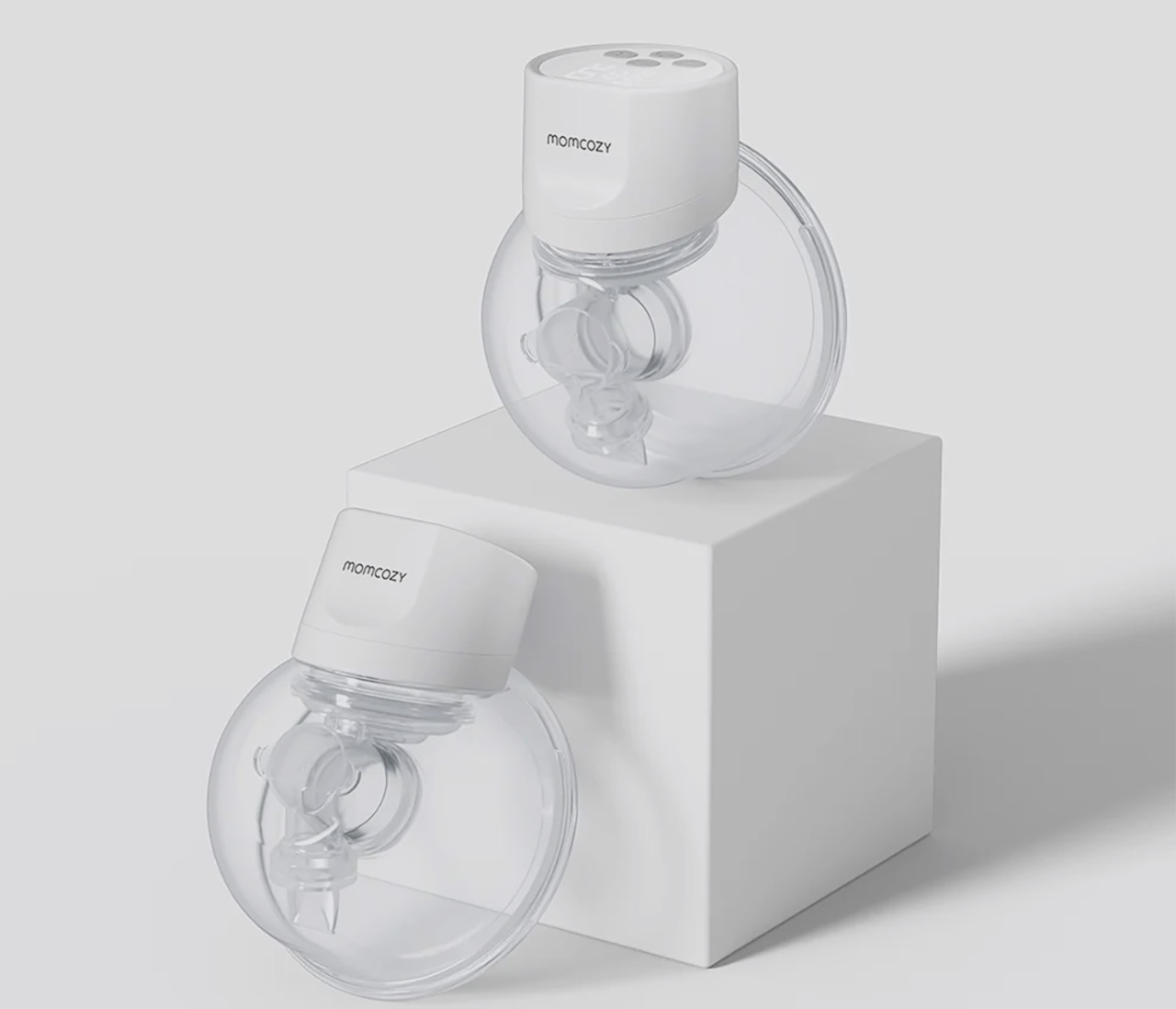
Picture a mother pumping in a parked car between meetings, or quietly at her desk during a video call. The Momcozy S12 Pro Wearable Breast Pump sits inside a standard nursing bra, disappearing under clothing so there are no tubes or external bottles to manage. From the outside, it looks like any other workday, not a carefully orchestrated routine built around pumping schedules.

The S12 Pro is shaped to mold to the body for comfortable all-day wear, offering multiple modes and adjustable suction to match different stages of expression. The internal battery supports seven to eight sessions on a single charge, reducing the mental load of planning around power outlets. It is the kind of device that quietly acknowledges mothers have careers, meetings, and social commitments, building around that reality instead of ignoring it.

Click Here to Buy Now: $139.99.

Momcozy M9 Mobile Flow Hands-Free Breast Pump
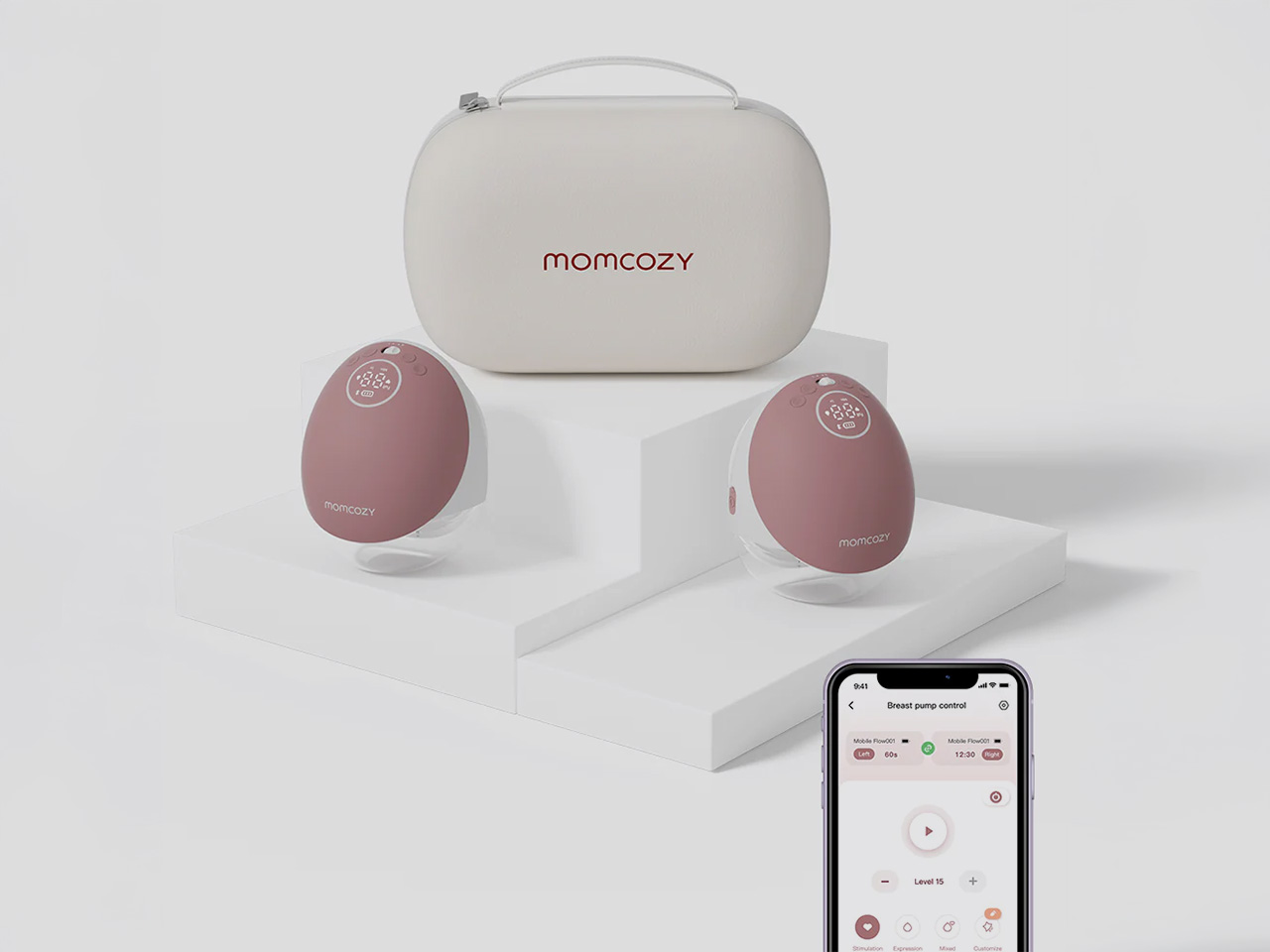
The M9 Mobile Flow Hands-Free Breast Pump is designed for parents who need flexibility without compromising comfort. Imagine someone folding laundry or prepping dinner while the pump works quietly in the background, tucked inside a bra and barely noticeable. The soft, rounded shape and pink finish make it feel closer to a personal wellness device than clinical equipment, blending into the flow of a busy day.

What sets the M9 apart is the combination of smart control and efficiency. The DoubleFit Flange improves fit and reduces leakage, while the app lets parents choose from three modes and fifteen customizable settings to match their rhythm. The eighteen hundred milliampere-hour battery supports up to six sessions per charge, and the upgraded third-generation motor delivers hospital-grade suction without the noise or bulk of traditional pumps.

Click Here to Buy Now: $269.99.

Momcozy 2-in-1 Electric Baby Swing

Shift to a different scene: a parent working from home in a small apartment, laptop open at the dining table while the baby rests in the Momcozy 2-in-1 Electric Baby Swing a few feet away. The swing’s neutral tones and clean lines blend into the living room rather than dominating it. Dual arms and a sturdy base keep everything steady, so there is no nervous checking every time the baby shifts position.

The swing mimics the natural soothing motions of a parent’s arms with four swing patterns and four speeds, helping babies stay calm outside of a caregiver’s embrace. The breathable seat adjusts to two recline positions, the cover zips off for machine washing, and when the baby outgrows the swing mode, it converts into a stationary seat that supports kids up to sixty-six pounds, turning it into furniture that lasts years instead of months.

Instead of asking parents to hide the tools that make their days possible, Momcozy designs swings and pumps that can live in the open, both visually and practically. They respect the spaces parents have built for themselves and the complex routines that run through them, showing that parenting gear can be gentle on the eyes while still doing serious work beneath the surface.

Click Here to Buy Now: $159.99.

The post Momcozy Just Made Baby Gear That Doesn’t Look Like Baby Gear first appeared on Yanko Design.

Google Discover is testing AI-generated headlines and they aren’t good

Artificial intelligence is showing up everywhere in Google's services these days, whether or not people want them and sometimes in places where they really don't make a lick of sense. The latest trial from Google appears to be giving articles the AI treatment in Google Discover. The Verge noticed that some articles were being displayed in Google Discover with AI-generated headlines different from the ones in the original posts. And to the surprise of absolutely no one, some of these headlines are misleading or flat-out wrong. 

For instance, one rewritten headline claimed "Steam Machine price revealed," but the Ars Technica article's actual headline was "Valve's Steam Machine looks like a console, but don’t expect it to be priced like one." No costs have been shared yet for the hardware, either in that post or elsewhere from Valve. In our own explorations, Engadget staff also found that Discover was providing original headlines accompanied by AI-generated summaries. In both cases, the content is tagged as "Generated with AI, which can make mistakes." But it sure would be nice if the company just didn't use AI at all in this situation and thus avoided the mistakes entirely.

The instances The Verge found were apparently "a small UI experiment for a subset of Discover users," Google rep Mallory Deleon told the publication. "We are testing a new design that changes the placement of existing headlines to make topic details easier to digest before they explore links from across the web." That sounds innocuous enough, but Google has a history of hostility towards online media its frequent role as middleman between publishers and readers. Web publishers have made multiple attempts over the years to get compensation from Google for displaying portions of their content, and in at least two instances, Google has responded by cutting out those sources from search results and later claiming that showing news doesn't do much for the bottom line of its ad business. 

For those of you who do in fact want more AI in your Google Search experience, you're in luck. AI Mode, the chatbot that's already been called outright "theft" by the News Media Alliance, is getting an even more symbiotic integration into the mobile search platform. Google Search's Vice President of Product Robby Stein posted yesterday on X that the company is testing having AI Mode accessible on the same screen as an AI Overview rather than the two services existing in separate tabs. 

This article originally appeared on Engadget at https://www.engadget.com/ai/google-discover-is-testing-ai-generated-headlines-and-they-arent-good-234700720.html?src=rss

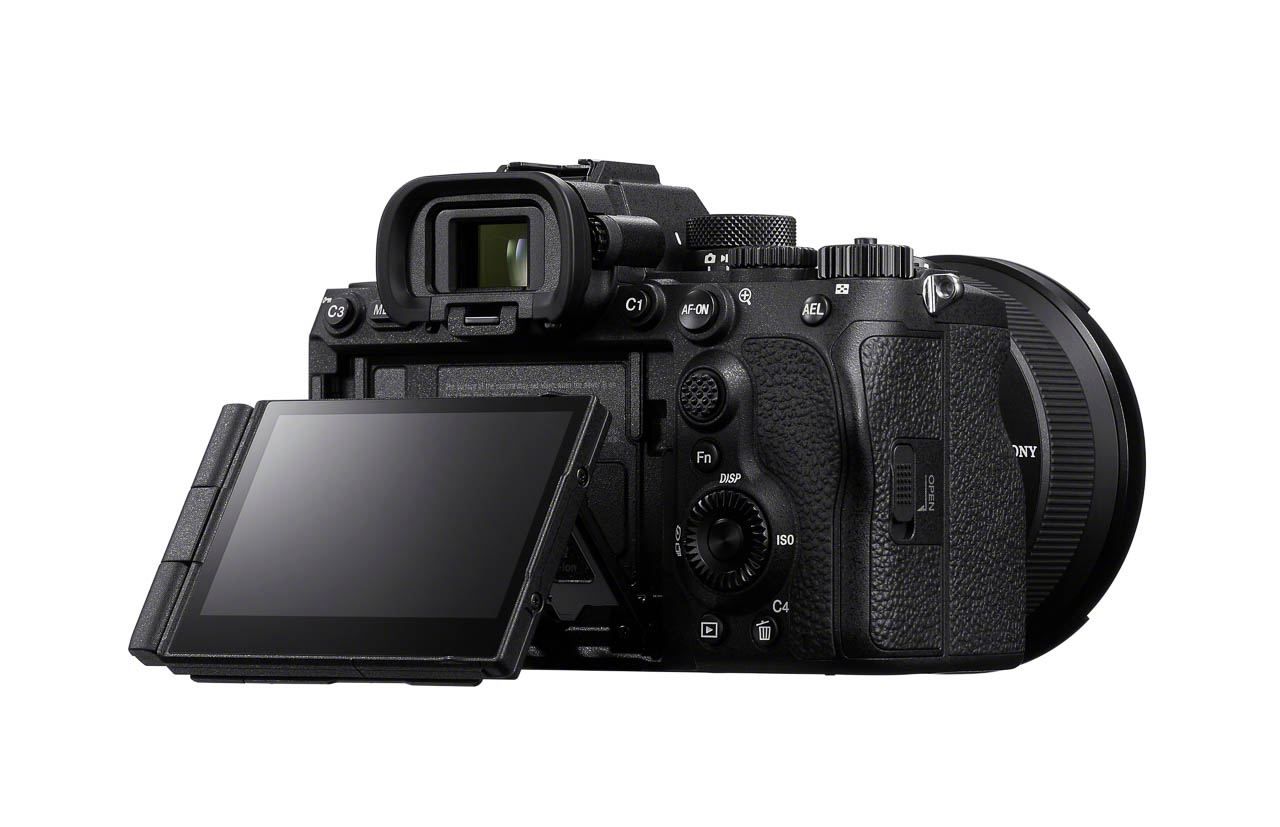
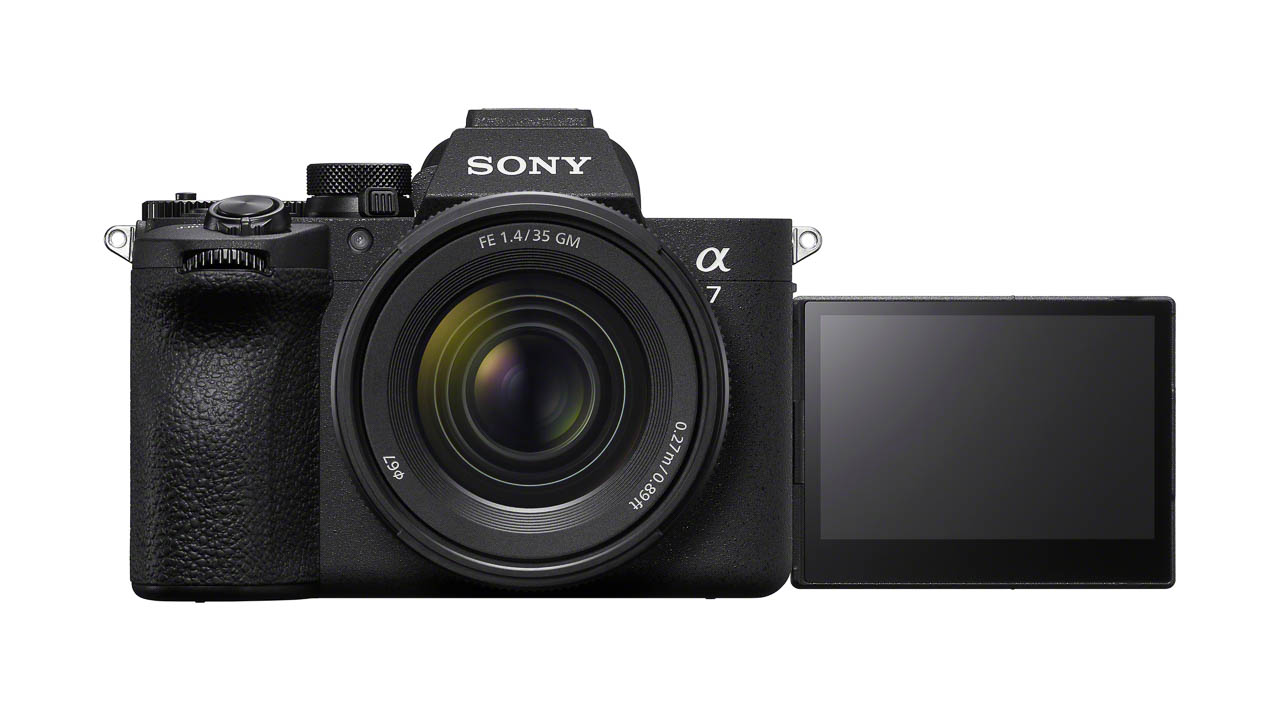
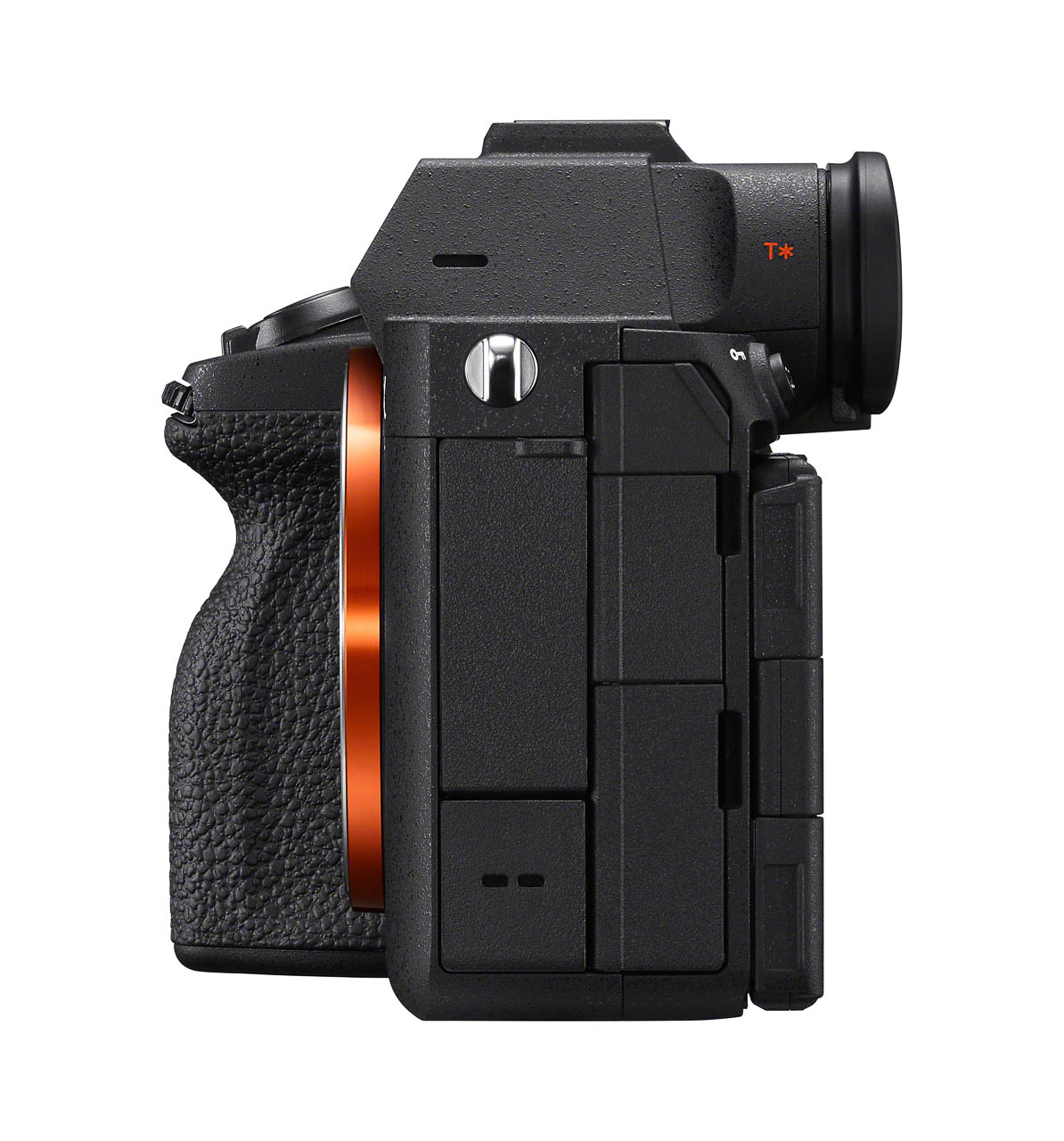
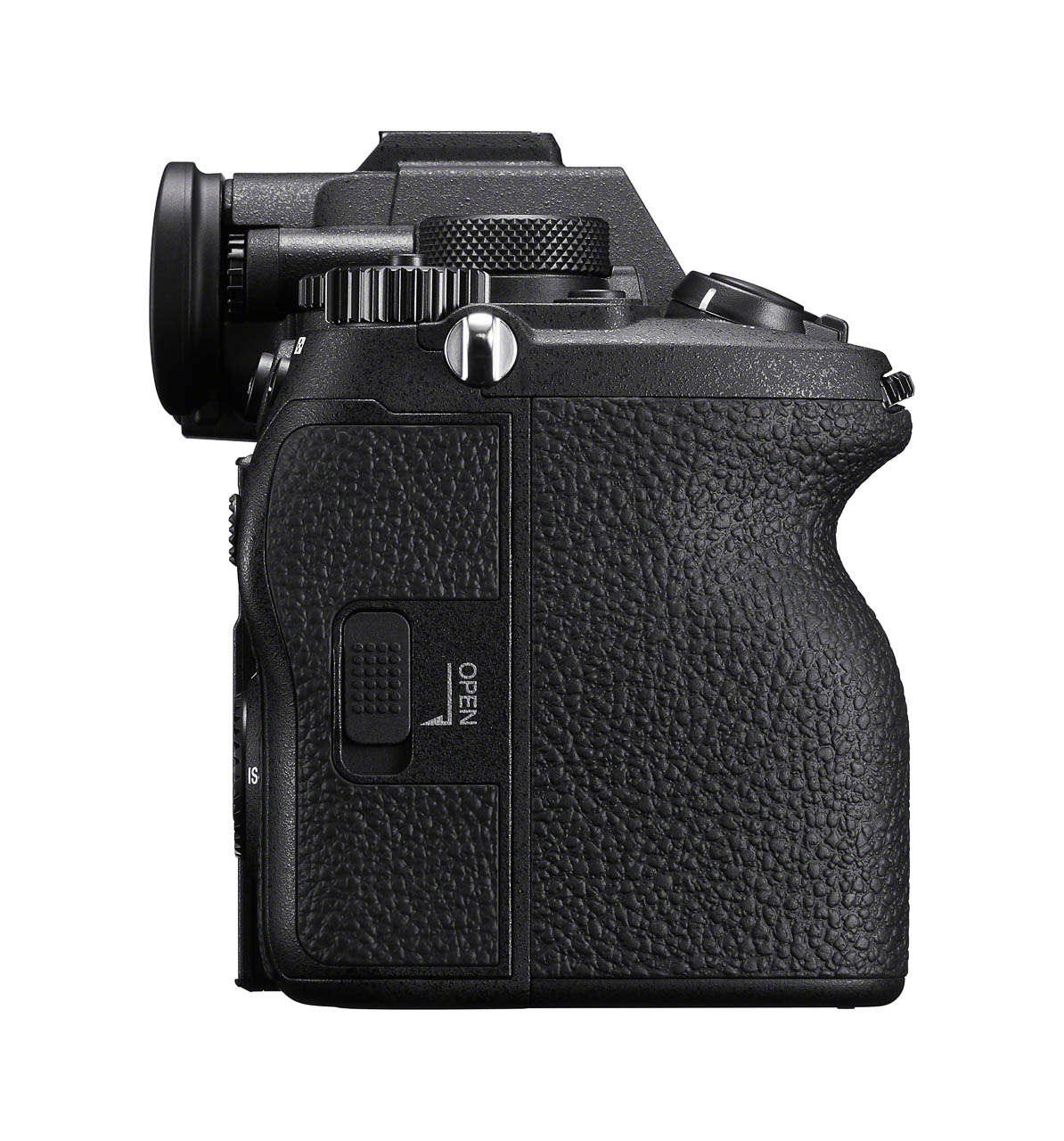
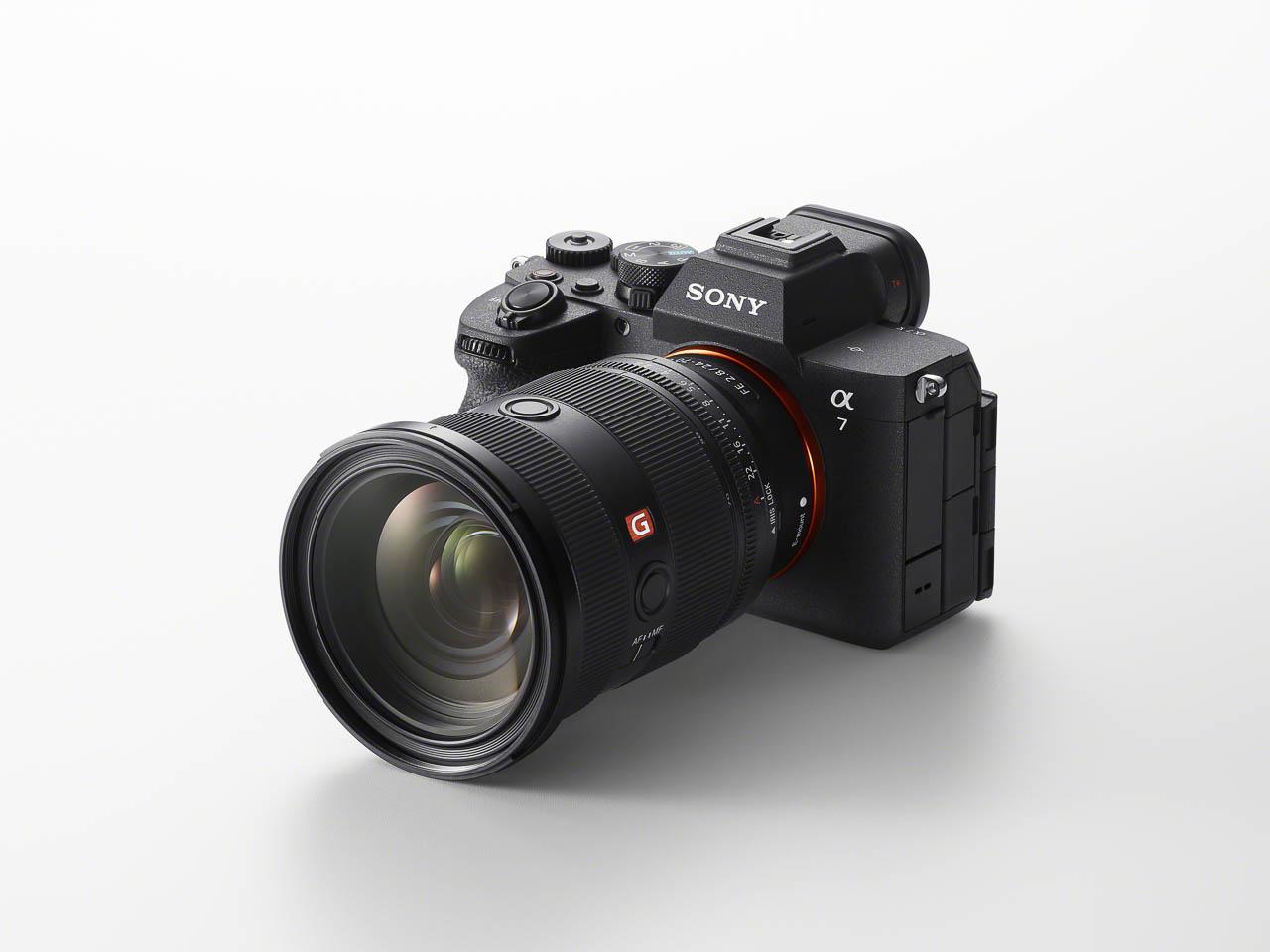
Sony Alpha 7 V Integrates AI Processing Into Its Imaging Engine, Rewrites Full-Frame Expectations

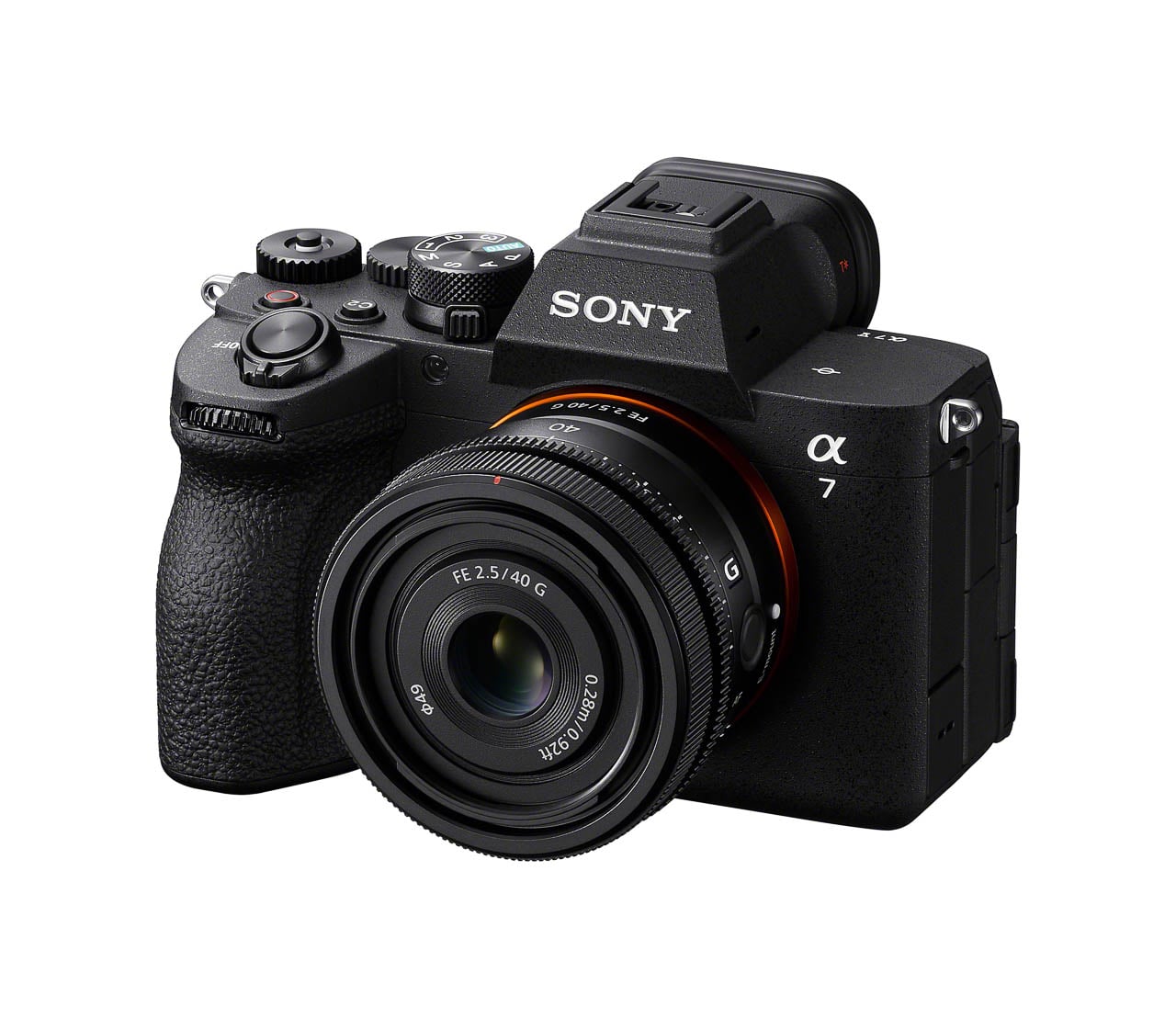
Sony’s Alpha 7 line has defined full-frame mirrorless photography for over a decade. The fifth generation arrives with a fundamental change: the AI processing unit now lives inside the BIONZ XR2 imaging engine rather than running on a separate chip. Every imaging function shares the same processing backbone, and the performance gains cascade through autofocus, subject recognition, color science, continuous shooting, and video.

Designer: Sony

The Alpha 7 V (ILCE-7M5) pairs that integrated processing architecture with a new partially stacked Exmor RS CMOS sensor. At approximately 33 megapixels, it strikes a balance between resolution and file manageability, but the real story is readout speed: 4.5 times faster than the Alpha 7 IV. Faster readout means reduced rolling shutter distortion during fast panning. It means blackout-free continuous shooting up to 30 fps with full AF/AE tracking. It means 14-bit RAW capture at that same 30 fps speed without compromising autofocus performance. Sony also announced the FE 28-70mm f/3.5-5.6 OSS II (SEL28702), a compact standard zoom designed to match these capabilities.

The Pre-Capture function deserves its own attention. It records up to one second before you press the shutter, storing frames in a rolling buffer until you commit to the shot. For unpredictable subjects (pets, children, sports action), this changes the timing equation entirely. Still image performance reaches 16 stops of dynamic range in mechanical shutter mode, ensuring tonal detail across highlights and shadows even in scenes with extreme contrast.

The Real-time Recognition AF system now identifies humans, animals, birds, insects, cars, trains, and airplanes. Sony claims a 30% improvement in eye recognition performance compared to the Alpha 7 IV, measured through internal testing. The 759 phase-detection points cover 94% of the frame, and low-light autofocus extends down to EV -4.0. AF/AE calculations run 60 times per second, continuously adjusting both parameters during high-speed shooting.

Color science gets its own AI treatment. A newly introduced AI-driven Auto White Balance leverages deep learning technology for light source estimation, automatically identifying the shooting environment’s light source and adjusting color tones for natural, stable color reproduction. This should reduce post-production workload for photographers who shoot across varied lighting conditions.

Video capabilities expand significantly for hybrid creators. The Alpha 7 V introduces 7K oversampled 4K 60p recording in full-frame mode and 4K 120p recording in APS-C/Super 35mm mode. Full pixel readout without pixel binning enables highly detailed footage. Dynamic Active Mode provides smooth stabilization for handheld shooting. An Auto Framing function automatically maintains optimal subject composition during recording. New in-camera noise reduction and improved internal microphone functionality address the audio side.

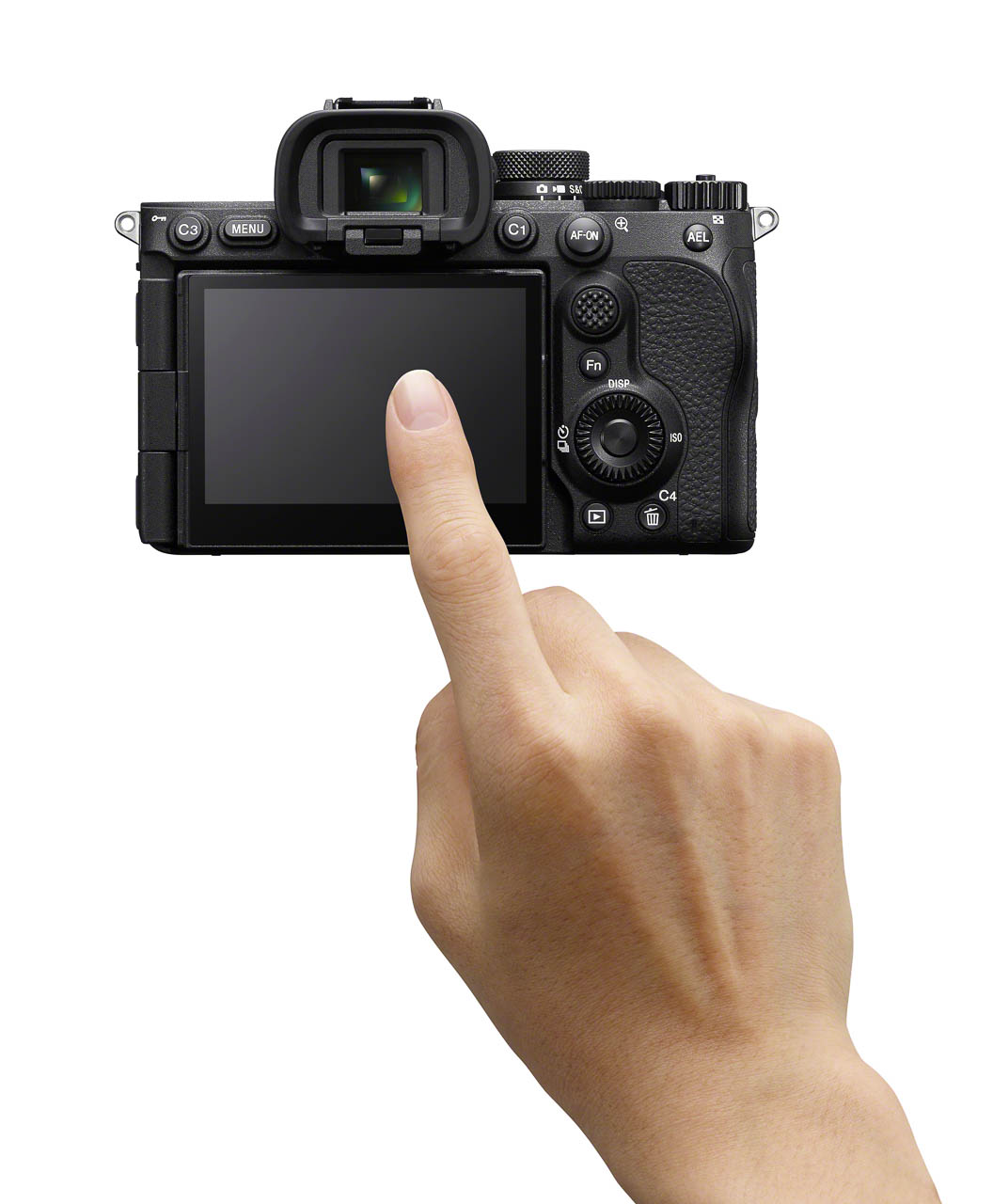
The operability improvements read like a professional wish list: Wi-Fi 6E GHz compatibility, dual USB Type-C ports, vertical format support, adjustable electronic shutter sound, a 4-axis multi-angle monitor combining tilt and vari-angle design, and an improved grip. Battery life reaches approximately 630 shots using the viewfinder (CIPA standards), with a Monitor Low Bright mode extending that further. Thermal management supports extended 4K recording at approximately 90 minutes at 25°C and 60 minutes at 40°C.

The Companion Lens and What It Costs

The FE 28-70mm f/3.5-5.6 OSS II earns attention beyond its kit lens positioning. When paired with compatible cameras, it offers up to 120 fps AF/AE tracking, continuous shooting up to 30 fps, seamless body-lens coordinated image stabilization, AF available during zooming, and built-in breathing compensation support. This addresses the original 28-70mm kit lens’s sharpness and autofocus speed criticisms while maintaining the lightweight profile that full-frame mirrorless shooters expect.

Sony aligned this release with its Road to Zero environmental initiative. Manufacturing facilities for imaging products operate at 100% renewable energy. The packaging uses Sony’s Original Blended Material (bamboo, sugarcane fibers, post-consumer recycled paper) instead of plastic.

The Alpha 7 V body arrives by the end of December 2025 for approximately $2,899 USD ($3,699 CAD). The kit with the SEL28702 lens follows in February 2026 for approximately $3,099 USD ($3,899 CAD). The lens alone: $449 USD ($599 CAD), also February 2026. All products will be sold through Sony and authorized dealers throughout North America.

The post Sony Alpha 7 V Integrates AI Processing Into Its Imaging Engine, Rewrites Full-Frame Expectations first appeared on Yanko Design.
The Cheapest Personal AI Device You Can Own: $50 Raspberry Pi Whisplay Runs Gemini, Claude, and ChatGPT

Smartphones were never really meant to be your AI sidekick. They juggle notifications, social feeds, and a dozen background services before they ever get around to being “smart.” Meanwhile, the first wave of dedicated AI gadgets from companies like Humane and Rabbit showed up with big promises, closed ecosystems, and short lifespans. When the money dried up, so did the hardware. A little Raspberry Pi Zero 2 W with a Whisplay HAT quietly sidesteps all of that. It is a DIY AI chat device that you own outright, that you can fix, reflash, or repurpose, and that can talk to Gemini, Claude, or ChatGPT without caring which startup is still solvent this quarter.

Instead of betting on a single company’s cloud, Whisplay treats AI as a replaceable part. The hardware gives you a screen, mic, speaker, and buttons, and leaves the “brain” up to you. If Gemini changes pricing, Claude adds features, or ChatGPT pulls ahead again, you can swap backends with a config file or a bit of code, not a new gadget. In a landscape where AI hardware keeps arriving as disposable, subscription-tethered experiments, this little open, modular box feels like the first honest attempt at a personal AI terminal that will not vanish the moment a runway spreadsheet turns red.

Designer: Jdaie

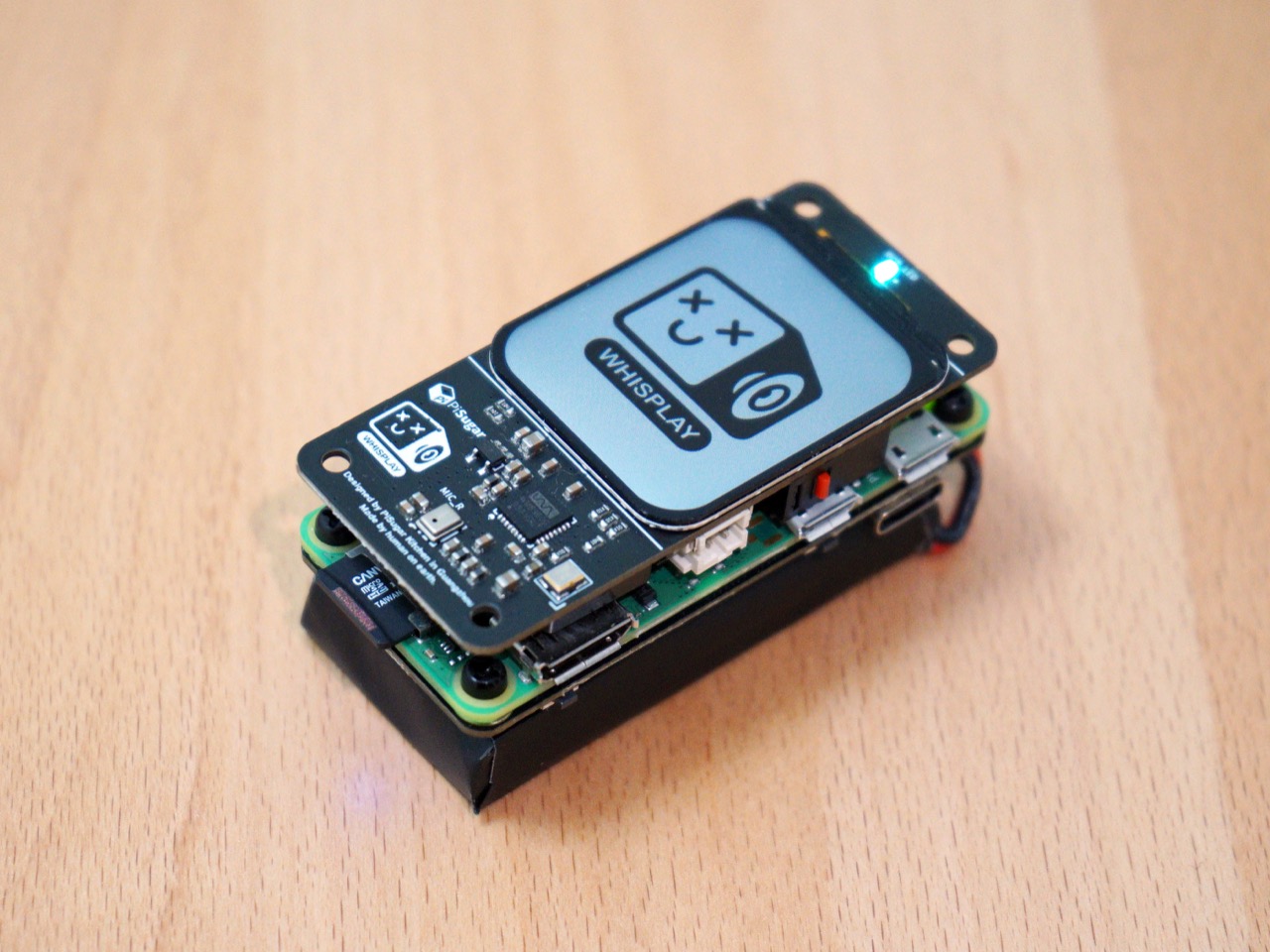
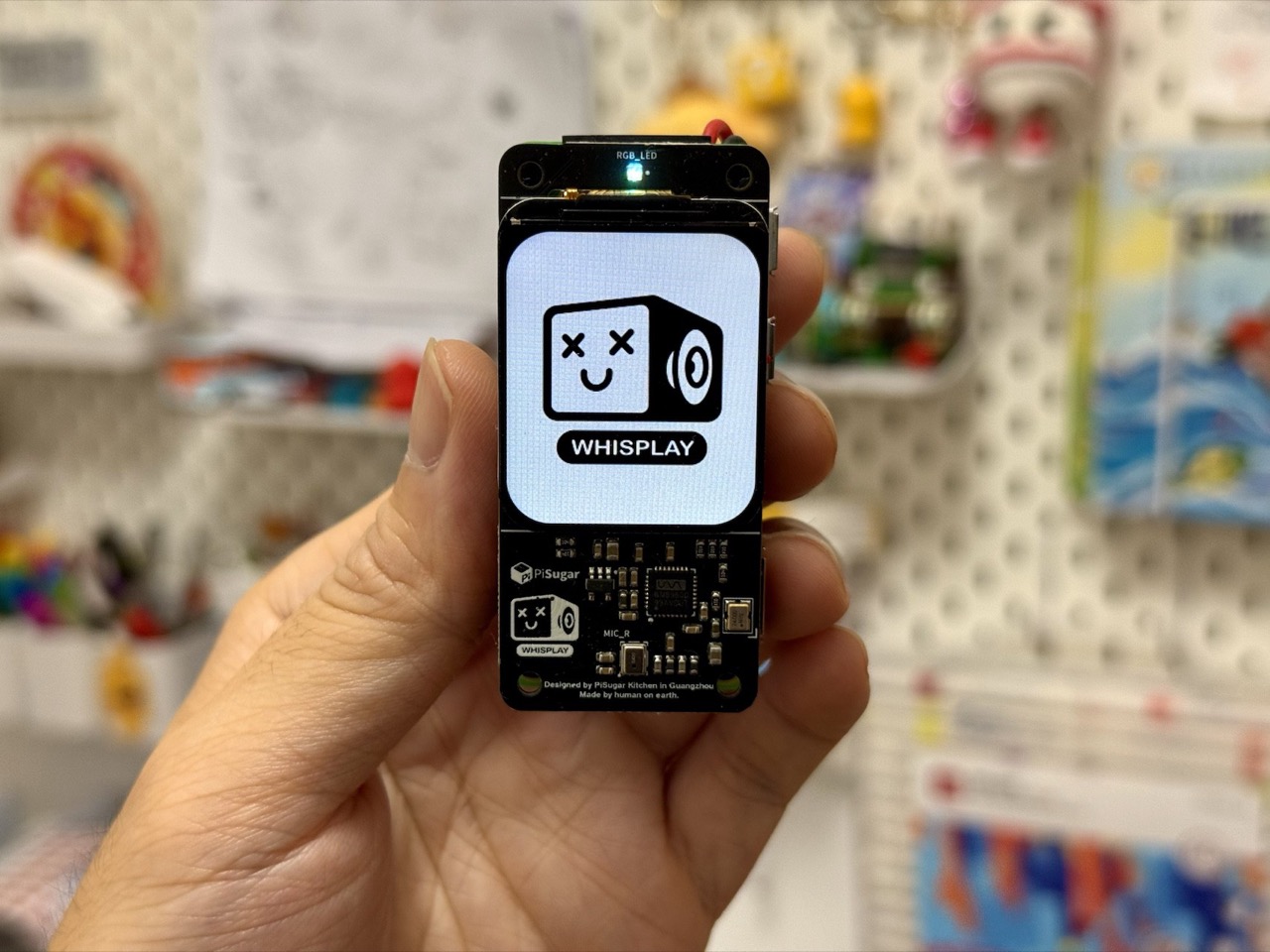
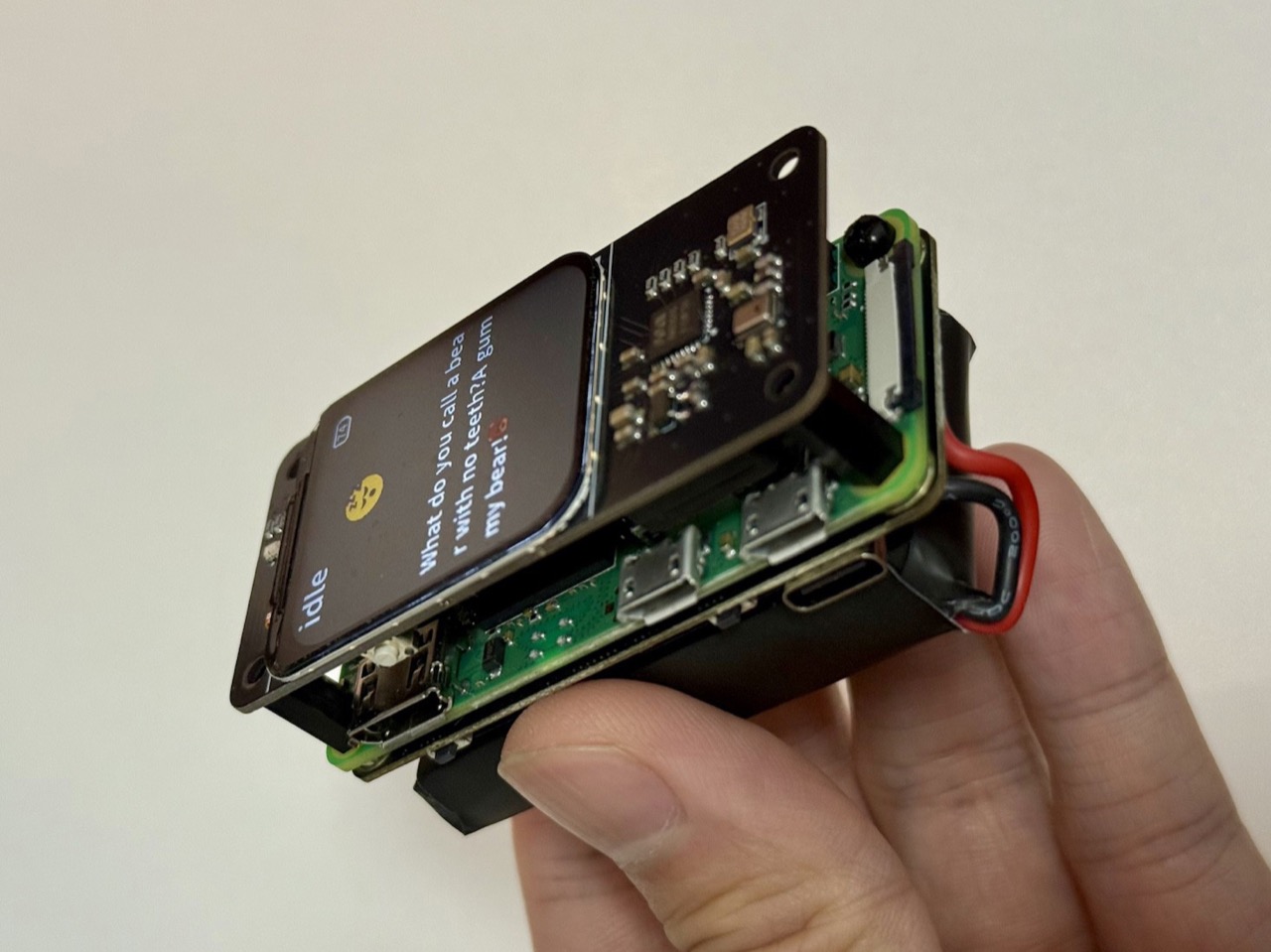
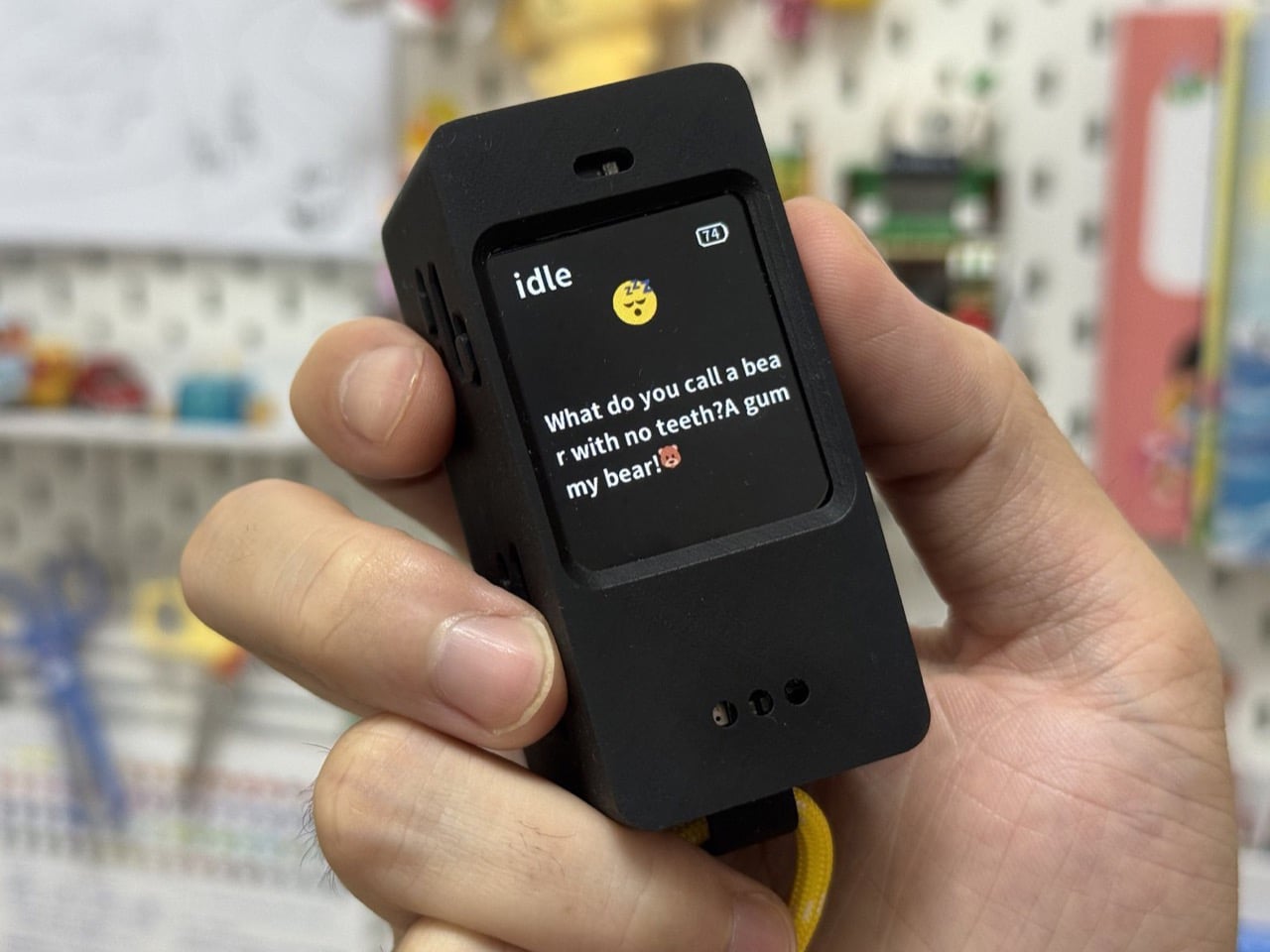
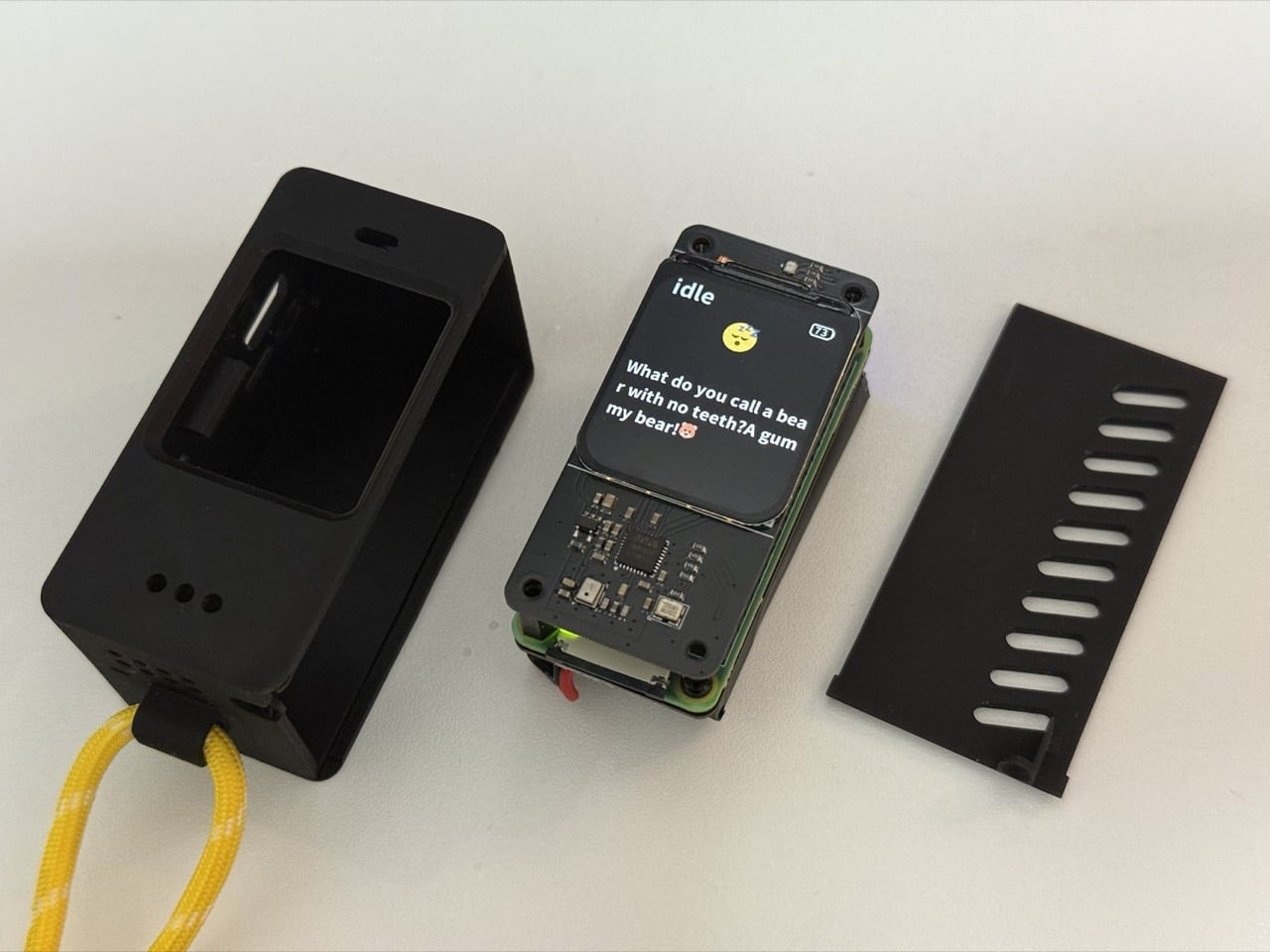
At its very core, the Whisplay HAT is a clever little I/O board designed to give a Pi a face and a voice… simply put. It bolts directly onto the 40-pin GPIO header and provides everything needed for a conversational interface. You get a surprisingly crisp 1.96-inch color LCD for displaying text or animations, a WM8960 audio codec driving an onboard microphone and speaker, an RGB status LED, and a few programmable buttons for user input. It is not a standalone computer, but a purpose-built terminal that turns the Pi Zero into something you can actually talk to. The entire package matches the Pi Zero’s footprint, making for a compact and tidy build that feels intentional, not like a messy science fair project.

The choice of the Raspberry Pi Zero 2 W as the platform is telling. With its quad-core 1 GHz ARM Cortex-A53 CPU and just 512MB of RAM, it is nobody’s idea of a powerhouse. That is precisely the point. The Pi is not running the large language model; it is just a client. Its job is to capture audio, send a request over Wi-Fi, and then play back the response. This thin-client architecture is incredibly efficient, requiring minimal power and processing, which is perfect for an always-on desk companion. The heavy lifting is outsourced to the cloud API of your choice, leaving the Pi to handle the simple, tangible task of being the physical interface between you and the AI.

The actual magic is a simple, elegant pipeline that you control completely. Your code on the Pi captures audio from the Whisplay’s microphone, uses a speech-to-text engine to transcribe it, and then packages that text into an API call to Gemini or another LLM. When the response comes back, a text-to-speech engine converts it back into audio and plays it through the onboard speaker, while the LCD can show the text or a thinking animation. You can point it at Google’s Gemini API today and switch to a local Ollama server running on a spare Raspberry Pi 5 tomorrow if you feel like it. What’s so perfect about the Whisplay HAT is that it assumes companies and models will come and go, so it treats the LLM as a pluggable component. Today, that might be Gemini, Claude, or ChatGPT. Tomorrow, it might be some open model running on your own server. Either way, the little chatting device on your desk stays the same, happily piping audio in and out while you swap brains on the backend.

That brings us to the real kicker. The Whisplay HAT costs about thirty-five dollars. Paired with a fifteen-dollar Pi Zero 2 W, you have the core of a highly capable, endlessly customizable AI device for fifty bucks. Compare that to the seven-hundred-dollar Humane Ai Pin or the two-hundred-dollar Rabbit R1, both of which are functionally just API clients tied to a single, proprietary service. This DIY approach is not just cheaper; it represents a fundamentally different, more sustainable philosophy. It is a platform for tinkering and ownership, not a sealed product designed to be consumed and eventually discarded. It is a starting point, and in a field moving this fast, a good starting point is infinitely more valuable than a dead end.

The post The Cheapest Personal AI Device You Can Own: $50 Raspberry Pi Whisplay Runs Gemini, Claude, and ChatGPT first appeared on Yanko Design.