5 Vertical Farm Designs That Grow Food Inside Your Home and City

Vertical farming is redefining how food is grown, distributed, and consumed in an increasingly urban world. As populations rise and arable land becomes scarce, growing food vertically offers a practical, efficient alternative to traditional agriculture. By producing crops closer to where people live, vertical farming reduces dependence on long supply chains, minimizes food waste, and ensures year-round access to fresh produce. It also uses significantly less water and land, making it a more sustainable approach to feeding cities.

Beyond efficiency, vertical farming is reshaping the relationship between people and food. It brings food production back into daily life, increasing awareness of how produce is grown and encouraging healthier eating habits. Advanced systems that combine controlled lighting, irrigation, and monitoring technologies allow consistent yields with minimal environmental impact. Here is how vertical farming is not just a growing method, but a shift toward resilient, localized, and future-ready food systems.

1. High-Rise Agritecture

Skyscrapers are transforming into living, productive organisms. Static glass facades are giving way to “living skins” that integrate vertical farming, allowing cities to grow food within minimal footprints. This approach reduces transportation emissions and creates a seamless dialogue between architecture and the surrounding urban landscape.

These vertical farms use double-height glazing tuned for optimal light absorption, maximizing photosynthesis and crop yield. Dense vegetation also provides natural insulation, lowering energy use while diffusing sunlight for residents. By merging agricultural efficiency with architectural elegance, these spires redefine urban living, offering sustainable food production and serene, light-filled interiors.

By integrating large-scale vertical agriculture directly into a high-rise typology, the tower addresses food insecurity in Chicago’s underserved neighborhoods, where access to fresh, affordable produce remains limited. Food production is embedded within the building core, allowing crops to be grown, processed, and distributed locally. This approach reduces reliance on long-distance supply chains, lowers carbon emissions, and transforms the skyscraper into a productive, self-sustaining system that supports urban resilience and food equity.

The tower’s form and systems are designed to support continuous agricultural performance. A fluid, water-inspired massing optimizes light penetration, airflow, and water circulation, while cloud harvesting, rainwater reuse, and renewable energy systems sustain year-round cultivation. Residential, educational, and commercial programs are organized around farming zones, reinforcing food production as a shared civic function. Structurally, a diagrid exoskeleton enables large inner voids for light and ventilation, allowing the skyscraper to operate as a vertical landscape where agriculture, architecture, and urban life are fully integrated.

2. Reconfigurable Modular Planter

Modular planters introduce a layered spatial rhythm where planting systems evolve alongside everyday living. Designed with architectural precision, these elements use high-performance bio-composites that express material honesty while functioning as adaptable interior features. Acting as spatial dividers and living furniture, they create biophilic zones that improve air quality and soften the hard lines of contemporary interiors.

The long-term value of modular planters lies in flexibility and design longevity. Systems can be rearranged as spatial needs shift, allowing interiors to remain responsive rather than fixed. More than decorative objects, these planters operate as architectural components, seamlessly connecting interior design with agricultural thinking while preserving the coherence and integrity of the home’s-built form.

As home gardening gains popularity, the challenge of growing food in compact living spaces has become increasingly apparent. Many planters designed for small homes limit the number of plants they can support, restricting both yield and flexibility. Chilean designer Lorenzo Vega addresses this issue through a modular vertical planter system inspired by LEGO-style construction. Beginning with a single cubic unit, the system allows users to grow vegetables using traditional methods, then expand vertically by stacking additional modules as space permits. This scalable approach enables efficient food cultivation without demanding a larger footprint.

Each module consists of a planting dish encased within a cubic frame that provides sufficient depth for crops to grow to full height. The design draws visual and structural influence from Japanese Metabolism and Social Modernist architecture, resulting in a clean, stripped-back aesthetic. Its stackable form maximizes vertical space, transforming underused areas into productive growing zones.

3. Indoor Vertical Farms

Integrating an indoor vertical farm into the heart of the home has become a defining marker of contemporary luxury. This residential biosphere transforms everyday living into a sensory experience, where the presence of living greens, natural aromas, and visual vitality elevates well-being. Rather than serving as ornamentation, the farm prioritizes nourishment, mindfulness, and a deeper connection between occupants and their environment.

Functioning as an architectural system, these vertical farms actively regulate the home’s internal climate. Layered hydroponic structures support thermal performance, operating as natural heat moderators within the interior. Treated as sanctuaries of softened light, the grow zones conceal advanced technology behind refined joinery, creating a seamless balance between precision engineering and calm, restorative spatial design.

Berlin-based design studio The Subdivision introduced Agrilution as an indoor vertical farming solution that turns sustainable living into an intuitive, everyday experience. Designed with ease of use in mind, the concept focuses on making home-grown food practical for modern lifestyles, particularly for those living in compact urban spaces.

Also known as the Plantcube, Agrilution resembles a small refrigerator and features two sliding shelves for soil planters and crops. Built-in LED grow lights deliver consistent artificial light, supporting plant growth throughout the year. A connected app tracks plant health and alerts users when watering or maintenance is needed. With its clean black-and-white finish, Agrilution integrates effortlessly into contemporary interiors, offering a discreet and efficient way to grow fresh produce at home.

4. Integrating Community Lifestyle

Vertical farming is increasingly understood as a catalyst for social connection within contemporary developments. Shared growing spaces transform food production into a collective ritual, offering a form of psychological value that conventional luxury amenities rarely achieve. These communal agricultural zones function as biophilic environments where residents connect not only with nature but with one another, strengthening the relationship between architecture and social well-being.

Designed as central spatial anchors, these farms are embedded within primary circulation routes to encourage movement, pause, and interaction. Positioning agriculture at the core of daily life reframes it as a cultural act rather than a background utility. In dense urban settings, such spaces counter isolation, fostering shared responsibility and turning the productive landscape into a lived, communal experience.

Urban farming adapts to the character and constraints of each city, taking forms that range from backyard gardens to rooftop plots and hydroponic systems. In Malmö, where space is limited, small-scale community farming has become an important part of urban life. Designer Jacob Alm Andersson developed Nivå, a vertical farming system shaped by the practices and shared experiences of local urban farmers. Through interviews, Andersson discovered that many residents began growing food after being inspired by their neighbors, highlighting the role of community exchange in sustaining urban agriculture and encouraging participation across generations.

Responding to Malmö’s spatial limitations, Nivå is designed to function efficiently on a vertical plane while remaining adaptable and robust. The system is constructed from stacked steel beams reinforced with wood, creating stable shelving for cultivation. Heat-treated pine planters attach using a hook-and-latch mechanism, eliminating the need for screws. Beyond growing food, Nivå operates as a communal workstation, complete with a central work surface that supports planting, harvesting, and maintenance, reinforcing urban farming as both a productive and social activity.

5. Automated Irrigation

Automated irrigation operates as the quiet intelligence behind productive, plant-integrated architecture. IoT-enabled systems regulate water and nutrient delivery with extreme accuracy, supporting healthy growth while drastically reducing waste. This technical layer is carefully concealed within recessed channels and shadow gaps, preserving the visual integrity of stone, timber, and other primary finishes while allowing the architecture to read as calm and resolved.

Beyond performance, automation enhances long-term value and resilience. By controlling moisture precisely, these systems protect the building envelope and ensure consistent yields without constant human intervention. The result is a biophilic environment that feels effortless to inhabit where advanced engineering and natural growth work in harmony to create a self-sustaining, low-impact domestic ecosystem.

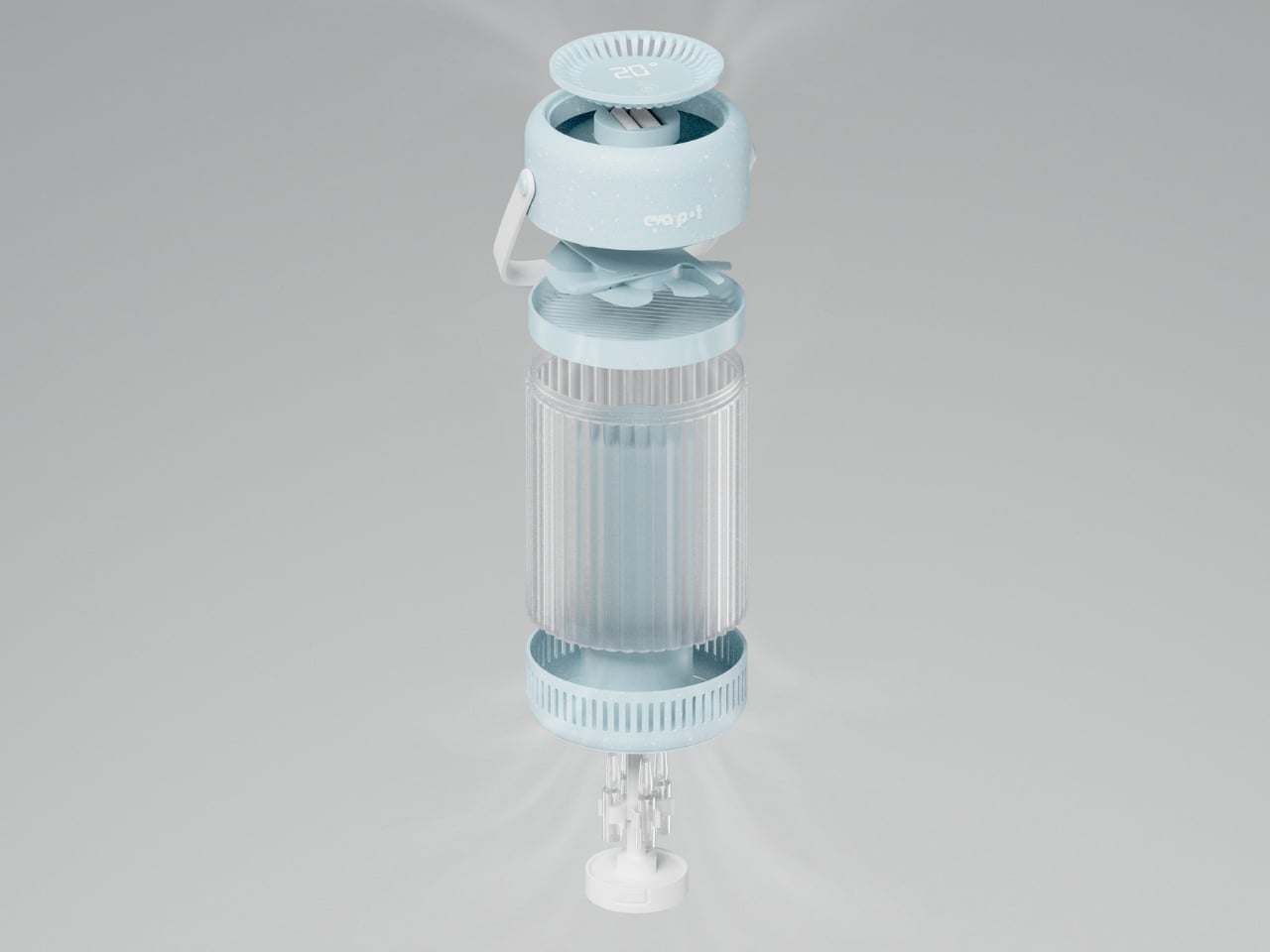
Loop is a smart, modular plant pot designed specifically for compact urban interiors. Created by designer Elif Bulut, the system addresses common challenges of indoor gardening, such as limited space, inconsistent light, and irregular watering. Its sculptural, plume-inspired form allows plants to grow from both the top and bottom, with detachable seed modules arranged in a radial configuration. Each module securely locks into place, enabling easy customization and maintenance while keeping the system compact and visually cohesive.

At the core of Loop is an automated irrigation and lighting system that simplifies plant care. An adjustable top-mounted water reservoir controls the flow of water to each module, allowing users to fine-tune irrigation based on plant needs. Integrated LED lights beneath the lid distribute balanced light throughout the day, supporting healthy growth indoors. Once set up, Loop’s smart technology monitors plant conditions and maintains optimal settings, making indoor gardening intuitive, low-maintenance, and well-suited to city living.

Vertical farming is transforming how we inhabit cities and homes, blending architecture, sustainability, and community. From towering agricultural skyscrapers to modular indoor systems, these innovations create resilient, biophilic environments that nourish both people and planet.

The post 5 Vertical Farm Designs That Grow Food Inside Your Home and City first appeared on Yanko Design.
Samsung Galaxy Z Fold 8 Leaks: 5,000mAh Battery and 45W Charging Finally Confirmed?

Samsung Galaxy Z Fold 8 Leaks: 5,000mAh Battery and 45W Charging Finally Confirmed? Samsung Galaxy Z Fold 8 shown folded and unfolded, highlighting the larger 8-inch inner display and cover screen.

The Samsung Galaxy Z Fold 8 represents a pivotal step forward in the foldable smartphone market. Rather than pursuing radical changes, Samsung has chosen to refine its flagship foldable device, addressing critical areas such as durability, battery life, and performance. This deliberate focus on practical enhancements ensures the Z Fold 8 remains a reliable and […]

The post Samsung Galaxy Z Fold 8 Leaks: 5,000mAh Battery and 45W Charging Finally Confirmed? appeared first on Geeky Gadgets.

Posted in Uncategorized

Nothing Al Smart Glasses : Premium AR Features with Everyday Comfort

Nothing Al Smart Glasses : Premium AR Features with Everyday Comfort Close-up of a glasses temple with subtle glyph-style lighting, suggesting Nothing’s design signature and status cues.

Nothing’s AI smart glasses mark the company’s entry into the growing wearable tech market, where established players like Meta and Samsung dominate. Staying true to its minimalist design philosophy, Nothing emphasizes smartphone integration to achieve a lightweight build and efficient energy use. This approach reflects a deliberate effort to balance core functionality with everyday practicality, […]

The post Nothing Al Smart Glasses : Premium AR Features with Everyday Comfort appeared first on Geeky Gadgets.

Posted in Uncategorized

iOS 27 Leak: Siri Finally Gets Multi-Command Support and a Standalone Chatbot App

iOS 27 Leak: Siri Finally Gets Multi-Command Support and a Standalone Chatbot App Concept image of iOS 27 showing a standalone Siri chatbot app with threaded chats and saved conversation history.

Apple has unveiled a major leap in artificial intelligence with the release of iOS 27, introducing a standalone Siri chatbot app that redefines the role of its voice assistant. This development represents a significant evolution, transforming Siri into a more interactive and capable tool that integrates seamlessly into the Apple ecosystem. By using advanced AI […]

The post iOS 27 Leak: Siri Finally Gets Multi-Command Support and a Standalone Chatbot App appeared first on Geeky Gadgets.

Posted in Uncategorized

OpenClaw Just Got Banned by Anthropic Heres Why

OpenClaw Just Got Banned by Anthropic Heres Why Anthropic support message showing OpenClaw blocked from using Claude subscriptions and directing users to API keys.

Anthropic’s recent decision to ban the use of OpenClaude with its Claude subscriptions has sparked widespread discussion among users and industry observers. According to Prompt Engineering, this policy shift stems from technical challenges, particularly disruptions to Anthropic’s prompt caching mechanisms caused by third-party integrations. These disruptions have led to increased compute costs, making it difficult […]

The post OpenClaw Just Got Banned by Anthropic Heres Why appeared first on Geeky Gadgets.

Posted in Uncategorized

Apple Watch Ultra 4 Leak: Touch ID is Finally Coming to the Action Button

Apple Watch Ultra 4 Leak: Touch ID is Finally Coming to the Action Button Apple Watch Ultra 4

The Apple Watch Ultra 4 is set to bring a new level of innovation to wearable technology with a focus on functionality, efficiency, and user experience. While the external design is expected to remain consistent with its predecessor, the internal upgrades promise to deliver a more refined and powerful device. With a likely launch in […]

The post Apple Watch Ultra 4 Leak: Touch ID is Finally Coming to the Action Button appeared first on Geeky Gadgets.

Posted in Uncategorized

PC Gaming on Android at 100 FPS, Battery Efficiency : Red Magic 11

PC Gaming on Android at 100 FPS, Battery Efficiency : Red Magic 11 Red Magic 11 connected to an external display in console mode with a Bluetooth controller for gameplay.

PC game emulation on Android devices has reached an impressive new level, as demonstrated by ETA Prime with the Red Magic 11 Golden Saga Edition. This smartphone, powered by the Snapdragon 8 Elite Gen 5 processor and Adreno 840 GPU, delivers the capability to run demanding PC games like Red Dead Redemption 2 and Cyberpunk […]

The post PC Gaming on Android at 100 FPS, Battery Efficiency : Red Magic 11 appeared first on Geeky Gadgets.

Posted in Uncategorized

How to Recover Deleted iPhone Messages: Get Your Conversations Back

How to Recover Deleted iPhone Messages: Get Your Conversations Back Recover Deleted iPhone Messages

Losing important messages on your iPhone can be a frustrating experience, but Apple provides a built-in recovery system that allows you to retrieve deleted conversations. This recovery process is time-sensitive, as messages are only stored temporarily before being permanently deleted. Understanding how to navigate this system and manage your messages effectively can save you from […]

The post How to Recover Deleted iPhone Messages: Get Your Conversations Back appeared first on Geeky Gadgets.

Posted in Uncategorized

Portugal’s Official TORRAS Phone Case for World Cup 2026 Has A Hands-Free Camera Stand

Cristiano Ronaldo did not become the most recognizable footballer of his generation by accident. The discipline, the training footage, the obsessive documentation of progress over years and decades, all of that has been as central to the story as any trophy or record. Portuguese football has a particular relationship with that kind of dedication, with the belief that the work done before anyone is watching forms the foundation of everything that happens when the stadium fills. That culture has produced players who treat consistency as a competitive advantage, shaping the team’s identity in a way that outlasts any single result. With the 2026 World Cup approaching on American soil, the squad carries that identity into a tournament that feels deeply personal, thirty-two years after Portugal missed their chance on the same stage.

TORRAS built its co-branded case around that spirit, officially partnering with the Portuguese Football Federation. The Q3 Air Portugal National Football Team Edition draws from the squad’s new kit: a red, green, and gold palette, a wave-patterned texture referencing Portugal’s maritime heritage, and the Quinas crest pressed into the airbag structure alongside football-inspired graphics. A No.7 sticker comes included with the case, nodding to the player who has come to embody the “Dedication, Hard Work and Belief” message printed across the back. The magnetic Ostand ring supports 180-degree flipping and 360-degree rotation, enabling hands-free setup on gym equipment, flat courts, or almost any surface. TORRAS has been in the phone stand category since 2018, and the Portugal Football Edition is the most culturally grounded product they have put out.

Designer: TORRAS

Click Here to Buy Now: $69.99.

The gradient runs from deep crimson at the top to forest green toward the base, and the design reads as Portuguese football rather than a Portuguese football souvenir. The vertical line texture looks like jersey fabric up close and stadium turf under floodlights from a distance, which is either a very deliberate choice or the best kind of coincidence. The Quinas crest is pressed into the airbag corner structure, placing Portugal’s national symbol at the exact section of the case engineered to absorb impact. That placement is functionally deliberate as much as it is visual, because the corners carry the highest concentration of drop protection engineering in any phone case. The No.7 sticker reads as insider vocabulary to most, and unmistakable shorthand to anyone who has followed Portuguese football for the last two decades.

The Ostand ring snaps completely flat when not in use, keeping the profile slim enough that the case slides into a pocket like any standard shell. It opens into a stand that locks across a full 180-degree flip range with 360-degree rotation on the horizontal axis, covering portrait, landscape, and every diagonal angle between them. The entire case stays MagSafe-compatible, so wireless charging and MagSafe accessories work without pulling the case off, a trade-off most ring-stand designs handle badly. TORRAS rates the airbag corner structure for military-grade drop protection, and the Football Team edition holds to that spec without adding bulk for the co-branded graphics. The magnetic hold is firm enough for hands-free recording on a gym wall or a stadium barrier, and releases cleanly when you want to reposition.

The 2026 World Cup is set to be held on American soil for the first time since 1994. Portugal’s inclusion in this WC roster gives this campaign a weight that the squad feels and the fan community mirrors. The collaboration, announced under the name “Record Your Passion,” centers on the premise that the daily habit of documenting training is, for many athletes, inseparable from the discipline of showing up for it. The training clips, the watch-party setups, the goal reaction shot on a phone propped against a stadium seat, all of it fills the gap between what broadcast cameras pick up and what personal memory holds. A limited-edition case built in the colors of your team, with a stand deploying in under a second, is a product that knows its audience.

Click Here to Buy Now: $69.99.

The post Portugal’s Official TORRAS Phone Case for World Cup 2026 Has A Hands-Free Camera Stand first appeared on Yanko Design.