Apple unveils Gen 2 AirTag with louder speaker and 50% more tracking range

Apple has just launched a new AirTag, an update to its item-tracking accessory that has been around since 2021. The second-generation device is, as you would expect, better and bolder. It carries two primary distinctions: a better speaker and a wider range, which we will (in addition to other new features) discuss in detail below.

Apple AirTag has been on the market for five years now. It is still the most reliable and go-to device for most people looking to secure their belongings, including, but not limited to, luggage, keys, wallets, and bags. Dubbed the second-generation AirTag, the new item-tracker is powered by the same second-generation Ultra Wideband Chip that Apple has previously outfitted the iPhone 17 and the Watch Ultra 3 with.

Designer: Apple

Courtesy of an upgraded Bluetooth chip, the Gen 2 AirTag expands its range of Precision Finding by a good 50 percent and adds more reliable directional guidance to it, which means users will now be able to track their lost items from a much further distance. In addition to the range, the new AirTag features a much louder speaker. Users can get audio cues up to almost 50 percent louder than the original AirTag. The device also delivers haptic feedback and features directional arrows to lead you more conveniently to your lost but tagged item.

According to the reports released in the run-up to the launch of the second-gen AirTag, it was mulled that Apple would introduce a new design for its device. Apple has, however, stayed true to its original design and has instead focused on improving the features of the item tracker.

The Cupertino tech giant has put user privacy at the core of the development of its new AirTag. Within the associated Find My network, the device protects against unwanted tracking, and it comes with end-to-end encryption. A new feature within the Find My network is Share My Location. The feature allows users to temporarily share the location of any accessory tagged with the AirTag with a select group of people of their choosing. This can be particularly beneficial in case of misplaced luggage, for instance, a person can share the location of their tagged item with the airline staff and help recover faster.

Even though the look and feel, as well as the battery size of the AirTag haven’t changed, the device is now made from recycled materials. The casing comprises 85 percent recycled plastic, and it features 100 percent recycled rare-earth magnets and 100 percent recycled gold-plated circuits. Apple informs that the second-generation AirTag will require iPhones running iOS 26 or later, while the Precision Finding will be usable on Apple Watch Series 9 or Apple Watch Ultra 2 or later. Despite the upgrades, the second-gen AirTag, like its predecessor, costs $29 in the U.S. A pack of four will retail for $99.

The post Apple unveils Gen 2 AirTag with louder speaker and 50% more tracking range first appeared on Yanko Design.

Anbernic RG G01 gaming controller monitors your heart rate while you play

Anbernic is known for its retro gaming handheld devices has a respectable lineup of controllers as well. Looking to take the challenge to market leaders like GameSir and 8BitDo, the Chinese gaming accessories maker has revealed the RG G01 wireless controller for smartphones, PC, and Nintendo Switch. The gamepad does all the stuff that you’d expect from a gaming accessory, but has features you normally don’t see in gaming accessories.

The controller has a heart rate sensor embedded in the grip where your palms rest to identify when you are pumping too much adrenaline in action and should cool down a bit. These sensors measure your pulse in real time, displaying it on the controller’s screen and even triggering an alarm when your rate spikes. Anbernic calls it their first pro-level gamepad, and stamping the internal with a heart rate sensor may not help you detect any terminal signs, but it will let you keep an eye on how intensely you are engulfed in action.

Designer: Anbernic

Another standout feature with the RG G01 (RG for Retro Gaming) is the inclusion of Purple Kirin inductive joysticks that use capacitive sensing for accurate movement. This is done by measuring the small electric currents and turning them into digital signals to control movement. Unlike the Hall effect or TMR joysticks, which employ magnetic fields, already a technology used in high-end gamepads, this is a level higher. Complementing this are dual-mode triggers that let you switch between linear feel for nuanced control and microswitch mode for crisp actuation in shooters or racing games.

Anbernic’s RG G01 builds on that foundation with a suite of upgrades aimed at gamers who want more control and customization right in their hands. At the heart of its innovation is a built-in 2.5-inch HD smart screen that lets players adjust button mappings, create and manage macros, and fine-tune settings without opening an app on a phone or PC. This on-device control makes configuration intuitive and keeps you in the flow of your session.  The RG G01 offers Bluetooth 5.0, 2.4 GHz wireless, and wired USB-C modes, all with a 1000 Hz polling rate that helps ensure ultra-low latency whether you’re playing locally or in a competitive environment. This high polling rate, typically found in premium gamepads, means inputs are registered quickly and consistently across platforms like PC, SteamOS, Linux, Nintendo Switch, Android, and iOS.

The controller doesn’t skimp on motion or tactile feedback either. A six-axis gyroscope enables motion controls in compatible games, while dual asymmetric pendulum motors deliver immersive vibration feedback that responds to in-game action. Programmable macro buttons on the rear add another layer of control, letting you assign complex input sequences to simple presses—handy for fighting games or intensive multiplayer titles.

Anbernic hasn’t confirmed pricing or exact availability yet, but the RG G01 is positioned above its previous budget-oriented controllers, like the RG P01 and RG DS, suggesting a more premium price point. As a versatile, fully featured controller with distinct hardware upgrades and cross-platform support, the RG G01 offers a compelling option for gamers who want deeper control and unique features beyond what conventional gamepads provide.

The post Anbernic RG G01 gaming controller monitors your heart rate while you play first appeared on Yanko Design.

This Interesting pop-up caravan increases towing EV’s range by up to 100 km

Campervans expanding sideways and trailers popping their roofs up are so much a staple in the industry that c.fold caravan really blows the mind off with its nifty way of expanding the space for living inside. The pop-up mechanism of this camping rig is particularly designed to effectively benefit the everyday electric vehicles and smaller vehicles.

The flexible design, and low weight of only 775kg, mean the camper’s structure remains low to reduce drag and range when driving. When at the camp, it essentially doubles the interior space by allowing the upper over-shell to lift up. The construction is primarily conceptualized to make “caravaning with electric towing vehicles practical and sustainable for everyday use.”

Designer: Dethleffs

The innovative design of the c.fold is reportedly conceived by Monika and Peter Marchart, who have been travelling and living out of a caravan themselves. Understanding the limitations and benefits of living out of a caravan, the couple has been able to put their experience into conceptualizing this folding option which has been developed by Dethleffs. The company, according to their press information, has invested over a year at the Innovation Camp in Baienfurt, Germany, bringing the idea to life.

Of course, the differentiator of the c.fold from other options on the market is its lightweight construction and the folding mechanism. The folding design ensure that the caravan can lower from camp position to drivable height (by lowering the upper portion) at the push of a button. It improves aerodynamics and can “increase the range of a mid-range electric towing vehicle by up to 100 km.” That’s a benefit no caravan enthusiast willing to transform their driving experience from a SUV to an environmentally beneficial EV would want to overlook.

Even if you were to ignore the upfront benefit for a minute. There is a lot more here to consider. The compact and efficient c.fold comes with a driving height of 1.65 meters and a total width of 1.9 meters. When at the camp, the top portion can telescopically lift up to create 1.9 m (6.2 feet) of headroom at the front side. It’s compact form factor ensures that the caravan can be stored comfortably in the garage at home and it is safe to drive on the road.

The wonder of course is how the double shell caravan increases living space, but it’s how the interior is planned, which really allows all the transformation to have. While all the other furniture and spaces inside of the structure made from Alucore, a durable aluminum honeycomb structure, fit together like LEGO bricks when the caravan is collapsed. It’s the bathroom – with a dry toilet and washbasin – that’s really amazing. It’s designed to also collapse midway to packs into a side console and accommodate the caravan’s transformation.

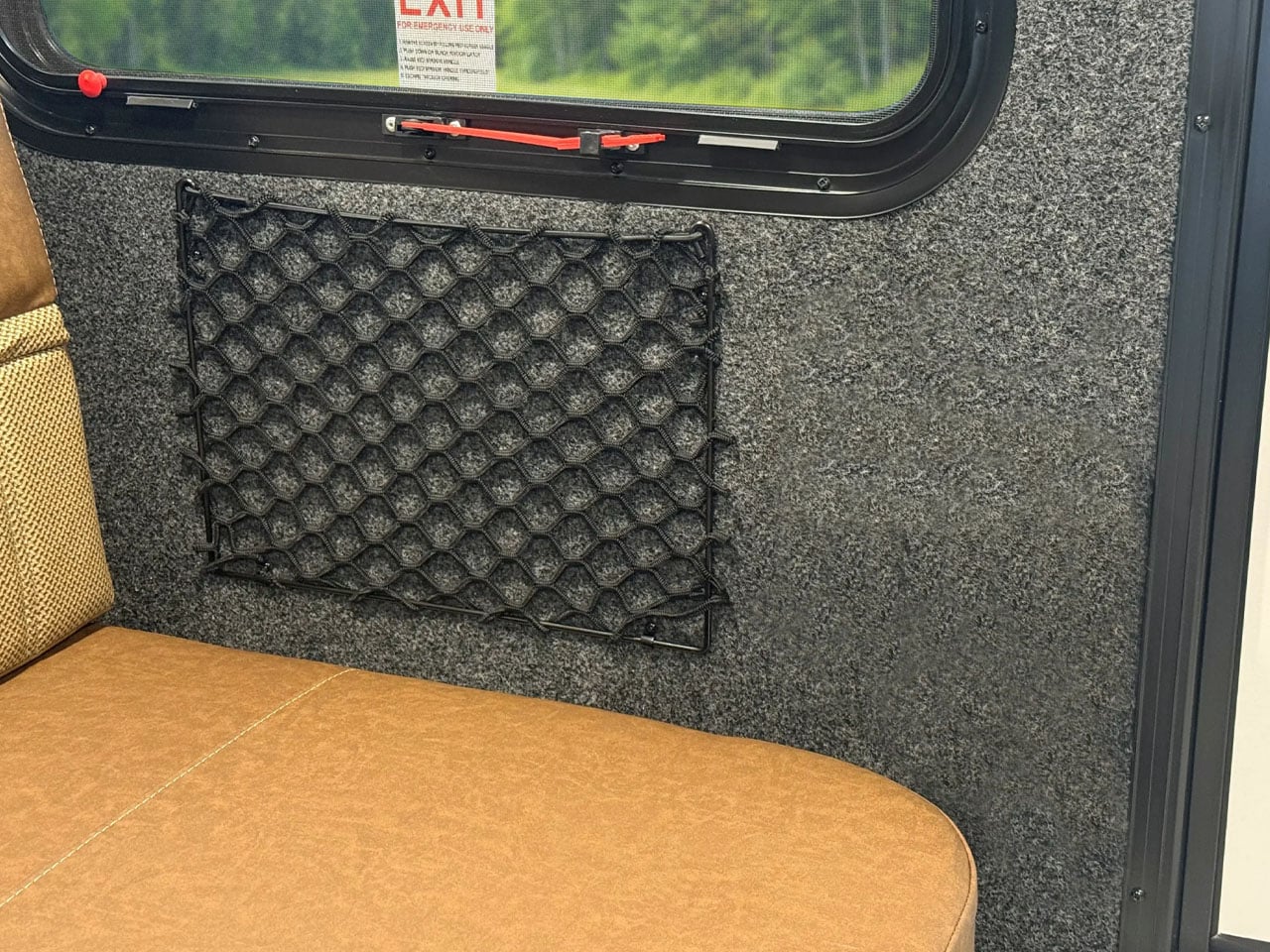
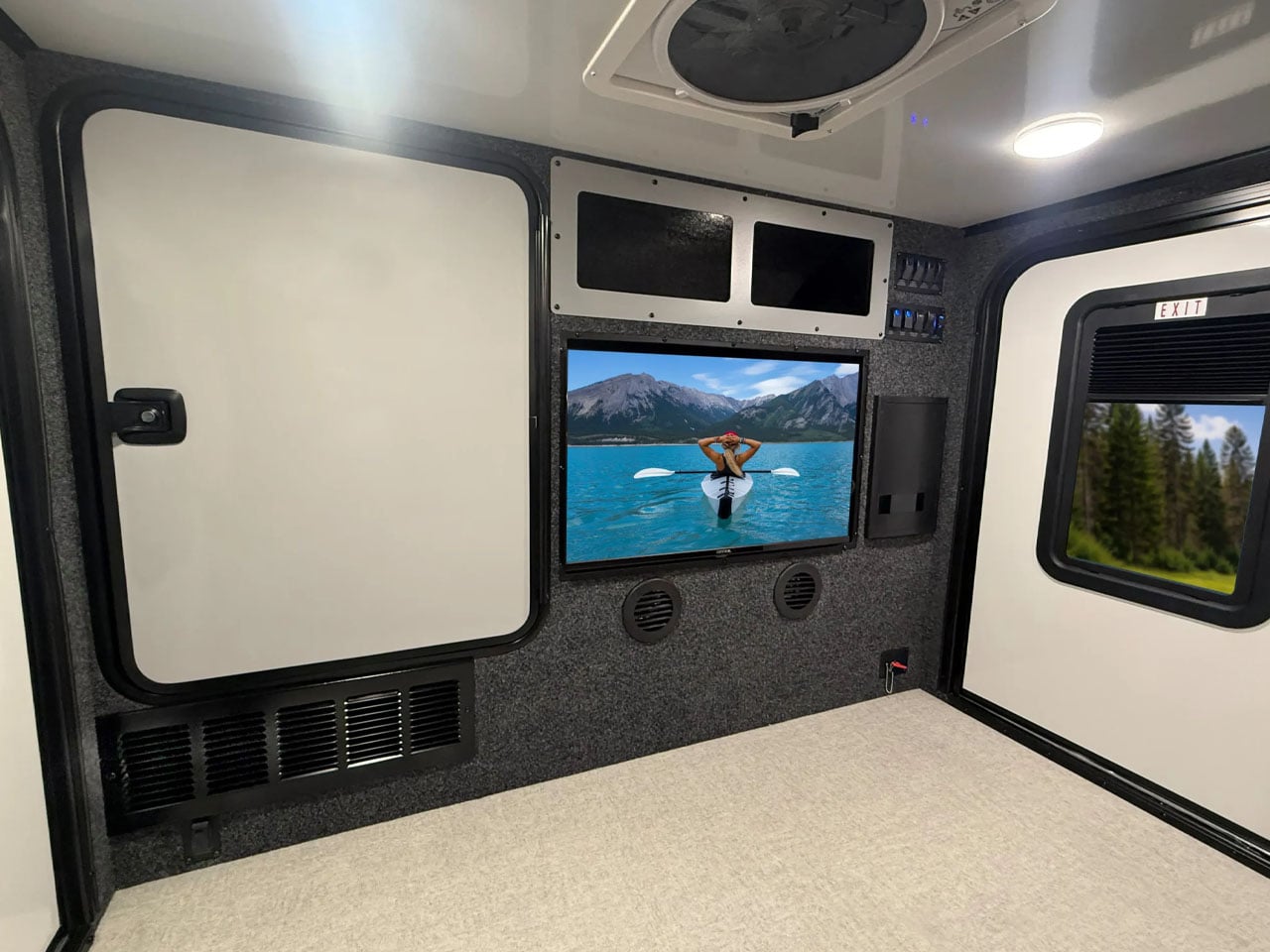
The full home-like layout inside is packed within the four walls made of recycled PET bottles. The floor features linoleum flooring, and the ceiling height goes from a collapsed state to a full-standing height, creating a bright, light-filled living space at the camp. If you like traveling by yourself, and only your gear along, the convertible seating area in the entrance is designed to fold away, leaving an open platform to accommodate two e-bikes or sporting gear.

When you’re out in the wilderness with your gear and want to spend a few extra days, the c.fold caravan can have you covered with renewable power provided by roof-top solar panels, a 300 Ah battery, a 2000-watt inverter, and a portable induction cooktop onboard that you can use as a galley worktop or even place it outside.

The post This Interesting pop-up caravan increases towing EV’s range by up to 100 km first appeared on Yanko Design.

Sony releases two new Bluetooth turntables to spark Gen Z’s love for vinyl

Sony is revisiting the vinyl arena with two new Bluetooth turntables, and for me, it’s resounding confirmation that records have made the comeback we were only speculating about over these years. The new models, the PS-LX3BT and PS-LX5BT, aren’t designed solely for established vinyl audiophiles. With their easy-to-use approach, these Sony turntables are aimed at Gen Z listeners who are just beginning to explore classic record players and CDs.

This is Sony’s first adventure in the vinyl market since the launch of the PS-LX310BT. Released in 2019, the turntable ensured hassle-free Bluetooth connectivity and reliable performance sans complex setups, and the new options are built on the same formula; adding a refined design approach and authentic vinyl sound.

Designer: Sony

Sony PS-LX3BT and the PS-LX5BT do not have biases. Both the turntables are targeted at first-time vinyl listeners and audiophiles, according to the company’s press information. The units thrive on advanced wireless connectivity options and craftsmanship, standing out visually thanks to the transparent dust cover over the platter. This not only protects the gorgeous thing from dust but also protects the components underneath from accidental damage.

Both units, Sony affirms, are intuitive and easy to operate. A single-button automatic playback and Bluetooth connectivity are configured to allow detailed output in both wired as well as wireless connections. For this, the turntables support aptX, aptX Adaptive, and Hi-Res Wireless Audio, which allow users to connect their devices – headphones and speakers – directly to the turntables without requiring a fully-fledged amp setup.

Even though both turntable supports 33⅓ and 45 RPM records (7″ and 12″) and include built-in phono equalizers to work with powered speakers, they differ in positioning. PS-LX5BT is more premium of the two. It features a slightly more refined look with a unibody design, rubber mat and an aluminum tonearm, offering a premium sound experience. “Engineered to suppress unwanted vibration and preserve audio purity,” it comes with a high-grade cartridge. Priced at a competitive $500, the PS-LX5BT offers audiophile-level wireless audio and features a gold-plated audio jack for wired connections.

The PS-LX3BT, on the other hand, offers “warm analogue sound with smooth tracking” for those enjoyable everyday moments that are rare to create with the turntable,s otherwise cumbersome to use. The turntable is equipped with an audio cable and phono equalizer to be used straight out of the box, no real setup required, even for those just starting out with vinyl. This unit is priced comparatively lower and is available for preorder at $400. Interestingly, both of Sony’s new turntables will be sold in recycled packaging, reflecting Sony’s commitment to sustainability.

The post Sony releases two new Bluetooth turntables to spark Gen Z’s love for vinyl first appeared on Yanko Design.

Mangmi Pocket Max handheld boasts magnetic modular D-Pad and ABXY buttons

The handheld wars are entering the territory where end-users will benefit the most, getting the best hardware at the most competitive prices. Ayaneo, Anbernic, and other new players in the handheld market are vying for dominance, which is likely to manifest in sharp pricing. Android handheld maker Mangmi, targeting the entry level of the gaming community, wants to join the tussle with its new iteration of a gaming handheld device.

The Chinese maker is known for its $99 Air X handheld that punches well above its weight, giving retro handhelds priced around $150 a run for their money. Now, the Pocket Max handheld revealed this week, wants to take things further in the quest for handheld supremacy. Going by the revealed specs, we assume the handheld will be priced around $200, making it compete with the likes of Retroid Pocket Mini V2. Considering the global RAM shortage, anything less than that would be a good option for gamers who play a lot of emulation titles.

Design: Mangmi

While the Air X touted the portable aesthetics, the Pocket Max targets gamers who want to swap better performance with a bit of sacrifice in size. For now, Mangmi has released some renders and the specifications of the gadget. It’ll have a 7-inch AMOLED display with 1920 × 1080 HD resolution and 144Hz refresh rate. The device will be powered by the Snapdragon 865 processor, which also powers the Retroid Pocket 5 and Ayaneo Thor Lite. If we go by the official specs sheet, Mangmi will offer the handheld in one variant only that will have 8GB LPDDR4X RAM and 128GB UFS 3.1 storage, which can be extended via the MicroSD card slot.

For extended gaming sessions, the Android 13 handheld gets an 8,000mAh battery with a charging capacity of up to 27W. This is done via the USB-C port that also supports video output. You also get a 3.5mm headphone jack for lossless video output. To maintain constant framerates in graphics-intensive titles, there is an active cooling fan to keep the temperature to a minimum. Wi-Fi 6 and Bluetooth 5.1 connectivity take care of all your wireless connectivity needs.

The gaming device comes with magnetic modular D-Pad and ABXY buttons, which is a good addition if they can survive the onslaught of emotional gamers. The maker claims this to be the first-ever Android-powered handheld with modular magnetic buttons. Other than this, the handheld follows suit with asymmetric TMR thumbsticks with RGB ring lights, Hall Effect triggers, and a 6-axis G-sensor. Pocket Max is on the heavier side at 450 grams and has slightly beefy dimensions of 10 inches high, 4 inches wide, and 0.7 inches thick. When finally released, the handheld will come in White, Black, and Retro GB color variants.


The post Mangmi Pocket Max handheld boasts magnetic modular D-Pad and ABXY buttons first appeared on Yanko Design.

Mangmi Pocket Max handheld boasts magnetic modular D-Pad and ABXY buttons

The handheld wars are entering the territory where end-users will benefit the most, getting the best hardware at the most competitive prices. Ayaneo, Anbernic, and other new players in the handheld market are vying for dominance, which is likely to manifest in sharp pricing. Android handheld maker Mangmi, targeting the entry level of the gaming community, wants to join the tussle with its new iteration of a gaming handheld device.

The Chinese maker is known for its $99 Air X handheld that punches well above its weight, giving retro handhelds priced around $150 a run for their money. Now, the Pocket Max handheld revealed this week, wants to take things further in the quest for handheld supremacy. Going by the revealed specs, we assume the handheld will be priced around $200, making it compete with the likes of Retroid Pocket Mini V2. Considering the global RAM shortage, anything less than that would be a good option for gamers who play a lot of emulation titles.

Design: Mangmi

While the Air X touted the portable aesthetics, the Pocket Max targets gamers who want to swap better performance with a bit of sacrifice in size. For now, Mangmi has released some renders and the specifications of the gadget. It’ll have a 7-inch AMOLED display with 1920 × 1080 HD resolution and 144Hz refresh rate. The device will be powered by the Snapdragon 865 processor, which also powers the Retroid Pocket 5 and Ayaneo Thor Lite. If we go by the official specs sheet, Mangmi will offer the handheld in one variant only that will have 8GB LPDDR4X RAM and 128GB UFS 3.1 storage, which can be extended via the MicroSD card slot.

For extended gaming sessions, the Android 13 handheld gets an 8,000mAh battery with a charging capacity of up to 27W. This is done via the USB-C port that also supports video output. You also get a 3.5mm headphone jack for lossless video output. To maintain constant framerates in graphics-intensive titles, there is an active cooling fan to keep the temperature to a minimum. Wi-Fi 6 and Bluetooth 5.1 connectivity take care of all your wireless connectivity needs.

The gaming device comes with magnetic modular D-Pad and ABXY buttons, which is a good addition if they can survive the onslaught of emotional gamers. The maker claims this to be the first-ever Android-powered handheld with modular magnetic buttons. Other than this, the handheld follows suit with asymmetric TMR thumbsticks with RGB ring lights, Hall Effect triggers, and a 6-axis G-sensor. Pocket Max is on the heavier side at 450 grams and has slightly beefy dimensions of 10 inches high, 4 inches wide, and 0.7 inches thick. When finally released, the handheld will come in White, Black, and Retro GB color variants.


The post Mangmi Pocket Max handheld boasts magnetic modular D-Pad and ABXY buttons first appeared on Yanko Design.

Sony unveils LinkBuds Clip open-ear earbuds in peppy colors

Open earbuds are the fastest-growing segment of the headphone market, but long before they gained popularity, Sony initially introduced the concept to the market. From their first ever iteration, this style of earbuds has graduated into earhook and clip-style designs. When LinkBuds were first released in 2022, they came in a peculiar design with an ear hook and a circular housing that lets in ambient noises.

After the LinkBuds Open were released in 2024, Sony has now introduced the LinkBuds Clip, featuring an always-clip-on design similar to the Bose Open Earbuds, Edifier LolliClip, Shokz OpenDots One, and the JVC Nearphones. These new flagship earbuds improve on the previous open ear version in every aspect, making them a great choice for people who want situational awareness of their surroundings without any degradation in music quality.

Designer: Sony

Targeted towards active lifestyle users, the buds don’t block the ear canals to hear conversations better, and are ergonomically designed for all-day long wear comfort. The Japanese consumer electronics giant is positioning them as a flagship option for music lovers who are worried about losing their pricy pair of buds during workouts, sporting activities, or adventurous escapades. IPX4 splash-proof rated LinkBuds Clip have a glossy finish with a C-bad connecting the two contoured stems that rest on either side of the ear. While I’m not a big fan of the glossy finish on these, the design looks reassuring, and the buds won’t fall out even after rigorous activity.

The flexibility of adjusting the positioning of the buds depending on the comfort and desired audio output makes the pair recommendable. You can go for a closer proximity to the ear canal for a better sound signature with noticeably more bass, or have a laid-back setup that promotes comfort and consequently a more open input of the ambient noises around. The case of these open-ear earbuds is more or less the same as the LinkBuds Open and Fit, but it doesn’t support wireless charging, which is a bit of a disappointment.

As per independent reviewers who have spent time with the LinkBuds Clip, the touch controls on these are not as good as other Open ear options. The taps can be a miss at times or trigger unwanted action. That said, it is the issue with most touch control earbuds, and for people like me who love physical controls, the features can be a bit of a miss. The sound signature on the LinkBuds Clip is balanced when ideally placed in the ear openings. However, it will be interesting to see how they compare to the next version of Bose Ultra Open Earbuds (released back in early 2024), which are speculated to come out this year.

Battery life on the buds is typically hours that extends to 37 hours with the charging case. The clip-ons have three listening modes: Standard mode for more immersive sound with a lot of detail and clear vocals, Voice Boost mode for listening to the other person in crowded spaces, and the Sound Leakage Reduction mode for lesser disturbance to people in the vicinity.  LinkBuds Clip can be bought right away for $230 in peppy color options like black, greige, green, and lavender. The case covers and fitting cushions in coral green, blue, lavender, and black can be added on for $25 each.

The post Sony unveils LinkBuds Clip open-ear earbuds in peppy colors first appeared on Yanko Design.

Nomad Icy Blue Glow Stratos Band adds glow-in-the-dark twist to Apple Watch Ultra

Getting a watch band for your Watch Ultra just got interesting with Nomad’s latest addition to the Stratos Band line-up. After the success with the custom fit band designed for the Ultra in titanium finish and the FKM links, which is more comfortable to wear and touch, this watch band is irresistible. Coming in a fluoroelastomer cast that glows in Tron-like hues, the band demonstrates how “performance and fun can happen at the same time.” Nomad calls it the Icy Blue Glow version, and it’s a limited-run creation that pairs rugged durability with understated style.

The new Stratos Band blends Grade 4 titanium hardware with compression-molded FKM fluoroelastomer for a hybrid design that balances strength and flexibility. The titanium outer links provide a refined look and robust build, while the FKM interior links contour around the wrist for comfort and movement that traditional metal bands rarely offer. This dual-material approach also introduces subtle ventilation spaces, which help with moisture evaporation and breathability during everyday wear or more intense activity.

Designer: Nomad

What sets the Icy Blue Glow edition apart is the photoluminescent material infused into the interior FKM links. This compound absorbs light throughout the day and emits a soft blue glow in low-light conditions. The glowing effect is more subdued in typical environments because the material sits beneath the titanium, but it still produces a cool, visual accent in the dark that distinguishes it from more conventional bands. Nomad equips this limited version with a custom magnetic clasp engineered for secure closure and corrosion resistance. The clasp remains fastened through daily movements yet opens easily when the sides of the buckle are squeezed. Users can also fine-tune the band’s fit using the included tool to remove or add links, making customization straightforward.

Though designed from the ground up for Apple Watch Ultra models 1 and higher, the Stratos Band is also compatible with earlier Apple Watch Series 1–11 and SE models, offering versatility across a wide range of devices. The band’s flexible design supports wrist sizes generally between 130 mm and 200 mm, and its construction balances a weight that feels substantial without being cumbersome. The titanium elements are finished with a scratch-resistant DLC coating, adding resilience for adventures and daily use alike.

The fluoroelastomer material itself is antimicrobial and can be cleaned easily with soap and water, supporting hygiene for wear during workouts or outdoor activities. The band’s water-resistant design further reinforces its adaptability to various lifestyles, though it’s recommended to allow the band to dry fully after exposure to moisture. Priced at $189, the Stratos Band Icy Blue Glow edition offers a premium alternative to standard Apple and third-party bands with a playful glow-in-the-dark element.

The post Nomad Icy Blue Glow Stratos Band adds glow-in-the-dark twist to Apple Watch Ultra first appeared on Yanko Design.

World’s first hydrogen-powered surveillance drone enters combat duty with Ukrainian Defense Forces

Hydrogen-powered unmanned aerial vehicles are not a new concept. Drones running on hydrogen fuel have been in experimental forms for over a decade, but this is for the first time, a drone has been fully designed and deployed on full-scale combat duty in an active war zone.

The drone is a hybrid version of the Raybird USA developed by Skyeton and is deployed with the Ukrainian Defense Forces. It is designed for long-endurance and perhaps is, Ukraine’s first attempt at sending a hybrid hydrogen-powered drone into an active battlefield. It has been in the war zone “since December 2025, as part of interagency testing,” Skyeton informs.

Designer: Skyeton

As a hybrid version of the Raybird, the drone is powered by an electric motor running on electricity generated by hydrogen fuel. The UAV has been reengineered to adequately distribute the space and weight of the hydrogen tank system onboard. Being hybrid, the drone is quieter in comparison to other combustion engine options, thus it makes a great surveillance aircraft.

“We have converted two years of laboratory testing into a new aircraft concept: it is the same class and weight, but a completely redesigned concept based on electric propulsion,” Roman Knyazhenko, CEO of Skyeton said. “Hydrogen fuel is a solution that allows us to combine all the advantages of an electric motor… with the long-duration continuous flight that is a hallmark of our UAV, he added.

According to Skyeton, the hydrogen-based Raybird is not armed, it instead has radar and sensors in its payload for its identified long-range reconnaissance missions. The drone is created with a wingspan of up to 15 feet, and it has a total payload capacity of 23 kgs. Being a Raybird, the hybrid drone can cruise at over 110 km/h top speed, and the UAV can function in temperatures ranging between -35°C to +55°C. It has a flight endurance of 12 hours for now, which the Skyeton engineers are determined to increase to 20 hours.

According to the company, the hydrogen-powered Raybird on war duty can fly at an altitude of up to 18,000 feet to carry out its surveillance duties. Of course, for now, the drone running on a hydrogen-electric propulsion is being used for long-range reconnaissance missions by Ukraine, but its operational efficiency and environmental benefits suggest it can be useful in a range of other applications: both civilian and defense.

For its usability in different scenarios, Skyeton says it will provide the hydrogen-powered Raybird in two variants. A drone with pre-filled tanks that can be swapped like cartridges. Or paired with a compact mobile unit capable of generating hydrogen on site as required.

The post World’s first hydrogen-powered surveillance drone enters combat duty with Ukrainian Defense Forces first appeared on Yanko Design.

World’s first hydrogen-powered surveillance drone enters combat duty with Ukrainian Defense Forces

Hydrogen-powered unmanned aerial vehicles are not a new concept. Drones running on hydrogen fuel have been in experimental forms for over a decade, but this is for the first time, a drone has been fully designed and deployed on full-scale combat duty in an active war zone.

The drone is a hybrid version of the Raybird USA developed by Skyeton and is deployed with the Ukrainian Defense Forces. It is designed for long-endurance and perhaps is, Ukraine’s first attempt at sending a hybrid hydrogen-powered drone into an active battlefield. It has been in the war zone “since December 2025, as part of interagency testing,” Skyeton informs.

Designer: Skyeton

As a hybrid version of the Raybird, the drone is powered by an electric motor running on electricity generated by hydrogen fuel. The UAV has been reengineered to adequately distribute the space and weight of the hydrogen tank system onboard. Being hybrid, the drone is quieter in comparison to other combustion engine options, thus it makes a great surveillance aircraft.

“We have converted two years of laboratory testing into a new aircraft concept: it is the same class and weight, but a completely redesigned concept based on electric propulsion,” Roman Knyazhenko, CEO of Skyeton said. “Hydrogen fuel is a solution that allows us to combine all the advantages of an electric motor… with the long-duration continuous flight that is a hallmark of our UAV, he added.

According to Skyeton, the hydrogen-based Raybird is not armed, it instead has radar and sensors in its payload for its identified long-range reconnaissance missions. The drone is created with a wingspan of up to 15 feet, and it has a total payload capacity of 23 kgs. Being a Raybird, the hybrid drone can cruise at over 110 km/h top speed, and the UAV can function in temperatures ranging between -35°C to +55°C. It has a flight endurance of 12 hours for now, which the Skyeton engineers are determined to increase to 20 hours.

According to the company, the hydrogen-powered Raybird on war duty can fly at an altitude of up to 18,000 feet to carry out its surveillance duties. Of course, for now, the drone running on a hydrogen-electric propulsion is being used for long-range reconnaissance missions by Ukraine, but its operational efficiency and environmental benefits suggest it can be useful in a range of other applications: both civilian and defense.

For its usability in different scenarios, Skyeton says it will provide the hydrogen-powered Raybird in two variants. A drone with pre-filled tanks that can be swapped like cartridges. Or paired with a compact mobile unit capable of generating hydrogen on site as required.

The post World’s first hydrogen-powered surveillance drone enters combat duty with Ukrainian Defense Forces first appeared on Yanko Design.