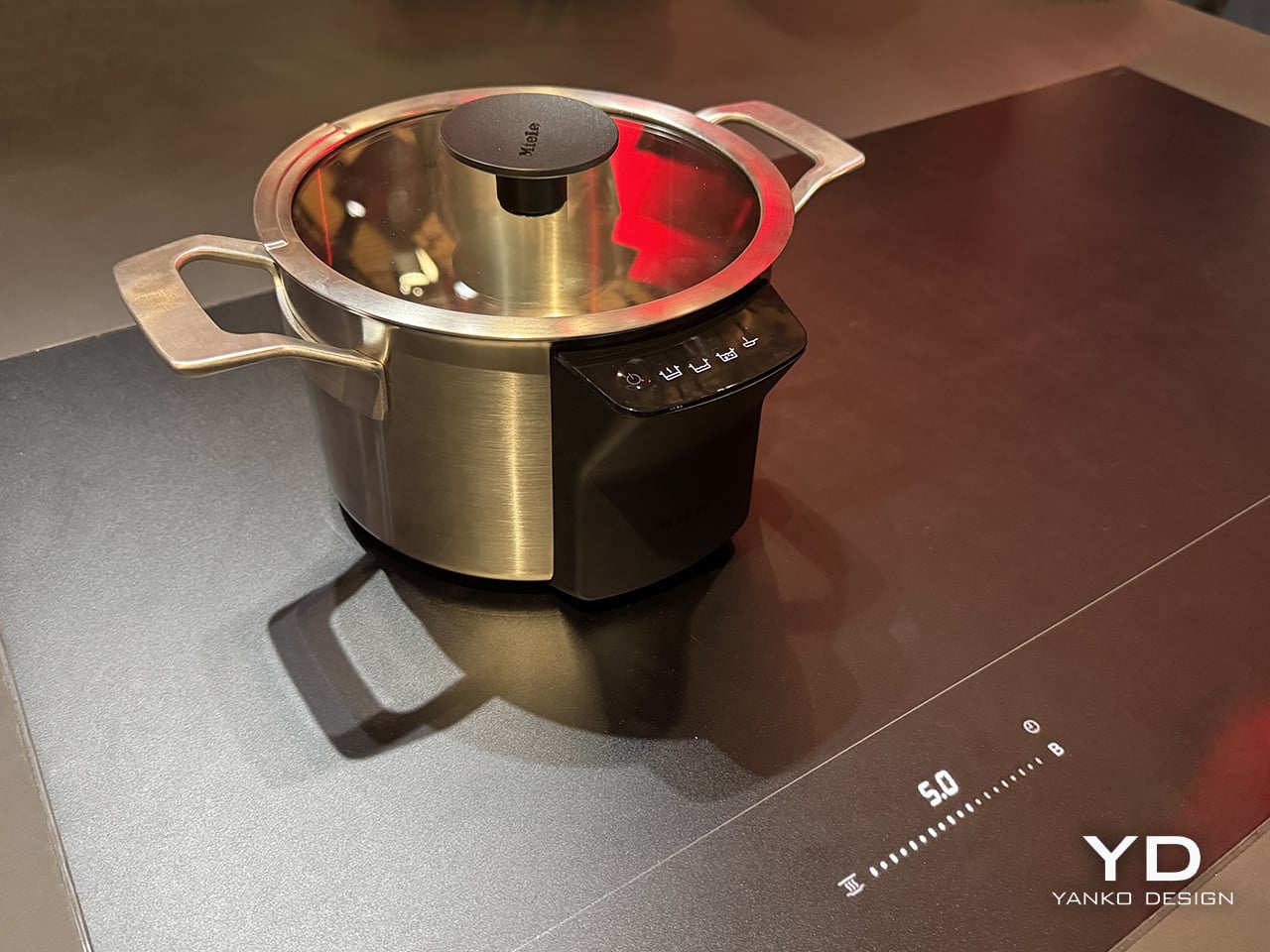
A watched pot may never boil, but an unwatched one seems to do so with a special kind of enthusiasm. That familiar kitchen truth highlights a basic challenge; the cook must serve as the constant monitor for every vessel on the stove, standing guard against the sudden surge of a boil-over or the sharp, bitter smell of a sauce beginning to catch and burn. With its new M-Sense system, Miele proposes a more cooperative arrangement, one where the cookware itself takes over the job of watching for trouble.
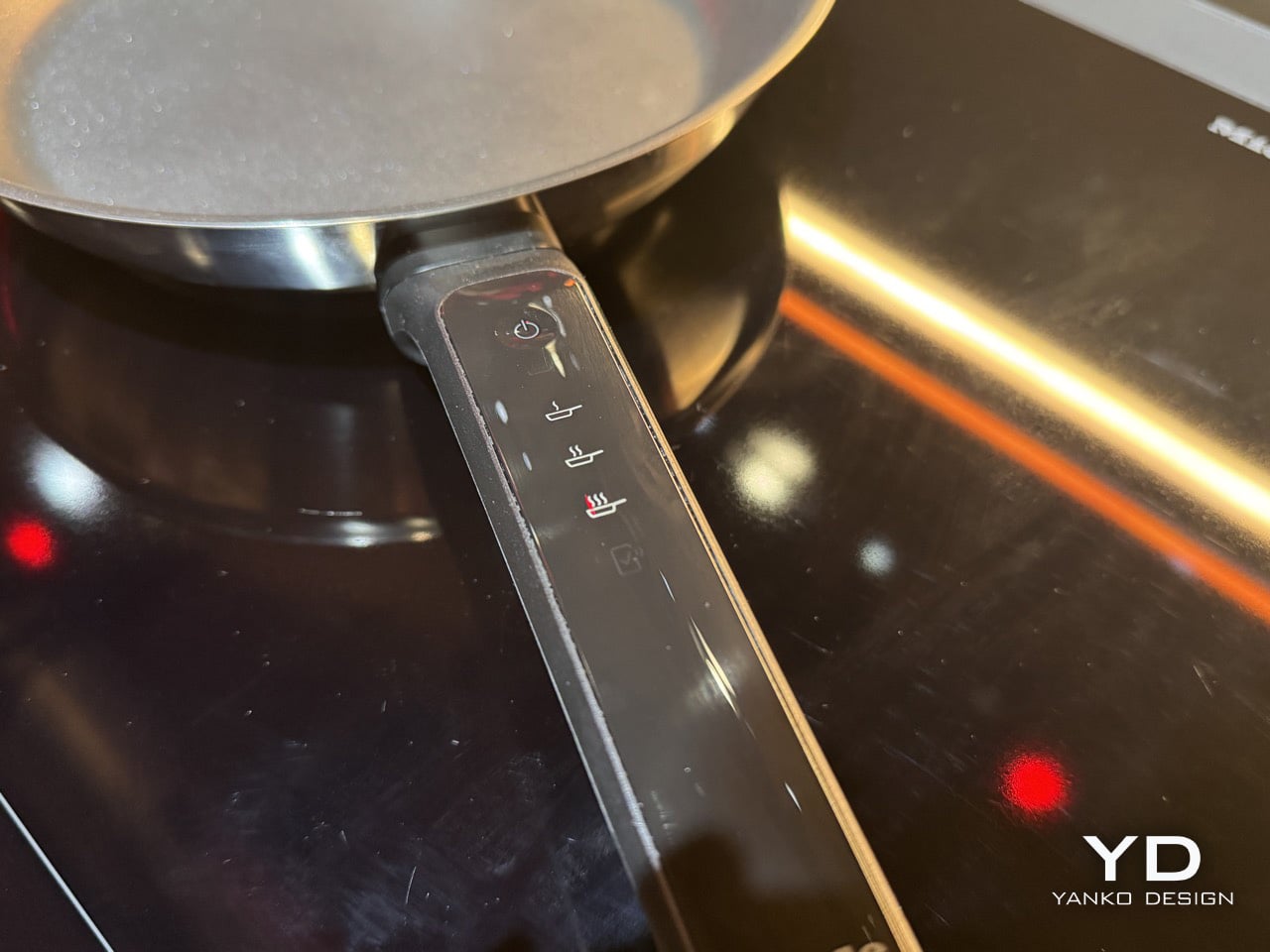
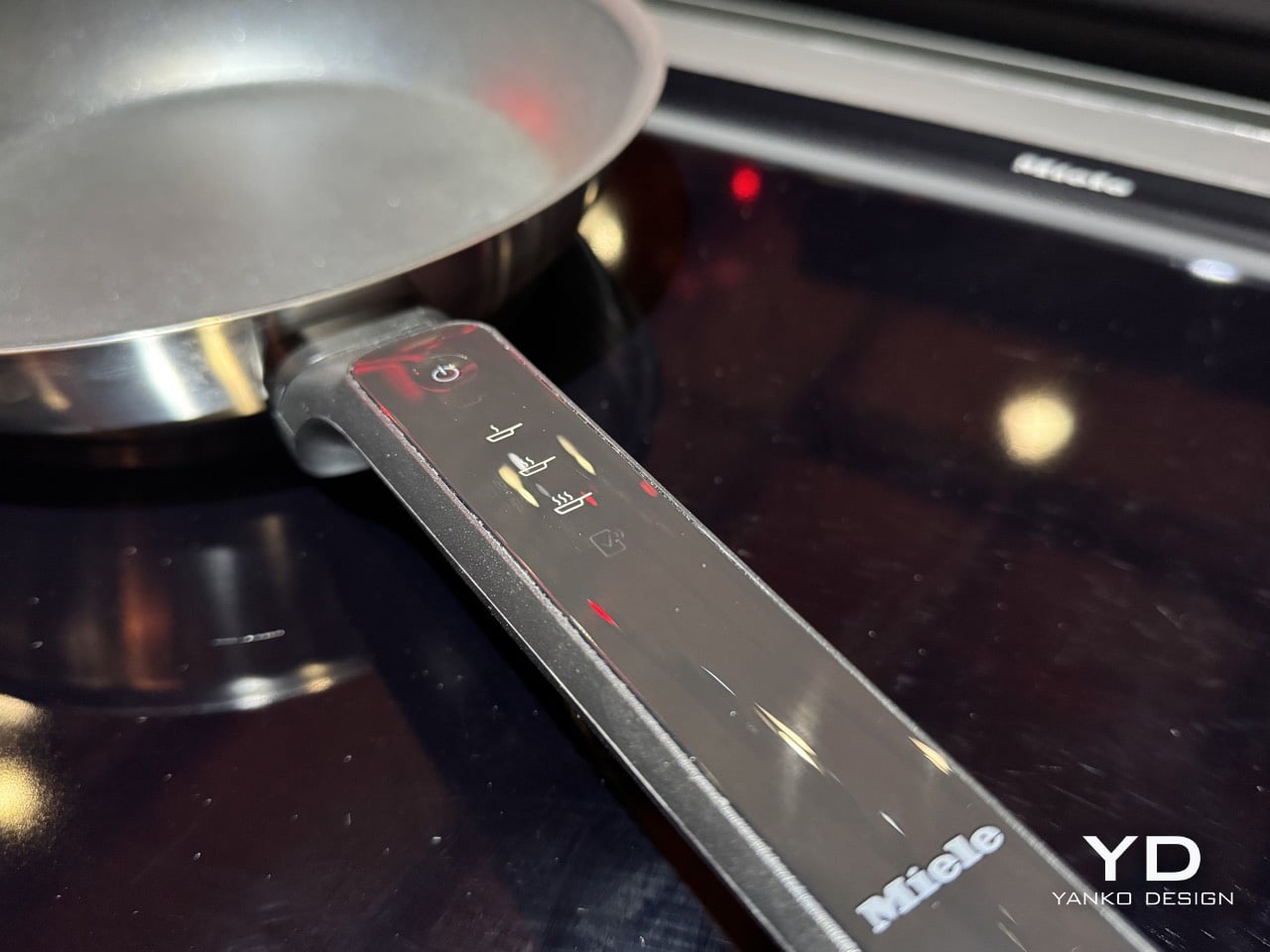
By integrating sensors and communication hardware directly into its cookware, Miele creates a live feedback loop between the pot and the induction hob. This connection allows the vessel to detect the telltale temperature spikes that precede a messy boil-over or the localized hot spots that lead to scorching. It then signals the hob to regulate its power automatically, transforming the simple pot from a passive container into an active, intelligent partner in the cooking process. It is a sensible and deeply practical innovation aimed at creating a calmer, more forgiving kitchen.
Designer: Miele
The appeal of that idea becomes obvious the moment real food enters the picture. Caramel demands close attention because it can move from amber to acrid in seconds. Milk rises fast, stocks foam unpredictably, and sauces have a habit of catching at the base just when your focus shifts elsewhere. M-Sense is built around those ordinary kitchen disasters, which makes it feel refreshingly grounded. There is a lot of smart kitchen technology that promises convenience in abstract terms, but this system is easy to understand because it targets problems almost every home cook has experienced firsthand.
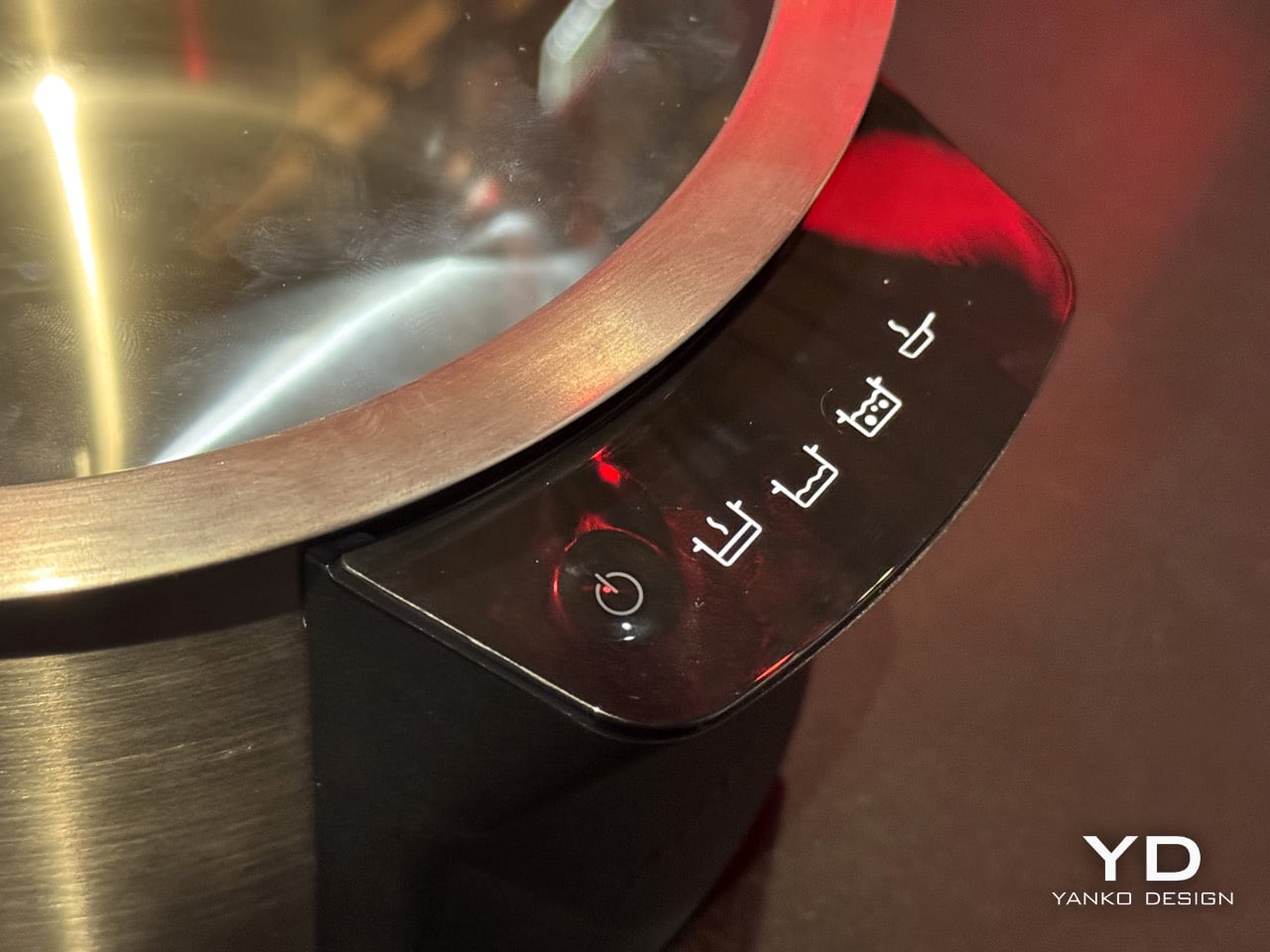
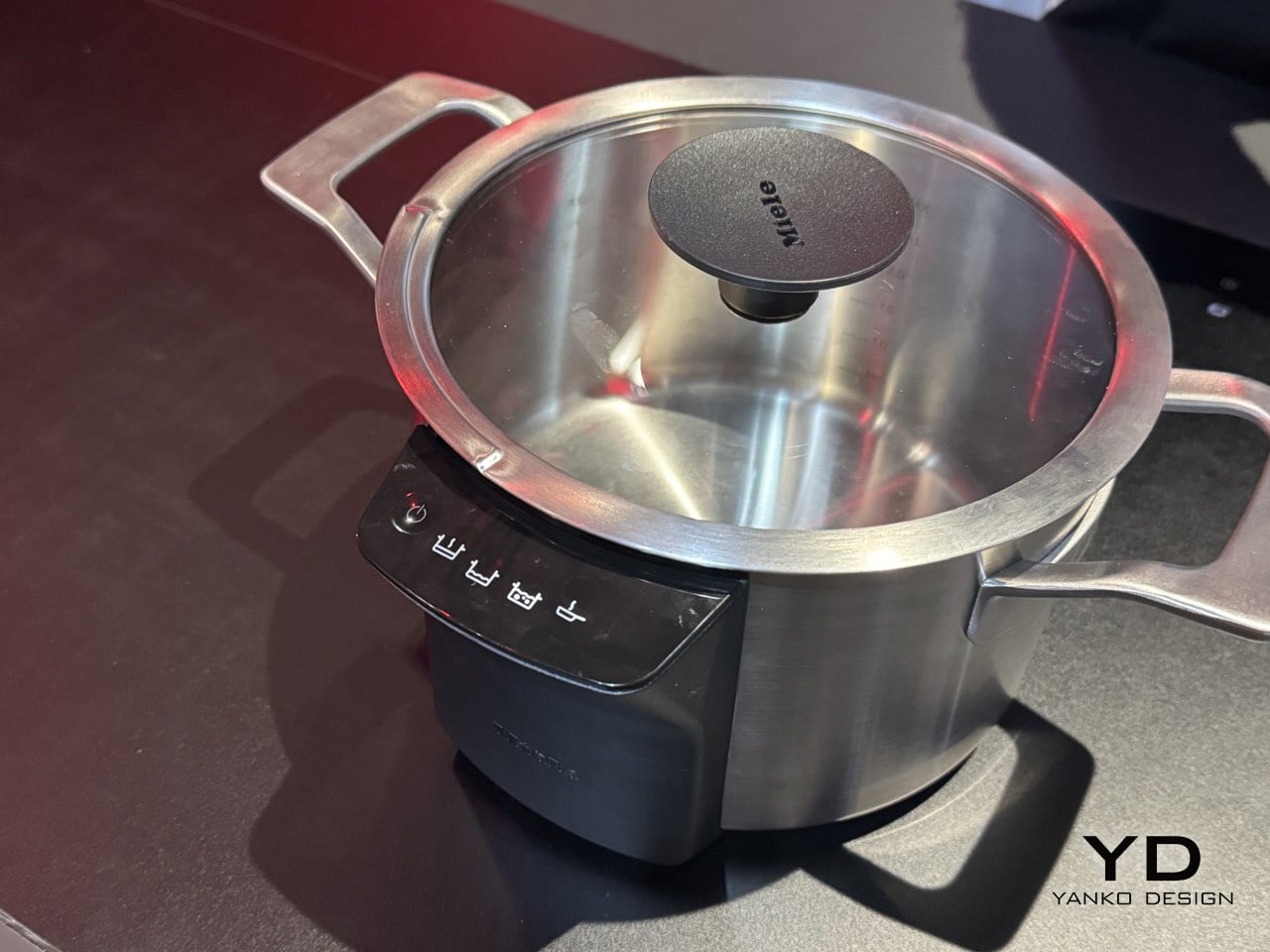
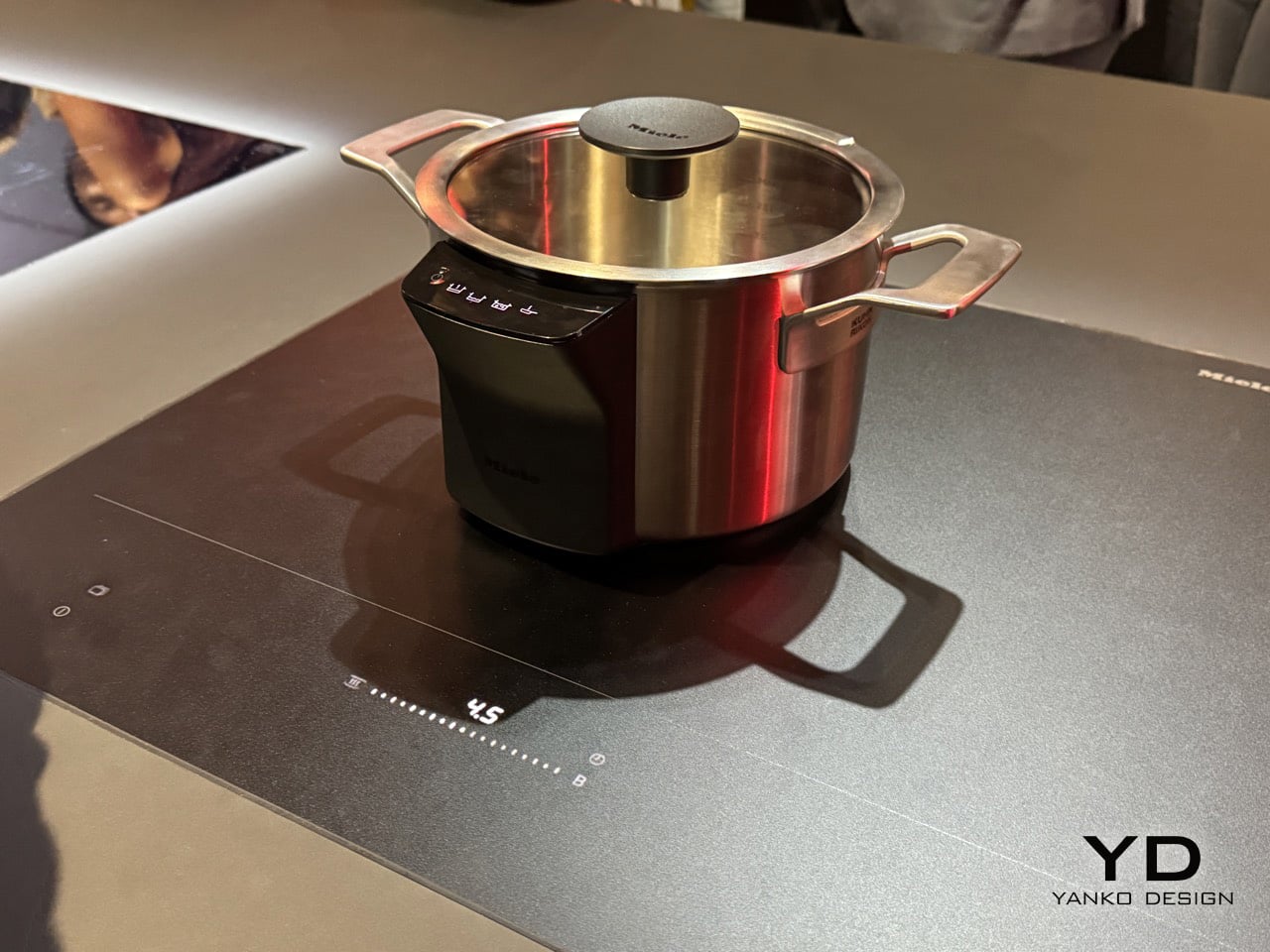
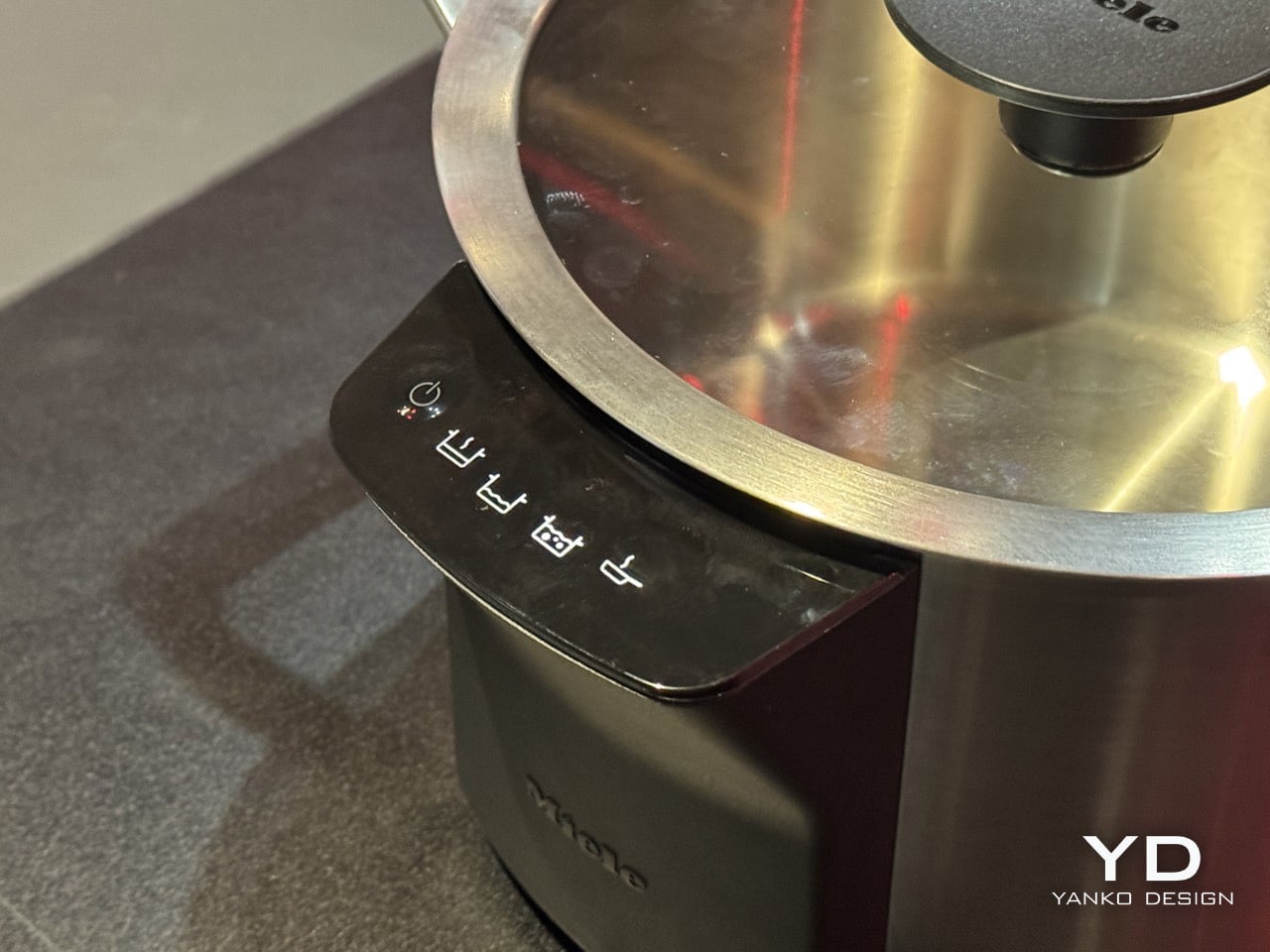
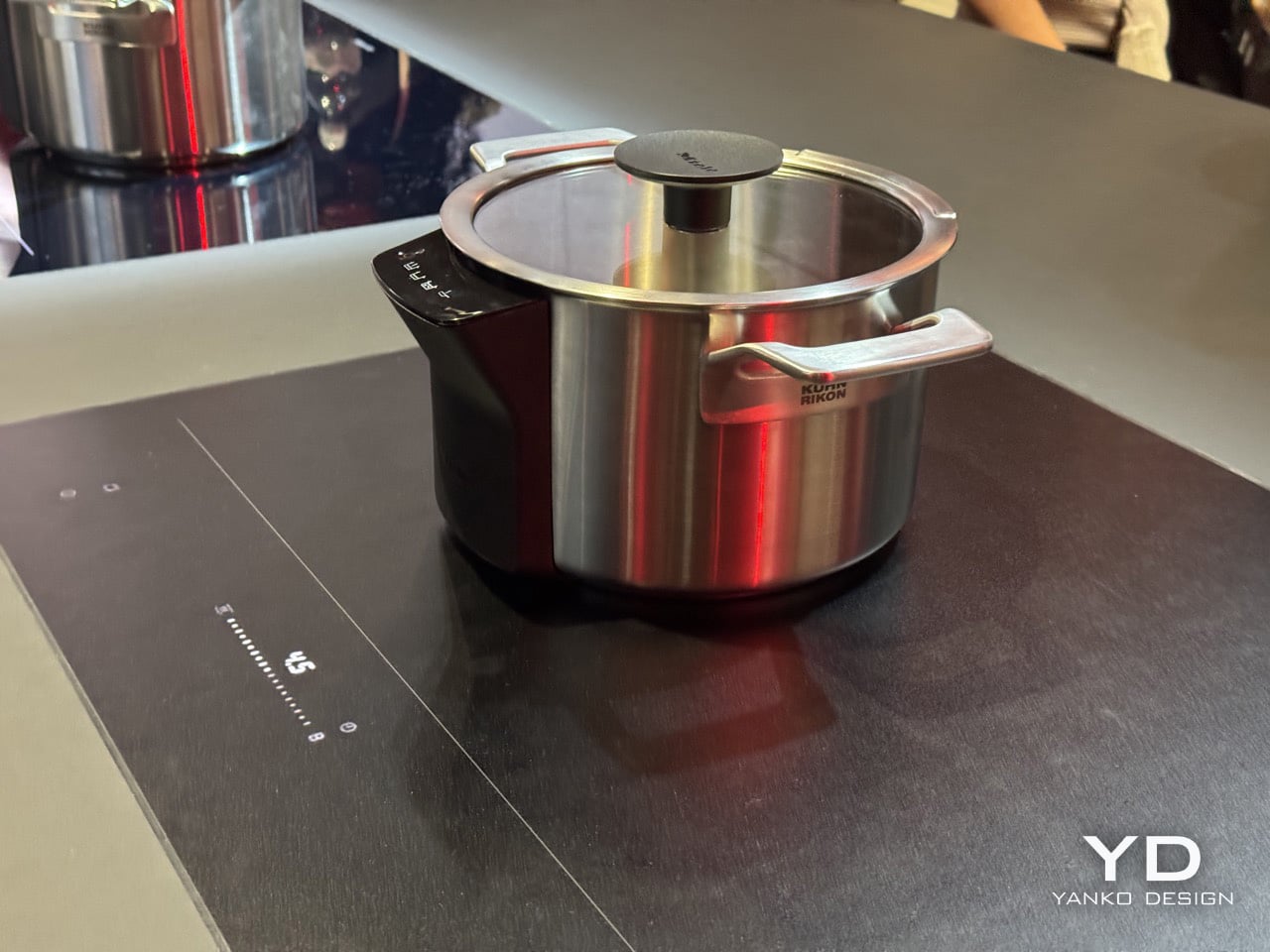
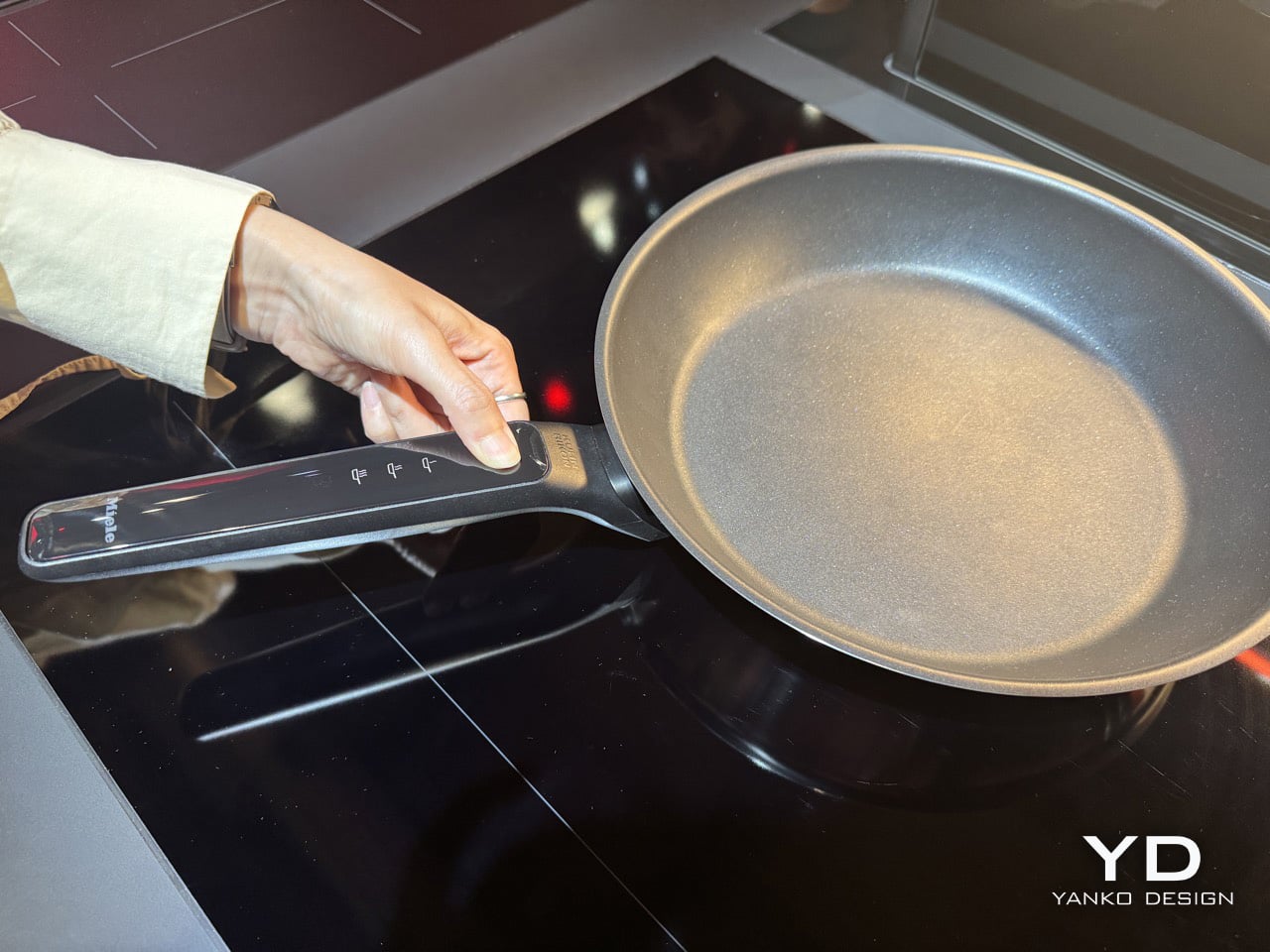
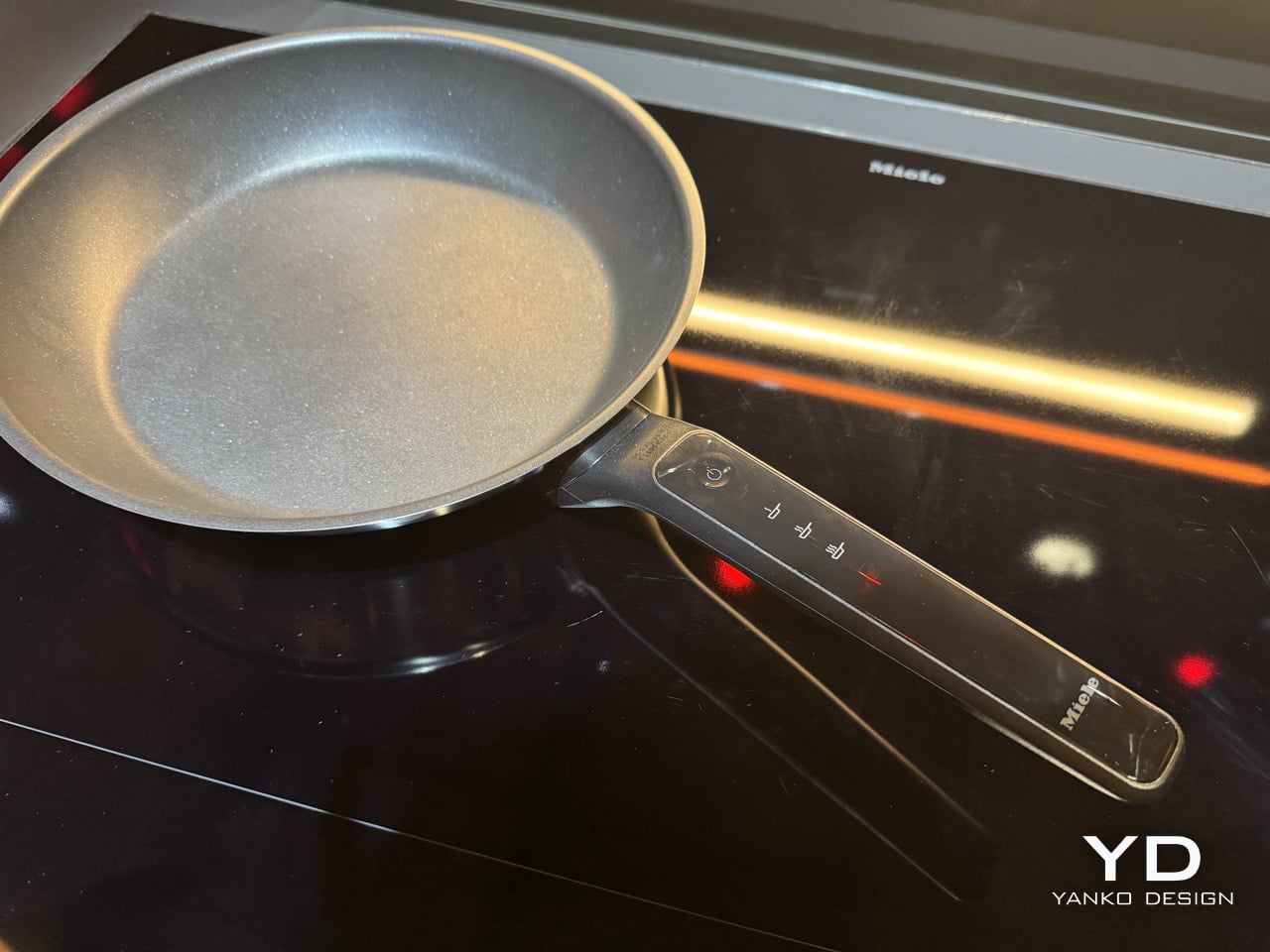
Miele is showcasing at least two pieces, a brushed stainless steel saucepot and a frying pan with a dark non-stick interior, and both reveal how carefully the interaction has been considered. The saucepot carries a compact touch interface integrated into the side of the vessel, while the frying pan places its controls directly into the handle where the thumb naturally lands. In both cases, the controls feel embedded into the object rather than added on as an afterthought, which helps the cookware read as premium kitchenware first and connected hardware second.
The induction hob at the center of the system is the KM 8695 FL MattFinish, a full-surface model finished in scratch-resistant MattFinish ceramic glass. Full-surface induction means the cookware can sit anywhere on the hob while maintaining the communication link, which matters considerably for a system built on continuous sensor feedback. Miele states the promise with welcome directness: No Burn. No Overboil. No Problem. Both outcomes trace back to a single cause, a vessel with no way to communicate with the heat source beneath it. M-Sense addresses that by making the cookware itself the sensing layer, so power adjustments happen before smoke or overflow enters the picture.
The Miele app extends the system beyond the counter, enabling remote monitoring, direct program transfer to the hob, and a recipe library that maps dish choices to actual hob settings. The cookware can connect to the app before it even reaches the hob, arriving on the induction surface already configured for the task at hand. That pre-loading capability closes a gap most connected kitchen products have only gestured toward. Working across hob, cookware, and app simultaneously, M-Sense operates as a coordinated platform rather than a loose set of individual smart features. It is a more coherent model than the kitchen tech category has typically managed to deliver.
For all the talk around smart homes, this is the kind of intelligence that feels worth having because it addresses a genuine friction point in daily life. Cooking often demands divided attention, especially in real homes where dinner happens alongside conversations, children, emails, and the dozens of small interruptions that shape an evening. A system that can sense trouble early and quietly intervene before a sauce burns or a pot boils over feels less like novelty and more like relief. Miele is showing the M-Sense collection in the EuroCucina section at Salone del Mobile, where visitors can see the cookware paired with its compatible induction setup as part of the brand’s broader vision for a more responsive kitchen.
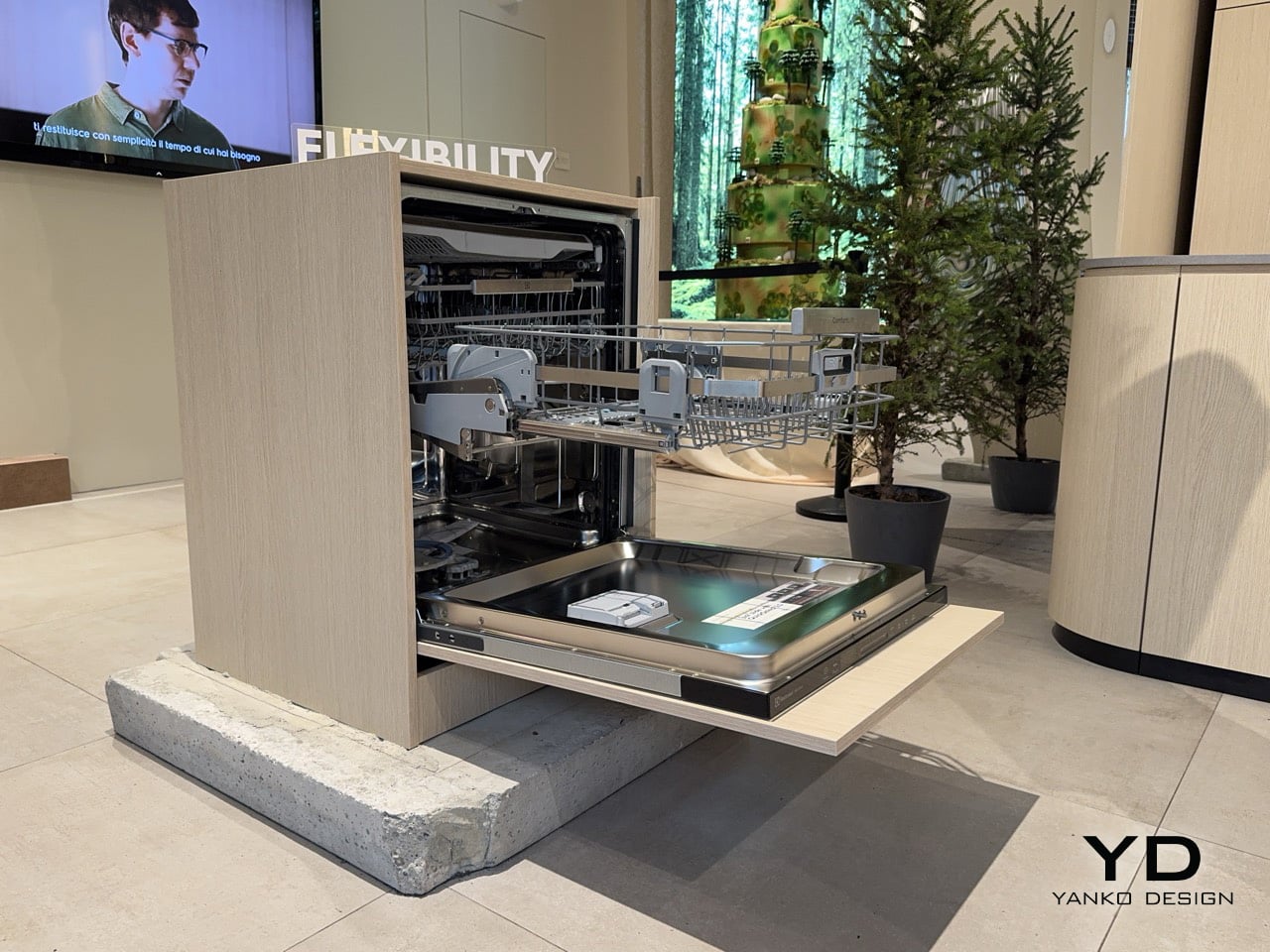
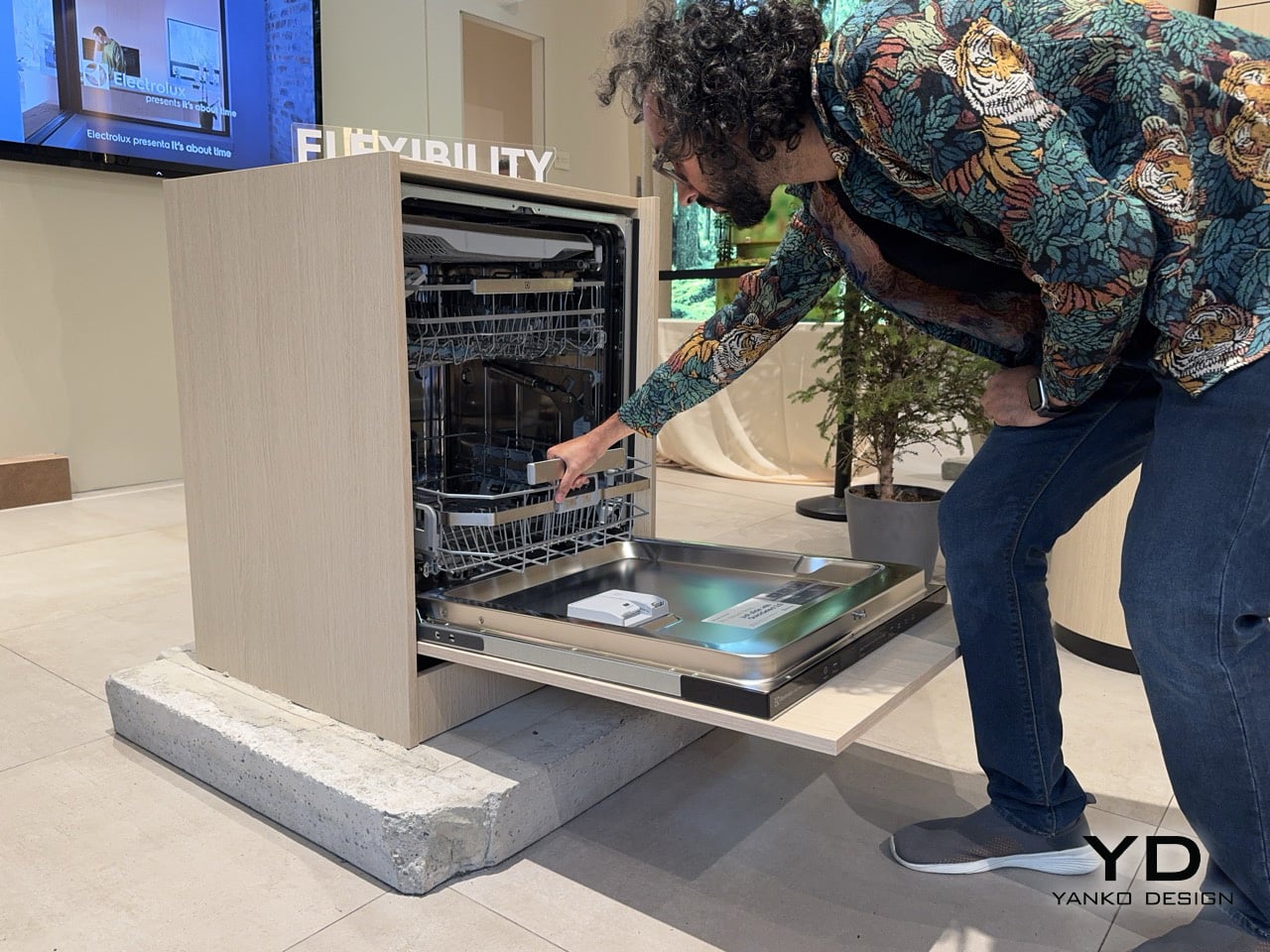
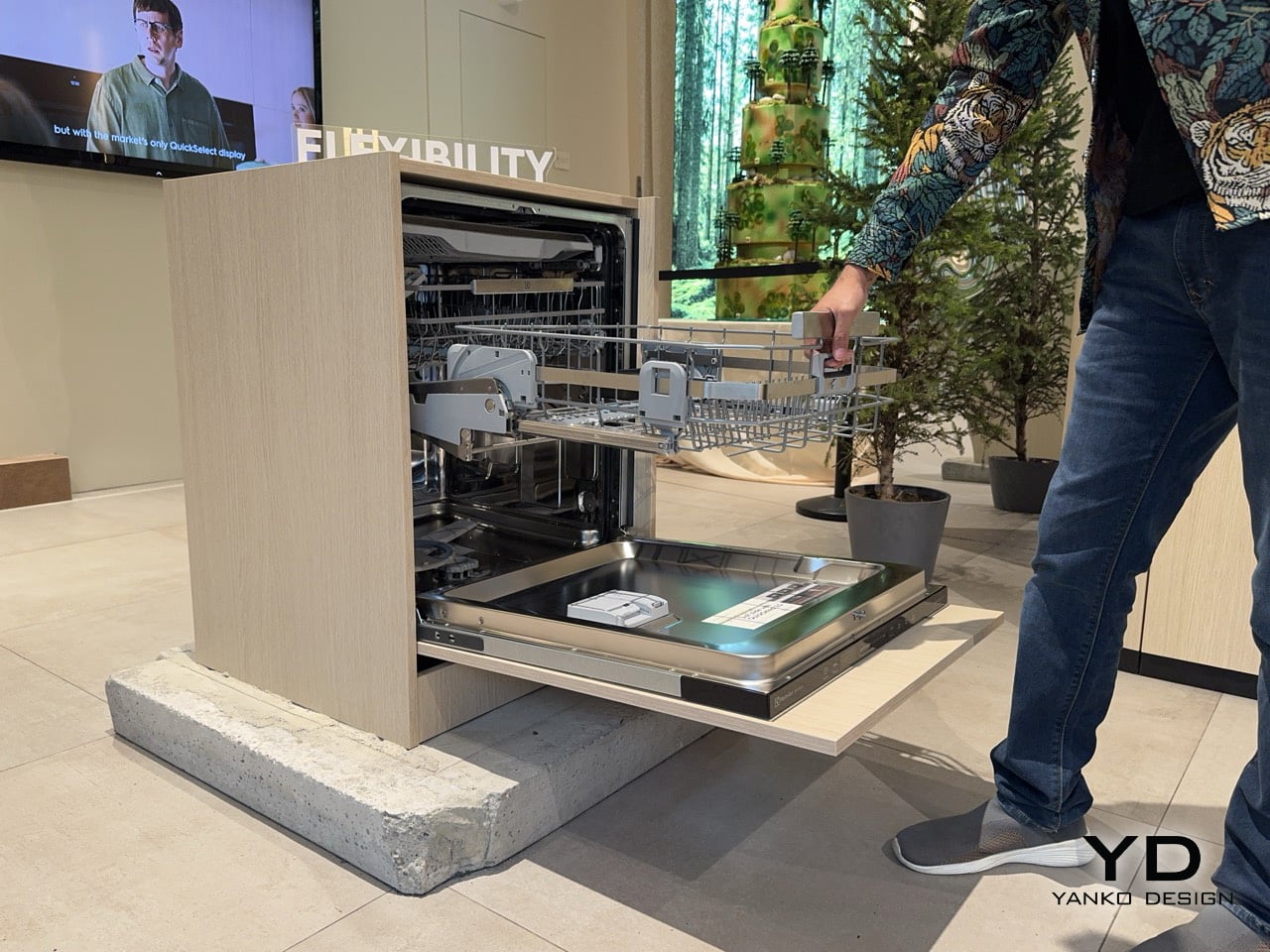
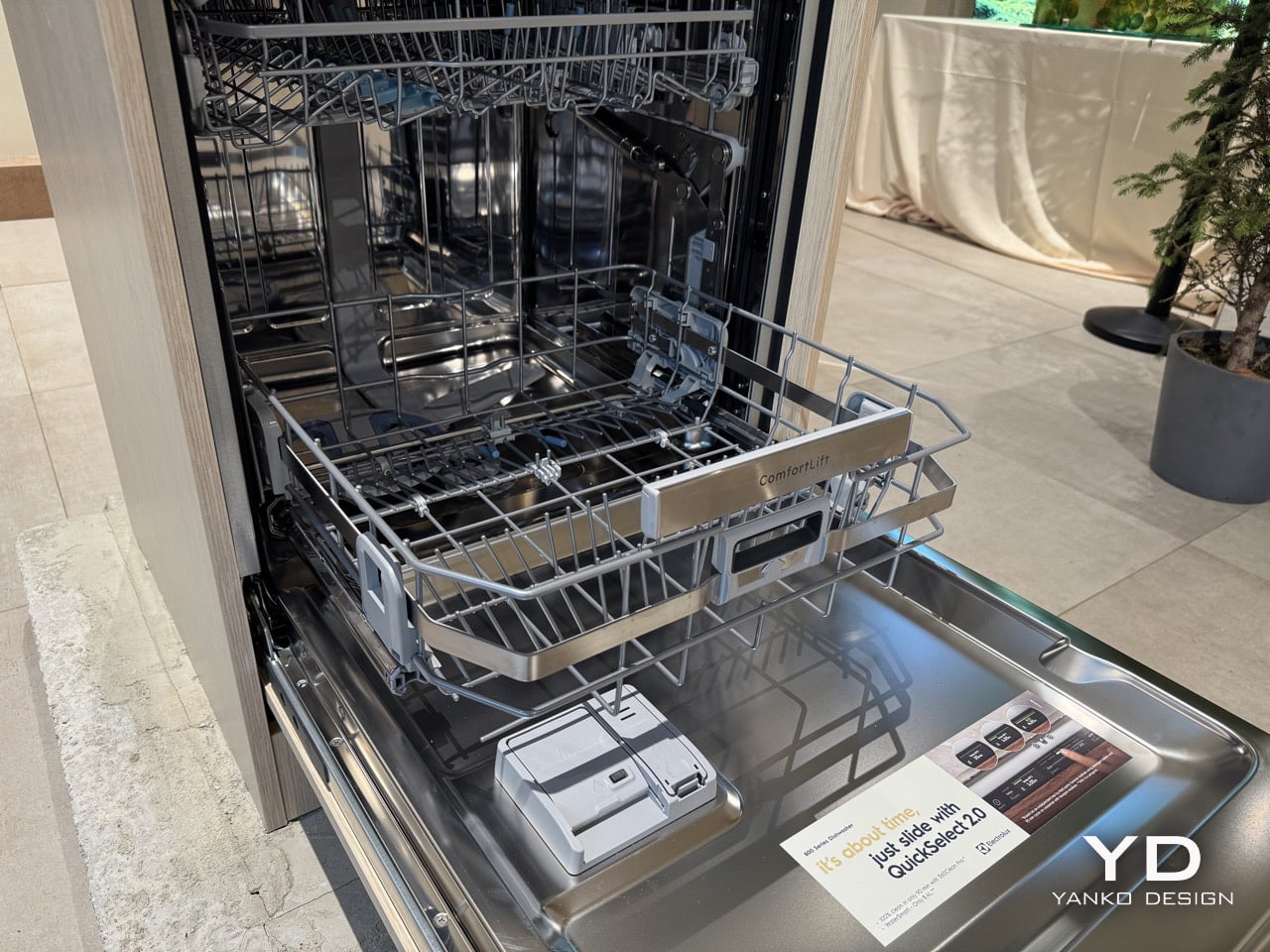
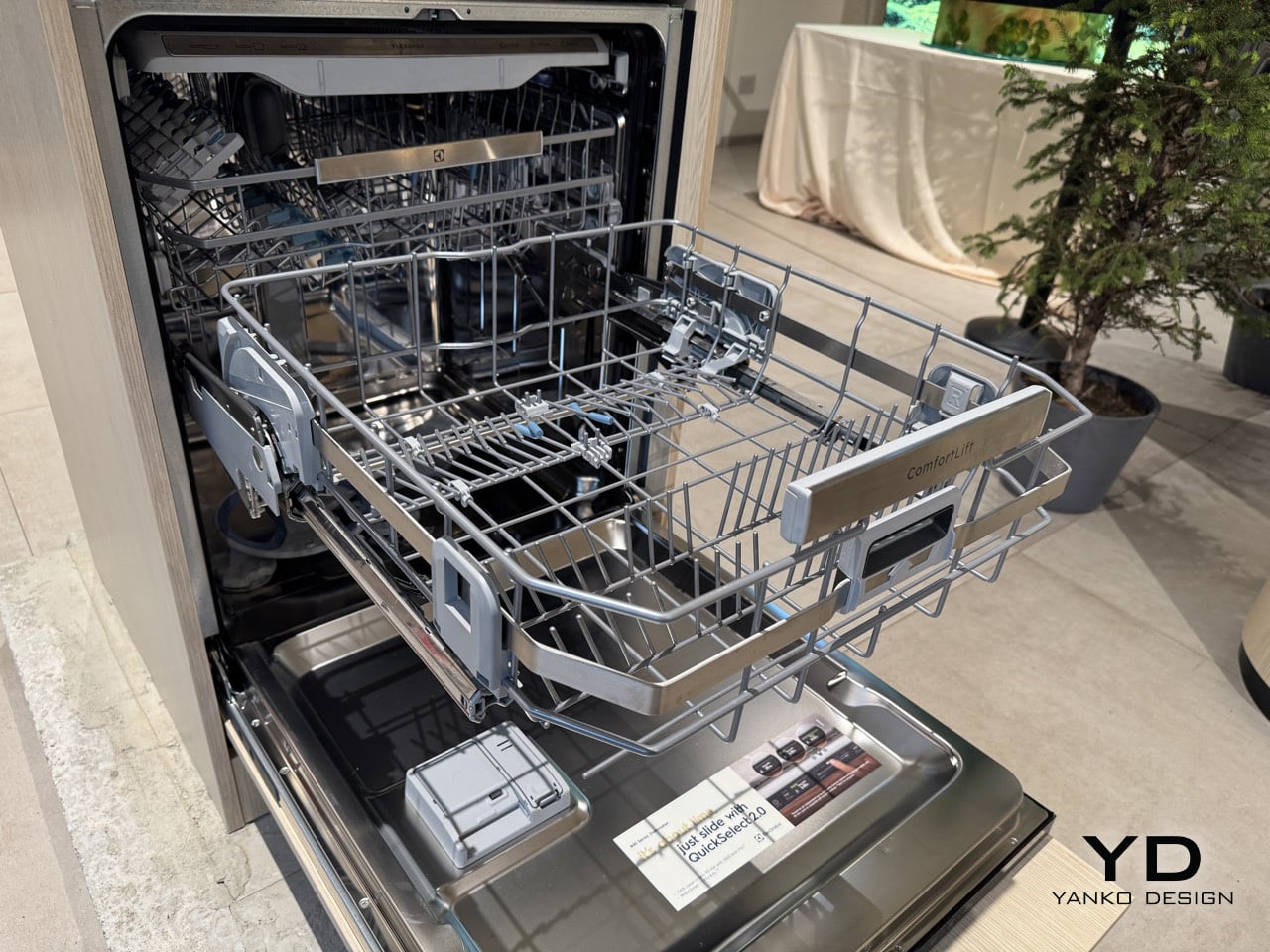
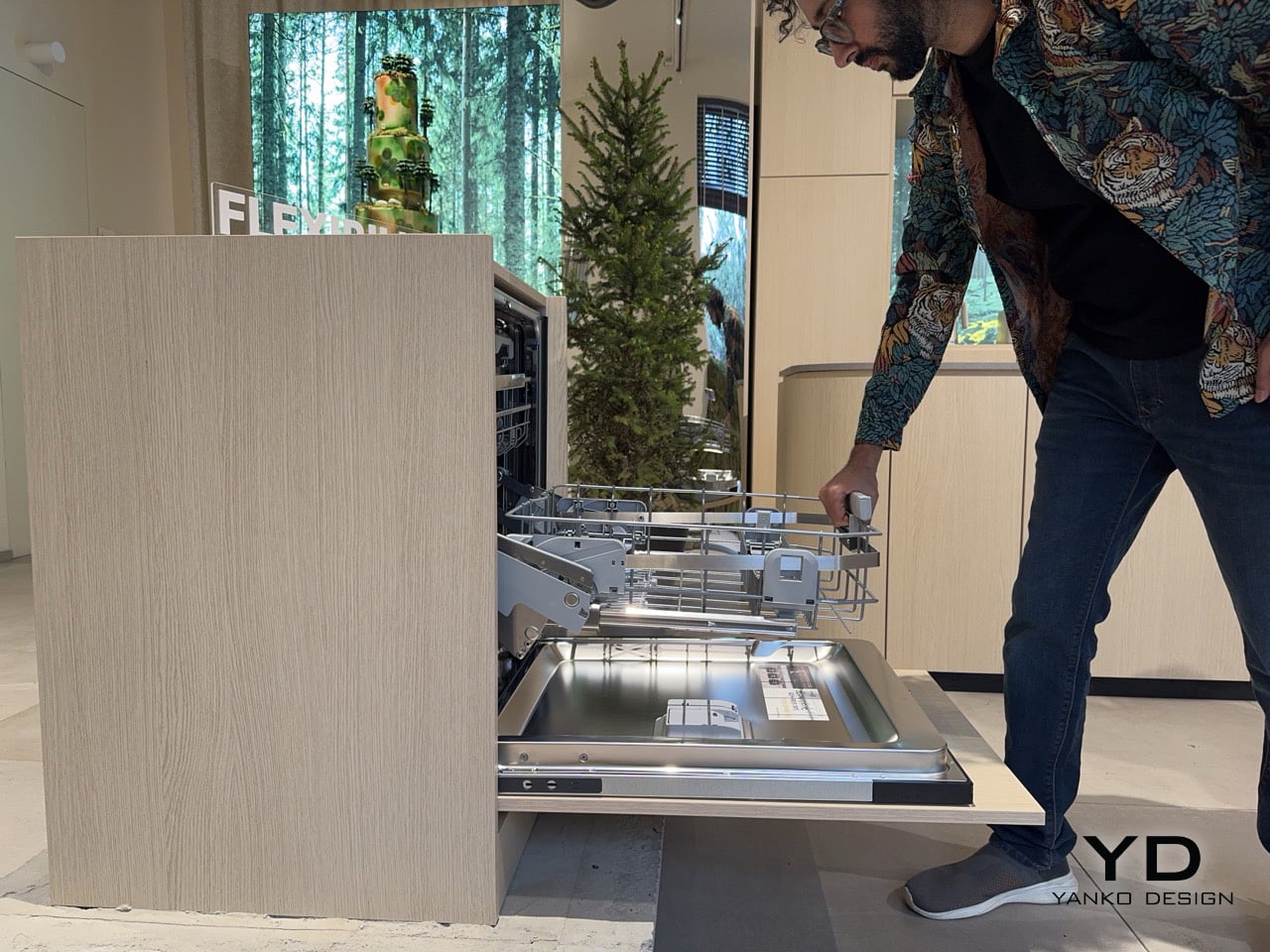
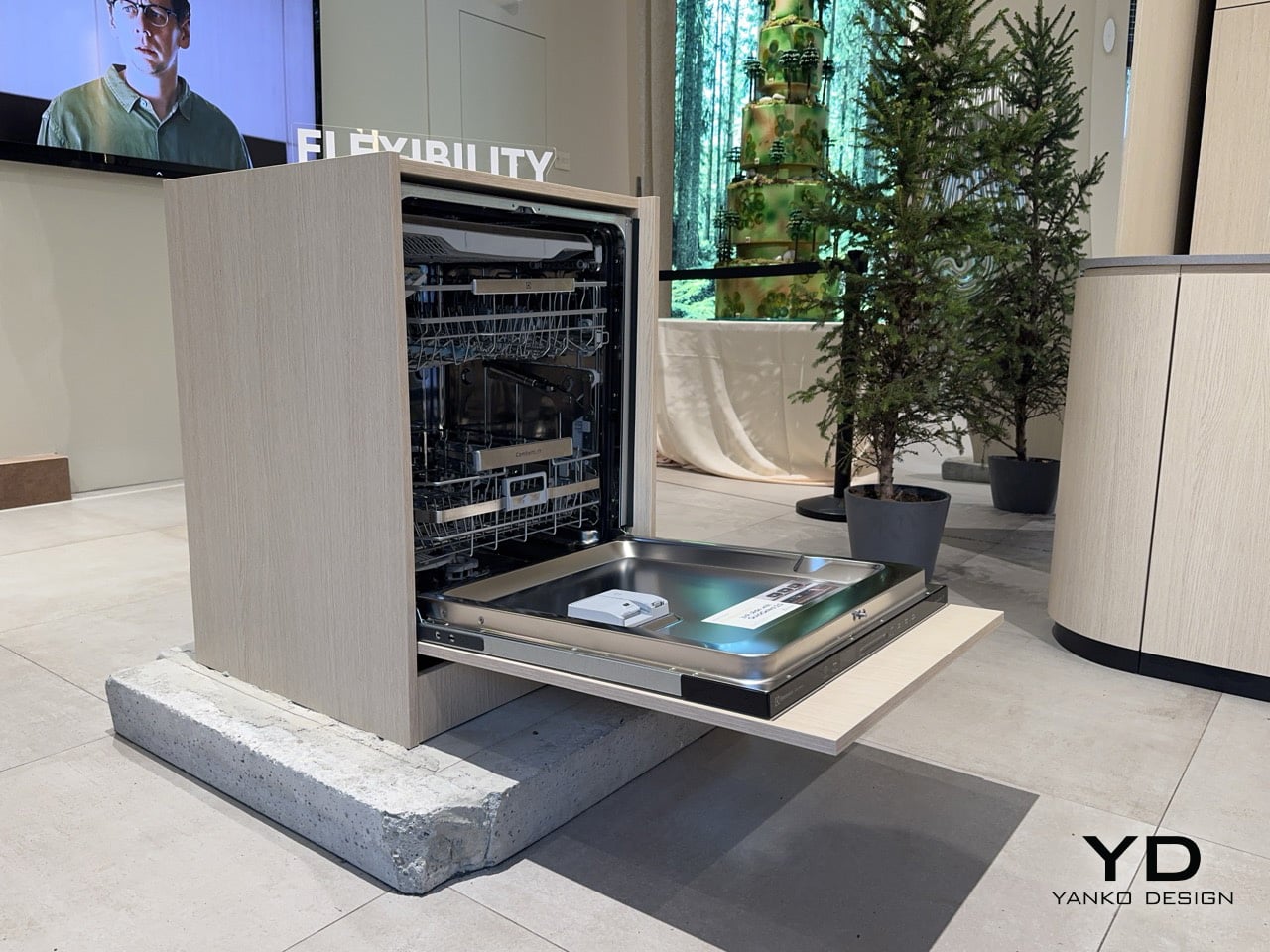
At some point, the bottom rack of a dishwasher stops being a minor inconvenience and starts being a genuine daily difficulty. For older adults and people who simply cannot bend for extended periods, loading the lower basket, which is where the heaviest cookware lives, means repeated stooping, reaching, and straightening back up with full hands. It is the kind of accumulated physical effort that kitchen appliance design has historically ignored entirely. Electrolux brought a direct answer to Milan Design Week: a lower basket that rises 25 centimetres on reinforced hinges at the squeeze of a trigger handle, meeting the user at a comfortable standing height. The feature is called ComfortLift, and it anchors the 800 series dishwasher at the heart of the brand’s Salone showcase.
The mechanism raises the lower basket to the upper basket’s level for faster, easier loading and unloading, with reinforced hinges tested to lift a fully loaded lower basket to that same height. The 800 series behind this feature delivers the cleaning power to completely remove baked-on or dried food residues on as little as 8.4 litres of water. At a fair saturated with conceptual objects and material experiments, what Electrolux demonstrated was something considerably more personal: a change to a small, daily physical struggle that millions of people live with quietly. The brand built serious cleaning performance around that ergonomic premise rather than treating accessibility as a secondary concern. Running at 42 dBA, with a noise class rating of B, the machine is also one of the quieter options in its segment.
Designer: Electrolux
The stainless steel handle integrates a trigger that initiates the lift in a single squeeze, making the operation one-handed and deliberate. Electrolux engineered the ComfortLift basket to carry up to 22 kilograms at the raised height, covering everything from a full load of dinner plates to a cast-iron braising pot. The reinforced hinge mechanism was tested to lift a fully loaded lower basket to the level of the upper basket, so the structural promise holds under real kitchen conditions rather than just showroom demonstrations. Pull the rack out, squeeze, let the basket settle at waist height, and load without contortion. The basket retracts just as smoothly, with none of the mechanical inconsistency that tends to undermine features which perform better on a spec sheet than in a kitchen.
DualZone runs two cleaning zones through the same cycle without changing water or increasing energy use, directing more water pressure at pots and pans in the lower basket while reducing it on delicate items above. A double-rotating spray arm with two nozzle types, one circular and one straight, delivers water simultaneously from multiple angles to break up stubborn residue. Electrolux had this independently tested by a third-party German institute using detergent tablets and a 90-minute cycle on a casserole with lasagna residues, with complete removal as the result. A water sensor detects the level of dirt and adjusts water consumption accordingly, while the AquaControl Waterstop System handles flood protection. Eight wash programmes span the range from a 60-minute express run to AUTOClean, which calibrates the cycle to the load automatically.
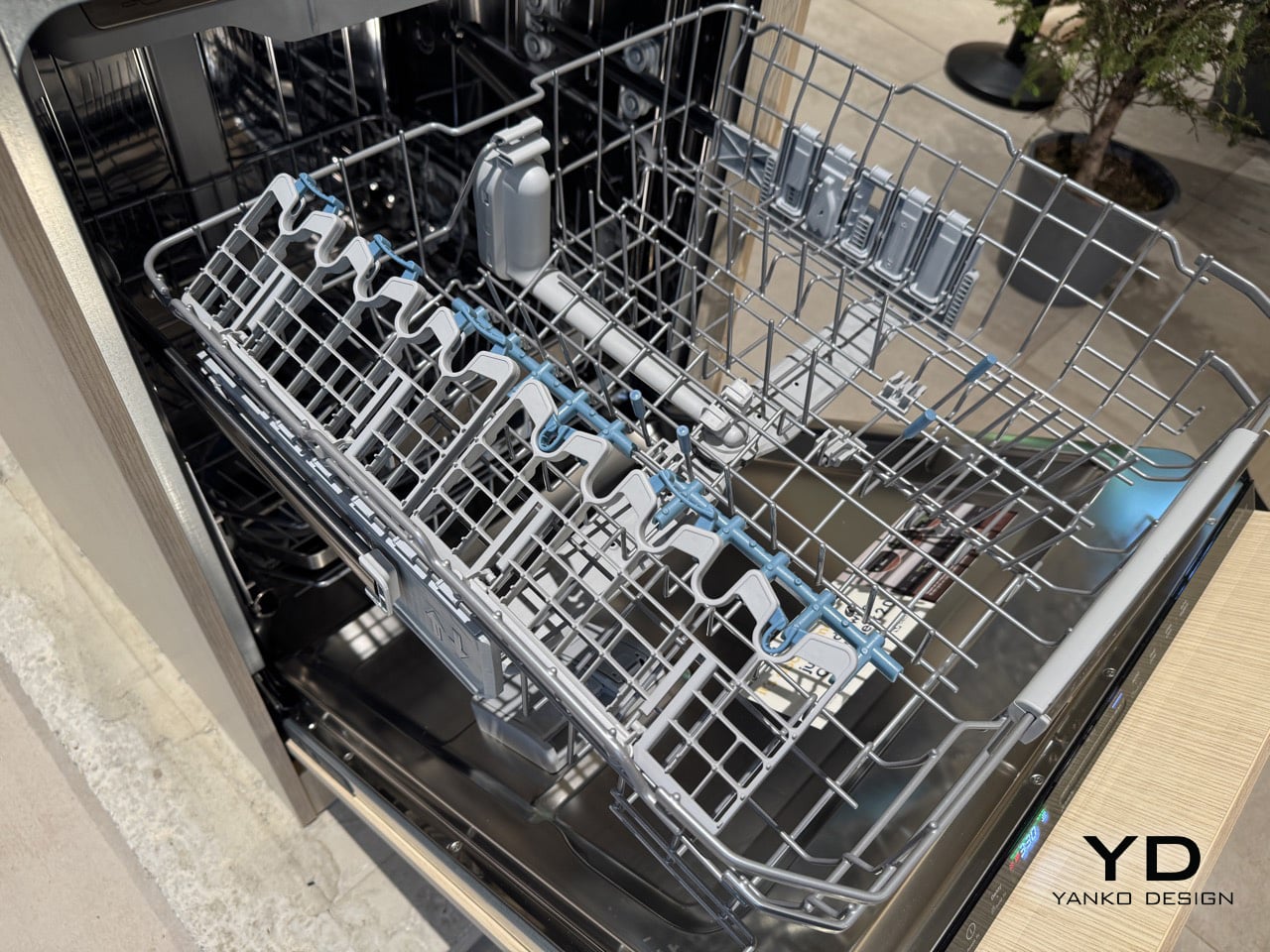
The smooth-gliding FlexiMax Plus upper basket has three folding rows for flexible loading, with anti-slip rubber grips and spikes to secure stemware and glasses and reduce the risk of collisions. The cutlery drawer has a deep middle section for cooking tools and an integrated knife holder, keeping flatware properly separated from the main wash zones. The QuickSelect display shows how energy use changes depending on the cycle length, and a slider lets the user choose the duration and see the energy graph update in real time, turning an invisible efficiency metric into something immediate and interactive. AirDry technology opens the door automatically at the end of the cycle, venting steam and drying dishes passively without a heating element. These details add up to a machine that rewards the kind of cook who treats the kitchen seriously, the same person most likely to own the cast-iron Dutch oven that ComfortLift was built to accommodate.
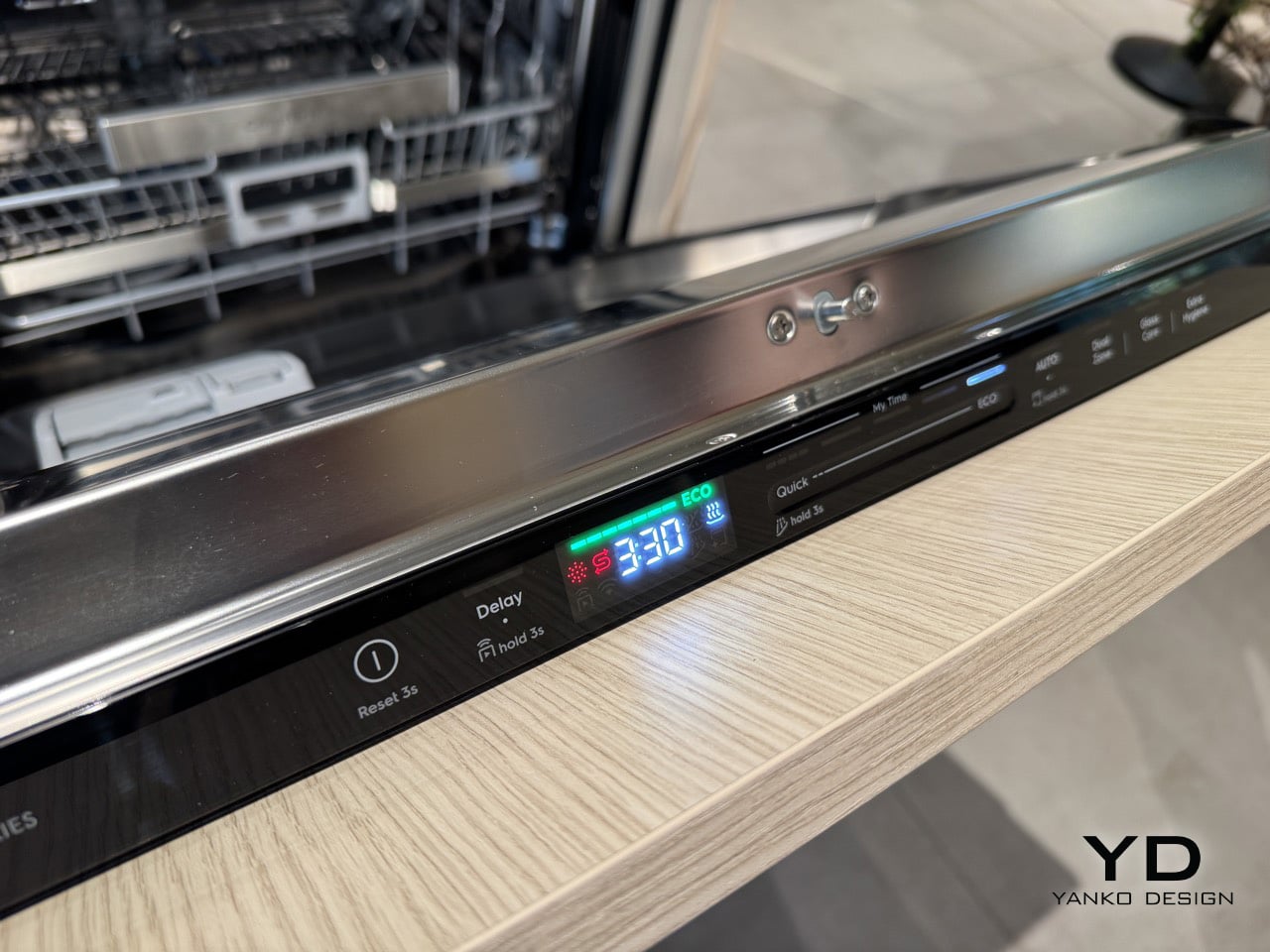
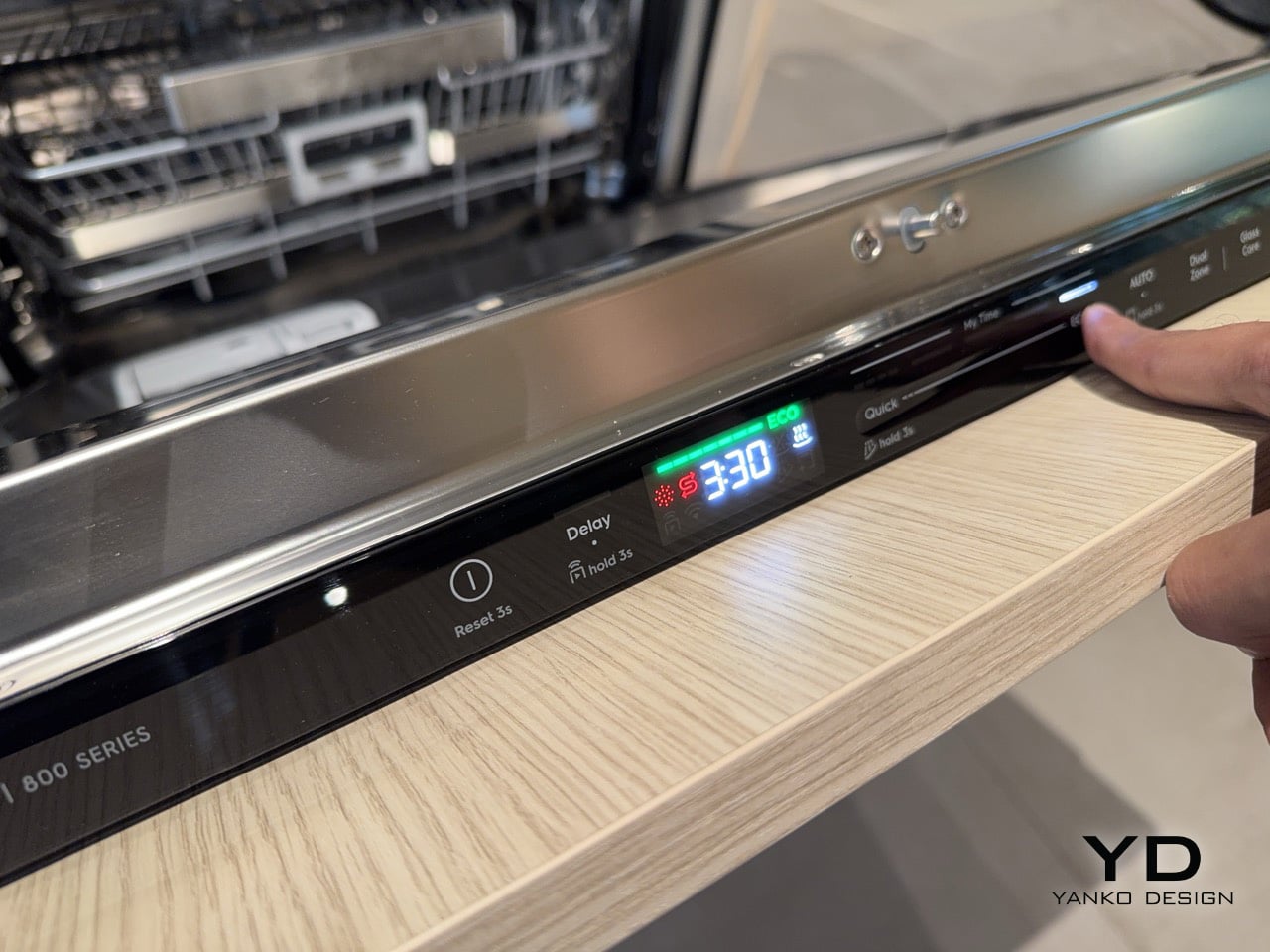
The controls sit on the lip of the door handle, positioned for direct visibility whether the user is standing in front of the machine or reaching across a counter. A sliding interface sets the cycle duration, and that choice governs energy and water consumption simultaneously, with the ECO programme activating at the longest end of the range. Electrolux made a deliberate decision to present time in 30-minute increments rather than the oddly specific figures that populate most dishwasher interfaces, the kind of readout that tells a user a cycle takes 68 or 52 minutes without explaining why. The shortest cycle runs at 30 minutes, while ECO extends to 3 hours and 30 minutes, drawing as little energy and water as the machine can manage across that duration. Rounding to half-hour intervals turns cycle selection from a guessing exercise into something legible, honest, and genuinely quick to act on.
Electrolux’s Design Week showcase, titled “The Swedish Home,” is running at Via Melzo 12 in Milan’s Porta Venezia neighbourhood through April 24th. The live format suits ComfortLift especially well, because no product photograph conveys the mechanism as clearly as watching it move once with a full rack. Across a week dominated by material experiments and future-facing concepts, Via Melzo 12 is presenting something built around a very specific, present-tense problem: that the most physically demanding daily interaction in the kitchen has gone largely unaddressed by appliance design for decades. ComfortLift is Electrolux’s argument that the most consequential design decisions in the home are often the least glamorous ones. It is a strong argument, and a well-engineered one.
EDC gear is converging. The knife becomes a multitool, the multitool becomes a bit driver, the bit driver becomes a pry bar, and somewhere in the middle someone bolts on a bottle opener. The flashlight, meanwhile, has resisted this trend longer than most categories. A light is a light. You charge it, you carry it, you press a button, photons happen. The addition of a USB port to charge your phone feels like a gimmick until you’re three days into a camping trip and your power bank dies at 11 PM. Then the flashlight that can push 15 watts back out through USB-C stops feeling like feature bloat and starts feeling like the obvious move the entire industry should have made years ago.
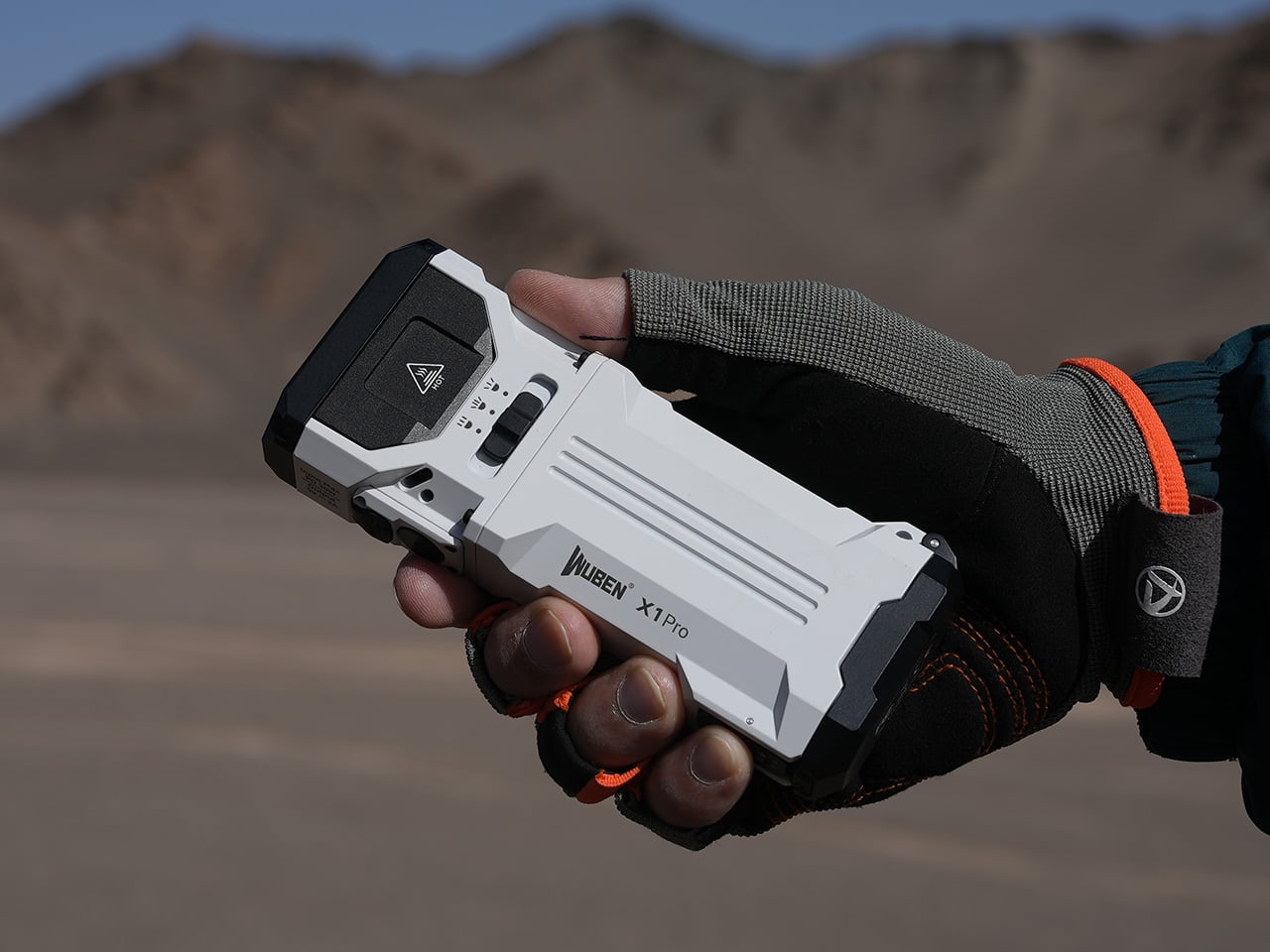
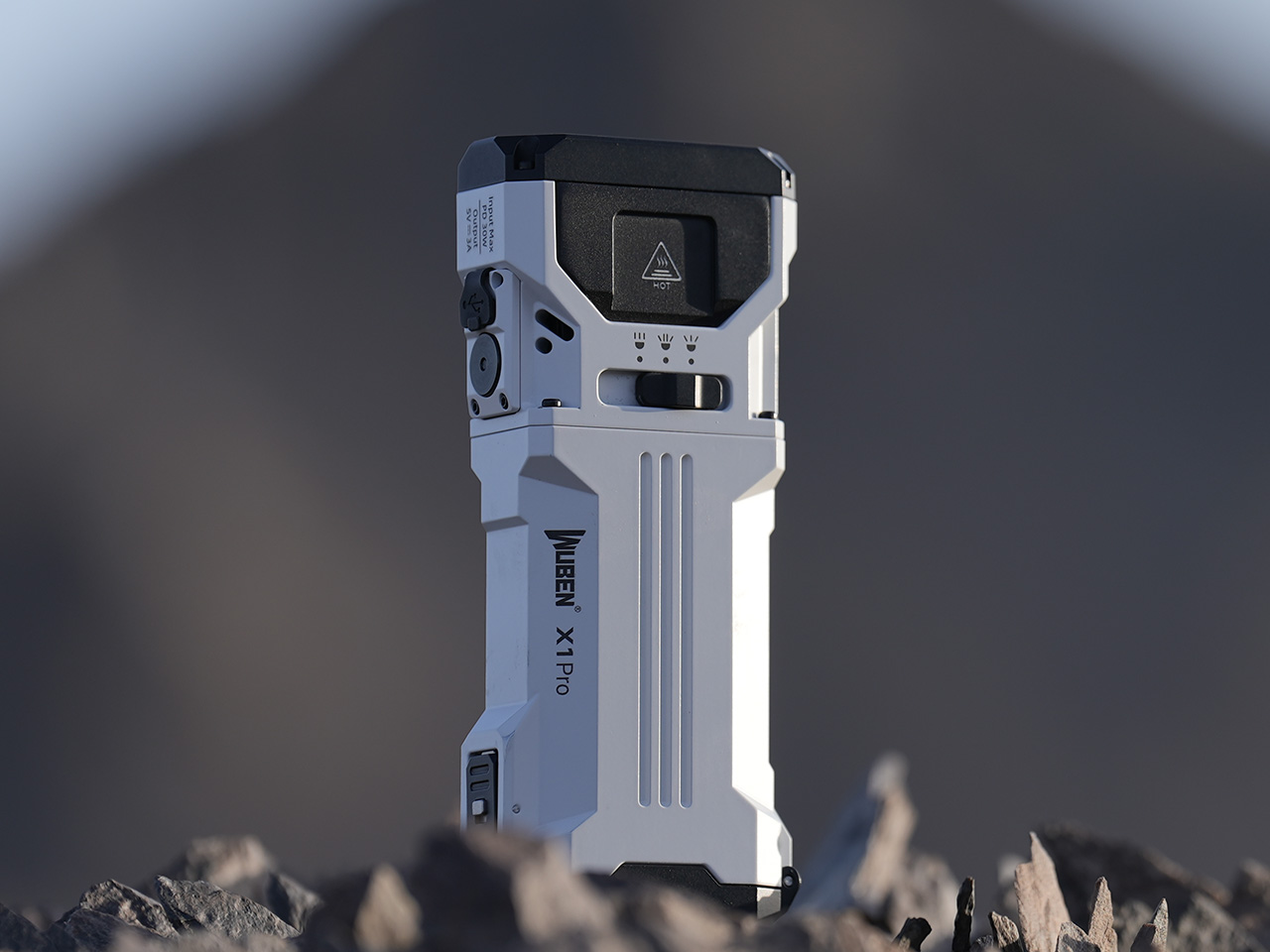
The Wuben X1Pro carries two 21700 Li-ion cells (4,800mAh each, user-replaceable, tool-free access) that deliver light output and device charging through a 30W input, 15W output PD system. Peak output hits 12,300 lumens across five Cree XHP50.3 emitters: one HI (high intensity, no dome) for spot throw, four HD (high density, domed) for flood coverage. A physical three-position slider lets you activate spot, flood, or both channels simultaneously without cycling through modes. Active cooling via a waterproof removable fan sustains 3,000 lumens for 1.8 hours, a threshold most non-cooled EDC lights hit for maybe 90 seconds before thermal management kicks in. Wuben machines the body from aluminum alloy, anodizes the black sections, die-casts the white sections, and sets the whole thing in a flat-tube form factor (59.6mm wide, 29.5mm thick, 138mm long) that rides in a pocket the way a good fixed blade rides on a belt.
Active Cooling: The Performance Difference That Actually Matters
Most high lumens EDC flashlights marketing themselves as “high output” can hold their advertised lumen count for roughly the time it takes to walk from your car to your front door. Thermal stepdown kicks in fast because the LED and driver generate more heat than a pocket-sized aluminum body can dissipate passively. The light throttles itself to prevent component damage, and what started as 10,000 lumens drops to 2,000 or less within two minutes. This limitation has defined the entire category for years. Manufacturers chase peak numbers for the spec sheet, enthusiasts make peace with the reality that sustained brightness requires a larger light, and everyone accepts the compromise. Active cooling fans exist in the flashlight world, but they’re almost exclusively found in large, heavy units designed for search-and-rescue or industrial use, not everyday carry.
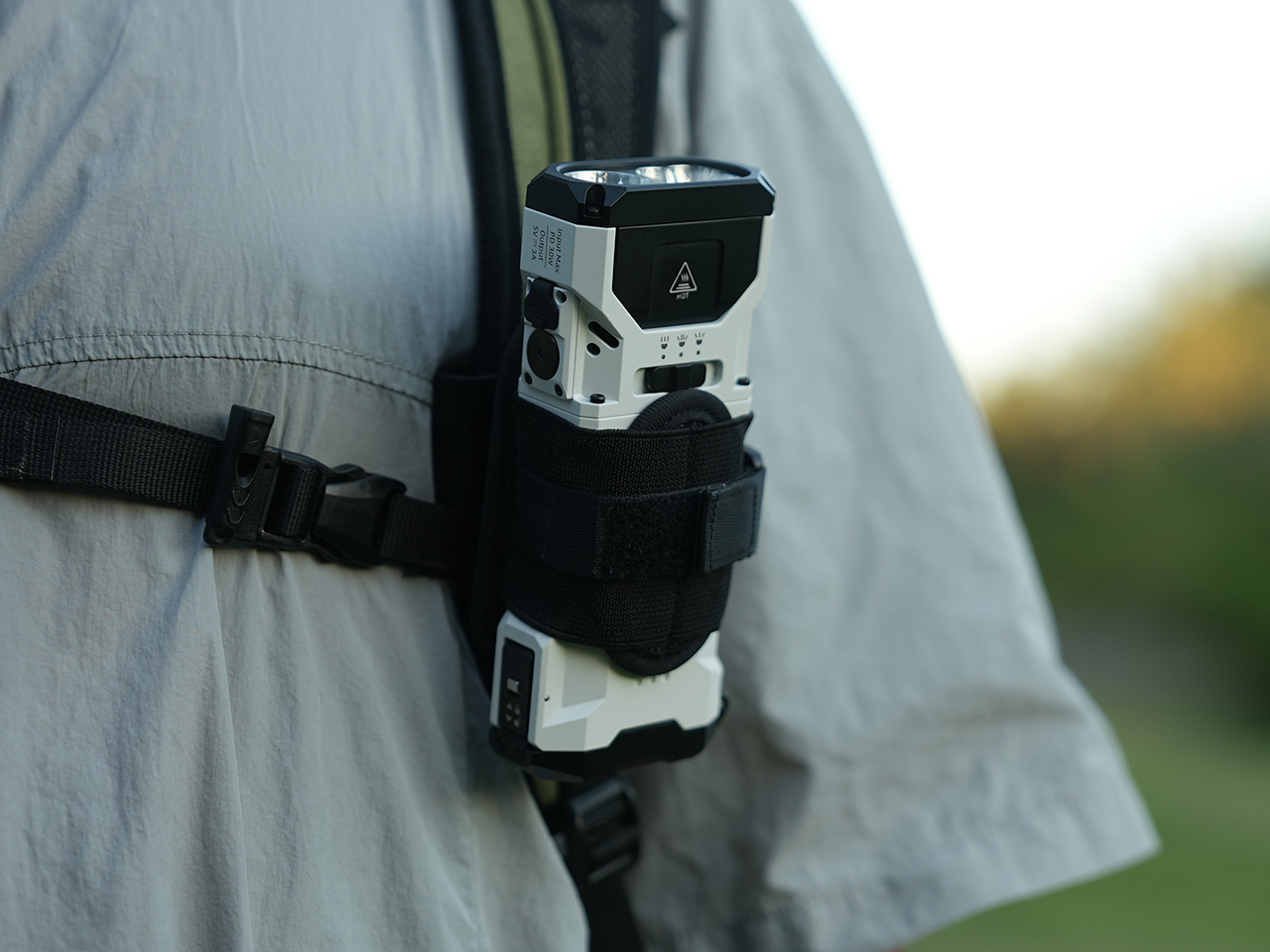
The X1Pro’s waterproof removable fan sustains 3,000 lumens for 1.8 hours, a threshold even the brightest EDC flashlight alternatives can hold for 90 seconds at best before firmware forces a stepdown. The fan uses a modular design, meaning users can replace it without voiding warranty or sending the light back to Wuben. Independent testing from 1lumen.com confirmed sustained output hovering around 2,500 lumens in real-world use, far exceeding what passive cooling can achieve in this size class. Lights like the Astrolux MF09 or Lumintop Mach 4695 offer similar active cooling, but they weigh considerably more and sacrifice pocket carry entirely. As a 21700 flashlight with active cooling baked in, the X1Pro delivers fan-stabilized output in a 383-gram package that still fits in a jacket pocket, cargo pocket, or belt holster. That makes it the only actively cooled EDC light at this price point that you’d actually carry daily.
Dual-Beam System: Three Lights in One Body
Single-beam flashlights force you to choose your compromise upfront. A thrower gives you distance but floods your peripheral vision with darkness. A flooder lights up your immediate area but can’t reach beyond 50 meters. Most users end up carrying two lights or cycling through brightness modes that still don’t address the fundamental beam shape limitation. The problem becomes obvious the moment you’re navigating a trail at night and need both close-range footing visibility and long-distance obstacle awareness simultaneously. Switching between lights or modes breaks your stride, kills your night vision adaptation, and adds friction to a task that should be seamless. A rechargeable power bank flashlight with a genuine dual-beam system solves this at the root.
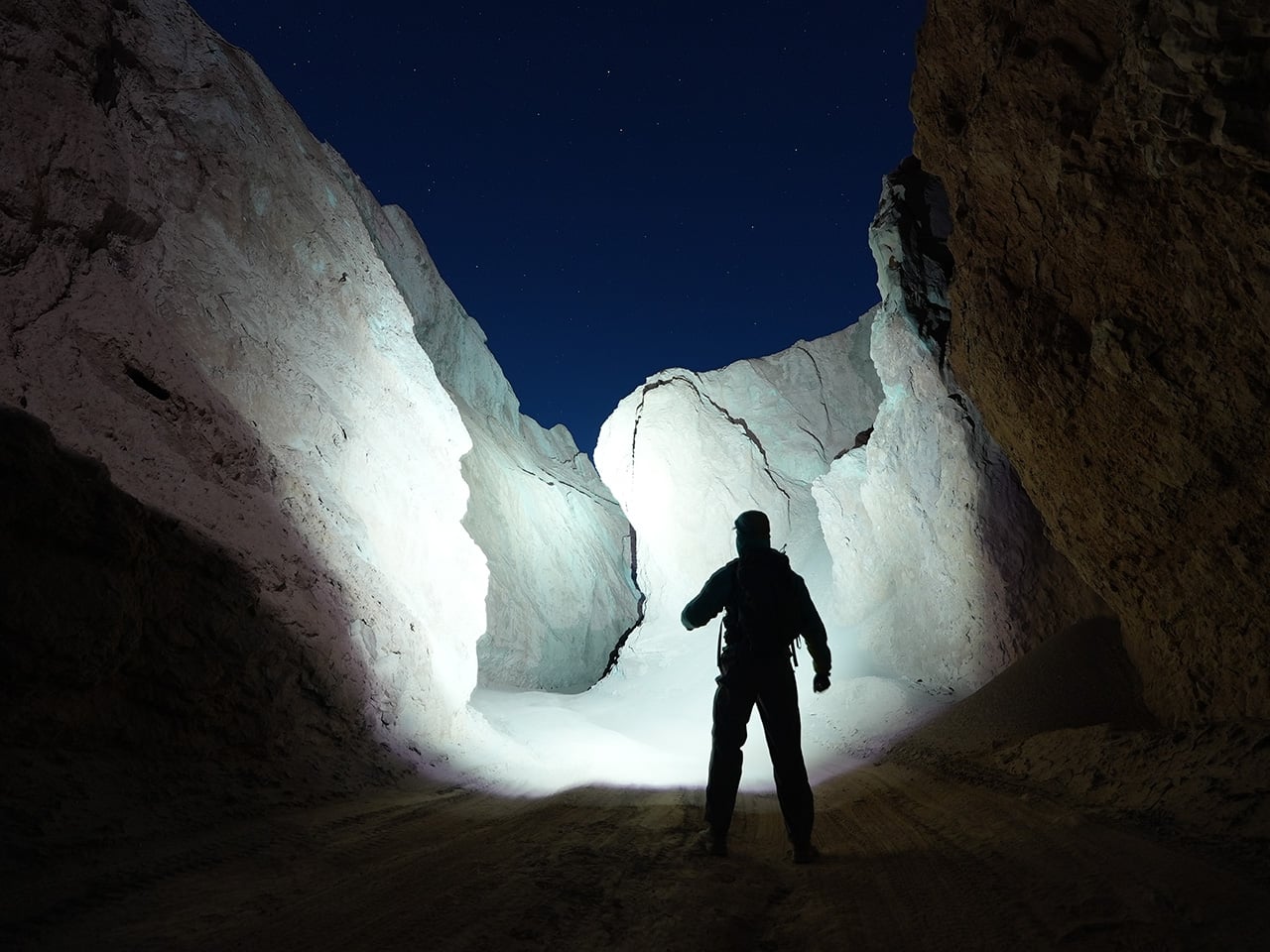
The X1Pro runs 1 x Cree XHP50.3 HI emitter (no dome, high intensity, 3,500 lumens) for spot throw and 4 x Cree XHP50.3 HD emitters (domed, high output, 9,500 lumens combined) for flood coverage. A physical three-position slider on the front face toggles between spot only, flood only, or both channels firing simultaneously for 12,300 lumens peak output. The slider is mechanical, which means it’s faster and more intuitive than digital mode cycling, and it gives you tactile feedback even with gloves on. Each LED has its own reflector, and Wuben uses an orange-peel texture specifically to eliminate hot spots and smooth out the beam pattern. The spot channel delivers 410 meters of throw, while the flood channel covers a wide area for close-to-mid-range work. The ability to run both simultaneously or isolate one channel based on the task makes this genuinely versatile in a way most single-beam EDC lights simply cannot match.
Power Bank Functionality: Emergency Backup When You Need It Most
Carrying a separate power bank makes sense until you’re three days into a camping trip, your phone dies at 11 PM, and you realize your 20,000mAh brick ran out of juice six hours ago because you’ve been charging your headlamp, GPS unit, and backup radio all day. Redundancy in the backcountry matters. A flashlight that can push power back out through USB-C stops being a novelty feature and starts being a legitimate safety layer when you’re operating in environments where a dead phone means no emergency contact, no navigation, and no weather updates. The same logic applies to urban emergencies, power outages, or any scenario where device uptime determines whether you stay informed or go dark.
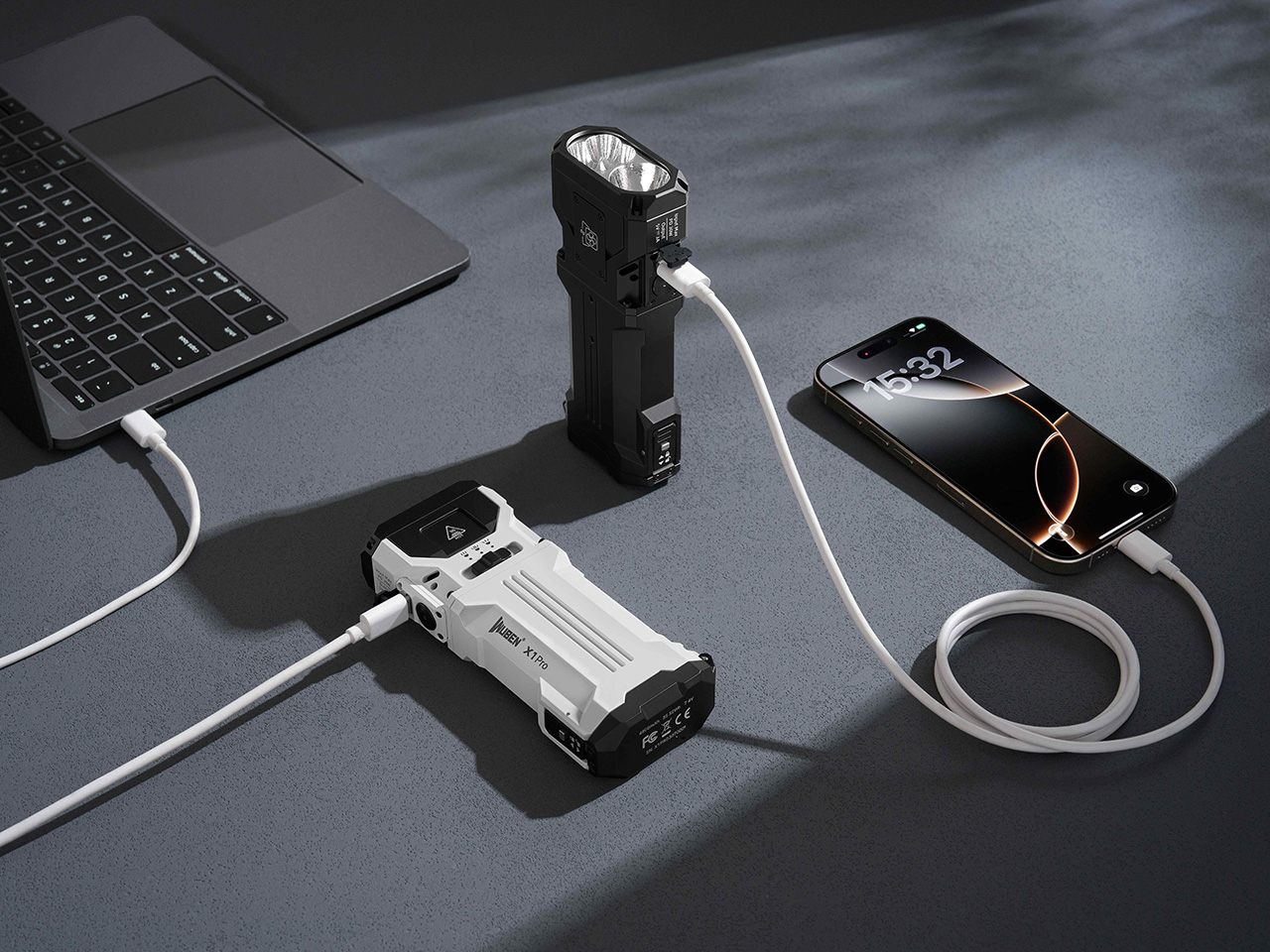
The X1Pro’s dual 21700 batteries deliver 35.52Wh of total capacity and feed a bidirectional USB-C PD system rated for 30W charging input and 15W power bank output. That 15W output is enough to fast-charge most smartphones, tablets, or USB-powered devices at rates comparable to a wall charger. Independent testing from ZeroAir confirmed that with a proper PD power source, the X1Pro charges at 20V and completes a full recharge in roughly 2.5 hours. On a standard 5V source, charging takes just over five hours, which is still reasonable for overnight recovery. The ability to swap out the 21700 cells means you can carry spares and extend both light runtime and power bank capacity indefinitely. Most EDC lights with USB output are limited by non-replaceable internal batteries, meaning once they’re drained, you’re done until you find an outlet. The X1Pro gives you control over your power supply, which fundamentally changes how the tool functions in extended-use scenarios.
Replaceable 21700 Batteries: Longevity by Design
Sealed-battery flashlights have a built-in expiration date. Lithium-ion cells degrade with charge cycles, and after 300 to 500 cycles (roughly two to three years of regular use), capacity drops noticeably. Once the internal battery loses enough capacity to compromise performance, you’re left with a choice: send the light back for a factory battery replacement (if the manufacturer even offers that service), attempt a DIY repair that likely voids warranty, or retire the entire light and buy a new one. This disposability model benefits manufacturers who want recurring revenue, but it punishes users who invest in quality tools and expect them to last.
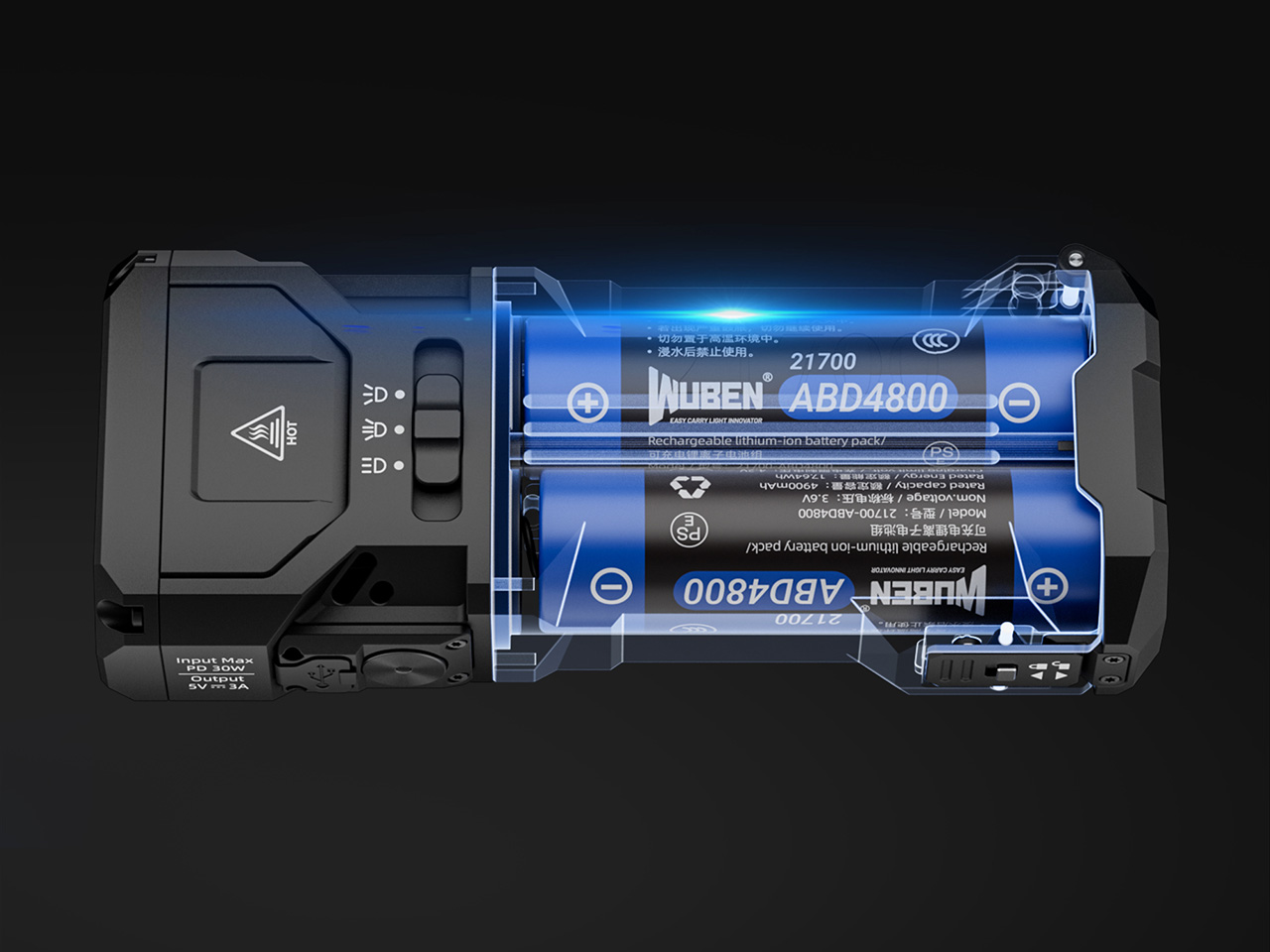
The X1Pro uses dual 21700 cells (4,800mAh each) accessed through a push-latch battery compartment that opens without tools. When the cells degrade after years of use, you buy new batteries for $15 to $25 per pair and swap them in 30 seconds. The 21700 format offers 4,000 to 5,200mAh typical capacity compared to the older 18650’s 2,200 to 3,500mAh, and the larger cell surface area improves heat dissipation under high-drain conditions. The format has become the standard in electric vehicles and high-performance flashlights specifically because it balances energy density, thermal performance, and discharge capability better than any previous consumer cell size. Wuben’s decision to make the batteries user-replaceable transforms the X1Pro from a disposable gadget into a long-term tool. You’re not buying a flashlight with a two-year lifespan. You’re buying a chassis, an LED array, a cooling system, and a driver circuit that you can keep functional for a decade or longer by spending $25 every few years on fresh cells. That’s a fundamentally different value proposition.
Flat-Tube Ergonomics: Why Shape Matters in EDC
Cylindrical flashlights roll off tables, spin in your hand under recoil or vibration, and waste pocket space because a circle inscribed in a rectangle leaves every corner unused. The cylinder is an inherited form factor from the days when flashlights used C or D cell batteries, and while LED technology has evolved radically, the basic shape has remained largely unchanged out of manufacturing inertia. A flat-tube design addresses these issues directly by widening the body, flattening the profile, and giving your palm four distinct edges to grip. The shape prevents rolling, increases surface area contact with your hand, and sits flat against your body when clipped to a belt or stored in a pocket.
Wuben machines the X1Pro body to 59.6mm wide, 29.5mm thick, and 138mm long, creating a rectangular profile that fits naturally in the palm and occupies pocket space efficiently. The four corners feature chamfered edges specifically redesigned in the Pro model to improve grip comfort and reduce weight. The original X1’s buttons were positioned on the front face, but Wuben moved them to the left side of the X1Pro so your thumb rests on them naturally during normal carry. This detail matters during extended use or when manipulating the light with gloves. The CNC-machined and anodized black sections provide texture, while the die-cast white sections add visual contrast that helps with gear identification in a pack. The flat profile also stabilizes the light when set down on a surface, allowing hands-free use without the need for a tripod in many situations. Combined with the included 1/4″ threaded port and optional zinc alloy bike mount, the form factor adapts to a wider range of mounting and carry configurations than a traditional cylindrical light can support.
Value Proposition: What $139.99 Actually Gets You
High-output EDC flashlights from established brands like Olight, Nitecore, and Fenix typically land between $100 and $200 depending on features. A comparable Olight Warrior model with 3,000 to 5,000 lumen output runs $120 to $150 but uses a sealed battery, single-beam design, and passive cooling that forces brightness stepdown within minutes. Nitecore’s high-output EDC offerings in the same class deliver excellent build quality and UI design but similarly lack active cooling or dual-beam switching. Fenix lights are known for durability and reliable performance, but again, you’re working within the constraints of passive thermal management and fixed beam patterns. None of these competitors offer power bank output in their EDC-class lights, and none offer user-replaceable batteries in their high-output models.
The X1Pro at $139.99 includes active cooling via a modular waterproof fan, dual-beam switching with independent spot and flood control, user-replaceable 21700 batteries, 30W PD charging with 15W power bank output, IP65 water resistance, 1-meter drop rating, and a zinc alloy bike mount in the box. Wuben launched the X1Pro on Kickstarter with early bird pricing at $99 to $119 before settling at the $139.99 retail price, which positions it aggressively against passive-cooled competitors that offer fewer features at similar or higher prices. The active cooling alone represents technology typically reserved for lights in the $200-plus range, and the dual-beam system eliminates the need to carry a second light for different beam profiles. The replaceable battery design extends the usable lifespan of the tool by years, effectively reducing long-term cost of ownership. If you’re evaluating high-output EDC lights and comparing feature sets at similar price points, the X1Pro delivers more functional capability per dollar than anything else currently available in the category.
EDC gear is converging. The knife becomes a multitool, the multitool becomes a bit driver, the bit driver becomes a pry bar, and somewhere in the middle someone bolts on a bottle opener. The flashlight, meanwhile, has resisted this trend longer than most categories. A light is a light. You charge it, you carry it, you press a button, photons happen. The addition of a USB port to charge your phone feels like a gimmick until you’re three days into a camping trip and your power bank dies at 11 PM. Then the flashlight that can push 15 watts back out through USB-C stops feeling like feature bloat and starts feeling like the obvious move the entire industry should have made years ago.
The Wuben X1Pro carries two 21700 Li-ion cells (4,800mAh each, user-replaceable, tool-free access) that deliver light output and device charging through a 30W input, 15W output PD system. Peak output hits 12,300 lumens across five Cree XHP50.3 emitters: one HI (high intensity, no dome) for spot throw, four HD (high density, domed) for flood coverage. A physical three-position slider lets you activate spot, flood, or both channels simultaneously without cycling through modes. Active cooling via a waterproof removable fan sustains 3,000 lumens for 1.8 hours, a threshold most non-cooled EDC lights hit for maybe 90 seconds before thermal management kicks in. Wuben machines the body from aluminum alloy, anodizes the black sections, die-casts the white sections, and sets the whole thing in a flat-tube form factor (59.6mm wide, 29.5mm thick, 138mm long) that rides in a pocket the way a good fixed blade rides on a belt.
Active Cooling: The Performance Difference That Actually Matters
Most high lumens EDC flashlights marketing themselves as “high output” can hold their advertised lumen count for roughly the time it takes to walk from your car to your front door. Thermal stepdown kicks in fast because the LED and driver generate more heat than a pocket-sized aluminum body can dissipate passively. The light throttles itself to prevent component damage, and what started as 10,000 lumens drops to 2,000 or less within two minutes. This limitation has defined the entire category for years. Manufacturers chase peak numbers for the spec sheet, enthusiasts make peace with the reality that sustained brightness requires a larger light, and everyone accepts the compromise. Active cooling fans exist in the flashlight world, but they’re almost exclusively found in large, heavy units designed for search-and-rescue or industrial use, not everyday carry.
The X1Pro’s waterproof removable fan sustains 3,000 lumens for 1.8 hours, a threshold even the brightest EDC flashlight alternatives can hold for 90 seconds at best before firmware forces a stepdown. The fan uses a modular design, meaning users can replace it without voiding warranty or sending the light back to Wuben. Independent testing from 1lumen.com confirmed sustained output hovering around 2,500 lumens in real-world use, far exceeding what passive cooling can achieve in this size class. Lights like the Astrolux MF09 or Lumintop Mach 4695 offer similar active cooling, but they weigh considerably more and sacrifice pocket carry entirely. As a 21700 flashlight with active cooling baked in, the X1Pro delivers fan-stabilized output in a 383-gram package that still fits in a jacket pocket, cargo pocket, or belt holster. That makes it the only actively cooled EDC light at this price point that you’d actually carry daily.
Dual-Beam System: Three Lights in One Body
Single-beam flashlights force you to choose your compromise upfront. A thrower gives you distance but floods your peripheral vision with darkness. A flooder lights up your immediate area but can’t reach beyond 50 meters. Most users end up carrying two lights or cycling through brightness modes that still don’t address the fundamental beam shape limitation. The problem becomes obvious the moment you’re navigating a trail at night and need both close-range footing visibility and long-distance obstacle awareness simultaneously. Switching between lights or modes breaks your stride, kills your night vision adaptation, and adds friction to a task that should be seamless. A rechargeable power bank flashlight with a genuine dual-beam system solves this at the root.
The X1Pro runs 1 x Cree XHP50.3 HI emitter (no dome, high intensity, 3,500 lumens) for spot throw and 4 x Cree XHP50.3 HD emitters (domed, high output, 9,500 lumens combined) for flood coverage. A physical three-position slider on the front face toggles between spot only, flood only, or both channels firing simultaneously for 12,300 lumens peak output. The slider is mechanical, which means it’s faster and more intuitive than digital mode cycling, and it gives you tactile feedback even with gloves on. Each LED has its own reflector, and Wuben uses an orange-peel texture specifically to eliminate hot spots and smooth out the beam pattern. The spot channel delivers 410 meters of throw, while the flood channel covers a wide area for close-to-mid-range work. The ability to run both simultaneously or isolate one channel based on the task makes this genuinely versatile in a way most single-beam EDC lights simply cannot match.
Power Bank Functionality: Emergency Backup When You Need It Most
Carrying a separate power bank makes sense until you’re three days into a camping trip, your phone dies at 11 PM, and you realize your 20,000mAh brick ran out of juice six hours ago because you’ve been charging your headlamp, GPS unit, and backup radio all day. Redundancy in the backcountry matters. A flashlight that can push power back out through USB-C stops being a novelty feature and starts being a legitimate safety layer when you’re operating in environments where a dead phone means no emergency contact, no navigation, and no weather updates. The same logic applies to urban emergencies, power outages, or any scenario where device uptime determines whether you stay informed or go dark.
The X1Pro’s dual 21700 batteries deliver 35.52Wh of total capacity and feed a bidirectional USB-C PD system rated for 30W charging input and 15W power bank output. That 15W output is enough to fast-charge most smartphones, tablets, or USB-powered devices at rates comparable to a wall charger. Independent testing from ZeroAir confirmed that with a proper PD power source, the X1Pro charges at 20V and completes a full recharge in roughly 2.5 hours. On a standard 5V source, charging takes just over five hours, which is still reasonable for overnight recovery. The ability to swap out the 21700 cells means you can carry spares and extend both light runtime and power bank capacity indefinitely. Most EDC lights with USB output are limited by non-replaceable internal batteries, meaning once they’re drained, you’re done until you find an outlet. The X1Pro gives you control over your power supply, which fundamentally changes how the tool functions in extended-use scenarios.
Replaceable 21700 Batteries: Longevity by Design
Sealed-battery flashlights have a built-in expiration date. Lithium-ion cells degrade with charge cycles, and after 300 to 500 cycles (roughly two to three years of regular use), capacity drops noticeably. Once the internal battery loses enough capacity to compromise performance, you’re left with a choice: send the light back for a factory battery replacement (if the manufacturer even offers that service), attempt a DIY repair that likely voids warranty, or retire the entire light and buy a new one. This disposability model benefits manufacturers who want recurring revenue, but it punishes users who invest in quality tools and expect them to last.
The X1Pro uses dual 21700 cells (4,800mAh each) accessed through a push-latch battery compartment that opens without tools. When the cells degrade after years of use, you buy new batteries for $15 to $25 per pair and swap them in 30 seconds. The 21700 format offers 4,000 to 5,200mAh typical capacity compared to the older 18650’s 2,200 to 3,500mAh, and the larger cell surface area improves heat dissipation under high-drain conditions. The format has become the standard in electric vehicles and high-performance flashlights specifically because it balances energy density, thermal performance, and discharge capability better than any previous consumer cell size. Wuben’s decision to make the batteries user-replaceable transforms the X1Pro from a disposable gadget into a long-term tool. You’re not buying a flashlight with a two-year lifespan. You’re buying a chassis, an LED array, a cooling system, and a driver circuit that you can keep functional for a decade or longer by spending $25 every few years on fresh cells. That’s a fundamentally different value proposition.
Flat-Tube Ergonomics: Why Shape Matters in EDC
Cylindrical flashlights roll off tables, spin in your hand under recoil or vibration, and waste pocket space because a circle inscribed in a rectangle leaves every corner unused. The cylinder is an inherited form factor from the days when flashlights used C or D cell batteries, and while LED technology has evolved radically, the basic shape has remained largely unchanged out of manufacturing inertia. A flat-tube design addresses these issues directly by widening the body, flattening the profile, and giving your palm four distinct edges to grip. The shape prevents rolling, increases surface area contact with your hand, and sits flat against your body when clipped to a belt or stored in a pocket.
Wuben machines the X1Pro body to 59.6mm wide, 29.5mm thick, and 138mm long, creating a rectangular profile that fits naturally in the palm and occupies pocket space efficiently. The four corners feature chamfered edges specifically redesigned in the Pro model to improve grip comfort and reduce weight. The original X1’s buttons were positioned on the front face, but Wuben moved them to the left side of the X1Pro so your thumb rests on them naturally during normal carry. This detail matters during extended use or when manipulating the light with gloves. The CNC-machined and anodized black sections provide texture, while the die-cast white sections add visual contrast that helps with gear identification in a pack. The flat profile also stabilizes the light when set down on a surface, allowing hands-free use without the need for a tripod in many situations. Combined with the included 1/4″ threaded port and optional zinc alloy bike mount, the form factor adapts to a wider range of mounting and carry configurations than a traditional cylindrical light can support.
Value Proposition: What $139.99 Actually Gets You
High-output EDC flashlights from established brands like Olight, Nitecore, and Fenix typically land between $100 and $200 depending on features. A comparable Olight Warrior model with 3,000 to 5,000 lumen output runs $120 to $150 but uses a sealed battery, single-beam design, and passive cooling that forces brightness stepdown within minutes. Nitecore’s high-output EDC offerings in the same class deliver excellent build quality and UI design but similarly lack active cooling or dual-beam switching. Fenix lights are known for durability and reliable performance, but again, you’re working within the constraints of passive thermal management and fixed beam patterns. None of these competitors offer power bank output in their EDC-class lights, and none offer user-replaceable batteries in their high-output models.
The X1Pro at $139.99 includes active cooling via a modular waterproof fan, dual-beam switching with independent spot and flood control, user-replaceable 21700 batteries, 30W PD charging with 15W power bank output, IP65 water resistance, 1-meter drop rating, and a zinc alloy bike mount in the box. Wuben launched the X1Pro on Kickstarter with early bird pricing at $99 to $119 before settling at the $139.99 retail price, which positions it aggressively against passive-cooled competitors that offer fewer features at similar or higher prices. The active cooling alone represents technology typically reserved for lights in the $200-plus range, and the dual-beam system eliminates the need to carry a second light for different beam profiles. The replaceable battery design extends the usable lifespan of the tool by years, effectively reducing long-term cost of ownership. If you’re evaluating high-output EDC lights and comparing feature sets at similar price points, the X1Pro delivers more functional capability per dollar than anything else currently available in the category.
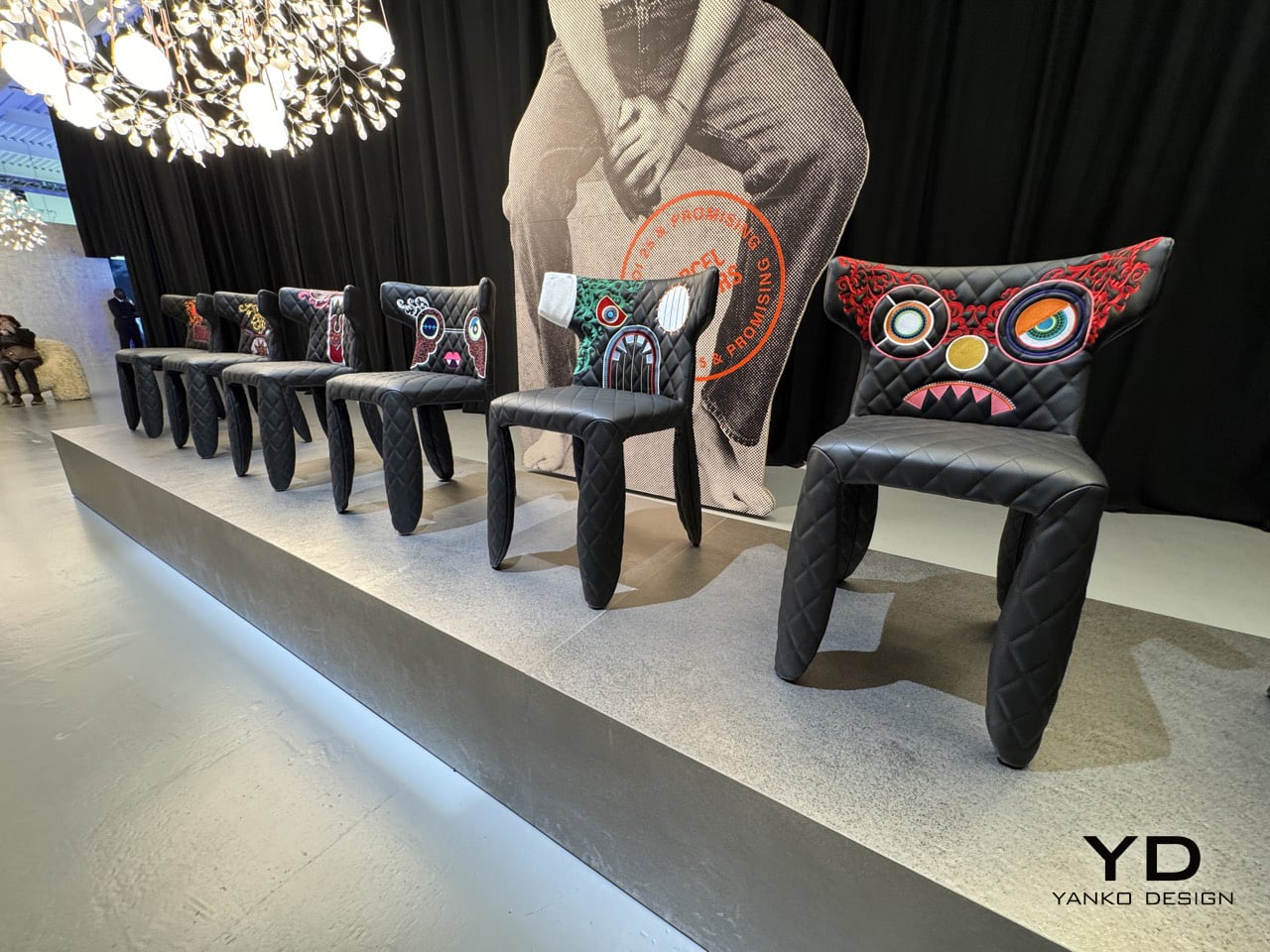
When Marcel Wanders designed the Monster Chair in 2014, the “monster” part was mostly conceptual. The piece had presence, sure, with its quilted leather upholstery and angular obsidian-like legs, but the actual aesthetic leaned more toward restrained decadence than outright chaos. It was a chair that suggested mischief without committing to it fully. That restraint just got thrown out the window.
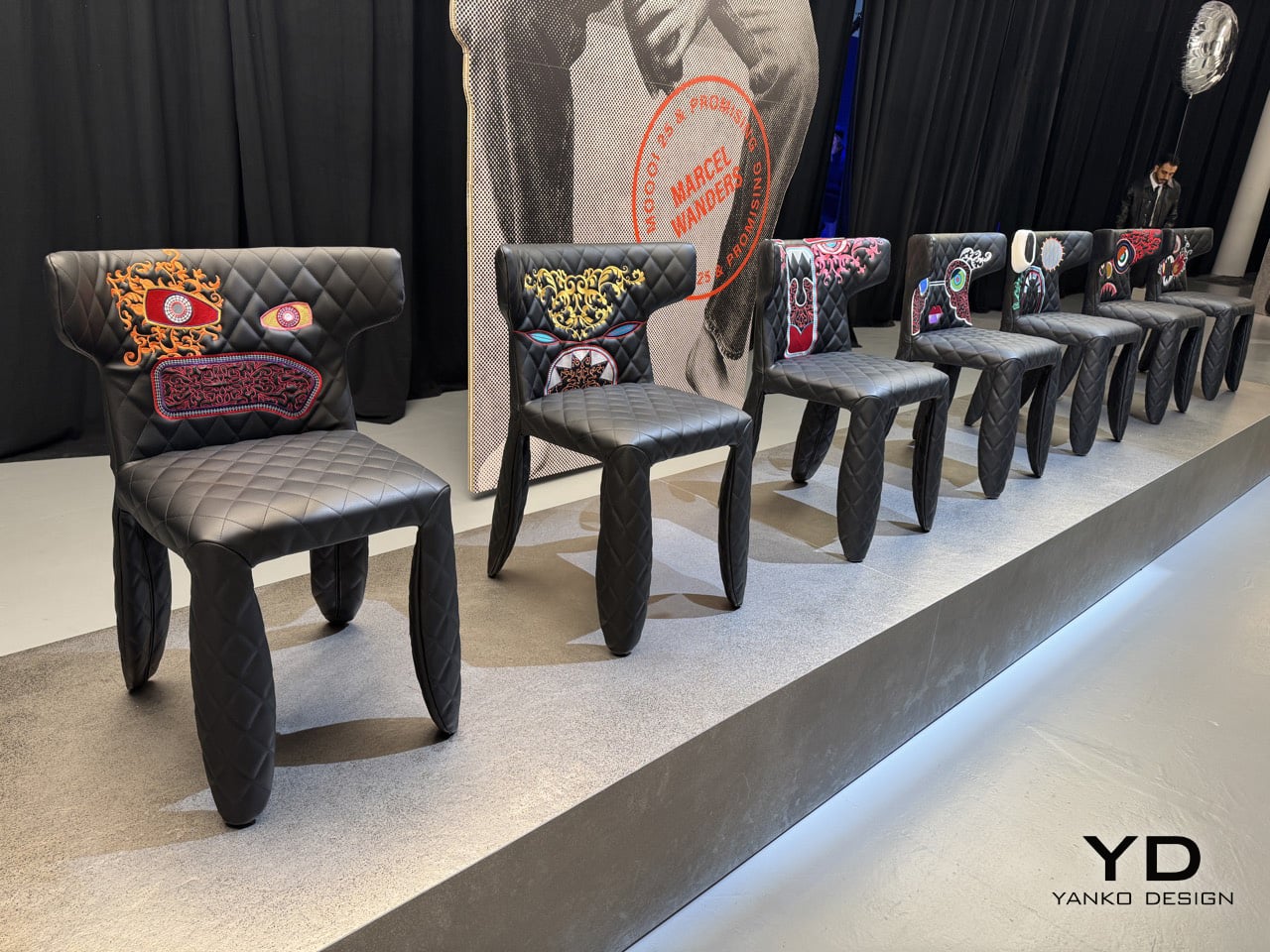
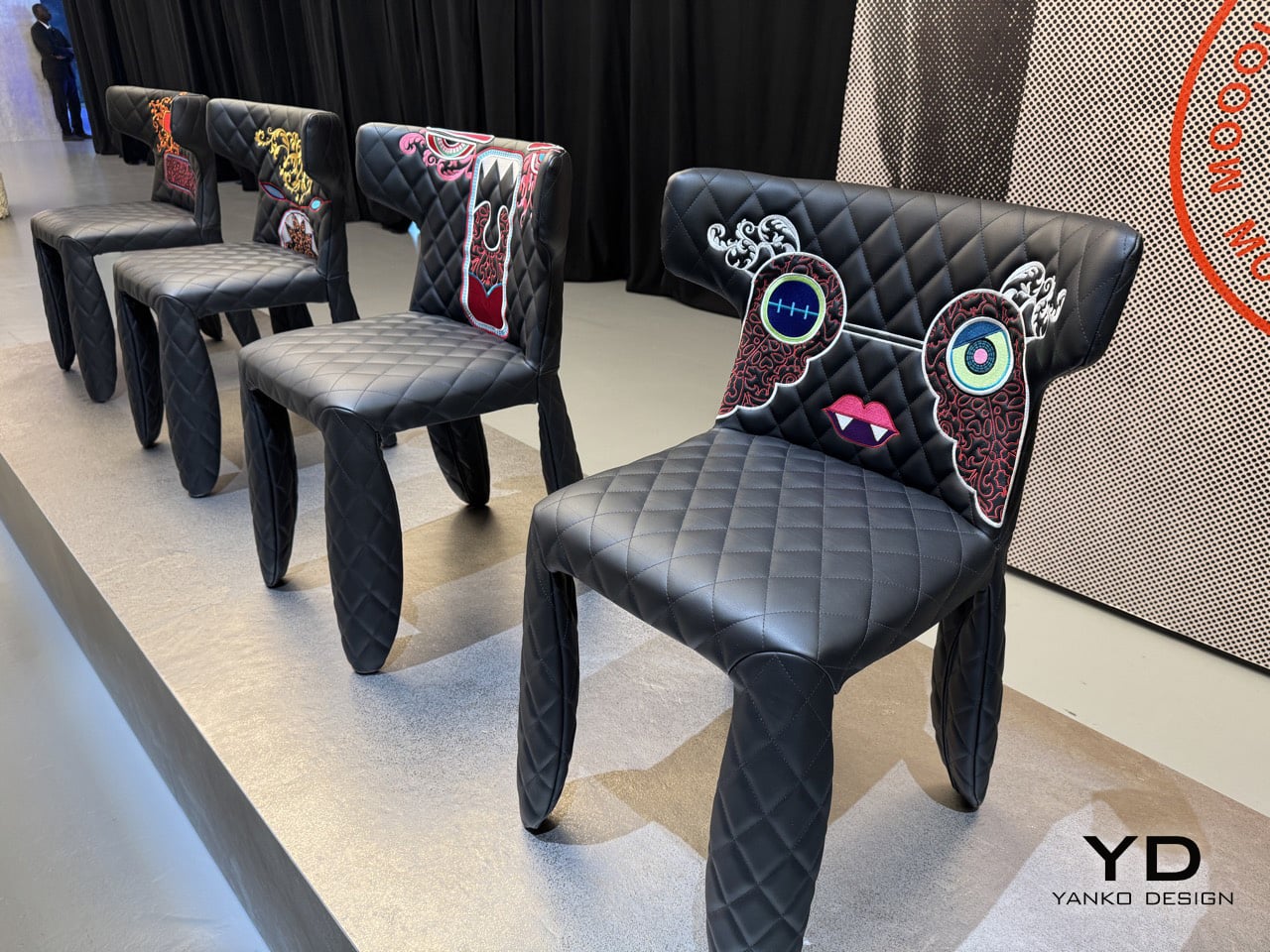
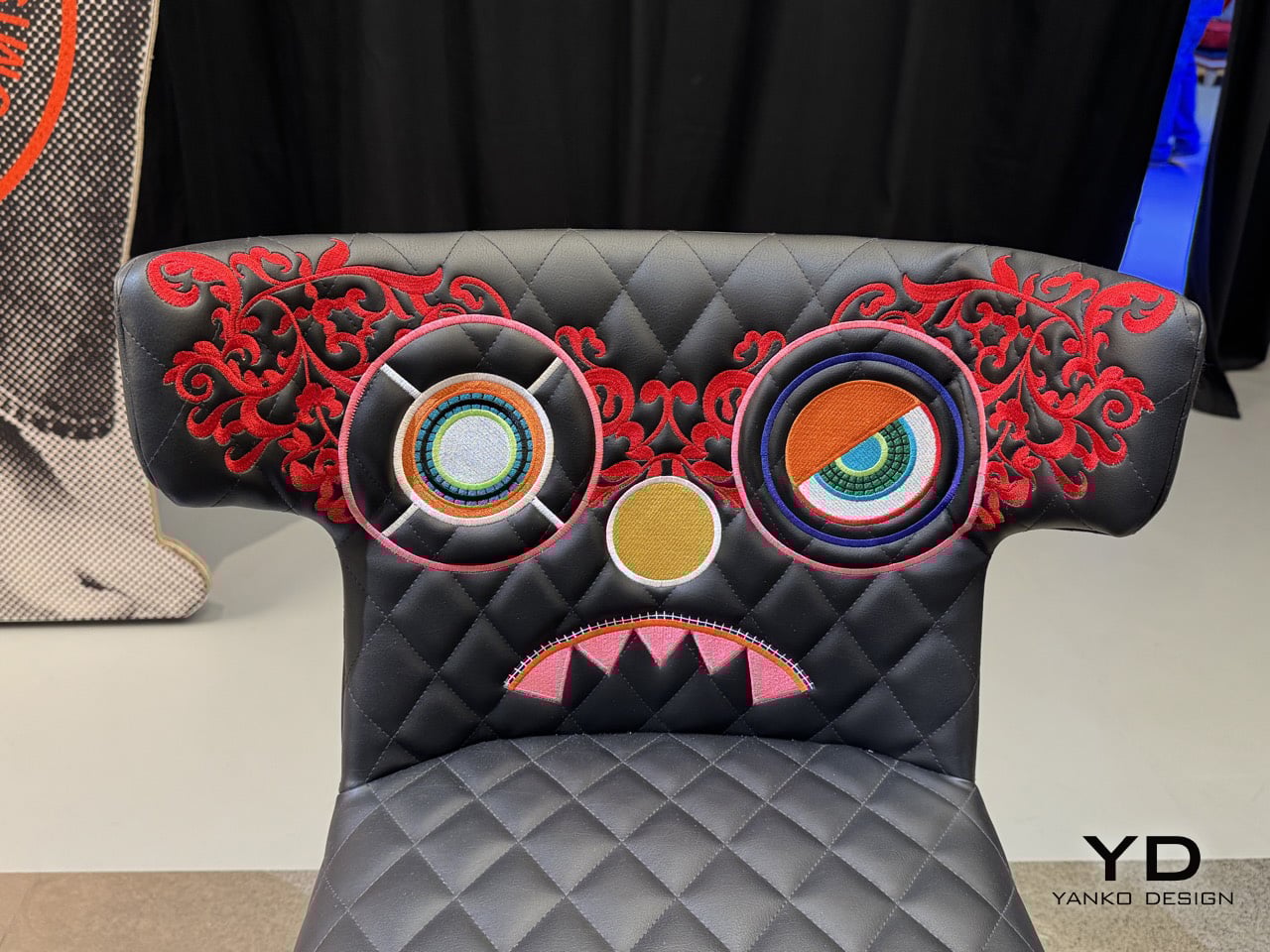
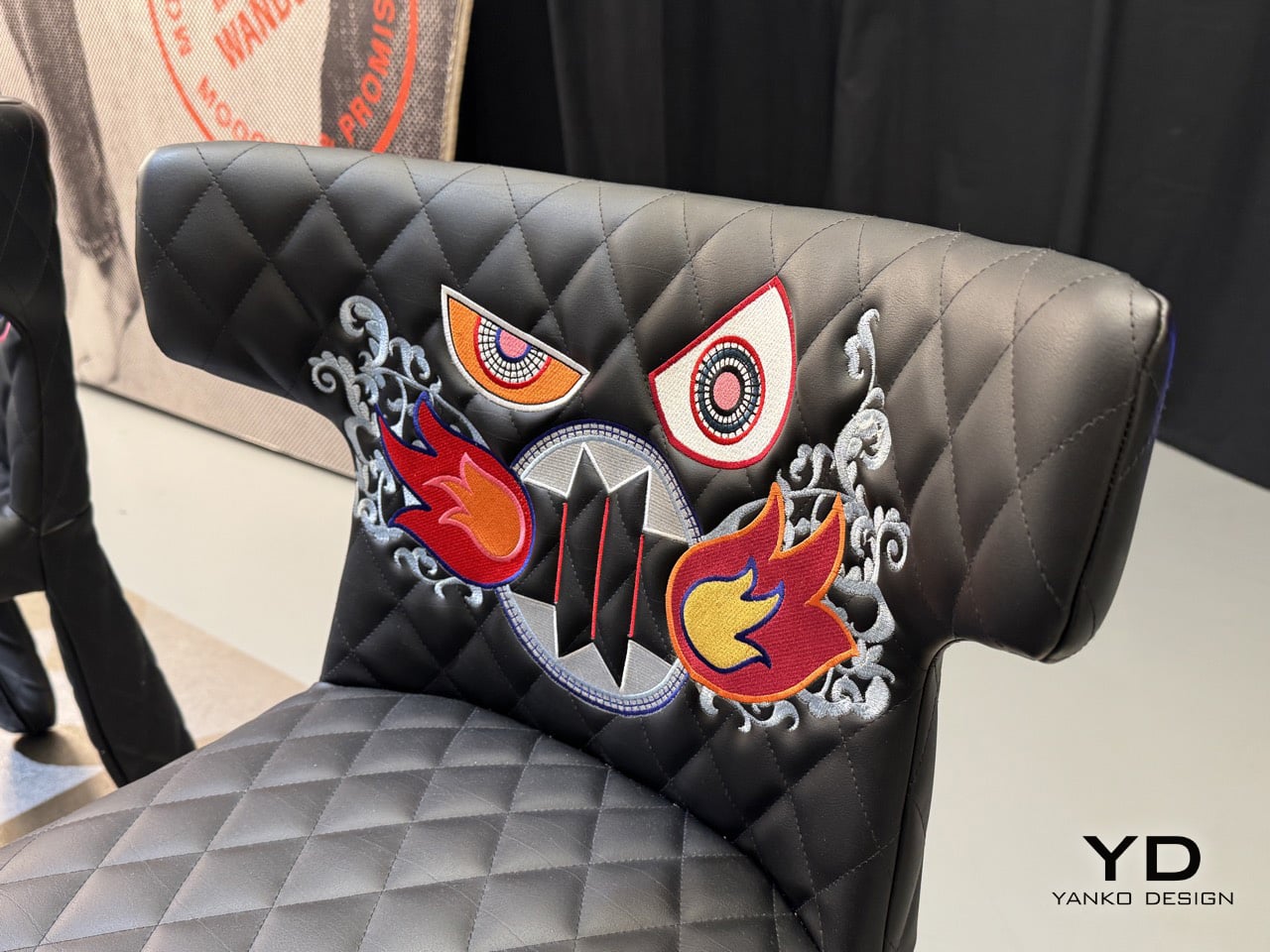
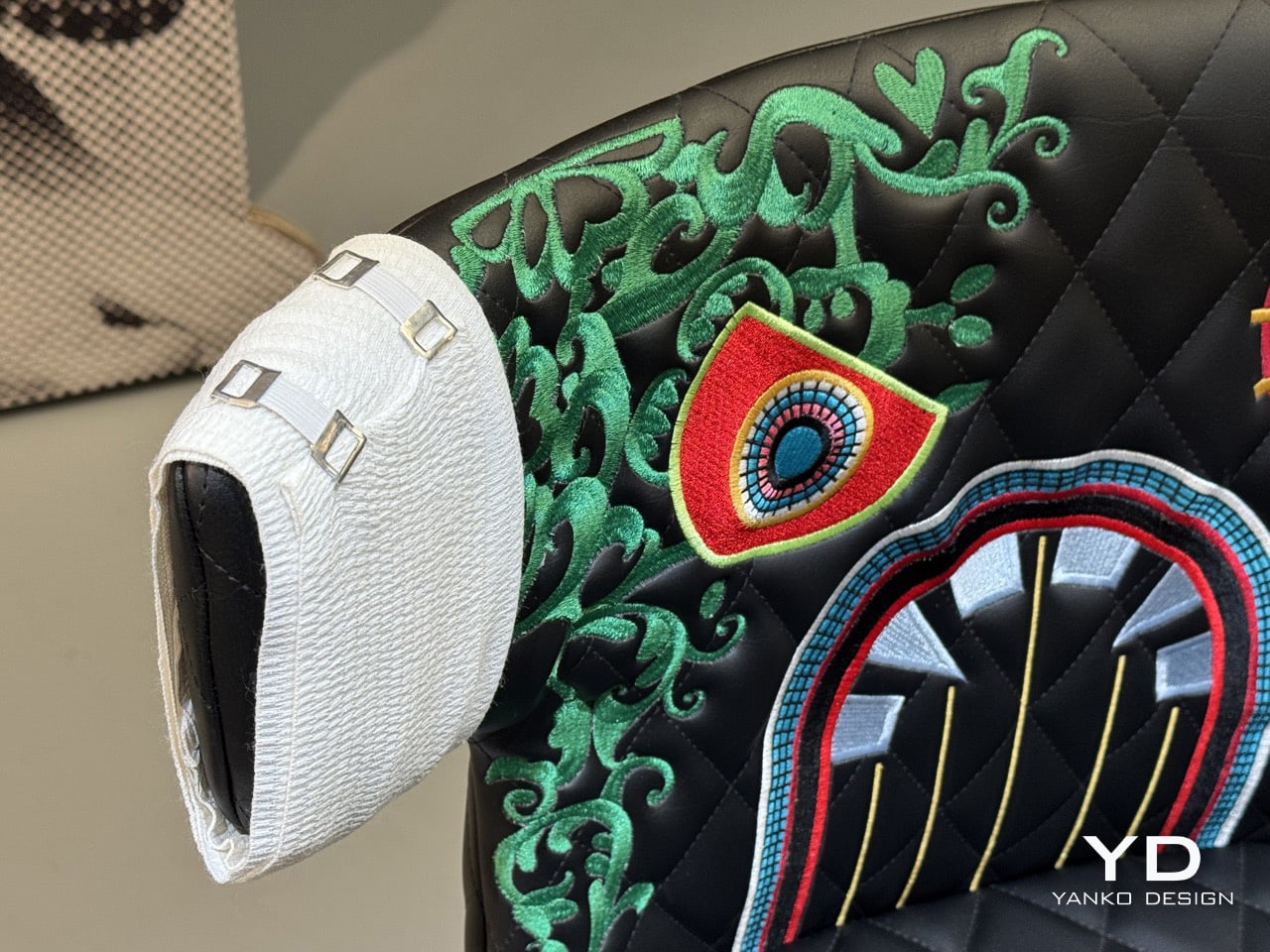
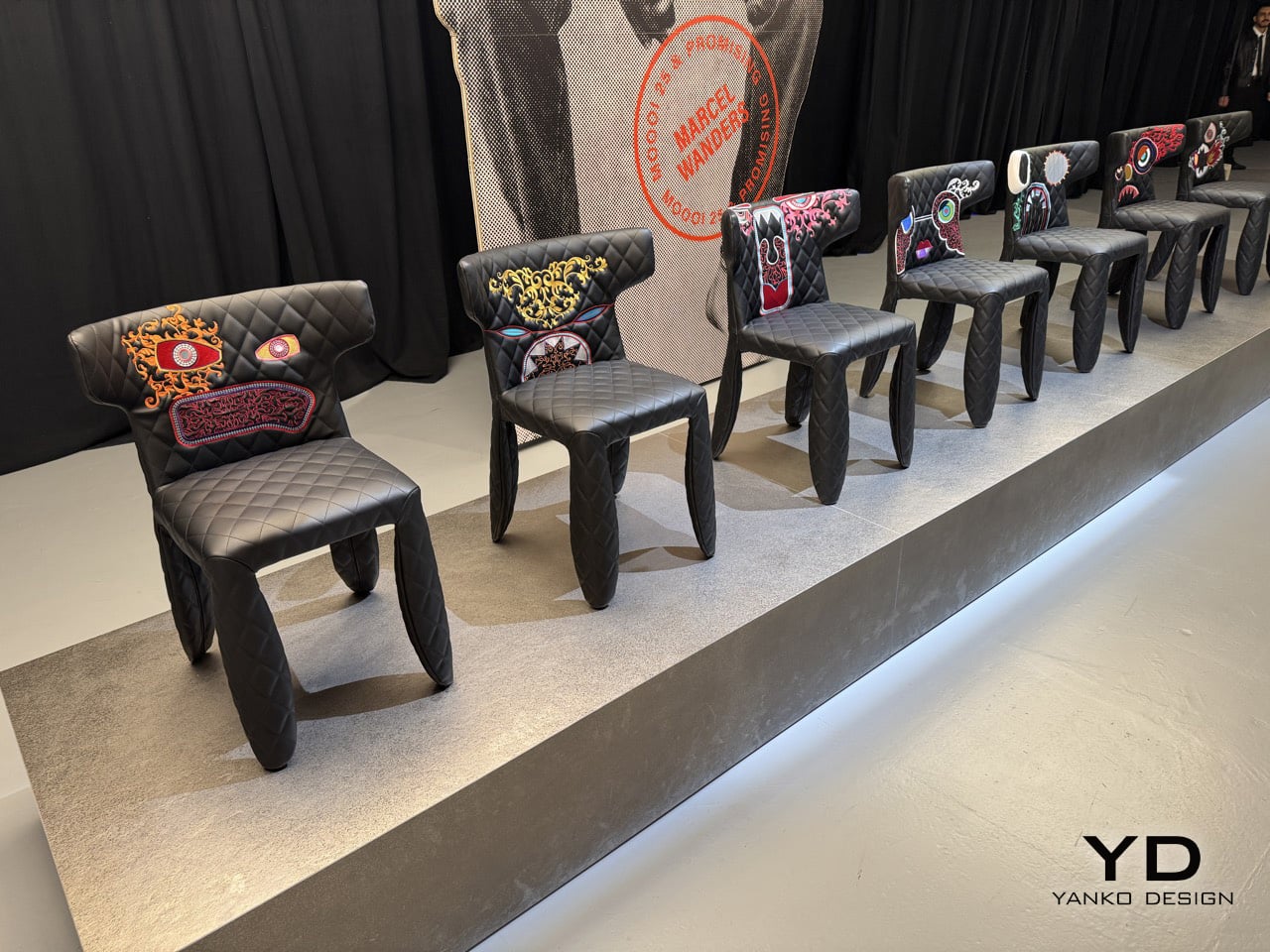
Moooi’s 25th anniversary celebration at Milan Design Week 2026 brought a reimagined Monster Chair collection to Superstudio Events, and this time the monsters are unavoidable. Each chair in the lineup features a hand-embroidered creature sprawling across the backrest, rendered in vivid, layered threadwork. One has concentric-circle eyes in clashing neon tones. Another hides behind ornate red filigree that frames its face like vintage wallpaper turned sentient. There are geometric flames, pink zigzag teeth, emerald scrollwork that could be tentacles or vines depending on your interpretation. The base silhouette stays true to the original, that black quilted leather and sculptural leg structure providing just enough formality to make the embroidered chaos feel intentional rather than random. It’s furniture that demands attention, and after 25 years of pushing boundaries, Moooi clearly has no plans to apologize for that.
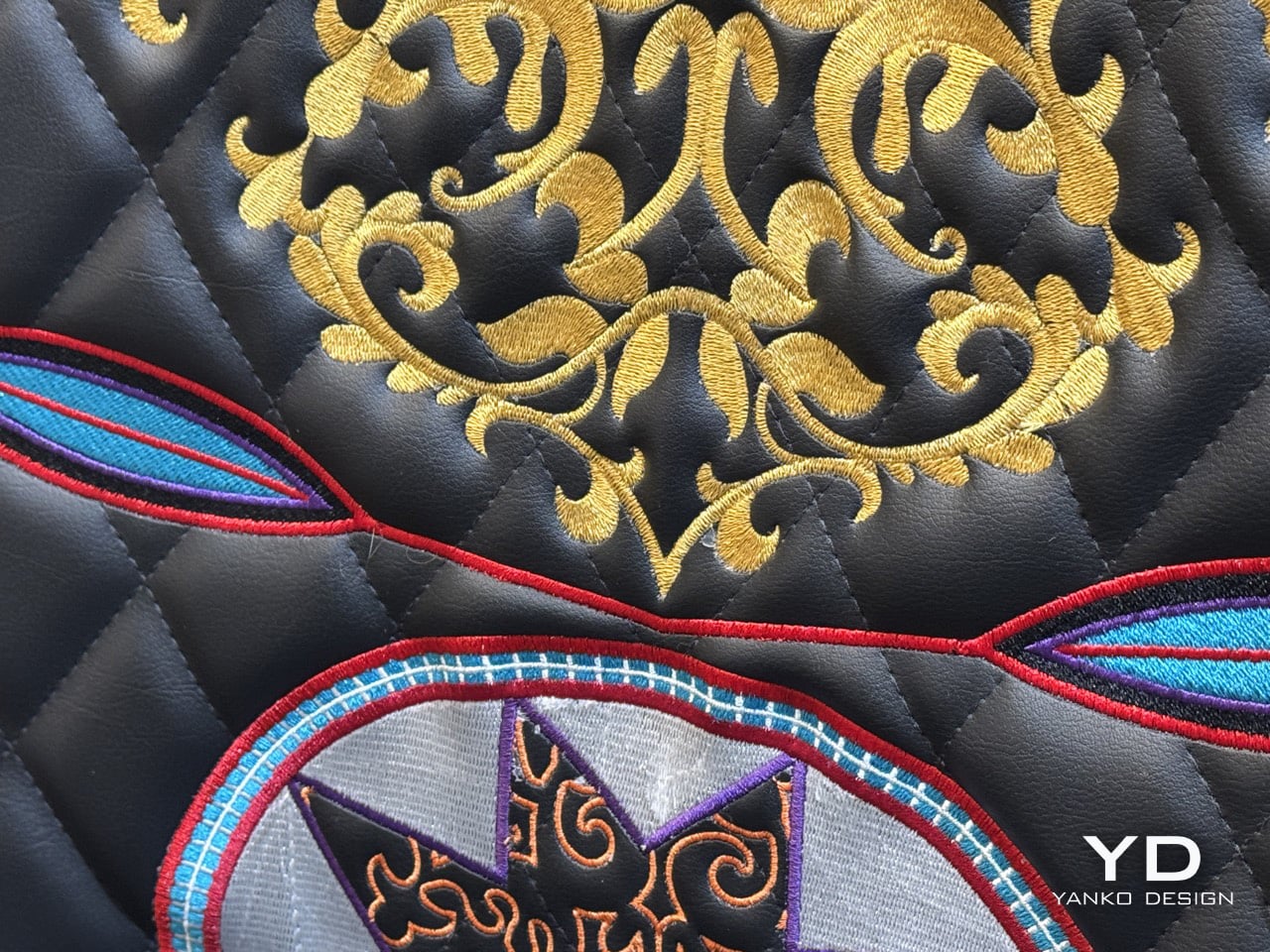
The embroidery work transforms an already iconic chair into a craft-intensive Labubu-esque character. Each monster appears to be unique, with thread layered in ways that create dimensional relief against the quilted leather backdrop. Some faces use densely packed stitching that gives them an almost patch-like quality, while others employ looser, more organic threadwork that lets the black leather show through. The color palettes vary wildly from chair to chair. One goes heavy on emerald green and white, another commits to a red and orange gradient that feels almost pyrographic. The effect is a collection where every piece reads as an individual artwork rather than a production run with minor variations.
The Monster Chair’s original form was already theatrical, with its deep button tufting and geometric legs that look like something between furniture and sculpture. Adding these embroidered creatures could have tipped the whole thing into novelty territory, but the execution is too considered for that. The monsters are bold without being cartoonish, detailed without feeling precious. They occupy that sweet spot where high craft meets playful irreverence, which has been Moooi’s signature move since Marcel Wanders and Casper Vissers founded the brand in 2001.
Each chair has its own persona. Some monsters look menacing, others oddly appealing. The artwork has an almost luchador-ish quality to it, making the chairs look like different wrestlers in their elaborate get-ups. The wrestler comparison fits well, given that every chair’s expression stands out as attention-grabbing. Some monsters look like they’ve won a battle, others look like they’ve got battle scars. One of them even has a gauze bandage wrapped around its ‘ear’, it’s rare to find yourself laughing and sympathizing with a chair, but you end up doing so.
The collection was on display at Superstudio Events during Milan Design Week 2026, part of Moooi’s broader 25th anniversary showcase. If you’re in Milan during the design week, Superstudio is worth the trek. The exhibition space gave these Monster Chairs the gallery treatment they deserve, lined up against black curtains with dramatic lighting that made the embroidered details pop. It’s the kind of installation that reminds you why Milan remains the essential pilgrimage for anyone who takes design seriously.
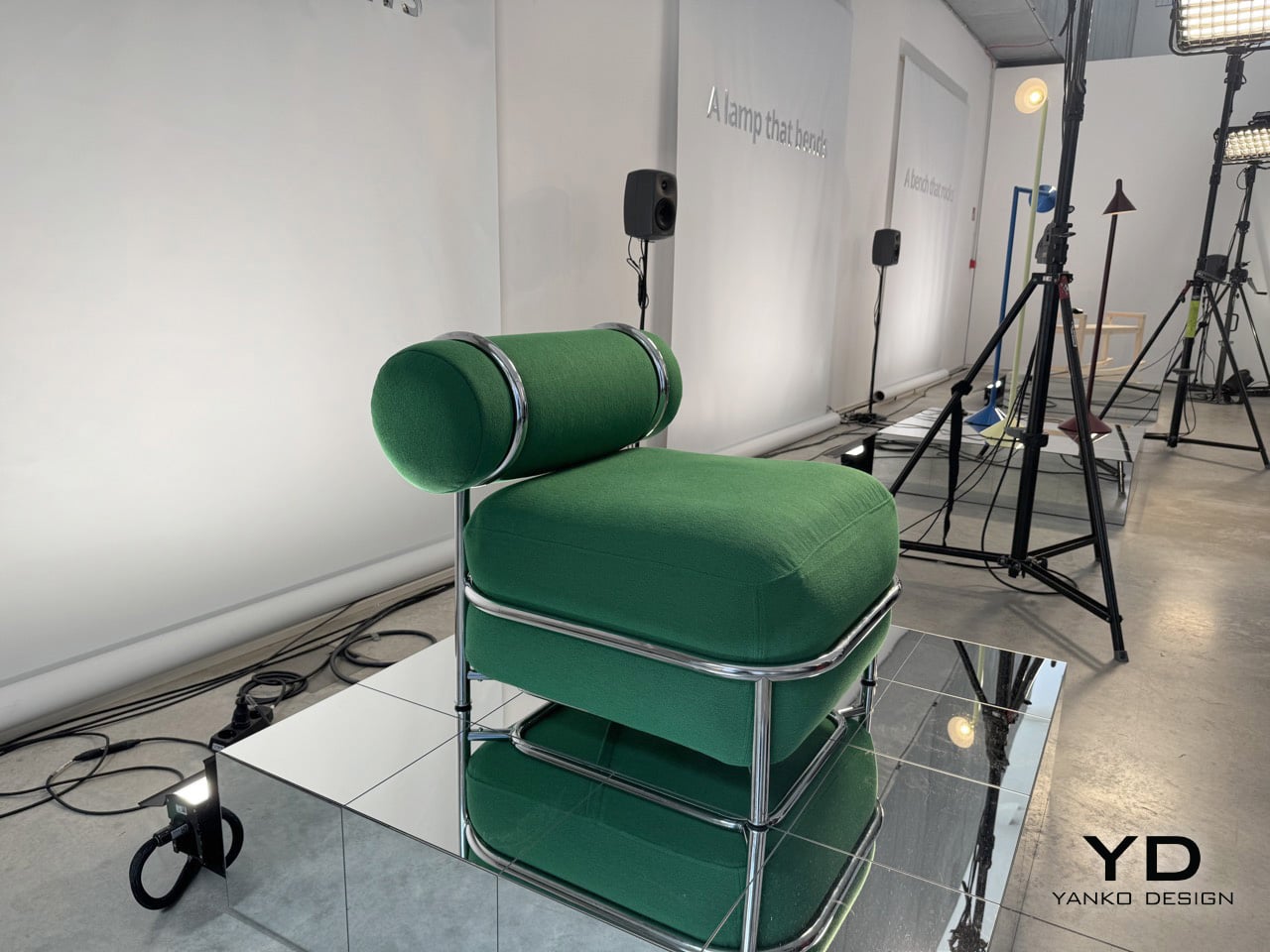
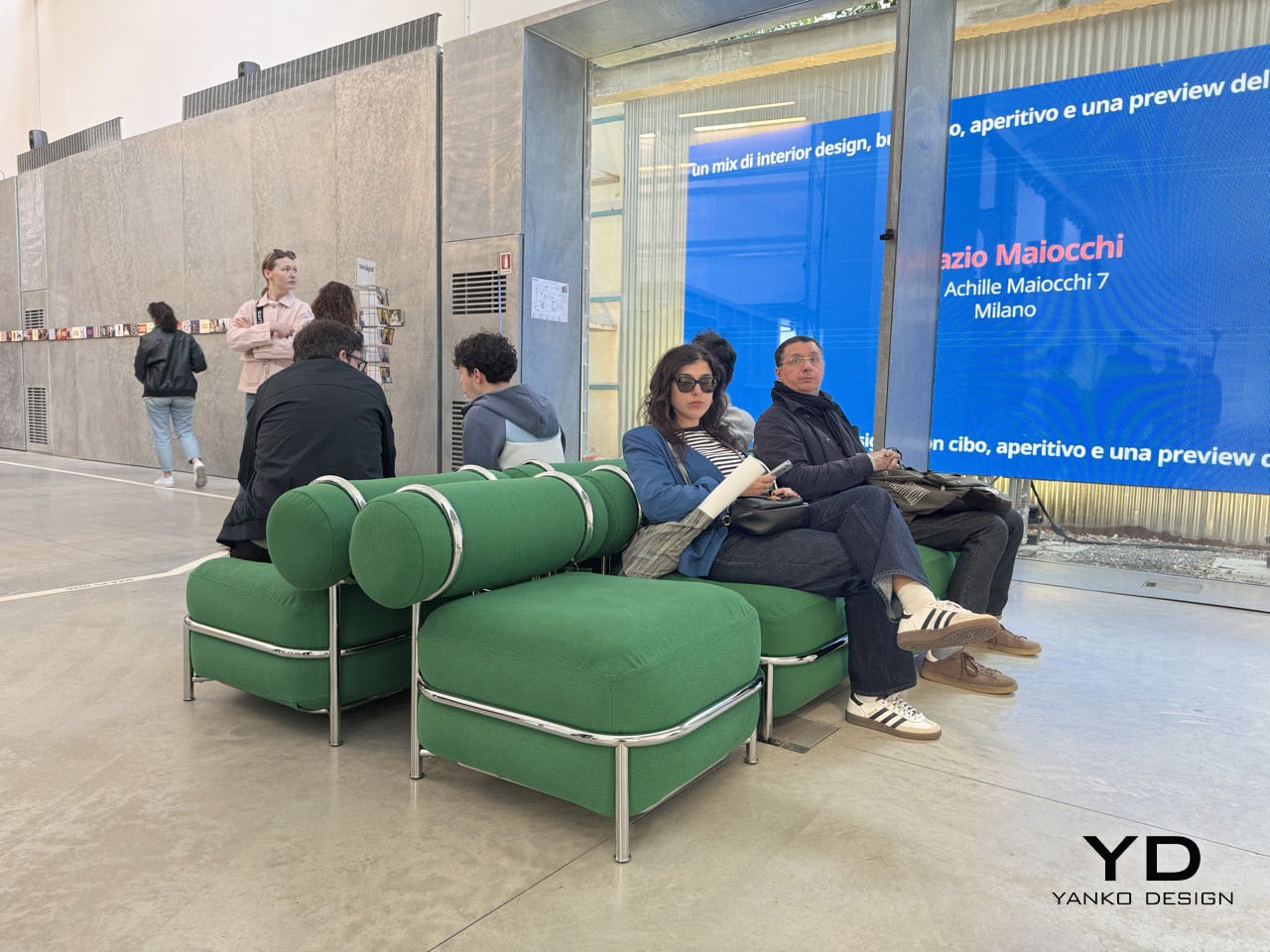
Air has always been free. IKEA designer Mikael Axelsson has been thinking about that fact for over a decade, sitting on an idea he first sketched in 2014 and shelved when no one at the company wanted to revisit inflatable furniture. The concept never disappeared, it just waited. At Milan Design Week 2026, inside the “Food For Thought” exhibition at Spazio Maiocchi, that idea finally got its moment. The PS 2026 Easy Chair arrived alongside a rocking bench and a flexible floor lamp, three pieces offering the first real look at the upcoming tenth IKEA PS collection.
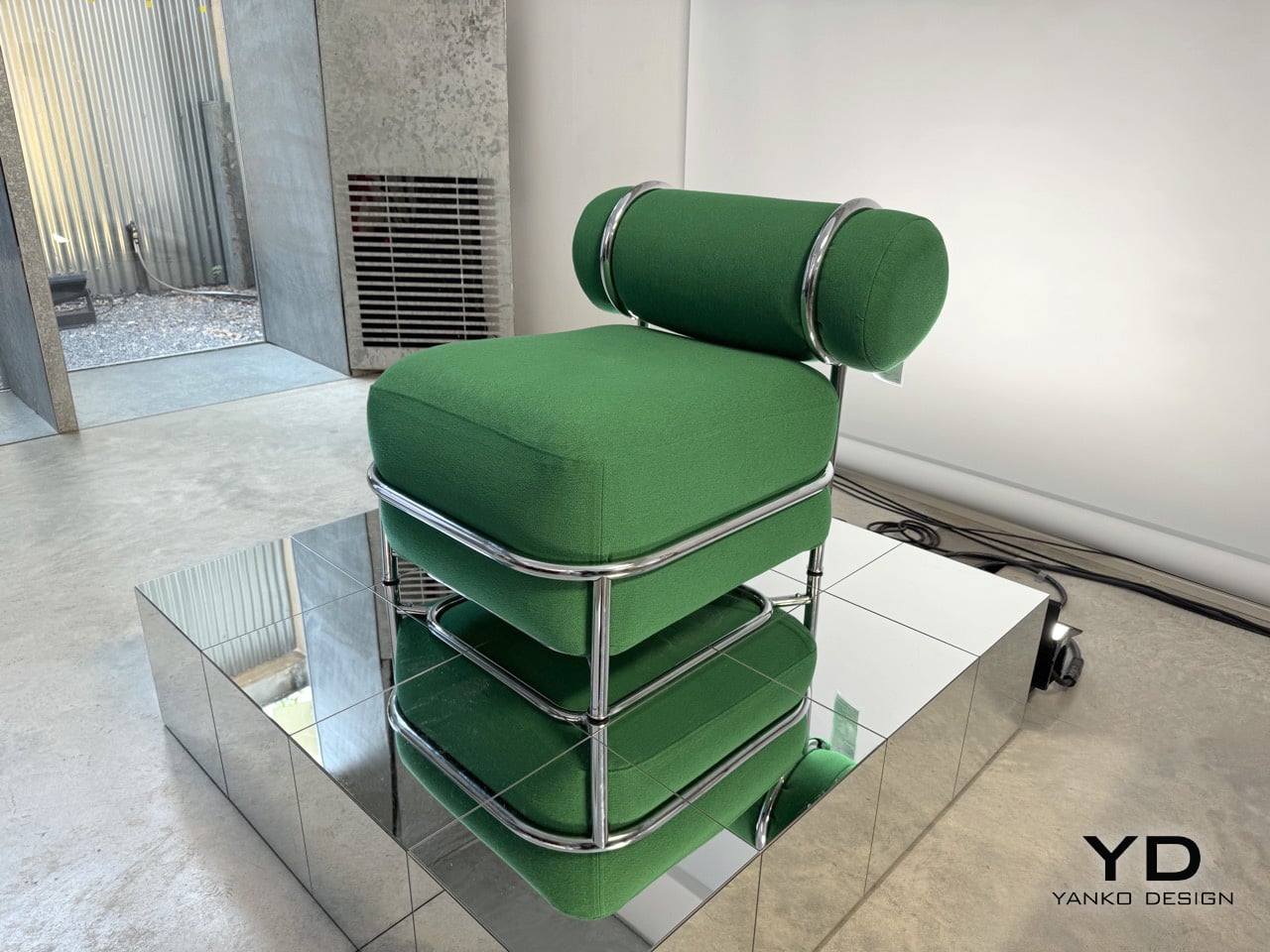
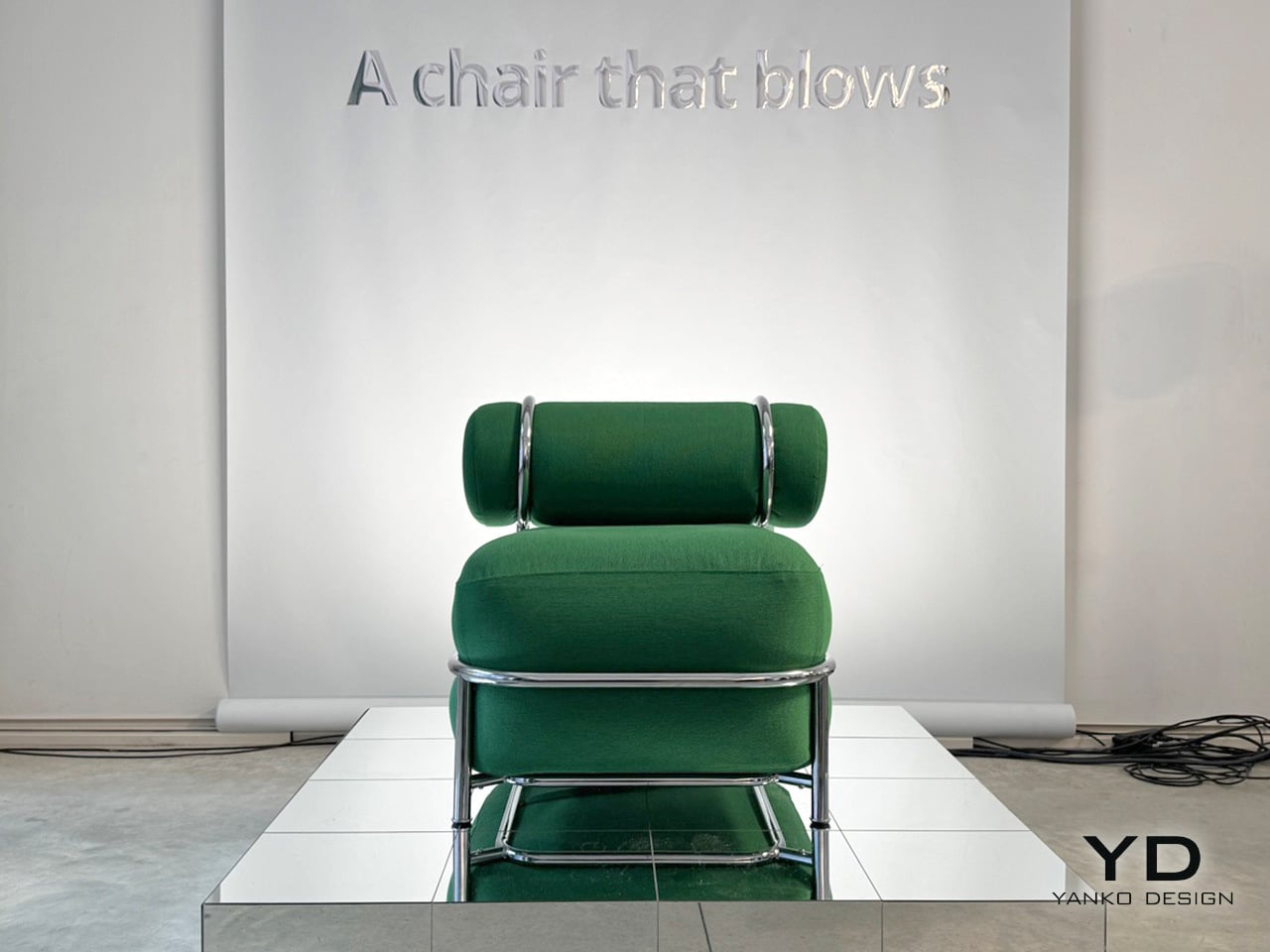
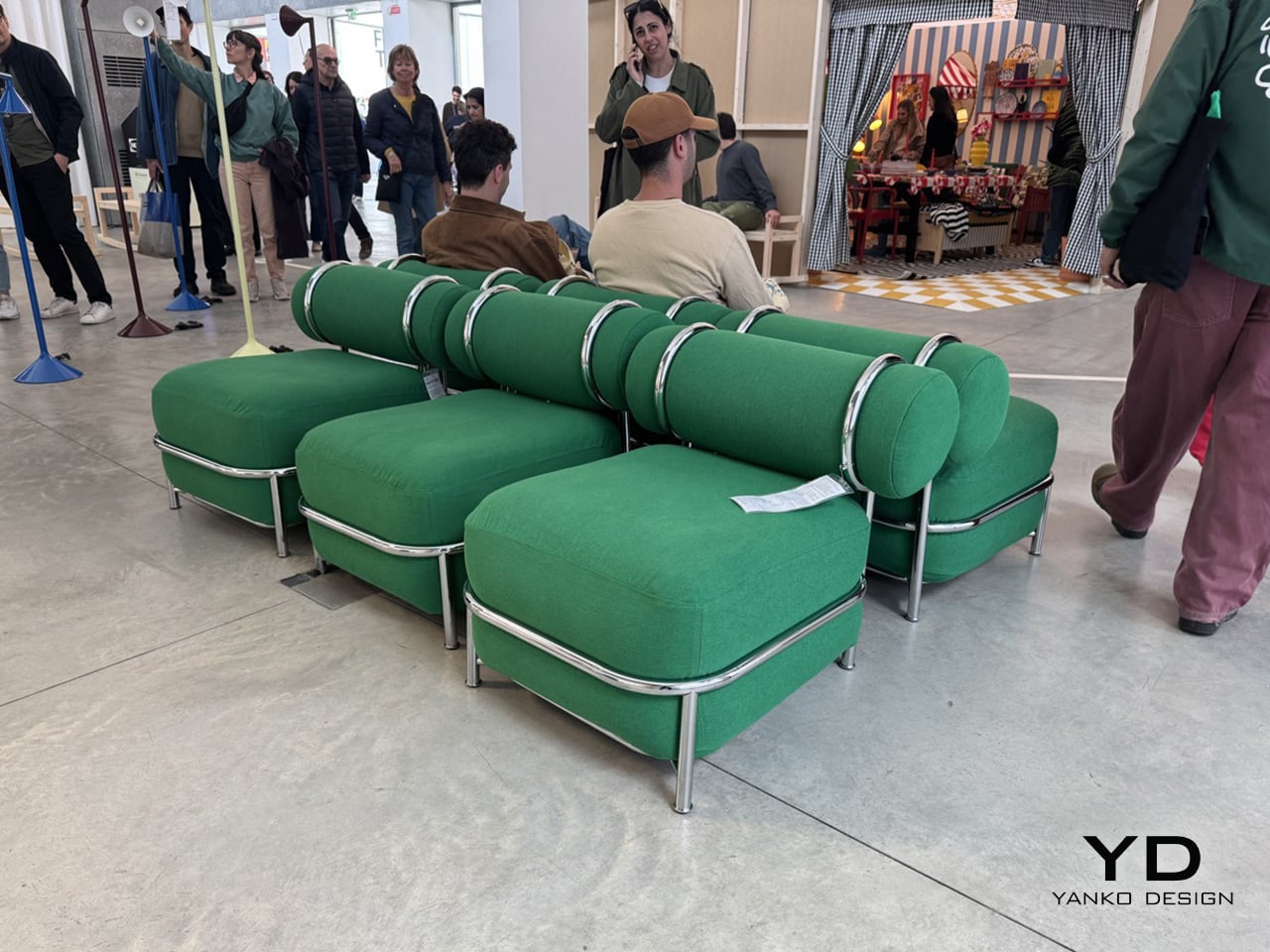
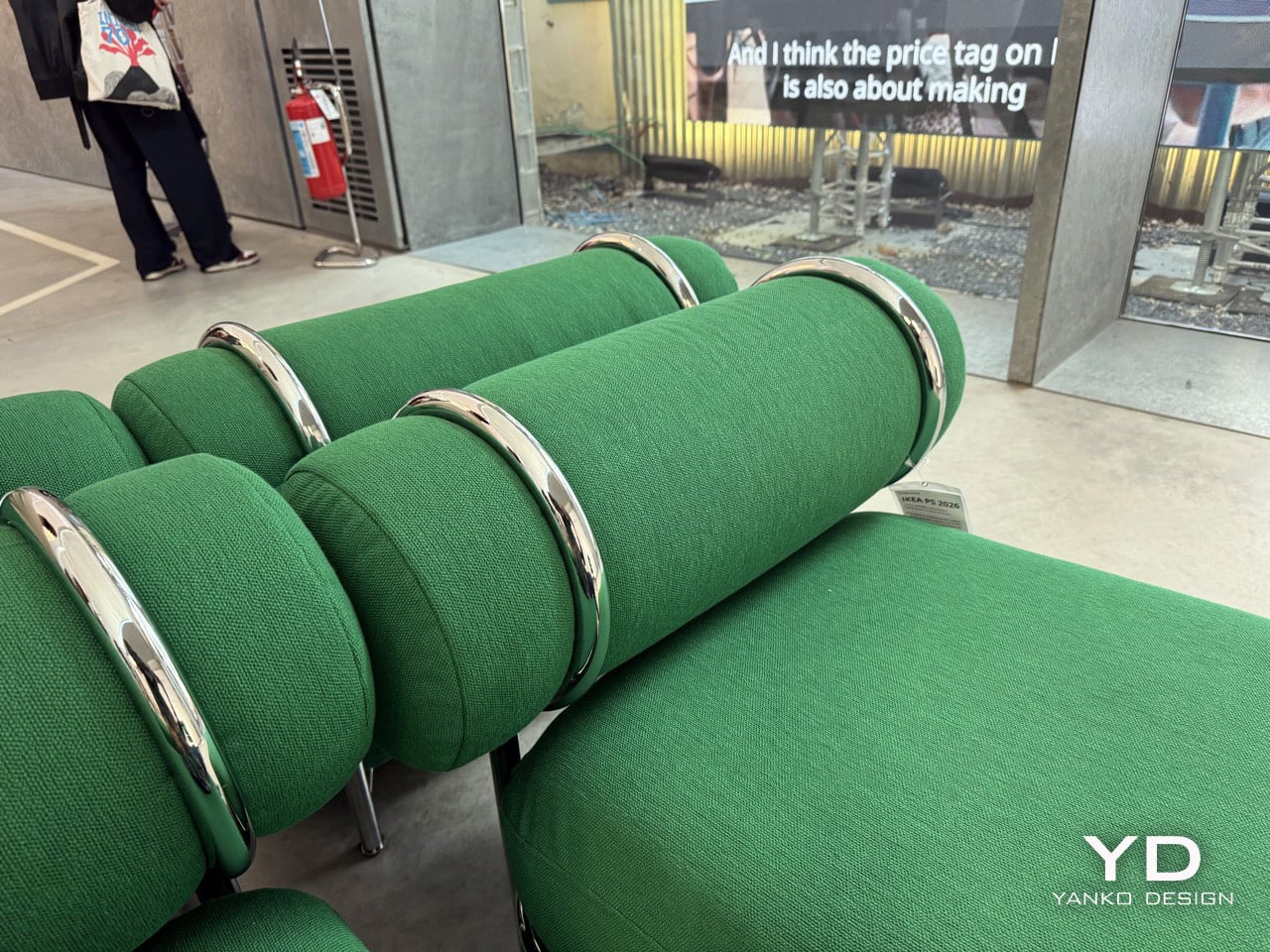
What Axelsson built reads, at first glance, like a fairly conventional lounge chair. Rich green fabric, cylindrical cushions, a compact and settled silhouette. The chrome tubing running around its perimeter is the tell, holding the inflatable volumes in place and giving the chair its shape and its credibility, keeping it far from the transparent, wobbly inflatables of the early 2000s. The separate air chambers between seat and backrest mean the sitting experience feels grounded rather than unpredictable. The lightness only reveals itself when someone actually lifts it.
Designer: Mikael Axelsson for IKEA
Mikael Axelsson is tapping into a design language that’s been trusted for nearly a century. It’s the same basic idea that made Le Corbusier’s Grand Confort a classic back in 1928: a rigid steel cage with soft cushions sitting inside. That frame is what makes the whole thing work. Without it, you’d just have a novelty green cushion that would feel out of place anywhere but a college dorm room. With the frame, the chair feels intentional and composed, and the backrest bolster sits with conviction across the top rail. The fact that it’s full of air is the last thing you notice, which is exactly the point.
The details here are just as smart. The fabric wrap gets rid of that annoying squeak and slide you might remember from old inflatable furniture, making it feel more like an actual upholstered piece. It comes with a manual foot pump instead of an electric one, which not only keeps the price down but also makes you part of the assembly process. It feels right for a chair that’s all about interacting with its materials. The deep green color seen in Milan is the kind of confident tone that can anchor a corner of a room without taking over.
The PS collection has always been IKEA’s design playground, a space for them to experiment since it first launched back in 1995. The rocking bench by Marta Krupinska has these wonderfully exaggerated runners, and Lex Pott’s floor lamp uses a simple diagonal cut so you can aim the light in three different directions. The full collection is set to launch on May 13, 2026. But the easy chair makes the sharpest point of the three. It argues that a chair built mostly on air can absolutely belong at Salone, as long as someone has thought carefully enough about the frame.
If you’re in Milan and want to see it for yourself, the chair is part of IKEA’s ‘Food For Thought’ exhibition. It’s being held at Spazio Maiocchi, located at Via Achille Maiocchi 7. The installation is open to the public and runs from April 21st through the 26th. It’s a great chance to see the chair, the lamp, and the bench in a setting that’s more about experience than just product display.
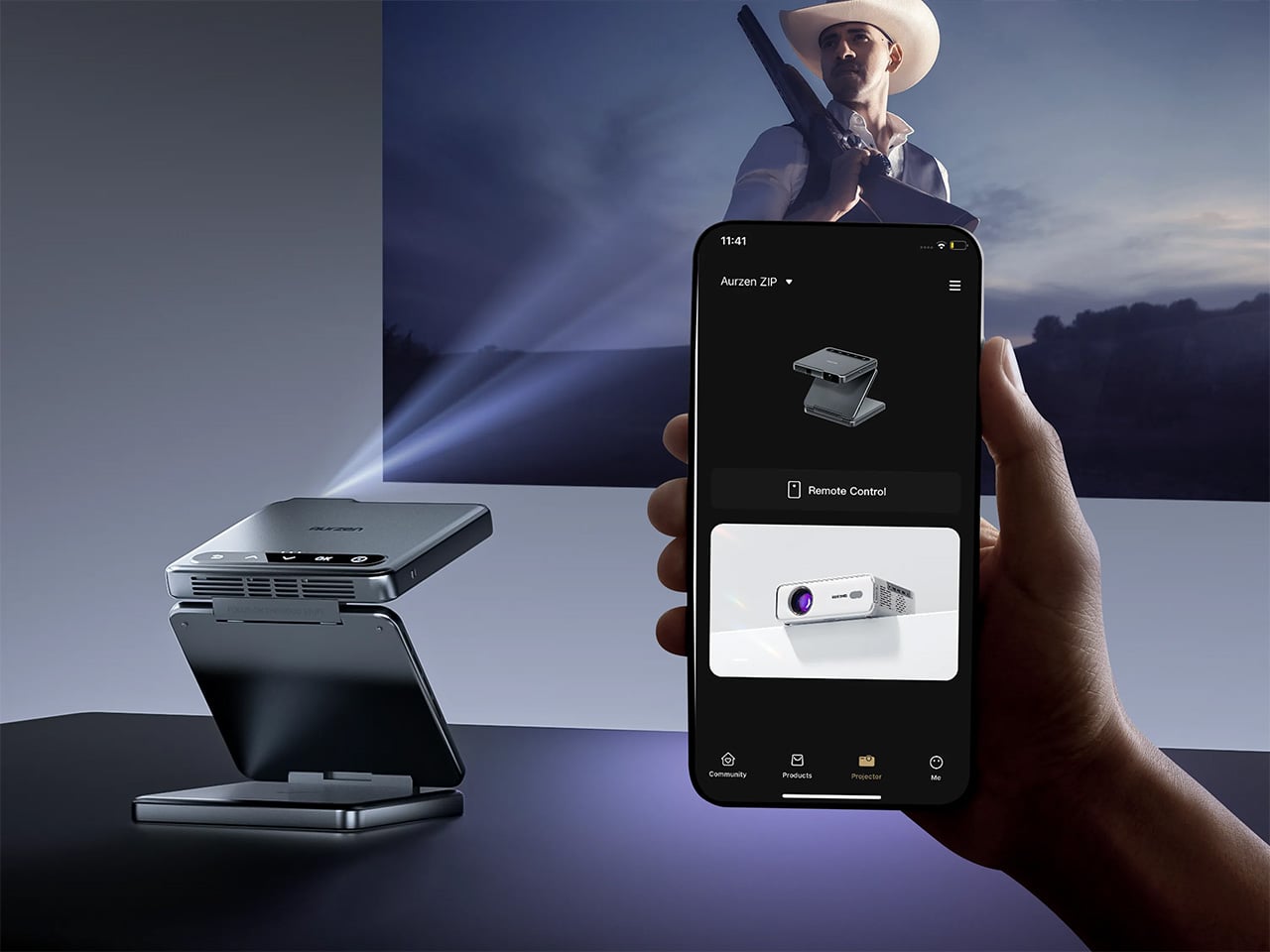
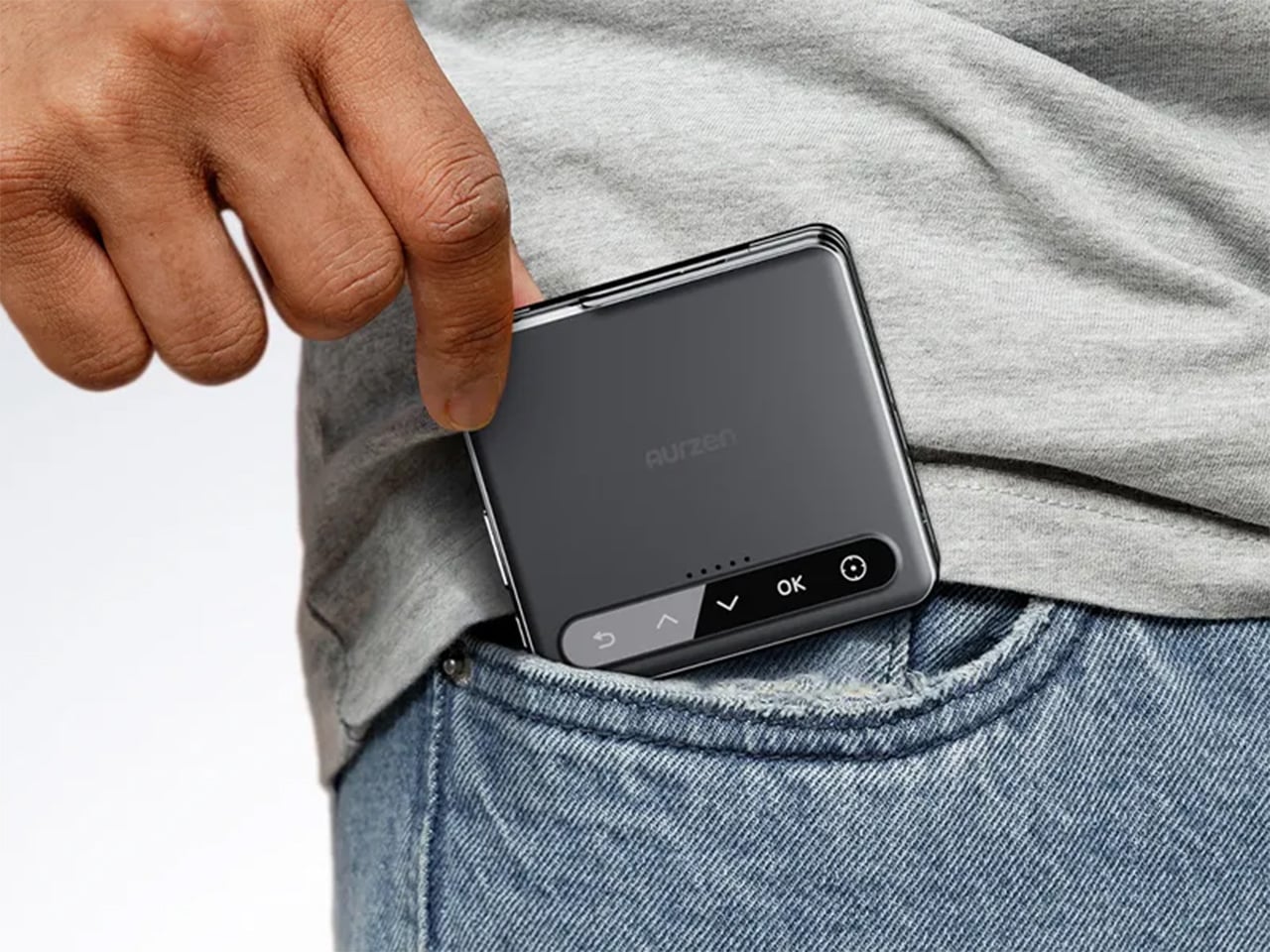
Cyberpunk stopped being a design aesthetic and became a lifestyle signifier somewhere between Blade Runner 2049 and your neighbor’s RGB-lit battlestation. We’ve seen the look applied to everything from gaming chairs to mechanical keyboards, but most of it reads like cosplay rather than genuine industrial design. Aurzen’s ZIP Cyber Edition, a limited-run variant of the tri-fold projector that debuted at IFA last year, sidesteps the usual neon-drenched clichés in favor of something that feels engineered rather than decorated. Circuit-board texturing runs across the matte black chassis, orange accent lighting traces the fold lines, and the entire device collapses down to pocket size without losing any of the visual intensity. This one was designed for people who buy gadgets the way sneakerheads buy limited drops.
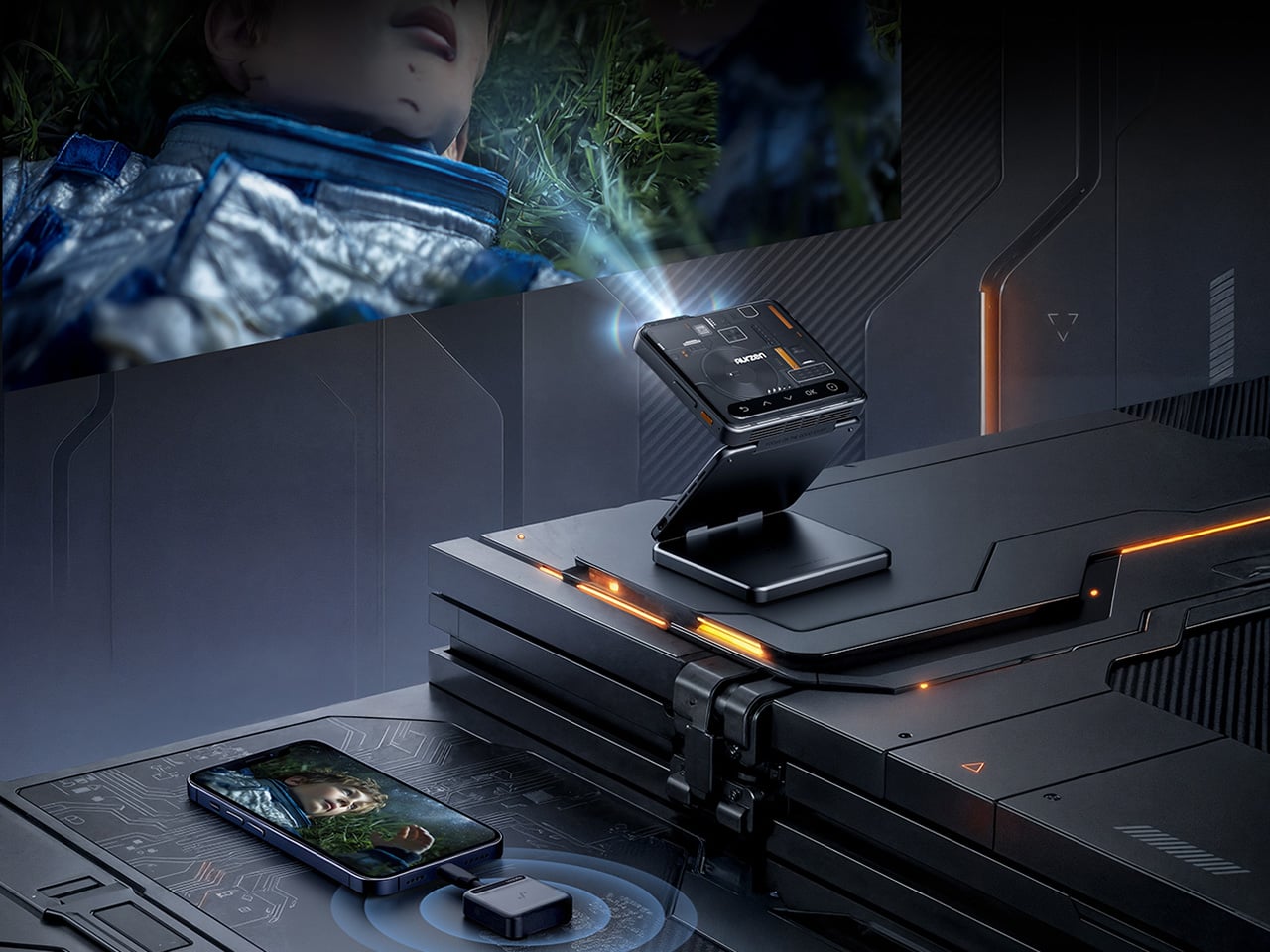
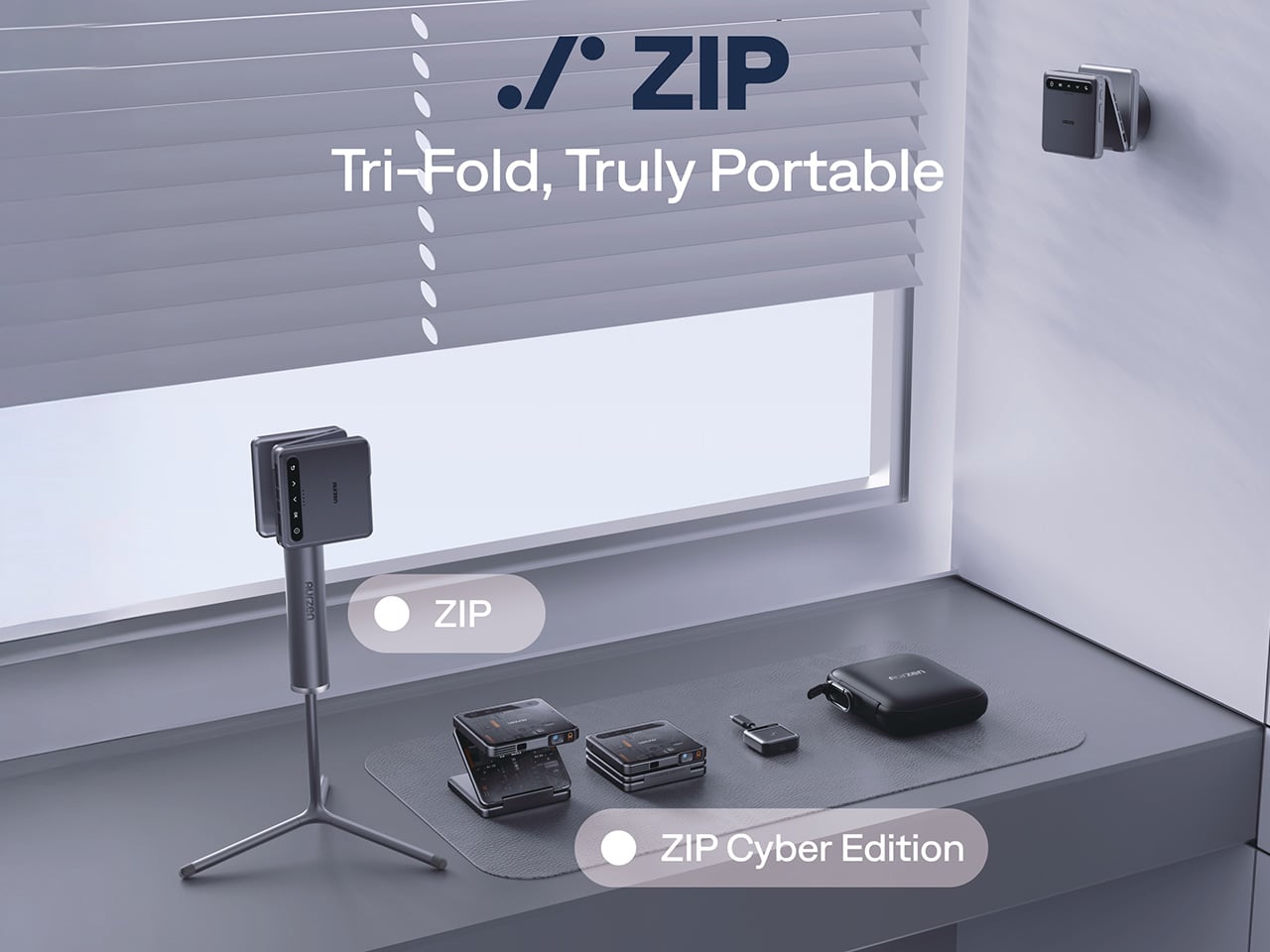
The Cyber Edition shares the same core DNA as the standard ZIP: a tri-fold DLP projector measuring 3.31 x 3.07 x 1.02 inches when folded, powered by a 5000mAh battery good for about 90 minutes of runtime. You get 100 ANSI lumens in Turbo mode, native 720p resolution, ToF autofocus that calibrates 30 times per second, and Bluetooth 5.4 for wireless mirroring. What sets the Cyber Edition apart is the finish, the material detailing, and the fact that Aurzen produced it as a numbered limited release. The modular accessory ecosystem (magnetic mounts, power bank stands, USB-C streaming dongles) turns it into a configurable projection rig rather than a one-trick device. It’s the kind of gadget that belongs on a pegboard wall next to your EDC knife and custom-keycapped keyboard.
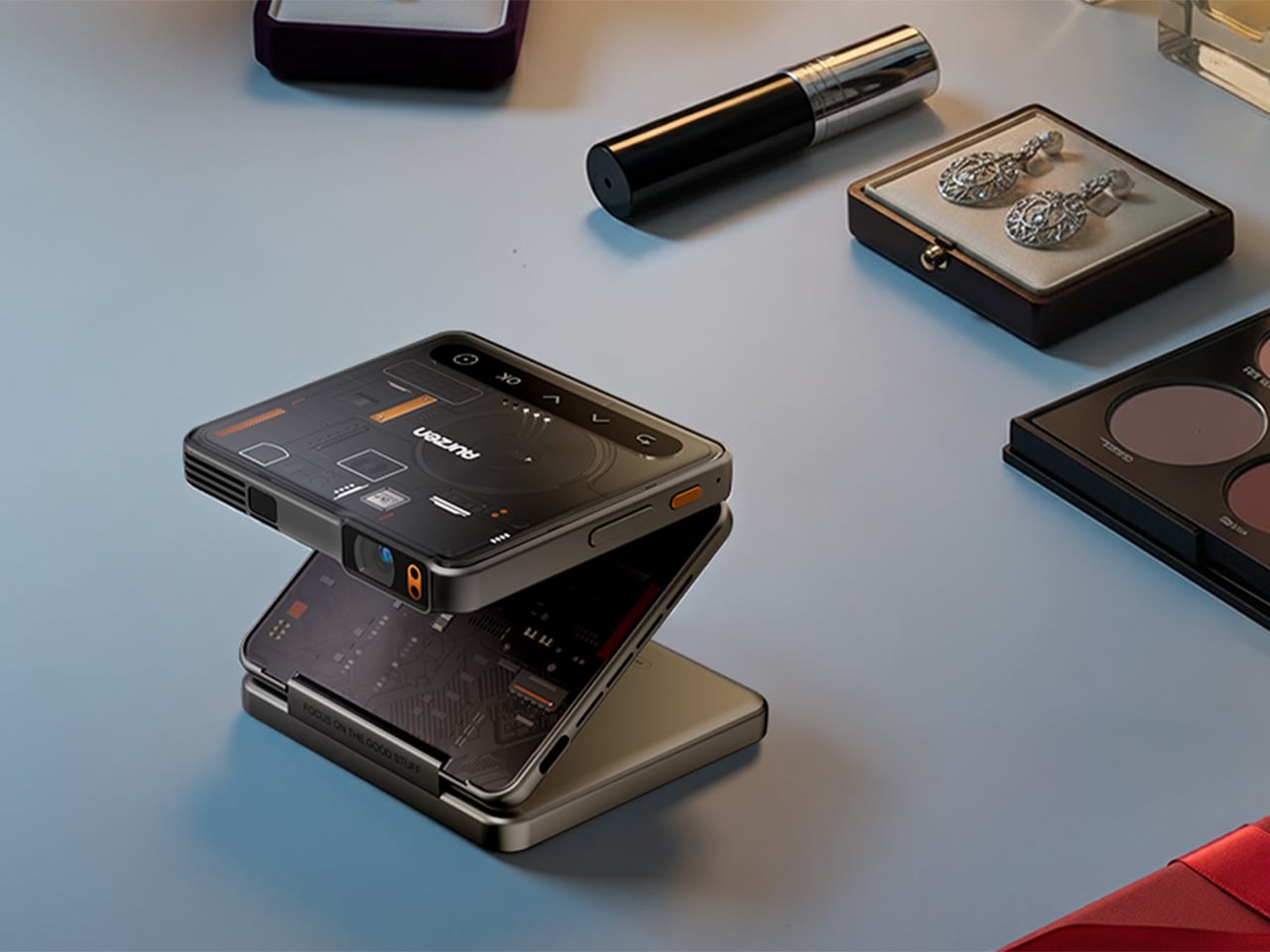
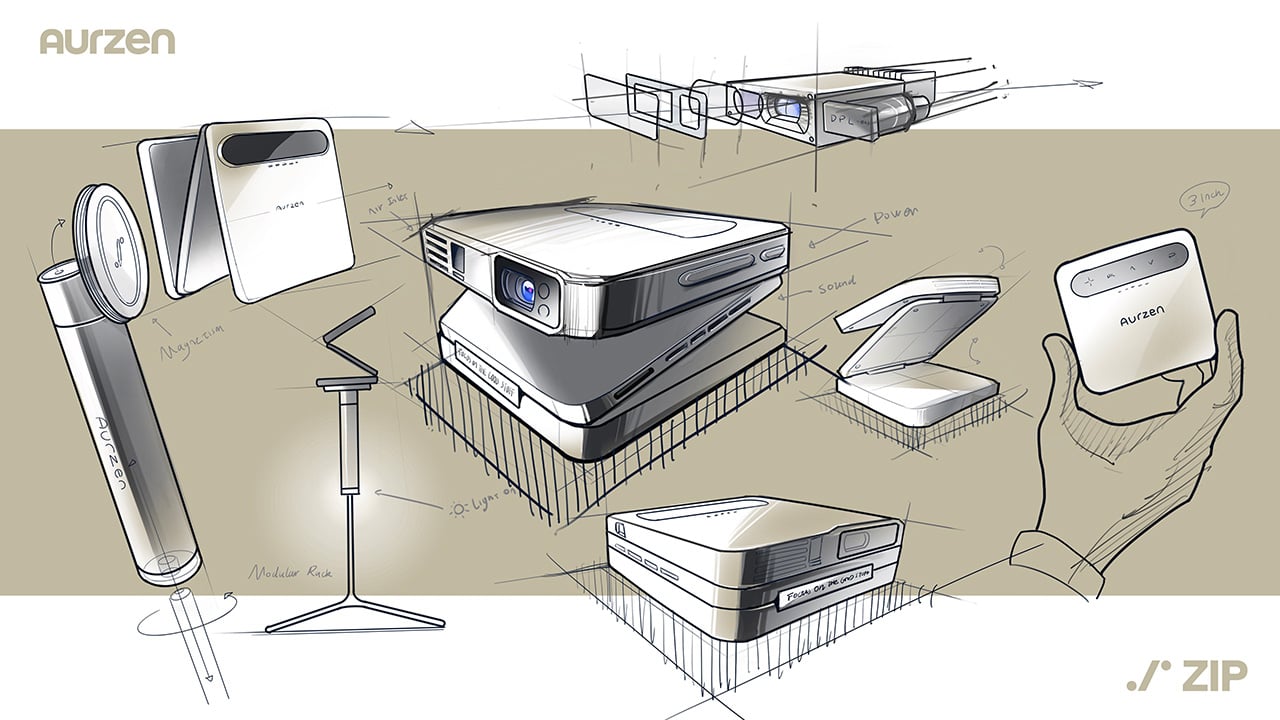
That sense of distinction starts with the physical design. The ZIP Cyber Edition folds into a compact square footprint that can slip into a jacket pocket, side pouch, or sling bag without demanding the kind of space most portable projectors still require. The tri-fold mechanism gives it a kinetic quality that makes opening and positioning the device part of the experience. On a table, shelf, or bedside surface, it does not sit there like a generic electronics block. It unfolds with intent, revealing a built-in stand that helps angle the projector quickly for casual viewing. The styling reinforces that experience. The surface graphics resemble a miniature control panel, the orange accents break up the dark body with a subtle sci-fi energy, and the overall silhouette feels sleek enough to pass for a concept gadget pulled from a design render.
Aurzen makes it clear that the Cyber Edition should be understood as a playful, gift-worthy tech object, and that framing makes sense. The supplied lifestyle assets lean into two different but complementary worlds. In one, the projector sits among headphones, a smartwatch, wireless earbuds, and a camera, framed like part of a modern everyday carry kit. In another, it appears alongside cosmetics and jewelry, presented as something stylish enough to belong in a gift spread rather than a utilitarian tech flat lay. That duality works in its favor. The ZIP Cyber Edition has enough gadget credibility to attract enthusiasts, but enough visual charm to feel approachable for gifting, especially for people who appreciate design-forward electronics that spark curiosity the second they come out of the box.
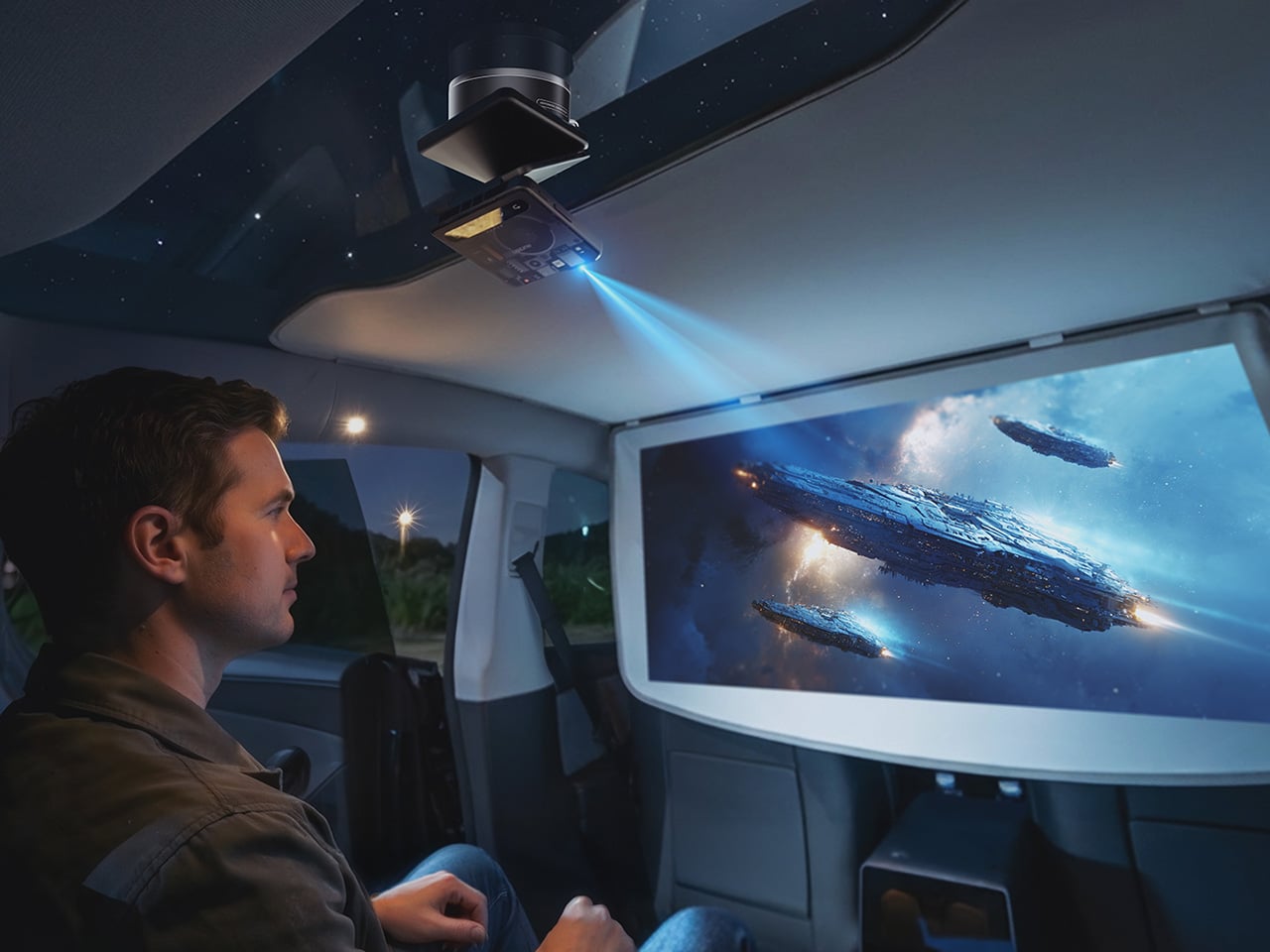
The modular accessory ecosystem gives this projector added functionality that you wouldn’t normally see in this category. Phones have accessory ecosystems – projectors, not so much… maybe just a tripod mount or a cleaning cloth. Instead of treating the ZIP as a sealed, standalone device, the company has built a set of accessories that turn it into a more flexible projection tool. The CastPlay Pro dongle connects through USB-C and is positioned as the quick route to content, making it easier to start watching without a complicated setup process. Then there is the MegaPlay dual-side mount, which uses a vacuum-lock base to attach securely to smooth surfaces such as glass, mirrors, and desks, followed by magnetic mounting that snaps the projector into place in a second.
Aurzen also offers the PowerPlay 3-in-1 stand, which doubles as an adjustable stand and a 10,000mAh power bank. That kind of accessory feels particularly well matched to the ZIP’s identity. Portable gadgets always benefit when their support hardware feels as intentional as the main device, and here the stand does more than prop the projector up. It extends runtime, offers multiple height levels, and helps the ZIP move between different environments with less friction. Taken together, these accessories give the Cyber Edition a modular personality that aligns neatly with the audience Aurzen is chasing, early adopters and gadget enthusiasts who enjoy experimenting with how their devices fit into daily life. There is a lot of appeal in a product that can move from a desk setup to a bedroom wall to a travel bag without feeling out of place in any of them.
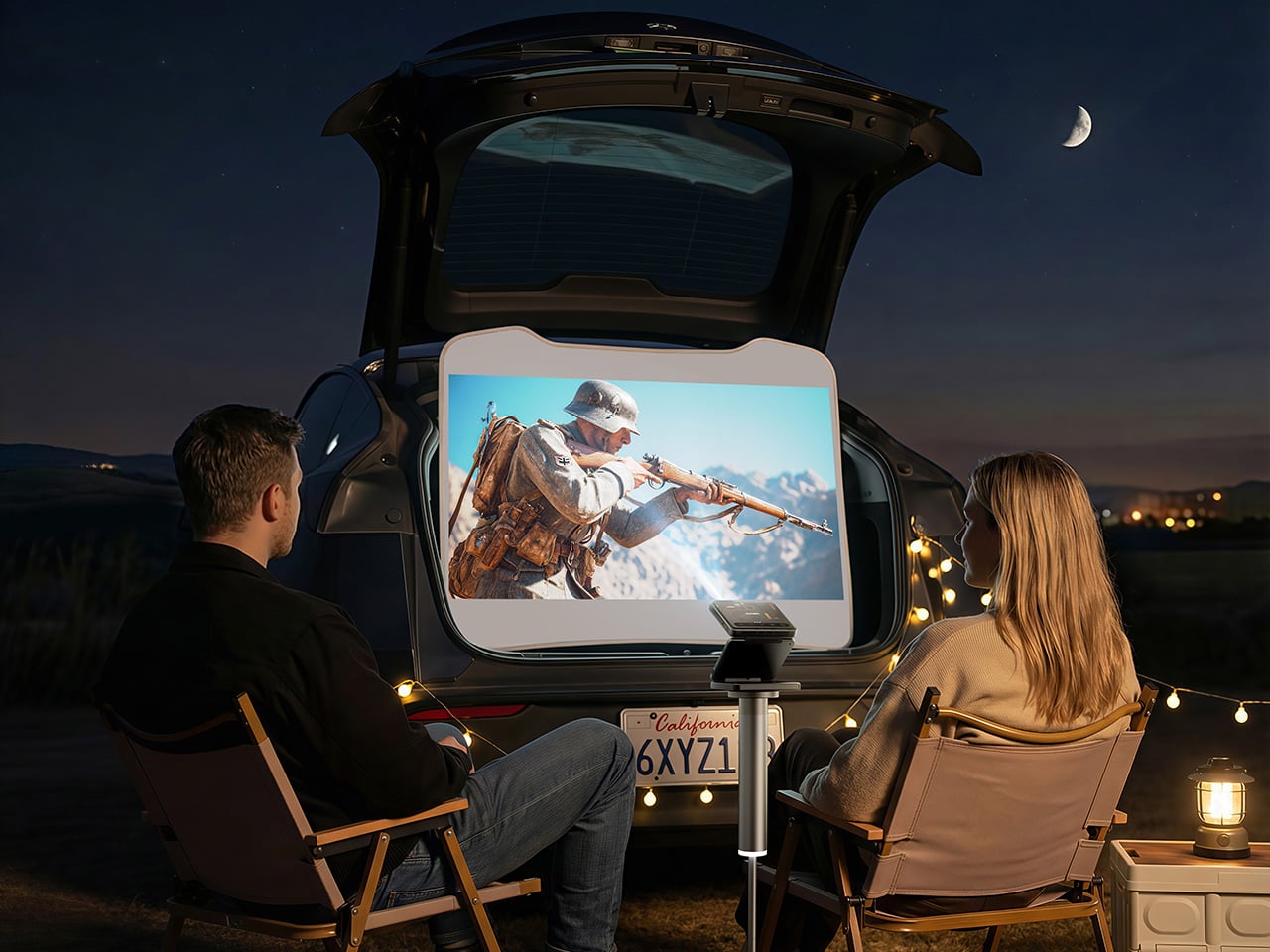
That flexibility also helps clarify what kind of projector this is. Aurzen is not positioning the ZIP Cyber Edition as a traditional home cinema centerpiece. The better framing is that it behaves like a compact projection gadget with a sense of cool whimsy. It is easy to imagine it being used for casual streaming, spontaneous bedroom projection, dorm setups, travel use, or simply as a conversation-starting piece of hardware that people enjoy showing off. That’s because a lot of portable electronics succeed by becoming part of a lifestyle rather than by winning a spec-sheet arms race. The Cyber Edition leans into personality, portability, and modularity, which gives it a lane of its own in a category that often defaults to plain white boxes and interchangeable styling.
The strongest thing Aurzen has done with the ZIP Cyber Edition is recognize that design can be a feature in itself. Plenty of compact projectors promise convenience, and some promise performance, but very few seem interested in becoming objects people would actually want to collect, display, or gift. This one feels built for that exact purpose. The cyberpunk-inspired finish gives it character, the tri-fold construction gives it novelty, and the accessory ecosystem gives it room to evolve beyond a single-use gadget. For tech enthusiasts who enjoy hardware with a little personality and a lot of portability, the ZIP Cyber Edition feels like the kind of release that earns attention on sight and keeps it once you start exploring how it fits into everyday routines.
The Aurzen ZIP Cyber Edition is available now directly from Aurzen’s official website at $399.99, with a limited-edition production run and numbered units so you know you’re part of an exclusive clique. Although the limited edition status demands a higher price tag, YD readers can use the code 40AURZENZIP to get a whopping 40% off, bringing the price down to $239.99. And just in case you’re reading this after the Cyberpunk variant runs out, the standard Aurzen ZIP is up for grabs too, in Titanium Gold and Dark Gray.
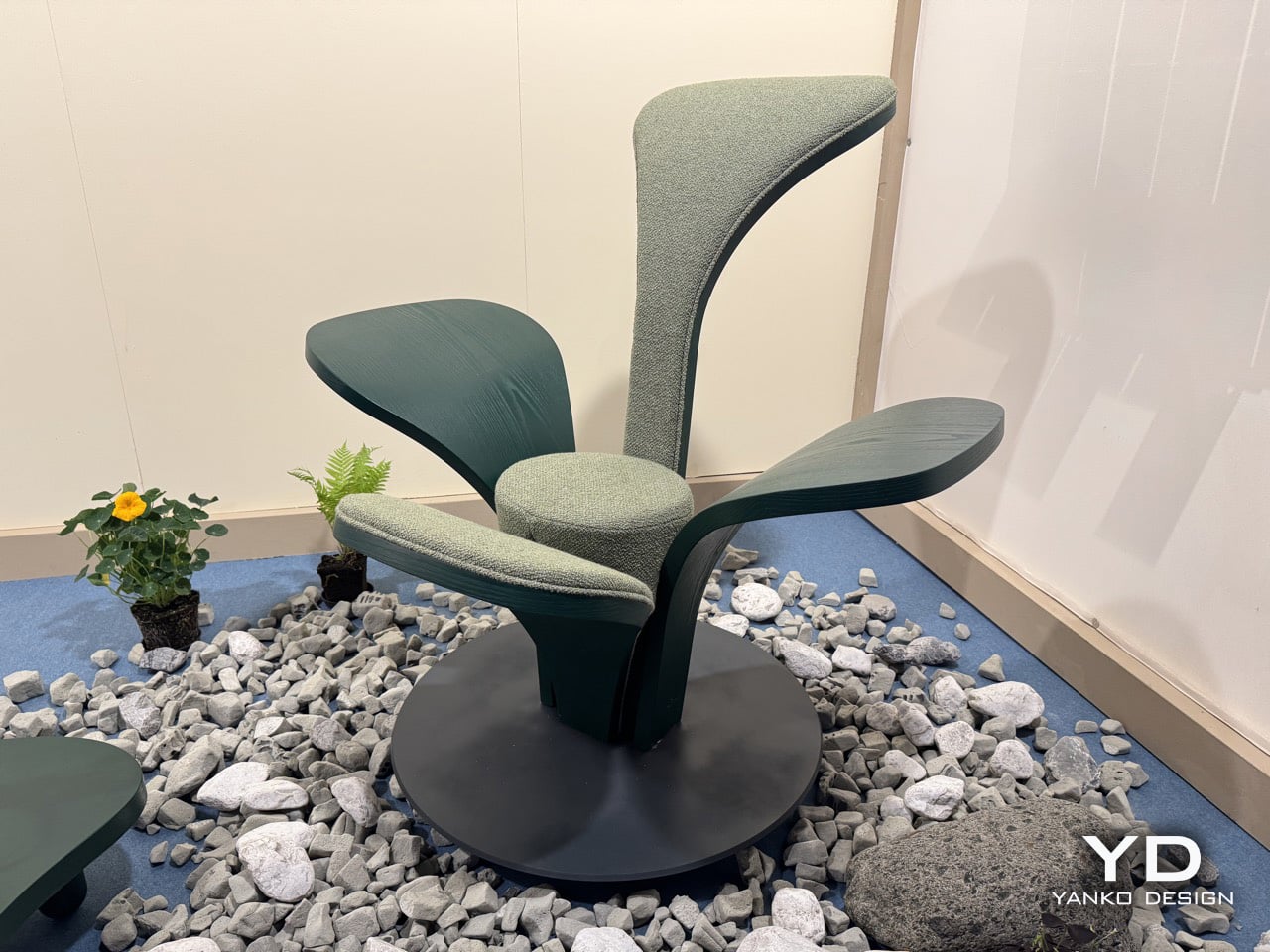
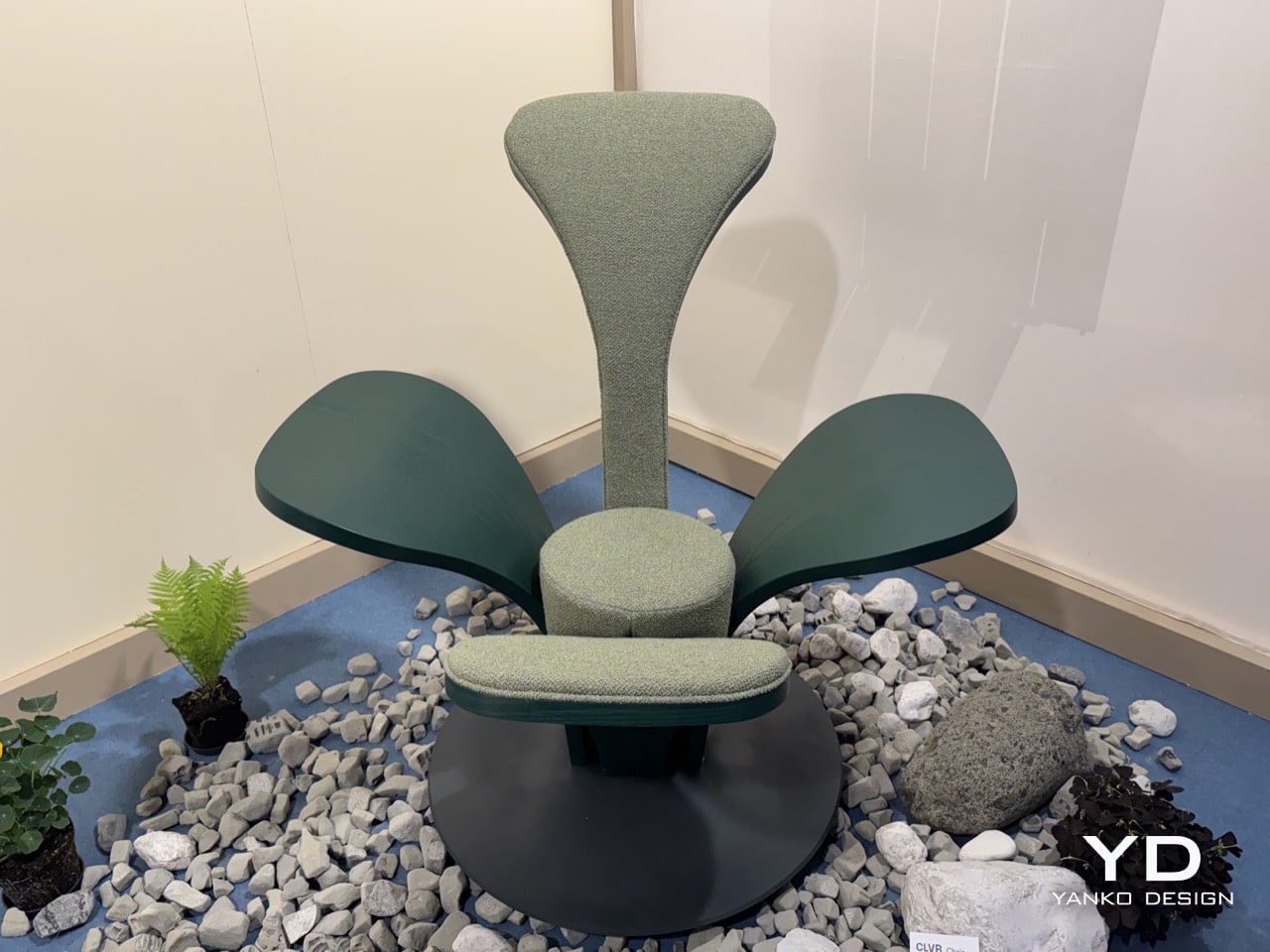
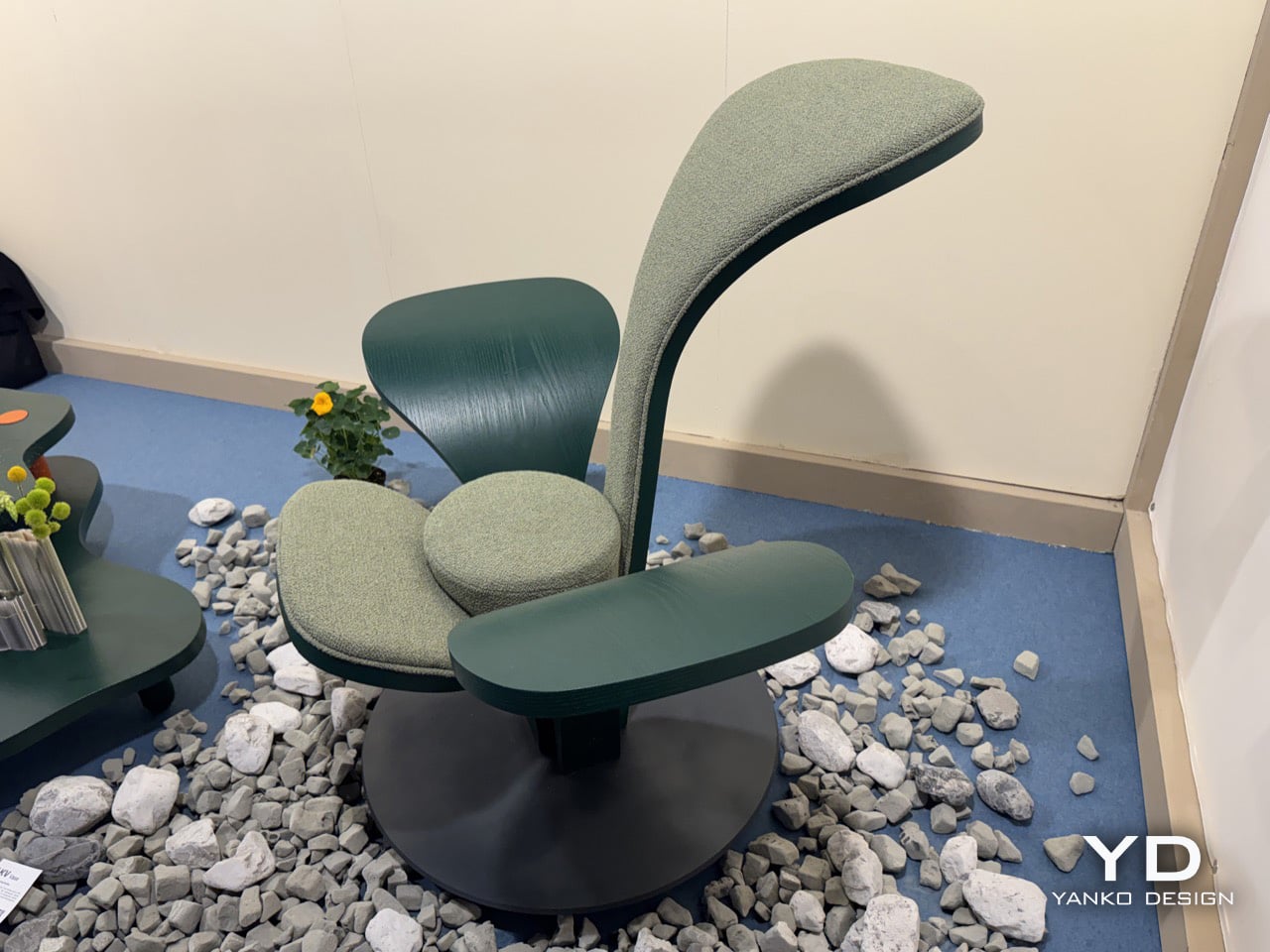
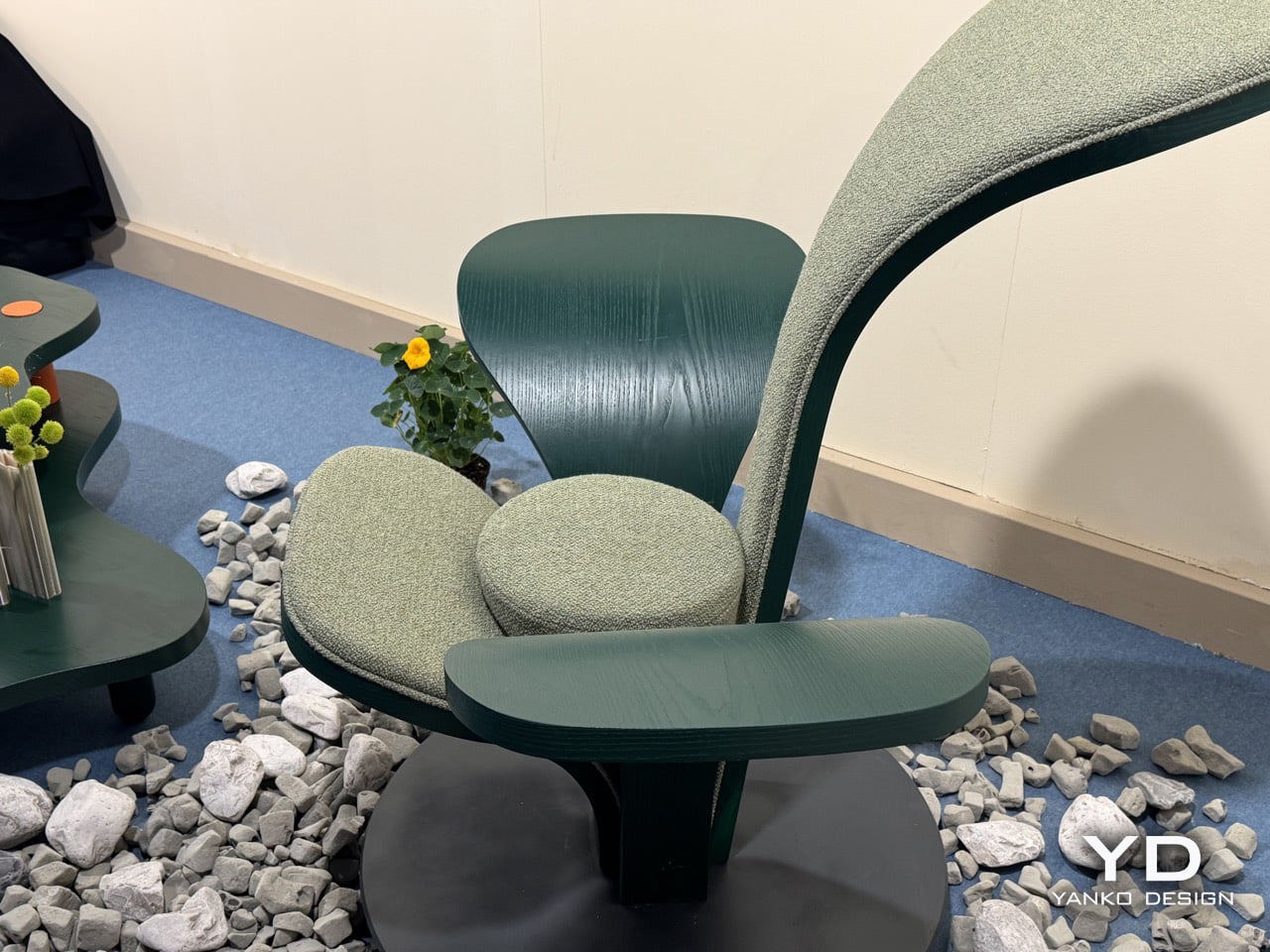
The armchair has been one of the most contested territories in furniture design for over a century, from Alvar Aalto’s bent plywood experiments to Arne Jacobsen’s Swan Chair. Designers keep returning to the seated form as a test of where material technology and formal imagination currently meet. Beltrame Breuil, an architectural practice based in Tarvisio and Vienna, took their turn at Salone Satellite 2026 with a chair that brings alpine botany directly into that conversation. Their furniture brand Picule presented CLVR, a seat assembled from four bent-wood leaf forms rising from a circular steel base, and it is the kind of debut that reminds you why Salone Satellite exists.
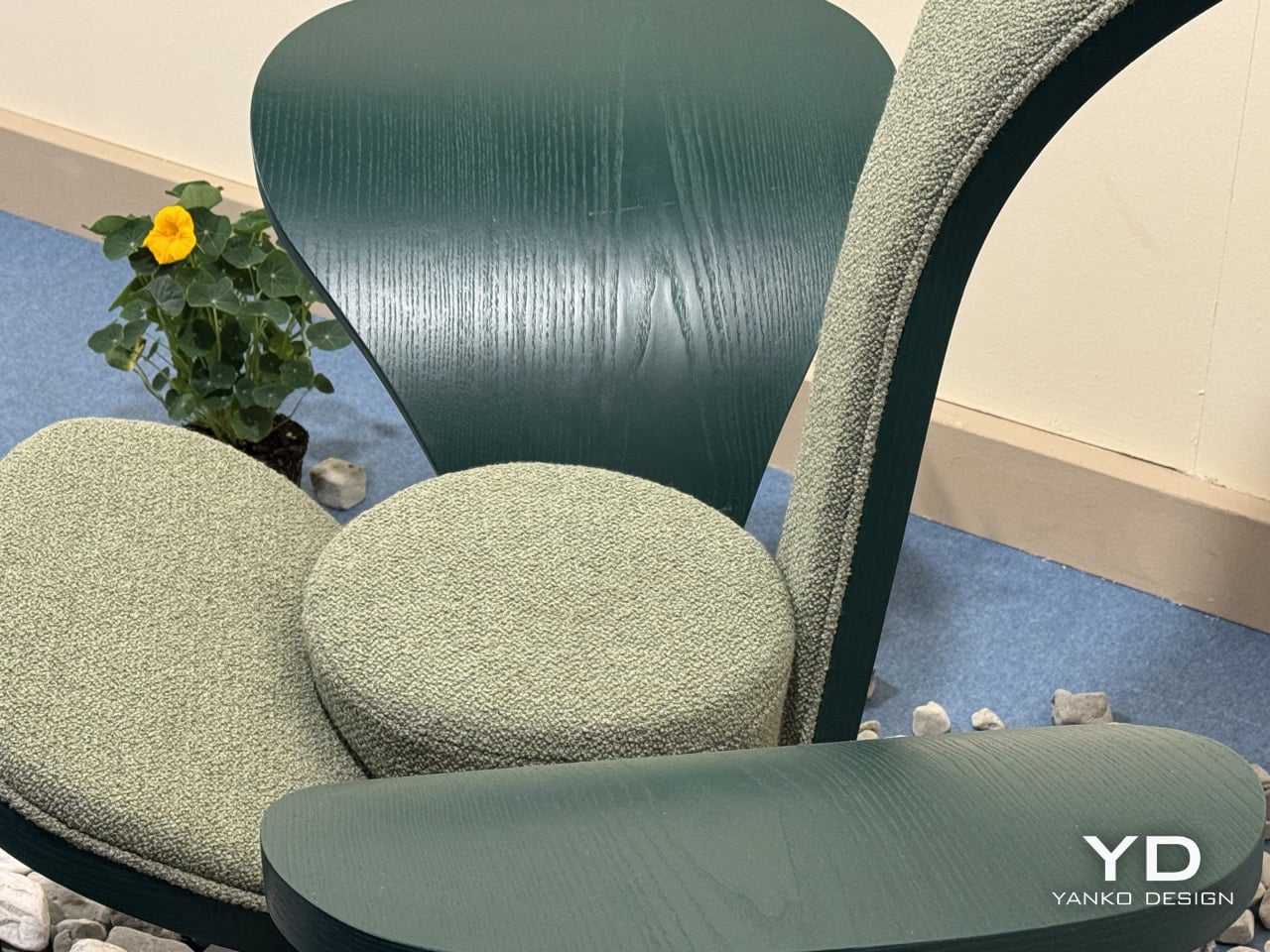
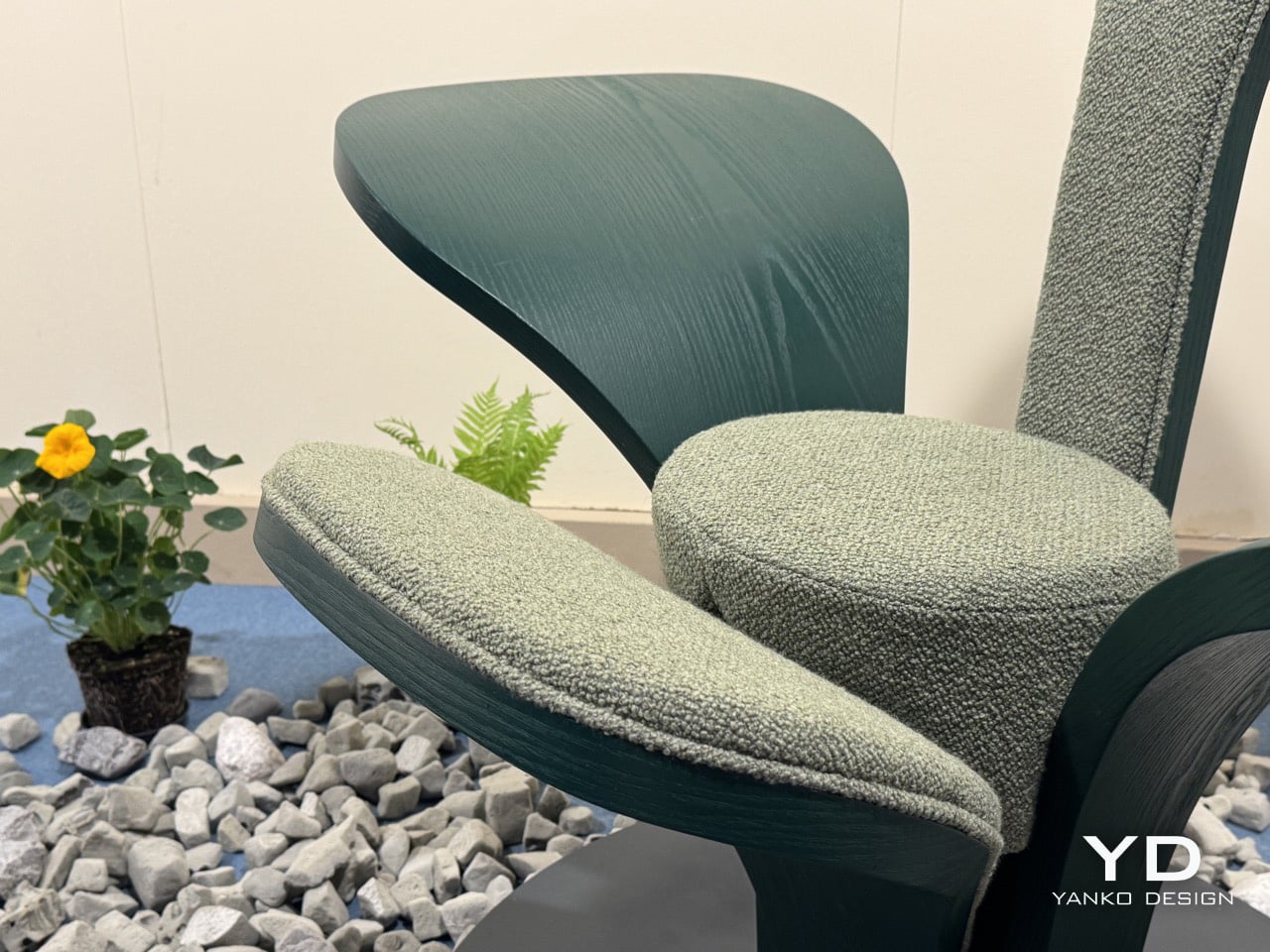
Two of CLVR’s four leaves are upholstered in a mossy, boucle-like forest green textile, covering the tall backrest and the lower front surface where the body settles. The other two are left as bare stained wood, their grain visible under the deep green finish, extending outward from the center like wings. All four share one curvature and one design logic, shaped by bent wood, which is what holds the composition together despite its apparent asymmetry. The design is coherent because its grammar is consistent, even as the function of each leaf changes.
The circular steel plate at the base functions as a pedestal, grounding the organic spread of the leaves and lending the piece a measured architectural gravity. At 112 cm tall and 125 cm wide, CLVR reads as a statement lounge object first and a chair second. It has the presence of a small throne, designed to anchor a room rather than disappear into it. The scale is deliberate, positioning the chair as a piece of functional sculpture that occupies its space with confidence.
Picule is Beltrame Breuil’s way of funneling architectural discipline into objects scaled for domestic life. The studio’s Tarvisio base sits in Italy’s northeastern corner, where the Julian Alps press against the Austrian and Slovenian borders. That geography gives CLVR its conceptual grounding; this is a studio that builds in that landscape, not one pulling a leaf motif from a mood board. The alpine forest inspiration feels earned, and it gives the chair a story that goes beyond its form.
The bent-wood forming technique reinforces that connection, requiring an intimacy with the material that keeps the work tethered to craft. The chair’s forest green palette, running across bare wood and woven textile in two calibrated tones, holds the composition together as one chromatic idea rather than a collage of parts. It’s a thoughtful detail that shows how completely the studio considered the object from every angle, ensuring the material and color choices support the core concept.
Beltrame Breuil is presenting the full Picule collection, including the CLVR chair, at Salone Satellite 2026. You can find it in Hall 5 at Stand E10 at Fiera Milano, Rho, through April 26. The photos do a fair job of capturing the silhouette, but the bent-wood grain and the textile’s tactile quality are things that land most clearly when you are standing right in front of it. Go see it before the fair closes.
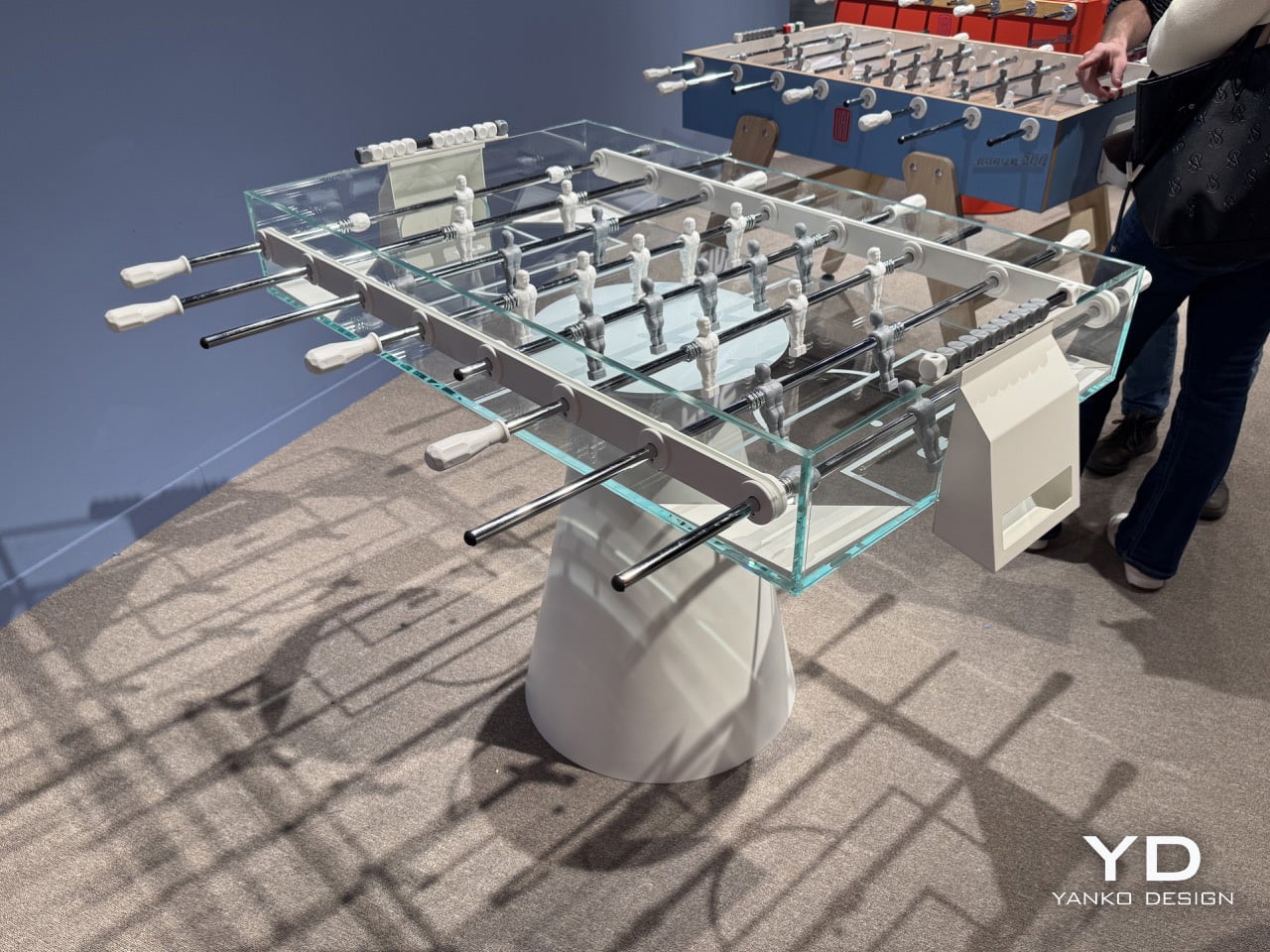
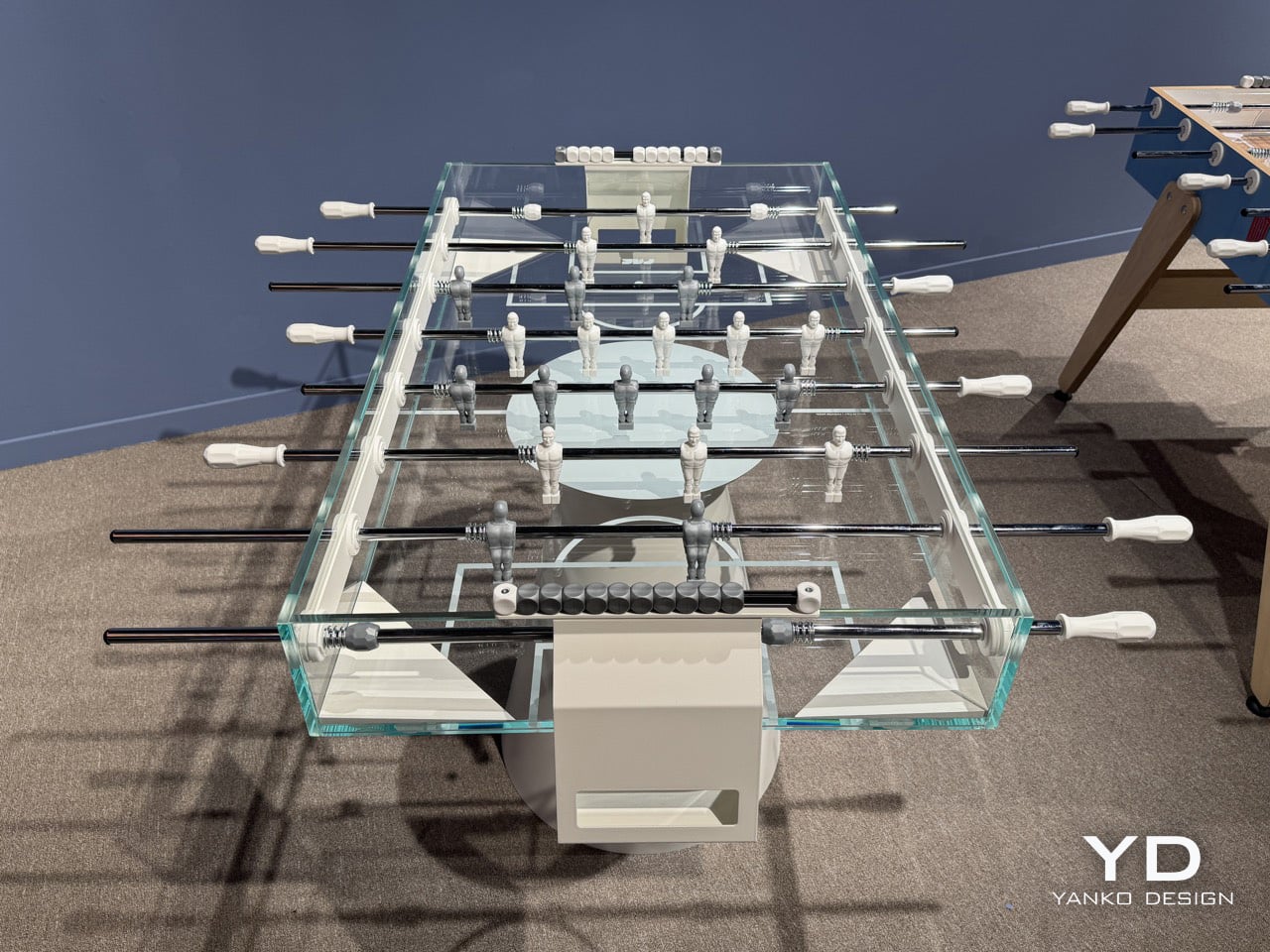
The early 2000s had a very clear idea of the future. Think of films like *Minority Report* with its PreCrime headquarters, all white rooms and glass interfaces where everything looked seamlessly bonded rather than bolted together. Or *I, Robot*, which pushed that look even further with its glossy USR tower and Audi concept car, a world that had erased any sign of how things were actually made. That aesthetic has aged remarkably well, but it’s a territory most game furniture never touches, usually favoring rich materials over making things look like they are barely there. Basaglia + Rota Nodari are the exception, and Ghost, their foosball table for FAS Pendezza, is the proof.
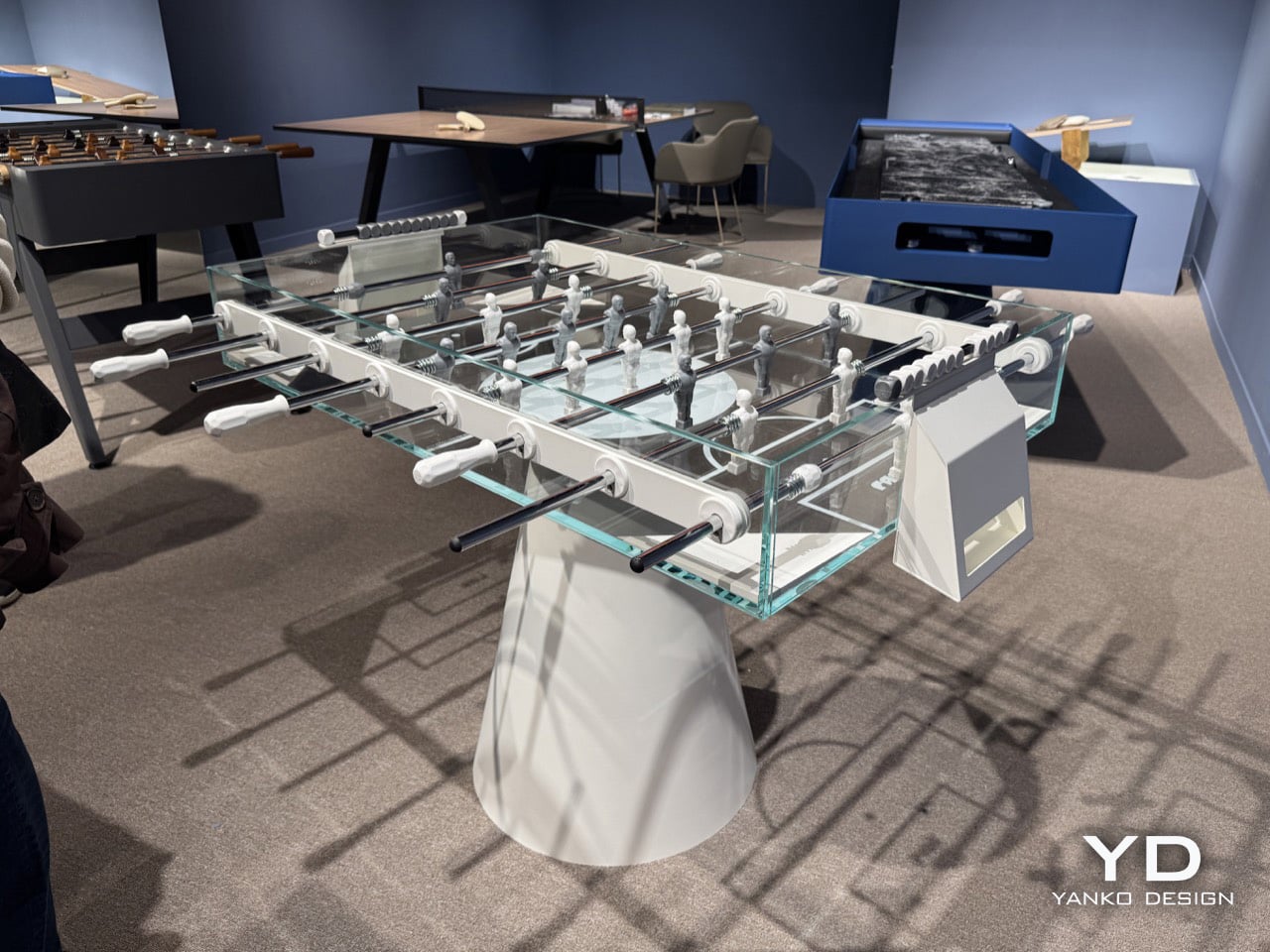
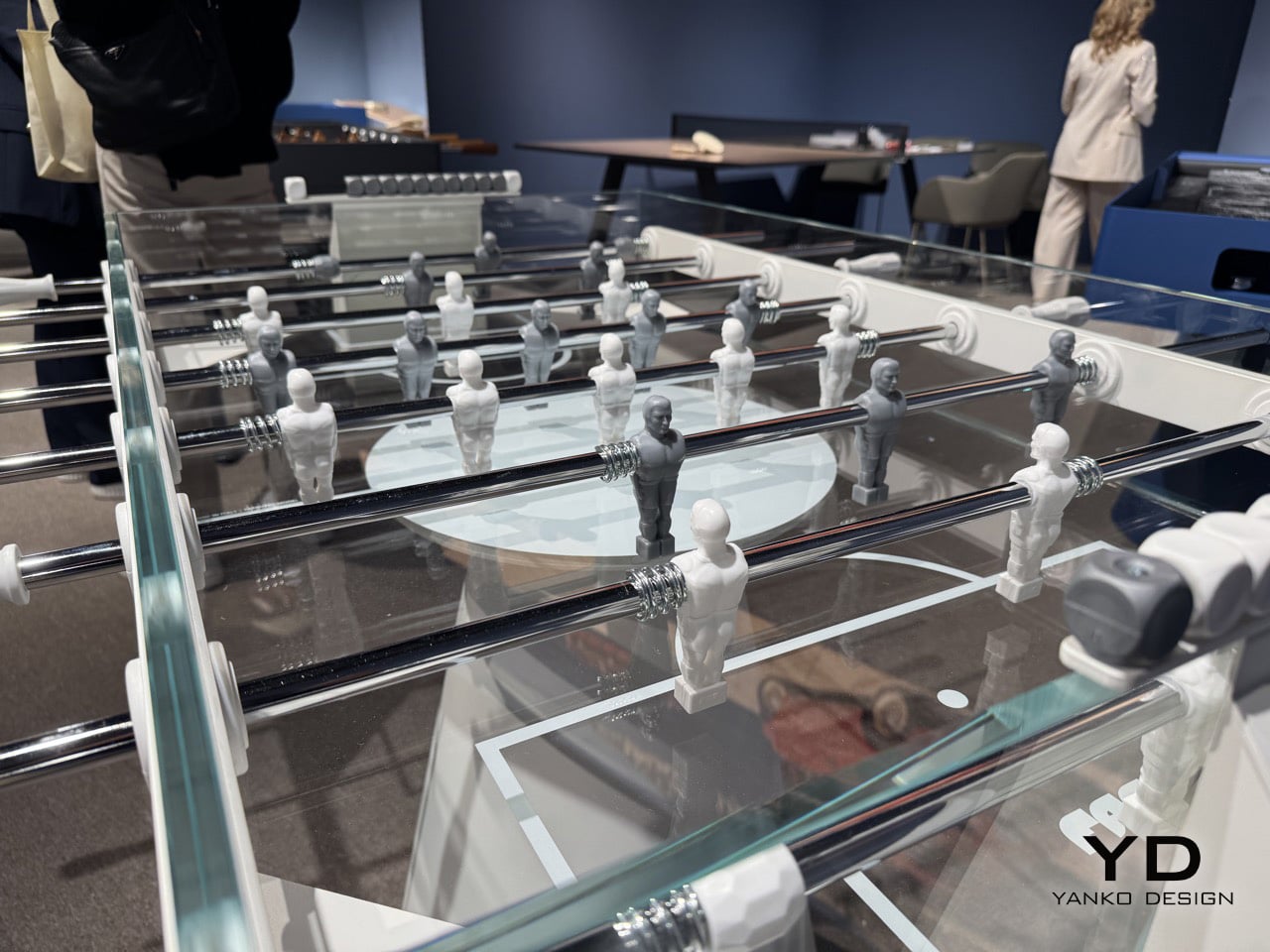
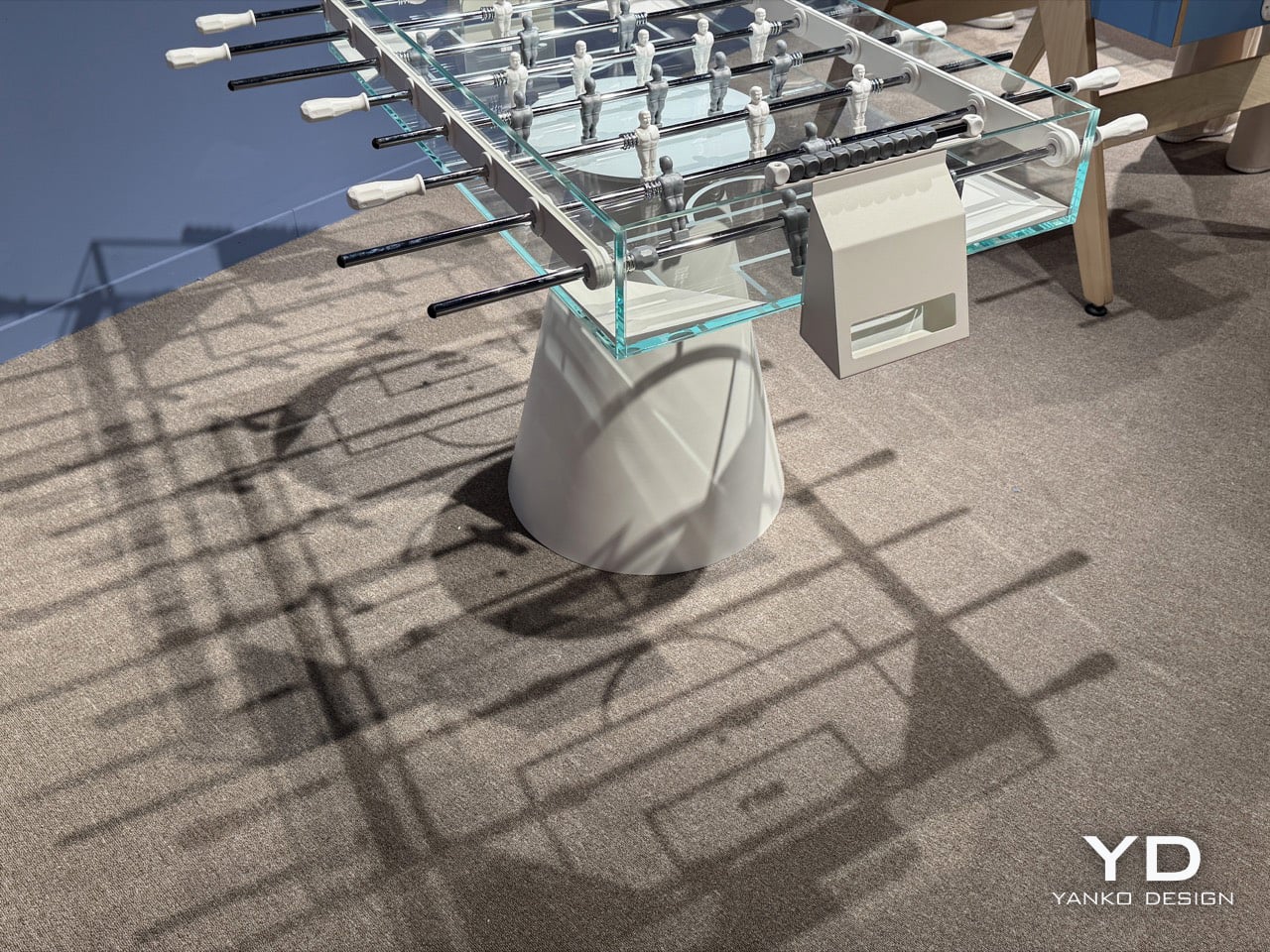
The table itself is built from thick tempered glass, laminated at 12 and 9 mm, with a playing field that’s 114.5 by 70.5 centimeters, and it’s made entirely in Italy. Its body is bonded with a special adhesive, so there are no visible screws or bolts anywhere in the frame. That’s a key decision, because if you saw hardware, the whole ghost-like vibe would fall apart. A clean, conical white metal base holds up the floating glass volume, while chrome rods and two-tone players complete a color scheme that’s intentionally minimal. At 8,900 euros, it’s priced as a piece of design, and it earns it on looks alone before a single ball gets dropped.
Designers: Basaglia + Rota Nodari for FAS Pendezza
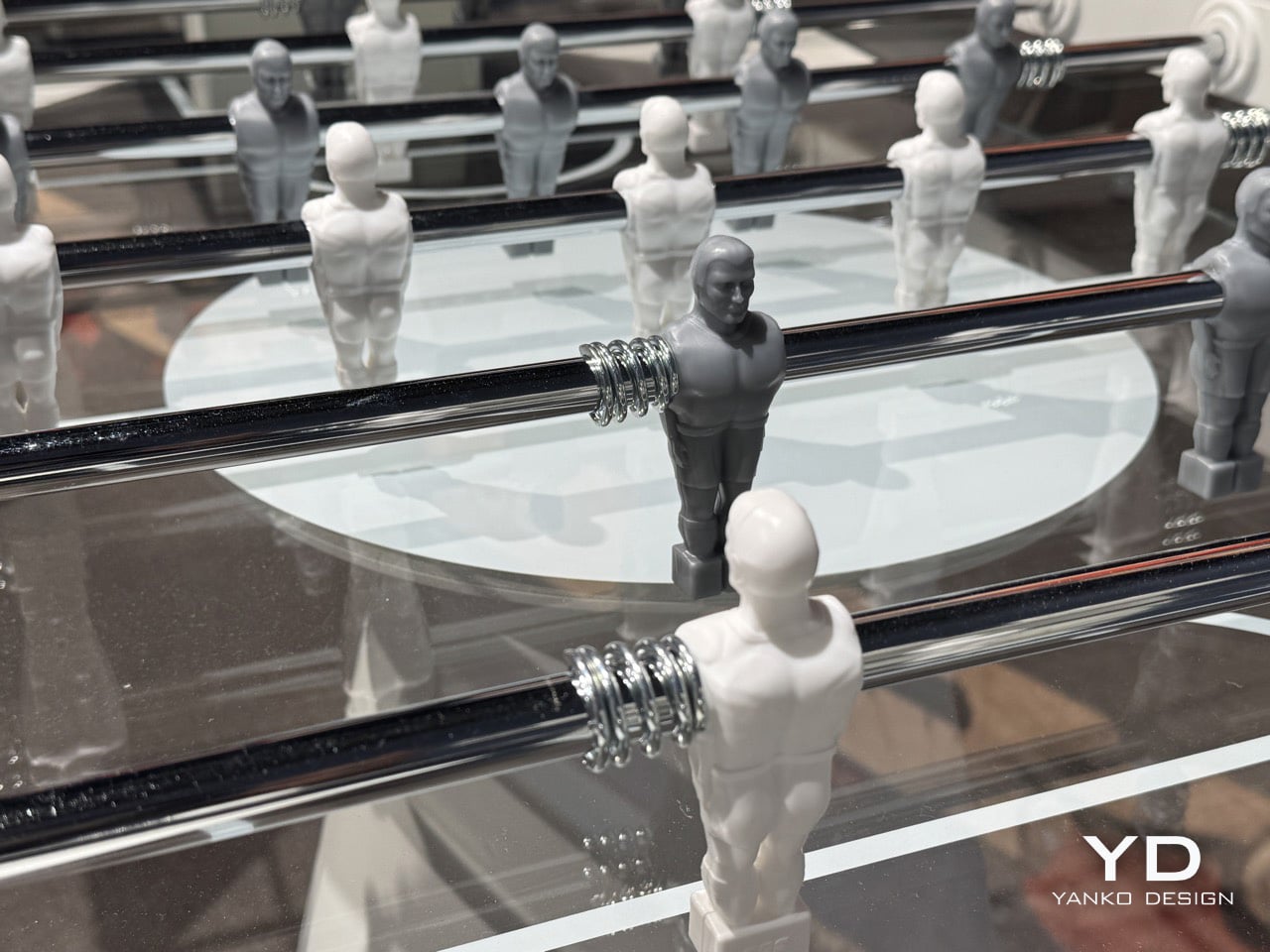
Even the players, made of white and gray resin, look like they belong in this sci-fi world. They’re somewhere between a medical illustration and a concept-car sketch, simplified to the point of anonymity. That’s exactly why they work. If they were in conventional team colors, the table would feel like just another piece of recreational equipment. Instead, these figures feel closer to the NS-5 robots of *I, Robot* than to any real athlete, which helps keep the whole look clean and unified. The chrome coil springs connecting them to the rods are the one little nod to mechanical texture, and they look almost like jewelry against all that glass.
But what really captures you are the detailed shadows the Ghost projects on the floor, if paired with the right lighting. At Salone Satellite, Ghost casts an incredible wireframe shadow on the floor, like it’s drawing a blueprint of itself in real time. Pitch markings are printed beneath the crystal surface, so they appear to float inside the glass instead of sitting on top. From any angle in the FAS Pendezza booth, you can see right through the structure, with the players and chrome rods suspended against the room itself. The name makes perfect sense when you see it in person.
FAS Pendezza is presenting Ghost at Salone Satellite this week as part of Milan Design Week 2026, in a booth where the table’s shadow alone justifies the detour. Seeing it alongside the rest of the brand’s lineup confirms Ghost as a deliberate formal departure rather than FAS Pendezza’s default register. The studio, Basaglia Rota Nodari, launched in 1997 with a stated ambition to build objects that convey emotion beyond their function, and Ghost may be their sharpest expression of that intent to date. For those who have already left Milan, Ghost is available in white and black finishes and retails at €8,900.
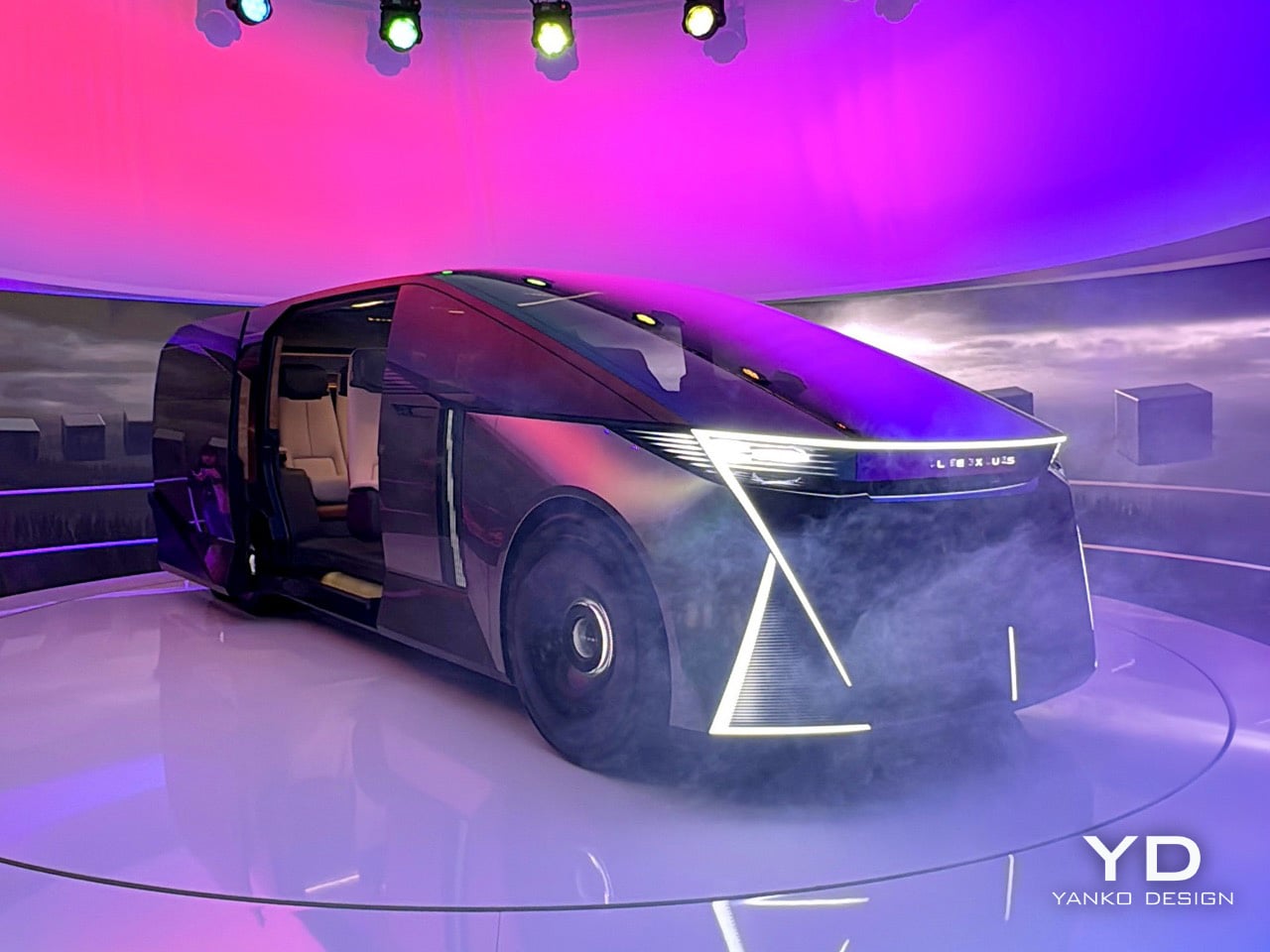
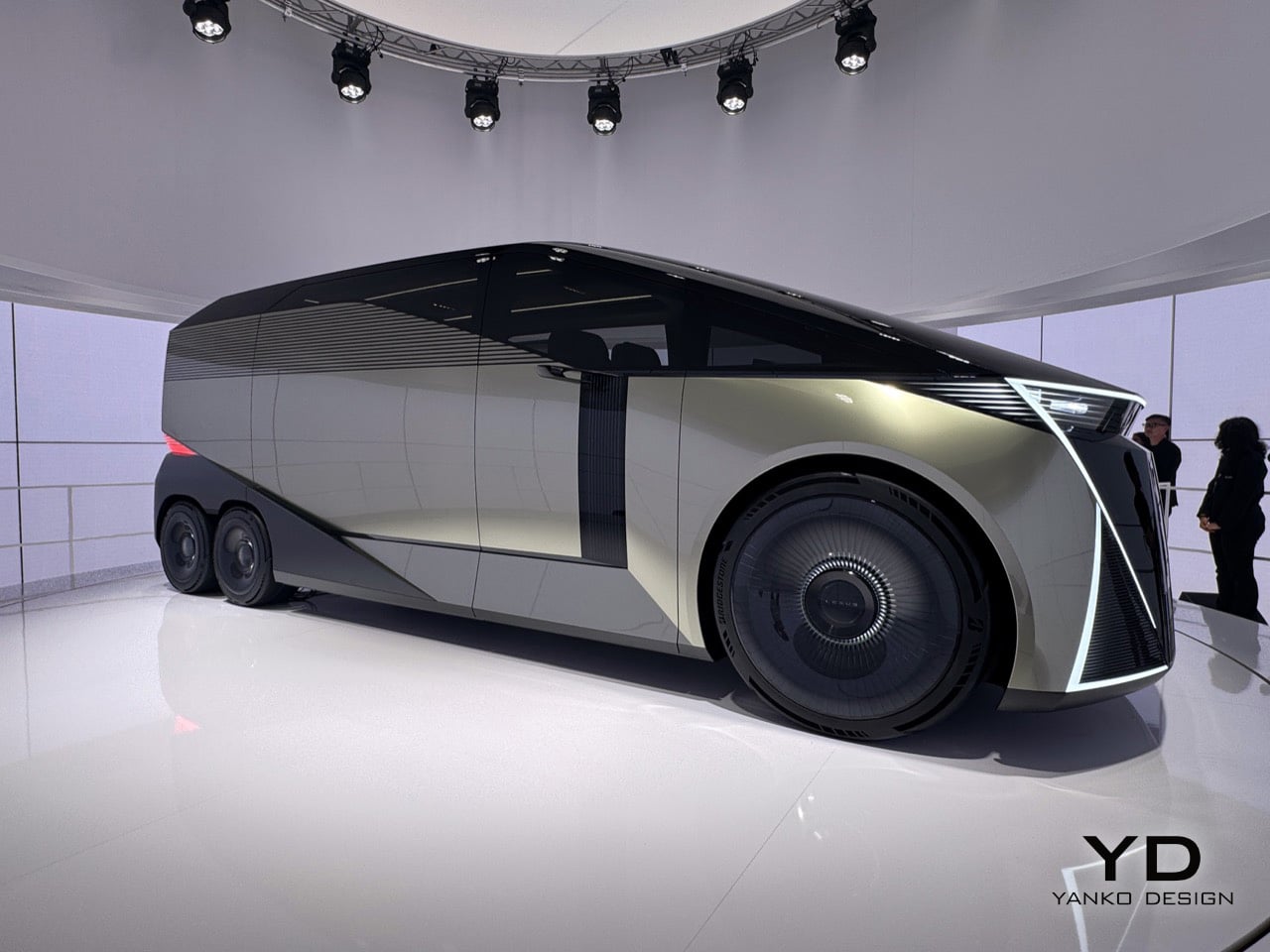
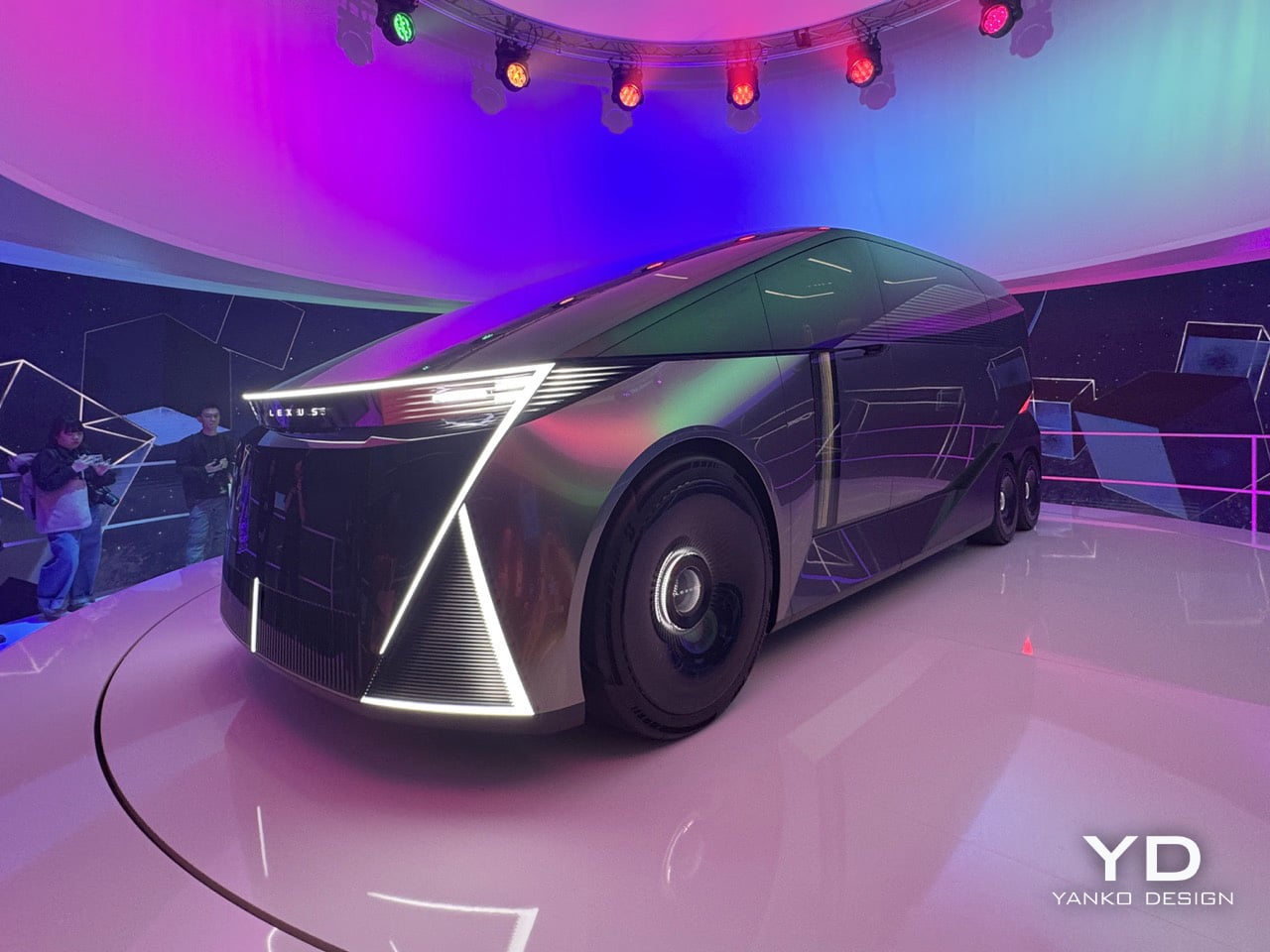
Six wheels on a Lexus, at a furniture fair in Milan, sounds like either a provocation or a punchline. At this year’s Milan Design Week, Lexus is betting it’s the former. The brand rolled into Superstudio Più in the Tortona district with its LS Concept, a long-body, flat-roofed, twin rear-axle machine that first appeared at the Japan Mobility Show in 2025. It’s a chauffeur-driven vehicle built entirely around the passenger, and it’s Lexus’s clearest statement yet about where its flagships are going. In fact, Chief Branding Officer Simon Humphries said it plainly: the “S” in LS no longer stands for Sedan. It stands for Space.
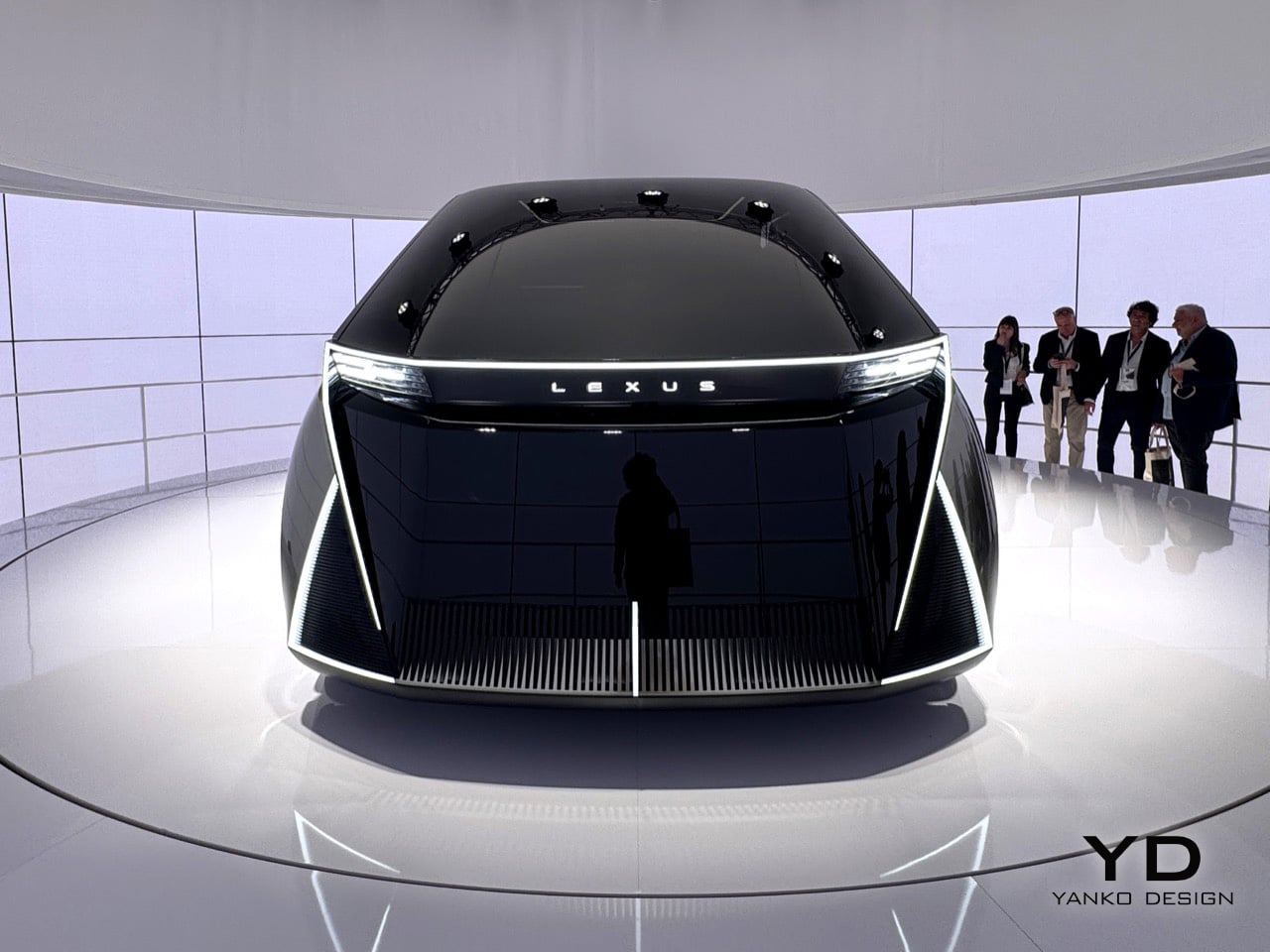
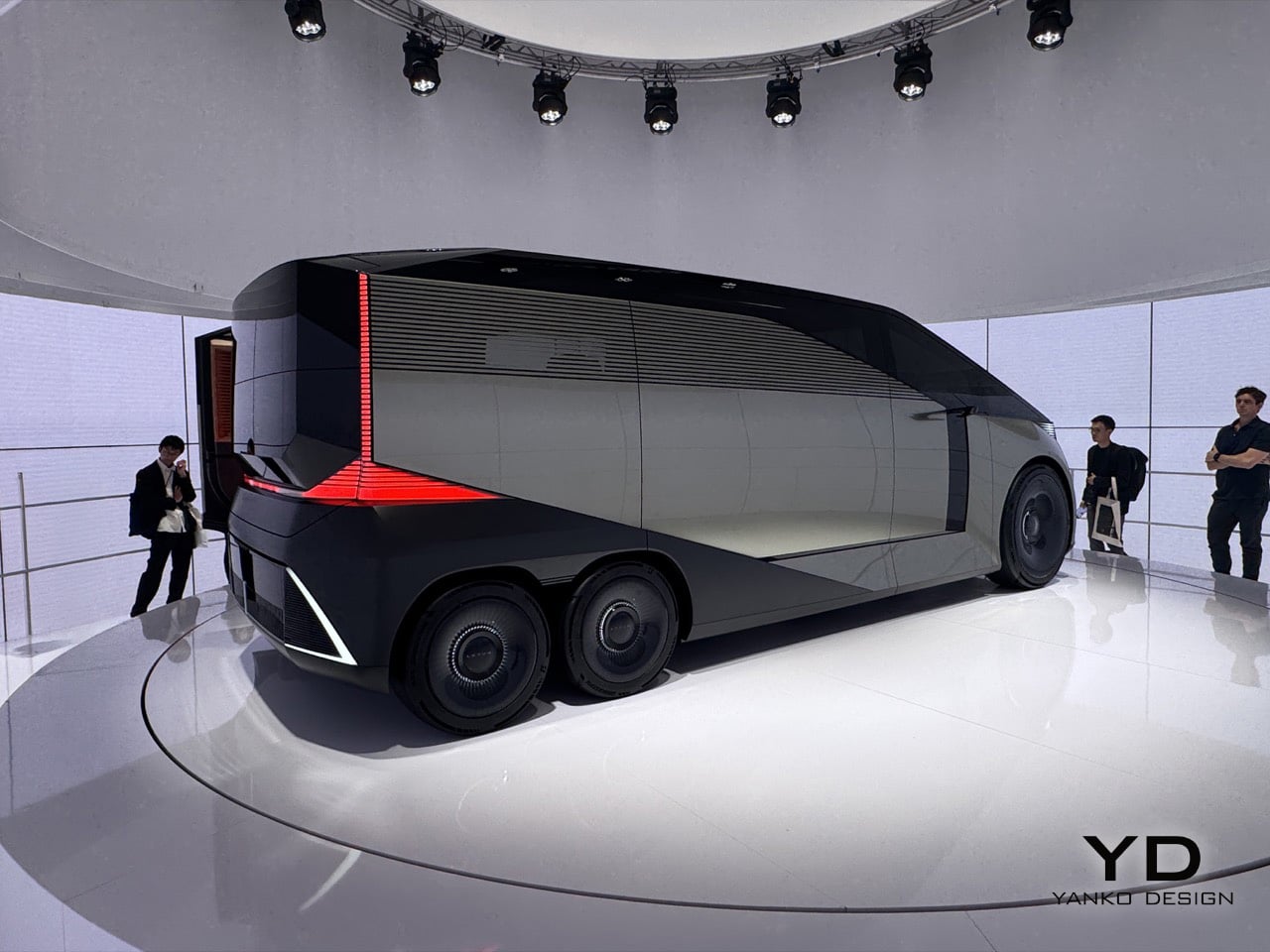
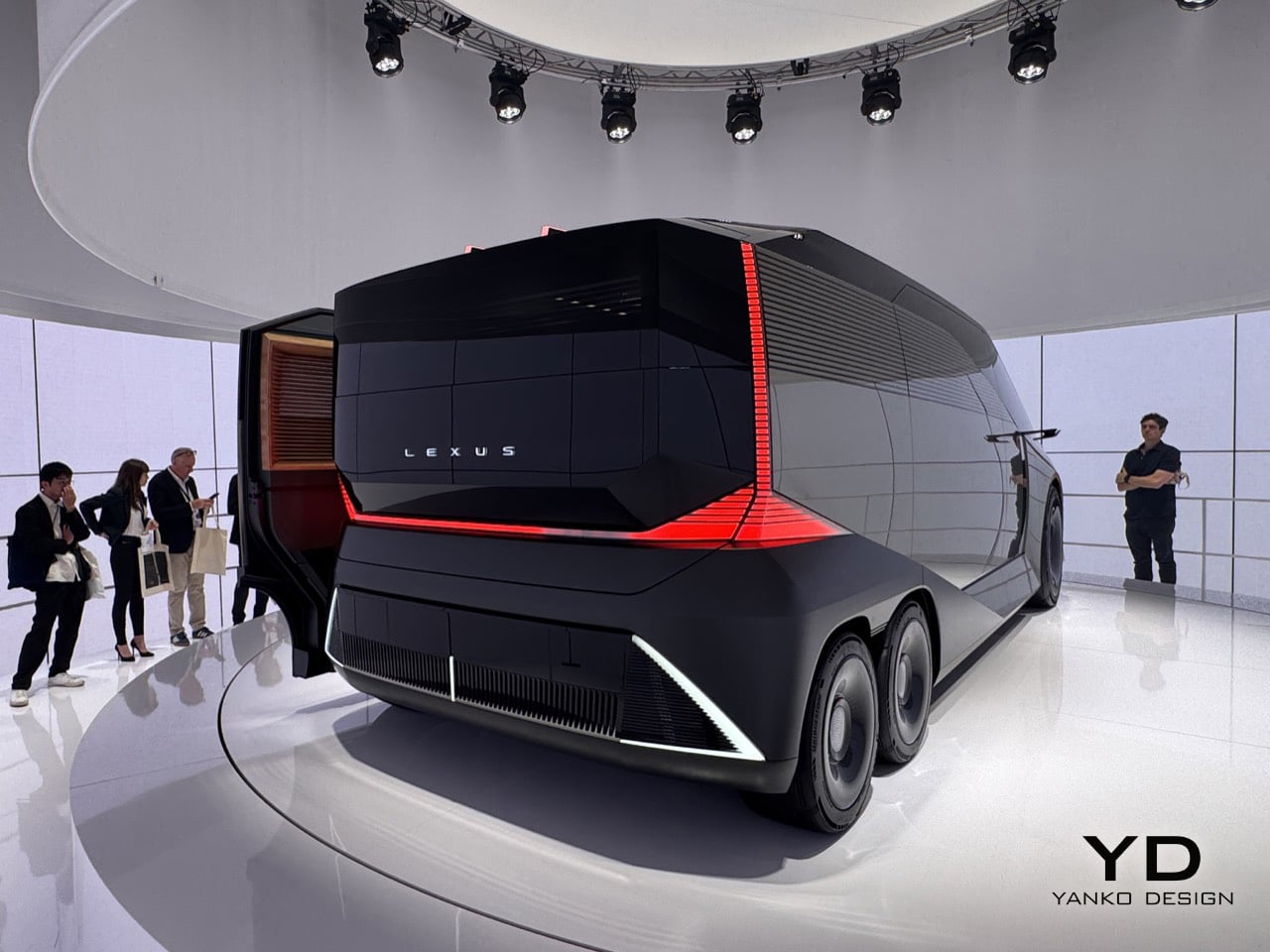
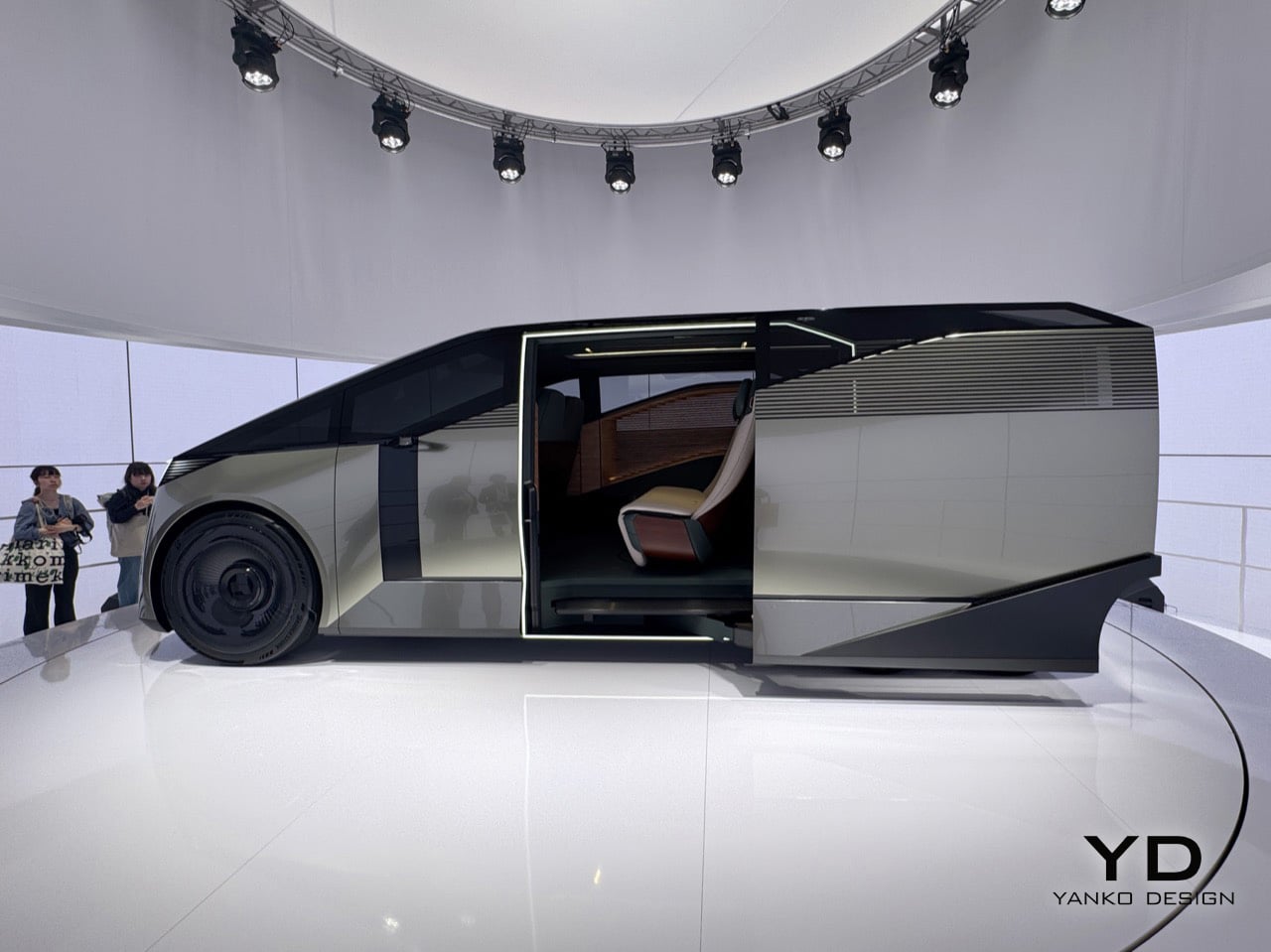
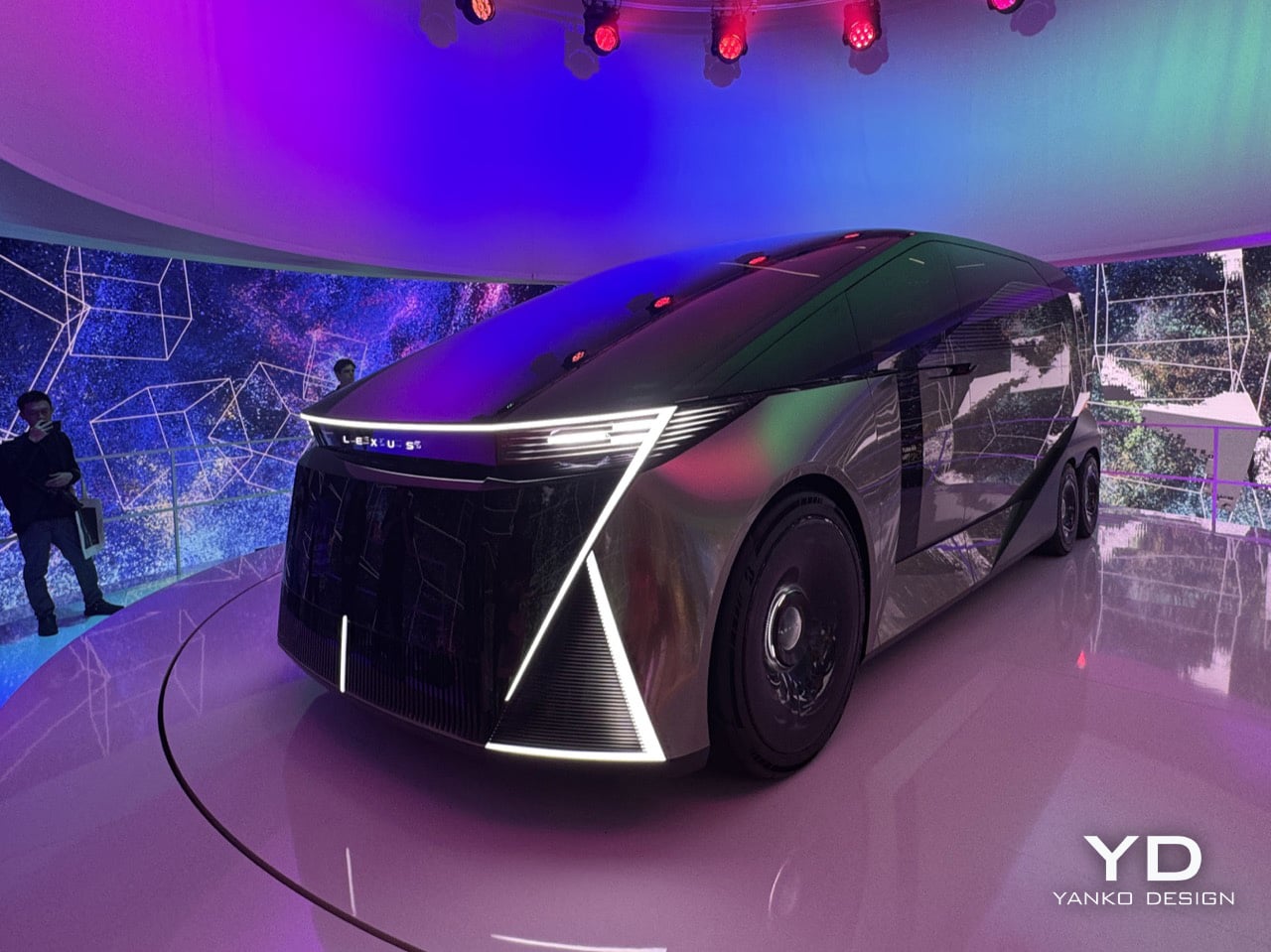
The car sits inside an installation called SPACE, a fittingly simple name for a big idea. The LS Concept is wrapped in a cylindrical LED screen that’s always moving, cycling through textures and color palettes that wash over the car’s matte metallic finish. The whole thing sits on a low turntable, rotating slowly so you can take in every angle while the screen behind it blurs the line between the vehicle and its environment. From the back, the body is dark and geometric, with red light cleanly tracing the corners and the LEXUS wordmark centered like a final statement. The front has no grille at all, just a wide bar of white light, a dark glassy face, and some sharp diagonal cuts at the lower corners. The side profile is what really sells the scale of it all; the greenhouse is so long and flat it forces you to rethink what a luxury car is supposed to look like.
Designer: Lexus
You’ll notice those sharp diagonal white light signatures at the corners of both the front and back, and they do a great job of anchoring your eye so you don’t get lost in all that surface area. The front is an exercise in restraint, especially for Lexus. There are no intakes, no heritage cues, and definitely no spindle grille, which defined the brand’s look for fifteen years. Instead, a single, clean bar of white light carries the Lexus name across the top, and below it, dark glass sweeps down like a theater curtain. The back is just as clean, with black geometric planes and red light tracing the corners so precisely it feels more like sculpture than taillights. There’s also a louvered panel on the rear quarter that looks both cool and functional, the kind of detail you have to go back and look at a second time.
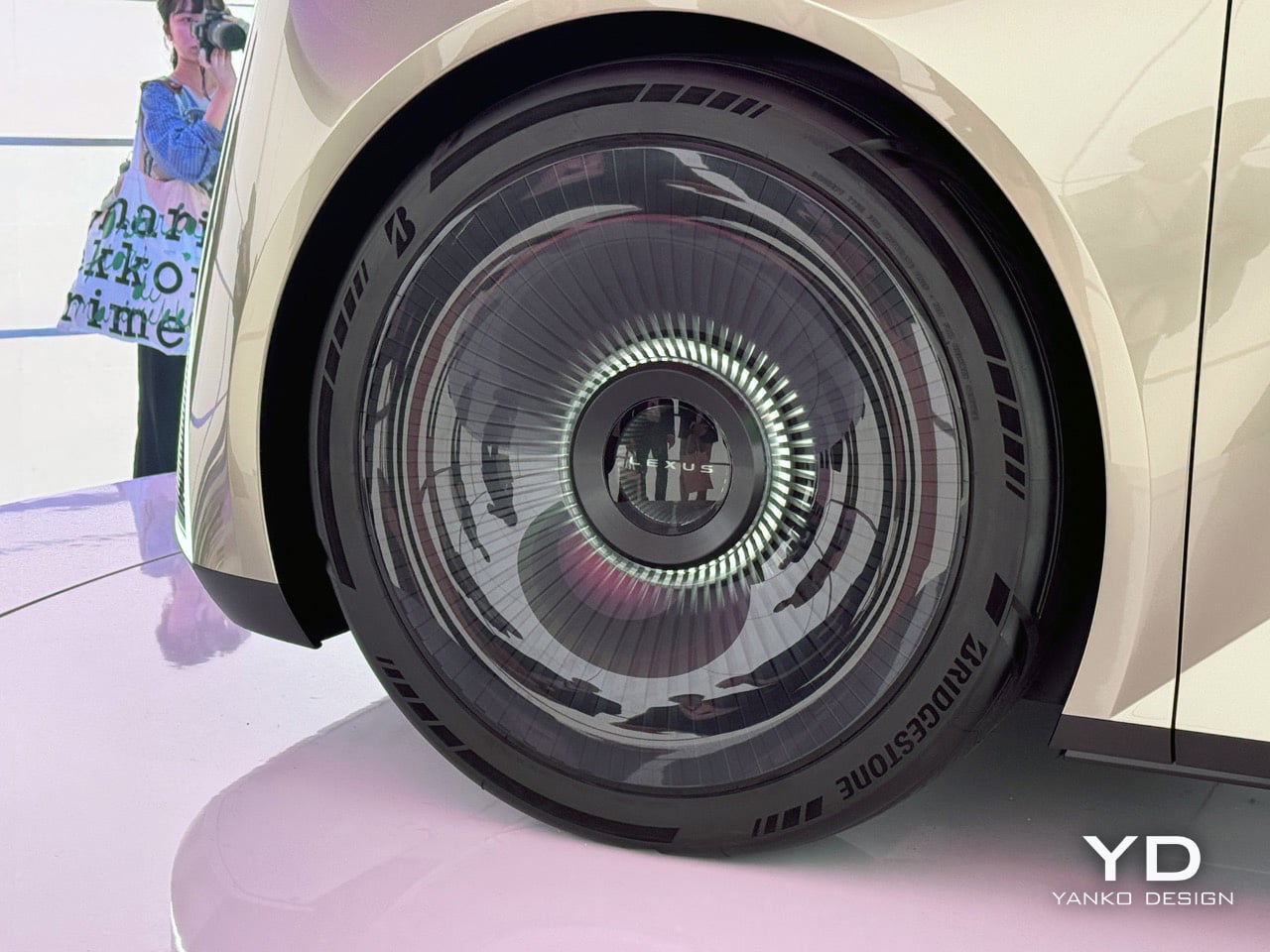
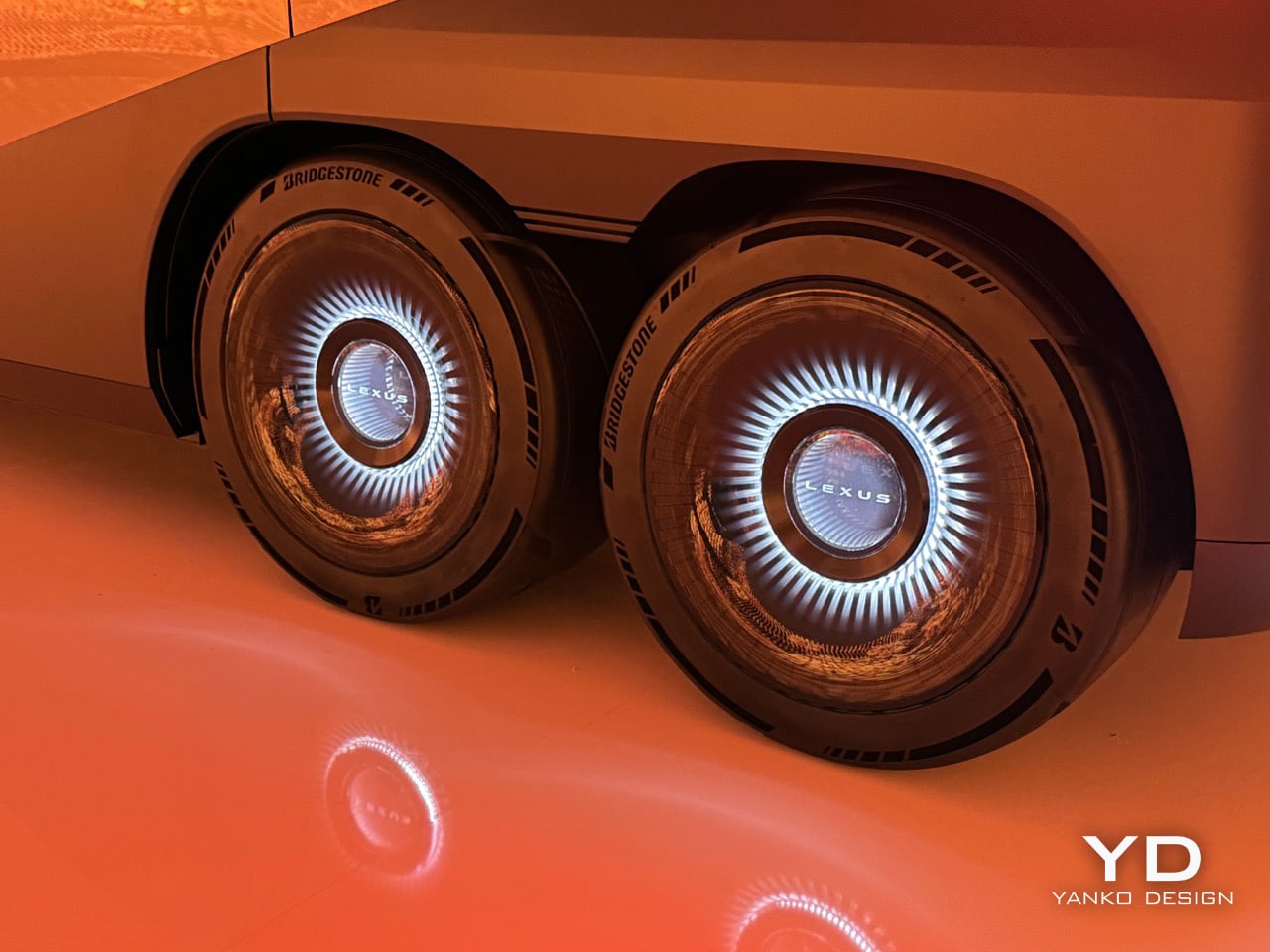
The twin rear wheels are probably the first thing that throws you off, but the more you look at them, the more they make sense. A six-wheel layout, something you usually see on overland vehicles or high-end coaches, lets Lexus pack in a huge amount of interior volume without the big wheel arches that eat up space in most long cars. The turbine-style wheel covers keep the look clean, where normal spokes would have ruined the effect. When you see it from the side, the lower body looks like a single sculpted piece, and the way it tucks under itself makes the whole thing feel like it’s floating. Lexus is basically saying that a vehicle with the footprint of a small bus can be the next word in luxury, and after a few minutes, you start to believe them.
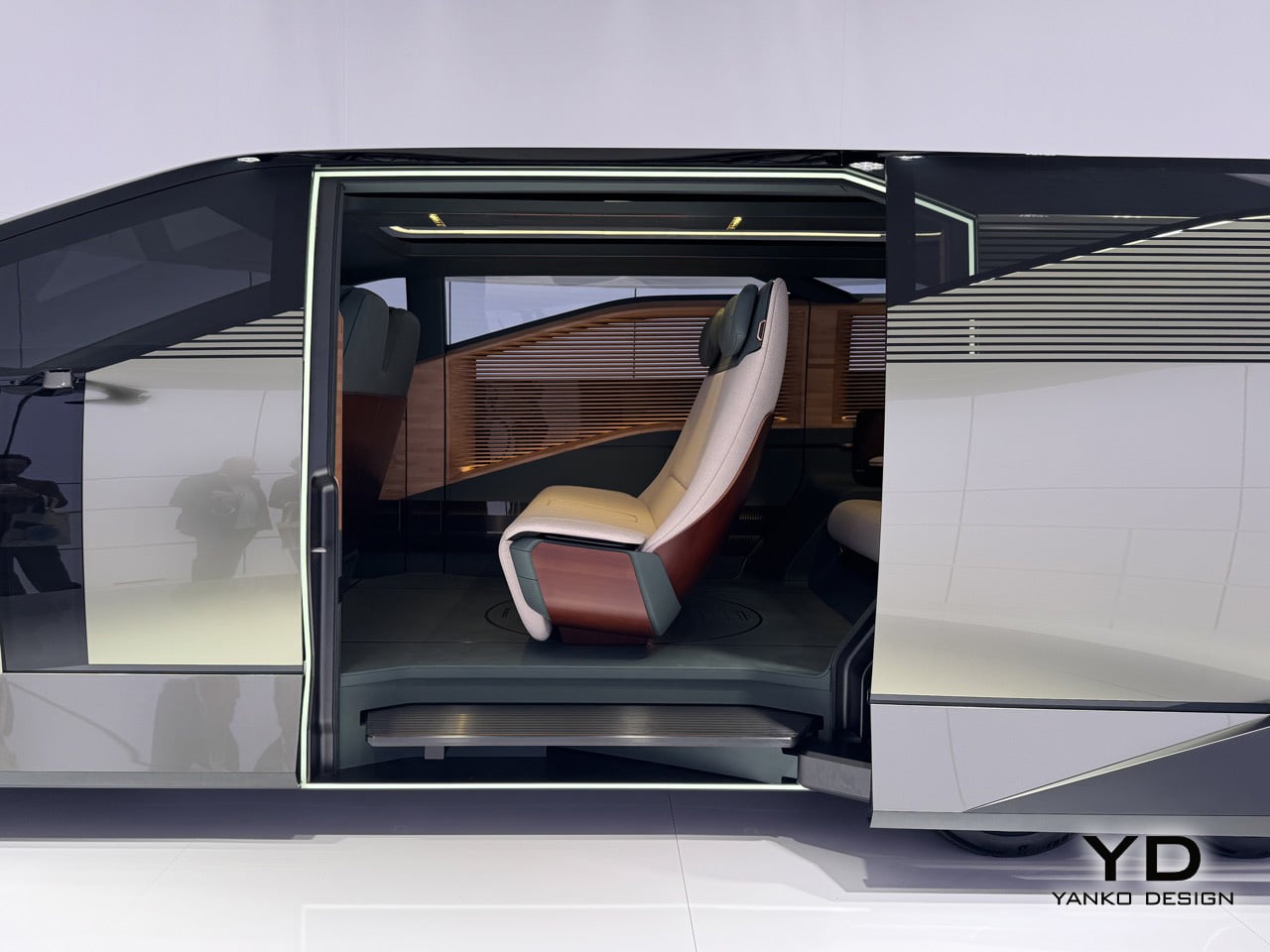
Step through the door, framed in a bright white light, and you see what they mean by hospitality. A slatted wood panel runs up the entire wall of the cabin, a single rear seat is finished in cream and burgundy leather, and the floor is so open you get the sense it was designed for standing as much as sitting. The real achievement here is how Lexus managed to package so much genuine room inside; it feels more like a small, well-designed living space than a stretched-out car. Whether any of this makes it to production is anyone’s guess, and Lexus seems happy to leave that question hanging in the air.
What Lexus is showing here is a clear signal of where its design thinking is headed, and that alone makes it one of the most interesting things you can see in Milan this year. If you want to see it for yourself, you can experience the SPACE installation and the Lexus LS Concept at the Daylight Hall in Superstudio Più, located in the Tortona district, from April 21st to the 26th.