Morgan XP-1 electric trike redefines retrofuturism with handcrafted bespoke design and power delivery

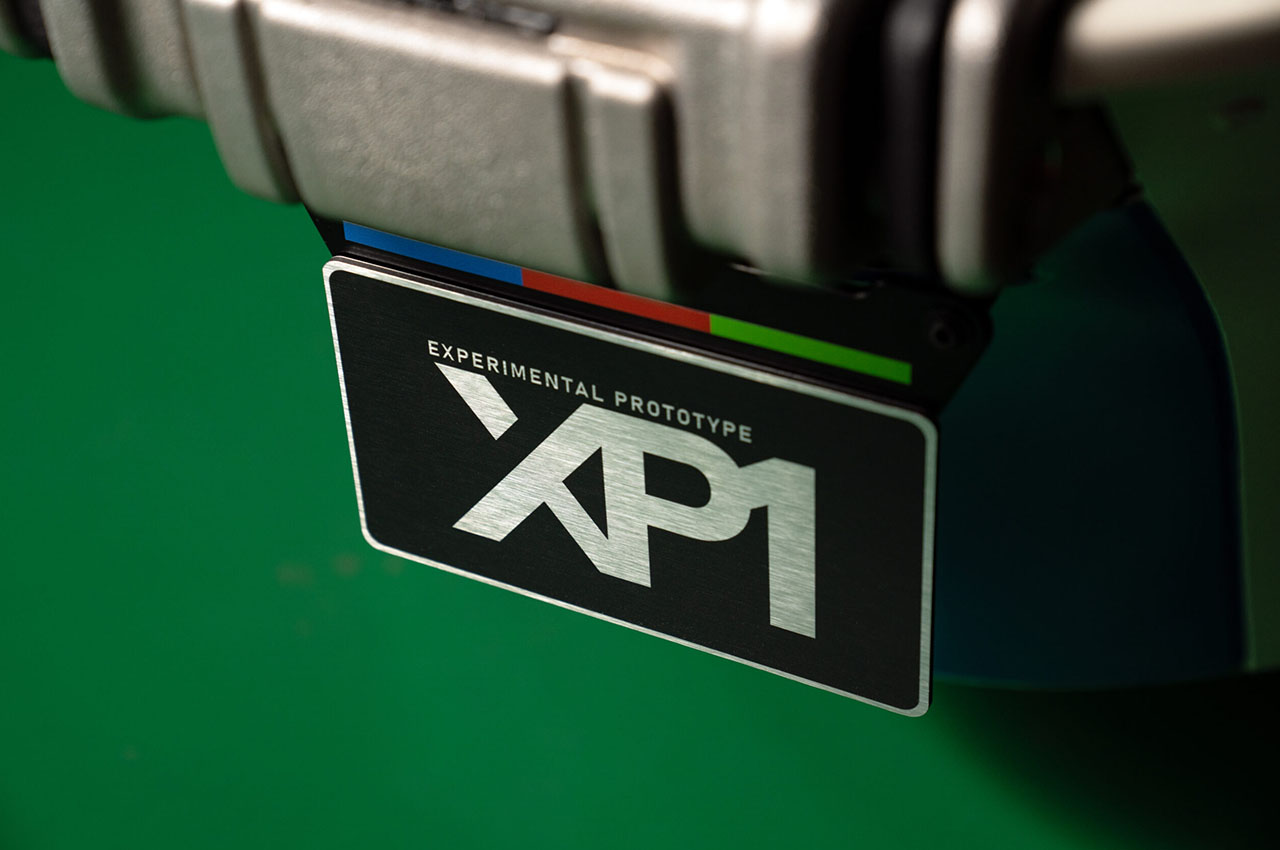
Marching towards an electrified future, iconic British automaker Morgan Motor has unveiled details about its latest creation, the Morgan XP-1 (Experimental Prototype 1). This electric three-wheeler marks a significant shift for the brand renowned for its classic design and combustion engine vehicles. The XP-1 promises to deliver an exhilarating 134 horsepower of good, clean fun, redefining the perception of electric vehicles in the automotive landscape.

Morgan’s commitment to embracing sustainable technology is evident in the XP-1’s specifications. The vehicle is part of the company’s broader strategy to transition towards electric power. The development vehicle embodies Morgan’s dedication to innovation while preserving the distinctive charm that has defined the brand for over a century!

Designer: Morgan Motor

The XP-1 represents a new era for Morgan, boasting a design that seamlessly blends modernity with the British motor car manufacturer’s timeless aesthetics. The three-wheeler prototype promises to captivate enthusiasts who appreciate the brand’s rich heritage while embracing the latest advancements in automotive technology. The XP-1 to that accord is not merely an electric vehicle it is a testament to Morgan’s ability to adapt and evolve while staying true to its roots.


The XP-1’s design is a harmonious fusion of classic Morgan aesthetics and contemporary styling. The three-wheeler maintains the brand’s distinctive charm while incorporating modern elements that define its electric identity. The vehicle’s exterior exudes sophistication, with aerodynamic considerations complementing its overall aesthetic appeal. Underneath its classic exterior, the XP-1 hosts a state-of-the-art battery system that powers its electric motor. The 33 kWh battery unit is placed under that cheeky nose, promising a range of around 150 miles which by industry standards is pretty little but we’ve to consider It’s a purist’s wild dream come true.


According to Morgan Motors, “the powertrain engineered specifically for XP-1, gives its engineers complete control of calibrations to create a range of driving modes featuring a mix of driving characteristics, providing the opportunity to define exactly how an electric Morgan should drive.” The retro-futuristic trike weighing just 1,543 pounds churns out 134 horsepower, delivering the power to the single rear wheel. The XP-1 comes with four drive modes that can be switched seamlessly, represented by a funny-looking chili pepper on the digital display.


Beyond its impressive power and design, the Morgan XP-1 is likely to feature cutting-edge connectivity and driver-assistance technologies. As the automotive industry continues to integrate smart features into vehicles, the XP-1 is poised to offer a holistic driving experience that goes beyond the traditional bounds of a three-wheeler. That said the company wants to keep the vehicle experimental and after “’12 months of design and build, XP-1 will now embark on a comprehensive testing program over the next 18–24 months.”


The post Morgan XP-1 electric trike redefines retrofuturism with handcrafted bespoke design and power delivery first appeared on Yanko Design.

With an articulated spine this robot mouse can beat ‘Spot’ at pace and maneuvers in small turning radius

Over the years, quadruped – four-legged – robots led by the likes of Spot, by Boston Dynamics, have captured our imagination far and wide. These robots have been through various upgrades, including the robotic dog that can now walk, jump, and maneuver like the real thing. Even though the construction of these robots is already very sophisticated, it remains to be perfected for widespread applications.

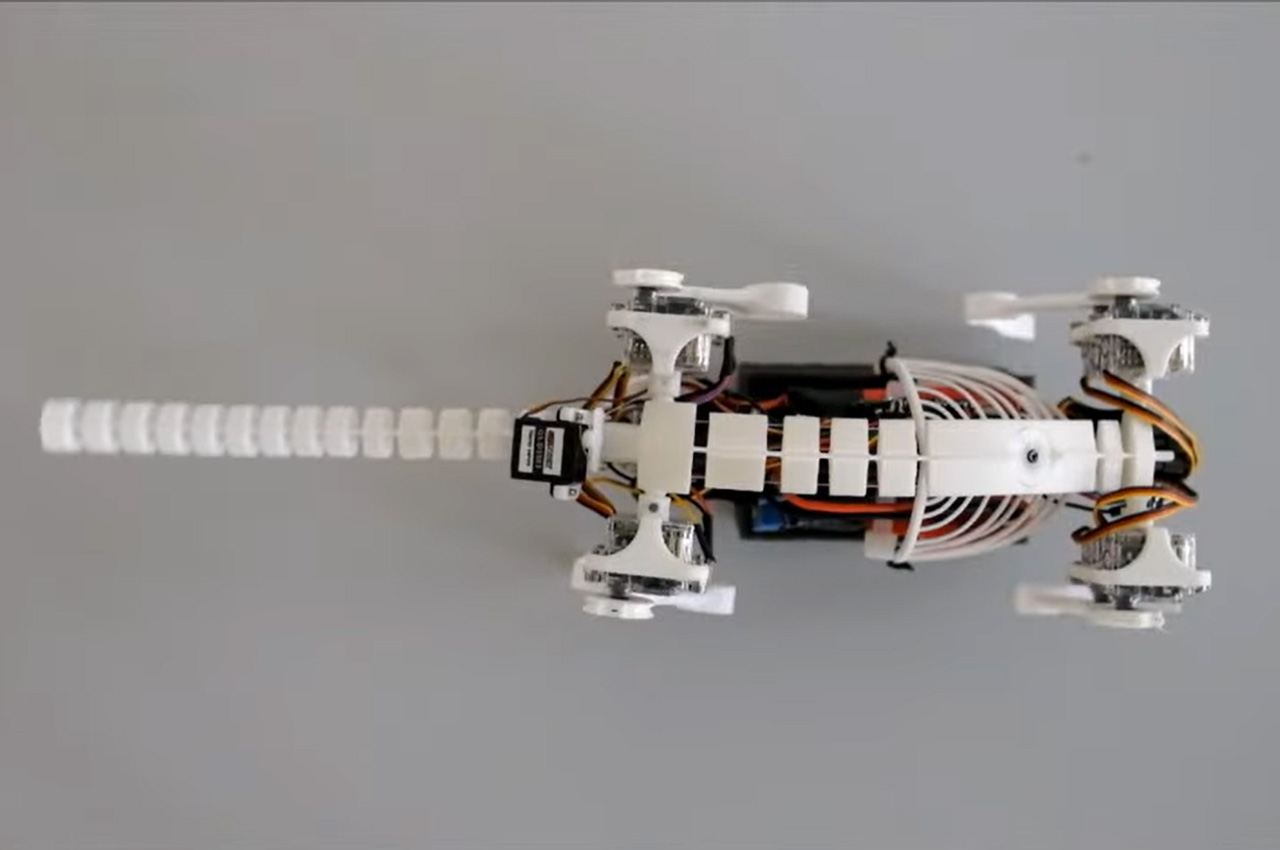
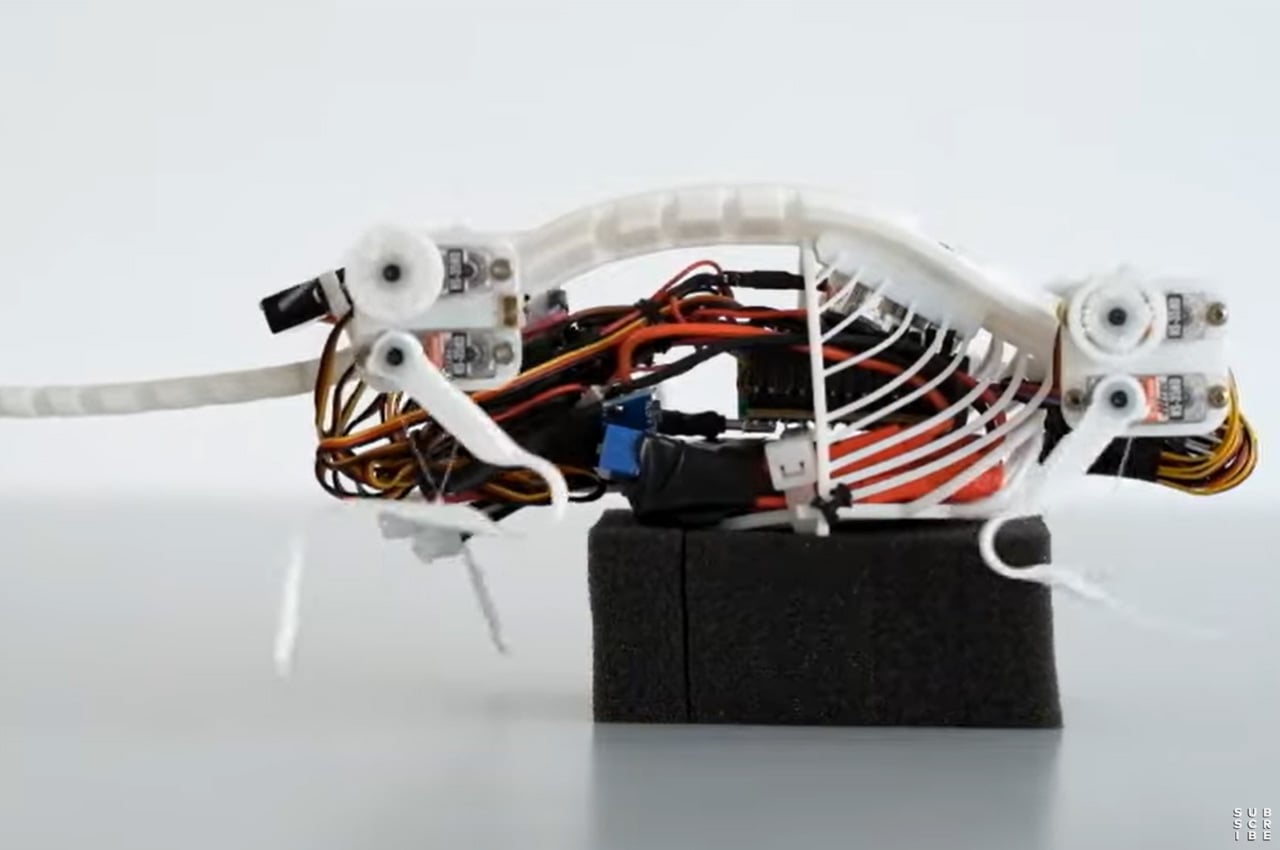
A step forward in this direction can be a mouse robot with an articulated spine developed by collaborative research teams from the Technical University of Munich, University of Technology, Nuremberg, and Sun Yat-Sen University, China. The articulation of the spine allows the mouse named NeRmo full body control and stabilization, which provides it with a more balanced frame along with agility and gait much like a real rodent with a biological spine.

Designer: Zhenshan Bing

This mouse created with a flexible spine and tendons is the first interpretation of spine-centric quadruped, unlike the four-legged robots whose anatomical mimicking just finishes at the leg-based motor skills. Yes, they can walk, jump or even pull off a few dance moves, but the NeRmo can do that and more. While the others are robotic in their movement and approach, the researchers led by Zhenshan Bing, believe their mouse – with a spine and tendons running through it – can move almost alike and turn equally efficiently as its biological counterpart.

NeRmo is an agile-legged robot that leaves behind challenges of movement and regulating spine flexion that other quadrupeds using similar spine enhancement – like in the case of Boston Dynamics’ Cheetah robot – have proved. The robot with 3D printed parts and Raspberry Pi for its brain has a sensory system that can make decisions and navigate autonomously.

The NeRmo is an experimental robot that helps understand the spine-based quadruped locomotion skills. The findings are pretty optimistic, which means, that its development can be a promising inspiration for more such small agile-legged robots. The construction of the NeRmo modular robot, according to the research team is low cost, owing to its building process. With the articulated spine, the research shows, the robotic mouse can adjust its posture, extend its stride to walk faster, and make agile maneuvers in a small turning radius and while walking.

The post With an articulated spine this robot mouse can beat ‘Spot’ at pace and maneuvers in small turning radius first appeared on Yanko Design.

Unique Wooden Retail Store On A Japanese Island Is Clad In Zinc Panels

The Japanese architectural studio VUILD recently finished Shodoshima the Gate Lounge, which is intended to be a unique and innovative wooden retail store located on the Shodoshima Island in western Japan. The retail store is designed with the objective to challenge the conventional and typical designer-client relationship, and to create a retail experience that is unlike any other.

Designer: VUILD

The client for the project is involved in olive cultivation and their requirement was for a physical space that supports direct sales and allows them to interact and engage with customers. One of the major challenges faced by the architectural studio was that they needed to create a wooden structure on an island that didn’t have the appropriate drying and processing facilities. They also had to propose the conversion of a plastic greenhouse into a drying machine and needed to use a small CNC processing machine. These steps took some effort to meet fruition. The client was also involved in material procurement and construction, which minimized the carbon footprint within a 5.5 km radius.

The architectural team at VUILD and the contractor partnered up to advise the client on which stones and wood to source for the foundation and also provided guidance in the intricate and meticulous process of peeling, milling, and painting the wood. The entire structure is quite carefully placed around a 1000-year-old olive tree and is covered in a bent zinc panel cladding, with three varied layers of slits for lighting and ventilation. A sustainability engineer also created a three-way spreading form which was inspired by simulations. This form was created to encourage airflow. Precisely and intricately CNC-cut elements were utilized for the accurate assembly of the building and the walls, hence making room for environmental consciousness while using digital fabrication technology.

The interiors of the retail store are quite open and spacious. They are defined by large arch windows which provide access to stunning views of the ocean. The frame artfully exposes the structural beams which have been constructed from local wood, creating an interior that is raw yet sophisticated, with a character and persona of its own.

The post Unique Wooden Retail Store On A Japanese Island Is Clad In Zinc Panels first appeared on Yanko Design.

Here’s how to move your subscriptions off Google Podcasts before it shuts down

Earlier this year, Google announced it would shut down its standalone podcast app in 2024. Since then, the company has started moving podcasts into YouTube and its companion app YouTube Music. As a way to ease the transition, Google will be rolling out a migration tool for its current podcast app users. With the tool, users in the US will be able to move their favorite pod subscriptions from Google Podcasts to YouTube Music, or export them for use in other podcast apps.

In the coming weeks, the migration tool will be available through a banner in Google Podcasts. There are step-by-step instructions on how to use the migration tool in Google's Help Center. The entire process is just four steps and you’ll need to have both Google Podcasts and YouTube Music installed on your device to complete the transfer. After the transfer, Google notes it may take a few minutes for everything to show up in your YouTube Music library.

Google's move to ditch its standalone podcast app doesn't come as a total surprise. Google Podcasts has been around since 2018 but it never quite took off like similar apps, including Overcast and Spotify. And YouTube is already a popular destination for podcast fans, with a recent study claiming over 23 percent of podcasts listeners use YouTube as their primary player. Many of today's trending podcasts are already available on YouTube. For podcasts that are not available on the platform, users can add shows directly to their YouTube Music library via RSS feed. This isn't Google's first rodeo. Back in 2020, the company nixed its standalone music app, Google Play Music, in favor of YouTube Music, and it also offered a comprehensive tool to transfer libraries to the new app.

Google Podcasts will remain live for listening through March 2024, after which users will be able to migrate or export their subscriptions through July 2024.

This article originally appeared on Engadget at https://www.engadget.com/heres-how-to-move-your-subscriptions-off-google-podcasts-before-it-shuts-down-194039938.html?src=rss

Here’s how to move your subscriptions off Google Podcasts before it shuts down

Earlier this year, Google announced it would shut down its standalone podcast app in 2024. Since then, the company has started moving podcasts into YouTube and its companion app YouTube Music. As a way to ease the transition, Google will be rolling out a migration tool for its current podcast app users. With the tool, users in the US will be able to move their favorite pod subscriptions from Google Podcasts to YouTube Music, or export them for use in other podcast apps.

In the coming weeks, the migration tool will be available through a banner in Google Podcasts. There are step-by-step instructions on how to use the migration tool in Google's Help Center. The entire process is just four steps and you’ll need to have both Google Podcasts and YouTube Music installed on your device to complete the transfer. After the transfer, Google notes it may take a few minutes for everything to show up in your YouTube Music library.

Google's move to ditch its standalone podcast app doesn't come as a total surprise. Google Podcasts has been around since 2018 but it never quite took off like similar apps, including Overcast and Spotify. And YouTube is already a popular destination for podcast fans, with a recent study claiming over 23 percent of podcasts listeners use YouTube as their primary player. Many of today's trending podcasts are already available on YouTube. For podcasts that are not available on the platform, users can add shows directly to their YouTube Music library via RSS feed. This isn't Google's first rodeo. Back in 2020, the company nixed its standalone music app, Google Play Music, in favor of YouTube Music, and it also offered a comprehensive tool to transfer libraries to the new app.

Google Podcasts will remain live for listening through March 2024, after which users will be able to migrate or export their subscriptions through July 2024.

This article originally appeared on Engadget at https://www.engadget.com/heres-how-to-move-your-subscriptions-off-google-podcasts-before-it-shuts-down-194039938.html?src=rss

Meta’s Threads is getting searchable topics (just don’t call them hashtags)

Meta’s latest update for Threads will address a long-running feature request for the company’s Twitter competitor: topic tags. The company is adding searchable tags to make it easier for people to find conversations that interest them.

Mark Zuckeberg previewed the change last month, but the feature is now available to all Threads users, according to the company. With the update, Threads users can append one tag to each post, and the app will surface tag suggestions and stats about how many other users have used the topic in the past.

Notably, though the feature can be found under the familiar # symbol, Threads’ tags are a bit different than hashtags. As Instagram head Adam Mosseri noted in a post, Threads tags can contain spaces and special characters. Threads posts are also limited to a single tag per post, so users may want to think carefully about which tag they select.

Hashtags have been a long-requested feature for Meta’s Twitter competitor, and many users have questioned why the company didn’t carry over the feature, which is also widely used on Instagram. It seems Meta has been slow to adopt the feature, however, because of fears of how it could be misused on the rapidly growing platform.

Hashtags, while long popular on Instagram and X, have also been misused. On Instagram, hashtags have been used to spread misinformation and other incredibly problematic content. And while Meta has already imposed search limitations on “potentially sensitive” content on Threads, the added restrictions on tags might discourage other kinds of abuse. “The hope is this design focuses tags more on communities and less on engagement hacking,” Mosseri explained.

But even with the limitations, the addition of tags could help make Threads more useful for tracking real-time conversations. And the fact that tags include stats about how much they’re being used suggests it could also be a precursor to some kind of trending topics feature, which has been the source of much speculation.

This article originally appeared on Engadget at https://www.engadget.com/metas-threads-is-getting-searchable-topics-just-dont-call-them-hashtags-191915209.html?src=rss

Meta’s Threads is getting searchable topics (just don’t call them hashtags)

Meta’s latest update for Threads will address a long-running feature request for the company’s Twitter competitor: topic tags. The company is adding searchable tags to make it easier for people to find conversations that interest them.

Mark Zuckeberg previewed the change last month, but the feature is now available to all Threads users, according to the company. With the update, Threads users can append one tag to each post, and the app will surface tag suggestions and stats about how many other users have used the topic in the past.

Notably, though the feature can be found under the familiar # symbol, Threads’ tags are a bit different than hashtags. As Instagram head Adam Mosseri noted in a post, Threads tags can contain spaces and special characters. Threads posts are also limited to a single tag per post, so users may want to think carefully about which tag they select.

Hashtags have been a long-requested feature for Meta’s Twitter competitor, and many users have questioned why the company didn’t carry over the feature, which is also widely used on Instagram. It seems Meta has been slow to adopt the feature, however, because of fears of how it could be misused on the rapidly growing platform.

Hashtags, while long popular on Instagram and X, have also been misused. On Instagram, hashtags have been used to spread misinformation and other incredibly problematic content. And while Meta has already imposed search limitations on “potentially sensitive” content on Threads, the added restrictions on tags might discourage other kinds of abuse. “The hope is this design focuses tags more on communities and less on engagement hacking,” Mosseri explained.

But even with the limitations, the addition of tags could help make Threads more useful for tracking real-time conversations. And the fact that tags include stats about how much they’re being used suggests it could also be a precursor to some kind of trending topics feature, which has been the source of much speculation.

This article originally appeared on Engadget at https://www.engadget.com/metas-threads-is-getting-searchable-topics-just-dont-call-them-hashtags-191915209.html?src=rss

Watch The Game Awards 2023 here at 7:30PM ET

The tenth edition of the Game Awards is upon us. The event unfolds Thursday evening, with host Geoff Keighley scheduled to take the stage at 7:30PM ET. In addition to the myriad trailers, announcements, gameplay clips and speeches, six titles will compete for the coveted Game of the Year award. Engadget will cover all the big news as it happens, and you can watch along below.

Baldur’s Gate 3 and Alan Wake 2 lead the pack with eight total nominations. They’ll compete for Game of the Year with Marvel’s Spider-Man 2 (seven nods), Super Mario Bros. Wonder (five), The Legend of Zelda: Tears of the Kingdom (five) and the Resident Evil 4 remake (four).

Nintendo had a banner year, even as the Switch likely approaches its swan song. The company raked in 15 total nominations — the most of any publisher. Sony was next, with 13 nods, while Microsoft (including Bethesda and Activision Blizzard) received 10 noms. Meanwhile, Epic Games, the only non-hardware-producing publisher in the top four, snagged nine.

The awards show includes 31 total awards in areas as diverse as Best Action Game, Best Esports Coach and Best Independent Game. The indie category opened a can of worms this year, as the beloved Dave the Diver was included in the category despite being produced by a subsidiary of Nexon, a behemoth with an $18.3 billion market cap.

You can tune into the Game Awards on YouTube, Twitch (and other platforms) at 7:30PM ET on Thursday. Or, watch below:

This article originally appeared on Engadget at https://www.engadget.com/watch-the-game-awards-2023-here-at-730pm-et-190011911.html?src=rss

Watch The Game Awards 2023 here at 7:30PM ET

The tenth edition of the Game Awards is upon us. The event unfolds Thursday evening, with host Geoff Keighley scheduled to take the stage at 7:30PM ET. In addition to the myriad trailers, announcements, gameplay clips and speeches, six titles will compete for the coveted Game of the Year award. Engadget will cover all the big news as it happens, and you can watch along below.

Baldur’s Gate 3 and Alan Wake 2 lead the pack with eight total nominations. They’ll compete for Game of the Year with Marvel’s Spider-Man 2 (seven nods), Super Mario Bros. Wonder (five), The Legend of Zelda: Tears of the Kingdom (five) and the Resident Evil 4 remake (four).

Nintendo had a banner year, even as the Switch likely approaches its swan song. The company raked in 15 total nominations — the most of any publisher. Sony was next, with 13 nods, while Microsoft (including Bethesda and Activision Blizzard) received 10 noms. Meanwhile, Epic Games, the only non-hardware-producing publisher in the top four, snagged nine.

The awards show includes 31 total awards in areas as diverse as Best Action Game, Best Esports Coach and Best Independent Game. The indie category opened a can of worms this year, as the beloved Dave the Diver was included in the category despite being produced by a subsidiary of Nexon, a behemoth with an $18.3 billion market cap.

You can tune into the Game Awards on YouTube, Twitch (and other platforms) at 7:30PM ET on Thursday. Or, watch below:

This article originally appeared on Engadget at https://www.engadget.com/watch-the-game-awards-2023-here-at-730pm-et-190011911.html?src=rss

The Eames Lounge Chair gets reinvented as a dual-tone skateboard with a similar iconic aesthetic

Even outside the design world, the Eames Lounge Chair remains an absolute furniture icon. Designed in 1956 by Ray and Charles Eames, the chair’s aesthetic was defined by its use of bent plywood paneling and plush leather cushioning, resulting in a multi-part seat that looked as interesting as it was comfortable. In an audacious blend of design heritage and contemporary street culture, Globe Skateboards has unveiled a stunning homage to Charles and Ray Eames, revered icons of mid-century modern furniture design. This unique collaboration marries the adventurous spirit of skateboarding with the timeless elegance of Eames’ design principles, resulting in a collection that’s both a nod to the past and a ride into the future.

Designers: Globe Brand & Eames Office

Globe’s skateboards intricately mirror the materials and aesthetics of the iconic lounge chair and ottoman. The series includes a 30-inch cruiser in white ash wood, a 32-inch cruiser hewn from walnut, and a 38-inch longboard carved out of black oak. Each skateboard is a tribute to the Eames’ pioneering spirit, capturing the essence of their design legacy. The attention to detail is meticulous, with elements like the paint dip and laser-etched finish on the wood veneer of the skateboards precisely emulating the Eames Lounge Chairs and Ottoman.

Eames Lounge 30-inch Cruiser in Ash Wood and White

Eames Lounge 38-inch Longboard

The core of this venture is the Eames Lounge Chair and Ottoman, a staple of 20th-century design. Renowned for its innovative use of molded plywood and premium veneers, the Lounge Chair reimagined the classic 19th-century English club chair into a modern marvel. Its distinct form and replaceable components have allowed it to transcend generations, standing as a symbol of enduring design.

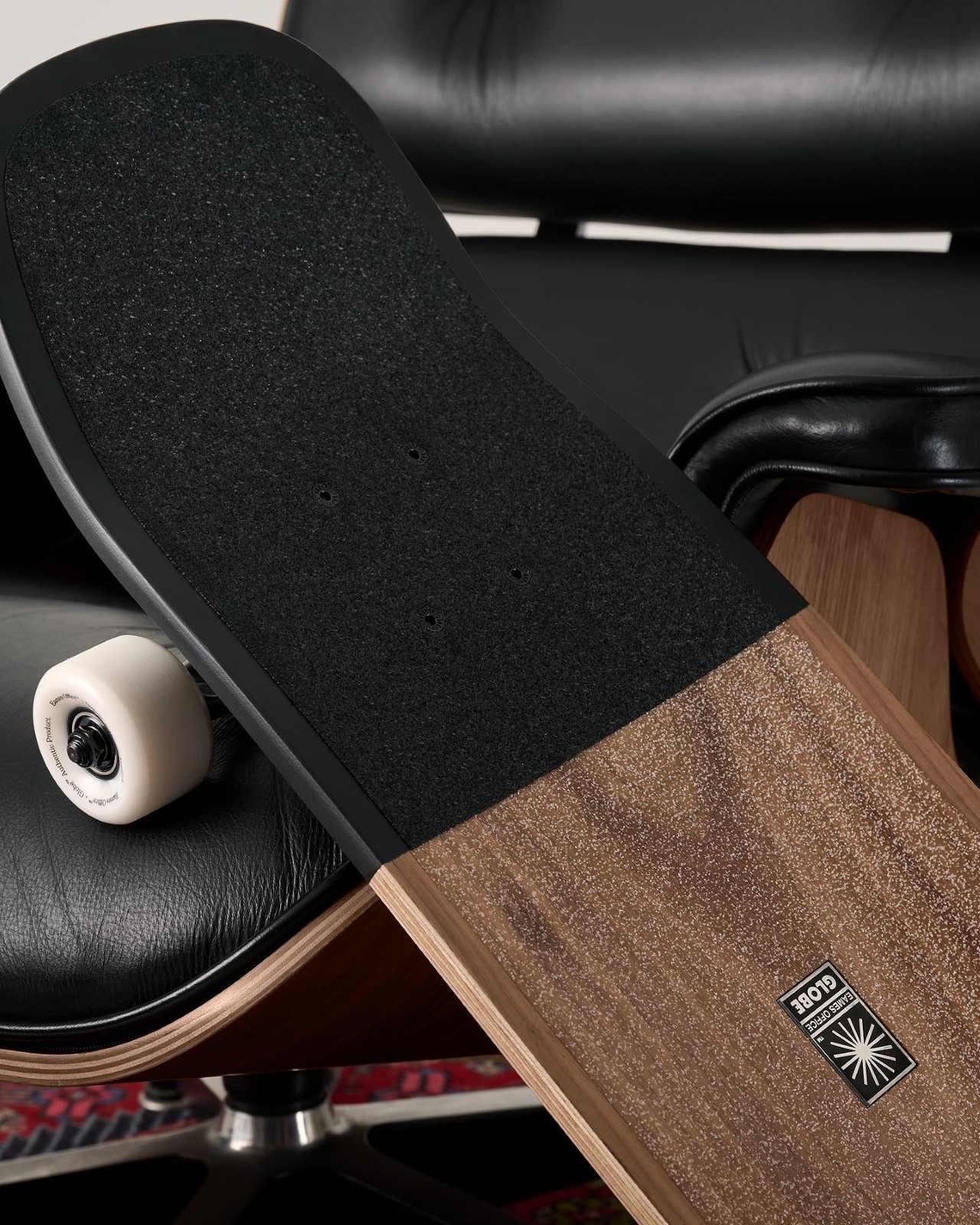
Close-up of the 32-inch Walnut Cruiser against the iconic Eames Lounge Chair and Ottoman

The homage doesn’t stop at mere visual replication. Globe’s collaboration with the Eames Office can be seen in the smaller details too, such as custom-embedded metal Eames Office + Globe badges and Eames logo deck bolts, enriching the skateboards. Even the underside of the boards feature a laser-carved Eames Office logo, a subtle yet significant mark of this unique partnership.

The skateboards come packaged in heavyweight canvas board bags that double as carry-all totes, signaling Globe’s commitment to practicality and style. Although the walnut cruiser has already sold out, indicating the collection’s popularity, other models, including the Eames La Chaise Box Set, remain available for enthusiasts and collectors.

The post The Eames Lounge Chair gets reinvented as a dual-tone skateboard with a similar iconic aesthetic first appeared on Yanko Design.