iOS 17.2 and Apple’s new Journal app are now available

After several weeks of testing the latest version of its iPhone operating system in public, Apple is now rolling out iOS 17.2 to all compatible devices. In addition, iPadOS 17.2 and macOS 14.2 Sonoma, which boast many of the same features, are here as well. Finally, watchOS 10.2 is also available for download. The biggest change this time around is the introduction of a new core app called Journal.

Apple's hope with the app is to help "iPhone users reflect and practice gratitude through journaling." It differs from third-party offerings like Day One, as Apple is able to offer suggestions for journal entries based on activity in other apps. Your iPhone might suggest logging a trip populated by photos from your camera roll, accompanied by a writing prompt such as "what will you remember most about your day out?" Your device might also suggest creating a journal entry after a workout or even to note a podcast episode you listened to.

Third-party developers can tap into a Suggestions API to nudge users to create journal entries based on activity in their apps. Apple says the Journal app is end-to-end encrypted and all information is stored locally (though you can sync everything to iCloud if you wish). Users will have control over which apps can offer Journal suggestions too.

The Journal app isn't all that's new in iOS 17.2. You'll be able to set up the Action button on iPhone 15 Pro and iPhone 15 Pro Max to act as a quick translation tool for spoken phrases. You could even use it to have a conversation with someone who doesn't speak the same language as you.

Apple is rolling out support for Qi2 charging on all iPhone 13 models and iPhone 14 models (it's already present on iPhone 15 models). Qi2-certified chargers are said to match the 15W wireless charging speeds of MagSafe. As Qi2 chargers become more widespread, it should be easier for both iPhone and Android users to top up their phones' batteries quickly.

Elsewhere, iPhone 15 Pro users can capture spatial video that can be viewed in 3D in Apple Vision Pro's Photos app (once you're eventually able to try out the headset, that is). You'll now be able to access and log Health data with your voice thanks to a Siri update. The Apple Music, Messages and Weather apps are getting a few new features too, while an AutoFill upgrade for PDFs and other forms could prove very useful.

In addition, Apple is rolling out watchOS 10.2. Apple Watch Series 9 and Apple Watch Ultra 2 can now log and access Health app data through Siri (both devices process Siri requests on-device for greater privacy). You can ask Siri for information on things like how much you slept the night before, your step count and whether you've closed your exercise ring for the day. You can also instruct Siri to log data such as your weight, medications that you've taken and your body temperature. These requests are available in English (US) and Mandarin Chinese for now, with support for more languages to follow.

Other new Apple Watch features include the ability to automatically view what's Now Playing from a nearby 2nd-gen HomePod or HomePod mini that's playing something from Music or Podcasts. You can enable a setting that'll let you swipe to change watch faces. You'll also be able to choose whether to prioritize the volume of the music or a trainer's voice in most Fitness+ workouts.

This article originally appeared on Engadget at https://www.engadget.com/ios-172-and-apples-new-journal-app-are-now-available-181348877.html?src=rss
iOS 17.2 and Apple’s new Journal app are now available

After several weeks of testing the latest version of its iPhone operating system in public, Apple is now rolling out iOS 17.2 to all compatible devices. In addition, iPadOS 17.2 and macOS 14.2 Sonoma, which boast many of the same features, are here as well. Finally, watchOS 10.2 is also available for download. The biggest change this time around is the introduction of a new core app called Journal.

Apple's hope with the app is to help "iPhone users reflect and practice gratitude through journaling." It differs from third-party offerings like Day One, as Apple is able to offer suggestions for journal entries based on activity in other apps. Your iPhone might suggest logging a trip populated by photos from your camera roll, accompanied by a writing prompt such as "what will you remember most about your day out?" Your device might also suggest creating a journal entry after a workout or even to note a podcast episode you listened to.

Third-party developers can tap into a Suggestions API to nudge users to create journal entries based on activity in their apps. Apple says the Journal app is end-to-end encrypted and all information is stored locally (though you can sync everything to iCloud if you wish). Users will have control over which apps can offer Journal suggestions too.

The Journal app isn't all that's new in iOS 17.2. You'll be able to set up the Action button on iPhone 15 Pro and iPhone 15 Pro Max to act as a quick translation tool for spoken phrases. You could even use it to have a conversation with someone who doesn't speak the same language as you.

Apple is rolling out support for Qi2 charging on all iPhone 13 models and iPhone 14 models (it's already present on iPhone 15 models). Qi2-certified chargers are said to match the 15W wireless charging speeds of MagSafe. As Qi2 chargers become more widespread, it should be easier for both iPhone and Android users to top up their phones' batteries quickly.

Elsewhere, iPhone 15 Pro users can capture spatial video that can be viewed in 3D in Apple Vision Pro's Photos app (once you're eventually able to try out the headset, that is). You'll now be able to access and log Health data with your voice thanks to a Siri update. The Apple Music, Messages and Weather apps are getting a few new features too, while an AutoFill upgrade for PDFs and other forms could prove very useful.

In addition, Apple is rolling out watchOS 10.2. Apple Watch Series 9 and Apple Watch Ultra 2 can now log and access Health app data through Siri (both devices process Siri requests on-device for greater privacy). You can ask Siri for information on things like how much you slept the night before, your step count and whether you've closed your exercise ring for the day. You can also instruct Siri to log data such as your weight, medications that you've taken and your body temperature. These requests are available in English (US) and Mandarin Chinese for now, with support for more languages to follow.

Other new Apple Watch features include the ability to automatically view what's Now Playing from a nearby 2nd-gen HomePod or HomePod mini that's playing something from Music or Podcasts. You can enable a setting that'll let you swipe to change watch faces. You'll also be able to choose whether to prioritize the volume of the music or a trainer's voice in most Fitness+ workouts.

This article originally appeared on Engadget at https://www.engadget.com/ios-172-and-apples-new-journal-app-are-now-available-181348877.html?src=rss
Arturia’s MiniFreak synthesizer gets a firmware update with new engine and effects

Arturia just launched a massive firmware update for its MiniFreak hybrid hardware synthesizer. Firmware version 2.0 brings a host of improvements and new features for avid fans of Arturia’s weird-but-powerful instrument. The biggest news here is a brand-new wavetable sound engine, boasting 32 wavetables and 64 patches. However, the engine’s only available on one of the oscillators, which does slightly decrease sound design options. Still, more engines are never a bad thing.

There’s also a new Super Unison effect, which is basically a souped-up chorus that increases stereo width by stacking up to six copies of a sound on top of the dry signal. The MiniFreak has some high-quality effects, so this should be fun to fool around with. Arturia says this effect will “transform a simple patch into a supersaw monster.”

LFO modulation has gotten a bit more useful with this update. Users can now adjust the LFO rate to correspond to a single step or even the entire curve, encouraging more “nuanced, evolving and expressive modulations.” For those with active sound design aspirations, Arturia is adding an easily-accessible favorites panel to the MiniFreak to store and bring up custom-made patches.

MiniFreak owners can now also access a dedicated store to purchase sound banks. There are three free banks at launch, with 32 patches, and two paid banks, with 64 patches. These sound packs are available for both the hardware MiniFreak and the affiliated software plugin. Arturia-branded sound packs typically cost $10 to $15. The company promises this is just the beginning, with more MiniFreak sound packs to come.

Other minor enhancements include more control over the Macro Edit mode and increased volume options. MiniFreak Firmware 2.0 is available now as a free update to current owners.

This article originally appeared on Engadget at https://www.engadget.com/arturias-minifreak-synthesizer-gets-a-firmware-update-with-new-engine-and-effects-185416143.html?src=rss

Arturia’s MiniFreak synthesizer gets a firmware update with new engine and effects

Arturia just launched a massive firmware update for its MiniFreak hybrid hardware synthesizer. Firmware version 2.0 brings a host of improvements and new features for avid fans of Arturia’s weird-but-powerful instrument. The biggest news here is a brand-new wavetable sound engine, boasting 32 wavetables and 64 patches. However, the engine’s only available on one of the oscillators, which does slightly decrease sound design options. Still, more engines are never a bad thing.

There’s also a new Super Unison effect, which is basically a souped-up chorus that increases stereo width by stacking up to six copies of a sound on top of the dry signal. The MiniFreak has some high-quality effects, so this should be fun to fool around with. Arturia says this effect will “transform a simple patch into a supersaw monster.”

LFO modulation has gotten a bit more useful with this update. Users can now adjust the LFO rate to correspond to a single step or even the entire curve, encouraging more “nuanced, evolving and expressive modulations.” For those with active sound design aspirations, Arturia is adding an easily-accessible favorites panel to the MiniFreak to store and bring up custom-made patches.

MiniFreak owners can now also access a dedicated store to purchase sound banks. There are three free banks at launch, with 32 patches, and two paid banks, with 64 patches. These sound packs are available for both the hardware MiniFreak and the affiliated software plugin. Arturia-branded sound packs typically cost $10 to $15. The company promises this is just the beginning, with more MiniFreak sound packs to come.

Other minor enhancements include more control over the Macro Edit mode and increased volume options. MiniFreak Firmware 2.0 is available now as a free update to current owners.

This article originally appeared on Engadget at https://www.engadget.com/arturias-minifreak-synthesizer-gets-a-firmware-update-with-new-engine-and-effects-185416143.html?src=rss

Apple will reportedly reward artists for offering music in spatial audio

Apple will reward record labels and artists who offer their music in spatial audio, a relatively new audio format that is more immersive than regular stereo. According to a Bloomberg report, artists who release their music in spatial audio will receive “added weighting” starting next year. That, Bloomberg speculates, could mean higher royalties.

Nearly all of Apple’s audio hardware such as AirPods, HomePod, the iPhone and the upcoming Vision Pro headset, support playback in spatial audio, so the company’s move to incentivize artists is almost certainly to ensure that most music available on Apple Music is available in a format that Apple has positioned as a selling point. Notably, Bloomberg notes that Apple Music listeners wouldn’t necessarily have to stream a song in spatial audio for artists to be rewarded. Simply having their music available in the format would be enough.

Apple added spatial audio, which is powered by technology from Dolby Atmos, to Apple Music in 2021. Most of the company’s original shows and movies on Apple TV+ are also offered in the format. Artists also have the option of mixing their older music in the new format, something that bands from all decades are already doing. Mixing music in the format isn’t wildly expensive, according to Bloomberg; if true, this push could help get independent musicians and smaller acts on board.

Some Apple Music competitors like Amazon Music and Tidal also offer spatial audio on their services. But Spotify, Apple’s biggest music stream rival, is a notable exception, even though rumors about a high-quality music format on the service have swirled for years.

This article originally appeared on Engadget at https://www.engadget.com/apple-will-reportedly-reward-artists-for-offering-music-in-spatial-audio-183713277.html?src=rss

Apple will reportedly reward artists for offering music in spatial audio

Apple will reward record labels and artists who offer their music in spatial audio, a relatively new audio format that is more immersive than regular stereo. According to a Bloomberg report, artists who release their music in spatial audio will receive “added weighting” starting next year. That, Bloomberg speculates, could mean higher royalties.

Nearly all of Apple’s audio hardware such as AirPods, HomePod, the iPhone and the upcoming Vision Pro headset, support playback in spatial audio, so the company’s move to incentivize artists is almost certainly to ensure that most music available on Apple Music is available in a format that Apple has positioned as a selling point. Notably, Bloomberg notes that Apple Music listeners wouldn’t necessarily have to stream a song in spatial audio for artists to be rewarded. Simply having their music available in the format would be enough.

Apple added spatial audio, which is powered by technology from Dolby Atmos, to Apple Music in 2021. Most of the company’s original shows and movies on Apple TV+ are also offered in the format. Artists also have the option of mixing their older music in the new format, something that bands from all decades are already doing. Mixing music in the format isn’t wildly expensive, according to Bloomberg; if true, this push could help get independent musicians and smaller acts on board.

Some Apple Music competitors like Amazon Music and Tidal also offer spatial audio on their services. But Spotify, Apple’s biggest music stream rival, is a notable exception, even though rumors about a high-quality music format on the service have swirled for years.

Update, January 22, 2024, 5:07 PM ET: Apple started offering 10 precent higher royalties to artists who offer music in spatial audio on Apple Music from January, according to a new report from 9to5Mac

This article originally appeared on Engadget at https://www.engadget.com/apple-will-reportedly-reward-artists-for-offering-music-in-spatial-audio-183713277.html?src=rss

Beeper Mini is back, promising iMessage access on Android if you sign in with an Apple ID

A battle to bring iMessage access to Android is not yet over, even though Apple recently closed a loophole that seemingly allowed Beeper and other third-party apps to tap into the service. The latest version of the Beeper Mini app for Android once again allows users to send and receive messages.

Beeper says its team has been working around the clock to restore iMessage functionality after Apple shut down the app's access to the service. Now, Beeper cofounders Eric Migicovsky and Brad Murray say the team has found a solution. There's one key caveat, however: phone number registration isn't working and you'll need to sign in with an Apple ID. You'll send and receive iMessages via your email address instead of your phone number. The Beeper team says it's working on a phone number fix.

In the meantime, the team says it's not comfortable with charging users while its service remains in flux. As such, Beeper is free to use for the time being. "As soon as things stabilize (we hope they will), we’ll look at turning on subscriptions again," Beeper wrote in a blog post.

Migicovsky and Murray added that, despite Apple's assertions to the contrary, messages sent via Beeper Mini are end-to-end encrypted and secure. In fact, they suggest that Beeper is a more secure way for iOS and Android to communicate with each other than regular SMS. Apple does not yet support the more secure RCS standard Google has embraced, but it plans to start doing so in 2024.

This article originally appeared on Engadget at https://www.engadget.com/beeper-mini-is-back-promising-imessage-access-on-android-if-you-sign-in-with-an-apple-id-182924774.html?src=rss

Beeper Mini is back, promising iMessage access on Android if you sign in with an Apple ID

A battle to bring iMessage access to Android is not yet over, even though Apple recently closed a loophole that seemingly allowed Beeper and other third-party apps to tap into the service. The latest version of the Beeper Mini app for Android once again allows users to send and receive messages.

Beeper says its team has been working around the clock to restore iMessage functionality after Apple shut down the app's access to the service. Now, Beeper cofounders Eric Migicovsky and Brad Murray say the team has found a solution. There's one key caveat, however: phone number registration isn't working and you'll need to sign in with an Apple ID. You'll send and receive iMessages via your email address instead of your phone number. The Beeper team says it's working on a phone number fix.

In the meantime, the team says it's not comfortable with charging users while its service remains in flux. As such, Beeper is free to use for the time being. "As soon as things stabilize (we hope they will), we’ll look at turning on subscriptions again," Beeper wrote in a blog post.

Migicovsky and Murray added that, despite Apple's assertions to the contrary, messages sent via Beeper Mini are end-to-end encrypted and secure. In fact, they suggest that Beeper is a more secure way for iOS and Android to communicate with each other than regular SMS. Apple does not yet support the more secure RCS standard Google has embraced, but it plans to start doing so in 2024.

This article originally appeared on Engadget at https://www.engadget.com/beeper-mini-is-back-promising-imessage-access-on-android-if-you-sign-in-with-an-apple-id-182924774.html?src=rss

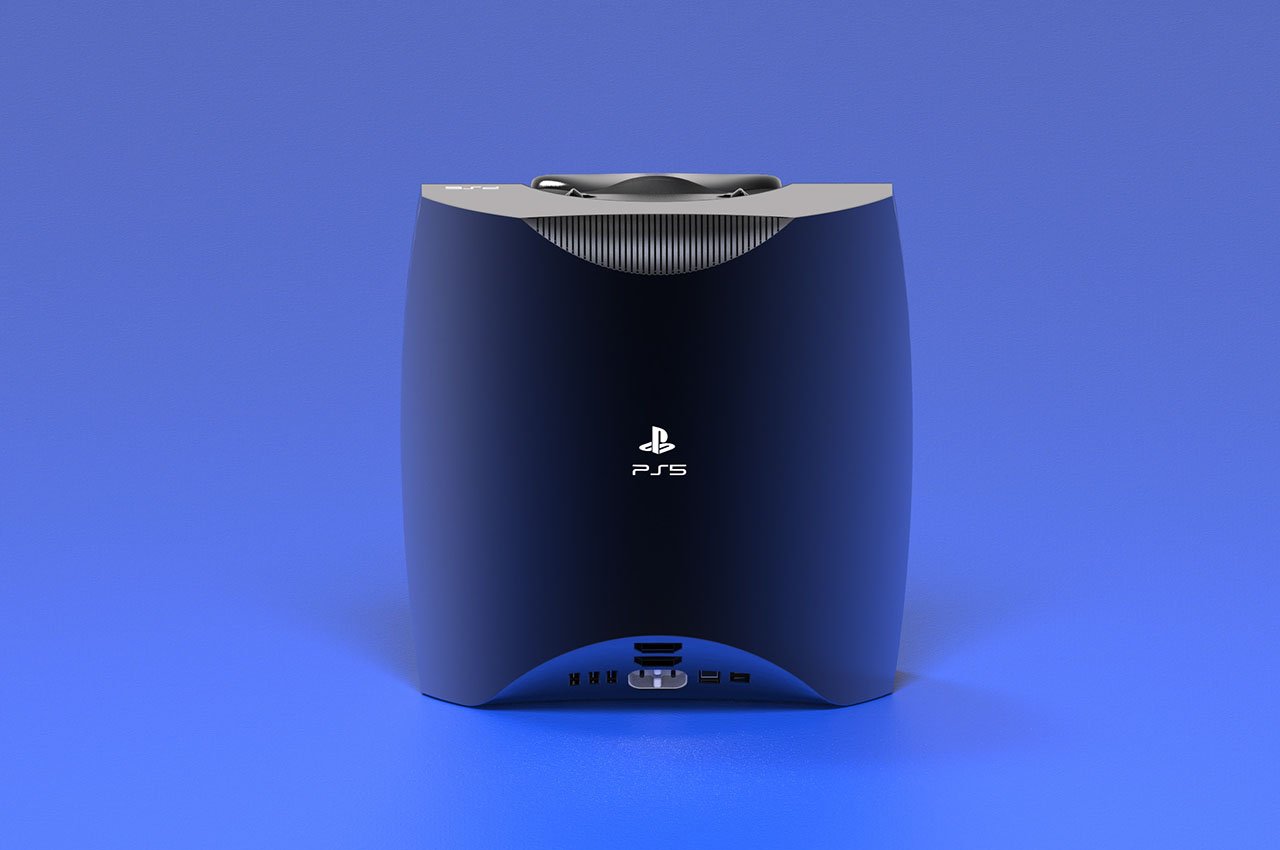
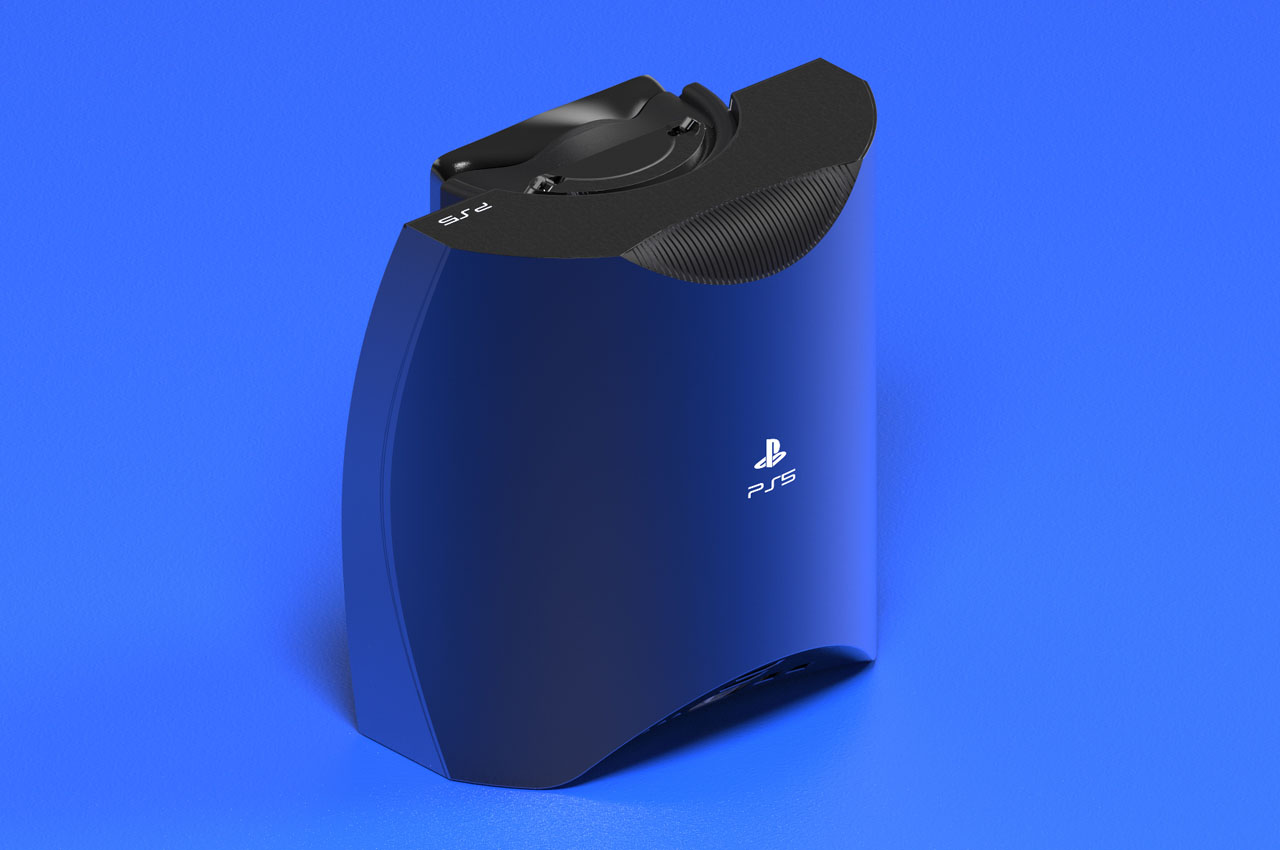
Oddly-shaped PlayStation 5 Pro concept emphasizes VR immersion for Metaverse games

Sony just released the PlayStation 5 Slim to give gamers another reason for hitting the couch this winter season. The console is considerably smaller than the bigger brother released in November 2020. The question remains, is it the better version of the PS5 or do gamers deserve a better gaming console from Sony?

This is where the rumors of a PlayStation 5 Pro sound exciting, filling in the gap to the long lull before PS6 finally hits the shelves. Like the PS4 Pro, the PS5 Pro gaming console is destined to be a better version of the base PlayStation 5. So, what will the PS5 Pro be like set for a probable November 2024 launch? It’ll be more powerful, have more memory and have advanced hardware.

Designer: Seungjae Lee

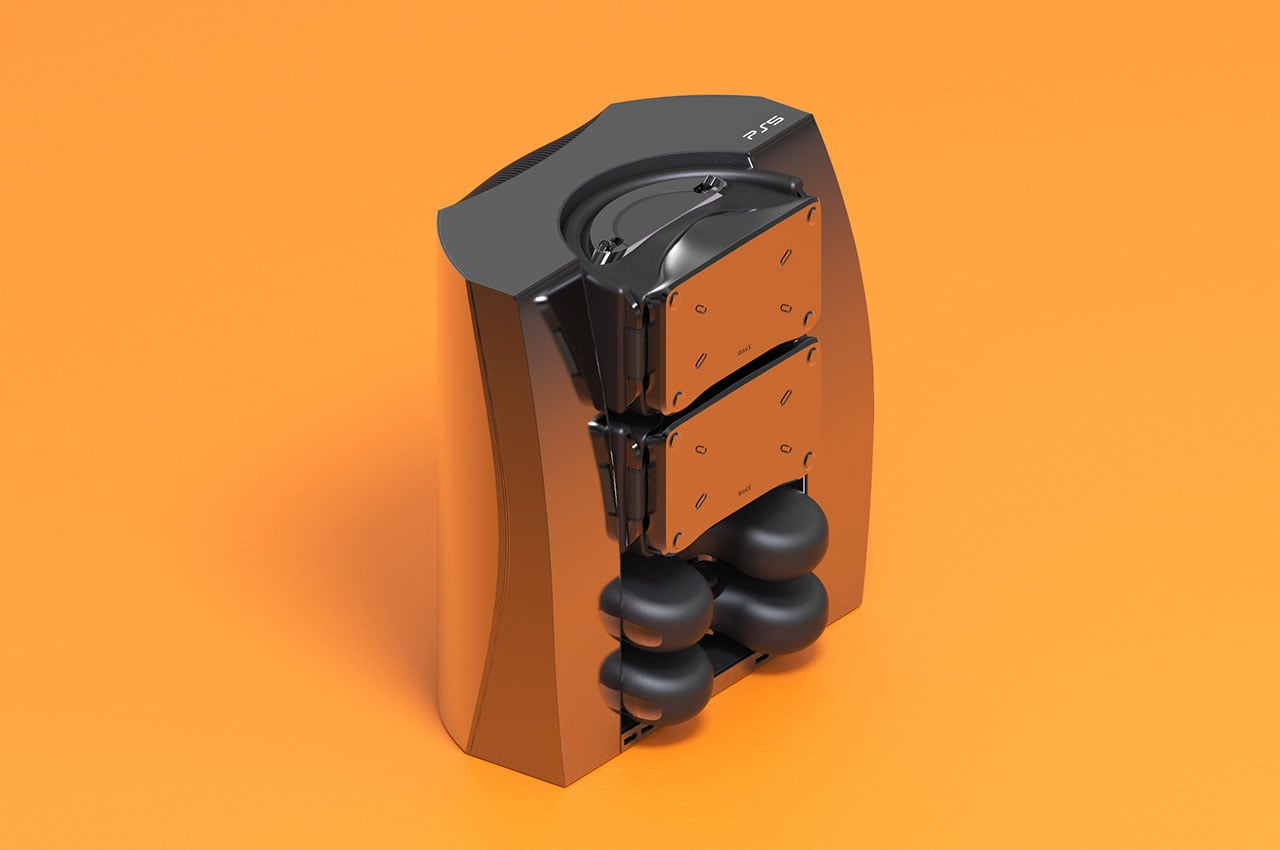
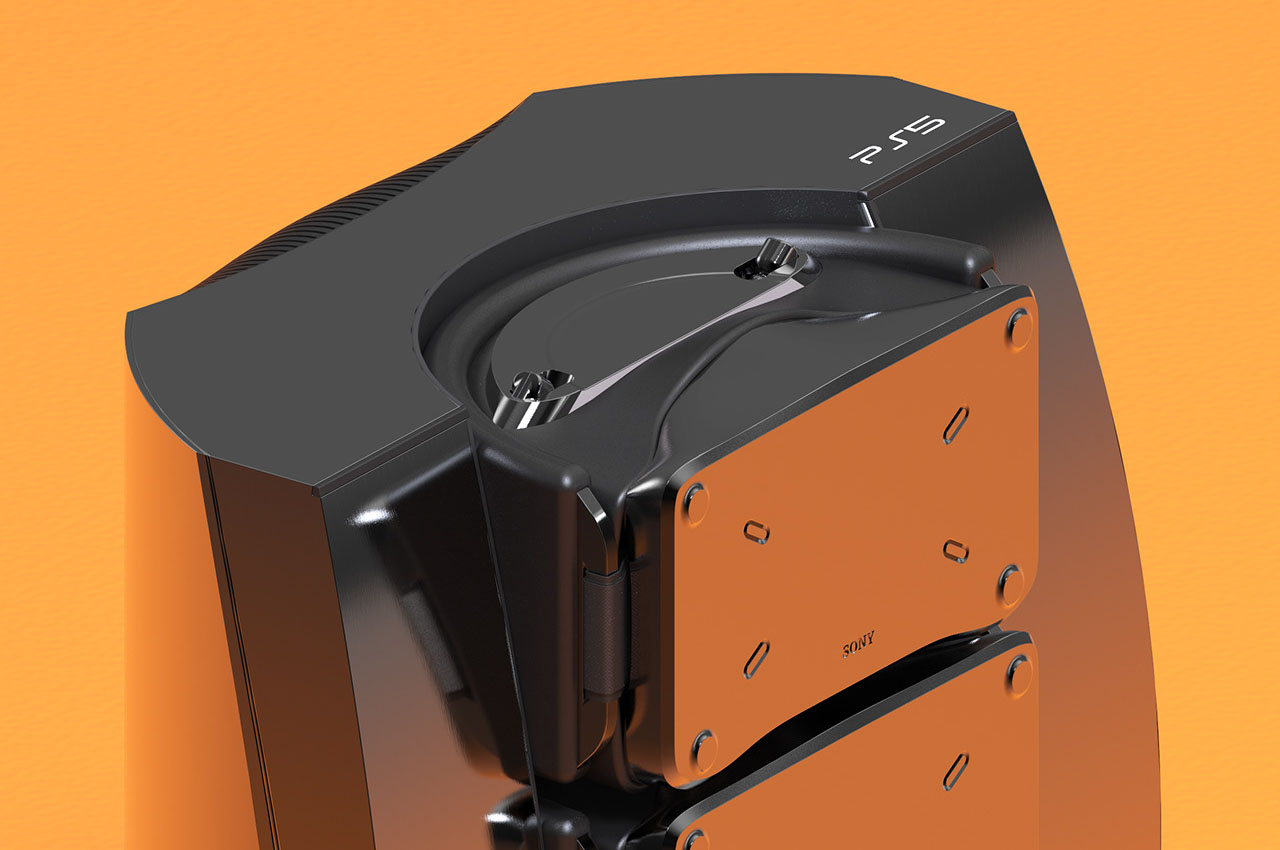
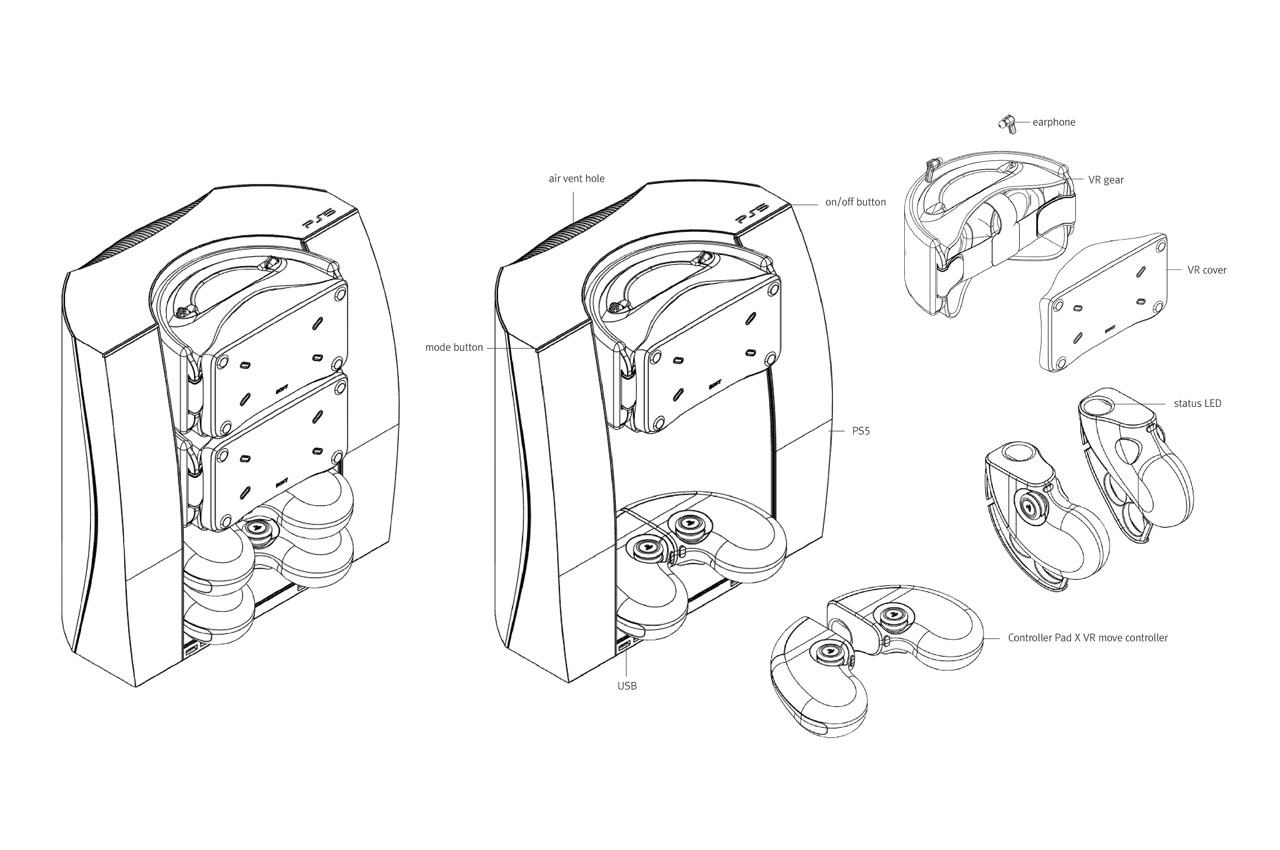
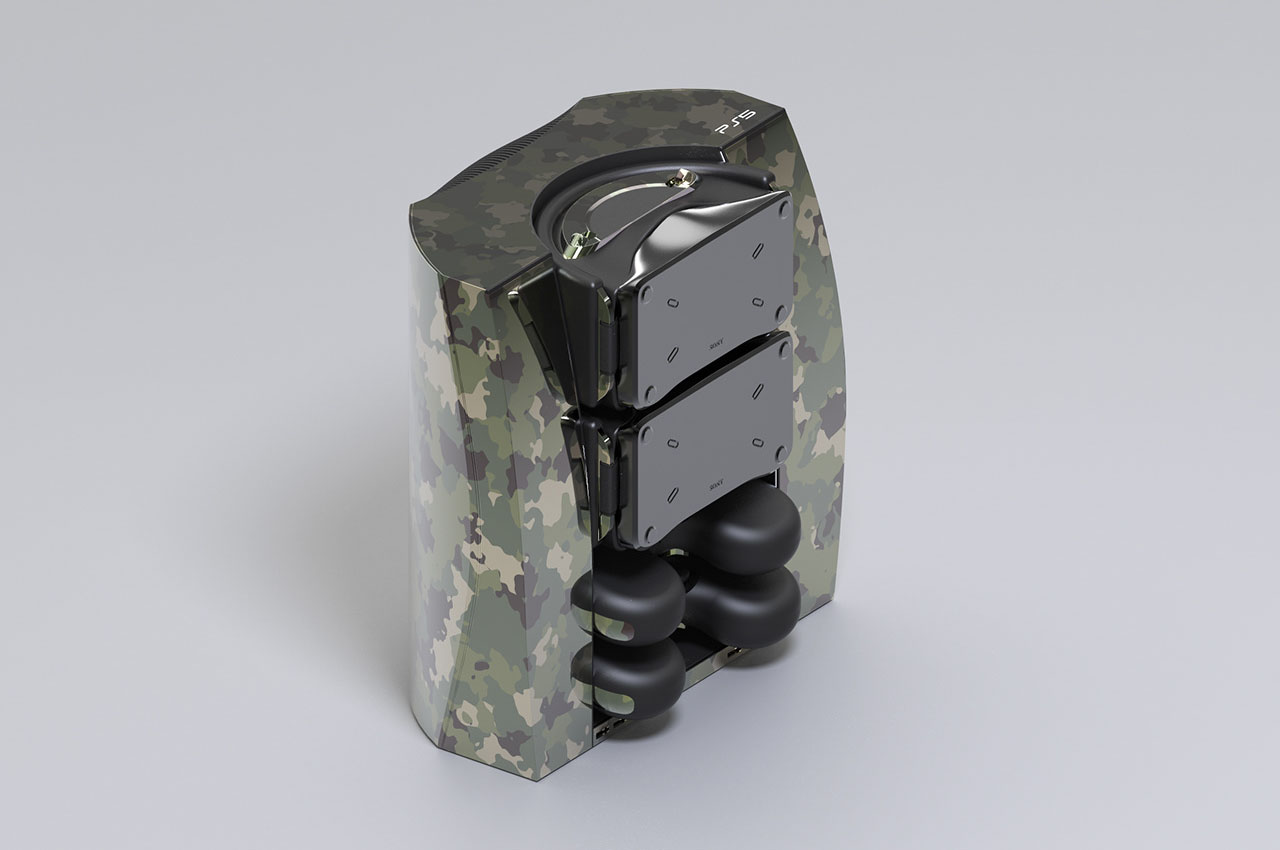
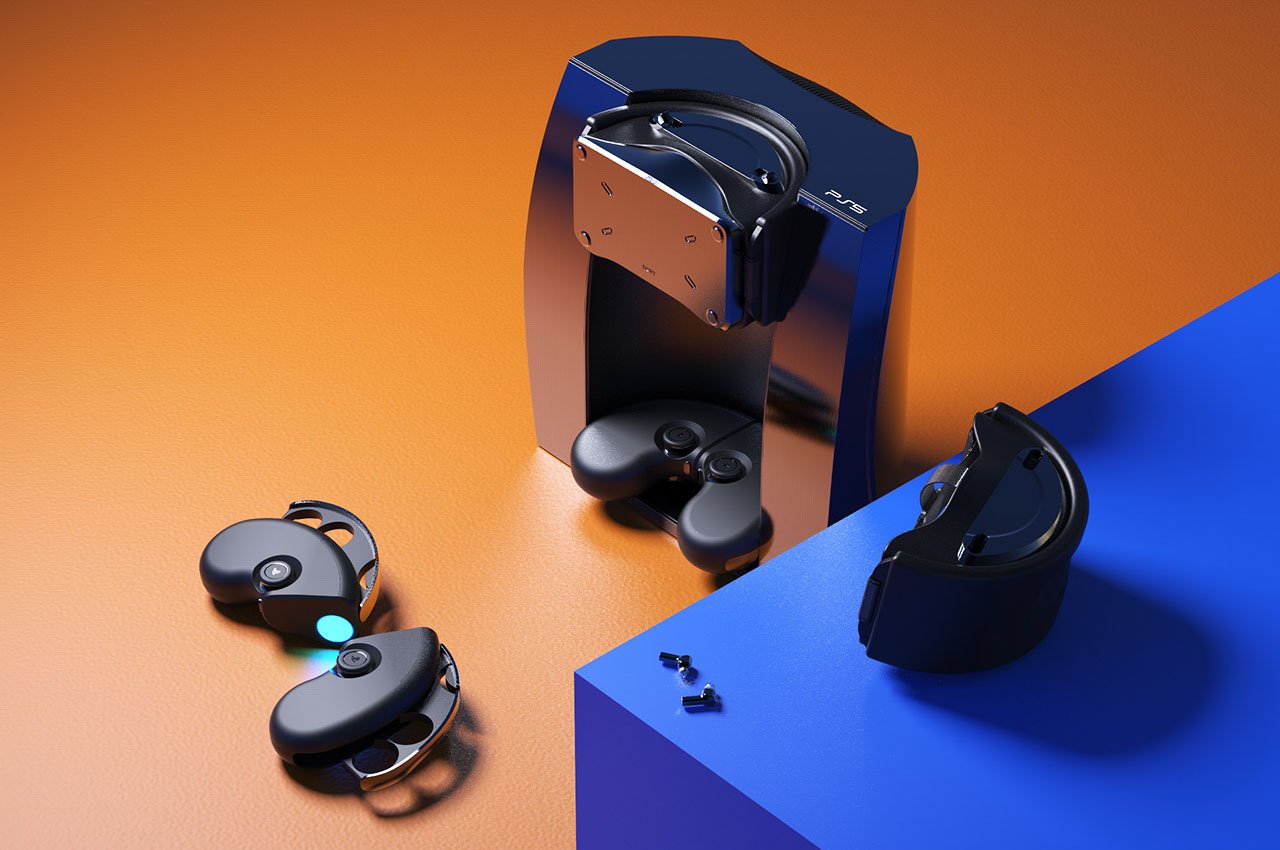
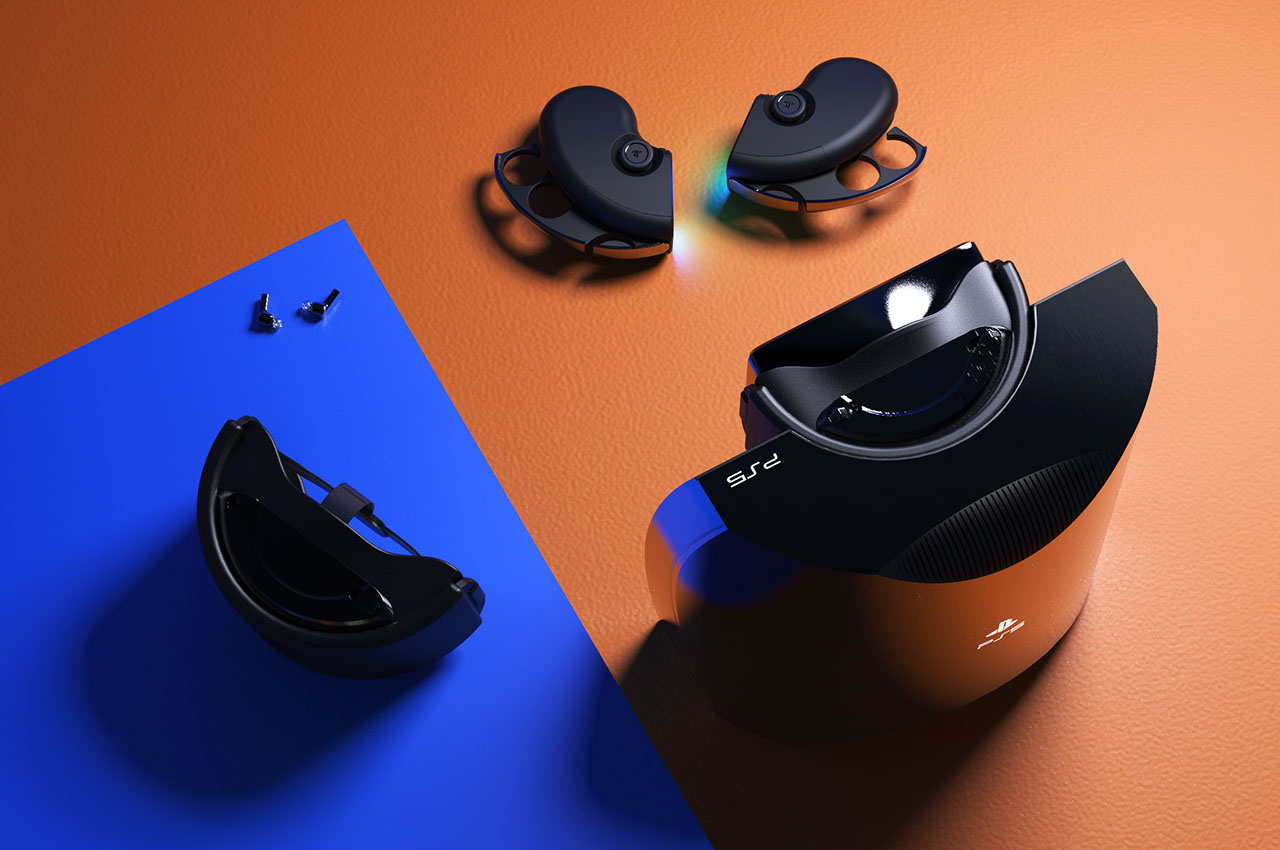
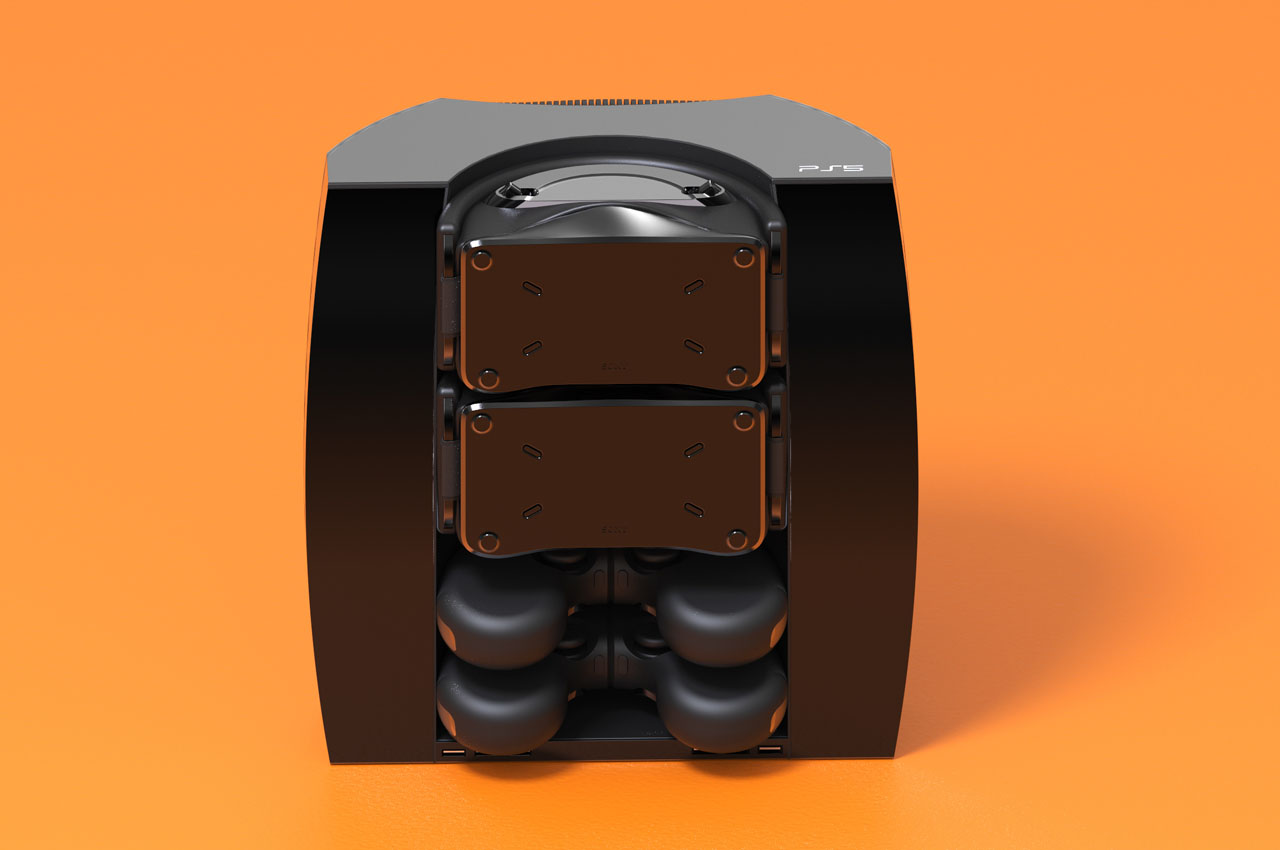
This flamboyant concept gives our imagination wings of what PS5 Pro could bring to the competition. The main focus here is on the augmented reality and virtual reality aspects of modern games, and that’s where we’re headed in the future. Gear for such a gaming console requires VR headsets and accompanying controllers. The rear of the console houses the VR controllers and headsets and comes with wireless plug-and-play functionality.

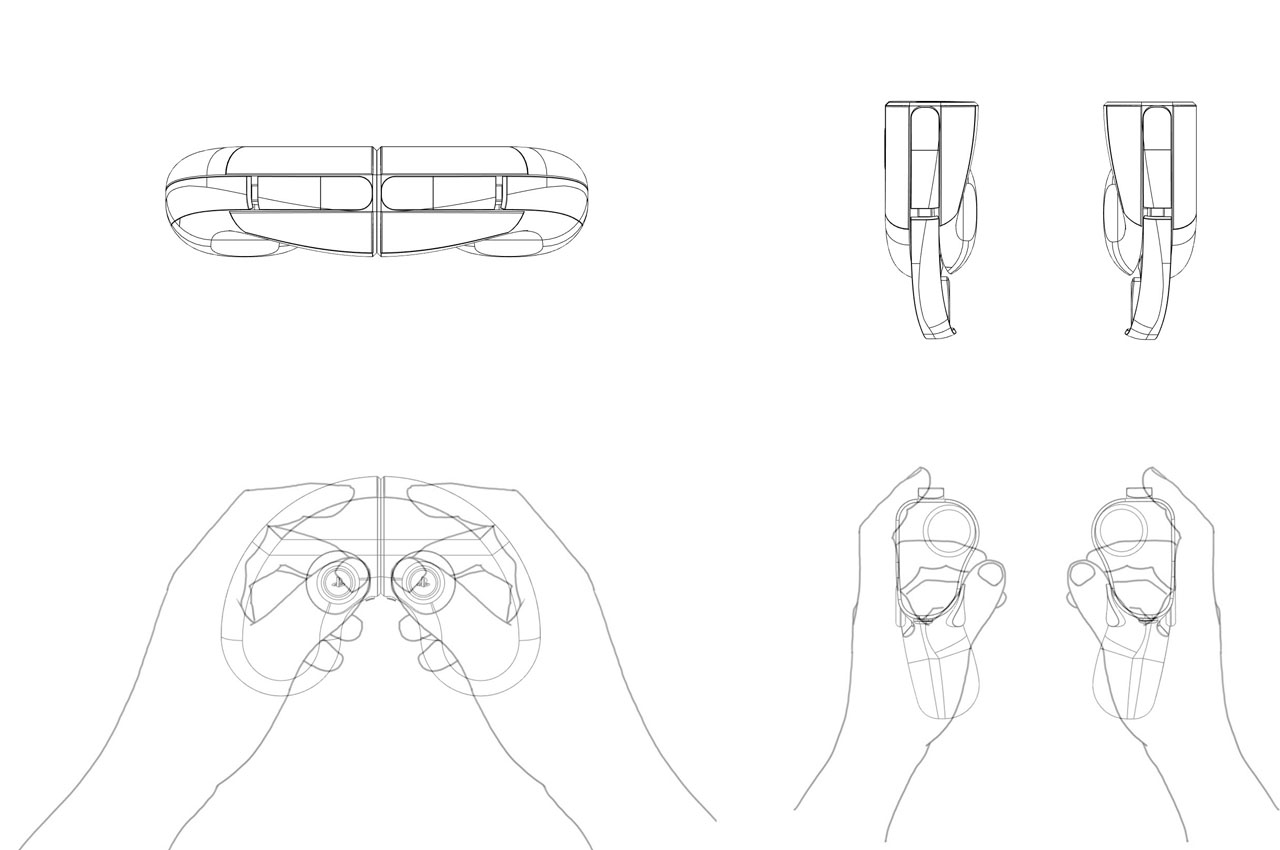
To keep the wire-clutter of main cables routed to the console to a minimum, the bottom rear handles the organizing aspect. What’s most intriguing about this concept gaming console are the controllers. They can behave as knuckle controllers in conjunction with the VR headset for an immersive experience. When two are joined together, they behave as a normal controller of the current generation.

Not only the controllers, but the VR headset also has a hidden surprise on top. There are docked wireless earbuds that can be used for increased audio immersion. All-in-all, the PS5 Pro concept is designed for enhanced gaming experience in the Metaverse. To add spice to the customary PlayStation theme, Seungjae has designed the renders in peppy options including a camouflage skin.

The post Oddly-shaped PlayStation 5 Pro concept emphasizes VR immersion for Metaverse games first appeared on Yanko Design.

Microsoft agrees to union contract terms involving the use of AI

Microsoft has agreed to union contract language regarding its use of artificial intelligence, which should give workers a voice when challenging how the technology’s deployed, as reported by Bloomberg. This is the first US instance of collective bargaining in Microsoft’s history and could be a huge step for those employed with the tech giant.

This came to pass as part of negotiations with the Communications Workers of America (CWA) union and involves contract language that covers a few hundred staffers at Microsoft’s game studio ZeniMax, which includes well-known subsidiaries like Bethesda and Arkane, among others.

The gist here is that the contract language incorporates Microsoft’s previously-announced AI principles, sort of a ten commandments type deal. The language dictates that AI systems will “treat all people fairly” and “empower everyone.” To that end, it will give employees covered under the contract an avenue of recourse should they feel that Microsoft isn’t holding up its end of the bargain. Microsoft even hired dozens of ZeniMax contract workers as full-time employees, potentially as a show of good faith.

“The goal is to ensure tools and technologies benefit rather than harm workers,” the contract states. The language stipulates that Microsoft must inform the CWA whenever AI or related automation technology is implemented in a way that could impact workers. If requested, the company must enter into good-faith negotiations regarding the change. This is a big first step, considering Microsoft’s massive play into the AI space via integration with OpenAI products.

This would be news on its own, given Microsoft’s former hesitance to engage with unions in any way, shape or form. However, there’s more. The company also entered into a partnership with the AFL-CIO, the country’s largest federation of unions. The entities struck a deal that ensures Microsoft will remain neutral in efforts by unions to encourage workers to join up.

The partnership also creates an “open dialogue” to discuss AI and how it impacts workers. The AFL-CIO calls this team-up the “first of its kind between a labor organization and a technology company.” Microsoft has committed to share information with labor leaders regarding impactful AI trends and consider “worker perspectives” when developing new technologies.

Why the about face? There’s a whole lot of uncertainty out there regarding artificial intelligence and how it will impact workers across multiple industries. It looks like Microsoft is setting itself up to be the “adult in the room” when compared to rival entities. It’s worth noting, though, that Microsoft shareholders rejected a proposal last week that would slow down AI spending until a risk-assessment project could be conducted.

This article originally appeared on Engadget at https://www.engadget.com/microsoft-agrees-to-union-contract-terms-involving-the-use-of-ai-173354643.html?src=rss