New ChatGPT API’s for fine-tuning custom models released by OpenAI

fine-tuning custom ChatGPT models

OpenAI has been developing a comprehensive AI base layer, which includes GPT, Sora, Whisper, and other components, to serve as a foundation for various applications across different industries. The organization is now encouraging developers and companies to build upon this base layer, offering improved APIs for fine-tuning and creating custom models tailored to specific business […]

The post New ChatGPT API’s for fine-tuning custom models released by OpenAI appeared first on Geeky Gadgets.

Titan x Yanko Design “Retrofuturism Challenge” Announces Innovative Winning Designs

The first Titan x Yanko Design “Retrofuturism Challenge” finally came to a close in April, with the companies revealing their grand winners. Three winners were chosen from hundreds of entries and were awarded cash prizes and KeyShot licenses.

Participants were required to design one of the following – a watch, eyewear, jewelry, or backpack – keeping in mind the ‘Retrofuturism’ brief. The brief invited designers to marry the golden yesteryears with the uncharted tomorrows, creating designs that resonate with the warmth of nostalgia yet pulse with the promise of the future. The Titan x YD Jury Panel awarded Tejas Sunil Suryawanshi as their grand winner, with Swetha Shanmuhavel getting the 1st Runner Up Prize, and Serhan Yenilmez getting the 2nd Runner Up Prize. Winners were selected across 3 of the 4 product categories, and the jury even gave participant Jack Wells an Honorable Mention for his entry.


Winner – Tejas Sunil Suryawanshi

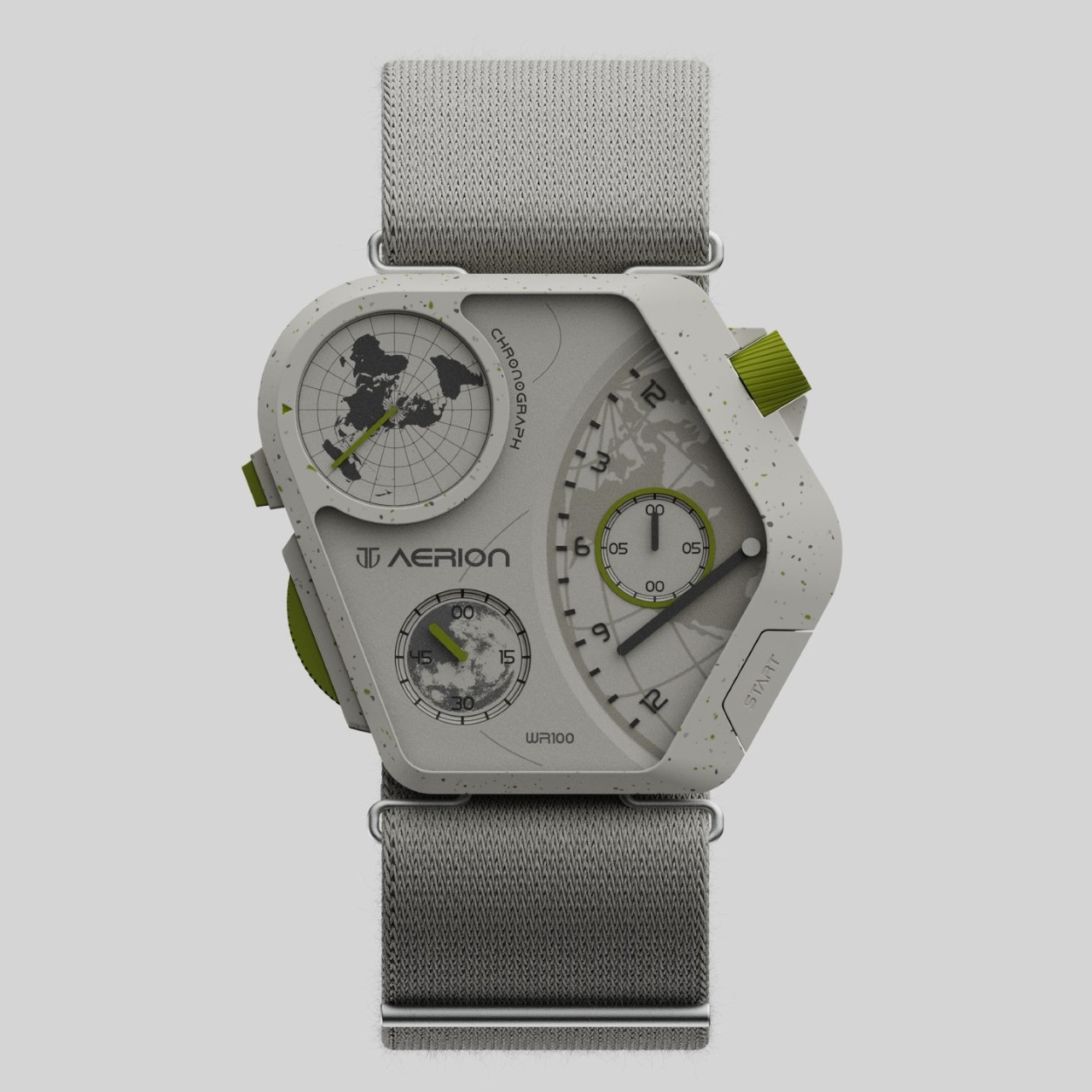
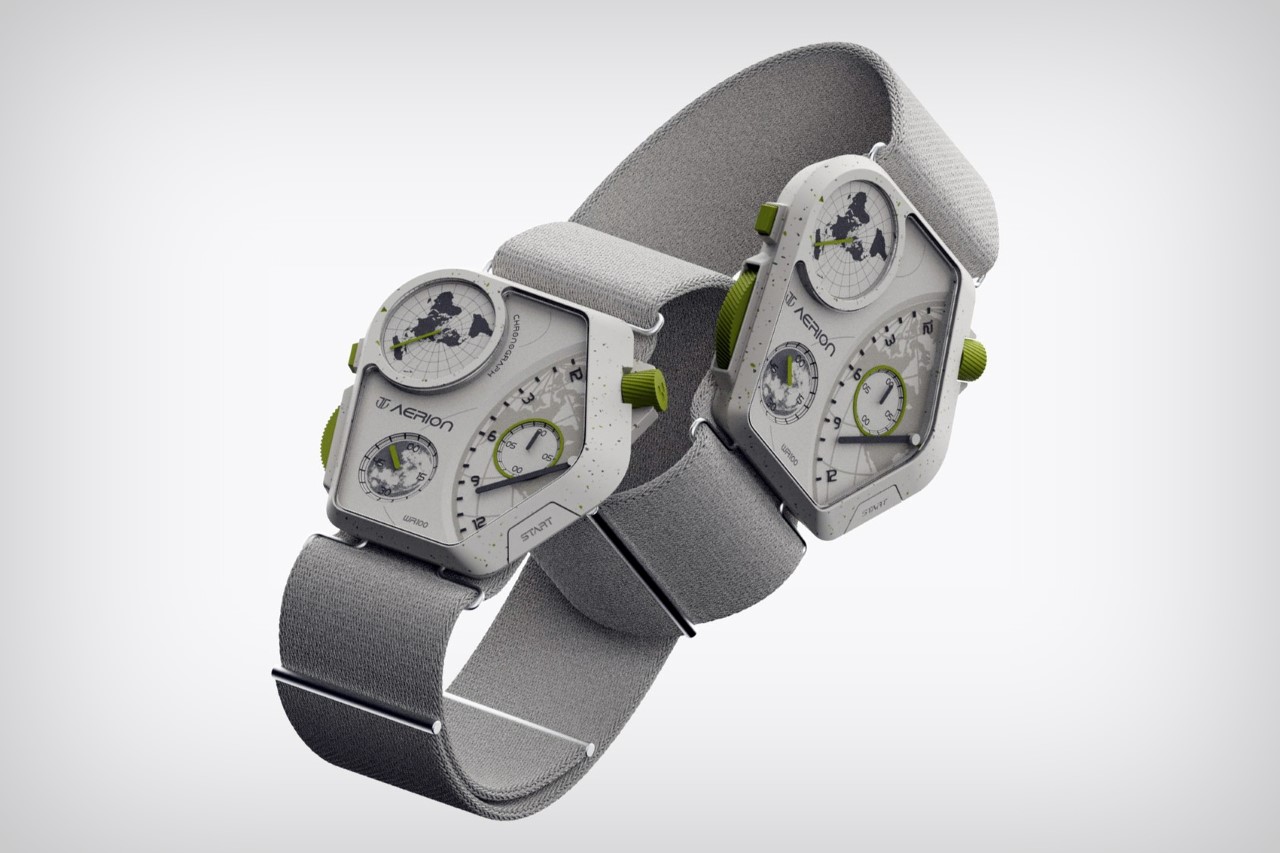
Suryawanshi’s Aerion watch captivated the judges for its unconventional design that married new technology with unique form factors, and an eye-catching brutalist design language that still managed to be both exciting and practical. The timepiece boasts a captivating design with a semi-circular dial on the right marking the hours and a smaller counterpart on the left for minutes. Evocative of the Earth and Moon’s interplay, these dials charmingly illustrate the lunar orbit. Incorporating practicality, two buttons flank the watch for activating the chronograph function. This feature seamlessly transforms the minute hand into a seconds hand for precise timing, aided by a secondary dial measuring half-second intervals within the hour display. A top-right disc on the watch face elegantly presents a map with crucial longitudes, alongside a rotating hand pinpointing the sun’s position overhead, indicating local solar time. Notably, the outer bezel of the disc also includes a discreet arrow for user location reference.

1st Runner Up – Swetha Shanmuhavel

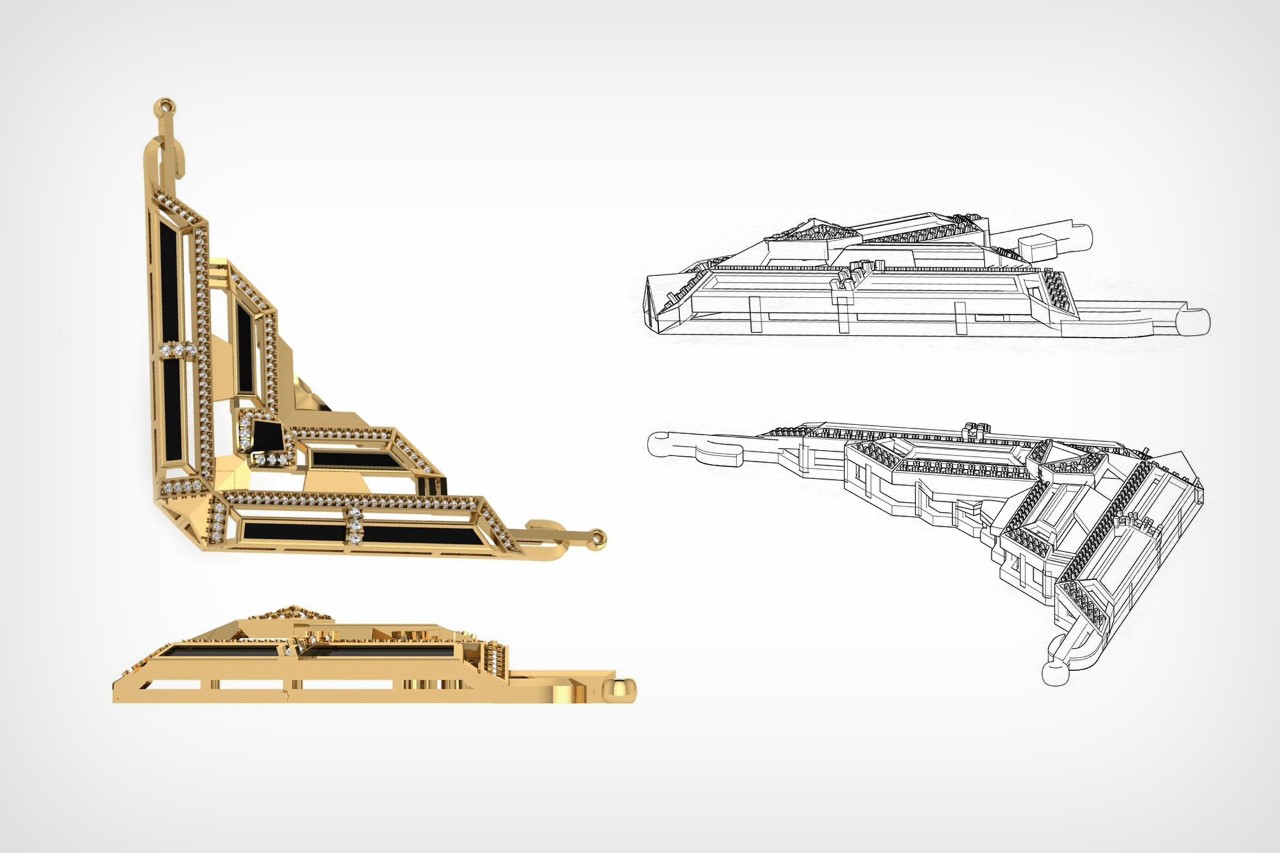
Swetha Shanmuhavel, who goes by ‘_.enigmiala._’ on Instagram secured second place for her jewelry design – Collar Pins. The unique interpretation of creating jewelry that affixes to the corner of a collar or a chest pocket really resonated with the judges as unique and interpreting the brief perfectly. The art deco styling of the pin was a perfect pick for the retrofuturistic theme, given its distinctly luxurious yet geometric patterns. “In the hopes of a utopian retro-futuristic world that will be culturally sensitive and celebrate inclusivity and self-expression, I aim, as a designer, to break down societal expectations and exercise creative freedom to explore innovative and unique designs that transcend traditional gender boundaries,” said Shanmuhavel. Striking an 83-degree angle, these pins are a statement piece crafted in 18k gold, black enamel, and diamonds. Their bold geometric lines and rich embellishments showcase both individuality and imagination. Secured by a screw at the back, these versatile pieces can be worn on a crisp shirt collar or a jacket lapel, adding a touch of retro charm with a futuristic twist. They are a nod to the past, reimagined for the modern era.

2nd Runner Up – Serhan Yenilmez

Serhan Yenilmez’s “Cat Eye” glasses won the final prize for its call-back to the cat-shaped quintessential ‘librarian’ glasses of the 50s and 60s. Unlike those, however, these glasses come with layers that add volume and chunk to the glasses, giving them a distinct appearance that’s sure to have you look twice. “Main target was to keep the classic unique form and make it look more sophisticated and up-to-date by some ideas such as leather pads and mix & match material options,” described Serhan, adding that “All the parts are detachable and mixes with each other as the user sees fit…”

Honorable Mention – Jack Wells

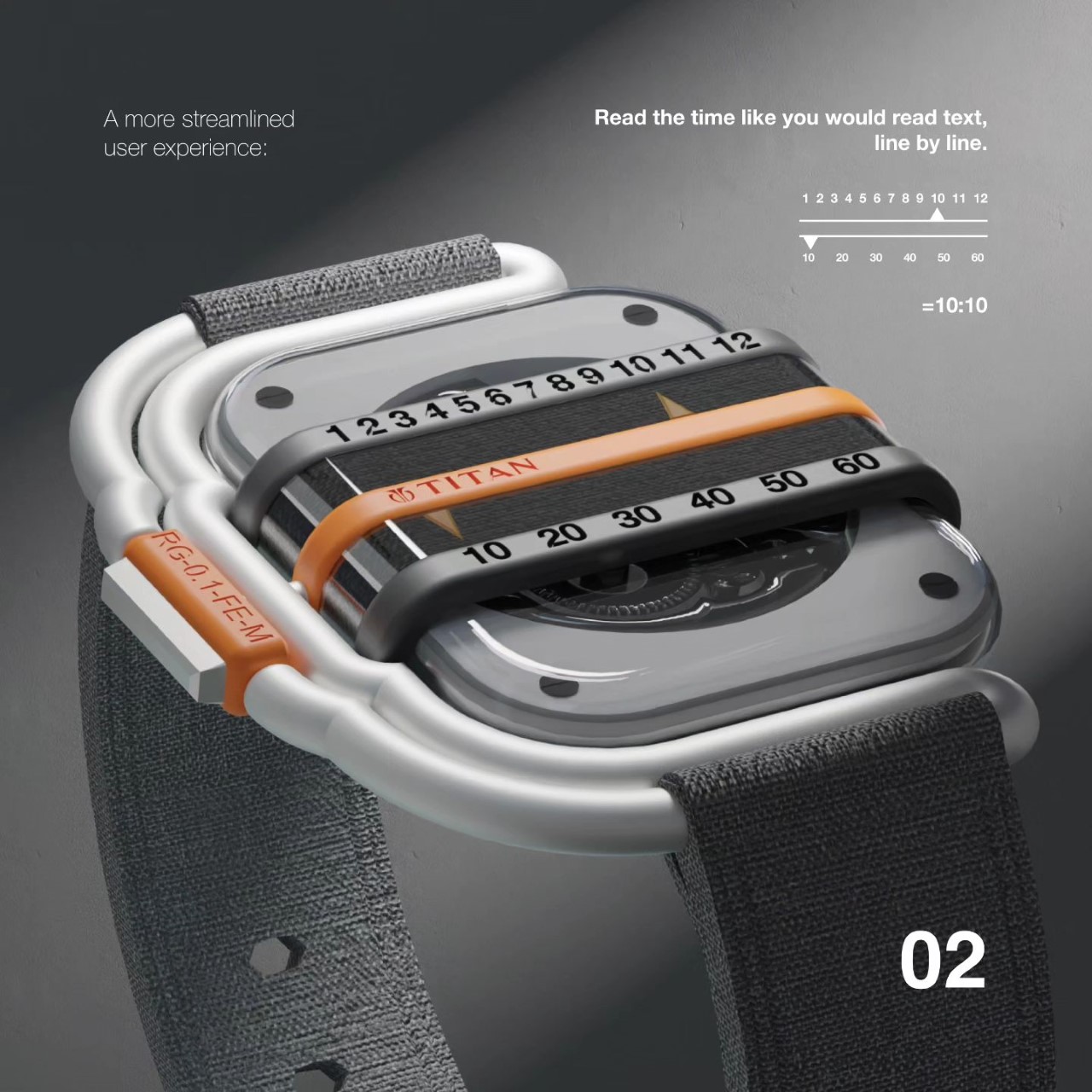
Finally, the judges awarded Jack Wells an honorable mention for his watch entry ‘Rotograde’. Although the watch’s design lacked feasibility in its current stage, it reinterpreted timetelling by relying on something as rudimentary as a belt and gear. This, coupled with the unique aesthetic of the watch made it a retrofuturistic dream come true. “This retrofuturistic watch utilizes a belt-driven analog handset to convey the time. The dial’s linear display enables the time to be read like lines of text, making it more efficient as a time-telling process than the traditional three-hand set-up,” Jack said, referencing Gerald Genta and Sir Jony Ive as his inspirations.

The post Titan x Yanko Design “Retrofuturism Challenge” Announces Innovative Winning Designs first appeared on Yanko Design.

Tesla will unveil a robotaxi on August 8, according to Musk

Tesla is introducing a robotaxi on August 8, Elon Musk has announced on X a few hours after Reuters published a report that the automaker is scrapping its plans to produce a low-cost EV. Reuters also said that Musk's directive was to "go all in" on robotaxis built on the company's small-vehicle platform. Tesla has been promising a more affordable EV with prices expected to start at $25,000 for years, and Musk said as recently as this January that he's optimistic the model will arrive in the second half of 2025. In response to the report, the Tesla chief tweeted that "Reuters is lying (again)."

He didn't clarify which part of the report was a lie, but considering he confirmed that Tesla is unveiling a robotaxi, he likely meant the news organization's claim that the company pulled the plug on a more affordable EV. At the moment, Tesla's cheapest vehicle is the Model 3, but its prices start at $39,000. It'll be interesting to see how the company will make a robotaxi work with its camera-only system — it dropped radar and other sensors, which robotaxi companies like Waymo use extensively, from its driver assistance technologies a few years ago. 

This article originally appeared on Engadget at https://www.engadget.com/tesla-will-unveil-a-robotaxi-on-april-8-according-to-musk-013853363.html?src=rss

Tesla will unveil a robotaxi on August 8, according to Musk

Tesla is introducing a robotaxi on August 8, Elon Musk has announced on X a few hours after Reuters published a report that the automaker is scrapping its plans to produce a low-cost EV. Reuters also said that Musk's directive was to "go all in" on robotaxis built on the company's small-vehicle platform. Tesla has been promising a more affordable EV with prices expected to start at $25,000 for years, and Musk said as recently as this January that he's optimistic the model will arrive in the second half of 2025. In response to the report, the Tesla chief tweeted that "Reuters is lying (again)."

He didn't clarify which part of the report was a lie, but considering he confirmed that Tesla is unveiling a robotaxi, he likely meant the news organization's claim that the company pulled the plug on a more affordable EV. At the moment, Tesla's cheapest vehicle is the Model 3, but its prices start at $39,000. It'll be interesting to see how the company will make a robotaxi work with its camera-only system — it dropped radar and other sensors, which robotaxi companies like Waymo use extensively, from its driver assistance technologies a few years ago. 

This article originally appeared on Engadget at https://www.engadget.com/tesla-will-unveil-a-robotaxi-on-april-8-according-to-musk-013853363.html?src=rss

Tesla will unveil a robotaxi on April 8, according to Musk

Tesla is introducing a robotaxi on August 8, Elon Musk has announced on X a few hours after Reuters published a report that the automaker is scrapping its plans to produce a low-cost EV. Reuters also said that Musk's directive was to "go all in" on robotaxis built on the company's small-vehicle platform. Tesla has been promising a more affordable EV with prices expected to start at $25,000 for years, and Musk said as recently as this January that he's optimistic the model will arrive in the second half of 2025. In response to the report, the Tesla chief tweeted that "Reuters is lying (again)."

He didn't clarify which part of the report was a lie, but considering he confirmed that Tesla is unveiling a robotaxi, he likely meant the news organization's claim that the company pulled the plug on a more affordable EV. At the moment, Tesla's cheapest vehicle is the Model 3, but its prices start at $39,000. It'll be interesting to see how the company will make a robotaxi work with its camera-only system — it dropped radar and other sensors, which robotaxi companies like Waymo use extensively, from its driver assistance technologies a few years ago. 

This article originally appeared on Engadget at https://www.engadget.com/tesla-will-unveil-a-robotaxi-on-april-8-according-to-musk-013853363.html?src=rss

These Edible Gummy Dungeons and Dragons Characters raised over $300,000 on Kickstarter

They say you shouldn’t play with your food… but that’s precisely what the Gummyquest was designed for. These mouthwateringly mythical treats were designed to make your game nights fulfilling as well as filling! Meet Gummyquest, an all-encompassing kit of more than 150 characters straight out of a fantasy roleplaying tabletop game. You’ve got dragons, goblins, heroes, dice, potions, everything needed for a rewarding game… but the best part? All the characters are edible! Made out of a chewy gummy gel (like your gummy bears or worms), every character or element in the Gummyquest is edible, with each individual piece having its own distinct flavor. Play your turn, kill a character, use a potion, and destroy the evidence by eating it. It’s a fun new twist on your favorite game with 25 different flavors to keep every single round uniquely tongue-tinglingly fun!

Designer: Jay

Click Here to Buy Now: $42 $60 (30%) off. Hurry! Limited availability! Raised over $310,000.

Stories make everything fun, especially food. Whether it’s your parents turning a spoon of veggies into a plane that flies into your mouth, or whether it’s a Michelin-star restaurant weaving stories through their intricate dishes, where there’s a story, there’s a memorable experience. That’s sort of what the Gummyquest series builds on, with its set of 151 characters and items (with more being added to the collection every day) that make for a perfect tabletop gaming day with friends, colleagues, or family.

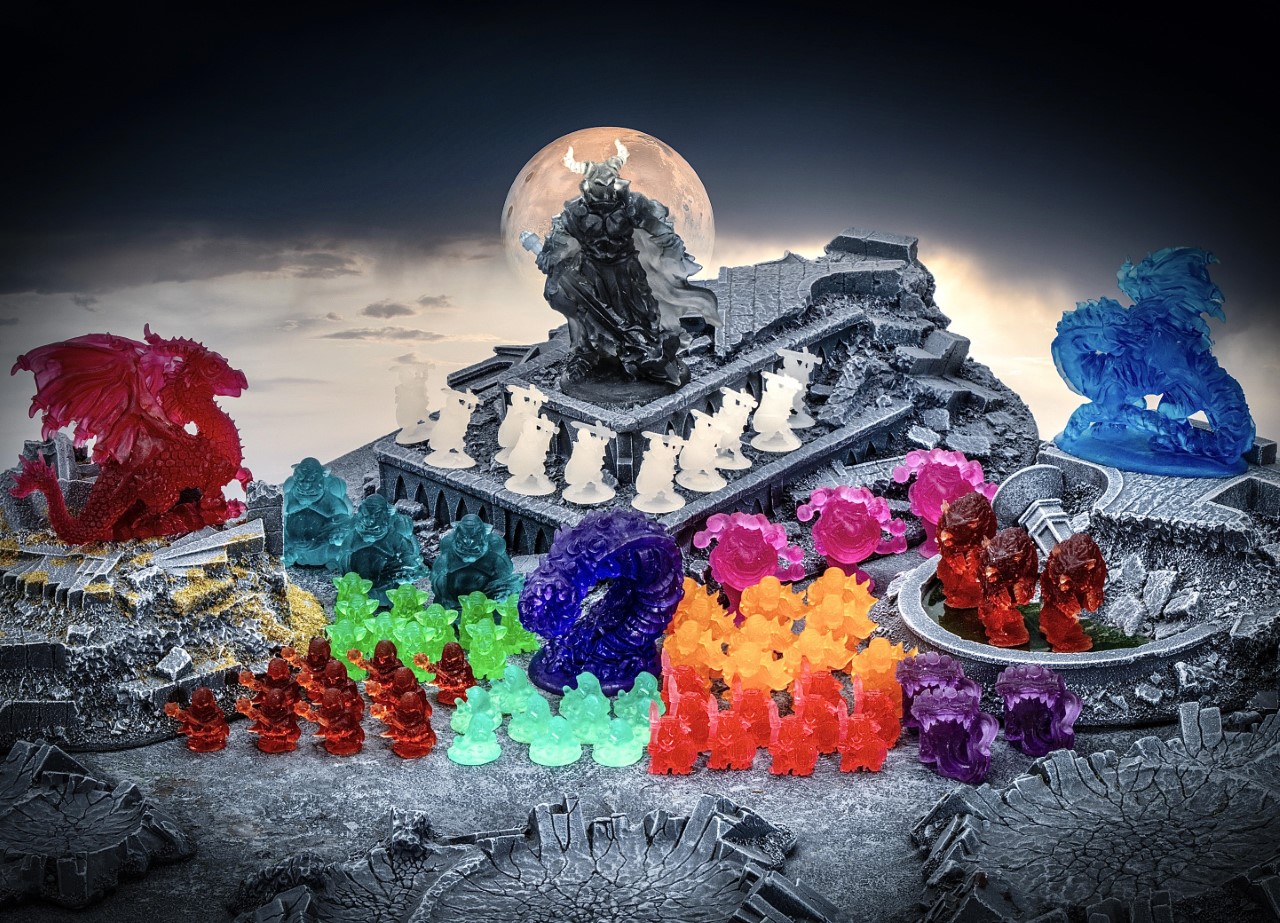
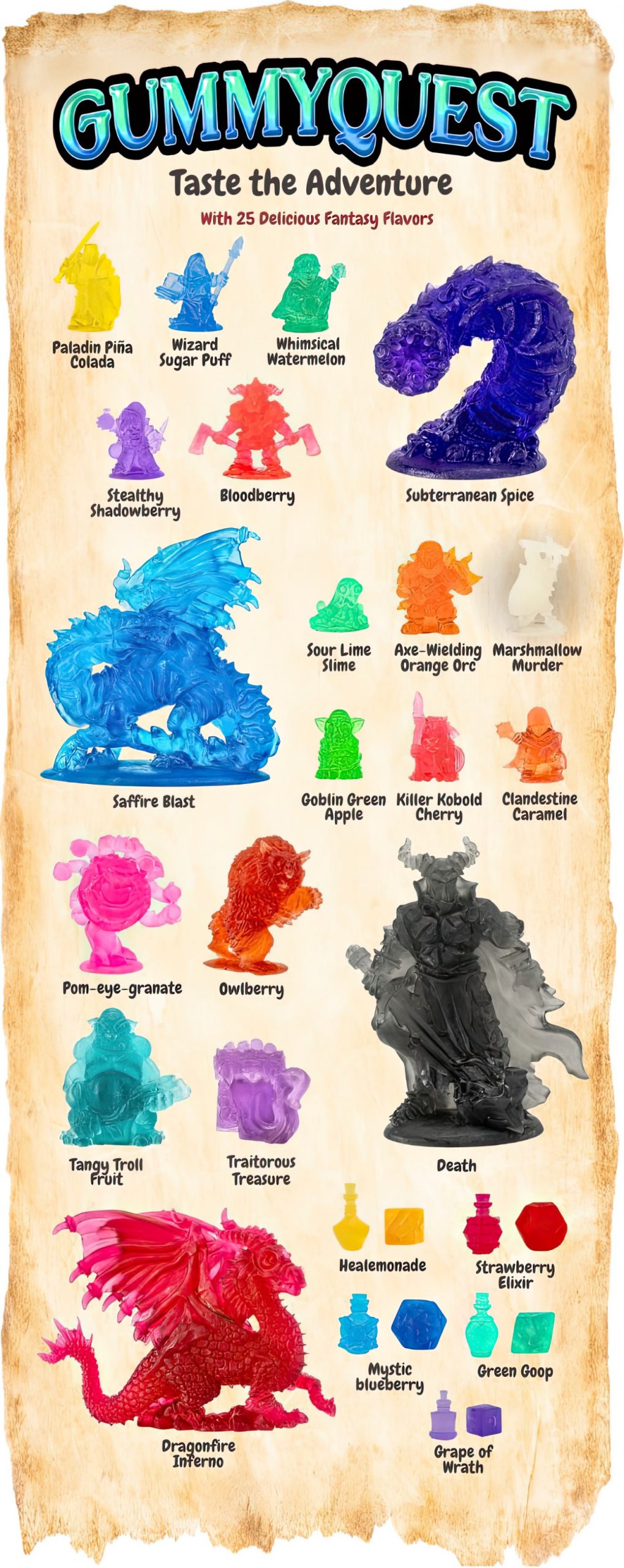
The collection encompasses practically every element of a roleplaying game like DND – you’ve got heroes and villains, orcs, goblins, dragons, knights, wizards, paladins, and even Dune-style sandworms. Along with players are potions and polyhedral dice to make the game even more interesting. All these elements encompass 25 rather mouth-watering flavors, from specific berries and fruits to more vaguely tropical flavor profiles, to even marshmallow-flavored items. “Some of our favorite fantasy flavors include Orcish Creamsicle, Paladin Piña Colada, Owlberry, and Death”, says creator Jay. Each box is packed with 151 gummies including 76 monsters, 15 heroes, 25 potions, and 35 dice.


The edible set is truly a work of art. Each single gummy was designed and sculpted by a meticulous team of people who fill shelves in every game store in America with miniatures from Dungeons & Dragons, Reaper Bones, and Warp Miniatures. The gummies were designed as a part of a broader story and theme, and were crafted to perfection, with details that would make you want to never eat a boring gummy bear or worm ever again.


Tragically, the set only lasts one or two, or maybe three games. Once the gummies run out, you’ll either have to revert back to playing with non-edible characters, or buy another set. Luckily, the Gummyquest box sets are on discount, priced at $42 for a set of 151 pieces. As the crowdfunding campaign gains speed (they’ve raised over $300k), the kit will include even more characters and items like gryphons, slime monsters, warrior princesses, and even a Kraken! Grab your Gummyquest while you can… I’m pretty sure they don’t expire, but don’t quote me.
Click Here to Buy Now: $42 $60 (30%) off. Hurry! Limited availability! Raised over $310,000.

The post These Edible Gummy Dungeons and Dragons Characters raised over $300,000 on Kickstarter first appeared on Yanko Design.

Otherworldly-Looking Origami-Inspired Lighting Fixture Seems To Suspend Mid-Air

Lighting designs today are truly innovative and unique, I mean you find all kinds of cool lighting designs out there! Today designers are creating unique, functional, and powerful pieces that not only light up a living space but also add an extra oomph factor! These lighting designs not only help you see in the dark, but they also function as an attractive and visually appealing piece. And, one such lighting design is Sora Light by Fung + Bedford for Frandsen.

Designer: Fung + Bedford for Frandsen

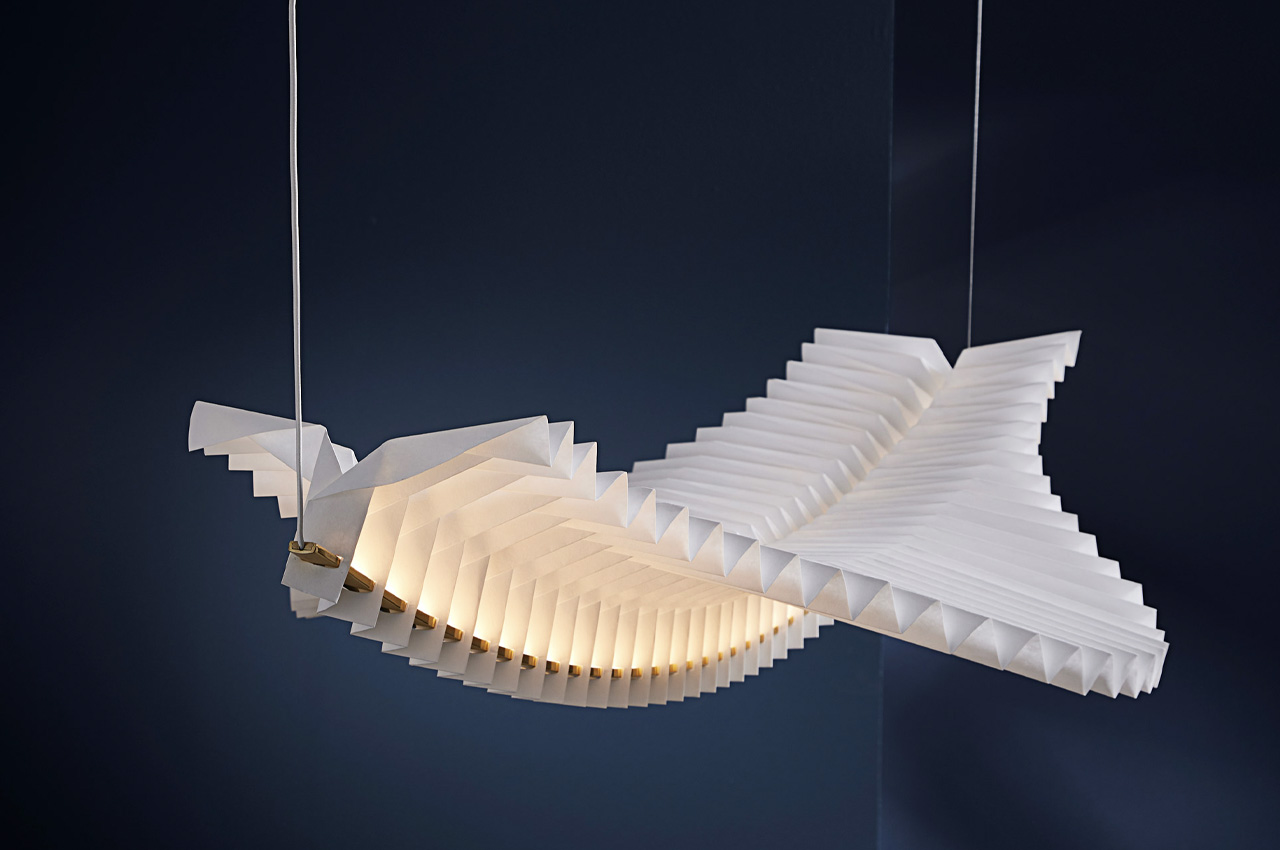
Designed by UK-based design duo Fung + Bedford, this statement light for the Danish brand Frandsen is inspired by the Japanese art of origami. As you look at it, you can see how widely and generously it has drawn on art the of origami. Called the Sora pendant light, it features a horizontal form and is artfully suspended between two cords, and flanked by wing-like intrusions, which gives the impression that it is floating in mid-air.

An LED strip light is embedded inside the bottom of the fixture, which allows it to radiate a soft and warm light. The subtle glow seems to spread across the lamp’s structure, which is crafted from tyvek – a paper-like and synthetic material produced from compressed fibers. Tyvek has been utilized since it is waterproof and features tear-proof characteristics. It is also a 100 percent recyclable material, according to the designers.

“A sculptural statement piece which appears to levitate in its surroundings, Sora exudes a serene, radiant aura whilst transcending the boundaries of traditional lighting design,” said Frandsen. And Sora truly has an almost other-worldly and ethereal look to it. It seems to suspend from the air, giving it a charming and floating quality. It can add an extra oomph factor, and loads of muted elegance to a living space, or even a commercial office space if you’re feeling experimenting.

The post Otherworldly-Looking Origami-Inspired Lighting Fixture Seems To Suspend Mid-Air first appeared on Yanko Design.

Bovet Récital 28 Prowess 1 world-timer stays accurate even when countries move to Daylight Saving Time

Bovet fan or not, you cannot help but be awe-struck by the Swiss luxury watchmaker’s complications, craftsmanship, and artistry in collector-worthy timepieces that are over the top for consumers like you and me. That means, even if it is beyond the depth of our pockets, the exceptional work ranging from the ridiculously priced Récital 22 Grand Récital to the new Bovet watch dubbed Récital 28 Prowess 1 is worth appreciating.

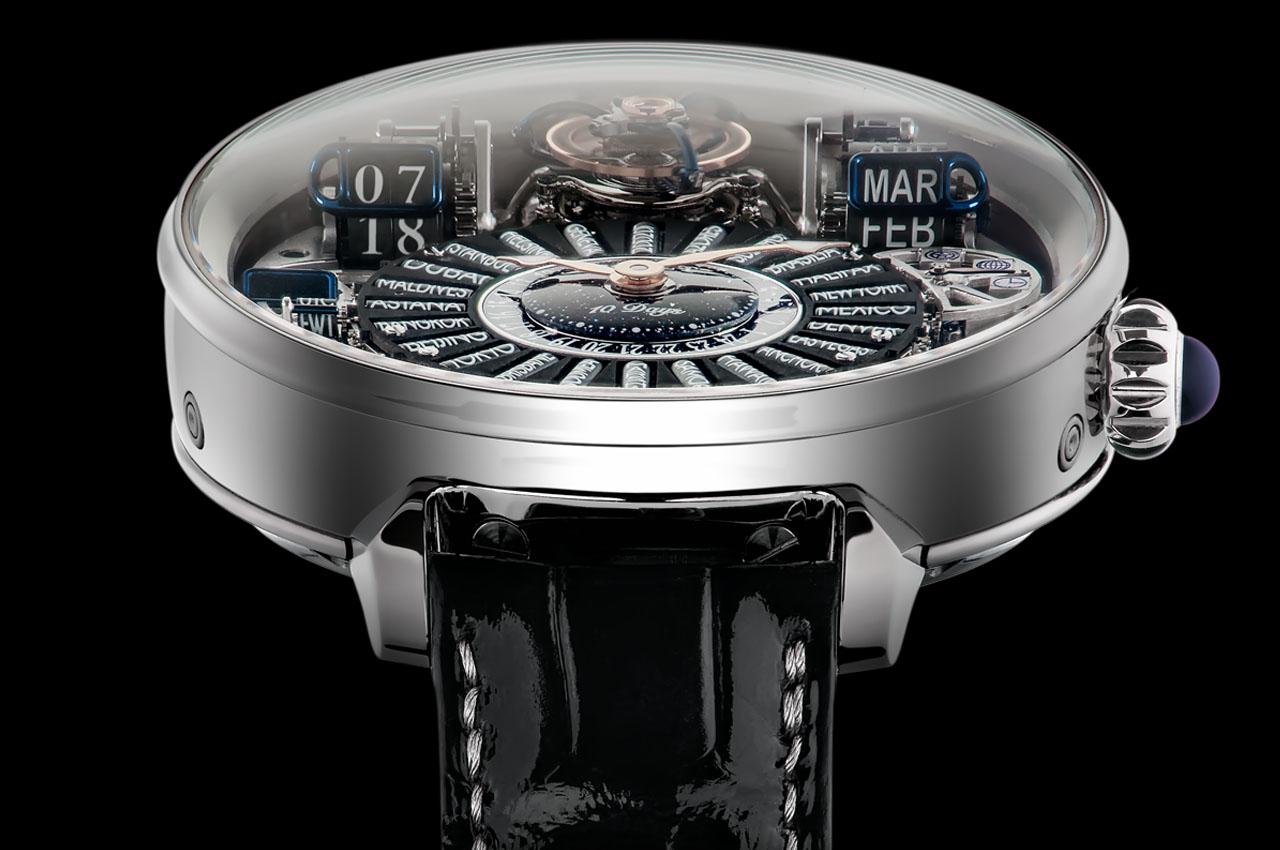
The latest addition to the company portfolio, Récital 28 Prowess 1 is the first universal time watch that can adjust to the changes in Daylight Saving Time (DST). While presenting itself as a timepiece that should never let you lose time no matter where you are in the world, it is a significant leap from traditional world timers and features an inventive perpetual calendar, flying tourbillon, and an in-house movement with up to 10 days of power reserve.

Designer: Bovet

Before delving into the details about the abovementioned features, let’s go through how the watch is constructed and what you get. The Récital 28 Prowess 1 comes in a new 46.3 mm Writing Desk case created by Bovet itself in choice of 18K Red Gold, 950 Platinum, and Grade 5 Titanium. Irrespective of the material, the intricately detailed watch features hand-finished and hand-engraved bridges.

The sizeable case allows the dial to make room for a lot of complications starting with the patented double-sided flying tourbillon on the top at 12 o’clock. The highlight is in the center where the 24 cities are displayed on rollers that are controlled through the crown. Each of these cylinders have four positions for UTC, AST (American Summer Time), EAS (Europe and America Summer Time), and EWT (European Winter Time). With the push of the crown, the four different time zones can be adjusted independently.

Given the intricate complication, the Récital 28 Prowess 1 worn on a black alligator leather strap, is extremely exclusive with production limited to only eight pieces a year (in each case material). Of course, owning the watch starting at CHF 650,000 (titanium edition) is a rarity, but if you have one, you can in addition to the flying tourbillon and the DST world-timer, also flaunt the built-in perpetual calendar. With the date and leap year indicator, the perpetual calendar – inner workings visible through the exhibition caseback – is mounted on rollers that roll back automatically like a slot machine at midnight, at the end of the month and at the culmination of the year.

The post Bovet Récital 28 Prowess 1 world-timer stays accurate even when countries move to Daylight Saving Time first appeared on Yanko Design.

Meta asks a judge to throw out an FTC antitrust case

Meta has asked a judge to dismiss a Federal Trade Commission antitrust case against the company before it goes to trial. Alongside 48 states and territories, the FTC sued Meta in 2020 in an attempt to force the company to divest Instagram and WhatsApp, which it bought in 2012 and 2014, respectively.

The agency and dozens of attorneys general claim that Meta (then known as Facebook) bought the two platforms to stifle competition. Meta CEO Mark Zuckerberg “recognized that by acquiring and controlling Instagram, Facebook would not only squelch the direct threat that Instagram posed, but also significantly hinder another firm from using photo-sharing on mobile phones to gain popularity as a provider of personal social networking,” the FTC asserted. “Just as with Instagram, WhatsApp presented a powerful threat to Facebook’s personal social networking monopoly, which Facebook targeted for acquisition rather than competition.”

Meta notes that not only did the FTC approve both acquisitions in the first place, but its initial complaint was dismissed for failing to to state a plausible claim. While a judge has allowed an amended complaint to move forward, Meta claims that "the agency has done nothing to build its case through the discovery process" to show that the company holds monopoly power in the “personal social networking services” market and that it caused harm to consumers and competition through the purchases.

In its motion for summary judgment, the company points out that Instagram, which accounted for nearly 30 percent of the company's total revenue in the first half of 2022, wasn't making any money when it bought the service for $1 billion in 2012. Instagram had just two percent of the billion-plus users it has now, Meta says, adding that it introduced features such as direct messages, livestreaming, Stories and shopping. As for WhatsApp, Meta made the service free to use, added end-to-end encryption and implemented voice and video calling.

Meta argues that it has invested billions of dollars and millions of hours of work into the apps. It claims that both Instagram and WhatsApp are in a better place as a result, to the benefit of consumers and businesses.

Elsewhere, Meta argues that the FTC failed to establish a relevant antitrust market, claiming that the agency's definition of an “personal social networking services” market used "an artificially limited set of only four companies – Facebook, Instagram, Snapchat and MeWe – ignoring many of the most popular activities people engage in on Facebook and Instagram." For instance, Meta points out that YouTube and TikTok offer similar short-form video features to Reels.

What's more, the FTC's allegation that Meta has a “dominant share” of the artificial “personal social networking services market” doesn't hold up, according to the company. Meta says that's because the FTC's "market share numbers are meaningless without a properly defined market."

Meta, which accused the FTC of wielding "structurally unconstitutional authority" against the company in a separate case last year, also took the opportunity to take more potshots at the agency and antitrust rules. "The decision to revisit done deals is tantamount to announcing that no sale will ever be final," Jennifer Newstead, Meta’s Chief Legal Officer, wrote in a blog post. Newstead claims the Instagram and WhatsApp "lawsuit not only sows doubt and uncertainty about the US government’s merger review process and whether acquiring businesses can actually rely on the outcomes of the regulatory review process, but it will also make companies think twice about investing in innovation, since they may be punished if that innovation leads to success."

This article originally appeared on Engadget at https://www.engadget.com/meta-asks-a-judge-to-throw-out-an-ftc-antitrust-case-203950108.html?src=rss

Meta asks a judge to throw out an FTC antitrust case

Meta has asked a judge to dismiss a Federal Trade Commission antitrust case against the company before it goes to trial. Alongside 48 states and territories, the FTC sued Meta in 2020 in an attempt to force the company to divest Instagram and WhatsApp, which it bought in 2012 and 2014, respectively.

The agency and dozens of attorneys general claim that Meta (then known as Facebook) bought the two platforms to stifle competition. Meta CEO Mark Zuckerberg “recognized that by acquiring and controlling Instagram, Facebook would not only squelch the direct threat that Instagram posed, but also significantly hinder another firm from using photo-sharing on mobile phones to gain popularity as a provider of personal social networking,” the FTC asserted. “Just as with Instagram, WhatsApp presented a powerful threat to Facebook’s personal social networking monopoly, which Facebook targeted for acquisition rather than competition.”

Meta notes that not only did the FTC approve both acquisitions in the first place, but its initial complaint was dismissed for failing to to state a plausible claim. While a judge has allowed an amended complaint to move forward, Meta claims that "the agency has done nothing to build its case through the discovery process" to show that the company holds monopoly power in the “personal social networking services” market and that it caused harm to consumers and competition through the purchases.

In its motion for summary judgment, the company points out that Instagram, which accounted for nearly 30 percent of the company's total revenue in the first half of 2022, wasn't making any money when it bought the service for $1 billion in 2012. Instagram had just two percent of the billion-plus users it has now, Meta says, adding that it introduced features such as direct messages, livestreaming, Stories and shopping. As for WhatsApp, Meta made the service free to use, added end-to-end encryption and implemented voice and video calling.

Meta argues that it has invested billions of dollars and millions of hours of work into the apps. It claims that both Instagram and WhatsApp are in a better place as a result, to the benefit of consumers and businesses.

Elsewhere, Meta argues that the FTC failed to establish a relevant antitrust market, claiming that the agency's definition of an “personal social networking services” market used "an artificially limited set of only four companies – Facebook, Instagram, Snapchat and MeWe – ignoring many of the most popular activities people engage in on Facebook and Instagram." For instance, Meta points out that YouTube and TikTok offer similar short-form video features to Reels.

What's more, the FTC's allegation that Meta has a “dominant share” of the artificial “personal social networking services market” doesn't hold up, according to the company. Meta says that's because the FTC's "market share numbers are meaningless without a properly defined market."

Meta, which accused the FTC of wielding "structurally unconstitutional authority" against the company in a separate case last year, also took the opportunity to take more potshots at the agency and antitrust rules. "The decision to revisit done deals is tantamount to announcing that no sale will ever be final," Jennifer Newstead, Meta’s Chief Legal Officer, wrote in a blog post. Newstead claims the Instagram and WhatsApp "lawsuit not only sows doubt and uncertainty about the US government’s merger review process and whether acquiring businesses can actually rely on the outcomes of the regulatory review process, but it will also make companies think twice about investing in innovation, since they may be punished if that innovation leads to success."

This article originally appeared on Engadget at https://www.engadget.com/meta-asks-a-judge-to-throw-out-an-ftc-antitrust-case-203950108.html?src=rss