If you're on the hunt for a reliable tablet not made by Apple, this is a good sale to check out. Currently, Amazon, Best Buy and Samsung's own site are selling the base-model Galaxy Tab S9 for $670. That's $130 off the list price and the lowest price we've seen yet, beating the previous low it hit a few weeks ago. The Tab S9 family is our top choice for Android tablets, thanks to their multitasking abilities, great screens and useful available accessories like keyboards.
We like the Galaxy Tab S9 tablets because they can do everything you'd want a tablet to do, plus a little more with added productivity features. The tablet's DeX mode creates an environment similar to a PC in which you can easily flit between different apps and windows, making it easier to do more complex tasks. The Qualcomm Snapdragon 8 Gen 2 processors are speedy to support all of that productivity and the OLED displays look gorgeous. One of our few concerns in recommending the Tab S9 series is they tend to be expensive, but the $130 discount takes away some of that hesitation.
The base model that's on sale here comes with 8GB of RAM, 128GB of storage, an 11" Dynamic AMOLED touchscreen, an IP68 dust- and water-resistance rating and support for Wi-Fi 6E. The included S Pen can be used for taking notes by hand, doodling and making art. Other accessories, like the keyboard case, are sold separately, and we can't help but notice the current price of that add-on is nearly the same as the discount on the tablet.
For a less expensive tablet, it's worth noting that the budget recommendation from our Android tablet guide is also on sale. The Samsung Galaxy Tab A9+ 11” Tablet is $50 off and down to $220 at Walmart. The Google Pixel Tablet with charging speaker dock, which we think is the best pick for a tablet that doubles as a smart display, is 20 percent off and down to $399 at Amazon. That matches its all-time low.
If you're on the hunt for a reliable tablet not made by Apple, this is a good sale to check out. Currently, Amazon, Best Buy and Samsung's own site are selling the base-model Galaxy Tab S9 for $670. That's $130 off the list price and the lowest price we've seen yet, beating the previous low it hit a few weeks ago. The Tab S9 family is our top choice for Android tablets, thanks to their multitasking abilities, great screens and useful available accessories like keyboards.
We like the Galaxy Tab S9 tablets because they can do everything you'd want a tablet to do, plus a little more with added productivity features. The tablet's DeX mode creates an environment similar to a PC in which you can easily flit between different apps and windows, making it easier to do more complex tasks. The Qualcomm Snapdragon 8 Gen 2 processors are speedy to support all of that productivity and the OLED displays look gorgeous. One of our few concerns in recommending the Tab S9 series is they tend to be expensive, but the $130 discount takes away some of that hesitation.
The base model that's on sale here comes with 8GB of RAM, 128GB of storage, an 11" Dynamic AMOLED touchscreen, an IP68 dust- and water-resistance rating and support for Wi-Fi 6E. The included S Pen can be used for taking notes by hand, doodling and making art. Other accessories, like the keyboard case, are sold separately, and we can't help but notice the current price of that add-on is nearly the same as the discount on the tablet.
For a less expensive tablet, it's worth noting that the budget recommendation from our Android tablet guide is also on sale. The Samsung Galaxy Tab A9+ 11” Tablet is $50 off and down to $220 at Walmart. The Google Pixel Tablet with charging speaker dock, which we think is the best pick for a tablet that doubles as a smart display, is 20 percent off and down to $399 at Amazon. That matches its all-time low.
Weather Update, April 8, 11:45 AM ET: The weather forecast in the story below still largely holds, but things are more unsettled in the southern US, with forecasts now calling for thunderstorms from Dallas up to Indianapolis. So, keep that potential danger in mind (and keep an eye on forecasts) when making eclipse plans.
Elsewhere, the best chance of good viewing along the path of totality is still in northeastern parts of the US (Buffalo, NY, Burlington, VT), along with southeast Canada (Niagara Falls and Montreal), according to Accuweather. However, as of this morning, Apple's weather app is indicating cloudy skies for many parts of the area, including Syracuse, NY and Jersey City, NJ. In the Midwest (Cleveland), there's a higher chance of rain than before (58 percent), but no storms currently predicted.
Original story continues below
On April 8, a solar eclipse will darken the skies. This is a rare astronomical event: The last North American total solar eclipse was on August 21, 2017, and there won't be another on visible on the continent until 2044. The path of totality — where the sun will be fully blocked by the moon — covers over 30 million people in the US, Canada and Mexico.
Those lucky folks may see the sun’s corona and a “diamond ring” — both dramatic sights. Other regions will experience partial eclipses, with the level depending on how close you are to totality. Watching the moon eat into the sun, even a bit, is still a spectacular sight.
So, which cities and regions will experience totality, and when? What’s the weather forecast in those areas? And if you do have a clear view, how can you safely watch and record the event?
Where in the US will you experience the solar eclipse totality, and when?
The good news is that many major centers are in the 100-mile-wide band of totality, so millions of people will be able to see a full solar eclipse. It follows a northeast path, so Mexico’s Pacific coast will get the first views in Mazatlan starting at around 10:57 AM PDT (total eclipse starting at 12:07 PDT), followed by the city of Torreón (all times local).
The total eclipse moves into the United states at 12:10 PM CDT (Eagle Pass, Texas), then hits Austin, Fort Worth and Dallas — three out of five of the most populous Texas cities. From there, it moves into Little Rock, Arkansas, followed by select parts of Missouri, Illinois and Indiana (including Indianapolis).
NASA
Ohio cities Dayton, Toledo and Cleveland get the full show, followed by Erie, Pennsylvania, then Buffalo, Rochester and Syracuse in New York along with Maine. Canada is in on the fun too, with parts of southern Ontario (Hamilton, Niagara Falls) and Quebec (Montreal) getting the totality, along with New Brunswick, PEI and finally, Bonavista, Labrador at 4:03 PM NDT (Newfoundland Time).
If you’re elsewhere on the continent and can’t travel, know that the closer you are to the band of totality, the more the sun will be obscured by the moon (this map shows how much of the eclipse you’ll get depending where you are on the continent).
An impressive list of major centers are within 200 miles of totality, so they’ll get a 90 percent or better eclipse (Houston, St. Louis, Memphis, Nashville, Chicago, Cincinnati, Detroit, Toronto, New York, Boston).
Anyone in the US south, midwest and northeast should get a decent spectacle, as will folks in Canada’s southeast and Atlantic coast. Even if you’re not in those regions, you might still see (and can capture) a mini eclipse.
How long will the 2024 solar eclipse last?
From the beginning when the moon first starts to cover the sun (partial eclipse) until the end when the two bodies part ways is a good long time – up to two hours and forty minutes in Dallas, and 2:18 in Caribou, Maine.
However, totality itself is brief, with the duration dependent on how close you are to the center of the totality band and the time of day. It’s at just under four minutes in Dallas, less than three minutes in Presque Island, Maine and a mere minute and 12 seconds in Montreal. As such, you’ll need to be ready and hope that the skies are clear during that brief window.
What’s the weather forecast in my area?
It’s still early for an accurate forecast, but a week is enough to get a general idea by region. Suffice to say, April isn’t the ideal month for clear skies. That said, an eclipse can still be visible through light cloud cover, and even if it’s thick, the sky will grow dramatically dark.
Unfortunately, the odds of precipitation are indeed above average across most of the band of the eclipse. Forecasts predict that the chances for clear skies are better the farther northeast you live, the opposite of historical trends.
To wit, Dallas has showers forecast throughout the day (58 percent), which would mean continuous cloud cover and no clear view if that holds. That improves a bit when you get to Indianapolis (partly cloudy, 24 percent chance of rain), with things better still in Buffalo, New York (partly cloudy, 11 percent).
Things are looking good right now in Montreal, though, with mostly sunny skies and only a 9 percent chance of rain, and the same goes for Fredericton, New Brunswick.
Niagara Falls also figures to have decent weather during the eclipse (mostly sunny, 18 percent) and is in the path of totality, which has led to the city declaring a state of emergency out of caution. Officials estimate that a million people could pour into the area, creating potentially dangerous crowds.
How can I watch the solar eclipse at home?
Staring at the sun is obviously dangerous for your vision, and doing so during an eclipse can be just as harmful. Even though you may not feel discomfort immediately, you may damage your eyes via an affliction called solar retinopathy. That can lead to serious consequences like eye pain, blind spots, blurred vision and more.
American Astronomical Society
To view it safely, you must purchase a pair of approved solar eclipse glasses based on an international safety standard called ISO 12312-2 (regular sunglasses won’t do). That dictates the maximum luminous transmittance, along with the range of permissible wavelength transmittance (UVA, UVB and infrared).
There’s certainly still time to grab a pair if you don’t have them already. The American Astronomical Society (AAS) has many recommendations for manufacturers and vendors, both online and at retail chains.
Warby Parker, for one, is offering free glasses (limit two per person while supplies last). You can also find them at Staples, Lowes and Walmart, or online at B&H and multiple science and astronomy stores.
The AAS advises against searching for the lowest price on Amazon or eBay, however, in case you get a bad knock off. “Before you buy a solar viewer or filter online, we recommend that you make sure that (1) the seller is identified on the site and (2) the seller is listed on this page,” it says on its Solar Eclipse Across America site.
How to watch the solar eclipse safely without glasses
Canadian Space Agency
It’s possible to view an eclipse without glasses via indirect means, as well. The simplest way is by punching a small round hole in a piece of thick paper or cardboard, then positioning it so the sun shines through the hole onto the ground or a flat surface (you can also attach a piece of foil with a hole, as NASA shows here). That will project an image of the Sun's disc, letting you see the eclipse in real time.
The same pinhole principle would let you use anything with perforated holes, like a colander, projecting dozens of tiny eclipses on a surface. Trees can do the same thing, casting weird leaf shadows with little solar eclipse chunks out of them.
Benjamin Seigh/Wikimedia
For a bit better experience, you can build a crude box projector. With that, the sun shines through a hole in tin foil onto a white card, and you can look through a larger hole at the card, with the sun behind you. The Canadian Space Agency explains exactly how to make that.
Never, ever view an eclipse directly through a pair of binoculars or a telescope, as that’s a guaranteed way to damage your eyes. That said, you can use a pair of binoculars or a telescope to project the sun onto a piece of paper, as shown in this video.
How to take photos or video of the solar eclipse
Unfortunately, you can’t just point your smartphone or camera at the sun to record the eclipse, as the brightness will overwhelm the sensor and ruin the image (and possibly damage the sensor). Luckily, you can shield your camera just as you do your eyes.
The cheapest way to do that is to buy an extra set of eclipse glasses, then cut out an eyepiece from one and tape it over the smartphone (or other camera) lens. That will reduce the light levels enough to see detail in the sun throughout the partial eclipse and totality.
You can also purchase dedicated smartphone solar filters like the VisiSolar Photo Filter, which are designed for cameras and not direct viewing. Another choice is the Solar Snap Eclipse App Kit, which also offers an app that aids in photographing the eclipsed sun. It’s advisable to also wear solar glasses when setting up your smartphone or camera to protect your eyes.
If you’re shooting the eclipse with a dedicated mirrorless or DSLR camera, you’ll need either a mylar, 16-stop ND (neutral density) or hydrogen alpha solar filter. Again, do not look directly into a DSLR’s optical viewfinder at the sun if the lens doesn’t have one of those filters attached (the electronic viewfinder on a mirrorless camera is safe).
To photograph the eclipse with a smartphone, turn the flash off and put the camera into ultrawide or wide mode so it stays in frame. Do NOT look directly at the sun to line up your camera if you’re not wearing solar eclipse glasses.
Don’t use the digital zoom to try to make the eclipse bigger, as you’ll lose resolution (you can zoom in later in your photo editing app). Once focus is set on the sun, use your smartphone’s focus lock feature so that it doesn’t “hunt” for focus and blur the eclipse.
During totality, the “diamond ring” effect only lasts a split second, so use the burst mode of your camera or you’ll likely miss the shot. And try to capture RAW (rather than JPEG) images to keep the maximum detail possible for later editing. Some iPhone and Android smartphones have RAW capability built-in, if not, you can use a third-party app.
If you decide to capture video, you’ll need a filter as well, of course. But you should also use a tripod, as shooting handheld will induce blur and result in a shaky video. Even a cheap tripod will do the trick, along with a simple smartphone holder. Capture the highest resolution you can (4K or even 8K) at the highest quality possible. You’ll also capture any cheering, shouting, etc. — a precious souvenir you can look back on again and again.
More resources
There are plenty of government and private sites with more information about the eclipse, starting with the AAS’s eclipse site, detailing things like eye safety, imaging, resources and even a totality app — an “interactive map that shows what you’ll see at any location in North America for the total solar eclipse of April 8, 2024.”
Update, April 5, 12:30PM ET: This story was updated after publishing to include more details about the total solar eclipse's path of totality.
This article originally appeared on Engadget at https://www.engadget.com/solar-eclipse-2024-how-to-watch-and-record-the-total-eclipse-on-monday-163035394.html?src=rss
Weather Update, April 8, 11:45 AM ET: The weather forecast in the story below still largely holds, but things are more unsettled in the southern US, with forecasts now calling for thunderstorms from Dallas up to Indianapolis. So, keep that potential danger in mind (and keep an eye on forecasts) when making eclipse plans.
Elsewhere, the best chance of good viewing along the path of totality is still in northeastern parts of the US (Buffalo, NY, Burlington, VT), along with southeast Canada (Niagara Falls and Montreal), according to Accuweather. However, as of this morning, Apple's weather app is indicating cloudy skies for many parts of the area, including Syracuse, NY and Jersey City, NJ. In the Midwest (Cleveland), there's a higher chance of rain than before (58 percent), but no storms currently predicted.
Original story continues below
On April 8, a solar eclipse will darken the skies. This is a rare astronomical event: The last North American total solar eclipse was on August 21, 2017, and there won't be another on visible on the continent until 2044. The path of totality — where the sun will be fully blocked by the moon — covers over 30 million people in the US, Canada and Mexico.
Those lucky folks may see the sun’s corona and a “diamond ring” — both dramatic sights. Other regions will experience partial eclipses, with the level depending on how close you are to totality. Watching the moon eat into the sun, even a bit, is still a spectacular sight.
So, which cities and regions will experience totality, and when? What’s the weather forecast in those areas? And if you do have a clear view, how can you safely watch and record the event?
Where in the US will you experience the solar eclipse totality, and when?
The good news is that many major centers are in the 100-mile-wide band of totality, so millions of people will be able to see a full solar eclipse. It follows a northeast path, so Mexico’s Pacific coast will get the first views in Mazatlan starting at around 10:57 AM PDT (total eclipse starting at 12:07 PDT), followed by the city of Torreón (all times local).
The total eclipse moves into the United states at 12:10 PM CDT (Eagle Pass, Texas), then hits Austin, Fort Worth and Dallas — three out of five of the most populous Texas cities. From there, it moves into Little Rock, Arkansas, followed by select parts of Missouri, Illinois and Indiana (including Indianapolis).
NASA
Ohio cities Dayton, Toledo and Cleveland get the full show, followed by Erie, Pennsylvania, then Buffalo, Rochester and Syracuse in New York along with Maine. Canada is in on the fun too, with parts of southern Ontario (Hamilton, Niagara Falls) and Quebec (Montreal) getting the totality, along with New Brunswick, PEI and finally, Bonavista, Labrador at 4:03 PM NDT (Newfoundland Time).
If you’re elsewhere on the continent and can’t travel, know that the closer you are to the band of totality, the more the sun will be obscured by the moon (this map shows how much of the eclipse you’ll get depending where you are on the continent).
An impressive list of major centers are within 200 miles of totality, so they’ll get a 90 percent or better eclipse (Houston, St. Louis, Memphis, Nashville, Chicago, Cincinnati, Detroit, Toronto, New York, Boston).
Anyone in the US south, midwest and northeast should get a decent spectacle, as will folks in Canada’s southeast and Atlantic coast. Even if you’re not in those regions, you might still see (and can capture) a mini eclipse.
How long will the 2024 solar eclipse last?
From the beginning when the moon first starts to cover the sun (partial eclipse) until the end when the two bodies part ways is a good long time – up to two hours and forty minutes in Dallas, and 2:18 in Caribou, Maine.
However, totality itself is brief, with the duration dependent on how close you are to the center of the totality band and the time of day. It’s at just under four minutes in Dallas, less than three minutes in Presque Island, Maine and a mere minute and 12 seconds in Montreal. As such, you’ll need to be ready and hope that the skies are clear during that brief window.
What’s the weather forecast in my area?
It’s still early for an accurate forecast, but a week is enough to get a general idea by region. Suffice to say, April isn’t the ideal month for clear skies. That said, an eclipse can still be visible through light cloud cover, and even if it’s thick, the sky will grow dramatically dark.
Unfortunately, the odds of precipitation are indeed above average across most of the band of the eclipse. Forecasts predict that the chances for clear skies are better the farther northeast you live, the opposite of historical trends.
To wit, Dallas has showers forecast throughout the day (58 percent), which would mean continuous cloud cover and no clear view if that holds. That improves a bit when you get to Indianapolis (partly cloudy, 24 percent chance of rain), with things better still in Buffalo, New York (partly cloudy, 11 percent).
Things are looking good right now in Montreal, though, with mostly sunny skies and only a 9 percent chance of rain, and the same goes for Fredericton, New Brunswick.
Niagara Falls also figures to have decent weather during the eclipse (mostly sunny, 18 percent) and is in the path of totality, which has led to the city declaring a state of emergency out of caution. Officials estimate that a million people could pour into the area, creating potentially dangerous crowds.
How can I watch the solar eclipse at home?
Staring at the sun is obviously dangerous for your vision, and doing so during an eclipse can be just as harmful. Even though you may not feel discomfort immediately, you may damage your eyes via an affliction called solar retinopathy. That can lead to serious consequences like eye pain, blind spots, blurred vision and more.
American Astronomical Society
To view it safely, you must purchase a pair of approved solar eclipse glasses based on an international safety standard called ISO 12312-2 (regular sunglasses won’t do). That dictates the maximum luminous transmittance, along with the range of permissible wavelength transmittance (UVA, UVB and infrared).
There’s certainly still time to grab a pair if you don’t have them already. The American Astronomical Society (AAS) has many recommendations for manufacturers and vendors, both online and at retail chains.
Warby Parker, for one, is offering free glasses (limit two per person while supplies last). You can also find them at Staples, Lowes and Walmart, or online at B&H and multiple science and astronomy stores.
The AAS advises against searching for the lowest price on Amazon or eBay, however, in case you get a bad knock off. “Before you buy a solar viewer or filter online, we recommend that you make sure that (1) the seller is identified on the site and (2) the seller is listed on this page,” it says on its Solar Eclipse Across America site.
How to watch the solar eclipse safely without glasses
Canadian Space Agency
It’s possible to view an eclipse without glasses via indirect means, as well. The simplest way is by punching a small round hole in a piece of thick paper or cardboard, then positioning it so the sun shines through the hole onto the ground or a flat surface (you can also attach a piece of foil with a hole, as NASA shows here). That will project an image of the Sun's disc, letting you see the eclipse in real time.
The same pinhole principle would let you use anything with perforated holes, like a colander, projecting dozens of tiny eclipses on a surface. Trees can do the same thing, casting weird leaf shadows with little solar eclipse chunks out of them.
Benjamin Seigh/Wikimedia
For a bit better experience, you can build a crude box projector. With that, the sun shines through a hole in tin foil onto a white card, and you can look through a larger hole at the card, with the sun behind you. The Canadian Space Agency explains exactly how to make that.
Never, ever view an eclipse directly through a pair of binoculars or a telescope, as that’s a guaranteed way to damage your eyes. That said, you can use a pair of binoculars or a telescope to project the sun onto a piece of paper, as shown in this video.
How to take photos or video of the solar eclipse
Unfortunately, you can’t just point your smartphone or camera at the sun to record the eclipse, as the brightness will overwhelm the sensor and ruin the image (and possibly damage the sensor). Luckily, you can shield your camera just as you do your eyes.
The cheapest way to do that is to buy an extra set of eclipse glasses, then cut out an eyepiece from one and tape it over the smartphone (or other camera) lens. That will reduce the light levels enough to see detail in the sun throughout the partial eclipse and totality.
You can also purchase dedicated smartphone solar filters like the VisiSolar Photo Filter, which are designed for cameras and not direct viewing. Another choice is the Solar Snap Eclipse App Kit, which also offers an app that aids in photographing the eclipsed sun. It’s advisable to also wear solar glasses when setting up your smartphone or camera to protect your eyes.
If you’re shooting the eclipse with a dedicated mirrorless or DSLR camera, you’ll need either a mylar, 16-stop ND (neutral density) or hydrogen alpha solar filter. Again, do not look directly into a DSLR’s optical viewfinder at the sun if the lens doesn’t have one of those filters attached (the electronic viewfinder on a mirrorless camera is safe).
To photograph the eclipse with a smartphone, turn the flash off and put the camera into ultrawide or wide mode so it stays in frame. Do NOT look directly at the sun to line up your camera if you’re not wearing solar eclipse glasses.
Don’t use the digital zoom to try to make the eclipse bigger, as you’ll lose resolution (you can zoom in later in your photo editing app). Once focus is set on the sun, use your smartphone’s focus lock feature so that it doesn’t “hunt” for focus and blur the eclipse.
During totality, the “diamond ring” effect only lasts a split second, so use the burst mode of your camera or you’ll likely miss the shot. And try to capture RAW (rather than JPEG) images to keep the maximum detail possible for later editing. Some iPhone and Android smartphones have RAW capability built-in, if not, you can use a third-party app.
If you decide to capture video, you’ll need a filter as well, of course. But you should also use a tripod, as shooting handheld will induce blur and result in a shaky video. Even a cheap tripod will do the trick, along with a simple smartphone holder. Capture the highest resolution you can (4K or even 8K) at the highest quality possible. You’ll also capture any cheering, shouting, etc. — a precious souvenir you can look back on again and again.
More resources
There are plenty of government and private sites with more information about the eclipse, starting with the AAS’s eclipse site, detailing things like eye safety, imaging, resources and even a totality app — an “interactive map that shows what you’ll see at any location in North America for the total solar eclipse of April 8, 2024.”
Update, April 5, 12:30PM ET: This story was updated after publishing to include more details about the total solar eclipse's path of totality.
This article originally appeared on Engadget at https://www.engadget.com/solar-eclipse-2024-how-to-watch-and-record-the-total-eclipse-on-monday-163035394.html?src=rss
Open Roads is an easy game to get lost in. It tells a twisting tale about generational trauma — the tension, lies and love between mother and daughter — with all the comfort and warmth of an early 2000s network drama like Gilmore Girls or Charmed. As a former suburban teen myself, this game left me feeling equally exposed and understood.
Open Roads is set in 2003, and through environment and character design alone, it captures an authentic slice of life in this post-9/11, pre-Razr era. In the early aughts, I spent my teen years bouncing between Dad’s apartment on the outskirts of the city and Mom’s house in a dusty development site surrounded by grocery stores and Blockbuster Videos, and I had big dreams of escaping both. All this is to say, I relate to Open Roads' main character, Tess, who’s finishing up high school and planning a future in the hot new market of webpage design. Her parents are newly divorced and she’s been living with her mom, Opal, and grandma, Helen, outside of Detroit. Helen recently passed and her home is being sold against Opal’s wishes, so she and Tess are begrudgingly clearing it out and looking for a new place to stay.
Open Roads Team
The details of Tess’ family history are slowly exposed as she explores Grandma Helen’s home, told in old newspapers, photographs, books, postcards, heirlooms, phone calls and pottery-making materials. Tess and Opal eventually discover a suitcase hidden behind a false wall in the house, and it spurs them to embark on a road trip to long-lost locations from Opal’s past. Helen was a popular advice columnist and writer similar to Dear Abby, and her leftover letters, scattered around each environment, steadily peel back the layers of secrets that have enshrouded her, her daughter's and granddaughter's lives.
Every character in Open Roads has something to hide. I actually clocked the big twist about halfway through the game, but there was enough drama, doubt and emotional heft to keep me invested in the narrative regardless. Do yourself a favor and don’t look up any story spoilers — just enjoy the Open Roads ride.
Open Roads Team
This is exceedingly easy to do. Open Roads has expertly written dialogue, and its characters are infused with rich histories and complex motivations. The back and forth between Tess and Opal feels genuine for a teen daughter and her mother who’ve been trapped together in a car for hours on end: They quickly spark to anger and reconciliation, and just as easily act supremely silly around each other. A foundation of tenderness underlies their interactions. The voice acting, provided by mainstream television actors Keri Russell and Kaitlyn Dever, is superb, adding to the game’s immersive pull.
Open Roads uses a mix of 3D and 2D art — the backgrounds and interactable objects are 3D, while Tess and Opal are animated in hand-drawn 2D, moving in a floaty manner that reminds me of the early Disney classics. The styles work well together, for the most part. I found the visuals jarring in one section, when Tess and Opal were having a conversation in direct sunlight and the brightness of the scene made their 2D avatars look unfinished, unblended with the setting. Generally though, Open Roads is filled with engaging environments and beautiful details, with plenty of items to investigate and small puzzles to solve. The story unfurls naturally with every action prompt, and dialogue choices alter Tess and Opal’s trajectory throughout the game.
Open Roads Team
The sound design in Open Roads is particularly spectacular. Each object that Tess interacts with has a sound specific to its texture and weight. When Tess sets a cookie tin down on a kitchen countertop, it sounds like hollow metal scraping against wood; when she picks up a discarded cigar, the audio cues are soft and papery; Tess’ footsteps sound distinct on bare floorboards, carpet and rugs, with changes in density, bass and sharpness for each new material. Picking up Tess’ flip phone to text her BFF, I can hear the groaning of thick plastic hinges and the padded creaking as she rapidly presses down on the number pad. These sounds are crucial aspects of the game, louder than the bed of acoustic guitar or light synth that make up the soundtrack, and I’m entirely here for it. Open Roads is proof that ASMR exploration games should be a thing.
The features that will stick with me after finishing Open Roads are its sound design and its authenticity. There aren’t many games focused on the everyday lives and conversations of women, let alone mothers and daughters, and Open Roads is a testament to the power of these stories. The game oozes warmth and camaraderie, and its writing displays an abundance of respect toward the characters that drive its narrative. Every person with a voice in Open Roads is a woman, and Tess, Opal, Grandma Helen and Aunt August are each dynamic, sympathetic and flawed in unique ways. Considering the developers of this game broke free from a studio whose co-founder was reportedly hostile toward women, this accomplishment is even more significant.
My suggestion for fully enjoying Open Roads is to set aside a lazy afternoon, grab your favorite drink and some snacks, and make sure your headphones are on nice and tight. Turn up the volume so you can hear every plunk and tap of Tess’ world, and don’t try too hard to decipher the game’s secrets. Trust in the story and take it slow. This is a game worth savoring.
Open Roads is out now on consoles and PC, and it's part of the Xbox Game Pass library. It comes from Open Roads Team, published by Annapurna Interactive.
This article originally appeared on Engadget at https://www.engadget.com/open-roads-review-take-it-slow-and-savor-the-drama-160925576.html?src=rss
Open Roads is an easy game to get lost in. It tells a twisting tale about generational trauma — the tension, lies and love between mother and daughter — with all the comfort and warmth of an early 2000s network drama like Gilmore Girls or Charmed. As a former suburban teen myself, this game left me feeling equally exposed and understood.
Open Roads is set in 2003, and through environment and character design alone, it captures an authentic slice of life in this post-9/11, pre-Razr era. In the early aughts, I spent my teen years bouncing between Dad’s apartment on the outskirts of the city and Mom’s house in a dusty development site surrounded by grocery stores and Blockbuster Videos, and I had big dreams of escaping both. All this is to say, I relate to Open Roads' main character, Tess, who’s finishing up high school and planning a future in the hot new market of webpage design. Her parents are newly divorced and she’s been living with her mom, Opal, and grandma, Helen, outside of Detroit. Helen recently passed and her home is being sold against Opal’s wishes, so she and Tess are begrudgingly clearing it out and looking for a new place to stay.
Open Roads Team
The details of Tess’ family history are slowly exposed as she explores Grandma Helen’s home, told in old newspapers, photographs, books, postcards, heirlooms, phone calls and pottery-making materials. Tess and Opal eventually discover a suitcase hidden behind a false wall in the house, and it spurs them to embark on a road trip to long-lost locations from Opal’s past. Helen was a popular advice columnist and writer similar to Dear Abby, and her leftover letters, scattered around each environment, steadily peel back the layers of secrets that have enshrouded her, her daughter's and granddaughter's lives.
Every character in Open Roads has something to hide. I actually clocked the big twist about halfway through the game, but there was enough drama, doubt and emotional heft to keep me invested in the narrative regardless. Do yourself a favor and don’t look up any story spoilers — just enjoy the Open Roads ride.
Open Roads Team
This is exceedingly easy to do. Open Roads has expertly written dialogue, and its characters are infused with rich histories and complex motivations. The back and forth between Tess and Opal feels genuine for a teen daughter and her mother who’ve been trapped together in a car for hours on end: They quickly spark to anger and reconciliation, and just as easily act supremely silly around each other. A foundation of tenderness underlies their interactions. The voice acting, provided by mainstream television actors Keri Russell and Kaitlyn Dever, is superb, adding to the game’s immersive pull.
Open Roads uses a mix of 3D and 2D art — the backgrounds and interactable objects are 3D, while Tess and Opal are animated in hand-drawn 2D, moving in a floaty manner that reminds me of the early Disney classics. The styles work well together, for the most part. I found the visuals jarring in one section, when Tess and Opal were having a conversation in direct sunlight and the brightness of the scene made their 2D avatars look unfinished, unblended with the setting. Generally though, Open Roads is filled with engaging environments and beautiful details, with plenty of items to investigate and small puzzles to solve. The story unfurls naturally with every action prompt, and dialogue choices alter Tess and Opal’s trajectory throughout the game.
Open Roads Team
The sound design in Open Roads is particularly spectacular. Each object that Tess interacts with has a sound specific to its texture and weight. When Tess sets a cookie tin down on a kitchen countertop, it sounds like hollow metal scraping against wood; when she picks up a discarded cigar, the audio cues are soft and papery; Tess’ footsteps sound distinct on bare floorboards, carpet and rugs, with changes in density, bass and sharpness for each new material. Picking up Tess’ flip phone to text her BFF, I can hear the groaning of thick plastic hinges and the padded creaking as she rapidly presses down on the number pad. These sounds are crucial aspects of the game, louder than the bed of acoustic guitar or light synth that make up the soundtrack, and I’m entirely here for it. Open Roads is proof that ASMR exploration games should be a thing.
The features that will stick with me after finishing Open Roads are its sound design and its authenticity. There aren’t many games focused on the everyday lives and conversations of women, let alone mothers and daughters, and Open Roads is a testament to the power of these stories. The game oozes warmth and camaraderie, and its writing displays an abundance of respect toward the characters that drive its narrative. Every person with a voice in Open Roads is a woman, and Tess, Opal, Grandma Helen and Aunt August are each dynamic, sympathetic and flawed in unique ways. Considering the developers of this game broke free from a studio whose co-founder was reportedly hostile toward women, this accomplishment is even more significant.
My suggestion for fully enjoying Open Roads is to set aside a lazy afternoon, grab your favorite drink and some snacks, and make sure your headphones are on nice and tight. Turn up the volume so you can hear every plunk and tap of Tess’ world, and don’t try too hard to decipher the game’s secrets. Trust in the story and take it slow. This is a game worth savoring.
Open Roads is out now on consoles and PC, and it's part of the Xbox Game Pass library. It comes from Open Roads Team, published by Annapurna Interactive.
This article originally appeared on Engadget at https://www.engadget.com/open-roads-review-take-it-slow-and-savor-the-drama-160925576.html?src=rss
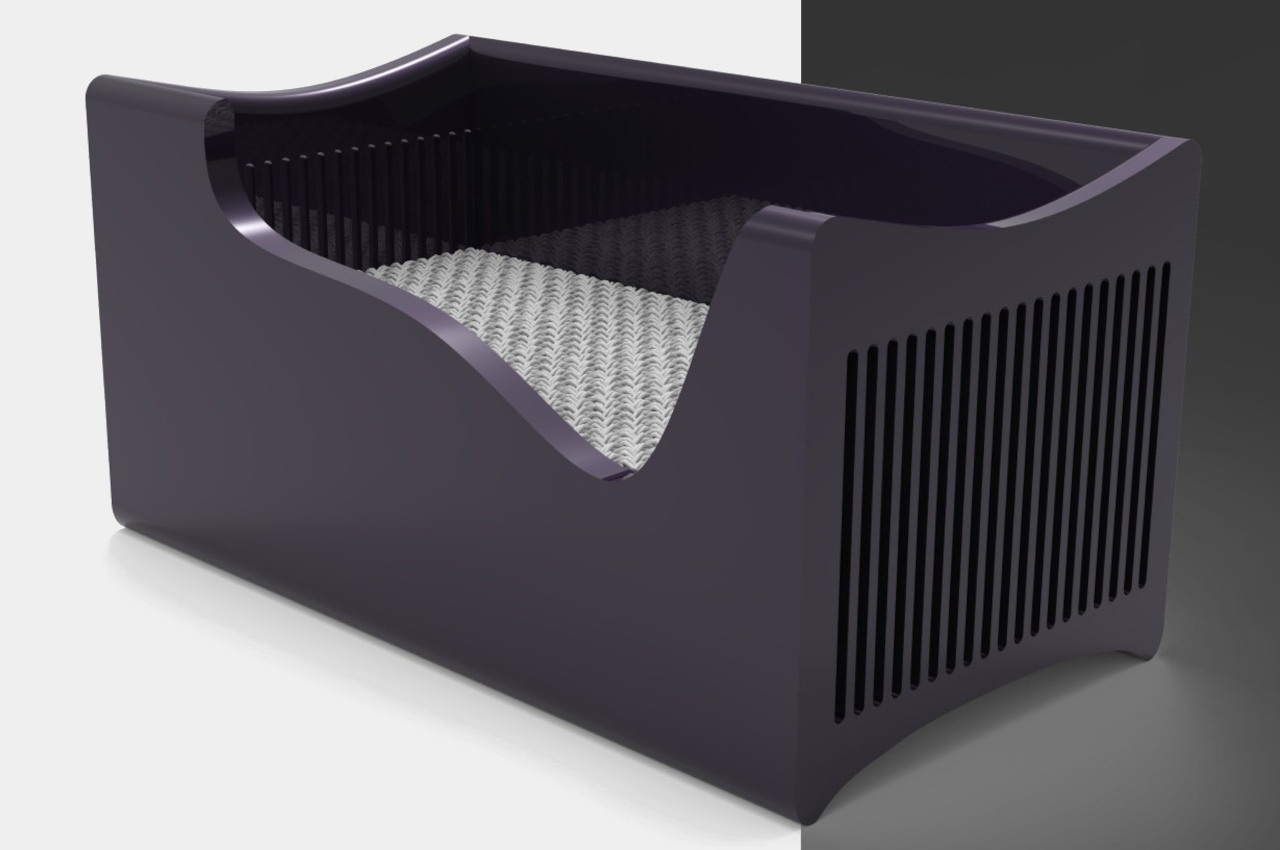
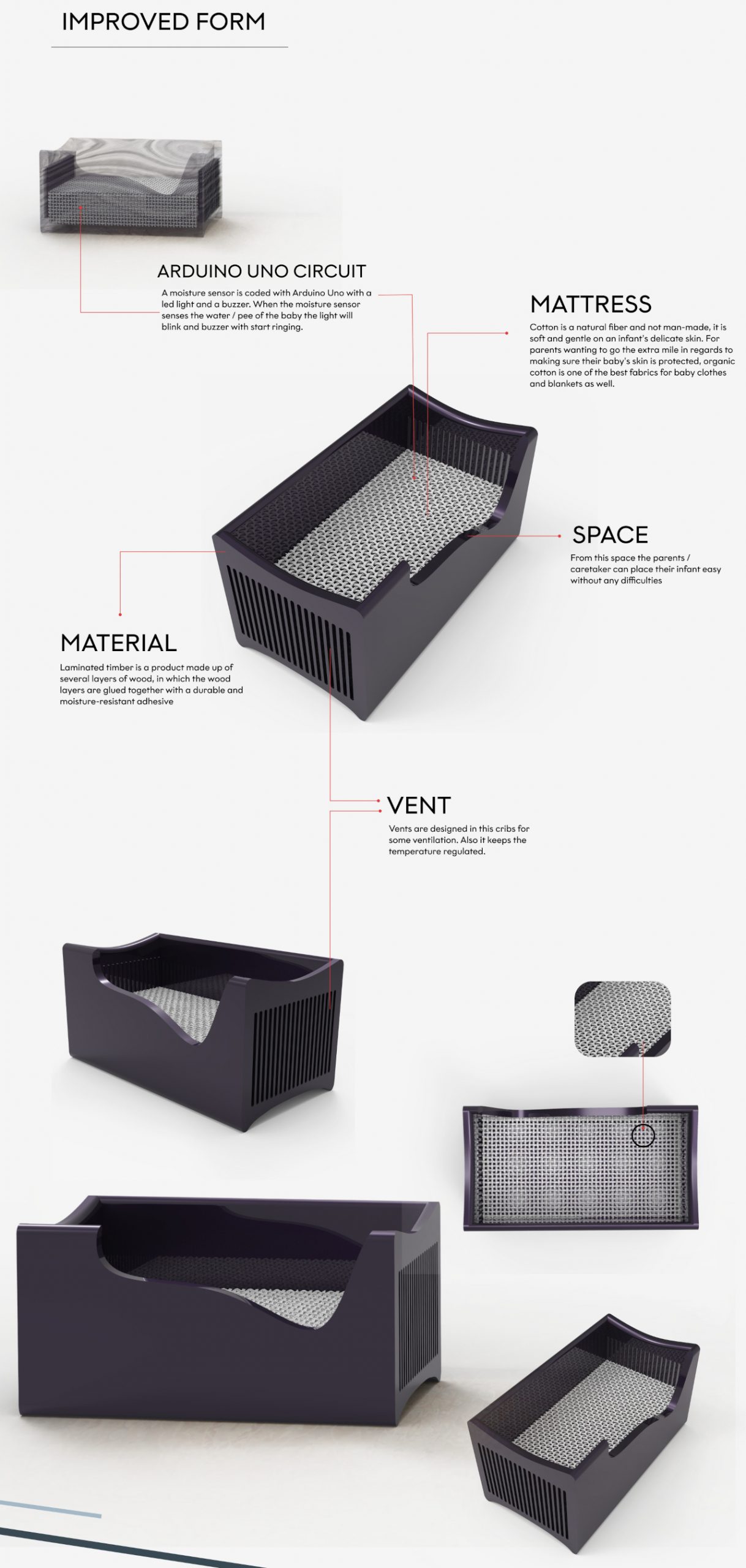
Having a baby can be a very magical moment, but even the best, most patient, and kindest parents will struggle with some of the aspects of raising an infant. They need constant monitoring, even late at night when even adults should be resting. One of the most problematic things to watch out for is when the baby wets the bed, because it can happen any time, day or night, and even when parents are not paying attention. It might already be too late when the infant cries after having spent long minutes wearing or lying on something wet, which then could bring skin complications and other problems. It’s for that reason that this crib concept was designed, offering a more efficient way to monitor the baby by employing the very same technologies used to monitor plants and their soil’s wetness.
Soil moisture, or the volume of water content in the soil, isn’t exactly the same as determining when a baby wet the bed, but the technology works the same for both cases. The sensor is only able to measure water content indirectly by taking into account other factors like electrical resistance, dielectric constant, and the like. Fortunately, this is enough to also detect if the mattress of a crib is now wet, which is the critical component of the Wee Watch Crib Concept.
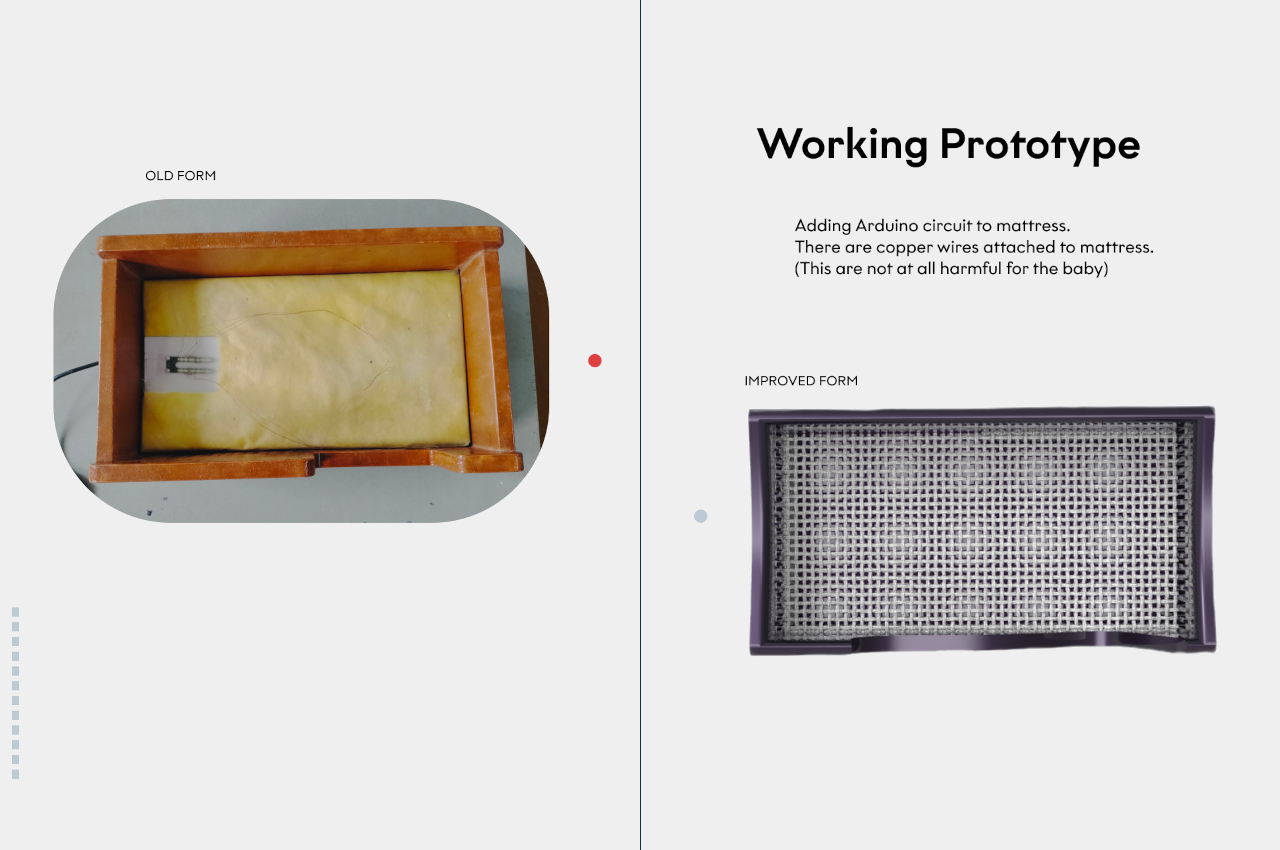
In a nutshell, the crib uses copper coils attached to the mattress to implement the moisture detection hardware, since copper is considered to be harmless for the baby in this context. The sensors can sense the wetness of the bed and immediately fire off a notification to parents or caretakers, either audibly or through a phone app. It’s a much more efficient way compared to constantly watching the baby, which is tiring, or waiting for the baby to cry, which could be too late for the infant’s comfort and health.
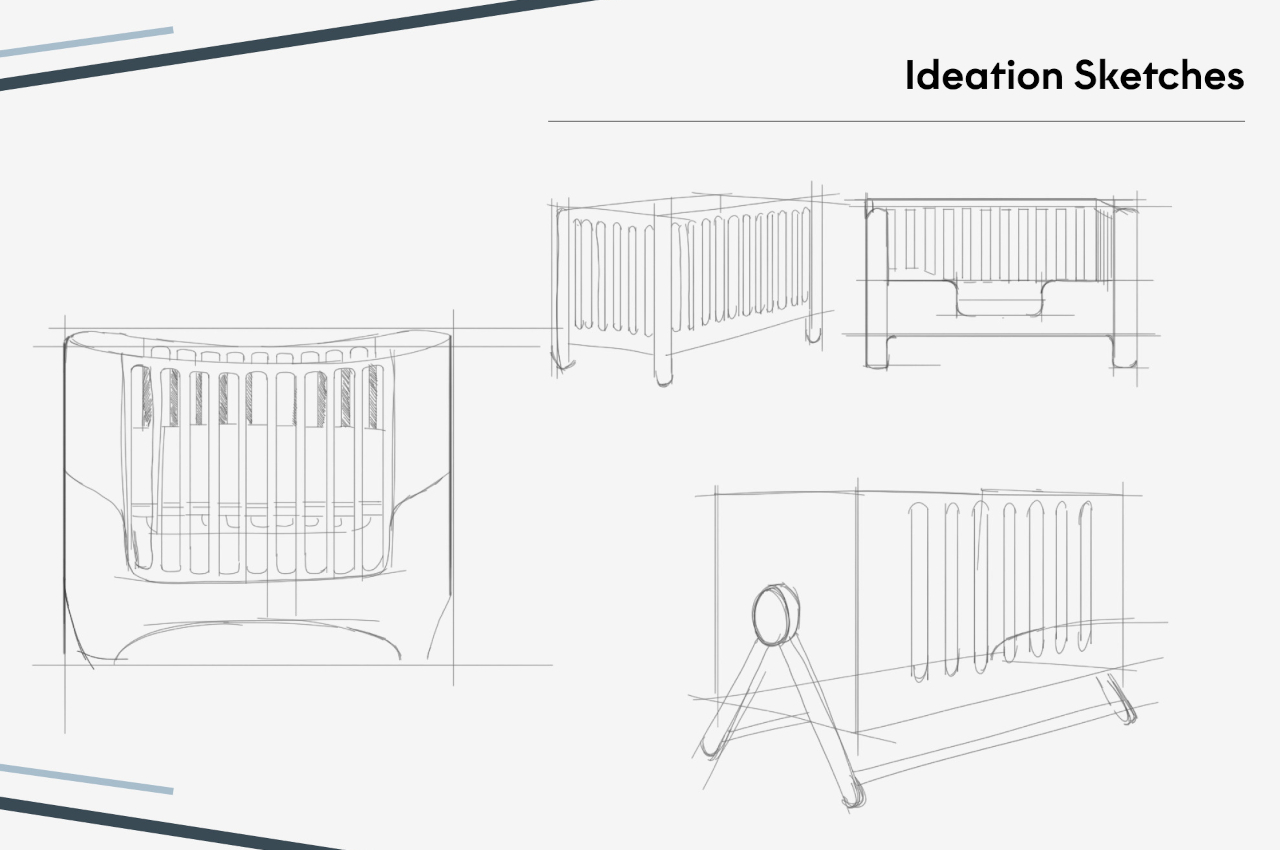
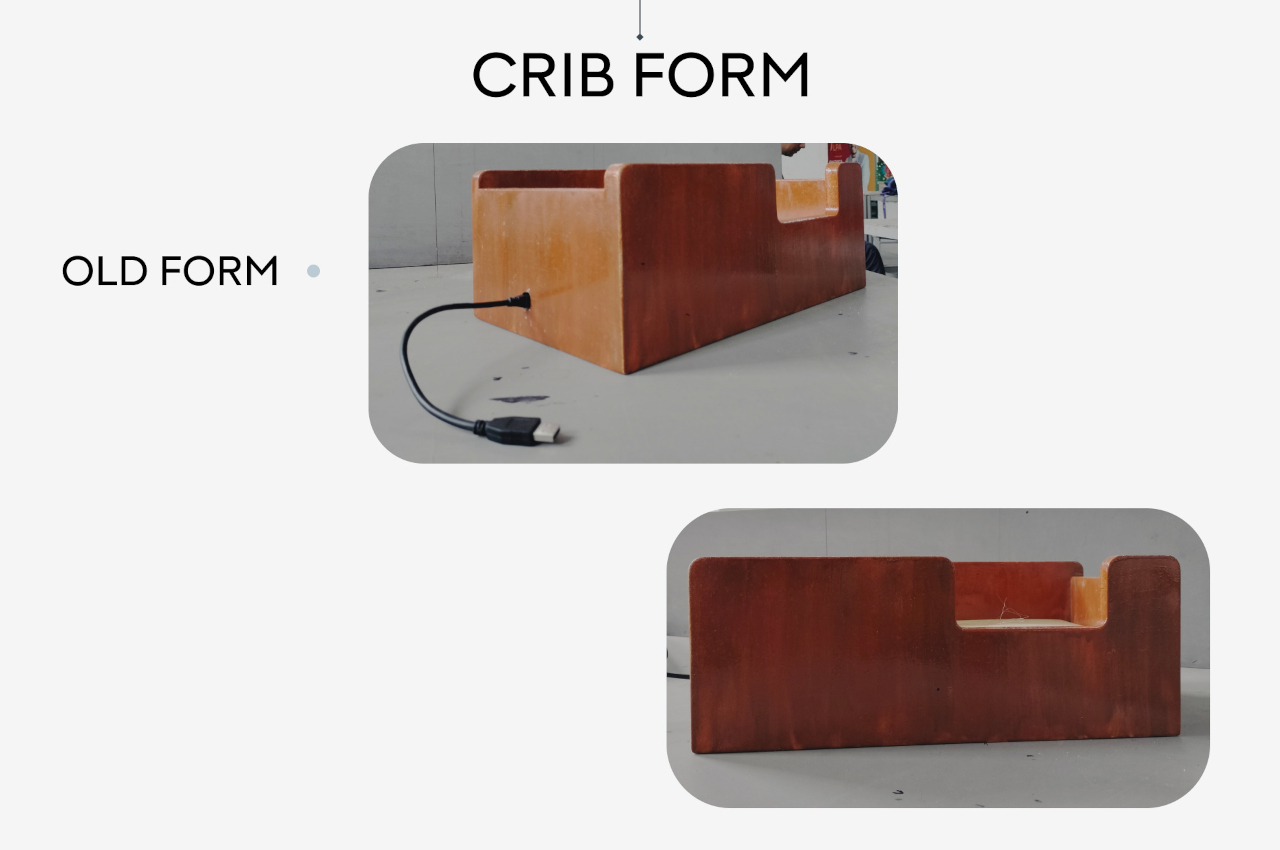
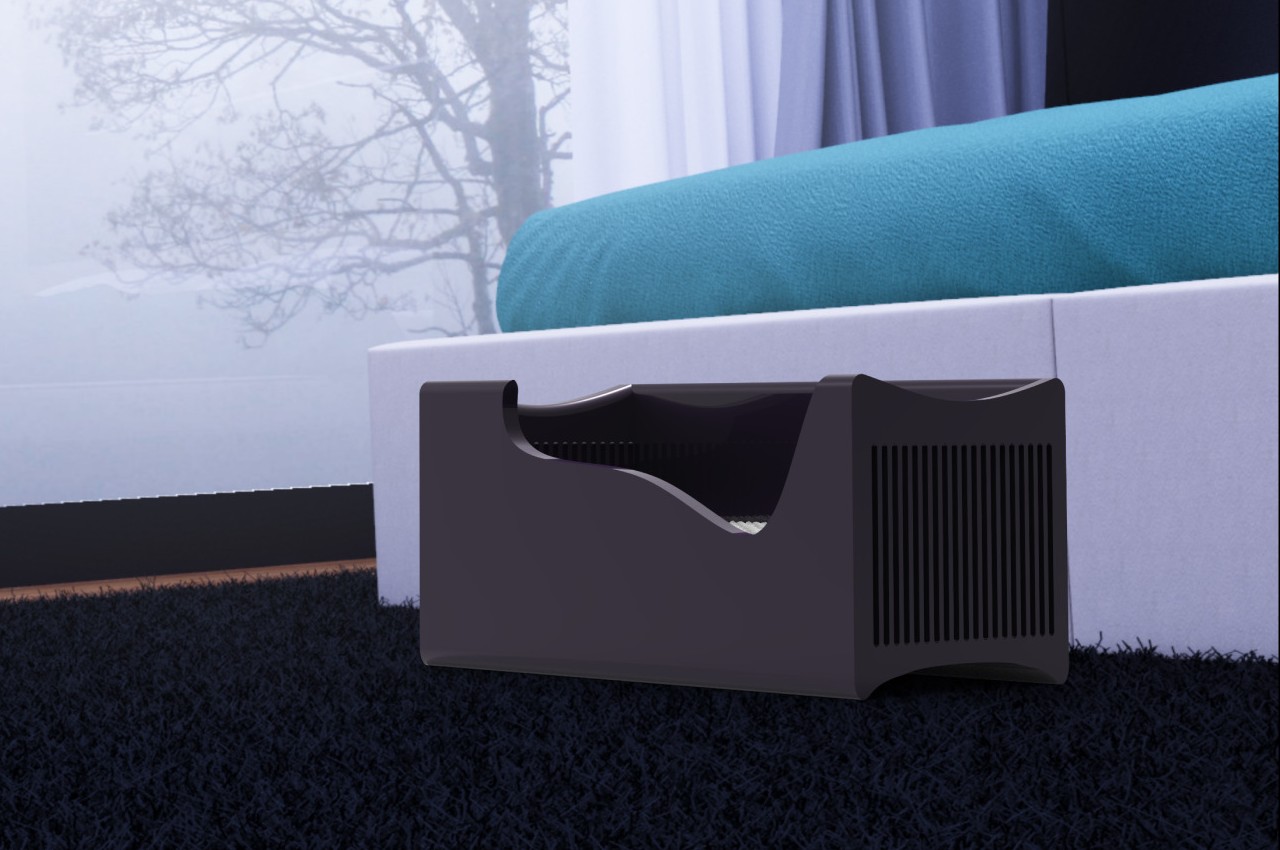
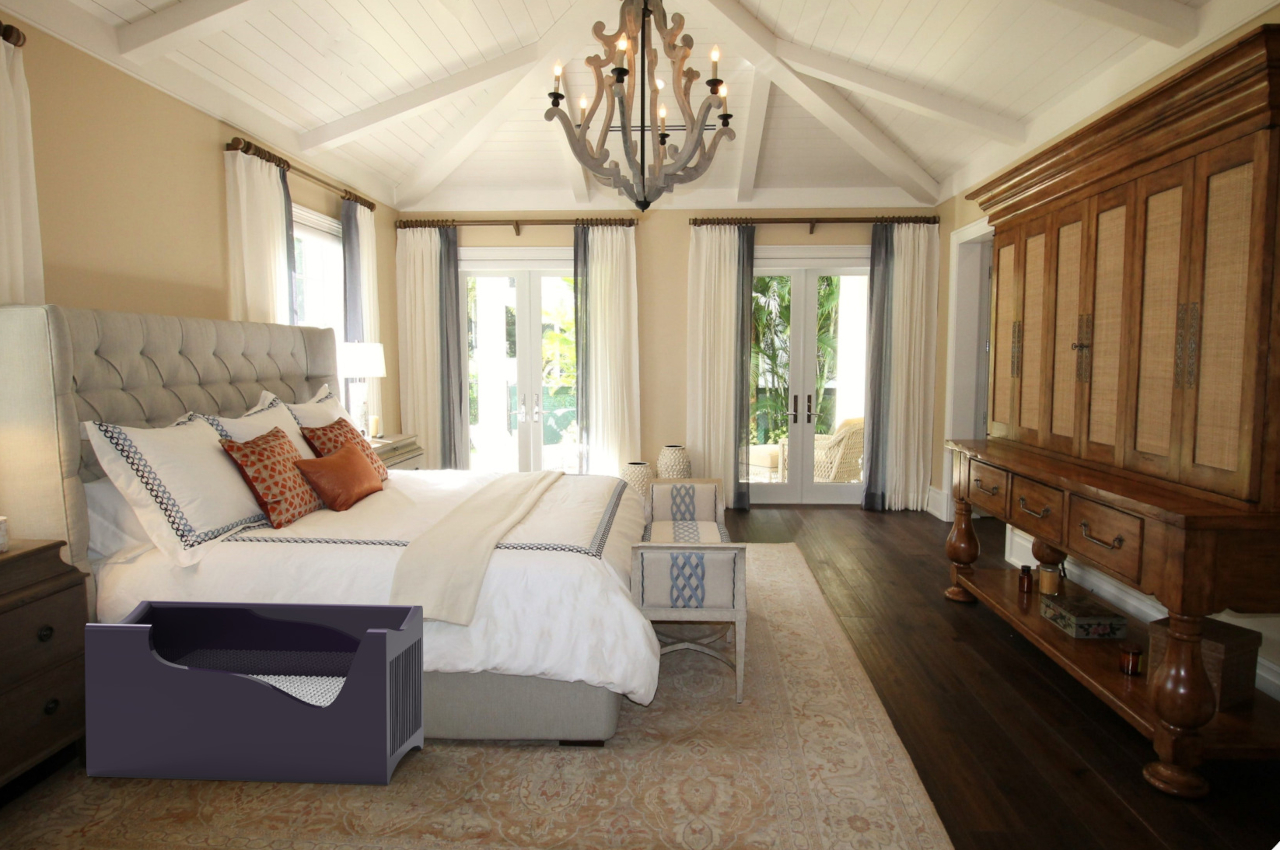
Of course, the baby crib also has to be comfortable, not just functional, and the Wee Watch design opts to use natural cotton fibers for the mattress as it is gentler on the baby’s skin. The frame is made from laminated timber that’s put together using a moisture-resistant adhesive, and there are tall vents at the bottom to facilitate airflow and regulate temperature. More importantly, the crib is also made to still be useful as the baby grows, about up to two years as long as they still comfortably fit in that space.
Here's a good deal if you need a big chunk of storage space for a Nintendo Switch, Raspberry Pi or any other device that still accepts microSD cards: The 1TB version of Lexar's Professional 1066x card is now down to $76.49 on Amazon. That's the lowest price we've tracked for this model and roughly $9 off the card's typical street price. The discount comes as part of a wider sale on Lexar storage gear that started on Sunday for World Backup Day, a commemorative date that intends to raise awareness about data protection and preservation. (Seagate, Crucial and other storage manufacturers are still running sales as well.)
The Professional 1066x is not a formal pick in our microSD card buying guide, as it's a bit slower than our top choices, Samsung's Pro Plus and Pro Ultimate, particularly in terms of sequential read speeds (which matter when you want to access large files stored on the card). Still, neither of those cards are available in a 1TB capacity — the Pro Plus will be, but not until later this year — and the Lexar model wasn't drastically far behind in our benchmark tests. For devices like the Switch or Steam Deck that cap microSD cards to standard UHS-I speeds, or even for capturing 4K video more casually, it'll be good enough. We'll note that there are some 1TB cards available for less, but among the models we've tested, this is a solid value for those who need a high capacity above all else.
If you need a standard SD card, meanwhile, this sale also brings the SD version of the 1TB Professional 1066x down to $110. That's another all-time low and about $15 off that model's usual going rate.
This article originally appeared on Engadget at https://www.engadget.com/lexars-latest-storage-sale-includes-a-1tb-microsd-card-for-76-151500809.html?src=rss
Here's a good deal if you need a big chunk of storage space for a Nintendo Switch, Raspberry Pi or any other device that still accepts microSD cards: The 1TB version of Lexar's Professional 1066x card is now down to $76.49 on Amazon. That's the lowest price we've tracked for this model and roughly $9 off the card's typical street price. The discount comes as part of a wider sale on Lexar storage gear that started on Sunday for World Backup Day, a commemorative date that intends to raise awareness about data protection and preservation. (Seagate, Crucial and other storage manufacturers are still running sales as well.)
The Professional 1066x is not a formal pick in our microSD card buying guide, as it's a bit slower than our top choices, Samsung's Pro Plus and Pro Ultimate, particularly in terms of sequential read speeds (which matter when you want to access large files stored on the card). Still, neither of those cards are available in a 1TB capacity — the Pro Plus will be, but not until later this year — and the Lexar model wasn't drastically far behind in our benchmark tests. For devices like the Switch or Steam Deck that cap microSD cards to standard UHS-I speeds, or even for capturing 4K video more casually, it'll be good enough. We'll note that there are some 1TB cards available for less, but among the models we've tested, this is a solid value for those who need a high capacity above all else.
If you need a standard SD card, meanwhile, this sale also brings the SD version of the 1TB Professional 1066x down to $110. That's another all-time low and about $15 off that model's usual going rate.
This article originally appeared on Engadget at https://www.engadget.com/lexars-latest-storage-sale-includes-a-1tb-microsd-card-for-76-151500809.html?src=rss
If you've missed picking up the latest Apple Watch in past sales, now's your chance. The Apple Watch Series 9 is back down to its record-low price thanks to a 25 percent discount. The 41mm smartwatch is on sale right now for $299, down from $399. The deal is only available on the model with a Midnight aluminum case and a matching nylon sports loop.
The Apple Watch Series 9 debuted last September and garnered a 92 in our review. We even named it our pick for 2024's best overall smartwatch. One of the biggest changes for the Series 9 was the addition of Double Tap. This feature allows you to bring your thumb and index finger together (on the watch-wearing hand) to activate controls like hanging up a call. The Apple Watch Series 9 is also the first in its lineup to offer on-device Siri. This shift means Siri works a bit faster and is also available even when your watch is offline.
The Series 9 smartwatch offers a comprehensive range of health features, including a heart rate monitor, sleep monitoring and cycle tracking. Plus, as an added bonus, the Apple Watch Series 9 is carbon neutral, so you can feel a little better about buying another device.