The Octo Finissimo Sketch is a Masterpiece of Elegance Celebrating 140 Years


As Bulgari commemorates its 140th anniversary, it introduces two distinguished Octo Finissimo Automatique BVL 138 Sketch editions that celebrate the brand’s legacy and propel it into the future with groundbreaking design concepts. These editions—each in rose gold and stainless steel—illustrate a sophisticated fusion of material excellence and design innovation.

Designer: Bulgari + Buonamassa Stigliani

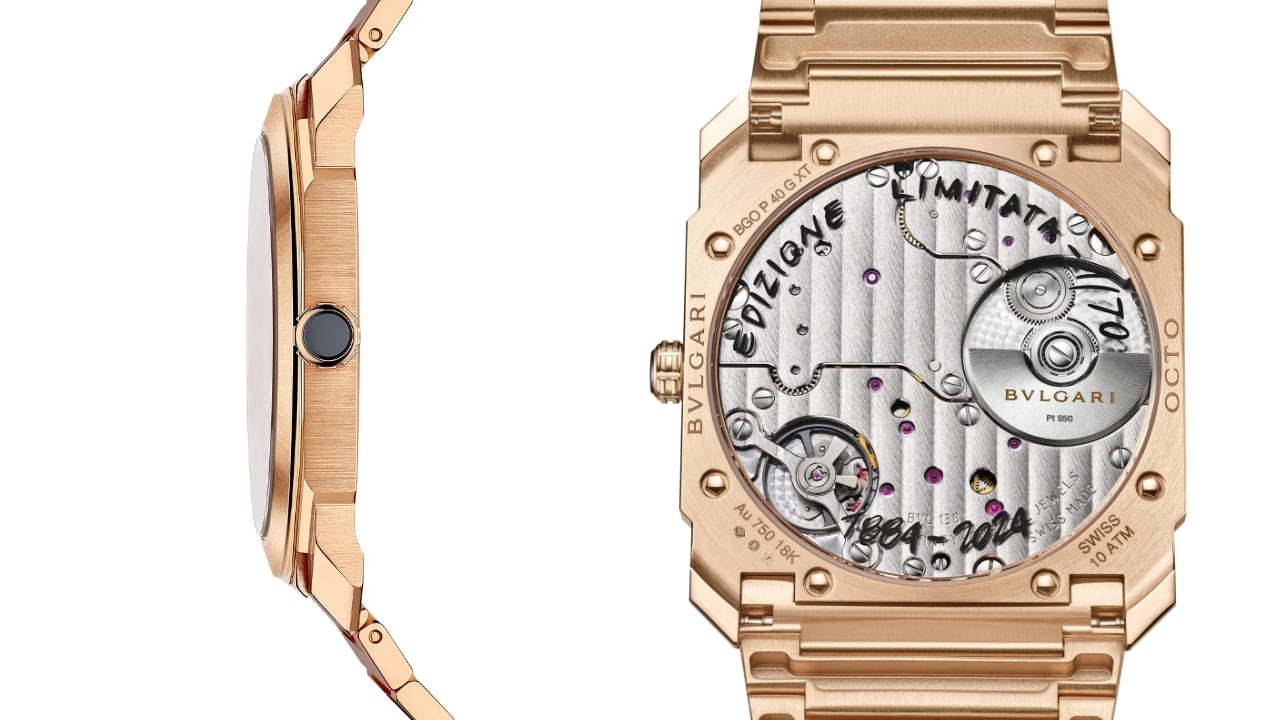
Bvlgari Octo Finissimo Automatic BVL 138 Sketch in rose gold

The rose gold model, reference 104165, features a luxurious 40mm case that is impressively thin at only 5.5mm, thanks to the ultra-slim profile of the BVL 138 movement. This case offers both a sapphire case back and front, revealing the inner workings of the automatic BVL 138 caliber. This movement is just 2.23mm thick, with a diameter of 36.6mm, and equipped with 36 jewels. It includes a platinum micro-rotor, a small seconds feature positioned at 7:30, and a 60-hour power reserve. The artistic gold dial beneath a lacquered finish enhances both its depth and visual impact, and the dial itself presents technical illustrations that mimic a skeletonized view, lending a sophisticated illusion of depth. This model’s rose gold bracelet, complete with a folding clasp, mirrors the case, reinforcing the watch’s elegance.

Bvlgari Octo Finissimo Automatic BVL 138 Sketch in rose gold

Conversely, the stainless steel model, reference 104163, offers a sleek, contemporary option. It shares the same 40mm size and a thin 5.5mm profile with a sapphire case back and front, showcasing the precision of the automatic BVL 138 caliber. The dial, finished in silver lacquer, acts as a shimmering canvas that reflects the mechanical beauty it encases. The stainless steel bracelet, secured by a durable folding clasp, enhances its modern appeal. Like its rose gold counterpart, it boasts a 60-hour power reserve and robust 100-meter water resistance, ensuring reliability and functionality.

Bvlgari Octo Finissimo Chronograph GMT BVL 318 Sketch

The dials of both models highlight Fabrizio Buonamassa Stigliani’s creative expertise. Each stroke and sketch brings the technical elements of the watch to life with spontaneity and artistic precision. These elements bridge traditional craftsmanship and contemporary artistry, highlighted by the trompe l’oeil effect that gives each dial a three-dimensional look despite its flat surface.

Bvlgari Octo Finissimo Chronograph GMT BVL 318 Sketch

In addition to the two remarkable editions, Bulgari introduces a third variant limited to 140 pieces: the Octo Finissimo Chronograph GMT BVL 318 Sketch (Ref. 104192). This model is molded in stainless steel, features a chronograph and GMT function, and incorporates the same innovative sketch-style dial. It showcases a 30-minute chronograph counter at 6 o’clock, small seconds at 9 o’clock, and a second-time zone display at 3 o’clock, making it a standout piece for global travelers and watch enthusiasts alike.

Bvlgari Octo Finissimo Chronograph GMT BVL 318 Sketch

This approach illustrates Bulgari’s innovative spirit and aligns with its heritage. It uses color schemes that enhance each model’s distinctiveness—the rose gold’s warm tones enhance its refined elegance, and the cooler tones in the stainless steel accentuate a more urban, modern aesthetic. Each design choice ensures that the dials are integral to the watch’s identity, reflecting a blend of avant-garde design and traditional watchmaking.

The post The Octo Finissimo Sketch is a Masterpiece of Elegance Celebrating 140 Years first appeared on Yanko Design.

New Range Rover Electric Prototype Unveiled

Range Rover Electric

The automotive landscape is undergoing a profound shift as electric vehicles (EVs) gain prominence, and the luxury segment is no exception. Leading the charge in this transformative journey is the highly anticipated Range Rover Electric Prototype, a vehicle that seamlessly blends the brand’s iconic heritage with innovative advancements in electric propulsion and vehicle technology. This […]

The post New Range Rover Electric Prototype Unveiled appeared first on Geeky Gadgets.

Nobody needs to spend $160 on a gaming mouse, but Razer’s new Viper V3 Pro is excellent anyway

Razer has rolled out the Viper V3 Pro, its latest high-end wireless gaming mouse. What makes a gaming mouse “high-end,” you might ask? Mainly, it’s super lightweight and packed with impressive wireless and sensor tech, all of which makes it extremely responsive in competitive games. I’ve had one on hand for about two weeks now and have felt next to zero delay flicking through rounds of Halo Infinite and Apex Legends.

The other thing is the price: The Viper V3 Pro is available today for $160 in the US or €180 in Europe. That isn’t unheard of — Razer’s own DeathAdder V3 Pro, the top wireless pick in our gaming mouse buying guide, costs the same — but it’s certainly not cheap.

If you keep up with the gaming mouse market, here’s the short version: The Viper V3 Pro has virtually the same shape and soft-touch coating as last year's midrange Viper V3 HyperSpeed, but it’s far lighter at 54 grams, plus it has optical switches, a technically superior sensor and a few small design tweaks. It’s the follow-up to the popular Viper V2 Pro from 2022 and the ambidextrous complement to the aforementioned DeathAdder V3 Pro, which has a more dramatically contoured ergonomic shape.

A black Razer Viper V3 Pro gaming mouse and a white Logitech G Pro X Superlight 2 gaming mouse rest side-by-side on top of a brown wooden table.
The Razer Viper V3 Pro (left) and Logitech G Pro X Superlight 2 (right), another high-end wireless gaming mouse with a symmetrical shape.
Photo by Jeff Dunn / Engadget

For everyone else, the main thing to know about mice like this is that they’re built for competitive gaming above all else. As such, the Viper V3 Pro deliberately excludes features that’d make it more convenient for day-to-day use: There’s no Bluetooth and only two side buttons, while the DPI switch is located on the bottom of the mouse. The scroll wheel can't tilt left or right, and there’s no lighting, either. But these omissions make sense if you view the mouse as a tool for esports: They keep the weight down and make it harder to hit buttons by accident.

The most important thing with any gaming mouse is its shape, and the Viper V3 Pro’s should fit most hand sizes well. It’s highly similar to Logitech's G Pro X Superlight 2, its chief competitor, but slightly longer and flatter. A modest but noticeable hump in the center rests naturally in your palm, while the sides are gently contoured in then out to welcome the tops of your thumb and ring finger (or pinkie). The main click buttons are grooved, slightly flared and amply sized. None of the angles are aggressive. Razer says it works best with a fingertip or claw grip; I have few issues as someone who uses the latter. But the design isn’t so short or flat that it’s horrible for palm grips. In total, it measures 5.0 x 2.51 x 1.57 inches.

The mouse’s coating is pleasingly soft and smooth. It’ll pick up fingerprint smudges over time, but it should be grippy enough for most people out of the gate. (Razer includes some pre-cut grip tape in the box if it still feels too slippery.) The device as a whole is sturdily built, with no sign of flex or creaking in my two weeks of daily use.

The underside of the Razer Viper V3 Pro is exposed on top of a brown wooden table.
Photo by Jeff Dunn / Engadget

The Viper V3 Pro isn’t the absolute lightest gaming mouse, but calling a 54g device too heavy to move around would be splitting hairs. Notably, it achieves this weight without any cutouts in its top or bottom shell. Rival gaming mice like the Pwnage Stormbreaker or Pulsar X2V2 are similarly light but leave their interiors more open to dust and detritus.

The mouse’s main click buttons are fast, not sticky and on the softer side for a device that uses optical switches. They aren’t as loud as the clicks on the G Pro X Superlight 2, though the right-click panel on my test unit sounds a little less full than the left-click one. (That’s more of a nitpick than a dealbreaker.) As with most optical mice, the main buttons may not be as satisfying to press as good mechanical switches, but they’re more likely to avoid durability issues over time. I’d also give the Viper V3 Pro the edge over Logitech’s mouse when it comes to the side buttons and scroll wheel. The Viper's wheel is tighter, quieter and has grippier ridges on its exterior, while its side buttons are a bit less mushy by comparison.

In terms of performance, the Viper V3 Pro uses Razer’s new “Focus Pro 35K Optical Sensor Gen-2.” It can reach a maximum of 35,000 DPI, and you can adjust that sensitivity in 1 DPI increments. A max speed of 750 IPS and max acceleration of 70 G accompany that. Per usual with gaming mice, these higher figures are partly marketing fluff: Many older gaming mice have few issues when it comes to sensor accuracy and consistency.

A white Razer Viper V3 Pro gaming mouse is held on top of a white mouse mat on a black desk, with a white keyboard glowing with green lighting situated off to its side.
The mouse is available in black or white, though Razer says the white model weighs a gram more.
Razer

Along those lines, the mouse comes with Razer’s HyperPolling Wireless Dongle, which costs $30 on its own. It advertises a maximum polling rate of 8,000Hz, which technically allows for more precise movements but has a negligible effect on real-world performance. Mostly, it saps battery life: Razer says the Viper V3 Pro can last up to 95 hours at a 1,000Hz polling rate, which is fine, but that dips to just 17 hours at 8,000Hz.

Still, while I am far from an pro-level player, I can’t foresee many complaints about the Viper V3 Pro’s responsiveness or connection quality. The shape, weight and sensor all play a role in that — as do the large PTFE feet, which let the mouse glide smoothly across surfaces. Somewhat less agreeable is the included cable, which is cleverly angled to reduce drag but isn’t the thinnest or most flexible cord I've seen. The dongle still requires running the cable from a PC to a desk, too.

Nevertheless, the Viper V3 Pro is well worth a look if you take competitive gaming seriously, prefer an ambidextrous shape and have money to burn. To be clear, there are still several gaming mice that’ll feel comfortable and perform well for less cash, especially if you’re OK with a wired model. And if you own an older Viper you’re still happy with today, there’s no pressing need to upgrade. A mouse like this is closer to a Ferrari, when most people can live just fine with a Subaru. That said, Ferraris are pretty nice, right?

This article originally appeared on Engadget at https://www.engadget.com/nobody-needs-to-spend-160-on-a-gaming-mouse-but-razers-new-viper-v3-pro-is-excellent-anyway-150017198.html?src=rss

Apple will host a virtual event on May 7th, ahead of WWDC

Apple's Worldwide Developers Conference is only a few weeks away, but the company simply can't wait that long to make some more announcements. It has scheduled a virtual event for May 7. The stream will be available on Apple's website and the Apple TV app (and likely YouTube) and it will start at 10AM ET.

As usual, Apple hasn't been totally forthcoming about what to expect. However, the animated image it included in the announcement shows a hand holding an Apple Pencil in the center of a stylized, colorful Apple logo. That indicates the event is very likely going to be focused on iPad.

Rumors have been swirling for some time that Apple was likely to update the iPad Pro and iPad Air in a couple of sizes in May with M3 and M2 chips, respectively. The company is expected to bring OLED displays to the iPad Pro, while adding a larger 12.9-inch iPad Air to the lineup. Reports suggest a new Magic Keyboard for iPad Pro and a fresh Apple Pencil may be in the offing too. In any case, it's been over two years since the last iPad Air and around 18 months since the M2-powered iPad Pros debuted, so both are due for a refresh.

This article originally appeared on Engadget at https://www.engadget.com/apple-will-host-a-pre-wwdc-virtual-event-on-may-7-145859085.html?src=rss

How to Use Interactive Widgets on Your iPad

Interactive Widgets

Since iPadOS 17 was introduced last year, Apple has unveiled an exciting addition that significantly boosts the functionality of your iPad: interactive widgets, this feature is also available on the iPhone. Far from being mere static displays of information, these widgets transform how you interact with your iPad. They enable direct control over applications right […]

The post How to Use Interactive Widgets on Your iPad appeared first on Geeky Gadgets.

6 Awesome Tips For Digital Organization In Notion

Notion

In today’s fast-paced digital world, staying organized and productive is more critical than ever. Notion, a powerful all-in-one workspace, offers a comprehensive solution for streamlining your digital life. Whether you’re managing complex projects, organizing extensive databases, or simply trying to keep track of daily tasks, Notion provides the tools and flexibility to help you stay […]

The post 6 Awesome Tips For Digital Organization In Notion appeared first on Geeky Gadgets.

Posted in Uncategorized | Tagged

Headphone jacks on smartphones are making a comeback for your listening pleasure

There are some heated discussions right now about how a YouTuber may have single-handedly killed a startup, but big companies do that every time. In 2016, Apple may have put the audio industry on notice when it banished the headphone jack from the iPhone forever. Of course, the 3.5mm connector is used in more than just smartphones, but this change caused a ripple that pushed wireless audio technologies to innovate and improve. Although it’s becoming more common for smartphones to rely on Bluetooth headphones and speakers, many audiophiles still swear by wired equipment to deliver high-fidelity lossless sound, and it seems that there’s a growing trend of bringing the venerable headphone jack back to smartphones to satisfy these audio cravings.

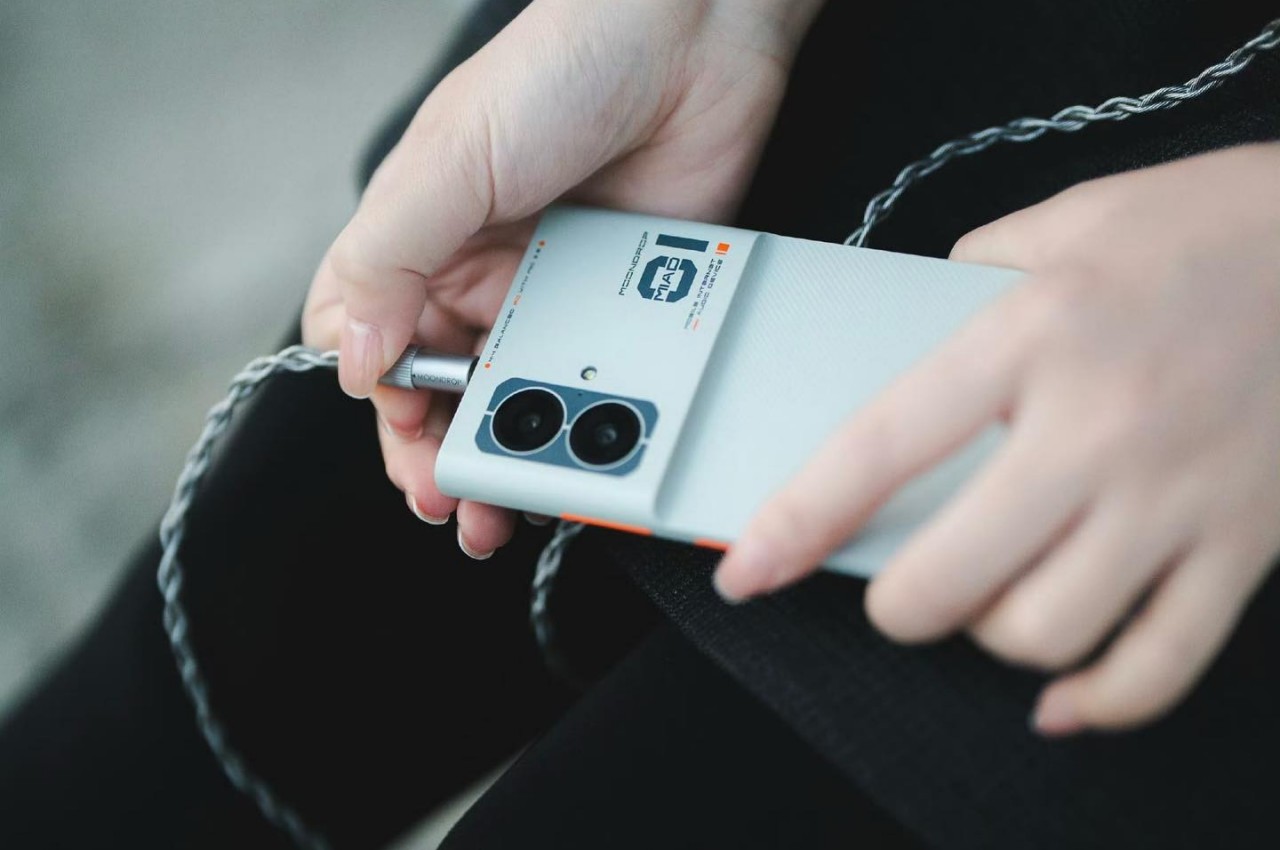
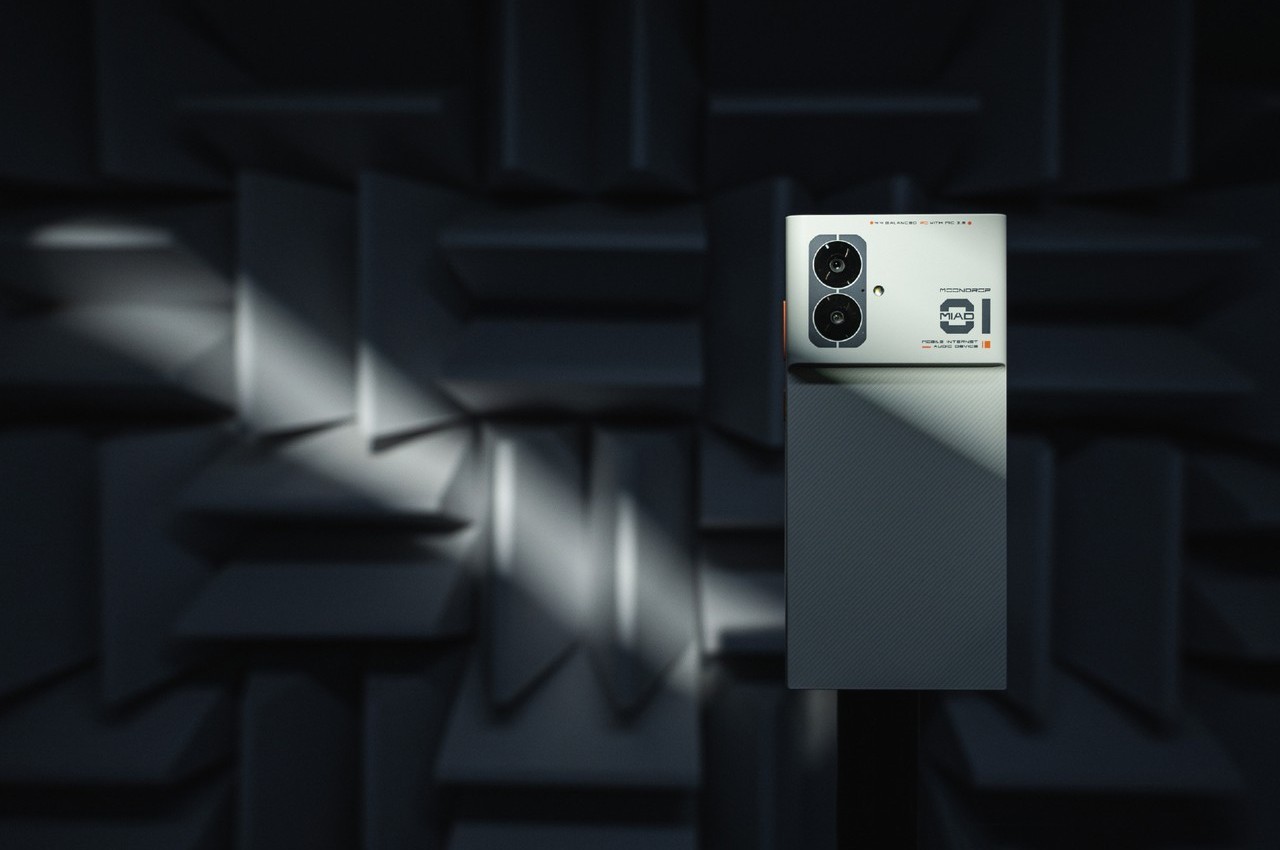
MOONDROP MIAD01

It isn’t enough just to have a 3.5mm headphone jack and expect to have high-quality audio output. You still have to make sure that the digital-to-analog conversion process is just as good, usually with some help from dedicated hardware designed for that purpose. Hi-Fi audio equipment maker MOONDROP knows that only too well, which is probably why it’s making an ambitious attempt to corner a niche market with an upcoming MIAD01 smartphone made specifically for discerning audiophiles.

Designer: MOONDROP

Aside from a few teaser images, details on this “Hi-Fi” smartphone are still pretty slim other than the mention of 3.5mm+4.4mm interfaces. The latter of the two is known as “balanced” output used by high-impedance headphones and speakers, resulting in even better output quality. It’s not yet known, however, if the phone will have two headphone jacks or have a single 4.4mm port with a 3.5mm adapter. Either way, it’s something that music lovers on the Android side of the smartphone camp will want to keep an eye, or an ear, out for.

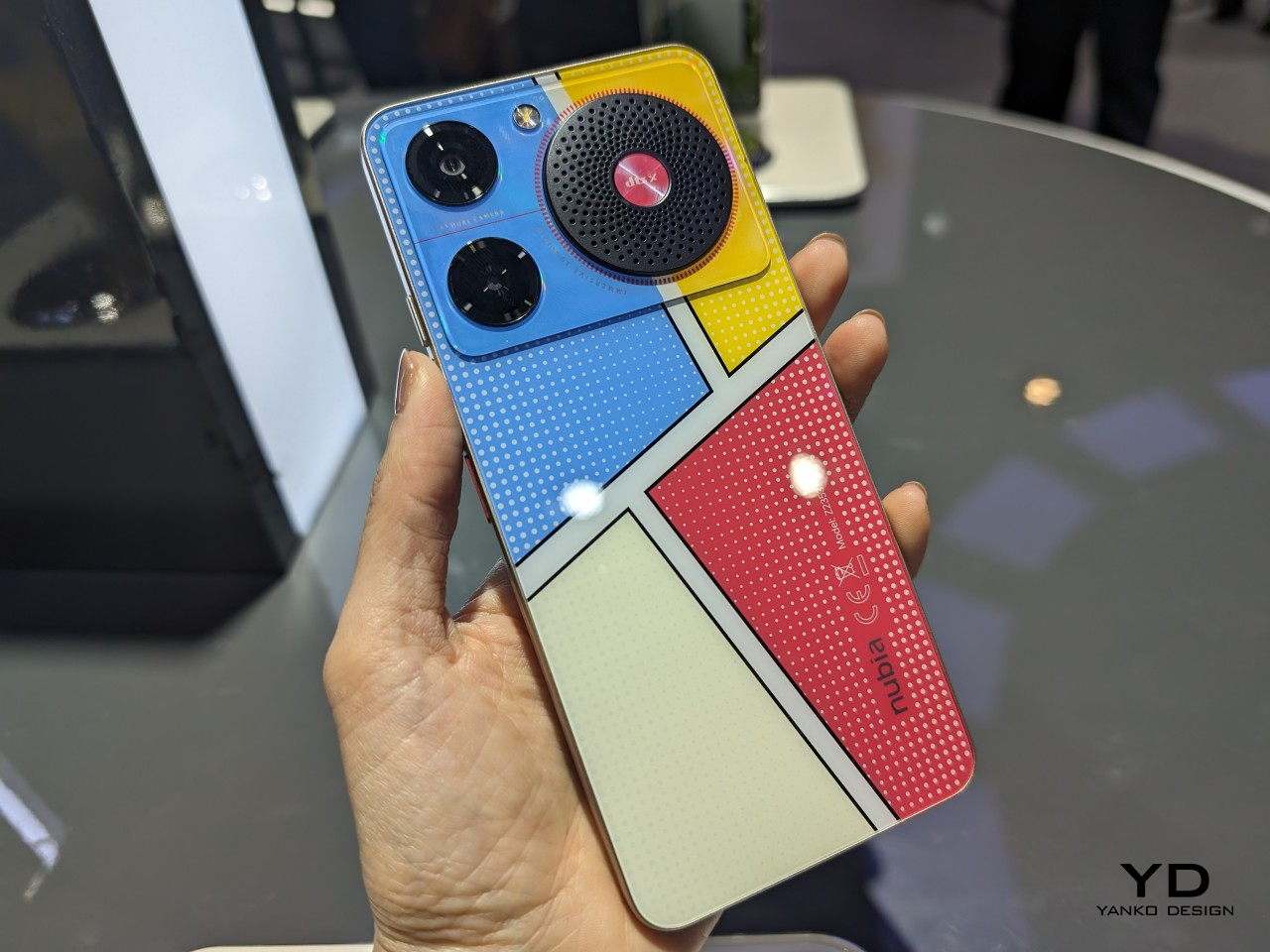
nubia Music Phone

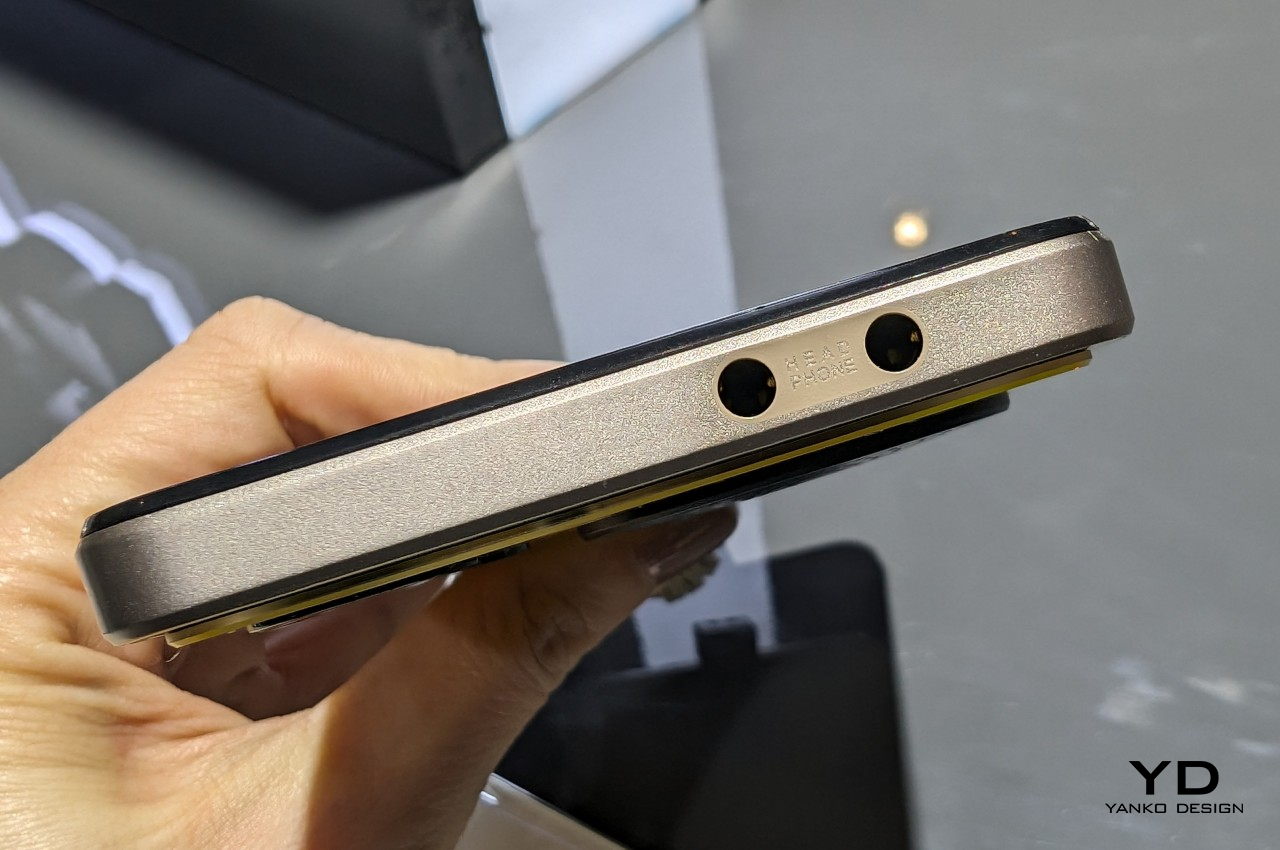
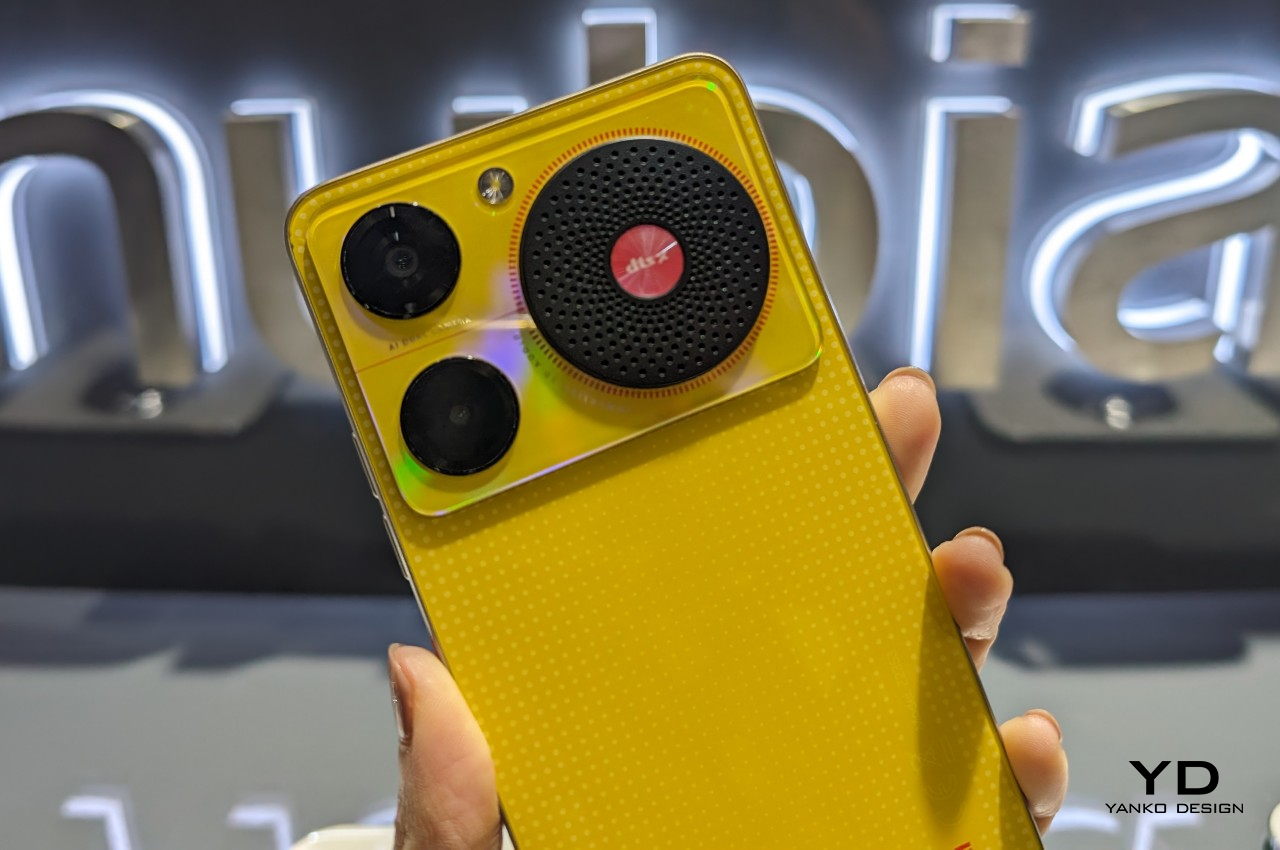
Although technologically less ambitious, ZTE subsidiary nubia is putting a different twist on enjoying music on smartphones. The nubia Music Phone does have two headphone jacks, both 3.5mm, but their main purpose is to simply connect two wired headphones at the same time. It brings back the social aspect of listening to music by sharing your favorite tunes with a friend or loved one while still keeping it private among yourselves. Of course, the fact that you can connect high-performance headphones is definitely a plus as well.

Designer: nubia (ZTE)

The nubia Music Phone also puts a fun and quirky spin on that activity with a design that will appeal to music lovers. It has a large speaker on its back, in itself already an oddity, and it’s made to look like a turntable together with dual camera lenses. Its colorful designs just scream vibrancy and playfulness, characteristics that will pull at the heartstrings of a younger crowd.

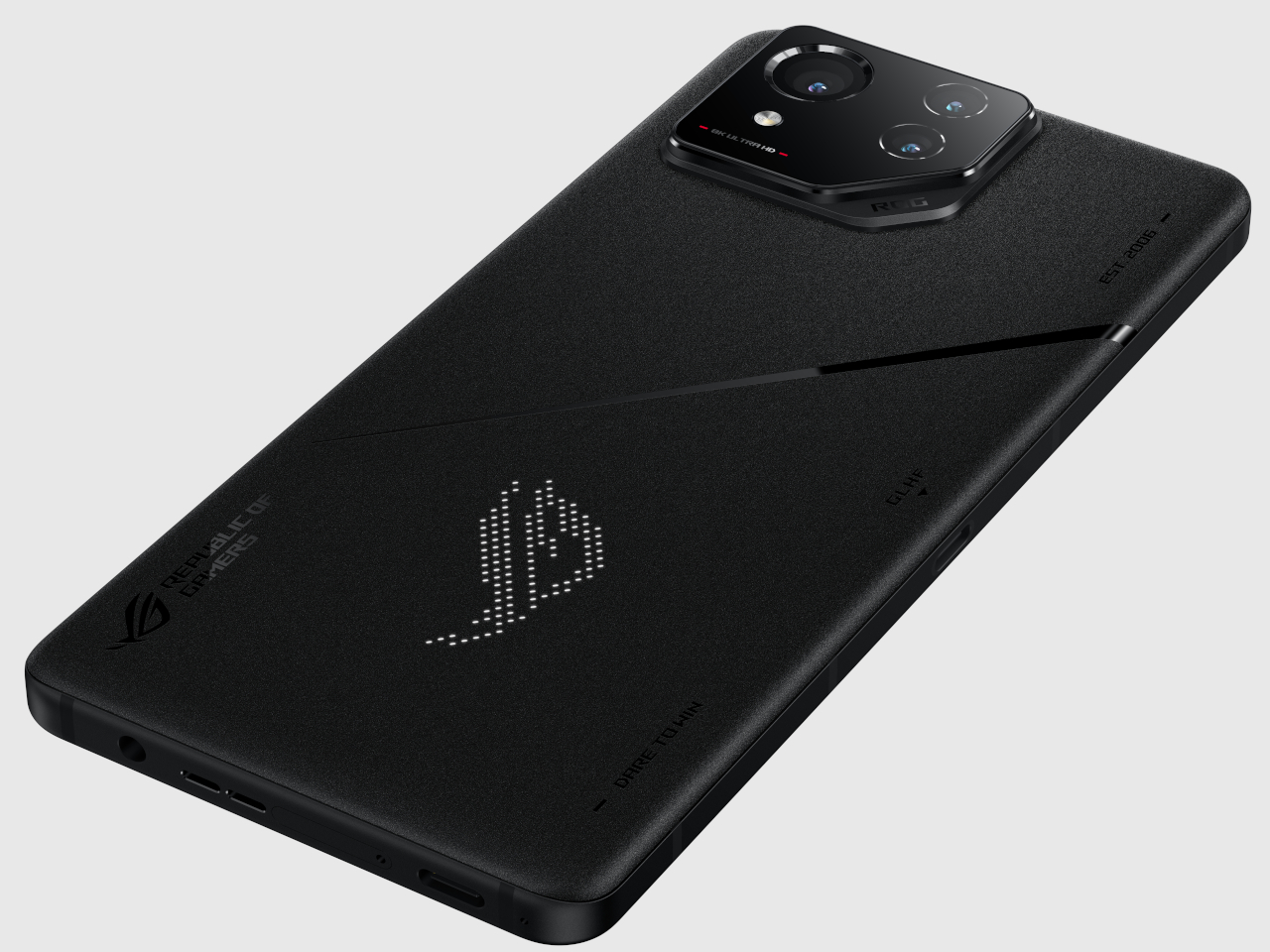
ASUS ROG Phone 8 Pro

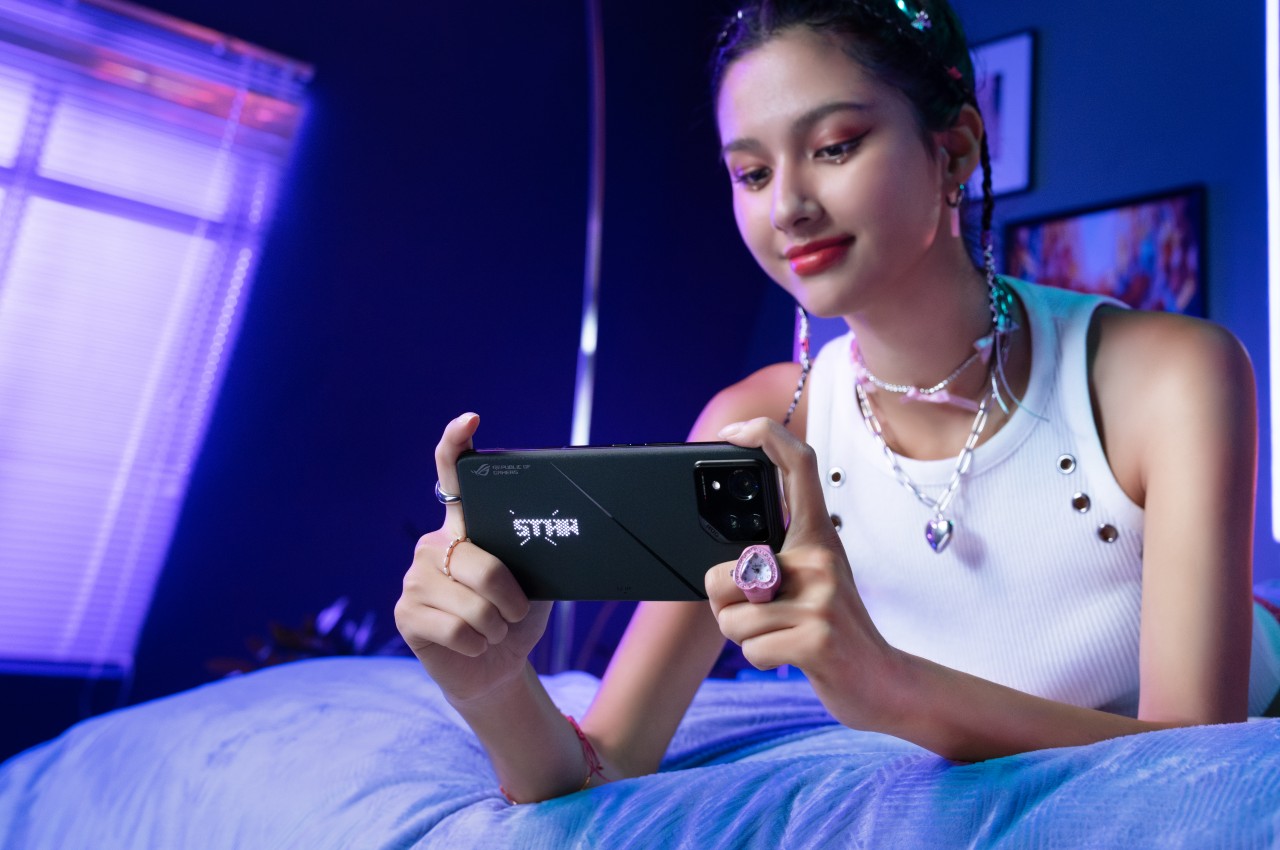
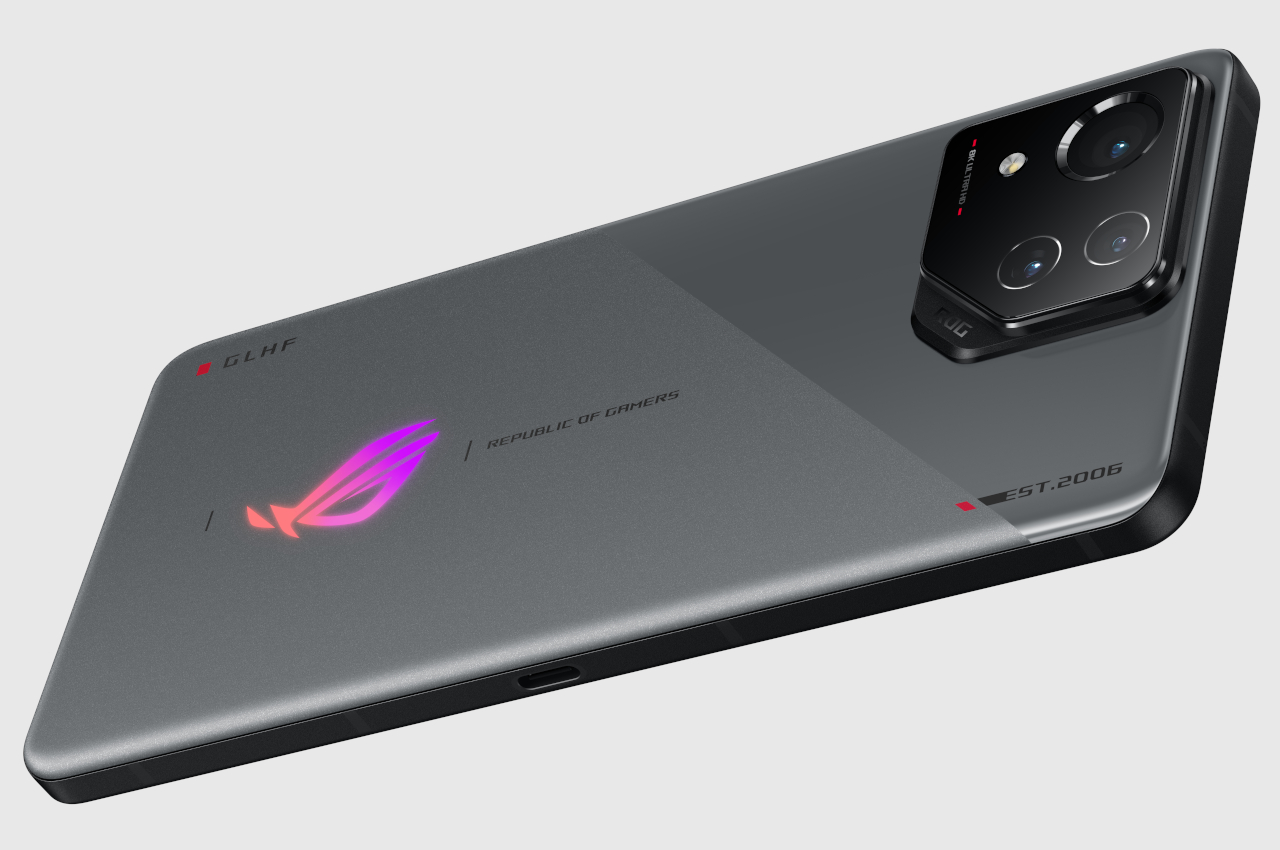
It isn’t just audiophiles who will appreciate good sound output, however. Poor audio can also break the immersion of a mobile game, especially as these titles become more sophisticated and more resource-intensive. While most of its features naturally revolve around graphics and processing, the ASUS ROG Phone 8 Pro doesn’t skimp on the audio side of the equation, whether it’s the “multi-magnet” dual speakers or hi-res 3.5mm headphone jack.

Designer: ASUS ROG

More than just doing the bare minimum, the ROG Phone 8 Pro boasts 384kHz/32-bit audio quality from that wired connection. It also implements spatial sound for headphones and provides listening profiles for different situations. It’s definitely one of the very few premium smartphones these days that have a headphone jack, something that hardcore mobile gamers will surely appreciate.

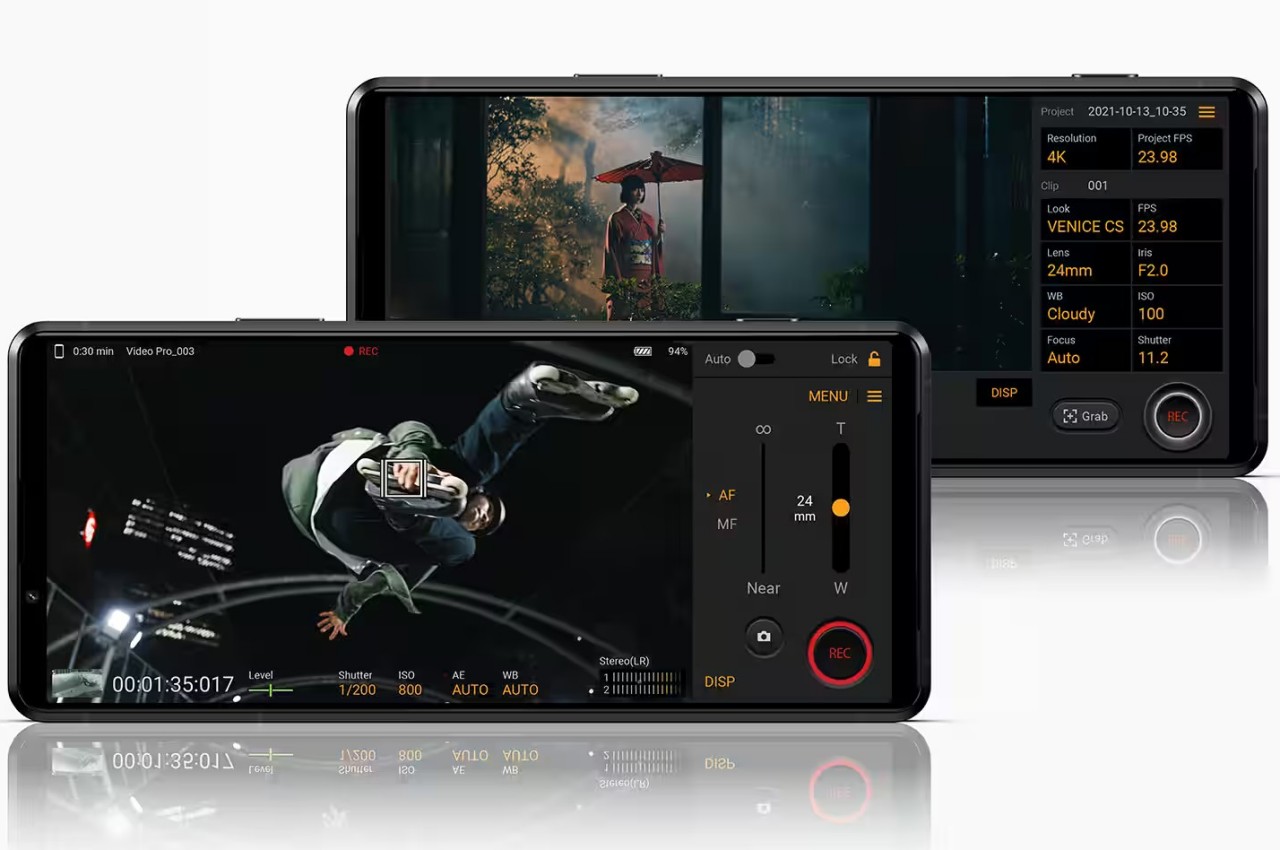
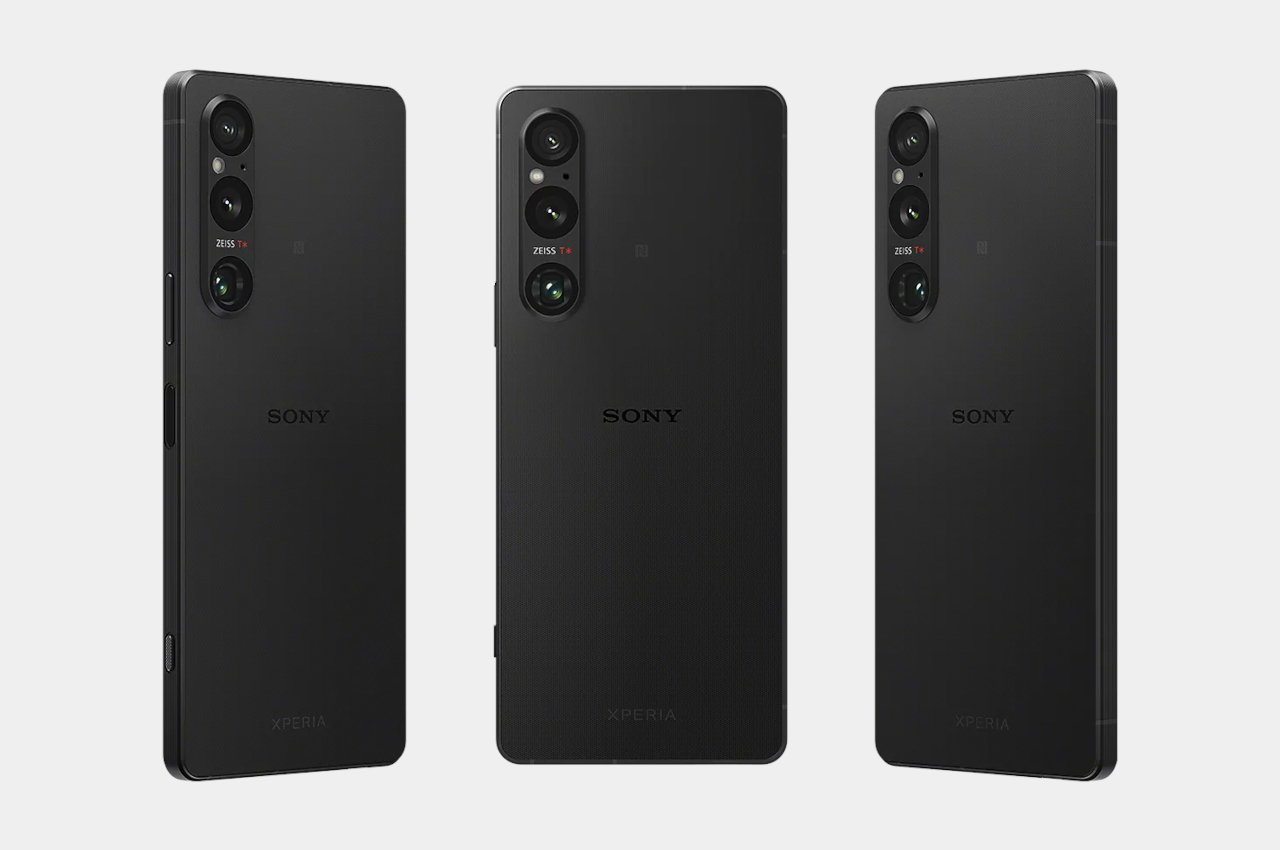
Sony Xperia 1 V

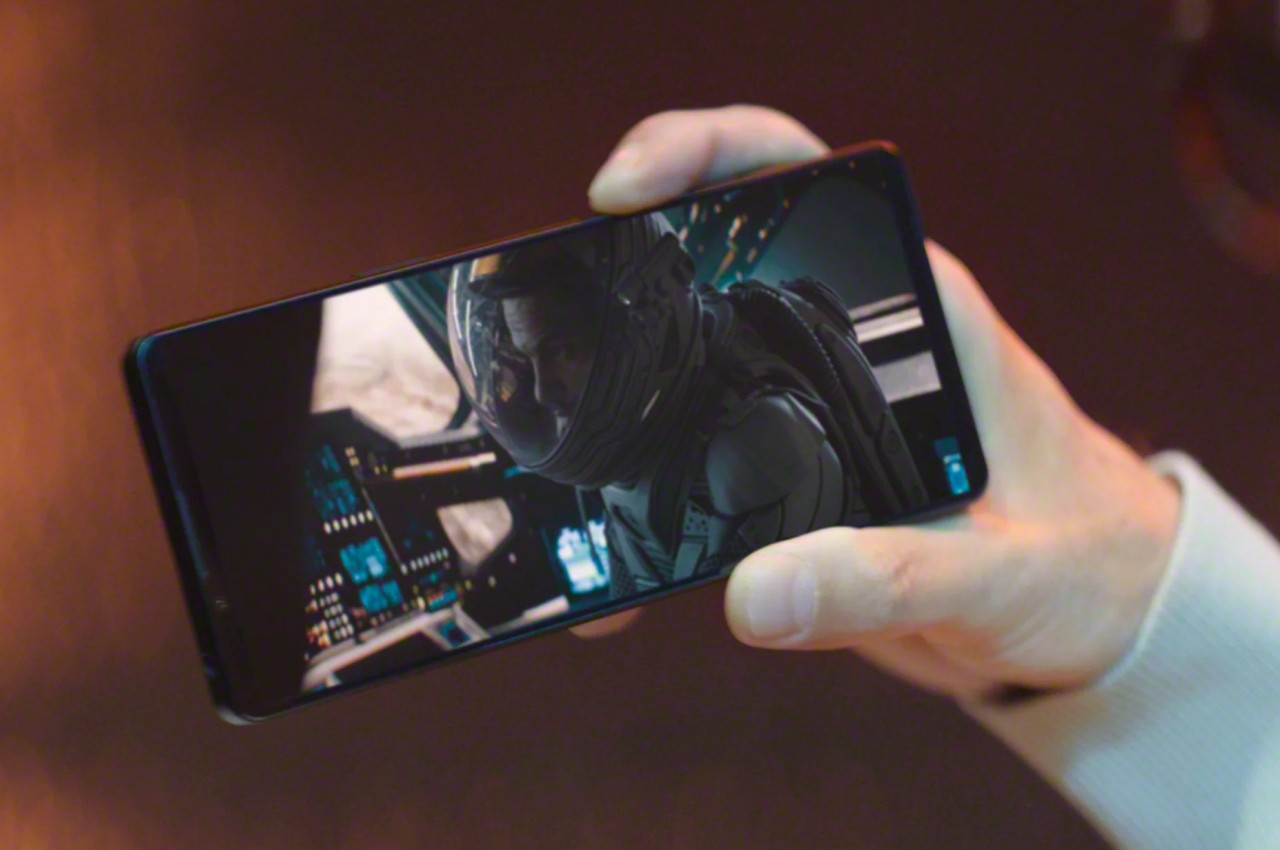
Speaking of high-end phones, Sony hasn’t completely given up yet on the smartphone market, and neither is it turning back on the features that differentiate its remaining devices. It bears an unusual ultra-wide, ultra-tall screen aspect ratio which Sony claims to be the best format for watching videos. It also shows off its display-making prowess which it also uses on a bigger scale on TVs.

Designer: Sony

The entertainment and electronics company naturally also knows that video is only half the battle. The phone also has a headphone jack to support hi-fi lossless audio output through wired headphones and speakers, something you’d expect from a device designed to deliver a cinematic watching experience on mobile.

TECNO Camon 20 Pro 5G

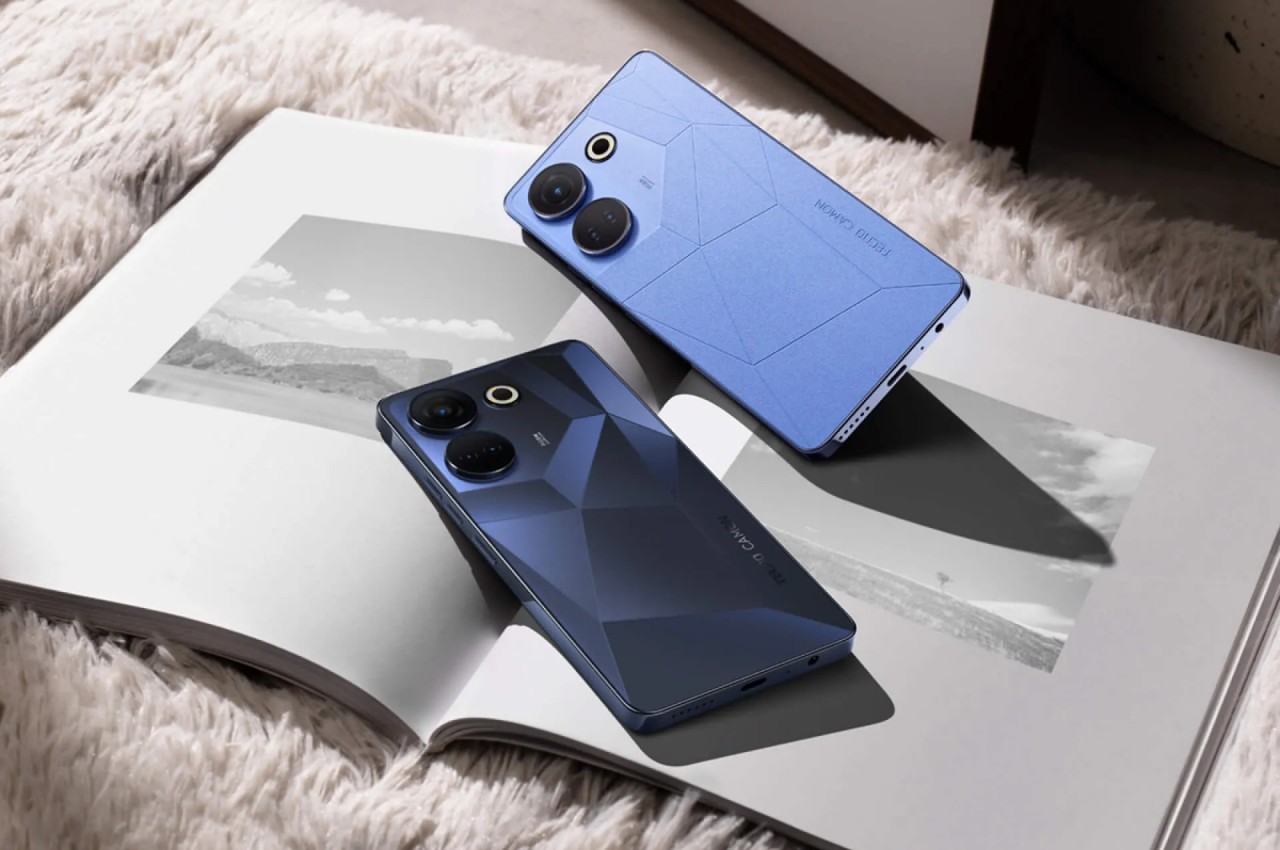
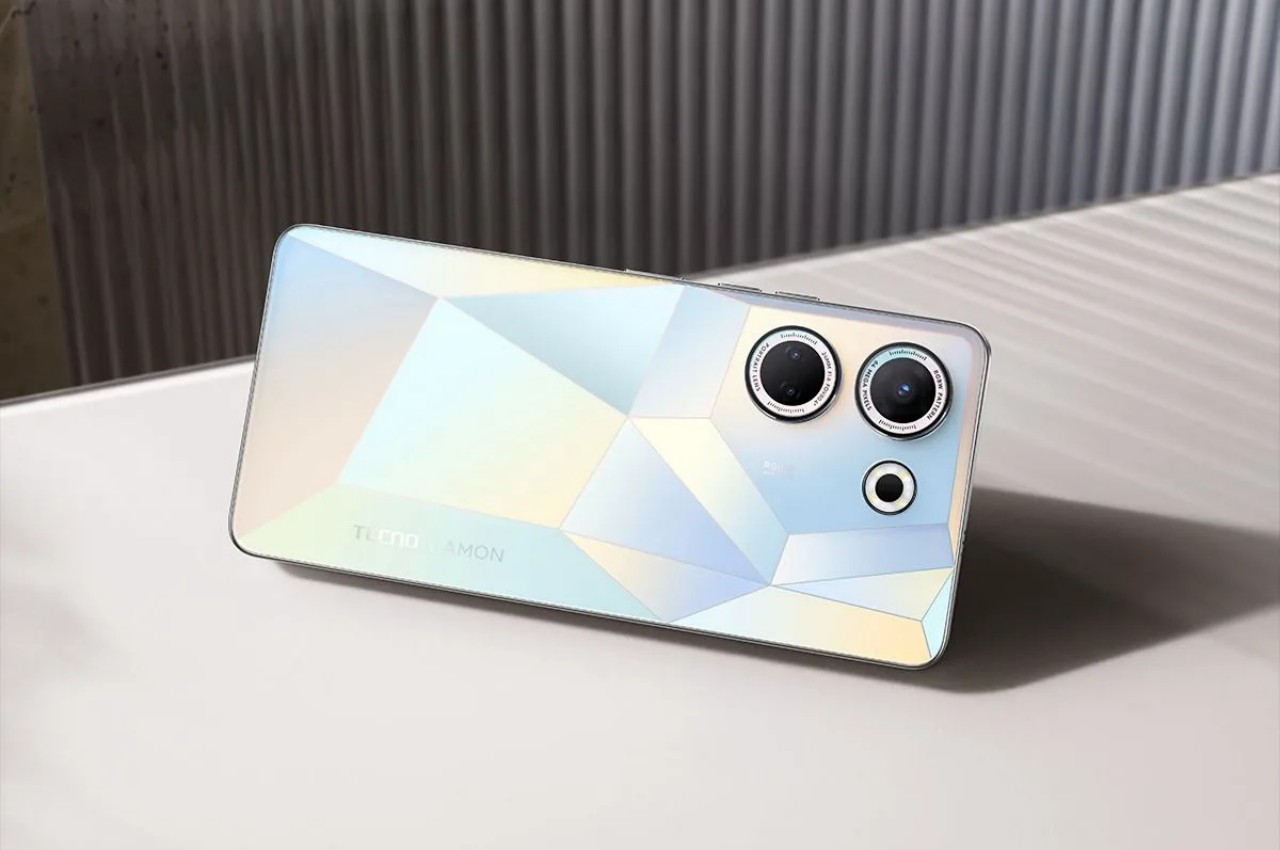
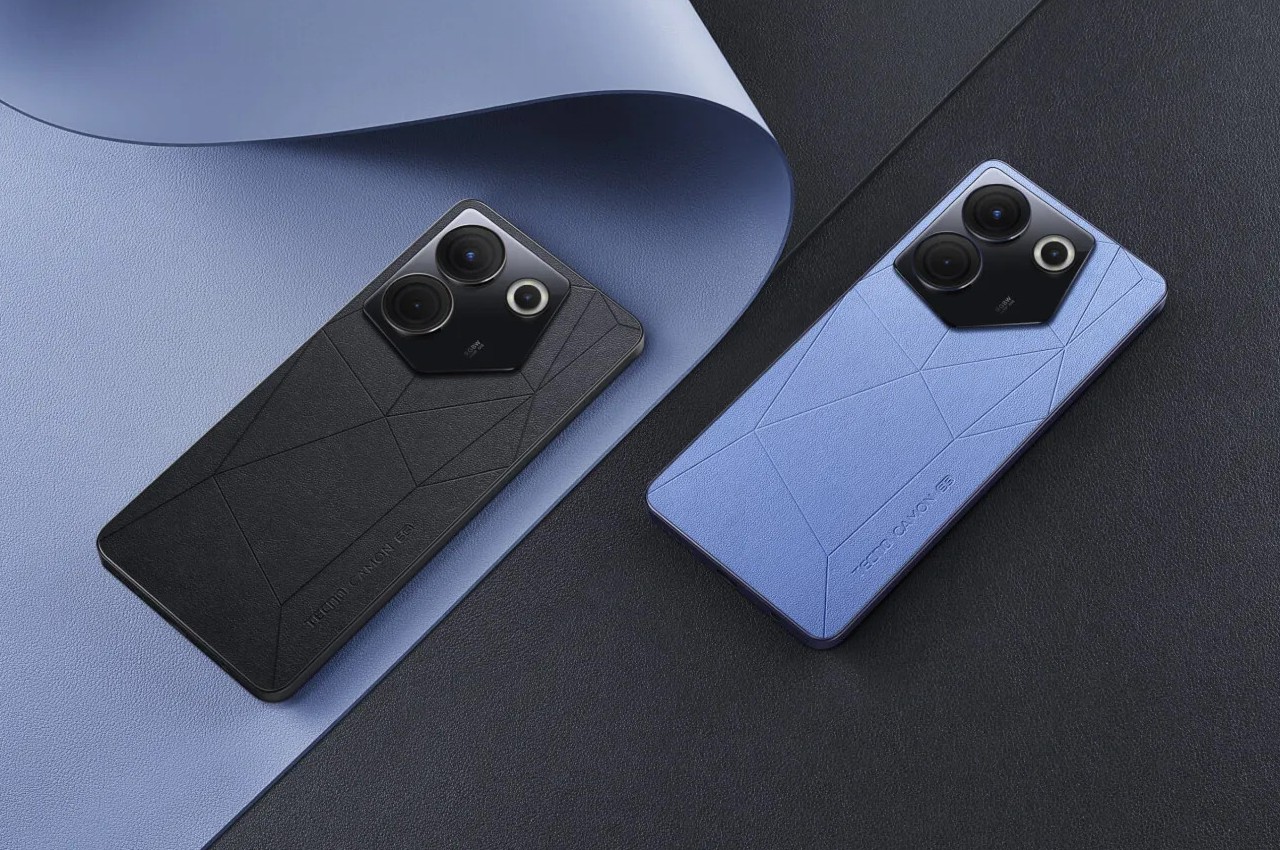
It’s almost ironic that mid-range and lower smartphone tiers are the remaining bastions of the 3.5mm port, probably as a form of cost-savings on more expensive wireless technologies. At the same time, however, some brands continue to support the feature even on their higher-end models. That’s definitely true for last year’s TECNO Camon 20 Pro 5G, which combines stylish design with a well-balanced set of features, including that headphone jack.

Designer: TECNO

Among TECNO’s flagship Camon line, the Camon 20 Pro has the distinction of winning a few design awards, thanks to the unique geometric patterns on its back, including an uneven hexagon shape for the camera bump. Unfortunately, it will also now have the distinction of being the last TECNO Camon to include that 3.5mm port, as the brand seems to be finally shifting this family of smartphones to a wireless future.

Final Thoughts: Hear Ye, Hear Ye

Just because smartphones no longer have headphone jacks doesn’t mean that it’s obsolete technology. Many aspects of the audio industry and the wider multimedia industry still rely on wired connections, and the 3.5mm connector and those like it continue to offer a standard and space-efficient solution. At least for now, wires still have bigger bandwidth and more reliability, even with potential losses when converting between digital and analog.

Wireless audio is thankfully still improving, but it might take some time for it to be a more common technology that can deliver the needed high-fidelity lossless audio transmission. In the push for thinner phones, it’s this aspect that has unfortunately been sacrificed, even if it came at the expense of consumers as well. It’s a good thing, then, that there are still some brands that try to cater to audiophiles, music lovers, and gamers, and we might even see an uptick in these devices as more people become more aware of the critical role that good sound quality plays in an immersive experience.

The post Headphone jacks on smartphones are making a comeback for your listening pleasure first appeared on Yanko Design.

Swift Pro 140W GaN Travel Adapter

Swift Pro 140W Travel Adapter

Whether you’re a digital nomad, constantly on the move, or a business traveler juggling meetings across continents, your devices are your lifeline. They keep you connected, informed, and productive. But with this reliance on technology comes a challenge: how do you keep all your gadgets charged and ready to go, no matter where your adventures […]

The post Swift Pro 140W GaN Travel Adapter appeared first on Geeky Gadgets.

The best noise-canceling headphones for 2026

Noise is hard to escape, whether it’s the hum of traffic, the buzz of a busy office or the neighbor’s lawn mower starting up right when you need to focus. That’s where noise-canceling headphones earn their keep. A good pair doesn’t just quiet the world around you, it creates a pocket of calm so you can actually enjoy your music, podcasts or peace and quiet.

Modern noise-canceling headphones have come a long way, combining powerful ANC with clearer sound, longer battery life and smarter features like adaptive modes and multipoint connectivity. Some emphasize comfort for long flights, while others are tuned for audiophiles who want studio-level clarity.

We’ve tested a wide range of options to find the best noise-canceling headphones for every listener. Whether you’re after something lightweight for travel or a premium set for focused work sessions, these picks deliver the sound, silence and comfort you need to tune out the chaos.

When you’re shopping for the best wireless headphones, the first thing you’ll need to decide on is wear style. Do you prefer on-ear or over-ear headphones? For the purposes of this guide, I focus on the over-ear style as that’s what most noise-canceling headphones are nowadays. Sure, you can find on-ear models with ANC, but over-ear, active noise-canceling headphones are much more effective at blocking outside sounds since your ears are completely covered.

For gamers, there are also gaming headsets that feature noise cancellation — some even have detachable microphones, so they can double as over-ear headphones. However, for the purpose of this article, we’re only going to be focusing on noise-canceling headphones rather than headsets. Look for models with a comfortable headband and memory foam ear cups to ensure you can wear them for long periods without discomfort.

Many headphones also come with a range of color options, so if aesthetics matter to you, you’ll find plenty of choices beyond just black or white. Whether you’re looking for something neutral or a bold pop of color, brands now offer a variety of styles to match your personal taste.

Finally, if you’re planning to wear your headphones for long periods of time, it’s important to pick a model with a comfortable fit. Memory foam ear cups, an adjustable headband, and lightweight materials can make all the difference during extended listening sessions. After all, great sound is only part of the equation; comfort matters just as much.

Next, you’ll want to look at the type of ANC a set of headphones offers. You’ll come across terms like “hybrid active noise cancellation” or “hybrid adaptive active noise cancellation,” and there are key differences between the two. A hybrid ANC setup uses microphones on the inside and on the outside of the device to detect outside noise and cancel it out. By analyzing input from both mics, a hybrid system can combat more sounds than “regular” ANC, but it does so at a constant level that doesn’t change.

Adaptive ANC takes the hybrid configuration a step further by continuously adjusting the noise cancellation for changes in your environment and any leakage around the padding of the ear cups. Adaptive noise-canceling also does a better job with wind noise, which can really kill your vibe while using headphones outdoors. Some high-end headphones also support Dolby Atmos, which enhances spatial audio and makes everything from music to movies sound more immersive. For the purposes of this best headphones list, I’m only considering products with hybrid ANC or adaptive ANC setups because those are the most effective at blocking noise and improving your overall listening experience.

You’ll also want to check to see if the ANC system on a prospective set of headphones offers adjustable levels of noise cancellation or presets. These can help you dial in the amount of ANC you need for various environments, but it can also help you save battery life. Master & Dynamic, for example, has ANC presets that provide both maximum noise blocking and more efficient cancellation that is more energy efficient. Other companies may include a slider in their companion apps that let you adjust the ANC level to your liking. Some high-end models even allow you to fine-tune the ANC for specific types of environments.

The primary way we test headphones is to wear them as much as possible. I prefer to do this over a one-to-two-week period, but sometimes deadlines don’t allow it. During this time, I listen to a mix of music and podcasts, while also using the headphones to take both voice and video calls.

Since battery life for headphones can be 30 hours or more, I drain the battery with looping music and the volume set at a comfortable level (usually around 75 percent). Due to the longer battery estimates, I’ll typically power the headphones off several times and leave them that way during a review. This simulates real-world use and keeps me from having to constantly monitor the process for over 24 straight hours.

To test ANC performance specifically, I use headphones in a variety of environments, from noisy coffee shops to quiet home offices. When my schedule allows, I use them during air travel since plane noise is a massive distraction to both work and relaxation. Even if I can’t hop on a flight, I’ll simulate a constant roar with white noise machines, bathroom fans, vacuums and more. I also make note of how well each device blocks human voices, which are a key stumbling block for a lot of ANC headphones.

ANC-related features are something else to consider. Here, I do a thorough review of companion apps, testing each feature as I work through the software. Any holdovers from previous models are double checked for improvements or regression. If the headphones I’m testing are an updated version of a previous model, I’ll spend time getting reacquainted with the older set. Ditto for the closest competition for each new set of headphones that I review.

Apple’s AirPods Max are premium, well-designed over-ear headphones that incorporate all of the best features you find on standard AirPods: solid noise cancellation, spatial audio and easy Siri access. However, their $550 starting price makes them almost prohibitively expensive, even for Apple users. There are better options available at lower prices, but if you can pick up the AirPods Max at a steep discount, they might be worthwhile for the biggest Apple fans among us.

The On-Trac headphones have an almost infinitely customizable design, and that’s what’s most unique about them. The sound profile offers some nice detail, but lacks dynamic range overall. ANC is average at best and there aren’t any advanced features that will make your life easier. Well, except for the hearing health monitor, which is actually handy. All told, that’s not a lot for a set of $500 headphones.

The Sonos Ace is an excellent debut for the company’s first headphones. The combination of refined design, great sound quality and home theater tricks creates a unique formula. However, ANC performance is just okay and key functionality is still in the works for many users.

If most headphones don’t have the level of bass you desire, the ULT Wear is an option to consider. The low-end thump isn’t for everyone, but there are also plenty of handy features and a refined look to make the $200 set more compelling than many in this price range.

The Studio Pro lacks basic features like automatic pausing, and multipoint connectivity is only available on Android. Moreover, they’re not very comfortable for people with larger heads. Overall sound quality is improved, though, and voice performance on calls is well above average.

The MH40 are a great set of headphones if you favor crisp, clear and natural sound that isn’t overly tuned. This pair showcases the company’s affinity for leather and metal too, but limited customization and short battery life for non-ANC cans kept this set from making the cut.

The company’s trademark pristine sound is on display here, but the Px8 is more expensive and not nearly as comfortable as the Px7 S3.

While this is my top pick for overall sound quality in our main guide to the best wireless headphones, the ANC performance is less impressive than the Px7 S3. Bowers & Wilkins gets the nod here for its improved noise cancellation over the Px7 S2 and Px7 S2e, and its overall excellent audio quality.

Noise cancellation doesn’t block out all noise, though it does drastically reduce the volume of most external sounds.

In terms of sound quality, if you have two headphones — one wired and one wireless — with similar specs, the difference is going to be very minimal. However, wireless headphones offer more convenience, allowing you to move around more freely with your headphones on, which is why they often feature noise cancellation to minimize external sounds.

ANC does bear some weight on sound quality, but the impact of this often doesn’t outweigh the benefits. Noise cancellation reduces ambient noise, allowing a greater focus on audio detail. For audiophiles, however, there may be a small difference in sound fidelity when ANC is turned on.

This article originally appeared on Engadget at https://www.engadget.com/audio/headphones/best-noise-canceling-headphones-130029881.html?src=rss


The rebuilt Sonos app focuses on getting you to your tunes faster

If you use Sonos speakers, chances are you’ve used their app and encountered at least a little frustration at some point. I don’t think it’s a bad app when you consider the many functions it needs to juggle: finding and playing music from dozens of services, managing multiple connected speakers, running people through setup and troubleshooting and so on. But at the very least, it’s fair to suggest that it’s a little long in the tooth. Sonos knows this, too, and is announcing a totally new app for Android and iOS that was written from the ground up. It’ll be available on May 7.

I spoke to Sonos VP of user experience and user research Neil Griffiths about the redesign, and he said that it came as a result of talking to hundreds of customers about their listening habits and the way they want to use the app. From those conversations came two principles the company followed for the new app. One was to make it easier for people to play back whatever audio content they have, whether it’s streaming music, podcasts, radio, audiobooks, devices plugged into Sonos speakers like TVs or turntables and more. The second is making the app into a hub that’s better-suited to getting to exactly what you want to hear.

The end result is a much simpler app — the old one had the usual five tabs along the bottom, three of which could be used to find music. Now, there’s a single, customizable home screen with a persistent search bar and rows of content. By default, you’ll see a “recently played” section at the top that pulls things in from any service you use; below that you’ll see a carousel of the different services you have hooked up to Sonos. There’s also an area that controls different inputs, like line-in to speakers that support it or TVs plugged into soundbars. That way, you can tap those to switch between streaming music and playing back the connected device.

Sonos 2024 app redesign
Sonos

There’s still a “now playing” bar at the bottom of the app that you can tap to get the full playback controls and volume adjustments, but if you swipe up from the bottom of the screen you’ll instead get a view of your whole Sonos system. This shows all your speakers and what’s playing where; you can adjust volume for each from here or group speakers together.

Easily the best thing about this new app is the customizable home screen, though. Not only can you change the order of things that appear there, you can also pin content directly from within different apps so you can get to it immediately. For example, Spotify, Apple Music and basically every other music service typically have a “new releases for you” section that shows recent albums based on your listening habits. If you always want to see that, you can pin it straight to your home screen and it’ll dynamically update when Spotify has new picks. And you can re-order these carousels so your most-used one is right at the top of the screen.

The old Sonos home screen had a recently played section at the top and let you pin songs, albums, playlists and stations from across your services, so it had some degree of flexibility. But being able to add full, dynamically updating sections from the apps you use feels like a major step forward. I can easily see pinning a half-dozen lists from different apps to my home screen, which will make the process of starting music from the Sonos app itself a lot more fluid. I still mostly use AirPlay or Spotify Connect to broadcast to my speakers, but I think it’ll be worth setting up my home in this new app and see if I use it more. Pulling together content from the too many streaming apps I use in one place sounds like a nice improvement over jumping in and out of apps depending on what I want to hear.

Sonos also made it easier to jump right into the service of your choice. All of the streaming apps that you’re logged in to will appear in a carousel as well, with your default / favorite option always at the beginning of the list. The same goes for search — when you open the search bar and type something in, you’ll get the results from your favorite service first.

Sonos desktop web app
Sonos

The company is also replacing its existing desktop controller app for Mac and Windows with a web app that'll offer the same functionality and design as you get on your phone. That's probably a good call, as the Sonos controller feels pretty out of step with the company's current design and feature set, though I'm sure some will bristle at it being a web app. That should also start rolling out on May 7, and the existing Mac and Windows app will eventually be shut down.

For a lot of people, I wager the Sonos app will still be a “set it and forget it” kind of thing, used to get speakers set up and then tucked away in case something goes wrong. If you only have one or two speakers and do nearly all your listening through Spotify, for example, it’ll probably be preferable to just use the Spotify app itself still. But people who have a more involved speaker setup and use multiple sources for audio should find a lot to like here when the app arrives in a few weeks.

This article originally appeared on Engadget at https://www.engadget.com/the-rebuilt-sonos-app-focuses-on-getting-you-to-your-tunes-faster-130022601.html?src=rss