Google isn’t killing third-party cookies in Chrome after all

Google won’t kill third-party cookies in Chrome after all, the company said on Monday. Instead, it will introduce a new experience in the browser that will allow users to make informed choices about their web browsing preferences, Google announced in a blog post. Killing cookies, Google said, would adversely impact online publishers and advertisers. This announcement marks a significant shift from Google's previous plans to phase out third-party cookies by early 2025.

“[We] are proposing an updated approach that elevates user choice,” wrote Anthony Chavez, vice president of Google’s Privacy Sandbox initiative. “Instead of deprecating third-party cookies, we would introduce a new experience in Chrome that lets people make an informed choice that applies across their web browsing, and they’d be able to adjust that choice at any time. We're discussing this new path with regulators, and will engage with the industry as we roll this out.”

Google will now focus on giving users more control over their browsing data, Chavez wrote. This includes additional privacy controls like IP Protection in Chrome's Incognito mode and ongoing improvements to Privacy Sandbox APIs.

Google’s decision provides a reprieve for advertisers and publishers who rely on cookies to target ads and measure performance. Over the past few years, the company’s plans to eliminate third-party cookies have been riding on a rollercoaster of delays and regulatory hurdles. Initially, Google aimed to phase out these cookies by the end of 2022, but the deadline was pushed to late 2024 and then to early 2025 due to various challenges and feedback from stakeholders, including advertisers, publishers, and regulatory bodies like the UK's Competition and Markets Authority (CMA).

In January 2024, Google began rolling out a new feature called Tracking Protection, which restricts third-party cookies by default for 1% of Chrome users globally. This move was perceived as the first step towards killing cookies completely. However, concerns and criticism about the readiness and effectiveness of Google's Privacy Sandbox, a collection of APIs designed to replace third-party cookies, prompted further delays.

The CMA and other regulatory bodies have expressed concerns about Google's Privacy Sandbox, fearing it might limit competition and give Google an unfair advantage in the digital advertising market. These concerns have led to extended review periods and additional scrutiny, complicating Google's timeline for phasing out third-party cookies. Shortly after Google’s Monday announcement, the CMA said that it was “considering the impact” of Google’s change of direction.

This article originally appeared on Engadget at https://www.engadget.com/google-isnt-killing-third-party-cookies-in-chrome-after-all-202031863.html?src=rss

Condé Nast has reportedly accused AI search startup Perplexity of plagiarism

Condé Nast, the media conglomerate that owns publications such as The New Yorker, Vogue and Wired, has sent a cease-and-desist letter to AI-powered search startup Perplexity, according to The Information. The letter, which was sent on Monday, demands that Perplexity stop using content from Condé Nast publications in its AI-generated responses and accused the startup of plagiarism. 

The move makes Condé Nast the latest in a growing list of publishers taking a stand against the unauthorized use of their content by AI companies, and comes a month after similar action taken by Forbes. Perplexity and Condé Nast did not immediately respond to a request for comment from Engadget.

Perplexity, a San Francisco-based startup, is valued at $3 billion and backed by high-profile investors including the Jeff Bezos family fund and NVIDIA, has recently come under scrutiny for not respecting copyright and ripping off content to feed its AI-generated responses. The controversy surrounding the company extends beyond copyright concerns.

A recent investigation from Wired reveled that the startup’s web crawlers do not respect robots.txt, a type of file that website owners can use to block bots from scraping their content. Last month, Amazon Web Services reportedly launched an investigation to determine whether the startup broke its rules around web scraping. Shortly after, a report from Reuters showed that Perplexity was just one of the many AI companies ignoring robots.txt. 

This practice has sparked concerns about the ethical and legal implications of AI development and its impact on content creators and publishers. In response, Perplexity executives have talked about starting a revenue-sharing program with publishers, although it is still unclear what its terms will be.

Condé Nast CEO Roger Lynch has warned that “many” media companies could face financial ruin by the time it would take for litigation against generative AI companies to conclude. Lynch has called upon Congress to take “immediate action” by asking AI companies to compensate publishers for the use of their content and striking licensing deals in the future. Earlier this month, three senators introduced the COPIED Act, a bill that aims to protect journalists, artists and songwriters from AI companies using their content to train AI models.

This article originally appeared on Engadget at https://www.engadget.com/conde-nast-has-reportedly-accused-ai-search-startup-perplexity-of-plagiarism-191639677.html?src=rss

Wolverine-themed Xbox Controller with Claws pairs perfectly with its ‘Cheeky’ Deadpool counterpart

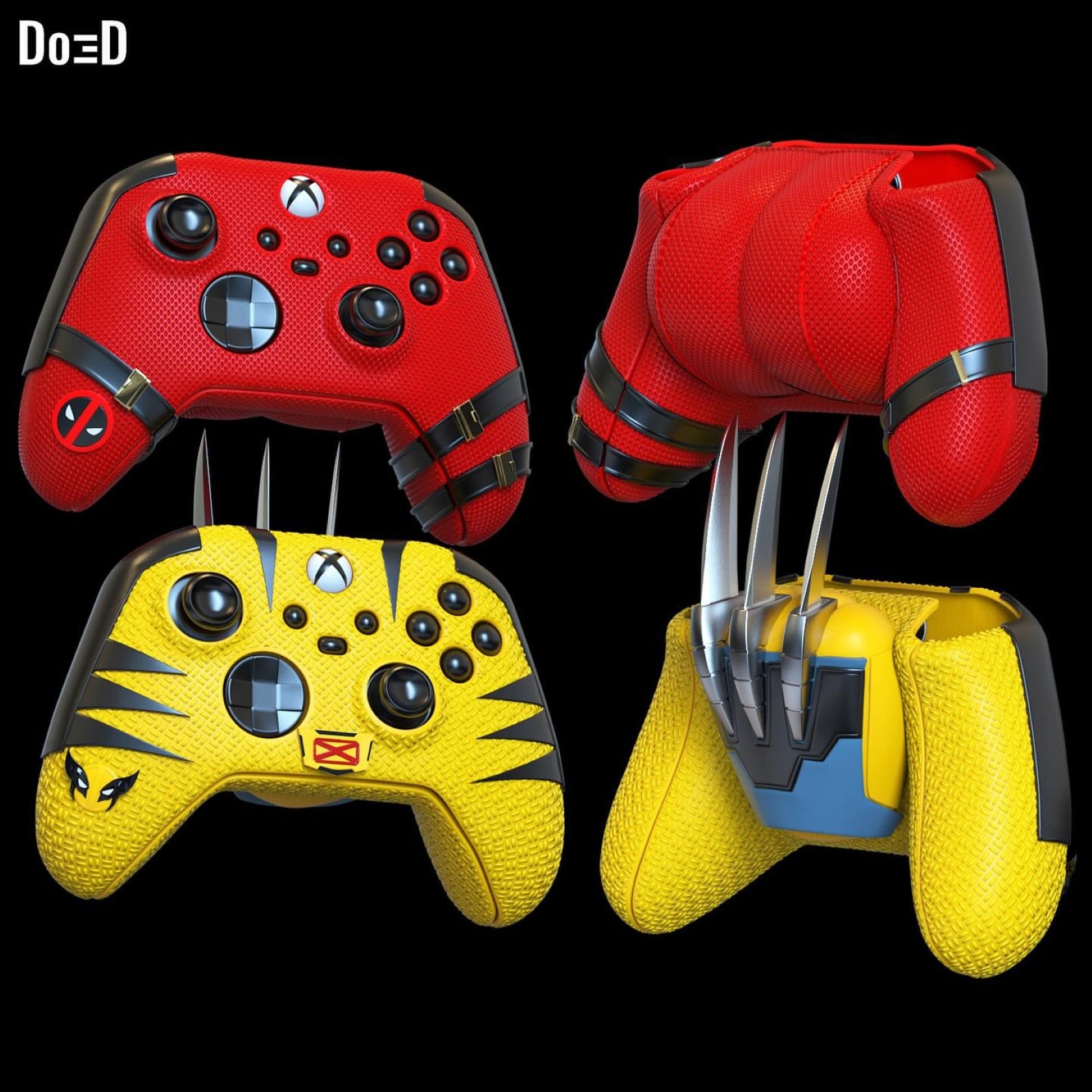
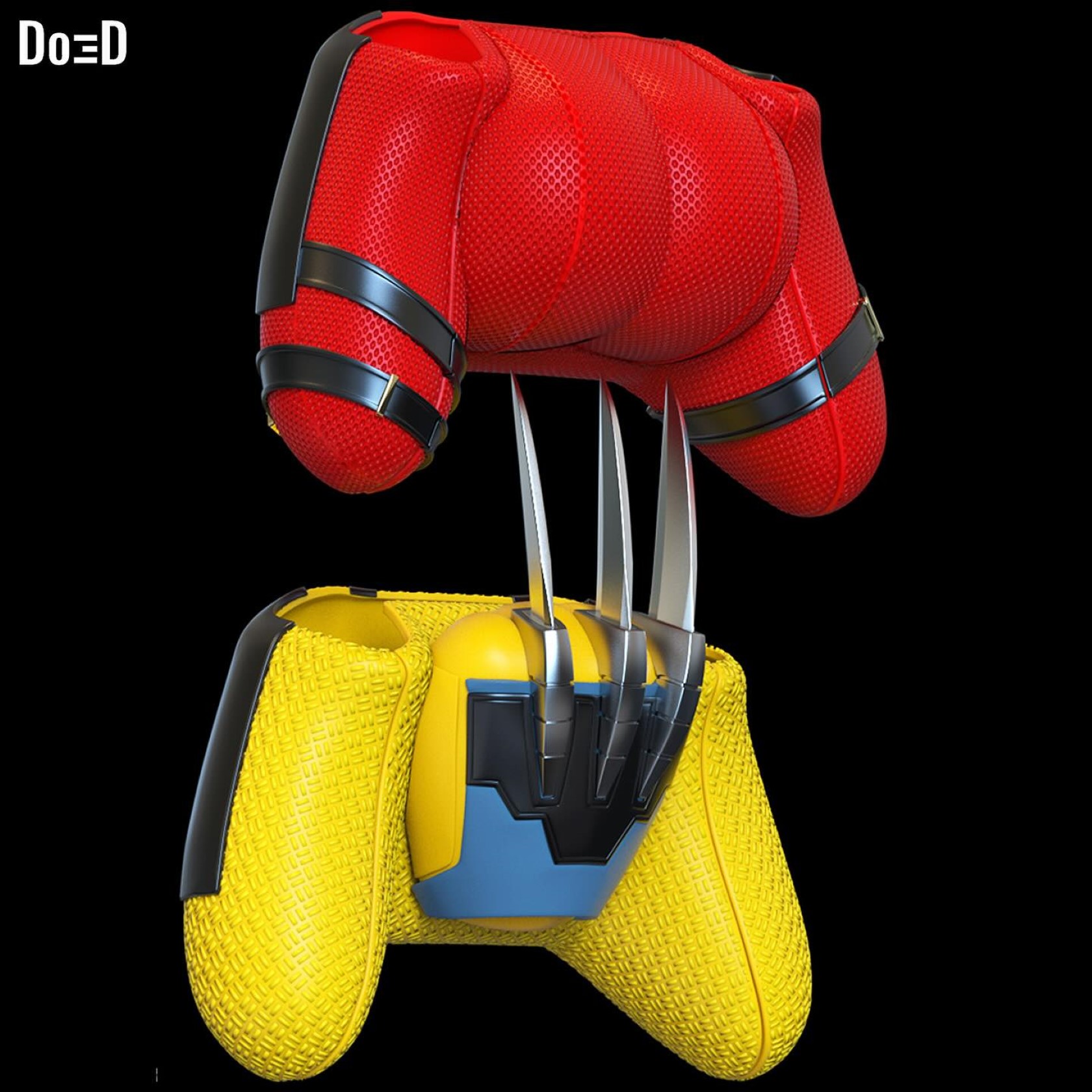
Just last week, Microsoft announced a limited-edition Deadpool-themed Xbox controller with a bright red design and a less-than-conventional ergonomic design, if you know what I mean. Let’s just say that biblically accurate controller had curves in all the right places, and was exactly as hilariously audacious as its inspiration, the merc with a mouth. The biggest problem was that the controller was limited to just 2 units, which would be gifted to the winner of a Twitter (or X) competition… and the second biggest was that there wasn’t a Wolverine controller to match. However, 3D artists at Do3D have solutions for both of those problems.

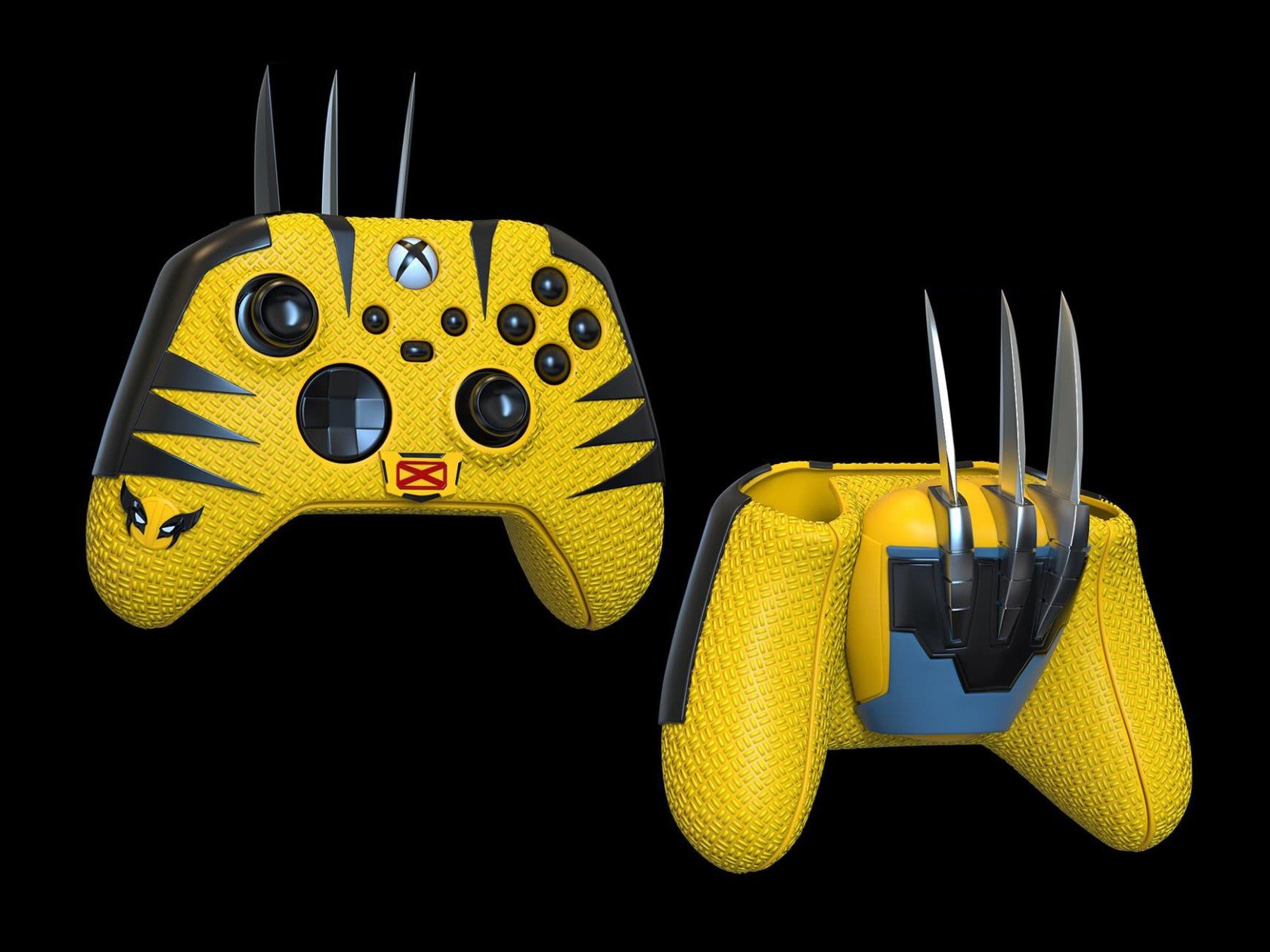
Meet the unofficial Wolverine Xbox Controller, complete with a yellow body and even three Adamantium claws appearing outward from behind the controller. Designed to pair perfectly with its Deadpool counterpart, this controller actually comes as a set of 3D files you can buy and 3D print on your own.

Designer: Do3D

The Wolverine-themed controller augments the controller’s body in a similar way to its Deadpool counterpart. An attachment fixes to the back, providing a themed take on the handheld unit. In Deadpool’s case, it was a rather cheeky little attachment… however, Wolverine’s controller has his signature back-of-the-fist with three Adamantium claws emerging from within. The attachment is purely cosmetic, and doesn’t affect the grip or gameplay at all. The controller’s body, on the other hand, comes with a diamond plate-inspired texture, along with the wolverine whisker pattern on the front in black.

The controller isn’t available as is, but Do3D is selling detailed 3D files for those looking to print the parts. Once printed (and painted), you can simply disassemble the outer plastic housing of your existing Xbox controller and replace it with this one, provided the print is 100% accurate and without any errors or flaws. We recommend going for ABS, known for its durability… but a PLA filament should work just as well too. You may have to do some additional spray-painting work to make the controller look exactly as shown in the renders here.

The best part is that Do3D is even selling an unofficial version of Microsoft’s Deadpool controller, which you can similarly buy and 3D print. Both the Deadpool and Wolverine controllers can be used with or without their magnetic attachments, and while individual files cost $19, you can buy the combo for just $29 on Do3D’s website and print as many controllers as your heart desires.

The post Wolverine-themed Xbox Controller with Claws pairs perfectly with its ‘Cheeky’ Deadpool counterpart first appeared on Yanko Design.

ThermoWorks’ RFX Meat wireless probe uses radio waves instead of Bluetooth to monitor food on the grill

Wireless food probes are some the best grilling gear for keeping tabs on meat and other items while cooking. You don't have to dodge cords when you're flipping a steak or trying to wrap a brisket. Several companies make these, Traeger-owned Meater being one example, but existing products rely solely on Bluetooth and have ambient temperature sensors that may not be the most accurate. ThermoWorks, the company that's known for its Thermapen instant-read thermometers, has officially announced its take on the wireless meat probe: the RFX Meat

Like ThermoWorks' more robust grill and smoker temperature-tracking devices, the RFX Meat uses radio technology to transmit data rather than Bluetooth. The company explains that its "patent-pending sub-GHz RFX wireless technology" provides a more reliable connection with up to 2,132 feet of direct line of sight range. When placed inside a grill or smoker, ThermoWorks promises up to 659 feet of range. Similar to the competition, the RFX Meat has four internal sensors that provide an accurate measure of food temps with 0.9-degree accuracy between 14 and 212 degrees Fahrenheit. This probe is also IP69K rated, so it's safe to use for deep frying and sous vide. Plus, it can withstand temperatures of up 1,000 degrees Fahrenheit, which makes it well-suited for high-heat searing, and you can stick in in the dishwasher when you're done. 

Since the RFX Meat utilizes radio frequency and not Bluetooth, you'll need a RFX Gateway receiver to use it. This small device sends cooking data to ThermoWorks Cloud when it's connected to WiFi, or it can be used offline with your phone via Bluetooth. Either way, you get timely updates on your phone to keep tabs on meat and other foods. And when the RFX Gateway is connected to WiFi, you can monitor what's on the grill or smoker from anywhere. The RFX Gateway is also capable of handling readings for up to 70 RFX Meat probes at once. 

ThermoWorks RFX Meat being uses to sear steaks on a grill.
ThermoWorks

Most of these wireless probes come with a charging dock that doubles as a Bluetooth transmitter. RFX Meat resides in one of these (minus the Bluetooth), and ThermoWorks says you can get over 50 hours of use with a 10-minute charge. The dock uses a single AAA battery which should be enough for over 175 full charges, according to the company. 

One thing the RFX Meat doesn't have is a built-in ambient temperature sensor. Meater's products, for example, have one situated at the far end of its wireless probes. But, ThermoWorks argues this component doesn't provide accurate readings. Due to the fact that it's close to cold meat at the start or in an evaporative cooling zone around food, a built-in ambient temperature sensor can't accurately keep tabs on the grill, according to the company. So, ThermoWorks devised a solution that uses a wired Pro-Series Air Probe from its other products that plugs into the RFX Gateway. Since this probe is only monitoring grill or smoker temps and can be placed out of the way, it's not as essential that it be wireless. 

The RFX Meat starter kit is available for preorder today for $159. That price includes the RFX Meat probe, the RFX Gateway and a Pro-Series Air Probe. The same bundle with four RFX Meat probes is $349 and individual probes are $89. You can also purchase the RFX Gateway for $79, which comes with a Pro-Series Air Probe. ThermoWorks says it will start shipping the grilling devices on September 10th. 

This article originally appeared on Engadget at https://www.engadget.com/thermoworks-rfx-meat-wireless-probe-uses-radio-waves-instead-of-bluetooth-to-monitor-food-on-the-grill-183446728.html?src=rss

Warner Bros. has bought the developer behind its MultiVersus brawler

Warner Bros. just announced the acquisition of Player First Games, the developer behind the popular free-to-play platform fighter MultiVersus. This makes a whole lot of sense as the hit Smash Bros-esque brawler pulls its entire roster from WB properties. The game includes characters like Batman, Bugs Bunny, Agent Smith from The Matrix and, of course, both Rick and Morty.

It doesn’t look like much will change with regard to the day-to-day workings of Player First Games. Co-founders Tony Huynh and Chris White will still lead the company, though the pair will report to Carlos Barbosa, Vice President and Studio Head of Warner Bros. Games.

Huynh says the team is excited about the acquisition and that it should “be great for MultiVersus overall.” There has been no announcement as to what comes next for the fighting game. However, Player First regularly drops new characters into the roster, so this will likely continue. I for one would like to beat up Tom and Jerry as Tony Soprano. Make it happen WB.

MultiVersus is available now on just about every platform out there, including PS5, PS4, Xbox One, Xbox Series X/S and PC. Even better? There’s crossplay between platforms. The game isn’t available for the Nintendo Switch just yet, but maybe that’ll change whenever the Switch 2 makes its grand entrance.

This article originally appeared on Engadget at https://www.engadget.com/warner-bros-has-bought-the-developer-behind-its-multiversus-brawler-180355445.html?src=rss

EU officials say Meta may be violating consumer laws with paid ‘ad-free’ plan

The European Commission really isn't happy about a Meta business model that gives users in the EU, European Economic Area and Switzerland the generous choice of continuing to use Facebook and Instagram with targeted ads without paying anything, or signing up for a monthly subscription that's said to offer an ad-free experience.

Officials from the Consumer Protection Cooperation (CPC) Network — a group of national authorities that enforce EU consumer protection laws — have suggested that Meta may be violating consumer legislation with the "pay or consent" approach. The Commission, which is the European Union's executive arm, coordinated the group's action against Meta.

The CPC Network sent Meta a letter laying out numerous ways in which it believes the company may be violating consumer laws. The company has until September 1 to reply and propose solutions to officials' concerns. If CPC officials find that Meta doesn't take appropriate steps to solve the problems, they could take enforcement actions against the company, which may include sanctions.

CPC authorities have suggested that Meta is misleading users by describing its platforms as free to use if they opt not to pay for a subscription, when Meta in fact monetizes their personal data by displaying targeted ads. They further say that Meta is "confusing users" by requiring them to access different areas of the privacy policy and terms of service to see how their data is being used for personalized ads.

Officials have also taken aim at Meta's "imprecise terms and language" that suggest subscribers will not see ads at all, even though those still might be displayed "when engaging with content shared via Facebook or Instagram by other members of the platform." Furthermore, they claim Meta is pressuring users who have long used Facebook and Instagram without forking over any payment "to make an immediate choice, without giving them a pre-warning, sufficient time and a real opportunity to assess how that choice might affect their contractual relationship with Meta, by not letting them access their accounts before making their choice."

Meta introduced its "pay or consent" options last year in an attempt to comply with the EU's data protection laws while maintaining its advertising model. CPC officials say they are concerned that "many consumers might have been exposed to undue pressure to choose rapidly" between consenting to data collection or paying a monthly fee, "fearing that they would instantly lose access to their accounts and their network of contacts."

This action is separate from other investigations the EU is carrying out against Meta over the "pay or consent" model. Earlier this month, the EU said Meta had potentially breached the Digital Markets Act with this approach. If found guilty, Meta could be on the hook for a fine of up to 10 percent of its global annual revenue.

In addition, the Commission requested more information from the company in March about the "pay or consent" model under the Digital Services Act, another law the bloc designed to keep the power of major tech companies in check. Not only that, consumer rights groups have filed complaints arguing that the approach violates the EU's General Data Protection Regulation.

This article originally appeared on Engadget at https://www.engadget.com/eu-officials-say-meta-may-be-violating-consumer-laws-with-paid-ad-free-plan-175834177.html?src=rss

Hyundai Ioniq 5 N First Drive Review: The Ultimate Blend of Performance and Style

Welcome to Mobile Monday! Today, we’re shifting gears to explore a larger “mobile” experience—one on the road rather than in our hands. We’re diving into the world of high-performance electric vehicles with Hyundai’s Ioniq 5 N. This car seamlessly merges high performance with everyday practicality, setting a new benchmark for electric vehicles. It shines on the racetrack and excels in daily use, making it a standout in the electric vehicle market. Its design reflects a bold, forward-thinking approach, combining cutting-edge technology with sleek, modern aesthetics. Integrating advanced driver-assistance systems and customizable driving modes ensures that the Ioniq 5 N can adapt to various driving conditions, offering a versatile experience. Moreover, Hyundai’s commitment to sustainability and performance is evident in every aspect of this vehicle, from its powerful electric motors to its aerodynamic design features.

Designer: Hyundai

Exterior and Interior Design
Hyundai IONIQ 5 N

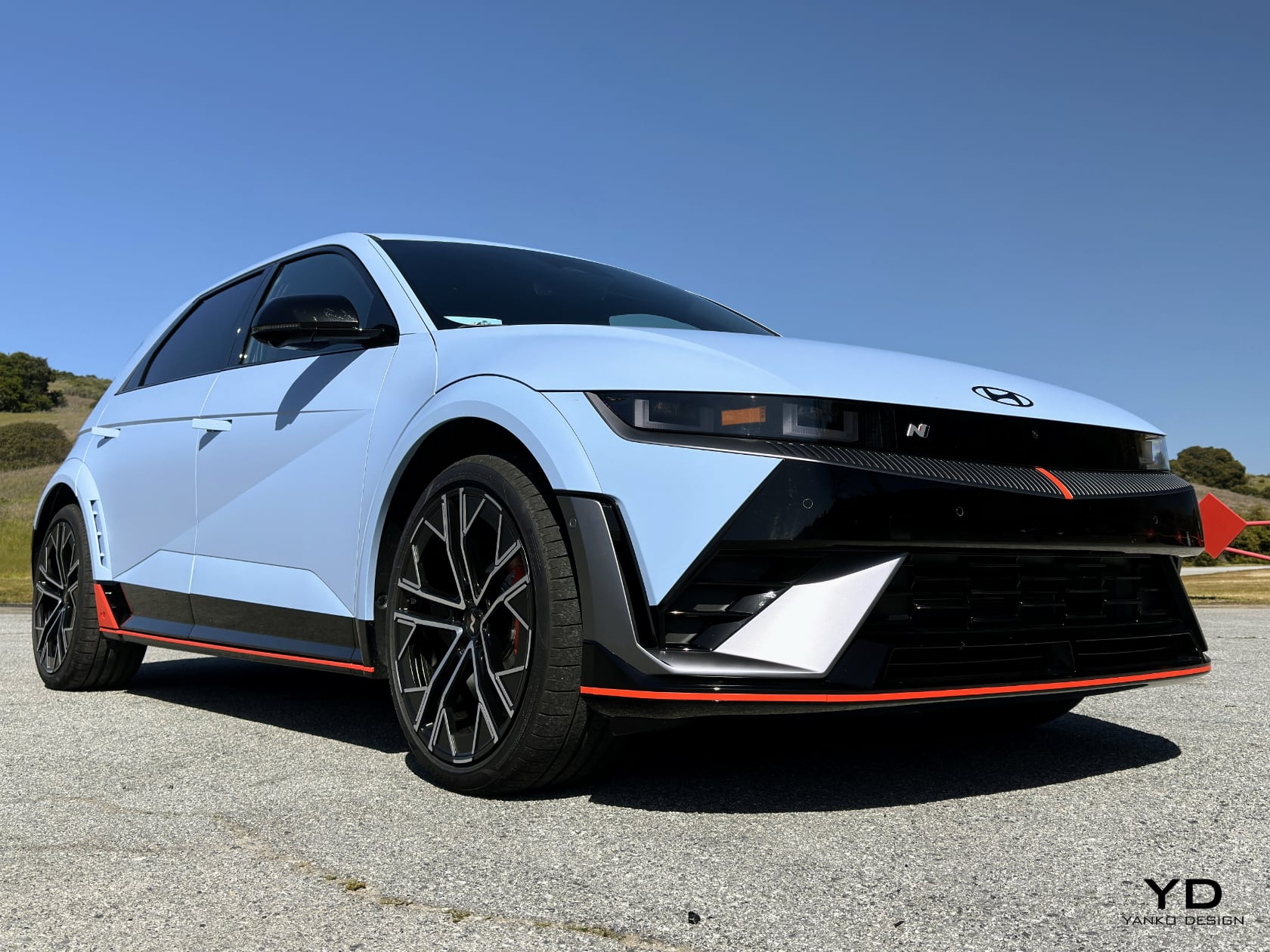
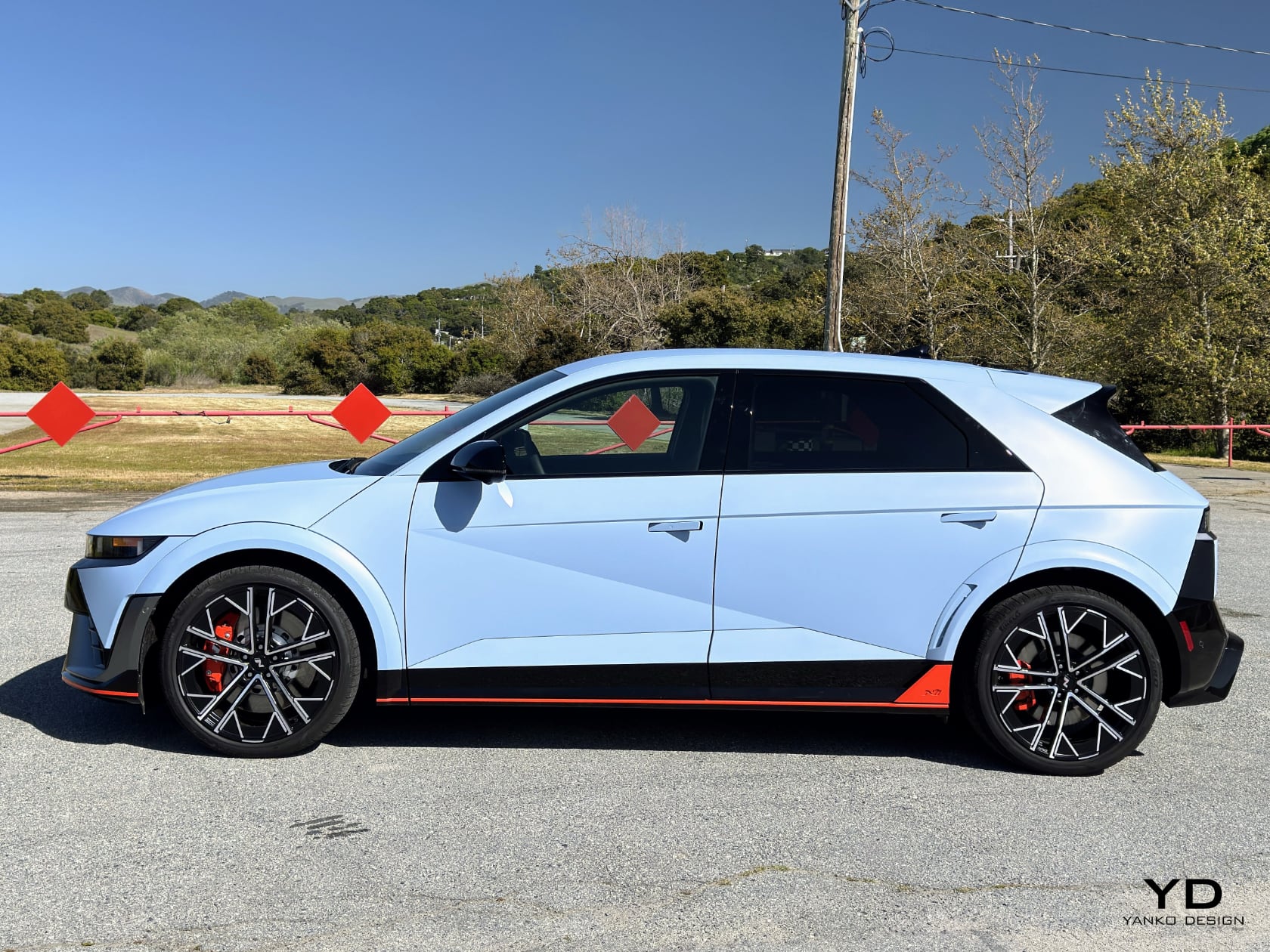
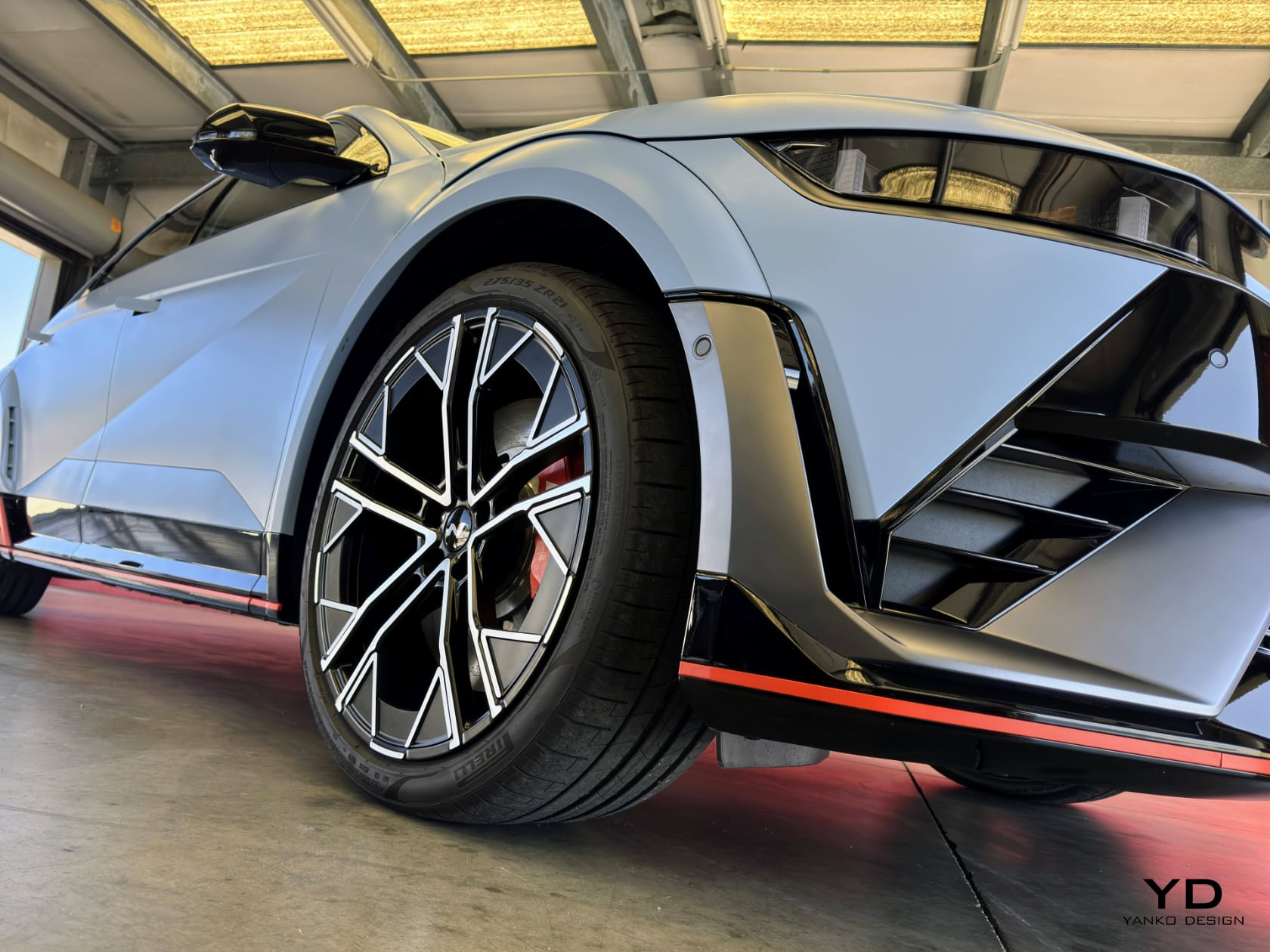
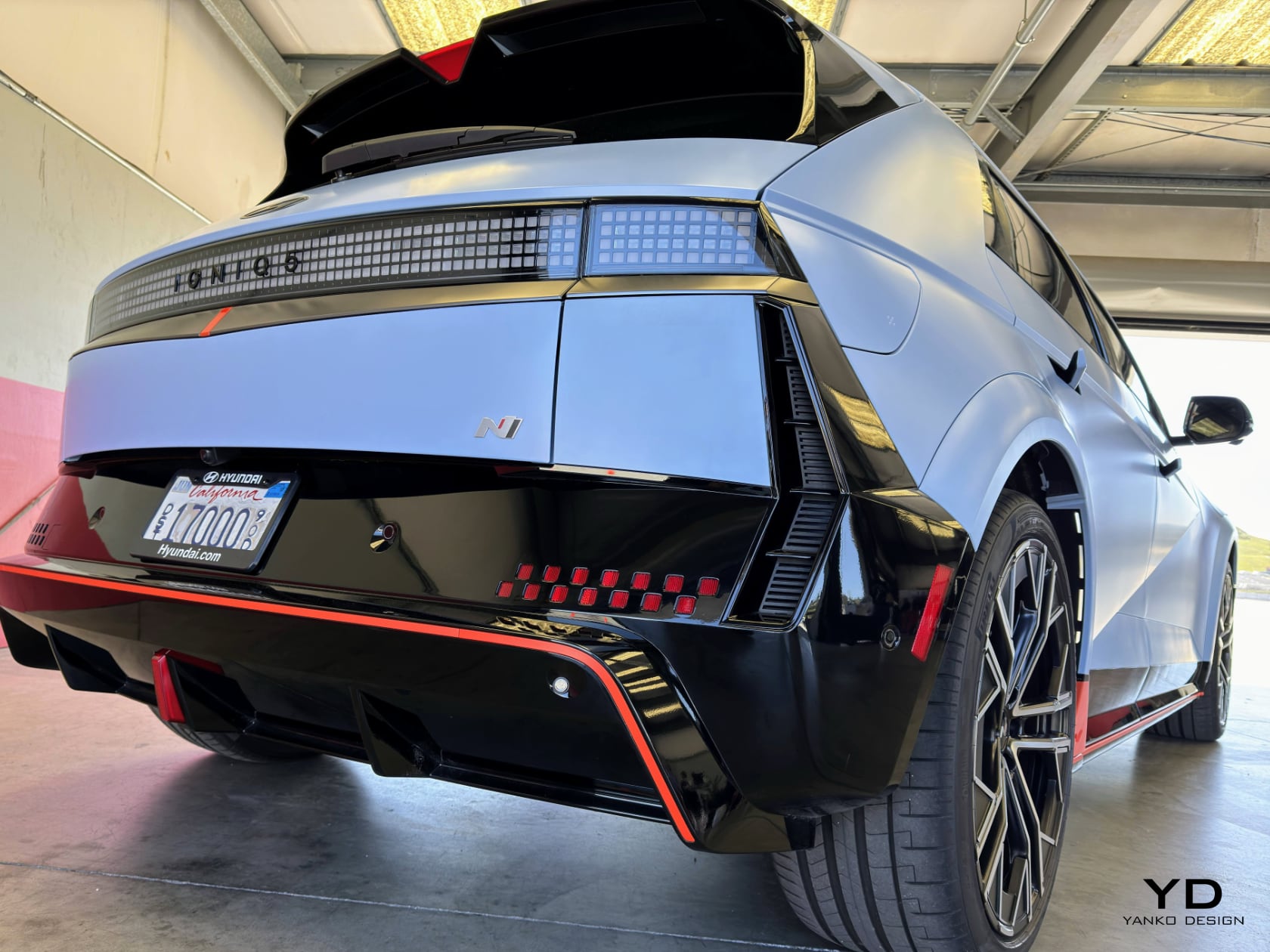
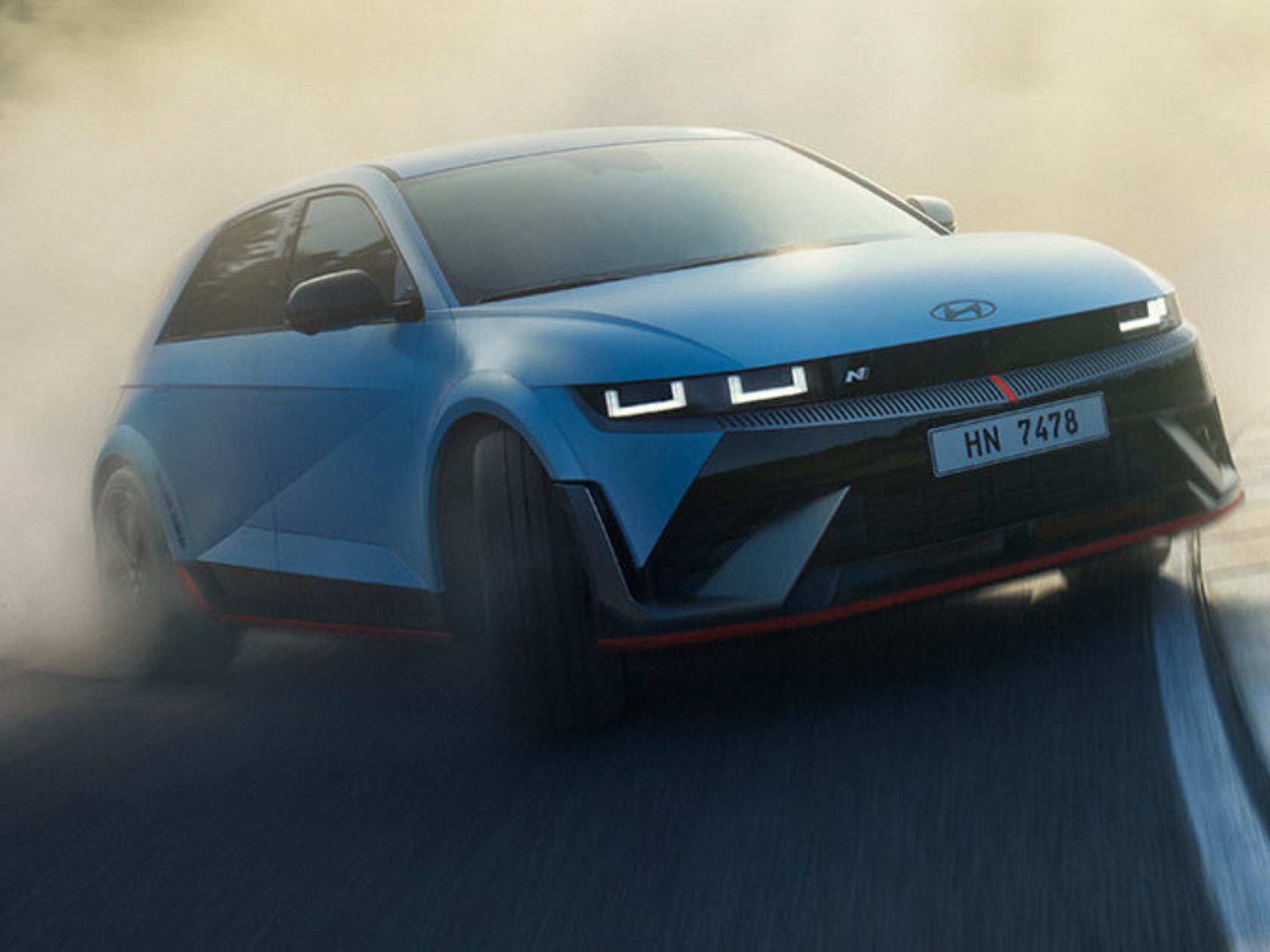
The Ioniq 5 N boasts a sleek, aggressive design that combines style and functionality. Its bold, open front grille enhances cooling, while active air flaps and air curtains improve aerodynamics. The car’s wider stance, complemented by pronounced fender flares, houses larger 21-inch forged wheels with 275mm tires, offering superior grip and stability. A larger rear spoiler and rear diffuser enhance the vehicle’s sporty look and contribute to its aerodynamic efficiency. Small touches like dark emblems and a luminous orange strip add to its striking appearance.
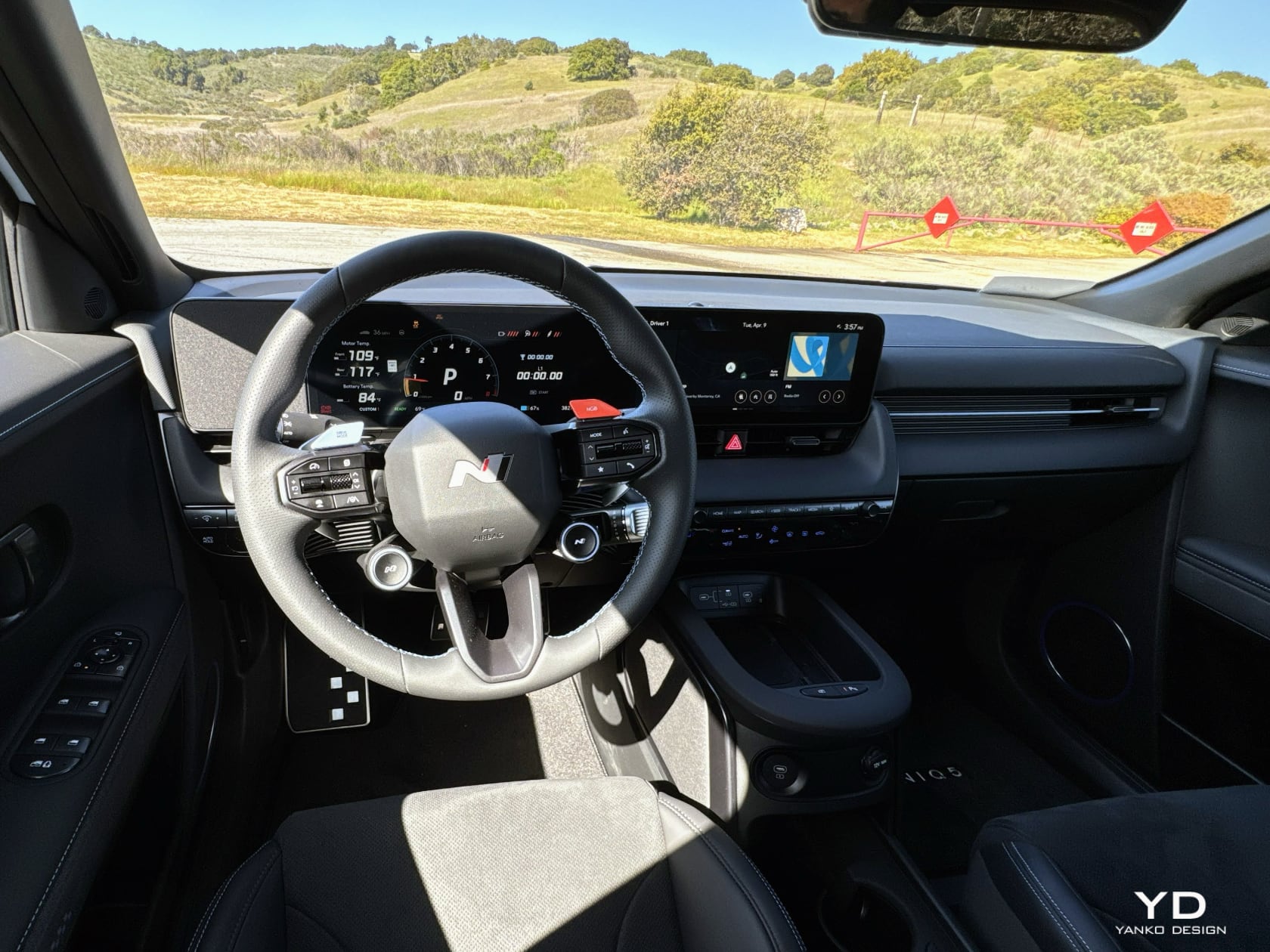
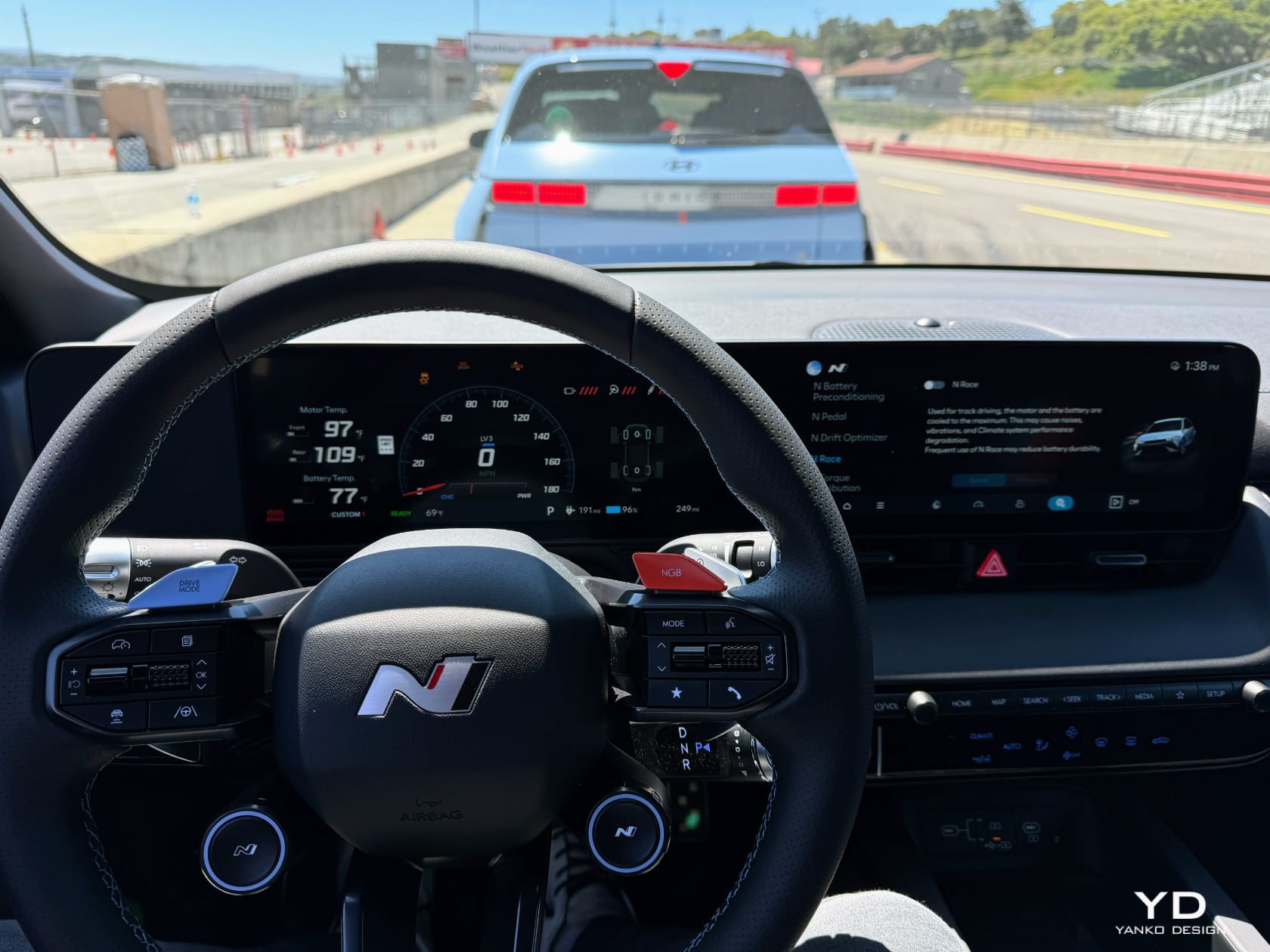
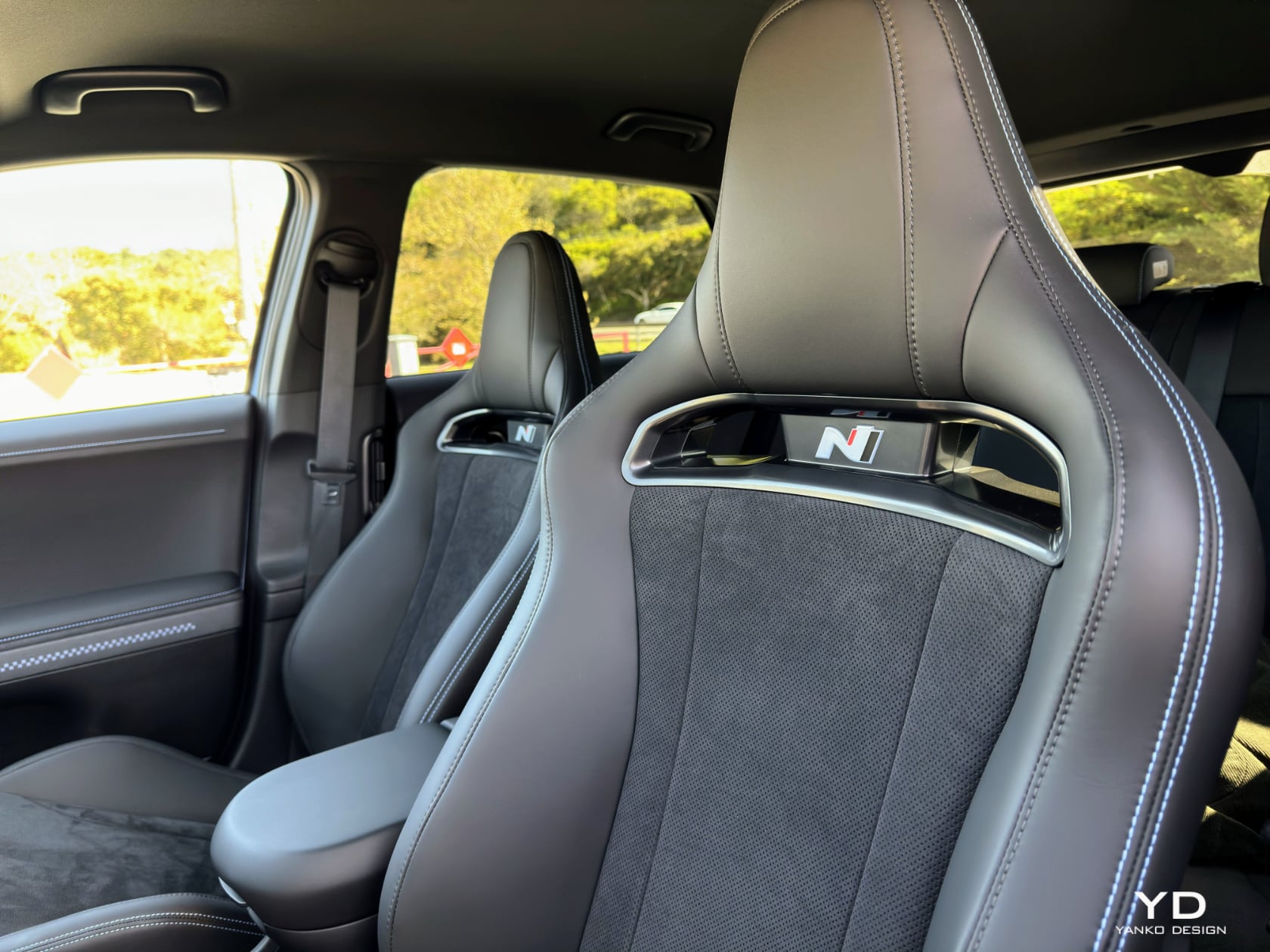
Inside, the Ioniq 5 N features a driver-focused layout with high-quality materials. The specially designed steering wheel includes four focused buttons, such as a boost button and customizable settings, allowing drivers to tailor the vehicle’s performance. The bucket seats provide excellent support and sit lower than the standard Ioniq, bringing the driver closer to the road for a more immersive experience. The pedal layout is optimized for performance, with larger brake and footrest pedals for better control.

The interior also includes a fixed center console with ample padding for added support during dynamic driving. This layout combines practicality and comfort, featuring advanced technology with a sporty feel. The digital cockpit provides all necessary information at a glance, ensuring the driver remains focused on the road.
Performance and Customization

Customization is a key feature of the Ioniq 5 N. The vehicle offers various driving modes, allowing drivers to adjust settings like torque distribution and regenerative braking and even simulate gear shifts with the N e-shift feature. These modes enhance the driving experience, providing a tailored feel for different driving conditions. The N e-shift, in particular, mimics the sensation of gear shifting, adding a visceral element to the electric driving experience.
The integration of motorsports DNA into production cars is emphasized, bringing the excitement of motorsports to everyday driving. The Ioniq 5 N exemplifies this synergy, bringing the excitement of motorsports to everyday driving. The electrification of the N models introduces the Ioniq 5 N as the first electrified N model designed to set new standards for high-performance EVs. The three pillars of the N brand—cornering ability, racetrack capability, and everyday sports car usability—are embodied in the Ioniq 5 N, offering an exhilarating driving experience while maintaining practicality and efficiency.
With 601 horsepower and an additional boost mode, the Ioniq 5 N is the most powerful Hyundai ever produced. Extensive design and engineering efforts emphasize precision and optimization for everyday driving and track performance. Design elements such as the steering wheel with dedicated mode buttons, bucket seats, and enhanced pedal layout are all designed to provide a thrilling driving experience.

Comparing the Ioniq 5 N and Ioniq 5 N NPX1

The unveiling of Hyundai’s Ioniq 5 N NPX1 concept at the Tokyo Auto Salon 2024 marks another significant leap in the evolution of high-performance electric vehicles. Based on the Ioniq 5 N, this concept showcases an array of N-specific enhancements designed to push the boundaries of performance and design.
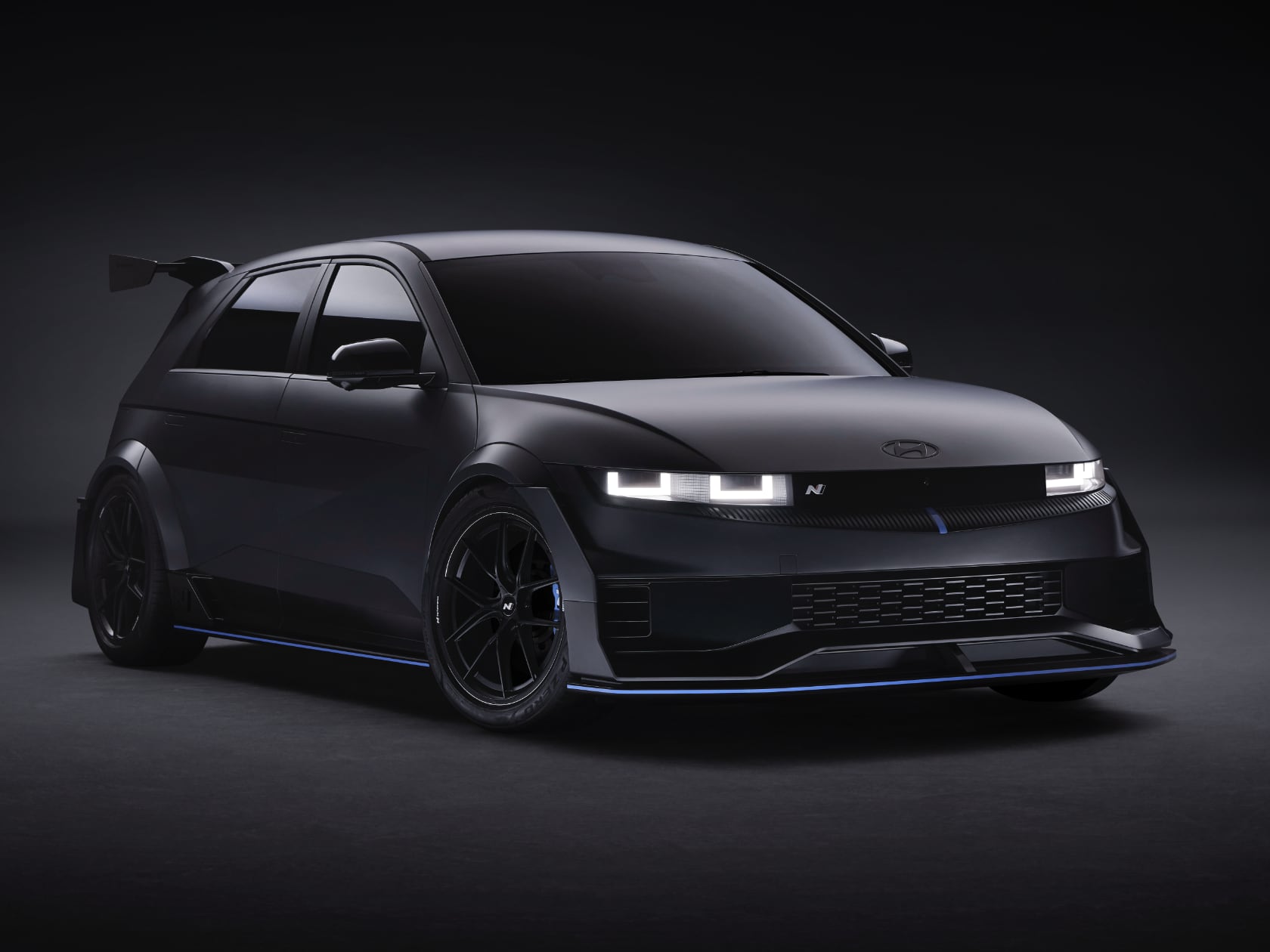
IONIQ 5 N NPX1

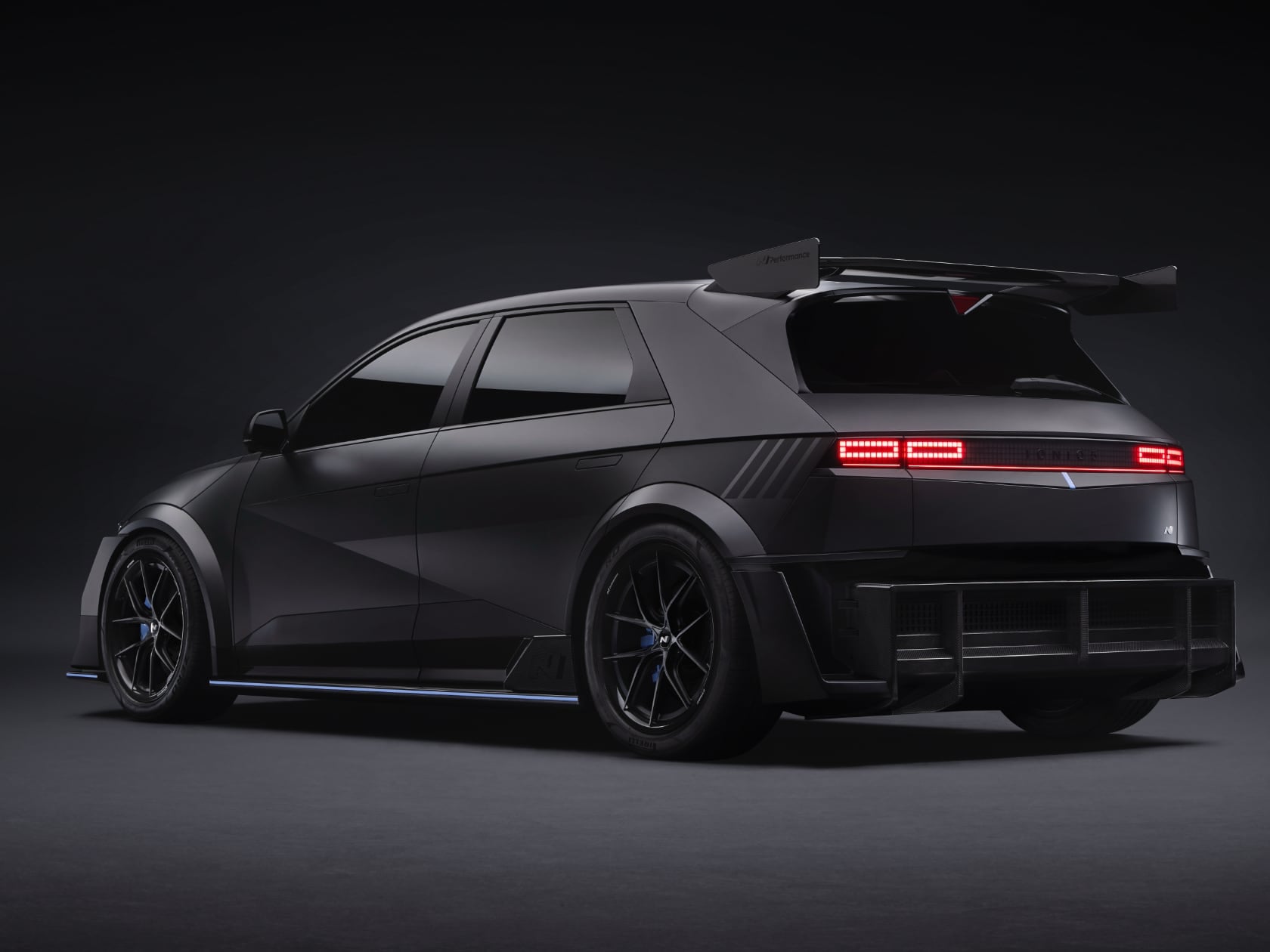
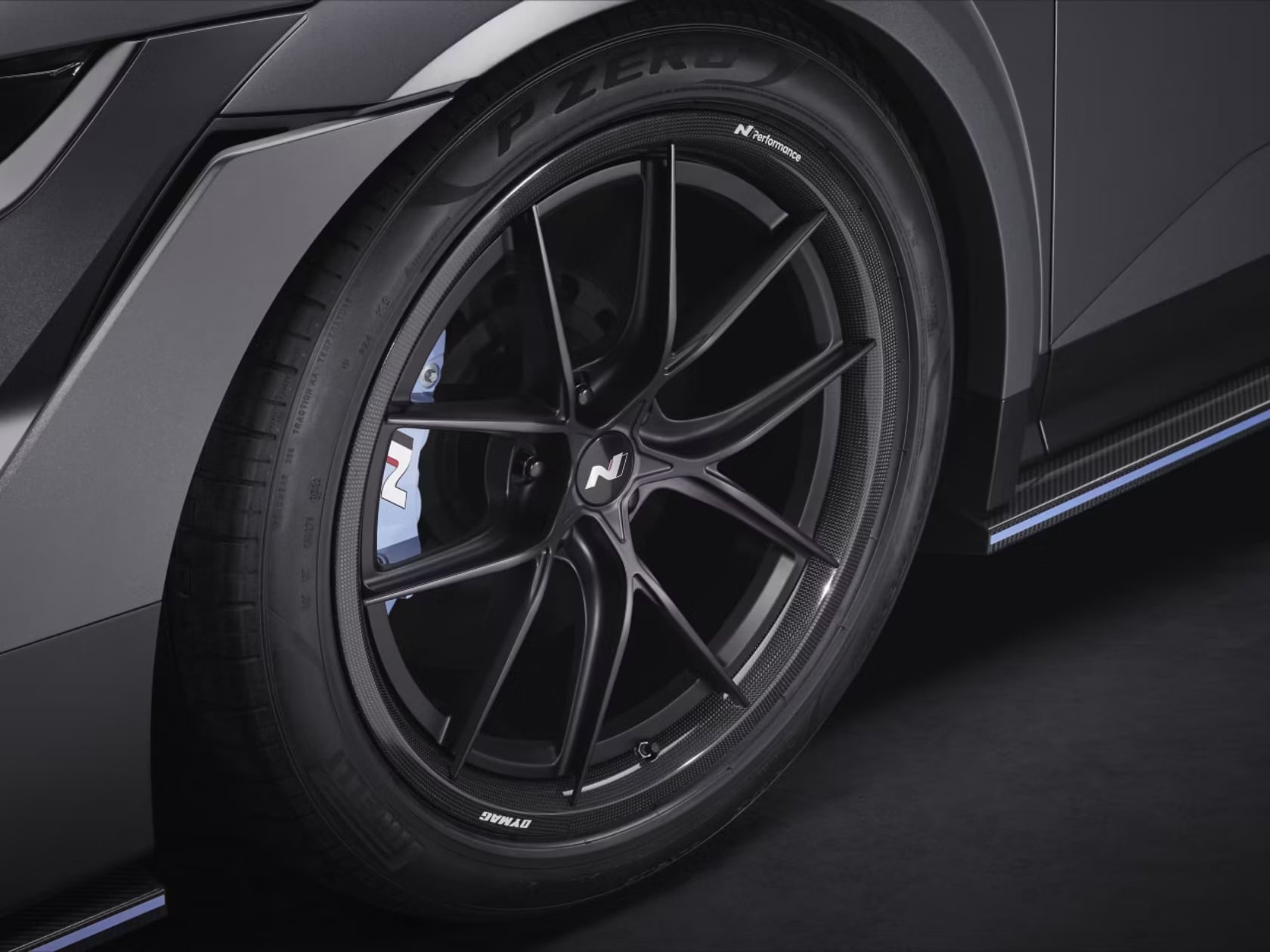
Externally, the Ioniq 5 N NPX1 features carbon fiber components, including a front splitter, side skirts, rear diffuser, and a prominent rear wing spoiler. These elements enhance the vehicle’s aggressive aesthetics and contribute to improved aerodynamics and reduced weight. The concept’s lightweight hybrid carbon wheels further reduce unsprung mass, improving handling and acceleration. The high-performance brake pads and down springs enhance braking efficiency and driving dynamics.
Inside, the NPX1 concept continues its high-performance theme with luxurious Alcantara material, providing a premium feel and improved grip for the driver. The steering wheel, a central control hub, features dedicated buttons for customized performance settings, allowing drivers to tailor their driving experience.
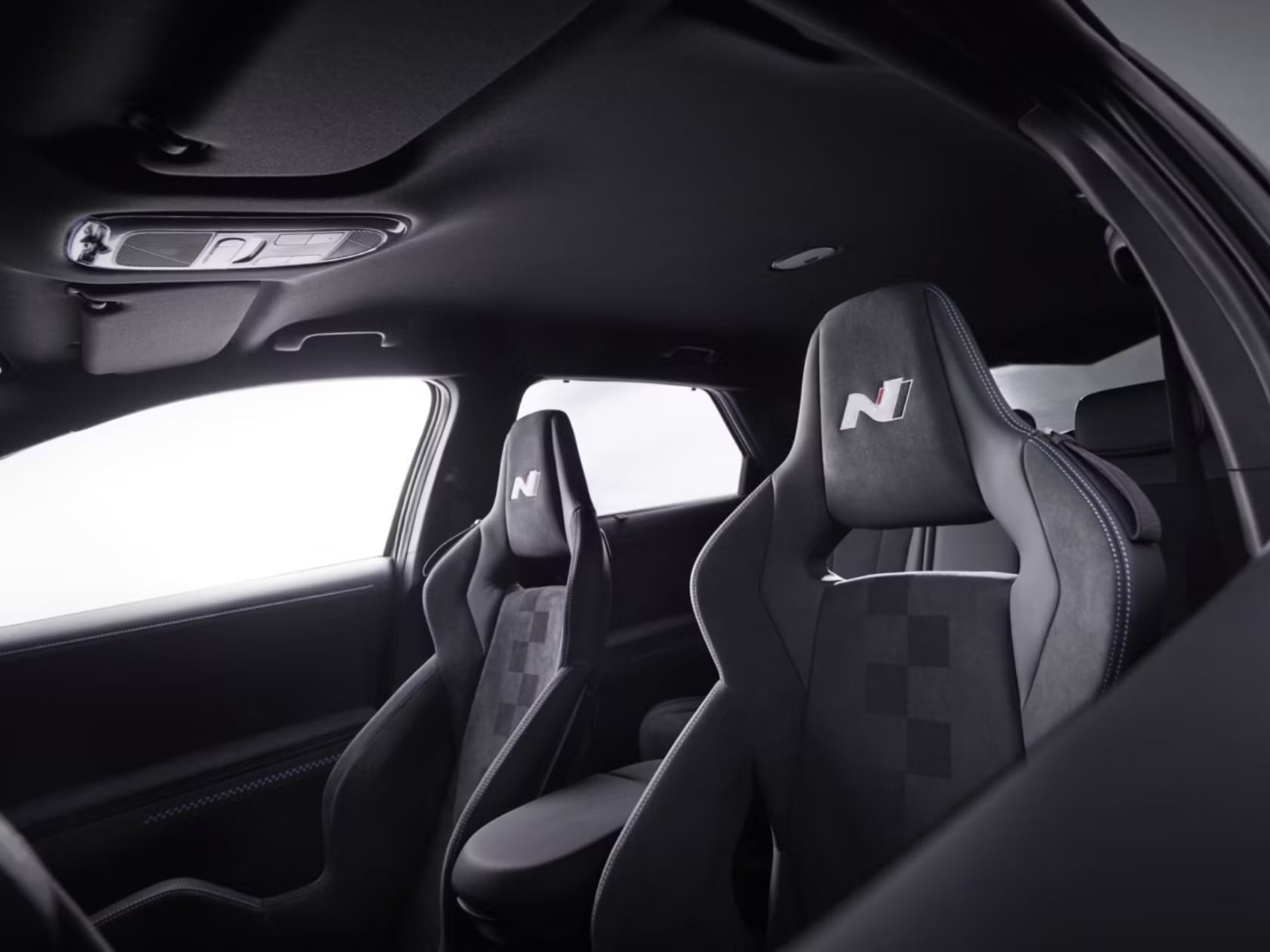
IONIQ 5 N NPX1 Interior

Comparing the Ioniq 5 N and the Ioniq 5 N NPX1 reveals striking similarities and notable advancements. Both models share the same underlying platform and high-performance ethos. However, the NPX1 elevates this foundation with exclusive N Performance Parts that will soon be available for purchase. Using real carbon fiber and hybrid materials in the NPX1 emphasizes Hyundai’s commitment to innovation and performance.
While already a high-performance vehicle, the Ioniq 5 N is designed for everyday usability. It offers a refined interior with practical features like advanced driver-assistance systems and Hyundai Pay for seamless transactions. The NPX1, however, is a more focused iteration designed to showcase the future of N Performance enhancements. It incorporates race-inspired components that not only improve performance but also offer a preview of what customers can expect from Hyundai’s tuning parts in the near future.
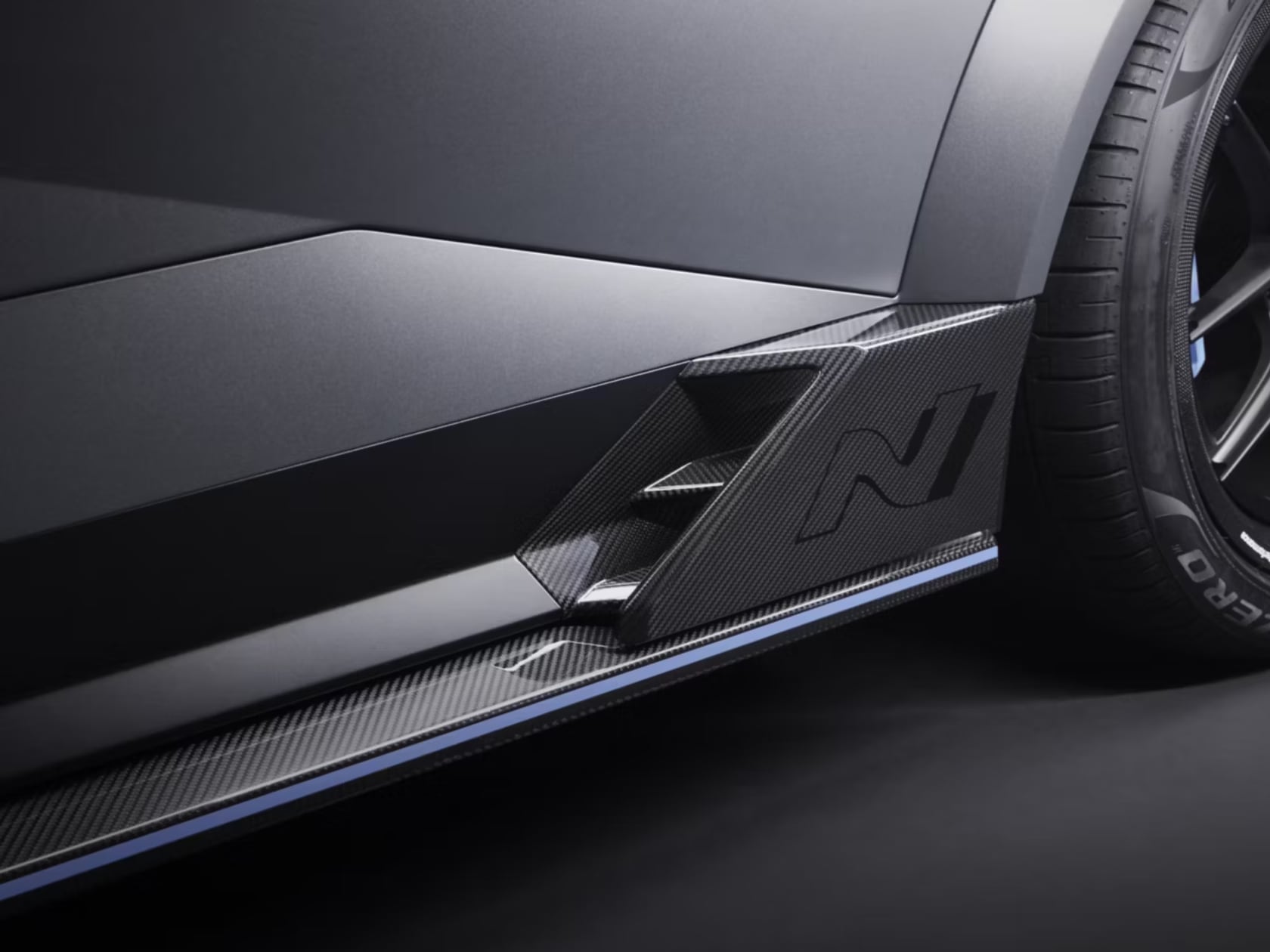
Both vehicles emphasize a balance between performance and practicality. The Ioniq 5 N provides the thrill of a sports car while remaining practical for daily use. Its adjustable driving modes and high-performance features make it versatile for different driving conditions. The NPX1, on the other hand, is a showcase of potential, pushing the envelope of what an electric vehicle can achieve with the right enhancements.

The NPX1’s carbon fiber additions are more than just aesthetic. The front splitter, side skirts, rear diffuser, and rear wing spoiler all play crucial roles in improving the car’s aerodynamic profile and reducing weight. These enhancements ensure that the NPX1 looks the part and performs at the highest level. The lightweight hybrid carbon wheels are a significant upgrade, offering better performance and efficiency.
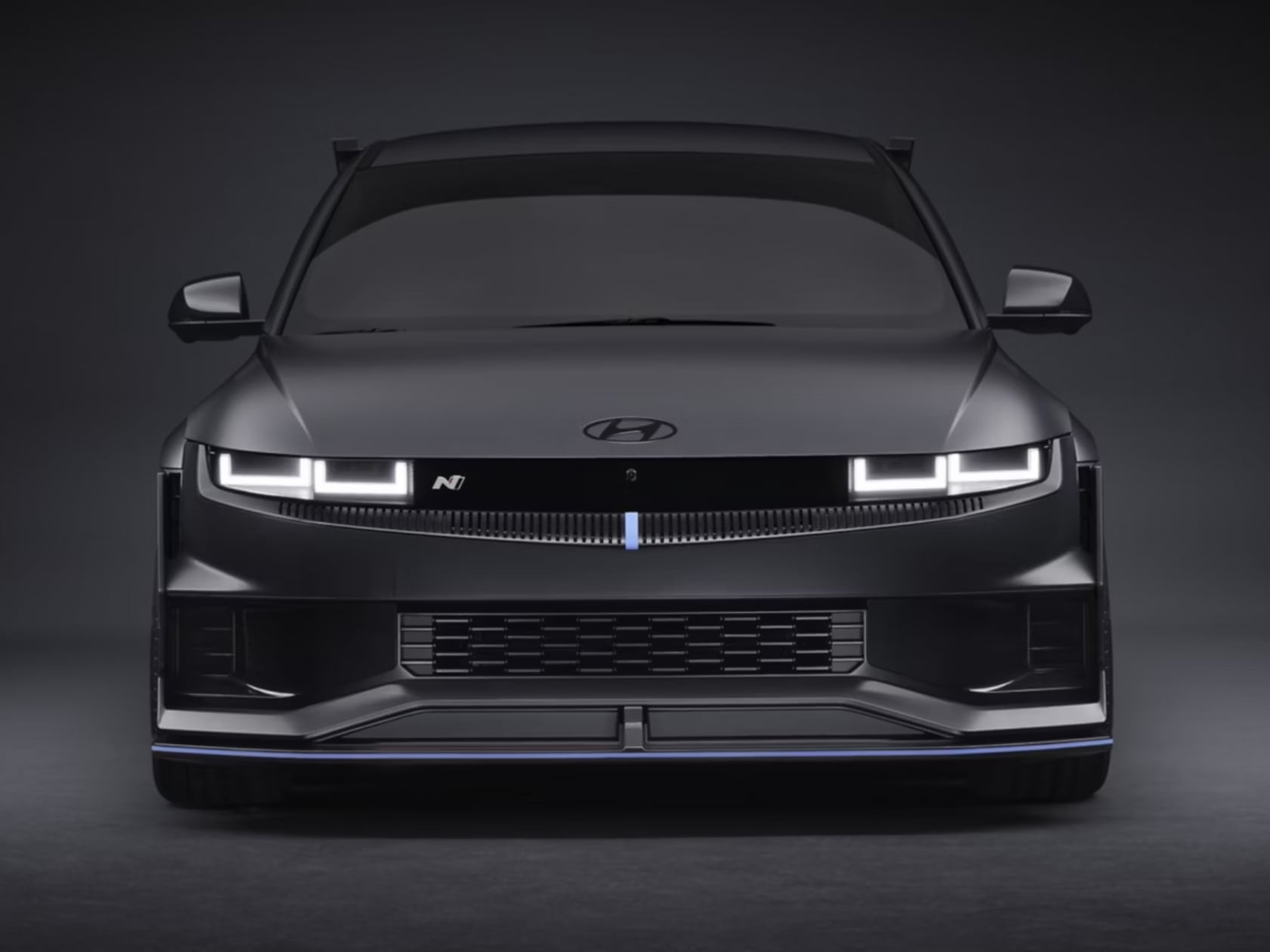
The NPX1’s interior enhancements, with its use of Alcantara and metal accents, provide a more immersive and luxurious driving experience. These materials are not just about looks; they also contribute to the overall driving dynamics by offering better grip and comfort. The metal door scuffs add a layer of durability, ensuring that the interior can withstand the rigors of high-performance driving.

Ioniq 5 N eN1 Cup Car
Ioniq 5 N eN1 Cup Car

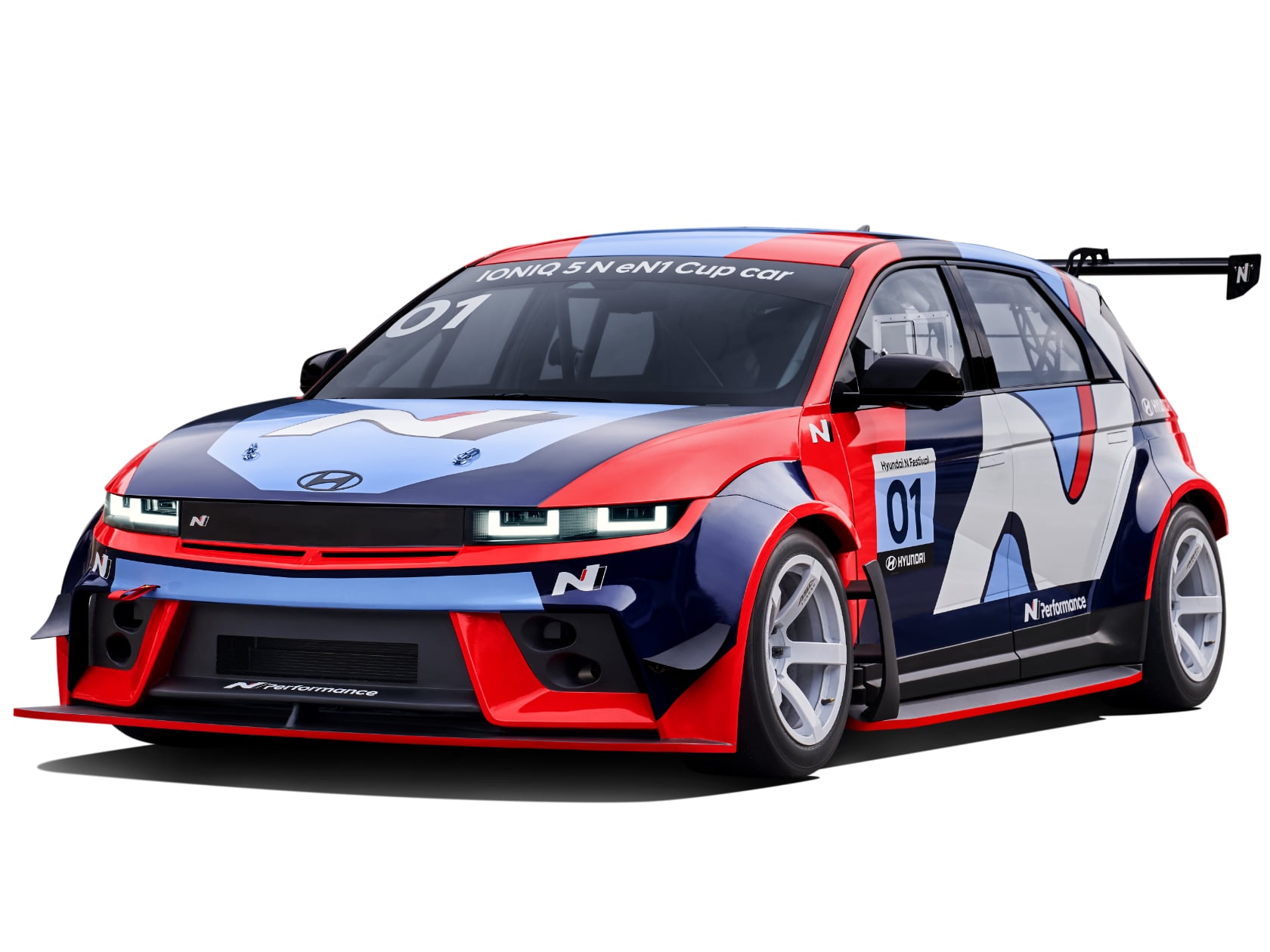
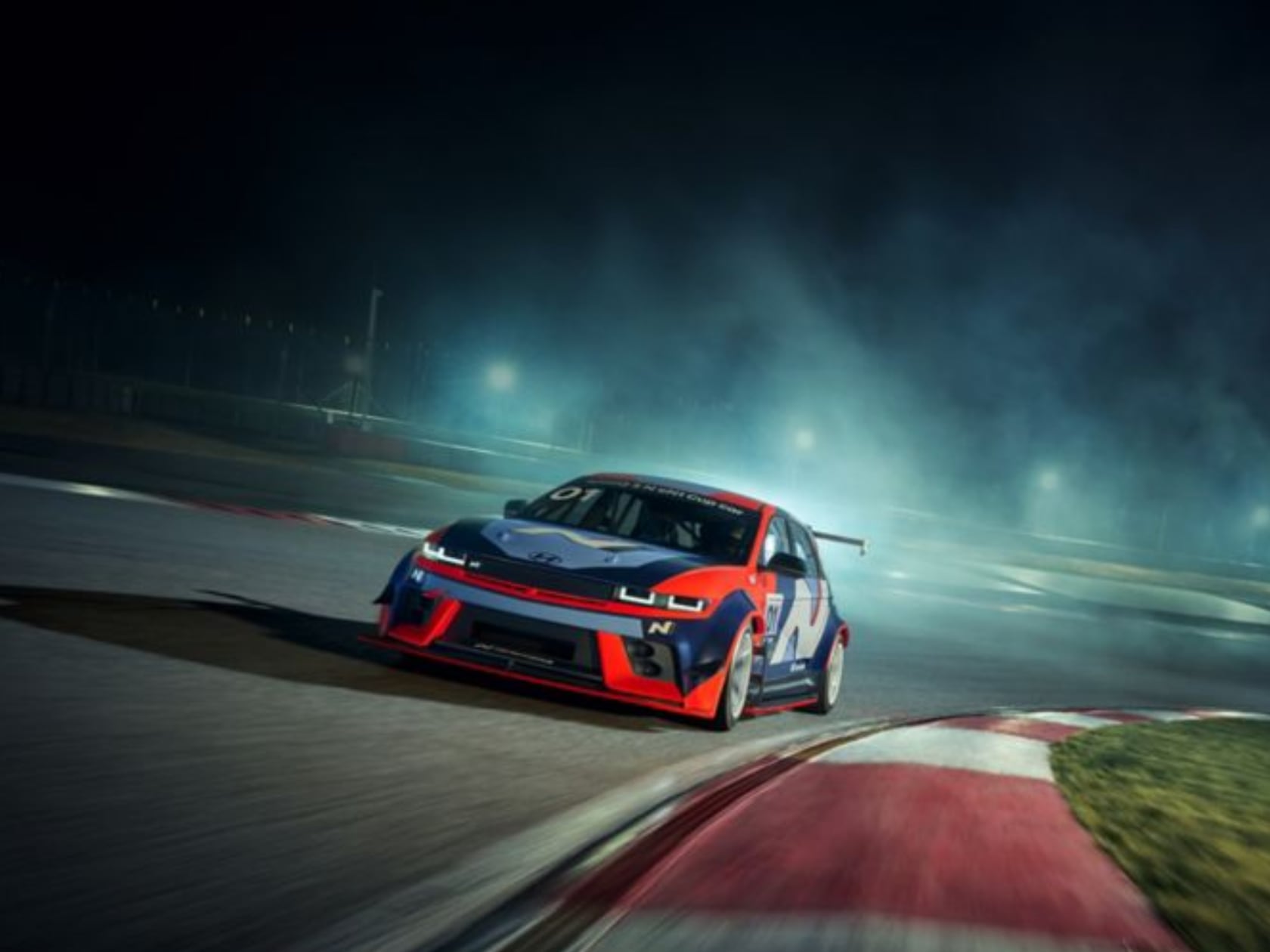
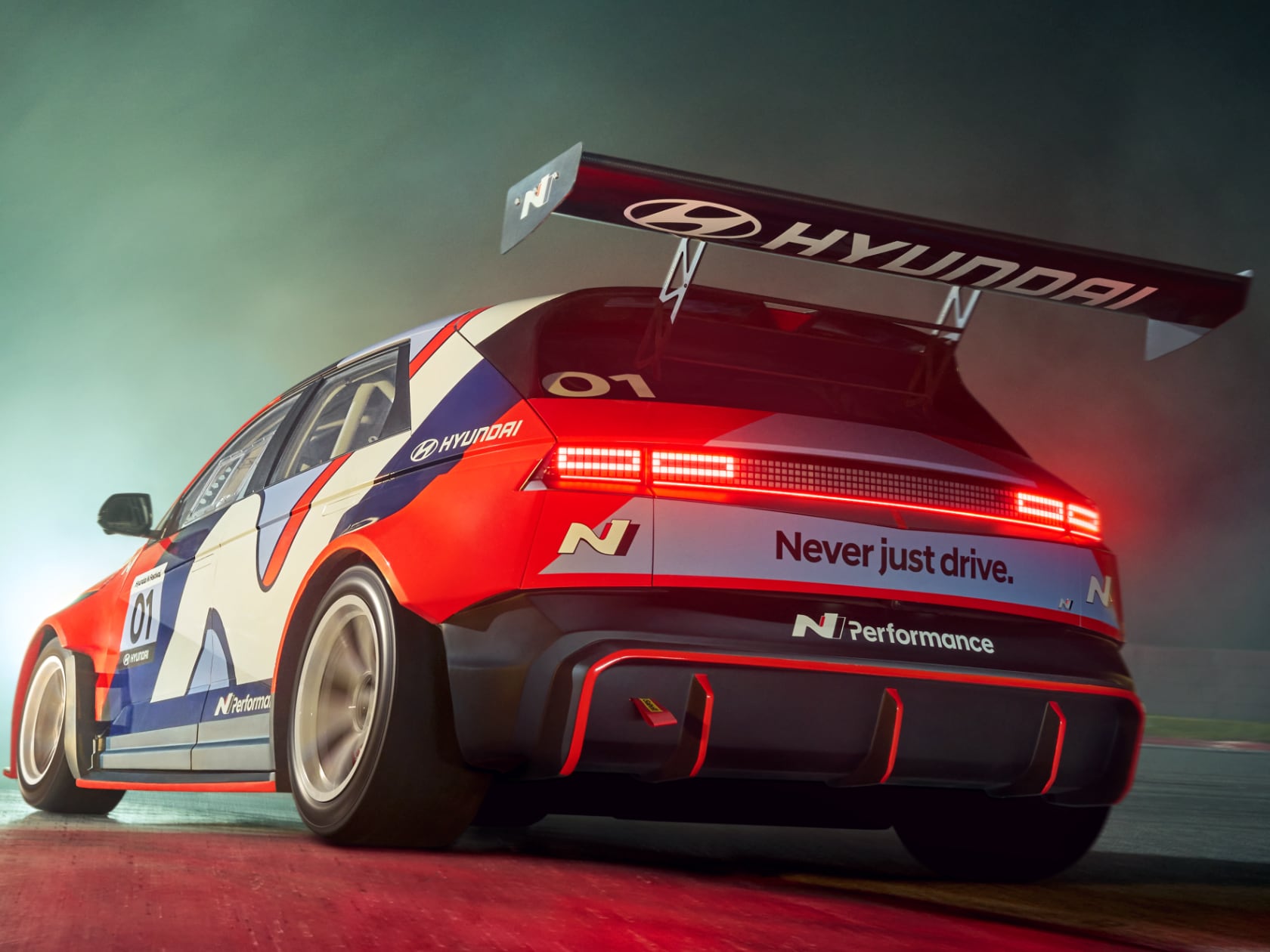
The introduction of the Ioniq 5 N eN1 Cup car marked a significant milestone. This dedicated race car, developed for the eN1 Cup series, demonstrates Hyundai’s commitment to pushing the boundaries of electric motorsports. The car features numerous technical enhancements and modifications for racing, maintaining the core EV system while optimizing for performance. This connection between motorsports and production vehicles underscores the N brand’s focus on delivering youthful excitement and high performance.
Ioniq 5 N eN1 Cup Car

Externally, the Ioniq 5 N eN1 Cup car includes a wide-body kit and a prominent rear wing to improve aerodynamics and downforce on the track. The interior has essential racing components such as a multi-point roll cage, a bucket seat, and a six-point safety harness for maximum driver safety.
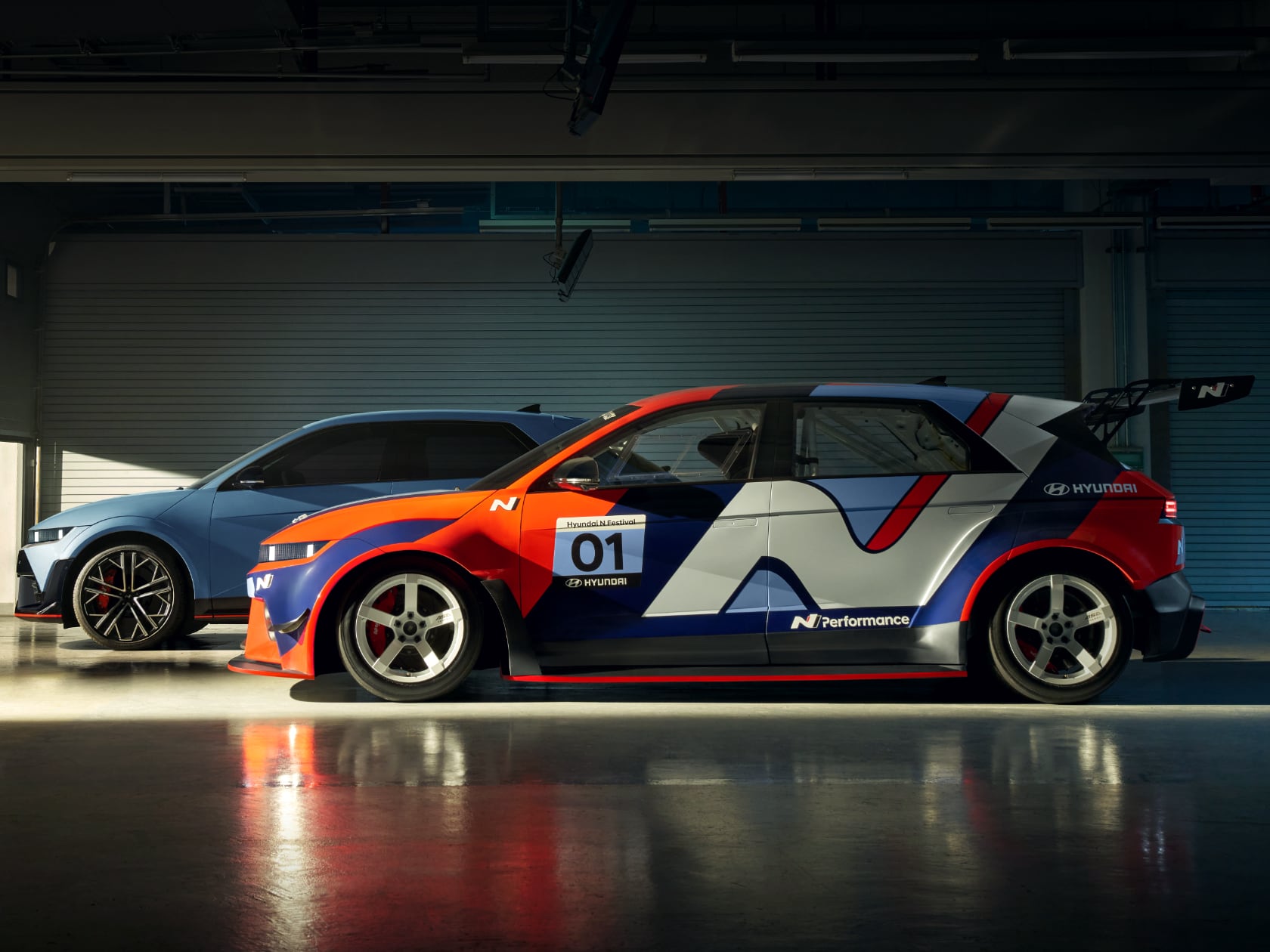
Ioniq 5 N eN1 Cup Car and 5 N

The Ioniq 5 N and the Ioniq 5 N eN1 Cup car offer high-performance driving experiences but cater to different driving aspects. The Ioniq 5 N is perfect for those who want a powerful, sporty car that they can drive daily, featuring a luxurious interior and advanced technology. However, the Ioniq 5 N eN1 Cup car is tailored for the racetrack, offering uncompromising performance and safety features designed to meet the demands of competitive racing.
Driving Experience

Driving the Hyundai Ioniq 5 N is a thrilling experience that seamlessly blends high performance with everyday usability. Whether carving through corners on a racetrack, enjoying the dynamic handling on a winding road, or simply commuting to work, the Ioniq 5 N delivers an engaging and versatile driving experience that sets a new standard for electric vehicles.

Driving the Ioniq 5 N at WeatherTech Raceway Laguna Seca

The opportunity to drive it at WeatherTech Raceway Laguna Seca highlighted its capabilities and left a lasting impression. On the track, the Ioniq 5 N proved to be a formidable contender. The moment you hit the accelerator, the 601 horsepower and the additional boost mode propel you forward with an astonishing burst of speed. The electric motors deliver instant torque, making acceleration seamless and thrilling. With its two-way adjustable dampers, the vehicle’s advanced suspension system ensures that it remains planted even at high speeds. The larger 21-inch wheels with 275mm tires provide exceptional grip, allowing you to tackle the track’s notorious turns confidently.

Driving the Ioniq 5 N at WeatherTech Raceway Laguna Seca, I was impressed by its stability and precision. The car’s braking system truly shined on the track. The 4-piston 400 mm front brakes and 1-piston 360 mm rear brakes offered powerful stopping power, essential for high-speed driving. The regenerative braking system recovered energy and provided deceleration that enhanced control during aggressive driving. The N e-shift feature added an extra layer of engagement, simulating gear shifts and giving a visceral feel that is often missing in electric vehicles.

The Ioniq 5 N truly earns its “corner rascal” nickname. The all-wheel-drive system can be adjusted to distribute torque almost entirely to the rear wheels, making the car feel nimble and agile. The electronic limited-slip differential and the precise steering response allow you to navigate tight corners easily. The car feels incredibly balanced, and the weight distribution is optimized to enhance cornering stability.
Pedal response is another highlight. The car’s three-level adjustable regenerative braking allows for fine-tuning off-throttle behavior, enhancing weight transfer and improving turn-in. Whether on a winding mountain road or a technical racetrack, the Ioniq 5 N delivers a dynamic and engaging driving experience that makes every twist and turn a joy to navigate. On the legendary Corkscrew at Laguna Seca, the Ioniq 5 N maintained its composure, demonstrating exceptional handling and balance.

Despite its high-performance capabilities, the Ioniq 5 N remains practical and comfortable for daily driving. The interior blends sporty and luxurious elements, featuring high-quality materials and advanced technology. The bucket seats provide excellent support for spirited driving while remaining comfortable for longer journeys. The adjustable driving modes allow you to switch from a sporty setup to a more relaxed one, perfect for city commuting or highway cruising.

Advanced driver-assistance systems ensure safety and convenience, while features like Hyundai Pay and wireless Apple CarPlay enhance the user experience. The Ioniq 5 N’s fast-charging capability, which allows the battery to go from 10% to 80% in just 18 minutes, makes it practical for daily use, minimizing downtime and keeping you on the move.

Driving the Hyundai Ioniq 5 N is a thrilling experience that seamlessly blends high performance with everyday usability. Whether carving through corners on a racetrack, enjoying the dynamic handling on a winding road, or simply commuting to work, the Ioniq 5 N delivers an engaging and versatile driving experience that sets a new standard for electric vehicles. The opportunity to drive it at WeatherTech Raceway Laguna Seca highlighted its capabilities and left a lasting impression, showcasing Hyundai’s dedication to innovation and performance.

The post Hyundai Ioniq 5 N First Drive Review: The Ultimate Blend of Performance and Style first appeared on Yanko Design.
Apple accused of underreporting suspected CSAM on its platforms

Apple has been accused of underreporting the prevalence of child sexual abuse material (CSAM) on its platforms. The National Society for the Prevention of Cruelty to Children (NSPCC), a child protection charity in the UK, says that Apple reported just 267 worldwide cases of suspected CSAM to the National Center for Missing & Exploited Children (NCMEC) last year.

That pales in comparison to the 1.47 million potential cases that Google reported and 30.6 million reports from Meta. Other platforms that reported more potential CSAM cases than Apple in 2023 include TikTok (590,376), X (597,087), Snapchat (713,055), Xbox (1,537) and PlayStation/Sony Interactive Entertainment (3,974). Every US-based tech company is required to pass along any possible CSAM cases detected on their platforms to NCMEC, which directs cases to relevant law enforcement agencies worldwide.

The NSPCC also said Apple was implicated in more CSAM cases (337) in England and Wales between April 2022 and March 2023 than it reported worldwide in one year. The charity used freedom of information requests to gather that data from police forces.

As The Guardian, which first reported on the NSPCC's claim, points out, Apple services such as iMessage, FaceTime and iCloud all have end-to-end encryption, which stops the company from viewing the contents of what users share on them. However, WhatsApp has E2EE as well, and that service reported nearly 1.4 million cases of suspected CSAM to NCMEC in 2023.

“There is a concerning discrepancy between the number of UK child abuse image crimes taking place on Apple’s services and the almost negligible number of global reports of abuse content they make to authorities,” Richard Collard, the NSPCC's head of child safety online policy, said. “Apple is clearly behind many of their peers in tackling child sexual abuse when all tech firms should be investing in safety and preparing for the roll out of the Online Safety Act in the UK.”

In 2021, Apple announced plans to deploy a system that would scan images before they were uploaded to iCloud and compare them against a database of known CSAM images from NCMEC and other organizations. But following a backlash from privacy and digital rights advocates, Apple delayed the rollout of its CSAM detection tools before ultimately killing the project in 2022.

Apple declined to comment on the NSPCC's accusation, instead pointing The Guardian to a statement it made when it shelved the CSAM scanning plan. Apple said it opted for a different strategy that “prioritizes the security and privacy of [its] users.” The company told Wired in August 2022 that "children can be protected without companies combing through personal data." 

This article originally appeared on Engadget at https://www.engadget.com/apple-accused-of-underreporting-suspected-csam-on-its-platforms-153637726.html?src=rss

iRobot’s Roomba Combo Essential robot vacuum and mop is on sale for $200

The iRobot Roomba Combo Essential vacuum and mop hybrid robot is on sale for just $200. That’s a discount of $75 and one of the best prices we’ve seen on this particular model. This version just came out back in April, so a sale this significant (outside of Prime Day) comes as something of a surprise.

This is squarely a budget-friendly entry in the company’s lineup of robot vacuums, but it’s certainly no slouch. As the name suggests, it can handle both vacuuming and mopping duties, which is always nice. The company says this model actually outperforms the popular Roomba 600 Series, with 20 times more suction power.

It boasts a similar smart navigation algorithm as other iRobot vacuums and offers a robust battery life of 120 minutes. That’s certainly long enough to both vacuum and mop an entire home, with time left over to chase the cats around. Like most of the company’s vacuums, there’s an affiliated app that lets people customize various settings and set up cleaning schedules.

There’s one major downside, though this is true of most robovacs in this price range. There’s no dedicated waste bin so you’ll have to stay on top of emptying and cleaning the vacuum yourself. I own a budget-friendly robot vacuum and have never found this to be a huge deal. The emptying process takes under a minute, though you do have to do it after every cleaning session.

Follow @EngadgetDeals on Twitter and subscribe to the Engadget Deals newsletter for the latest tech deals and buying advice.

This article originally appeared on Engadget at https://www.engadget.com/irobots-roomba-combo-essential-robot-vacuum-and-mop-is-on-sale-for-200-151836301.html?src=rss

The Google Pixel 8a is on sale for a low of $449

We called Google's Pixel 8a the best Android phone for less than $500 upon its release in May, and now it's even cheaper than usual. The handset is down to $449 at Amazon, Target, Best Buy and the Google Store, which is a $50 drop. Though we've technically seen the phone go for less, those deals have required you to trade in an older device or tie yourself to a specific carrier. Another pre-order deal threw in a $100 gift card, but only if you bought the phone at full price. This newest deal, though, marks the largest cash discount we've seen for the unlocked model. 

This price applies to the base version of the phone, which includes 128GB of storage space. If you need more room, the 256GB model is also $50 off at $509. Again, that's the lowest price we've seen for the unlocked variant. Both of these deals have been available for about a week now, but they still represent good value if you've been waiting for a price drop. 

Engadget's Sam Rutherford gave the Pixel 8a a score of 90 in his review. Like past A-series devices, it takes most of the headline features from last year's flagship Pixel phone — the Pixel 8 in this case — and puts them in a slightly cheaper design. You still get a bright and vivid OLED display with a smooth 120Hz refresh rate, superb camera performance and enough battery life for a typical day. It runs on the same Tensor G3 chip and 8GB of RAM, which means it can get warm under heavy load but can handle virtually any task. The stock software is just as clean, and Google promises the same seven years of OS and security updates. The handful of actually useful AI features from the standard Pixel 8 are here as well, including a Magic Eraser tool that lets you remove unwanted objects from photos. 

If you can afford to step up to the Pixel 8, you still should. That device is a few months older but offers faster wired and wireless charging speeds, thinner bezels and slightly better photo quality, particularly in darker settings and with zoomed-in shots. It has a glass back rather than one made from matte plastic, plus its screen is a tiny bit bigger (6.2 inches versus 6.1 inches). It's currently on sale for $549 for a 128GB model or $609 for a 256GB one. If you really want to save the extra $100, though, the Pixel 8a isn't far behind. And if money is no object, keep in mind that Google has already confirmed that new Pixel 9 devices will arrive next month

Follow @EngadgetDeals on Twitter and subscribe to the Engadget Deals newsletter for the latest tech deals and buying advice.

This article originally appeared on Engadget at https://www.engadget.com/the-google-pixel-8a-is-on-sale-for-a-low-of-449-145943989.html?src=rss