Cash App Pay has integrated with Google Play to give consumers another option when buying stuff online. This will be especially useful for Android users, as Google Play is baked right into the OS. Cash App says this partnership will give “next gen consumers more choice” and the company specifically called out the gaming space.
Cash App users will be able to pull money from a pre-existing balance or via a linked debit card to pay for stuff on Google Play. Cash App currently has four million monthly active users and the company claims to have added one million new users each quarter for the last year. That’s a lot of new people flowing into Google’s ecosystem.
To use Cash App on an Android device, just select the payment method when checking out on Google Play. Obviously, new users should download the app and make an account before all of that.
The Cash App integration, however, extends beyond Europe and Google already allows PayPal as an option in most countries. Also, Android developers who distribute apps on the Google Play store Google’s parent company Alphabet is considered a gatekeeper under the DMA and one of the mandates of the legislation is that these organizations must allow for alternative payment methods.
The Cash App integration, however, extends beyond Europe and Google already allowed PayPal as an option in most countries. Also, Android developers who distribute apps on the Google Play store can already use an array of third-party payment systems in Europe, to comply with the DMA.
This article originally appeared on Engadget at https://www.engadget.com/cash-app-pay-integrates-with-google-play-to-offer-next-gen-consumers-more-choice-172310452.html?src=rss
Once upon a Super Bowl Sunday in 1984, Apple unveiled an ad that changed the world. Directed by Ridley Scott, the commercial broke new ground in marketing and technology. As the heroine dashed through a drab, Orwellian world, hurling a hammer to shatter the oppressive image on the screen, viewers were left breathless. The message was clear: the Apple Macintosh was here to break the chains of conformity and ignite the flames of innovation. Forty years later, where is Apple now? The legacy of that revolutionary spirit lives on, not just in Apple’s computers, but right on our wrists.
Designer: Apple
Designer: Seiko
Fast-forward to today and the legacy of that revolutionary spirit lives on, not just in Apple’s computers but right on our wrists. Enter the Apple Watch Ultra, a device embodying the essence of forward-thinking technology. But before we dive into the modern marvel, let’s take a nostalgic trip back to another wrist-worn wonder from the same era: the Seiko UC-2000.
The Seiko UC-2000: A Wrist Revolution in 1984
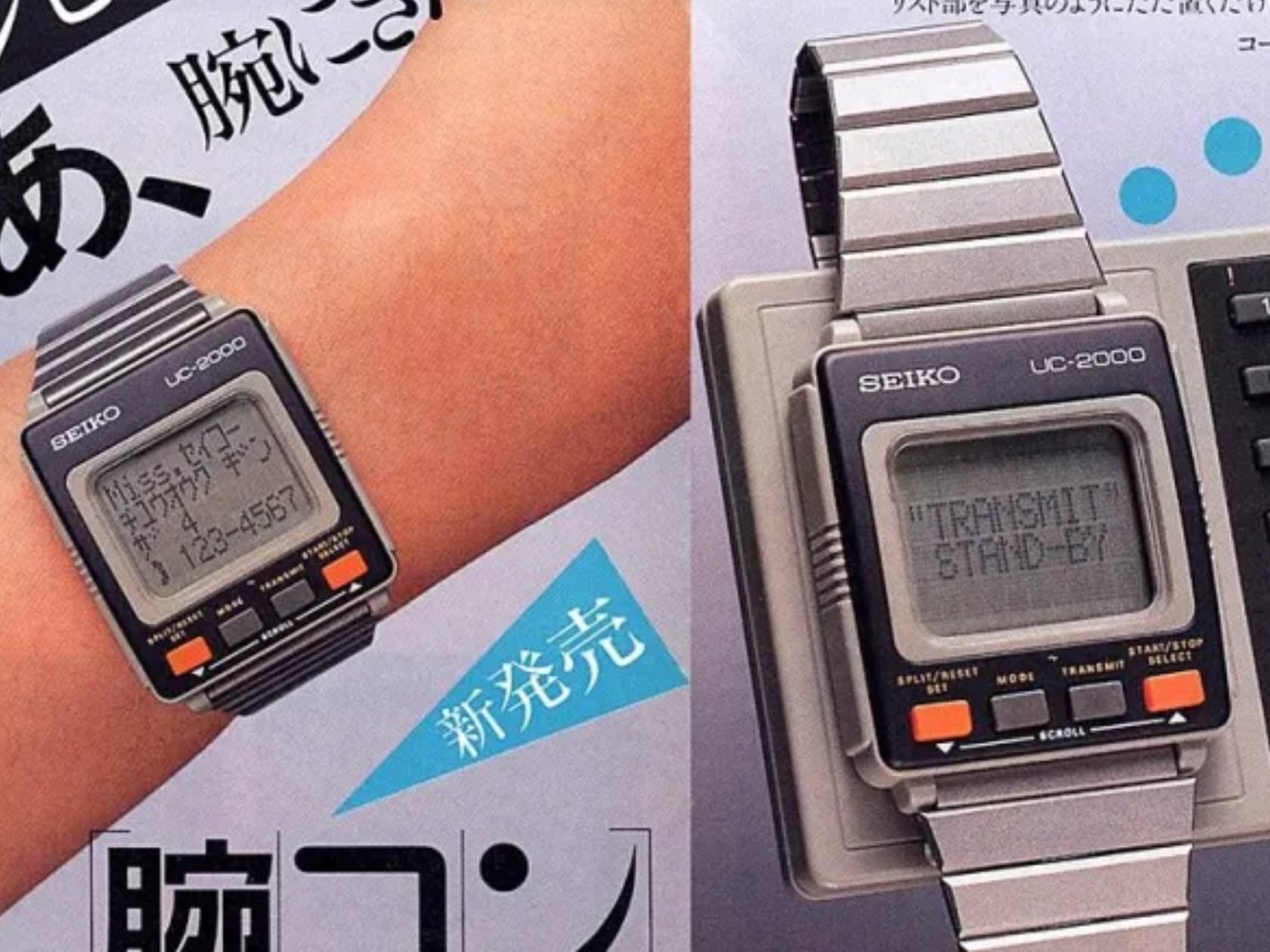
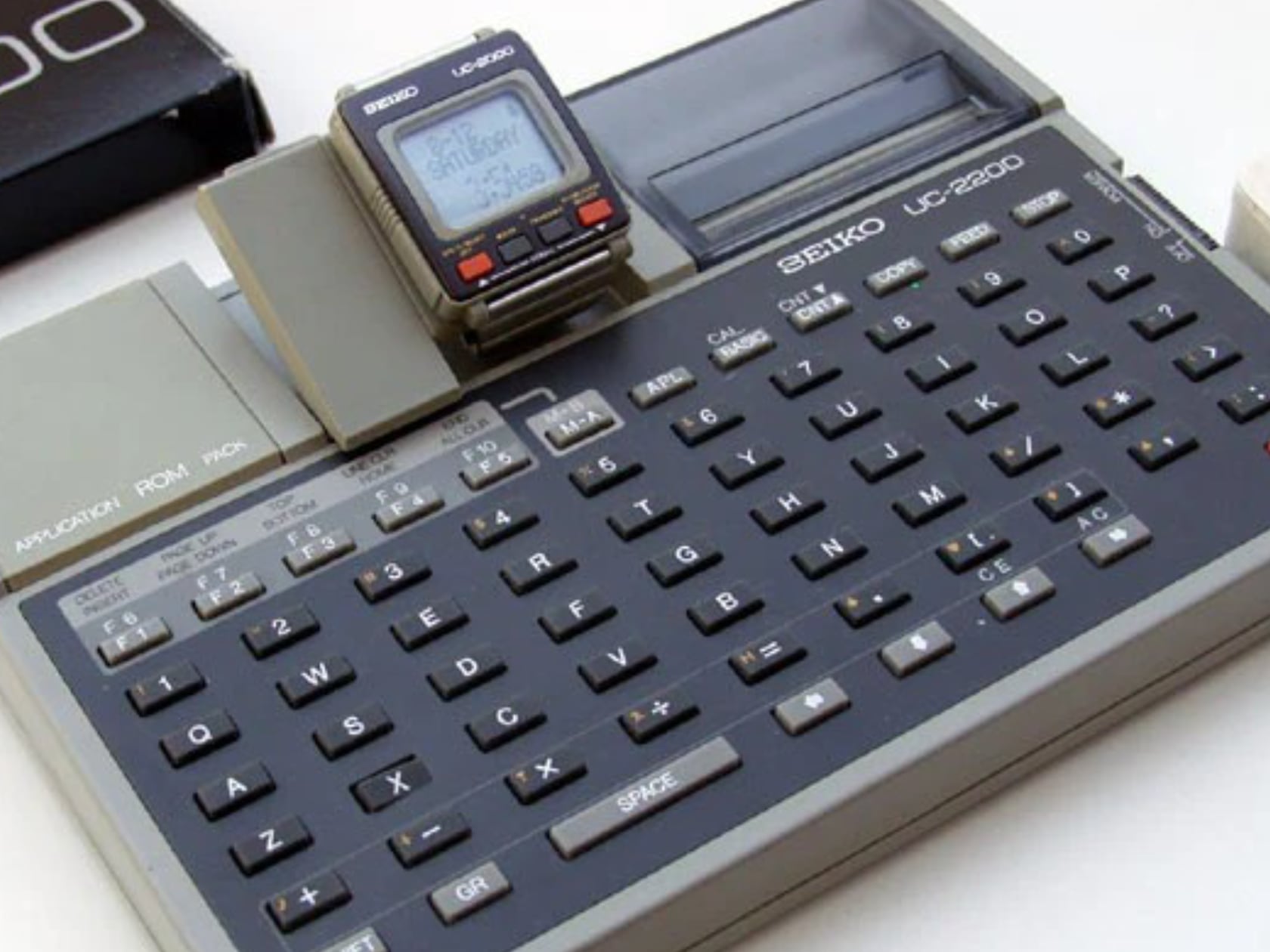
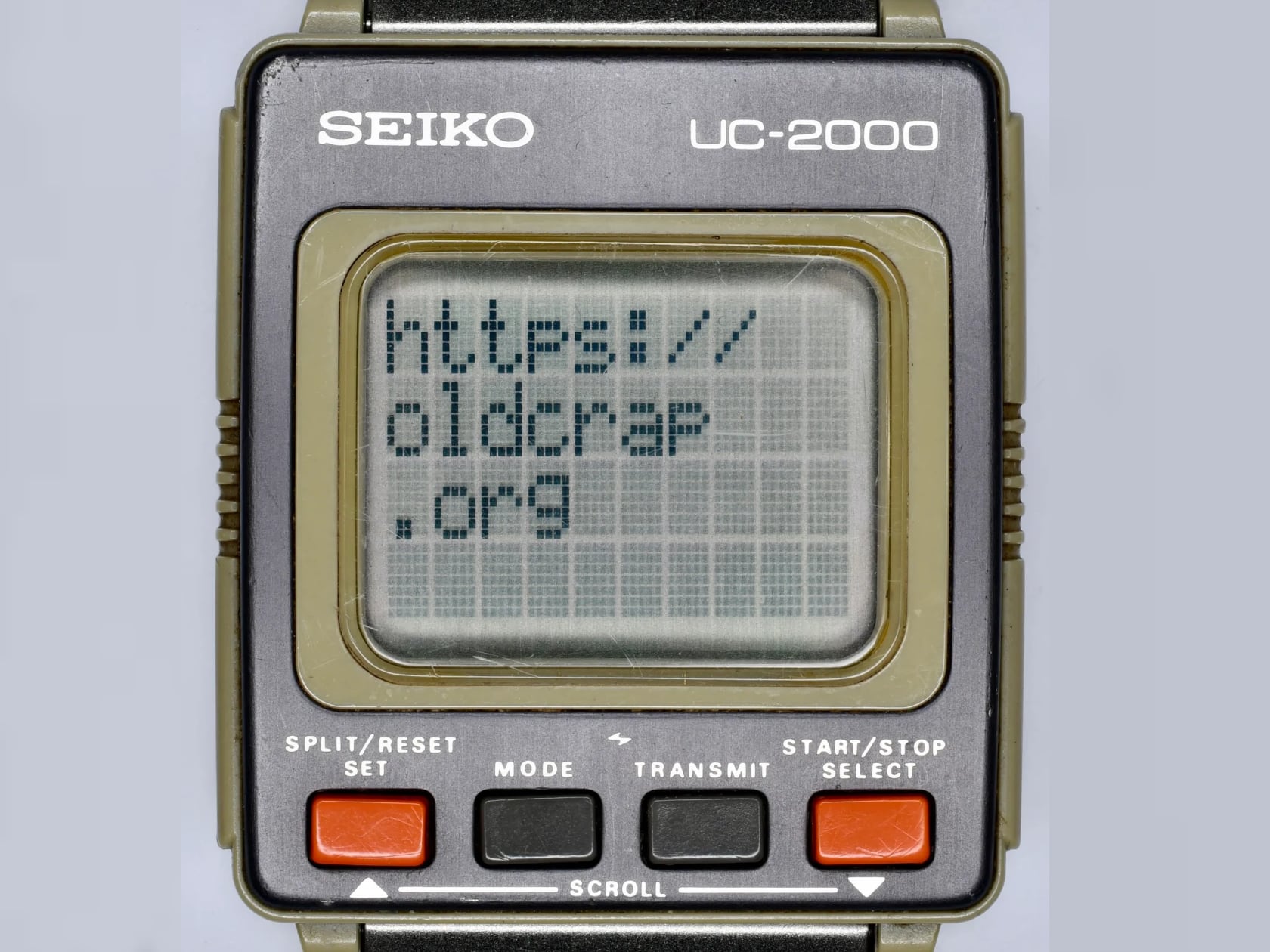
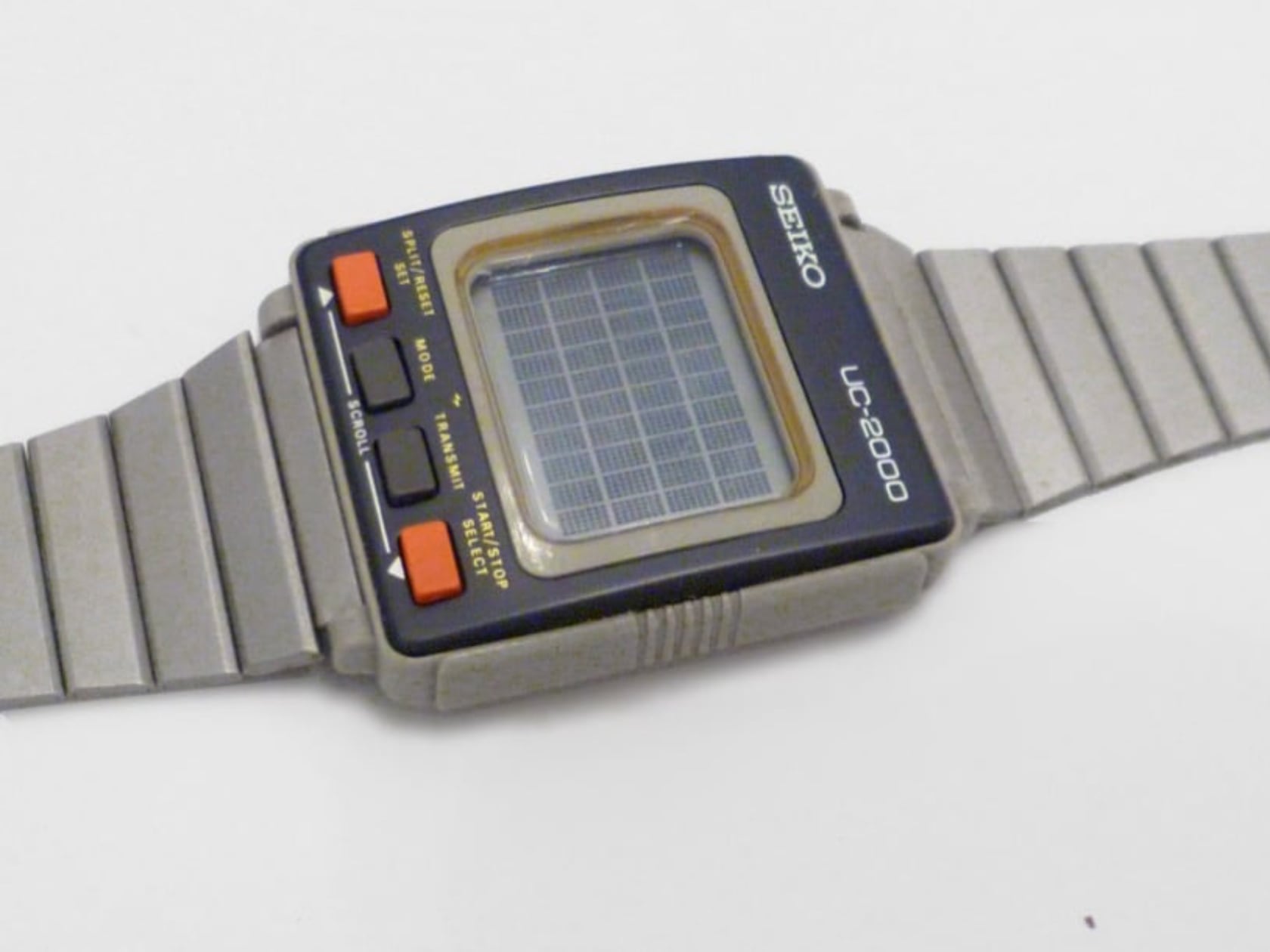
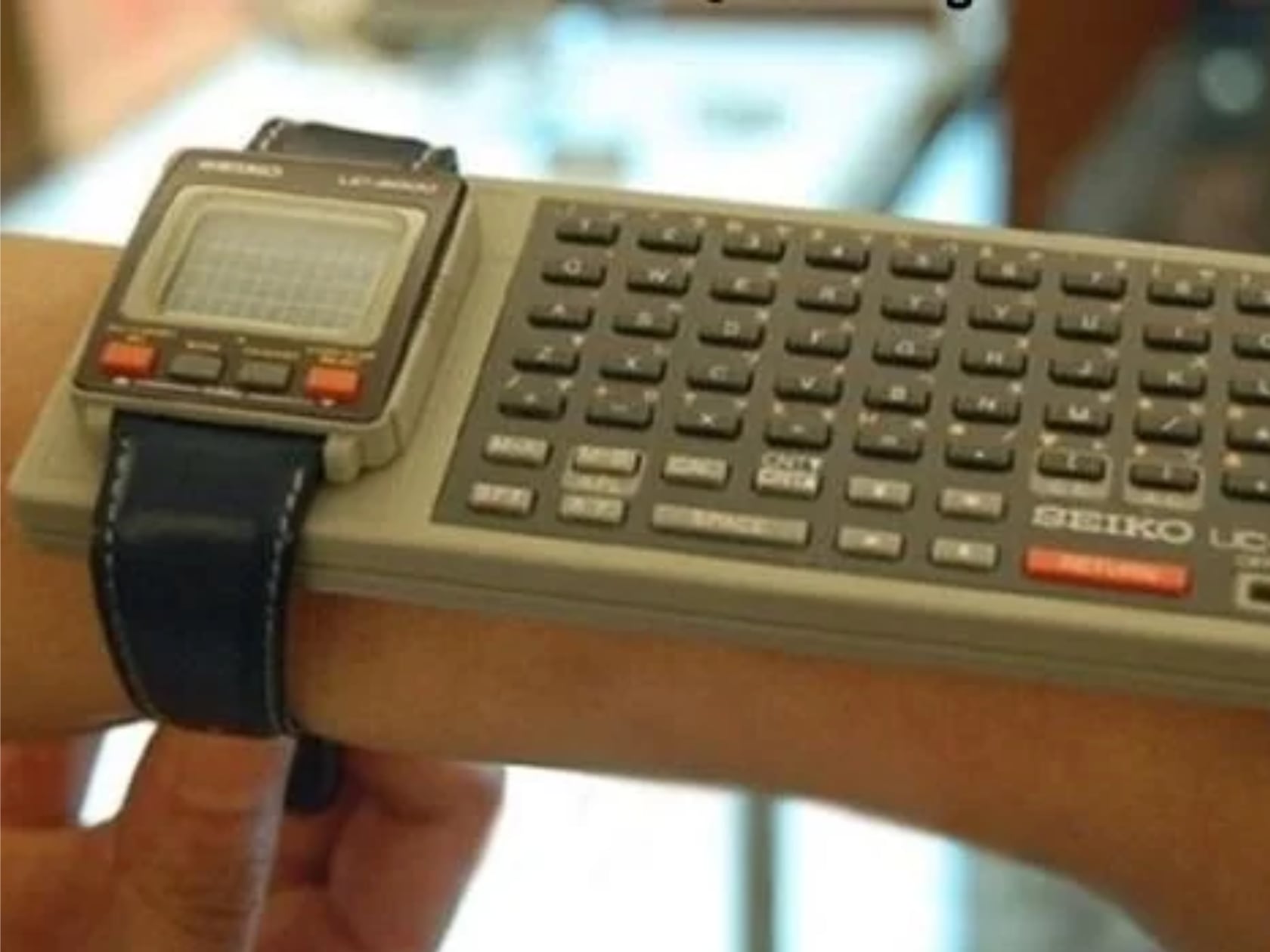
In the same iconic year of 1984, Seiko wasn’t content with just making elegant timepieces. They dared to dream of a wristwatch that could do so much more. Introducing the Seiko UC-2000, a watch that doubled as a personal computer. This gadget had a rectangular LCD screen and a series of buttons and could be paired with a keyboard docking station to perform tasks that were nothing short of magical for its time.
Seiko UC-2000
Imagine programming in BASIC, storing contacts, and managing your schedule, all from a device strapped to your wrist. The UC-2000 was ahead of its time, a pioneering effort in wearable tech. Its design included distinctive orange buttons, adding to its unique appearance and functionality.
Seiko UC-2000 + Keyboard dock
Echoes of the Past in the Apple Watch Ultra
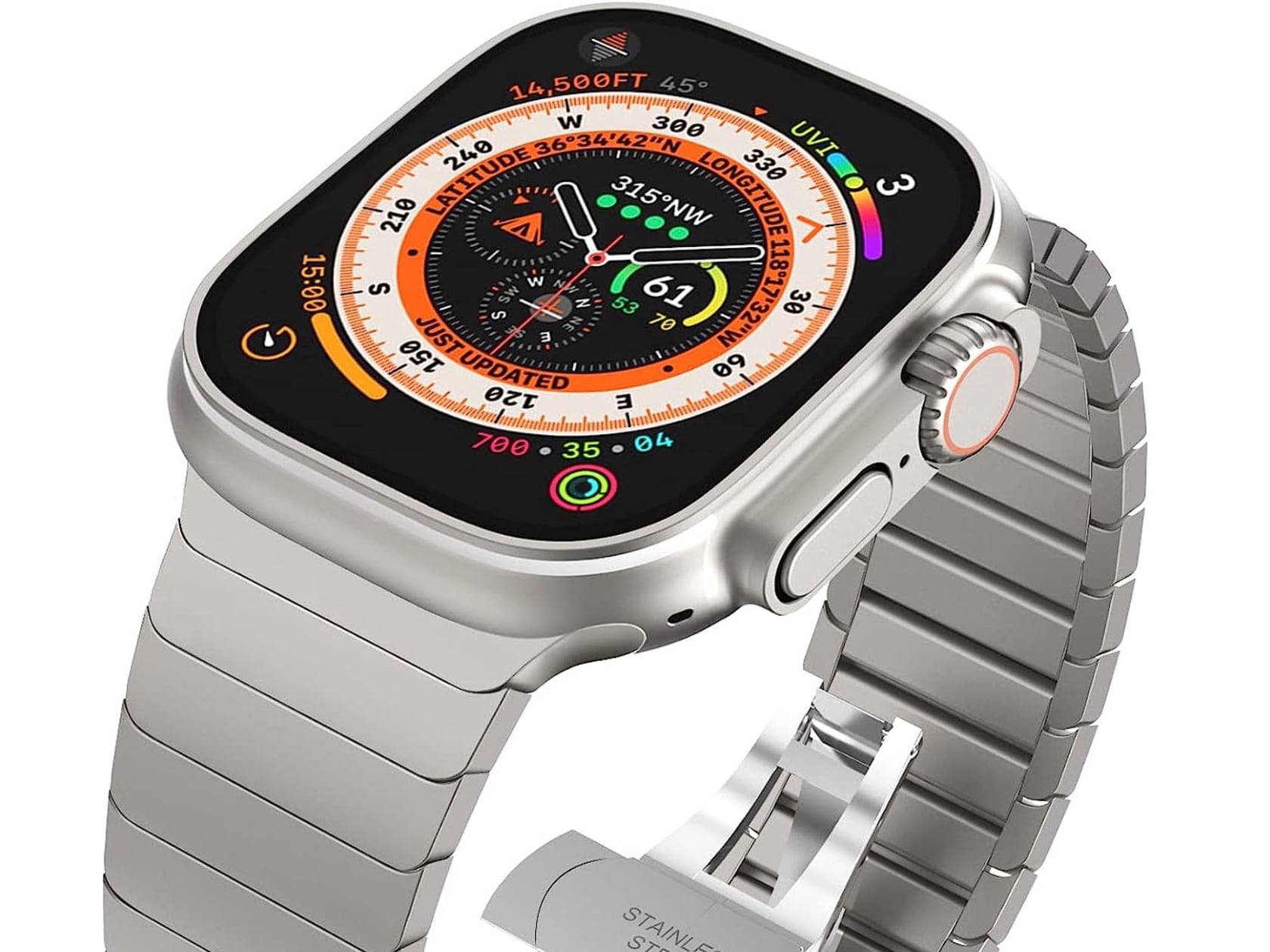
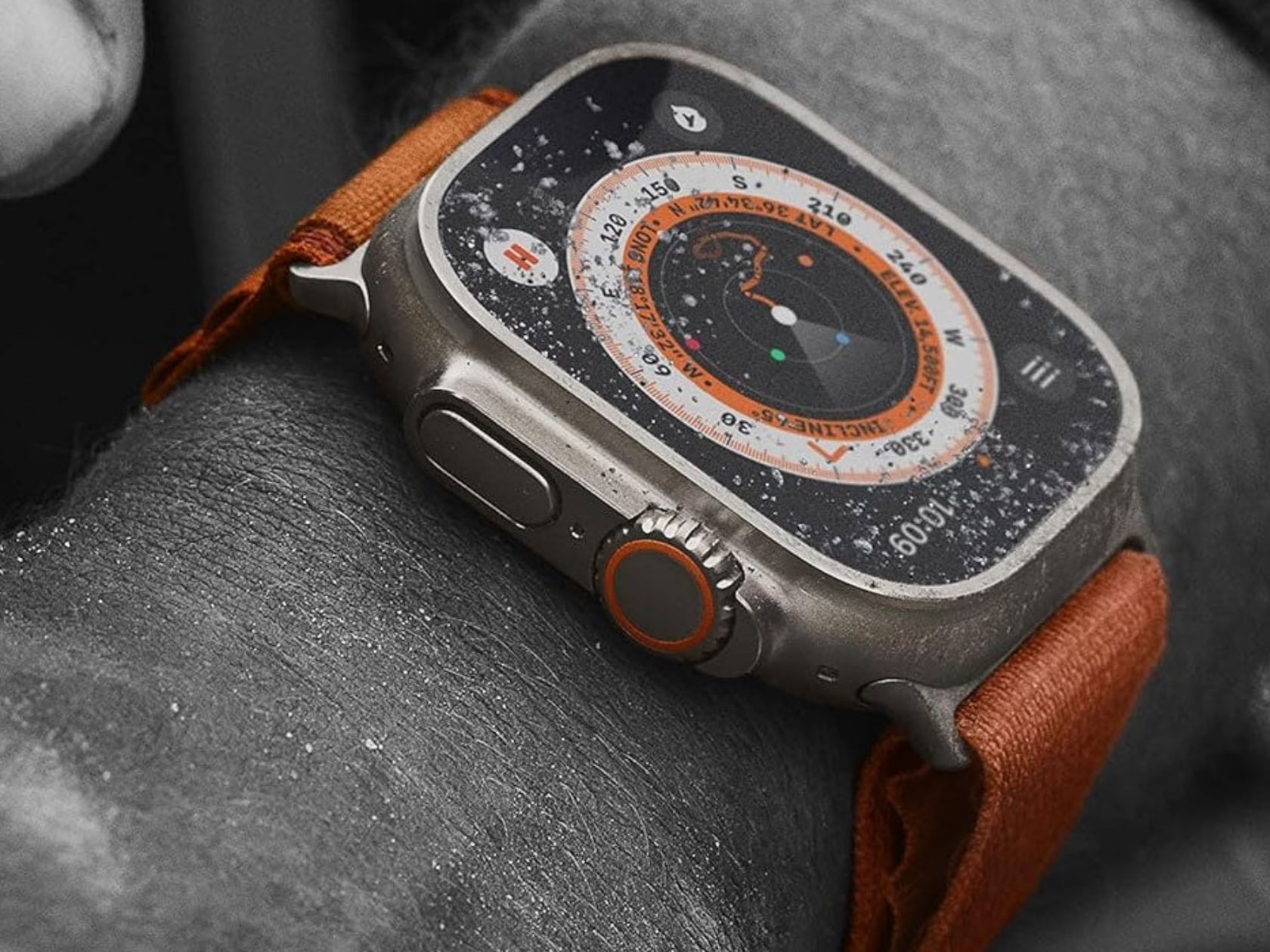
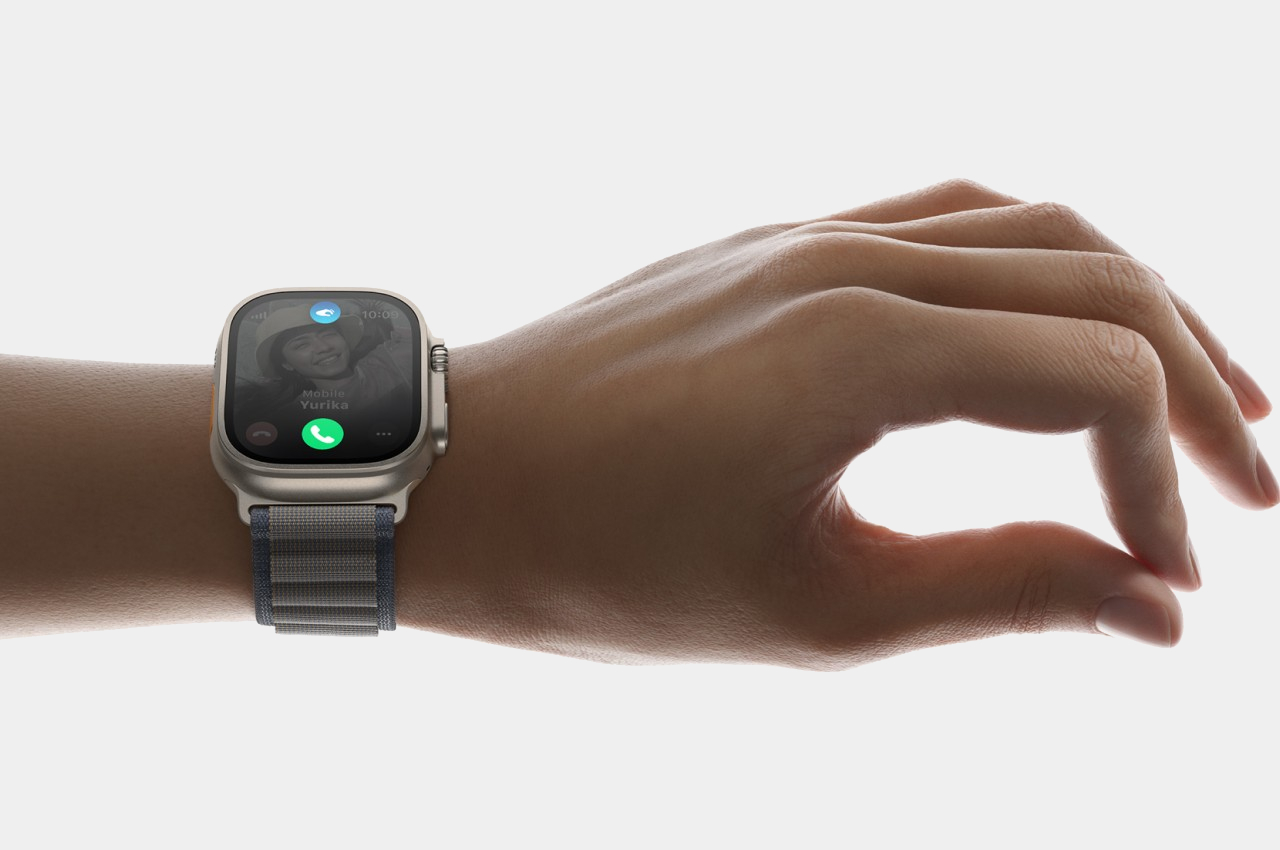
Now, let’s warp back to the present and unwrap the magic of the Apple Watch Ultra. Sleek, sophisticated, and packed with features, it’s everything the Seiko UC-2000 aimed to be and more. The Apple Watch Ultra sports a vibrant OLED display, sophisticated health monitoring tools, navigation aids, and seamless connectivity with the Apple ecosystem. It’s like having a mini-supercomputer on your wrist.
Apple Watch Ultra
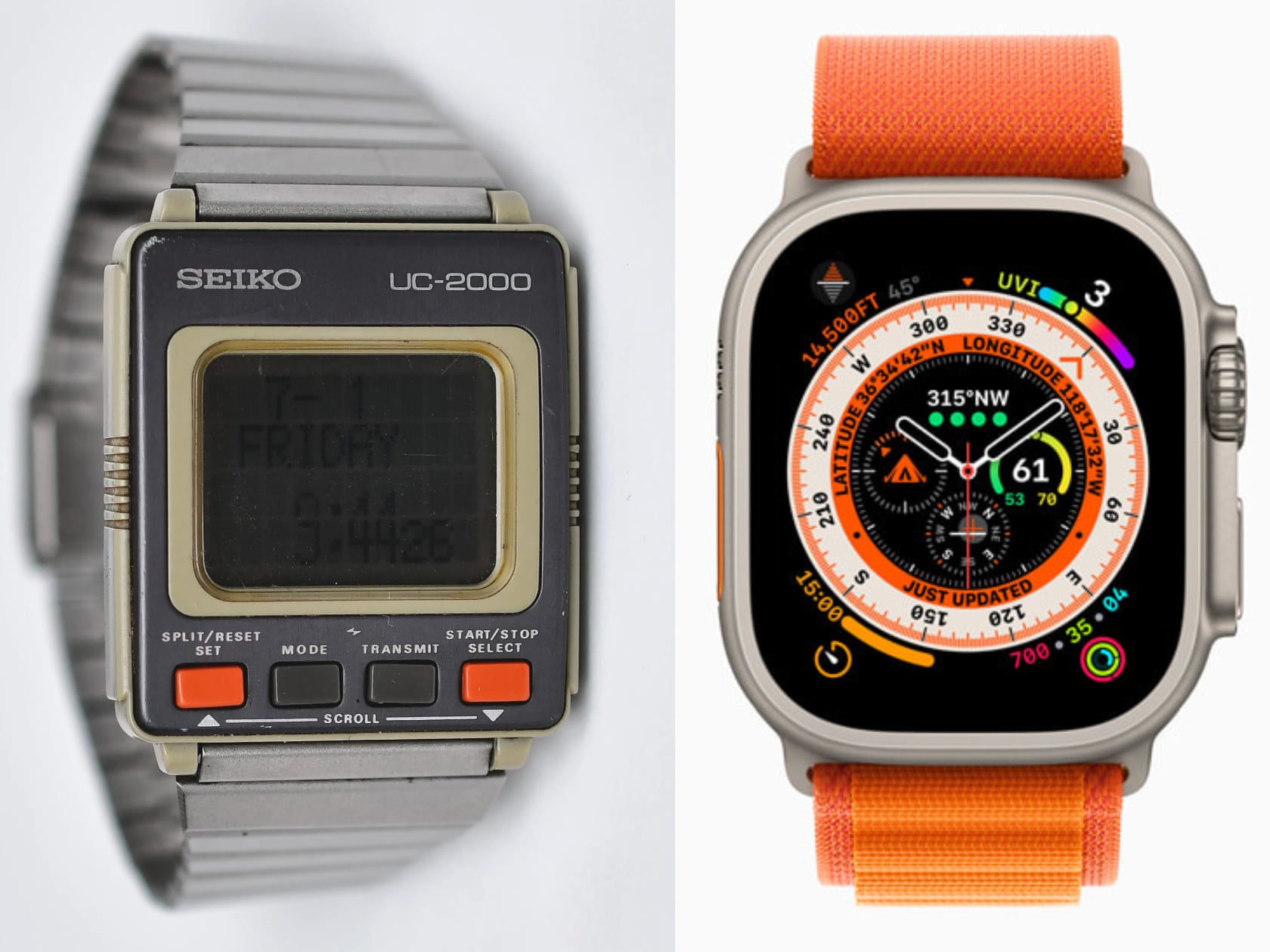
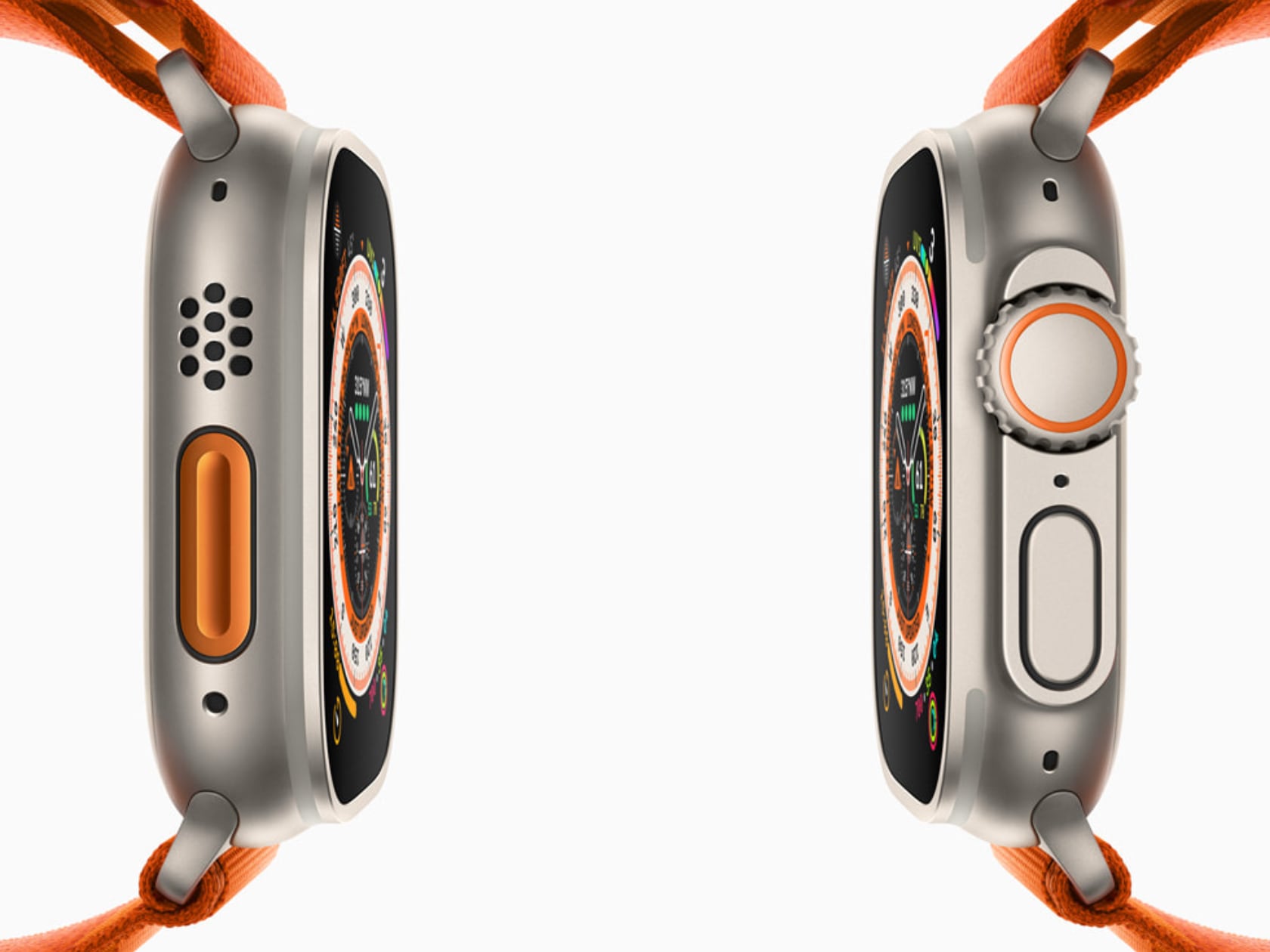
But here’s the kicker: look closely at the design. Notice anything familiar? The Apple Watch Ultra features an orange ring and a striking orange button on the left. This design choice echoes the legacy of wearable tech pioneers like the Seiko UC-2000.
Source: oldcrap.org Seiko UC-2000
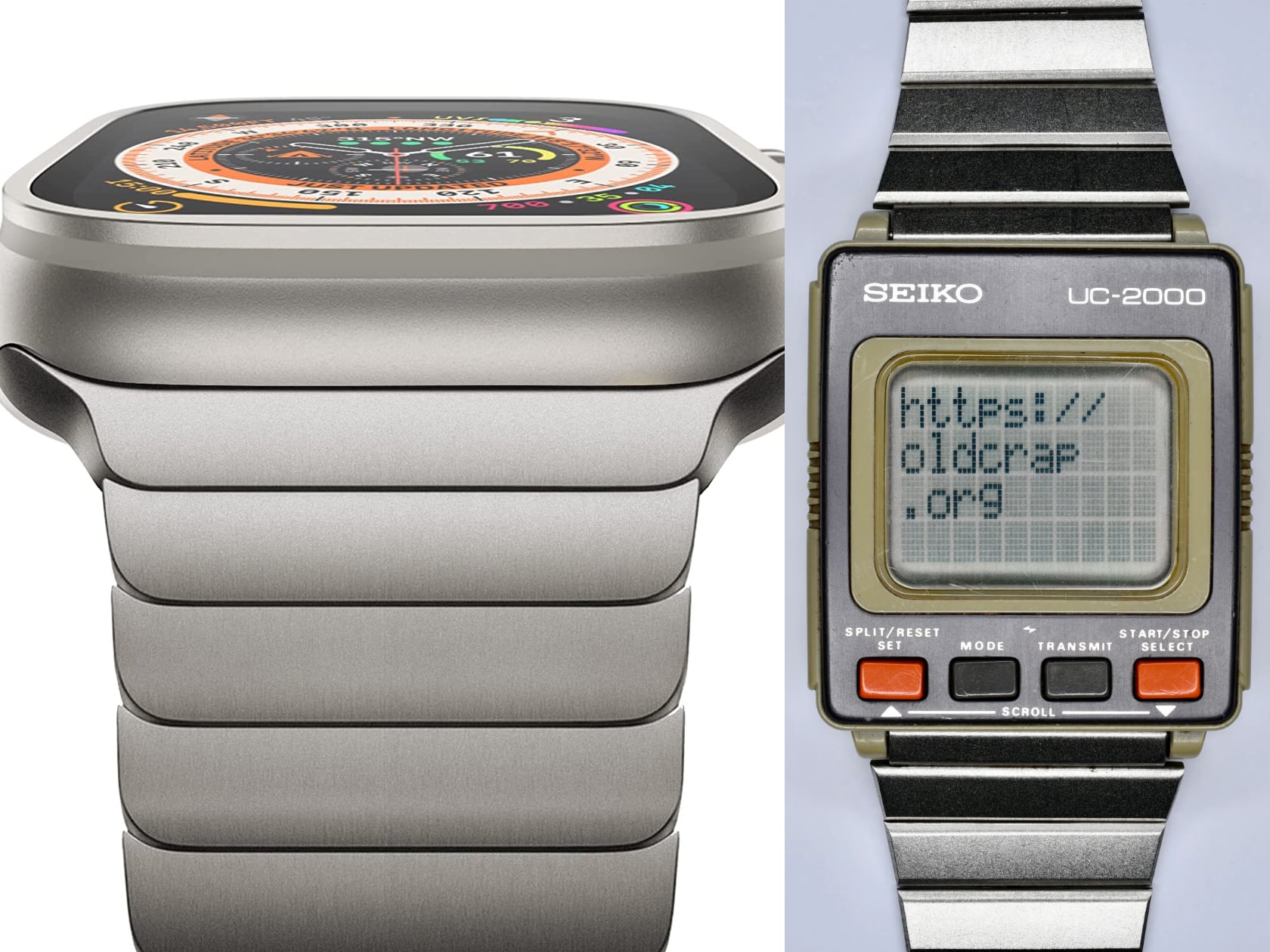
Even more striking is the resemblance in the link bracelet design. The Apple Link Bracelet closely mirrors the design of the Seiko UC-2000’s band, with its sleek, segmented links and metallic finish. Both bracelets emphasize a modern, streamlined look, showcasing how timeless design elements continue to influence new generations of technology. Four decades later, the spirit of those early innovations lives on, influencing and inspiring new generations of technology.
Source: oldcrap.org Seiko UC-2000
Link Bracelet for Apple Watch Ultra 49mm Metal Band
The shape of the watches themselves holds a remarkable resemblance. The Seiko UC-2000 and the Apple Watch Ultra feature a rectangular face with rounded edges, a design that enhances aesthetics and functionality. This shape provides a broad, clear display area while maintaining a comfortable fit on the wrist. The Apple Watch Ultra, with its rounded corners and sleek profile, seems like a modern interpretation of the Seiko UC-2000’s design ethos. This continuity in design highlights how certain principles of form and function remain relevant and influential across decades.
Apple Watch Ultra 2
Seiko UC-2000
Bridging Four Decades of Innovation
The journey from Apple’s iconic 1984 ad to the cutting-edge Apple Watch Ultra is a tale of relentless innovation. Apple’s commercial heralded a new era of computing. Similarly, the Seiko UC-2000 took a bold step into the future of wearable technology.
Source: Reddit
Today, as we glance at our Apple Watch Ultras, it’s fascinating to see how far we’ve come. From the pioneering days of the Seiko UC-2000, with its orange buttons and chunky design, to the sleek, multifunctional marvels on our wrists now, it’s clear that the spirit of innovation and rebellion against the ordinary has always been the driving force. From its early days to now, the Apple Watch has evolved into a market leader, becoming the number one selling watch in the world. It’s incredible to see how far we’ve come.
This journey of innovation is mirrored in Apple’s other groundbreaking products. From the revolutionary iPhone and iPad, which redefined how we communicate and consume media, to the Vision Pro, which promises to revolutionize augmented reality. The MacBook and iMac continue to set standards in computing performance and design, illustrating Apple’s dedication to pushing the boundaries of technology across all its product lines.
Apple WWDC 2024: A Theatrical Return to Roots
In 2024, Apple brought back the daring and eye-popping theatricality reminiscent of its 1984 ad. Senior Vice President of Software Engineering Craig Federighi kicked off the event at the Worldwide Developers Conference by parachuting down into the Apple headquarters. This dramatic entrance harkened back to Apple’s roots, showcasing its commitment to breaking the mold and captivating its audience.
watchOS Public Beta: New Features to Love
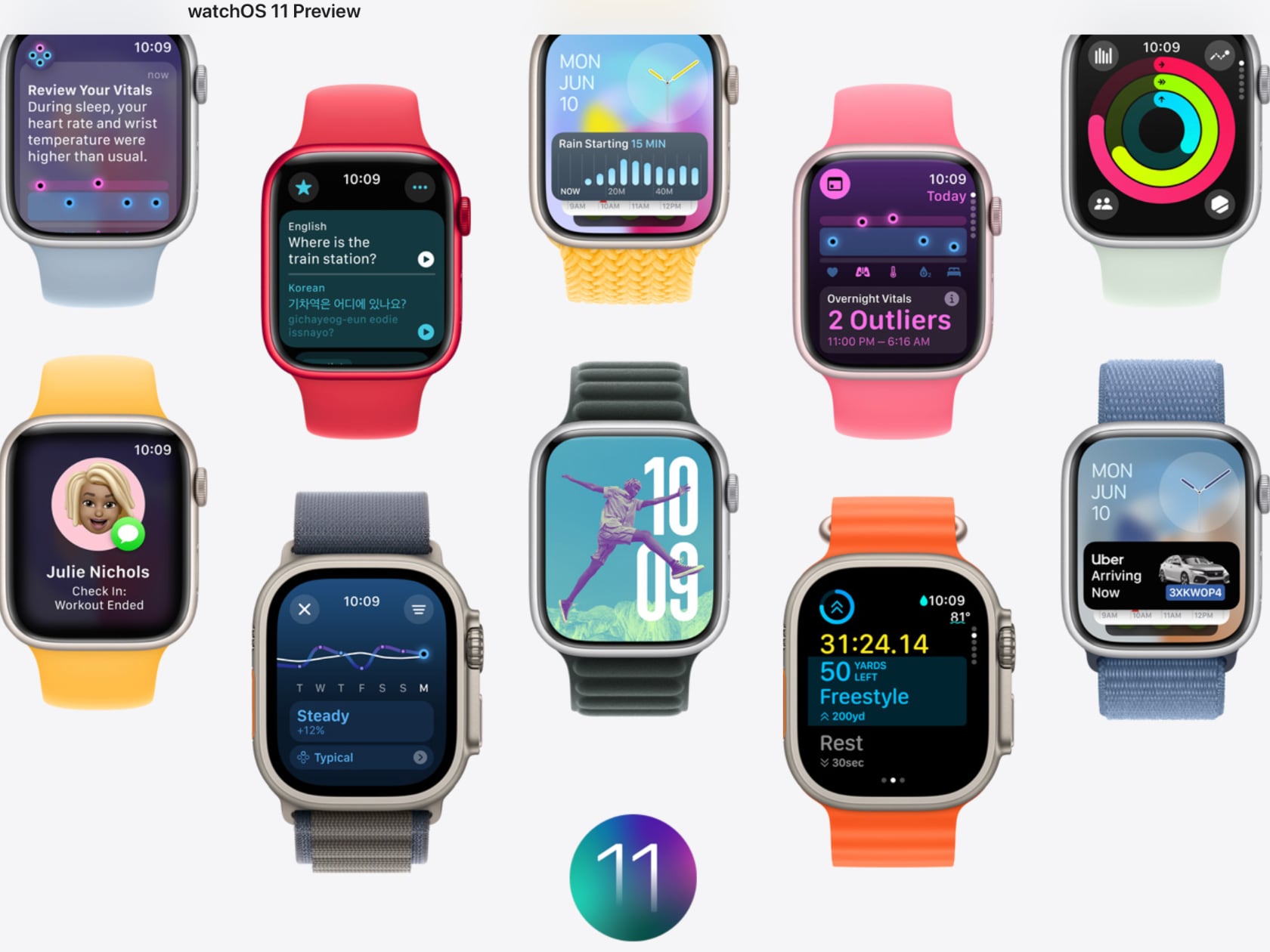
watchOS 11 Public Beta
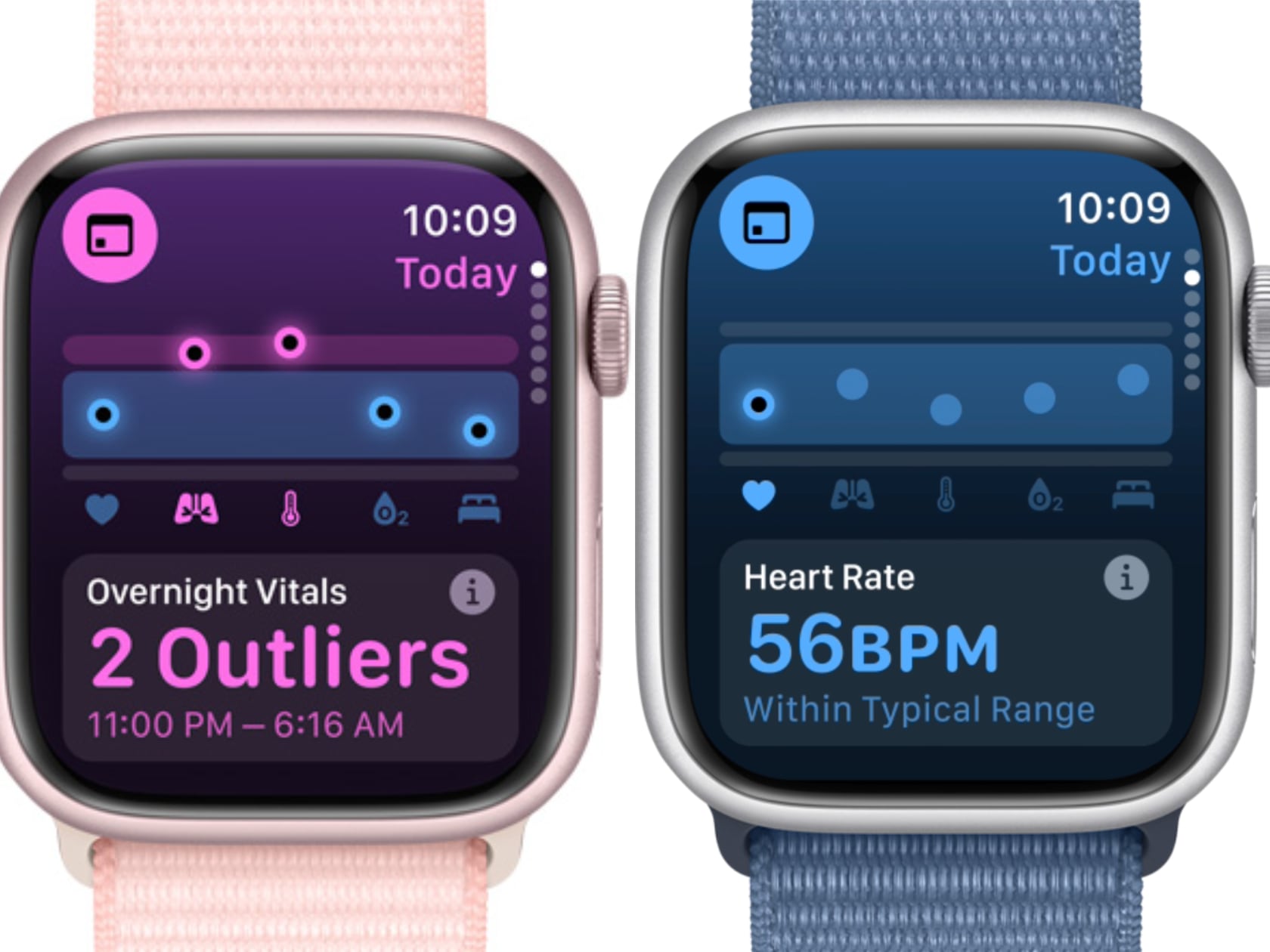
Building on this legacy of innovation, Apple has released the public beta for watchOS 11, packed with features that promise to enhance the user experience significantly. The Vitals app offers users a comprehensive view of their overnight health metrics. By wearing your watch to sleep, you can monitor heart rate, respiratory rate, wrist temperature, blood oxygen levels, and sleep duration. The Vitals app helps establish a typical range for each metric, providing notifications if multiple metrics fall outside this range, with context on possible factors like medications or illness. While traveling in Japan, I became ill, and the Vitals app flagged my vitals as being out of range. It was helpful to see the metrics.
watchOS 11 Vitals
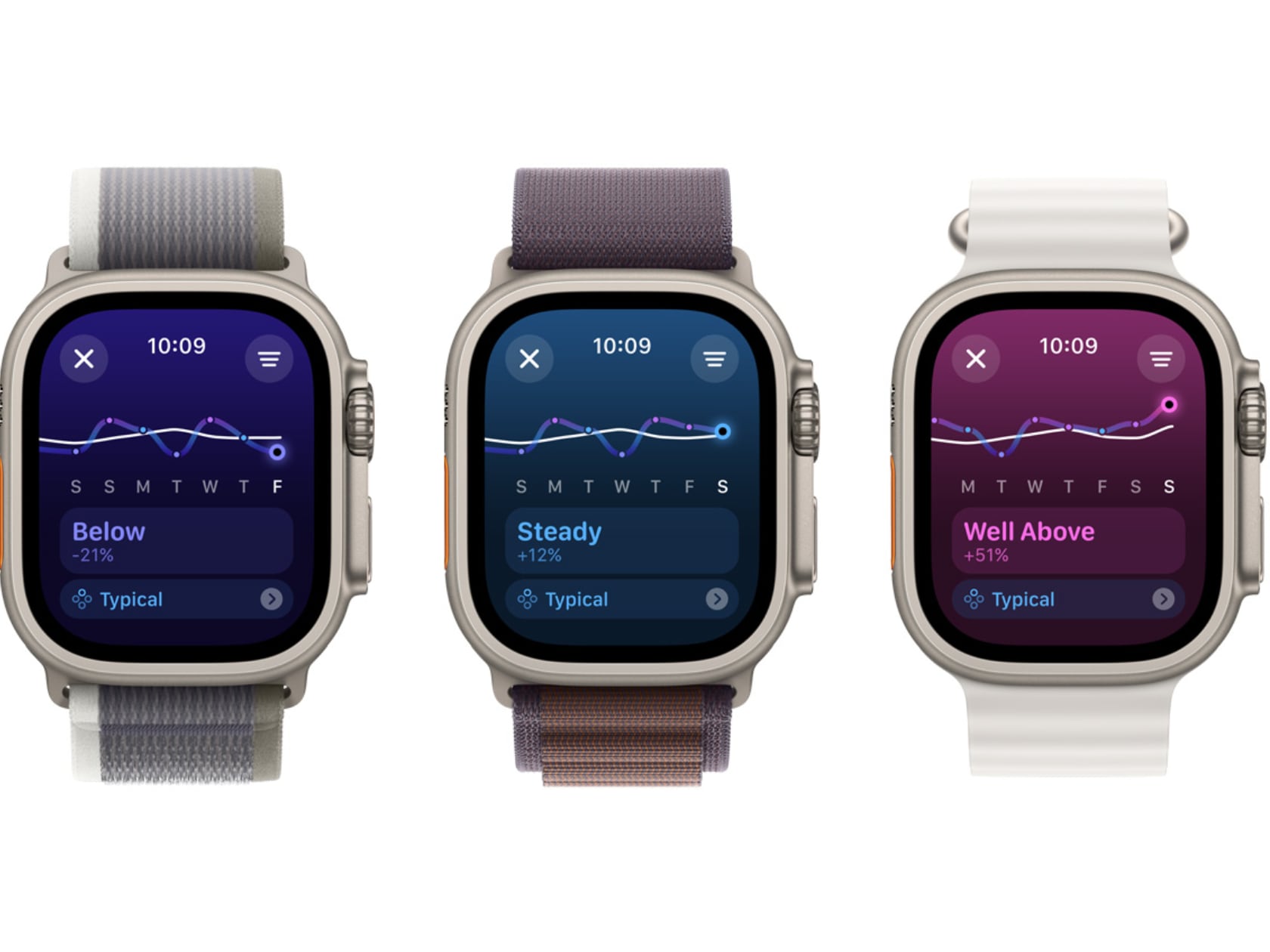
Training Load is another exciting feature, helping athletes see how workout intensity impacts their bodies over time. This tool lets users make informed decisions about their training schedules, especially when preparing for significant events. Enhanced GPS positioning for more workouts and custom workouts for pool swims are also noteworthy additions, providing users with more precise and personalized fitness tracking.
watchOS 11 Training Load
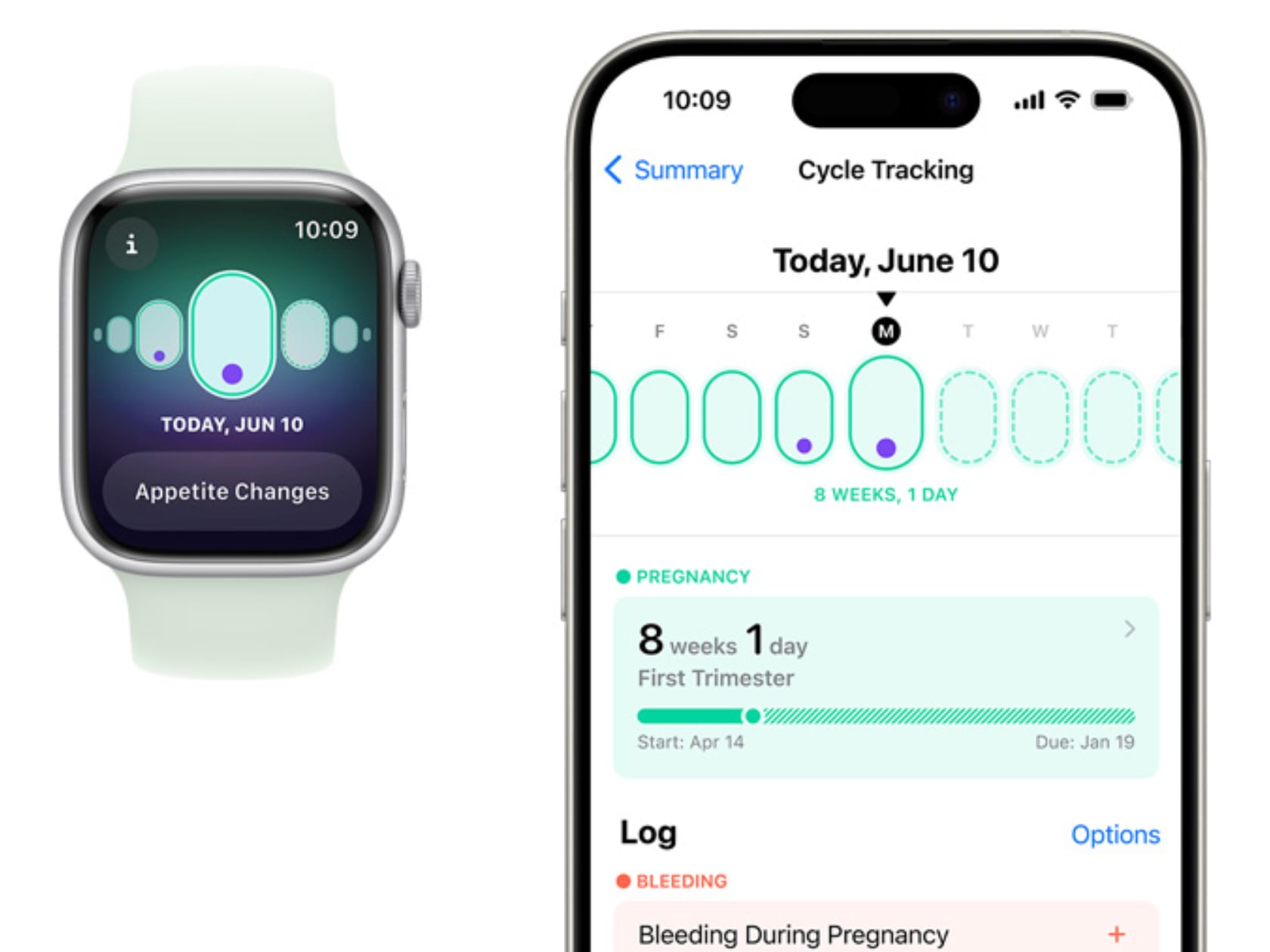
The Photos Face has been redesigned and powered by machine learning to curate the best images from your library for display on your watch. The Cycle Tracking app now includes features tailored for pregnancy, offering gestational age tracking and health recommendations.
watchOS 11 Photos Face
watchOS 11 Cycle Tracking
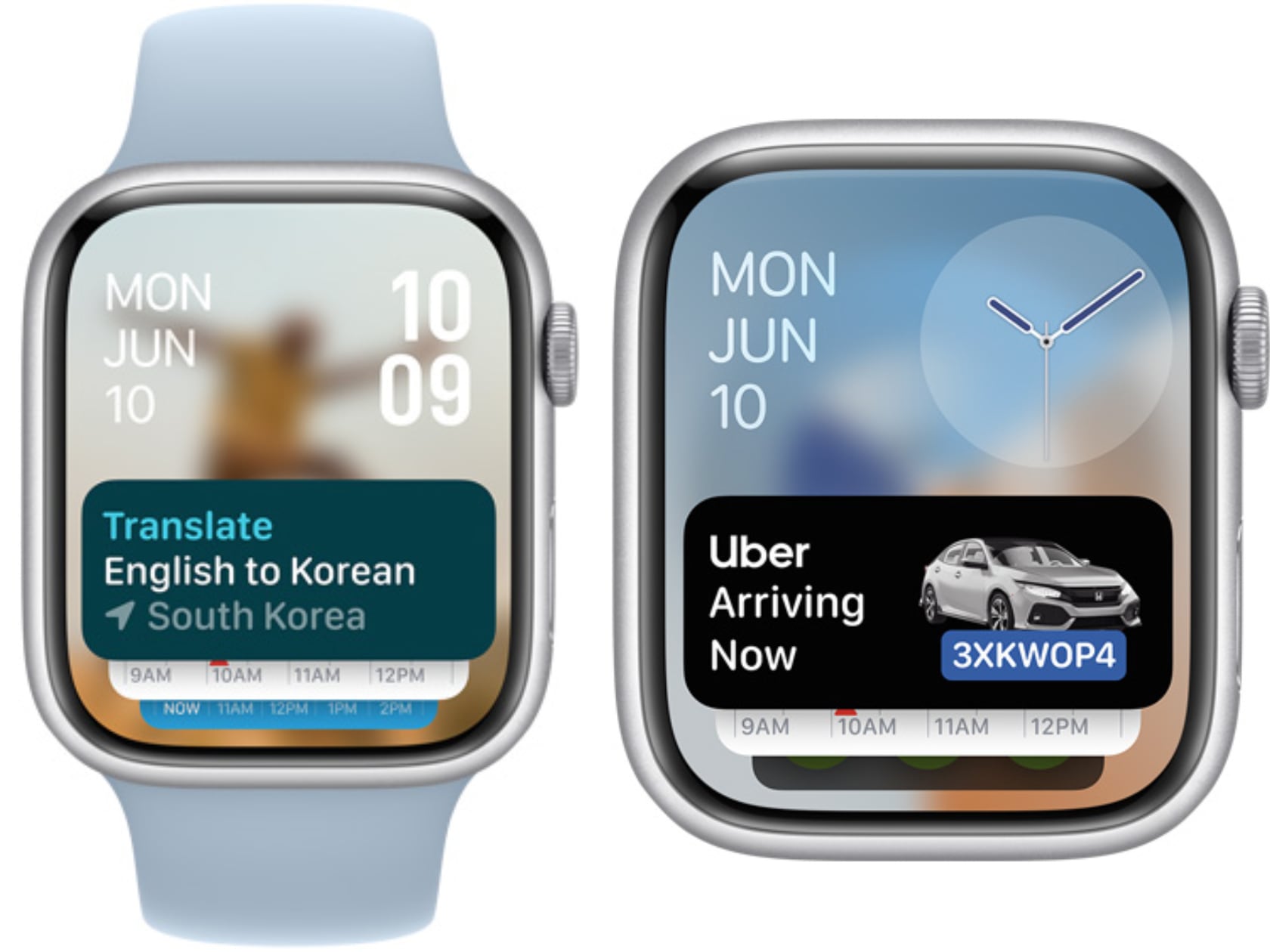
Smart Stack has become more intelligent, displaying widgets automatically based on time, location, and other factors. Live Activities are supported, and new widgets include severe weather alerts, Training Load, and Photos.
watchOS 11 Smart Stack
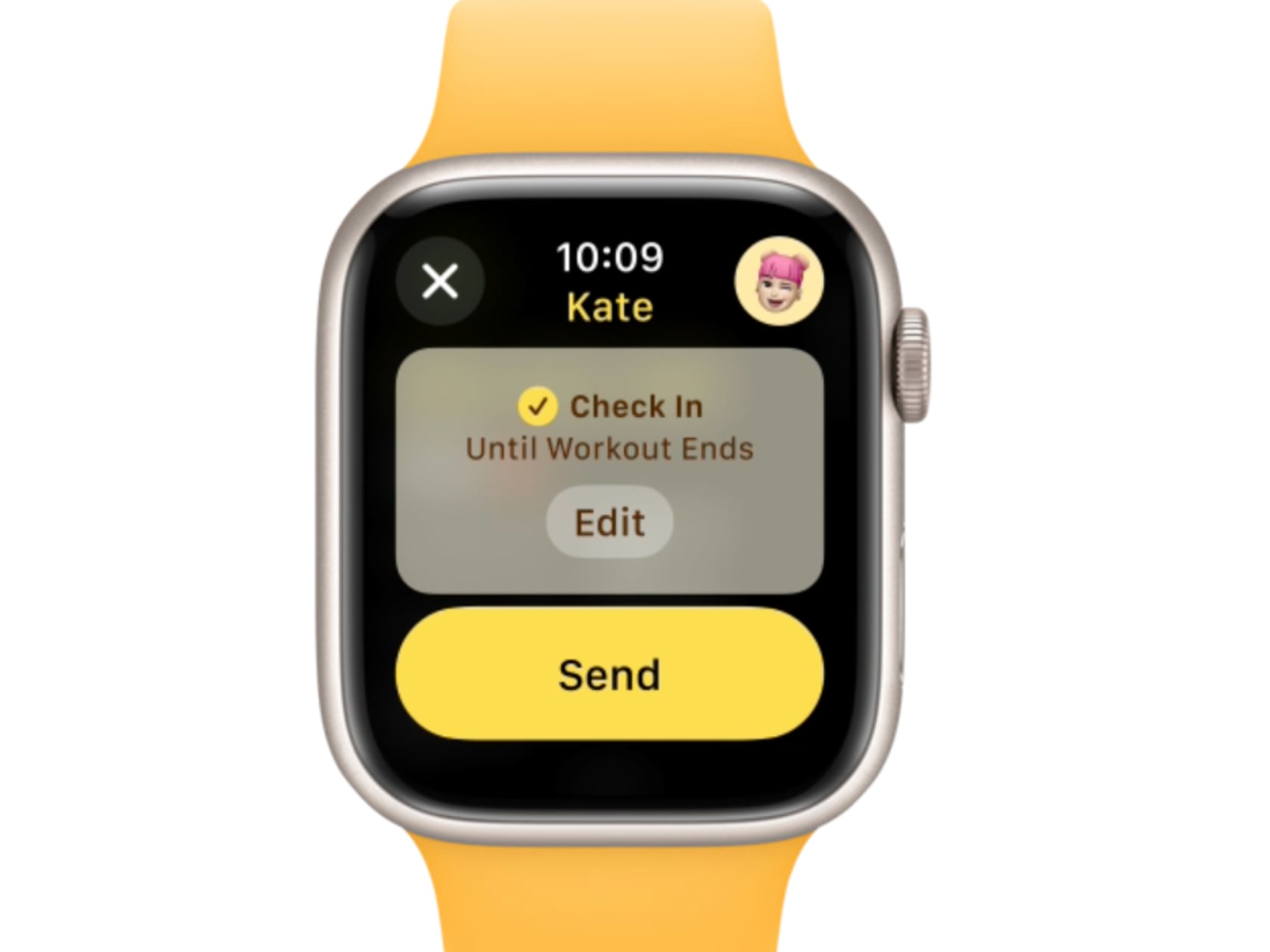
With the new Check-In feature, users can notify friends or loved ones when they arrive at a destination, providing peace of mind. Enhanced GPS positioning, custom pool swim workouts, and a new effort tracking metric for workouts round out the impressive list of new features in watchOS 11.
watchOS 11 Check In
Apple’s ability to captivate and innovate remains as strong as ever, from the bold declaration of the 1984 ad to the thrilling presentations of WWDC 2024. As a 50-year-old tech journalist covering technology for the last three decades, it’s been such a pleasure to have experienced each stage of innovation. I’m excited to see what Apple Intelligence has in store for us over the next few decades.
For those eager to explore the future of wearable technology, try the public beta. However, be cautious—once installed, you cannot roll back to the previous version without shipping the watch to Apple for service. For more detailed information on watchOS 11 features, visit the Apple watchOS 11 preview page.
OpenAI on Thursday released a smaller and more affordable version of its flagship large language model that powers ChatGPT. The new model, called GPT-4o mini, will cost developers 60 percent less to build AI-powered apps and services with as compared to GPT-3.5 Turbo, Open’s smallest model until today. But the big news here is for consumers. GPT-4o mini will replace GPT-3.5 Turbo for free users of ChatGPT starting today — which means that your baseline ChatGPT experience will improve significantly.
OpenAI claimed that GPT-4o mini achieved an 82 percent score on an industry benchmark called the MMLU, which stands for Measuring Massive Multitask Language Understanding, and includes 16,000 multiple-choice questions across 57 academic subjects. That’s slightly lower than GPT-4o, which scored 88.7 percent, but higher than GPT-3.5 Turbo, which scored just 70 percent. AI experts have warned against relying on these kinds of benchmarks to measure how smart AI systems are, but so far, they’re the only way to measure the performance of large language models.
Smaller versions of flagship models give developers more flexibility when it comes to building AI-powered apps. After all, not everyone needs or can afford access to the largest, most powerful models for every use case. In May, Google announced Gemini 1.5 Flash, its own lightweight model that the company said was optimized for speed and efficiency. Other AI companies like Anthropic, too, have smaller versions of their full-scale models.
GPT-4o mini can currently take in and generate text and images, but the model will eventually be able to process other types of content like audio and video. And even though GPT-3.5 Turbo is going away from ChatGPT, developers can still access it via OpenAI’s API to build apps and services with it for now — until it eventually goes away too.
This article originally appeared on Engadget at https://www.engadget.com/new-lightweight-gpt-4o-mini-model-promises-an-improved-chatgpt-experience-170143382.html?src=rss
US college students can shave half off a Max subscription. As long as you can confirm your active student status, you’ll get a 50 percent discount on the Max With Ads monthly plan. Usually $10, you’ll only pay $5 each month to stream classic and current HBO series (and more).
The promotion is through a partnership with UNiDAYS, a (strangely capitalized) service that verifies college and university student status. The company has also partnered with Apple, Microsoft, Samsung, Uber Eats, Nike and more.
After successfully verifying your status, the promotion will last for 12 months. But you’ll have the chance to re-verify your student status every year as long as you’re eligible to keep the discount. Once you’re in your last year with no plans to head to another school, you’ll graduate to the hard-knock life of $10 ad-supported streaming plans.
Max lets you stream classic HBO series like The Sopranos, The Wire, Sex and The City, Game Of Thrones, Six Feet Under and more. You also get current-run content from HBO, Warner Bros., DC, HGTV and Food Network. These include series and films like The Last of Us, Dune: Part Two, House of the Dragon, Barbie and Euphoria. You’ll also be able to stream the upcoming The Batman spinoff The Penguin, costarring Colin Farrell with his fat suit and a bunch of prosthetics.
Once you’re verified through UNiDAYS, you’ll receive a promotional code. Just follow the instructions you get with the code to begin your subscription.
This article originally appeared on Engadget at https://www.engadget.com/us-college-students-can-take-half-off-a-max-subscription-163906242.html?src=rss
Overwatch 2 fans who are already jonesing for something new after the recent Transformers crossover won’t have to wait long. Blizzard has spilled the beans about the next hero that’s coming to the game, and you’ll be able to try her out as soon as this weekend.
Her name is Juno and she’s a support. The publisher teased this hero back at BlizzCon 2023 (when she was referred to only as Space Ranger) and in-game over the last few weeks. Now, her spacecraft has landed on this colorful version of near-future Earth — Juno is the game’s first playable Martian character.
A gameplay trailer gives a sense of Juno’s abilities and how they work. Her primary weapon is called the Mediblaster. It appears to work in a similar way to Ana’s Biotic Rifle in that it can heal allies and damage enemies, though it's not clear whether there's a different fire mode for each. One of her abilities, the Pulsar Torpedoes, can lock onto multiple targets to dish out healing and damage too.
Unlike Ana, though, Juno has traversal abilities. With Glide Boost, she can soar through the air. She can also temporarily provide herself and her teammates with a speed boost — and perhaps the ability to jump higher —thanks to her Hyper Ring.
As for Juno’s ultimate, that's called Orbital Ray. It’s a beam emanating from a satellite that moves across the map that heals allies and boosts damage. The specifics of how exactly all the abilities work haven't been announced, so we’ll likely have to hold on until Juno arrives in the game for the full lowdown.
Fortunately, that will be a short wait. Juno will be available in all modes except Competitive for a trial weekend that runs from July 19 until July 21. The No Limits mode will be in the Arcade, so chances are likely that we’ll see two teams of five Junos fighting each other as players get to grips with the newcomer.
On the rare occasions I play anything other than Mystery Heroes, I usually play the support role, so I can’t wait to try out Juno. She has a great look and the makings of an excellent kit, as long as it’s smartly balanced. Juno will join the lineup permanently when season 12 of Overwatch 2 starts on August 20.
Blizzard Entertainment
This article originally appeared on Engadget at https://www.engadget.com/you-can-try-new-overwatch-2-support-hero-juno-this-weekend-160006353.html?src=rss
Proton Mail has a new AI-powered feature that could help it keep pace with the artificial intelligence tools Google and Microsoft offer for their email services. Proton Scribe is an AI writing assistant that can help you compose and clean up your drafts. Scribe was designed with privacy in mind — the assistant can't train on your inbox data, as Proton Mail has a zero-access approach to encryption. Proton doesn't save or log anything from your email drafts either.
According to Proton, a writing assistant was one of the most-requested features in a recent user survey. The company designed it as a secure alternative to other generative AI options. Scribe can be run locally if your system is compatible. Otherwise, you can run it on Proton's no-log servers. The assistant is powered by open-source models and code. As such, Proton says the tool itself is open-source and that independent researchers are free to carry out privacy and security audits.
Scribe can be accessed by clicking the pencil icon in the Proton Mail composer. After telling the tool what you want to say in an email, it will create a draft for you. You'll be able to use the Shorten and Proofread options to condense and clean up your draft. There's also the option to make the tone of your email more formal with the click of a button. You can review and tweak your drafts before sending them.
Proton says Scribe only fully supports English for now and it's rolling the assistant out to eligible users. Visionary and Lifetime subscribers will have access at no extra cost. Those on a Proton Business plan — Mail Essentials, Mail Professional or Proton Business Suite — can try Proton Scribe for free for 14 days. After that, the tool costs $3 per month per user.
This article originally appeared on Engadget at https://www.engadget.com/proton-mail-now-has-a-privacy-focused-ai-writing-assistant-155816223.html?src=rss
Nintendo just announced its own first-party Joy-Con controller charging station, which releases on October 17. This is an obvious boon for couch co-op addicts, as you can have two Joy-Cons charging on the dock and another two charging via the console at the same time. Nintendo’s charging station also integrates with the company’s retro wireless NES gamepads, which are primarily used with Nintendo Switch Online games.
The Joy-Con Charging Stand (Two-Way) accessory draws power from the Switch’s dock, via the USB-C port, or any other power adapter. The vertical support can also be removed to make it more portable, another bonus for those couch co-op sleepovers. Nintendo hasn’t released any pricing information yet to go along with the October release date. It’s currently set for a launch in the US, Europe and Japan. October 17 is the same day that Super Mario Party Jamboree launches, so that would make for some good accessory-based synergy.
Charge your #NintendoSwitch Joy-Con controllers and Nintendo Entertainment System controllers with the Joy-Con Charging Stand (Two-Way) accessory, available October 17th. pic.twitter.com/qv6k8GAm6e
— Nintendo of Europe (@NintendoEurope) July 18, 2024
It’s worth noting that the Nintendo Switch is over seven years old. This accessory will be released 2,785 days after the console originally launched. Heck, the Switch 2 (or whatever it ends up being called) will probably hit store shelves early next year. What I’m saying is that this would have been a lot more useful six or seven years ago. Better late than never?
This is likely to be the Switch’s final holiday season. There’s a new Legend of Zelda game hitting on September 26, along with a themed console. Another big holiday-adjacent title is Mario & Luigi: Brothership, which comes out on November 7.
Update, July 18 2024, 2:57 PM ET: This story has been updated to confirm a US release after speaking to a company rep.
This article originally appeared on Engadget at https://www.engadget.com/nintendo-finally-made-a-first-party-joy-con-charging-station-152326371.html?src=rss
It was a shame to see 1047 Games putting Splitgate on ice back in 2022. The studio did a great job of freshening up the competitive arena shooter genre by adding portals (think: Quake meets Portal), but it moved on to a new project. We now know that’s going to be Splitgate 2, a free-to-play sequel that’s coming to PC, PS4, PS5, Xbox One and Xbox Series X/S next year.
1047 Games is going bigger in all kinds of ways this time around, including with a much larger development team. A group of 20 first-time game developers created Splitgate, which started as a school project. The team is now more than 150 strong and features devs with experience on the likes of Call of Duty, Overwatch, Halo, Valorant and League of Legends.
The sequel is being built from the ground up in Unreal Engine 5. It will have three factions you can pick from based on your preferred play style and tactics. The Aeros are agile, Sabrasks are all about power and Meridians can manipulate time.
There will be many areas, weapons and modes to check out, though the bulk of the action will be in four versus four combat. A debut trailer gives some idea of what to expect and more details will be revealed in August. Fans can check out a free comic series and unlock in-game collectibles through the Splitgate 2 companion app for iOS and Android.
1047 Games has a tough act to follow since Splitgate was very well received and it proved popular — it had more than 22 million downloads. It’s a strong foundation to build on, though, and the Splitgate 2 trailer (despite being a cinematic rather than gameplay-focused one) looks very promising.
This article originally appeared on Engadget at https://www.engadget.com/splitgate-2-is-coming-to-pc-and-consoles-in-2025-144400499.html?src=rss
iOS 18 has landed in public beta and Apple is offering up more control, yet again, of the layout of your iPhone. However, Apple Intelligence, the most exciting upgrade, is conspicuously (but unsurprisingly) absent.
The update also improves several native apps, such as Photos, Messages (RCS! Gasp!) and Notes, although Apple Intelligence will add even more features and tricks. While we all wait for the ability to generate our own emojis, there is still plenty to explore. It’s just a little drier than what Apple teased at WWDC.
You can access the iOS preview by enrolling on Apple’s website, which will nudge the beta to your iPhone’s Software Update section. As always, remember to back up your iPhone first and ensure it’s compatible. (iOS 18 works on 2018’s iPhone XS and XR and newer phones.)
iOS 18 means even more customization
Beyond app folders and widgets, iOS 18 adds further functional and aesthetic customization. Alongside a new Dark look, you can tint all of them in a color of your choosing. Unlike previous dark modes on iOS, this time it also ‘dims’ individual app icons to keep it consistent with the darker theme. You can also have iOS choose the color for you, basing its recommendation on your iPhone’s wallpaper. If that sounds familiar, it’s because it is very similar to Material You, which Google introduced to Android in 2021.
You can also increase the size of the app icons ever so slightly, without reducing the number you can pack into a single pane. Doing so does strip away the text labels, so you better be sure you know, without words, which app icon is which. And, in a thrilling move for tens of pedants everywhere, you can move your icons outside a left-aligned, top-to-bottom snap grid. Do you want the Safari icon floating in the bottom right corner, all alone? You can do that now.
iOS 18 also brings two new ways to secure your apps. You can assign an app as locked or hidden. Locking an app will require FaceID access, useful perhaps for Photos or a plethora of other apps if you often share your phone with children. Doing sp will also mean information from there won’t appear or bubble around other parts of iOS, like searches and notifications. You can also choose to hide the app, which nudges it into a dedicated folder, locked away behind FaceID.
Apple has also refreshed its control panel and dropdown menu for settings. Similar to when iOS introduced widgets a few years ago, there is now a dedicated control gallery to add smart home shortcuts, launch timers and more.
This had the potential to clutter up the control panel, but Apple has divided this into four different tabs. While you can tap on the little icons to the side to leap to a specific section, you can also access all of them in a single continuous scroll. Your most used features can live at the top, and other sections pull together your smart home controls, entertainment playback and connectivity. Have you lost your hotspot shortcut? It’s here. All the controls are also resizeable to prioritize the most crucial ones.
Finally, you can now customize the iOS lock screen controls, too. If you never use the flashlight, you can swap it out for something more practical, like a timer, or even act as a shortcut to Shazam in a pinch.
Photo by Mat Smith/Engadget
Messages
RCS (Rich Communication Services) has landed on the iPhone, or at least on those running iOS 18. It pulls together advanced text features, like support for richer images, larger file attachments, voice notes, group chat, read receipts and more. But you got all those through iMessage on iOS, making RCS sound a little uneventful.
However, if your friends are divided across Android and iOS, you can start using Messages like other third-party messaging apps. Does it have all the features of WhatsApp? No. Does it do everything you can in iMessage? No.
But it will help. For example, with RCS, you can send messages over Wi-Fi without a phone signal. I’ve had issues before when running late for appointments, trapped on the metro with no signal, unable to text to let the other person know. RCS means those messages will send if you latch on to a passing Wi-Fi network.
There are more advances beyond RCS. You can also schedule text messages, like you might already do on work chat apps and email. If you’re into Apple’s recently introduced message tapbacks (emoji reactions), you can now do so with any emoji, including your own Live Stickers based on your photos and images. For even more expression, iOS 18 also adds italics, bold, underline and strikethrough formatting, and a family of cute word animations that feel like WordArt come to life. It’s silly, it’s frothy, it’s pointless. I love it.
Photos
Photo by Mat Smith/Engadget
Apple has hidden away some major changes to how it structures its photos app, reflecting the fact that many of us have had iPhones (and photo libraries) for over a decade and a half. And we’re not going to look at all of those pictures. We’re likely not even going to look at most of them. In iOS 18, Apple has ditched the tabs for “Library,” “For You,” “Albums” and “Search.” Instead of your latest photos, screenshots and videos taking up the majority of the screen, you’ll see some space carved out for your latest content, curated albums, memories and more.
It’s a divisive approach, but I think your reaction will depend on how you interact with your photos. I know where my favorite photos are or how to find them, but other people in my life are often pleasantly surprised when services and devices can auto-curate an album of photos from a day out or a vacation. This redesign seems aimed at them.
And what about Apple Intelligence? Eventually, it will add some additional tricks, like Cleanup, which can help erase any unwanted objects in your photos. It’s a feature that Pixel (and Galaxy) phone users have enjoyed for a while, and still, we await the arrival of Apple Intelligence to be able to test this. For more on what’s coming to your gallery in iOS 18, check out my colleague Cherlynn’s detailed article on what Apple’s done to the Photos app.
More iOS 18 highlights
If you’re a daily Notes app user (yes, I’m guilty), there are some nice advances in iOS 18, too. You can now transcribe conversations and meetings directly into the app. At the time of my testing, you’ll have to ensure your iPhone is set to US English and US as a region for the transcription icon, shown in the image above, to appear.
We also get Math Notes, which can be accessed through the Notes app and from the calculator. Here, you can write out sums and calculations and your iPhone will solve them. It’ll even remember figures for future calculations. It feels niche, but there’s some definite utility here, perhaps if you’re looking to add up a vacation budget or DIY project.
Notes’ new collapsable subheadings proved more useful for me. I have several lengthy Note files, and now I can organize them better and not have to search for specific words to find what I need.
Apple brings a similar approach to its Reader on Safari, which can add a table of contents and even attempt to summarize an article before you even get your teeth into it. Meandering recipe intros: you may have been put on notice. But I say “may“ because as of this writing, I haven’t been able to test this on any sites I’ve visited.
There’s also a new Passwords app, which, in a lot of ways, is just an easier way to access your iCloud passwords instead of diving into your iPhone’s settings. The app divides your passwords into different categories like accounts, codes, Wi-Fi networks and Passkeys, and, wisely, will support the iCloud for Windows app and a Chrome extension. You can also share password collections with visitors, friends or family.
Apple continues to tentatively develop its smart home features within iOS 18, too. It’s adding express mode to automatically unlock connected doors as you approach — as long as you have your iPhone (or Apple Watch) on you. Meanwhile, Apple has created a guest access tab so you can grant access to parts of your smart home and even schedule the times a garage door, say, stays unlocked, perhaps for a package delivery.
Wrap-up
Photo by Mat Smith/Engadget
My early impressions of iOS 18 are more limited than I wanted them to be. Apple Intelligence and most of its exciting features teased at WWDC, are not part of this public beta. Without those, iOS 18 feels more like iOS 17.5. There are more features, but most of them are incremental.
RCS is finally here, adding more functionality to cross-OS text messaging (and possibly worrying the likes of WhatsApp) while elsewhere, Apple focuses on upgrading and enhancing its native apps. The company made some... interesting choices. In iOS 18, even Calculator is getting beefed up, with Math Notes, calculation history, and a new scientific calculator view.
The public beta is relatively stable, so it’s easy to recommend to those looking for early access to the latest iPhone features. However, without Apple Intelligence, drawing more meaningful conclusions on iOS 18 will have to wait.
This article originally appeared on Engadget at https://www.engadget.com/ios-18-preview-waiting-on-apple-intelligence-for-the-true-upgrade-143059859.html?src=rss
JBL, a renowned name in the audio industry, has recently introduced the JBL MA AV Receivers and Stage 2 Loudspeakers, a groundbreaking solution designed to offer a high-performance home theatre experience without the usual complexities. These products are carefully crafted to blend seamlessly into modern home interiors, offering a refreshing simplicity in installation, connection, and […]