A good portion of the upcoming season of Netflix’s hit animated drama Arcane has leaked online, a and according to reporting and folks on Reddit. A production assistant at Fortiche, the French animation studio behind the series, confirmed the news in a now-deleted post on X, which was captured and published by Mobile Syrup.
“We just got informed that episodes from Arcane season two have been leaked,” the post read. “I cannot express how sad we are. We worked very hard on the show. Please, try to avoid the spoilers as much as you can and do not share them. It feels devastating.”
This is especially noteworthy because Arcane doesn’t come back until November, which is three full months from now. There have been leaks for other shows, like Game of Thrones, but those have typically happened days before a premiere and not months.
The leak impacts multiple episodes of the forthcoming Arcane season, but it remains unclear as to the exact number. Some Redditors say it's nearly the first half of the season, but note that the episodes are unfinished. This is yet another reason to wait until November. Who wants to watch half-animated storyboards or whatever?
The leak doesn’t stop with Arcane. Reports indicate that other Netflix animated shows were also put online, including footage from Terminator Zero, Dandadan and Ranma ½. Wait, there’s a reboot of Ramna ½ coming? Cool!
As for Arcane, this second season will be its final batch of episodes. The spoilers are likely to be highly impactful and could involve plot elements that involve the end of the series, so browse at your own risk. For the uninitiated, the cartoon delves into the backstories behind some of the champions in Riot Games' League of Legends.
This article originally appeared on Engadget at https://www.engadget.com/entertainment/tv-movies/arcane-second-season-has-leaked-online-so-watch-out-for-spoilers-173527865.html?src=rss
Climate comfort can dramatically affect our daily lives, especially when we find ourselves in environments where the temperature is beyond our control. How often have you wished for a bit of a breeze in a stuffy office or during a hot outdoor event? The value of portable, personal cooling solutions becomes apparent in these situations. Let’s explore the capabilities and design of Printworks’ “Fantastic” portable fan, priced at $79 plus shipping, and determine whether its features justify the investment for on-demand cooling anywhere you go.
Designer: Printworks
Fantastic, Wood Beige
As a frequent traveler, both for work and pleasure, I’ve endured my share of discomfort during hot, sticky situations that many can relate to. Whether it’s being stuck on a plane during a tarmac delay with no air conditioning, relaxing under the scorching sun at a beach, lounging by the pool, enjoying a dinner outdoors, or enduring a sweltering day while watching your kids compete in their tennis match—each scenario underlines the need for a reliable portable fan. These experiences are not uncommon, especially in locations where central air conditioning is not a given. With this context, one might consider whether $79 is a reasonable price for a reprieve from the heat.
The “Fantastic” portable fan by Printworks offers an intriguing blend of style and functionality, merging classic materials with modern design elements. Using ABS and PP plastics ensures durability and lightweight handling, while the beech wood frame adds a touch of natural elegance, enhancing its aesthetic appeal and making it a stylish addition to any room.
Fantastic, Wood Blue
The choice of colors, including the newly introduced Wood Beige and Wood Blue, offers a subtle yet sophisticated palette that complements contemporary decor. These colors, especially the Wood Beige, imbue the device with a minimalist, organic feel that can harmonize with various interior designs without overpowering them. Wood Blue, on the other hand, adds a cooler, more serene vibe, aligning well with modern, tech-oriented spaces.
Fantastic: Cerise, Green, Wood and Petroleum
The fan’s design, which features a compact and circular form with a distinctive, concentric pattern on the grille, enhances airflow and contributes significantly to its visual identity. This pattern catches the eye and effectively diffuses air, ensuring functionality complements the aesthetic, seamlessly integrating both elements. With a 360-degree rotation capability, you can direct the breeze precisely where you need it, providing a refreshing escape on hot summer days like never before.
Fantastic, Cerise $69
At just 0.9 pounds and with dimensions of 7.87 inches all around and only 2.6 inches deep, the “Fantastic” fan fits easily into any travel bag or backpack. Its compact, lightweight build is perfect for taking along on any trip, whether your daily commute or a weekend adventure. Made from tough materials yet light in structure, this fan holds up well on the road, adding no extra weight to your load. Whether you’re gearing up for a business meeting, a family getaway, or just a day in the park, you can toss the “Fantastic” fan into your bag and go. It’s ready to kick in with a cool breeze whenever you need a break from the heat, making it a practical addition to your travel essentials.
At $79, this fan offers performance and quiet operation and also serves as a decorative piece. This blend of practicality and visual appeal makes it worthwhile to enhance personal space with a functional accessory that serves an aesthetic purpose. Select from Beige or Dusty Blue to match your style and enjoy its tailored cooling experience.
Microsoft is teaming up with secretive data analytics company Palantir, which has been accused of (among other wretched acts) enabling the US Immigration and Customs Enforcement (ICE) to operate “as a domestic surveillance agency.” Bloombergreports that Palantir will integrate its products with Microsoft’s government cloud tools, including the Azure OpenAI service, “in a bid to sell software” to US defense agencies. Oh, joy.
The pair will reportedly focus on products for US defense workers to handle logistics, contracting and action planning. But given the secretive nature of Palantir’s work, those generic and seemingly non-threatening terms don’t necessarily say much.
Palantir’s software has been used to track and suppress dissent. The company was founded by Peter Thiel, who supports and funds far-right causes and has a political philosophy his biographer described as “bordering on fascism.” In Thiel’s Stanford classes and his book Zero to One, the Silicon Valley billionaire gushed over how much better companies are run than governments because they have a single decision-maker. “A dictator, basically,” Thiel’s biographer toldTime in 2021.
Thiel also wrote the words, “I no longer believe that freedom and democracy are compatible.”
In 2018, Palantir claimed in The New York Times that it doesn’t work with ICE’s deportation squad, Enforcement and Removal Operations (ERO). This contradicted a report from The Intercept revealing a 2016 Homeland Security disclosure showing ERO used Palantir’s software to “gather information for both criminal and civil cases against immigrants.”
In 2020, Amnesty International warned about Palantir, “We could close our eyes and pretend that contrary to all the evidence, Palantir is a rights-respecting company or we can call this façade what it is: another company placing profit over people, no matter the human cost.”
Bloomberg reports that Palantir’s newest AI software requires a large language model. Now, in classified government environments, Palantir will combine its powers with those of Microsoft’s Azure OpenAI, which includes GPT-4o, GPT-4 Turbo with Vision, GPT-4, GPT-3.5 and more.
What could possibly go wrong?
This article originally appeared on Engadget at https://www.engadget.com/ai/microsoft-and-palantir-partner-to-sell-ai-to-government-agencies-171748773.html?src=rss
Ooni has dropped the price on two of its most popular pizza ovens. The Fyra 2 is down to $250, from $350, and the high-end Karu 16 is $650 instead of $800. These are great deals that get close to record low prices.
The Fyra 12 easily made our list of the best pizza ovens, and for good reason. This outdoor oven features a tried-and-true compact design, so it won’t take up that much storage space when not in use. It's also just 22 pounds. It uses wood pellets instead of chunks, which makes tending the fire much easier.
It’s also easy to refill the unit with pellets, as there’s a handy chute up top. This oven excels with high-heat bakes, up to 950 degrees Fahrenheit. With temperatures this high, a pizza will cook in around a minute. The only real downside? The oven maxes out at 12-inch pies, which is indicated in the name. Budding pizzaioli will have to bake multiple pies to feed a hungry family, though the rapid cook time helps with this.
The Karu 16 actually topped our list of the best pizza ovens, and we named it best multi-fuel unit. It’s the company’s largest multi-fuel model, meaning people can choose from wood, charcoal or gas to cook up some pies. However, propane and natural gas burners are sold separately.
There’s a hinged glass door for taking a look at the pie as it cooks along with a digital thermometer to monitor the indoor temp. The larger size is also a boon, as this oven will accommodate 16-inch pizzas. That’s around the size of an extra-large pie from a legit pizza joint.
This article originally appeared on Engadget at https://www.engadget.com/deals/two-of-our-favorite-ooni-pizza-ovens-are-deeply-discounted-right-no-163146867.html?src=rss
Those seeking a good deal on a powerhouse MacBook need not look much further. The base M3 14-inch MacBook has dropped to its lowest price to date. Apple's laptop is available for $1,300 from Amazon when you apply a $99 coupon.
This was already the most affordable M3 MacBook Pro. But thanks to this deal, you can grab the laptop for $300 less than the regular price.
This model comes with the standard M3 chip, 8GB of RAM and 512GB of storage. We typically recommend opting for a configuration with at least 16GB of RAM, especially if you plan to use your MacBook Pro for video editing. But given this deal, there's currently a $600 gap between the base model and one that has 16GB of RAM and 1TB of storage. However, if you just need more storage, a model with 8GB of RAM and a 1TB SSD will run you $1,500 when you apply a coupon. That's also $300 off.
The M3 MacBook Pro is our pick for the best MacBook for creatives, especially if you're able to swing a higher-specced configuration. But the base 14-inch model still has a lot going for it. There's a great MiniLED Liquid Retina XDR display with a 120Hz refresh rate, for one thing. While there's a 16-inch M3 MBP available, the 14-inch form factor strikes a nice sweet spot in terms of portability and screen real estate.
The six-speaker array and built-in mics do an excellent job of handling the audio side of things. The MacBook Pro also has far more ports than the current MacBook Air as you'll get an SD card slot, headphone jack, HDMI port and two Thunderbolt 4 sockets as well as the MagSafe charging port. The 14-inch MBP's battery, meanwhile, lasted for 20 and a half hours in our video rundown test.
The investigation will decide whether the aforementioned $4 billion investment qualifies as a merger under current regulations set forth by the country’s Competition and Markets Authority (CMA.) If it’s officially considered a merger, the investigation will then look into whether or not it will harm competition in the country. The investigators have 40 working days to come to a decision.
Amazon has previously stated the investment does not give it a majority stake in Anthropic, according to a report by TechCrunch. The company also told Financial Times that the investment “does not raise any competition concerns or meet the CMA’s own threshold for review.” Anthropic has also dismissed the notion that the investment indicates a merger of any kind.
Today, we’re announcing that @Amazon will invest up to $4 billion in Anthropic. The agreement is part of a broader collaboration to develop reliable and high-performing foundation models. pic.twitter.com/lPJ03oqr6C
“We are an independent company,” a spokesperson said in a statement. “Amazon does not have a seat on Anthropic’s board, nor does it have any board observer rights. We intend to cooperate with the CMA and provide them with a comprehensive understanding of Amazon’s investment and our commercial collaboration.”
The investigation is a small piece of a larger puzzle in which UK regulators look to curb “quasi-mergers.” This is when larger companies exert outsized influence over startups via strategic investments or by scooping up talent. This would, in theory, give the older company all of the benefits of a merger but without the regulatory scrutiny that would accompany an official acquisition.
To that end, the CMA is also preparing to launch an investigation into Google and its own massive investments into Anthropic. The company reportedly made two large investments, one for $300 million and another for $2 billion. Anthropic has raised $10 billion since its inception back in 2021, so Google and Amazon account for over half of that amount.
The regulatory agency is carrying out a related inquiry into Microsoft’s close partnership with OpenAI, which could represent a quasi-merger. It’s also looking into Microsoft hiring the core team behind Inflection AI, a rival to OpenAI. Last month, the CMA said it would be extending that last one into a full probe.
This article originally appeared on Engadget at https://www.engadget.com/ai/uk-opens-antitrust-investigation-into-amazon-over-its-ties-to-ai-startup-anthropic-153026609.html?src=rss
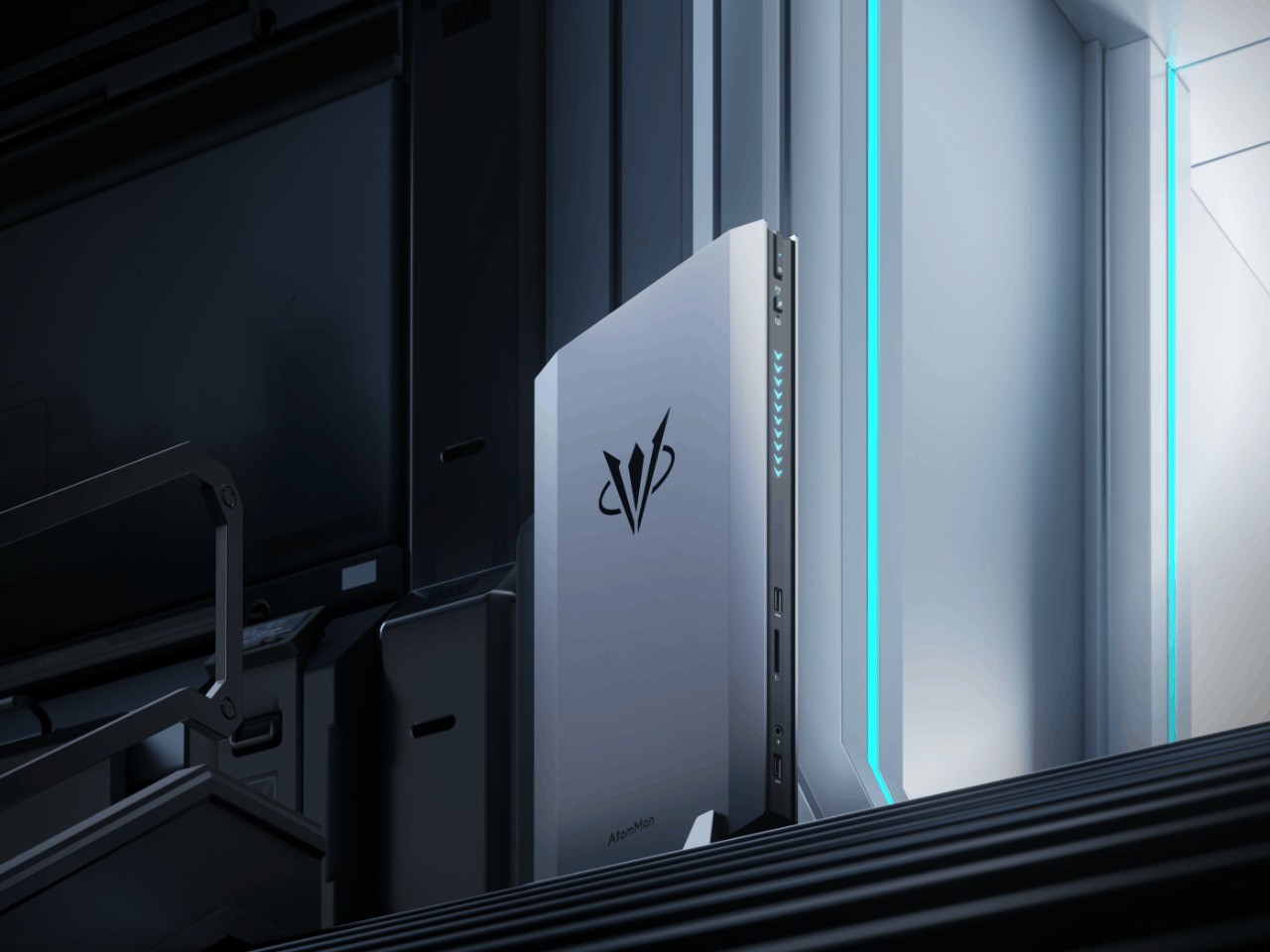
Gaming PCs have a notoriety for being big, hulking, and kaleidoscopic machines, though that seems to be only true for desktops these days. Gaming laptops are becoming slimmer, gaming mini PCs have started popping up, and let’s not forget the growing number of handheld PCs designed specifically for gaming purposes. Suffice it to say, the design of gaming PCs is undergoing a shift, transforming from cyberpunk monstrosities to sleek art objects. Of course, design tastes differ, and even the current PlayStation 5’s smooth curves and trophy-like appearance didn’t sit well with everyone. This new MINISFORUM “mini” gaming desktop PC follows in those footsteps and looks like something that is a cross between a very straight and tall PS5 and a gaming laptop that had its screen removed.
Designer: MINISFORUM
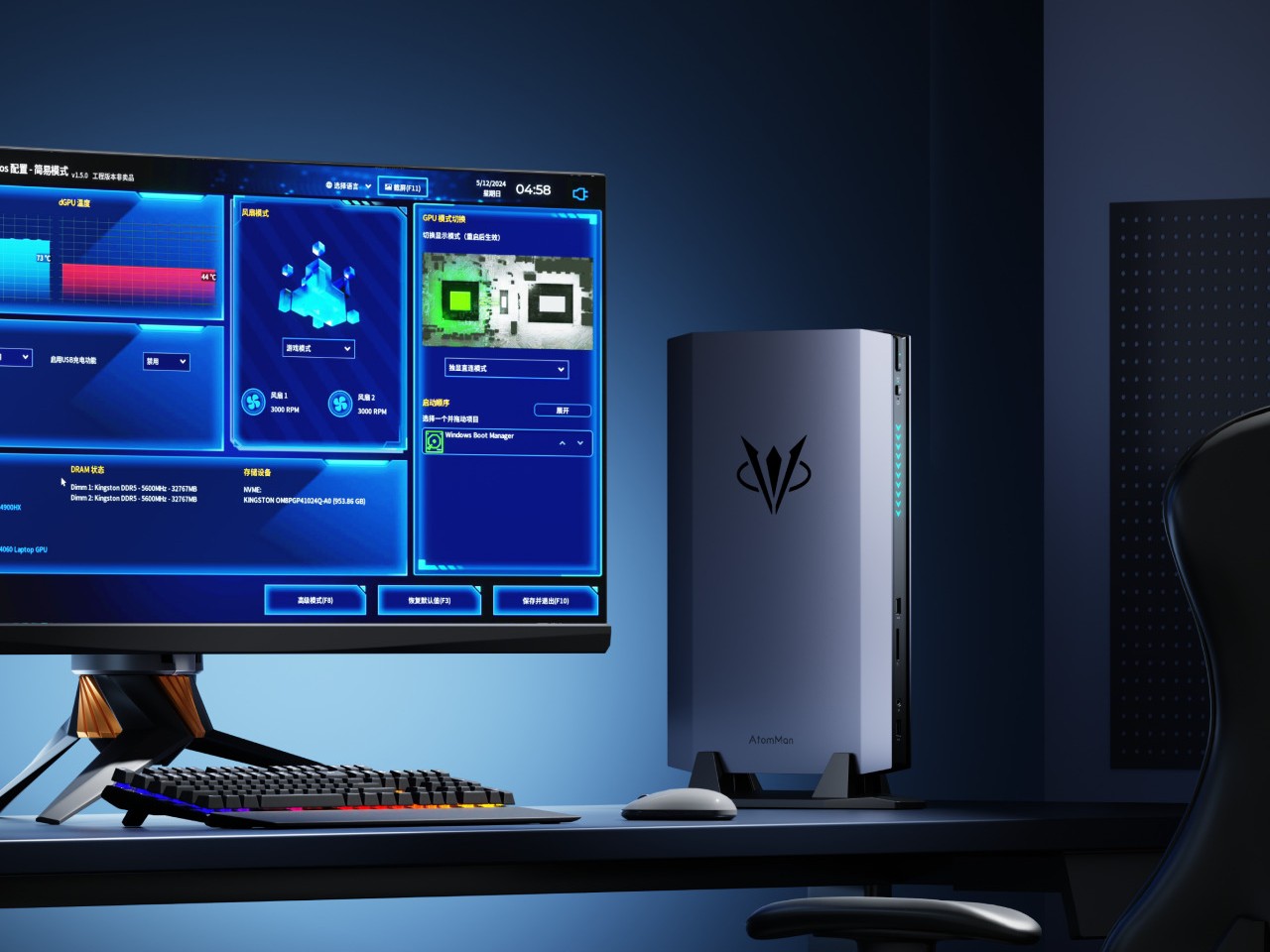
It’s hard to call the AtomMan G7 Ti a “mini PC” the way it stands over 15 inches tall, but it won’t take up too much desk space compared to a regular tower thanks to its super-slim 1.3-inch profile. The gaming computer is what you’d get if you took a gaming laptop and stood it on its side, which is practically what this gaming rig really is, except that it needs to be plugged into a monitor and power source, cementing not only its “feet” but also its image as a desktop computer.
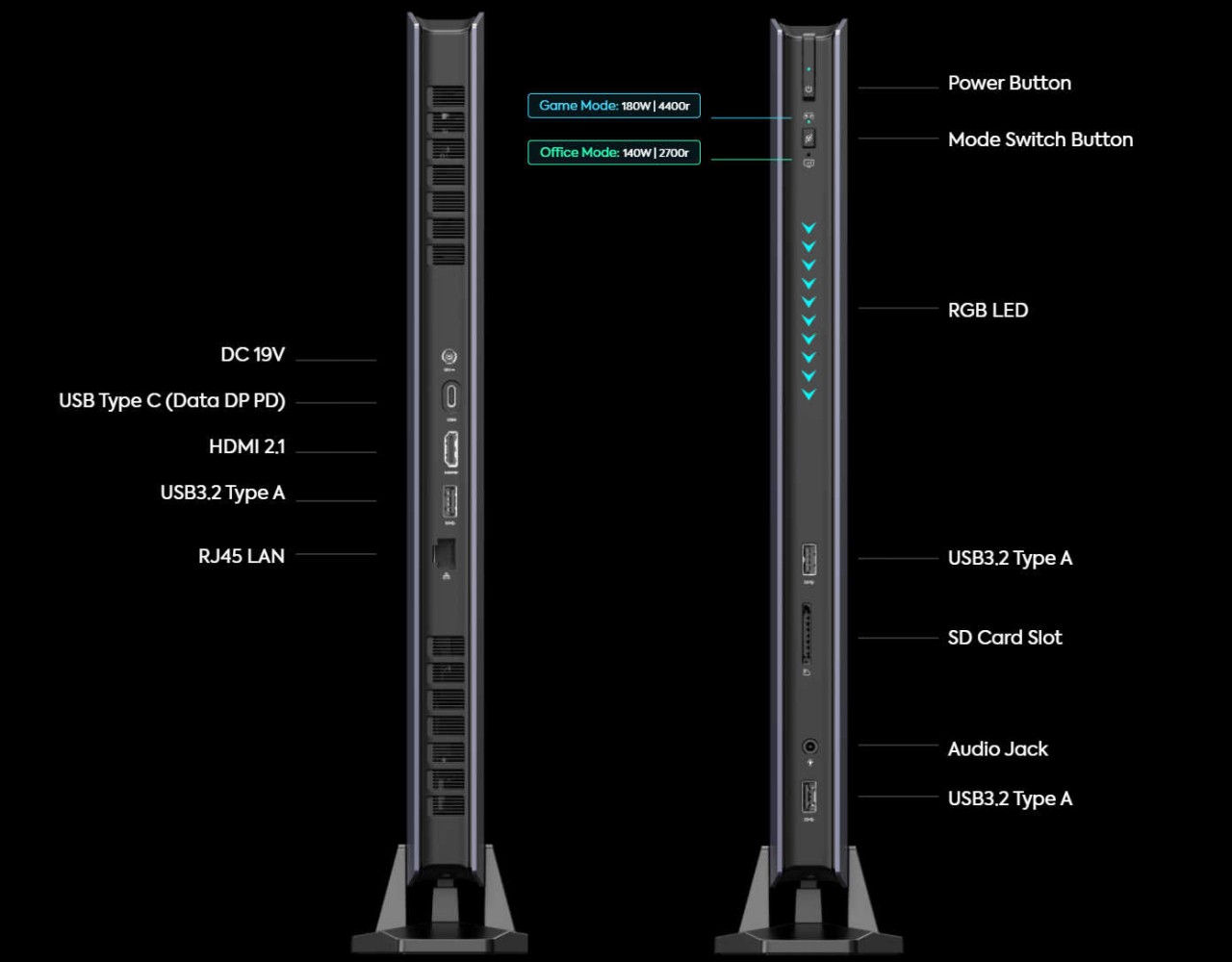
Inside, it’s powered by a Core i9 14900HX, not the AI-toting “Ultra” variant, that’s paired with an NVIDIA RTX 4070 of the mobile laptop kind. If that doesn’t scream “laptop computer,” then may the two thin fans situated on only one side of the chassis will. There might be some arguments that a gaming desktop will need more cooling than that, but gaming laptops have definitely survived with just as much. This demonstrates the sort of cognitive confusion on whether this computer is really a desktop or a laptop in disguise.
It definitely offers many things you’d only find in desktop computers, like support for up to 96GB of RAM and a plethora of ports for connecting almost anything imaginable. The latter is important since you can’t really use it on its own and will need to connect peripherals like, well, a monitor. On the other hand, some gamers might be on the fence about its actual performance, considering the constrained hardware and cooling.
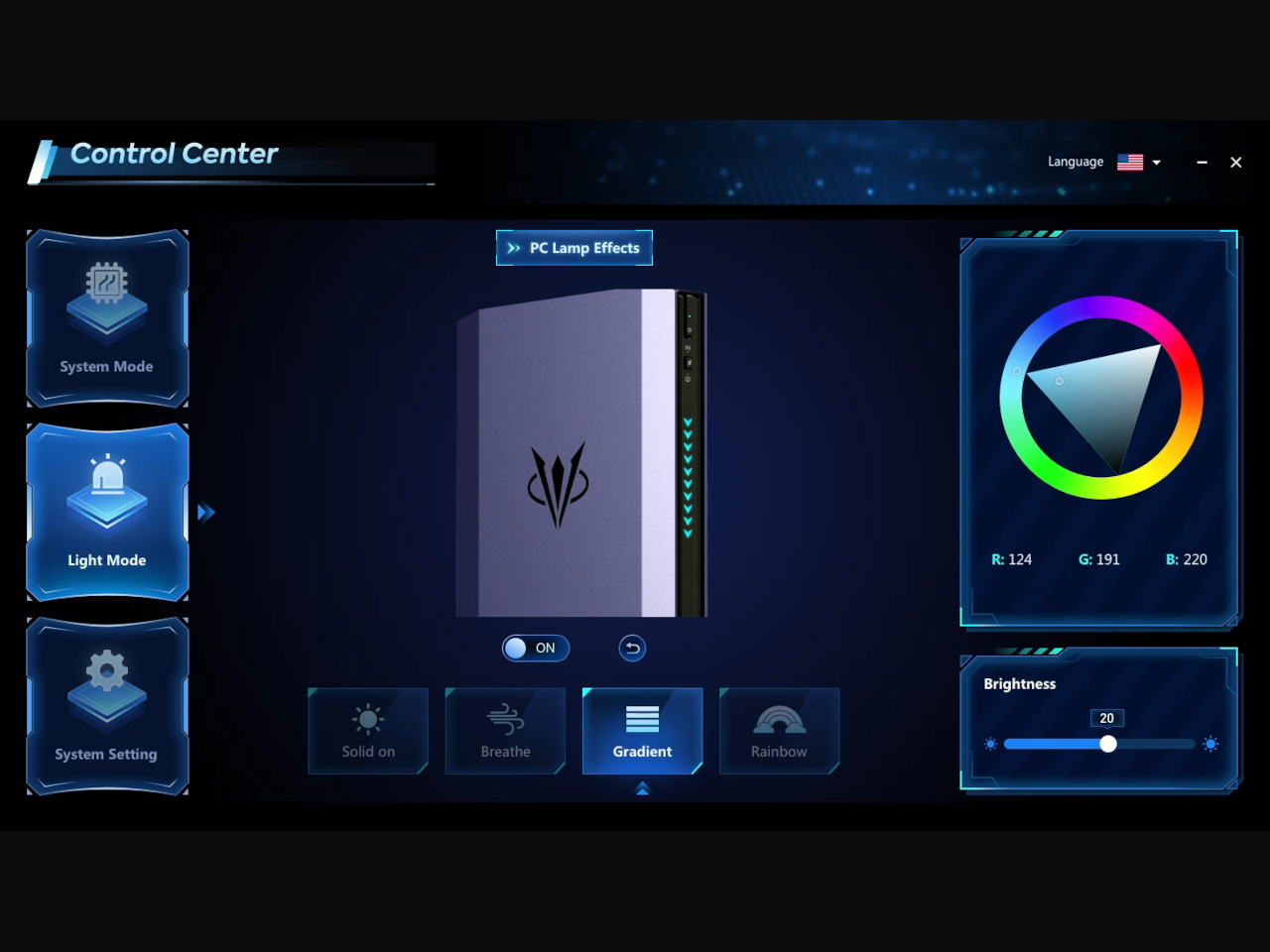
The MINISFORUM AtomMan G7 Ti is definitely going to be an acquired taste, especially with a design that looks more like a classy desktop than a gaming rig. It does have some RGB lighting, but only on the front and limited to a string of LED “arrows.” Pricing and availability details remain undisclosed, but it’s definitely an interesting take on your typical gaming desktop computer, one that prioritizes appearances and space efficiency over raw power.
On more occasions in the last few weeks than I’d like to admit, I found myself doing jumping jacks in my kitchen an hour before going to bed.
That’s not when I’d usually prefer to do any exercise, but on those nights, I looked down at my watch only to see I was so close to hitting my Move Goal, yet still far enough away that shuffling around doing my nightly routines wouldn’t get the job done. And there’s no way I’d finish the day without making the elongated blue cat on my watch face vomit up a bunch of ice cream and turn rainbow-colored. Or, in other words, close my movement ring and watch it play a celebratory animation. I guess you could say the Fitbit Ace LTE has been a great motivator.
How the Fitbit Ace LTE works
The Fitbit Ace LTE is Google’s latest kid-focused activity tracker. It offers some smartwatch features, like location-tracking and the ability to call and text parent-approved contacts (who have downloaded the Fitbit Ace companion app). It looks a lot like the company’s adult fitness smartwatches from the Sense and Versa lines compared to the original Fitbit Ace, but more fun.
The digital clock face, for one, is trimmed with a faint ring that’s gradually overtaken by a cartoonish “Noodle” design as the wearer’s activity points rack up throughout the day. That includes the cat I mentioned, a dog, a tentacle, a robot arm and a deeply unsettling anthropomorphic hotdog that surely only kids in a certain pre-tween age range will get a kick out of. By swapping out the Ace LTE’s “Cartridge” band with one of the other styles (sold separately), you can add different Noodles and themes to the watch. There are built-in movement-based games as well, including quirky interpretations of a kart racer, golf and fishing.
Meet the eejie
Then there’s the eejie: a customizable humanoid creature that lives in the device, whose happiness is dependent on the completion of daily health goals.
Photo by Cheyenne MacDonald/Engadget
I’ll be honest, I wasn’t that drawn to the eejie at first glance. When it comes to virtual companions, I’m typically more interested in weird little critters that in no way look human. But after designing my own eejie, I couldn’t help but get attached. It turns out there are a bunch of skin colors, eye shapes, hair types and mouths to choose from, so you can make your eejie as human or nonhuman as you want. Creating a character is always fun, and I could see kids getting really into crafting their virtual friends and switching up their outfits as they unlock more clothing and accessories. My eejie is a freaky-cute Nosferatu-like child with purple skin, sporting a huge pink bow.
The watch’s Daily Quests and Arcade are really the main stars, as they’re what actually entice you to move. Every day, there are four new quests to complete, which feels like a comfortable amount of tasks to be achievable without taking over a kid’s life. These include playing a game — the quests will always pick up from the last game you played — and hitting the daily Move Goal, which kids can set in the app. The other two items have less to do with activity. You might be instructed to visit Bit Valley, where the eejies live, and shown a brief tap-to-open fact to learn more about the watch’s health features. These more random tasks also sometimes included small mindfulness exercises, which is a thoughtful touch that I’m sure parents would appreciate.
Called Community Notes, these challenges asked me to do things like write down the sights and smells around me, or turn off the lights in a room that isn’t being used. The watch will sometimes show fun facts to complement your movement goals, like “walk 5,000 steps, the length of 33,333 hot dogs.” It’ll also deliver gentle reminders to complete your quests in the notification section. (Parents have the option to silence these and other notifications during designated “School time” so they don’t become a distraction).
Games on the Fitbit Ace LTE
Cheyenne MacDonald/Engadget
As I would imagine will also be the case for kids, completing my game quest for the day has been easy. The games are a lot of fun, more so than I was expecting. So far, the Fitbit Ace LTE offers six: Kaiju Golf, Pollo 13, Jelly Jam, Smokey Lake, Galaxy Rangers and Otal’s Secret. And Google said that new games will periodically be added to keep things fresh. Two more — Spirit Garden and a virtual pet game, Sproutlings — are already on the way.
Games require a bit of patience on startup, though, with slow loading times and a few too many dialogue boxes to tap through before you can actually play, especially the first time. Even I was antsy trying to get through this, so I can only imagine how a kid might be squirming. But once you’re in, it’s smooth sailing. There’s a good amount of variety in the small catalog, too, with options for both relaxed and more active play.
Pollo 13, in which you play as a chicken racing through space in an inflatable tub, had me out of my seat, moving around and shouting. On the other hand, Otal’s Secret had me solving puzzles, which I did from the comfort of my couch. At first, I was unsure how such seemingly involved games would work on the watch’s small screen, but everything was well-sized and laid out nicely.
You can only play for limited amounts of time before the game will stop and prompt you to get moving in order to proceed. Only after hitting certain activity milestones will the game be unlocked again. Most of the time, this meant I’d just play in short bursts and return later after I’d naturally racked up more move points over the course of the day. But there were a few moments where I had nothing better to do, so I’d set out to hit those goals right away, taking a brisk walk in the vicinity of my house or, again, launching into some jumping jacks (I’m not very creative).
Pollo 13 on the Fitbit Ace LTE.
Photo by Cheyenne MacDonald/Engadget
After months of using a Fitbit Charge 6 prior to this, I found that the Ace LTE was turning me into a much more active participant in my fitness. I exercise a fair amount in general, and my Charge 6 has basically become a way to passively keep track of my habits. But the visual rewards that came with achieving my goals on the Fitbit Ace LTE felt more like a gratifying pat on the back than the boring notifications on the standard trackers, so I worked to keep earning them. In addition to the silly Noodle animations, I’d be surprised here and there with the appearance of a bouncing pug piñata that I could tap to break open, revealing presents like arcade tickets to buy things for my eejie.
Fitbit also slyly uses a dash of guilt as a motivator by tying the eejie’s emotional state to the fulfillment of quests. After the first time I saw how dejected she looked when I accidentally neglected my goals for a few days, I never wanted to let her down again.
The Fitbit Ace LTE versus Tamagotchi and Digimon
All of these things make it a really great health-focused device for kids. Hell, if a software update could bring some of these features to Fitbit’s regular fitness trackers, I’d download it in a heartbeat. The Fitbit Ace LTE is essentially a fully realized version of something toymakers have dipped their toes into with wearable virtual pets like recent Tamagotchi and Digimon devices. It straps a little companion to your kid’s wrist in hopes that it’ll encourage them to get moving, and uses games to make it all go down easier.
Bandai’s Digimon Vital Bracelet — which was released in Japan in 2021 before coming to the US the following year with the Vital Hero model — took a direct approach to fitness, using metrics like daily steps and heart rate activity to influence the outcome of the monsters’ evolution paths. With a companion app, you can also participate in battles, and more monsters can be unlocked by buying and swapping in what are known as DIM cards.
The Tamagotchi Uni, the first version of which came out in 2021, expanded on the basic step-counters of earlier models to include a full-fledged walking activity. Rather than simply logging steps, initiating a Tama Walk will send your pet on a 20-minute stroll, during which it can pick up supplies that can later be used to craft special items. How fruitful these outings are depends on how much you moved in real life to fill up the red activity bar. Plus, going on Tama Walks is a good way to boost your pet’s happiness.
Photo by Cheyenne MacDonald/Engadget
As a sophisticated fitness device rather than a toy, Fitbit Ace LTE is able to go so much further. Its game Jelly Jam, for example, almost exactly mirrors a movement-based dancing game found on the Tamagotchi Uni and the Japan-exclusive Tamagotchi Smart. But while the Tamagotchi version is something I stopped playing pretty quickly after the novelty wore off — it’s boring and the toy’s sensors don’t correctly log the motions half the time — Fitbit Ace LTE’s spin on an arm-tracking dance game is pretty fun, if only because it actually works as it’s meant to.
Best of all, it could come with me anywhere. I swam with it, went horseback riding and even put it through a few dance classes. It’s lightweight and never felt cumbersome in any of those situations.
Still, a part of me wishes there were more ways to get involved with the eejie’s care beyond simply dressing it up and keeping it happy, like feeding or playing with it directly. Right now, it doesn’t have much depth and mostly feels like a mascot. I wouldn’t mind seeing future eejie options that include more animal-like creatures, either. My only real gripe with the watch is its battery life. It’ll need to be charged every night, which might be tricky for kids to remember. I woke up to find it dead several times after taking it off and forgetting to pop it on the charger. And it doesn’t track sleep.
Nonetheless, the watch is also a good peace-of-mind option for parents just as much as it is a solid wellness device. The call/messaging features are as basic as they come, but they work just fine for the intended purpose — giving parents and trusted individuals an easy way to get in touch with their kids, and vice versa.
Screenshot by Cheyenne MacDonald/Engadget
Calls with the watch sounded decent on both ends, and the location-sharing feature accurately reflected the device’s position when I checked it in the app. The Fitbit Ace app itself is easy to set up and navigate, with a simple interface that shouldn’t be hard to work with, even for someone who isn’t very tech savvy.
It’s not a full-featured smartwatch with an app library or even a way to communicate outside of the Fitbit Ace app, but its limitations are designed to keep risks to an absolute minimum. Given it’s made for kids starting at age 7, I think this is worth the trade-off. At $230 plus the $10/month Fitbit Ace Pass (which allows you to use the LTE connectivity without adding a new line to your existing phone plan), it is pricey. But it should be able to grow with a kid for at least a few years into the early double-digits without coming off as age-inappropriate. Pop off that bright green protective bumper, and it looks like any other smartwatch.
This article originally appeared on Engadget at https://www.engadget.com/wearables/fitbit-ace-lte-review-a-kids-activity-tracker-that-was-fun-for-me-an-adult-140043586.html?src=rss
The NILU hypercar is a bold statement in the automotive world, challenging the current trends of electrification and digitalization. This naturally aspirated hypercar is designed to deliver an unfiltered and uncensored driving experience. Drawing inspiration from classic racing cars and design philosophies, the NILU hypercar is a unique blend of old-school charm and modern engineering. […]
As developer Poncle promised, Vampire Survivors is making its way to PlayStation this summer and now there's a firm release date. Many people's pick for the best game of 2022 is coming to PS4 and PS5 on August 29. All of the paid expansions will be available on launch day as well.
PlayStation was the last remaining major platform for the all-conquering, vampire-less game to land on. After coming out of early access on PC and Mac in October 2022, it hit Xbox the following month and then mobile that December (an ad-free version arrived on Apple Arcade earlier this month). The Switch port dropped a year ago. The only place that's really left to go now is VR.
For the uninitiated, each character in Vampire Survivors has a unique starting perk and weapon, which fires automatically. All you essentially have to do is control your character's movement and make careful choices about weapon and perk additions and upgrades when you level up as you fend off literally thousands of monsters. Runs typically last for up to 30 minutes, if you can survive that long. It's terrifically chaotic and, best of all, the game costs just five bucks.
This article originally appeared on Engadget at https://www.engadget.com/gaming/playstation/vampire-survivors-hits-ps4-and-ps5-on-august-29-134602924.html?src=rss