Excel Power Query Secrets : Easily Fix Null Values in Financial Reports

Excel Power Query Secrets

Null values can be a significant hurdle in data transformation, particularly when dealing with financial data. While Power Query provides various methods to tackle these null values, the coalesce operator emerges as a standout solution, offering unparalleled efficiency and simplicity. In this guide, we provide more insight into the intricacies of the coalesce operator in […]

The post Excel Power Query Secrets : Easily Fix Null Values in Financial Reports appeared first on Geeky Gadgets.

Posted in Uncategorized | Tagged

You WON’T Believe What These iOS 18 Settings Can Do!

iOS 18 Settings

iOS 18 marks a significant milestone in Apple’s mobile operating system, introducing a wealth of new settings and features that aim to transform user experience, bolster privacy, and expand device capabilities. This update encompasses a wide array of enhancements, including refined camera settings, robust privacy controls, intelligent battery management, advanced messaging options, and innovative AirPods […]

The post You WON’T Believe What These iOS 18 Settings Can Do! appeared first on Geeky Gadgets.

Former OpenAI Employee Leaks AGI Progress Documents to Congress

Ex-OpenAI Employee leaked documents to congress

In a recent testimony before a Senate subcommittee, William Saunders, a former OpenAI employee, shed light on the company’s significant progress towards achieving Artificial General Intelligence (AGI). Saunders revealed that OpenAI is closer to realizing AGI than previously thought, suggesting that it could be achieved within the next three years. This revelation has raised pressing […]

The post Former OpenAI Employee Leaks AGI Progress Documents to Congress appeared first on Geeky Gadgets.

Forgot Your Apple ID Password? Don’t Panic! Follow These Steps

Apple ID password

Resetting your Apple ID password is a crucial task that every Apple user may need to perform at some point. Whether you’ve forgotten your password or simply want to update it for security reasons, the process is straightforward and can be done quickly using two-factor authentication through the Settings app on a trusted device. By […]

The post Forgot Your Apple ID Password? Don’t Panic! Follow These Steps appeared first on Geeky Gadgets.

Ultra-compact Tactical Titanium EDC packs 12 Different Tools in the size of an AirPods Case

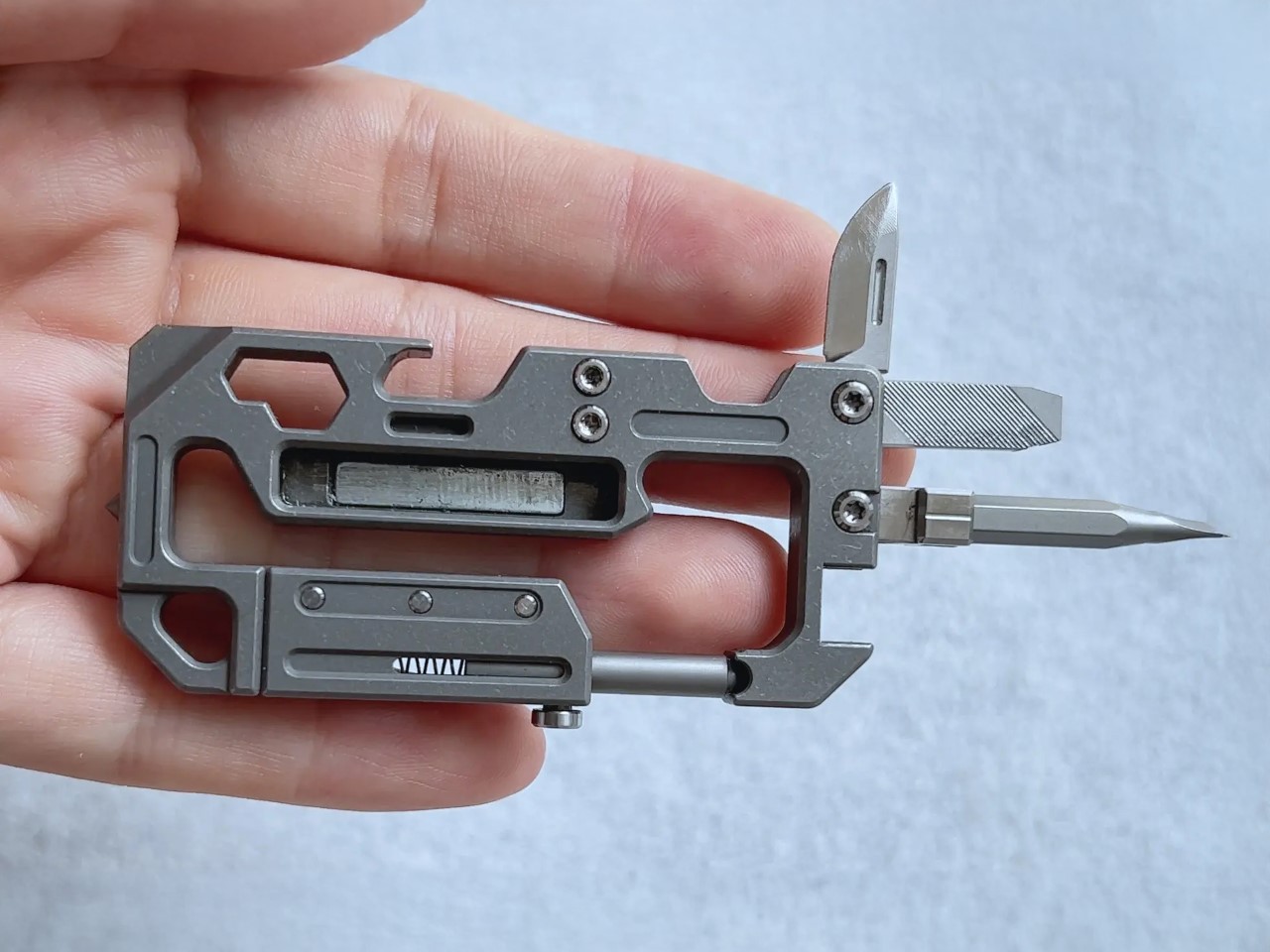
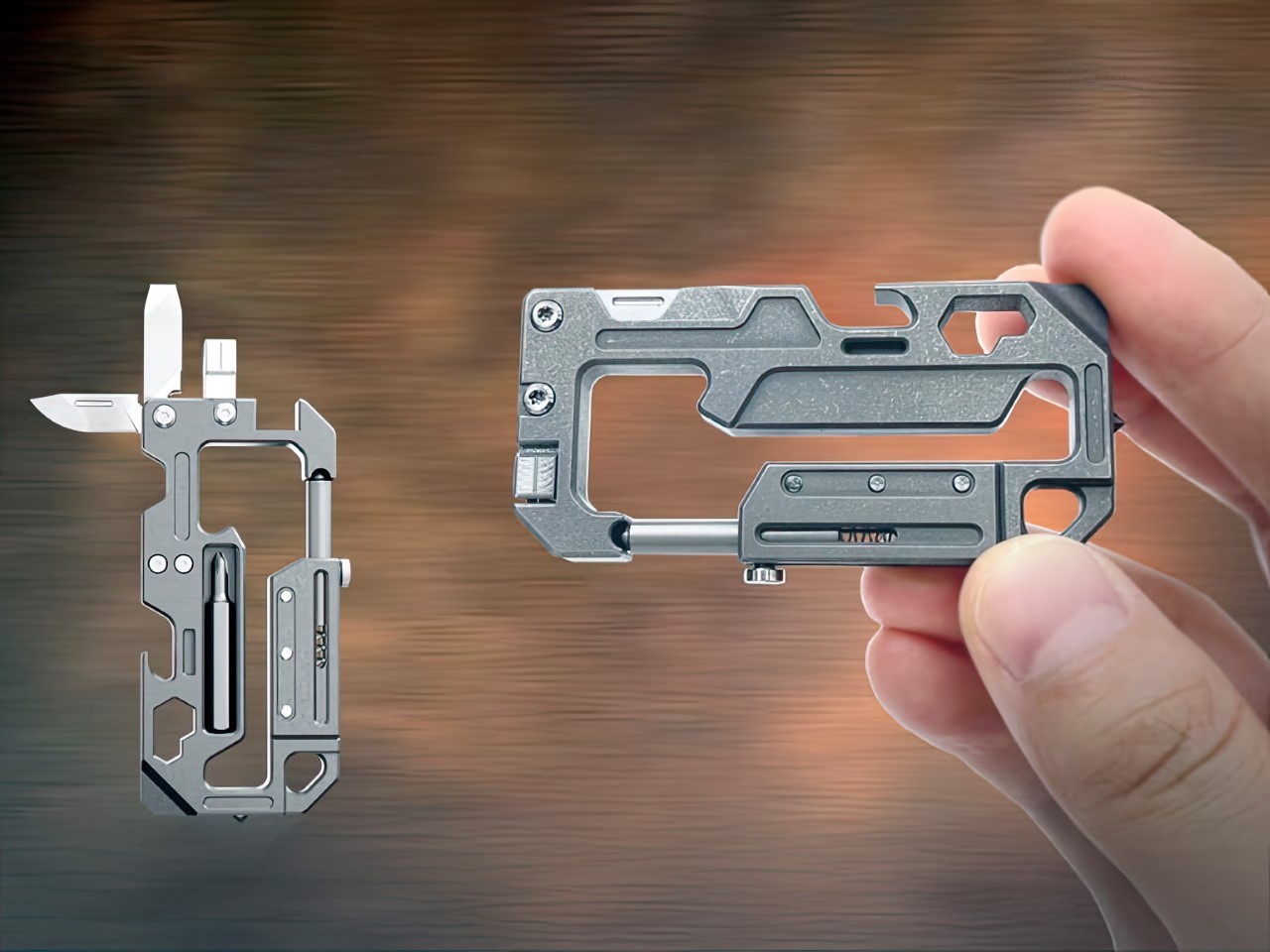
We’ve seen carabiner clips with fold-out knives or screwdrivers before, but there’s something special about the Multi-Kit. Firstly, it isn’t a traditional carabiner, and secondly, it does a little more than integrate just a fold-out knife or screwdriver. In fact, it integrates a whopping 12 tools into its tiny form that’s roughly the size of an AirPods case. This Swiss Army Knife from an alternate reality has all the tools you need to disassemble stuff, repair objects, go camping, and even defend yourself in an emergency. Moreover, it’s made from Grade 5 Titanium, every EDC lover’s material of choice, making it not just incredibly robust and reliable, but also corrosion-proof and lightweight, at just 29.8 grams… that’s lighter than an AirPods case too!

Designer: EckDesign

Click Here to Buy Now: $64 $79 (19% off) Hurry, only 5 days left!

The overall silhouette of the Multi-Kit is defined by the fact that it’s a carabiner. It comes with a hollow cutout in the center, sporting different tools across its periphery. The fact that it’s a carabiner matters probably the most here, given the entire form follows function philosophy – but the Multi-Kit isn’t your average carabiner. Rather than having a flexible arm, it sports a bolt-style mechanism with a spring-loaded bolt that’s much more secure, eliminating any accidental opening. This allows you to affix the Multi-Kit to your backpack or belt loop, or even slide a couple of keyrings in for a more consolidated EDC experience.

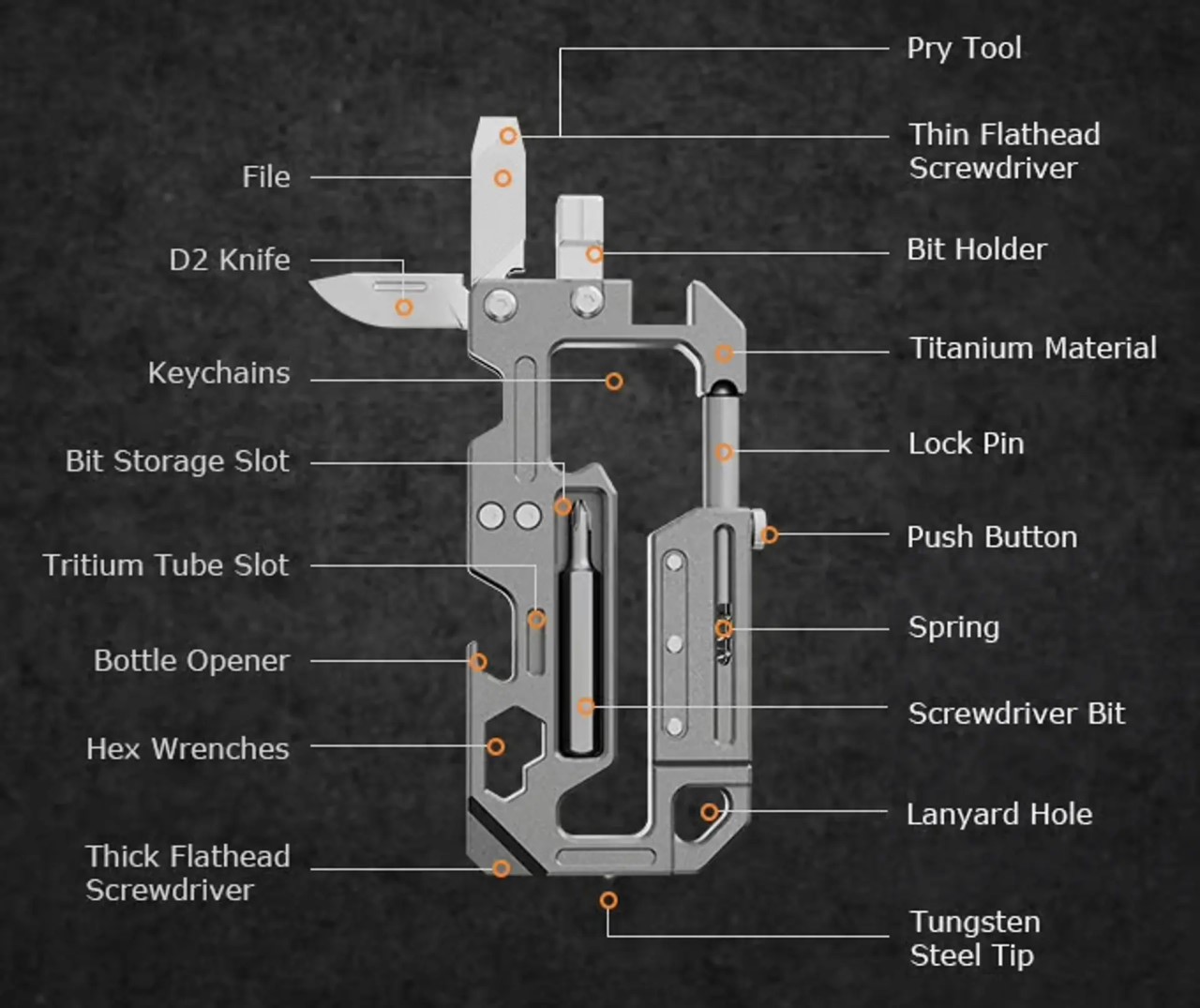
Move past the carabiner and you get to the Multi-Kit’s ‘meat’, its array of tools carefully integrated into the design. First, you’ve got the fold-out tools like the tiny D2 knife and the file for sanding down objects, designed to fold away into the body of the Multi-Kit when not in use. The small blade is diminutive but deadly, sporting a drop-point edge that’s perfect for cutting, piercing, and even scraping. For abrasive work, the file works remarkably well, with its top functioning as a pry bar and flathead screwdriver too. However, if you want to work with Philips-heads or any other kinds of screws, the Multi-Kit houses a hex-bit in a slot in its body. Held in place via magnets, the bit docks in when not in use, and can be pulled out and fixed into the front, transforming the multitool into a proper flat-grip driver that’s easy to twist.

The rest of the Multi-Kit’s tools are cleverly integrated into its body design. You’ve got a thick flathead screwdriver for larger, more stubborn screws, two hex wrenches (in 4mm and 6mm standard sizes), as well as a bottle opener for cracking open a cold one while you sweat away working on your DIY project or fixing up some tech or appliance.

Hiding away in plain sight is the Multi-Kit’s final tool, a tungsten-tip glass breaker that shatters even reinforced glass with a single strike. Perfect for exiting a car in an emergency (or breaking through the glass box to access a fire extinguisher), the tungsten top sits quietly in the bottom of the multitool’s design, and can be used simply by striking the tip against any glass with adequate force. Its abrasive properties make it great for etching on glass too, or even using as a glass scorer/cutter although that’s an art you’ll need to master.

Finally, the multitool packs a lanyard hole for stringing a lanyard or paracord grip through (either for style or if you’d rather use the carabiner for holding items instead of being a clip accessory). The titanium body even has tritium slots machined into it, so you can pop tritium capsules into your EDC to make it visible in low-light settings.

Despite its tool-rich design, the Multi-Kit remains remarkably compact. It slips easily into your pocket or clips onto a bag with its built-in carabiner, which doubles as yet another tool, further emphasizing the space-saving nature of the design. A lot of this gets attributed to the use of Grade-5 titanium as a material, one of the strongest-known materials to mankind. This makes the Multi-Kit about as robust as it is compact, and although makers at Eck Design don’t specifically guarantee the Multi-Kit will last forever, they do allude to the fact that it’ll definitely be the one EDC that can take on any activity you throw at it and still survive long enough to become an heirloom.

Designed for versatility, this multitool is perfect for those who love to be prepared without carrying a full toolbox. Whether you’re an outdoors enthusiast, a DIYer, or just someone who likes to have a reliable tool on hand, the Multi-Kit’s 12 functions cover everything from slicing to tightening bolts to providing that all-important bottle opener. It’s the kind of tool that you’ll find yourself reaching for more than you’d expect—if only to appreciate how much they managed to fit into something so small.

Click Here to Buy Now: $64 $79 (19% off) Hurry, only 5 days left!


The post Ultra-compact Tactical Titanium EDC packs 12 Different Tools in the size of an AirPods Case first appeared on Yanko Design.

Bunkie On A Hill Is A Contemporary Reinterpretation Of A Classic A-Frame Cabin With A Vaulted Roof

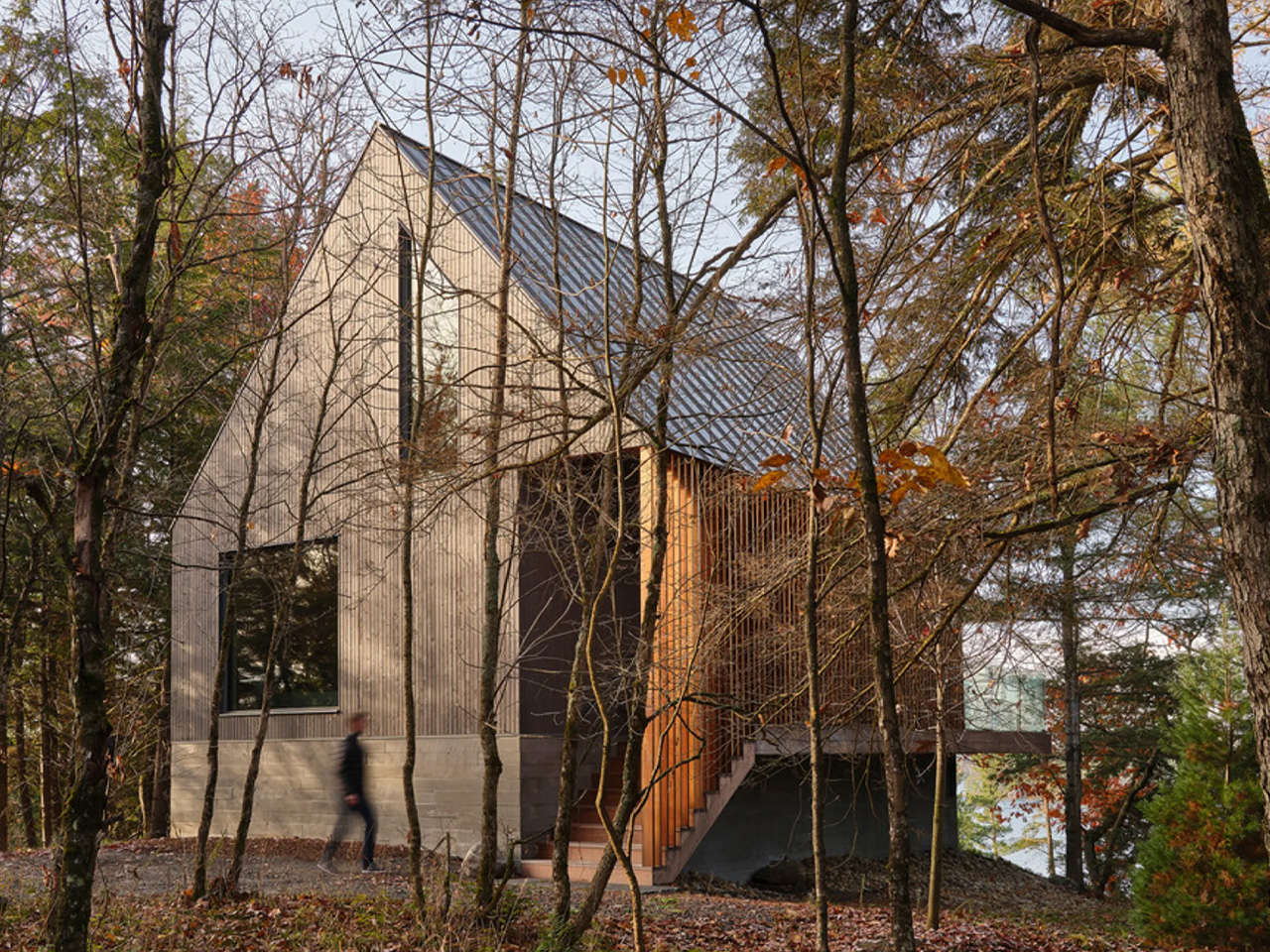
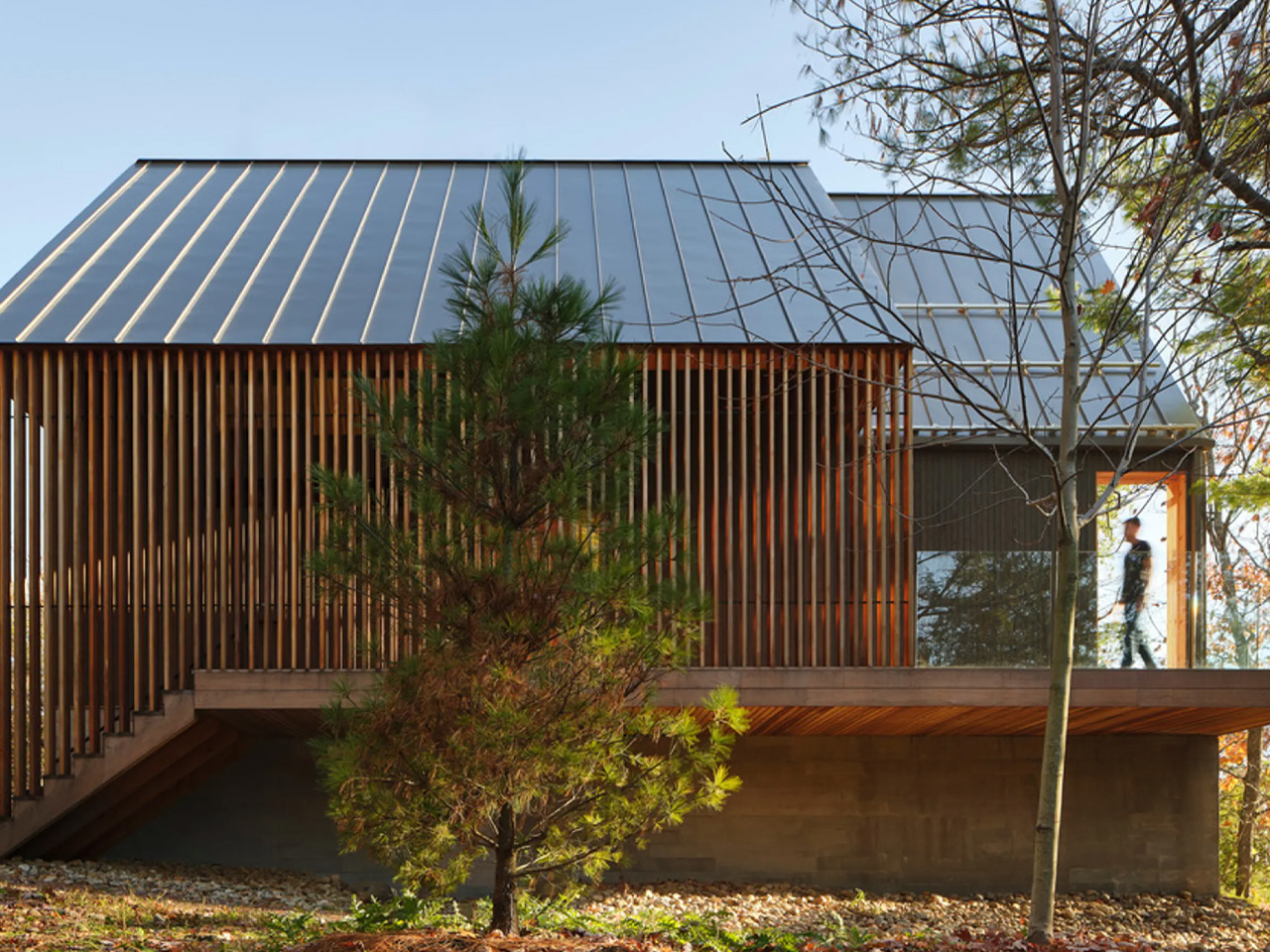
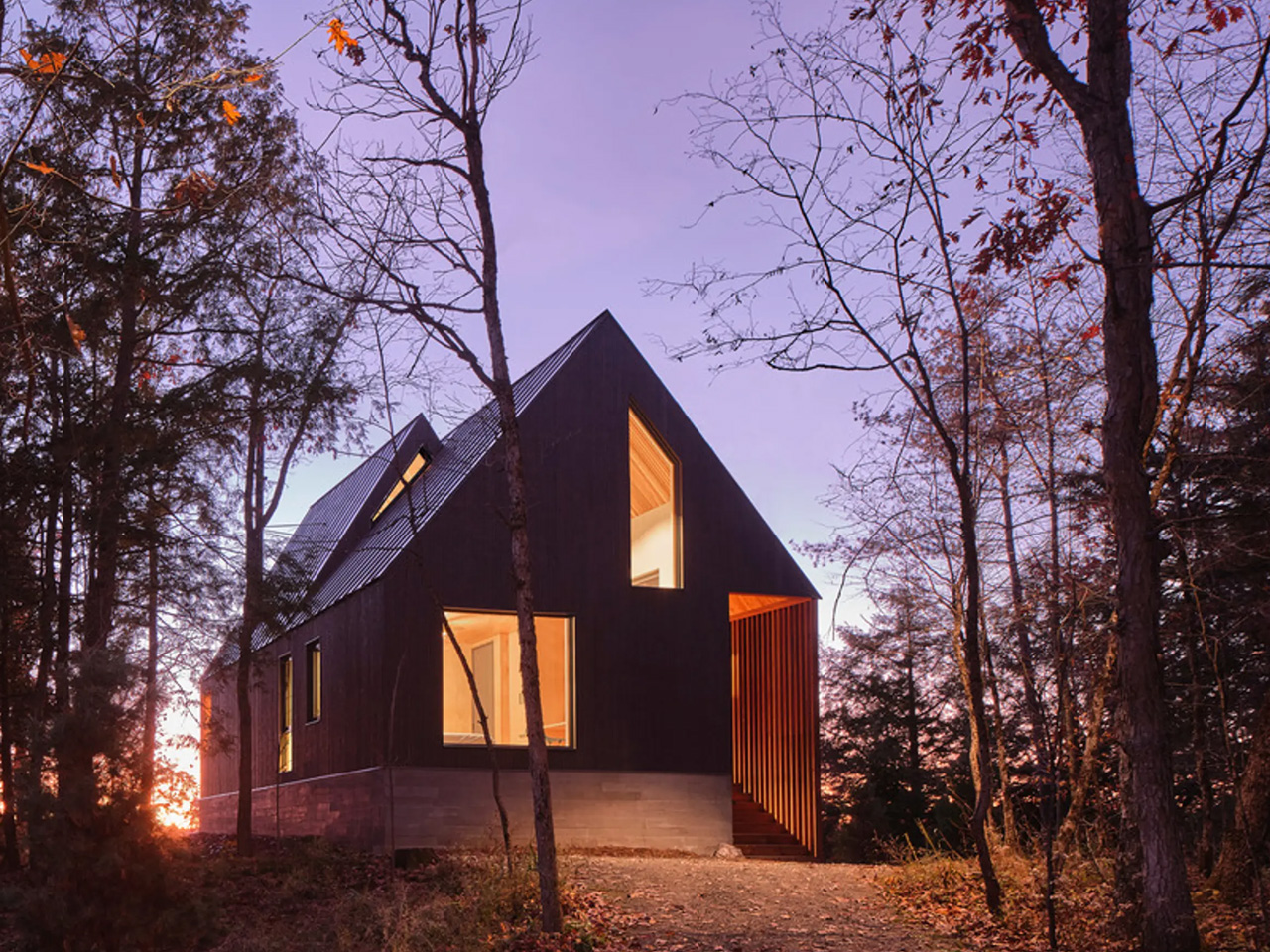
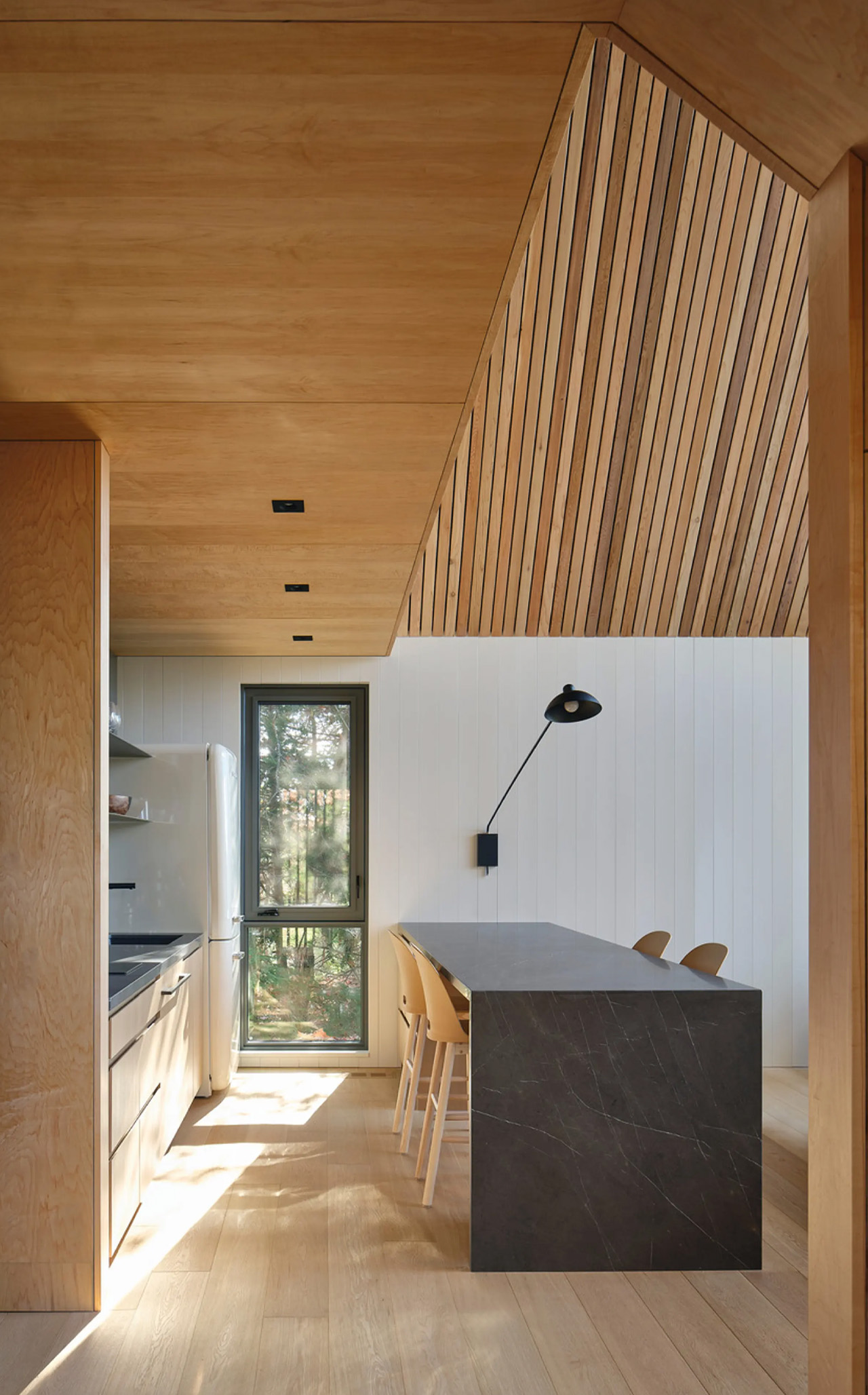
Meet the Bunkie on a Hill, a modern cabin perched on top of a hill in Muskoka, Ontario – as its name implies. The Bunkie is a contemporary and updated version of the classic forest cabin. It was created by Toronto-based Dubbeldam Architecture + Design, and it is part of a collection of buildings tucked away in four family properties. Bunkie is the smallest, and although it has a humble and compact size, it is an excellent example of how an abode can be functional and intricately linked to its surroundings.

Designer: Dubbeldam Architecture + Design

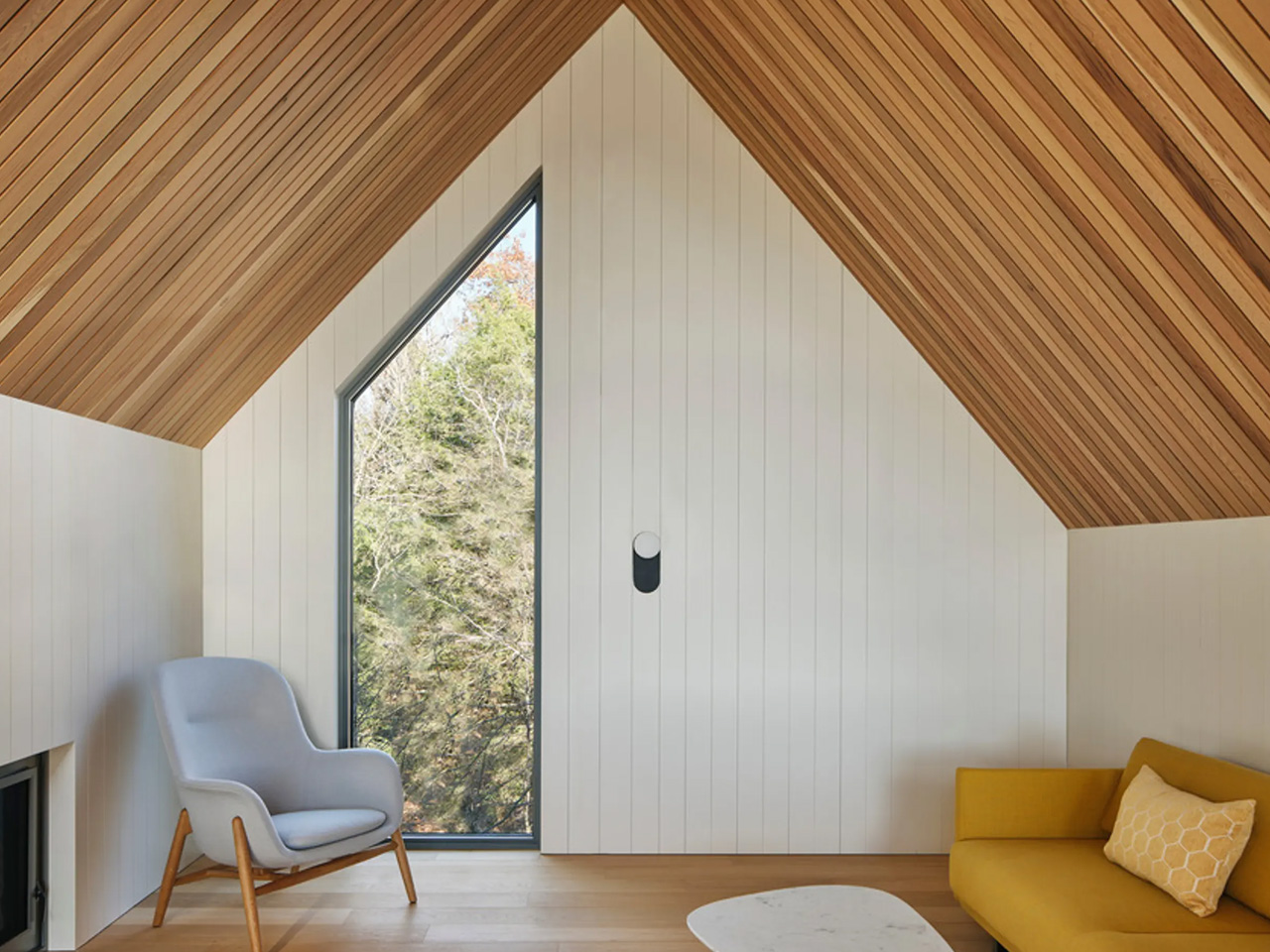
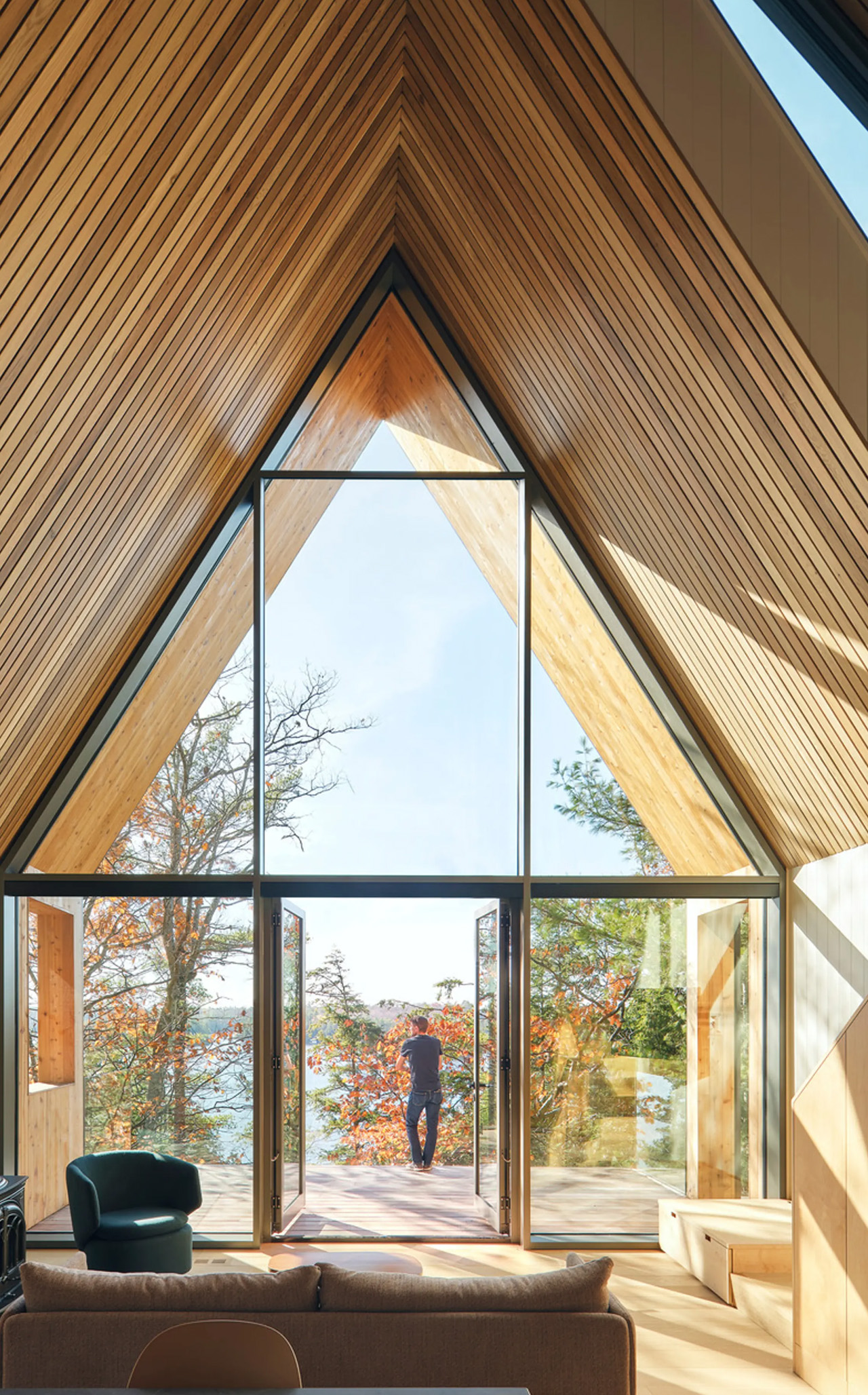
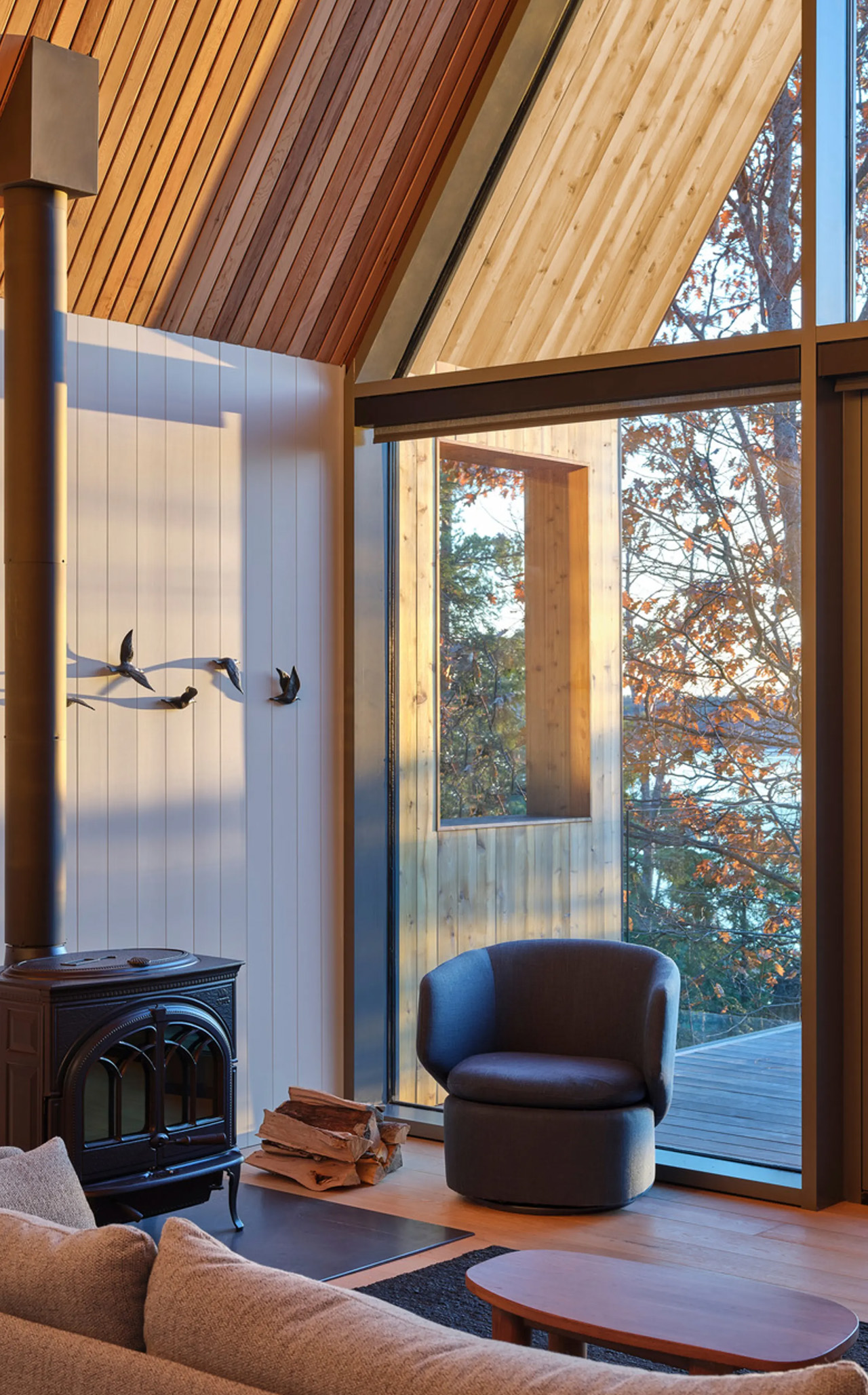
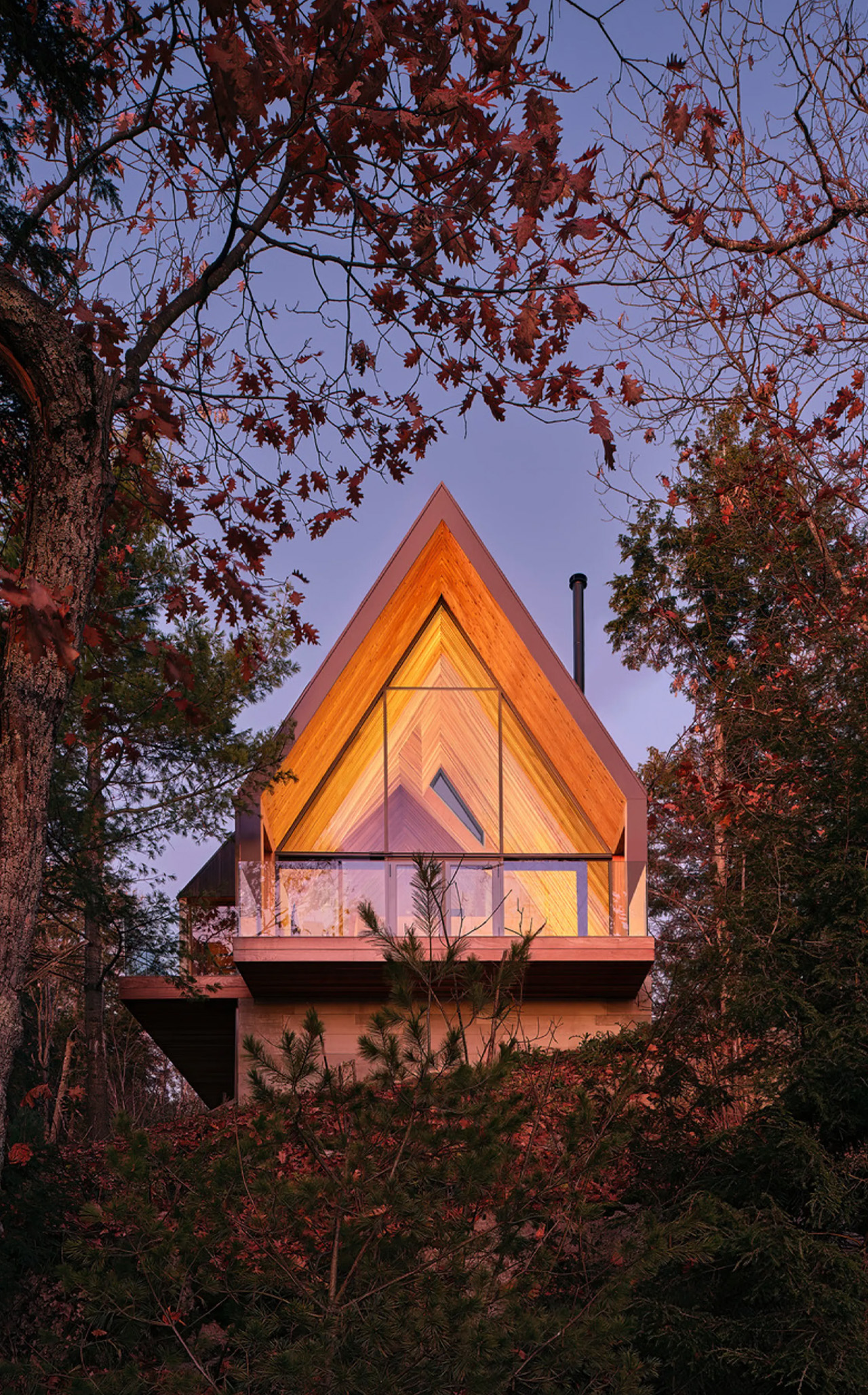
Bunkie occupies around 1000 sq ft (95 sq m), and it is a modern reinterpretation of the typical A-frame cabins. A-frame cabins are quite popular, and Bunkie adds a twist to them with its split roof design and two intersecting gables. The unique architectural element offers space for incorporating panoramic geometric windows which provide beautiful views of the surrounding treetops, and the lake below. The sharp angles and the mesmerizing sloping roof lines allow natural light to steadily stream into the home.

Bunkie is amped with two impressive facades – one is a tall and glazed wall that provides lovely views of the lake, while the other is more solid and faces the forest. This facade provides protection from the elements and some much-needed privacy. You can enter the cabin from the west side, through a walkway covered by a cedar screen, which resembles the tree trunks of the forest. Only FSC-rated wood was used to construct Bunkie on the Hill, and it features an exterior of wood siding and natural cedar soffits. The wooden elements naturally blend with the surrounding forest. The cabin is also equipped with thickened exterior walls, a minimal heating system, and triple-glazed windows which give it an R-value of over 40, and make it quite energy-efficient.

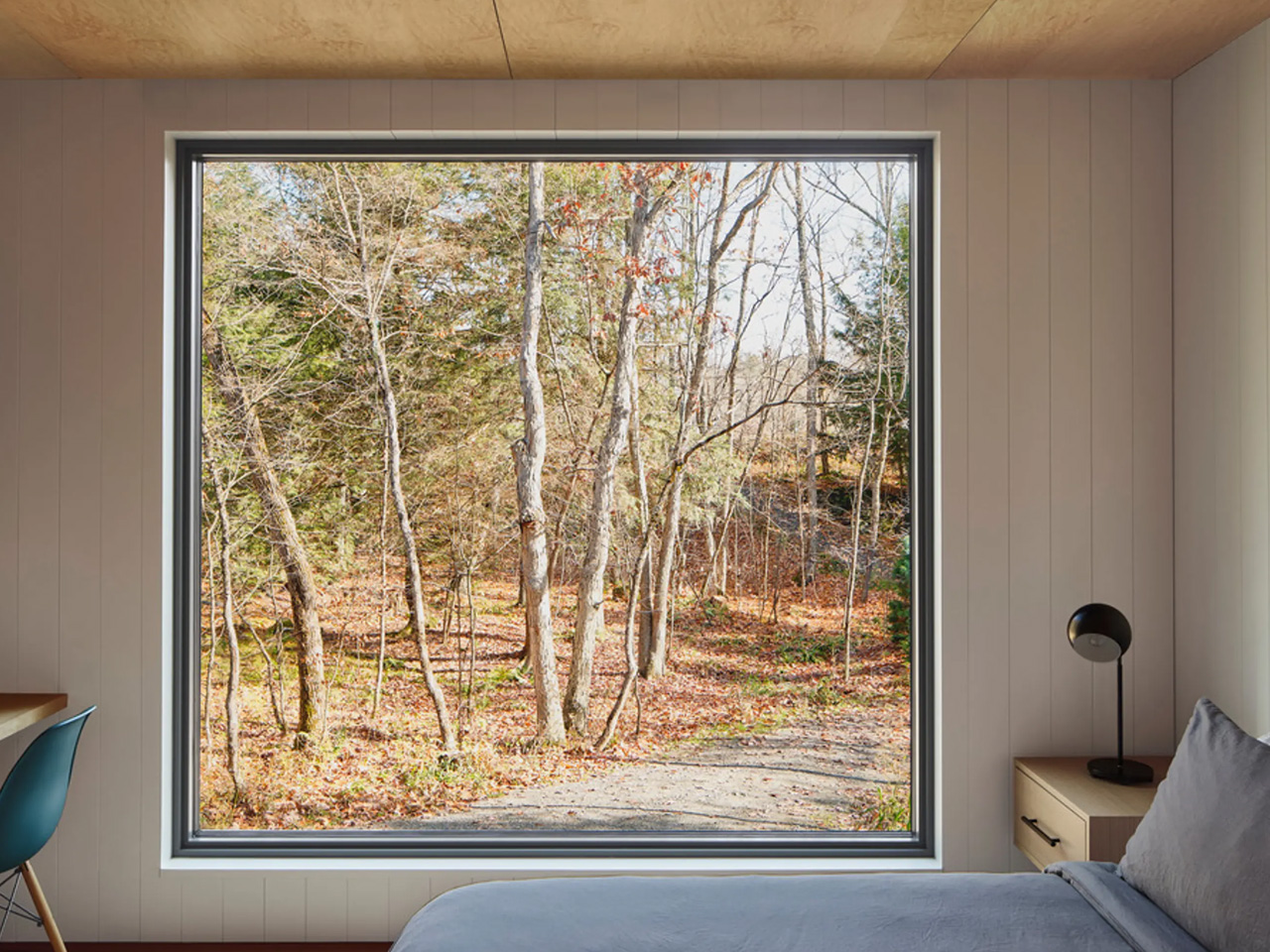
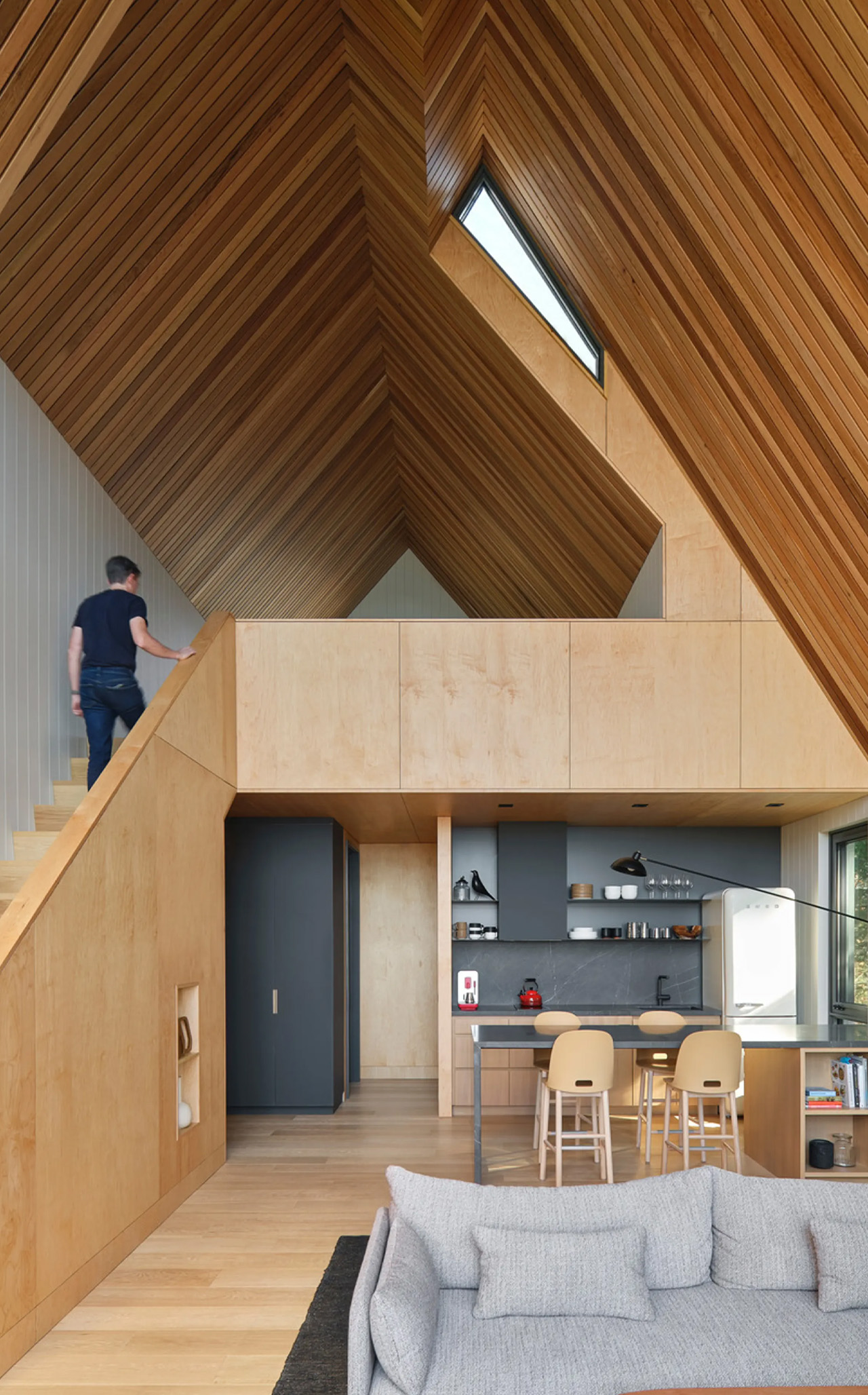
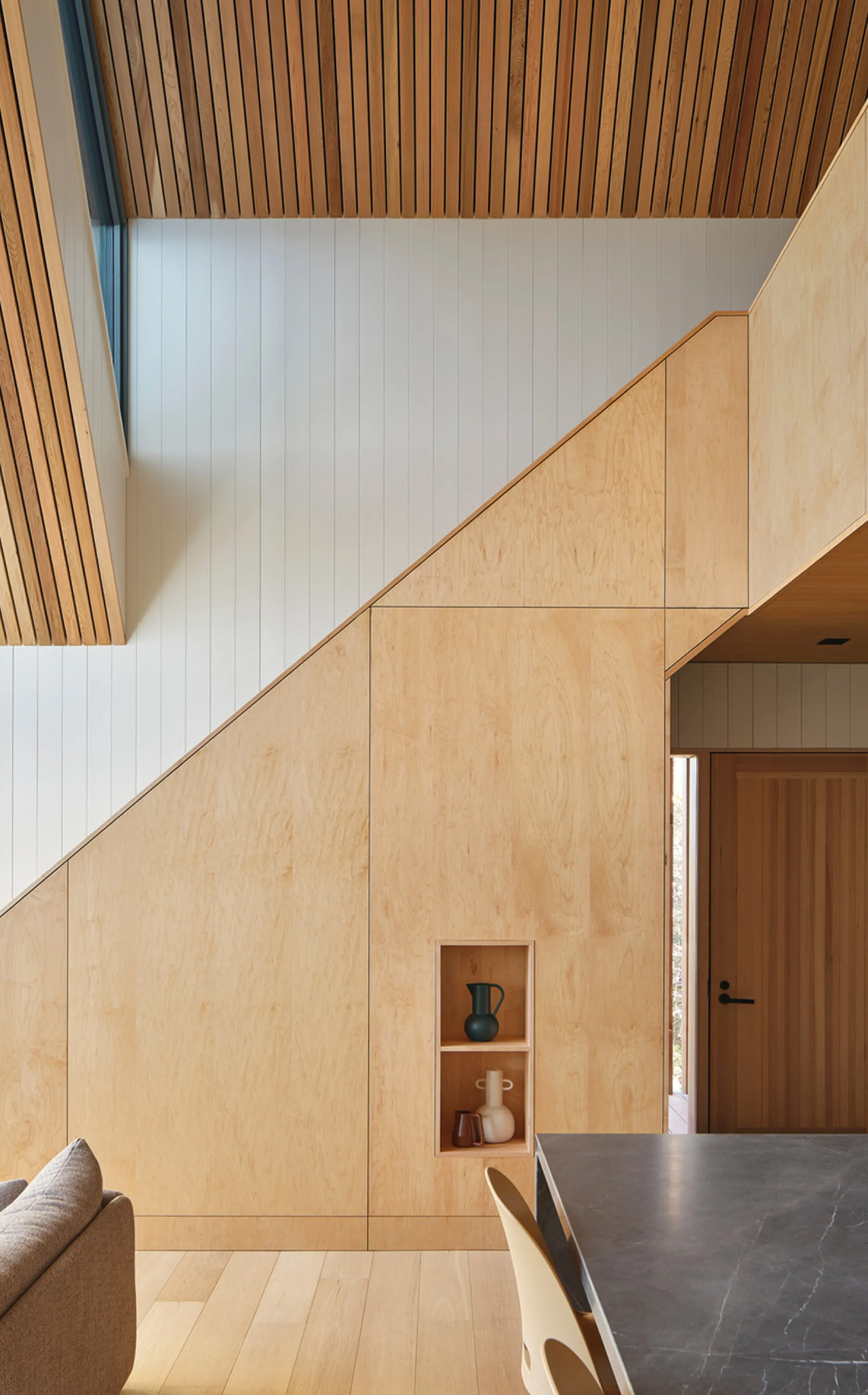
The interior of the cabin is extremely well-planned and carefully designed. It offers maximum functionality with impressive utility of space. Smart storage solutions have been incorporated throughout the house. The ground floor showcases a big open-plan living and dining area, as well as a minimal and subtle kitchen. Double-height framed windows expansively open up to a massive timber outdoor terrace. The primary bedroom is located at the back of the cabin, and it includes windows that offer surreal views of the surrounding forest. The cabin also contains an upper loft, which serves as an additional sleeping area. This space also integrates a built-in desk, so it can be used as a home office too. You can glance at the living room and the lake from this loft room.

The post Bunkie On A Hill Is A Contemporary Reinterpretation Of A Classic A-Frame Cabin With A Vaulted Roof first appeared on Yanko Design.

An Hourglass Shaped Observation Tower In Sweden Satisfies The Birdwatcher In You

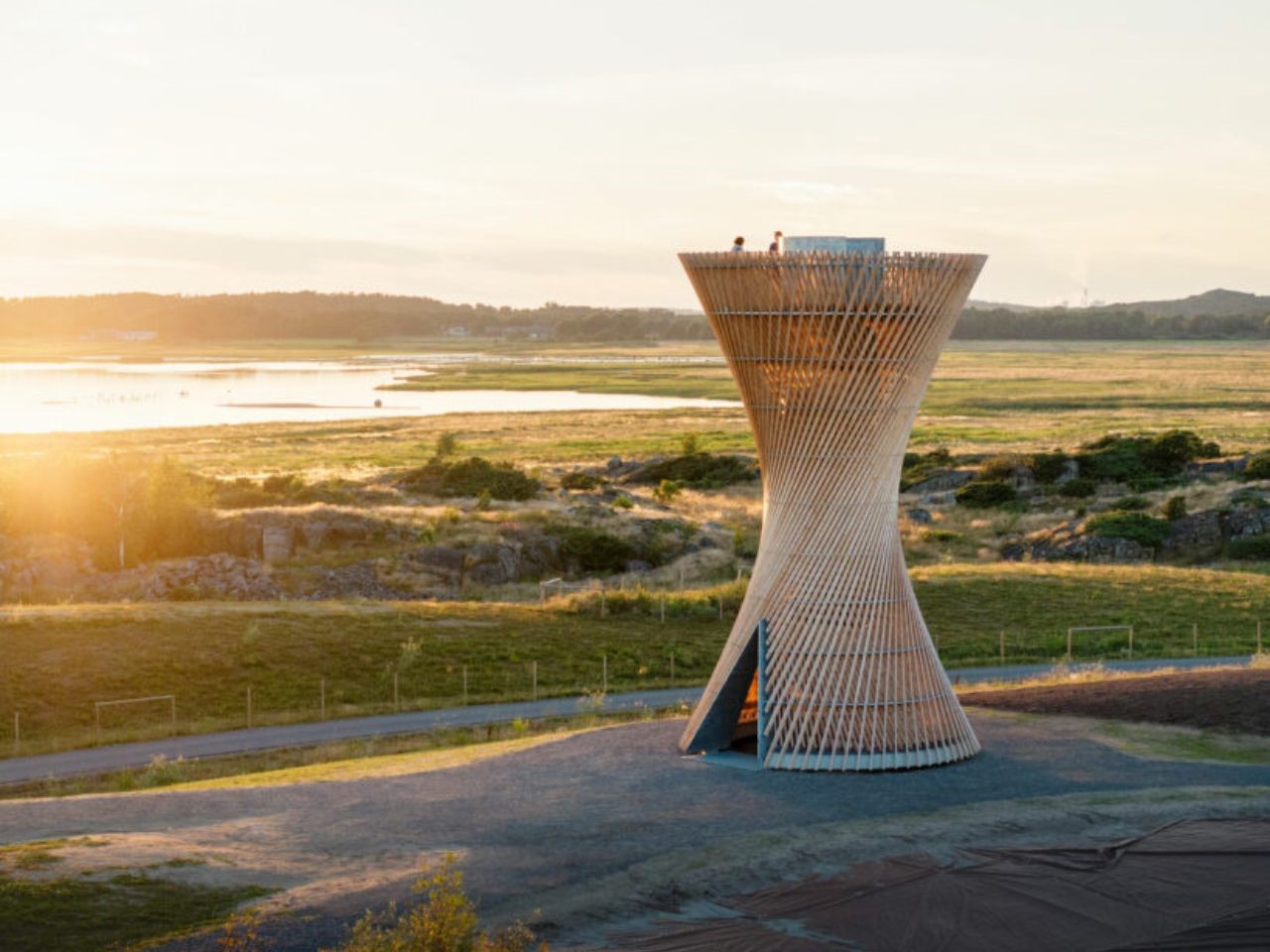
White Arkitekter, the renowned Swedish architecture studio, has recently unveiled its latest creation, the Observation Tower Kärven, in the scenic Getterön nature reserve on Sweden’s west coast. This 12-metre-tall structure, which emerged as the winning entry in an architectural competition organized by the Varberg Municipality, stands as an iconic testament to innovative design and sustainability.

Designer: White Arkitekter

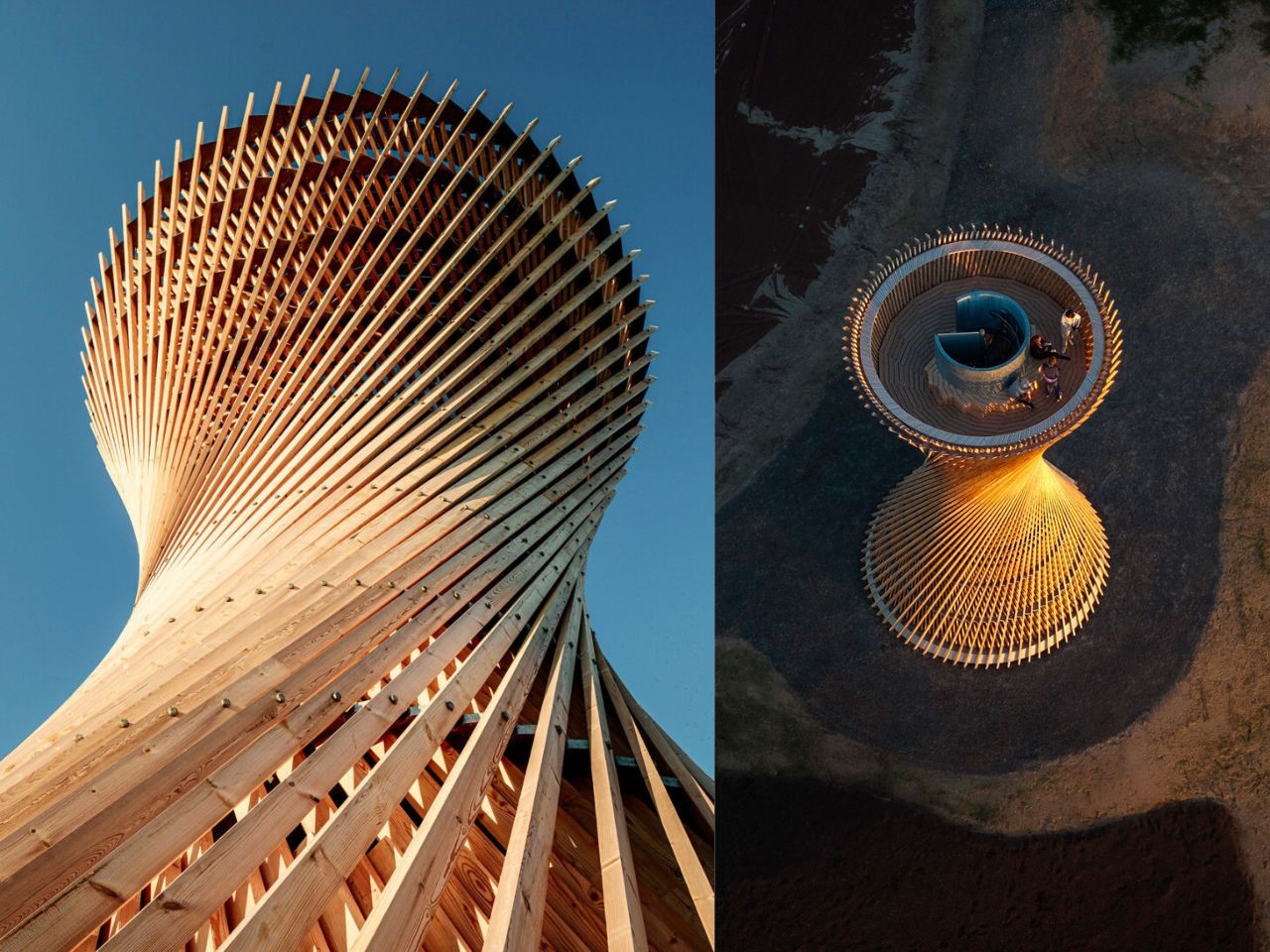
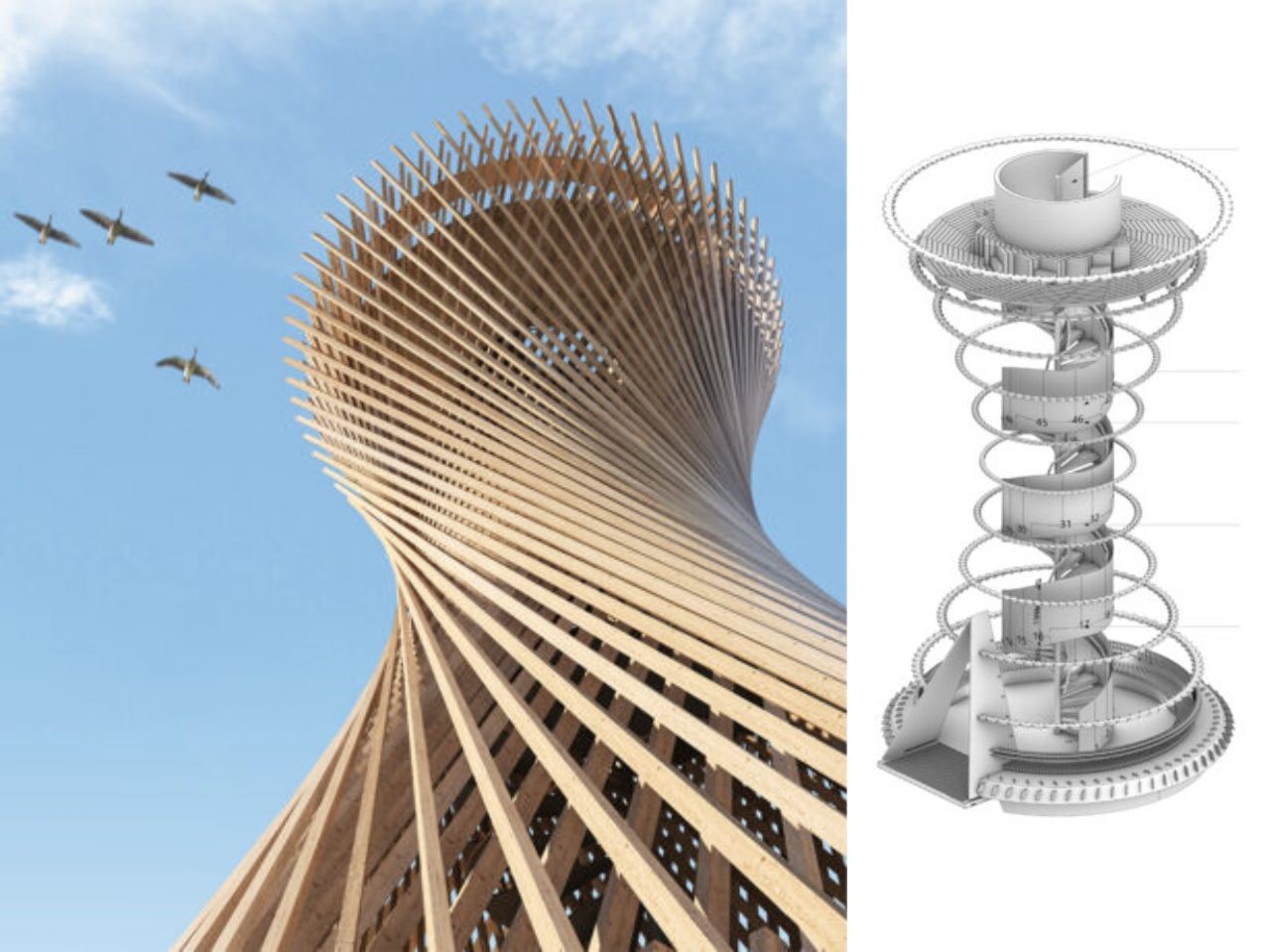
The Kärven tower, which rises like an intricate lattice from the landscape, was described by White Arkitekter as having a “visually striking simplicity, reminiscent of a bundle of twisted straws.” The tower’s construction, composed of 140 timber beams and metal rings, creates a dynamic hyperboloid shape, a complex structure that fuses nature-inspired elegance with structural ingenuity.

This lattice of timber beams, skillfully arranged in a three-dimensional puzzle, gives the tower its distinctive hourglass silhouette. From a distance, the structure appears curved, but closer inspection reveals that the form is actually composed of straight beams, cleverly assembled to create the illusion of curvature.

The Kärven project required seamless collaboration between architects and structural engineers. Lead architect Lukas Nordström emphasized that “the concept required an understanding from both architect and structural engineer of each other’s disciplines.” This interplay of architecture and construction is evident throughout the tower, where the boundaries between design and engineering blur, reflecting the harmony achieved between aesthetics and functionality.

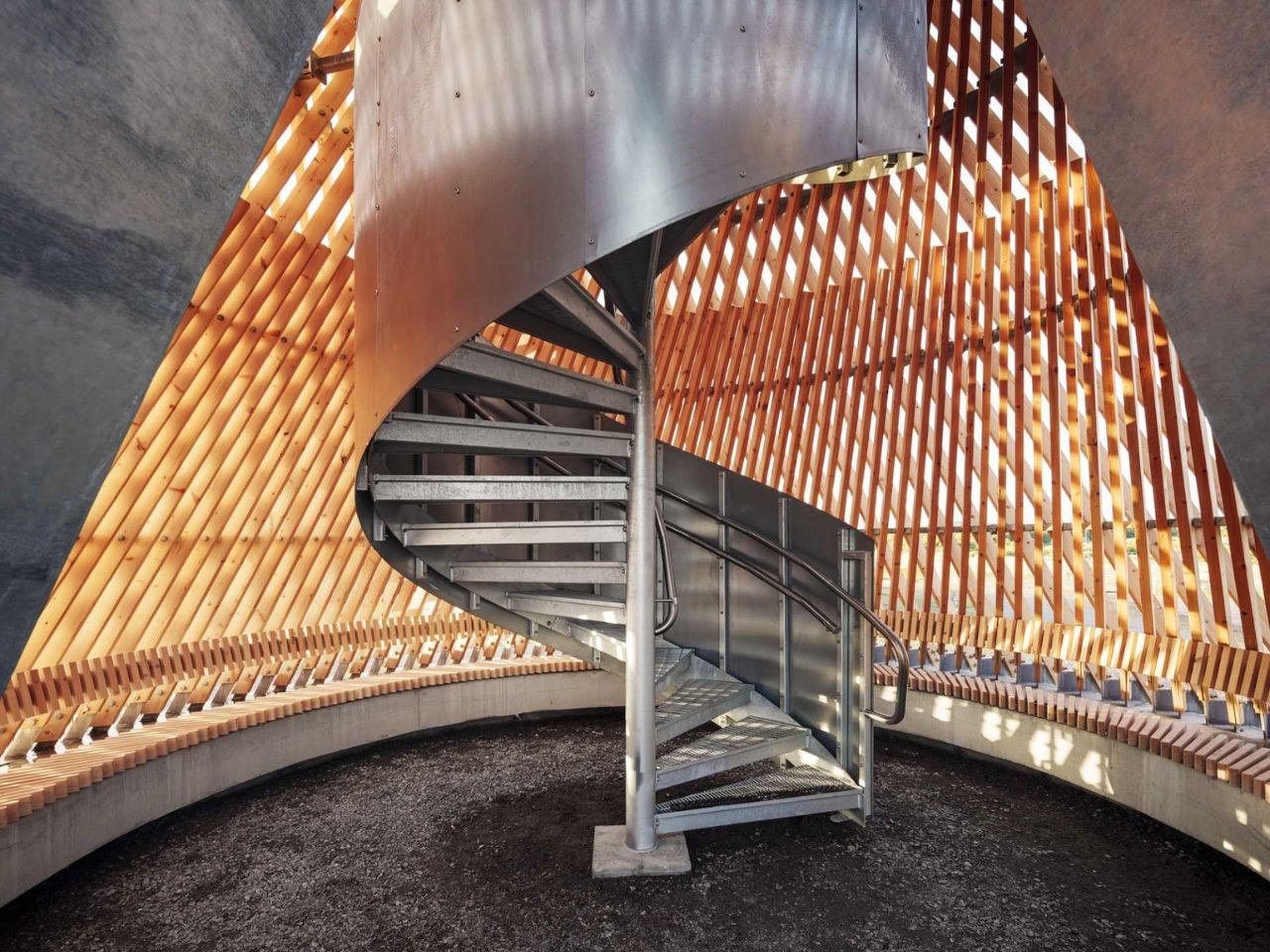
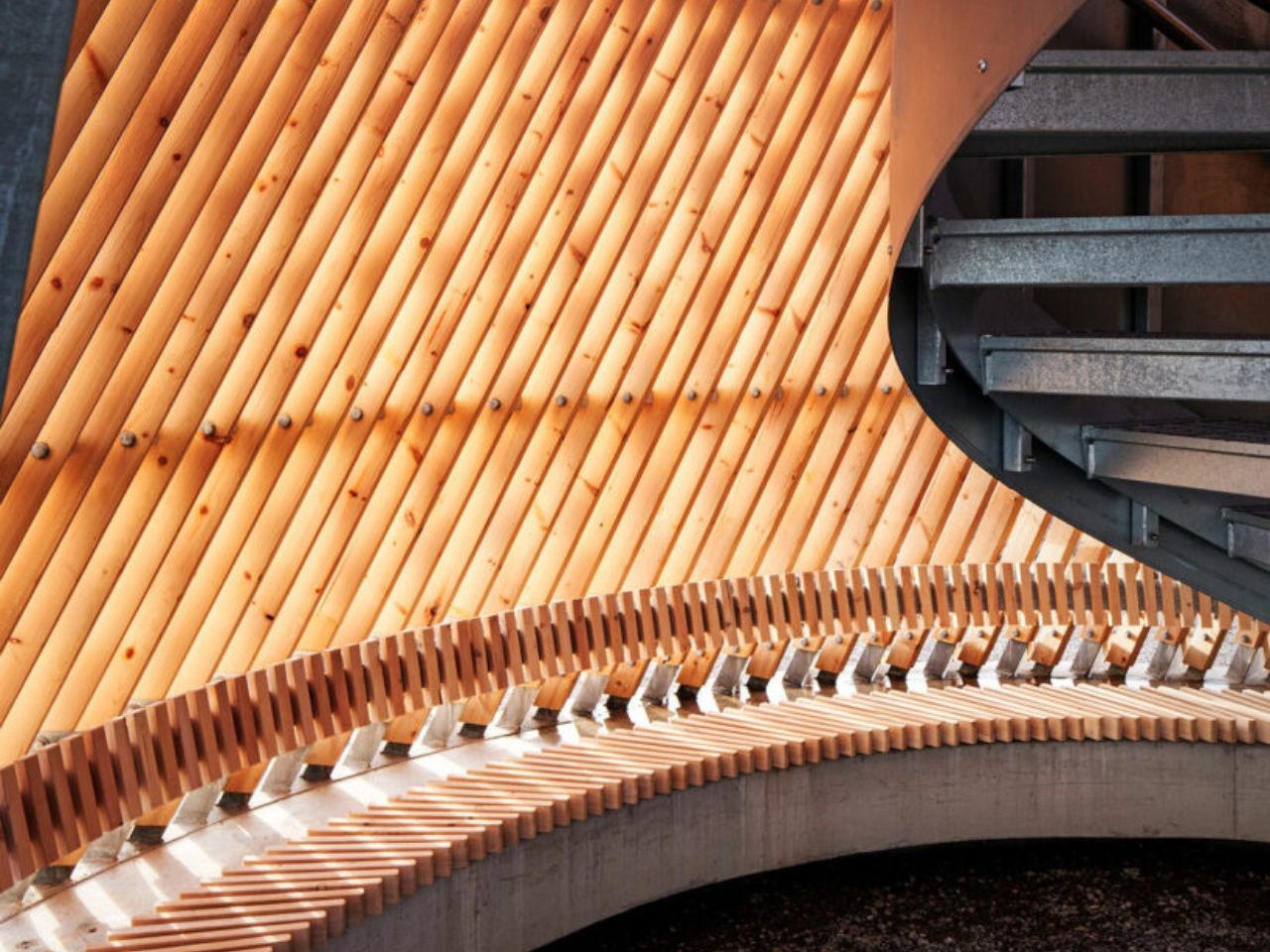
Nestled within the Getterön nature reserve, known for its rich birdlife and picturesque wetlands, the Kärven Observation Tower offers visitors uninterrupted views of the surrounding landscape. Rising from a metal-framed opening at ground level, visitors enter a sheltered space before ascending the tower’s metal spiral staircase. This staircase spirals upward to the open-air observation deck, where visitors are treated to panoramic views of the reserve and beyond.

The deck itself is an architectural marvel, framed by the rising timber beams that also serve as a balustrade, wrapping visitors in the same web-like structure that defines the tower. A geometric bench surrounds the staircase, inviting visitors to pause and reflect while they take in the stunning vistas.

One of the most remarkable aspects of the Kärven tower’s construction was its efficiency. Each of the 140 timber beams was installed on-site in just two minutes, with the entire assembly of beams taking a little over a week. This hybrid structure of timber and metal, combined with the use of parametric modeling and calculation software, allowed for precise planning and execution.

The design process made use of Grasshopper, a parametric design software, which enabled the team to map out the mathematical relationships needed for the intricate structure. This technology was crucial in realizing the tower’s complex geometry while also allowing for sustainable and local construction practices. The assembly, carried out by local contractors using standard timber dimensions, required no special tools, underscoring the tower’s emphasis on simplicity and sustainability.

The Kärven Tower was designed to fulfill the Varberg Municipality’s vision of a landmark that would attract visitors and enhance the area’s natural beauty. White Arkitekter has succeeded in creating a structure that not only serves as a viewing platform but also as a symbol of architectural and environmental harmony. With its three-dimensional woven structure, the Kärven tower not only engages the eye but also enriches the experience of the landscape it inhabits.

The post An Hourglass Shaped Observation Tower In Sweden Satisfies The Birdwatcher In You first appeared on Yanko Design.

Qualcomm is reportedly eyeing a takeover of Intel

It seems that Qualcomm sees Intel’s struggling business as a potential opportunity. The San Diego-based chipmaker has reportedly expressed an interest in taking over Intel “in recent days,” according to a new report in The Wall Street Journal.

Though the report cautions that such a deal is “far from certain,” it would be a major upheaval in the US chip industry. It would also, as The WSJ notes, likely raise antitrust questions. But Qualcomm’s reported interest in a takeover underscores just how much Intel’s business has struggled over the last year.

Intel announced plans to cut 15,000 jobs last month as its quarterly losses climbed to $1.6 billion. Its foundry business is also struggling, with an operating loss of $2.8 billion last quarter. CEO Pat Gelsinger announced plans earlier this week to separate its foundry business into a separate unit from the rest of Intel.

Intel declined to comment on the report. Qualcomm didn’t immediately respond to a request for comment.

This article originally appeared on Engadget at https://www.engadget.com/big-tech/qualcomm-is-reportedly-eyeing-a-takeover-of-intel-210920969.html?src=rss

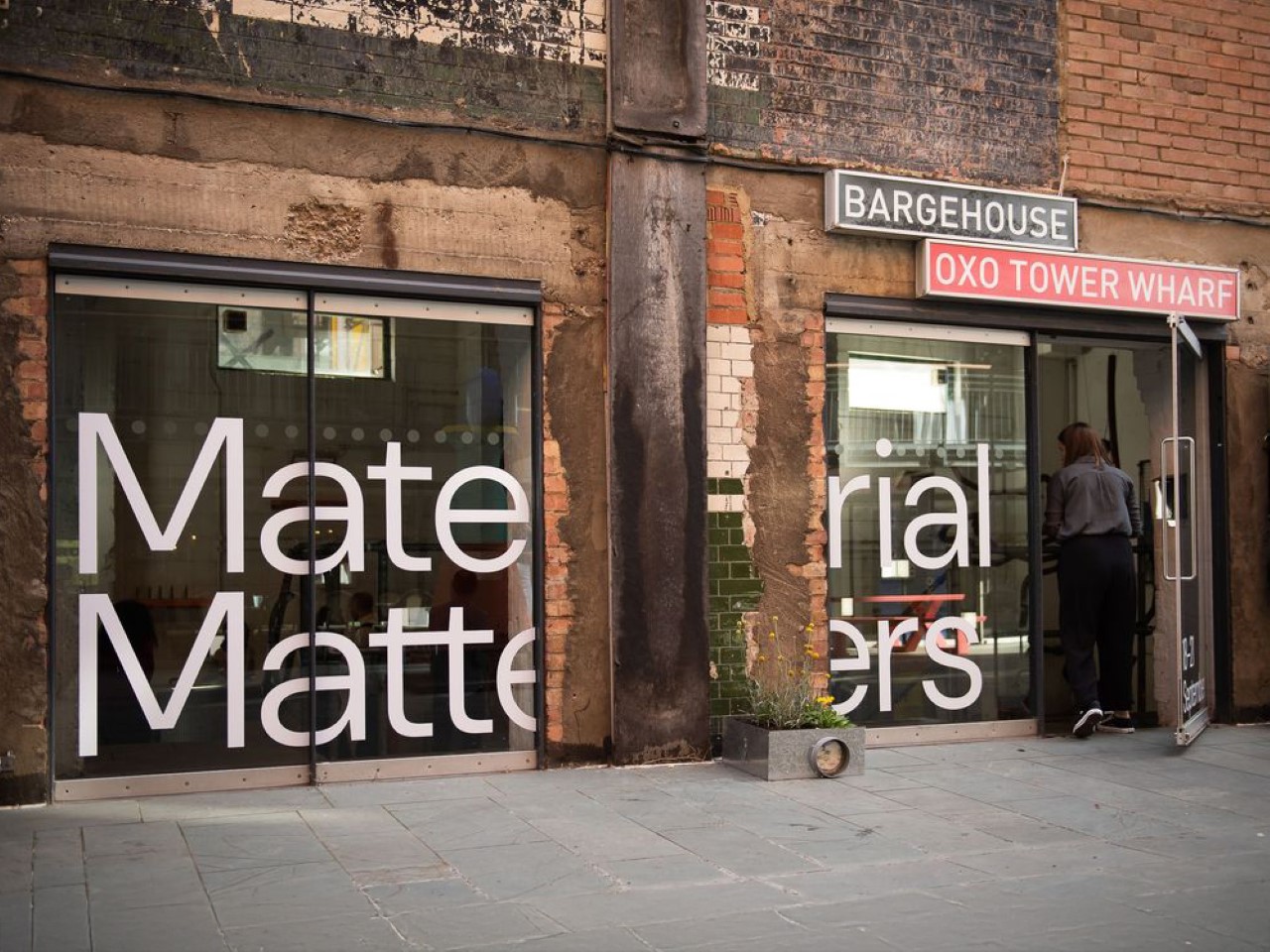
Material Matters 2024: Shaping the Future of Design & Sustainability Through Materials Innovation

As part of the iconic London Design Festival, Material Matters 2024 promises to be a cornerstone for material enthusiasts, designers, and innovators. Set in the historic Bargehouse, Oxo Tower Wharf, from September 18-21, the fair will spotlight groundbreaking work across material disciplines, showcasing how innovative thinking can shape the future of sustainable design. This year’s lineup includes some of the most compelling projects and collaborations that fuse creativity with sustainability. Let’s take a closer look at five standout exhibitions that demonstrate the show’s thematic diversity and material brilliance.

1. Locally Grown: Harnessing Human Hair as a Material
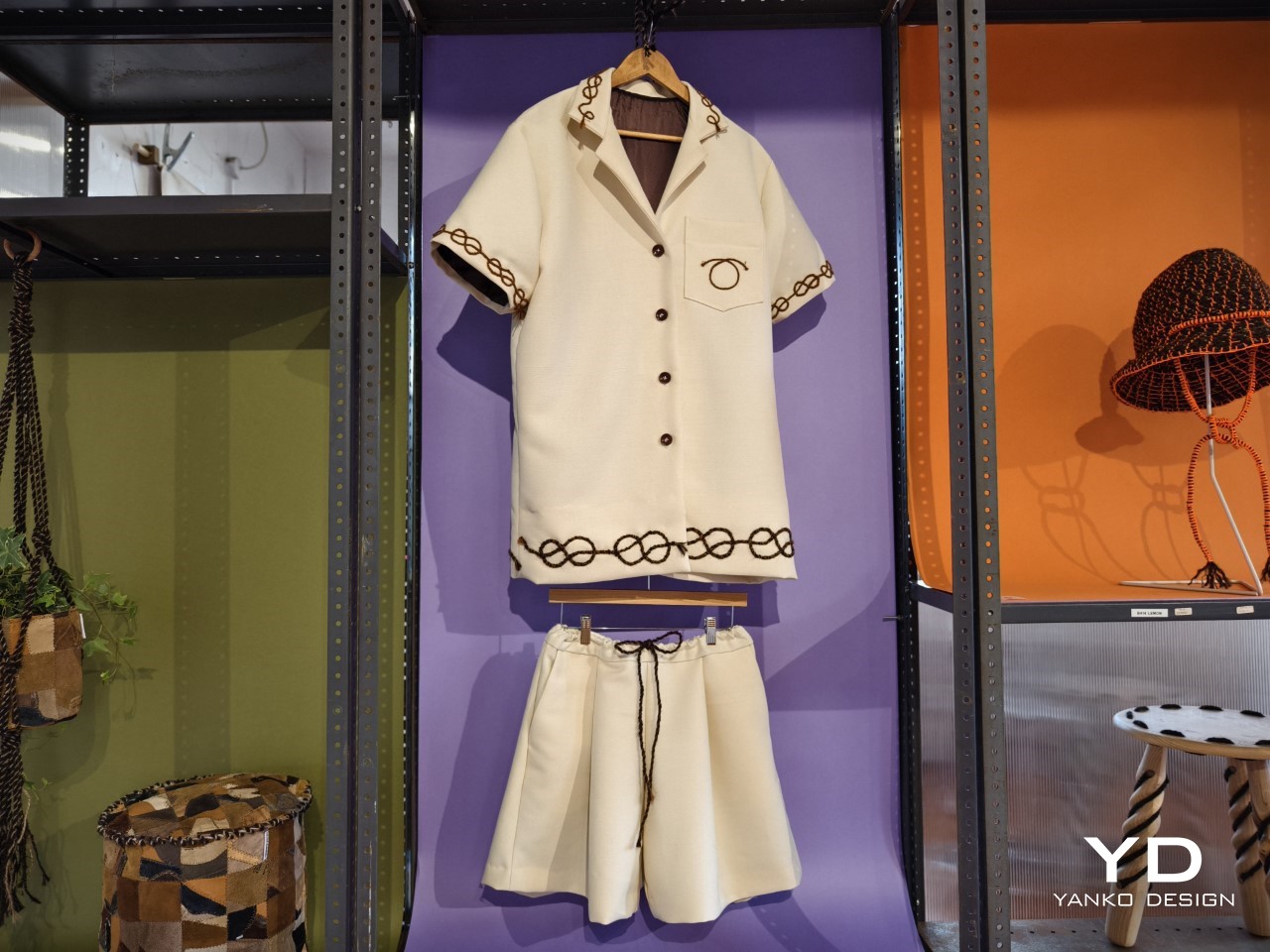
In an unexpected and captivating twist, Studio Sanne Visser is showcasing Locally Grown, an installation that explores human hair as a regenerative material. Visser, known for pushing the boundaries of material design, has transformed what many consider waste into a valuable resource. Visitors can not only experience the journey from haircuts to yarn but can even contribute to the process by offering their own hair for transformation.
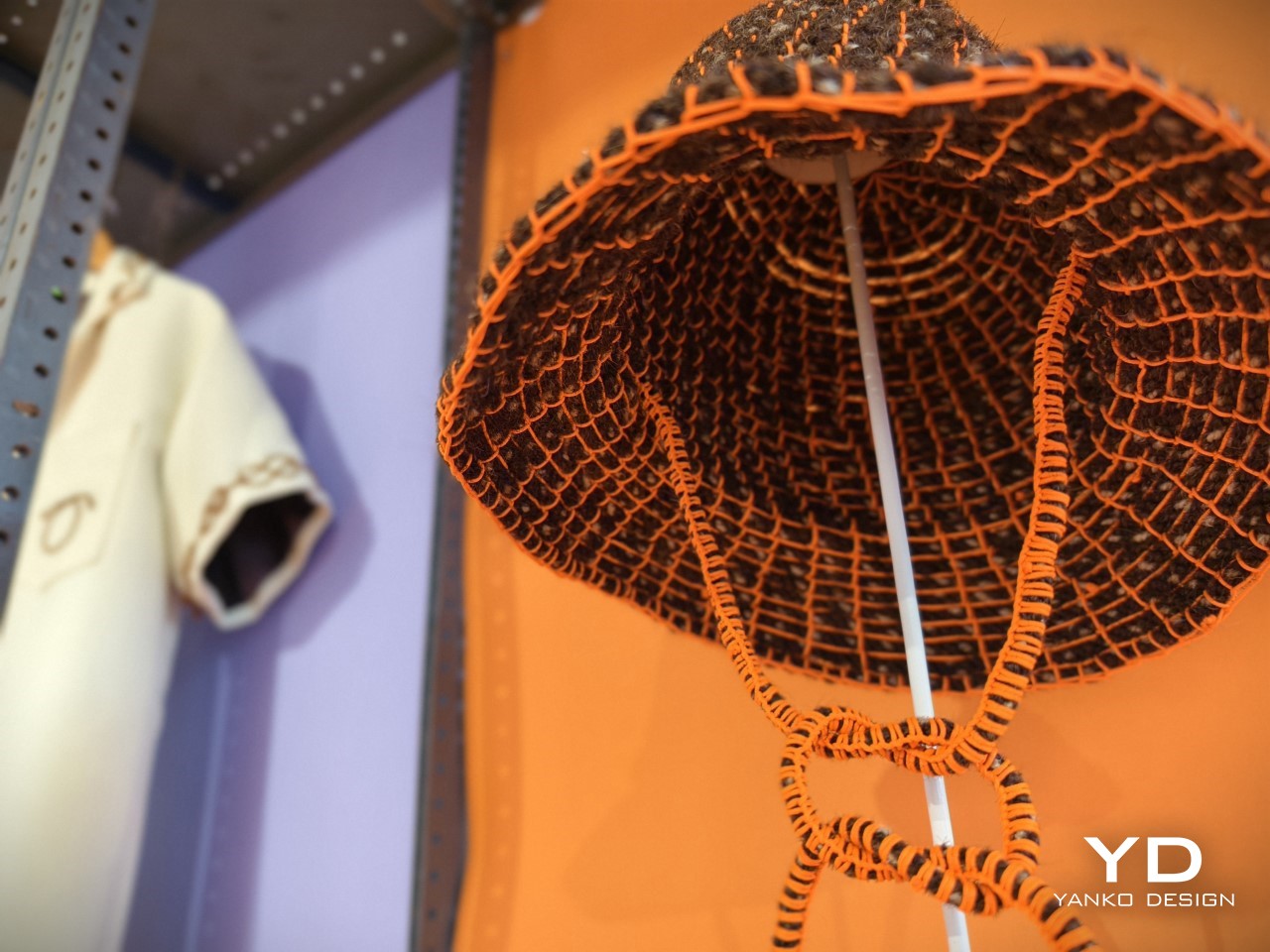
Hair spun into yarn, is showcased in products like ropes and even wearable garmets like hats, developed in collaboration with various designers. This project underscores the versatility of unconventional materials and opens up conversations around waste and resourcefulness. The exhibit is backed by the Dutch Embassy and reflects a strong commitment to material reuse​.

2. Suru: Blending Craftsmanship with Circular Innovation
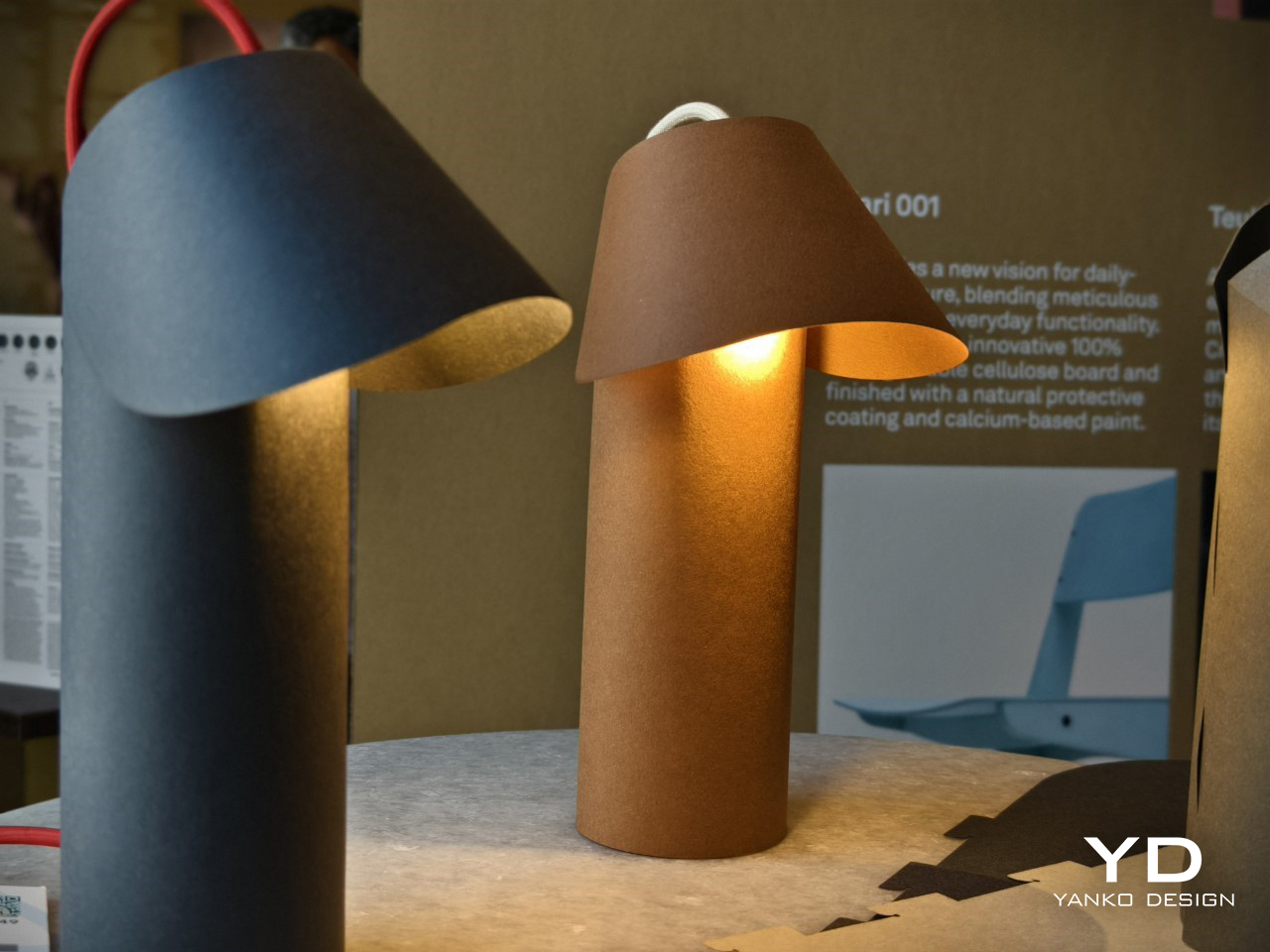
Barcelona-based Suru is a standout in Room 12, bringing a fusion of local craftsmanship and a commitment to sustainable living. The brand’s philosophy is rooted in circular innovation, with a focus on integrating recycled and biodegradable materials into its modular furniture and lighting designs. At Material Matters 2024, Suru is launching new products, including the Carta Lamp 001, a portable light made from a single sheet of paper that can be disassembled easily for repair, embodying their lifecycle approach. They’re also showcasing established pieces like the Niu Armchair 001, crafted from ethically sourced, VOC-free beech wood and featuring a cushion made from recycled coconut shells and PET fabric. Each piece exemplifies Suru’s dedication to sustainability without compromising on style or functionality​​.

3. BIOTEXFUTURE: Revolutionizing Textiles Through Biotechnology

The future of textiles is bio-based, and nowhere is this more evident than in Fibre Futures, an exhibition led by BIOTEXFUTURE in collaboration with Adidas and RWTH Aachen University. This installation delves into innovations in bio-manufacturing and alternative resource streams, with a focus on high-performance textiles that could revolutionize the fashion and sportswear industries. The combination of scientific research and cutting-edge design makes this one of the more technical but no less intriguing exhibits​.

This exhibit offers visitors a look into how biotechnology is shaping the next generation of materials, proving that high-performance doesn’t have to come at the expense of sustainability. Expect alternative fibers and spinning techniques that push the boundaries of what textiles can do.

4. Rootfull: Nature’s Hidden Potential
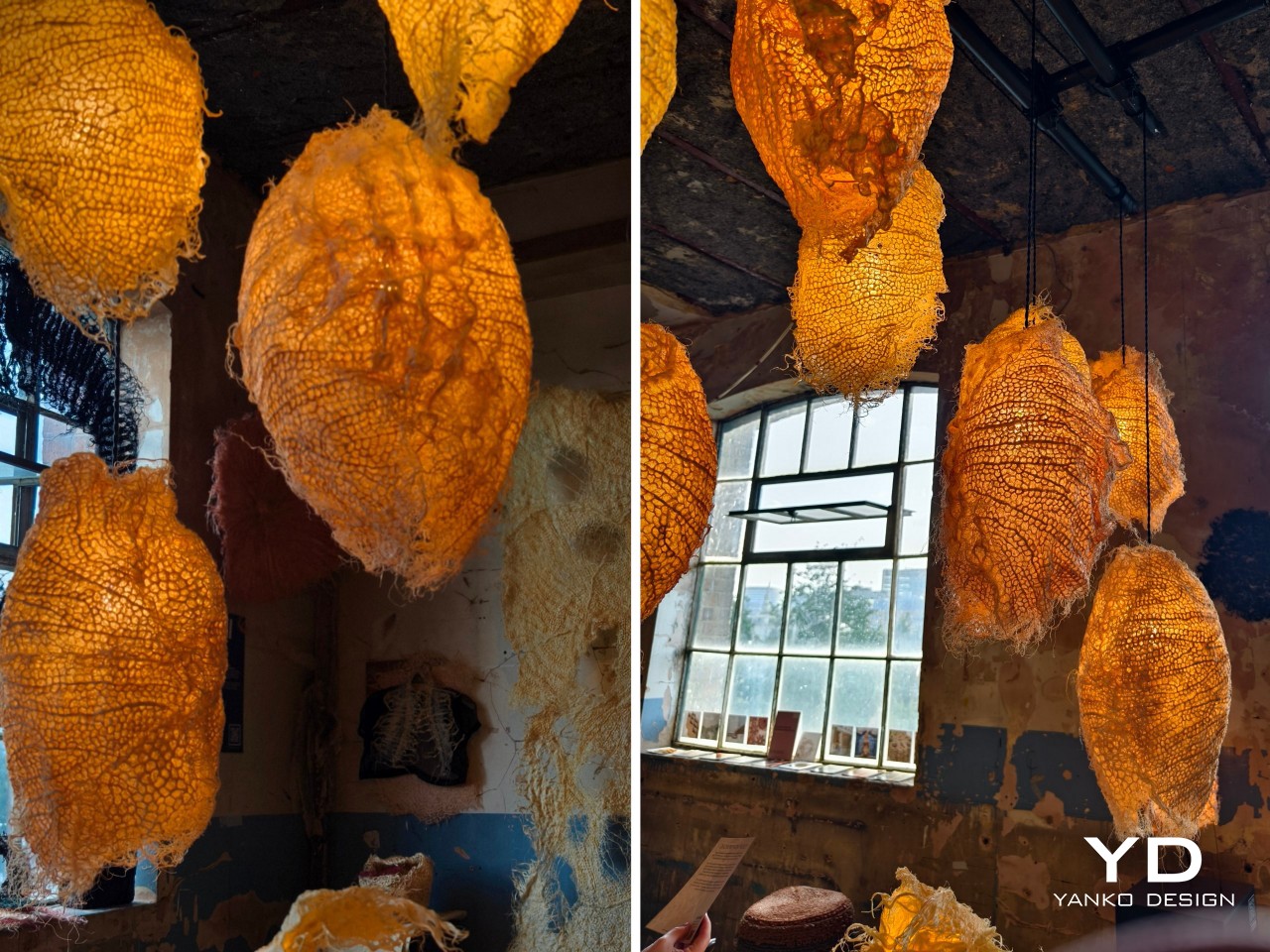
Rootfull, an innovative project turning to nature’s unseen power, focuses on creating sustainable designs using tree roots. This unique approach explores the raw beauty and versatility of roots in product design. At Material Matters 2024, Rootfull showcases a range of lamps crafted from roots, highlighting their natural durability and the aesthetic appeal of light leaking through the fibrous network of roots. By using a material that’s typically overlooked or discarded, Rootfull not only opens up new possibilities for biomaterials but also taps into the innate connection between nature and design, offering a fresh perspective on how we can reimagine organic waste as functional, beautiful art.

5. Mushlume Lighting: Lighting the Way with Mycelium
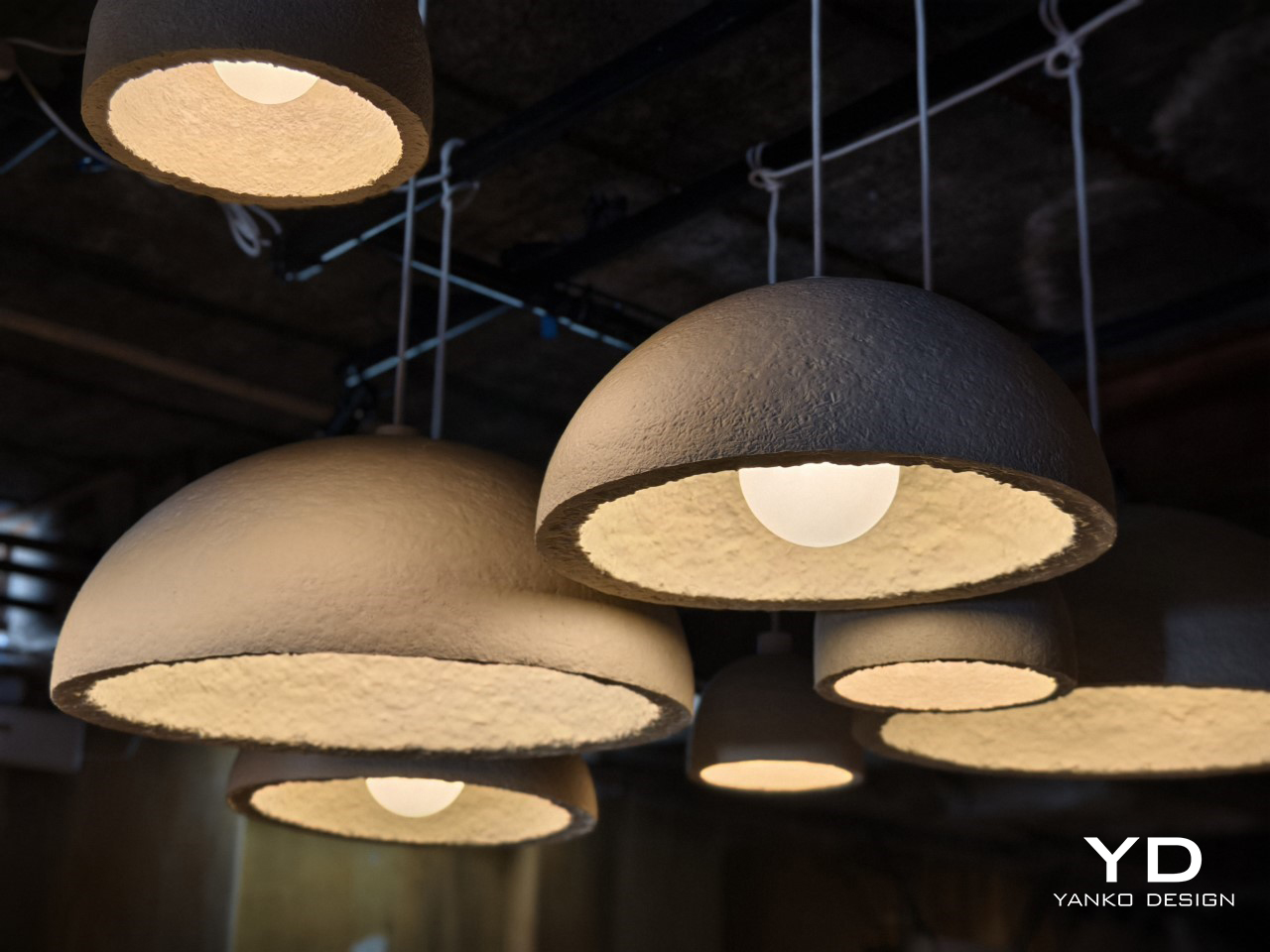
Continuing the biomaterials theme, Mushlume Lighting by Danielle Trofe uses mycelium—the root structure of mushrooms—to create an eco-friendly line of lighting. Each piece is biofabricated, grown rather than made, illustrating the potential of mycelium as a scalable, renewable material. Trofe’s work is an outstanding example of how fungi can move beyond the realm of the kitchen and into the living room, lighting up spaces with minimal environmental impact​.

6. Peel Fabric Lamp: Illuminating Waste with Alkesh Parmar
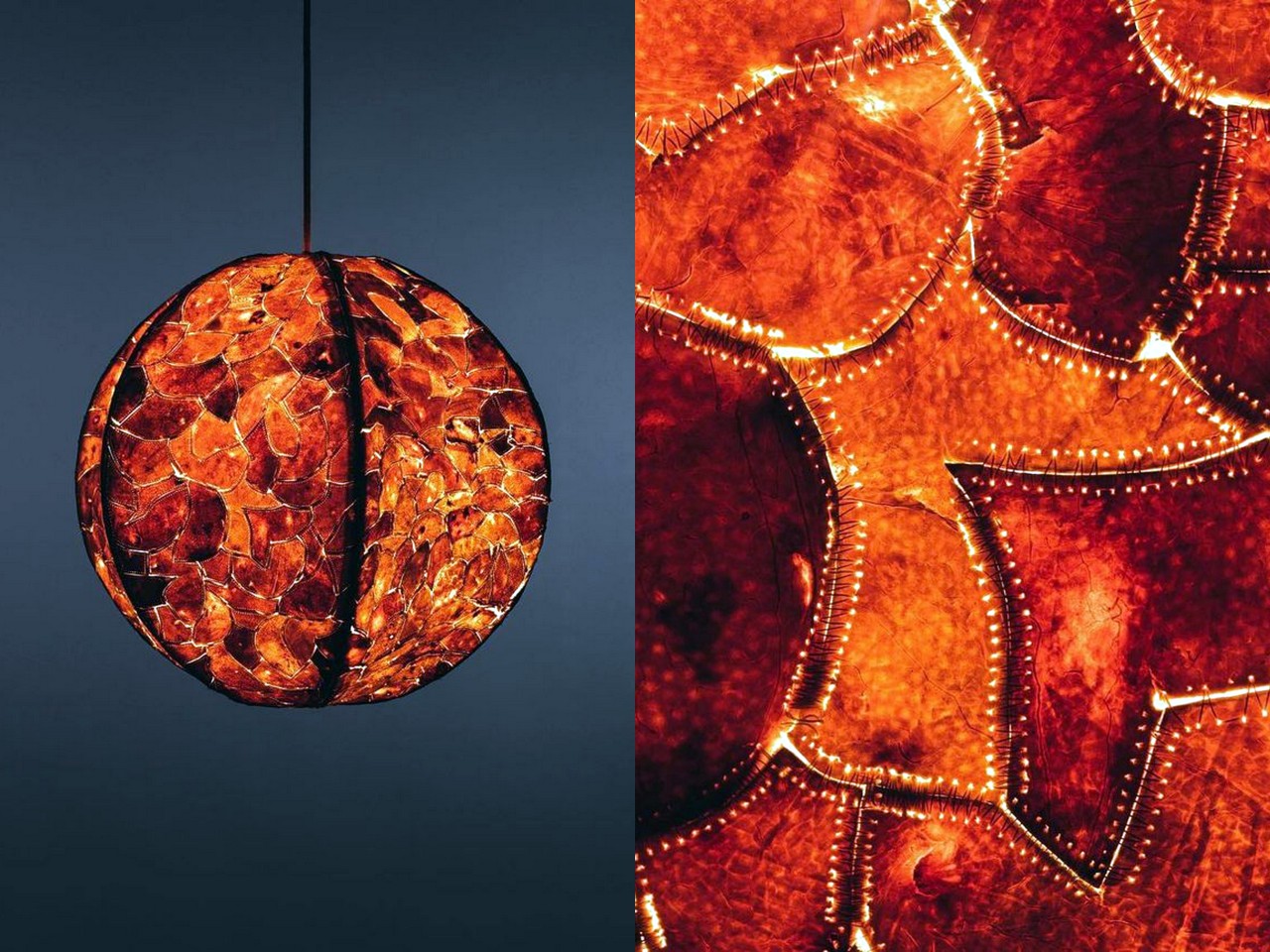
Designer and researcher Alkesh Parmar has long been known for his innovative use of materials often regarded as waste, particularly citrus peel. At Material Matters 2024, Parmar showcases his Peel Fabric Lamp, an extraordinary piece crafted from orange peel, a material that behaves much like leather when treated. Parmar’s practice of blending craft and critical design questions the impact of globalization and champions local, sustainable materials. His unique approach not only transforms everyday waste into functional art but also pushes the boundaries of material innovation. The Peel Fabric Lamp exemplifies his belief in the potential of overlooked resources, offering a striking visual reminder of how waste can be reimagined into objects of beauty and practicality.


Material Matters 2024 offers a breathtaking view of the future, where materials are no longer just functional but integral to the conversation on sustainability and innovation. Whether it’s furniture crafted from orange peel, lighting grown from mushrooms, or yarn spun from human hair, the exhibits at this year’s fair challenge us to rethink our relationships with the materials that surround us. With each installation, visitors are reminded that the future of design doesn’t just lie in creating new products, but in reimagining the materials that shape them.

Expect the unexpected at Material Matters 2024—and don’t be surprised if you leave with a new appreciation for the chair you sit on or the light that illuminates your room.

The post Material Matters 2024: Shaping the Future of Design & Sustainability Through Materials Innovation first appeared on Yanko Design.

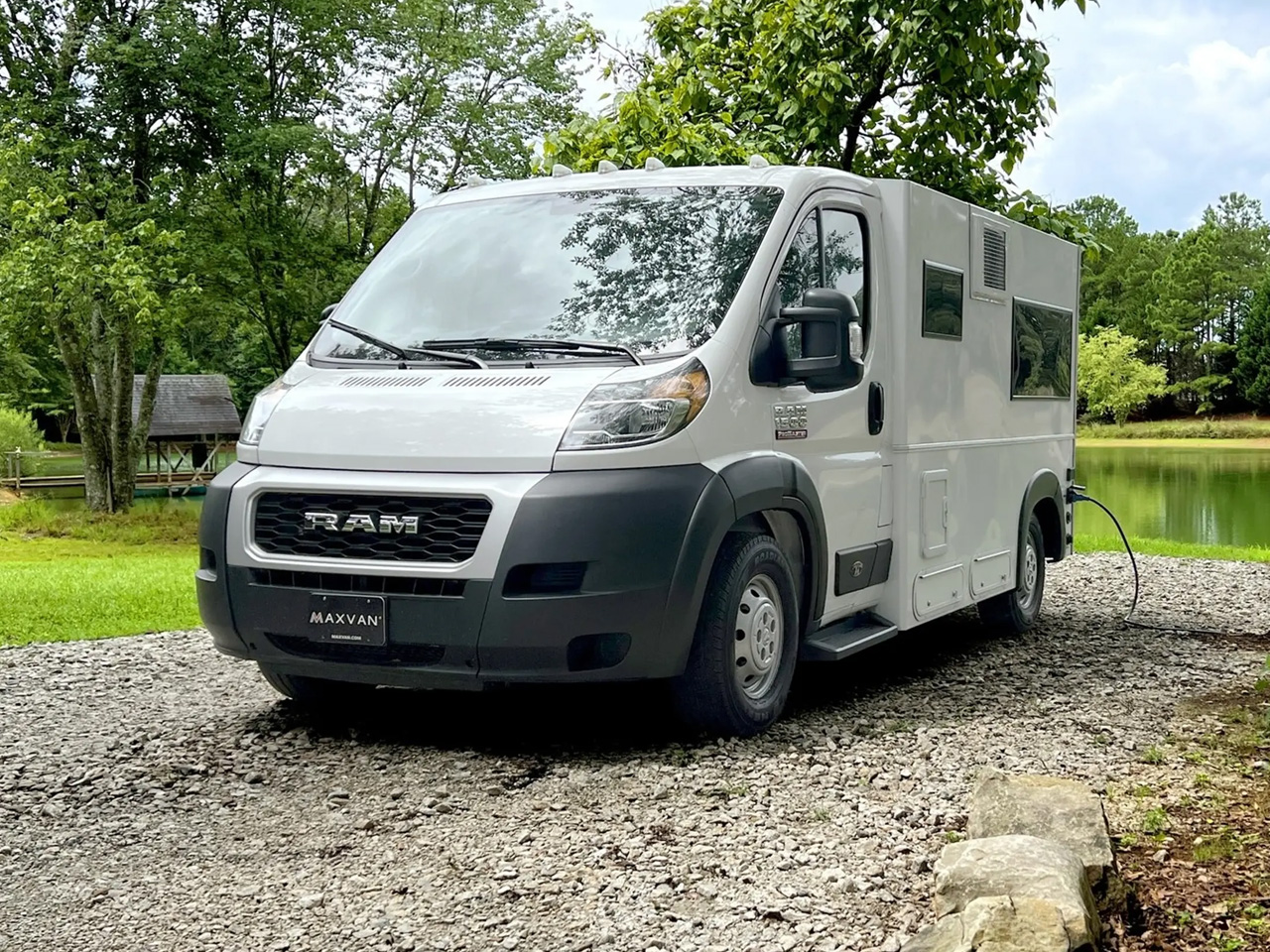
Maxvan Access camper van is designed to maximize floor space for style, comfort, and function

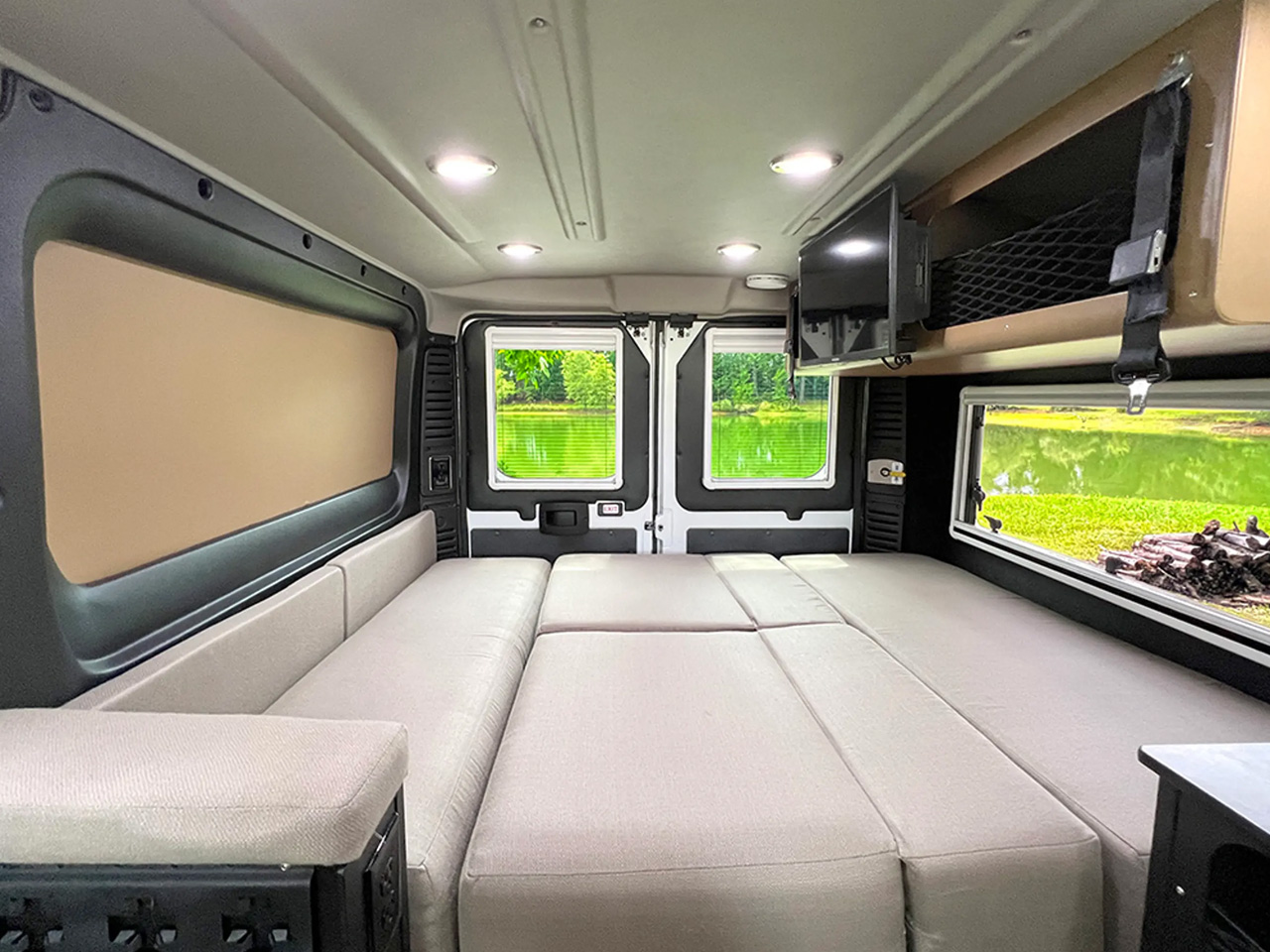
Maxvan has become a name synonymous with recreational vehicles, whether it is designing the Pathway, a Class B wheelchair-accessible RV, or now the Access, which is more than a traditional leisure vehicle with the space it has on the inside. This spacious floor plan is made possible by pushing the rear of the van back by a few inches, the liveable space thus created accommodates a queen Murphy bed, a hidden toilet, shower, and free-standing headroom.

Maxvan says, ‘Access can go where other Class B RVs cannot with its low-profile clearance and thoughtful exterior design,’ which is pretty boxy on the driver’s side, but has a slightly rounded appearance on the passenger side. On the inside is where the magic begins. The driver seat is fixed for obvious safety though the passenger seat can swivel around to face the living area.

Designer: Maxvan

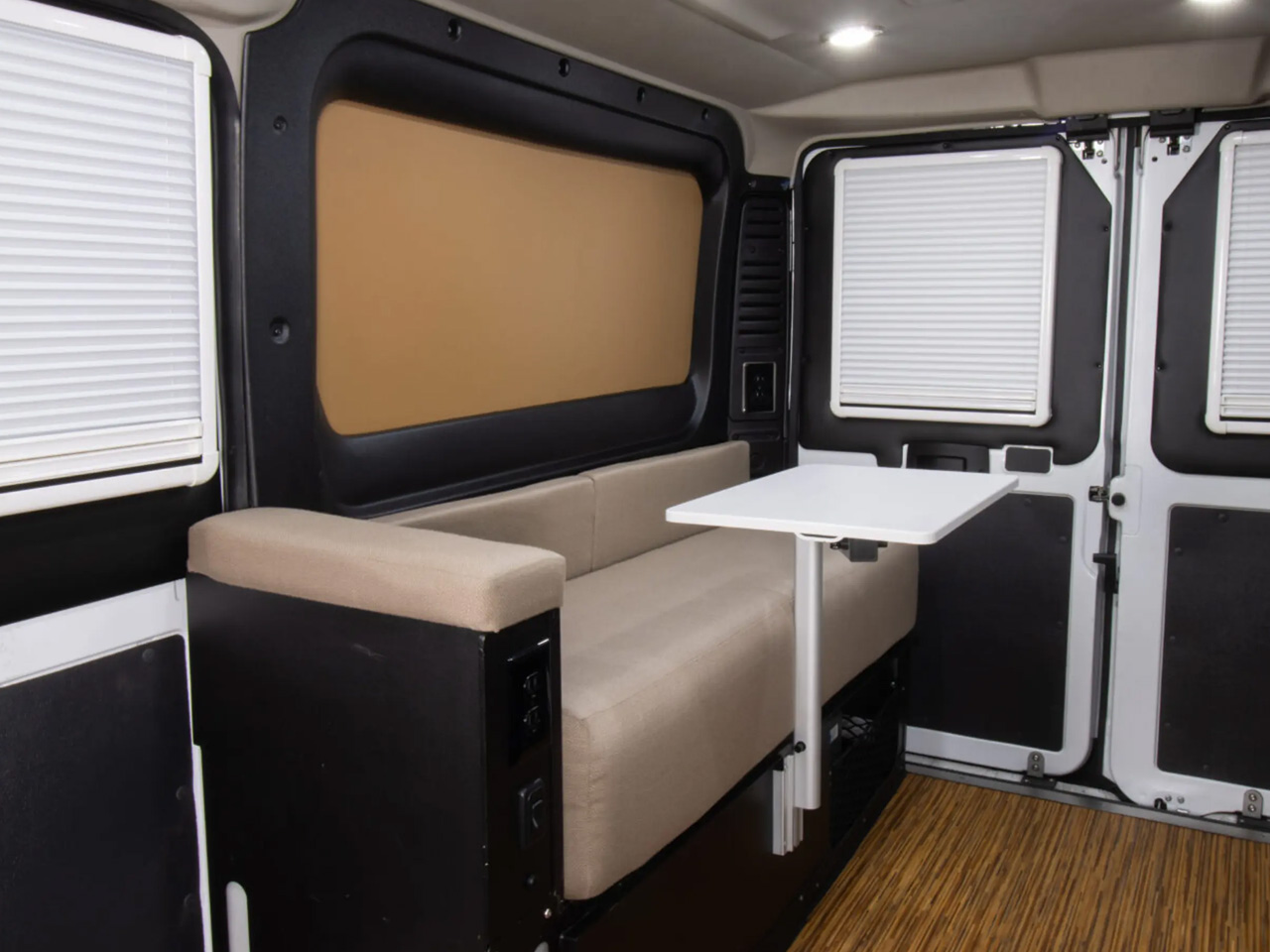
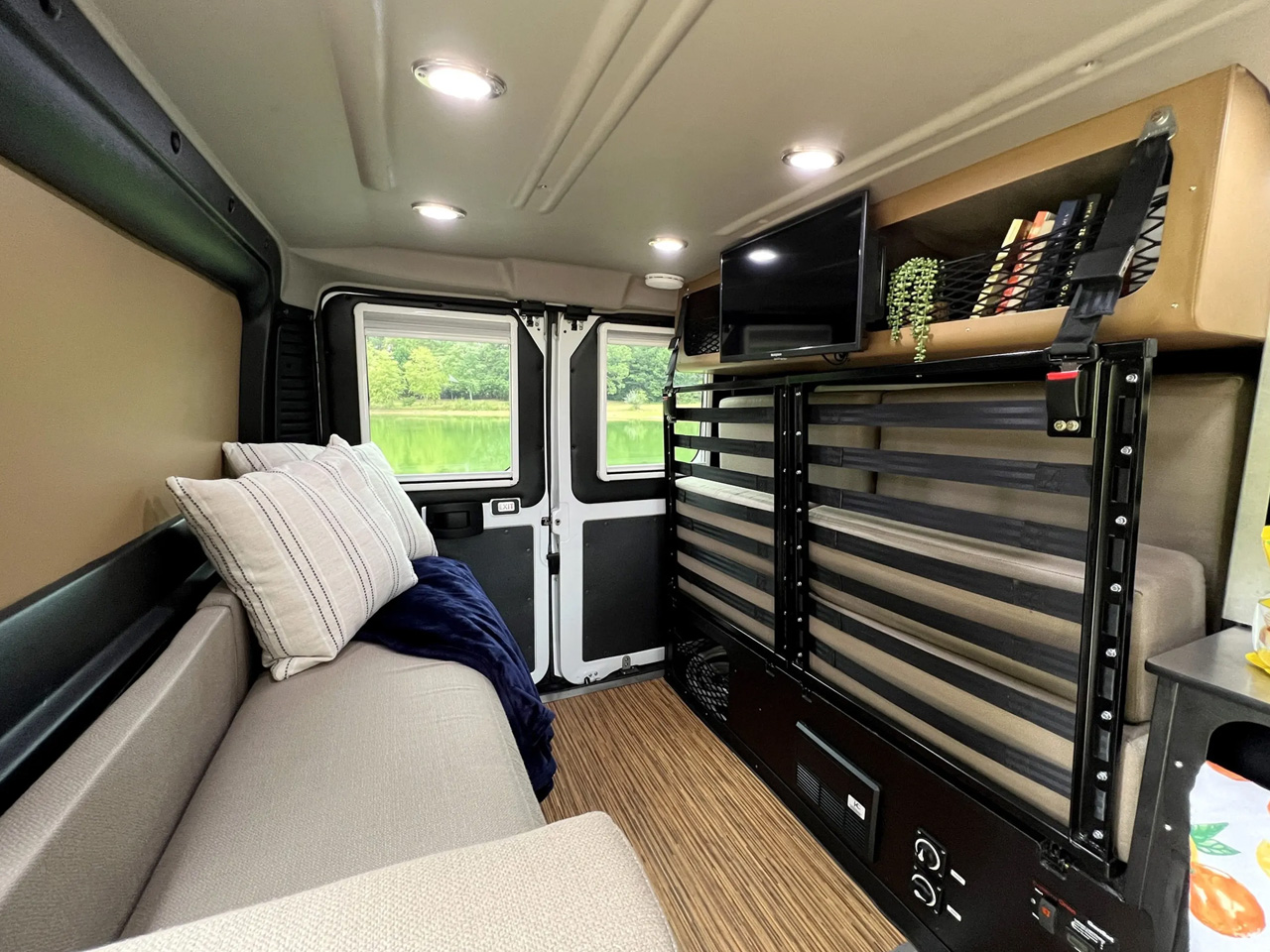
The obvious space inside a van home is pretty compact, but this one has an excitingly open floor plan to make up fo the tiny room, especially through its interesting rear bed composition. This is a combination of the Murphy bed at the extreme end on the driver side, and the sofa placed on the passenger side. The two combine to form a queen bed that’s laden with a cushiony mattress.

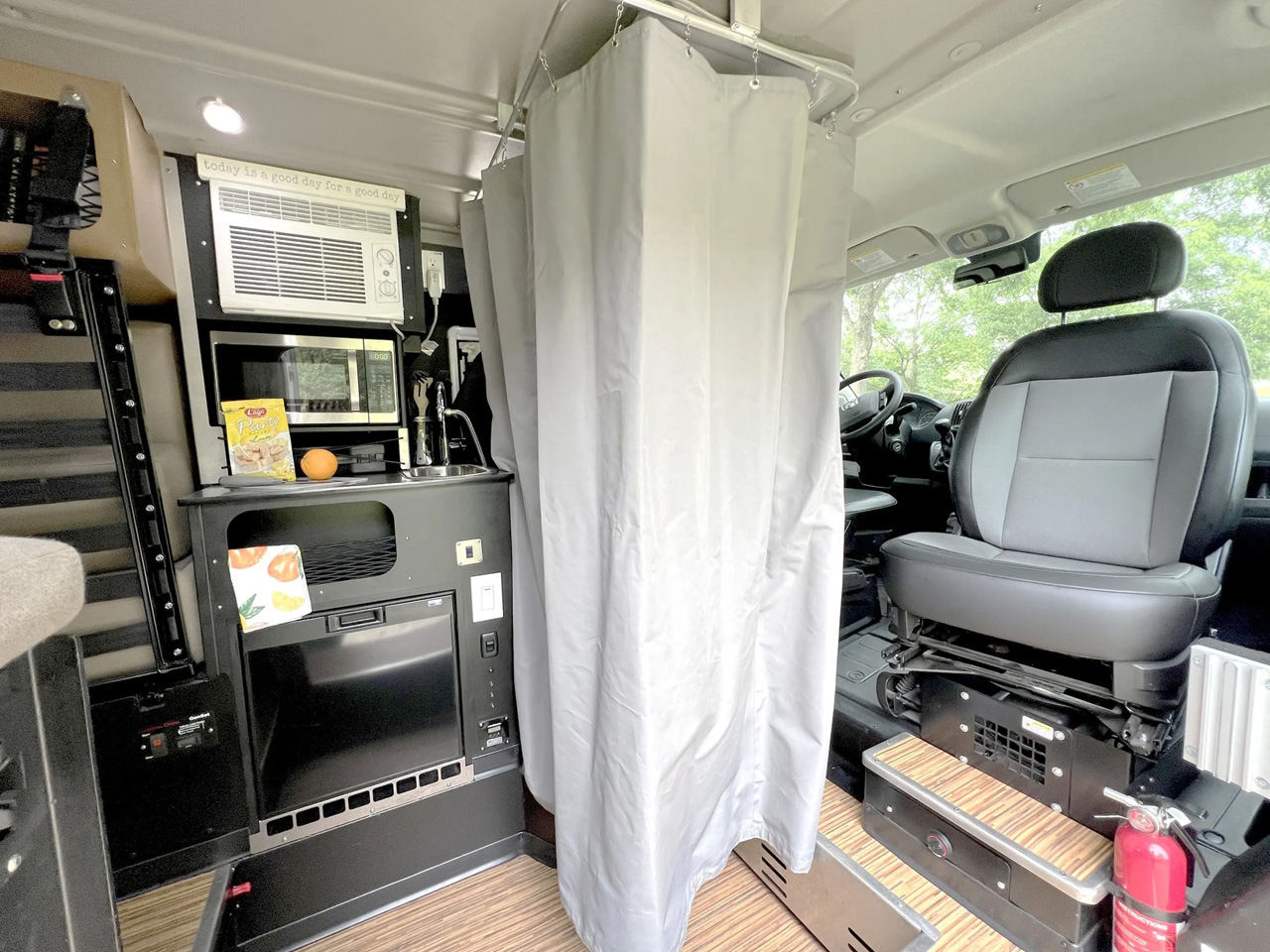
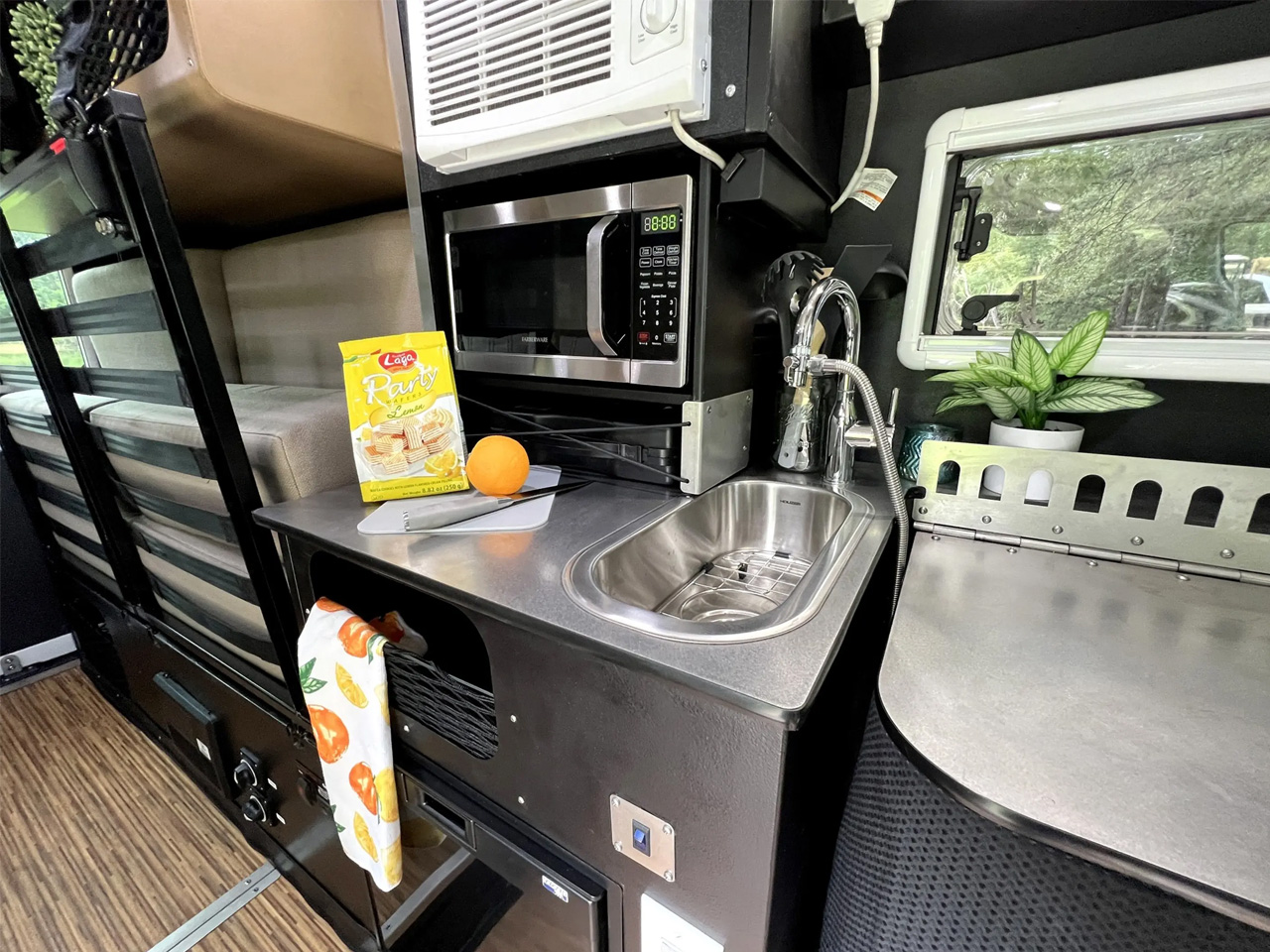
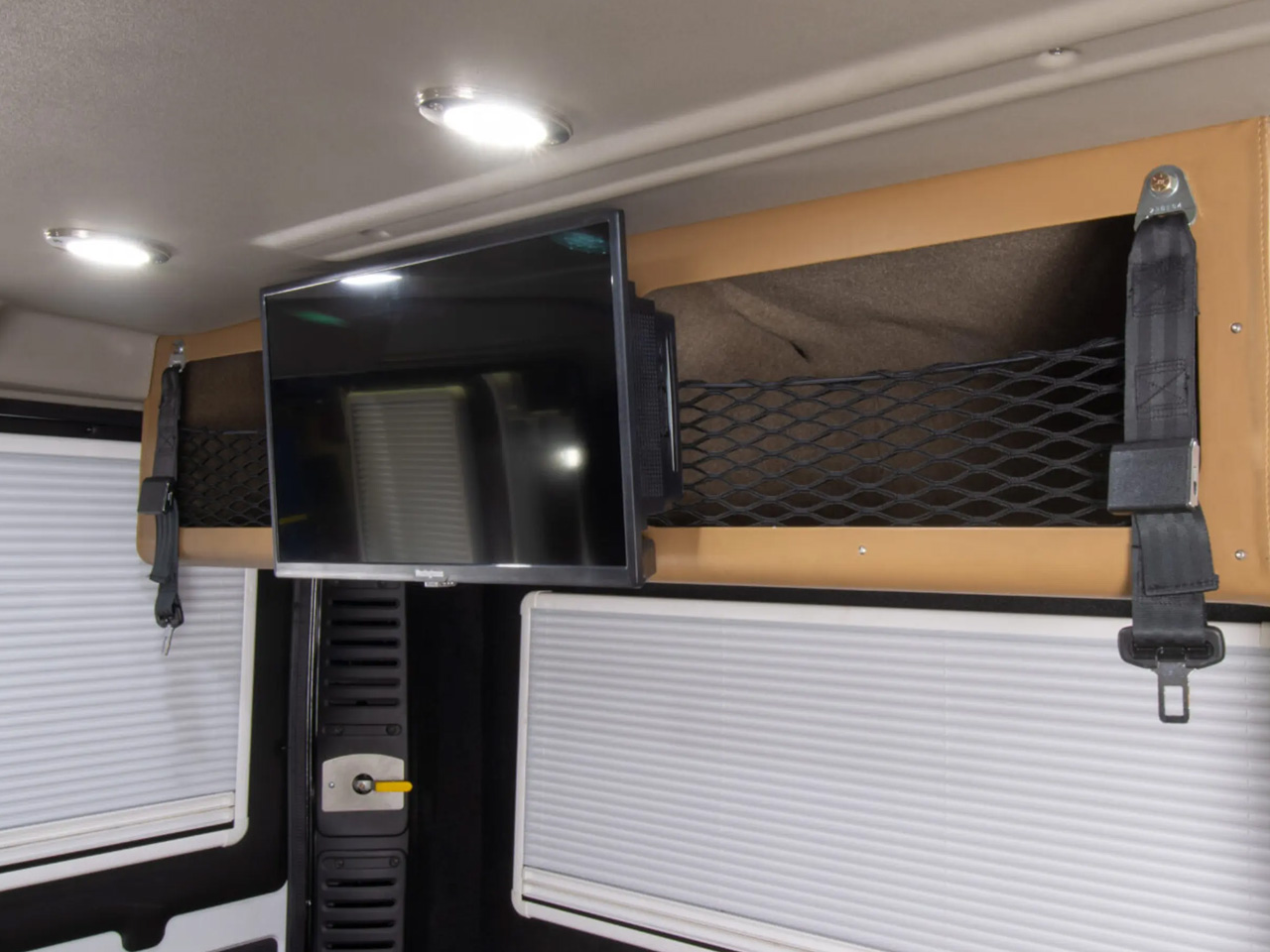
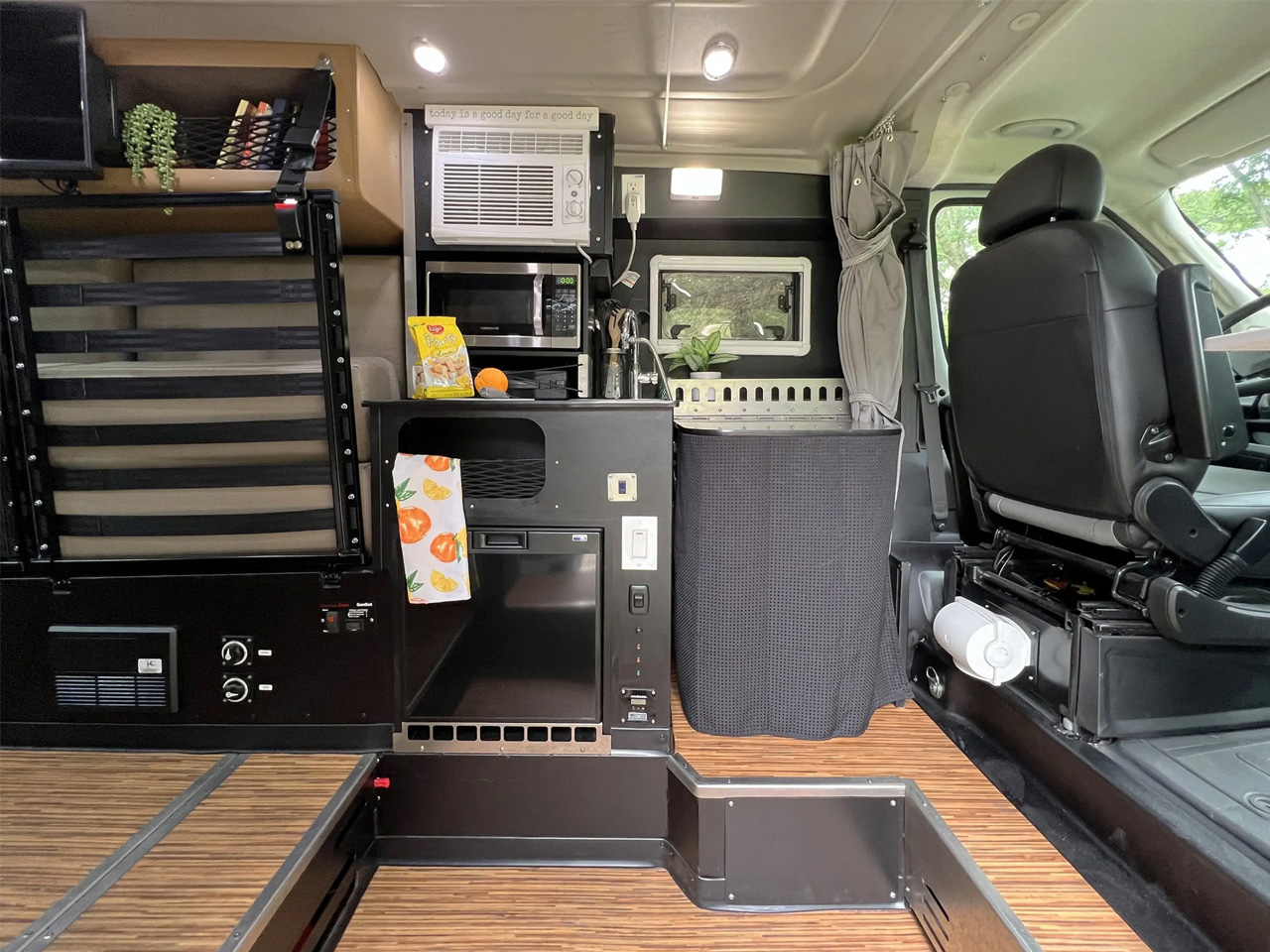
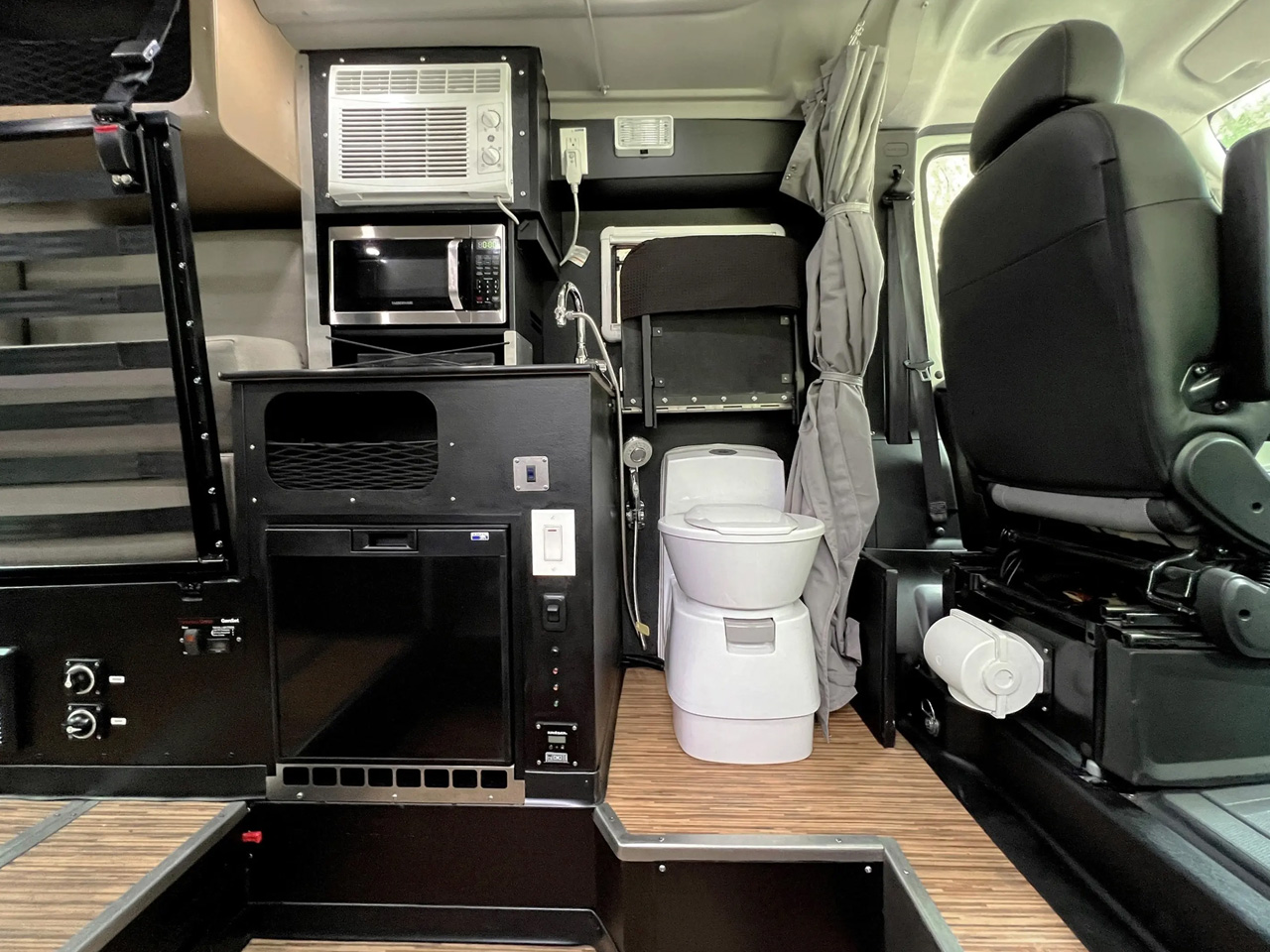
When not being used as a bed, the sofa can be used usually or for dining with a stowable swivel table aligning well. The sofa has a direct viewing angle at the wall-mounted 24-inch TV with HDMI port and DVD player. A walk toward the cabin will take you into the kitchen with a stainless steel countertop, a portable single burner stove, a sink, a microwave in the overhead storage, and a 76L fridge. The counter space folds out ahead of the sink, which hides below a cassette toilet seat covered using a shower curtain when occupied.

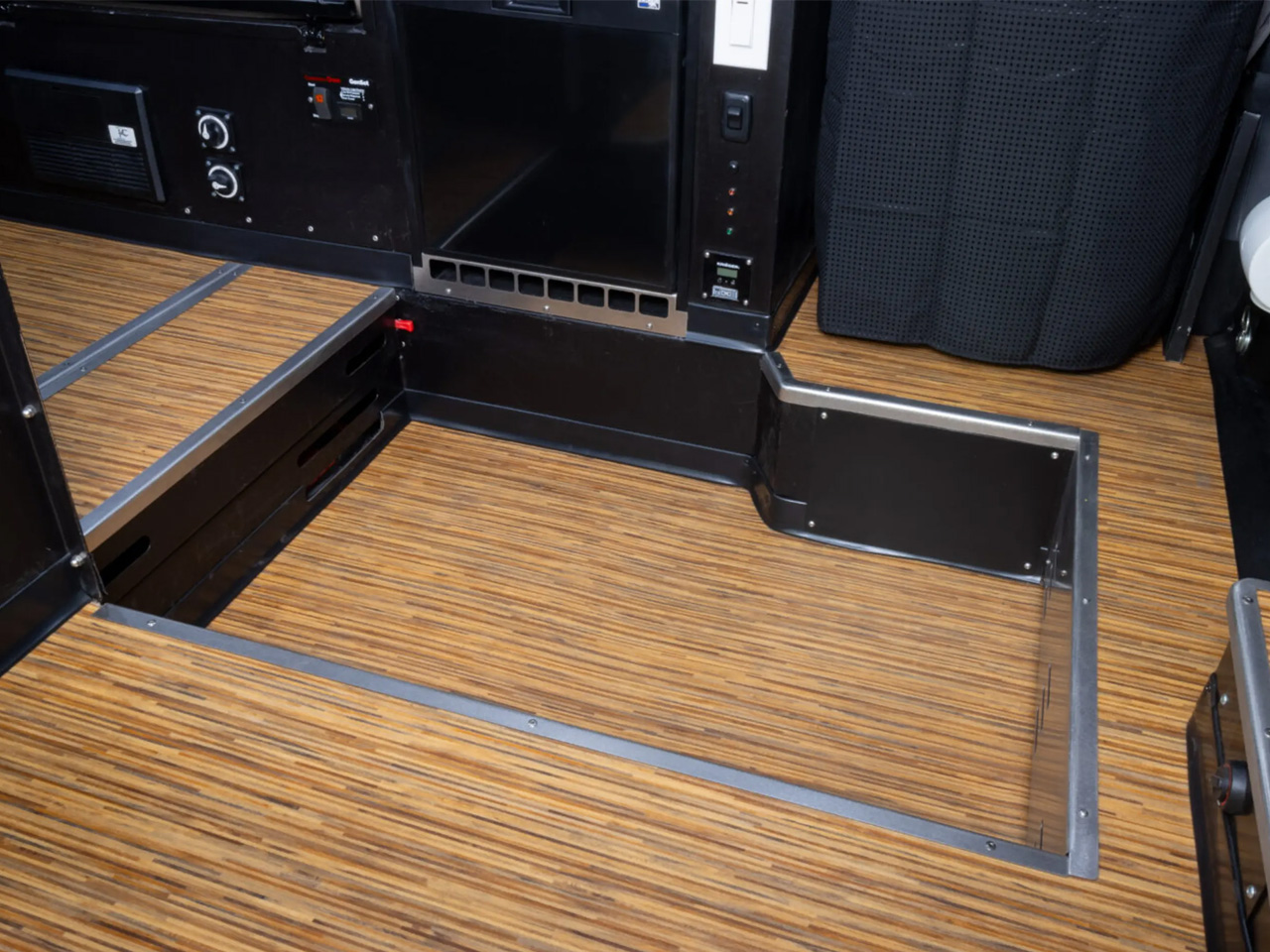
The kitchen faucet is attached to a showerhead, which you can use in the recessed floor area ahead of the kitchen, which works as a shower pan with integrated drainage and also lowers the kitchen floor slightly, increasing the headspace for someone cooking in the kitchen. The Access can be prepared for off-grid living with optional solar panels and awning, but for its asking price of $99,800, it comes packed with an air conditioner, heater, 100Ah battery, and 1,000W inverter.

The post Maxvan Access camper van is designed to maximize floor space for style, comfort, and function first appeared on Yanko Design.