The Radical Simplicity of Massimo Frascella: Inside the Mind of Audi’s New Design Chief

Massimo Frascella sits down across from me with the measured calm of someone who has learned to find clarity in chaos. It’s the eve of one of the most significant moments in Audi’s modern history. Tonight, the brand will reveal its Formula 1 entry to the world. Tomorrow, the automotive press will dissect every surface, every line, every strategic implication. But right now, in this moment, Frascella is fully present.

“We have so much going on and it’s a very exciting time,” he says when I ask if he’s still taking it all in. The understatement is characteristically Italian. There’s so much happening simultaneously at Audi under his creative direction that parsing it into a single narrative almost feels reductive. But when I push him on what the single point of focus is right now, his answer is immediate.

“Well, now the focus is on today. This is a major…” He pauses, catching himself mid-thought, recalibrating. “Tonight, right?”

I confirm: tonight. Hours from now, Audi will step onto one of the world’s biggest motorsport stages.

“Are you excited?”

“Absolutely, incredibly excited. This is a huge opportunity for us.”

The Third Act

I want to understand what this opportunity means to him, not just as Audi’s Chief Creative Officer, but as Massimo Frascella the designer, the artist, the person who chose this path.

“Well, for me personally, it’s part of the journey that I’m having at a personal level within the broader business,” he explains. “It’s like a third act after what we’ve been presenting in Milan and in Munich. So this is sort of a next act that expands. It broadens the whole business towards Formula 1, which is a huge, huge universe.”

Photo: Audi

Tonight’s Formula 1 reveal isn’t just another product launch. It’s the third movement in a symphony that began when Frascella took the helm at Audi. Milan, then Munich, now this. Each building on the last, each expanding the narrative of what Audi can be under his creative direction.

The Designer Who Never Drew Cars

Our readers at Yanko Design are generally interested in designers, I tell him. We started off as a platform fostering new designers, helping them find their voice and audience. So I’m curious: if he could go back in time as himself, what were some of the things that sparked his interest to become who he is today?
His answer surprises me.

“This might come as a surprise. I’ve never really been into cars. I don’t consider myself a typical car guy.”

Wait. The head of design at Audi, one of the world’s most prestigious automotive brands, isn’t a car guy?

“But I’ve always been fascinated and always had interest in design in general, art. I used to do painting when I was a kid. Not drawing cars, by the way, which is probably what you will hear from most car designers. I used to do little sketches as a kid.”

But not Frascella. “Not for me. And it just happened very late in my youth, when I was like 17, 18, which is quite late. My dad had to buy a new car, which ended up being a quite, I don’t know if I can say, uninspiring car.”

“Uninspiring or inspiring?” I ask, trying to clarify.

“Uninspiring in the end, but you know, still a good job” – meaning well-made, just not exciting. “But I remember going around dealers with him and looking at brochures and looking at cars and that’s when I started to…”

He trails off, but I can see the memory forming, that moment when something clicked.

The Day That Changed Everything

There’s a question I need to ask, because I can sense where this is going. “Was there a period when you were interested in the TT?”

“There was a period, of course, and that was like literally it was a crossing between when I finished my transportation design studies and when I started my first job in Carrozzeria Bertone and that was a moment that really formed me because the TT when it came was so different and it really opened my mind, like, you know, okay.”

He’s building momentum now, getting to the core of something important.

“Car design, you know, you can be different. You know, there’s a different mindset of approaching design, where it’s a lot more disciplined in a way, but also very expressive. And TT had all of those elements together and really changed the way I saw car design as I was, you know, entering that world as a professional.”

“As I said, it was probably my first year,” he adds.

I press him further. Can he remember what was the one thing that was compelling about the TT that he can speak of? Fast forward to today, what was that singular element?

“What was compelling about that car, it was the… I like to describe it still today, an incredibly rational design. I always say the TT cannot be designed in any other way. You know, if you look at the car…”

“I like that,” I interject, because this is exactly the kind of design philosophy that resonates.

“You can look at the car and say, would I do this different? And in your mind you go through like, yeah, maybe this. And then you always end up, no. What’s on the car is right. So I always, I was really taken by this approach that the car had and that sort of perfection and rigor in the design, which is very rational. But as a result, it was incredibly compelling to me. I was really attracted by that and I was wondering how can something so rational…”

He doesn’t finish the thought, but he doesn’t need to. How can something so rational be so emotional? That’s the paradox, the tension, the magic.

Objects of Desire

“If you had to design a non-automotive object today, what would that be?”

He considers the question. “Inspiring or that I would love to design or work on. What would you prefer?”

“What would you prefer?” I replied.

“I would love to, and this is a goal of mine at one point in my life, to design… I’m a big fan of watches. That’s one thing that I’d love to design.”

Watches. Of course. The same precision engineering, the same marriage of form and function, the same obsession with every millimeter.

“We can dig into that, but that’s another time for another interview,” I suggest.

I shift to another question. “So what’s inspiring you right now?”

“Oh yes, I’m sorry. What’s inspiring me is… Clearly everything, every sort of design has a level of purity in the form and the execution, but if you were to ask me what is the… let’s say object or physical representation of these values that I’m talking about. I said this to the team when I first started, it’s the pyramids.”

“The pyramids,” I repeat.

“Because the pyramids, for me, they have an absolute perfect geometric form. They have an incredible character, they have an incredible presence. And they really stood the test of time, didn’t they? So there is a quality to those buildings that really covers everything that I think in design you should have.”

The Question of Perfection

Now I want to get into the Concept C, to draw that line back to the TT. “Getting into the Concept C, getting back to the TT, would you consider the Concept C as there’s no other way to design it? I sat in it today and it’s pretty darn perfect.”
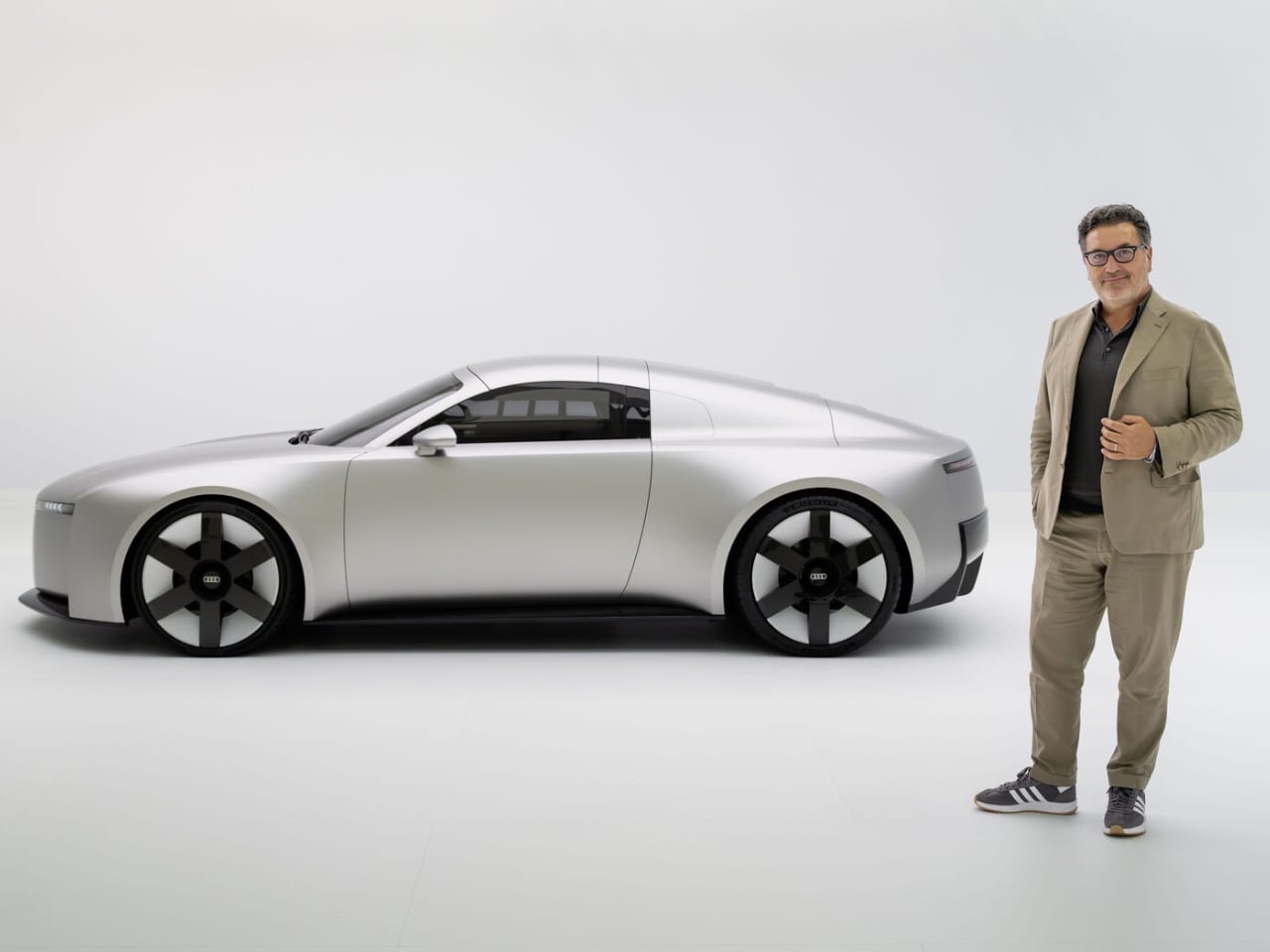
Photo: Audi

He’s thoughtful in his response. “You can always, when it’s easier, when you are… if you are evaluating or observing something that is not coming from you or you haven’t worked on, when you sort of evaluate things that you worked on. As a designer, you always find things that you would like to change. Not necessarily is the right thing to do, but you always question yourself. Just like if you ask that question to the people who worked on the TT, they would probably say, yeah, maybe we’ll change this and this.”

“And I’m saying, I wouldn’t change anything.”

The humility is striking. He can see perfection in the TT because he didn’t create it. But his own work?

“So on the Concept C, I have to say, things that I would change. Having said that, you know, there are moments that you think that you would do this slightly different, but it’s a thought that comes and goes. I think the more we’ve experienced the car, you know, out of the design studio as a static object, the more that we’ve seen it coming to life in different settings and moving. The more and more you feel like you cannot reach perfection, but there’s really not much that will change.”

I bring up Plato, because this conversation demands it. “To me that’s profound because I love studying philosophy and just reflecting on what Plato always says, there’s a perfect object in his world. Perfect chair, perfect table.”

Radical Next

This brings me to the big question. “Taking that to the next question, which is your Radical Next for Audi. Can you share any of that aspect with us, with our readers in terms of what we can expect? Because what I understand is anything that comes out from Audi should be very close to production or is ready for production. As a concept, when you see a concept it should be close to that.”

“It is, it is. That’s something that we’ve decided to do. You know, the Concept C is a great example of that. So it’s not only the first manifestation of the Radical Next, it is a design with a full principle, but it is also a very close preview of a vehicle that will come in the future.”

He continues: “What you can expect, to go back to your question, you can expect the translation of those values that you’re seeing on the Concept C and they are part of the Radical Next philosophy in every vehicle coming in the future, which it doesn’t mean that is literally the same design elements, but it’s the same approach.”

“You will have to deliver a different character, but they all have to follow the same guidelines, the same principles.”

Four Principles, No Exceptions

He’s mentioned principles twice now. Guidelines. The framework that will govern every Audi design decision going forward. But he hasn’t defined them yet. This feels important. If “Radical Next” is the philosophy reshaping Audi’s entire design language, I need to understand the mechanics. What are the actual pillars?

I ask him directly.

“Clarity and technicality, intelligence and emotion,” he says without hesitation.

“Are there any priorities within those four principles? Like if you had to subtract one based on time, quality, design, whatever, are they all equal?”

His answer is immediate and definitive. “They have to be there.”

“They have to be there, and then you can possibly dial some of them more than others, but they all have to be present, they all have to be there. So when we talk about clarity and technicality, intelligence and emotion, there is not a priority. You can possibly think of this as a journey through the values, where it starts with clarity and it ends with emotion. So there is logic in the flow of these four principles, but they all have to be there.”

“When we talk about clarity and technicality, intelligence and emotion, there is not a priority. You can possibly think of this as a journey through the values, where it starts with clarity and it ends with emotion. But they all have to be there.”

“Take the Formula 1 car, for example. The emotional side is dialed up because that’s the most visceral aspect of motorsport. But you’ll still see all four principles present: the clarity, the technicality, the intelligence, and the emotion. They’re in everything we do.”

He pauses, then adds something crucial: “And this doesn’t apply only to products. It goes beyond that.”

The Red Thread

I need to understand something practical. “What would be the one element that crosses between the Concept C and what we’re seeing tonight from your perspective.”

“That is exactly what I just said, the four principles.”
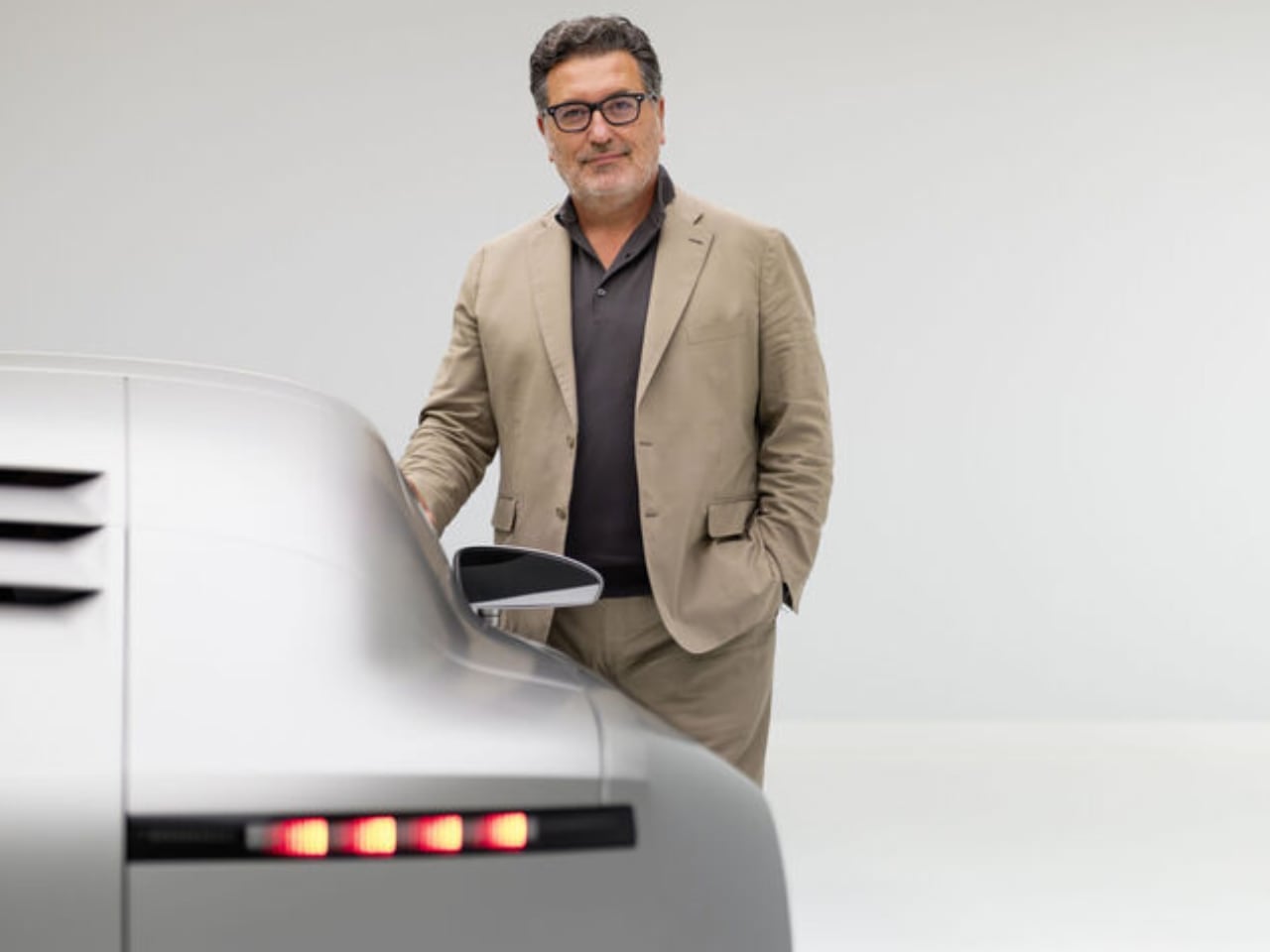
Photo: Audi

But I need to get more specific. “Physically, like if I had to physically explain it to our readers.”

“Well, one car is clearly a very different object.”

“Right. But if readers saw the Concept C and the Formula 1 side by side, what visual DNA would connect them?”

Photo: Audi

“Yeah, the red thread there is what makes them part of the same approach and the same philosophy is clearly the influence on the form of Formula 1 is very limited, if none. It’s very tight in spec, in the design. So the way we link to Audi philosophy is with this level of geometry, geometric approach and very clear, very clear definition of the character of the vehicle.”

“And then having the subtleties of the textures and the technicality in the finish, the exposed materials like the carbon fiber, and then of course, you know, the red that is taking a much higher degree of strength and power to elevate the emotional aspect.”

“So, again, all the four principles that are applied in their own way to the Formula One.”

The Tactile Future

Moving to the technical side, I want to explore the interior experience. “Going back to Audi’s vision developing, this is for our technical readers. The interiors are increasingly becoming more digital, and as I sat in the Concept C today, keeping everything minimal, but still very intuitive. Would you say what I experienced with the steering wheel will translate to a production model?”

I elaborate: “On the Concept C, all the dials, the buttons, it’s got a lot of characteristics of watches. It reminds me so much of the tactile experience.”

“Yeah, the answer is absolutely yes. The answer is absolutely yes, because that’s part of, it’s a big part of our approach to delivering the right experience once you sit in the car, once you drive the car, once you experience the environment and the interface with the car. So what we showed with the Concept C is clearly a preview of what we are aiming to deliver on the production.”

“And I would say this is not just for the Concept C, but applies to all Audis going forward.”

Technology in Service of Experience

“Audi has always been at the forefront of automotive technology, from the Virtual Cockpit onward. As you shape the future, what comes first: technology or design? Or do they inform each other equally?”

“They both work together, and this gives me also the opportunity to talk about giving form to a function as well. So there is an aesthetic side of design, but it’s also a more functional side to design, so it’s much broader than that. Technology is massively important for Audi, but it’s also important to use technology in the right way because the risk is that you want to display technology just for the sake of it, just to show that you are technological in a way. And I think that provides no benefit. The idea is to use technology to enhance the experience, or develop technology with a specific goal in mind: to deliver a proper Audi experience for the customer.”

Sustainability Without the Sermon

“How about sustainability, what does that mean to you? Everyone is talking about sustainability, but to you, what exactly does that mean as it pertains to Audi?”

“Sustainability still is a word that is mentioned a lot.”

“It was mentioned a lot maybe in last few years, today you almost don’t even have to talk about sustainability.”

“So you’re saying it’s sort of part of the DNA.”

“It has to be embedded in everything you do, you know. Sustainability goes from, you know, the use of materials, the method of making, the circularity of… It’s much broader, but I feel like when you hear talking specifically about sustainability, it’s a bit of a forced concept, because today you just cannot operate without having sustainability at the heart of what you do.”

Material Innovation

“How about material choices? What are your favorite material choices? I know it’s a broad question, but personally…”

“It’s a question that I really like because I am a huge supporter of innovative materials and bringing a perception of sustainable material or alternative materials like interior furniture, for instance, is something that will happen also in automotive. I think the Concept C is again a great example of that, how we have managed to deliver a very fresh, modern and very premium execution of what is a two-seater sports car without using traditional material.”

The Concept C proves you can deliver luxury without leather, premium without the old signifiers of expensive. It’s luxury redefined through intelligence and innovation.

Rapid Fire

“We have a few minutes left. I have some rapid-fire questions for you. Just off the top of your mind. Sketchbook or iPad?”

“Both, but a sketchbook for me mostly.”

“Pen or pencil?”

“Pen.”

“Really? No room for mistakes?”

“No.”

“What size pen do you use?”

“Just a Bic.”

“Really?”

“Sometimes I try fancy pens, but I go back to the old ones.”

The man leading design for one of the world’s most prestigious automotive brands sketches his ideas with a disposable pen. It’s perfect. It’s exactly right.

“I think I know the answer to this, but I’m just going to ask it for the record. Minimalism or maximalism?”

“Minimalism, but you’ve got to be careful. Minimalism doesn’t appear to be stripped down. That’s important. It’s reductive but not necessarily minimal because minimal can be associated with basic.”

“Excellent.”

Inspiration and the Grid

I ask about his favorite city for creative inspiration. He’s traveled the world throughout his career, from Italy to England, California to Munich. What place fuels his creativity most?

“Does it have to be a city?” he asks.

“It can be anywhere. Any places that inspire you.”

“Right, so I would say city-wise, I find New York very inspirational.”

“Is it because of all the lights and all the movement?” I ask, trying to understand what draws him there.

“I find a mix of heritage and modern. I find it’s easy. It has a lot, but it’s very simple to navigate and move around as well. There’s a logic to New York.”

“Yeah, yeah, yeah. I get it. You’re on an island. There’s nowhere to go. There’s a grid.”

“There’s a grid.”

The grid. Of course. For a designer who values clarity and rational design, Manhattan’s relentless geometry must feel like vindication in urban form. You can find any address just by understanding the system. Twenty-sixth street crosses every avenue. The logic is inescapable.

But then he pivots to something deeper.

“But inspirational, I mean, for me, inspirational, and this is an answer that I give all the time, inspiration is never voluntary, it’s never deliberate. It’s absorbing what you see, particularly when you’re traveling, but every day, and then inevitably, you know, you bring it back out in what you do without even knowing it.”
“Inspiration is never voluntary, it’s never deliberate. It’s absorbing what you see, particularly when you’re traveling, but every day, and then inevitably you bring it back out in what you do without even knowing it.”
“It’s not like, oh, I’ve seen this. Let me try and do something inspired by that. No, for me it doesn’t work that way.”

“But sometimes, you know, often what you do is connected to something that you’ve experienced. So that’s the inspiration, but it’s never an immediate connection.”

The Door Opens

“So the last question I have is collaboration. If you were to, say, wake up one day, now that you have direct connection to the CEO, you could say, hey, let’s do a brand collaboration with X, Y, and Z. I think this is going to be great. What would that brand be? It can be a watch brand too, wink-wink.”

He smiles. “I’m not going to say a brand, but I would say all the progressive brands that you see out there that like to take risks.”

“That’s an awesome answer, because that just opens the door to so many different things.”

And that’s exactly right. Frascella isn’t naming names because he’s not limiting possibilities. Progressive brands. Brands that push boundaries. Brands that understand that the future isn’t about doing things the way they’ve always been done.

What This Means

There’s something quietly radical about Massimo Frascella’s approach to leading one of the world’s most iconic automotive brands. He didn’t arrive at Audi with a portfolio of concept cars or a reputation for dramatic reinvention. Instead, he came with something more fundamental: a belief that rationality and emotion aren’t opposing forces but essential partners in great design.

That belief was forged in 1998, during his first year at Carrozzeria Bertone, when he encountered the original Audi TT. The car proved that disciplined, rational design could create profound emotional impact. Now, as Chief Creative Officer reporting directly to the CEO, Frascella is scaling that lesson across an entire premium brand at the most disruptive moment in automotive history.

What makes his “Radical Next” philosophy compelling isn’t just the four principles themselves (clarity, technicality, intelligence, emotion), but the insistence that all four must always be present. You can’t subtract one to save time or simplify production. You can dial them up or down depending on context, but absence isn’t an option. It’s a discipline that extends beyond product design into every touchpoint: showrooms, marketing, customer service, brand experience. This isn’t cosmetic. It’s structural.

The proof is in the commitment. Under Frascella’s leadership, Audi only unveils concept cars that preview actual production models. The Concept C, revealed in late 2025 and arriving in showrooms in 2027, represents this new contract between brand and customer: what you see is what you’ll get. No fantasy. No bait and switch. Just honest design intent made real.

Even the Formula 1 reveal tonight follows this logic. The F1 car can’t share surface language with the Concept C (regulations prevent that), but it shares the geometric rigor, the technical precision, the material honesty. Same principles, different canvas. It’s how you build a coherent design language across radically different applications.

Perhaps most telling is how Frascella talks about inspiration. Not as something you hunt for on mood boards or Pinterest, but as osmosis. The pyramids he studied. The TT that changed his trajectory. The Manhattan grid. They’re absorbed unconsciously and emerge transformed in his work. It’s the creative process stripped of mystique and ego, revealed as patient observation and disciplined synthesis.

This is why he sketches with a Bic pen instead of expensive tools. Why he defines luxury through innovative materials rather than traditional signifiers like leather. Why he insists technology must serve experience rather than showcase itself. These aren’t affectations. They’re evidence of a design philosophy built on substance over spectacle, function over flourish, clarity over complication.

And when asked about future brand collaborations, he doesn’t limit possibilities by naming names. He simply says “all the progressive brands that like to take risks.” It’s the perfect answer, because it’s not about him or Audi making choices for others. It’s about opening doors and seeing who walks through.

In an industry obsessed with disruption for its own sake, Frascella is proving that the most radical act might be returning to fundamentals. The TT showed that rational design could be deeply emotional. Under his leadership, Audi is proving it can be done again, at scale, across an entire premium brand. That’s not just good design. That’s cultural leadership.

The post The Radical Simplicity of Massimo Frascella: Inside the Mind of Audi’s New Design Chief first appeared on Yanko Design.

Apple Arcade is adding PowerWash Simulator and Cult of the Lamb next month

Apple Arcade has a fairly stacked winter, as the platform is adding some standout titles on December 4. Arcade titles are playable on iPhone, iPad, Mac, Apple TV and Apple Vision Pro.

First up, there's Cult of the Lamb Arcade Edition. This is a port of the incredibly addictive roguelike/town sim hybrid thingamajig, with some new features exclusive to Arcade subscribers. This version includes new follower forms, decorations and outfits. It also includes all existing content updates, though Apple hasn't announced if it would be getting forthcoming content updates.

For the uninitiated, Cult of the Lamb is two games in one. There's a top-down action component and a base builder, with each mechanic interacting in unique and often hilarious ways. Yes, you can feed your cult members poop, if that's your bag.

The iconic PowerWash Simulator also releases for Apple Arcade next month. This game seems like a great fit for Apple's service, given the zen-like mechanic of washing down grime. The sequel came out last month for other platforms. If you're a clean freak, this is the game for you.

Apple is dropping a sequel to SpongeBob Patty Pursuit. The Arcade original SpongeBob Patty Pursuit 2 casts players as both the titular SpongeBob and Plankton in a sidescrolling adventure. The first one was fairly well-reviewed.

Subway Surfers+ and Naruto: Ultimate Ninja Storm+ will also be available on December 4. Finally, a new Apple Vision Pro game is coming to Arcade this week. Glassbreakers: Champions of Moss will be available on the platform from November 13. This is an AR-based tactics RPG.

This article originally appeared on Engadget at https://www.engadget.com/gaming/apple-arcade-is-adding-powerwash-simulator-and-cult-of-the-lamb-next-month-190647480.html?src=rss

Valve’s Steam Frame VR headset is finally official and it’s coming in 2026

Valve made a triumphant return to the hardware market with the Steam Deck and its OLED-toting counterpart, and now it’s having another crack at virtual reality with the Steam Frame. The Steam Frame is the long-rumored headset from Valve that had previously been codenamed "Deckard." 

The company also announced a new Steam controller and PC called the Steam Machine. All three devices are coming in early 2026. Valve is holding off on announcing pricing and exact availability of the new hardware. There are Steam Frame dev kits available for developers.

Valve says the Steam Frame is a wireless, "streaming-first" headset and you can hop into your games as soon as you pop it on. It supports both VR and flatscreen games. The company made a plug-and-play 6GHz wireless adapter that you slot into your PC (or Steam Machine). It has a dual-radio setup to help minimize interference, with one radio dedicated to streaming audio and visuals to the headset, and the other for Wi-Fi.

But you don't need a PC to play games on the Steam Frame. As with Meta Quest headsets, it can run games as a standalone device. 

The headset has a Snapdragon 8 Gen 3 chipset, 16GB of RAM and up to 1TB of built-in UFS storage. There's a microSD card slot, along with support for Wi-Fi 7 and Bluetooth 5.3. Of course, the headset is powered by SteamOS. As with the Steam Deck and Steam Machine, there'll be a Steam Frame verified program, so you can see at a glance which games will run on the Steam Frame in standalone mode. 

What's more, the Steam Frame will support Android games. It seems Valve is hoping that developers who made games and VR experiences for Android-based headsets (such as the Meta Quest lineup) will bring them to Steam.

The Steam Frame runs on a rechargeable 21.6Wh Li-ion battery. There's one USB-C 2.0 port at the back that you'll use for both charging and data transfers. You can recharge the battery at a rate of up to 45W. It's unclear how long the Steam Frame's battery will run on a charge.

The battery is positioned on the rear of the headstrap. So you won't necessarily need to have an external battery pack that's attached to the system by an annoying cable. It'll be possible to swap the standard headstrap (into which the audio drivers are integrated) for a different option, perhaps one with a larger battery. 

Even with the battery built into the headstrap, Valve says the Steam Frame weighs just under a pound at 440 grams. The core module — the front part — is 185 grams (6.5oz) and the headstrap weighs 245 grams (8.6 ounces).

The Steam Frame has an optimization feature called Foveated Streaming. Valve says this uses low-latency eye-tracking (powered by two internal cameras) to optimize the detail in the image wherever your eyes are looking. The company claims it can offer a "10x improvement in image quality and effective bandwidth." Foveated Streaming is said to work for every game in your Steam library.

The headset has dual 2160 x 2160 LCD panels with refresh rates of up to 144Hz, a field of view of up to 110 degrees and an IPD target range of 60mm to 70mm. Valve added that "thin and light custom pancake lenses provide edge-to-edge sharpness and a large eye box." The company says the maximum width for eye glasses is 140mm. 

As for audio, the Steam Frame has dual stereo speakers on each side with support for high-fidelity audio. Valve says the speakers on each side are "oriented in opposite directions to cancel out vibrations," which can impact the tracking system.

Speaking of which, the headset has four high-res monochrome cameras for controller and headset tracking — the Steam Frame uses inside-out tracking. Valve says there are infrared LEDs on the outside of the device that can help support tracking in dark environments. There's monochrome passthrough support too.

Steam Frame headset and controllers
Valve

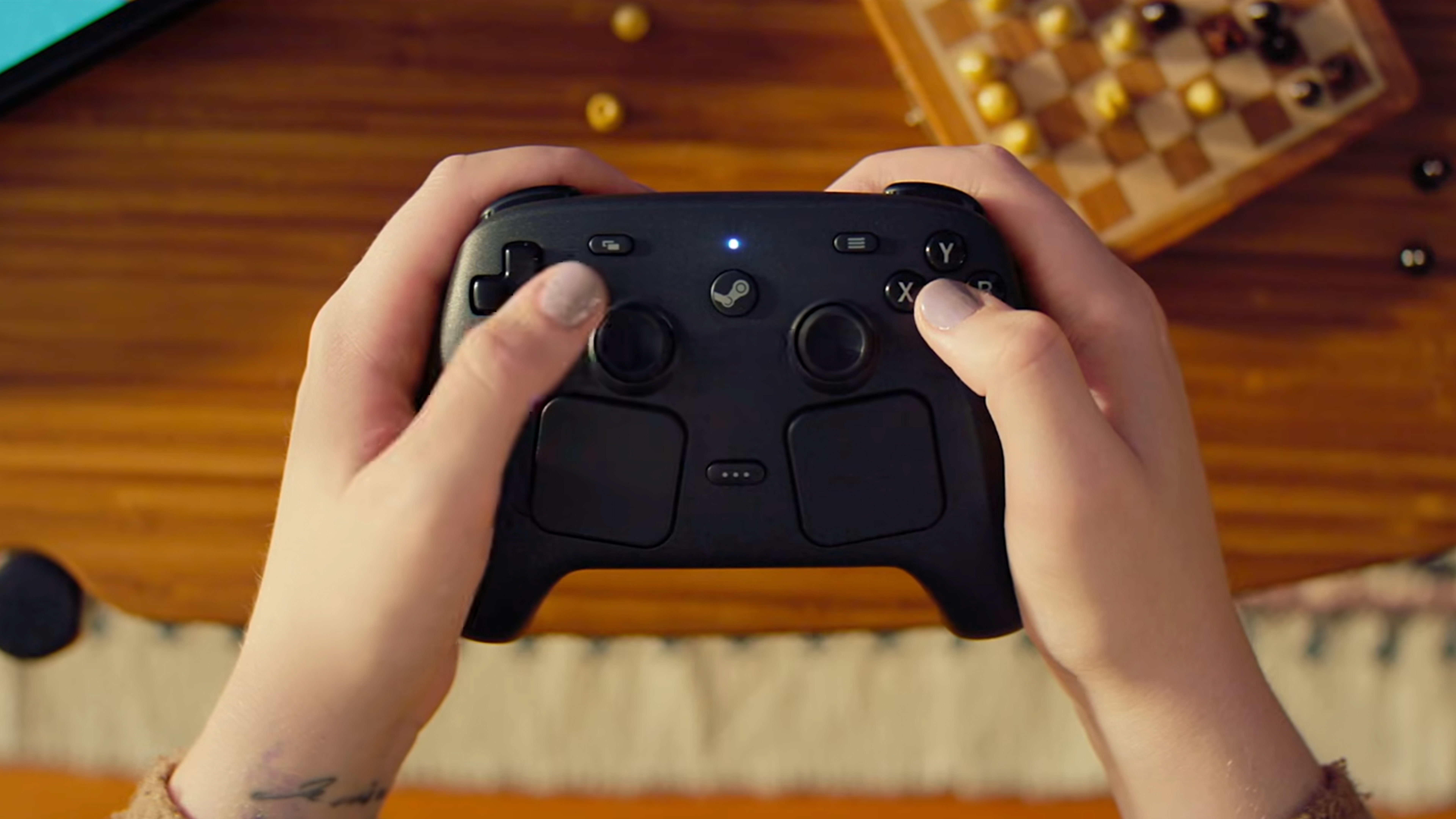
Naturally, you'll need a way to play all of the games, so the headset comes with a pair of Steam Frame controllers. The headset tracks the positions of the controllers for VR games, with full 6-DOF tracking and IMU support. They have a split gamepad format with a D-pad, thumbsticks, ABXY buttons, triggers and bumpers. They're designed to work with your entire Steam library, and they certainly look a bit more intuitive than the PlayStation VR2 controllers. 

Rather than going down the Hall effect route, Valve opted for magnetic thumbsticks, which support capacitive finger tracking. Each controller is said to run for around 40 hours before you'll have to swap out the AA battery that powers it. If you'd rather play games on the Steam Frame with the new Steam Controller, you'll absolutely be able to do that.

The Steam Frame is far from Valve's first VR headset. It released the Valve Index in 2019, and previously worked with HTC on its Vive headsets, which were initially consumer VR products before HTC shifted its focus to business and enterprise.

While none of Valve’s previous PC-focused headsets had the mainstream impact of Meta’s Quest lineup or arguably even PlayStation VR (which by all accounts is still an active platform, not that Sony’s release calendar backs it up), the company is responsible for what is probably the medium’s greatest-ever game in Half-Life: Alyx. And with SteamOS on the Steam Deck being such a hit that other companies are practically begging Valve to let them put it in their own rival handhelds, it’s easy to imagine the Steam Frame becoming a serious rival to the Meta Quest.

This article originally appeared on Engadget at https://www.engadget.com/ar-vr/valves-steam-frame-vr-headset-is-finally-official-and-its-coming-in-2026-181909387.html?src=rss

Valve announces new Steam Machine and Steam Controller

Valve is making another run at offering a console-style experience in your living room. The company has announced a new Steam Machine and Steam Controller that let you play PC games on your TV in the same way the Steam Deck lets you play them on the go. Better yet, it’s planning to release them both in early 2026.

The Steam Machine works like a console, but is technically a compact PC running Linux-based SteamOS. The boxy device features a customizable front plate and LED light strip, with a USB-A port and a microSD card slot available up front, and DisplayPort 1.4, HDMI 2.0 and ethernet ports on the back. Inside, the Steam Machine is powered by what Valve describes as a “semi-custom AMD Zen 4” CPU and a “semi-Custom AMD RDNA3 ” GPU with “16GB DDR5 + 8GB GDDR6 VRAM” and either 512GB or 2TB of SSD storage.

Valve says the Steam Machine has “roughly six times the horsepower” of the Steam Deck, and is capable of supporting 4K gaming at 60 FPS with FSR. Interestingly, Valve is also pitching the device as a way to stream more demanding games to your Steam Deck, the Steam Frame VR headset the company also announced today or any device running Steam Link.

Someone holding the new Steam Controller, with trackpads visible.
Valve

While you could use the Steam Machine with a traditional Bluetooth controller, Valve has created its own solution. The new Steam Controller puts all of the various control methods of the Steam Deck into a wireless controller. That includes sticks, face buttons, grip buttons, triggers and bumpers, but also trackpads for mouse controls and gyro controls, too. The Steam Controller works over both Bluetooth or a wired connection, and Valve is also including a charging dongle that doubles as a wireless transmitter for the fastest possible connection.

Like the original Steam Controller, your input method can be individually customized for each game, and profiles can be shared. Valve also says the new controller will work with any device that runs Steam, including the Steam Deck, Steam Machine and Steam Frame.

Missing from Valve’s announcement is any kind of official price. Early hands-ons with both the Steam Machine and Steam Controller suggest Valve wants the devices to be competitively priced with equivalent PCs and game controllers. Given the extra power and features, though, it seems like they might not be as much of a deal as the $400 Steam Deck was at launch.

This article originally appeared on Engadget at https://www.engadget.com/gaming/pc/valve-announces-new-steam-machine-and-steam-controller-182836847.html?src=rss

This 390-Square-Foot Tiny Home Feels More Like A Luxury Apartment

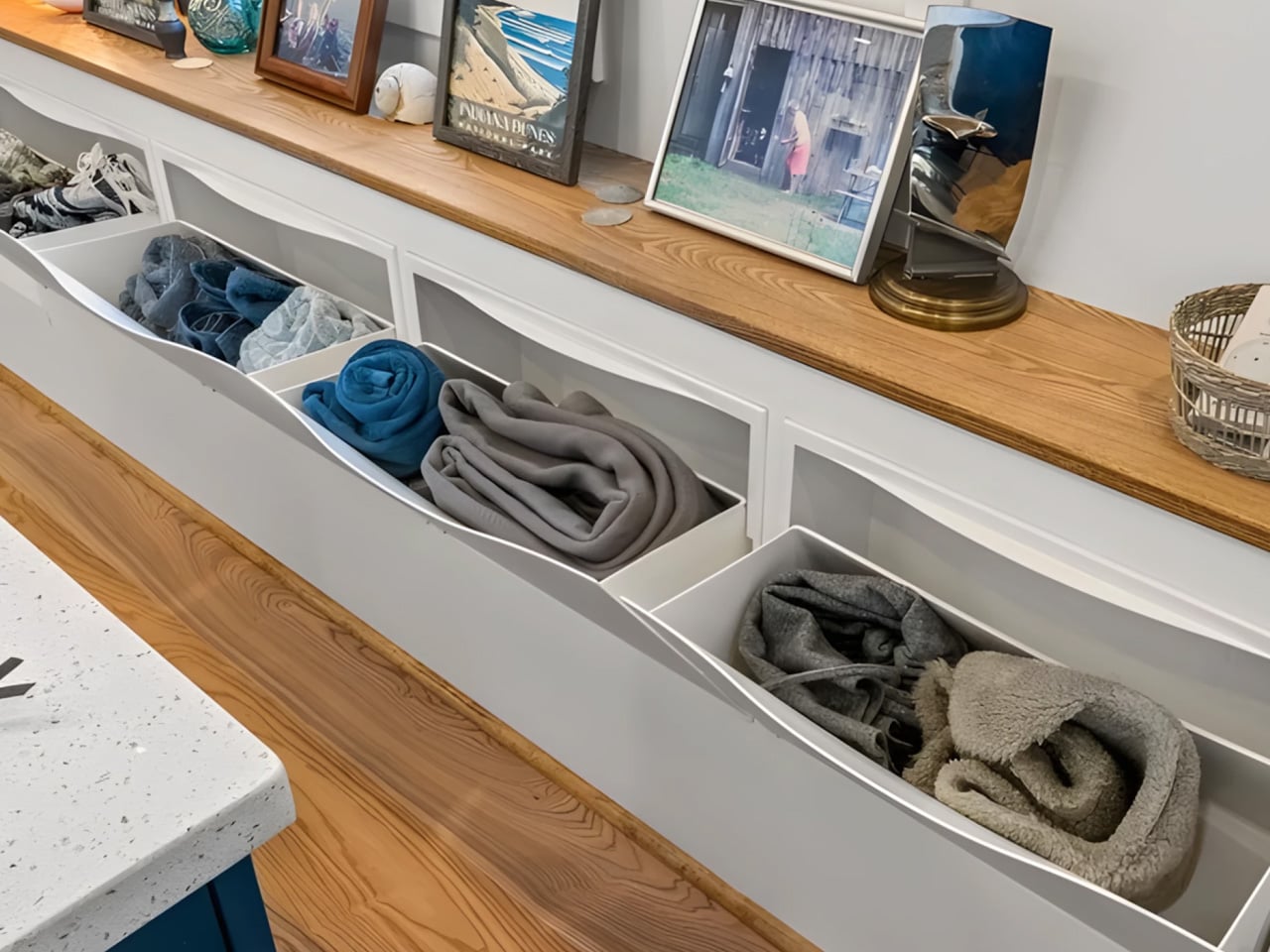
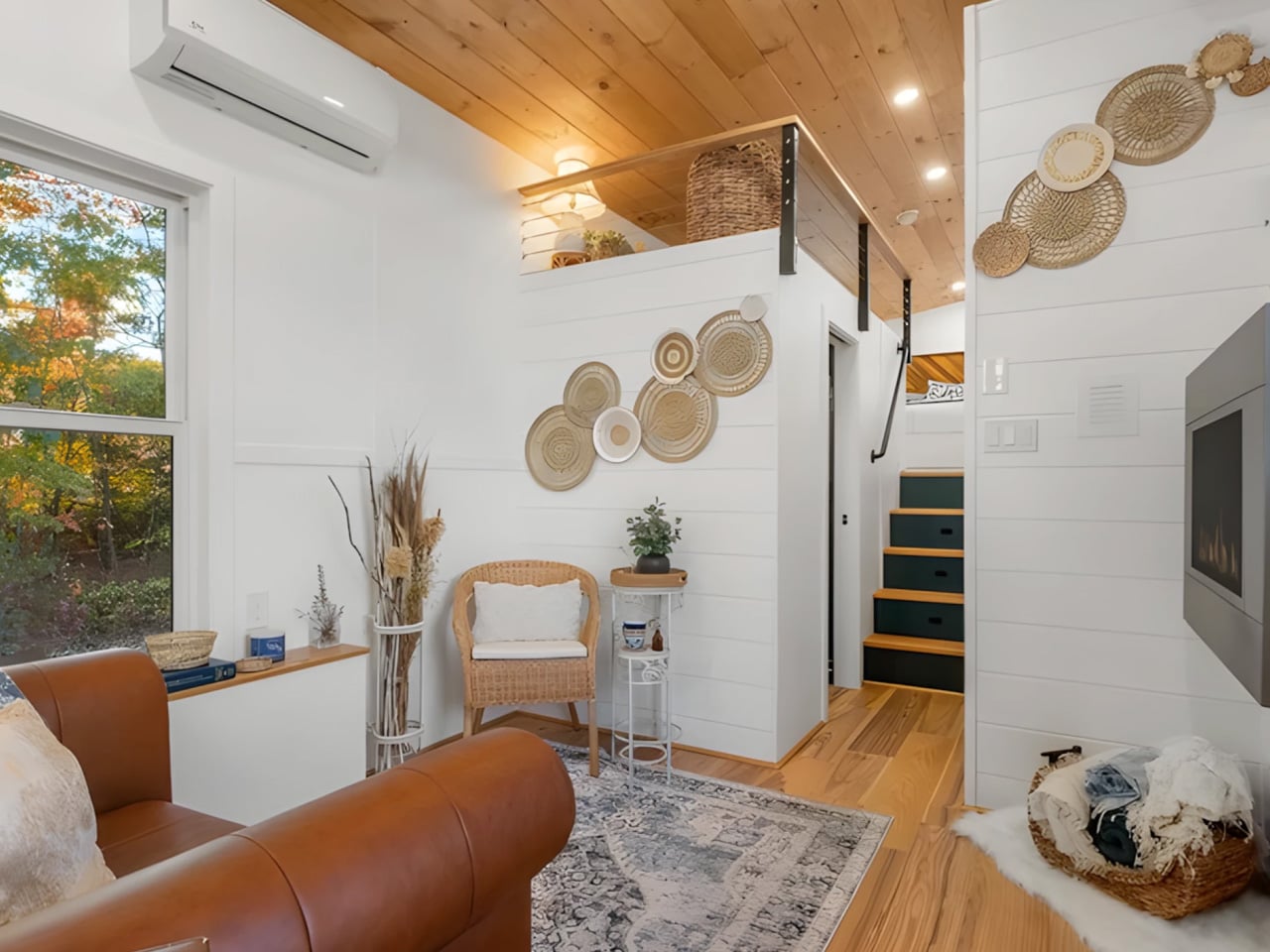
The tiny home movement has found its newest poster child in the Beachcomber, a striking 390-square-foot dwelling that challenges everything we thought we knew about compact living. Built by New Hampshire-based Backcountry Tiny Homes, this remarkable structure represents a significant evolution in compact living design. Measuring an impressive 38 feet long by 10 feet wide, the Beachcomber sits atop a triple-axle gooseneck trailer that elevates it both literally and figuratively above standard tiny home offerings.

The extra width proves transformative, creating interior spaces that feel genuinely apartment-like rather than merely functional. Design publications have unanimously praised this approach, with New Atlas noting the home delivers “apartment-style living on wheels” that surpasses traditional tiny house expectations. The interior layout showcases masterful space planning, with a full-height king-sized bedroom loft anchoring one end and offering genuine standing room, rather than the cramped quarters typical of tiny home sleeping areas. The kitchen commands serious square footage, featuring a dedicated dining space and full-sized appliances that would feel at home in a conventional apartment.

Designer: Backcountry Tiny Homes

Storage solutions appear throughout, from clever built-in nooks to a separate storage loft, addressing the perpetual challenge of tiny home organization. What sets the Beachcomber apart isn’t just size but intentional design choices that maximize both functionality and comfort. The open floor plan flows seamlessly from kitchen to living area, with ceiling heights reaching 13.5 feet that eliminate any sense of confinement. Even practical elements like the full bathroom and washer/dryer capability receive thoughtful integration rather than afterthought placement, ensuring every square foot serves multiple purposes.

Strategic window placement floods the interior with natural light while creating panoramic views that expand the perceived space beyond its physical boundaries. This thoughtful approach to natural illumination transforms the compact dwelling into something that feels genuinely spacious and inviting. The design team clearly understood that successful tiny living requires more than just efficient space planning; it demands creating environments that feel emotionally comfortable and visually expansive, making residents forget they’re living in less than 400 square feet.

Backcountry Tiny Homes offers three distinct purchasing tiers, recognizing that buyers have varying finish preferences and budgets. The shell option starts at $78,650, providing the structure and essential systems while allowing owners to complete interior finishes according to personal taste and timeline. The unfurnished model at $169,200 delivers a complete interior minus non-essential furnishings like furniture and decorative elements. The turnkey option at $185,000 includes everything needed for immediate occupancy, from carefully selected furniture to all necessary appliances, allowing buyers to move in and begin their tiny living journey.

The pricing reflects the home’s positioning at the premium end of the tiny house market, yet industry observers suggest it represents solid value considering the quality and space provided. The NOAH certification ensures compliance with recreational vehicle standards, enabling legal placement in RV parks and similar communities where traditional tiny homes often face zoning restrictions. For couples or individuals seeking a permanent tiny home solution that doesn’t sacrifice comfort for portability, the Beachcomber represents a compelling evolution in small space design, proving that tiny living can embrace both mobility and luxury while creating spaces that feel genuinely livable rather than merely survivable.

The post This 390-Square-Foot Tiny Home Feels More Like A Luxury Apartment first appeared on Yanko Design.

Apple introduces a new Digital ID feature to make boarding flights easier

Apple is rolling out a new feature that lets users store US passports in the official Wallet app. This will allow travelers to present this digital ID as a valid form of identification at TSA checkout lines at airports.

In other words, folks with a passport who have yet to upgrade a driver's license to a Real ID will be able to board a plane without bringing a physical copy of that passport to the airport. This whole Real ID thing has been a source of frustration to many, so I appreciate any effort to make traveling a bit easier.

This ID will be visible on both iPhones and the Apple Watch and Apple says the service is being implemented at TSA checkpoints across more than 250 US-based airports. It's only used for ID on domestic flights; if you're planning to travel internationally you'll still need a physical passport.

Also, not all TSA readers have been implemented with the technology to scan these digital IDs just yet, according to TechCrunch. You might want to bring along a paper passport for the time being to let the TSA and Apple get their ducks in a row.

The Wallet app.
Apple

The company has plans to expand this feature beyond air travel. Apple says businesses will eventually be able to accept these IDs for the purposes of age verification. This Digital ID feature was first announced as part of iOS 26 and also adds passports to the list of existing government IDs supported in Apple Wallet.

Adding a passport seems simple enough. Just head to the Wallet app and follow the prompts. Users will have to pose for a selfie and complete a series of facial and head movements for security.

The wallet platform also accepts driver's licences and state IDs, but only in 12 states and Puerto Rico. These won't be valid for flying, however, as neither is a Real ID or passport.

This article originally appeared on Engadget at https://www.engadget.com/apps/apple-introduces-a-new-digital-id-feature-to-make-boarding-flights-easier-175130213.html?src=rss

A Ratchet and Clank multiplayer game is coming to iOS and Android soon

It’s been four years since the wonderful Ratchet & Clank: Rift Apart and, especially given the rate at which developer Insomniac churns out great games, I had hoped we wouldn’t have to wait too much longer for another installment of the long-running action platformer series. As it turns out, there is a new Ratchet & Clank game coming soon, just not on PS5.

Ratchet & Clank: Ranger Rumble is a “fast-paced” multiplayer arena shooter that’s coming to iOS and Android soon. In fact, according to the game’s website, it’s already available in select countries. Folks in other locales who are interested can pre-register.

Mobile developer Oh BiBi took the reins from Insomniac for this one. There are still platforming elements in Ranger Rumble. It looks quite colorful and you’ll have a variety of weapons, abilities and characters at your disposal. There are several game modes, including a soccer-style one. Ranger Rumble is free-to-play, though it will likely have microtransactions. For what it’s worth, you’ll be able to customize your characters.

This isn’t the first time that the Ratchet & Clank series has made its way to mobile. Ratchet & Clank: Going Mobile debuted in 2005, before the arrival of iPhone and Android devices. Endless runner Before the Nexus arrived eight years later.

A sequel to Going Mobile called Ratchet & Clank: Clone Home was originally slated to hit Java phones in 2006 before it was canceled. However, dedicated fans found a phone that had a copy of the game on it, then cracked the device’s encryption and last month made Clone Home available for anyone to download.

This article originally appeared on Engadget at https://www.engadget.com/gaming/playstation/a-ratchet-and-clank-multiplayer-game-is-coming-to-ios-and-android-soon-172634125.html?src=rss

This Power Strip Is Shaped Like an Original NES Console

Power strips live beneath desks or behind furniture where nobody has to look at them. Black plastic housings with rows of identical outlets do their jobs without offering anything visually interesting or worth displaying. They’re purely functional objects designed to disappear, which works fine until you’re building a desk setup where aesthetics matter as much as keeping devices charged, and everything ends up looking generic and forgettable.

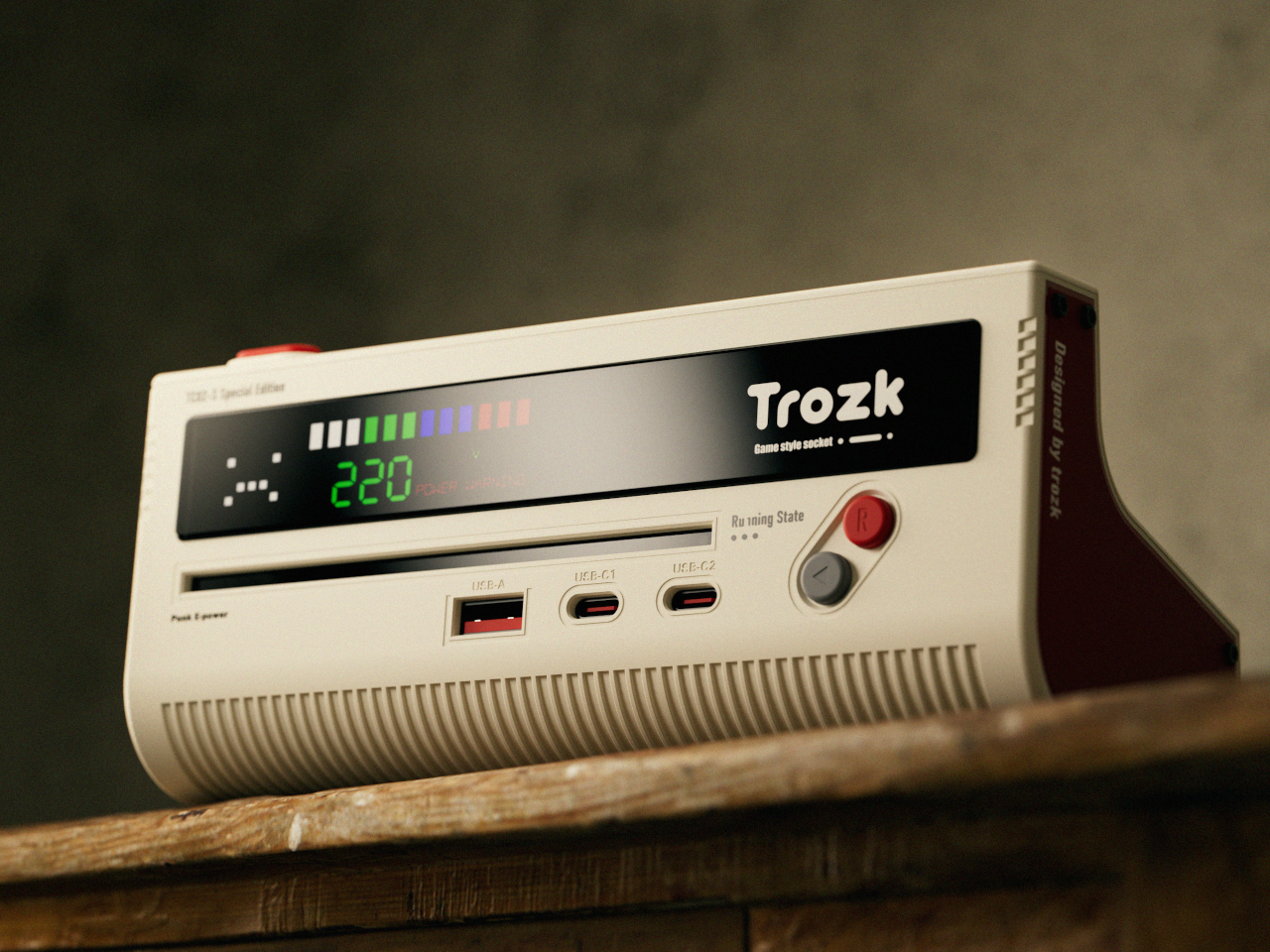
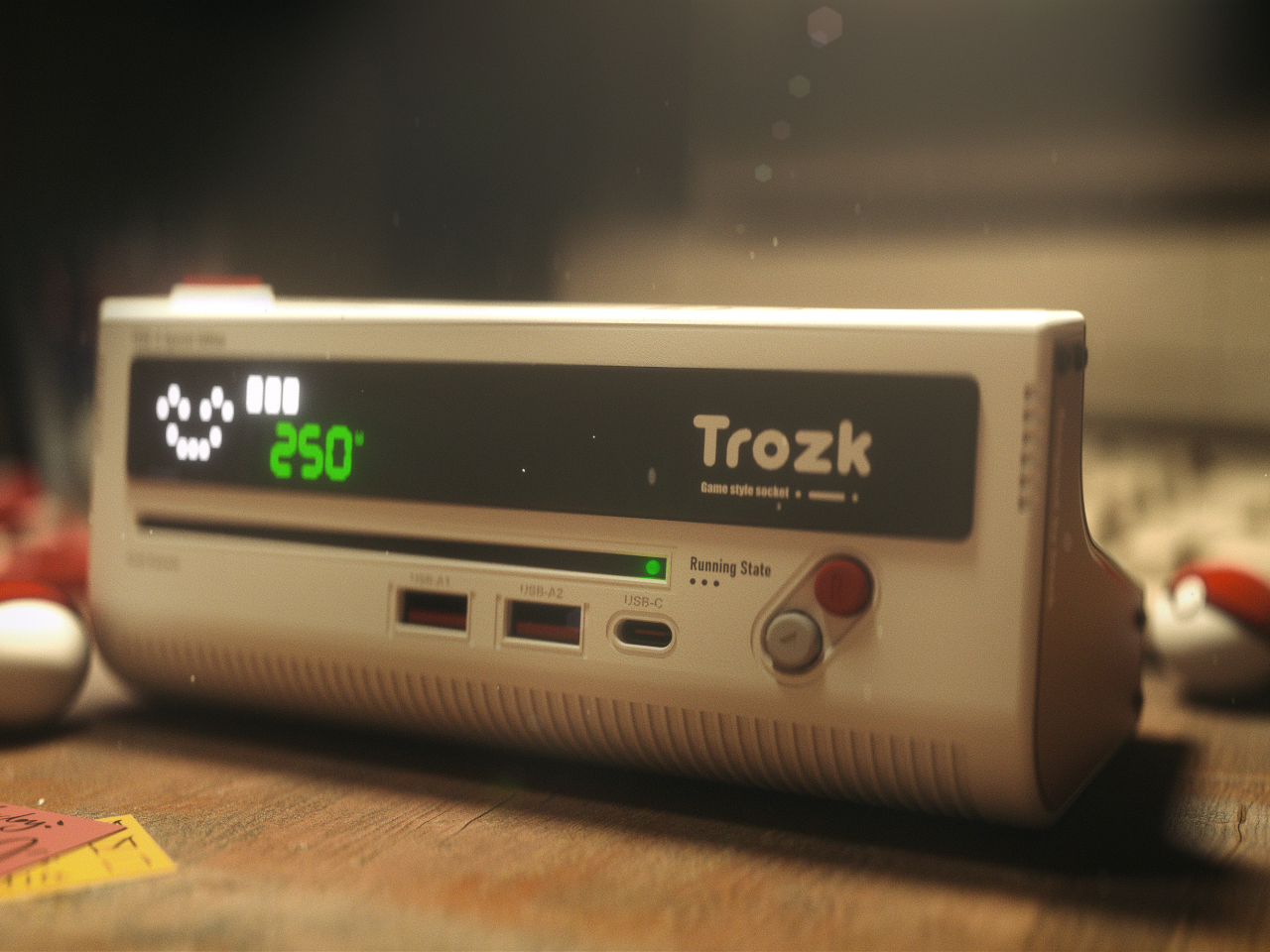
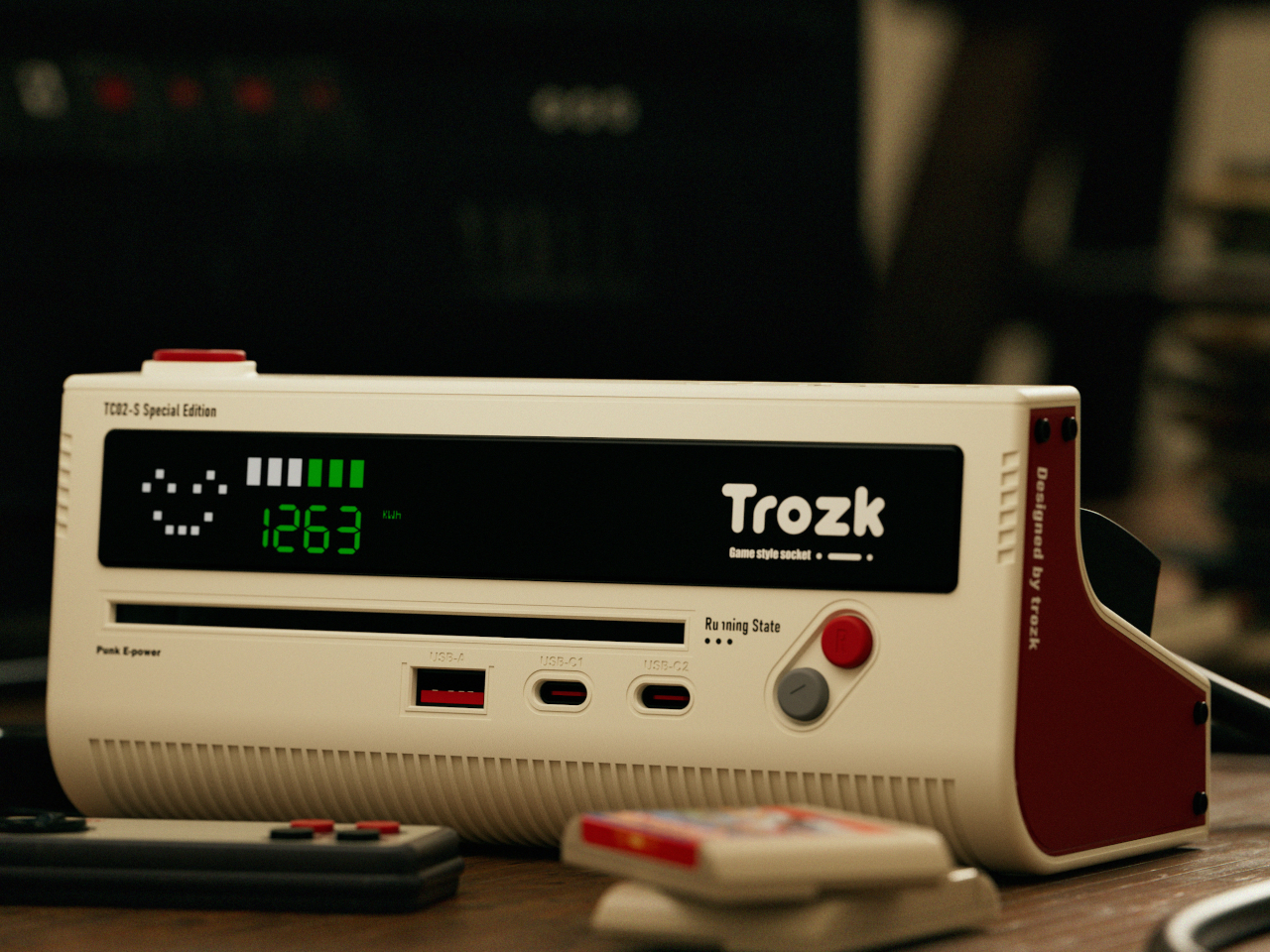
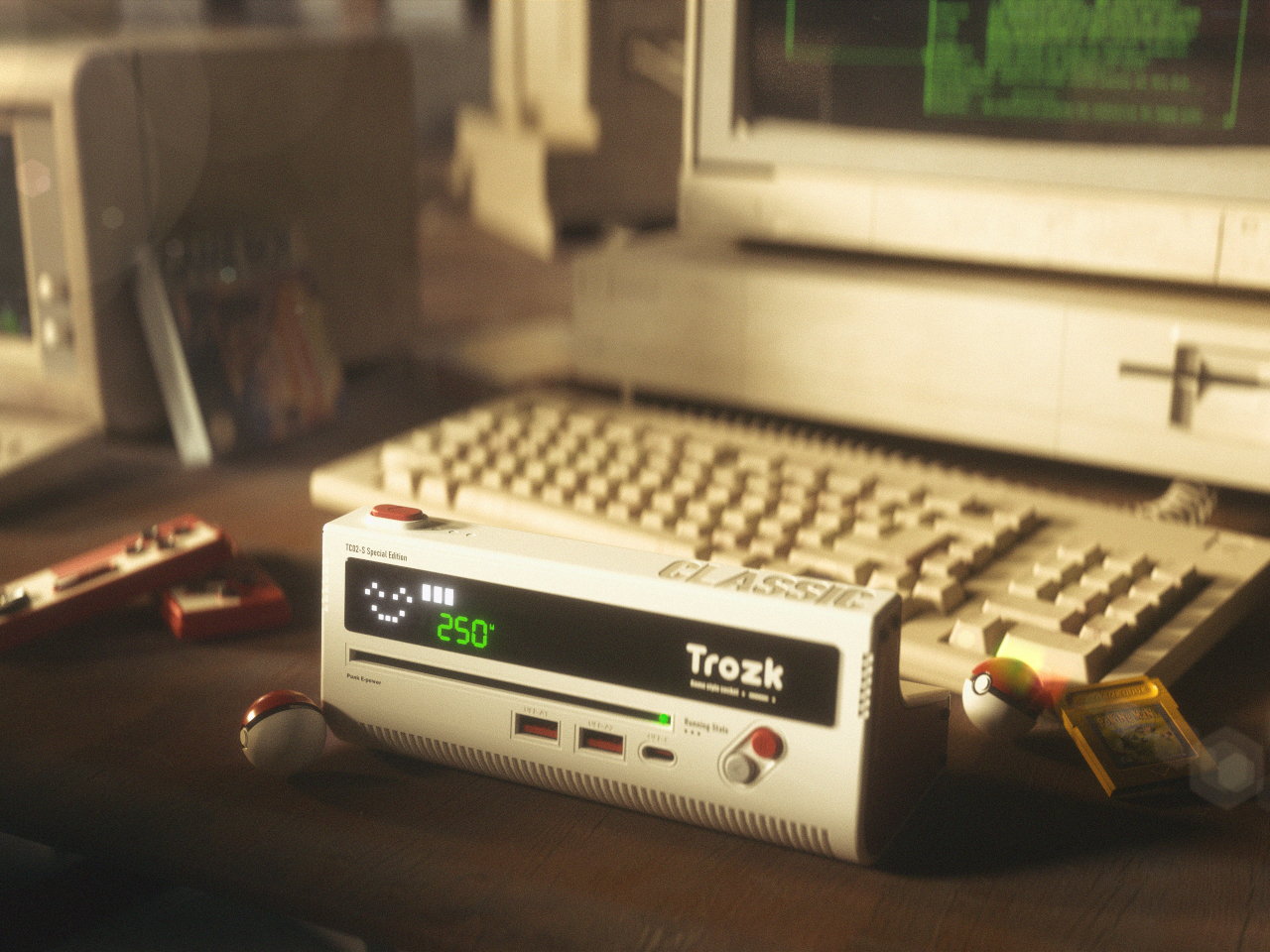
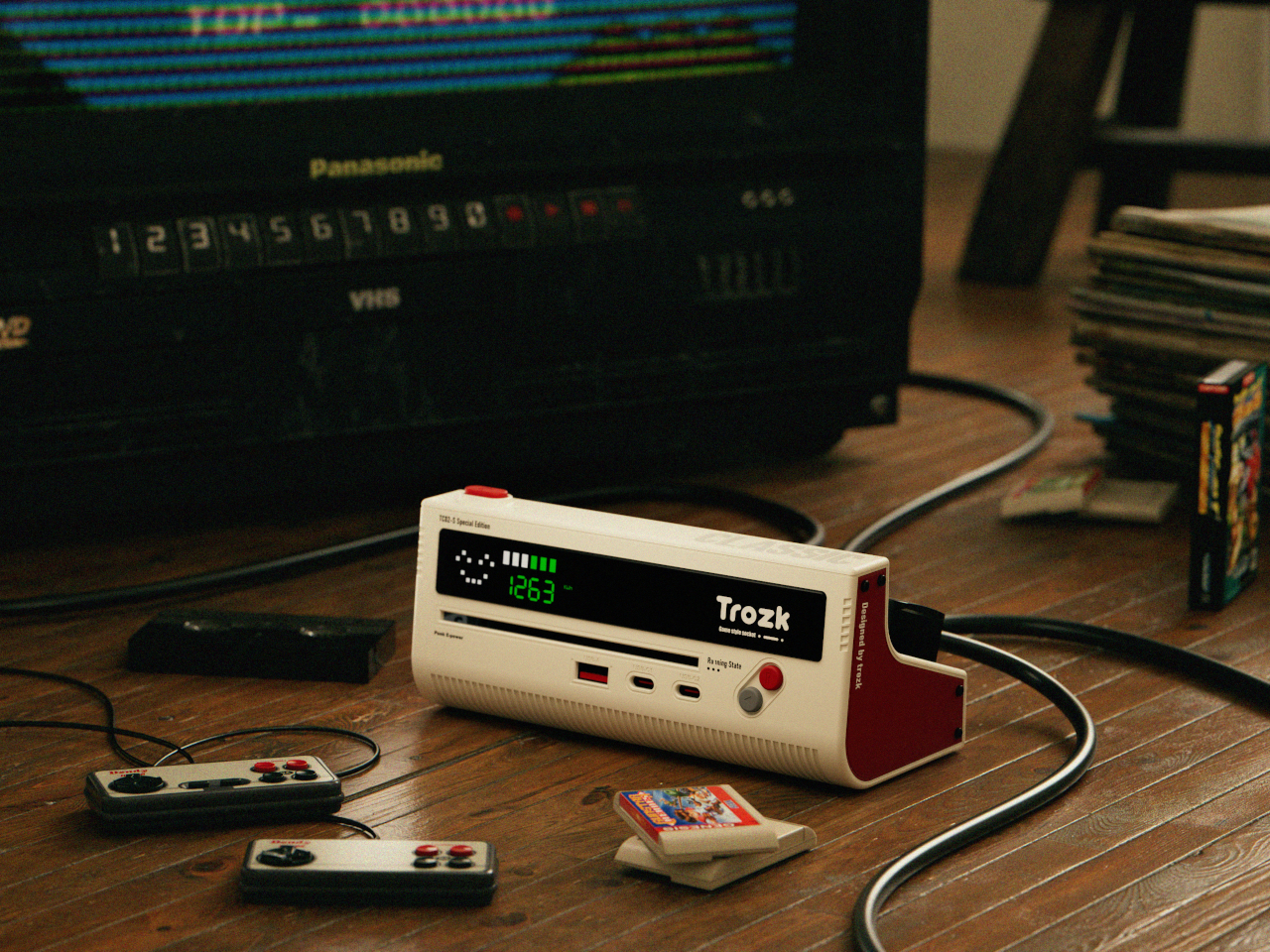
The Trozk Game Style Socket recreates the Nintendo Famicom console as a functional charging station, bringing the red and white color scheme and design language from 1983 directly onto modern desks. Instead of hiding, this power strip sits visibly where it becomes a conversation starter about childhood gaming memories while handling the practical work of powering laptops, phones, and whatever else needs electricity. The nostalgia hits immediately for anyone who remembers cartridge-based gaming.

Designer: PTPC

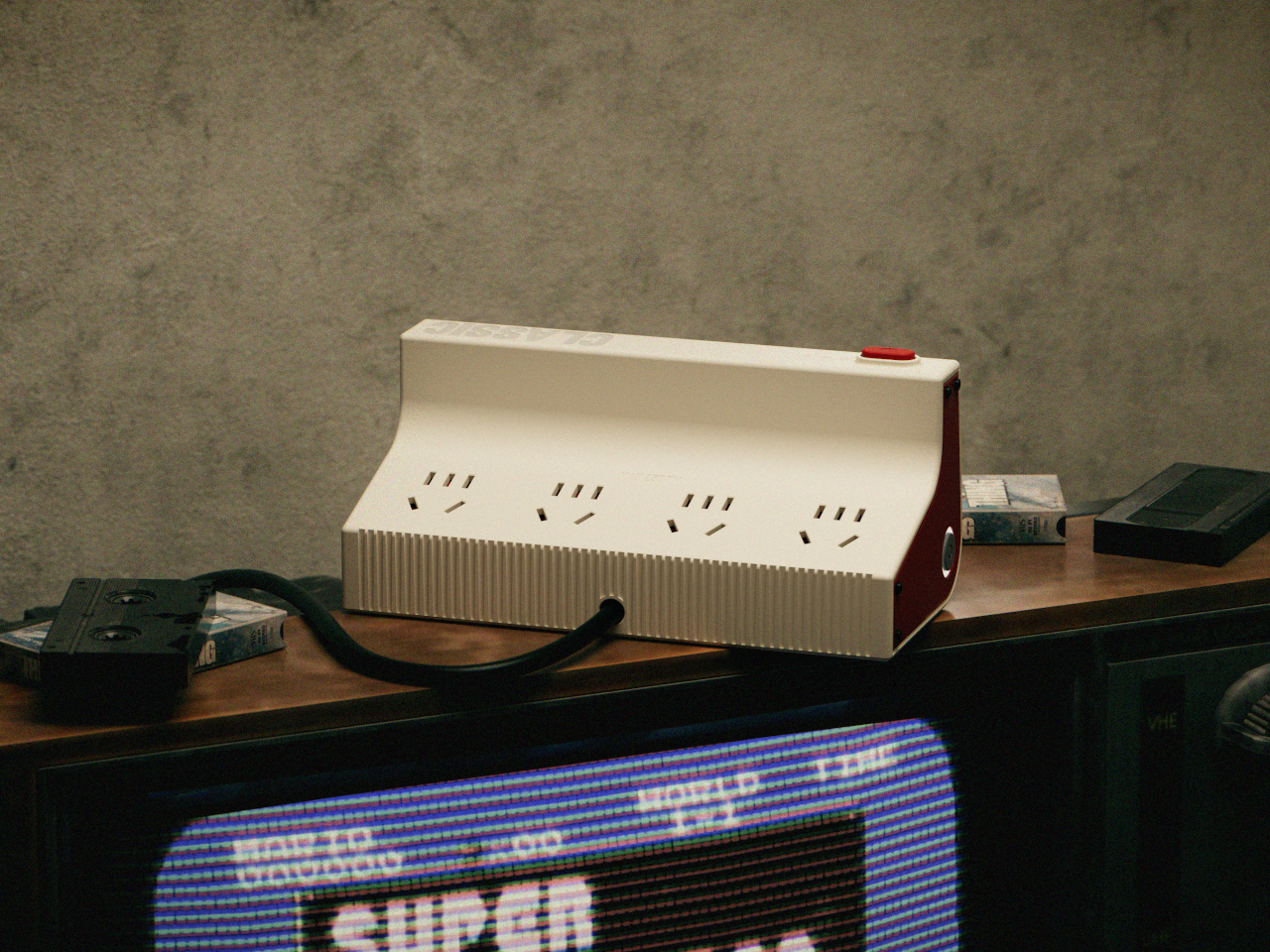
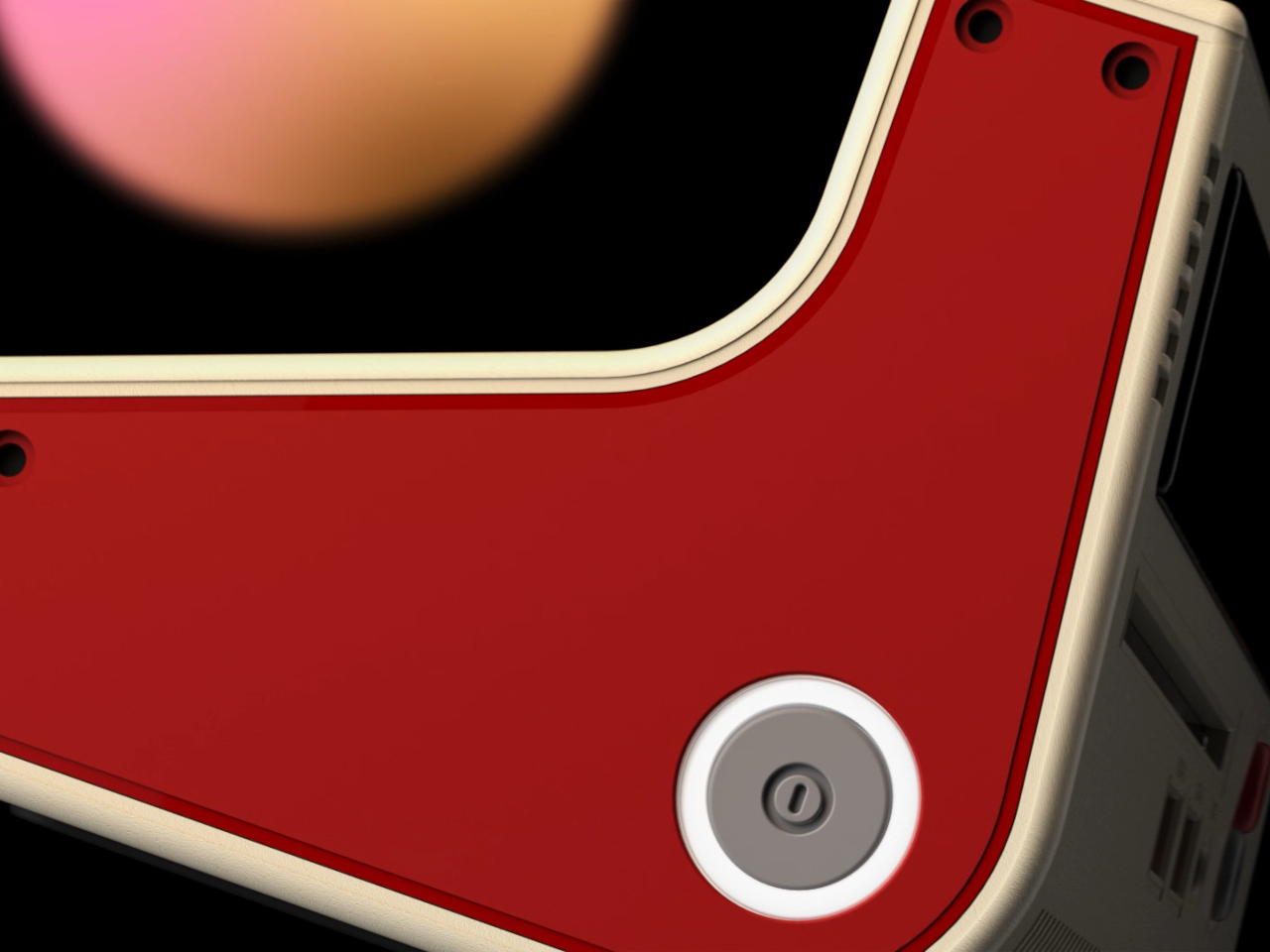
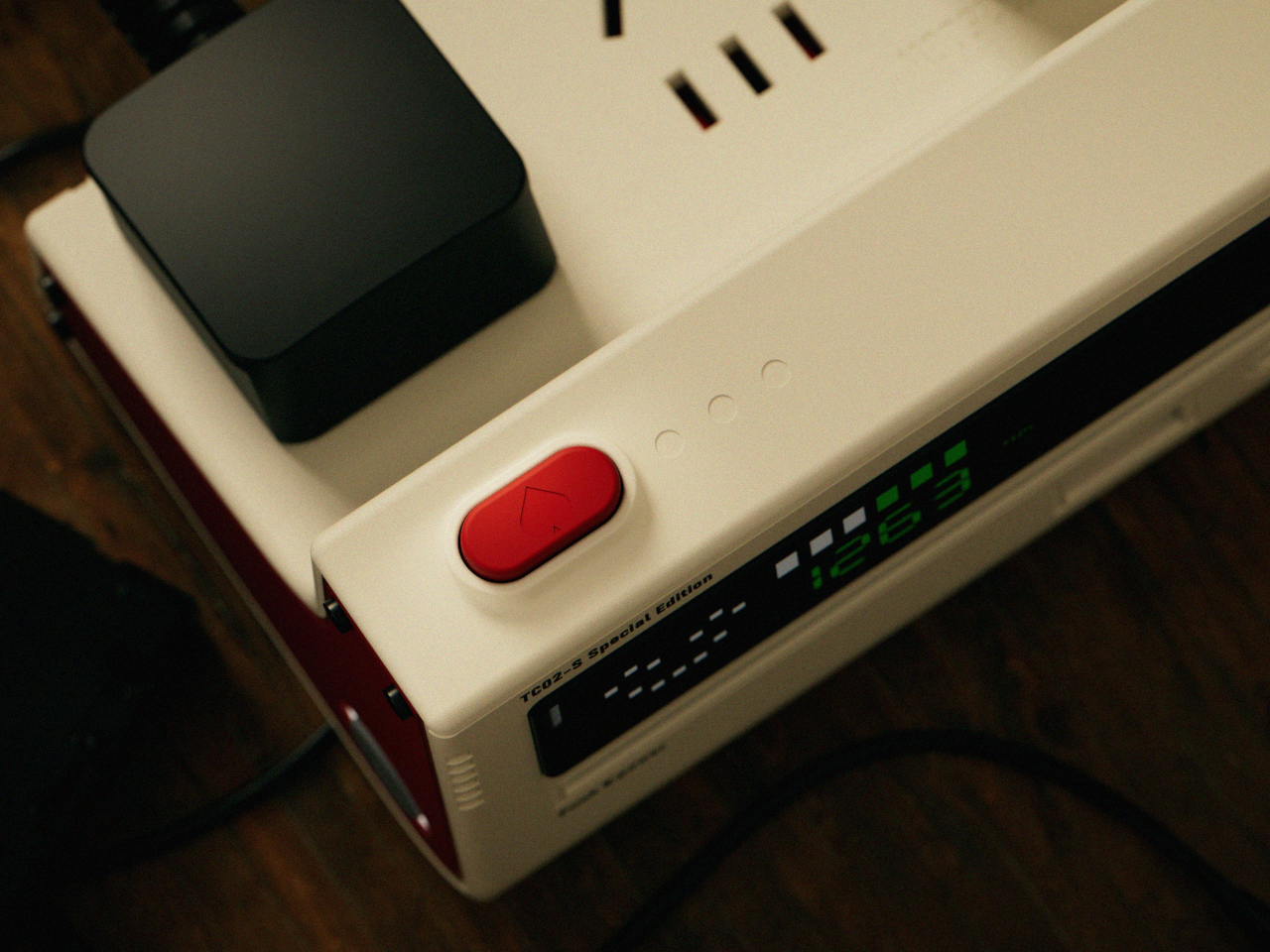
The body follows the Famicom’s rectangular shape with rounded edges and cream-colored plastic accented by deep red panels. Vertical ridges run along the sides like ventilation grilles from the original hardware. A large red power button sits on one side, positioned exactly where you’d expect a console’s main switch. The whole thing commits fully to looking like a game system from four decades ago instead of just borrowing surface details.

The front panel displays a pixel-style LED screen showing voltage, current draw, and operational status through green numbers and colored bar graphs pulled straight from early arcade interfaces. Small smiley face icons and retro graphics appear alongside the readings, making functional information feel playful. The screen provides genuinely useful data about power consumption while looking like something that should be showing your high score instead.

Multiple AC outlets cover the top and rear surfaces alongside two USB-A ports and one USB-C port for fast charging. The layout spaces everything out enough that bulky adapters don’t block neighboring outlets. The USB-C handles modern quick-charge protocols, while the AC sockets accept different plug types depending on your region. Everything you’d typically plug into a standard power strip works here, just with significantly more personality surrounding it.

Tactile buttons along the front feel satisfying to press like actual controller buttons instead of mushy switches that typical power strips use. The plastic housing looks and feels substantial rather than cheap. Internal construction visible in assembly diagrams shows thoughtful engineering with proper component spacing and secure mounting for all electrical elements. Surge protection and safety features likely come standard, though specific certifications aren’t detailed.

The socket works best on desks where the retro gaming aesthetic adds character to setups that would otherwise look like every other workspace filled with identical black rectangles. It organizes charging needs while referencing shared cultural memories. The Trozk Game Style Socket treats charging as an opportunity for design that carries emotional weight, making daily device management slightly more joyful for anyone who appreciates objects that tell stories.

The post This Power Strip Is Shaped Like an Original NES Console first appeared on Yanko Design.

Waymo’s driverless cars will start driving on freeways in three US cities

Waymo is bringing its driverless cars to freeways in three major US cities and the surrounding environs. These areas include San Francisco, Phoenix and Los Angeles.

The platform didn't say how many of these vehicles have been greenlit to take to the freeway, other than noting that "a growing number of public riders" will be given access. At the very least, families will be able to play a new road trip game in which they point out cars with weird spinning LiDAR units on the roof.

The Google-owned ridesharing company says that these freeway rides can be used for daily commutes, traveling to various airports or just joyriding from, say, downtown LA to Culver City. The San Francisco service area is particularly large, stretching across the entire peninsula. The newly-expanded service goes all the way down to San Jose, including the San Jose Mineta International Airport.

A service map.
Waymo

This is just the beginning of this freeway expansion, assuming everything goes well in these early phases. To that end, the platform says its vehicles have already logged "millions of miles" on freeways and that they are adept at "skillfully handling highway dynamics."

Waymo notes that it's planning something similar for Austin, Atlanta and other unannounced regions. It's also bringing its driverless cars to San Diego, Detroit and Las Vegas next year, but those won't be going on freeways just yet.

This article originally appeared on Engadget at https://www.engadget.com/transportation/waymos-driverless-cars-will-start-driving-on-freeways-in-three-us-cities-171654775.html?src=rss

One of our favorite Ninja air fryers is down to $130 for Black Friday

Black Friday might still be a few days away, but there’s no need to wait if you’re in the market for a new air fryer, as one of our longtime favorite models is currently $100 off. The Ninja DZ401 is $130 right now, which is a saving of 43 percent on its usual price.

And the DZ401 is the perfect air fryer for the holiday season, owing to its trademark dual baskets, which allow you to cook up two completely different foods simultaneously. It takes up a fair amount of space, but it’s worth it if you have a lot of hungry mouths to feed.

This 10-quart fryer includes a smart cook thermometer and six cooking modes, including air broil, roast and dehydrate alongside the default air fry mode. The spacious baskets are quick and easy to clean, and you’re safe to throw the plates into the dishwasher if they’re particularly messy after cooking up chicken wings or some brownies for dessert.

The Ninja DZ401 has had the title of best dual-zone air fryer in our buying guide for a long time for a reason. An air fryer like this isn’t for everyone, especially those with smaller kitchens, but for a Thanksgiving dinner you’ll struggle to find better.

A number of other Ninja devices are on sale for Black Friday right now. If you don't need quite as big of a machine, the Ninja Crispi glass air fryer/multicooker could be a better option. It's down to $160 right now.

This article originally appeared on Engadget at https://www.engadget.com/deals/one-of-our-favorite-ninja-air-fryers-is-down-to-130-for-black-friday-170959662.html?src=rss