What we listened to in 2025

If streaming services’ year-in-review campaigns have shown us anything, it’s that we’ve spent a staggering amount of time drowning out the hum of everyday life with music, podcasts and audio series. And with some incredible new releases this year, we were really eatin’ good. Here are some of the Engadget team’s favorite things we listened to in 2025.

Spiritbox - Tsunami Sea

I became aware of Spiritbox in late 2024 shortly before the band dropped its latest album, Tsunami Sea. At the time, I was in a deep Sleep Token phase, and I don’t remember how I stumbled upon Spiritbox, but I’m sure glad I did. Not knowing anything about the band, I initially thought it had two singers: one for clean vocals and another for the harsh, guttural screams. 

Well, I was wrong. Vocalist Courtney LaPlante handles it all, and she is a force of nature. After learning of a new band, I do what any self-respecting music nerd does: I looked up live videos of them on YouTube. The way LaPlante seamlessly transitions from airy, ambient singing to some of the best growls you’ll hear in metal music is effortless. And after seeing Spiritbox live in person earlier in December, I can attest to her ability to consistently nail both vocal styles for the entirety of an hour-long set. 

My infatuation with Spiritbox isn’t just with the vocalist though. Guitarist Mike Stringer, LaPlante’s husband, also has a lot of unique abilities to offer. Stringer’s use of noise and whammy effects in his riffs create a signature style, not to mention his mix of nu-metal, djent and metalcore sensibilities. He also has some of the thickest guitar tones I’ve ever heard live, and I was mesmerized for the full set. Stringer’s guitar work on Tsunami Sea is a prime example of a  unique musician at the height of his powers. 

Tsunami Sea takes you on a ride. The first two tracks are all-out ragers, and after a slight respite in “Perfect Soul” and “Keep Sweet,” the album’s best song comes fifth. I’ve heard LaPlante dedicate it to “all the people I love to fucking hate,” and it’s clearly written about her enemies. It’s also the perfect example of what this band is capable of. It’s three minutes of LaPlante’s screams interlaced with plenty of Stringer’s trademark guitar work. 

The rest of the album showcases the band’s ability to blend dynamics, with “No Loss, No Love” and “Ride The Wave” providing the highlights on the back half of the record. The album’s title track is a great vehicle for LaPlante’s clean vocals, serving as the introduction to the album’s second act. If you’ve been enamored with Sleep Token this year like I have, give Spiritbox a go — you won’t be sorry you did. — Billy Steele, Deputy Editor, Reviews

Bandsplain

I didn’t discover Bandsplain in 2025, but I definitely listened to it more than any other podcast in terms of total time spent. Sure, that’s because most episodes are over three hours long, but I digress. Host Yasi Salek does a deep dive on “cult bands and iconic artists” to… ahem, bandsplain why people love them. There’s a deep catalog of back episodes, so there’s sure to be an in-depth analysis of a band you’re familiar with. But even if you think you know an artist, I’m willing to bet Salek will divulge parts of the story you weren’t aware of. 

Jimmy Eat World’s Clarity is a top 5 all-timer for me, and Salek had plenty to offer about the narrative around that album I didn’t know. Her grunge series from 2024 was a history lesson I wish I’d had in middle school when I first discovered Soundgarden, Pearl Jam, Alice in Chains and the rest of the lot. An older episode about Nine Inch Nails served as the primer for me seeing the band live for the first time in September. And that’s the thing about the show: the back catalog holds up. If you’re waiting for the next installment to drop, there’s certainly something in the archives you’ll enjoy. 

No shade to Salek’s colleagues at The Ringer, but the best episodes of Bandsplain are when the guest is a musician. Thursday front man Geoff Rickly was excellent on that Nine Inch Nails episode, and Death Cab for Cutie singer Ben Gibbard had me on the edge of my seat when he was on to discuss The La’s — a band I’d never heard of before. I’d also highly recommend the episodes on Oasis and the more recent one on Alanis Morissette. But, really, you can’t go wrong starting from anywhere on the episode list. — B.S.

Lucy Dacus - Forever is a Feeling 

I remember being a teenager and hearing from an adult that they did not religiously seek out, research, evaluate and introduce new bands and songs into their lives as if all existence would cease without the life-sustaining energy of new music. I was confused, concerned and damn sure that wouldn’t happen to me. 

You know where this story goes: Job. Kid. House. Spouse. Pets that will die if I don’t feed, walk, play with and/or medicate them. I allow the algorithm to feed me new songs but rarely does something stick, so I end up listening to tracks I bonded with in my teens and twenties. 

This year, Blossom & Bones, a three-day music festival in Ghost Ranch, New Mexico, managed to push through the churn and lodge new music into my brain. Along with my kid and some friends, I camped among some of the most beautiful landscapes imaginable and ambled over to the stage each evening for performances by Santigold, Ani DiFranco and about a dozen more. 

Lucy Dacus, one third of the indie group Boygenius, did a one-hour set with plenty of songs from her latest album Forever is a Feeling. Hearing the songs for the first time, I felt like I’d been listening to them for years. Lilting harmonies and layered strings create a lovely backdrop for Dacus’s velvet voice, but there’s a sharpness to her observations about relationships, rejection and sex. I’ve been looping the album ever since. — Amy Skorheim, Senior Reporter, Buying Advice

Blanco White - “So Certain” (single)

Early on the last concert of the day at that same festival, Blanco White took the stage. People were aimlessly milling about and the sun hadn’t yet set. Kids were playing on the lawn and the smell from the food trucks was intense, but I was enrapt by the four people on stage. The sad violin and strummy guitars floated with the hand-beat drum out into the red hills. The music sounded like I felt: rooted and wrapped in the harsh beauty of the desert and I was really glad to take that home with me. — A.S.

Martian Revolution 

If you're as big a nerd as I am, you might know that Leo Tolstoy didn't consider War and Peace to be a novel. The story is what most people read for, but in the author's mind, all the drama was a parable to illustrate his grand theory of history.

Over the last year, history podcaster Mike Duncan has accomplished a similar feat using a medium Tolstoy never imagined. Duncan's Revolutions podcast has covered ten different revolutionary upheavals across history, starting with the English Civil War and ending with the Russian Revolution. After wrapping up the Bolsheviks, Duncan took a few episodes to suggest a grand theory of how revolutions unfold. For a while, it seemed like that was all we'd get. Then, in the middle of 2024, he started posting original sci-fi — without any indication that this tale, which followed future Martians revolting against their corporate overlords on Earth, was in any way different from the previous ten seasons.

Part of what makes the Martian Revolution so excellent is Duncan's deadpan delivery. He never once breaks character. He rattles off lists of fictional sources, apologizes for inaccuracies in prior episodes, and introduces made-up historical figures with the same gravity he once used to mention George Washington or Simon Bolivar. If you're a fan of Revolutions, you'll have a blast recognizing character archetypes. (Mabel Dore is the Liberal Noble! Timothy Werner is the Man of Blood!)

But the podcast is great even if you've never listened to an episode of Revolutions. It has an excellent grasp of character and a sense of inevitable tragedy, but with moments of joy leavened throughout. I certainly hope we don't wind up in the megacorp-ruled future of the podcast, but if we do, it'll be a great consolation if it eventually turns out the way Duncan imagines. — Sam Chapman, Senior Writer

Ron Gallo - Checkmate 

My favorite artists are ones that surprise me, and Ron Gallo is a master of reinvention. He's dabbled in absurdist punk, psychedelia, garage rock, Beatles-tinged pop and, now, stripped-down acoustic music. This is not a genre I am typically a fan of, Elliott Smith withstanding, but Checkmate is something special. His lyrical prowess is off the charts here, trading his usual wordplay for simple and emotionally-gutting truisms about life, love and, well, the end of the world. 

Of course, the lyrics wouldn't work if the songs weren't good. The songs are very good. The title track is just about the perfect love song, with a primary hook that gets lost in your head for weeks. Other tracks offer hints of Mac DeMarco, Dan Fogelberg, Kevin Morby and just about everyone else who has crafted great songs on an acoustic guitar. It's fitting that Gallo has found a home on the label Kill Rock Stars, which released so much of Elliott Smith's work back in the day. As an aside, Gallo regularly posts songs about current events on TikTok and other social media platforms, which are worth checking out if you like stuff like Jesse Welles. — Lawrence Bonk, Contributing Reporter

De La Soul - Cabin in the Sky

There have been hip-hop albums that explored the finality and tragedy of death, but not many that truly tackled spirituality and long-term grief. De La Soul has done just that, following the passing of founding member Trugoy the Dove. This album serves as a final testament of sorts for Trugoy, as he's heavily featured throughout. In that way, Cabin in the Sky is reminiscent of A Tribe Called Quest's 2016 masterpiece We Got It from Here... Thank You 4 Your Service, which followed the death of rapper Phife Dawg. 

Like Tribe's modern classic, Cabin in the Sky is filled with absolute bangers. It features standout beats by DJ Premier, Pete Rock, Trugoy, Jake One and others. The rhymes are great and all three primary De La members are given time to shine. Guest rappers like Common and Nas got the memo, delivering some of their most memorable verses in years. Heck, even Giancarlo Esposito is on board as the narrator. Some reviewers have dinged this album for being too long but, come on, that's like complaining there's too much pizza. It's De La Soul. — L.B.

FKA twigs - Eusexua

This was a really good year for new music IMO, so much that I've been finding it pretty difficult to think back and settle on my favorite releases. But, FKA twigs' Eusexua undeniably did some heavy lifting for me, pretty much carrying me through the first six or so months of the year without much competition, and I've circled right back to it as the year closes. It's an album that somehow seems to meet every vibe. It'll have you in club mode and ready for a night of sweaty, filthy dancing in under three minutes, or feeling bright and upbeat like a midday walk on the first day of spring — yet it still hits when you're having a good ol' car cry. 

"Girl Feels Good" is for sure one of my most-played songs of the year, followed closely by "Eusexua," "Perfect Stranger," "Keep It, Hold It" and "Striptease." If ever I can't decide what I'm in the mood to listen to, I throw this album on and it doesn't disappoint. — Cheyenne MacDonald, Weekend Editor

Faetooth - Labyrinthine 

Faetooth's sophomore album, Labyrinthine, is face-melting, melancholic perfection. The band describes its sound as "fairy doom," but don't let that first word fool you into thinking it isn't heavy as hell. Labyrinthine goes unbelievably hard, and will have you feeling like you're eternally wandering a cursed bog, surrounded by the wailing of the unfortunate souls who came before you. Don't believe me? Put on "White Noise." This is really an album that should be enjoyed in its entirety, though, and I can't individually name half the songs on it because I tend to just keep the whole thing playing on rotation. — C.M. 

Orville Peck - Appaloosa 

This EP is truly a testament to my ability to run my obsessions into the ground, because it only came out in mid-November and somehow landed on my most-listened wrapup for the end of the year… which was released some two weeks later. It's front-loaded with its strongest songs, a powerful and kind of haunting trio that just flows beautifully from one into the other: "Dreaded Sundown," to "Drift Away" into "Atchafalaya" (ft. Noah Cyrus). As a fan of musicals, I also loved the inclusion of "Maybe This Time," a cover from Cabaret, especially since I was pretty bummed to have missed Peck's stint as the Emcee in Cabaret on Broadway this summer. — C.M.

Case 63 

I got into an audio series kick this year, and dove into shows like Unicorn Girl, Stalked! and more. But none of the dramatized fiction I listened to in 2025 had me hooked like Case 63. Setting aside that it’s voice-acted by A-listers Julianne Moore and Oscar Isaac, which is a phenomenal pairing that won me over on star power alone. The best thing about Case 63 is its storytelling. 

Moore stars as a psychologist, meeting Isaac for the first time in a prison interview. Isaac has been claiming to be a traveler of sorts, and through recorded sessions and voice notes, we hear his side of the story, as well as her reactions and ultimate involvement in the adventures. Every step of the way, particularly in the beginning, there is clear explanation as to why the exchange is being recorded. It isn’t necessary, but it’s helpful in my buying into the realism of the story. 

It isn’t just the method and technical aspects of the storytelling, of course. Narratively, Case 63 is a gripping ride, and thanks to its short episodes, it’s easy to binge really quickly. There is certainly a generous use of cliffhangers to help speed things along, but I found myself eager to devour the entire series in one commute. The story continued to linger in my mind days after I finished both existing seasons, and I’m hoping the new one drops soon. If you’re looking for a quick and easy sci-fi audio series, do not miss Case 63. — Cherlynn Low, Managing Editor

Secure Love 

I spent a lot of time this year trying to learn more about my attachment style and how it shows up in all the relationships in my life. Between Stephanie Rigg’s On Attachment podcast, the TV show Couples Therapy and all the books on the topic of attachment styles, trauma and more, I’ve consumed them all. And while they’ve all been helpful in different ways, one podcast stuck out to me this year. It’s hosted by Julie Menanno, MA, LMFT, LCPC, creator of the @TheSecureRelationship account on Instagram and the author of Secure Love: Create a relationship that lasts a lifetime

You can probably tell from that introduction what Menanno’s work is all about. Relationships, from the lens of attachment styles. The Secure Love Podcast doesn’t just re-deliver the same information we’ve seen published across various media and platforms, though. Each season of the podcast (it’s partway through the second as of this writing) sees Menanno work with one couple through their negative cycles, using somatic practices to help each partner understand their emotions, triggers and reactions. Because we’re listening to real people talk about real-life happenings, it’s not only easy to relate, but listeners often see themselves in these scenarios. At the start of each episode, too, Menanno reads out or plays notes from the audience, and you can see how fellow listeners have reacted. 

This season, for example, my friend and some other listeners seemed to really dislike Brian, the anxious male partner in this season’s pair. While I’ve certainly found some of Brian’s ways of speaking borderline offensive, I had a lot more sympathy for him as I started seeing his traits in my loved ones. I also started to identify with his partner Bethany, who Menanno typed as having an avoidant attachment style. 

As I listened to Bethany and Brian describe the reasons they got into fights and explain where they were coming from, suddenly it felt like the world made sense. I saw similar patterns and reasonings in my own relationship, as well as those of my parents, relatives and friends. 

It is slightly voyeuristic to listen to something so intimate, of course, but Menanno makes it all educational rather than just entertaining. She gently interrupts parts of each episode to tell the audience why she asks certain questions or what she’s attempting to achieve by asking Brian or Bethany to sit with their difficult feelings. 

I found her method familiar, as I recently started working with a somatic coach whose approach is similar to Menanno’s, which is rooted in emotion-focused therapy (EFT). Staying with uncomfortable feelings makes me want to jump out of my skin, but being able to endure them, question why they arise and then understand where they come from is crucial to helping uncover the thinking that causes them. Sometimes they’re the result of flawed logic, catastrophic thinking or a simple lack of context, but often they’re very reasonable reactions. 

If you’re looking to understand yourself and your emotions a bit better, or just want to get an idea of what EFT or couples therapy sounds like, I can’t recommend The Secure Love Podcast highly enough. — C.L.

This article originally appeared on Engadget at https://www.engadget.com/entertainment/music/what-we-listened-to-in-2025-201308584.html?src=rss

This 2025 Award-Winner Solved the One Thing Thermal Pots Get Wrong

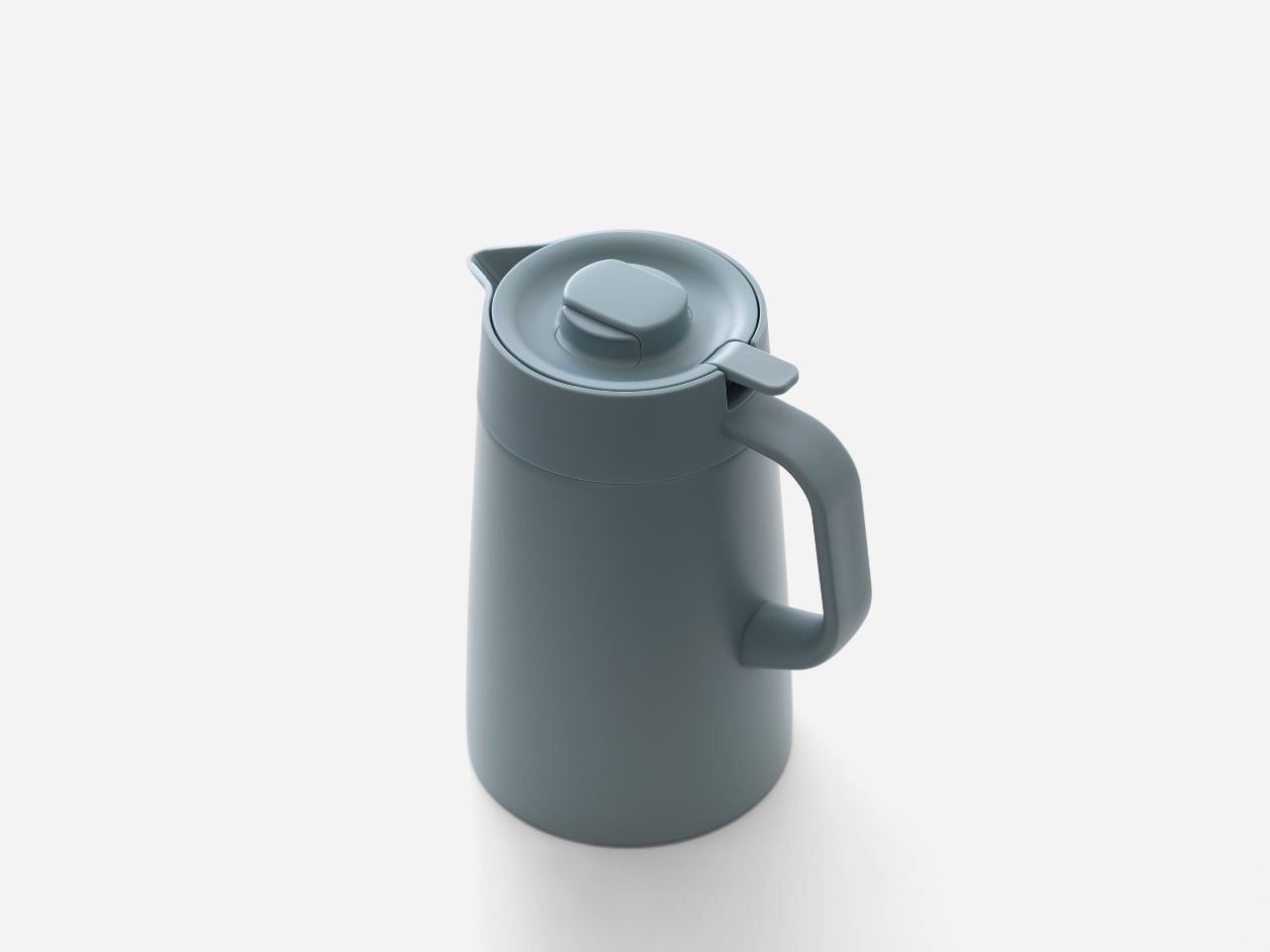
There’s something deeply satisfying about a product that just works. Not in a flashy, look-at-me kind of way, but in that quiet, thoughtful manner where every detail clicks into place. That’s exactly what Doogdesign Inc. has achieved with their Vacuum Insulated Pot PWR, a redesign for Tiger Corporation that recently earned a 2025 Good Design Award.

At first glance, it might seem like just another thermal pot. But here’s where things get interesting. This isn’t a fresh concept pulled from thin air but rather a thoughtful evolution of Tiger’s previous PWO model. The designers at Doogdesign, an Osaka-based studio founded by Kazuya Koike, took on the challenge of addressing real-world frustrations that users had been living with for years.

Designer: Doogdesign Inc

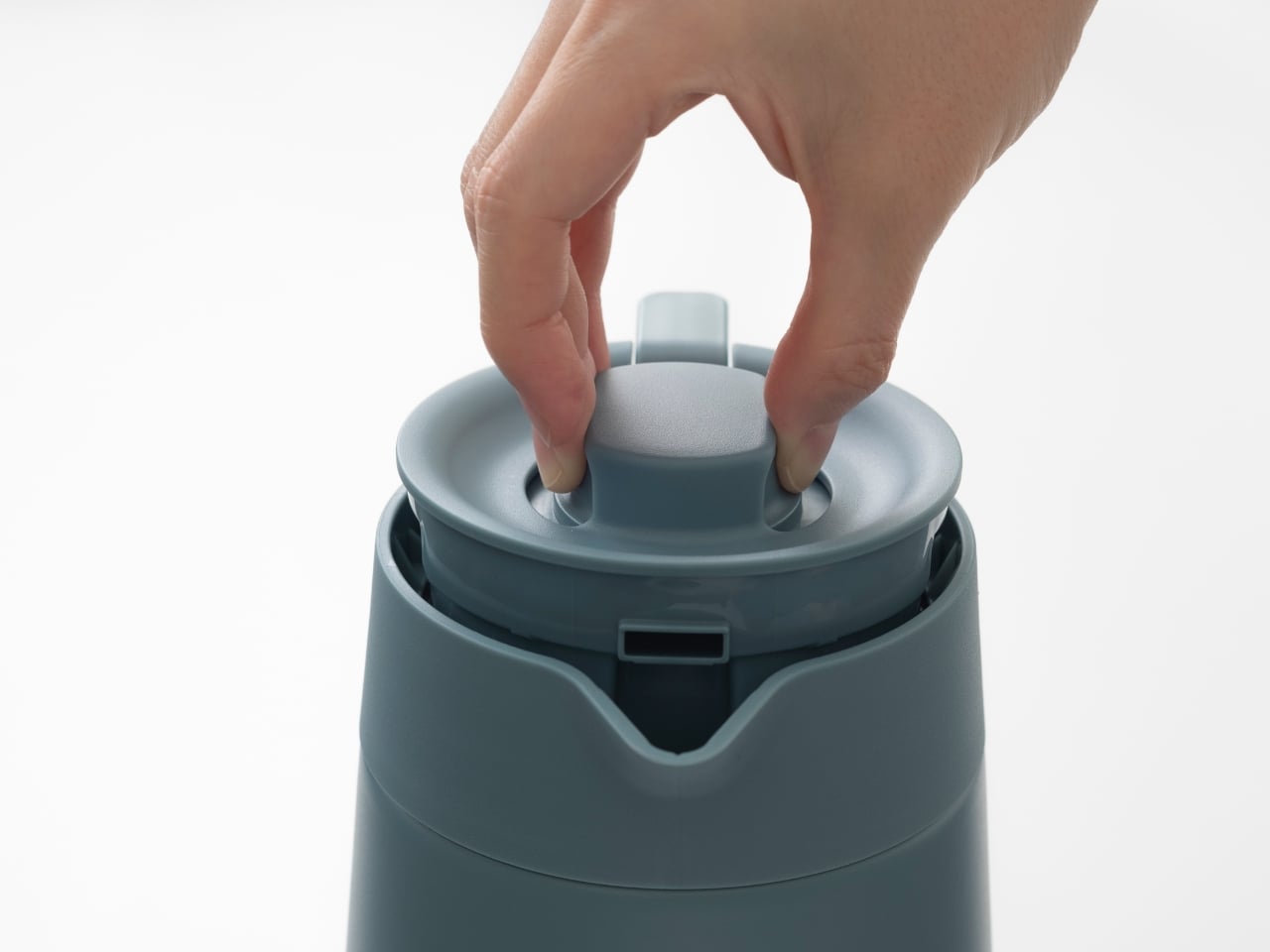
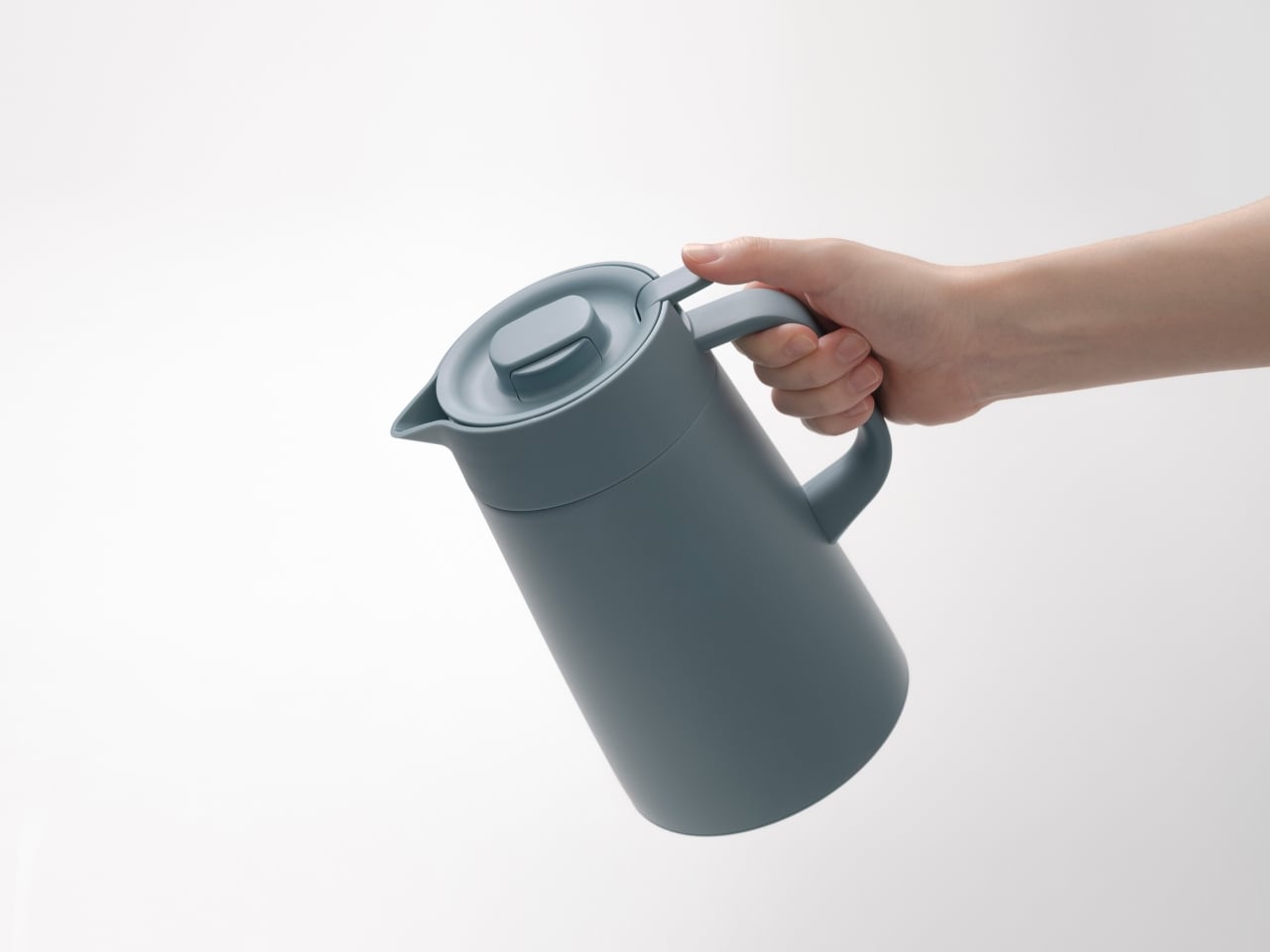
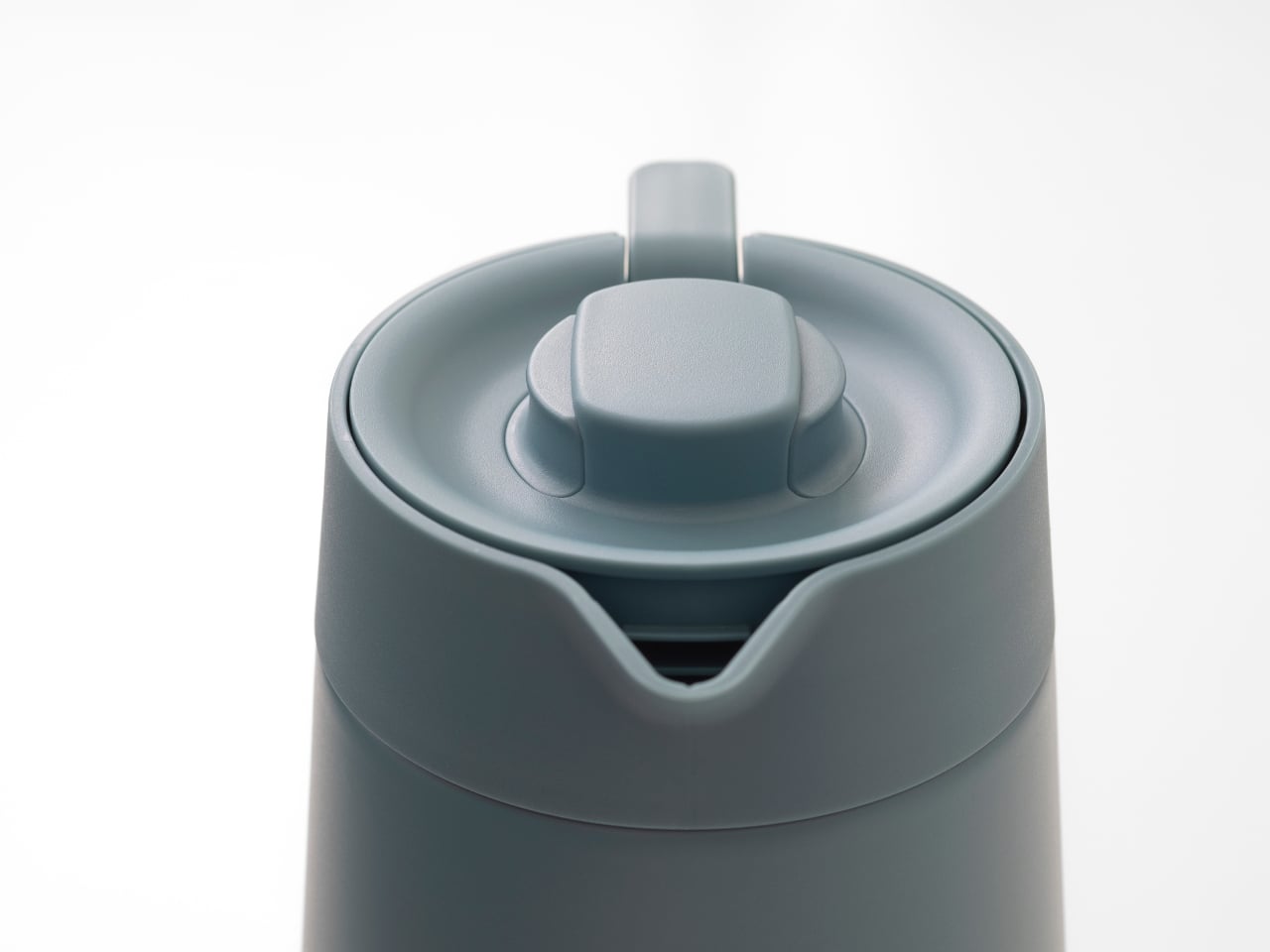
Think about the last time you struggled with a stubborn lid or fumbled with an awkward lever while trying to pour your second cup of tea. Those little moments of friction add up. The PWR tackles exactly these pain points, transforming daily annoyances into seamless interactions. Through extensive prototyping and adjustments, the team refined the lever and lid mechanism until attachment and detachment could happen with just a light touch. It’s the kind of improvement that sounds simple until you realize how much testing and iteration goes into making something feel effortless.

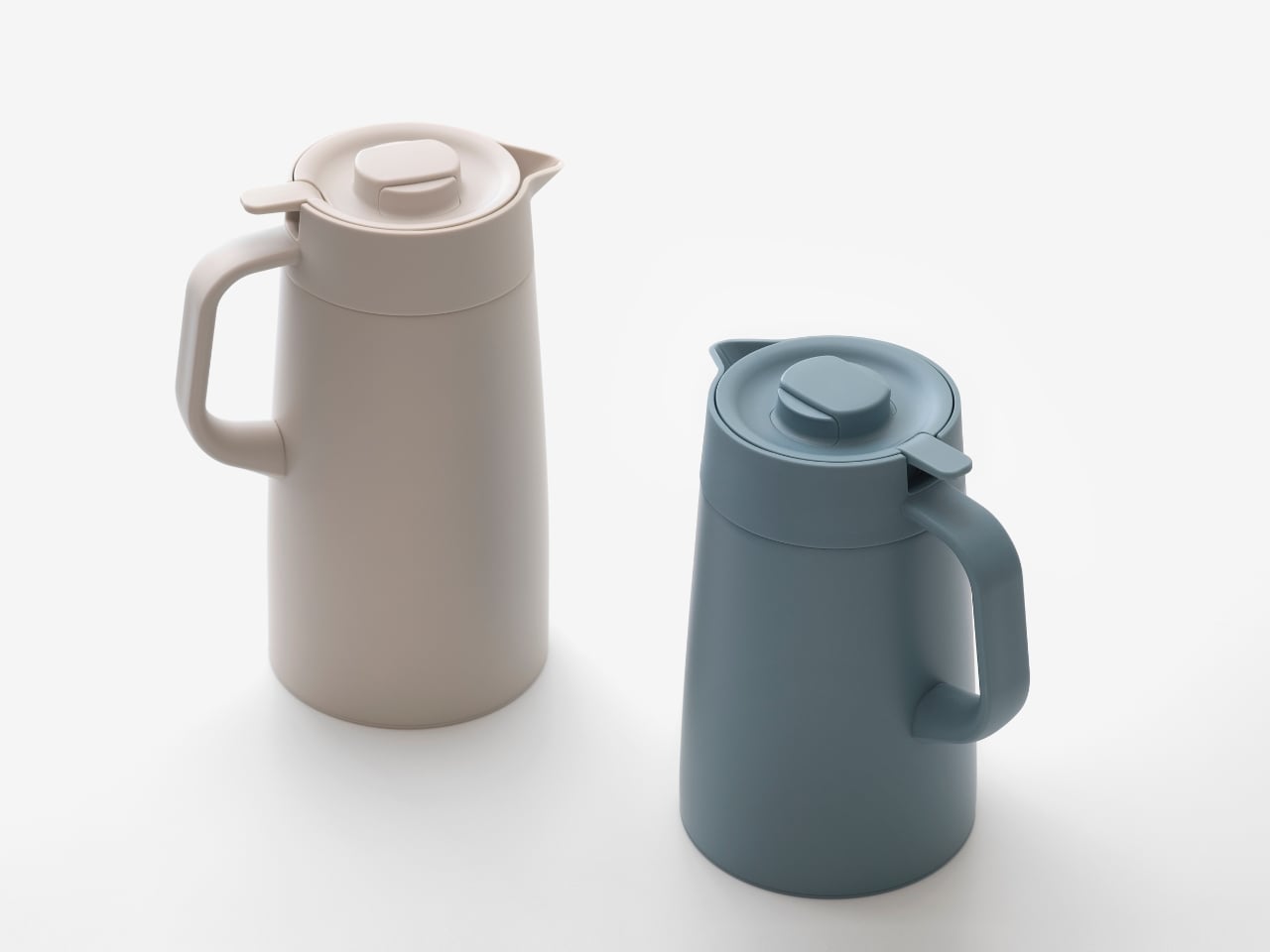
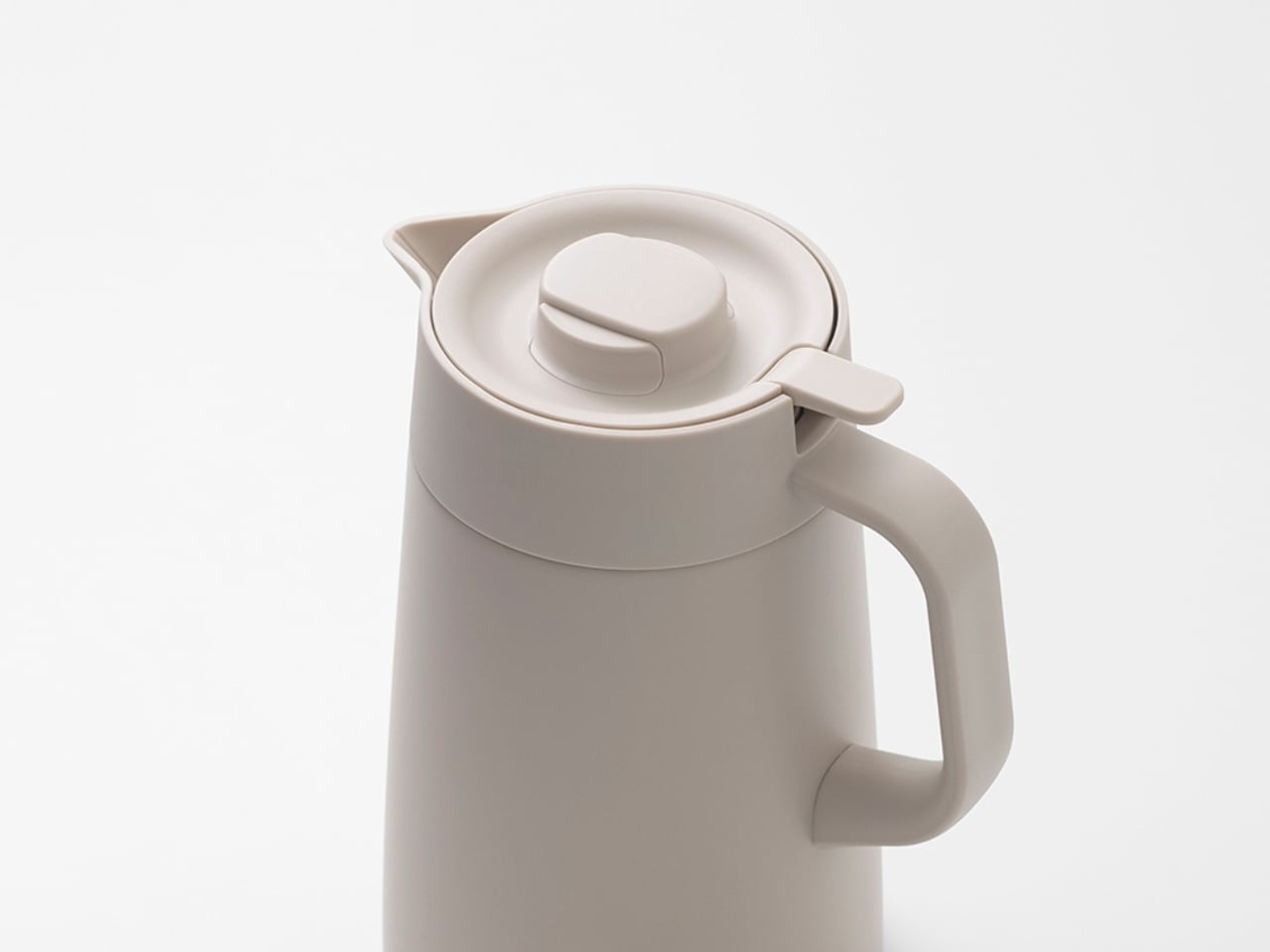
But functionality alone doesn’t make great design. What sets this pot apart is how it balances practical usability with visual grace. The lid features a smooth, curved form that plays beautifully with light and shadow, evoking the quiet presence of fine tableware. There’s an understated elegance here that doesn’t scream for attention but somehow makes your kitchen counter look a little more put-together.

The design philosophy becomes clear when you examine the details. This is about more than just keeping beverages hot (though the vacuum insulation handles that job brilliantly). It’s about creating an object that belongs on your everyday table, something you’re happy to see sitting out rather than hiding away in a cupboard. The stainless steel construction speaks to durability and longevity, while the refined aesthetic ensures it won’t clash with your interior choices, whether you lean minimalist or eclectic.

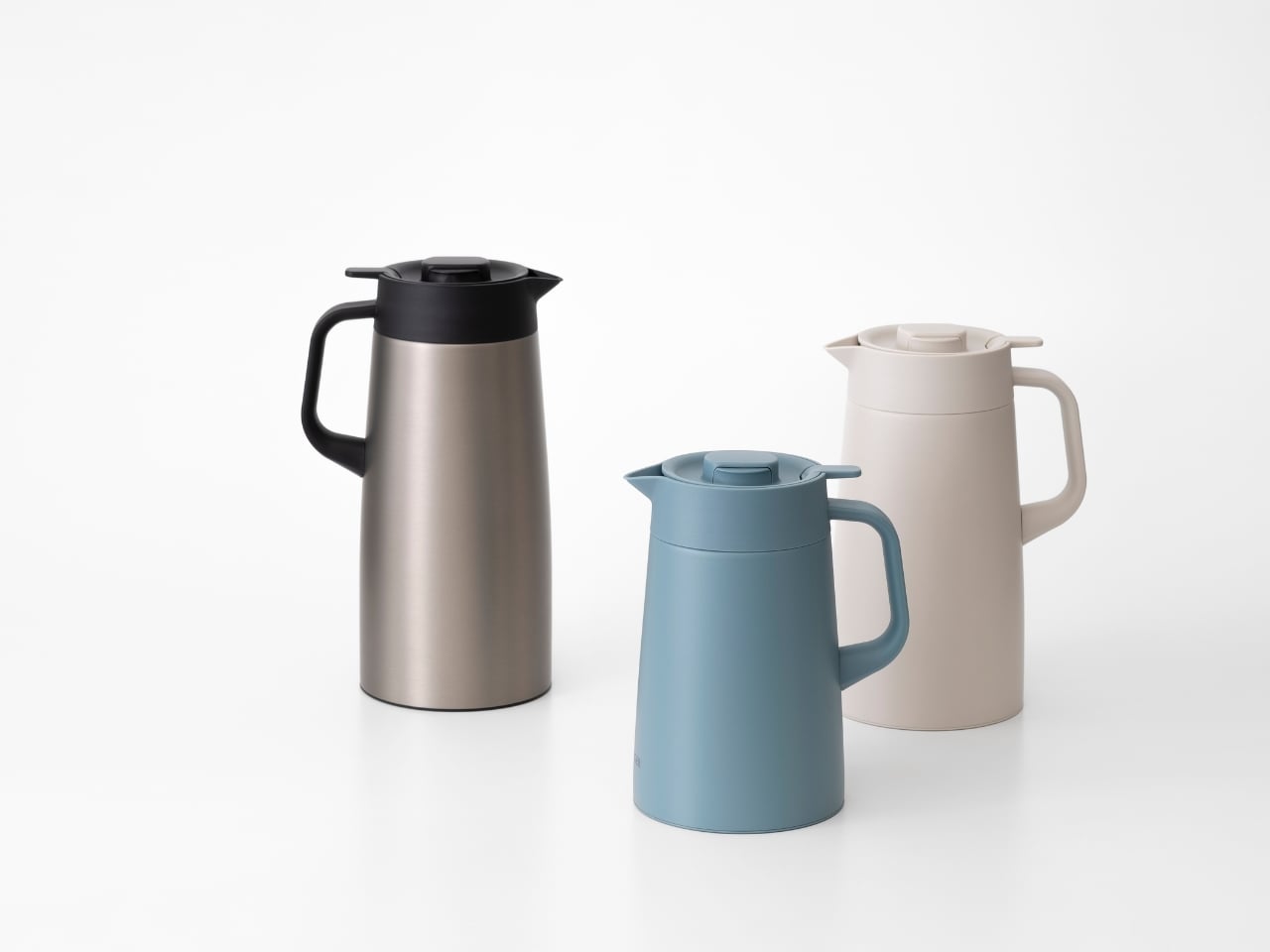
One of the smartest moves? Offering three size options at 1.2L, 1.6L, and 2.0L. This versatility means whether you’re brewing tea for yourself on a quiet afternoon or hosting a small gathering, there’s a PWR that fits your needs without forcing you to compromise. It’s the kind of practical thinking that shows the designers actually considered how people live, not just how products photograph.

The recognition from the Good Design Award 2025 isn’t just industry back-patting. These accolades matter because they signal that experts in the field recognize when someone has genuinely moved the needle on product design. In a market flooded with thermal containers that prioritize either pure function or pure aesthetics, finding one that nails both deserves acknowledgment.

What makes this project particularly fascinating from a design perspective is how it demonstrates the value of iteration. Redesigning an existing product requires a different kind of creativity than starting from scratch. You’re working within established constraints, user expectations, and manufacturing realities. Yet Doogdesign managed to identify the friction points and address them without losing what made the original concept valuable in the first place.

If you’re someone who appreciates when form follows function without sacrificing beauty, or if you’ve ever caught yourself thinking “there has to be a better way to do this” while using everyday objects, the Vacuum Insulated Pot PWR is a perfect example of what happens when designers listen. It’s not trying to reinvent hot beverage storage. It’s just making it notably, measurably better, which might be the most refreshing approach of all.

The post This 2025 Award-Winner Solved the One Thing Thermal Pots Get Wrong first appeared on Yanko Design.

You may soon be able to change your Gmail address

A Google support page in Hindi says the ability to change your Gmail address is on the way. The feature would allow you to replace your current @gmail.com address with another. Your old address would remain active as an alias on the account, and all your data would stick around, unaffected.

The support page (translated) says that "the ability to change your Google Account email address is gradually rolling out to all users." The change was first spotted on a Google Pixel forum on Telegram and was first reported in the press by 9to5Google.

Google hasn't made a formal announcement about the change. The English version of the support page still says you usually can't change your @gmail.com address. Up to this point, Google has only allowed address changes for non-gmail.com addresses.

Engadget reached out to Google for confirmation. We'll update this story if we hear back.

When the feature (presumably) rolls out broadly, you'll change it through your account settings. Sign in to your Google account, then go to Manage your Google account > Personal info > Google Account email. If you don't see the option to change it, then you'll have to wait.

This article originally appeared on Engadget at https://www.engadget.com/computing/you-may-soon-be-able-to-change-your-gmail-address-165633905.html?src=rss

LG announces line of premium gaming monitors that offer 5K visuals

LG has revealed a new lineup of gaming monitors just ahead of CES. The UltraGear evo displays offer 5K visuals. Many incorporate on-device AI upscaling, taking some of the burden away from the GPU. 

LG says the tech will let consumers skip out on some card upgrades. This could end up being extremely beneficial because the AI boom has been impacting GPU prices.

A monitor.
LG

There are three displays in the lineup so far, with more to come down the line. There's a 39-inch OLED (39GX950B) that includes the aforementioned AI upscaling to 5K, but also algorithms for scene optimization and sound. The company says this will "refine images and audio performance for a more immersive audiovisual experience."

This monitor can easily switch from the standard resolution with a refresh rate of 165Hz to a much zippier WFHD resolution with a refresh rate of 330Hz. This is supported by a 0.03ms response time. It's curved with a 21:9 aspect ratio.

A display.
LG

There's also a 27-inch MiniLED (27GM950B) in the lineup. This display has been "designed to dramatically improve blooming control", which is done by minimizing halo effects and stuffing in 2,304 local dimming zones. LG promises it "preserves fine details across bright and dark scenes alike."

This one features AI algorithms for upscaling to 5K, scene optimization and sound. It can also switch between 165Hz at 5K and 330Hz at QHD, with a 1ms response time. The screen boasts a peak brightness of 1,250 nits.

A display.
LG

Finally, there's the beastly 52-inch (52G930B) large-format gaming display. You didn't read that wrong. This is a 52-inch gaming monitor. This 5K display offers a speedy 240Hz refresh rate. The 1000R curvature wraps around the peripheral, which should be great for flying sims and stuff like that.

LG hasn't released any information as to when we'll be able to get our mitts on these displays, or how much they will cost. With all the tech on offer, it's likely they'll cost a pretty penny.

This article originally appeared on Engadget at https://www.engadget.com/computing/accessories/lg-announces-line-of-premium-gaming-monitors-that-offer-5k-visuals-165224945.html?src=rss

Galaxy Z Trifold Durability Test Reveals 3.9mm Trade-Offs

Seven years of Galaxy Z Fold and Flip experiments led to Samsung’s wildest form factor yet, a phone that folds twice into a 10‑inch tablet. Before anyone can trust a device like that, it has to survive more than a marketing reel. JerryRigEverything’s durability test became the unofficial reality check for the Galaxy Z Trifold, showing how far Samsung pushed the engineering and where those limits start to bite back.

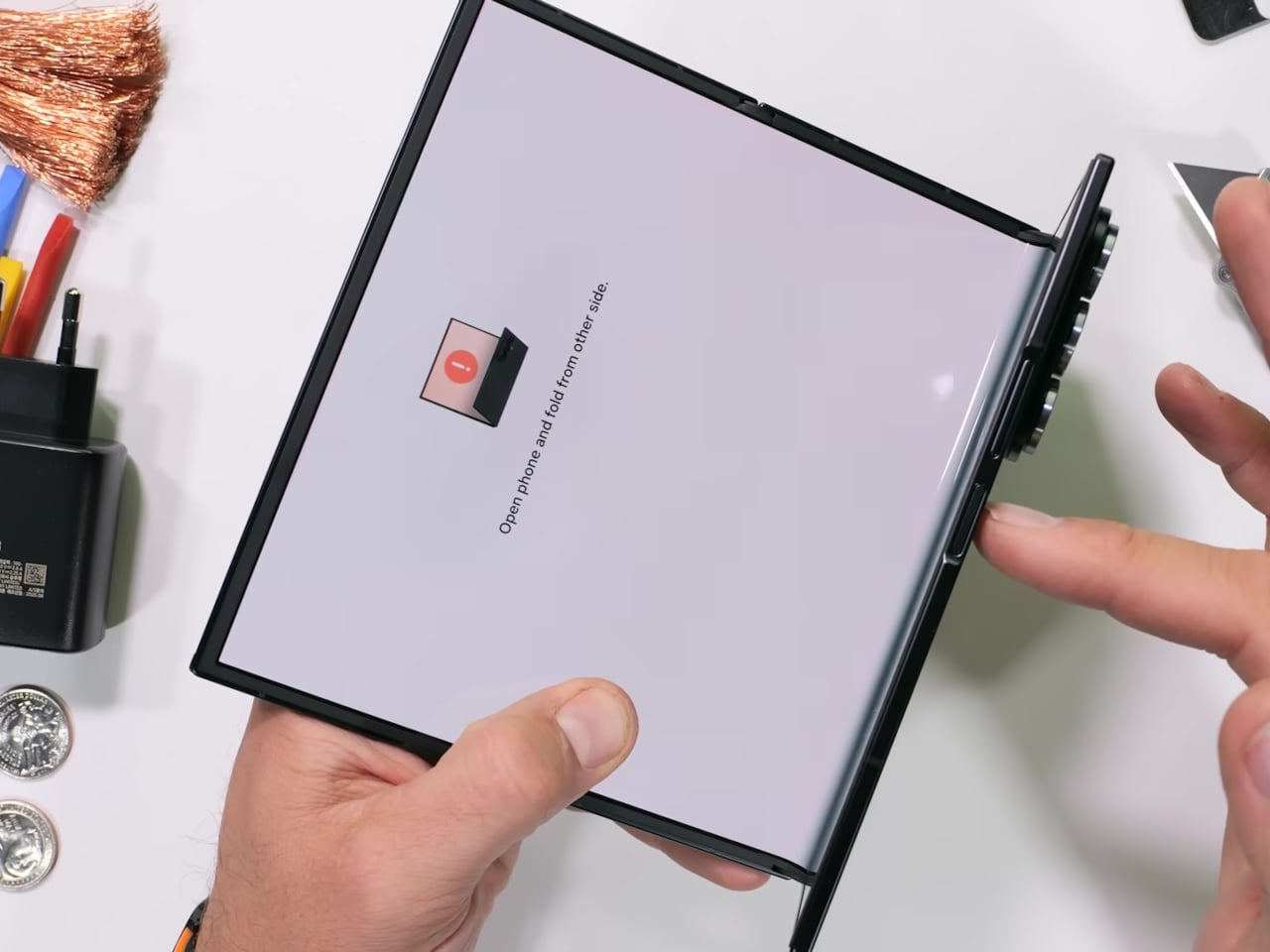
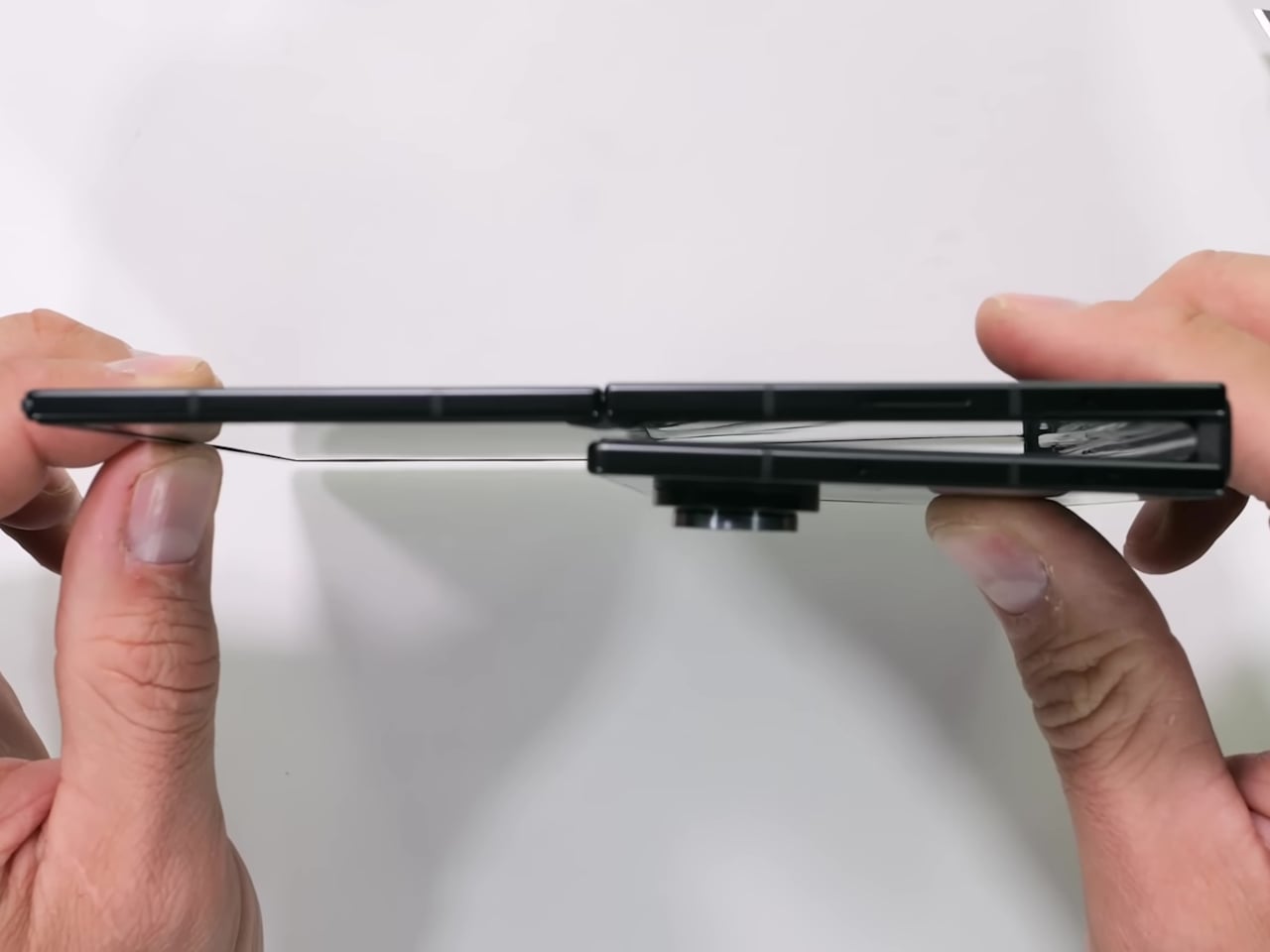
Zack Nelson’s standard protocol is scratch, burn, dust, and bend, and the Galaxy Z Trifold greets you with a wall of warnings about not peeling films and folding in a specific order. If you close the wrong flap first, the phone vibrates and flashes red, a sign that the folding choreography is tightly constrained, even if it does not break immediately. The device is smart enough to know when you are stressing it incorrectly.

Designer: Samsung (via Zack Nelson/JerryRigEverything)

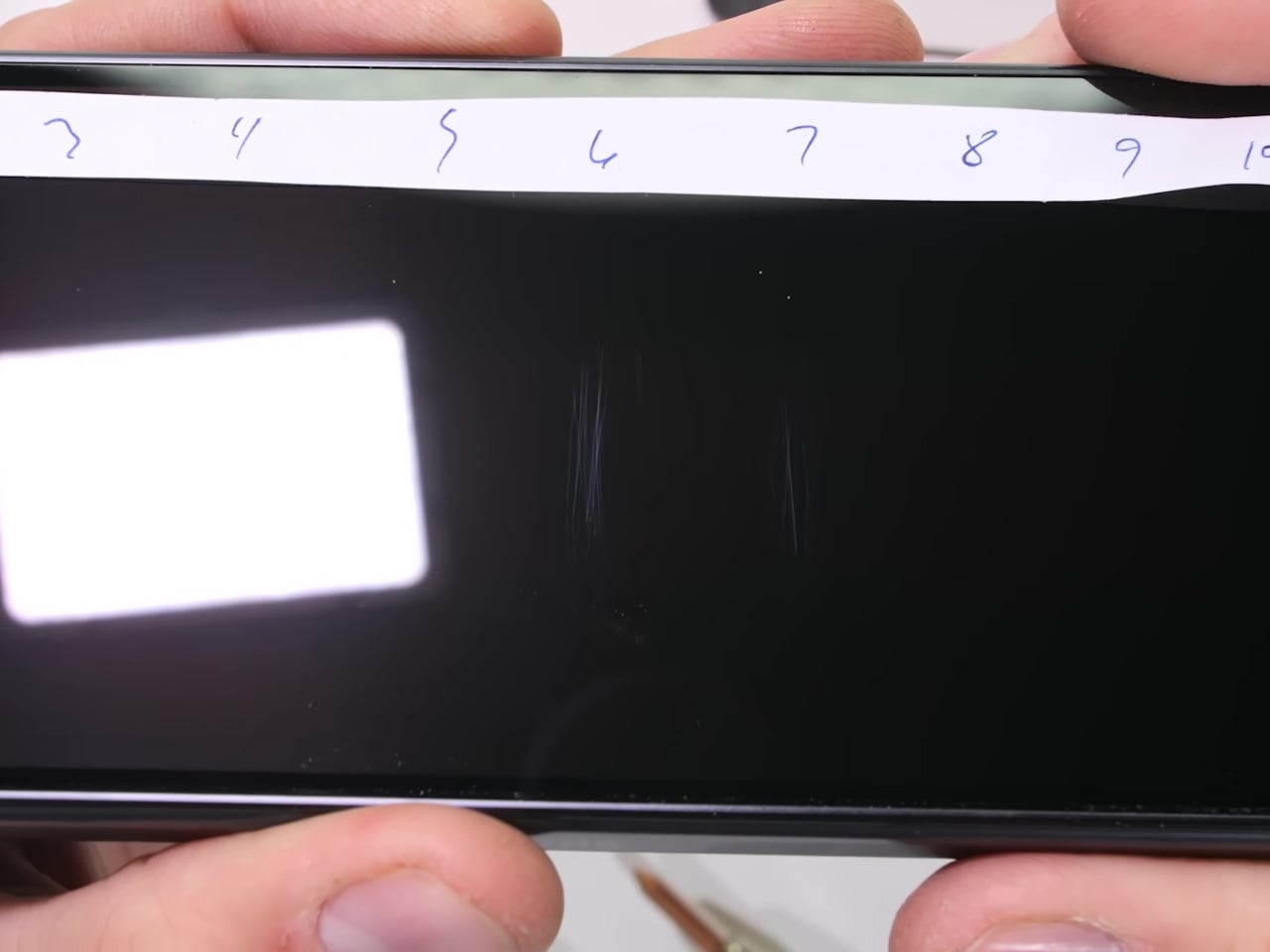
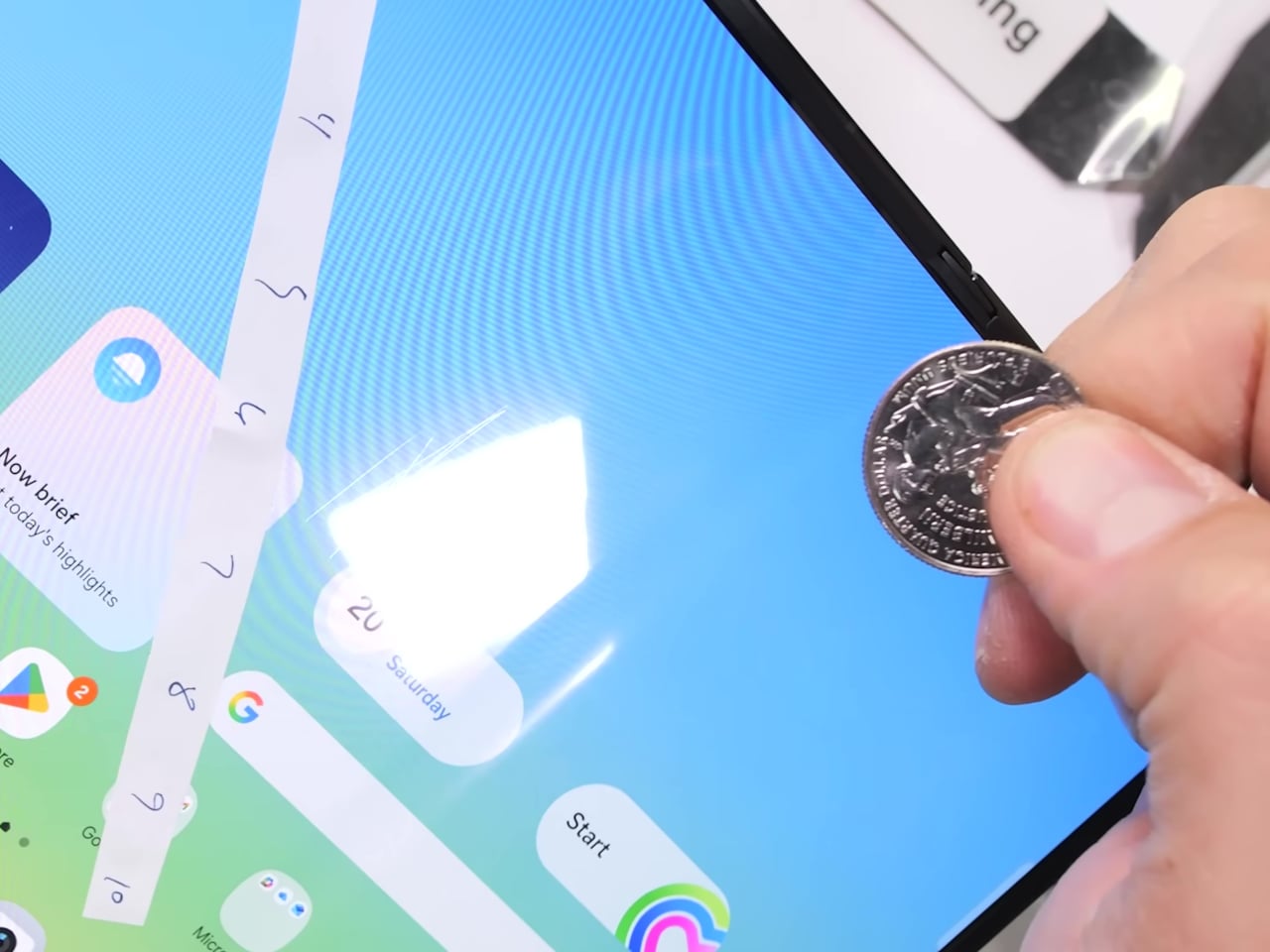
The outer cover screen behaves like other flagships, scratching at Mohs level 6 with deeper grooves at 7, while the inner flexible display still marks at level 2 with deeper damage at 3. The burn test shows the outer OLED lasting around 17 seconds under flame and the inner panel about 10, reinforcing that ultra‑thin glass and plastic stacks remain fragile, even in this latest generation, which is less a Samsung problem and more a physics problem.

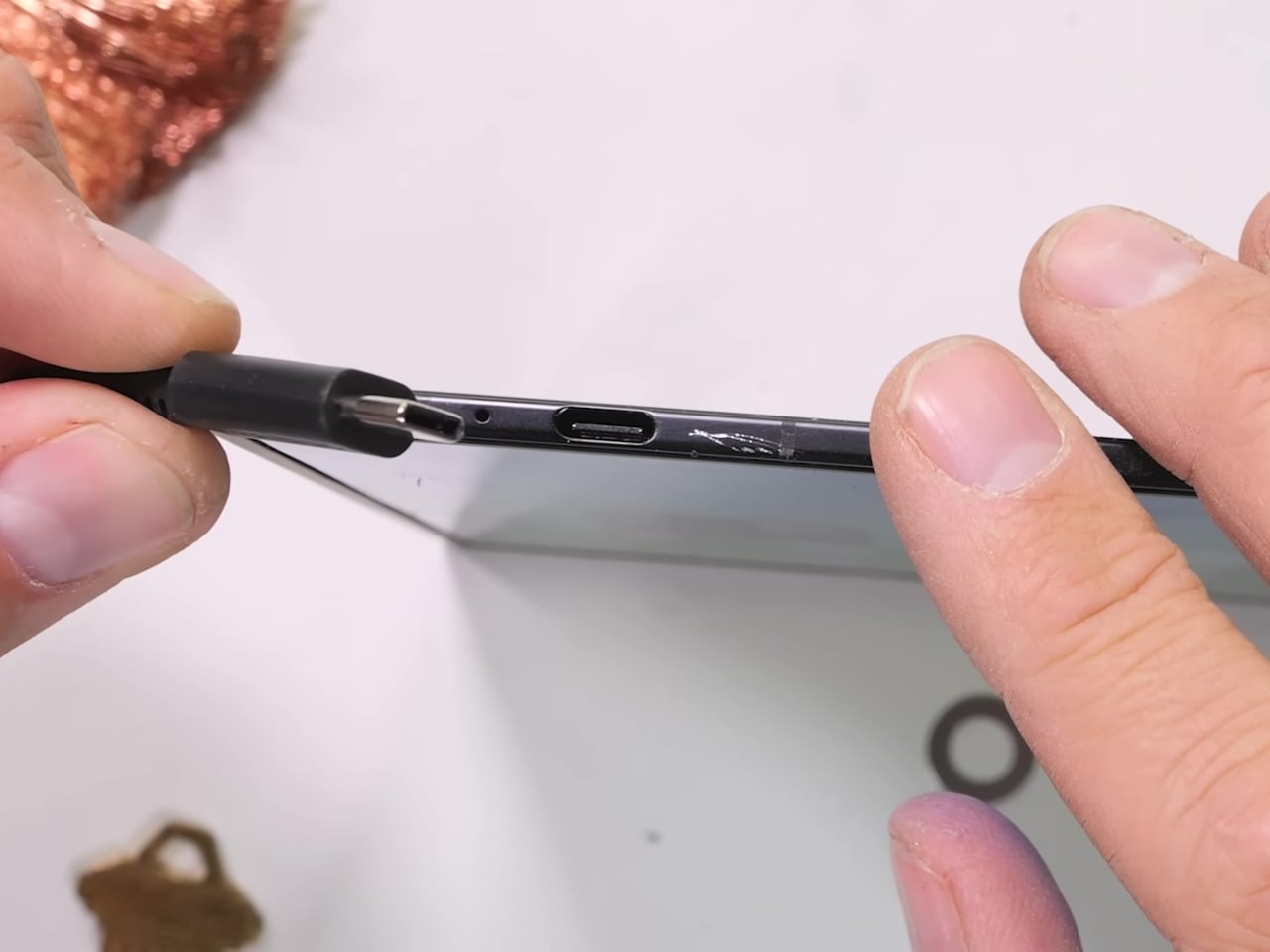
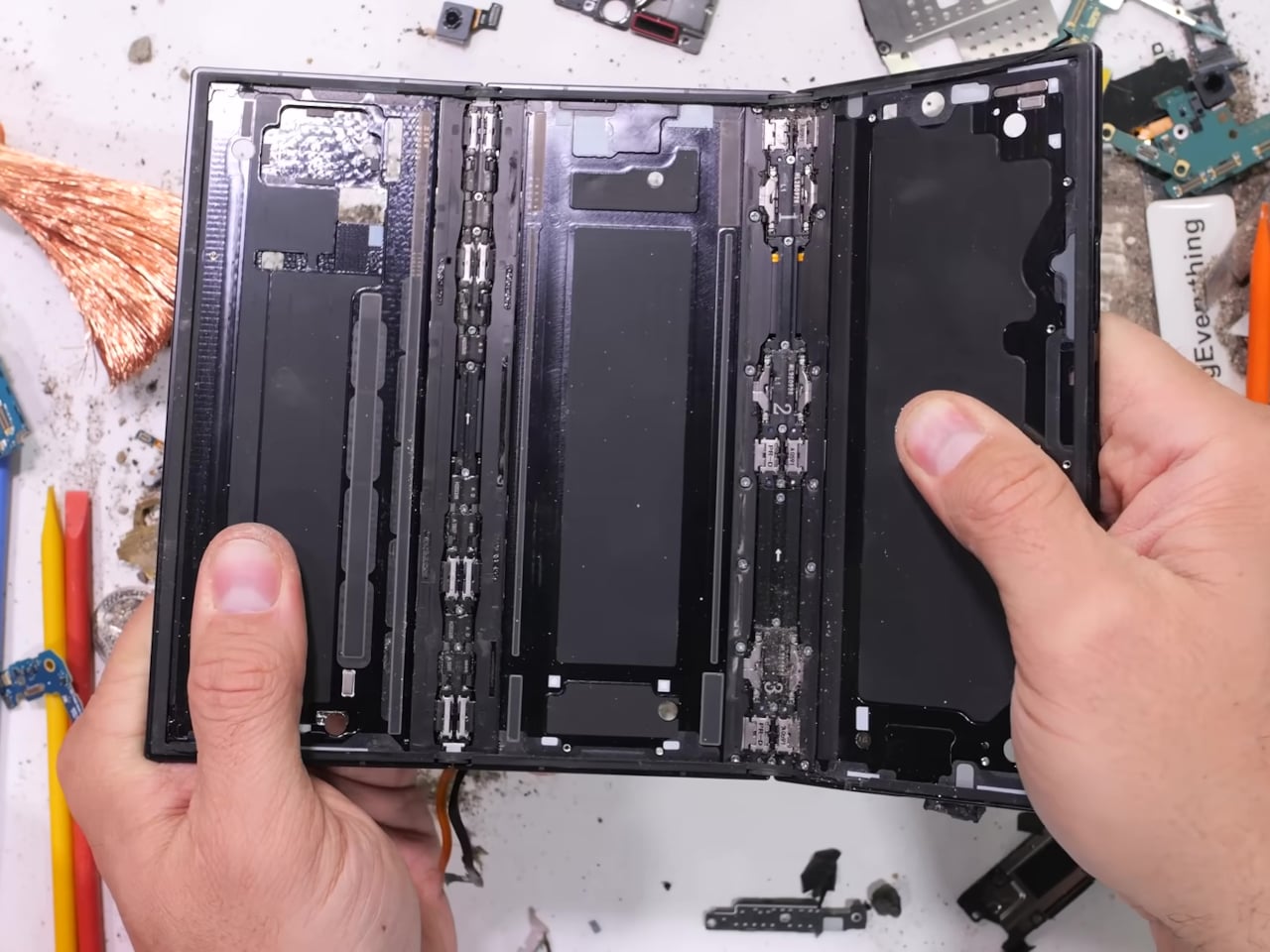
The phone carries an IP48 rating, which sounds reassuring until fine dust is sprinkled into the hinge area and folding begins. The immediate grinding noises make it clear that particles can still get into the mechanism and between layers. The device survives the moment, but the test underlines that a tri‑fold with exposed hinge gaps is best kept away from beaches, workshops, or pockets full of grit.

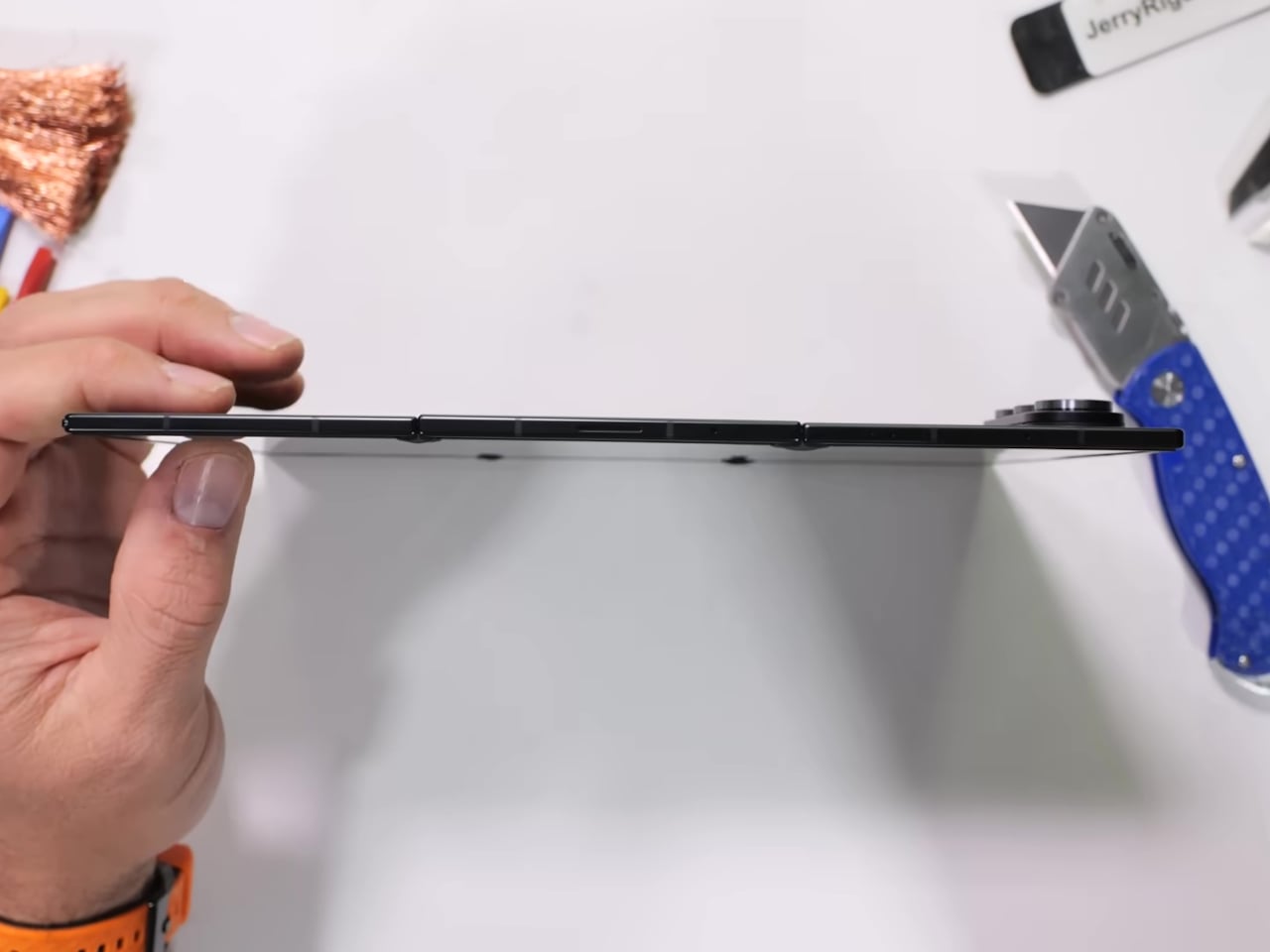
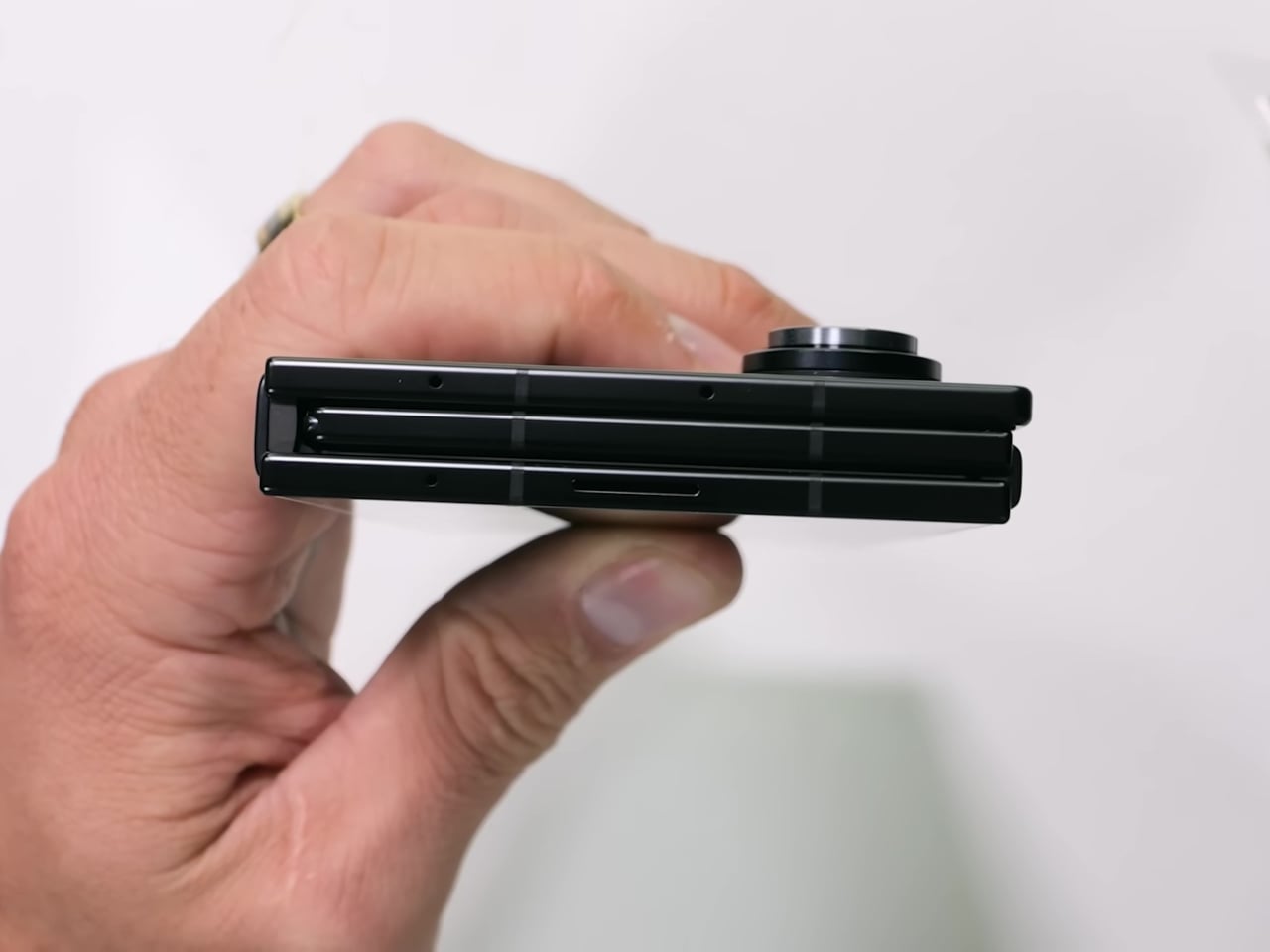
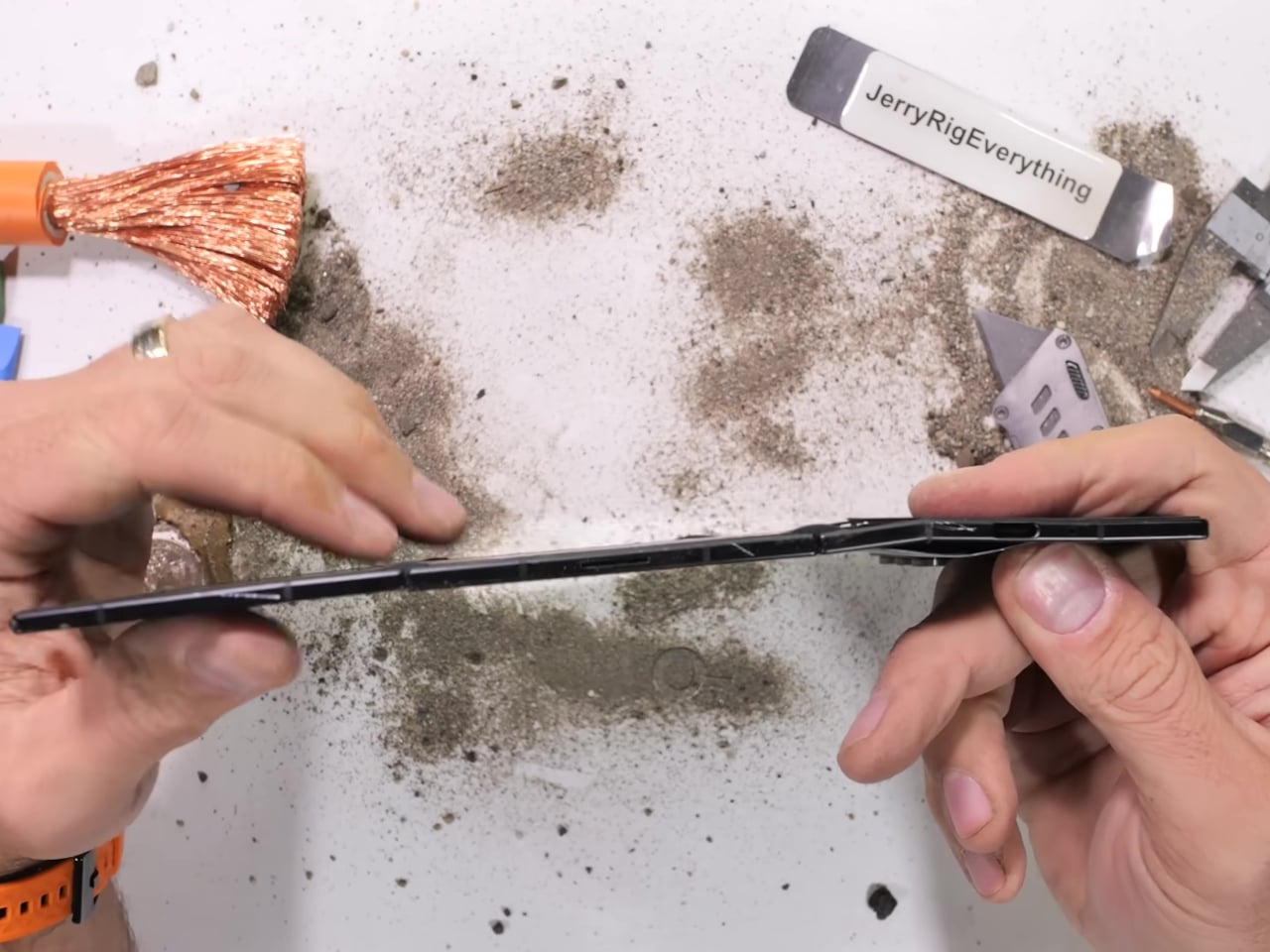
The defining moment is the bend test. When force is applied in the opposite direction to the intended fold, the Galaxy Z Trifold’s frame buckles with an audible crack, making it the first Samsung phone to fail this particular test. The central spine is around 3.9 mm at its thinnest, significantly slimmer than many ultra‑thin phones, and the hinges themselves hold while the aluminium frame gives way, showing that Samsung prioritised compactness over reverse‑bend resistance.

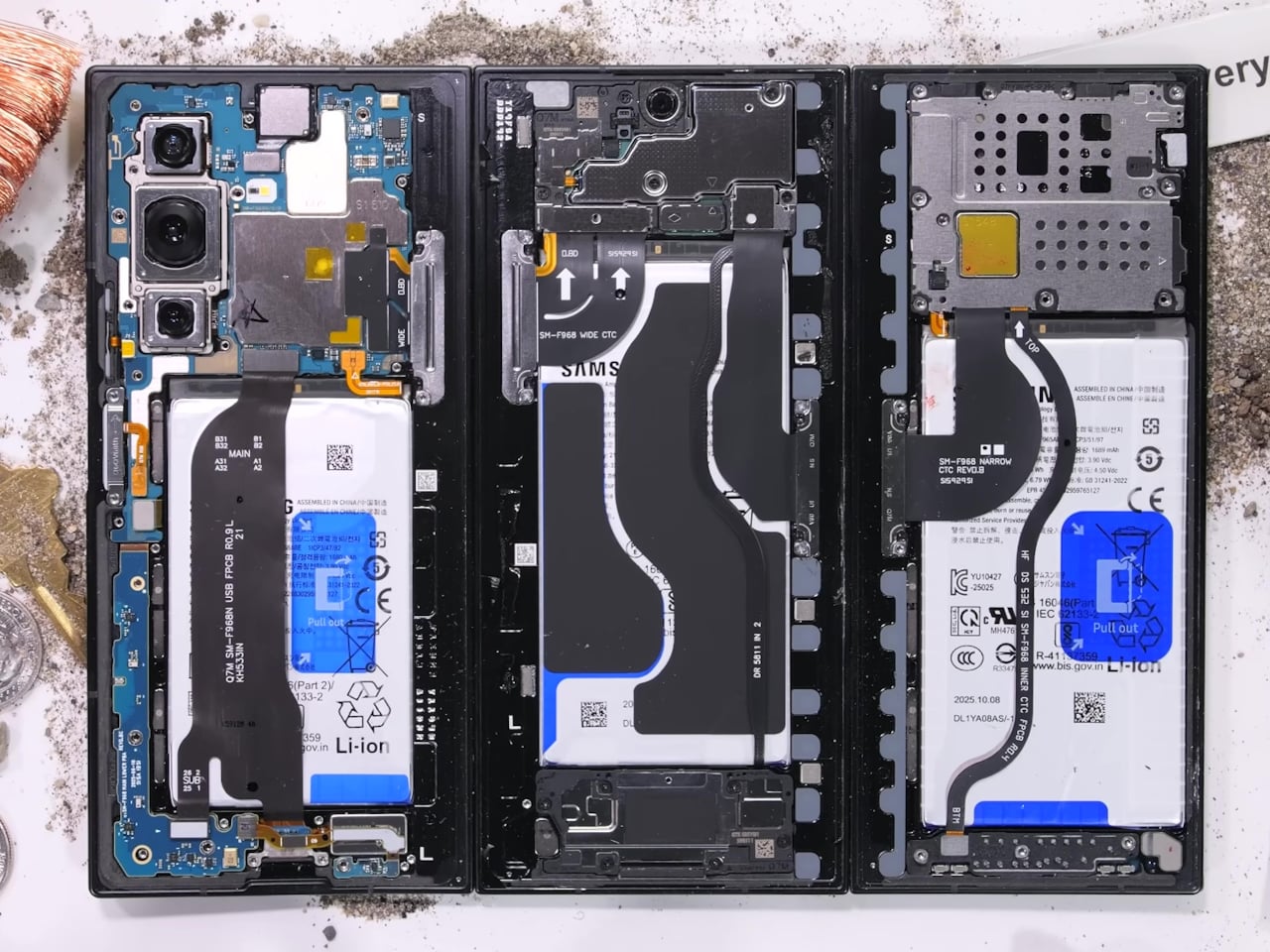
The teardown reveals three separate batteries spread across the three segments, totalling about 5,600 mAh, so thin that even using pull tabs to remove them risks bending and puncturing. A 200 MP main camera, a 10 MP telephoto with OIS, and reliance on the aluminium frame for heat dissipation rather than a complex cooling system all point to thinness and packaging as top priorities, which makes sense when the goal is pocketability.

The Galaxy Z Trifold is an engineering statement that proves a pocketable tri‑fold tablet is possible, and JerryRigEverything’s test shows the trade‑offs of that ambition. Inner screens remain soft, dust remains a threat, and a 3.9 mm spine will not forgive a wrong bend. As a first draft of a radically new category, it achieves something impressive while accepting vulnerabilities that future iterations will likely address with slightly thicker frames and better sealing, once the core mechanics are proven and refinement can begin.

The post Galaxy Z Trifold Durability Test Reveals 3.9mm Trade-Offs first appeared on Yanko Design.

The Secret to Creating the Viral iPhone Lock Screen Everyone Loves

The Secret to Creating the Viral iPhone Lock Screen Everyone Loves

The release of iOS 26 has introduced a new level of lock screen customization, captivating users with its innovative features. Among these, the depth effect and underwater clock design have gained significant popularity, creating a visually striking and dynamic lock screen experience. The video below from iReviews will walk you through the steps to recreate […]

The post The Secret to Creating the Viral iPhone Lock Screen Everyone Loves appeared first on Geeky Gadgets.

Posted in Uncategorized

Our favorite books we read in 2025

This was the kind of year that felt 100 years long, so who could blame us for leaning into a bit of escapism? Some of us buried our noses in books in 2025, and thankfully, there were plenty of good reads to get lost in. Here are some of the Engadget team’s top picks from the year.

Wild Dark Shore by Charlotte McConaghy

Wild Dark Shore pulls off a magnificent balancing act of telling an intimate, personal story coupled with the backdrop of impending climate disaster. A father and three children are living on a remote island near Antarctica, taking care of a vast seed bank that was part of an abandoned research facility. They’re literally trying to stay above water for a few months until they get bailed out from the island along with as much of the seed bank as they can save before it goes under when a woman named Rowan washes up on shore. She survives, is nursed back to health, and starts forming bonds with her rescuers and their mission — but at the same time, she has some unexpected connections to the island and the former research team that lived there that she keeps to herself.

The magic of this book is in the way Charlotte McConaghy builds tensions from many sources throughout the book; you feel a lingering sense of discomfort through, waiting for the other shoe to fall even as Rowan gets closer and closer to the family. It’s a small-scale story at its heart, but with the backdrop of disaster looming the stakes feel extremely high. And McConaghy is a master at putting these feelings on the page in gorgeous prose. As she showed in her previous work Migrations, she has a real talent for realistically describing near-future climate disasters, but Wild Dark Shore raises the personal stakes in a visceral way. — Nathan Ingraham, Deputy Editor

Moonflow by Bitter Karella 

This book is a chaotic and deeply weird rollercoaster ride that repeatedly gave me whiplash, and I loved it. Fair warning, it's not for the weak-stomached. It is horrifying, hilarious, nauseating and somehow a very good time and a very bad time simultaneously. Moonflow is told through dual narratives, one following Sarah, a trans woman and mushroom dealer who has found herself in a desperate situation, and the other following the henchwomen of a deranged cult that's made its home in a cursed forest. After Sarah ventures into these woods in search of the King's Breakfast, a rare mushroom said to grant divine understanding to those who consume it, all hell breaks loose.

Karella's writing is immersive, and this is the kind of book you can see, feel, hear and smell, for better and worse. Every person in this book is like a caricature of someone I've crossed paths with at some point in life, and the names of the cult members are just… chef's kiss. Some of them had me howling. It is completely unpredictable — except in those few moments where it seems the author wants you to know exactly where things are going just to make you dread the inevitable. Reading Moonflow was a visceral, unforgettable experience. — Cheyenne MacDonald, Weekend Editor

Simplicity by Mattie Lubchansky

Another one about a cult, except this cult rules. I picked up Simplicity knowing nothing about it except that everyone cool on the internet seemed to be praising it, and was excited to discover that it's set near where I live in New York's Hudson Valley, in a future version of the Catskills. And here in the Hudson Valley, it often feels like I'm one or two innocuous decisions away from accidentally joining a cult, so there was an immediate connection. In Simplicity, it's the year 2081 and New York City is a high-tech dystopia run by a billionaire. North of the city, though, various communities have settled off-grid, including a group called The Spiritual Association of Peers.

Lucius Pasternak, a trans man, is sent on an anthropological assignment from the mayor to SAP's compound, Simplicity, and it doesn't take long for their uninhibited way of life to start growing on him. But Lucius soon begins to have strange dreams, and a series of violent attacks shakes up the community. Through his mission to understand the people of SAP and later to find and stop the entity that's targeting them, a beautiful story about queerness and identity and belonging and fighting for what's important unfolds. This feels like the kind of book that should be passed around between friends who just get it, and I imagine many readers will feel incredibly seen by it like I did. — C.M. 

The Buffalo Hunter Hunter by Stephen Graham Jones

Or Stephen Graham Jones' Interview with the Vampire. The Buffalo Hunter Hunter blends historical fiction and horror to give us one of the most impactful vampire novels of our time — one that serves as an uncomfortable but necessary reminder of the atrocities committed against indigenous people in the US by white settlers. It begins with the discovery of a crumbling journal that claims to contain the confession of a Blackfeet man-turned-vampire named Good Stab, as told to Lutheran pastor Arthur Beaucarne. What follows is a gutting chronicle of slaughter, heartbreak and revenge. It's a classic in the making. — C.M.

Isola by Allegra Goodman

Historical fiction is how I trick my brain into possibly learning something. And because the endings are set, the author has to hook you into the drama with more than just the peril of an unknown outcome. I fell deep into Wolf Hall even though I knew which heads Henry VIII chopped off. I thought Isola might be similarly gratifying.  

It tells the story of Marguerite de la Rocque de Roberval, a young noblewoman from France who was intentionally marooned on an island off the coast of Canada in 1542. The story is based on historical records so you know the plot won’t adhere to safe formulas, but mon dieu, I was not prepared for how rough things would be for Marguerite. 

Her troubles began long before she found herself fighting for survival on a wild uninhabited island with brutal winters. From birth, nearly every happiness was undercut by more dominant forces, yet the woman never stopped moving forward. Thankfully, Goodman draws Marguerite’s character not as some tired brand of plucky heroine with grit and a wink, but as a perceptive, pragmatic being who also gives in to impulse and doesn’t have everything figured out. 

Isola is beautifully rendered, from the stone chateaus to creaking ships and rough abundance of the island. Despite being set over 400 years ago, nothing feels dated. Human versus universe is an unfair battle, but I rooted for Marguerite on every page — and those pages turned quickly. — Amy Skorheim, Senior Reporter, Buying Advice

Old Soul by Susan Barker

This was one of the first books I read this year, and it's really stuck with me. Old Soul travels through time and all over the world, across multiple storylines to trace the devastating impact of one mysterious woman who seems to defy the rules of mortality and always leave tragedy in her wake. Barker's writing in Old Soul pulls the reader in and doesn't let go. It's an unsettling slow burn that did a great job of getting under my skin.  — C.M.

Meet Me at the Crossroads by Megan Giddings

If a door appeared out of nowhere, would you go through it not knowing what lies beyond or if you'd be able to return? In Meet Me at the Crossroads, seven doors pop up one day around the world, and people are unsurprisingly captivated by them. Regular people tempt fate, the ultra-wealthy plan exclusive excursions through them, religions form around their mystique. Ayanna is a teenager who was brought up in one of these religions. She's also a twin, with a sister named Olivia who she's been separated from after their parents' split. When it comes time for Ayanna to go through one of the doors as part of a ceremony, Olivia makes a last-second decision to go with her. What follows is the aftermath of that decision. Meet Me at the Crossroads is a haunting and emotional journey.  — C.M.

Woodworking by Emily St. James

I am a cisgender, white middle-aged man, so the experience of learning and accepting a different gender identity is something I will never fully understand. But Woodworking, the debut novel by Emily St. James, is a hilarious, tragic and ultimately hopeful look at two trans women navigating different moments of acceptance in their lives. Erica is a mid-30s high school teacher who is recently divorced and just figuring out that she’s trans, something no one else knows about her at the start. Her student, 17-year-old Abigail, is her opposite: proudly out about her identity in a way that’s uncommon and dangerous in her small, conversative town in South Dakota.

Their paths intersect, and Abigail ends up in the uncomfortable and somewhat unethical role of helping Erica find herself. After all she’s confident and not afraid of who she is — but she’s also still a teenager, one dealing with massive trauma of her own. The dual look into these two protagonists, each with sections of the book narrated from their own points of view, gave me a vivid picture of the different challenges, emotions and dangers trans people face. But the unexpected community that develops around both characters plainly shows the value of living as your true self in a way that (hopefully) anyone should be able to relate to. — N.I.

This article originally appeared on Engadget at https://www.engadget.com/entertainment/our-favorite-books-we-read-in-2025-160000704.html?src=rss
Ultimate Midjourney Style Creator Guide : New Workflows Built for Play, Not Pressure

Ultimate Midjourney Style Creator Guide : New Workflows Built for Play, Not Pressure

What if the secret to unlocking your most creative self wasn’t about perfecting a single vision, but embracing the unexpected? Below, Future Tech Pilot breaks down the Midjourney Style Creator’s latest updates, and they’re anything but ordinary. This isn’t just another feature release, it’s a reimagining of how we approach artistic discovery. By shifting the […]

The post Ultimate Midjourney Style Creator Guide : New Workflows Built for Play, Not Pressure appeared first on Geeky Gadgets.

Posted in Uncategorized

LG will show off a humanoid robot for household chores at CES 2026

LG will present a home robot named CLOiD at CES 2026 in Las Vegas. With humanoid robotics sure to feature heavily at this year's tech conference, LG has teased its home assistant before a full unveiling in January.

The company says CLOiD's two articulated arms with five individually actuated fingers are designed to help with a variety of household tasks. However, LG has not yet given a specific example of a task CLOiD can handle. We're also not sure what it looks like, because aside from a couple of very close-up images of CLOiD's hands, LG is keeping what the robot looks like under wraps until the show. 

LG said CLOiD is part of the company's vision that “Zero Labor Home, Makes Quality Time.” It said its robot is a step toward a company goal of "freeing customers from the time-consuming demands of housework." 

CLOiD's chipset is housed in its head, which also sports a display, speaker, camera and a bevy of sensors meant to enable expressive communication. LG says its new robot is powered by its "Affectionate Intelligence" technology and is designed to interact in a neutral, user-friendly way. It's also designed to refine its responses through repeated interactions with a user.

CES often plays host to proof-of-concept products that offer a window into the future but may not make it to market. It remains to be seen if CLOiD is simply a booth-side attention-getter or something with real potential. Visitors can see CLOiD handle some real-life scenarios at LG's booth in the Las Vegas Convention Center.

This article originally appeared on Engadget at https://www.engadget.com/home/smart-home/lg-will-show-off-a-humanoid-robot-for-household-chores-at-ces-2026-145411218.html?src=rss

OnePlus Pad Go 2 Battery Lasts From Morning Coffee to Bedtime

Tablets have settled into a role somewhere between couch companion and light laptop stand-in, mostly used for streaming, reading, browsing, and occasional work. Android tablets have been uneven for years, with some brands throwing hardware at the problem while others barely try. OnePlus has been quietly building a more coherent story, and the Pad Go 2 is its latest attempt to make a large screen feel natural.

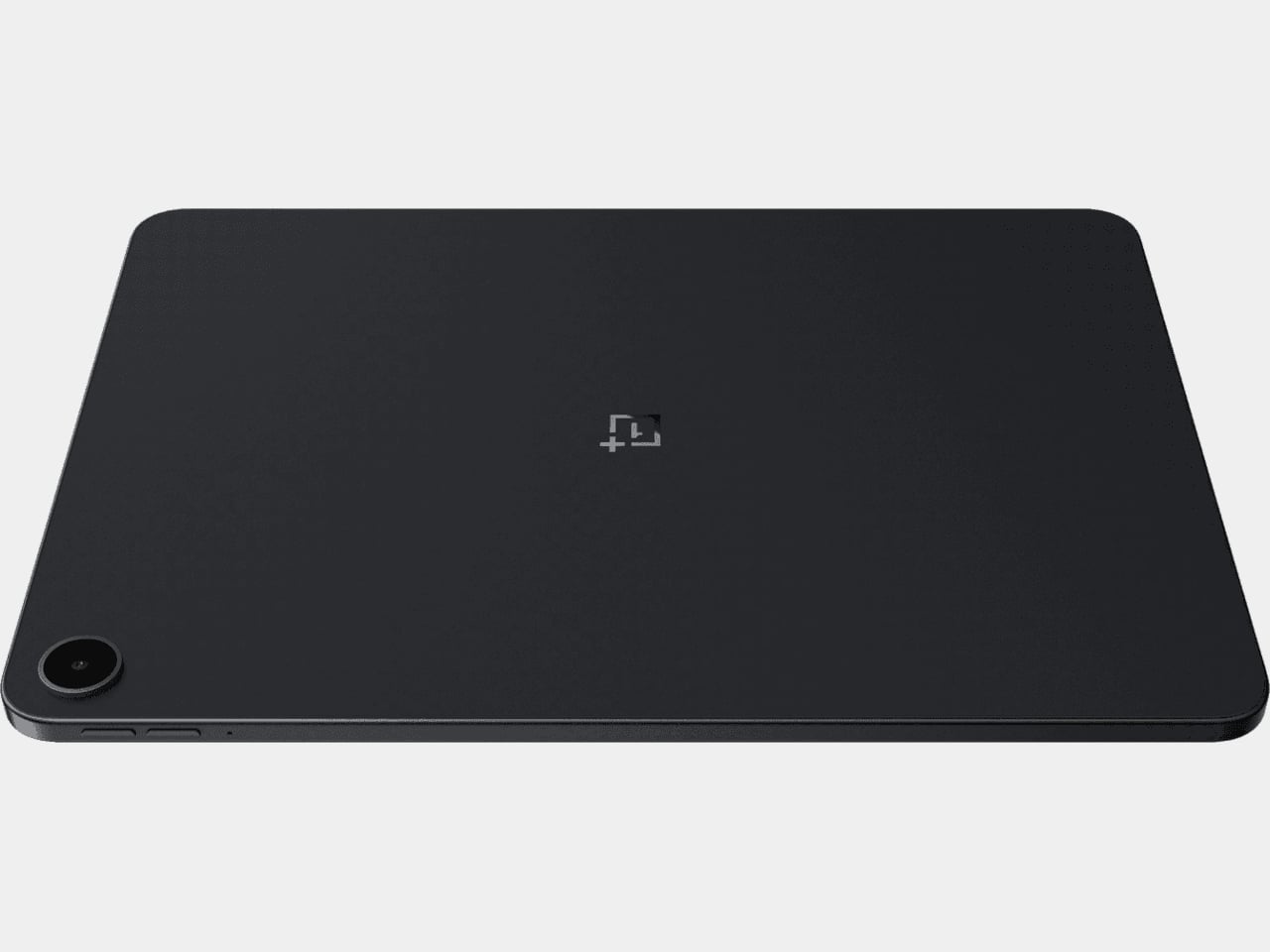
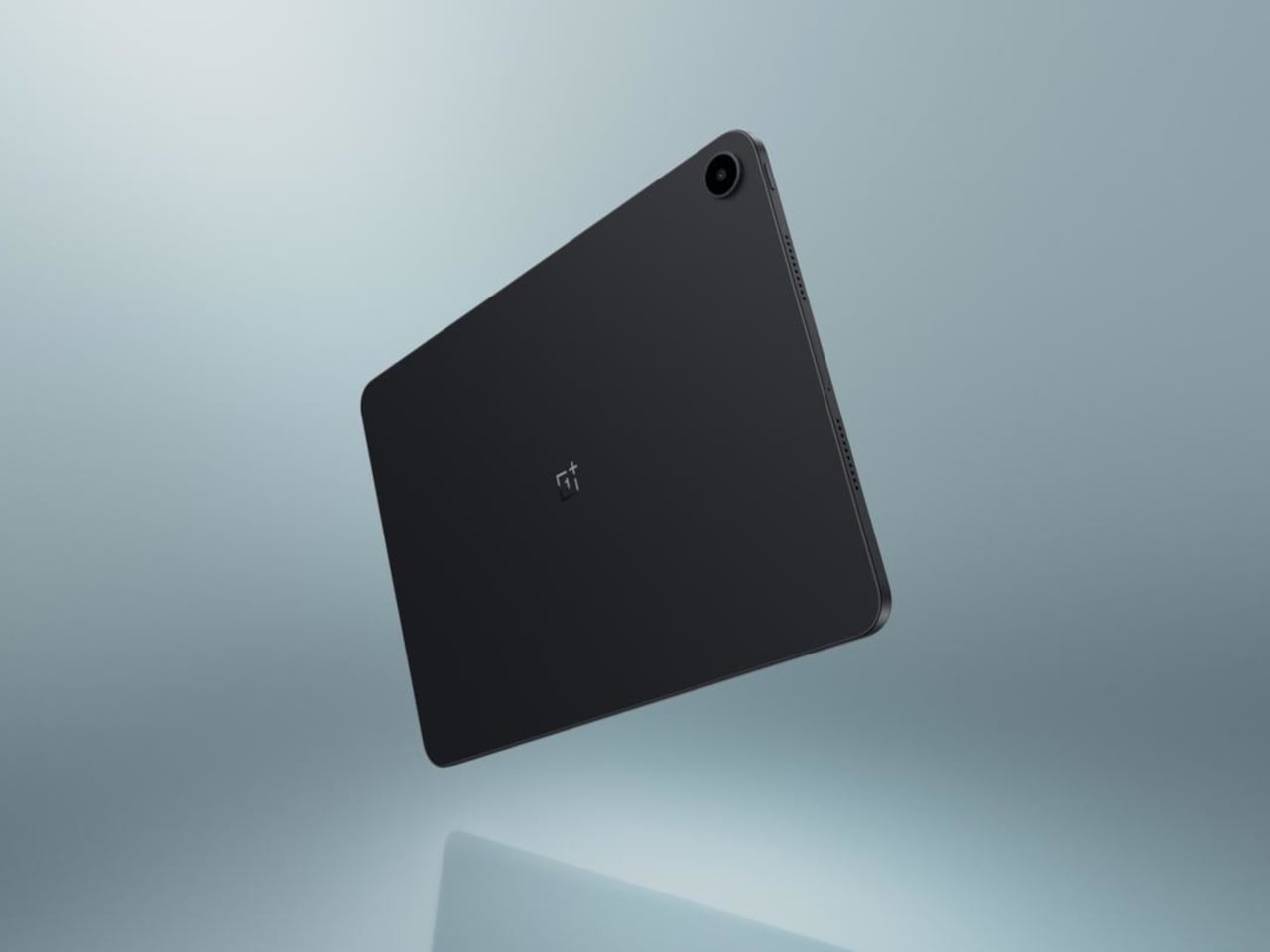
The OnePlus Pad Go 2 is a 12.1-inch Android tablet with a tall 7:5 display, a MediaTek Dimensity 7300-Ultra chip, and OxygenOS 16. It is not trying to be a halo device. Instead, it’s aiming for the sweet spot where a big, sharp screen, smooth performance, and long battery life matter more than headline-grabbing specs or ultra-thin bezels that sacrifice durability and comfort for millimeters.

Designer: OnePlus

The 12.1-inch LCD runs 2,800 × 1,980 resolution at 120 Hz, with 98 percent DCI-P3 coverage and up to 900 nits in high-brightness mode. The 7:5 aspect ratio gives more vertical space for web pages, documents, and split-screen apps than a 16:10 panel while still feeling natural for video. The extra vertical real estate makes reading and scrolling more comfortable, and the 120 Hz refresh means UI animations feel smooth without jitter.

The Dimensity 7300-Ultra, 8 GB of LPDDR5X RAM, and 128 GB of UFS 3.1 storage make the tablet feel snappy for streaming, browsing, and light gaming. The 4 nm SoC and fast memory mean apps open quickly, multitasking feels smooth, and OxygenOS animations take advantage of the 120 Hz panel without stutter. This is not a flagship chip, but it is over-specced enough for a mid-range tablet that the experience feels polished.

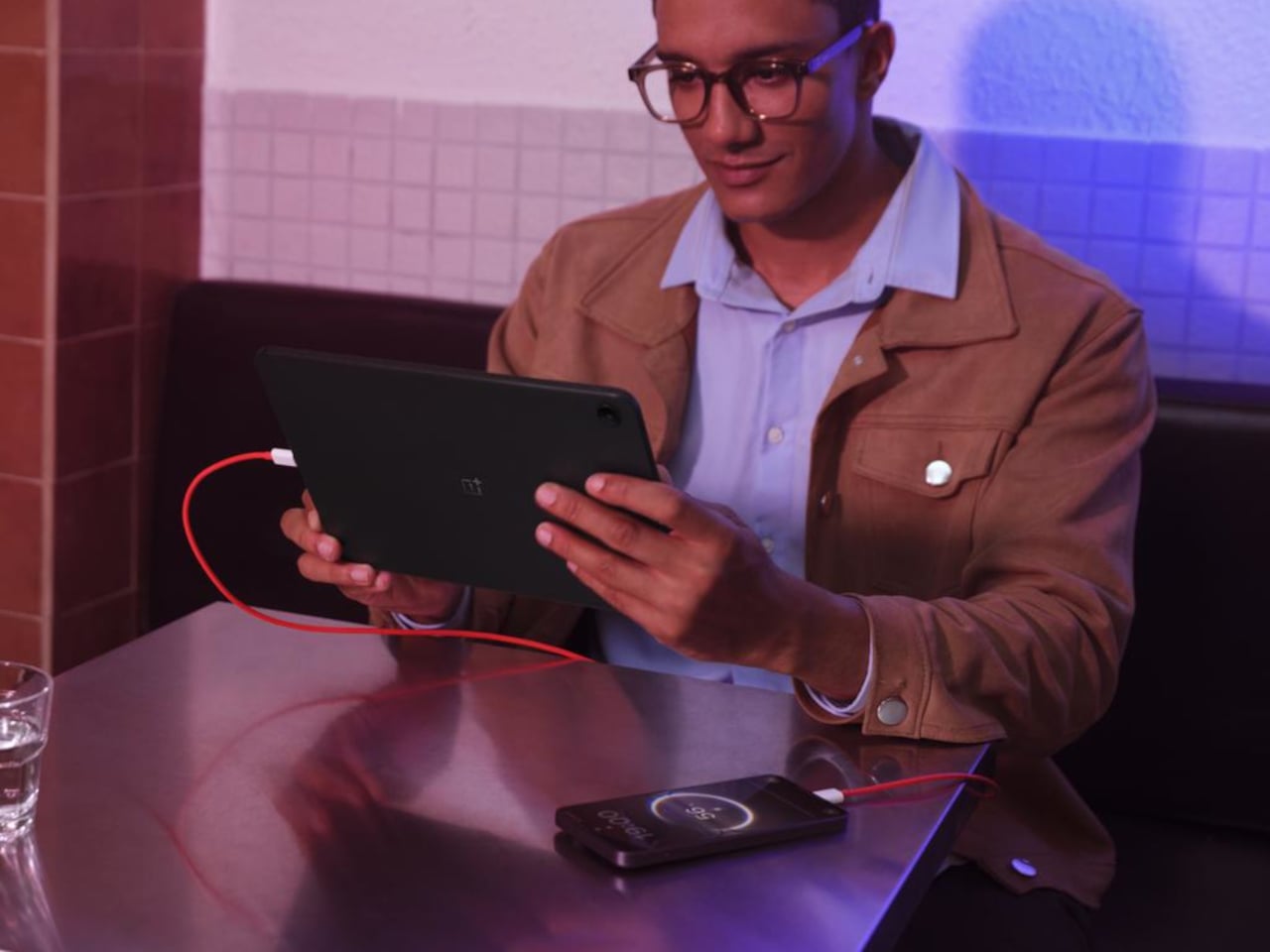
The 10,050 mAh battery handles long streaming sessions, reading, and mixed use without needing a charger nearby. The 33 W SUPERVOOC charging means topping up during a break is useful, rather than the slow trickle many budget tablets deliver. The goal is a tablet you can pick up in the morning and still be using on the couch at night, without babysitting the battery percentage or planning your day around outlets.

The quad-speaker setup, Bluetooth codec support from SBC through aptX HD and LDAC, and Wi-Fi 6 with Bluetooth 5.4 handle the supporting roles. The 8 MP front and rear cameras are there for video calls and quick scans rather than photography, and face unlock handles biometric login without a fingerprint reader cluttering the frame or adding cost to the bill of materials.

OxygenOS 16 is more than a phone skin stretched out, with split-screen multitasking, floating windows, and better scaling for the 7:5 display. It plays nicely with OnePlus phones for clipboard sharing, where supported, and the overall feel is closer to a lightweight desktop than a blown-up phone UI when you dock a keyboard or prop it on a stand for a few hours.

The OnePlus Pad Go 2 sits as a large-screen Android option that prioritizes display quality, smoothness, and battery over chasing ultra-high-end features. It makes the most sense for people who want a comfortable reading and streaming device that can also handle some work, and who like the idea of OxygenOS bringing OnePlus phone polish to a bigger canvas without flagship pricing or complexity they do not need for watching shows and scrolling feeds.

The post OnePlus Pad Go 2 Battery Lasts From Morning Coffee to Bedtime first appeared on Yanko Design.