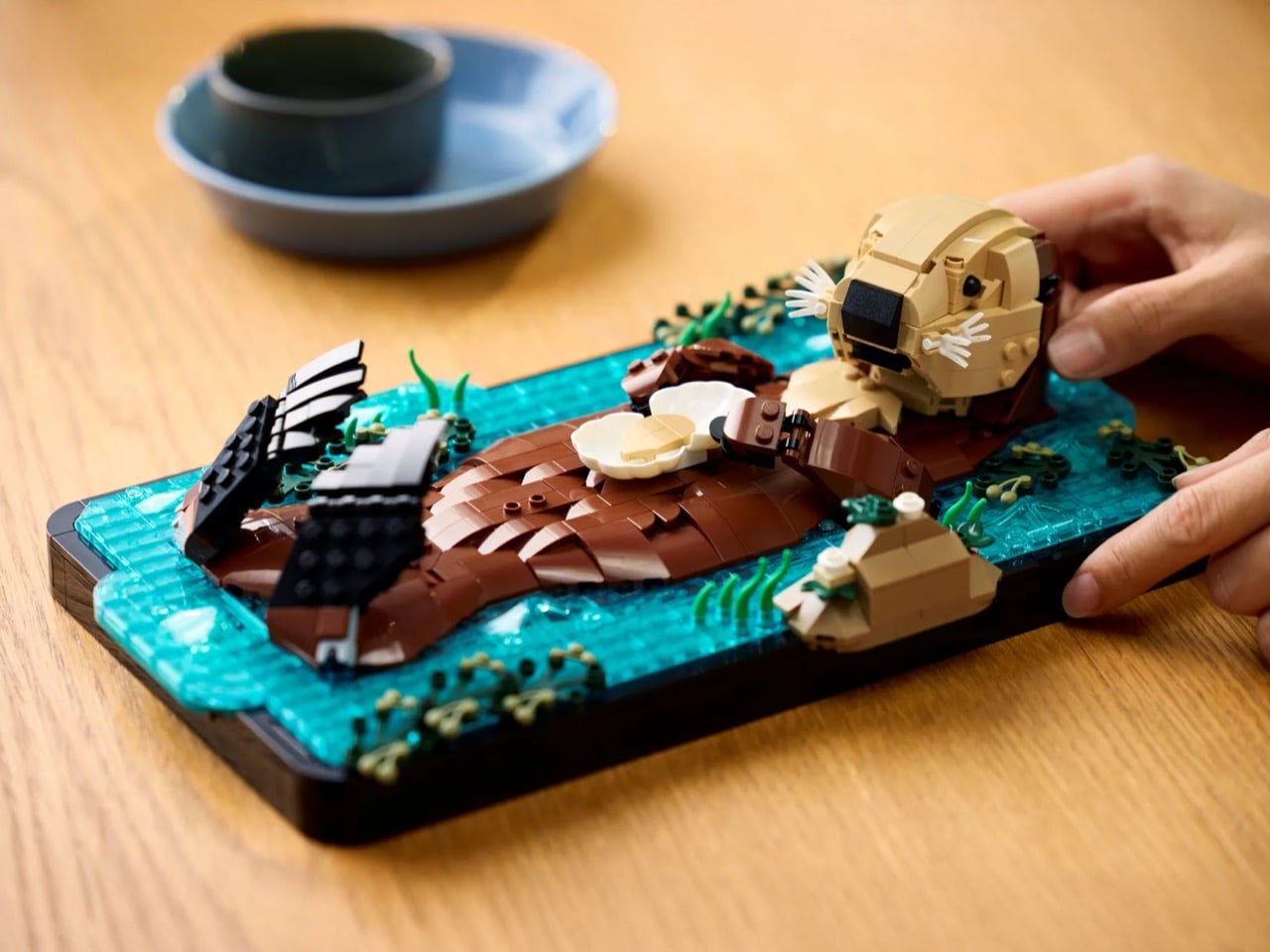
LEGO Just Released a $120 Sea Otter Set That Connects So They Can Hold Paws

Sea otters hold hands when they sleep. It’s one of those facts that makes you stop scrolling and smile, the kind of detail that feels almost too charming to be true. But it is true, and now it’s immortalized in LEGO form.

The Floating Sea Otters set (21366) started as a fan submission by Maximilian Lambrecht and evolved into something even more endearing than the original design. What began as a single otter floating in kelp became a mother cradling her pup, complete with articulated arms and a secret feature that lets two sets connect so the otters can hold hands. The LEGO designers didn’t just approve the concept. They found ways to make it cuter.

Designers: LEGO & Maximilian Lambrecht
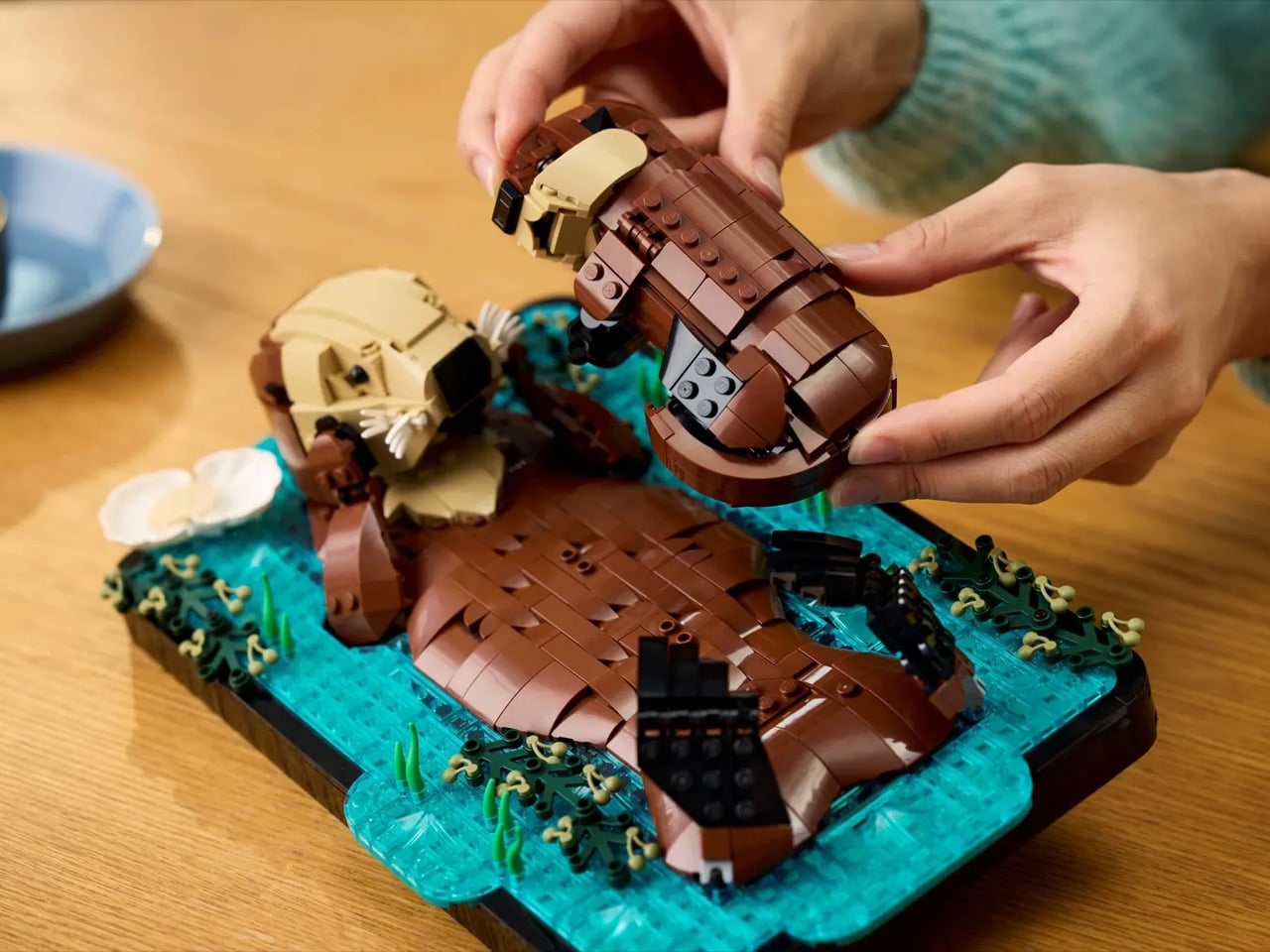
LEGO Ideas has always been the platform’s most interesting experiment in crowdsourced design, and this set demonstrates why the model works when it actually works. Lambrecht submitted his original concept in April 2024 after spending two months researching sea otter ecology and visiting the Berlin Zoo to nail the anatomical details. His submission hit 10,000 supporters, clearing the first hurdle, and then LEGO Designer Chris McVeigh got his hands on it. The transformation between fan concept and retail product tells you everything about how professional iteration elevates good ideas into genuinely compelling builds.
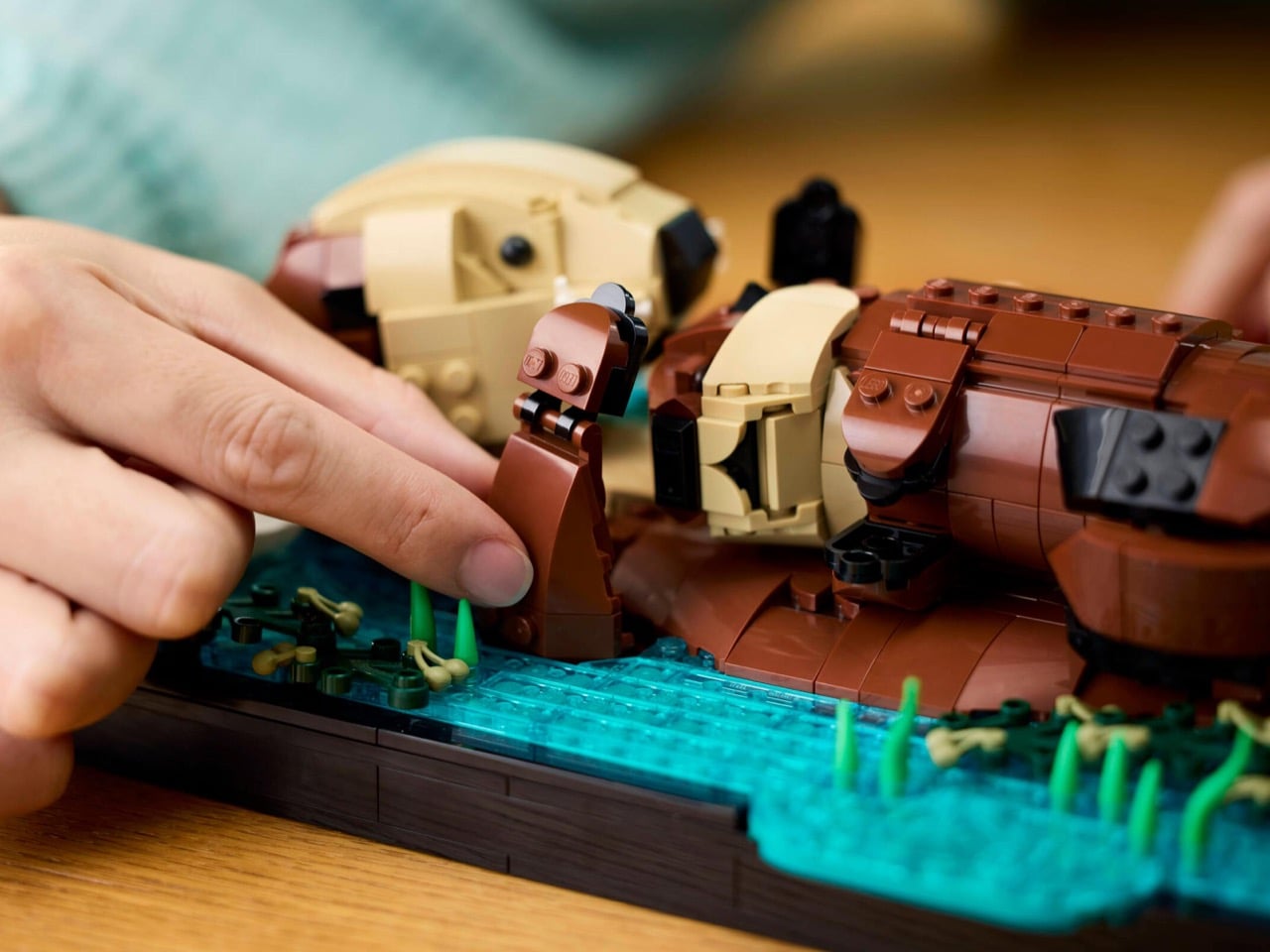
Lambrecht’s original design featured a single otter with movable paws, head, and mouth. Solid foundation, but McVeigh saw room to amplify the emotional hook. Adding the pup required rethinking the entire structural approach. The mother needed to be fully reclined rather than partially upright, which meant her arms had to articulate underwater to cradle the baby. That change cascaded into making the base thicker to accommodate the elbow joints, then extending the water elements over the edge of the base to maintain visual balance. Each decision triggered the next, the kind of iterative refinement that separates amateur builds from retail products.

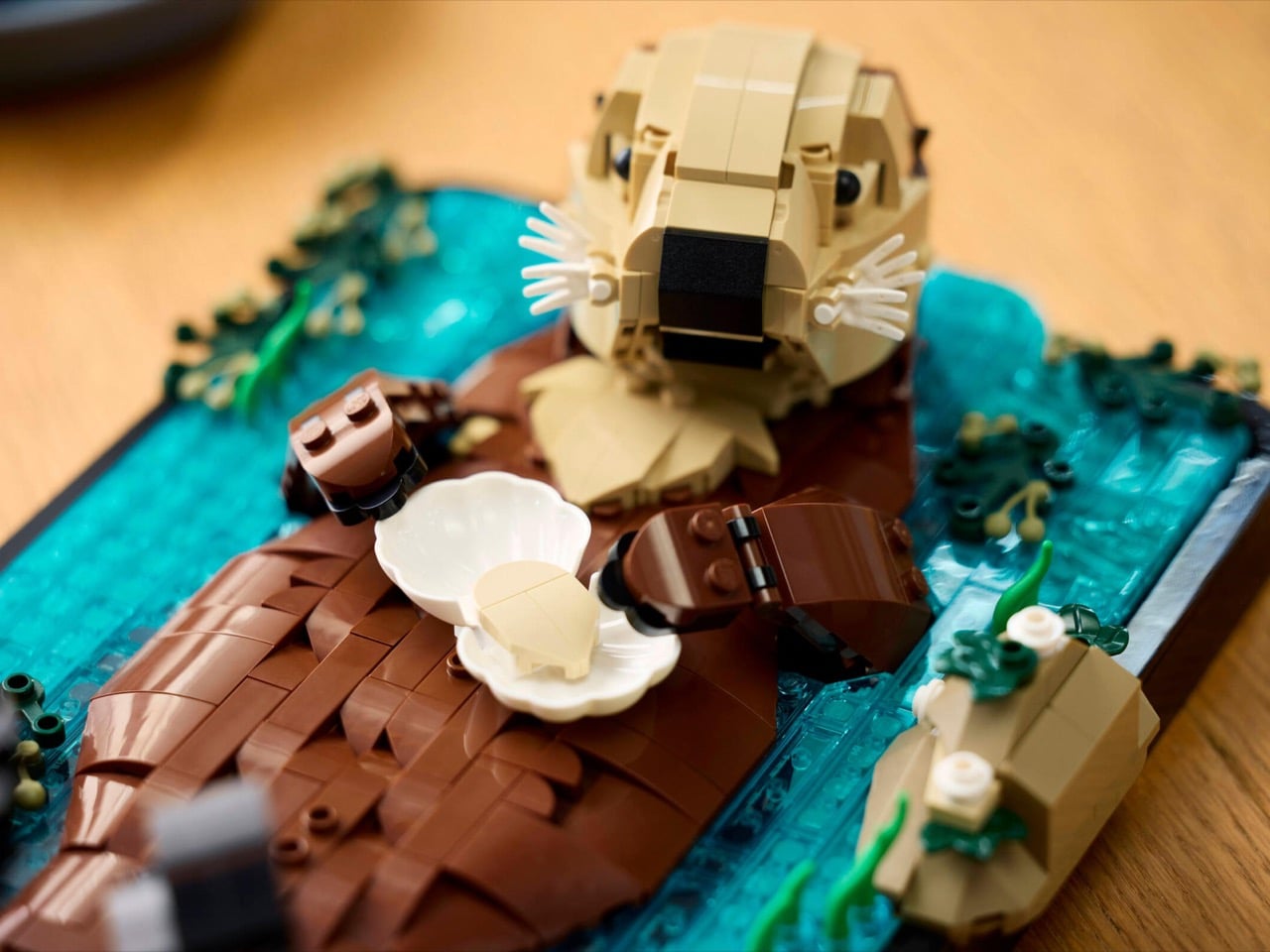
Clear blue tiles layered over teal plates create the water surface, and the effect punches well above its complexity. You get depth and shimmer without overcomplicating the build or inflating the piece count. LEGO hasn’t released official specs yet, but based on the photos this looks like a 400 to 500 piece range, putting it in that sweet spot for display sets: complex enough to be satisfying, simple enough to finish in an evening. The technique isn’t revolutionary, but the execution nails the balance between realism and LEGO’s inherent abstraction. Sometimes the best design choices are the ones that don’t call attention to themselves.

Two sets can connect so the otters hold hands while floating. Real sea otters do this to avoid drifting apart while sleeping, and McVeigh could have easily skipped this feature in favor of simpler construction. But keeping that behavioral detail intact means the set works as both a display piece and an actual reflection of sea otter ecology. Lambrecht wanted the educational angle from the start. “The sea otter plays a key factor in maintaining and nurturing kelp forests as well as affecting rocky ecosystems,” he explained during development. “It was important to me to implement those aspects into my build as well.” McVeigh honored that intent instead of stripping it away for mass market appeal, which is rarer than you’d think in licensed product development.

Curved brown plates stack to suggest the otter’s rounded body, white shell pieces become claws, and the head construction uses enough articulation to give each build a slightly different personality. Lambrecht mentioned that “getting the head right was definitely a tough shell to crack,” which makes sense when you’re trying to capture organic shapes with rectangular bricks. The retail version keeps that challenge visible in a good way. You can see the construction technique, understand how it works, and still read it as unmistakably otter. Lambrecht’s kayaking encounter with a river otter stuck with him. “For me, this experience was truly magical. It’s a memory I wanted to cherish, brick by brick.” That kind of personal connection to source material shows up in the final product, which is probably why McVeigh’s team worked to preserve it rather than homogenize it.

The set is up for pre-order now at $119.99 and ships March 1, 2026. That’s steeper than I expected for the piece count, but Ideas sets have been creeping up in price across the board lately. You’re paying partly for the articulation engineering, partly for the fan designer royalty structure, and partly because LEGO knows people will pay premium for cute animal builds. If you want the hand-holding feature to actually work, you’re looking at nearly $240 for two sets, which is a tough sell unless you’re really committed to the bit. Still, for a single display piece with actual ecological messaging baked in, it’s competitive with other recent Ideas releases. Pre-orders tend to sell through fast on these, so if you’re interested, don’t sleep on it.

The post LEGO Just Released a $120 Sea Otter Set That Connects So They Can Hold Paws first appeared on Yanko Design.

Riot Games is laying off half of the 2XKO development team

Another day, another wave of gaming layoffs. Today it's Riot Games with the announcement that it's cutting jobs on its pair-based fighting game 2XKO. For context, a representative from Riot confirmed to Game Developer that about 80 people are being cut, or roughly half of 2XKO's global development team. 

"As we expanded from PC to console, we saw consistent trends in how players were engaging with 2XKO," according to the blog post from executive producer Tom Cannon. "The game has resonated with a passionate core audience, but overall momentum hasn’t reached the level needed to support a team of this size long term."

The console launch for 2XKO happened last month. Cannon said the company's plans for its 2026 competitive season have not altered with the layoffs. He added that Riot will attempt to place the impacted people at new positions within the company where possible.

This article originally appeared on Engadget at https://www.engadget.com/gaming/riot-games-is-laying-off-half-of-the-2xko-development-team-215423279.html?src=rss

Forget CarPlay: Sherpa’s AR Glasses Decode Road Signs and Dashboard Icons For Nervous New Drivers

The AR glasses market keeps promising us augmented productivity and enhanced experiences, then delivering expensive ways to check notifications without pulling out your phone. Sherpa takes a different approach by targeting a specific moment of genuine incompetence: those first few months behind the wheel when every intersection feels like a pop quiz you didn’t study for. The concept uses heads-up displays to overlay directional cues and translate dashboard indicators, theoretically keeping your eyes on the road instead of darting between the windshield and that mysterious warning light.

What makes this Hongik University project interesting isn’t the hardware, which looks like standard-issue smart glasses in white plastic. It’s the learning system built around it. After each drive, the companion app analyzes your performance and identifies patterns in your mistakes. Miss the same type of turn signal three times? The AI notices. Struggle with a particular intersection? It breaks down what went wrong. Most new drivers get feedback in the form of angry horns and passenger-seat panic. This proposes something more useful, assuming you’re willing to let an algorithm critique your lane changes.

Designers: Yeongjun Yun, Jaeyun Lee

The hardware itself follows the current playbook for consumer AR: rounded frames thick enough to house display optics, visible sensor cutouts on the nose bridge (likely cameras for environmental and eye tracking), and an adjustable temple mechanism that looks borrowed from premium eyewear design. They’ve skipped the usual temptation to make it look aggressively futuristic, which matters when your target audience already feels self-conscious about their driving abilities. The cylindrical charging case suggests they’re thinking about daily use patterns rather than occasional deployment, treating this like essential equipment you grab before every drive during those first nervous months.

Where this gets genuinely clever is the integration with what they’re calling SDV, or software-defined vehicles. Modern cars already collect absurd amounts of data through their sensor arrays. Sherpa appears designed to tap into that information stream and translate it into actionable guidance. The system knows when you’ve entered a complex intersection, can read your hesitation through eye tracking, and overlay exactly what you’re supposed to watch for at that moment. Then it remembers that you struggle with this specific scenario and adjusts future guidance accordingly.

Unlike entertainment-focused AR wearables, this actually solves a real use case, which puts it ahead of most AR glasses the industry is trying to push down our throats. Driving schools teach you mechanics but abandon you at the precise moment when contextual learning would help most. If Sherpa can fill that gap between instruction and competence, it might be the first consumer AR application that people actually need rather than tolerate. Whether novice drivers will adopt glasses that broadcast their inexperience is a different question entirely, but at minimum someone’s finally asking AR to do actual work.

The post Forget CarPlay: Sherpa’s AR Glasses Decode Road Signs and Dashboard Icons For Nervous New Drivers first appeared on Yanko Design.
DOJ may face investigation for pressuring Apple, Google to remove apps for tracking ICE agents

House Judiciary Committee member Jamie Raskin (D-MD) has asked the US Department of Justice to turn over all its communications with both Apple and Google regarding the companies' decisions to remove apps that shared information about sightings of US Immigrations and Customs Enforcement officers. Several apps that allowed people to share information about where they had seen ICE members were removed from both Apple's App Store and Google's Play Store in October. Politico reported that Raskin has contacted Attorney General Pam Bondi on the issue and also questioned the agency's use of force against protestors as it executes the immigration policy set by President Donald Trump.

"The coercion and censorship campaign, which ultimately targets the users of ICE-monitoring applications, is a clear effort to silence this Administration’s critics and suppress any evidence that would expose the Administration’s lies, including its Orwellian attempts to cover up the murders of Renee and Alex," Raskin wrote to Bondi. He refers to Minneapolis residents Renee Good and Alex Pretti, who were both fatally shot by ICE agents. In the two separate incidents, claims made by federal leaders about the victims and the circumstances of their deaths were contradicted by eyewitnesses or camera footage, echoing violent interactions and lies about them that occurred while ICE conducted raids in Chicago several months ago.

This article originally appeared on Engadget at https://www.engadget.com/apps/doj-may-face-investigation-for-pressuring-apple-google-to-remove-apps-for-tracking-ice-agents-212145181.html?src=rss

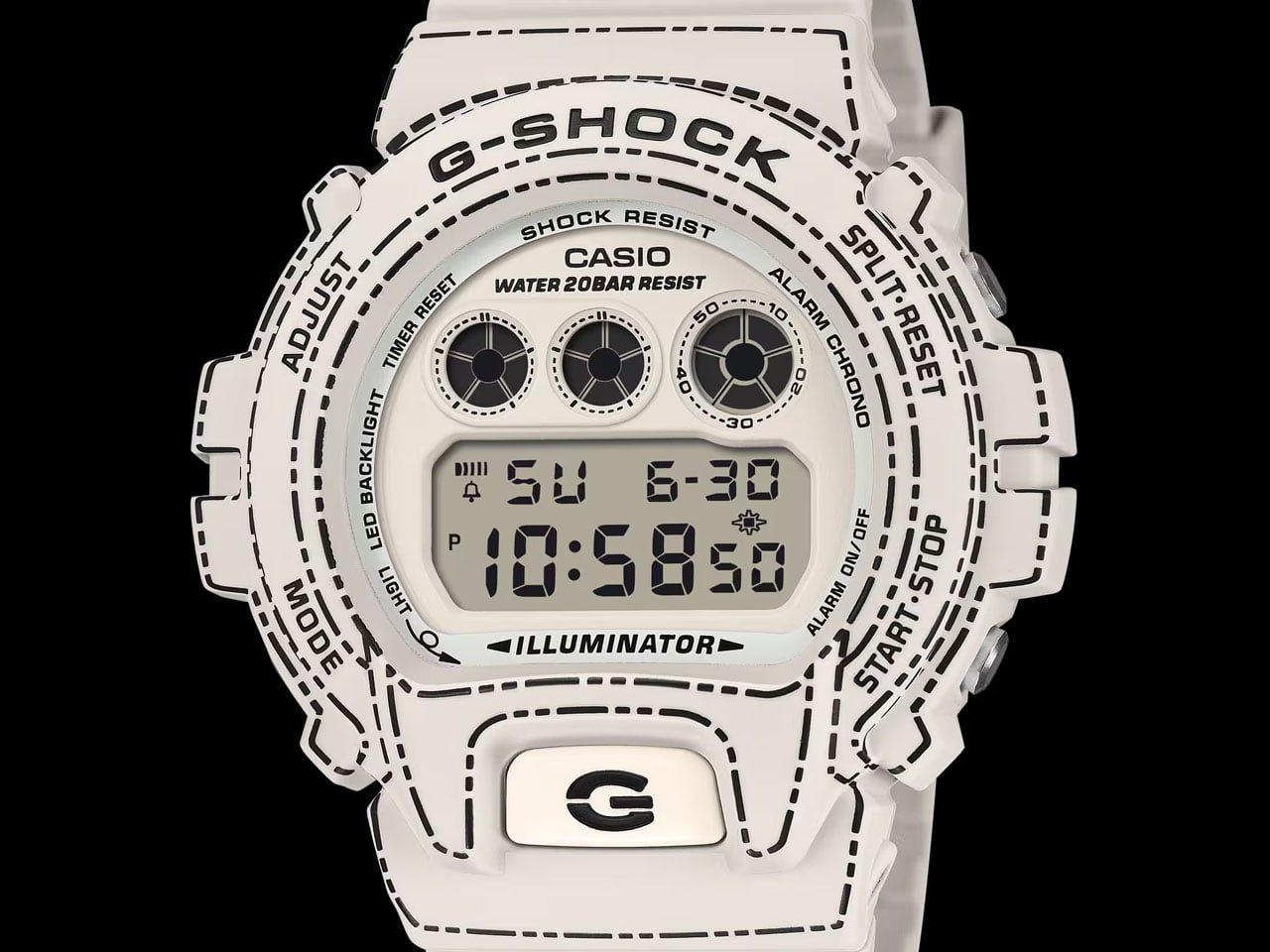
Casio’s Origami-Inspired G-Shock watches blend Japanese craft with everyday toughness

Casio G-Shock line has seen so many variants over the years, still they feel refreshing every time a new version is released. The hand-forged tsuiki edition is one of their unique releases that’s forged by a single Japanese master edition. Each one of them is unique with hammer-print bespoke patterns, and Casio nailed the craft using titanium alloy and the DLC coating.

Now another edition showcases the brand’s love for Japanese artistry with two origami inspired variants. Although these are not hand built or carry the bespoke design element, still they are unique in their own rights.

Designer: Casio

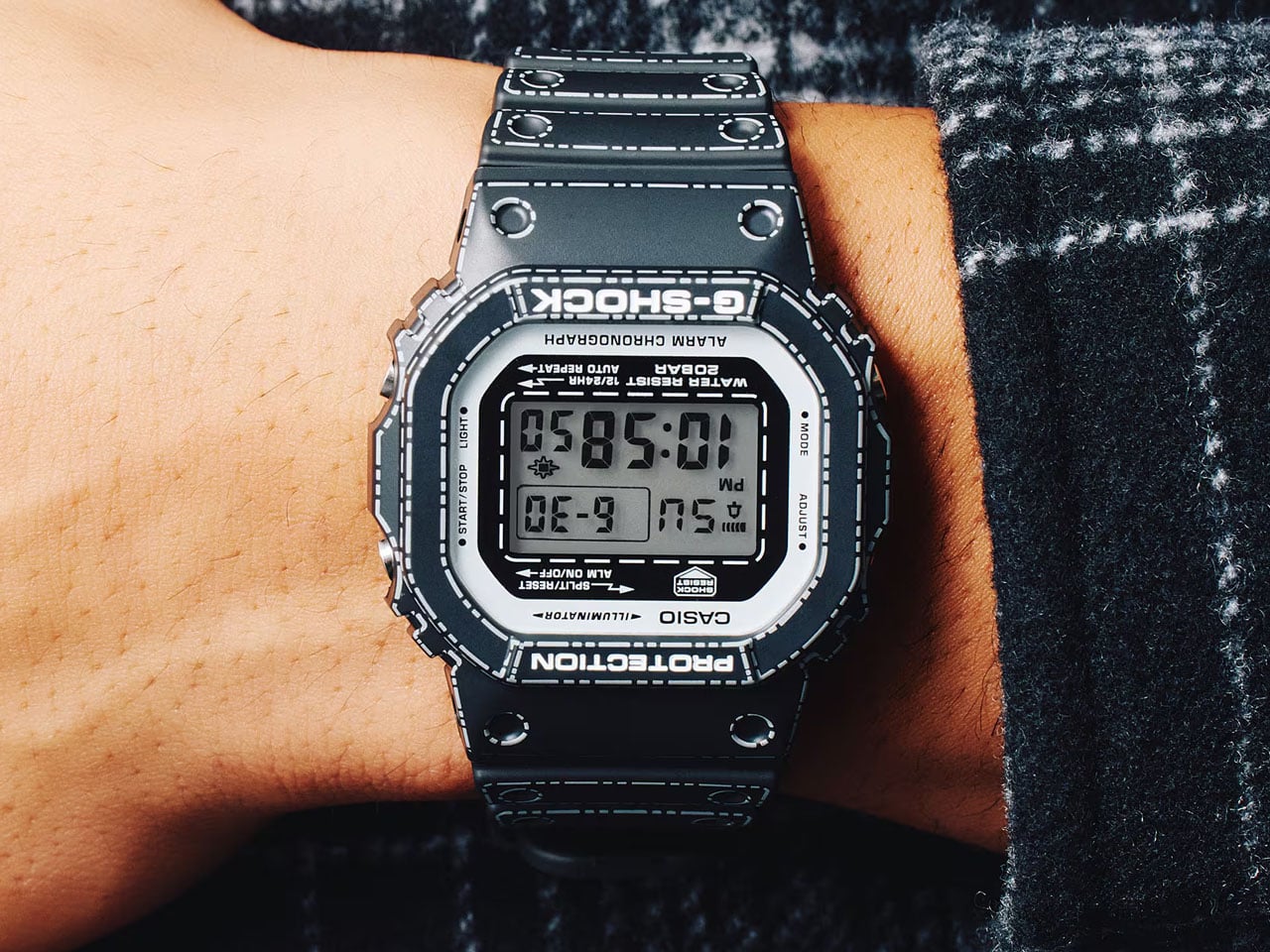
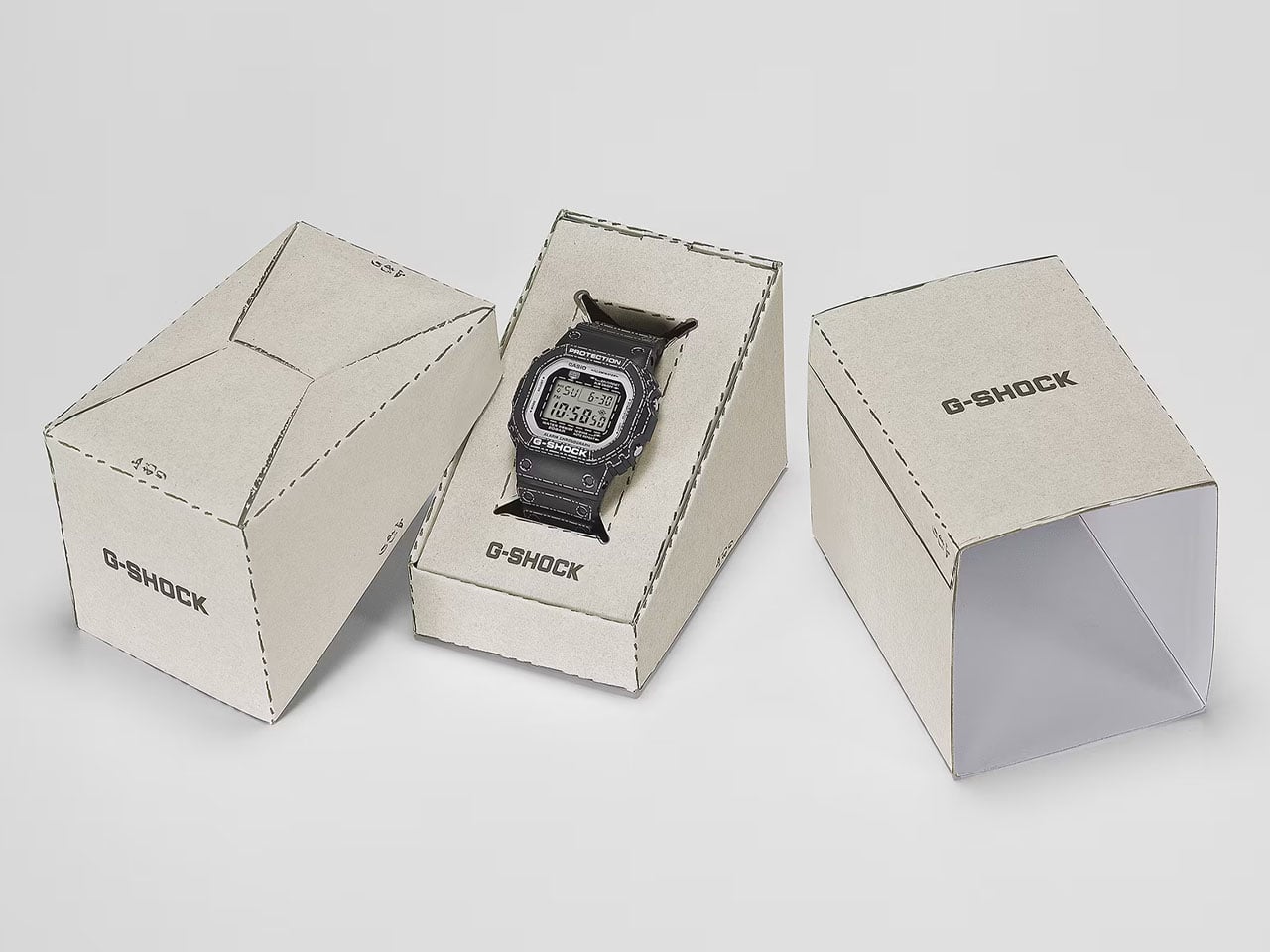
Predictably, the two variants: DW5600RGM-1 and DW6900RGM-5 reflect the folding patterns of origami with the dotted lines. This gives off the illusion of mountain and valley folds with washi paper like texture on the bezel and band.  The origami theme carries further into the watch details. On both watches, Casio has included the silhouette of a crane – a globally recognized symbol in origami – within the LED backlight and engraved on the case back. The special packaging also echoes the traditional paper folding craft, enhancing the presentation with design cues drawn from folded forms.

Casio’s choice of materials balances durability with aesthetic intent. The cases, bezels, and bands of both models are made from bio-based resin that retains the strength and impact resistance expected of G-Shock watches while supporting the distinctive textured finish. Despite the artistic approach, these watches maintain the toughness that the G-Shock line is known for, including shock resistance and a 200-meter water resistance rating suitable for swimming and surface water sports.

In terms of dimensions and wearability, the DW-6900RGM-5 is the larger of the two, with a case measuring approximately 53.2 × 50 × 18.7 mm and a weight of about 67 grams. The DW-5600RGM-1 is more compact at around 48.9 × 42.8 × 13.4 mm and weighs roughly 53 grams, catering to those who prefer a smaller profile on the wrist. Both watches use mineral glass and offer comfortable fits for a range of wrist sizes

.

Underneath the origami-inspired shell, the core functionalities are consistent with what buyers expect from a digital G-Shock. Each model includes a 1/100-second stopwatch, a countdown timer with auto-repeat, a multi-function alarm, and an hourly time signal. Additional features include an LED backlight with afterglow, flash alerts linked to alarms and the timer, and a full automatic calendar that runs through the year 2099. Timekeeping supports both 12-hour and 24-hour formats with a monthly accuracy of ±15 seconds.

Powering these functions is a long-lasting CR2016 battery that Casio rates at up to five years under normal use. This longevity, combined with the rugged build and everyday tools, positions the origami editions as practical timepieces for daily wear rather than purely collector items.

Pricing for the DW-5600RGM-1 and DW-6900RGM-5 in the United States is set at around $165 each, making them accessible within the broader G-Shock lineup while offering a distinctive design narrative rooted in Japanese culture.

The post Casio’s Origami-Inspired G-Shock watches blend Japanese craft with everyday toughness first appeared on Yanko Design.

OpenAI starts testing ads in ChatGPT

Users on ChatGPT's free and Go plans in the US may now start to see ads as OpenAI has started testing them in the chatbot. The company announced plans to bring ads to ChatGPT. At the time, the company said it would display sponsored products and services that are relevant to the current conversations of logged-in users, though they can disable personalization and "clear the data used for ads” whenever they wish.

“Our goal is for ads to support broader access to more powerful ChatGPT features while maintaining the trust people place in ChatGPT for important and personal tasks,” OpenAI wrote in a blog post. “We’re starting with a test to learn, listen and make sure we get the experience right.”

These ads will appear below at the bottom of chats. They're labeled and separated from ChatGPT's answers. Ads won't have an impact on ChatGPT's responses.

Ads won't appear when users are conversing with ChatGPT about regulated or sensitive topics such as health, mental wellbeing or politics. Users aged under 18 won't see ads in ChatGPT during the tests either. Moreover, OpenAI says it won't share or sell users' conversations or data to advertisers. 

A source close to the company told CNBC that OpenAI expects ads to account for less than half of its revenue in the long run. Currently the company also takes a cut of items bought through its chatbot via the shopping integration feature. Also according to CNBC, OpenAI CEO Sam Altman told staff on Friday that the company will deploy "an updated Chat model" this week.

The tests come on the heels of Anthropic running Super Bowl ads that poked fun at OpenAI for introducing advertising. Anthropic's spot asserted that while “ads are coming to AI,” they won’t appear in its own chatbot, Claude.

This article originally appeared on Engadget at https://www.engadget.com/ai/openai-starts-testing-ads-in-chatgpt-191756493.html?src=rss

Here’s how to disable Ring’s creepy Search Party feature

Ring aired a Super Bowl ad touting its

that didn't quite get the intended buzz. Instead, the commercial scared the pants off of anyone

.

The feature is advertised as a way to reunite missing dogs with their owners, a noble cause indeed, but Search Party does this by turning individual Ring devices into a surveillance network. Each camera uses AI to identify pets running across its field of vision and all feeds are pooled together to potentially identify lost animals. I've never seen a slope quite so slippery, as the technology could easily be rejiggered to track people.

It's also worth noting that this isn't a new feature. Search Party was

. In that time it has been used to find 99 lost dogs in 90 days of use, according to Amazon CEO Andy Jassy. Approximately ten million pets go missing in America each year. Many people aren't keen on helping to create a surveillance state for a tool with what looks to be around a 0.005 percent success rate. That percentage is sure to rise with mass adoption, but you get the jist.

With that said, many Ring users are looking for a way to disable the feature, as it's enabled by default. Engadget has got you covered.

Thankfully, this is fairly easy to do. Just open the Ring app and tap the menu in the top-left corner. Next, select Control Center. Then, tap Search Party and toggle the settings to Disable for both Search for Lost Pets and Natural Hazards. Repeat this process for each camera.

There has also been some confusion as to what Ring

. If you want to go a step further, delete all of your saved videos by tapping the History icon and then "Delete All."

This article originally appeared on Engadget at https://www.engadget.com/big-tech/heres-how-to-disable-rings-creepy-search-party-feature-185420455.html?src=rss

YouTube TV launches curated subscription packages this week

YouTube is launching YouTube TV Plans this week, after revealing the program back in December. These are genre-specific subscription packages that let users opt into a curated version of the service and save a few bucks in the process. Yeah. It's pretty much cable, proving you can't cut a cord if it's made out of invisible radio waves.

There are more than ten plans available and they are all cheaper than the typical asking price of $83 per month. There's a Sports Plan that costs $65 per month and includes channels like FS1, NBC Sports Network and all of the ESPN networks. Subscribers will pay $72 per month to add some news channels like CNN and CSPAN to the sports package.

The Entertainment Plan costs $55 per month and includes networks like Bravo, Comedy Central, FX and the Food Network, among many others. There's a beefier version of this that costs $70 per month and adds in family channels like the Cartoon Network and Nickelodeon, along with news channels.

Signing up for one of these plans still provides various perks of a standard YouTube TV subscription. These include unlimited DVR, multiview and the ability to add up to six members on one account. Of course, those with deep pockets can spring for some premium add-ons like HBO Max, 4K Plus and the NFL Sunday Ticket.

A list of prices with discounts.
YouTube

Some plans are rolling out later in the week, but YouTube says it could take "several weeks" for every plan to become available. New customers receive a discount for the first three months, which is worth looking into.

This article originally appeared on Engadget at https://www.engadget.com/entertainment/tv-movies/youtube-tv-launches-curated-subscription-packages-this-week-170710000.html?src=rss

AI-powered Conway’s Arcade not only plays classic games, it invents them in real-time

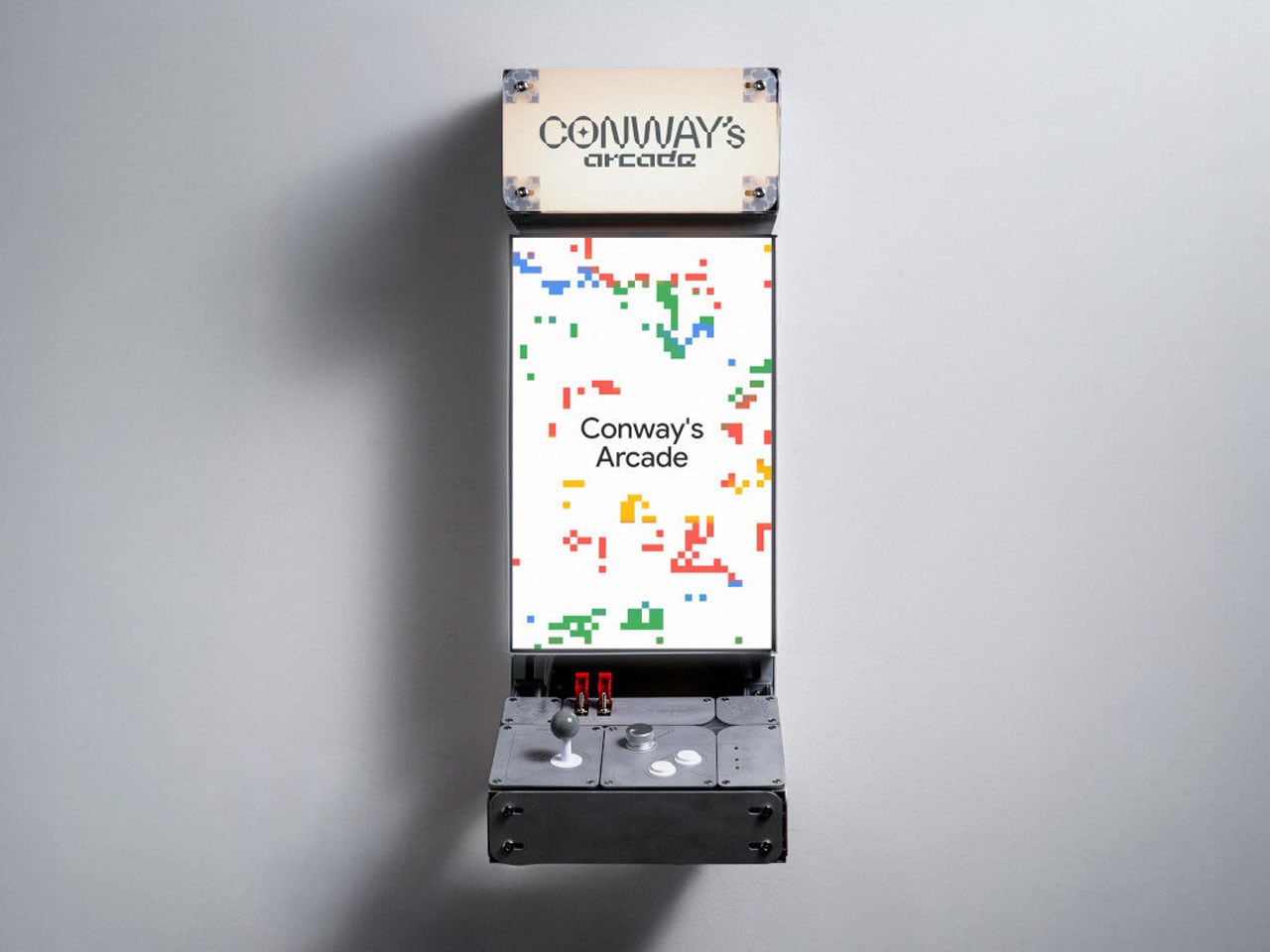
Arcade machines once thrived as cultural objects as much as entertainment devices, combining bold industrial design and tactile controls to pull people into endless play. Over time, those cabinets became symbols of fixed experiences, each game defined by predictable patterns and tactically programmed outcomes. Conway’s Arcade revisits that familiar physical form but challenges the very idea of what an arcade game is supposed to be. This is done using computation, not as hidden infrastructure but as the driving force behind play itself.

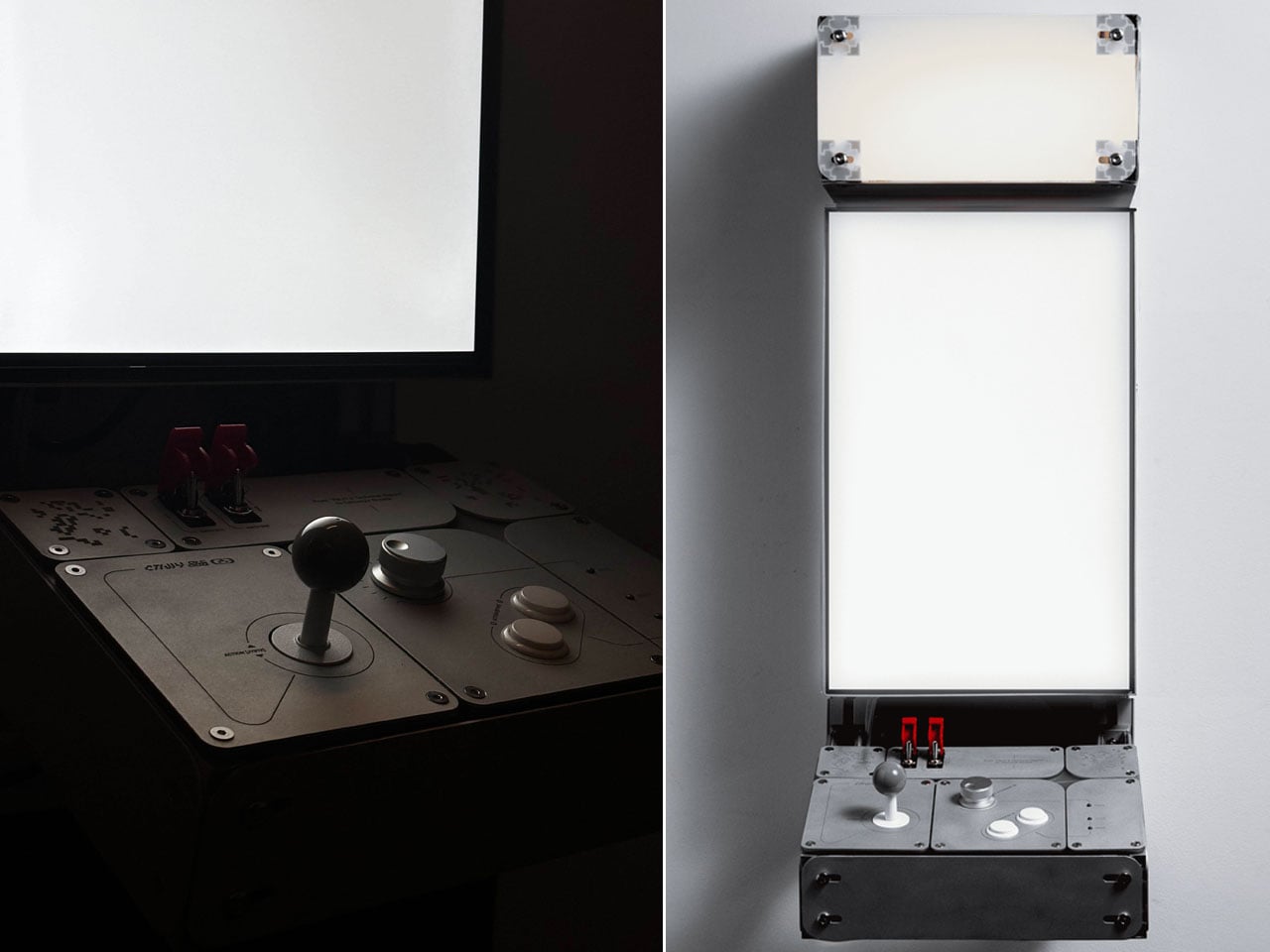
Created by technology agency SpecialGuestX for Google, Conway’s Arcade is a generative gaming installation that transforms classic arcade logic into an evolving, rule-based system. Unveiled at the NeurIPS 2025 conference, the project was designed to communicate complex computational ideas through direct interaction, replacing static gameplay with experiences that emerge in real time.

Designer: SpecialGuestX

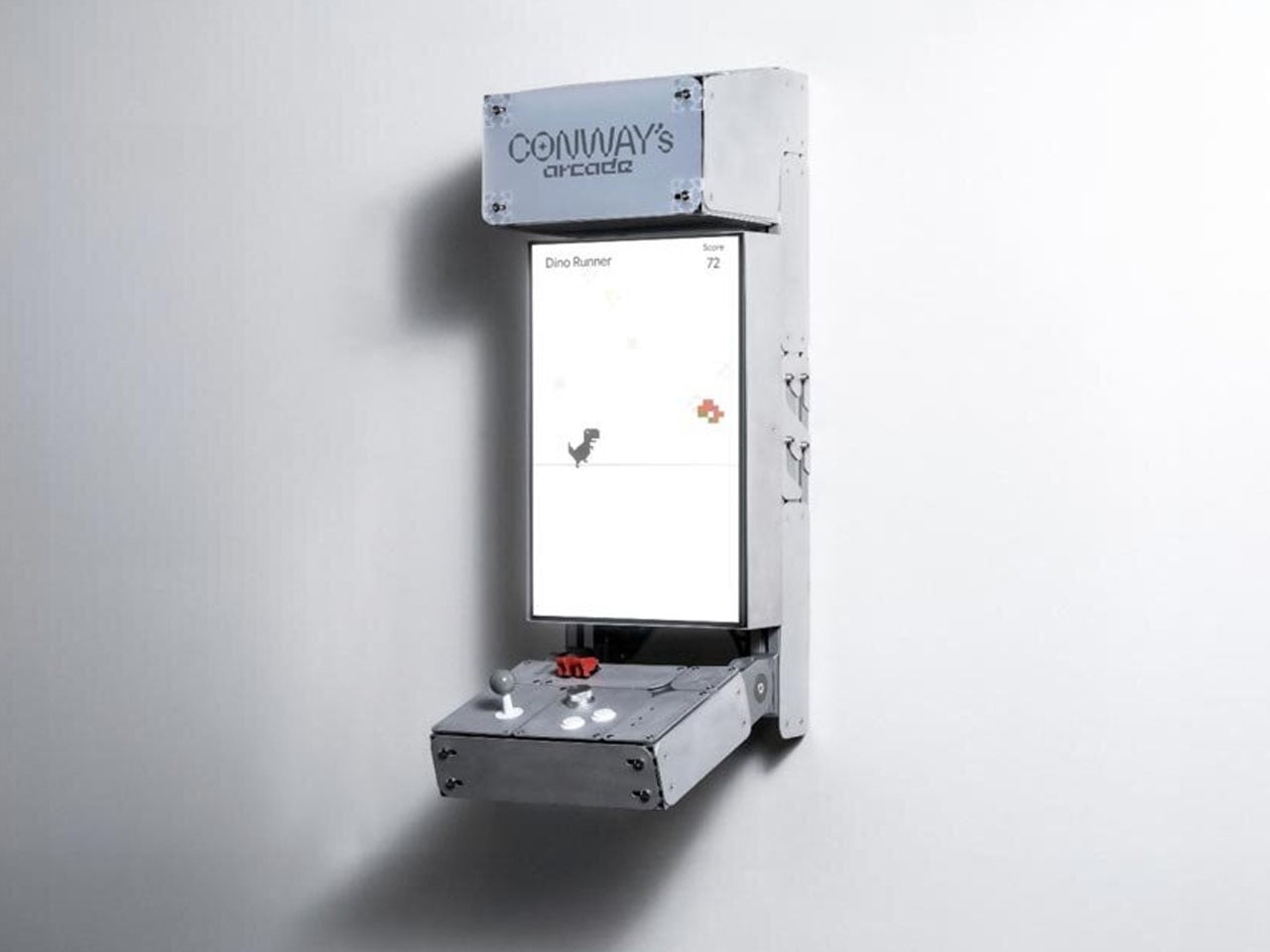
Instead of loading pre-existing games, the system generates new gameplay variations inspired by well-known titles such as Space Invaders, Breakout, Flappy Bird, and the Chrome Dino game. The smart system recomposes the game’s mechanics through adaptive logic. The conceptual backbone of Conway’s Arcade is John Conway’s Game of Life, a mathematical model where simple rules governing cells lead to unexpectedly complex patterns.

SpecialGuestX translated this principle into a playable framework where movement, collision, and behavior are determined dynamically rather than scripted in advance. Player input influences how these rules evolve, meaning each session becomes a unique computational outcome rather than a repeatable level sequence. Familiar visual language and controls anchor the experience, while the underlying logic continually reshapes how the game behaves.

This generative approach is powered by adaptive systems that respond to interactions in real time, making the arcade gaming feel intuitive while remaining unpredictable. Players begin to sense patterns and relationships as they play, learning the logic through experimentation rather than instruction. The result is an experience that rewards curiosity, turning gameplay into a form of exploration rather than mastery over fixed mechanics.

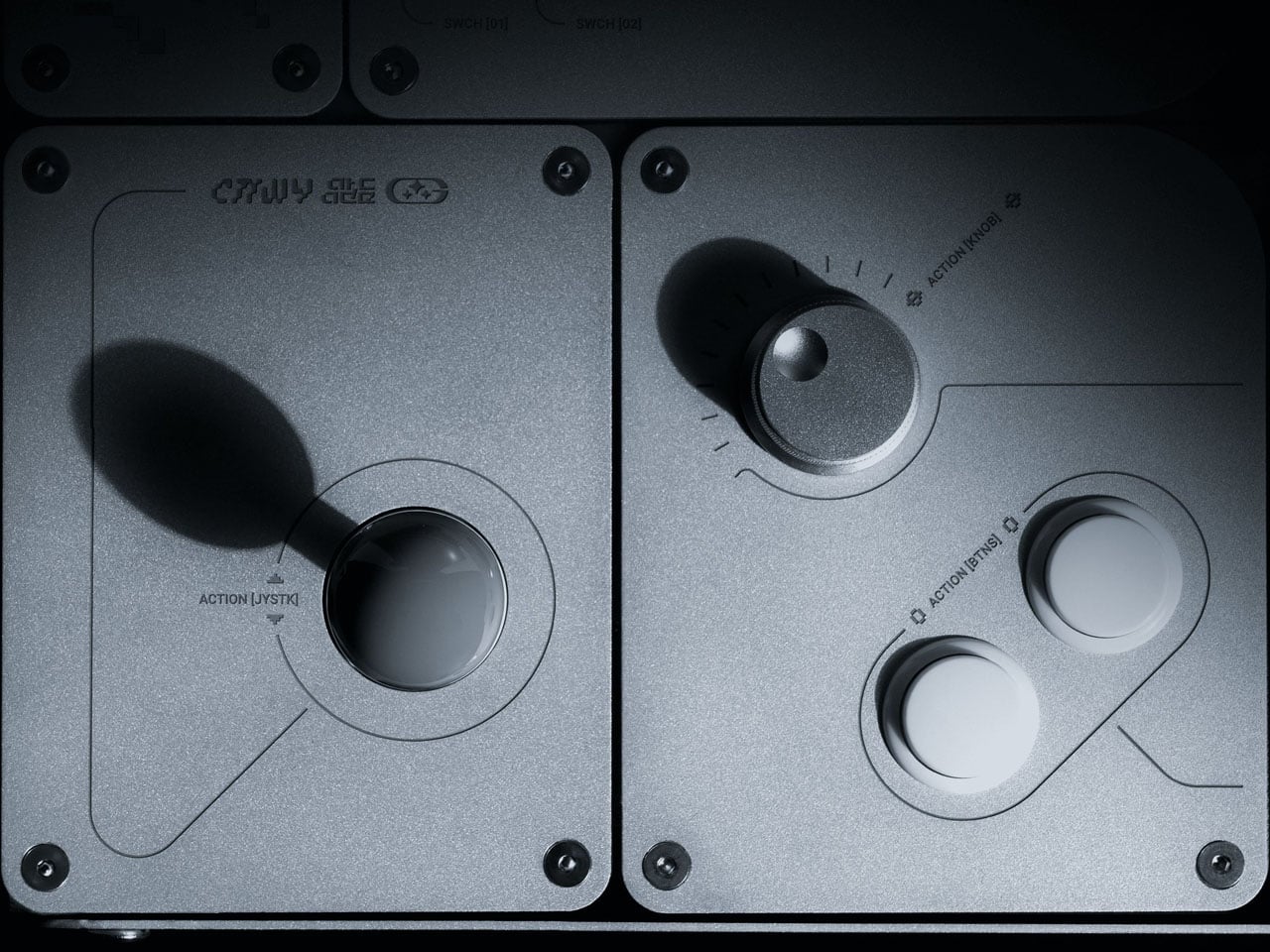
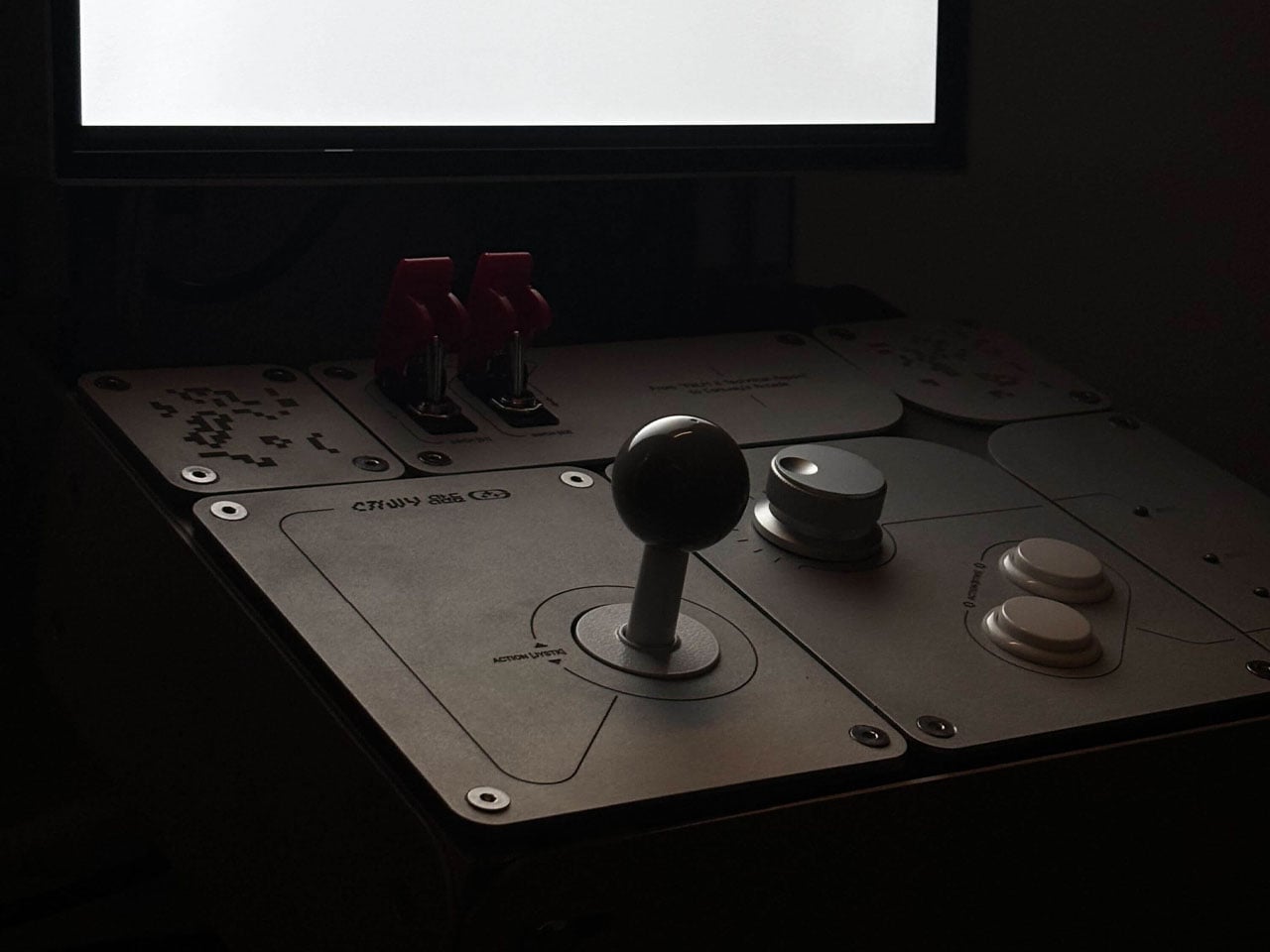
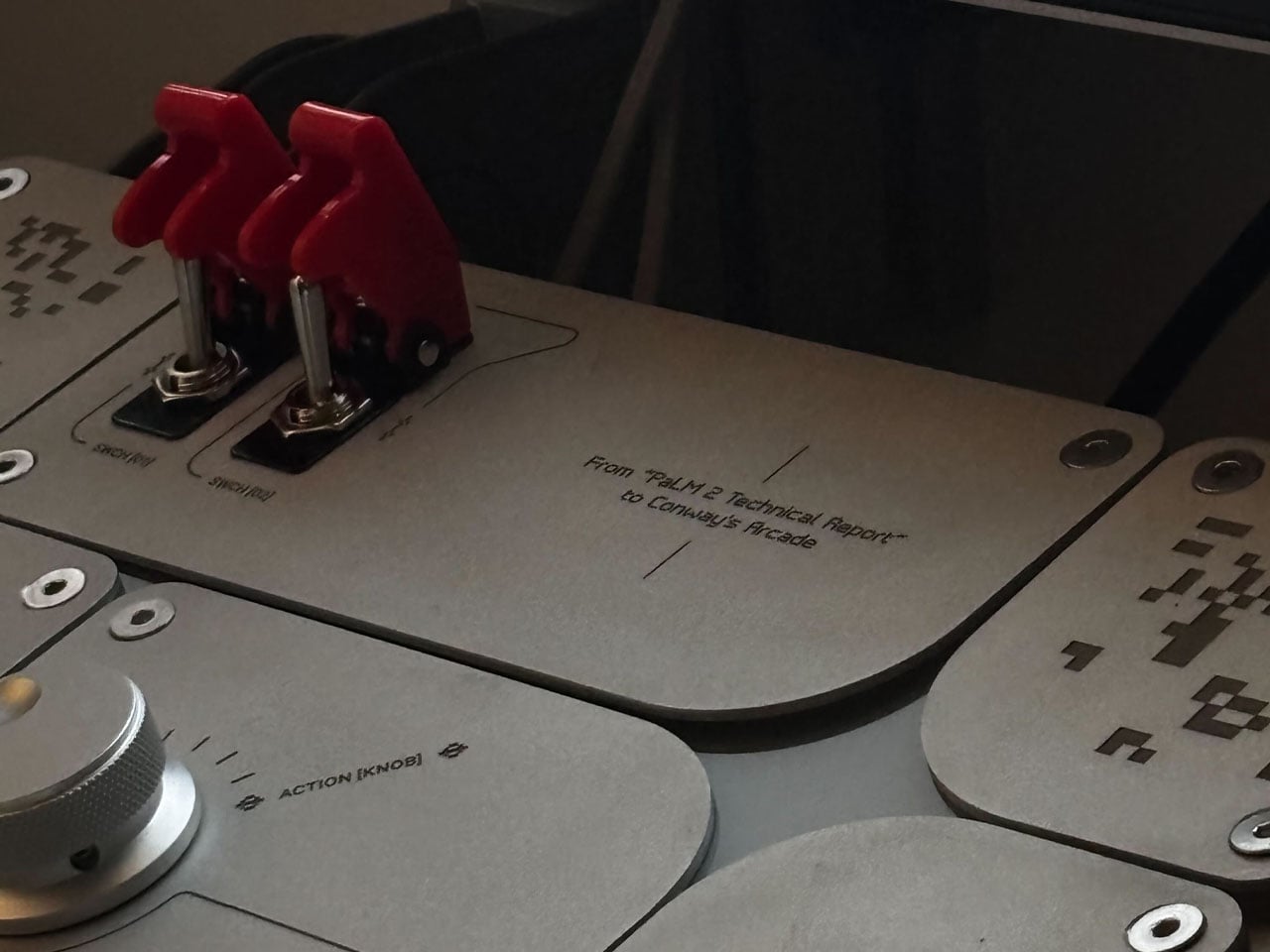
The physical design of Conway’s Arcade reinforces this philosophy. The cabinet is constructed entirely from aluminum and designed as a lightweight, modular structure that can be assembled by a single person in under an hour. Fabricated by Barcelona-based workshop 6punyales, the hardware balances durability with portability, making it suitable for exhibitions and travel. Mechanical joysticks, tactile buttons, and red latched switches reference classic arcade interfaces, while clean lines, exposed structure, and a custom typeface give the machine a distinctly contemporary presence.

Visuals follow a restrained 8-bit aesthetic, not as nostalgia for its own sake but as a clear, readable interface for generative behavior. On screen, game elements act like independent agents within a system, making the effects of rule changes visible and understandable. Rather than hiding computation behind spectacle, Conway’s Arcade puts logic on display, using play as the medium for comprehension.

Commissioned by Google and presented to an audience deeply familiar with artificial intelligence and machine learning, Conway’s Arcade succeeds by making abstract ideas accessible. It reframes the arcade cabinet as a tool for communication, showing how simple rules can generate complexity, creativity, and the element of surprise.

The post AI-powered Conway’s Arcade not only plays classic games, it invents them in real-time first appeared on Yanko Design.
Revolutionary Camera Features of the Samsung Galaxy S26 Ultra

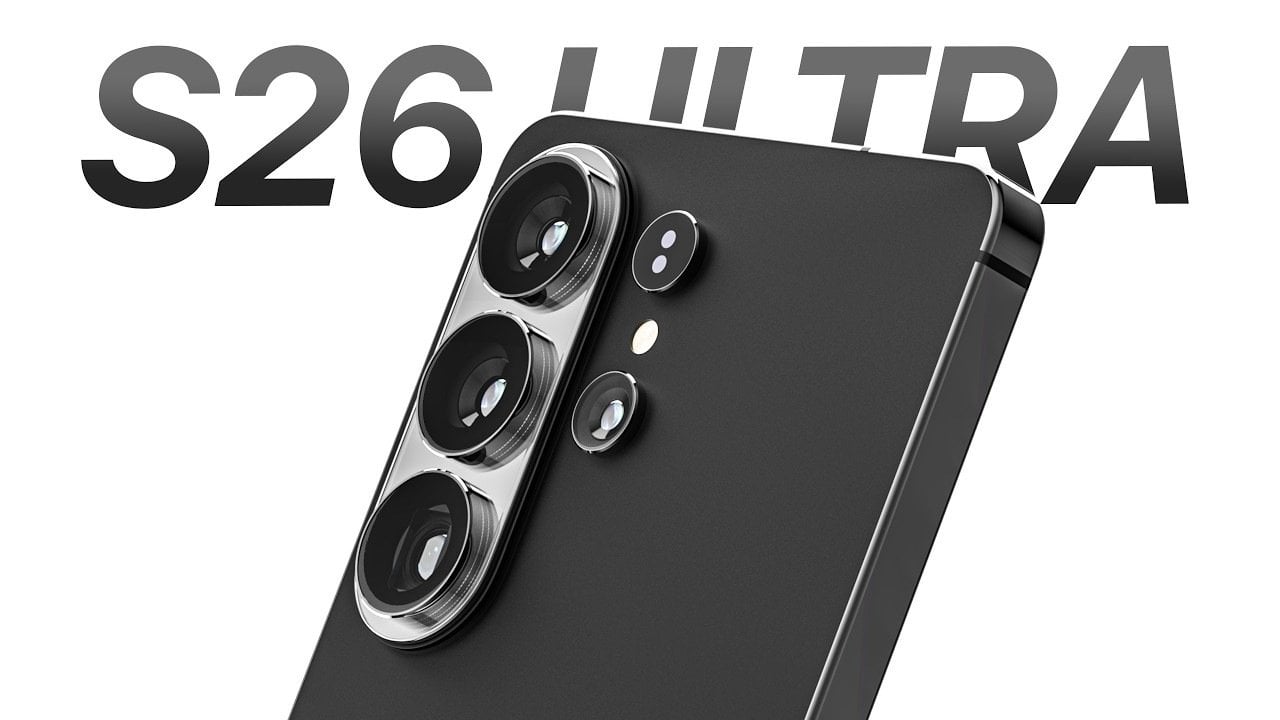
Revolutionary Camera Features of the Samsung Galaxy S26 Ultra Samsung Galaxy S26 Ultra showcasing its advanced camera system

The Samsung Galaxy S26 Ultra is poised to set new standards in the premium smartphone market with its innovative upgrades in camera technology, design, and software functionality. While certain features may undergo minor adjustments, the device introduces significant advancements aimed at enhancing the user experience. With a refined build, exclusive features, and a fresh palette […]

The post Revolutionary Camera Features of the Samsung Galaxy S26 Ultra appeared first on Geeky Gadgets.

Posted in Uncategorized