Defense Secretary Pete Hegseth will reportedly give Anthropic until Friday to drop certain guardrails for military use, as reported by Axios. The outlet also reported that CEO Dario Amodei met with Hegseth yesterday as the Pentagon ratcheted up pressure on the AI company to give in to its demands.
The makers of Claude have reportedly been offered an ultimatum: Either yield to the government's demands to remove limits for certain military applications, or potentially be forced to tailor its AI model to the government's needs under the Defense Production Act.
Anthropic, for its part, has said that while it was willing to adopt certain policies for the Pentagon, it would not allow its model to be used for mass surveillance of Americans or for the development of autonomous weapons.
Claude is currently the only AI model employed in some of the government's most sensitive work. "The only reason we're still talking to these people is we need them and we need them now. The problem for these guys is they are that good," a defense official told Axios.
The Pentagon is reportedly ramping up conversations with OpenAI and Google about using their models for classified work. ChatGPT and Gemini are already approved for unclassified government use. Elon Musk's xAI also recently signed with the DoD to use Grok in classified systems.
This article originally appeared on Engadget at https://www.engadget.com/ai/the-pentagon-has-reportedly-given-anthropic-until-friday-to-let-it-use-claude-as-it-sees-fit-203549467.html?src=rss
12:28 AMHuaqiangbei operates on its own physics. The sprawling electronics market in Shenzhen is the place where flagship smartphones get dismantled, reimagined, and rebuilt into things their original manufacturers never approved and probably never imagined. It runs on American time, buzzes with microscopes and milling machines, and treats the word “warranty” as a polite suggestion. If you want something done to your phone that a brand explicitly decided against, this is where you go.
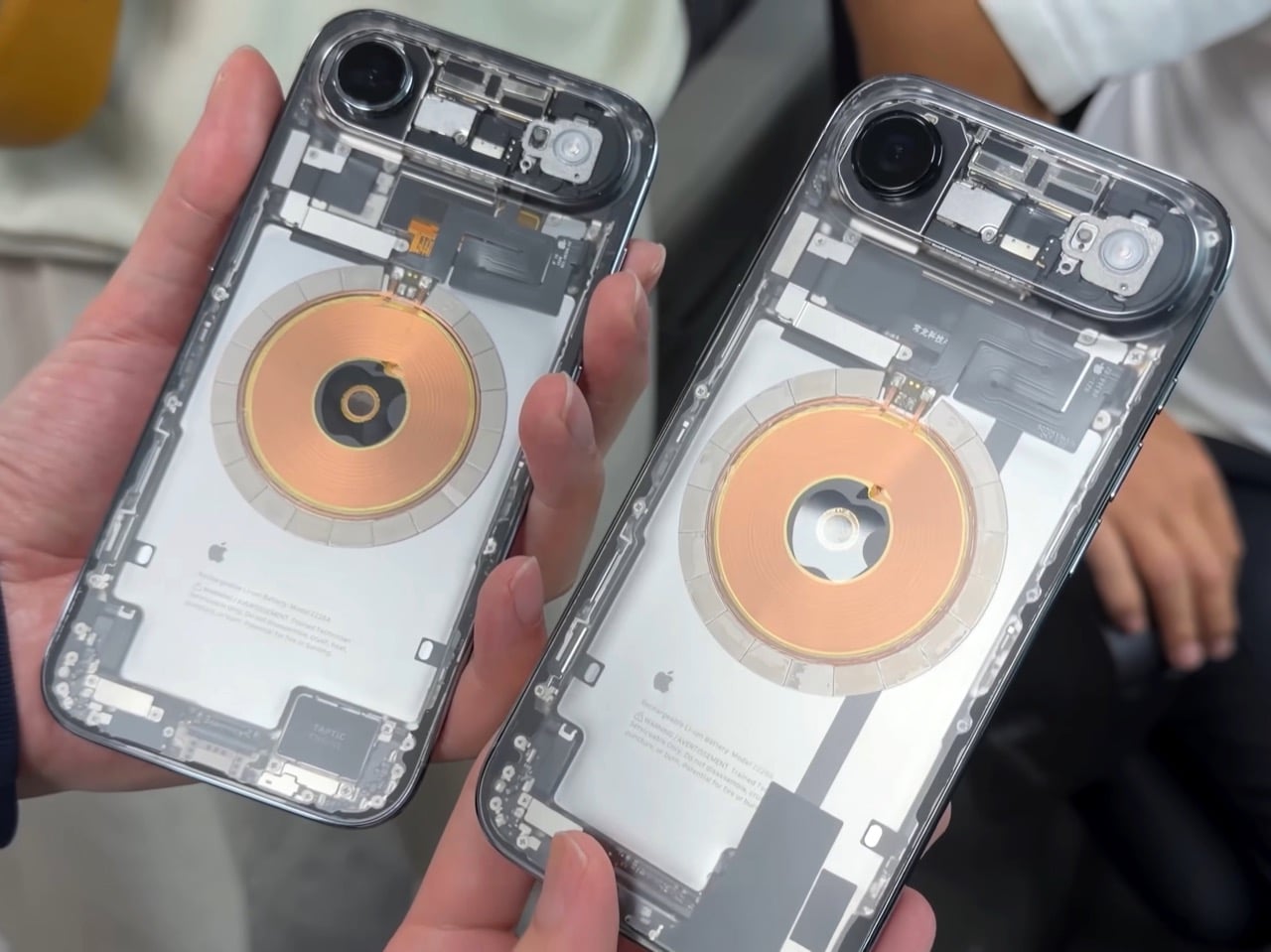
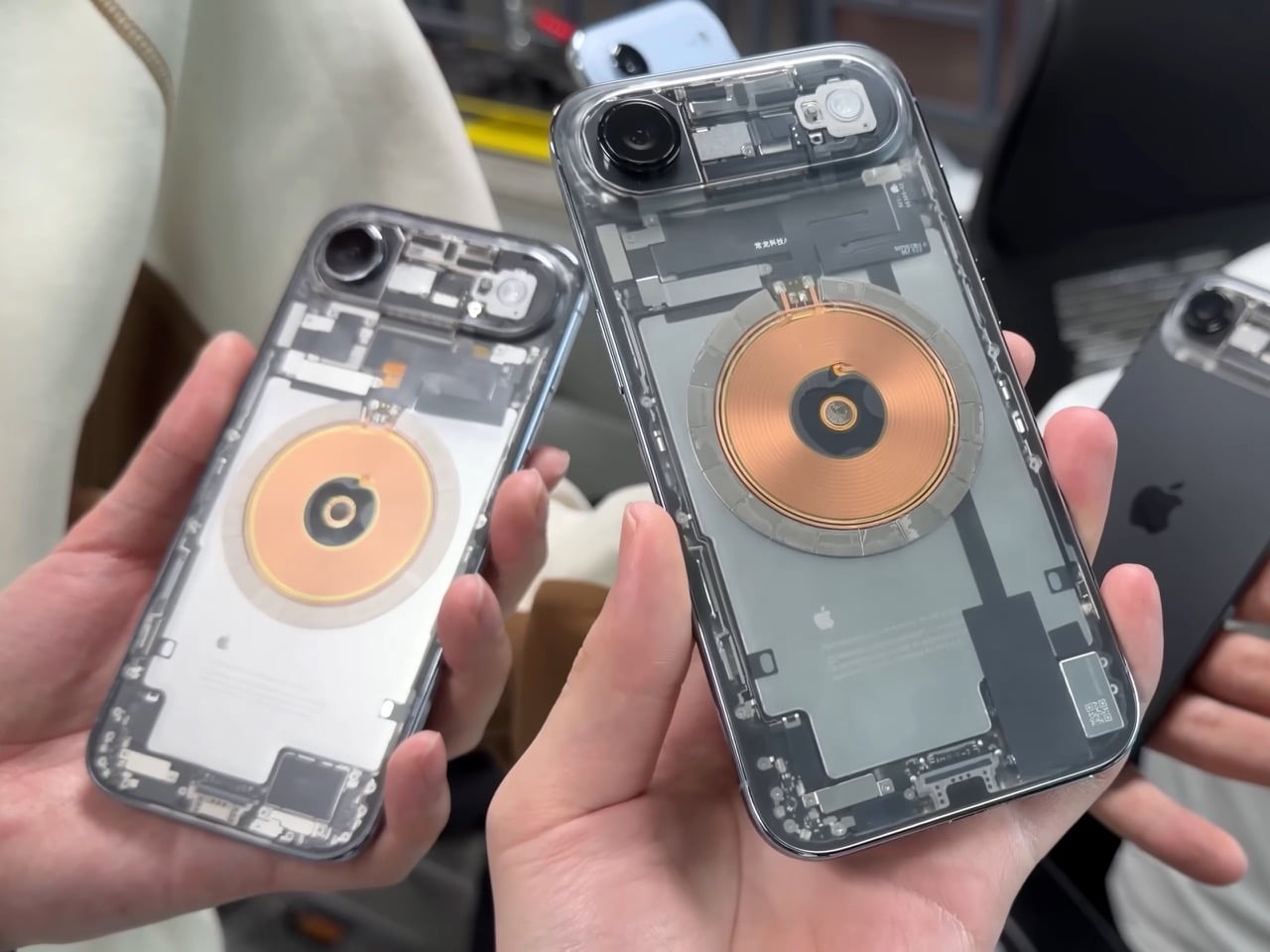
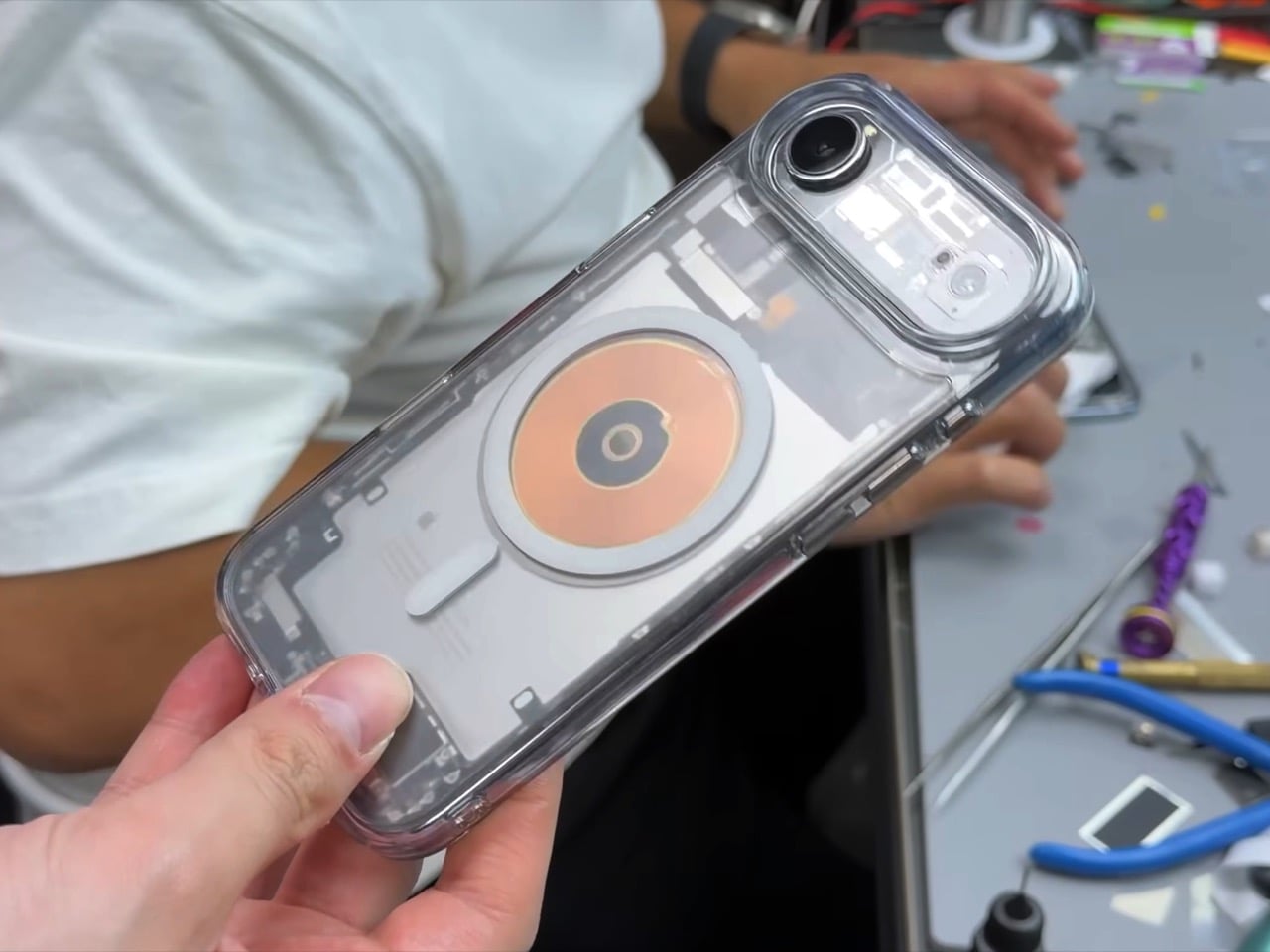
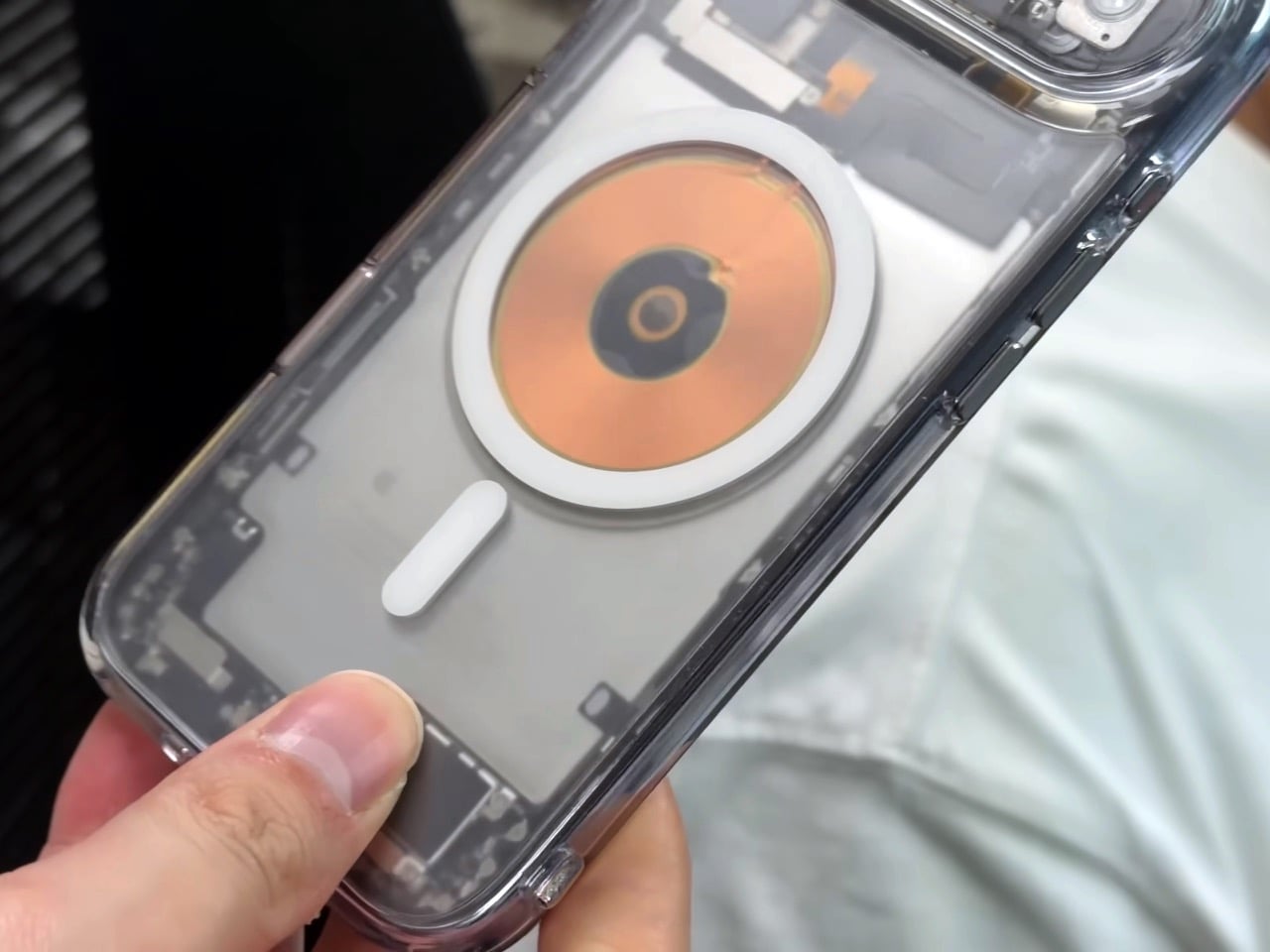
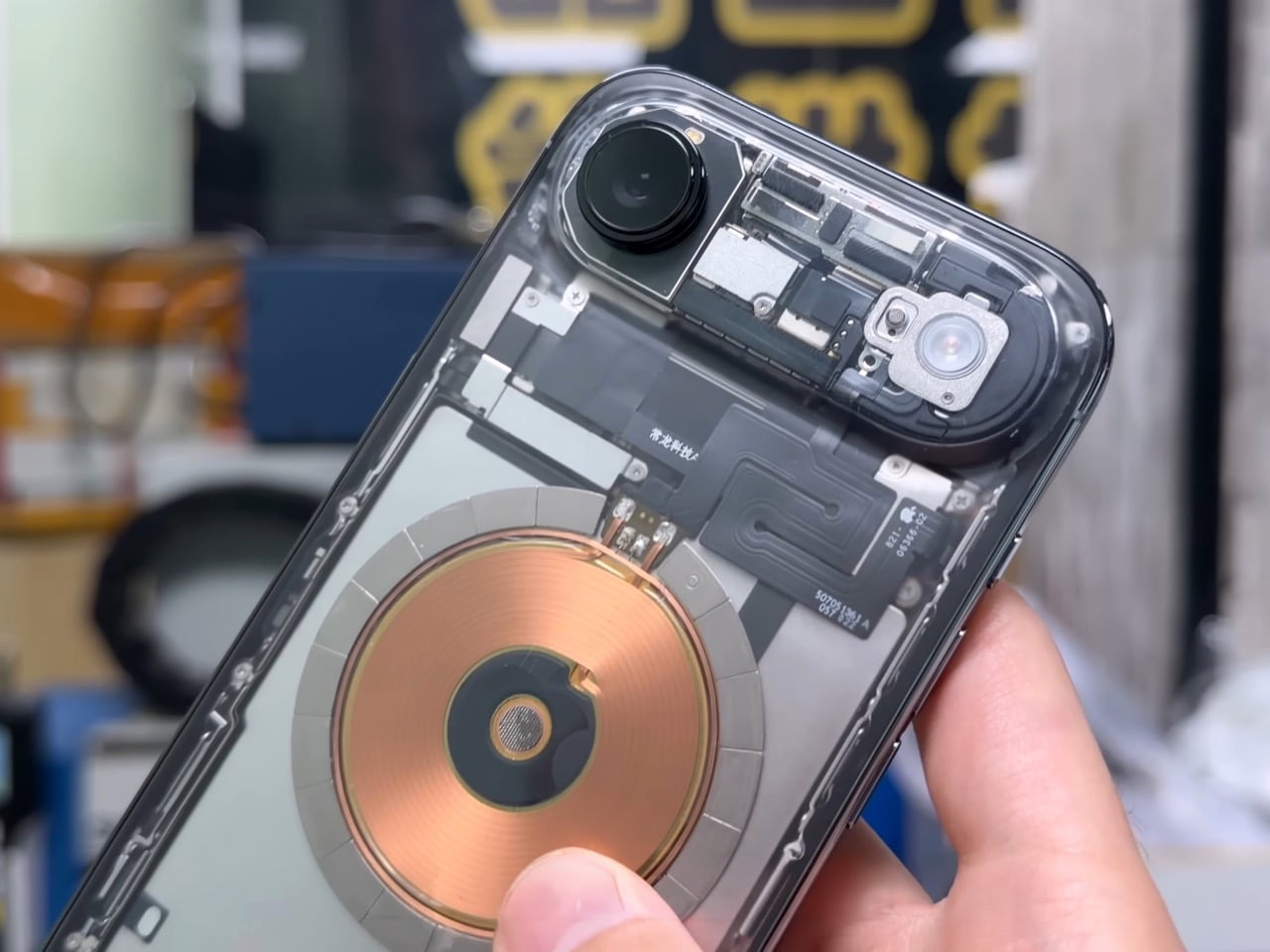
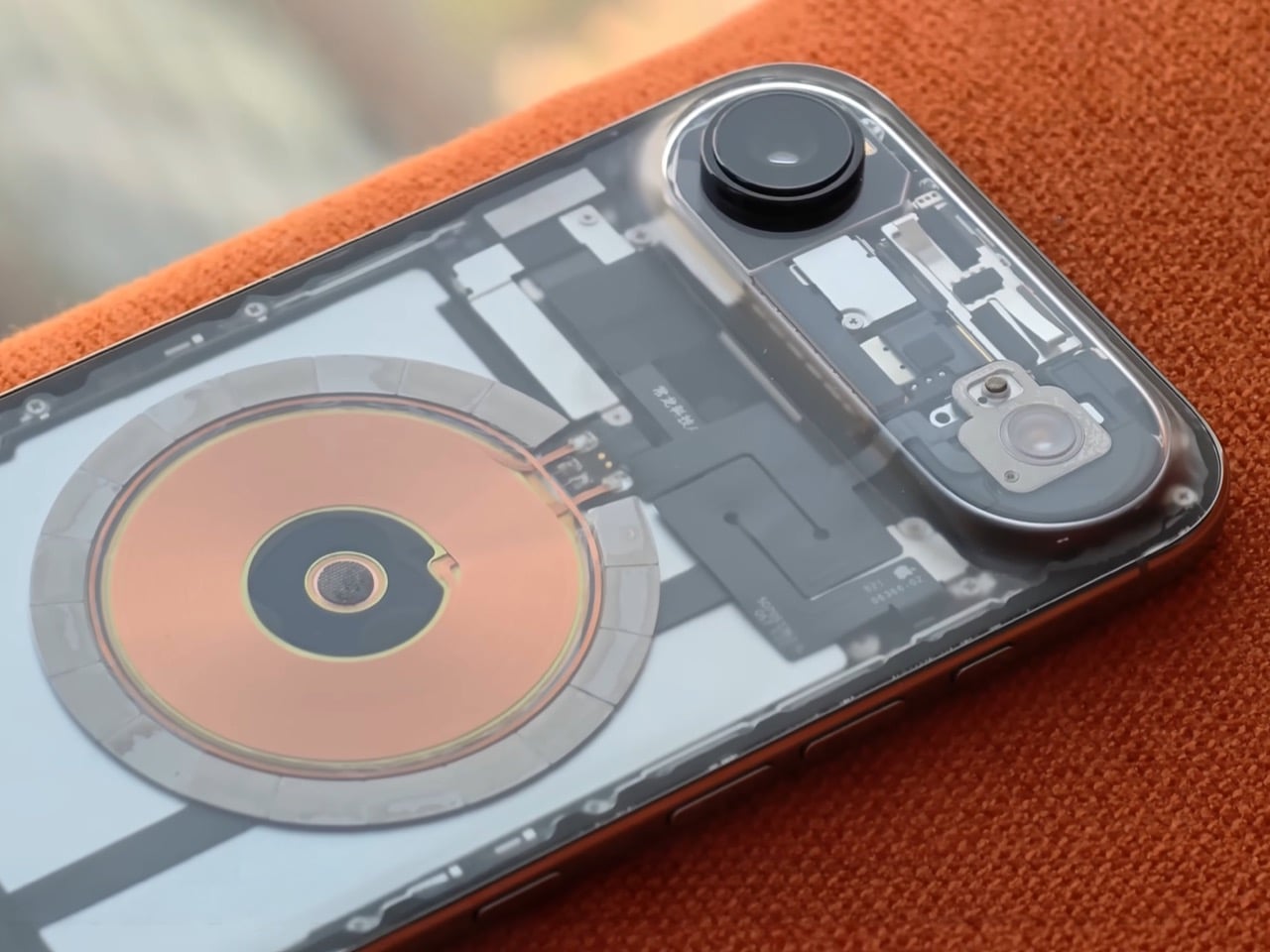
Taiwanese creator Linzin Tech went there with a blue iPhone Air, the thinnest iPhone Apple has ever made and the first one sold without a physical SIM slot anywhere in the world. He left with something that looks like a cyberpunk collector’s piece: a fully transparent-backed iPhone Air with a functioning nano-SIM tray carved directly into its frame, wired into the motherboard by hand, under a microscope, late at night. A Dbrand X-Ray case could never…
Designer: Linzin Tech
YouTuber Scotty Allen built an iPhone with a headphone jack in Huaqiangbei. He also assembled a working iPhone almost entirely from parts bought off the street there. The market has this reputation for turning Apple’s deliberate omissions into solved problems, and the community around it keeps raising the difficulty level. Linzin’s challenge was particularly gnarly because he wanted two separate modifications on Apple’s most space-constrained iPhone ever, one cosmetic and one structural, and both required touching parts of the phone that Apple engineers spent years optimizing down to the millimeter.
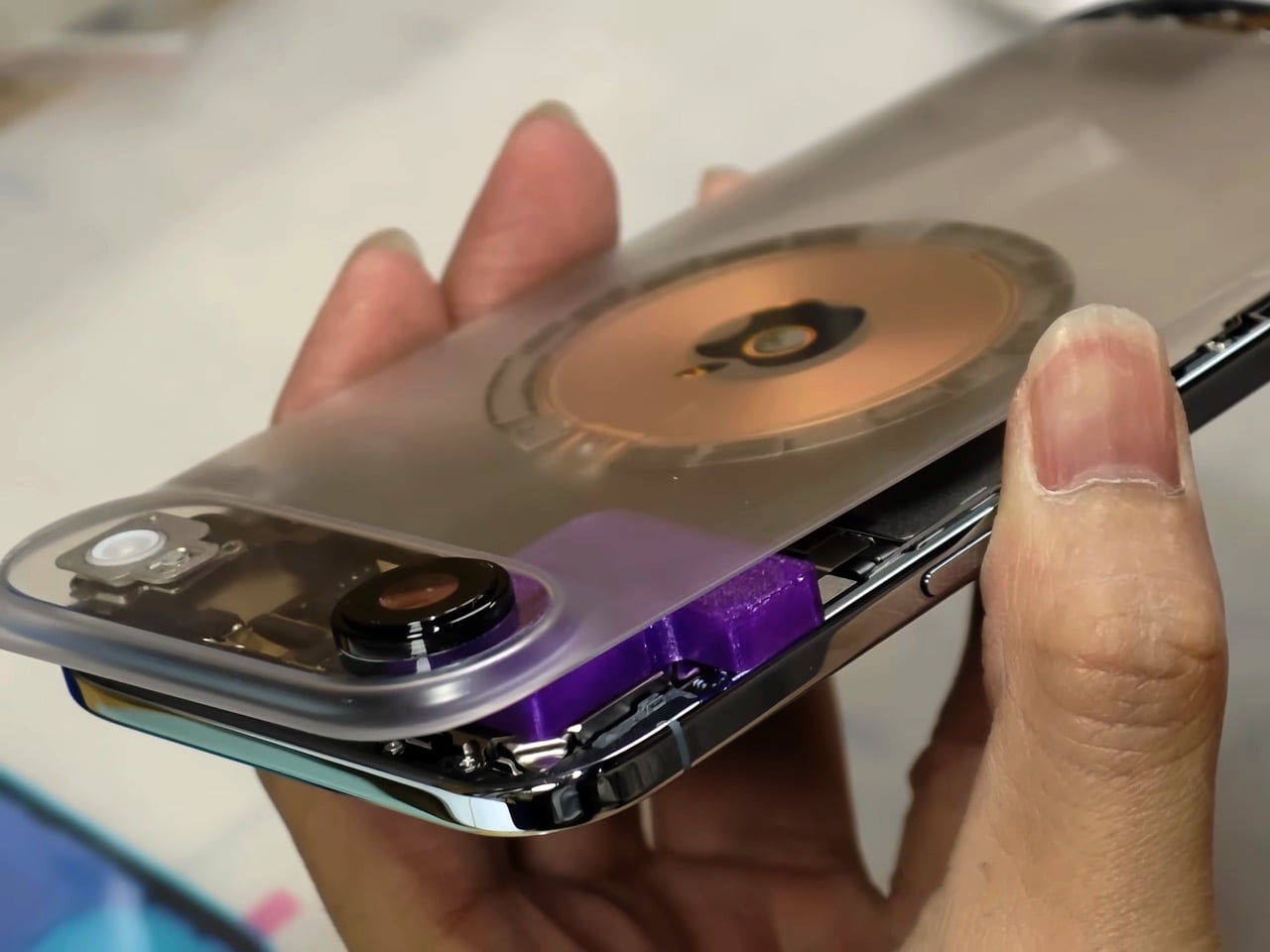
The transparent back came first, and the process was a laser job performed on the rear glass panel. Technicians at Changlong Technology stripped the internal paint layer without touching the MagSafe charging coil sitting directly beneath it, which is about as precise as it sounds. Once the coating was gone, the phone’s internals became fully visible through the glass: the battery, logic board, shielding, internal connectors, and the flexible cable running between the upper and lower assemblies with “Changlong Technology” printed right on it. The Apple logo floats above actual hardware now. It looks like a concept render that somehow got approved.
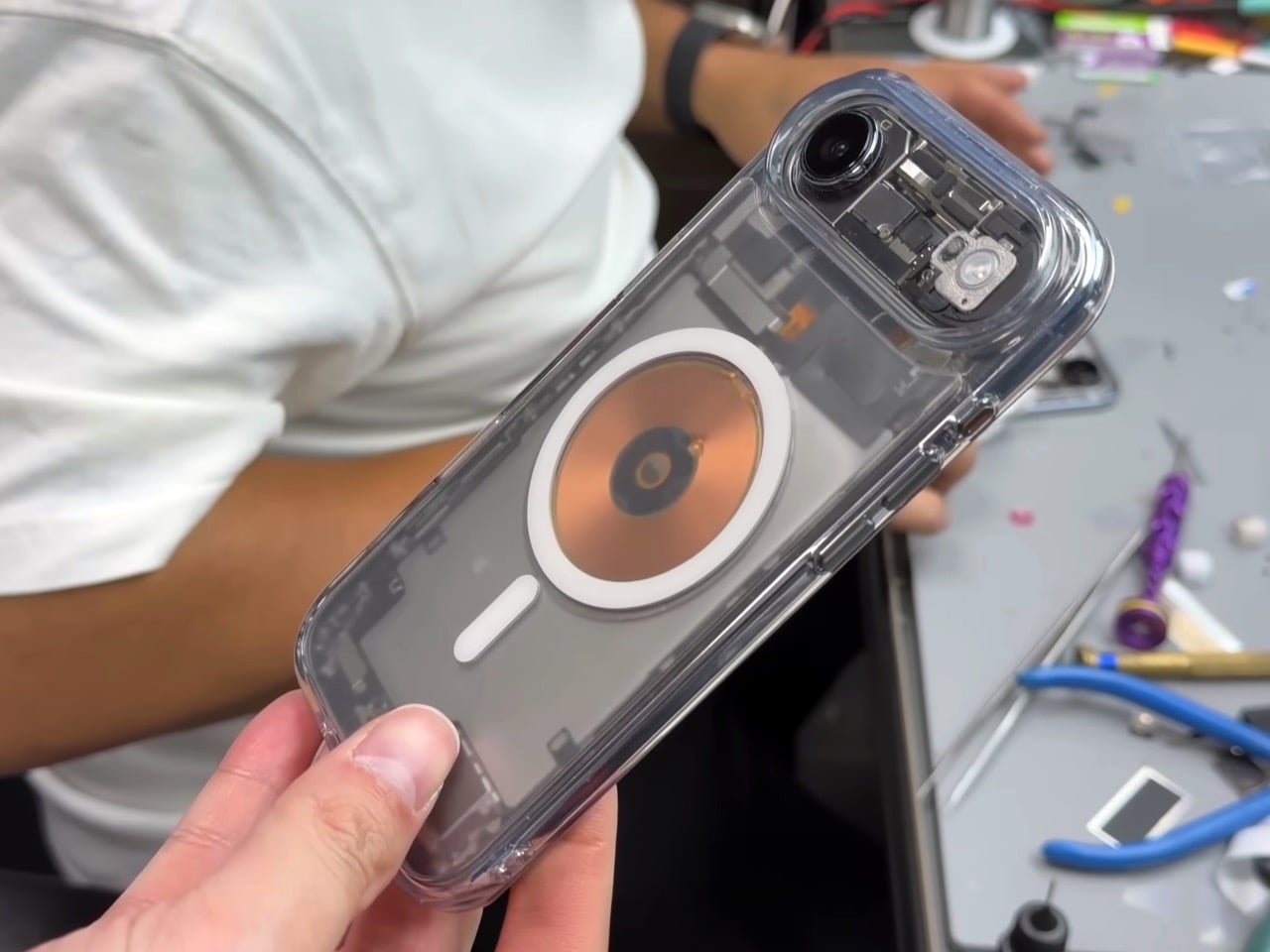
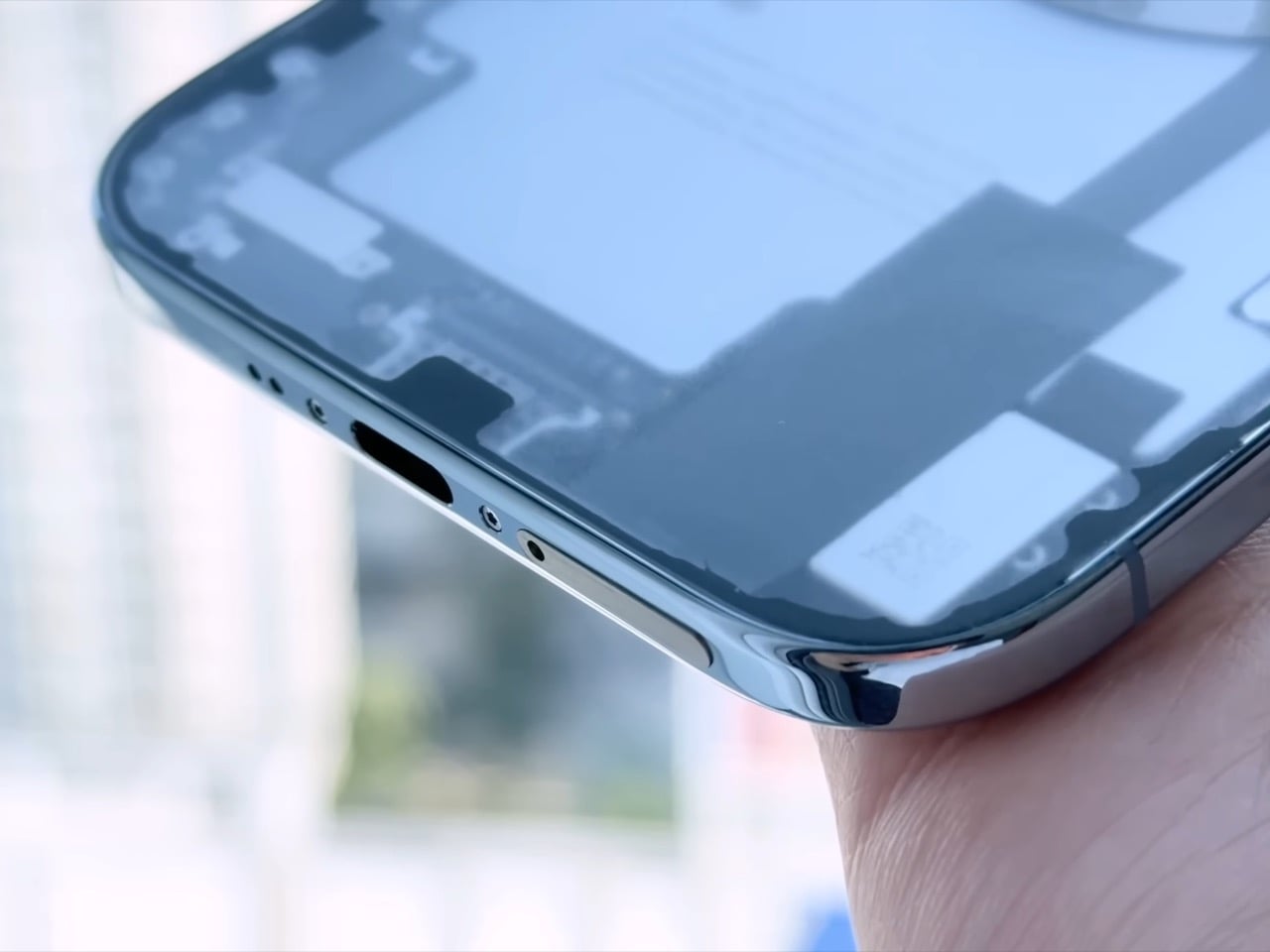
The iPhone Air has no physical SIM slot in any market, globally, which meant Changlong’s team had to use a CNC milling machine to carve a slot opening into the phone’s ultra-thin metal frame. The original Taptic Engine had to come out entirely because there was simply no room for both it and a SIM tray in that chassis. A smaller third-party linear motor went in its place. Linzin estimates the haptic feedback at around 98% of the original, with the main perceptible difference being less granularity between light and heavy vibration patterns. Apple’s Taptic Engine is genuinely one of the finest haptic systems in consumer electronics, so even a 2% degradation is something purists will notice.
Board-level microsoldering connected the new SIM reader to the motherboard, and after a reboot the phone recognized a physical nano-SIM and connected to a carrier on 5G. Hot-swapping requires a restart to register a new card, which is a minor workflow tax. The thermal picture is less rosy. The graphite heat spreader sheets were casualties of the laser process and were not fully reinstated, which pushed operating temperatures noticeably higher under sustained load. Linzin ran 20 rounds of stress testing and confirmed the throttling. IP68 water resistance is also gone the moment the frame gets milled. And on the morning he flew back to Taiwan, the microphone ribbon cable came loose, sending the phone back to Shenzhen for repairs.
Close-up of the machined SIM tray
Here is the thing though. Linzin paid real money for a phone Apple sells for a premium, then paid again to have it modified, accepted degraded thermals, lost water resistance, voided his warranty instantly, and still calls it worth it. His reason is genuinely practical: he changes phones weekly and eSIM-only means a carrier visit every single time. The modification solves a real problem for a specific kind of power user, and it does so with enough visual drama that you would probably auction this thing for three or four times its retail price. Huaqiangbei has been poking holes in Apple’s “impossible” list for years. This one just happens to be the most beautiful hole yet.
Google sent out an AI-generated news alert that included the N-word, according to reporting by Deadline. The push notification featured a link to a story by The Hollywood Reporter regarding an incident at the recent BAFTA Film Awards. The word appeared in the notification under the link.
This was first spotted by Instagram user Danny Price, who accompanied a screengrab with a caption reading "what an interesting Black History Month this has turned out to be." Google has since apologized and said that it has "removed the offensive notification" and is "working to prevent this from happening again."
This story follows the aforementioned BAFTA incident, in which an audience member with Tourette syndrome shouted the N-word when Michael B. Jordan and Delroy Lindo took to the stage to present an award. Tourette syndrome activist John Davidson, who made the comment, said he was "deeply mortified if anyone considers my involuntary tics to be intention or to carry any meaning." The incident has sparked outrage and a renewed discussion on the realities of living with vocal tics.
Asking for more grace for the person who shouted a racist slur instead of for Michael B. Jordan and Delroy Lindo, who had to push through being embarrassed in front of their peers.
But that’s often the expectation — that Black people are just supposed to be ok with being… https://t.co/MqHbC8XwsA
AI makes lots of high-profile errors and this isn't the first time it has ruined a news alert. Apple actually scrapped its own AI push notifications last year when the tool made a series of embarrassing mistakes, including wrongly telling readers that the man accused of killing UnitedHealthcare CEO Brian Thompson, Luigi Mangione, had shot himself.
This article originally appeared on Engadget at https://www.engadget.com/ai/google-sent-an-ai-generated-push-alert-that-included-a-racial-slur-195951493.html?src=rss
Three years after announcing plans to produce a film based on the viral YouTube short, The Backrooms (Found Footage) in 2023, A24 has released the first teaser for its adaptation. Backrooms, as the film is now called, is directed by the short's original creator, Kane Parsons, and will be released on May 29, 2026.
The teaser offers little to go on for anyone who hasn't watched the original short or the series of videos Parsons made after it, but it is replete with The Backrooms' hallmark: ominous liminal spaces. Layered over footage of stranger and stranger rooms (or perhaps one room becoming the platonic empty retail spaces popularized by short), the voice of Chiwetel Ejiofor tells the film's other star, Renate Reinsve, about a "place" he discovered that's full of rooms.
Parsons' original video is inspired by a creepypasta called "The Backrooms" that originated on the forum 4chan in 2019. The YouTube series expanded on the basic concept of a liminal space that exists outside reality with monsters and a mysterious company researching The Backrooms. It's unclear how much of that larger lore will be incorporated into the feature film adaptation, but since the teaser is missing the digital video filter that gave the YouTube short its distinct look, it seems possible Parsons could be going for something a bit different. Well that, and the fact the film stars two Oscar-nominated actors.
This article originally appeared on Engadget at https://www.engadget.com/entertainment/tv-movies/heres-the-first-teaser-for-a24s-adaptation-of-the-backrooms-194300513.html?src=rss
Waymo had set out some big plans for expanding its autonomous vehicle taxi program across the US in 2025 and it appears to be continuing that pace into 2026. Today, the company announced that the first public riders can begin using its fully autonomous ride-hailing service in Dallas, Houston, San Antonio and Orlando.
To start, these robotaxi rides will only be available for a small number of people with the Waymo app in those cities. "We will be inviting new riders on a rolling basis to ensure a seamless experience across our initial service areas, as we meaningfully scale our operations ahead of opening our service to everyone later this year," the company said in the blog post announcing the expansion.
Google-owned Waymo is now operating in ten commercial metro areas. It announced its plans to start testing its vehicles in these four US cities in November. The company also began a test phase in Miami at that time, and Waymo's robotaxi service began accepting riders in that locale in January.
This article originally appeared on Engadget at https://www.engadget.com/transportation/waymo-will-start-offering-robotaxi-rides-in-four-more-cities-192841871.html?src=rss
We're less than a month from the availability of Death Stranding 2: On the Beach on PC, and today Sony released the required specs. Despite designer Hideo Kojima being known for spectacle in his projects, the minimum specs are quite reasonable.
The low graphics preset runs on an NVIDIA GeForce GTX 1660 or AMD Radeon RX 5500 XT 8GB, and that will give players average performance of 1080p at 30 frames per second, which is rough but at least makes the game available for players who haven’t upgraded in awhile. Intel Core i3-10100 or AMD Ryzen 3 3100 are the recommended GPUs for that graphics tier. As is typical for PC gaming, though, the higher end performance options will require beefier internals.
This port of Death Stranding 2 will also boast a few firsts. The title will mark the debut of Pico as an upscaling option on PC. This upscaler was made by Guerilla Games and was also used for the Death Stranding sequel on the PlayStation 5. The game will also be adding support for ultrawide views. The cutscenes can be viewed in a 21:9 aspect ration and gameplay can be displayed at 32:9. This option will be available for both PC and the PS5 versions of the game, and an ultrawide monitor won't be required to enable this view option.
This article originally appeared on Engadget at https://www.engadget.com/gaming/sony-reveals-the-death-stranding-2-required-pc-specs-184411856.html?src=rss
A new app will notify users if smart glasses are likely nearby. The aptly named Nearby Glasses was developed in response to media coverage outlining how glasses like Meta's Ray-Bans have been used to film people without their consent.
As first reported by 404 Media, the app detects the unique Bluetooth signature emitted by smart glasses and sends a push alert that someone wearing the device may potentially be nearby. “I consider it to be a tiny part of resistance against surveillance tech,” the app's developer Yves Jeanrenaud told 404 Media.
Smart glasses have sparked increased privacy concerns, especially as Meta is reportedly working to add facial recognition technology to its Meta Ray-Bans. OpenAI is also reported to have a pair of smart glasses in the works. It bears mentioning that false positives may occur, including from VR headsets.
This article originally appeared on Engadget at https://www.engadget.com/apps/someone-made-an-app-to-warn-you-if-smart-glasses-are-nearby-183359723.html?src=rss
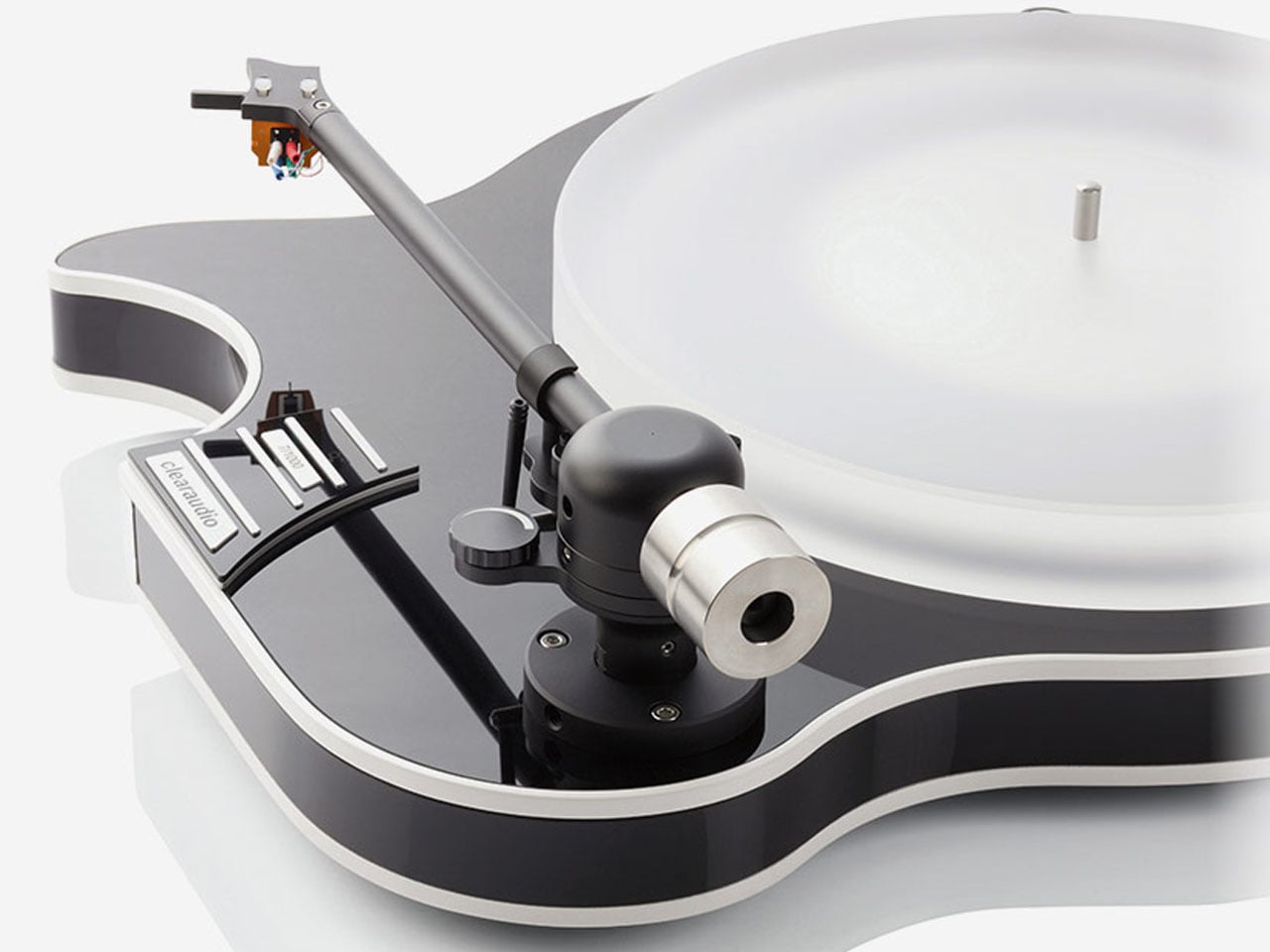
In the world of high-fidelity audio, certain products move beyond function and enter the realm of art. For instance, the VS-01 Bluetooth Vertical Turntable, Orbit Turntable, Concrete Stereo, or Memphis-inspired vinyl player are all in a league of their own. For decades, German manufacturer Clearaudio has built a reputation for engineering turntables that prioritize craftsmanship and sonic purity. With its latest release, the brand takes a more expressive turn, blending technical mastery with musical tribute. The Clearaudio Celebrity Al Di Meola Edition turntable is not only a playback device but also a sculptural homage to one of contemporary jazz’s most influential guitarists, Al Di Meola.
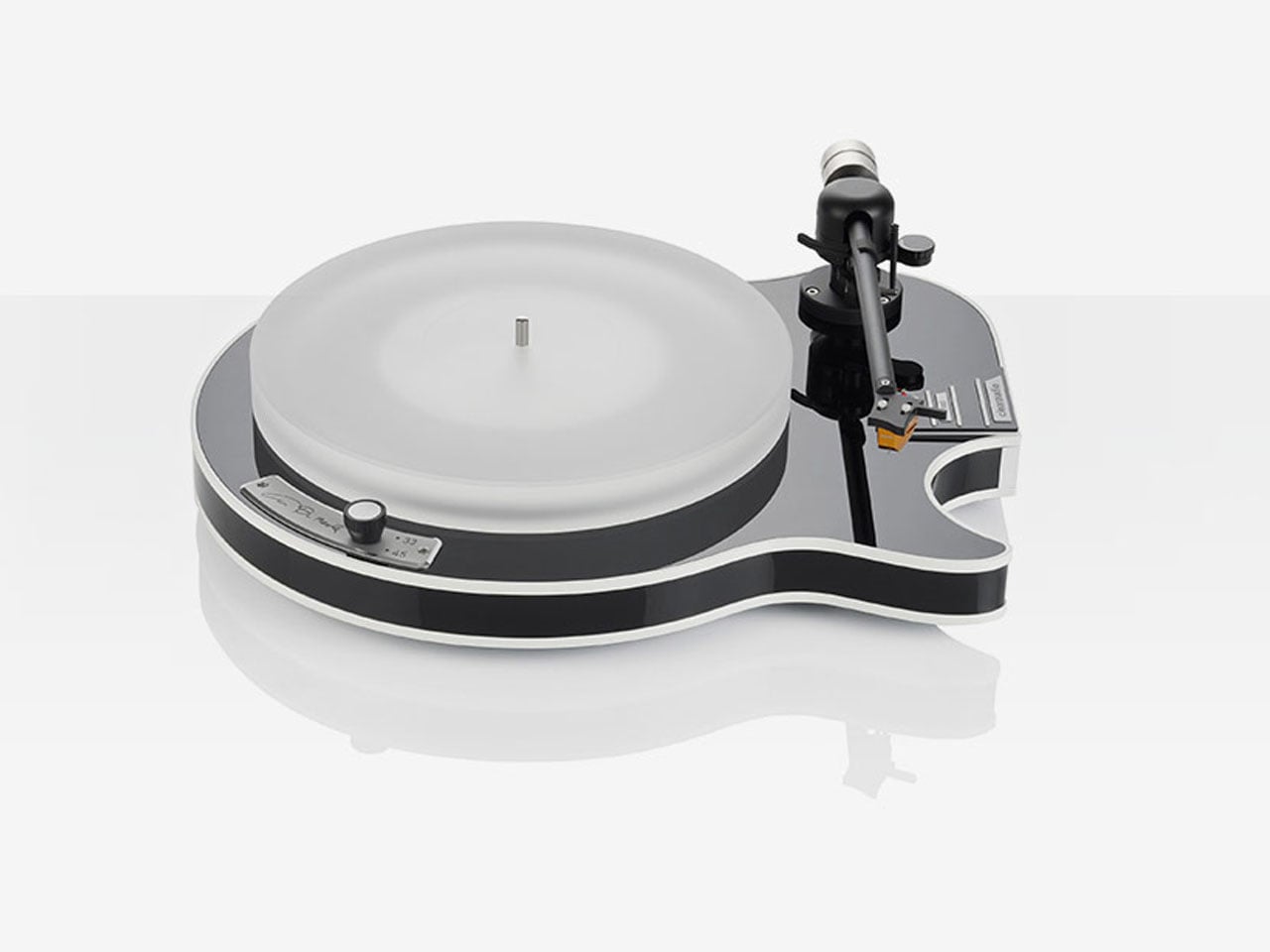
Limited to just 1,000 units worldwide, this inaugural model in Clearaudio’s Celebrity series celebrates Di Meola’s virtuosity through both sound and form. The most striking element is its body, shaped in the flowing outline of an electric guitar. Crafted from high-density wood fiber, the chassis is available in either a deep black finish or a real rosewood veneer, reinforcing its visual connection to the instrument that defined Di Meola’s career. The design transforms the turntable into a statement piece, equally suited to a listening room or a curated interior space.
Beneath its artistic exterior lies serious engineering. The turntable features a 30 mm high-density platter paired with a precision CNC-machined aluminum sub-platter. A flat belt drive system ensures smooth rotation, while Clearaudio’s Tacho Speed Control (TSC) continuously monitors and adjusts speed in real time. This system compensates for variables such as temperature fluctuations or belt tension changes, automatically recalibrating at startup to maintain accurate playback at both 33⅓ and 45 RPM. The result is stable rotation and faithful sound reproduction, essential for preserving the nuances of analog recordings.
Vibration control plays a central role in the turntable’s performance. Clearaudio incorporates its Innovative Motor Suspension (IMS) system, derived from higher-tier models in its lineup. The decoupled 12V DC motor is isolated from the chassis to minimize unwanted resonance and mechanical interference. This careful separation helps maintain clarity, allowing listeners to experience greater detail and dynamic range from their vinyl collection. Ease of use has also been thoughtfully considered. A multifunction control knob, inspired by a guitar’s volume dial, manages operation. With a single press, users can power the unit on, switch speeds, or place it in standby mode. During calibration, the knob can be rotated to fine-tune speed adjustments. The interface is simple yet tactile, echoing the physical engagement that defines vinyl playback itself.
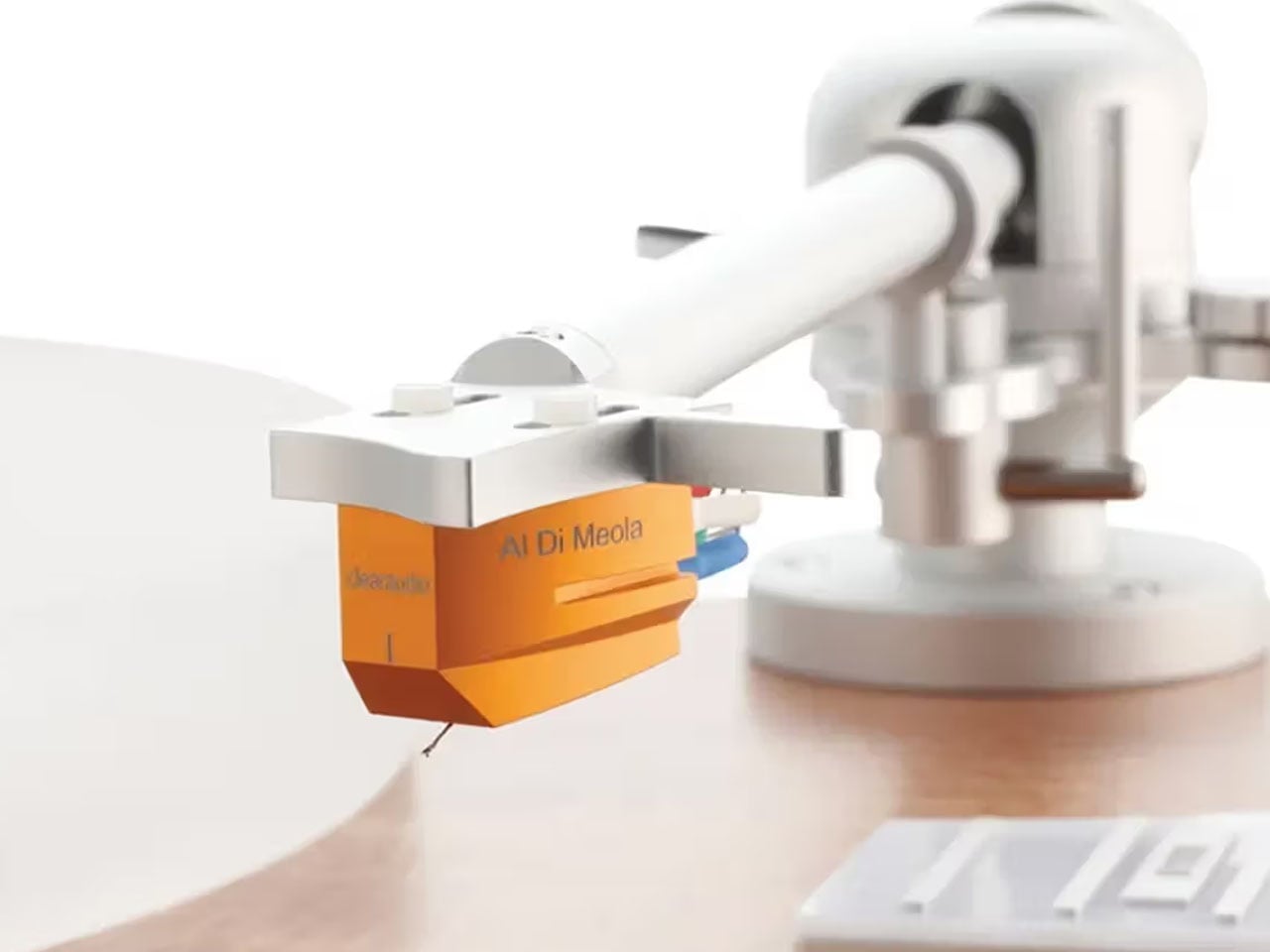
Each unit comes fully equipped with Clearaudio’s Profiler tonearm and a specially matched Celebrity moving-magnet cartridge, ensuring optimized performance straight out of the box. Adding to its collectible appeal, the package includes a numbered special-release vinyl album by Al Di Meola and a branded guitar pick, reinforcing the personal connection between artist and equipment. Weighing approximately 22 pounds and measuring about 18.1 x 14.2 x 5.5 inches, the turntable has a substantial presence without overwhelming a space. Its construction reflects careful material selection and attention to resonance control, balancing aesthetics with acoustic performance.
In terms of pricing and availability, the artistic vinyl player has a recommended retail price of about €3,950 (approximately $6,000 USD), depending on the retailer. That reflects the vinyl player’s premium design, precise engineering, and most importantly, collector value.
As spicy as the PlayStation State of Play that took place a couple of weeks ago was overall, there was one major first-party game that was notably absent from the showcase: Marvel’s Wolverine. Insomniac Games’ latest superhero blockbuster was already slated for a fall release and now the studio has revealed exactly when you’ll be able to get your claws on it. Marvel’s Wolverine is coming to PS5 on September 15.
That’s it. That’s the announcement. There’s no new trailer to accompany the news, other than a six-second release date reveal video that popped up on YouTube. Insomniac previously said it would reveal more details about Marvel’s Wolverine this spring.
Technically, this release date means that Marvel’s Wolverine will debut in the last week of summer rather than in the fall. Still, it’s one of the relatively few blockbuster games you can expect in the tail end of this year because many major developers and publishers will be staying well clear of GTA VI.
Insomniac’s game will have a couple of months of breathing room before GTA VI soaks up all of the air in the gaming world when it arrives on November 19 — assuming Rockstar doesn’t announce another delay. However, parent company Take-Two plans to rev up its marketing machine for the game this summer, so it’s looking like GTA VI’s release date will hold this time.
This article originally appeared on Engadget at https://www.engadget.com/gaming/playstation/marvels-wolverine-will-hit-ps5-on-september-15-175500927.html?src=rss
Apple just dropped a full trailer for the fifth season of its hit sci-fi show For All Mankind. This is the first real look at the upcoming batch of episodes, which premiere on March 27. We got an extremely short teaser trailer last month but that only showed a guy on a motorcycle riding across Mars.
This is the first real-deal trailer and it's absolutely stuffed with footage indicating where the next season will take viewers. I'm going to get into some spoilers here, so read at your own risk.
For the uninitiated, For All Mankind is an alternate history show that started with a simple premise. What if Russia landed on the moon before America? That has since ballooned into all kinds of stuff which include, as mentioned above, a potential war on Mars.
For All Mankind is a show famous for its time jumps, and season five takes us all the way to an alternate version of 2012. Many of the show's original surviving characters are still kicking around, but they are old as paste and not exactly fit for high-octane space travel. Remember, the first episode started in the 1960s. Franchise lead Ed Baldwin (Joel Kinnamen) looks particularly dusty.
Much of the footage features newer characters, including the grandson of Baldwin. Season four ended with a Mars colony asserting its independence via asteroid theft. Now it looks like Earth is striking back, which could lead to a full-scale war. This is giving me The Expanse vibes, which is never a bad thing.
The show must be clocking good numbers for Apple TV+, as the streamer recently announced a spinoff called Star City. Details are scant, but it looks to cover similar events of the mainline show from Russia's perspective.
New episodes of For All Mankind air each Friday. This season will feature ten episodes and concludes on May 29.
This article originally appeared on Engadget at https://www.engadget.com/entertainment/tv-movies/for-all-mankinds-latest-trailer-teases-a-war-on-mars-174822481.html?src=rss