Claude’s Excel add-in combines automation with a natural language interface to simplify financial modeling tasks. As demonstrated by Ali H. Salem, this add-in supports workflows such as creating formulas, generating charts and analyzing data through intuitive prompts. For example, users can select between two model types—Opus, designed for detailed and complex scenarios and Sonnet, tailored […]
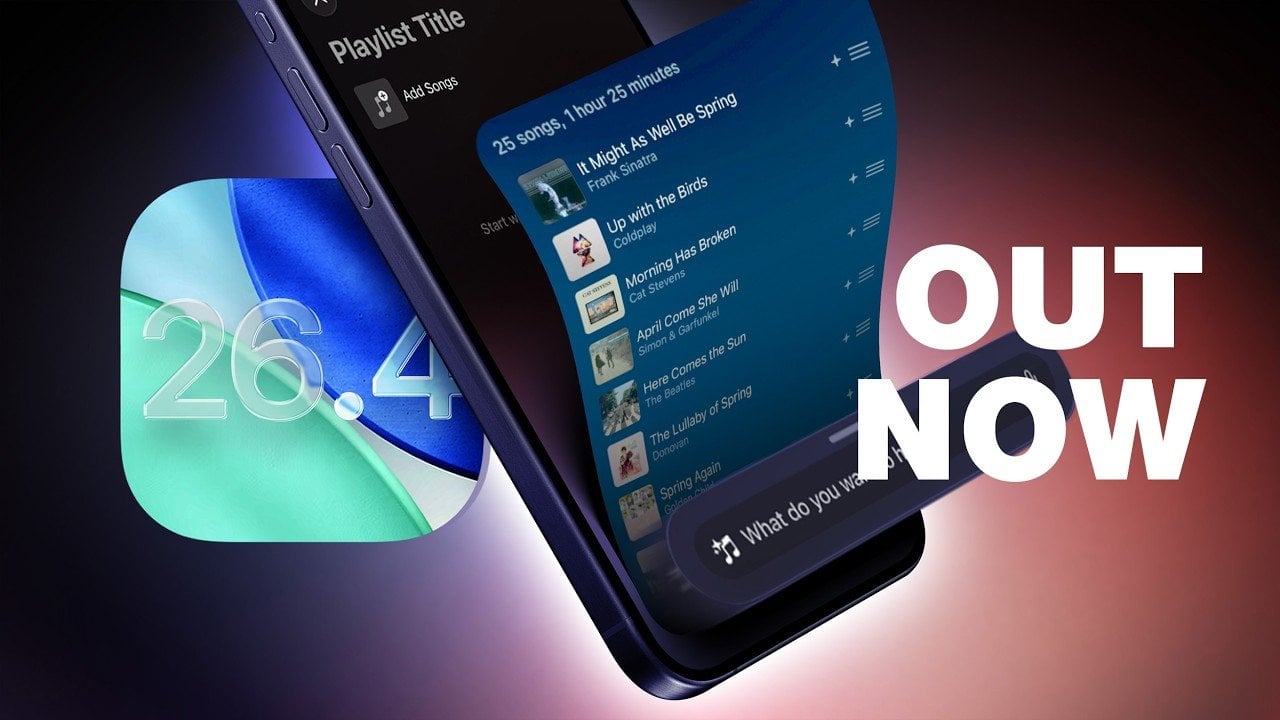
Apple has officially launched iOS 26.4, introducing a wide range of updates designed to enhance usability, boost creativity, and refine multimedia experiences. This latest release brings improvements across various apps, device functionality, and customization options, making it a comprehensive upgrade for users. Below is a detailed look at the most notable features and changes in […]
Battery life remains a crucial factor when selecting a smartphone, particularly for users who depend on their devices for extended periods without frequent recharging. A recent battery drain test from Techmo compared eight compact smartphones, Xiaomi 17 Pro, Xiaomi 17, Pixel 10 Pro, Pixel 10, Galaxy S26, iPhone 17e, iPhone 17, and iPhone 17 Pro, […]
Samsung has introduced the Galaxy A57 5G, a mid-range smartphone designed to bring advanced AI capabilities, enhanced performance and extended software support to a broader audience. Released alongside the Galaxy A37 5G, this device aims to make premium technology more accessible without compromising on quality. With a focus on productivity, photography, and security, the Galaxy […]
The road to electric adoption has always needed two things, logic and emotion. Logic is easy to find in March 2026, with petrol prices climbing high enough to make every refill feel faintly offensive. Emotion is harder to engineer, yet it matters just as much. People want efficiency, but they also want acceleration, style, and the small thrill of riding something that feels alive beneath them. The products that close the gap between those two instincts are the ones worth paying attention to.
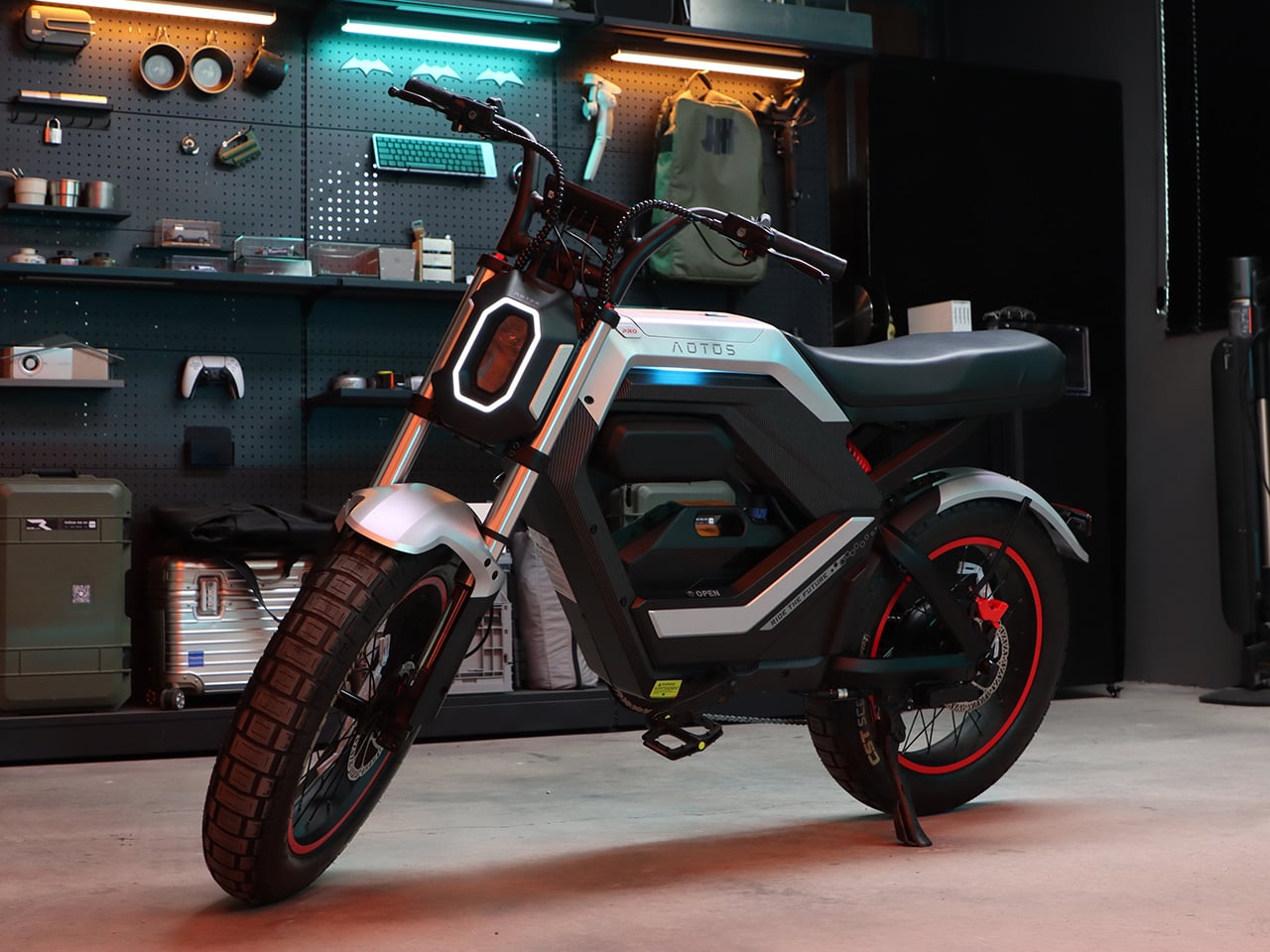
The AOTOS Flux X26 enters that landscape with a compelling mix of utility, performance, and fun. A claimed 70 mile range, from city streets to desert trails, supports daily commuting and longer urban detours. A 0 to 20 mph time of 4.9 seconds gives it a brisk, responsive character. The one click wheelie function adds an unmistakably playful edge, with specialized motion control algorithms allowing riders to safely experience one-wheel maneuvers at the touch of a button. AOTOS launched the Flux X26 on Kickstarter this March, positioning it as the officially recognized world’s first wheelie capable light electric moto.
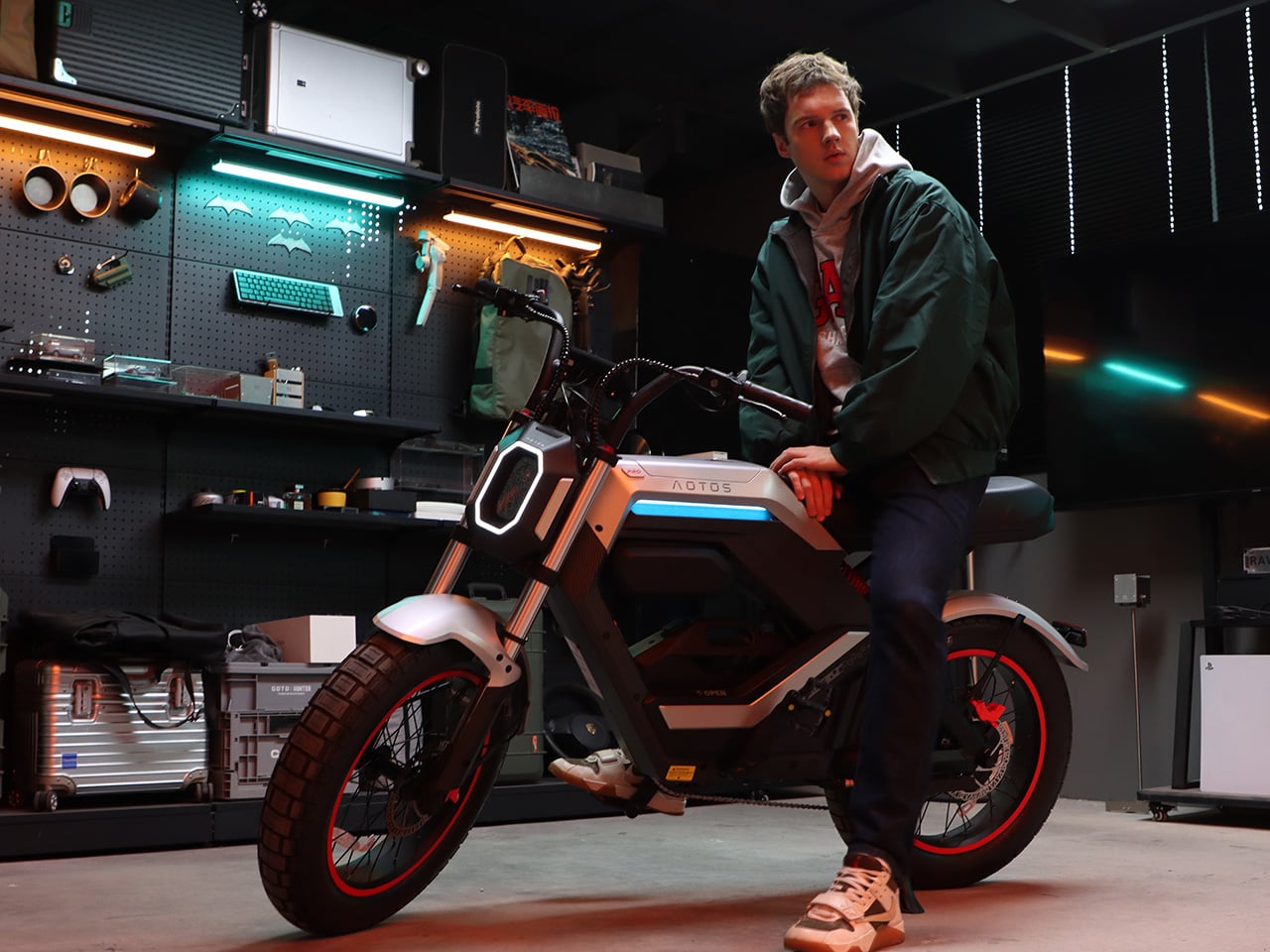
The frame completely abandons round, retro shapes in favor of a sleek, one-piece aluminum alloy construction with sharp, parametric lines. That futuristic mecha design philosophy extends from the physical vehicle to the retail space, app interface, and packaging. The ambient lighting system adds presence in urban environments at night without reading as decorative afterthought. The overall silhouette sits closer to a motocross bike than a commuter bicycle, which fits well with the fact that the Flux X26’s designed for those impromptu adventure-trips and thrill-chasing weekends, aside from being your reliable weekday in-city commuter.
The Pro variant delivers 2000W of peak power at a 1500W rated output (the regular version offers 1200W of peak power, rated for 750W output), strictly Class 2 compliant for legal road use, paired with 110Nm of instant torque that enables it to climb steep gradients up to 25% with ease. From a standstill, it hits 20 mph in 4.9 seconds, translating to immediately responsive performance in city traffic and on open trails. The one click wheelie function uses proprietary motion control algorithms that cut the physical effort required by roughly 20%, making the maneuver genuinely accessible. The Class 2 rating keeps the X26 street legal across most US states while the peak output covers the off road brief. Both variants share 20×4.0 inch fat tires, dual hydraulic suspension, and hydraulic disc brakes front and rear.
AOTOS built FLUX OS, a proprietary intelligent ecosystem that treats the Flux X26 as a mobile terminal, featuring triple anti theft security through integrated wireless connection and GPS, sensorless unlocking, and a high definition TFT smart screen. Through frequent OTA updates, the Flux X26 functions as a living device that evolves over time, improving after purchase rather than arriving as a fixed product. The 5.5 inch full color TFT display handles speed, ride mode, range, warnings, and GPS positioning, with turn by turn navigation synced from the rider’s phone. The Pro variant adds 4G connectivity alongside Bluetooth, giving the bike a live data link independent of the rider’s phone range. Both tiers benefit from the same software architecture, with the Pro carrying the more robust hardware layer on top.
An oversized battery provides a 70 mile exploration radius, from city streets to desert trails, putting the X26 at the more capable end of its category for the price. Urban riders cover the majority of their weekly riding without a midday recharge, and for weekend exploration the radius reaches distances that feel genuinely adventurous. The battery holds an IPX7 water resistance rating on the Pro variant, with IPX5 covering the rest of the vehicle. AOTOS backs ownership with over 100 after sales service points across the United States, adhering to strict Class 2 and safety certifications. The 330 lb maximum load capacity confirms the X26 as a serious daily use machine.
Super Early Bird Kickstarter pricing opens at $1,199 for the standard Flux X26 and $1,599 for the Pro, against MSRPs of $1,699 and $2,299 respectively. First units are scheduled to ship in May 2026, a window tight enough to signal genuine production readiness. The X26 Pro was shown at CES 2026 in Las Vegas ahead of the campaign, putting the hardware in front of an audience that scrutinizes product claims closely. Founded in 2016, AOTOS has built its core R&D team from engineers specializing in motion control, AI algorithms, and smart systems. At this price, with a design that commits fully to its aesthetic and a fully fledged software that just gets better with time thanks to OTA updates, the Flux X26 is one of the more innovatively gorgeous electric two wheelers on Kickstarter right now.
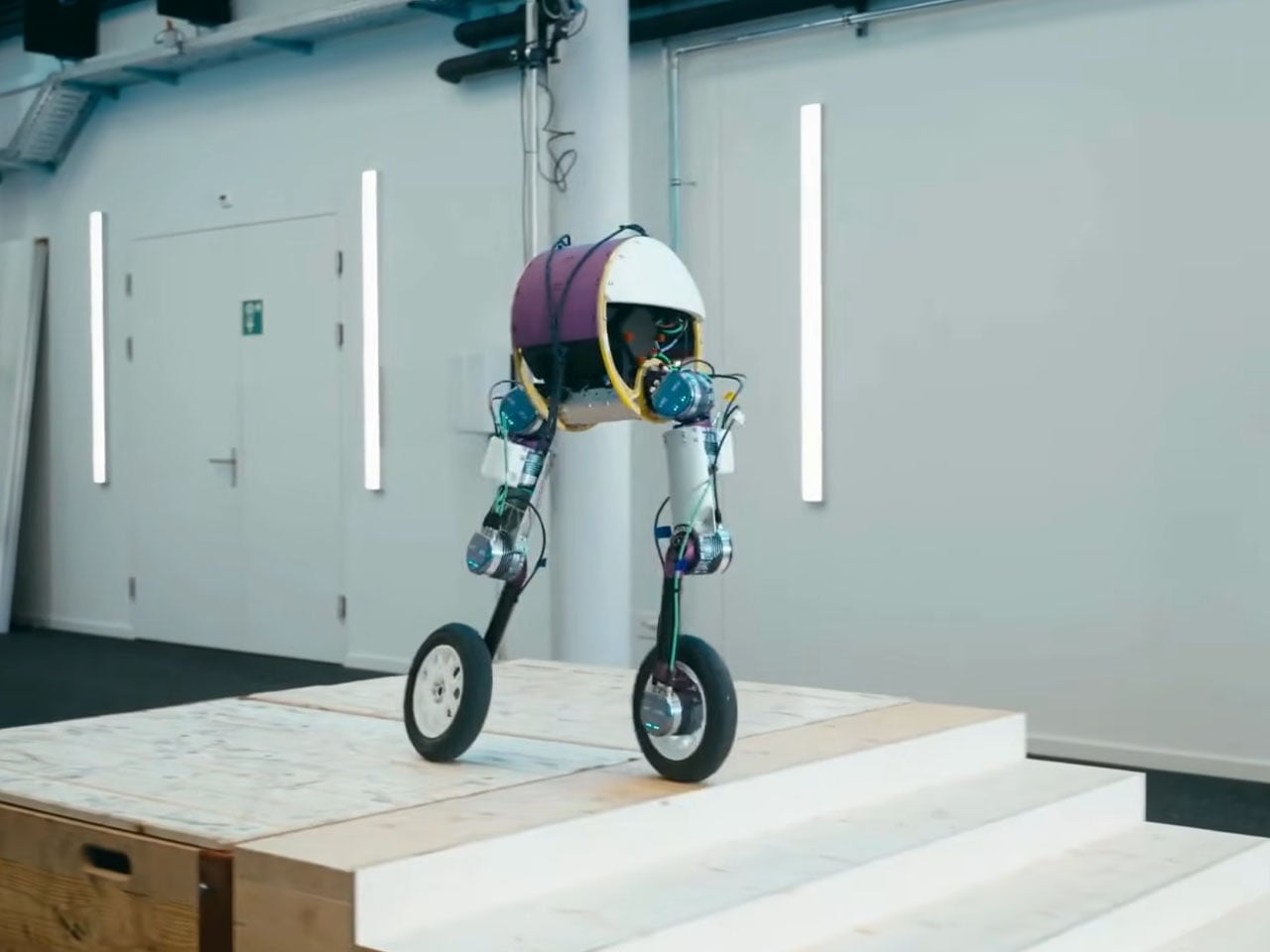
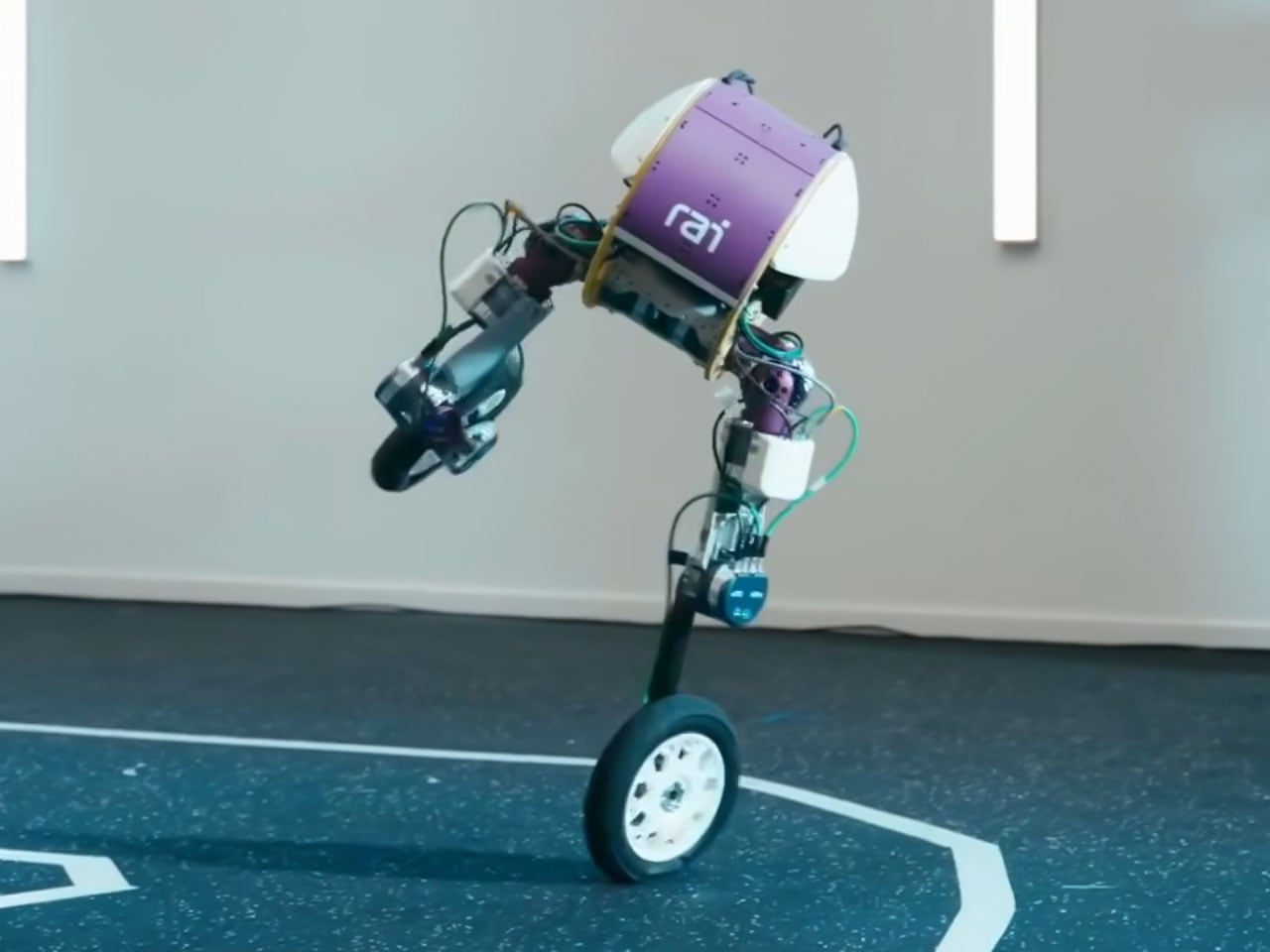
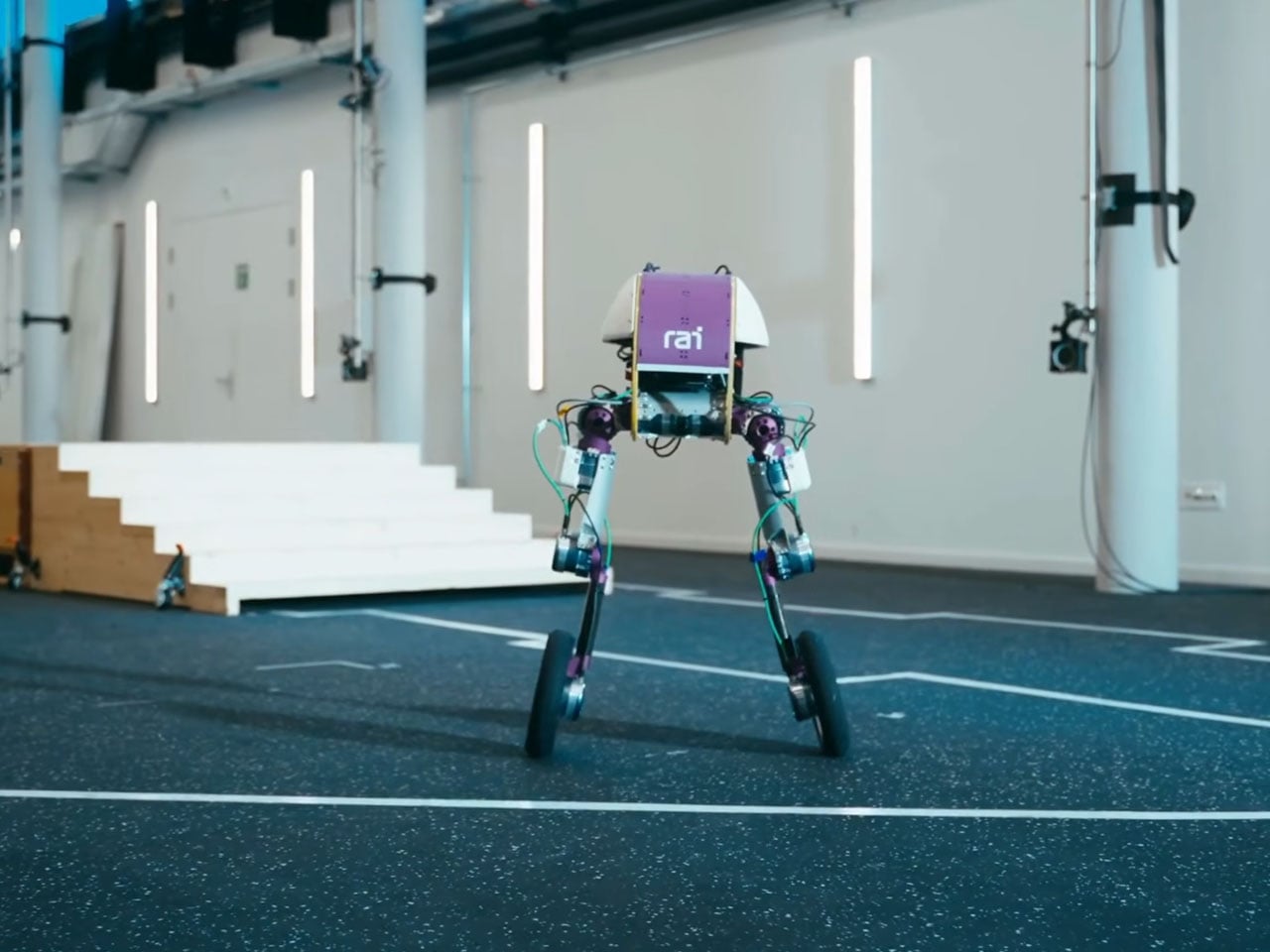
RAI (Robotics and AI) Institute has built a new bipedal-wheeled robot prototype that gives us a glimpse of what versatile legs with efficient wheels can be. Designed for multi-mode locomotion, the Roadrunner weighs roughly 15 kilograms (33 pounds). Owing to its design and configuration, the robot on wheels with a set of symmetric legs can switch mobility modes based on the navigation requirement.
Roboticists are already racking their brains on developing humanoids to get work done in households. Now, with the possibility of a robot like the Roadrunner, we are definitely headed in the direction of smarter robots that thrive on agility and dexterity, and are designed to go where it’s dangerous for humans to venture. A few robotic options, in the shape of animals et al., that have semantic understanding of their surroundings have been around for a few years, but the bipedal-wheeled robot is really in a different league.
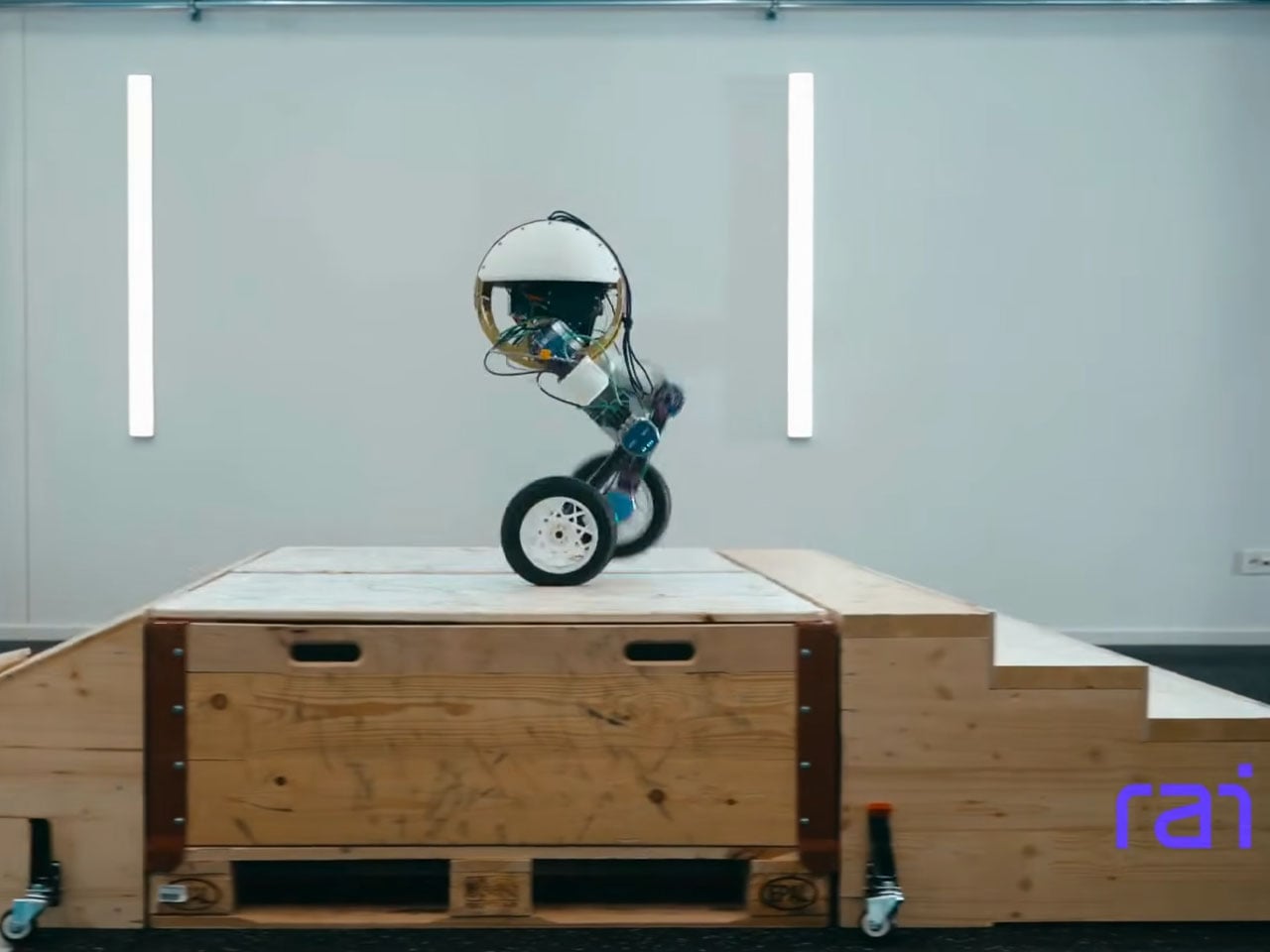
The brainchild of the Massachusetts-based institute, the Roadrunner robot is in the prototype stage, but it has moves to impress. If you don’t believe my word, take a look at the video (above) doing rounds on social media. The robot is designed to seamlessly switch between side-by-side and in-line wheel modes and stepping configurations, based on the environment it is navigating. “A single control policy” is “trained to handle both side-by-side and in-line driving,” RAI informs.
From the demonstration video, you can easily figure out the remarkable versatility of the Roadrunner. The combination of the balance on its legs and the efficiency of its wheels really allows us to watch the robot’s multi-modal locomotion properties being pulled off in style. This is possible because of the robot’s symmetrical knee joints and legs that permit it to avoid obstacles easily.
Roadrunner is able to effortlessly stand up from various ground positions and walk or roll on its wheels. It can step over obstacles with the same convenience. What really blew my mind is the robot’s balance; the ease with which it can stand up on a single wheel. All of these were successfully deployed zero-shot on the hardware,” performing every task without specific prior training for them.
RAI Institute plans to use the Roadrunner as a research platform, an agile and dynamic option to legged humanoid robots that have their restrictions with pace and mobility. RAI, founded by Marc Raibert, the man behind Boston Dynamics, has built its image in agile and highly dynamic robots, and the Roadrunner is a reflection of this. If the robot in the prototype stage is apt enough to leave us all impressed, what the advanced version would be able to pull off is anyone’s guess.
Most architects study sustainable housing. Matti Kuittinen actually lives in it. The Aalto University professor and architect didn’t just design the Tiny House Shadow as a thought experiment. He built it in Lohja, Finland, about 40 miles from Helsinki, moved his family in, and made it his primary residence. The result is one of the most provocative arguments for a different kind of future that architecture has produced in years.
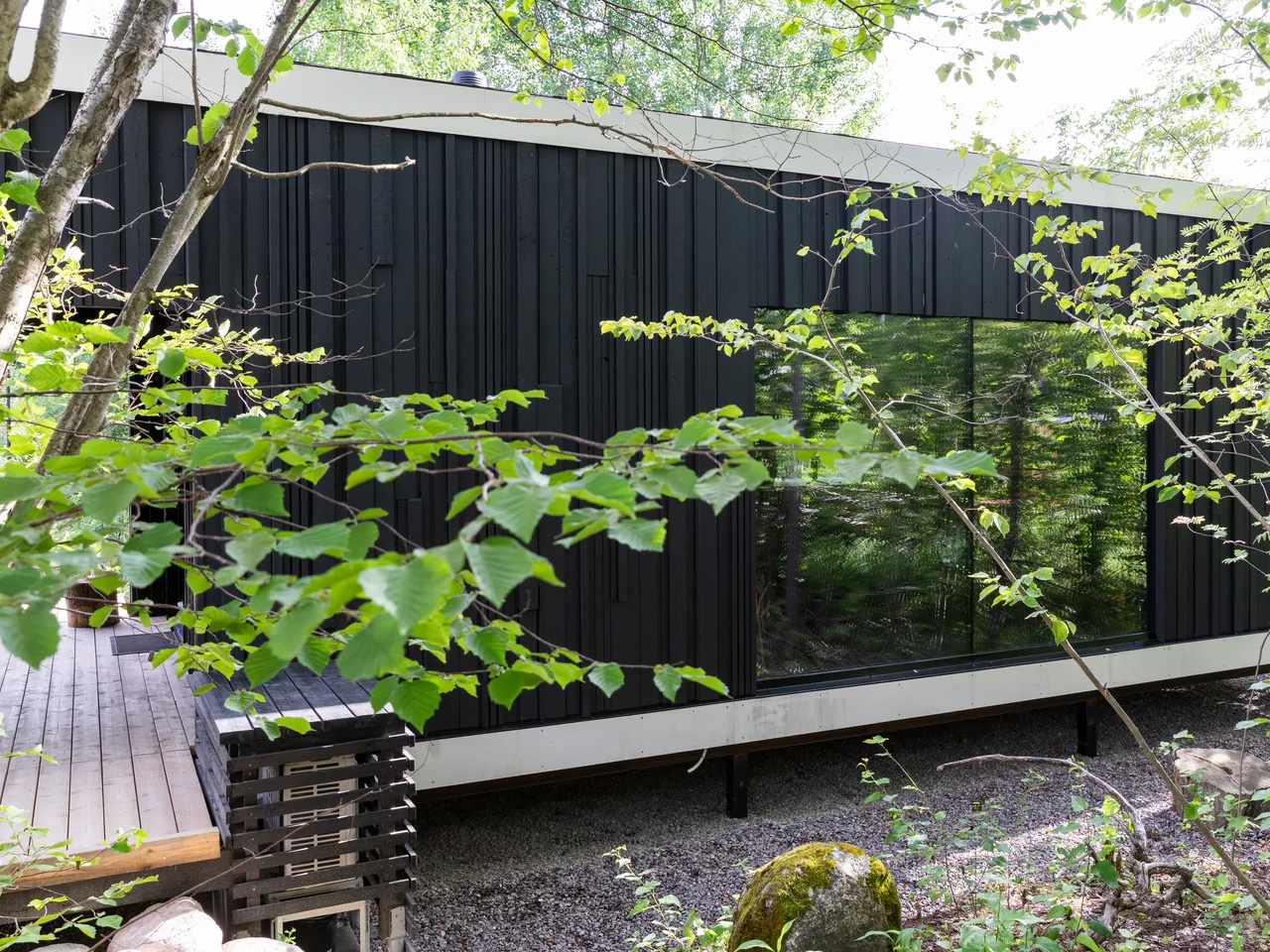
The numbers are the opening statement. At just 365 square feet, Shadow is built from 56% recycled or reused materials: old fishing nets for flooring, scrap steel for the frame, recycled car tires for the roof, upcycled windows and doors, and insulation made from recycled glassware. What isn’t salvaged is responsibly sourced, including fossil-free steel. The house uses 85% fewer resources than a conventional home, 43% less land, and delivers a 53% smaller carbon footprint per resident. For Kuittinen, these aren’t talking points. They’re proof of concept. “We have a limited carbon budget,” he has said. “Construction must learn to stay within it.”
Designer: Matt Kuittinen
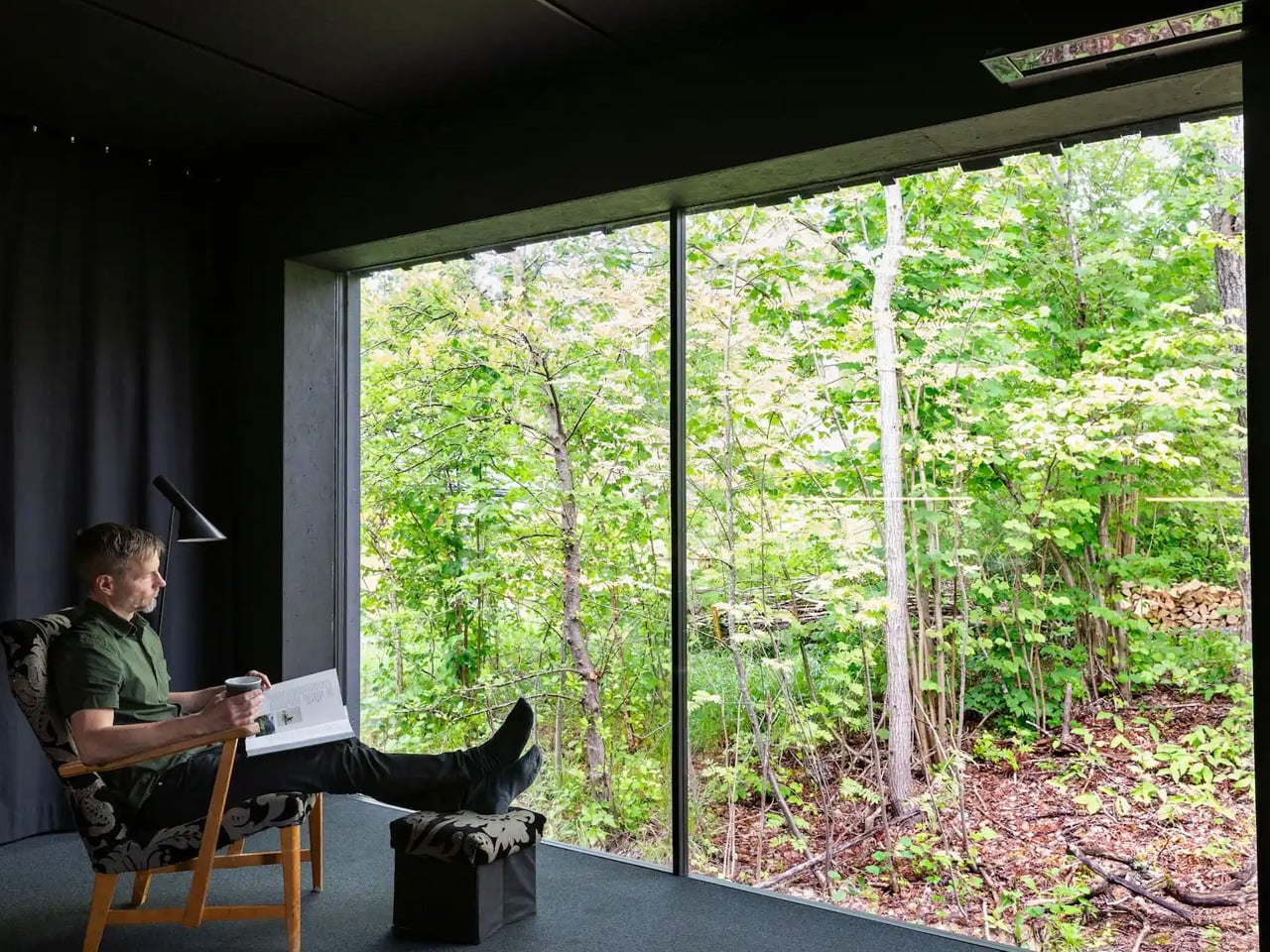
The name comes from Jun’ichirō Tanizaki’s 1930s essay In Praise of Shadows, in which the Japanese writer reflected on the quiet beauty of darkness and restraint. The metaphor tracks. Shadow is literally built from what the linear economy discarded, a home made from the world’s leftovers, dressed in matte black, standing still and serious against the Finnish landscape. The exterior reads as avant-garde. The interior is equally deliberate.
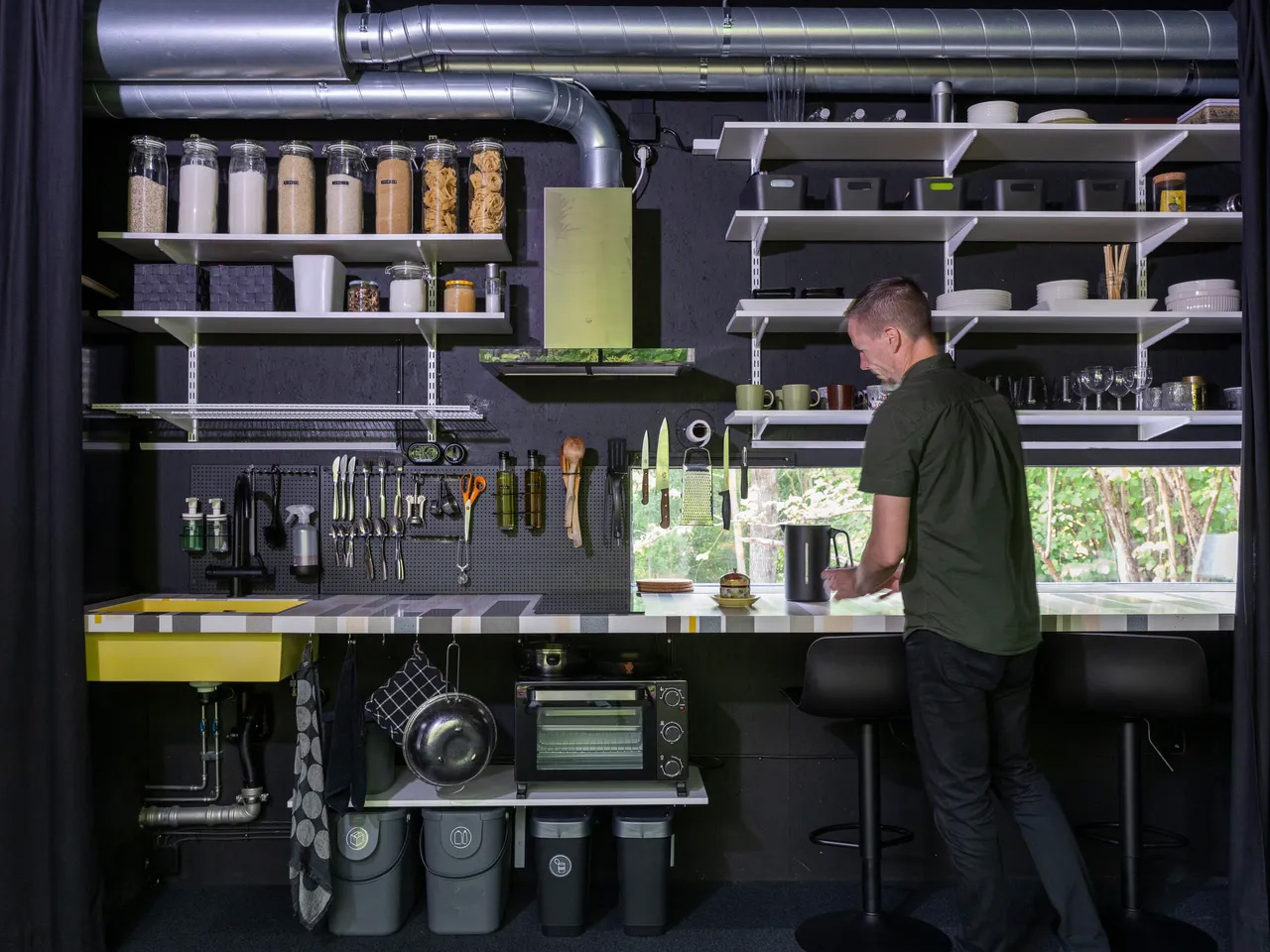
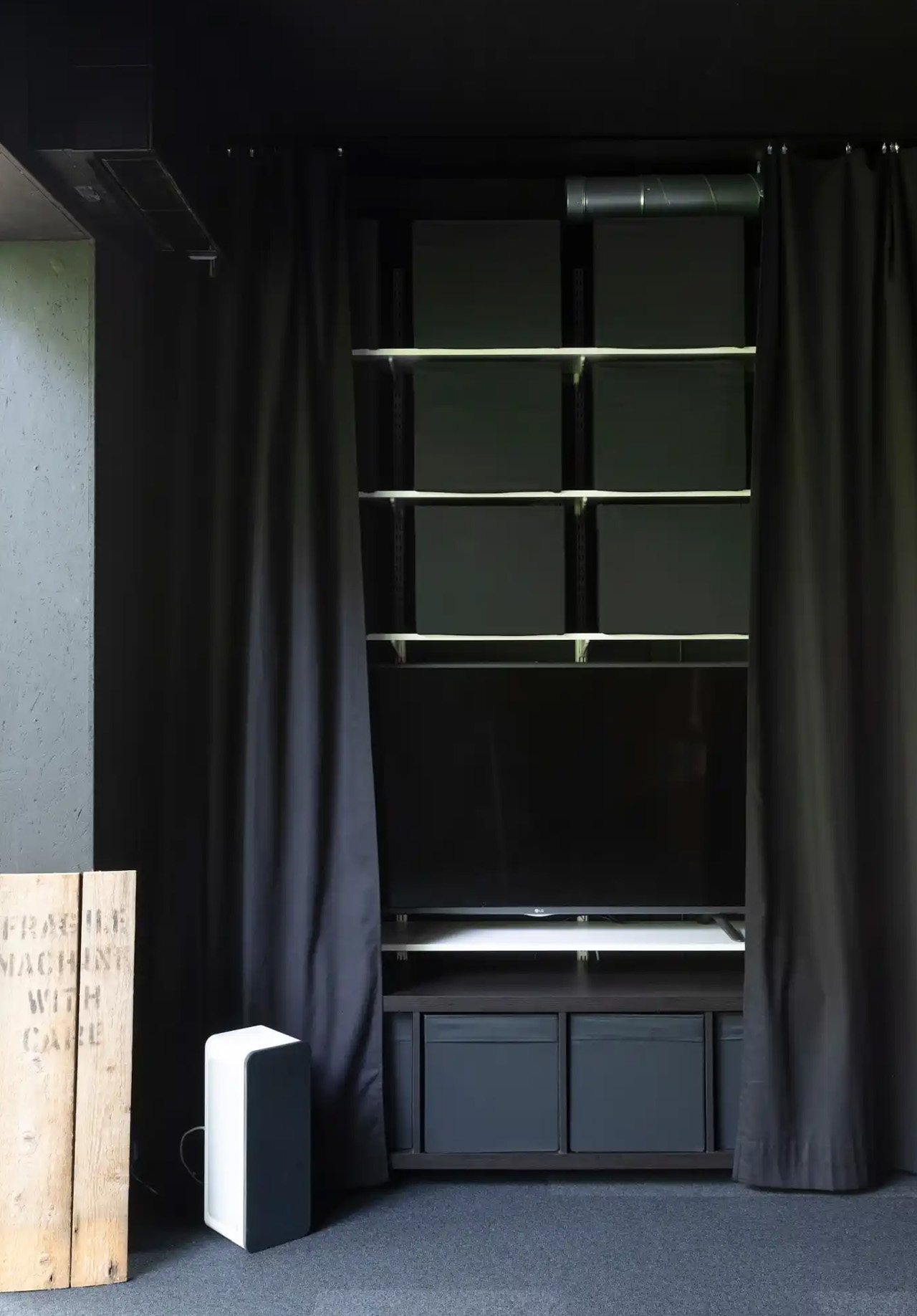
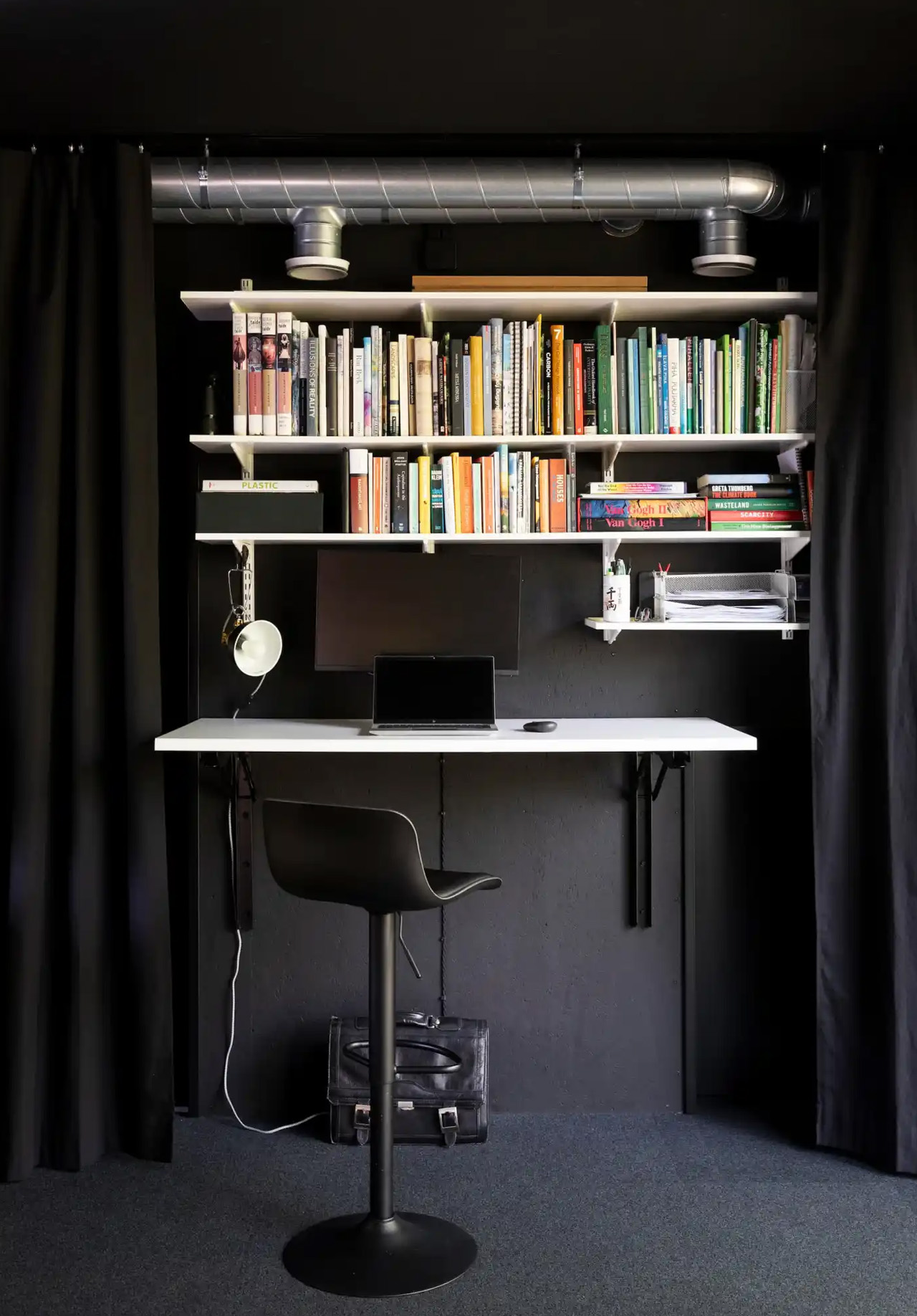
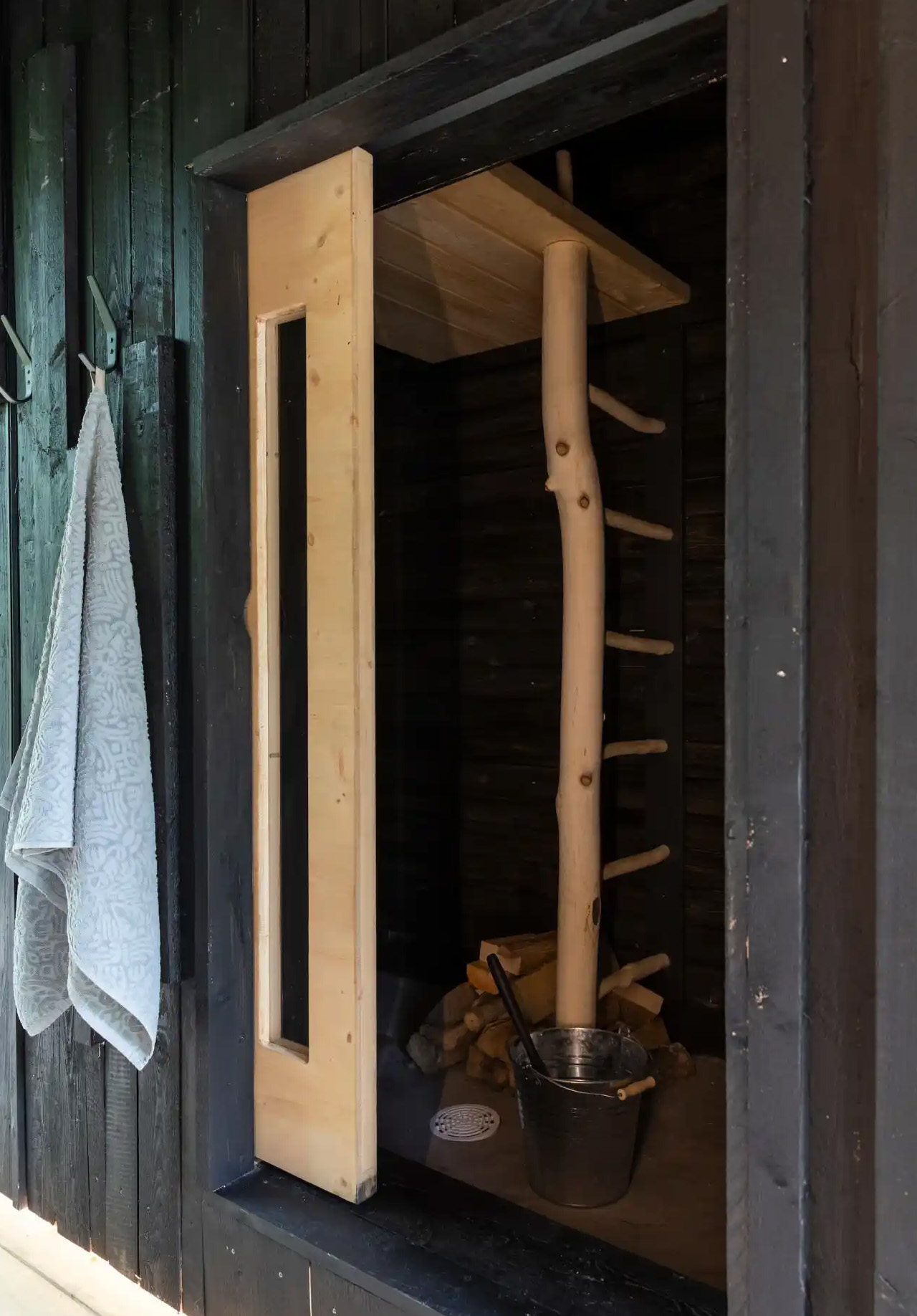
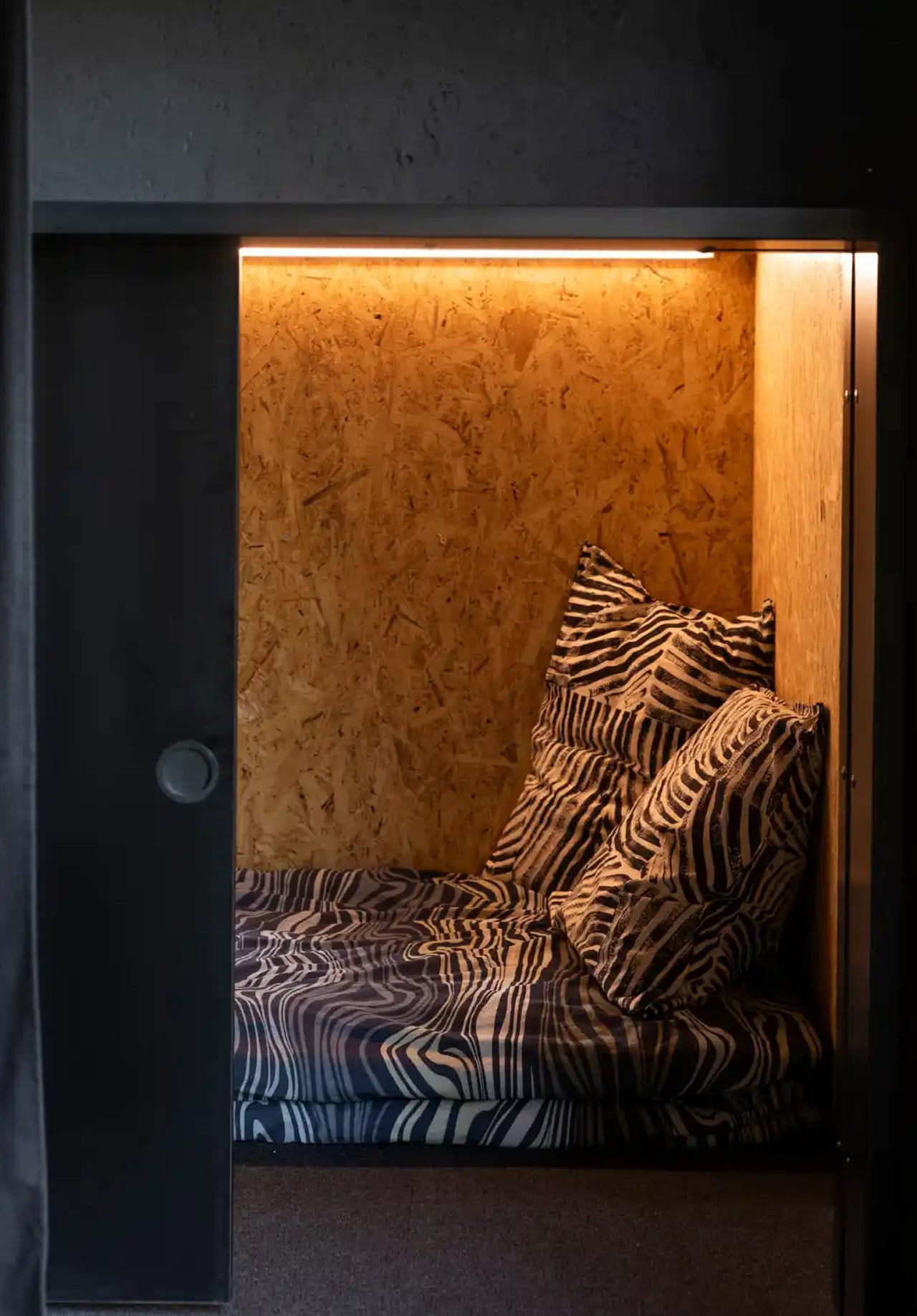
Inside, minimalism operates as a lifestyle logic, not just an aesthetic. The main living area transforms between working, dining, and sleeping through heavy black curtains that divide the space without walls. Sleeping pods take cues from Japanese capsule hotels and stack vertically to save floor space. The kitchen runs on open shelving instead of cabinets. There’s a full bathroom and, true to form, a 22-square-foot wood-fired sauna. Every square foot earns its place. Construction took four months; the full project, from first drawing to moving in, took one year.
Shadow has since been exhibited at construction fairs as a working prototype and featured in Aalto University’s Designs for a Cooler Planet exhibition. Kuittinen is clear that the project is bigger than one house. “Shadow proves that recycled and low-emission materials can work at scale,” he says. “This isn’t just about one house. It’s about changing the whole mindset of construction.” In 365 square feet, he’s making a very large point.
Google is adding a pair of new features to Gemini aimed at making it easier to switch to the AI chatbot. Personal history and past context are big components to how a chatbot provides customized answers to each user. Gemini now supports importing history from other AI platforms. Both free and paid consumer accounts can use these options.
With the first option, Gemini can create a prompt asking a competitor's AI chatbot to summarize what it has learned about you. The result might include details such as your typical written communication style, your family members' names or your key preferences. The other AI tool's summary can then be pasted into Gemini, providing Google's platform with a preliminary profile.
The second option allows users to import their entire chat history with a different AI assistant into Gemini. Doing so allows people to reference earlier conversations or requests made on a different platform after migrating to the Google option.
Anthropic recently introduced a similar memory import feature, so Google may also be hoping to scoop up some of the people who are dropping OpenAI following its shady-sounding new arrangement with the Department of War. Whatever the motivation, these options should make it easier to have a seamless transition between providers.
This article originally appeared on Engadget at https://www.engadget.com/ai/google-gemini-now-lets-you-import-your-chats-and-data-from-other-ai-apps-225711015.html?src=rss
Most of us have a complicated relationship with mirrors. We lean in too close, angle our phones for better lighting, and still walk away unsure whether that new moisturizer is actually doing anything. The SIMETRA AI Mirror, designed by Second White, is betting that the problem was never us. It was the mirror itself.
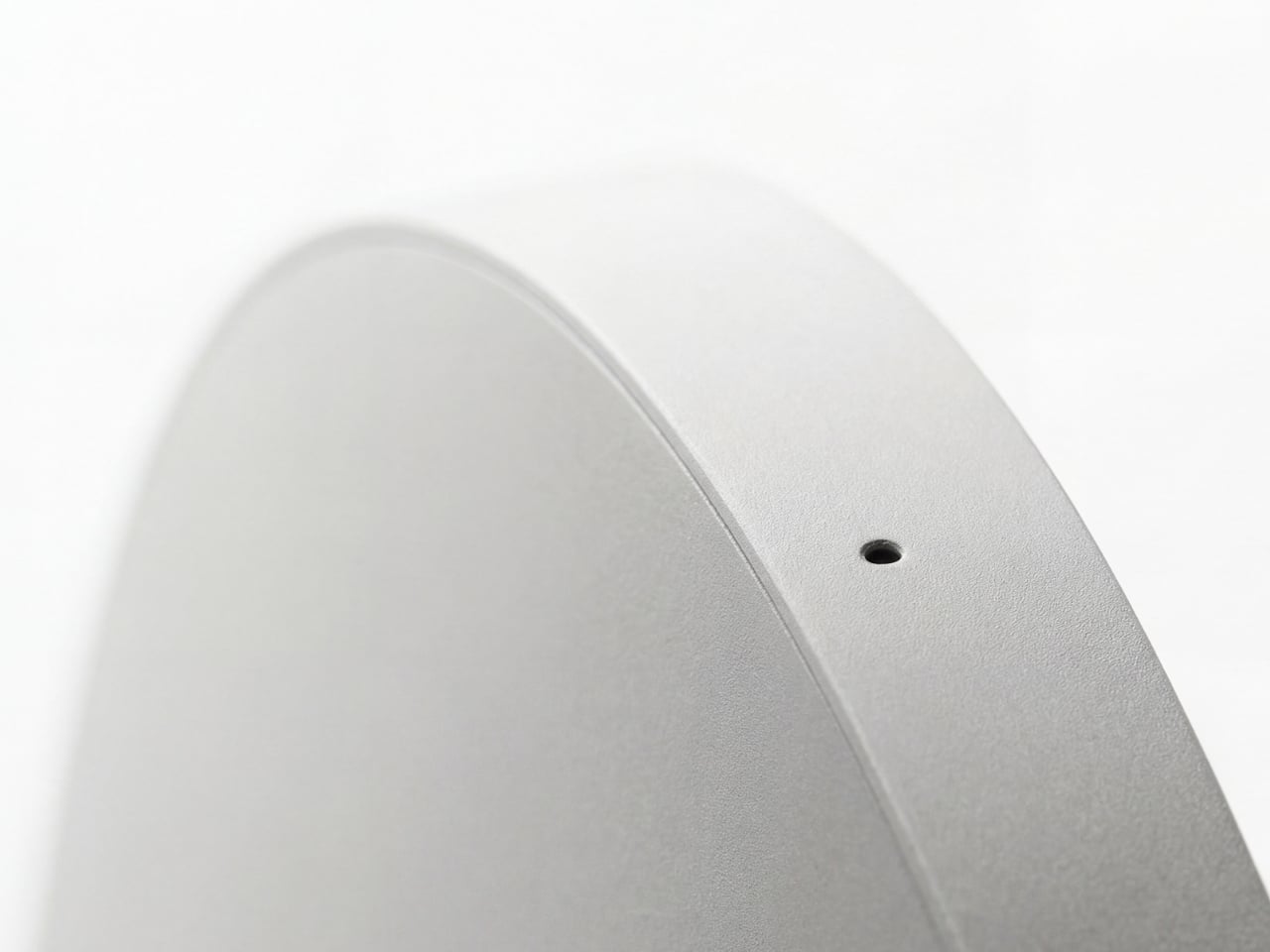
At its core, SIMETRA is a skin analysis system disguised as beautiful bathroom furniture. It reads light, image, and depth data in real time, translating what it sees into precise, actionable feedback about your skin. Not vague impressions. Not generic advice about drinking more water. Actual, measurable intelligence about what’s happening on your face right now, tuned specifically to you.
That shift from passive reflection to active analysis feels genuinely significant. The mirror has been one of the least-changed objects in domestic life. For centuries, it asked nothing of us and gave us only what we brought to it. SIMETRA breaks that contract quietly but completely. It observes, interprets, and responds. Whether you find that exciting or slightly unnerving probably says a lot about where you land on the broader AI conversation. From a pure design and utility standpoint, it’s a compelling leap.
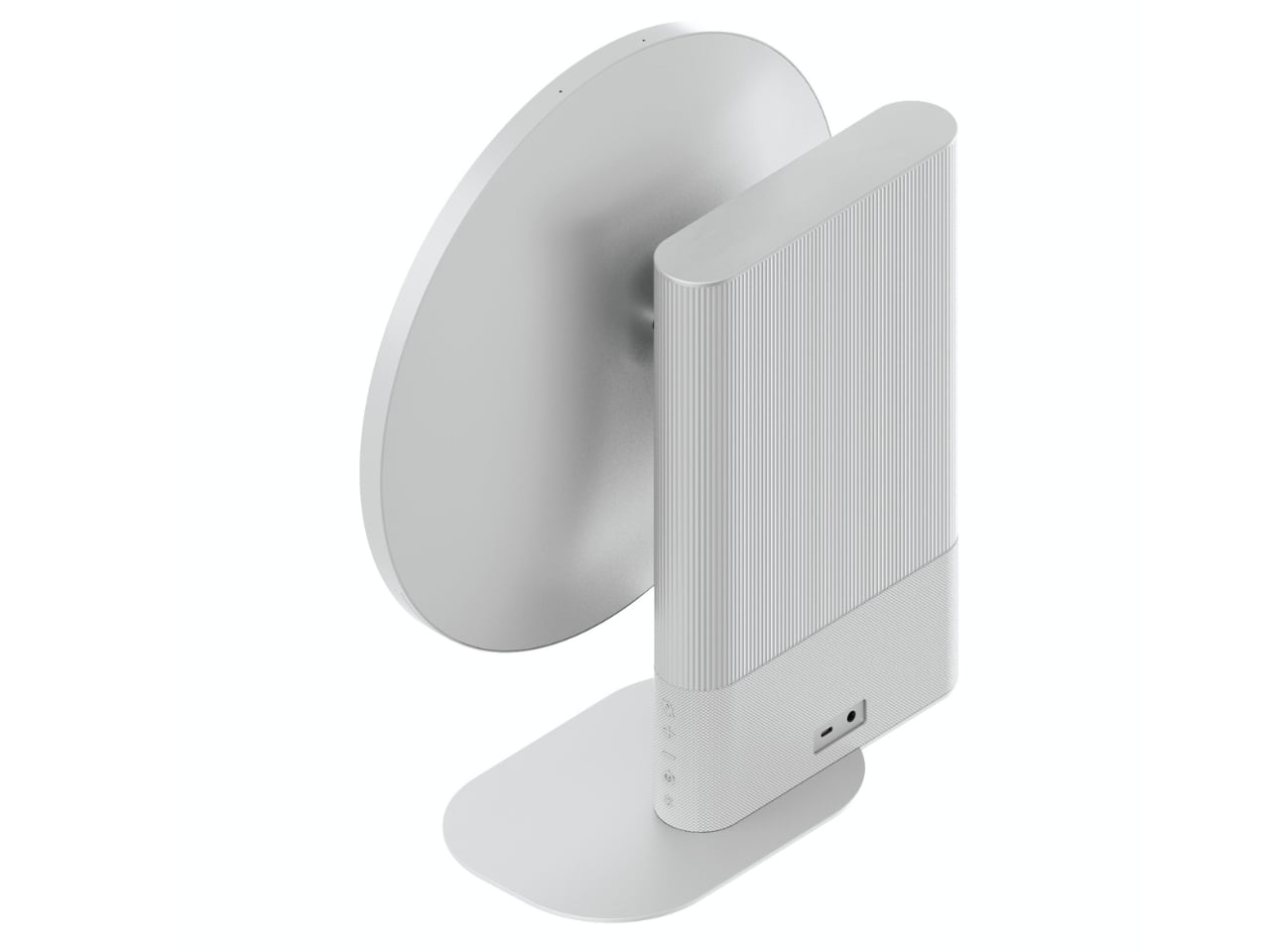
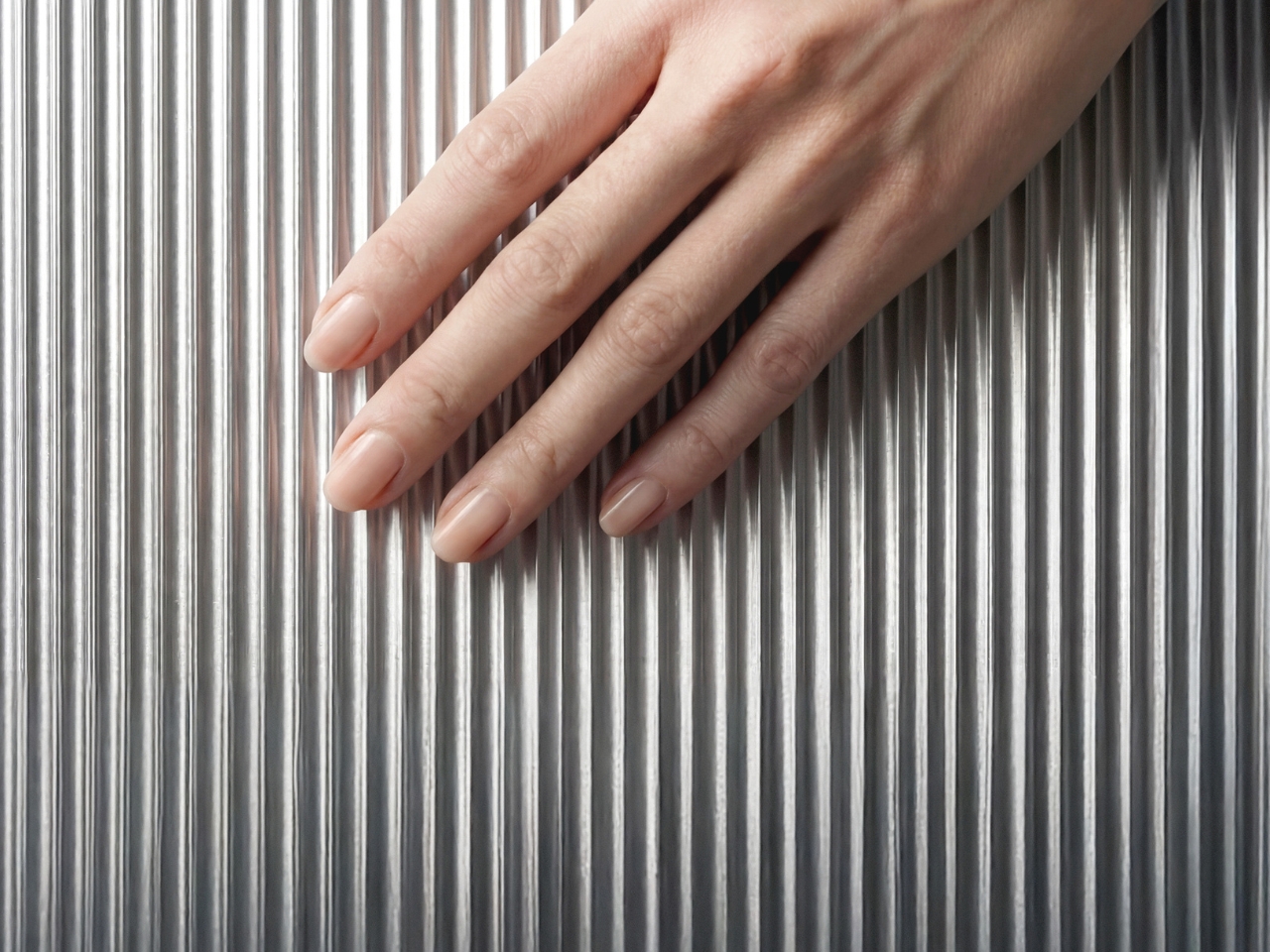
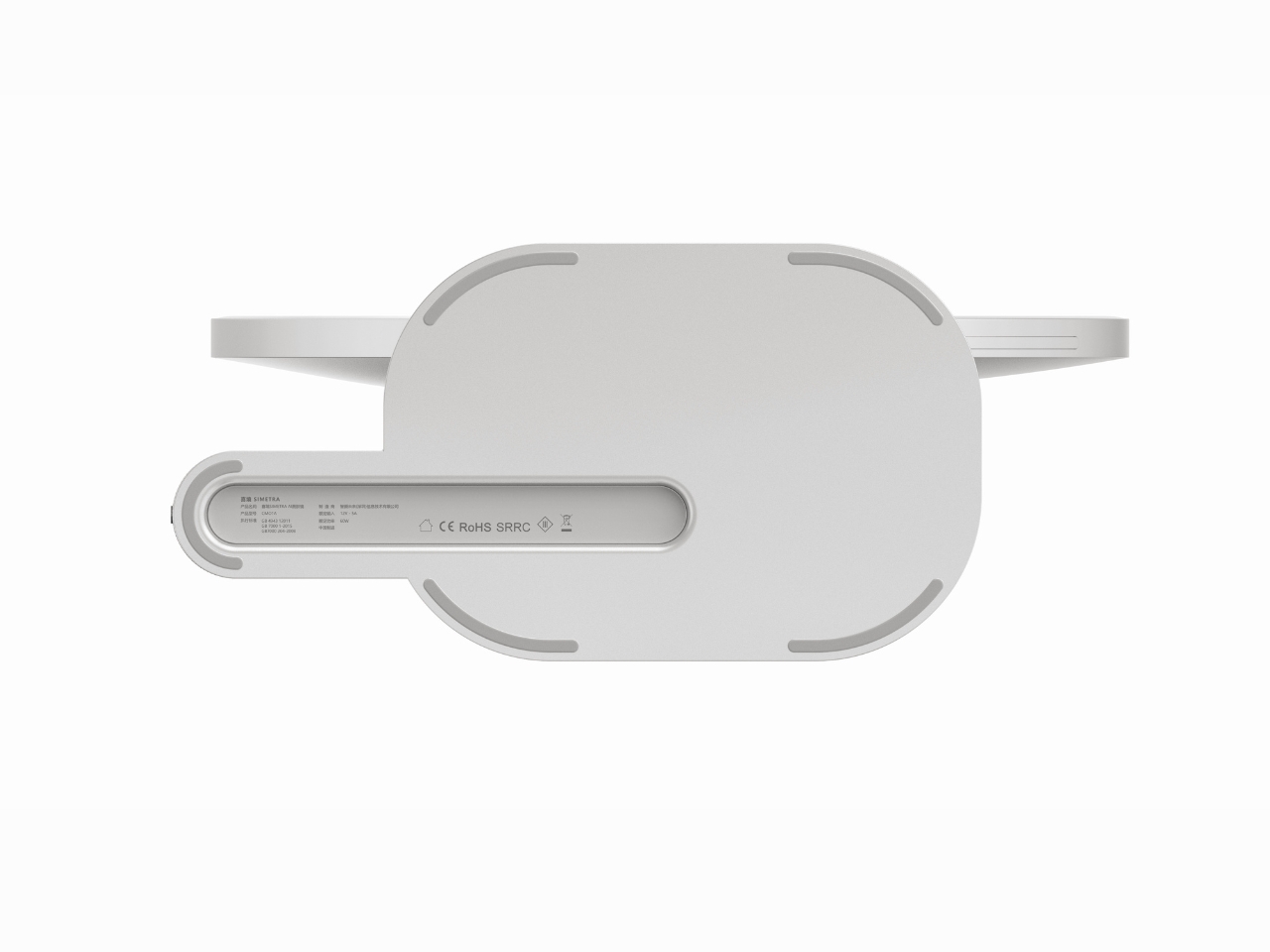
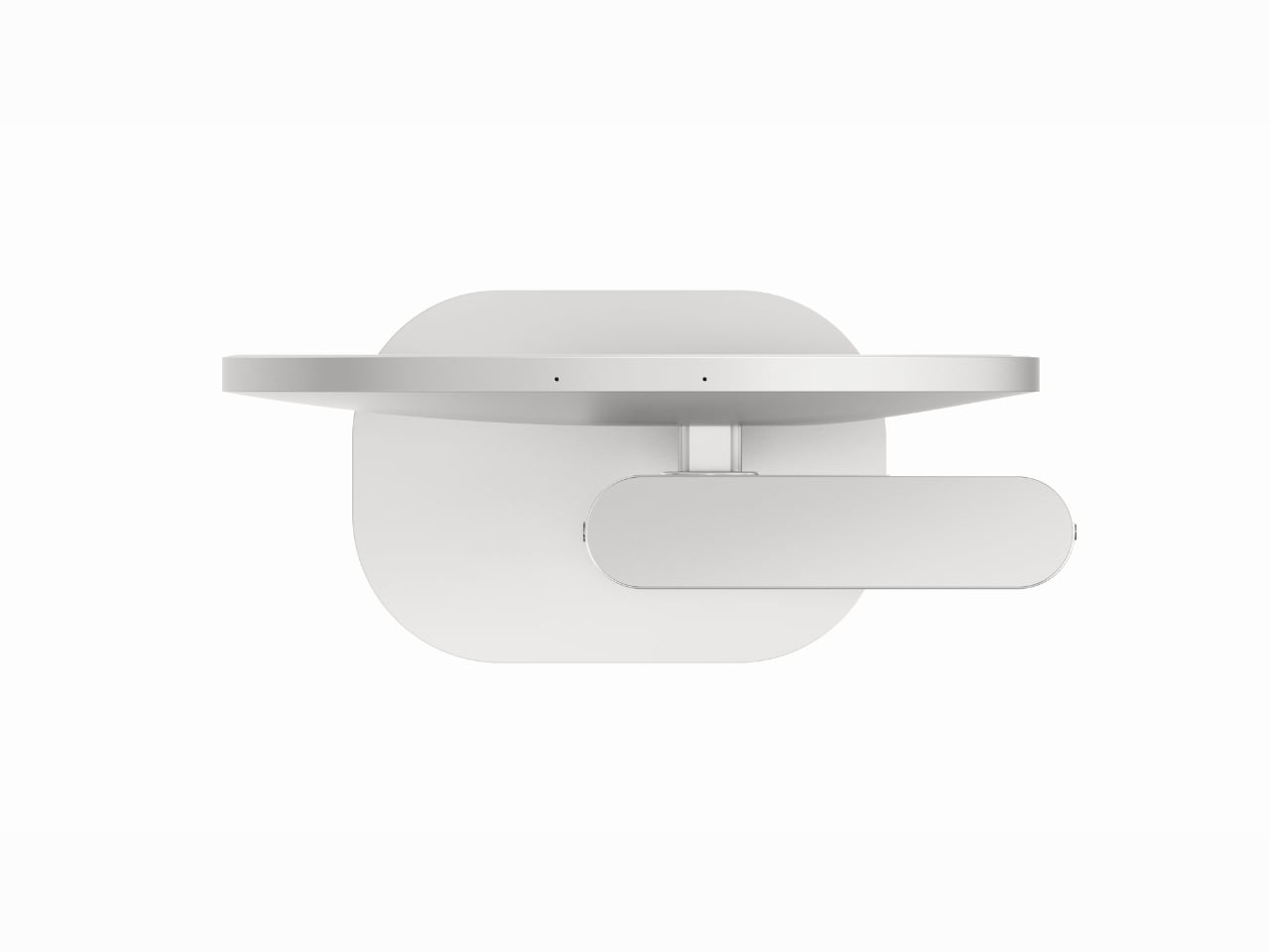
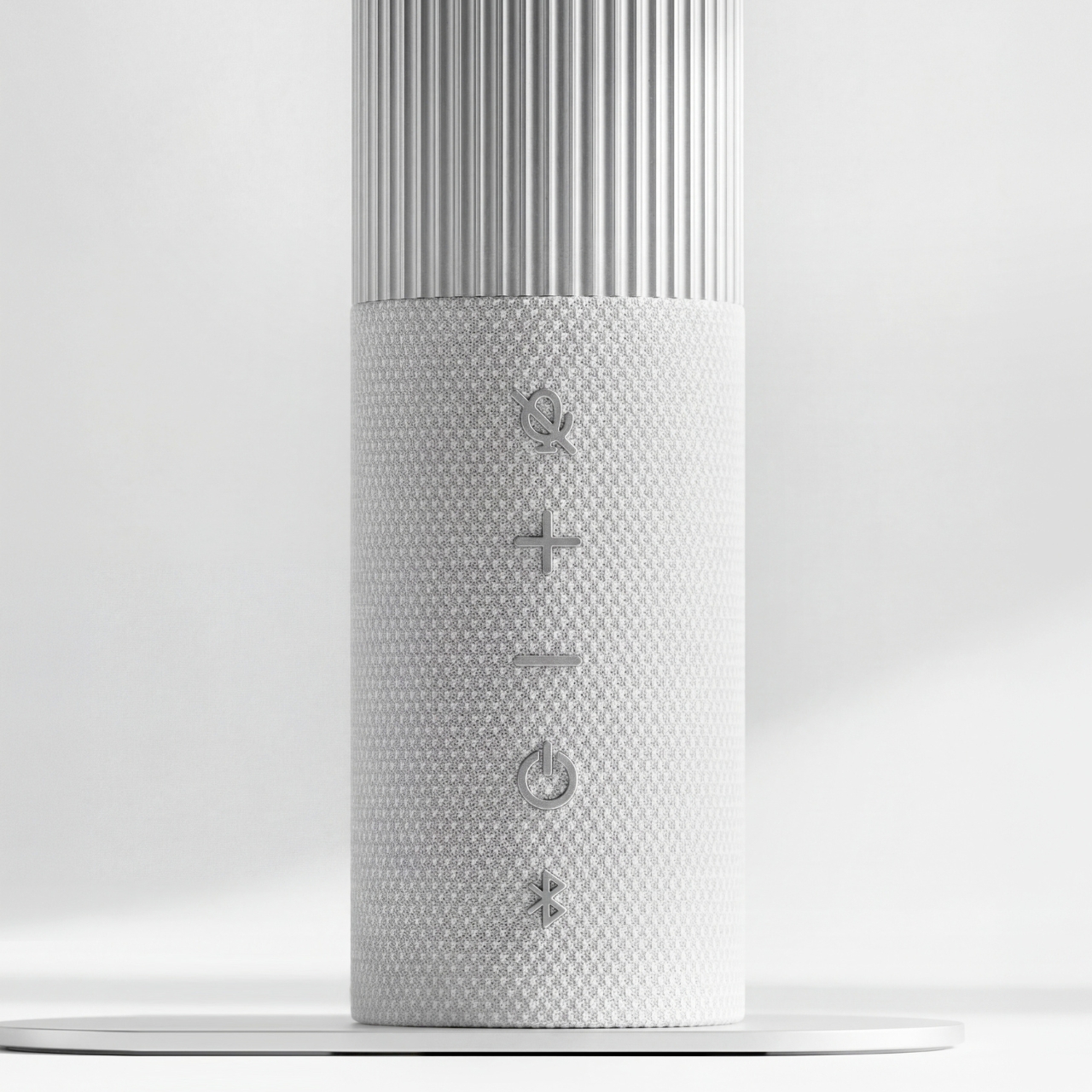
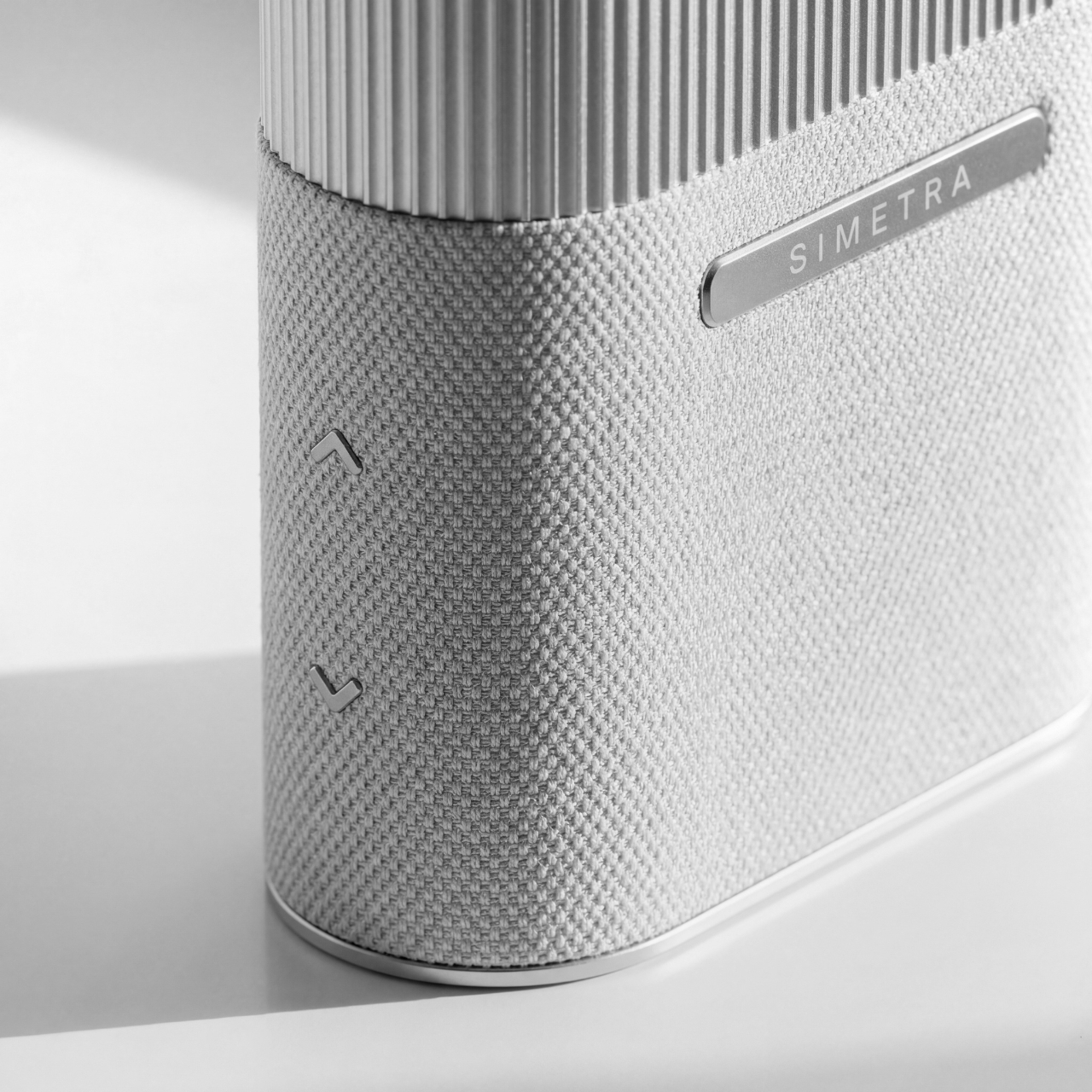
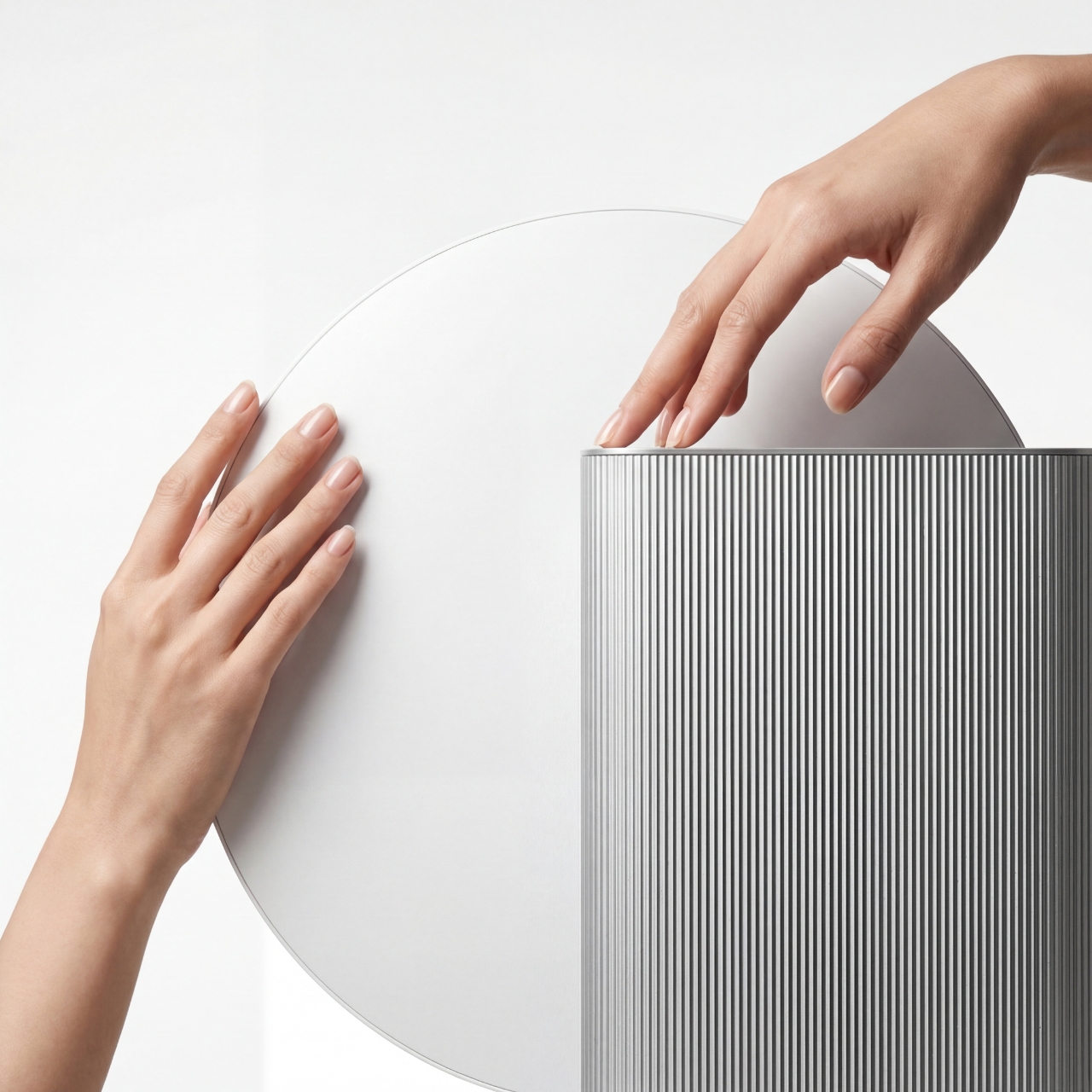
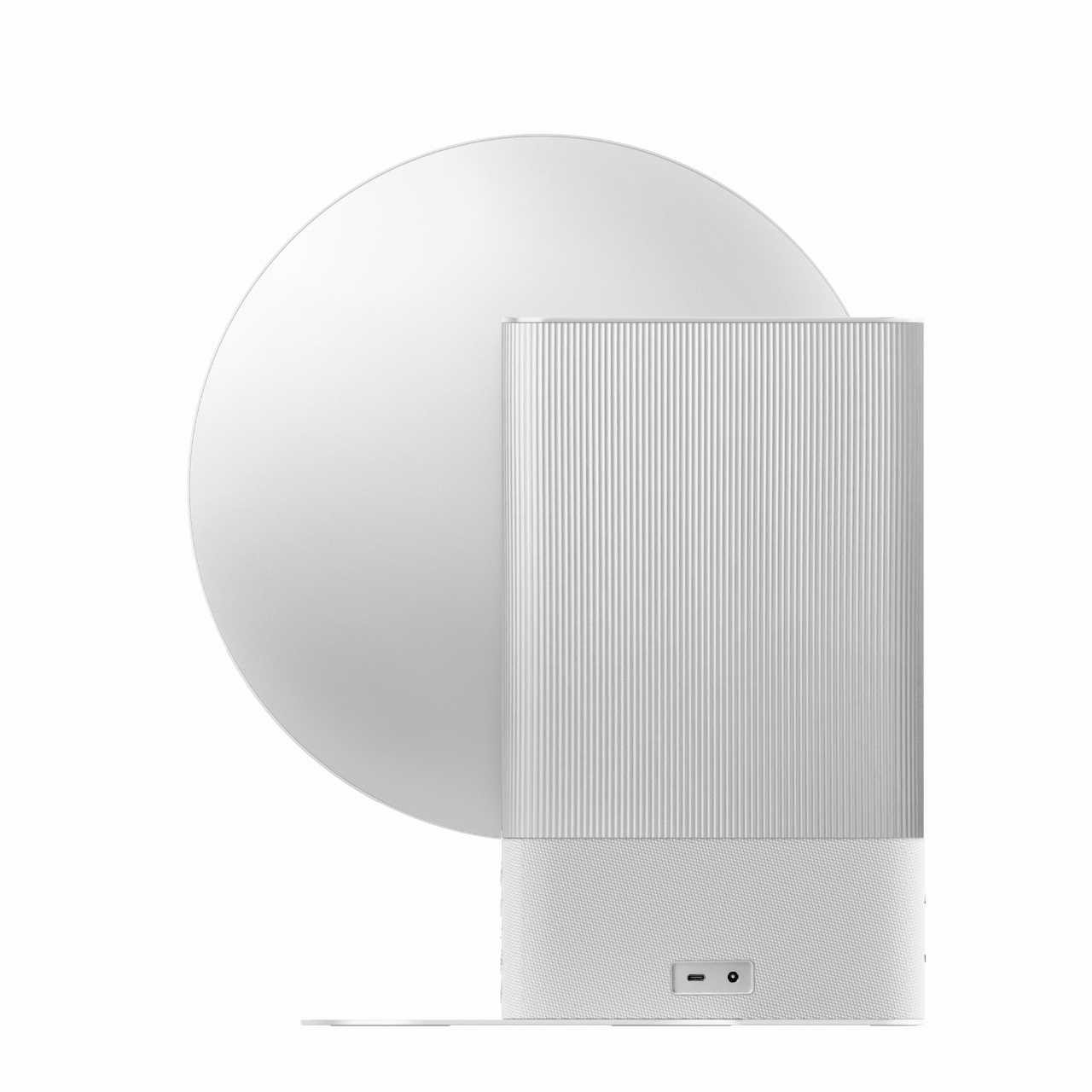
What makes Second White’s approach worth paying attention to is how restrained the design is. The temptation with AI-powered beauty tech is to signal intelligence through complexity: screens everywhere, blinking LEDs, the visual vocabulary of a dermatologist’s clinic. SIMETRA goes the other direction entirely. The form is calm and geometric, built around a circular mirror disc that floats beside a fluted, rounded column. The fluting is deliberate. It gives the hardware body texture and warmth, grounding what could have been a clinical appliance in something that feels more like a considered object. A sculptural one.
That tension between analytical function and human-centered feeling is exactly what Second White was after. Precision and empathy coexisting within a single form, as the studio describes it. It sounds like a lofty design brief, but looking at the product, it actually lands. The fabric-covered base, the brushed metal details, the soft rounding of every edge. None of it screams technology. It whispers it.
This matters because beauty routines are intimate. They happen in the 15 minutes before the rest of the world gets access to you. Introducing a device that watches, scans, and analyzes during that time requires a certain amount of tact in how it presents itself. A mirror that looks and feels like a piece of thoughtful furniture earns a different kind of trust than one that announces itself as a gadget. Second White understood that tension, and it shows in every material choice.
The smarter conversation here isn’t really about whether AI belongs in your skincare routine. It probably does, in the same way it’s already crept into everything else we track about ourselves: sleep, steps, heart rate. Skin is just the next frontier, and it’s arguably one of the more logical ones. What we’ve historically lacked is a tool precise enough to deliver useful data in the moment, without requiring a clinic visit or a consultation appointment. SIMETRA frames itself as exactly that: professional-level diagnosis, embedded in daily life.
Whether it fully delivers on that promise in practice is a question only time and real-world use will answer. But as a design proposition, it’s already doing a lot right. It treats the user as someone who wants clarity, not just encouragement. It respects the space it’s designed for. And it manages to look like something you’d actually want on your vanity, which is no small thing when you’re asking someone to trust an algorithm with their morning routine.
The mirror has always held a complicated cultural weight. We’ve used it to judge, to prepare, to reassure ourselves. SIMETRA doesn’t erase that history. It adds another layer. One that’s less about judgment and more about knowledge. And if a mirror is going to know things about us anyway, knowing our skin might just be the most useful thing it could do.
Apple has confirmed to Engadget that the Mac Pro, the desktop tower-shaped computer that was last updated in 2023, has been discontinued. As 9to5Mac notes, the computer no longer appears in the lineup of Macs on Apple's website or in its storefront. That means at least for now, the Mac Studio is the Apple's top-of-the-line professional computer.
The current version of the Mac Pro was introduced in 2019, with a distinct cheese-grater design, Intel chips and a bevy of easily-accessible expansion slots. Apple released the computer as a make-good for several years of inadequately meeting the performance needs of professional Mac users, but its uncontested time at the top of the company's lineup was short-lived. A year later in 2020, Apple began transitioning to its custom M-series Arm chips, proving Macs could be more powerful and power-efficient by abandoning Intel entirely.
Apple eventually updated the Mac Pro to the M2 Ultra without updating the computer's design, but by then the writing was on the wall. The far smaller Mac Studio, introduced in 2022, also supported the new chip, and it's been updated since then while the Mac Pro has languished. Bloomberg reported Apple was planning to retire the Mac Pro in November 2025, so it's not all that surprising the company quietly pulled the plug only a few months later.
Apple’s effort to cater to professionals, creatives and anyone with a chunk of change to drop on a fast computer lives on through the Mac Studio, and the recently announced Studio Display XDR, itself a replacement for the Pro Display XDR Apple announced for the 2019 Mac Pro. Now all the company needs to do is update the Mac Studio with an M5 Max chip to make it the most “pro” computer Apple offers.
Update, March 26, 6:25PM ET: Added confirmation from Apple that the Mac Pro has been discontinued.
This article originally appeared on Engadget at https://www.engadget.com/computing/apple-discontinues-the-mac-pro-221502339.html?src=rss