Vancouver’s First Supertall Was Inspired by the Ocean Floor

Vancouver has always had good bones. The mountains, the water, the way the city sits between them like it was planned by someone with an eye for drama. But for all its natural beauty, its skyline has played it relatively safe. That’s about to change, and the agent of disruption is, of all things, a sea sponge.

Henriquez Partners Architects, a local Vancouver studio, has unveiled designs for 595 West Georgia Street, a 1,033-foot tower that will become the city’s first-ever supertall skyscraper. To earn that designation, a building has to exceed 984 feet, which puts 595 West Georgia just barely in that club and makes it a landmark before a single floor has been built. It’s the centerpiece of a larger trio called Georgia & Abbott, developed by Holborn Group, but this one is clearly the main event.

Designer: Henriquez Partners Architects

The design draws from the glass sea sponge reefs, specifically hexactinellids, found off the coast of British Columbia. These aren’t the bath sponges you’re picturing. They’re ancient, rare, deep-sea organisms with a crystalline skeletal structure that is simultaneously porous and structurally formidable. Henriquez Partners didn’t just borrow the idea aesthetically; they borrowed it structurally. The building is wrapped in a steel exoskeleton clad in white Glass Fibre Reinforced Polymer panelling, with highly translucent spans of glass filling the rest. That external framework carries the structural loads, which means fewer internal columns, more open floor plates, and a surface that looks woven and textured rather than sealed and flat.

That last distinction matters more than it sounds. Glass-box towers have dominated skylines for decades, and while some are genuinely beautiful, most are just reflective. They bounce light around and blend into each other. 595 West Georgia is going for something different: depth. The lattice of the exoskeleton creates shadows and layers depending on where you’re standing and what time of day it is. It moves, visually, in a way that most modern towers simply don’t, which makes looking at it feel more like watching a living surface than a fixed object.

Henriquez Partners described the design as telling “a story that is unique to British Columbia.” That kind of regional specificity is increasingly rare in architecture, where global firms often produce work that could exist in Dubai just as easily as Dallas. The fact that this building could only make sense in Vancouver, because the glass sponge is native to BC’s coastal waters, gives it a conceptual integrity that goes beyond branding. It’s a building that knows where it lives.

The program is equally considered. 595 West Georgia will function as a hotel tower, with conference facilities, a rooftop restaurant, and a publicly accessible observation deck at the top that will be free for Vancouverites to visit. That detail alone shifts the building’s relationship to the city. A supertall designed to be shared with the public rather than sealed off for guests feels like a genuine gesture, and it suggests that the architects and developer thought about this tower as part of the city’s fabric, not just its skyline profile.

The whole project sits at a compelling intersection of ideas. It’s biomimicry applied at an urban scale, which is a growing conversation in both design and engineering. It’s also a statement about what cities are willing to reach for, literally and figuratively. Vancouver has been measured about its height limits for years, and for good reason. The city’s low-rise character has long been part of its identity. Greenlighting a supertall signals that the city is ready to stretch those boundaries, and having one that can argue its design philosophy this clearly makes that shift feel earned.

Whether 595 West Georgia turns out to be as striking in person as the renderings suggest is something only construction can answer. But the foundational idea, that the most interesting path forward might look like something pulled from the ocean floor, is exactly the kind of thinking that makes architecture worth paying attention to right now. Not every city gets to say its most ambitious tower was modeled after an organism that’s been living quietly underwater for centuries. Vancouver gets to say that.

The post Vancouver’s First Supertall Was Inspired by the Ocean Floor first appeared on Yanko Design.

The FAA is encouraging gamers to get jobs in air traffic control

Sick! The Federal Aviation Administration is targeting gamers in its most recent job advertisement for air traffic controllers. The administration's annual hiring window opens at 12AM ET on April 17, and considering the ongoing shortage of air traffic controllers, it's calling this a period of "supercharged hiring." Rad! The FAA's YouTube video draws parallels between gaming and directing air traffic, and notes that the average salary for the role after three years is $155,000. Hella!

The FAA is clearly seeking players who are at least old enough to remember the Xbox One and Bjergsen in the LCS, which puts would-be candidates around their early 20s at least. It's either that, or the ad editors really just picked videos at random from the pile of stock footage marked gamerz. But I won't lie, it made me smile to see that Xbox One logo appear out of nowhere. Nostalgia is a hell of a thing.

"To reach the next generation of air traffic controllers, we need to adapt," US Transportation Secretary Sean P. Duffy said. "This campaign’s innovative communication style and focus on gaming taps into a growing demographic of young adults who have many of the hard skills it takes to be a successful controller."

The FAA has been losing more air traffic controllers than it can hire and retain since the 2010s, and this trend only worsened during the pandemic in the 2020s, according to a report released in December by the US Government Accountability Office. The administration increased hiring every year since 2021, but at the end of 2025 it employed 13,164 air traffic controllers, 6 percent fewer than in 2015, the report said. At the same time, the number of flights in the air traffic control system increased by about 10 percent, to 30.8 million.

Or, as the FAA put it on the ATC hiring page: "Join the BEST AND BRIGHTEST, the elite squad of 14,000 controllers protecting 2.9 million daily passengers." Applicants must be a US citizen, under 31 (maybe those video editors do know what they're doing), and be able to speak fluent English. An aptitude test, medical screening and academy training follows, among other steps.

This article originally appeared on Engadget at https://www.engadget.com/gaming/the-faa-is-encouraging-gamers-to-get-jobs-in-air-traffic-control-230308014.html?src=rss

Disney and NatGeo Built Billboards That Bees Can Actually Live In

Most billboards are built to be noticed and then forgotten. You see them, you process whatever they’re selling, and then they fade into the visual noise of the street. So when a campaign comes along that flips that formula entirely, it genuinely stops you in your tracks.

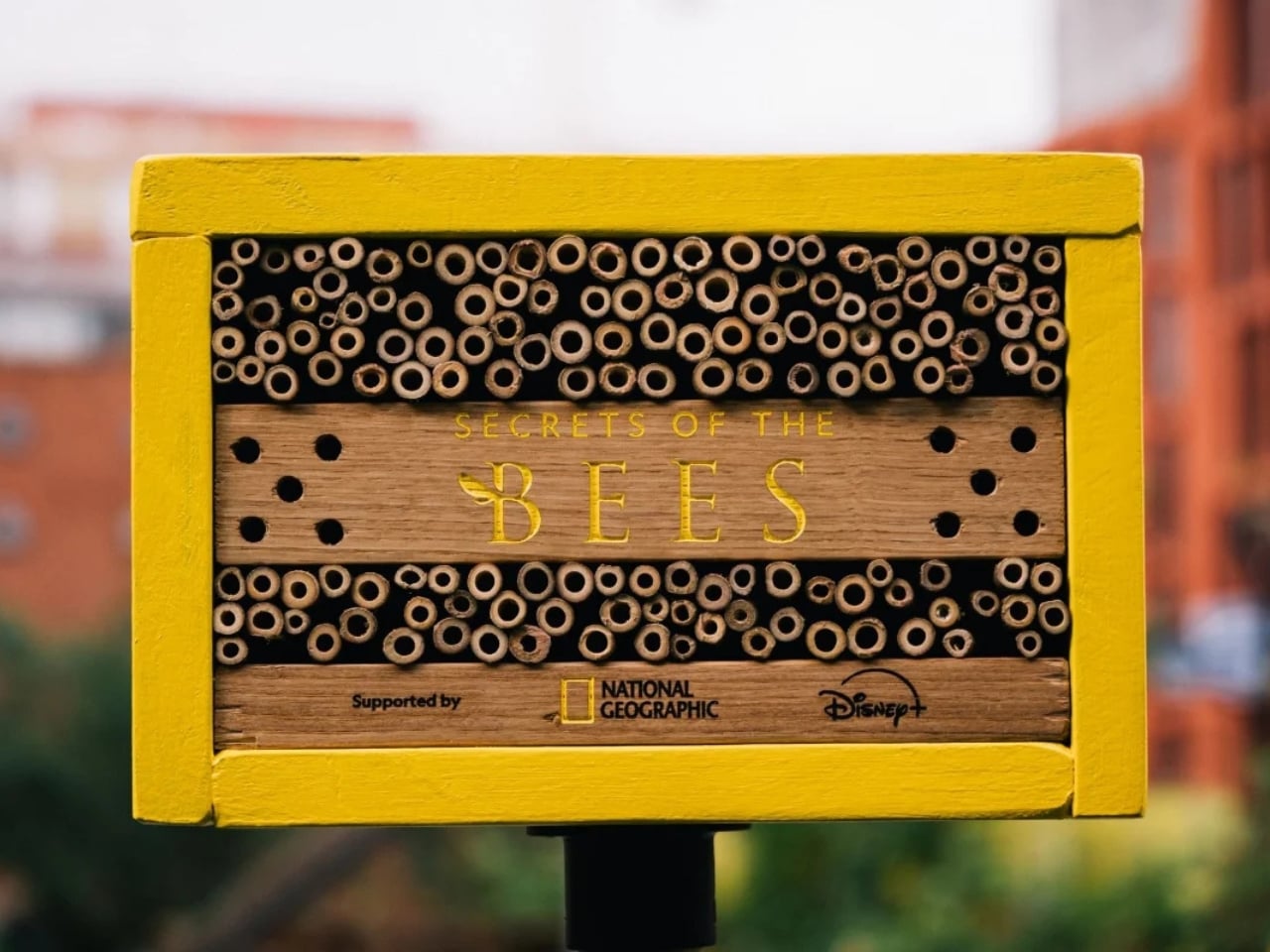
That’s exactly what’s happening in Manchester right now, where Disney and National Geographic, working with creative agency Meanwhile, have installed a series of billboards designed to do more than advertise. The structures, which the team calls “bloomboards,” are fitted with built-in cavities, textured surfaces, and planting elements that turn them into functioning habitats for bees. Not a two-week stunt. Not a PR photo op. Permanent installations, built from sustainably sourced cedar that had already been felled, placed across parks and public spaces throughout the city.

Designer: Meanwhile for Disney and National Geographic

The campaign ties to the launch of National Geographic’s Secrets of the Bees, a documentary series presented by explorer Bertie Gregory and executive produced by James Cameron. The series was filmed over several years using specialized cameras to capture bee behavior at a level of detail most of us have never seen. Entomologist Dr. Samuel Ramsey provided scientific input throughout. It’s streaming now on Disney+ and Hulu, and from a content standpoint alone, it sounds like essential viewing.

But the billboard work is where this becomes interesting as a piece of design thinking, not just marketing. Rather than placing a nature image on a billboard and calling it Earth Month, Meanwhile built the message into the medium. The physical structure becomes an argument for the cause. The billboard doesn’t just tell you bees matter; it gives them somewhere to live. Mini bee hotels have also been placed at several locations across Manchester, including Chorlton Water Park, Wythenshawe Park, Fletcher Moss Botanical Garden, and the Northern Quarter. Like the bloomboards, these aren’t decorative gestures. They’re functional, permanent additions to the urban landscape, and that distinction matters when the campaign is rooted in conservation.

Rachel Miles, creative director at Meanwhile, put it simply: “Our ambition is to encourage people to plant their own mix of shrubs and perennials to support bee populations and create a positive impact.” Michael Tsim, also a creative director at the agency, was just as direct: “Not just a two week campaign, but something they actually benefit from, permanently.”

That word, permanently, is doing a lot of heavy lifting here. Environmental advertising has a long history of looking good while changing nothing. Companies run campaigns during Earth Month and then quietly move on. What makes this campaign feel different is that the outcomes are baked into the design itself. The bees don’t need to watch the documentary to benefit. The habitat exists regardless of whether anyone scans a QR code or downloads an app.

It also speaks to a broader shift in how thoughtful brands are approaching cause-driven work. The bar for audiences has risen sharply. People can spot the difference between a brand that has added a green ribbon to its logo and one that has committed real resources to a problem. Embedding a working habitat into an advertising structure is a tangible commitment, and one you can’t undo when April ends.

For anyone who follows design, this campaign is a reminder that the best work often finds its power in constraints. A billboard is a flat surface with a job to do. Meanwhile used that constraint not as a limitation but as a starting point, and the result is something genuinely unusual. Form serves function, function serves form, and both serve something beyond the campaign itself. Whether or not you plan to watch Secrets of the Bees (though I’d argue you should), the billboard project stands on its own as a piece of design worth paying attention to. It’s an example of what happens when a brief asks for more than attention and a creative team decides to take that seriously.

The post Disney and NatGeo Built Billboards That Bees Can Actually Live In first appeared on Yanko Design.
Epic is reportedly building an extraction shooter for Disney

Besides a wealth of Fortnite skins based on Disney IP, it hasn't really been clear what the entertainment company has gotten in return for its $1.5 billion investment in Epic from 2024. That could change this November, Bloomberg reports, when Epic releases a Disney-themed extraction shooter. The game is one of three Disney projects the publisher is currently working on, and is reportedly expected to be Epic's comeback after the company laid off 1,000 employees in March due to a "downturn in Fortnite engagement."

The game is reportedly similar to Arc Raiders, a multiplayer shooter where players fight for resources before escaping through an extraction point, but with Disney characters fighting enemies instead of post-apocalyptic survivors. Bloomberg writes that internal reviewers have worried that the game's mechanics are "not very original," but the project is the most promising of the three Epic is developing. The second title received middling internal reviews, according to Bloomberg, and Epic moved resources off the third project "after reports that Disney was disappointed by Epic’s release timeline."

“This is not reflective of the ambitions of the Disney collaboration,” Liz Markman, Senior Director of Communications at Epic Games, said in a statement. “We are building a new games and entertainment universe of Disney experiences.”

While details of Epic's work for Disney are coming into focus, it's still unclear whether this new extraction shooter will be a standalone game or incorporated as a mode in Fortnite. In its efforts to sell the title as a "multiverse" and a competitor to Roblox, Epic has introduced multiple games inside Fortnite over the last few years with distinct mechanics. The developer announced that it would shut down three of those titles — Rocket Racing, Ballistic and Fortnite Festival Battle Stage — as part of its recent round of layoffs. According to current and former Epic employees Bloomberg spoke to, several affected employees were also working on these unannounced Disney games.

When it invested in Epic in 2024, Disney wanted to build an entertainment universe, where players could "play, watch, shop and engage with content, characters and stories from Disney, Pixar, Marvel, Star Wars, Avatar, and more." Epic's current plans sound less all-encompassing than that, but if they manage to increase engagement with Fortnite and Disney's brand, that might not matter.

Update, April 10, 7:29PM ET: Added a statement from Epic Games.

This article originally appeared on Engadget at https://www.engadget.com/gaming/epic-is-reportedly-building-an-extraction-shooter-for-disney-220401382.html?src=rss

A man allegedly threw a Molotov cocktail at Sam Altman’s house

A 20-year-old man was arrested by the San Francisco Police Department after allegedly throwing a Molotov cocktail at OpenAI CEO Sam Altman's house, The New York Times reports.

In a statement shared on X, SFPD wrote that it responded to a request for a fire investigation in the North Beach neighborhood of San Francisco around 7:12 AM ET / 4:12AM PT. "At the scene, officers learned that an unknown male subject threw an incendiary destructive device at a home, causing a fire at an exterior gate." After the man fled on foot, police found and arrested him around an hour later while responding to a business' complaint about an "unknown male subject threatening to burn down the building." That business turned out to be OpenAI's headquarters and the subject happened to be the same man who threw the Molotov at Altman's house.

"Early this morning, someone threw a Molotov cocktail at Sam Altman’s home and also made threats at our San Francisco headquarters. Thankfully, no one was hurt," an OpenAI spokesperson confirmed in a statement to Wired. "We deeply appreciate how quickly SFPD responded and the support from the city in helping keep our employees safe. The individual is in custody, and we’re assisting law enforcement with their investigation."

As it's become more commonplace, artificial intelligence has also become more divisive. While more and more people continue to use AI tools, public reaction to the encroachment of the technology, whether in gaming or customer service, is increasingly negative. Altman's warnings of AI's impact on employment, and a recent New Yorker investigation digging into his allegedly manipulative leadership style at OpenAI, have also raised questions about the CEO's prominent role as a steward of the technology.

This article originally appeared on Engadget at https://www.engadget.com/ai/a-man-allegedly-threw-a-molotov-cocktail-at-sam-altmans-house-210444731.html?src=rss

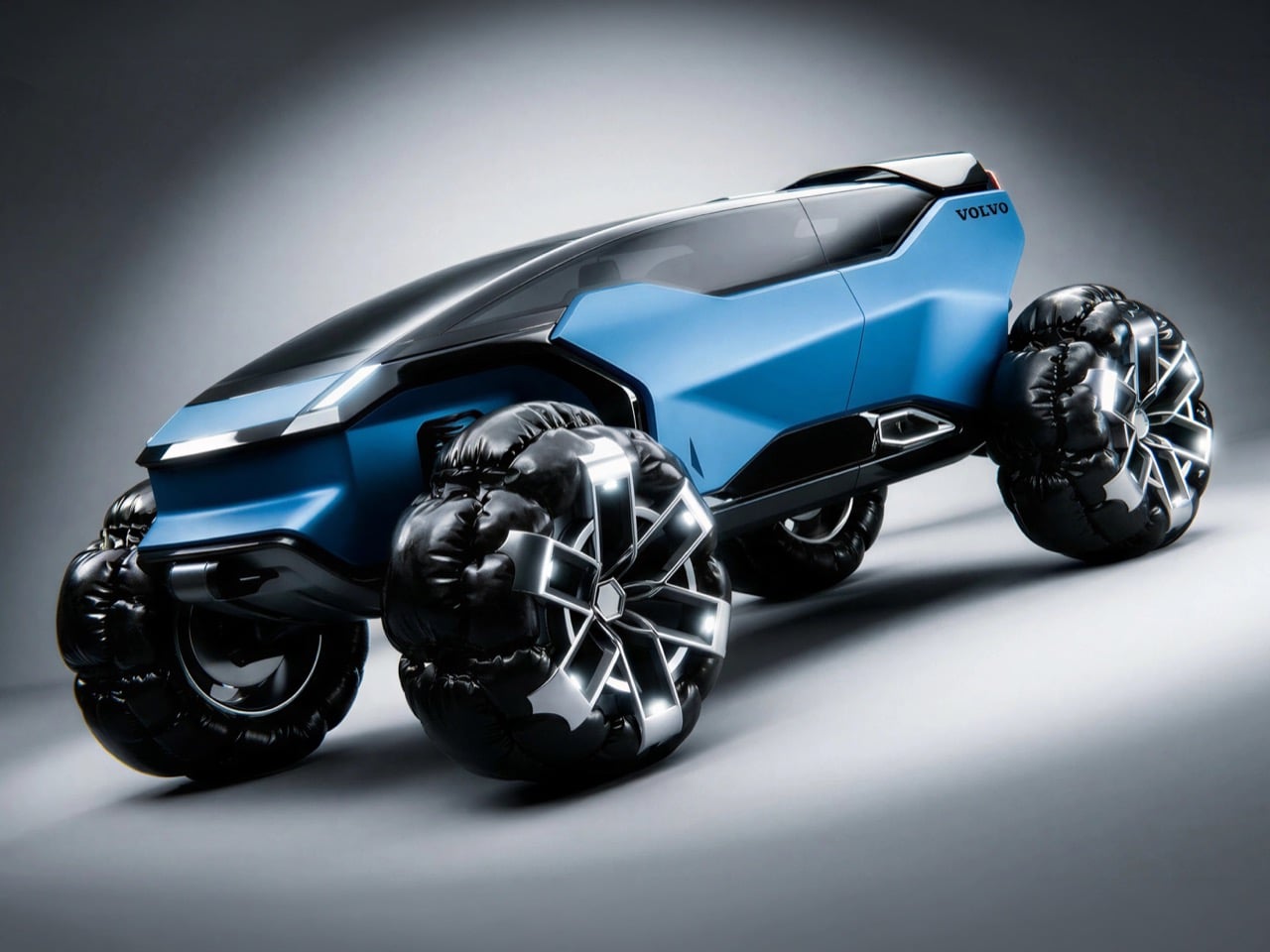
The Volvo Cosmic Surfer Has Gravity-Adaptive Wheels Designed For Smooth Driving On The Moon

Volvo has spent the better part of a century building its reputation on one foundational promise: keep the people inside the car alive, no matter what the road throws at them. That philosophy produced crumple zones, three-point seatbelts, and side-impact protection systems that the rest of the industry eventually copied wholesale. The logical endpoint of that thinking, taken to its most extreme conclusion, produces a vehicle engineered for terrain that would destroy any conventional automobile outright. Designer Sampad Chaulia arrived at exactly that conclusion with the Volvo Cosmic Surfer, a concept submitted for the Volvo Design Competition 2026 that imagines the Swedish brand’s DNA transplanted onto a lunar-grade off-road platform co-badged with The North Face.

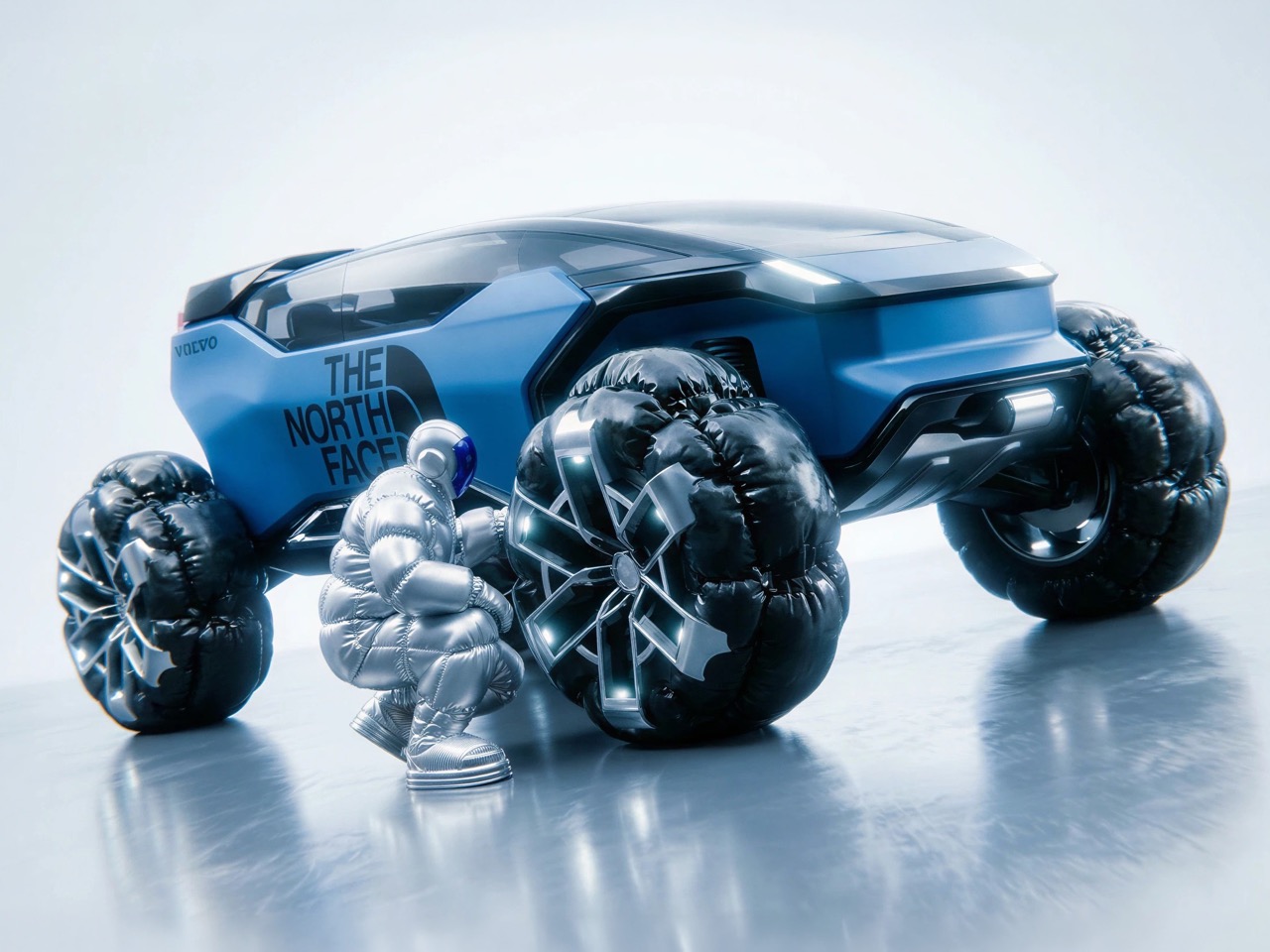
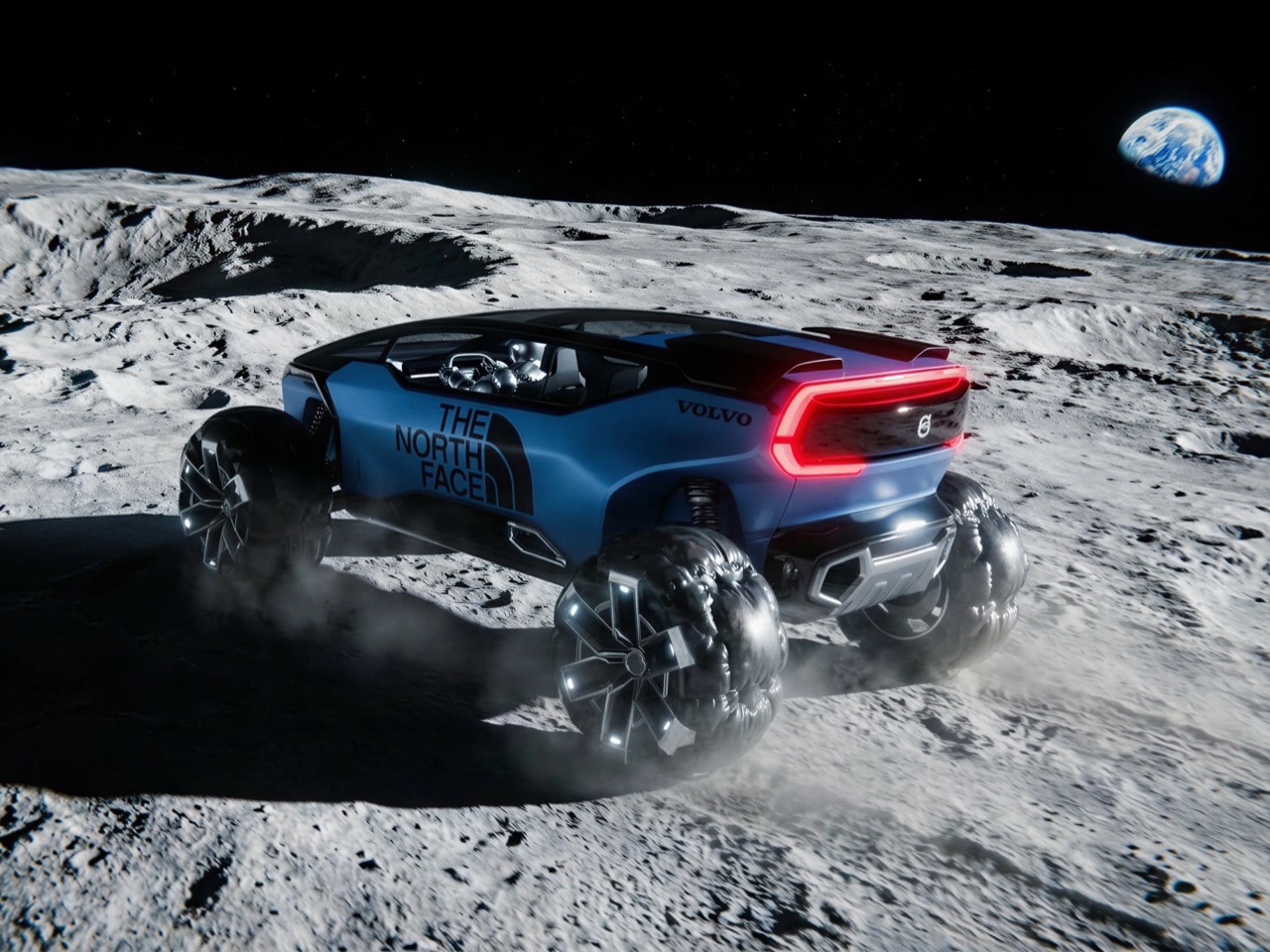
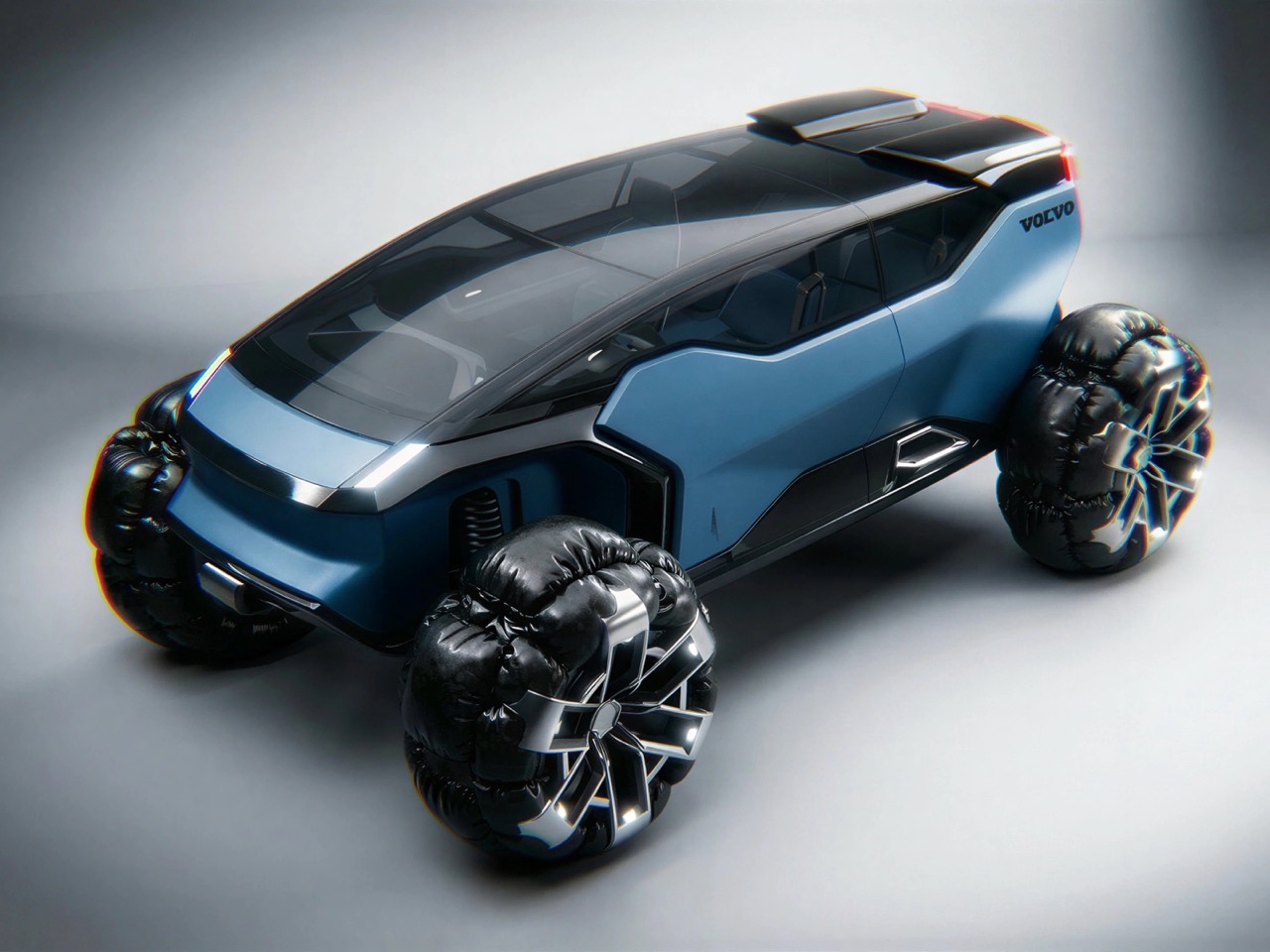
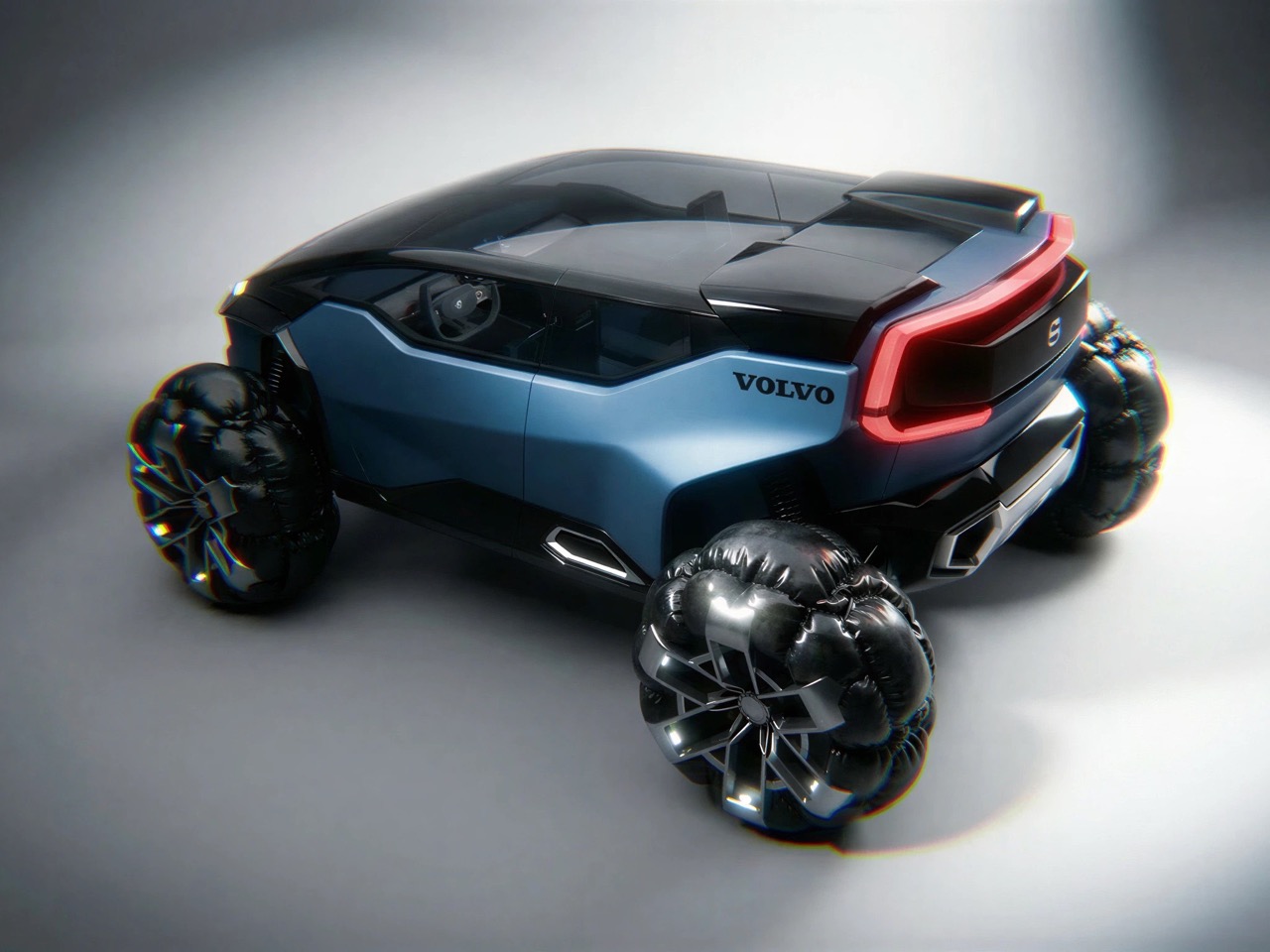
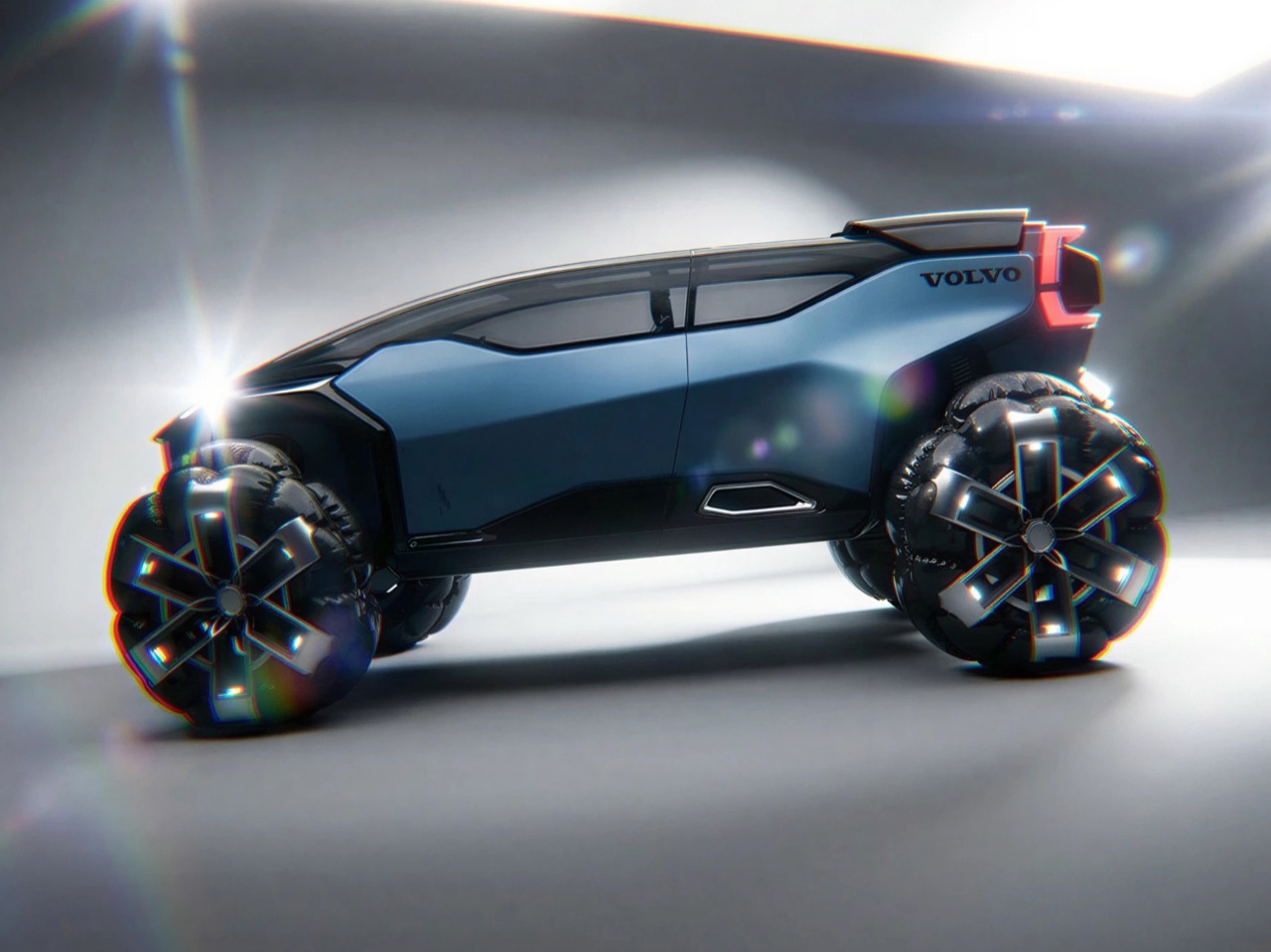
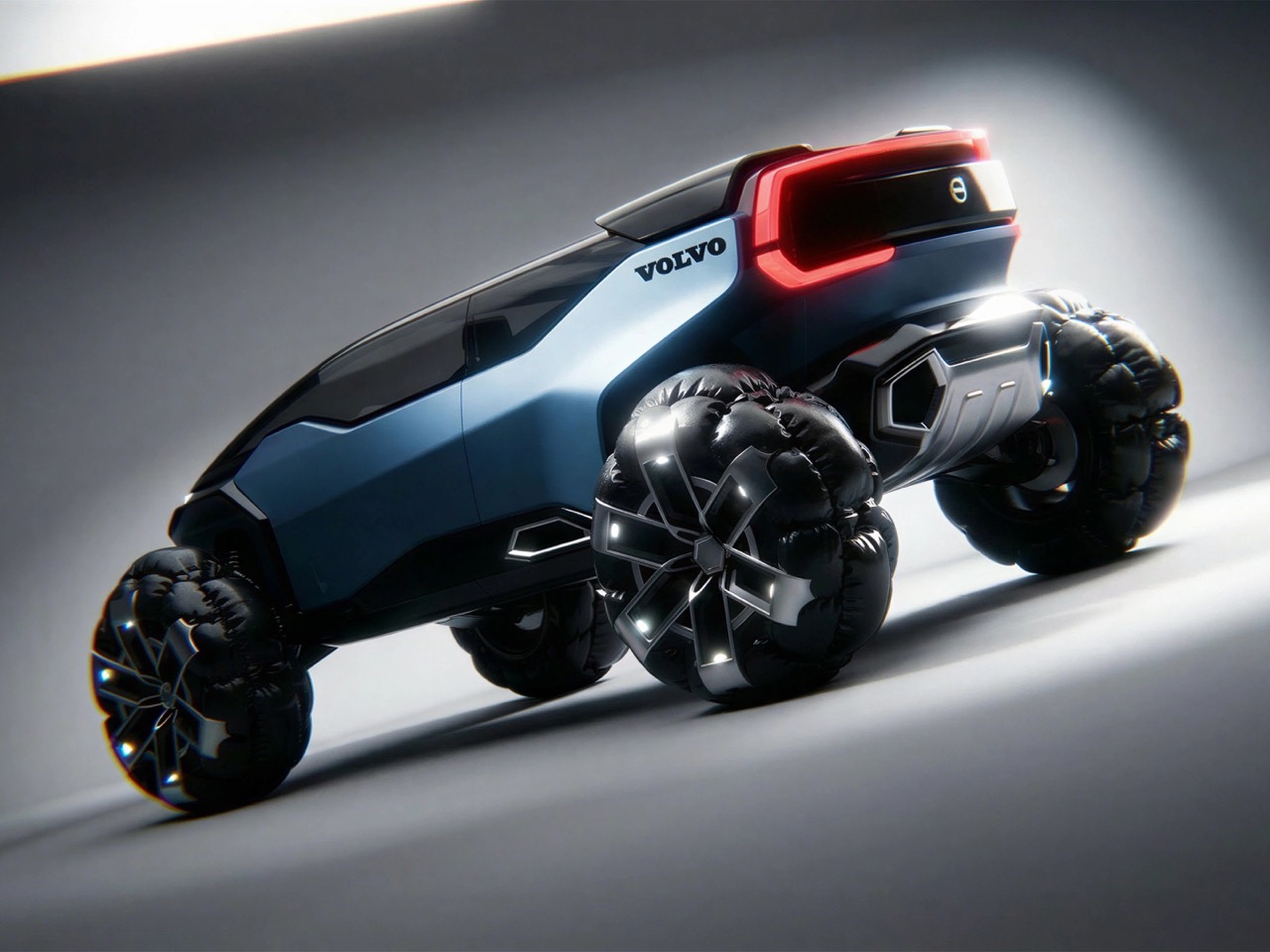
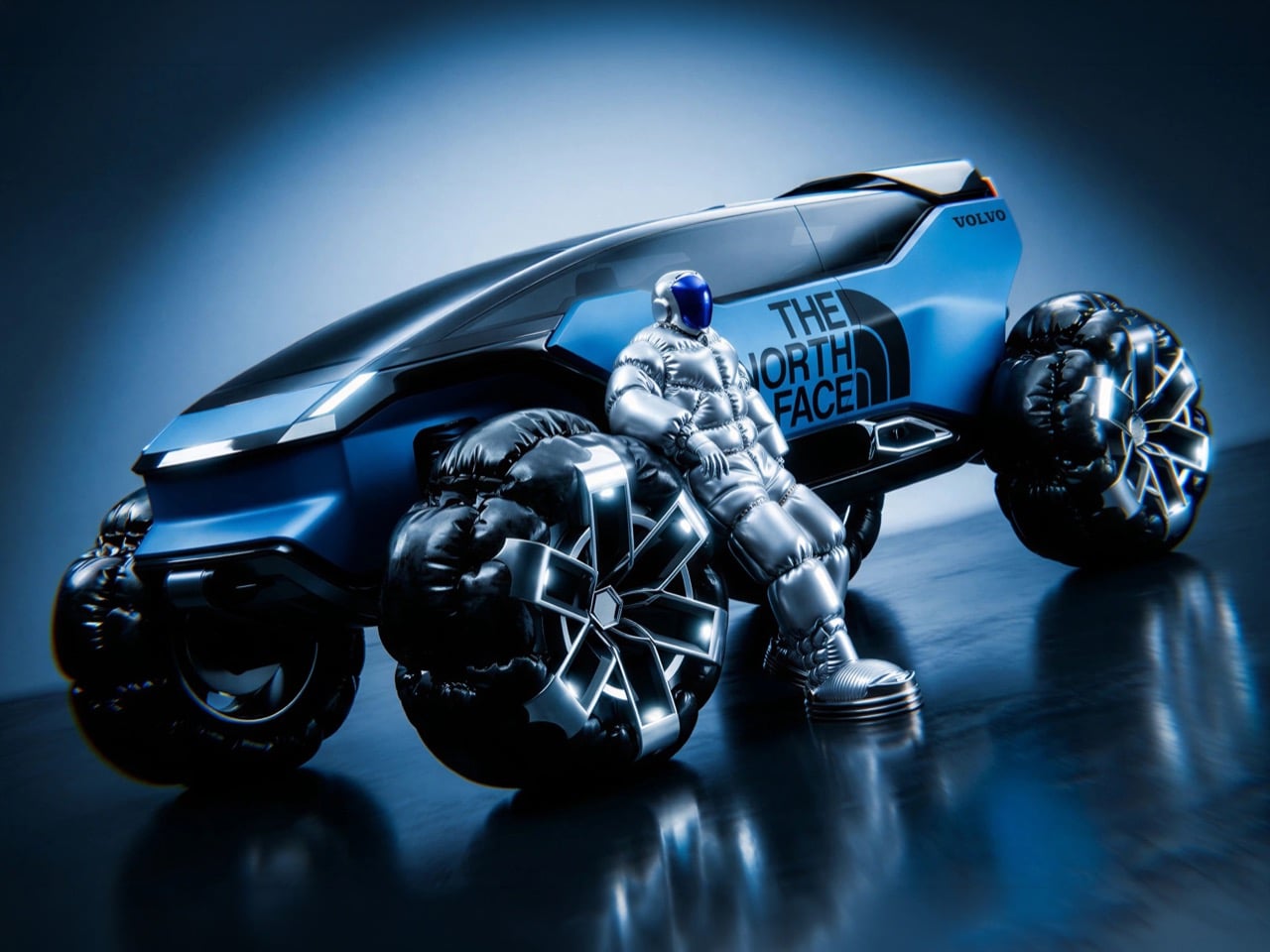
The Cosmic Surfer’s central design provocation is its wheel system, a gravity-adaptive, inflatable assembly that swells and compresses in response to surface conditions, conforming around boulders and craters the way a hand closes around a stone. The body sits low and wide over those massive multi-lobe wheels, draped in Volvo’s signature steel blue with The North Face branding stenciled across the flanks in expedition-ready block lettering. Chaulia frames the vehicle’s intended era as 2040, an interplanetary expedition machine for galactic explorers, built from Scandinavian minimalist principles and wrapped in the visual language of gorpcore punk. The result lands somewhere between a NASA lunar rover and a concept car that wandered off the Geneva Motor Show floor and kept going until it hit the Moon.

Designer: Sampad Chaulia

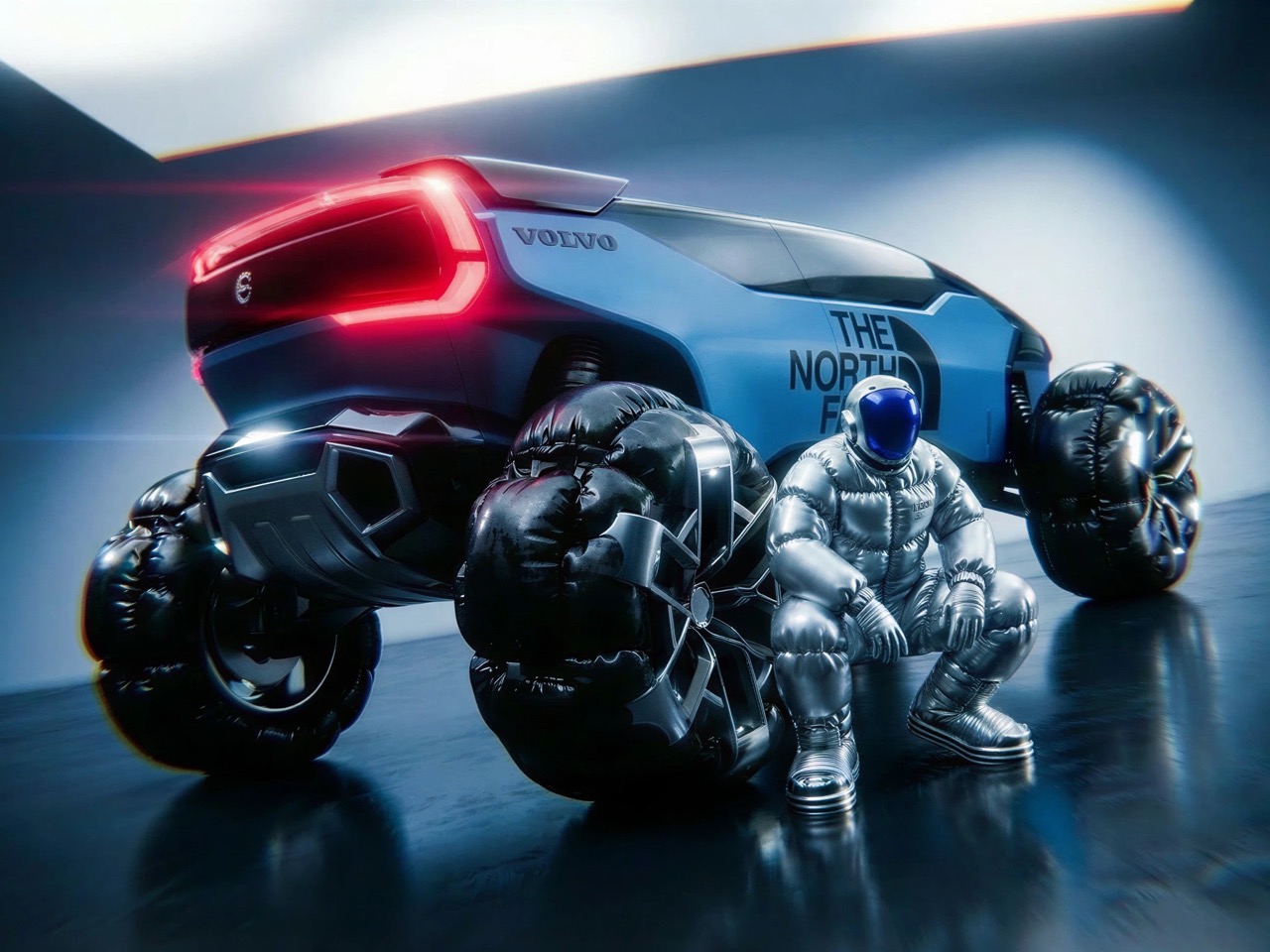
The wheel remains perhaps the most interesting element on the vehicle, evoking the same jaw-drop that I had when I first saw NASA’s chainmail wheel back in 2017. Chaulia modeled and rendered it entirely in Blender 3D, and the result looks less like a tire and more like a living organism that happens to roll. Each assembly pairs a geometric star-shaped alloy core, all sharp angles and polished facets, with a ring of inflatable outer lobes that bulge around the rim like an over-pressured deep-sea creature. The engineering logic is genuinely elegant: rather than relying solely on suspension travel to absorb terrain irregularities, the inflatable lobes compress and deform on contact with rocks and surface obstacles, conforming to the ground rather than demanding the ground conform to them. At low gravity, where surface textures are extreme and suspension dynamics behave very differently than on Earth, that compliance-first approach to traction makes far more sense than anything pneumatic rubber could offer.

The body language above those wheels is angular and deliberate, a form study in what Chaulia calls “Scandinavian soul” filtered through techwear aesthetics. The flanks are wide and planted, with faceted surfacing that catches studio light in sharp, graphic planes rather than soft automotive highlights. A dark greenhouse tapers rearward and sits flush with the bodywork, keeping the silhouette monolithic and uninterrupted from nose to tail. At the rear, a broad red light bar stretches the full width of the vehicle, reading less like a regulatory tail lamp and more like a distress beacon, which, given the concept’s intended operating environment, seems entirely appropriate. The Volvo wordmark sits cleanly on the upper body, and The North Face logo claims the flanks, a co-branding pairing that frames the vehicle as high-performance technical apparel on wheels.

The gorpcore punk framing Chaulia wraps around the Cosmic Surfer is more than an aesthetic mood board. It locates the vehicle within a specific cultural conversation about what extreme outdoor equipment looks like when the outdoors in question has no atmosphere, no roads, and gravity running at roughly one sixth of what your suspension was tuned for. The North Face partnership makes genuine design sense here because both brands share the same foundational brief: build something that keeps the person inside it functioning when the environment outside it is actively trying to kill them. That shared DNA produces a concept where the co-branding reads as a logical merger of two survival philosophies rather than a marketing exercise.

Volvo’s production lineup in 2026 is focused squarely on Scandinavian refinement and urban electric mobility, the EX30, EX40, and EX90 forming a coherent family of composed, safety-first EVs for city intersections and motorway cruising. The Cosmic Surfer asks what happens when that same foundational commitment to occupant protection gets aimed not at pedestrian detection systems and crumple zones but at the lunar highlands, where the obstacles are the size of houses and the nearest service center is 238,000 miles away. Chaulia produced this entire concept in a single day, which makes its conceptual coherence remarkable. The central idea, a vehicle whose wheel technology borrows the compliance logic of outdoor gear rather than automotive convention, arrived fully formed and persuasive on the first pass, which is more than most studio teams manage in a month.

The post The Volvo Cosmic Surfer Has Gravity-Adaptive Wheels Designed For Smooth Driving On The Moon first appeared on Yanko Design.
Estonia is the rare EU country opposing child social media bans

As child social media bans spread across Europe and beyond, Estonia isn't having it. On Friday, the country's education minister said the bans won't "actually solve problems," while warning that the kids will find a way regardless.

Although companies like Meta would love for you to believe it’s a fairy tale, social media addiction is associated with tangible negative repercussions for children. Studies show that its harms range from depression and anxiety to sleep deprivation and obesity. (The latter is from all the targeted junk food advertising.) On the other hand, teens can find community and support from social media.

A growing list of countries looked at the negative data and concluded that the answer was to ban social media altogether for children. Although the age cutoff varies, legislation has been floated or enacted in Australia, Greece, France, Austria, Spain, Indonesia, Malaysia, the UK and Denmark — just to name a few.

Estonia's education minister believes these countries are coming at the very real problem from the wrong angle. "The way to approach this, to me, is not to make kids responsible for that harm and start self-regulating," Kristina Kallas said at a Politico forum in Barcelona. She added that "kids will find very quickly the ways to go around and to still use social media."

Instead, she said the responsibility lies with governments and corporations. "Europe pretends to be weak when it comes to big American and international corporations," she added. But she called that a "pretense," challenging the EU to "actually take this power and start regulating the big American corporations."

To be fair, the EU regulates the tech industry more effectively than anywhere else in the world. But the point on childhood social bans stands.

Another argument against the bans is that it’s a short path from the well-meaning to a more sinister erosion of basic freedoms. In February, France suggested that the next logical step after passing an under-15 social media ban would be to go after VPNs. After all, once you pass the ban, you need to enforce it — and that can mean snuffing out the tools children could use to work around it.

This article originally appeared on Engadget at https://www.engadget.com/social-media/estonia-is-the-rare-eu-country-opposing-child-social-media-bans-194620916.html?src=rss

Estonia is the rare EU country opposing child social media bans

As child social media bans spread across Europe and beyond, Estonia isn't having it. On Friday, the country's education minister said the bans won't "actually solve problems," while warning that the kids will find a way regardless.

Although companies like Meta would love for you to believe it’s a fairy tale, social media addiction is associated with tangible negative repercussions for children. Studies show that its harms range from depression and anxiety to sleep deprivation and obesity. (The latter is from all the targeted junk food advertising.) On the other hand, teens can find community and support from social media.

A growing list of countries looked at the negative data and concluded that the answer was to ban social media altogether for children. Although the age cutoff varies, legislation has been floated or enacted in Australia, Greece, France, Austria, Spain, Indonesia, Malaysia, the UK and Denmark — just to name a few.

Estonia's education minister believes these countries are coming at the very real problem from the wrong angle. "The way to approach this, to me, is not to make kids responsible for that harm and start self-regulating," Kristina Kallas said at a Politico forum in Barcelona. She added that "kids will find very quickly the ways to go around and to still use social media."

Instead, she said the responsibility lies with governments and corporations. "Europe pretends to be weak when it comes to big American and international corporations," she added. But she called that a "pretense," challenging the EU to "actually take this power and start regulating the big American corporations."

To be fair, the EU regulates the tech industry more effectively than anywhere else in the world. But the point on childhood social bans stands.

Another argument against the bans is that it’s a short path from the well-meaning to a more sinister erosion of basic freedoms. In February, France suggested that the next logical step after passing an under-15 social media ban would be to go after VPNs. After all, once you pass the ban, you need to enforce it — and that can mean snuffing out the tools children could use to work around it.

This article originally appeared on Engadget at https://www.engadget.com/social-media/estonia-is-the-rare-eu-country-opposing-child-social-media-bans-194620916.html?src=rss

Garmin may be working on a Whoop competitor

Whoop, the makers of a screen-free fitness tracker of the same name, could soon have some competition. Fitbit teased its take on a Whoop-style band with the help of Steph Curry at the end of March, and based on a trademark filing spotted by Gadgets & Wearables, Garmin appears to be working on its own band that tracks similar health metrics.

This new Garmin wearable, called "CIRQA" in the trademark filing submitted in February, is designed to measure "the body's physical parameters and other physiological data, bio-signals, and bodily behavior." That could broadly describe the smartwatches and fitness trackers Garmin already sells. But the CIRQA apparently goes further, by also measuring "recovery from physical and emotional stress, human alertness level, and performance," a set of more granular, wellness-focused features that could bring the unreleased wearable into the same ballpark as a Whoop.

Garmin accidentally leaked that it was working on a new wearable via a hastily removed store page in January, Android Authority reports. While some phantom web pages and a trademark do not guarantee Garmin is working on a new device, or that the band will be screen-free in the same way the Whoop is. If the company is preparing a competitor, though, the timing makes sense. Where other devices try to split the difference between tracking biometrics and offering real-time information or other smartwatch features, Whoop is decidedly data-first. Its wearables monitor as much information as possible through a nondescript band, and then analyze and display what it learned via a smartphone app. The approach is attractive to anyone tired of dealing with screens, and the growing number of people obsessed with optimizing their health. In fact, Whoop just raised $575 million on the back of its current success. It would make sense that Garmin and Google (via its Fitbit brand) would want a piece of the company's audience, too.

Whoop-style bands are also a perfect fit for future uses of AI in health and fitness tracking. Google is interested in having users turn to Fitbit's AI-powered health coach for everything from workout tracking to nutrition advice. If health data processing is going to happen in the cloud, and you're going to have to pull out your smartphone to view that data anyway, it makes sense to sell a tracker without a screen.

This article originally appeared on Engadget at https://www.engadget.com/wearables/garmin-may-be-working-on-a-whoop-competitor-191802041.html?src=rss

Škoda’s smart bicycle bell cuts through ANC headphones to alert zoned out pedestrians

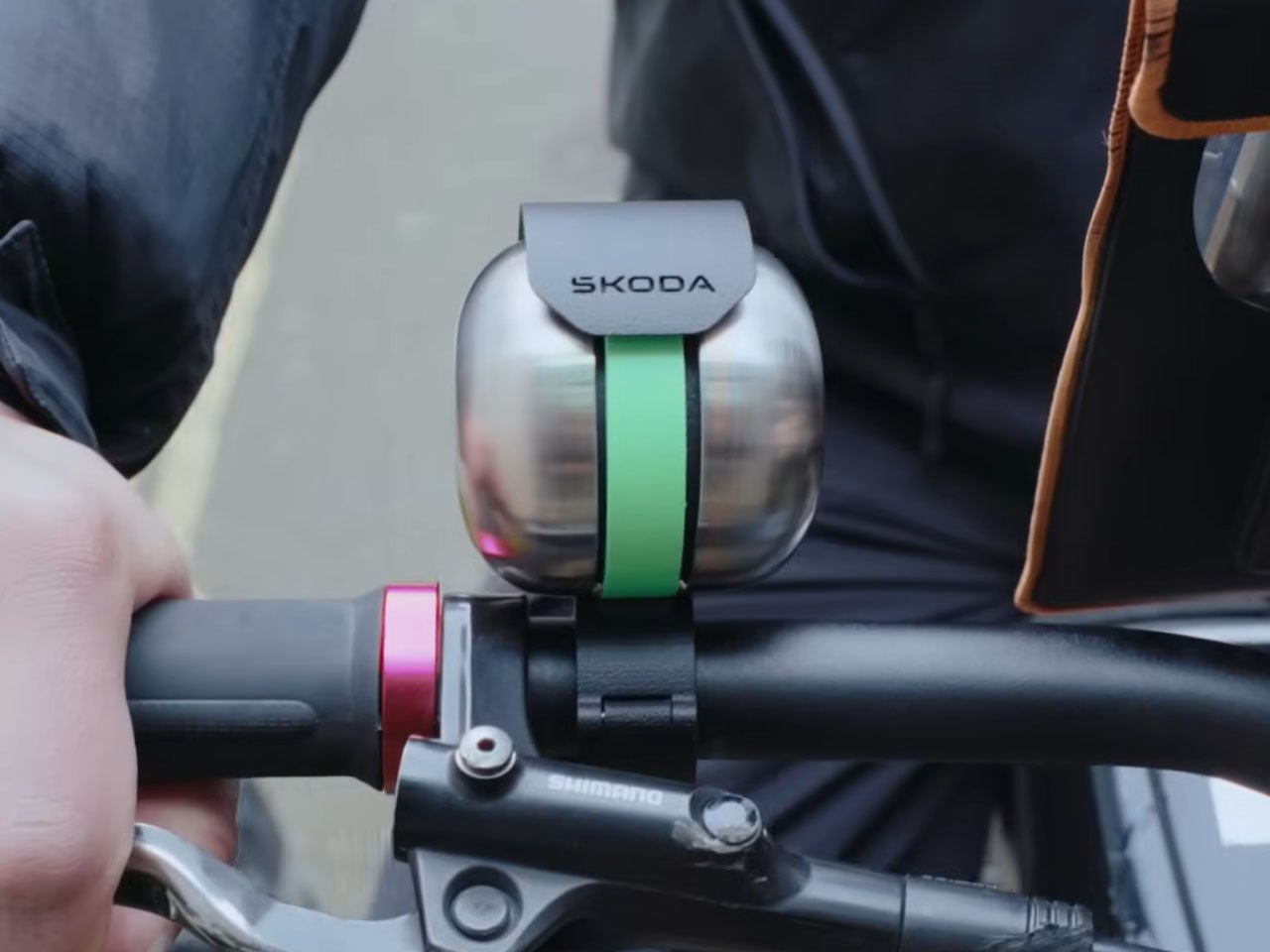
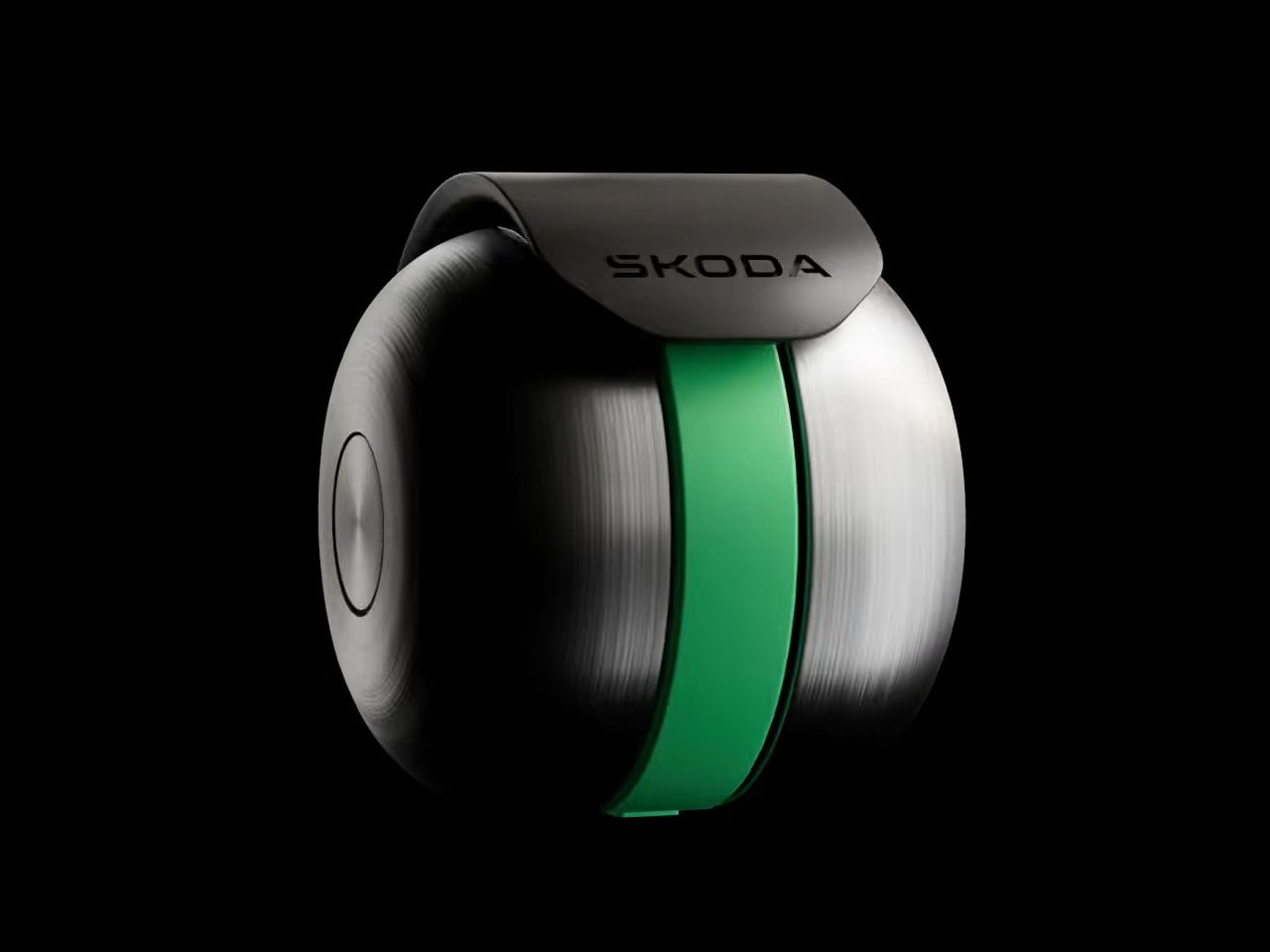
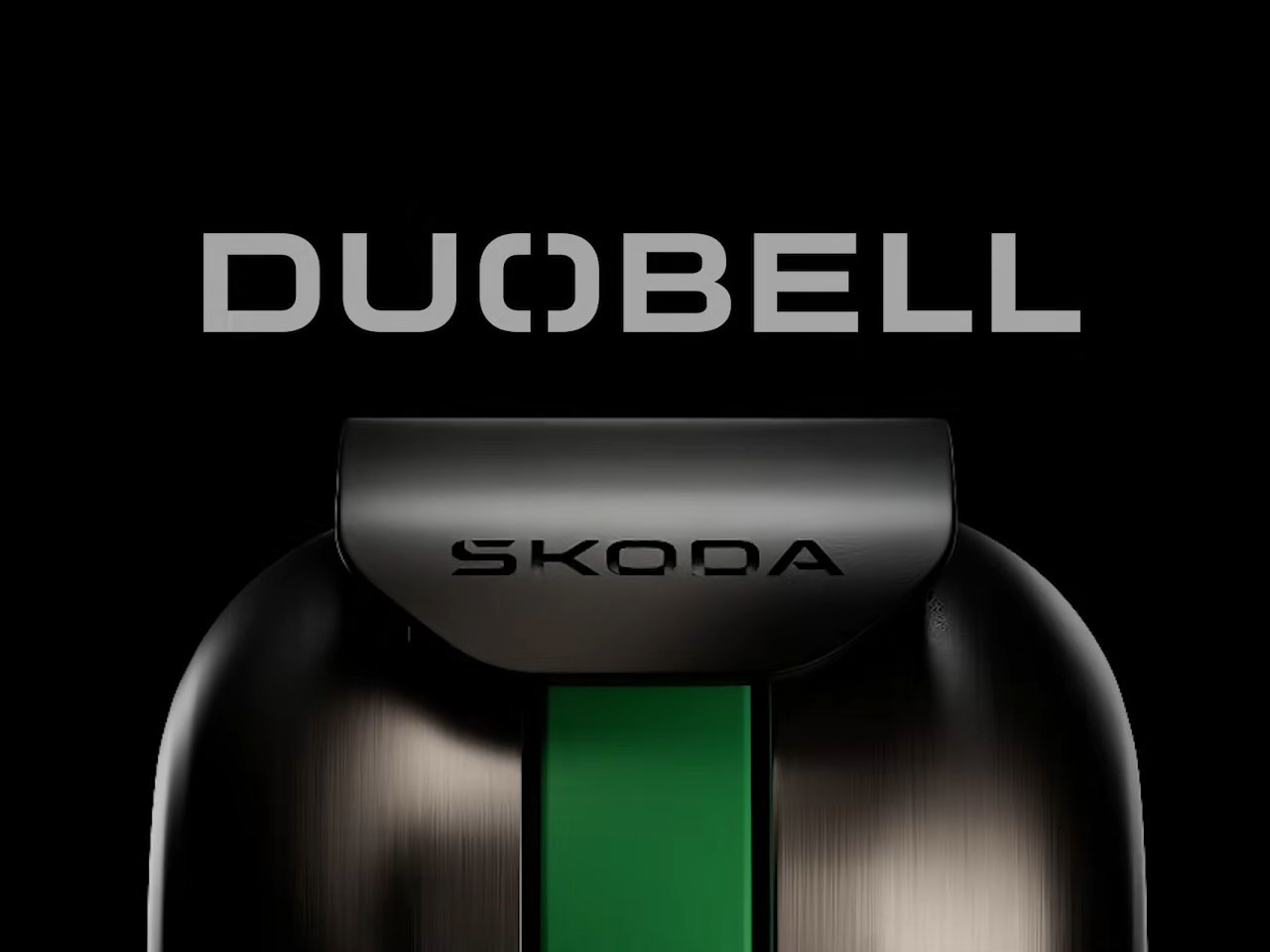
Times have changed so much, we’ve got people walking on the streets with their ANC turned on to zone out, but are unaware of the risks motorists can pose. With active noise-cancelling headphones becoming increasingly common, the sounds of the city (from traffic to bicycle bells) can easily disappear behind layers of digital silence. Recognizing this growing safety challenge, Škoda Auto has introduced the DuoBell, a cleverly engineered bicycle bell designed to cut through active noise cancellation and alert distracted pedestrians before a potential collision occurs.

The concept addresses a modern urban problem: many people walk while listening to music through headphones equipped with active noise cancellation (ANC), which filters out environmental noise. While effective for immersive listening, ANC can also suppress critical warning sounds such as approaching bicycles. To tackle this issue, Škoda collaborated with researchers and audiologists from the University of Salford to study how conventional bicycle bells interact with ANC algorithms and why they often fail to be heard. Their research revealed that typical bells operate within frequency ranges that noise-cancelling systems can easily identify and suppress, essentially muting them for headphone users.

Designer: Škoda

The DuoBell was designed as an analog solution to this digital limitation. Instead of relying on louder volume alone, the bell targets a specific frequency band that ANC systems struggle to eliminate. Through acoustic testing, researchers identified a “safety gap” between 750 and 780 Hz, a range where noise-cancelling algorithms are less effective. The bell is tuned precisely within this band, significantly increasing the chances that pedestrians wearing ANC headphones will hear it.

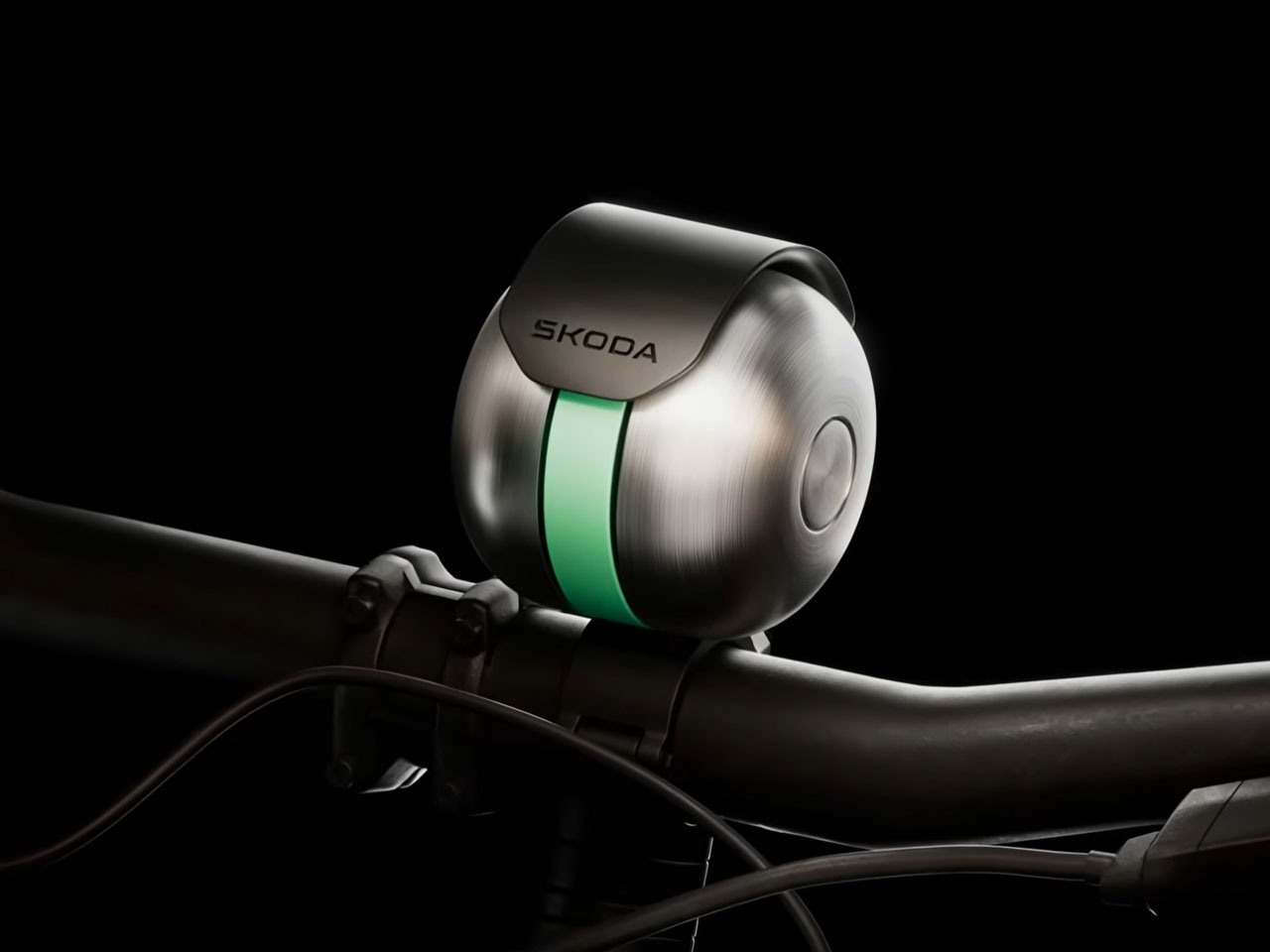
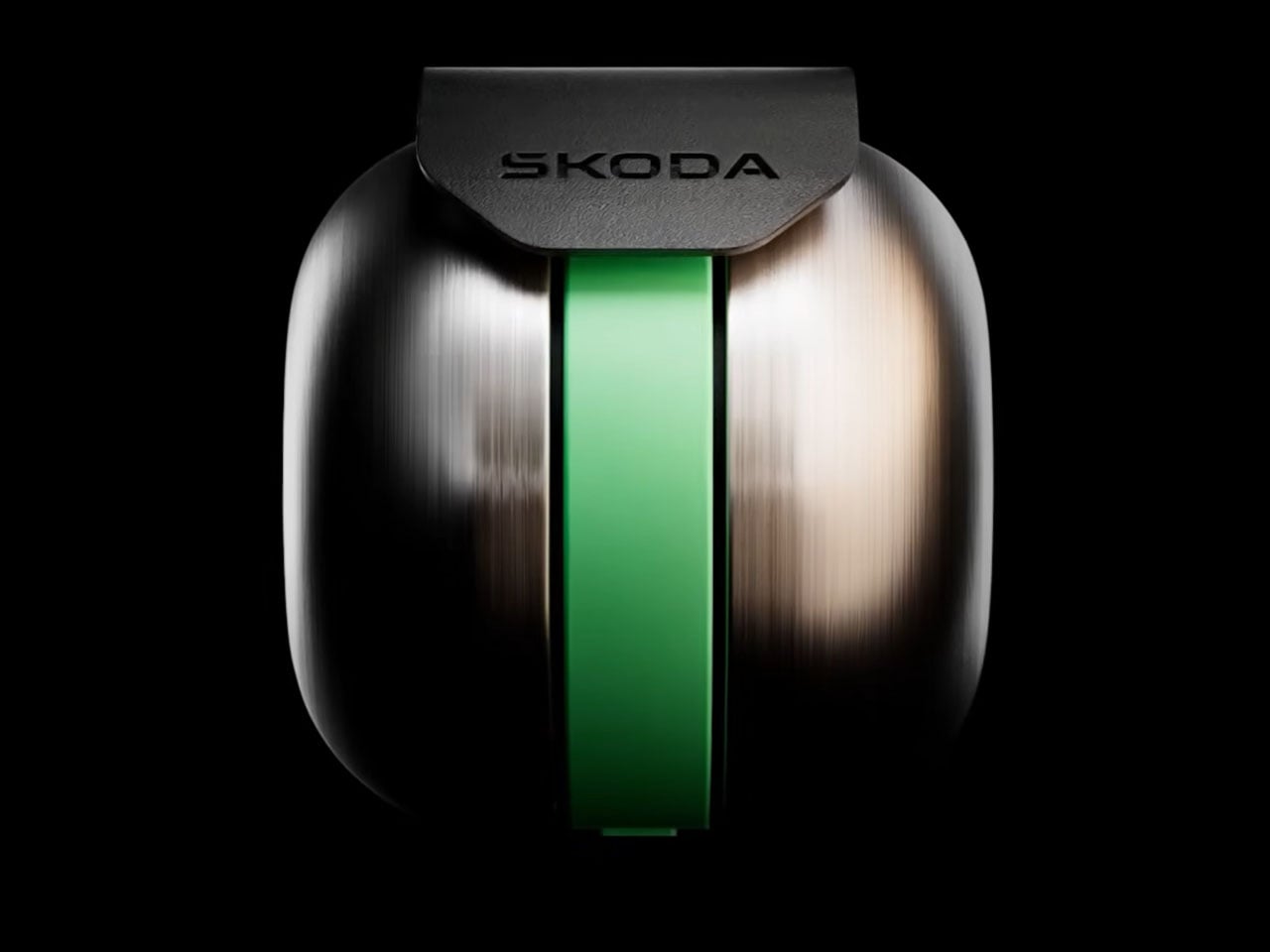
But frequency tuning is only part of the innovation. True to its name, the DuoBell incorporates a dual-resonator design that generates two distinct tones. This layered sound profile confuses noise-cancelling algorithms that typically rely on predictable, steady noise patterns to cancel audio signals. The bell also uses a specially engineered hammer mechanism that produces rapid and irregular strikes, making the sound harder for digital filters to track and suppress.

Testing suggests the design could make a meaningful difference in real-world cycling safety. According to measurements conducted during trials, pedestrians wearing ANC headphones gained up to 22 meters of additional reaction distance when the DuoBell was used compared to a conventional bell. That extra margin can provide critical seconds for both cyclists and pedestrians to react, reducing the likelihood of accidents in busy urban areas.

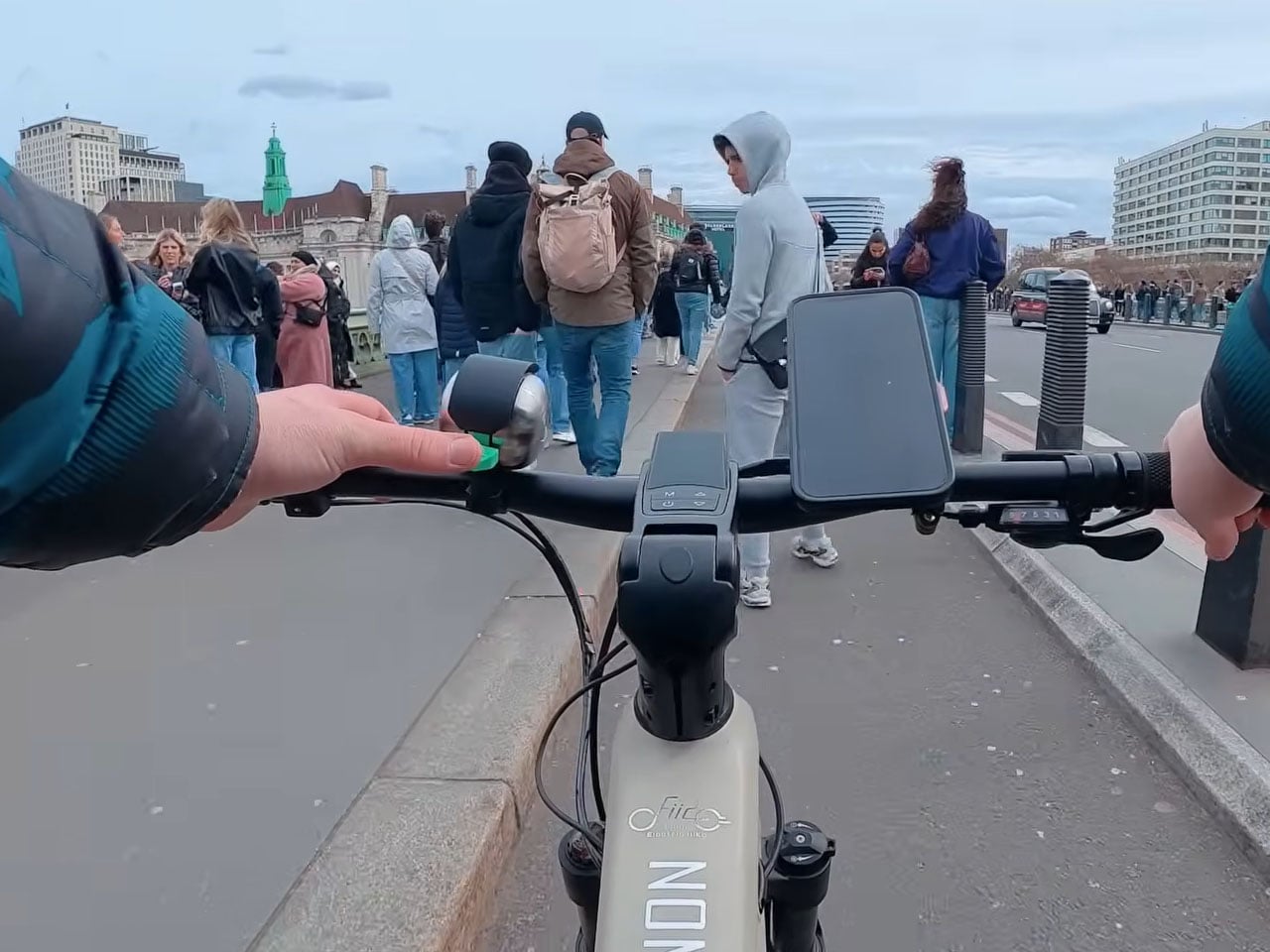
The bell has already been evaluated outside the lab as well. Field trials were carried out on the streets of London in February, where couriers riding for the delivery platform Deliveroo tested the device during everyday routes. Many riders reportedly found the bell effective enough that they expressed interest in continuing to use it after the trials concluded, highlighting its practical benefits in dense city environments.

Interestingly, the DuoBell achieves all of this without any electronics, batteries, or smart connectivity. It remains a fully mechanical bicycle bell – simple, durable, and easy to install – while using acoustic science to solve a modern technological problem. Škoda also plans to share its research findings publicly, hoping the insights can contribute to broader discussions about pedestrian safety in cities where personal audio devices are now part of everyday life.

The post Škoda’s smart bicycle bell cuts through ANC headphones to alert zoned out pedestrians first appeared on Yanko Design.