
How to use Google’s Find Hub to locate your Android phone
Is your Android phone missing? Here's how you can use Find Hub to look for it.
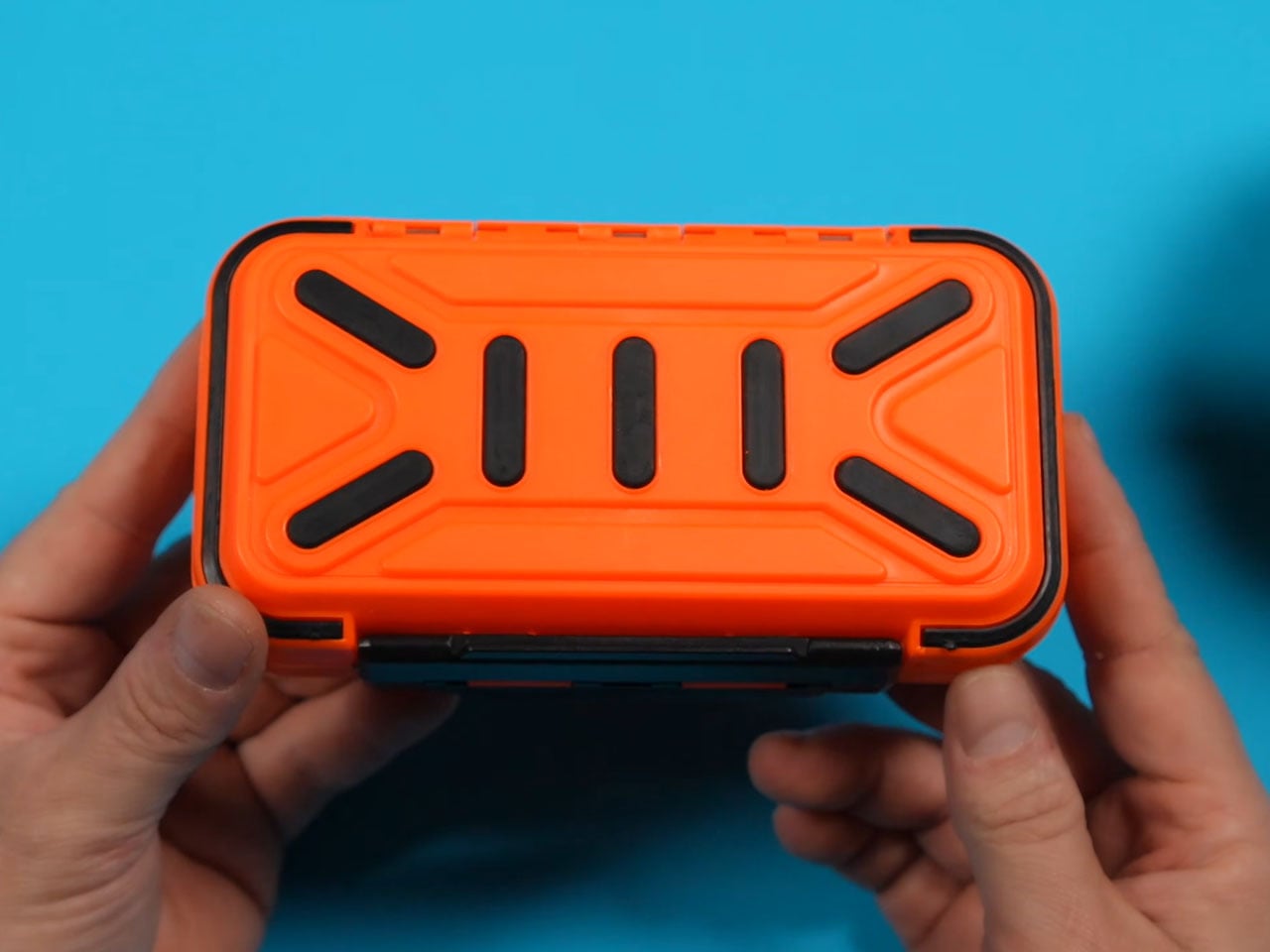
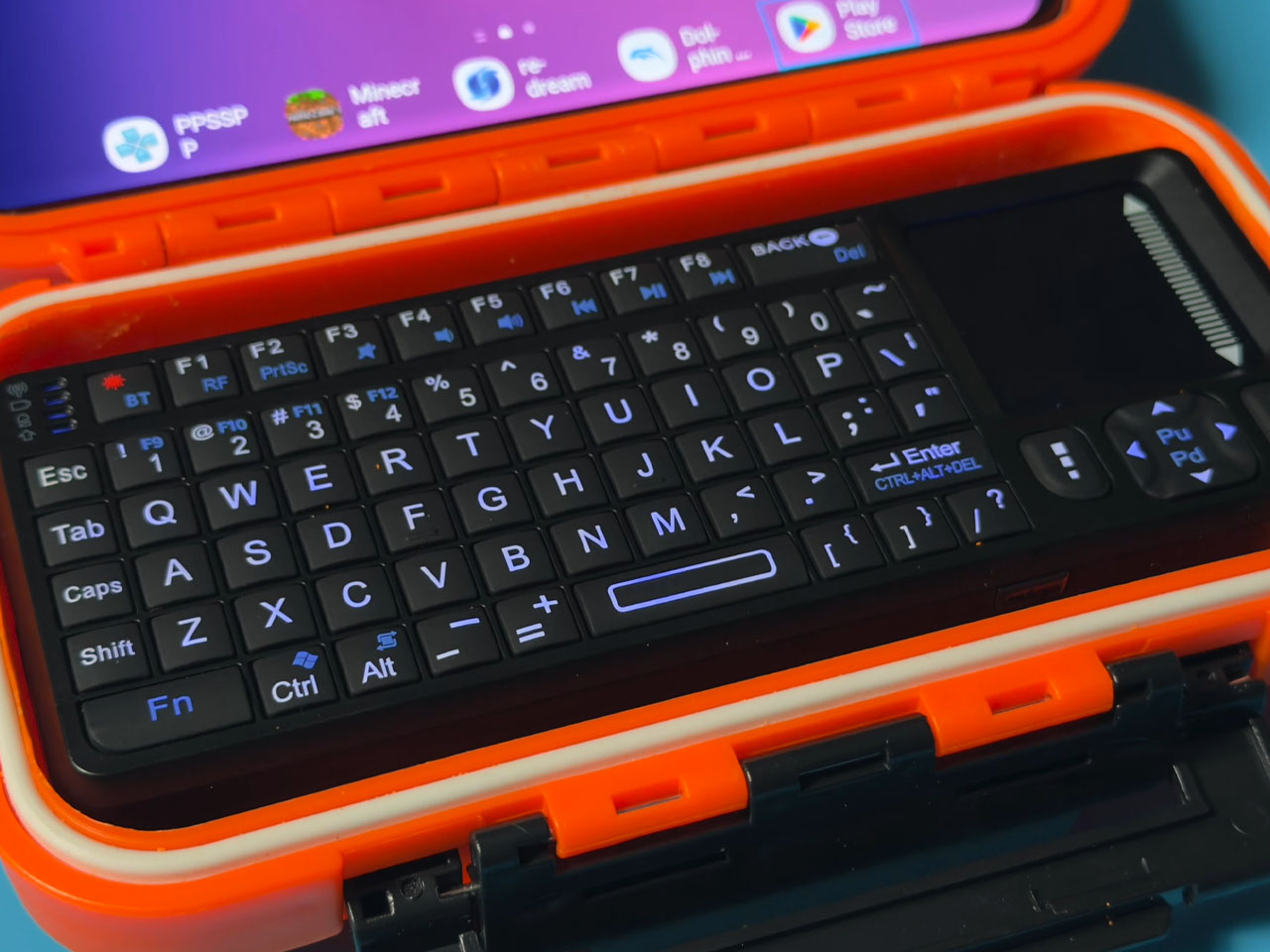
That old phone sitting in a drawer as a backup could have a more interesting second life. ETA Prime’s DIY cyberdeck takes a Galaxy S10, places it inside a compact waterproof mini tackle box, and pairs it with a small Bluetooth RGB keyboard with an integrated trackpad. The result is a piece of hardware that already exists turned into a surprisingly capable portable workstation.
The tackle box becomes the enclosure, with minor modifications made using a Dremel, so the phone and keyboard can sit securely inside. There is no 3D-printed shell or elaborate fabrication involved, which keeps the project accessible to anyone comfortable with basic-level How-Tos. More importantly, the sealed enclosure avoids the need to cut openings for charging ports or physical buttons, helping protect the electronics from dust, moisture, and accidental splashes.
Designer: ETA Prime

At the center of this project is a Galaxy S10, whose Snapdragon 855 processor, 8GB of RAM, 128GB of storage, and AMOLED display still give this repurposed setup plenty of capability. A Rotation Control app is used to keep the phone’s interface in the desired horizontal orientation, while the Bluetooth keyboard turns it into something closer to a tiny computer. The keyboard also supports RGB lighting, adding a little character to what would otherwise be a very utilitarian build.
The practical appeal shines through when the S10 is used for more than browsing. The hardware can handle Android productivity apps, media playback and retro-game emulation, including demanding platforms such as Dreamcast and PSP. That makes the cyberdeck equally suited to writing on the move, watching videos, experimenting with software, or playing older games without carrying a laptop or dedicated handheld.


The enclosure is arguably the most interesting part of the design. Unlike many cyberdecks that prioritize a futuristic appearance over everyday practicality, the tackle box gives this one a rugged, purpose-built quality. The rig is compact enough to carry around, while its weather-resistant construction makes it better suited to outdoor use than an exposed phone-and-keyboard combination. That unusual mix of ordinary storage hardware and repurposed electronics is what gives the project its character.

There is also plenty of room for experimentation. A larger battery can be added beneath the keyboard for longer sessions, while a detachable kickstand could make the viewing angle more comfortable. The Galaxy S10 is not necessarily the only possible brain, either. According to the DIYer, the same enclosure concept could accommodate a Raspberry Pi or small-form-factor PC for users who want to explore Linux and other operating systems.

Best of all, the project is quite inexpensive, given the exponentially rising costs of memory modules, and in turn PCs and smartphones. With a used Galaxy S10 potentially available for less than $70 and inexpensive components filling out the rest, the complete build can remain below $100. The clever DIY is very easy to take u unlike some of the more complex cyberdeck builds we’ve seen in the past like the pocket-sized Altoids DIY.

The post Turn your old Galaxy phone into a weatherproof cyberdeck for under $100 first appeared on Yanko Design.


Last year, around the same time, H. Moser & Cie introduced the Streamliner Alpine Mechanics Edition for the Spanish GP, a watch designed around the mechanics working in the paddock. Now the Swiss watchmaker is revisiting the idea with a standalone timepiece that takes the concept in a more unconventional direction.
Meet the Streamliner Off-Grid, a digital-analog hybrid descended from the Alpine Mechanics Edition and built around the design language of Moser’s mechanical Streamliner collection. Its cushion-shaped case measures 42.6mm across and 14.4mm thick, with a skeletonized dial revealing circuitry beneath the traditional-looking watch face. This is an unusual combination, but one that makes the technology feel like an integral part of the design.
Designer: H. Moser & Cie


The upper portion of the dial retains Moser’s familiar minimalist treatment. A small domed analog display sits at 12 o’clock, finished in the brand’s characteristic fumé style and available in either red or Blackor. Globolight ceramic indices and hands provide the time, while the rest of the dial exposes the electronics underneath. Moser has deliberately stopped short of turning the Off-Grid into another wearable. There is no heart-rate sensor, fitness tracking, or stream of notifications. Instead, the digital display handles functions more traditionally associated with serious watchmaking, including a perpetual calendar, GMT, split-seconds chronograph, timer, vibrating alarm, moon phase, and sunrise/sunset information.

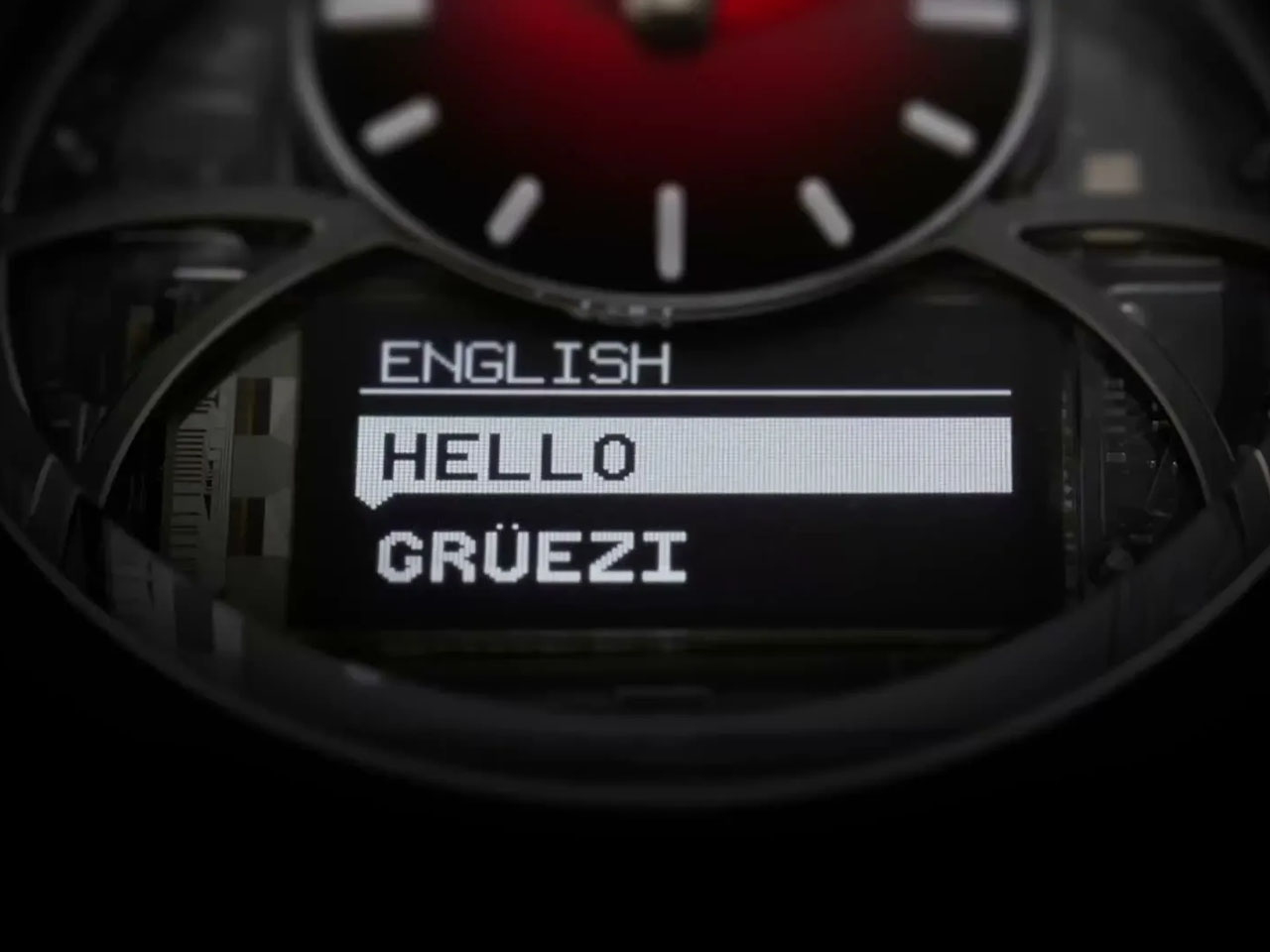
The watch can connect to iOS and Android devices via Bluetooth and a companion app, although most of its functions can be configured directly from the watch. A large pusher at 9 o’clock is the most distinctive control. Called the Off-Grid selector, it replaces the F1 mode selector used on the Alpine Mechanics Edition. Pressing it brings up a country selector and a small built-in dictionary containing 10 useful words or phrases translated into 21 languages. It is a surprisingly simple idea for a watch that otherwise looks deeply technical, giving the digital side a practical travel function without requiring the wearer to reach for a phone.

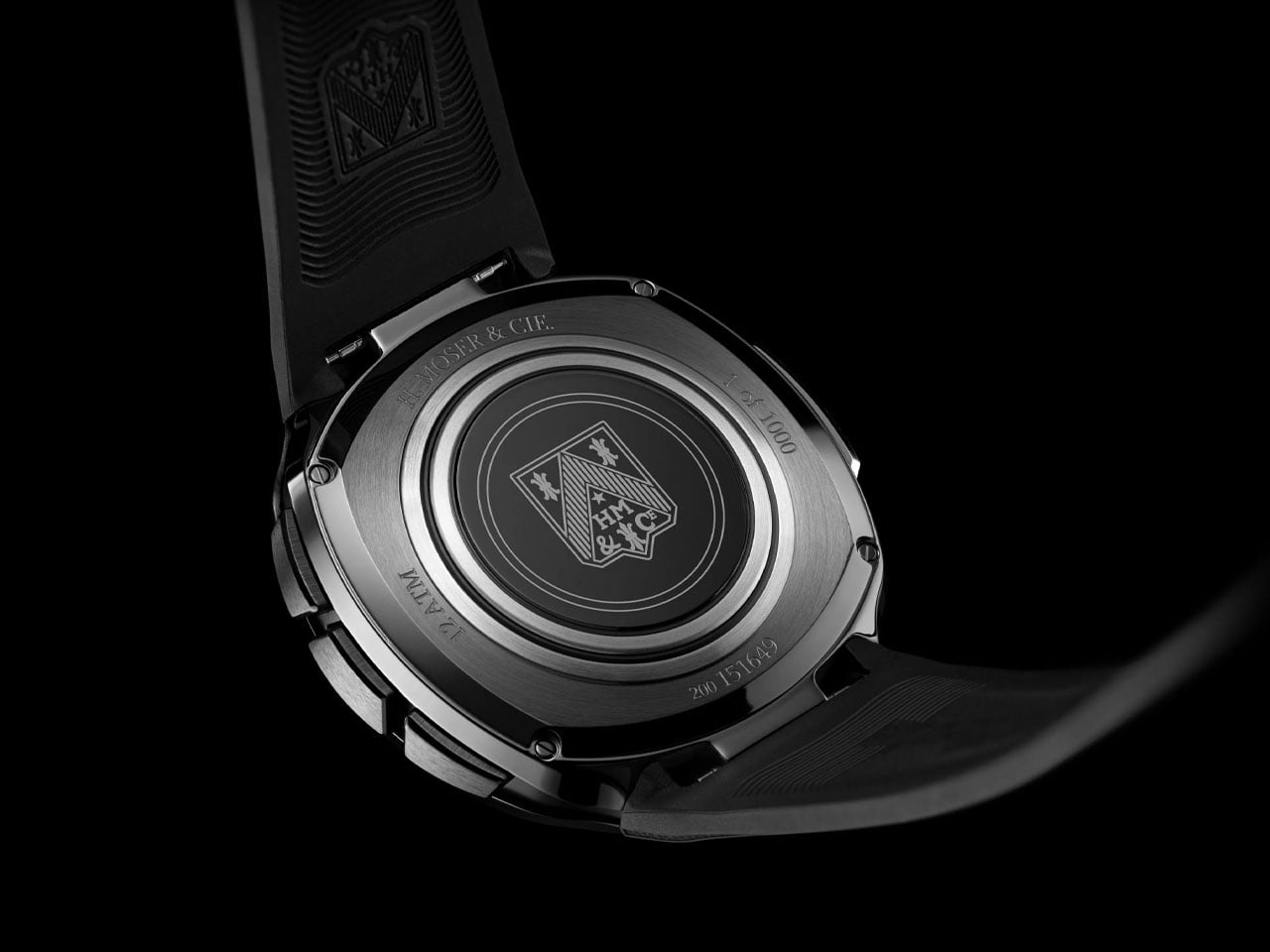
Powering everything is the Calibre D10, developed with Swiss technology company Sequent. The digital movement comprises 186 components and operates at 32,768 vibrations per second, with a stated accuracy of ±0.3 seconds per day. Battery life depends heavily on how the watch is used. According to Moser, there are more than 12 months in timekeeping mode, while extensive use of the digital functions reduces that considerably. The battery is recharged wirelessly through the sapphire caseback, and the watch is water-resistant to 120 meters.
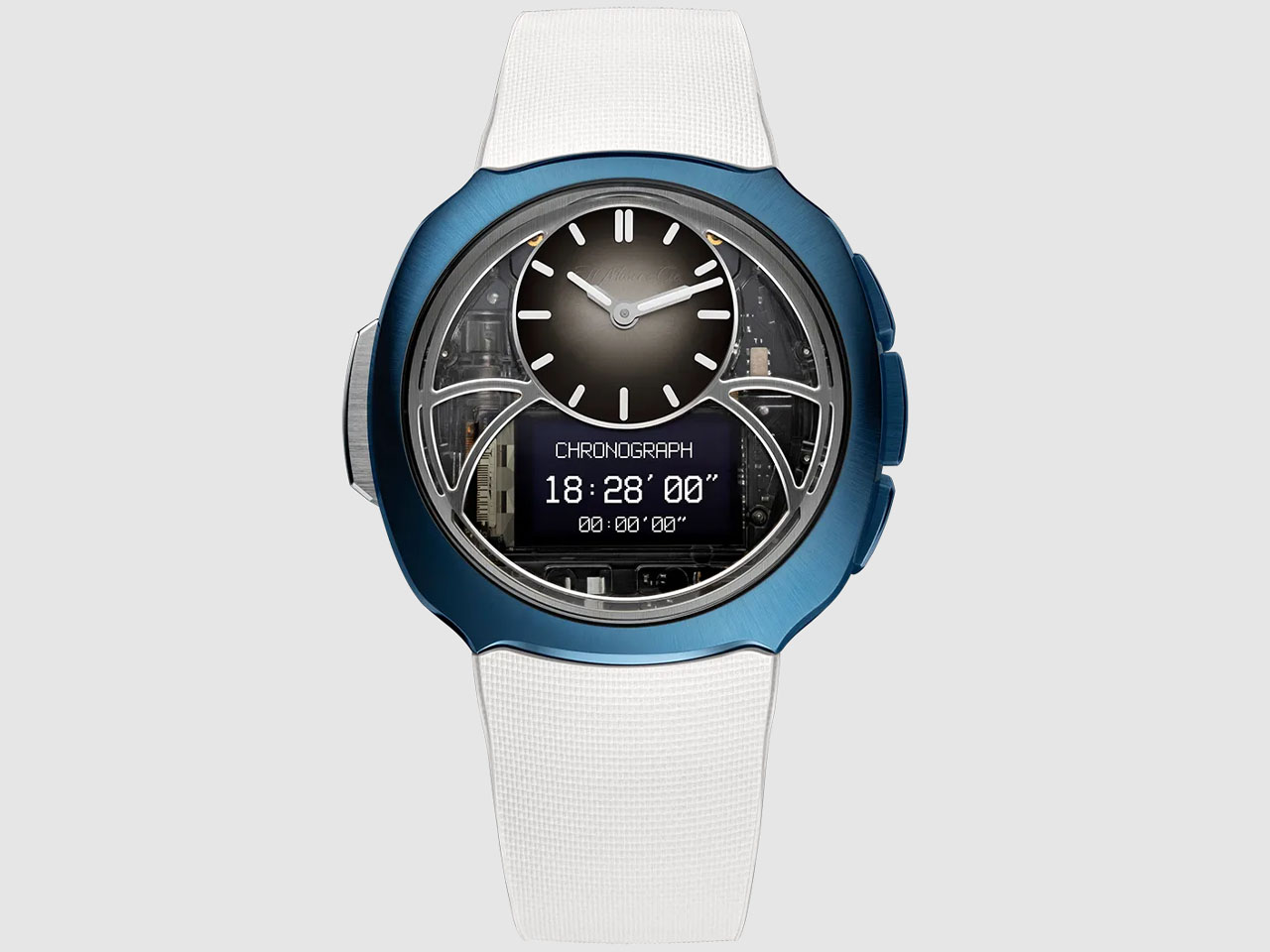
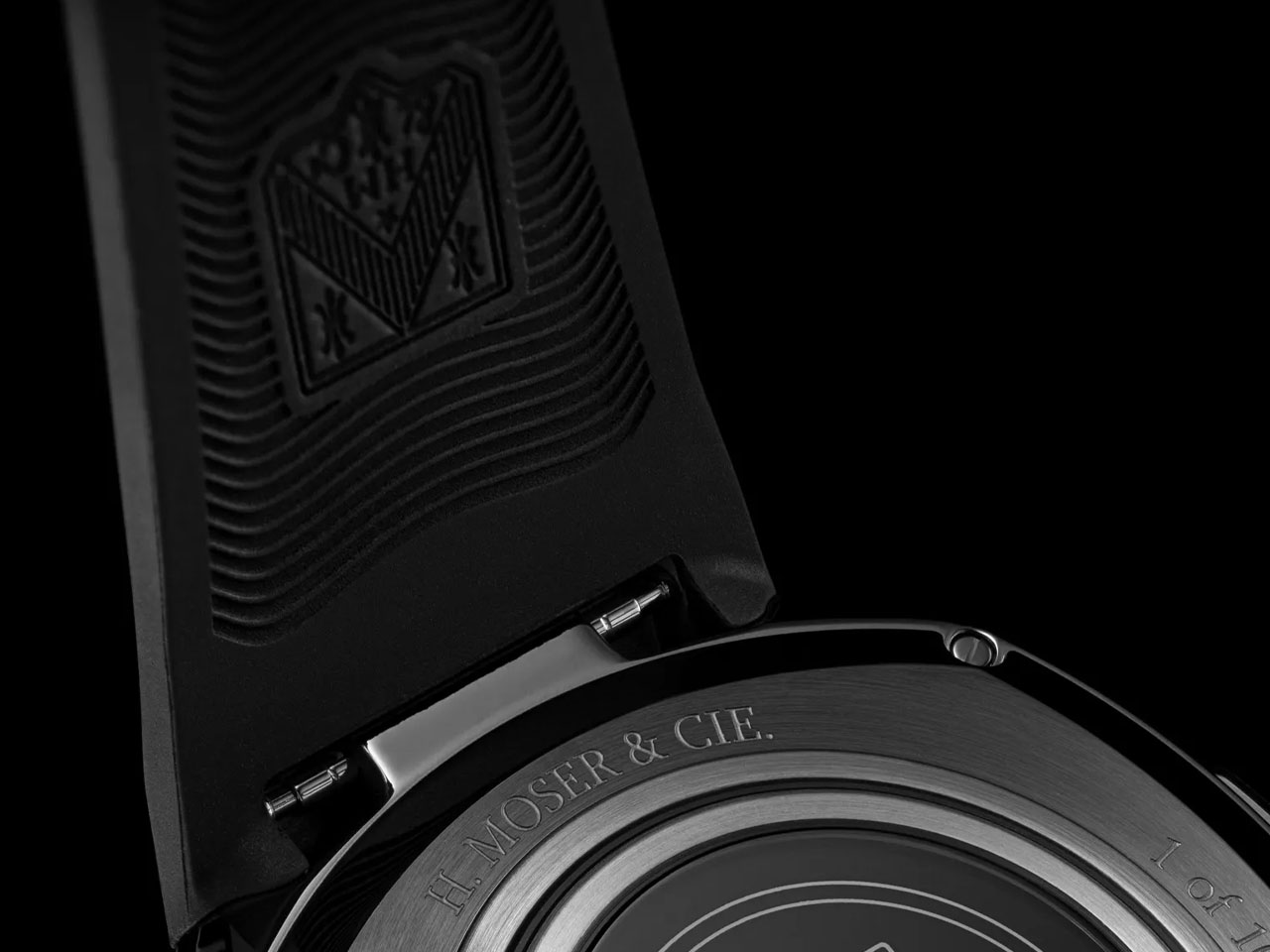
There are two versions of the Off-Grid: blue PVD-treated steel with a Blackor fumé dial and white integrated rubber strap, or black PVD-treated steel with a red fumé dial and black strap. Both are limited to 1,000 pieces. Priced at CHF 3,900 (approximately $4,800), the Off-Grid is Moser’s most accessible entry point by a significant margin. That is enticing since it still retains the Streamliner’s fumé dial treatment and integrated rubber strap. For now, the F1-inspired watch is only available for purchase by existing Moser customers till 23 September. After that, anyone will be able to buy this one until October 5, provided they can last the limited edition stock.





The post H. Moser’s Off-Grid watch limited to just 1,000 examples has minimalist smart features under the surface first appeared on Yanko Design.


Washington Dulles International Airport has long been a study in contradiction — one of the most architecturally significant airports on the planet, home to Eero Saarinen’s sweeping, gravity-defying terminal, and yet one of the most frustrating to actually travel through. That’s about to change in a big way.
On July 29, 2026, the Trump administration unveiled a $22.5 billion plan to transform Dulles into what officials are calling a premier international gateway. The announcement, made alongside U.S. Transportation Secretary Sean Duffy, United Airlines, and the Metropolitan Washington Airports Authority (MWAA), represents one of the largest airport overhauls ever proposed in the United States. Less than a month later, the MWAA board voted to approve a $19.9 billion funding package, with construction on the main terminal expected to begin in late 2027 and the full project set to wrap by 2034.
Designer: United Airlines


The scope is staggering. The plan calls for five million square feet of new and renovated terminal and retail space, four entirely new linear concourses, a redesigned U.S. Customs facility passengers can walk directly to, and a dramatically expanded AeroTrain system threading beneath the airport via new underground tunnels. Gone, finally, are the mobile lounges — the lumbering, bus-like “people movers” that have been shuttling passengers since 1962 and have become arguably the airport’s most universally loathed feature. In their place, a new underground U-shaped AeroTrain loop and moving sidewalks will connect travelers efficiently across all concourses.
Saarinen’s iconic main terminal — its dramatic hyperbolic paraboloid roof still one of the most celebrated works of mid-century modernism — will be preserved. The interior, though, gets a full refresh: an open foyer, new airline check-in kiosks, and the kind of breathing room the existing space has never had. The parking situation, long a source of frustration for departing passengers, is also being addressed, with lots repositioned closer to the main terminal and plans for a garage that would rank among the world’s largest, with 32,000 spaces.


The bulk of funding will come from approximately $14.2 billion in new municipal bonds issued by the airport authority, with airlines and the federal government contributing the remainder. Dulles saw passenger numbers grow 6.4% last year to 29 million travelers — making it the fastest-growing large U.S. airport — which makes the timing feel less like political ambition and more like long-overdue infrastructure reality. When complete, Dulles could finally become what it was always designed to be: a gateway that matches the weight of the city it serves.


The post The $22.5 Billion Plan to Turn Washington’s Most Frustrating Airport Into Its Most Impressive first appeared on Yanko Design.