Lenovo’s IFA 2026 Laptop Concept Rolls Out From 14 to 17 Inches

Lenovo used IFA 2026 to show that the most interesting ideas in business computing aren’t sitting in stores yet. Alongside a refreshed lineup of desktops and laptops, the company unveiled two proofs-of-concept, Project AeroBlade and Project Swan, that treat a laptop’s shape as something worth reinventing rather than accepting as fixed. Both concepts ask what a work device could become if mobility, not convention, drove every decision.

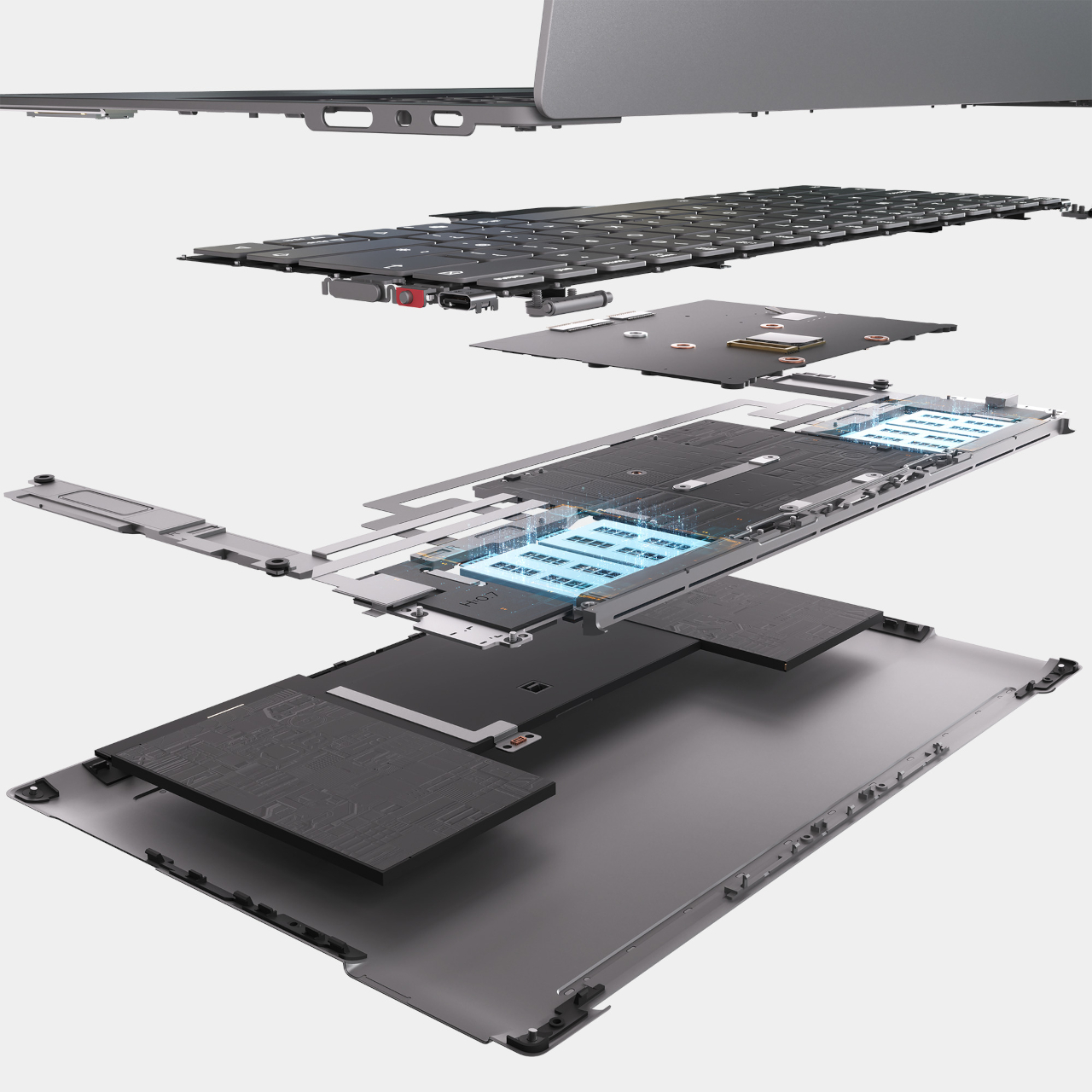
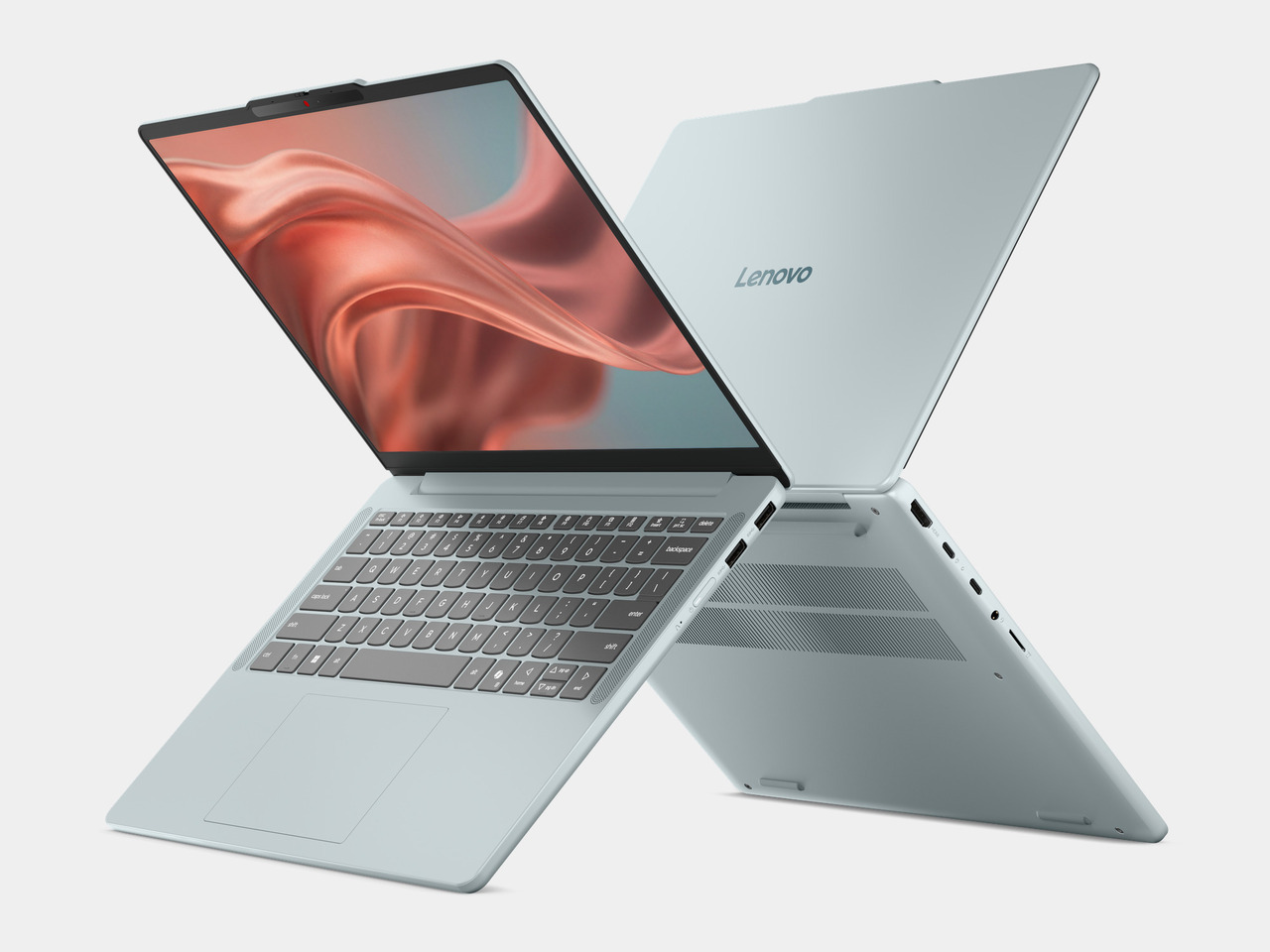
That reinvention starts with Project AeroBlade, a 14-inch concept built around a simple provocation: that thinness shouldn’t force a trade-off with sustained performance. Measuring under 10mm thick and weighing under 830g, the fanless design relies on Active Flow, a solid-state cooling architecture developed with Frore Systems using AirJet technology instead of spinning fans. The result stays quiet on a couch, a coffee shop table, or a cramped airplane tray.

Designer: Lenovo
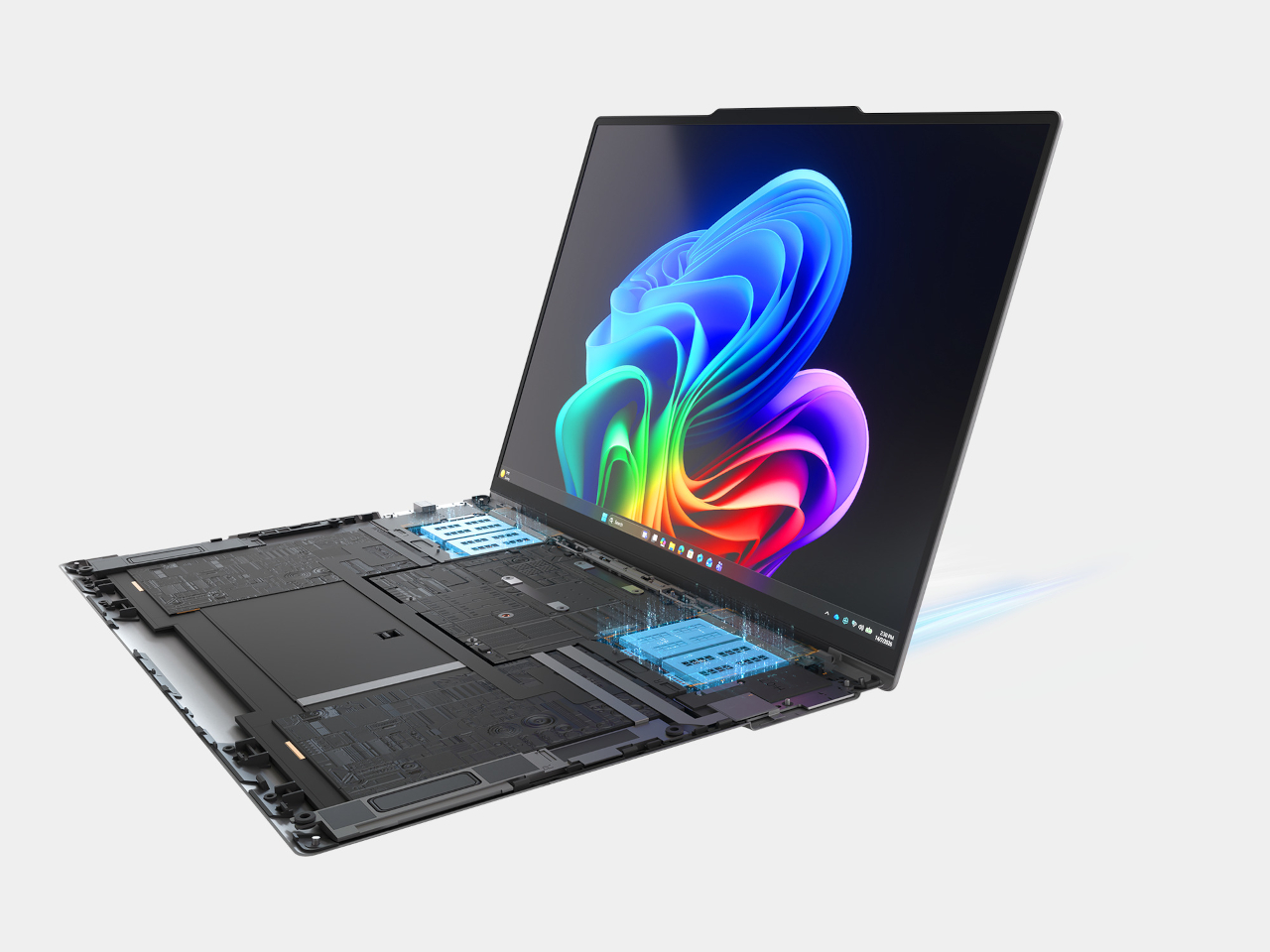
Removing fans doesn’t just cut noise but also strips out dust intake and mechanical complexity that typically wear down thin laptops over years of travel. Lenovo wrapped that cooling breakthrough in magnesium-aluminum construction, paired with a high screen-to-body OLED display, Thunderbolt 4 connectivity, and Wi-Fi 7, betting that hybrid workers want a device light enough to forget they’re carrying, without losing the horsepower a real workday demands.

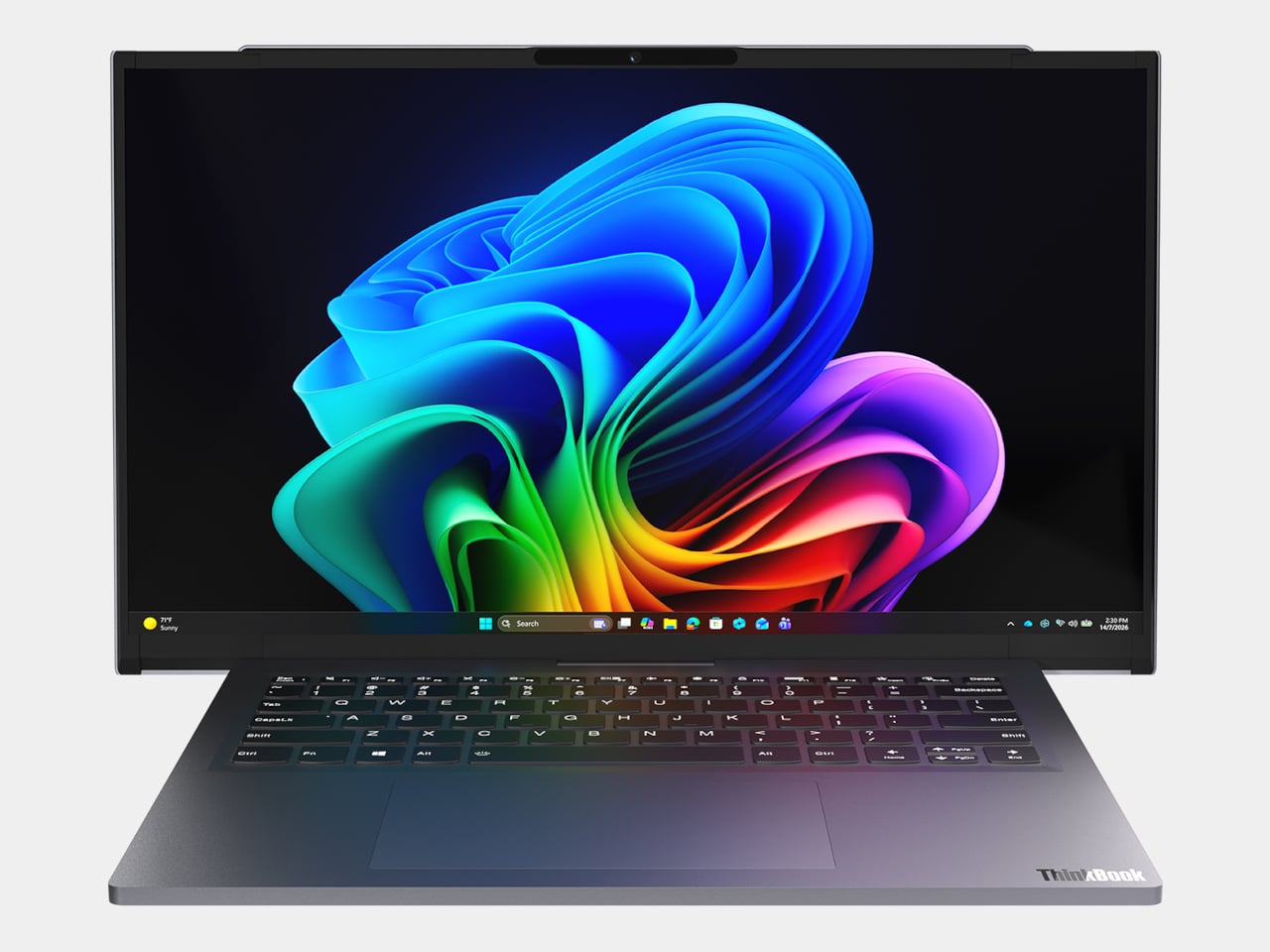
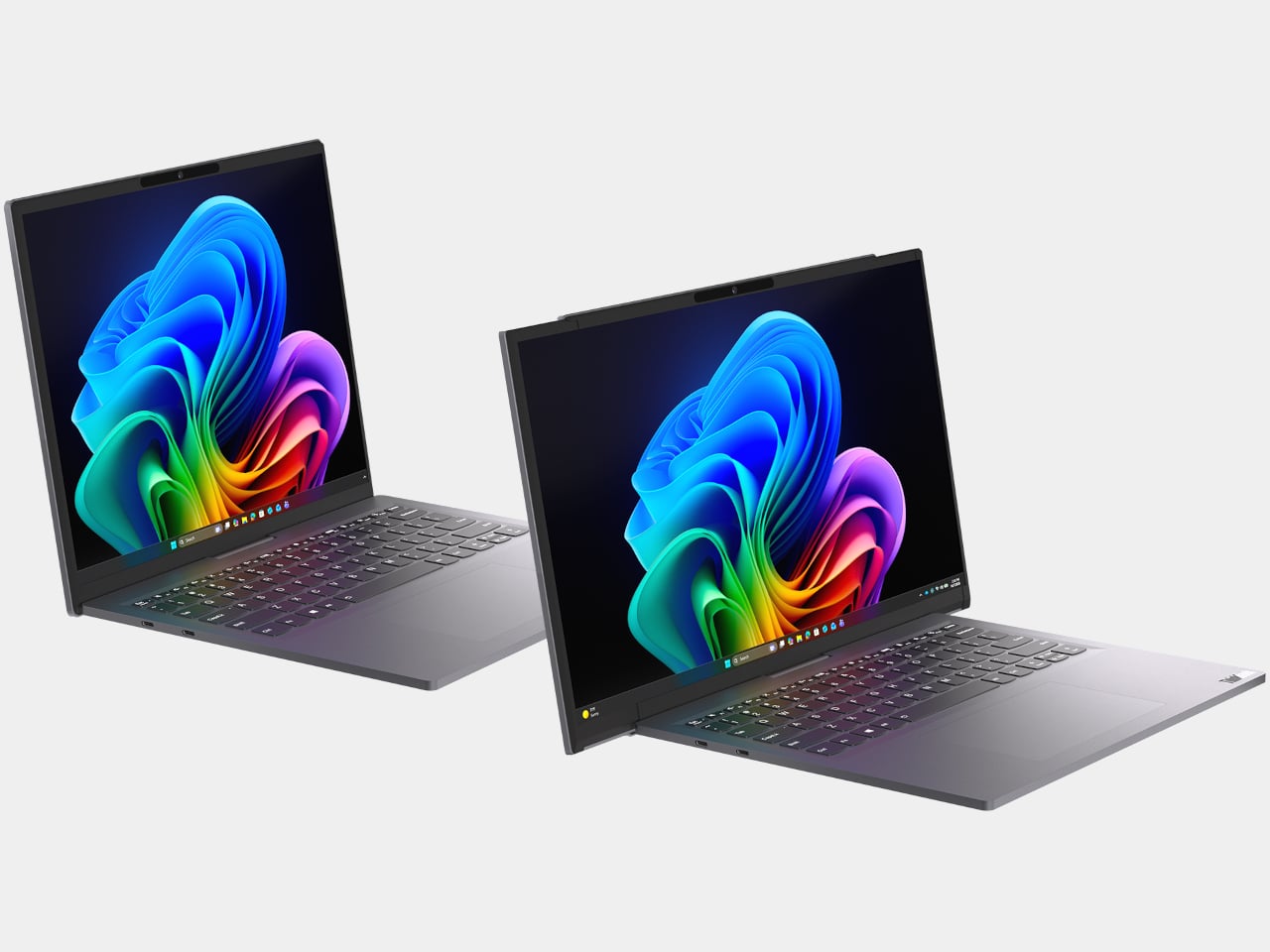
Project Swan takes a different route toward the same goal, solving the tension between portability and screen real estate instead of thickness and cooling. In its compact state, it behaves like an ordinary 14-inch notebook, easy to slide into a bag between meetings. Roll it out, though, and the display stretches into a 17-inch 16:9 canvas, giving side-by-side documents and dashboards room to breathe without needing a second monitor nearby.
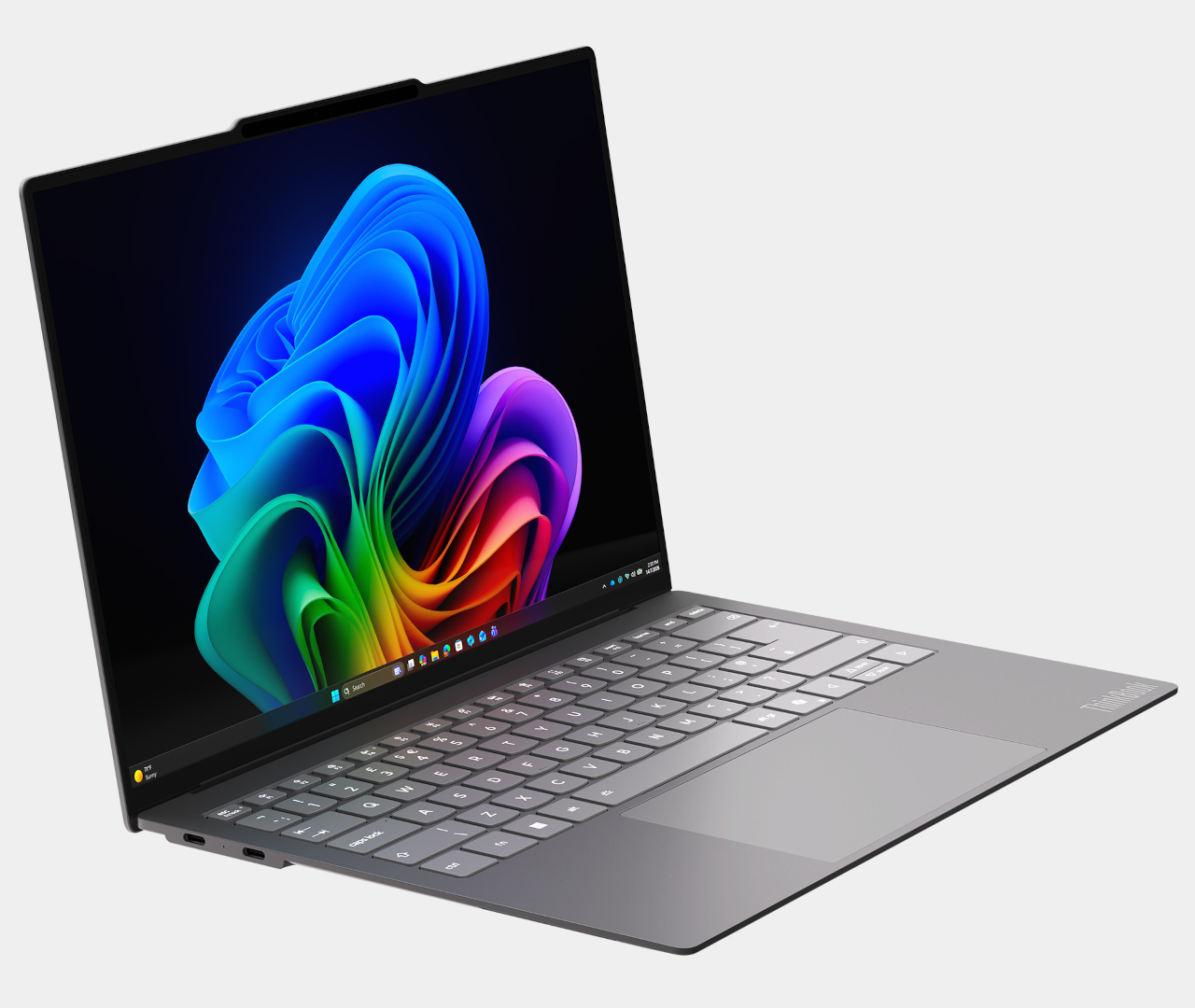
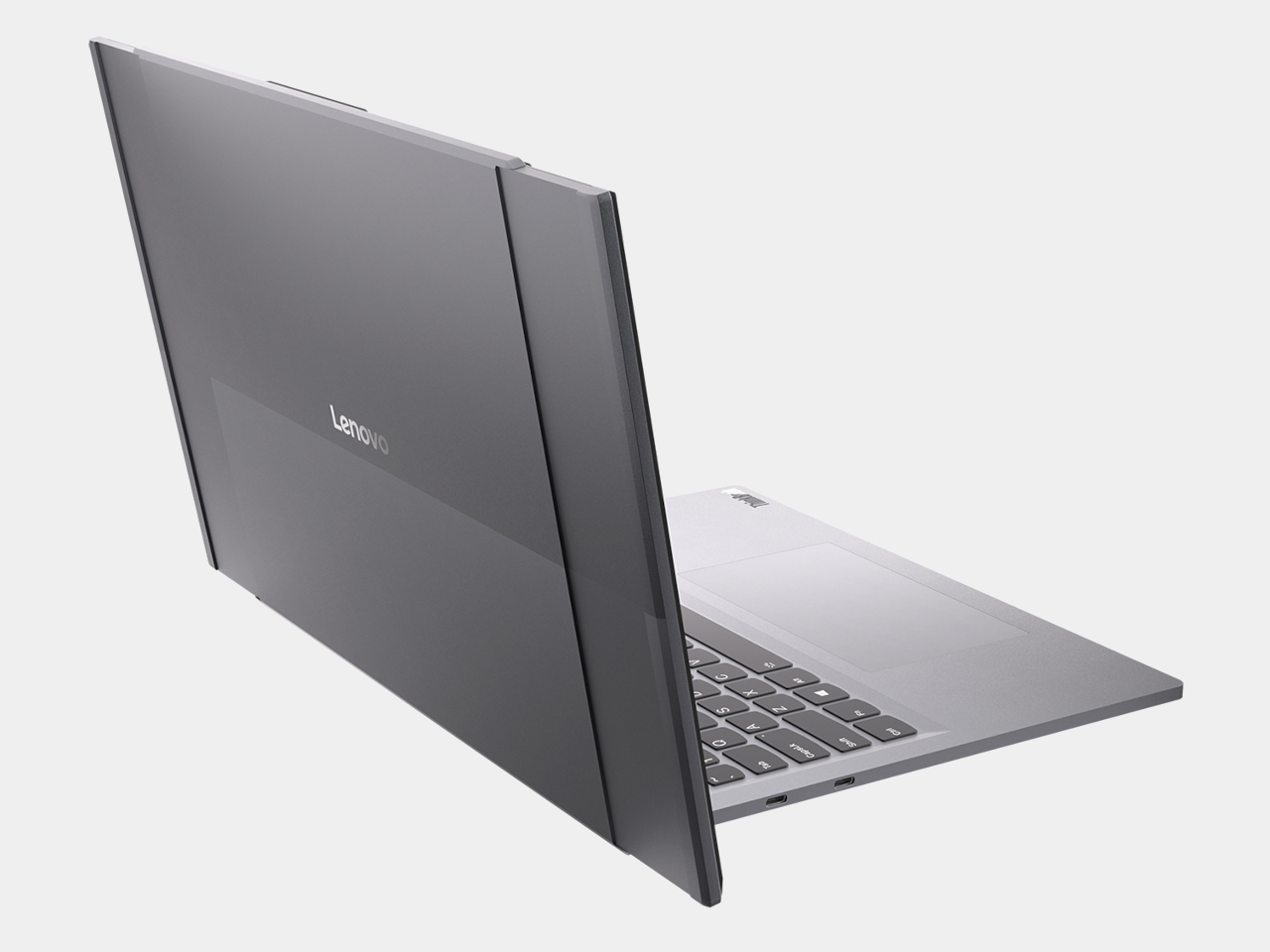
At 17.9mm thin and 1.6kg, Swan stays practical enough to carry through an average commute, only expanding when a spreadsheet or a presentation actually needs the extra width. It’s a concept built less for a single dramatic moment and more for the small, repeated frustrations of working from shared desks or unfamiliar conference rooms, where finding a second display isn’t always an option.
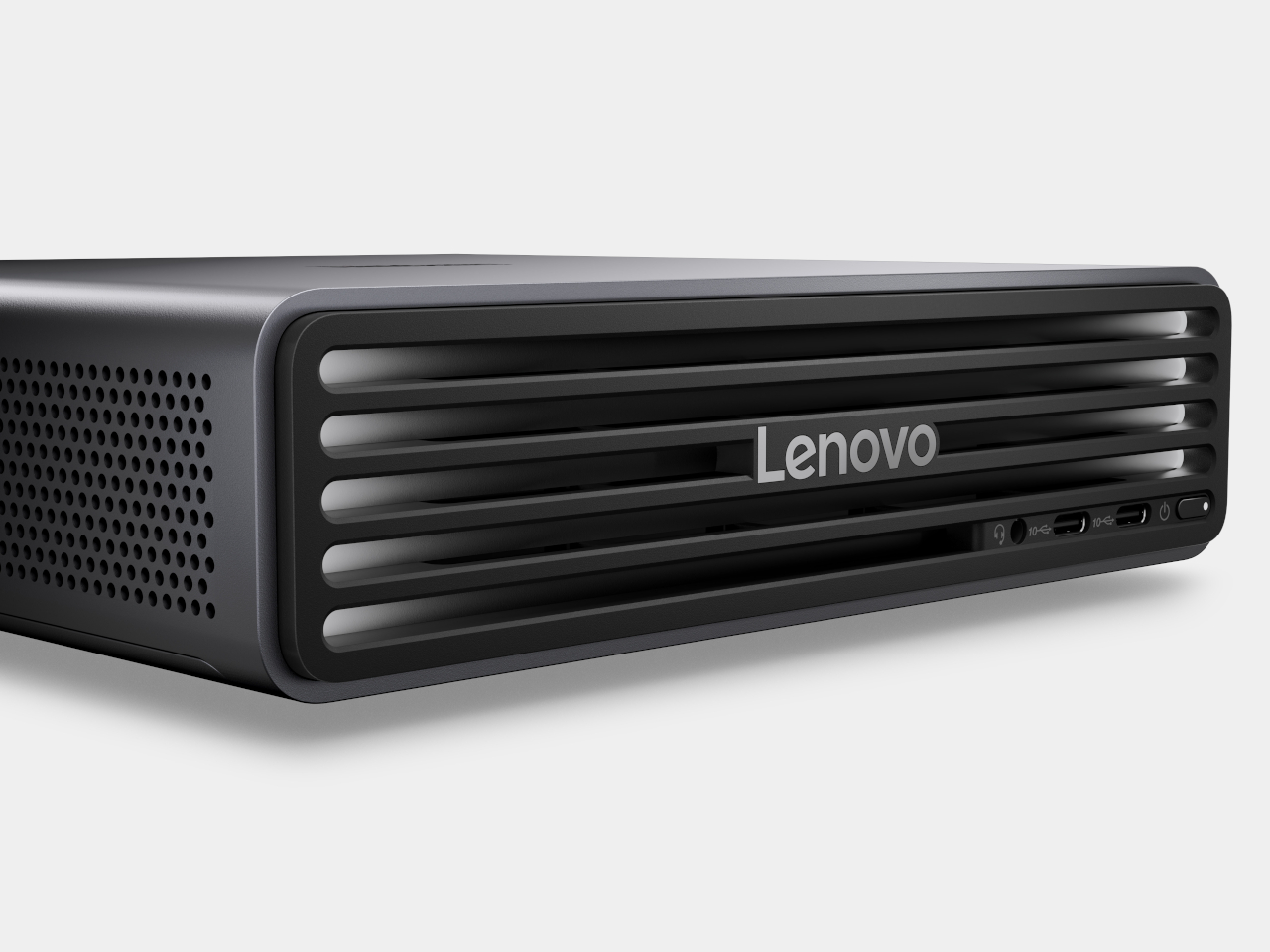
Lenovo ThinkCentre X Ultra

Beyond the concepts, Lenovo’s production lineup keeps pace with more grounded upgrades. The ThinkCentre X Ultra introduces a compact 1.6L desktop built for agentic AI workloads, with cluster-ready architecture that links up to four units together for larger models and multi-agent workflows. Smaller siblings, the M75s Gen 6 and M75q Gen 6, bring that same AI acceleration into space-saving builds designed to disappear behind a monitor or inside a drawer.
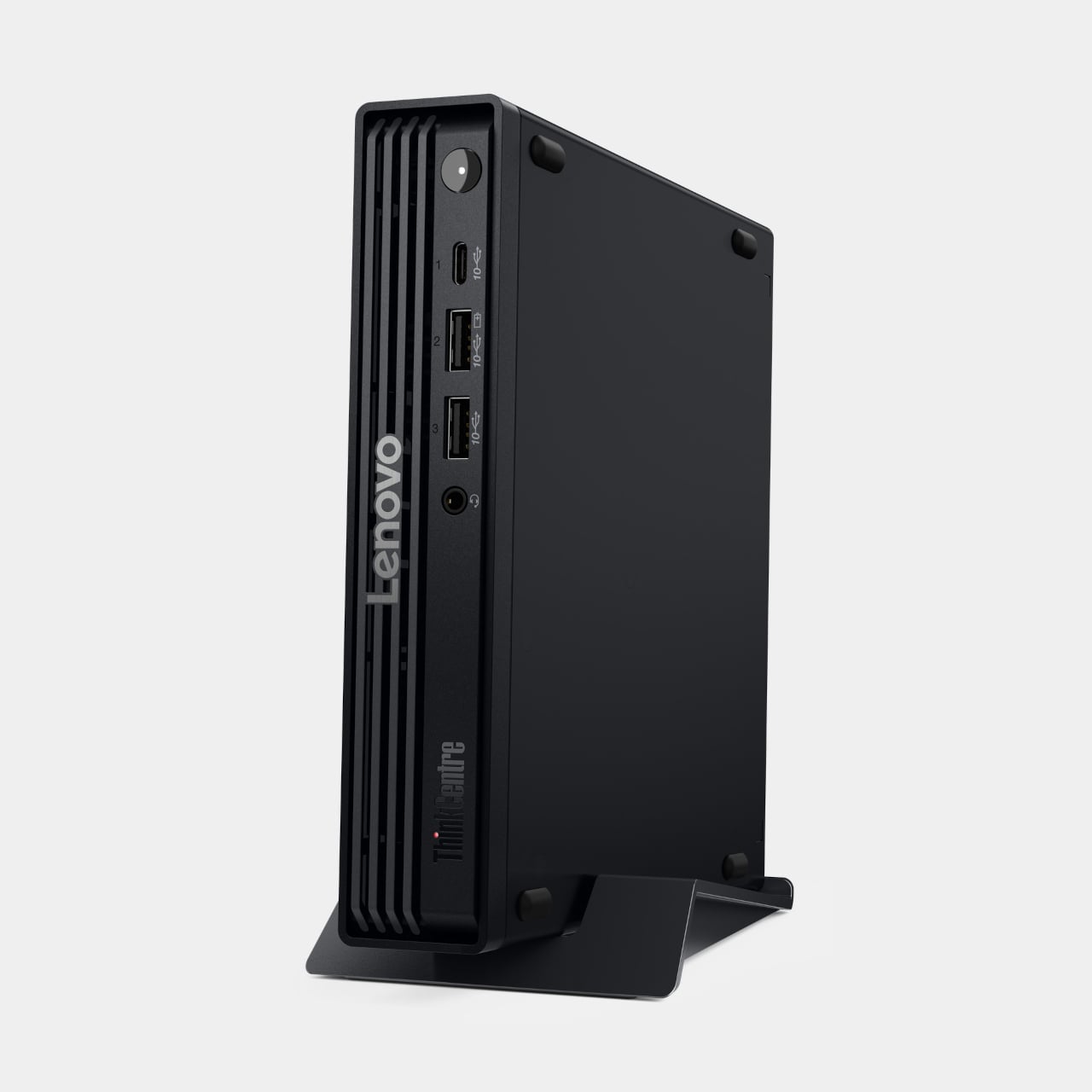
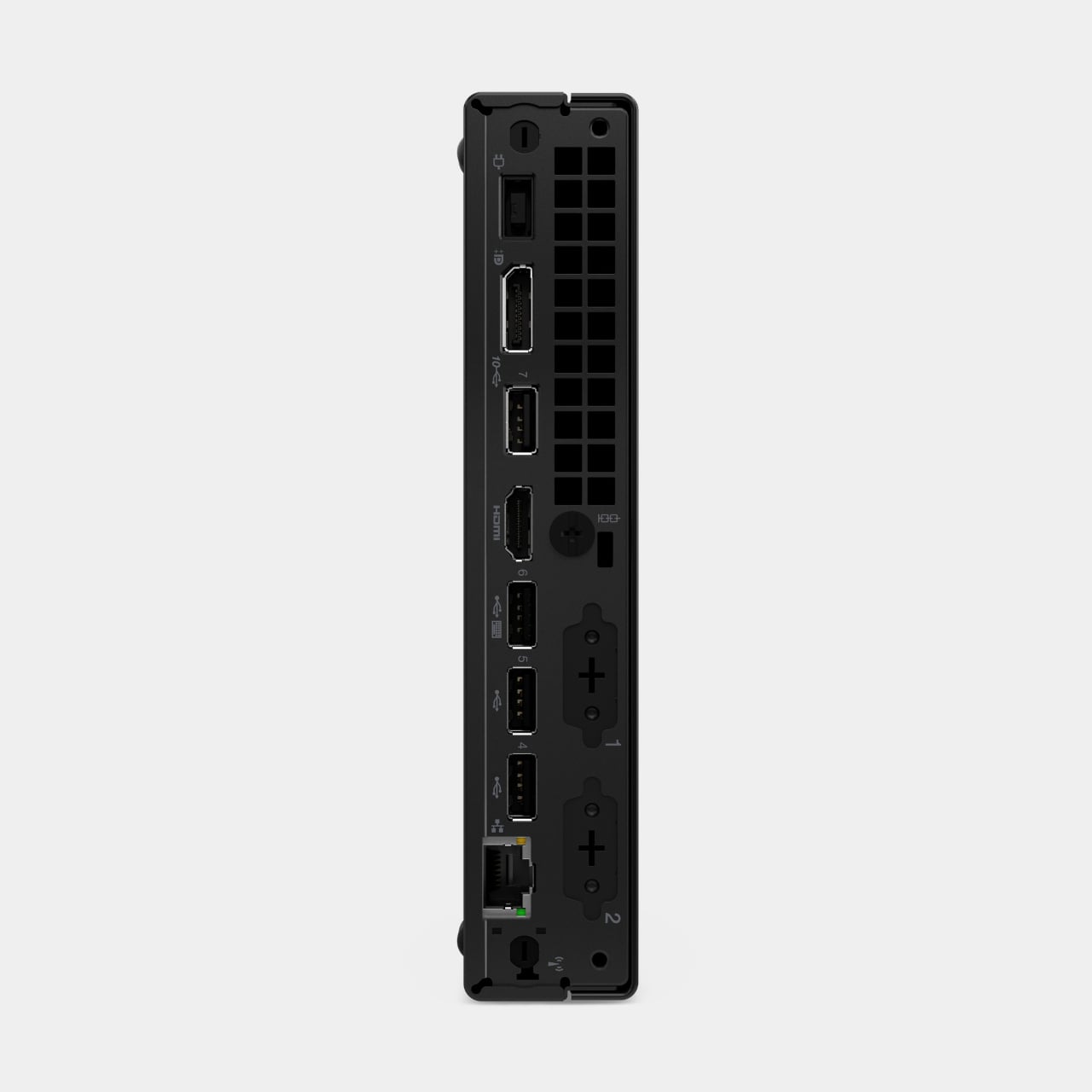
Lenovo ThinkCentre M75q

Those desktops start at $1,379.00 for the M75q Gen 6, climbing to $3,699.00 for the flagship X Ultra, positioning the lineup for businesses scaling AI workloads without dedicating an entire server room to the effort. Each model leans on the same agentic AI philosophy, treating compute as something that should expand alongside a company’s ambitions rather than forcing an early ceiling on performance.
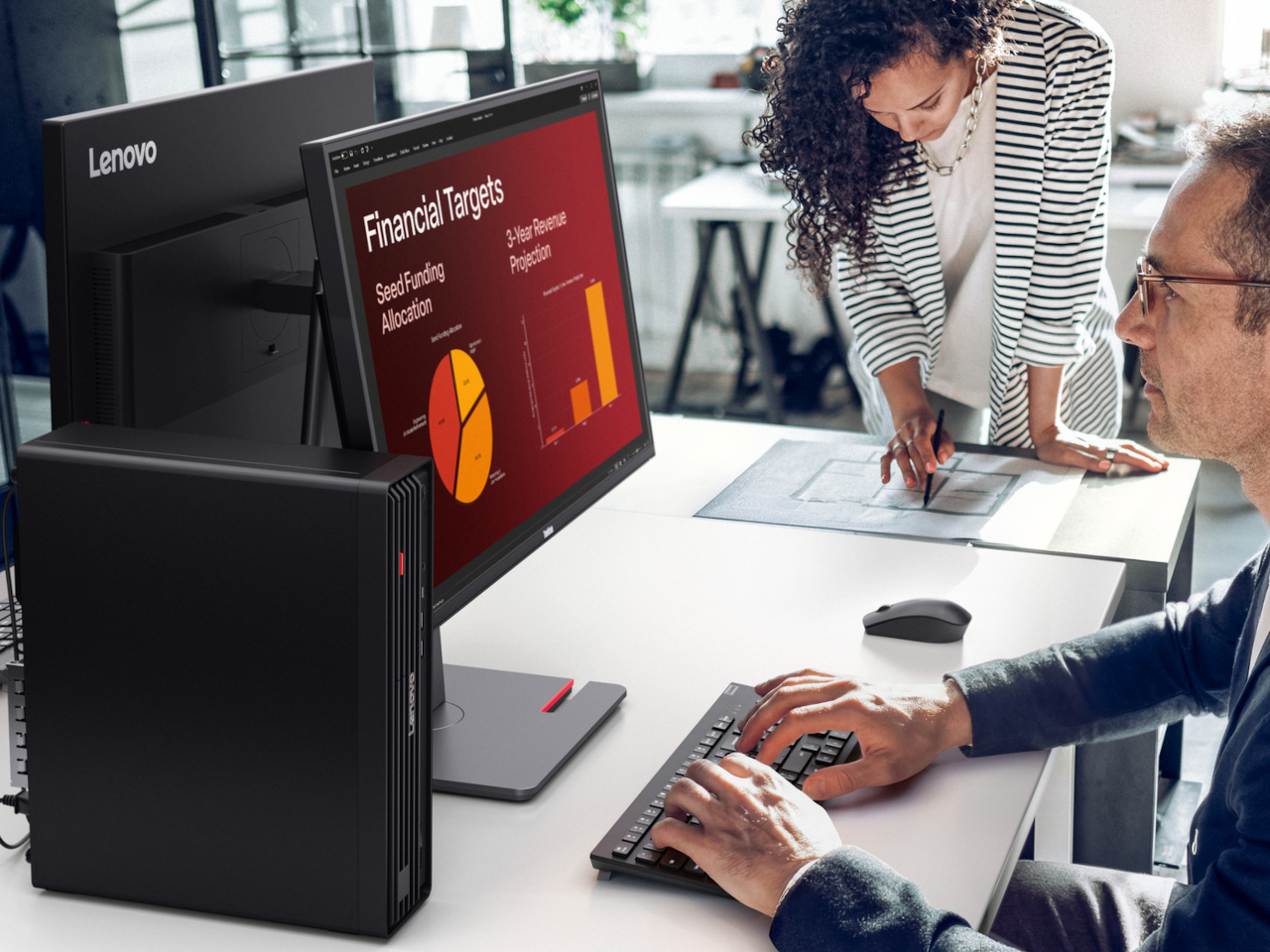
Lenovo ThinkCentre M75s

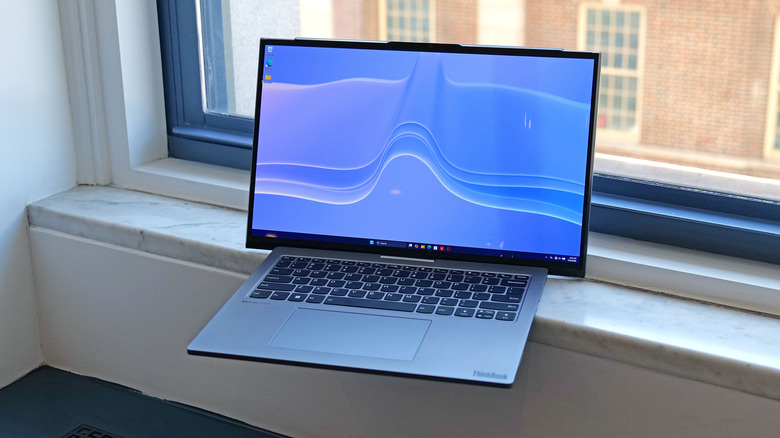
On the laptop side, the ThinkBook 14 Gen 9 pairs Snapdragon X2 Plus silicon with up to 26 hours of local video playback, while Lenovo Qira adds business-specific prompts like Catch Me Up for anyone stepping away from a meeting. Its 14-inch WUXGA display and 17.7mm profile keep the laptop practical for professionals who bounce between desks, meeting rooms, and airport lounges throughout a single workday.
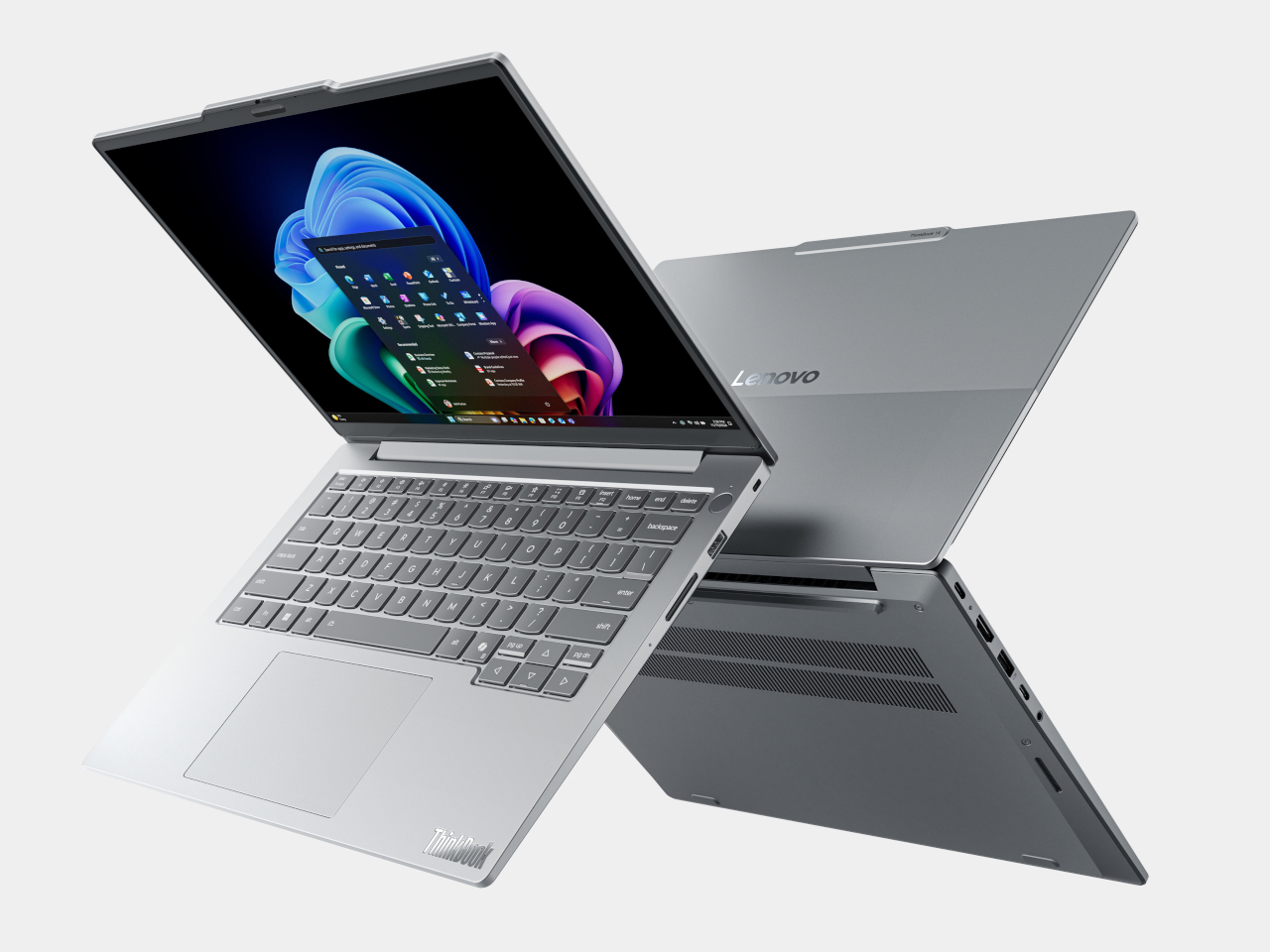
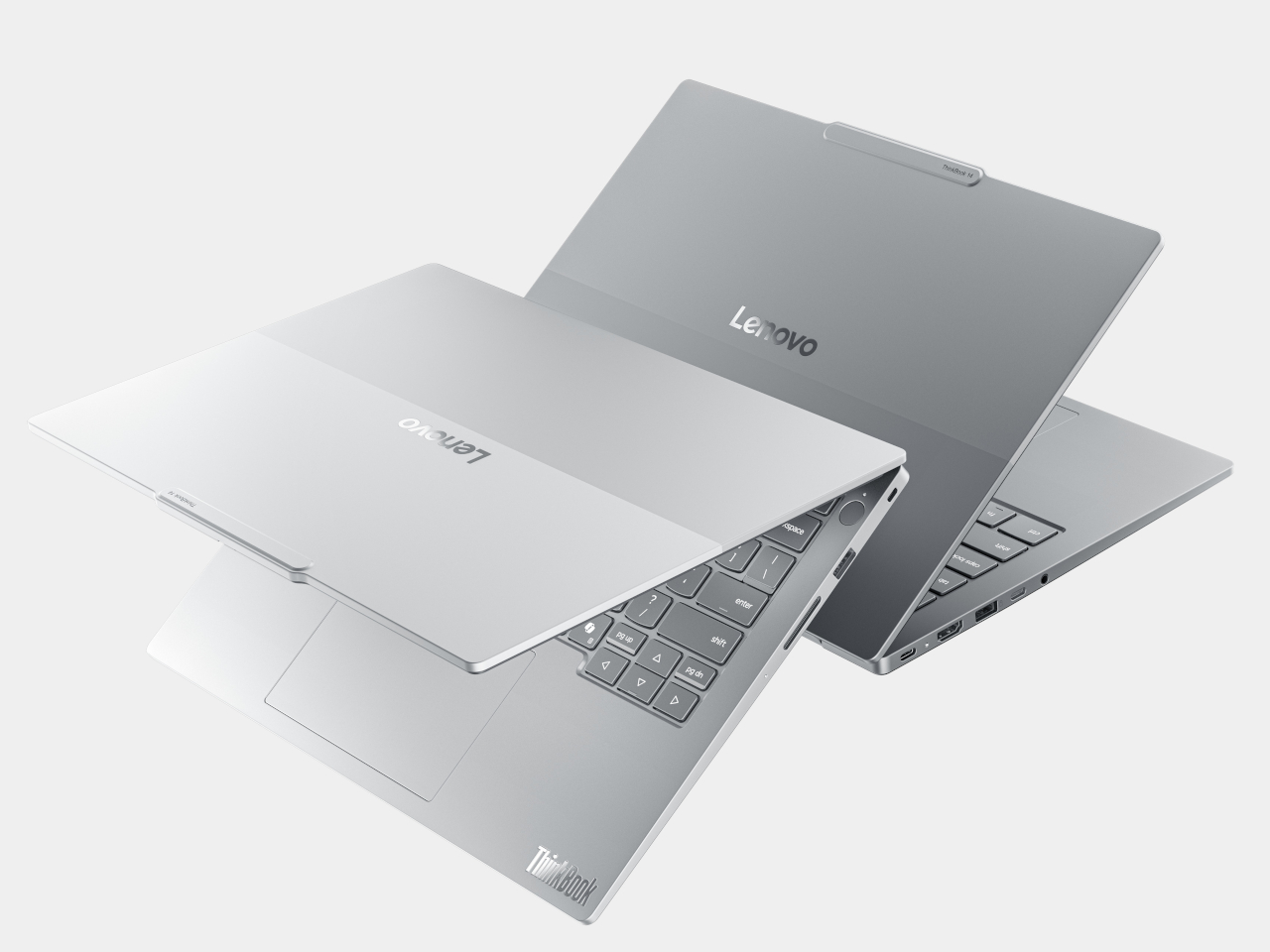
Lenovo ThinkBook 14 Gen 9

The ThinkBook 14x Gen 2 goes even thinner at 12.9mm and 990g, wrapped in metallic finishes and four color options, Luna Grey, Celestial White, Mystic Violet, and Veil Blue, that give a traditionally corporate lineup some actual personality. Between the two, Lenovo covers both ends of mobile productivity, one built for raw AI throughput, the other for anyone who simply wants their laptop to feel less anonymous.
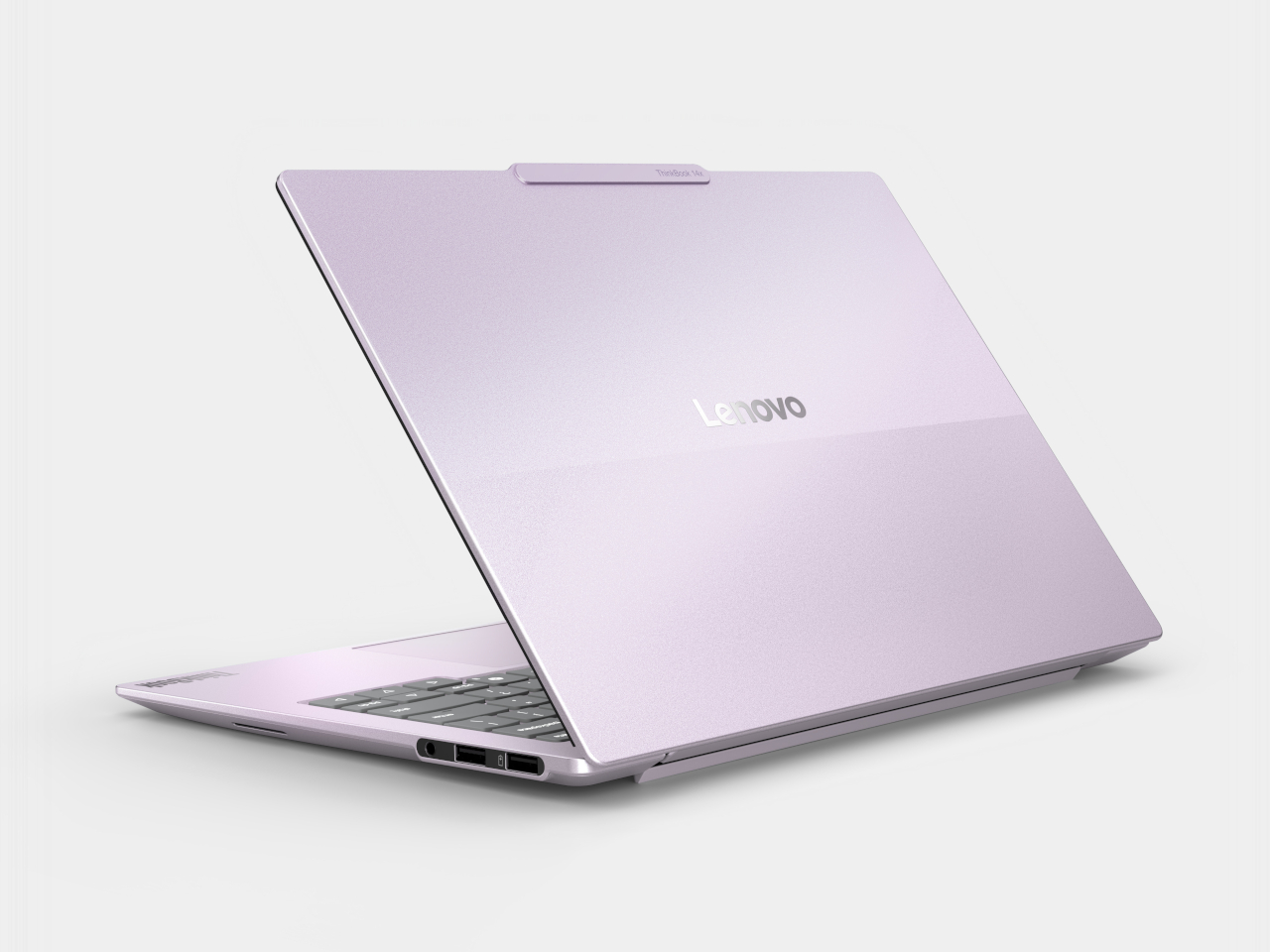
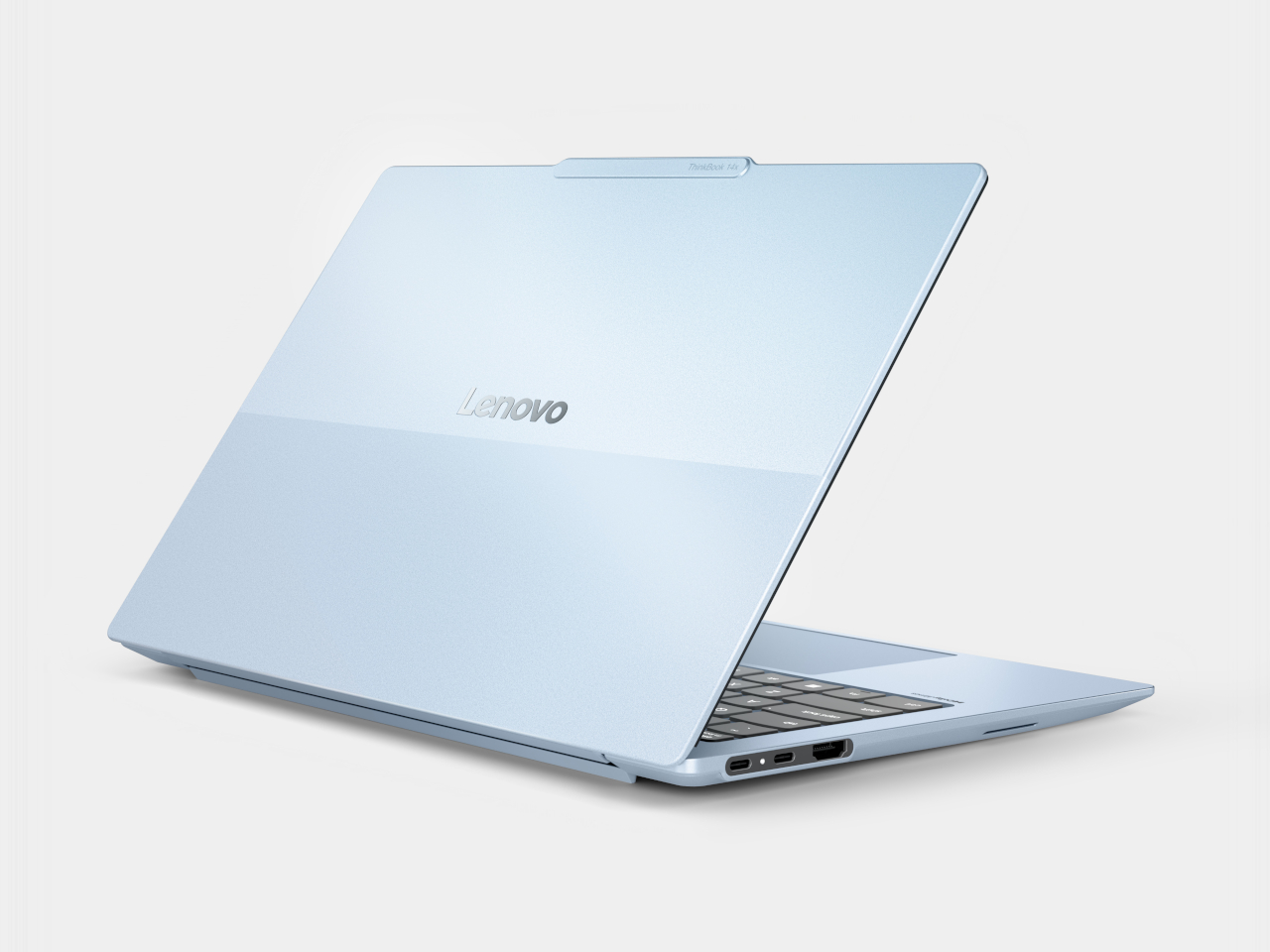
Lenovo ThinkBook 14x Gen 2

Neither AeroBlade nor Swan carries a price or release date yet, staying firmly in concept territory while the rest of the lineup ships between September 2026 and the first quarter of 2027. Still, both concepts hint at where Lenovo’s production laptops might head next, favoring adaptable shapes over the fixed dimensions that have defined business computing for decades.

The post Lenovo’s IFA 2026 Laptop Concept Rolls Out From 14 to 17 Inches first appeared on Yanko Design.
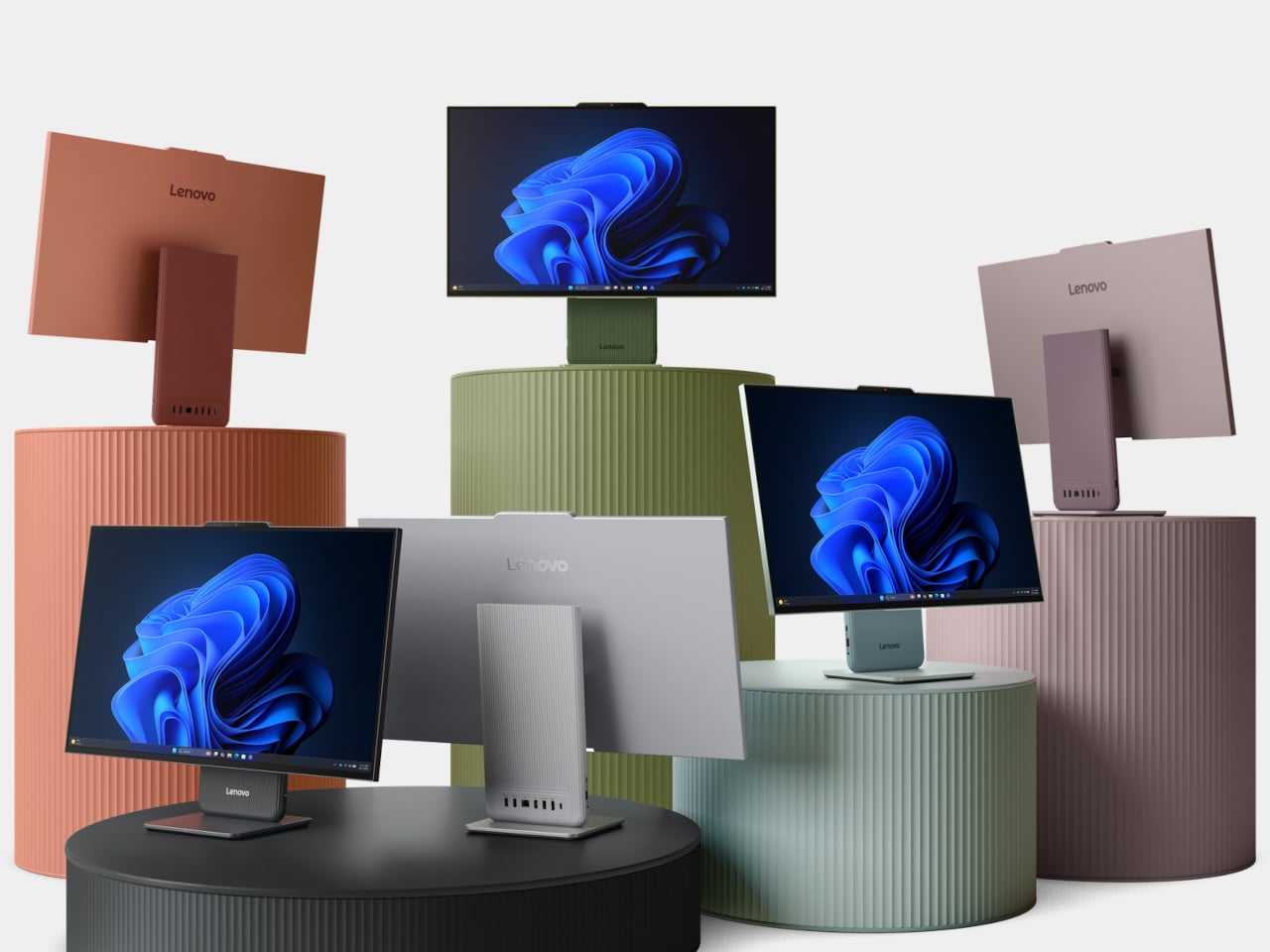
Lenovo’s AIO Desktop Finally Comes in 6 Colors to Match Your Room

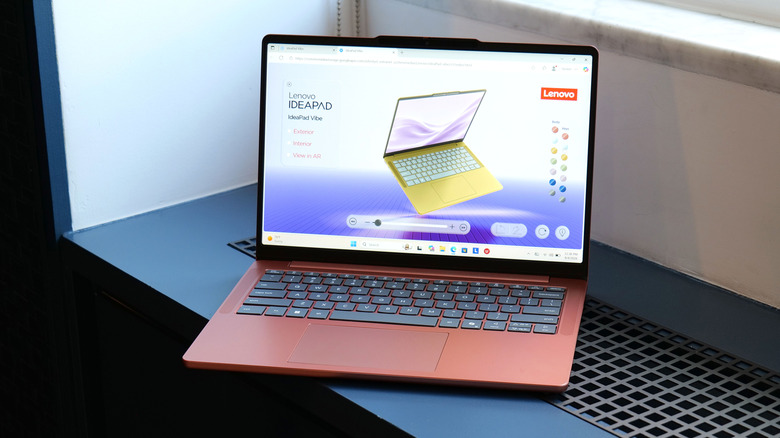
Lenovo built its newest AI PC lineup around a question most manufacturers skip entirely: what color actually feels like you. The IdeaPad Vibe series and IdeaCentre AIO i desktop, both unveiled at Lenovo Innovation World 2026, treat color as a design decision worth researching rather than an afterthought tacked onto a spec sheet. It’s a lineup that asks people to pick hardware the way they’d pick a jacket, based on how it makes them feel.

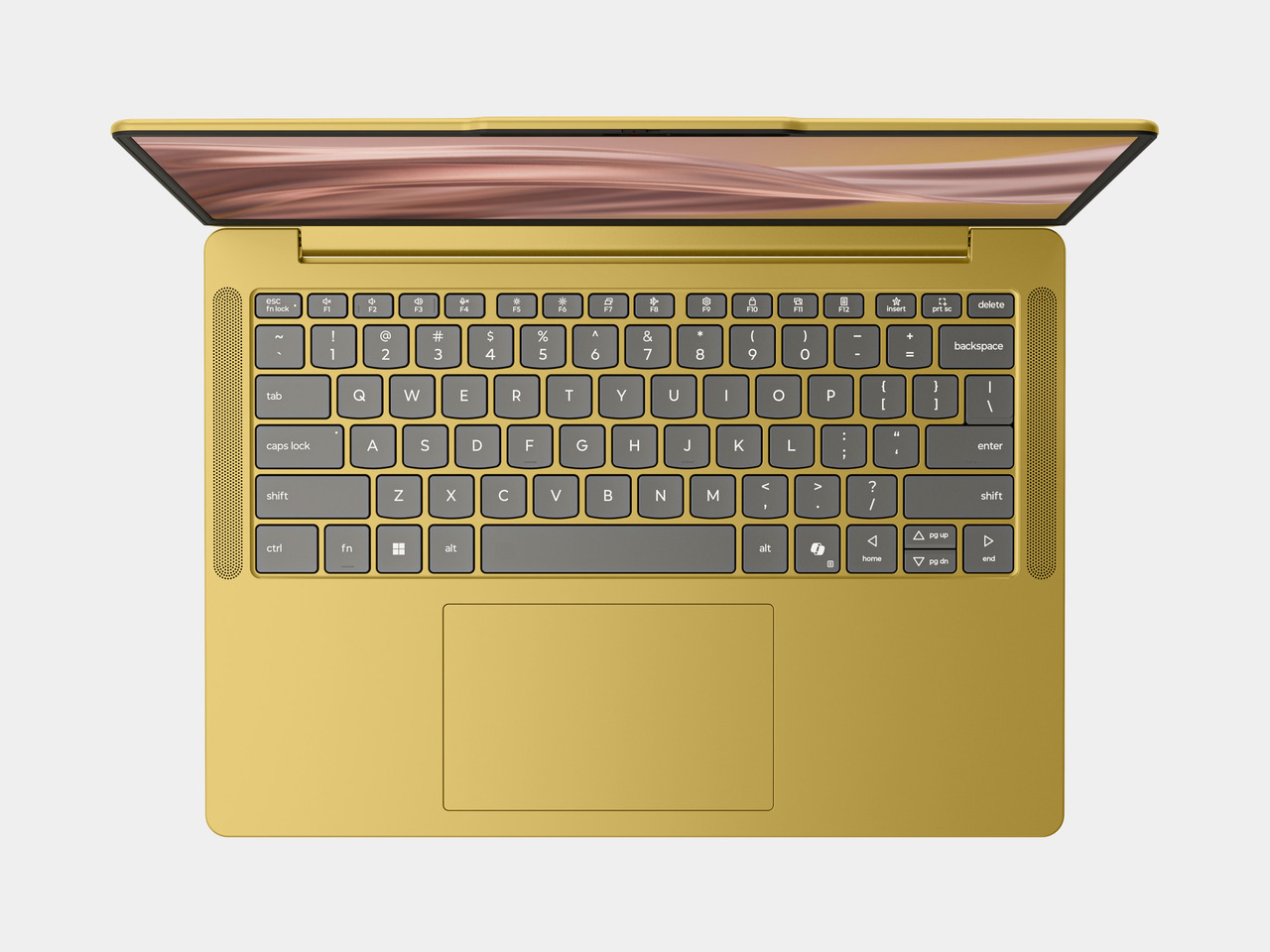
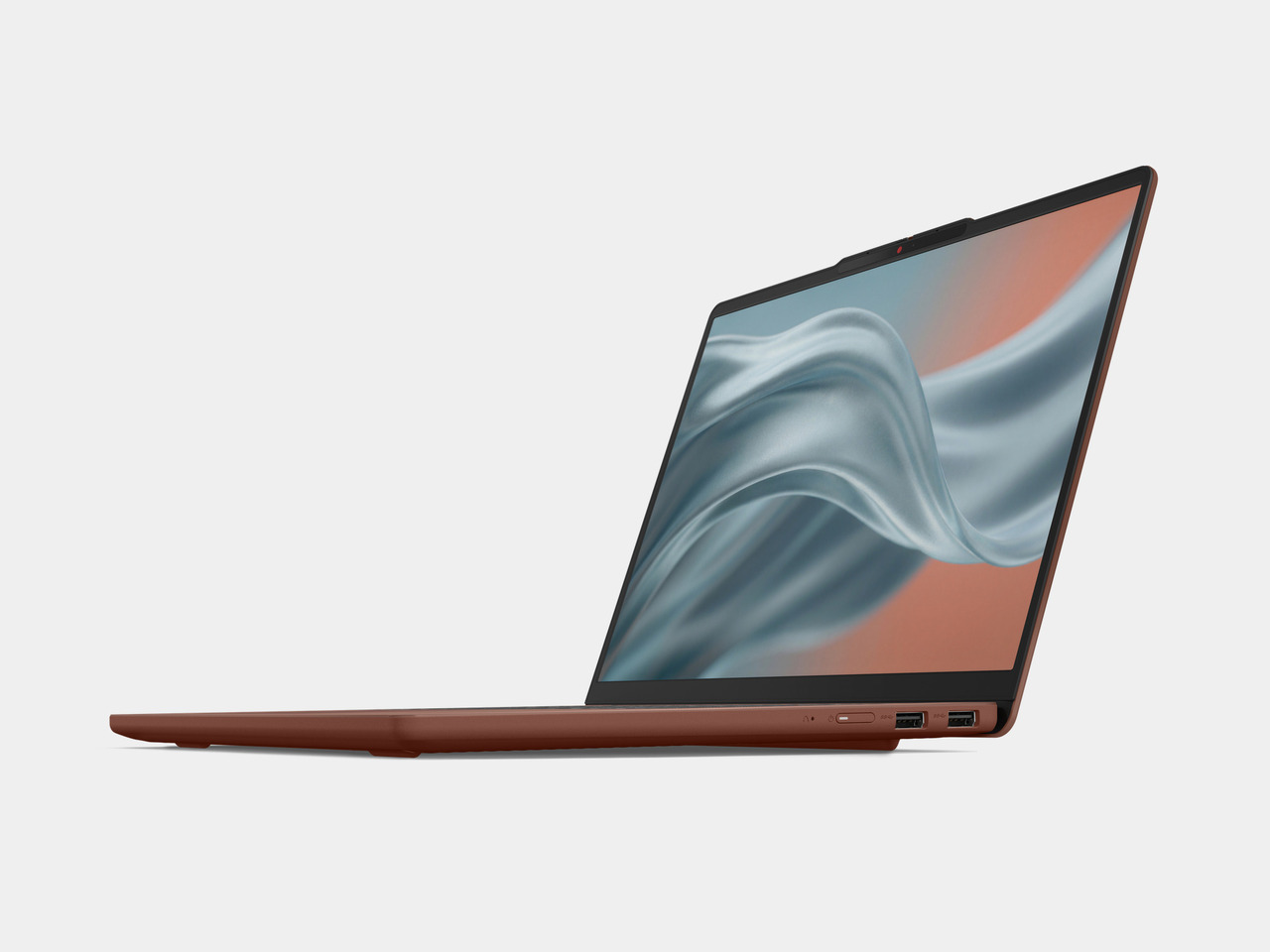
That thinking starts with the IdeaPad Vibe, developed alongside Pantone Institute to land on seven finishes with names like Zen Green and Dreamy Violet, each tied to a specific mood rather than a marketing buzzword. Lenovo drew those shades from colors people encounter every day and shades that capture how they aspire, learn, create, and live, then extended the idea further with swappable keycaps for anyone who wants even more control over how their laptop looks.

Designer: Lenovo

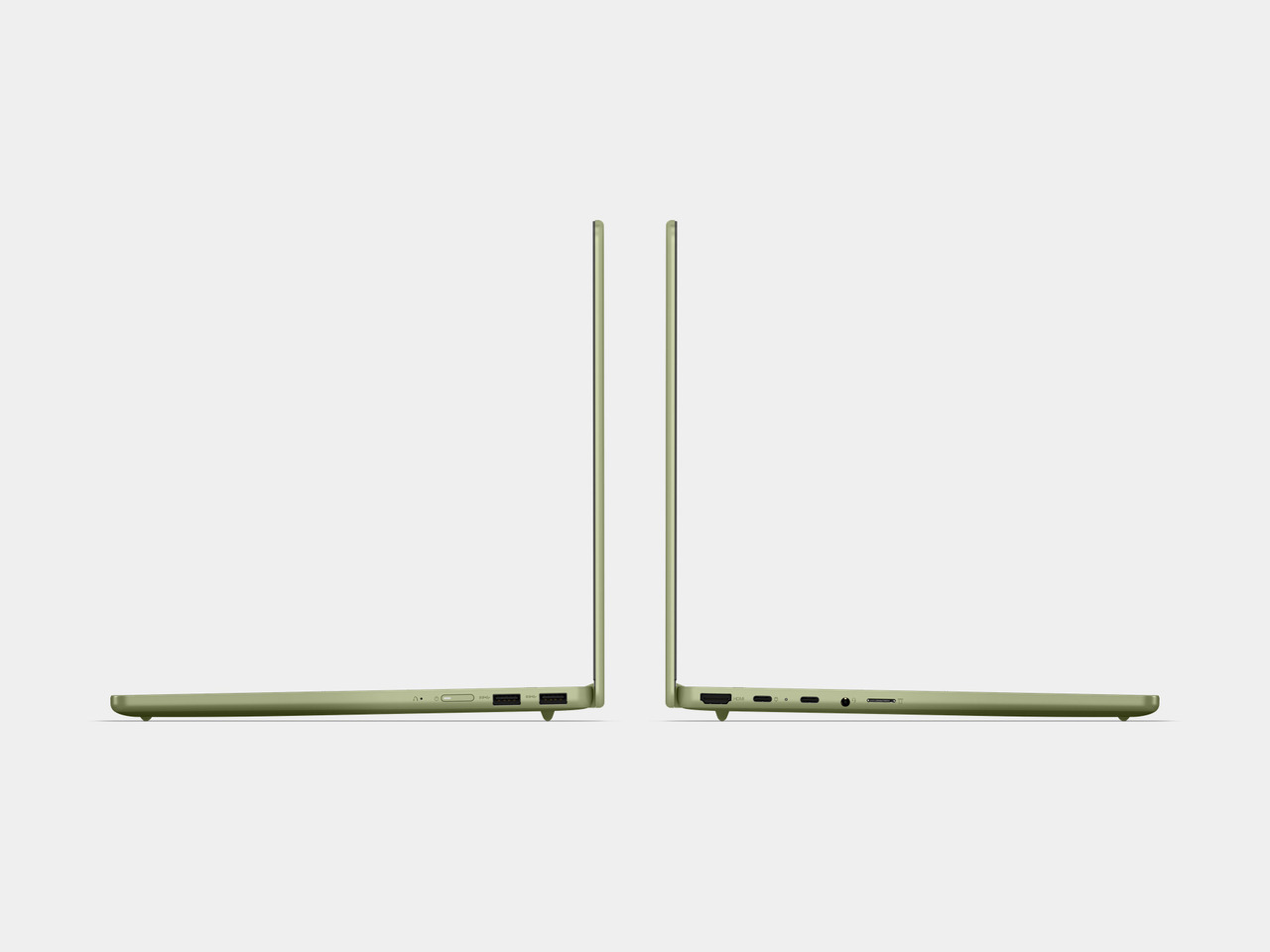
Underneath that color story sits real hardware flexibility. Snapdragon X processors power the base configuration with Copilot+ PC capabilities, while an AMD Ryzen AI 400 Series option adds dual-slot memory upgradeable to 32 GB and storage expandable to 1 TB. Both versions fit into a metal chassis starting at 1.3 kg, light enough to carry between a dorm room and a coffee shop without a second thought about the extra weight.

Display options split along similar lines, with OLED panels in Lowkey Grey and Moody Blue pushing up to 100% DCI-P3 coverage for anyone editing photos or watching movies, while IPS configurations keep things smooth at 120Hz for everyday browsing and schoolwork. AI features layered on top, like real-time translation and smarter video call effects, run quietly enough that Lenovo says the whole system stays cool and quiet even under regular use.

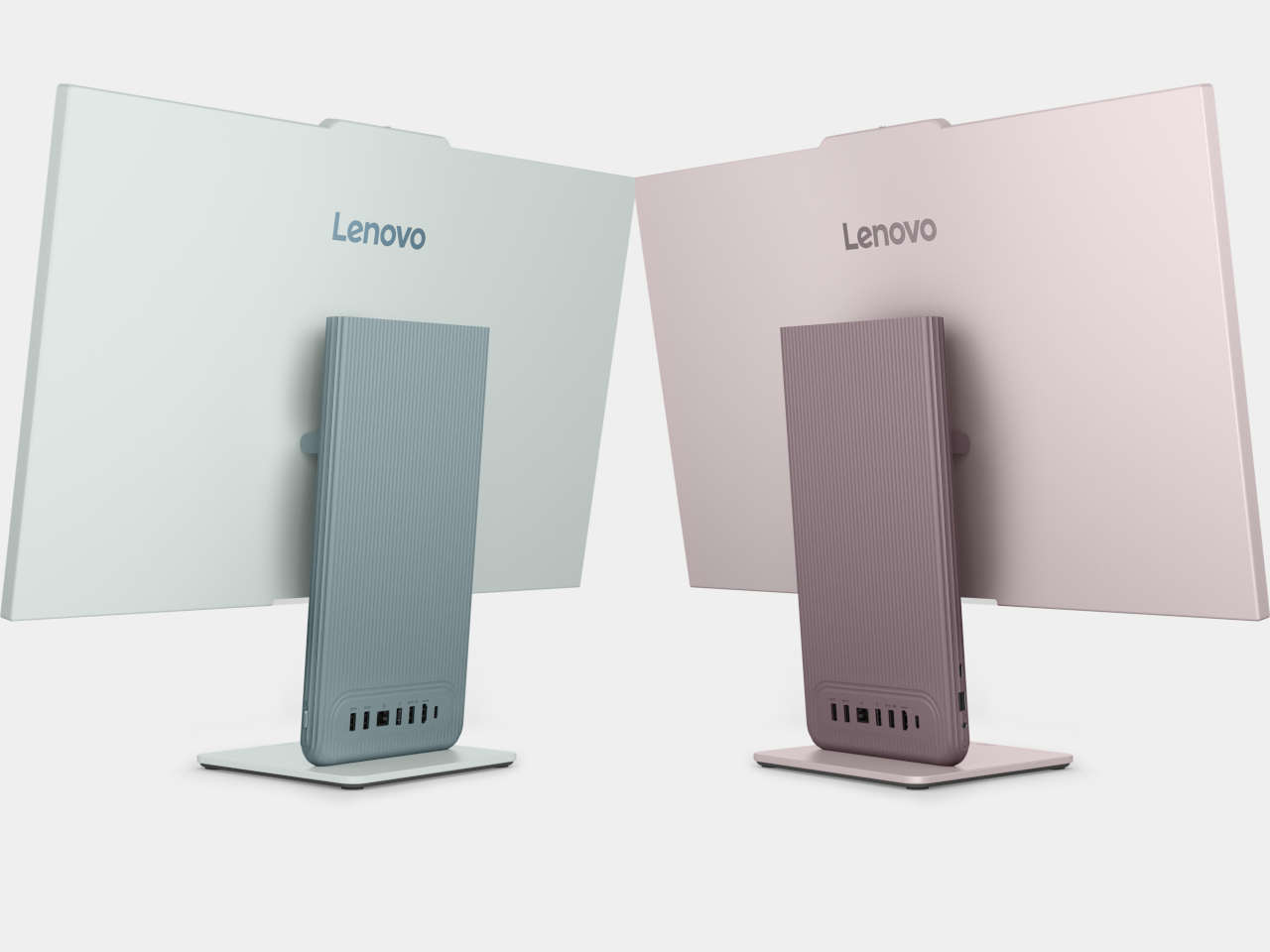
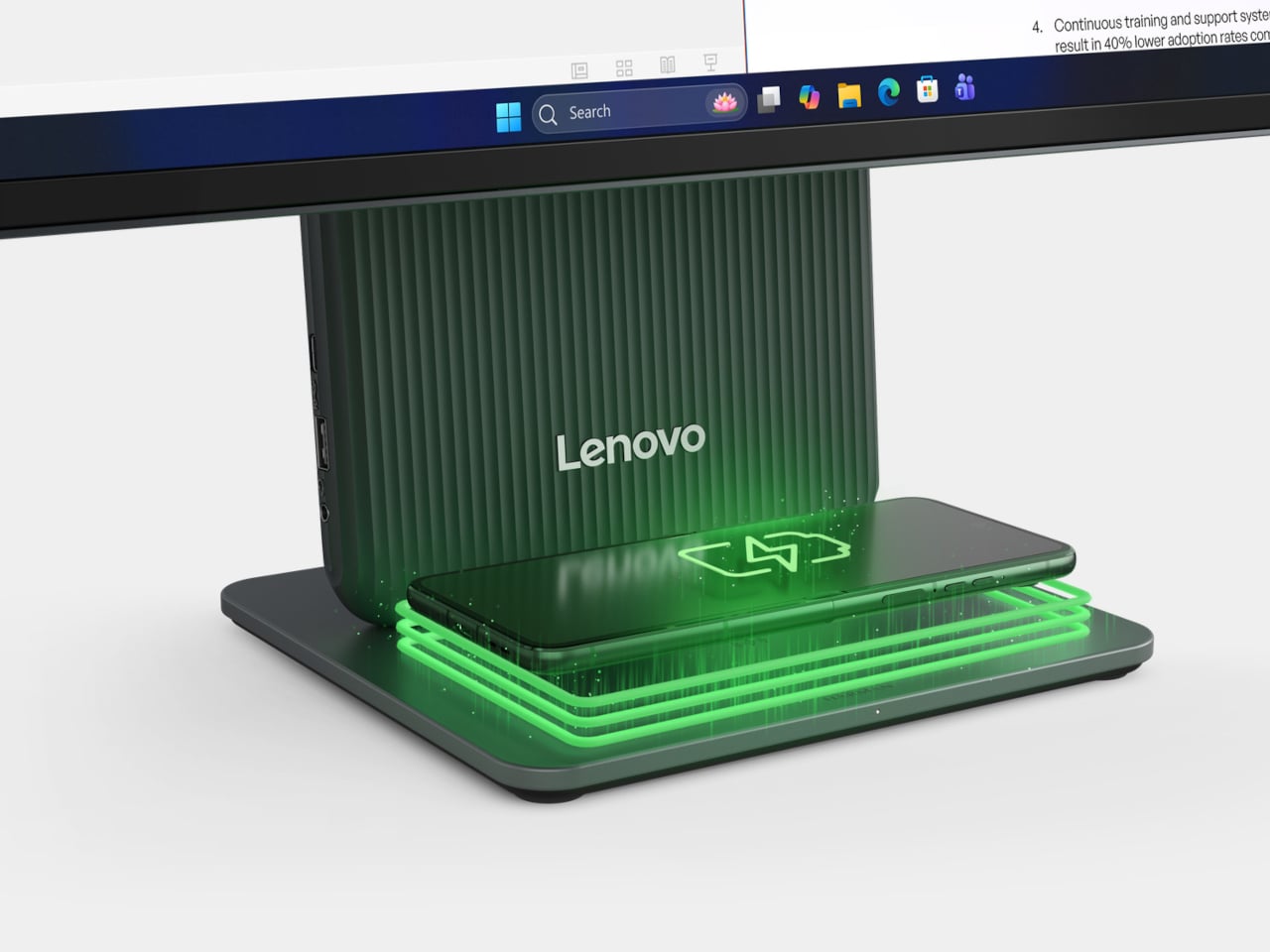
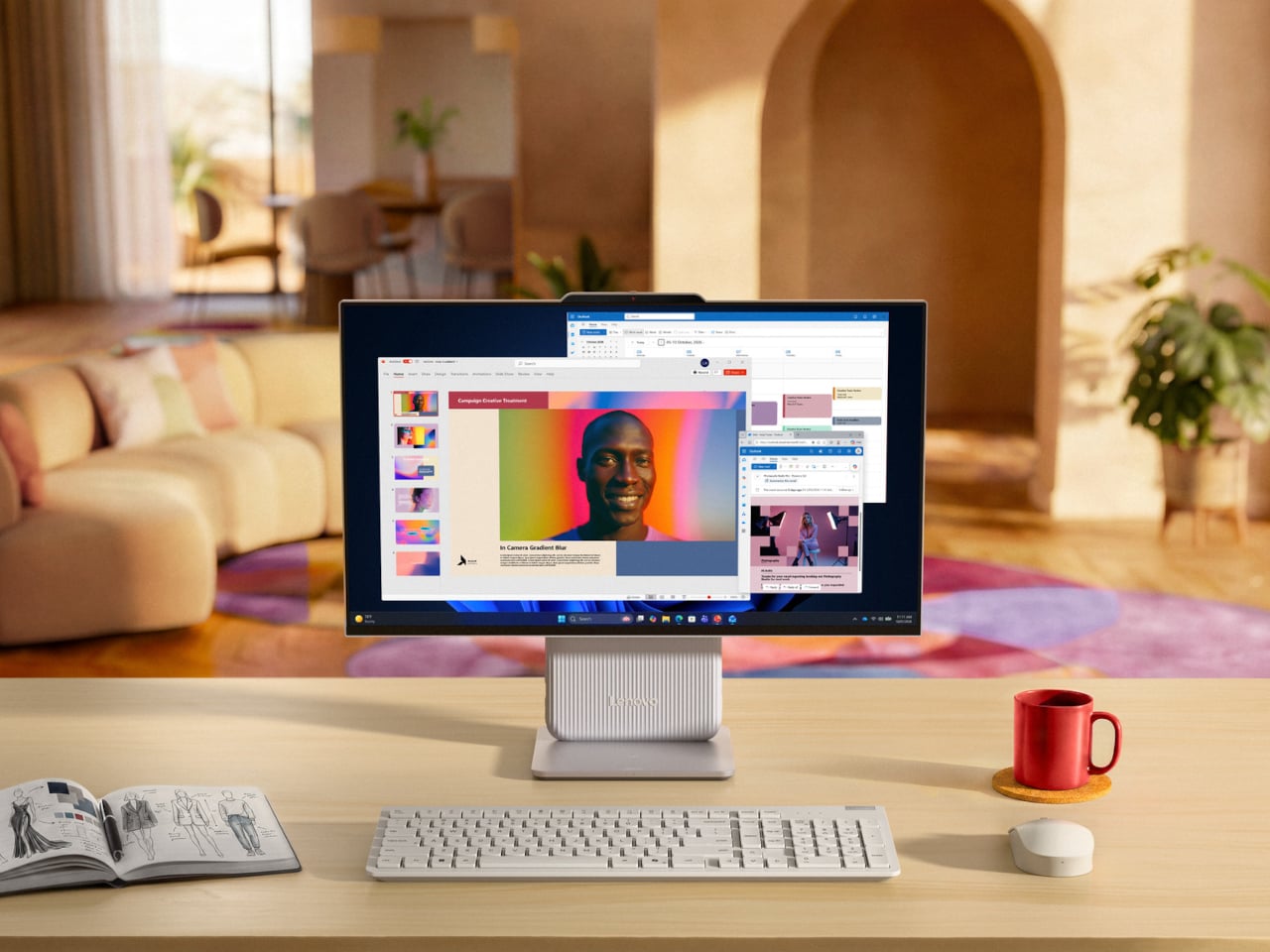
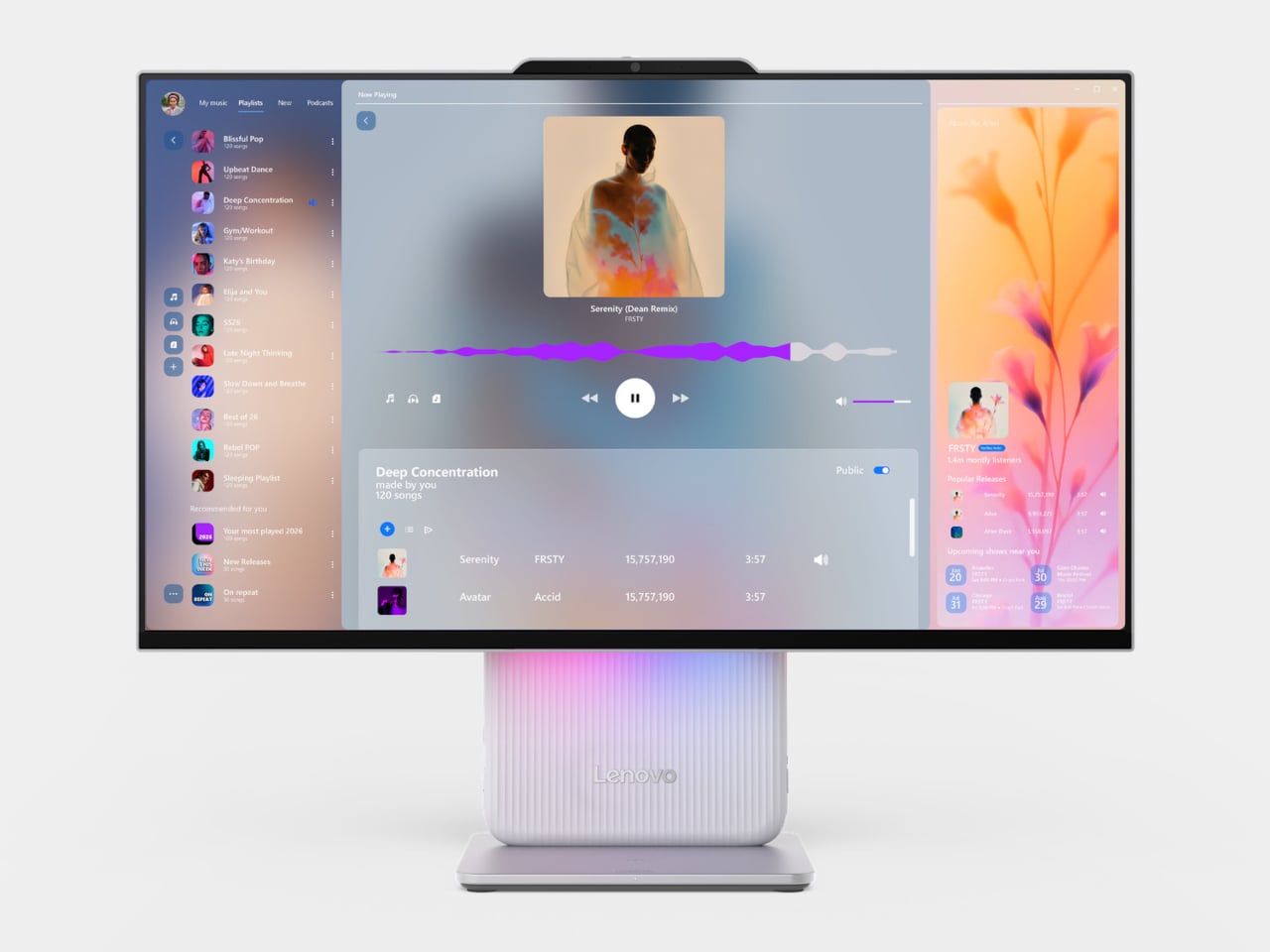
Move from the laptop to the desk and the IdeaCentre AIO i picks up that same color philosophy, arriving in six finishes for the first time, with a matching wireless keyboard and mouse combo tying the whole setup together. Its bigger shift, though, comes from ditching the bulky column of components most all-in-ones hide behind the screen, trading it for what Lenovo calls a middle-box-free architecture that leaves the display looking noticeably slimmer.

That slimmer build still packs Intel Core Series 3 processors capable of up to 40 platform TOPS, paired with a display stand that tilts from -5 to 15 degrees and adjusts 30 mm vertically, useful whether someone’s leaning in for a video call or angling the screen down for a kid doing homework at the kitchen table. Adaptive Lighting adds boot-up, default, and music-reactive modes, giving the desktop a personality that extends beyond whatever’s on screen.

Between the two, the IdeaCentre leans harder into shared spaces, with an optional 5MP IR camera and physical shutter for privacy during calls, plus audio tuned by Harman for movie nights or background music while cooking. An e-book mode dims blue light for anyone using the big screen for actual reading, a detail that feels aimed squarely at households where one screen ends up doing everything.

Pricing puts the IdeaPad Vibe at $699.99 regardless of processor choice, while the IdeaCentre AIO i starts at $939.99 for the 24-inch model and climbs to $1,149.99 for the 27-inch version. Both lines share the same instinct: that a PC sitting in a bedroom or a kitchen deserves to look like it belongs there, not like it was designed for a beige office cubicle decades ago.

The post Lenovo’s AIO Desktop Finally Comes in 6 Colors to Match Your Room first appeared on Yanko Design.
Motorola’s Swarovski Razr Was Designed to Be Seen, Not Hidden

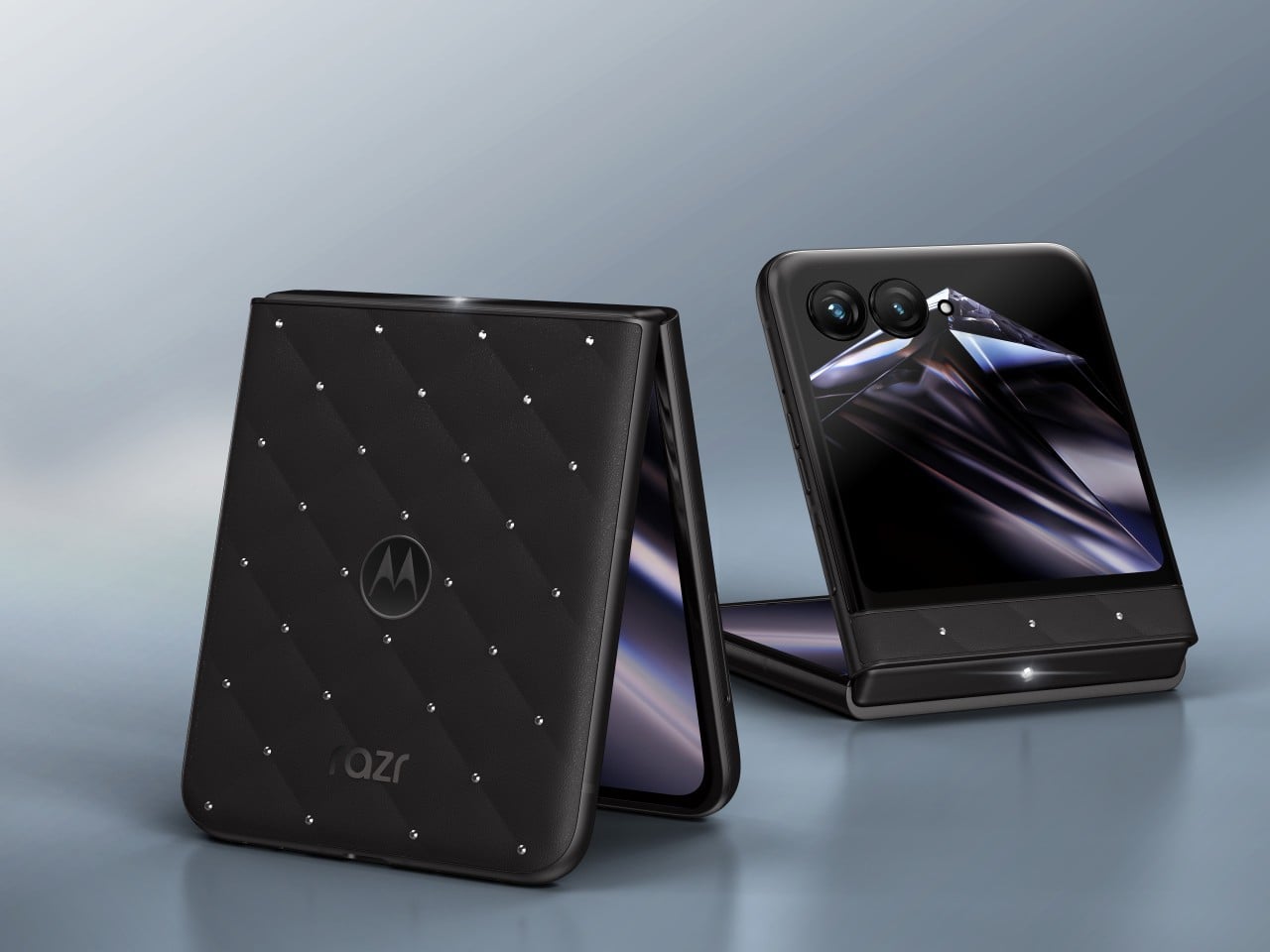
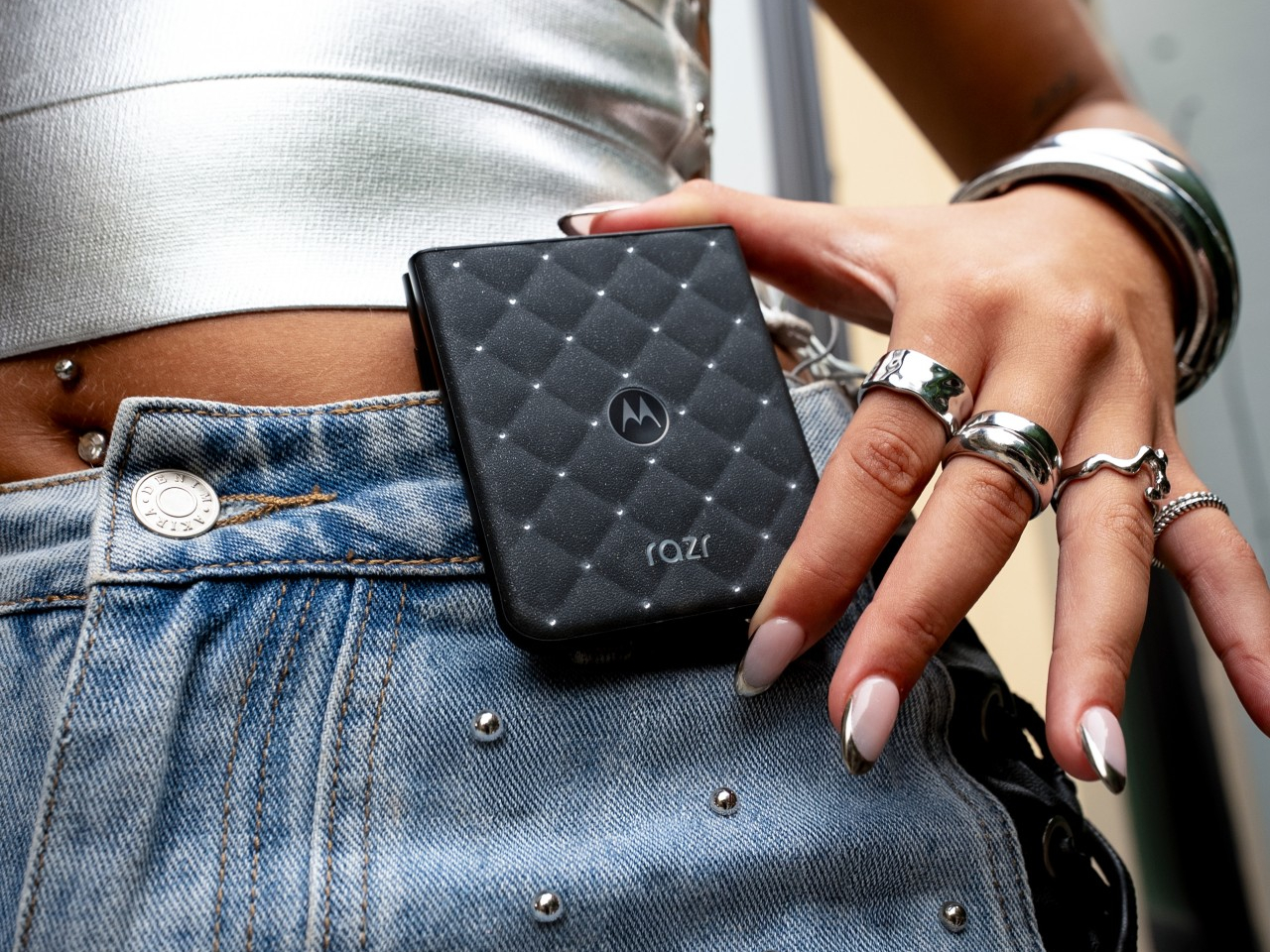
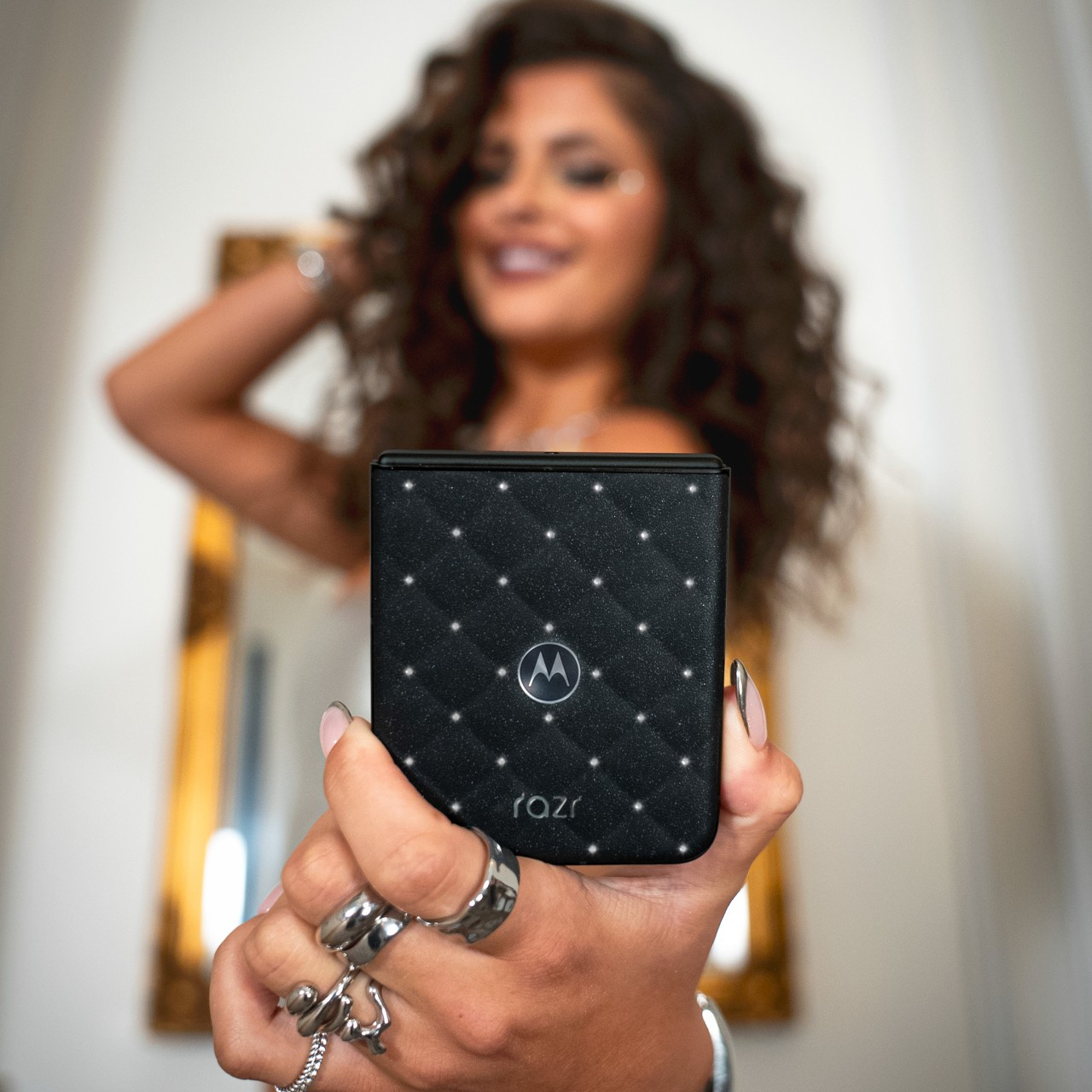
Motorola built a phone that asks to be noticed before it’s even unfolded. The 2026 motorola razr with Crystals by Swarovski joins the Brilliant Collection at IFA 2026, pairing Pantone’s color expertise with Swarovski’s craftsmanship on a foldable that reads less like consumer electronics and more like a clutch bag someone forgot was also a smartphone. It’s Motorola’s clearest statement yet that a phone’s exterior deserves as much attention as its chipset.

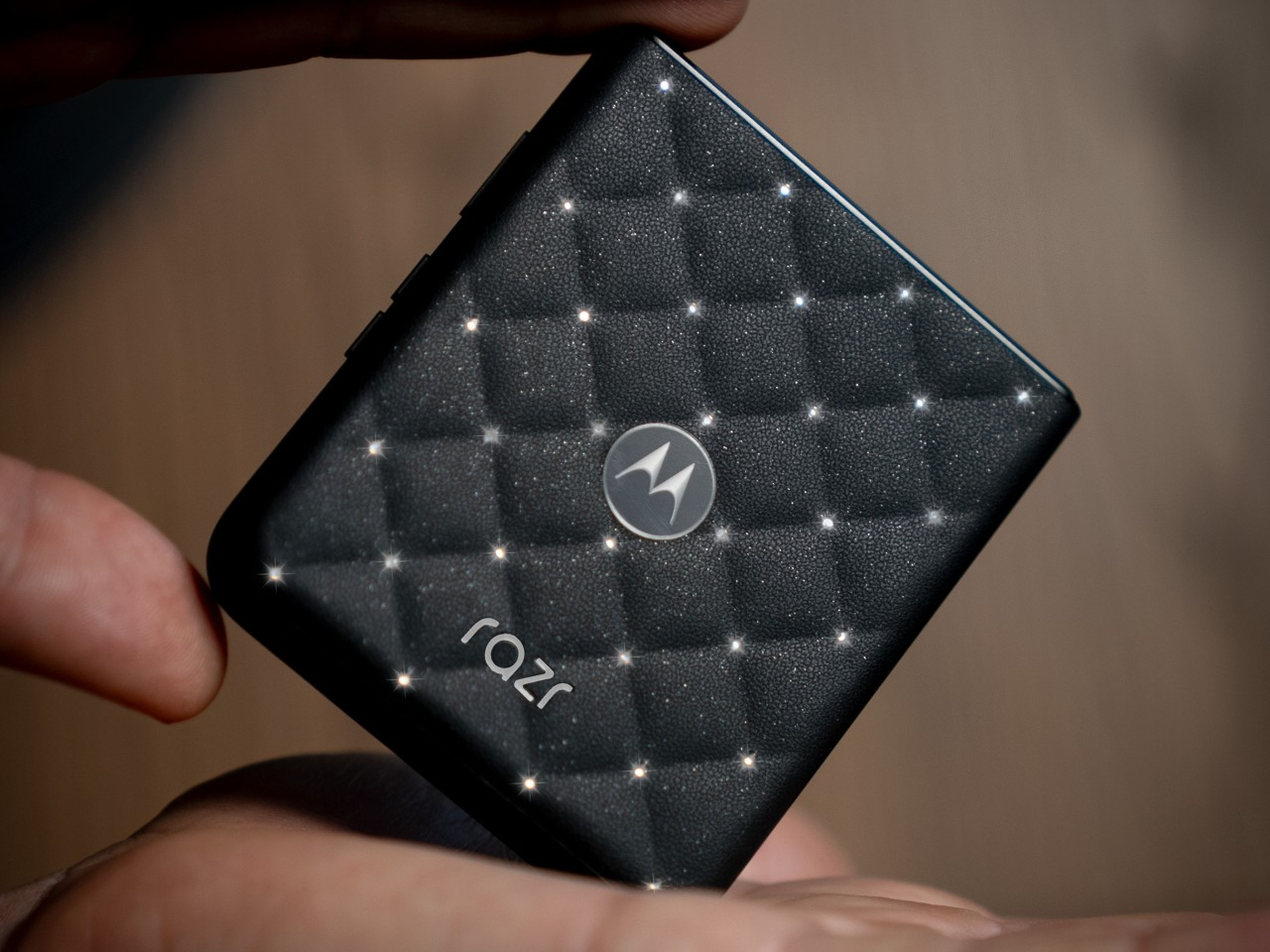
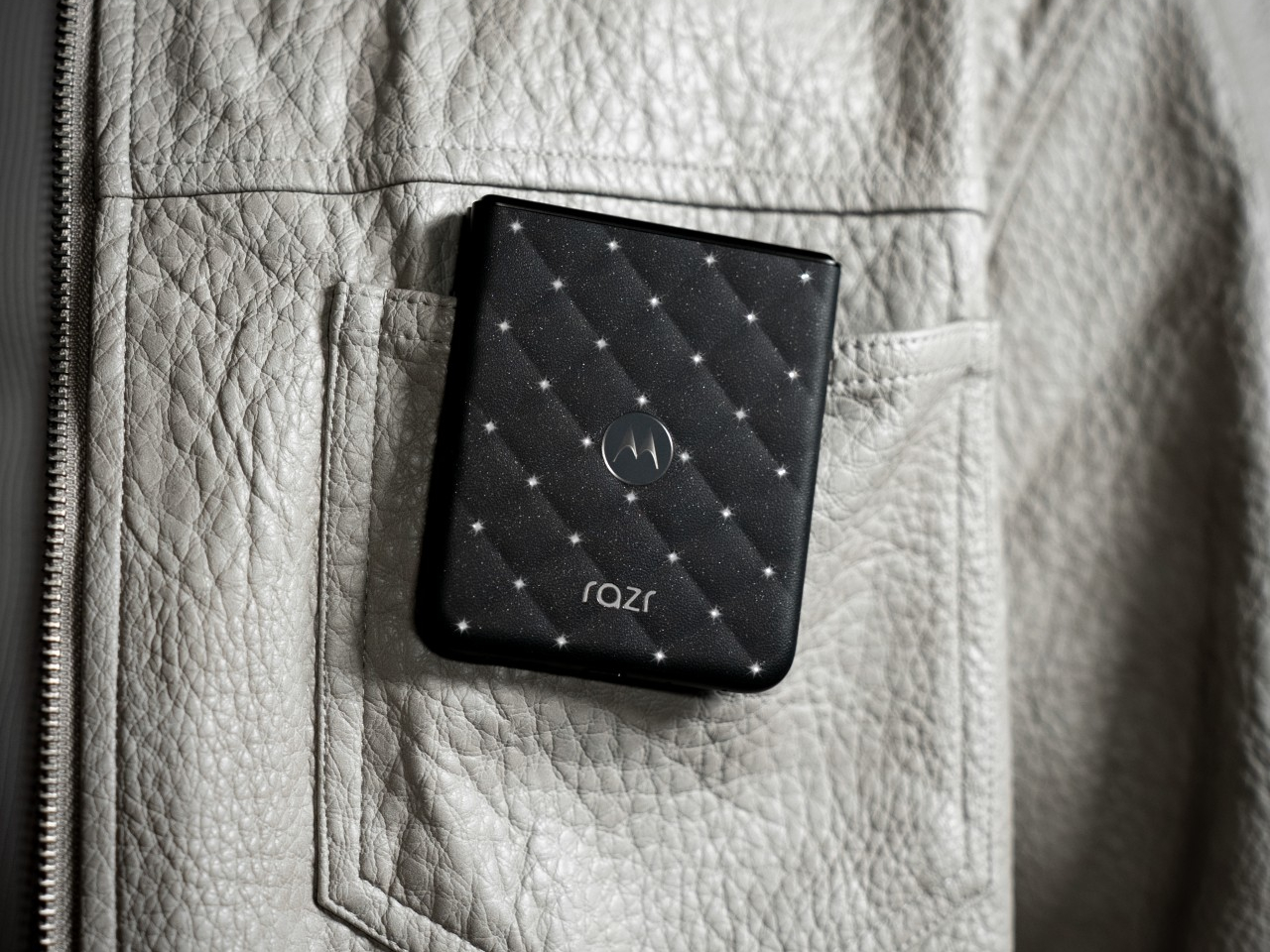
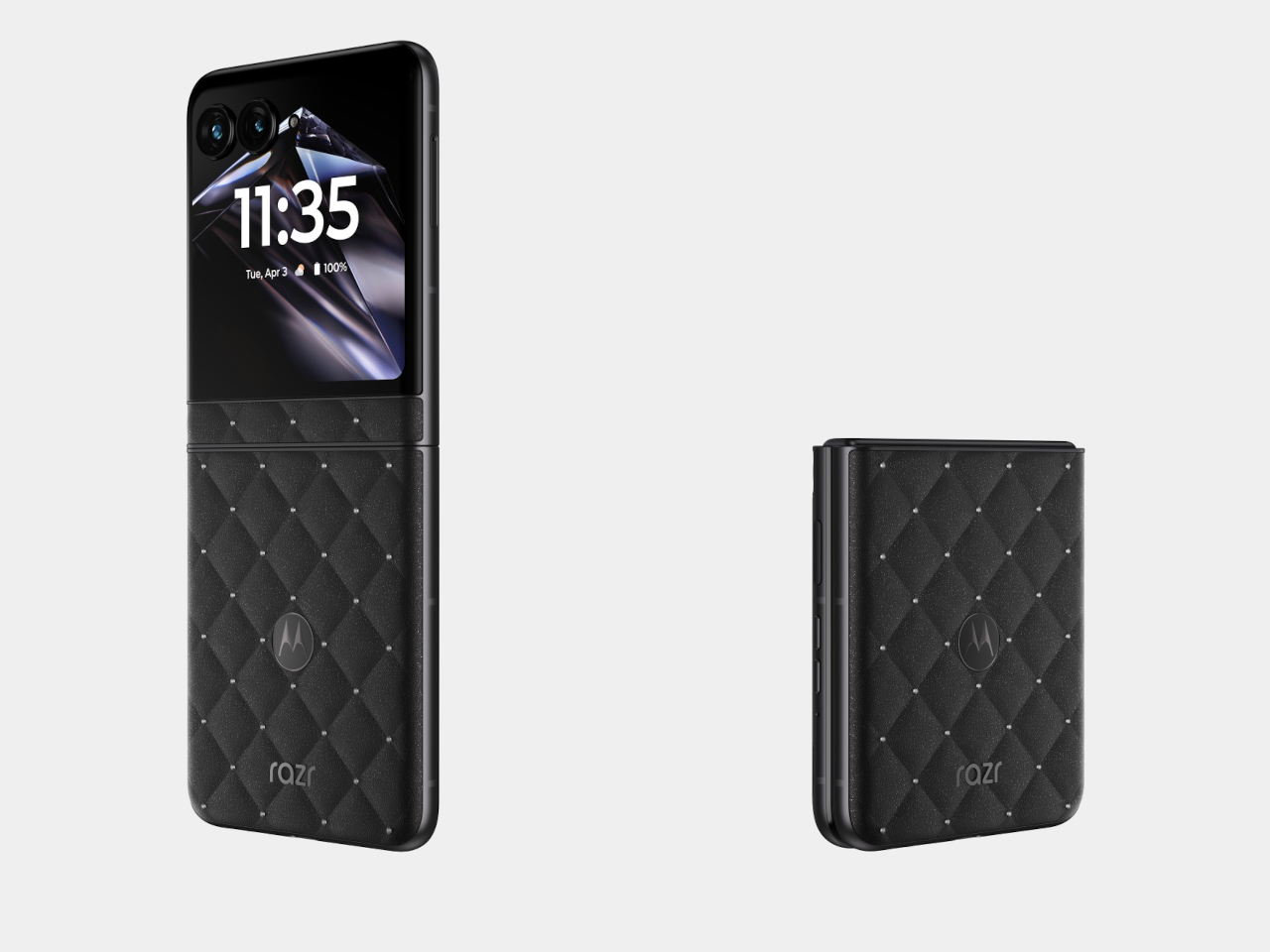
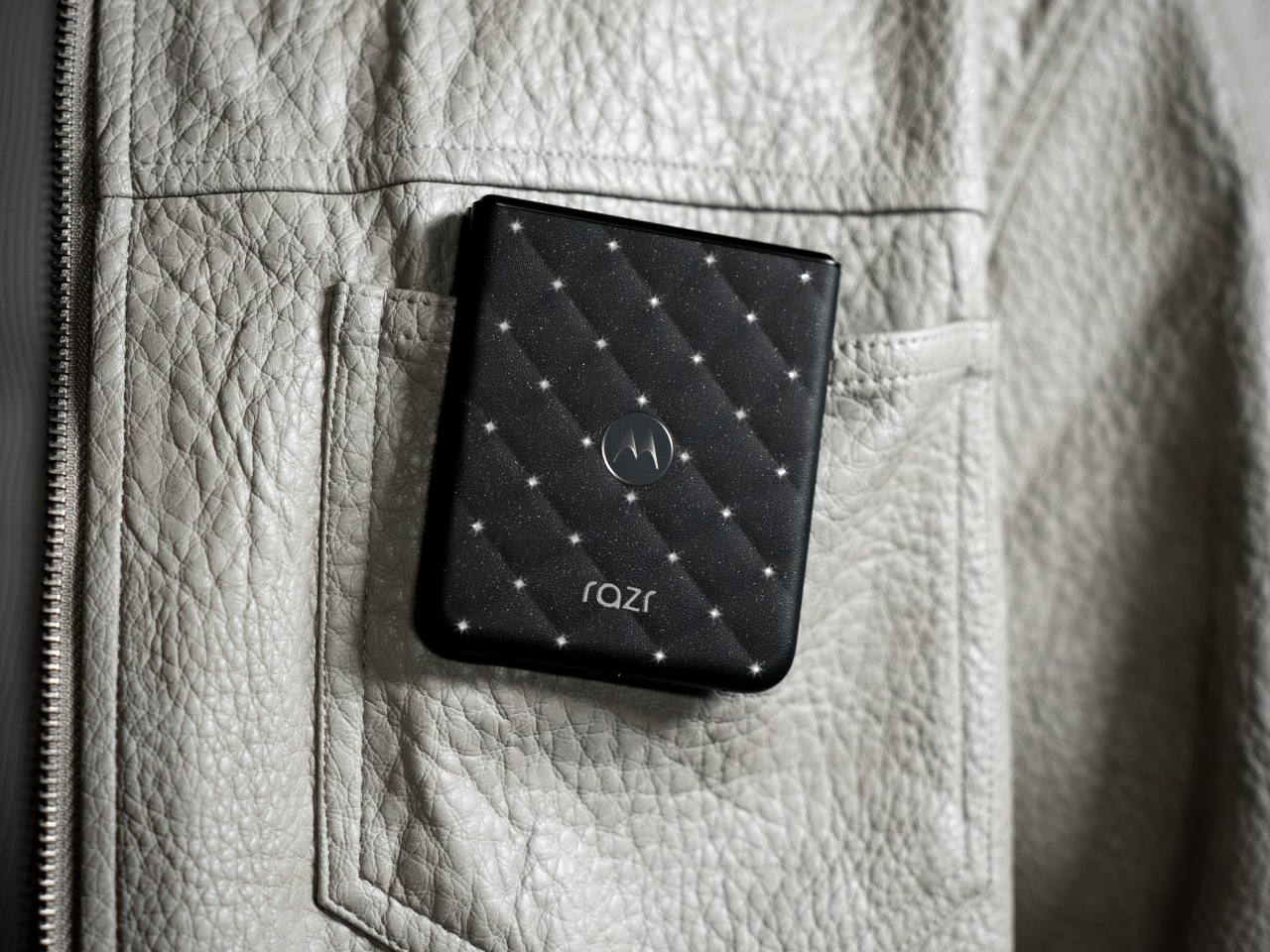
That statement starts with PANTONE Meteorite, a deep, understated shade that never competes for attention against the crystals resting on top of it. Instead, the finish creates contrast, revealing different dimensions of light and sparkle as the phone moves, so a simple pocket check under a restaurant table catches light differently than the same motion under office fluorescents. Color, in this case, does the quiet work of making everything layered on top of it shine harder.

Designer: Motorola x Swarovski

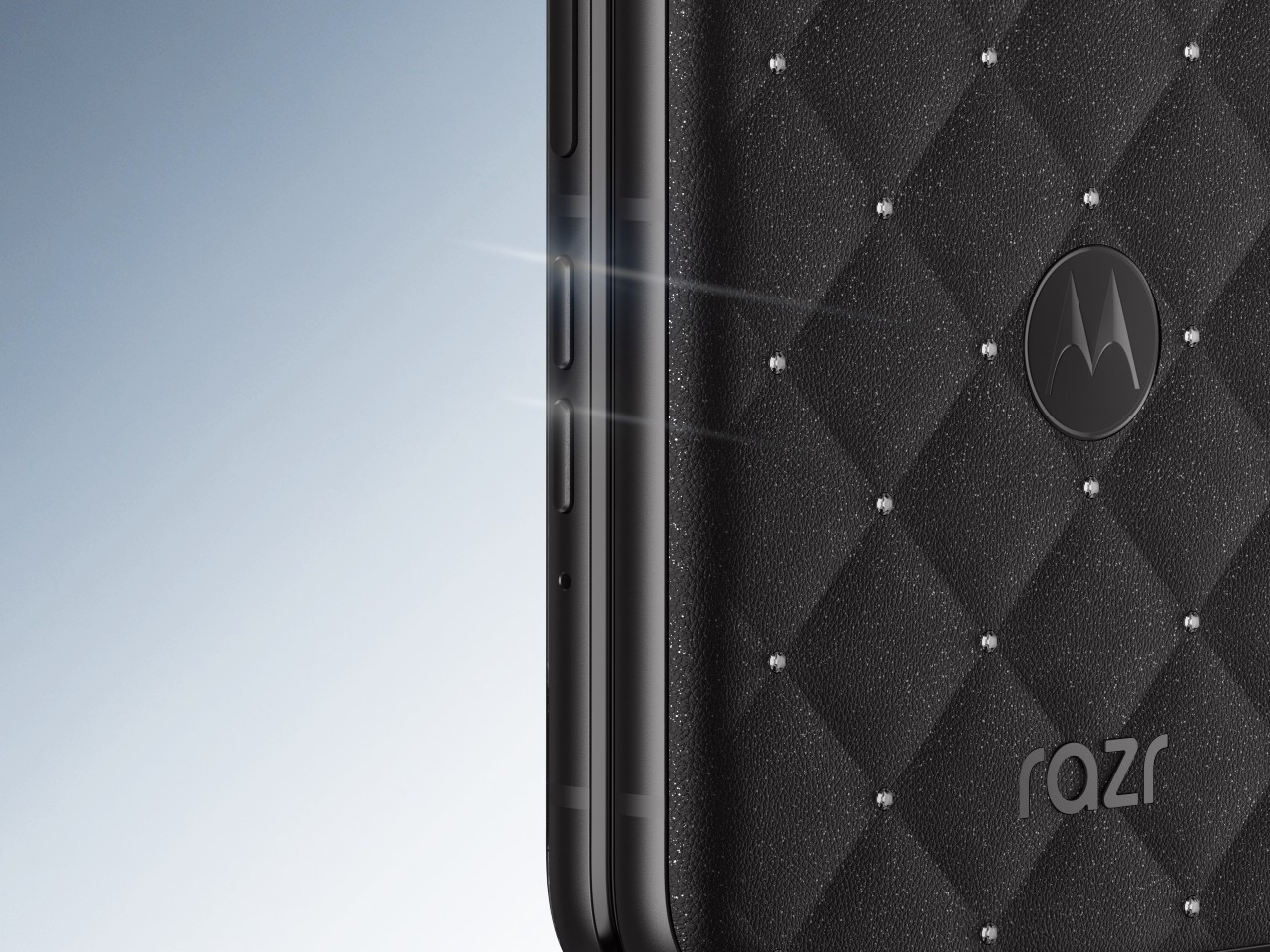
That layering happens across a quilted, leather-inspired texture that already feels premium before a single crystal enters the picture. Set against that padded surface, 35 hand-positioned Swarovski Crystals in Silver Night catch light from nearly any angle, each one placed with enough precision that the pattern reads as intentional rather than scattered. It’s the kind of detail that rewards a second glance rather than exhausting itself after the first one.

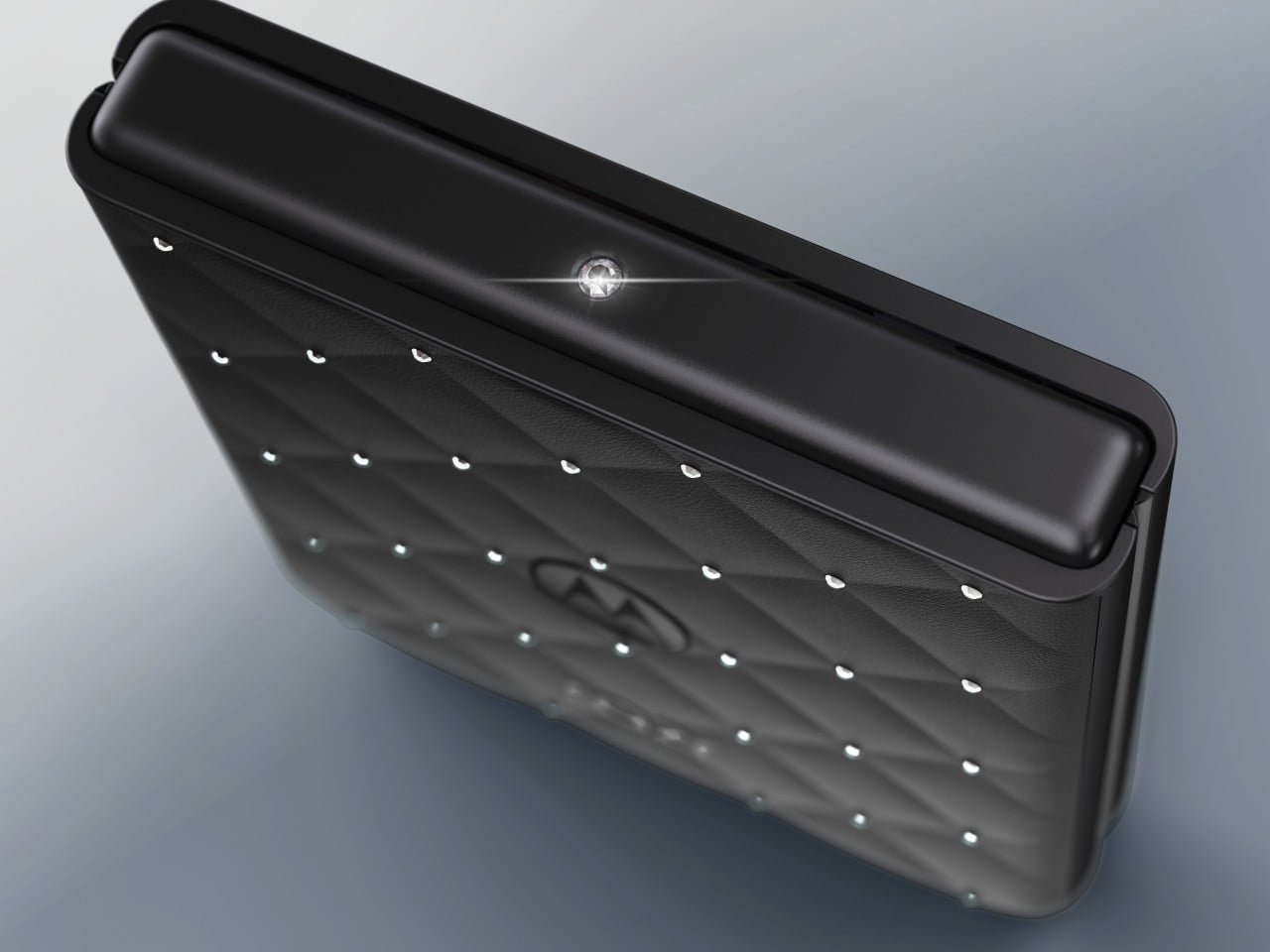
One crystal earns special treatment. A signature 32-facet Swarovski Crystal sits directly on the hinge, catching light with every flip in a way that turns the phone’s most mechanical motion into its most theatrical one. Razr’s flip has always been a small performance, and Motorola clearly understood that placing its biggest crystal exactly where the hinge pivots would turn an everyday gesture into something worth watching happen.

Motorola ships the device with a clear protective case built to frame the design without hiding it, a detail that matters more than it initially sounds. Plenty of phone cases exist purely to protect a device at the cost of concealing whatever made it desirable in the first place. Here, the case reads more like a museum vitrine than a rubber shell, letting the crystal work stay visible through daily handling.

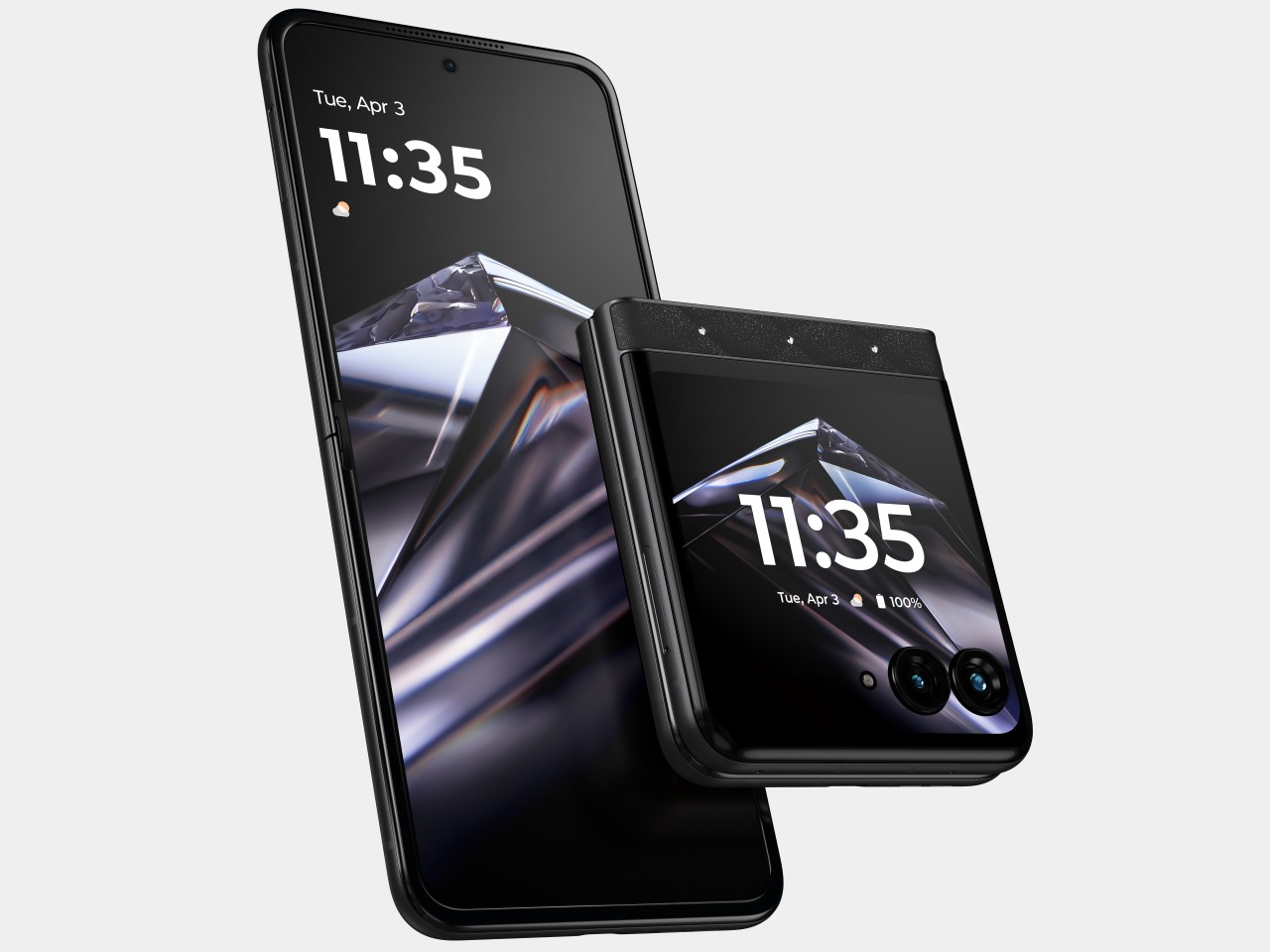
None of that styling comes at the expense of the hardware underneath. A 6.9-inch Extreme AMOLED display unfolds for daily use, backed by a dual 50MP main camera system and a 4800mAh battery rated for more than 36 hours on a single charge. The external 3.6-inch display still runs full apps and handles notifications without requiring an unfold, keeping the phone functional even when someone’s more focused on how it catches light in a bag.

Motorola frames the Brilliant Collection as proof that technology can be both beautiful and intelligent, and this razr backs that framing with hardware that would hold its own even without a single crystal attached. Pricing lands at $899.99 when the phone arrives on Motorola.com and Amazon on September 10, with Verizon carrying it starting September 24, putting genuine jewelry-adjacent design within reach of anyone willing to treat a phone as an actual accessory.

The post Motorola’s Swarovski Razr Was Designed to Be Seen, Not Hidden first appeared on Yanko Design.