How to watch the Hisense CES 2026 press conference live

Xinhua News Agency via Getty Images

Hisense is typically best known for its affordable electronics and home appliances, from TVs to refrigerators. But at CES 2025, the China-based company showed off its premium side with a massive 136-inch micro LED TV — now available for a jaw-dropping $100,000. So what's in store for this year's show? New leadership, for starters.

The company has two new hires, including Chief Marketing Officer Sarah Larsen and Chief Commercial Officer James Fishler. In a press release, Hisense said Fishler's experience in home entertainment, appliances and HVAC is important as the company "builds toward a milestone 2026 and its presence at CES."

We'll give you a rundown of what to expect during Hisense's presentation and how you can watch it live.

Hisense is livestreaming the event on its YouTube channel today (Monday, January 5) at 1PM ET. We've embedded it below. 

With its new hires in place, Hisense is clearly aiming to further polish its brand. Between Fishler and Larsen, the new front office is bringing to bear their experience from such high-powered competitors as LG, Samsung and Beats. And in a recent interview with Tom's Guide, Larsen emphasized a continued focus on the company's fast turnaround time from concept to market as a key differentiator for Hisense.

As for actual announcements, Hisense has already revealed the following products on its website:

  • Hisense S6 FollowMe display: This is a TV on wheels (really!) that apparently can follow you from room to room. 

  • Hisense XR10 and PX4-PRO laser projectors: The company's latest laser projectors can deliver up to 6,000 lumens of brightness and screen sizes as big as 300 inches.

  • ConnectLife AI-enhanced appliances: In an early press release, the company touted (what else) the enhanced AI smarts of its ConnectLife platform, stretching across everything from HVAC systems to kitchen gear to washer/dryers ("... with the enhanced AI Laundry Agent, fabric types and soil levels are automatically identified..."). 

Meanwhile, Larsen's aforementioned interview specifically calls out the emerging RGB TV space as a focus. We expect this year's show will be all about explaining the shades of difference between mini and micro LED display technologies, as both Samsung and LG have already thrown down pre-announcement gauntlets on the latter. Will any of them cost less than six figures? Let's hope Hisense has some good news to share on that front.

Update, January 4 2026, 2:17PM ET: This story has been updated to include information on the Hisense ConnectLife AI platform.

Update, January 5 2026, 10:45AM ET: This story has been updated to include info on Hisense's S6 FollowMe display and laser projectors. 

Update, January 5 2026, 11:31AM ET: This story has been updated to include the embedded YouTube livestream.

This article originally appeared on Engadget at https://www.engadget.com/home/how-to-watch-the-hisense-ces-2026-press-conference-live-190040504.html?src=rss

Samsung unveils its new $200 Galaxy A17 5G smartphone, arriving in January

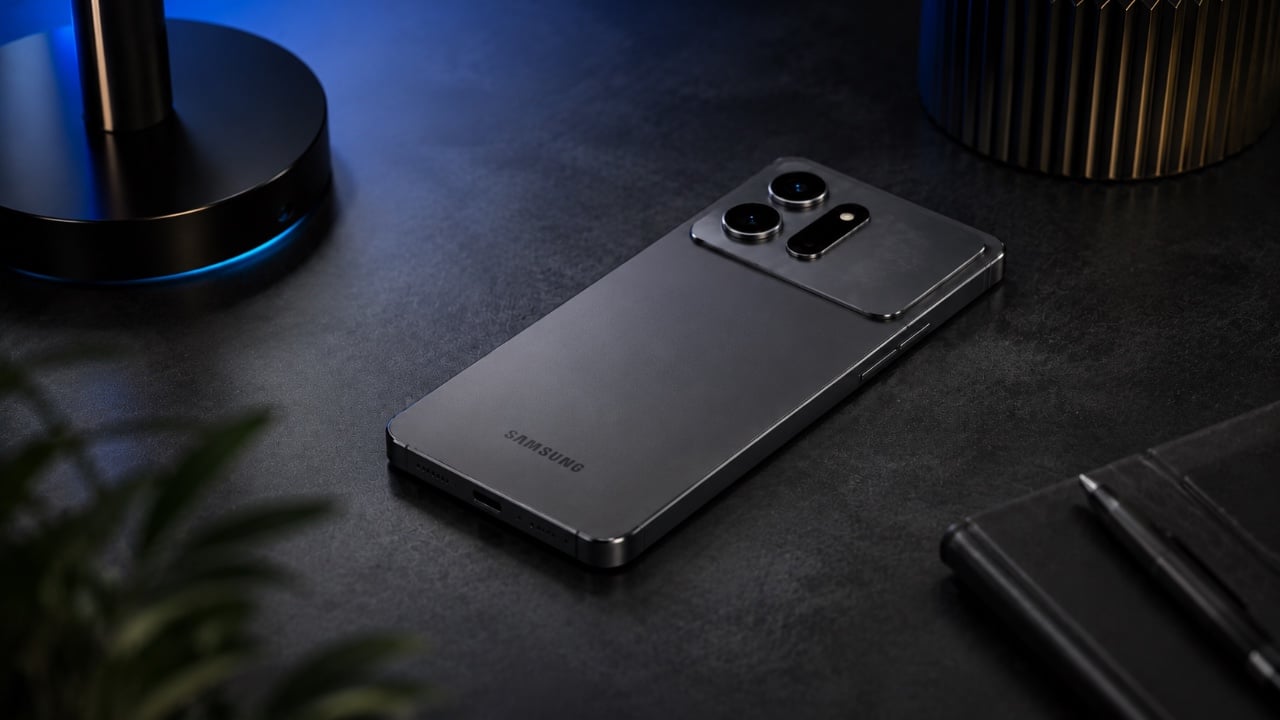
Samsung will have two new inexpensive mobile devices arriving on the US market next month. The Galaxy A17 5G starts at $199 and will be available on January 7. Arriving on January 8, the Galaxy Tab A11+ will retail for $250. 

The Galaxy A17 5G has a 6.7” FHD+ Super AMOLED display and is powered by the same Exynos 1330 chip found in the Galaxy A16 5G. The photography setup is also unchanged from last year's model, with a 50MP main camera, 5MP ultrawide, 2MP macro and 13MP selfie lenses. The base model has 4GB of RAM and 128GB of storage, but can be upgraded with up to 2TB of additional storage via microSD. Its 5,000mAh battery also supports fast-charging, a feature we're happy to see becoming more of an industry standard this year. Essentially, this is more of the same from Samsung, but this product line has a solid legacy of decent smartphones that don't break the bank. Don't be surprised if this joins our lineup of best budget Android phones come 2026.

The other new entry-level device is the Galaxy Tab A11+, which boasts an 11-inch LCD display. The rear camera is 8MP and the front one is 5MP. It has an option for 6GB of RAM with 128GB in storage, or for 8GB of RAM and 256GB of storage. Like with the Galaxy A17 5G, the tablet can also be juiced up with additional microSD storage. Performance-wise, you'll top out at 15 hours of video playback on the battery, but fast-charging is also supported here. There are many swankier tablets on the market these days, but if you're looking for a bare-bones option, this Samsung offering is a solid consideration.

This article originally appeared on Engadget at https://www.engadget.com/mobile/smartphones/samsung-unveils-its-new-200-galaxy-a17-5g-smartphone-arriving-in-january-184846560.html?src=rss

When the Wolf Is Already Part of You: Yama Moon’s Quiet Character Design

Most illustration that deals with human-animal hybridity treats it as a problem to be solved, a boundary to be crossed or defended, a transformation caught mid-process. Yamazuki Mari refuses this framing entirely. Her figures don’t struggle with their condition. They wear it.

A woman stands before a massive black wolf, their bodies aligned so precisely that the creature reads less as a separate entity and more as an extension of her silhouette. No tension exists between them. No drama of possession or escape. Mari positions the wolf head directly above the woman’s own, along the same vertical axis, creating a visual grammar of doubling rather than confrontation. The relationship feels ceremonial, almost devotional, with the wolf serving as guardian rather than threat.

What makes this work distinctive isn’t the subject matter but the formal clarity she brings to it. Against deep black backgrounds, her figures emerge in pale creams and icy blues, coloring deliberately muted to let compositional geometry carry emotional weight.

Surface as Signal

Mari builds atmosphere through material choices that reward close attention. Fine crosshatched textures give her digital work a tactile quality suggesting engraving or woodcut, linking contemporary illustration to centuries of folk art tradition. When color does assert itself, it arrives as intrusion: coral red branches cutting through darkness like warning signals, their sharpness creating tension against the soft gradients of hair and fur.

Her background in graphic design shows in the disciplined relationship between figure and ground. Black backgrounds create ceremonial weight. White backgrounds create clinical clarity. Neither choice is neutral, and the shift between them across her body of work creates a tonal range that color specification alone can’t achieve.

By introducing fine grain and crosshatching into digital illustration, Mari creates a surface quality that resists the smoothness associated with computer-generated imagery. The textures read as handmade even when they’re not, and this material fiction supports the folkloric atmosphere her subjects require. The wolf’s fur carries the same visual density as the woman’s hair, unifying disparate biological forms through shared treatment.

Color operates with similar intentionality. Limited palettes prevent the images from reading as naturalistic while specific hues, coral red against midnight blue, winter gray against bone white, carry cultural associations that enrich the viewing experience without requiring explicit narrative. Red as warning, white as purity or death, black as depth or the unconscious: Mari leverages these associations without being constrained by them.

Stillness as Strategy

Stillness in Mari’s work isn’t absence of movement but rather the deliberate suspension of it.

Her compositions feel frozen at the instant before something happens, and this temporal ambiguity becomes a structural principle. The woman and wolf don’t move because they exist outside of narrative time. They occupy a space where transformation has already occurred and no further change is necessary. Traditional fantasy illustration often relies on dynamism to generate interest, filling the frame with action that guides the eye along predictable paths. Mari inverts this expectation. Her figures hold their positions, and the viewer must do the work of discovering the relationships between elements.

The result is an experience closer to portrait study than narrative illustration, where the reward comes from sustained attention rather than immediate comprehension.

Motion as Rupture

Her second piece abandons stillness entirely, and the contrast illuminates what the first image withholds. A human figure fuses with a lunging wolf in mid-leap, their bodies stretched forward in parallel lines of urgent motion. The wolf’s jaws are open, its eye wide with instinct, and the scene pulses with predatory energy that the first composition suppressed.

Cool grays and winter whites dominate the palette, replacing ceremonial blacks with something closer to raw weather. Sharp white branches frame the movement like cracked ice. The grainy textures that felt archival in the static piece now read as velocity blur. Same technical vocabulary, entirely different emotional results.

What the motion reveals is the cost of transformation. Static imagery presented hybridity as achieved and peaceful. Dynamic imagery shows it as ongoing and violent. These aren’t contradictory statements but rather complementary views of the same condition: the wolf is both guardian and hunter, protector and predator, and the human figure rides that duality rather than resolving it.

Mari doesn’t choose between interpretations because choosing would reduce the complexity her work investigates.

Tenderness Without Sentiment

Her final piece pivots toward something that resembles cuteness but refuses to commit to it. Two small catlike figures stand side by side against a clean white background, their rounded forms and oversized fur collars giving them a plush, doll-like presence. One wears red, the other blue. The color dialogue emphasizes individuality within obvious companionship.

Simplicity here is deceptive. These figures share the hybrid logic of the wolf pieces, with feline ears, tails, and paw-like hands rendering them not quite animal and not quite human. Their expressions are subdued rather than cheerful, and this restraint prevents the image from tipping into pure whimsy.

Mari names them May and Mii, the Nekochi, describing them as inseparable companions ready for playful mischief. The characterization suggests personality and relationship, but the visual treatment maintains distance. She doesn’t animate their mischief or show them in action. Like the woman and the wolf, they simply exist in their hybrid state, present to the viewer without performing.

Grammar of Integration

Across all three works, Mari establishes a consistent visual grammar for depicting hybridity. Human and animal elements don’t compete for dominance within the frame. They occupy the same compositional space with equal formal weight, aligned along shared axes, rendered with equivalent levels of detail.

Neither element reads as metaphor for the other.

The wolf isn’t the woman’s inner nature made visible. The woman isn’t the wolf’s civilized aspect. They exist together as a unified presence that simply happens to contain both forms. This approach distinguishes her work from transformation imagery in the Western fantasy tradition, where hybridity typically signifies conflict, corruption, or metamorphosis in progress. Mari’s hybrids carry no implication of instability. They aren’t becoming something else. They’ve already become, and the images document that completed state with the formal precision of taxonomy rather than the drama of mythology.

Cultural lineage matters here. Japanese visual traditions have long accommodated hybrid beings without requiring them to resolve into single identities. Kitsune, tanuki, and other shapeshifters populate folklore not as monsters to be defeated but as neighbors to be negotiated with. Mari draws on this heritage while filtering it through contemporary illustration sensibilities, producing images that feel simultaneously ancient and digitally native.

What the Hybrids Suggest

Most depictions of human-animal fusion carry anxiety about boundary dissolution, about losing the characteristics that define human identity.

Mari’s figures express no such concern. They wear their hybridity as comfortably as the Nekochi wear their fur collars, as a feature of existence rather than a problem to be solved. This comfort may be the most radical aspect of her visual language. In a design context where character illustration often relies on conflict, transformation, or aspiration to generate viewer engagement, Mari offers figures who’ve arrived at a place of integration and simply occupy it.

The wolf doesn’t need to devour the woman. The woman doesn’t need to tame the wolf. The Nekochi don’t need to choose between their feline and humanoid aspects.

For illustrators working in character design, the approach suggests an alternative to narrative-driven imagery. Not every character needs to be caught mid-journey. Some can simply exist, fully realized, inviting the viewer to spend time in their presence rather than anticipate their next transformation. Mari’s hybrids model this possibility with quiet confidence, their stillness a form of visual authority that movement would only diminish.

The post When the Wolf Is Already Part of You: Yama Moon’s Quiet Character Design first appeared on Yanko Design.

Netflix has released a trailer for the Stranger Things finale

Tomorrow's the big day, and I don't just mean New Year's Eve. The series finale of Stranger Things airs tomorrow, and Netflix has released a trailer for the last episode. We're given only flashes of the final episode, along with a voiceover of an emotional Jim Hopper telling Eleven he needs her to fight one last time.

It's just over 1 minute and 30 seconds long, with what appears to be only about 30 seconds of new footage. There isn't much to go on here, as most of the footage features emotional moments from seasons past. Netflix no doubt is hoping to keep much of the excitement under wraps until tomorrow's premiere.

Warning: Some spoilers ahead for Stranger Things season 5.

Among the new images we briefly see Vecna, hooked up to the ceiling in his gross cave of power on his other world. There's also an explosion at what looks like a military site, plus a few more out-of-context flashes of our heroes.

One particularly ominous moment shows Hopper walking around a smoke-filled room with almost zero visibility, gun drawn, when we see what looks to be Vecna appear behind him. We also see Eleven climb back into the sensory-deprivation tank in the Upside Down, presumably to take the fight to the show’s big bad.

The only continuous scene in the trailer shows most of the gang standing atop a radio tower as Vecna's world moves close enough to collide with the tower's tip. Dustin lets out a "mother of God" as the so-crazy-it-just-might-work scheme the group cooked up in Chapter Seven appears to be well underway.

After nine years and five seasons, we will finally reach a conclusion for the heroes of Hawkins. The episode premieres at 8PM ET (5PM PT). For those still craving more from the world of Hawkins after the finale, Netflix is releasing a Stranger Things animated series in 2026.

This article originally appeared on Engadget at https://www.engadget.com/entertainment/streaming/netflix-has-released-a-trailer-for-the-stranger-things-finale-171204480.html?src=rss

Adidas Just Turned Minecraft Creepers Into $40 Holiday Sneakers

Remember when video game merchandise meant cheesy graphic tees at the mall? Those days are officially over. Adidas just quietly dropped a massive holiday collection with Minecraft that turns pixelated game creatures into surprisingly wearable sneakers, and honestly, it’s kind of brilliant.

The collaboration reimagines some of Adidas’ most iconic silhouettes through the blocky, digital lens of Minecraft’s universe. We’re talking the Samba XLG, Handball Spezial, Campus 00s, Superstar II, and even those beloved Adilette slides, each one carefully themed around specific Minecraft mobs and in-game elements. What makes this partnership work so well is how thoughtfully each shoe connects to its source material without losing the essence of what makes these Adidas classics so enduringly popular.

Designer: Adidas

Take the Samba XLG inspired by the Creeper, arguably Minecraft’s most recognizable character. The shoe arrives in that signature explosive green colorway with blocky graphics spread across the upper, while a gum sole keeps things grounded in classic Samba DNA. It’s playful without being costume-y, which is exactly the balance you want in a collaboration like this.

The Handball Spezial takes a different approach with its Ghast theme. For those not fluent in Minecraft speak, the Ghast is that floating, fireball-spewing creature you encounter in the game’s Nether dimension. Flame graphics dance across the shoe while an illustrated Ghast appears on the laces, giving the piece a narrative quality that goes beyond simple branding.

Then there’s the Campus 00s channeling the Eye of Ender aesthetic with its black and green palette, and the Superstar II drawing inspiration from the Ender Dragon itself. The Superstar features black, block-like scales that translate the dragon’s texture into something you can actually wear on city streets. The Adilette slides circle back to Creeper territory, with the mob’s iconic face prominently displayed on the strap.

But here’s where things get really interesting from a design perspective. The packaging deserves its own spotlight. Adidas designed the boxes to resemble Minecraft’s in-game storage chests, extending the conceptual thread beyond just the product itself. This kind of attention to detail elevates the entire unboxing experience and shows a genuine understanding of what makes Minecraft’s visual language so compelling.

There’s a caveat worth mentioning, though. The entire footwear collection comes exclusively in youth and children’s sizing. While this might disappoint adult collectors hoping to snag a pair for themselves, it actually makes strategic sense. Minecraft’s core audience skews younger, and positioning these as wearable extensions of the game rather than adult collectibles keeps the collaboration authentic to its roots. Plus, prices ranging from forty to ninety-five dollars make these accessible holiday gifts rather than hype-beast grails.

The sneaker world has seen its fair share of video game collaborations over the years, but most lean heavily into nostalgia for retro gaming. This partnership feels refreshingly current. Minecraft remains one of the most played games globally, with a massive cultural footprint that extends far beyond gaming circles. By tapping into this active, engaged community rather than mining the past, Adidas positions itself at the intersection of contemporary gaming culture and street style.

What’s particularly clever is how the collection works on multiple levels. Die-hard Minecraft fans get references they’ll immediately recognize and appreciate. Meanwhile, someone who’s never played the game might just see a cool green Samba or a sleek black Superstar with interesting texture details. The designs don’t require insider knowledge to work aesthetically, which broadens their appeal considerably. The collection also includes complementary apparel pieces, creating a full lifestyle offering that lets young fans dress head to toe in Minecraft-inspired gear. This comprehensive approach transforms the collaboration from a simple licensing deal into something that feels more like a genuine creative partnership.

Brand collaborations drop constantly and often feel forced but the Adidas x Minecraft holiday collection stands out by actually making sense. Both brands benefit from the association, the design execution shows real thought and craft, and the end result offers something genuinely fun in a sneaker landscape that sometimes takes itself way too seriously. Available now through the Adidas webstore, these pieces prove that when gaming and footwear cultures collide thoughtfully, everyone wins, especially the kids who get to wear their favorite game on their feet.

The post Adidas Just Turned Minecraft Creepers Into $40 Holiday Sneakers first appeared on Yanko Design.

The iOS 26 Revolution: Every Major Feature Apple Unveiled This Year

The iOS 26 Revolution: Every Major Feature Apple Unveiled This Year

Apple’s iOS 26, released in late 2025, represents a significant evolution in mobile operating systems. This update introduces a suite of features designed to enhance usability, strengthen security, and optimize energy efficiency. Whether your focus is on personalization, communication management, or extending battery life, iOS 26 offers tools that make your device smarter, more secure, […]

The post The iOS 26 Revolution: Every Major Feature Apple Unveiled This Year appeared first on Geeky Gadgets.

Posted in Uncategorized

Budget Intel Arc Gaming PC Rig Crushes 1440p

Budget Intel Arc Gaming PC Rig Crushes 1440p

What if you could build a gaming PC in 2026 that crushes 1440p gaming without emptying your wallet, even with the increased RAM prices? ETA Prime explains how a carefully curated mix of affordable new parts and savvy second-hand finds can deliver smooth, high-quality performance in modern titles like Cyberpunk 2077 and Red Dead Redemption […]

The post Budget Intel Arc Gaming PC Rig Crushes 1440p appeared first on Geeky Gadgets.

Posted in Uncategorized

Posha Self-Watering Planter Lets You Forget Watering for Weeks

Most desk plants live in simple pots that depend entirely on memory. Watering is irregular, overwatering and underwatering are both common, and busy workdays do not help. Planters are usually treated as decorative containers, not as systems that could manage themselves. Posha is a self-watering desk planter that starts from a different premise, embedding care into the object instead of into the user’s to-do list or relying on guilt when leaves start to droop.

Posha is a compact desk planter built around a passive self-watering system. It separates water storage from the soil zone, with a concealed reservoir at the base and a wick or capillary pathway that draws moisture upward only as the plant needs it. The roots stay hydrated without sitting in water, which reduces overwatering and stretches the time between refills in a way that suits distracted desk life and unpredictable schedules.

Designer: Ayush Kumar Singh

Early explorations focused on proportions and water behaviour, how much water a compact planter should realistically store, how fast it should release moisture, and how to keep the system stable without adding visual clutter. Several internal layouts were tested to balance soil volume, reservoir capacity, and airflow, so the plant remains healthy while the planter stays small and unobtrusive on a work surface next to keyboards and coffee cups.

The form is deliberately minimal, so from the outside it reads as a simple desk object rather than a technical product. The complexity is pushed inward, where the water chamber, soil separator, and wicking element work together as a single system. The geometry avoids sharp transitions so water can distribute evenly, and the top opening is sized for common indoor plants without making planting or pruning awkward when you need to swap species.

1

Refilling is straightforward and non-disruptive; the water inlet is integrated into the form so it does not dominate the appearance, and the reservoir can be topped up without removing the plant. The system is designed to be reusable and serviceable, allowing the planter to be cleaned or replanted over time rather than treated as a disposable object that gets tossed when the first plant fails or the season changes.

What defines Posha is not a single interaction but how it behaves over weeks of use. The soil stays consistently moist, the plant experiences less stress, and the user interacts with it less frequently but more intentionally. Plant care shifts from a daily responsibility to an occasional check-in, better suited to desks, studios, and workspaces where attention is already stretched thin, and memory is unreliable at best.

Posha demonstrates how small functional decisions, like separating water and soil and hiding the reservoir, can significantly change user behaviour and plant health. By working quietly in the background and doing one job well, the self-watering desk planter supports healthier plants and a calmer relationship between people and the living things they keep nearby, which is a surprisingly meaningful outcome for such a small piece of desk real estate that could have easily stayed simple and decorative.

The post Posha Self-Watering Planter Lets You Forget Watering for Weeks first appeared on Yanko Design.

Meta buys startup known for its AI task automation agents

Meta has acquired an AI startup called Manus — known for its custom research and website-building agents — in a deal valued at more than $2 billion, according toThe Wall Street Journal. It's reportedly one of the largest acquisitions yet involving a startup nurtured in China's AI ecosystem. 

Manus arrived in March 2025, shortly after another Chinese AI startup, DeepSeek appeared on the scene. The company (called Butterfly Effect at the time) originally described it as "the first general AI agent" to perform complex tasks autonomously, rather than just generating ideas. It draws from several third-party models, particularly Anthropic's Claude 3.5 Sonnet and versions of Alibaba's Qwen. 

Manus is designed to automate certain tasks, like market research, coding, sales data analysis and website cloning and creation. (However, one skeptic called it "a product devilishly optimized for influencers, which is why it exploded so much.") The company claims that Manu is "already serving the daily needs of millions of users and businesses" and has an annualized average revenue of more than $100 million only eight months after launch. 

Manus laid off most of its Beijing employees this summer before moving its headquarters to Singapore in an effort to expand globally.The company was reportedly seeking a funding round that would have valued it at $2 billion when it was approached by Meta. "Joining Meta allows us to build on a stronger, more sustainable foundation without changing how Manus works or how decisions are made," said Manus CEO Xiao Hong in a company news release.

This article originally appeared on Engadget at https://www.engadget.com/ai/meta-buys-startup-known-for-its-ai-task-automation-agents-140045275.html?src=rss

Google Pixel Features You Didn’t Know You Needed

Google Pixel Features You Didn’t Know You Needed

Google Pixel smartphones have established themselves as a unique presence in the highly competitive smartphone market. By offering a suite of exclusive features that emphasize usability, convenience, and innovative functionality, these devices cater to a wide range of user needs. Whether you’re looking for seamless day-to-day performance or advanced tools, the Pixel lineup delivers an […]

The post Google Pixel Features You Didn’t Know You Needed appeared first on Geeky Gadgets.

Posted in Uncategorized