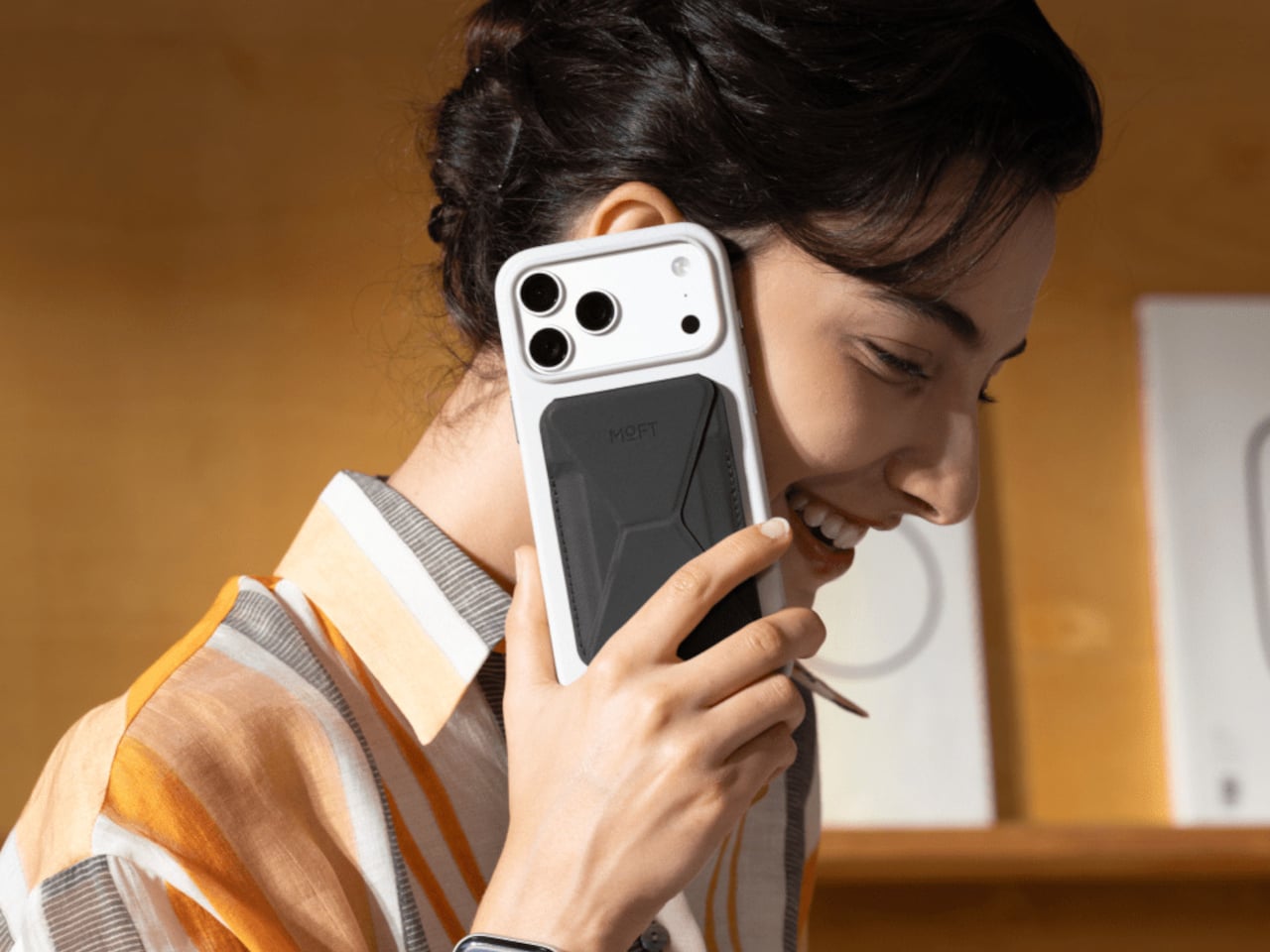
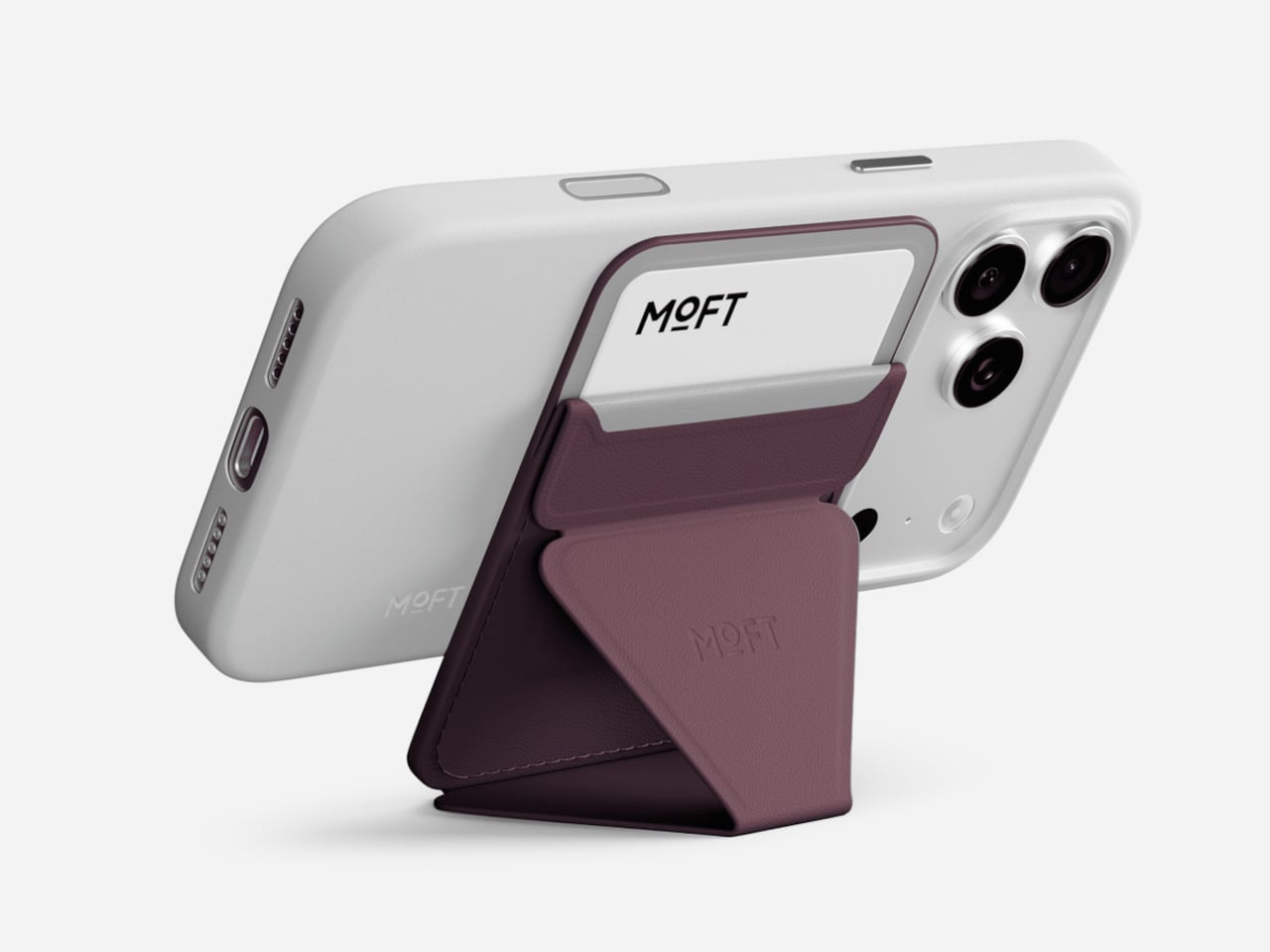
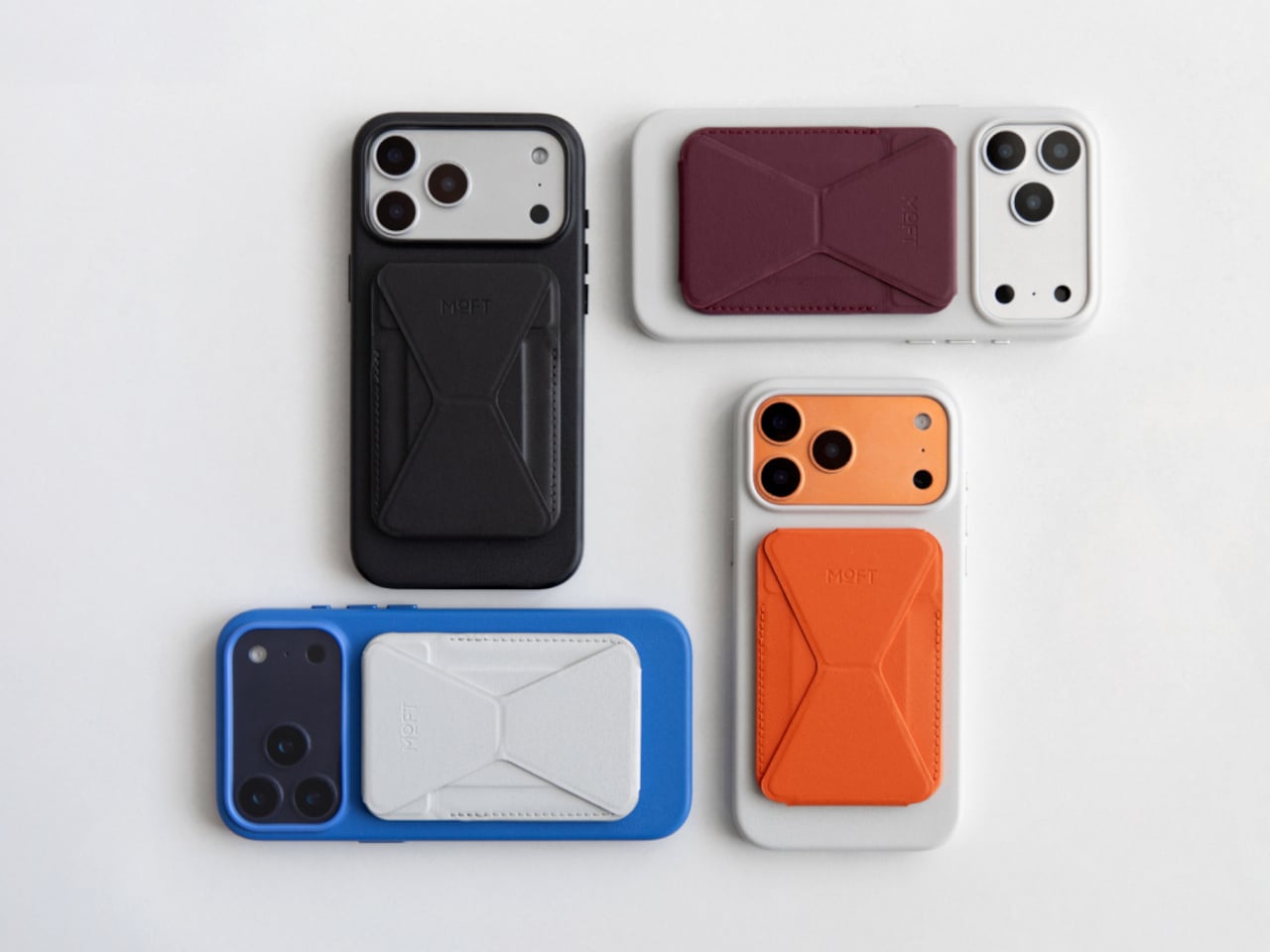
Leaving the house with just a phone and a slim MagSafe wallet is convenient until the jolt of realizing you have no idea where you left that combo. Most wallets and stands solve carry and comfort, but do nothing for the “where did I put it” problem. Moft’s trackable stand-wallet is a small tweak to that daily stack, adding a Find My brain without bulking up the back of your phone.
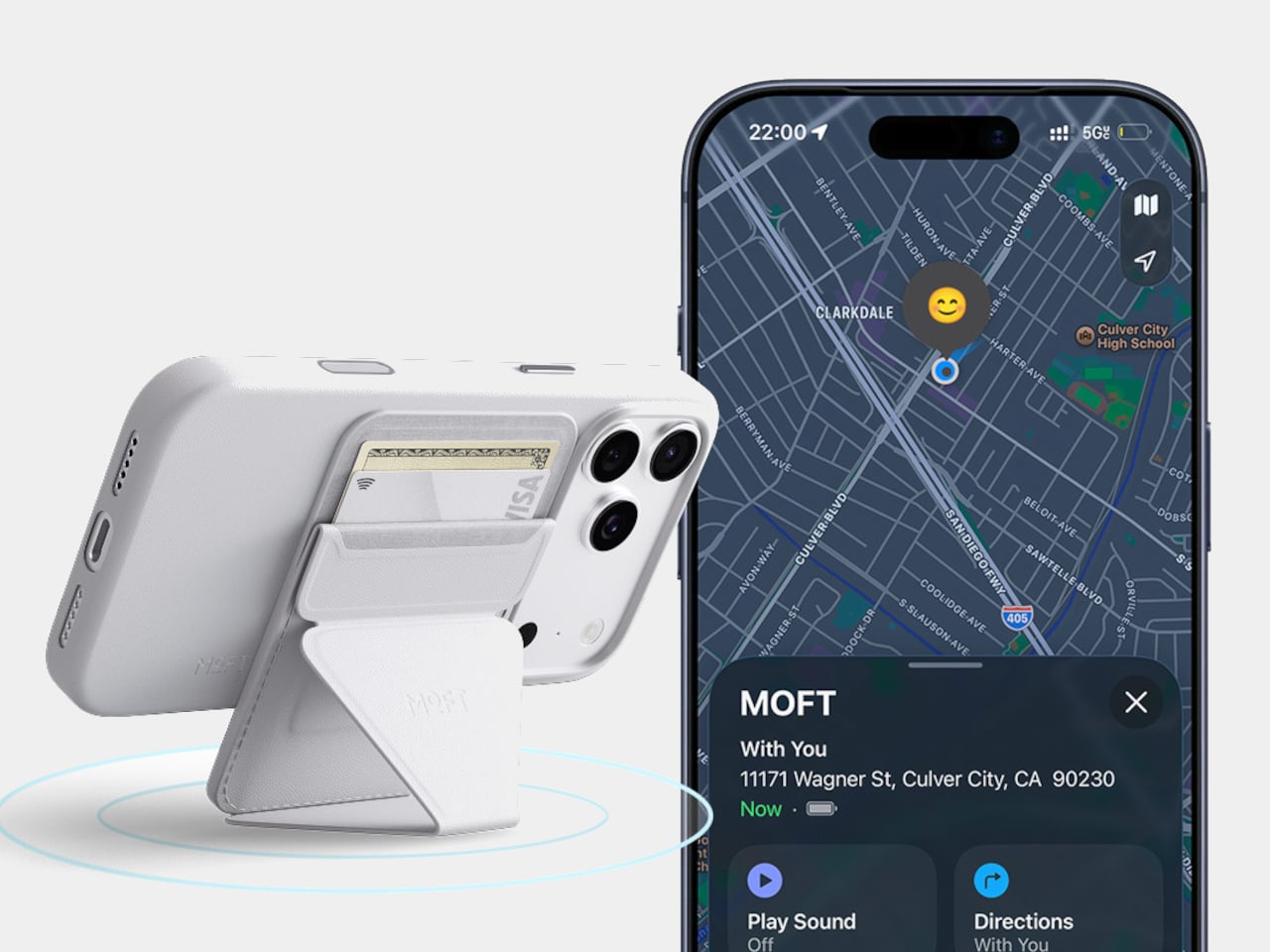
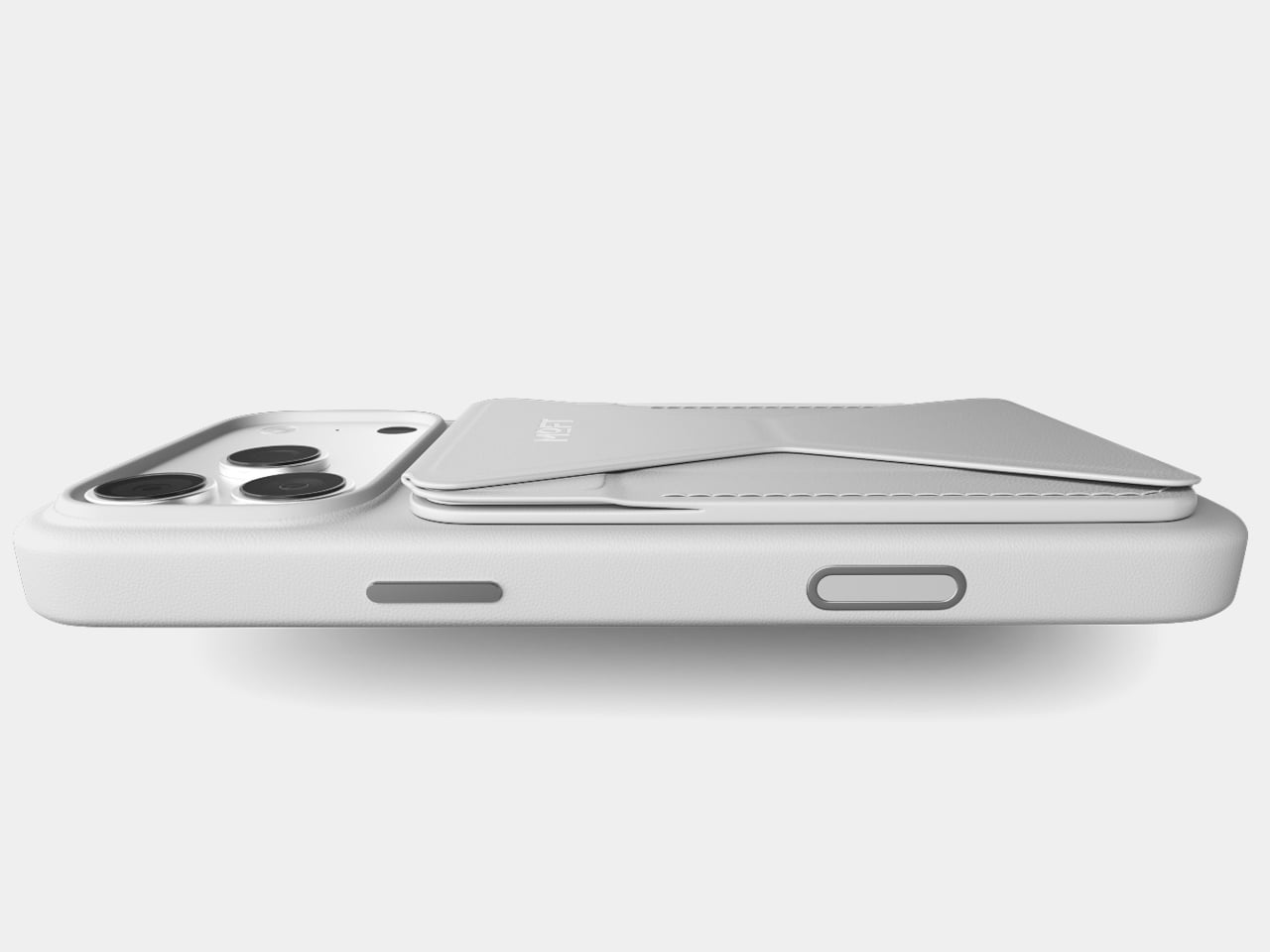
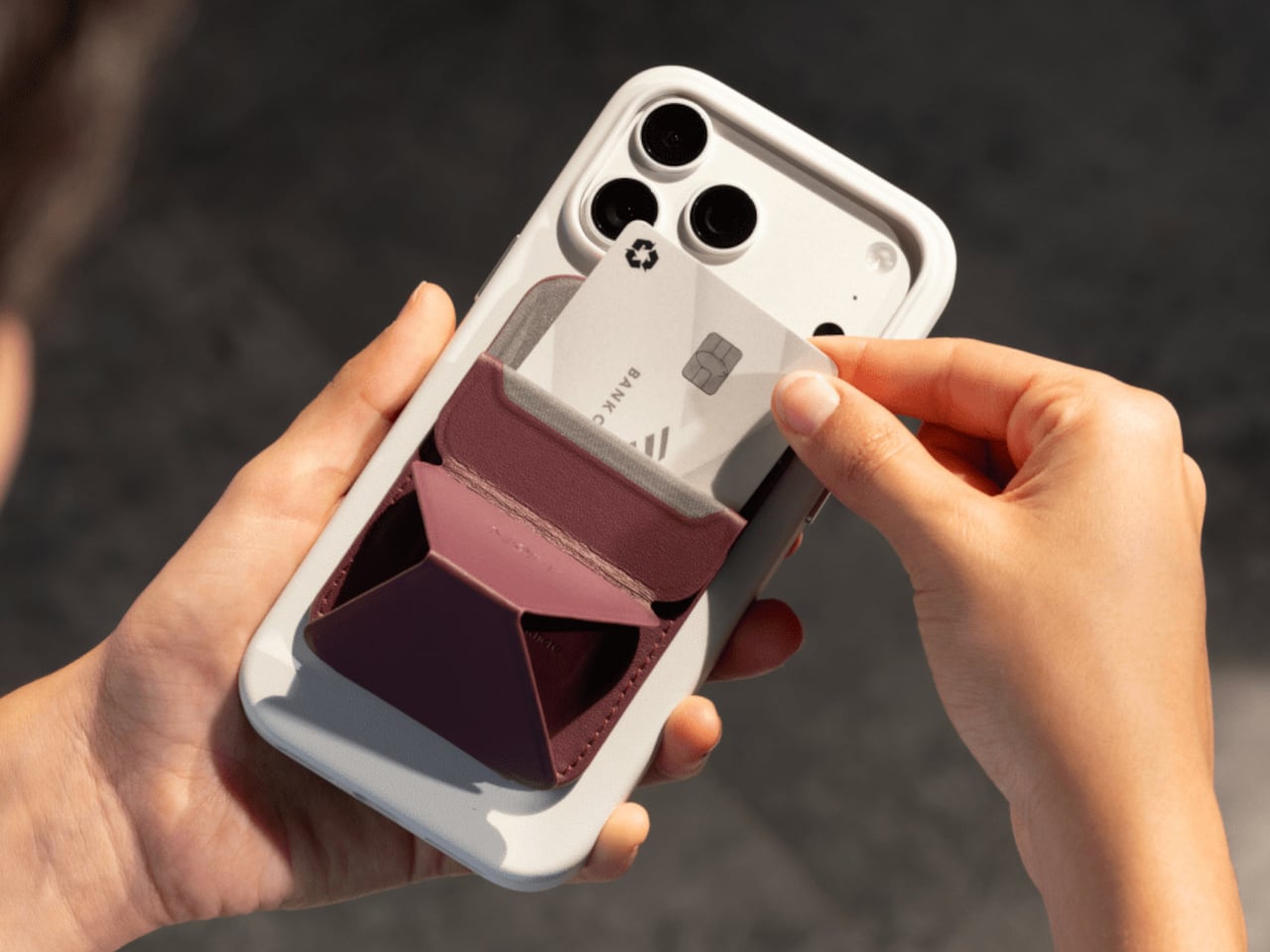
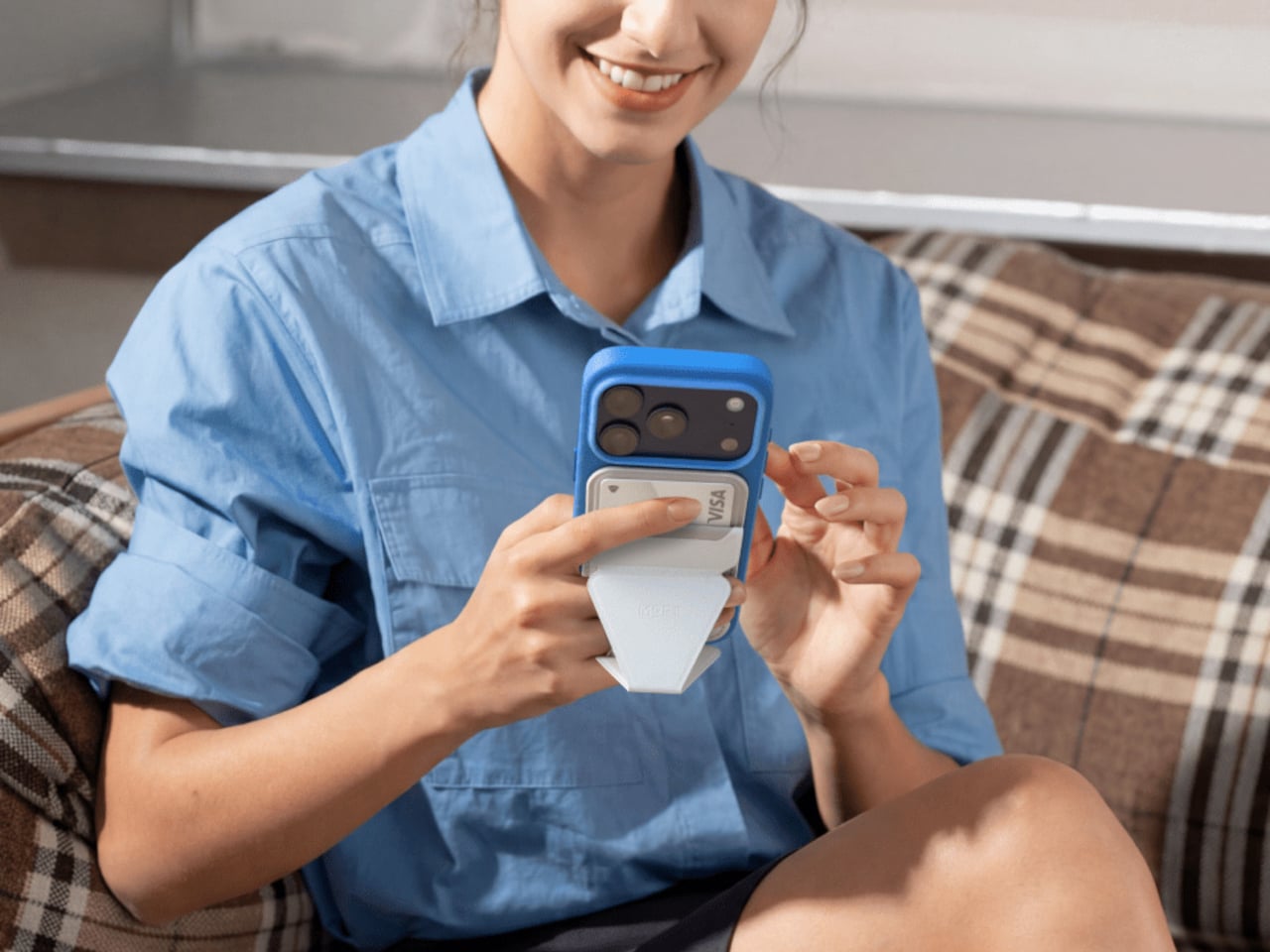
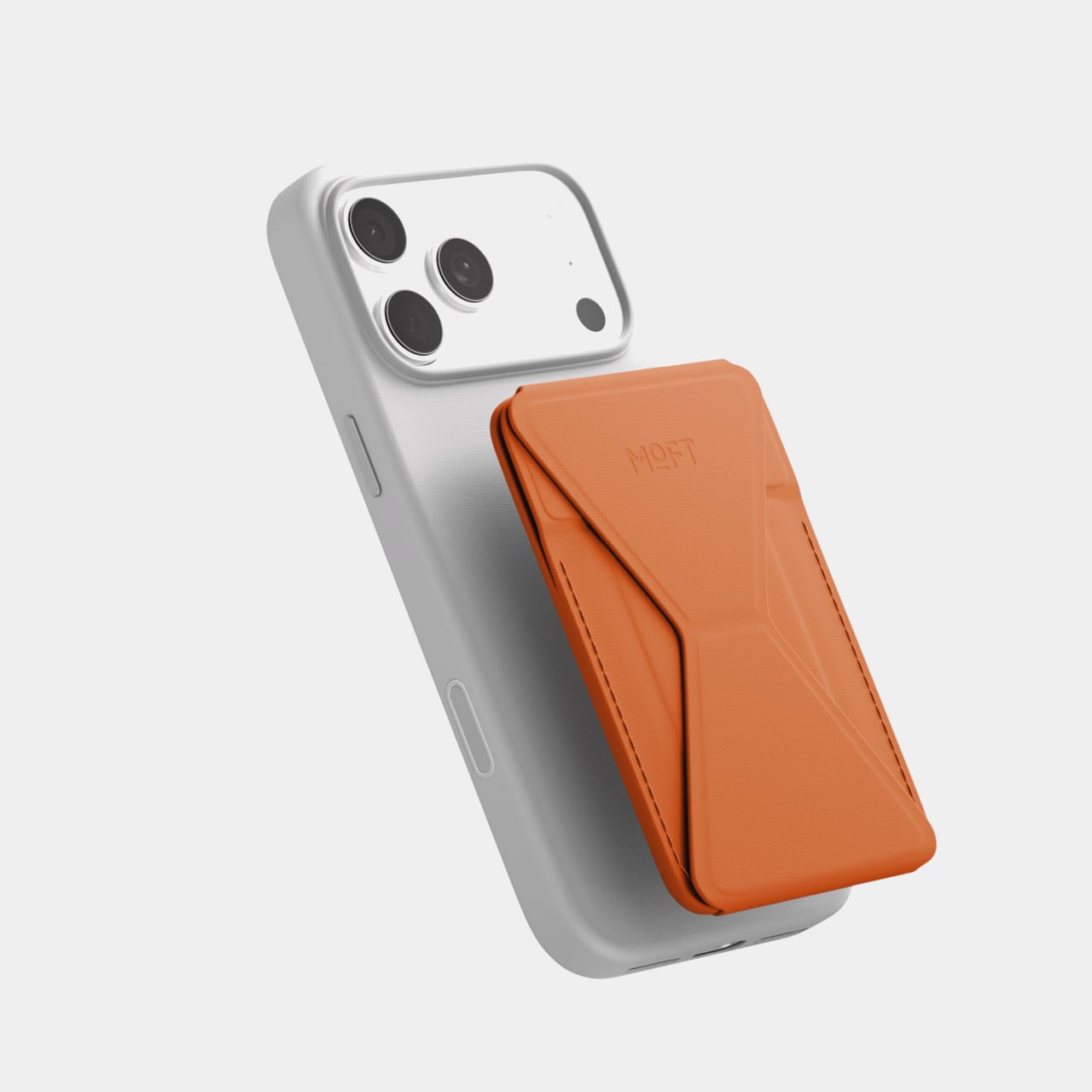
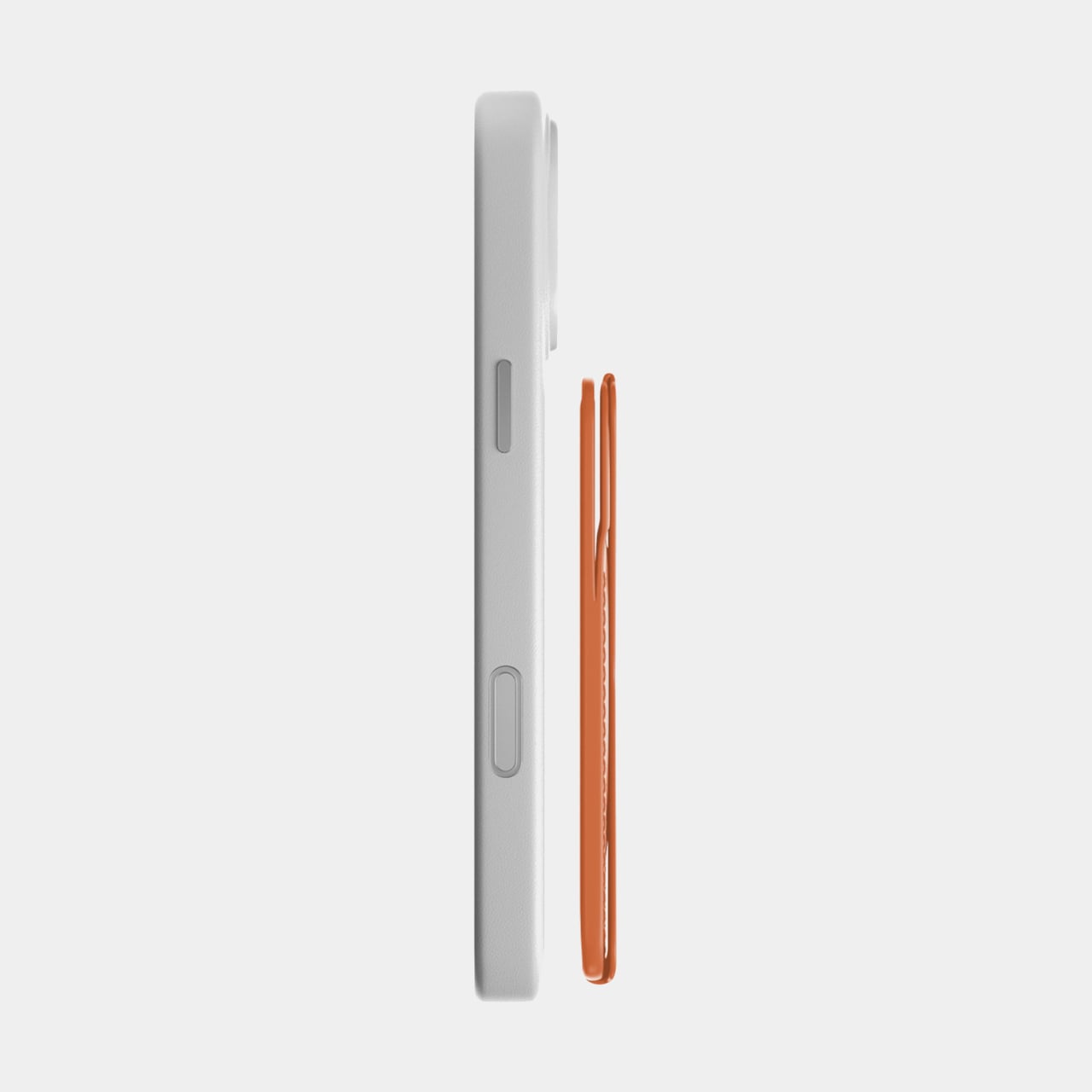
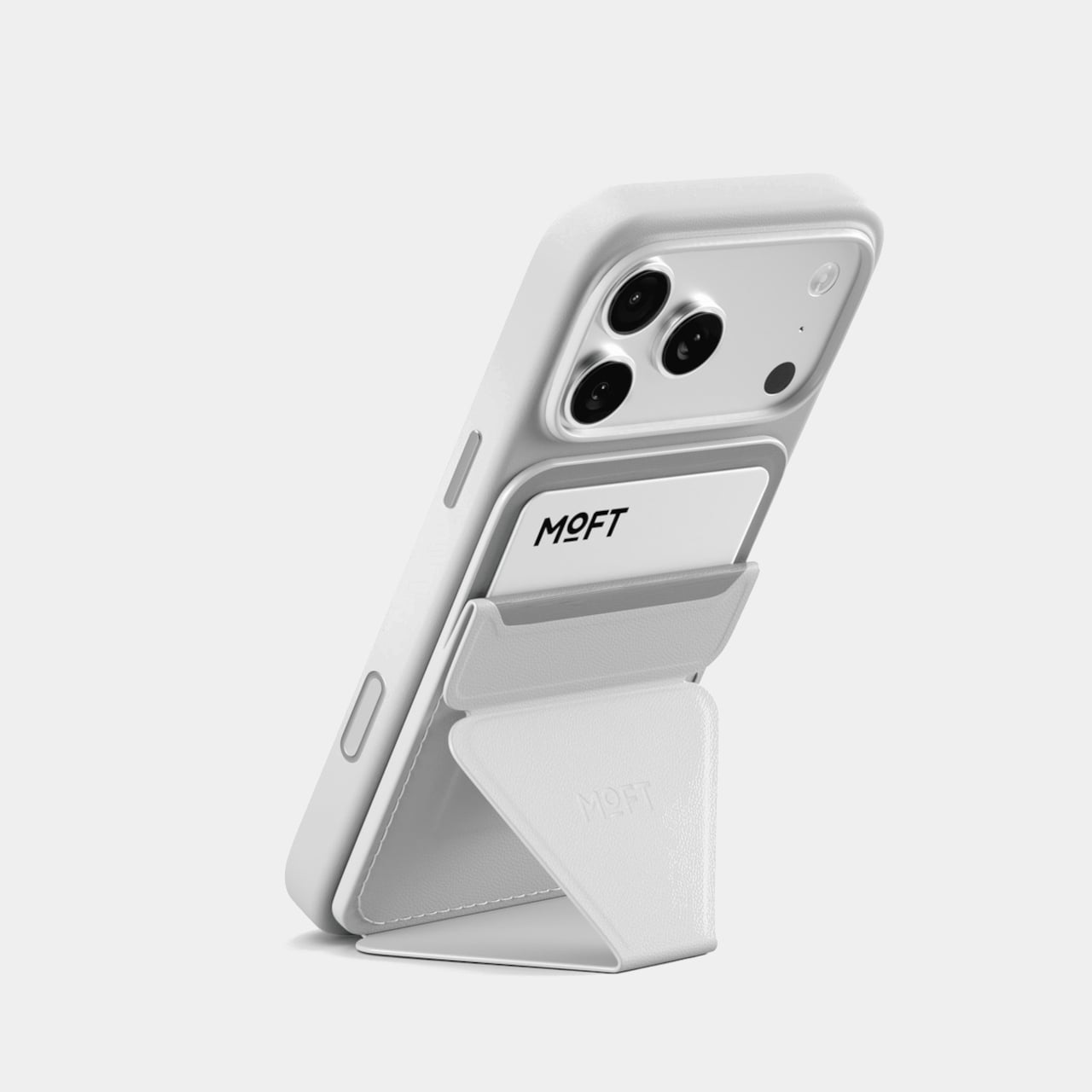
The Trackable Snap-on Phone Stand & Wallet is Moft’s thinnest design yet, just 0.25 inches thick and about the size of a credit card, managing to be a wallet, stand, and grip in one. It snaps onto a MagSafe-compatible iPhone, holds up to two cards, folds into three viewing modes, and quietly adds Apple Find My support so it shows up in the same app as your AirPods and trackers.
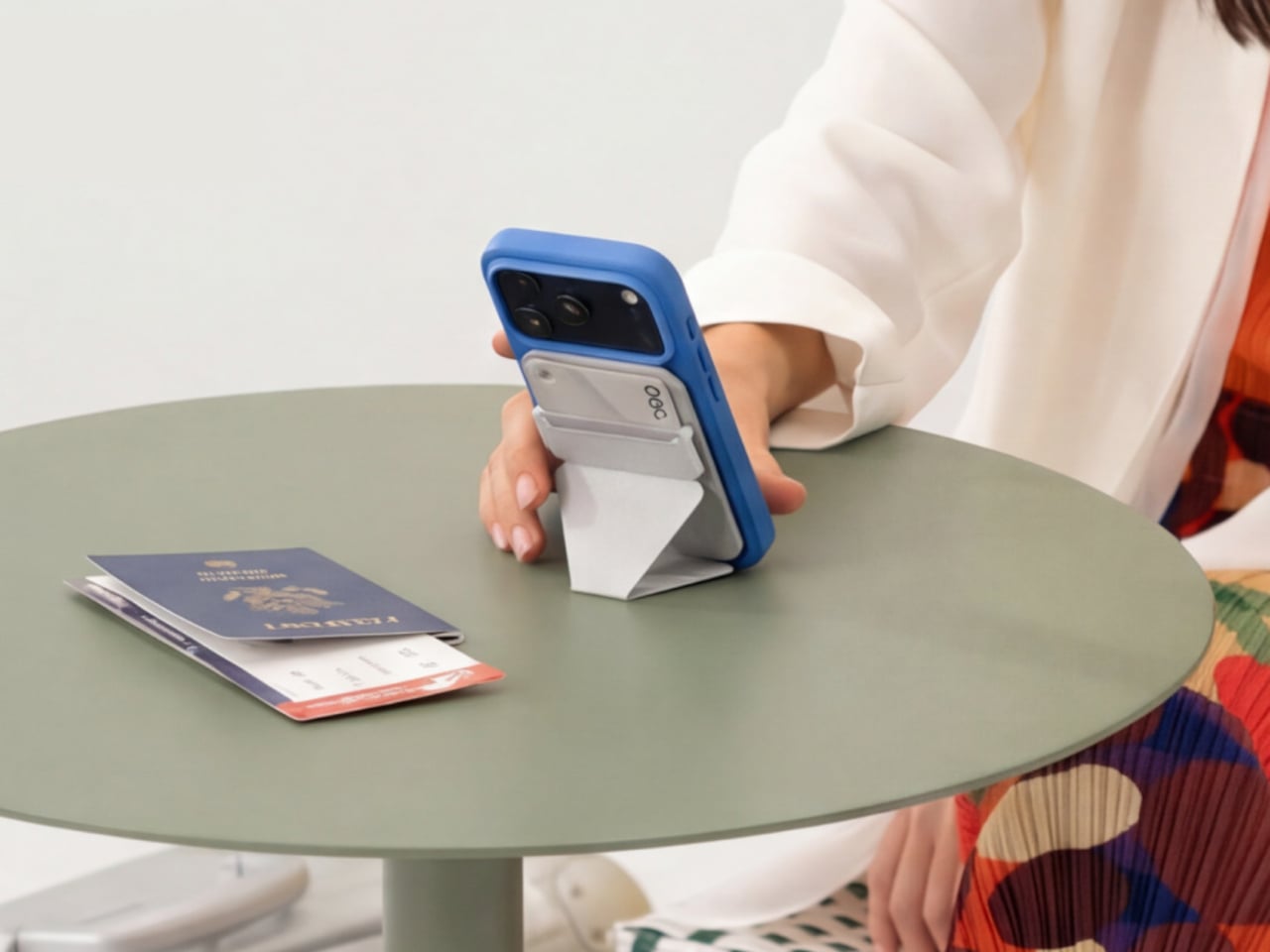
On a commute or a day at a café, the wallet is just there on the back of the phone. On the train, you flip it into portrait mode to read, at a desk you switch to landscape for a video, and during a call you use floating mode to prop the screen higher. Walking, the folded panel becomes a comfortable grip, making the phone feel more secure without adding a bulky case.
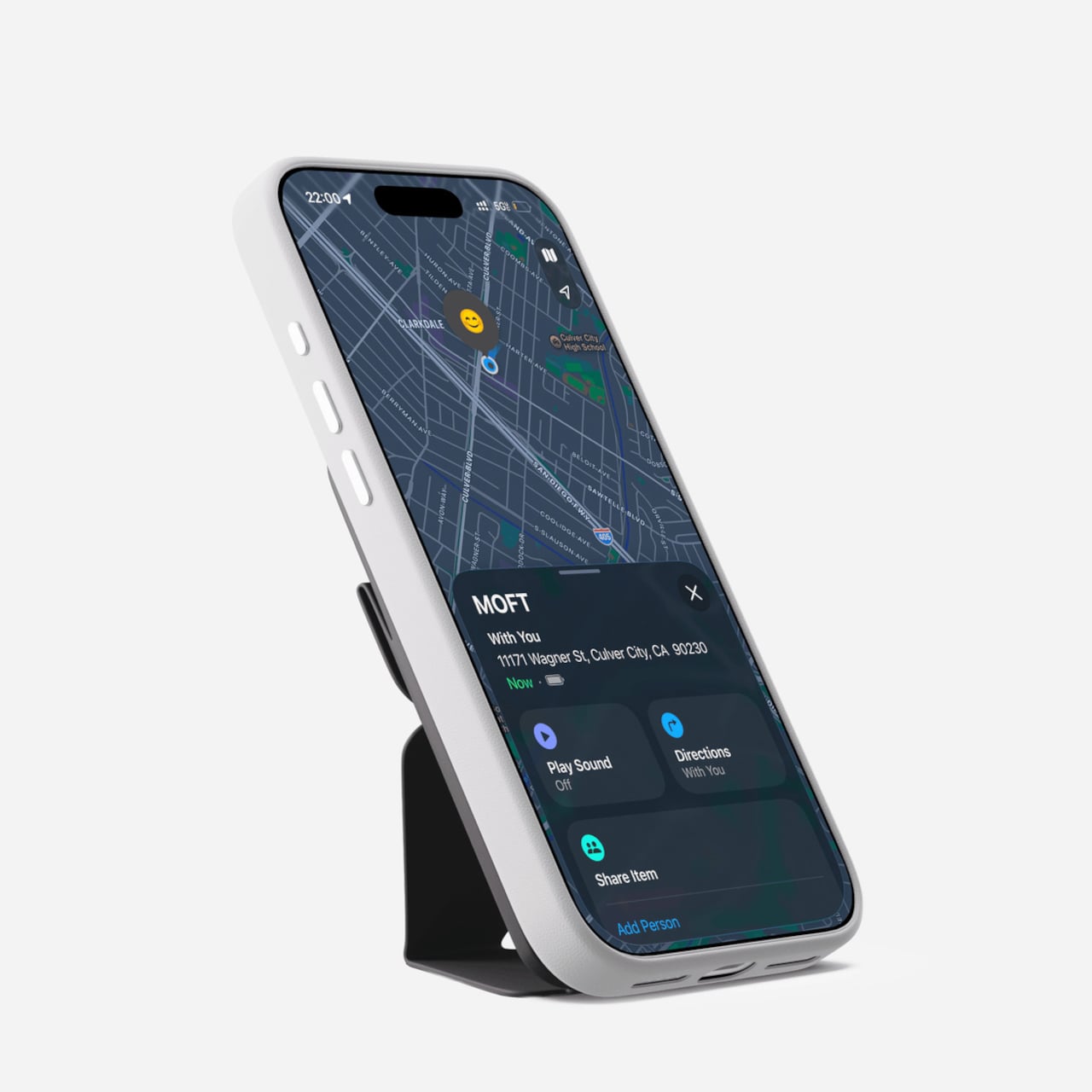
Realizing the phone-wallet stack is not where you thought it was means opening the Find My app to see its last location, triggering a 70dB alert to find it in a messy room, or relying on the Find My network if it is truly out in the world. The tracker runs for about six months on a wireless charge, and the app shows battery level, so it does not quietly die.
The magnets are tuned to around 15N of snap force, strong enough to trust when using it as a stand or grip. Because it is MagSafe-ready, you can snap a charger onto the back without dismantling your setup. The 0.25-inch profile and 62g weight mean it does not turn the phone into a brick, which matters if you are sliding it into a pocket or small bag.
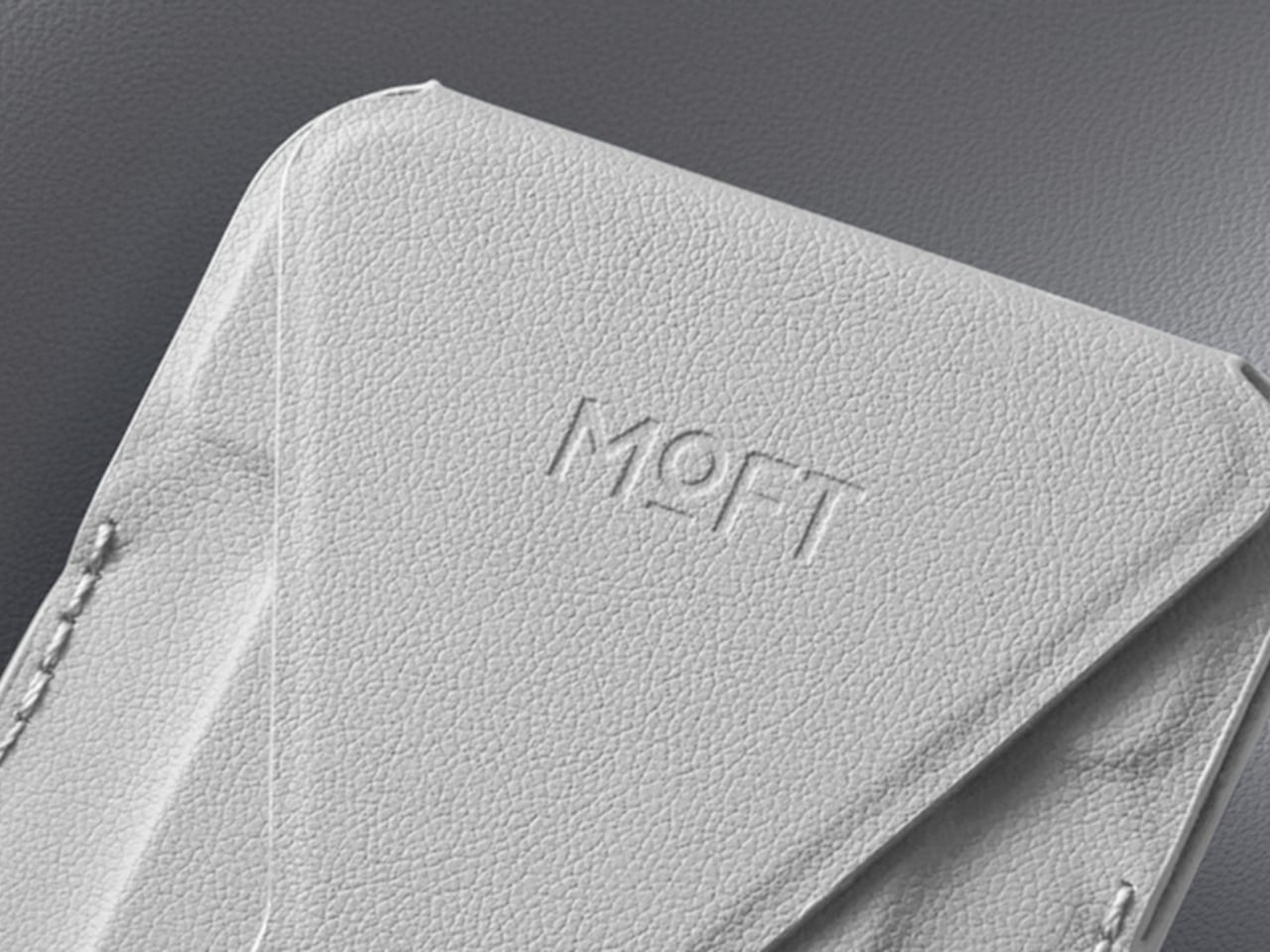
The outer shell uses Moft’s MOVAS vegan leather with high stain resistance and color retention, handling coffee tables and travel without looking tired. Underneath are fiberglass, magnets, metal sheets, and a compact PCB. It comes in four colors that pair with Moft’s Snap Case line, so you can build a coordinated stack or mix tones for contrast without losing the clean geometry.
This is not a brand-new category. It’s a quiet upgrade to something many people already use. By folding a tracker into a stand-wallet that was already thin and useful, Moft makes the everyday phone-back accessory into a little piece of insurance. It does not ask you to carry more, just to expect a bit more from what you are already carrying every time you walk out the door.
Is building a Steam Machine in 2026 a forward-thinking move for gamers or a nostalgic revival of a concept left behind? MW Technology explores how advancements in Linux gaming, paired with the latest hardware innovations, are breathing new life into the idea of these custom gaming systems. With Proton allowing smoother compatibility between Windows and […]
Apple is reportedly working on its first foldable iPhone, potentially named the iPhone Fold, marking a significant step in the evolution of the foldable smartphone market. Unlike many existing foldable devices that emphasize larger, square-like displays, Apple’s design is expected to feature a wider, rectangular screen. This approach could transform how users interact with foldable […]
What if you could build an AI system that not only retrieves information with pinpoint accuracy but also adapts dynamically to complex tasks? Below, The AI Automators breaks down how to create a full-stack Retrieval-Augmented Generation (RAG) application in a detailed YouTube video, offering a step-by-step approach to mastering this innovative technology. With eight carefully […]
What if there were a way to customize your keyboard that surpasses even the most popular options available today? Below, Better Stack takes you through how Kanata, an open source software, reshapes the landscape of keyboard remapping and personalization. Unlike hardware-reliant systems like QMK firmware or macOS-specific solutions such as Karabiner Elements, Kanata operates entirely […]
Apple has released the new Apple Creator Studio, a comprehensive suite of creative tools aimed at empowering independent creators. This bundle, available exclusively for Mac and iPad users, integrates enhanced versions of Final Cut Pro, Logic Pro, and other Apple apps, alongside the inclusion of Pixelmator Pro. With its competitive pricing and features tailored for […]
Apple still hasn’t confirmed a foldable iPhone, and the company’s latest round of product announcements didn’t change that. Apple launched several new devices last week, but there was still no mention of a folding iPhone. Even so, the steady stream of leaks and analyst reports hasn’t slowed. Over the past few months, supply-chain sources and leakers have continued to sketch out Apple’s possible plans, with most signs still pointing to a launch in the second half of 2026.
As with any unannounced Apple hardware, plenty could shift before anything ships. Features can be revised, timelines can move and some ideas may never make it beyond internal testing. Even so, the growing consistency across recent reports offers a clearer picture of how the so-called iPhone Fold might take shape and where it could land in Apple’s lineup.
Below, we’ve rounded up the most credible rumors so far, and we’ll keep this guide updated as new details emerge.
When could the iPhone Fold launch?
Rumors of a foldable iPhone date back as far as 2017, but more recent reporting suggests Apple has finally locked onto a realistic window. Most sources now point to fall 2026, likely alongside the iPhone 18 lineup, with some supply-chain hints suggesting mass production could begin in mid-2026 if development stays on track.
Some reports still claim the project could slip into 2027 if Apple runs into manufacturing or durability issues, particularly around the hinge or display. Given Apple’s history of delaying products that it feels aren’t ready, that remains a real possibility.
What will the iPhone Fold look like?
Current consensus suggests Apple has settled on a book-style foldable design, similar to Samsung’s Galaxy Z Fold series, rather than a clamshell flip phone.
When unfolded, the iPhone Fold is expected to resemble a small tablet like the iPad mini (8.3 inches). Based on the rumor mill, though, the iPhone Fold may be a touch smaller, with an internal display measuring around 7.7 to 7.8 inches. When closed, it should function like a conventional smartphone, with an outer display in the 5.5-inch range.
CAD leaks and alleged case-maker molds suggest the device may be shorter and wider than a standard iPhone when folded, creating a squarer footprint that better matches the aspect ratio of the inner display. New images shared by leaker Sonny Dickson appear to back up that general design direction. The CAD files show what looks like a book-style foldable with a camera plateau similar to the iPhone Air, though with two rear cameras instead of one. The renders also suggest a layout with a punch-hole front camera on the inner display and squared-off edges near the hinge, which would be consistent with earlier reports about the device’s overall form factor.
If that theory holds, it could help explain the Fold’s rumored dimensions. Thickness is expected to land around 4.5 to 4.8mm when unfolded, according to analyst Ming-Chi Kuo, putting it in a similar range to the iPhone Air, and roughly 9 to 9.5mm when folded, depending on the final hinge design and internal layering.
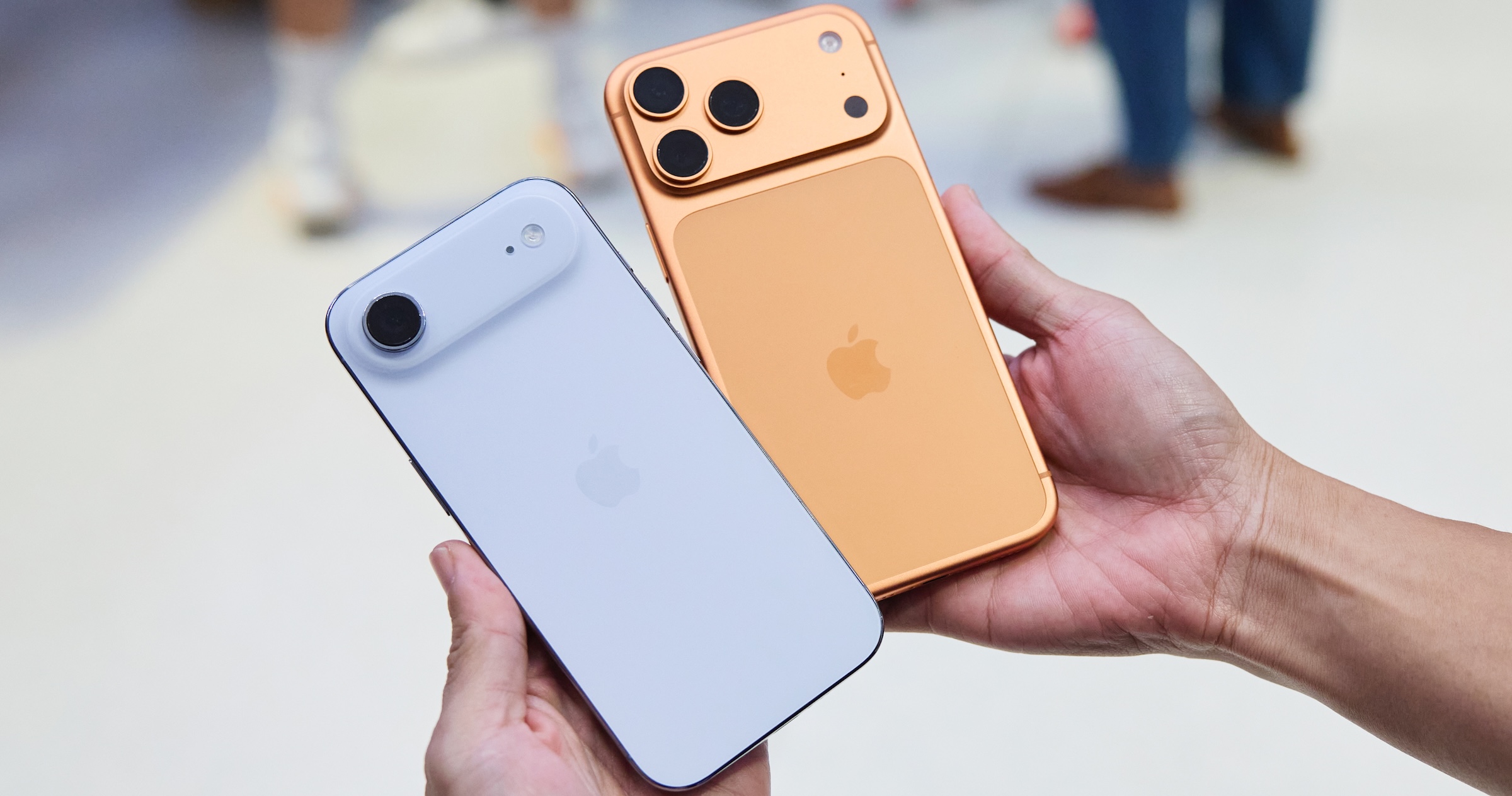
iPhone 17 Pro, iPhone Air
Engadget
Display and the crease question
The display is arguably the biggest challenge for any foldable phone, and it’s an area where Apple appears to have invested years of development.
According to these reports, the panel combines a flexible OLED with a laser-drilled metal support plate that disperses stress when folding. The goal is a display with a nearly invisible crease, something Apple reportedly considers essential before entering the foldable market.
If Apple does use this panel, it would mark a notable improvement over current foldables, which still show visible creasing under certain lighting conditions.
Cameras and biometrics
Camera rumors suggest Apple is planning a four-camera setup. That may include:
Two rear cameras (main and ultra-wide, both rumored at 48MP)
One punch-hole camera on the outer display
One under-display camera on the inner screen
Several sources claim Apple will avoid Face ID entirely on the iPhone Fold. Instead, it’s expected to rely on Touch ID built into the power button, similar to recent iPad models. This would allow Apple to keep both displays free of notches or Dynamic Island cutouts.
Under-display camera technology has historically produced lower image quality, but a rumored 24MP sensor would be a significant step up compared to existing foldables, which typically use much lower-resolution sensors.
iPhone Fold’s hinge and materials
The hinge is another area where Apple may diverge from competitors. Multiple reports claim Apple will use Liquidmetal, which is a long-standing trade name for a metallic glass alloy the company has previously used in smaller components. While often referred to as “liquid metal” or “Liquid Metal” in reports, Liquidmetal is the branding Apple has historically associated with the material.
Liquidmetal is said to be stronger and more resistant to deformation than titanium, while remaining relatively lightweight. If accurate, this could help improve long-term durability and reduce wear on the foldable display.
Leaks from Jon Prosser also reference a metal plate beneath the display that works in tandem with the hinge to minimize creasing — a claim that aligns with reporting from Korean and Chinese supply-chain sources.
Battery and other components
Battery life is another potential differentiator. According to Ming-Chi Kuo and multiple Asian supply-chain reports, Apple is testing high-density battery cells in the 5,000 to 5,800mAh range.
That would make it the largest battery ever used in an iPhone, and competitive with (or larger than) batteries in current Android foldables. The device is also expected to use a future A-series chip and Apple’s in-house modem, with some reports pointing specifically to a next-generation C2 modem as part of Apple’s broader push to reduce reliance on Qualcomm.
Pixel 10 Pro Fold
Sam Rutherford for Engadget
Interface
With the extra screen real estate the iPhone Fold could have while open, software will naturally need to adapt. Bloomberg reports Apple will do that (and encourage developers to do the same) by offering a software interface that’s similar to iPadOS. Apps on the iPhone Fold will offer “iPad-like layouts” with “sidebars along the left edge of the screen,” allowing them to display more information and controls at once.
Despite borrowing interface elements from the iPad, however, Apple’s foldable reportedly won’t run iPadOS or offer the windowed multitasking of the company’s tablets. Instead the iPhone Fold will display apps in splitscreen, in a similar way to foldables like Google’s Pixel 10 Pro Fold.
Estimates currently place the price between $2,000 and $2,500 in the US. Bloomberg has said the price will be “at least $2,000,” while other analysts have narrowed the likely range to around $2,100 and $2,300. That positions the iPhone Fold well above the iPhone Pro Max and closer to Apple’s high-end Macs and iPads.
Despite years of rumors, there’s still plenty that remains unclear. Apple hasn’t confirmed the name “iPhone Fold,” final dimensions, software features or how iOS would adapt to a folding form factor. Durability, repairability and long-term reliability are also open questions. For now, the safest assumption is that Apple is taking its time and that many of these details could still change before launch.
Update, March 11, 5:34PM ET: Added details about the iPhone Fold’s software interface.
This article originally appeared on Engadget at https://www.engadget.com/mobile/smartphones/iphone-fold-rumors-everything-we-know-right-now-including-the-leaked-design-upgrades-price-and-more-130000733.html?src=rss
Sony A7 series camera launches are eagerly anticipated by camera lovers, as those models are typically a showcase for the company’s latest imaging tech. The new A7 V is a great example of that: it’s equipped with Sony's new 33-megapixel partially-stacked sensor — the most advanced in any midrange full-frame mirrorless model.
The A7 V’s resolution is higher than rivals like Panasonic’s S1 II and the Nikon Z6 III in this category while matching Canon’s R6 III. However, Sony trumps the latter with a faster sensor that promises lower rolling shutter distortion in electronic mode. Sony also boasts that it offers the highest dynamic range of any of its cameras to date.
Unlike Canon with the R6 III, Sony didn’t bend over backwards to accommodate creators, though. Video resolution is limited to 4K, and the A7 V lacks any RAW video capability, compared to 7K and RAW for Canon’s latest model. All of that means the A7 V may be great for some buyers, but fall short for others.
Design and handling
Like other recent Sony cameras, I didn’t find the A7 V comfortable to hold for long periods of time. That’s because the grip, while deep, is a bit short and too small for large hands. At the same time, it has harder exterior materials than Canon’s cameras and is a bit heavier than the A7 IV at 1.53 pounds (698 grams) compared to 1.45 pounds (653 grams) for its predecessor.
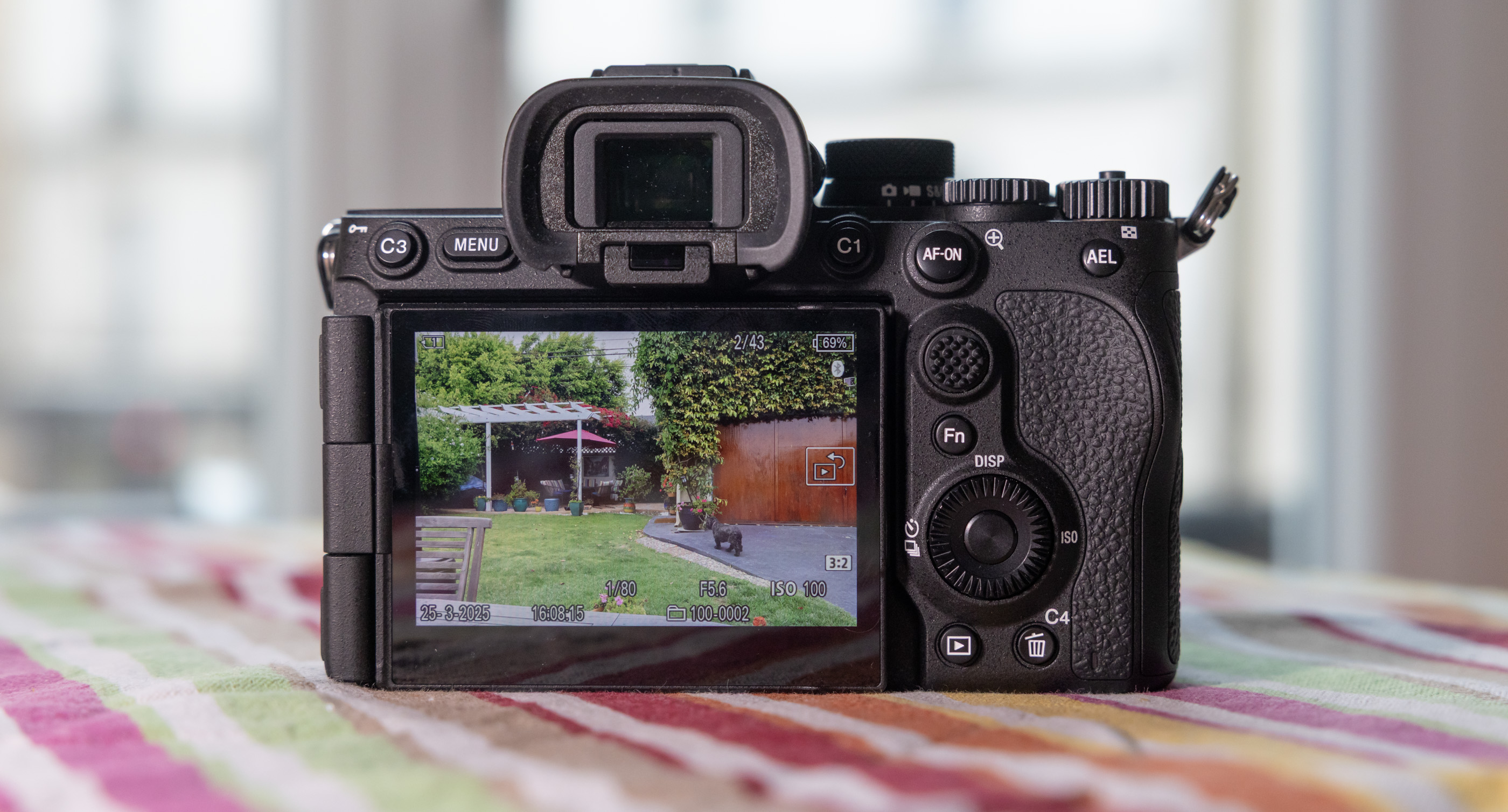
The handling makes up for the lack of comfort, though. It has two dials for the primary controls (shutter speed and aperture), along with a third for exposure compensation. There’s a dual dial with a shooting mode on top and video/photo/S&Q below, plus a rear joystick, rear dial and nine buttons. The main controls fell nicely to my hands, which made camera control a cinch.
The A7 V has the same well-organized menu system as other recent Sony models and it's easy to customize dials, buttons and quick menus to your liking. Overall, Sony’s menus are now among the best, and functions are easier to access than on Canon’s R6 III, for example.
The 3.69-million dot EVF display is relatively sharp and on par with the R6 III, but falls short of 5.76-million-dot EVF on the significantly cheaper Nikon Z6 III. The 3.2-inch rear display fully articulates as before, but it also tilts now, so I was able to easily shoot from high and low angles. It’s also slightly bigger and has 2.1 million dots, up from 1.65 million dots on the A7 IV.
The A7 V has a dual-slot card system with two SD UHS II slots and a faster CFexpress Type A slot. However, Type A CFexpress cards are less than half as fast as the CFexpress B cards used in other cameras. The A7 V includes a full-sized HDMI port for external display, 3.5mm mic and headphone ports, and two USB-C ports — one for charging and one for 10Gbps data transfers. Battery life is decent with up to 630 shots on a charge or 100 minutes of continuous 4K 30 fps capture. The camera isn’t constrained much by temperature limits, as I was able to shoot 4K 30p video for 90 minutes straight with no issues.
Performance
The 33MP partially-stacked sensor has made a big difference in the A7 V’s speed and autofocus accuracy. It can now hit 30 fps blackout-free RAW burst speeds with the electronic shutter (with autofocus and auto exposure enabled), compared to an anemic 10 fps with the A7 IV. That makes it a surprisingly good choice for sports and wildlife photography, or just shooting fast-moving kids or pets. Speeds drop to 10 fps in mechanical shutter mode, which is on par for this category.
ISO 6400, f/2.8, 1/40th
Steve Dent for Engadget
Rolling shutter distortion is only an issue when shooting super fast subjects like airplane propellers or golf swings. And unlike Canon’s R6 III and other rivals, the A7 V maintains full 14-bit RAW quality during electronic shutter bursts instead of dropping to 12-bit RAW, which allows for higher dynamic range.
As you’d expect with Sony, autofocus is fast and extremely accurate, delivering the best in-focus hit rate of any camera in this price range. When tracking moving subjects like bikes, birds or kids, I rarely saw a blurry shot. This applied even in tricky lighting and chaotic situations with multiple subjects. The A7 V also nailed auto exposure and auto white balance, even when I shot at dusk with a mix of indoor and outdoor lighting.
Sony’s latest AI features make it easy to track nearly anything. Face, eye and body tracking are supported for people, and you can also follow animals, birds, insects, cars, trains and airplanes. The AI has been trained to track people in any position, even if they’re partially obscured or disappear in the frame. This proved to be convenient when I shot street photos in crowds with a specific subject in mind.
This does bring up one sore point with the A7 V. When using third-party lenses, the burst rate speeds drop from 30 fps to 15 fps. In addition, you may not be able to use some lenses at all in AF-C (continuous) mode without applying a firmware update.
In-body stabilization is improved significantly over the A7 IV from 5.5 to 7.5 stops with compatible lenses, but falls short of all rivals that hit at least eight stops. Still, I was comfortably able to shoot at shutter speeds as low as a half second handheld without any camera blur.
Image quality
Photo quality is where the A7 V shines. Dynamic range is superior to rival cameras, both in the real world and specialized testing. This is due to Sony’s latest dual gain output tech that combines two ISO levels at once integrated with the new 33MP partially-stacked sensor (when using the mechanical shutter).
I noticed this when taking photos at twilight in several of Paris’ squares. After shooting a statue against a bright sky, I was able to extract noise-free shadow detail from RAW files and easily adjust bright areas. When shooting ducks in water that reflected a bright sky, I saw similarly high levels of detail in both dark and bright picture areas. There is one thing to keep in mind, though: As Photons to Photos noted, there’s a slight drop in dynamic range below ISO 1,000 when using the electronic shutter.
Should you need even more detail and dynamic range, Sony’s new Composite RAW feature that’s borrowed from the A9 III combines four, eight, 16, or 32 RAW images to reduce noise and improve image quality. I used it to photograph some high-contrast scenes on a sunny Paris day and it dramatically reduced noise, but isn’t a good option for moving subjects.
Sony's A7 V has plenty of manual controls for easy operation
Steve Dent for Engadget
JPEGs look great straight out of the camera with excellent detail, though noise reduction can be a bit excessive at high ISOs. Sony’s color science has improved over the last model, so colors are accurate and the magenta-hue issues seem to be largely resolved. However,I still find Canon’s cameras capture more accurate skin tones.
The A7 V is a low-light marvel, with relatively noise-free photos all the way up to ISO 12,800 and usable shots at ISO 25,600. What’s remarkable is that the A7 V beats all its 24MP rivals in this regard, despite the nearly 50 percent higher resolution.
Sony added a new “Compressed RAW HQ” mode with the A7 V, designed to deliver better compressed RAW quality while keeping files smaller than “Lossless RAW.” Note that this new mode is not currently supported by Adobe Lightroom, so I’d avoid using it for now.
Video
Sony's A7 V can take sharp video but doesn't stand up against rivals.
Sony
Two or three years ago, the A7 V would have been fine for video but not in 2026. While all its rivals are embracing internal RAW video at 6K or 7K, Sony is sticking with 10-bit 4K MP4 at up to 60 fps, or 4K 120 with an APS-C crop. The video is oversampled from a 7K sensor size so it’s very sharp though, and S-Log3 is available to boost dynamic range.
Sony likely thinks that creators using this camera will mostly shoot 4K MP4 (as I do), so it didn’t feel that RAW was a must. However, users who do need the benefits of RAW — like minimal degradation when editing, flexible white balance and improved dynamic range — can’t even do external RAW capture. The 4K max resolution and lack of open gate 3:2 is also a downside for creators who like to reframe shots in post or output to social media.
With that all said, you can capture high-quality 10-bit 4K 60 fps video with the A7 V. The S-Log3 Cine/S-Log 3 option and high data rate 4:2:2 HS video provide flexibility in post, letting you easily correct over- or under-exposed video or tweak colors. As with photos, color accuracy is nearly on par with Panasonic and other rivals. Shooting in low-light is a breeze, especially when you know that noise levels will be minimal even at high ISO speeds.
Sony has some extra video tricks like focus breathing compensation that eliminates zooming when focusing from a near to a far subject. And the A7 V comes with a new AI Auto Framing mode, which recognizes and crops in on humans, keeping them centered in the frame. I was able to keep subjects centered (while stabilizing the shot) as long as I didn’t move the camera excessively.
Autofocus is just as excellent for video as photos, with the same level of speed and accuracy. AI-powered autofocus supports all the same modes (people, animals, etc.) and usually nails focus of human or animal eyes, like when I captured footage of some ducks and dogs.
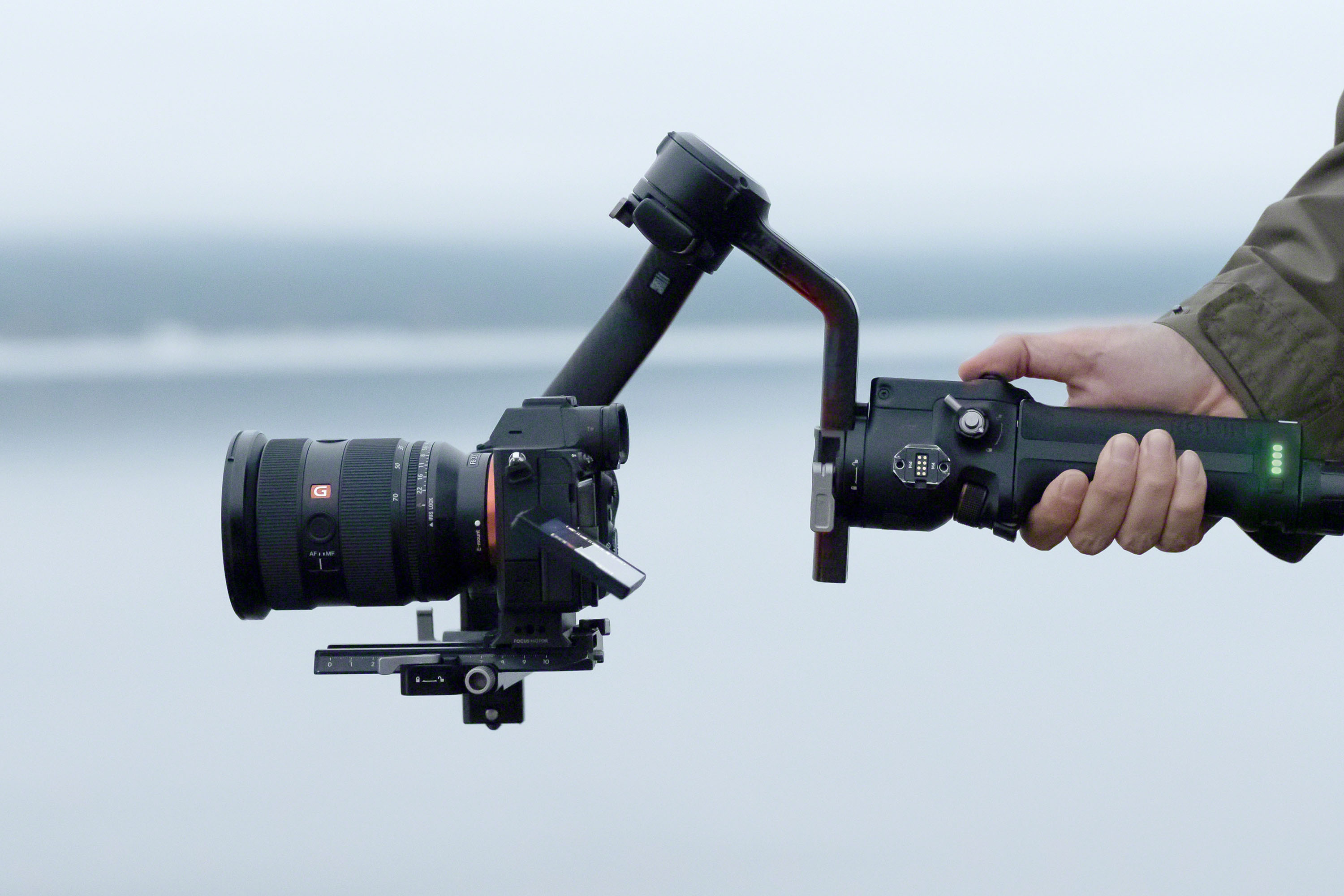
Video stabilization is also very good, just behind Panasonic’s S1 II and ahead of the Canon R6 III. In regular optical-only mode, it removes shaking from handheld video without too much movement. When you engage the “Active” mode, it adds electronic stabilization with a small crop for panning or tilting, and “Dynamic Active” lets you walk with surprisingly smooth results. Rolling shutter is rarely an issue for most types of shooting, including walking, unless you really whip the camera around. The lack of rolling shutter skew also makes it easier to apply stabilization in post with Adobe Premiere or DaVinci Resolve.
Wrap-up
ISO 800, f/2.8, 1/500th
Steve Dent for Engadget
The A7 V is an incredible camera for photography, with speeds, autofocus accuracy and image quality ahead of rivals, including the Canon R6 III, Panasonic S1 II and Nikon Z6 III.However, Sony isn’t keeping up with those models for video. The A7 V is missing RAW, native resolution and open gate capture, all of which can be found on the aforementioned cameras. That makes it hard to recommend for serious video users or creators who use full-frame open gate to export high-quality vertical video.
There’s one intangible, though. I enjoyed taking pictures with the A7 V more than other cameras I’ve tested lately because of the AF accuracy and image results. For anyone who wants a fast, reliable and easy-to-use camera for photography, I can’t recommend it enough. For video creators, though, I’d look at Canon’s R6 III, the Panasonic S1 II, or if you’re on a budget, Nikon’s Z6 III.
This article originally appeared on Engadget at https://www.engadget.com/cameras/sony-a7-v-review-awesome-speed-and-photo-quality-130000592.html?src=rss
The Chinese government has given DeepSeek its approval to purchase NVIDIA’s H200 AI chips, according to Reuters. ByteDance, Alibaba and Tencent have also reportedly received permission from Beijing to buy a total of 400,000 H200 GPUs. Reuters says Chinese authorities are still finalizing the conditions they’re imposing on the companies to be able to proceed with their orders, so it may take a while before they’re able to receive their shipments. In addition, NVIDIA CEO Jensen Huang told reporters that his company has yet to receive orders from the aforementioned firms and that he believed China is still finalizing their licenses.
In December 2025, the US government allowed NVIDIA to sell its second-best H200 processors to vetted Chinese companies in addition to its H20 model in exchange for a 25 percent tariff on those sales. China previously dissuaded local companies from purchasing NVIDIA's H20 chips, but it recently agreed to import hundreds of thousands of H200 units after Huang’s visit to the country. While Chinese companies are striving to rely on local manufacturers, such as Huawei and Baidu, for AI chips, NVIDIA’s technology is still more advanced. The H200 is only second to NVIDIA’s B200 and is around six times more powerful than the H20.
China’s National Development and Reform Commission is the agency in charge of determining the conditions Chinese companies have to meet in order to buy H200 units. Stateside, DeepSeek’s purchase could lead to questions from authorities. As Reuters notes, a lawmaker has just accused NVIDIA of helping DeepSeek develop AI models that were subsequently used by the Chinese military.
This article originally appeared on Engadget at https://www.engadget.com/ai/deepseek-reportedly-gets-chinas-approval-to-buy-nvidias-h200-ai-chips-130000933.html?src=rss
Have you ever wondered how artificial intelligence could transform the way you work, from crafting stunning presentations to conducting large-scale research? In this walkthrough, Kevin Stratvert and team shows how Manus AI, a innovative productivity platform, can streamline complex tasks and elevate your workflow efficiency. With its ability to integrate seamlessly into widely used systems […]