Apple’s January Surprise: M5 Pro & M5 Max MacBook Pros Rumored for Jan 28 Launch

Apple’s January Surprise: M5 Pro & M5 Max MacBook Pros Rumored for Jan 28 Launch

Apple is reportedly preparing to launch the M5 Pro and M5 Max MacBook Pros in late January 2026, possibly on the 28th of January. This announcement follows the quiet release of the base M5 MacBook Pro in October 2025. The upcoming models are expected to introduce a modular chip design, allowing users to customize configurations […]

The post Apple’s January Surprise: M5 Pro & M5 Max MacBook Pros Rumored for Jan 28 Launch appeared first on Geeky Gadgets.

Posted in Uncategorized

Plan, Code, and Review in Parallel with Agents in Claude Code

Plan, Code, and Review in Parallel with Agents in Claude Code

What if you could manage complex projects with the precision of a symphony conductor, delegating tasks seamlessly while keeping the big picture in focus? Leon van Zyl walks through how Claude Code’s sub-agents are transforming workflows by breaking down intricate tasks into manageable, specialized components. Imagine assigning coding to one agent, design to another, and […]

The post Plan, Code, and Review in Parallel with Agents in Claude Code appeared first on Geeky Gadgets.

Posted in Uncategorized

The Magic of the Samsung Galaxy Z 5G Roll Revealed

The Magic of the Samsung Galaxy Z 5G Roll Revealed

Samsung is reportedly developing a new innovation in smartphone technology: the Galaxy Z Roll 5G. Expected to launch in 2026, this rollable smartphone could transform how you interact with mobile devices. Featuring advanced rollable display technology, high-performance hardware, and a sleek titanium design, the Galaxy Z Roll aims to set a new benchmark in the […]

The post The Magic of the Samsung Galaxy Z 5G Roll Revealed appeared first on Geeky Gadgets.

Posted in Uncategorized

Can Deep Ocean Underwater Membrane Filtration Provide Limitless Fresh Water

Can Deep Ocean Underwater Membrane Filtration Provide Limitless Fresh Water

What if the key to solving the world’s growing water crisis lies not on land but deep beneath the ocean’s surface? With millions of people lacking access to clean water and traditional desalination methods facing criticism for their high energy use and environmental harm, the search for sustainable solutions has never been more urgent. Two […]

The post Can Deep Ocean Underwater Membrane Filtration Provide Limitless Fresh Water appeared first on Geeky Gadgets.

Posted in Uncategorized

Can Deep Ocean Underwater Membrane Filtration Provide Limitless Fresh Water

Can Deep Ocean Underwater Membrane Filtration Provide Limitless Fresh Water

What if the key to solving the world’s growing water crisis lies not on land but deep beneath the ocean’s surface? With millions of people lacking access to clean water and traditional desalination methods facing criticism for their high energy use and environmental harm, the search for sustainable solutions has never been more urgent. Two […]

The post Can Deep Ocean Underwater Membrane Filtration Provide Limitless Fresh Water appeared first on Geeky Gadgets.

Posted in Uncategorized

Can Deep Ocean Underwater Membrane Filtration Provide Limitless Fresh Water

Can Deep Ocean Underwater Membrane Filtration Provide Limitless Fresh Water

What if the key to solving the world’s growing water crisis lies not on land but deep beneath the ocean’s surface? With millions of people lacking access to clean water and traditional desalination methods facing criticism for their high energy use and environmental harm, the search for sustainable solutions has never been more urgent. Two […]

The post Can Deep Ocean Underwater Membrane Filtration Provide Limitless Fresh Water appeared first on Geeky Gadgets.

Posted in Uncategorized

This $129 Titanium EDC Knife Has The Most Addictive Tiger-Claw Opening Mechanism

When the CRKT Provoke first appeared, its morphing mechanism felt like a revelation. The design, which borrowed its kinematics from the way a jungle cat’s claws extend from its paws, was a jolt of fresh energy for an EDC world growing tired of endless flippers and predictable OTF switchblades. TiGo’s SyncraBlade now takes that same philosophy of complex, purposeful motion and applies it to the humble utility knife, creating something that feels just as revolutionary. The parallel linkage system that deploys the blade isn’t just visual theater, though it certainly delivers on that front. It is a direct solution to the finger-in-the-way problem that every traditional folder presents.

Watching the SyncraBlade extend is like observing a miniature precision machine at work. Two articulated arms move in perfect synchronization, carrying the blade forward along dual rails while maintaining its orientation. The entire assembly is milled from titanium, with every pivot point and linkage visible through strategic cutouts in the handle. This transparency isn’t accidental; TiGo designed a tool that wears its mechanical complexity proudly, appealing to anyone who appreciates clever engineering as much as practical function. The fact that it uses standard replaceable razor blades only reinforces its credentials as a tool meant for serious, everyday use.

Designer: TiGo

Click Here to Buy Now: $129 $201 (36% off) Hurry! Only 70 of 100 left.
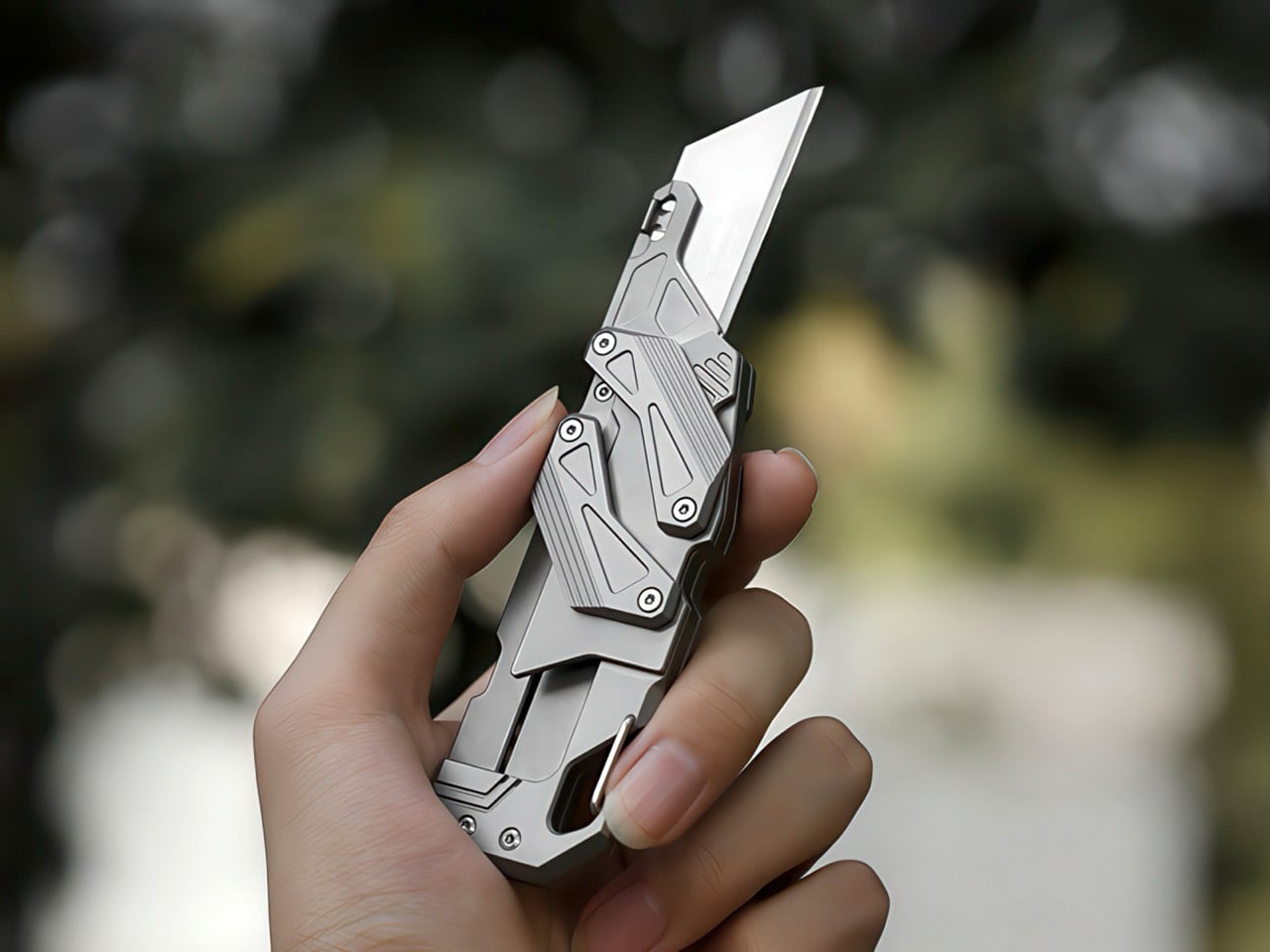
The mechanism itself is a classic four-bar parallel linkage, a system engineers have used for centuries in industrial machinery (although maker TiGo likes to call it their ‘SyncraSlide’ mechanism). The blade carrier slides forward on a set of internal rails, but its motion is driven by those two external articulating arms. This setup ensures the blade extends in a perfectly linear path, keeping the cutting edge safely away from your hand throughout the entire deployment. Single-handed operation is effortless, and because the blade never folds, there’s zero risk of it accidentally closing on your fingers. Basically, clever engineering that solves a safety issue while looking gorgeous and feeling absolutely addictive. Looking at it will remind you of how a cat’s claws deploy from within their paws. At this scale, the SyncraBlade is roughly the same size (and probably even caliber) as a tiger’s claws – which sounds about as badass as the knife is designed to be.

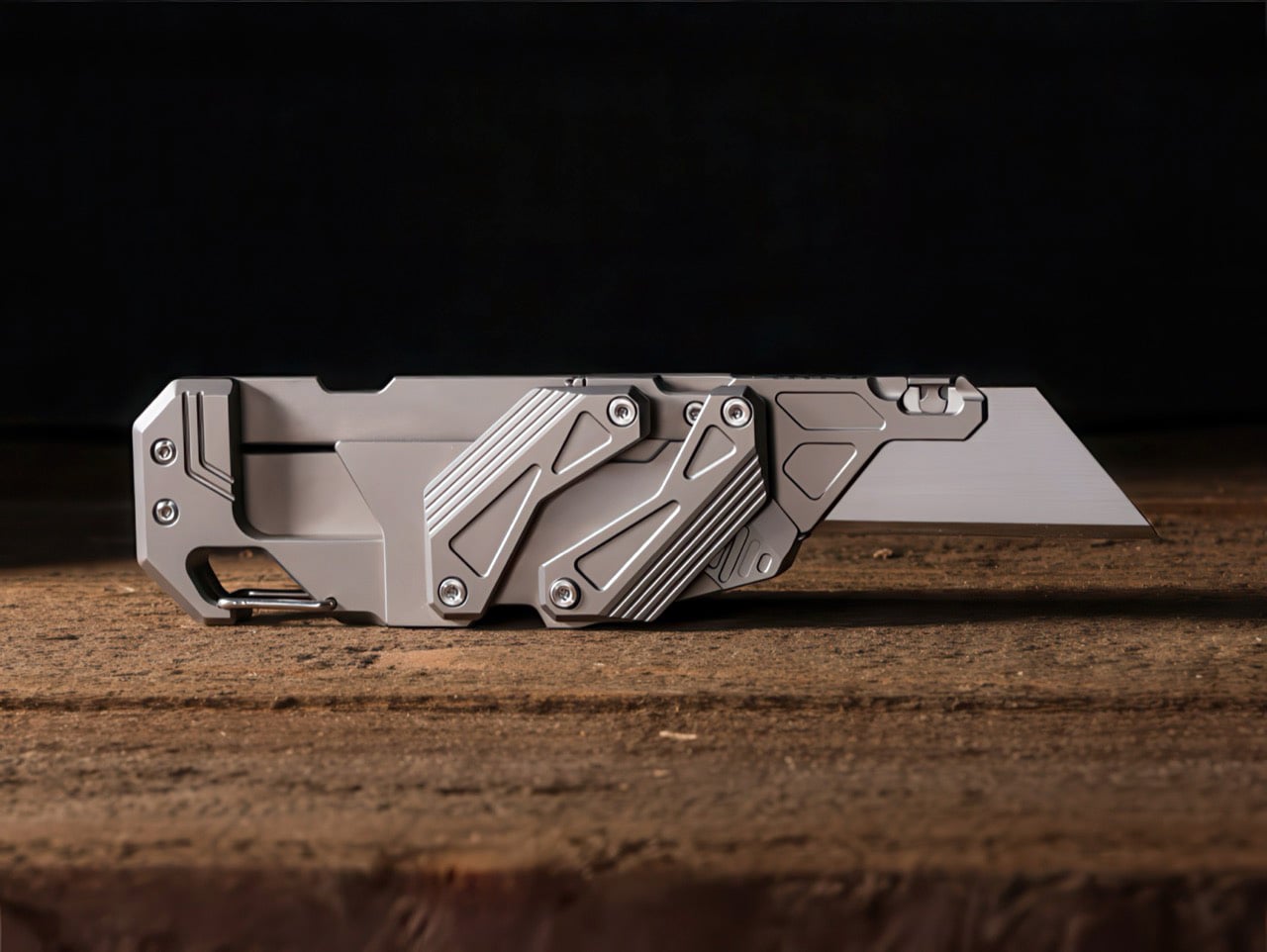
That entire intricate assembly is machined from Grade 5 titanium, which explains the sharp, angular lines and confident feel. This isn’t your standard stamped-metal utility cutter. The choice of Ti-6Al-4V gives it an incredible strength-to-weight ratio, so while it feels substantial, it won’t weigh down your pocket. Closed, it measures a compact 115mm long and weighs in at 118 grams, putting it right in the sweet spot for everyday carry. The bead-blasted finish gives it a subtle, non-reflective quality that highlights the milled textures on the handle and linkage arms. Every surface feels deliberate, designed for both aesthetic appeal and functional grip.
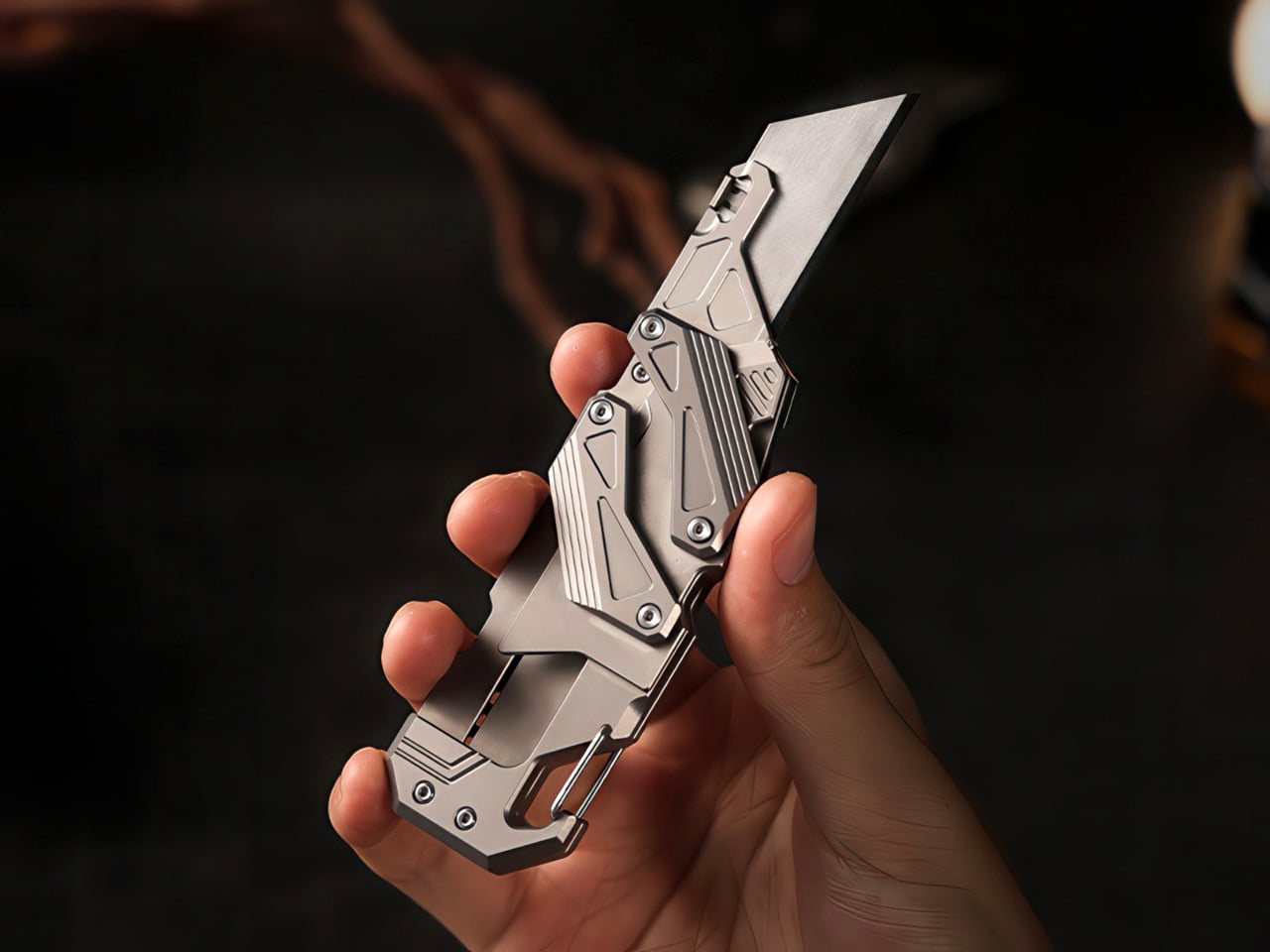
The titanium handle encases a cleverly integrated standard user-replaceable utility blade that’s both sharp and interchangeable, making it a perfect choice for brutal functionalists who hate the idea of ‘blade maintenance’. This completely sidesteps the hassle of sharpening and lets you maintain a factory-sharp edge with a simple swap. A fresh blade is always sharper and more precise than a hand-sharpened one, which is exactly what you want for delicate tasks like opening packages or trimming materials. The blade change mechanism appears straightforward, secured by a single screw, so you can pop in a new one in seconds without any specialized tools. It’s a practical decision that grounds the futuristic design in real-world usability.
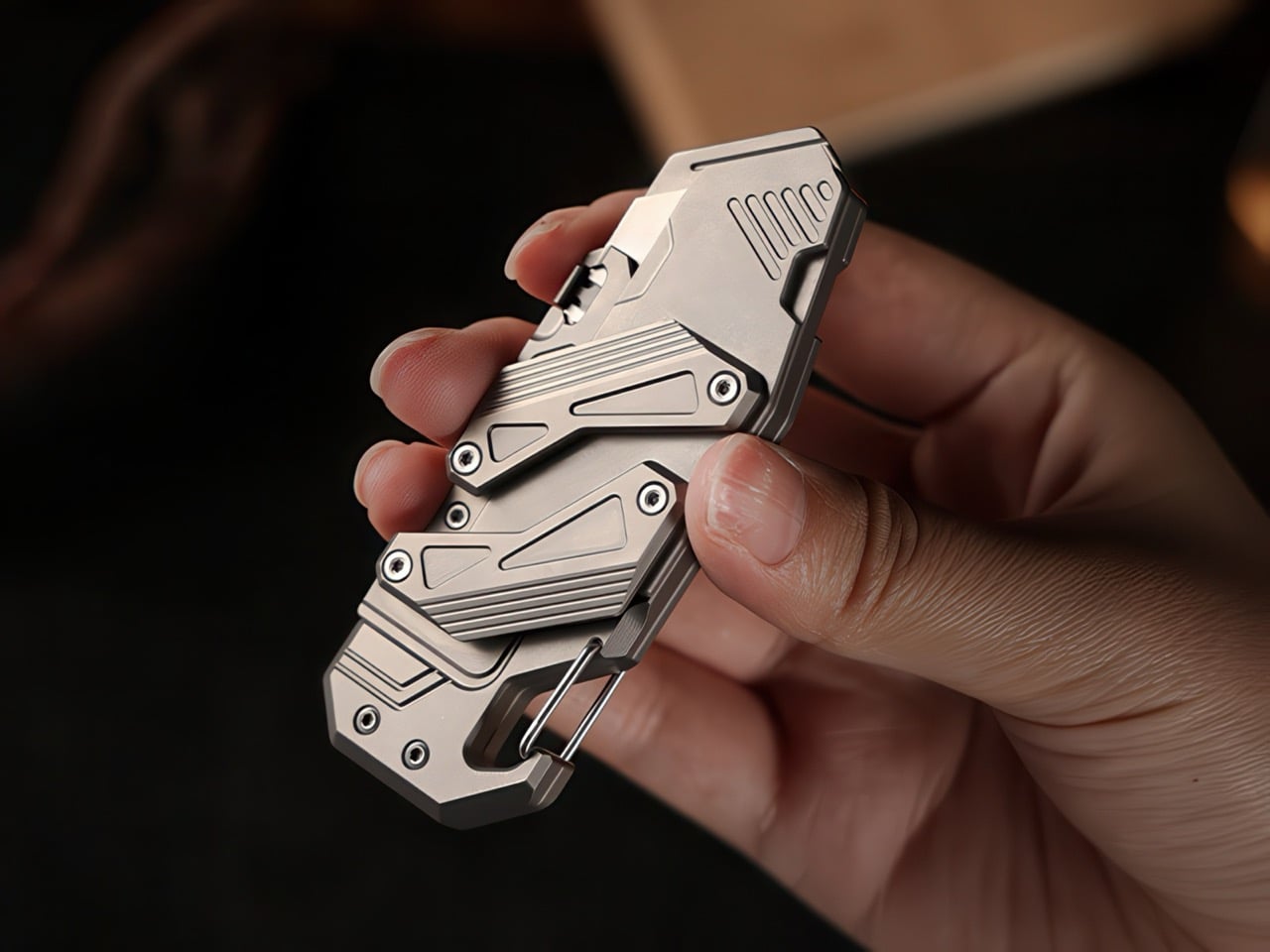
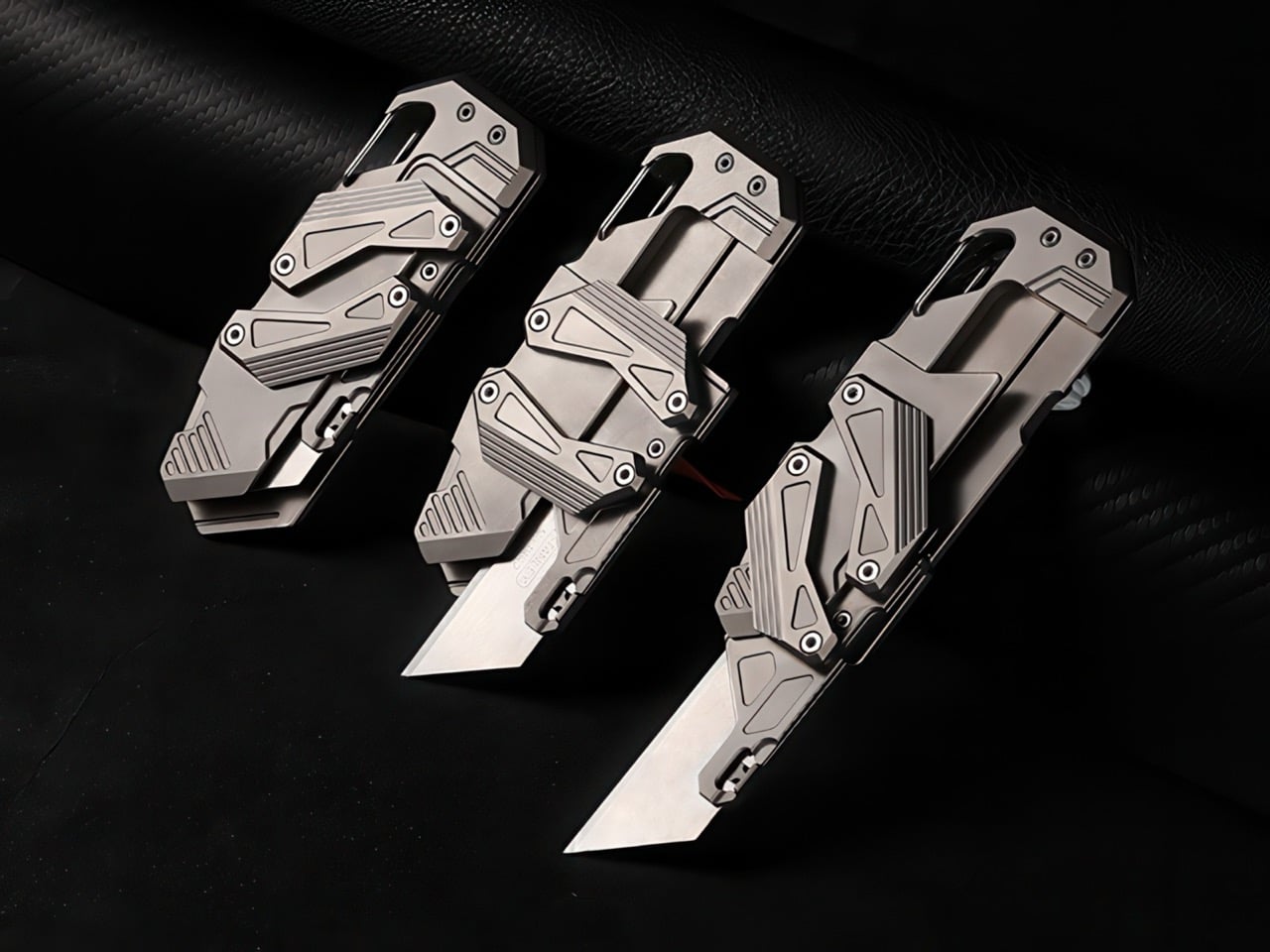
The way the blade ejects is visually addictive, sure. But it’s also safer than your average flipper. A flipper blade often uses a torsion spring, which causes the blade to arc out and stop in its open position. If there’s no spring-loaded action, the blade almost always requires two hands to open and close – or at best, one hand with a bit of a struggle. If you’ve ever pulled out a sofa-bed, you know that a well-made parallel linkage can be activated with just a single hand. The SyncraBlade encourages that level of ease, allowing you to both deploy as well as shut the blade with a single thumb-motion. This is also safer because the blade’s edge never really comes in the path of your hands. A folding blade’s curved path means you need to move your fingers out of the way while opening and closing the blade – the SyncraBlade’s parallel linkage eliminates that need entirely. Grip the knife exactly how you used to, the blade never comes in contact with your skin – making it reliable to deploy in the dark, or even in any situation without having to look down at your knife.

The functionality doesn’t stop with the blade. Tucked into the tail end of the handle is an integrated pry bar and a wire-gate carabiner clip. These aren’t afterthoughts; they’re seamlessly incorporated into the titanium body. The pry bar is robust enough for light-duty tasks that would destroy a knife tip, like scraping or opening paint cans. The carabiner provides a secure attachment point for a keychain or belt loop, making it easy to keep accessible. There’s even a hidden bottle opener integrated into the frame, making this tiny beast perfect for the outdoors, whether you’re camping, hunting, or dare I say, on a tactical mission.

All these features are packed into a frame that is surprisingly ergonomic. When closed, it’s a dense, fidget-friendly rectangle of titanium. Once the blade is deployed, the articulated linkage arms naturally form a finger guard, creating a secure and comfortable grip. The milled texturing on the handle provides excellent traction, ensuring the tool won’t slip even when you’re applying significant force. The entire design feels balanced and intuitive in the hand, a testament to how much thought went into the relationship between the mechanism and the user experience.
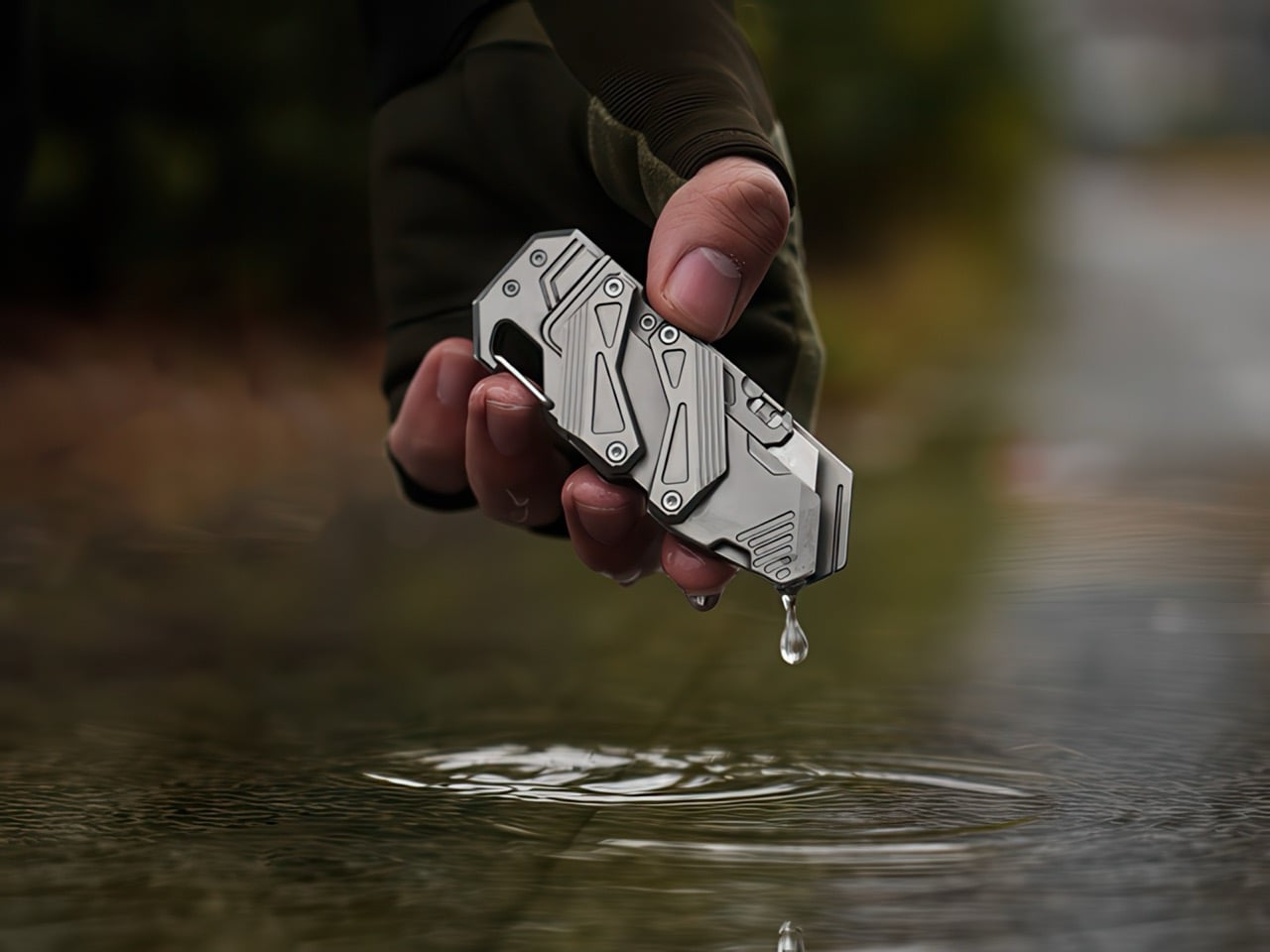
And the knife is designed for everyday use with quite literally zero compromise. The titanium build makes it devilishly durable. It’s corrosion-proof by default, doesn’t rust or oxidize, can be dropped from a hundred feet or be run over by a car without any sign of wear and tear. It’s water-resistant, and if you’re a part of a small section of people who are sensitive to certain materials, titanium is hypoallergenic by nature. The blade is the only replaceable part, which means you can simply ditch it for a sharper one if the old one dulls or breaks. And if you’re traveling, just pack the blade separately and you’ve got a TSA-friendly EDC that can attach to your backpack, belt loop, or sit in your pocket.
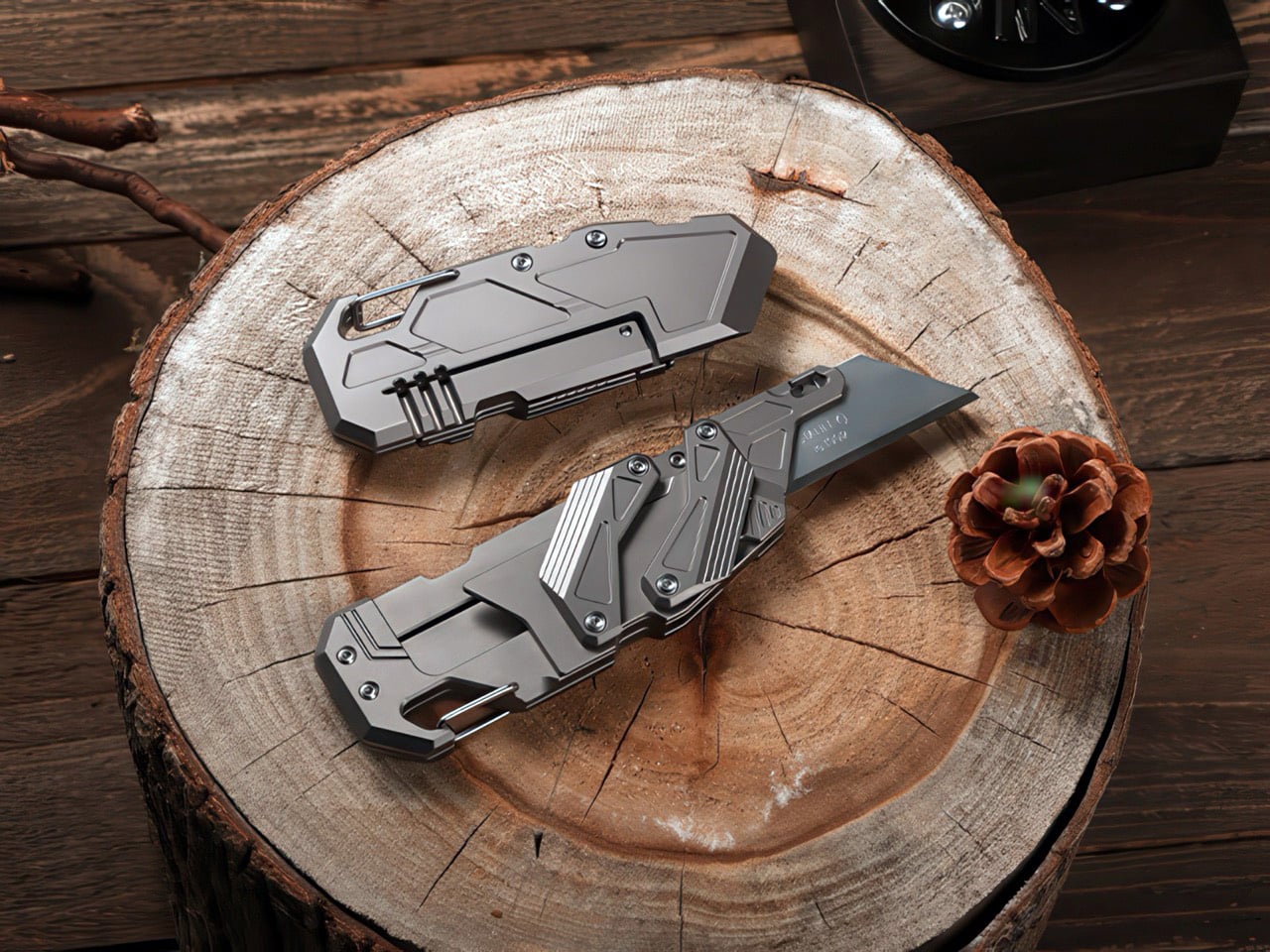
The SyncraBlade doesn’t entertain any fluff – it comes in a single natural color (none of that anodized or PVD coated nonsense), and the most you can do to personalize your knife is have it custom-engraved. I’d have appreciated a tritium slot on the sides, but that’s me being pedantic – especially considering the knife costs a mere $129 (discounted from its $201 price tag), and ships free globally starting May this year.

Click Here to Buy Now: $129 $201 (36% off) Hurry! Only 70 of 100 left.

The post This $129 Titanium EDC Knife Has The Most Addictive Tiger-Claw Opening Mechanism first appeared on Yanko Design.
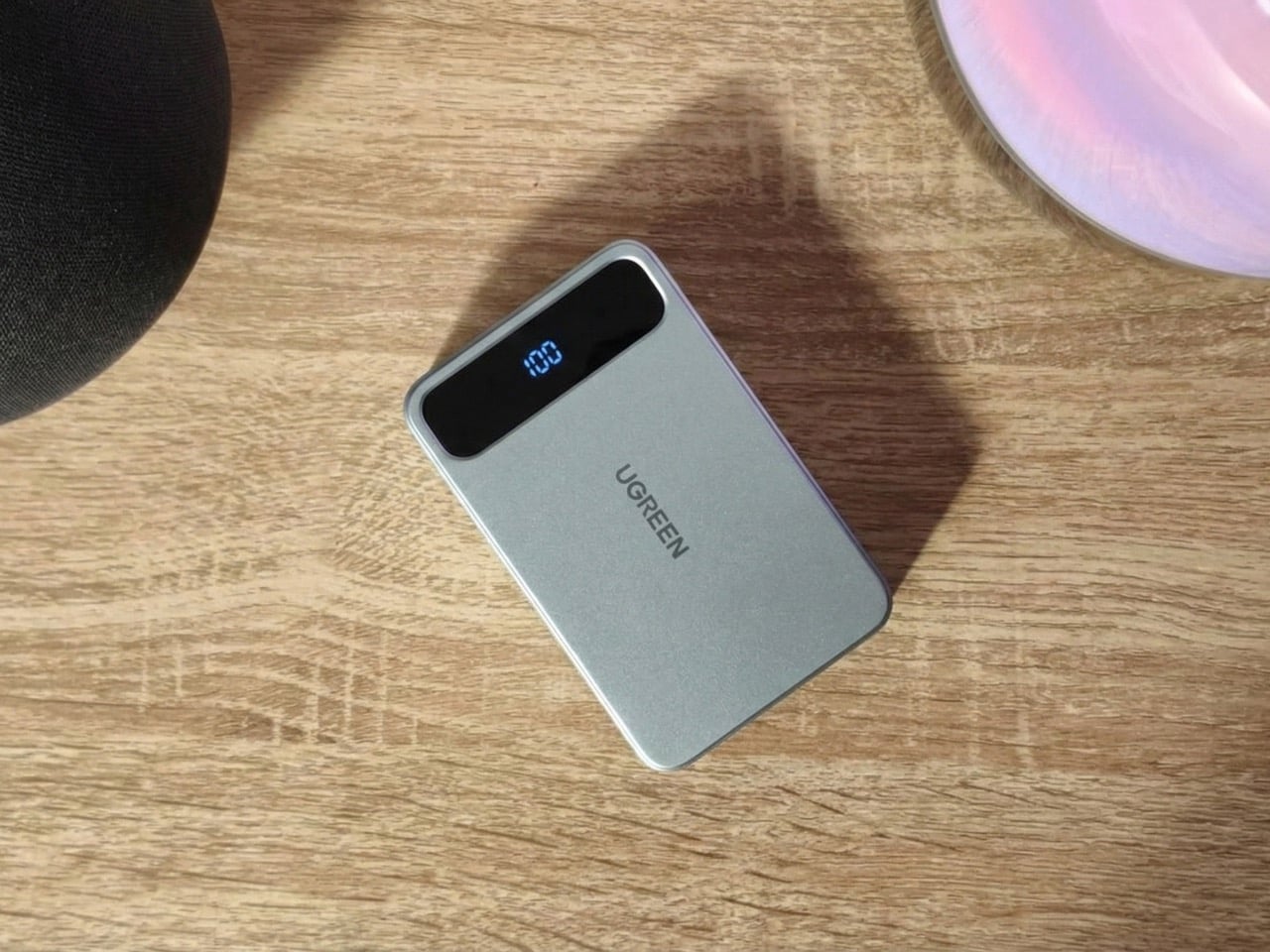
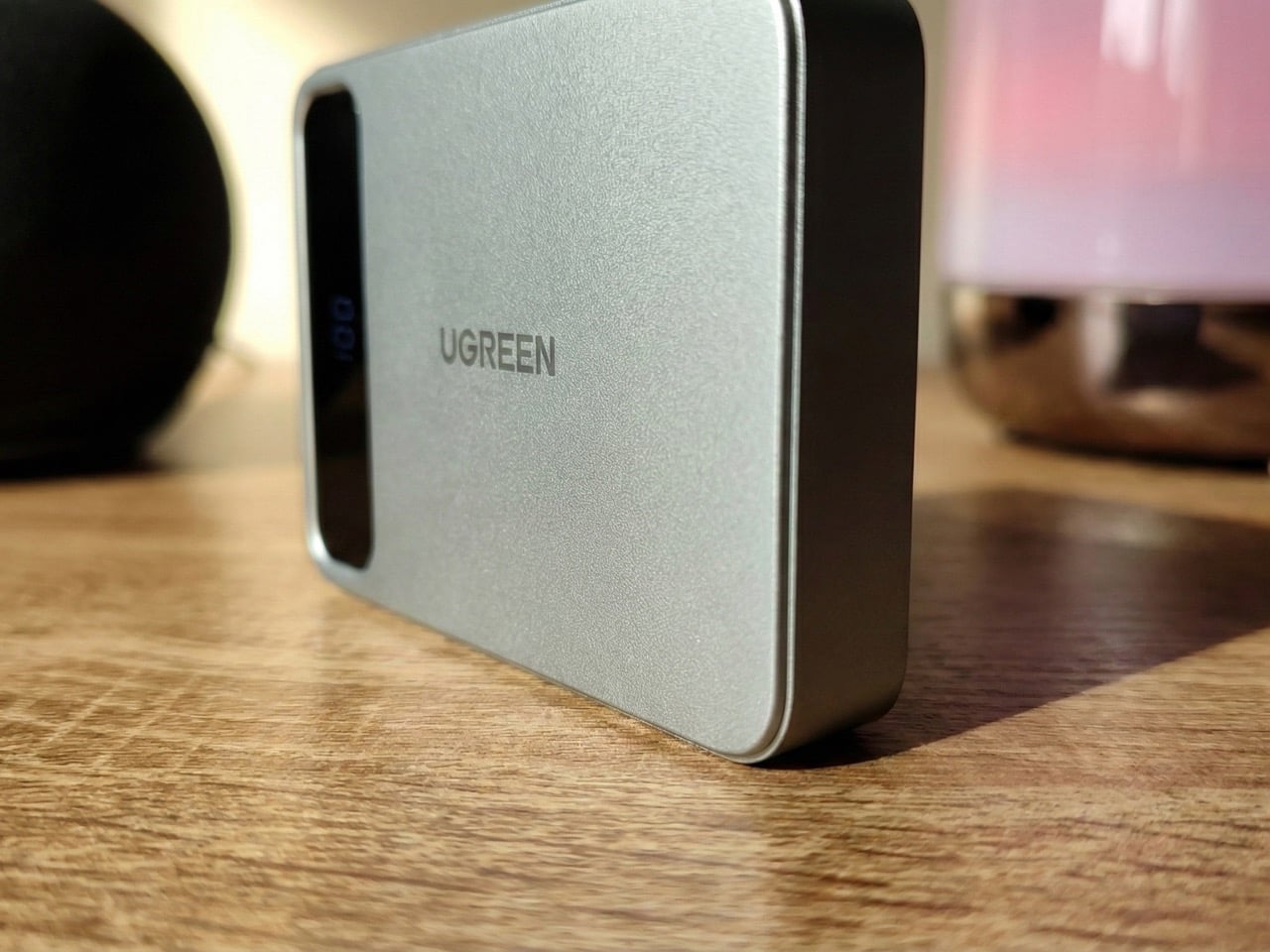
UGREEN built an AI Recorder into its 10,000mAh Power Bank and I don’t know if that’s genius or crazy…

Representational Image

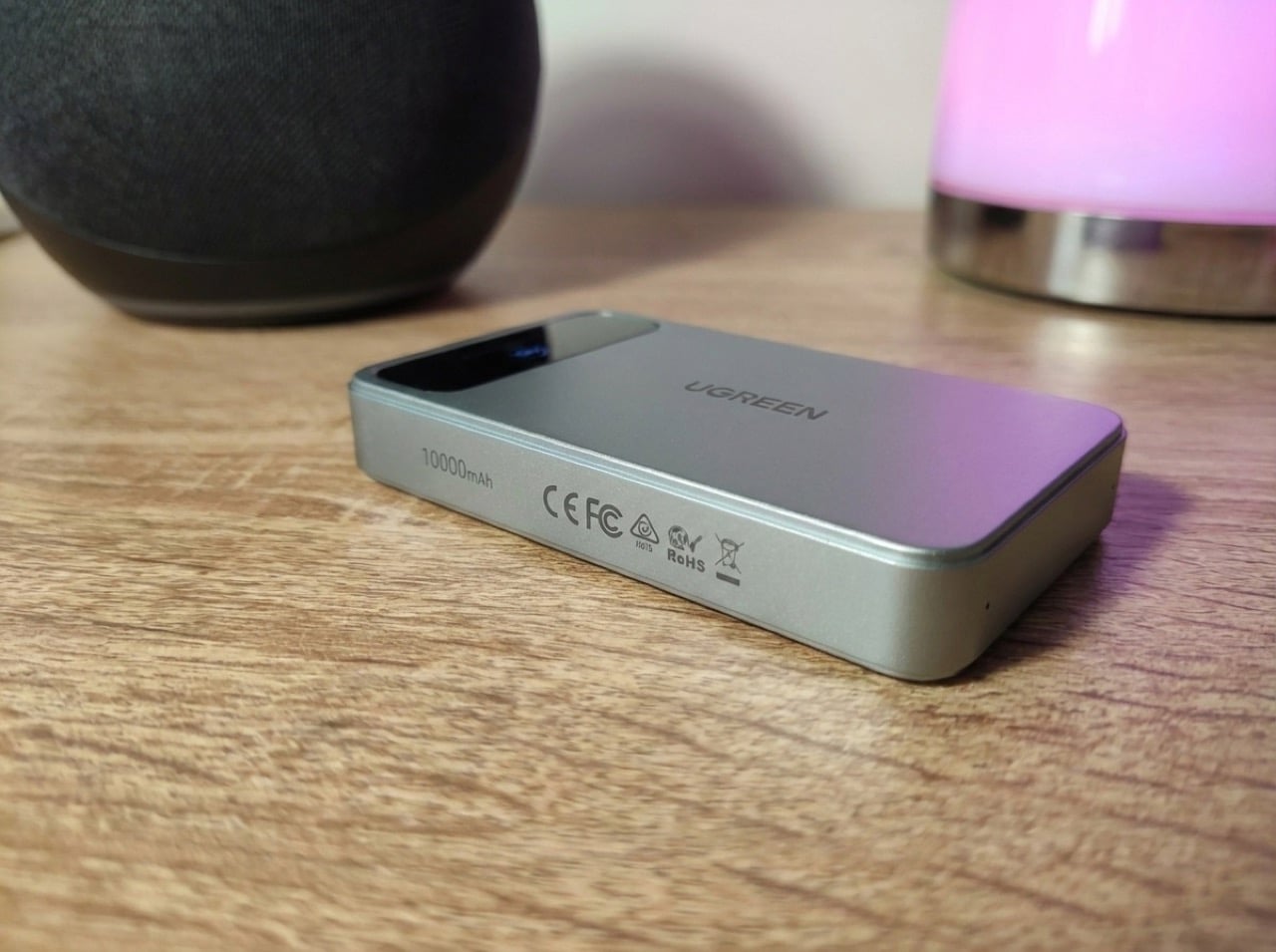
At CES 2026, where every tech company seemed legally obligated to add AI to something, Ugreen announced a power bank with voice recording. The MagFlow AI Voice Recording Magnetic Power Bank packs 10,000 mAh, wireless charging, and AI-powered note-taking into one device. It’s either brilliantly practical or completely unnecessary, depending on how often you find yourself needing both a dead phone and a voice memo at the exact same moment.

The real question is what market Ugreen’s actually targeting. Dedicated AI recorders like Plaud and Limitless offer superior transcription and integration with productivity tools. Meanwhile, power bank buyers are mostly obsessed with capacity, charging speed, and MagSafe compatibility. Ugreen’s product sits awkwardly between these worlds, somehow simultaneously targeting both the serious note-taker as well as the charging purist. Maybe that’s the genius: creating a category where none existed, or maybe it’s just feature creep with good intentions.

Designer: Ugreen

Representational Image

You’ve got 10,000 mAh, which is respectable but standard for MagSafe-compatible power banks in 2026. Wireless charging is included, though the company hasn’t confirmed whether there’s a USB-C port for wired fast charging. A digital display shows battery level and presumably real-time charging stats. Then there’s the voice recording hardware with built-in AI for translation and summarization, which sounds impressive until you realize Ugreen hasn’t explained how you’ll actually access these recordings. Is there an app? Does it sync to your phone? Do you have to plug it into a computer and dig through files like it’s 2015?

Representational Image

Compare this to something like the Plaud NotePin, which costs around $169 and is purpose-built for recording. It connects seamlessly to your phone, transcribes in real time, integrates with LLMs like ChatGPT for summaries, and weighs practically nothing. Or look at the power bank side of things. Ugreen’s own Qi2 25W MagFlow Power Bank retails for $89.99 (currently $69.99 on Amazon) and does one thing exceptionally well: charges your devices fast. This new AI version will almost certainly cost more, probably around $120 to $150 if I had to guess, which puts it in direct competition with premium power banks that offer higher capacity or faster charging speeds. Not to mention most AI services do come with the looming threat of a subscription fee at some point. Imagine subscribing to a power bank…

Jokes aside, the bundling makes sense if you’re the kind of person who carries too much stuff and wants to consolidate. A journalist running between interviews could theoretically use this to charge their phone while recording background audio for articles. Students might appreciate having one device that keeps their laptop alive during lectures while capturing notes they can summarize later. But these use cases feel niche, and niche products need exceptional execution to justify their existence. Ugreen hasn’t shown us that yet. The company has a solid track record with GaN charging technology and their NASync NAS series crushed it on Kickstarter with $6.6 million raised. They know how to build hardware. Whether they can build software that makes voice recording feel natural on a battery pack is the real test.

The post UGREEN built an AI Recorder into its 10,000mAh Power Bank and I don’t know if that’s genius or crazy… first appeared on Yanko Design.

This 39-Foot Tiny Home Trades Loft Ladders for Apartment-Style Living

After seven years of exploring New Zealand’s open roads in an RV, a couple of travel enthusiasts decided it was time to plant roots. Their solution wasn’t a traditional house or even a typical tiny home. Working with South Base Homes and award-winning architect Chris Pyemont, they created the Bespoke Base, a 12-meter tiny house that challenges everything we think we know about compact living.

The Bespoke Base stretches 39 feet in length, placing it among the more generous tiny homes on the market. Where many tiny houses force occupants to navigate cramped quarters and vertical ladders, this design takes a different approach. The entire layout unfolds on a single level, creating an experience that feels less like downsizing and more like curating the perfect apartment. Wrapped in warm redwood cladding, the exterior hints at the thoughtful design within.

Designer: South Base Homes

The single-story configuration means no climbing to a loft bedroom, no stooping under low ceilings, and no compromising on the fundamental comforts that make a house feel like home. For clients who spent years navigating the constraints of RV living, this accessibility was paramount. The spacious interior reads more like a compact apartment than a mobile dwelling, with room to breathe and space to truly settle in.

South Base Homes has built its reputation on creating bespoke tiny homes where luxury fittings come standard. Based in Tasman, New Zealand, the company earned recognition as the 2023 Tiny House Awards winner for Best Commercial Build. Their collaboration with Chris Pyemont brings architectural credibility to a sector often dominated by DIY builds and cookie-cutter designs. Pyemont’s expertise in coastal and high-wind zone construction ensures these homes can withstand New Zealand’s challenging weather conditions.

The Bespoke Base represents what happens when clients refuse to accept the usual tiny house trade-offs. Instead of squeezing life into a predetermined footprint, the design expands to accommodate how people actually want to live. This approach to tiny living isn’t cheap. South Base Homes’ models start at NZD 200,000, reflecting the premium materials and architectural design that go into each build. The price point positions these homes as permanent residences rather than temporary experiments in minimalism.

The Bespoke Base proves that tiny home living doesn’t require sacrificing comfort or style. For those ready to downsize without feeling diminished, it offers a compelling blueprint: thoughtful design, quality construction, and enough space to live generously within a modest footprint. The result is a home that honors both the tiny house movement’s ideals and its owners’ need for genuine, lasting comfort.

The post This 39-Foot Tiny Home Trades Loft Ladders for Apartment-Style Living first appeared on Yanko Design.

This Pencil Sharpener Spins Like a Top and It’s Pure Genius

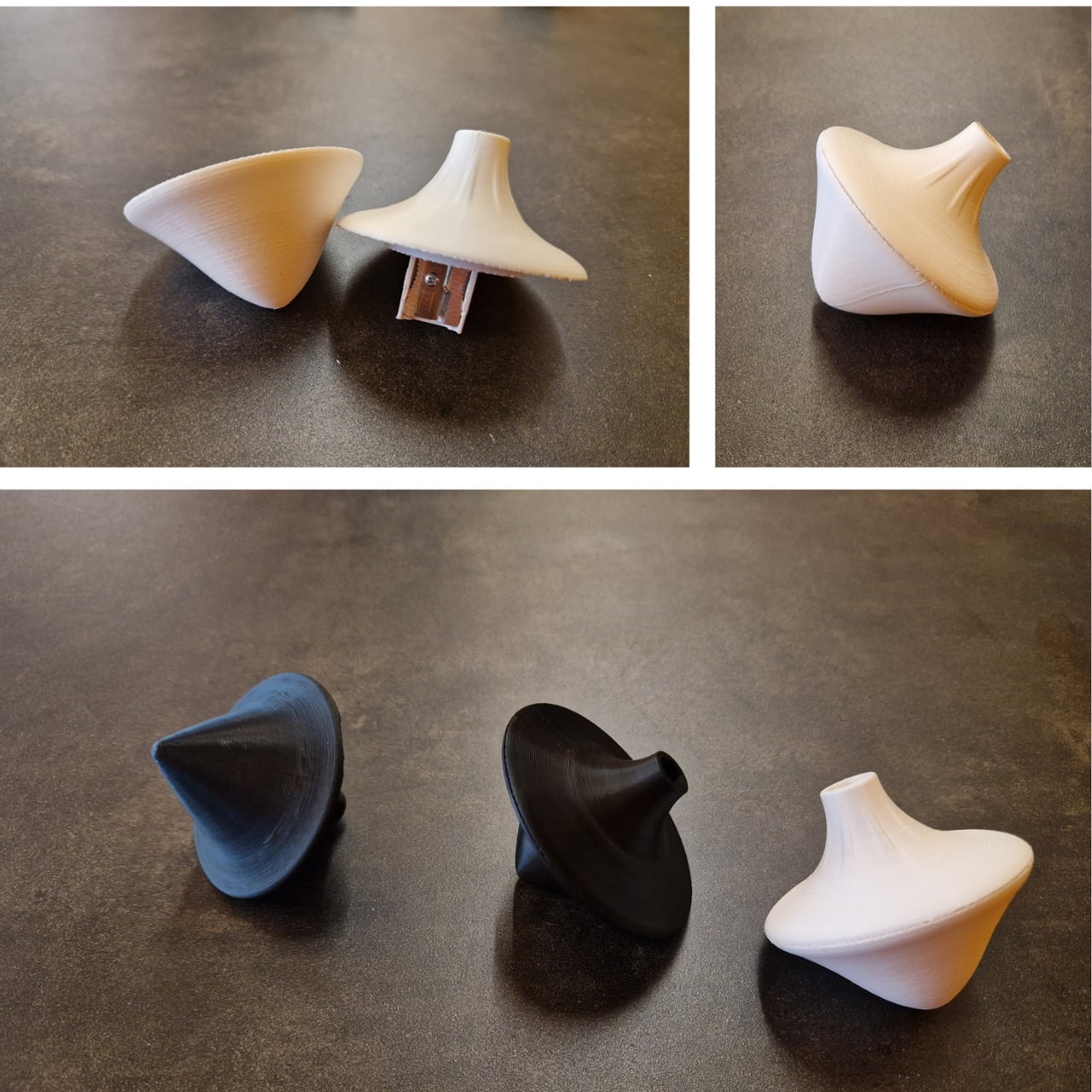
You know that moment when you find a perfectly ordinary object that someone has completely reimagined? That’s exactly what happened when I stumbled across Ferfereh, a pencil sharpener designed by Maryam Fallah that’s basically a spinning top in disguise. And honestly, it’s the kind of design that makes you wonder why no one thought of this before.

Let’s be real for a second. Pencil sharpeners are usually the most boring things on your desk. They sit there, doing their one job, looking completely utilitarian and forgettable. But Fallah decided to flip that script entirely. What if your pencil sharpener could also be a desk toy? What if the simple act of sharpening your pencil could bring a little joy to your workspace?

Designer: Maryam Fallah

The design itself is pretty striking. Picture a spinning top with those gorgeous, swooping curves that make you want to reach out and give it a whirl. The body comes in eye-catching color combinations like a deep blue that fades into vibrant orange, or sleek all-black and white versions. It’s the kind of object that doesn’t hide in your desk drawer but sits proudly on display, adding a pop of personality to your space.

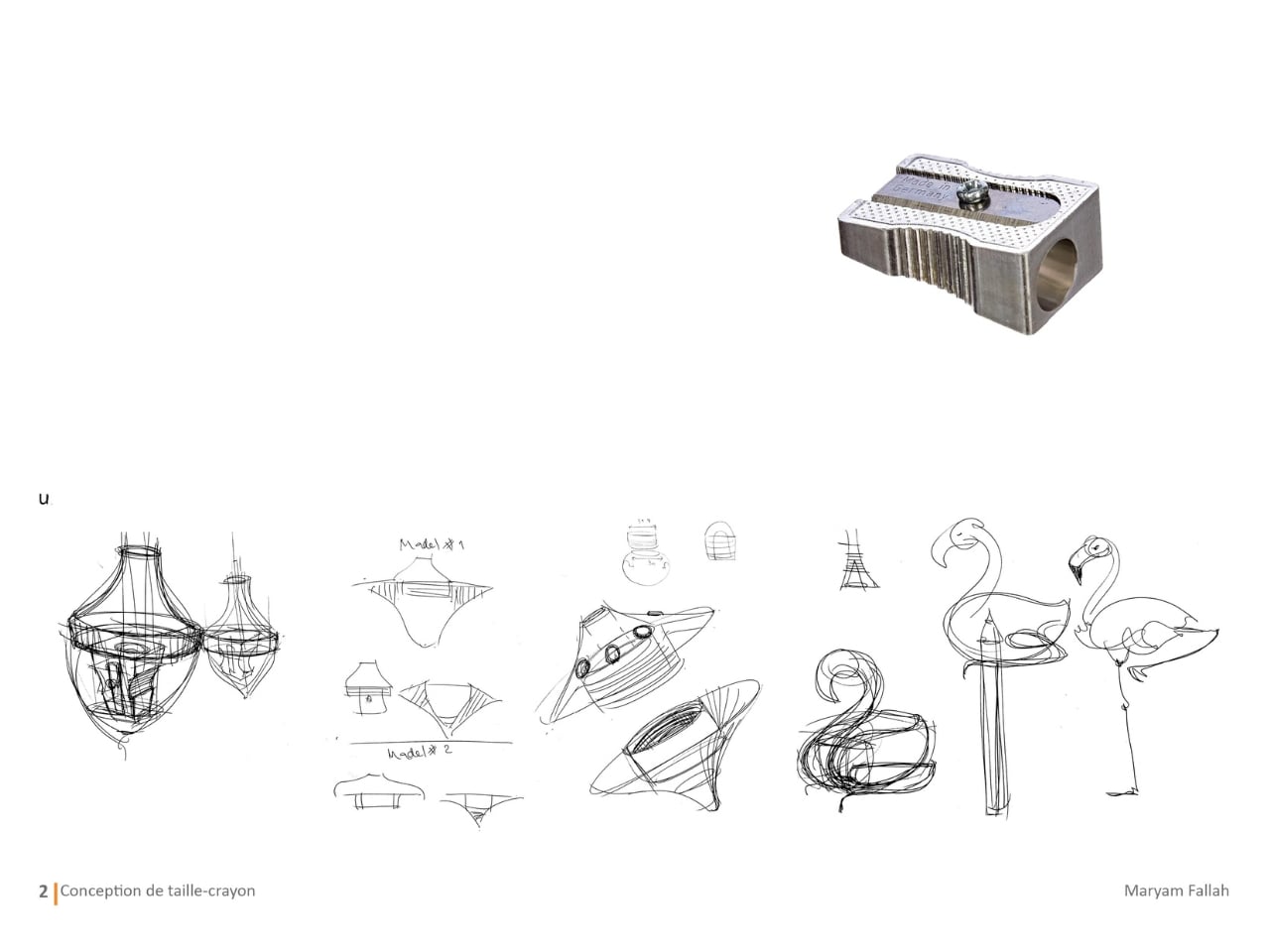
But here’s where it gets really interesting. This wasn’t just a “wouldn’t it be cool if” kind of concept. Fallah spent six months developing this as a student project at Haute École Arc in Switzerland, studying industrial design engineering. And the process? It’s honestly fascinating. She explored tons of different shapes, from what looks like traditional spinning tops to more abstract forms, even some that resembled swans and other playful figures. The sketches show just how many directions this could have gone.

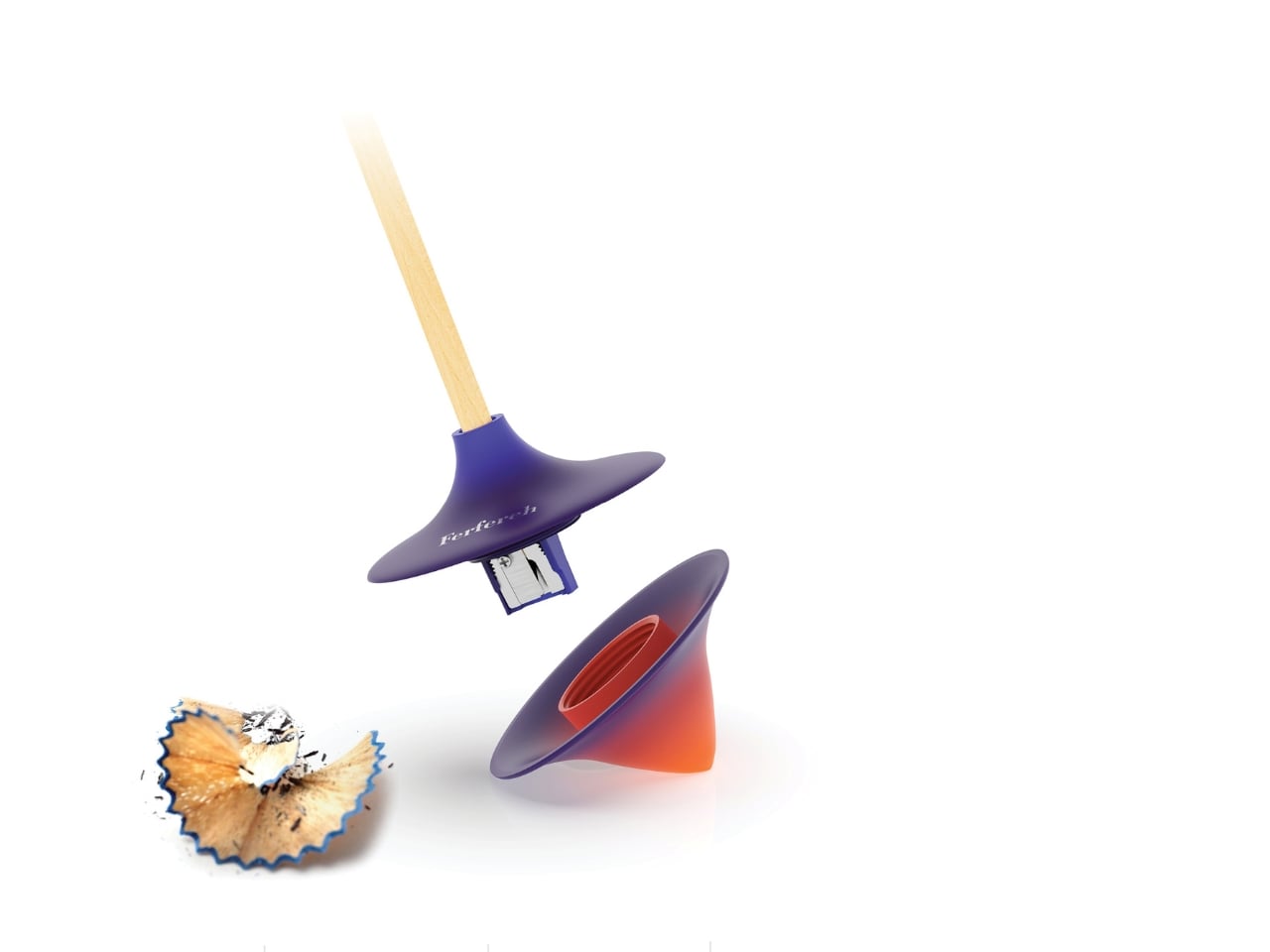
The final design landed on that iconic top shape for good reason. It had to work as both a functional pencil sharpener and an actual spinning toy. That meant getting the engineering just right. The sharpener is made of two main pieces that screw together, with a reservoir inside to catch all those pencil shavings. Simple enough, right? But the tricky part was making sure it could actually spin properly.

Through 3D printing prototypes and testing, Fallah discovered that the weight of the metal sharpening mechanism and its position affected how well the top would rotate. The pencil and sharpener weren’t symmetrically placed inside, which threw off the balance. Even the slope and overall shape had a major impact on performance. So she dove into actual engineering equations used for spinning tops to optimize the design. After multiple rounds of prototypes, she landed on a form that spins beautifully.

What I love about this project is how it challenges our assumptions about everyday objects. We’ve been conditioned to think that tools should look like tools, that function and fun are separate categories. But why? Your desk is your creative space, your thinking zone. Why shouldn’t the objects on it spark a little delight?

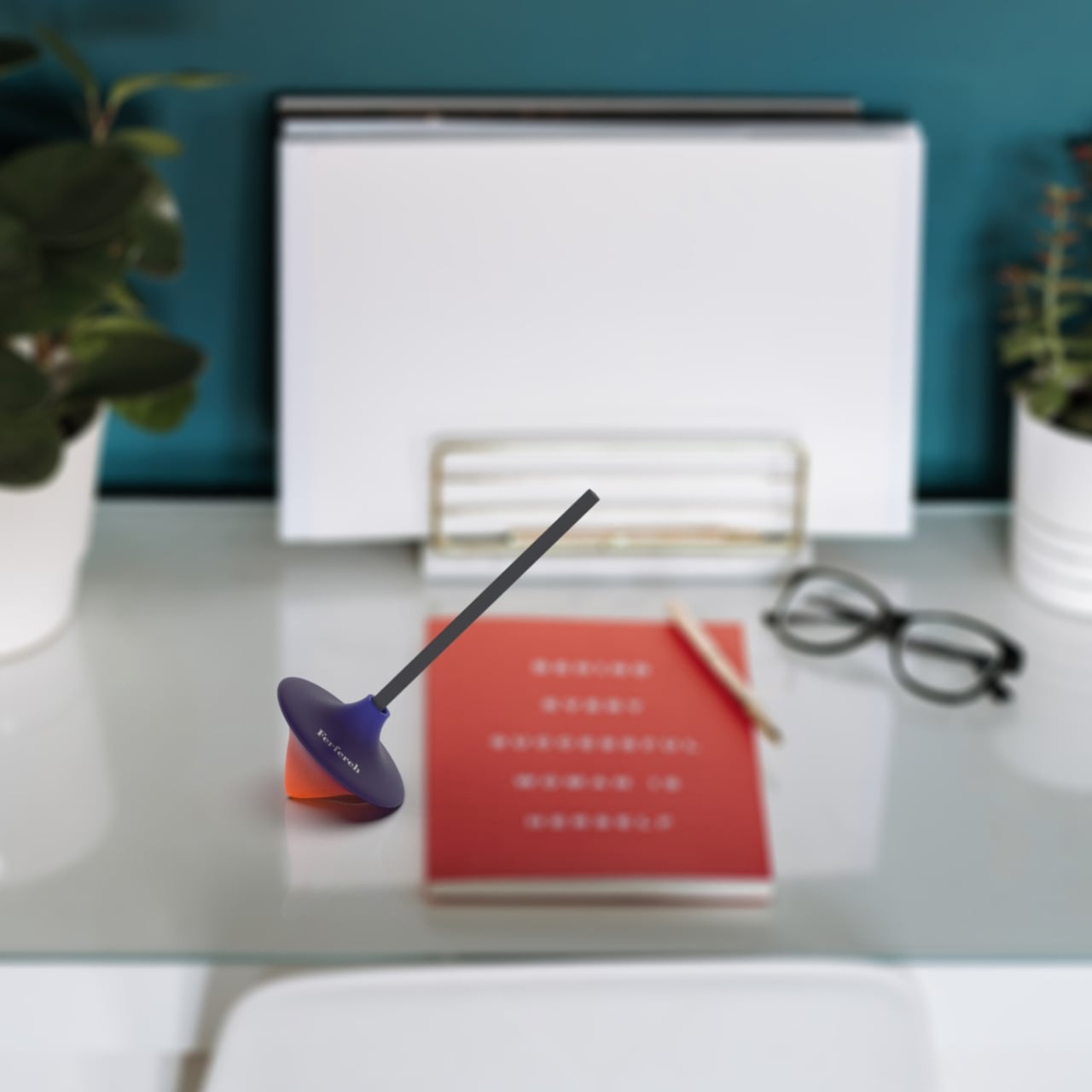
There’s something refreshing about seeing a designer take a mundane object seriously enough to give it this much attention. The photos show Ferfereh sitting on a clean, modern desk next to notebooks and glasses, looking completely at home. You can imagine giving it a spin while you’re thinking through a problem or just taking a mental break. It transforms a routine task into a moment of play.

This kind of thoughtful design speaks to a larger trend we’re seeing in contemporary product design. People want objects that do more than just function. They want things that feel good to use, that have personality, that make their spaces more interesting. Ferfereh delivers on all fronts. It sharpens your pencils effectively while also serving as a kinetic desk sculpture that invites interaction. Whether you’re a designer, a student, someone who still loves the analog pleasure of writing with actual pencils, or just a person who appreciates clever design, Ferfereh hits that sweet spot. It’s practical without being boring, playful without sacrificing function, and beautiful enough to make you rethink what a simple desk accessory can be.

The post This Pencil Sharpener Spins Like a Top and It’s Pure Genius first appeared on Yanko Design.