Apple CarPlay 2025: The Features You Didn’t Know Existed

Apple CarPlay 2025: The Features You Didn’t Know Existed

Apple CarPlay transforms your car’s infotainment system into a seamless extension of your iPhone, offering enhanced navigation, communication, and entertainment while keeping safety at the forefront. Whether you’re a first-time user or looking to optimize its features, this guide will help you make the most of what CarPlay has to offer. By integrating your smartphone […]

The post Apple CarPlay 2025: The Features You Didn’t Know Existed appeared first on Geeky Gadgets.

Posted in Uncategorized

Solar Desalination Electricity Plant Promises Power & Water, Can It Deliver?

Solar Desalination Electricity Plant Promises Power & Water, Can It Deliver?

What if solving three of the world’s most pressing challenges, water scarcity, energy demand, and environmental sustainability, could be achieved with a single, innovative system? Imagine a technology that not only transforms seawater into fresh drinking water but also generates electricity and produces valuable salt, all while leaving behind zero waste. It sounds almost too […]

The post Solar Desalination Electricity Plant Promises Power & Water, Can It Deliver? appeared first on Geeky Gadgets.

Posted in Uncategorized

How to wirelessly charge your phone with max power

Wireless charging has become one of those small but satisfying conveniences of modern smartphones. You drop your device on a pad and watch the battery percentage climb without fiddling with cables or ports. Yet for many users, that effortless charge doesn’t always come at the speed they expect. Sometimes the phone warms up, the percentage barely rises or charging takes far longer than it would if you plugged it in.

Getting the fastest possible wireless charge requires more than just setting your phone on a pad. It depends on using the right equipment, like one of the best wireless chargers or the best multi-device wireless charging pads, plus the latest standards and a setup that makes the most of your phone’s capabilities. Here’s everything you need to know about getting the maximum wireless charging speeds for your smartphone.

Wireless charging relies on electromagnetic induction. When you place your phone on a compatible pad, electricity flows through a coil inside the charger, creating an electromagnetic field. Another coil inside your phone captures that energy and converts it back into electricity to refill the battery. It sounds simple, but efficiency depends on how precisely those two coils align, how much power the charger can deliver and how well the phone can handle the heat that builds up during the process.

For years, the Qi standard from the Wireless Power Consortium defined how most wireless chargers worked. Nearly every major smartphone brand supports Qi, and you can mix and match chargers and phones from different manufacturers with little trouble.

But the new Qi2 standard, which began rolling out in 2024 and has expanded in 2025, changes how well that power is transferred. Qi2 uses magnetic alignment to snap the phone and charger into the ideal position automatically, reducing wasted energy and heat. It also allows for higher charging speeds, with Qi2 chargers now supporting 15 to 25 watts of output depending on the device.

Each smartphone has a built-in limit to how much power it can receive wirelessly. The iPhone 12 models and later, for instance, support up to 15 watts with MagSafe, and Samsung’s S25 Galaxy series can handle similar speeds through Qi2. If you use a charger that delivers less power than your phone’s maximum, it’ll charge slower. For example, if you use a 10W wireless charger on an iPhone 17, the max speeds will top out at 10W. But even if you buy the most powerful pad on the market, you won’t get results beyond what your phone’s receiver can manage.

The phone’s software also plays a role. Some Android models include a “Fast Wireless Charging” setting that must be enabled to reach full speed. Others may automatically adjust charging rates to prevent overheating, especially if the phone gets too warm. Checking your device’s specifications and settings is an easy way to make sure it’s configured to draw the most power possible.

Wireless chargers vary widely in quality and performance. Qi2 certification is the best way to ensure that a product meets the latest safety and efficiency standards. Certified chargers have been tested to deliver power consistently and to protect against overheating and overcharging. While uncertified or budget pads may still work, they often fall short of their advertised wattage.

The wall adapter that powers the charger is just as important. Many people plug their charging pad into an old 5-watt or 10-watt power brick, which limits the output before the phone ever sees it. To achieve maximum speed, use a high-output USB-C adapter rated at 20 watts or higher, ideally one designed for fast charging like any of those included in our guide to the best fast chargers.

The cable connecting the adapter to the charger matters too. Short, high-quality cables help minimize resistance and power loss, while longer or cheaper cables can slow things down noticeably. Most of the newest USB cables will also list a max wattage they support in their specs; generally, the higher the better when you’re picking up a new one, so it can support charging as many of your devices as possible.

Belkin 3-in-1 wireless charger
Will Lipman Photography for Engadget

Even with the right hardware, proper placement and environment make a big difference. Wireless charging works best when the phone’s coil is perfectly aligned with the coil in the charging pad. If the two are slightly off-center, energy transfer drops and more heat builds up which slows charging further.

Qi2’s magnetic alignment largely fixes this issue by snapping the phone into the right position, but older Qi chargers still rely on manual placement. Taking a second to make sure the phone is centered can shave minutes off of the total charge time.

Cases and accessories can also interfere with charging. Thick protective cases, wallet covers or anything with metal components can block or weaken the electromagnetic field. Even magnets not designed for Qi2 alignment can throw off the connection. A slim, wireless-compatible case or no case at all will help maintain the strongest link between the coils. It’s also worth keeping the charging area clean and free from dust or small metal objects, which can disrupt the signal or cause heat spots on the pad.

Heat management plays another critical role. Wireless charging generates more heat than wired charging, and if the phone gets too warm, the charging system automatically slows down to protect the battery. Placing the charger on a flat, hard surface in a well-ventilated area helps prevent overheating. Avoid charging on soft fabrics or in enclosed desks that trap heat. Some of the best Qi2 chargers now include small fans or heat-dissipating materials to maintain stable temperatures during fast charging sessions.

If your phone still charges slower than expected, it’s worth double-checking each part of your setup. Confirm that your charger and phone both support the same standard — Qi2 chargers work best with Qi2 phones, though older Qi devices can still connect at lower speeds. Make sure the power adapter provides enough wattage to match your phone’s maximum wireless rate. If the charger uses a replaceable cable, try swapping it for a certified USB-C cable rated for high power output.

Software updates can also influence performance. Manufacturers often fine-tune charging algorithms through firmware updates, improving heat control or overall efficiency. Keeping both your phone and charger up to date ensures you benefit from those refinements. And if your phone still feels unusually hot or the charging indicator blinks on and off, removing the case or cleaning the pad can often resolve the issue.

The arrival of Qi2 has narrowed the performance gap between wireless and wired charging. While a cable will still be faster in most cases, a properly configured Qi2 setup can now come surprisingly close to a wired one. The technology has matured from a slow, convenient novelty into a reliable daily solution for many users. As more devices adopt the new magnetic alignment, and as charger manufacturers refine their designs, wireless charging at maximum power is becoming easier to achieve without any extra effort.

Wireless charging has always promised convenience, but it now delivers real speed too. With the right combination of a Qi2-certified charger, a capable power adapter, good alignment and smart heat management, it’s possible to get close to your phone’s peak charging speeds every time you place it on the pad.

This article originally appeared on Engadget at https://www.engadget.com/mobile/smartphones/how-to-wirelessly-charge-your-phone-with-max-power-130013170.html?src=rss

Dragon Quest 7 Reimagined is all about enhancing the game’s greatest strengths

Square Enix has been on a tear in recent years remastering and outright remaking many of its landmark role-playing games. Along with Final Fantasy, the developer has given the Dragon Quest series such attention as well, and the next game on deck is a remake of the PlayStation 1's Dragon Quest VII. Commonly regarded by fans as one of the most challenging and lengthy games of the series, the developers building Dragon Quest VII: Reimagined — the second remake of the game following the 3DS release in 2013 — are aiming to reshape DQVII with a striking new visual style and a refocused adventure.

I recently got to spend a couple of hours with Dragon Quest VII: Reimagined, seeing its new interpretation of the 2000 classic JRPG and some of the more noteworthy updates to its combat. So far, the remake is making some intriguing choices that not only aim to give the sprawling time-travel plot a better sense of direction but also streamline some of the original's more exhaustive and challenging beats.

The original Dragon Quest VII carried the familiar conceit of earlier entries, focusing on a party of high-fantasy adventurers embarking on an epic adventure filled with dungeons to explore and powerful monsters to fight. But DQVII deviated from the traditional Dragon Quest storyline by focusing on the party's adventures through time. As the Hero and his friends uncover the lost history of their world, they'll step back into previous eras to explore bygone kingdoms and continents that will reveal a larger conspiracy in the present. Along the way, they'll build their bonds of friendship that will stretch across time.

Reimagined does well to capture that sense of adventure that the series does so well. Even as the series has evolved with new entries, it still strikes a balance between old-school, turn-based JRPG gameplay and modern storytelling flair. What's especially novel about the remake of Dragon Quest VII is its sharper, visually expressive 3D art style. Using diorama models and real doll versions of the party as reference material for the look of the game, the new 3D visuals really capture the whimsical and emotive style of the late Akira Toriyama's distinctive art, which has given the series its unique look. But with the move to a new 3D style, Reimagined sets itself apart from the previous games by feeling more like an animated adventure film.

Dragon Quest 7 Reimagined
Armor Project/Bird Studio/Square Enix

Along with the visual style, the developers also focused on reshaping sections and the overall storytelling of DQVII to offer a more satisfying experience. According to game producer Takeshi Ichikawa, one of the larger goals of remaking Dragon Quest VII was to improve the flow of the game, which ultimately made for a more satisfying sense of adventure.

"The 'reimagined' elements of the narrative allude to improvements in the game's overall framework, which offers a much deeper and more compelling experience," Ichikawa said. "In our effort to streamline the overall story progression and provide a more engaging narrative, we decided to cut subplots that have little or no direct relevance to the main scenario. While some content has been removed, entirely new scenarios have also been introduced. Our goal was to build upon the strengths of the original game while striving to deliver a deeper, more immersive story experience for modern players."

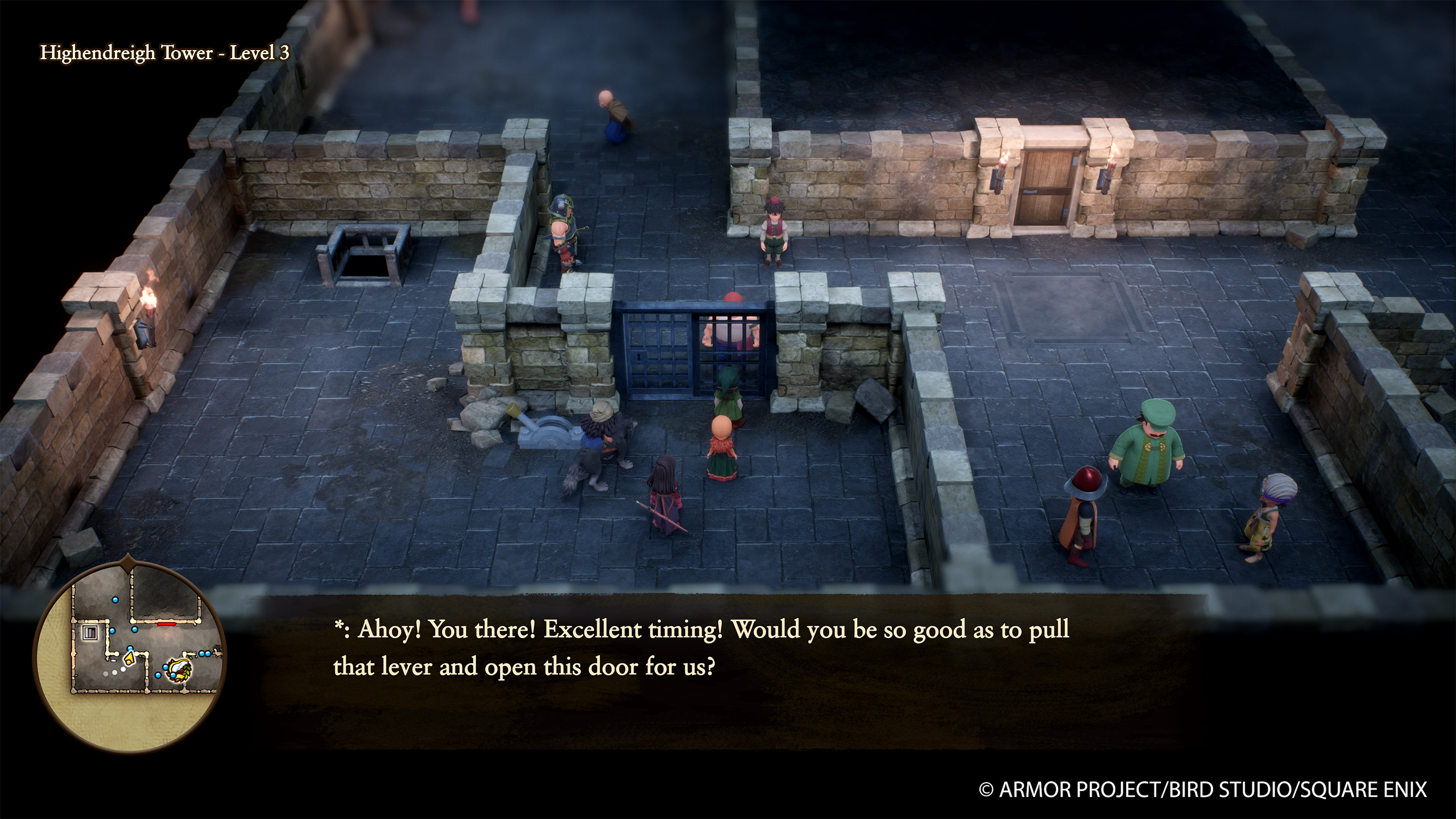
During my hands-on time, I got to explore two separate sections of the game. These focused on the early-game Emberdale dungeon, where townsfolk committed themselves to a volcano ritual to pacify a fire demon within. The other section focused on the Wetlock scenario, which had the party confront a mysterious magic user who whisked away townsfolk to a mysterious tower in a flooded land. 

My memories of the original and 3DS remake came back while playing Reimagined, which made it easy to slide back into that dungeon-crawling flow. Much like the original, Reimagined still sticks with traditional turn-based combat, and the new visual style really helps emphasize the sense of impact and tactics at work in battle — more so than in other games in the series. I especially liked how unique each character felt, particularly the wolf-riding bandit Ruff, who is  fun to use in battle. 

Dragon Quest 7 Reimagined
Armor Project/Bird Studio/Square Enix

During the Wetlock section, I generally found the challenge to be fair, and I even discovered a good leveling spot fighting golems and Metal Slimes that popped up on occasions. But things can easily kick into high gear when taking on the elite enemies and the end boss of the questline. I had to carefully assess the available skills and employ a range of offensive and defensive abilities to survive. The remake is not so much about removing the sense of challenge from the original, but rather about maintaining it while offering more options to help with battles.

One of the larger innovations to Reimagined combat is the Moonlighting system, which allows each party member to equip two vocations at once. The original game allowed each character to only have one vocation at a time, and switching classes reset your level. This created a lot of busywork in the original game, so with this new two-class approach, it cuts down on grinding significantly and keeps you feeling empowered. But on a more strategic level, it also adds a lot more utility and variety to each character's loadout. It also does well to make a party with more diverse skills, which adds a lot more charm to the group.

Dragon Quest 7 Reimagined
Armor Project/Bird Studio/Square Enix

There's so much thought put into the top-down rework of the original game for Dragon Quest VII: Reimagined, and I found the changes to be a very charming and personable  approach to remaking it. Even back in 2000, the original game was a very ambitious take on the series. Not just being the first 3D entry, but also in how it actually utilized many of the different locations and characters from across the sprawling story in a more meaningful way. The original is still a great entry in the series, but it's one that feels a bit tough to revisit. That makes the developer's intent on streamlining and refocusing to feel quite appropriate, and I quite dug the changes I saw during my hands-on time.

So far, Dragon Quest VII: Reimagined looks to maintain the ambition and scope of the original, but hone it into a more focused and satisfying JRPG. It adds a seriously impressive visual style that brings it to life. According to the remake's producer, Reimagined and its new approach to remaking Dragon Quest is about adding a new sense of energy to the series, and it's so far doing just that.

"We believe that existing fans will find the game satisfying. At the same time, since this title has been reimagined from the ground up as a modern release, we're also excited for many new players to enjoy it as their first Dragon Quest experience," Ichikawa said. 

Dragon Quest VII: Reimagined will be released on February 5, 2026 for PC, PS5, Xbox Series X|S and Nintendo Switch 1 & 2.


This article originally appeared on Engadget at https://www.engadget.com/gaming/dragon-quest-7-reimagined-is-all-about-enhancing-the-games-greatest-strengths-130000125.html?src=rss

Retro Gadgets For Vintage Lovers: 5 Nostalgic Gifts That Actually Work In 2025

Nostalgia isn’t about living in the past—it’s about celebrating design moments when objects had soul, character, and tangible presence. For vintage lovers, the aesthetic pull of retro gadgets runs deeper than mere styling. These are people who appreciate the warmth of analog sound, the satisfaction of physical controls, and the beauty of mechanical precision. They understand that technology doesn’t need to be disposable to be functional, and that timeless design speaks a universal language across decades.

This collection honors that perspective by bringing together five exceptional gadgets that bridge eras beautifully. Each piece captures authentic retro aesthetics while embracing modern conveniences that make them genuinely usable today. From cassette-inspired speakers to mechanized solar systems, these gifts prove that looking backward and moving forward aren’t mutually exclusive. They’re perfect for the person whose shelves mix vinyl with streaming devices, whose taste transcends trends, and who believes the best design is always worth reviving.

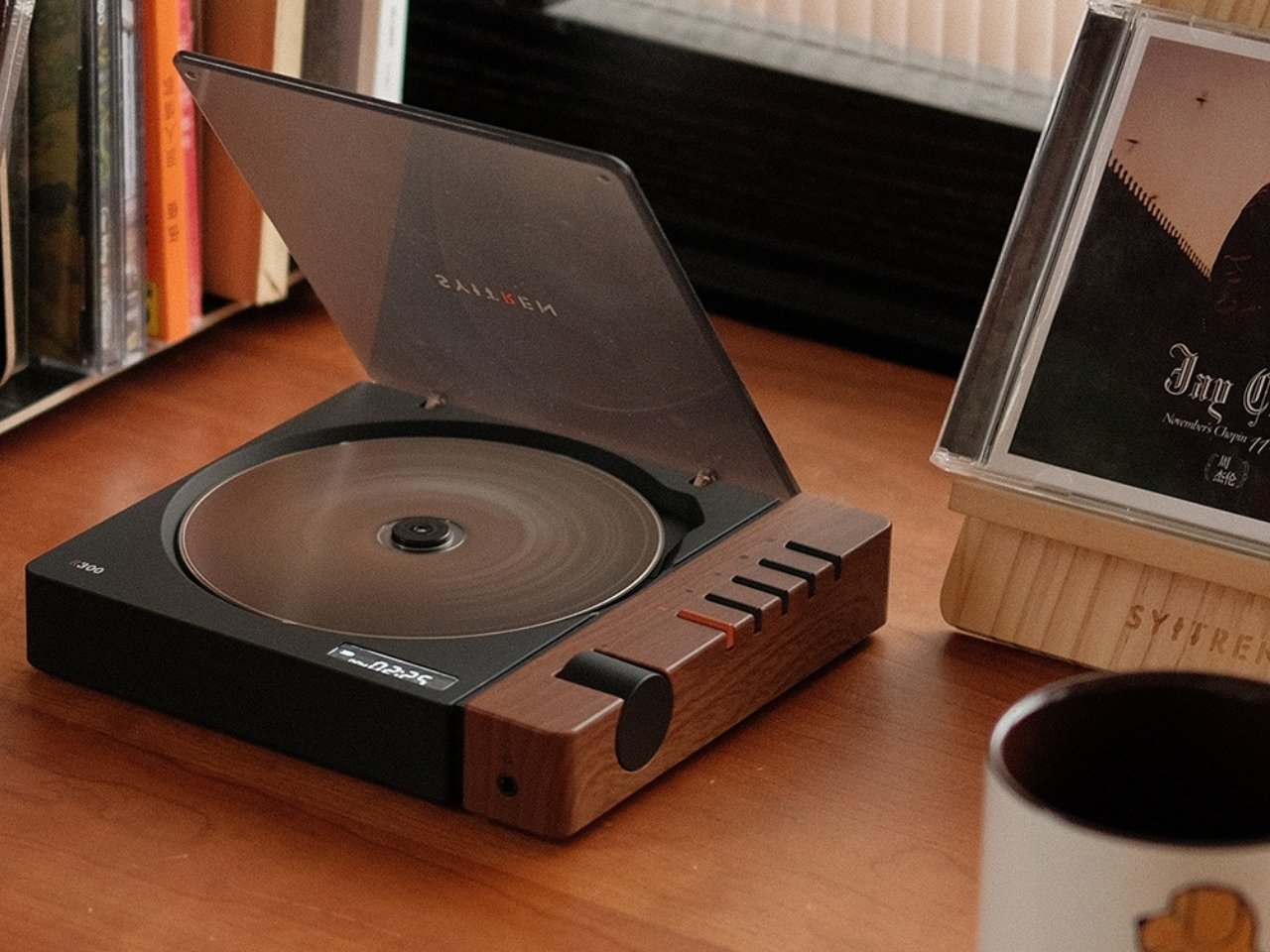
1. SYITREN R300 Portable CD Player

The compact disc never truly left—it just waited for design to catch up. The SYITREN R300 recognizes this truth, delivering a portable CD player that feels simultaneously nostalgic and contemporary. Available in wood grain, classic white, or vibrant fruit green finishes, the R300 captures the clean-lined aesthetic of early audio equipment without feeling dated. The dynamic area button on the right side offers intuitive, tactile operation that satisfies in ways touchscreens never will.

What elevates the R300 beyond pure nostalgia is its refusal to compromise on modern functionality. Bluetooth 5.3 connectivity means wireless freedom with contemporary headphones and speakers, while the traditional 3.5mm headphone jack and Toslink optical output accommodate wired purists and audiophile setups. The player handles standard CD, CD-R, and CD-RW formats plus digital files in MP3, WAV, and WMA. A 2000mAh battery delivers over six hours of playback, making it genuinely portable. Audio output thrust reaches 600mV with an 80dB signal-to-noise ratio, ensuring the listening experience matches the visual appeal. For vintage lovers who never abandoned their CD collections, this player acknowledges their format loyalty while meeting them where modern listening happens.

What we like

  • MUSE Design Gold Award-winning retro aesthetic available in wood, white, and fruit green finishes.
  • Bluetooth 5.3 provides wireless connectivity to modern headphones and speakers.
  • Multiple output options, including 3.5mm jack and Toslink optical for audiophile setups.
  • 2000mAh battery delivers over six hours of portable playback.

What we dislike

  • CD-only format limits functionality compared to multi-format vintage players.
  • Portable design may lack the substantial build quality of classic stationary models.

2. Side A Cassette Speaker

Mixtapes represented something more than music—they were tangible artifacts of care, time, and curation. The Side A Cassette Speaker resurrects that emotional resonance through faithful aesthetic mimicry wrapped around thoroughly modern technology. Shaped precisely like a cassette tape, complete with a transparent shell and a side A label, this pocket-sized speaker does not attempt to hide its inspiration. The clear case doubles as a stand, transforming it from a portable audio device into a proper desk sculpture. For vintage lovers who remember making mixtapes or wish they’d experienced that era, this speaker bridges the gap between memory and modernity with charm and authenticity.

The Side A succeeds because it respects both form and function equally. Bluetooth 5.3 connectivity ensures seamless pairing with phones, tablets, and laptops for wireless listening that analog tapes could never provide. MicroSD card support means offline playback without streaming dependencies, recapturing some of that physical media permanence. The sound profile leans deliberately warm and cozy, tuned to evoke tape playback character rather than clinical digital reproduction. At under fifty dollars, it delivers nostalgic design and functional audio in a package small enough to travel everywhere. This isn’t a gimmick trading entirely on looks—it’s a genuinely useful speaker that happens to look fantastic doing its job.

Click Here to Buy Now: $45.00

What we like

  • Authentic cassette tape styling with a transparent shell and a side A label captures mixtape nostalgia perfectly.
  • Bluetooth 5.3 ensures reliable wireless connectivity with modern devices.
  • MicroSD card support enables offline playback without internet dependency.
  • Warm analog-inspired sound profile distinguishes it from typical digital speakers.

What we dislike

  • Compact size naturally limits bass response and overall volume compared to larger speakers.
  • Cassette aesthetic may feel too niche for spaces requiring neutral design.

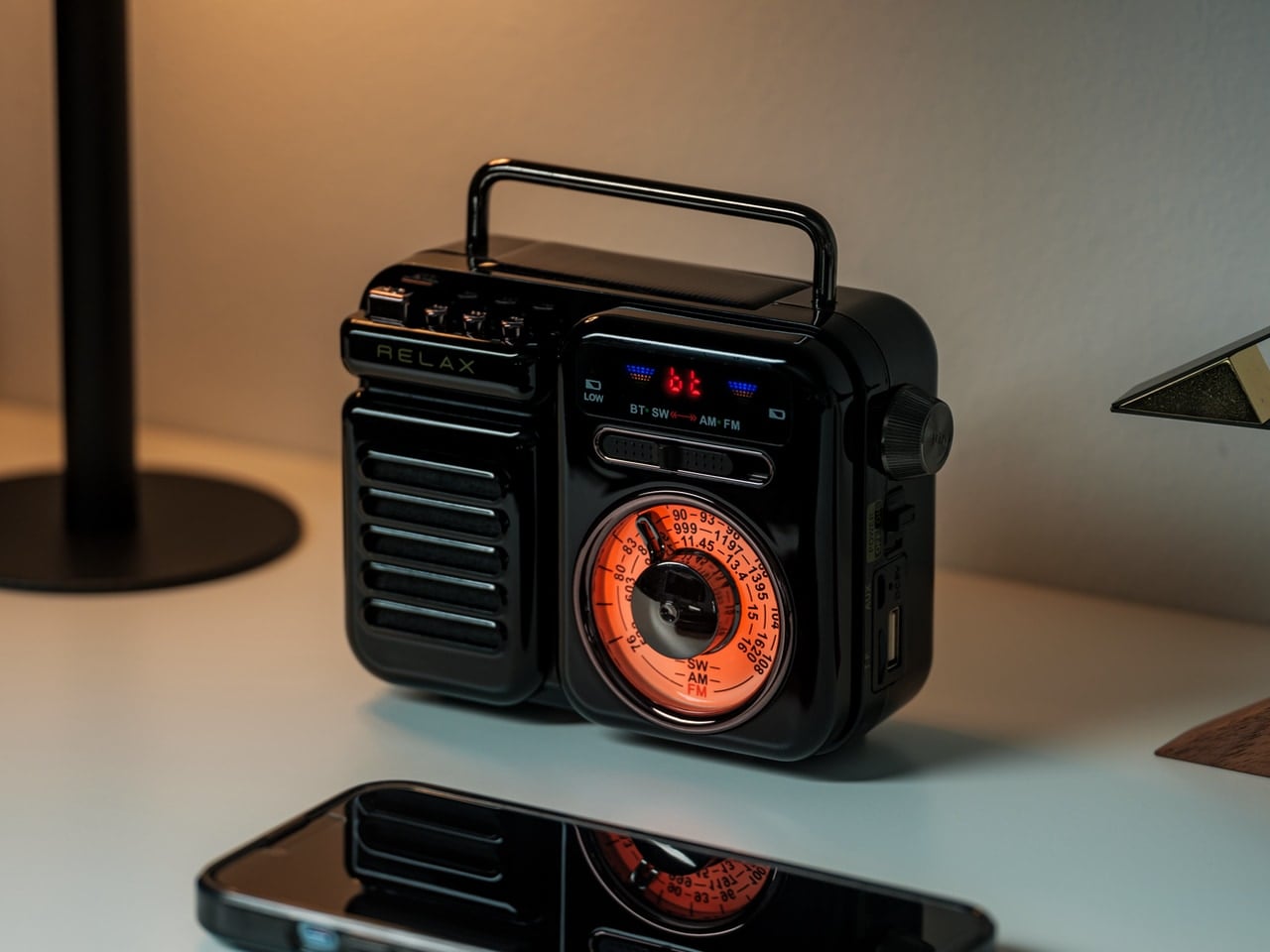
3. RetroWave 7-in-1 Radio

Vintage aesthetics meet survival preparedness in the RetroWave, a multi-function radio that refuses to be just one thing. Wrapped in retro Japanese design language, complete with a tactile tuning dial, it immediately signals its nostalgic intentions. That exterior houses seven distinct functions: AM/FM/shortwave radio, Bluetooth speaker, MP3 player, flashlight, clock, power bank, and SOS alarm. This comprehensive capability set makes it equally appropriate for daily desk use, camping adventures, or emergency kits. For vintage lovers who appreciate both form and practical preparedness, the RetroWave delivers aesthetic satisfaction with genuine utility layered underneath.

The brilliance lies in making preparedness beautiful. Solar panel and hand-crank charging mean the RetroWave stays operational when power grids fail, while USB and microSD playback provide offline music access. The radio functionality spans AM, FM, and shortwave bands, offering connection to broadcasts when internet streaming isn’t available. Bluetooth streaming accommodates modern listening habits during normal circumstances. The flashlight and SOS siren transform it from an entertainment device into safety equipment. This convergence of retro design and emergency readiness creates a gift that vintage lovers can display proudly while knowing it serves serious backup purposes. It’s nostalgia that works, beauty that prepares, and design that respects both past aesthetics and future uncertainty.

Click Here to Buy Now: $89.00

What we like

  • Seven functions in one device, including radio, speaker, flashlight, power bank, and SOS alarm.
  • Solar panel and hand-crank charging ensure operation during power outages.
  • AM/FM/shortwave radio provides broadcast access without internet dependency.
  • Retro Japanese design with tactile tuning dial satisfies vintage aesthetic preferences.

What we dislike

  • Multi-function design may compromise individual feature quality compared to dedicated devices.
  • Emergency-focused features add bulk that might exceed typical portable speaker expectations.

4. Perpetual Orrery Kinetic Art

Some vintage inspiration reaches back centuries rather than decades. The Perpetual Orrery draws from 18th-century European Grand Orrery tradition, recreating solar system mechanics through intricate clockwork mechanisms. Planets orbit the sun, the moon cycles through phases, and even the Tempel-Tuttle comet follows its elliptical path—all driven by the same precision engineering found in sophisticated mechanical watches. This isn’t a static model but kinetic art that moves in real time, capturing celestial mechanics in miniature. For vintage lovers who appreciate mechanical complexity and astronomical beauty, the Orrery represents the ultimate intersection of science, history, and craft.

What makes this gift exceptional is its timeless appeal. While most retro gadgets reference the mid-20th century, the Orrery looks back to pre-industrial scientific instruments when astronomy required mechanical ingenuity rather than digital computation. The continuous motion provides meditative visual interest—planets slowly circling, gears turning, the whole system moving in silent harmony. As desk or shelf decoration, it commands attention without demanding it, offering something genuinely mesmerizing to watch during thinking breaks. For the vintage lover who has everything modern nostalgia offers, the Orrery goes deeper, connecting to an era when understanding the heavens required building beautiful machines to mirror their movements. It’s educational, decorative, and hypnotic in equal measure.

Click Here to Buy Now: $449.00

What we like

  • 18th-century Grand Orrery-inspired design connects to pre-industrial scientific instrument tradition.
  • Intricate clockwork mechanisms mirror sophisticated mechanical watch engineering.
  • Continuous kinetic motion, including planetary orbits and lunar phases, provides meditative visual interest.
  • Functions as both an educational model and a striking decorative art piece.

What we dislike

  • Mechanical complexity may require periodic maintenance or calibration over time.
  • Premium mechanical construction results in a higher price point than decorative alternatives.

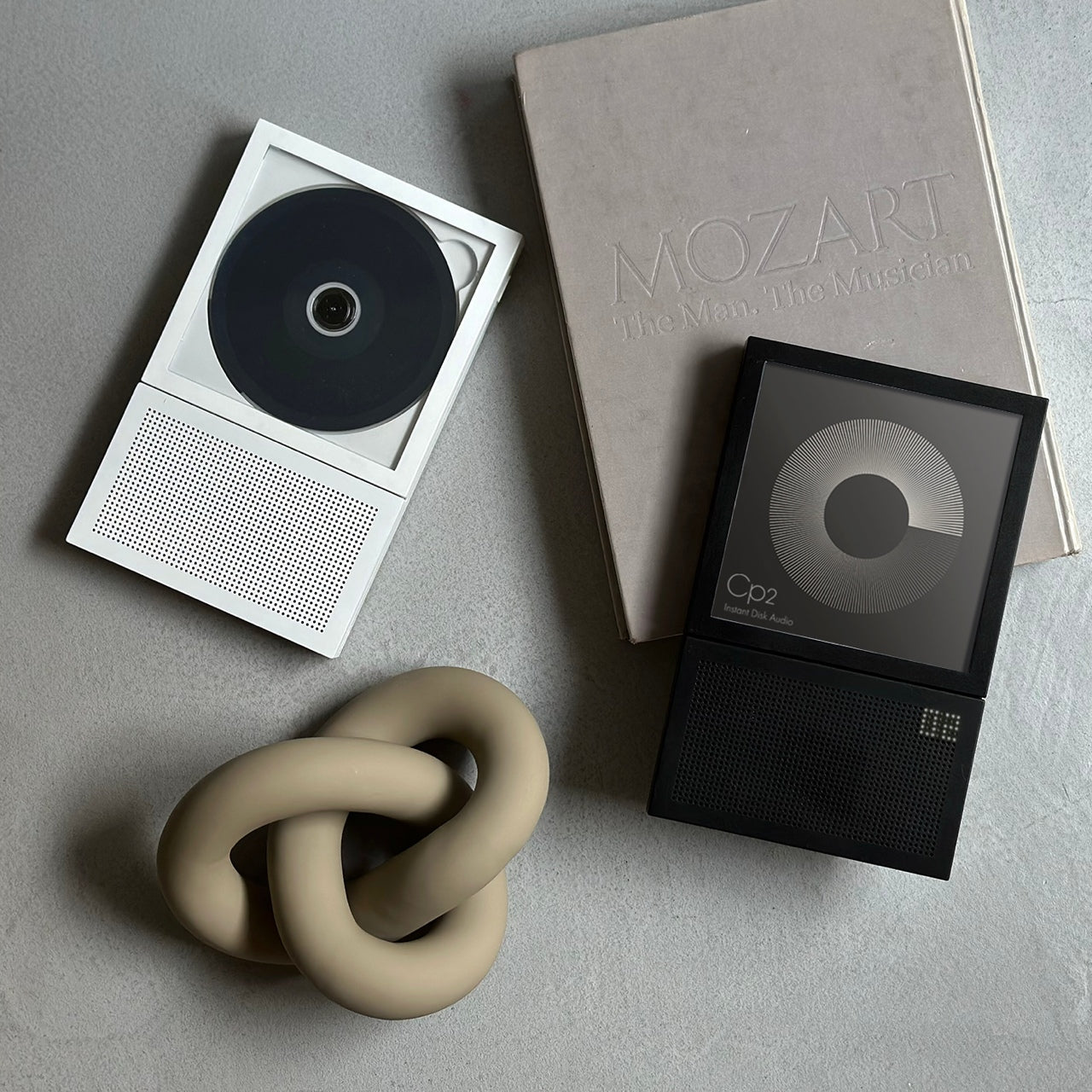
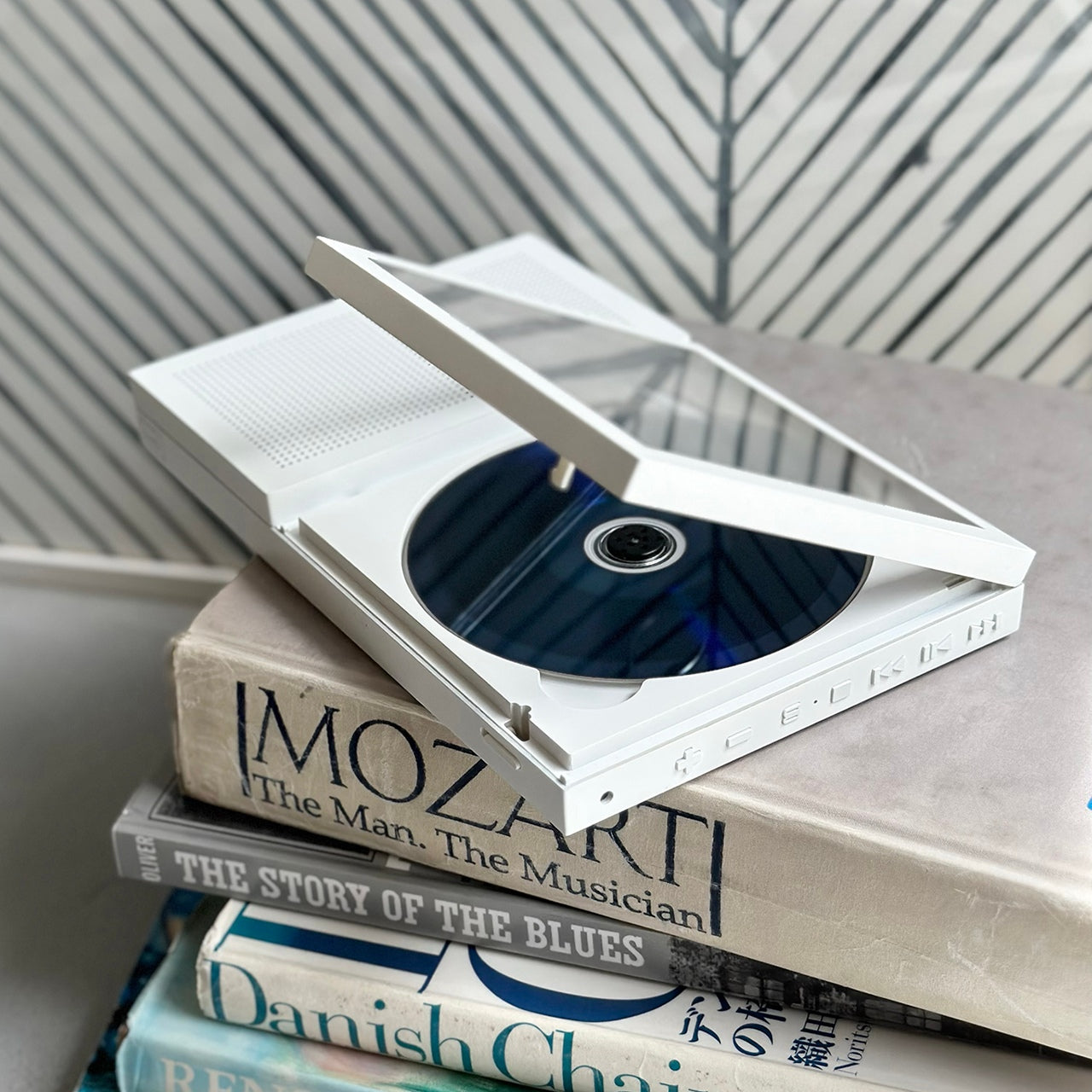
5. Portable CD Cover Player

Album art deserves equal billing with the music it represents. The Portable CD Cover Player acknowledges this truth through clever design that displays the CD jacket while playing the disc inside. A convenient pocket holds the cover art front and center, creating an audiovisual experience that honors how albums were meant to be consumed—as complete artistic packages. The built-in speaker means genuine portability, taking your music and its visual identity anywhere. Wall-mountable design transforms it into a room decoration that actively plays rather than just displaying static art. For vintage lovers who understand that album covers represent significant graphic design history, this player finally gives physical media the presentation it deserves.

The minimalist design philosophy lets the album art itself become the visual centerpiece. Clean lines and simple operation keep the focus on the music and imagery rather than the player’s own aesthetic. The built-in speaker and rechargeable battery provide authentic portability without requiring external amplification. This solves the eternal collector’s dilemma: beautiful album covers hidden in storage because there’s no good way to display them while playing. The Portable CD Cover Player makes your music collection into a rotating art gallery, celebrating the graphic design, photography, and typography that made physical music formats so visually rich. It’s nostalgia that understands albums were always multi-sensory experiences, and that separating audio from visual diminishes both.

Click Here to Buy Now: $199.00

What we like

  • Integrated pocket displays CD jacket art during playback, honoring a complete album experience.
  • Built-in speaker and rechargeable battery enable genuine portability without external equipment.
  • Wall-mountable design transforms music playback into active room decoration.
  • Minimalist aesthetic lets album artwork become the visual focus.

What we dislike

  • Built-in speaker quality is likely compromised compared to dedicated audio systems.
  • The wall mount bracket, sold separately, adds cost beyond the base player price.

Gifting Timeless Design

Vintage lovers aren’t stuck in the past—they’re selectively mining it for design wisdom the present often forgets. These five gadgets honor that philosophy by capturing retro aesthetics without sacrificing modern functionality. From CD players that embrace Bluetooth to mechanical orreries that predate electricity itself, each gift proves that timeless design transcends any single era. They’re conversation pieces that actually function, nostalgic objects that genuinely serve contemporary needs, and beautiful things that happen to be useful.

The best retro gifts acknowledge why certain designs endure while making them accessible to how we actually live today. These gadgets don’t force you to abandon modern conveniences to appreciate vintage aesthetics. They bridge eras elegantly, letting vintage lovers enjoy the warmth of analog inspiration through contemporary functionality. Whether celebrating a birthday, marking an occasion, or simply recognizing someone’s refined taste, these gifts speak a language of quality, character, and enduring style that transcends temporary trends.

The post Retro Gadgets For Vintage Lovers: 5 Nostalgic Gifts That Actually Work In 2025 first appeared on Yanko Design.

Samsung Galaxy Z Roll 5G: The 2025 Leak We’ve Been Waiting For

Samsung Galaxy Z Roll 5G: The 2025 Leak We’ve Been Waiting For

The Samsung Galaxy Z Roll 5G represents a bold step forward in smartphone technology, introducing an innovative rollable display that reimagines how users interact with their devices. Scheduled for release in the latter half of 2026, this innovative smartphone is designed to deliver a seamless, crease-free screen experience, setting a new benchmark for mobile design. […]

The post Samsung Galaxy Z Roll 5G: The 2025 Leak We’ve Been Waiting For appeared first on Geeky Gadgets.

Posted in Uncategorized

Running an 1930s newspaper, foreseeing martial arts fights and other new indie games worth checking out

Welcome to our latest roundup of what's going on in the indie game space. A whole bunch of intriguing games have arrived over the last week or so, and we got some tasty details on some upcoming projects, including one called Drywall Eating Simulator (trust me on this one).

But first, an update on a game that's been around since 2004 and had completely flown below my radar until now. That’s despite it reaching more than 80,000 daily unique players and having more than 4 million players overall. You can seemingly do pretty much whatever you want in Torn, including studying to become a doctor, opening a hair salon or buying a home (it's truly a fantasy world). However, this is a place where crime is rife. The team behind the text-based online RPG this week revealed some fascinating stats to mark the 21st anniversary. 

For instance, 1,204 people who joined the fray in 2004 are still active, including at least one who has been there since the first day. Since Torn City was established 21 years ago, more than 3.6 billion criminal offenses have been committed and yet its justice system has only doled out just under 52 million prison sentences. Since August alone, more than 4.4 million buildings have been burned. Players have committed more than 410 million assaults against each other, 12 percent of which targeted the groin. 

Torn sounds super fascinating! I love that it's been running for so long and still thriving. More than 31,000 players have subscribed to support the game and keep it running, though it’s free to play. The developers have updates planned for next year and beyond. I'm looking forward to checking it out at some point and maybe roleplaying as a goody-two-shoes flower shop owner. 

New releases

From publisher Twin Sails Interactive and the four-strong team at Sparrow Night comes News Tower, which arrived fully formed this week after nearly two years in early access. This is a management sim that tasks you with running your own newspaper in 1930s New York. 

Starting in the wake of the 1929 stock market crash and mobsters smashing up the newsroom, you'll try to turn around a struggling publication that you inherit from your family. You'll construct offices and set up printing presses; hire and manage reporters and other staff; assemble your weekly newspaper; and deal with various groups that are jostling for power and trying to influence your coverage. 

I thought last year's Times and Galaxy, which casts you in the role of a robot journalist, was mostly lovely, but it missed the mark on the actual newsgathering side of the equation. I’ve found no such issues with News Tower so far. I love that a story can change when you assign different reporters to each step (say, one focused on crime vs. one focused on politics). They'll find distinct angles, which could help you sell more copies of the paper or draw readers away from rivals when you land an exclusive.

I'm only a little ways into News Tower, but as someone who started out their career at a newspaper, this is like catnip to me. I expect to spend quite a bit of time with this game. News Tower 1.0 is out now on Steam. It usually costs $25, though there's a 20 percent discount until December 2.

Forestrike is a 2D martial arts roguelite from Skeleton Crew. You can practice combat encounters as many times as you like, but you only have one proper shot to take out multiple opponents in each battle. It sounds a little like Katana Zero in that regard. Succeed, and you'll move forward. Lose, and it's the end of your run. If you manage to win without relying on this foresight feature, you'll achieve an "ultimate victory."

On each run, you'll choose your path and learn new techniques. Forestrike, which is published by Devolver Digital, seems interesting since it's a blend of puzzle game and action roguelite — you'll need to figure out a way to succeed in each battle and then pull that off successfully on your actual attempt. The game is out now on Steam for $10. It's coming to Nintendo Switch soon.

Here's a puzzle game of a different flavor. In Umami, from Mimmox and co-publisher Nexting, the aim is to create dioramas of cakes and food towers using virtual wooden blocks. You have a reference guide to work from if you choose, or you can just try to figure out for yourself how all the pieces fit together. 

It's a lovely, relaxing experience with some laid-back beats. Umami is out now on Steam. It's usually priced at $14, though there's a 15 percent discount until December 1.

A Pinball Game That Makes You Mad is a game from Azimuth Studios in the vein of rage-inducing precision platformers like Getting Over It with Bennett Foddy and Only Up. The aim is to guide a person who is trapped in a pinball to the goal using a single button that controls the flippers.

Make a mistake, and you can erase a great deal of progress. A press release indicated that a playthrough will take between 10 and 30 hours, which is a huge range.

I'll never find out myself how accurate that estimated playtime is, because the demo did, in fact, make me mad and not want to play the full game, though I appreciate what the devs are going for. A Pinball Game That Makes You Mad is out now on Steam for $10, but a 15 percent discount until November 25 brings the price down to $8.50.

I really like that I've been able to keep up with this little tradition of including a dog game in this roundup every week. Samurai Academy: Paws of Fury is a followup to Paws of Fury: The Legend of Hank, a 2022 animated movie I haven't seen that's apparently a "loose remake of Blazing Saddles." Color me intrigued!

This is an action-adventure game with platforming and tower defense aspects. It casts you in the role of Hank, a "dog samurai in a world full of cats." It looks quite charming, though it does remind me that I really do need to go back and get the platinum trophy in Ghost of Yōtei. Samurai Academy: Paws of Fury — from developers Fishing Cactus and ZEROlife Games, and publisher Maximum Entertainment — is out now on Steam, Nintendo Switch, PS5, and Xbox Series X/S. There's a two-player co-op mode available on all platforms, except for Switch.

Upcoming 

Erosion is a neat-looking twin-stick action roguelike from Plot Twist (The Last Case of Benedict Fox) and publisher Lyrical Games. Every time you die, time advances by a decade and the post-apocalyptic Wild West setting shifts accordingly, with the decisions you make influencing the future. 

In this open-world shooter, you'll delve into dungeons filled with enemies and bosses as you try to rescue your kidnapped daughter. Avoid death often enough, and you might just find your offspring before she reaches old age. There are more than 100 skills and modifiers to unlock and dozens of weapons available to help you assemble an effective build. The environments are destructible too.

I really like the voxel art here, including the way the characters bob up and down. Erosion is set to arrive in spring 2026 in early access on Steam, Xbox Series X/S, Xbox Cloud and the Xbox PC app. It'll be available on Game Pass.

Speaking of Xbox, one of my favorite games of last year is coming to Microsoft's consoles. The comedy adventure Thank Goodness You’re Here! is slated to hit Xbox Series X/S on December 9. The delightfully rude and funny game from Coal Supper and Panic is already out on PC, PS4, PS5 and Nintendo Switch. 

We're far from done with the silliness this week. If you haven't quite had your fill of obstacle-laden walking sims for this year after Baby Steps, might I direct your attention toward Ultimate Grandma Simulator? 

You'll help Granny navigate a dozen levels as she searches for her missing grandson. You'll need to evade everything from wrecking balls to zombies, and parry projectiles like frisbees and bombs. A serious game this is not. If you collect hidden golden coins, you'll unlock some of Granny's memories too. Circo, PlumPointTwo and publisher We Don't Have A Studio are set to bring Ultimate Grandma Simulator to Steam on December 2.

I must admit, the title of Drywall Eating Simulator caught my attention and not in a good way. But after reading more about it and watching the trailer, I'm intrigued by this game from Peripheral Playbox.

According to the Steam page, it's a "physics-based 3D adventure carefully constructed to simulate the delights of late capitalist life." After engaging in mindnumbing small talk and dealing with the infuriating stressors of everyday life, what better way to unwind than by munching on some drywall? Just don't tell anyone about your cravings. 

This game has a very odd and yet somehow deeply relatable concept. Definitely something to chew on. It's coming to Steam on December 10.

This article originally appeared on Engadget at https://www.engadget.com/gaming/running-an-1930s-newspaper-foreseeing-martial-arts-fights-and-other-new-indie-games-worth-checking-out-120000559.html?src=rss

Xbox Magnus vs PS6 : Which Console Delivers More Power for Less?

Xbox Magnus vs PS6 : Which Console Delivers More Power for Less?

What will gaming look like in 2027? With the Xbox Magnus and PlayStation 6 (PS6) on the horizon, the next generation of consoles promises to push the boundaries of performance, design, and innovation. Microsoft and Sony are set to redefine what gamers can expect from their living rooms, offering vastly different visions of the future. […]

The post Xbox Magnus vs PS6 : Which Console Delivers More Power for Less? appeared first on Geeky Gadgets.

Posted in Uncategorized

Google Gemini 3 Review : Real Projects, Code & Honest Benchmarks, You Might Be Surprised

Google Gemini 3 Review : Real Projects, Code & Honest Benchmarks, You Might Be Surprised

What if the AI revolution isn’t quite as seamless as it seems? Google’s Gemini 3, hailed as a cornerstone in the race toward Artificial General Intelligence (AGI), has been making waves with its bold claims and innovative features. From its ability to process text, images, and code simultaneously to its standout performance in UI design, […]

The post Google Gemini 3 Review : Real Projects, Code & Honest Benchmarks, You Might Be Surprised appeared first on Geeky Gadgets.

Posted in Uncategorized

Samsung Galaxy S26: The Leaks Just Got Crazy

Samsung Galaxy S26: The Leaks Just Got Crazy

The Samsung Galaxy S26 series brings together a combination of technological advancements and thoughtful refinements, aiming to elevate performance, photography, and overall user experience. Officially set to launch in late January 2025, with sales beginning in early February, the S26 lineup is positioned to strengthen Samsung’s foothold in the competitive smartphone market. However, regional variations […]

The post Samsung Galaxy S26: The Leaks Just Got Crazy appeared first on Geeky Gadgets.

Posted in Uncategorized