Cut and slice with confidence with this majestic Hinoki cypress cutting board

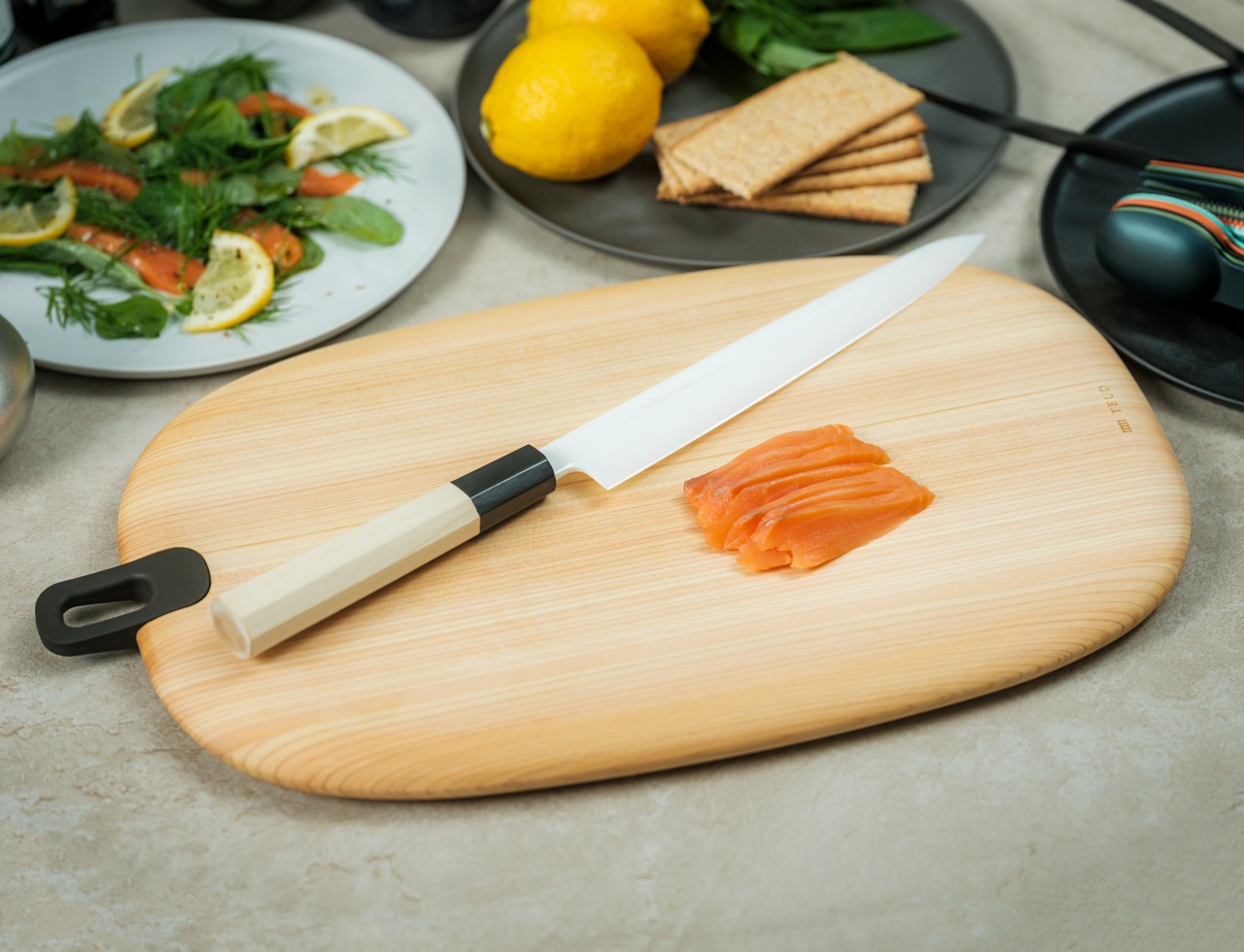
Having a sharp kitchen knife is essential to successful and stress-free food preparation, but it’s really only half of the cutting equation. You also need a dependable cutting board on the opposite side to receive the sharp edge of the blade cutting through fish, meat, vegetables, and other ingredients. There is a variety of materials used for these cutting boards, but most of them just don’t make the cut (pun intended). Plastic ones are too soft and easily get damaged, while metal or stone boards are too hard and damage the knife instead. Wood is a good medium, but not all kinds of wood are created equal or are equally up to the task. This rather stylish cutting board rises to the challenge by calling upon the majestic properties of Japan’s Hinoki cypress tree.

Designer: Metaphys for TEUD
Click Here to Buy Now: $59

The cypress tree has always been associated with sacred legends and its Japanese equivalent takes that to an artistic level. Hinoki wood is considered to be a precious material and it has been used to build temples and palaces for centuries. The slow growth period of this sacred tree results in straight grains and an elegant pinkish color, giving it a unique and premium aesthetic that is almost too good to be used on a kitchen cutting board.
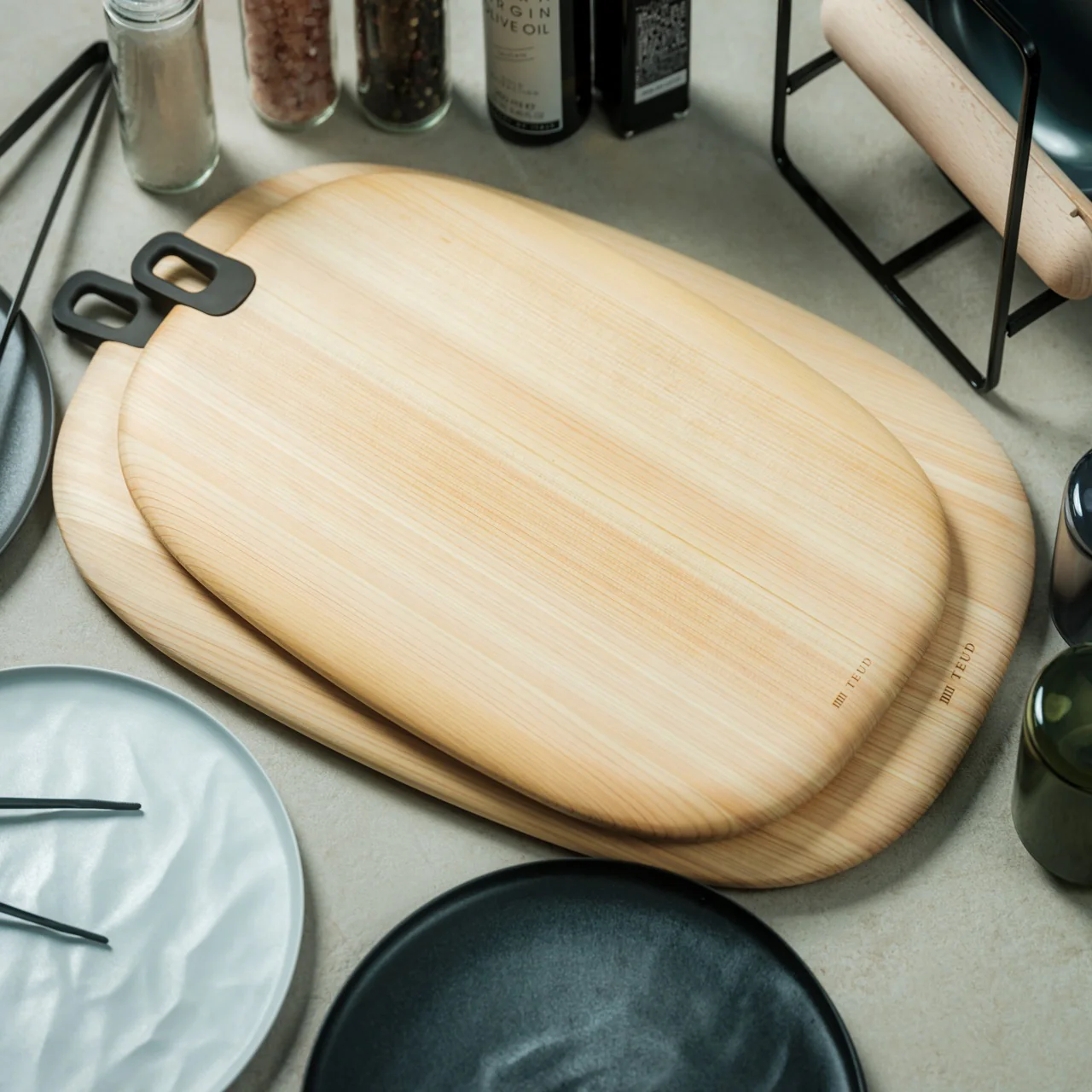
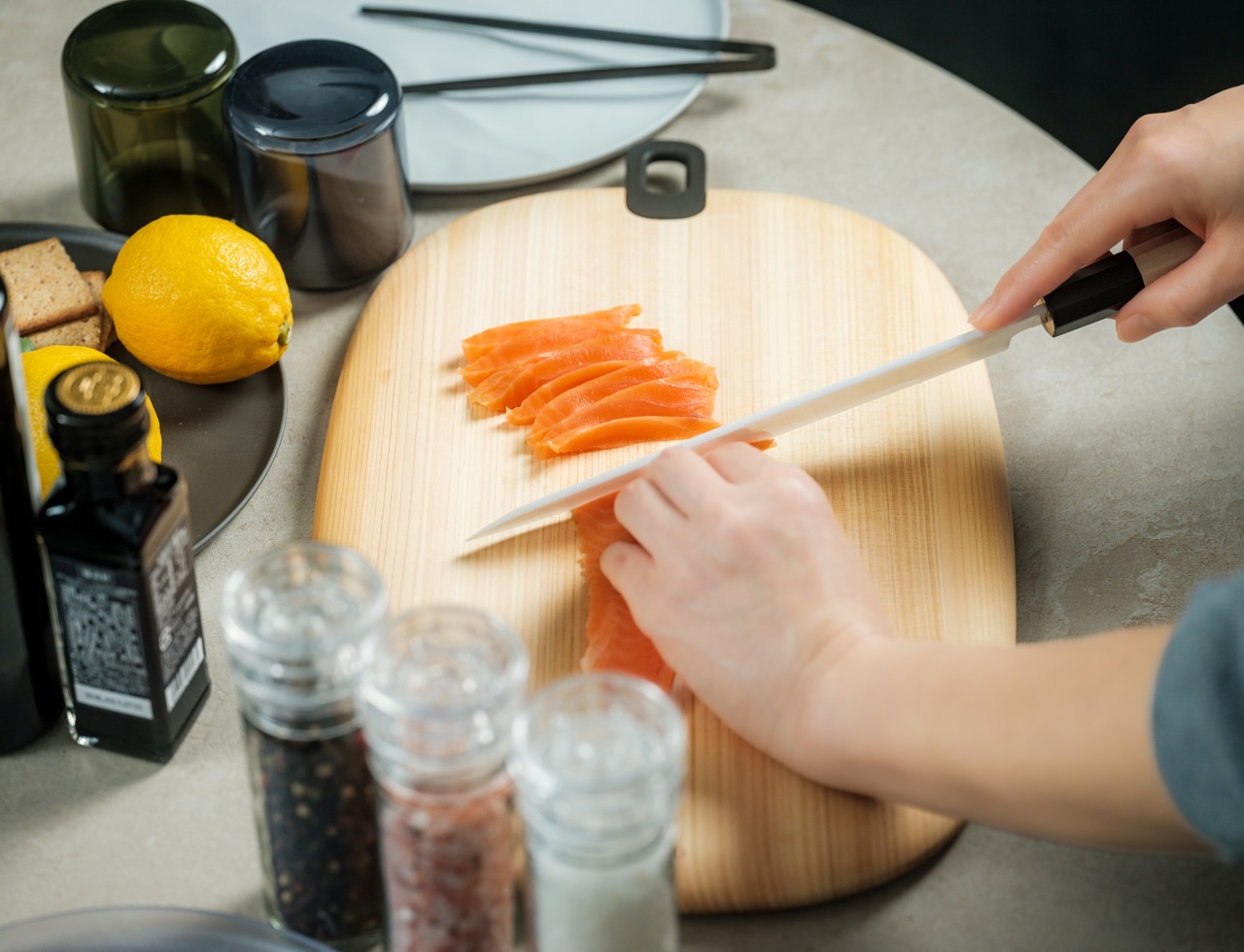
Hinoki wood is, in fact, the perfect kind of wood to be used for this kind of design. It has natural antibacterial and antimicrobial properties, which means it’s resistant to mold. The wood also has a natural fragrance that pleases the sense of smell even after having so many kinds of ingredients cut on its surface. Most importantly, it has a medium hardness that is gentle on knives, ensuring that they stay sharp longer. When paired with our dashing Ceramic Sashimi Knife, you get a dynamic duo that’s going to last you a very long time with minimum fuss.
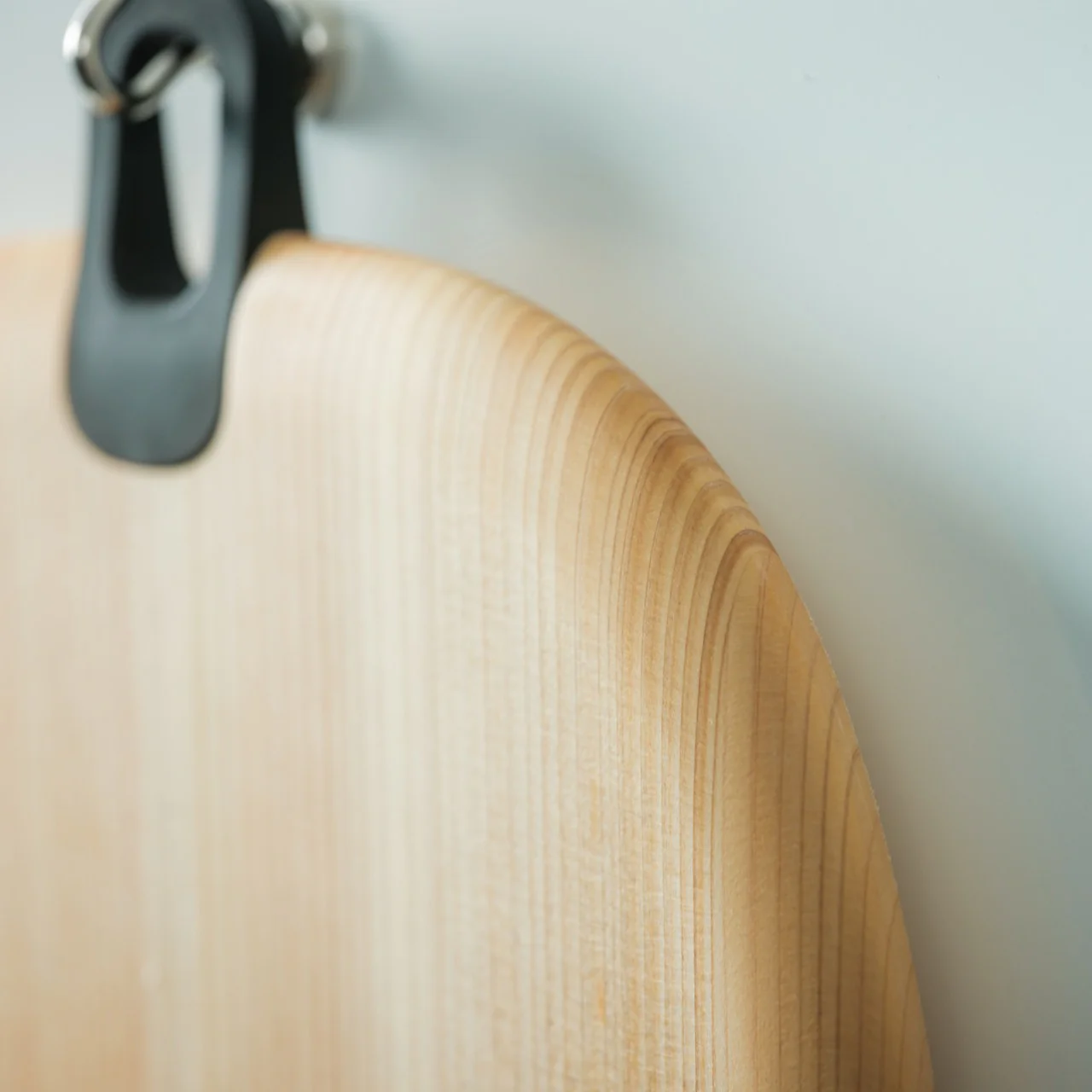
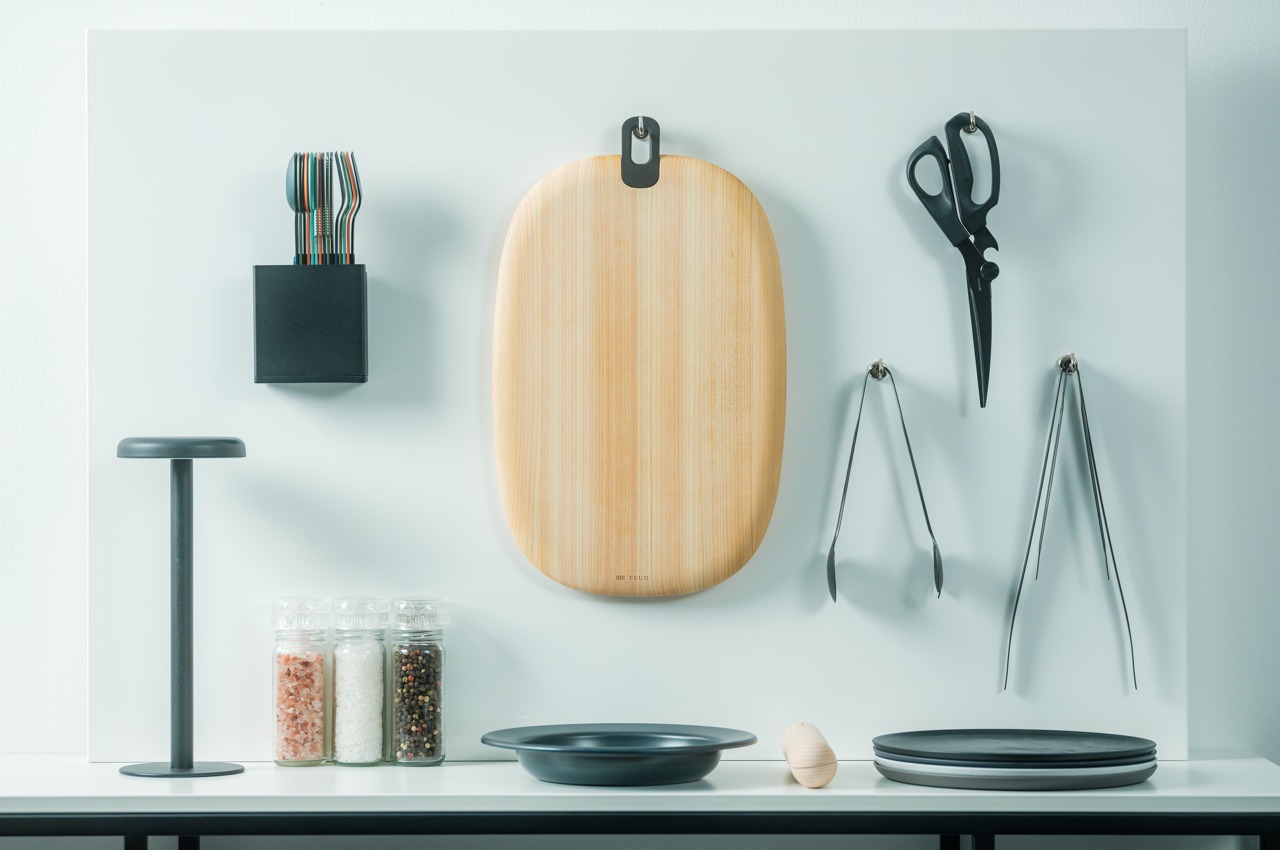
Unlike most of its kind, the Hinoki Cutting Board’s oval shape and sloping edges give it a gentler and more visually pleasing appearance. It isn’t just for show, though, as the shape also makes it easier to drain fluids and juices off the board, coupled with the Hinoki wood’s natural drain-friendly property. And thanks to cypress wood being lightweight, the cutting board is easy to handle, clean, and store away when not needed, though you might want to have its sleek shape on display all the time anyway.
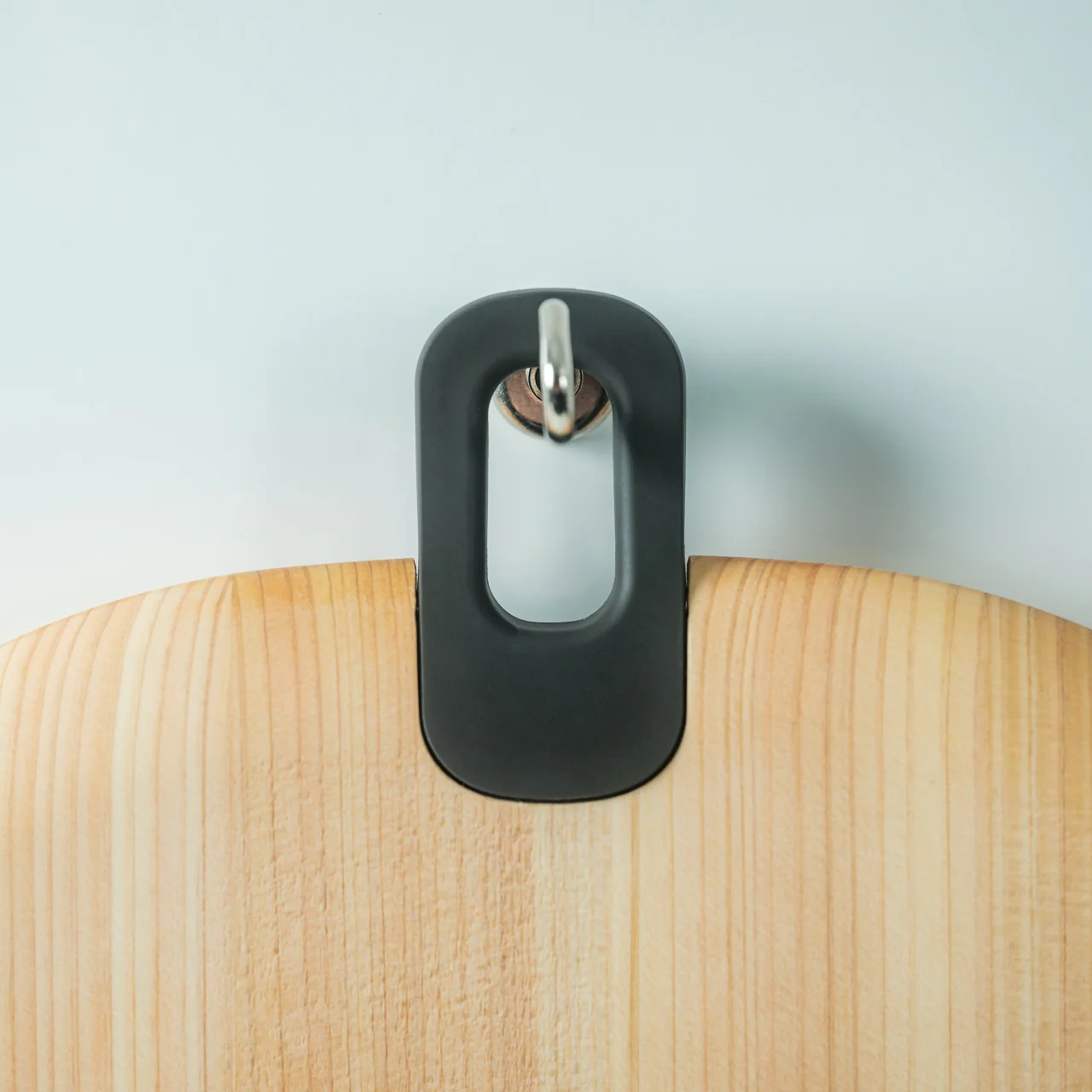
Of course, bare wood wouldn’t be good as a cutting board, which is why even the Hinoki board has a silicone coating on top for protection, especially against water and moisture. This coating penetrates as deep as 2mm into the fibrous part of the wood, ensuring that it can’t accidentally be removed or easily damaged just by cutting over the surface. Whether you’re gently slicing sashimi with our Ceramic Kitchen Knife, cutting juicy fruits, or dicing portions of meat, this regal Hinoki Cutting Board will support all your food prep needs, while making sure your knife stays sharp for a very long time.

Click Here to Buy Now: $59

The post Cut and slice with confidence with this majestic Hinoki cypress cutting board first appeared on Yanko Design.

Nendo Installs A Carbon-Capturing Wall In A Contemporary Japanese Home

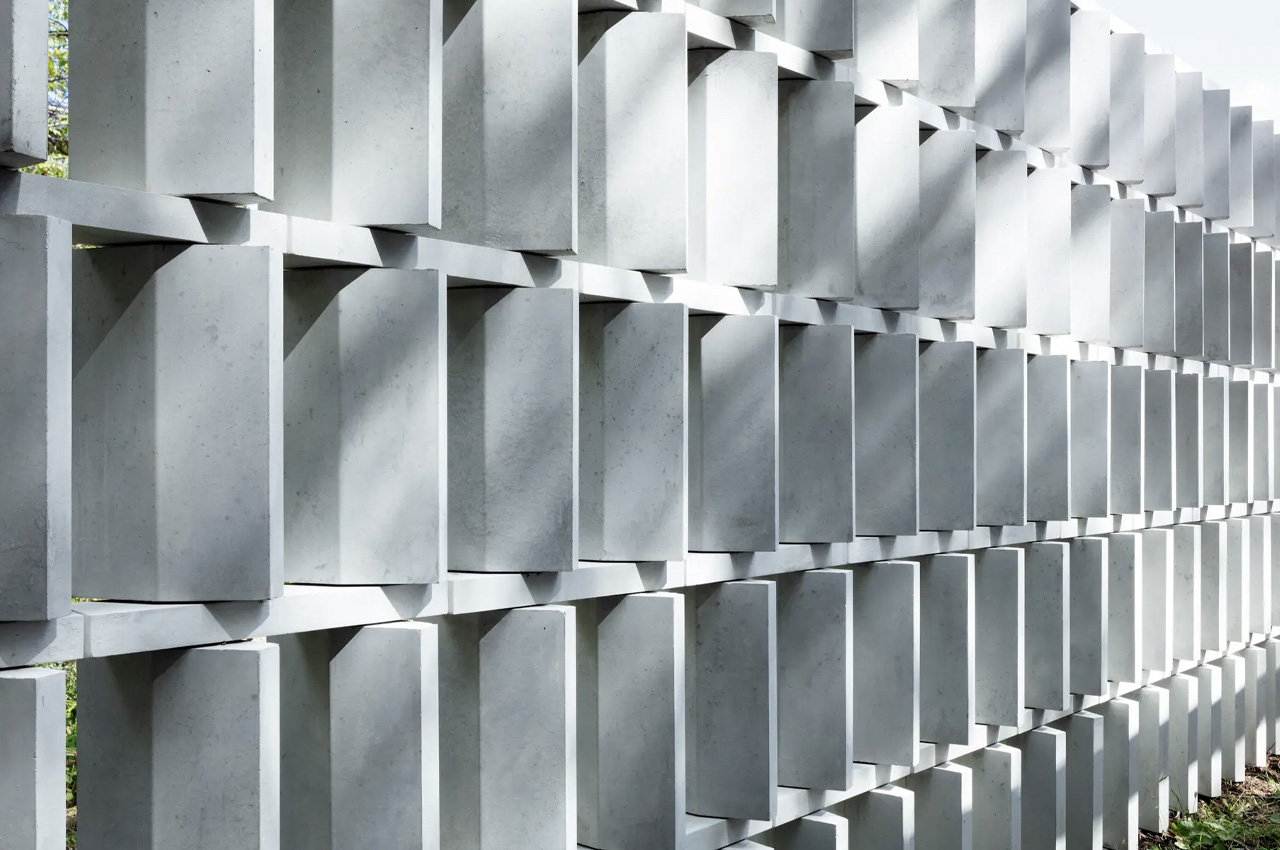
Most of our modern infrastructure and architecture is bad on concrete, and the production of cement used in concrete is one of the biggest causes of worldwide carbon dioxide emissions. This constitutes a serious issue that must be addressed, especially with the current state of our Planet Earth. In this effort, Nendo displays a specimen of a greener and cleaner way to construct and build with its Block-Wall House. The Block-Wall House is partially built using a new concrete that captures carbon dioxide instead of emitting it!

Designer: Nendo & Kajima Corporation

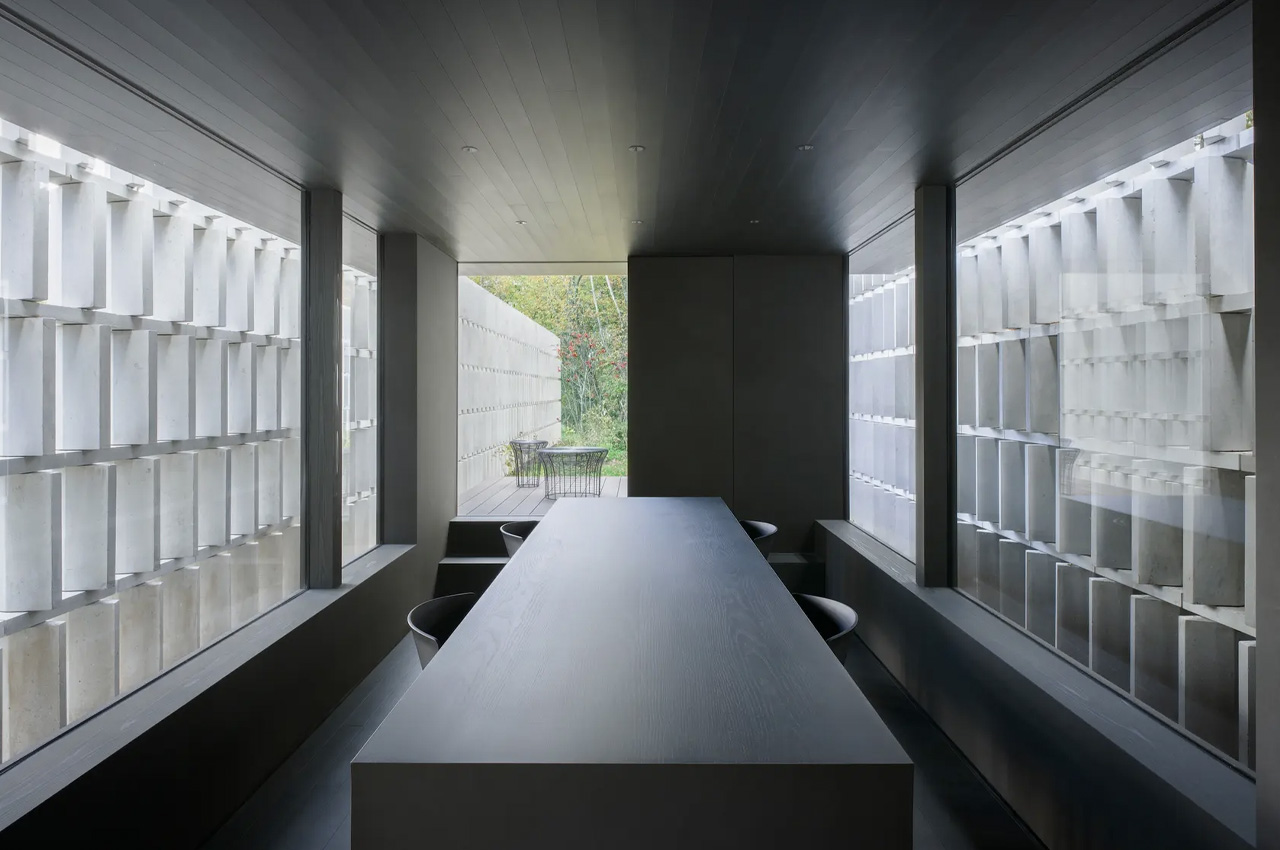
Tucked away in Japan’s Nagano Prefecture, the Block-Wall House is located next to a rural road. The house features a lot of glazing, to offer privacy against pedestrians and passing vehicles. The home is equipped with an angled screen which lets residents look out but makes it quite difficult for a passerby to glance inside. This screen is made using 2000 blocks which have been arranged in parallel rows to form five walls, with a length of 360 feet. This screen is made from the aforementioned sustainable and novel concrete!

This newly developed concrete is made by the Kajima Corporation in collaboration with the Chugoku Electric Power Co, Denka, and Landes Co. The concrete is named CO2-SUICOM, and for its production, a special cement mixture is placed in a curing chamber, and carbon dioxide is pumped into the chamber for absorption. This absorbed CO2 gets stuck inside the concrete and is not released. It is as strong as regular concrete!

“Generally, concrete hardens through a chemical reaction between cement and water,” explains Kajima Corporation. “But with CO2-SUICOM, over half the cement is replaced with a material we call γ-C2S. Instead of reacting with water, γ-C2S reacts with the CO2 in the air to harden. After mixing the materials needed to create CO2-SUICOM, the concrete can be placed in a location with high CO2 levels so it can capture the CO2 and harden, trapping the gas inside. For example, a thermal power plant or other facility that produces carbon-heavy exhaust gases can redirect the gases into a carbon sequestration chamber, where concrete products made with CO2-SUICOM can be placed to capture the CO2 in the gases.”

Currently, the price of producing CO2-SIUCOM concrete is about three times higher than usual concrete in Japan. Hence, work is being done to bring down the price, and Kajima Corporation believes that the concrete will become more economical in the future.

The post Nendo Installs A Carbon-Capturing Wall In A Contemporary Japanese Home first appeared on Yanko Design.

Save your nails and beat the stress with this innovative wave spring key ring

We all know that it’s a good idea to keep keys together in one place, but no one talks about how painful that can actually be. Key rings are basically a single piece of metal bent to coil in a circle, and that design hasn’t changed one bit in decades. It’s a simple design that’s meant to keep your keys secure to the point that you’ll break a sweat or break a nail when actually trying to add a key to the ring. Worse, the rings that do try to be more flexible and easy on the nails end up being less reliable instead because of their softness. Fortunately, the solution isn’t as complicated as you might think, as demonstrated by this distinctive key ring that takes its smarts from the design of aerospace equipment and cars.

Designer: MAENI

Click Here to Buy Now: $25

The common key ring is really just a flattened coil of metal, the most practical shape not just for holding a bunch of keys but also for securing them in place. In order to prevent those keys from accidentally getting loose, that coil provides no gap in between and is often quite rigid, requiring you to exert a lot of force to open one end for a key to get through, which often ends up with broken nails. Conversely, there are rings that are so thin and pliable that they get easily deformed the moment you deal with thicker keys and objects.

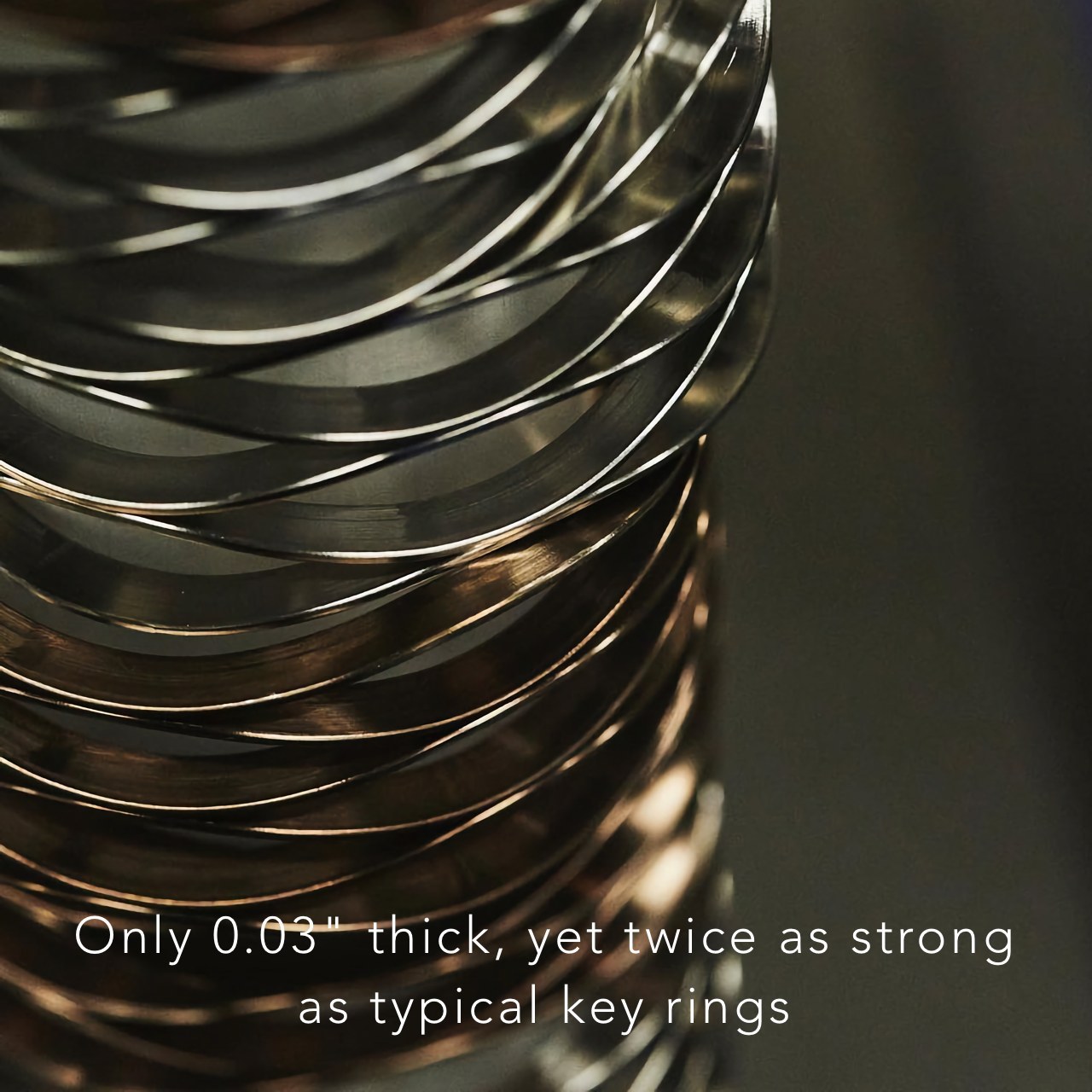
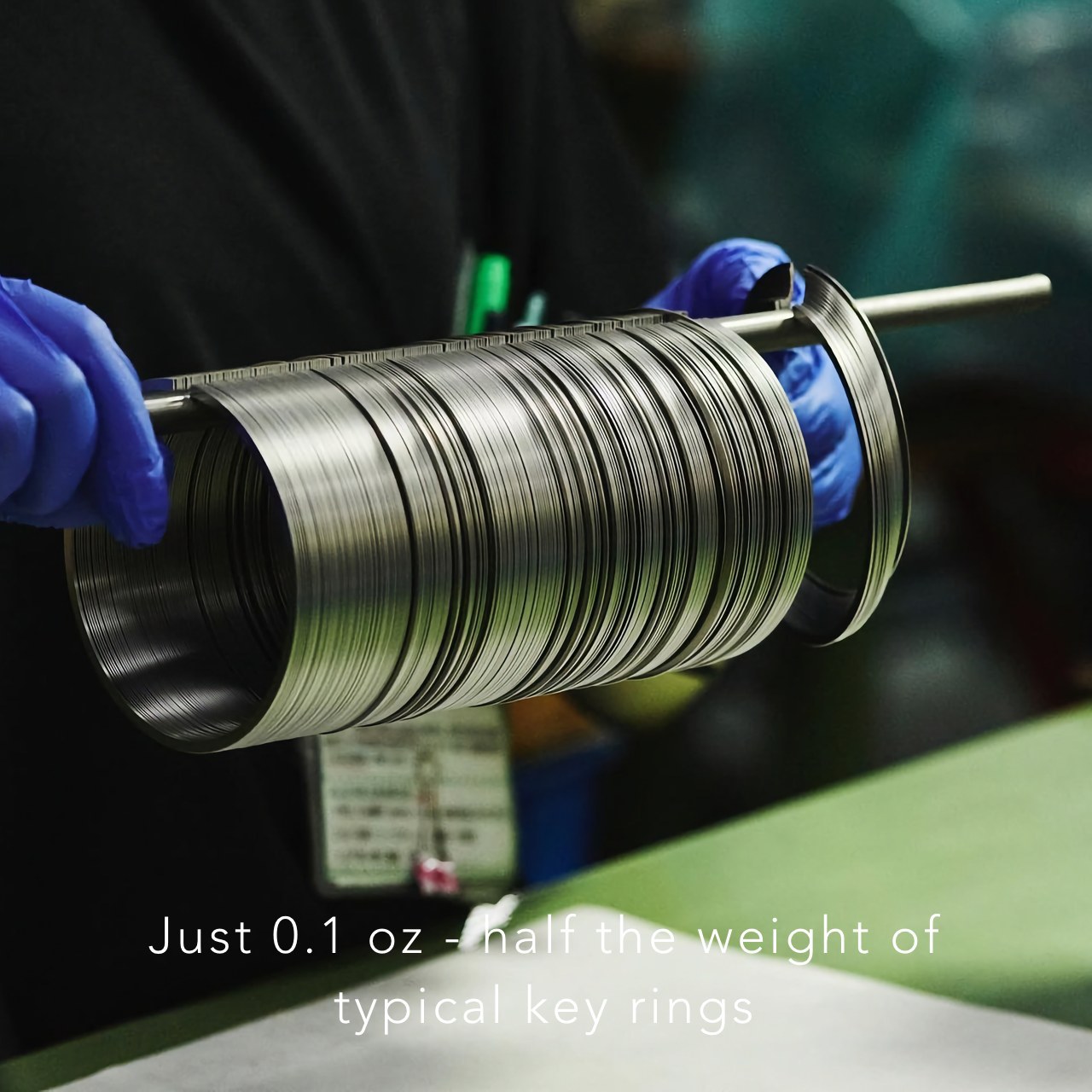
The simple answer to this decades-old probably is apparently to change the kind of structure used. Instead of that traditional coil spring, this key ring employs a “coiled wave spring” shape instead. This kind of spring is heavily used in heavy-duty vehicles and equipment, from aerospace to automobiles. Turns out that this same wavy shape is perfect for a more user-friendly key ring that won’t break nails or test your patience.

With this wave spring design, inserting a key is as easy as sliding it into the ring through the natural gaps made by the waves. To remove a ring, simply lift the tip without worrying about damaging your nail. The key ring is designed to be as stress-free to use as possible, removing any hurdle to keeping your keys organized and safe in a single place.

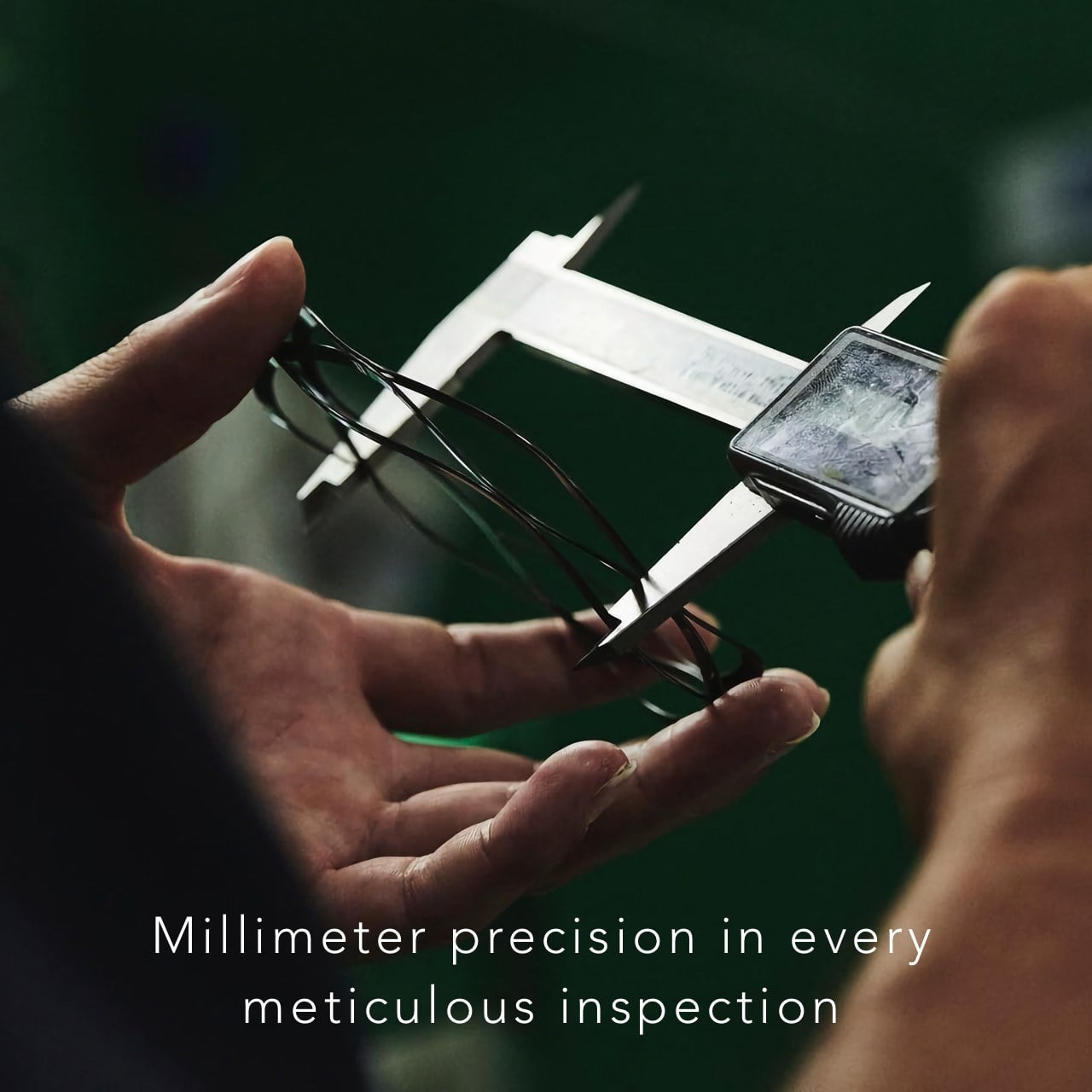
Despite its uncommon appearance, this stress-free key ring is actually lighter than a typical keyring at only 3 grams. That’s thanks to a thinner material, only 0.8mm thin, and its beautiful waveform shape. At the same time, it’s actually twice as strong with a high-tension stainless steel SUS304 body so it won’t get bent out of shape even if you insert a thick key. Whether it’s to protect your nails or to protect your sanity, this one-of-a-kind key ring will give you peace of mind knowing all your keys are in one place and that you can add or remove them easily as often as you want.

Click Here to Buy Now: $25

The post Save your nails and beat the stress with this innovative wave spring key ring first appeared on Yanko Design.

Adorable LEGO Feng Shui Fortune Cat can wave its hands to give you good luck!

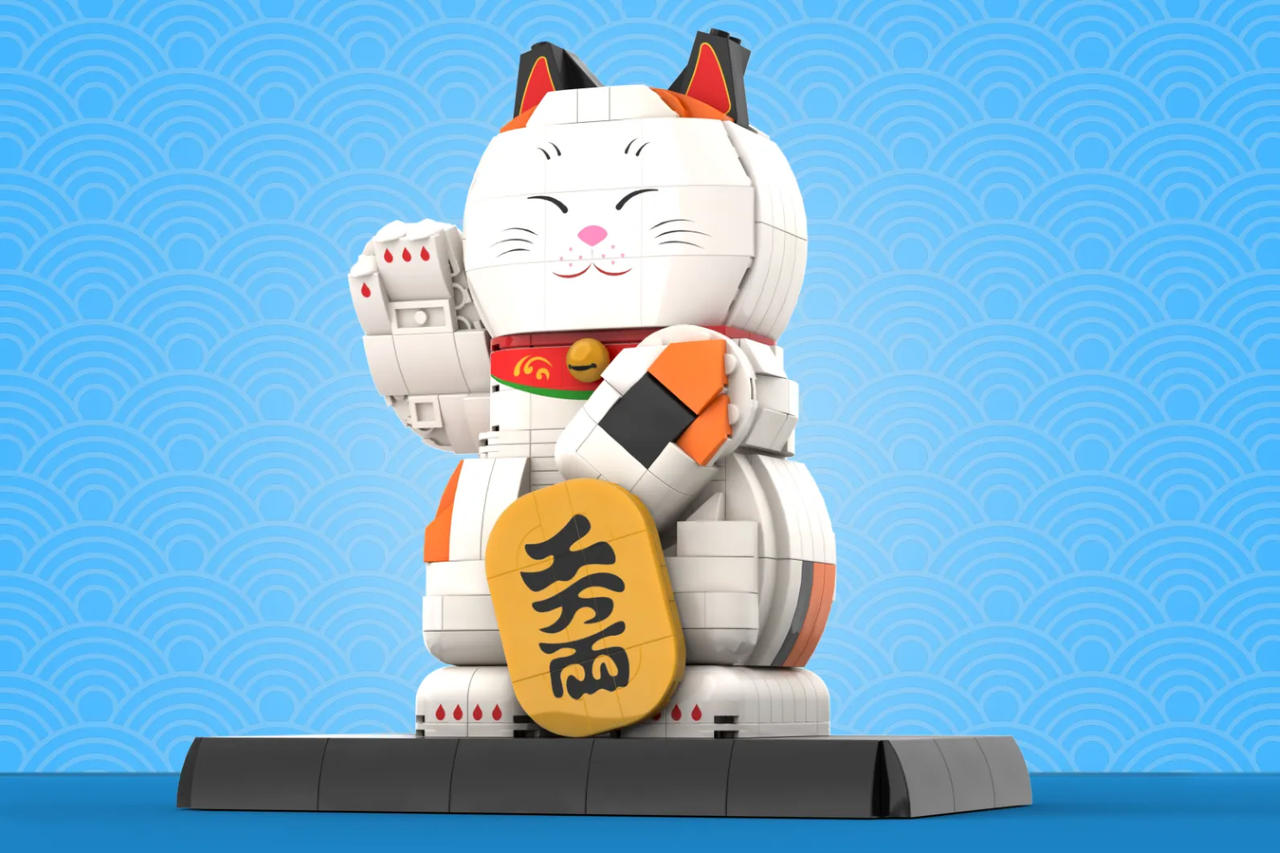
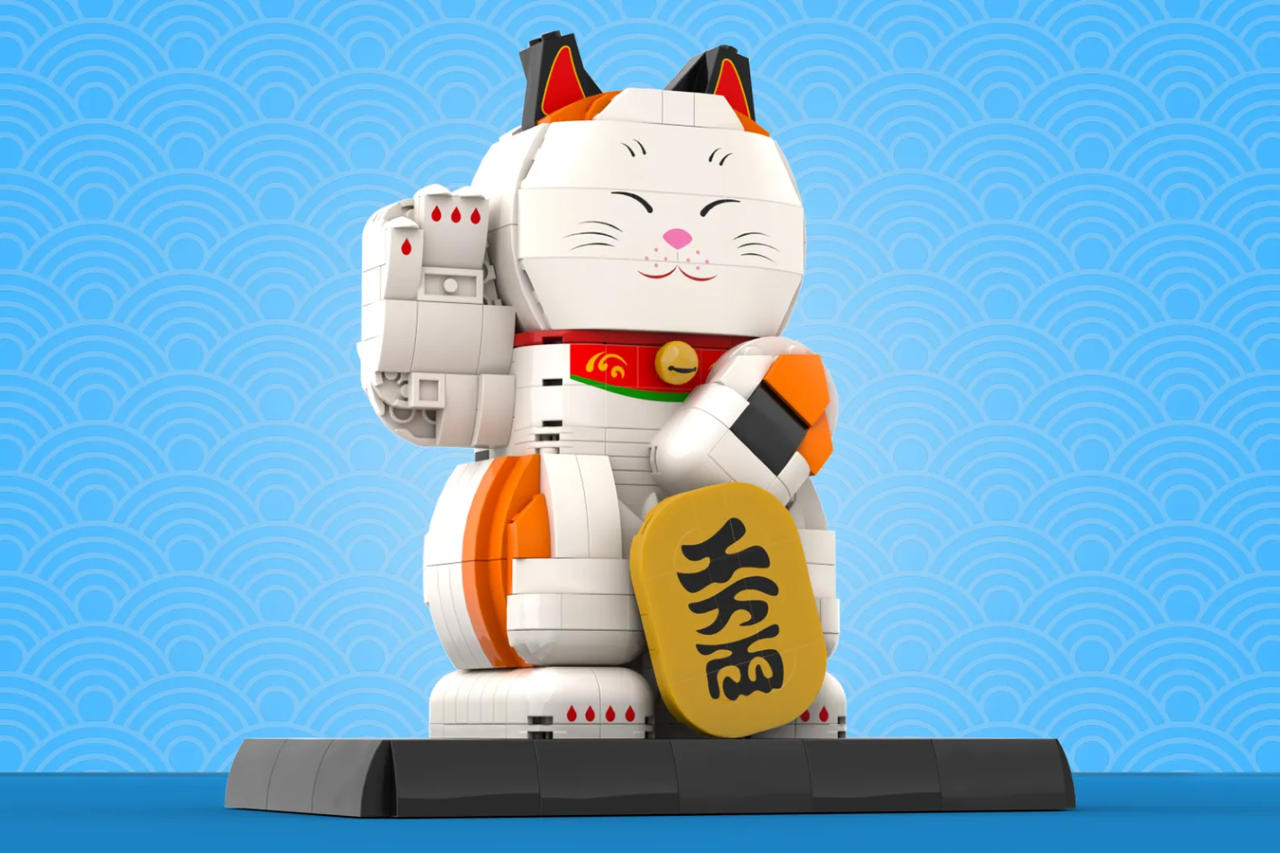
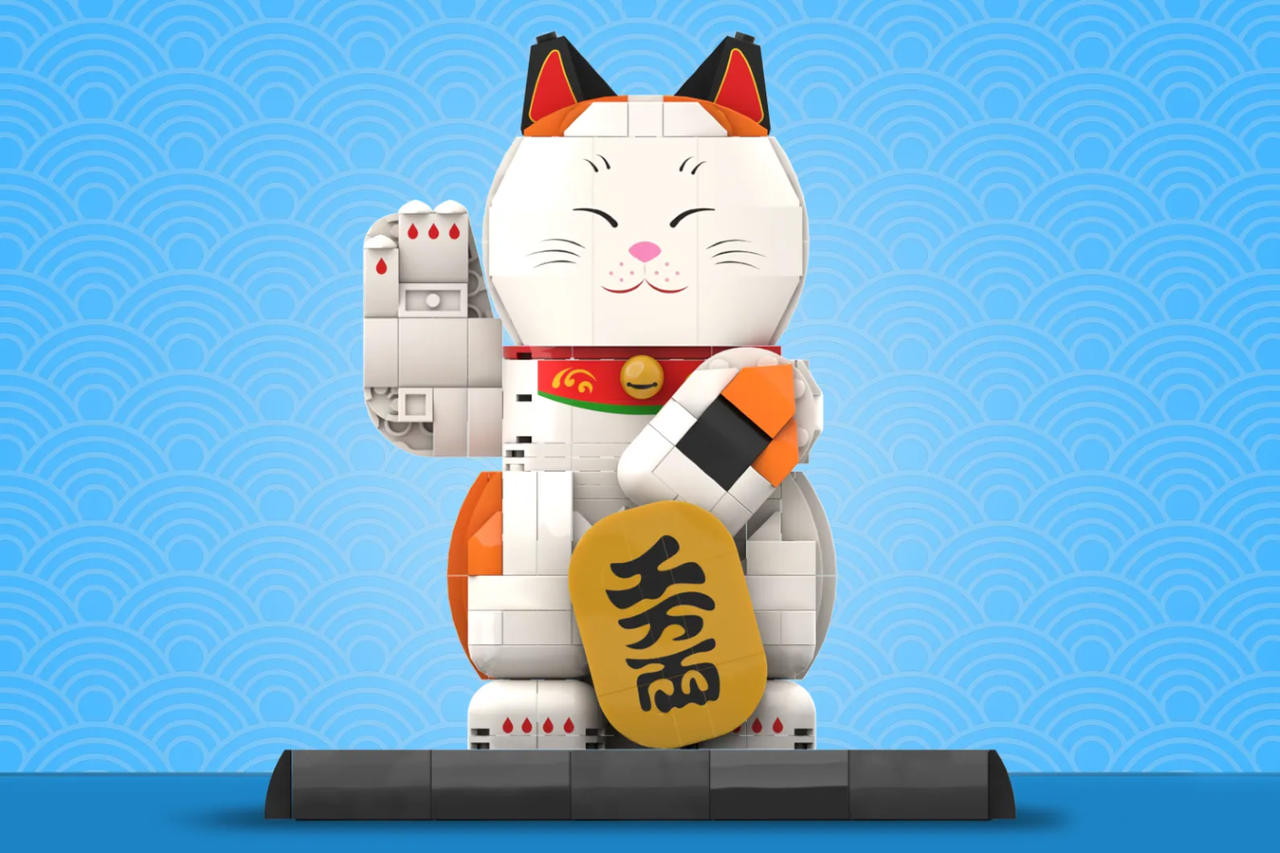
In Feng Shui, the lucky cat, also known as the maneki-neko or fortune cat, is a Japanese figurine that represents good luck, wealth, and prosperity. The figurine depicts a cat, usually a calico Japanese Bobtail, with a raised paw in a beckoning gesture. LEGO builder ‘2PPL’ decided to give this cultural icon its own brick build. Meet the LEGO Ideas Maneki Neko, an adorable sitting cat that waves its hands at you, practically giving you blessings for a more prosperous life!

Designer: 2PPL

“Distinctive features of the Maneki Neko include the raised paw, which can be either right or left depending on local tradition or belief, and it often wears a decorative collar or necklace with a bell,” says 2PPL. “The color of the Maneki Neko also has symbolic meanings: white is associated with purity and happiness, black wards off evil, gold symbolizes wealth and success, and red is linked to love and relationships.”

Although it’s entirely unclear how the Maneki Neko waves its hands, it’s likely to rely on a mechanism similar to the one found in the original. The original Maneki Neko uses an electromagnetic coil and a pendulum-style mechanism powered by a battery – it isn’t inconceivable that this LEGO one does so too, although making the mechanism out of LEGO bricks may be a bit challenging.

However, with over 2,300 supporters, the Maneki Neko is surely prospering on the LEGO Ideas forum, where fellow LEGO builders and enthusiasts gather to vote for their favorite fan-made creations. If a creation reaches the coveted 10,000 vote threshold, it’s sent to the LEGO internal team for review, following which it gets turned into a buyable box set. The LEGO Ideas Maneki Neko definitely has a long way to go till it gets to that mark, but if you do fancy a perpetually waving LEGO feline, head down to the LEGO Ideas website to vote for this project!

The post Adorable LEGO Feng Shui Fortune Cat can wave its hands to give you good luck! first appeared on Yanko Design.

Transform Your Cutting Experience with Scissors That Double as a Box Cutter

How much does it take to change the world? Some people would immediately think of literally big world-changing events, but it’s actually the little steps taken each day that gradually build up to make a longer-lasting difference. The same is true for design, where some of the most significant improvements don’t have to be drastic or even conspicuous. Little improvements here and there all add up to a whole new experience that turns an everyday tool into a delightful encounter each and every time. Case in point are these sleek scissors that look almost alien in their form, bringing just the right amount of design innovation that not only makes it seem like a piece of equipment from the future, it even makes using the simple tool a delightful quest as you snip, slice, and cut through your tasks every day.

Designer: NIKKEN

Click Here to Buy Now: $25 $29 (15% off at checkout). Hurry, deal ends in 48 hours!

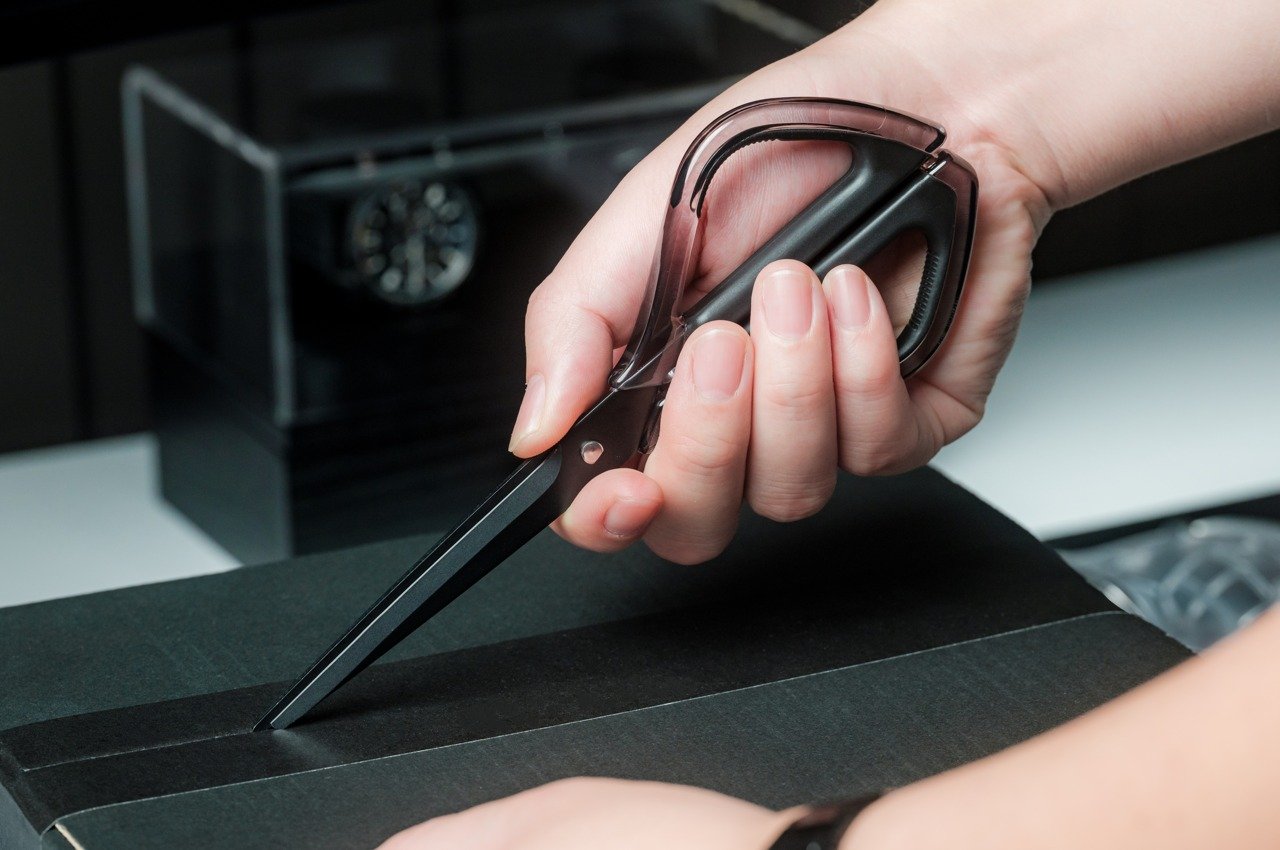
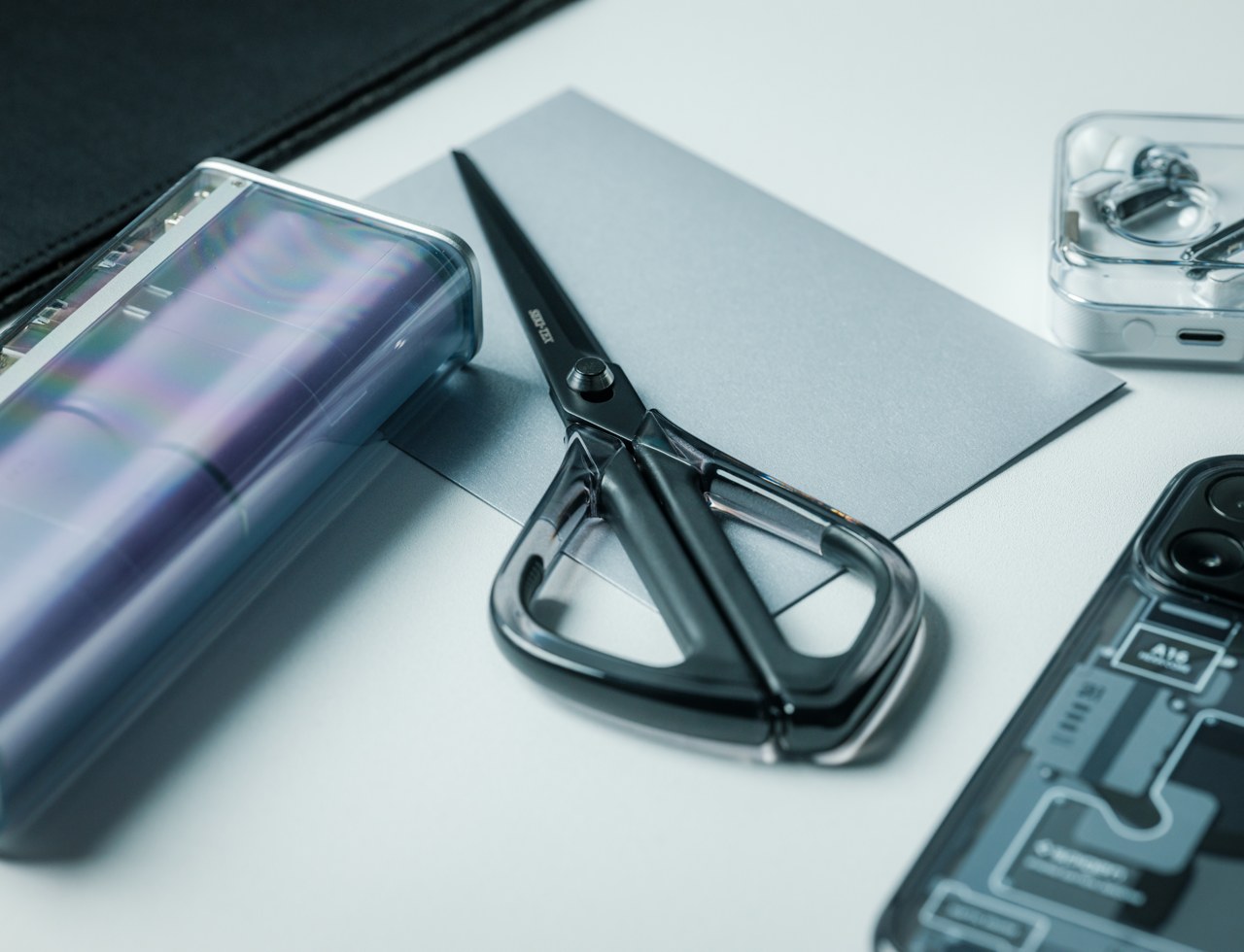
The most distinctive thing about these sleek scissors is their form. The drop-shaped handle is something you’ll rarely see in scissors, but it’s a small change that makes plain, boring shears look a little more interesting. Especially when those handles are made from transparent resin that, together with the organic shape, gives the scissors a unique character not unlike alien spacecraft. Of course, that alone isn’t enough to elevate the status of the tool, and indeed its biggest benefits are from things you can’t see but can definitely feel.

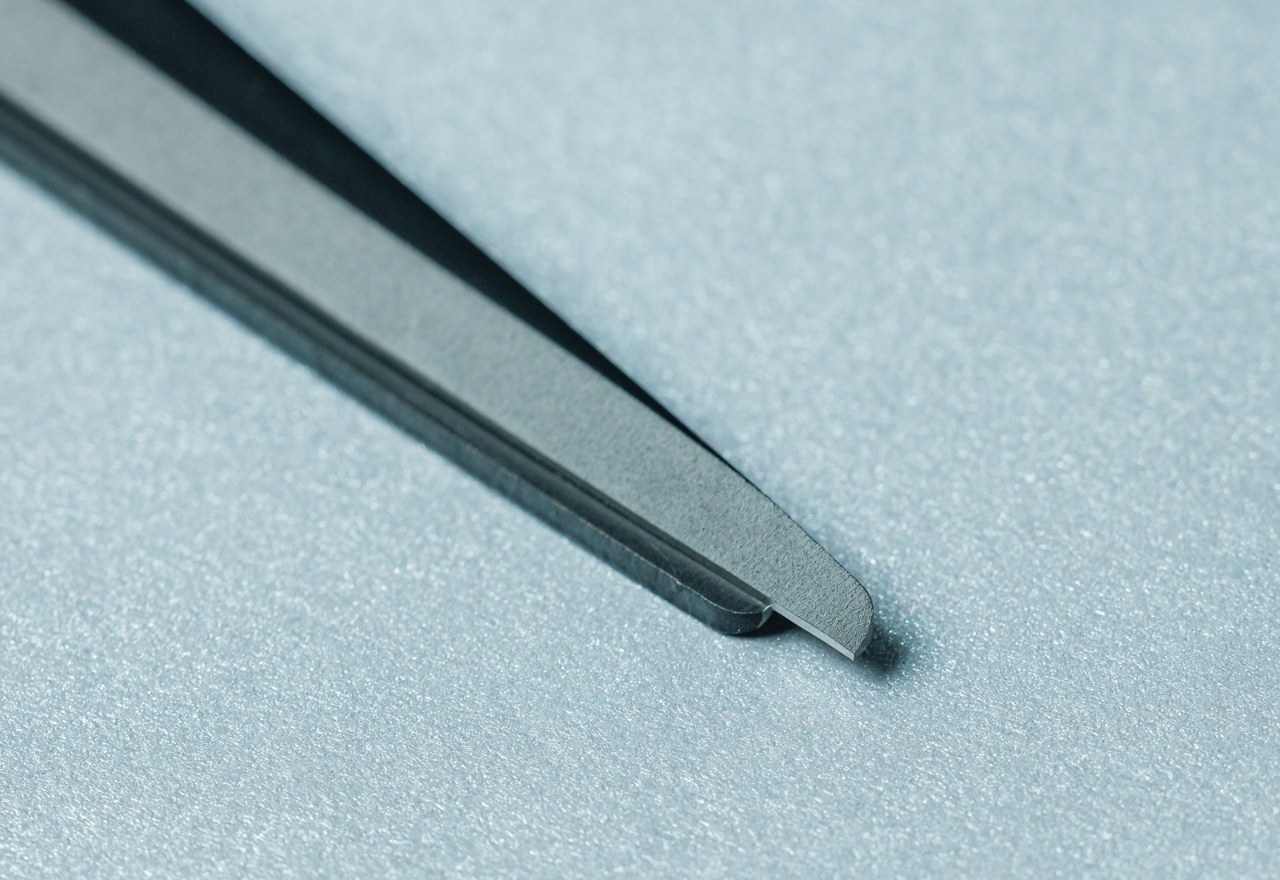
Many people use scissors as makeshift box cutters with often disastrous results, forced to precariously hold the tool with the blades wide open. The smart SEKI-TEX scissors avoid this dangerous situation by using a simple yet ingenious sliding mechanism to push one of the blades forward just a little bit while still keeping the rest of the scissors closed. This lets you swiftly and safely cut through the adhesives keeping the box shut like you would with an actual box cutter. And when you’re done, simply slide the blade back to its original position to keep your fingers and hands safe.

Given that use case as well as many other uses of the scissors, there is a real concern that the blades will eventually get covered in sticky sludge from these adhesives. As before, the solution is both simple and clever, coating the blades with fluorine to stop the sticky substances from building up in the first place. Now a simple wipe every now and then is all that it will take to keep the blades always sharp and ready to cut through work tasks.

Such an innovative design doesn’t come from the future and is, in fact, well-rooted in the past. Crafted by expert knife makers from the swordsmith town of Seki in Japan, these scissors are made with meticulous attention to detail, yielding excellent sharpness married to an exquisite and almost organic design. Whether you’re cutting paper or opening boxes, these sleek scissors promise to not only make each task feel effortless, they also add a bit of excitement to your daily work.

Click Here to Buy Now: $25 $29 (15% off at checkout). Hurry, deal ends in 48 hours!

The post Transform Your Cutting Experience with Scissors That Double as a Box Cutter first appeared on Yanko Design.
Modular electric minivan is inspired by puzzles for a more sustainable design

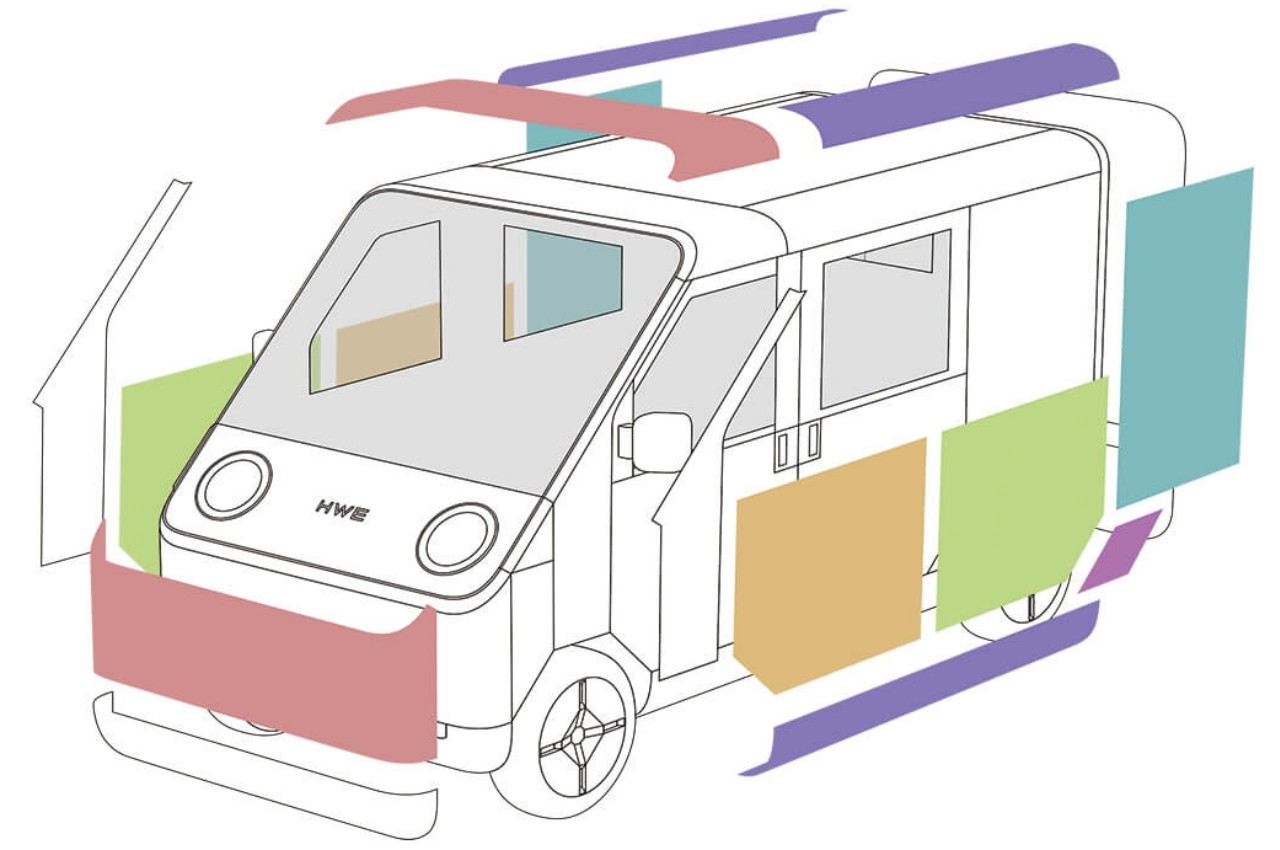
Although electric cars are becoming more common, we’ve barely scratched the surface of what they’re capable of. Removing the need for traditional fuel and relying on batteries opens up new possibilities, and not just in terms of power sources. It can offer a bit more flexibility when it comes to the form and function of the vehicle, like cars with completely digital interfaces or screens all around. There might even be room for a modular design, as this concept for a tiny Japanese electric van tries to show, allowing the manufacturer or even the owner to switch out certain parts both outside and inside to match their needs, just like pieces of a puzzle.

Designer: HW Electro

To be fair, a modular car might be a bit far down the road considering the industry is hyper-focused on standardizing electric vehicles and making self-driving features more acceptable to the masses. That’s not to say that the design is a distant possibility only, especially when the features are made to be more practical rather than fantastical. Switching out panels is probably more feasible than switching out whole car parts or components, which is the kind of modularity that the Puzzle concept embodies.

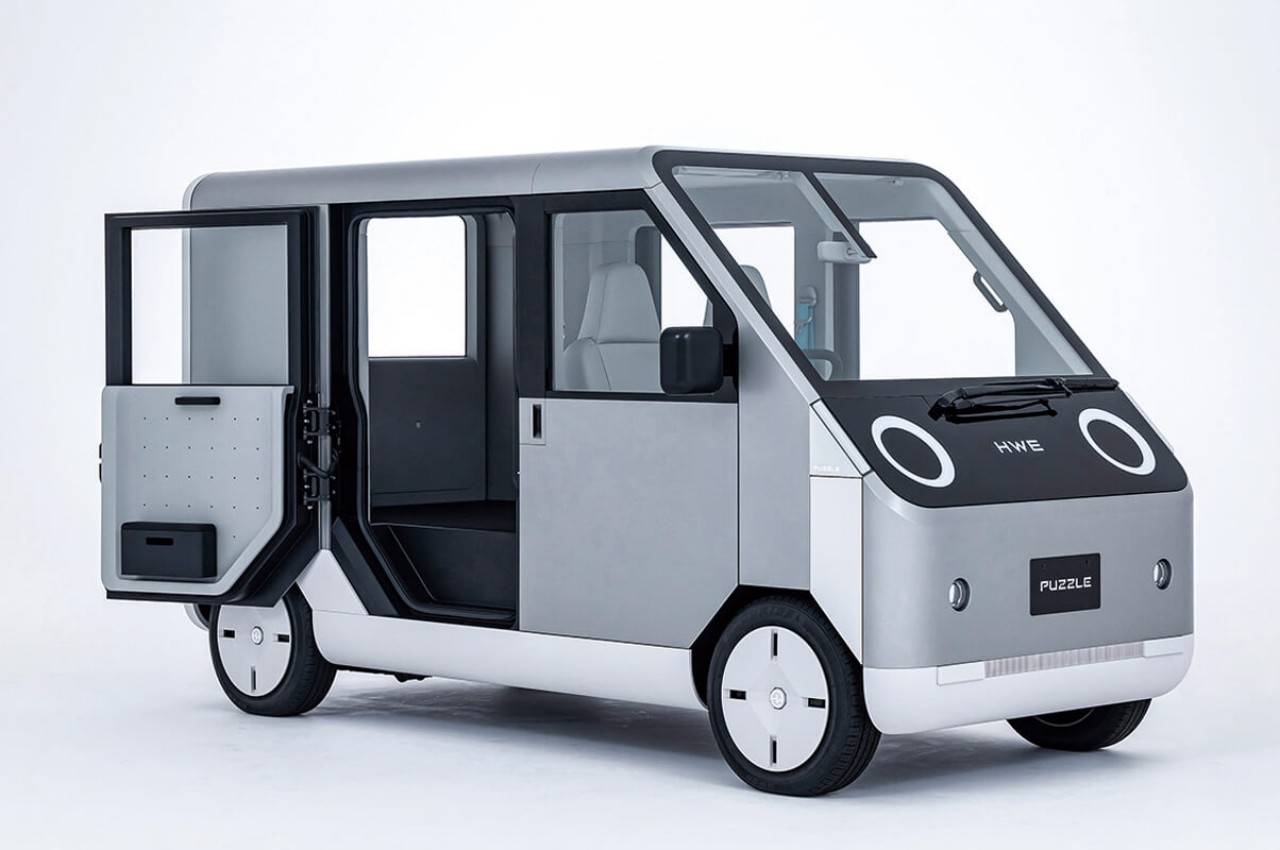
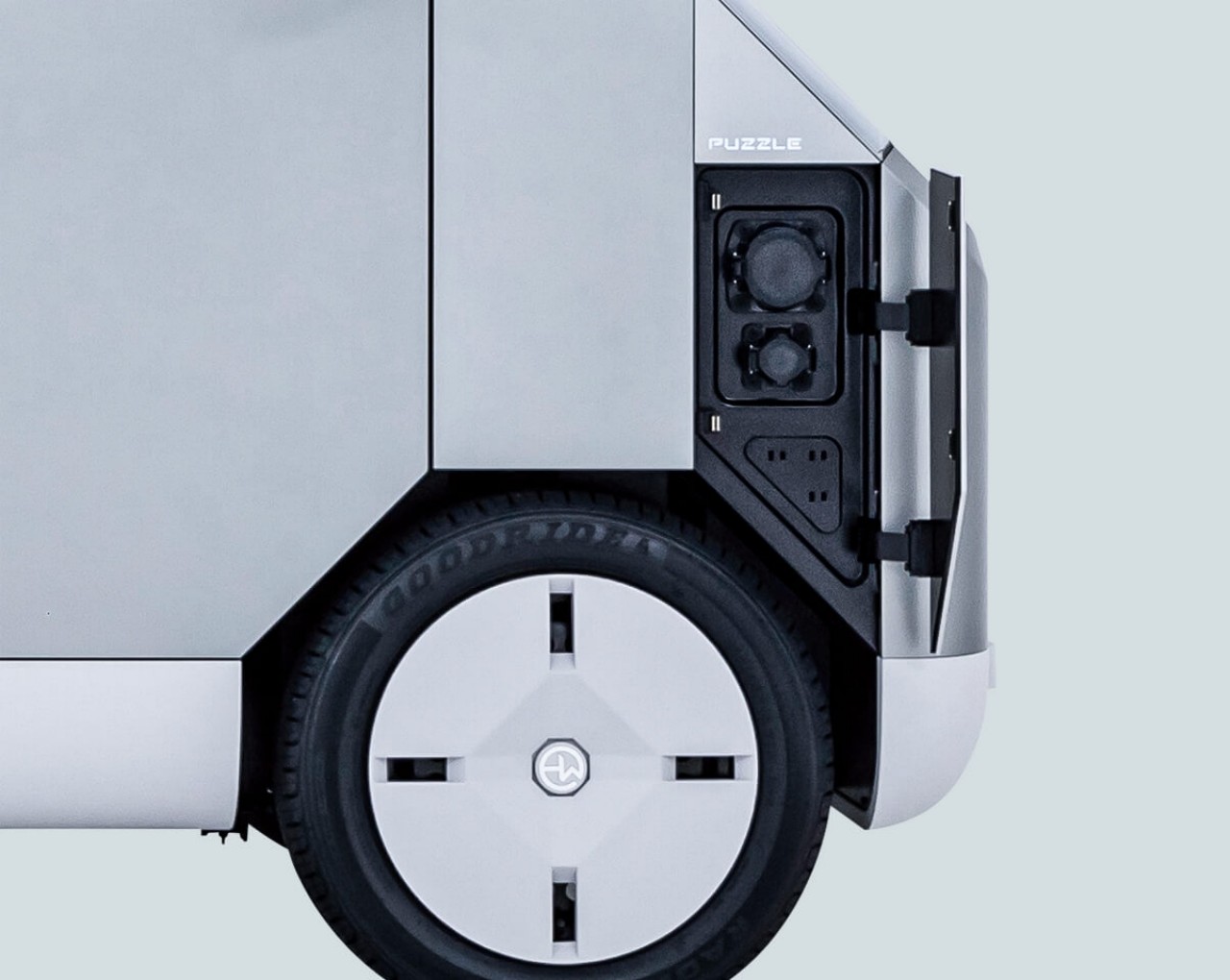
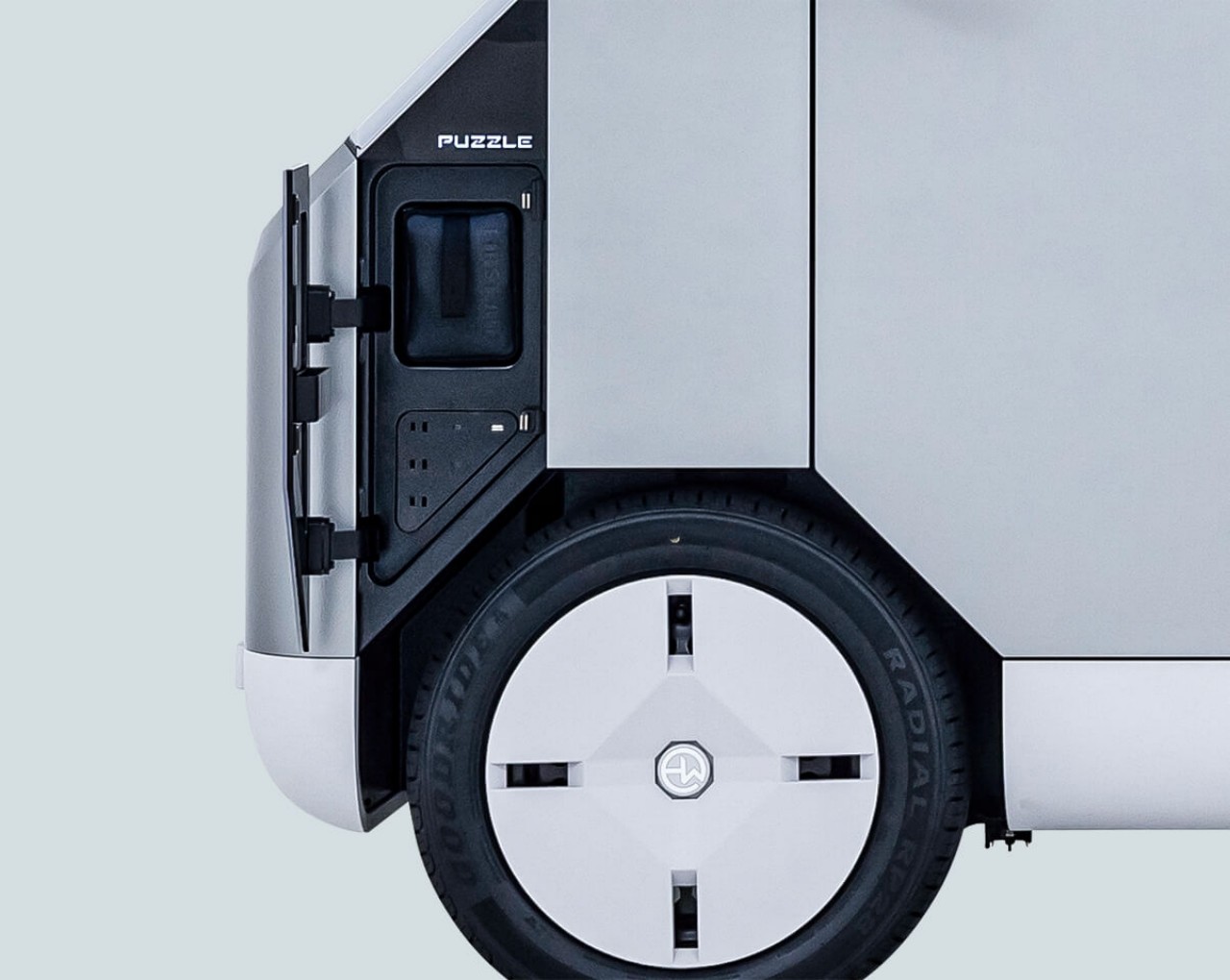
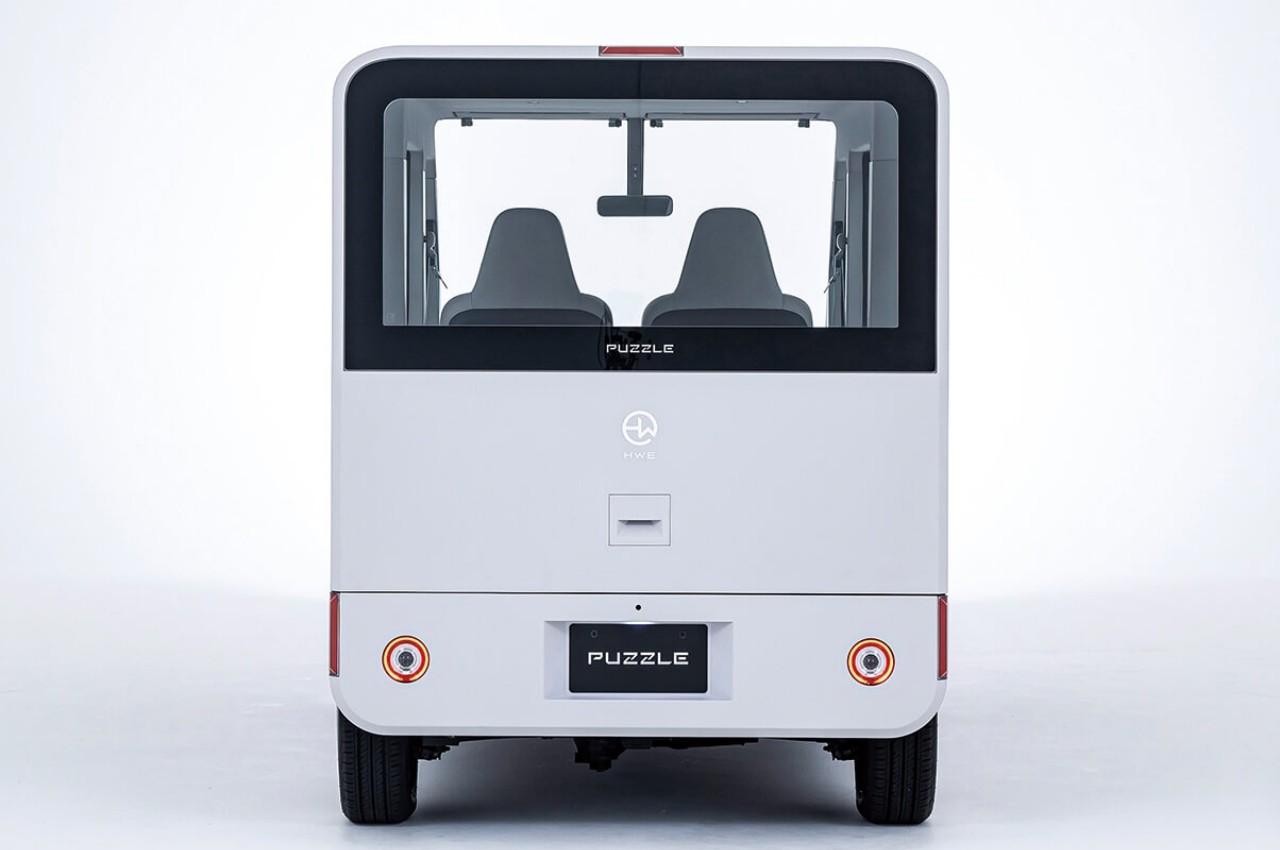
At first glance, the boxy shape of the Puzzle will already look strange to those not used to so-called “Kei cars,” but this kind of van design is popular in Japan for striking a balance between large interior capacity and small compact size. It’s a design that screams practical efficiency, and making it modular is taking it to the next level. But unlike what you might be imagining, the Puzzle’s pieces, pardon the pun, are limited to swapping out certain panels at the sides, corners, and even inside. It’s a bit of a generic system that opens up quite a number of possibilities but, more importantly, it also doesn’t tie them down to a specific design or part. It also makes replacing damaged panels easier and more economical, something that you can only dream of with regular cars.

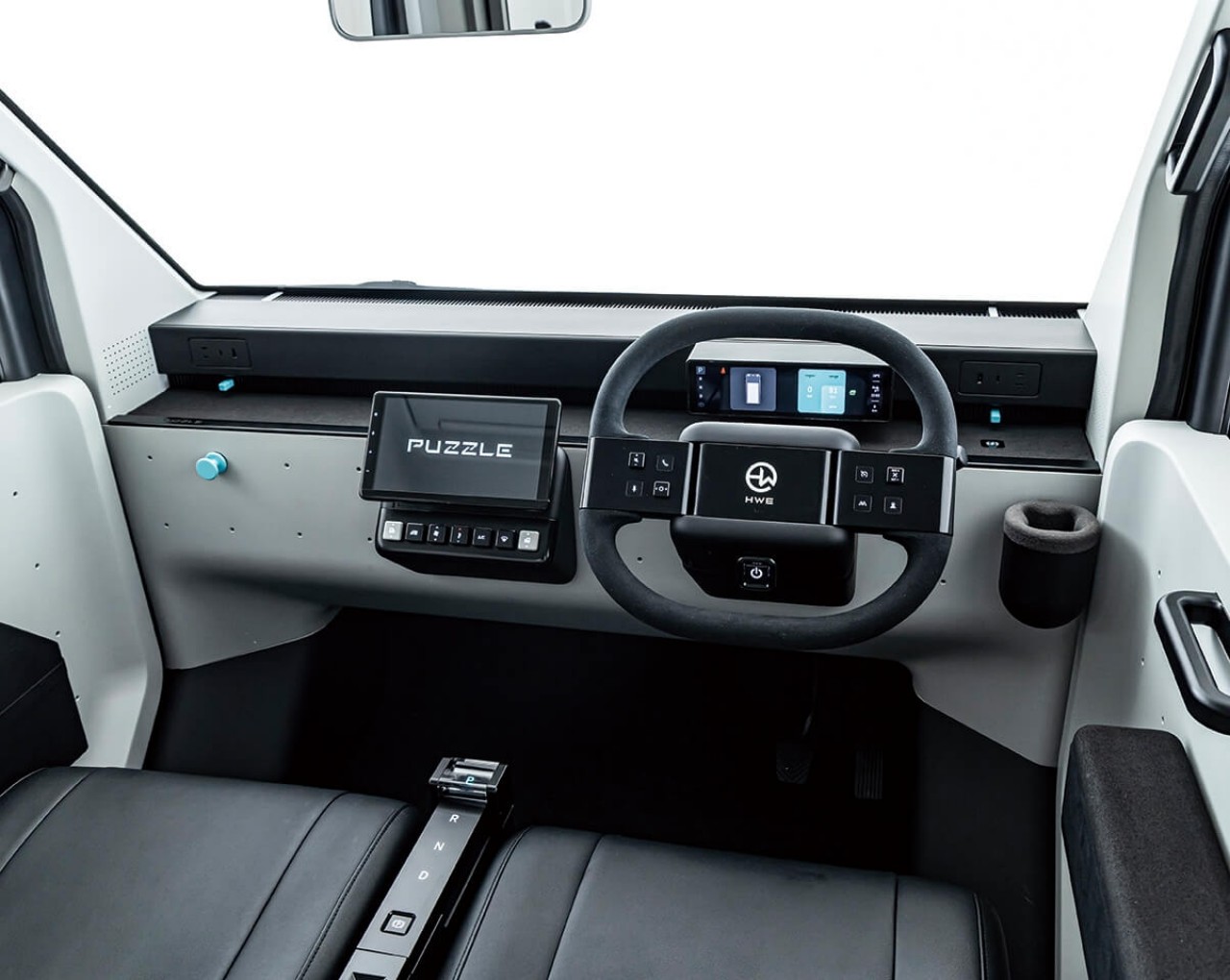
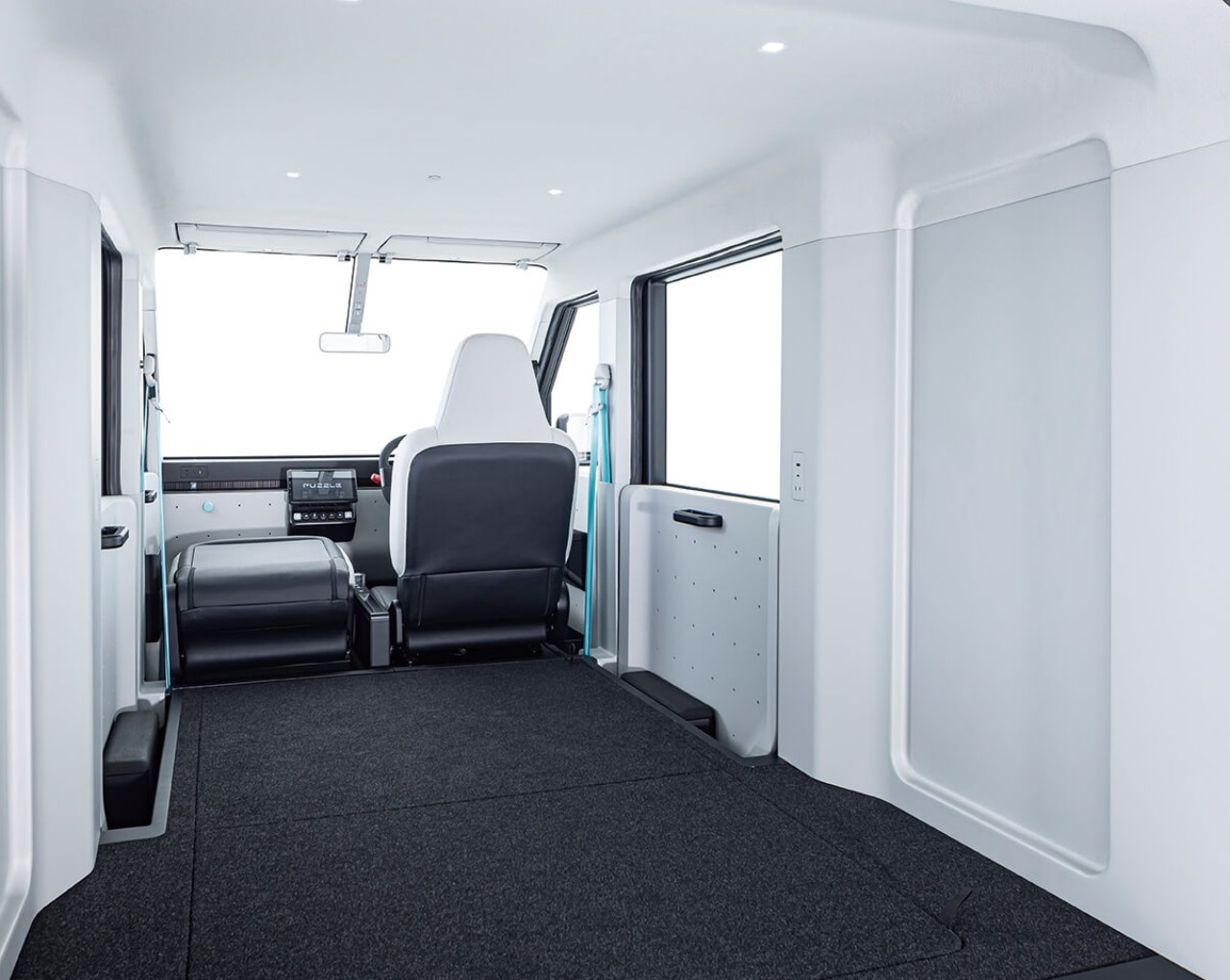
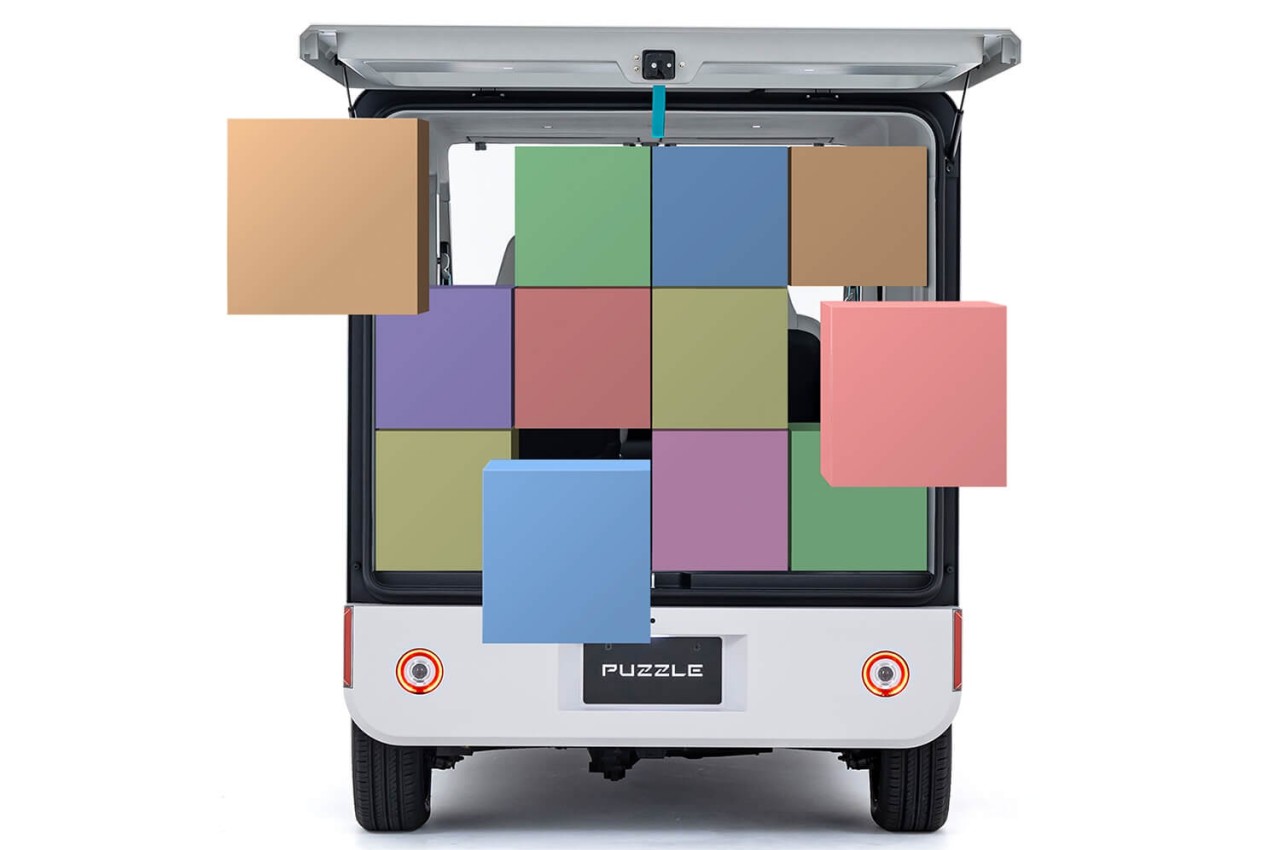
The Puzzle van also has secrets to reveal inside its extremely spacious cabin. The interior door panel has slots that make it possible to add and remove different modules, such as containers, cup holders, and the like. Even the dashboard has this kind of design, yielding a clean yet flexible space for expanding the van’s capabilities, especially in the infotainment aspect. The cargo space, which is practically a cube, is also more space-efficient for storing boxes and all sorts of large objects, making the EV a potential delivery vehicle.
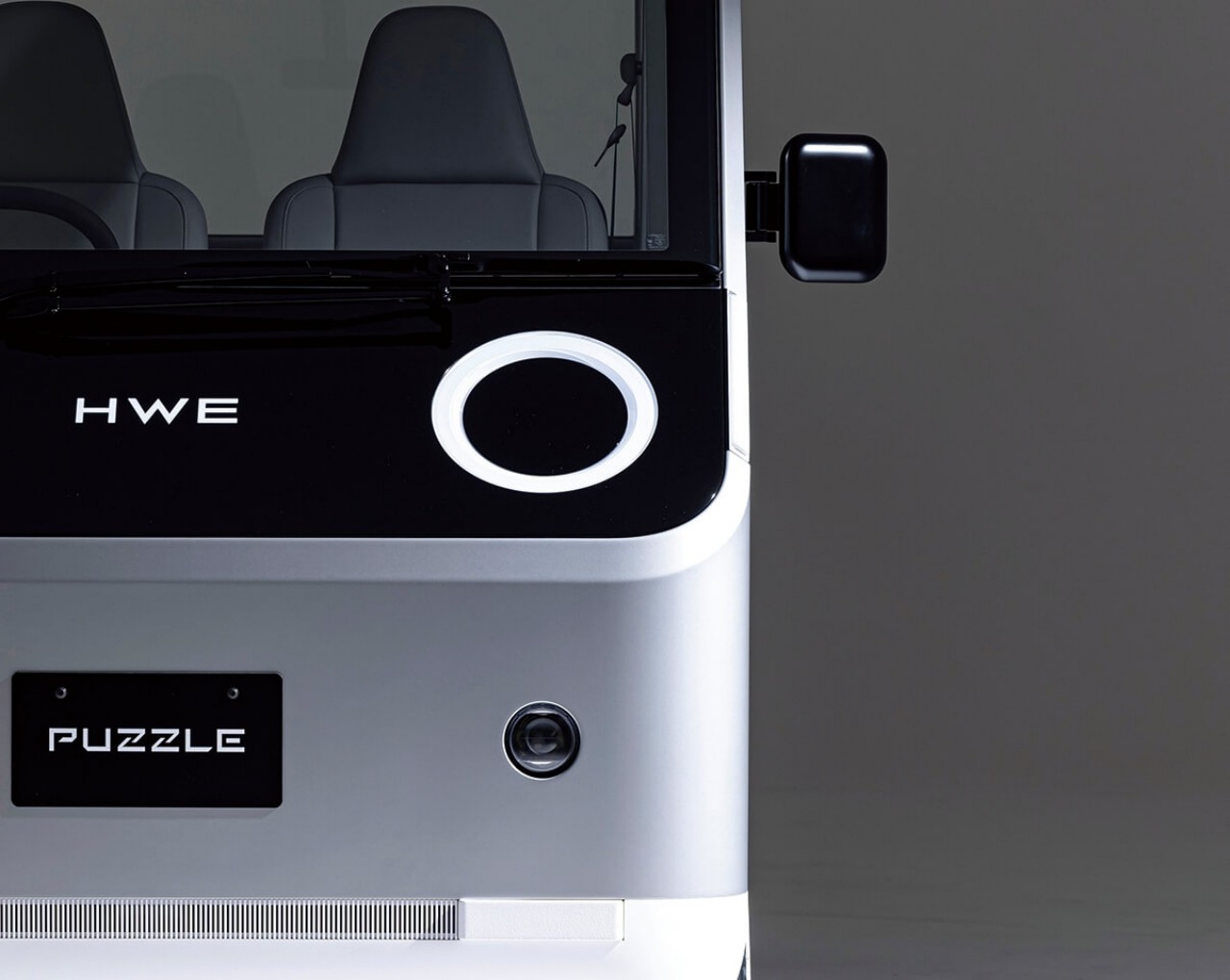
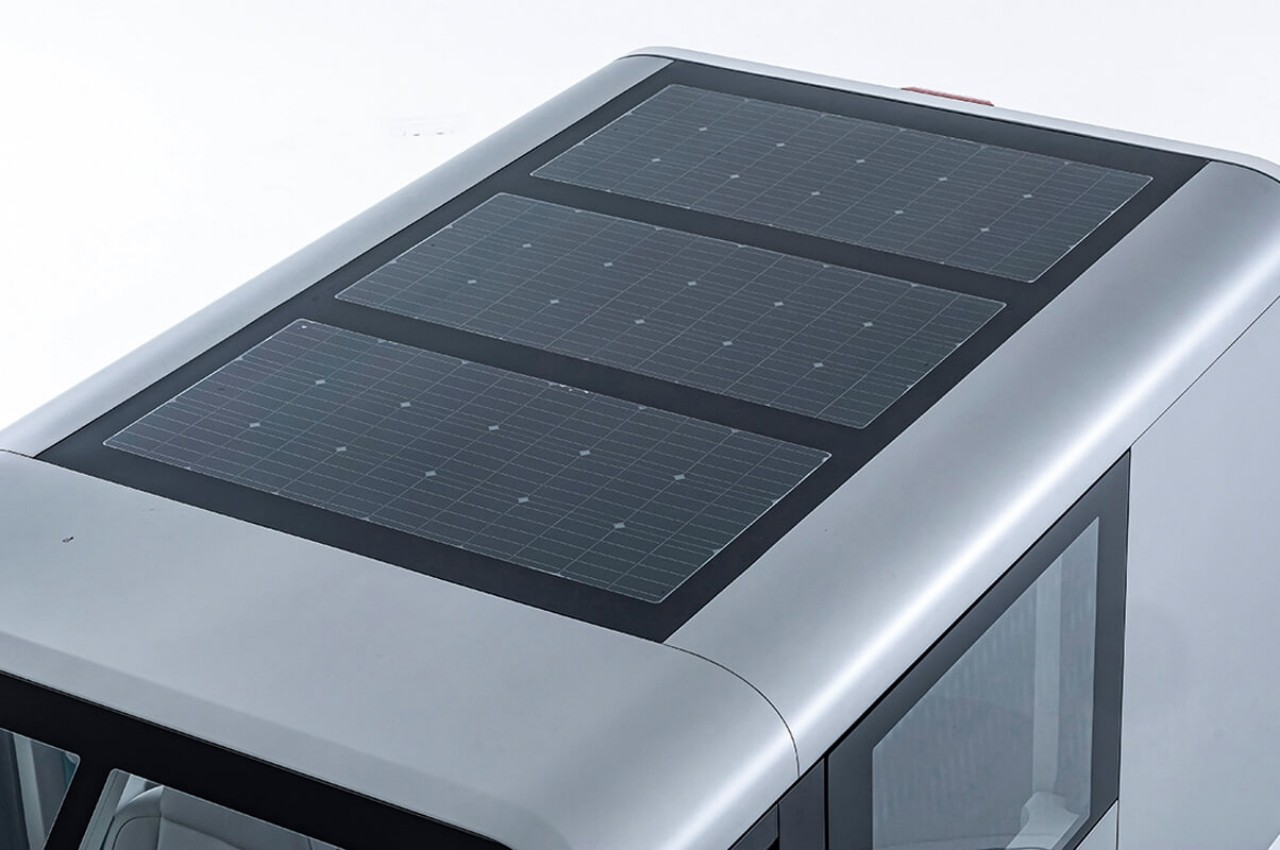
Thanks to the boxy form of this Kei car, it’s possible to put a solar panel on the roof to really maximize its battery mileage. Modular and sustainable, the Puzzle minivan concept offers an extremely simple yet effective solution to the future of electric vehicles, one that espouses the Japanese spirit of minimalism and practicality where form clearly follows function.

The post Modular electric minivan is inspired by puzzles for a more sustainable design first appeared on Yanko Design.