This transparent glass foosball table at Milan Design Week looks straight out of a 2000s sci-fi movie

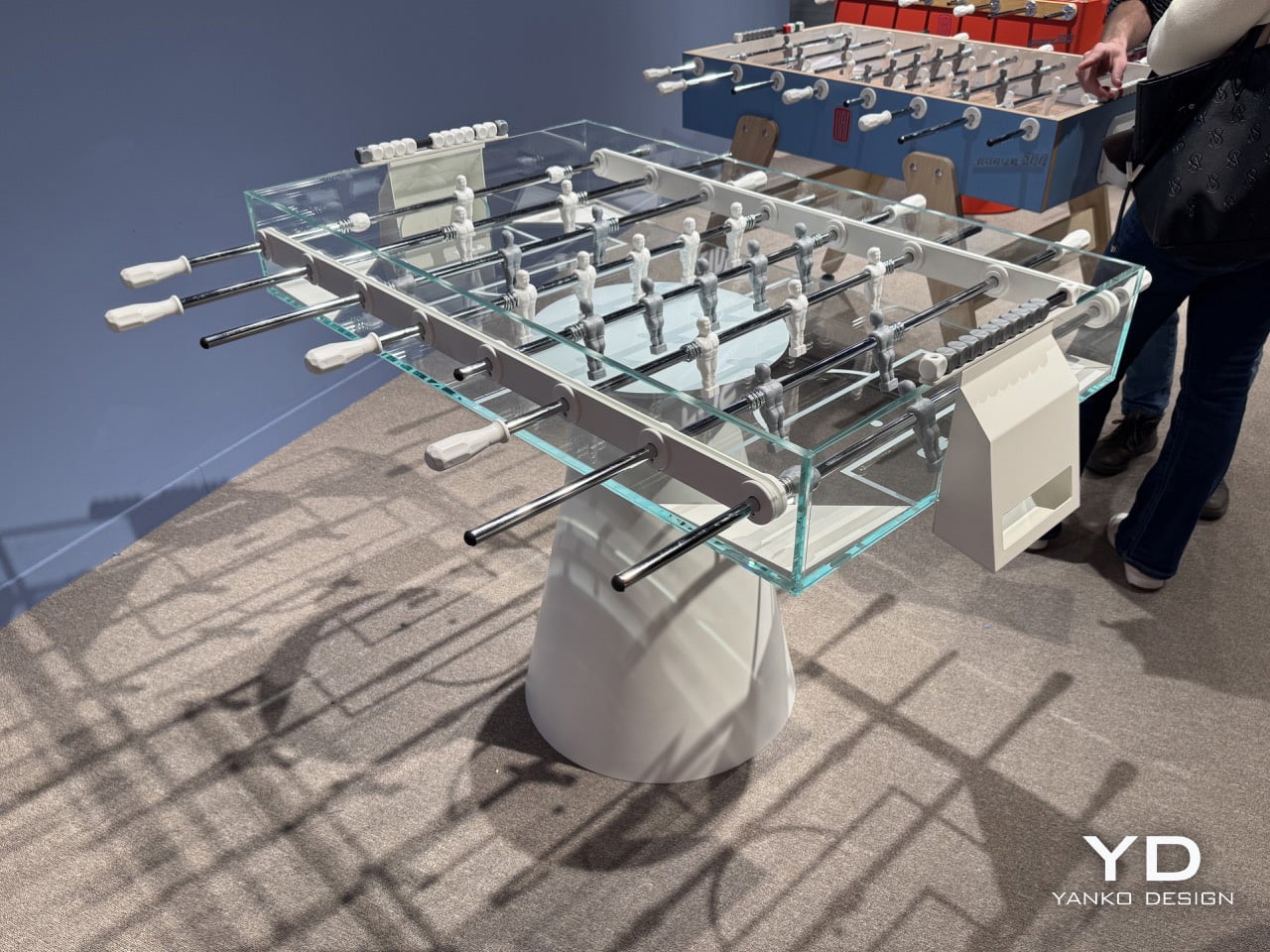
The early 2000s had a very clear idea of the future. Think of films like *Minority Report* with its PreCrime headquarters, all white rooms and glass interfaces where everything looked seamlessly bonded rather than bolted together. Or *I, Robot*, which pushed that look even further with its glossy USR tower and Audi concept car, a world that had erased any sign of how things were actually made. That aesthetic has aged remarkably well, but it’s a territory most game furniture never touches, usually favoring rich materials over making things look like they are barely there. Basaglia + Rota Nodari are the exception, and Ghost, their foosball table for FAS Pendezza, is the proof.

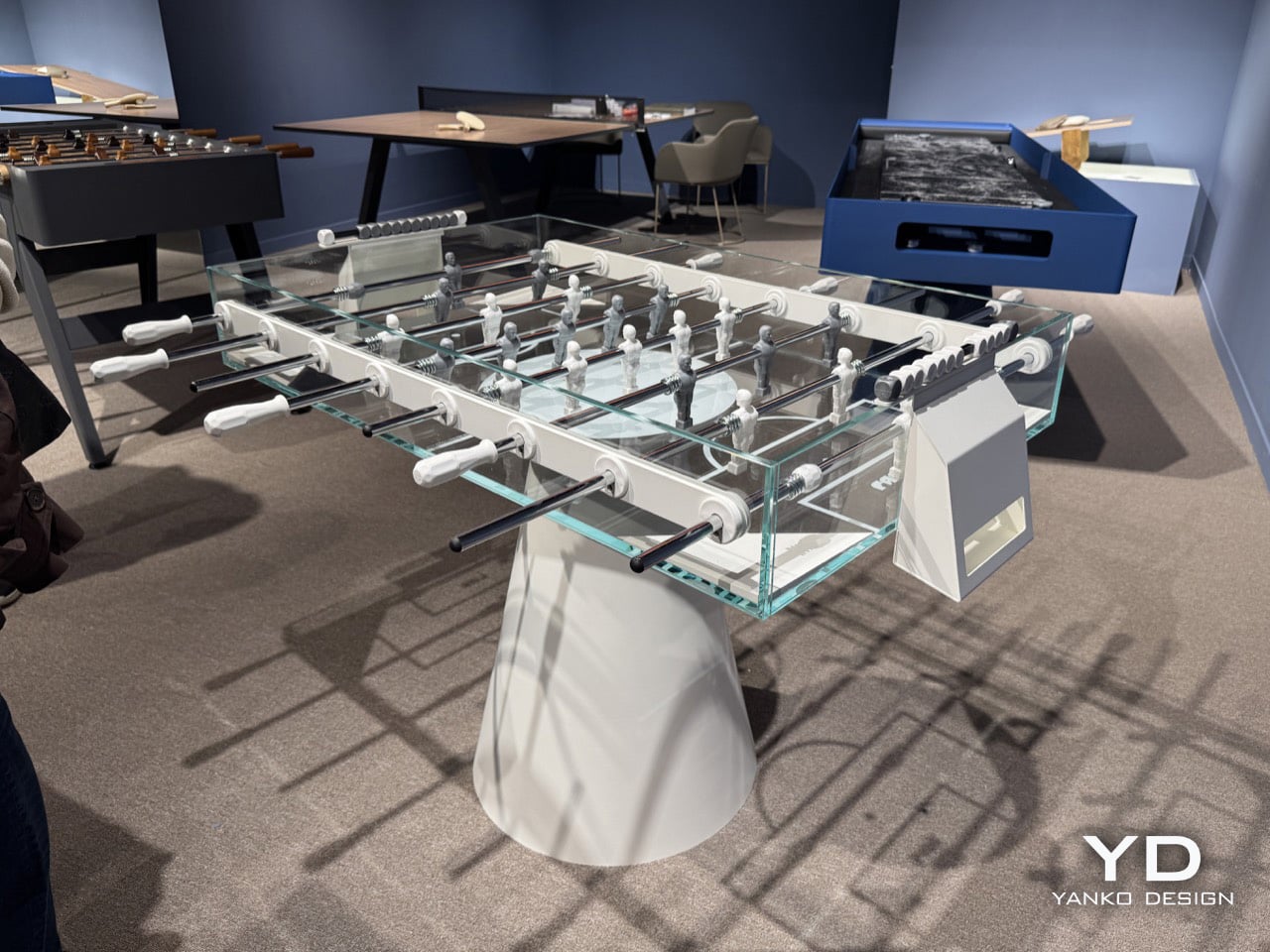
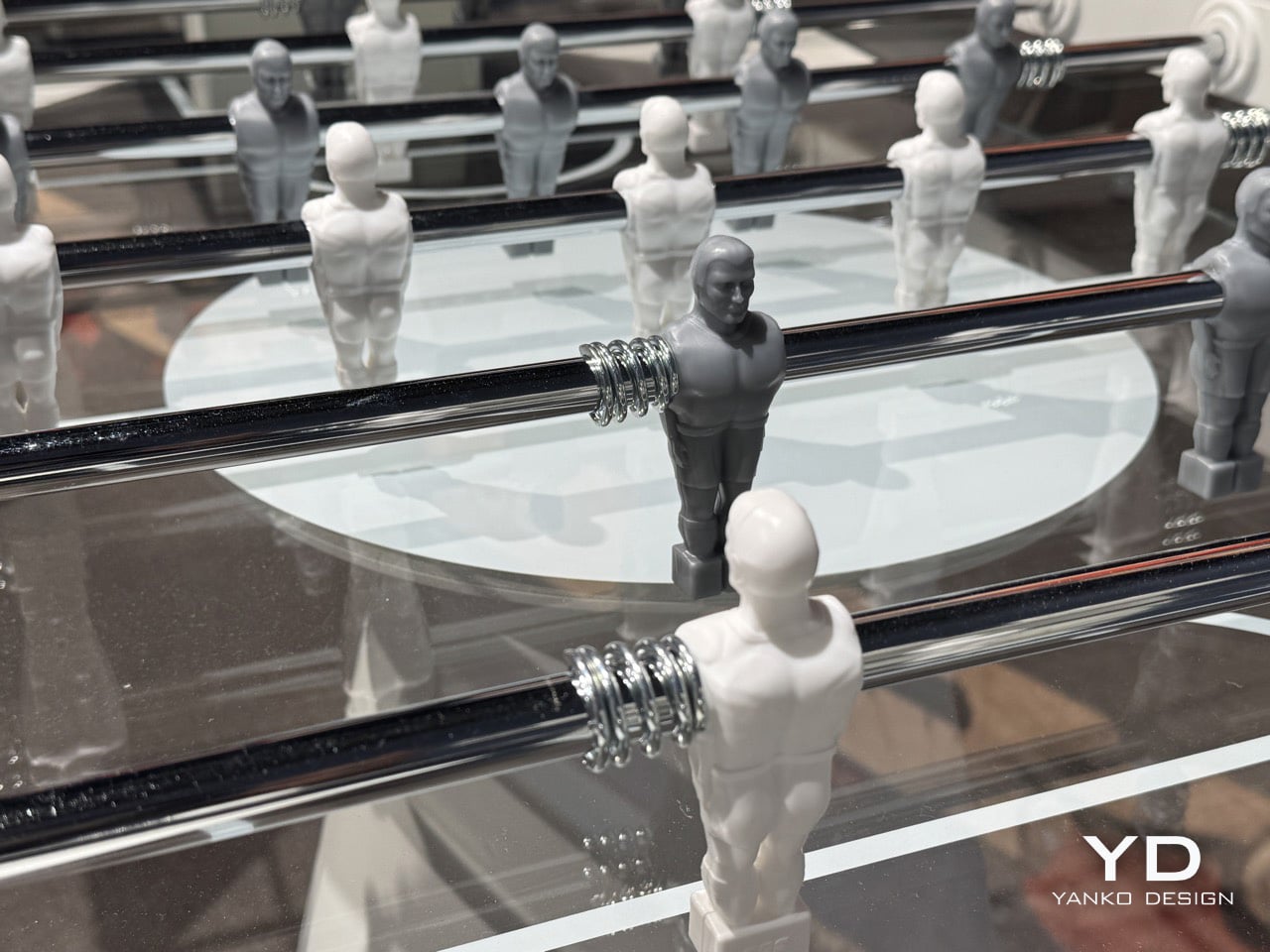
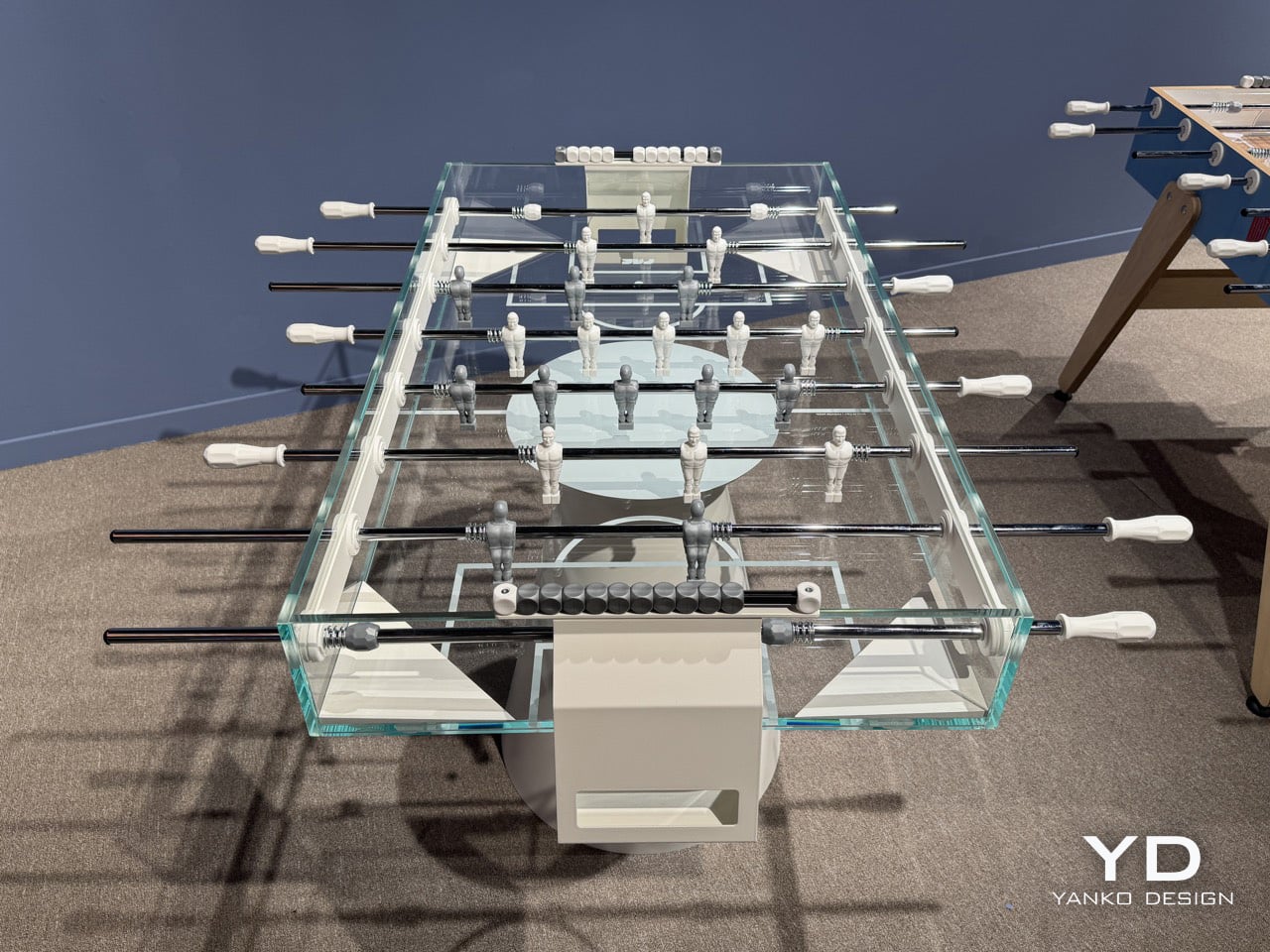
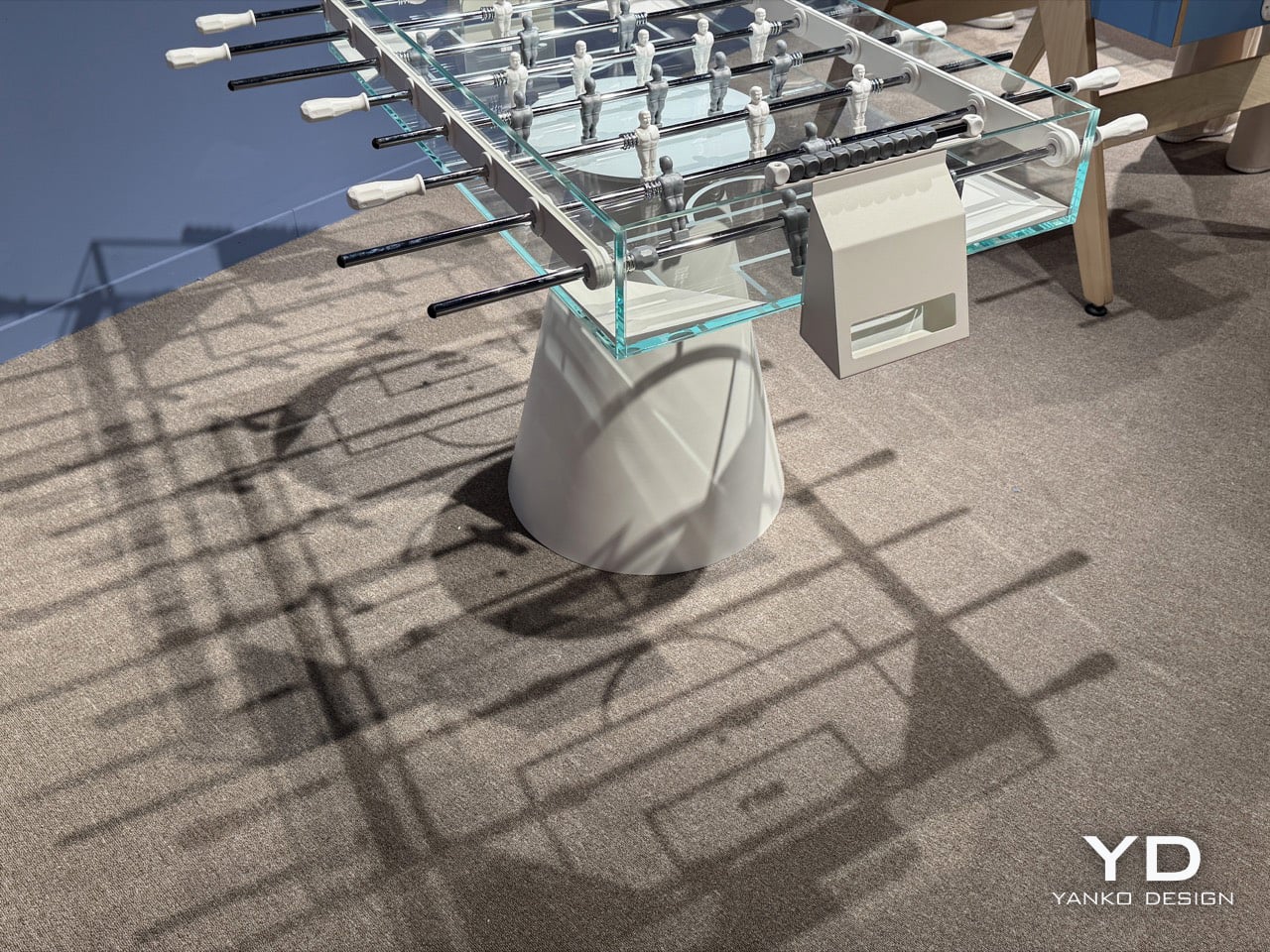
The table itself is built from thick tempered glass, laminated at 12 and 9 mm, with a playing field that’s 114.5 by 70.5 centimeters, and it’s made entirely in Italy. Its body is bonded with a special adhesive, so there are no visible screws or bolts anywhere in the frame. That’s a key decision, because if you saw hardware, the whole ghost-like vibe would fall apart. A clean, conical white metal base holds up the floating glass volume, while chrome rods and two-tone players complete a color scheme that’s intentionally minimal. At 8,900 euros, it’s priced as a piece of design, and it earns it on looks alone before a single ball gets dropped.

Designers: Basaglia + Rota Nodari for FAS Pendezza

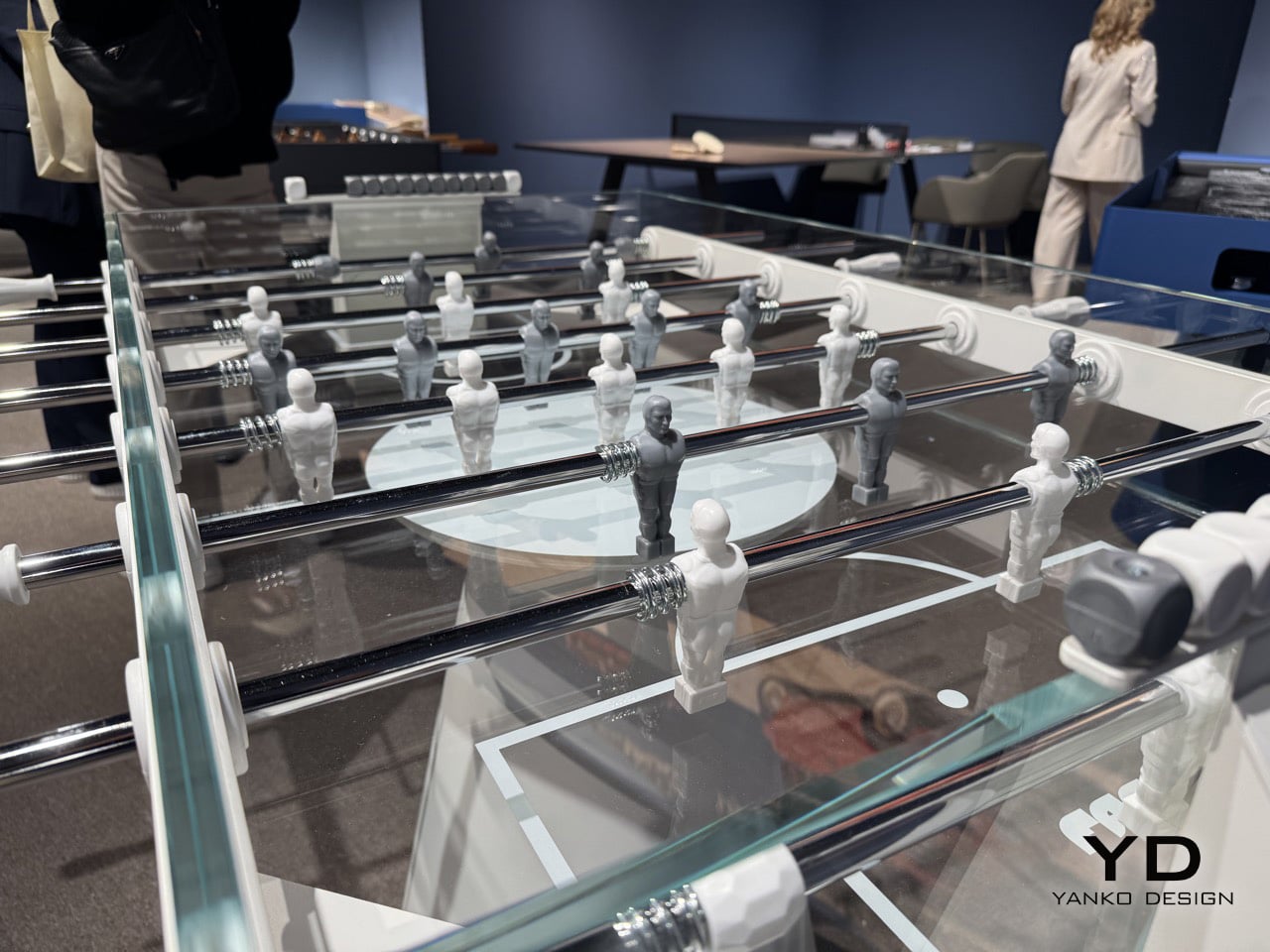
Even the players, made of white and gray resin, look like they belong in this sci-fi world. They’re somewhere between a medical illustration and a concept-car sketch, simplified to the point of anonymity. That’s exactly why they work. If they were in conventional team colors, the table would feel like just another piece of recreational equipment. Instead, these figures feel closer to the NS-5 robots of *I, Robot* than to any real athlete, which helps keep the whole look clean and unified. The chrome coil springs connecting them to the rods are the one little nod to mechanical texture, and they look almost like jewelry against all that glass.

But what really captures you are the detailed shadows the Ghost projects on the floor, if paired with the right lighting. At Salone Satellite, Ghost casts an incredible wireframe shadow on the floor, like it’s drawing a blueprint of itself in real time. Pitch markings are printed beneath the crystal surface, so they appear to float inside the glass instead of sitting on top. From any angle in the FAS Pendezza booth, you can see right through the structure, with the players and chrome rods suspended against the room itself. The name makes perfect sense when you see it in person.

FAS Pendezza is presenting Ghost at Salone Satellite this week as part of Milan Design Week 2026, in a booth where the table’s shadow alone justifies the detour. Seeing it alongside the rest of the brand’s lineup confirms Ghost as a deliberate formal departure rather than FAS Pendezza’s default register. The studio, Basaglia Rota Nodari, launched in 1997 with a stated ambition to build objects that convey emotion beyond their function, and Ghost may be their sharpest expression of that intent to date. For those who have already left Milan, Ghost is available in white and black finishes and retails at €8,900.

The post This transparent glass foosball table at Milan Design Week looks straight out of a 2000s sci-fi movie first appeared on Yanko Design.
Lexus LS Concept First-Look: The Six-Wheel Flagship Turning Heads at Milan Design Week 2026

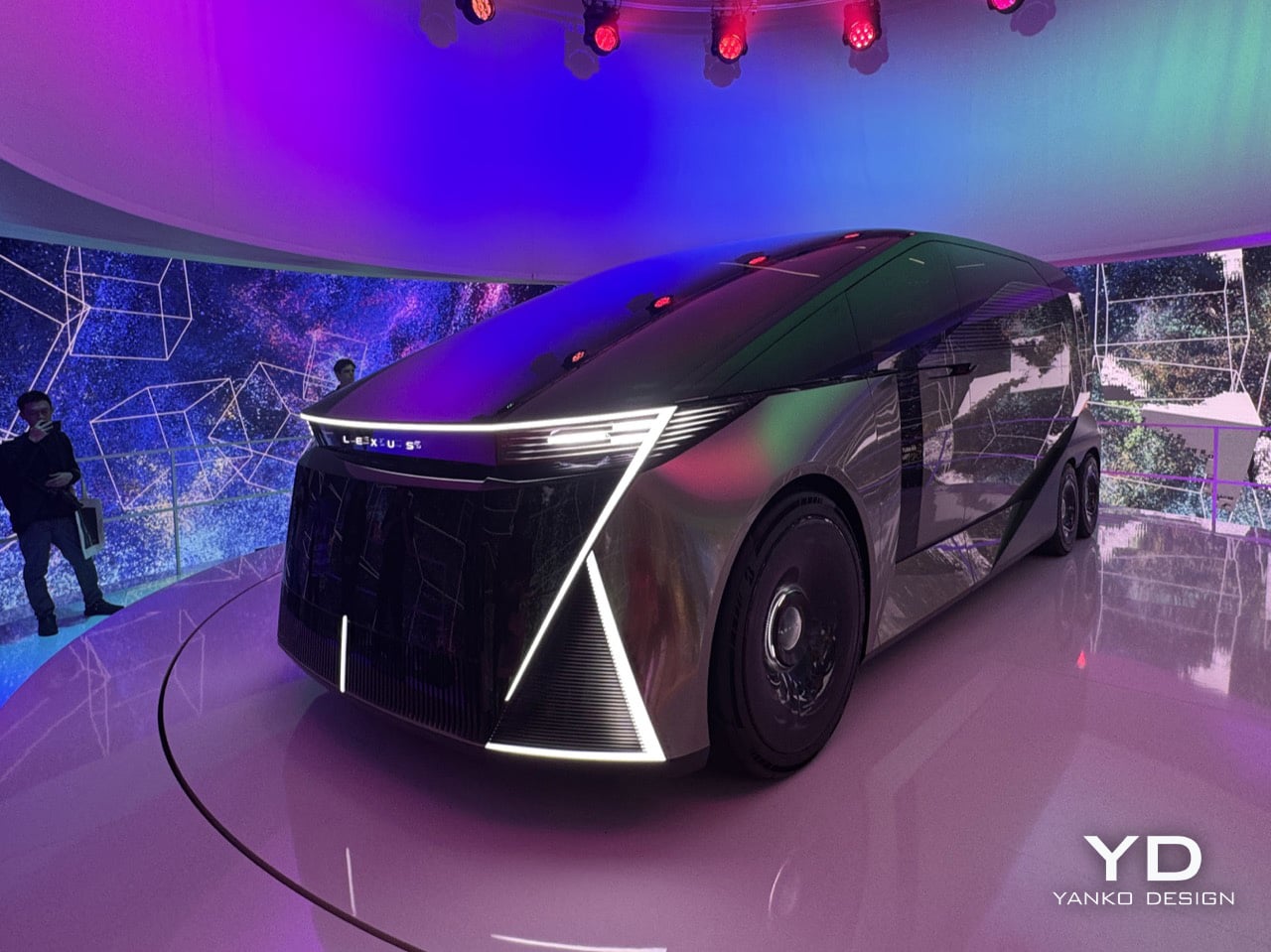
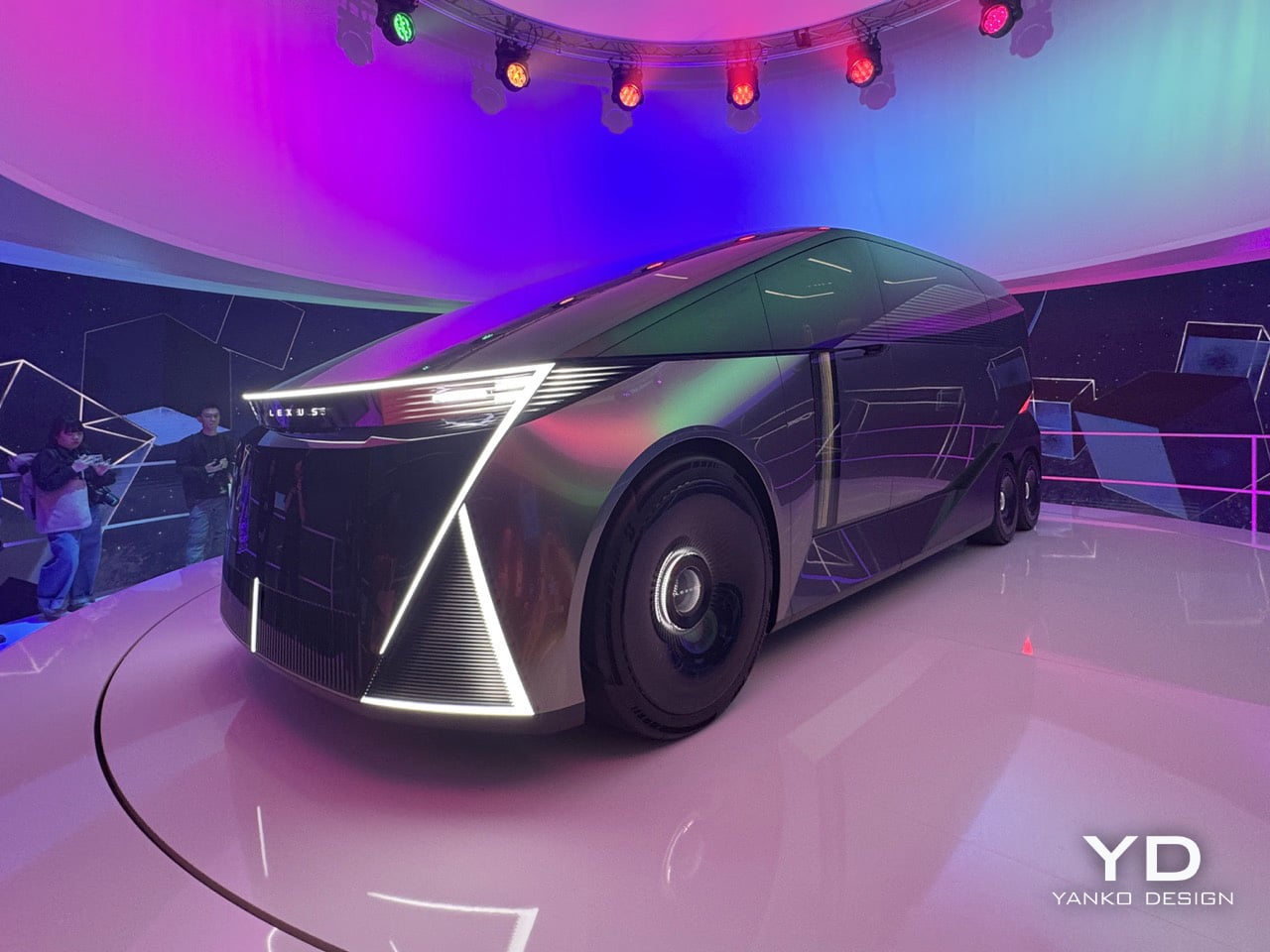
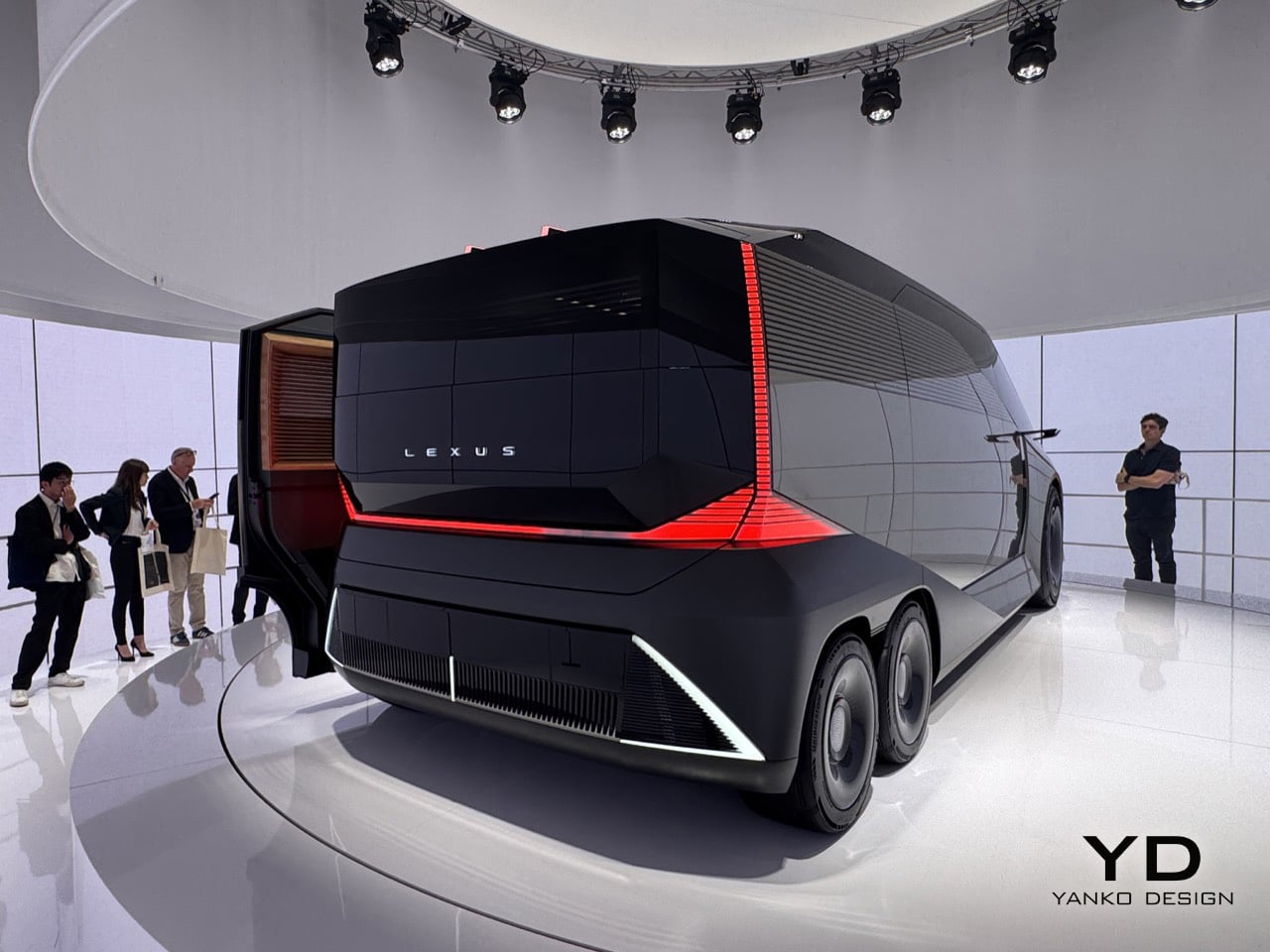
Six wheels on a Lexus, at a furniture fair in Milan, sounds like either a provocation or a punchline. At this year’s Milan Design Week, Lexus is betting it’s the former. The brand rolled into Superstudio Più in the Tortona district with its LS Concept, a long-body, flat-roofed, twin rear-axle machine that first appeared at the Japan Mobility Show in 2025. It’s a chauffeur-driven vehicle built entirely around the passenger, and it’s Lexus’s clearest statement yet about where its flagships are going. In fact, Chief Branding Officer Simon Humphries said it plainly: the “S” in LS no longer stands for Sedan. It stands for Space.

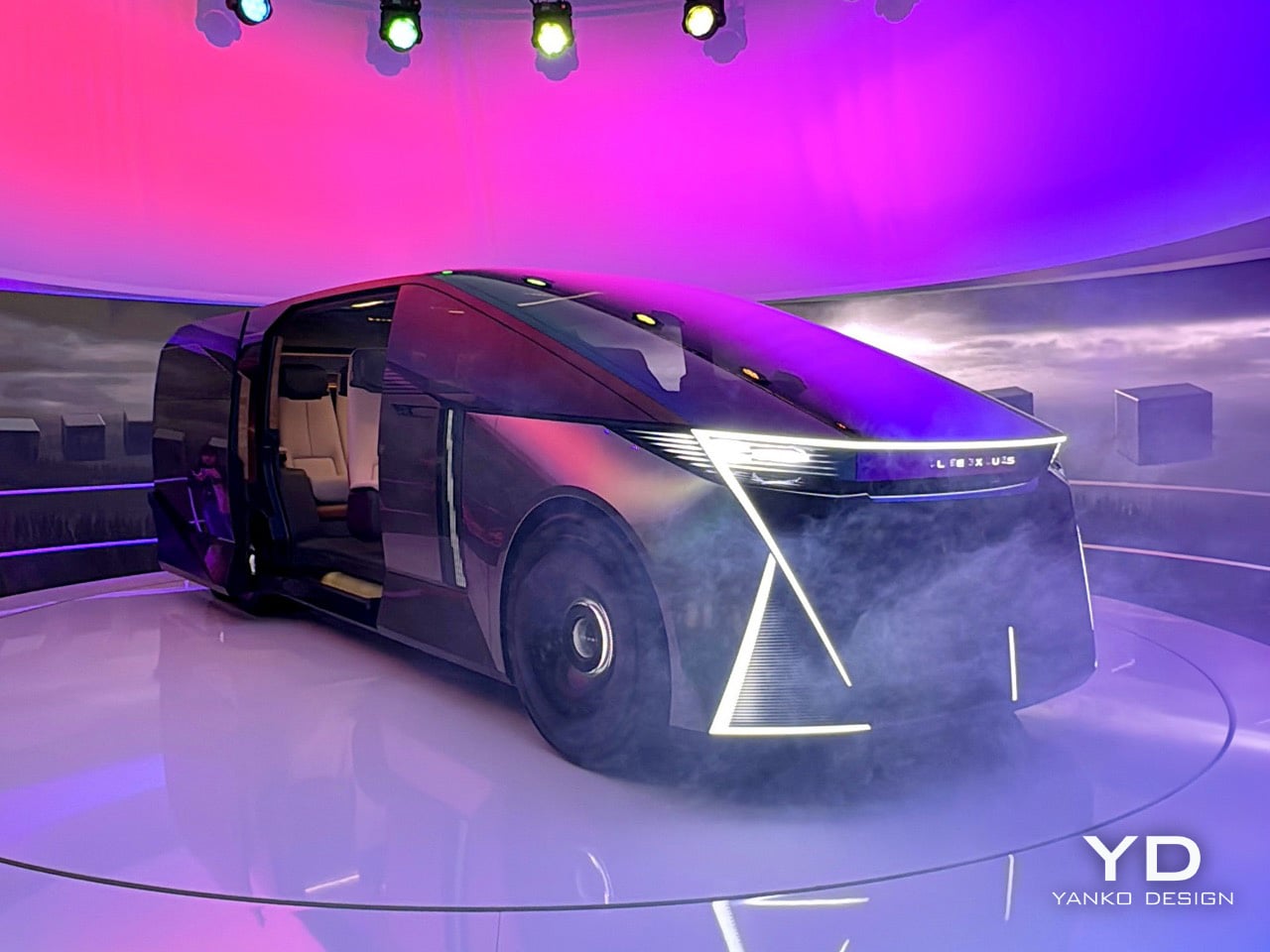
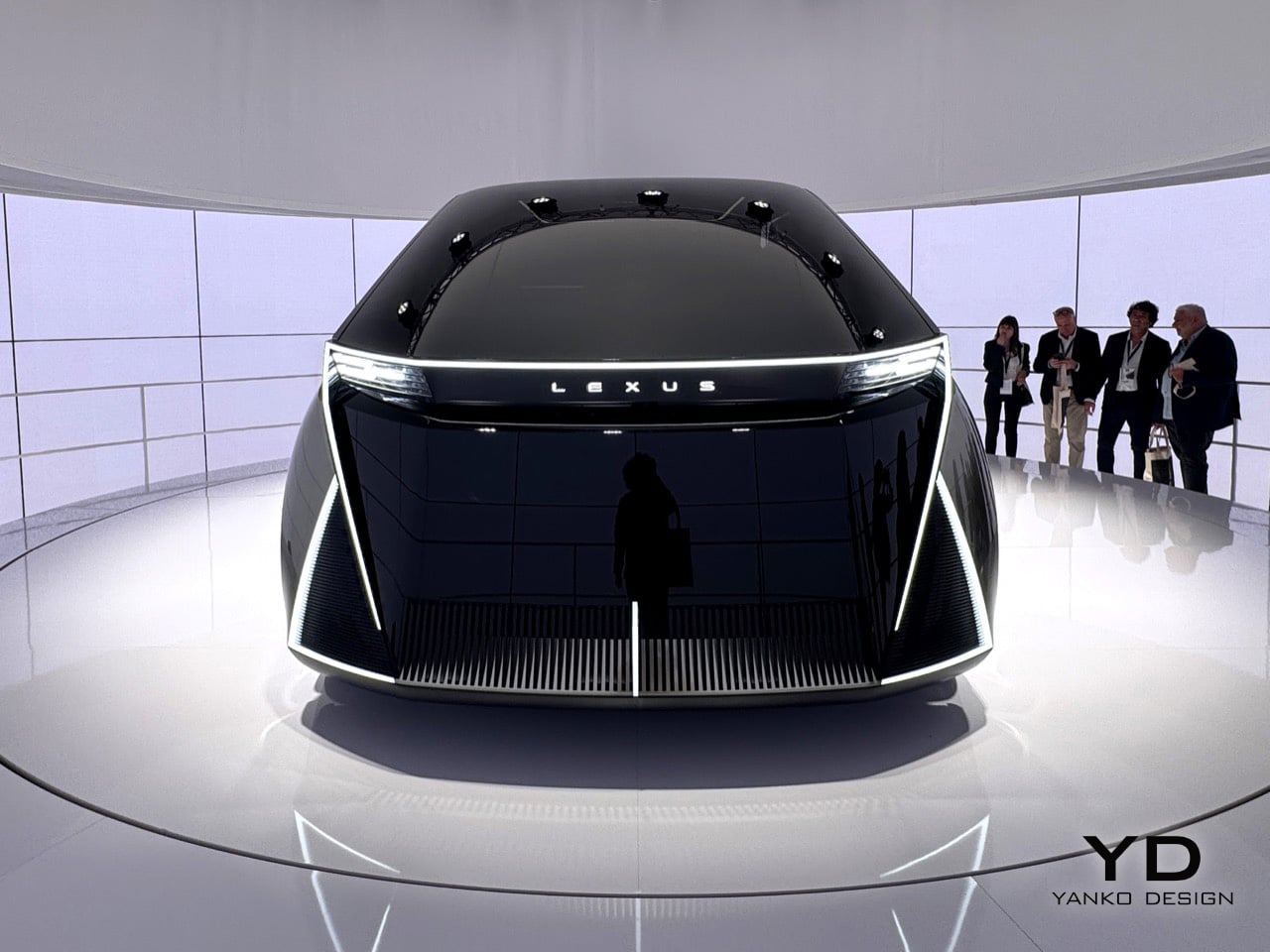
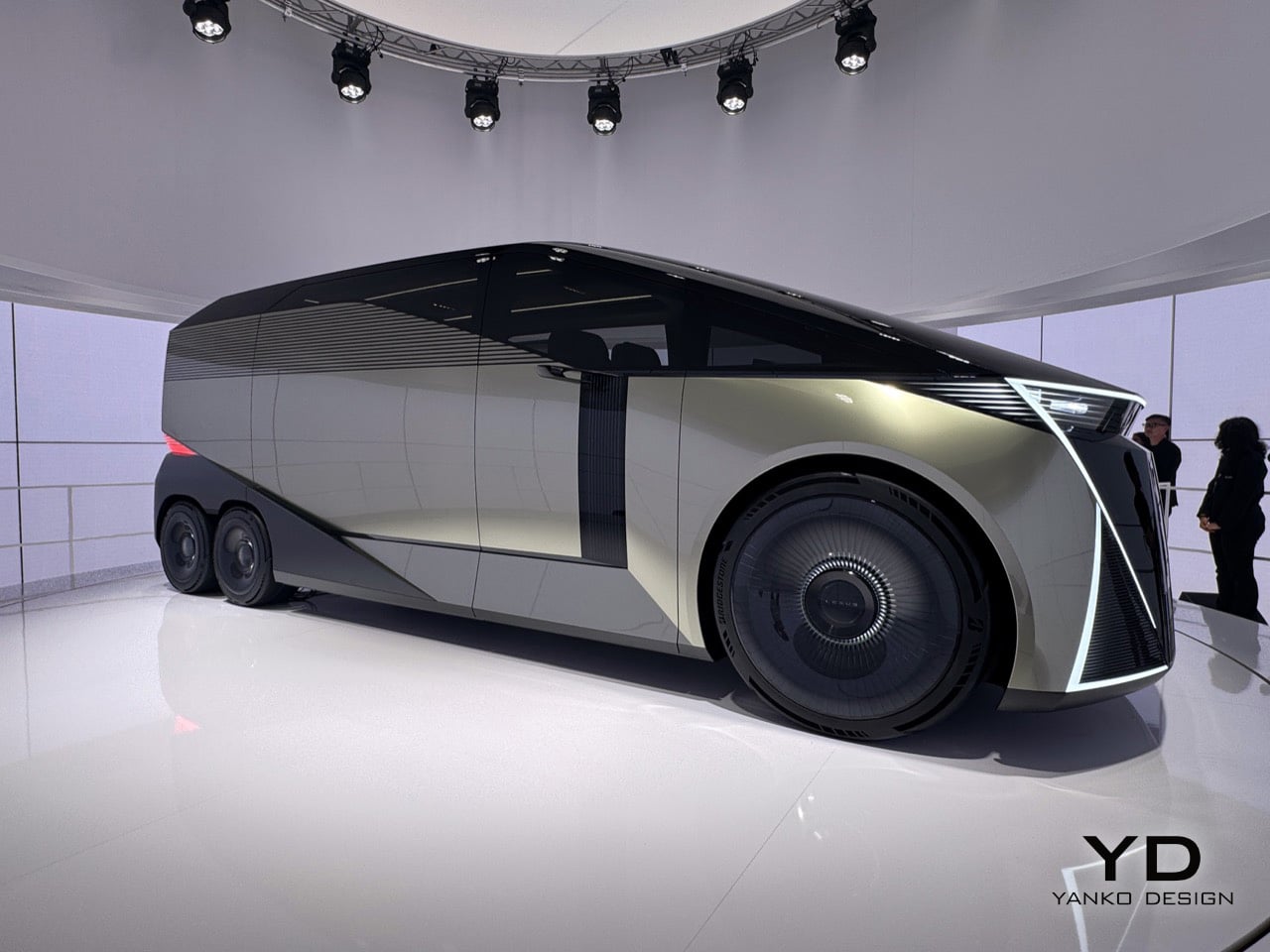
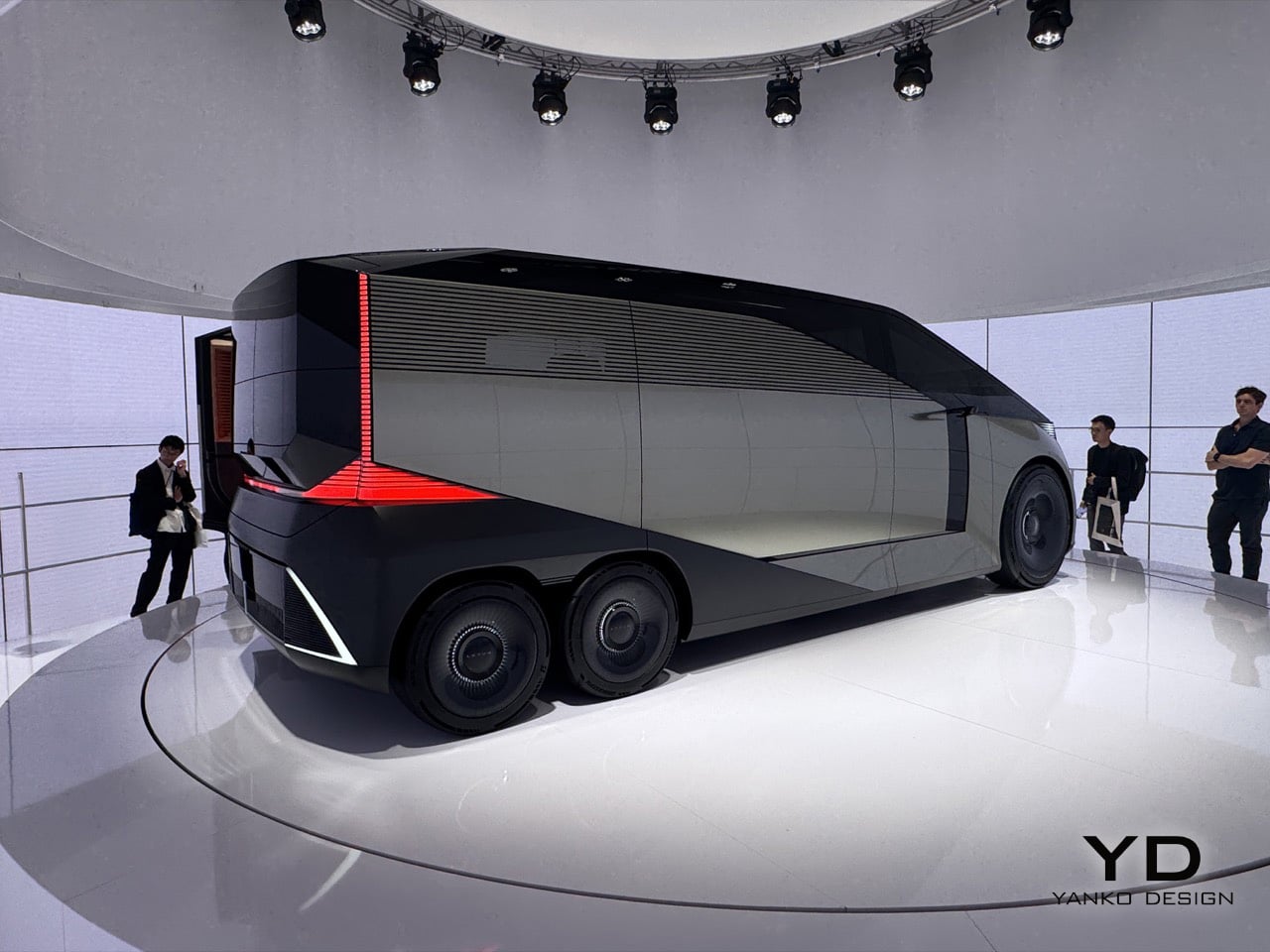
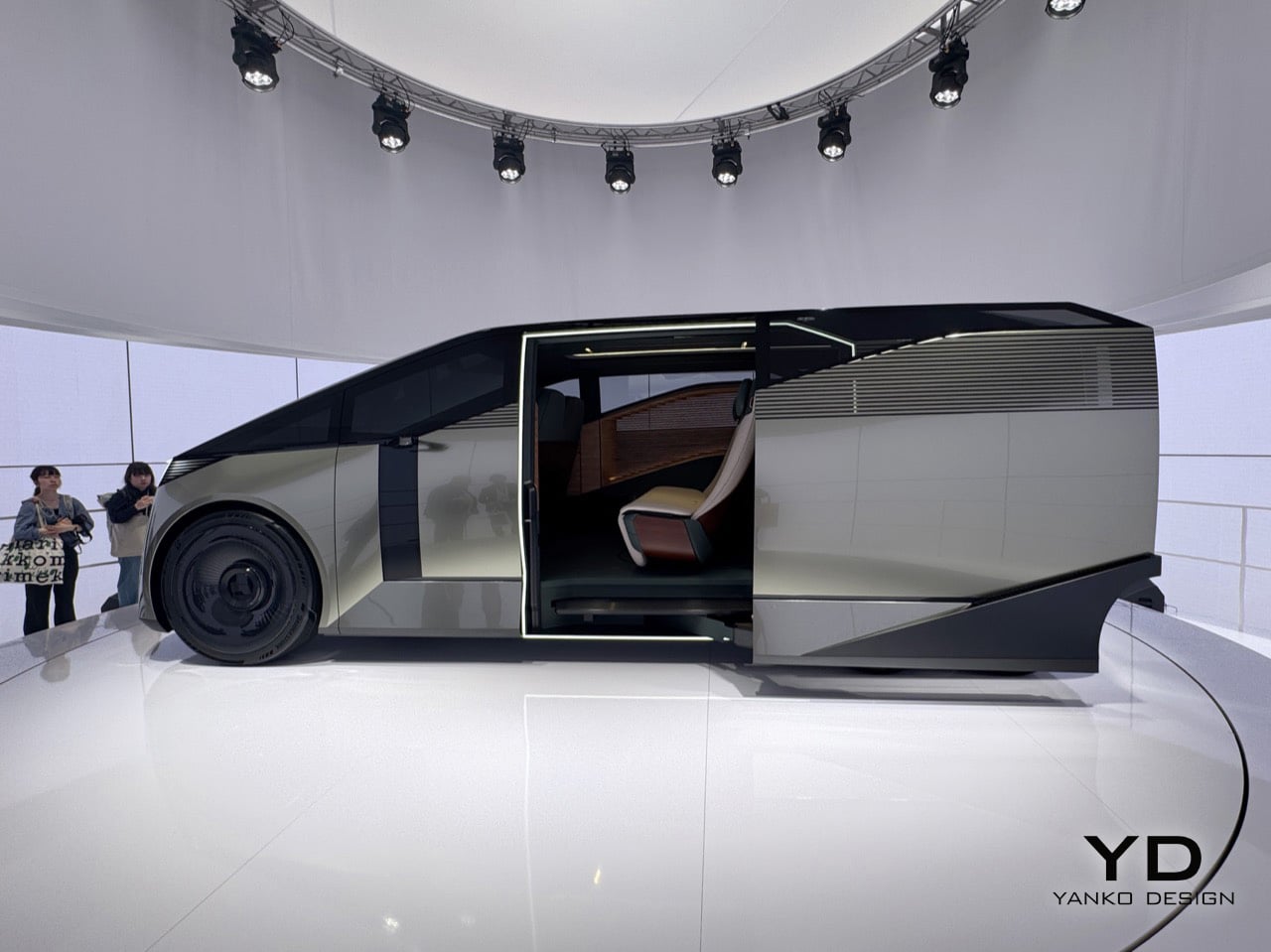
The car sits inside an installation called SPACE, a fittingly simple name for a big idea. The LS Concept is wrapped in a cylindrical LED screen that’s always moving, cycling through textures and color palettes that wash over the car’s matte metallic finish. The whole thing sits on a low turntable, rotating slowly so you can take in every angle while the screen behind it blurs the line between the vehicle and its environment. From the back, the body is dark and geometric, with red light cleanly tracing the corners and the LEXUS wordmark centered like a final statement. The front has no grille at all, just a wide bar of white light, a dark glassy face, and some sharp diagonal cuts at the lower corners. The side profile is what really sells the scale of it all; the greenhouse is so long and flat it forces you to rethink what a luxury car is supposed to look like.

Designer: Lexus

You’ll notice those sharp diagonal white light signatures at the corners of both the front and back, and they do a great job of anchoring your eye so you don’t get lost in all that surface area. The front is an exercise in restraint, especially for Lexus. There are no intakes, no heritage cues, and definitely no spindle grille, which defined the brand’s look for fifteen years. Instead, a single, clean bar of white light carries the Lexus name across the top, and below it, dark glass sweeps down like a theater curtain. The back is just as clean, with black geometric planes and red light tracing the corners so precisely it feels more like sculpture than taillights. There’s also a louvered panel on the rear quarter that looks both cool and functional, the kind of detail you have to go back and look at a second time.

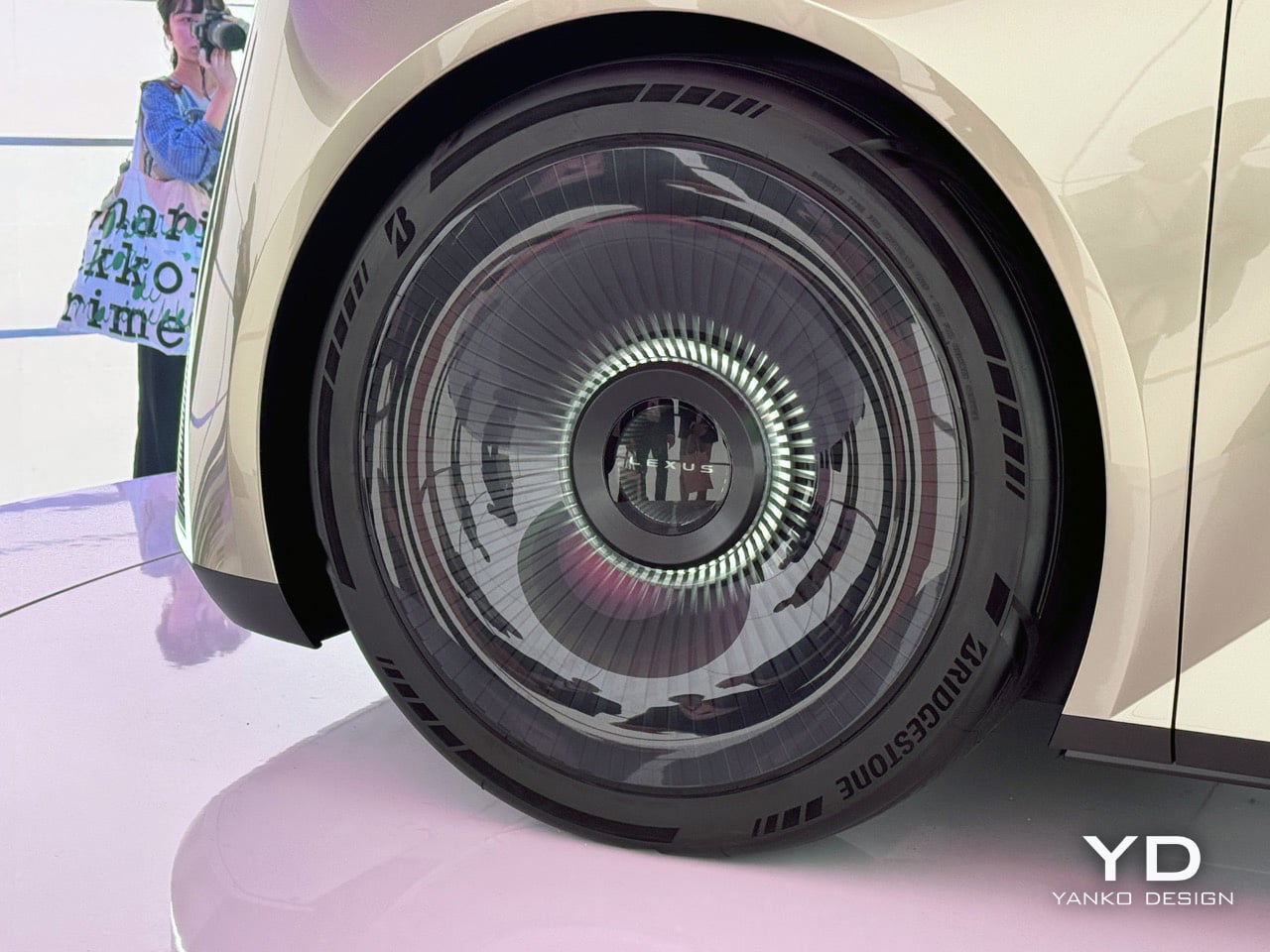
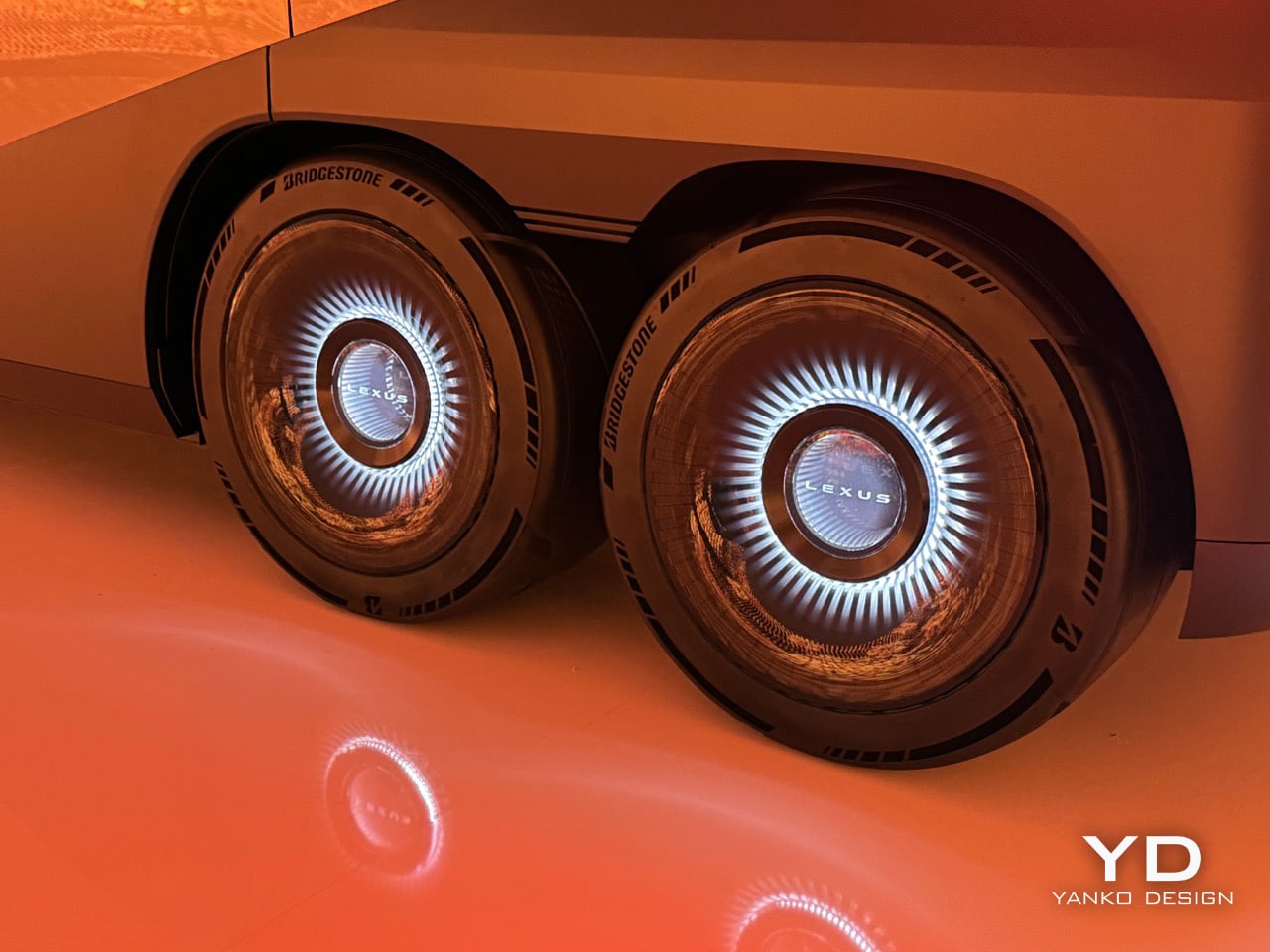
The twin rear wheels are probably the first thing that throws you off, but the more you look at them, the more they make sense. A six-wheel layout, something you usually see on overland vehicles or high-end coaches, lets Lexus pack in a huge amount of interior volume without the big wheel arches that eat up space in most long cars. The turbine-style wheel covers keep the look clean, where normal spokes would have ruined the effect. When you see it from the side, the lower body looks like a single sculpted piece, and the way it tucks under itself makes the whole thing feel like it’s floating. Lexus is basically saying that a vehicle with the footprint of a small bus can be the next word in luxury, and after a few minutes, you start to believe them.

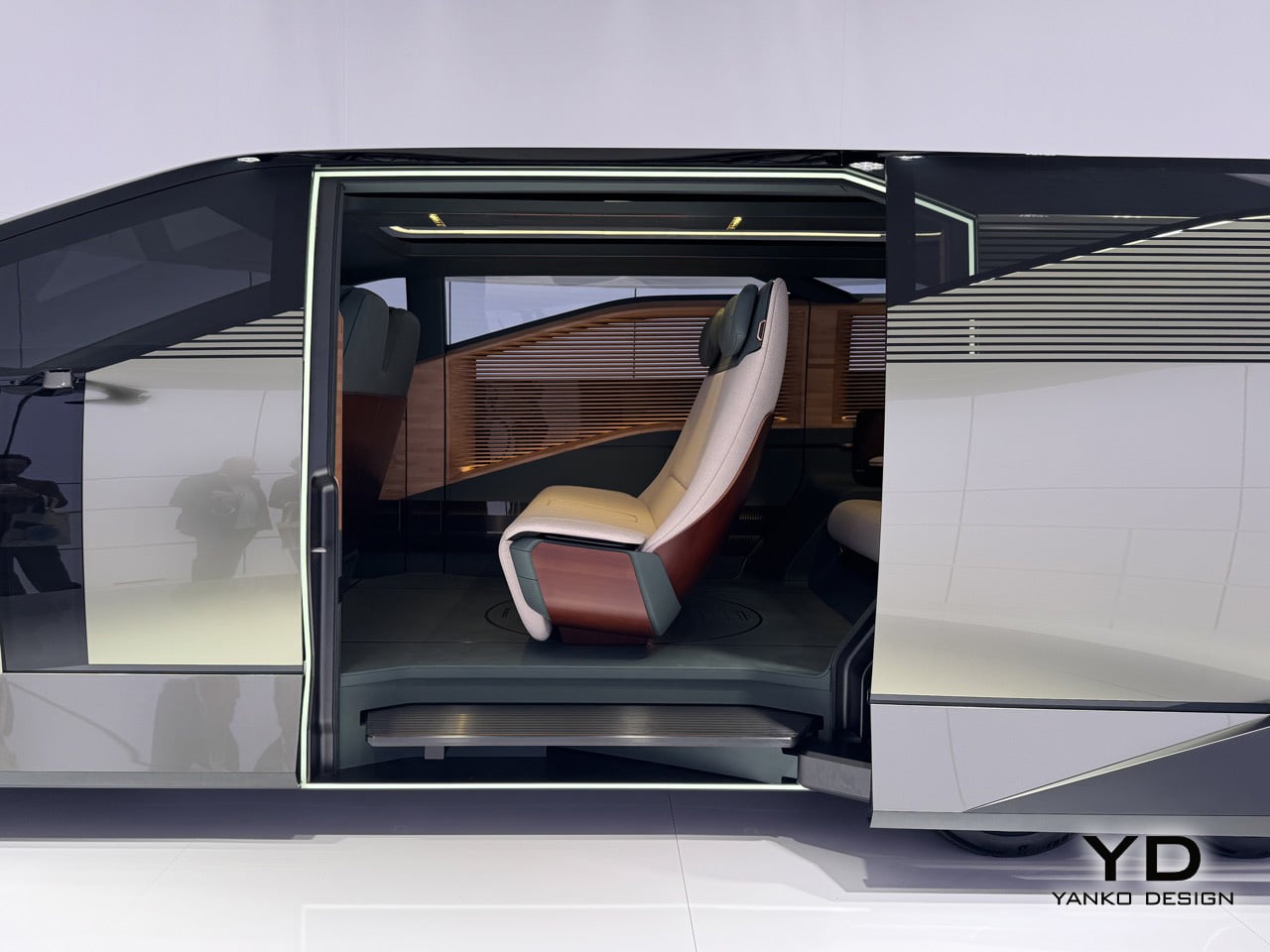
Step through the door, framed in a bright white light, and you see what they mean by hospitality. A slatted wood panel runs up the entire wall of the cabin, a single rear seat is finished in cream and burgundy leather, and the floor is so open you get the sense it was designed for standing as much as sitting. The real achievement here is how Lexus managed to package so much genuine room inside; it feels more like a small, well-designed living space than a stretched-out car. Whether any of this makes it to production is anyone’s guess, and Lexus seems happy to leave that question hanging in the air.

What Lexus is showing here is a clear signal of where its design thinking is headed, and that alone makes it one of the most interesting things you can see in Milan this year. If you want to see it for yourself, you can experience the SPACE installation and the Lexus LS Concept at the Daylight Hall in Superstudio Più, located in the Tortona district, from April 21st to the 26th.

The post Lexus LS Concept First-Look: The Six-Wheel Flagship Turning Heads at Milan Design Week 2026 first appeared on Yanko Design.
Electrolux Wants Your Kitchen to Feel Like Nature: First-Look at Milan Design Week 2026

For roughly six months of the year, Sweden is cold enough to keep its people reliably indoors. That is long enough to matter, and long enough to shape how a Swedish design team thinks about what a kitchen surface, a kitchen color, or a kitchen appliance should feel like when it is the primary thing a person looks at during the months when the outdoors is largely inaccessible. Electrolux, drawing on research conducted across European markets, found that nature is the single most common answer when people are asked where they go for emotional restoration. The brand’s response to that finding, expressed through a design philosophy called Lagom, the Swedish concept of balance and just enough, arrived in Milan this week at Via Melzo 12 in the Porta Venezia district.

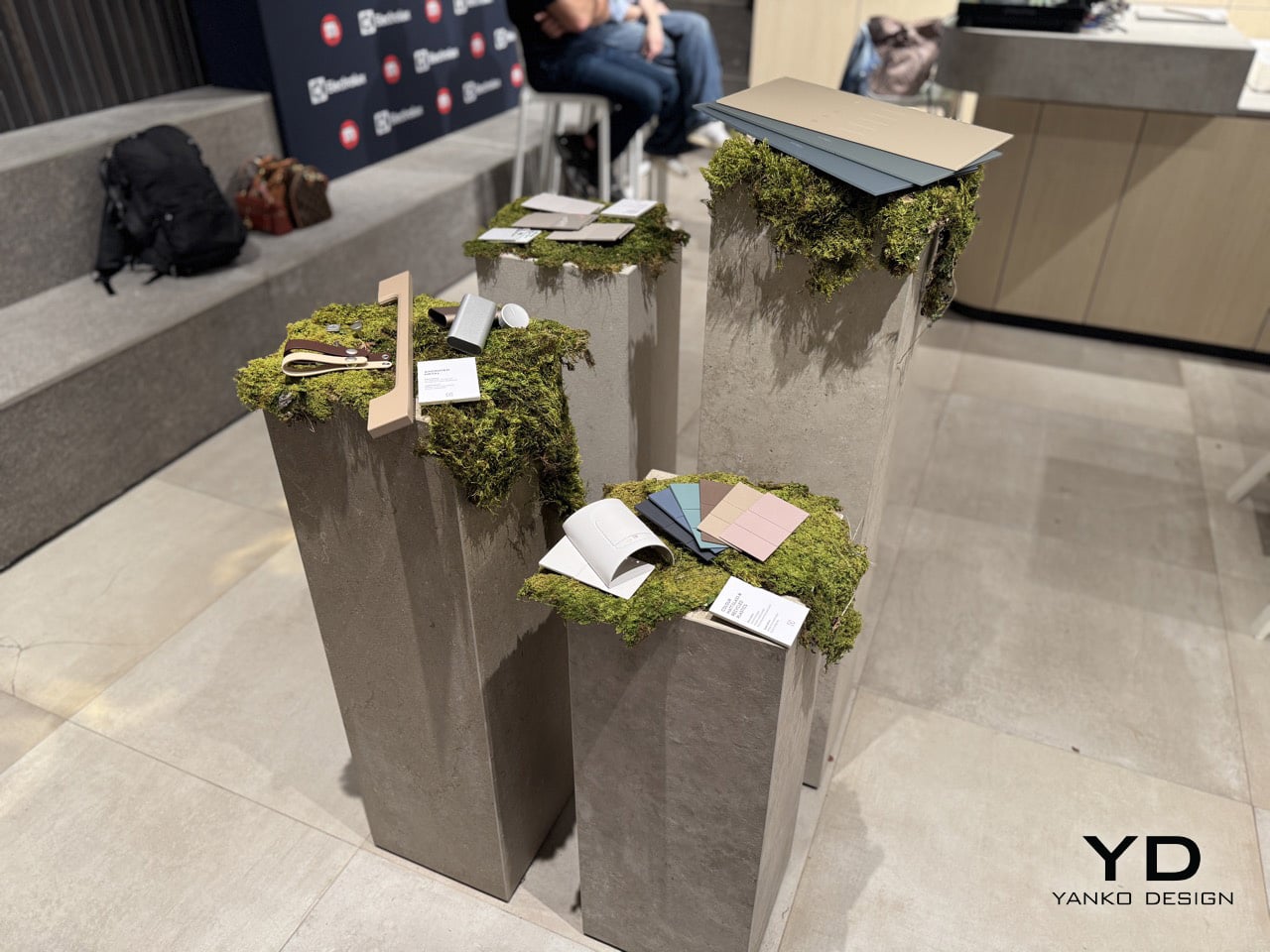
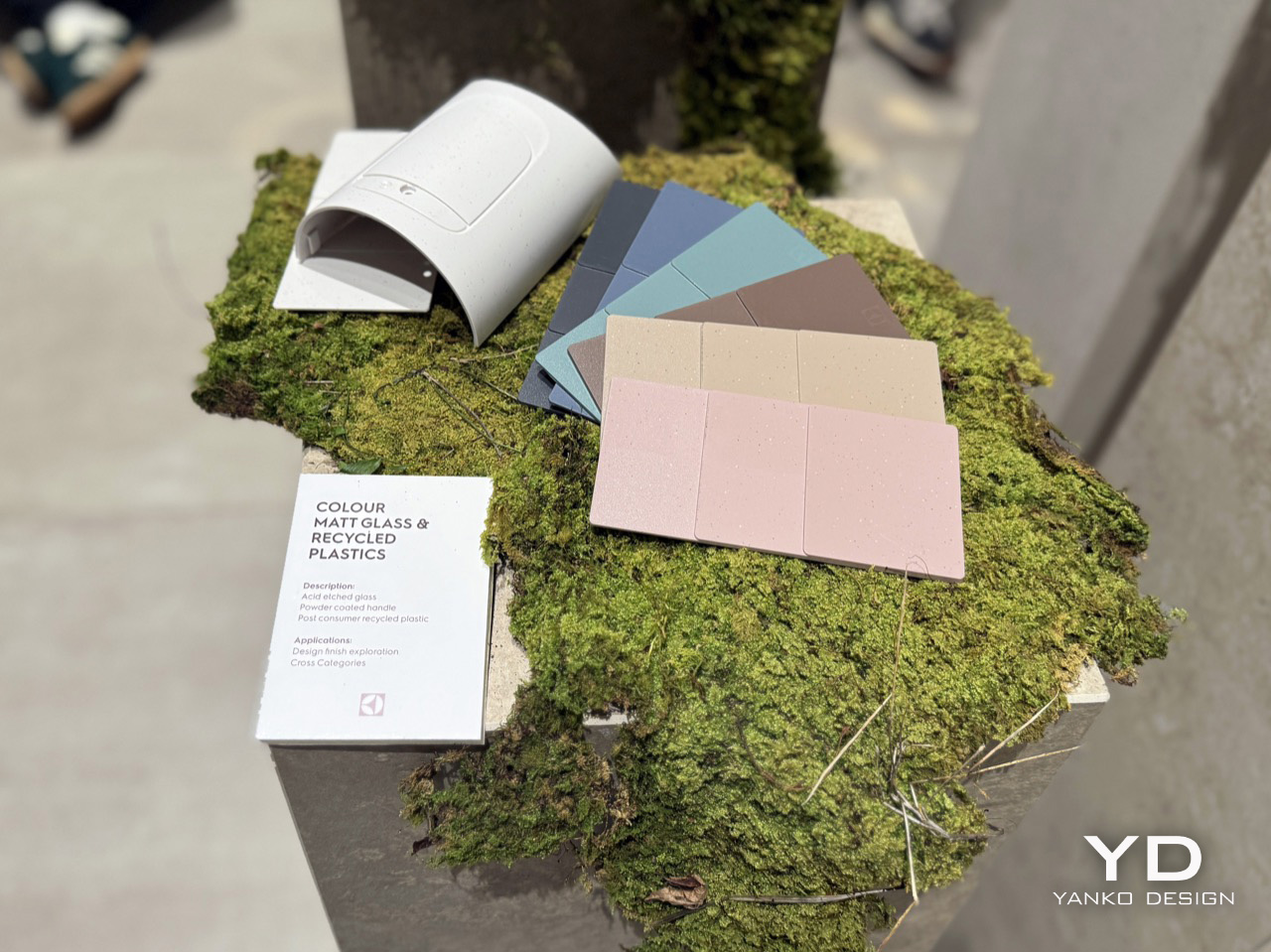
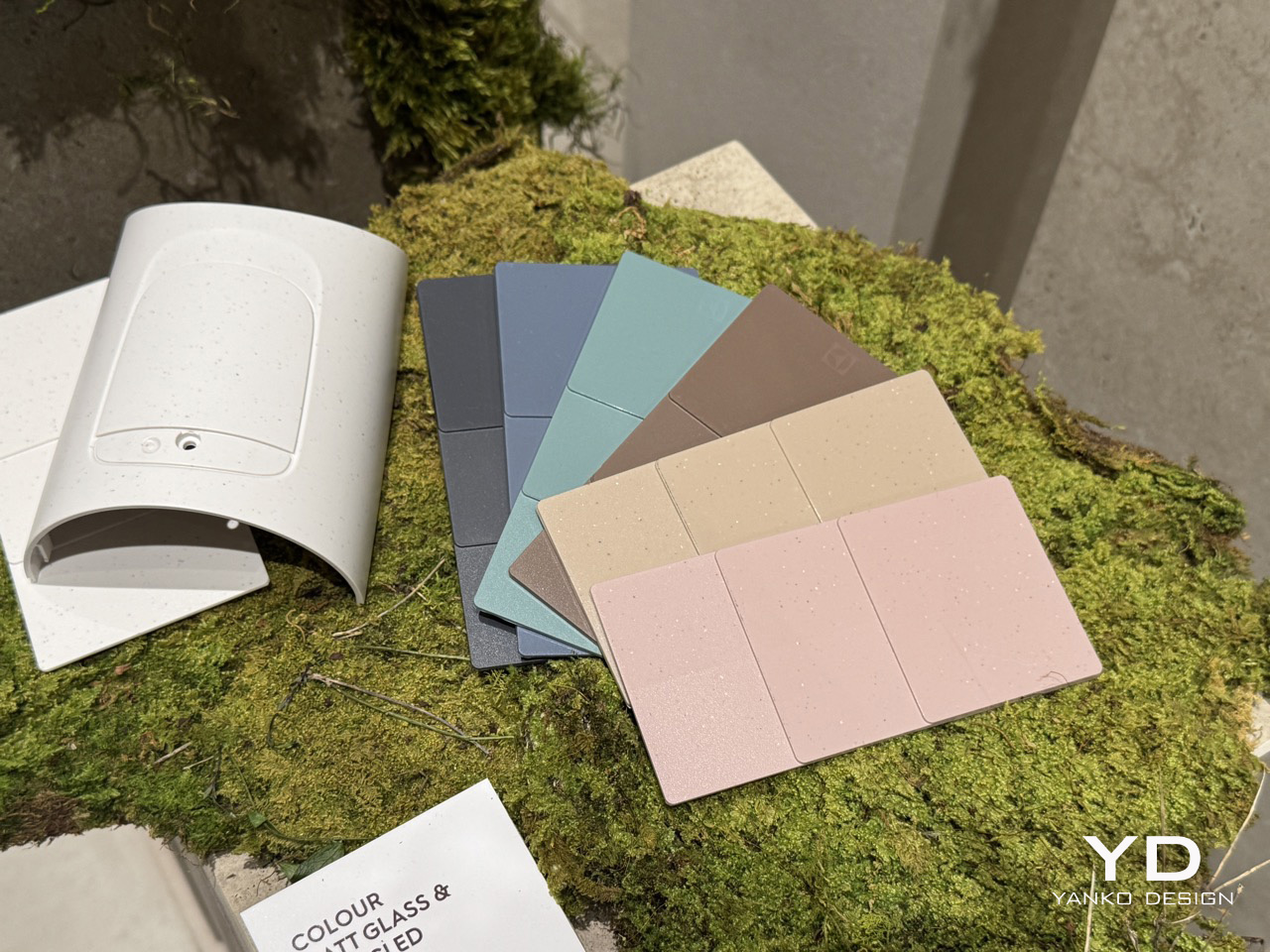
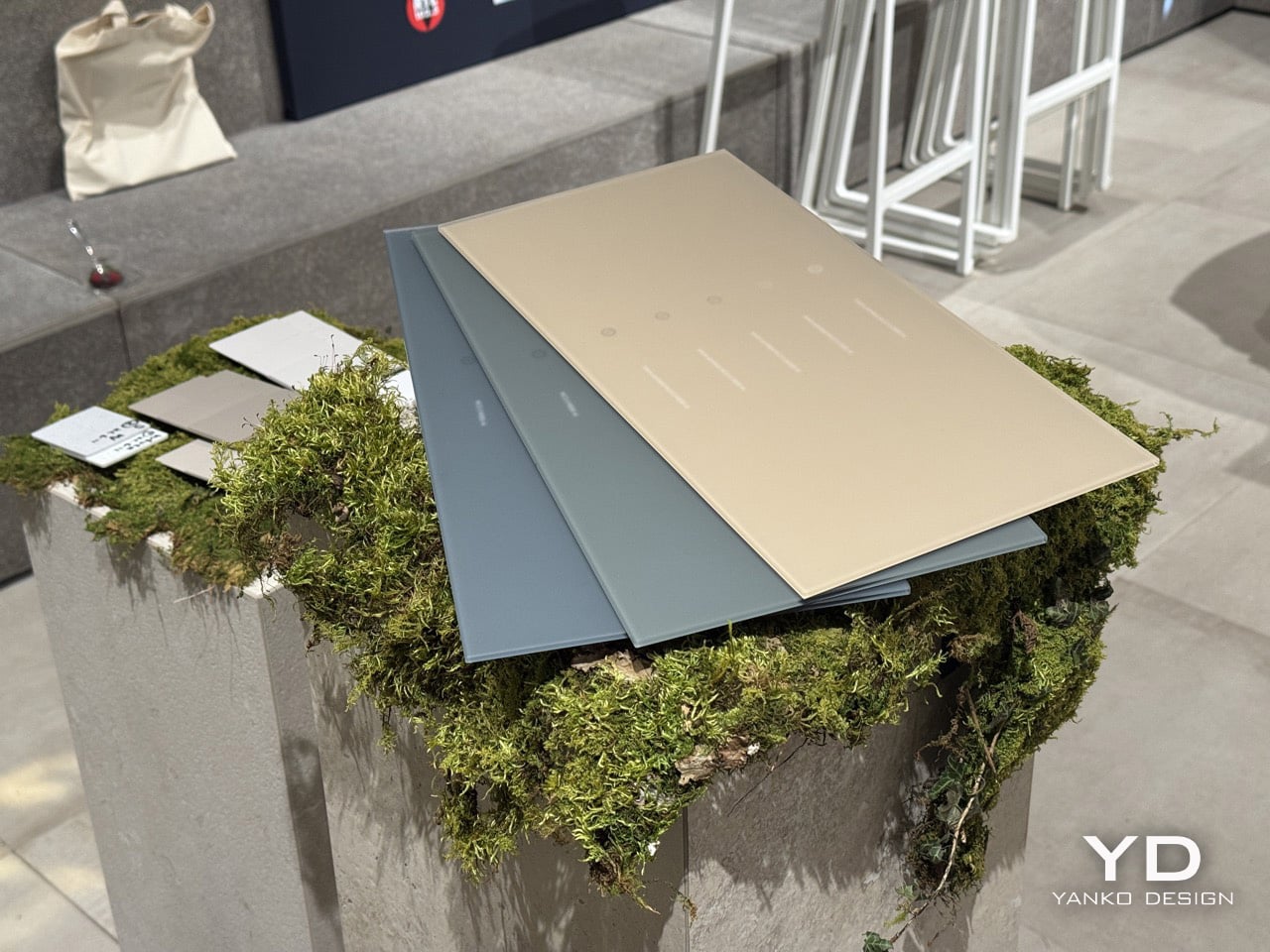
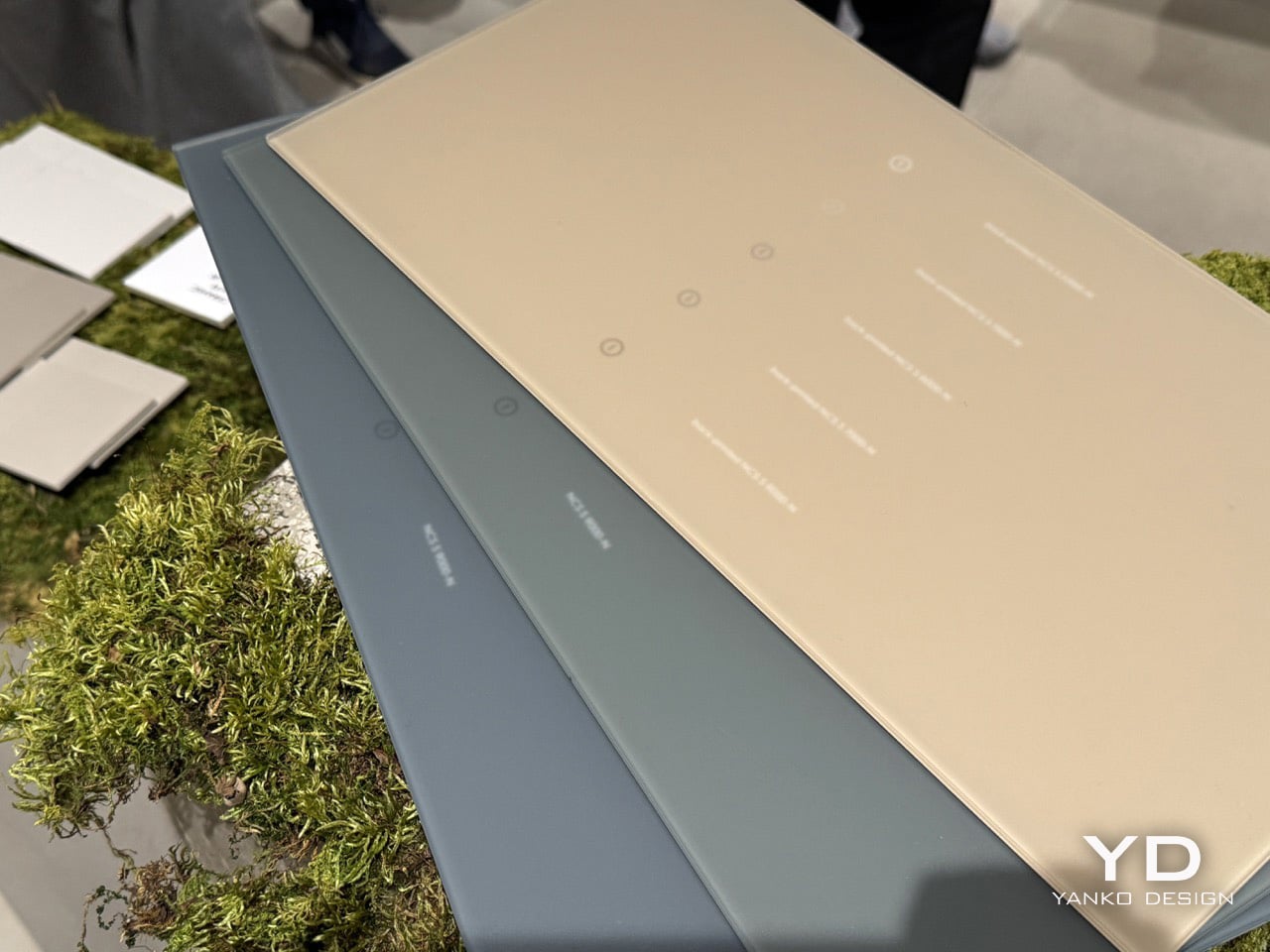
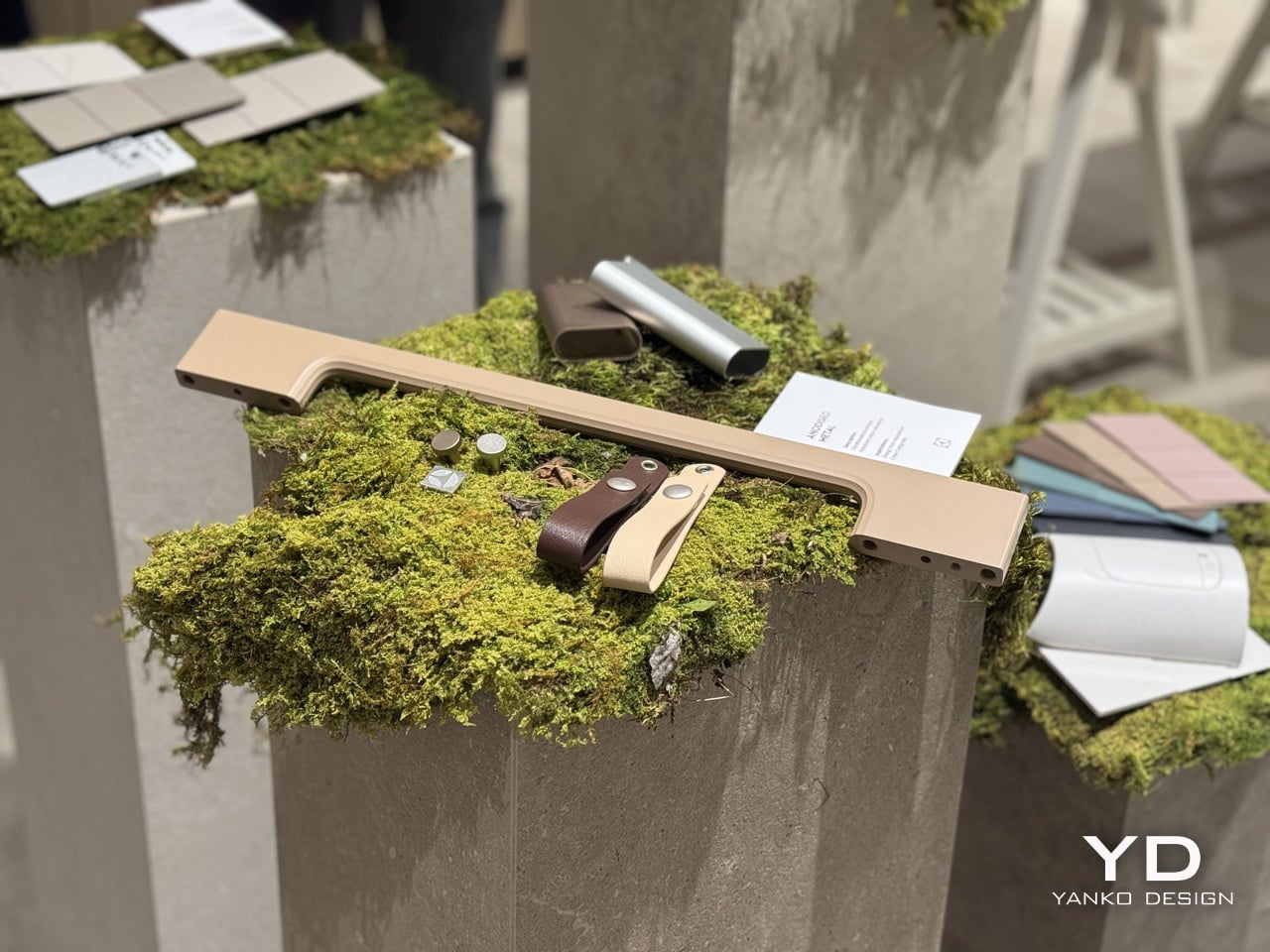
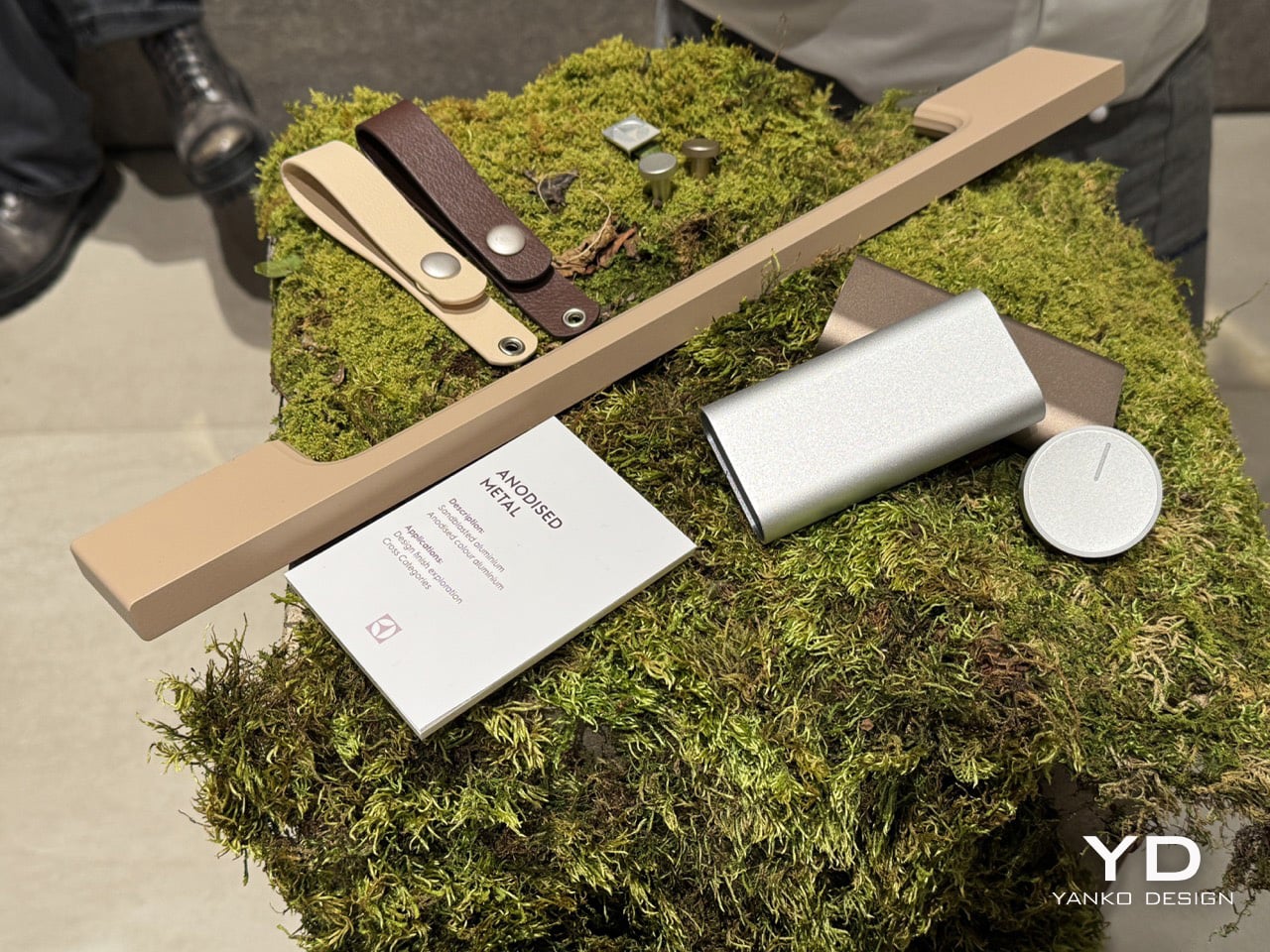
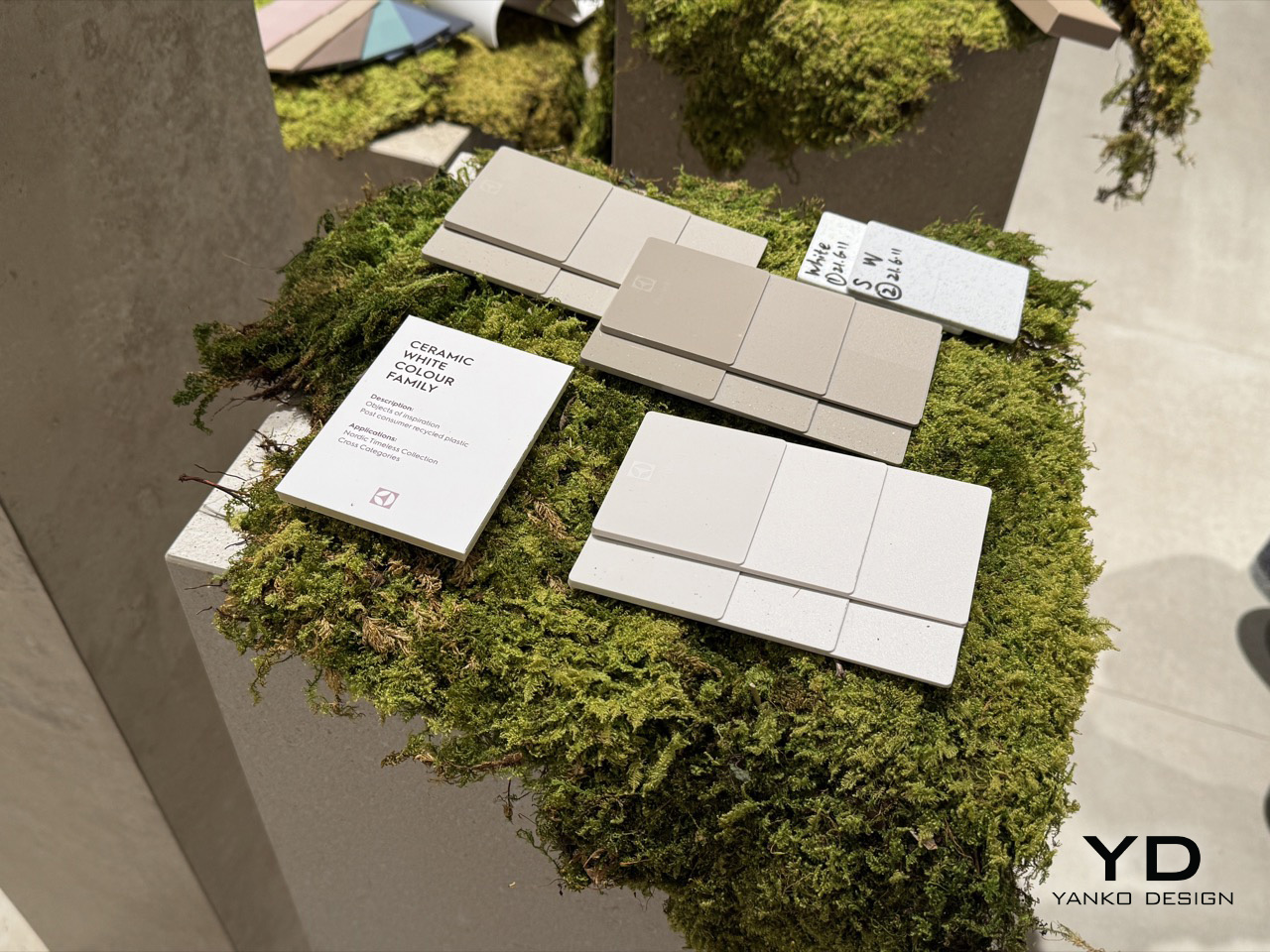
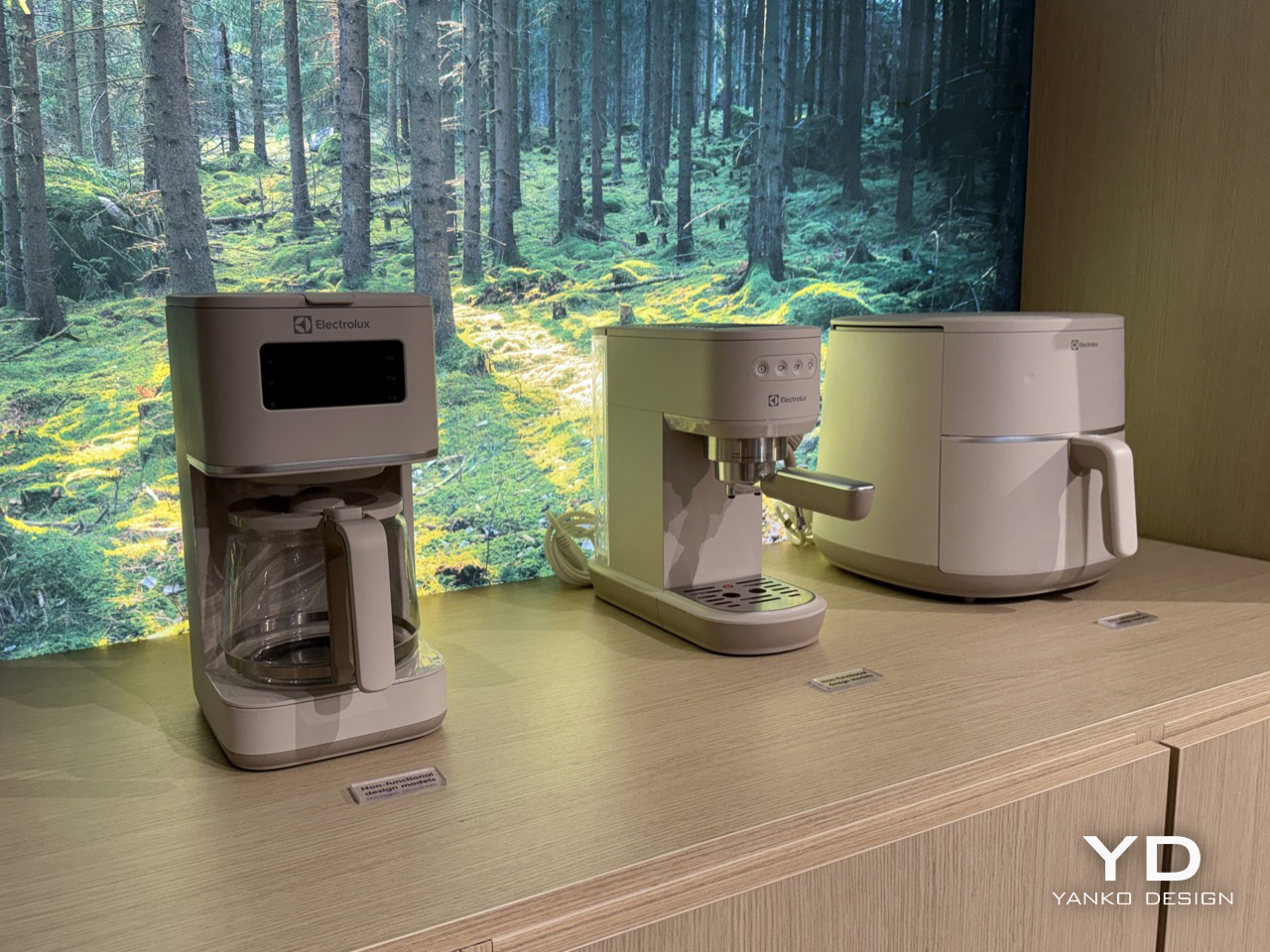
The space was staged as an argument made physical. Concrete plinths topped with living moss carried CMF swatches in muted blush, warm sand, dusty teal, and speckled stone-effect recycled plastic. A pine and wood scent developed by studio Koyia moved through the air. A breathing exercise was built into the programme, alongside a cross-country pizza competition that Turkey ultimately won. The sequence of it, material samples resting on moss, scent designed to recall a forest, appliances displayed in front of a photographic print of Scandinavian woodland, was too consistent to be coincidence. Electrolux arrived at Milan Design Week 2026 with a single, well-developed idea: that the kitchen is an emotional environment, and that the most sophisticated thing its design language can do is bring the outside in.

Designer: Electrolux

Rafael Alonso, who leads Electrolux’s Taste Design team, describes the modern kitchen plainly: a crowded space where people live, cook, manage family life, and absorb the friction of daily routine. Designing for that room means designing for that reality. Lagom, in his framing, is the response: meaningful solutions built around purpose and balance rather than specification and performance alone. The philosophy travels well beyond Sweden. Everybody needs a bit more balance in their lives, and the kitchen, as the room that absorbs the most daily activity, is where that balance is most frequently lost and most worth recovering.

Amelia Chong, based in Electrolux’s Stockholm office and leading Color, Material, Finish Design for the taste category, traces the palette back to something more concrete than trend cycles or stylistic preference. When Electrolux surveyed users across Europe about where they find emotional restoration, nature came back as the most consistent answer. For Chong’s team, that finding becomes a set of material conditions. Scandinavian light is lower in contrast and more diffused than much of Europe, and the colour preferences that emerge from living within that light tend toward the muted and the gentle. The goal is to establish colour and material in a long-lasting, timeless relationship rather than a short-term one.

The swatches at Electrolux’s showcase make that intention legible. Across the Ceramic White Colour Family, the Colour Matt Glass and Recycled Plastics range, and the anodised metal samples, the palette holds a consistent register: warm sand and dusty teal, soft blush and speckled stone-effect off-white, warm bronze and low-sheen aluminium. Several finishes are built from post-consumer recycled plastic, and the acid-etched glass surfaces carry none of the glossy visual aggression that has dominated premium kitchen aesthetics for the better part of a decade. Chrome is absent. Matte black, another recent default for high-end appliances, does not appear either. What replaces both is a surface language that reads as organic, with textures referencing stone, compressed earth, and raw ceramic.

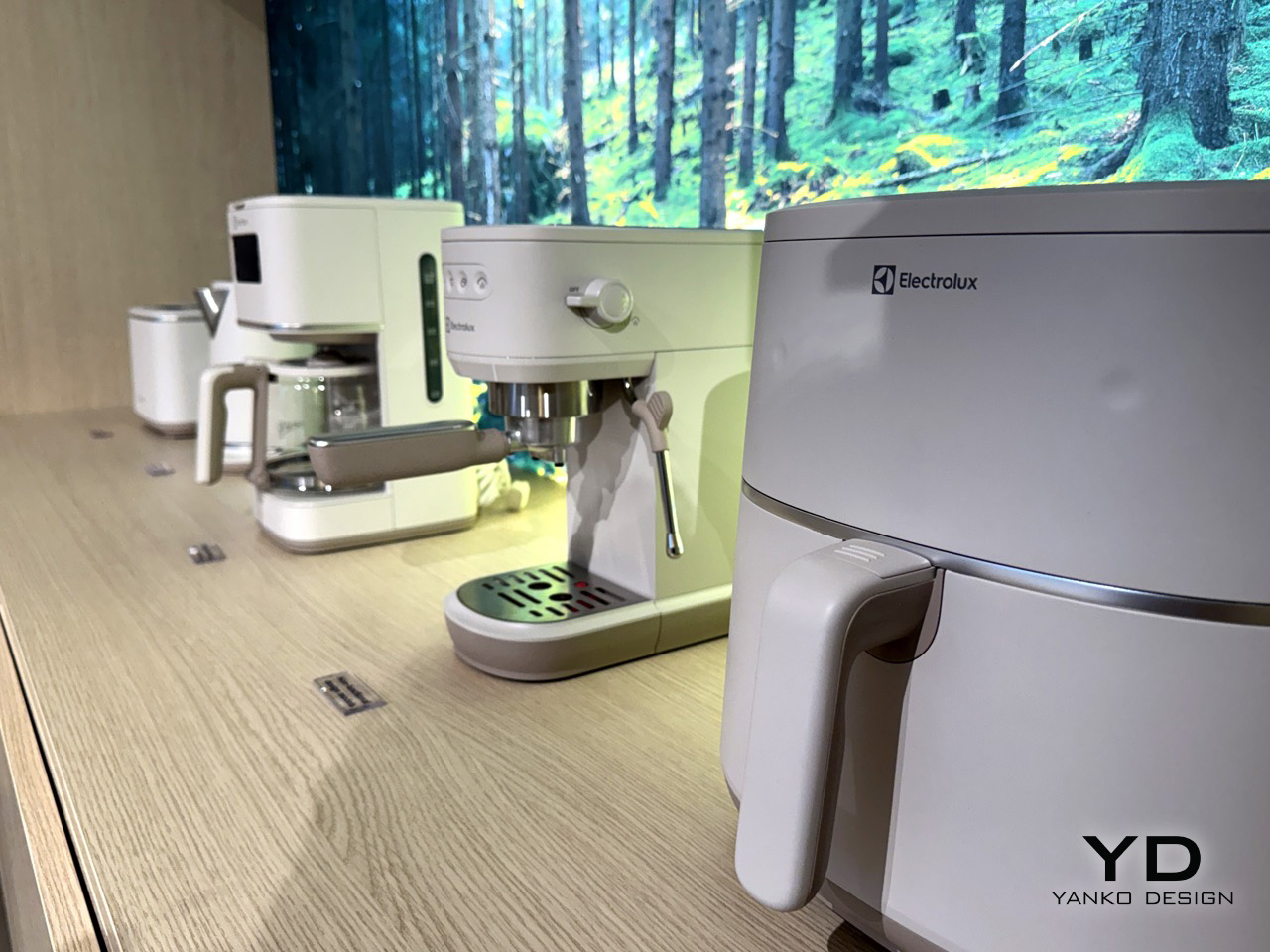
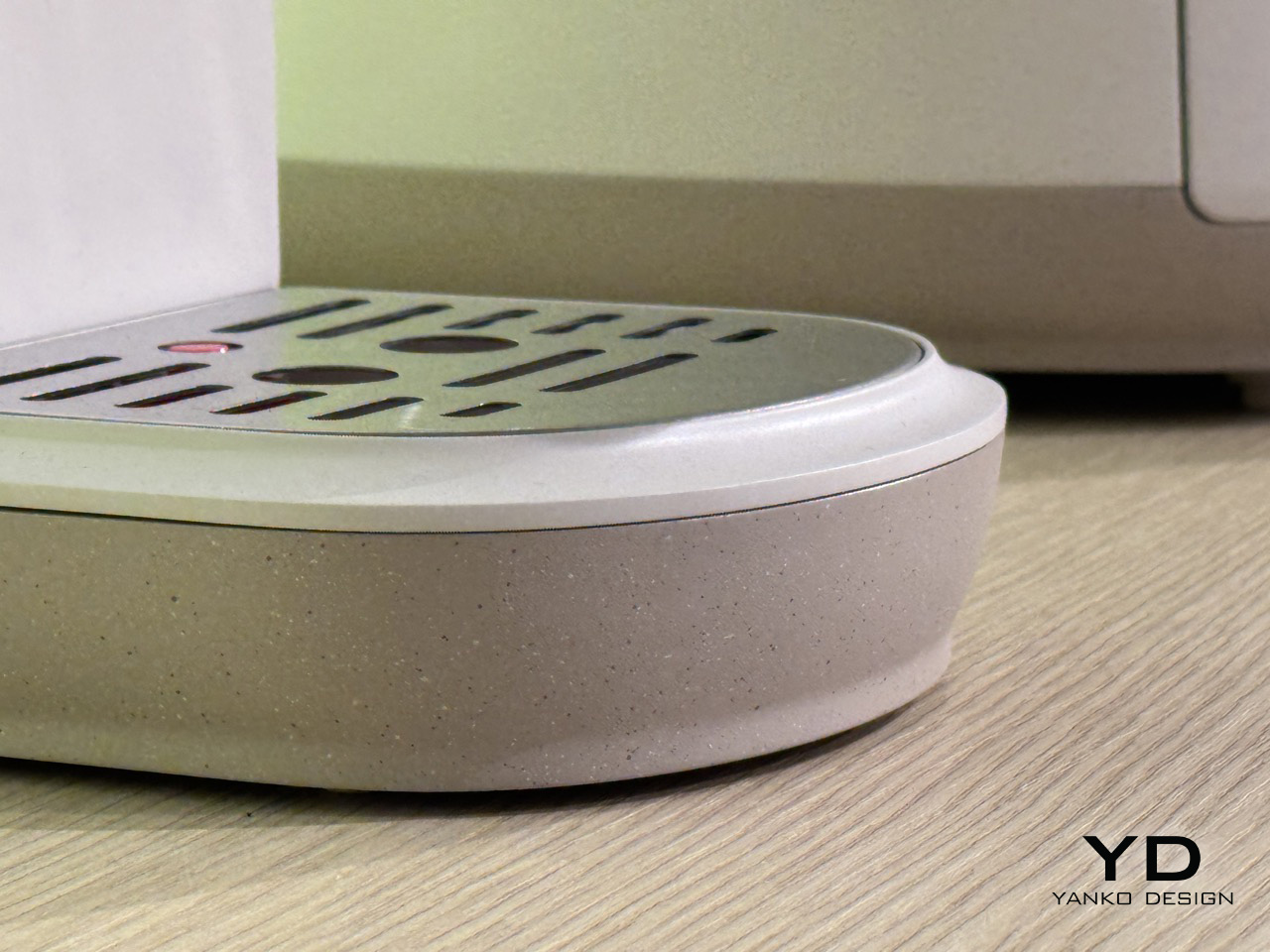
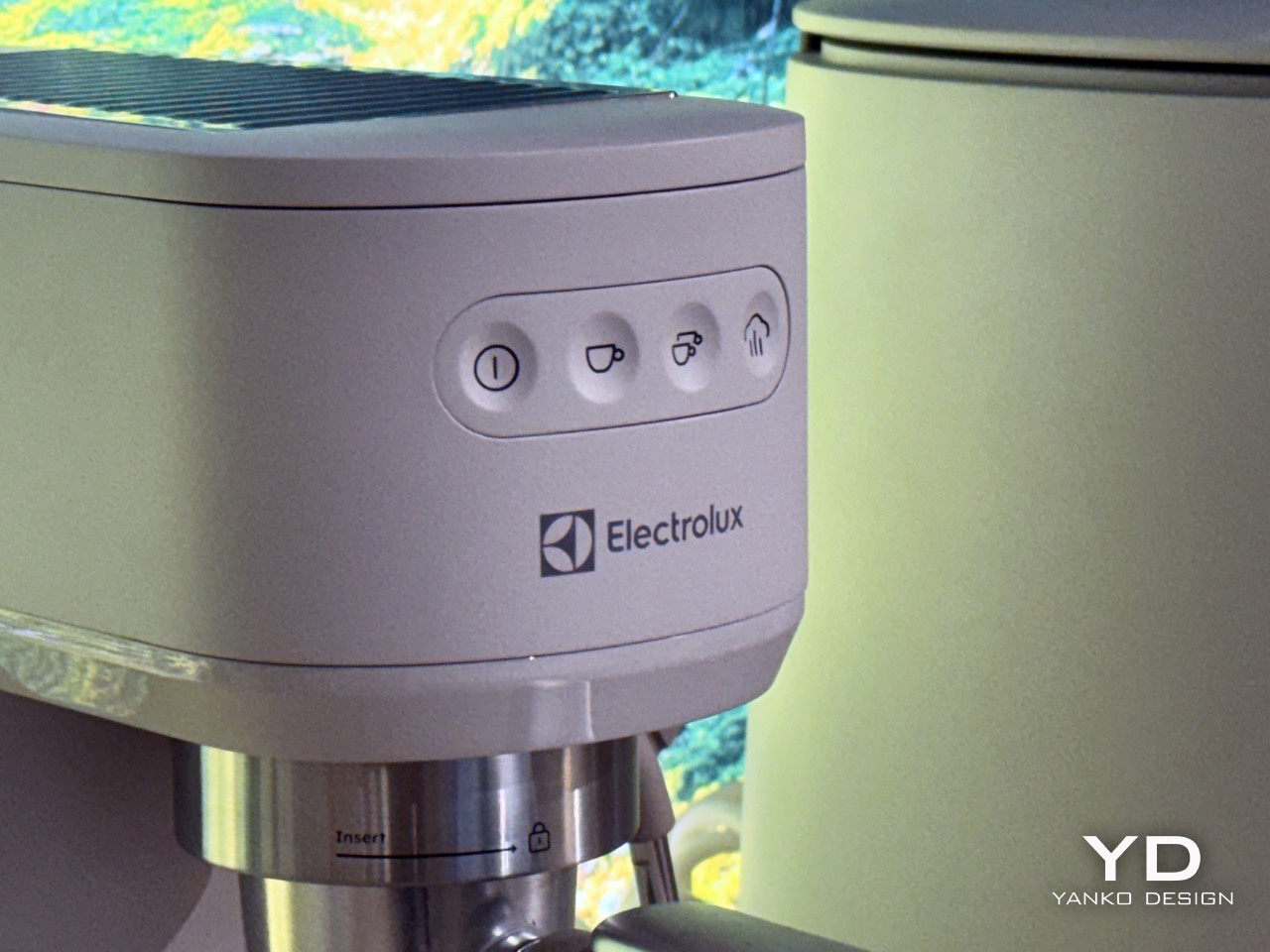
That material thinking finds its form in a new family of conceptual small appliances. A toaster, electric kettle, coffee machine, espresso machine, and air fryer were all presented with a unified design language that feels both calm and confident. Each product shares a primary body finished in a soft, linen-like white, but the most distinctive feature is the base. A warm, speckled finish, reminiscent of granite or raw ceramic, grounds each appliance, giving it a visual and textural weight that connects it to the natural materials referenced in the CMF library. The effect is cohesive and deeply considered; the appliances feel less like industrial objects placed on a countertop and more like a collection of stoneware that has grown out of it.

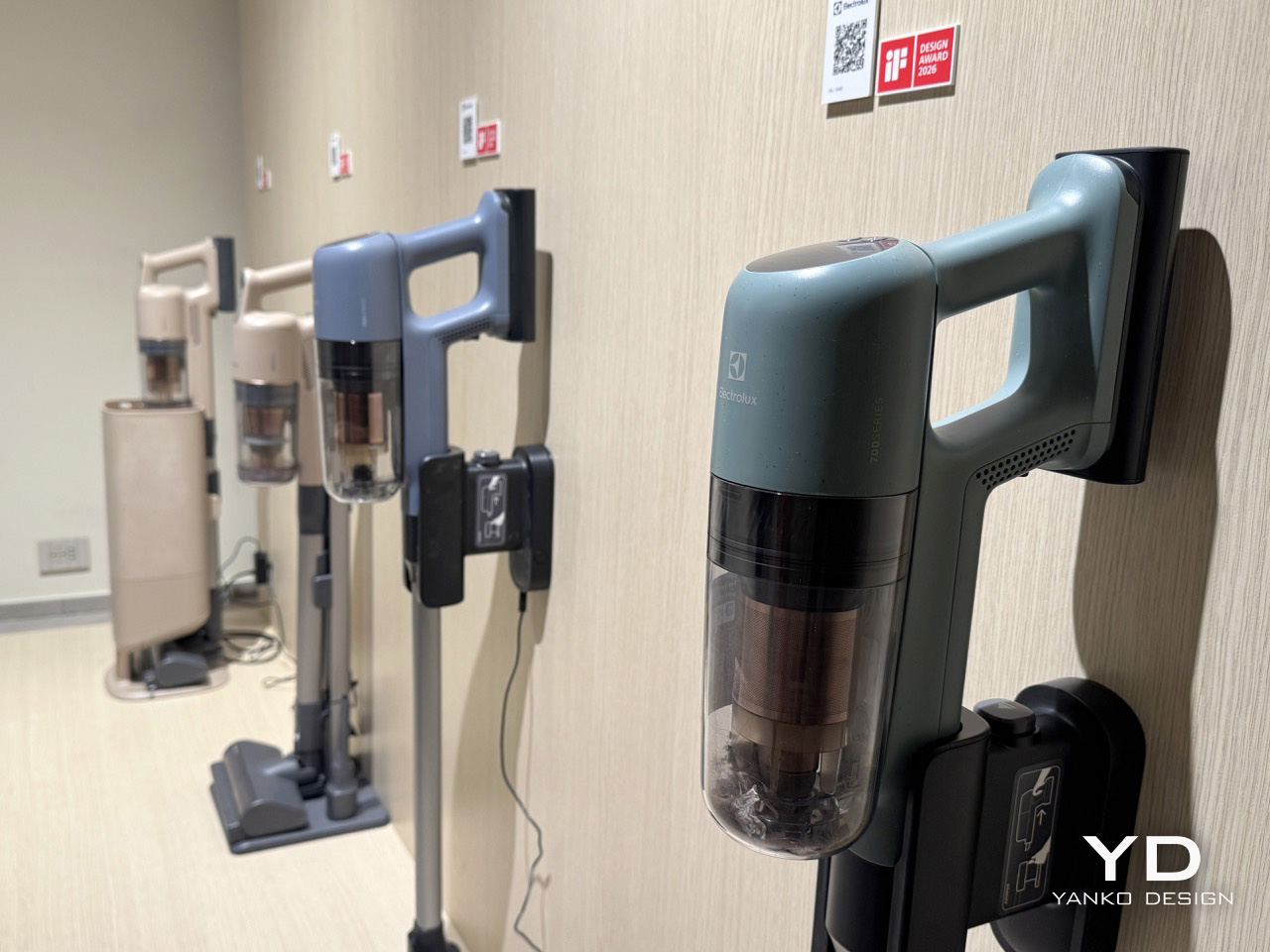
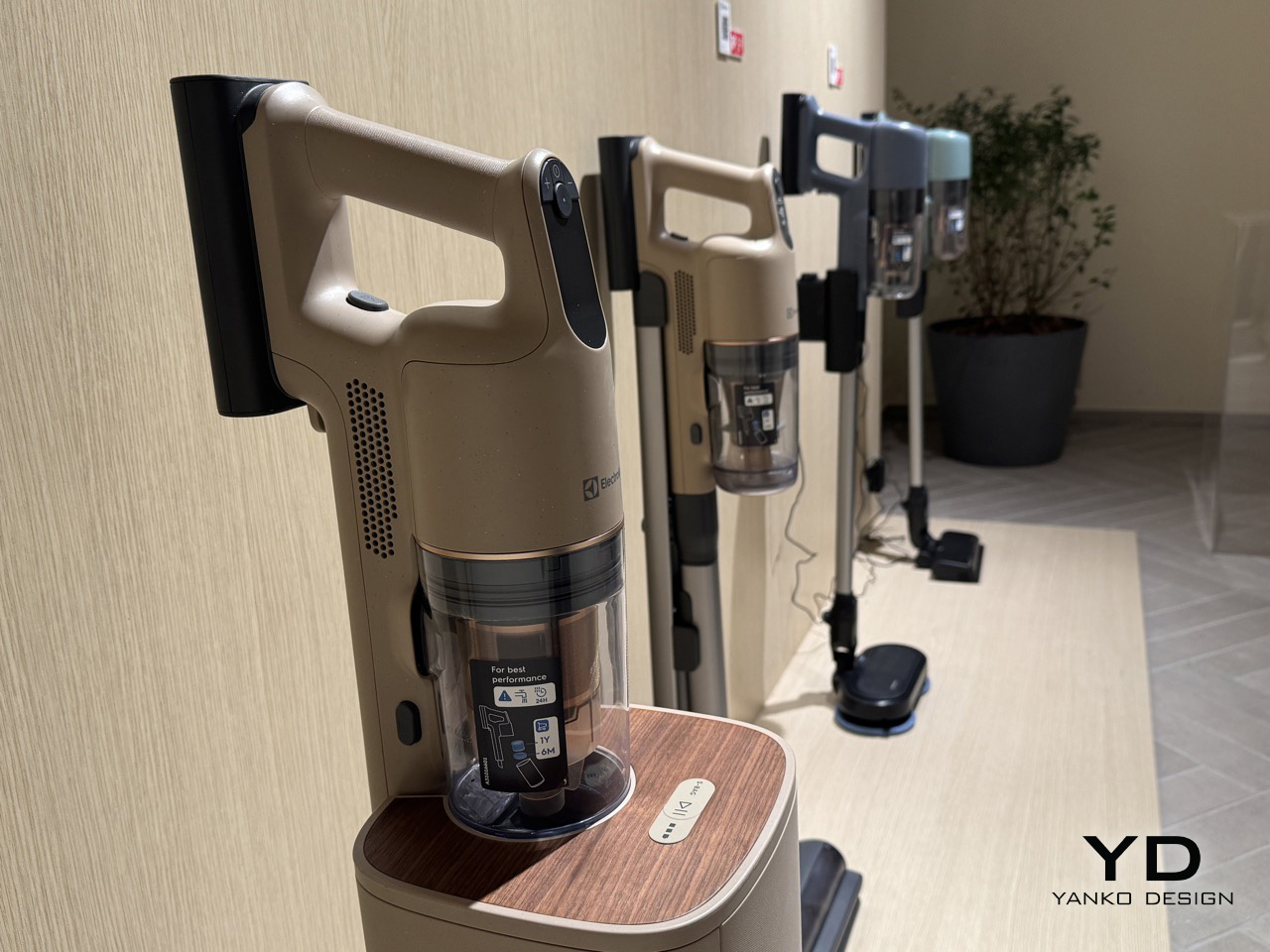
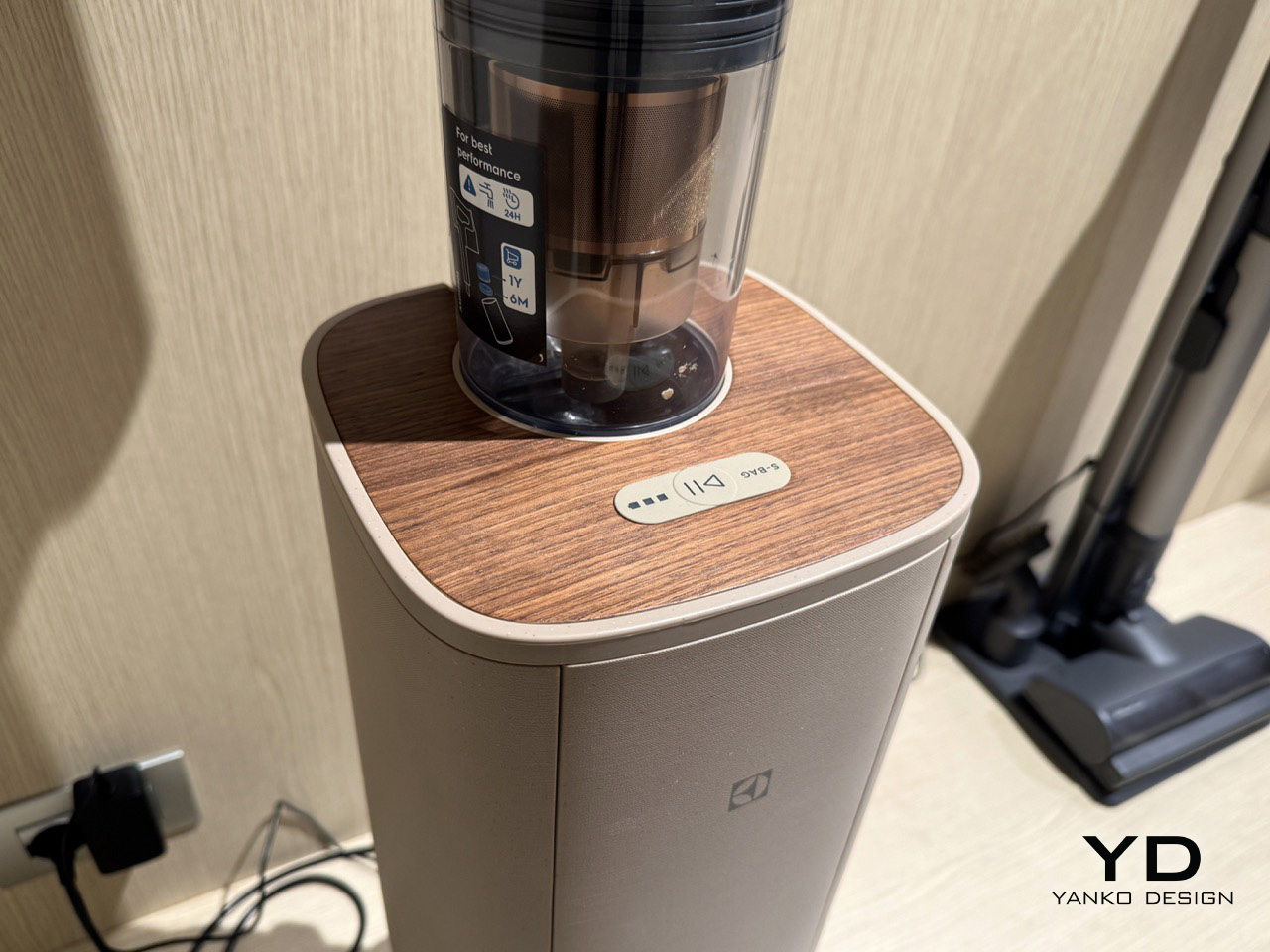
This approach is not confined to the kitchen. A vacuum cleaner, displayed with the same attention to sensory detail, extends the Lagom philosophy into the broader home. Its body carries the same muted, gentle tone as the kitchen concepts, but its top surface is finished with a warm, walnut-panel wood trim. It is a simple but effective move that transforms a utility object into something closer to furniture. The design choice suggests that balance, and the deliberate presence of natural textures in everyday objects, belongs to the whole home, softening the technological footprint of our tools and integrating them more harmoniously into our living spaces.

The neuroaesthetic research informing Chong’s approach is concrete: considered colour selection can reduce perceived stress by as much as 35%, a figure that reframes what a hob surface or a coffee machine body is quietly doing in a room. They contribute actively to the sensory quality of the spaces we inhabit. In a field where brands largely compete on technology, connectivity, and performance metrics, that may be the most quietly confident thing Electrolux brought to Milan: the conviction that calm, deliberately designed, is a specification worth meeting, and that the palette which carries it was drawn from the landscape just outside the window.

The post Electrolux Wants Your Kitchen to Feel Like Nature: First-Look at Milan Design Week 2026 first appeared on Yanko Design.
The TATAMI ReFAB PROJECT Is A Product Of Fusing Japanese Traditions With 3D-Printed Sustainability

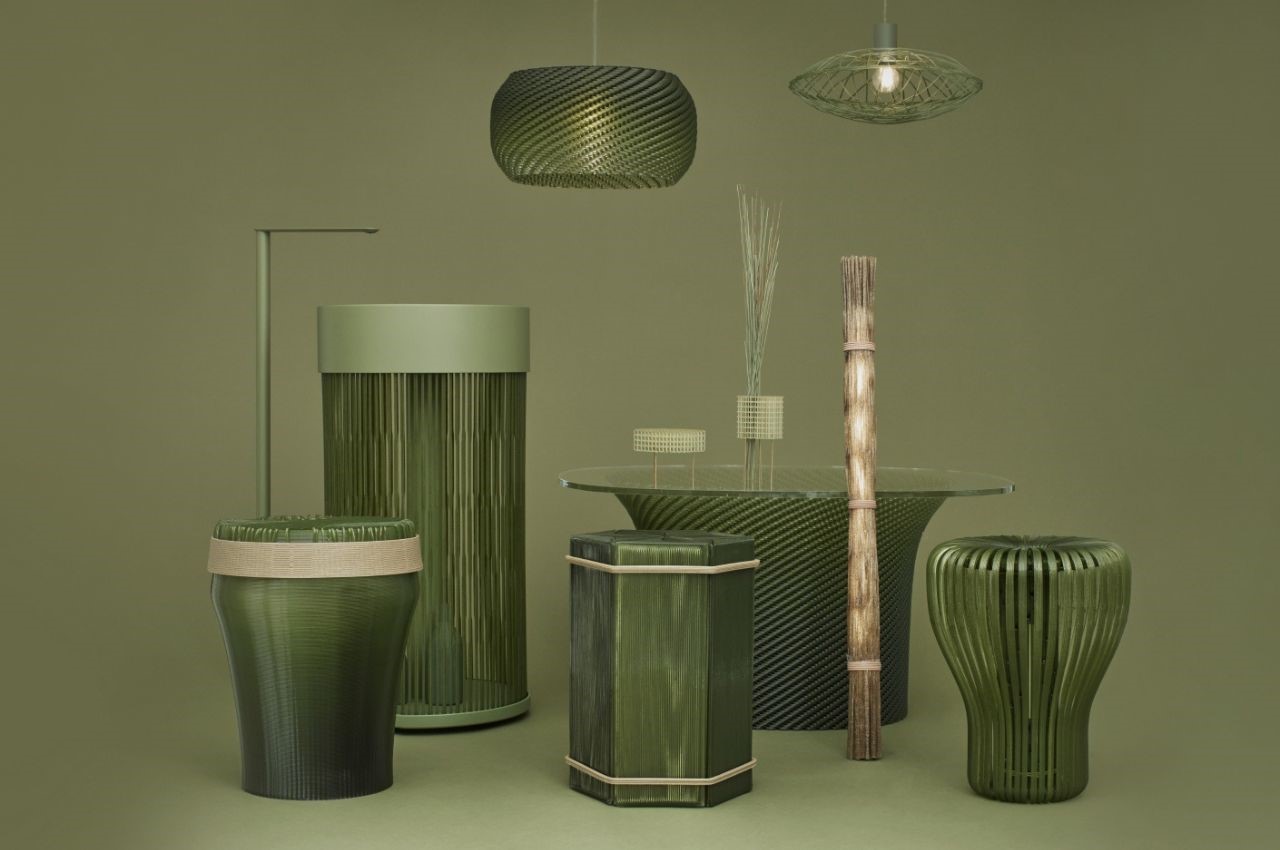
At the prestigious Salone Del Milano 2023 in Milan, Italy, the design lab HONOKA showcased their innovative TATAMI ReFAB PROJECT furniture series. This project, conceived by a team of forward-thinking product designers, leverages advanced manufacturing techniques like 3D printing to breathe new life into traditional Japanese tatami mats. The result is a fusion of heritage and cutting-edge technology that reintroduces the essence of tatami into contemporary living spaces.

Designer: HONOKA LAB

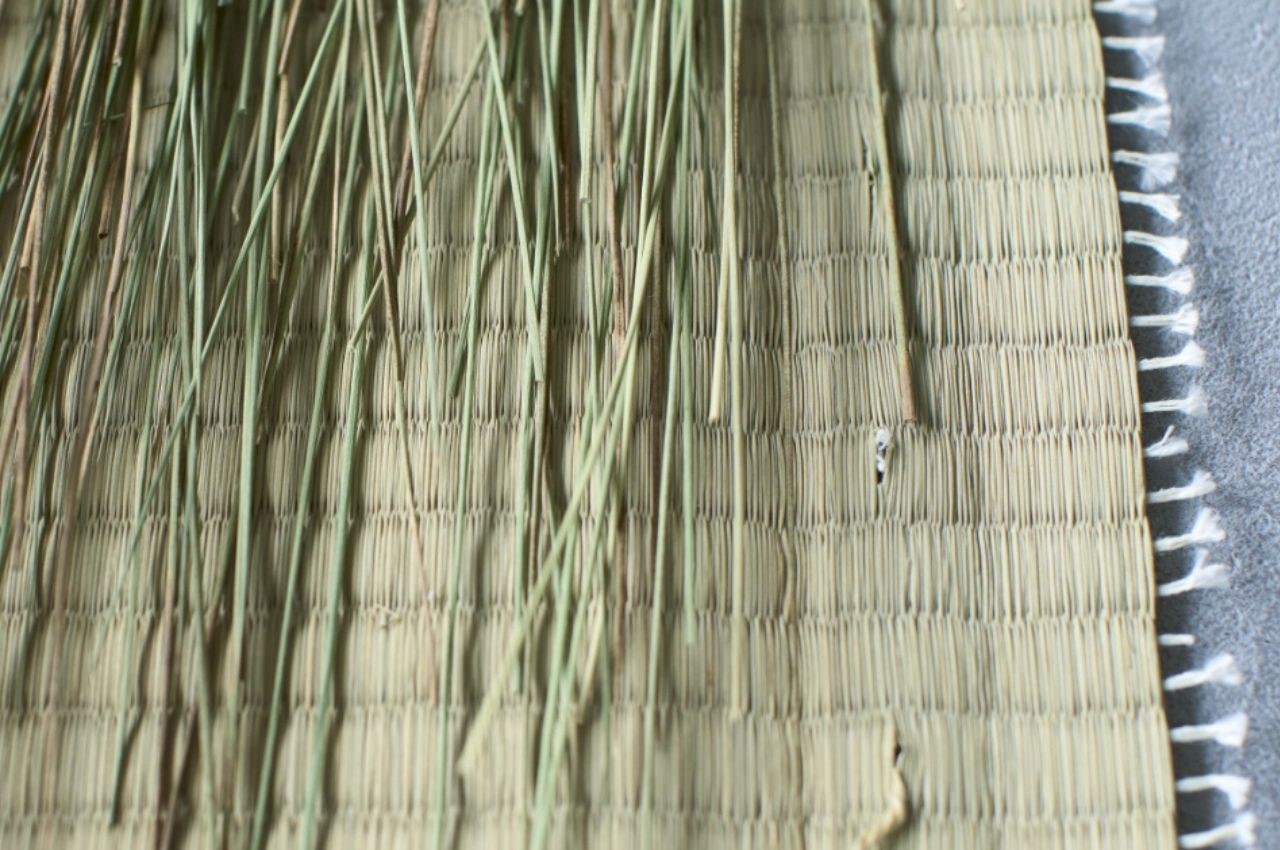
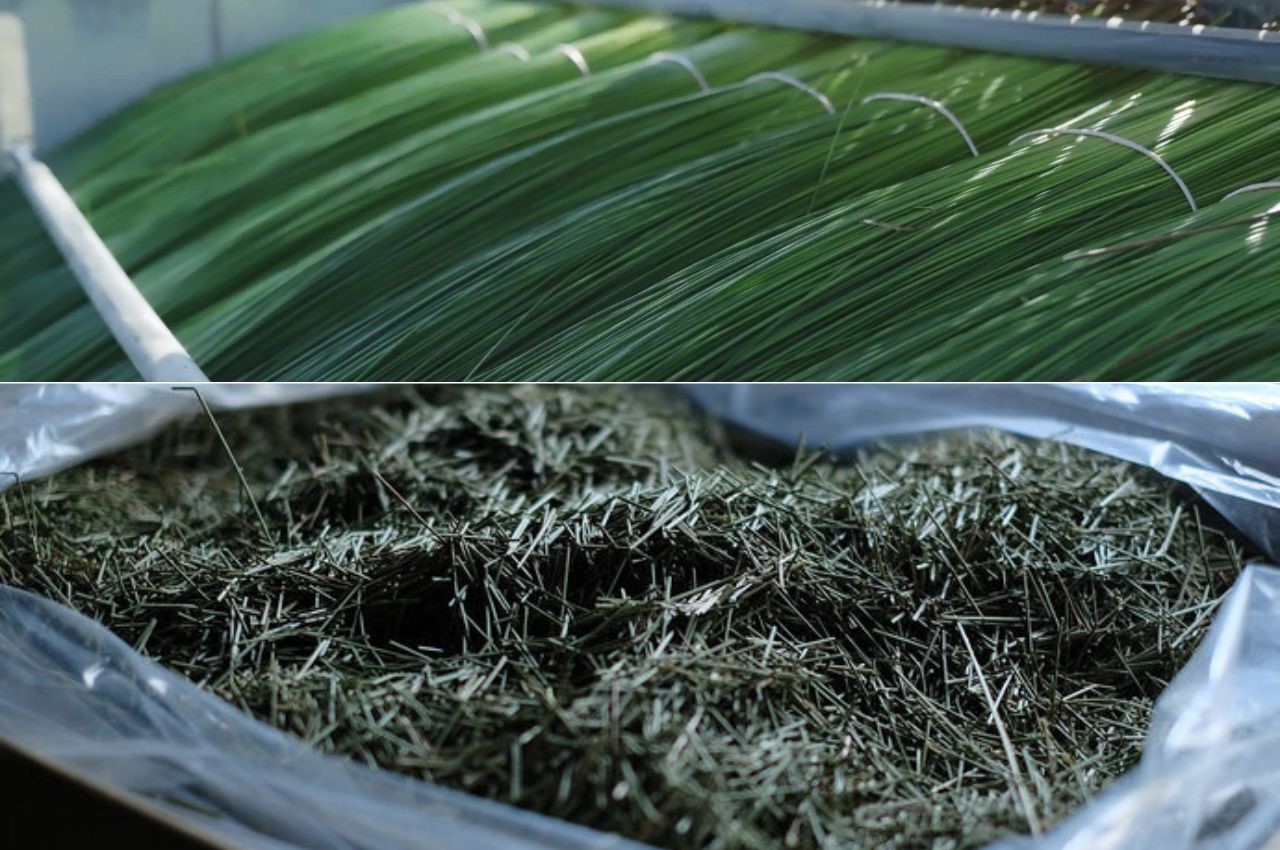
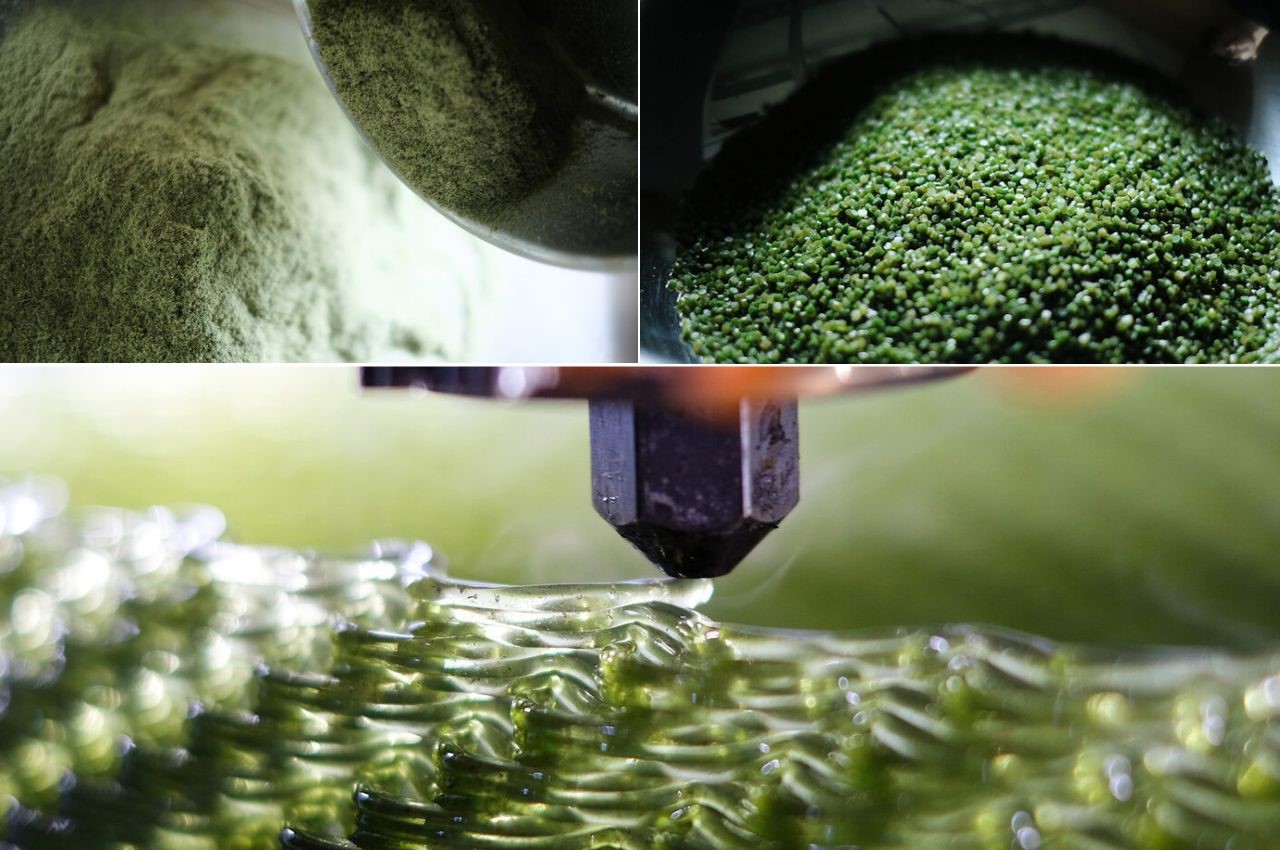
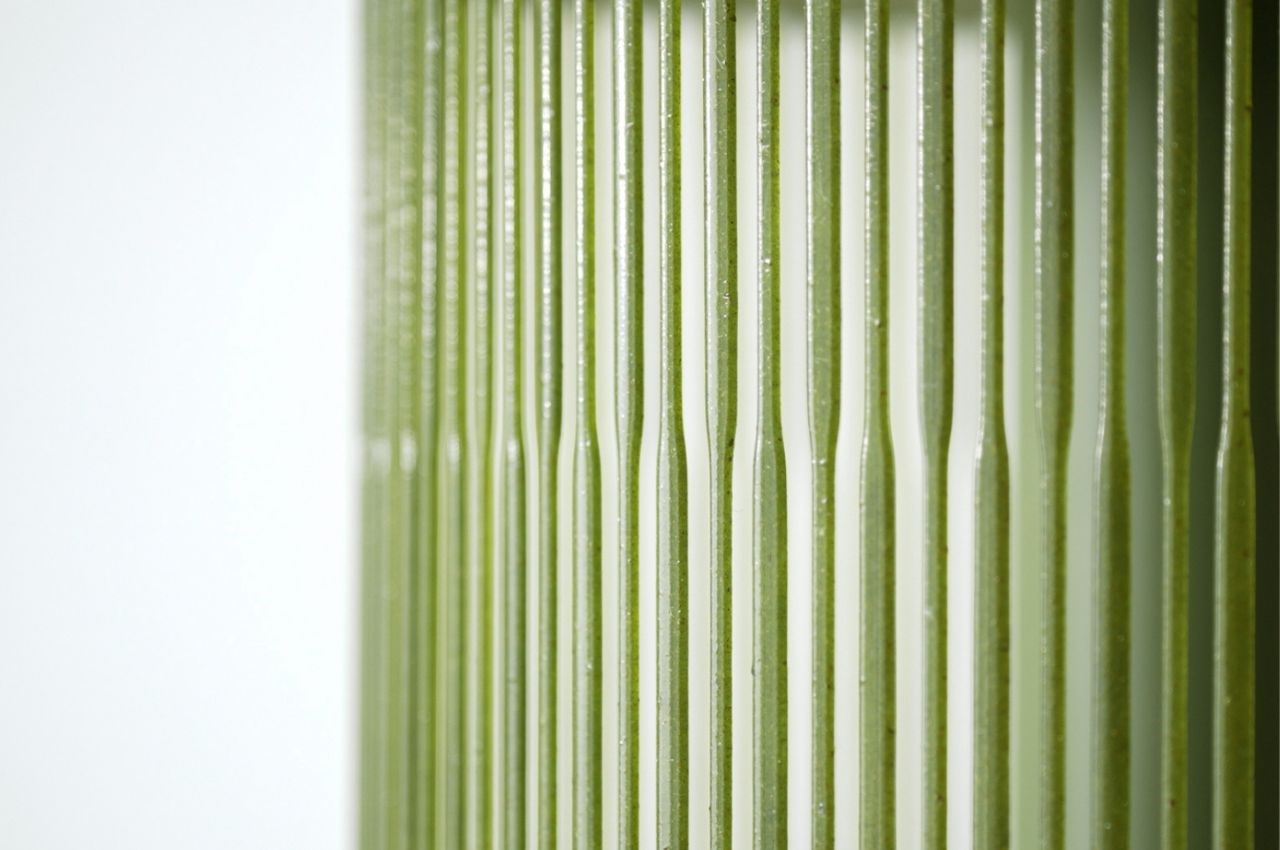
Tatami mats have been a staple of Japanese interiors for centuries, renowned for their aromatic qualities, humidity regulation, and odor reduction capabilities. HONOKA’s project aims to integrate these traditional benefits into modern furniture design. By blending recycled tatami with biodegradable plastic, they have created a sustainable material that is both adaptable and durable. This innovative composite can be 3D printed into a variety of functional and decorative home products, embodying the future of artisanal design while retaining a distinct connection to Japanese culture.

One of the key highlights of this project is its commitment to sustainability. Traditional tatami production often results in significant material waste, with nearly half of the plant-based material discarded. Honoka addresses this issue by recycling tatami waste and combining it with biodegradable plastic, significantly reducing the environmental impact. This material is not only eco-friendly but also versatile, allowing designers to explore new aesthetic possibilities and create unique forms that enhance modern living spaces.

The collection features several distinctive pieces that exemplify the versatility and beauty of the tatami-resin composite:

SORI and MUKURI:

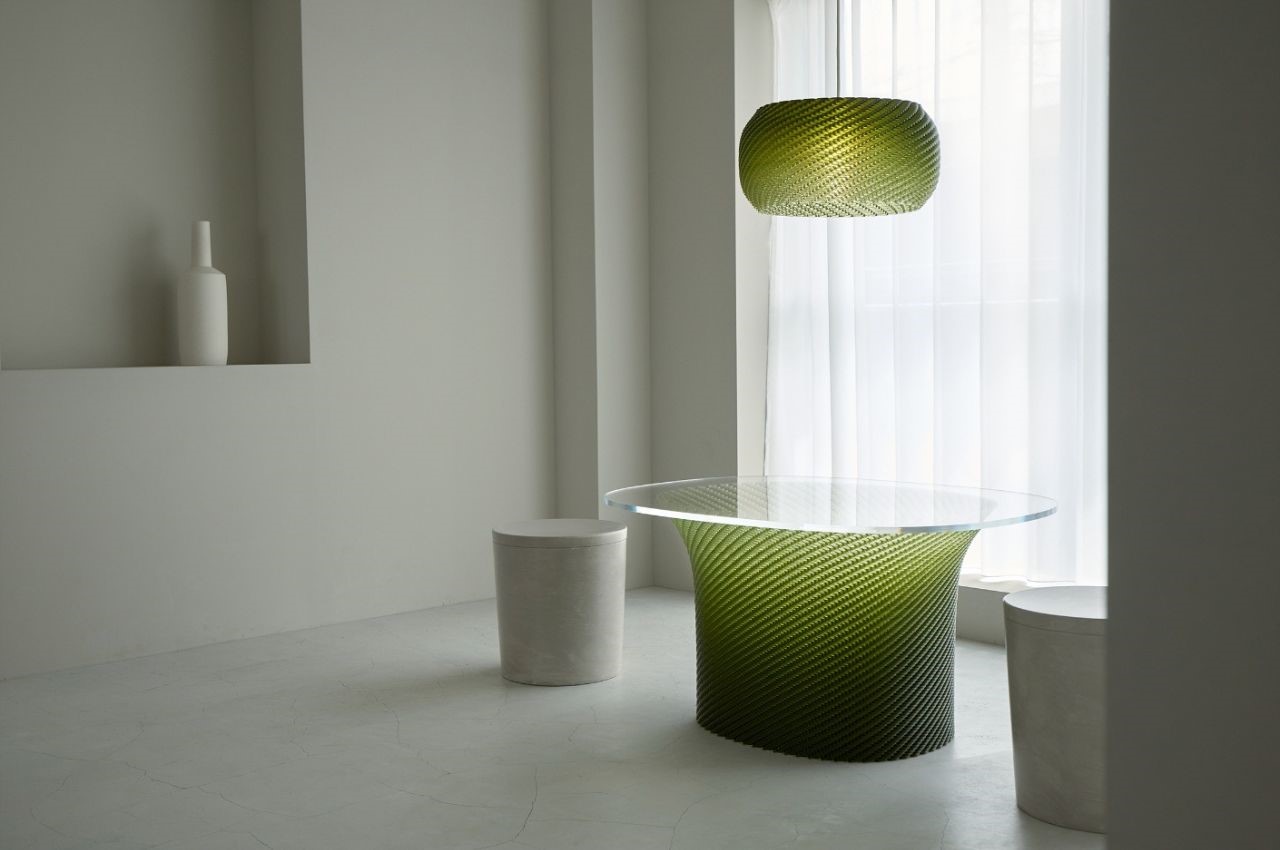
These knitted tatami-resin furniture pieces reinterpret traditional Japanese shapes and textures through 3D printing. The unique structure of these items offers moderate transparency and varying visual expressions depending on the viewing angle. They are sturdy enough to support glass and other heavy materials, making them ideal for dining tables.

CHIGUSA:

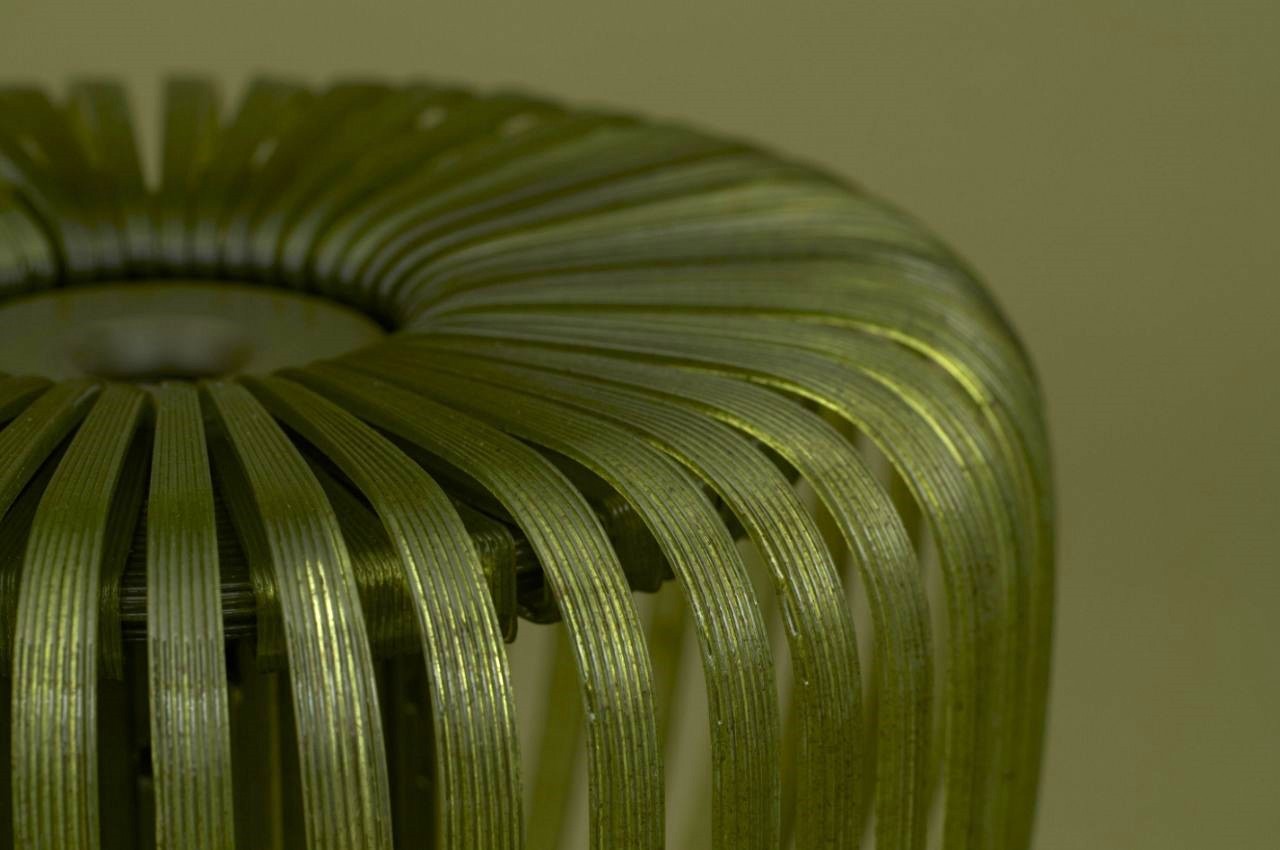
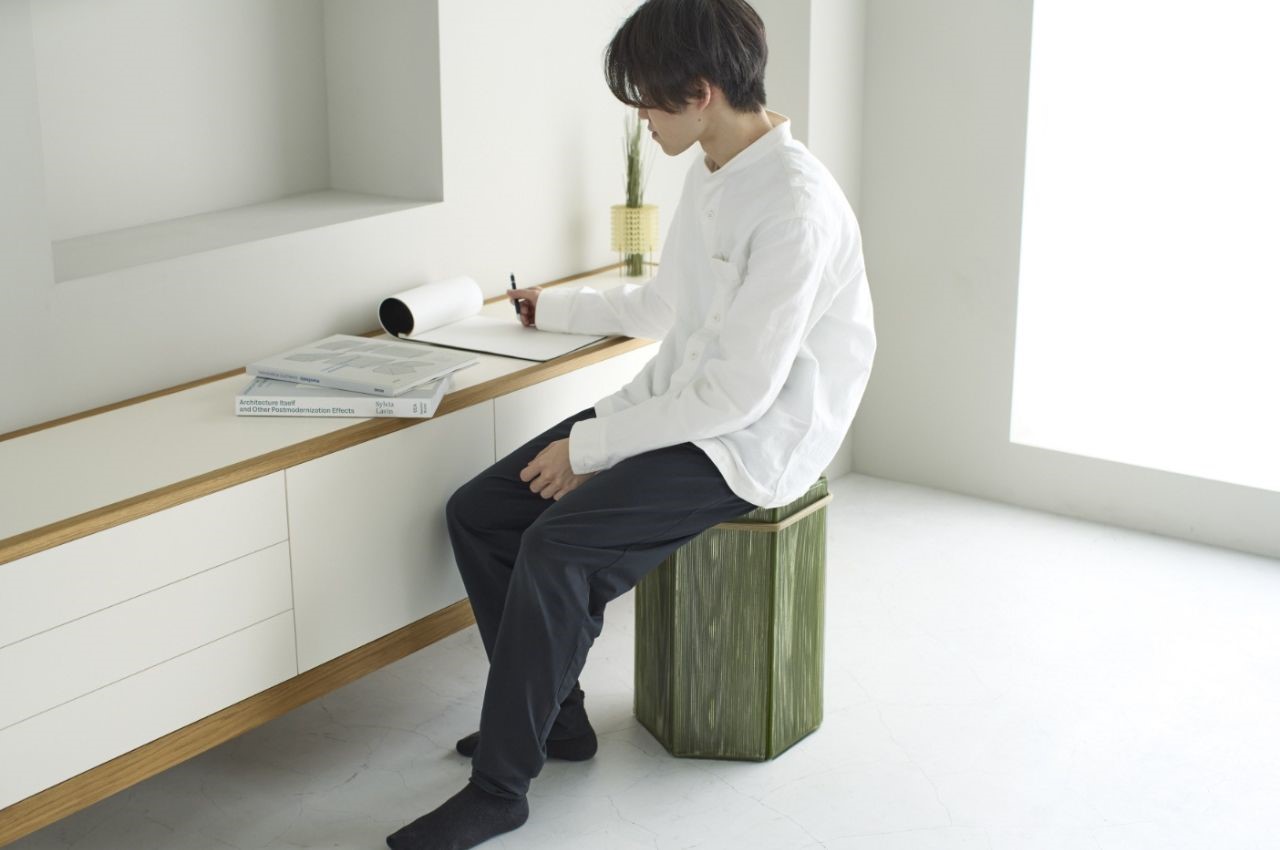
Inspired by the traditional Japanese “Sen-suji” pattern, this stool combines multiple 3D-printed parts. The vertical pattern of the elastic and durable tatami-mixed resin provides a resilient and comfortable seating experience.

TABA:

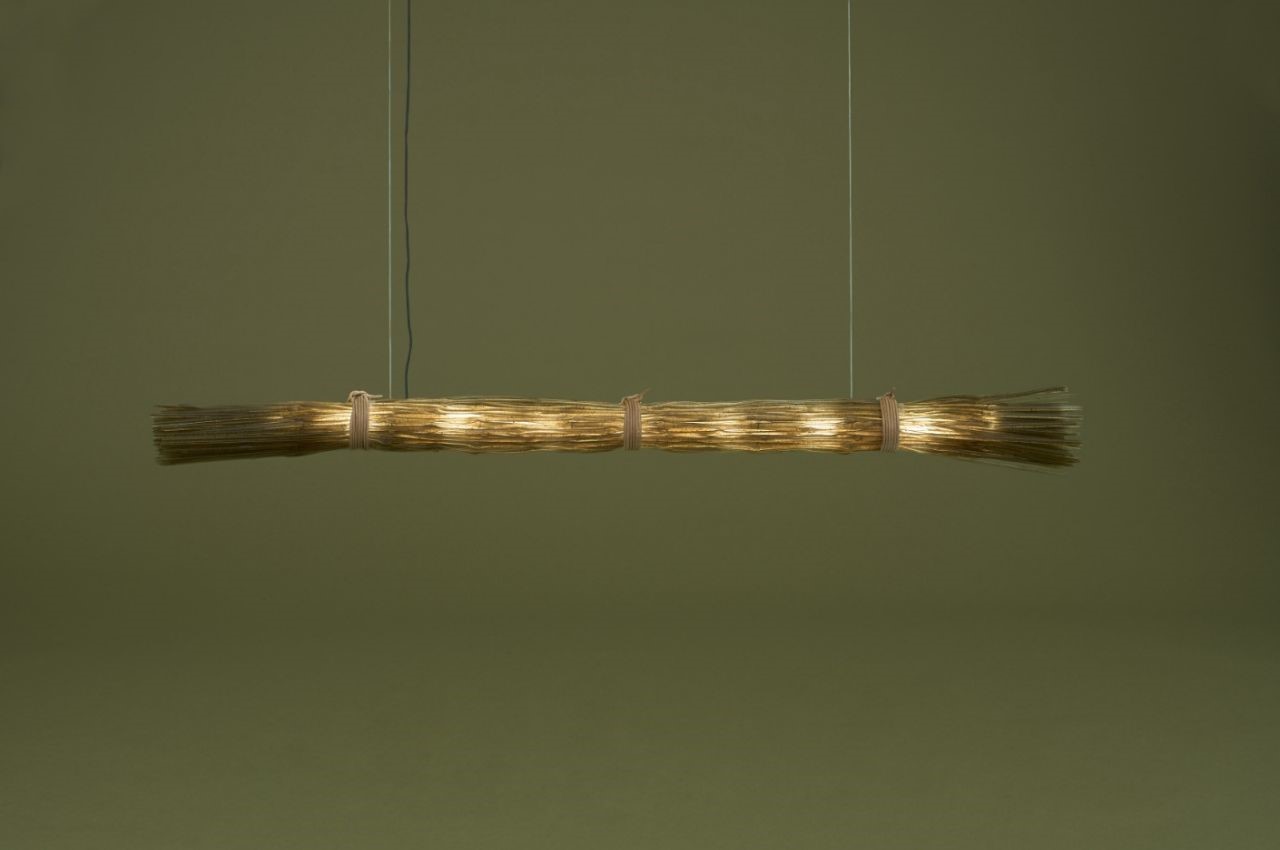
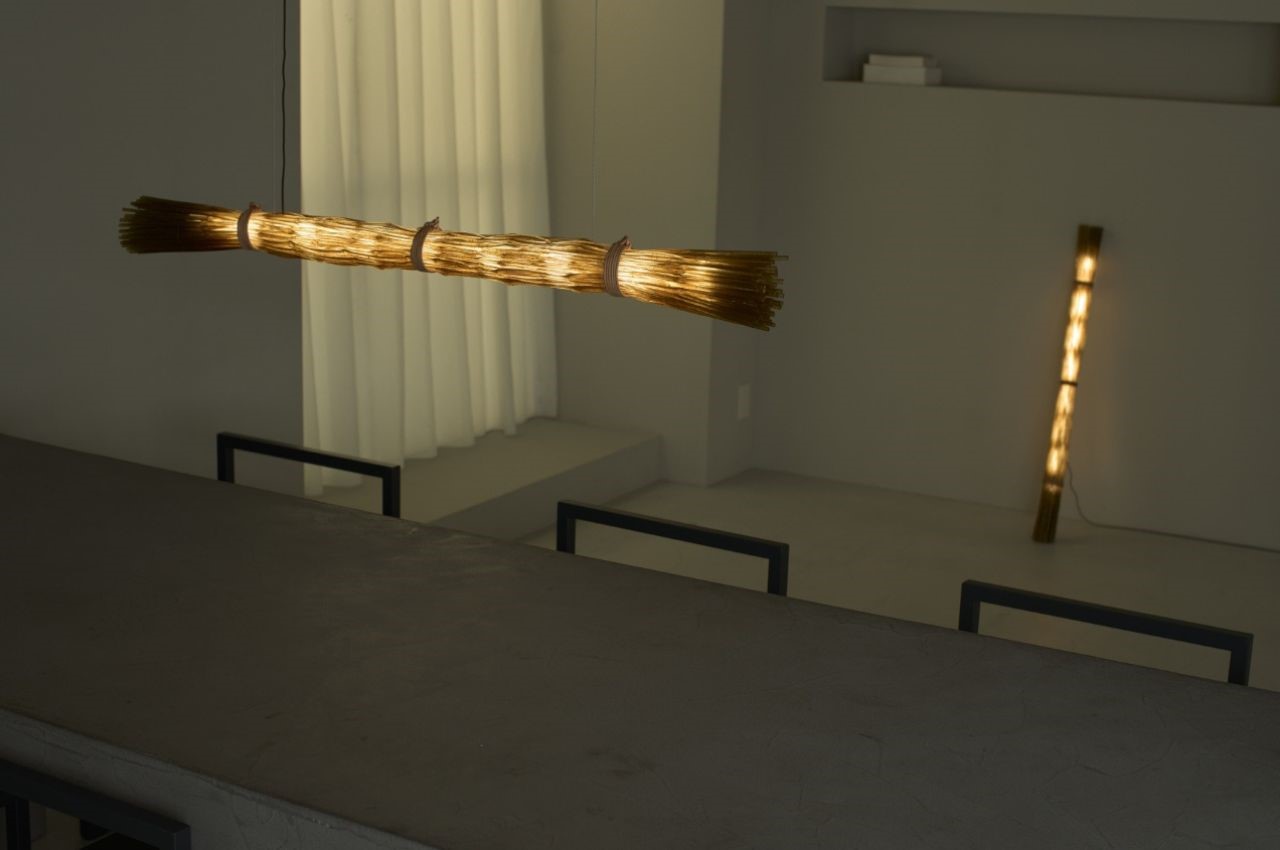
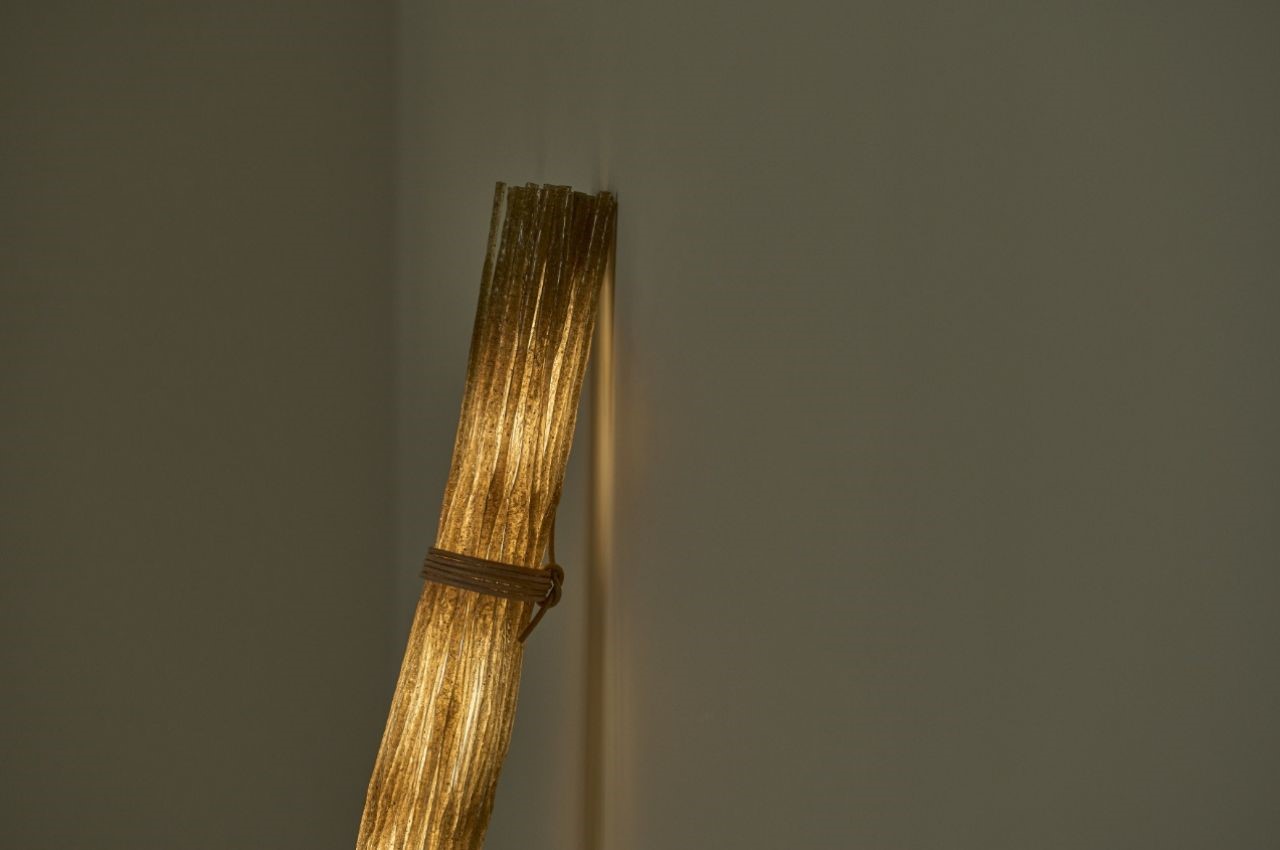
A lighting fixture designed to resemble bundled grass, TABA uses a dripping technique in its 3D printing process. The tatami-mixed resin diffuses light beautifully, with light spilling through the gaps in its branches, creating a soft, natural ambiance.

TACHIWAKI:

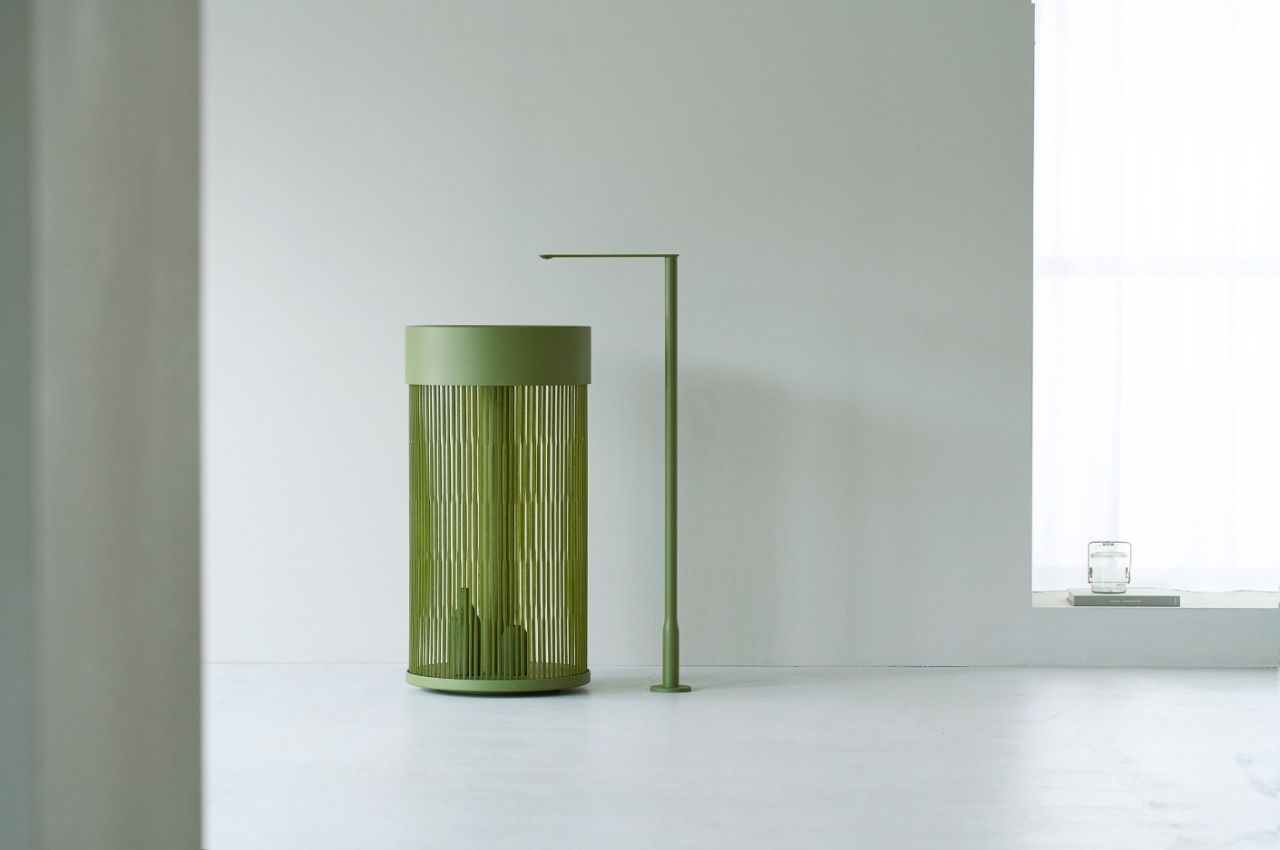
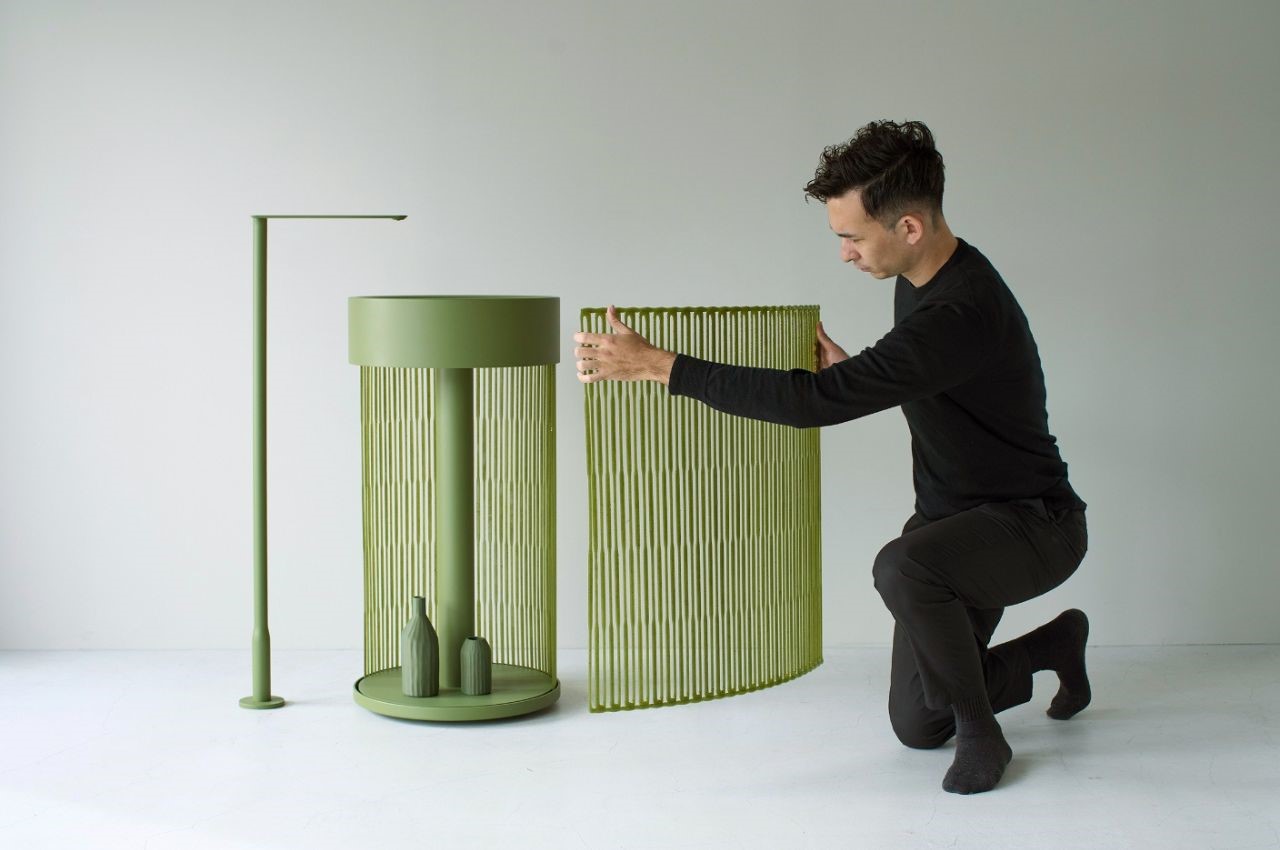
This self-standing basin, inspired by the Japanese “Tachiwaki” pattern, features multiple stripes created by varying the purging speed of the 3D printer. Its water-resistant nature makes it suitable for innovative bathroom designs.

YOCELL:

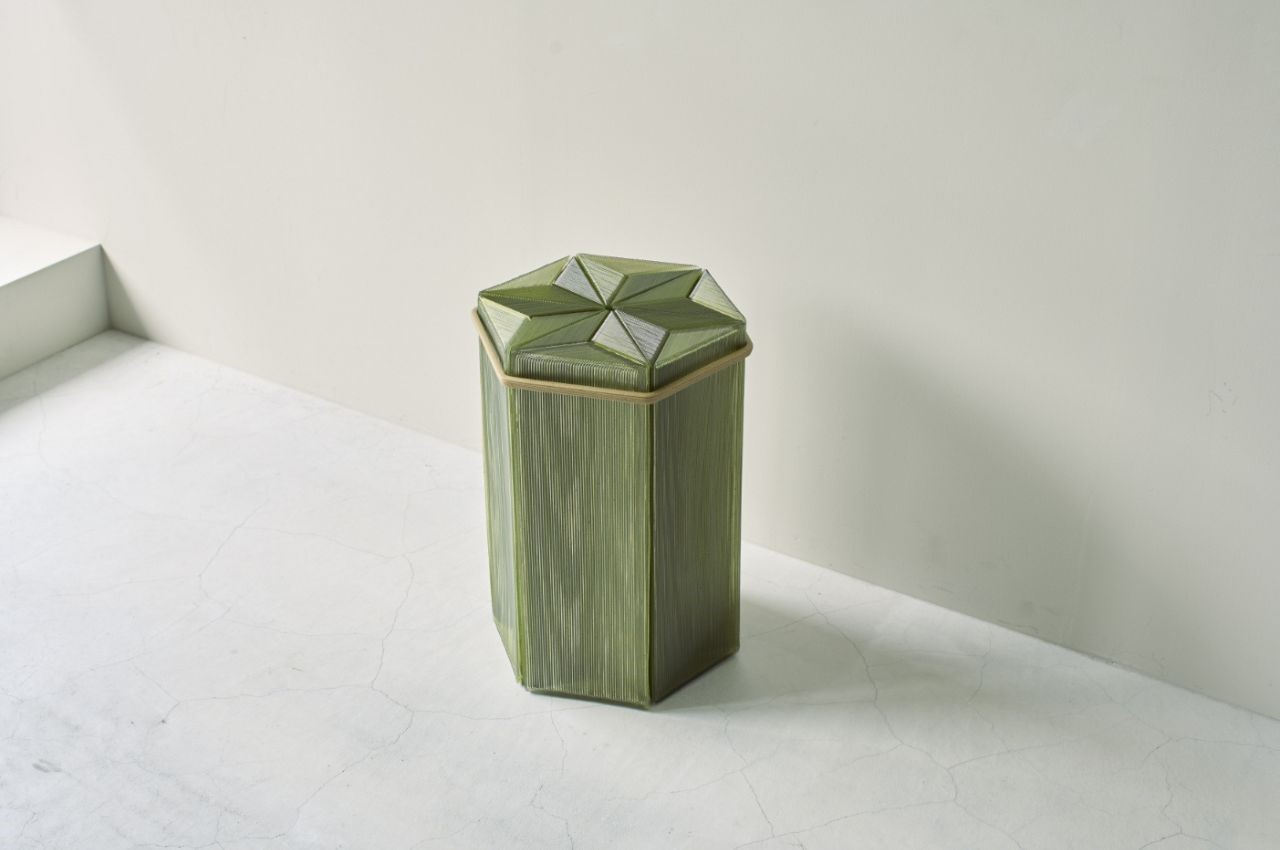
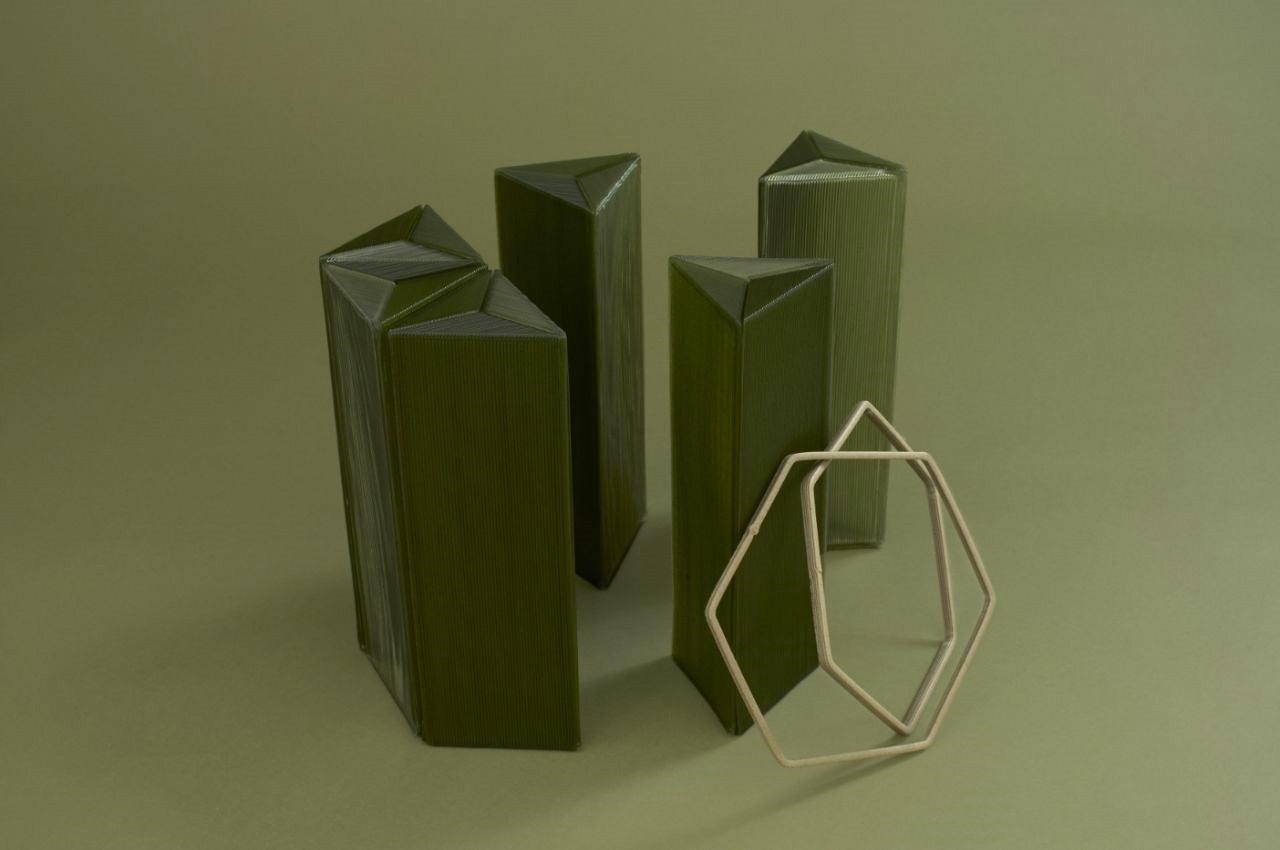
A stool that draws from the traditional Japanese “Asanoha” pattern, it uses the layer marks of the 3D printer to create unique visual effects by aligning them in different directions. The modular shape makes it sustainable even for transportation and packaging.

AMI:

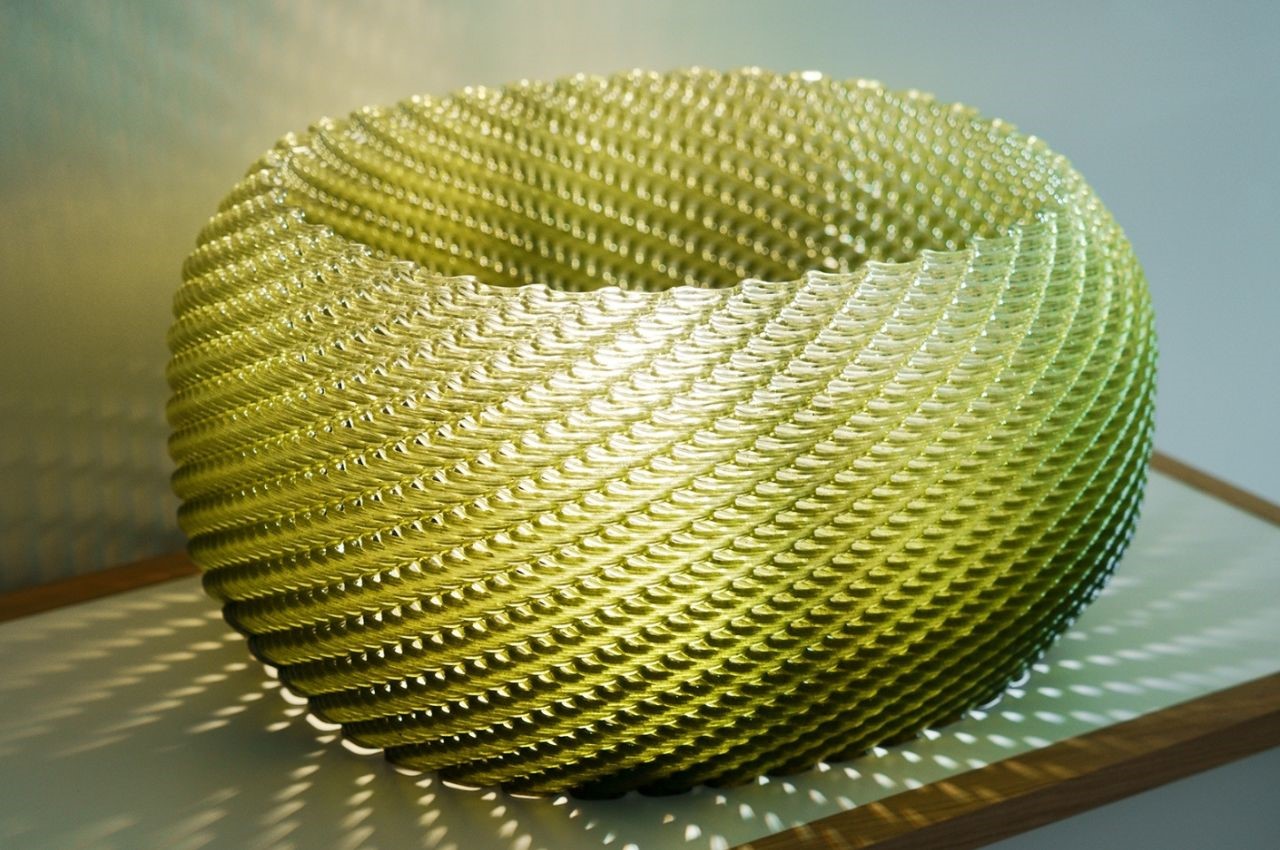
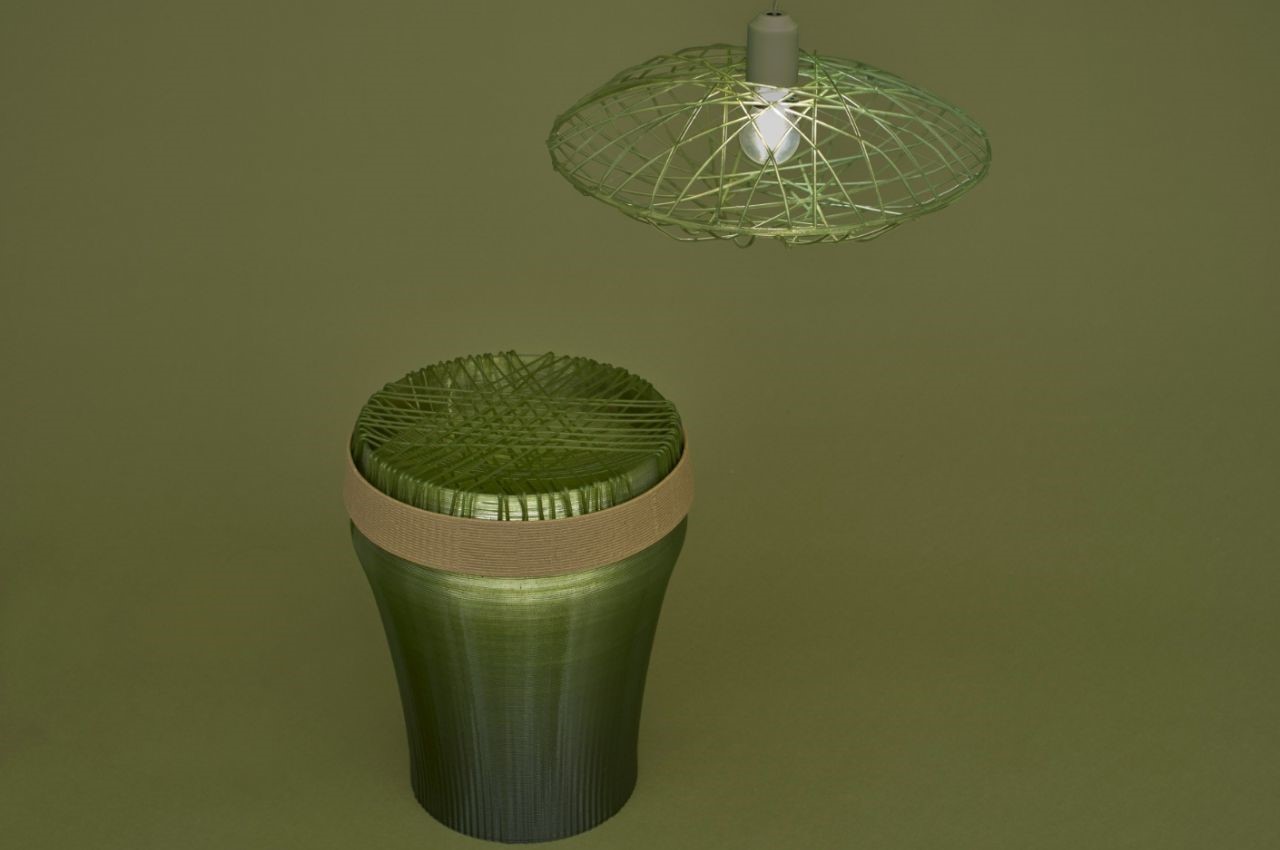
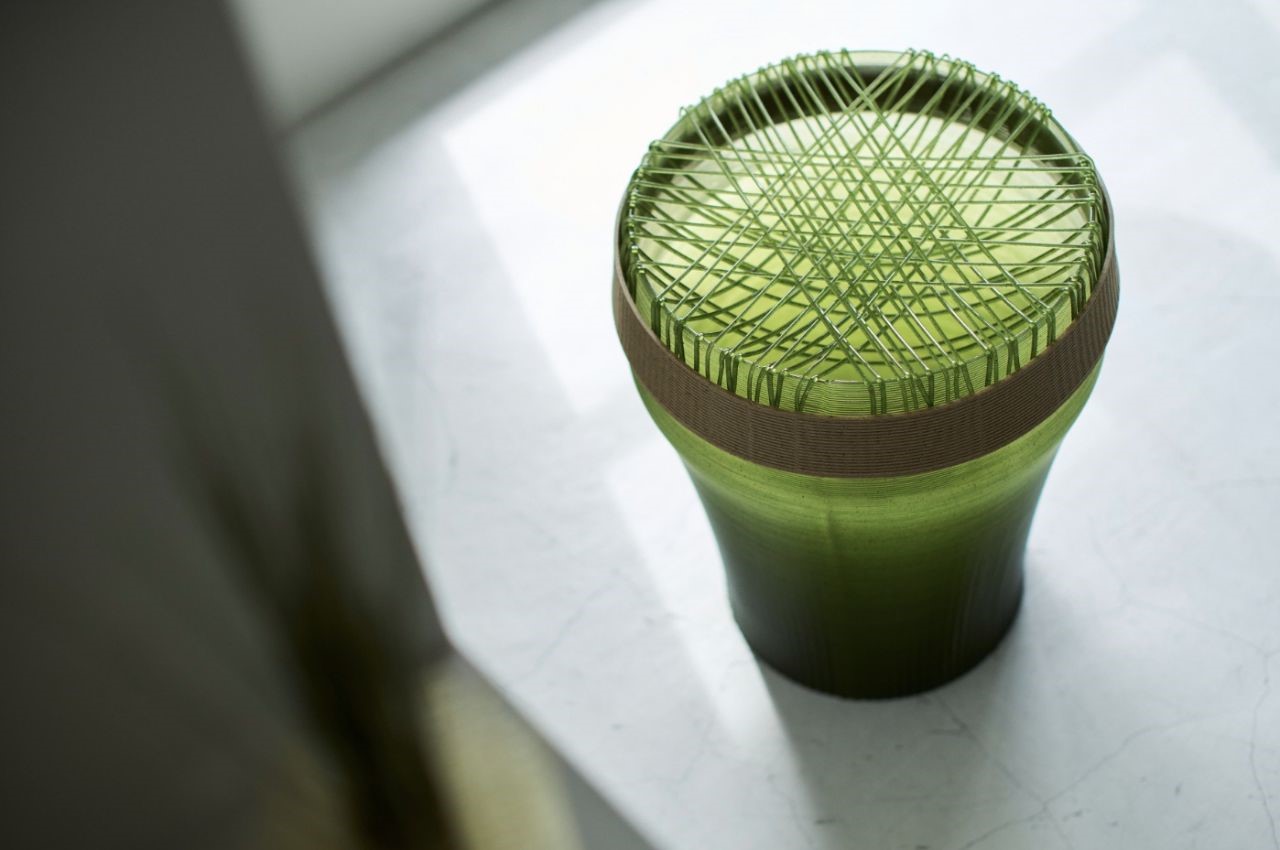
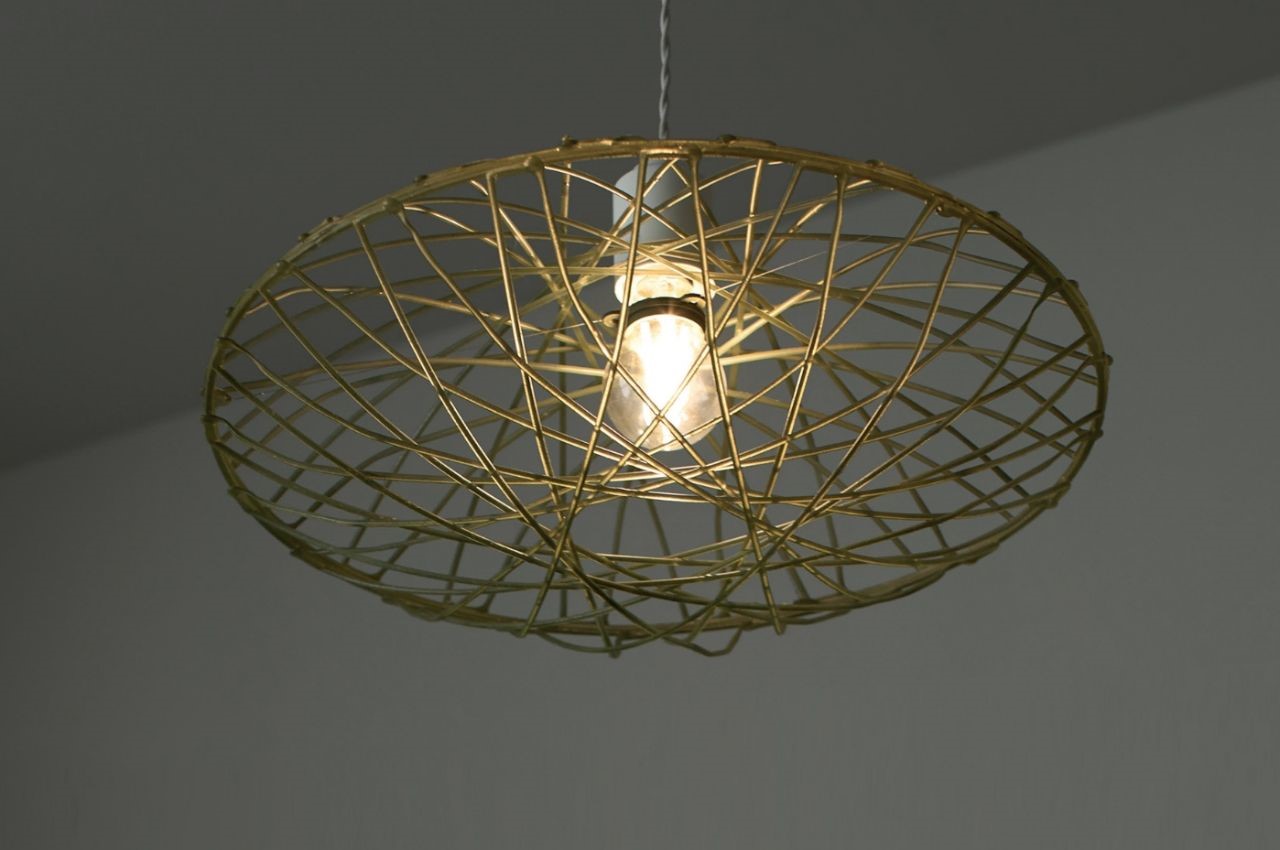
Combining the aesthetics of traditional Japanese 2D weaving with modern 3D printing, the AMI stool and lampshade feature intricate designs created by dripping resin from the air. The resulting pieces change their expression based on the viewing angle.

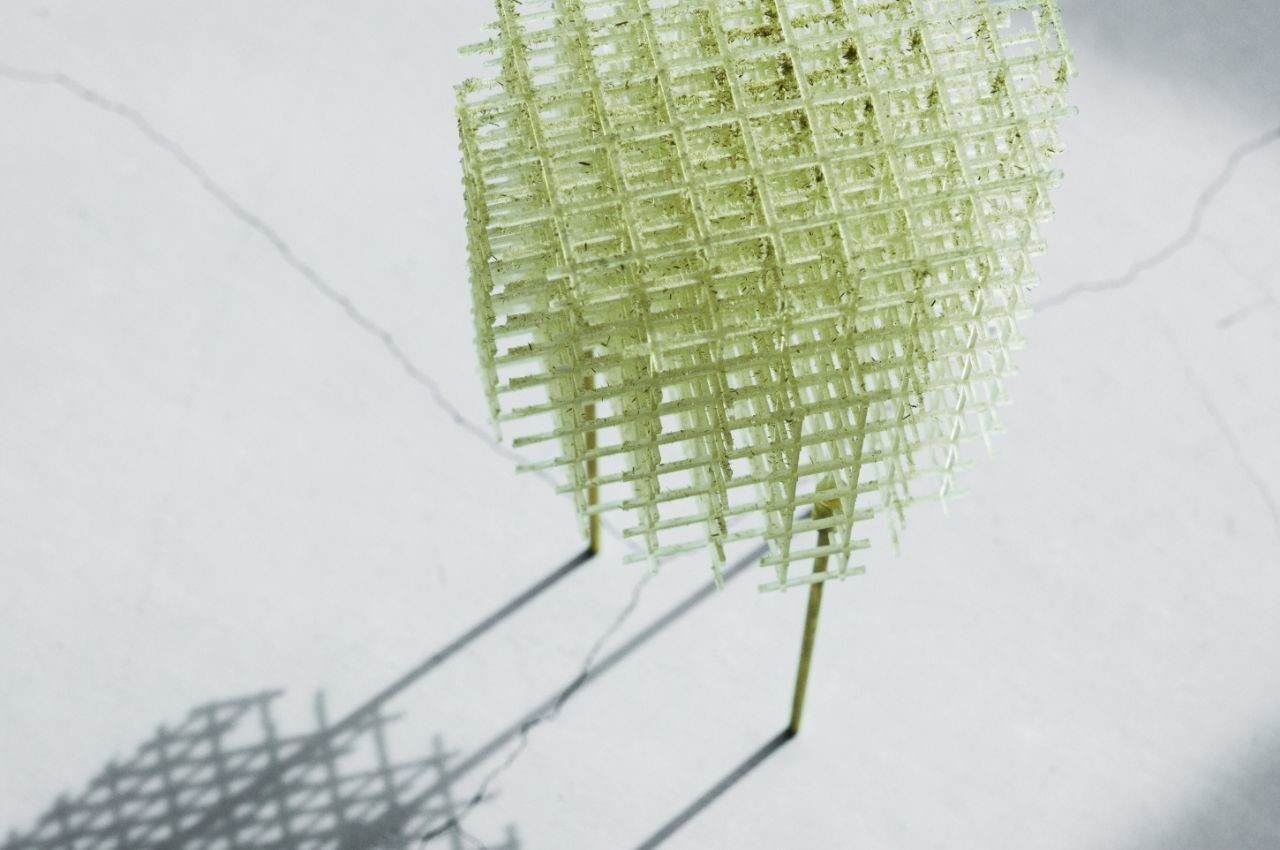
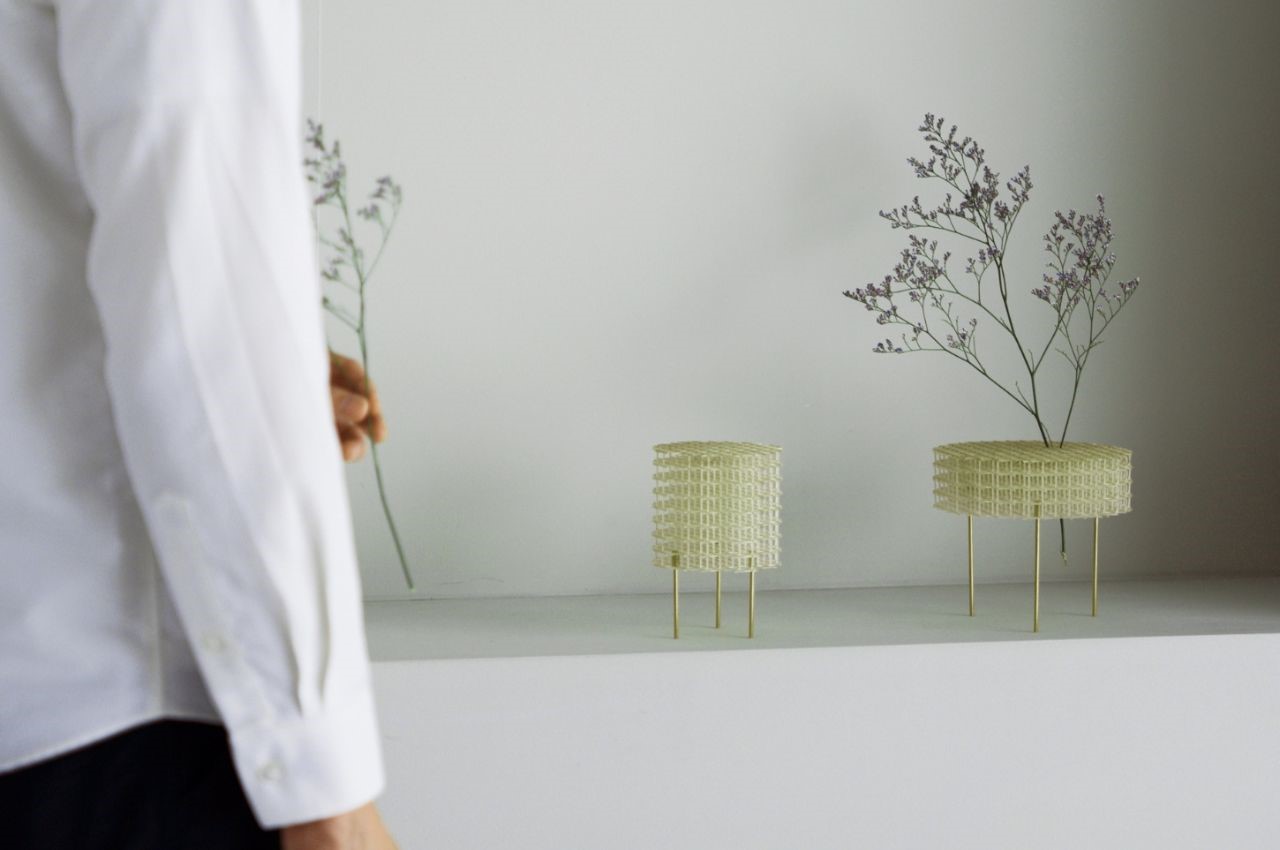
KOHSHI:

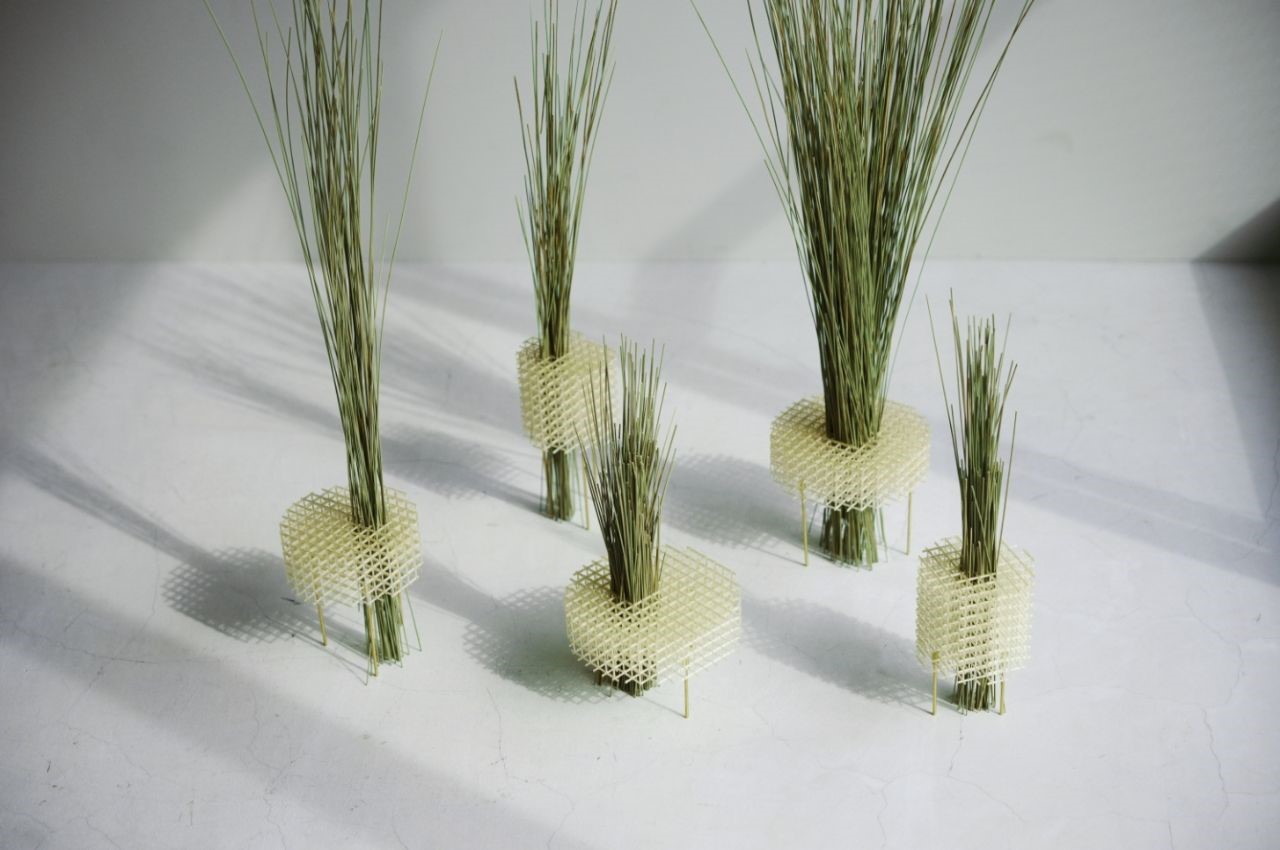
This lattice-like vase is reminiscent of Japanese architecture and allows for flexible plant arrangements, inspired by the art of Ikebana. This design has such a lightweight aesthetic, making any room feel airy. It’s perfect for minimalistic homes.

The post The TATAMI ReFAB PROJECT Is A Product Of Fusing Japanese Traditions With 3D-Printed Sustainability first appeared on Yanko Design.
Durat’s Sustainable Surfaces Merge Aesthetics with Environmental Ethics

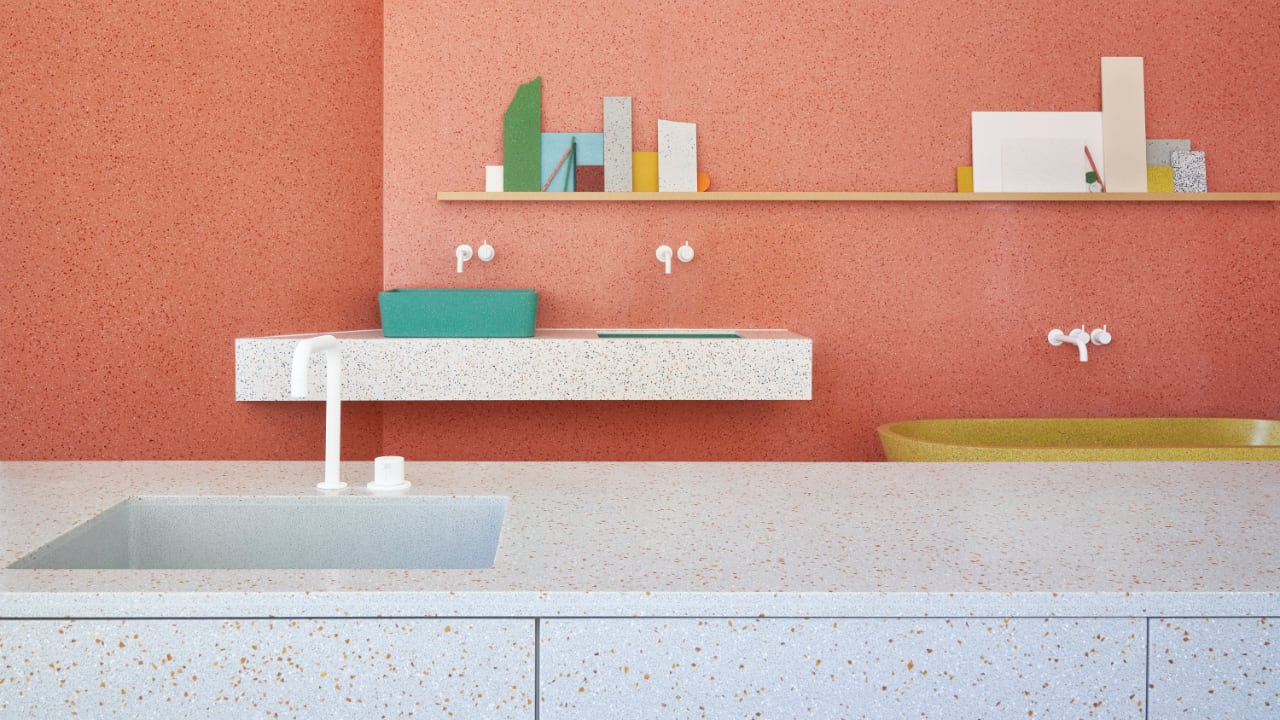
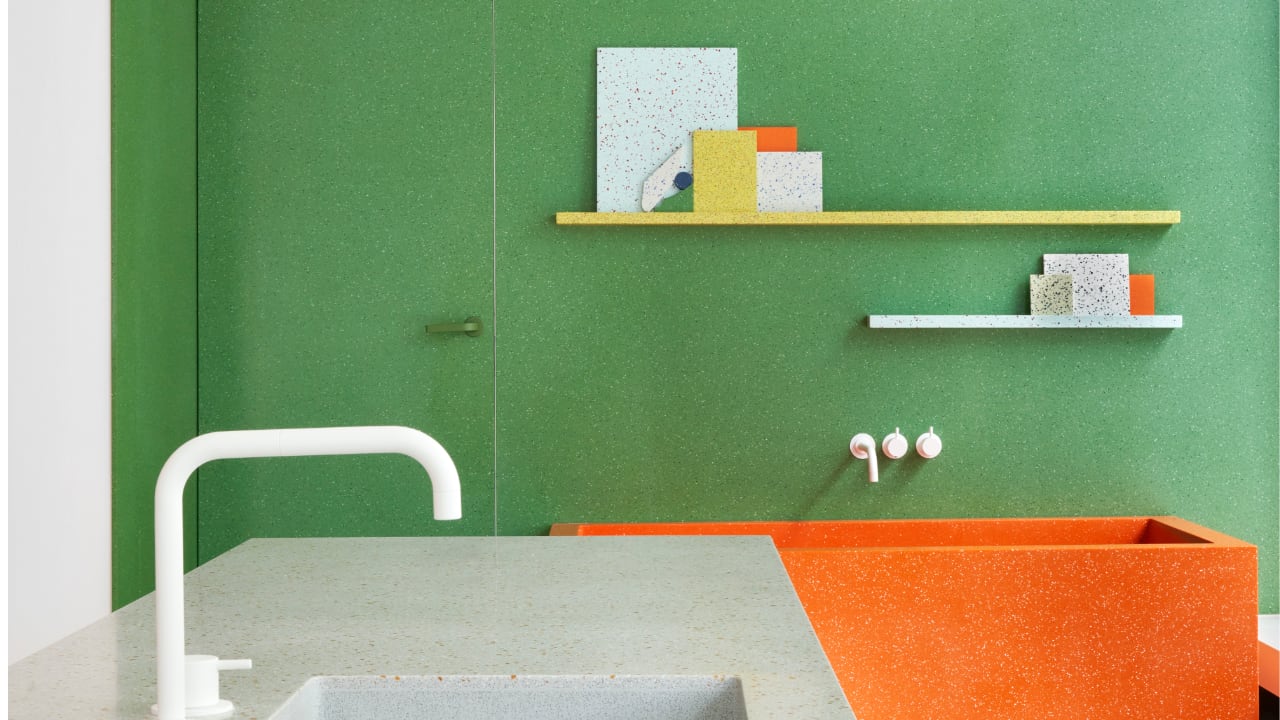
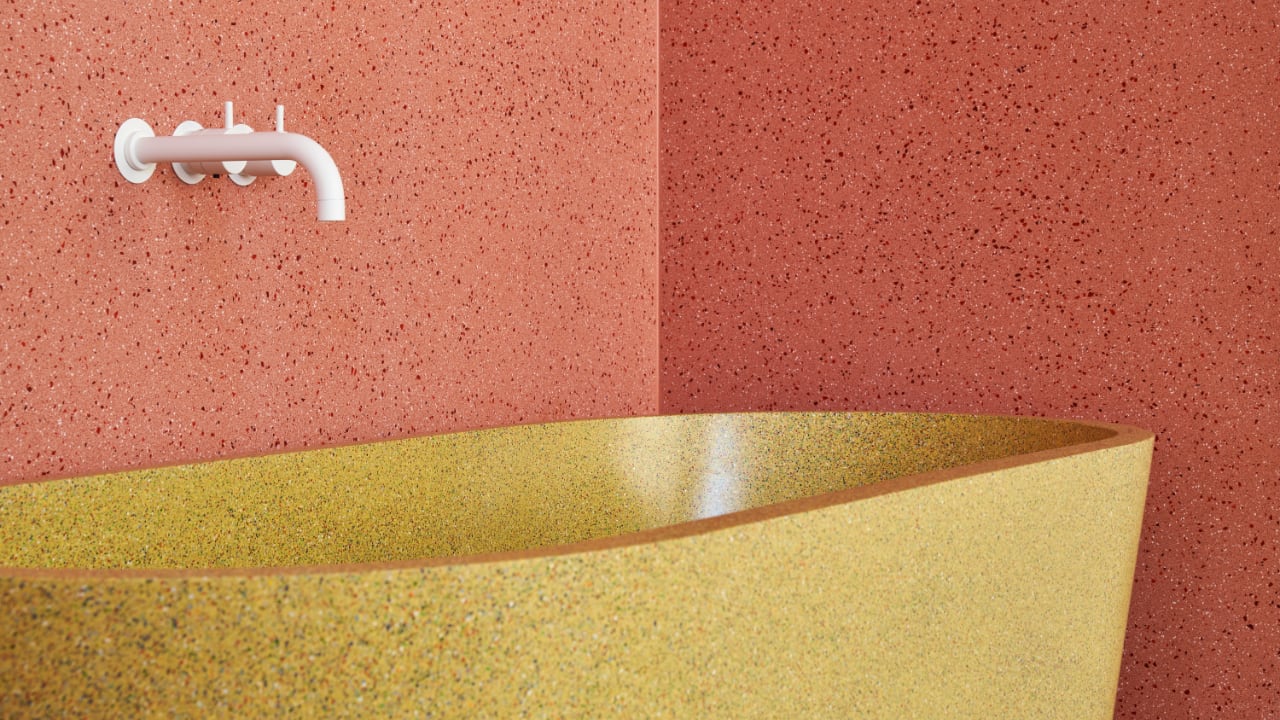
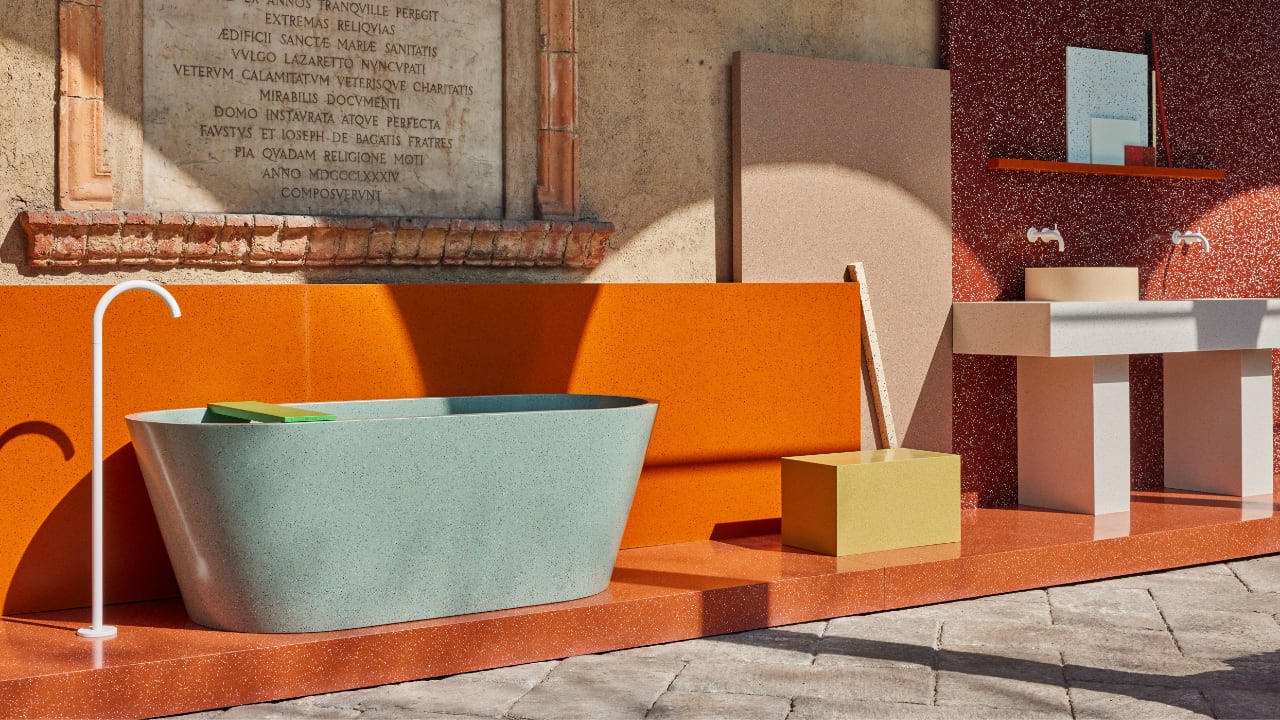
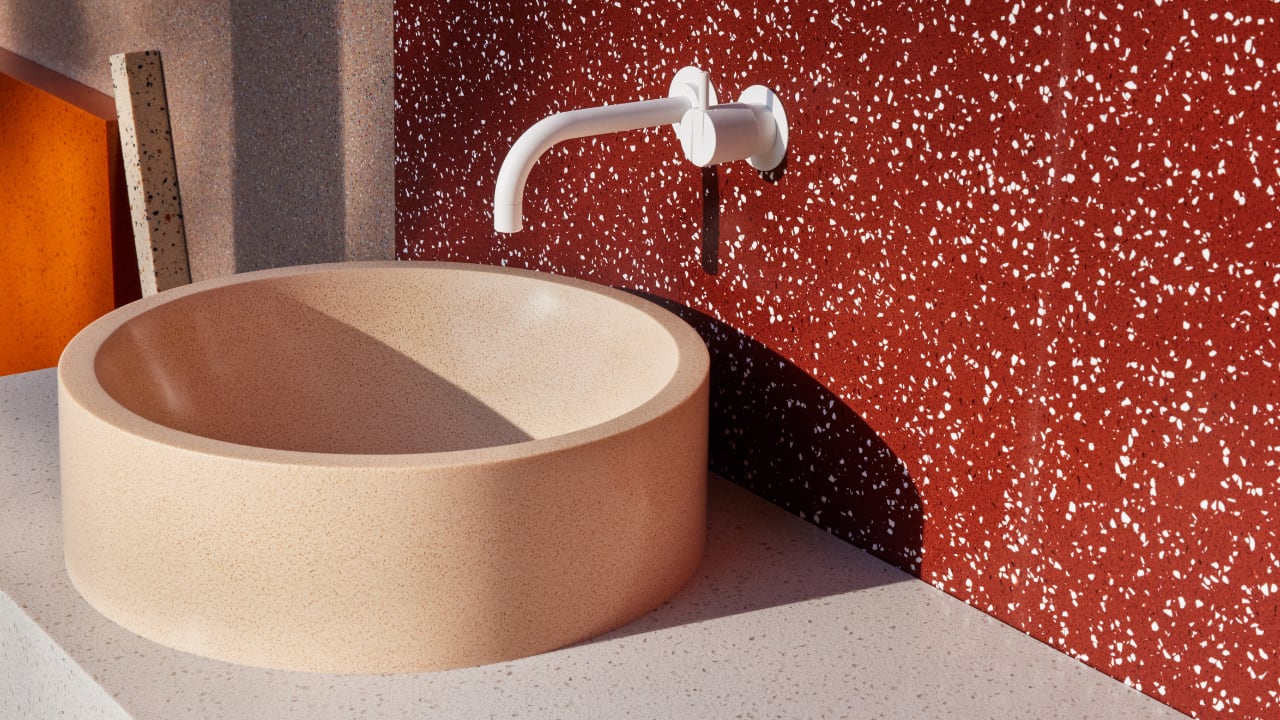
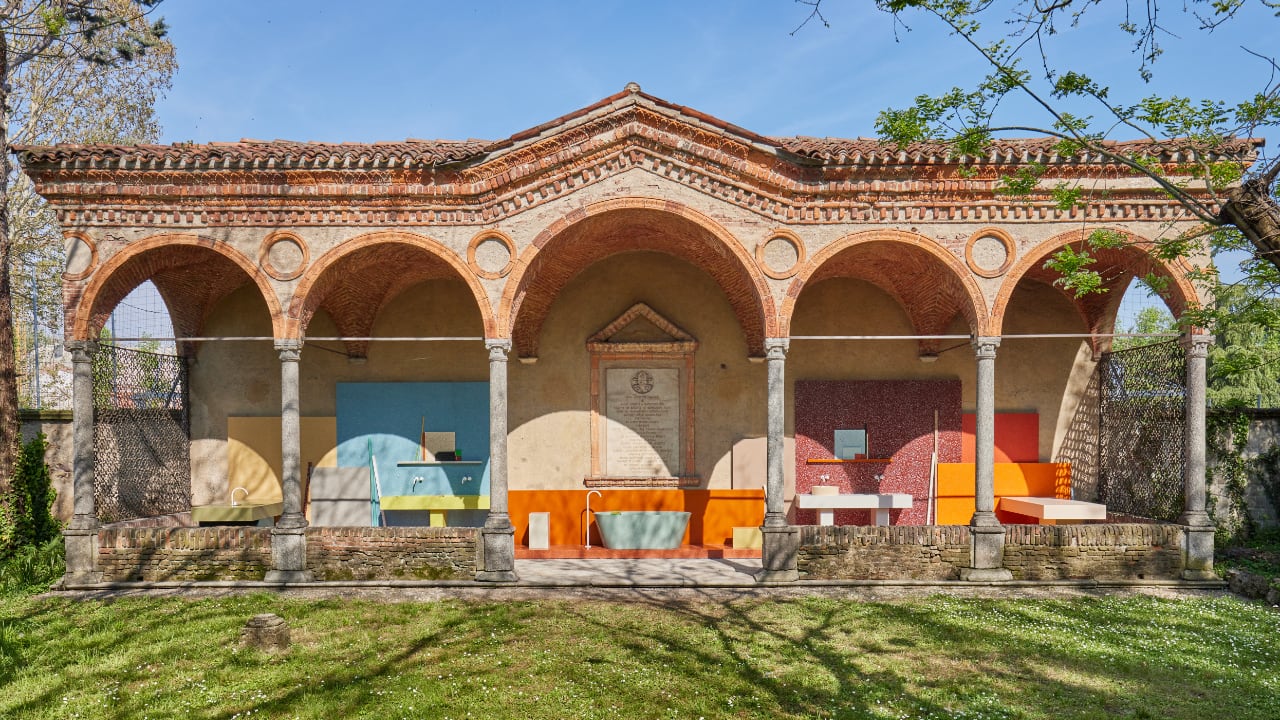
Since its establishment in 1990, Durat, a Finnish leader in sustainable design materials, has been at the forefront of both ecological innovation and aesthetic functionality. With a steadfast commitment to transforming industrial waste into high-quality, recyclable solid surfaces, Durat redefines the traditional use of recycled materials. At the core of its philosophy, deeply rooted in the principles of the circular economy, these values are evident in its product offerings and holistic approach to design and production. During Milano Design Week 2024, Durat showcased the “PORTA DEI COLORI” installation, a vivid illustration of their philosophy. This installation, brought to life by Linda Bergroth, symbolizes the marriage of sustainable practices with imaginative design. It demonstrates that recycled materials can be used beyond just practical applications, achieving significant artistic value.

Designer: Linda Bergroth + Durat

Unlike traditional countertop materials such as granite, quartz, or laminate, Durat’s sustainable solid surfaces present several environmental and functional advantages. Traditional materials like granite and quartz involve energy-intensive mining processes and often require long-distance transportation, which significantly impacts the environment. Additionally, laminate countertops may release volatile organic compounds (VOCs) due to the chemicals involved in their production. In contrast, Durat’s materials are crafted from recycled post-industrial plastics, significantly reducing the ecological footprint by minimizing waste and avoiding the depletion of natural resources. These surfaces are eco-friendly and fully recyclable at their life’s end, promoting a sustainable lifecycle.

Durat’s materials have the potential to outperform traditional options in terms of durability and ease of maintenance. While granite is robust, it can crack under severe impact and requires periodic sealing to prevent staining. Quartz, though less prone to staining, can suffer damage from excessive heat. Laminate, although versatile, is vulnerable to scratches, chips, and heat damage. In stark contrast, Durat surfaces are engineered for resilience and longevity, capable of withstanding wear, impact, and high temperatures without compromising their structural integrity or appearance. Their non-porous nature ensures they’re hygienic, easy to clean, and resistant to bacterial growth, making them ideal for both bustling commercial environments and busy home kitchens.

While traditional materials are often constrained by the availability of natural patterns and colors, Durat offers a refreshing alternative with its diverse range of over 300 colors, complemented by distinctive grit effects that create dynamic and continuously evolving patterns. This vast palette provides remarkable creative freedom, enabling designers and architects to precisely tailor their projects, pushing the boundaries of design aesthetics from the minimalistic to the avant-garde. These materials are lighter and more adaptable than their stone counterparts, simplifying the installation process and making repairs and refinishing easier. They also appeal to a wide array of consumers and professionals. Eco-conscious consumers and businesses appreciate Durat’s commitment to environmental stewardship, aligning perfectly with their sustainability practices. The durability and hygienic properties of Durat surfaces make them ideal for high-traffic areas like schools, hospitals, and retail spaces, where facility managers need long-lasting, easy-to-maintain solutions. Additionally, the ease of installation and maintenance makes Durat a favored choice among DIY enthusiasts, enhancing its popularity for home improvement projects and allowing for reduced installation costs while maintaining the material’s pristine condition over time.

This dedication ensures Durat’s solid surfaces meet today’s design professionals’ aesthetic and functional needs while also contributing positively to environmental conservation, positioning Durat as a leader in the future of sustainable modern design.

The post Durat’s Sustainable Surfaces Merge Aesthetics with Environmental Ethics first appeared on Yanko Design.
2024 Lamborghini Huracán Sterrato Debuts Exclusive Livery – All-Terrain Luxury Meets Design at Milan Design Week

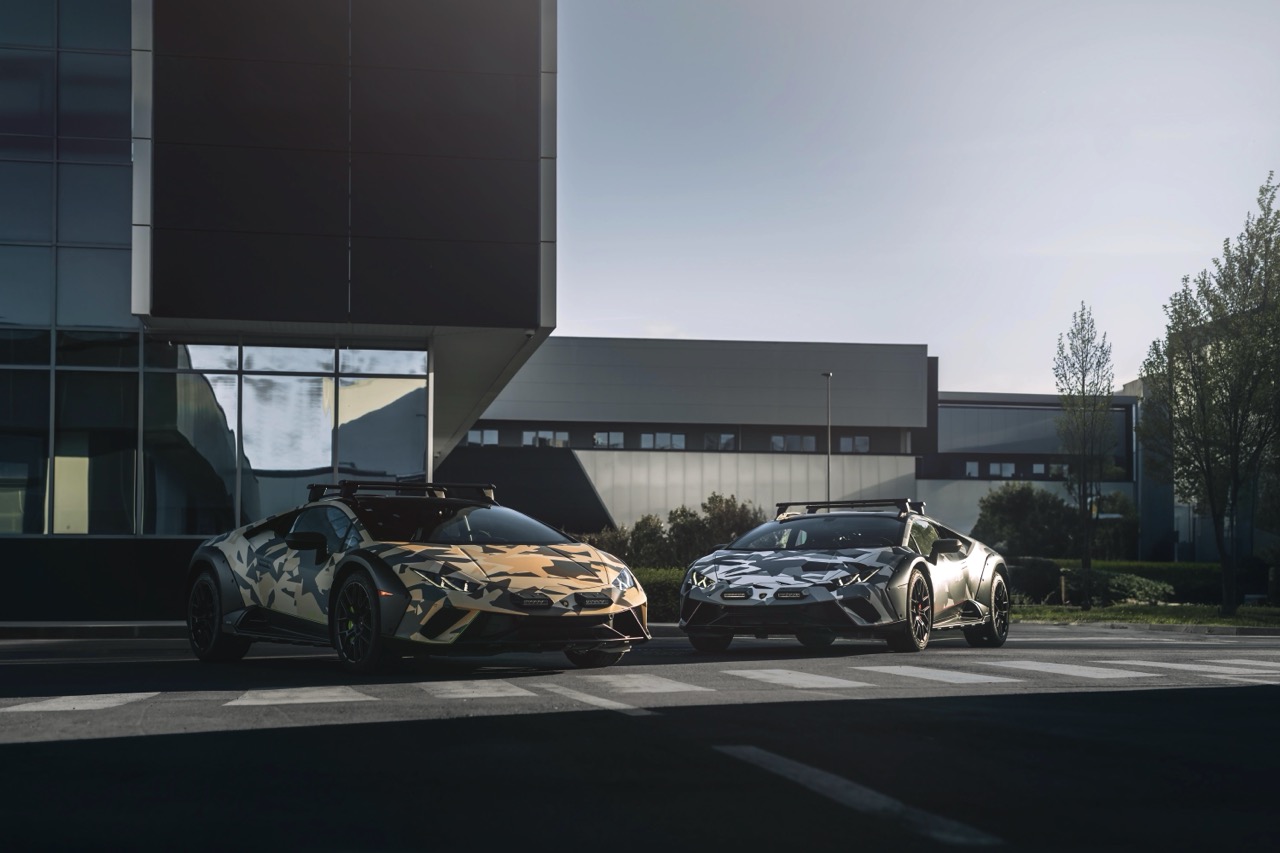
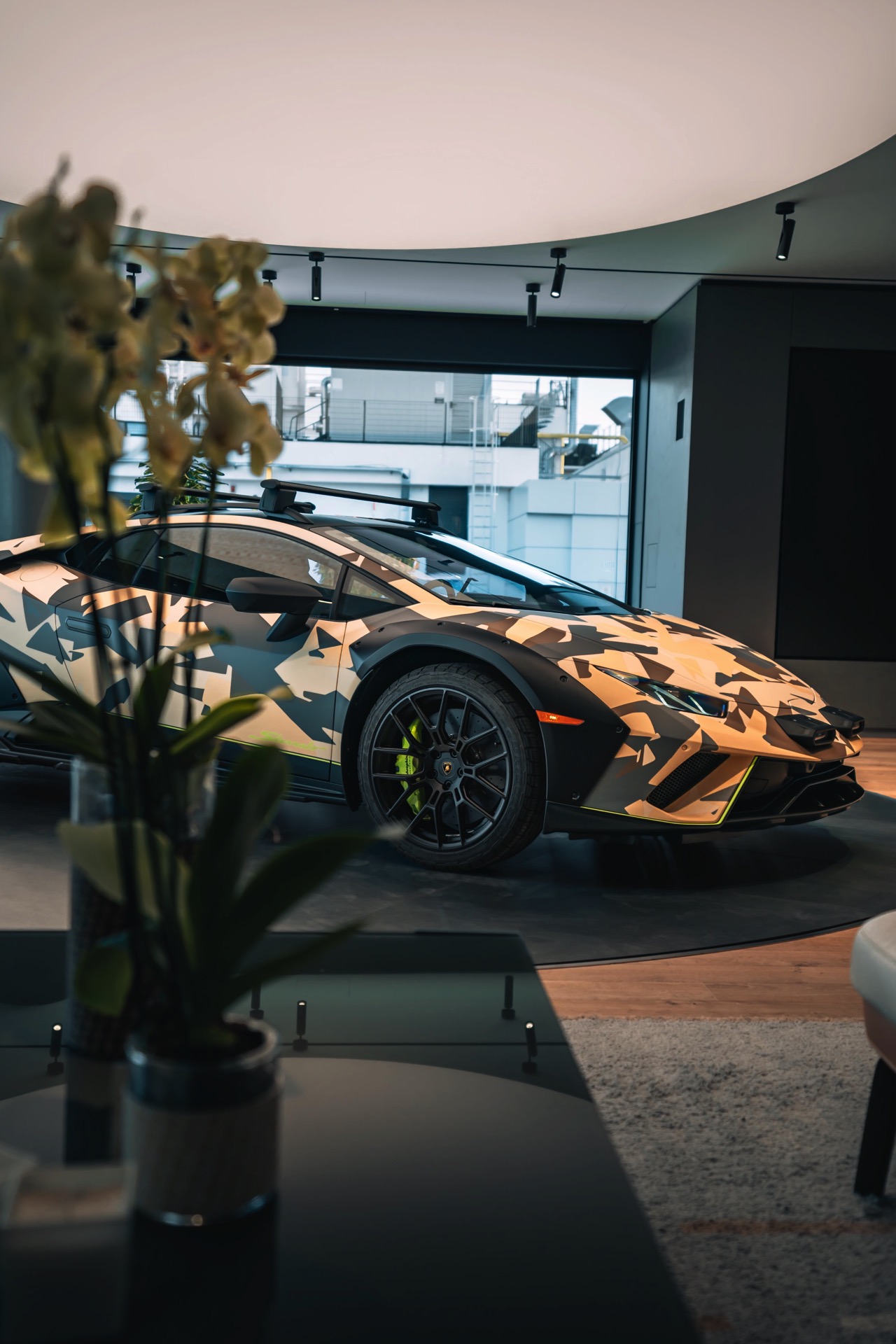
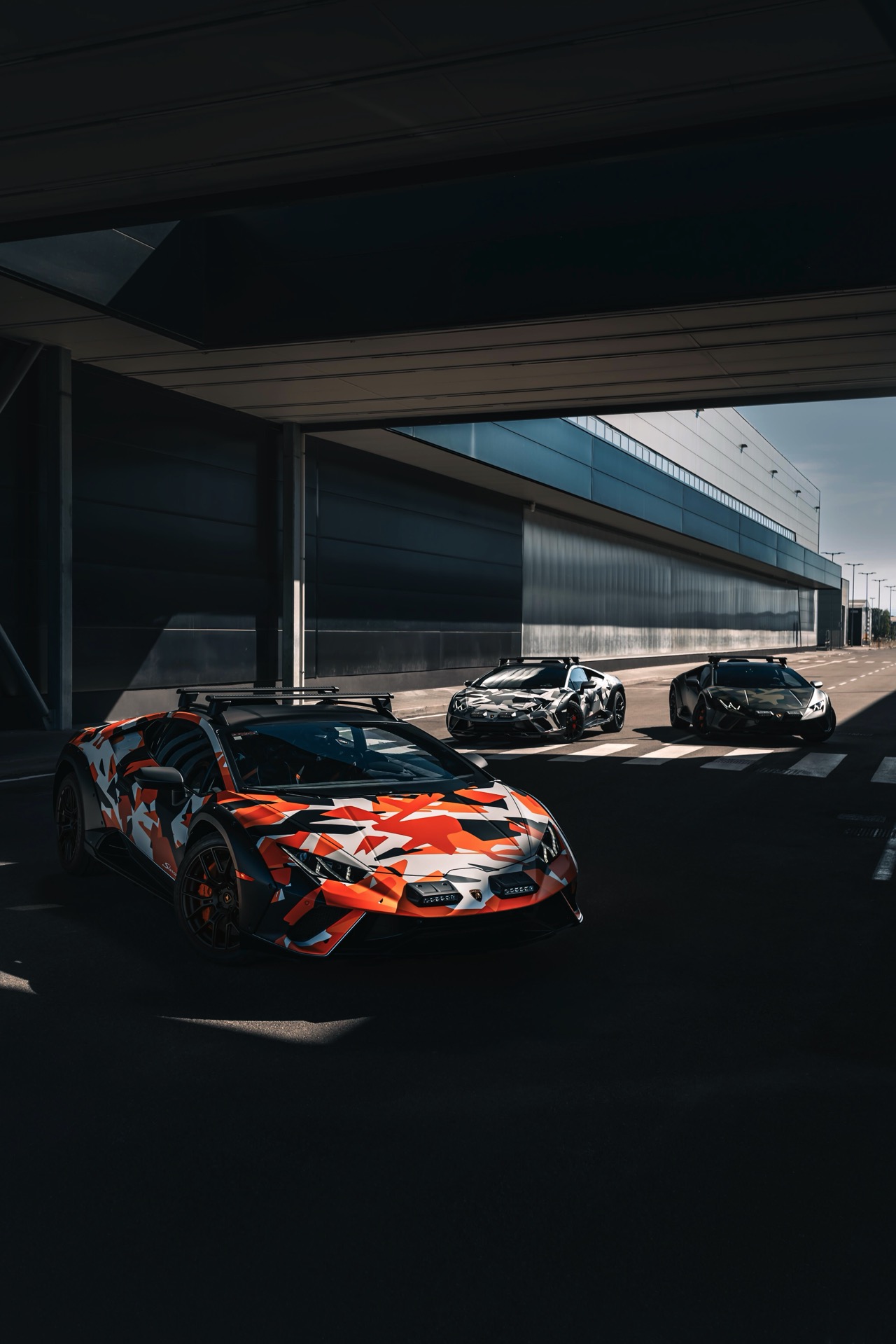
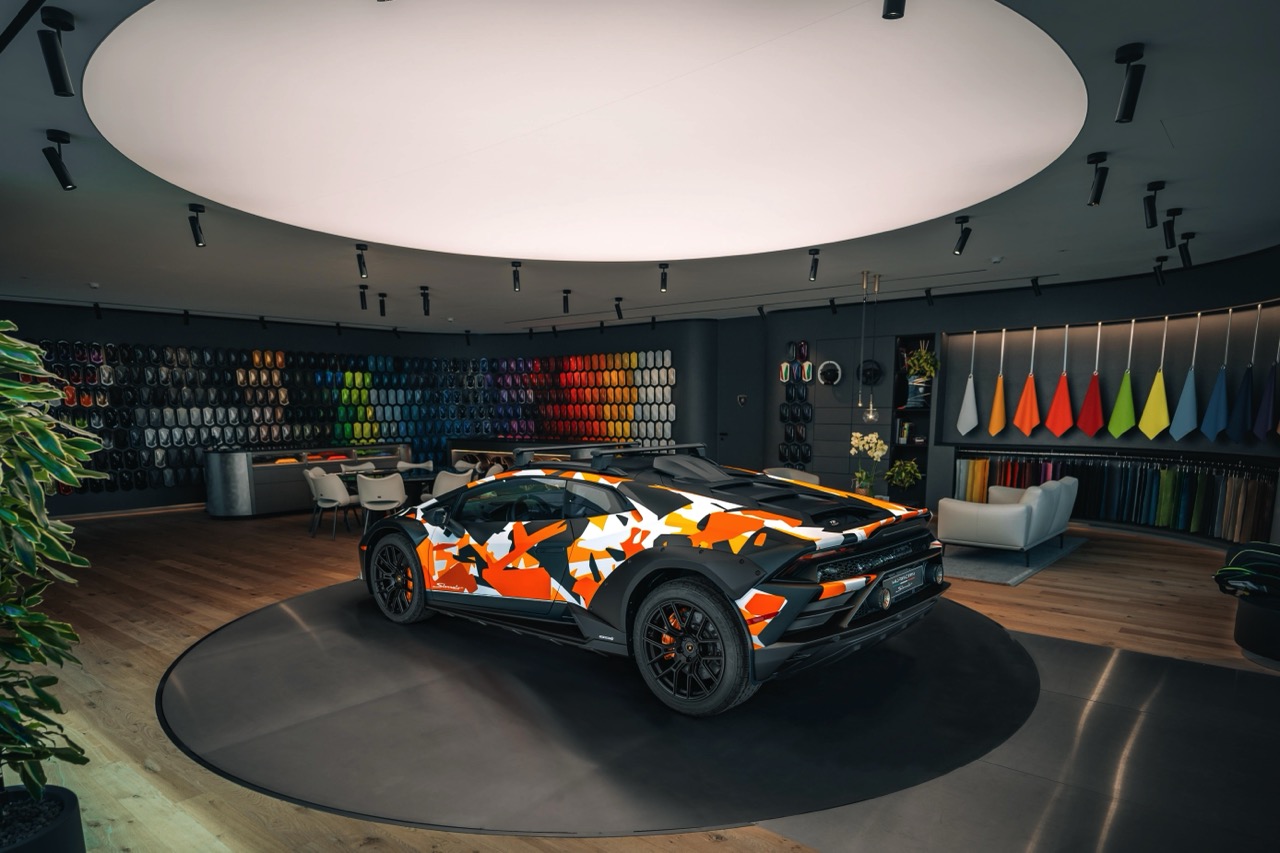
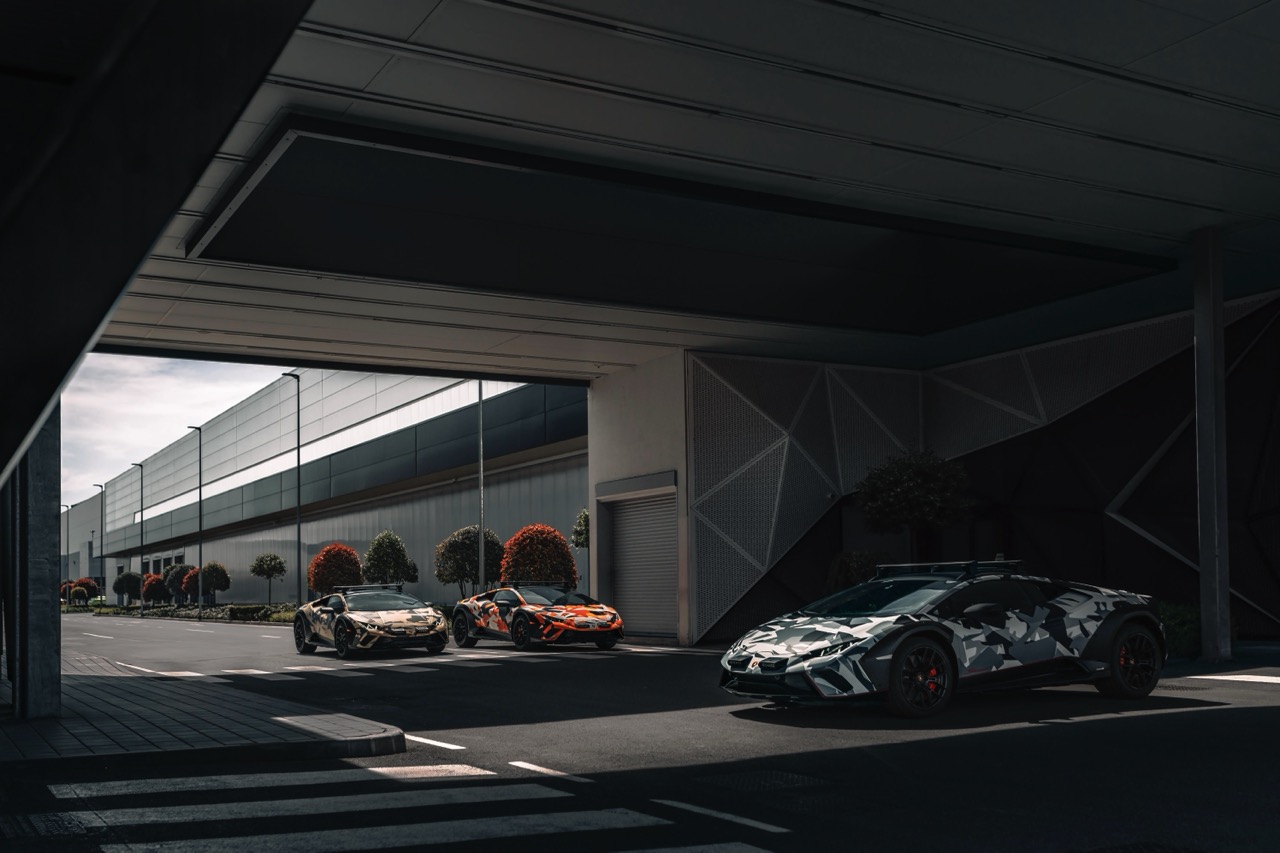
At Milan Design Week 2024, Lamborghini unveiled the ‘All Terrain’ Ad Personam series for the Huracán Sterrato in a dazzling display that redefined what a super sports car can be. This limited edition series, featuring 12 uniquely designed vehicles, brilliantly reflects the earth’s varied landscapes through sophisticated design and technological advancements.

Designer: Lamborghini’s Ad Personam studio + Centro Stile

Stephan Winkelmann, CEO of Lamborghini, highlighted the Sterrato’s dual nature at the event. He emphasized its capacity as both a performance vehicle and an adventurous explorer, capable of forging new paths with the same ease as it races down a track. The design of the Sterrato, a product of the collaborative genius of Lamborghini’s Ad Personam studio and Centro Stile, embodies this ethos. Each version of the car is painted in a matte camouflage scheme that corresponds to different environments: NEVE (snow), SABBIA (sand), BOSCO (green track), and TERRA (gravel), further accentuated by a matte black finish on the roof, bonnet, and lower body, accented with unique colors, 19” matte black forged rims, and custom caliper colors.

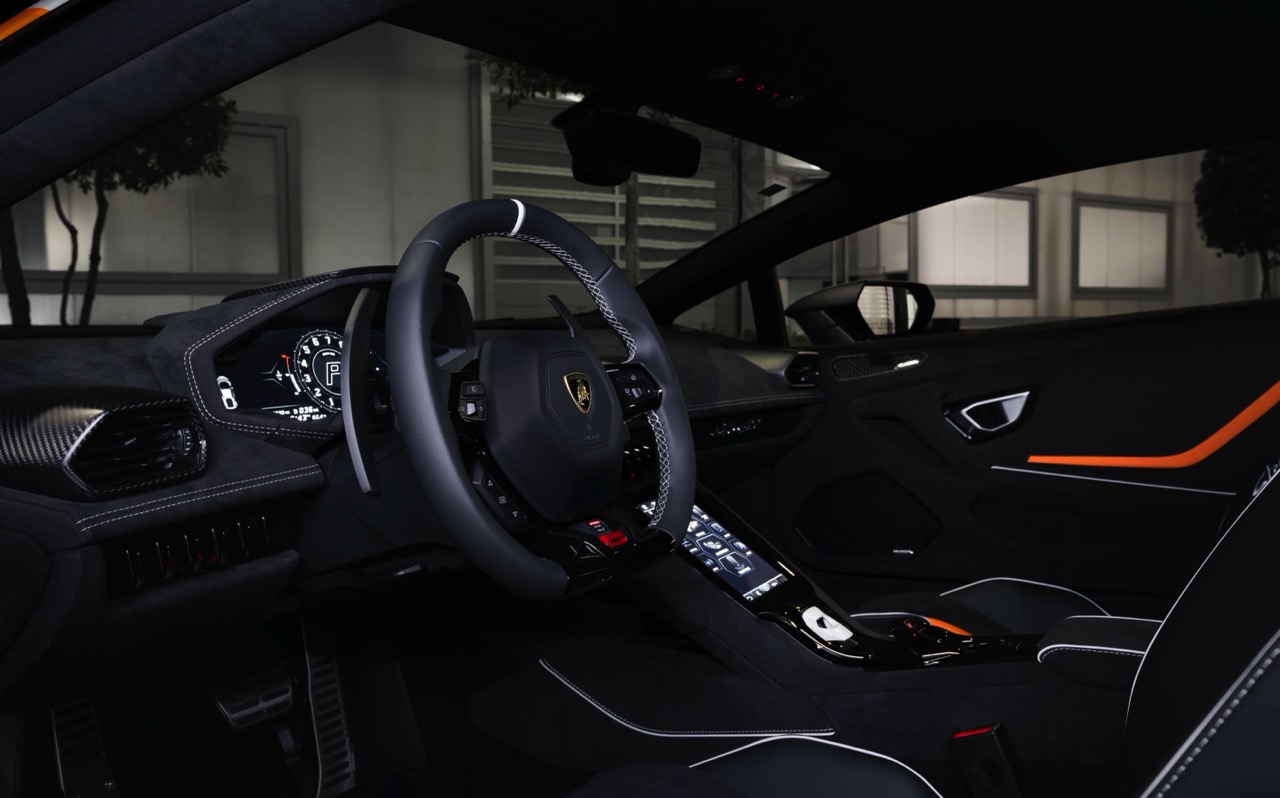
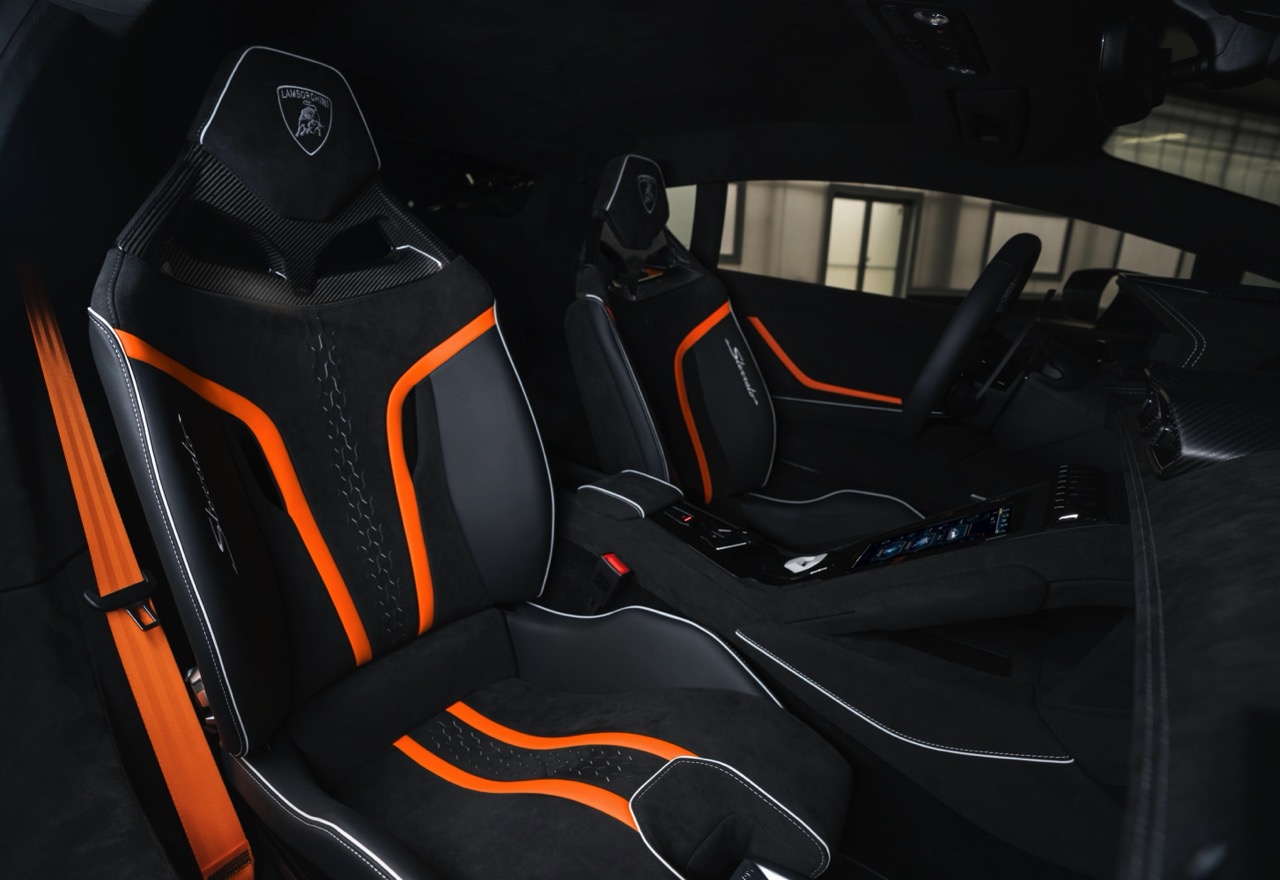
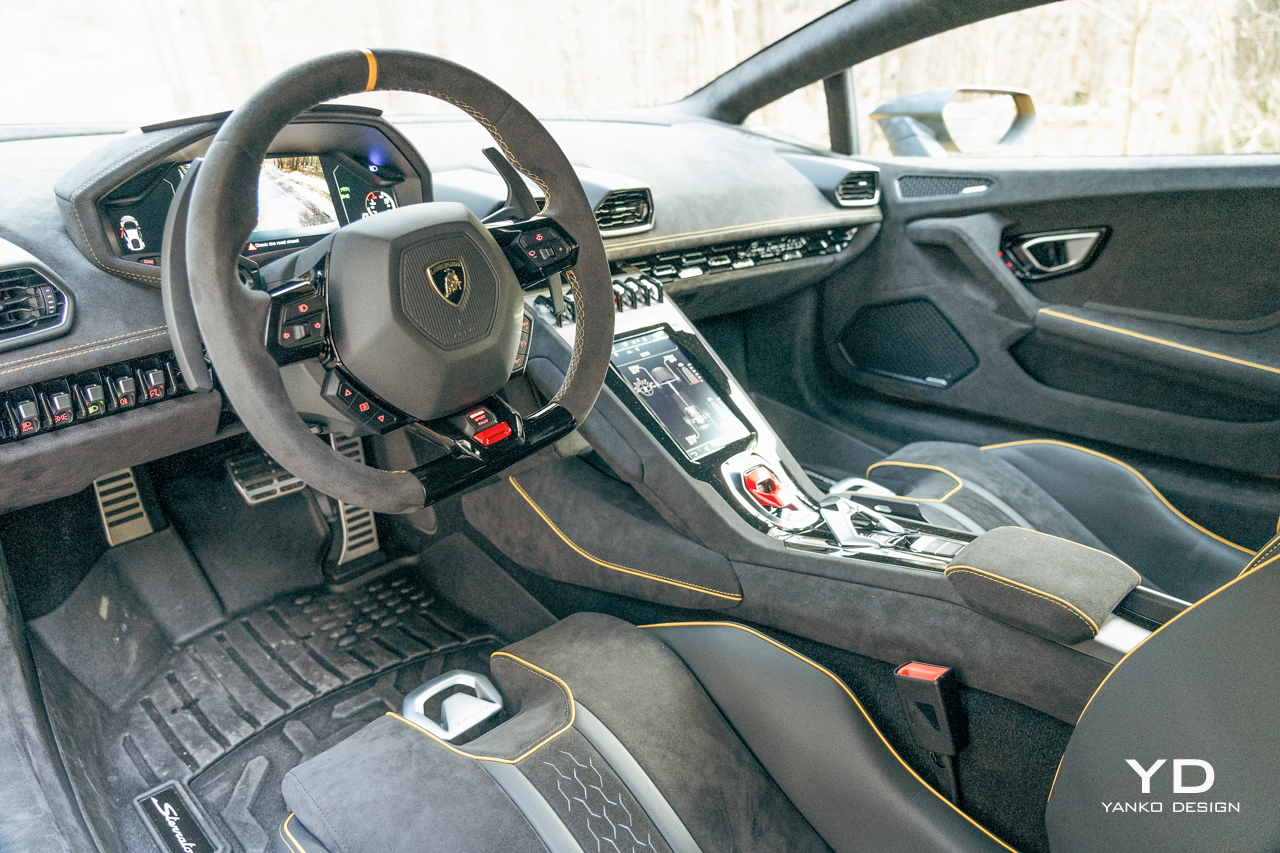
Inside, the Sterrato continues its thematic journey with dark chrome, carbon twill, and Alcantara finishes, enhanced with custom graphics and an Ad Personam plate that reflects the external livery. Mitja Borkert, Head of Design, shared, “The All-Terrain Sterrato is a true Lamborghini in its dynamic abilities and surprises by delivering the unexpected. It’s a joy to drive and ready for any adventure.”

The Milan presentation featured a dramatic stage display with a giant Trompe L’Oeil, created by an Italian artist, setting a perfect backdrop that echoed the power of nature and the promise of adventure.

I must admit, I’m quite envious that Tim Stevens had the opportunity to experience the Sterrato firsthand. In his review, Tim applauded the vehicle for its exceptional all-weather performance, dramatic styling, and the immersive sound of its 5.2-liter V10 engine. Though he pointed out some visibility issues and the absence of ‘Corsa mode,’ the Sterrato was praised for its robust performance across diverse conditions and its distinctive styling that builds on the legacy of the LM002.

He described the interior as maintaining Lamborghini’s luxurious standards with bespoke elements that cater to both comfort and style. The car’s raised suspension and specialized Bridgestone Dueler AT002 tires exemplify its readiness for rugged terrain, while the powerful V10 engine assures a thrilling drive wherever you may roam.

Milan Design Week certainly wouldn’t have felt complete without these gorgeous, beastly performance cars making their mark. And for those now compelled to own one, a quick note: the 12 cars in this special Ad Personam series are already sold out, highlighting the allure and exclusive appeal of the Lamborghini Huracán Sterrato.

The event concluded with the unveiling of the Huracán Sterrato, demonstrating Lamborghini’s commitment to innovating car design and performance and marking an exciting new chapter in its legacy, which continues to challenge automotive conventions by merging aesthetic elegance with superior engineering.

The post 2024 Lamborghini Huracán Sterrato Debuts Exclusive Livery – All-Terrain Luxury Meets Design at Milan Design Week first appeared on Yanko Design.