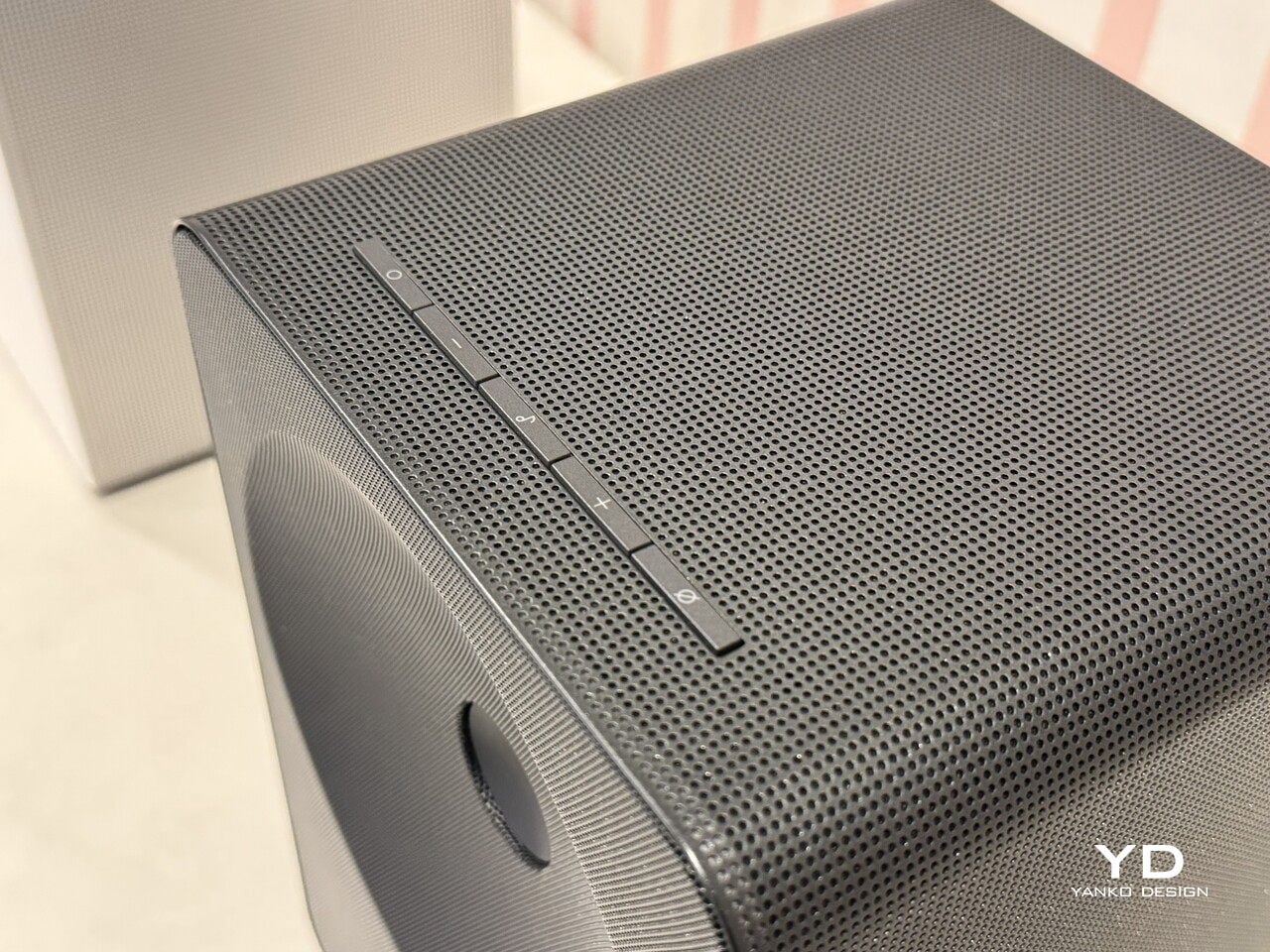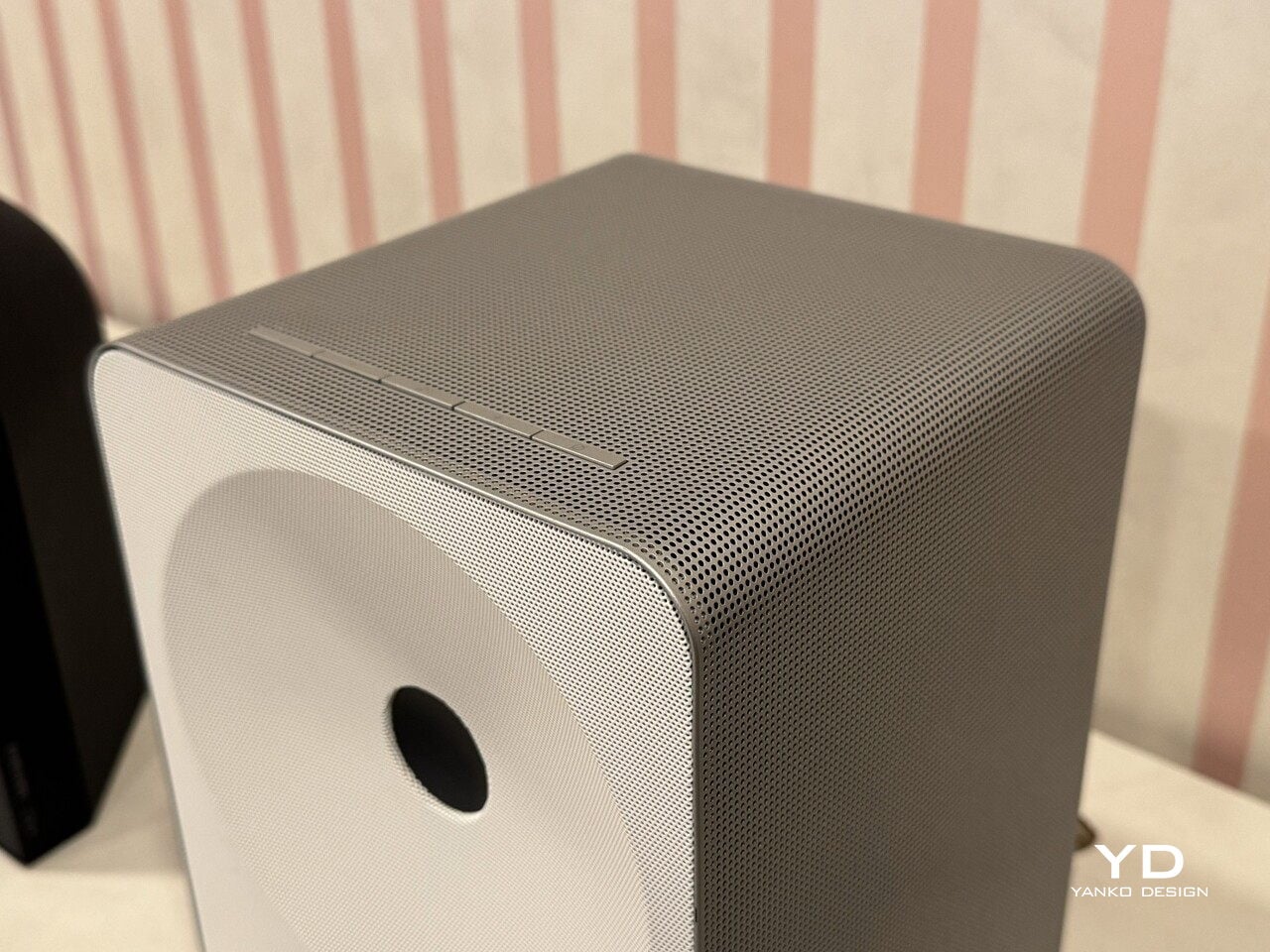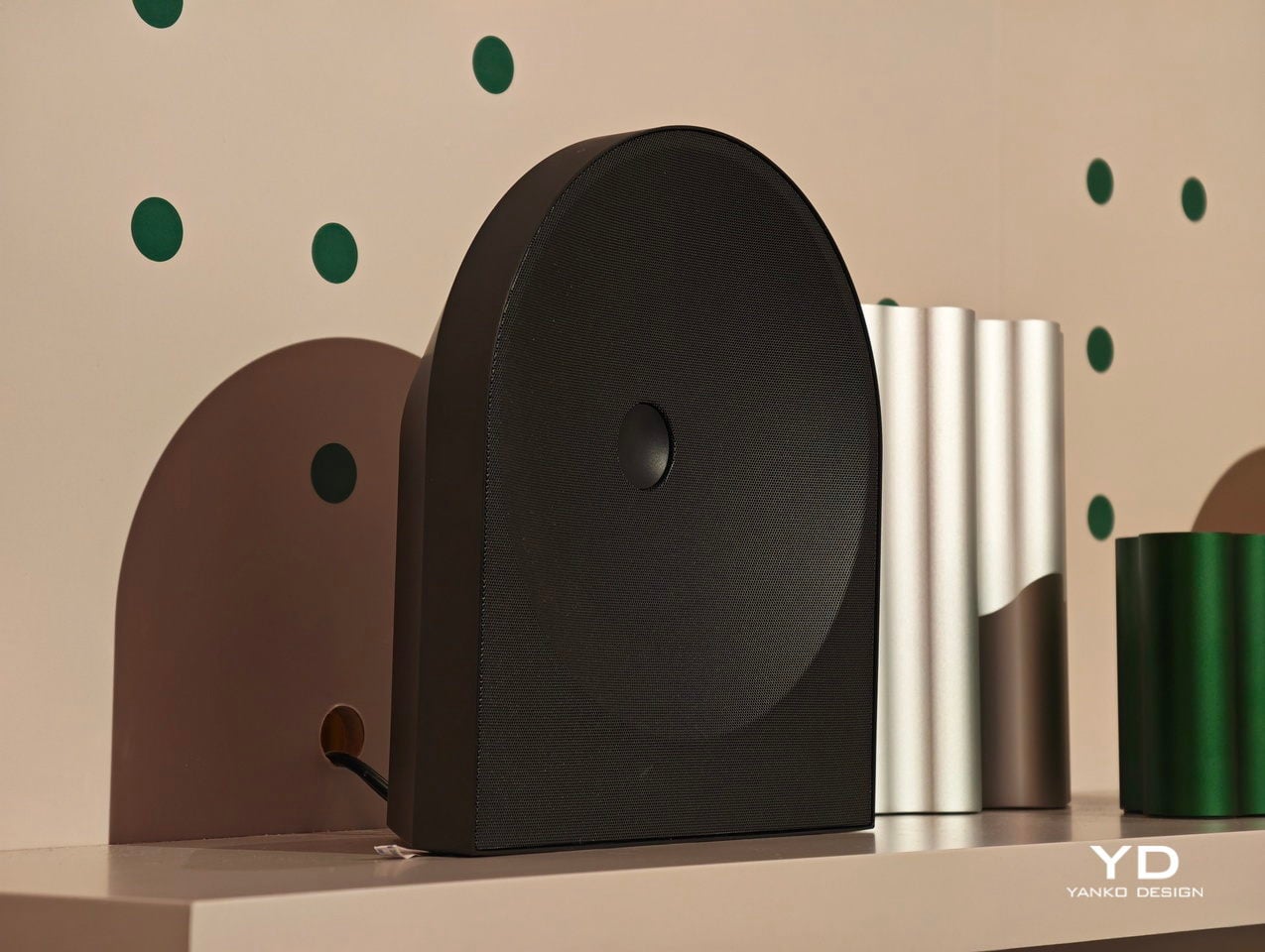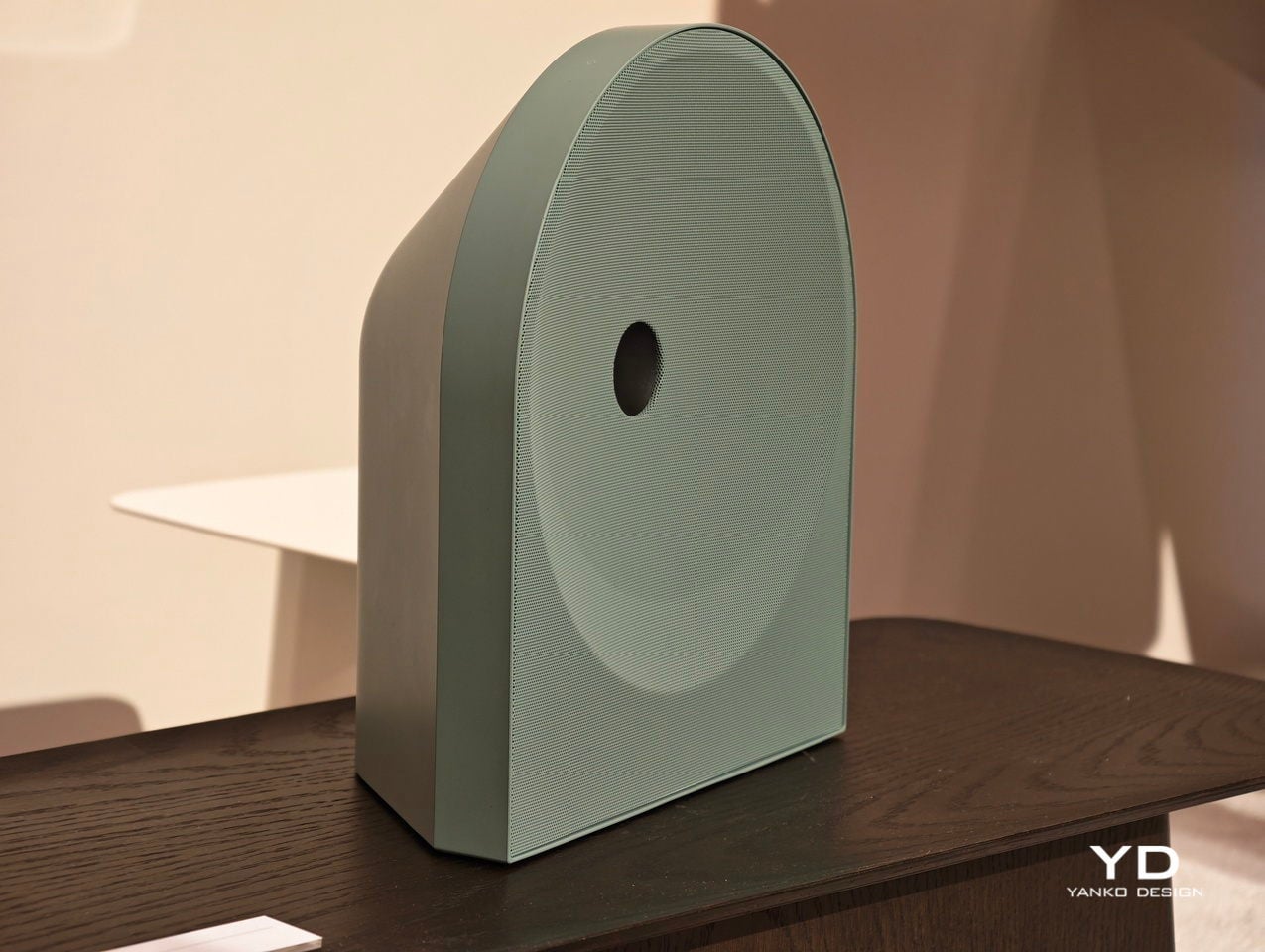
This Speaker Is Made From Sand (And It’s Actually Genius)

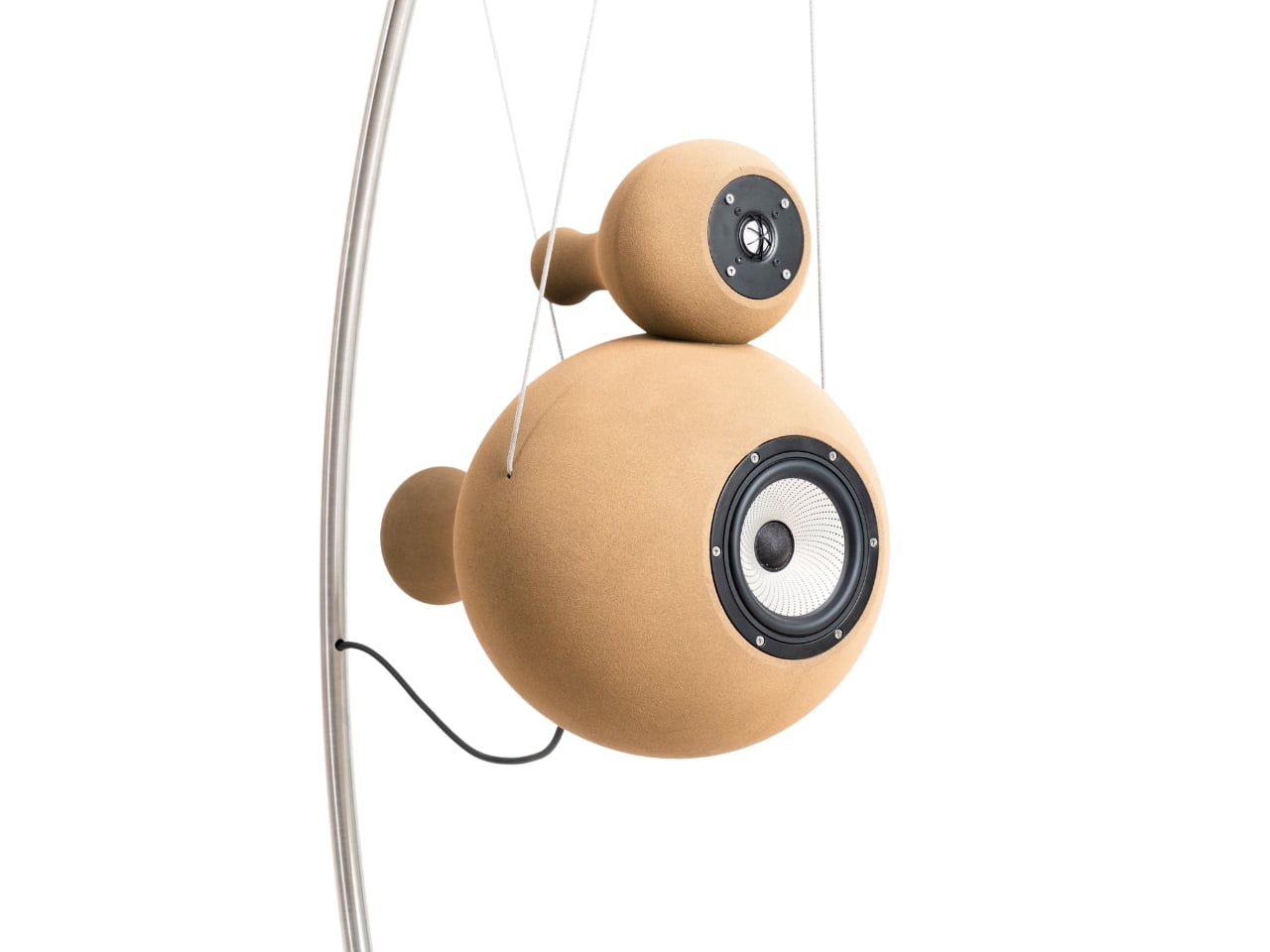
When you think of high-end speakers, your mind probably goes to sleek black boxes, glossy wood finishes, or maybe some minimalist Scandinavian design. But what if I told you the most interesting speaker I’ve seen lately is made from 3D-printed sand and hangs from steel cables like a piece of kinetic sculpture? Meet the Econik 1851, and trust me, it’s not your typical audio equipment.

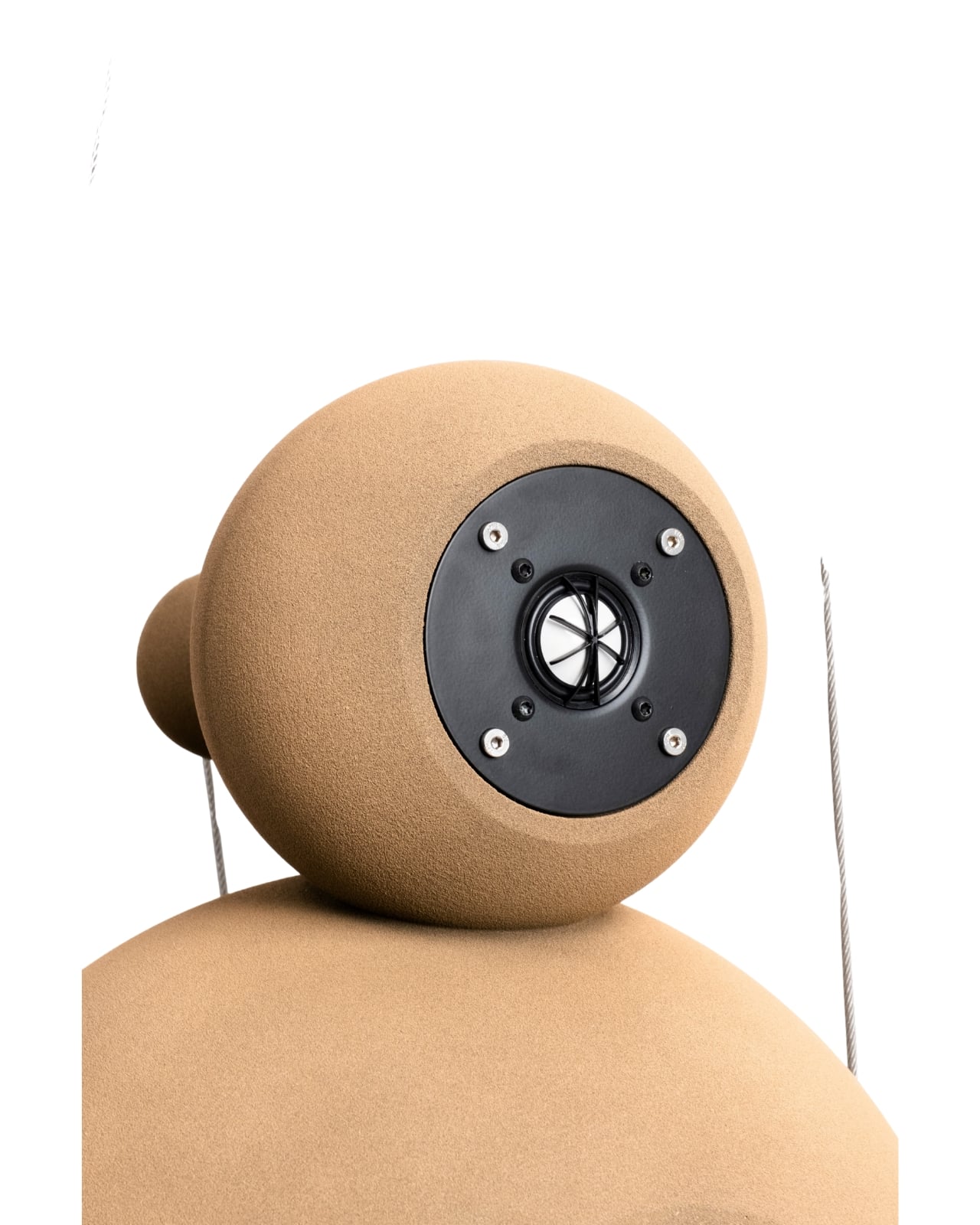
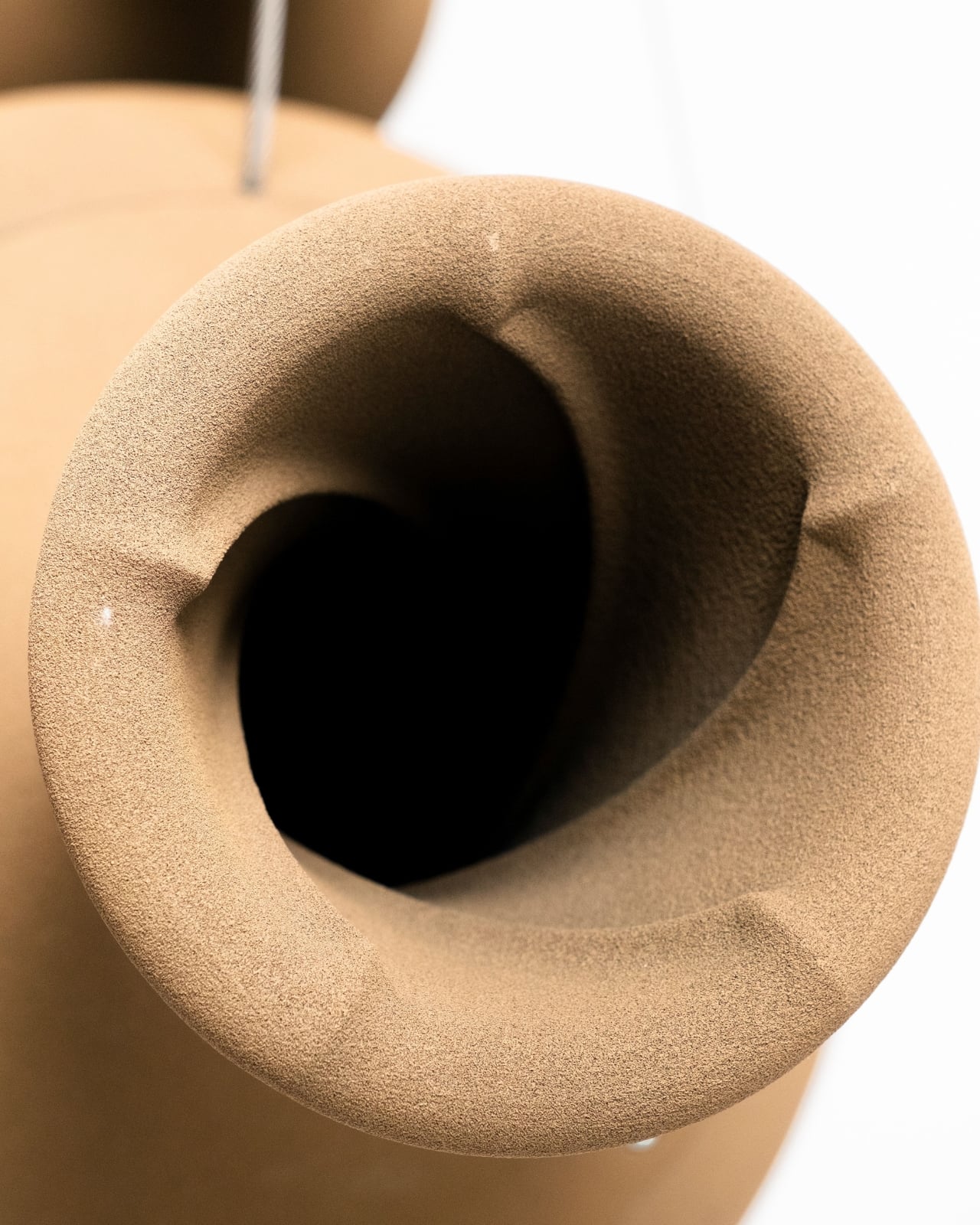
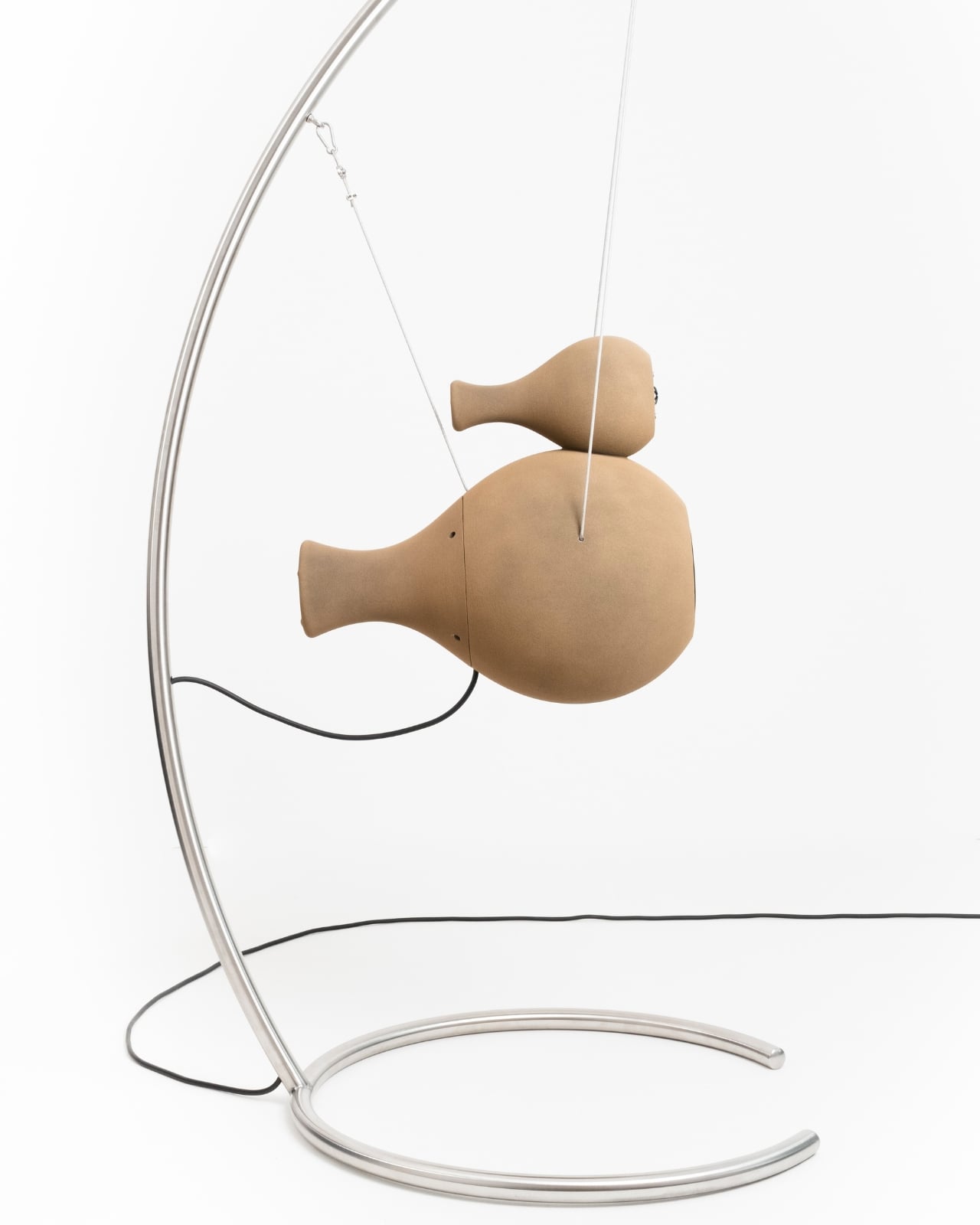
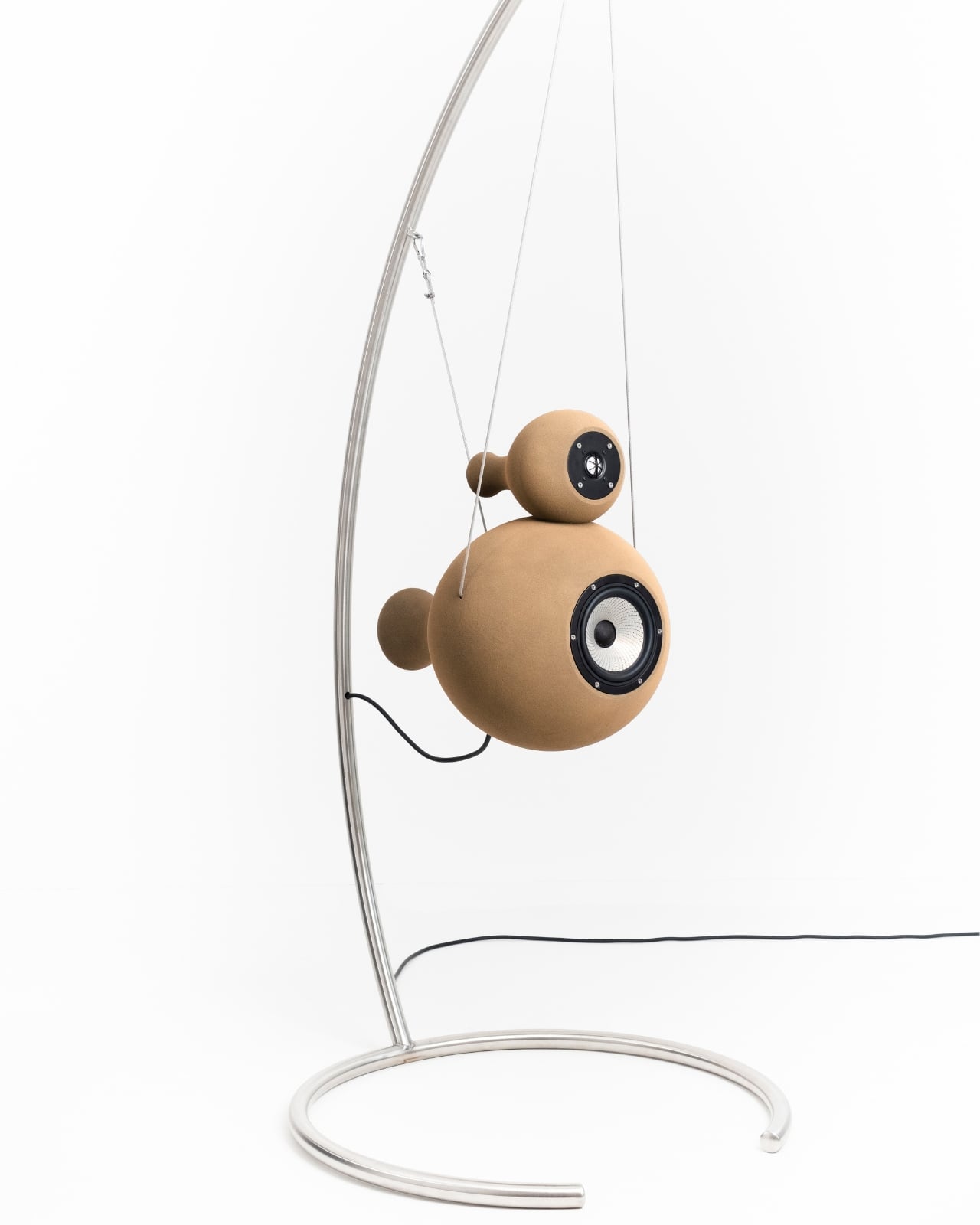
Designer Anton Erbenich has created something that feels like it belongs in both a modern art museum and an audiophile’s listening room. The Econik 1851 is an active loudspeaker that throws convention out the window, starting with its most striking feature: the entire enclosure is 3D-printed from quartz sand. Yes, actual sand. The result is this gorgeous, rough-textured surface that looks almost ancient, like some kind of minimalist pottery that somehow ended up with speaker drivers embedded in it.

Designer: Anton Erbenich

But this isn’t just about aesthetics (though let’s be honest, it’s stunning to look at). The quartz sand construction serves a real purpose. That mineral texture you see? It’s not just for show. The material helps reduce micro-vibrations that can mess with sound quality. Audiophiles obsess over these tiny details because even the smallest vibrations can color the audio in ways you don’t want. By using this unconventional material, Erbenich found a way to solve a technical problem while creating something visually distinctive.

The shape itself is equally intentional. Look at those spherical forms, stacked like a quirky snowman with side protrusions that give it an almost organic, pod-like appearance. That nearly spherical interior volume isn’t random either. It’s designed to reduce standing waves, those annoying acoustic phenomena that happen when sound bounces around inside a speaker cabinet in ways that create peaks and nulls in the frequency response. Basically, the shape helps the sound stay cleaner and more accurate.

Then there’s the suspension system, which might be my favorite part of the whole design. The speakers hang from steel cables attached to an elegant curved stand that looks like a fishing rod crossed with a piece of modern sculpture. This isn’t just a cool visual trick. By suspending the speakers this way, Erbenich has essentially decoupled them from any surface vibrations. They float in space, isolated and free to do their acoustic thing without interference. Plus, it makes the whole setup feel weightless despite the solid, substantial nature of those sand-printed enclosures.

As an active speaker system, the Econik 1851 has all the amplification and signal processing built right in. This is increasingly common in high-end audio, but it’s still worth noting because it means setup is remarkably simple. You don’t need to match it with separate amplifiers or worry about speaker cable quality debates. Just plug in a power cable, send it your audio signal, and you’re ready to go. It’s the kind of thoughtful design decision that makes sophisticated technology more accessible.

What really gets me about this design is how it manages to be both bold and subtle at the same time. Yes, it’s a conversation piece. You’re not hiding these speakers in a cabinet or blending them into your décor. But that sandy, neutral tone and the organic shapes mean they don’t scream for attention the way some statement pieces do. They have presence without being loud about it (pun intended).

This feels like the kind of design that bridges multiple worlds. Tech enthusiasts will appreciate the engineering solutions. Design lovers will obsess over the form and material choices. And even people who just want their spaces to feel interesting will find something appealing about these sculptural objects that happen to play music. In a market saturated with either ultra-modern tech aesthetics or retro throwback designs, the Econik 1851 carves out its own territory. It feels timeless in a way that’s hard to achieve, like it could have been designed yesterday or decades from now. That’s the mark of really thoughtful design work: when function and form merge so seamlessly that you can’t imagine it any other way.

The post This Speaker Is Made From Sand (And It’s Actually Genius) first appeared on Yanko Design.
This Monument-Inspired Speaker Concept Stands Tall on Your Shelf

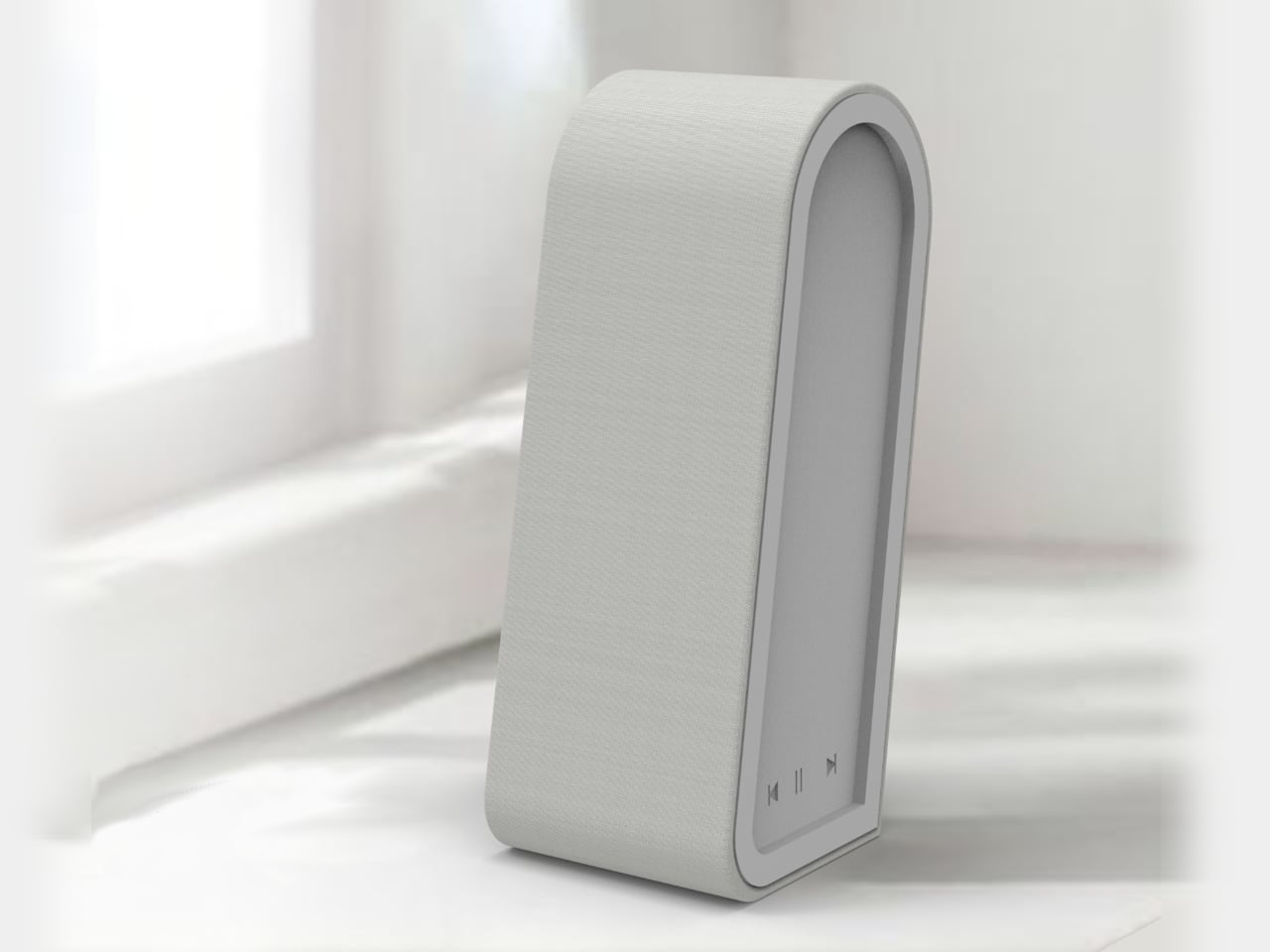
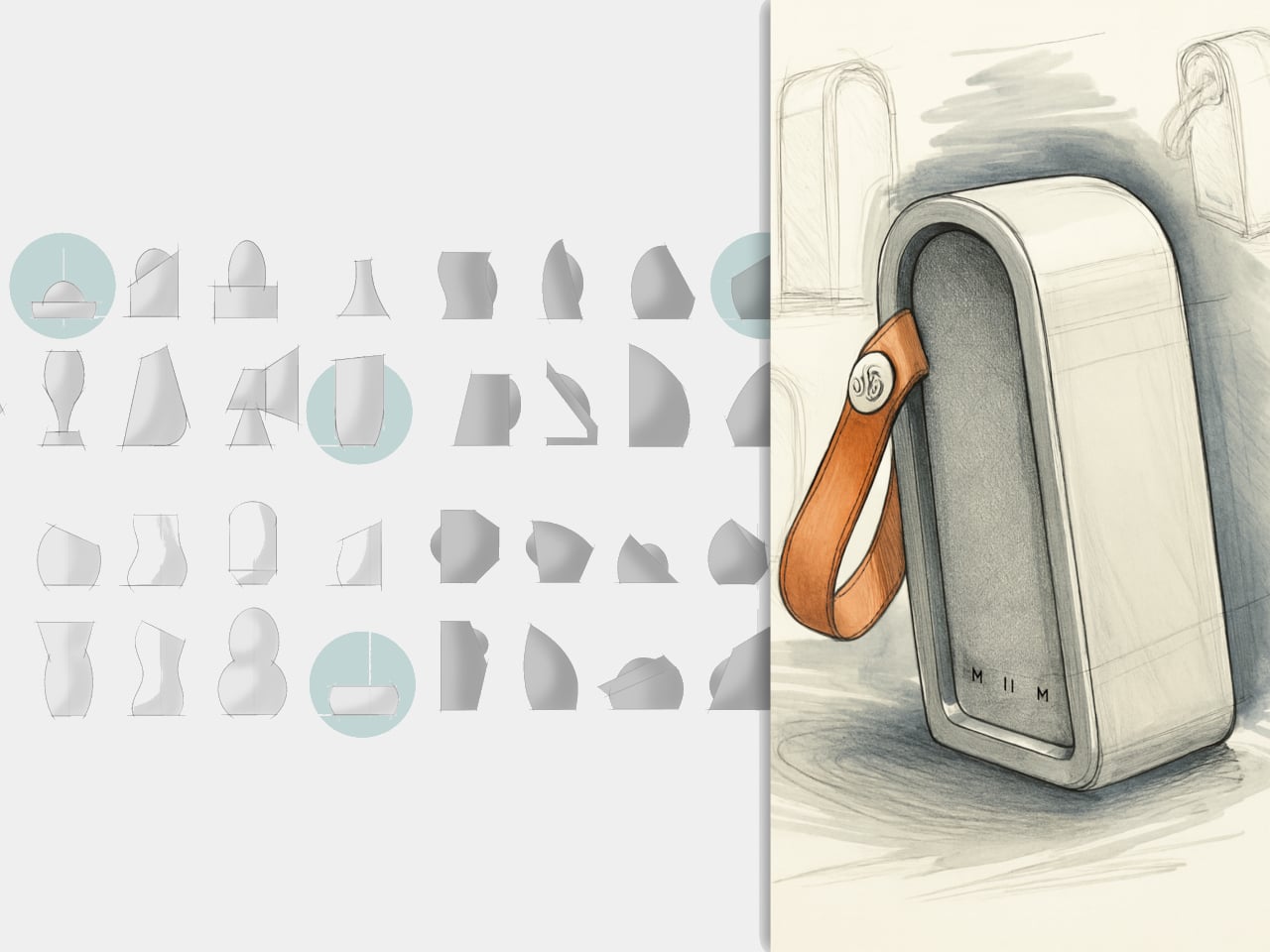
Most wireless speakers fall into two visual camps: squat cylinders that look like tech, or anonymous black boxes that try to disappear. There is a third path, treating a speaker like a small piece of architecture in the room, something that stands tall and holds its ground even when it is silent. Sonique is a vertical aesthetic speaker that leans into that idea, more road sentinel than soda can, more monument than gadget.

Sonique is a speaker inspired by global monuments, aiming to embody the idea of a road sentinel that seamlessly integrates artistry and functionality. The form language borrows from tall, narrow towers and arches, and the goal is to create an object you would be happy to leave on a shelf even when it is off, because it reads as a small, calm monolith rather than a piece of hardware waiting to be told what to do.

Designer: Eshaan Gupta

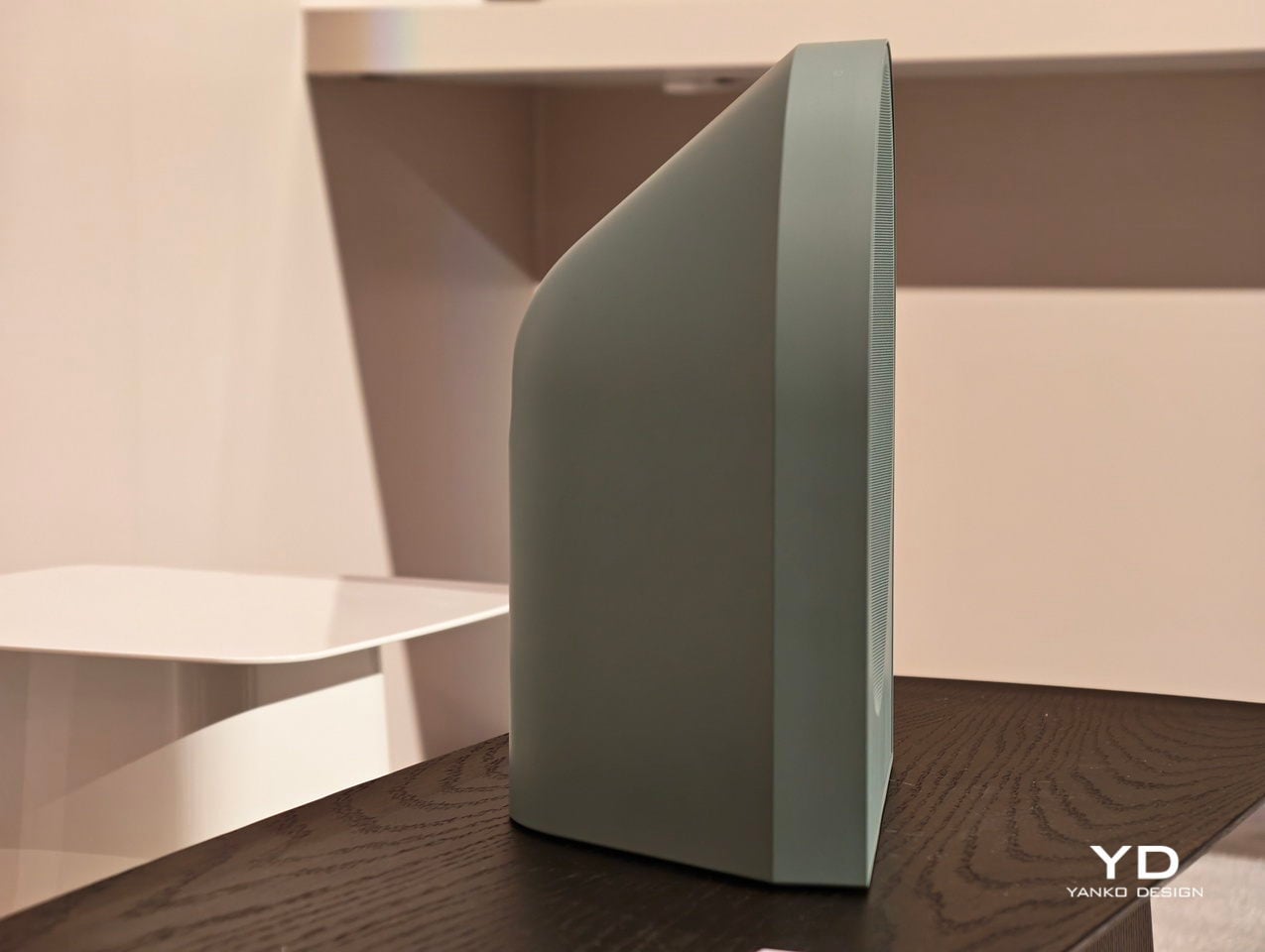
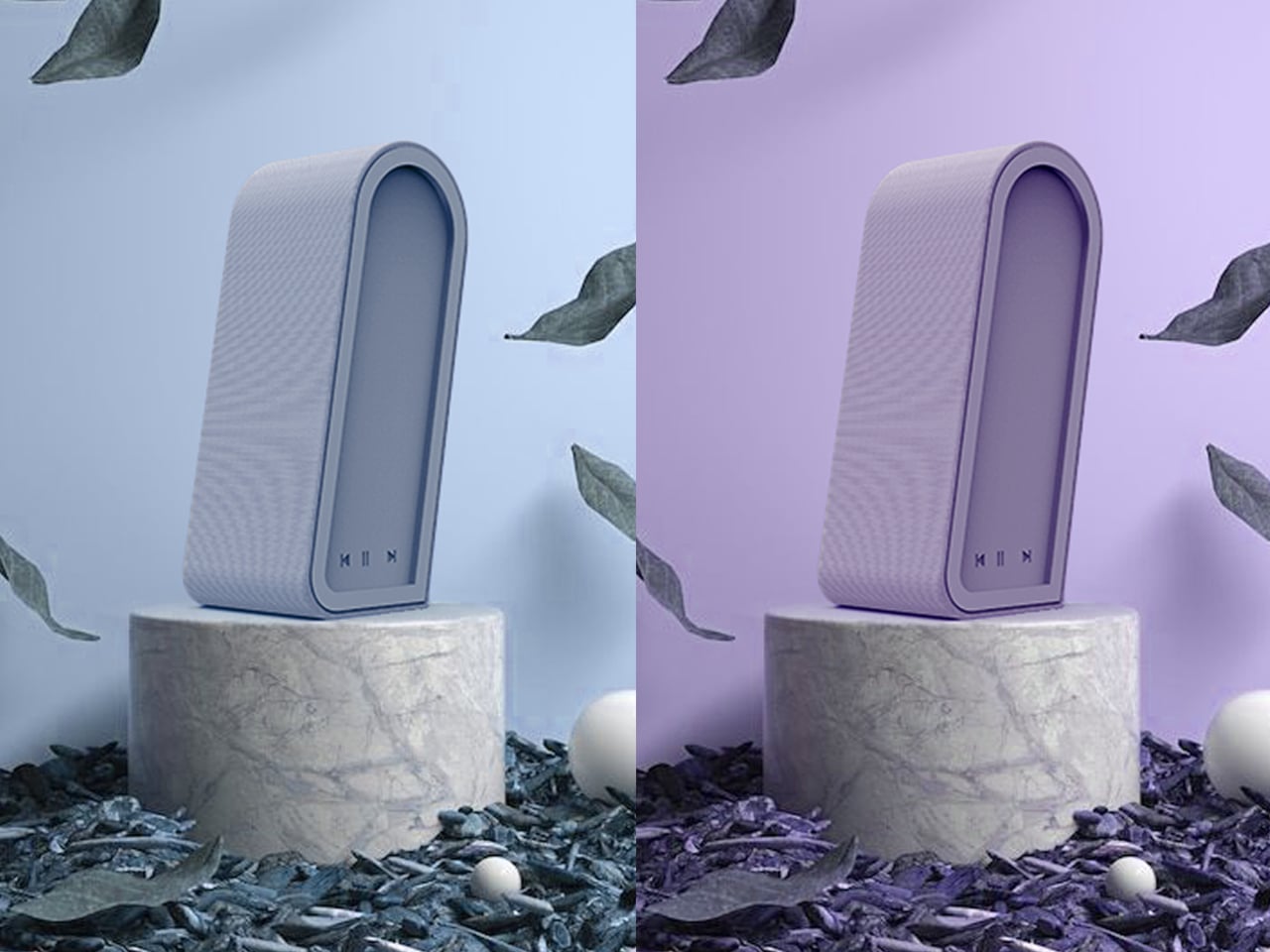
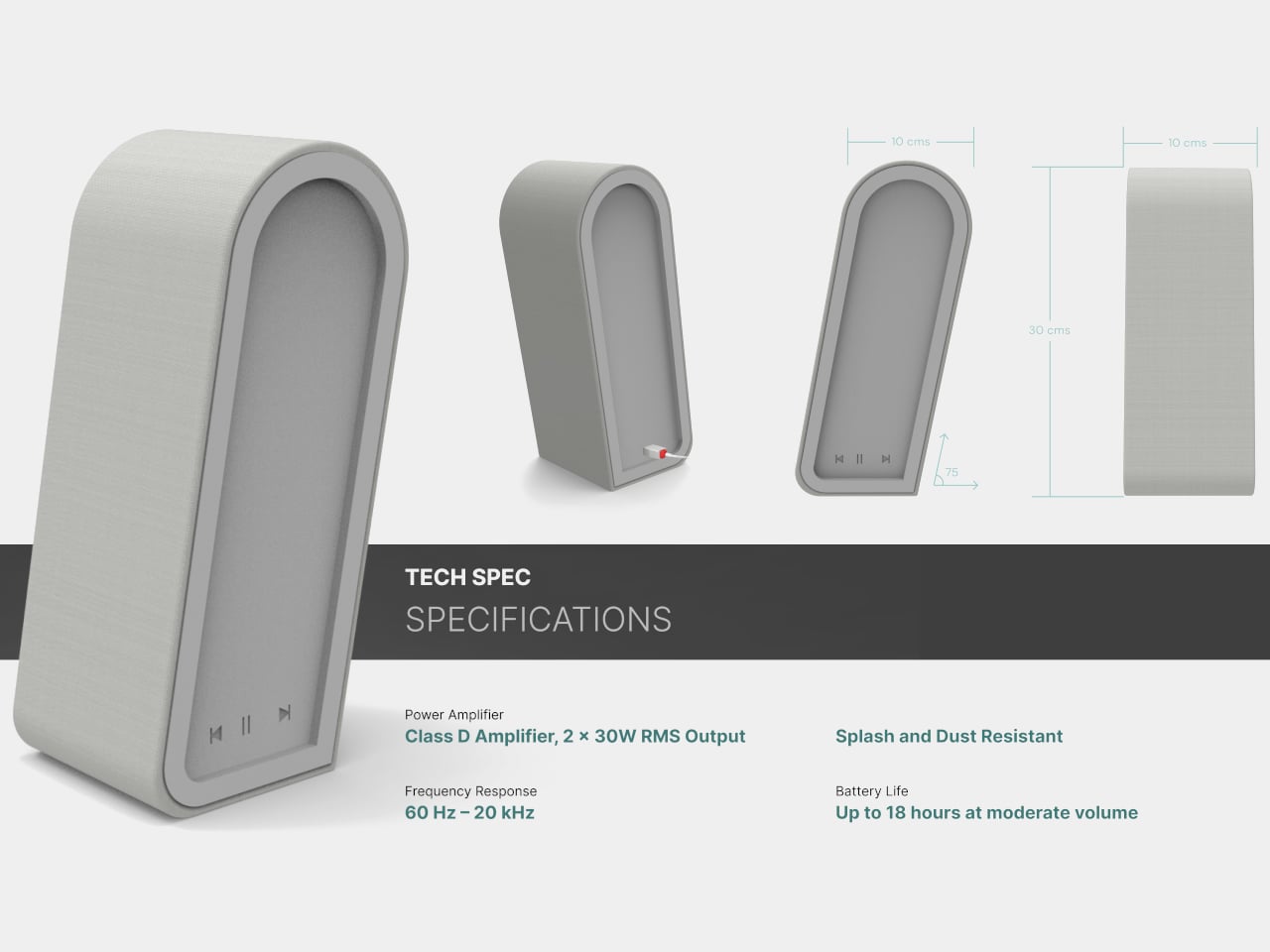
The basic form is a tall, rounded-top shell with a recessed fabric front and a small control strip at the bottom. The vertical posture lifts the drivers and makes the speaker feel more like a portal or doorway than a box. The controls are reduced to a simple strip with minus, play/pause, and plus, integrated into the front plane, so they do not break the silhouette or shout for attention when you are not using them.

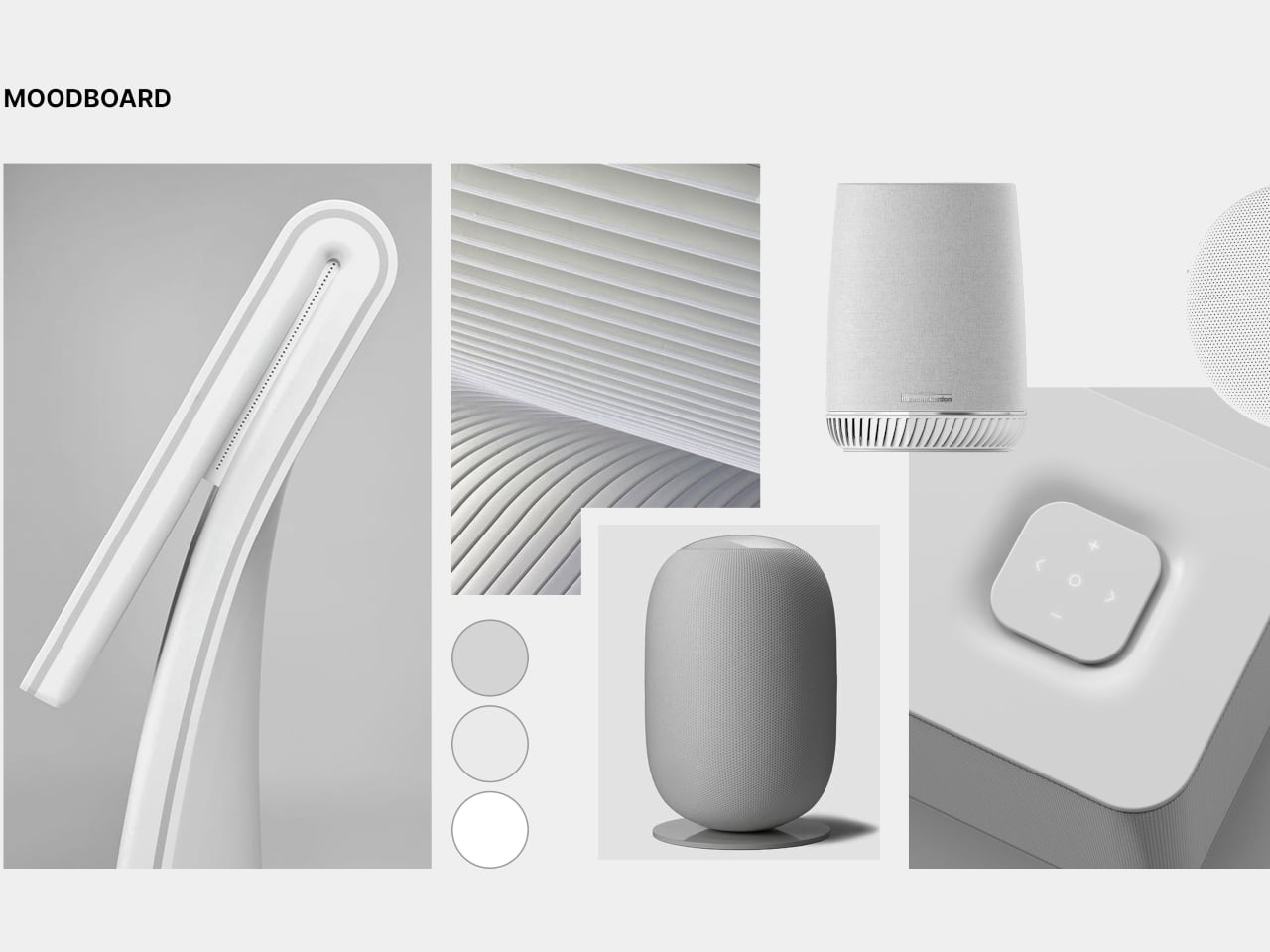
The inspiration keywords, unbalanced, monolithic, and timeless, show up in how Sonique stands in a room. Unbalanced in its narrow footprint, tall stance, and slight backward lean that creates an asymmetrical, deliberate posture. Monolithic in the continuous outer shell, timeless in the fabric and soft grey palette, avoiding obvious tech trends. The speaker is meant to be a quiet marker in a space, a little tower of sound.

The technical block lists a Class-D amplifier with 2 × 30 W RMS output, a 60 Hz–20 kHz frequency response, splash and dust resistance, and up to 18 hours of playback at moderate volume. This puts it in the realm of a capable, battery-powered home speaker, with enough low-end extension for most music and enough stamina to move around the house without living on a charger or needing to stay tethered to an outlet.

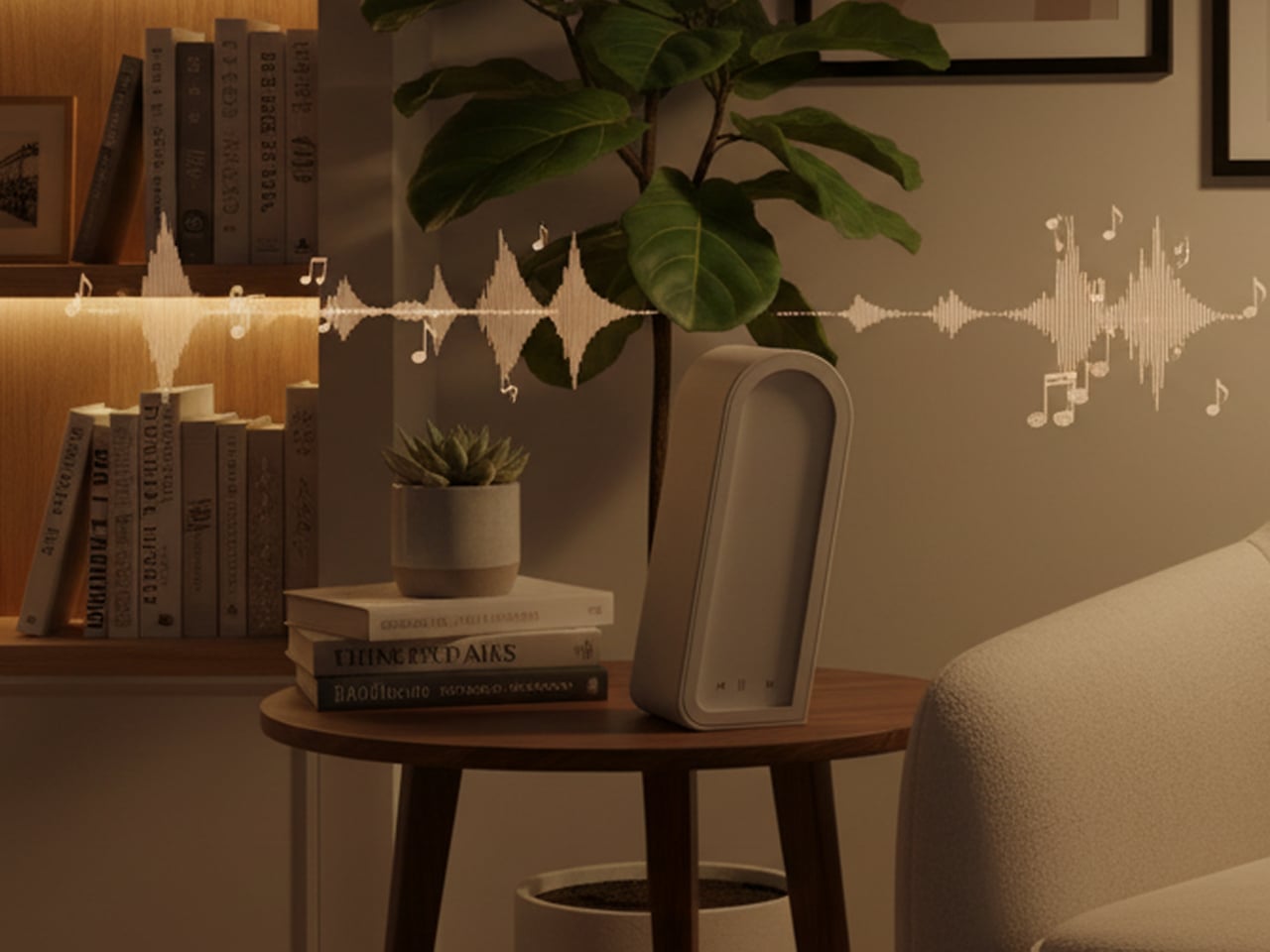
Sonique fits into everyday scenes, on a bookshelf in a reading corner, on a sideboard in a living room, or on a desk as a vertical counterpoint to a monitor. The combination of fabric, soft light, and vertical form makes it feel more like a small lamp or sculpture than a piece of audio gear. The splash resistance hints at kitchen or bathroom use, where a bit of steam or a stray splash should not be a problem or an excuse to hide it away.

Treating a speaker like a road sentinel nudges the object out of the black box category and into the realm of things you curate in a room. Sonique suggests that you can have a plausible, battery-powered Class-D speaker that also behaves like a small monument on your shelf, a reminder that sound hardware does not always have to look like sound hardware to do its job well, and that a speaker can hold space in a room the way architecture does, vertical, quiet, and present.

The post This Monument-Inspired Speaker Concept Stands Tall on Your Shelf first appeared on Yanko Design.
This 500-Million-Year-Old Nautilus Shell Is Now a Speaker

The Sazae Radio was a Japanese novelty radio built into a turban shell, sold by lottery in 2016 with just 100 units available for 8,350 applicants. The odds were 83.5 to one. Losing that lottery left a maker named hide-key with a simple choice: accept the disappointment or build something better. The DIY pivot turned into the Steampunk Nautilus, a haptic speaker project that takes a similar idea and pushes it considerably further.

The choice was a nautilus shell, a living fossil that has barely changed in 500 million years. Discovering that its English name matched Jules Verne’s submarine sealed the decision. The goal became not just a speaker, but a piece of audio art with three rules: steampunk-kintsugi repair, where metal celebrates the shell’s imperfections, conservation-minded reversibility, where every adhesive can be removed with acetone, and a haptic drive that turns the shell itself into a vibrating diaphragm.

Designer: hide-key

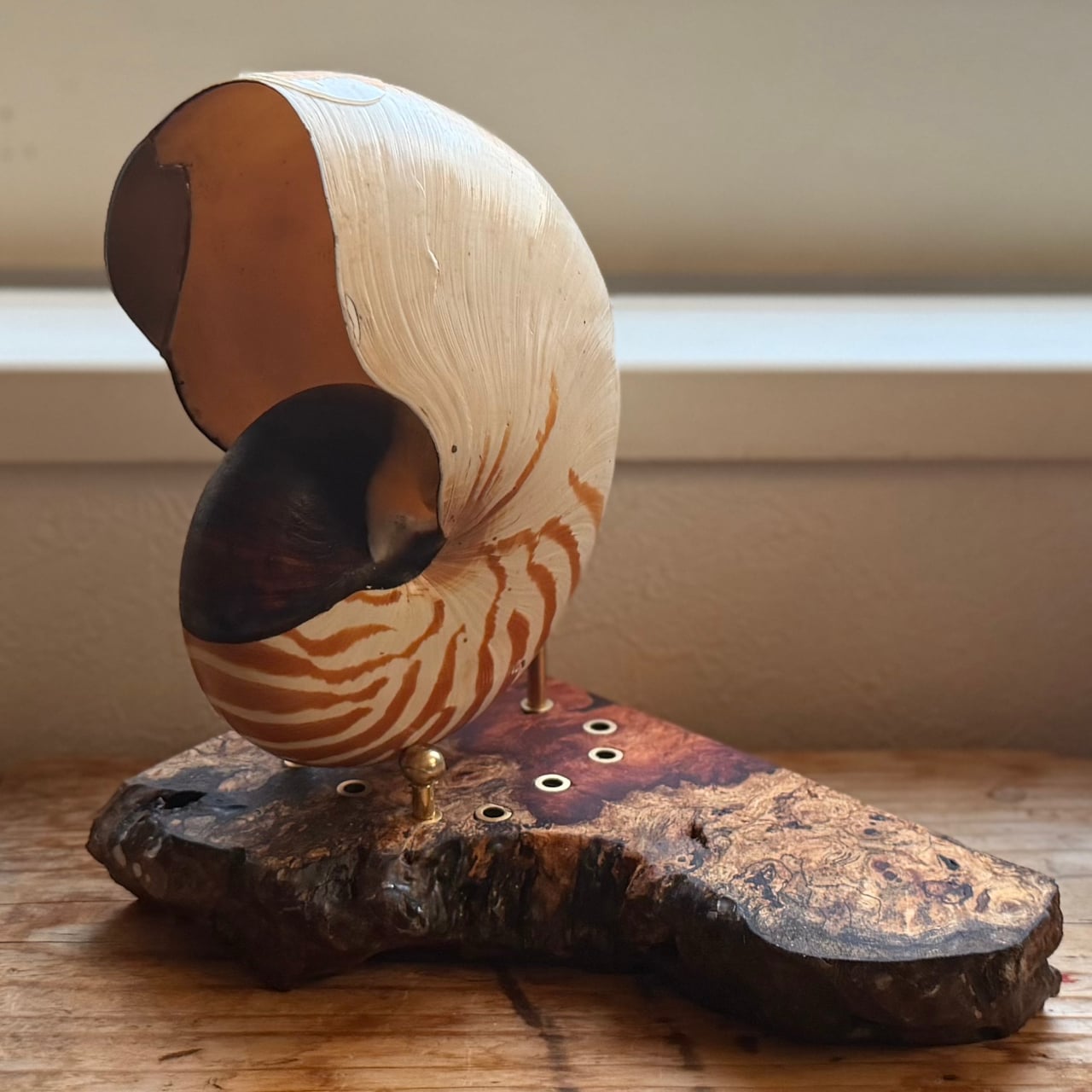
Early experiments failed. A massive sea snail shell refused to vibrate, too thick and heavy for a small exciter to drive. The nautilus, by contrast, worked immediately. Its thin, lightweight structure, built for buoyancy, behaves like a violin body or speaker cone, with internal ribs adding resonance without mass. The project quietly became a study in bioacoustics, where shell biology dictated whether the fossil could sing, and heavy shells behaved like bricks.

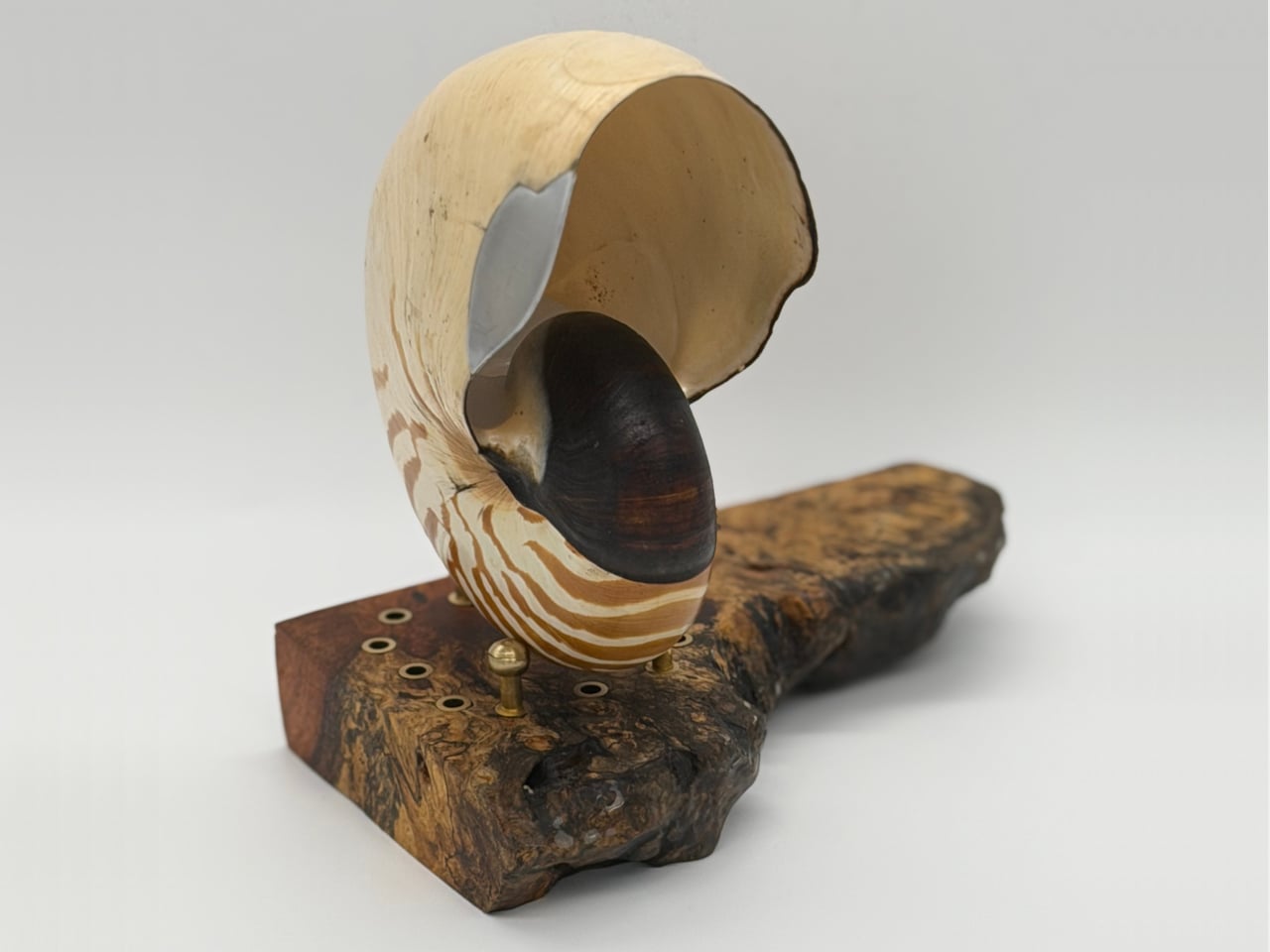
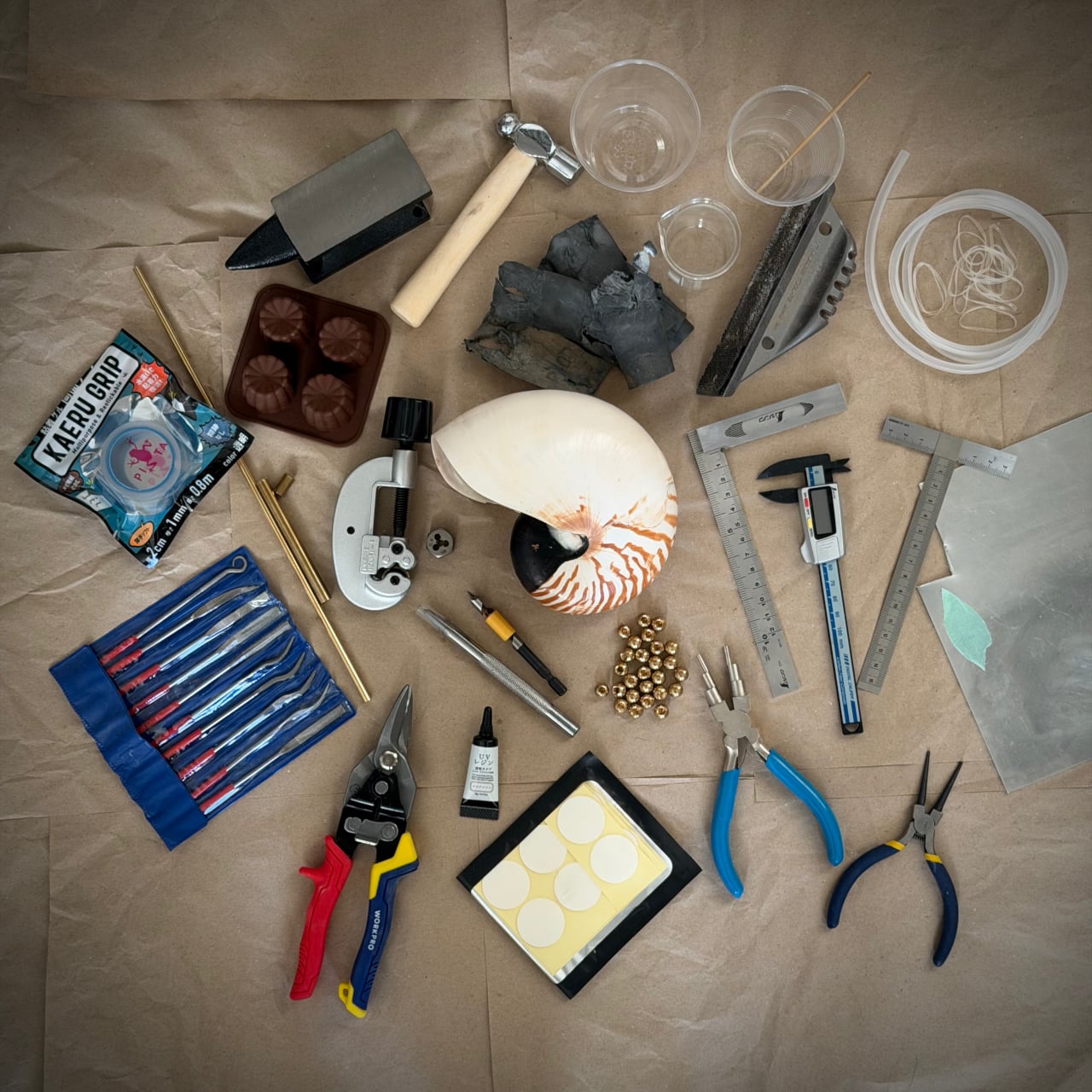
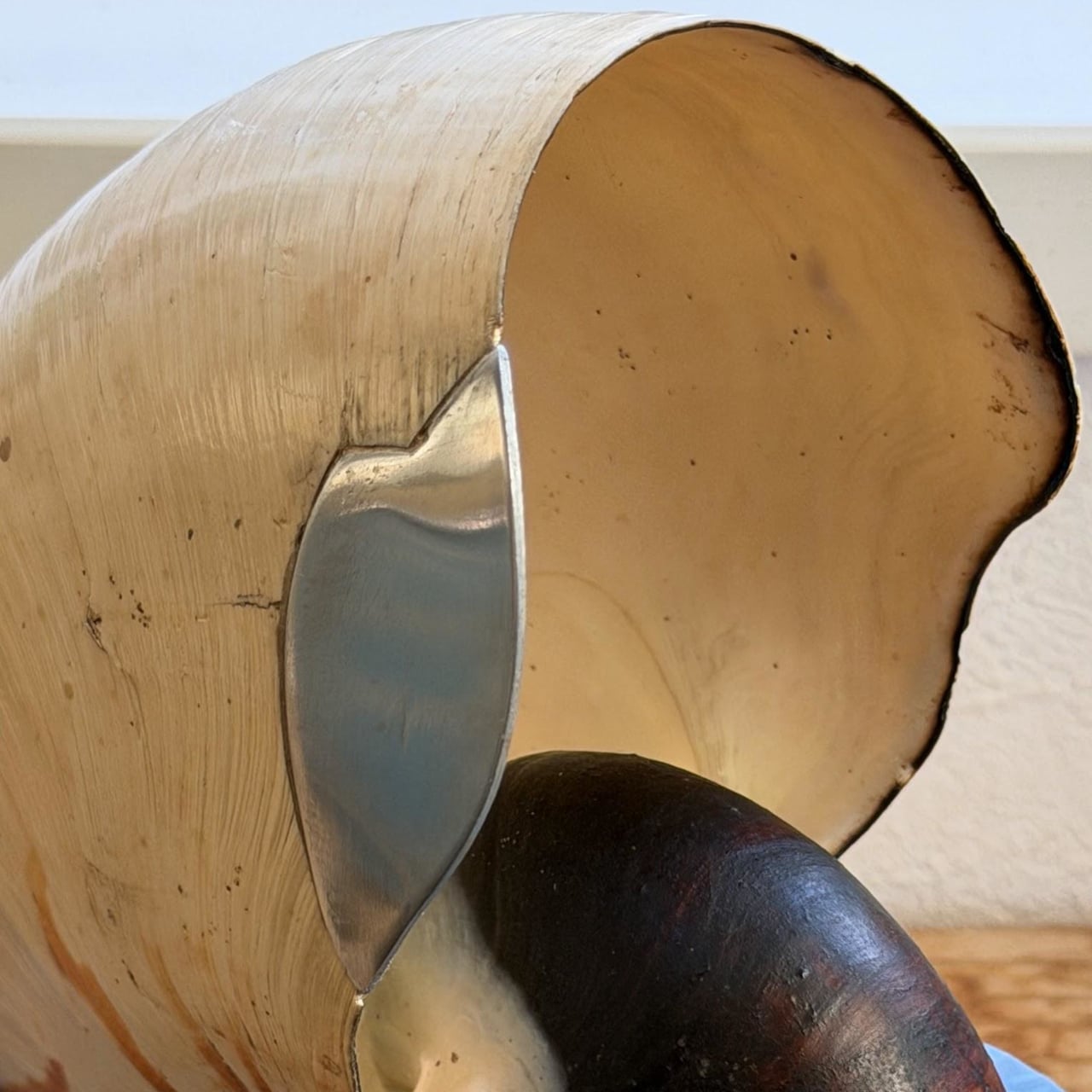
The build starts with a chipped shell and leans into the damage. The broken area is traced, and a 1.2 mm aluminum sheet is hammered and filed to match the organic curve, polished to a mirror, and attached with cyanoacrylate and brass-colored epoxy putty. All adhesives were chosen so they can be removed with acetone, leaving the shell intact underneath. Reversibility was treated as a hard constraint, respecting the specimen while giving it a new function.

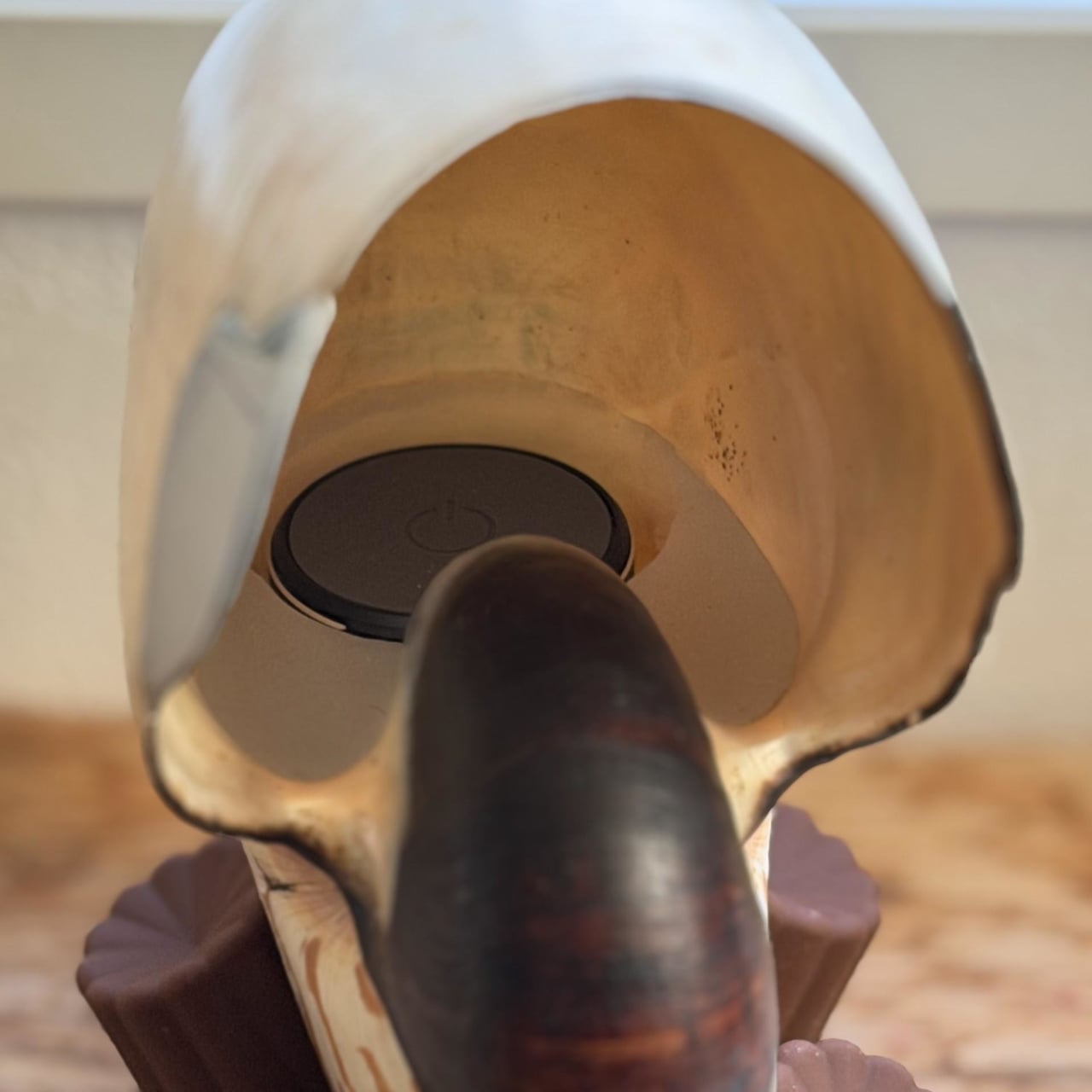
The haptic core moved from a boring internal speaker to a vibration exciter mounted in a custom silicone cartridge that fits the shell’s living chamber. Water displacement measured the volume at just 50 cc, and Shore 15A silicone was poured to create a perfect seat. A transparent hair band acts as a hidden pull tab, and a silicone cap hides the exciter and diffuses its faint blue LED into a heartbeat-like glow deep in the spiral.

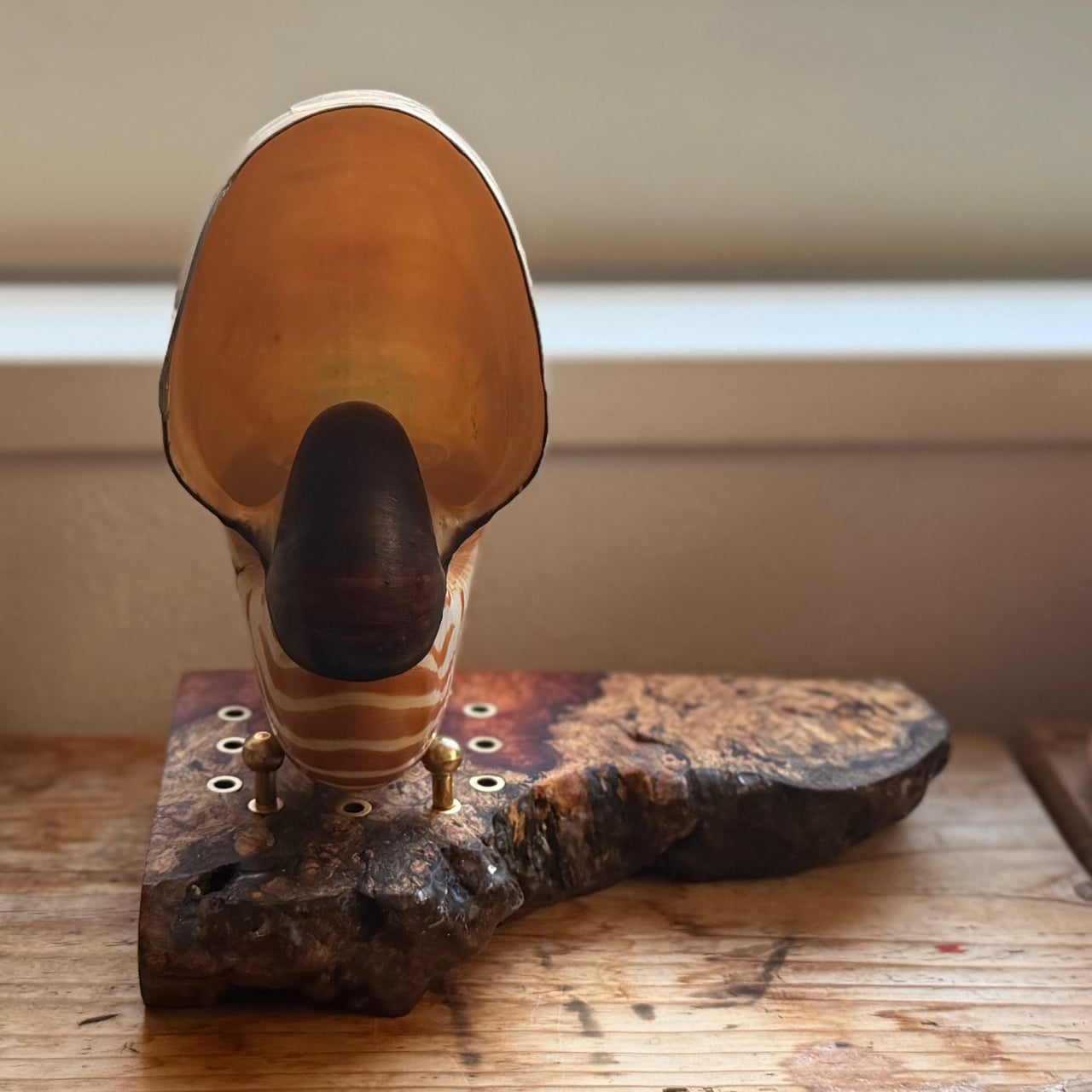
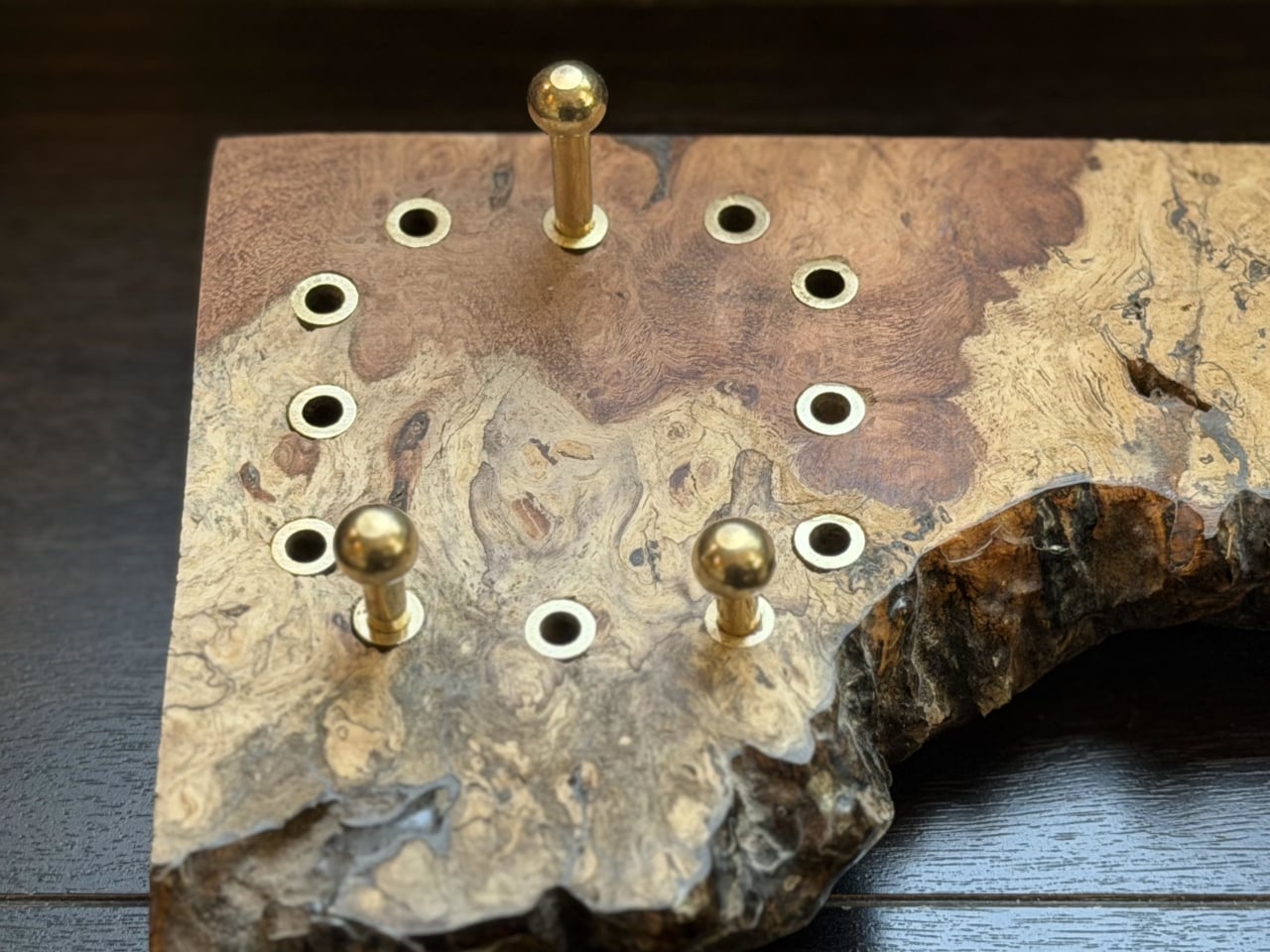
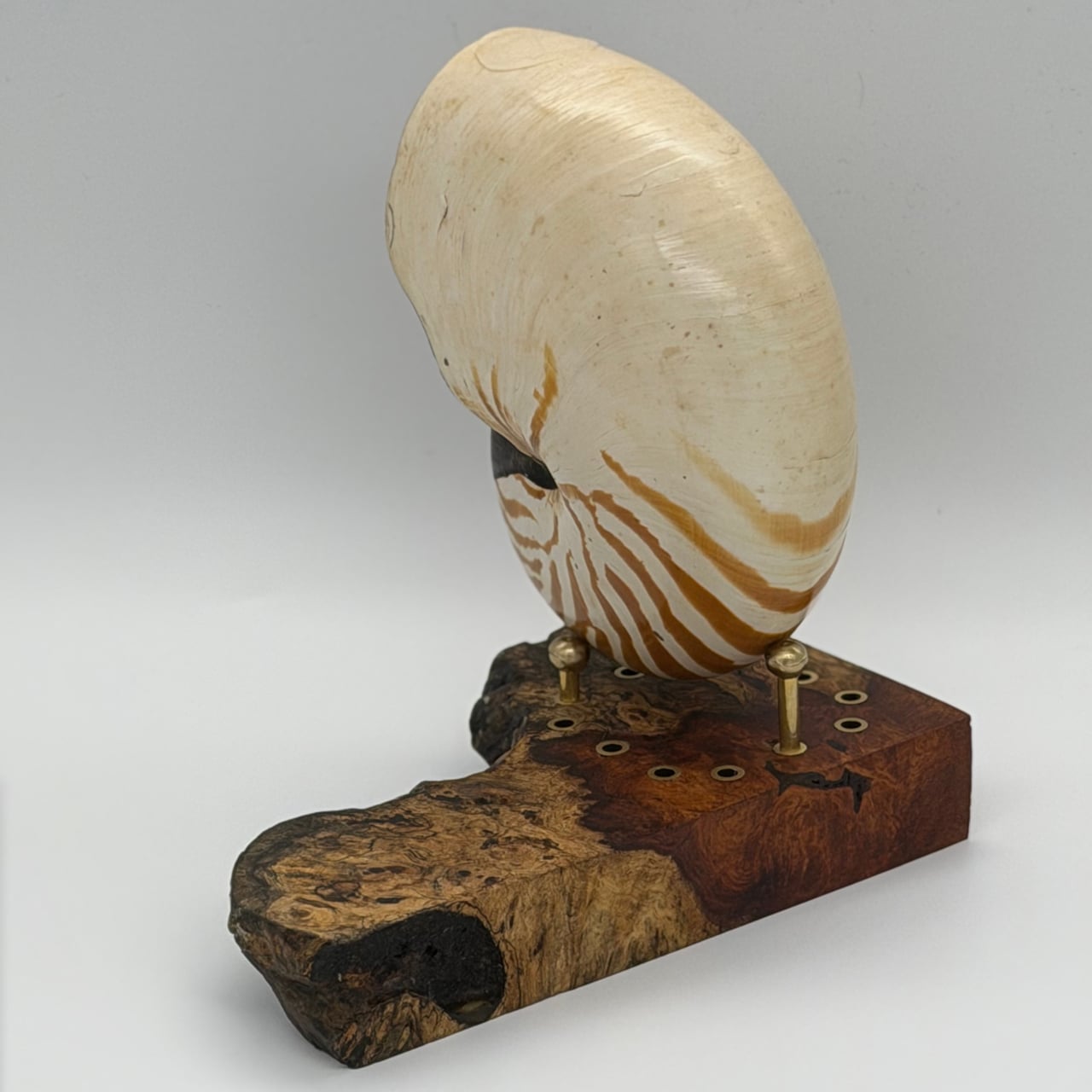
The base is a Quince burl chosen for its red, white, and black grain that echoes the shell’s pattern. A Magic Circle layout of brass bushings lets the shell’s angle be changed by moving three brass pillars. Threaded brass rods with ball nuts support the shell, and a drop of soft UV resin on each contact point prevents buzzing, making the heavy fossil appear to float while staying mechanically quiet.

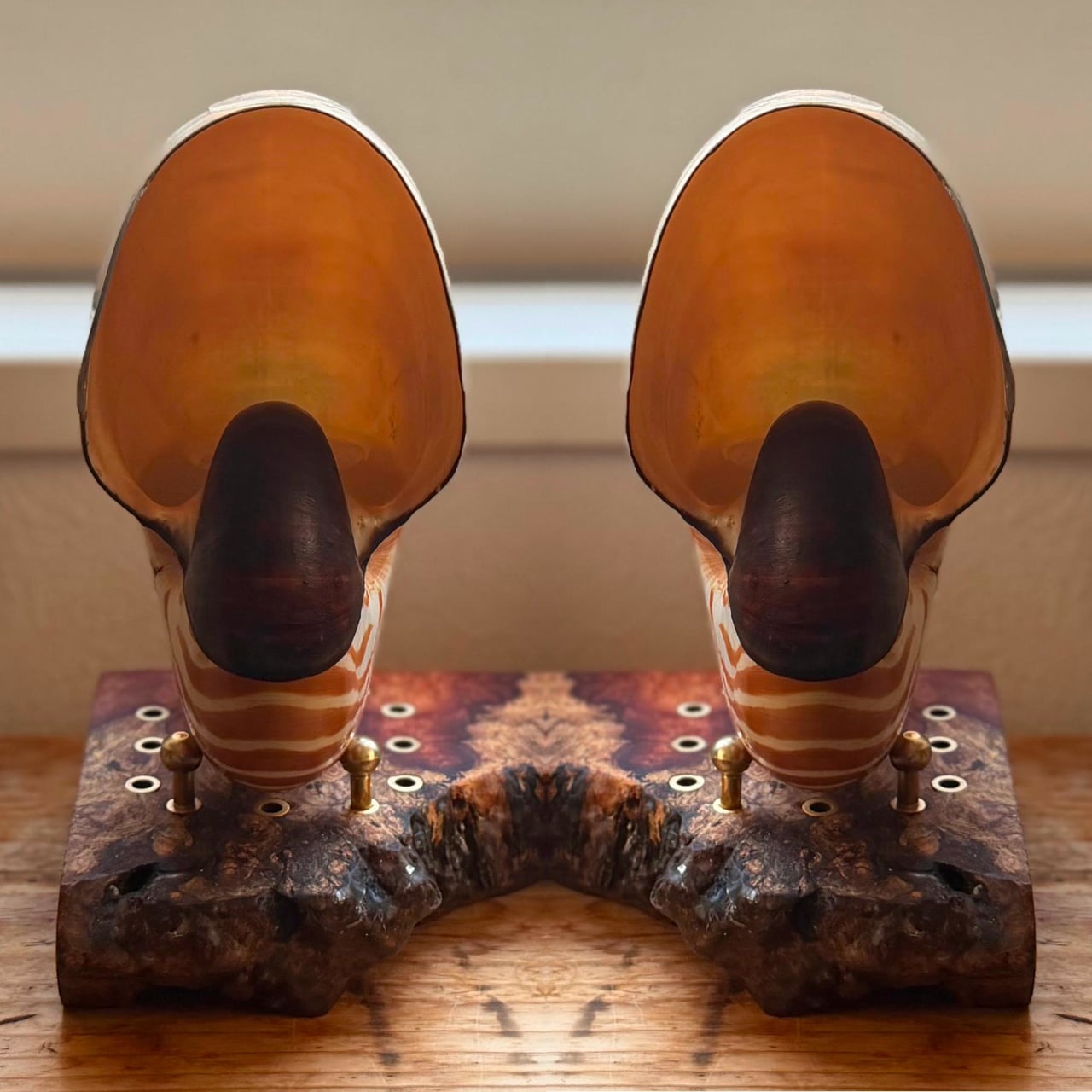
Three hidden modes emerge. Holding the shell in your hands for bone-conducted haptic listening, shifting the exciter between internal and external mounts to change the sound from lo-fi radio to a sharper, more direct tone, and the dream of a stereo pair if a second shell appears. The Steampunk Nautilus turns a broken specimen into a reversible, vibrating instrument that asks you to feel the music as much as hear it, turning disappointment from a lottery into something tactile, strange, and surprisingly beautiful.

The post This 500-Million-Year-Old Nautilus Shell Is Now a Speaker first appeared on Yanko Design.
This 500-Million-Year-Old Nautilus Shell Is Now a Speaker

The Sazae Radio was a Japanese novelty radio built into a turban shell, sold by lottery in 2016 with just 100 units available for 8,350 applicants. The odds were 83.5 to one. Losing that lottery left a maker named hide-key with a simple choice: accept the disappointment or build something better. The DIY pivot turned into the Steampunk Nautilus, a haptic speaker project that takes a similar idea and pushes it considerably further.

The choice was a nautilus shell, a living fossil that has barely changed in 500 million years. Discovering that its English name matched Jules Verne’s submarine sealed the decision. The goal became not just a speaker, but a piece of audio art with three rules: steampunk-kintsugi repair, where metal celebrates the shell’s imperfections, conservation-minded reversibility, where every adhesive can be removed with acetone, and a haptic drive that turns the shell itself into a vibrating diaphragm.

Designer: hide-key

Early experiments failed. A massive sea snail shell refused to vibrate, too thick and heavy for a small exciter to drive. The nautilus, by contrast, worked immediately. Its thin, lightweight structure, built for buoyancy, behaves like a violin body or speaker cone, with internal ribs adding resonance without mass. The project quietly became a study in bioacoustics, where shell biology dictated whether the fossil could sing, and heavy shells behaved like bricks.

The build starts with a chipped shell and leans into the damage. The broken area is traced, and a 1.2 mm aluminum sheet is hammered and filed to match the organic curve, polished to a mirror, and attached with cyanoacrylate and brass-colored epoxy putty. All adhesives were chosen so they can be removed with acetone, leaving the shell intact underneath. Reversibility was treated as a hard constraint, respecting the specimen while giving it a new function.

The haptic core moved from a boring internal speaker to a vibration exciter mounted in a custom silicone cartridge that fits the shell’s living chamber. Water displacement measured the volume at just 50 cc, and Shore 15A silicone was poured to create a perfect seat. A transparent hair band acts as a hidden pull tab, and a silicone cap hides the exciter and diffuses its faint blue LED into a heartbeat-like glow deep in the spiral.

The base is a Quince burl chosen for its red, white, and black grain that echoes the shell’s pattern. A Magic Circle layout of brass bushings lets the shell’s angle be changed by moving three brass pillars. Threaded brass rods with ball nuts support the shell, and a drop of soft UV resin on each contact point prevents buzzing, making the heavy fossil appear to float while staying mechanically quiet.

Three hidden modes emerge. Holding the shell in your hands for bone-conducted haptic listening, shifting the exciter between internal and external mounts to change the sound from lo-fi radio to a sharper, more direct tone, and the dream of a stereo pair if a second shell appears. The Steampunk Nautilus turns a broken specimen into a reversible, vibrating instrument that asks you to feel the music as much as hear it, turning disappointment from a lottery into something tactile, strange, and surprisingly beautiful.

The post This 500-Million-Year-Old Nautilus Shell Is Now a Speaker first appeared on Yanko Design.
This 500-Million-Year-Old Nautilus Shell Is Now a Speaker

The Sazae Radio was a Japanese novelty radio built into a turban shell, sold by lottery in 2016 with just 100 units available for 8,350 applicants. The odds were 83.5 to one. Losing that lottery left a maker named hide-key with a simple choice: accept the disappointment or build something better. The DIY pivot turned into the Steampunk Nautilus, a haptic speaker project that takes a similar idea and pushes it considerably further.

The choice was a nautilus shell, a living fossil that has barely changed in 500 million years. Discovering that its English name matched Jules Verne’s submarine sealed the decision. The goal became not just a speaker, but a piece of audio art with three rules: steampunk-kintsugi repair, where metal celebrates the shell’s imperfections, conservation-minded reversibility, where every adhesive can be removed with acetone, and a haptic drive that turns the shell itself into a vibrating diaphragm.

Designer: hide-key

Early experiments failed. A massive sea snail shell refused to vibrate, too thick and heavy for a small exciter to drive. The nautilus, by contrast, worked immediately. Its thin, lightweight structure, built for buoyancy, behaves like a violin body or speaker cone, with internal ribs adding resonance without mass. The project quietly became a study in bioacoustics, where shell biology dictated whether the fossil could sing, and heavy shells behaved like bricks.

The build starts with a chipped shell and leans into the damage. The broken area is traced, and a 1.2 mm aluminum sheet is hammered and filed to match the organic curve, polished to a mirror, and attached with cyanoacrylate and brass-colored epoxy putty. All adhesives were chosen so they can be removed with acetone, leaving the shell intact underneath. Reversibility was treated as a hard constraint, respecting the specimen while giving it a new function.

The haptic core moved from a boring internal speaker to a vibration exciter mounted in a custom silicone cartridge that fits the shell’s living chamber. Water displacement measured the volume at just 50 cc, and Shore 15A silicone was poured to create a perfect seat. A transparent hair band acts as a hidden pull tab, and a silicone cap hides the exciter and diffuses its faint blue LED into a heartbeat-like glow deep in the spiral.

The base is a Quince burl chosen for its red, white, and black grain that echoes the shell’s pattern. A Magic Circle layout of brass bushings lets the shell’s angle be changed by moving three brass pillars. Threaded brass rods with ball nuts support the shell, and a drop of soft UV resin on each contact point prevents buzzing, making the heavy fossil appear to float while staying mechanically quiet.

Three hidden modes emerge. Holding the shell in your hands for bone-conducted haptic listening, shifting the exciter between internal and external mounts to change the sound from lo-fi radio to a sharper, more direct tone, and the dream of a stereo pair if a second shell appears. The Steampunk Nautilus turns a broken specimen into a reversible, vibrating instrument that asks you to feel the music as much as hear it, turning disappointment from a lottery into something tactile, strange, and surprisingly beautiful.

The post This 500-Million-Year-Old Nautilus Shell Is Now a Speaker first appeared on Yanko Design.
Sound Maestro Splits Songs Into 4 Speakers You Conduct With a Baton

Most smart speakers are designed to disappear, cylinders and pucks that sit in a corner and wait for voice commands. That is convenient but also a bit dull; you talk, they respond, and the hardware never really asks you to engage with it. Sound Maestro is a concept that goes the other way, imagining a living room as a small orchestra pit you can actually conduct with gestures instead of just tapping a screen.

Sound Maestro is a speaker inspired by an orchestra conductor that consists of three core parts: the conductor’s podium, the instruments, and the conductor’s baton. When everything is docked together, it reads as a single object, but each of the four modular speakers can be detached and assigned a different musical part, vocals, drums, bass, and melody, each with its own LED color glowing underneath the grille.

Designer: Geonwoo Kang

The system uses AI to split a track into four stems and send each to a different speaker, so one cube carries the vocal, another the drums, another the bass, and another the melody. The LEDs on each unit glow in a unique color, making it easy to see which part is where. This spatial mapping of sound means the mix becomes something you can see and point at, not just hear as a single stereo image coming from two speakers.

The baton-shaped controller is the main interface. In Maestro Mode, you twist a dial to enter a state where the default buttons are locked, zand you control speakers by pointing and gesturing. A quick left-right wave skips tracks, a slow up-down motion adjusts volume with LED brightness as feedback, and drawing a circle pauses or resumes playback, with all LEDs turning off or on to confirm what just happened.

Remote Control Mode lets the same baton behave more like a traditional remote. You still point it at a specific speaker, but now you press buttons instead of waving. This lets you fine-tune or mute individual units without the full theatricality of Maestro Mode. The two modes together acknowledge that sometimes you want to perform, and sometimes you just want to nudge the volume down on the drums without getting up.

The main speaker takes its form from an orchestra podium and acts as the system’s brain. It handles the main bass that anchors the center and runs the AI that assigns parts to each satellite. A small display shows the current mode, battery levels, and which part each speaker is playing, so you can glance down and see the state of your orchestra without opening an app.

1

Sound Maestro pokes at the idea that home audio can be more than invisible boxes and playlists. By giving each part of a song its own physical presence and letting you conduct with a baton instead of a touchscreen, it makes listening into a small performance. Whether or not you want to wave a stick in your living room, the idea that a speaker system could ask you to point, gesture, and conduct instead of just pressing play feels like a surprisingly theatrical take on what modular audio might become.

The post Sound Maestro Splits Songs Into 4 Speakers You Conduct With a Baton first appeared on Yanko Design.
Nocs Braque Stacks Two Cubes into a 25kg Sculptural Stereo System

Most hi-fi speakers still look like anonymous black rectangles, even when they sound great. A few brands treat speakers as furniture or sculpture, but often at the expense of engineering. Braque by Nocs tries to sit in the middle, a pair of cubes that are as considered visually as they are technically, treating stereo as both sound and composition rather than one serving the other as an afterthought.

Nocs calls Braque “two cubes, one sculptural stereo system,” and each speaker is a stacked pair, a CNC-machined plywood enclosure on top of a 25 kg solid-steel base. Built in numbered editions, assembled in Estonia with the steel cube handcrafted in Sweden, and tuned back at Nocs Lab, Braque signals that this is not a mass-market soundbar or a safe play for casual listeners who just want something wireless.

Designer: Nocs Design

The upper cube is rigid plywood finished in deep matte-black oil, chosen for tonal warmth and acoustic integrity, and the lower cube is a hand-welded, brushed steel block that anchors the system physically and visually. Sorbothane isolation pads sit between them, decoupling the enclosure from the base so the driver can move without shaking the furniture or smearing the soundstage. Together, the two volumes form a study in symmetry, a minimal yet expressive composition.

The acoustic core is an 8-inch Celestion FTX0820 coaxial driver with a 1-inch compression tweeter at its center, powered by dual Hypex FA122 modules delivering 125 W per side with integrated DSP. The coaxial layout gives a point-source image, and the active 2-way design lets Nocs control crossover and EQ precisely, resulting in a 42 Hz–20 kHz response that is tuned rather than guessed at from a passive circuit.

Nocs describes their studio-sound approach as tuning like sculpture, not adding but uncovering, working with artists and engineers to balance emotion, texture, and detail. The dual-cube design is part of that, lifting the driver to ear height when seated and using mass and isolation to keep the presentation clean and stable at real-world volumes. The idea is that a speaker should reveal music rather than shape it into a brand’s house curve.

Braque offers both analog and digital inputs, RCA and XLR for analog, plus S/PDIF, AES/EBU, and coaxial for digital, and it is meant to connect directly to turntables with a phono stage, streamers, or studio interfaces. There is no built-in streaming or app layer, which feels intentional; you bring your own source and let the speakers handle amplification and conversion from there without trying to be a whole ecosystem.

Braque behaves in a living room or studio as two strict cubes that read like small pieces of Cubist architecture until you press play. For people who want their speakers to be part of the composition of a space, not just equipment pushed into corners, the combination of Celestion drivers, Hypex power, and that heavy steel base makes Braque feel like a very deliberate answer to how a stereo should look and sound in 2025, where form and performance finally coexist without one apologizing for the other.

The post Nocs Braque Stacks Two Cubes into a 25kg Sculptural Stereo System first appeared on Yanko Design.
This Tiny Retro PC Is Your Alarm Clock, Speaker, and Pixel Canvas

Cozy desk setups have become a competitive sport. Tiny CRTs, retro keyboards, and beige plastic everywhere, usually looking very cute but doing very little beyond collecting dust and likes. Most of that gear is either pure decor or pure utility, rarely both. MiniToo leans into the 80s PC silhouette hard, complete with a CRT-style screen and chunky keyboard buttons, but it tries to earn its footprint by being a Bluetooth speaker, alarm clock, white noise machine, and pixel art display all at once.

The MiniToo Retro PC Style Pixel Bluetooth Speaker & Alarm Clock looks like a palm-sized beige desktop computer that escaped from an 8-bit office. The CRT-style screen sits on top with a thick bezel, while the sloped keyboard base sports four large square buttons and a bright orange volume knob. It measures about 3.2 by 2.4 by 2.9 inches and weighs just over 200 grams, small enough to fit between your laptop and coffee cup.

Designer: Kokogol

The 1.77-inch TFT screen runs more than seventy clock faces, from DOS blue screens with chunky pixel fonts to colorful analog dials and animated scenes. The companion app lets you design your own pixel faces, animations, and text, then sync them with a tap. You can also cast photos to the screen, turning it into a tiny digital photo frame that cycles through your favorite shots in gloriously chunky pixel form, which somehow makes even vacation snapshots feel more fun.

The audio side packs a 5-watt full-range driver with enhanced bass reflex tuned for near-field listening, good for a desk or bedside but not built to fill a room. Bluetooth 5.3 handles wireless playback, plus it supports white noise and twelve wake-up sounds. You can set alarms, play music, and fall asleep to ambient sounds, all from the same little box that looks like it should be running floppy disks instead of Spotify or whatever you streamed last night.

Built-in pixel tools include a Pomodoro timer, reminders, and simple games that live on the device. It can sit next to your laptop as a focus timer during the day, then shift to an alarm clock and white noise machine at night. The four front buttons and knob make it easy to use without always reaching for your phone, helping it feel like a standalone object rather than just another Bluetooth accessory demanding app attention.

Connectivity options cover Bluetooth 5.3, USB audio, and TF card playback, so it works with laptops, phones, or local files. The app is still required for deeper customization, but once your faces and sounds are set up, the device runs on its own. The compact size makes it easy to move between desk and bedside, or pack as a little travel speaker with personality and actual utility instead of just nostalgia.

MiniToo is clearly gift-ready, shipped in a neat box, and aimed at teens, designers, and retro lovers who want their desks to look like fun. What makes it interesting is not just the nostalgia, but the way it folds real utility into that nostalgia, giving you a tiny computer that finally behaves like the playful, expressive desk companion those beige boxes never were when they were actually new and just ran spreadsheets.

The post This Tiny Retro PC Is Your Alarm Clock, Speaker, and Pixel Canvas first appeared on Yanko Design.
PERLEGEAR Black Friday: Home Entertainment Lights That Pulse to Music

Black Friday deals usually mean hunting for discounts on the same boring products everyone already owns. TV mounts that do the bare minimum, speaker stands that hold things up and nothing more, and entertainment furniture that treats lighting as an afterthought. It’s all functional enough, but there’s rarely anything that makes you excited about setting up your living room. Most people settle for whatever gets the job done, then spend years looking at the same bland hardware every time they sit down to watch something.

PERLEGEAR’s AuraFrame™ and SonicBeam™ collections take a different approach. Instead of treating mounts and stands as purely mechanical necessities, the brand integrates customizable RGB lighting that syncs with your music and creates actual ambiance. It’s the kind of upgrade that makes your entertainment space feel more intentional, turning functional hardware into something that enhances the entire experience. Heck, you might actually want to show off your setup for once instead of hiding cables and hoping nobody notices the generic black brackets holding everything together.

Designer: PERLEGEAR

AuraFrame™ Pre-Assembled TV Wall Mount

The AuraFrame wall mount handles TVs from 26 to 65 inches and up to 99 pounds, with full-motion articulation that includes 16.4 inches of extension, 45-degree swivel, and tilting between negative 15 and positive five degrees. That flexibility is standard for premium mounts, but the integrated LED light bars are what set this apart. You get 16 million colors, multiple lighting modes, and music sync that pulses in rhythm with whatever you’re watching or listening to.

Installation is refreshingly straightforward thanks to pre-assembled arms and a wall plate that cuts setup steps by about 30 percent. The mount also includes three height settings and leveling adjustments, so you can fine-tune positioning even after everything’s mounted. The reinforced steel frame and thicker articulating arms mean the thing holds your TV securely without any wobbling, which is reassuring when you’re extending a 65-inch screen nearly a foot and a half from the wall.

Click Here to Buy Now: $55.98 $69.99 (20% off). Hurry, deal ends in 48-hours!

AuraFrame™ Pre-Assembled TV Stand

For those who’d rather not drill into walls, the AuraFrame™ TV stand offers a floor-standing alternative that fits TVs from 32 to 75 inches and up to 110 pounds. The same RGB lighting system runs down both sides of the stand’s pillars, creating a backlight effect that’s controlled via app, remote, or in-line switch. The solid wood base adds a premium touch, and the entire setup feels stable enough to trust with larger screens.

What makes this stand genuinely practical are the 12 height configurations and the tilt and swivel adjustments. You can position the screen exactly where it needs to be for comfortable viewing, whether you’re sitting on the couch or standing in the kitchen. Cable management keeps wires hidden inside the stand’s frame, so you’re not looking at a tangled mess every time the lights are on.

Click Here to Buy Now: $109.99 $139.99 (21% off). Hurry, deal ends in 48-hours!

SonicBeam™ Speaker Stands with RGB Lighting

The SonicBeam™ stands won an iF Design Award for their minimalist double-pole design, which makes sense once you see them in person. They’re slim, clean, and designed to blend into modern interiors rather than dominate them. Each stand supports up to 22 pounds and includes two top plates, one specifically shaped for the Sonos Era 300 and a universal flat tray for other speakers like the Era 100, HomePod, or KEF models.

The built-in RGB lighting runs vertically along both poles, syncing with your TV or audio content to create a cohesive audiovisual atmosphere. You can control everything through the app or remote, choosing from modes like Pure Color, Rhythm Pulse, or Music Sync. The aluminum alloy construction feels solid, and the dual-side cable channels keep wires completely out of sight. It’s the kind of setup that makes you realize speaker placement can actually contribute to a room’s aesthetic instead of just being another thing to work around.

Click Here to Buy Now: $199.99.

AuraFrame™ Universal Swivel TV Stand

This tabletop stand is the most compact option, fitting TVs from 32 to 70 inches and up to 88 pounds. The tempered glass base and alloy steel frame give it a sleek, modern look, while the integrated RGB lighting offers the same customization options as the other AuraFrame products. Nine height levels let you position the screen between 18 and 24.5 inches, with tilt and swivel adjustments for finding the right angle.

Assembly takes about 10 minutes with no tools required, which is almost suspiciously easy compared to most furniture you’d buy. The pyramid-shaped structure keeps everything stable, and there’s enough room underneath for soundbars or media players. It’s perfect for bedrooms, offices, or anywhere you want a TV without committing to wall mounts or floor stands.

Click Here to Buy Now: $69.99 $99.99 (30% off). Hurry, deal ends in 48-hours!

Black Friday is one of those rare opportunities to upgrade your entertainment setup without immediately regretting the expense. PERLEGEAR’s lighting-integrated collection offers a way to do that while actually improving how your space looks and feels, not just adding more functional hardware that disappears into the background. Whether you’re mounting a TV, setting up speakers, or rearranging your living room layout entirely, having lighting that adapts to what you’re watching makes the whole experience feel more considered.

The post PERLEGEAR Black Friday: Home Entertainment Lights That Pulse to Music first appeared on Yanko Design.
4 Smart Devices Controlled by Touch, Not Screens or Apps

Digital devices promise convenience, but too often they deliver complexity instead, with endless menus, constant updates, and a learning curve that never seems to end, no matter how long you use them. Many of us long for the days when using a product was as simple as turning a dial or pressing a button without consulting manuals or watching tutorial videos online to understand basic functions.

The Tamed Digital Devices concept reimagines our relationship with technology by bringing back the tactile, multi-sensory experiences of analog gadgets we used to love and understand instinctively. Created by SF-SO in 2019, it’s a vision of tech that’s calming, intuitive, and designed to fit seamlessly into daily life without demanding constant attention or learning new interfaces. Each device in the series prioritizes touch, sound, and movement over screens and menus.

Designer: Hoyoung Joo (studio SF-SO)

Each device in the series is inspired by classic analog forms and controls that people already understand instinctively without any instruction. The Ball Internet Radio swaps touchscreens for three magnetic balls on top that you roll or lift to change stations, making tuning in both intuitive and satisfying for all ages. The tactile feedback and visual movement of the balls create a playful interaction that feels natural rather than digital or sterile.
The Cone Bluetooth Speaker powers on or off with a simple flip, using a gravity sensor to turn a basic gesture into a moment of physical delight and satisfaction. No buttons to hunt for, no hold-and-press sequences to remember or decipher from tiny icons—just flip the speaker and it responds instantly. The conical shape with its bright orange accent doubles as sculptural home decor when not playing music, blending function with visual warmth.

The Wheel Digital Radio lets you tune frequencies by rotating the entire body like traditional wheel-tuned radios, echoing the mental model of classic analog radios from decades past that everyone intuitively understands. A physical marker shows the tuned station, providing immediate visual feedback without digital displays or complicated interfaces. The cylindrical form with ribbed texture and green accent makes the interaction obvious at a glance to anyone who sees it.

The Fingerprint Smart Door Lock combines the security of a keyless system with the familiar, physical action of turning a traditional lock mechanism that has existed for centuries. Users unlock the door by placing a finger on the sensor and rotating the dial, restoring the satisfying tactile feedback of analog hardware. The circular, wall-mounted form with green accent light provides visual confirmation without overwhelming smart home complexity.

Across the series, the use of tactile controls like rolling balls, turning wheels, and flipping speakers restores a sense of physicality and engagement lost in most digital products today that rely solely on touchscreens. The design language is clean and modern throughout, with geometric shapes, soft edges, and playful color accents that invite touch and curiosity rather than intimidation or confusion about how things work.

Tamed Digital Devices offer a glimpse of a future where technology supports well-being instead of adding stress to already busy lives filled with screens. For anyone craving a calmer, more human connection with their devices and tired of digital overload, this concept series is a reminder that innovation doesn’t have to mean complexity but can mean rediscovering the joy of simplicity and tactile pleasure.

The post 4 Smart Devices Controlled by Touch, Not Screens or Apps first appeared on Yanko Design.