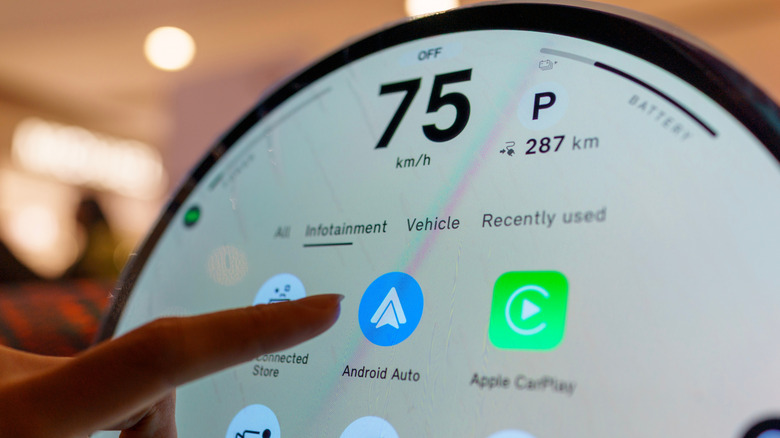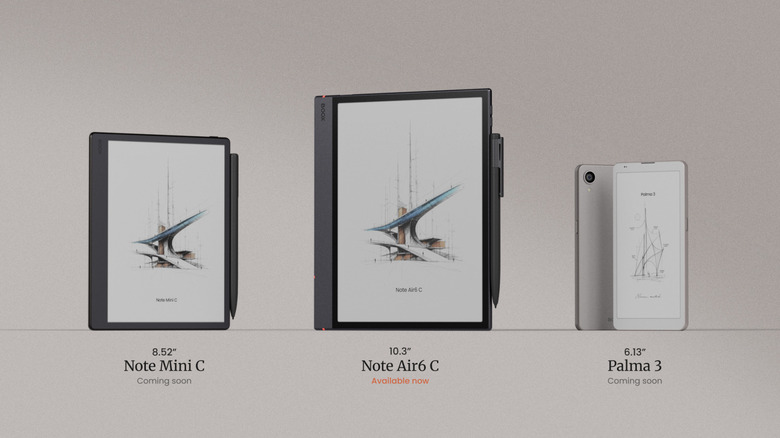
The new Boox Palma 3 comes with stylus support and an aluminum build
Boox has unveiled three new E Ink devices, including the Palma 3.
Every themed hotel room I’ve ever stayed in has let me down in the same predictable way. You book something that promises a full transformation and what you actually get is a normal room with a poster taped above the headboard and maybe a branded bathrobe. The fantasy stays exactly that: a fantasy, dressed up just enough to justify the price tag but never committed to.
That’s the problem Not A Hotel and Pokémon Sleep just solved, and they did it by refusing to compromise on the one detail that actually matters: scale. When I covered the teaser announcement for this project a couple weeks back, all we had was a mystery location “somewhere in Hokkaido” and a promise that more would come. That promise has now been kept in full, and it turns out the reality is stranger and more specific than the teaser let on.
Designers: Not A Hotel for Pokémon
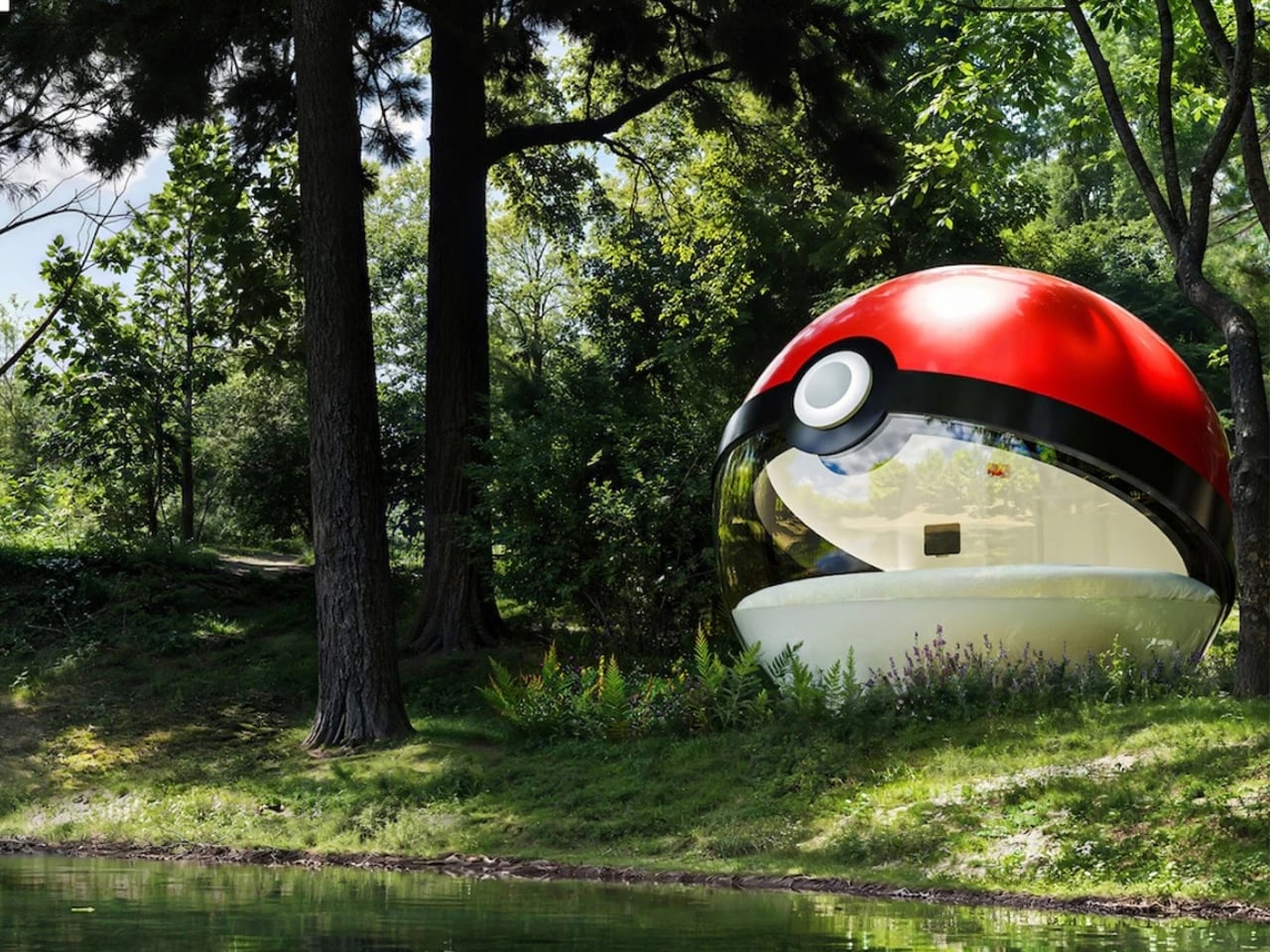
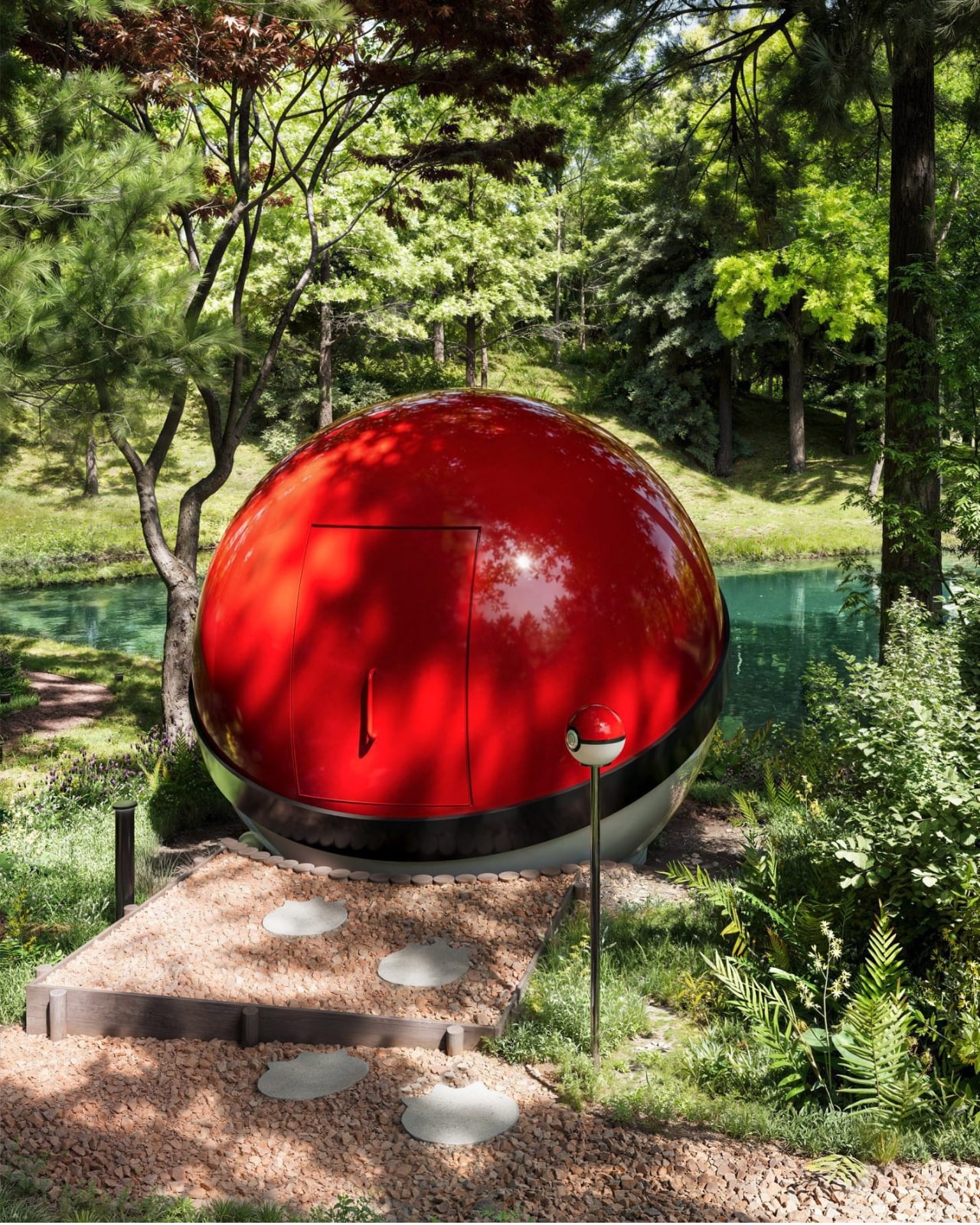
The Poké Ball-Themed Hotel isn’t a room shaped like a Poké Ball. It’s a genuine three-meter sphere, built from molded acrylic hemispheres, sitting on a lakeshore in Tomakomai, Hokkaido. You don’t walk into a themed suite. You walk into the object itself.
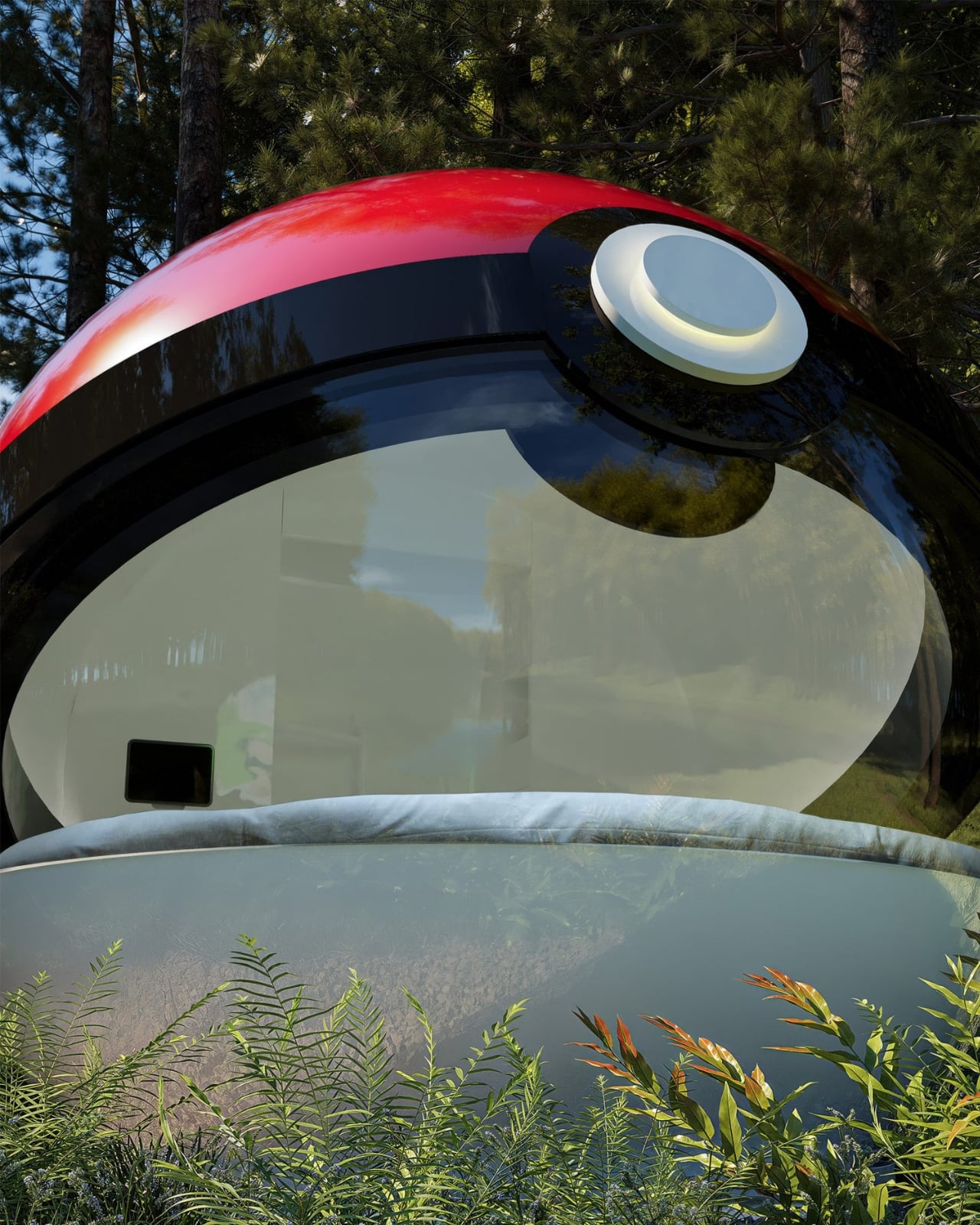
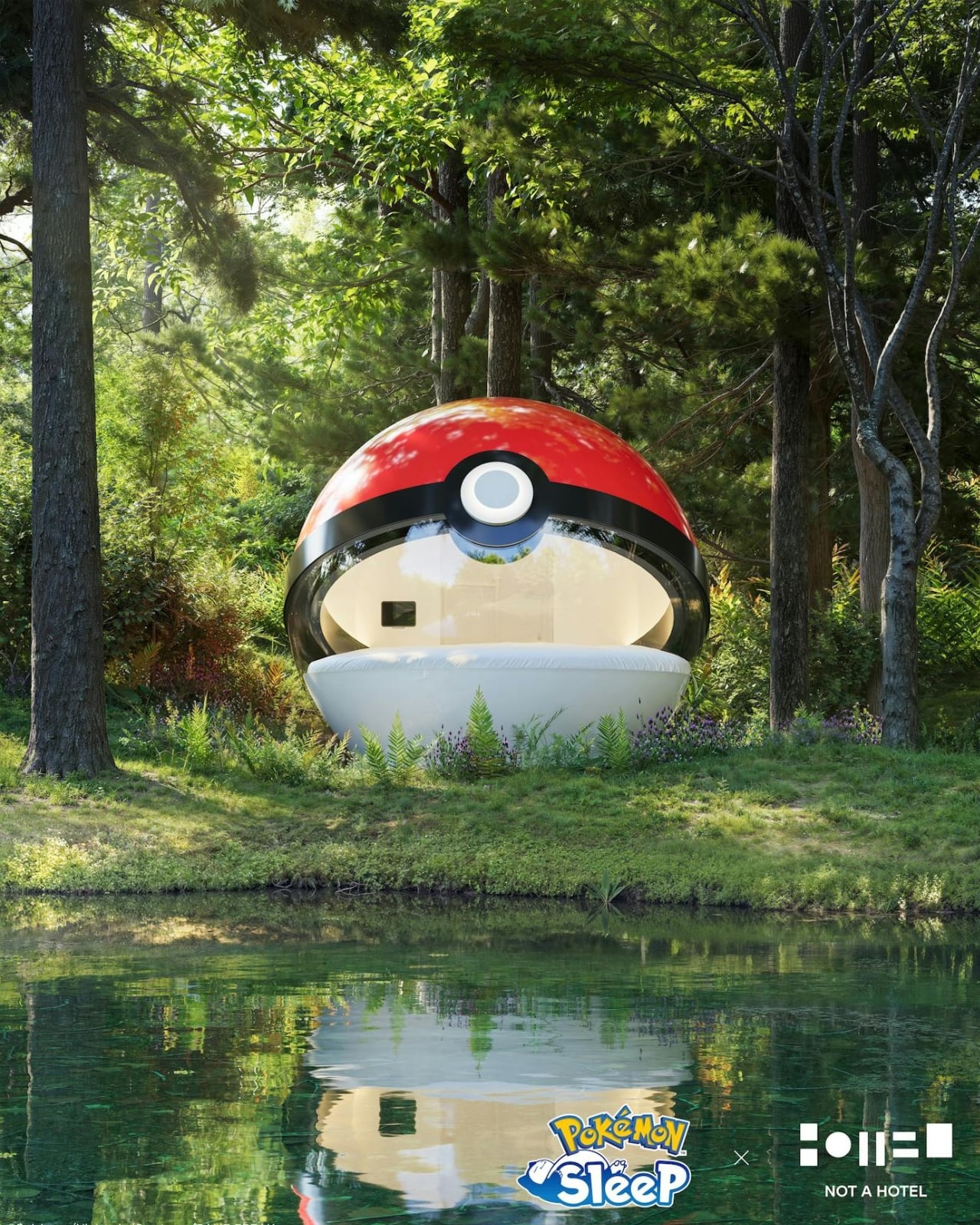
Pokémon fans have wanted this since 1996, back when a Poké Ball was just a red-and-white circle you clicked on a Game Boy screen. Thirty years later, someone treated that daydream as an actual architectural brief instead of a marketing bullet point. That distinction matters more than it sounds like it should. Most brand collaborations settle for surface-level nostalgia. This one committed to the geometry, the materials, and the mechanics of the thing fans actually pictured.
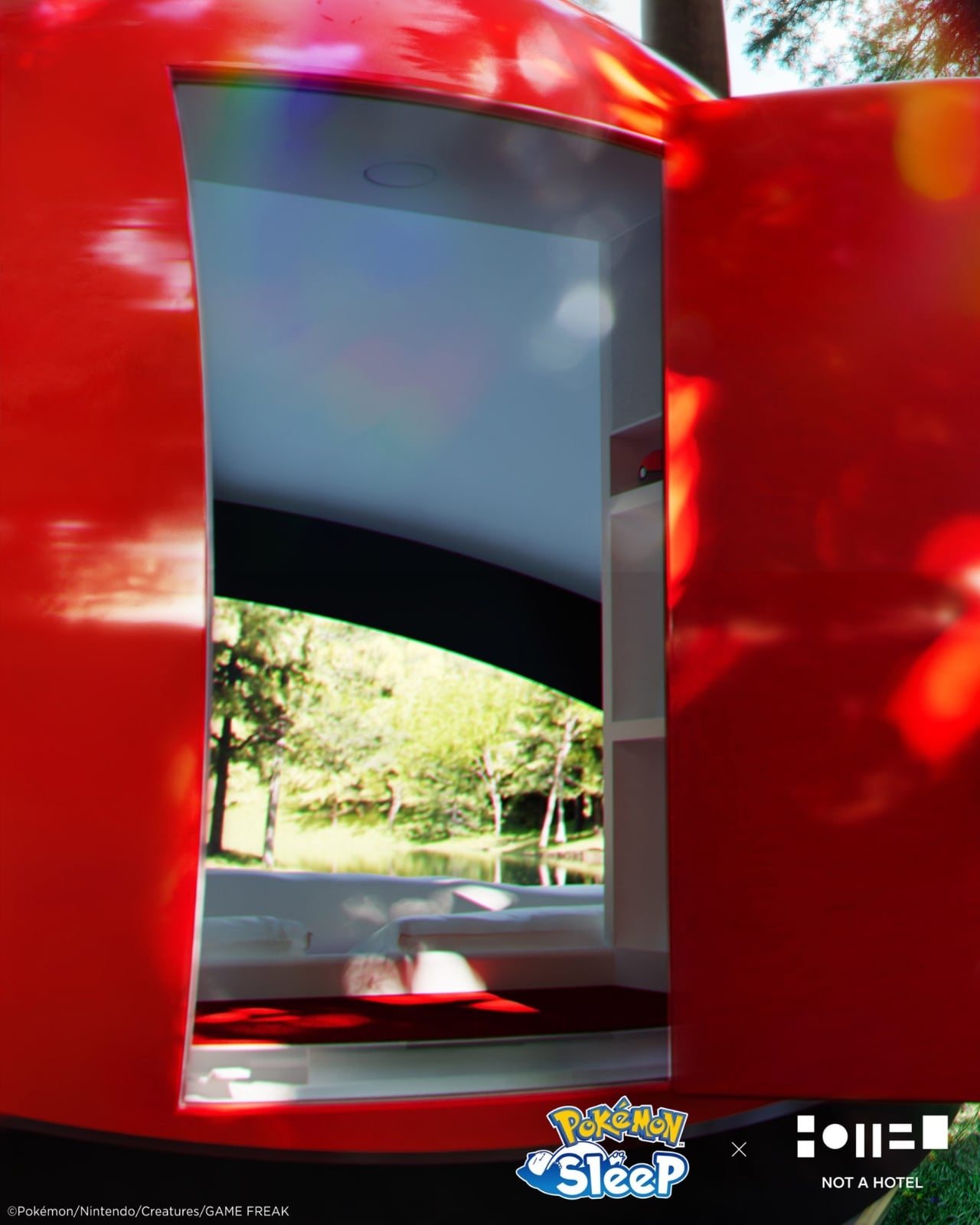
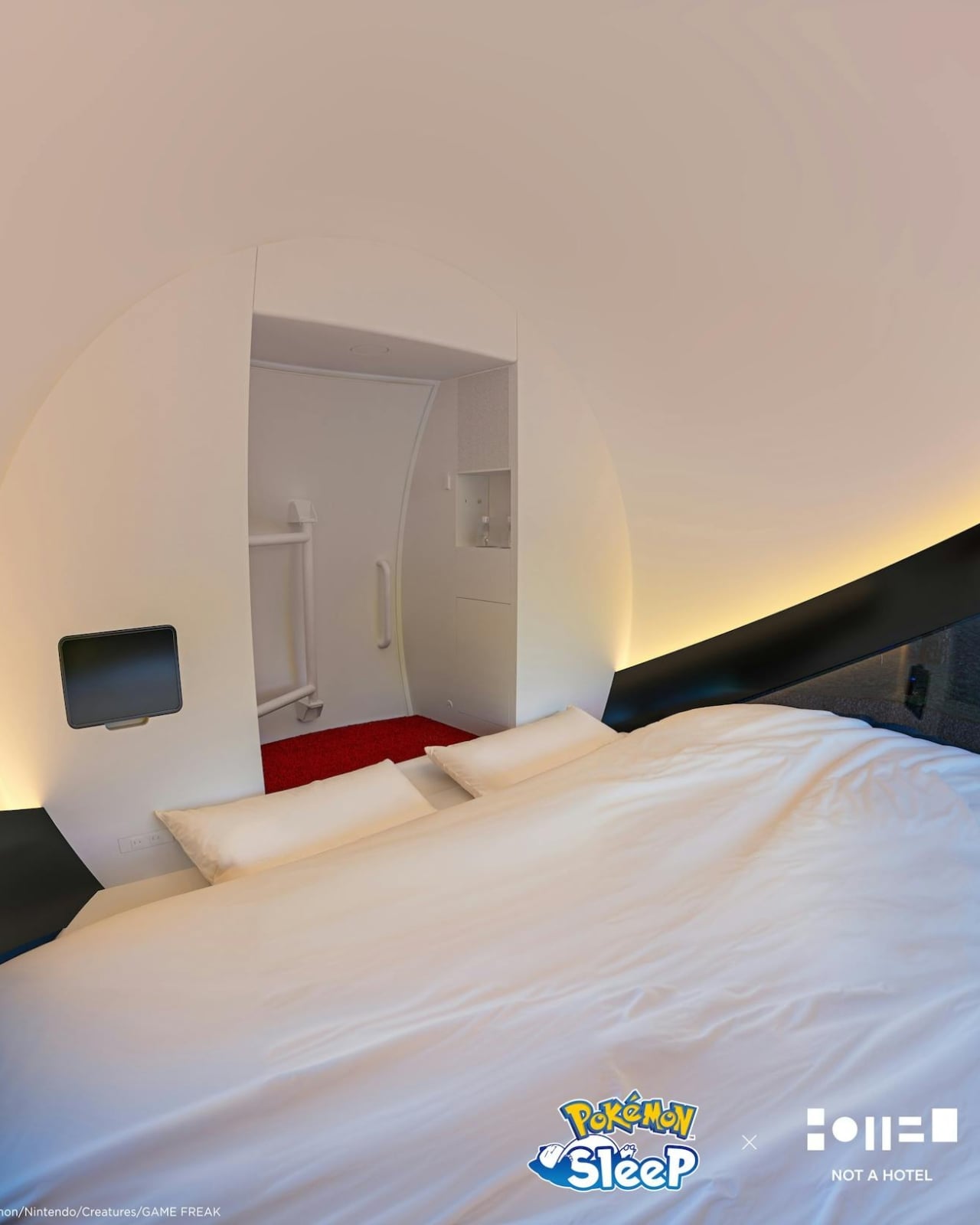
The interior backs that up. A round mattress fills the space under a curved acrylic window that frames the lake outside, which sounds almost too on-the-nose until you remember that’s exactly what people wanted: to look out from inside the ball, not just sleep in a room that name-checks one. The washroom is tiled in colors pulled straight from Snorlax, which is a small touch, but it’s the kind of detail that tells you somebody on this project actually cares about Pokémon lore rather than just licensing the logo.
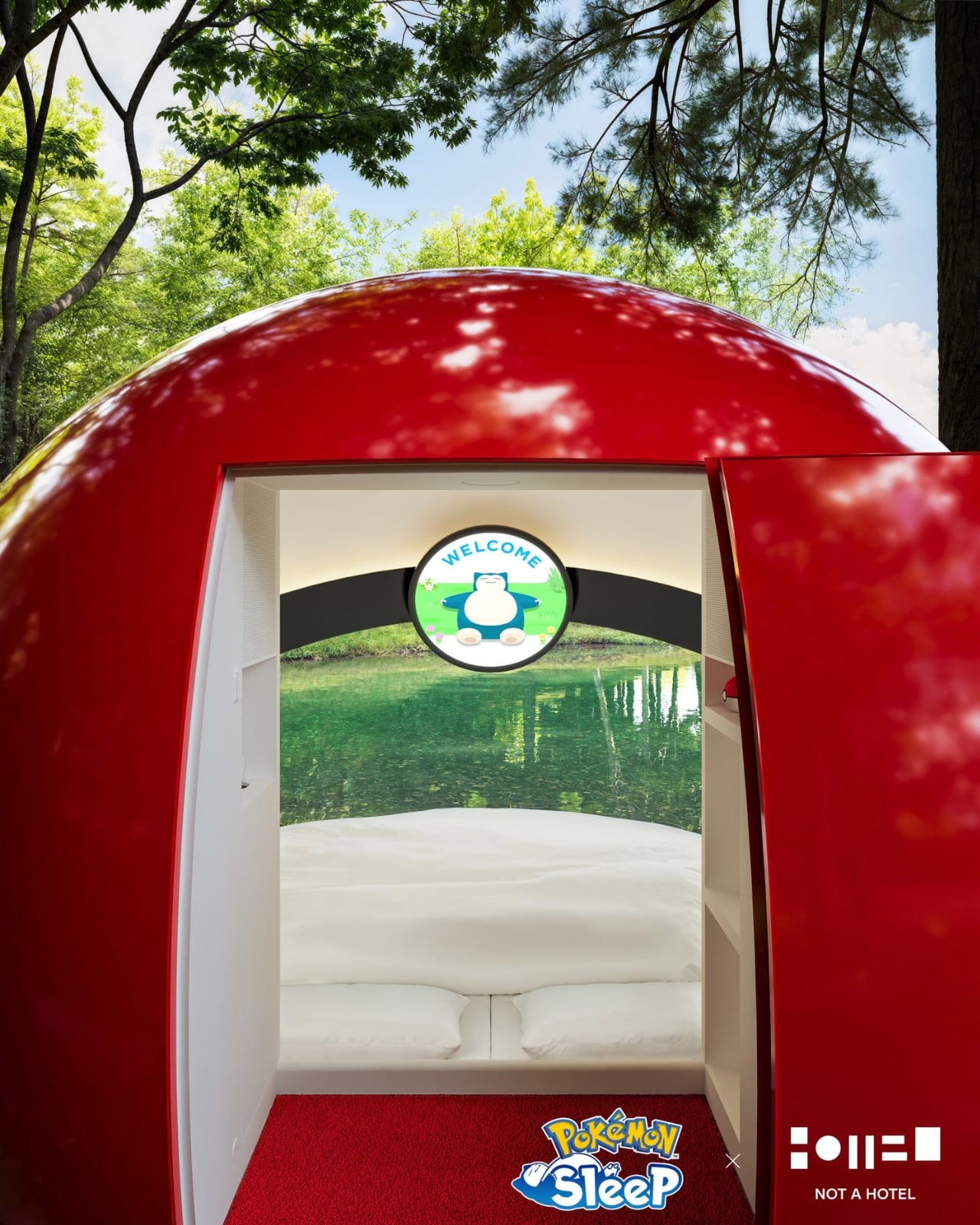
The feature that really makes it stand out for me is the iPad. Guests pick a favorite Pokémon before lights out, and the room’s interior lighting shifts to match that choice once it’s dark. It’s a quiet piece of engineering, but it does something most themed spaces never manage: it makes the experience personal instead of generic. You’re not sleeping in “the Pokémon room.” You’re sleeping in your room, themed around your Pokémon, for one night only.
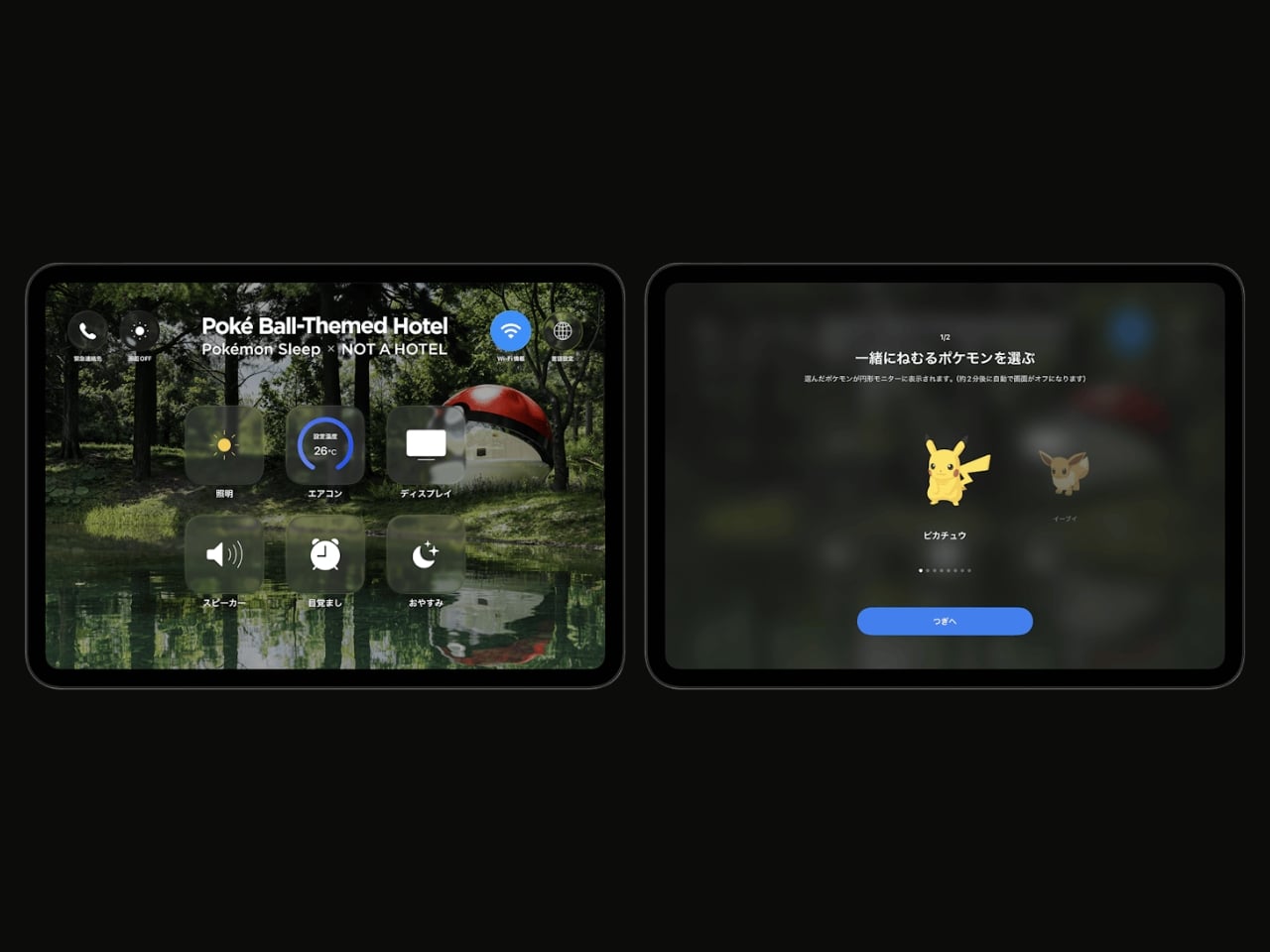
That personalization lines up with the actual point of Pokémon Sleep, the app this whole thing was built to celebrate alongside the franchise’s 30th anniversary. The app already turns your real sleep data into something like a game, rewarding rest instead of just tracking it. Flipping that idea inside out, so you’re the one visiting the Poké Ball instead of the Pokémon visiting you, is a clever bit of design logic that never feels forced.
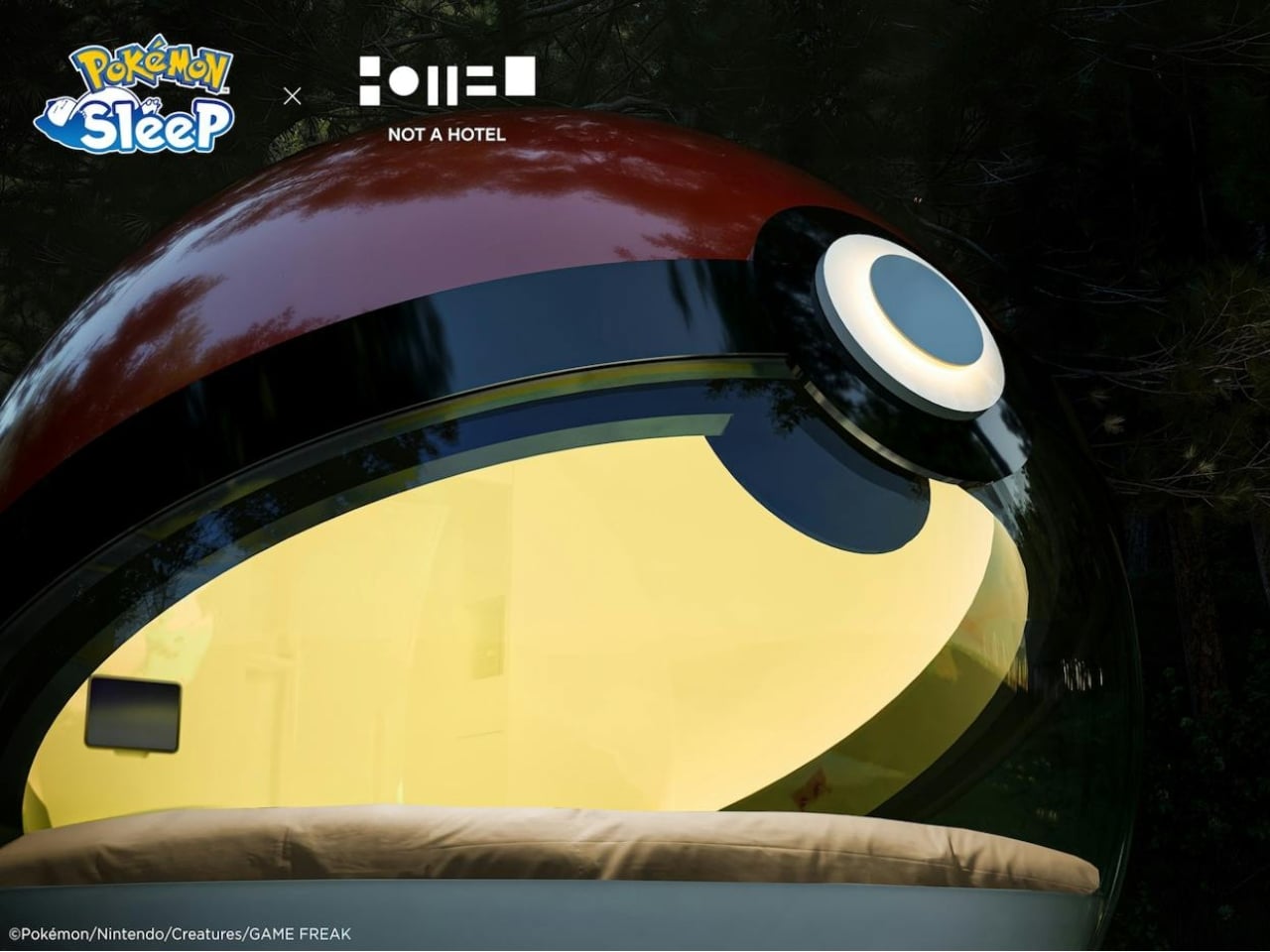
Here’s the part that keeps this from being pure hype, though: almost nobody is actually going to stay there. This isn’t a hotel you book. It’s a lottery. Ten pairs of guests, chosen through a campaign on X, will get one free night each between October 8 and 18. You need to be a Japan resident, at least 18, running the Pokémon Sleep app, and willing to follow the account and fill out a survey. Applications close September 30. Everyone else, myself included, gets to look at the photos.
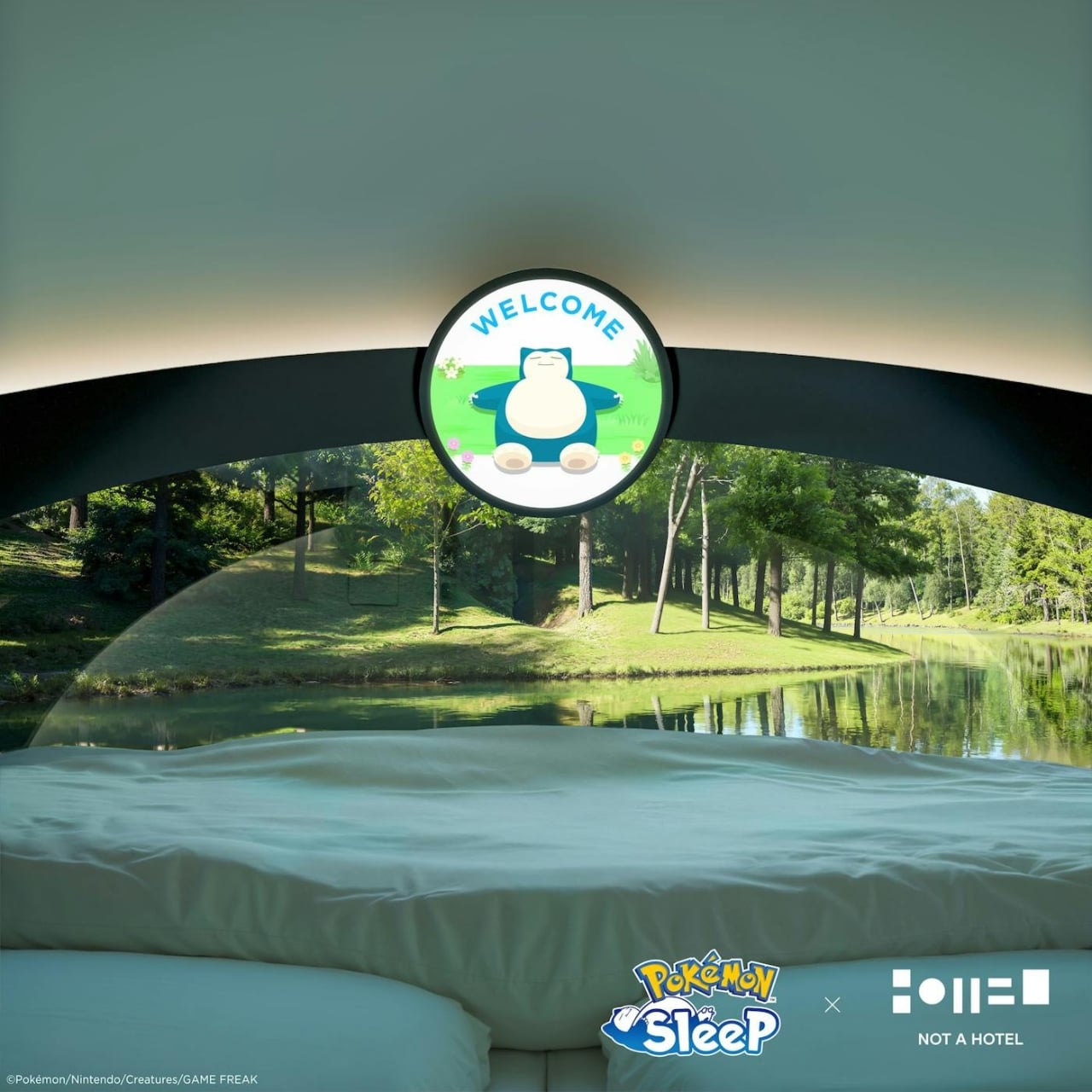
I won’t pretend that scarcity doesn’t sting a little, especially after following this story since the first teaser. But it also protects the thing that makes this project work in the first place. A structure like this, treated as a limited, almost sacred experience instead of a photo-op hotel room anyone can post about for a weekend, keeps the whole idea from curdling into a gimmick. Not A Hotel built something that looks like it was made for one specific kind of joy: the moment a lifelong fan realizes their favorite piece of childhood imagination has real acrylic walls around it now. That’s a strange, small, oddly moving thing to build a hotel around. I respect that they did it without cutting corners.

The post You Can Actually Sleep Inside a Real Poké Ball Now first appeared on Yanko Design.
Pockets keep an honest tally of how much clutter daily life demands. A blade for random tasks, a bottle opener, a strap cutter kept in the glovebox, and folded cash wedged behind a phone case. Harnds looked at that pile and designed the Sidekick, a folding knife barely bigger than your palm that combines a blade, opener, rope cutter, window breaker, and cash clip into one body.
As EDC enthusiasts, the team behind Harnds grew tired of the usual compromise. Most pocket knives fall into two camps: sharp but single-purpose, or loaded with gadgets yet bulky and cheaply built. Plenty of multi-tools sacrifice blade quality to cram in extra features, leaving you stuck between something sharp and something useful. The Sidekick tries to close that gap instead of picking a side.
Designer: Harnds
Click Here to Buy Now: $23.99 $49.99 (52% off). Hurry, only a few left!
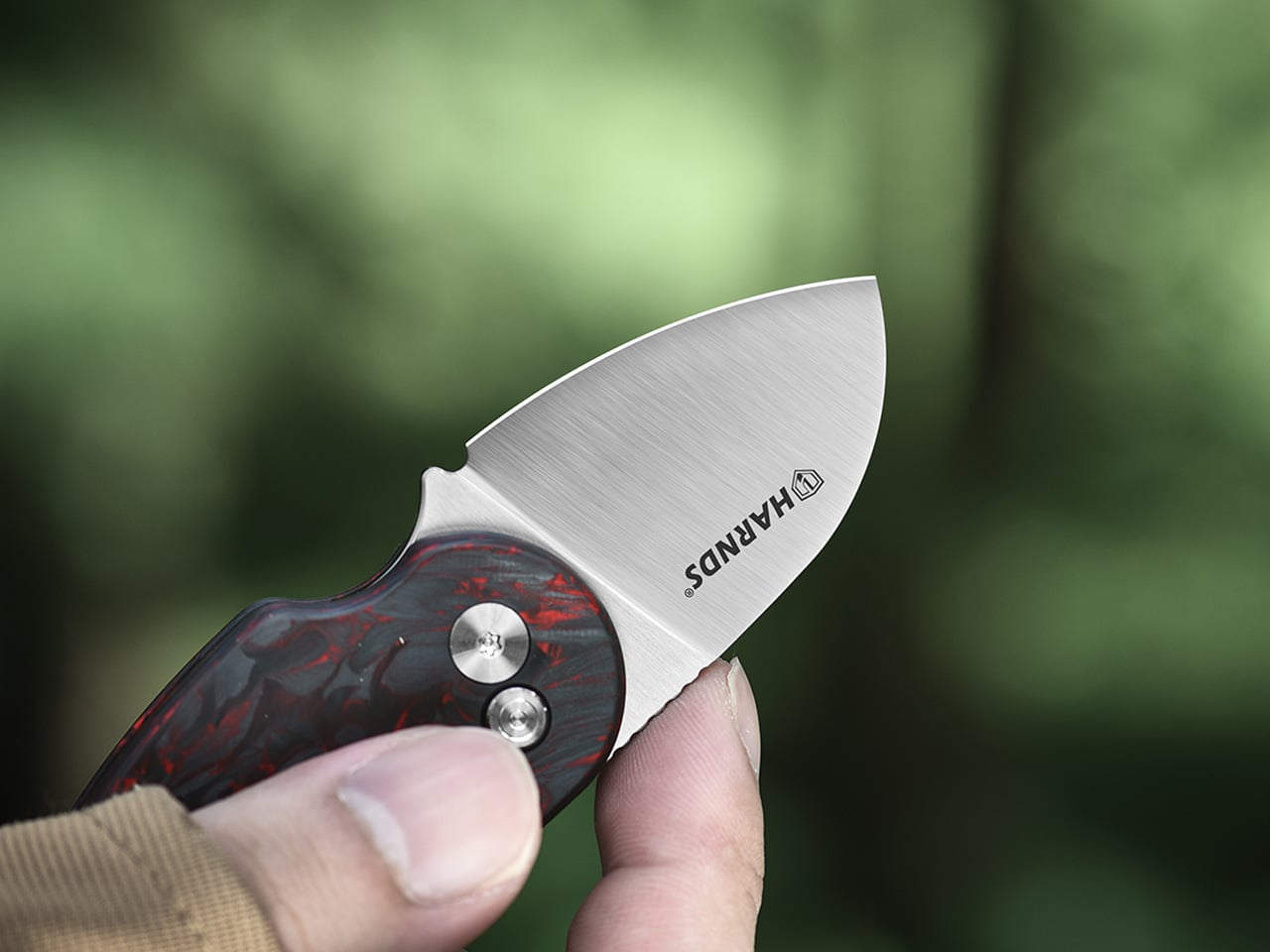
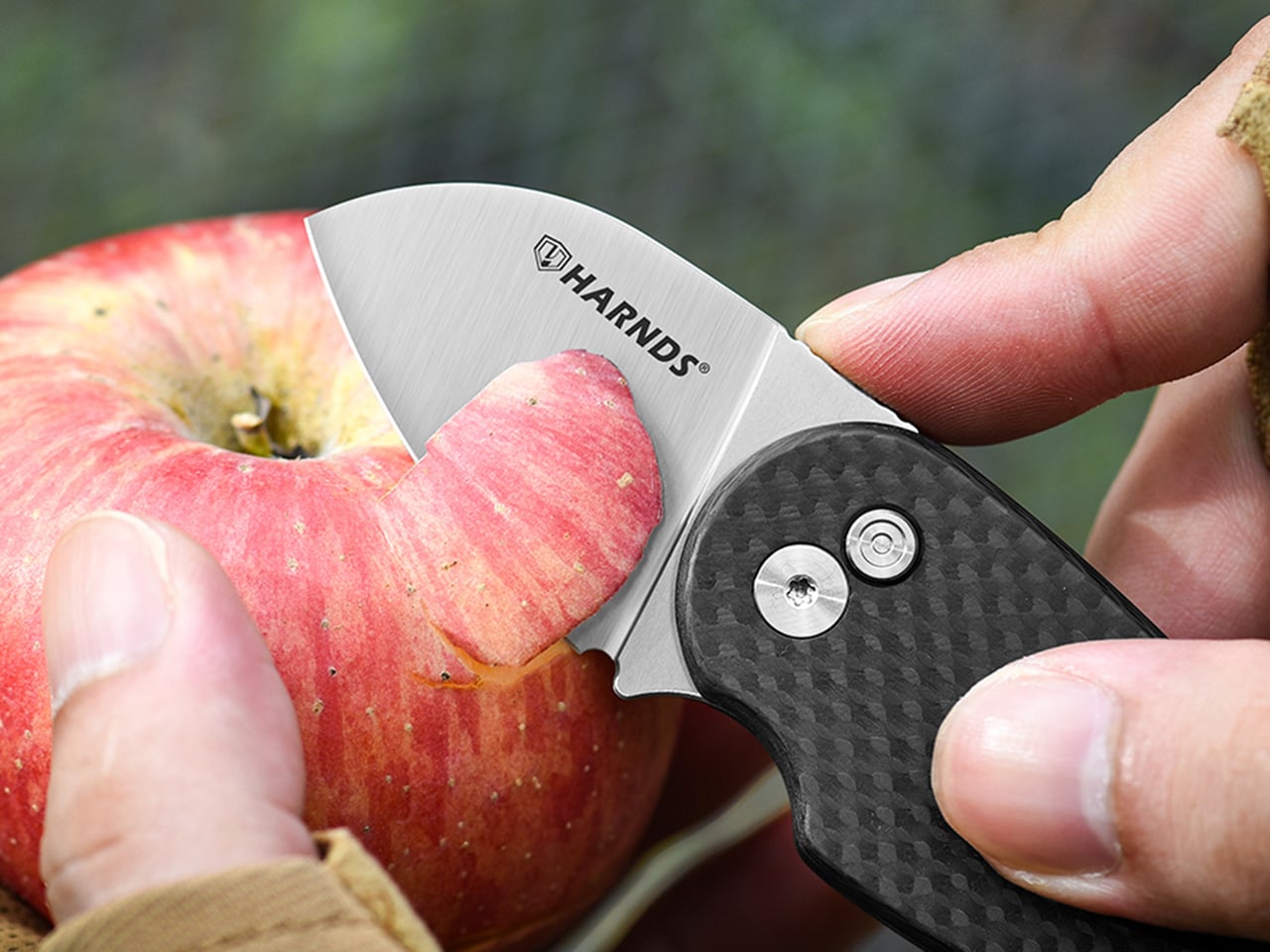
That balance starts with the blade. The steel holds an edge through small daily tasks: slicing open a delivery box, trimming loose thread, peeling fruit on a hike, prepping food at a campsite. A satin finish keeps the surface smooth and easy to wipe clean. Nothing about it feels tacked on; it reads like a proper knife that happens to do more.
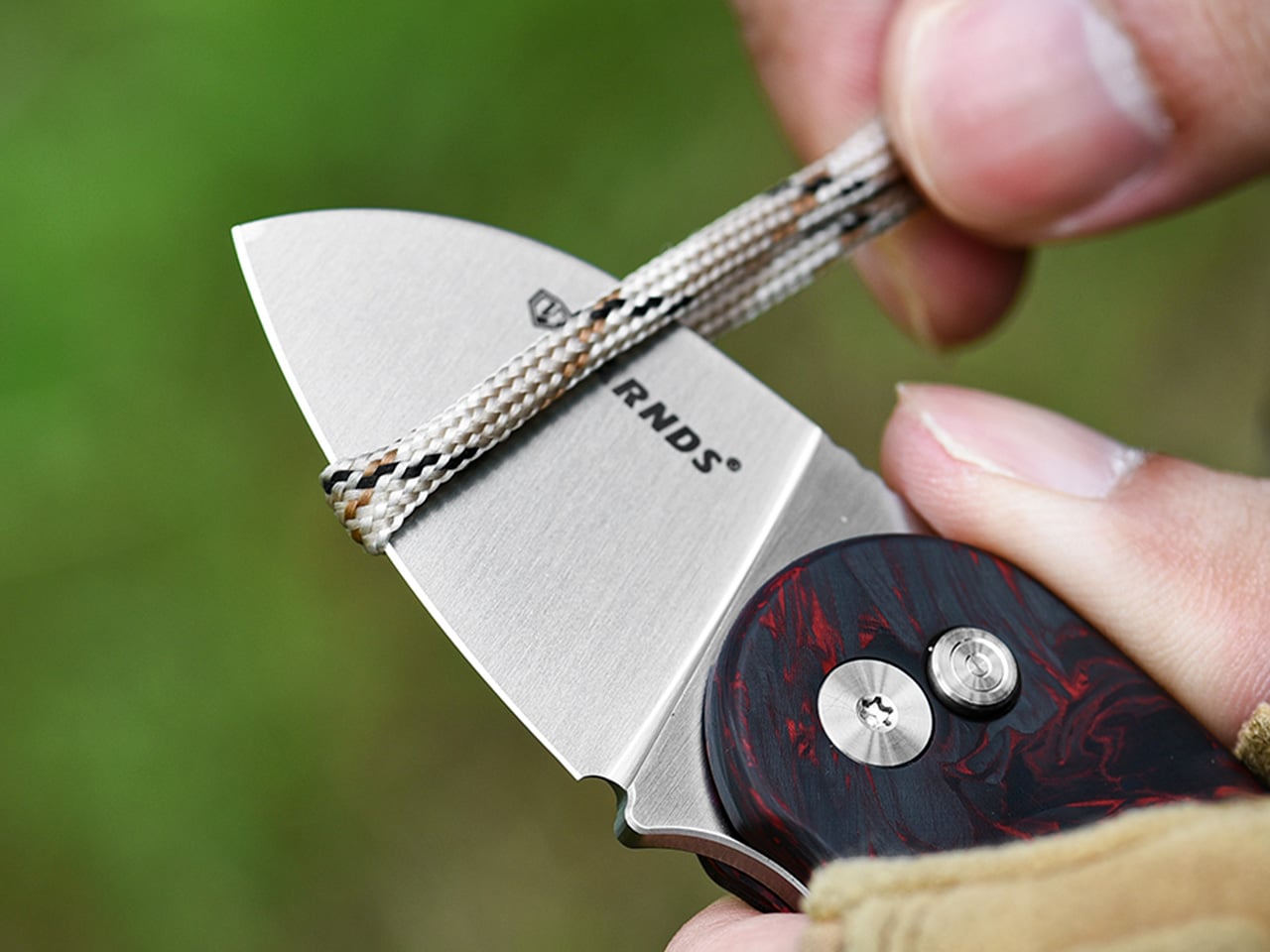
Tucked into the body is a hidden hook built for cutting paracord, seatbelts, and rope, providing safe and precise escape during emergencies. The enclosed design keeps the cutting edge away from skin and gear, avoiding accidental scratching. It’s the sort of detail you forget exists until a stuck buckle or tangled line reminds you why it matters.
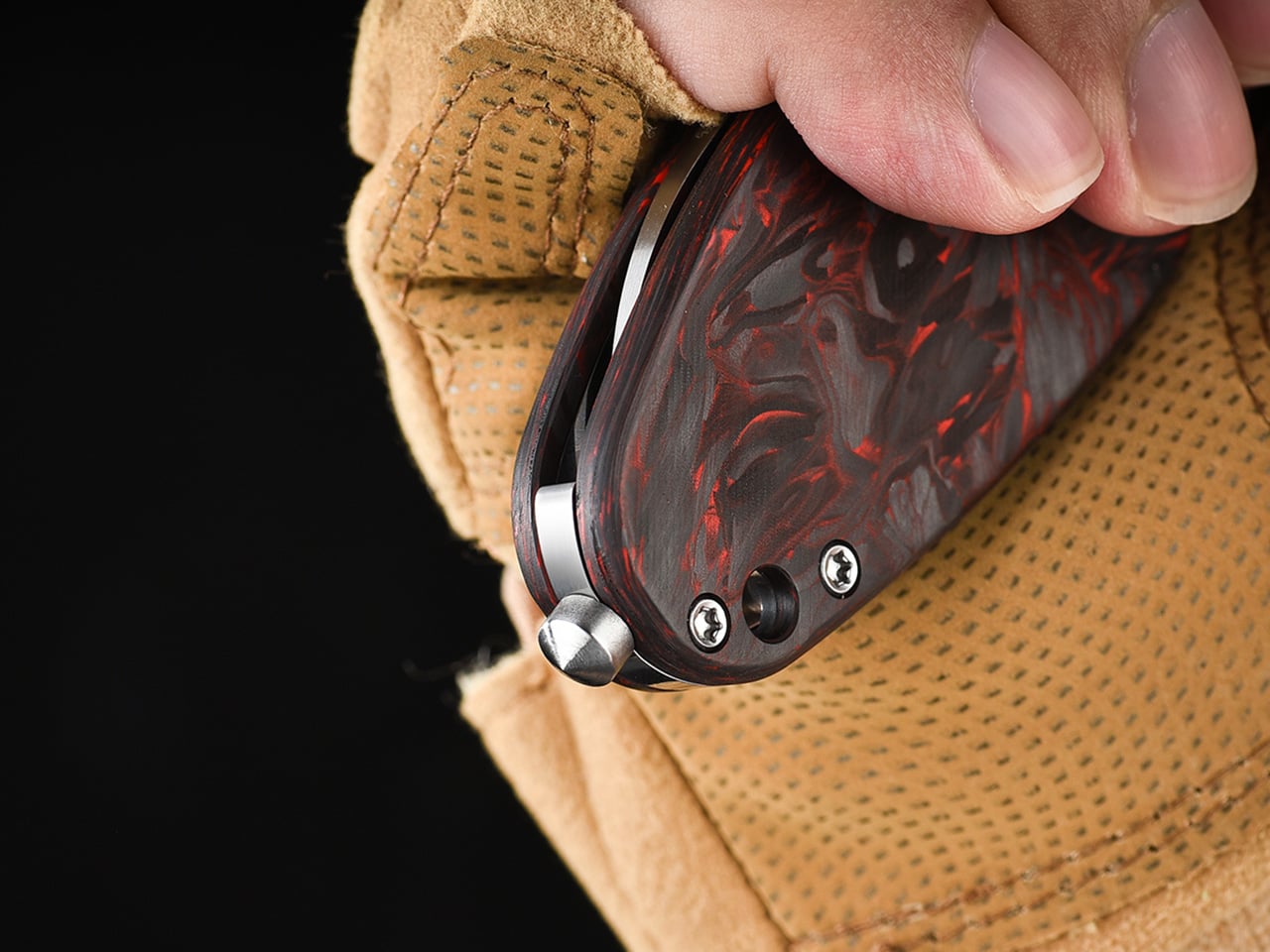

At one end sits a hardened tip designed to break a car window in an emergency, a feature most people hope to never use but are glad to have. It gives drivers and hikers a small, reliable backup when seconds matter and options run out. Paired with the rope cutter, it turns the Sidekick into something closer to a compact emergency kit than a simple pocket knife.
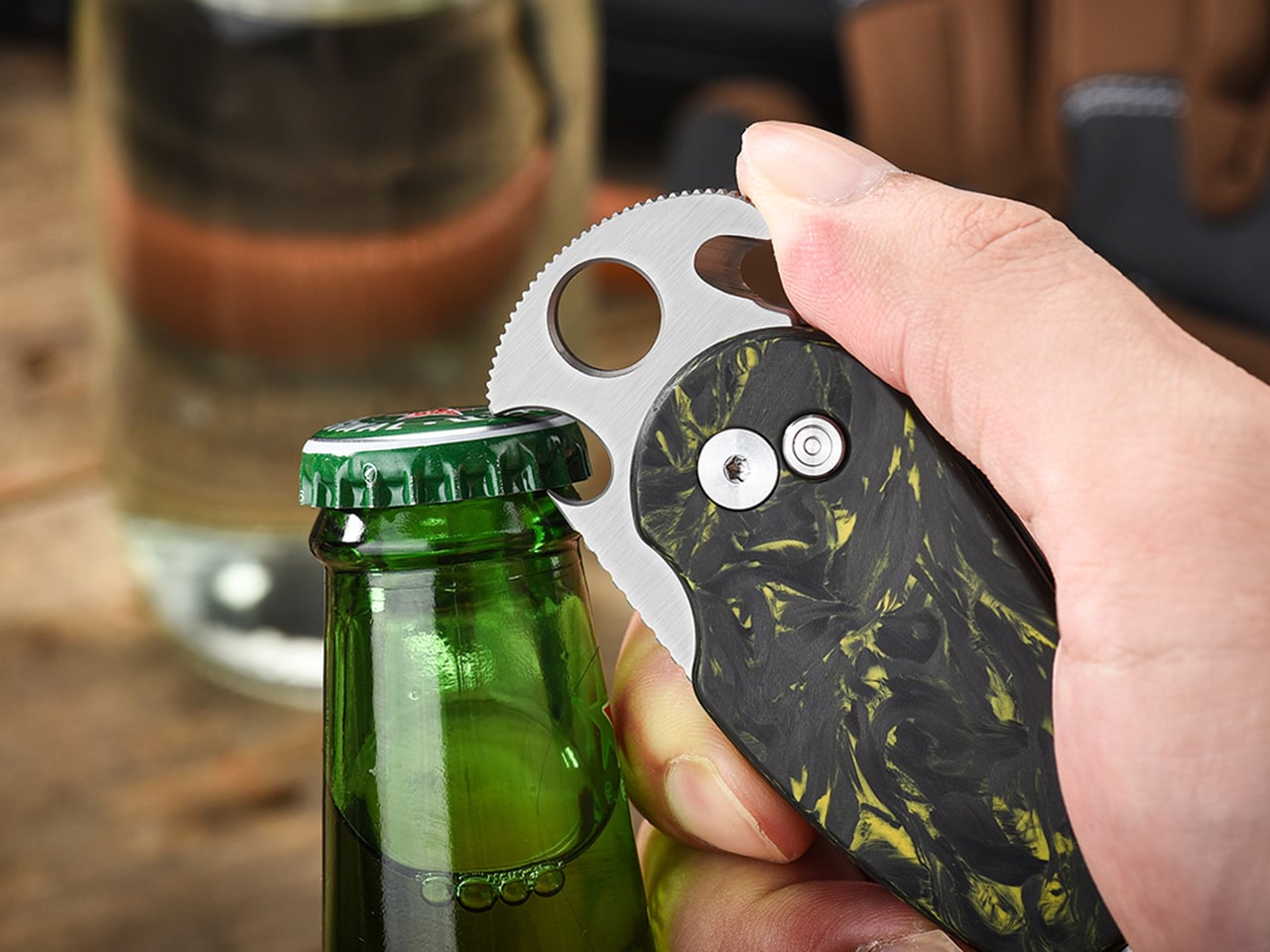
The mood shifts with the next two features. A bottle opener built into the handle makes the knife a natural fit for camping trips or any gathering where someone forgot to pack one. Nearby, a built-in card and cash clip frees up space in a wallet, holding a few bills flat against the body. Together, they nudge the Sidekick into daily rotation.

Deploying all of this comes down to a button lock riding on smooth bearings, letting the blade snap open or closed with one hand. That matters more than it sounds: reaching for a knife while holding a grocery bag or a coffee cup is common, and fumbling with a stiff mechanism defeats the purpose of carrying something compact. The lock keeps things quick without feeling loose.
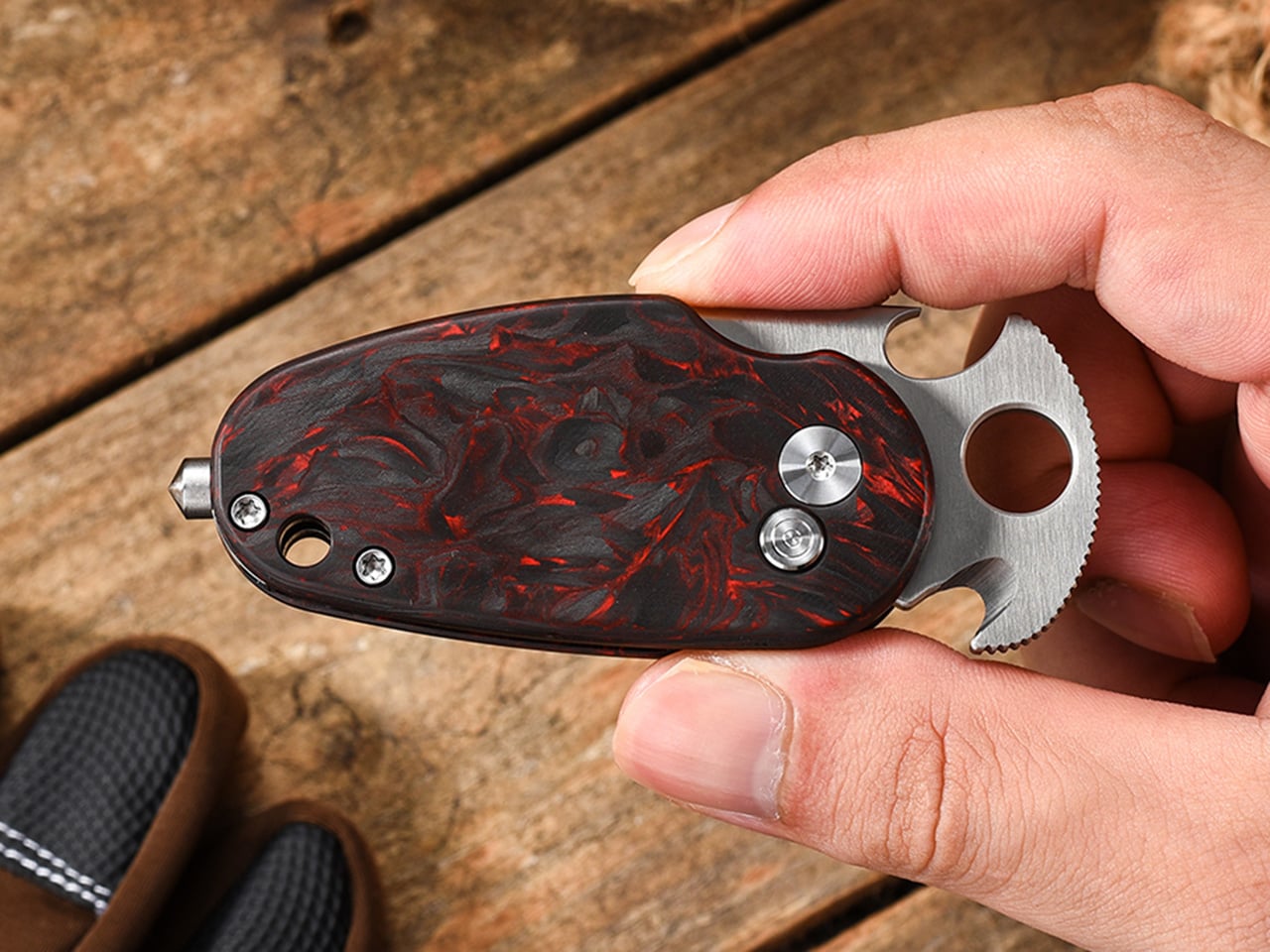
The entire premise goes out the window if the knife itself were bulky. The Sidekick measures 4.53 inches overall, with a 1.65-inch edge, and weighs just 2.39 ounces, light enough to disappear in a front pocket or the corner of a bag. That kind of restraint takes real engineering, since packing five functions into a small shell usually means sacrificing size, weight, or both.
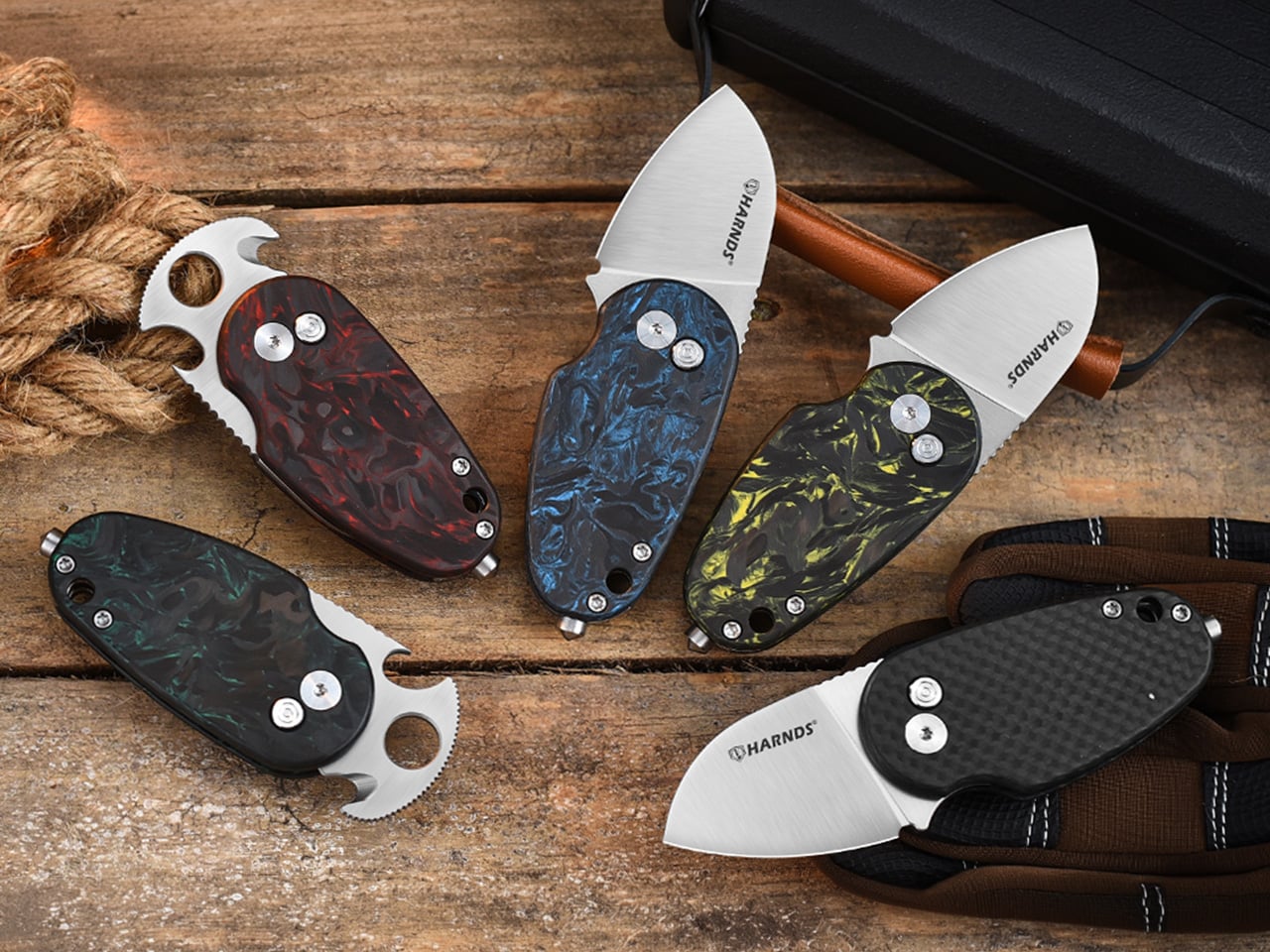
Harnds offers the Sidekick in two builds. The everyday version pairs 9Cr18MoV steel with a textured G10 handle, built for commuters and first-time EDC carriers who want durability without a steep price. The special edition steps up to M390 steel, prized for edge retention and corrosion resistance, wrapped in a carbon fiber handle, for collectors chasing sharper performance.
That carbon fiber handle carries its own quirk worth mentioning. Each one is infused with random streaks of red, yellow, blue, or green against a black base, so no two knives look quite alike. It’s a small touch, but it turns a tool into something more personal to carry. Fitting a blade, opener, cutter, breaker, and clip into one small shape without feeling crowded is a difficult trick.
Click Here to Buy Now: $23.99 $49.99 (52% off). Hurry, only a few left!
The post 5 Things Clutter Your Pocket, the Sidekick Knife Combines Them All first appeared on Yanko Design.
Picking a phone case is one of the most low-stakes high-stakes decisions in consumer tech. The stakes are low because it’s a $40 purchase. The stakes are high because you’re going to look at it roughly 150 times a day for the next two years, and a wrong pick is the kind of thing that will quietly gnaw at you. The market that erupts around every new iPhone launch does not help, flooding storefronts with interchangeable shells that share dimensions and absolutely nothing else. aulumu’s A18 collection tackles that problem by running nine products across genuinely different design philosophies, from a 1500D aramid drop-protection case to a transparent polycarbonate case with a built-in glow-in-the-dark luminous array, all landing at once for the new iPhone Pro season.
aulumu has built its reputation by doing something the accessory market rarely bothers with: making sure everything in the catalog looks like it came from the same design brief. Their G03 magnetic wallet won the 2025 Red Dot Award, their A17 frosted case brought superconductive cooling tech to a category most brands treat as pure commodity, and their B01 sling bag pulled that vocabulary into carry gear entirely. The brand targets commuters, creators, and EDC enthusiasts who want things genuinely designed rather than manufactured to a price point. The A18 collection is that philosophy’s clearest expression yet, fielding four cases across four distinct material territories in one coordinated launch. The finish detail and surface craft running through the lineup is the kind of thing the September case flood never delivers.
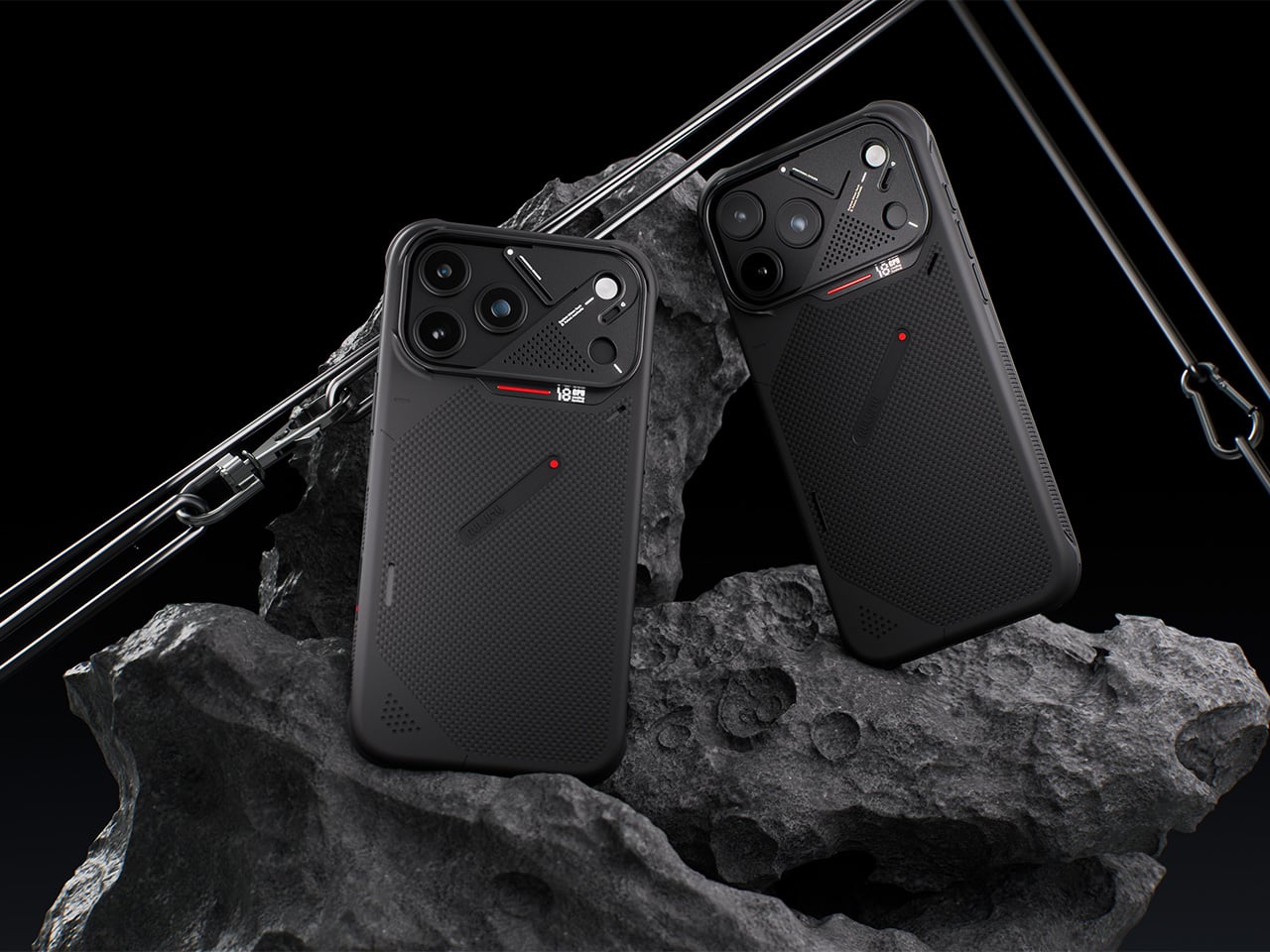
Aramid fiber is the same material in a bulletproof vest, which sounds impressive until you remember that a bulletproof vest will stop a bullet and do absolutely nothing for you if you fall off a ladder. The material is legitimately exceptional at being lightweight and stiff, and genuinely terrible at absorbing the kind of omnidirectional impact a phone takes when it bounces across pavement. aulumu’s AFT construction addresses that gap directly, combining 1500D aramid fiber with TPU in a single one-piece build, letting aramid carry the weight savings and refined texture while TPU handles the flex and cushioning. No separate layers to delaminate, no seams to work loose over eighteen months of daily carry. The result sits closer to a protective case than the ultra-slim aramid builds that look sharp and quietly terrify you every time the phone grazes a countertop.
A 2m drop rating headlines the protection claim, but the geometry tells the more interesting story. The screen sits behind a 1.36mm raised case edge, the camera system gets a 1.3mm raised frame, and full-wrap coverage extends across every edge with reinforced corners built to distribute directional impact. Corner drops are statistically the scenario that kills most phones, and the Armor treats that with structural reinforcement rather than optimism. For a case that still fits comfortably in the everyday carry conversation, the protection spec here reads like something that belongs in the rugged case category, which is a harder balance to land than it sounds.
Click Here to Buy Now: $79.98.
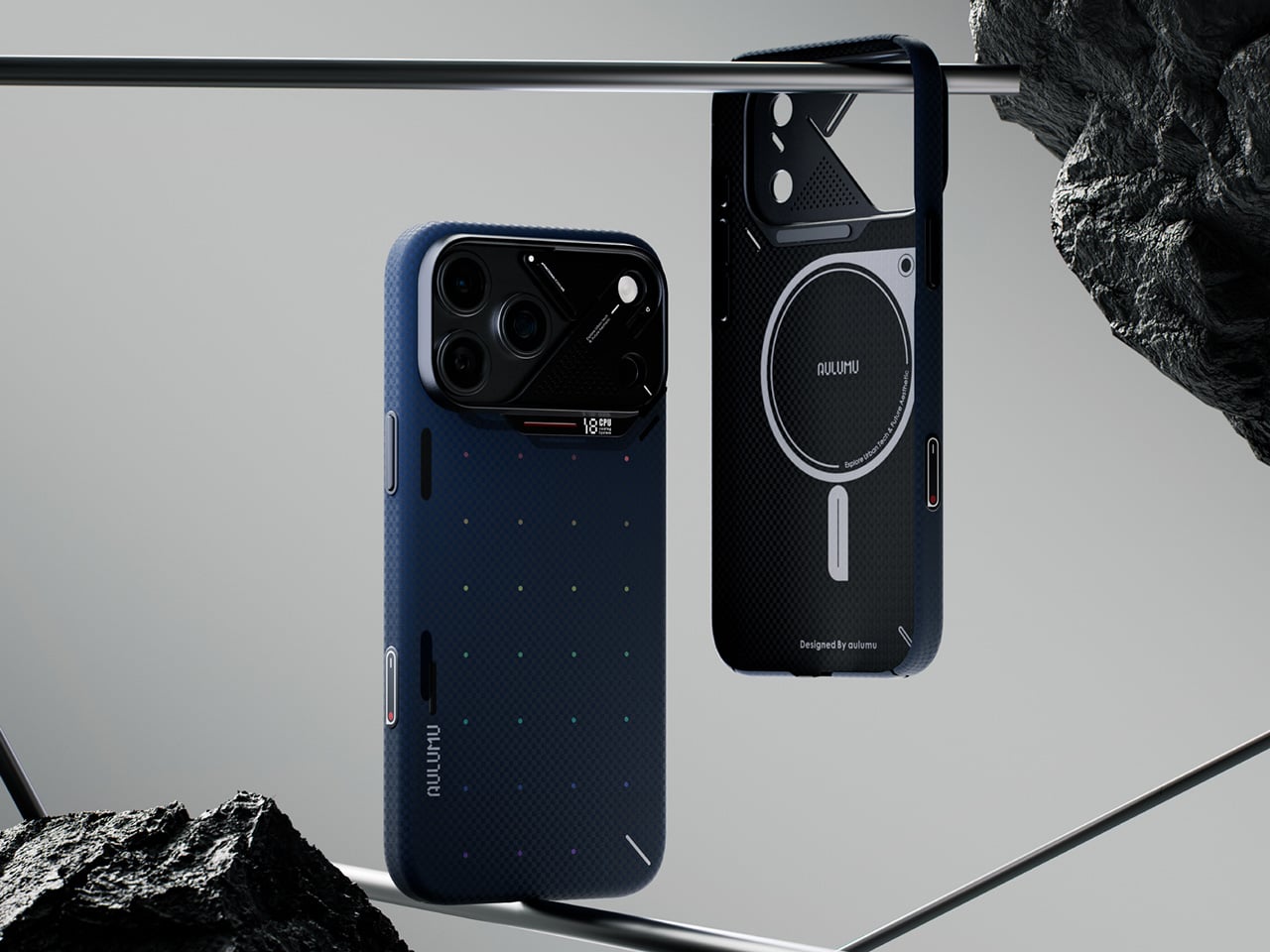
Particle structures and tactical technology aesthetics are not phrases that typically show up in a phone case brief, which is part of what makes the Particle Aramid Fiber Case such an interesting product to look at. The UV-treated gradient particle array across the aramid surface creates depth and movement that shifts with light and angle, producing a dimensional quality that a smooth polycarbonate case running the same finish could never replicate. The dense plain-weave aramid construction gives the particle array a textured foundation to sit on, and the two layers of visual information working together read closer to a topographic rendering than a fabric finish. aulumu calls it “Aramid Meets Digital Order,” which sounds like marketing copy until you actually look at the surface and realize the description is pretty accurate. Available in Black and Blue, both colorways lean hard into the tactical reference rather than softening it for a mainstream audience.
At 1.2mm thick from 27g, the carry weight is essentially a non-conversation. Full-coverage design extends across the edges and buttons with the same seamless enclosure that runs through the rest of the A18 family, so the visual drama does not come at any structural cost. The UV treatment is what separates the Particle Aramid Fiber Case from a conventional woven aramid surface, adding a gradient particle finish that feels genuinely considered rather than decorative. For a case sitting at this weight and profile, the amount of surface personality aulumu packed into it is a harder design problem than it looks.
Click Here to Buy Now: $69.98.
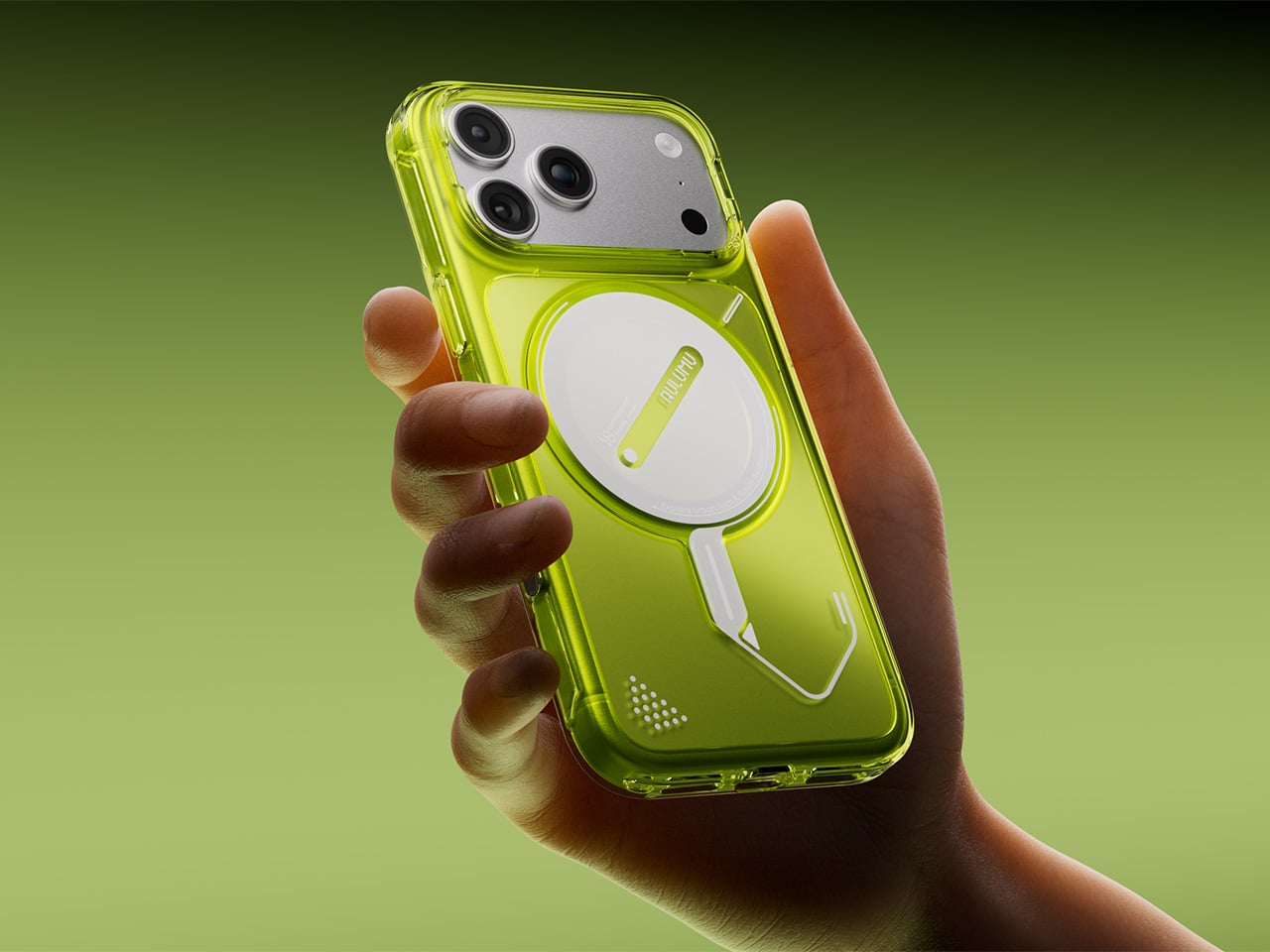
Premium transparent PC material that mimics the original metal and glass textures of the device, with a glow-in-the-dark cyberpunk aesthetic. That sentence describes a product that could very easily go wrong, and aulumu somehow stuck the landing. Optical-grade PC sheets with a light transmittance of 88-92% mean the phone’s hardware reads clearly through the case rather than disappearing behind a foggy plastic shell. The IML Laminating Luminous Array is what drives the glow effect, and the IML process keeps it long-lasting rather than fading out after a few weeks the way cheaper phosphorescent finishes tend to. It comes in transparent or lemon yellow, and lemon yellow is the correct choice, full stop.
The Ghost Lumen’s UV-resistant molecular formula protects against daily sun exposure, hand sweat, and heat-induced aging, which is the engineering answer to the single most common complaint about transparent cases. Nobody wants to spend money on a case that turns the color of old newspaper by spring. aulumu enhanced their molding process to create a fully enclosed PC case design without notches, keeping the one-piece aesthetic clean across every edge. As the most visually adventurous case in the A18 lineup, the Ghost Lumen sits at the opposite end of the spectrum from the Armor’s utilitarian brief, and the collection is considerably more interesting for having both ends covered.
Click Here to Buy Now: $39.98.
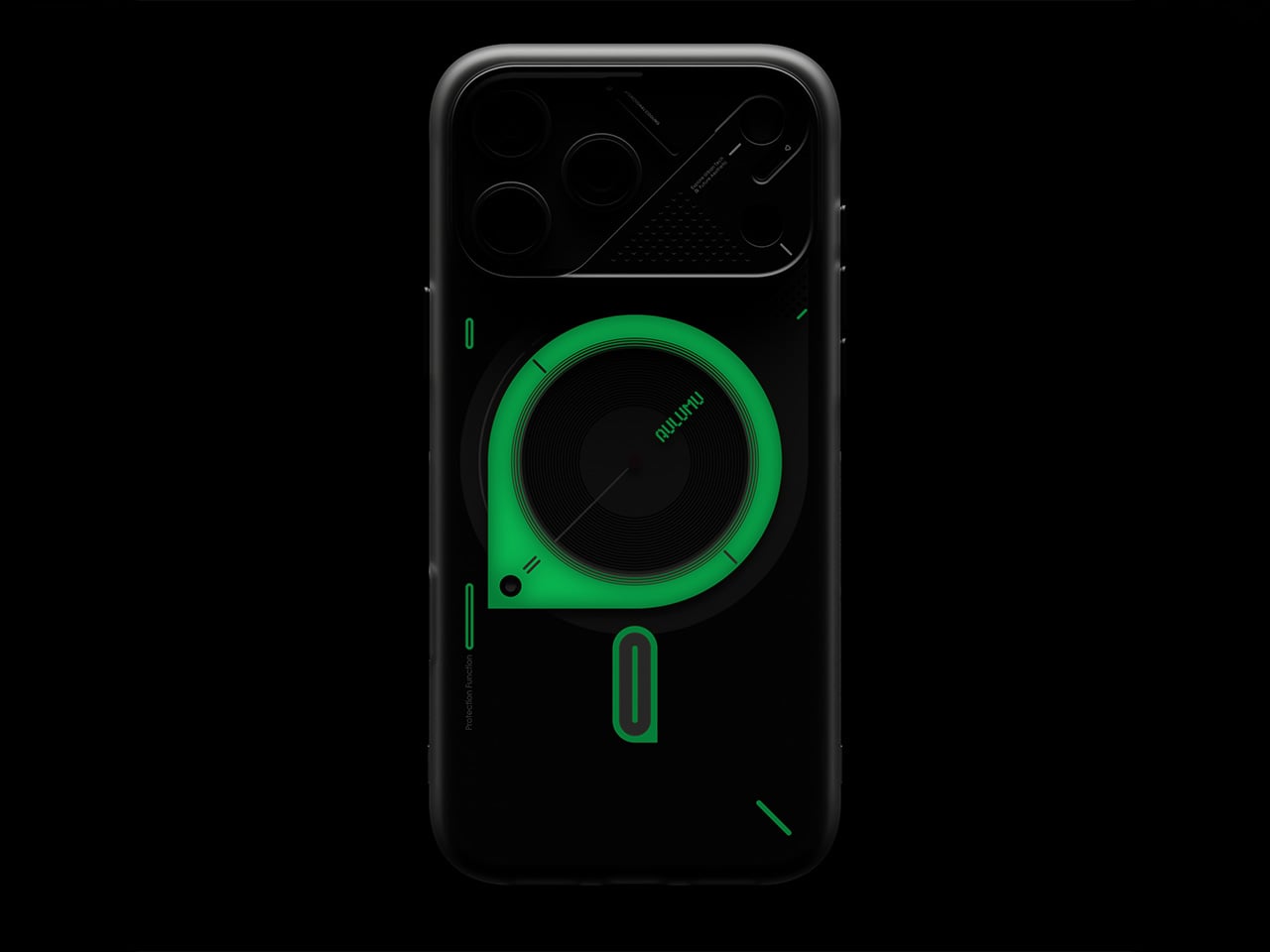
Phone cases do not typically come with a thermal engineering story, which is part of what makes aulumu’s CoolHyper Tech worth paying attention to. The A18 Hyper Frosted takes that signature technology and upgrades it with a bigger silicone thermal pad, repositioning the heat dissipation area closer to the phone’s CPU to achieve more efficient heat transfer. The result is a claimed 2 to 3 degree Celsius temperature reduction, which sounds modest until you consider that sustained heat is the primary reason flagship phones throttle performance during long gaming sessions or extended video work. A case that actively keeps the chip cooler is, in a subtle way, a case that keeps the phone faster. That is a genuinely different value proposition from anything else in the A18 lineup.
The frosted transparent TPU shell uses aulumu’s one-piece full-cover design, fully enclosed without notches, in Transparent Gray and Translucent White. At 43g it is the heaviest case in the collection, and that extra weight is essentially a direct accounting for the thermal hardware sitting inside. An IML Laminating Luminous Array adds the same glow-in-the-dark character as the Ghost Lumen, making the Hyper Frosted the only case that combines active cooling with a light-up finish. That combination is either exactly what you want or the detail that helps you rule it out, which is useful information either way. Ultra-strong MagSafe is built in for fast and stable attachment, and for people who push their phone hard through gaming, long video sessions, or navigation, this is the case designed with that use pattern in mind.
Click Here to Buy Now: $39.98.
The post aulumu’s iPhone 18 Pro Cases Survive Drops, Glow In The Dark, And Auto Cool Your Phone first appeared on Yanko Design.