Most US TikTok users aren’t following political accounts, study says

As TikTok faces the possibility of a ban in the United States, a new study sheds light on the type of accounts US adults follow on the platform. According to the report, published by Pew Research, political content and news are only a small fraction of the accounts US adults follow in the app.

The report is based on an analysis of 227,946 accounts followed by 664 TikTok users who participated in the study. Of those accounts, less than one percent were “politicians, civic actors or traditional media outlets and journalists,” Pew found, noting that “the typical U.S. adult on TikTok follows no accounts in each of these categories.”

Instead, people were more likely to follow accounts that posted about entertainment and pop culture, humor and viral dance clips. “To the extent Americans’ followed accounts discuss politics, it tends to be mixed with other topics,” Pew writes. “Some 43% of all followed accounts that discussed politics or current events during the study period also discussed entertainment and pop culture.”

Pew's findings show that news and political accounts are a tiny fraction of what US adults follow on TikTok.
Pew Research Center

The content of users' following feeds doesn't offer a complete picture of what people see on TikTok. The app defaults to the algorithmic “for you” feed, which is made up mainly of recommendations. And even though most users may not choose to follow explicitly political accounts, previous research from Pew found that 45 percent of US TikTok users report seeing “at least some” content about politics or political issues in the app.

The question of what US users see on TikTok has been more closely scrutinized over the last year. Some lawmakers stepped up calls for a ban of the app last fall after TikTok critics used hashtag data to suggest that the app was disproportionately recommending pro-Palestinian content. The company said such takes were the result of “unsound analysis.” TikTok stopped showing view counts for specific hashtags earlier this year.

While Pew’s report doesn’t touch on TikTok’s algorithmic recommendations, the authors note that follows are an important signal for the app. “User interactions with posts from the accounts they follow play a nontrivial role in shaping their For You page,’” the report says. “And studying these followed accounts can give us a better understanding on the content that users actively choose to look for on the platform.”

This article originally appeared on Engadget at https://www.engadget.com/social-media/most-us-tiktok-users-arent-following-political-accounts-study-says-140053492.html?src=rss

1,258 Horsepower! Meet the Insane New McLaren W1

McLaren W1

The McLaren W1 supercar is a innovative addition to the world of high-performance vehicles, setting new benchmarks in power, speed, and innovation. As the latest successor in McLaren’s iconic ‘1’ car lineage, the W1 combines innovative technology with a rich racing heritage. This extraordinary supercar is the result of McLaren’s relentless pursuit of excellence, pushing […]

The post 1,258 Horsepower! Meet the Insane New McLaren W1 appeared first on Geeky Gadgets.

The best Prime Day Kindle deals take up to 25 percent off the Scribe and Paperwhite models

In these final hours of Amazon's October Prime Day sale, we're down to just two Kindle models on sale (or, really available at all) on Amazon's site. Why are there just two active listing for Kindles right now? It's almost certainly because Amazon is going to announce new models soon. We have no hard evidence to back that up. But consider that the newest option, the Scribe, is two years old. Consider that Amazon has no color ereaders in its lineup (while it's rivals do). Then add in the fact that models are missing from one of Amazon's biggest sales of the year. It's a good bet that new models are on the way.  

So why would you want to bother with the Kindle sales that are happening. Some won't. But others may prefer a tried-and-true model over the latest thing. The good news is that an ereader isn't meant to do everything a tablet can. They should display crisp, 300 dpi text, have weeks of battery live, be comfortable to hold and have a soft front light for low-light reading. Both of these models do just that (plus the Scribe adds in note-taking). Here are the best Prime Day Kindle deals (all two of them). 

Amazon's latest Kindle Paperwhite e-reader, which was released at the end of October 2021.
Nathan Ingraham / Engadget

Amazon Kindles dominate the ereader market, and right now there are just two models to choose from. Of course, a new Kindle is likely on the horizon — rumors suggest as much and the last entry in the lineup came over two years ago. But since ereaders aren't as tech-heavy as a tablet, the generational bump may not make as much difference. 

  • Amazon Kindle Paperwhite for $125 ($25 off): The Paperwhite is an upgraded Kindle, adding a larger display, an adjustable warm light and a waterproof build. The flush-front screen makes page turns easier and a faster processor makes that action speedier, too.

  • Amazon Kindle Scribe for $255 ($85 off): You can write as well as read with this tablet. It has a large 10.2-inch display, auto-adjusting warm front light and an auto-rotating display. It comes with the Basic pen so you can use the notebook feature that even converts handwriting to text.

  • Amazon Kindle Paperwhite Case for $20 ($15 off): If you already have the latest (11th generation) Paperwhite, here's a deal on a case. It not only adds a little protection, opening or closing the cover also wakes or sleeps your device. 

  • Kindle Paperwhite Essentials Bundle for $135 ($70 off): If you want a case and are picking up the Paperwhite ereader for the first time, go for this bundle that includes the device, the cover and a power adapter for just $10 more than the sale price of the Paperwhite on its own. 

October Prime Day 2024 Kindle Kids deals

Kindles geared towards kids are basically the same thing as their “adult” counterparts, but these come with a cover, extended warranty and a free trial of Amazon Kids+ that lets youngsters access kid-friendly audiobooks, stories and more. Plus they don’t have ads on the lock screen (Amazon makes you pay $20 for that concession on the standard devices).

  • Amazon Kindle Paperwhite Kids for $115 ($55 off): The kids edition of the upgraded Paperwhite ereader has a flush-front design, waterproof build and warm front lights for late-night reading. It comes with a cover, a two-year warranty and a year of the kids subscription.

Follow @EngadgetDeals on Twitter for the latest tech deals and buying advice, and stay tuned to Engadget.com for all of the best tech deals coming out of October Prime Day 2024.

This article originally appeared on Engadget at https://www.engadget.com/the-best-prime-day-kindle-deals-take-up-to-25-percent-off-the-scribe-and-paperwhite-models-080333490.html?src=rss

SpaceX Crew-8 astronauts are leaving the ISS on October 13

NASA and SpaceX are looking to undock the Crew-8 mission vehicle from the ISS on October 13, 3:05AM Eastern time. Crew-8's astronauts were originally scheduled to start making their way back to Earth on October 7, but since their spacecraft is going to splash down off the coast of Florida, NASA and SpaceX had decided to push it back "due to weather conditions and potential impacts from Hurricane Milton." They will hold another briefing on the situation on October 11 and could delay the mission's return further for the safety of everyone involved. 

The Crew-8 mission launched on March 4 this year with four members: NASA astronauts Matthew Dominick, Michael Barratt and Jeanette Epps, as well as Roscosmos cosmonaut, Alexander Grebenkin. They conducted several experiments while on the International Space Station, such as sequencing the DNA of any antibiotic-resistant organism they could find on the ISS to look into how they adapted to the conditions out there. They also studied human brain organoids created with stem cells to look into Parkinson's disease and into how extended spaceflight affects the human brain. They printed human tissues, studied how microgravity affects drug manufacturing and worked with an Astrobee robot. NASA will most likely cover their flight back on a livestream. 

While Crew-8 has yet to leave the space station, SpaceX's Crew-9 mission astronauts have been on board since September 29. That mission only flew with two crew members, because it will be coming back home with NASA astronauts Butch Wilmore and Suni Williams who originally flew to the ISS on the Boeing Starliner. NASA said Wilmore and Williams have already tried on and tested their SpaceX Intravehicular Activity spacesuits and have completed all the work required to fly back to Earth with the Crew-9 vehicle. 

This article originally appeared on Engadget at https://www.engadget.com/science/space/spacex-crew-8-astronauts-are-leaving-the-iss-on-october-13-133027531.html?src=rss

Meta Quest 3S hands-on: A $300 VR headset without major compromises

Instead of cramming more technology into its Quest VR headsets, which would inevitably escalate their price, Meta has taken the opposite approach with the Quest 3S. It's a slightly bulkier, slightly less sharp version of the Quest 3 starting at $300, almost half off that headset's $500 launch price. The Quest 3S pitch is clear for consumers and developers alike: It's a more powerful and feature-rich budget device than the now defunct Quest 2, and since it has the same processor and GPU as the Quest 3, developers don't have to worry as much about supporting older headsets either.

Based on my brief hands-on time with the Quest 3S (our full review is in the works), it's easy to see how this could be another hit for Meta. Despite its lower price, it doesn't look or feel inferior to the Quest 3 at first. The only noticeable external difference is that it uses a triangular array of sensors up front, instead of three pill-shaped modules. While it's a bit larger than the Quest 3, it still sits comfortably on my face, and is easily adjustable via its rear and top straps.

I winced when I noticed it no longer had a 3.5mm jack, leaving you to use wireless headphones or a USB-C dongle instead, but its absence makes sense for a cheaper product. I'd wager the people who care most about a headphone jack would also opt for the Quest 3, instead.

Meta cut corners all over the place to drive the Quest 3S's price down. There are only three lens adjustment positions to match your pupillary distance, whereas the Quest 3 has finer controls. And instead of pancake lenses, the Quest 3S uses Fresnel lenses which can lead to additional glare or other artifacts. Those also pair together with lower quality displays, which offer 1,832 by 1,920 pixels per eye (like the Quest 2), instead of the Quest 3's 2,064 by 2,208 resolution.

Meta Quest 3S hands-on
Photo by Devindra Hardawar/Engadget

What's more important for consumers is what Meta does include in the Quest 3S. It sports the same Qualcomm Snapdragon XR2 Gen 2 processor and 8GB of RAM, and uses the same updated touch controllers. So while the Quest 3S might look a bit fuzzier than the Quest 3, it should perform the same.

That's something I immediately noticed upon booting up the Quest 3S. Navigating its main menu and the Quest store felt effortless and snappy, with little lag between screens or apps loading. The touch controllers still feel very responsive, too, something I confirmed with a few Beat Saber sessions. While it does get a bit warm, like its pricier sibling, the Quest 3S trucked along without any noticeable slowdown while I was installing several large games. The mixed reality experience was also similar to that on the Quest 3 — it's far from lifelike, but it's clear enough to read text on your monitor or phone in a pinch.

Based on a few hours of testing, the Quest 3S clearly manages to deliver an immersive VR experience at a lower price point. But we’ll have to spend a bit more time in virtual reality to determine how, exactly, it differs from the Quest 3.

This article originally appeared on Engadget at https://www.engadget.com/ar-vr/meta-quest-3s-hands-on-a-300-vr-headset-without-major-compromises-133012786.html?src=rss

Machine learning pioneers, including the ‘Godfather of AI,’ are awarded the Nobel Prize in Physics

Two scientists have been awarded the Nobel Prize in Physics “for foundational discoveries and inventions that enable machine learning with artificial neural networks.” John Hopfield, an emeritus professor of Princeton University, devised an associative memory that's able to store and reconstruct images and other types of patterns in data. Geoffrey Hinton, who has been dubbed the "Godfather of AI," pioneered a way to autonomously find properties in data, leading to the ability to identify certain elements in pictures.

"This year’s physics laureates’ breakthroughs stand on the foundations of physical science. They have showed a completely new way for us to use computers to aid and to guide us to tackle many of the challenges our society face," the committee wrote on X. "Thanks to their work humanity now has a new item in its toolbox, which we can choose to use for good purposes. Machine learning based on artificial neural networks is currently revolutionizing science, engineering and daily life."

However, Hinton has grown concerned about machine learning and its potential impact on society. He was part of Google's deep-learning artificial intelligence team (Google Brain, which merged with DeepMind last year) for many years before resigning in May 2023 so he could "freely speak out about the risks of AI." At the time, he expressed concern about generative AI spurring a tsunami of misinformation and having the potential to wipe out jobs, along with the possibility of fully autonomous weapons emerging.

Although Hinton acknowledged the likelihood that machine learning and AI will improve health care, "it’s going to exceed people in intellectual ability. We have no experience of what it’s like to have things smarter than us,” he told reporters, according to The New York Times. That said, Hinton, a Turing Award winner and professor of computer science at the University of Toronto, was “flabbergasted” to learn that he had become a Nobel Prize laureate.

This article originally appeared on Engadget at https://www.engadget.com/ai/machine-learning-pioneers-including-the-godfather-of-ai-are-awarded-the-nobel-prize-in-physics-132124417.html?src=rss

Apple AirPods 4: Secret Features You NEED to Know

Apple AirPods 4

The Apple AirPods 4 are the latest iteration of the popular wireless earbuds, packed with innovative features designed to elevate your audio experience. From seamless connectivity to enhanced sound quality and intuitive controls, these earbuds are crafted to meet the needs of even the most discerning users. Let’s dive into the essential features that make the […]

The post Apple AirPods 4: Secret Features You NEED to Know appeared first on Geeky Gadgets.

ROLI Airwave Uses AI and Gesture Control to Transform Music Learning and Production

Think of if a Piano, a Theremin, and ChatGPT had a baby.

I distinctly remember seeing the music video for Greyhound by the Swedish House Mafia (and if you haven’t seen it I recommend you do). The video has the three members of the EDM group standing in an empty space, wearing headsets and controlling virtual objects that help them play music while also racing robotic greyhounds on salt flats. The music video released 12 years ago, but painted a very different picture of how people would make music in the future – not with instruments, but rather with gestures. Today, the folks at ROLI unveiled the first step to that future in the form of Airwave – an AI-powered device that uses advanced image recognition to not only help you learn to play music, but perform music intuitively using unique gestures.

Known for its revolutionary Seaboard, ROLI broke away from traditional keyboards by enabling musicians to explore the microtonal spaces between notes, opening up a vast universe of expressive possibilities. Now, with the Airwave, ROLI is set to disrupt the industry again—this time, by using AI to transform how people learn to play music.

For decades, aspiring musicians have been limited to traditional learning methods like in-person lessons, online courses, or YouTube tutorials. While each of these has its strengths, they often lack real-time, personalized feedback that adapts to the learner’s unique progress. ROLI’s Airwave, powered by its Music Intelligence (MI) platform, changes this dynamic by acting as a bridge between instrument and instructor. It introduces a new era of “intelligent pianos” that use cutting-edge AI, vision, and voice technologies to offer a truly immersive learning experience.

Designer: ROLI

“Music learning and playing have been far too difficult for too long: intimidating, expensive, and one-size-fits-all,” said Roland Lamb, CEO of ROLI. “With recent advances in computer vision and AI, we are finally able to innovate beyond the keys and bring this human-centric technology to music learners and creators alike.”

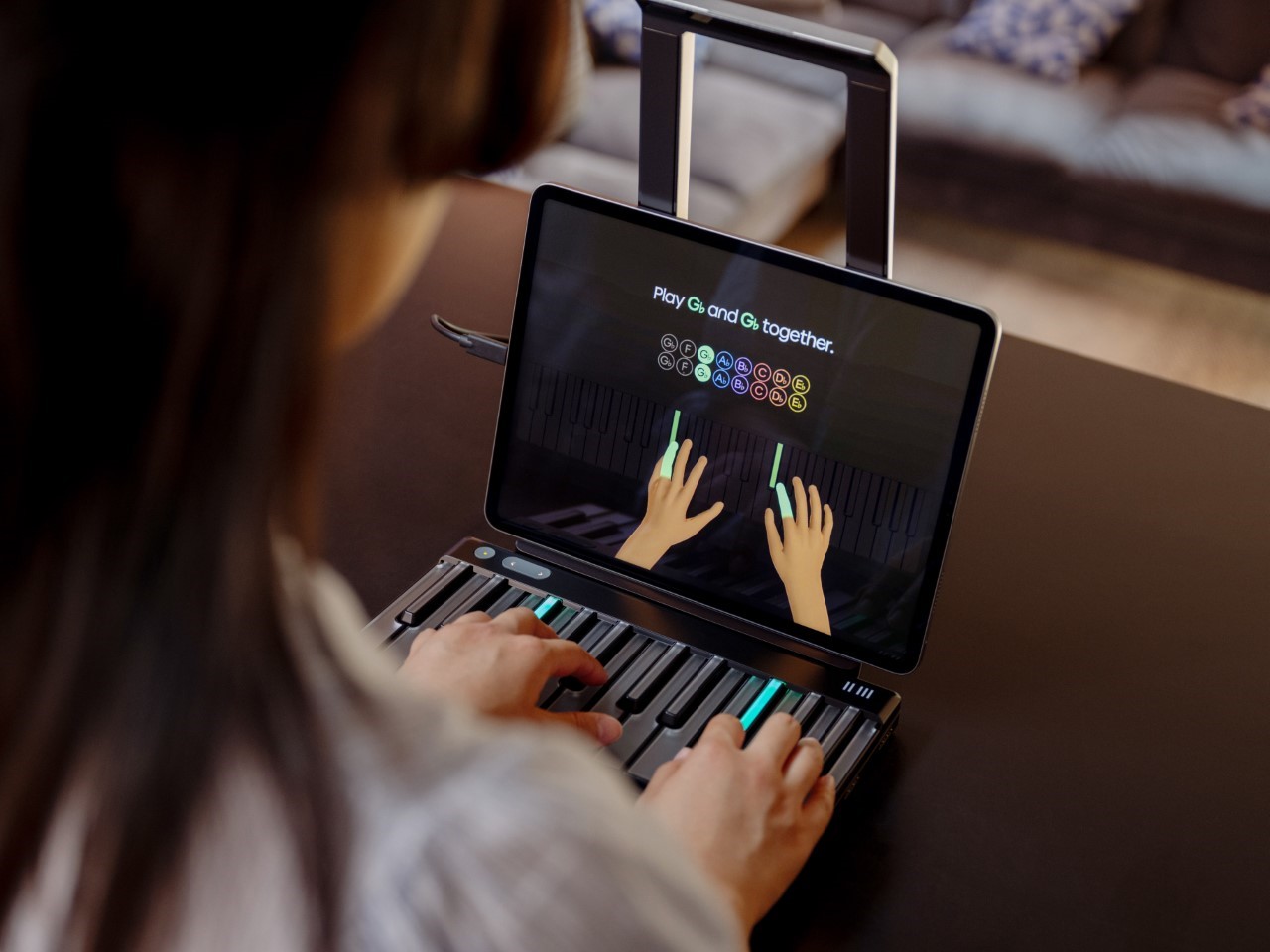
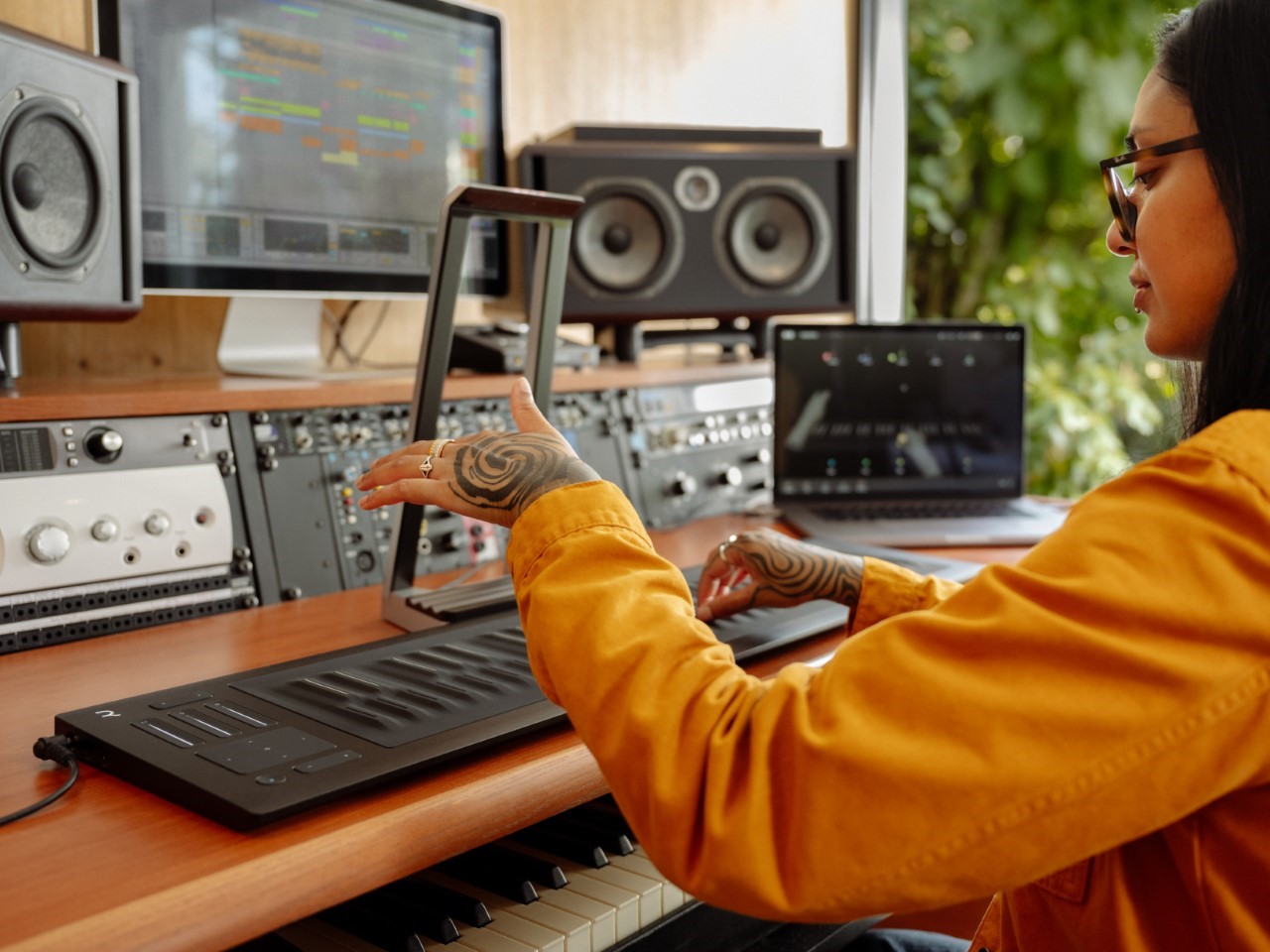
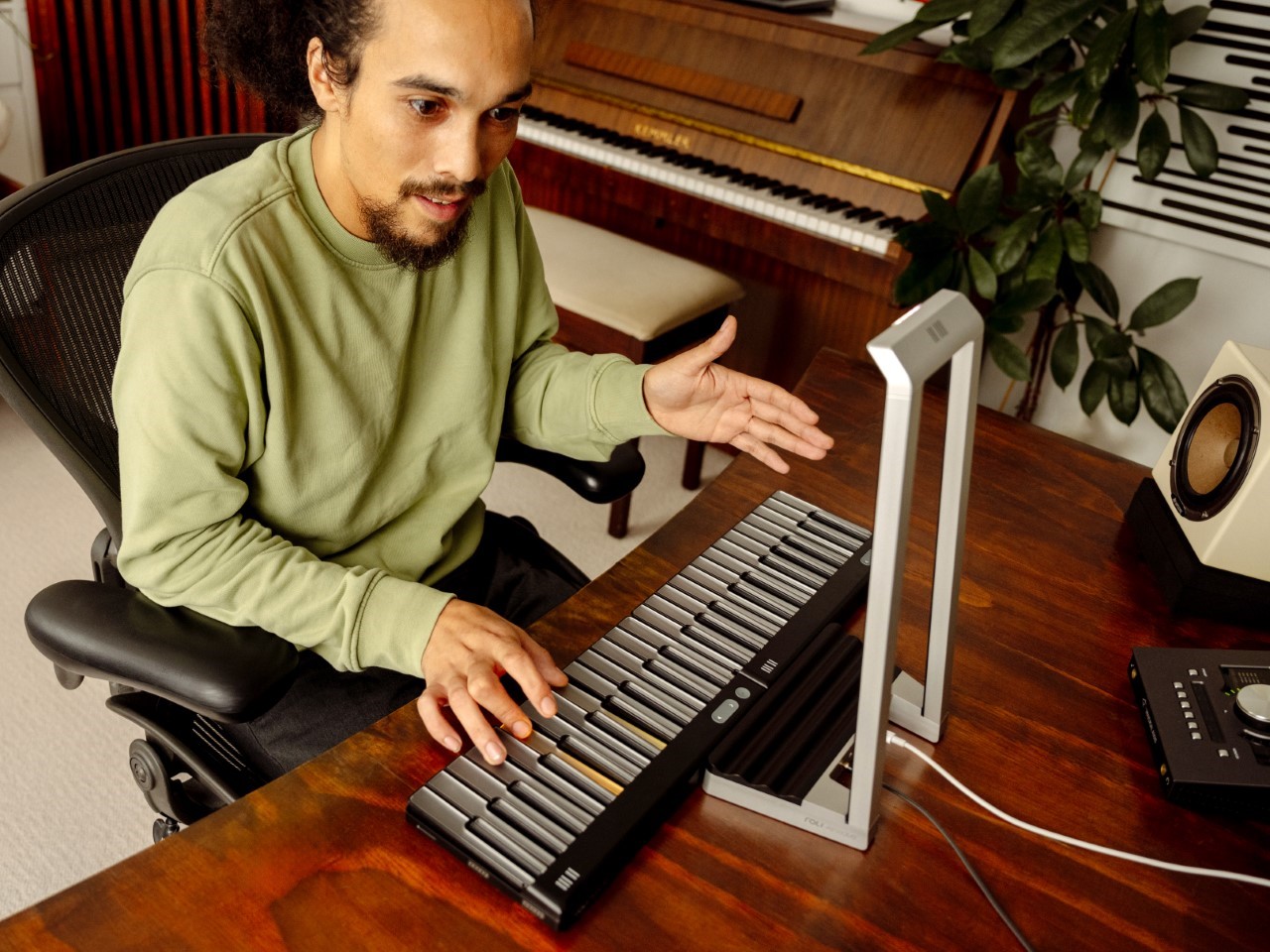
The Airwave works by utilizing 3D infrared cameras that, together with ROLI’s new Vision technology, can “see” your hands as they move across the keyboard, capturing intricate finger movements and gestures. This allows the system to offer highly personalized feedback based on precise tracking of your playing technique. Whether you’re a beginner struggling with finger positioning or an advanced player fine-tuning your dynamics, Airwave adjusts its guidance to match your skill level.

At the heart of this breakthrough is ROLI’s MI platform, which incorporates five key sensory technologies—sound, sight, touch, vision, and voice. These allow Airwave to not only track your hand movements but also respond to voice commands. Ask it to show you a chord, suggest a new piece to learn, or even guide you through tricky sections of a song. This transforms the learning process into an interactive, conversational experience that feels less like traditional lessons and more like having a personal music coach at your side.

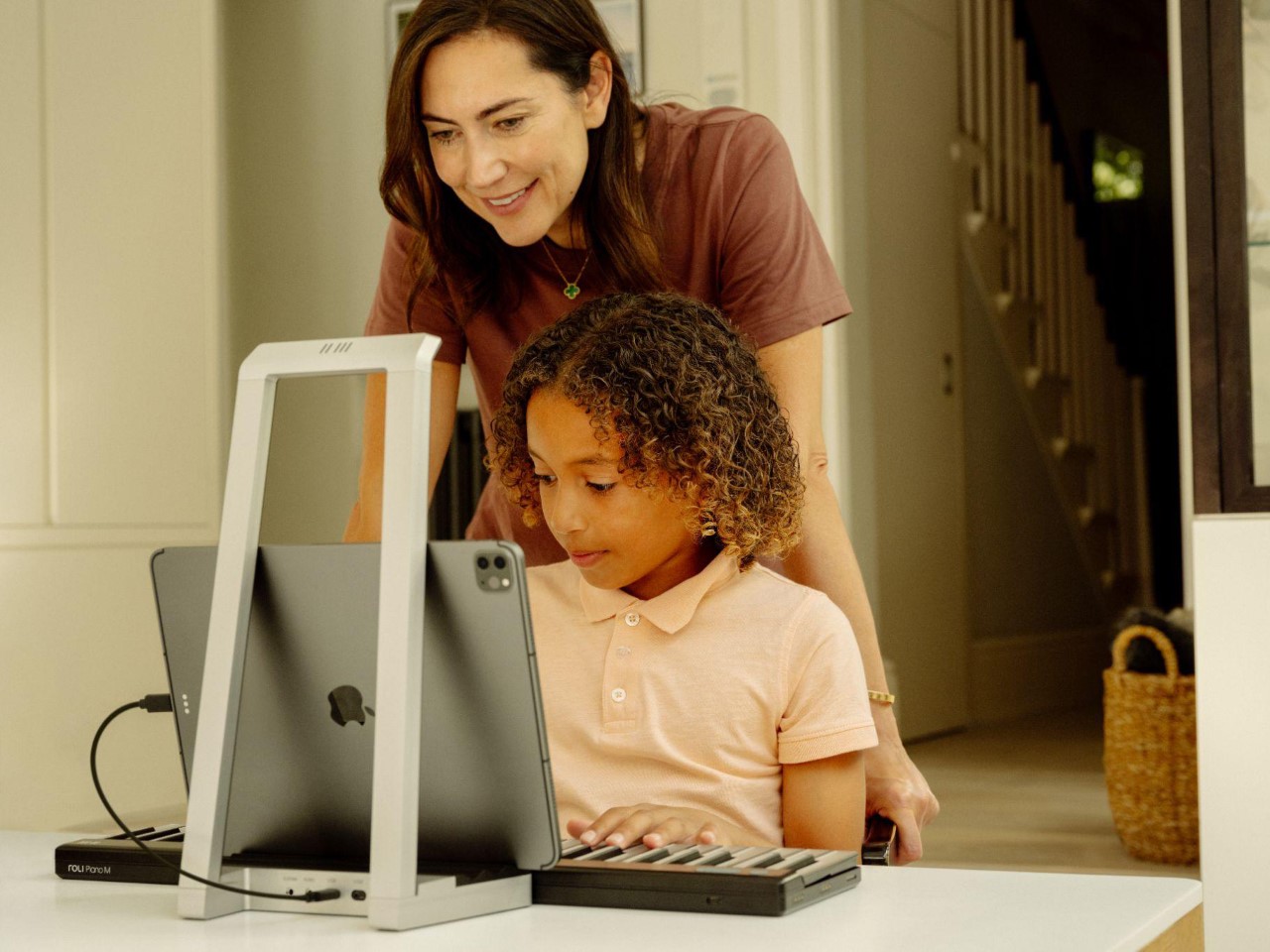
The magic really comes alive when Airwave is paired with ROLI’s Piano M (formerly known as LUMI Keys). The Piano M’s light-up keys combined with Airwave’s real-time feedback make for a compelling, intuitive learning environment. Players can practice essential elements of piano technique such as posture, hand positioning, rhythm, and harmony, all while getting immediate, adaptive feedback. This system effectively builds better habits and speeds up the learning curve without the need for constant human instruction.

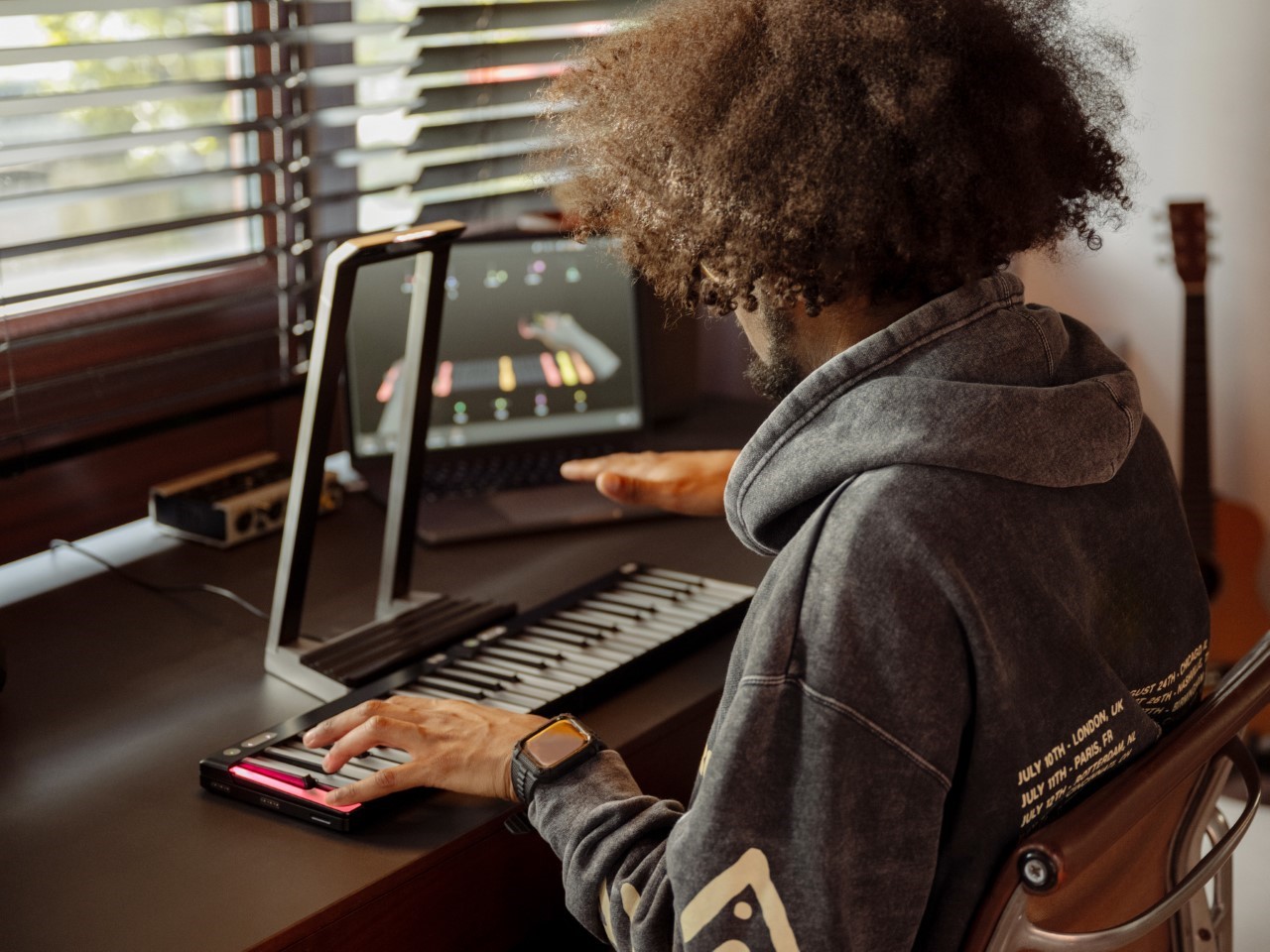
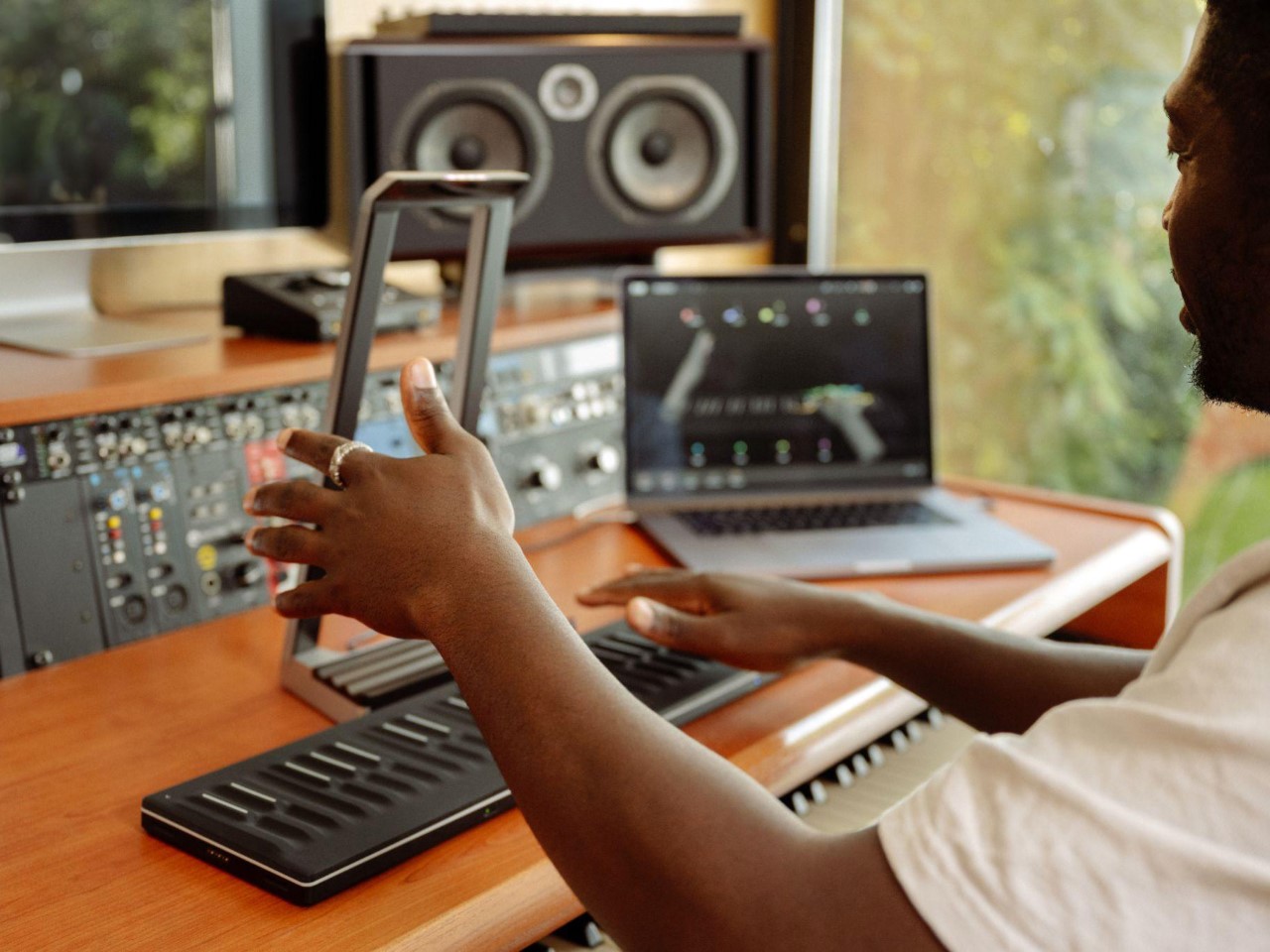
On the creative front, Airwave doesn’t stop at teaching—it’s also a powerful tool for composers and performers. Its gesture-based controls allow musicians to manipulate sound in novel ways. With a simple hand raise or wrist tilt, you can shift from a piano to a symphonic ensemble, blending different tones and effects in real-time. Marco Parisi, a renowned musician and producer, emphasized the revolutionary potential of Airwave: “Every movement and gesture creates a new sound unique to the musician. It will make music much more expressive and could even lead to new genres of music”.

Airwave is now available for pre-order, setting the stage for a new AI-powered era in human-led music technology. Whether you’re a budding musician looking for a smarter way to learn or a seasoned creator in search of fresh expressive possibilities, ROLI’s latest innovation promises to redefine what’s possible with music.

The post ROLI Airwave Uses AI and Gesture Control to Transform Music Learning and Production first appeared on Yanko Design.

Google Docs adds tabs to help you stay organized

Google has released a new feature for Docs that will make it easier to break down — and, later, to find and access — information into separate sections. It's adding tabs to Docs, so that you can "build content in a way that makes it possible for you to find what you’re looking for quickly." Instead of creating multiple Doc files or merely using headings to organize information, you can write down whatever you want into distinct tabs, which will be much quicker to parse than a lengthy document. Tabs could also make collaborating with classmates or co-workers less chaotic. 

In its announcement, Google enumerated several examples of how tabs could help people. "A project manager," the company wrote, "can create a tab for budget, roles and responsibilities, goals, and key dates so that their working team can stay on track." In addition to Google's examples, we could also see the feature being useful to authors, who can use separate tabs for their outline, character profiles, plot plans, scenario details and other important notes. 

Document tabs will take up the left-hand section of the Google Docs interface. You can create several subtabs under each tab if you want to break down the information that's supposed to go into that section each further. If you edit a tab's name, you'll also be able to set an emoji to best represent what it's about, which will then replace the default article icon. The new feature has already started rolling out and will be making its way to all Google Workspace users, as well as everyone with personal Gmail accounts, over the next 15 days. 

tabs in Google Docs.
Google

This article originally appeared on Engadget at https://www.engadget.com/general/google-docs-adds-tabs-to-help-you-stay-organized-130016429.html?src=rss

The Only Project Management Tool You’ll Ever Need – Meet Huly

Huly

Managing multiple software tools can be a daunting task. Switching between different platforms for task management, project oversight, and communication can lead to inefficiencies and hinder productivity. This is where Huly comes in – a comprehensive, all-in-one platform designed to streamline your workflow by integrating essential functionalities into a single, user-friendly interface. Efficient Task and […]

The post The Only Project Management Tool You’ll Ever Need – Meet Huly appeared first on Geeky Gadgets.