FCC fines political consultant $6 million for deepfake robocalls

The Federal Communications Commission (FCC) has officially issued its full recommended fine against political consultant Steve Kramer for a series of illegal robocalls using deepfake AI technology and caller ID spoofing during the New Hampshire primaries. Kramer must pay $6 million in fines in the next 30 days or the Department of Justice will handle collection, according to a FCC statement.

Kramer violated the Truth in Caller ID Act passed in 2009 that prohibits anyone from “knowingly transmit misleading or inaccurate caller identification information with the intent to defraud, cause harm or wrongfully obtain anything of value,” according to legislative records. The law preceded the widespread usage of AI, but the FCC voted unanimously to have it apply to such deepfakes this past February.

The phony robocalls delivered pre-recorded audio of President Biden’s voice using deepfake AI technology to New Hampshire residents leading up to the 2024 presidential primary election. The phony President Biden told voters not to vote in the upcoming primary saying “Your vote makes a difference in November, not this Tuesday,” according to an earlier report from CBS New York. The robocalls were spoofed so as to appear to originate from the former chairwoman of the New Hampshire Democratic Party, according to the New York Times.

Kramer hired New Orleans magician (no, really, an actual magician) Paul Carpenter to make the phony recordings. Carpenter showed NBC News how he made the deepfake audio files of President Biden using an AI voice generator called ElevenLabs. The recordings, he claims, only took around 20 minutes to make. Carpenter says Kramer paid him through Venmo and he thought the work he was doing was authorized by President Biden’s campaign. Eleven Labs has since shut down Carpenter’s account.

Kramer claims he sent the robocalls to raise awareness about the dangers and misuse of the technology. His apparent experiment only cost him $500 but, according to the political consultant, resulted in a massive return. “For me to do that and get $5 million worth of exposure, not for me,” Kramer told CBS New York. “I kept myself anonymous so the regulations could just play themselves out or begin to play themselves out. I don’t need to be famous. That’s not my intention. My intention was to make a difference.”

Kramer doesn’t just face a hefty FCC fine, he’s also facing criminal charges. New Hampshire Attorney General John M. Formella announced last May that Kramer received 13 felony counts of voter suppression and 13 misdemeanor counts of impersonation of a candidate.

This article originally appeared on Engadget at https://www.engadget.com/ai/fcc-fines-political-consultant-6-million-for-deepfake-robocalls-190050186.html?src=rss

VS-9 Redefines Sustainable Marine Transport with Electric Hydrofoiling Innovation

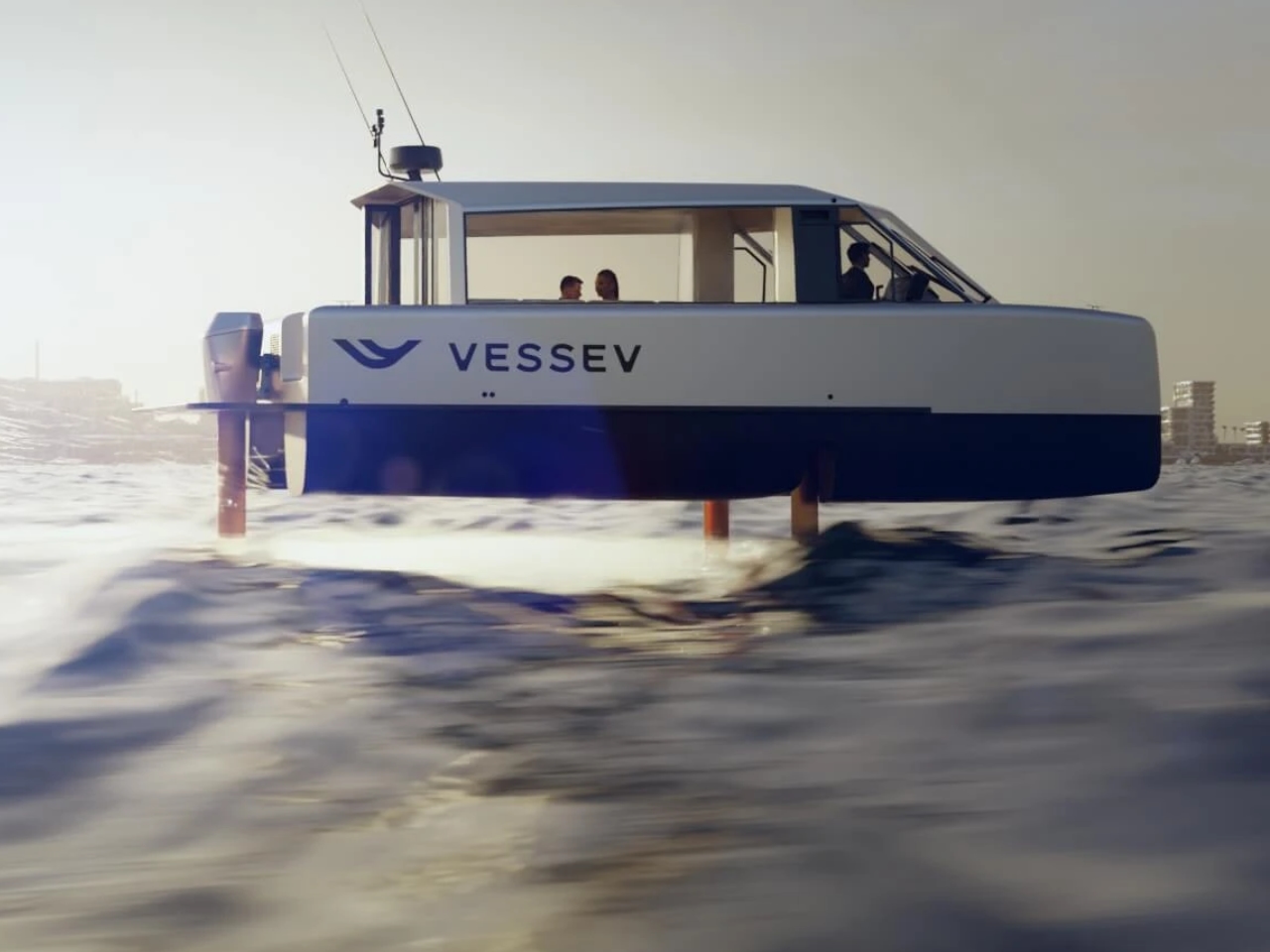
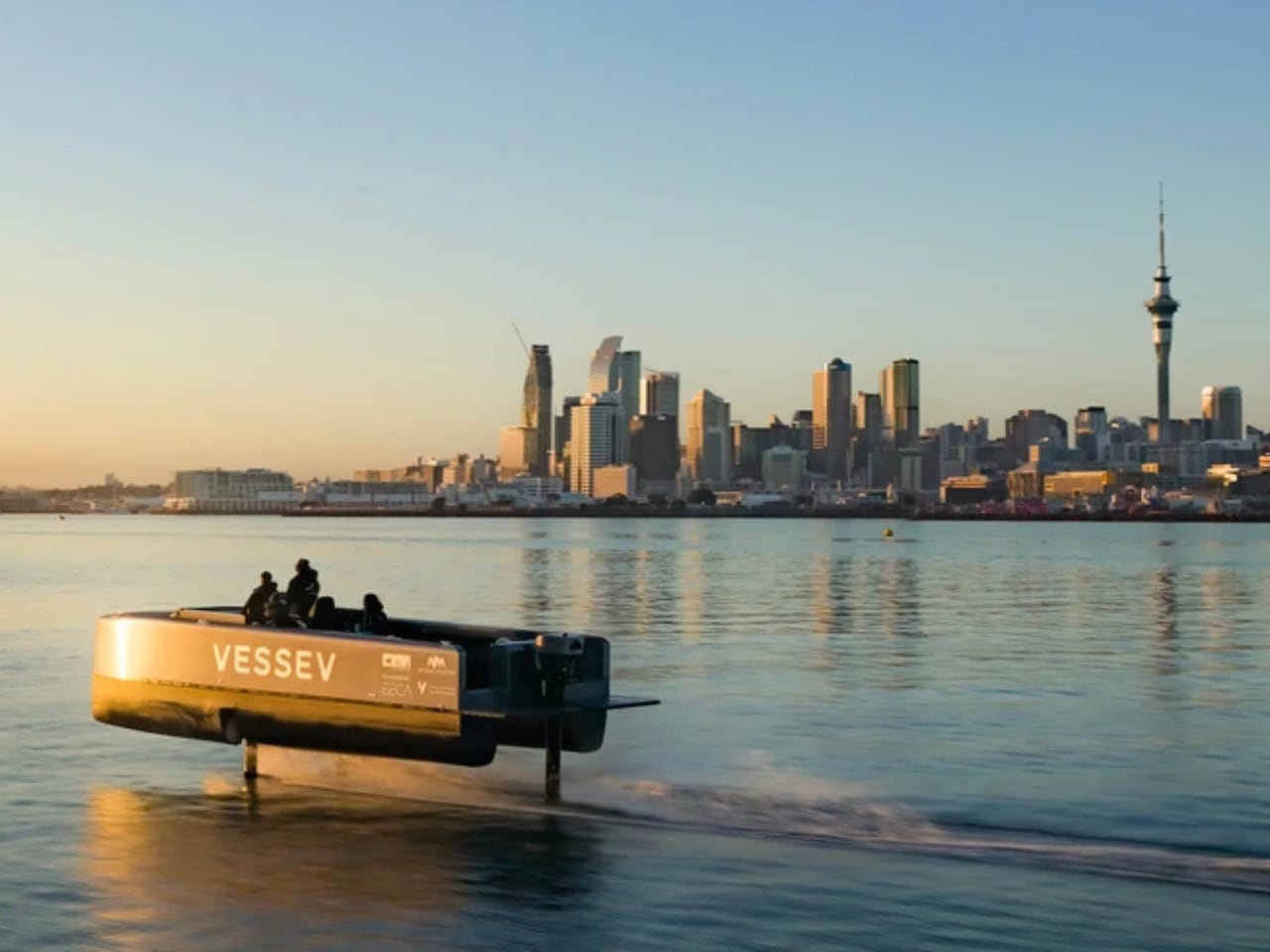
Vessev, a leader in sustainable marine technology, has launched the VS-9 electric hydrofoiling vessel, set to redefine premium water transport. By merging cutting-edge America’s Cup technology with sleek marine innovation, the VS-9 promises a smooth, quiet experience akin to flying. Designed to enter commercial service with New Zealand’s largest ferry operator, Fullers360, the vessel will begin transporting passengers later this year.

Designer: Vessev

Eric Laakmann, CEO of Vessev, highlighted the significance of this debut, saying, “This marks the beginning of a global shift toward sustainable energy in maritime transport. With 33 million vessels worldwide, only a fraction are sustainable. The VS-9 and our collaboration with Fullers360’s NetZero Maritime team are key to advancing new marine technologies.”
Transforming Water Transport

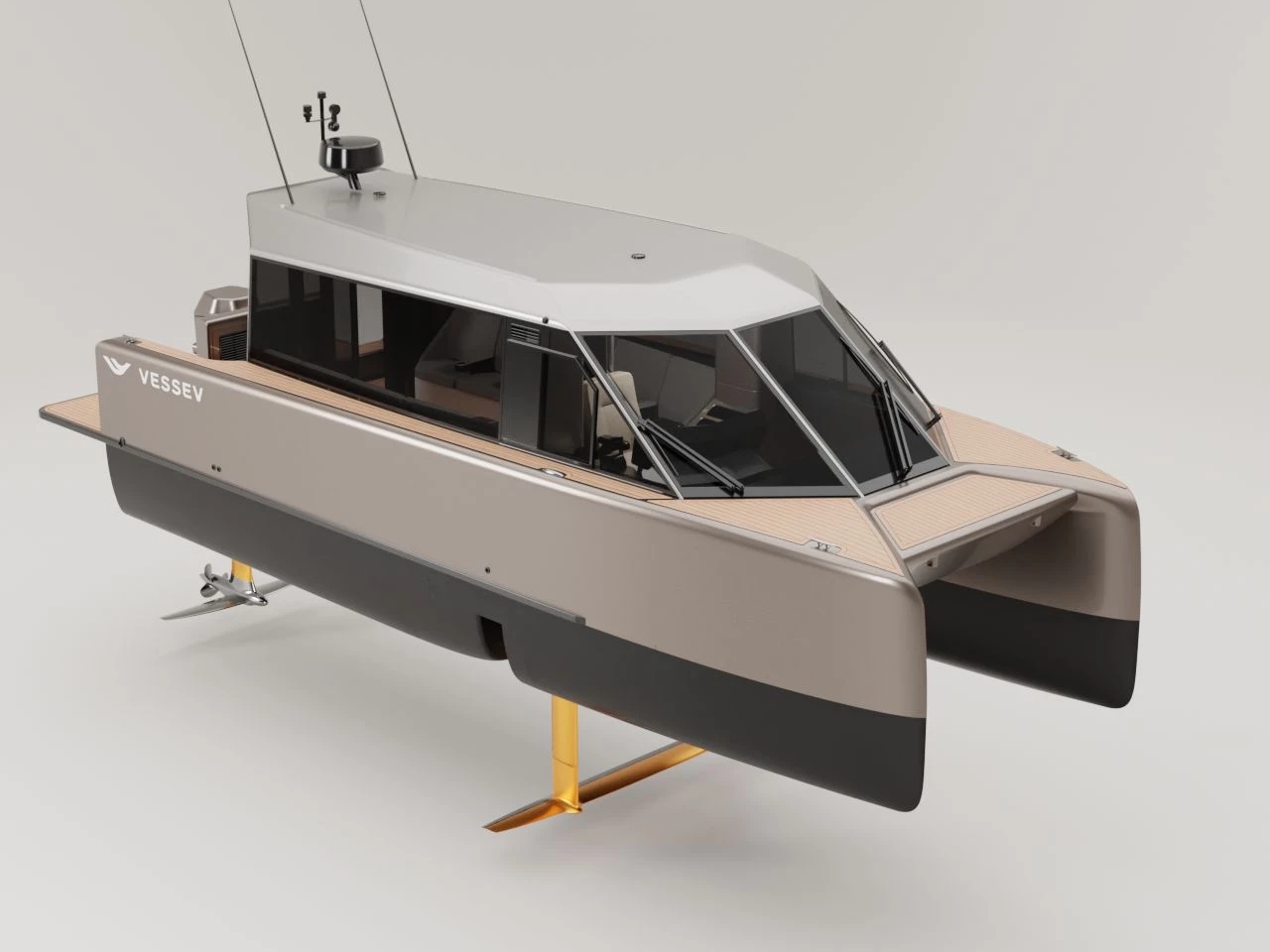
At nine meters long, the VS-9 blends state-of-the-art hydrofoil technology with passenger comfort, capable of transporting up to ten passengers at a cruising speed of 25 knots. Its retractable hydrofoils lift the vessel above the water’s surface, easily cutting through waves and creating a frictionless, smooth experience. Laakmann explained, “Flying above the waves, the VS-9 offers the comfort of a large vessel on a much more agile platform.”
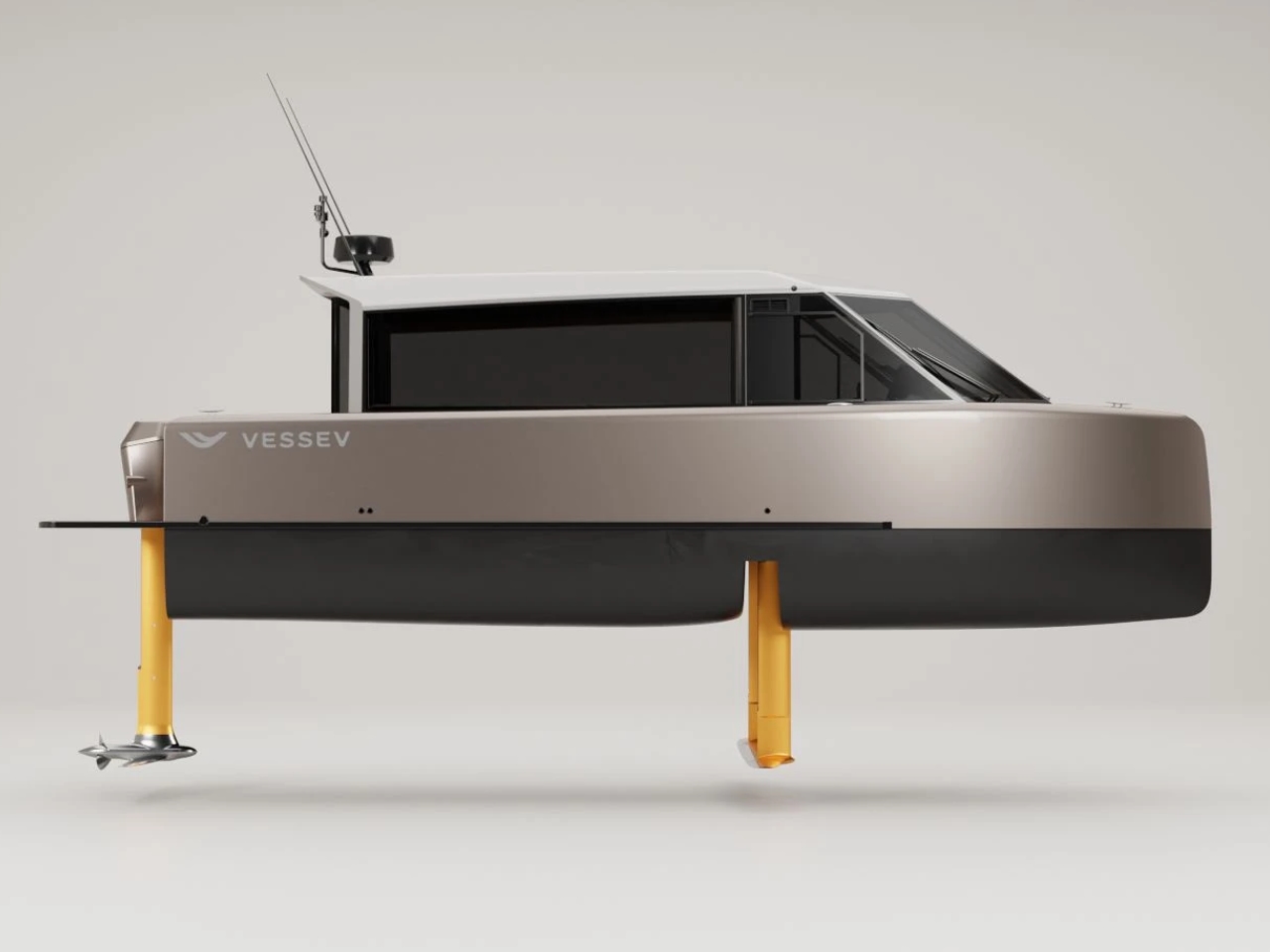
The vessel’s design revolutionizes the traditional boating experience, eliminating the need for larger ships to counteract waves. The VS-9’s hydrofoils minimize this dependency, allowing the smaller, more efficient boat to provide a premium, stable ride. With its energy-efficient design, the VS-9 lowers operational costs and reduces energy consumption by up to 95% compared to fossil fuel-powered boats.
Exterior Design: Built for Performance

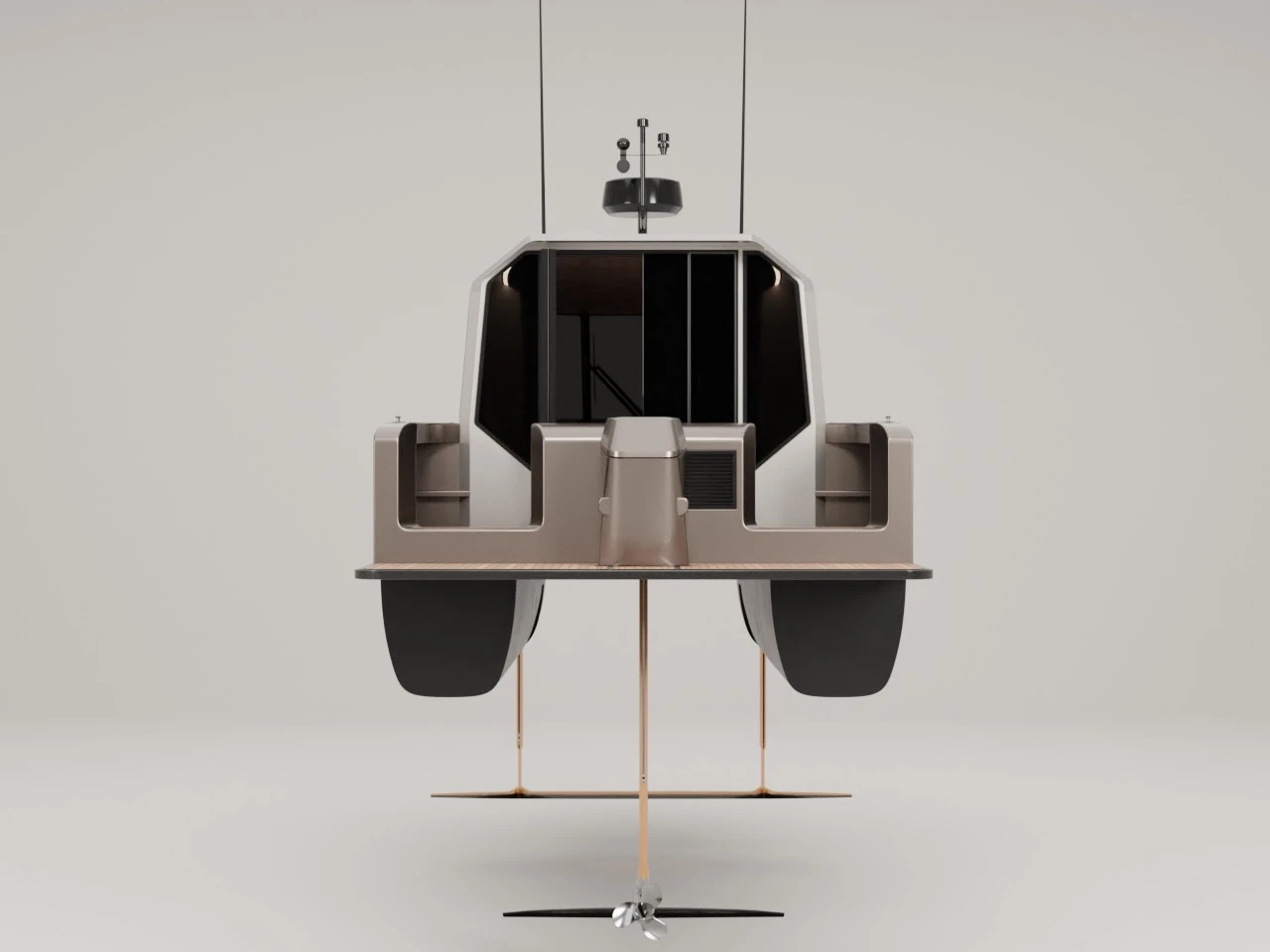
The VS-9’s exterior design emphasizes both performance and aesthetics. Crafted from carbon-fiber laminates, the lightweight hull is built for efficiency and durability. The sleek, minimalist lines flow seamlessly into the retractable hydrofoils, allowing the vessel to glide above the water or retract the foils for shallow-water navigation. Laakmann remarked, “The simplicity of the exterior is deliberate—every curve and surface has been engineered for aerodynamic and hydrodynamic performance.”
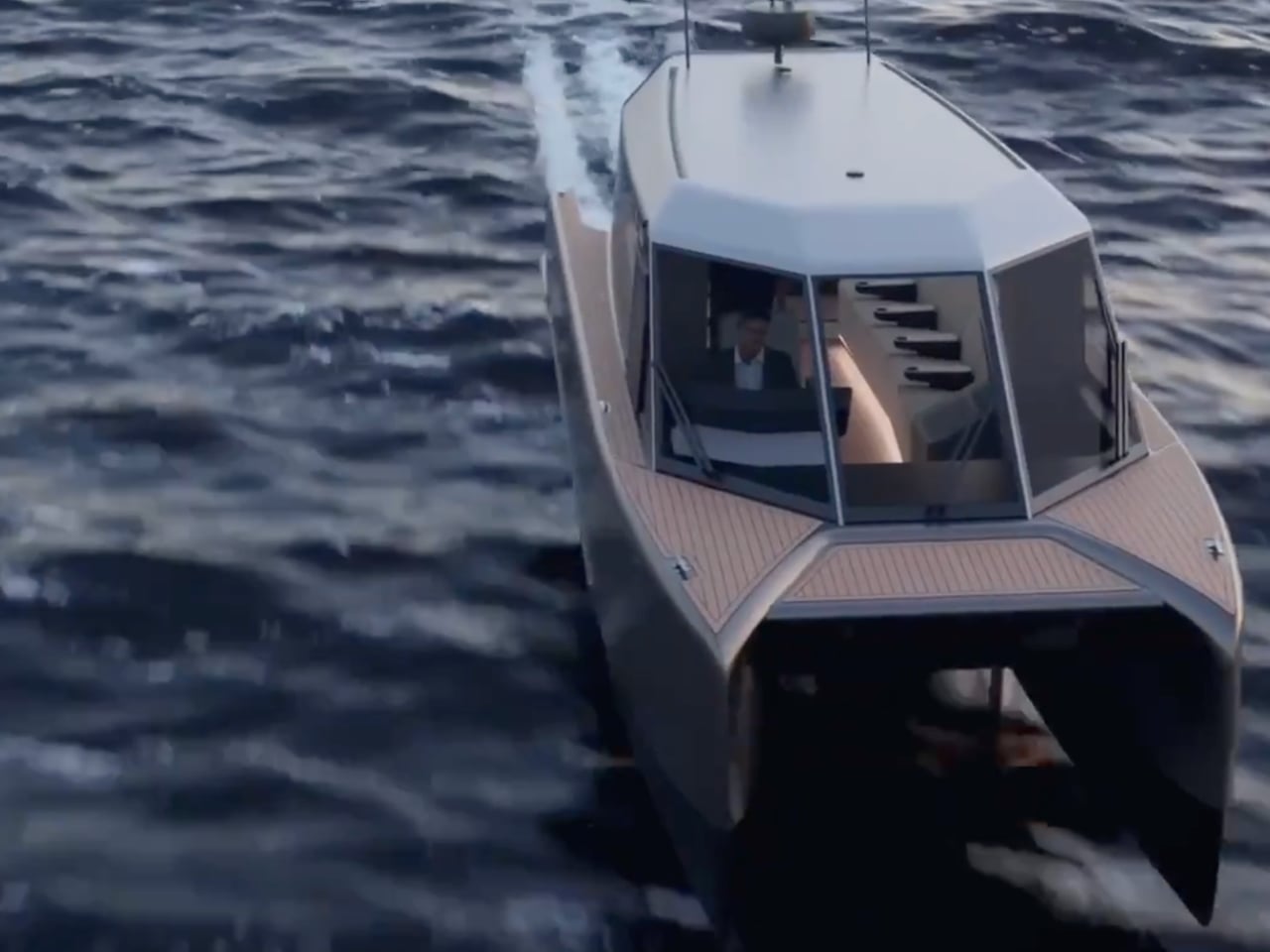
Inspired by aerospace and nautical designs, the VS-9’s exterior maintains its clean and streamlined form while ensuring real-world resilience. Whether skimming over calm bays or navigating rougher seas, the vessel’s silhouette speaks to both functionality and elegance.

Interior: Designed for Luxury

Inside, the VS-9 is no less impressive. The cabin, designed with premium materials such as leather and refined textiles, seats ten passengers comfortably in an open, spacious layout. Each seat is ergonomically designed to support long rides, while the panoramic windows offer an uninterrupted view of the water, enhancing the serene environment. The wraparound glass design ensures that passengers can enjoy the scenery without obstruction, immersing themselves in the peacefulness of the journey.

“Our goal for the cabin was to create an experience akin to private jet travel,” said Laakmann. “The wraparound glass and quiet ride make passengers feel like they are gliding above the water rather than cutting through it.”

The spacious interior combines functionality and style, providing passengers comfort and connectivity to the natural surroundings. The thoughtful design extends to the sound-dampening materials, making the VS-9 an almost silent ride, even at cruising speeds.

Advanced Technology Meets Sustainability

Vessev’s engineers, using expertise from America’s Cup-winning boats, developed a hydrofoil system equipped with high-precision flaps that adjust automatically to sea conditions, optimizing stability. This allows the VS-9 to perform reliably in larger seas. “Our hydrofoil technology gives us high control authority, making the vessel capable of handling more challenging conditions while remaining efficient,” Laakmann said.

The retractable foils allow for versatile operation in deep and shallow waters, simplifying maintenance and transport. “We designed the retractable foils to maintain pristine condition and maximum performance over time, even in varying water conditions,” Laakmann added.

Leading the Way for Future Vessels

Mike Horne, CEO of Fullers360, expressed excitement over the VS-9’s environmental and economic impact. “We aim to be 100% electric or hydrogen-powered by 2040, and hydrofoiling is a critical part of that vision. The VS-9 is the first fully electric passenger vessel operating in Auckland,” Horne said.
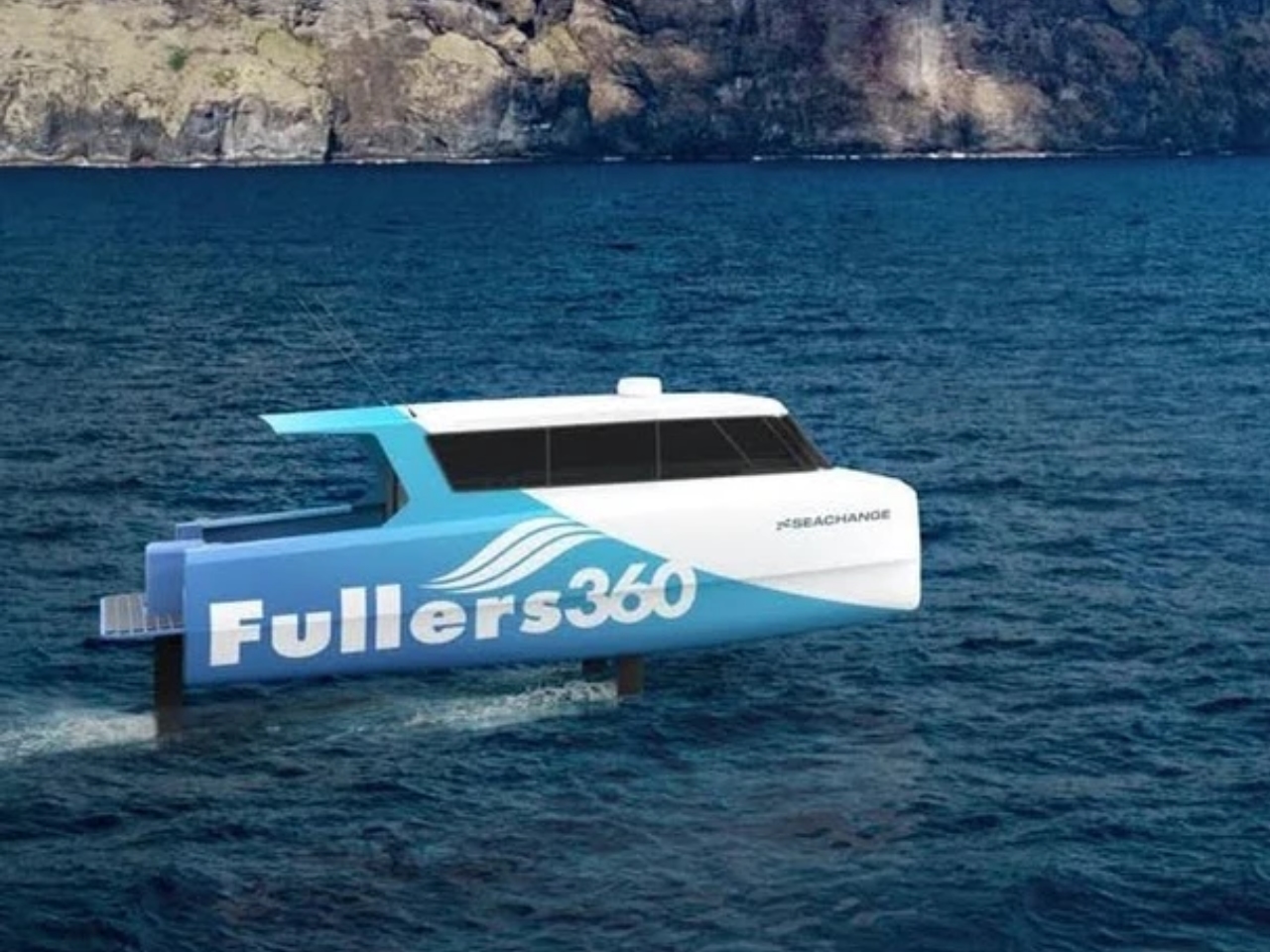
This technology is scalable, and Vessev is already developing the VS-18, a larger version capable of carrying 100 passengers. “The VS-18 will use the same technology but on a larger scale, opening up more possibilities for marine transport,” Laakmann revealed.

Charging Capabilities and Efficiency

One of the key advantages of the VS-9 is its ability to operate with existing electric infrastructure in most marinas. This eliminates the need for costly charging station installations. “We designed the VS-9 to work with the existing charging infrastructure. During sea trials, we’ve used a standard AC 3-phase connection for multiple test sessions daily, making it easy for operators to adopt electric vessels without added costs,” explained Laakmann.
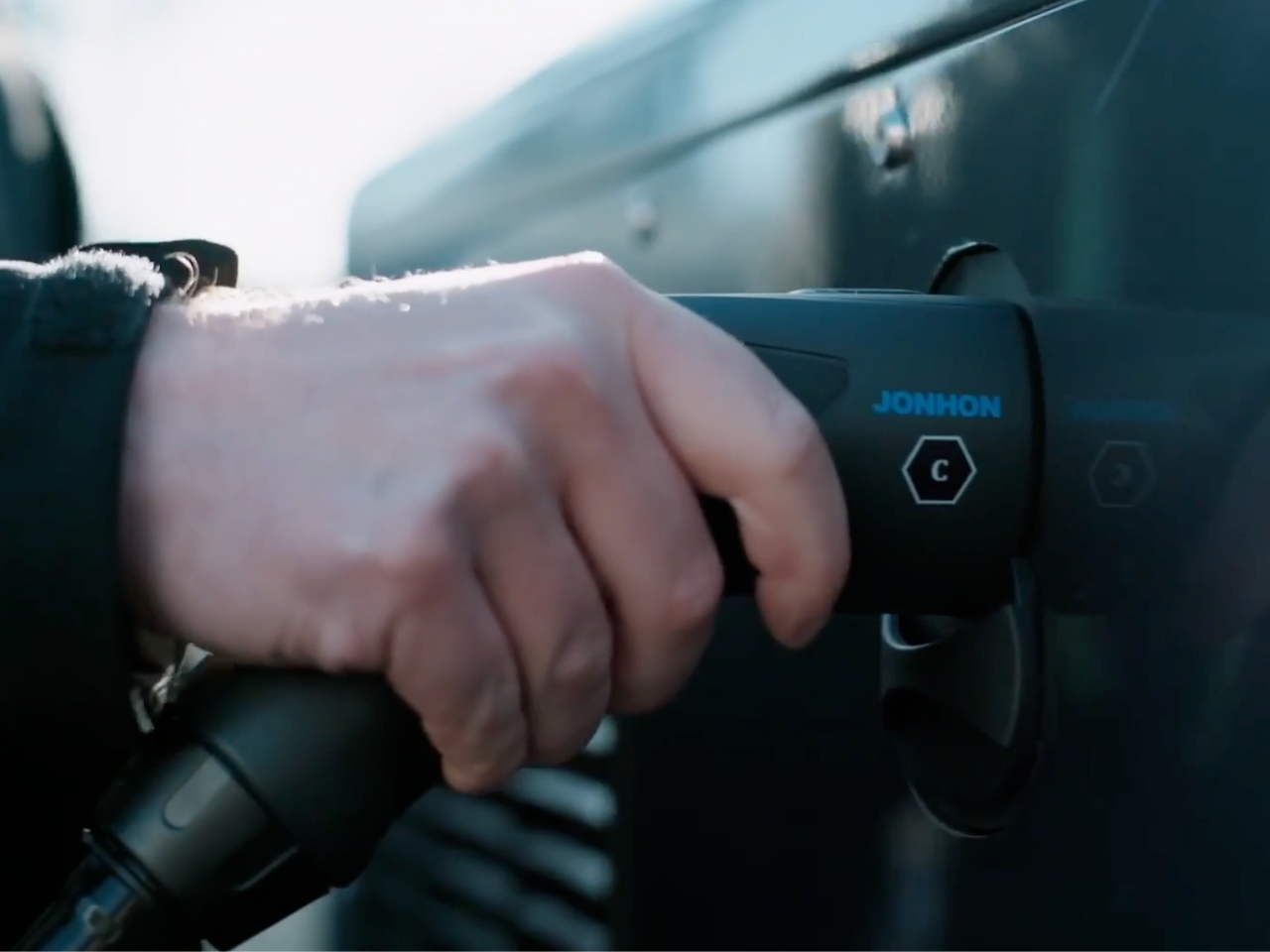
With Fullers360 as the launch partner, the VS-9 is set to transform marine transport in Auckland and beyond. “Auckland is becoming a model for green marine technology. The VS-9’s success will influence the global adoption of sustainable hydrofoiling vessels,” Horne added.

A Revolutionary Passenger Experience

Passengers aboard the VS-9 can expect a unique travel experience, with quiet, smooth gliding across the water. The hydrofoils eliminate the typical rolling sensation of traditional boats. Horne explained, “The VS-9 delivers a feeling closer to flying than sailing, creating an unmatched onboard experience compared to conventional vessels.”
With sea trials demonstrating the vessel’s capabilities, Laakmann believes hydrofoiling vessels like the VS-9 will soon become the new standard in water travel. “Within a decade, hydrofoiling vessels will no longer be rare—they will redefine how we move across the water,” Laakmann concluded.
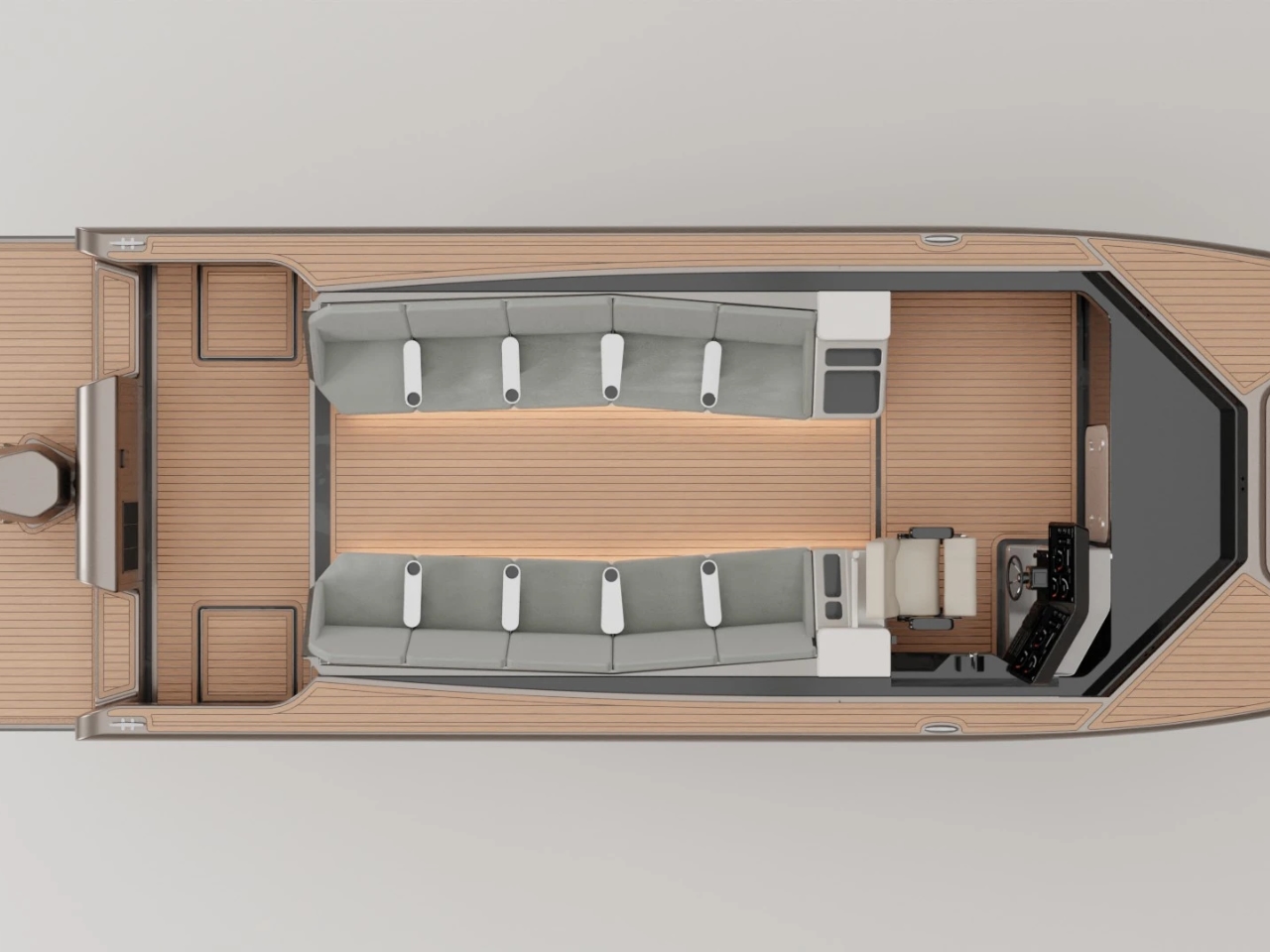
In every sense, the VS-9 sets a new bar for marine transport, combining eco-friendly technology with thoughtful design, making it an electric vessel that offers a glimpse into the future of water travel.

The post VS-9 Redefines Sustainable Marine Transport with Electric Hydrofoiling Innovation first appeared on Yanko Design.

Advanced AI chatbots are less likely to admit they don’t have all the answers

Researchers have spotted an apparent downside of smarter chatbots. Although AI models predictably become more accurate as they advance, they’re also more likely to (wrongly) answer questions beyond their capabilities rather than saying, “I don’t know.” And the humans prompting them are more likely to take their confident hallucinations at face value, creating a trickle-down effect of confident misinformation.

“They are answering almost everything these days,” José Hernández-Orallo, professor at the Universitat Politecnica de Valencia, Spain, told Nature. “And that means more correct, but also more incorrect.” Hernández-Orallo, the project lead, worked on the study with his colleagues at the Valencian Research Institute for Artificial Intelligence in Spain.

The team studied three LLM families, including OpenAI’s GPT series, Meta’s LLaMA and the open-source BLOOM. They tested early versions of each model and moved to larger, more advanced ones — but not today’s most advanced. For example, the team began with OpenAI’s relatively primitive GPT-3 ada model and tested iterations leading up to GPT-4, which arrived in March 2023. The four-month-old GPT-4o wasn’t included in the study, nor was the newer o1-preview. I’d be curious if the trend still holds with the latest models.

The researchers tested each model on thousands of questions about “arithmetic, anagrams, geography and science.” They also quizzed the AI models on their ability to transform information, such as alphabetizing a list. The team ranked their prompts by perceived difficulty.

The data showed that the chatbots’ portion of wrong answers (instead of avoiding questions altogether) rose as the models grew. So, the AI is a bit like a professor who, as he masters more subjects, increasingly believes he has the golden answers on all of them.

Further complicating things is the humans prompting the chatbots and reading their answers. The researchers tasked volunteers with rating the accuracy of the AI bots’ answers, and they found that they “incorrectly classified inaccurate answers as being accurate surprisingly often.” The range of wrong answers falsely perceived as right by the volunteers typically fell between 10 and 40 percent.

“Humans are not able to supervise these models,” concluded Hernández-Orallo.

The research team recommends AI developers begin boosting performance for easy questions and programming the chatbots to refuse to answer complex questions. “We need humans to understand: ‘I can use it in this area, and I shouldn’t use it in that area,’” Hernández-Orallo told Nature.

It’s a well-intended suggestion that could make sense in an ideal world. But fat chance AI companies oblige. Chatbots that more often say “I don’t know” would likely be perceived as less advanced or valuable, leading to less use — and less money for the companies making and selling them. So, instead, we get fine-print warnings that “ChatGPT can make mistakes” and “Gemini may display inaccurate info.”

That leaves it up to us to avoid believing and spreading hallucinated misinformation that could hurt ourselves or others. For accuracy, fact-check your damn chatbot’s answers, for crying out loud.

You can read the team’s full study in Nature.

This article originally appeared on Engadget at https://www.engadget.com/ai/advanced-ai-chatbots-are-less-likely-to-admit-they-dont-have-all-the-answers-172012958.html?src=rss

Galaxy Tab S10 Ultra hands-on: AI arrives on Samsung’s premium Android tablet

In a surprise 30-minute event today that could have been an email, Samsung unveiled new additions to its portfolio of devices this year, including the Galaxy S24 FE and the Galaxy Watch FE LTE. The highlight of today's news has to be the new Galaxy Tab S10 tablets, though, since they've long been regarded as the best premium Android tablets around. The Galaxy Tab S10+ and Tab S10 Ultra start at $1,000 and $1,200 respectively (the same price as the iPhone 16 Pro and Pro Max) and are available for pre-order today before they retail on October 3.

With the Tab S10 series, Samsung proclaims it has brought its Galaxy AI to the category, thus making AI available for all. Features introduced on its flagship S24 phones earlier this year like Circle to Search and Sketch to Image are now supported on the tablets, and those that worked with the S Pen on the S24 Ultra, like Handwriting Assist and Note Assist, are here too. I spent some time with the new hardware and, though it's too early to tell if these updates work well, I can still say these are probably going to remain the best Android tablets around.

When I picked up a Galaxy Tab S10 Ultra at Samsung's event today, I once again marveled at how thin and light it was, despite having already experienced the same feelings with all of Samsung's previous tablets. To recap, the Tab S10 Ultra has a 14.6-inch screen, while the Tab S10+ comes in at 12.4 inches. Both these AMOLED panels have anti-reflective finishes, and the devices are rated IP68 for durability, despite being so satisfyingly slim. They feel like blades you could potentially use to slice very soft sponge cakes with. 

I was able to pick up a Tab S10 Ultra with very little effort or muscle strain, and though it's usually difficult to maneuver such a wide screen, the fact that I could easily wield it with one hand made things easier.

Side view of a Galaxy Tab S10 Ultra on a stand with a hand holding an S Pen and drawing on it.
Cherlynn Low for Engadget

There's not much that's changed compared to the Galaxy Tab S9, other than that the S10 series uses MediaTek's Dimensity 9300+ processors, instead of Qualcomm's Snapdragon chips. I'm not convinced that these chips have the power or energy efficiency to multitask or execute AI tasks efficiently, but that's not something I can determine at a hands-on event. 

Samsung's AMOLED panels remain vibrant and bright, providing excellent media consumption experiences. It was hard to gauge how effective the anti-reflective treatment was under the harsh lights set up for the event, but for the most part I found things easy to see. 

And though I didn't linger too long on any of the Galaxy AI features on the Tab S10 series, I can tell you I've had fun playing with the very same tools on the S24 flagships we've reviewed throughout the year. Whether it's the S24 Ultra with an S Pen or the Z Fold 6 and Z Flip 6, Samsung's slate of hardware this year have all received the Galaxy AI suite of writing and photo editing tools. We've already had time to ruminate how useful any of these things really are in the real world, and in general our impressions have been a resounding "meh." 

I have been impressed with how Sketch to Image has been able to transform crappy drawings of animals into realistic looking beasts in photos, and Circle to Search is a Google tool that makes it easier to look up items by drawing a ring around them. Many of the other Galaxy AI features, like most generative AI tools today, are only moderately helpful.

We'll need to spend more time with the Tab S10 Ultra, Tab S10+, Galaxy S24 FE and even the Galaxy Watch FE LTE to determine if they're worth spending your money on. But for now, I have to admit that it's nice to see Samsung roll out all its Galaxy AI features across its lineup, resulting in a sense of cohesion and parity even in its lower cost offerings. Apple Intelligence, meanwhile, will require an iPhone 15 Pro, iPhone 16 or iPhone 16 Pro, and won't work if you only have an iPhone 15. It's clear we're deep into the generative AI age, and will not be able to avoid them much longer, especially now that they're getting more prevalent across the Android ecosystem.

This article originally appeared on Engadget at https://www.engadget.com/computing/galaxy-tab-s10-ultra-hands-on-ai-arrives-on-samsungs-premium-android-tablet-171105485.html?src=rss

StarCraft: Remastered and StarCraft II are coming to PC Game Pass

StarCraft: Remastered and StarCraft II: Campaign Collection are coming to PC Game Pass, as announced by Xbox at Tokyo Game Show. Both titles will be available on November 5 to anyone with a PC Game Pass or Game Pass Ultimate subscription.

The multiplayer components of both games are already free-to-play on PCs, but this will allow people to experience the single-player campaigns. Starcraft II: Campaign Collection, for instance, includes over 70 missions pulled from all of the various DLC, like Wings of Liberty and Heart of the Swarm, among others.

StarCraft: Remastered adds some modern goodies to the original game, like 4K visuals, enhanced audio and newly-designed leaderboards. This update has been floating around since 2017, but Game Pass availability should introduce the iconic 1998 real-time strategy (RTS) title to a new audience.

Despite getting a bit long in the tooth, both games still have active multiplayer communities. This also holds true in the world of professional competitive gaming. Many credit StarCraft II, which released back in 2010, with assisting in the rise of live streaming.

This isn’t the only Blizzard-centric news to come out of Tokyo Game Show. Overwatch 2 is getting (probably very expensive) skins based on the anime My Hero Academia. This promotion goes from October 17 to 30.

This article originally appeared on Engadget at https://www.engadget.com/gaming/pc/starcraft-remastered-and-starcraft-ii-are-coming-to-pc-game-pass-170133814.html?src=rss

Samsung debuts the Galaxy S24 FE and Galaxy Watch FE LTE

If you're a fan of getting flagship-quality features at more affordable prices, Samsung's FE series is meant for you. Today, the company revealed its two latest entries: the Galaxy S24 FE and Galaxy Watch FE LTE. Both devices pack in tools from the Galaxy S24 and Galaxy Watch, including things like AI-powered photo editing, fitness tracking and more. Additionally, they'll both be available next week, so you won't have to wait long to buy them. 

Like previous FE devices, the Galaxy S24 FE offers many of the attractive features from the regular S24 at a more affordable price. Starting at $650, the phone packs a 6.7-inch FHD+ Dynamic AMOLED 2X display with 120Hz adaptive refresh rate. Inside, a Exynos 2400e processor and 8GB RAM run Android 14 and One UI 6.1. Of course, there a number of AI-powered features here, including Circle to Search, Interpreter, Live Translate, Composer and Note Assist. Knox security in onboard once more, as is a 4,700 mAh battery and IP68-rated design.

Cameras are always a big deal on phones and the S24 FE is no exception. The device runs Samsung AI-driven ProVisual Engine to improve low-light performance, zoomed image quality and Super High Dynamic Range (HDR) color optimization. There are also AI features like Generative Edit, Portrait Stuiod, Edit Suggestions and Instant Slow-mo. Stills and video are captured by a 50MP wide and 12MP ultra wide cameras. There's also an 8MP telephoto camera with 3x optical zoom. Around front, a 10MP sensor snaps your selfies.

Samsung also says the S24 FE is well-suited for gaming. Thanks to the Exynos processor, the phone offers ray tracing and the 120Hz display has a Vision Booster tool so color and contrast remain "clear and comfortable" outdoors. There's also a larger vapor chamber compared to the S23 FE, which improves overall cooling performance.

The Galaxy S24 FE will be available on October 3 in blue, graphite, gray and mint color options in 128GB, 256GB and 512GB storage configurations. Pre-orders start today.

Samsung already debuted a Galaxy Watch FE this summer, but now the company is back with an LTE version. Starting at $250, this model allows you to call, text and more when you're away from your phone. You'll get a a 1.2-inch Super AMOLED display along with fitness and sleep tracking, heart-rate monitoring and more — all powered by Wear OS. It's basically a Galaxy Watch 7 with LTE, as my colleague Cherlynn Low describes it.

The Galaxy Watch FE LTE will be available on October 3. Pre-orders start today.

This article originally appeared on Engadget at https://www.engadget.com/mobile/smartphones/samsung-debuts-the-galaxy-s24-fe-and-galaxy-watch-fe-lte-163530908.html?src=rss

Samsung’s Galaxy Tab S10 Ultra and Galaxy Tab S10+ are tablets built for AI

Samsung is once again expanding its tablet lineup, and this time, the company is doing so with AI at the forefront. Today, Samsung revealed the Galaxy Tab S10 series, two models that it says are "built with AI enhancements available right out of the box." The 14.6-inch Galaxy Tab S10 Ultra and 12.4-inch Galaxy Tab S10+ both pack anti-reflective Dynamic AMOLED 2X displays, a quad speaker setup with AI Dialogue Boost and a robust IP68 durability rating. Both tablets will be available next month.

Powered by Android 14, the Galaxy Tab S10 Ultra's Dynamic AMOLED 2X display offers a 120Hz refresh rate and 2960 x 1848 resolution. A MediaTek Dimensity 9300+ processor and either 12GB or 16GB RAM runs the AI tools and other features, which include Circle to Search, Handwriting Assist, Note Assist and Sketch to Image — all done with the included S Pen. The stylus also enables Air Command with AI so that you'll get access to powerful features without having to toggle through a menu. The Tab S10 Ultra can act as a "home AI hub" for all of your SmartThings devices, providing a 3D Map View and Insight Messages to assist with on-going monitoring. 

The Galaxy Tab S10 Ultra is equipped with 13MP and 8MP ultra wide rear cameras and 12MP and 12MP ultra wide front-facing cameras. It has Wi-Fi 7, 5G and Bluetooth 5.3 connectivity and a 11,200 mAh battery. With one click, you can situate the tablet as a second screen and Samsung Knox security is available as well. In addition to the S Pen, the optional accessories include two keyboard covers, a smart book cover and an outdoor cover. 

The Galaxy Tab S10 Ultra will be available in Moonstone Gray and Platinum Silver starting at $1,200 for the 256GB model. 512GB and 1TB options will also be on the menu. If you need even more space, a MicroSD slot offers up to 1.5TB. Pre-orders start today. 

The spec sheet for the Tab S10+ is almost identical to the Tab S10 Ultra, but there are some key difference. The smaller, 12.4-inch display offers a resolution of 2800 x 1752, but maintains the 120Hz refresh rate. The camera array is also the same on the rear, but the front only carries a 12MP ultra wide sensor. Both storage configurations of the Tab S10+ have 12GB of RAM and this smaller tablet has a smaller 10,090 mAh battery. 

The Galaxy Tab S10+ will be available in Moonstone Gray and Platinum Silver starting at $999 for the 256GB model. A 512GB option will also be available and the MicroSD slot is here as well (up to 1.5TB). Pre-orders start today.

This article originally appeared on Engadget at https://www.engadget.com/mobile/tablets/samsungs-galaxy-tab-s10-ultra-and-galaxy-tab-s10-are-tablets-built-for-ai-162633747.html?src=rss

The Last of Us season two trailer shows Ellie in danger and Joel in… therapy?

September 26 is The Last of Us Day and to mark the occasion, HBO has dropped the first proper trailer for season two of its misery simulator TV adaptation. This expands on a sizzle reel we saw several weeks ago, which included the first glimpses of Catherine O’Hara’s character (seemingly a therapist) and Kaitlyn Dever as a pivotal newcomer, Abby. There’s more of both here, including that terrifying sequence of infected nearly crushing Abby under a chain-link fence.

There are quite a few other recognizable moments from The Last of Us Part II in the new clip, including an encounter between Ellie (Bella Ramsey) and an infected in an abandoned supermarket and a famous scene of her playing guitar for Dina (Isabela Merced). The game’s subway segment is featured, along with the Seraphites and Jeffrey Wright, who reprises his Part II role as the leader of a militant faction. Of course, Joel (Pedro Pascal) is featured throughout the trailer too — he plays guitar with Ellie and sheds a tear, seemingly while in a therapy appointment with O'Hara.

Unfortunately, the clip doesn’t narrow down the release date for the season, which will air in 2025. However, HBO boss Casey Bloys recently indicated it will arrive in the first half of next year to make it eligible for the next Emmy awards (the same goes for the next season of The White Lotus).

Elsewhere, Naughty Dog is marking TLoU Day in its own way with some new merch and other tidbits. There’s a new bunch of TLoU-related avatars and emoji you can pick up using Steam Points, along with a thematic Steam Deck startup video. Meanwhile, PS Plus Extra and Premium members have access to the PS5 remake of the first game at no extra cost starting today.

This article originally appeared on Engadget at https://www.engadget.com/entertainment/tv-movies/the-last-of-us-season-two-trailer-shows-ellie-in-danger-and-joel-in-therapy-160401898.html?src=rss

NotebookLM can now summarize YouTube videos

You can now upload YouTube videos and audio files to NotebookLM, an AI-powered summarizing tool for education and research. The update means Google's Gemini 1.5 Pro-powered virtual assistant can now handle Google Docs, PDFs, text files, Google Slides, YouTube video URLs, audio files and web pages. This expands NotebookLM's potential sources to include lecture recordings, informative YouTube content and group discussions. Google claims that it securely stores all information uploaded to NoteBookLM and does not use it to train AI.

Google launched the virtual research assistant in the summer of 2023 and upgraded it to run on Gemini 1.5 Pro this past June. Alongside the AI-powered bump, Google expanded NotebookLM to be available in over 200 countries and territories. Most recently, Google added Audio Overview to NotebookLM. The tool has two AI hosts — hopefully not foreshadowing what hosting will look like in the future — discuss your sources, summarize material and "banter." Google is now adding the ability to share Audio Overviews with others through a public URL. 

The irony here is that the reason we'd need an AI to briefly summarize a YouTube video in the first place is because Google incentivized the creation of ever-longer videos.

This article originally appeared on Engadget at https://www.engadget.com/notebooklm-can-now-summarize-youtube-videos-160037375.html?src=rss

Apple’s silicone MagSafe iPhone 16 cases are 14 percent off in this early Prime Day deal

The iPhone 16 is currently available and, well, these handsets are expensive. Investing in a case is never a bad idea and Apple makes some solid offerings. The company’s silicone MagSafe iPhone 16 cases are on sale via Amazon for $42, which is a discount of 14 percent.

The sale includes eight colorways, so as to better match the hue of the phone itself. As previously mentioned, these cases are made by Apple specifically for the iPhone 16, so the fit will be perfect. It’s made from recycled silicone, with a microfibre lining on the inside for more protection.

This is a MagSafe case, meaning it allows for wireless charging by setting it on a Qi2 or Qi-certified charger. It’s also been designed with the iPhone 16’s camera button in mind. The company says the case includes a “sapphire crystal, coupled to a conductive layer” that communicates finger movements. Translation? All of those neat swipey gestures will still work.

This case is only for the standard iPhone 16. It won’t fit the iPhone 16 Plus, the Pro or the Pro Max. It goes without saying that it also won’t squeeze over any handsets from previous generations.

Follow @EngadgetDeals on Twitter for the latest tech deals and buying advice in the lead up to October Prime Day 2024.

This article originally appeared on Engadget at https://www.engadget.com/deals/apples-silicone-magsafe-iphone-16-cases-are-14-percent-off-in-this-early-prime-day-deal-152546345.html?src=rss