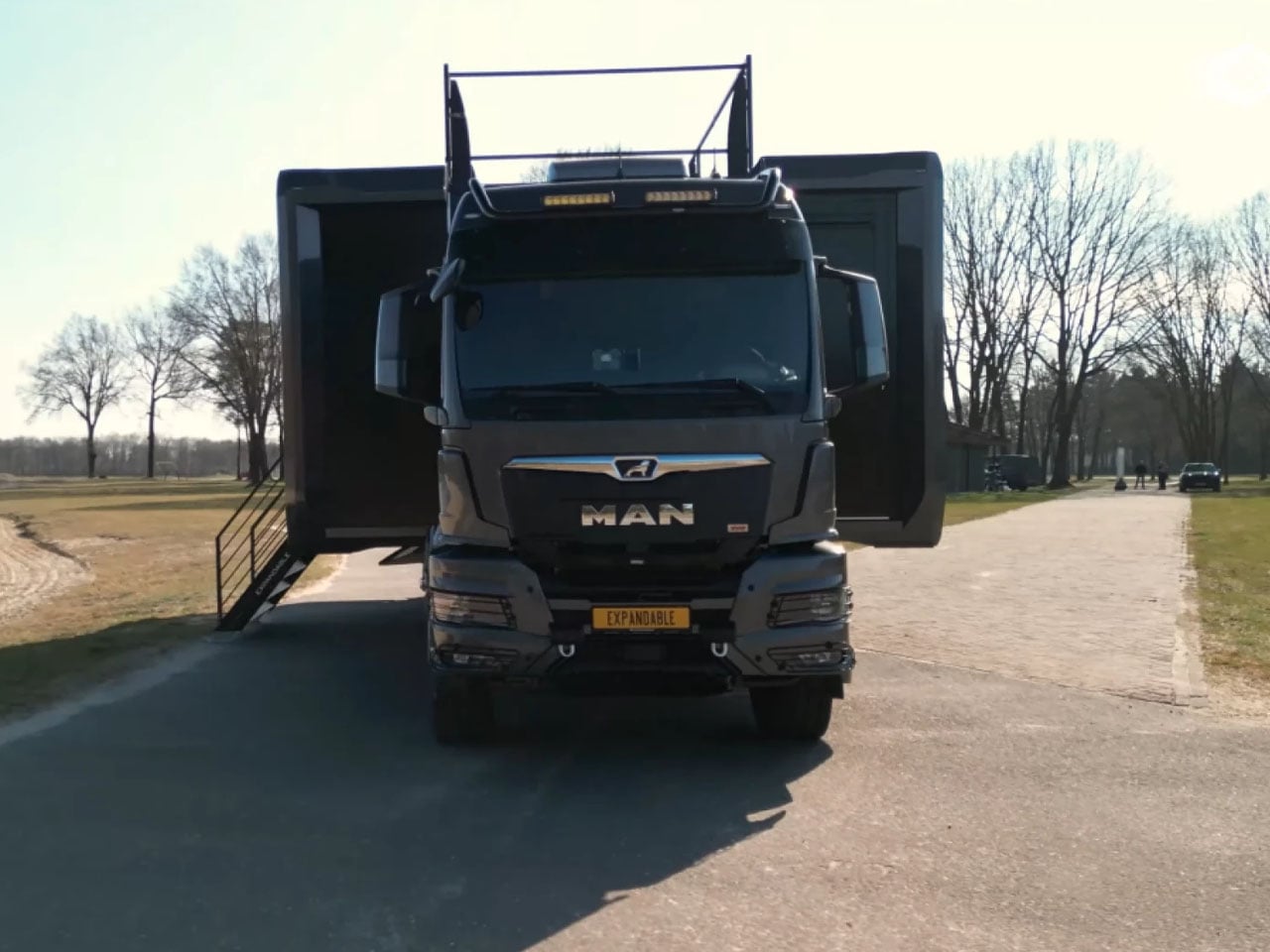
Shiver x Expandable 6×6 motorhome will deliver comfortable mobile lodging for a team of six

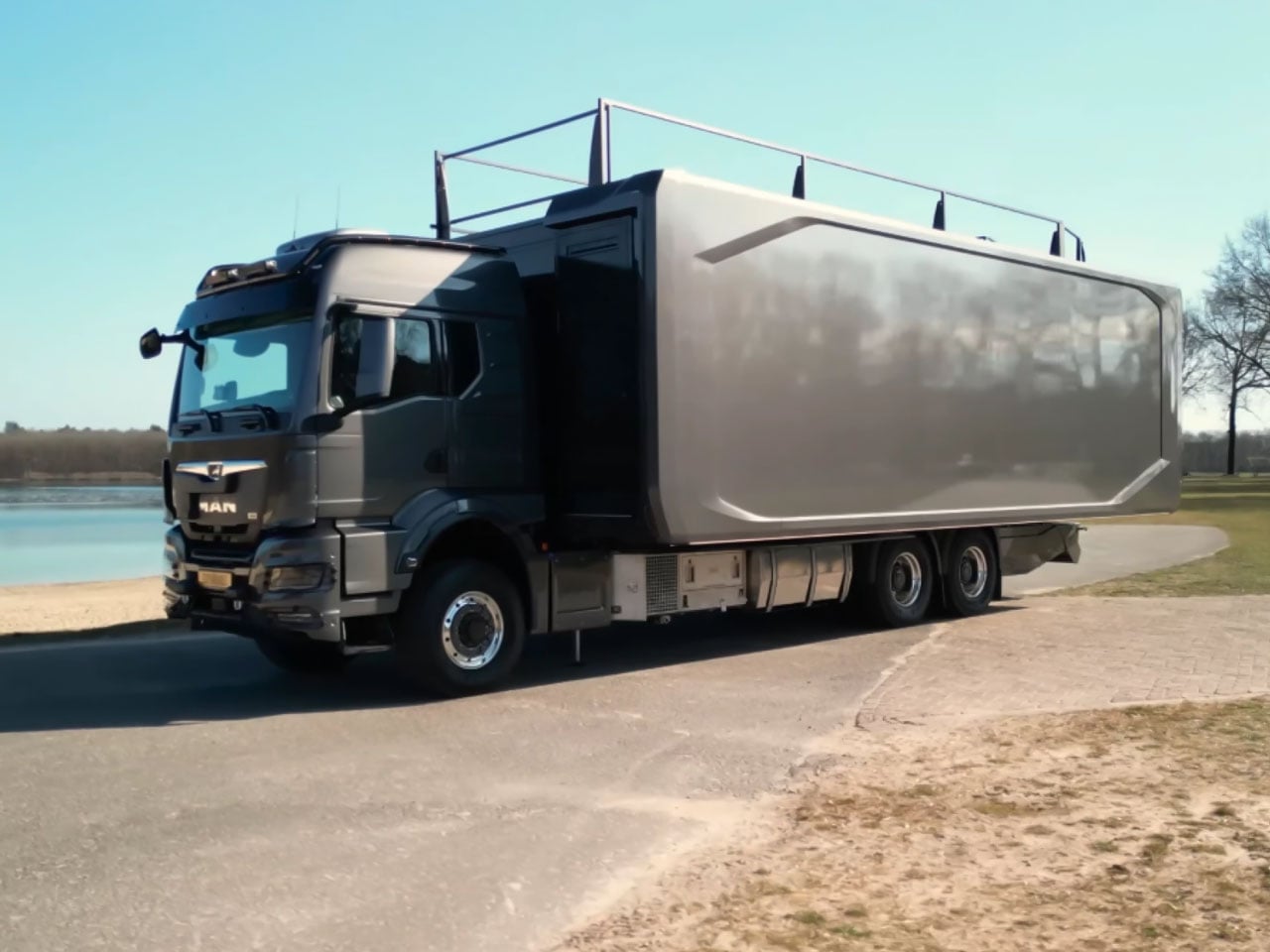
We have seen luxurious mobile homes, liveable work pods built on trailers, and compact campers to slide onto the truck beds. But this expandable rig is not going that route; it’s changing the spectrum by presenting itself as a first self-sufficient ‘dorm on wheels.’ Perhaps, Expandable Trailers, the company behind the build, will refrain from calling its dedicated creation something on those lines, but if you’re a team of six, requiring a ‘dependable space to rest, recharge, and regroup’ – before a game in the city or in the middle of a sandstorm – this expandable pod is all that you will want.

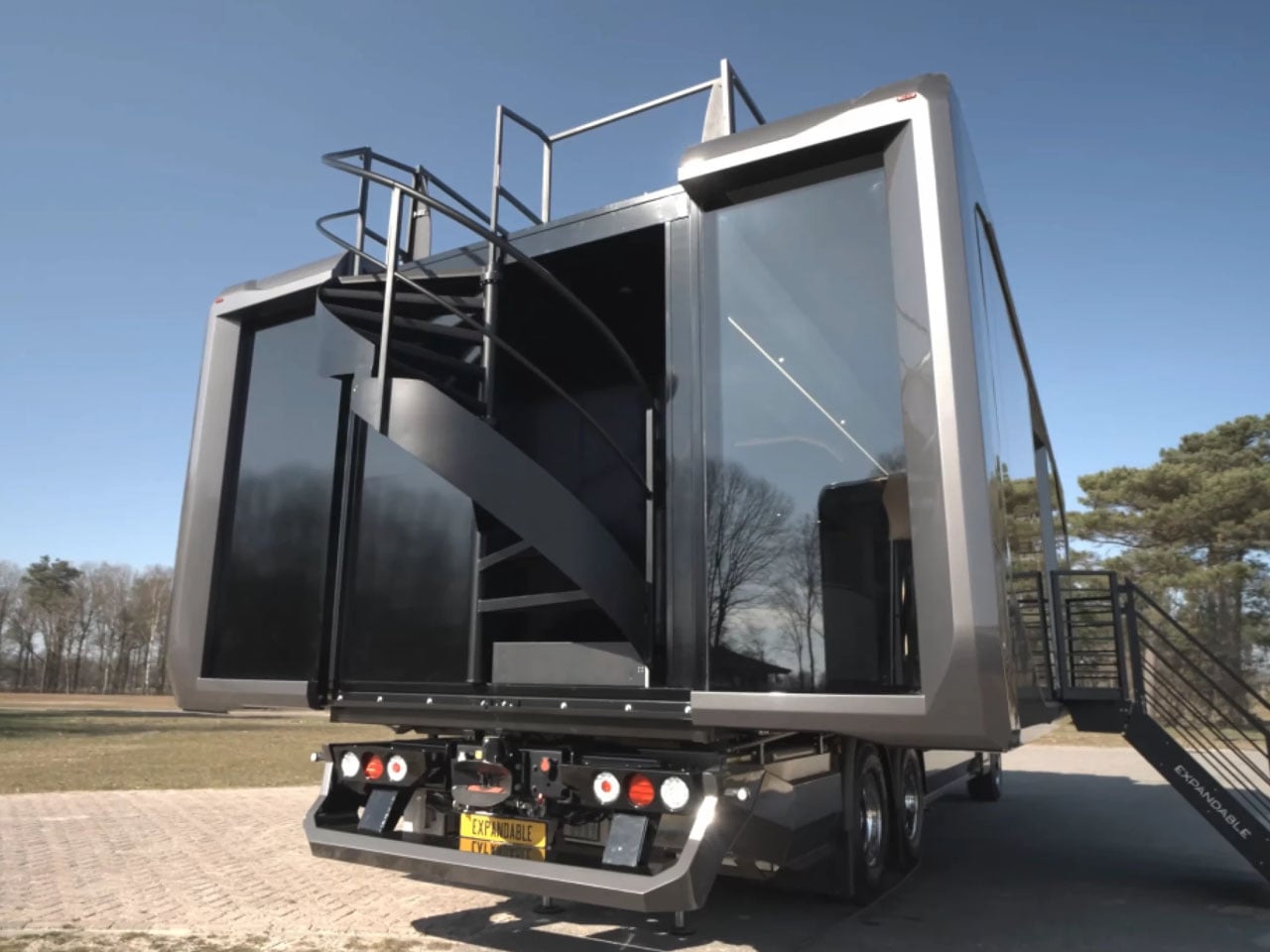
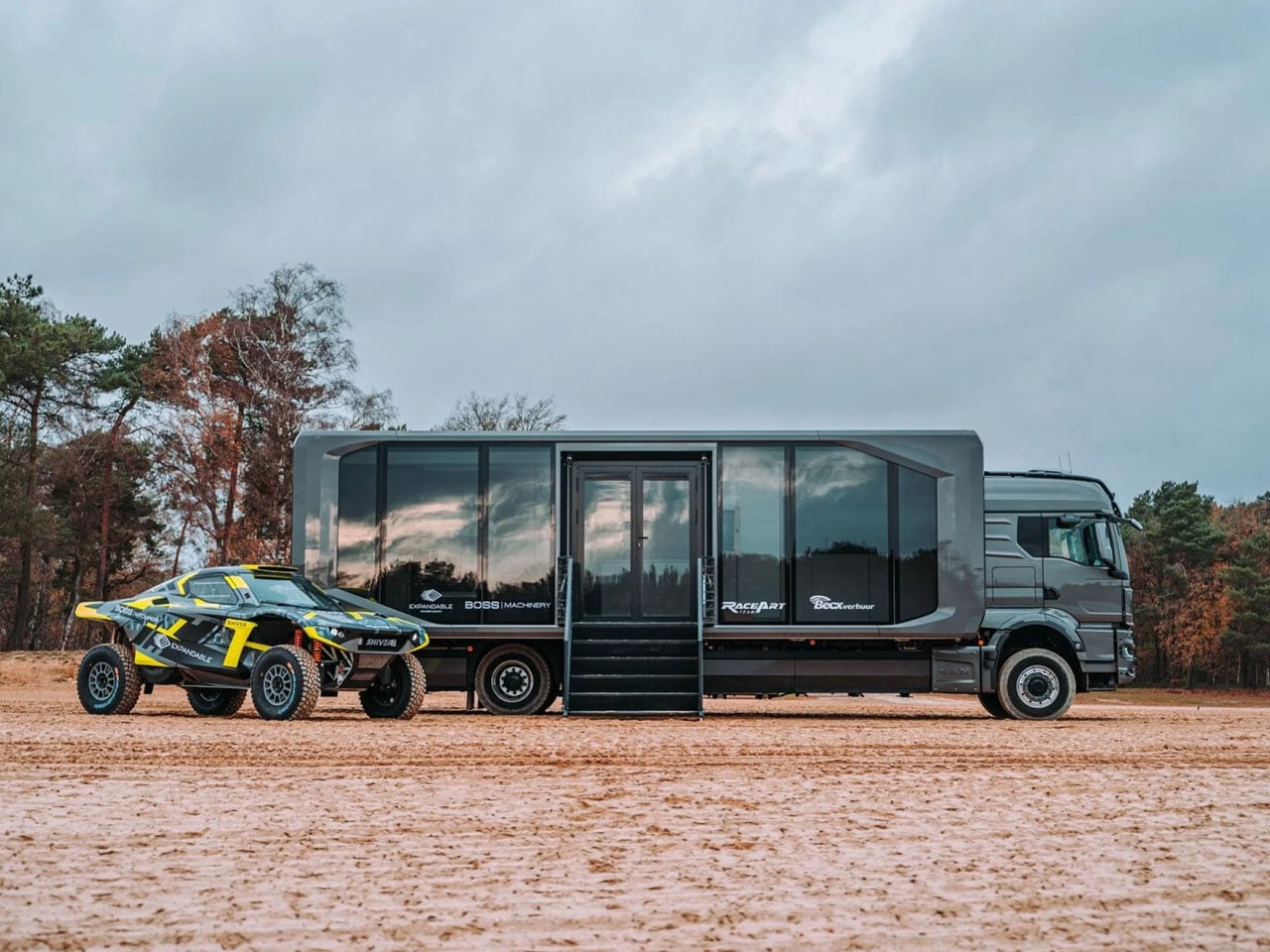
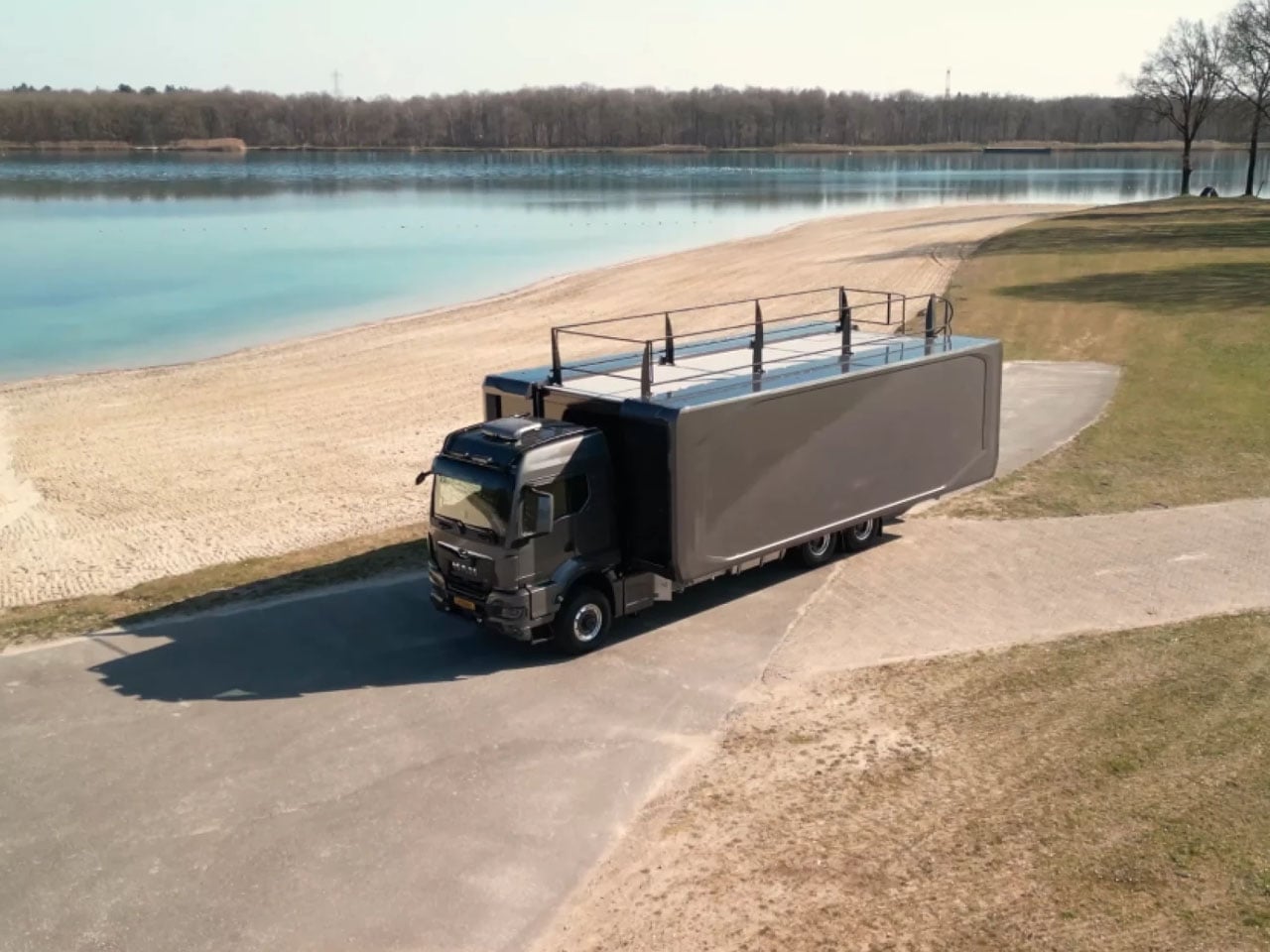
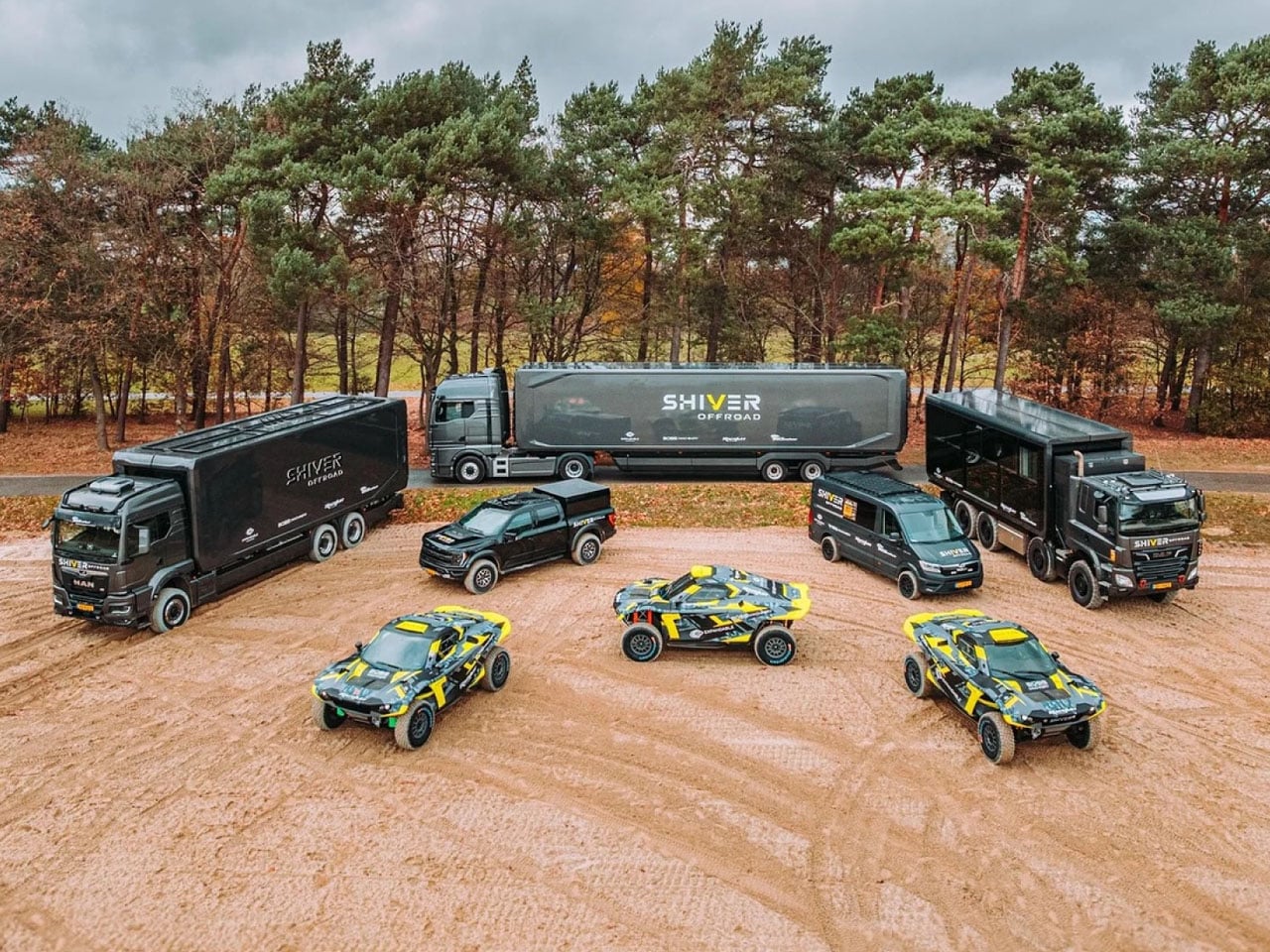
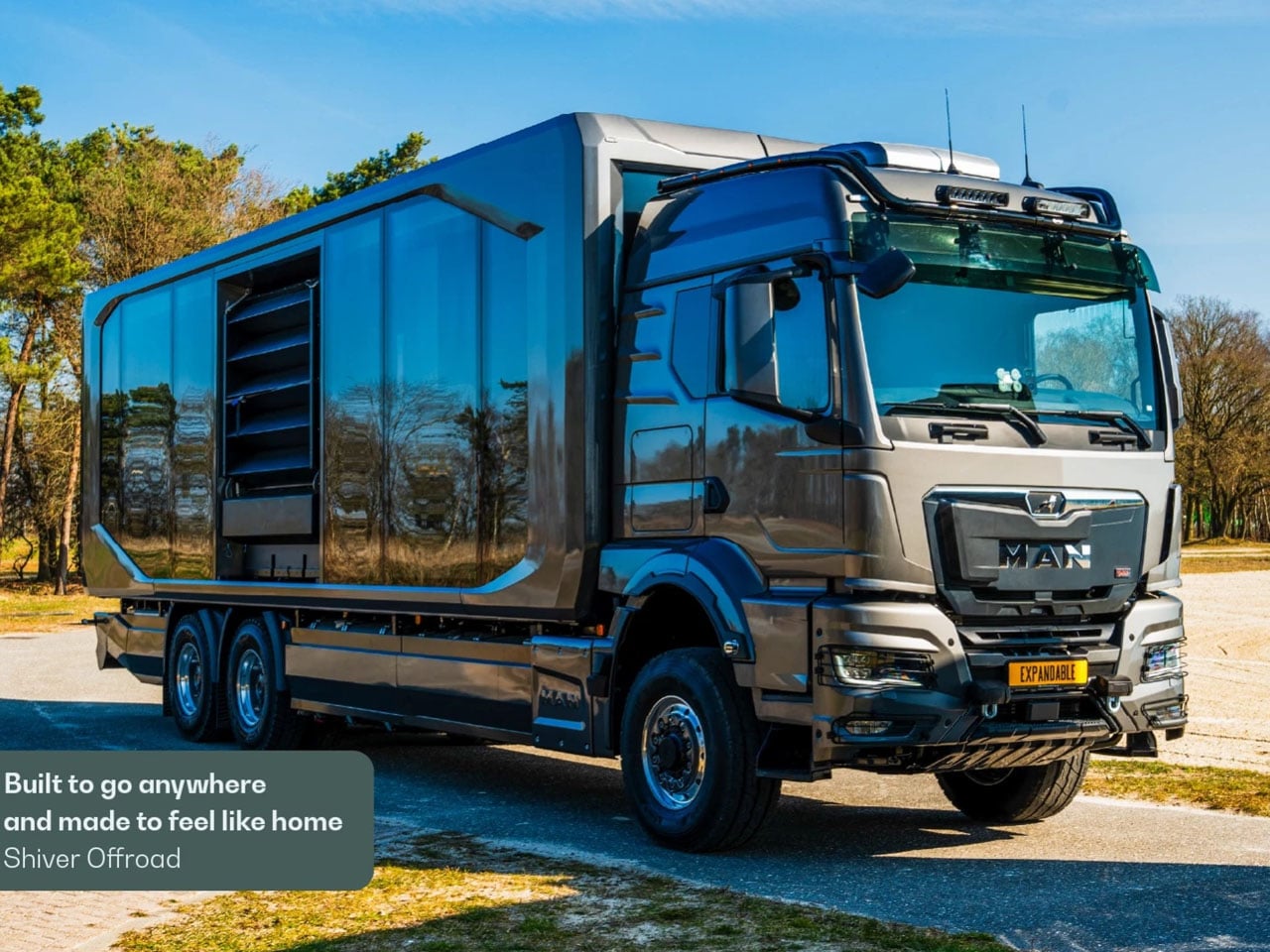
Expandable Trailers has custom-built this 30-foot expandable motorhome for Shiver Offroad, a prominent raid team that’s a regular at the Dakar Rally – a challenging desert race. It is based on a MAN 6×6 HD truck chassis for the team that needs a stable and comforting basecamp in the most remote place, without compromising space, facilities, and functionality necessary for all the individual and team needs. The compact Shiver Offroad mansion is designed to expand on location into a spacious living area for six.

Designer: Expandable Trailers

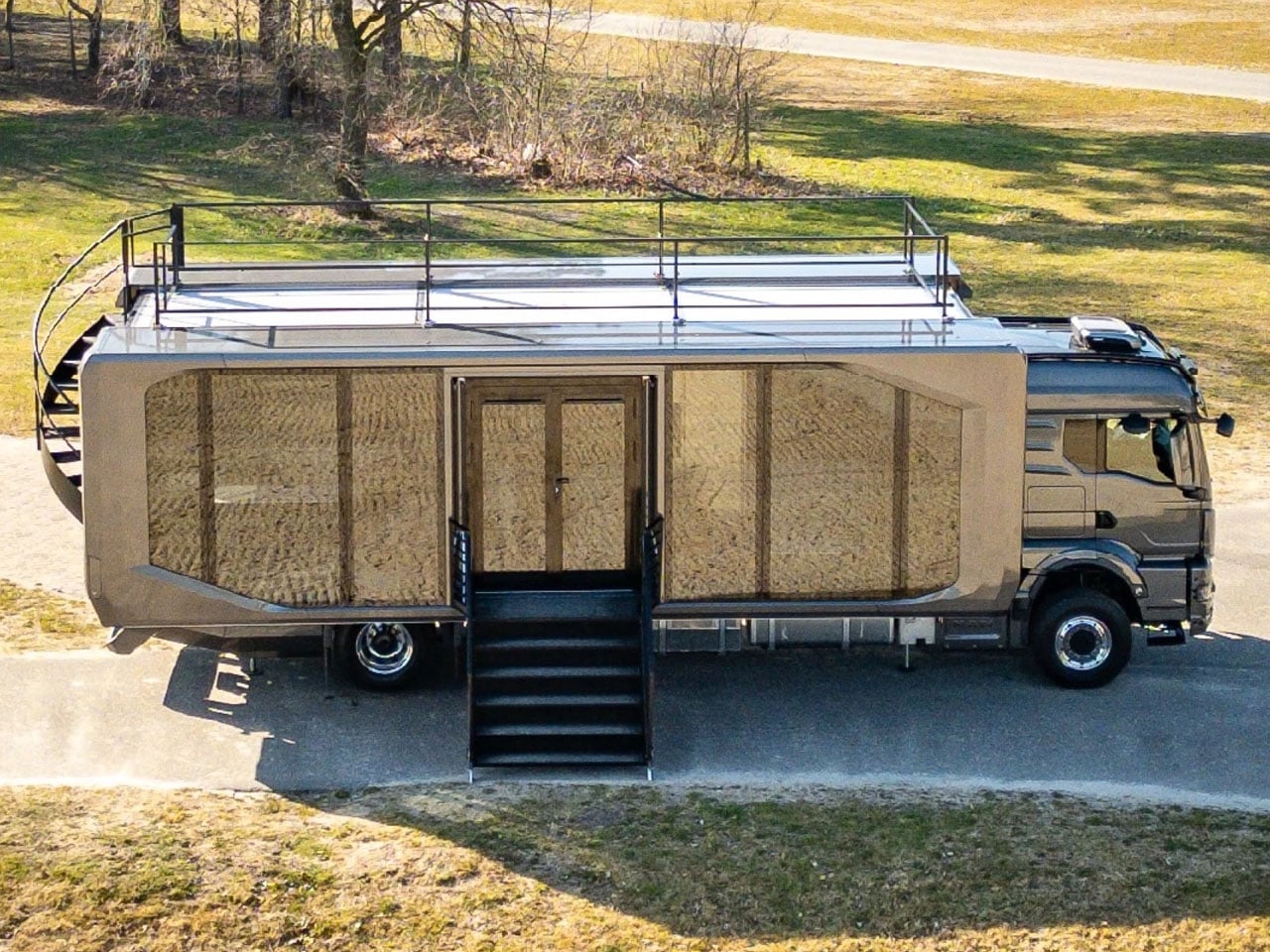
The Shiver x Expandable motorhome is not about pomp and show, even though it’s built on the Expandable Trailers’ signature expanding mechanism, which opens the interior on either side for all the necessary elements Shiver Offroad may need for its team of six. It is for all good reasons, a mobile space that puts functionality and comfort ahead of everything else. “No hassle with temporary tents or booking accommodations. Just pull up, expand, and get to work — or rest,” the company press information notes.

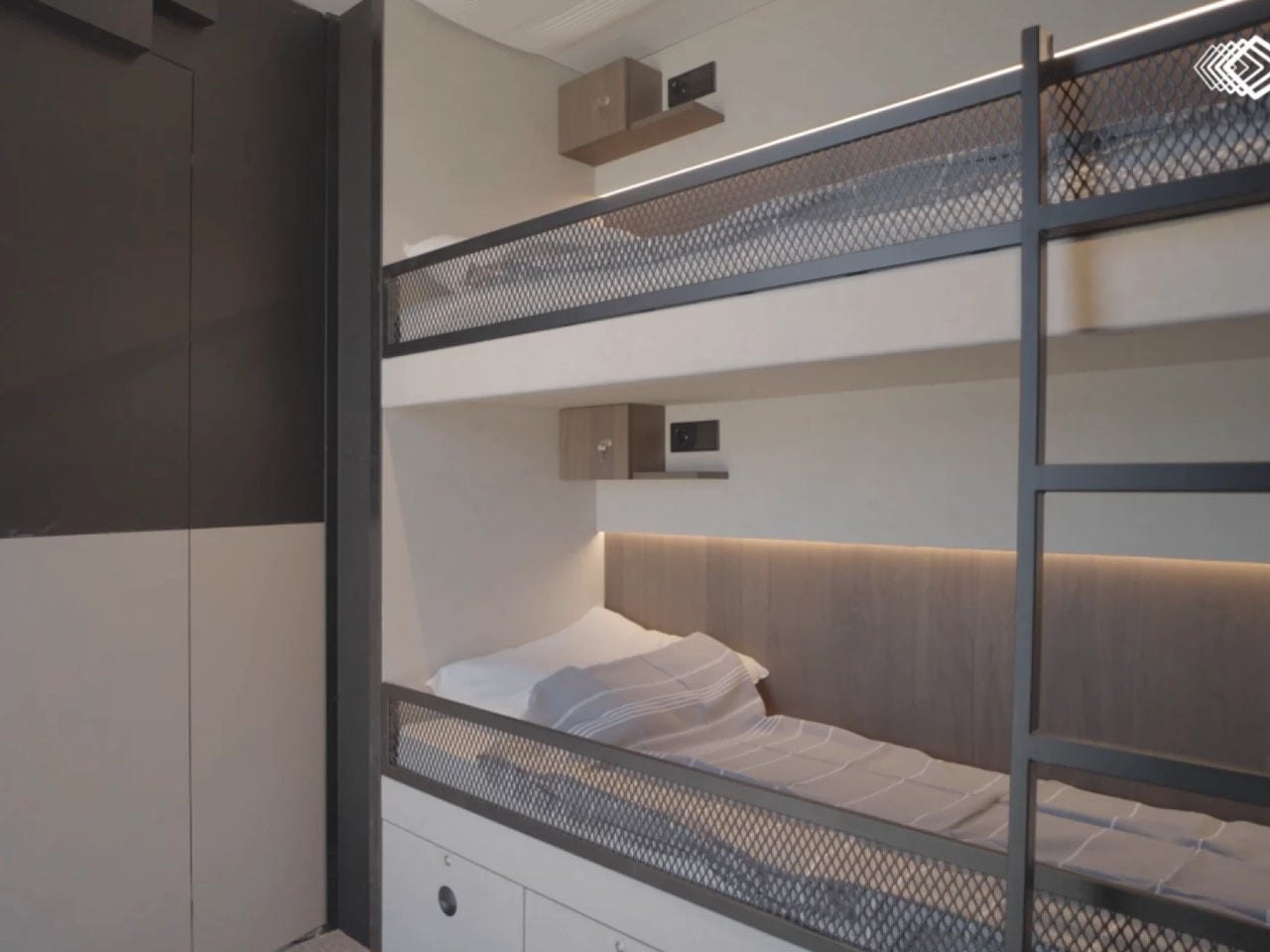
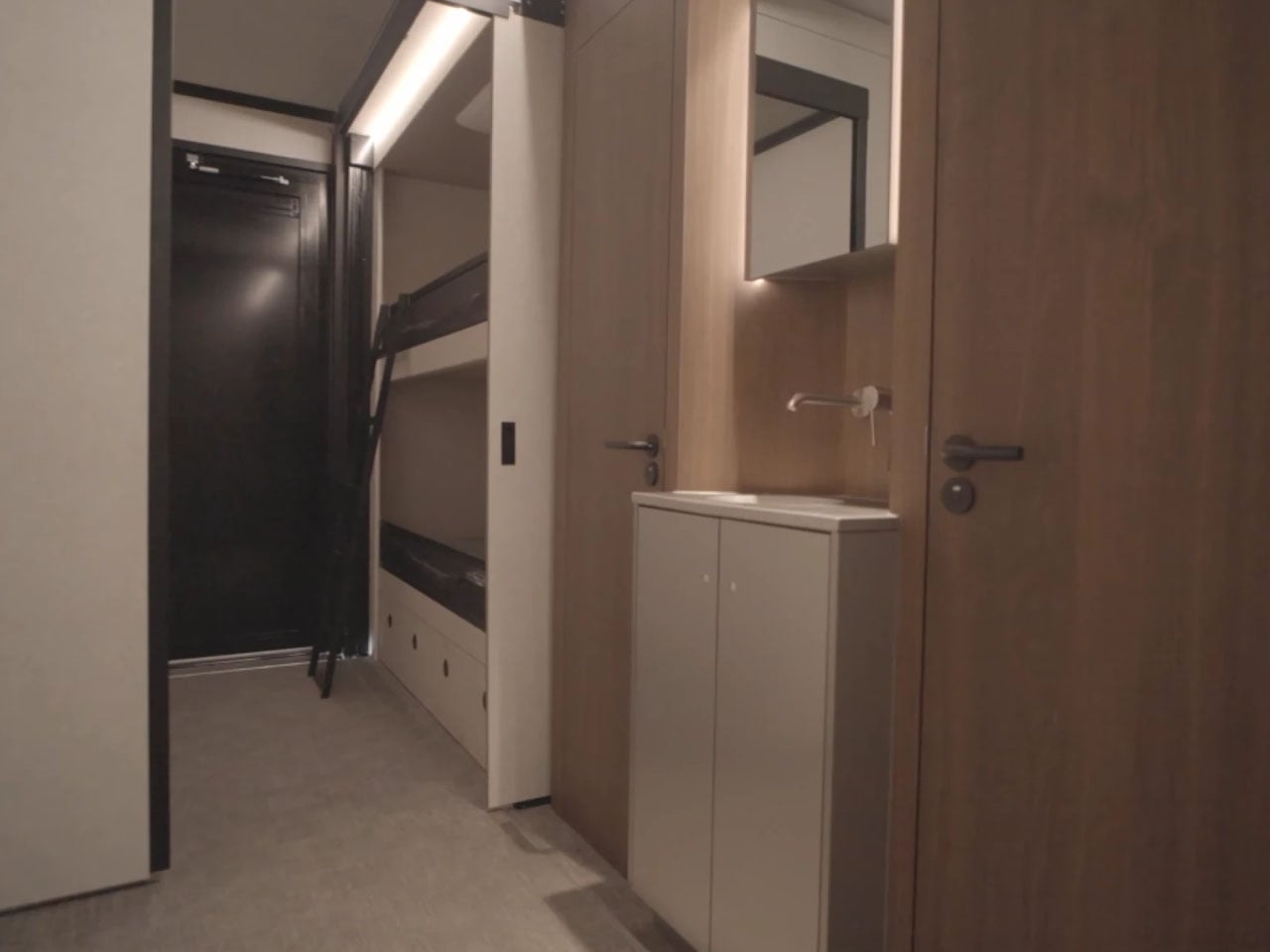
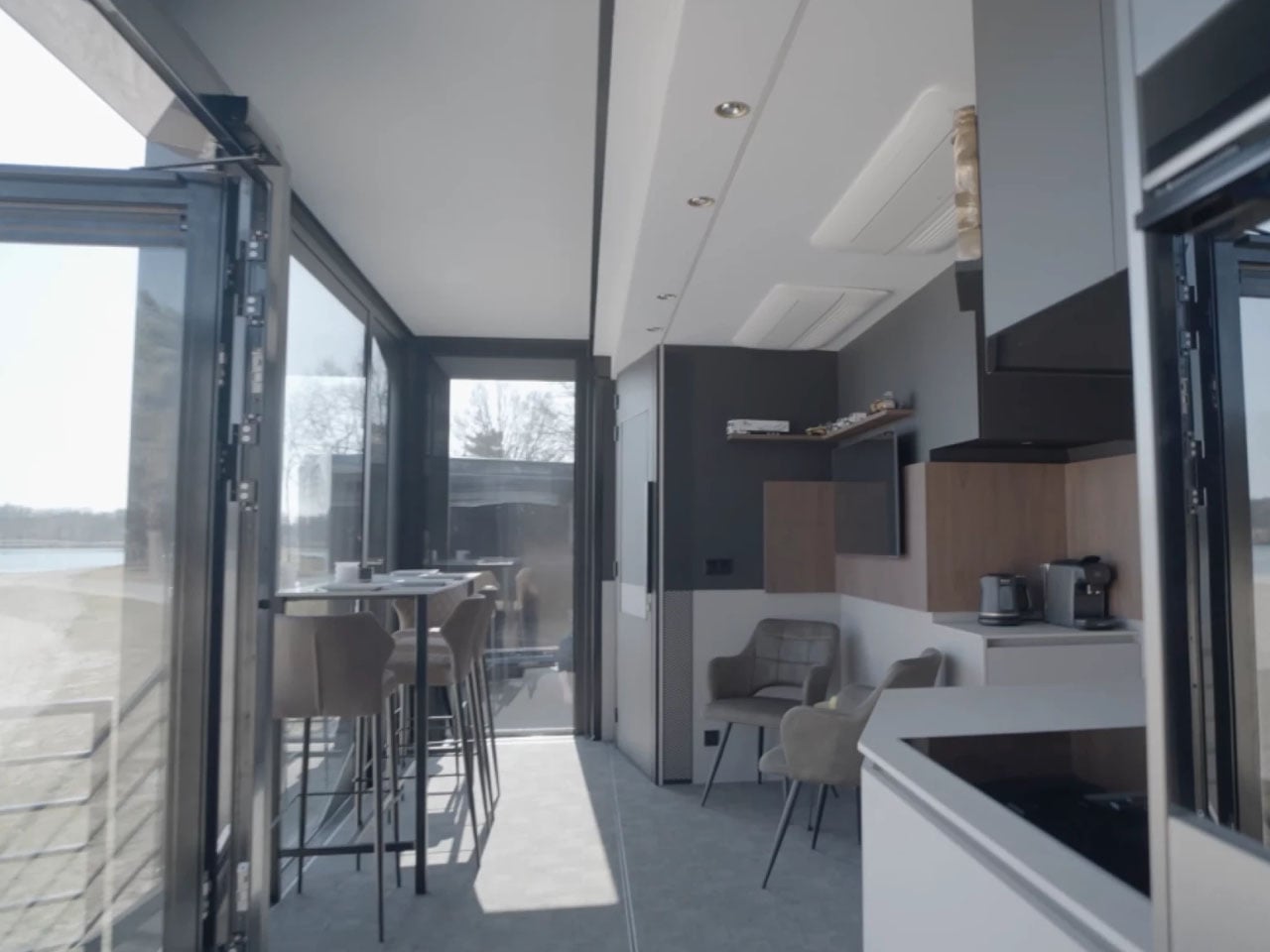
The glass exterior of this mobile rally base is topped with a full-size rooftop terrace. It starts as an open floor plan on the inside. For Shiver Offroad, it has, however, been customized to meet the team’s needs with fixed bunk beds for six members on one side (which presents itself like a shared dorm room). Each bed is provided with its own power outlet, a reading light, and a tiny storage compartment for stowing away personal belongings.

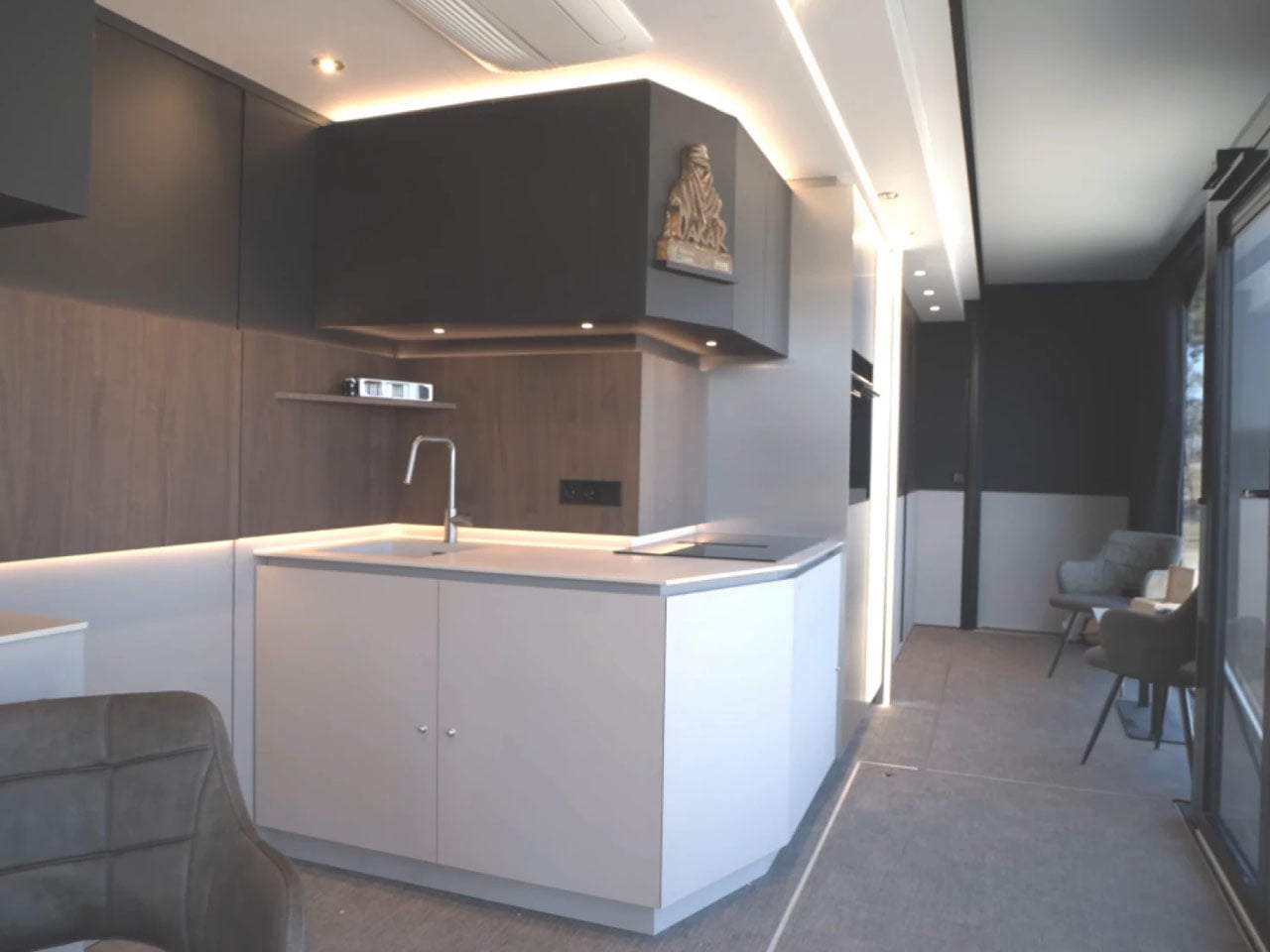
The pod is more than just an off-road capable mobile home. It is designed to be fully self-reliant with its own power supply from a generator and a battery. The expanding rig has a kitchen comprising a cooktop, sink, fridge, and storage cabinets. A dining area is also provided for the team members to have shared meals. Without the bathroom, this would be incomplete. We learn that it also features a separate shower room and a toilet, and a washer-dryer combo to handle the laundry. For when the team wants to wind down after the hustle, a small lounge space, along with a large window, makes it possible. Just outside – in the rear – is the spiral staircase leading to the terrace on the roof.

The post Shiver x Expandable 6×6 motorhome will deliver comfortable mobile lodging for a team of six first appeared on Yanko Design.

Your Car Now Has Its Own Fitness-Tracking ‘Smartwatch’, and It Costs Less Than $60

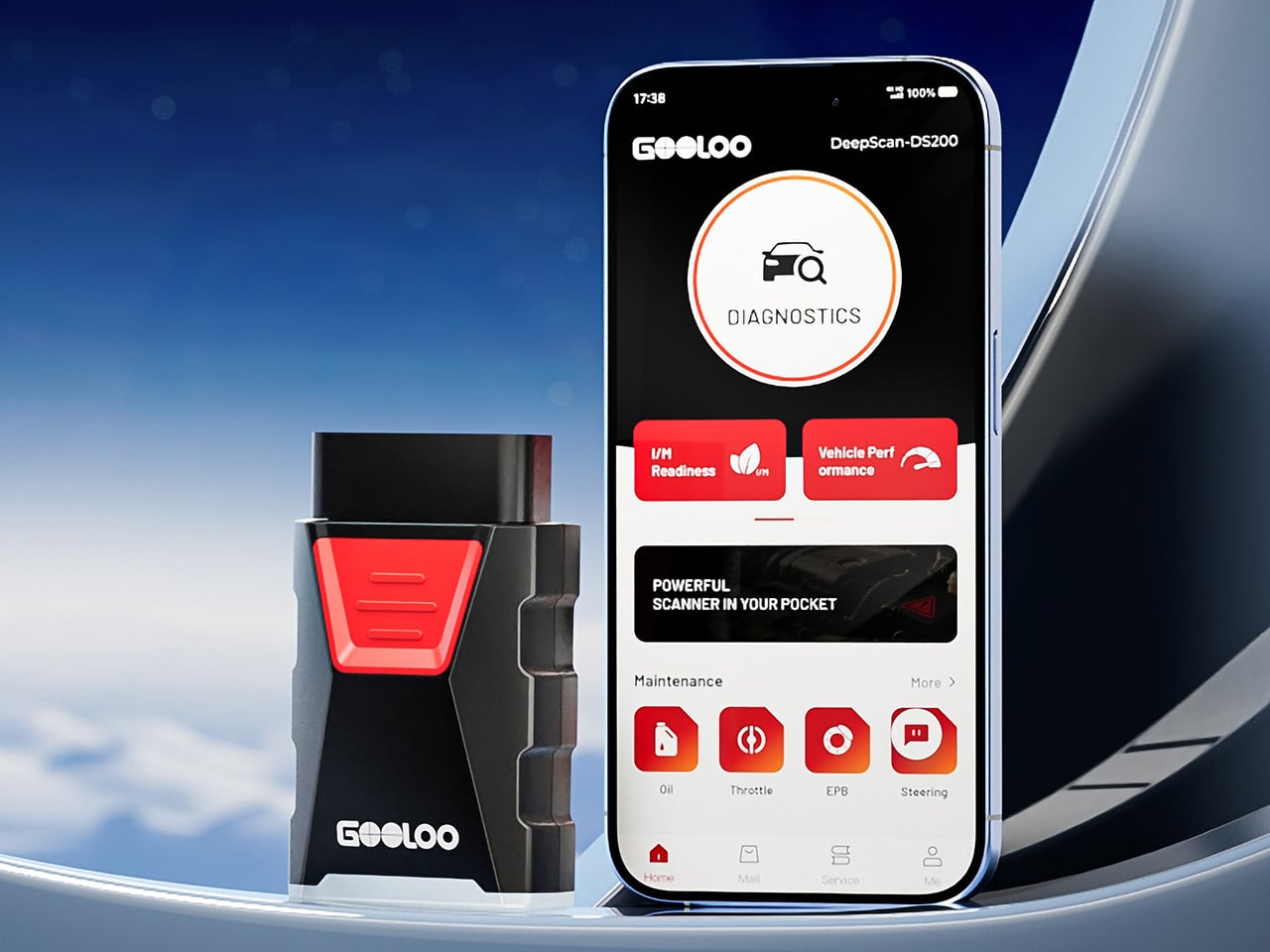
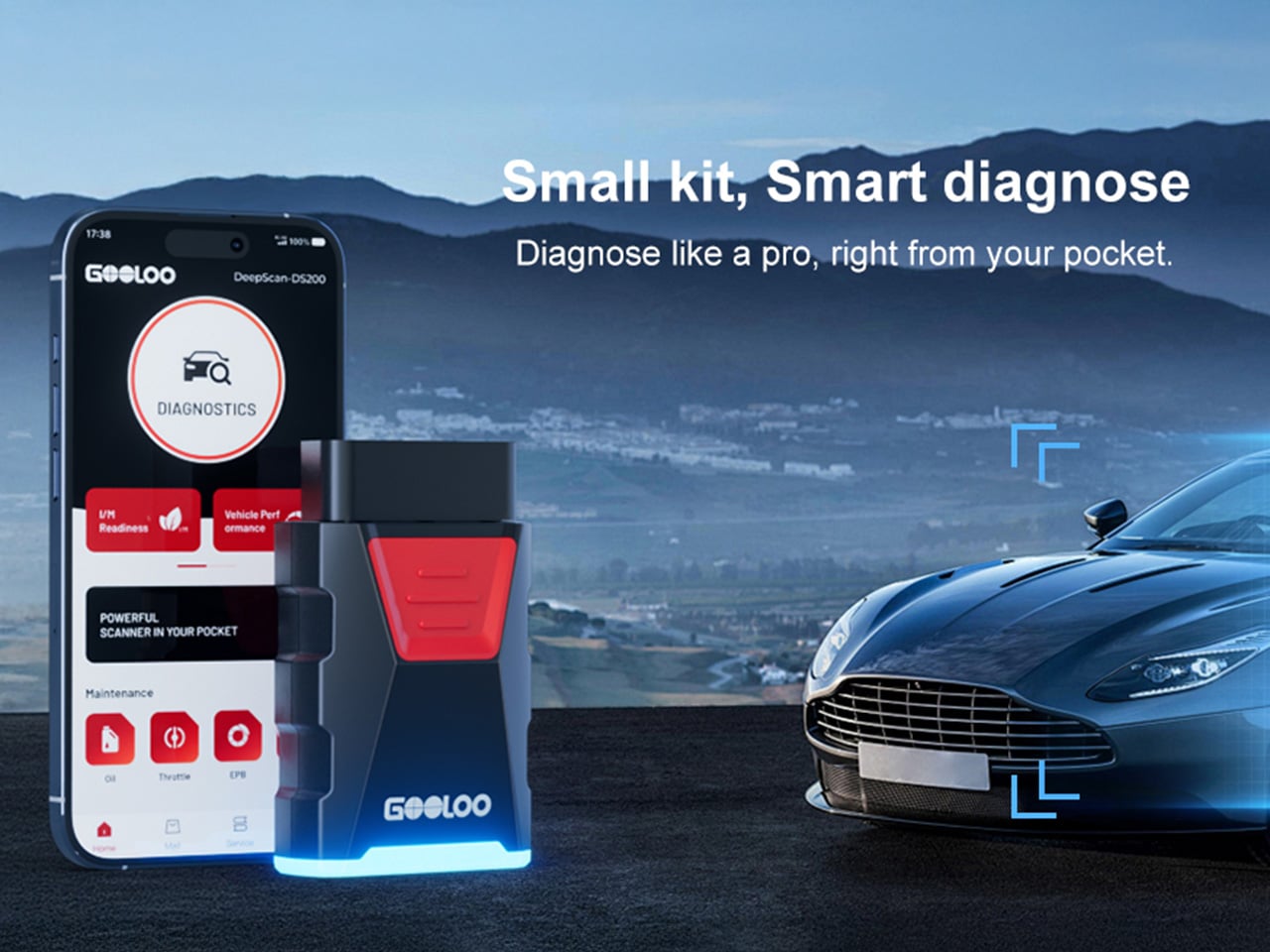
Your smartwatch does not just count steps. It listens to your heart, your sleep, your stress, and builds a holistic picture of how your body is doing. GOOLOO’s DS200 DeepScan treats a car with the same level of curiosity. Tucked into the OBD2 port, it becomes a kind of automotive smartwatch, constantly sampling signals from engine, transmission, ABS, airbags, and more, then turning them into an understandable health profile for the vehicle. It lives in that interesting space where hardware minimalism meets software depth, a trend we see in all the best modern tools.

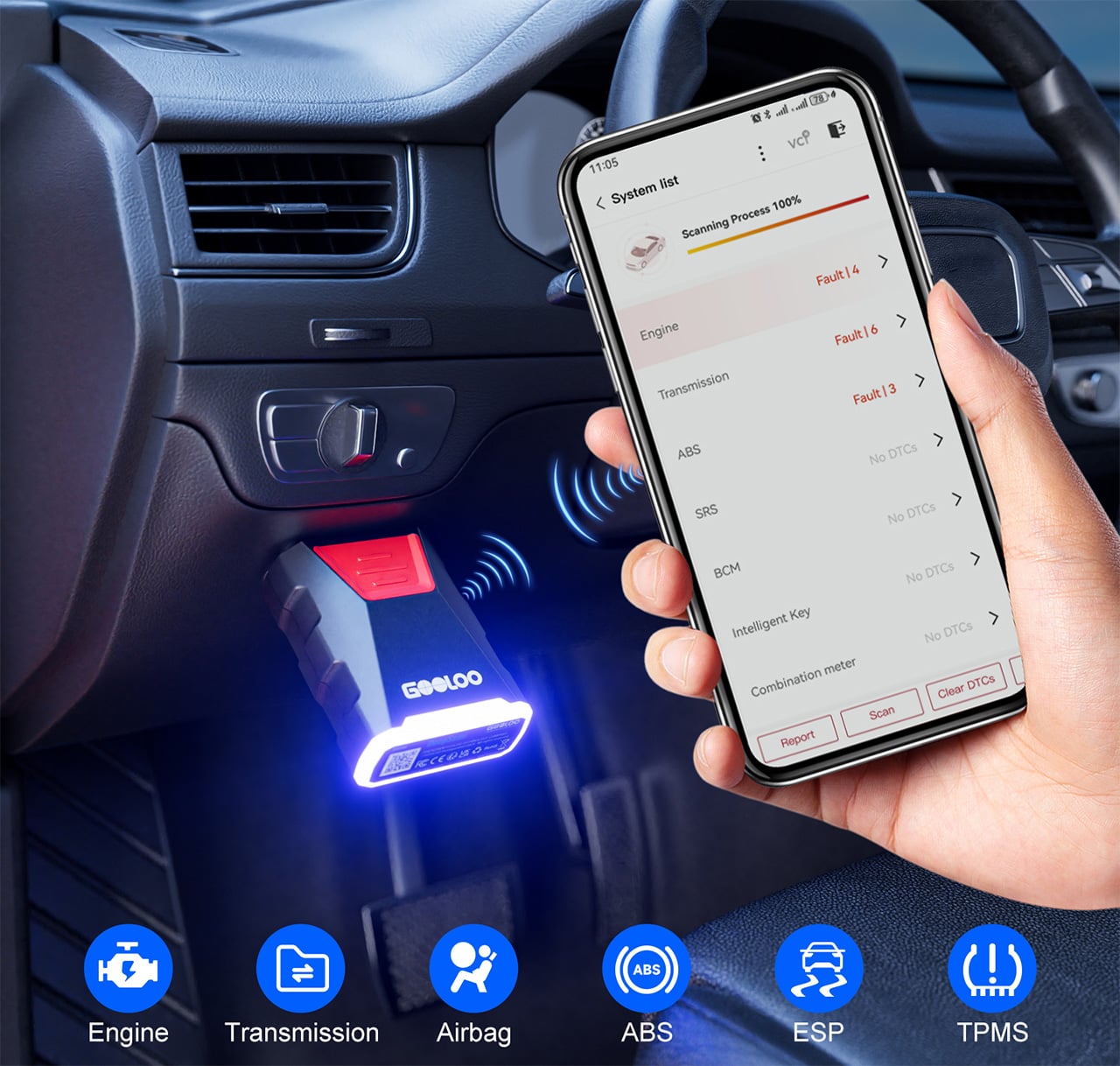
Instead of a single blinking “check engine” icon, the DS200 surfaces trends, patterns, and causes. It calculates volumetric efficiency the way a smartwatch tracks oxygen uptake, logs fault histories like workout sessions, and wraps gateway unlocks and reset procedures in a guided interface. The hardware is a tiny Bluetooth dongle. The real product is the feeling that your car’s inner life is finally as legible as your own health dashboard. This approach shifts the entire user experience from reactive panic to proactive understanding, which is a significant design leap in a category full of cryptic tools.

Designer: GOOLOO

Click Here to Buy Now: $52.80 $89.99 (41% off, use coupon code “YANKODS”). Hurry, deal ends in 48-hours!

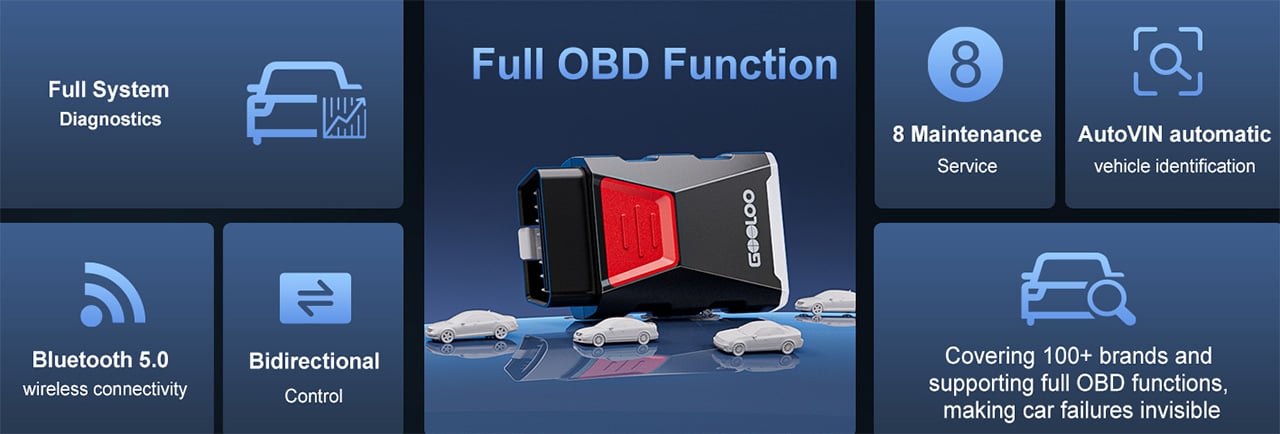
The physical unit itself is almost comically small, weighing just 2.89 ounces and measuring less than three inches long. It is the kind of object you plug in and forget about, a true set-and-forget sensor pod. The connection is handled over Bluetooth 5.0 with a reliable 33-foot range, so you are not tethered to the driver’s seat while you poke around in the app. All the heavy lifting, the real design intelligence, lives in the software on your phone. This is a deliberate choice. It keeps the hardware cost down and allows GOOLOO to push meaningful updates over Wi-Fi, evolving the tool’s brain without requiring new plastic.

That app is where the full-body scan happens, quite like how the smartwatch’s sensors ultimately send all the metrics to a fitness app for data-crunching. The DS200 performs a comprehensive sweep of all the vehicle’s major systems. We are talking about the engine, transmission, airbags, ABS, stability control, TPMS, immobilizer, gateway, steering, radio, and air conditioning. The AutoVIN feature automatically identifies the car, so you are spared the tedious process of manually entering model and year information. It is this depth of coverage that elevates the tool. It provides a complete diagnostic picture, showing how different systems are interacting, much like a health tracker correlating sleep quality with daytime stress levels.

This tool also provides active coaching – a fitness app might tell you to work on your cardio; the DS200 gives you the ability to perform an ABS bleed or force a DPF regeneration on your diesel truck. The software includes eight advanced service functions right out of the box, including resets for the oil light, electronic parking brake, steering angle sensor, and battery management system. This is where the DS200 moves beyond simple monitoring and becomes an active maintenance partner. These are functions that, until recently, were locked away in expensive, workshop-exclusive hardware, and having them in a sub-$100 dongle is frankly a little absurd in the best way possible.

What really gets my attention, though, is the inclusion of secure gateway unlock. If you have ever tried to perform a deep diagnostic on a modern FCA or Renault vehicle, you have certainly hit this wall. The gateway module blocks unauthorized tools from making changes. The DS200 has this authentication built in, with plans to add support for Nissan and Volkswagen in future updates. This single feature is a massive deal for serious DIYers and independent shops. It is the digital key that gets you past the velvet rope, allowing you to perform the resets and tests that other tools in this price bracket simply cannot.

Of course, this level of ongoing intelligence comes with a modern business model. You get the first year of full functionality for free, which is plenty of time to see if it fits your workflow. After that, it shifts to a subscription. The basic package runs $49.99 a year, while an enhanced tier with over 30 advanced special functions is $129.99. For a professional technician, this is a negligible cost of doing business. For a home gamer, it is a decision point. You are not just buying a piece of hardware; you are subscribing to an evolving diagnostic platform.

If you are thinking this might be the right tool for your garage, GOOLOO is running a promotion right now that sweetens the deal. They have tiered discounts, so you get $10 off a $150 spend, $20 off $200, and $50 off when you spend $400. Every order also ships with a free canvas bag. If you happen to cross the $268 threshold, they will throw in a 100W solar panel as well, which is a pretty hefty bonus. It is a good time to jump in if you have been looking for a way to get a clearer picture of your car’s health.

Click Here to Buy Now: $52.80 $89.99 (41% off). Hurry, deal ends in 48-hours!

The post Your Car Now Has Its Own Fitness-Tracking ‘Smartwatch’, and It Costs Less Than $60 first appeared on Yanko Design.

Mercedes-Benz reimagines the stellar Unimog with a sublime touch of luxury

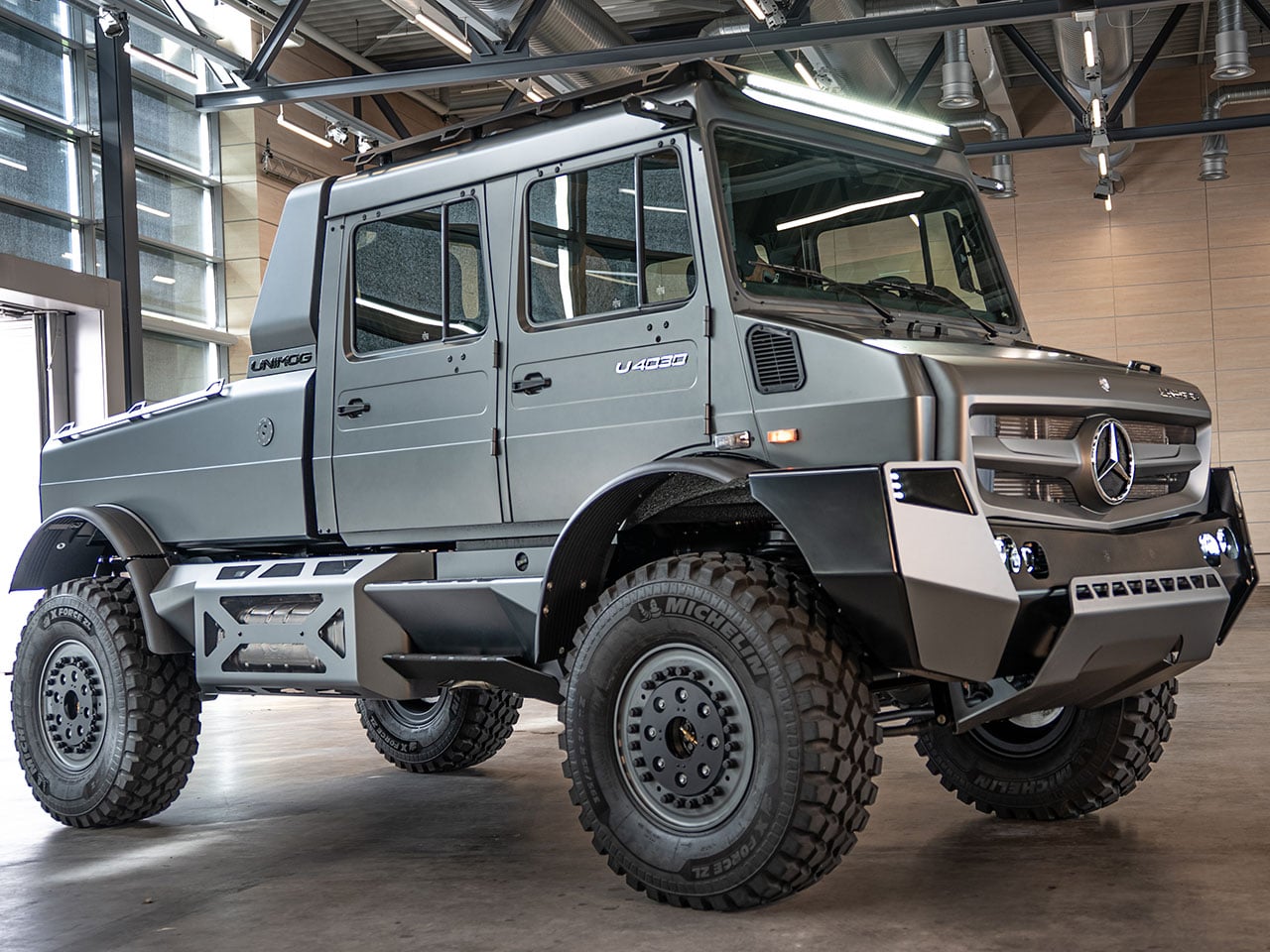
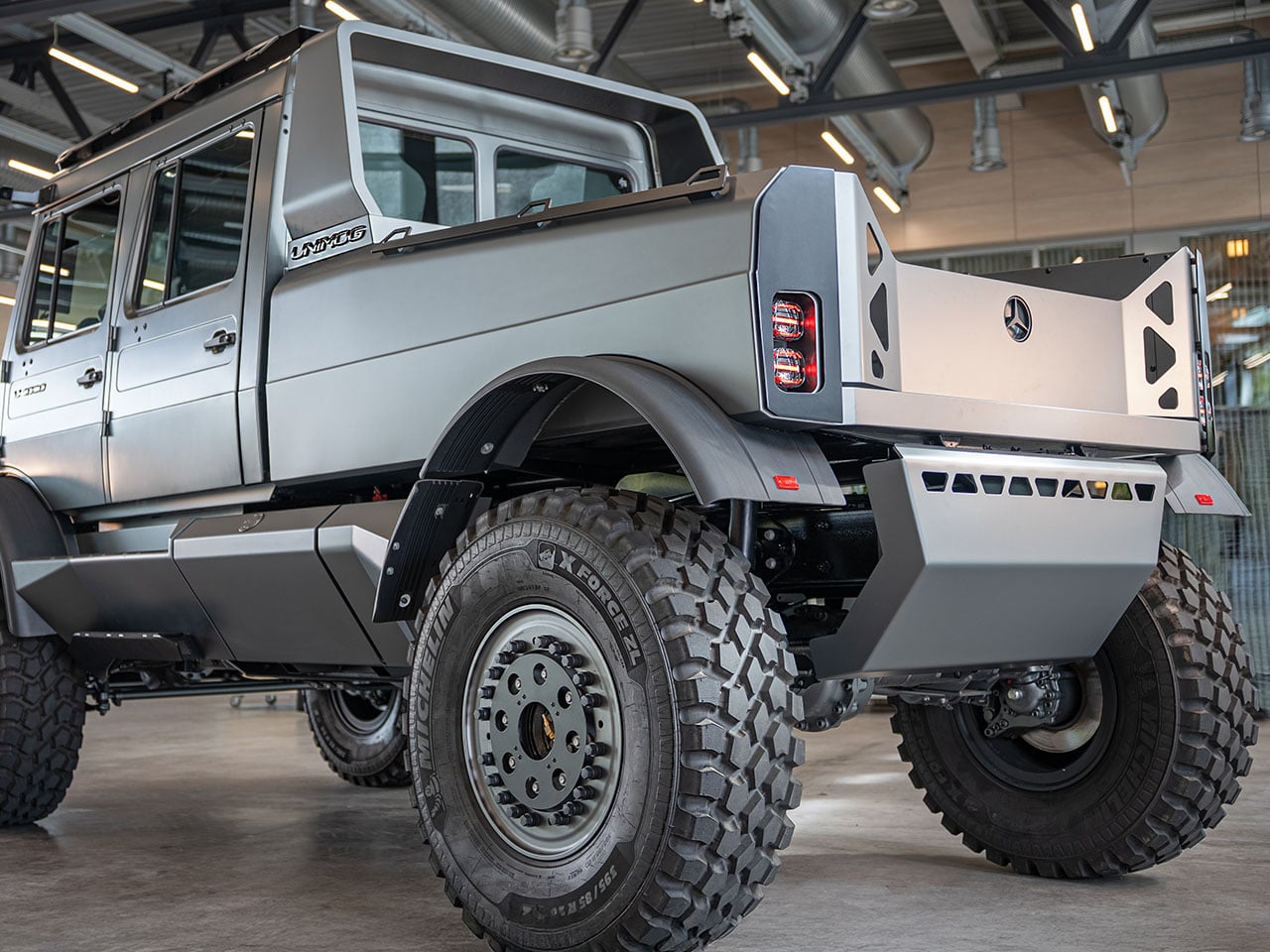
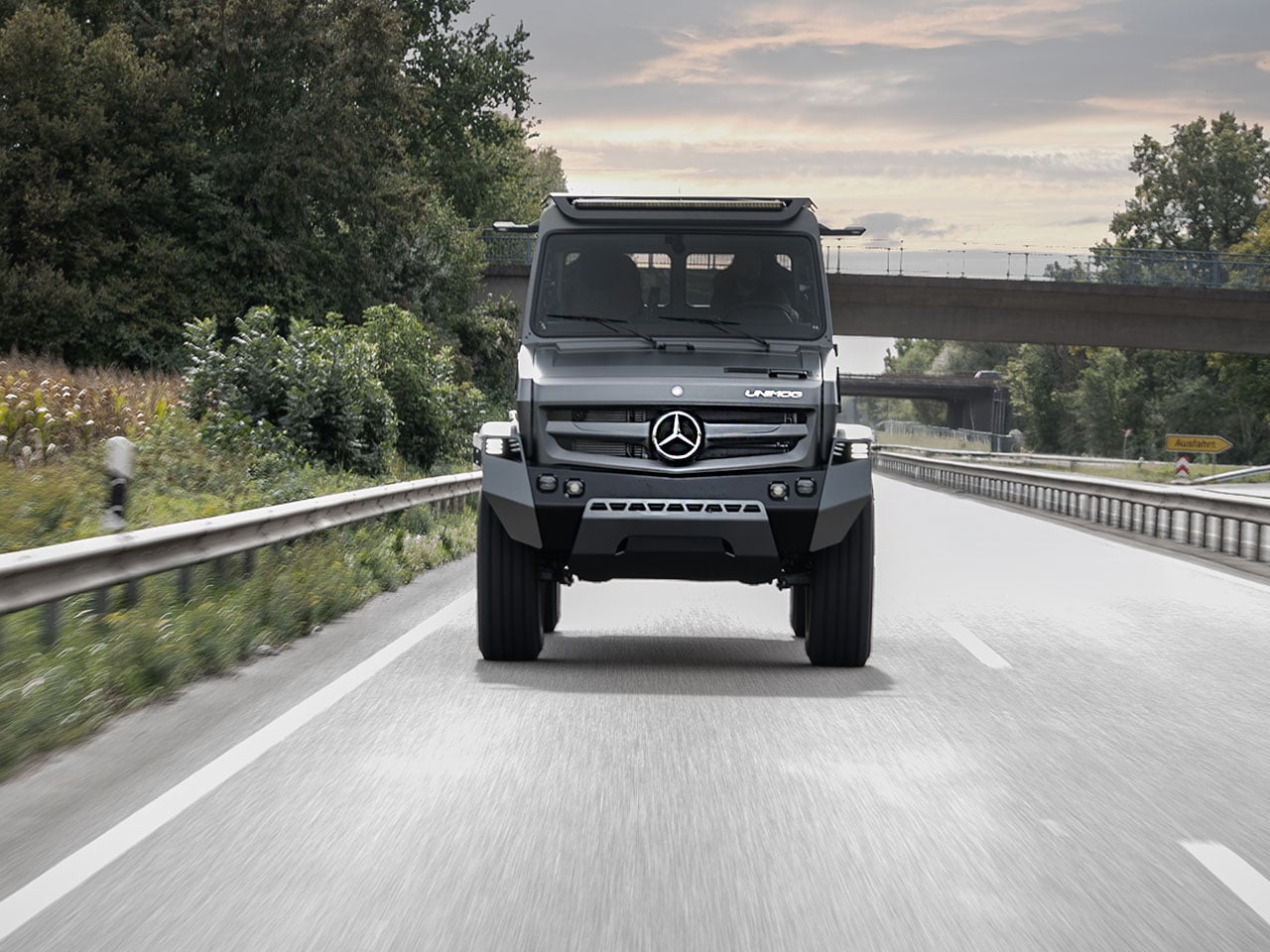
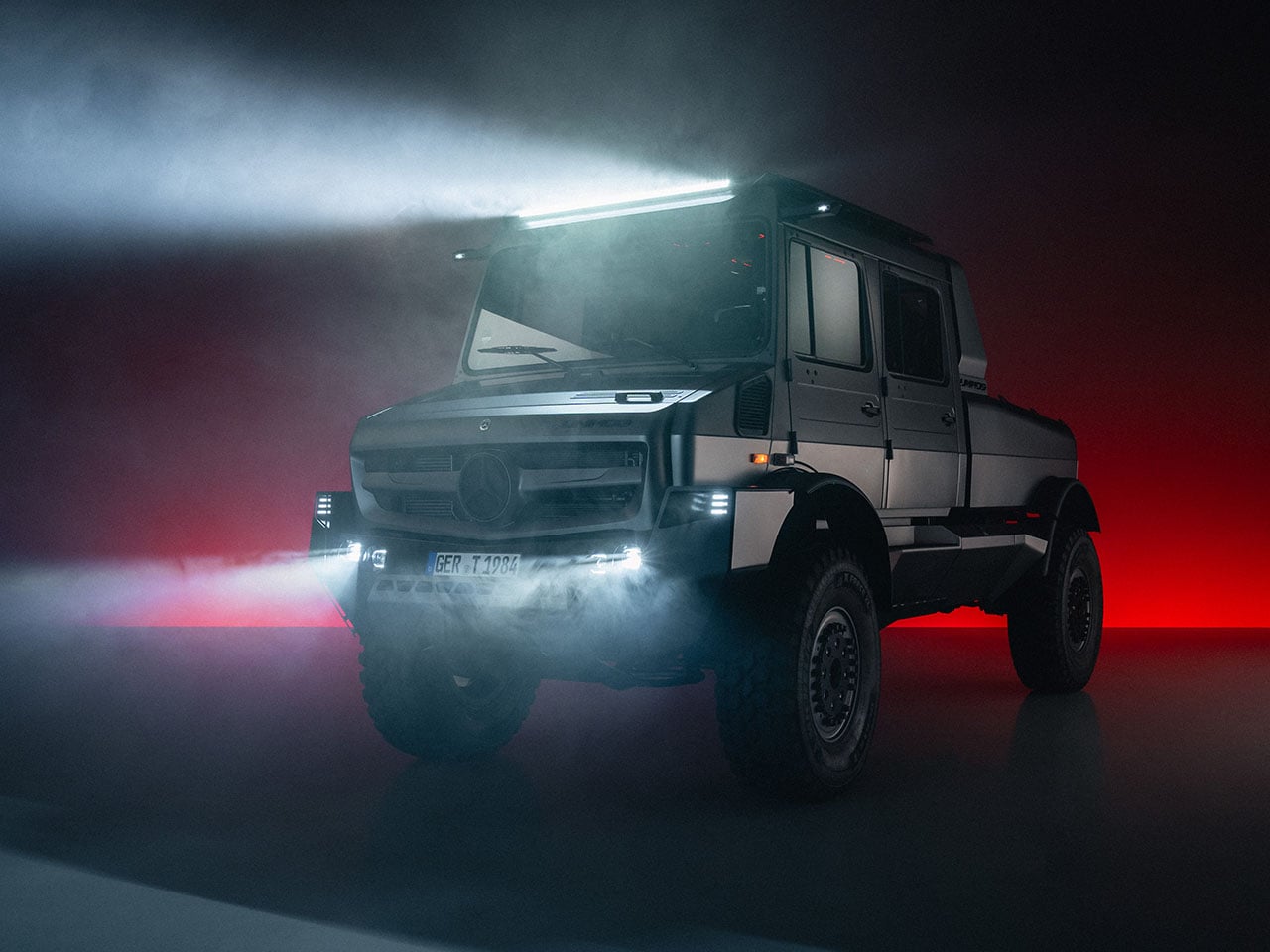
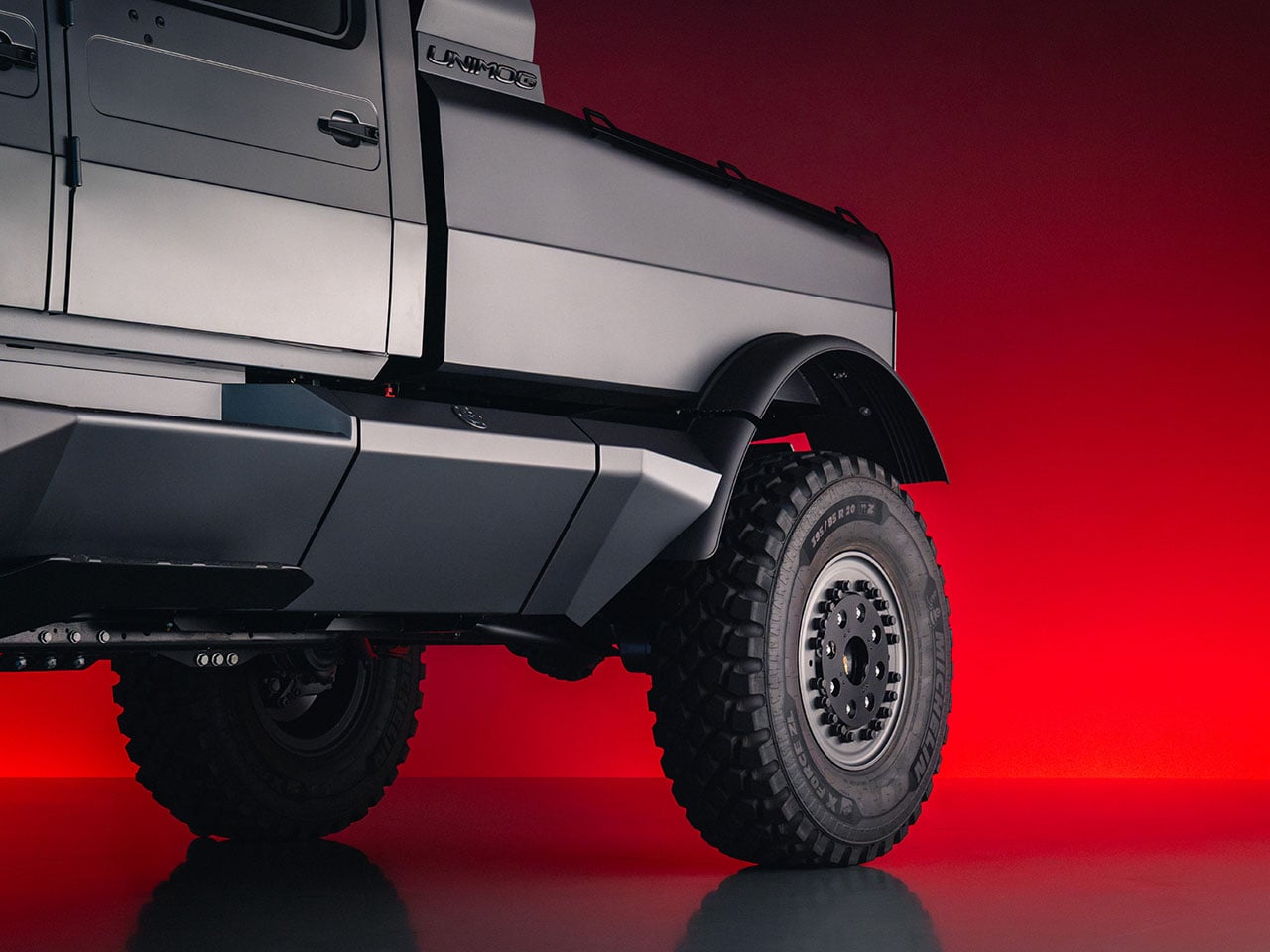
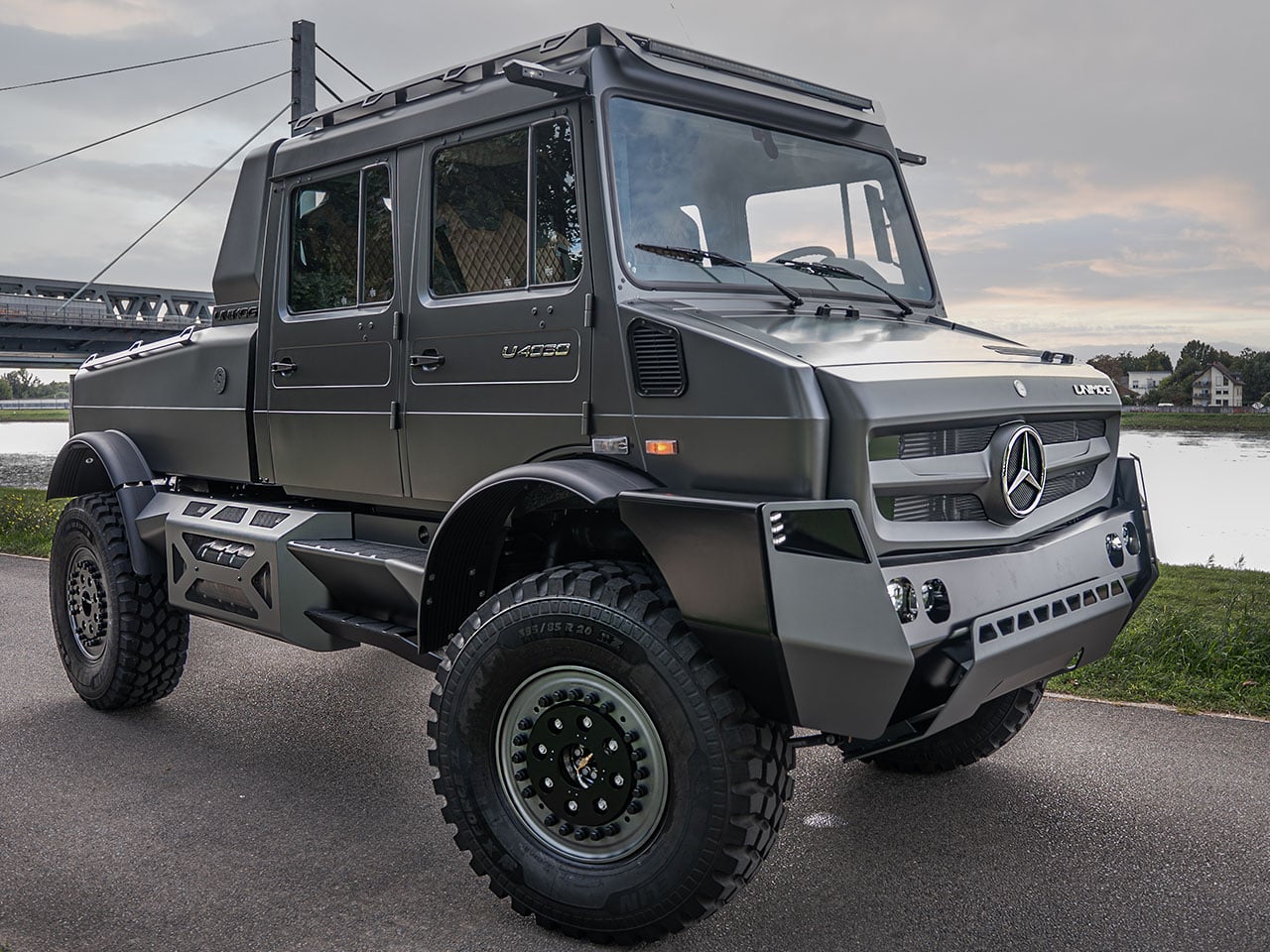
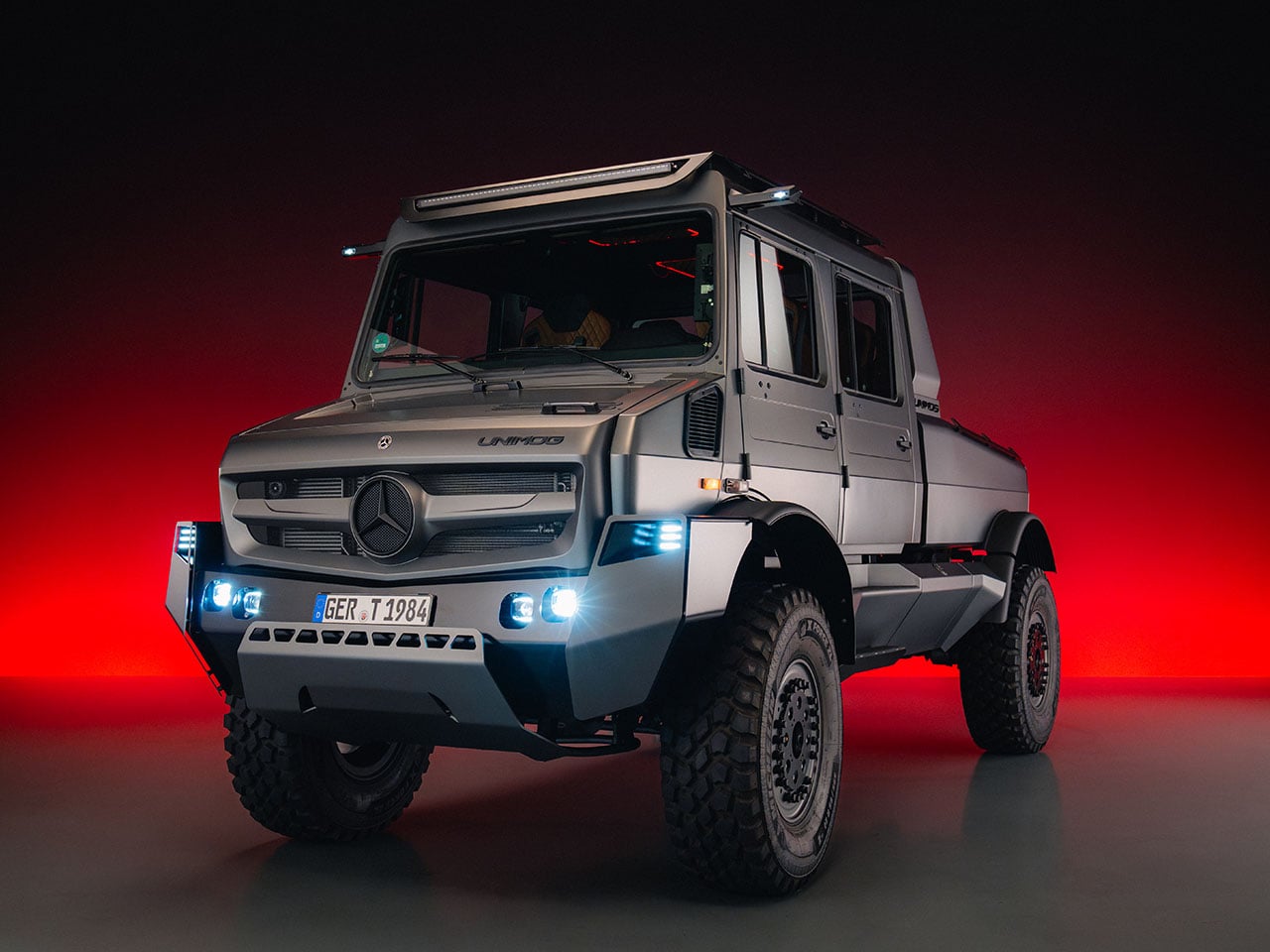
Mercedes-Benz has unveiled what could be the most luxurious Unimog ever built, marking a distinctive moment in the model’s nearly eight-decade history. Created by Mercedes-Benz Special Trucks in collaboration with Hellgeth Engineering, this one-off show vehicle celebrates the Unimog’s 80th anniversary in 2026 by pairing its legendary go-anywhere capability with levels of comfort and sophistication previously unseen in the series.

The new luxury Unimog is based on the robust U 4023 chassis, a platform already respected for tackling extreme terrain in both civilian and military settings. It retains core mechanical DNA such as a flexible frame, portal axles that lift critical drivetrain components high above obstacles, selectable all-wheel drive, and differential locks on both axles. These features ensure the vehicle maintains the off-road competence that defines the Unimog name.

Designer: Mercedes-Menz Trucks

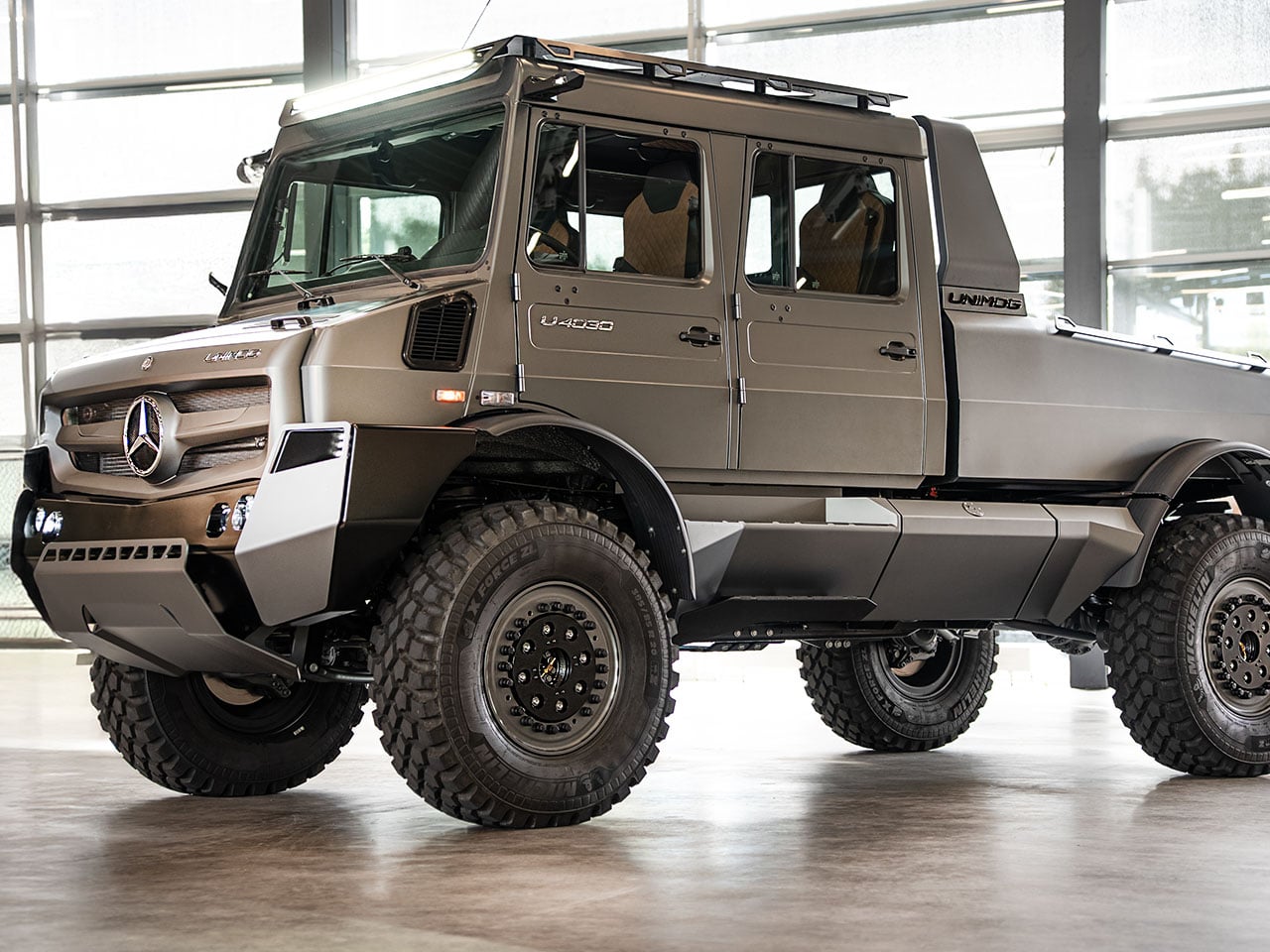
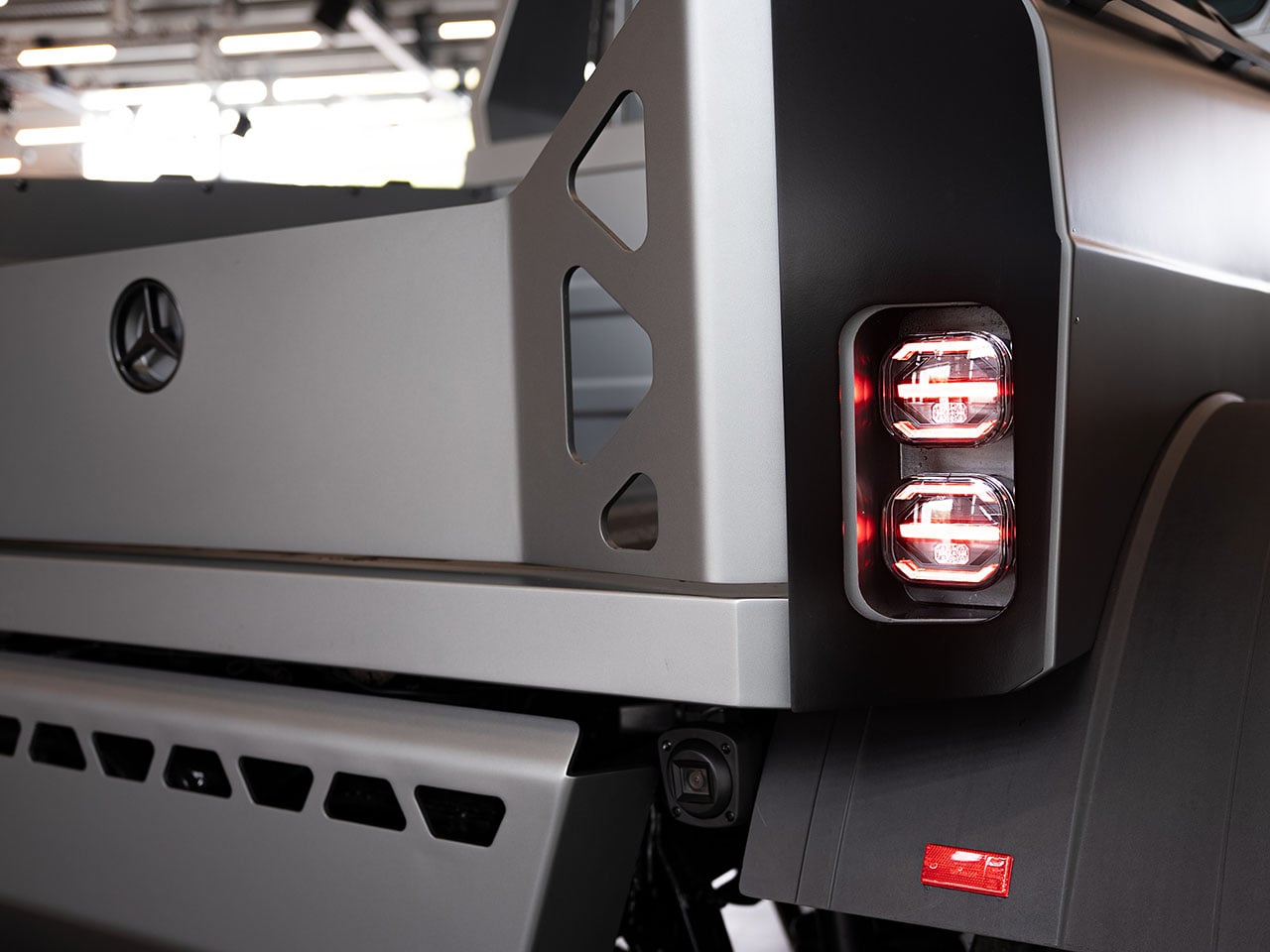
Under the hood, the standard four-cylinder engine has been replaced by a Mercedes-Benz OM 936 six-cylinder turbodiesel displacing 7.7 liters and producing around 220 kW (300 hp). This upgrade not only boosts performance over traditional configurations but also pairs with a recalibrated transmission for smoother power delivery and improved on-road manners, notable in a vehicle as rugged as the Unimog. Visually, the luxury Unimog blends utilitarian toughness with contemporary design cues inspired by Mercedes’ SUV range. Its matte grey exterior is punctuated by aluminum beadlock wheels for serious off-road durability, modern LED lighting, and the innovative MirrorCam system, which uses cameras and internal displays in place of conventional mirrors to improve visibility. While still unmistakably a Unimog, these refinements hint at a more premium character.

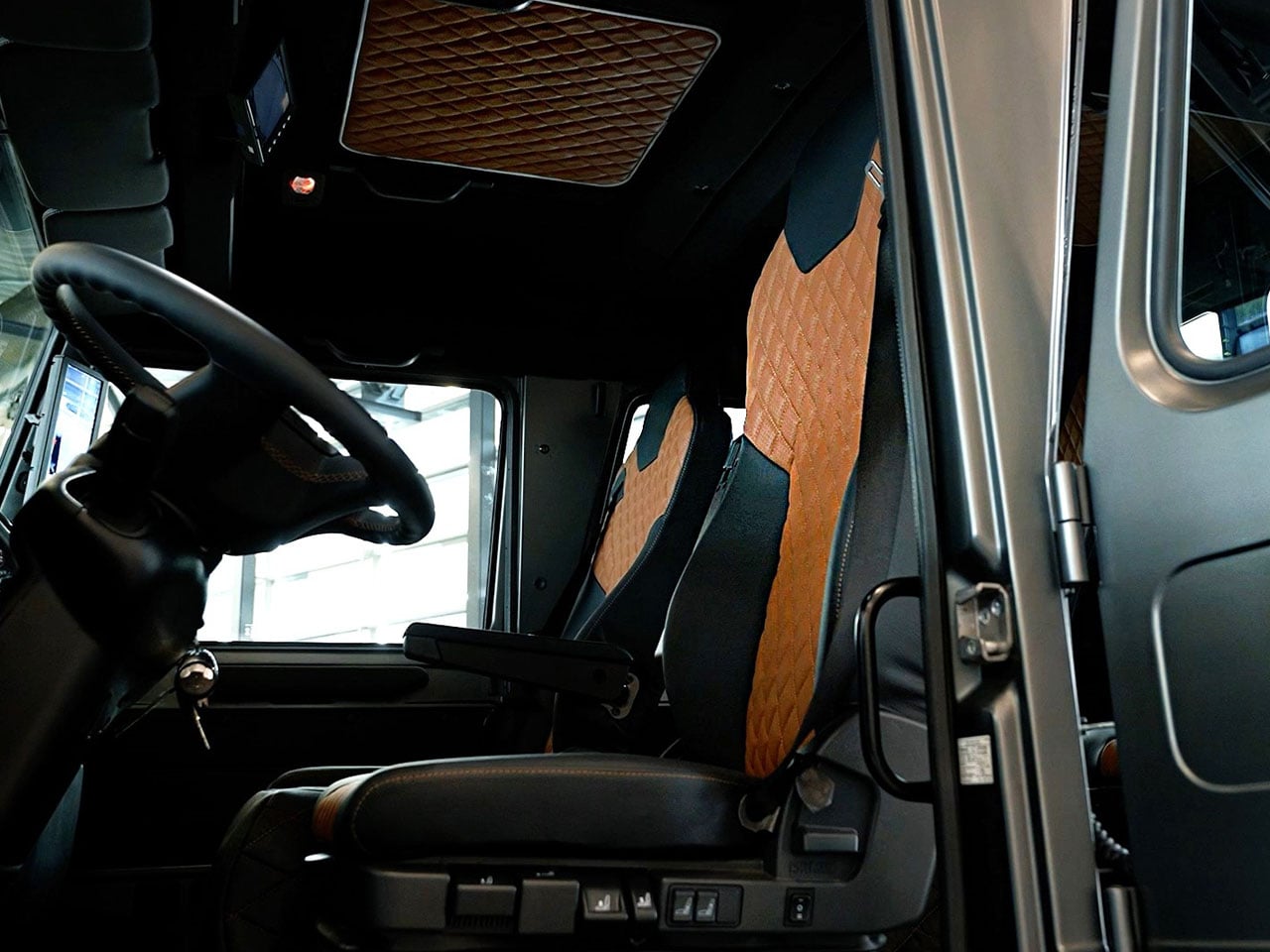
Inside the double cab, which accommodates four passengers, the transformation is most striking. Premium leather covers the seats, steering wheel, and even the floor mats, all detailed with contrasting stitching. LED ambient lighting enhances the cabin’s atmosphere, and ergonomically revised seating promotes comfort over long journeys. These elements create an experience far removed from the typically utilitarian interiors of traditional Unimogs. Mercedes-Benz Special Trucks frames this build as more than a static exhibit. After its public debut, the luxury Unimog will be handed to a customer for real-world testing in 2026. Feedback from this trial will help determine whether aspects of the project could evolve into a limited production or inspire future special editions.

The Unimog itself has a long legacy of versatility. Originally conceived as a “Universal-Motor-Gerät” in the aftermath of World War II, the model has served as everything from agricultural machinery to military transport and emergency-response vehicle. Its hallmark has always been exceptional adaptability and resilience across environments. Pricing for the existing U 4023 begins around the mid-six-figure mark (around $225,000), and with the bespoke powertrain and luxury appointments, this anniversary edition could command a significantly higher valuation should it ever reach limited production. For now, it stands as a bold reinterpretation of a vehicle long prized for its capability, signalling what might lie ahead if demand for ultra-premium off-road trucks continues to grow.

The post Mercedes-Benz reimagines the stellar Unimog with a sublime touch of luxury first appeared on Yanko Design.

2026 Toyota GR Supra MkV Final Edition Review: A Farewell Written in Carbon Fiber and Camber

PROS:


  • Refined chassis sharpens every driver input

  • Larger Brembo brakes resist fade confidently

  • Distinctive silhouette will age gracefully

  • Manual transmission available for enthusiasts

  • Premium Alcantara and leather interior

CONS:


  • No Android Auto connectivity

  • Limited cargo space and rear visibility

RATINGS:

AESTHETICS
ERGONOMICS
PERFORMANCE
SUSTAINABILITY / REPAIRABILITY
VALUE FOR MONEY

EDITOR'S QUOTE:

The most resolved Supra of this generation, built entirely for feel over flash.

The fifth-generation Toyota Supra has always carried the weight of resurrection, a nameplate revived after two decades of dormancy and built on a platform shared with BMW’s Z4. That partnership invited scrutiny from the beginning, with purists questioning whether the A90 could truly claim the Supra lineage when its heart beat with Bavarian engineering. Toyota’s response, refined across six model years, culminates in the MkV Final Edition: not a reinvention but a declaration that the conversation about authenticity matters less than the conversation about intent. The Final Edition does not chase new power figures or revolutionary technology. It chases feel, that elusive quality that separates cars people admire from cars people remember.

Designer: Toyota

Gazoo Racing’s philosophy has always emphasized the tactile over the theoretical, and this swan song embodies that principle with unusual clarity. Where competitors announce their final editions with horsepower increases and cosmetic packages, Toyota chose to invest in the parts that shape how the car communicates with its driver: bushings, braces, damper calibration, brake sizing. The engineering focus speaks to a different understanding of what makes a sports car meaningful. Numbers translate poorly to memory. The sensation of a chassis rotating precisely at the limit, the confidence of brakes that refuse to fade, the subtle feedback through a steering wheel that actually tells you something: these are the currencies that matter when the production line goes quiet.

The price positions the Final Edition in the upper 60s before destination, typically just over 70k as equipped, placing it firmly in the territory where a Porsche Cayman or BMW M2 becomes a reasonable cross-shop. That positioning is intentional. Toyota is not asking buyers to choose the Supra because it costs less or offers more features per dollar. The ask is simpler and more demanding: choose it because this is the most resolved version of a car that has spent six years learning how to be itself. I spent a week with the Final Edition, and that confidence comes through every time you turn the key.

Exterior Form Language

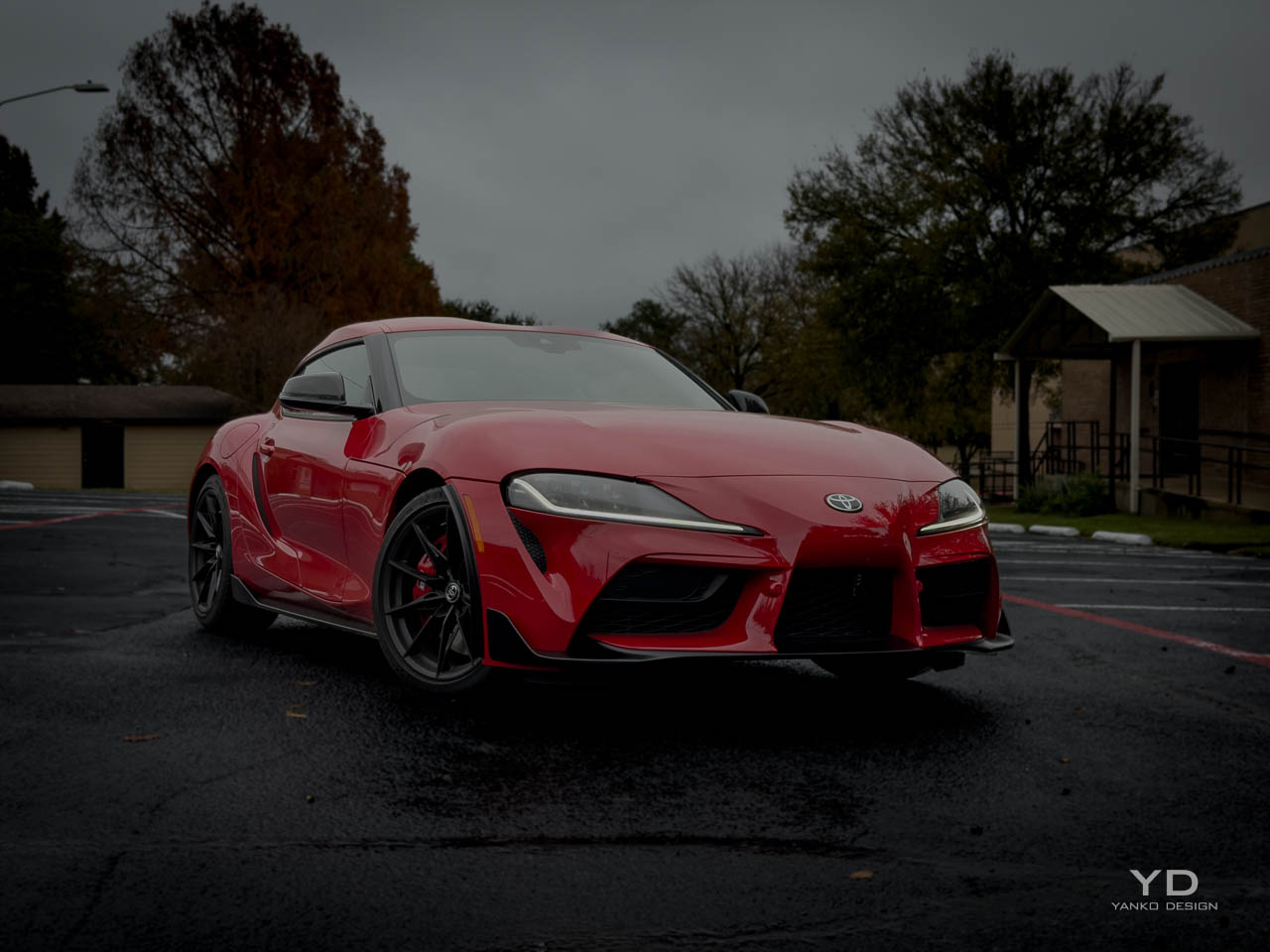
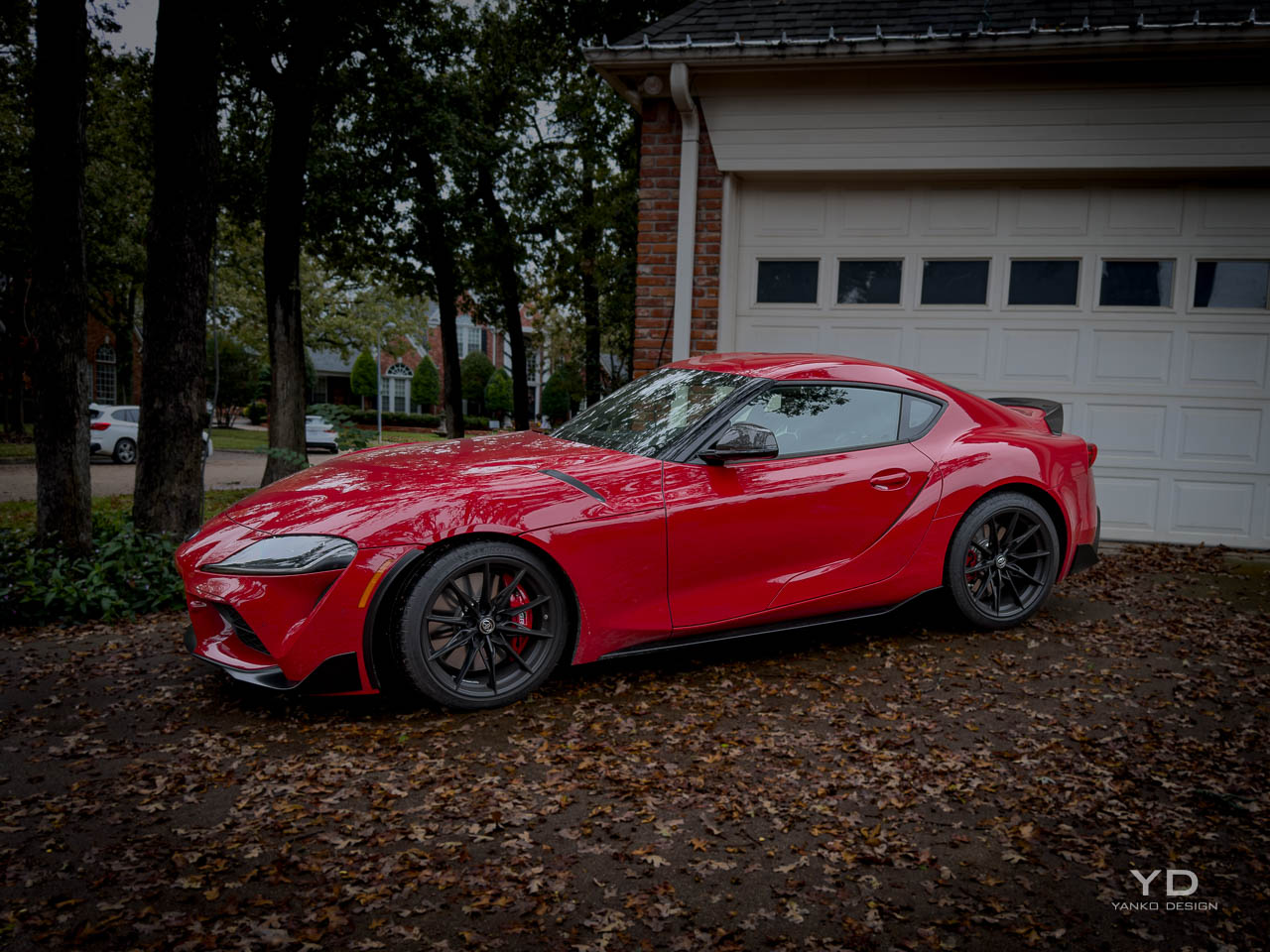
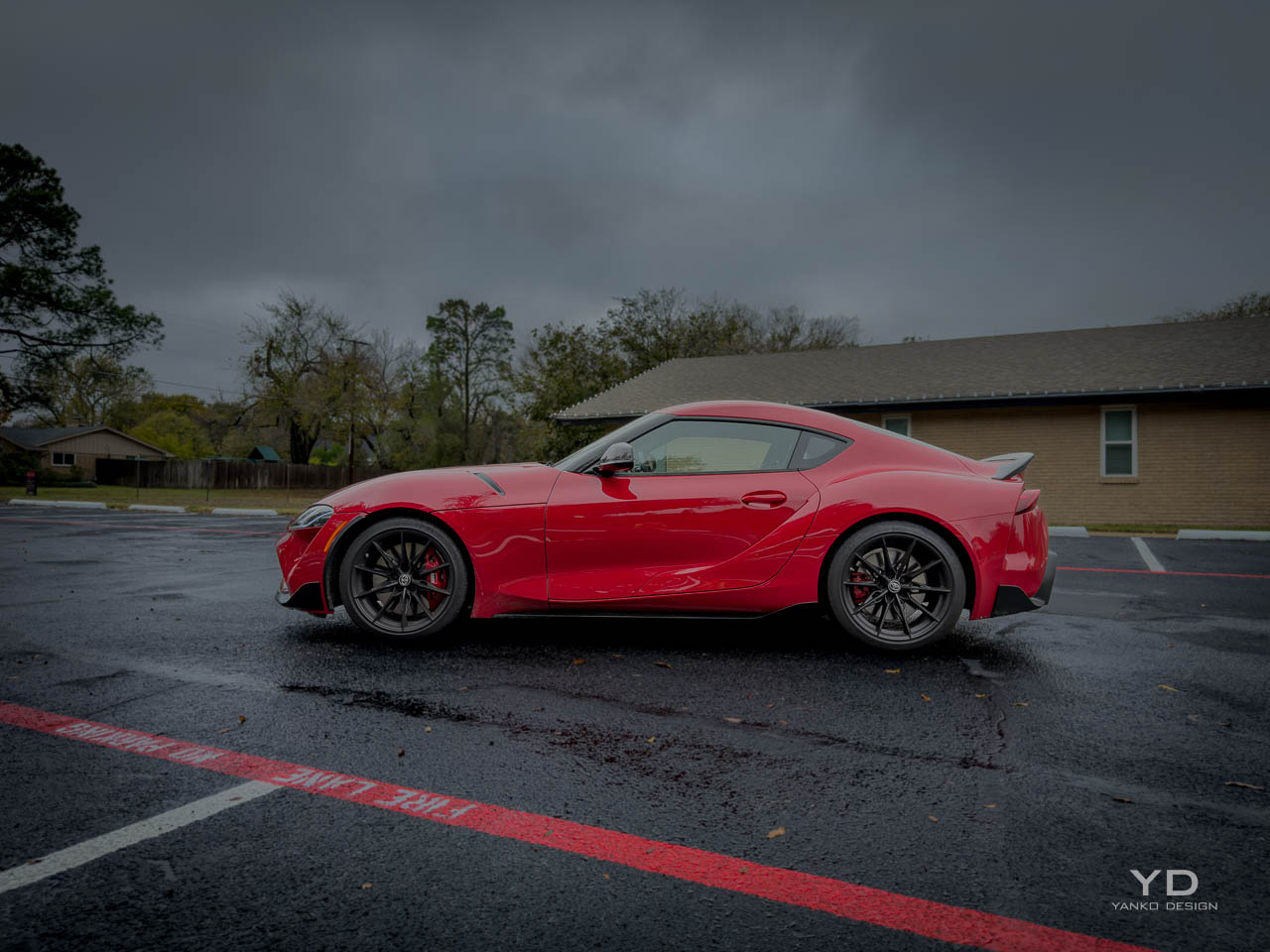
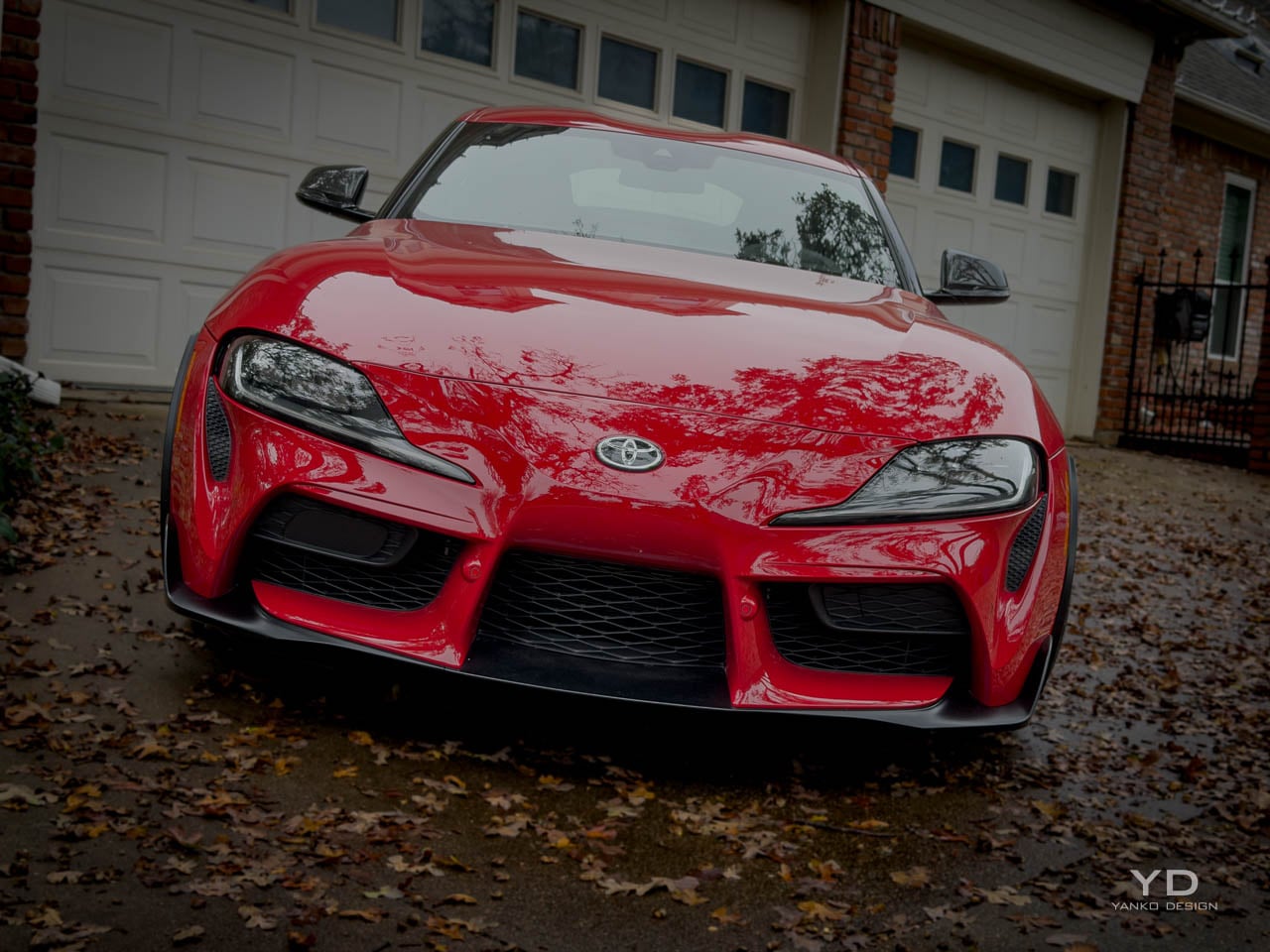
Few sports car silhouettes remain as distinctive as the GR Supra’s, a profile defined by the exaggerated length of its hood relative to the compact cabin and truncated tail. That proportion traces directly to the classic front-engine, rear-drive formula, but the execution here pushes further into sculptural territory than most modern interpretations. A double-bubble roof, functional in its origins as a nod to helmet clearance but now a visual signature, creates a centerline interruption that breaks what could have been a simple coupe arc into something more complex. Light catches the roof differently at every angle, revealing the depth of the sculpting work that photographs rarely capture.

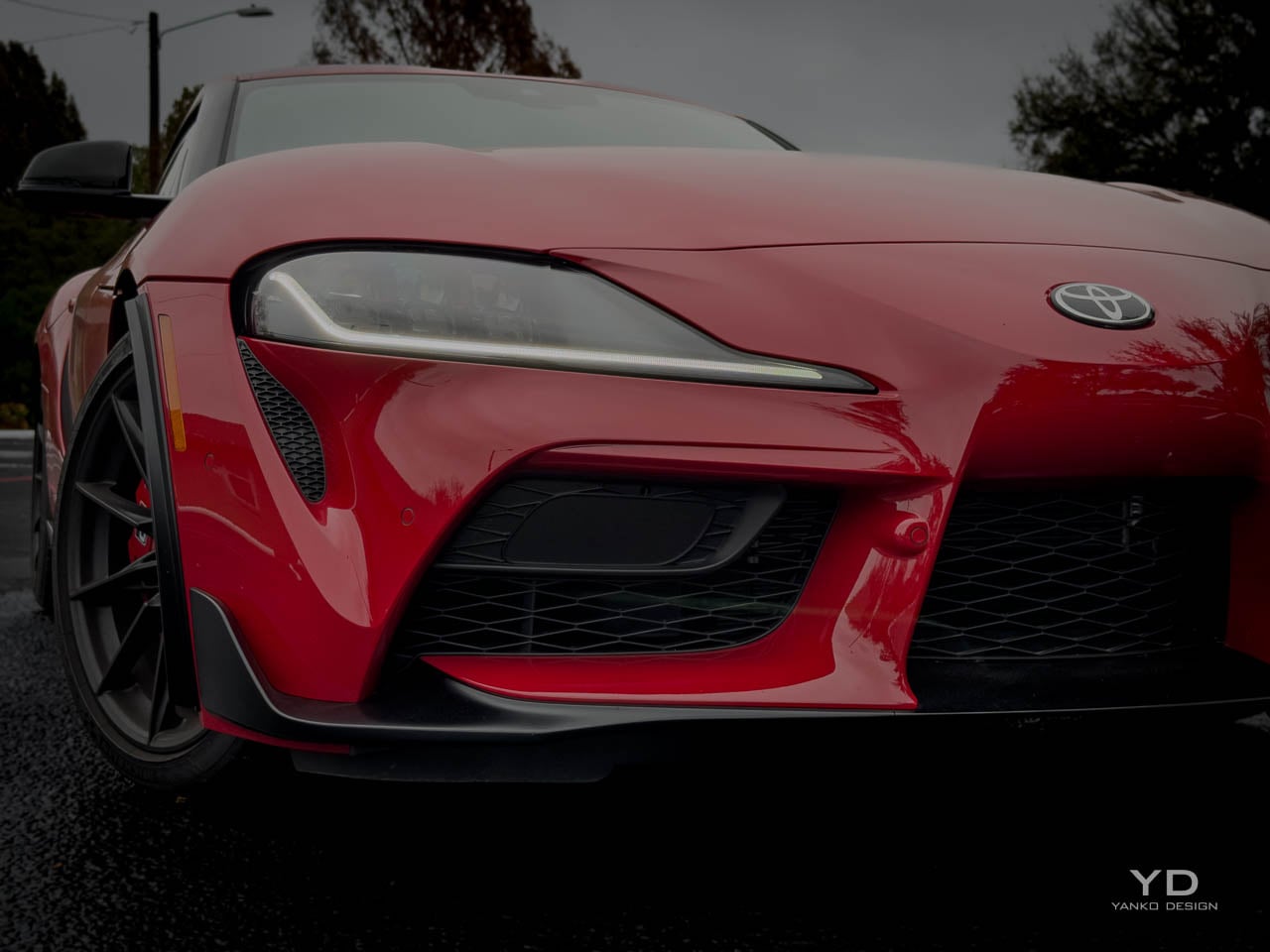
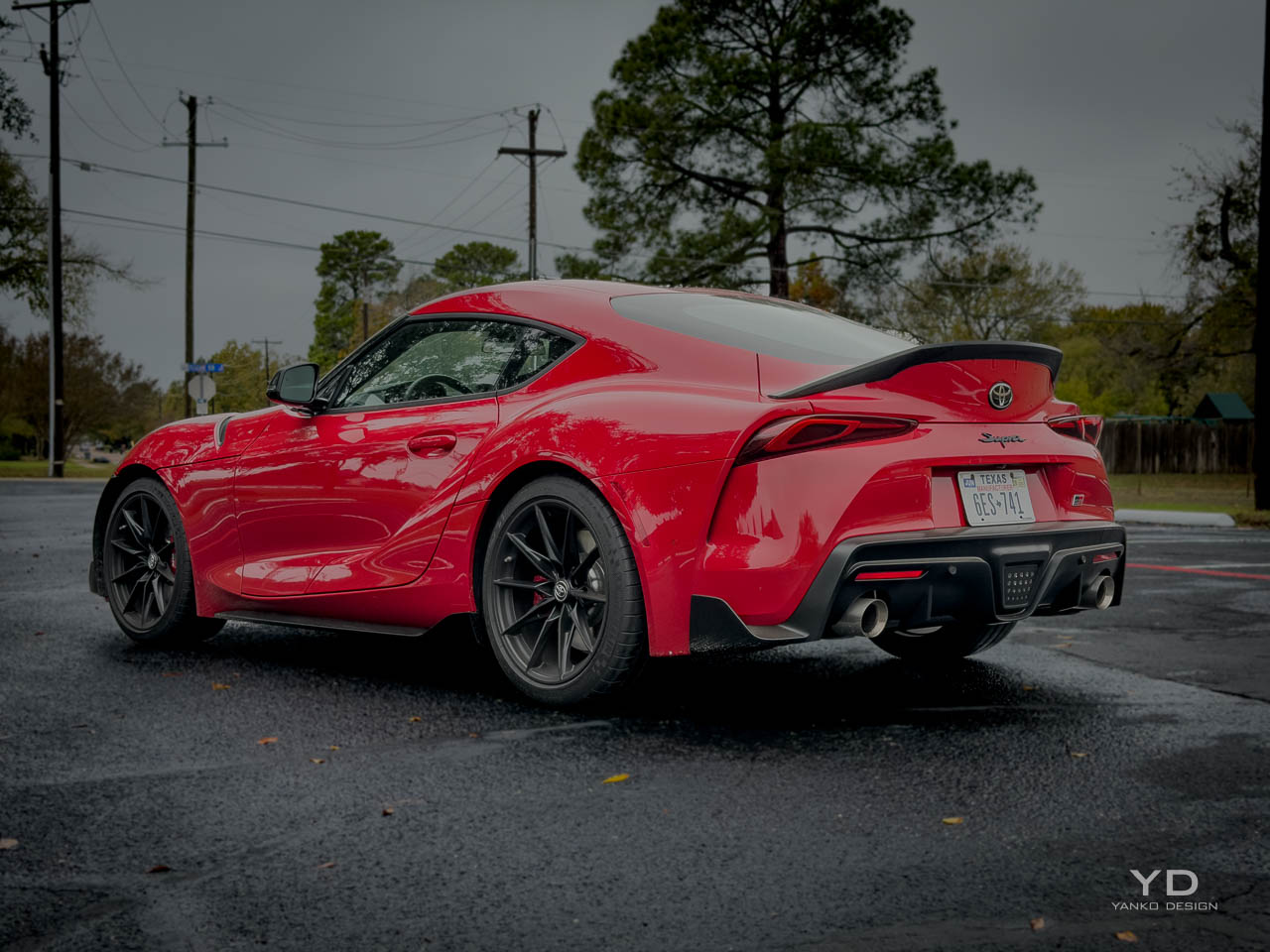
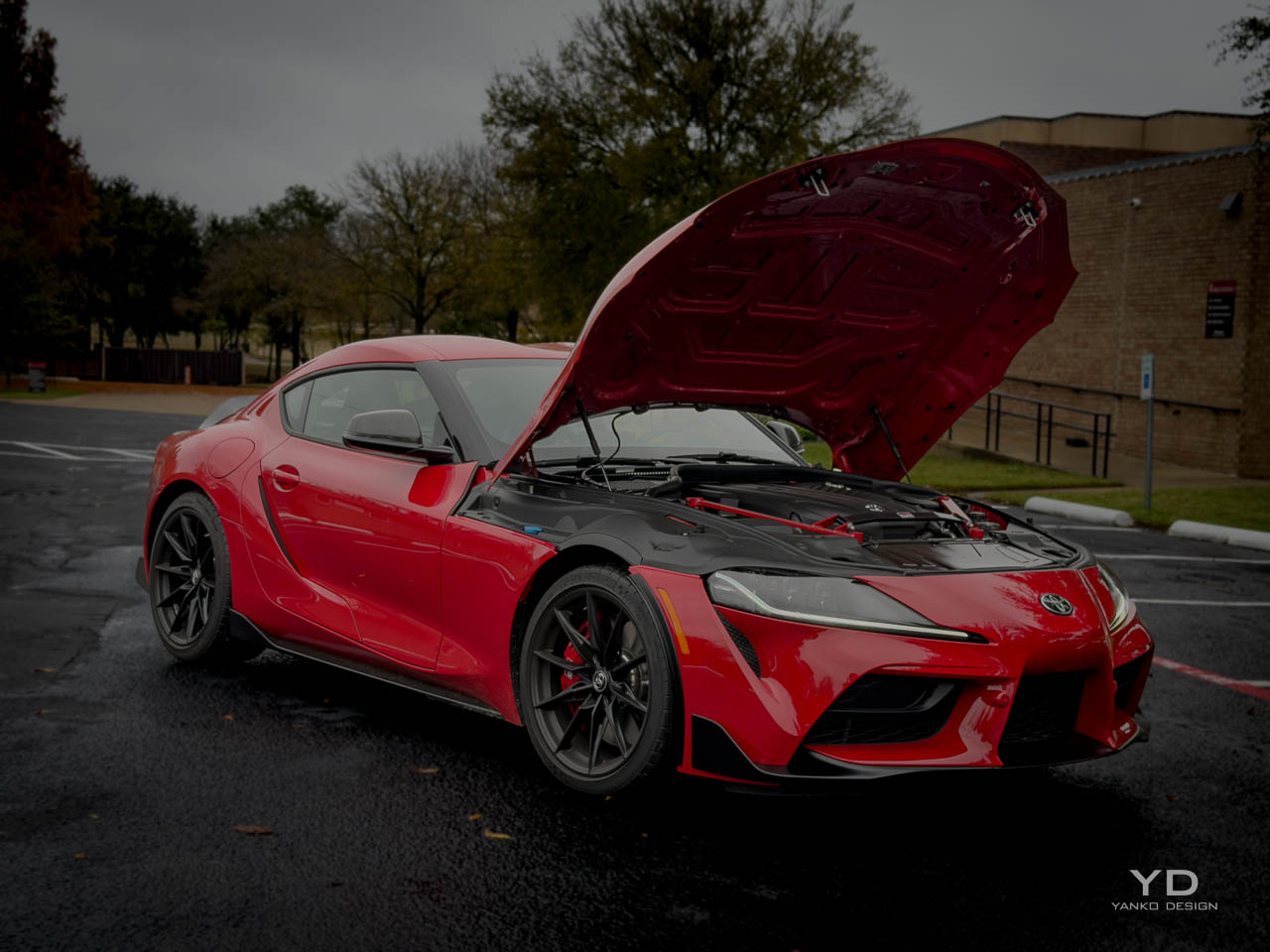
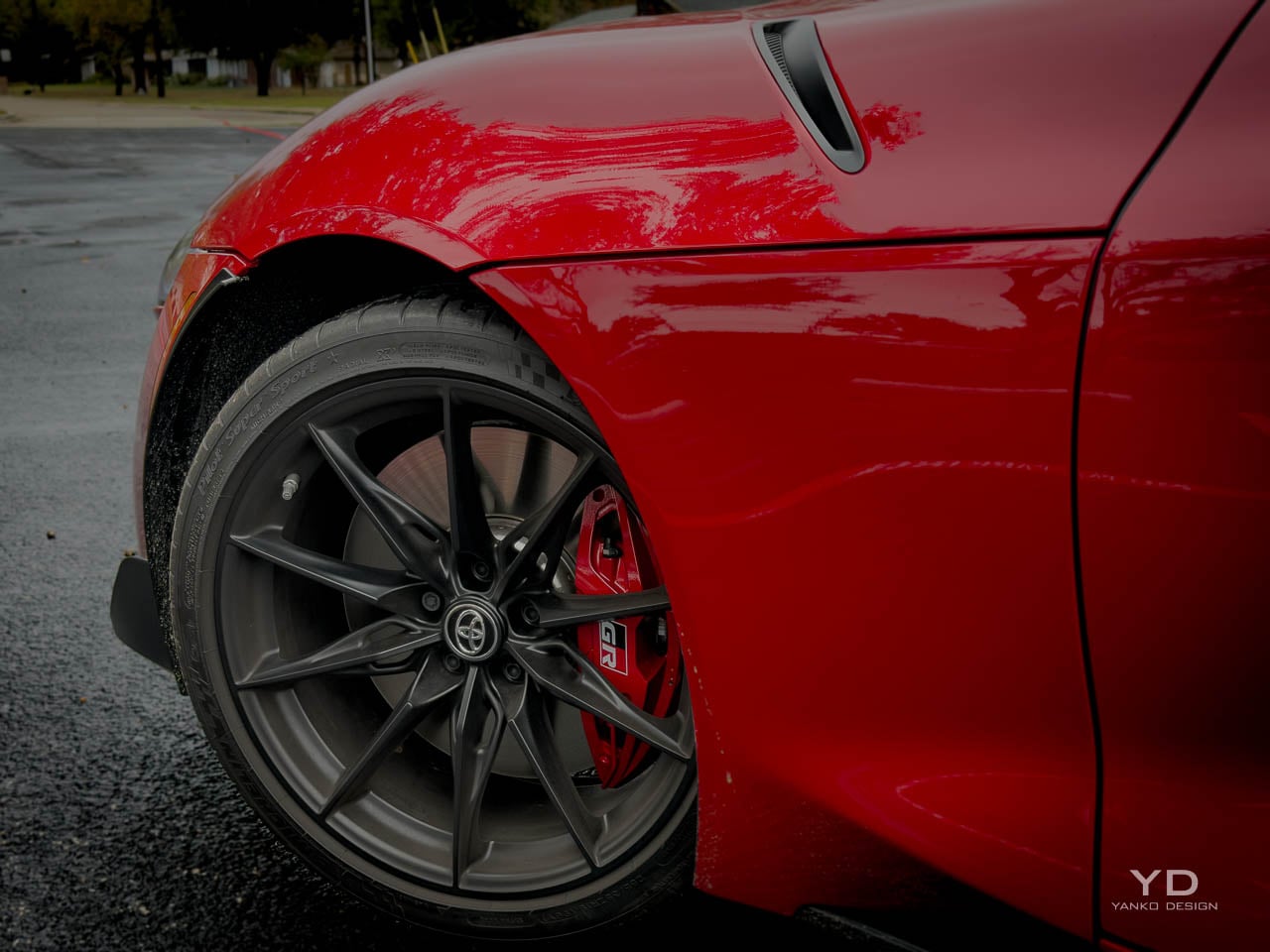
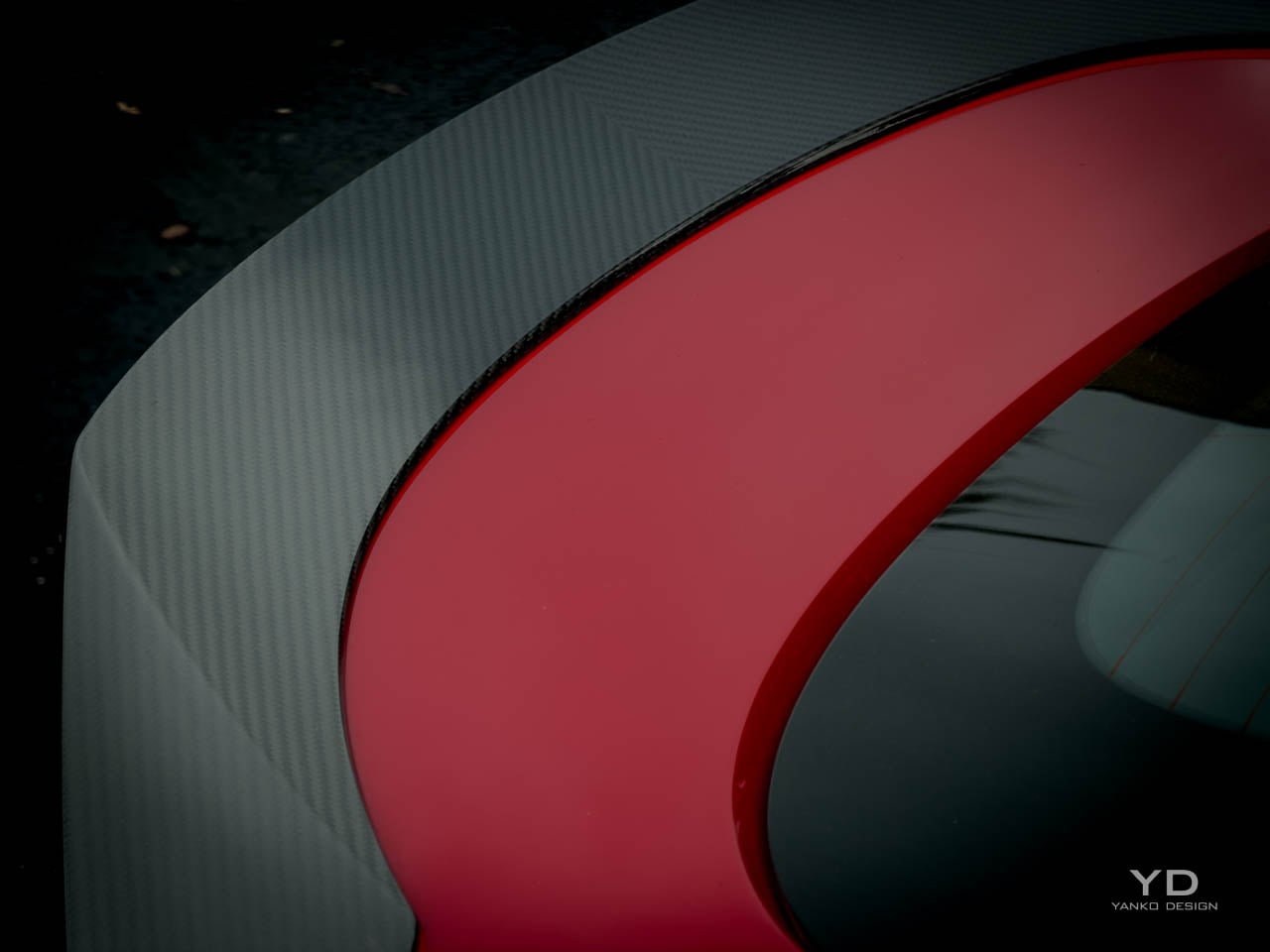
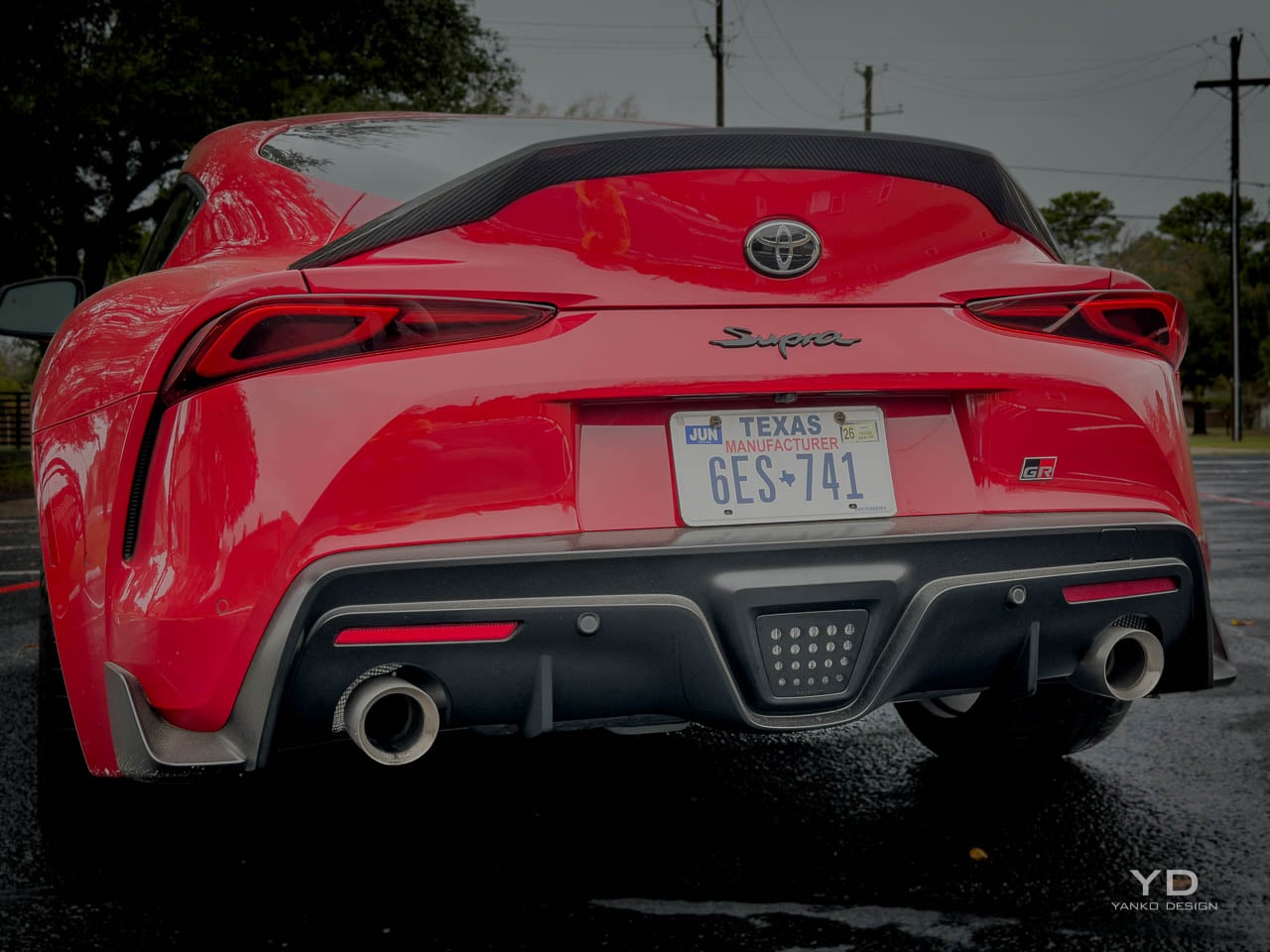
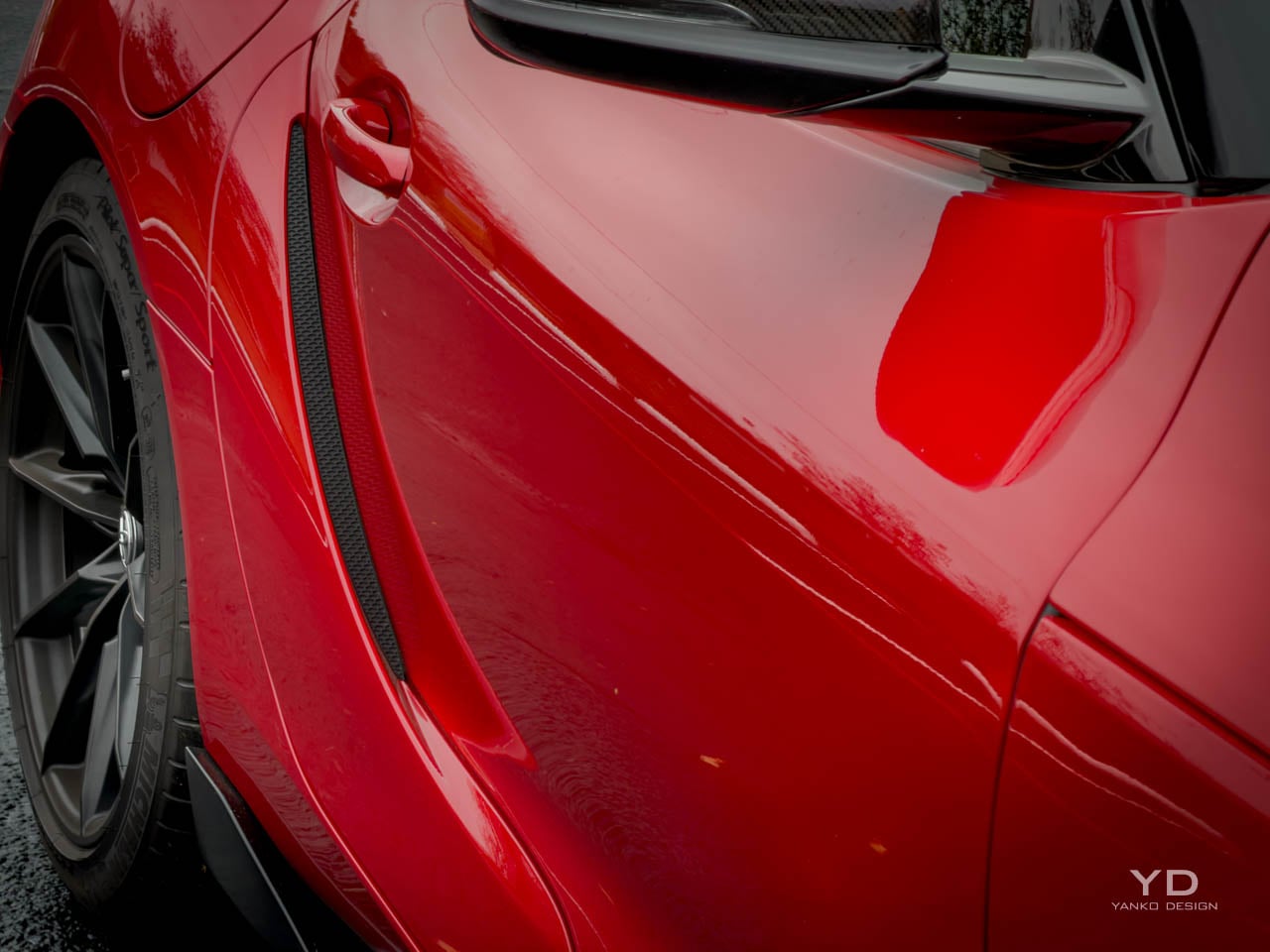
The Final Edition adds visual weight through functional aero components that subtly alter the car’s stance without abandoning the base design’s intent. In person, the carbon ducktail changes the whole rear three-quarter view. A carbon fiber ducktail spoiler extends the rear deck with a lip that follows the body’s natural curvature rather than imposing an aggressive aftermarket aesthetic. Front wheel arch flaps and taller tire spats address airflow management at higher speeds, but their visual effect is equally significant: they emphasize the muscular fender bulges that have always been the Supra’s most overtly athletic element. The matte black 19-inch wheels specific to this trim level darken the car’s overall presence, pulling attention toward the body surfaces rather than the brightwork. That darkening strategy continues with available carbon mirror caps and the optional GT4 appearance package, which introduces matte paint finishes like Burnout and Undercover that transform surface reflections into something closer to fabric than glass. The lighting signature carries forward unchanged from previous model years, with the narrow headlamp clusters and integrated LED running lights that give the Supra its focused, almost predatory forward gaze. Rear lighting uses a full-width bar that connects the tail lamps and creates visual width when viewed from behind. The decision to keep lighting elements consistent with the broader Supra range rather than creating Final Edition-specific graphics reflects Toyota’s restraint. This is a car closing a chapter, not a special edition screaming for attention.

Surfacing across the body panels demonstrates the kind of complexity that requires time to appreciate. The door skins carry compound curves that transition from convex to concave as they approach the rockers, creating shadow lines that change character depending on the sun angle. Fender tops pull upward from the hood line with enough volume to be visible from the driver’s seat, a design choice that deliberately references the original A80 Supra’s visual cues. The hood itself stretches forward with a slight power dome that interrupts what would otherwise be a simple convex surface, adding muscularity without resorting to the aggressive venting common in performance car design.

Where the Supra’s form language succeeds most convincingly is in its refusal to chase visual aggression for its own sake. Many competitors in this price bracket layer on ducts, vents, wings, and diffusers that announce performance intent through visual noise. The GR Supra communicates through proportion and surface, trusting that buyers who appreciate the engineering beneath will also appreciate the design discipline above. I think it is one of the better looking sports cars you can buy right now, and it will age better than most of its rivals.

Interior Architecture

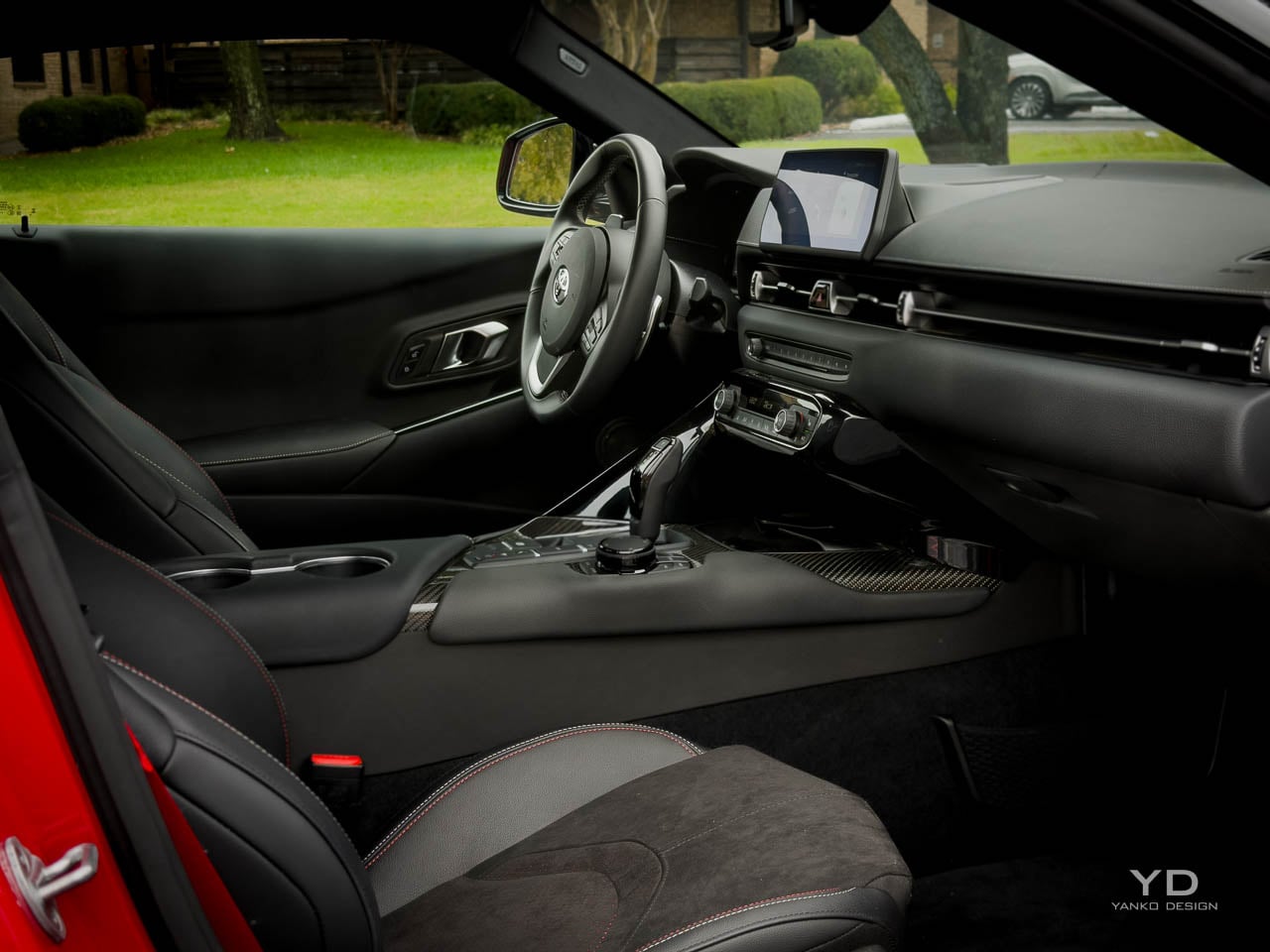
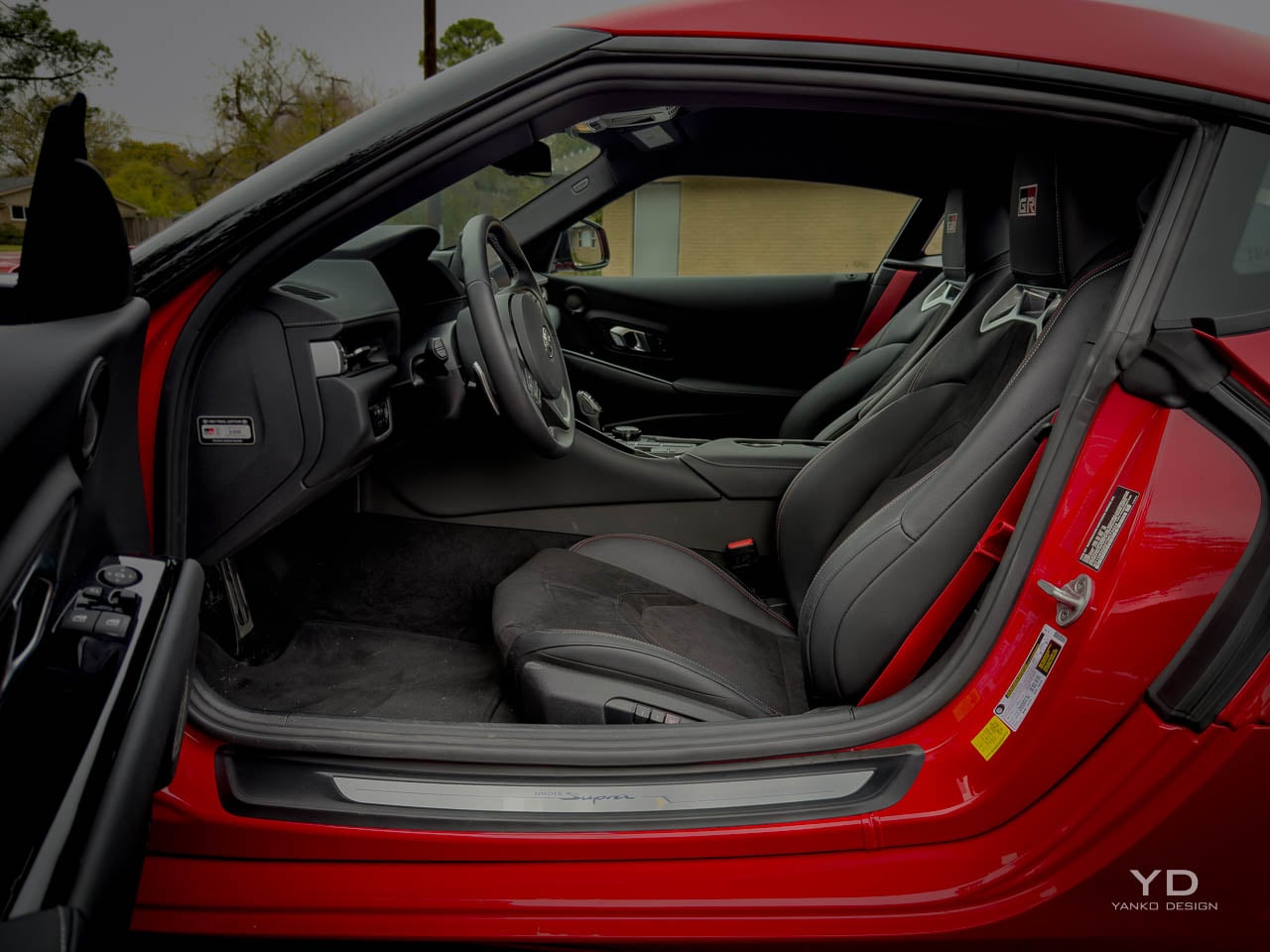
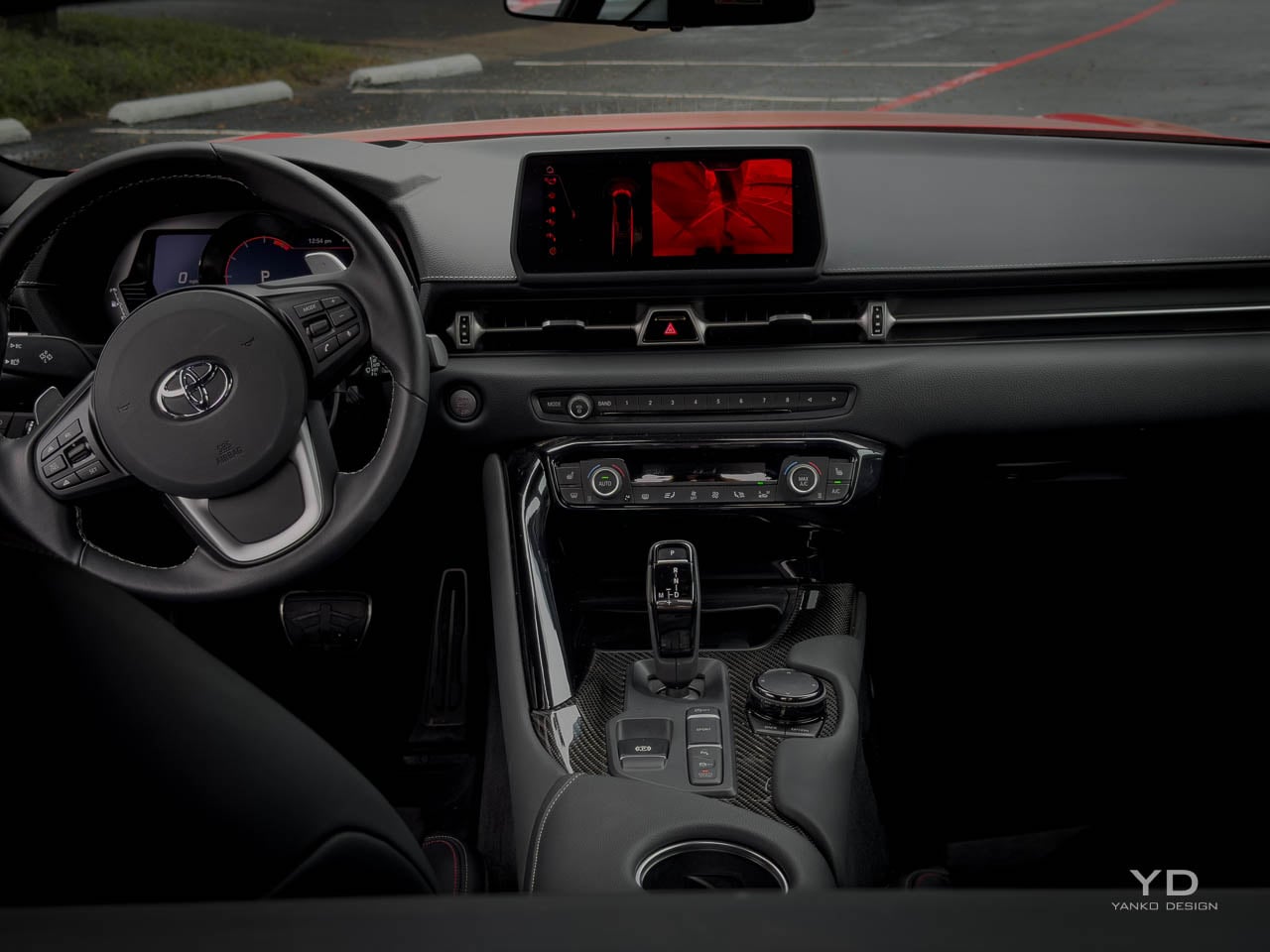
Cabin architecture establishes its priorities the moment the door swings open, presenting a cockpit organized around the driver with almost aggressive single-mindedness. Seat positioning sits low, with the hip point closer to the floor than most modern sports cars permit, creating the sensation of sitting in the car rather than on it. A relatively high door line and the upward sweep of the dashboard combine with that low seating to produce an environment that feels enclosed without claustrophobia, like a well-fitted helmet rather than a restrictive space. The center console rises between driver and passenger, creating both physical and psychological separation that reinforces the driver-focused intent. This is not a car designed for conversation during spirited driving.

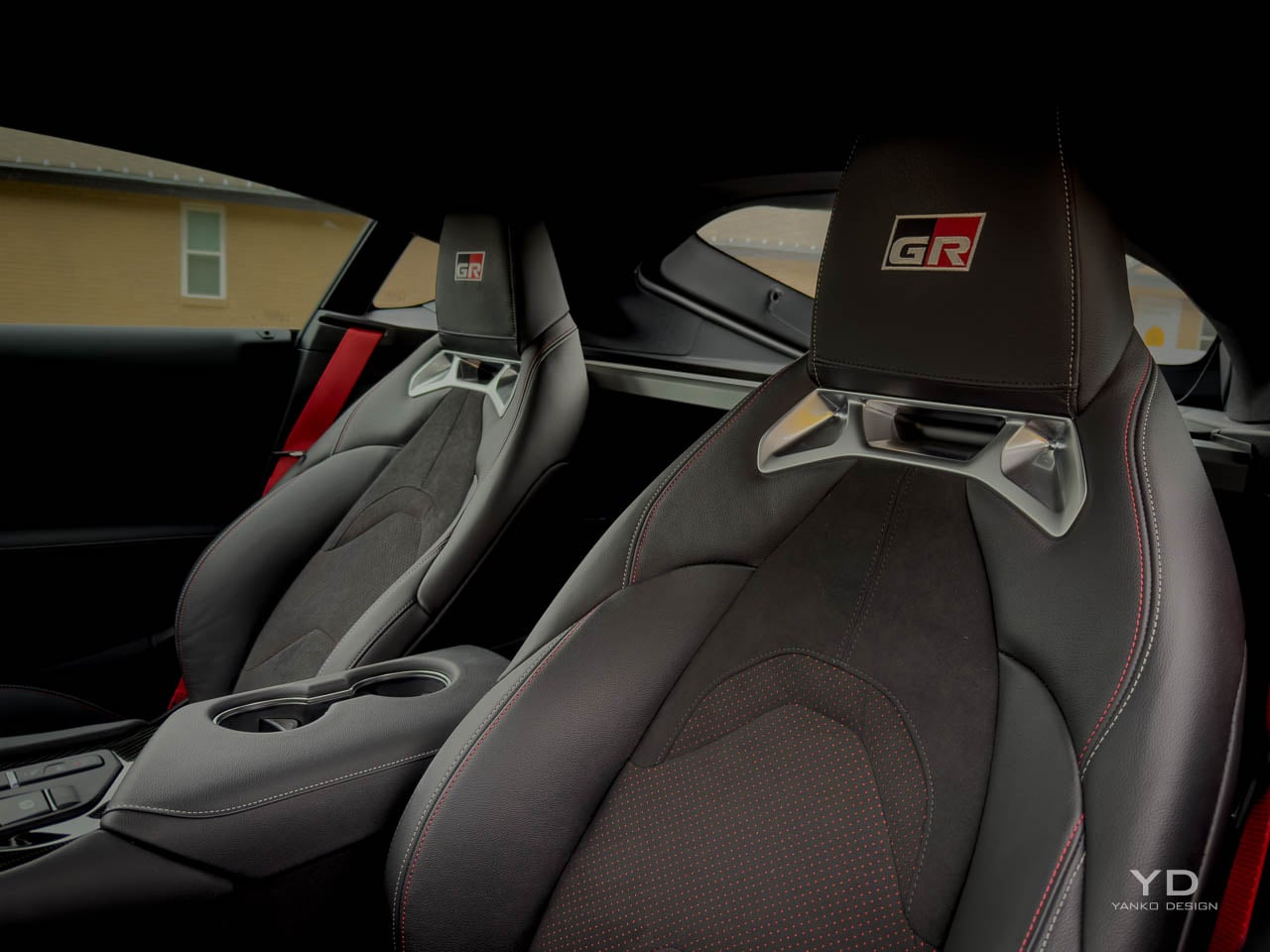
The Final Edition’s interior trim elevates the cabin through Alcantara and leather surfaces with red contrast stitching and GR branding integrated into the headrests and door panels. That red accent strategy walks a careful line: visible enough to communicate the special edition status, restrained enough to avoid the boy-racer look that aggressive color blocking can create. Alcantara appears on high-contact areas where grip matters, and the texture variation it brings is welcome. Leather covers the surfaces where durability and easy cleaning take priority. The combination feels deliberate rather than decorated.

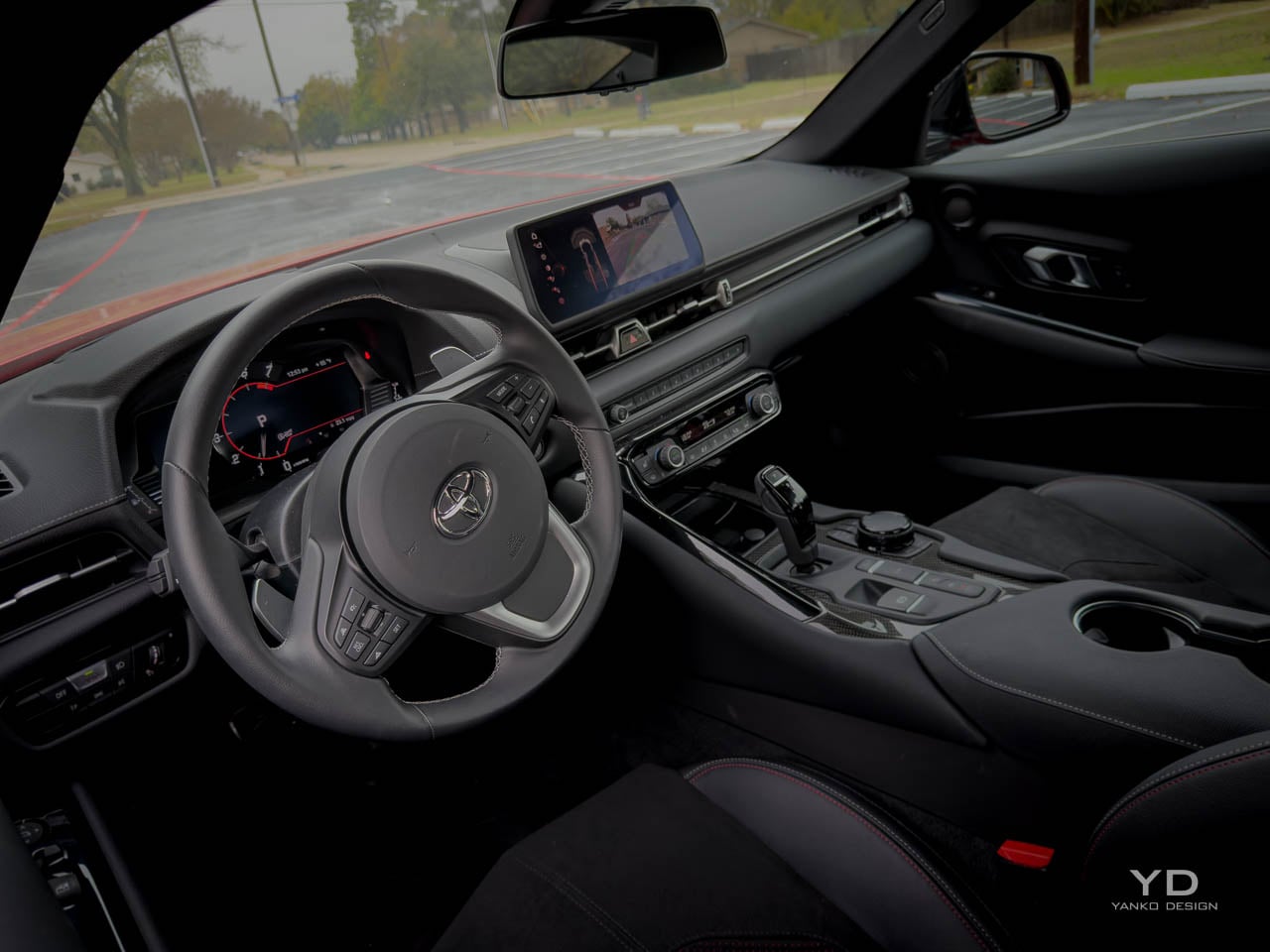
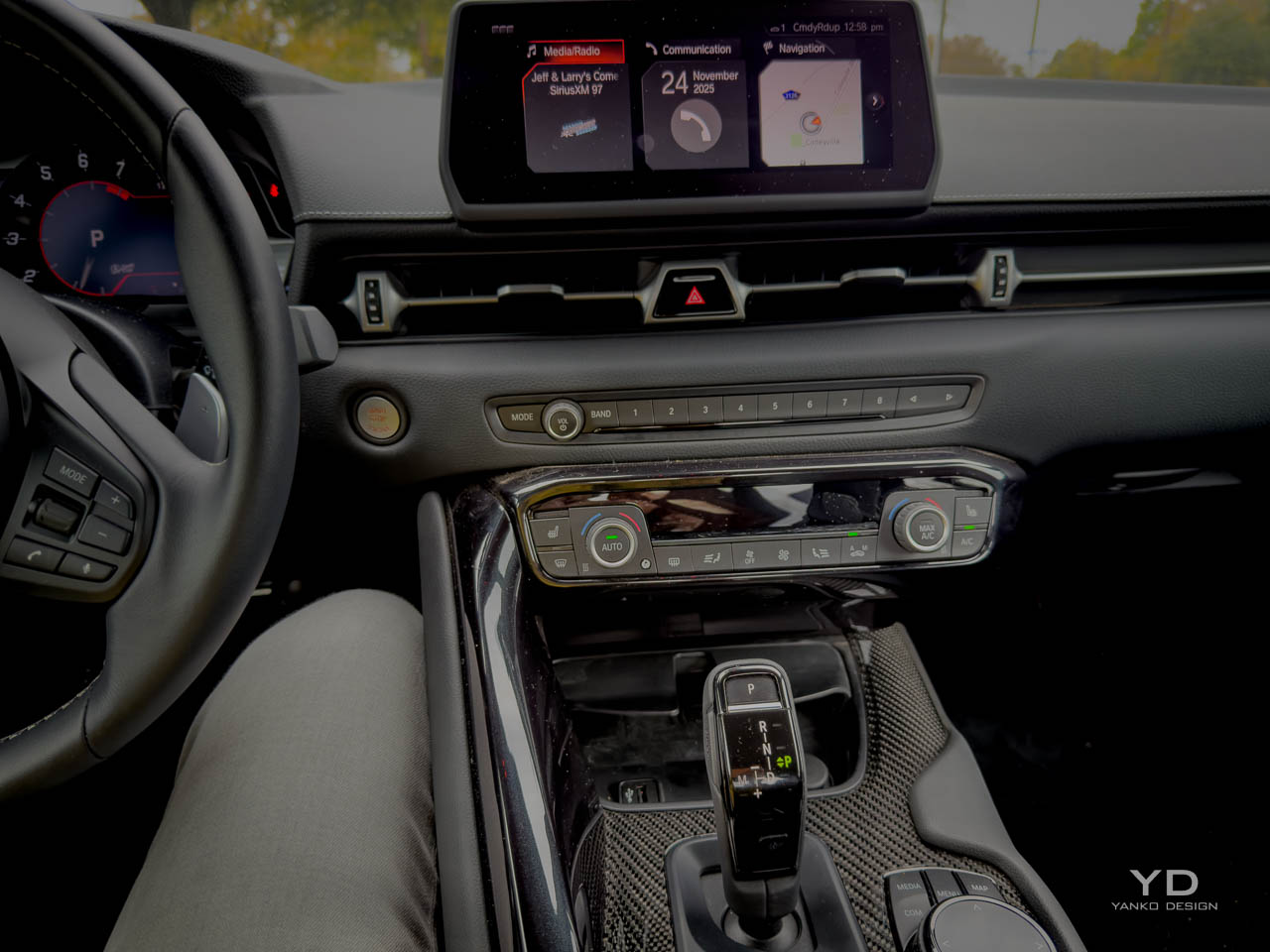
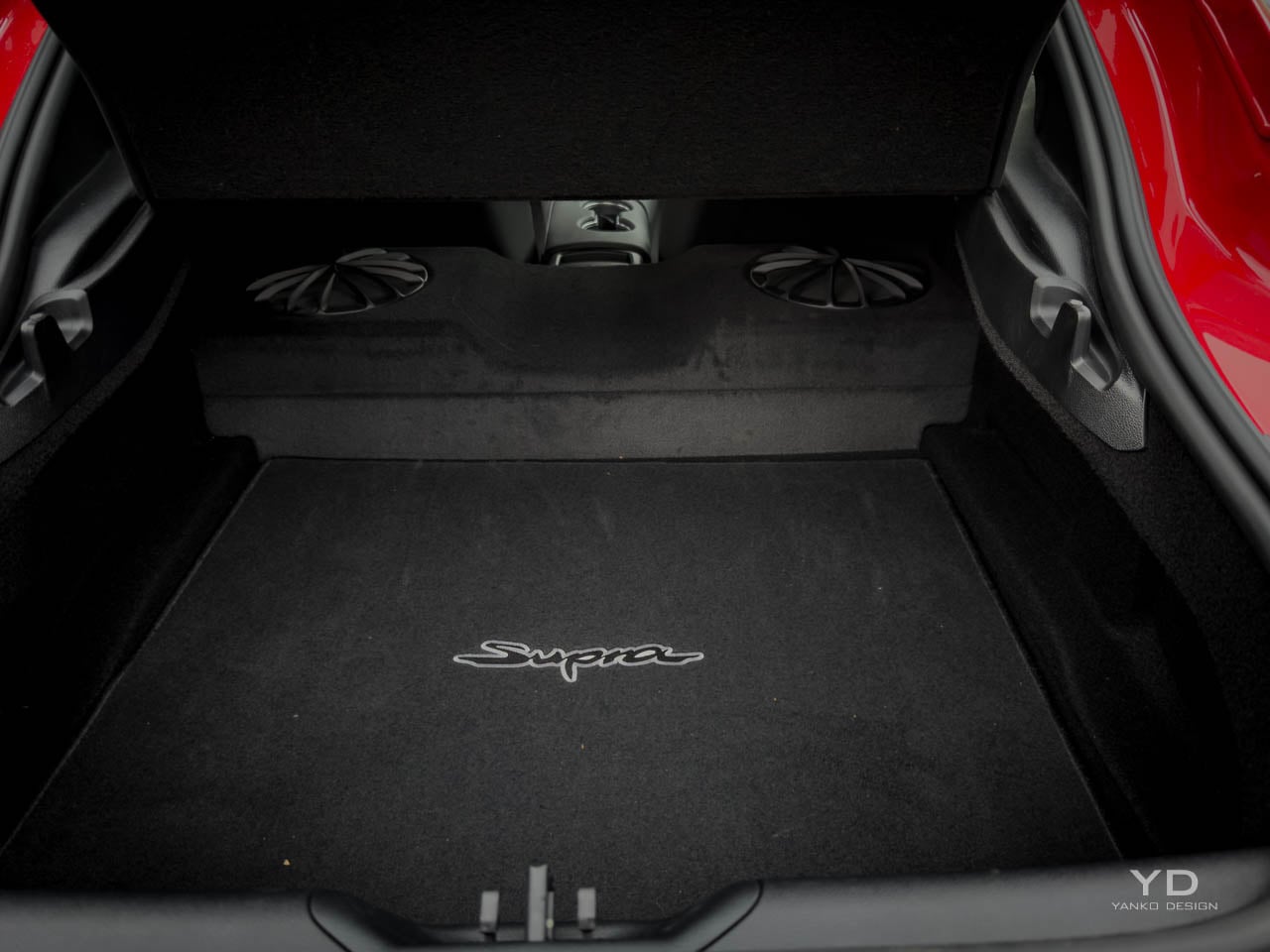
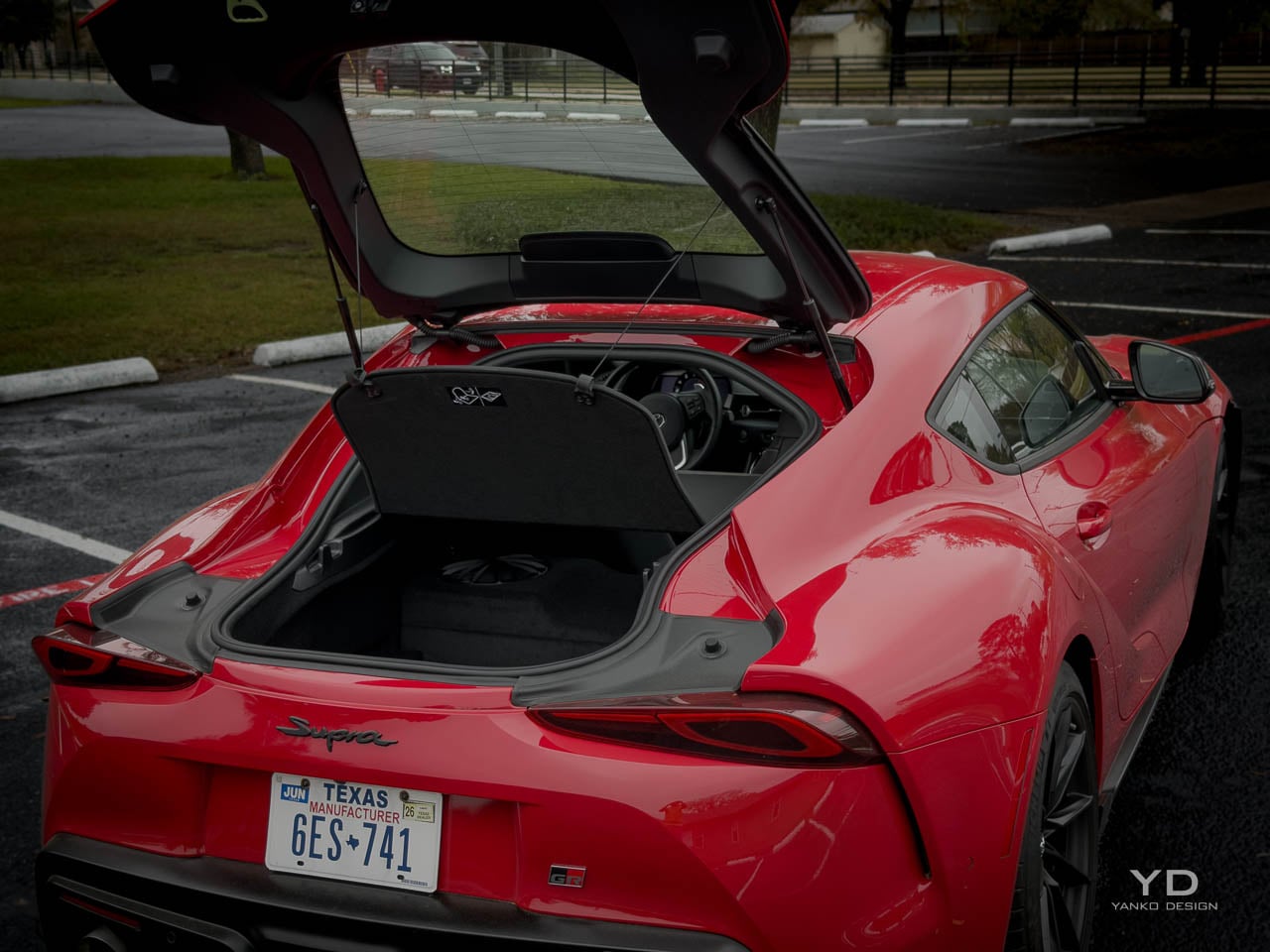
Spatial logic within the cabin follows the classic sports car compromise: adequate space for two adults, minimal accommodation for anything else. The 10.2 cubic feet of cargo behind the seats accepts weekend bags or a set of helmets, but the hatchback opening limits practical access compared with a traditional trunk. I fit a carry-on and a camera bag back there without much fuss. Seat adjustment range accommodates a reasonable spread of body types, though taller drivers may find the roof proximity notable, particularly with the double-bubble sculpting pressing down at the head area. The passenger seat offers less adjustment range, an honest acknowledgment that this space exists primarily to transport someone occasionally rather than to provide equivalent comfort to the driver’s position. The instrument cluster positions directly ahead of the steering wheel in a binnacle that creates visual focus, while the center-mounted infotainment screen angles toward the driver with enough tilt to be visible without requiring a full head turn.

Ambient quality within the Final Edition cabin achieves a level of refinement that earlier A90 models sometimes missed. Panel gaps align with acceptable precision, door closure sounds carry the solid thunk that buyers at this price expect, and the overall assembly feel reflects the maturation that comes with late-production-run refinement. The JBL audio system fills the cabin with competent sound quality that neither embarrasses the car nor elevates it to audiophile territory. Road noise penetration remains higher than in grand touring competitors but lower than in track-focused machines, positioning the Supra appropriately for its dual-purpose character.

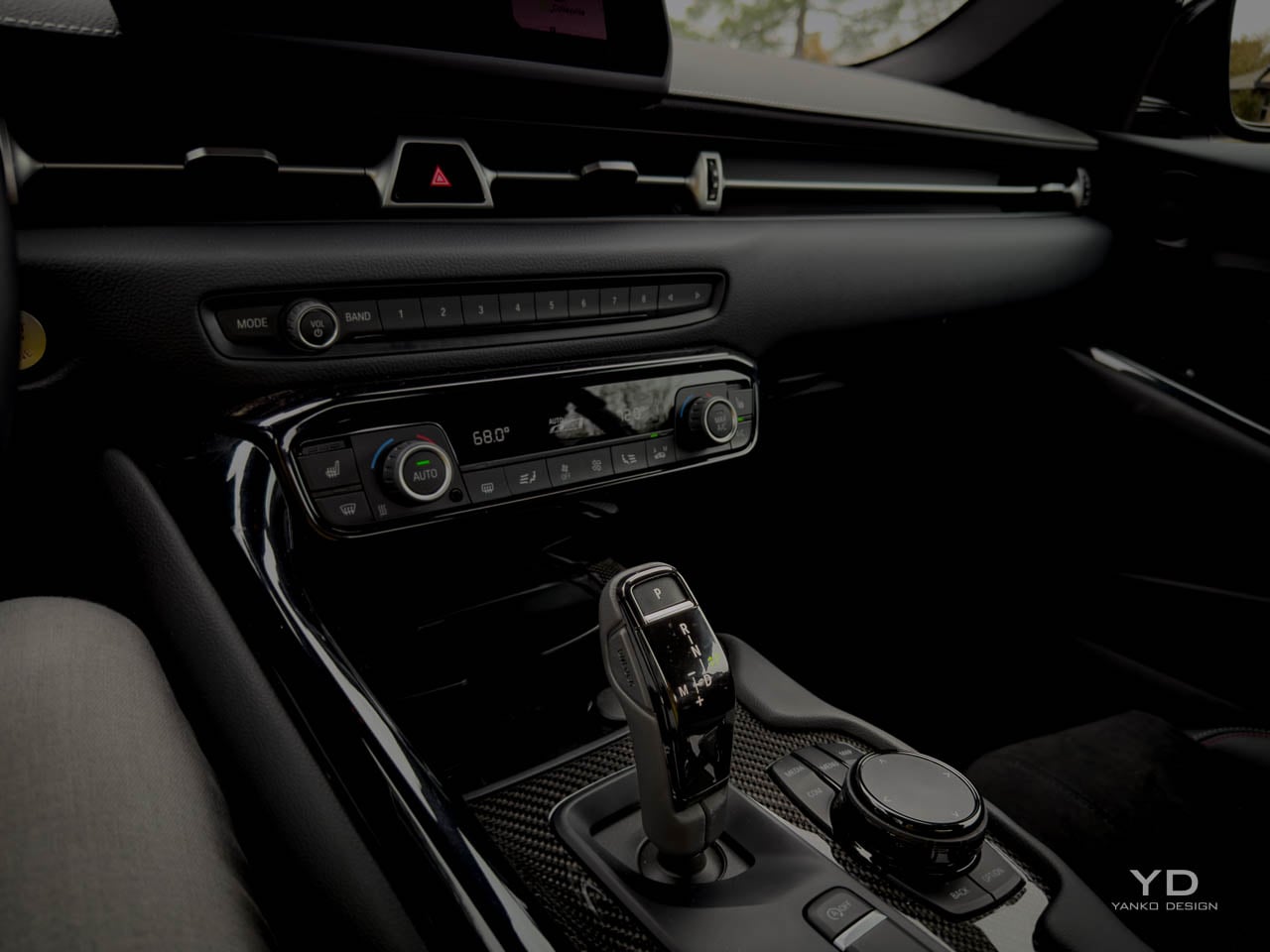
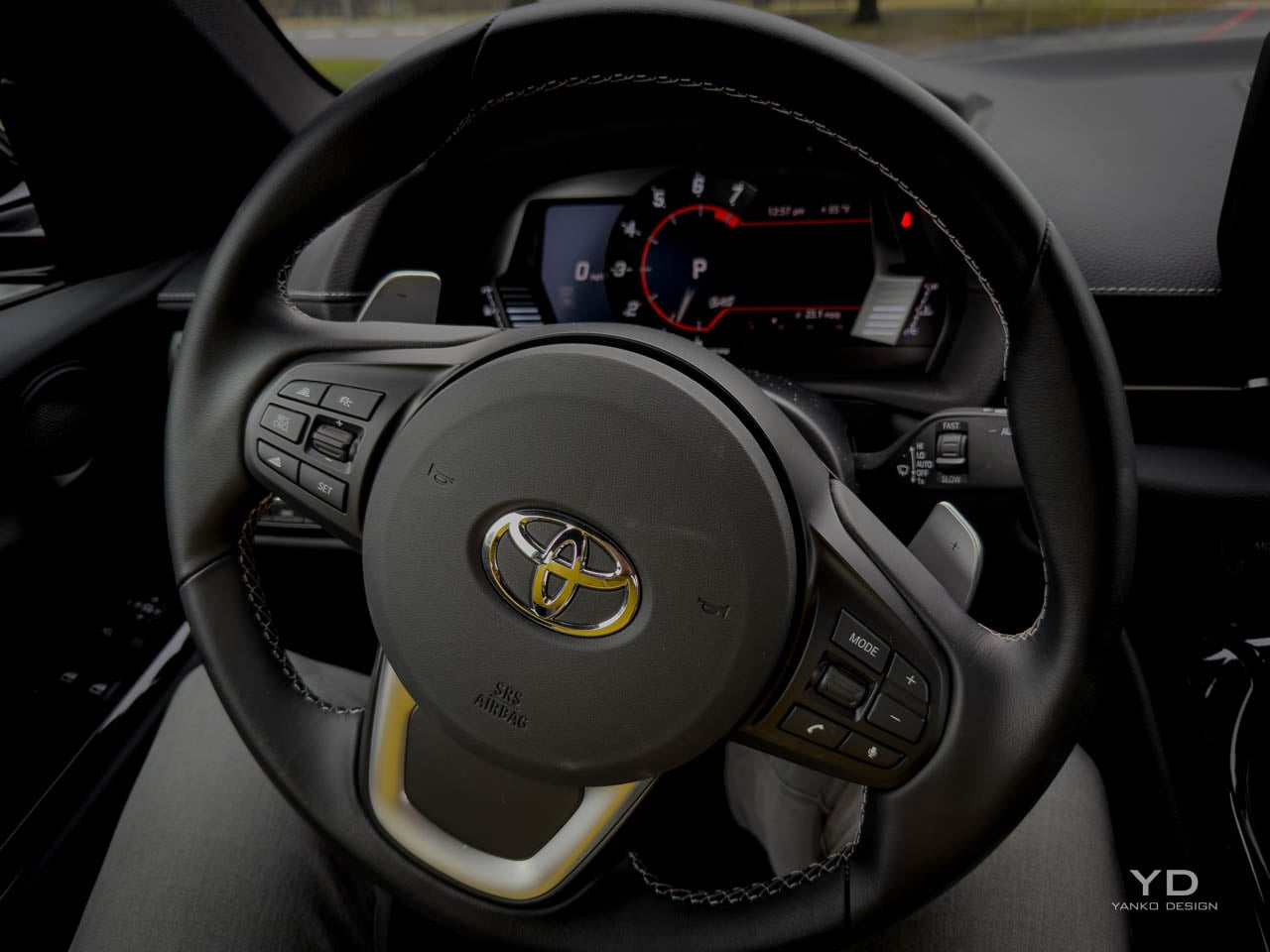
Control surface placement follows established conventions without innovation, which in this context reads as confidence rather than laziness. The steering wheel rim thickness and diameter feel appropriate for the car’s performance envelope. Paddle shifters, on automatic-equipped models, position within natural finger reach. Climate controls operate through physical buttons rather than touchscreen menus, a decision that becomes increasingly welcome as more manufacturers abandon tactile interfaces. The overall ergonomic impression suggests a cabin designed by people who drive rather than by people who design interfaces.

Material Composition

Material selection within the Final Edition demonstrates the kind of thoughtful approach that distinguishes serious sports cars from dressed-up economy platforms. The Alcantara carries enough weight to feel genuine rather than synthetic, and the stitching on the leather surfaces maintains consistent spacing throughout. Hard plastics appear in lower visibility areas, but their matte finishes prevent the cheap, shiny look that dates an interior. Carbon fiber trim matches the exterior pieces in weave and clear coat.

The steering wheel leather provides grip during hard cornering without needing aggressive perforation. The shift lever moves through its gate with the mechanical precision you want from a sports car. Climate control knobs click with appropriate resistance, and even the key fob has the right heft. These details matter more than they should, and the Final Edition gets most of them right.


Sound enters the cabin intentionally. Road surface changes come through the floor clearly enough to tell you about grip conditions. Wind noise picks up above highway speeds, a tradeoff for that slippery shape. The inline-six sounds smooth and present without needing artificial amplification through the speakers. This is a car that wants you engaged, not cocooned.

Technology Integration

The 8.8-inch infotainment display runs older BMW iDrive software that works fine without impressing anyone. Apple CarPlay handles smartphone connectivity, though Android Auto remains unavailable, a gap that stands out as the market has largely standardized around both. The central controller with shortcut buttons takes some learning but becomes efficient with use. Response time is adequate, and the screen resolution reflects the platform’s age without embarrassing the car.

The head-up display projects speed, navigation directions, and basic vehicle info onto the windshield where it belongs. Brightness adjusts automatically, and the information density stays reasonable during spirited driving. Taller drivers may find the projection sitting lower than ideal.

Driver assistance on automatic models includes adaptive cruise, lane departure warning, emergency braking, and blind spot monitoring. These systems work competently without the refined calibration of the best current implementations. The technology overall reflects a transitional moment: physical buttons for climate and common functions, which many buyers will appreciate, but less visual sophistication than competitors increasingly offer. The tech is fine. You are not buying this car for its infotainment.

Powertrain Character

The 3.0-liter turbocharged inline-six produces 382 horsepower and 368 pound-feet of torque through a powerband that emphasizes breadth over peak drama. Torque arrives from 1,800 rpm and maintains presence across the usable range, eliminating the lag and surge that characterized earlier turbo applications and creating a delivery character that rewards varied driving styles. The engine note carries the mechanical smoothness inherent to inline-six architecture, with a refined exhaust sound that announces intent without the aggressive crackle and pop that some competitors employ. Power delivery feels linear and accessible, building predictably with throttle input rather than arriving in sudden bursts that complicate corner exit management.

Transmission choice between the six-speed manual and eight-speed automatic represents a philosophical decision as much as a practical one. The manual offers the engagement and control that enthusiasts prize, with a shift action that has improved across model years to provide shorter throws and more precise gate definition. The automatic matches revs competently during downshifts, executes ratio changes with appropriate speed during spirited driving, and proves unobtrusive during commuting duties. Toyota’s quoted acceleration times favor the automatic slightly, with 0-60 mph arriving in 3.9 seconds versus 4.2 seconds for the manual, though the differences in real-world driving feel less significant than benchmark testing suggests.

The Final Edition’s chassis improvements transform how the powertrain translates through the driving experience. The brake pedal firms up after a few hard stops rather than going soft, which builds confidence when you start pushing. Revised differential control maps improve traction deployment during corner exit, and you feel the rear step just a bit before the diff catches it rather than snapping into oversteer. The stronger front stabilizer bar and recalibrated adaptive dampers maintain body composure under the power application that the turbo six enables. These changes do not alter the powertrain’s fundamental character but refine how that character reaches you through the controls.

Daily Reality

Ownership experience with the GR Supra Final Edition confronts the compromises inherent to sports car design with varying degrees of success. The low seating position that creates driving involvement also complicates entry and exit, particularly in parking spaces where adjacent vehicles limit door swing. Visibility limitations from the small rear window and thick C-pillars require adjustment for drivers accustomed to more expansive glass areas, making parking lot navigation a conscious task rather than a casual one. The firm suspension tuning that provides communication and control on winding roads transmits surface imperfections with corresponding directness, making rough pavement a more present companion than luxury-oriented vehicles would permit.

Fuel economy according to manufacturer estimates reaches 22 mpg in city driving and 29 mpg on the highway, with a combined figure of 25 mpg that reflects the turbocharged six-cylinder’s efficiency when cruising and its appetite when pushed. Real-world numbers will vary with driving style, but the overall efficiency positions the Supra reasonably within its competitive set, neither punishing owners with sports car fuel bills nor pretending toward economy car frugality. Premium fuel requirements add to operating costs in a way that buyers at this price point typically accept as inherent to the category.

Reliability considerations for the Final Edition benefit from six years of production refinement and the BMW powertrain’s established service record in various applications. Early A90 models experienced some software and electronic issues that subsequent years addressed through updates and revisions. The mechanical components, including the engine, transmission, and differential, have demonstrated durability across the ownership community, with major failures remaining relatively uncommon in maintained examples. Service access through Toyota dealers provides convenience advantages over more exotic alternatives, though parts pricing for BMW-derived components can exceed expectations set by Toyota’s mainstream reputation. Warranty coverage follows Toyota’s standard terms, providing the assurance that comes with corporate backing during the initial ownership period.

Storage practicality remains the sports car compromise that no design can fully solve within this package’s constraints. The 10.2 cubic feet behind the seats accepts soft luggage or equipment bags, but the hatchback opening restricts the shapes and sizes that fit easily. The absence of a front trunk, common in mid-engine competitors, eliminates a supplementary storage option that some buyers might expect. Interior storage compartments provide adequate space for phones, wallets, and small items without offering the bins and cubbies that more practical vehicles include. The trunk floor sits high relative to the rear bumper, requiring a lift-over motion that larger or heavier items resist. Owners planning regular cargo duties will find the Final Edition uncooperative.

Competitive Context

Positioning against direct competitors reveals the Final Edition’s distinctive value proposition within a segment rich with alternatives. At approximately $63,000, the Porsche 718 Cayman offers mid-engine balance and the Porsche badge’s aspirational weight, but base models arrive with less power, while equivalently-equipped examples push beyond $80,000. Starting around $64,000, the BMW M2 shares platform architecture with the Supra but wears the M division’s identity, providing comparable performance with a different aesthetic philosophy and higher standard equipment levels. The Nissan Z presents a front-engine, rear-drive alternative at lower price points starting near $50,000, though with less refined chassis dynamics and a less developed interior environment.

Design differentiation within this competitive set reflects each manufacturer’s interpretation of sports car purpose. The Porsche approach emphasizes precision engineering expressed through minimalist design, with restrained surfaces and functional detailing that communicates seriousness without flamboyance. BMW’s M2 adopts a more aggressive stance, with widened bodywork and prominent air intakes that announce performance intent visually. The Nissan Z revives retro styling cues that connect to heritage models, creating emotional resonance through nostalgic reference. The GR Supra occupies a space between these approaches, modern in execution but proportionally classic, dramatic in silhouette but restrained in detailing.

Value assessment for the Final Edition depends heavily on buyer priorities and intended use. Those seeking maximum performance per dollar will find better acceleration numbers elsewhere. Those prioritizing interior luxury or technology features will find more comprehensive offerings at similar prices. Those wanting a daily driver with occasional sport driving will find more practical alternatives with comparable engagement. The Final Edition’s value proposition centers on something less quantifiable: the refinement of a platform that has spent six years developing its character, presented in the form Toyota believes represents its fullest expression. That refinement carries worth for buyers who understand what it represents and holds less meaning for those who prefer specification sheet comparison.

Who Should Buy This

The Final Edition makes the most sense for enthusiasts who already know they want a Supra and want the most sorted version Toyota will ever make. If you track your cars occasionally but mostly drive them on weekends, the chassis improvements and brake upgrade translate directly into confidence. If you care about owning something that will hold its value as a last-of-generation collectible, the limited production run and manual transmission availability help that case. If you need a daily driver that happens to be fun, the standard 3.0 or 3.0 Premium gets you most of the experience for less money. And if you cross-shop heavily on tech features or interior luxury, the Cayman and M2 offer more polish in those areas. The Final Edition is for people who prioritize how a car feels over what it offers on paper.

Design Verdict

The 2026 Toyota GR Supra MkV Final Edition represents a mature conclusion to a generation that arrived with controversy and departs with resolution. Toyota’s decision to invest the Final Edition’s development budget in chassis refinement rather than power increases or cosmetic drama reveals a design philosophy that prioritizes experience over specification. The car that results feels more complete than its predecessors, with the sharpened dynamics and improved braking confidence that track time and engineering iteration produce. Whether those improvements justify the price premium over standard models depends on the buyer’s sensitivity to the differences and the value they place on owning the definitive version of a platform reaching its end. The design choices, from the restrained exterior treatment to the driver-focused interior architecture to the material selections that emphasize quality over flash, communicate intentions clearly enough for interested buyers to evaluate alignment with their own priorities.

Longevity prospects for the Final Edition’s design suggest the kind of aging that rewards restraint. The absence of aggressive trend-chasing elements, the proportion-driven exterior language, the functional rather than decorative interior approach: these qualities tend to preserve relevance as years pass rather than dating the design to a specific moment. The limited production run adds collectability considerations that may influence future values, particularly for manual transmission examples in distinctive color combinations. Whether the GR Supra MkV will achieve the classic status of its A80 predecessor remains for time to determine. What the Final Edition demonstrates conclusively is that Toyota understood what made this generation worth building and chose to close its production run with the clearest expression of that understanding.

The post 2026 Toyota GR Supra MkV Final Edition Review: A Farewell Written in Carbon Fiber and Camber first appeared on Yanko Design.

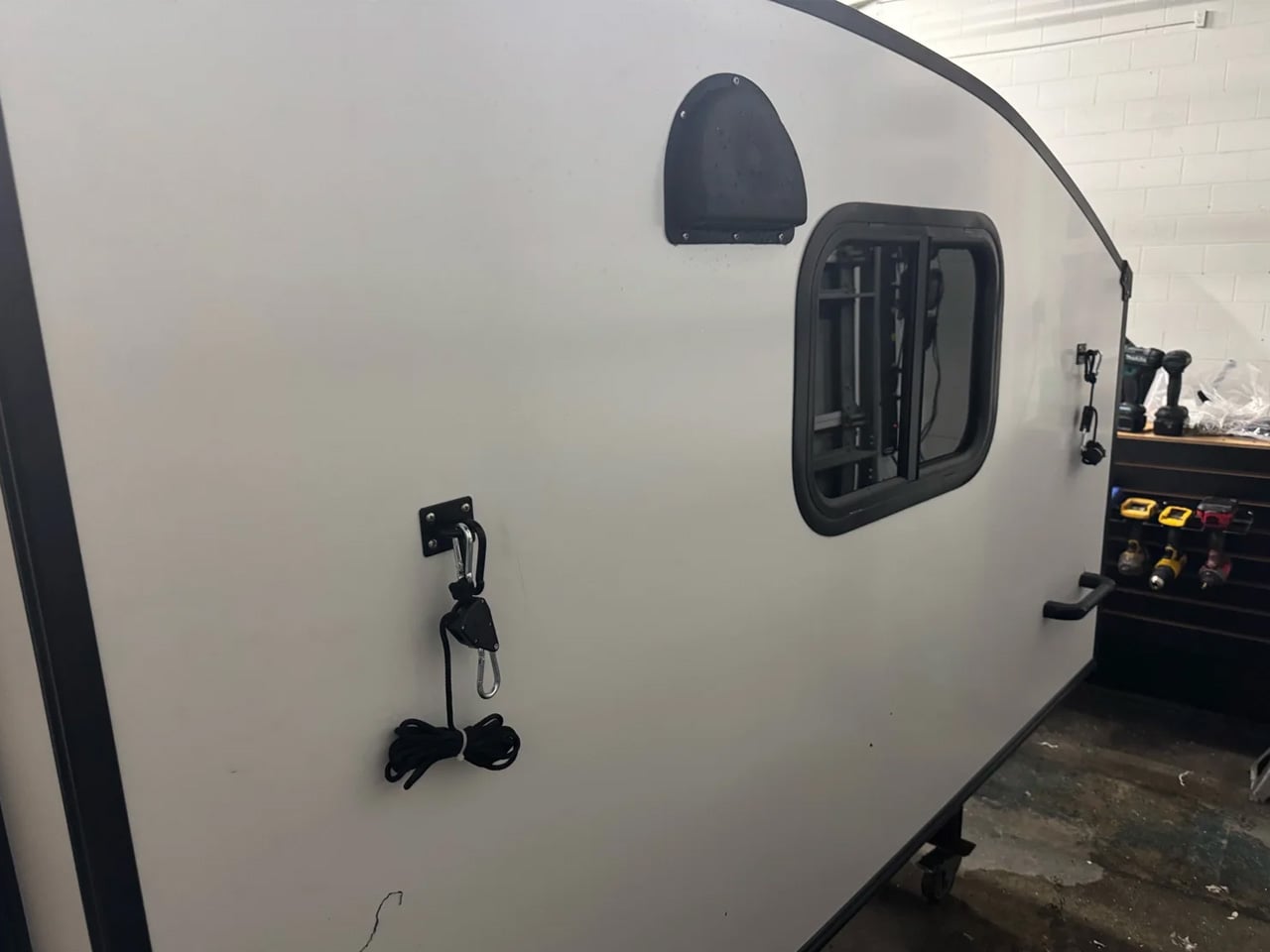
Tiny Camper Company’s Stubby is $2,900, all-composite slide-in camper built to last

I’m in awe of how quickly the RV industry is transitioning from wood and metal builds to all-composite construction. Following the release of the Unit-1 rugged squaredrop off-roader from California-based Ecno Evil, which was constructed without wood yet designed to tackle untamed roads, another 100 percent wood-free camper makes its presence known. Called the Stubby, it is a bare-bones slide-in camper that starts at just $2,900, making it an accessible entry point for almost any type of adventurer.

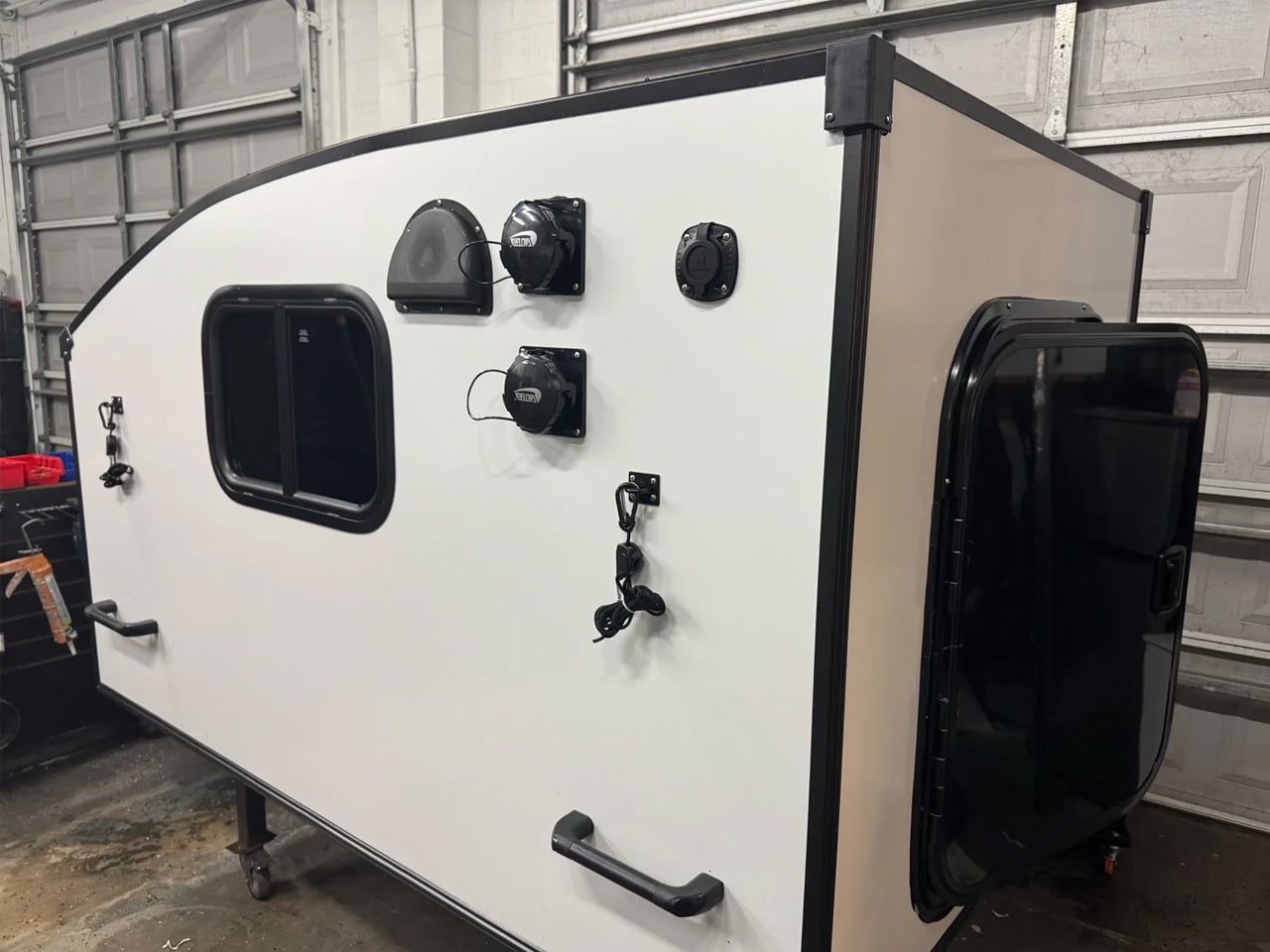
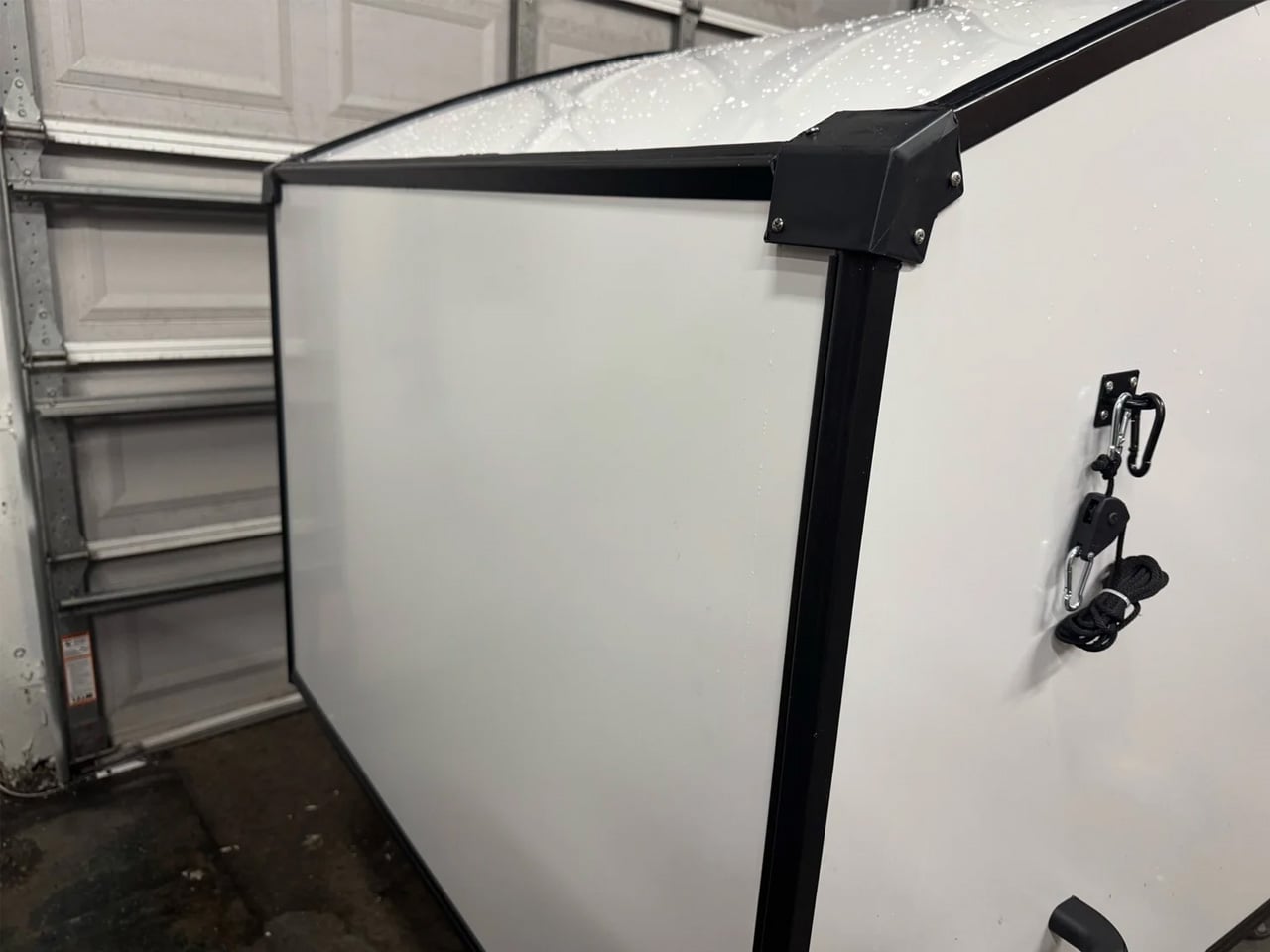
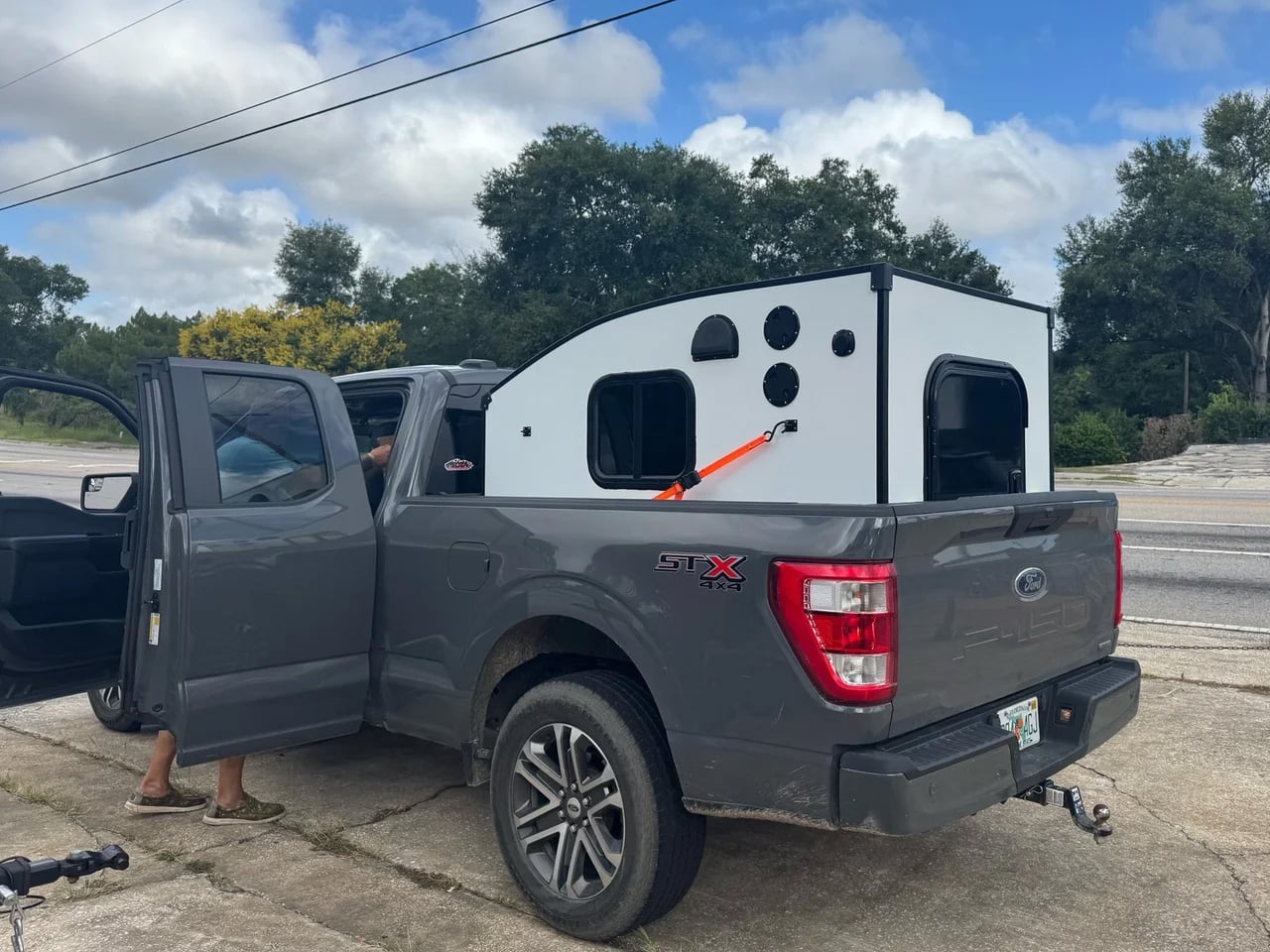
Completely wood-free, all-composite construction means this slide-in camper, whether it’s stationed on the pickup truck bed or mounted on a platform, will remain leak-proof and corrosion-free for the lifetime of the vehicle. To stay put where you choose to place it, the camper features a pair of aluminium slides and built-in tie-down points so it’s secure and stable to transport.

Designer: Tiny Camper Company

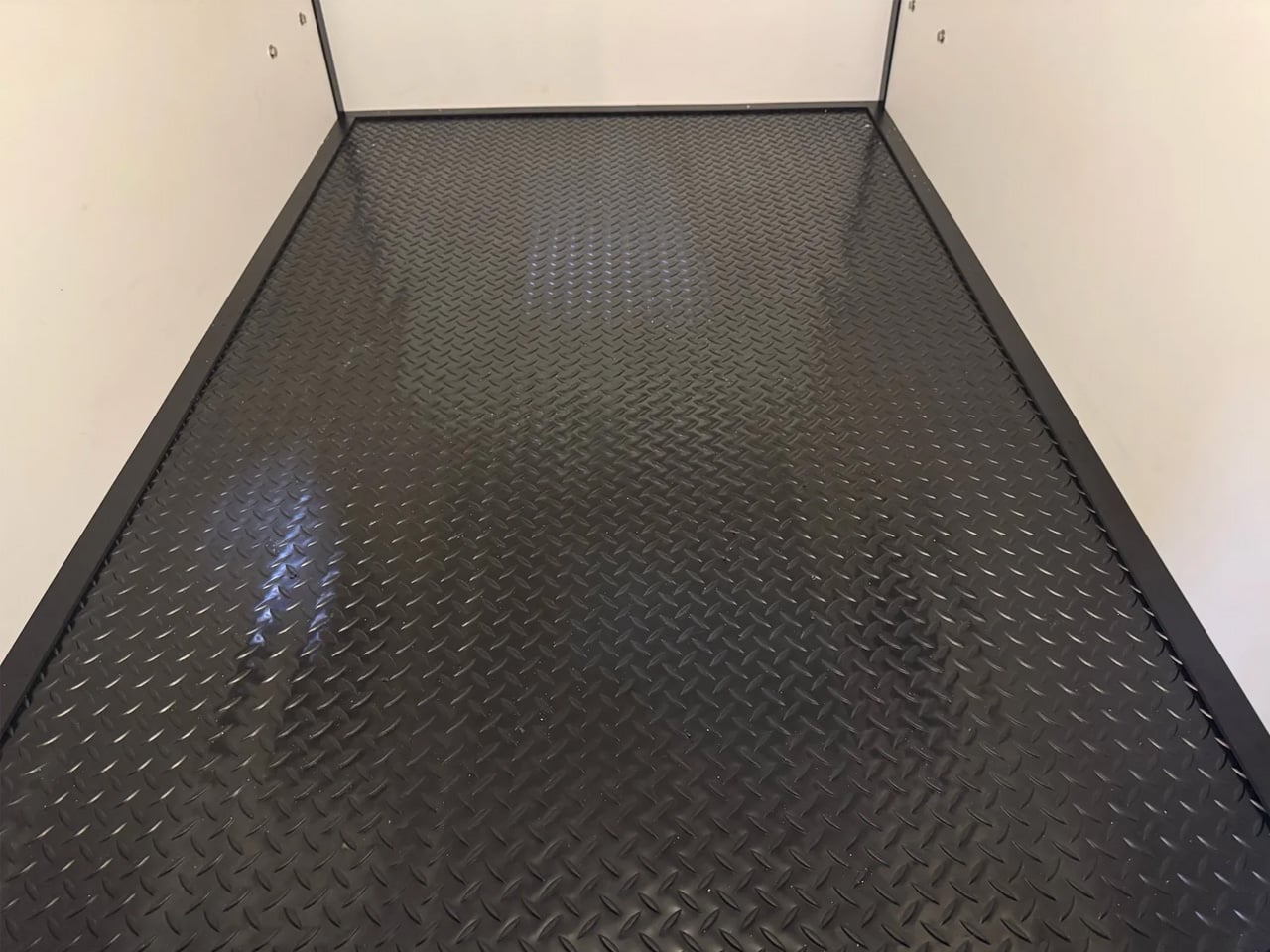
The Stubby is designed and engineered by the guys at the Tiny Camper Company in Florida, which has been creating affordable and compact RVs and has a decent portfolio to show. The Stubby slide-in can fit right into the back of a medium-sized truck with the help of only two people, who can lift and put it there. The cabin is absolutely lightweight at 280 lbs – largely because it’s only a sturdy and capable skeleton. If you want it out there in the wilderness with you, you will have to furnish it up at least with bedding, cooking, and toilet facilities.

Notably, Stubby makes provision for power with a 110V interior outlet and a Marine-grade exterior power connection, but an alternative power source would be necessary when you want to camp in it. With the optional Zero Breeze Mark 2 air conditioner (that comes for an additional $700) and other addons, the slide-in camper should be apt for off-grid adventures and as a quick sleeping solution when you want to “convert your truck into a resting spot.”

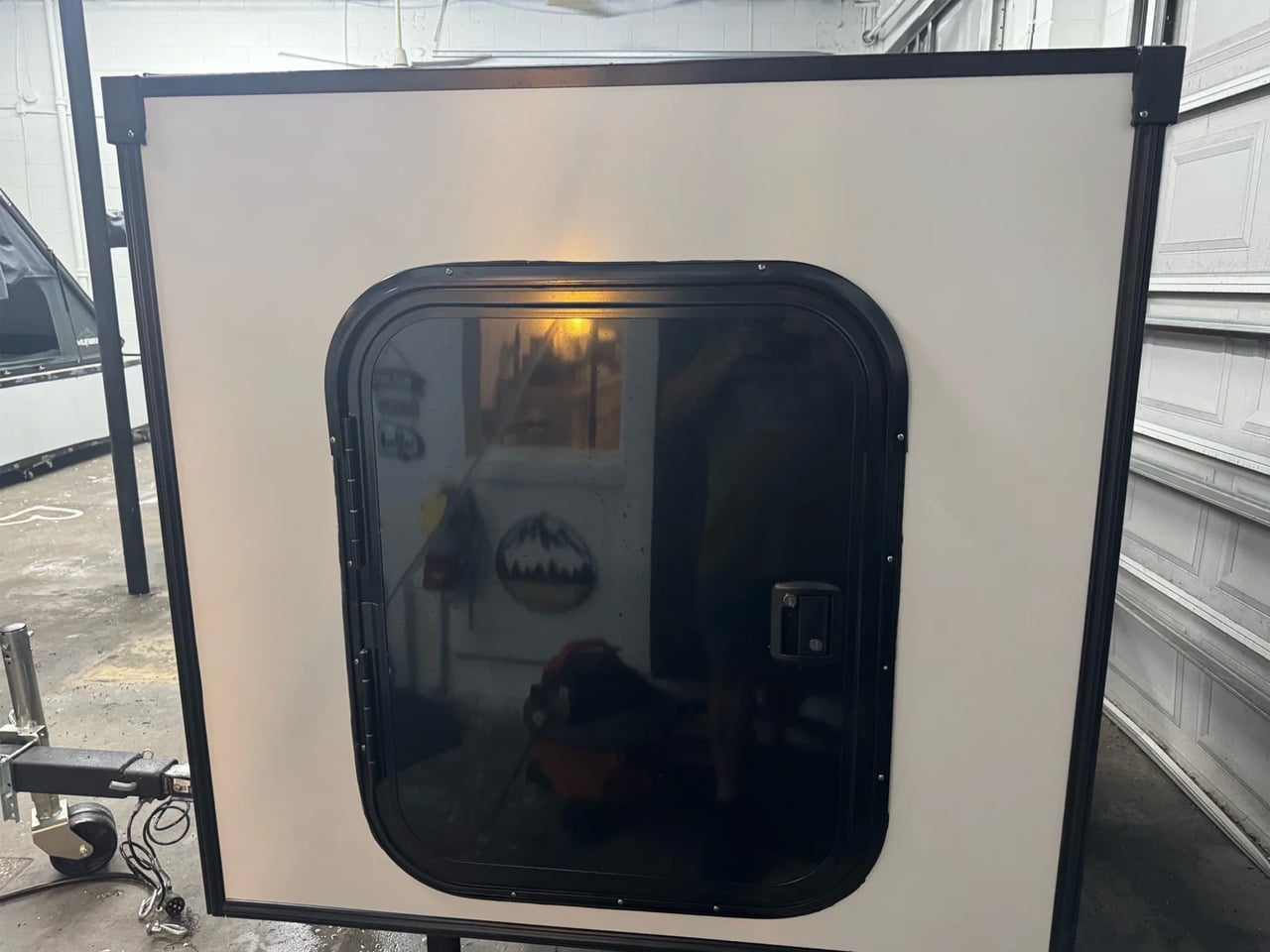
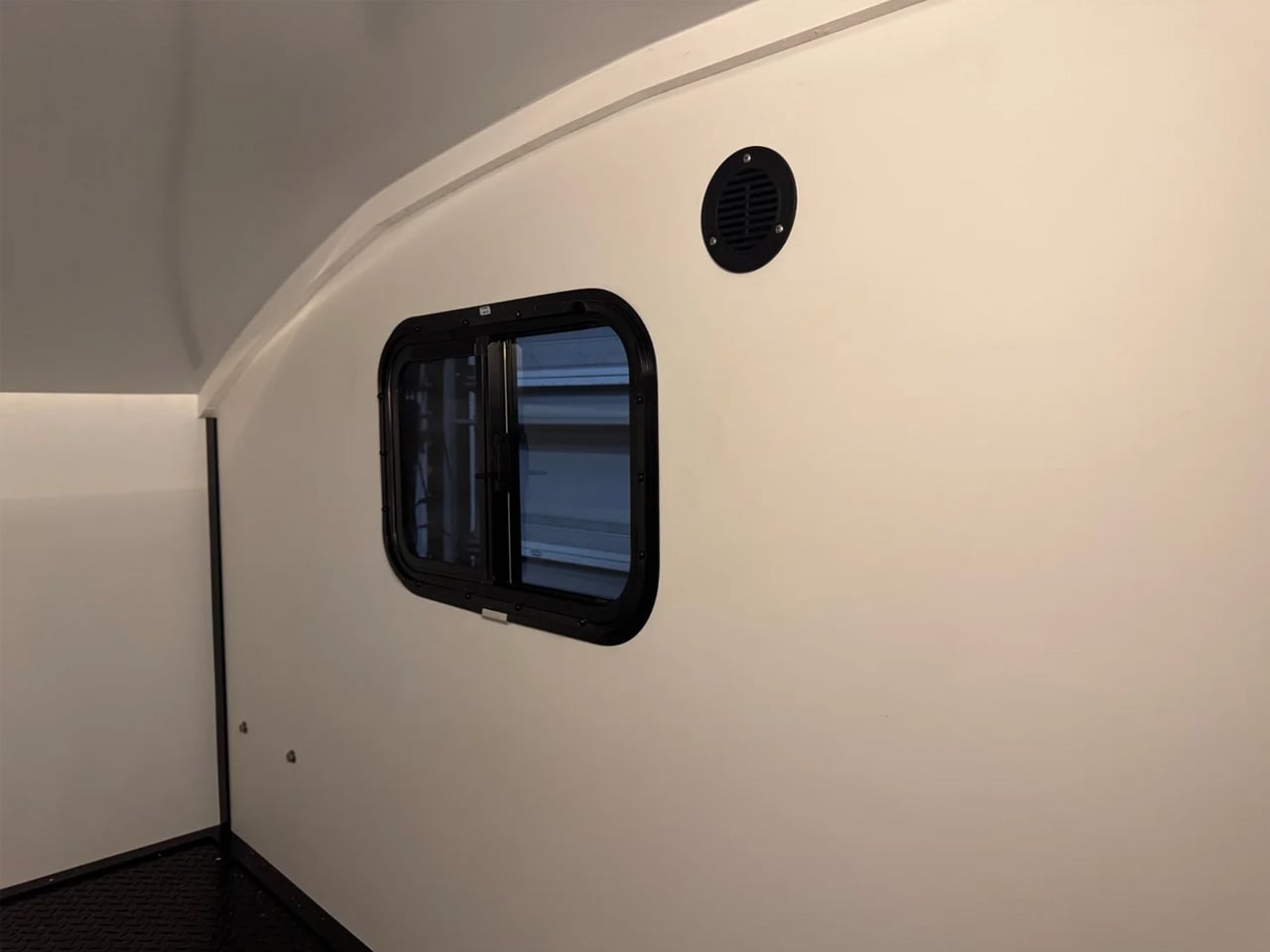
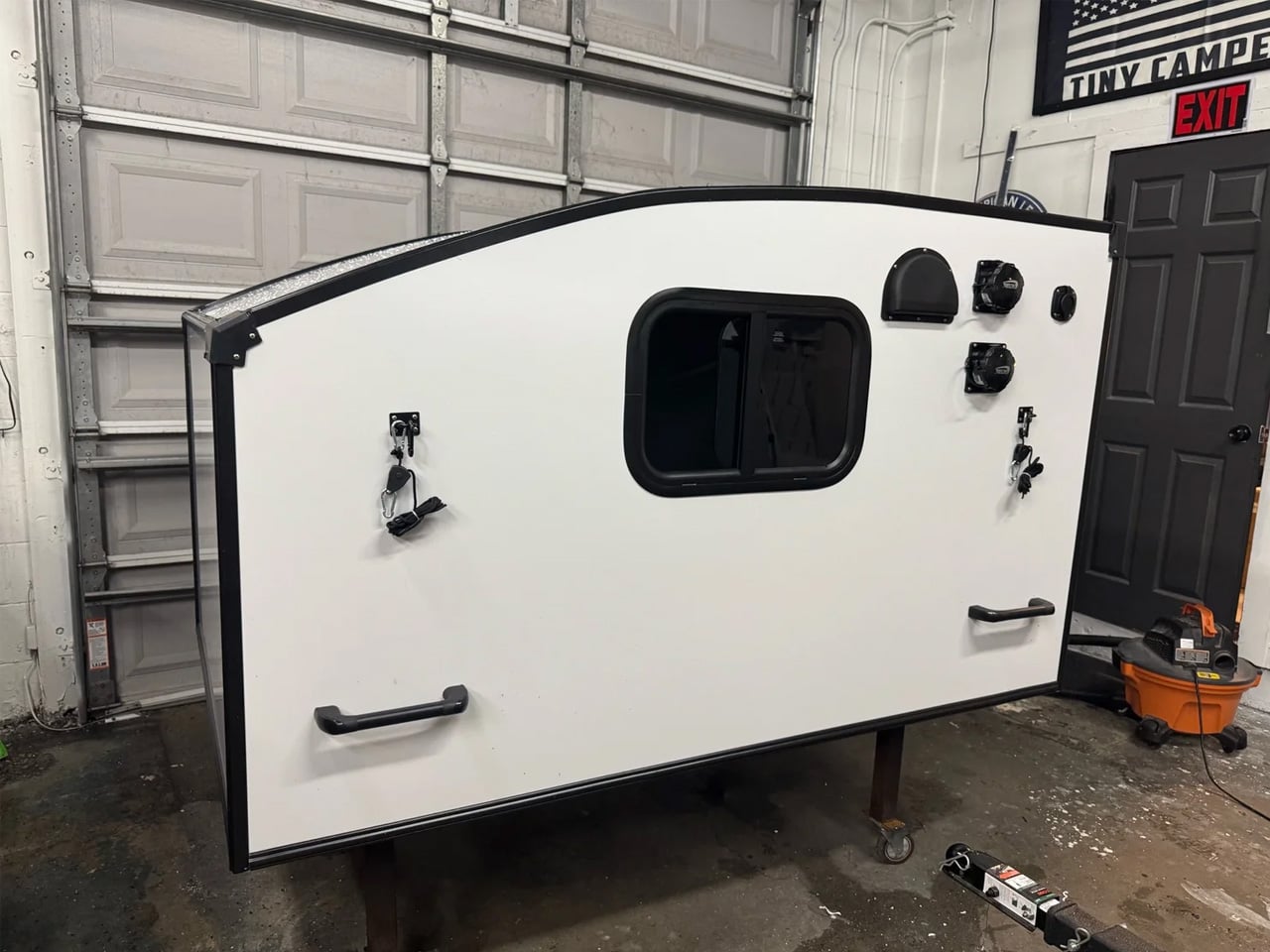
Crafted for utmost durability and maximum utility, the 48 inches wide x 6-foot 5 inches long Stubby may be bare bones on the inside to start with, but on the outside, it’s an impressive cabin. The rear access door, measuring 26 inches x 32 inches, is the only entrance. The periphery of the slide-in camper is marked by a set of 12-inch x 24-inch side windows that are strategically positioned to maximize natural light and ventilation. To ensure passive airflow, the Stubby also gets a half-moon air vent on either side. For an asking price of under $3,000, the Tiny Camper Company’s offering is surely enticing. Also, if you don’t like a lot of weight and side-protruding campers in your truck bed, the compact Stubby is a winner!


The post Tiny Camper Company’s Stubby is $2,900, all-composite slide-in camper built to last first appeared on Yanko Design.

Volvo XC60 T8 AWD Ultra Review: Scandinavian Calm in a Segment That Prefers to Shout

PROS:


  • Exceptional interior material quality – Nappa leather, open-pore wood, and real aluminum trim create a tactile experience that rivals vehicles costing significantly more

  • 455 hp with 32-35 miles of EV range – Strong plug-in hybrid performance covers daily commutes on electric power while delivering sports sedan acceleration when needed

  • Air suspension delivers outstanding ride comfort – The Ultra's adaptive suspension absorbs road imperfections while maintaining composed handling at highway speeds

  • Timeless Scandinavian design – Clean lines and understated styling will age gracefully, avoiding the dated look that trend-chasing designs often develop

  • Comprehensive standard equipment – Features like premium audio, advanced driver assistance, and the panoramic roof come included where competitors charge extra

CONS:


  • Infotainment requires too many menu taps – Basic functions like odometer readings are buried in the interface, and response times lag behind the best German systems

  • Premium pricing approaches $80k optioned – The T8 Ultra's as-tested price positions it against well-equipped German rivals with stronger brand prestige

RATINGS:

AESTHETICS
ERGONOMICS
PERFORMANCE
SUSTAINABILITY / REPAIRABILITY
VALUE FOR MONEY

EDITOR'S QUOTE:

The XC60 T8 Ultra proves that restraint can be its own form of luxury. In a segment where everyone is shouting, Volvo built something worth listening to.


The luxury compact SUV segment has become an arms race of aggressive styling, oversized grilles, and angular creases that shout for attention. Volvo refuses to participate. The 2026 XC60 T8 AWD Ultra arrives as a deliberate counterpoint, a vehicle that communicates confidence through restraint rather than visual aggression. This is Scandinavian design philosophy made tangible: every surface, every proportion, every material choice serves a purpose beyond mere aesthetics. The result is a plug-in hybrid that feels like a quiet room in a noisy building. Where competitors deploy sharp edges and exaggerated haunches, Volvo deploys calm.

Designer: Volvo

The XC60 occupies an interesting position in automotive design language. It neither chases trends nor ignores them entirely. Instead, it filters contemporary expectations through a distinctly Nordic lens, one that values negative space as much as positive form. The T8 AWD Ultra represents the fullest expression of this philosophy, combining Volvo’s highest specification levels with a powertrain that delivers 455 horsepower while maintaining the ability to commute silently on electric power alone. This duality, performance capability wrapped in visual serenity, defines the vehicle’s character. The tension between these elements creates something more compelling than either would achieve independently.

What makes the XC60 significant from a design perspective extends beyond surface treatment. The vehicle represents a mature interpretation of what luxury means in an era of environmental awareness and digital saturation. Rather than adding complexity, Volvo has systematically removed it.

Exterior Form Language

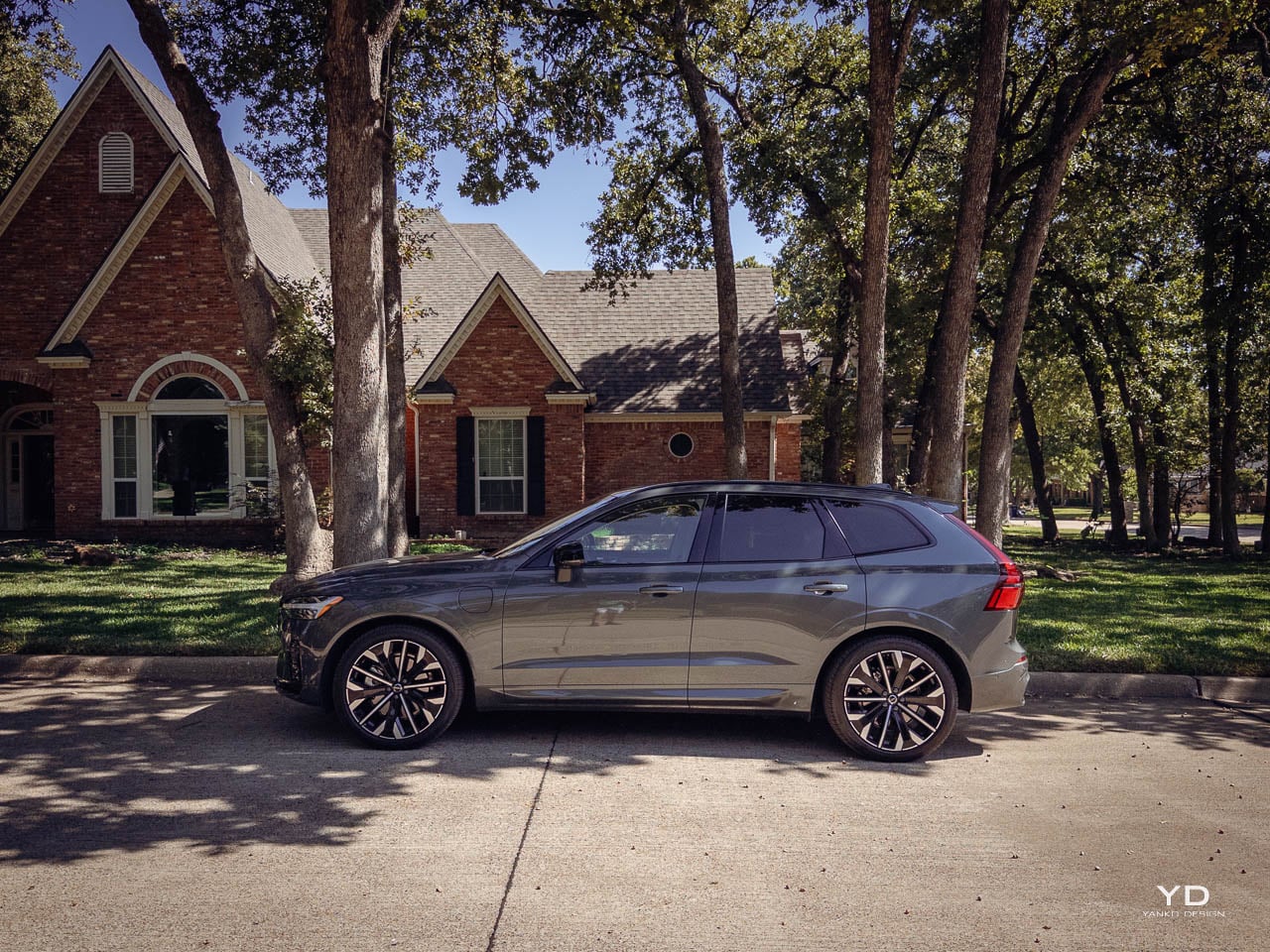
The XC60’s silhouette reads as a refined two-box shape with short overhangs and an upright tail. This proportion feels deliberately conservative compared to the swooping fastbacks and coupe-like rooflines that dominate the segment. The shoulder line runs cleanly from the Thor’s Hammer headlights to the vertical taillights, creating visual length without dramatic surfacing. Wheels ranging from 20 to 21 inches fill the arches appropriately without overwhelming the body. The overall effect suggests competence rather than performance, substance rather than flash.
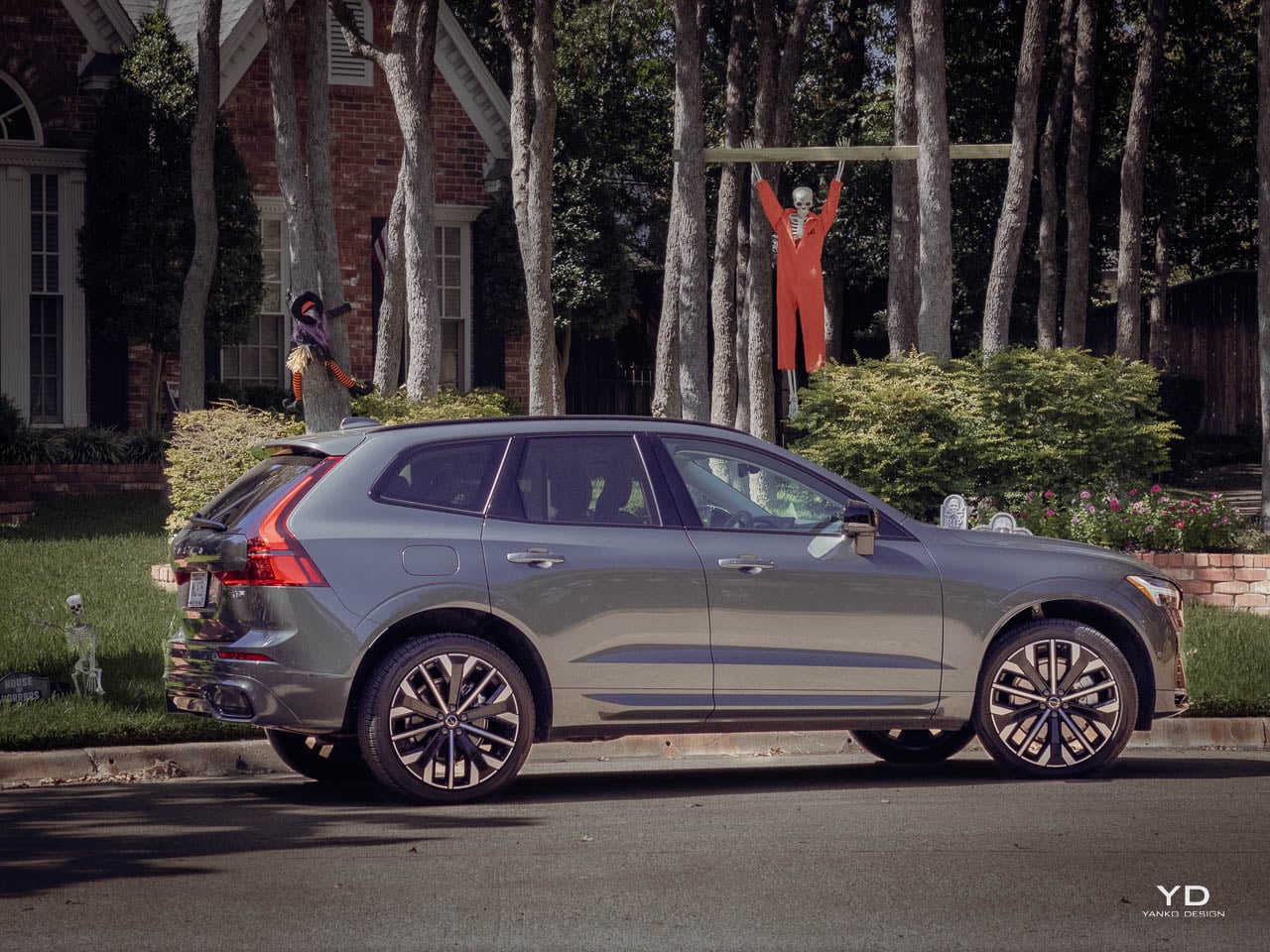
Volvo’s signature lighting elements anchor the design. The Thor’s Hammer LED headlights have become as recognizable as BMW’s kidney grilles or Audi’s rings.

The 2026 refresh brings a cleaner grille treatment that echoes the larger XC90, with diagonal bar elements replacing previous iterations. Black internal housings within the headlight assemblies add depth and modernity without requiring additional brightwork. The lower fascia integrates real airflow openings at the corners, avoiding the fake vent epidemic that plagues the segment. Parking sensors and the forward camera system disappear into the design rather than appearing as afterthoughts. The front face communicates premium positioning through execution quality rather than aggressive styling, a distinction that matters as the vehicle ages. Designs that rely on current trends date quickly. Designs that prioritize proportion and finish quality remain relevant longer.
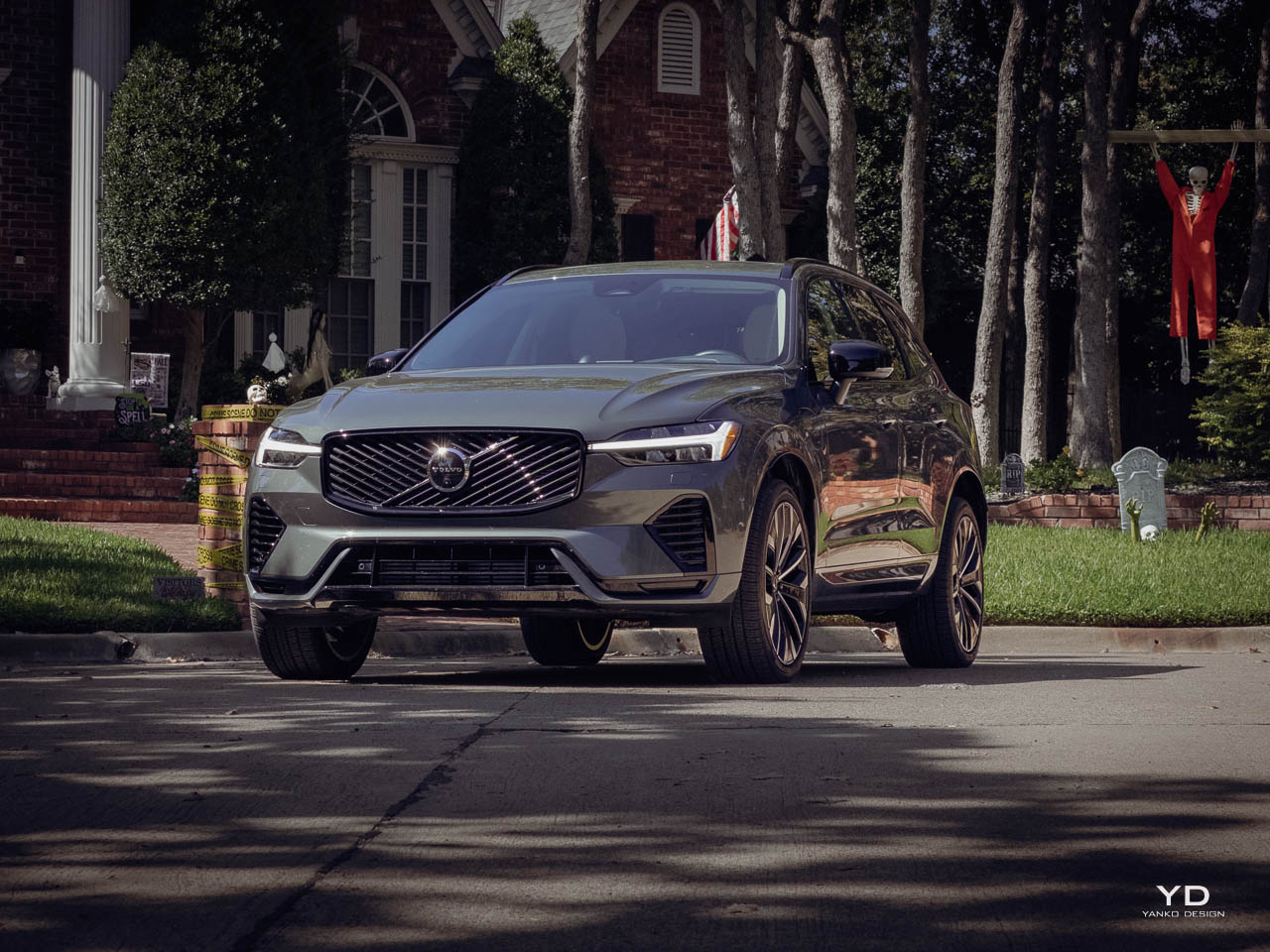
In profile, the XC60 reveals its proportional confidence. The greenhouse maintains a traditional three-box rhythm with proper A, B, and C pillars rather than the floating roof illusions that have become common. Window surrounds in chrome or black depending on specification provide subtle accent without excessive ornamentation. Roof rails sit low and functional. The overall side view could almost be mistaken for a wagon at certain angles, a reference to Volvo’s estate car heritage that feels intentional rather than accidental.
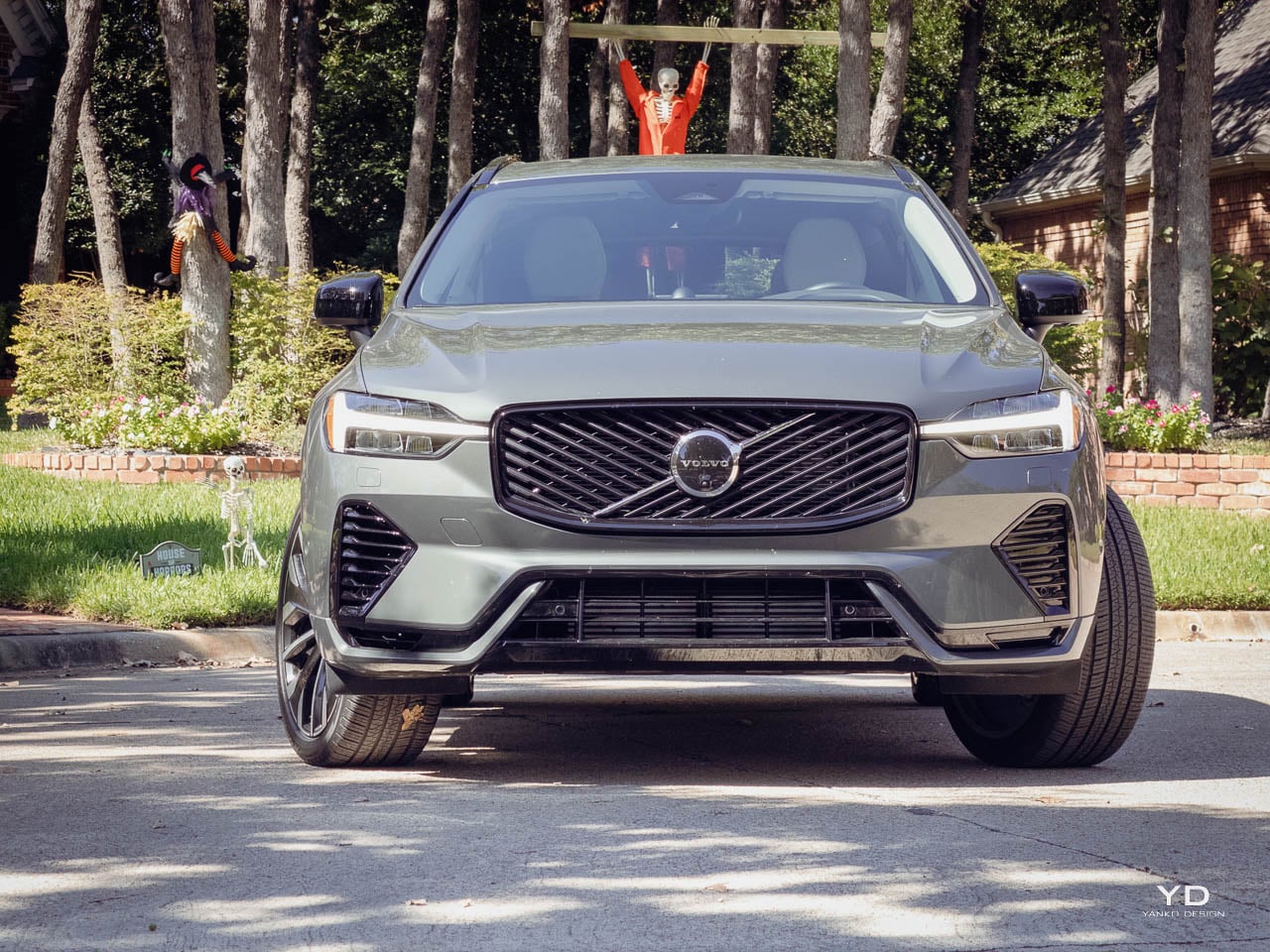
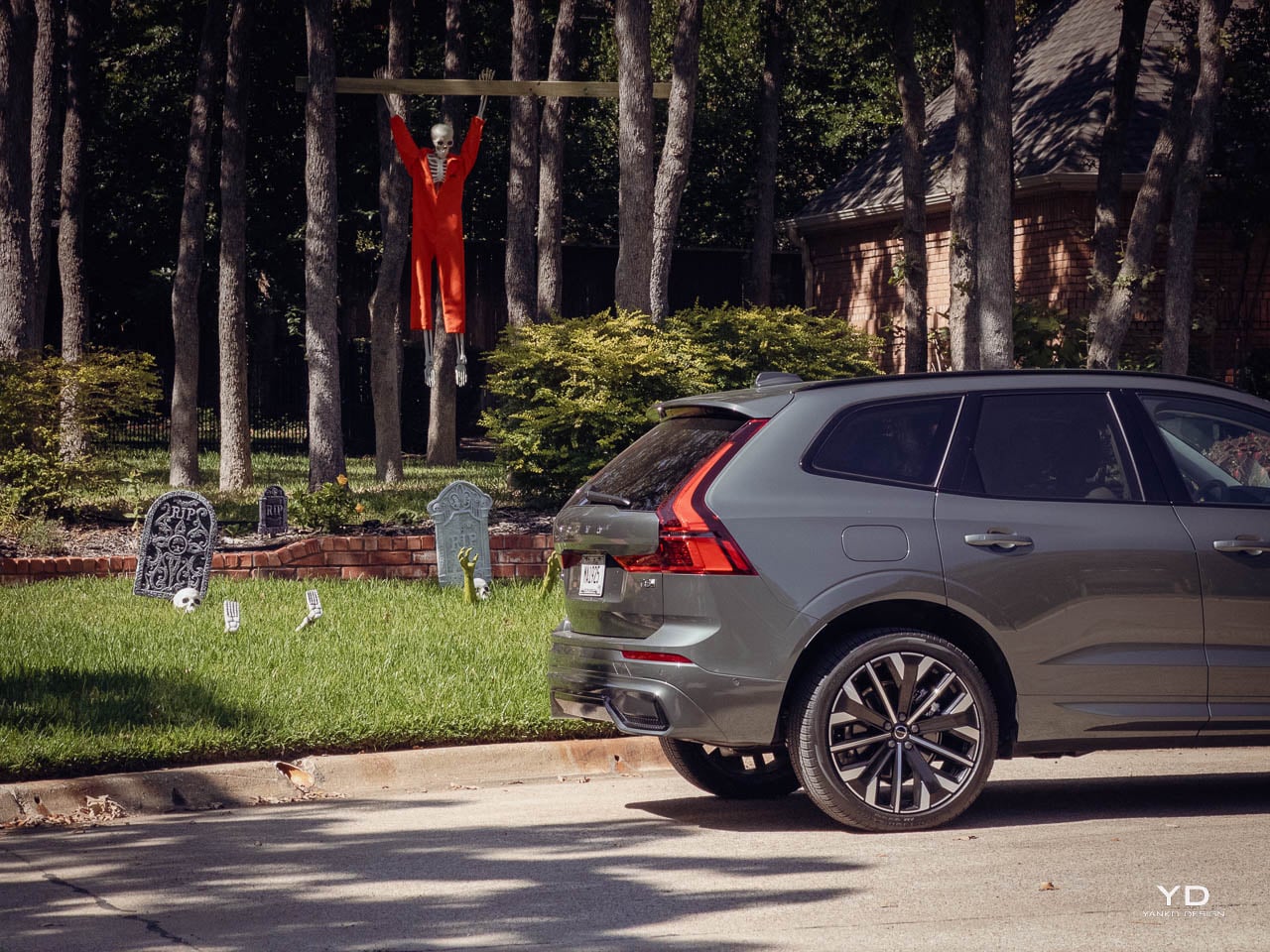
The rear design employs tall, smoked LED taillights that climb the D-pillars in a signature pattern. VOLVO block lettering spans the tailgate cleanly. T8, Recharge, and AWD badging identifies the powertrain without cluttering the surface. A subtle diffuser-style lower bumper treatment with integrated reflectors replaces visible exhaust outlets, acknowledging the plug-in hybrid’s ability to operate without combustion. The paint palette reinforces the design philosophy: Crystal White Metallic, Onyx Black Metallic, Denim Blue, and Vapour Grey. These colors reward close inspection rather than demanding attention from across a parking lot.
Interior Architecture

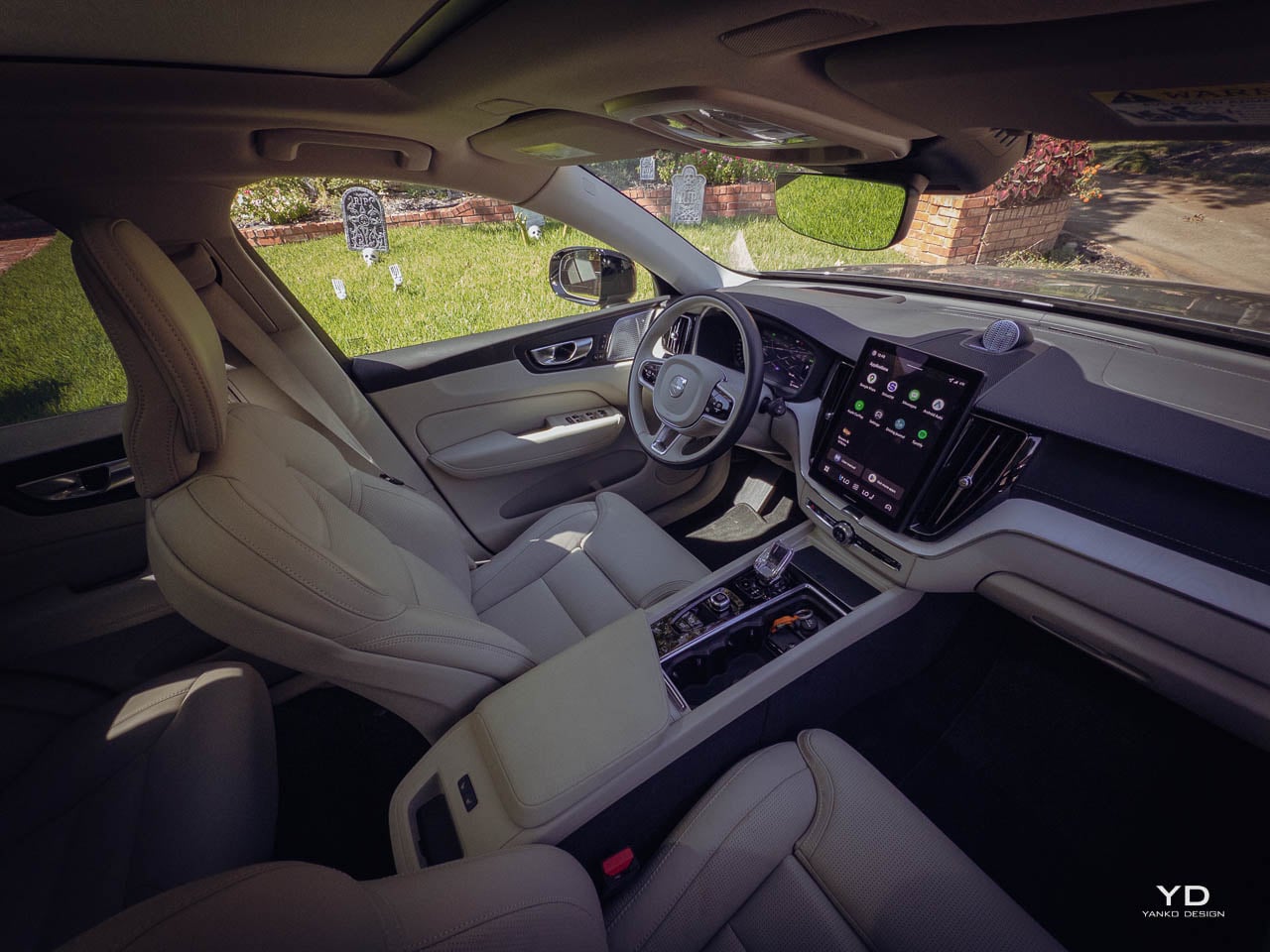
Opening the door reveals the XC60’s primary design statement. Where the exterior whispers, the interior speaks clearly about Volvo’s priorities. The immediate impression is of a cocoon, a space designed for occupants rather than spectators. Surfaces flow horizontally across the dashboard, creating visual width and calm.
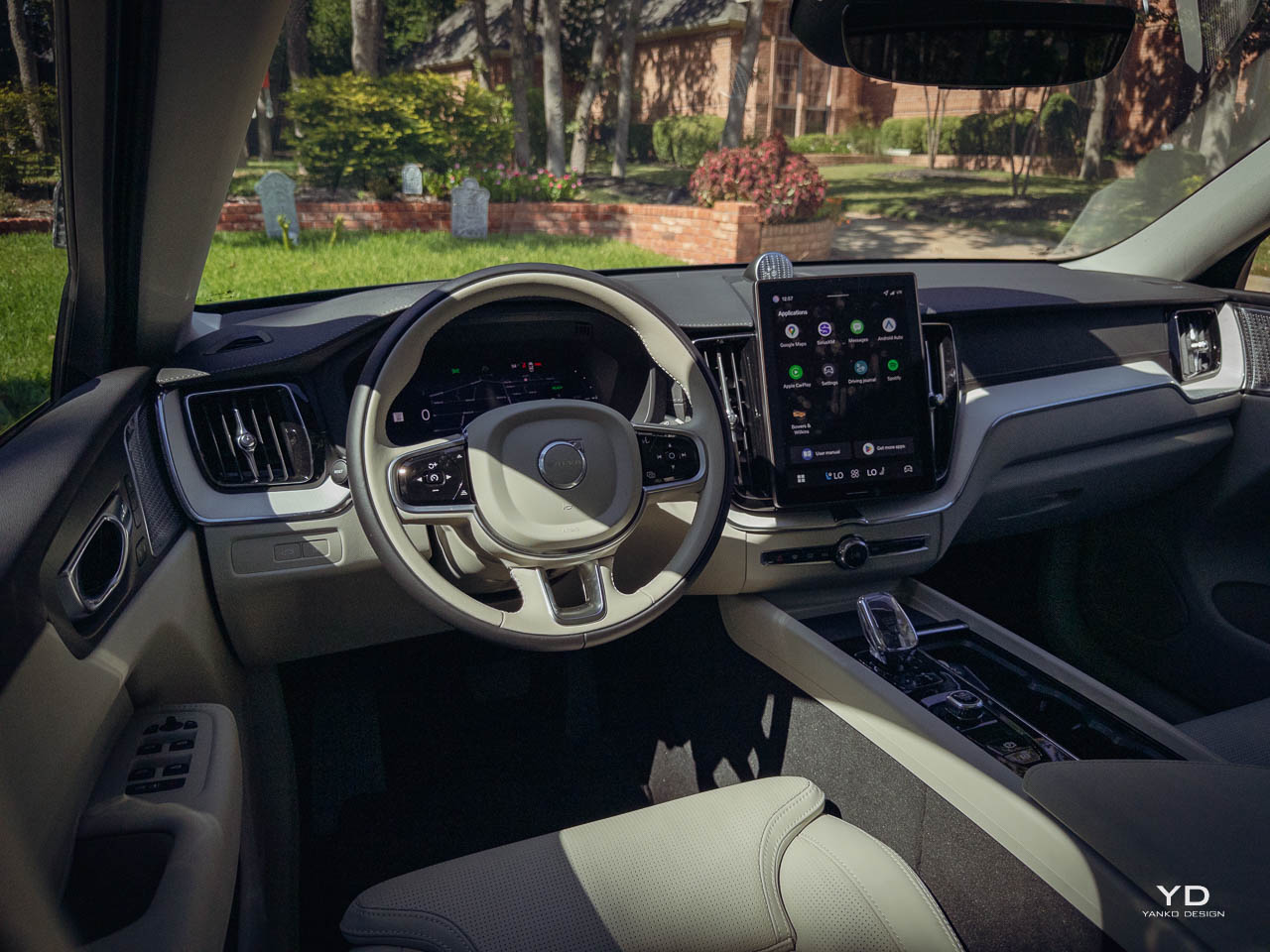
The Ultra trim layers Nappa leather across the seating surfaces with substantial bolstering and careful stitching. Available colorways include Charcoal for those who prefer darker, more enveloping environments and Blond for an airier, more open feel. Both options demonstrate restraint in their application, avoiding the contrasting piping and excessive quilting that some competitors use to signal luxury. Material transitions occur at logical boundaries rather than arbitrary decorative lines. Real open-pore wood, metal mesh, and textured inlays provide tactile variety without visual chaos. The surfaces invite touch rather than discouraging it.
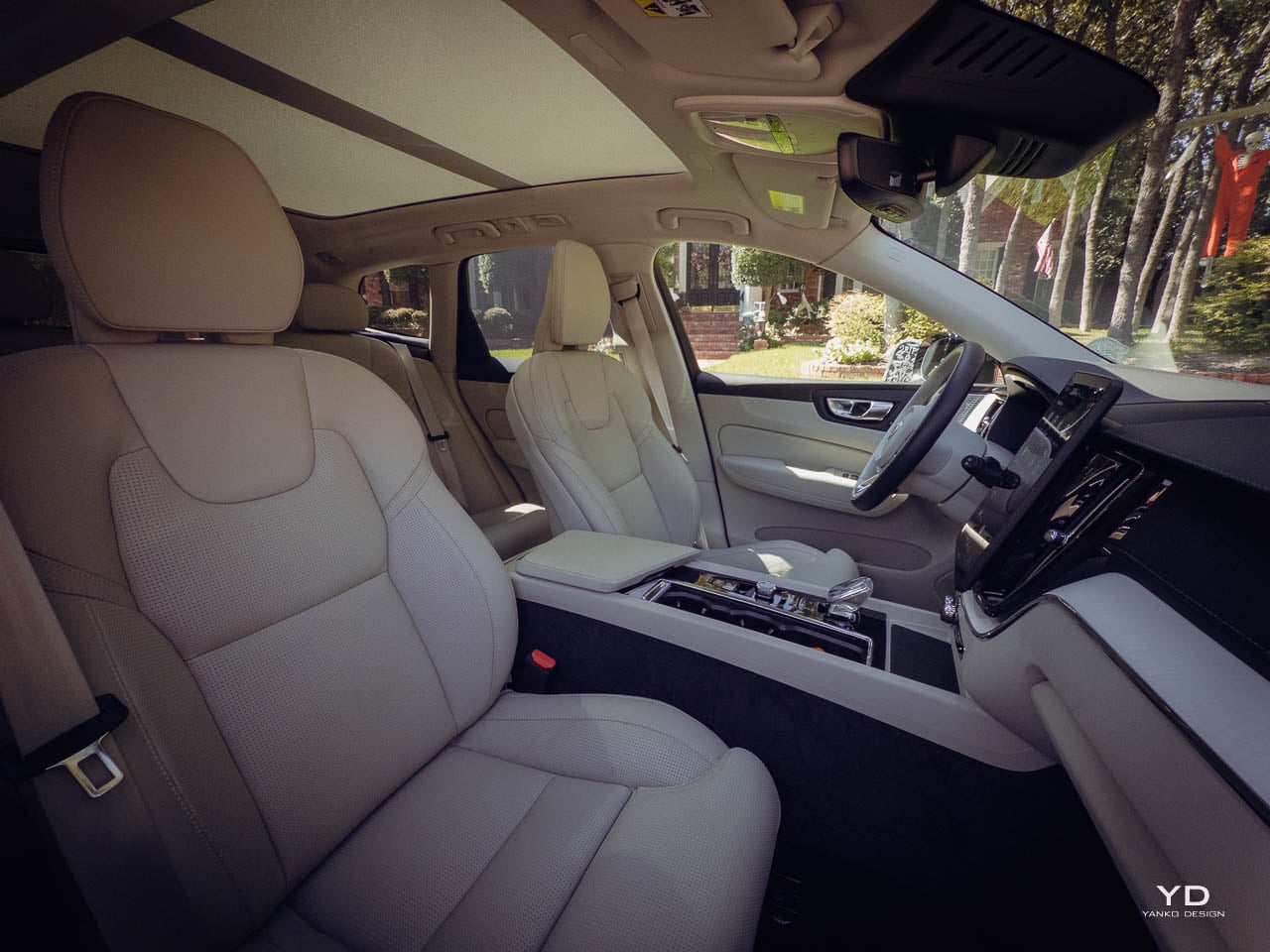
The center console demonstrates Scandinavian minimalism in practice. A portrait-oriented 9-inch touchscreen dominates the interface.

Below it, a small number of physical controls remain for frequently used functions. The volume knob uses a knurled metal finish that rewards tactile interaction. On higher specifications, an Orrefors crystal-style shifter replaces the standard gear selector, introducing a jewelry-like element that catches light without demanding attention. The panoramic moonroof, standard or widely available depending on market, brings natural light into what might otherwise feel cave-like in darker trim configurations. This interplay between enclosed comfort and external connection runs throughout the interior design.
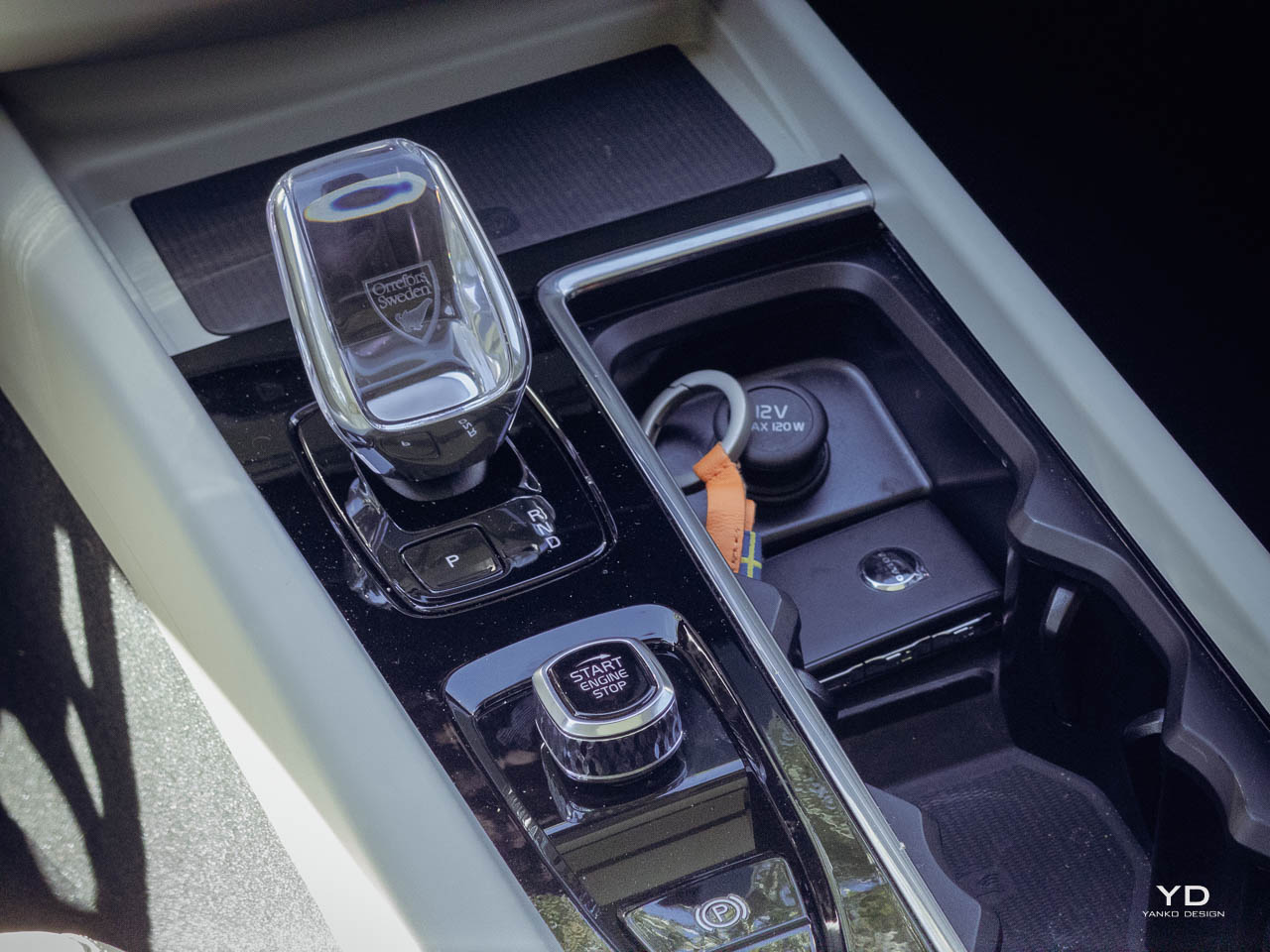
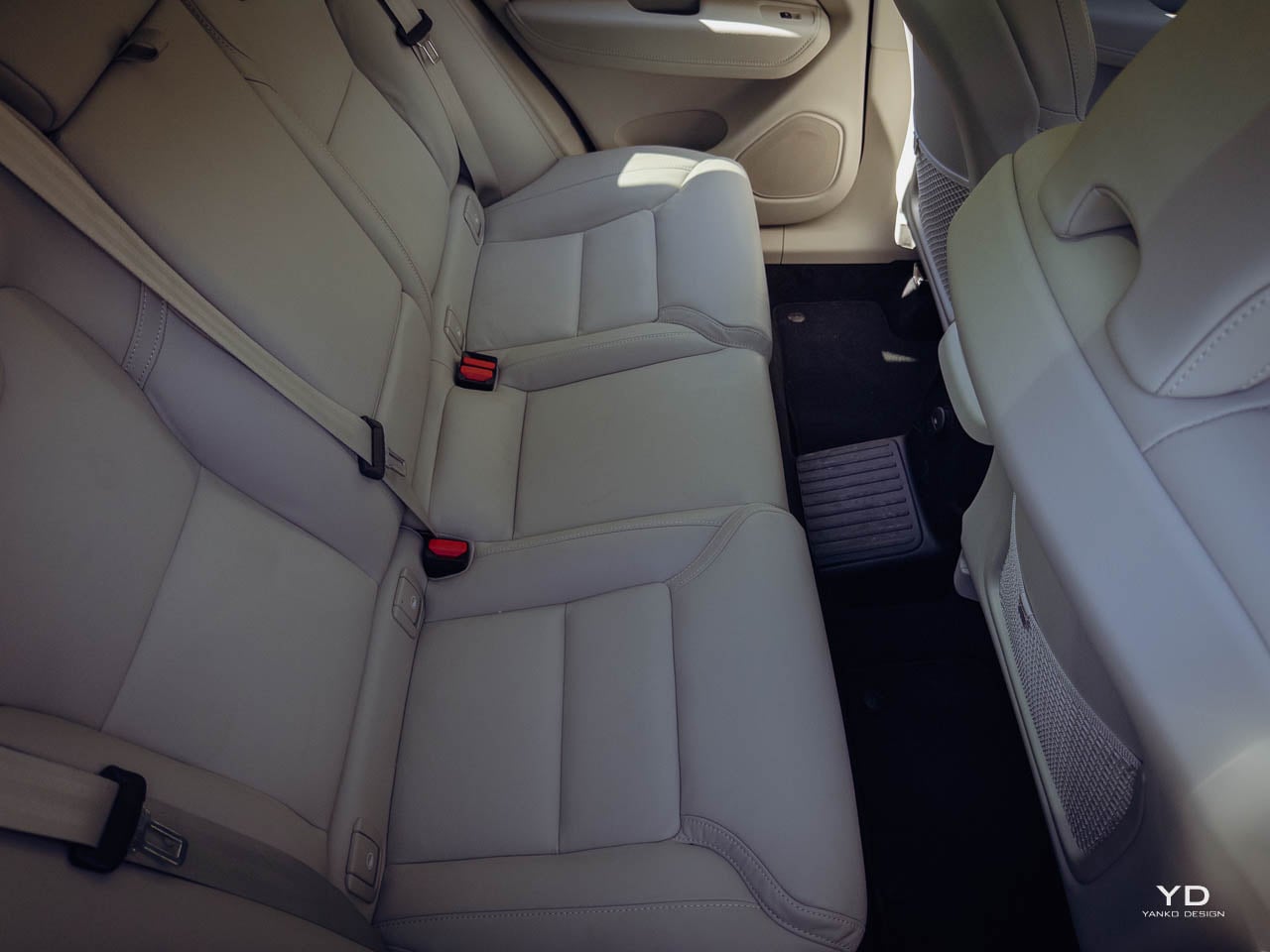
Seating architecture prioritizes long-distance comfort over sports car support. The front seats offer heating, ventilation, and massage functions in Ultra specification, with adjustable lumbar support and thigh extenders for taller occupants. The seats themselves provide substantial cushioning without feeling soft, maintaining shape and support over extended drives. This is furniture designed for hours of use rather than showroom photography. Rear accommodations follow suit with a gently reclined backrest and support that favors two adults comfortably over three-across capacity. The cabin is honest about its size: this is a compact luxury SUV, not a full-size family hauler.
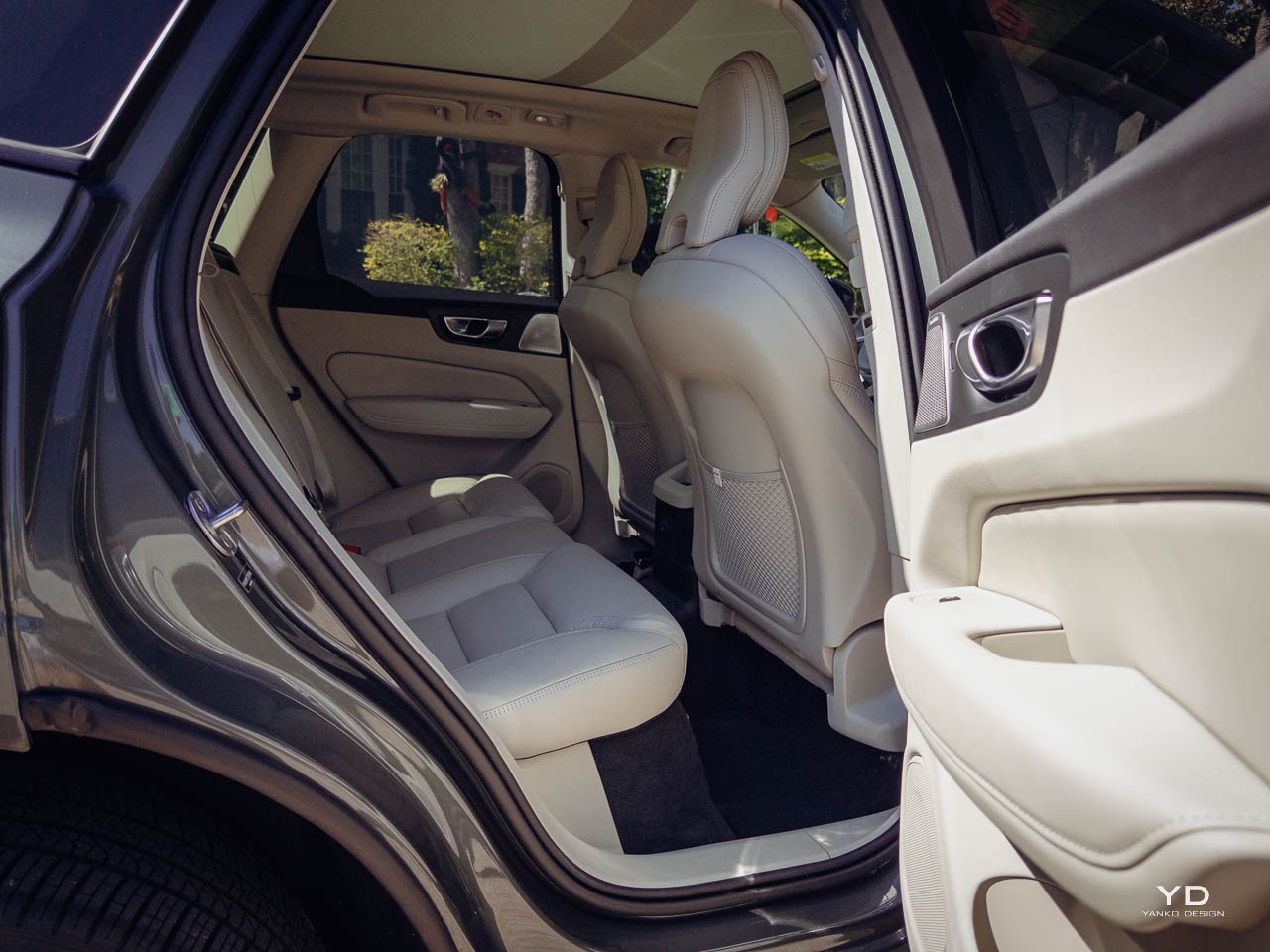
Storage solutions appear throughout the cabin without disrupting the visual calm. A larger-than-previous center console bin holds items out of sight. Cupholders position logically. Door pockets accommodate bottles and smaller items. Bag hooks and nets behind the front seats provide additional organization in some configurations. The cargo area maintains a broad, square opening with practical load floor height. Split-folding rear seats create a flat surface when more capacity is needed. The plug-in hybrid packaging, often a compromise in other vehicles, preserves useful cargo space without major intrusion.
Material Composition

Material selection in the XC60 Ultra reveals Volvo’s understanding of tactile luxury. Soft-touch surfaces cover the dashboard and upper door panels, providing warmth that cold leather cannot. The leather appointments on the seats use proper grain texture rather than the over-processed smoothness that signals synthetic origin. Stitching appears precise and consistent, following design lines rather than merely holding materials together. The contrast between different textures, matte leather, polished metal, open-pore wood, creates visual interest through material honesty rather than applied decoration. Each surface communicates what it is made from without pretense.
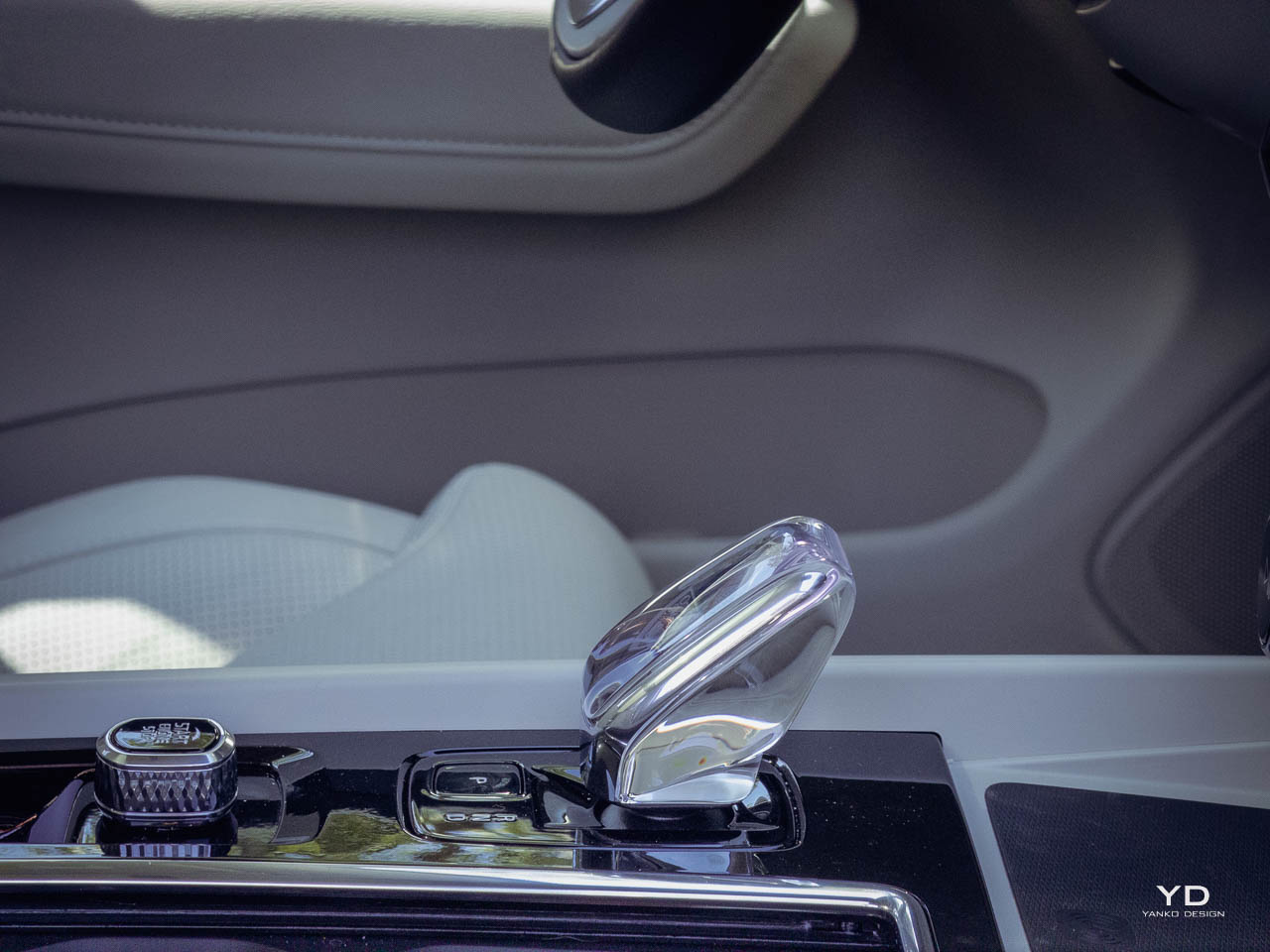
Lower cabin areas use plastics that feel dense and well-fitted rather than hollow and cost-reduced. Panel gaps remain tight and consistent throughout.

The metal trim elements, appearing on speaker grilles, door handles, and climate control surrounds, use actual aluminum rather than chrome-look plastic. These details matter because they accumulate into an overall impression of quality that either supports or undermines the purchase price. At this specification level, the details support the price consistently. The XC60 Ultra feels expensive because expensive materials have been used in places where human contact occurs.
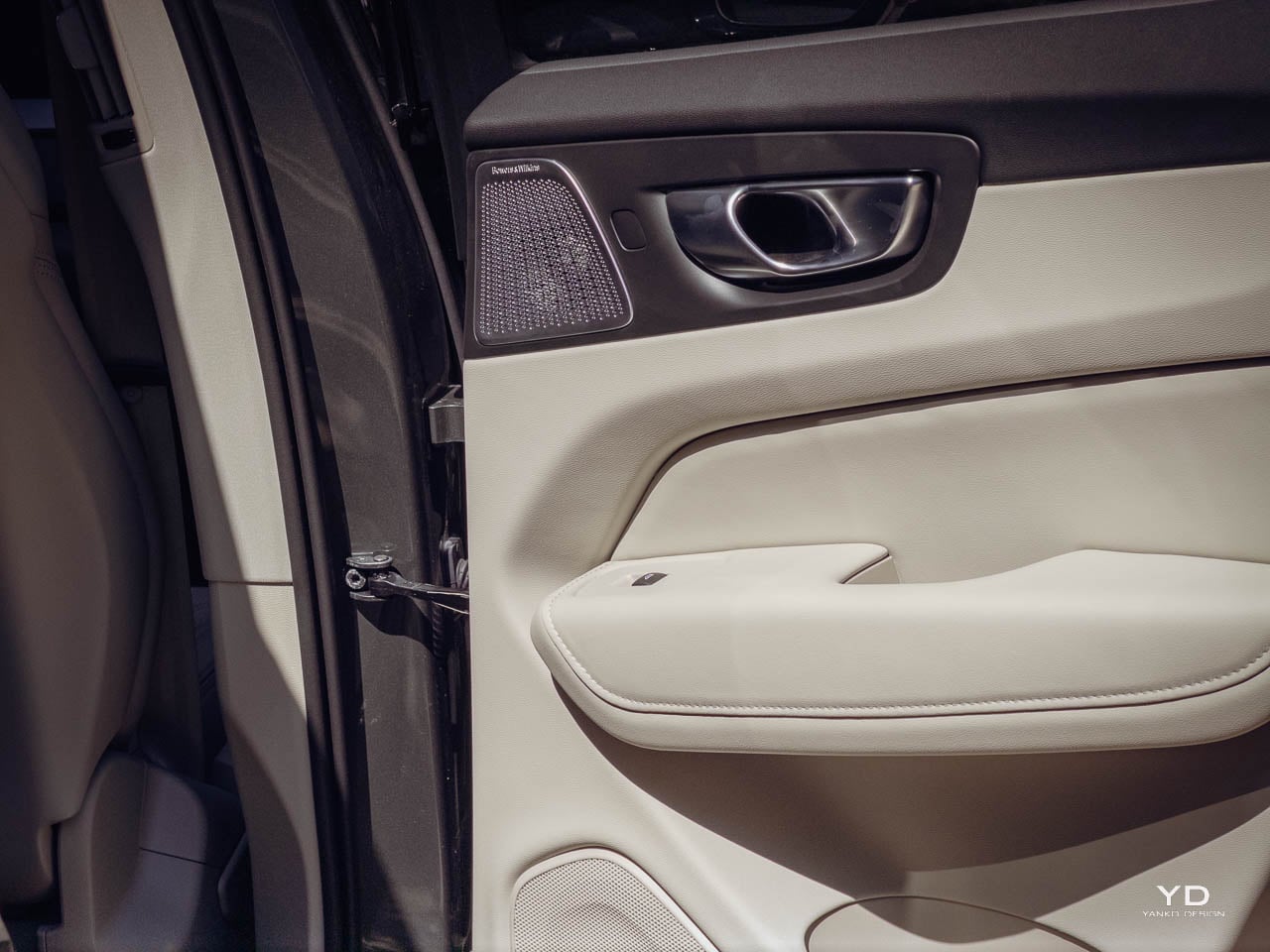
Volvo’s approach to material selection extends to environmental considerations without compromising luxury perception. Leather alternatives appear in some configurations using recycled materials and more sustainable processing. Wood trim sources from responsible forestry programs. Metal finishes use processes that reduce environmental impact. These choices remain largely invisible to occupants but align with the brand’s stated values and appeal to buyers who consider lifecycle impact alongside immediate tactile experience.

Technology Integration

The XC60 T8 Ultra runs a Google-based infotainment system that represents Volvo’s commitment to simplicity over complexity. Google Assistant provides voice control. Google Maps handles navigation with traffic-aware routing. The Google ecosystem allows app access without requiring phone mirroring, though wireless Apple CarPlay remains available for those who prefer it. The 9-inch portrait touchscreen displays information clearly with quick response to inputs.
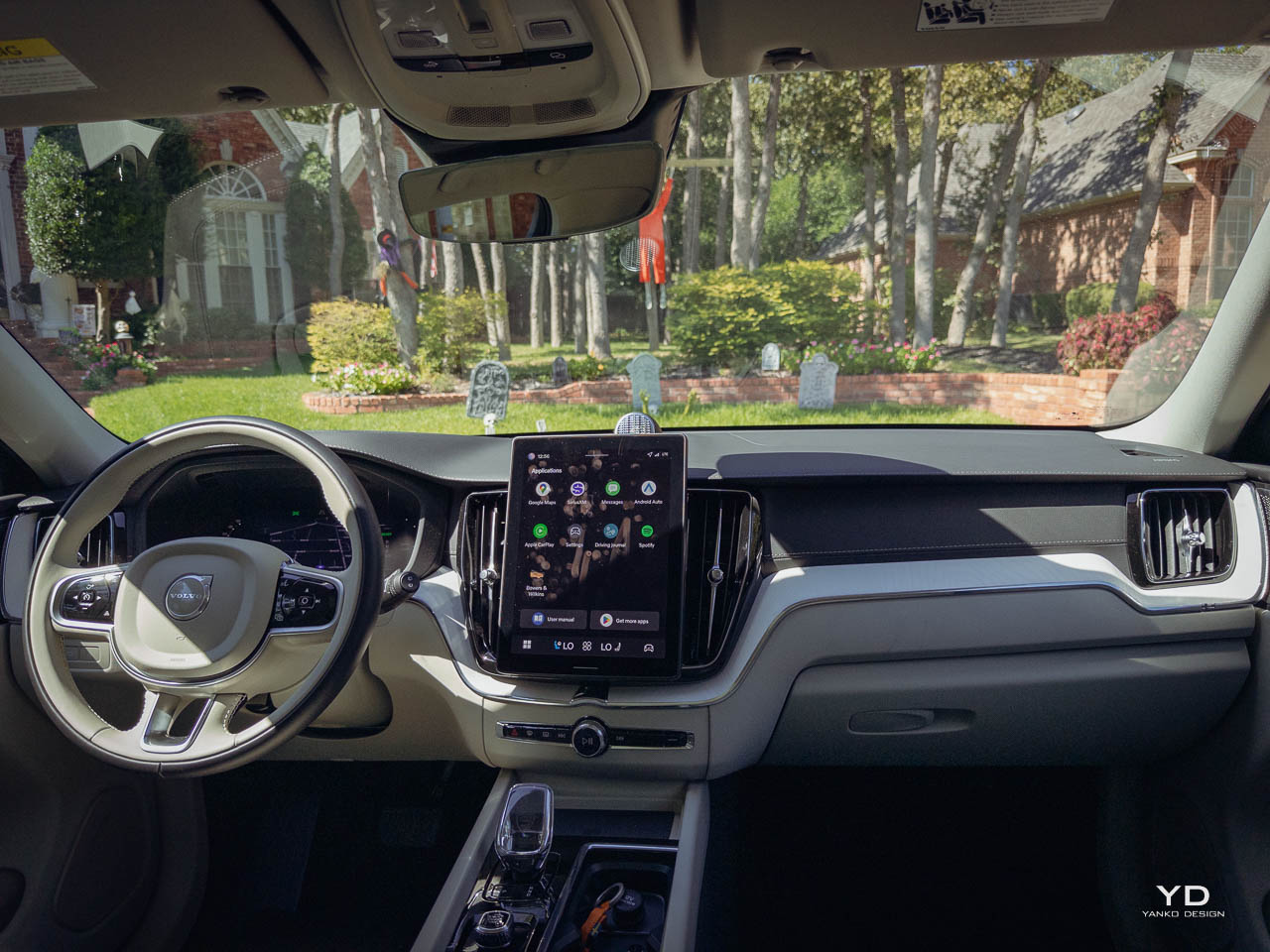
A 12-inch digital instrument cluster ahead of the driver offers configurable views including a large navigation map, trip data, and driver assistance status. Information hierarchy follows logical priorities: speed and essential warnings remain prominent while secondary data occupies peripheral positions. An available head-up display projects key information onto the windshield, reducing the need to look away from the road. The display can read speed limits and traffic signs, overlaying them in the driver’s line of sight. These technologies serve practical purposes rather than existing as specification sheet items. The question Volvo seems to have asked is not “what can we add” but “what should we show.”

Some functions require menu navigation that feels deeper than necessary. Odometer readings and certain vehicle settings live multiple taps into the interface.
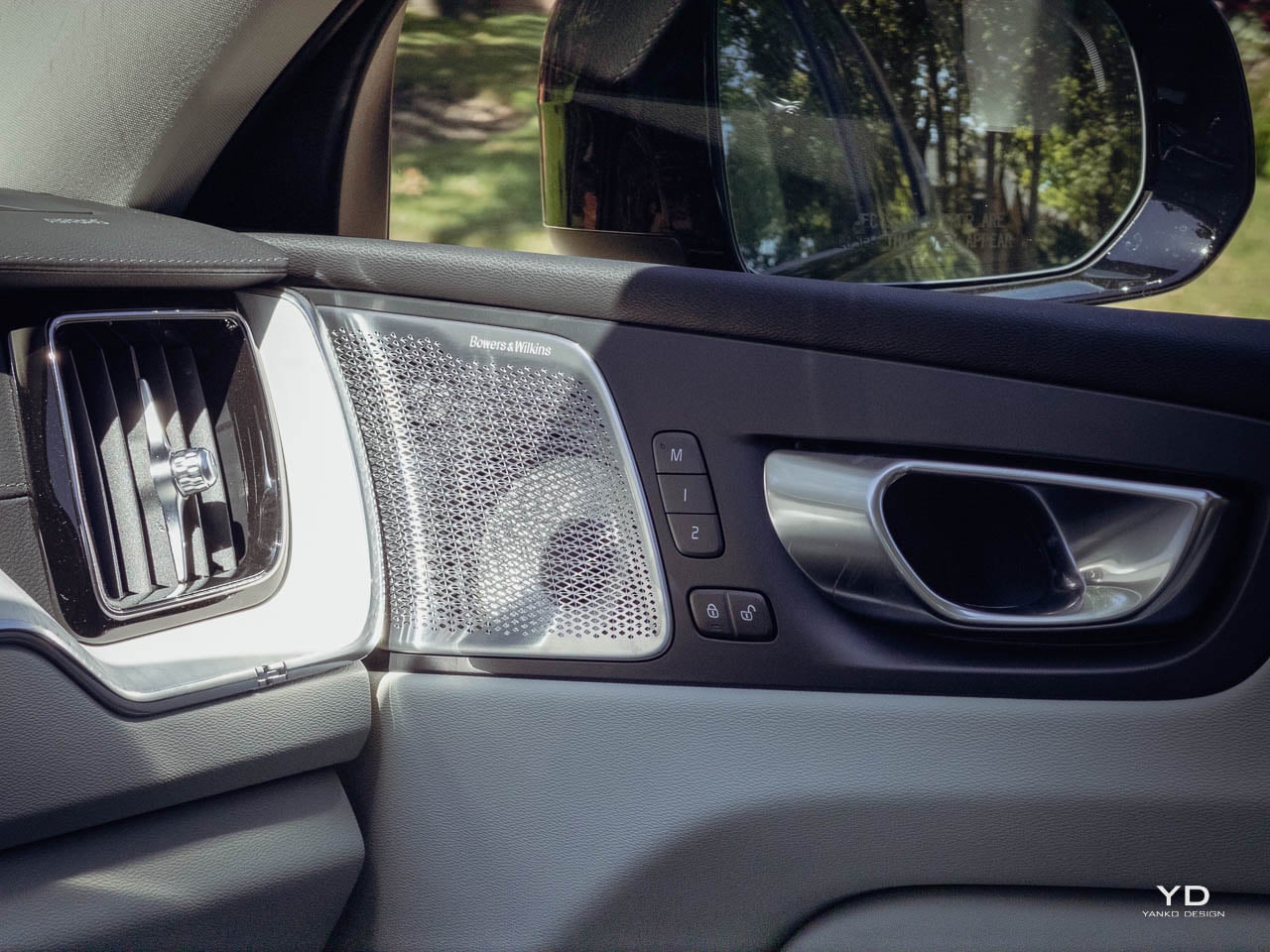
Audio options include Harman Kardon and an available Bowers and Wilkins system depending on package and market. The latter delivers clarity and richness that transforms the cabin into a listening environment worth experiencing. The sound system represents genuine acoustic engineering rather than speaker count marketing. For a vehicle designed around calm and comfort, high-quality audio integration aligns with the overall philosophy. Poor sound reproduction would undermine the cabin’s premium character.
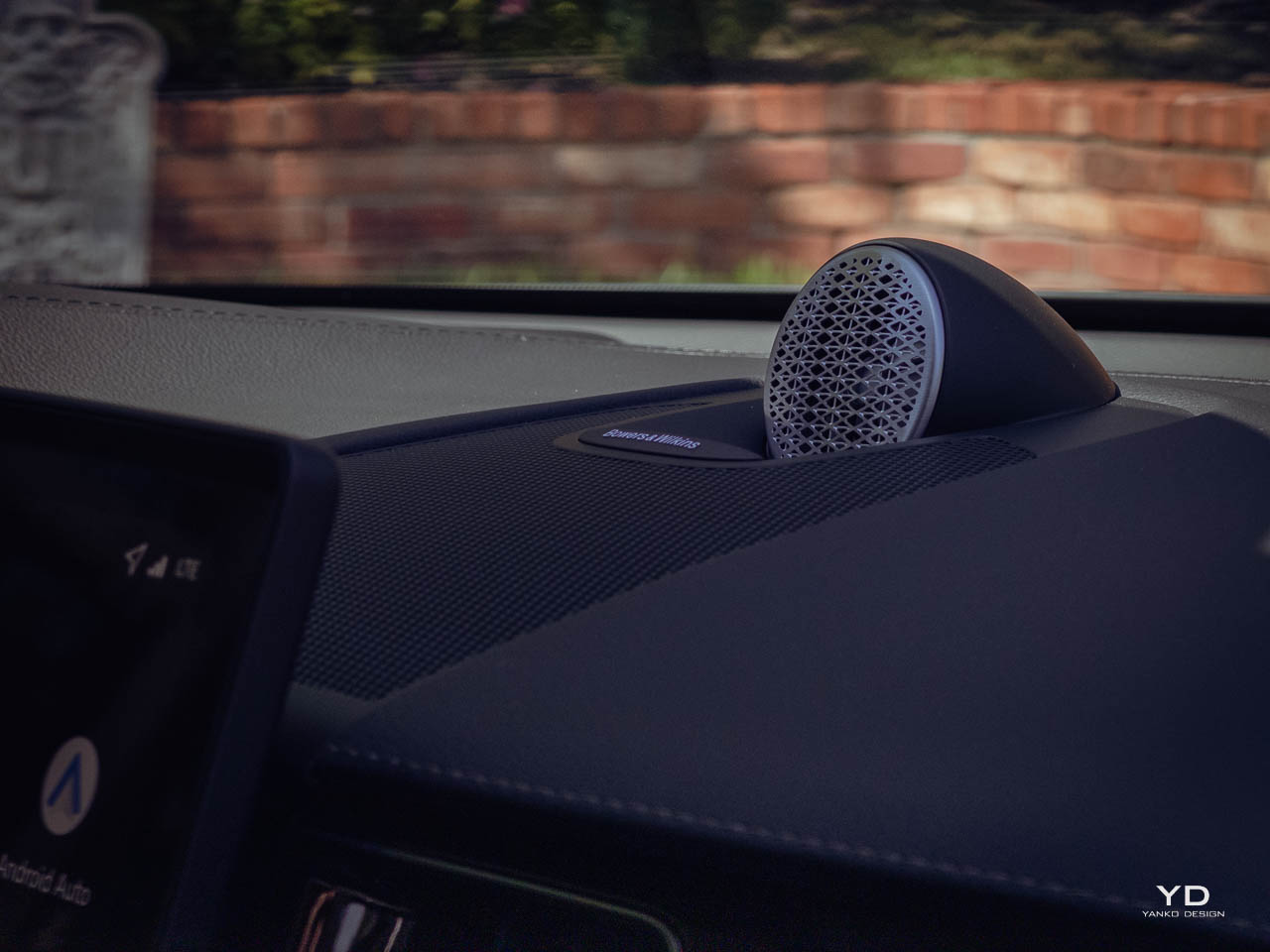
The technology package demonstrates appropriate restraint alongside capability. Rather than introducing features that require user adaptation, Volvo has implemented systems that work in expected ways. Climate controls respond logically. Navigation provides sensible routes. The instrument cluster communicates without confusion. This sounds like a low bar, but the automotive industry regularly introduces interfaces that prioritize novelty over usability. The XC60’s technology feels like it was designed by people who actually use cars rather than by teams seeking differentiation through complexity.

Powertrain Character

The T8 plug-in hybrid powertrain pairs a turbocharged 2.0-liter four-cylinder with an electric motor on the rear axle and a starter-generator between the engine and 8-speed automatic transmission. Combined output reaches approximately 455 horsepower and 523 pound-feet of torque, according to Volvo’s estimates and independent testing. Acceleration to 60 mph arrives in 4.4 to 4.5 seconds, figures that seem incongruous with the vehicle’s reserved styling. This is substantial performance delivered without visual announcement. The vehicle looks calm and moves quickly when requested.

The 18.8 kWh battery provides electric-only range of approximately 32 to 35 miles. This distance covers typical daily commuting for many drivers, allowing pure electric operation for routine trips.

When the battery depletes, combined efficiency settles around 28 mpg. Hybrid operation achieves approximately 63 MPGe. Multiple drive modes, including Hybrid, Pure/EV, Power, and configurable settings, allow drivers to prioritize electric operation, preserve charge for later use, or access maximum combined output. The powertrain flexibility means the XC60 can behave as a quiet urban electric vehicle or a responsive highway cruiser depending on circumstance and driver preference.

The driving experience prioritizes refinement over excitement. Throttle response feels progressive rather than aggressive. The transmission shifts smoothly in normal operation and responds quickly when more power is demanded. The engine remains quiet unless pushed hard, which the vehicle’s character rarely encourages. With the available air suspension on Ultra trim, ride quality emphasizes comfort over sporting sharpness. Body motions stay controlled without feeling harsh. Road imperfections disappear into the suspension rather than transmitting through the structure. Steering provides adequate feedback for confident placement without sporting precision. The XC60 T8 Ultra drives like it looks: composed, capable, and disinclined toward drama.

Daily Reality

Living with the XC60 T8 Ultra reveals strengths that matter more than specification numbers. The cabin’s noise isolation creates a quiet environment at highway speeds, making conversation easy and audio systems worth using. The seats remain comfortable over extended drives, maintaining support without creating pressure points. Climate controls work effectively, and the available air quality monitoring adds practical value in urban environments where exterior air quality varies.
The air suspension’s height adjustment proves useful beyond ride quality. Raising the vehicle provides additional ground clearance for rough roads or driveway approaches.

Lowering it at highway speeds improves aerodynamics and eases entry in low parking structures. The system operates automatically based on conditions, removing the need for driver intervention in most situations. The 360-degree camera system and parking sensors make placing the vehicle in tight spaces manageable despite dimensions that require awareness. The rearview camera displays clearly and inspires confidence during reversing maneuvers.

Some compromises exist within the daily experience. The infotainment system, while functional, lacks the polish of certain German competitors. Response is good but not instant. The interface is logical but not intuitive. This represents adequate execution rather than impressive achievement. Fuel economy, when operating in hybrid mode after battery depletion, requires more frequent stops than three-row crossovers or smaller luxury SUVs. The premium fuel requirement adds cost over regular-grade alternatives. Pricing for the T8 Ultra specification sits in the low to mid 70,000 dollar range before options, with well-equipped examples approaching 80,000 dollars. This positions the XC60 against mid-specification German rivals with established prestige and strong dealer networks.

The vehicle serves specific needs exceptionally well. Commuters with charging access at home or work can operate primarily on electric power, reducing fuel consumption dramatically. Families who prioritize cabin quality over maximum cargo flexibility will appreciate the material choices and seating comfort. Buyers seeking luxury without visual aggression will find the XC60’s restraint appealing rather than disappointing.

Competitive Context

The XC60 T8 Ultra competes against established German plug-in hybrids and traditional luxury crossovers. The BMW X3, Mercedes-Benz GLC, and Audi Q5 offer similar dimensions with different design philosophies. German competitors typically prioritize sharper styling, sportier dynamics, and more tech-forward cabins.

Volvo’s approach differs fundamentally. Where German brands emphasize cockpit-like driver focus with large screen arrays and aggressive surfacing, the XC60 creates a lounge-like environment that serves passengers equally to drivers. Material quality matches or exceeds German alternatives at similar price points. Design vocabulary speaks a different language entirely, one of restraint rather than assertion. The XC60 often offers a modest EV range advantage over many German plug-in rivals, providing practical benefit for drivers who can charge regularly. The power output, approximately 455 horsepower combined, exceeds most segment rivals while the acceleration times remain competitive with dedicated performance variants.
Value within the segment depends on buyer priorities. The XC60 T8 Ultra includes features that cost extra on some competitors: air suspension, premium audio, advanced driver assistance systems. Buyers who value standard equipment over brand prestige may find the Volvo offers more content for comparable money. Those who prioritize established luxury badge recognition or sportier driving dynamics may prefer the German alternatives. The competitive landscape rewards Volvo for differentiation rather than imitation.

The Design Verdict

The 2026 Volvo XC60 T8 AWD Ultra represents a coherent design philosophy executed with consistency and restraint. Every element, from exterior surfacing to interior materials to powertrain calibration, supports the same message: luxury does not require aggression. The vehicle proves that calm confidence communicates premium positioning as effectively as visual drama. This is design maturity applied to the luxury compact SUV segment, a category that often rewards excess over editing.

For buyers who recognize that vehicles shape daily experience through accumulated small interactions, the XC60 offers compelling value. The material quality supports years of use. The technology serves rather than complicates. The powertrain provides capability without demanding attention. The design will age gracefully rather than dating quickly. These qualities matter because vehicles occupy significant portions of our lives and our attention. The XC60 T8 AWD Ultra creates space for calm within transportation. In a segment defined by competition for visual attention, that restraint becomes its own form of statement. Volvo has built a vehicle that trusts its quality to communicate luxury without requiring volume. The execution justifies that trust.

The post Volvo XC60 T8 AWD Ultra Review: Scandinavian Calm in a Segment That Prefers to Shout first appeared on Yanko Design.
The Hermes Yacht Concept Has Bronze Panels and a Glass Canopy, and It’s Stunning

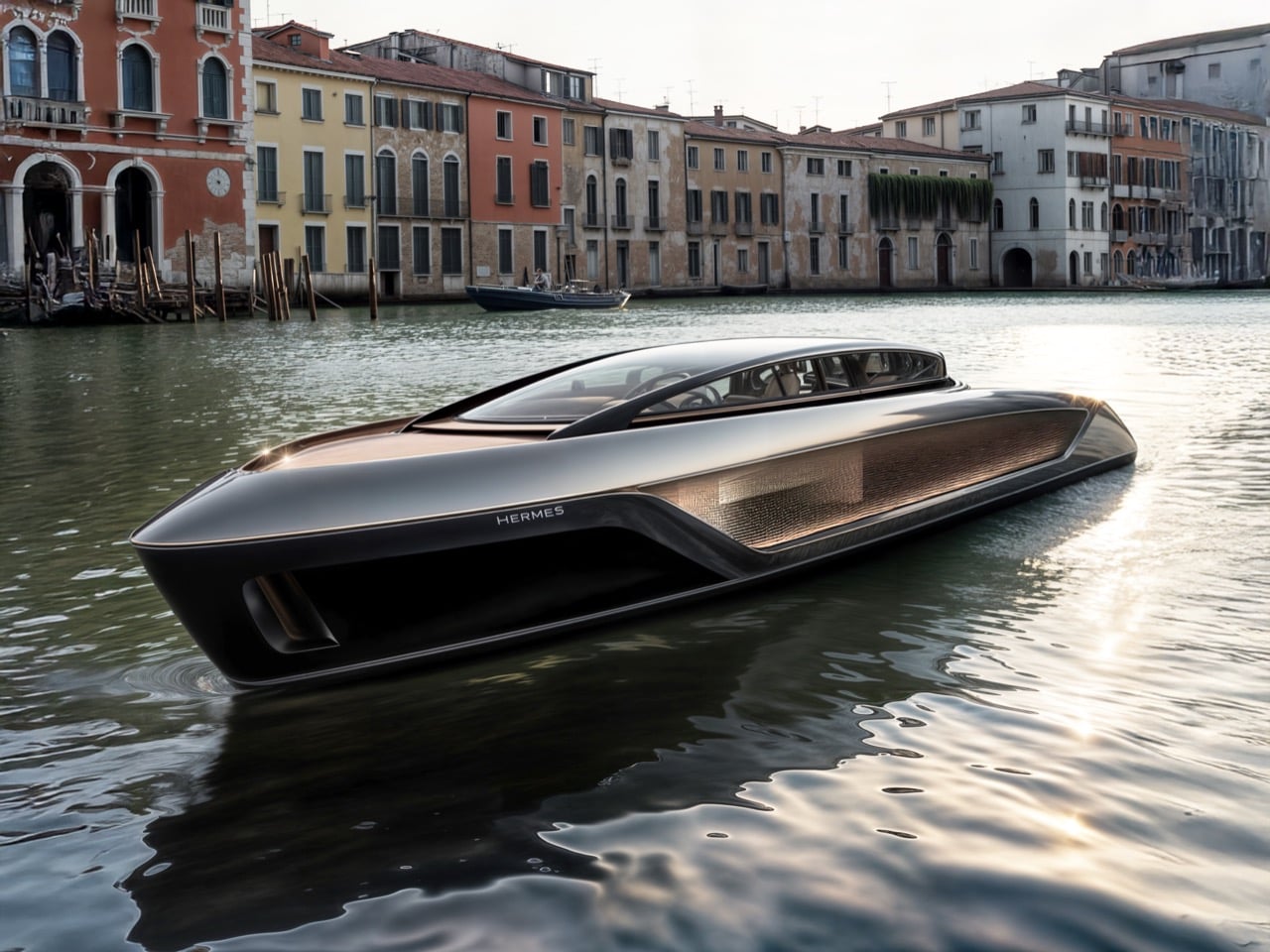
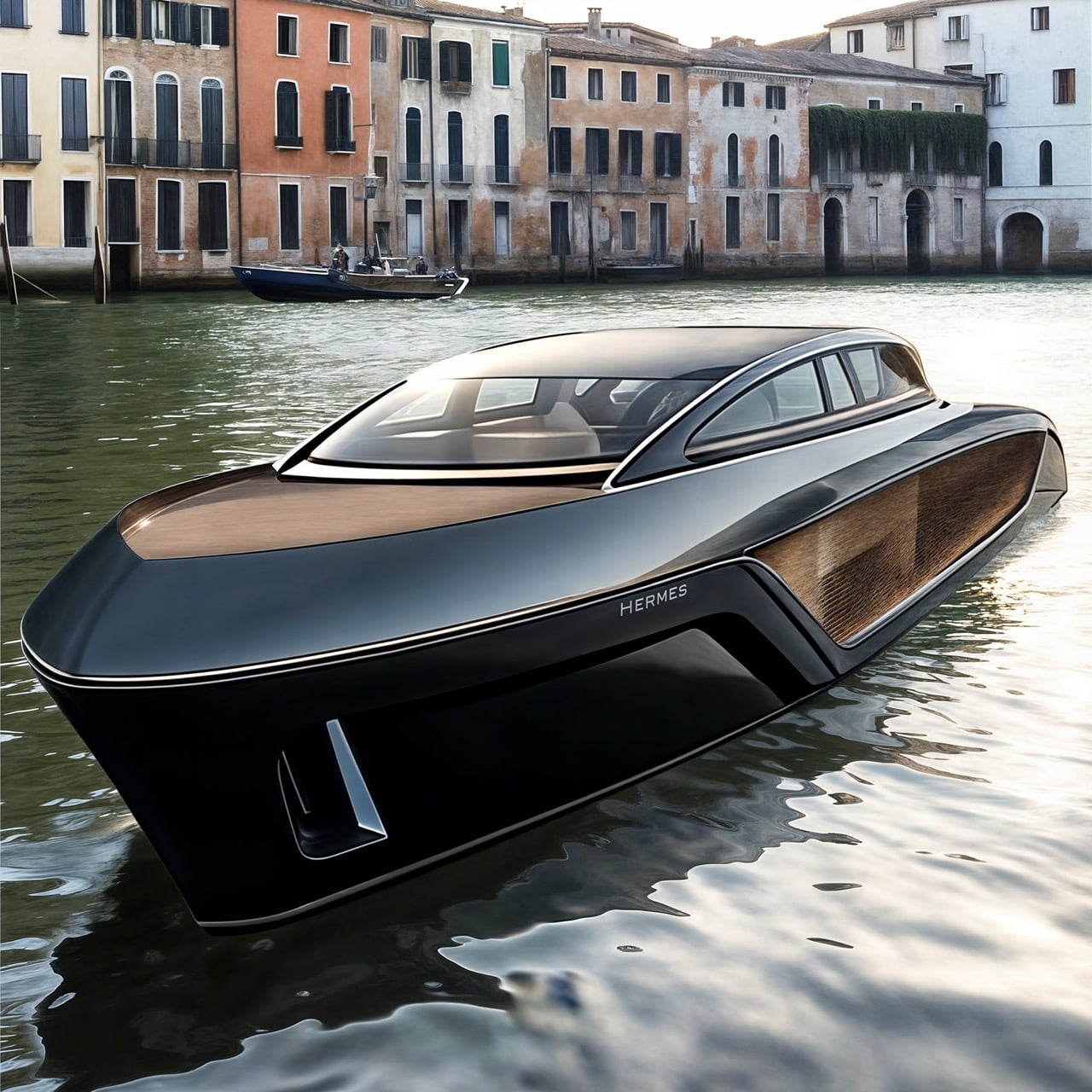
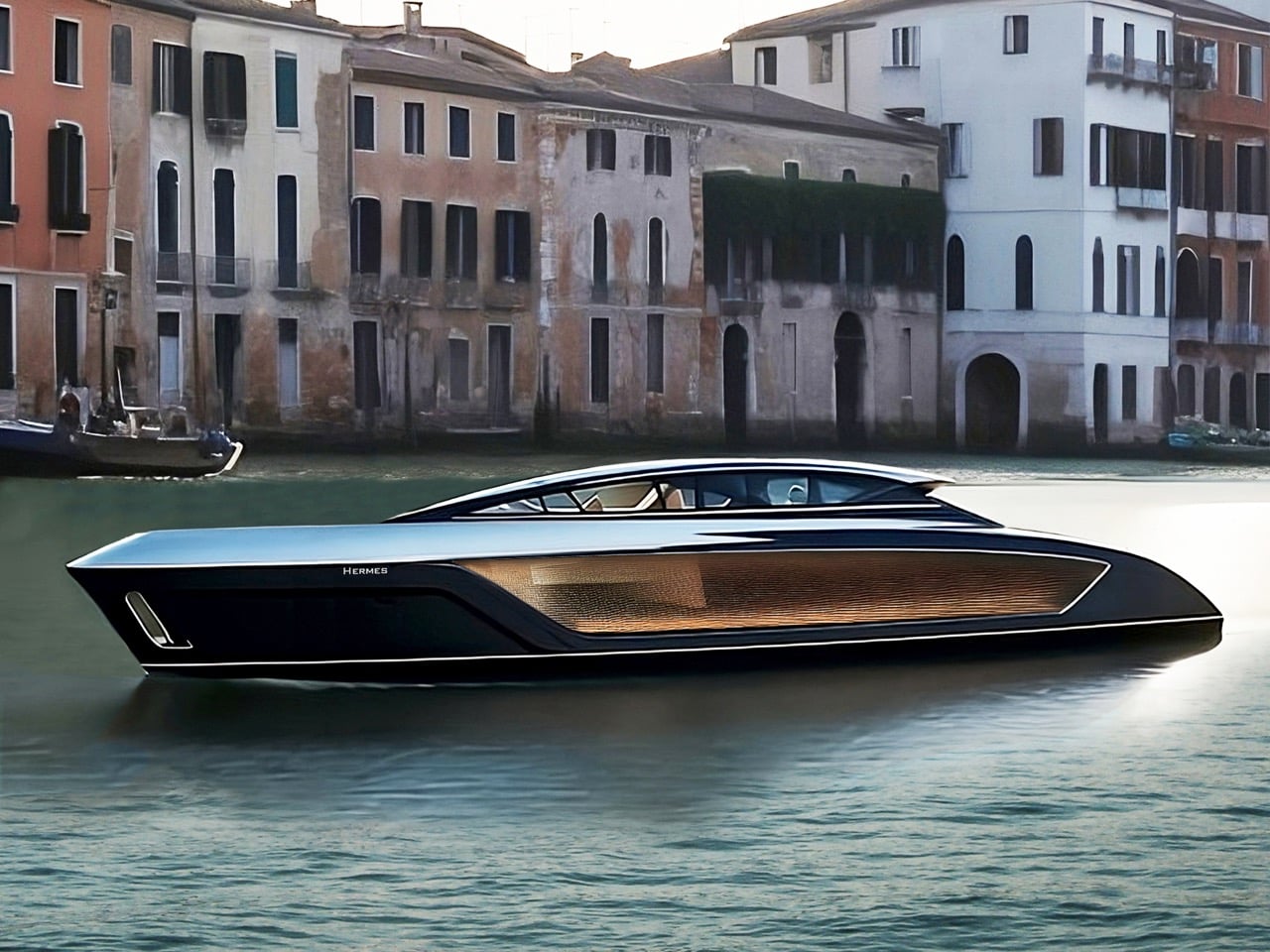
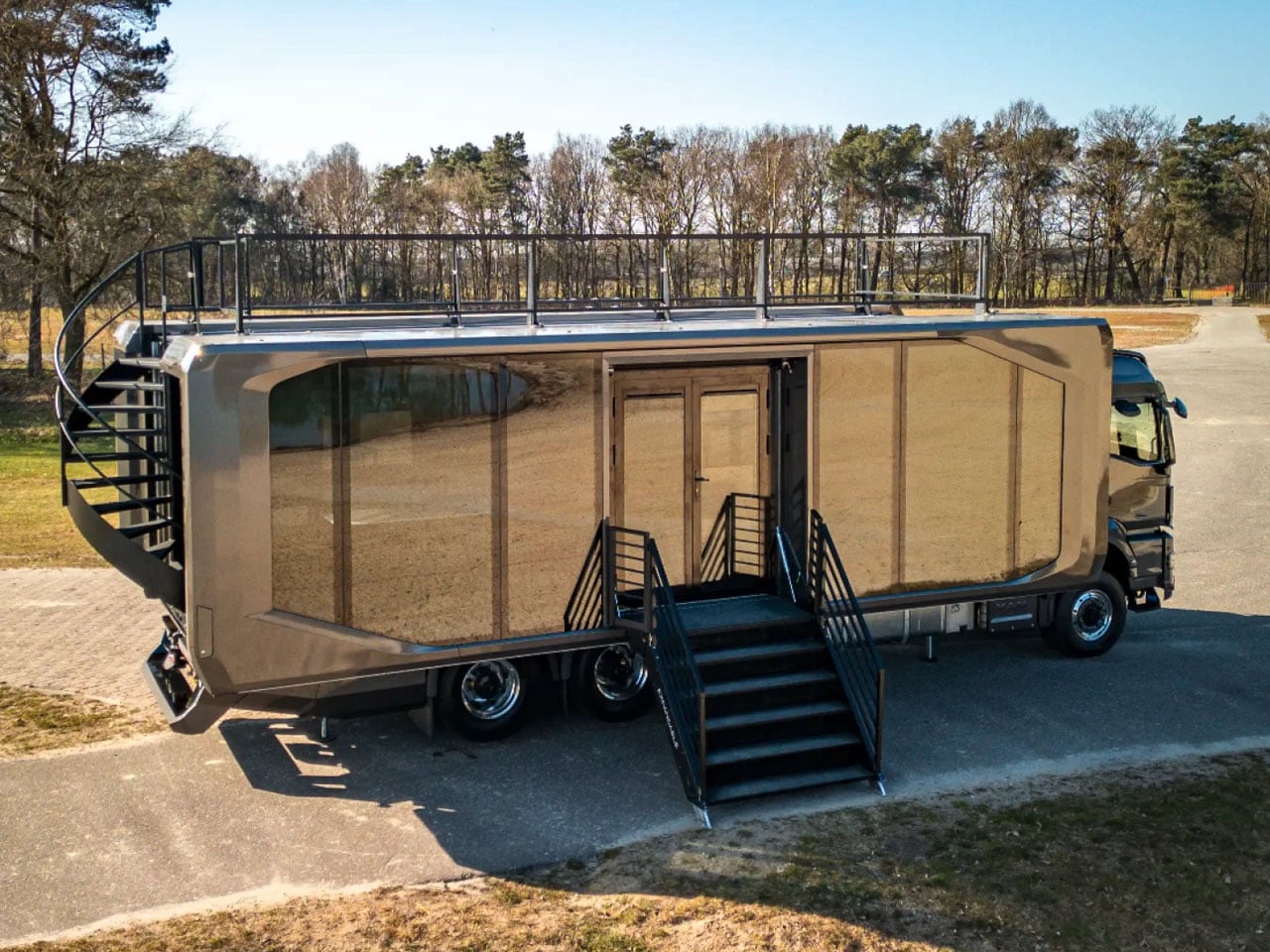
The contrast could hardly be more striking. Traditional gondolas drift past weathered Venetian buildings while the Hermes Yacht commands attention with its angular, contemporary form. Paolo Demel designed this concept vessel to embody what he calls “futuristic elegance,” a concept that bridges luxury marine craft with the precision and artistry of high fashion design.

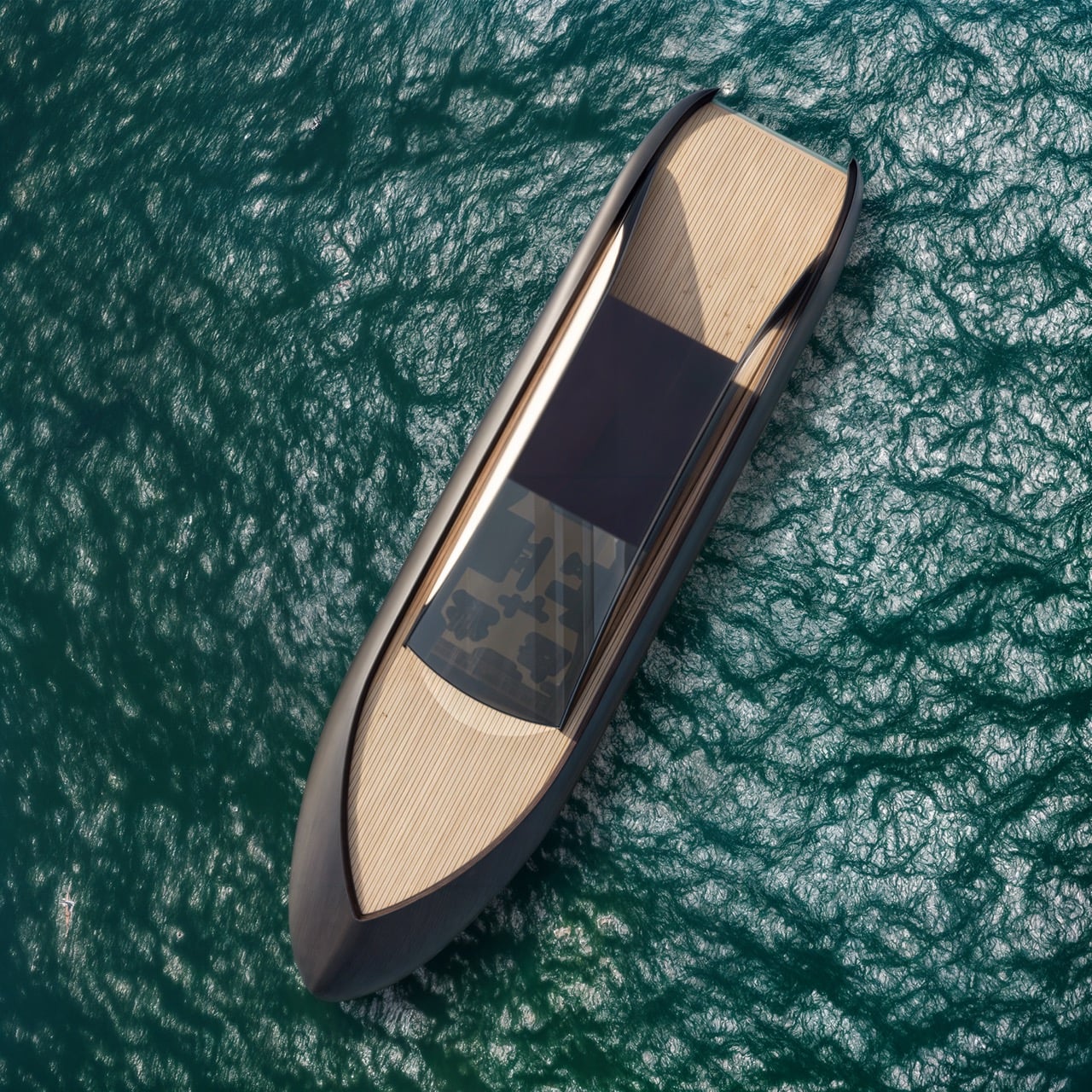
Measuring 49 feet in length, Hermes combines lightweight fiberglass and aluminum with sustainable materials, proving that environmental consciousness and aesthetic ambition can strengthen rather than limit design possibilities. The yacht’s retractable systems transform it from docked mode to cruising configuration, while enhanced hydrodynamics improve both speed and fuel efficiency. From its inception in Milan through final development in Venice, this project spent eighteen months evolving into an award-winning example of how modern yacht design can honor craftsmanship while embracing innovation and responsible material choices.

Designer: Paolo Demel

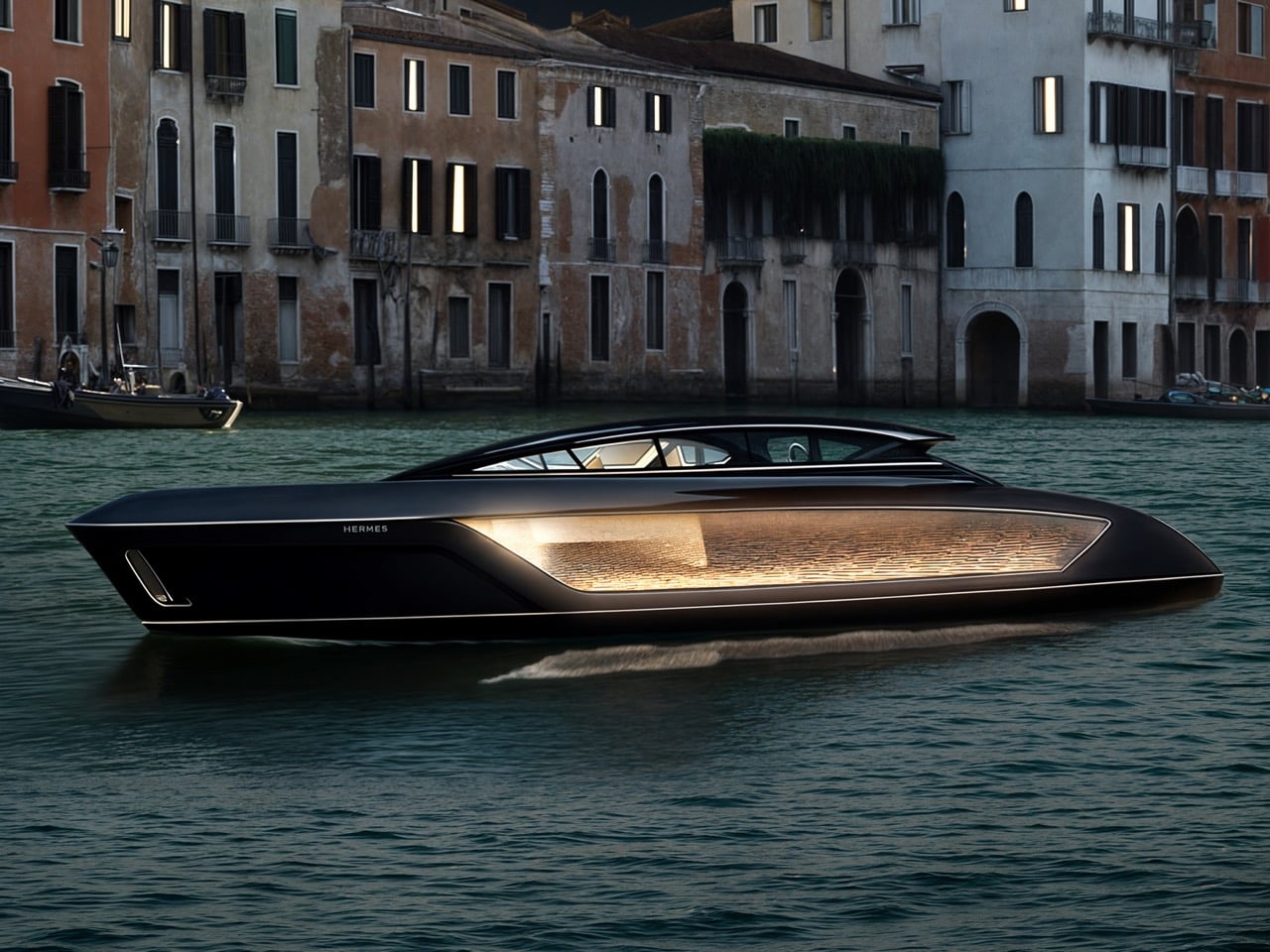
Paolo Demel spent 18 months developing the Hermes Yacht concept between Milan and Venice, and the work shows in how thoroughly considered everything appears. The proposed 49-foot hull would use fiberglass and aluminum to keep weight down while maintaining structural integrity, which directly improves fuel efficiency through basic physics. Less mass means less energy required to push through water at speed. The glass canopy wrapping around the cabin does double duty, flooding the interior with natural light while creating that visual continuity between inside and outside spaces. Those bronze-toned panels along the flanks have a textured, almost perforated appearance that adds depth without looking overwrought. Demel pulled inspiration from fashion rather than other yacht designers, studying how haute couture handles material combinations and surface finishes.

The dimensions spec out at 49 feet long, 14.5 feet wide, and 9.5 feet tall, landing in that middle range where you have actual interior volume but can still maneuver through tighter waterways. Visualizing this concept in Venice’s canals probably shaped some of these decisions, since those narrow passages force you to think about turning radius and sight lines differently than open water would. The knife-edge bow cuts drag, which would show up in improved top speeds and better fuel economy with the same powerplant. You see this kind of aerodynamic thinking in automotive design constantly, and it translates well to marine applications where you’re fighting fluid resistance constantly.

Demel designed retractable systems for the keel and sails, letting the yacht physically reconfigure between docked and cruising modes. Most vessels compromise with a fixed setup that works okay in both scenarios but excels in neither. Shallow draft when docked makes berthing easier. Deeper keel and larger sail surfaces when cruising improve stability and performance. The mechanical complexity of moving parts would introduce maintenance considerations, but the operational flexibility seems worth that tradeoff if anyone actually produces this design. CNC machining would handle precision components where tolerances matter, then hand finishing would take over for surfaces requiring human judgment. That hybrid manufacturing approach has become standard in high-end fabrication because automated and manual processes each handle what they do best.

Rendering a yacht in Venice carries obvious symbolic weight, placing futuristic design against Renaissance architecture. Demel understood that contrast when choosing where to visualize Hermes. The juxtaposition works because the yacht holds its own visually without trying to blend in or apologize for looking different. Those bronze panels catch light differently depending on angle and time of day, creating visual interest that static renders can only hint at. Whether anyone builds this remains to be seen, but as a design exercise it demonstrates how cross-pollinating ideas from fashion into marine design produces results that feel fresh in a category that tends toward conservative iterations on established themes.

The post The Hermes Yacht Concept Has Bronze Panels and a Glass Canopy, and It’s Stunning first appeared on Yanko Design.

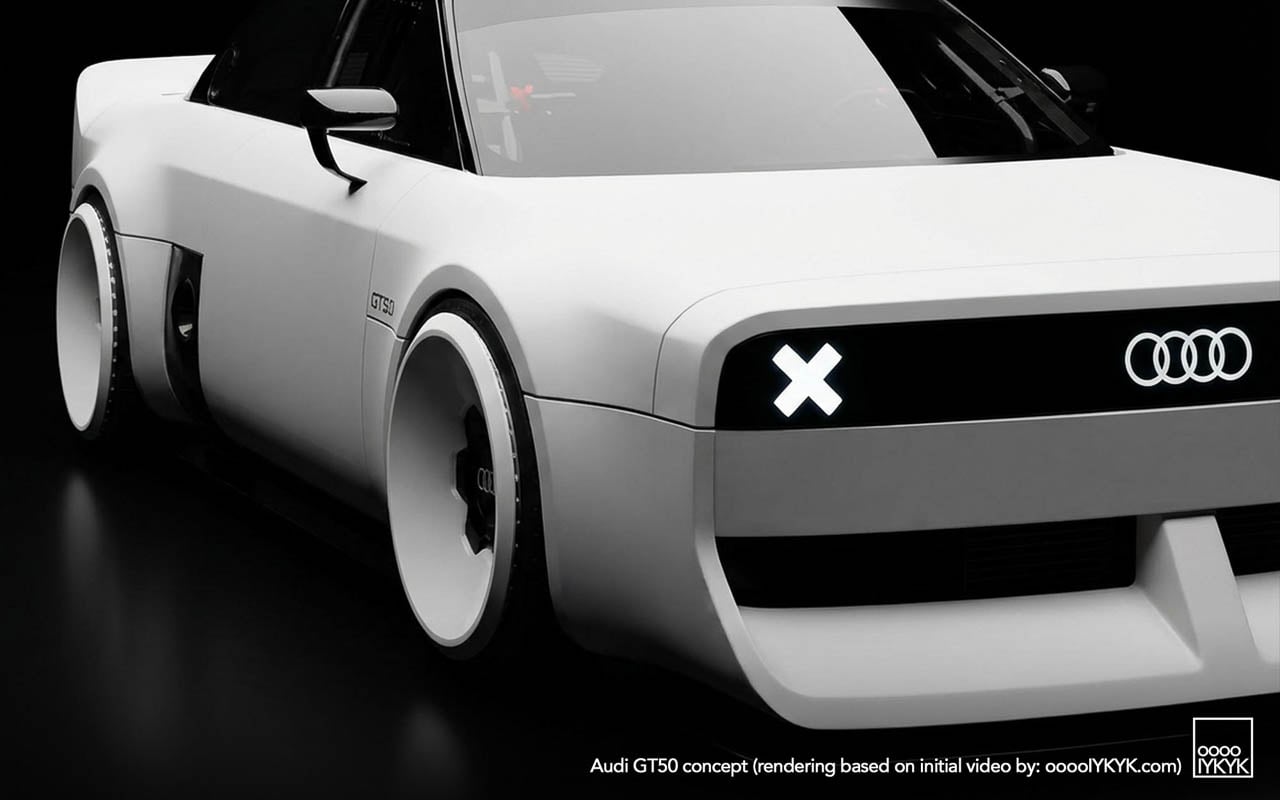
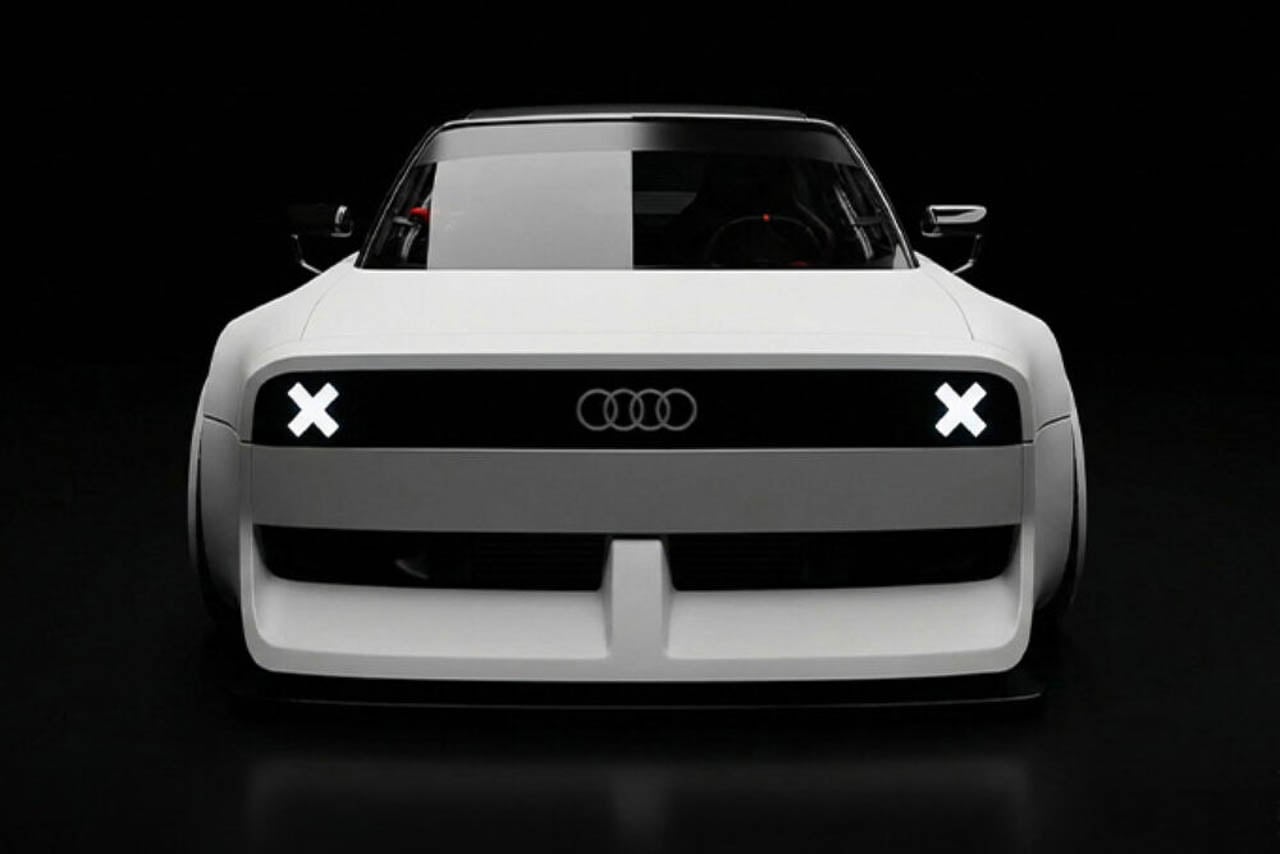
The GT50 Asks What Happens When Combustion Heritage Becomes a Design Argument


Audi’s electrification messaging has been relentless. Press releases foreground battery density. Concept reveals emphasize range anxiety solutions. The brand’s future, by every official metric, runs on electrons. Then the GT50 surfaces, quietly, through social channels and enthusiast blogs rather than a formal unveiling, and poses a question the corporate roadmap doesn’t answer: what cultural work can a five-cylinder engine still perform when the company building it has publicly committed to moving beyond internal combustion?

Designer: Audi

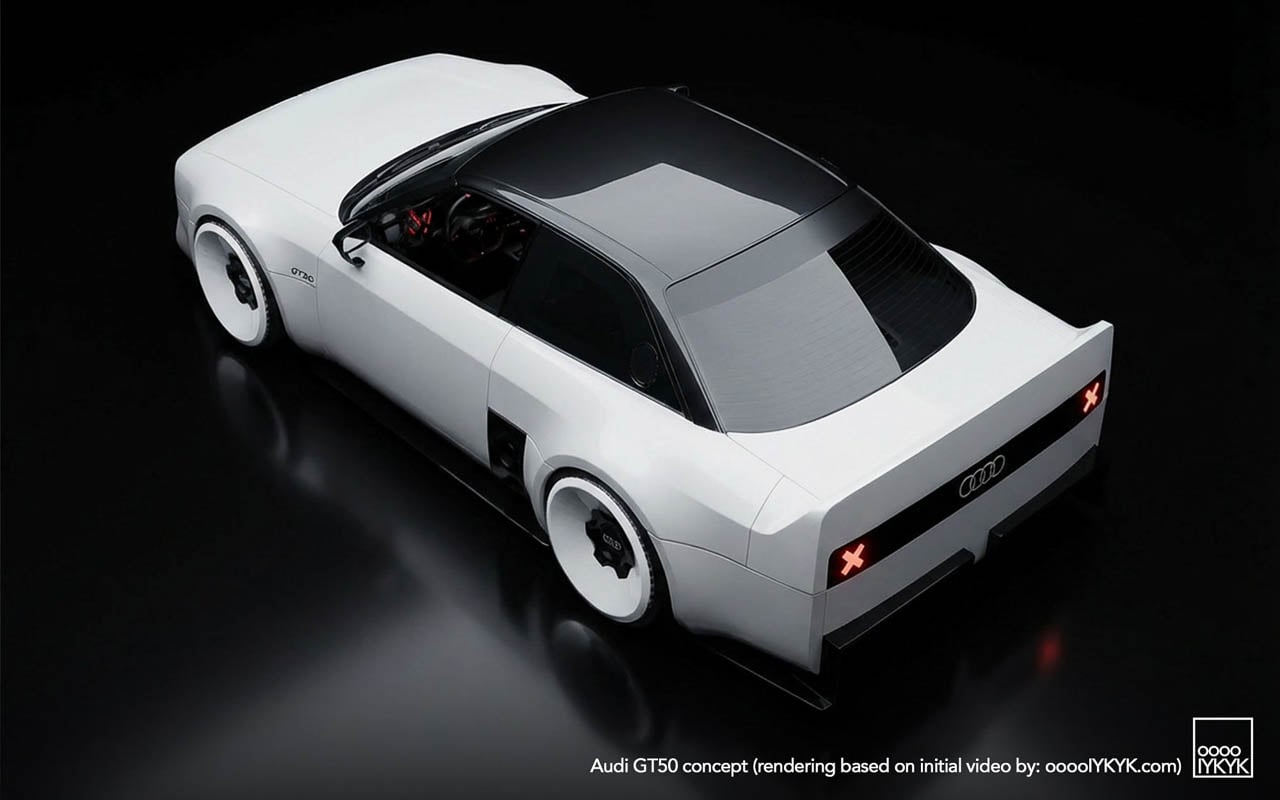
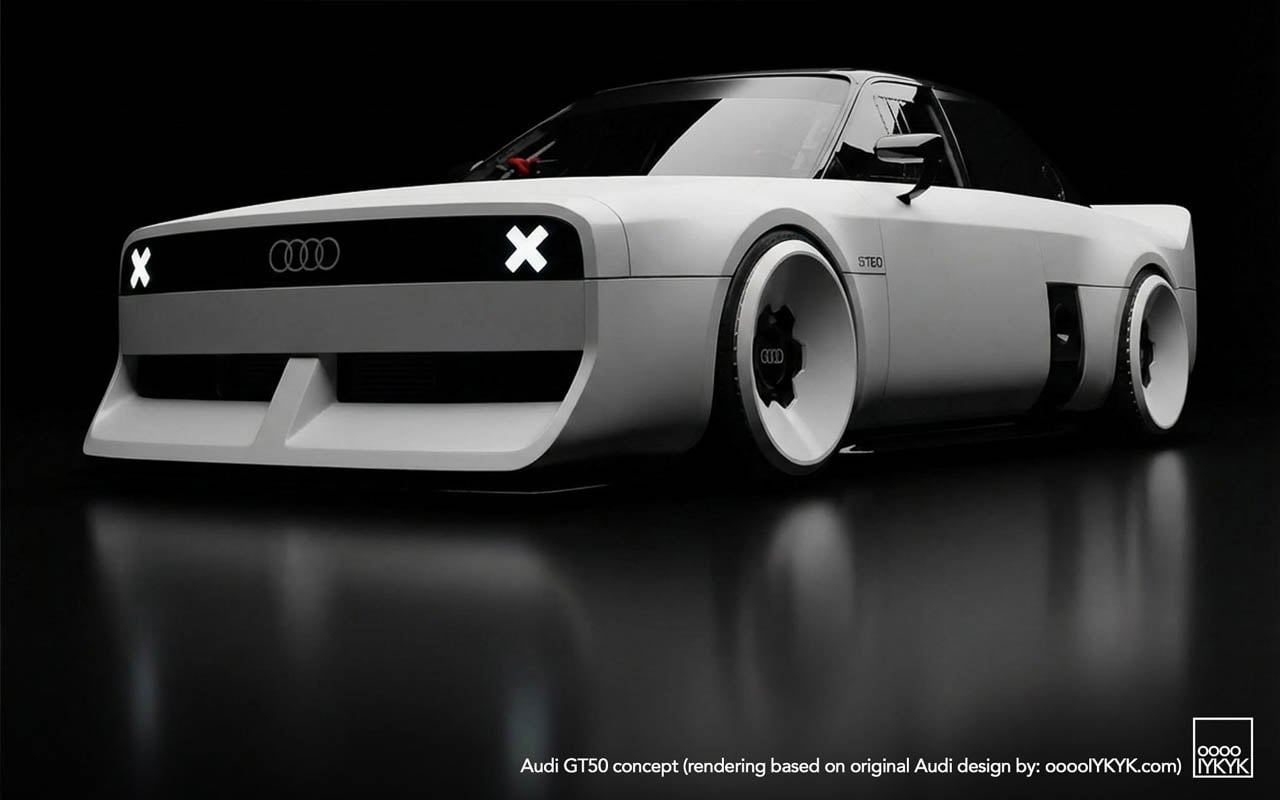
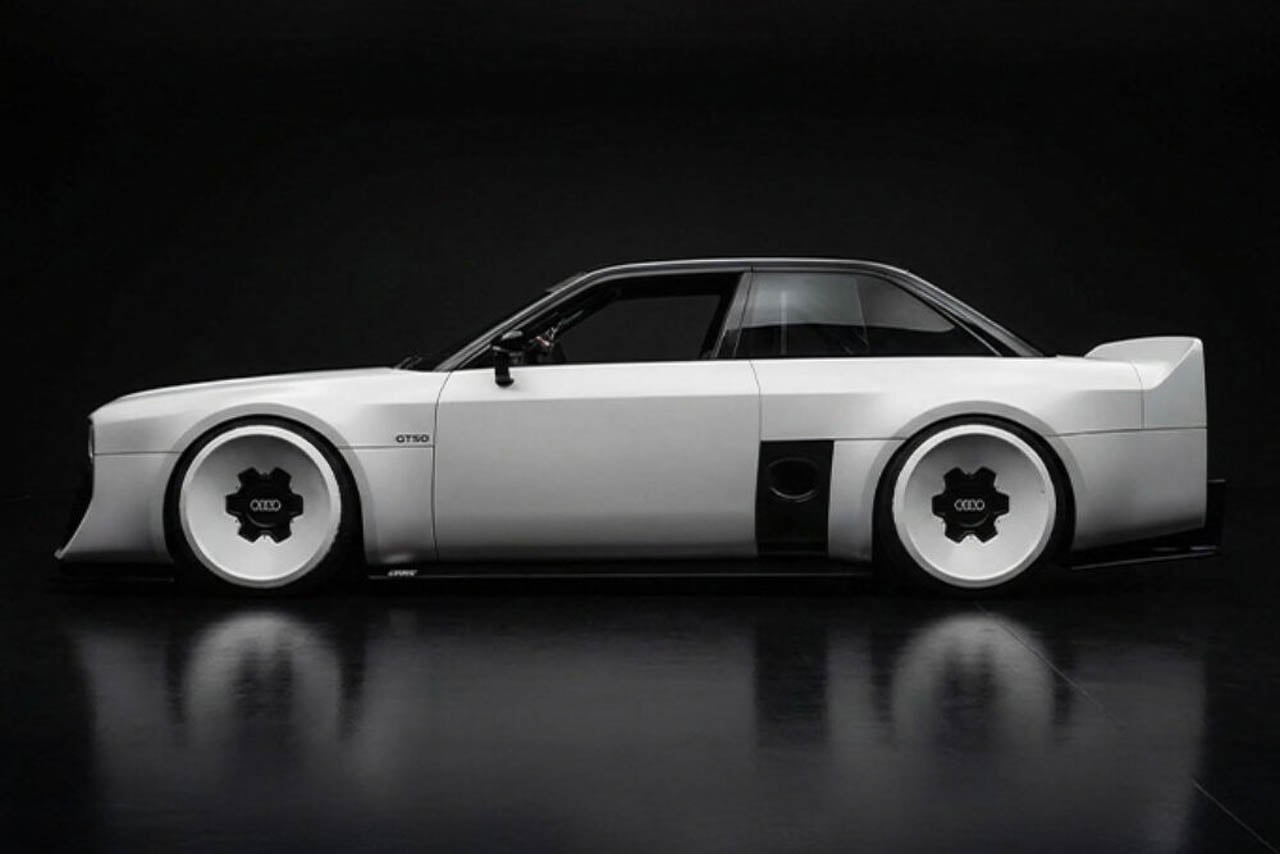
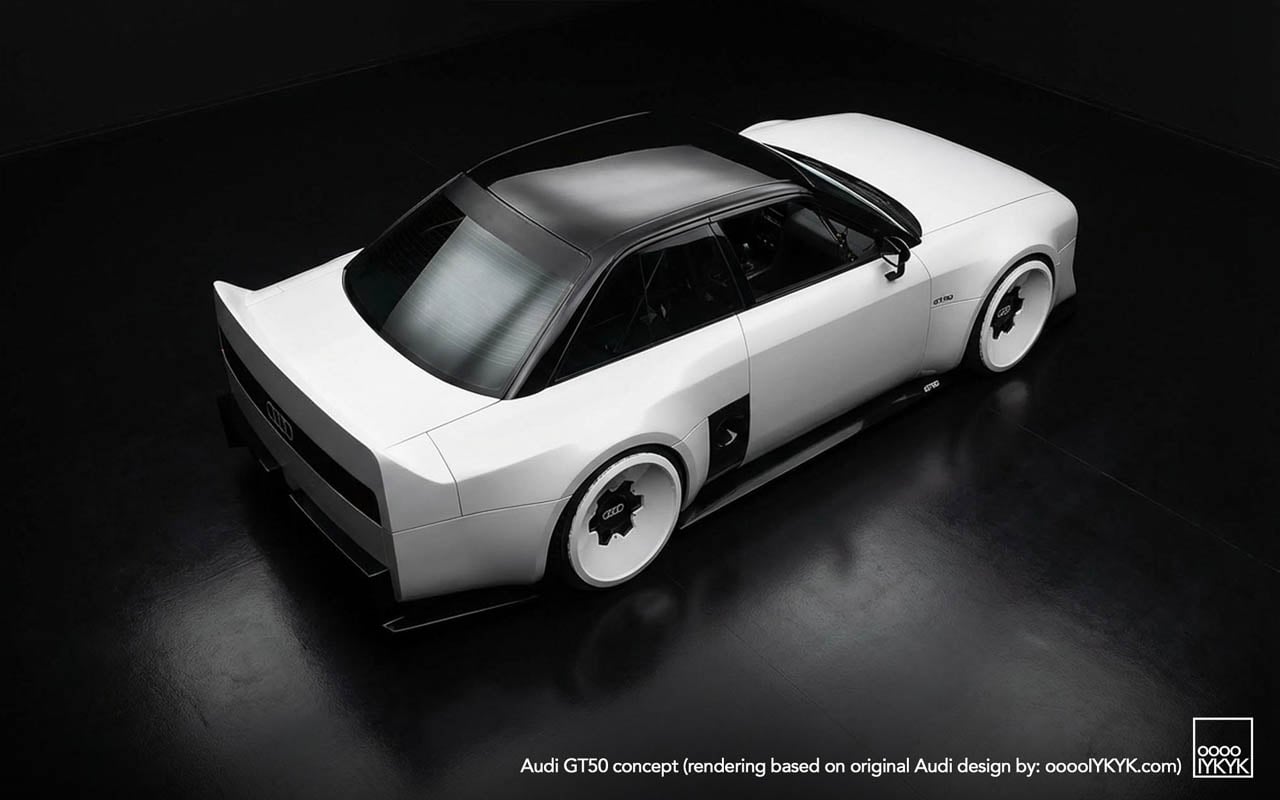
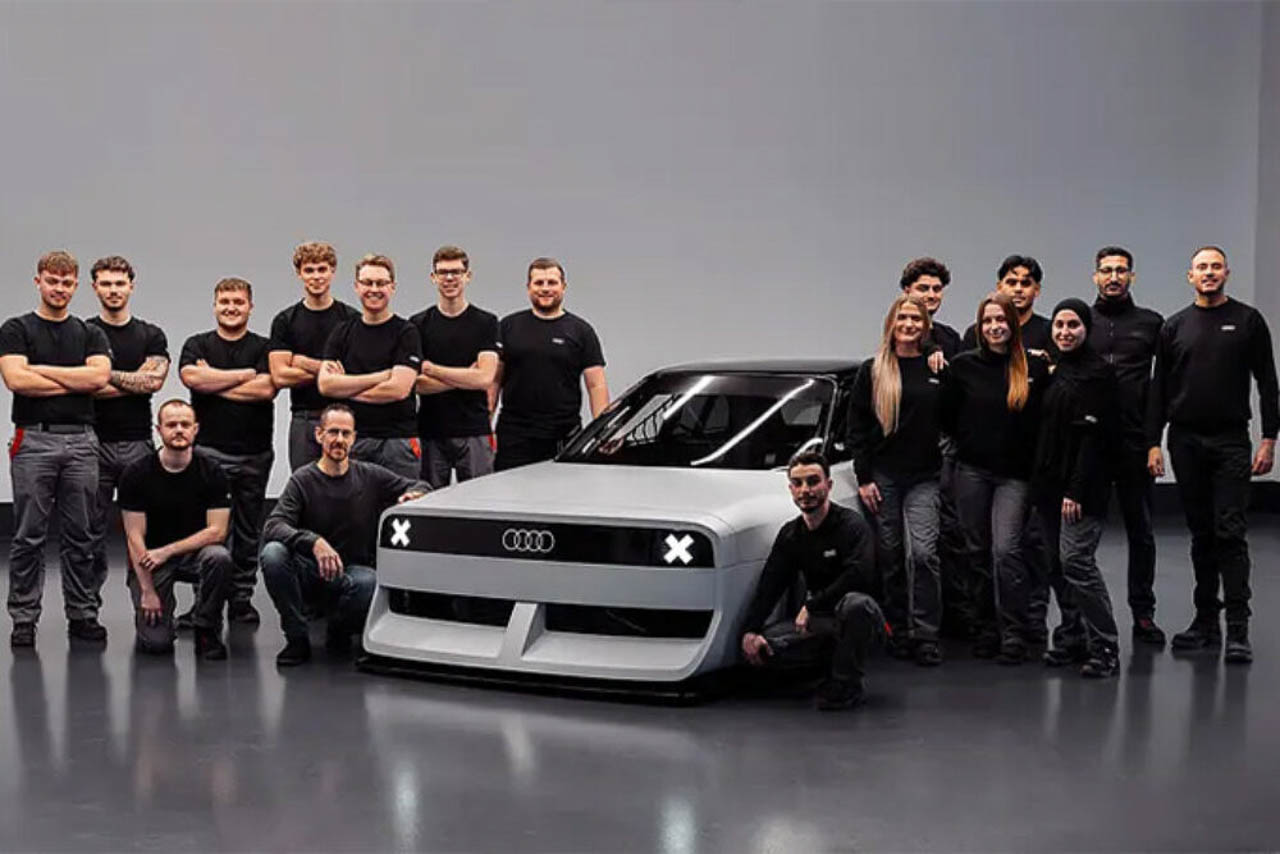
The concept car itself offers one response. Built by apprentices at Audi’s Neckarsulm training center, the GT50 wraps an unmodified RS3 powertrain in new fiberglass panels that visually lower the car (even if Audi has not detailed any suspension changes) while refusing every styling convention the parent company currently practices. The result reads less as tribute and more as provocation.

Visual Defiance: Reading the Surfaces

Start with what the photographs show that no press release describes. The C-pillar treatment carves a sharp notch where contemporary Audis would flow into a smooth shoulder line. Light catches the edge and dies. Below the rear glass, the decklid drops away at an angle that creates a shadow pocket, a visual trick borrowed from Group B rally cars, where abrupt surface breaks disrupted airflow less than they announced aggression.

The diffuser tells another story. Where modern RS models tuck their aerodynamic elements into integrated bumper designs, the GT50 exposes a finned undertray that reads like industrial equipment. No attempt to blend. No body-color covers. The functional hardware becomes ornament by being left visible.

Wheel graphics interact with the body in ways that suggest deliberate coordination. The turbofan blades repeat the horizontal slat motif from the grille, creating a visual echo across the car’s length. Whether this was intentional design language or happy accident, the effect unifies the silhouette: front face and wheel face speak the same vocabulary.

Three-box geometry defines the overall proportion. Flat hood. Upright greenhouse. Hard rear edge. Each volume asserts itself rather than dissolving into the next. This is geometry as argument, a rejection of the flowing sculpture that defines the e-tron GT and its siblings.

The Engine as Artifact

The 2.5-liter turbocharged five-cylinder produces 394 horsepower. The apprentice team changed nothing about it. No additional boost. No revised mapping. No intake modifications. This restraint is the point.

Enthusiasts know the platform. Basic modifications unlock nearly 500 horsepower. The aftermarket has mapped this engine extensively. Choosing to leave it stock reframes the powertrain as something worth preserving rather than improving: a museum piece still capable of performance, displayed in running condition rather than under glass.

The configuration itself has become rare. Volvo abandoned inline-fives years ago. Ford’s brief experiment ended. Fiat moved on. Among major manufacturers, Audi alone continues production, and only in the RS3. Fifty years after the layout debuted in the 1976 Audi 100 as a packaging compromise (five cylinders fit engine bays designed for fours while delivering displacement advantages) the configuration survives as brand signature rather than engineering necessity.

Racing Ghosts: Two Distinct Legacies

The GT50’s visual references split into separate histories that share an engine family but little else.

Rally heritage came first. The original Quattro road car and its competition derivatives established the five-cylinder as Audi’s performance identifier through the early 1980s. Gravel. Snow. Tarmac stages. The configuration proved itself in conditions that punished mechanical weakness.

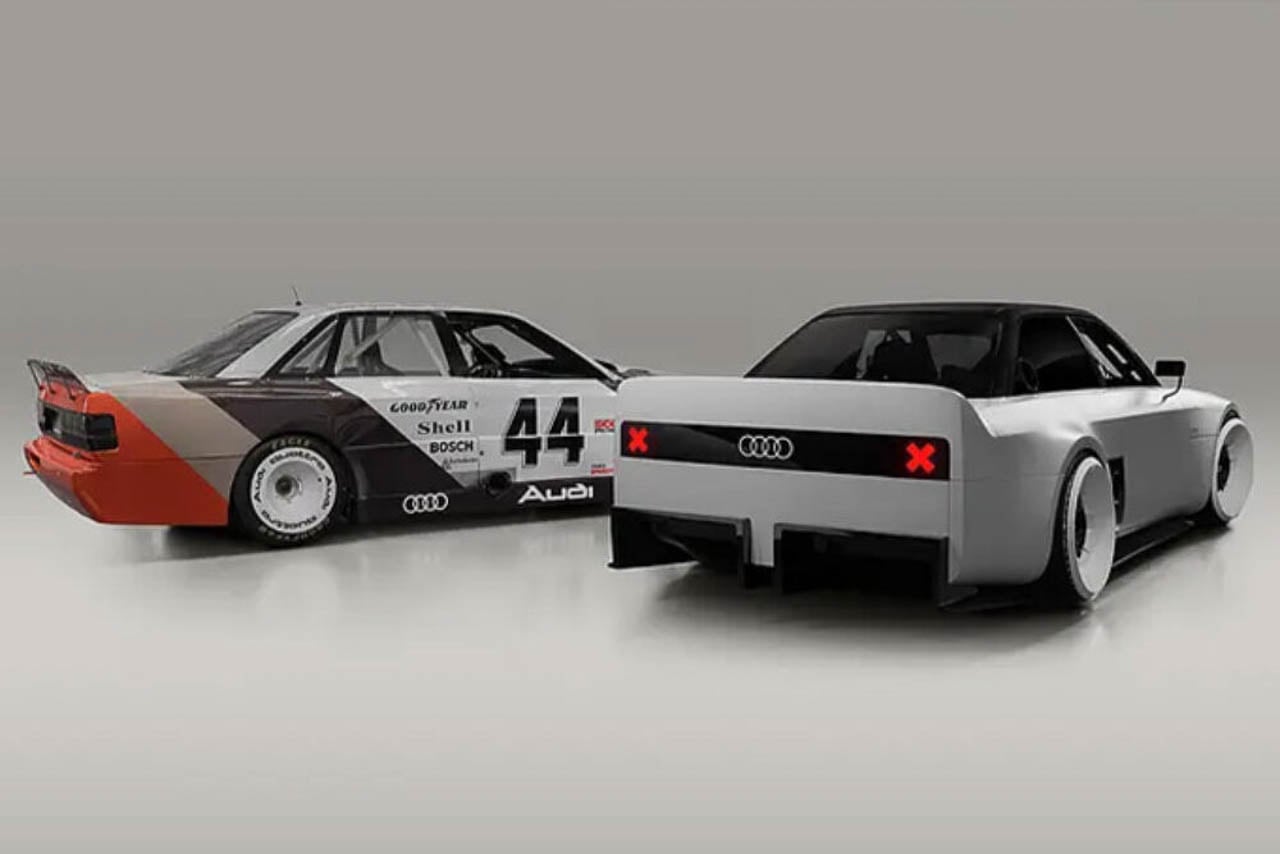
North American racing followed a different path. The 90 Quattro IMSA GTO and 200 Quattro Trans-Am cars ran on circuits rather than stages, competing against purpose-built machinery from manufacturers with deeper racing budgets. The blocky bodywork, the aggressive aero addenda, the turbofan wheels: these elements came from that asphalt racing context, not from rally.

The GT50 draws primarily from the second lineage. Its proportions quote the IMSA cars directly: the way the fenders box out rather than curve, the stance created by wheels pushed to the body’s corners, the rear wing that spans the full decklid width. Rally Quattros looked different. The concept acknowledges this distinction through specific formal choices rather than generic “heritage” styling.

Apprentice Programs as Design Laboratory

Neckarsulm’s training program has produced boundary-testing work before. The RS6 GTO concept eventually influenced production decisions. That project proved the pipeline exists: ideas developed under apprentice freedom can migrate into showroom reality.

Other builds have pushed further from commercial viability. An electrified A2. A 236-horsepower NSU Prinz running modern EV hardware. These projects test technical integration as much as design direction.

The GT50 fits a different category. It uses a production powertrain unchanged. The bodywork is additive rather than structural. What the project tests is audience response, whether visual commitment to mechanical heritage generates the kind of enthusiasm that justifies development investment in combustion performance when corporate strategy points elsewhere.

Manufacturing Quality as Statement

Execution matters in this context. The released photography shows panel gaps that read as production-grade. Surface alignments hold. The fiberglass work displays none of the waviness or inconsistency that marks student-built specials at other institutions.

This finish level functions as argument. The GT50 is not a sketch in three dimensions. It is a proposal that could, with different business decisions, reach production. The apprentices built something that asks to be taken seriously as a potential product direction rather than dismissed as training exercise.

The Quiet Reveal and Its Implications

No stage. No livestream. No embargo coordination. The GT50 initially surfaced through social and niche outlets rather than the press machinery Audi deploys for products it expects to sell. This distribution choice communicates uncertainty, or perhaps strategic patience.

If reception proves enthusiastic, the soft launch becomes origin story. If response flatters less, the project remains an apprentice exercise, easily distanced from official product planning. The approach hedges corporate exposure while allowing genuine audience testing.

What the GT50 asserts, regardless of its production future, is that the five-cylinder’s cultural position within Audi’s identity has not been resolved by electrification commitments. The engine configuration still generates response. The racing heritage still communicates. Whether that cultural capital translates into business justification for extended combustion development remains the open question the concept was built to help answer.

The post The GT50 Asks What Happens When Combustion Heritage Becomes a Design Argument first appeared on Yanko Design.
Porsche Celebrates 90 Years With Anniversary-Edition 911 GT3-Inspired Chronograph Watch

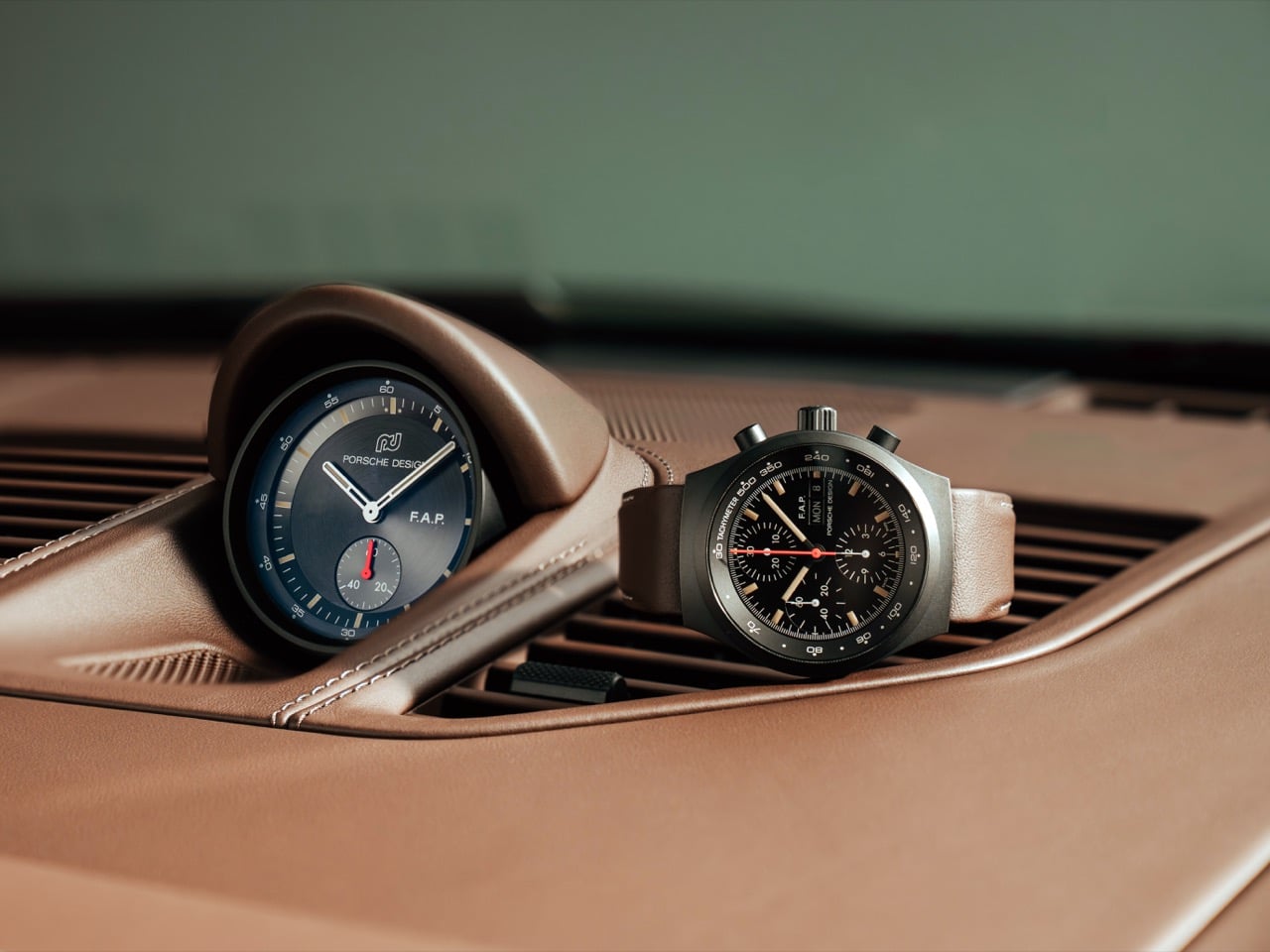
…so the first thing my brain did when I saw “F. A. P.” on the dial was laugh like a 12‑year‑old, and the second thing it did was realize Porsche Design just pulled off one of the most personal anniversary pieces they have ever done. The Chronograph 1 90 Years of F. A. Porsche sits in a weirdly perfect spot in the lineup. It rides on the modern Chronograph 1 architecture that came back in 2022, which itself is a faithful reboot of the 1972 all‑black original, but it quietly pivots the story from “50 years of a product” to “90 years of the guy who thought this way in the first place.” Same matte black instrument face, same integrated bracelet silhouette, same dashboard‑inspired layout, but now the watch talks about the designer more than the brand. That is a subtle shift, and it matters.

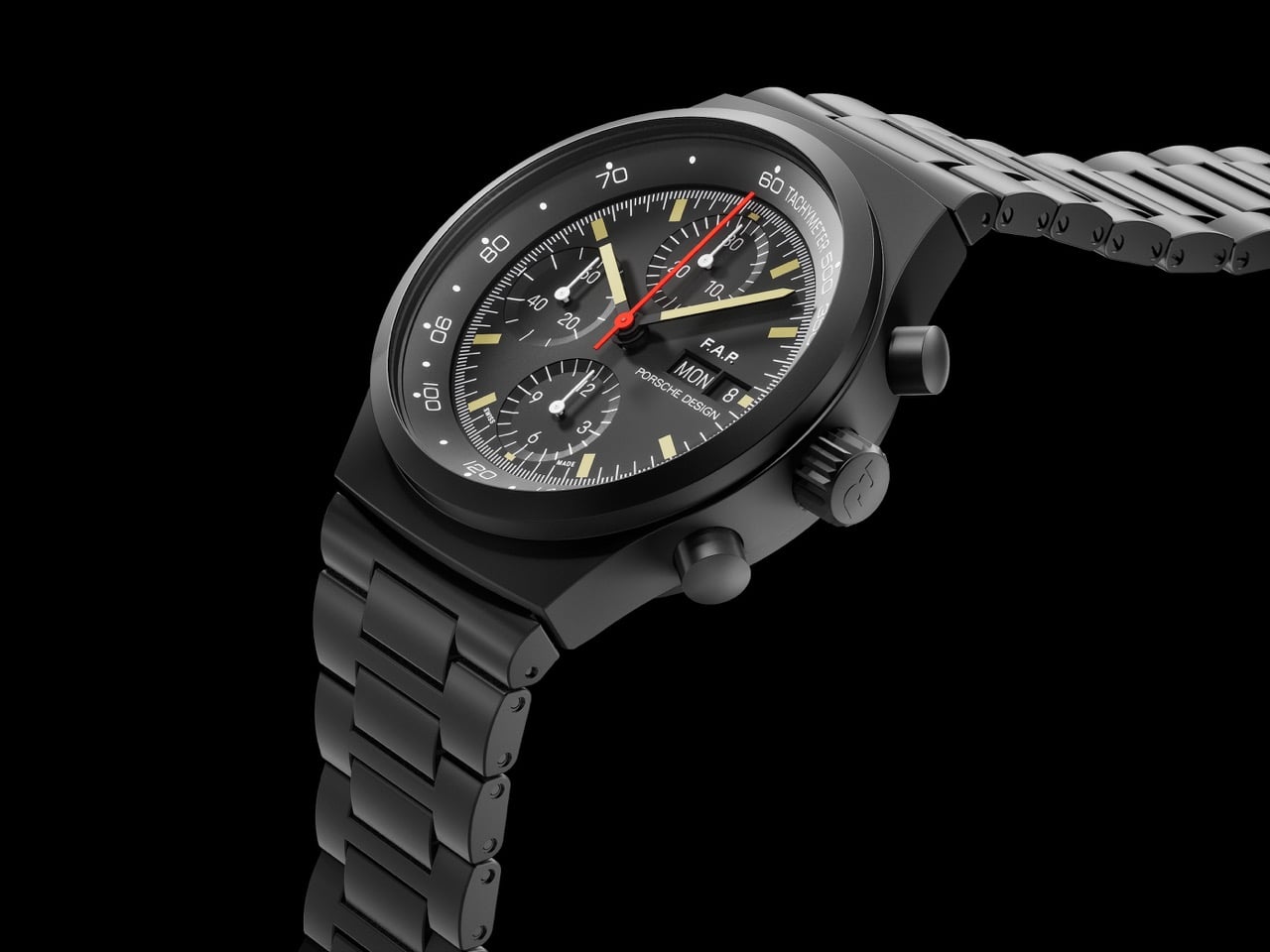
You still get a 40 to 41 millimeter black coated titanium case, COSC certified in house WERK 01 flyback chronograph, 10 bar water resistance, and the usual Porsche Design ergonomics that sit flat on the wrist instead of trying to cosplay a diver. The case is titanium rather than the old steel of the seventies, so you get that weird cognitive dissonance when you pick it up and your hand expects heft and gets a feather. The dial layout stays brutally functional: tri compax registers, bright white printing, red central chrono seconds, and a tachymeter that actually looks usable instead of decorative. You can tell someone in the room still cares about legibility more than sparkle.

Design: Porsche Design

What really hooks me is how they handled the vintage vibe. They went with a patina colored Super‑LumiNova on the hands and indices, but they resisted the temptation to fake scratches or faux tropical weirdness. It looks like a well kept seventies tool watch that has lived under a shirt cuff for decades, not a prop from a nostalgia cosplay shoot. The historic Porsche Design logo on the crown and clasp leans into that same energy. It nods to the early studio era without screaming “heritage” in every direction. The whole thing feels like it was designed by someone who has actually handled original Chronograph I pieces and understands that the charm lives in proportions and restraint, not sepia filters.

The F. A. P. inscription above the day date is where the watch steps over the line from clever to personal. On the standard Chronograph 1, that real estate belongs to the logo. Here, it mirrors the way Ferdinand Alexander had his own initials printed on his personal watch. That is a tiny move, but it shifts the mental image from “product on a shelf” to “object on a designer’s wrist while he is sketching the 911 profile.” It also quietly de‑centers the corporate identity for once. You have “Porsche Design” still sitting under the day date, but visually your eye lands on those initials first, like a signature on a technical drawing. For a brand that usually guards its mythology pretty tightly, that feels surprisingly intimate.

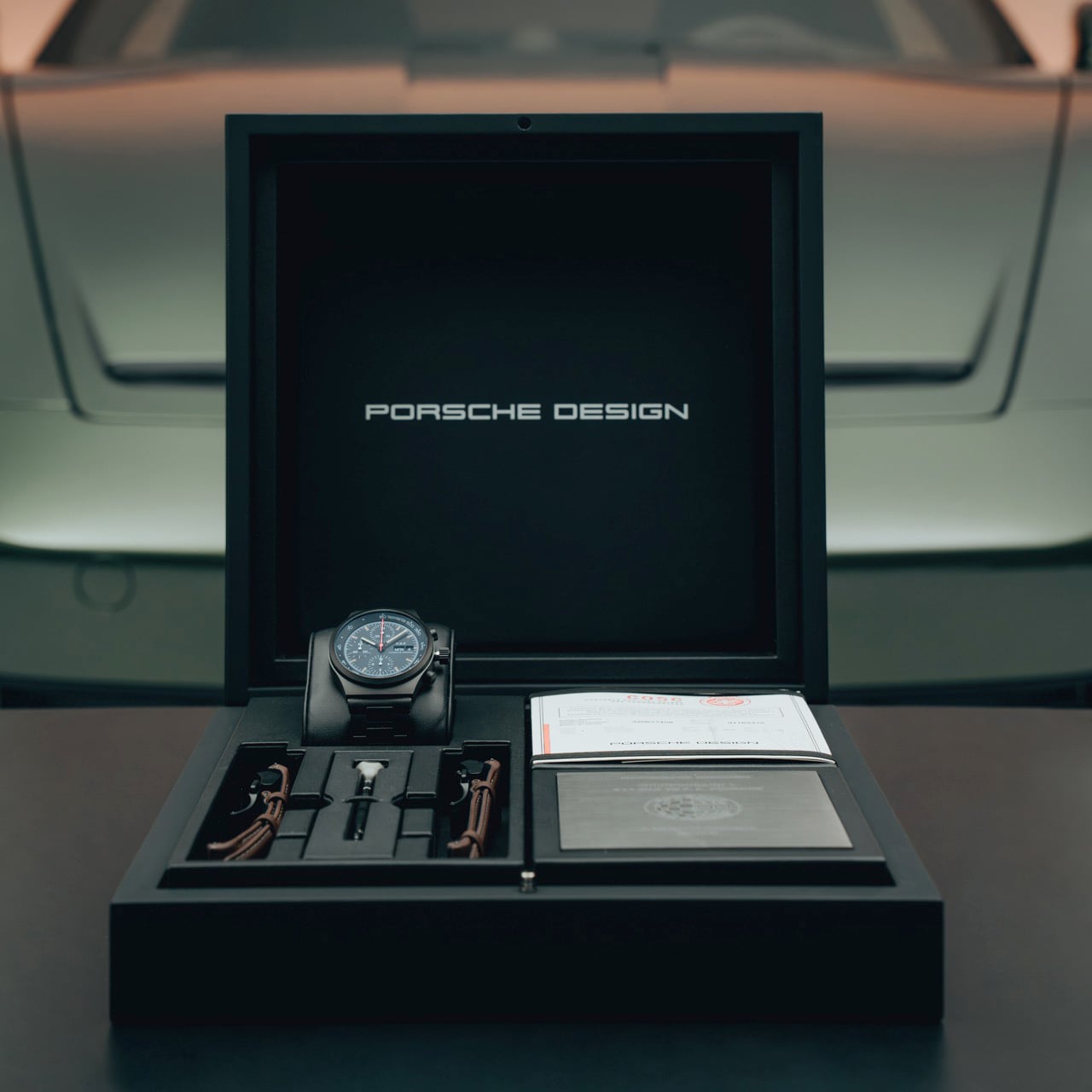
Flip the watch over and the car nerd part of my brain wakes up. The rotor is shaped and colored like the wheel of the 911 GT3 90 F. A. Porsche, the Sonderwunsch special that pairs with this chronograph. Limited to 90 cars, 90 watches, neat and tidy. The rotor design is not subtle at all, which I actually appreciate. If you are going to tie a watch to a specific vehicle, commit. You can see the spokes, the crest in the center, and little flashes of the WERK 01 movement breathing underneath. Around the edge you get the “XX/90” numbering and F. A. Porsche’s signature, which turns the caseback into a kind of mechanical plaque. It reads like a collaboration between the motorsport department and the watch studio rather than a lazy logo slap.

From a pure tech perspective, the movement choice fits the narrative. The WERK 01 family is a proper automatic chronograph caliber with flyback functionality, so you can reset and restart the chrono with a single pusher press while it is running. That is a very motorsport friendly behavior, and it feels right for something tied to a GT3. Frequency sits at the usual 4 hertz, power reserve lands in the 40 to 48 hour neighborhood, and COSC certification locks in the “this actually keeps time” part of the story. None of this is wild horological innovation, but it is solid, coherent engineering, which is honestly what you want under a dial that screams “instrument.”

The titanium bracelet deserves a mention too, because black bracelets can go very wrong. Here it looks like they kept it fully brushed with short, slightly rounded links, which avoids the cheap, shiny PVD look that haunts a lot of black watches. It tapers enough to feel intentional, not like a straight metal strap bolted on after the fact. The quick change system with the additional Truffle Brown leather strap is a nice structural detail rather than lifestyle garnish. The brown with contrast stitching echoes the interior of the GT3 90 F. A. Porsche, so again you get that one to one mapping between car and watch. If you are the sort of person who obsesses over interior spec codes, this will scratch a very specific itch.

What I like most is the sense of continuity. The original 1972 Chronograph I took the visual logic of a 911 instrument cluster and shrank it to wrist size. The 2022 Chronograph 1 reissue proved that the formula still works in a world of OLED dashboards and smartwatches. This 90 Years edition layers a biographical note on top of that, without disturbing the core geometry. If you strip away the anniversary text, you still have a clean, ruthless, daily wear chronograph that does its job. Add the initials, the wheel rotor, the limited number, and suddenly you are wearing a piece of design history that feels strangely unforced. For an object built to honor a man who hated unnecessary ornament, that feels about right.

The post Porsche Celebrates 90 Years With Anniversary-Edition 911 GT3-Inspired Chronograph Watch first appeared on Yanko Design.
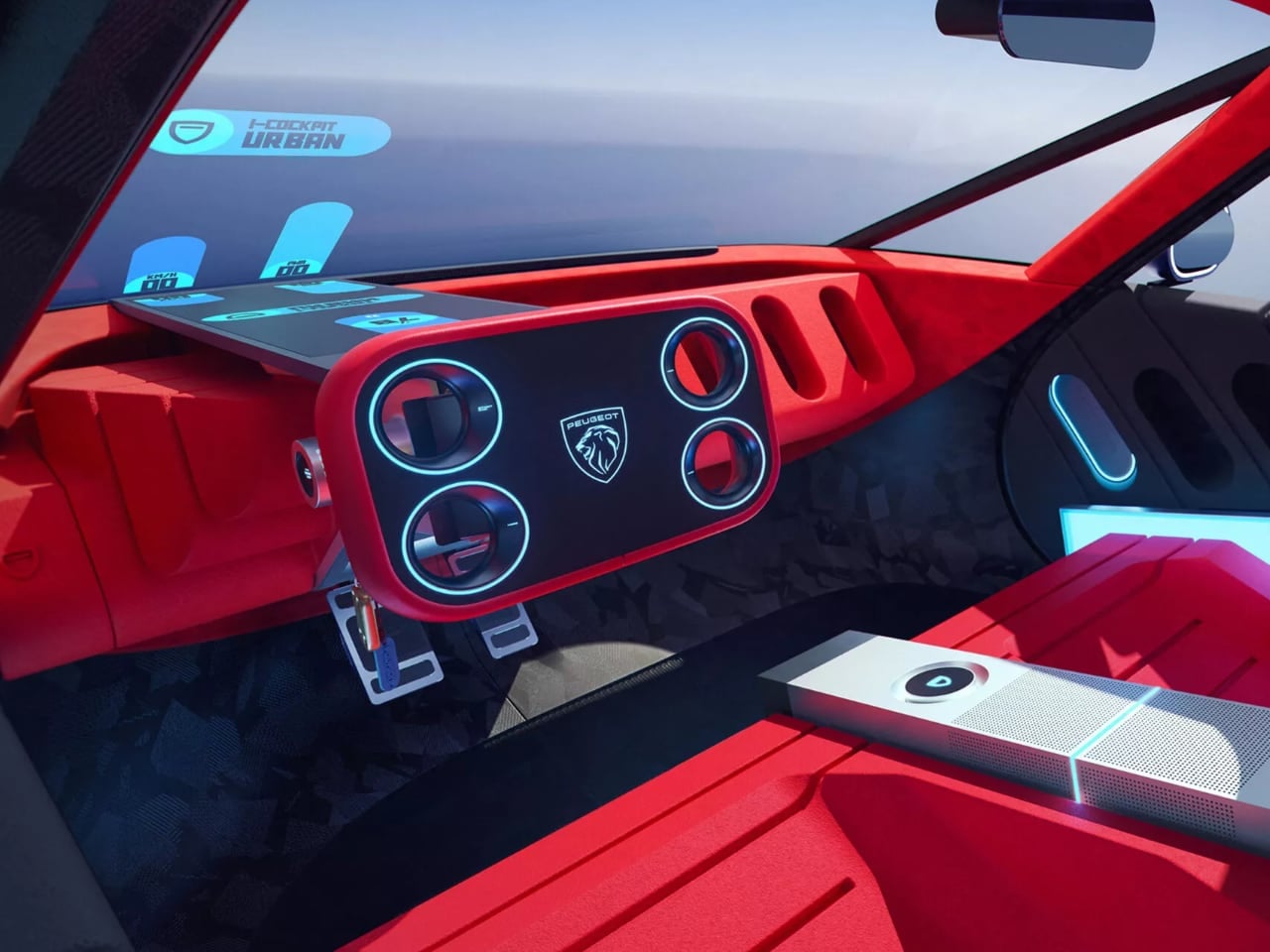
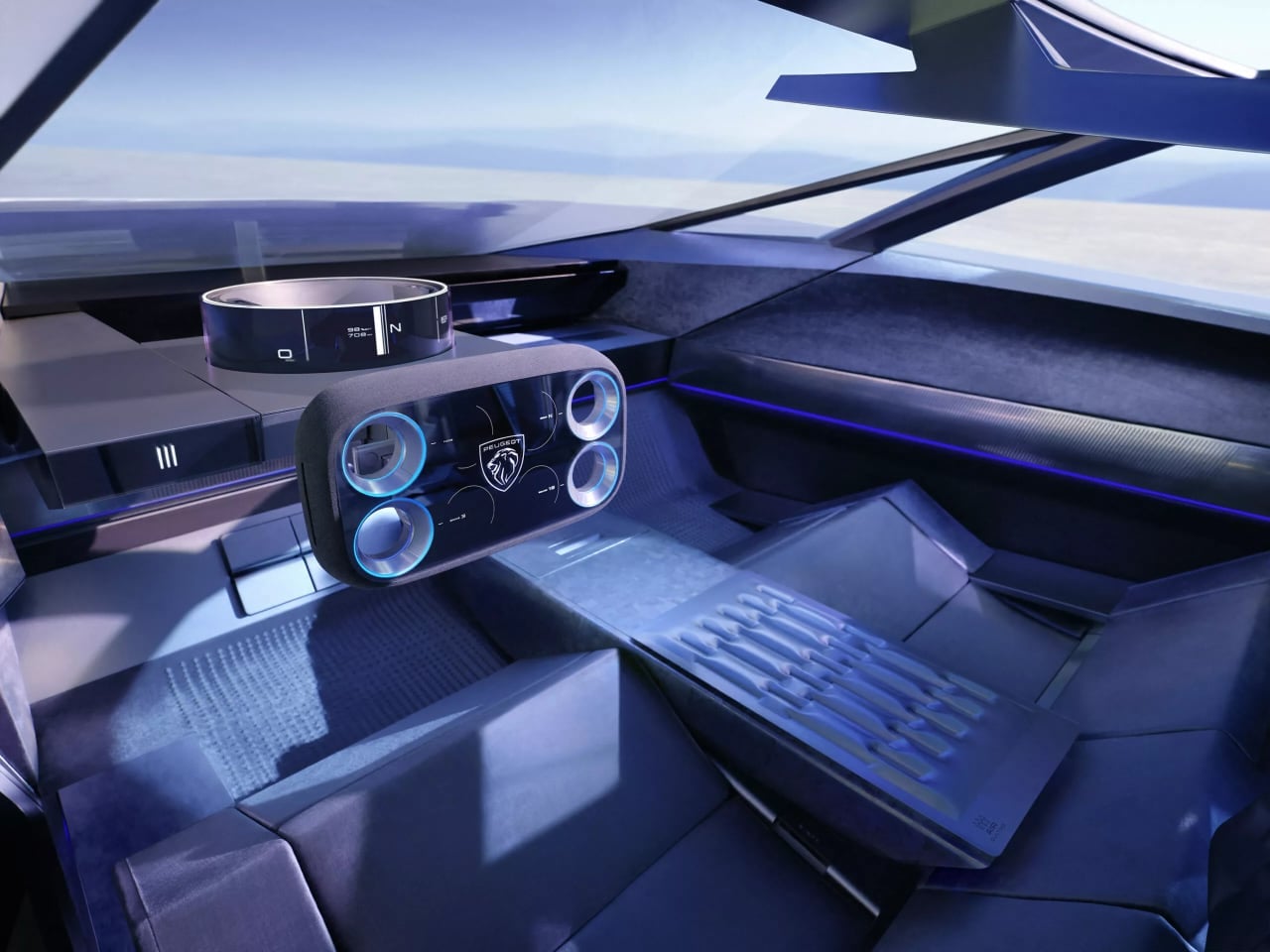
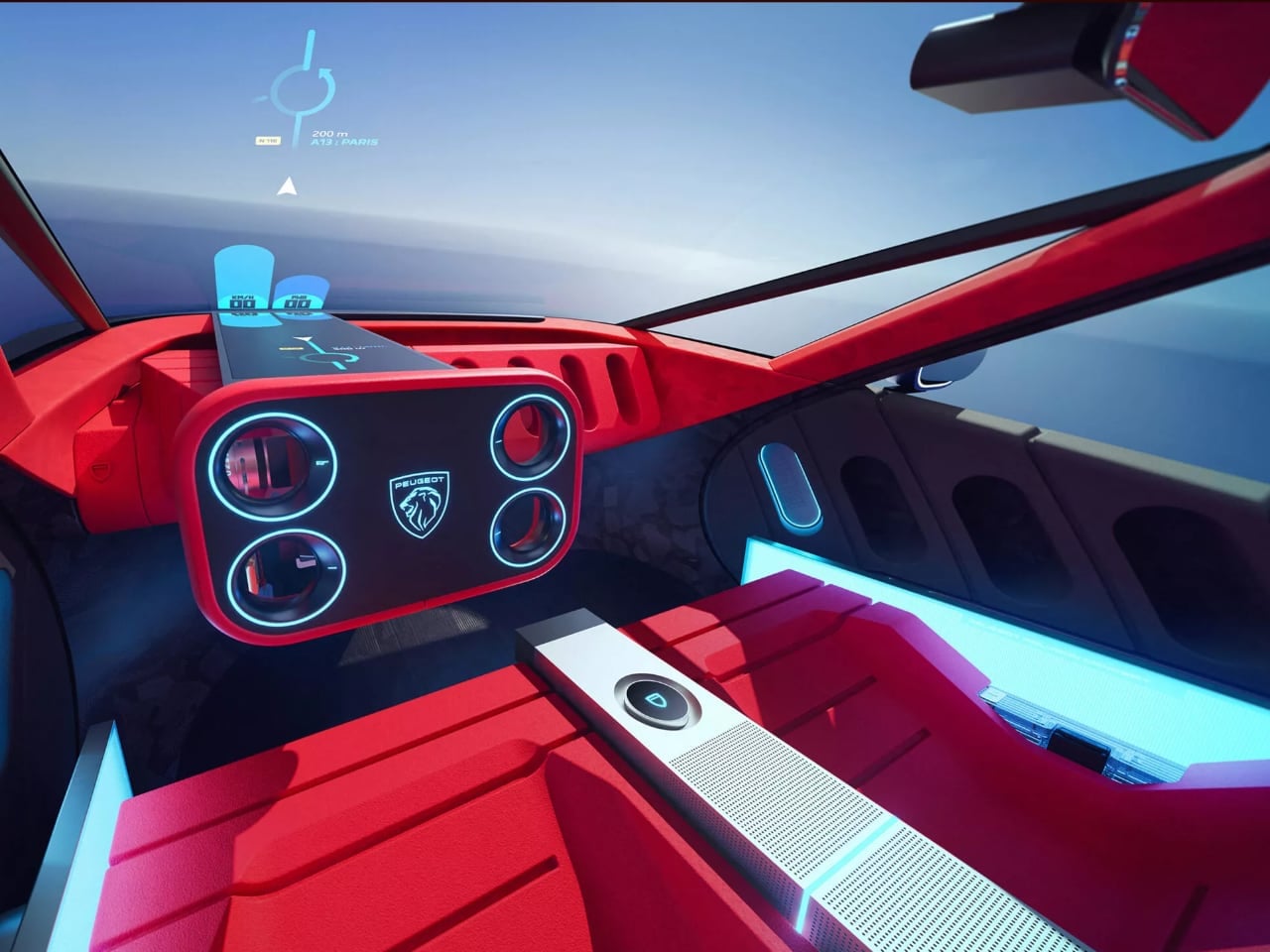
Peugeot’s Hypersquare Replaces Two Centuries of Circular Logic with a Rectangular Controller

The steer-by-wire interface abandons the steering wheel’s fundamental geometry, trading infinite rotation for limited-arc precision and mechanical feedback for algorithmic haptics.

The circular steering wheel represents one of automotive design’s most persistent forms. Its logic is elegant: infinite rotation maps directly to front axle movement, the column transmits road texture into the driver’s palms, and the geometry anchors muscle memory across every vehicle. Peugeot’s Hypersquare discards that entire vocabulary–and the visual disruption is deliberate.

Designer: Peugeot

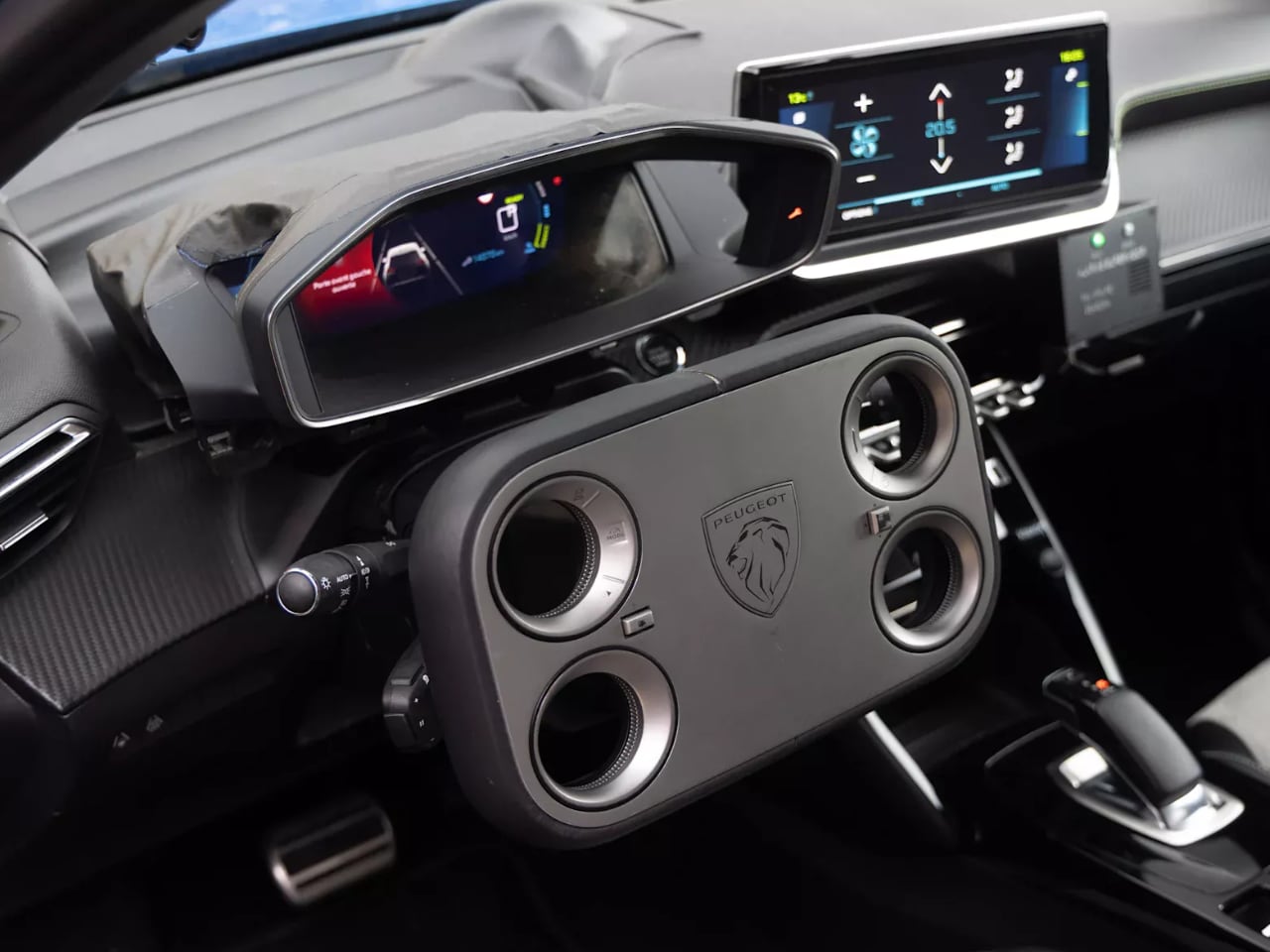
The controller presents as a rectangular frame with rounded corners, closer in visual language to a gaming peripheral than automotive equipment. Where traditional wheels invite sweeping hand motions and continuous rotation, Hypersquare rewards precise, deliberate inputs within a constrained arc. The angular geometry introduces deliberate friction within cockpit environments refined over decades around curves and organic transitions. This visual foreignness signals technological departure before the driver touches anything.

Peugeot first introduced the concept inside the Inception show car in early 2023, then refined it further in the Polygon concept. Working prototypes now exist in E-2008 test vehicles, translating render into tangible interface. The geometry has remained consistent across iterations: thick rectangular profile, four corner cutouts, control pods nested where thumbs naturally rest.

Controller Form and Spatial Logic

The controller’s primary form factor establishes immediate distance from steering convention. Where wheels present an unbroken rim that hands traverse continuously, Hypersquare offers four distinct corner voids that interrupt the perimeter. These cutouts serve dual purposes: they reduce visual mass while creating natural grip zones that guide hand placement without explicit instruction.
The upper two cutouts house circular touch-and-push control pods, positioned precisely where thumbs settle during a relaxed hold. This placement transforms the steering interface into a multi-input device-drive modes, media controls, ADAS settings, and navigation all accessible without hands leaving the controller surface. The integration recalls smartphone interaction patterns more than traditional automotive switchgear.

Rotation limits to approximately 170 degrees in each direction, eliminating hand-over-hand movement entirely. Lock-to-lock travel spans less than a single full turn. This constraint fundamentally alters the kinetic vocabulary of steering: no more shuffling grip during tight maneuvers, no more crossing arms during parallel parking. The interface assumes position-holding rather than continuous motion.

The thickness of the frame itself carries design intent. Traditional wheels taper toward thin rims that fingers wrap around easily. Hypersquare maintains substantial depth throughout, creating a slab-like presence that emphasizes grip stability over rotational fluidity. The form suggests holding rather than spinning.

Interior Integration and Visual Hierarchy

Hypersquare arrives as the centerpiece of Peugeot’s next-generation i-Cockpit, and the interior architecture reorganizes around its unconventional form. The traditional instrument binnacle disappears entirely–that hooded cluster of gauges positioned behind the steering wheel no longer makes spatial sense when the wheel itself has transformed. This isn’t merely component swapping; the entire visual hierarchy of the driver’s forward view gets restructured.
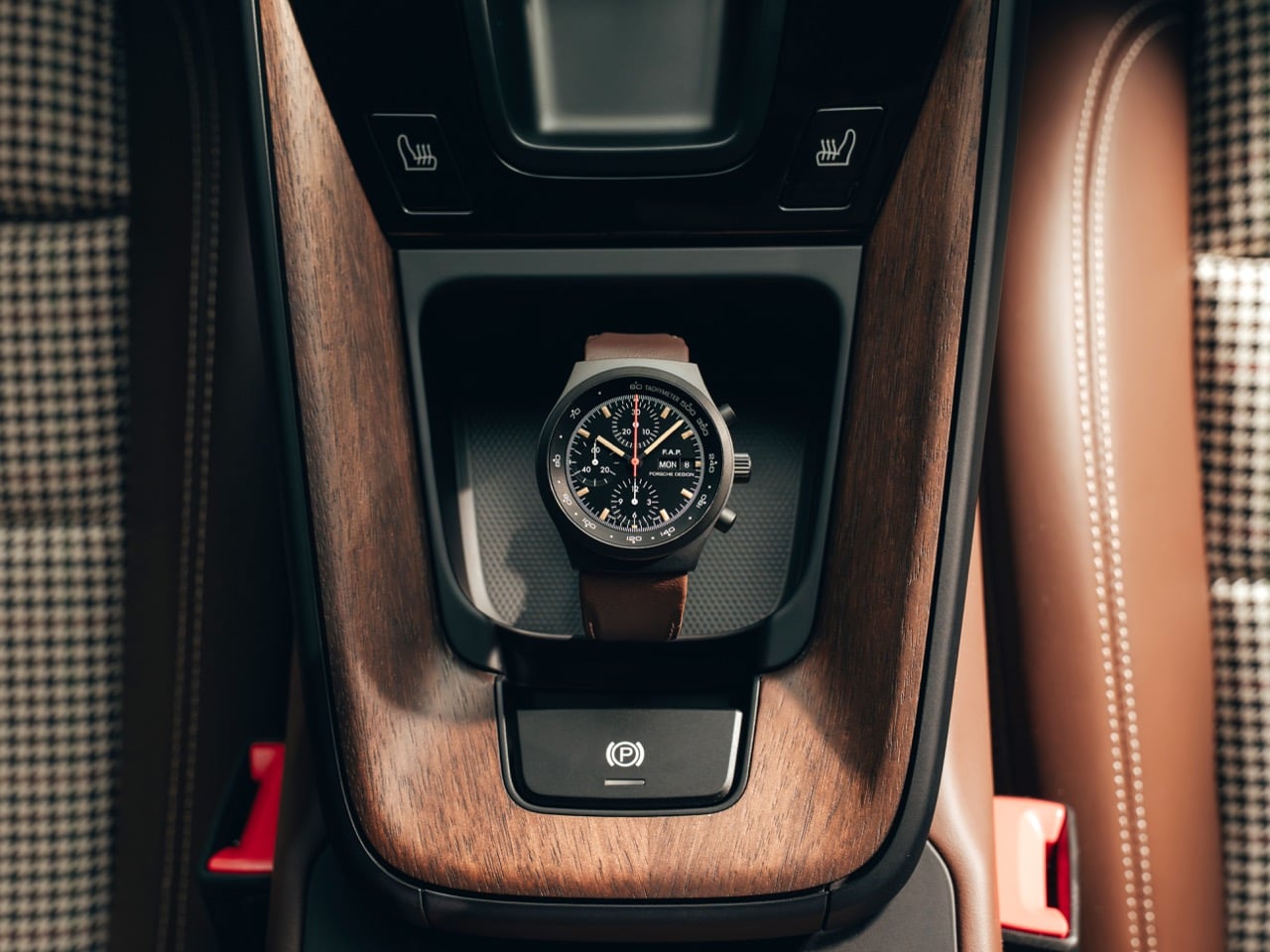
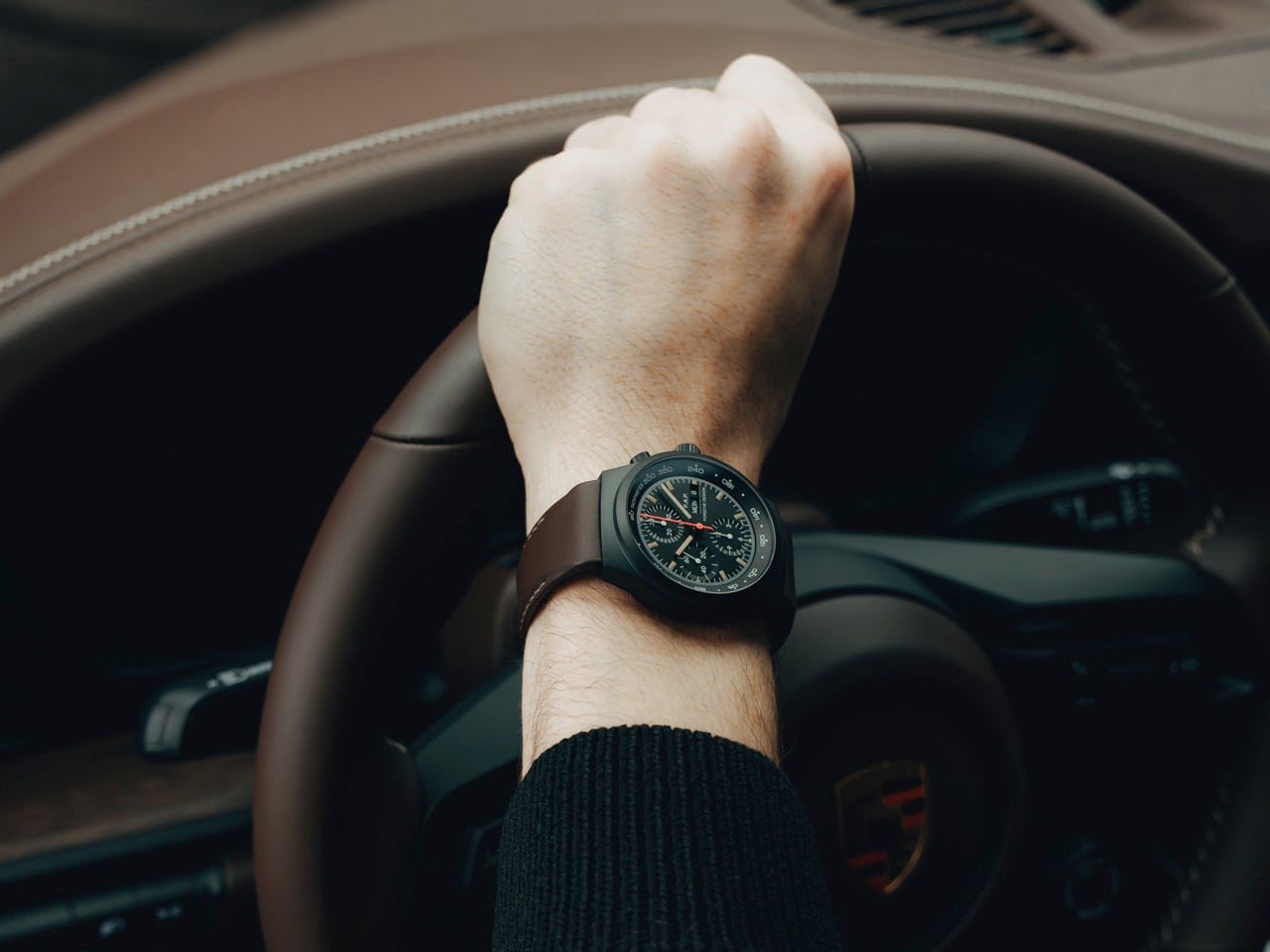
A large micro-LED display mounts high in the driver’s sightline, projecting vehicle data, navigation, and media controls in a single integrated surface. The Hypersquare sits below this display rather than in front of it, creating an unobstructed visual channel between driver and information. This layout resolves a persistent complaint about current i-Cockpit designs: the small-diameter wheel often blocks gauge visibility depending on seat position and driver height. Removing the circular wheel eliminates the occlusion problem at its geometric root.
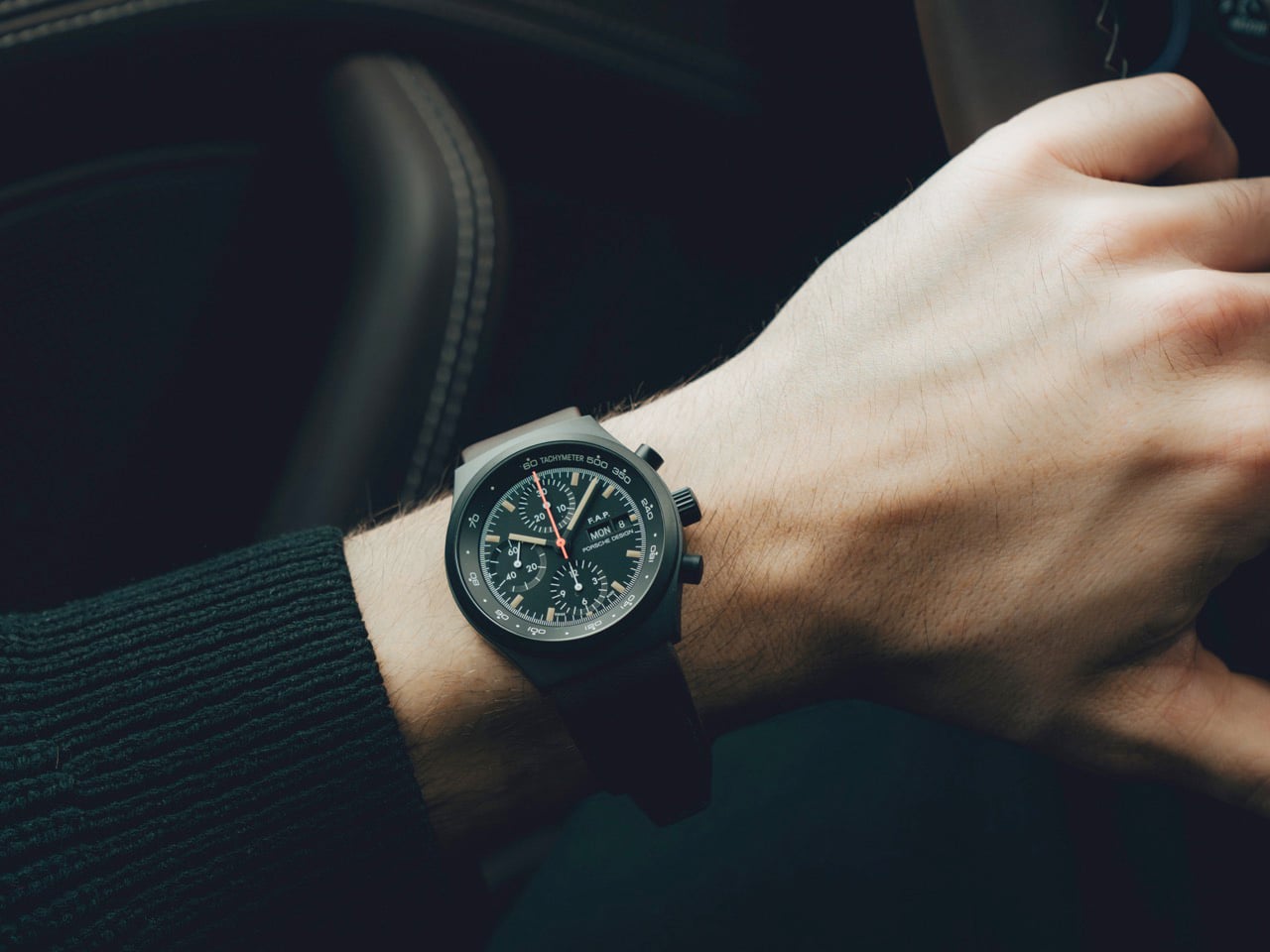
The spatial relationship establishes a clear information triangle: eyes forward to the micro-LED, hands down on the controller, peripheral awareness maintained through the uninterrupted windshield view. Traditional cockpits force constant focal shifts–gauges behind the wheel, center stack to the right, road ahead. Hypersquare’s architecture consolidates primary information into a single elevated zone while relegating physical control to a lower plane that hands find by muscle memory rather than visual search.

Haptic Design and Synthetic Feedback

Eliminating the steering column removes the tactile vocabulary that drivers have developed over lifetimes of motoring. Traditional steering transmits surface texture directly–gravel announces itself through vibration, understeer builds as resistance at the rim, grip changes register as subtle shifts in feedback weight. Hypersquare must reconstruct this language algorithmically, and the design challenge extends beyond engineering into semiotics.

Sensors embedded within the steering actuator monitor forces acting on the wheel carriers. Those measurements get processed and translated into haptic vibrations through the controller itself, generating synthetic sensations designed to communicate grip levels and surface conditions. The result is road feel as interpretation rather than transmission–filtered through software calibration tables that determine what information reaches the driver’s hands and how intensely.

Physical feedback carries meaning accumulated through decades of driving experience. Synthetic feedback must either replicate those meanings faithfully or establish new ones that drivers can learn to interpret reliably. The haptic motors in Hypersquare’s corner pods bear responsibility for an entirely new tactile language–one that cannot simply copy mechanical sensation but must create communicative patterns that drivers internalize as meaningful.

This algorithmic mediation opens design possibilities unavailable in mechanical systems. Feedback intensity could adapt to driving mode–sharper haptic response in sport settings, dampened sensation during highway cruising. Surface texture translation could emphasize safety-critical information while filtering irrelevant noise. The controller becomes a tunable communication channel rather than a fixed mechanical linkage.

Material Expression and Ergonomic Form

The controller’s rim material carries significant design weight for an object intended for continuous palm contact during driving. Early prototypes suggest soft-touch surfaces with subtle texturing–enough grip to prevent slip without aggressive bite that would fatigue hands over extended sessions. The thumb pods feature slightly different tactile characteristics, likely to help fingers locate controls through touch alone without requiring visual confirmation.

Color and finish details remain largely undisclosed, though concept versions have appeared in dark matte treatments that recede visually against interior surfaces. This restraint makes sense: the form itself already commands substantial attention. Adding high-contrast finishes or decorative elements would risk visual overload in an already unconventional interface. The material palette must also accommodate significant electronic payload–touch sensors, haptic actuators, processing electronics, and wireless connectivity integrated into the frame add mass and thermal load that surface materials must manage invisibly.

Weight distribution presents unique challenges that circular wheels avoid entirely. Traditional steering balances around a central hub; Hypersquare must achieve equilibrium despite rectangular geometry and corner-mounted pods containing varying electronic payloads. Getting this balance right represents invisible design work–the kind of engineering refinement that users never consciously notice but would immediately sense if absent. A controller that pulls slightly leftward or resists rotation unevenly would undermine the entire interface concept regardless of how striking the visual design appears.

Design Significance

Hypersquare represents the most aggressive formal departure from circular steering wheels in automotive history. The visual drama of rectangular geometry, the integration of touch controls into the primary steering interface, and the reconstruction of road feel through algorithmic haptics combine into a coherent design proposition that either anticipates the future of driving interfaces or stands as ambitious experiment.

The interface succeeds as object design independent of its functional performance. The proportions feel considered, the material choices communicate appropriate restraint, and the integration of control pods demonstrates thoughtful human factors work. Whether drivers ultimately embrace or reject the interaction model, the physical artifact itself reflects serious design attention applied to a problem space that has resisted formal innovation for over a century.

The post Peugeot’s Hypersquare Replaces Two Centuries of Circular Logic with a Rectangular Controller first appeared on Yanko Design.