
Lamine Yamal shares pictures teasing the new Beats headphones on the way
The Spanish soccer player posted a bunch of images featuring the mystery product.
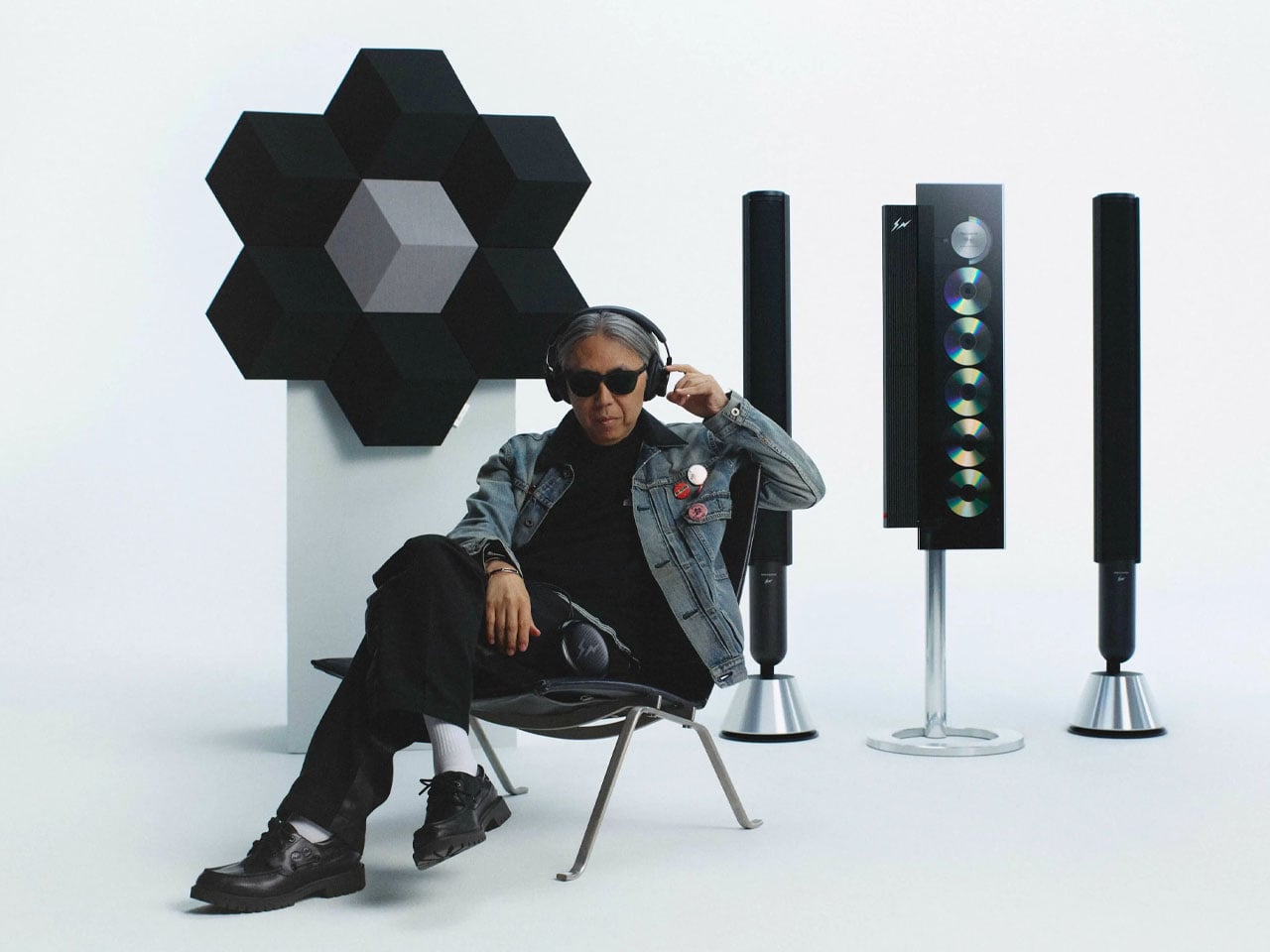
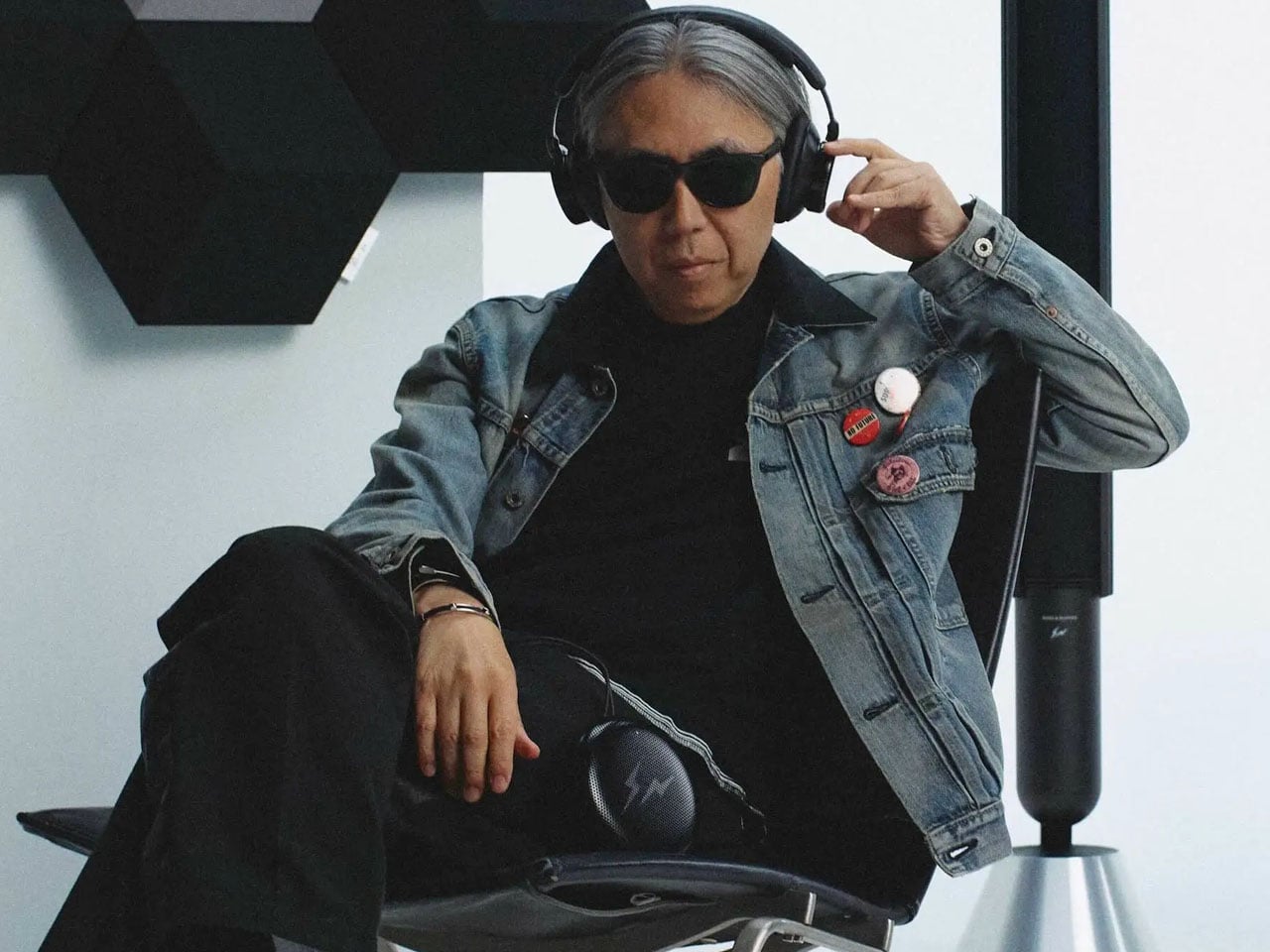
Hiroshi Fujiwara has had his influence stamped in multifaceted spheres – Carrera Chronograph x Fragment Limited Edition and the MC20 Cielo Fuoriserie are some impressive examples we came across. The streetwear legend has now teamed up with audio pioneers Bang and Olufsen for a collection that is destined for a minimalist yet classy living room setup.
The designer has long been fascinated by B&O and has desired to collaborate with the high-end Danish audio brand someday. While Hiroshi had installed their Beocenter 2300 integrated sound system at home in 1991, it actually took 35 long years to work on a project with them. That moment is right now, as Hiroshi (under his design studio Fragment Design) has worked on four B&O masterpieces to give them the black finish only achievable by hand.
Designer: Hiroshi Fujiwara x Bang & Olufsen

The famed collection is slated for debut today, with it being shown off until next week inside the Isetan Department Store in Shinjuku, Tokyo. Thereafter, it’ll be rolled out across Japan from 27 May for display, before eventually being released on 3 June globally and in stores for eager buyers.
Instead of working on a completely new model for the collaborative, the consensus was settled on reworking the Beoplay H100 headphones, Beosound A1 portable speaker, Beosound Shape speaker, and Beosystem 9000c triple pillar CD system. These signature B&O products are slapped with the designer’s signature monochrome aesthetic. Of course, B&O’s artisanal skills come into play as the team of designers lends these brand’s classics anodized, hand-polished finish for that perfect liquid-like high gloss finish.
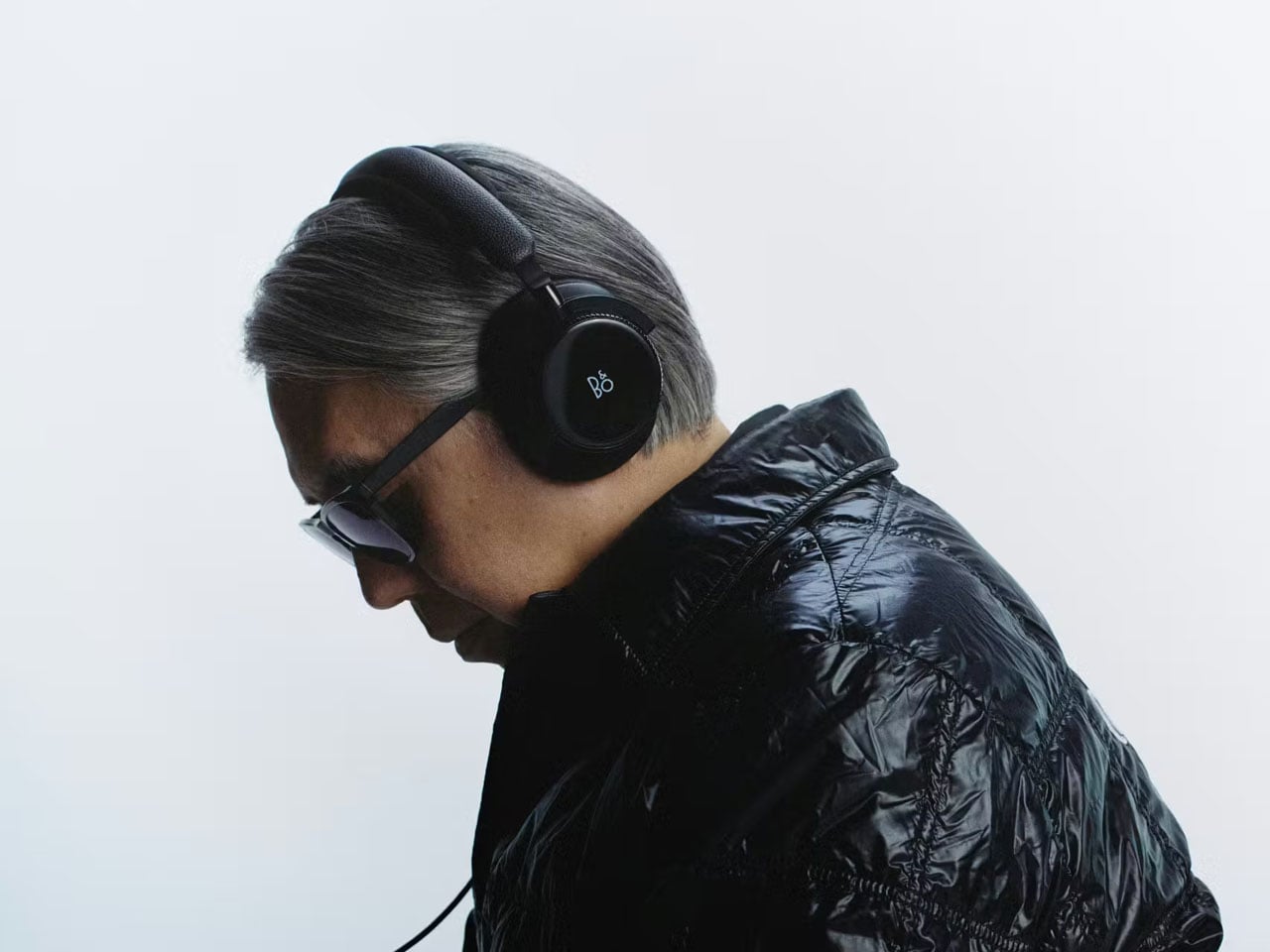
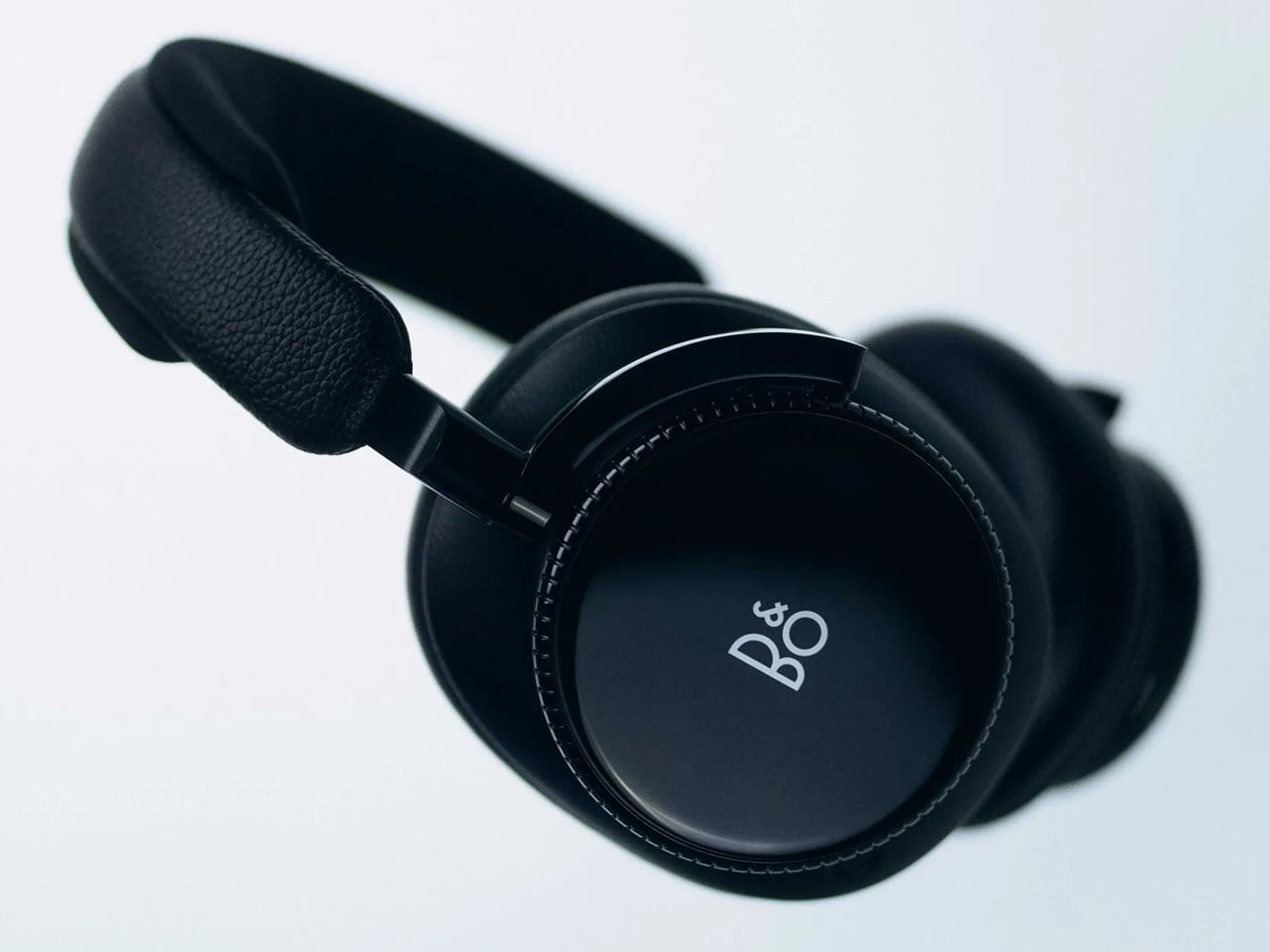
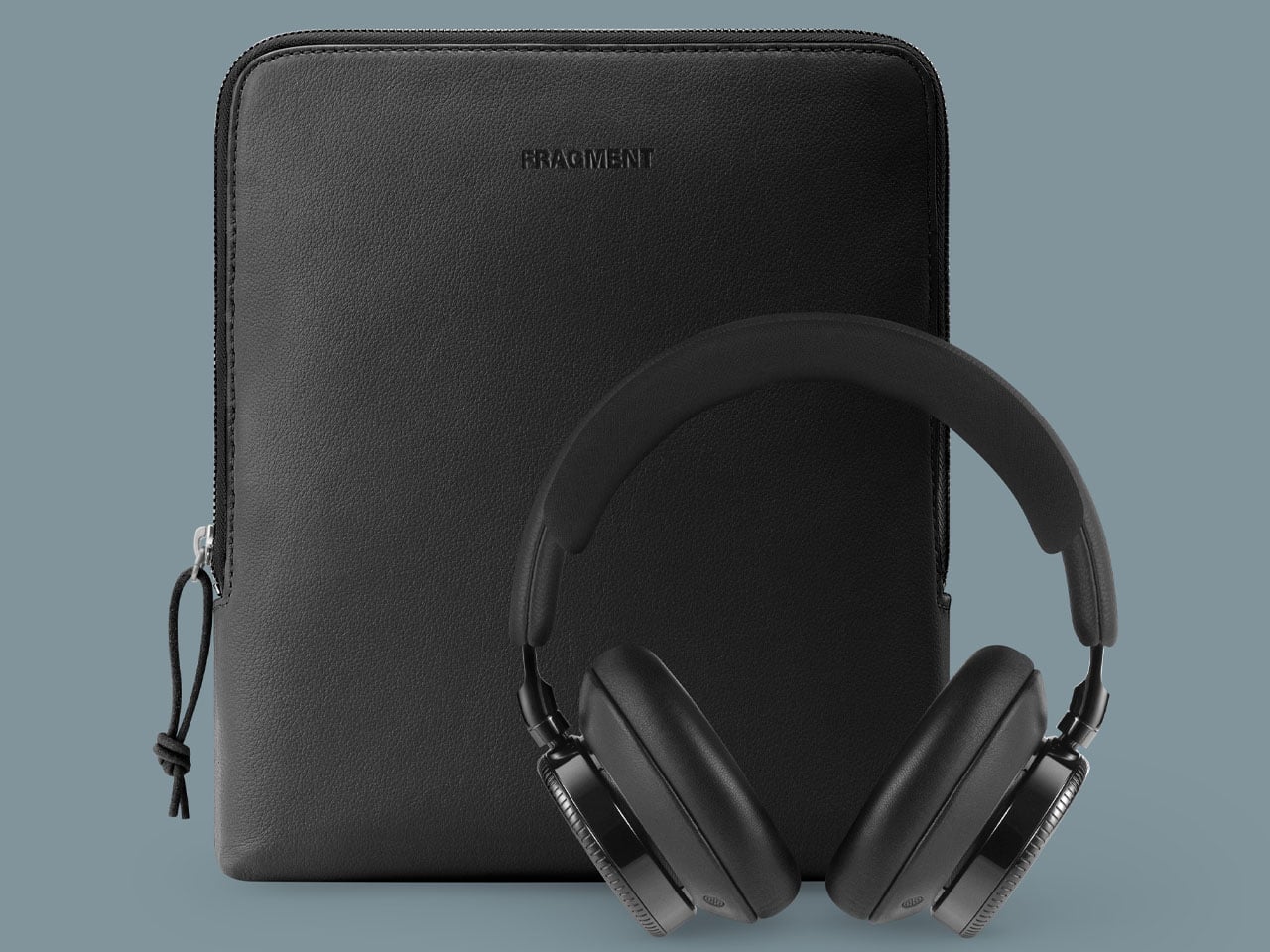
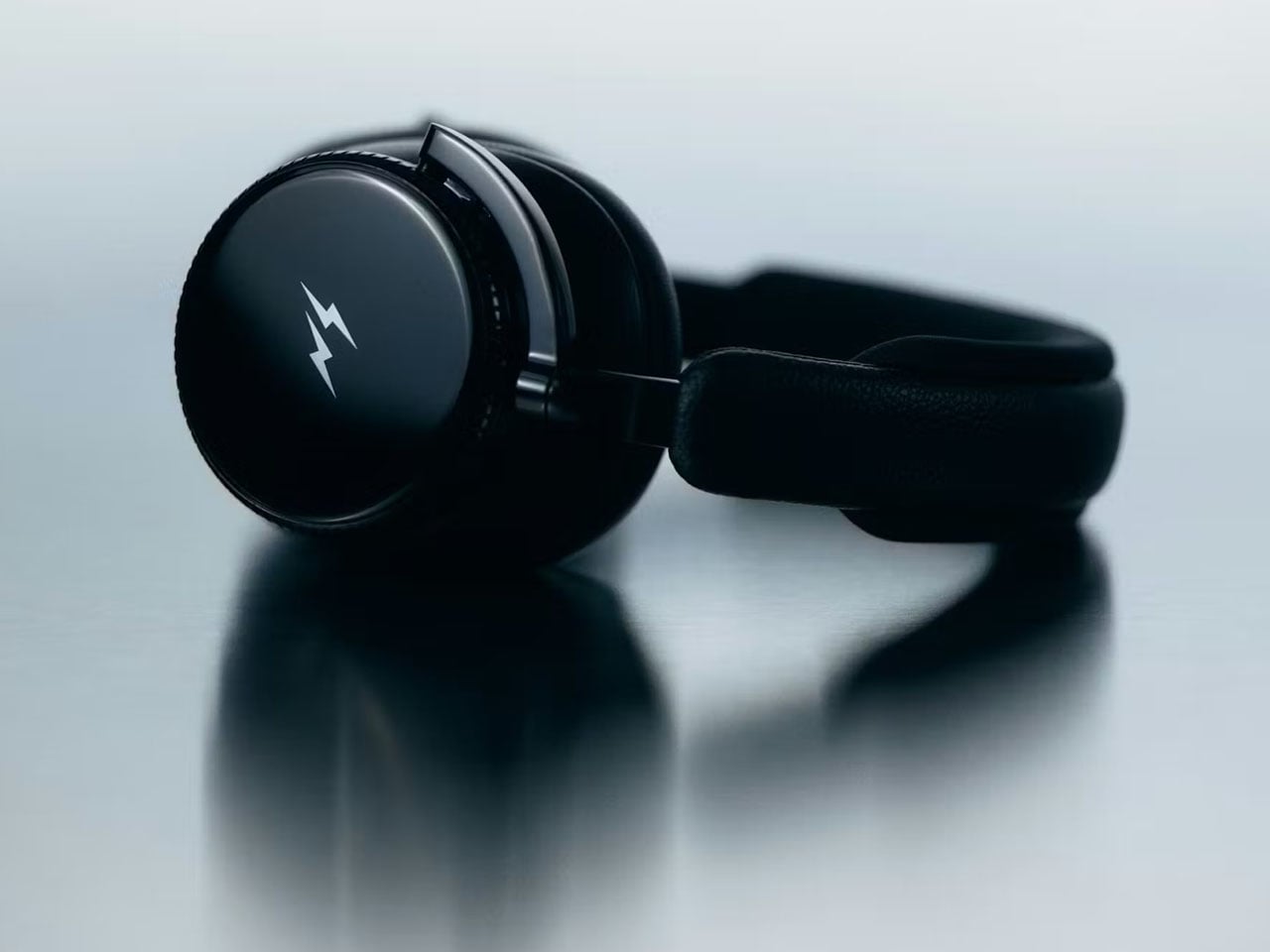
It doesn’t get any darker than the Beoplay H100 Fragment Edition headphones, as they exude pure class in gloss black anodized skin. This finish is complemented by the black leather headband and cushions for all-day wear comfort. Contrasting the dark is the white Fragment Studio and B&O logos on the outside of each of the earcups. The over-the-ear headphones are priced at a steep $2,400, but that is expected when two big names collaborate.
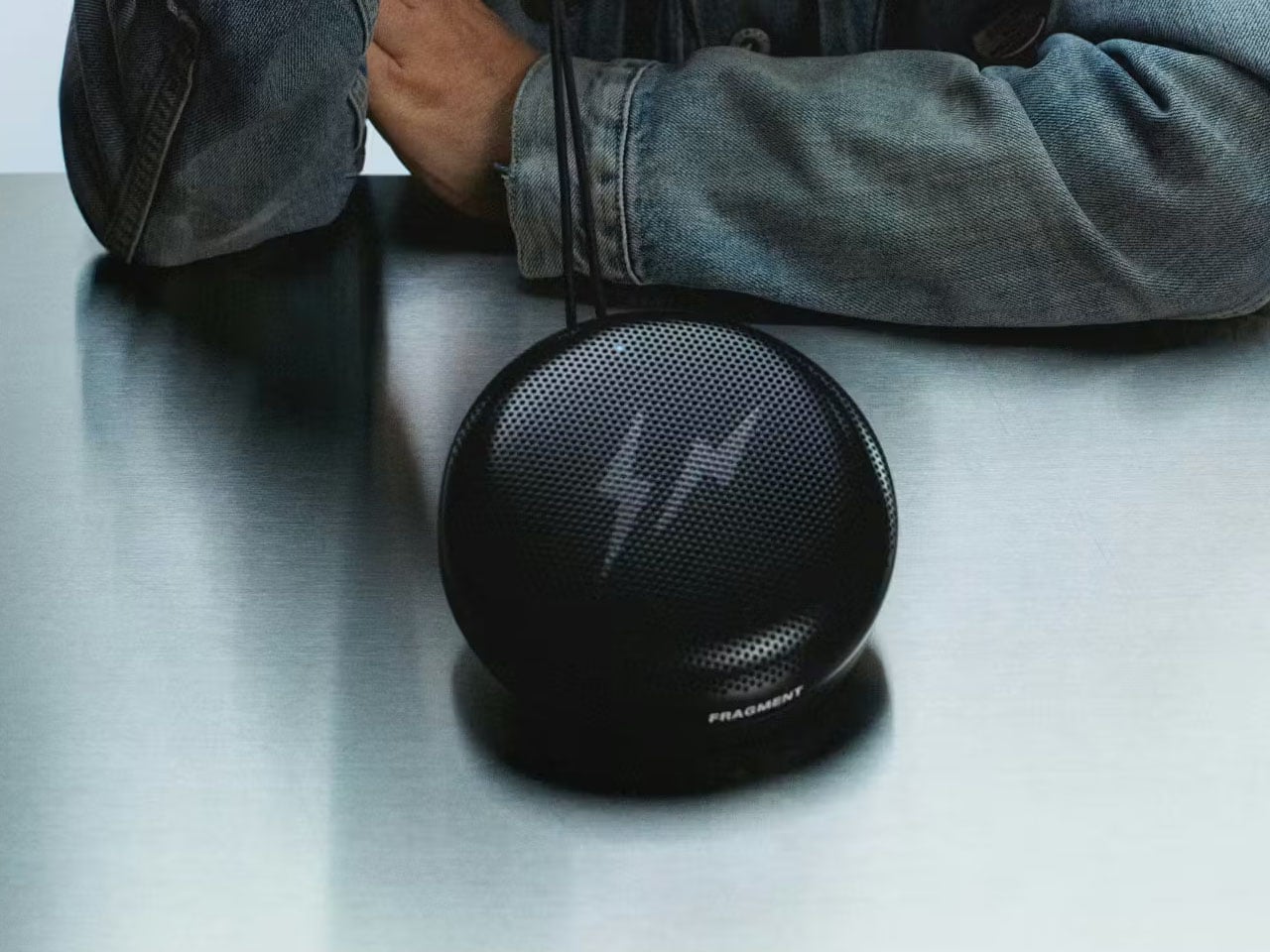
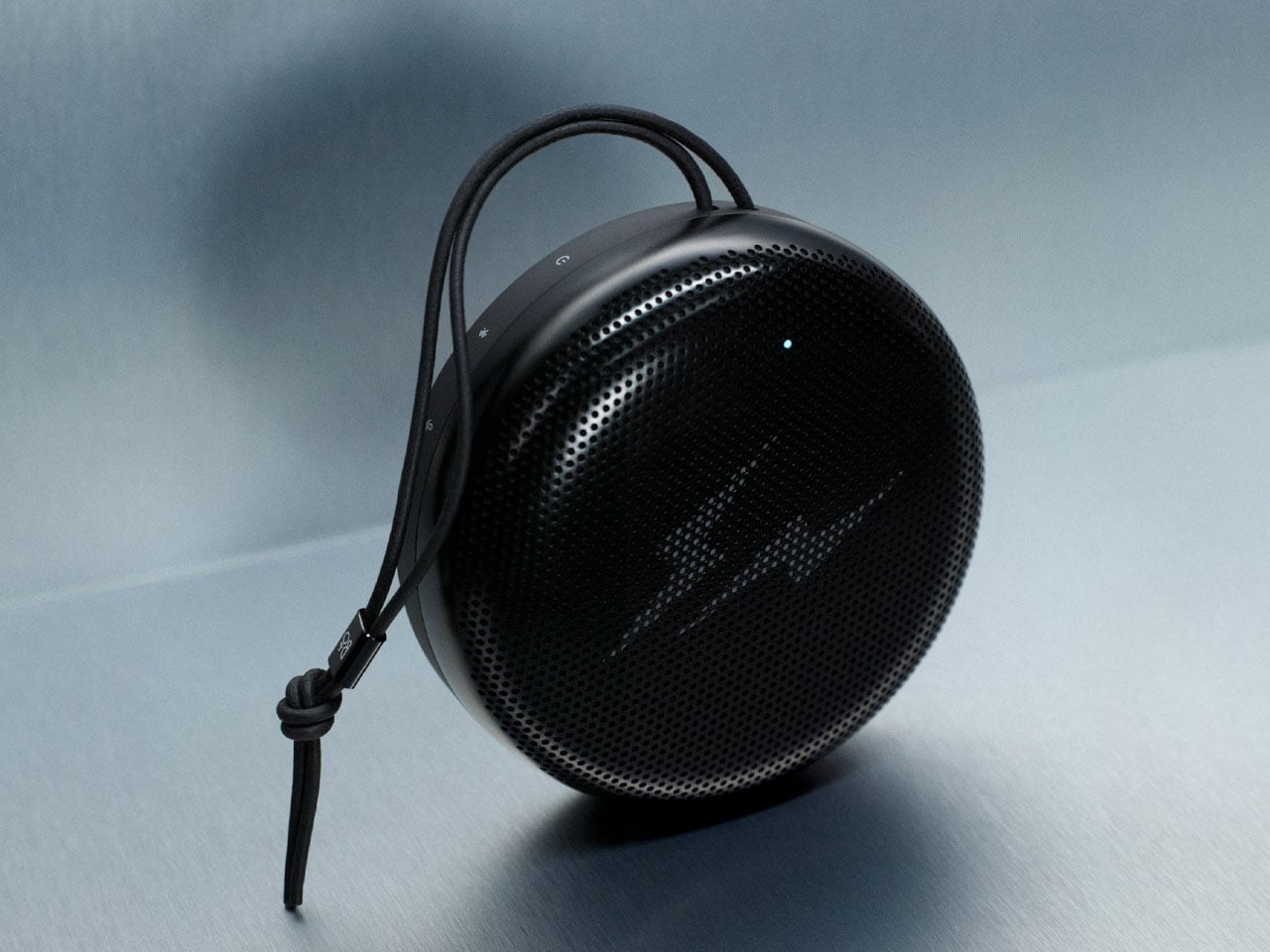
Then there is the more sober Beosound A1 3rd gen portable Bluetooth speaker priced at $475. Predictably, this one too has the high-gloss finish and the brand’s double lightning logo etched under the grille. According to Kresten Bjørn Krab-Bjerre, Bang & Olufsen’s Senior Director of Design, the “artisanal anodization and polishing process” has been implemented for the first time on their portable collection.
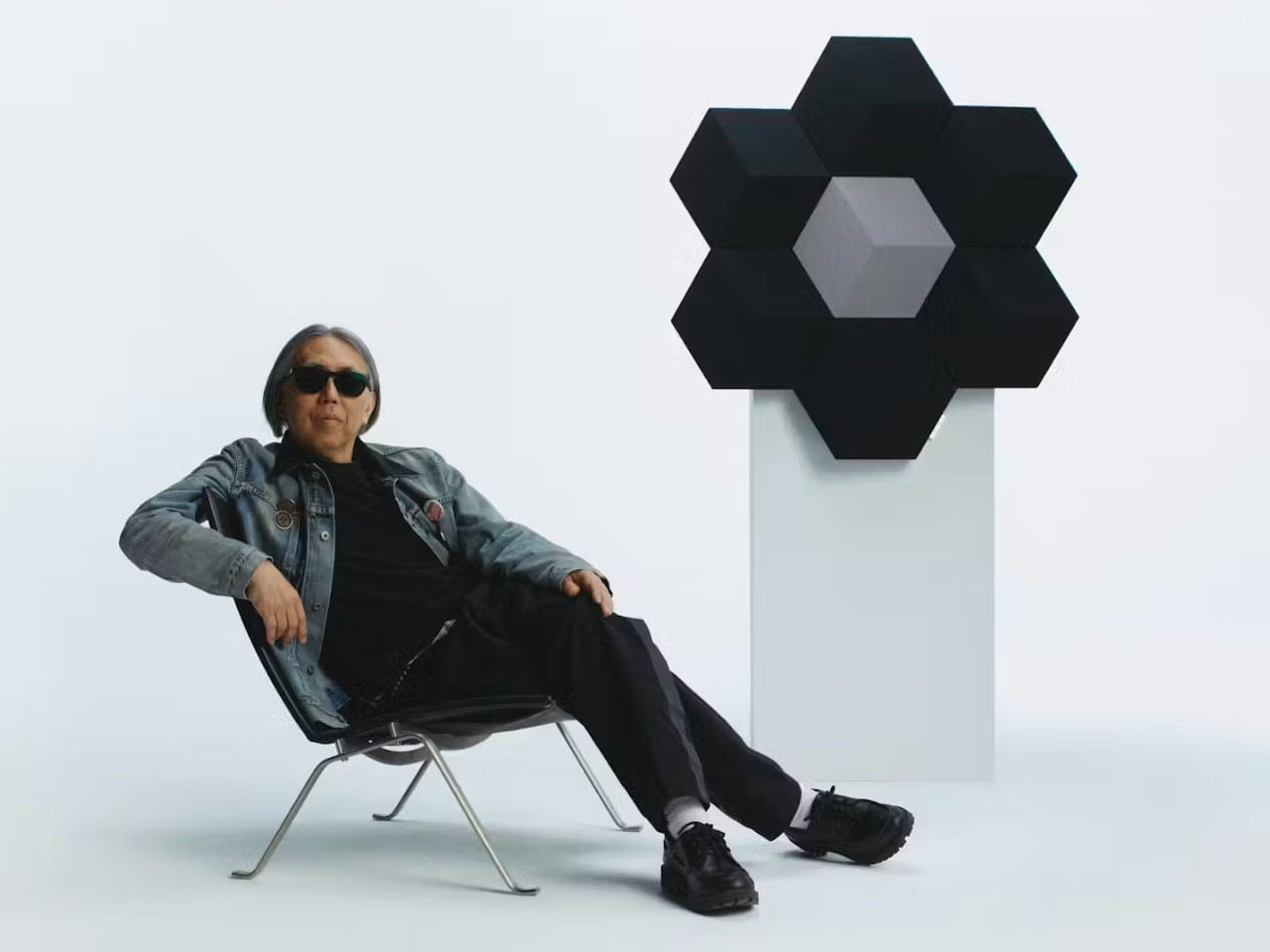
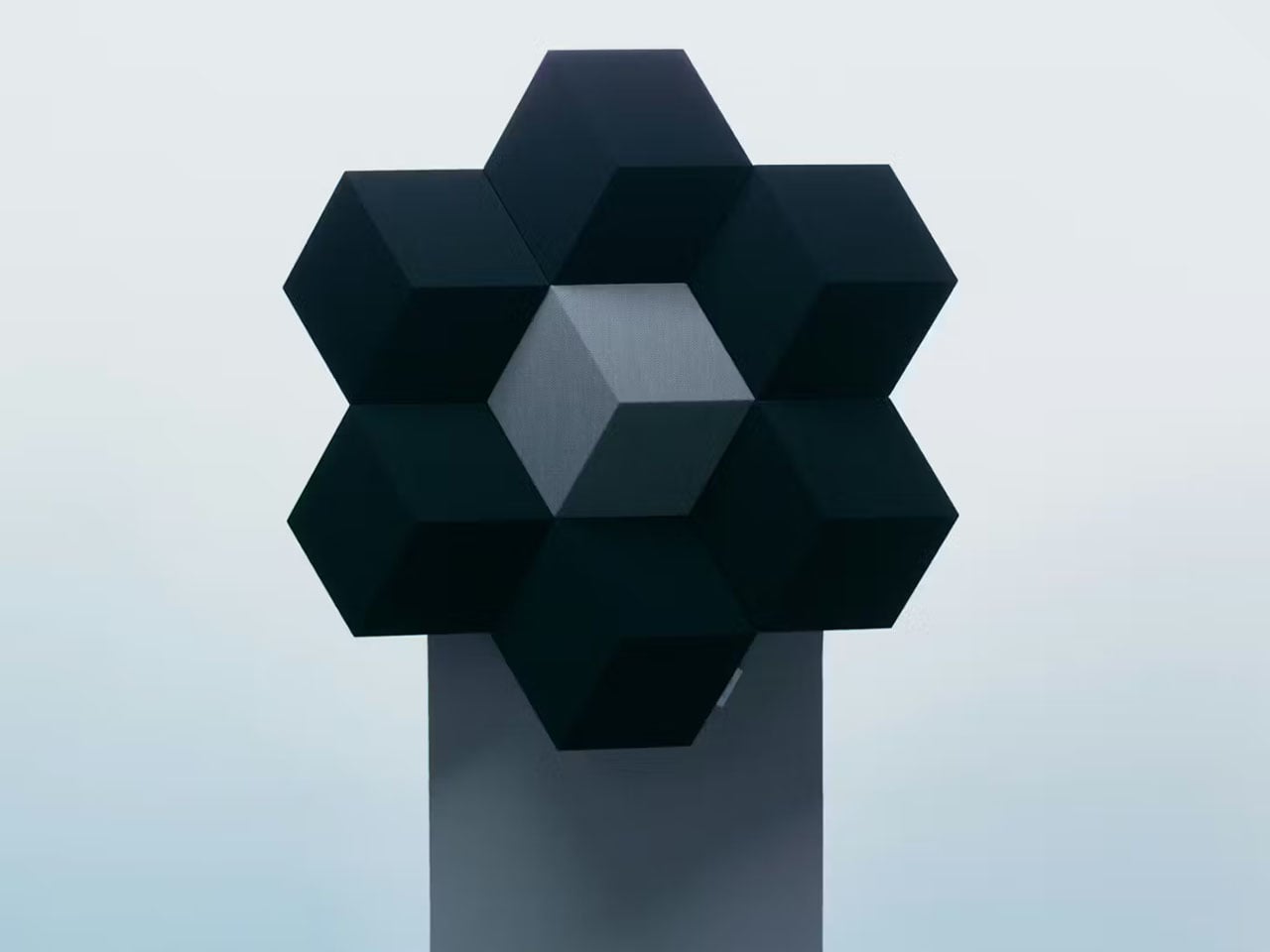
With these two creations, you begin to fathom the gravity of this collaboration. The Beosound Shape is a wall-mounted speaker system that combines flower-shaped driving units to bring sublime sound to the living room. The modular audio system gets the monochrome fabric treatment for the six surrounding petals, and the inner gray unit completes the aesthetic look. Priced at $7,100, this beautiful audio system is one for a minimalist living room setting. Apparently, Fujiwara headed straight to his hotel room after seeing the original Shape speakers and sketched the seven-title flower configuration for his version.
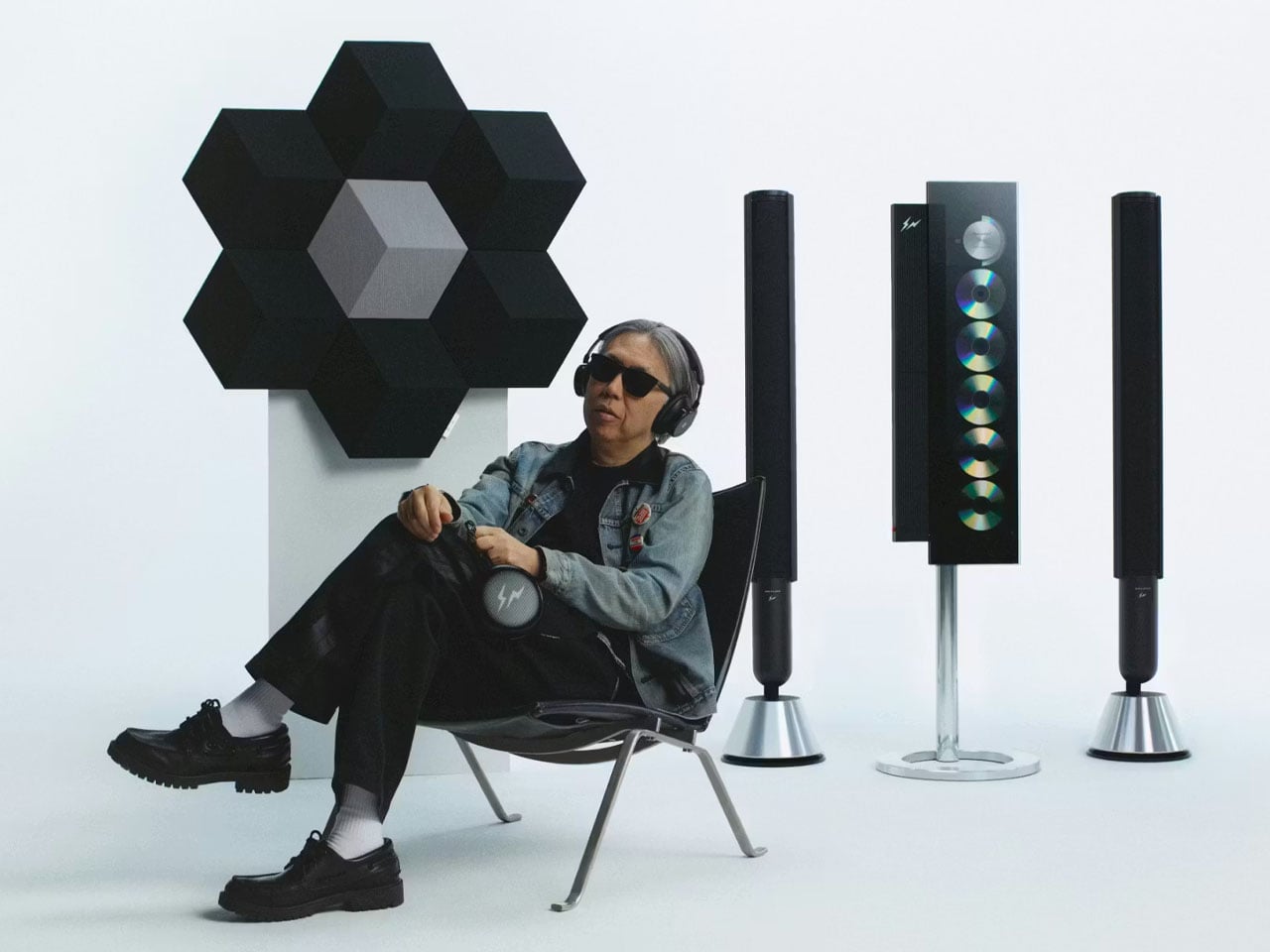
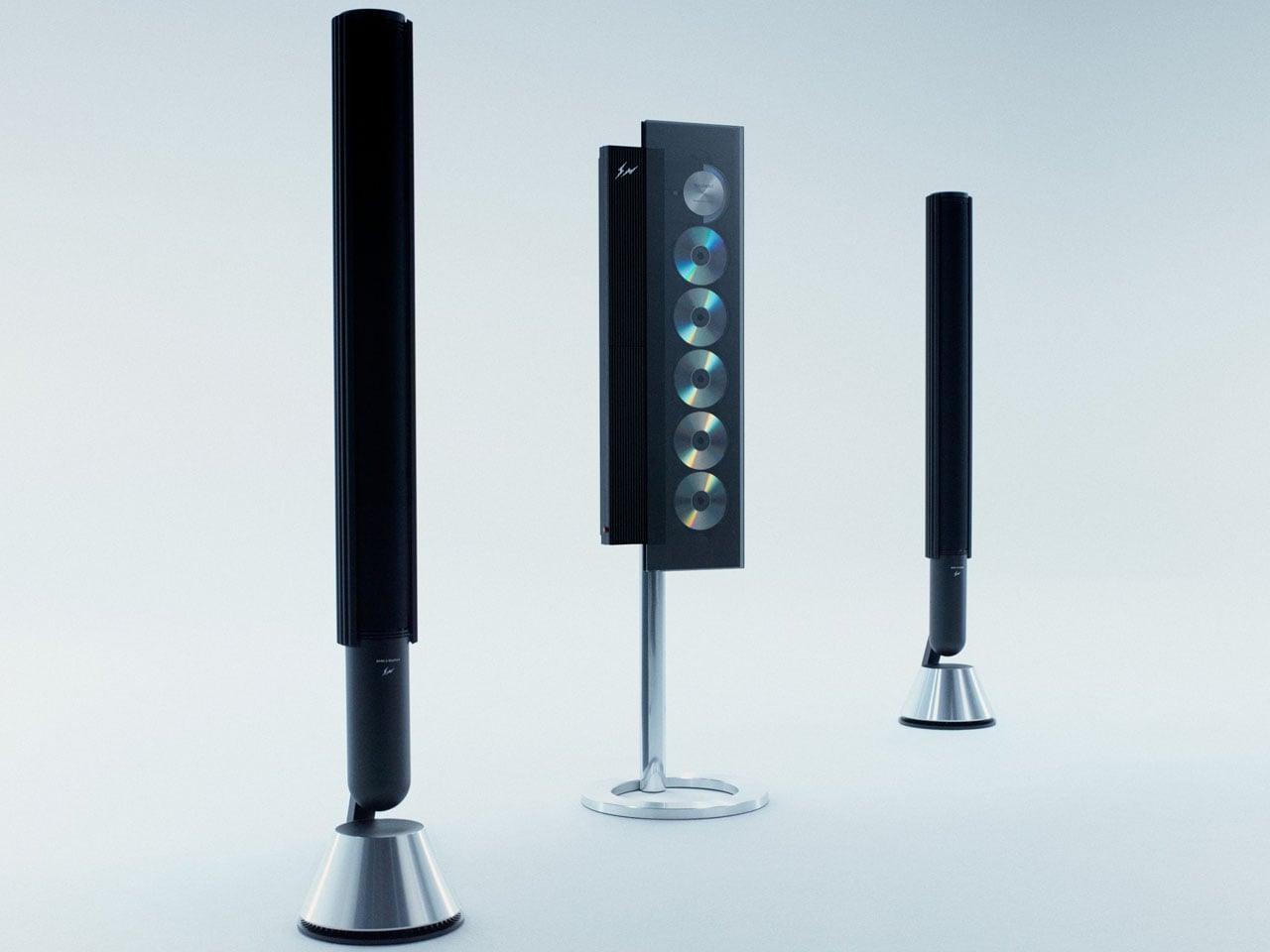
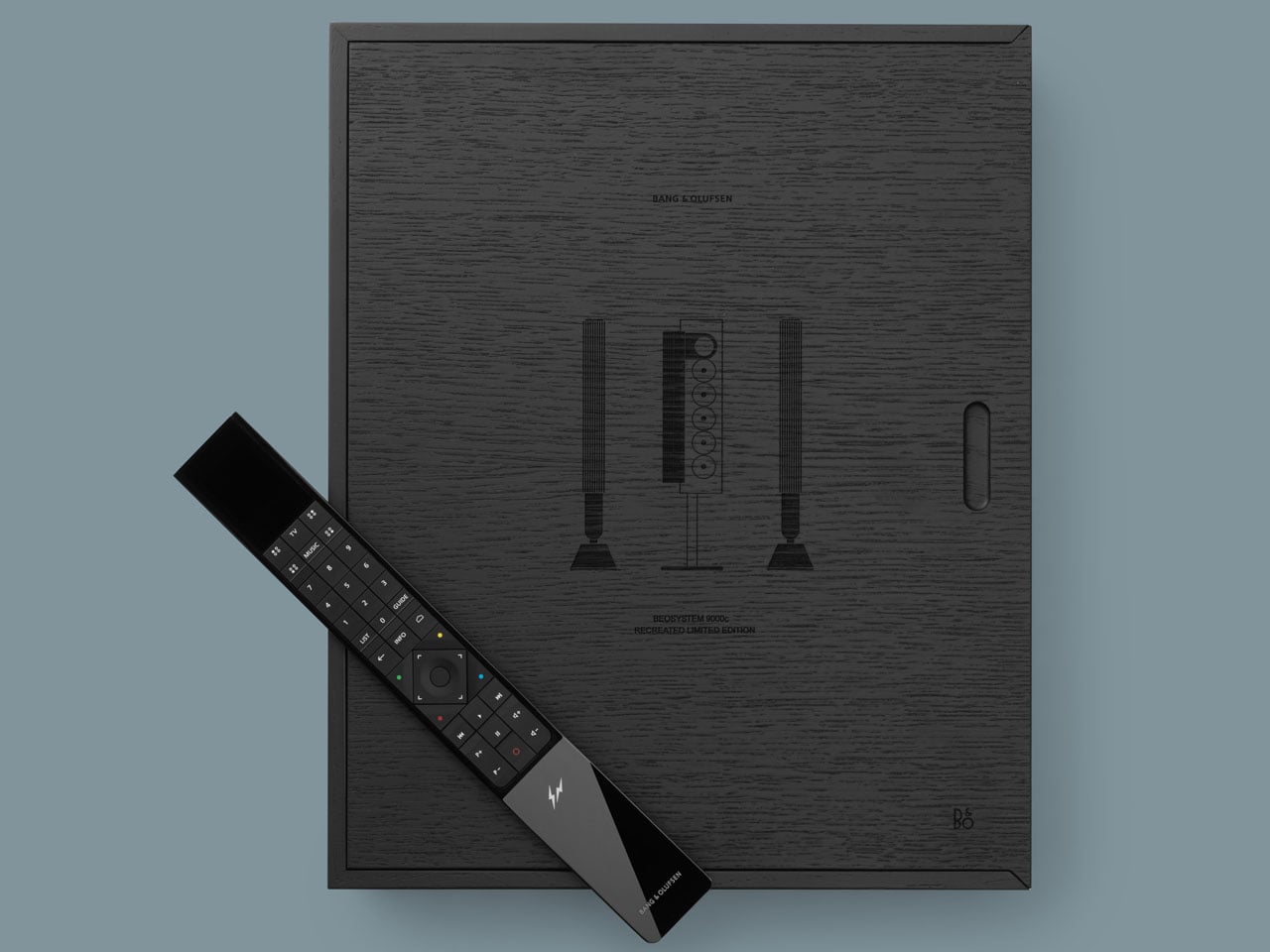
The collector’s piece of the line-up is the Beosystem 9000c Fragment Edition, which defines the amount of skill and expertise put into making it. This is a made-to-order setup that costs a mind-numbing $69,650 and is Japan-exclusive only. It’s in itself a collection as it has the dedicated CD system, Beolab 28 loudspeakers, and the Beoremote One two-way remote. The six-disc 90s CD player is famed for its automatic CD swapping mechanism once the playback is finished on one disc.
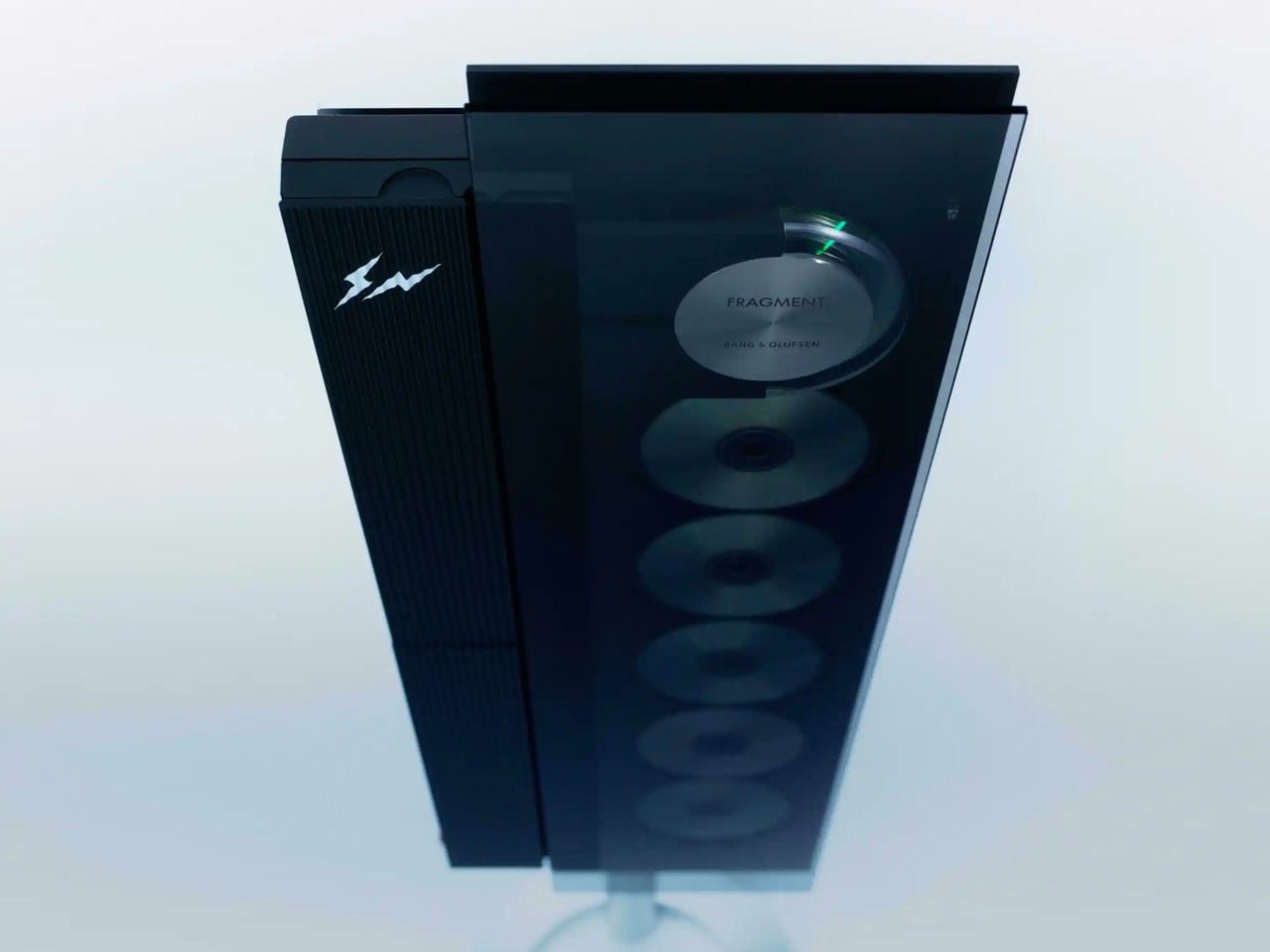
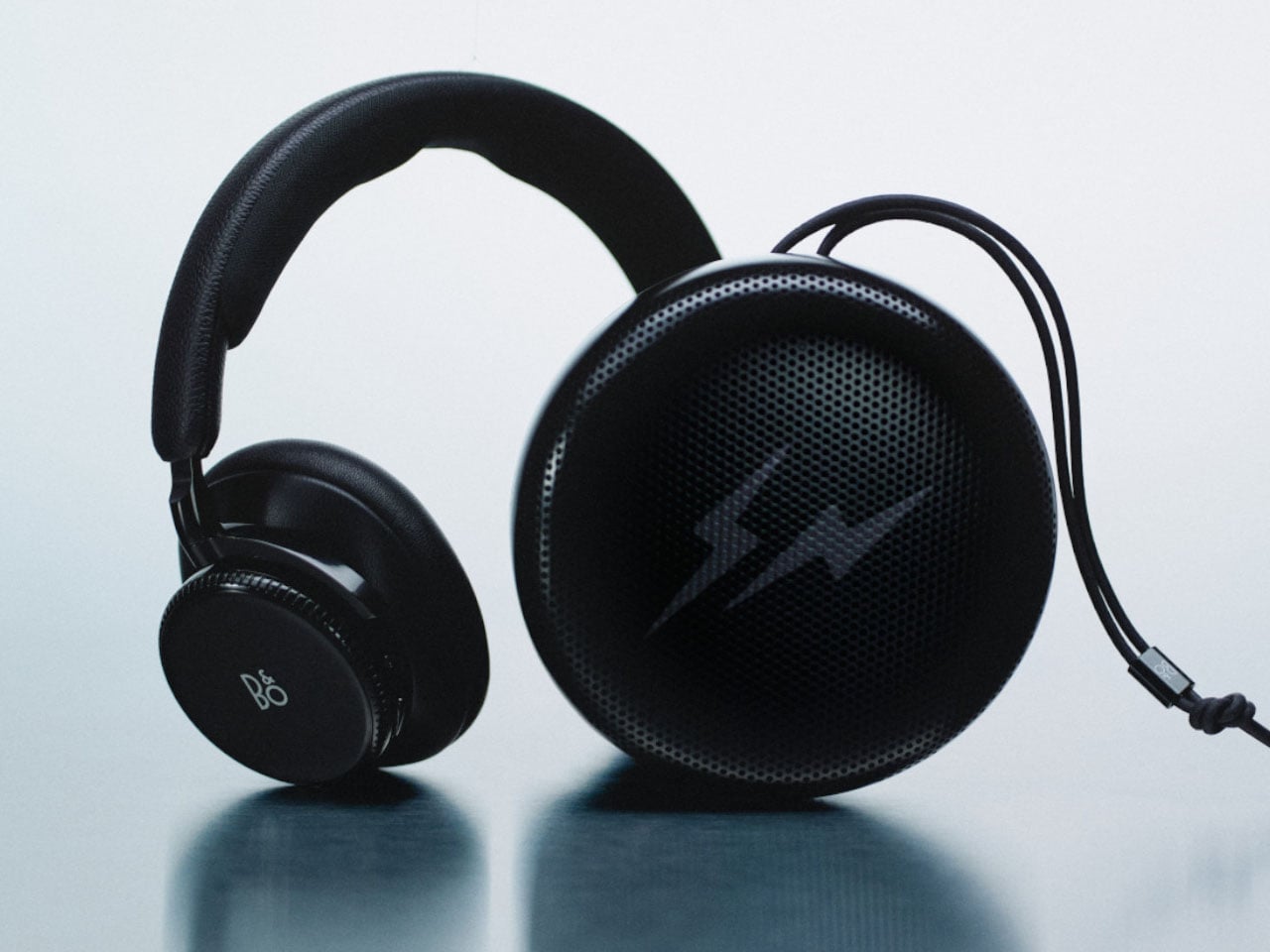
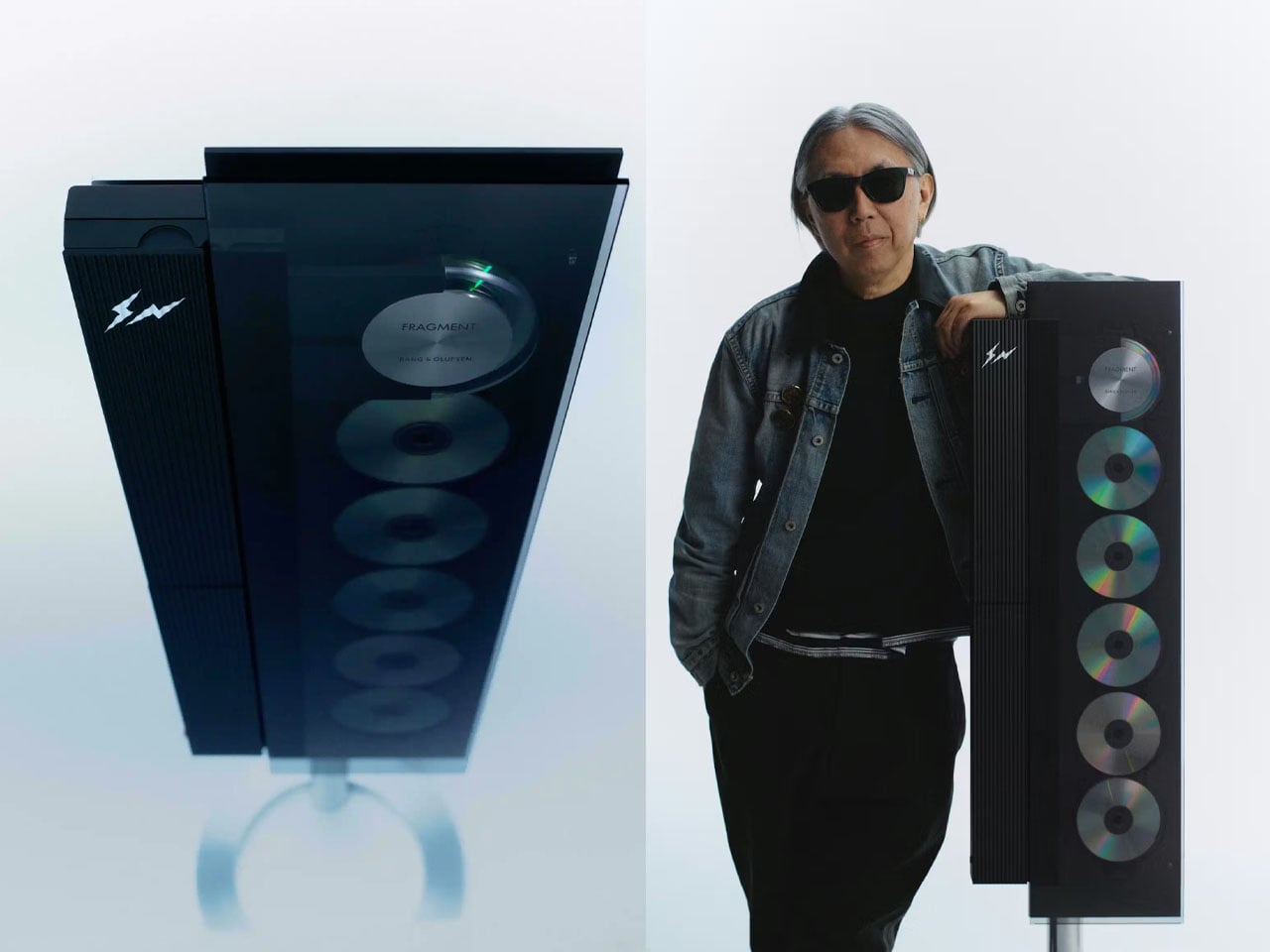
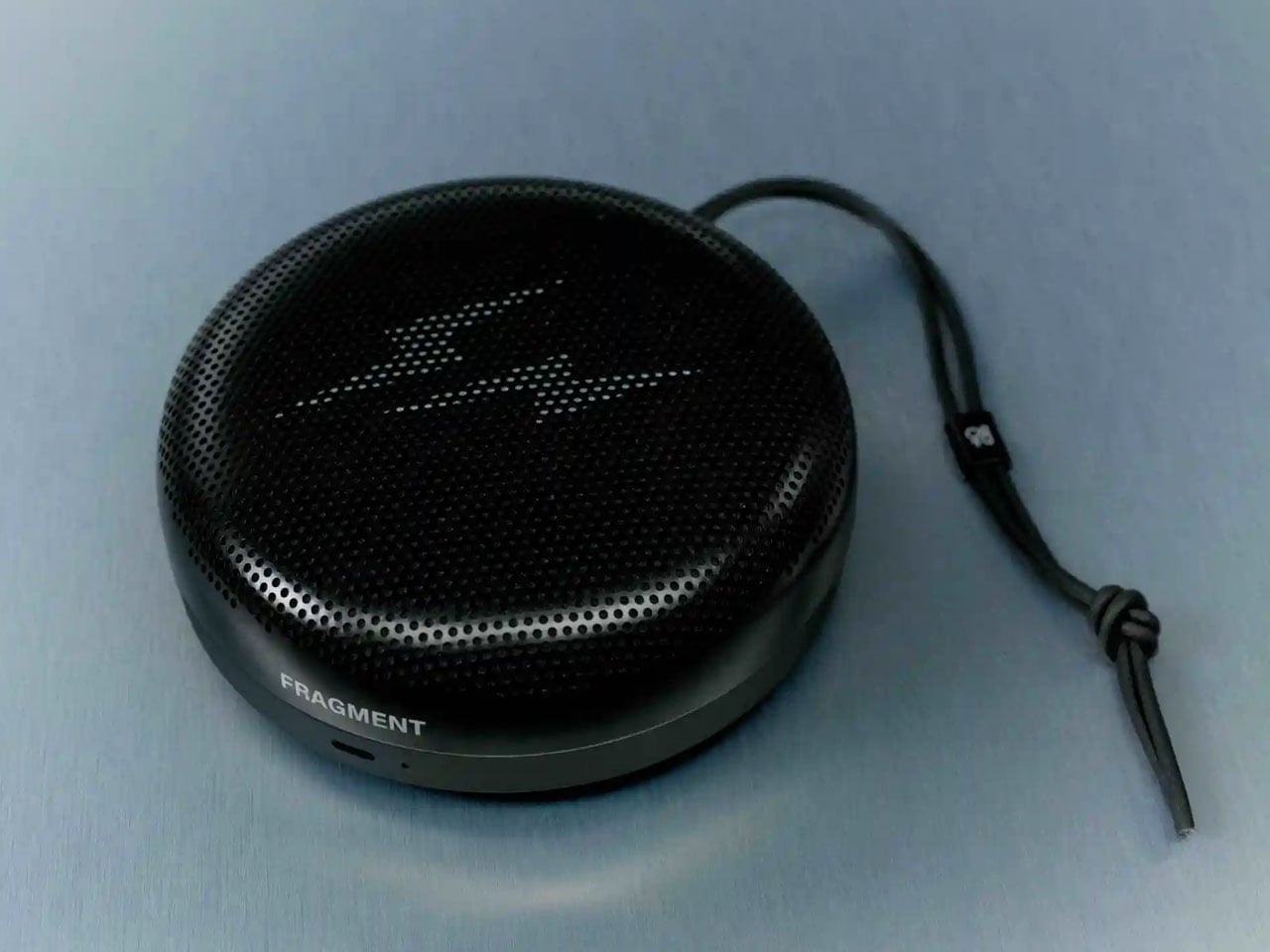
The post Hiroshi Fujiwara reinterprets Bang & Olufsen’s iconic designs to redefine living room luxury in liquid black first appeared on Yanko Design.
Hiroshi Fujiwara has had his influence stamped in multifaceted spheres – Carrera Chronograph x Fragment Limited Edition and the MC20 Cielo Fuoriserie are some impressive examples we came across. The streetwear legend has now teamed up with audio pioneers Bang and Olufsen for a collection that is destined for a minimalist yet classy living room setup.
The designer has long been fascinated by B&O and has desired to collaborate with the high-end Danish audio brand someday. While Hiroshi had installed their Beocenter 2300 integrated sound system at home in 1991, it actually took 35 long years to work on a project with them. That moment is right now, as Hiroshi (under his design studio Fragment Design) has worked on four B&O masterpieces to give them the black finish only achievable by hand.
Designer: Hiroshi Fujiwara x Bang & Olufsen
The famed collection is slated for debut today, with it being shown off until next week inside the Isetan Department Store in Shinjuku, Tokyo. Thereafter, it’ll be rolled out across Japan from 27 May for display, before eventually being released on 3 June globally and in stores for eager buyers.
Instead of working on a completely new model for the collaborative, the consensus was settled on reworking the Beoplay H100 headphones, Beosound A1 portable speaker, Beosound Shape speaker, and Beosystem 9000c triple pillar CD system. These signature B&O products are slapped with the designer’s signature monochrome aesthetic. Of course, B&O’s artisanal skills come into play as the team of designers lends these brand’s classics anodized, hand-polished finish for that perfect liquid-like high gloss finish.
It doesn’t get any darker than the Beoplay H100 Fragment Edition headphones, as they exude pure class in gloss black anodized skin. This finish is complemented by the black leather headband and cushions for all-day wear comfort. Contrasting the dark is the white Fragment Studio and B&O logos on the outside of each of the earcups. The over-the-ear headphones are priced at a steep $2,400, but that is expected when two big names collaborate.
Then there is the more sober Beosound A1 3rd gen portable Bluetooth speaker priced at $475. Predictably, this one too has the high-gloss finish and the brand’s double lightning logo etched under the grille. According to Kresten Bjørn Krab-Bjerre, Bang & Olufsen’s Senior Director of Design, the “artisanal anodization and polishing process” has been implemented for the first time on their portable collection.
With these two creations, you begin to fathom the gravity of this collaboration. The Beosound Shape is a wall-mounted speaker system that combines flower-shaped driving units to bring sublime sound to the living room. The modular audio system gets the monochrome fabric treatment for the six surrounding petals, and the inner gray unit completes the aesthetic look. Priced at $7,100, this beautiful audio system is one for a minimalist living room setting. Apparently, Fujiwara headed straight to his hotel room after seeing the original Shape speakers and sketched the seven-title flower configuration for his version.
The collector’s piece of the line-up is the Beosystem 9000c Fragment Edition, which defines the amount of skill and expertise put into making it. This is a made-to-order setup that costs a mind-numbing $69,650 and is Japan-exclusive only. It’s in itself a collection as it has the dedicated CD system, Beolab 28 loudspeakers, and the Beoremote One two-way remote. The six-disc 90s CD player is famed for its automatic CD swapping mechanism once the playback is finished on one disc.
The post Hiroshi Fujiwara reinterprets Bang & Olufsen’s iconic designs to redefine living room luxury in liquid black first appeared on Yanko Design.
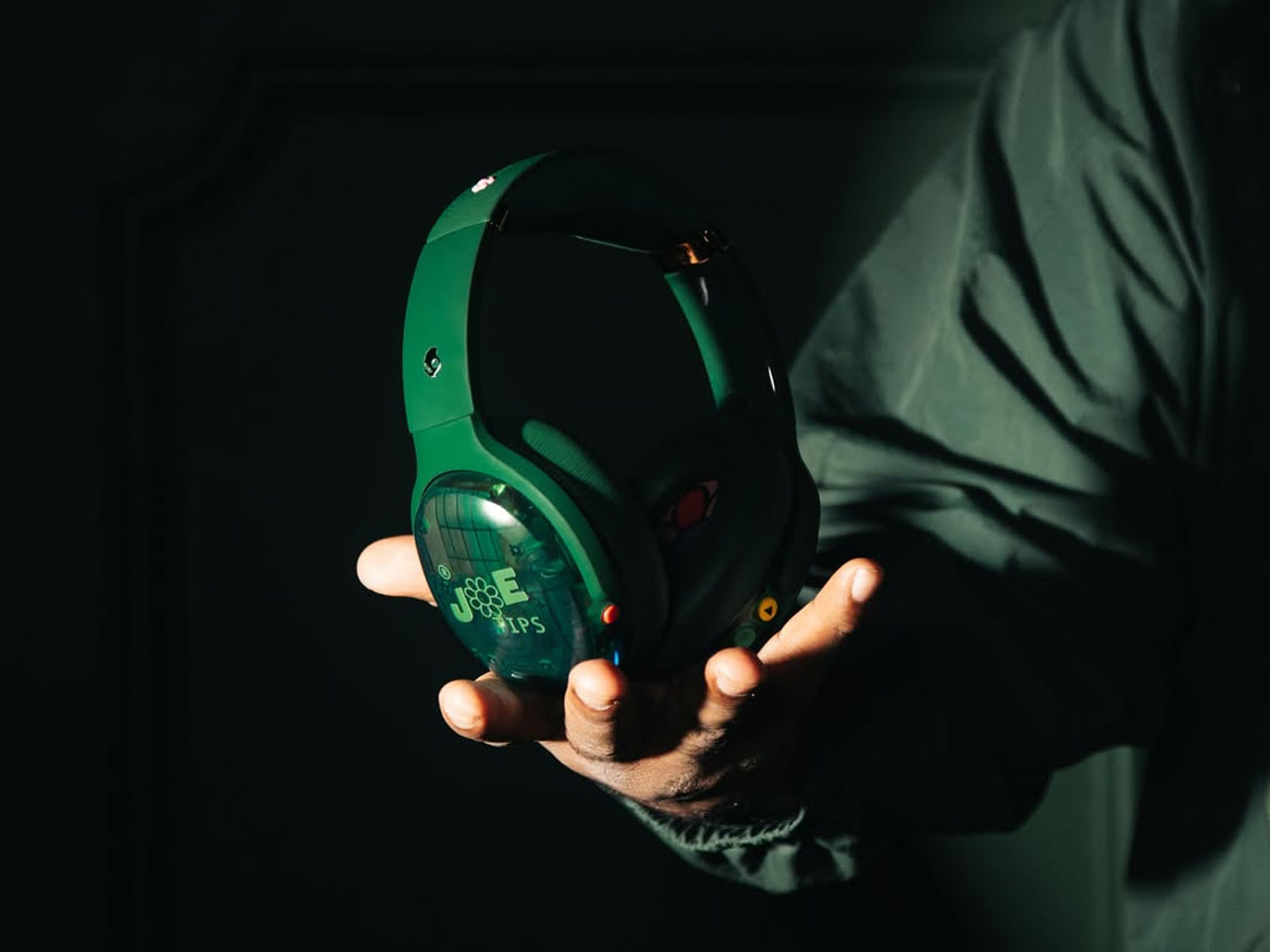
Skullcandy Crusher ANC 2 headphones are the brand’s flagship pair of cans that have good sound quality and some scope for improvement in the ANC. So what could get overhauled in the headphones market to make them stand out in a highly competitive, punishing space that rewards great design?
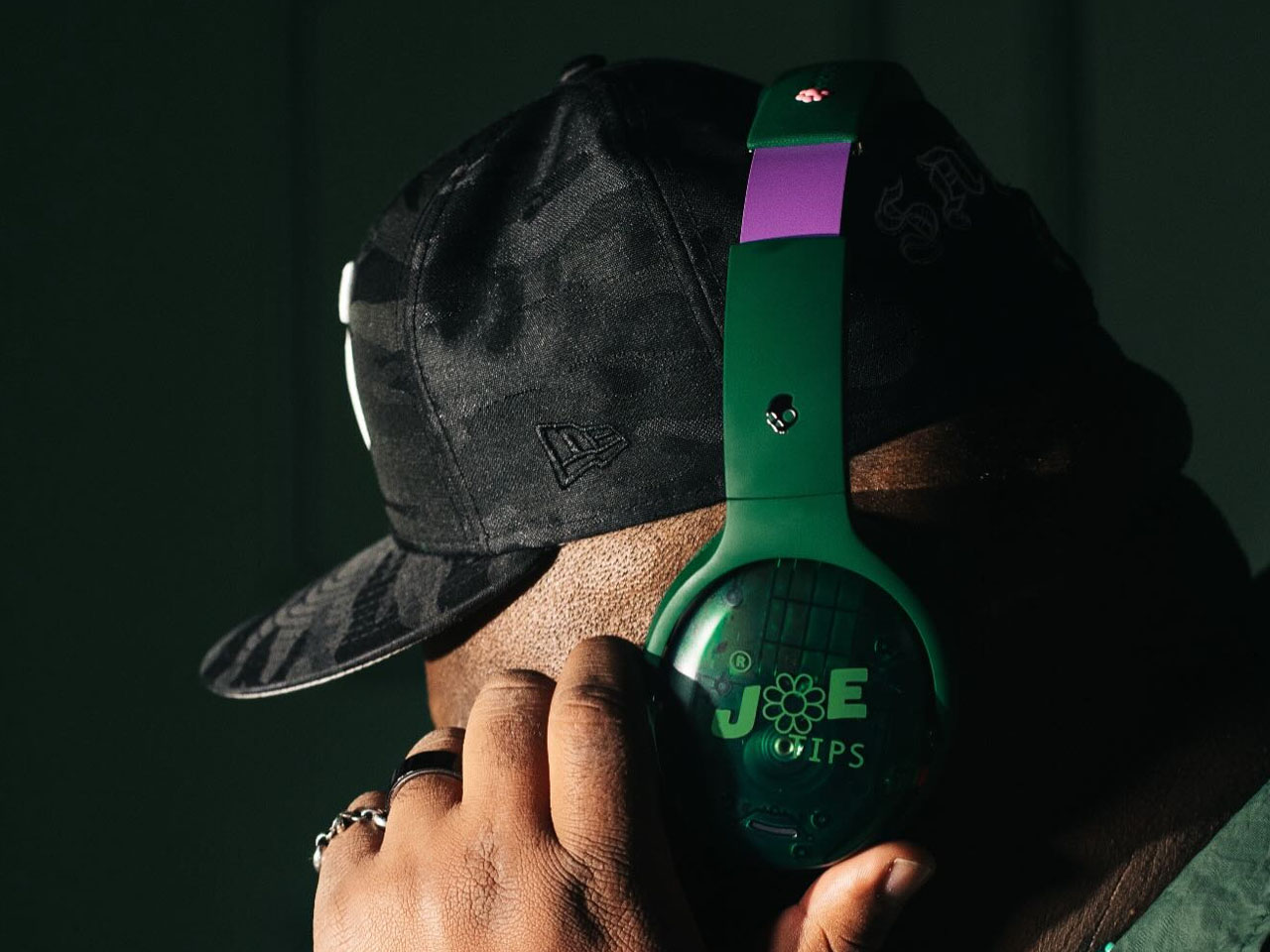
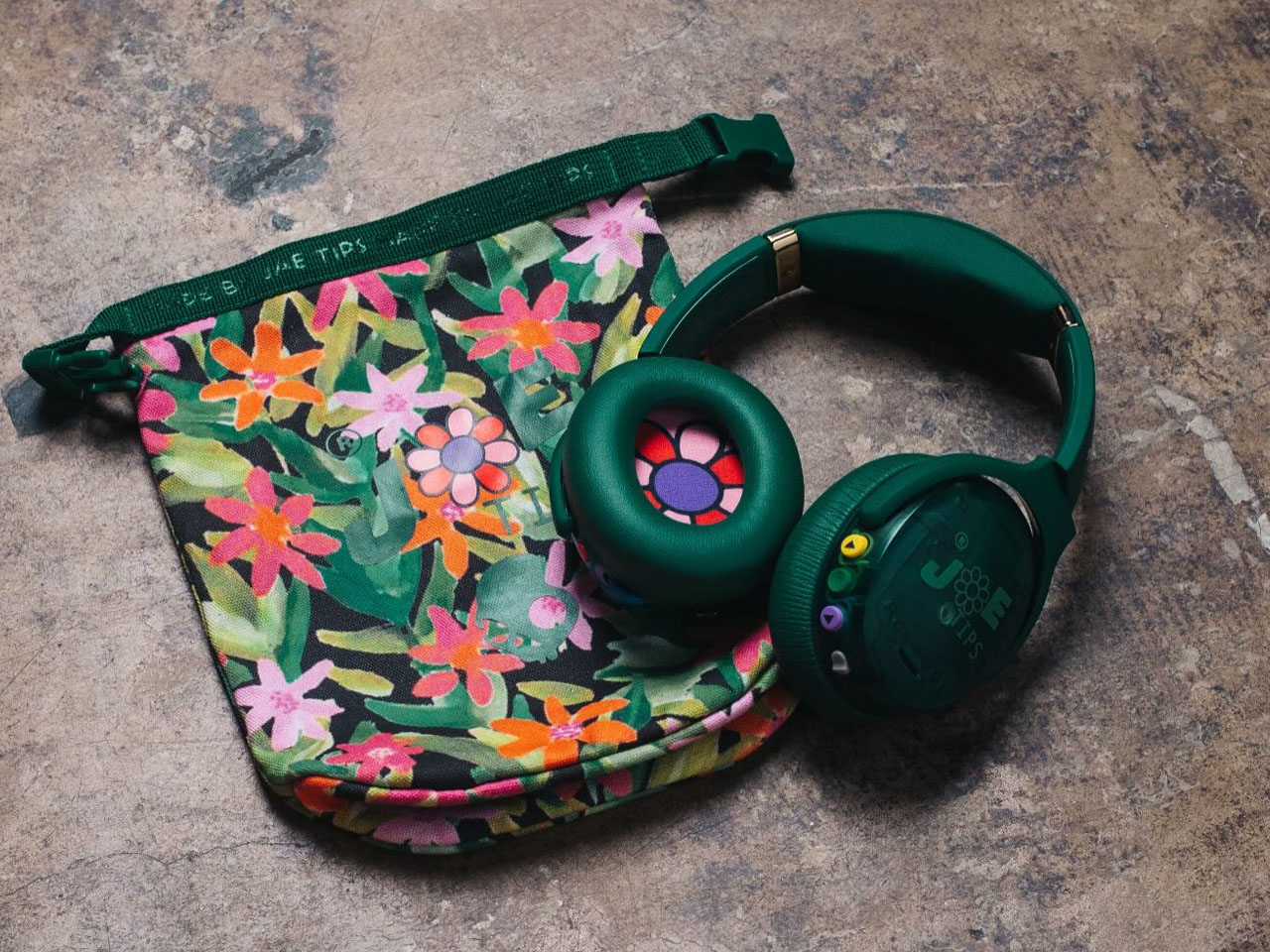
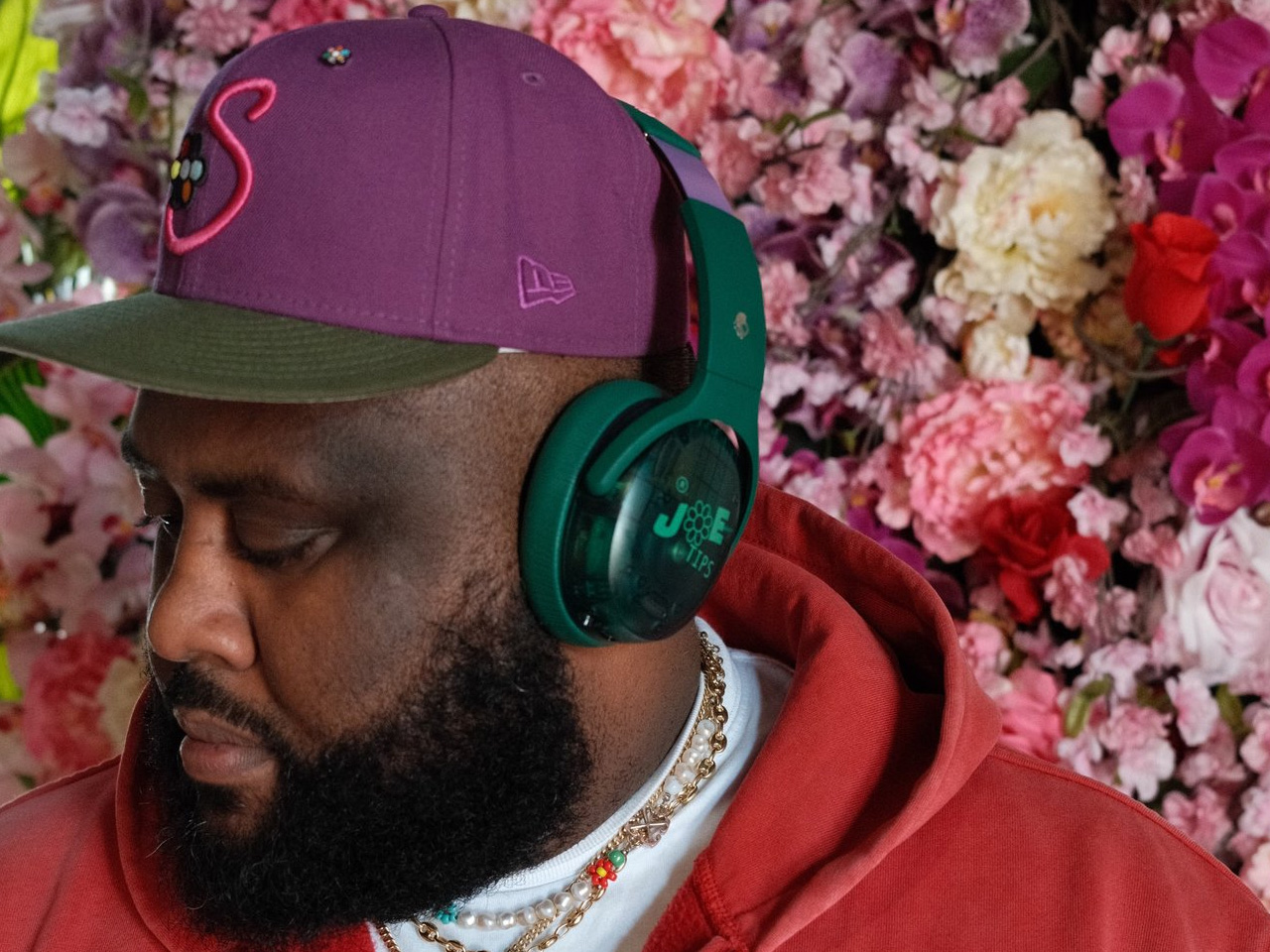
For that reason, Bronx-based designer Jae Tips has collaborated with the American audio equipment giant to create a stunning pair of headphones that go well with your 90s-inspired gadgets. Jae is no stranger to the unhinged use of colorful design elements, and this exploration is a bliss for audio fans. For this collab, the theme is highly translucent tech in nostalgic colors for a retro-modern touch and feel.
Designer: Skullcandy and Jae Tips

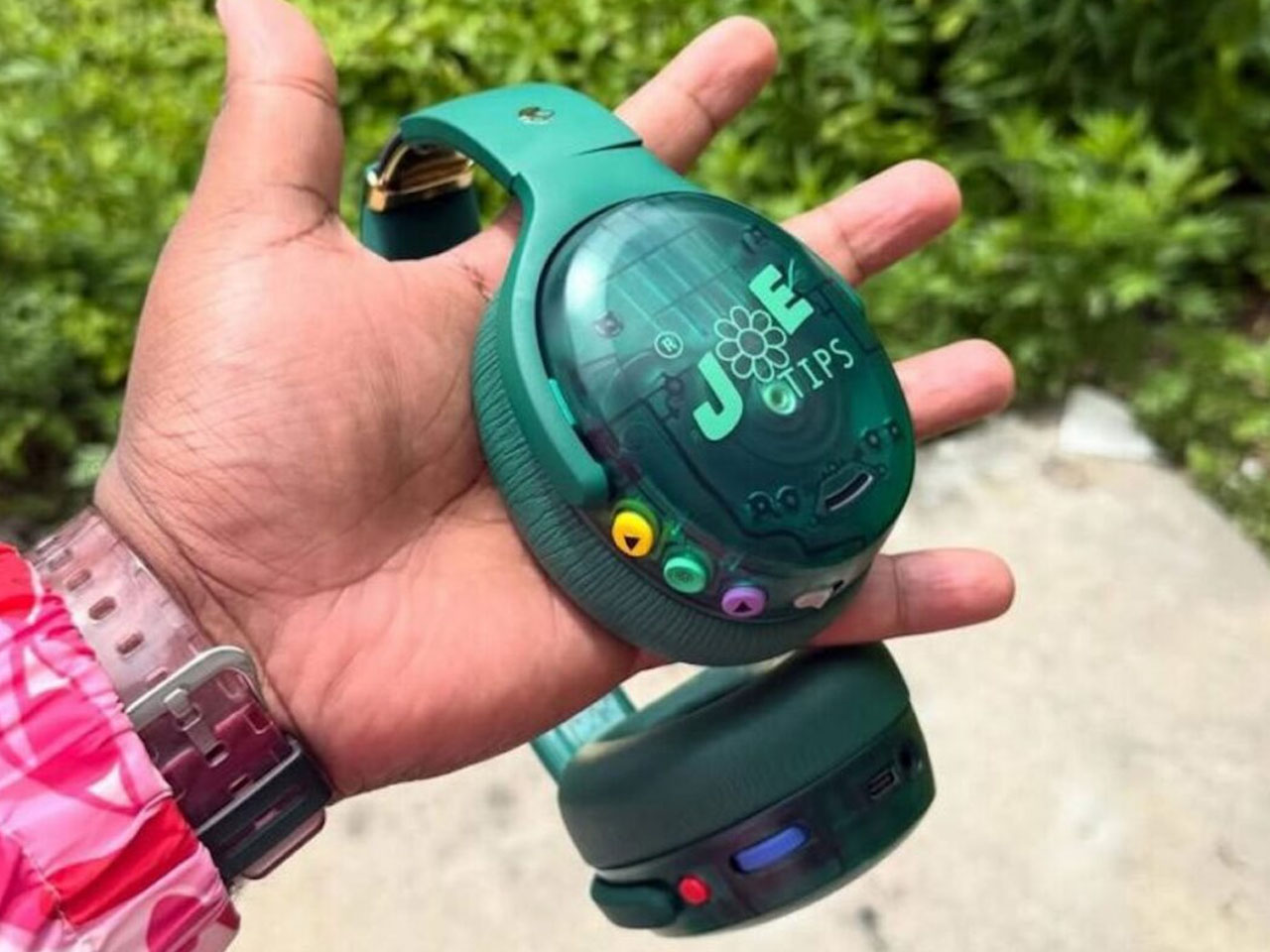
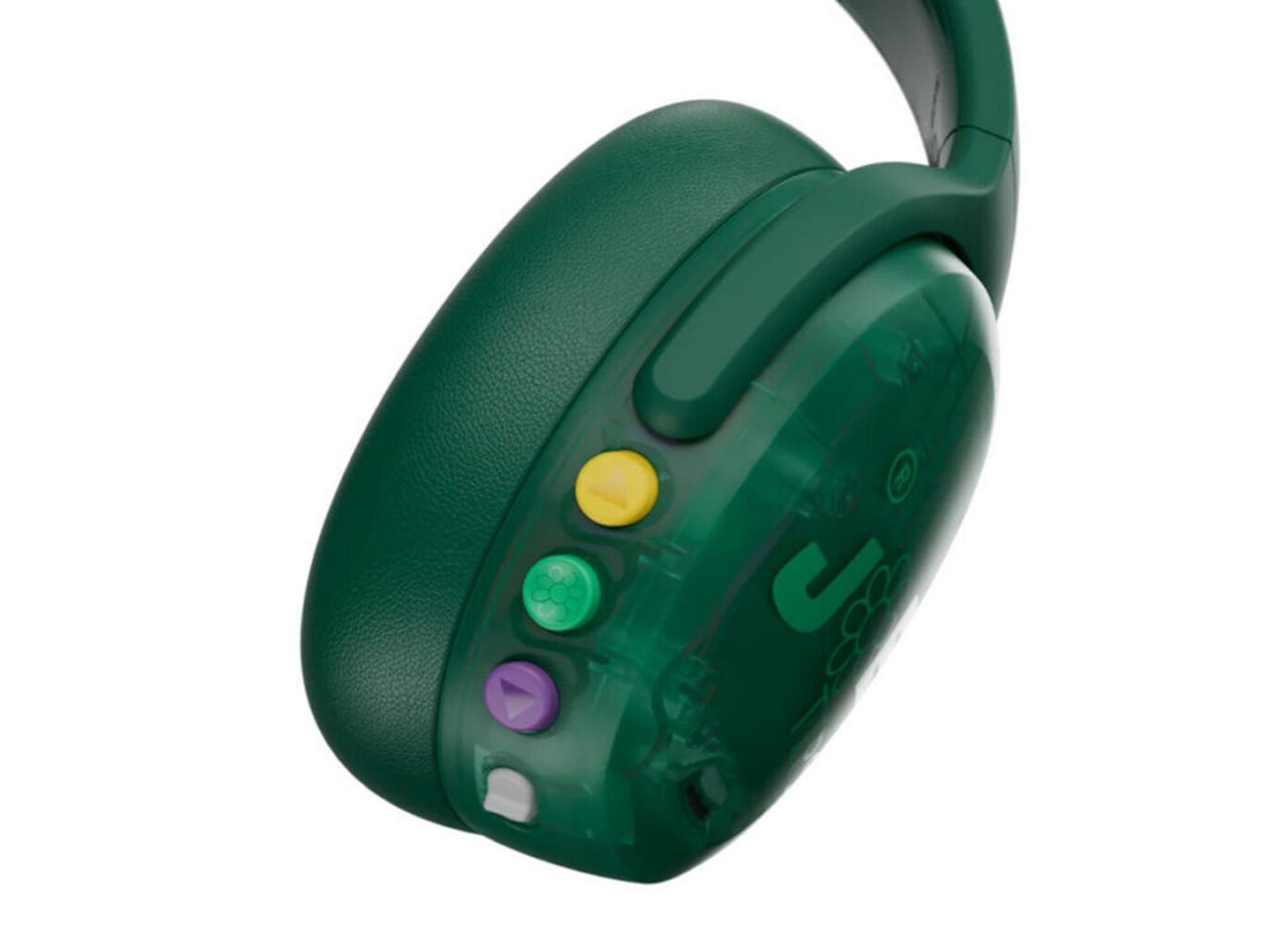
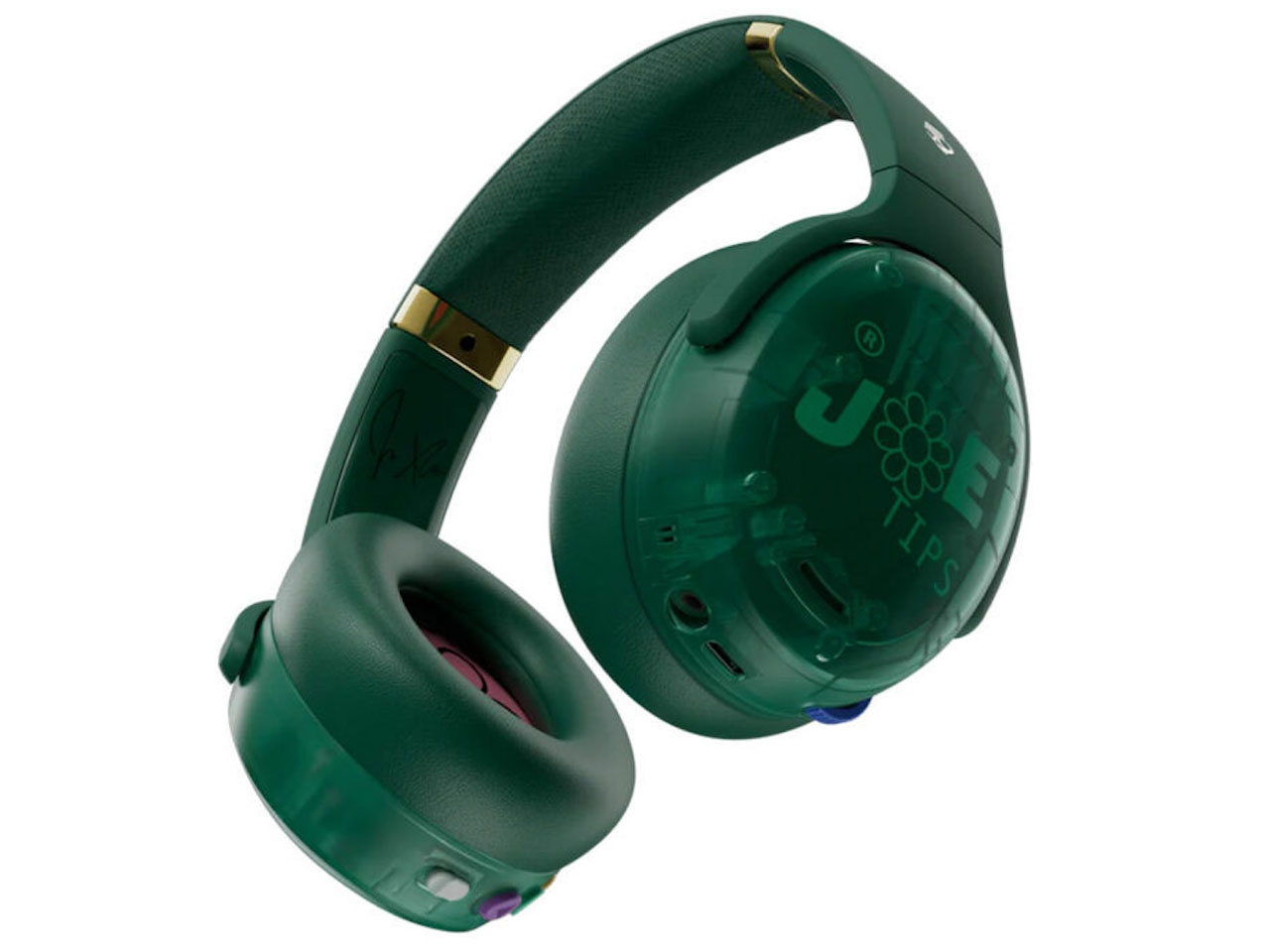
In the past, the award-winning footwear designer has demonstrated what’s possible if you let your creativity loose. This time around, he brings the signature influence of his customary style to the audio gear industry, and I seriously love the look of it. Given that music lovers hold their audio gear very dear, this pair brings their second love into the mix. Yes, I’m talking about gaming, as this limited edition Crusher ANC 2 headphones adapts the color scheme of the classic Nintendo 64 controllers, and the Super Mario Bros packaging, and fuses it with Jae’s floral motif design style to render a pair of cans.
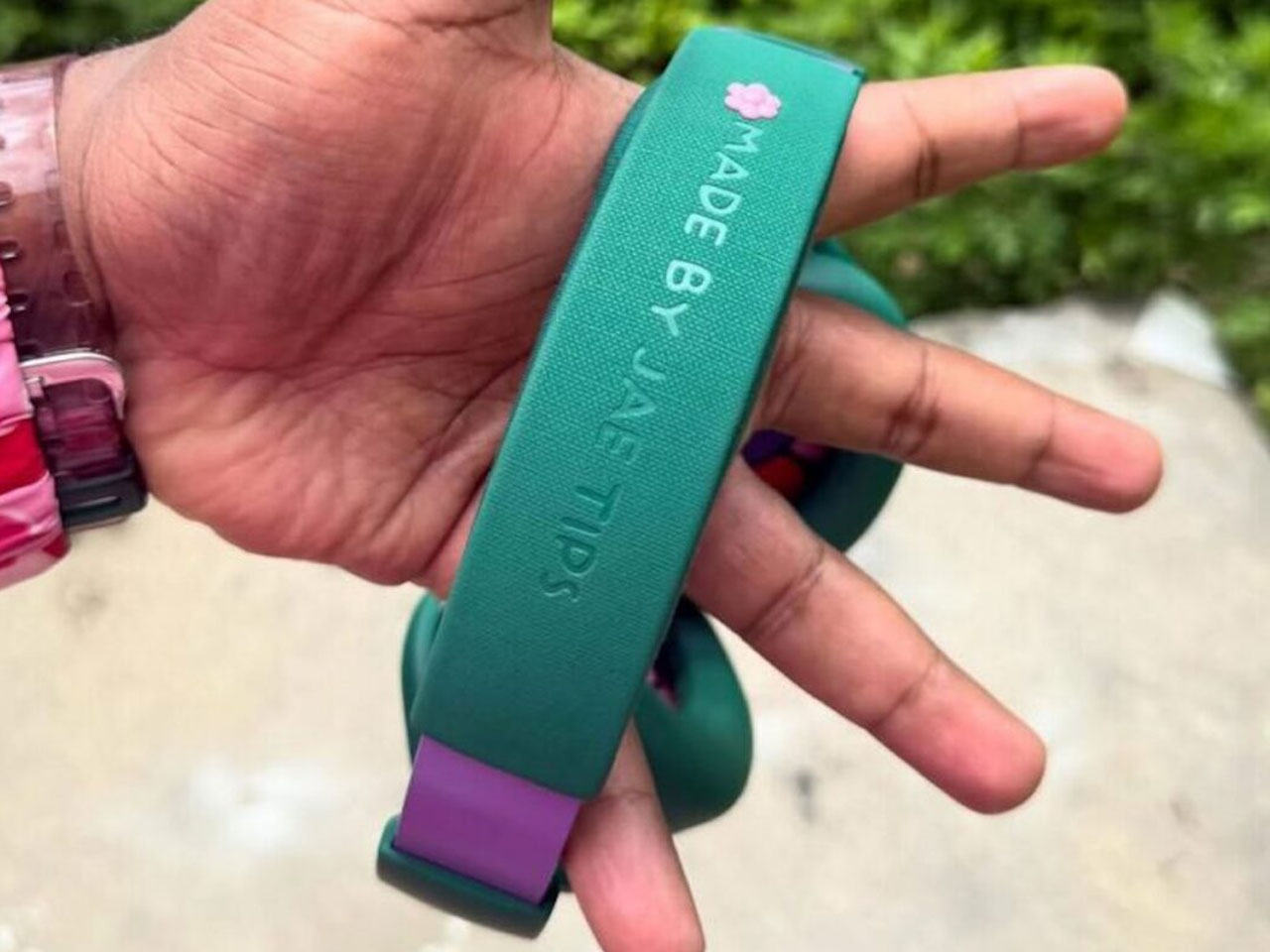
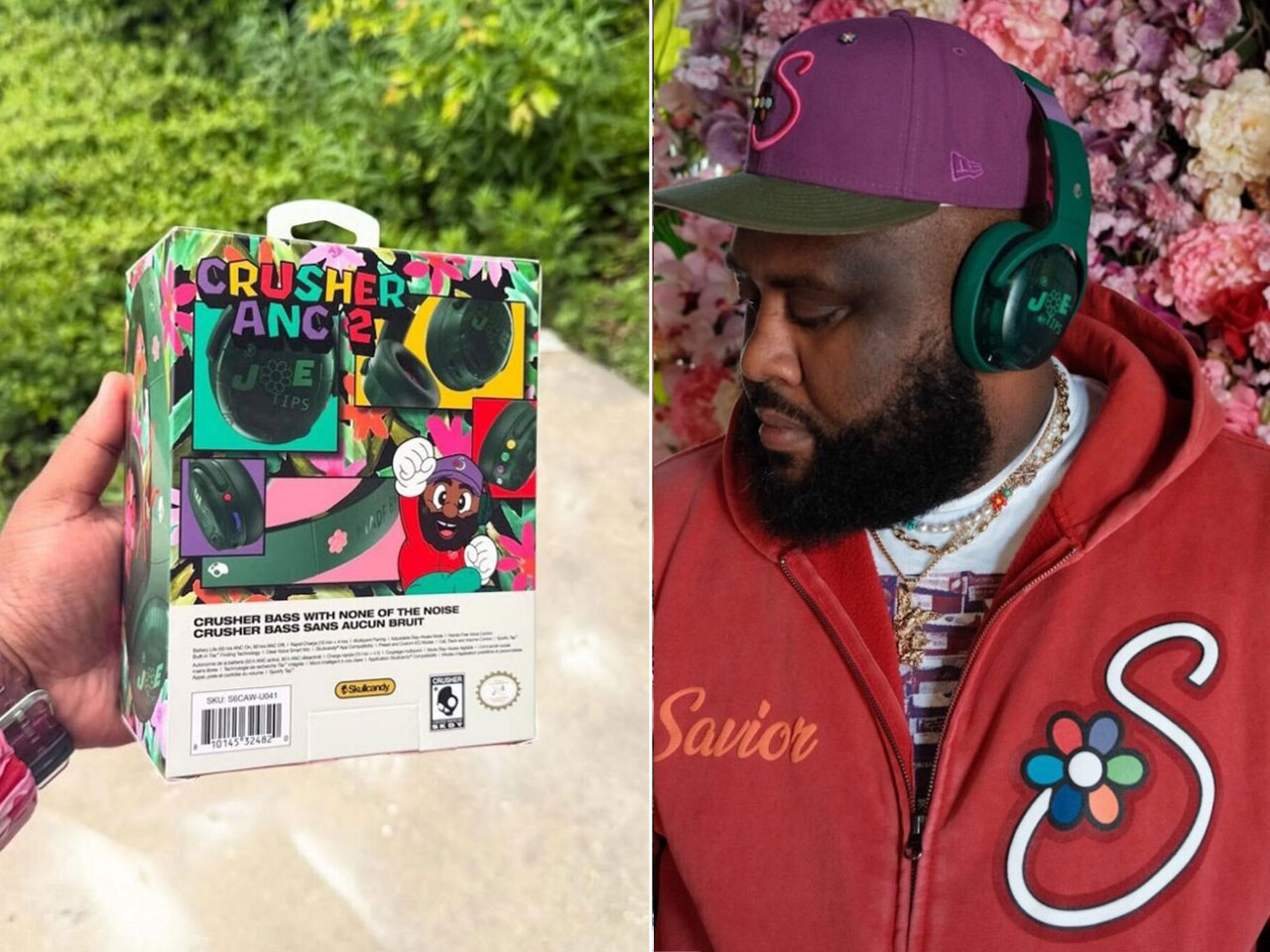
It’s one thing to go translucent and completely another to fuse it into a form that evokes good old memories. That’s what is special about the see-through emerald shell of the headphones. The ethos bleeds into the custom packaging as well, as the box is heavily inspired by the classic Super Mario Bros title. On the inside, the cans retain their technical superiority with adaptable ANC and Skullcandy’s signature rumbling bass. According to Jae, for this collaboration, he was “inspired by gel and acrylic Nintendo’s and the early Mac computers. My goal was to create something that I wasn’t seeing anywhere else in the marketplace.”

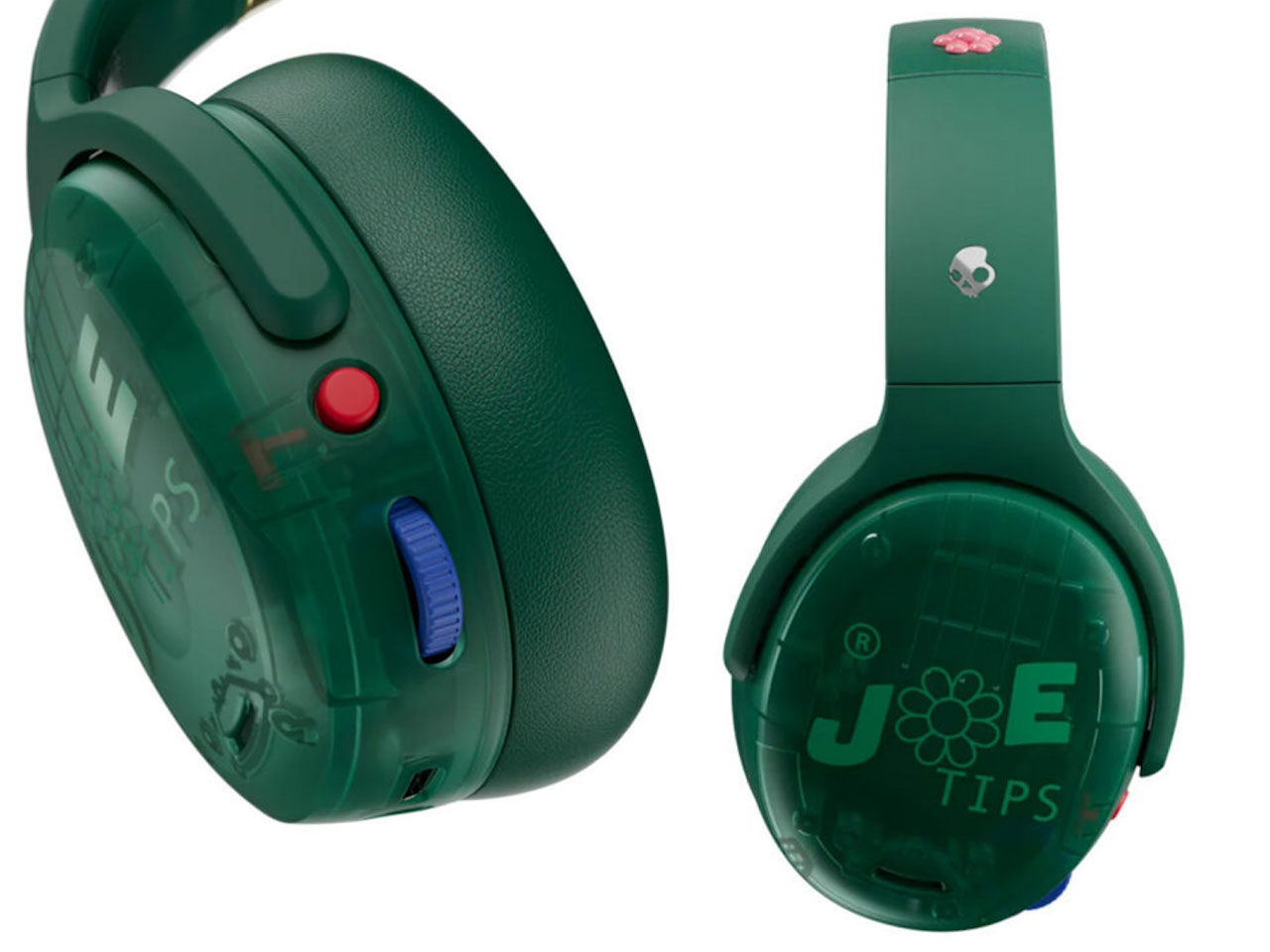
For starters, the Jae Tips x Skullcandy Crusher ANC 2 headphones will be available for $260, starting tomorrow in the designer’s hometown. They will eventually float out to other markets in the coming weeks. As we speak, the limited-edition headphones are launching at the exclusive pop-up event at the Chelsea Best Buy in Manhattan. While they don’t come in a sturdy carrying case, the designer floral bag in a matching theme is the perfect way to show off your headphones.

The post Jae Tips x Skullcandy Crusher ANC 2 headphones relieve classic gel and acrylic Nintendo aesthetics first appeared on Yanko Design.
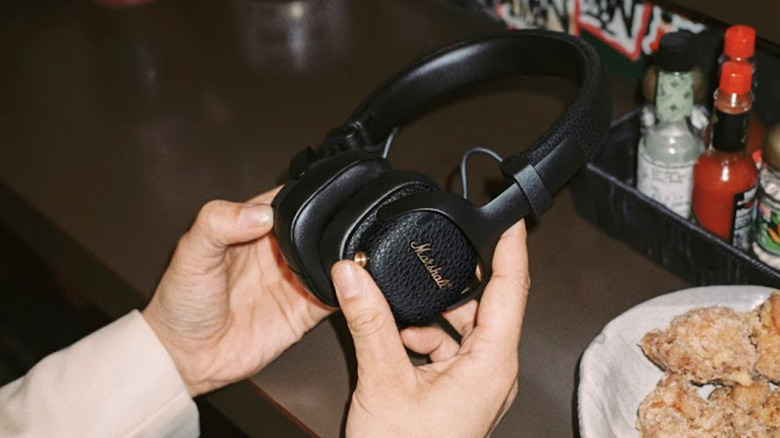
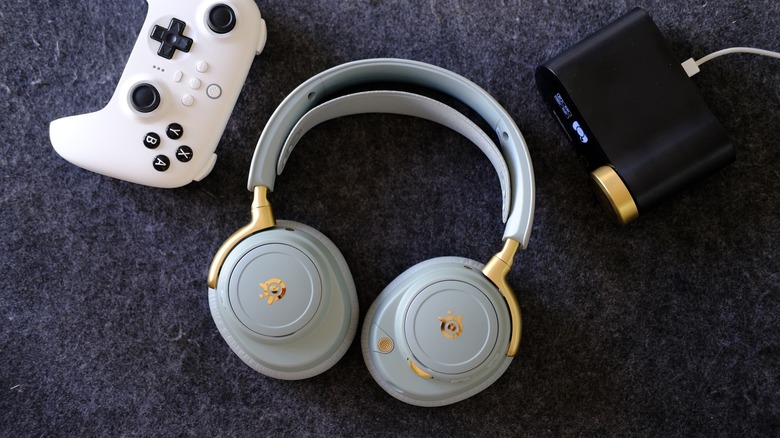
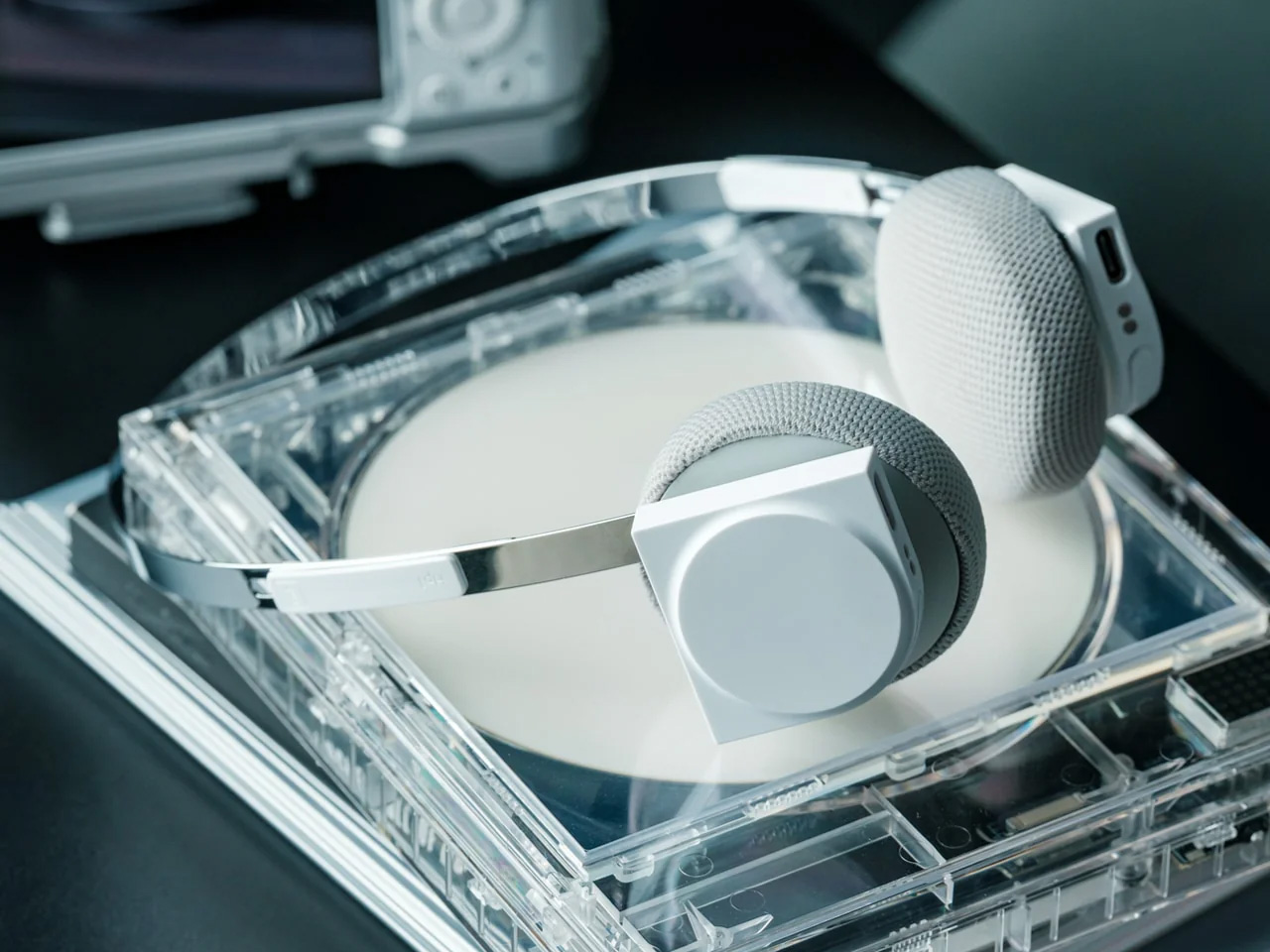
The headphone has become something it was never originally designed to be: a silhouette. Worn around the neck on a subway platform or draped over a chair at a coffee shop, a great pair of over-ears communicates taste in much the same way a watch or a well-chosen bag does. The best ones are now designed with that resting moment in mind, not as an afterthought, but as a deliberate part of the brief.
What separates a good headphone from a great one is increasingly less about frequency response and more about how the object behaves when it’s not in use. The five pairs on this list earn their place on both counts. Worn on the head, they deliver. Worn around the neck, they still look like they were built by people who thought carefully about that exact resting moment, collarbone and all.
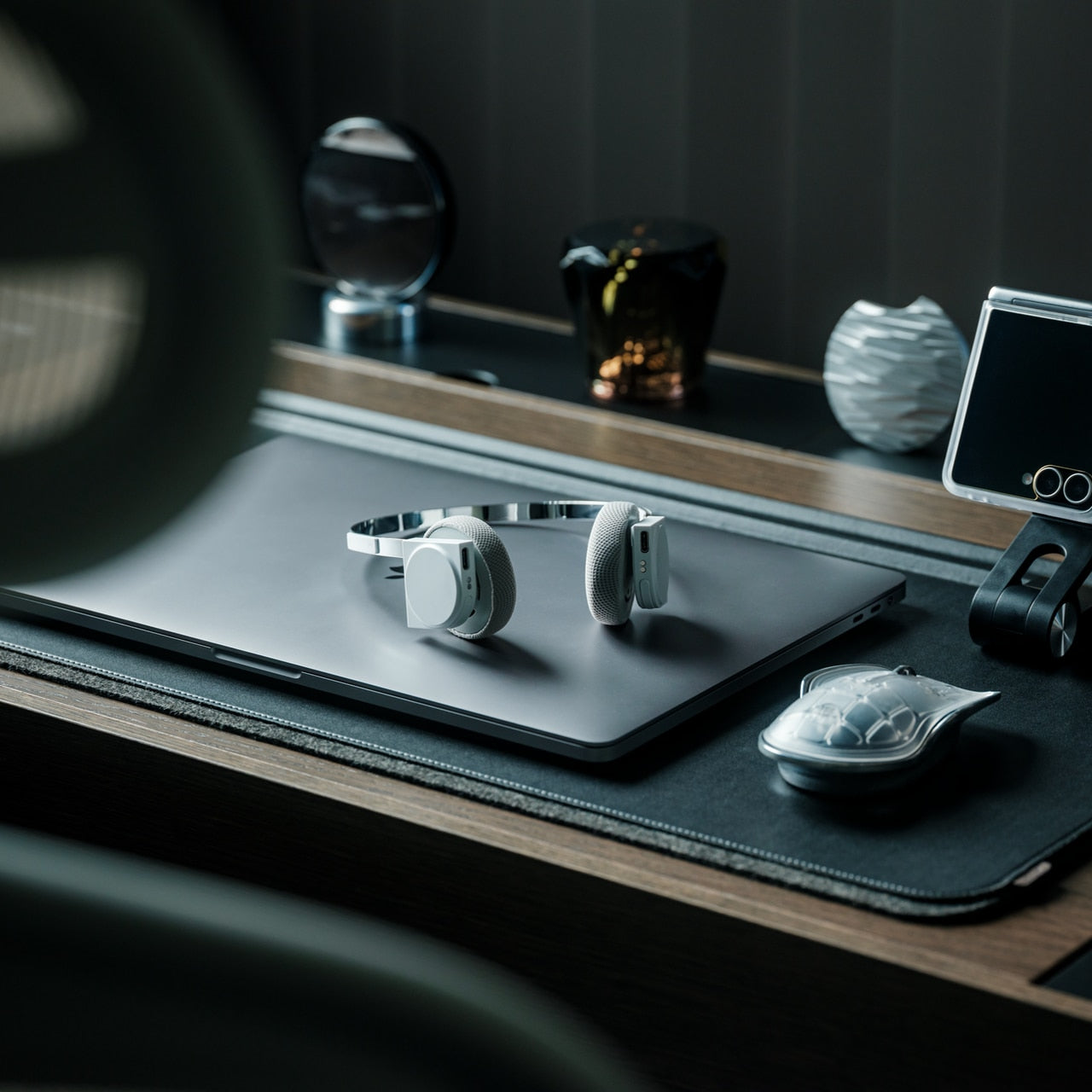
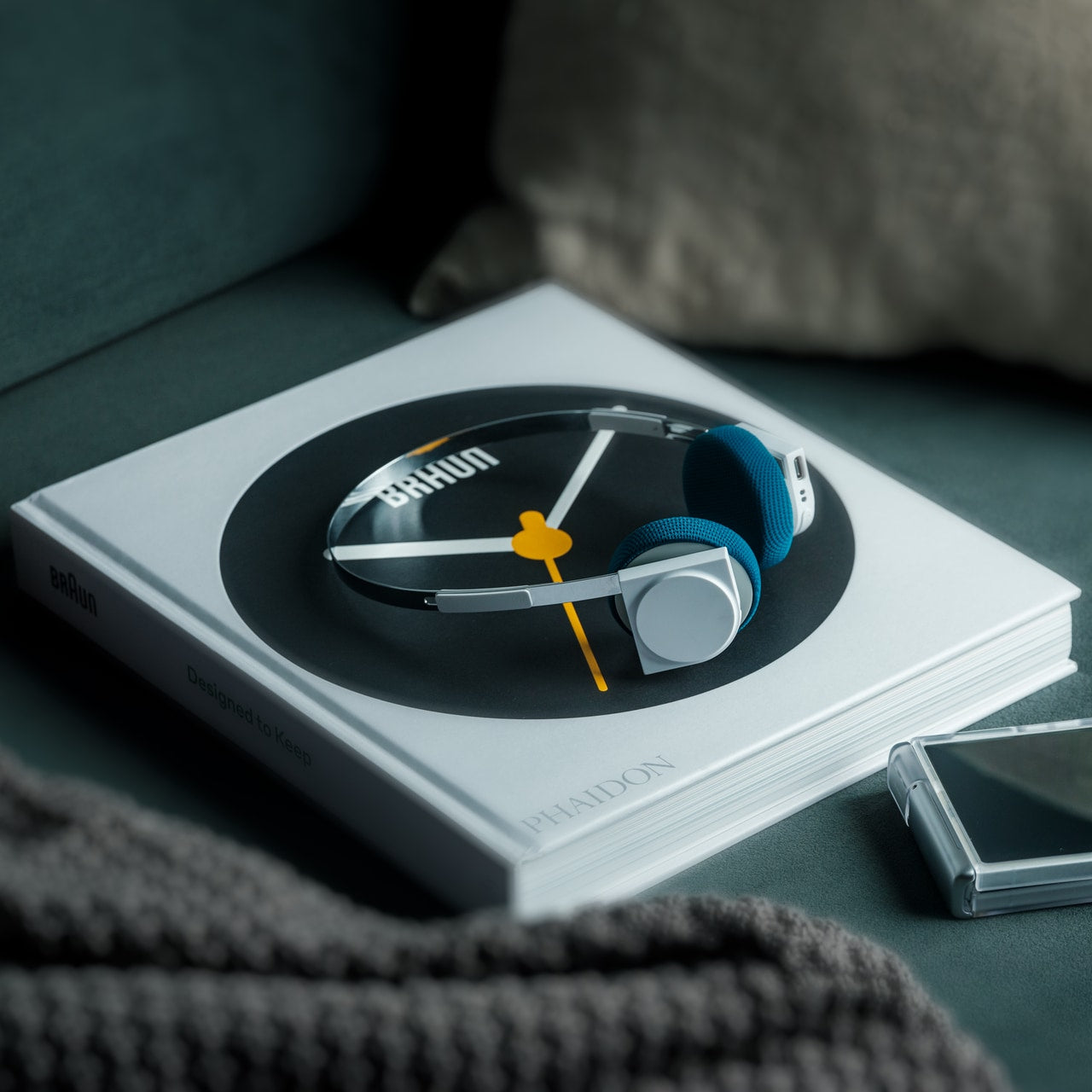
Most headphones achieve lightness by sacrificing material quality somewhere along the way. StillFrame achieves it by rethinking the entire structure from scratch. At 103 grams, it sits on your head with the kind of effortless presence most pairs spend an entire product page trying to claim. The ultra-minimal design, clean lines, no exposed hardware, and no decorative flourish anywhere on the frame is the kind of restraint that reads as confidence rather than budget constraint.
Around the neck, StillFrame does what minimal design always promises and rarely delivers: it disappears into your outfit rather than competing with it. The 24-hour battery means you’ll reach for these in the early morning and still have charge well into the evening without thinking about a cable. For anyone who wants headphones that age well, that look as right in three years as they do today, this is where the search ends.
Click Here to Buy Now: $245.00
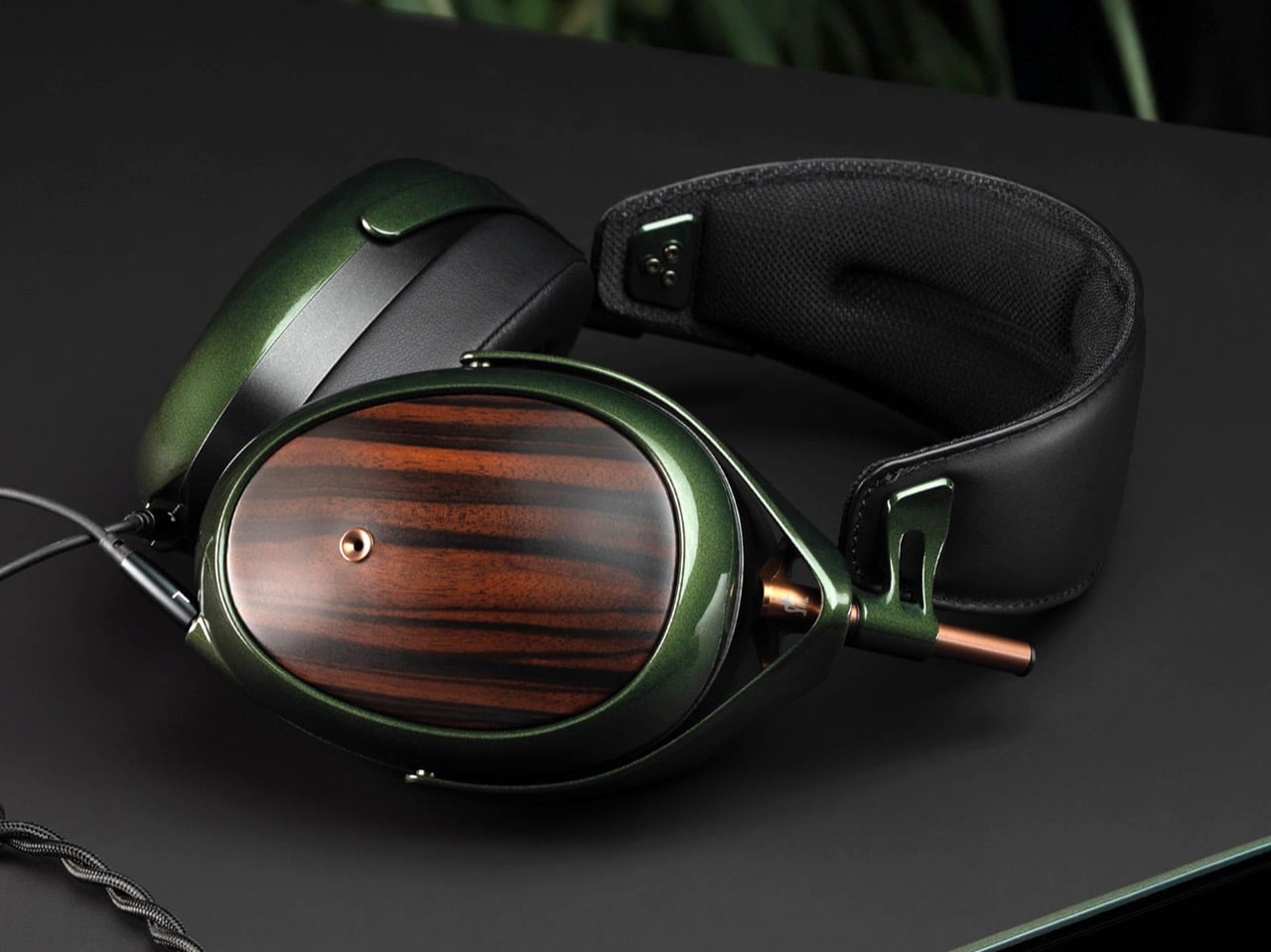
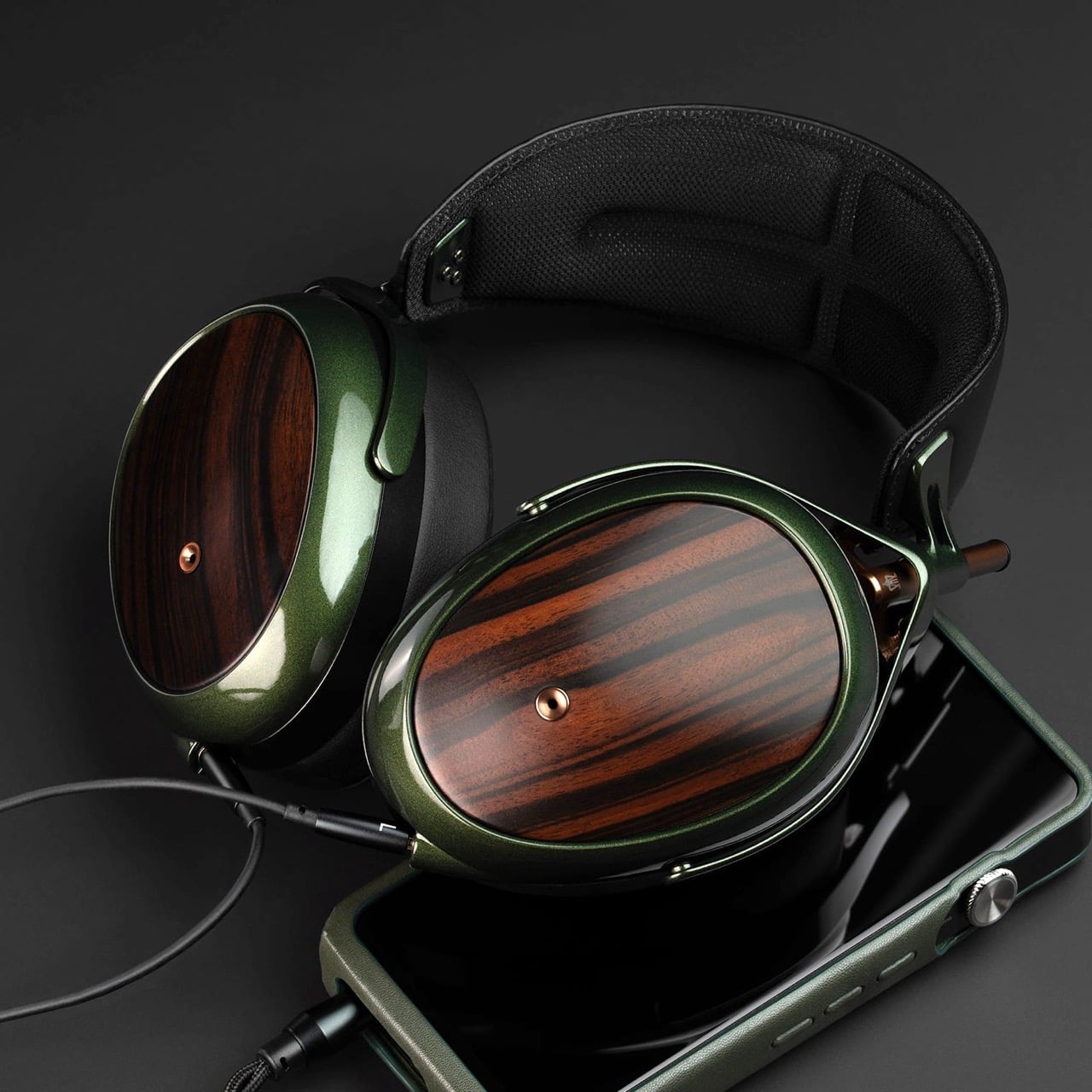
Romanian audio atelier Meze has spent two decades treating headphones as craft objects, and the Strada makes that philosophy fully explicit. Hand-carved walnut and ebony ear cups, each unique in grain and tone, sit alongside a magnetic ear pad system that snaps on and off cleanly, making them the first pair that genuinely anticipates its own aging. The leather headband drapes naturally against the collarbone. At $799, you’re investing in the idea that daily objects deserve this level of material care.
Worn around the neck, the Strada does something genuinely rare: it makes you look considered rather than plugged in. Those hand-carved wood cups catch light in a way that aluminum never quite manages, and the closed-back design delivers warmth and isolation without the clinical precision of most audiophile gear.
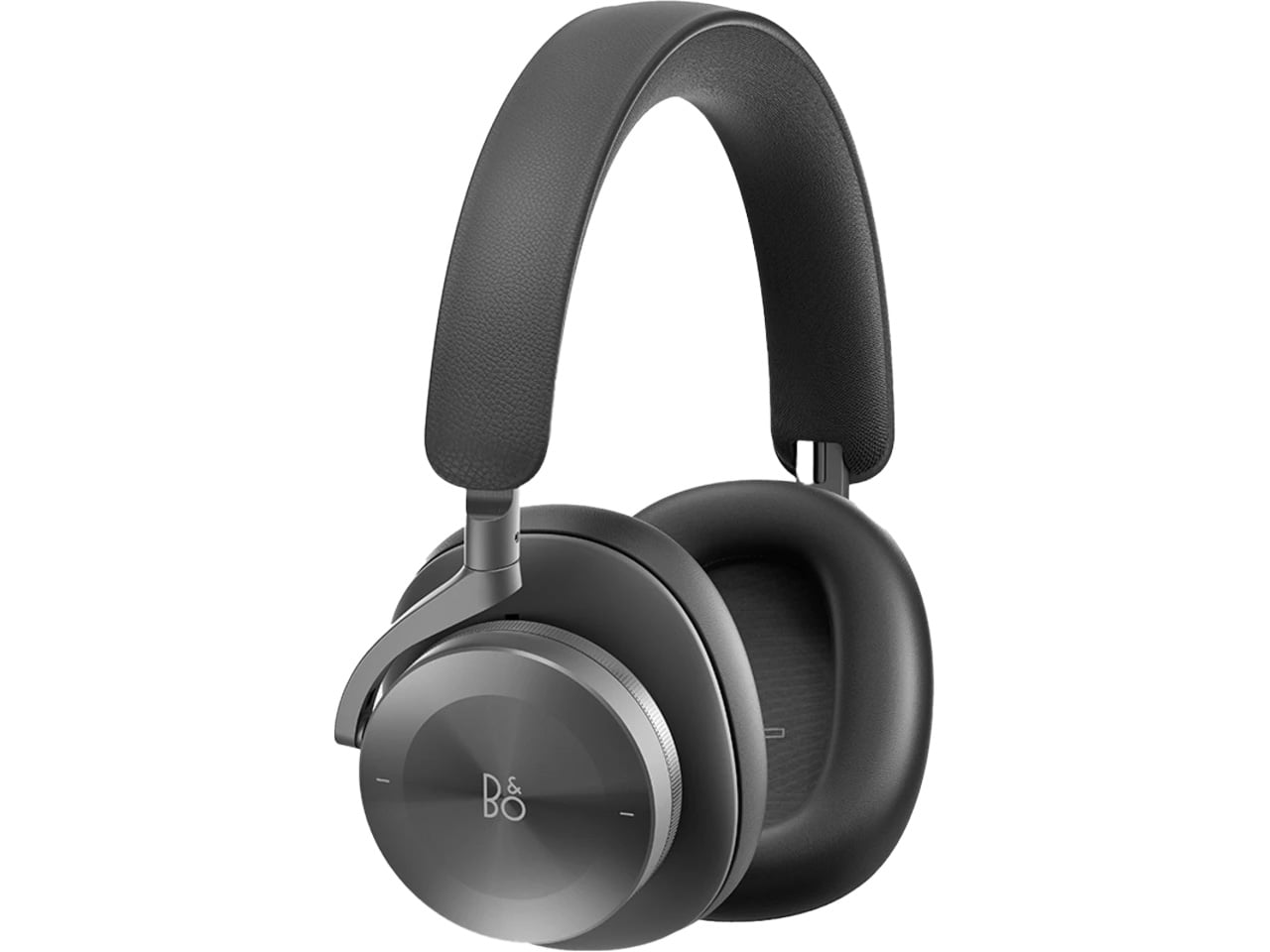
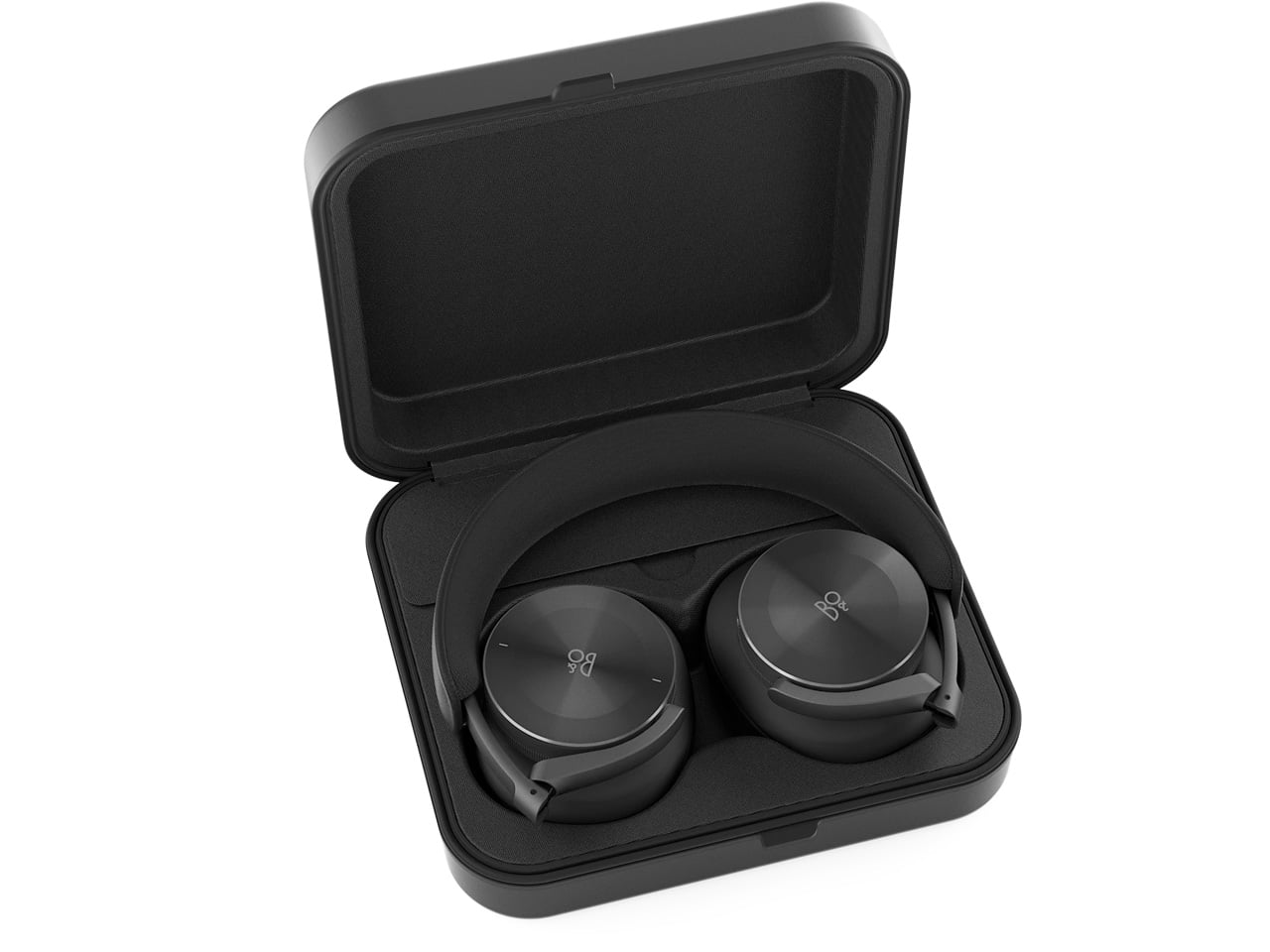 Bang & Olufsen has been designing objects that make a room better simply by existing in it since 1925. The Beoplay H95 carries that logic to your ears. Brushed aluminum arcs support lambskin ear cushions with the quiet authority of something that was never trying to impress anyone. Custom 40mm titanium drivers deliver an expansive, unhurried soundstage, and 38 hours of battery life with ANC active means you rarely need to think about charging. At $1,250, it reads as inevitable rather than expensive.
Around the neck, the H95 makes its strongest case. The slim profile rests cleanly against the collarbone, the aluminum catches light without glare, and the lambskin ages into something better than what you started with. Vogue Scandinavia named it the headphone that pairs best with the softest cashmere roll-neck and a cocooning wool coat, which is not exactly a mid-range endorsement. The tactile control dial and hard carrying case complete the picture of a brand that hasn’t needed to shout for a century.
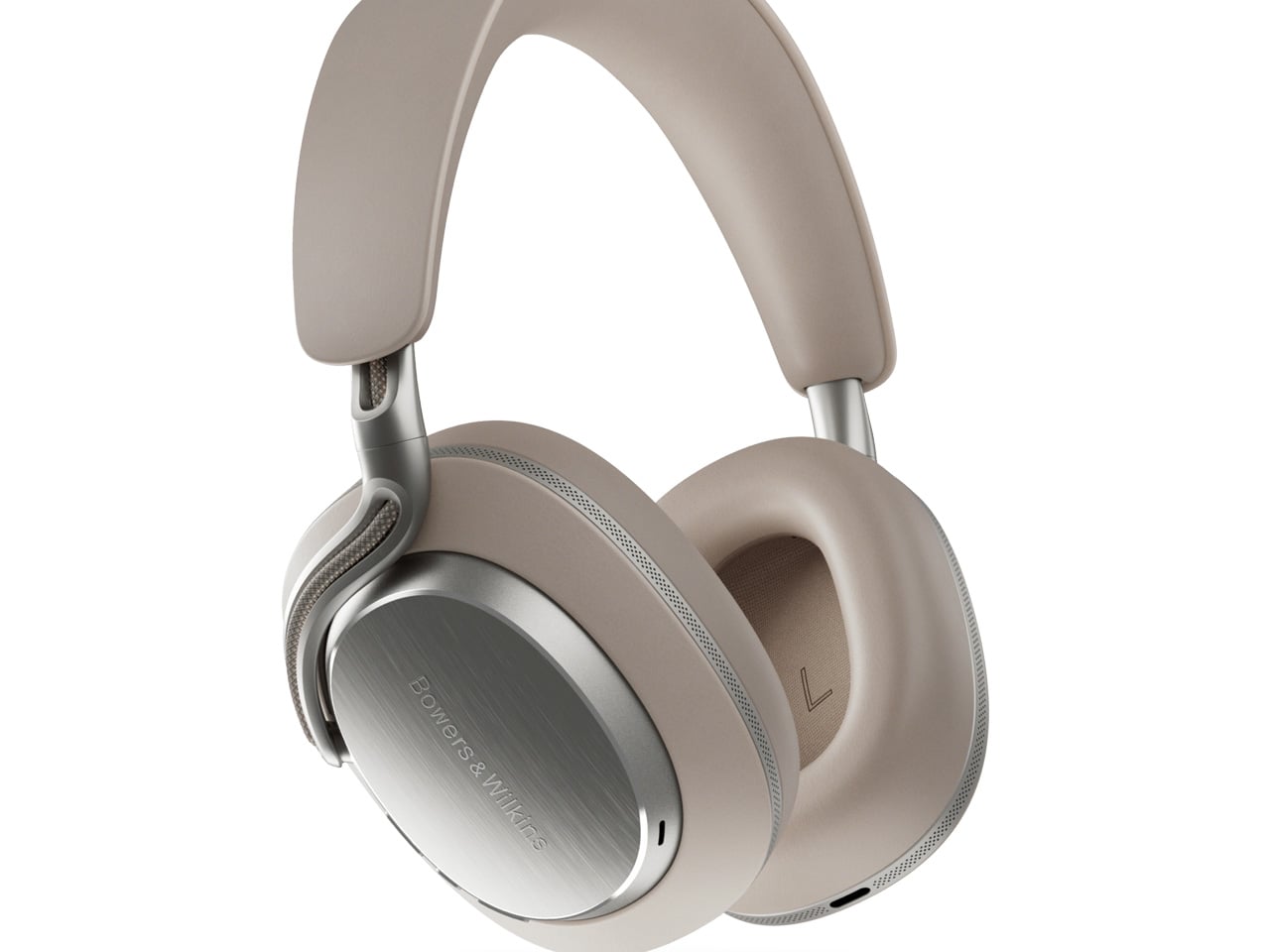
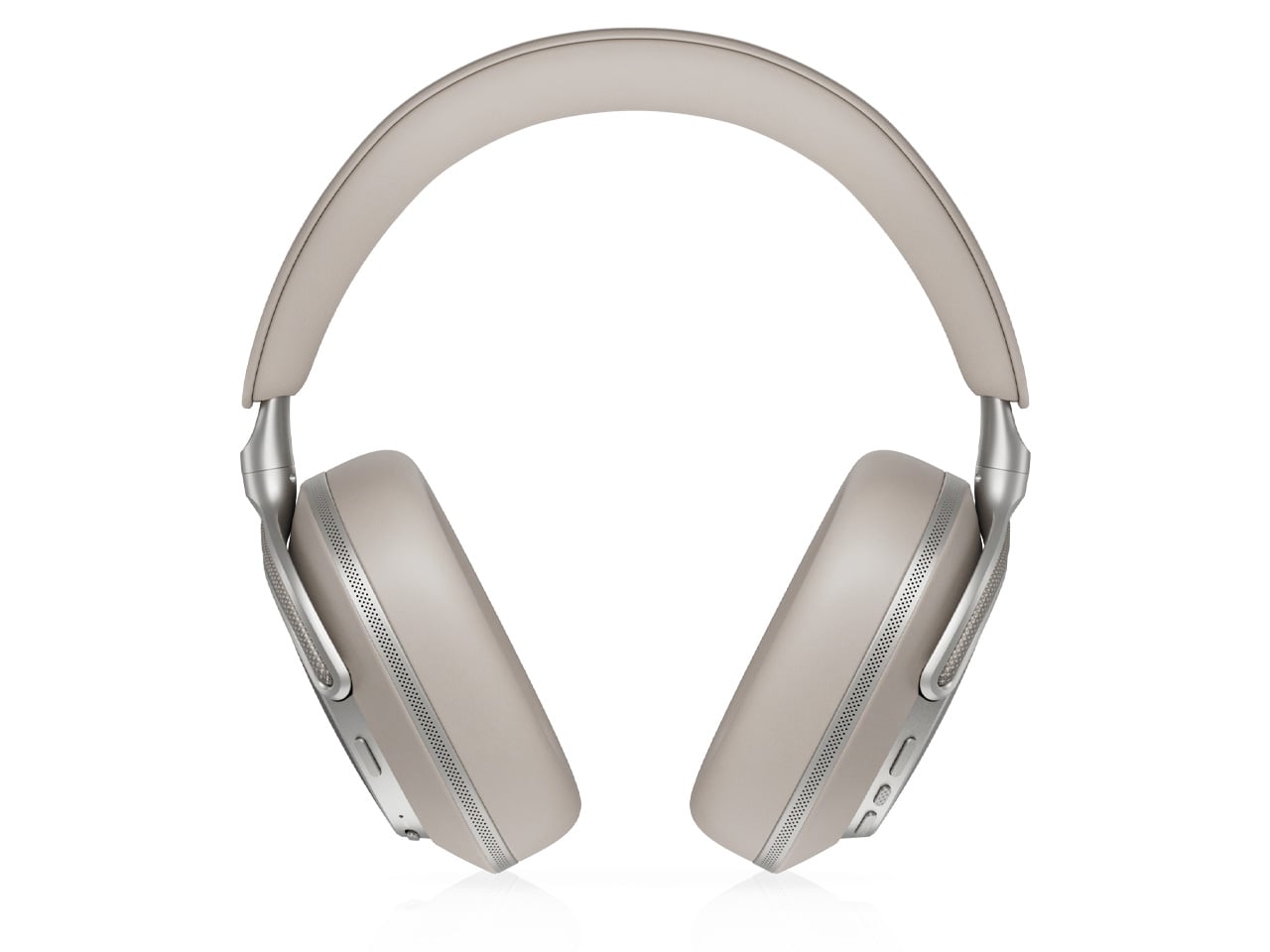
The Px8 S2 looks like it was designed by someone who spent too much time around luxury automobiles and not enough time worrying about what people thought. Diamond-quilted Nappa leather ear cups sit inside angular aluminum driver housings that don’t apologize for taking up space. Bowers & Wilkins built their reputation on speaker cabinets in British living rooms, and that obsession with material quality is fully present in the Px8 S2. At $799, it’s the most visually assertive pair on this entire list.
Worn on the head, the 40mm Carbon Cone drivers deliver a focused sound that rewards careful listening. Worn around the neck, the quilted leather and aluminum geometry create a silhouette that reads closer to jewelry than consumer electronics.
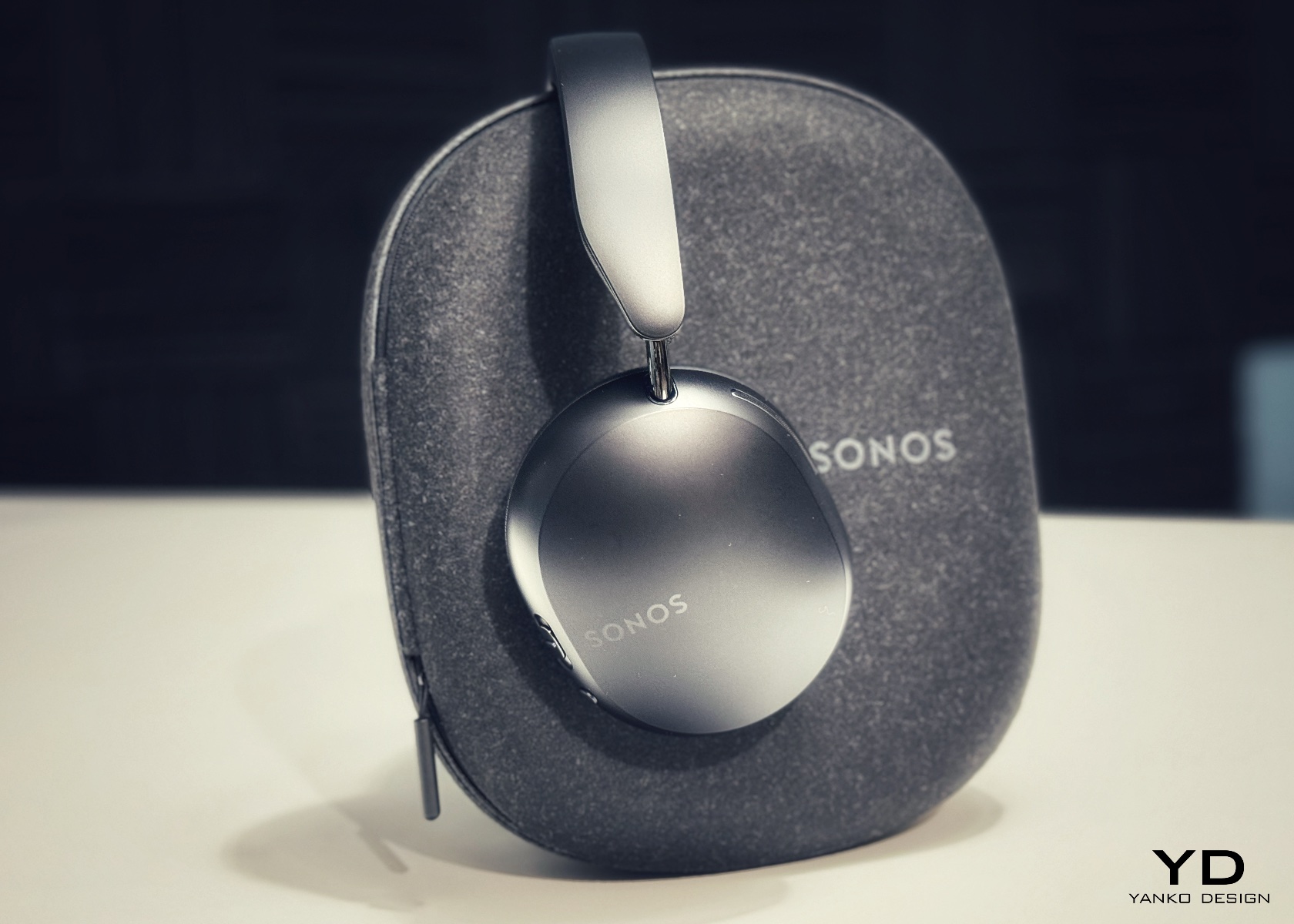
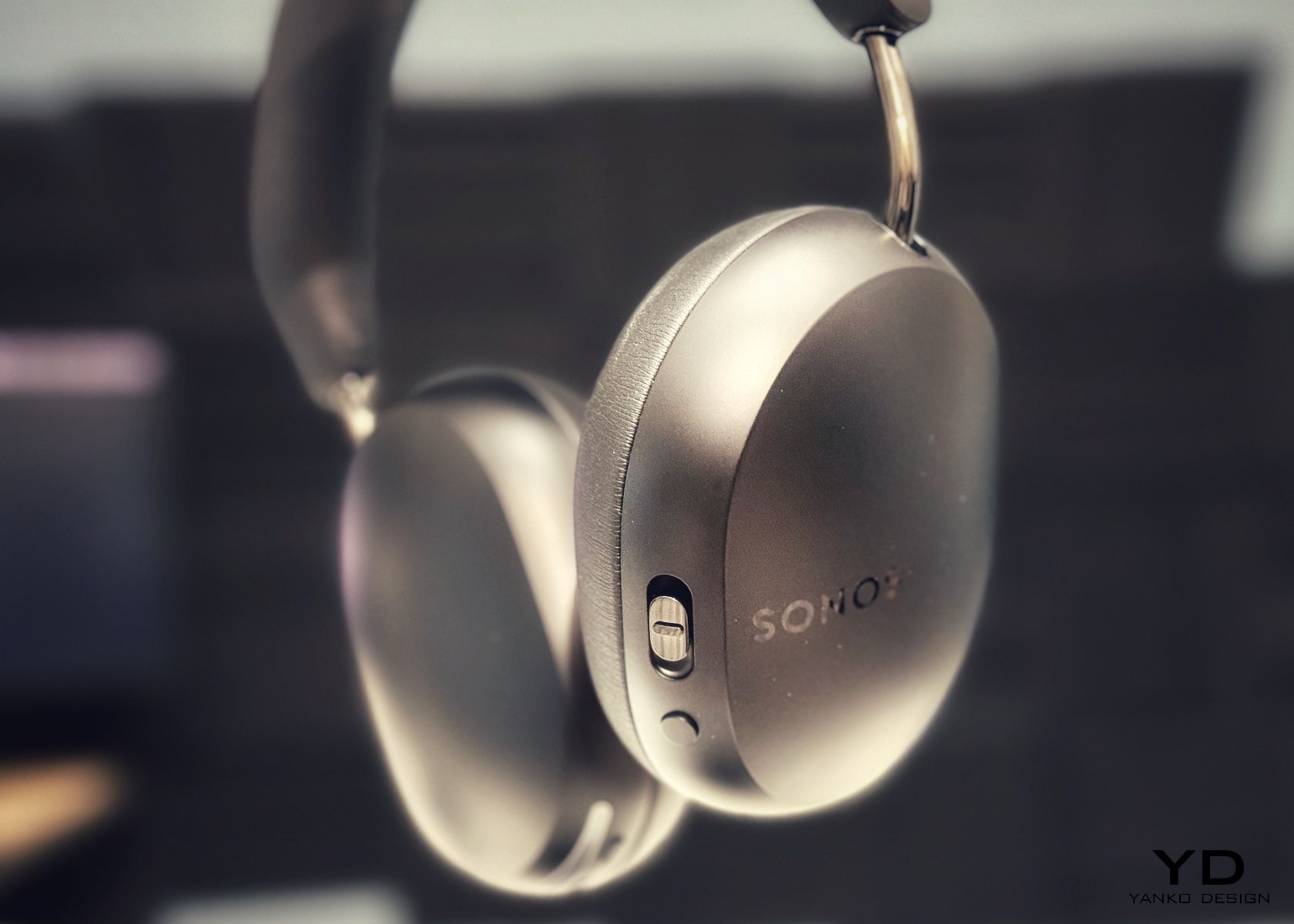
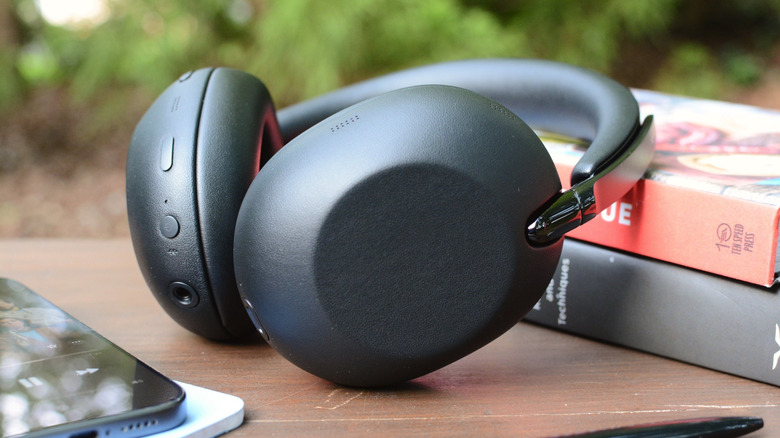
Sonos spent two decades being the most thoughtfully designed speaker company in the world before ever touching headphones. The Ace is what happens when a brand famous for restraint and material quality finally commits to an entirely new product category. Stainless steel arms, memory foam ear cushions, and a clean form in Midnight or White carry the same quiet authority as Sonos’s best home equipment. At $449, it sits below the B&O and B&W while fully matching them on design character and material coherence.
What makes the Ace genuinely stand out is what you don’t notice: no visible seams on the headband, no mismatched materials, no hardware that apologizes for itself. Active noise cancellation and a 30-hour battery complete a pair that wears as well around a neck as it sounds through the drivers, making it the most versatile pick on this list.
What all five of these pairs share is a seriousness of intent that goes well beyond frequency response. They were built by companies that think about how objects live in the world, not just during a listening session, but on a train platform, at a desk, hanging around a neck. That’s a harder problem to solve than noise cancellation, and the brands that crack it tend to stay relevant far longer than those that don’t.
The range here runs from $449 to $1,250, but the price gaps matter less than they appear at first. What you’re really choosing between is design language: Romanian craft warmth, Scandinavian restraint, British precision, speaker-first material thinking, or clean minimalism that genuinely disappears. Any of these pairs earns the right to hang around your neck. The question is which one earns it in a way that feels made for how you actually move through the world/
The post 5 Over-Ear Headphones That Look as Good When They’re Around Your Neck as When They’re on Your Head first appeared on Yanko Design.

Philips is going all in with the retro vibe of 80s, because why not? The era was signified by bold colors and freedom of expression that somehow got lost in the craving for clean designs. The Dutch multinational wants to bring back that classic feel with its Moving Sound line-up that’ll have you drooling over. That pure magnetism of the retro-futuristic design sense, paired with the bright hues, is enough to get the party started.
The new range is a modern reinterpretation of the 1980’s Philips Moving Sound design, and on the inside, there is technology of modern times. This audio accessory lineup is headed by two portable Bluetooth speakers, a pair of headphones, and cheeky earbuds that are hard to resist. All of them come in attractive color combinations for a nostalgic feel. Most importantly, sustainability is at the core of the range, featuring replaceable batteries, extensive use of RCS-certified plastics, and FSC-certified plastic-free packaging.
Designer: Philips
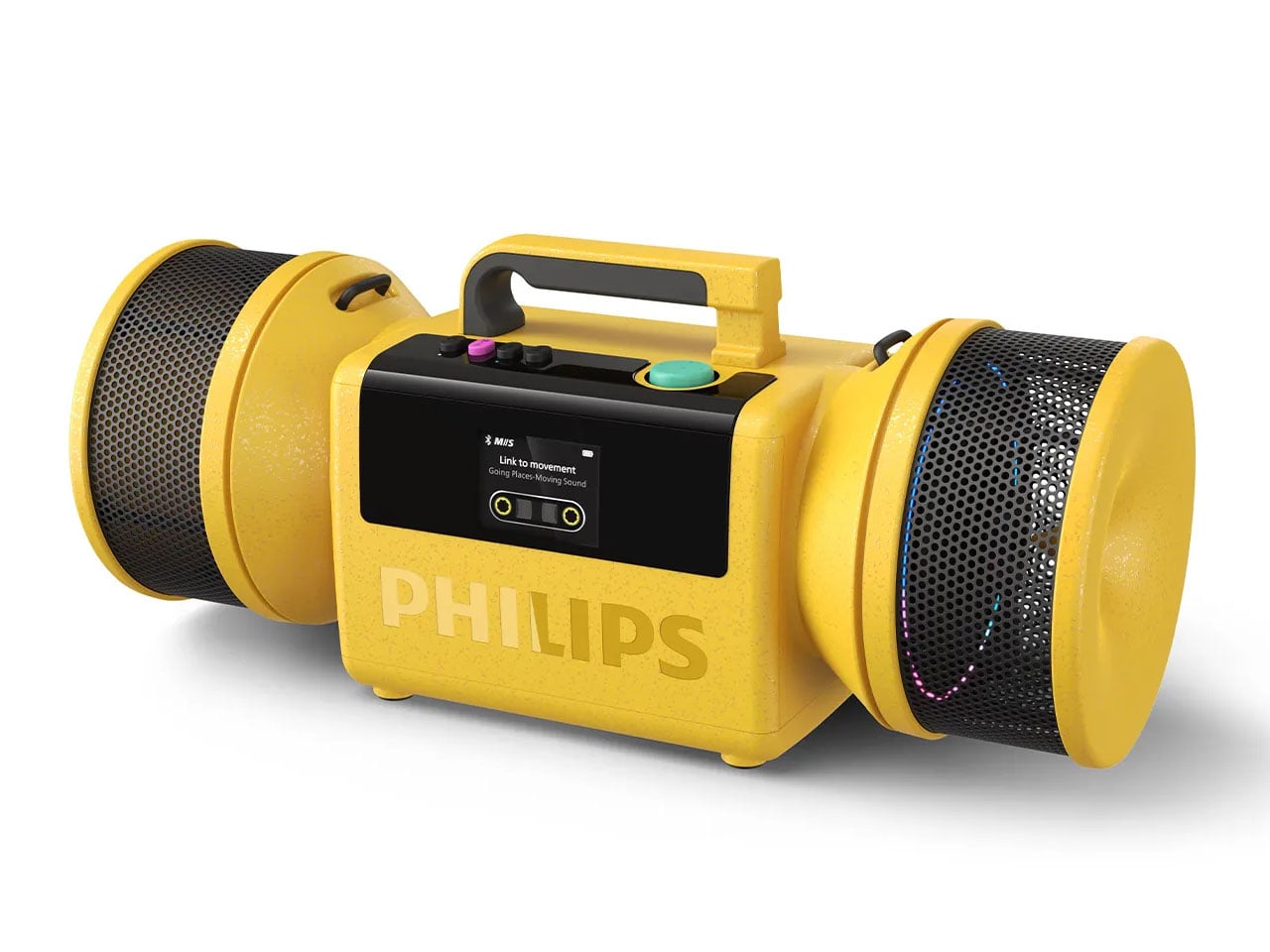
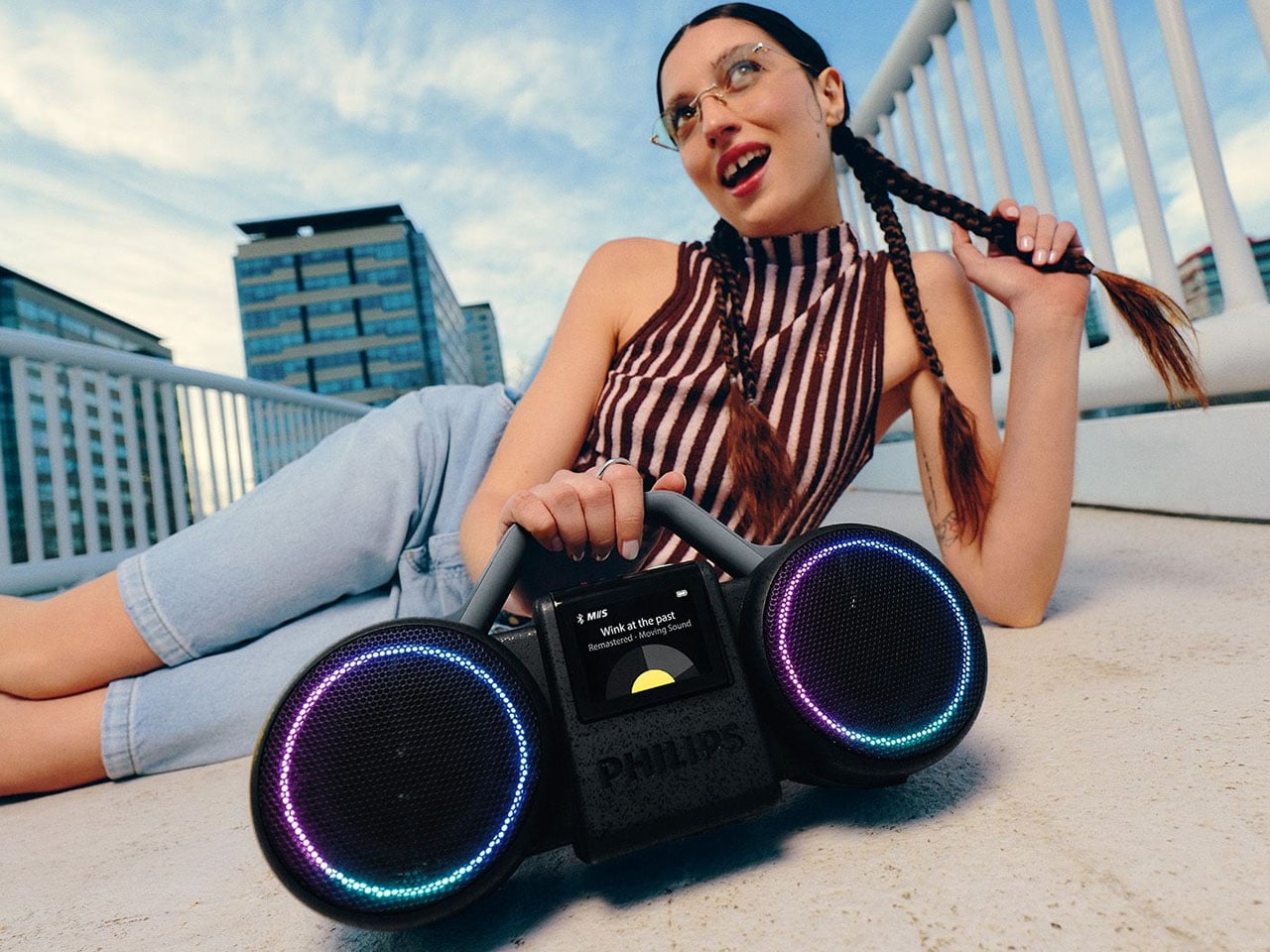
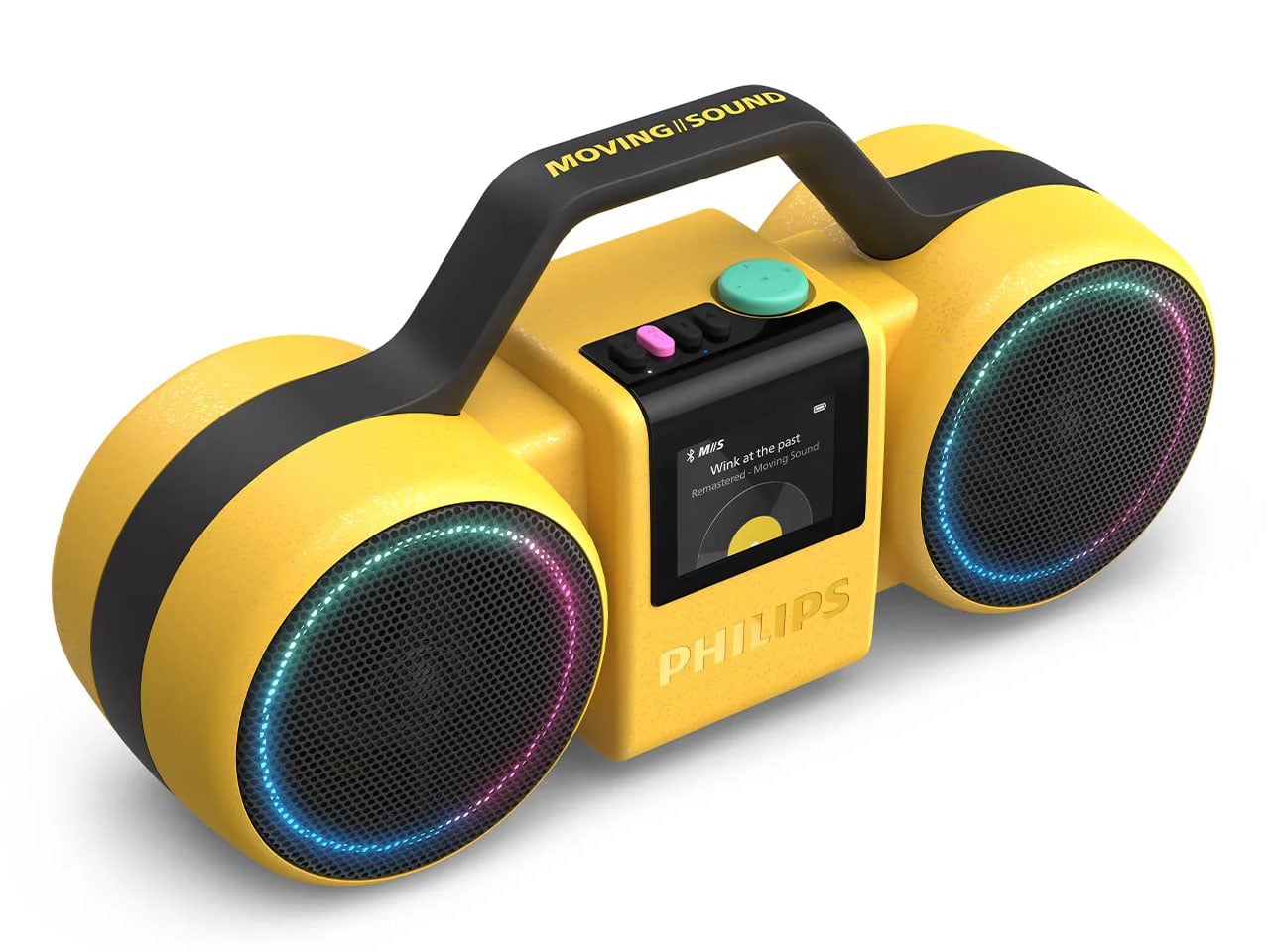
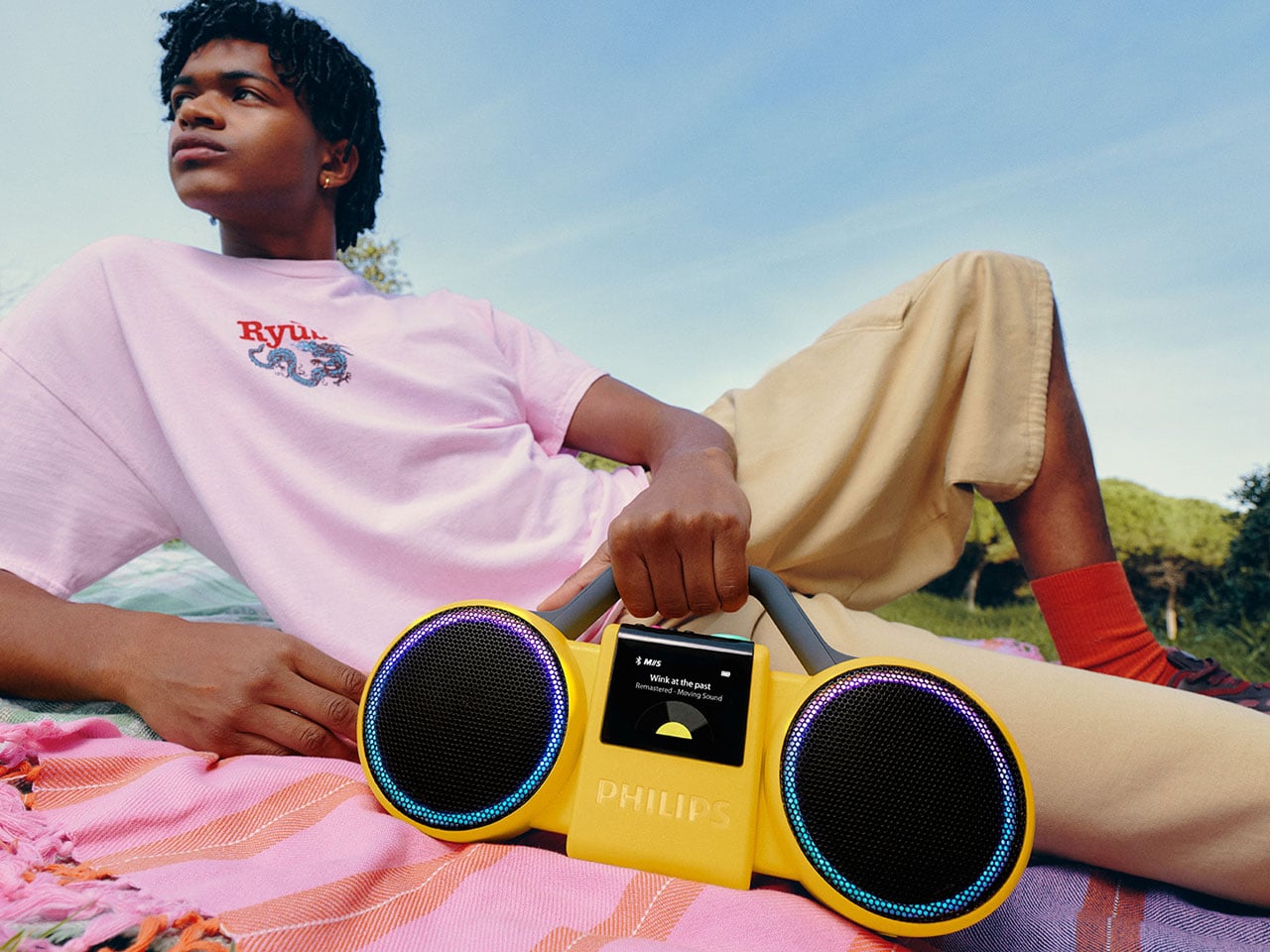
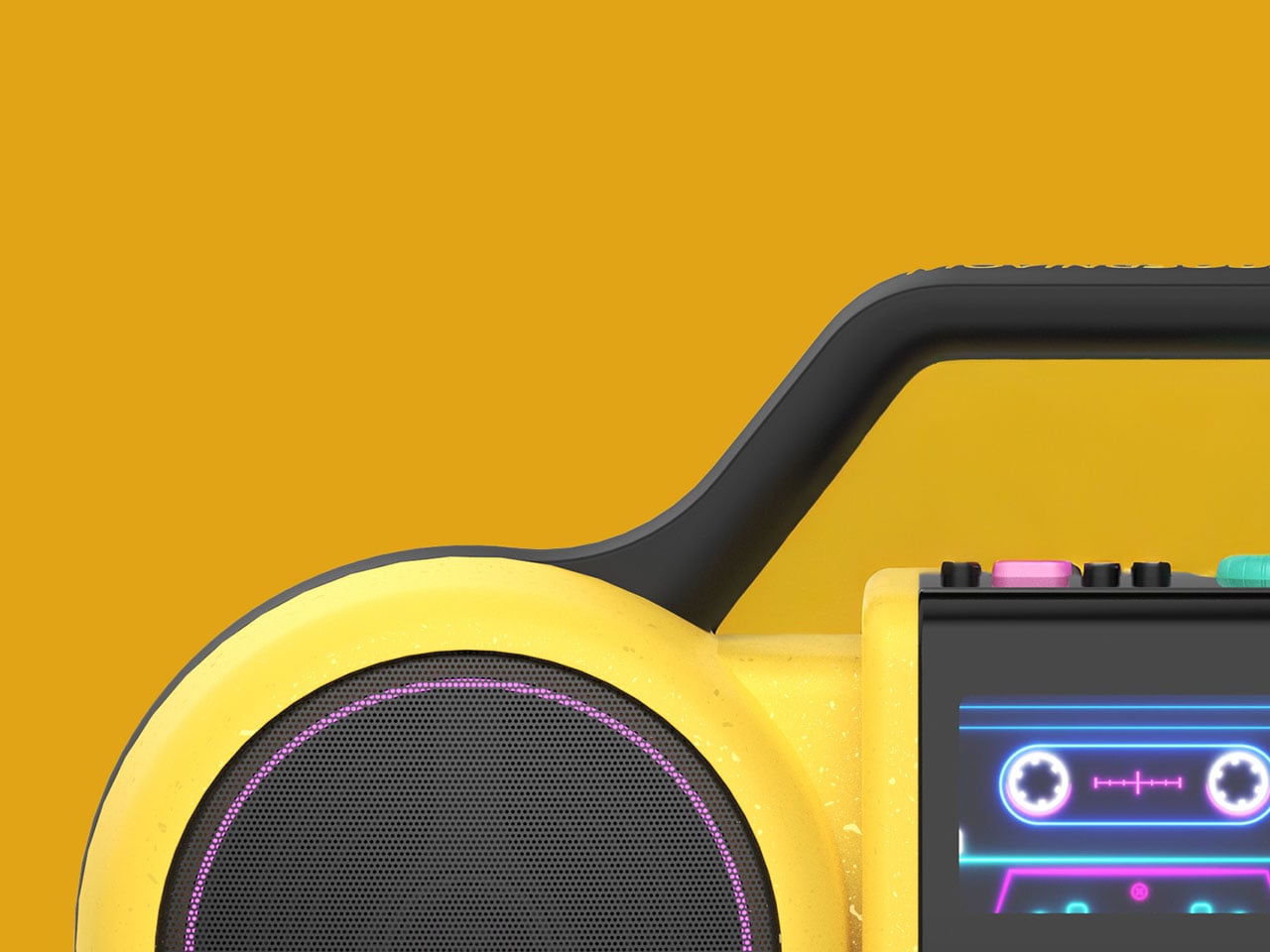
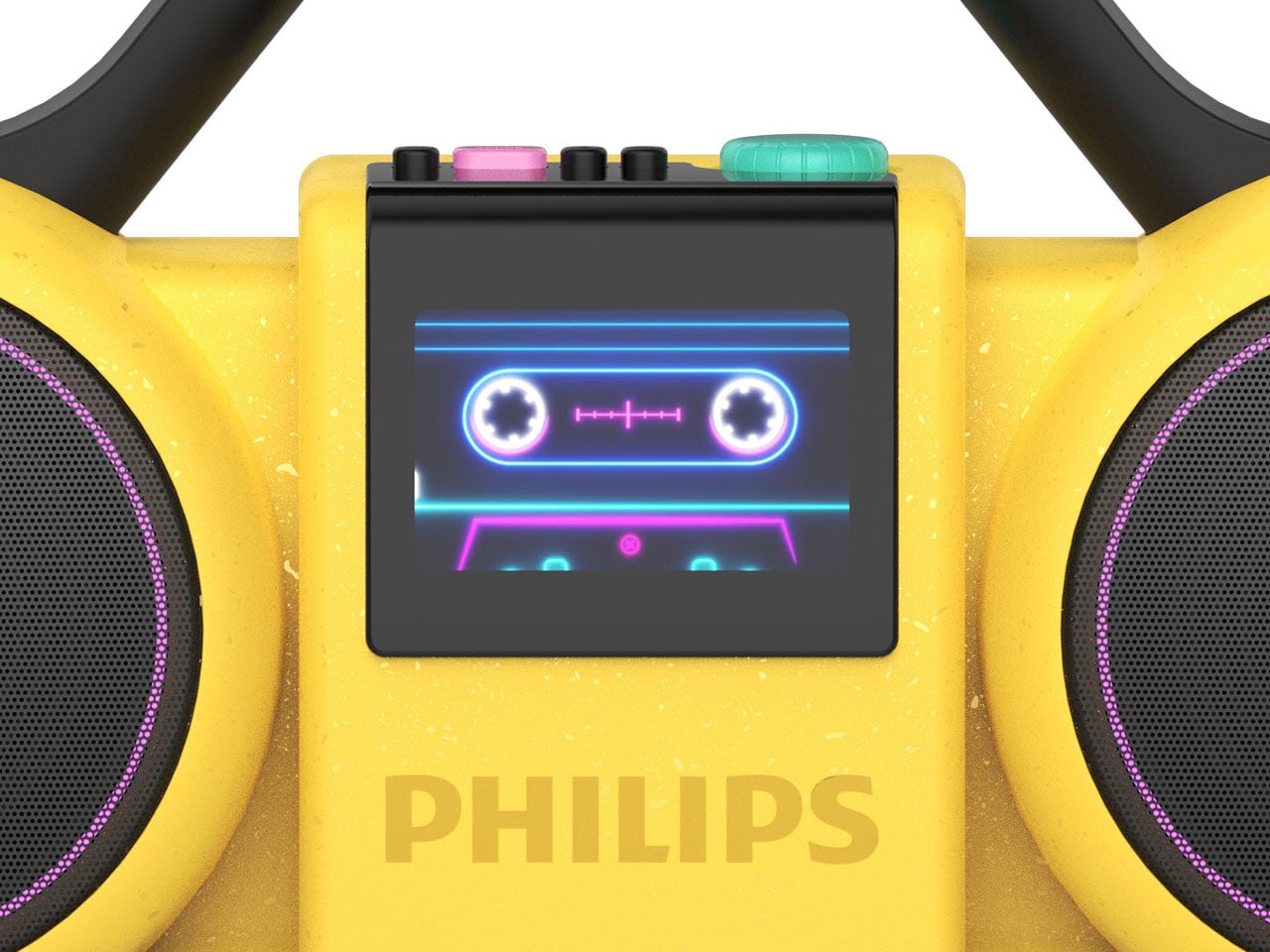
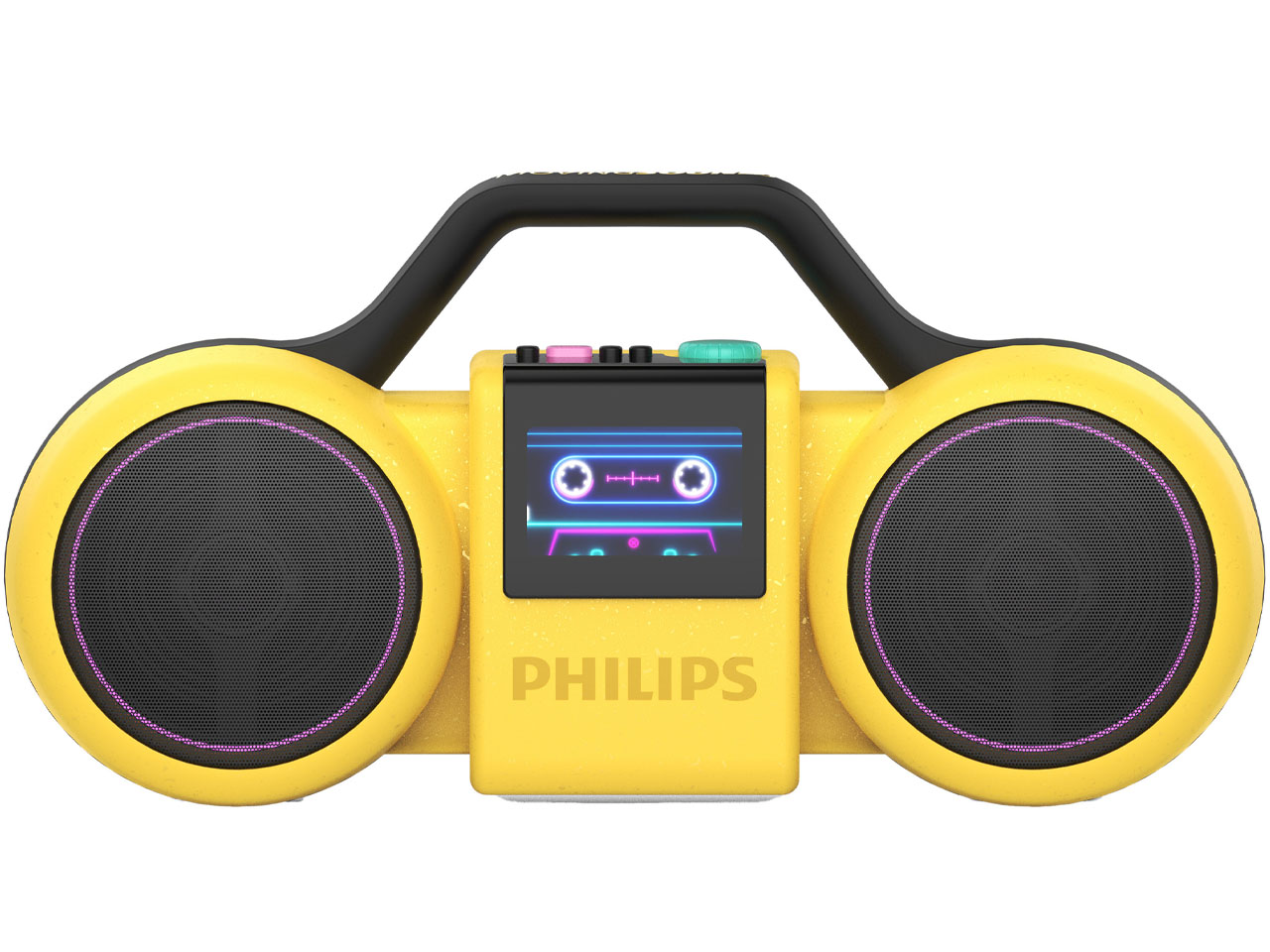
Philips has brought two portable Bluetooth speakers to the fore, which overshadow any other option on the market for their bold retro feel. The €349.99 (approximately $402) Tube (MS80) speaker is a boxy option with the bright yellow hue contrasted well with the matte black and the LED lighting around the speaker ring. It is not all looks as the IP67 rated speaker produces 140W of thumping sound via the two five-inch woofers, two tweeters, and a dual passive radiator setup. The Tube (MS80) retains the nostalgia with a color display showing the looping cassette animation. The speaker has a 24-hour battery life, which will obviously depend on the volume levels at which it is played. Modern connectivity options like Bluetooth 5.5, Auracast, and USB make this a true audio lover’s accessory.
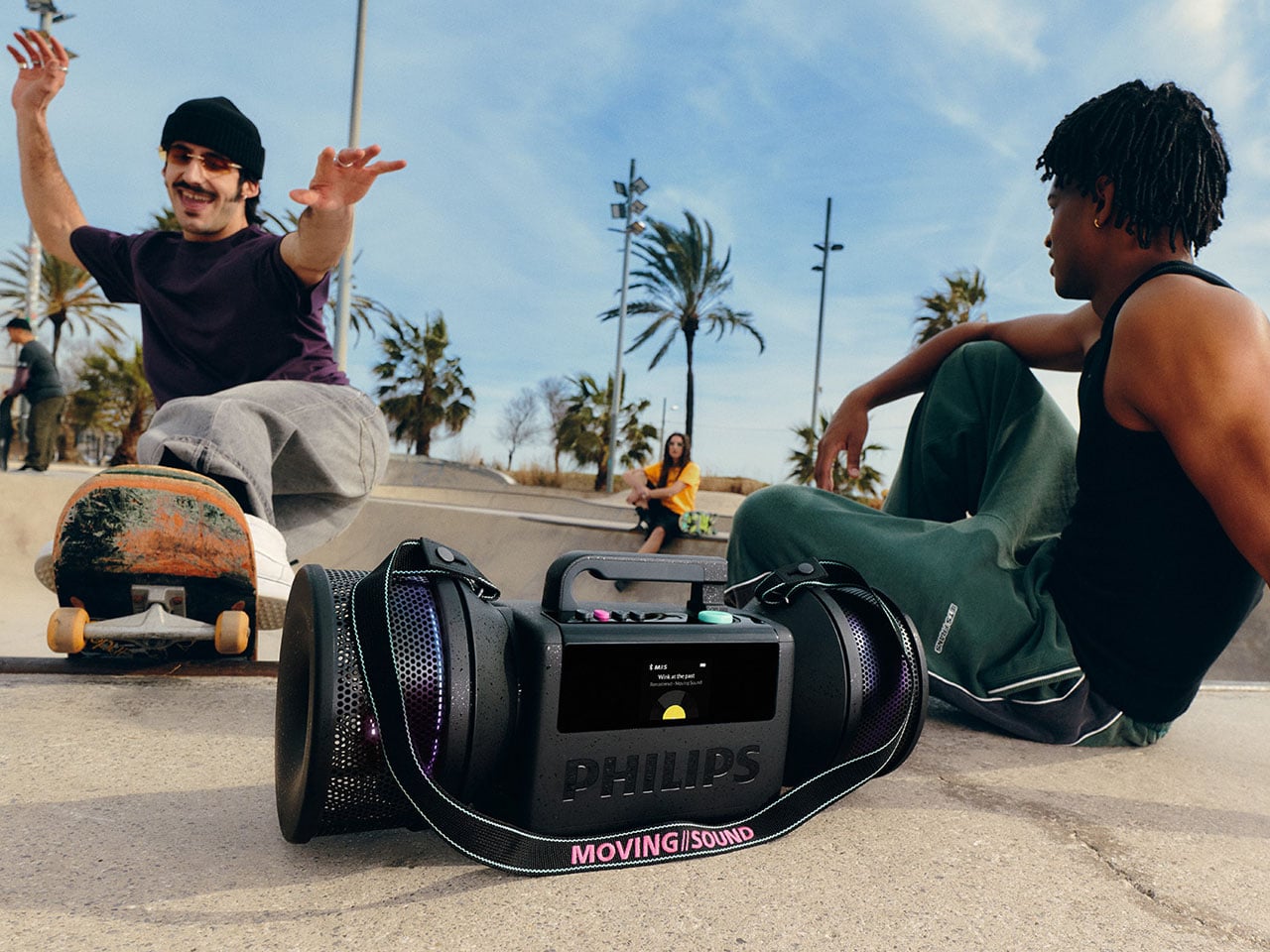
On the other hand, The Roller (MS60), priced at €179.99 (approximately $208), is similar to the Tube (MS80) with a smaller footprint and more contoured look. The stereo layout comprises woofers, tweeters and passive radiators, and for low-end addicts, the bass can be tuned up using the Bass+ feature. The IP67 speaker generates 60W sound and comes with the same modern connectivity options as the big brother. Since it generates less wattage, it is also rated at 24-hour battery life. You can also utilize the speaker as a battery bank for power-hungry gadgets.
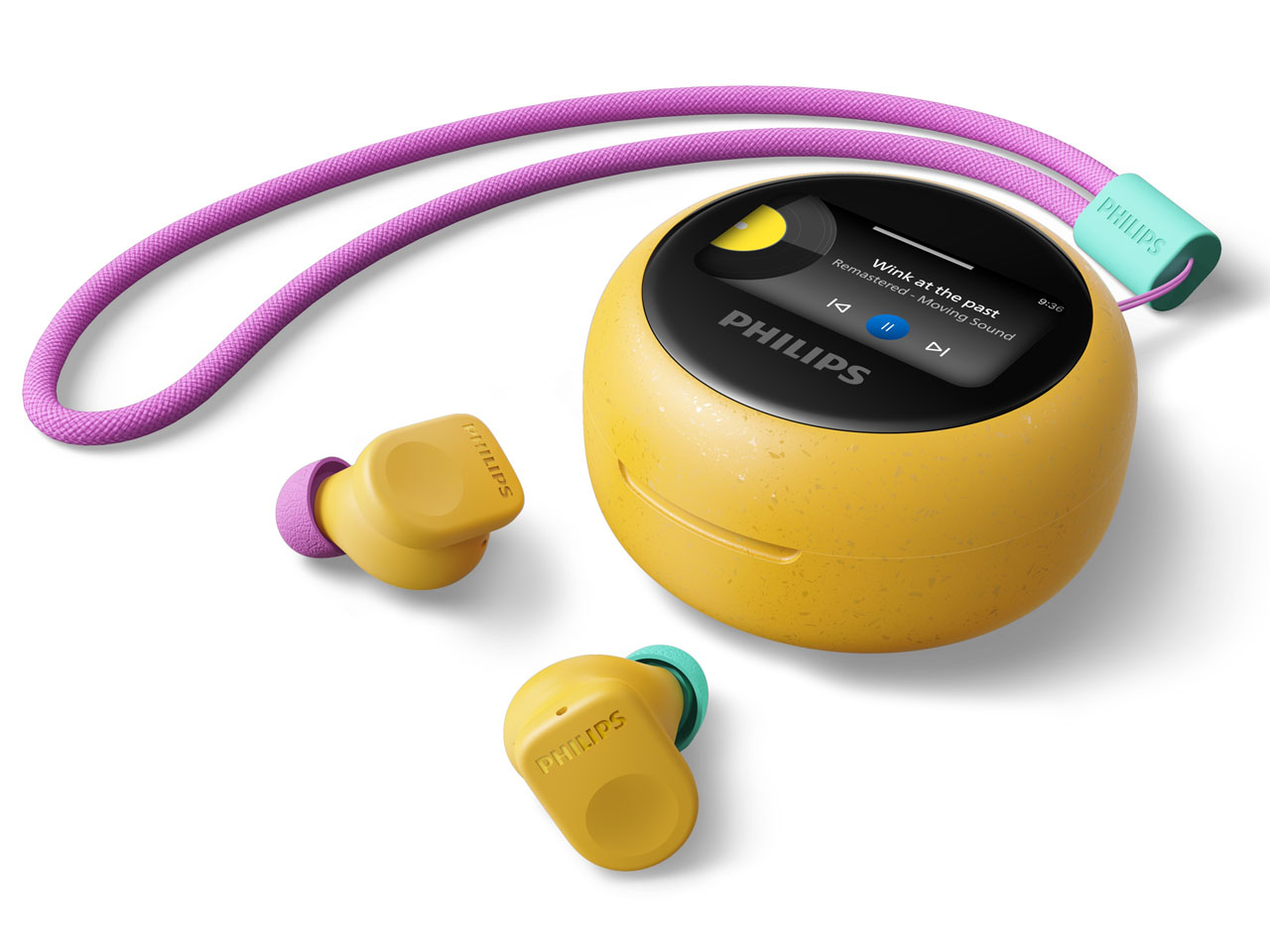
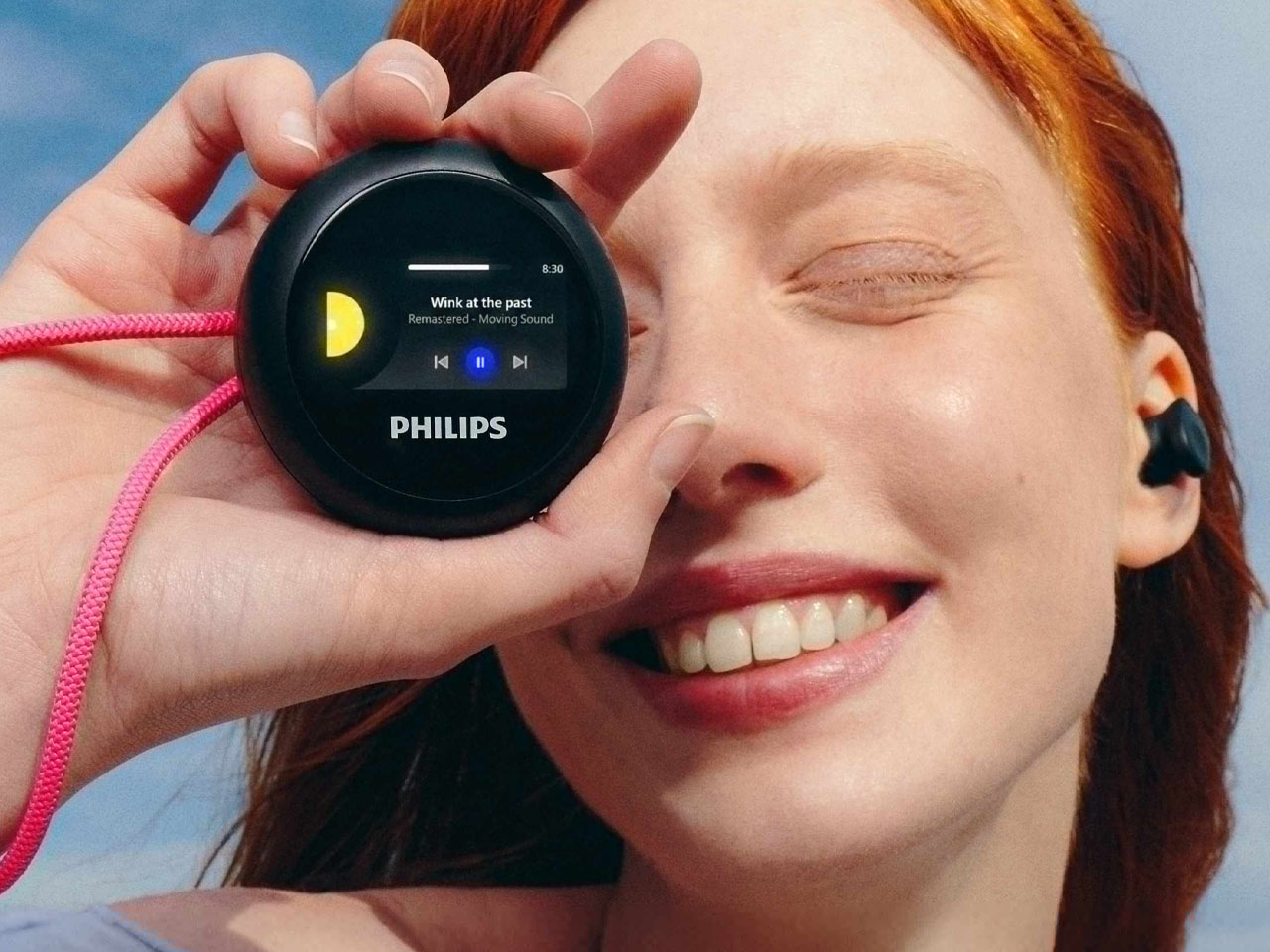
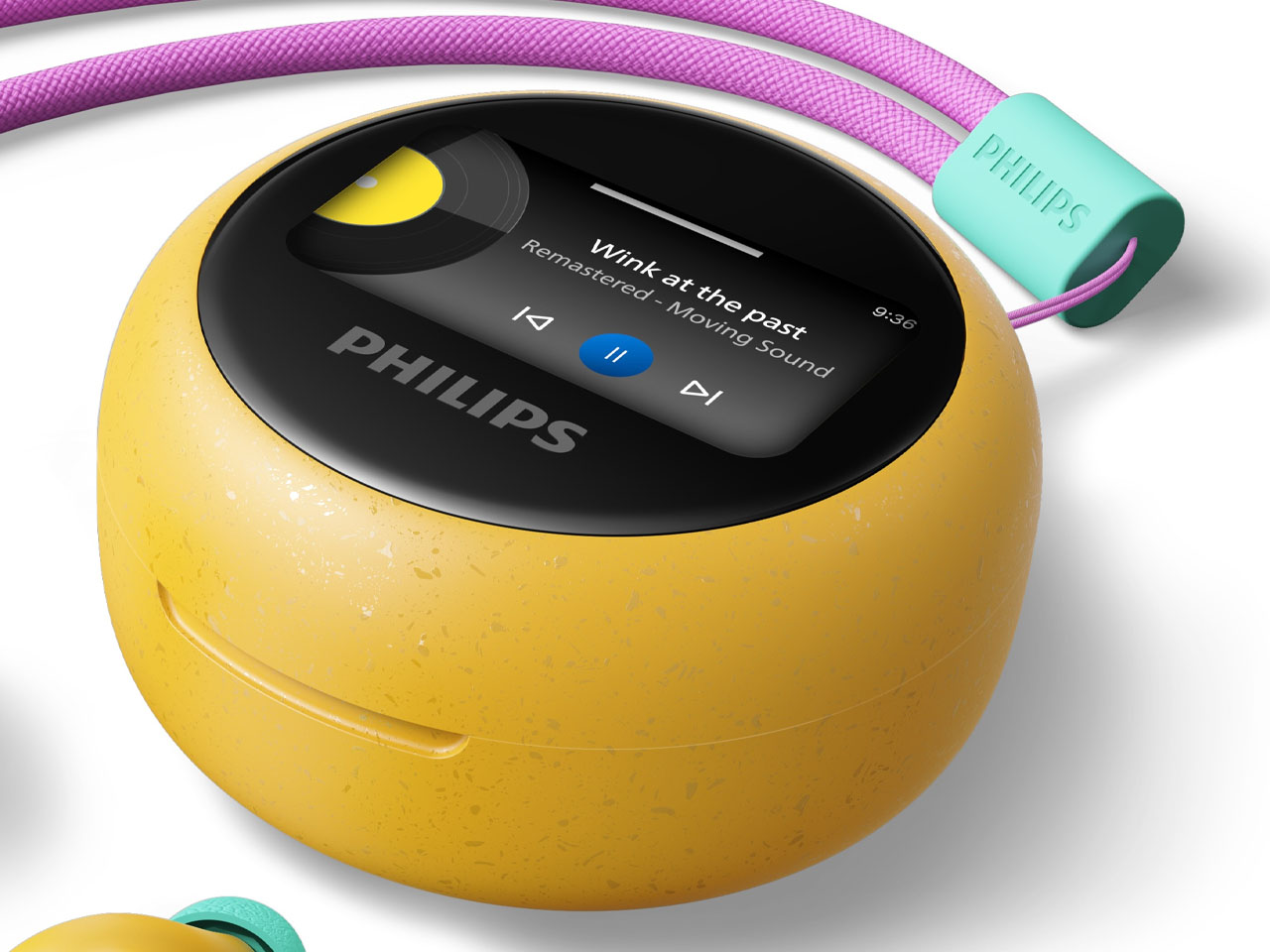
These are one of my favorites in the lineup for their cheesy appeal. The IP54-rated Buds (MS3) wireless earbuds come with a round case that has a touchscreen display on top to show the current playing track and an option to toggle the next or previous tracks. The hues on this are purely magical with the yellow, teal and neon pink splattered in perfect proportions. The buds boast six microphones in total for hybrid ANC, and come with Spatial Audio, multipoint connectivity, Swift Pair support, and Auracast. The promised battery life of 42 hours with ANC off is quite impressive, and a 10-minute quick charge lasts for two hours. For €79.99 (approximately $92) The Buds (MS3) are an absolute steal.
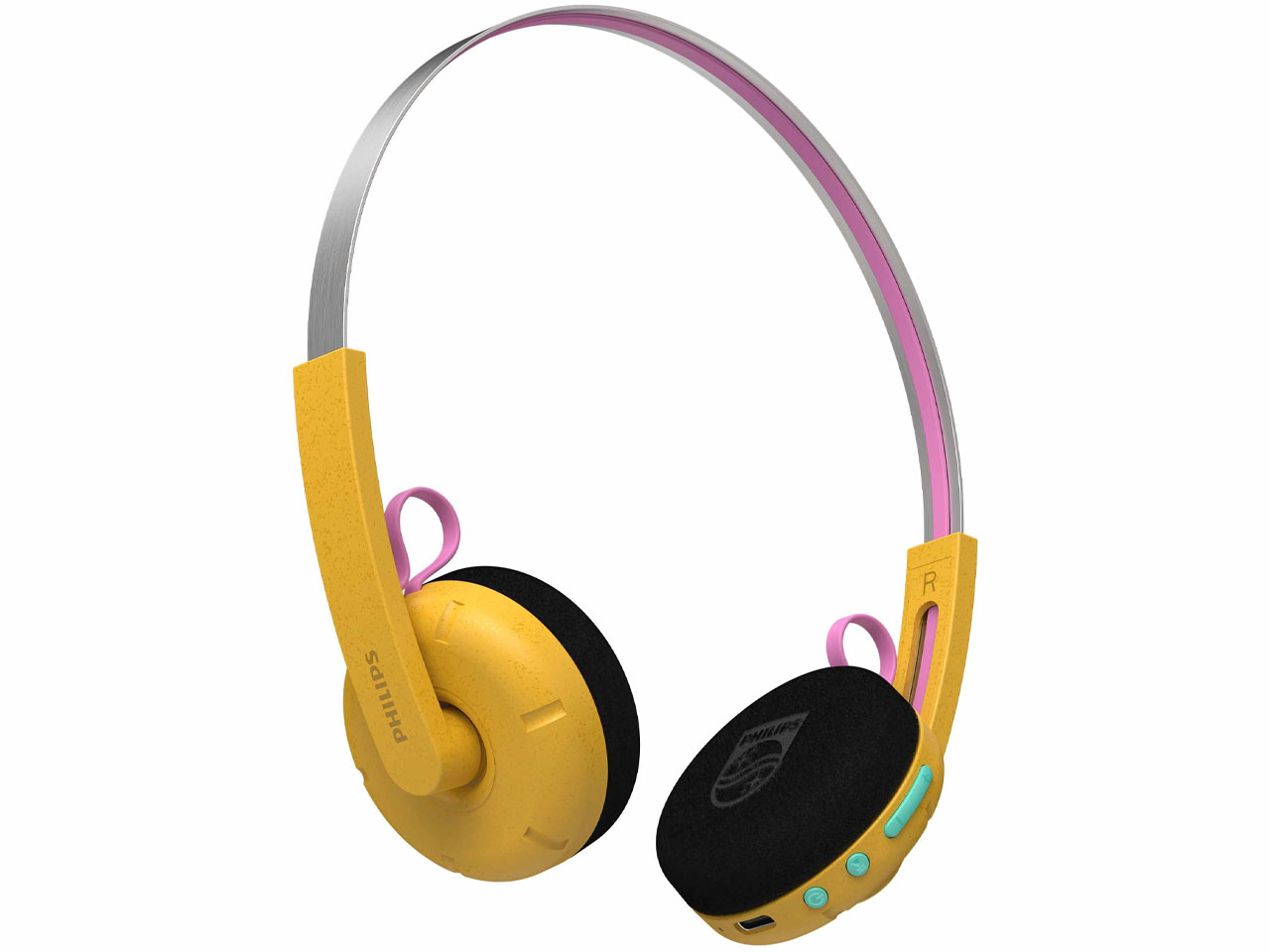
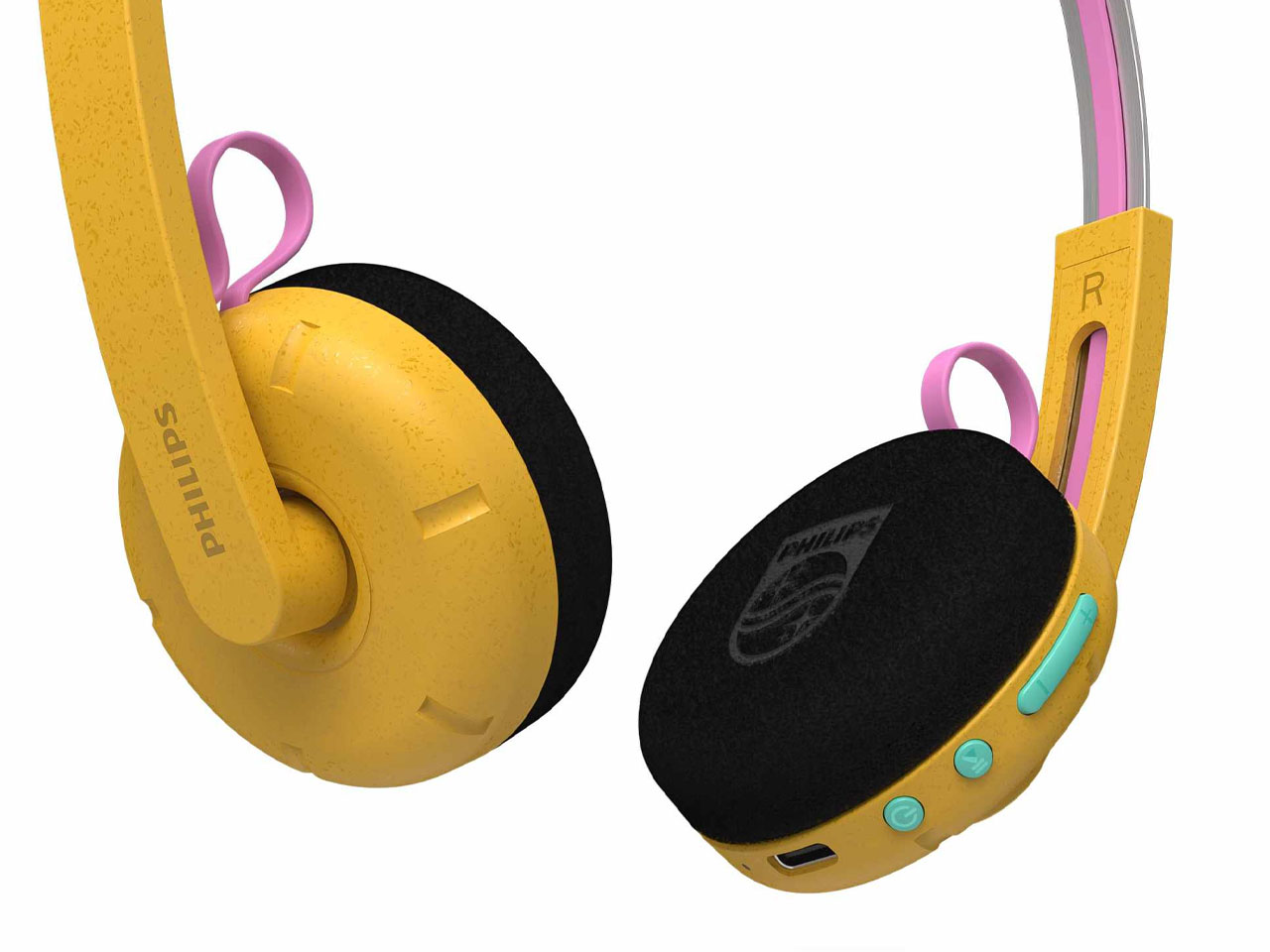
Philips was not going to miss out on the retro feel of on-ear headphones for this line-up. They have the telltale nostalgic look and feel, reminding me of the Back to the Future flick. They are lightweight and will take you back to the golden era if you pair them with music from the 80s. Audio quality from these is impressive courtesy of the 40mm drivers, and the promised 26 hours battery life should last you a couple of days of pure music bliss. You can connect them via Bluetooth or a wired connection, making them well-suited for daily driving. You won’t get anything better than the Ringo Duo (MS1) headphones priced at €34.99 (approximately $40).

The post Philips Moving Sound line-up impresses with retro chunky form and peppy colors first appeared on Yanko Design.