Apple TV+ subscribers will get early access to the company’s latest original podcast

Apple will release its first premium podcast with early access available to Apple TV+ subscribers. The company made the announcement in a press release today that its first dual-language podcast, My Divo, will be the first podcast tied to an Apple TV+ subscription.

All eight episodes of My Divo will be available in English and Spanish for Apple TV+ subscribers when they connect their subscriptions to Apple Podcasts starting July 1. Non-subscribers will listen to new episodes every week. However, they will get access to the first two episodes on launch day. Apple indicated that My Divo will serve as an example of its new business model for podcast distribution going forward, saying that “all upcoming Apple TV+ podcasts will also be made available in full to subscribers.”

My Divo is a podcast about Mexican singer Juan Gabriel, also known as El Divo de Juárez (hence the title), hosted by award-winning journalist Maria Garcia as she tries to reconcile her identity with the legacy of the flamboyant Latino performer. She reexamines similarities within their Mexican heritage, including their sexualities and their upbringing in Ciudad Juárez.

Apple releasing a podcast behind an Apple TV+ paywall is similar to its plan of producing companion podcasts to Apple TV+ shows, which happened shortly after the launch of the streaming service four years ago. My Divo is the first Apple podcast not tied to an Apple TV+ show of the same name.

This article originally appeared on Engadget at https://www.engadget.com/apple-tv-subscribers-will-get-early-access-to-the-companys-latest-original-podcast-195756992.html?src=rss

Valve is selling the 512GB LCD Steam Deck for less than $400

Valve isn’t waiting for the beginning of its Steam Summer Sale to kick off the festivities. On Monday, the company posted 15 percent off deals on two discontinued Steam Deck LCD models, offering the 64GB variant for under $300 and the 512GB edition for under $400. The sale lasts until July 11 at 10AM PDT or — the key bit — “while supplies last.”

The star of the fire sale is the 512GB (NVMe SSD) LCD Steam Deck model. Initially, it was $449, but the handheld is available for only $381.65. Its OLED equivalent retails for $549, letting you save big if you can live with the cheaper (but still high-quality) LCD screen technology. Meanwhile, the 64GB (eMMC SSD) LCD model, which initially sold for $349, is on sale for $296.65.

Both devices have seven-inch displays with 1280 x 800 LCDs, 60Hz refresh rates and 400 nits brightness, but the 512GB model includes anti-glare etched glass. They have 40Wh batteries with a theoretical eight-hour runtime, but they will likely average around 4.5 hours. Each model ships with a standard carrying case.

Screenshot of Valve’s website, listing the features and specs for two Steam Deck models on sale (64GB LCD: $269.65, 512GB LCD: $381.65).
Valve

Engadget re-reviewed the LCD Steam Deck last fall after the OLED variants launched. Although the handheld’s chunky size, weight and mediocre battery life hold it back to a degree (especially for those with smaller hands), it’s still a solid choice for home-based gamers invested in Steam’s ecosystem. The bottom line: “If you have the extra cash, go ahead and grab the OLED version,” as Jessica Conditt wrote, but “compared with the wider handheld sector, the Steam Deck LCD offers a fantastic return on investment.”

You can check out the sale for all the details. Meanwhile, to save on games galore, you can mark your calendar for the Steam Summer Sale, which begins on Thursday.

This article originally appeared on Engadget at https://www.engadget.com/valve-is-selling-the-512gb-lcd-steam-deck-for-less-than-400-185918912.html?src=rss

Paramount+ is raising prices again for all of the Tulsa King fans out there

It’s about to get a bit more expensive to watch Tulsa King, Star Trek shows and that Sonic the Hedgehog spinoff. Paramount Global is once again raising prices for its streaming service, Paramount+, as reported by CNBC. This will bring the price of the Paramount+ with Showtime plan to $13 a month, up from $12, and the bare-bones Paramount+ Essential plan to $8 a month, which is an increase from $6.

The increase takes effect on August 20 for new customers, though pre-existing users will have until around September 20. There is a silver lining. Pre-existing customers who subscribe to the Essential plan will avoid a price increase, for now. So only current Paramount+ with Showtime users and all new subscribers will see the uptick. This follows another fee increase just last year.

Paramount Global has been trying to find a buyer for Paramount+ for months now, with no success. Most recently, a proposed merger with Skydance and National Amusements collapsed. The company, however, recently boasted that the streamer had amassed 71 million paying customers, though it still operates at a loss. As a reference point, Peacock has around 31 million subscribers and Max has just over 97 million.

That puts Paramount+ right in the middle of the pack. It does have a lot going for it in the IP department. Knuckles was well-received and my dad has had Tulsa King on continuous repeat for over a year. I subscribe, though I’m there exclusively for Star Trek. Once that well runs dry, which seems to be happening, I’m out.

Of course, Paramount+ is by no means sitting alone at the streamflation lunch table. Price increases have been running rampant the past year or two, and just about every major platform has been involved. Max raised subscription costs earlier this month and Peacock announced a similar move for later this summer. Disney+, Apple TV+ and Netflix have all recently raised prices.

This article originally appeared on Engadget at https://www.engadget.com/paramount-is-raising-prices-again-for-all-of-the-tulsa-king-stans-out-there-183720943.html?src=rss

New difficulty mod in Stardew Valley will purge your saves if you use a guide

A great number of us have played games in extra-difficult modes (or in the case of Kingdom Hearts, Proud Mode) to challenge ourselves. Now, a Stardew Valley player has created a “hardcore” option for the otherwise chill game, one that will delete the save files of any player who uses a guide while playing the game on PC.

According to GamesRadar, software engineer Sylvie Nightshade created the high difficulty mod on June 21 after reading an article published the day before on the satirical website Hard Drive, the gaming version of The Onion. The article in question joked about a “hardcore mode” in Stardew Valley that will delete players’ hard grown farms if they dare read the wiki at any point during gameplay. That same day, Nightshade quote-tweeted the article on X with the link to the mod in GitHub announcing that she turned the joke into reality.

The mod works by scanning the title of every window or tab that is open while Stardew Valley is running. If any window title includes “Stardew Valley Wiki” in the title, it erases everything the player has worked hard to achieve, forcing them to start from square one without using the guide. Nightshade even updated the mod so that it not only deletes the player’s save file but also closes the browser window the wiki was found in “just to add insult to injury.”

Hardcore mode being programmed into Stardew Valley is another case of life imitating art after Hello Kitty Island Adventure launched on Apple Arcade 17 years after it was mentioned as a joke in the South Park episode “Make Love, Not Warcraft.” Here’s a tip: If you play Stardew Valley on hardcore mode on your computer but use the guide on your phone, you should be safe.

This article originally appeared on Engadget at https://www.engadget.com/new-difficulty-mod-in-stardew-valley-will-purge-your-saves-if-you-use-a-guide-175521779.html?src=rss

Apple’s iPhone 15 is up to $120 off at Woot right now

Woot is selling iPhone 15 models for up to $120 off, with various configuration and color options. This discount makes the 128GB version just $680 and brings the 256GB model down to $800. Those are some good prices for one of Apple’s latest and greatest smartphones.

There are some caveats. This sale is just for the standard iPhone 15, so don’t go looking for Pro or Pro Max versions. These are brand-new smartphones, but they don’t come with official Apple packaging. Instead, you get a “sleek custom black box.” Finally, these handsets aren’t eligible for AppleCare, though they do ship with a one-year vendor warranty.

There’s also the ghost of Christmas future. It’s late June right now and Apple typically unveils new smartphones in September. This means that in a few short months, that iPhone 15 will likely get outshined by the iPhone 16. Still, modern updates tend to be iterative, so you probably won’t be missing that much, outside of Apple Intelligence integration.

On the upside, this is the iPhone 15. It’s one of the best smartphones money can buy. We gave the standard iPhone 13 the award for best budget-friendly smartphone, but the Woot deal brings the two models much closer in price. 

With that in mind, the 15 is a major step up in just about every way. It features a better chip, improved cameras, longer battery life and, at long last, USB-C integration. We called it "the most substantial update to the regular iPhone in years" in our official review. If you want a reliable and powerful smartphone that should keep on ticking for a few years, don’t sleep on this deal.

Follow @EngadgetDeals on Twitter and subscribe to the Engadget Deals newsletter for the latest tech deals and buying advice.

This article originally appeared on Engadget at https://www.engadget.com/apples-iphone-15-is-up-to-120-off-at-woot-right-now-174040952.html?src=rss

Record labels sue AI music generators for ‘massive infringement of recorded music’

Major music labels are taking on AI startups that they believe trained on their songs without paying. Universal Music Group, Warner Music Group and Sony Music Group sued the music generators Suno and Udio for allegedly infringing on copyrighted works on a “massive scale.”

The Recording Industry Association of America (RIAA) initiated the lawsuits and wants to establish that “nothing that exempts AI technology from copyright law or that excuses AI companies from playing by the rules.”

The music labels’ lawsuits in US federal court accuse Suno and Udio of scraping their copyrighted tracks from the internet. The filings against the AI companies reportedly demand injunctions against future use and damages of up to $150,000 per infringed work. (That sounds like it could add up to a monumental sum if the court finds them liable.) The suits appear aimed at establishing licensed training as the only acceptable industry framework for AI moving forward — while instilling fear in companies that train their models without consent.

Screenshot of the Udio AI music generator homescreen.
Udio

Suno AI and Udio AI (Uncharted Labs run the latter) are startups with software that generates music based on text inputs. The former is a partner of Microsoft for its CoPilot music generation tool. The RIAA claims the services’ reproduced tracks are uncannily similar to existing works to the degree that they must have been trained on copyrighted songs. It also claims the companies didn’t deny that they trained on copyright works, instead shielding themselves behind their training being “confidential business information” and standard industry practices.

According to The Wall Street Journal, the lawsuits accuse the AI generators of creating songs that sounded remarkably similar to The Temptations’ “My Girl,” Green Day’s “American Idiot,” and Mariah Carey’s “All I Want for Christmas Is You,” among others. They also claim the AI services produced indistinguishable vocals from artists like Lin-Manuel Miranda, Bruce Springsteen, Michael Jackson and ABBA.

Wired reports that one example cited in the lawsuit details how one of the AI tools reproduced a song that sounded nearly identical to Chuck Berry’s pioneering classic “Johnny B. Goode,” using the prompt, “1950s rock and roll, rhythm & blues, 12 bar blues, rockabilly, energetic male vocalist, singer guitarist,” along with some of Berry’s lyrics. The suit claims the generator almost perfectly generated the original track’s “Go, Johnny, go, go” chorus.

Screenshot for the Suno AI webpage.
Suno

To be clear, the RIAA isn’t advocating based on the principle that all AI training on copyrighted works is wrong. Instead, it’s saying it’s illegal to do so without licensing and consent, i.e., when the labels (and, likely to a lesser degree, the artists) don’t make any money off of it.

The recording industry is working on AI deals of its own that license music in a way that it believes is fair for its bottom line. These include an agreement between Universal and SoundLabs, which allows the latter to create vocal models for artists while still allowing the singers to control ownership and output. The label also partnered with YouTube on an AI licensing and royalties deal. Universal also represents Drake, whose diss track against Kendrick Lamar from earlier this year used AI-generated copies of Tupac Shakur and Snoop Dogg’s voices.

“There is room for AI and human creators to forge a sustainable, complementary relationship,” the filing against Suno reads. “This can and should be achieved through the well-established mechanism of free-market licensing that ensures proper respect for copyright owners.”

According to Bloomberg, Suno co-founder Mikey Shulman said in April that the company’s practices are “legal” and “fairly in line with what other people are doing.” The AI industry at large appears to be attempting to race towards a threshold where its tools are considered too ubiquitous to be held accountable before anyone can do anything about how it trained its models.

“We work very closely with lawyers to make sure that what we’re doing is legal and industry standard,” Suno’s founder said in April. “If the law changes, obviously we would change our business one way or the other.”

This article originally appeared on Engadget at https://www.engadget.com/record-labels-sue-ai-music-generators-for-massive-infringement-of-recorded-music-172915925.html?src=rss

Government workers are being told to immediately update their Pixel phones to patch a serious exploit

The US government has issued a dire warning to employees with Pixel phones, mandating a security update by July 4, as originally reported by Forbes. This is due to a high-severity firmware vulnerability within the Android operating system that could open up devices to “limited, targeted exploitation.”

There’s already a patch for the zero-day exploit but it requires a visit to the settings app to make sure the device is up to date. Government employees who do not install the security update by July 4 must “discontinue use of the product.” It should go without saying that the rest of us should also heed these warnings, particularly those who connect to enterprise servers.

Google has remained mum as to the actual details of the vulnerability, but government involvement makes it seem a bit more serious than your average exploit. The federal mandate is directed exclusively at Pixel devices, but it looks like the exploit could extend to other Android phones. 

The folks behind GrapheneOS, an operating system based on Android, note that the vulnerability is not exclusive to Pixel phones. The organization says a fix will be part of any update to Android 15, which releases in August, but that it hasn’t been backported. So, if you opt not to update the OS, you likely won’t get the patch. It remains unclear if there are any other options for mitigation. We reached out to Google and will update this post when we know more.

The warning issued by the US government, as described in the Known Exploited Vulnerabilities (KEV) catalog, is also stingy with the details. The advisory simply states that “Android Pixel contains an unspecified vulnerability in the firmware that allows for privilege escalation.” GrapheneOS says the exploit fails to wipe the memory when running a firmware-based fastboot mode, which potentially allows nefarious actors to exploit the system “to get previous OS memory.”

To recap, update your Pixel Phone immediately via the settings app, while those with other Android phones should sit tight for now. It’s never wise to mess with these zero-day exploits and the involvement of the US government has certainly heightened the threat level a bit here.

This article originally appeared on Engadget at https://www.engadget.com/government-workers-are-being-told-to-immediately-update-their-pixel-phones-to-patch-a-serious-exploit-172155317.html?src=rss

OPPO Reno 12 Pro Review: Making AI Affordable in a Stylish Design

PROS:


  • Elegant and stylish design, especially the Nebula Silver color

  • Supports a micro SD card for external storage

  • 50MP autofocus front camera can do 4K UHD videos

CONS:


  • Processor is a downgrade compared to Chinese model

  • No wireless charging

  • Glossy bottom plate is a smudge magnet (Space Brown, Sunset Gold)

RATINGS:

AESTHETICS
ERGONOMICS
PERFORMANCE
SUSTAINABILITY / REPAIRABILITY
VALUE FOR MONEY

EDITOR'S QUOTE:

The OPPO Reno 12 Pro delivers powerful AI experiences packed in a beautiful and soothing design.

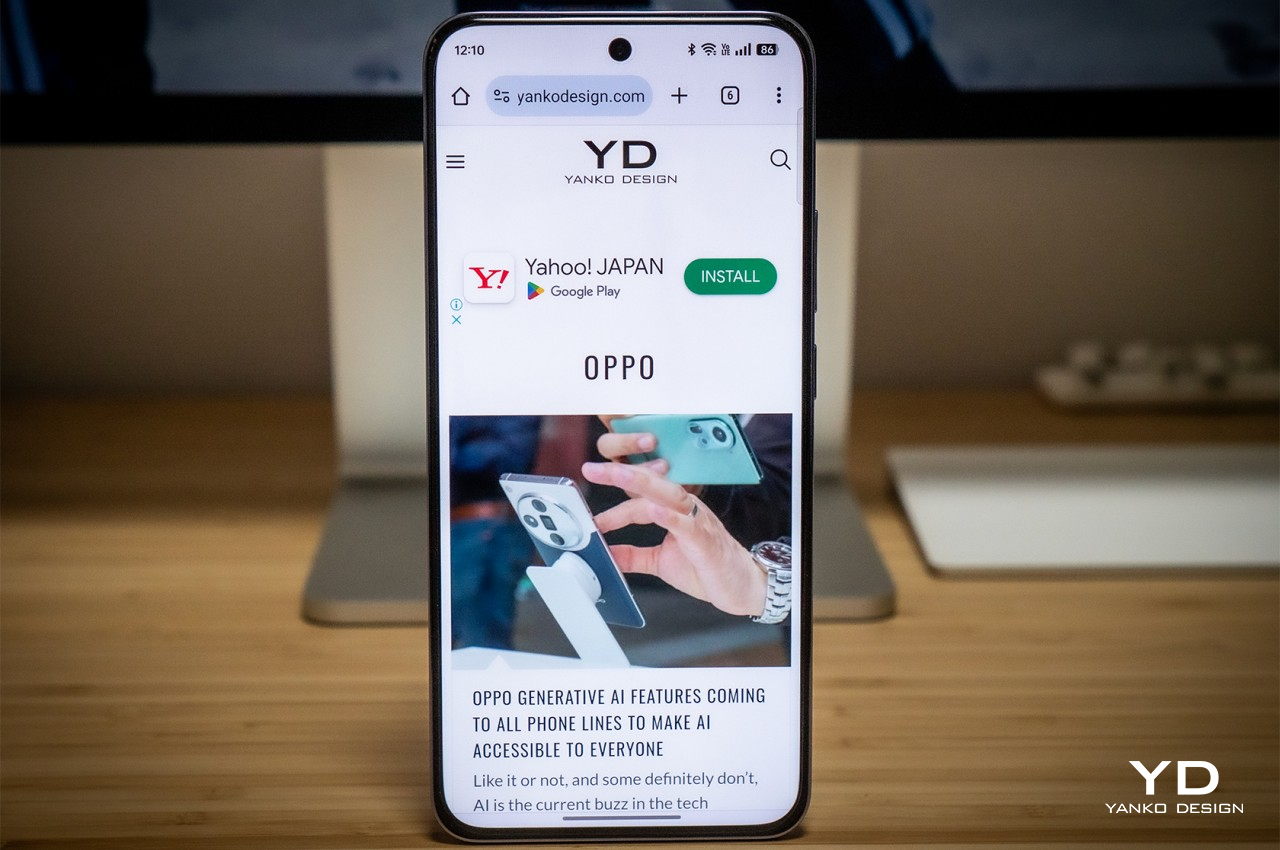
AI is the buzzword in the tech industry, with mainstream media picking up on it and sometimes not in a good way. All the benefits that the technology brings, however, are for naught if only a select few can afford to use it. AI on smartphones promises quality-of-life improvements and exciting creative features, but only if you have the latest and greatest models with powerful specs and matching high prices. Fortunately, AI on mobile is such a hot topic that manufacturers are bringing those features to almost any new device. That’s pretty much the premise of the OPPO Reno 12 Pro, specifically the global edition that the brand just launched, one of the first few to advertise these AI benefits on what some would consider a mid-range model. But is it a potent combination or is the experience hampered by the Reno 12 Pro’s hardware? We take the phone for a spin to bring you the answers.

Designer: OPPO

Aesthetics

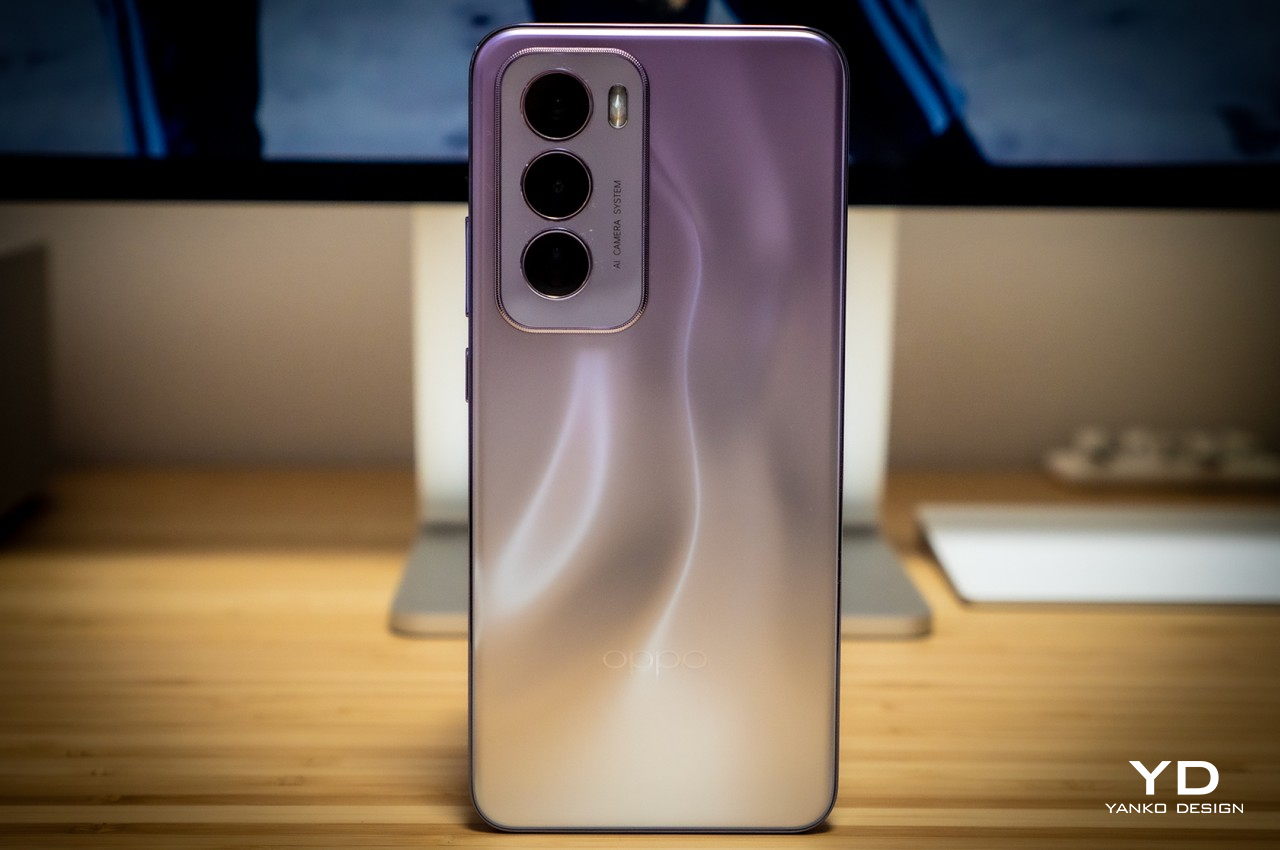
Companies avoid using the label “mid-range” or “mid-tier” for good reason. They often come with the connotation of lacking quality and appeal, which is definitely not something that can be said for the Reno 12 Pro. Right off the bat, you’ll be surprised by how enchanting the phone is, especially the Nebula Silver colorway we received for this review. OPPO utilizes what it calls Fluid Ripple Texture that gives the phone’s back a 3D visual effect of liquid gently moving underneath the glass. It even has something like a parallax effect that gives the illusion that there’s truly some solid mass despite having a completely flat surface. The play of light, shadow, and colors has a mesmerizing effect that gives the phone a more stylish and elegant air.
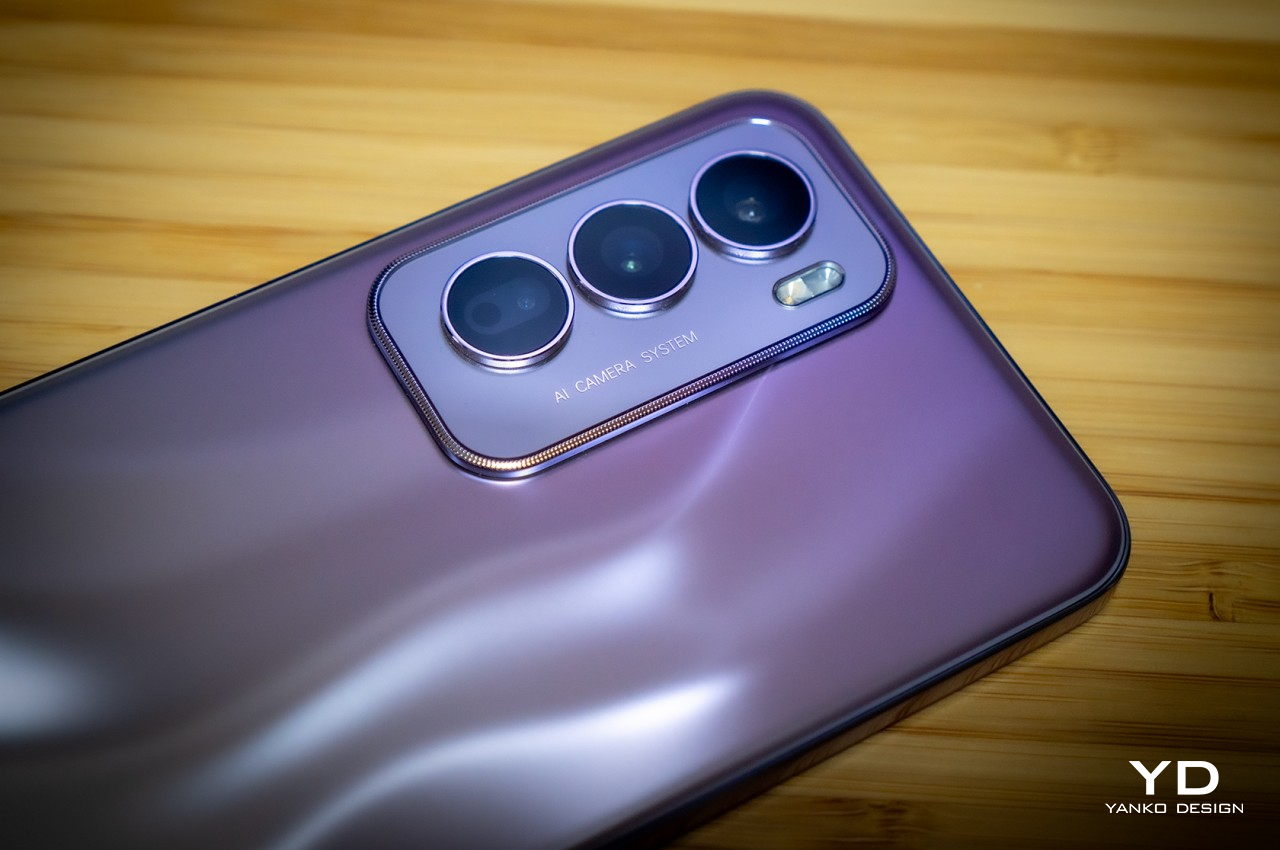
The other two color options, Sunset Gold and Space Brown, are no less attractive but have a different approach. They use a two-tone design that combines a matte section and a smaller glossy area separated by a chic metal-like ribbon running across the width of the phone. It’s a familiar composition, only arranged upside-down, giving the Reno 12 Pro a distinctive look. Unfortunately, this design has one rather critical flaw, the glossy part will always be where your palm rests, which means it will always have oils and smudges whenever you hold it.

The phone’s flat edges give it a modern look and its reflective surface gives the impression of a metallic nature. It is, however, a sleight of hand, given how the material is actually a new proprietary alloy that OPPO promises has the same durability but with less weight. All in all, the OPPO Reno 12 Pro definitely has a striking presence that’s almost on par with more expensive flagships.

Ergonomics

Given the phone’s large size, it’s almost shocking that the OPPO Reno 12 Pro weighs only 180g. Part of that is probably thanks to the absence of “real” metal in the frame, utilizing OPPO’s High-Strength Alloy Framework instead. On the one hand, this gives the phone a lightweight body that lessens the strain on your hand. On the other hand, no pun intended, it sometimes makes the phone feel a bit flimsy, lacking the substance you’d find on premium handsets.
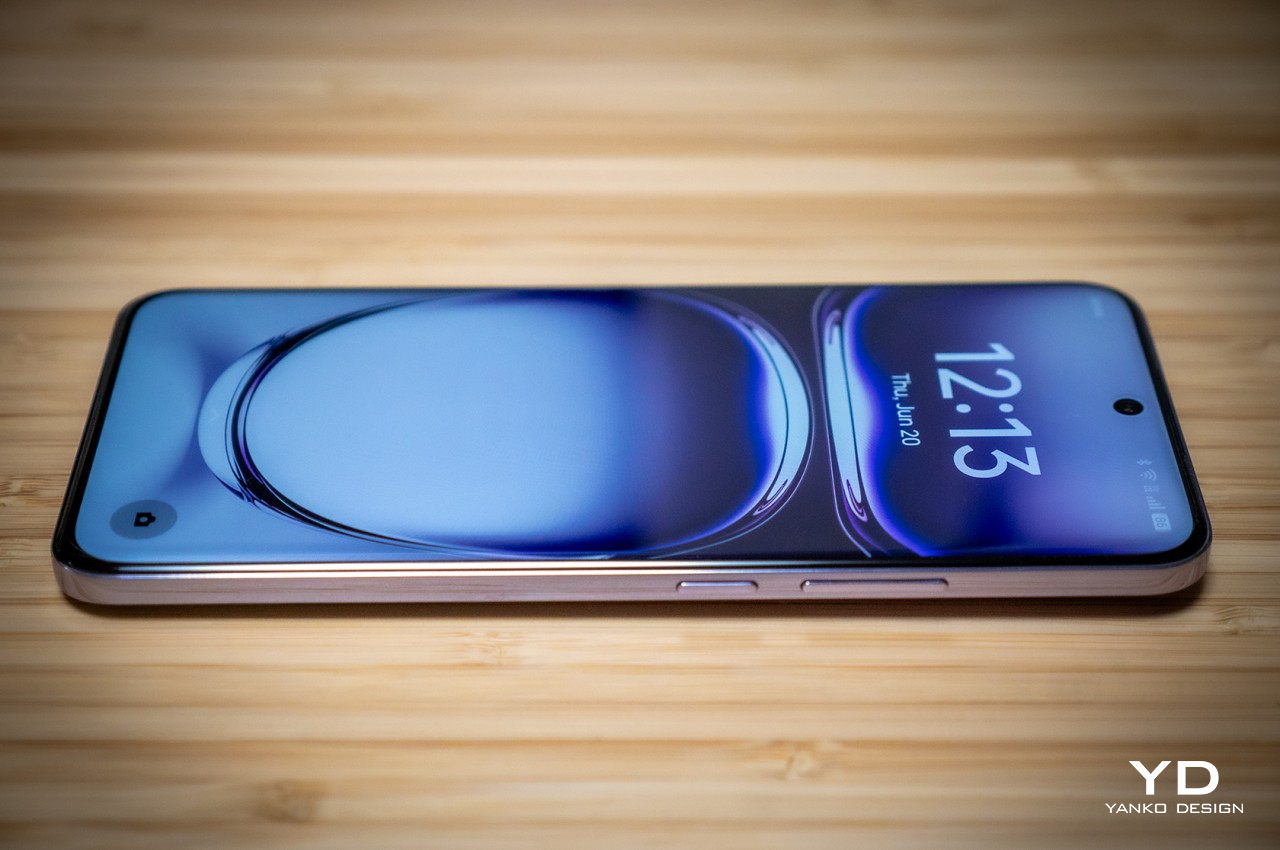
Smartphone designs these days either go for flat edges or the more traditional curved screens, but the OPPO Reno 12 Pro finds a rather curious middle ground. Its sides are quite flat, but the screen isn’t exactly the same. It has a very minimal curvature not only on the left and right sides but also top and bottom but never goes over the edges. OPPO says this design delivers that same immersive viewing experience without the accidental touches that curved screens are notorious for. Along with more rounded corners, this design offers comfort and confidence in your grip, making for a more pleasurable smartphone experience.

Performance

The OPPO Reno 12 Pro isn’t exactly new but it is only now making its way to global markets. That journey, however, seems to have taken a toll on the handset, and OPPO decided to use a custom MediaTek Dimensity 7300-Energy. This variant of the processor is geared towards more efficient battery use, but it’s still based on a rather mid-range silicon line. Fortunately, the phone still performs admirably, especially with 12GB of RAM, though you might see some stuttering or dropped frames in more intensive games. In exchange, however, OPPO gives the Reno 12 Pro a feature that’s all but gone from smartphones these days: a microSD card slot sharing space with the second SIM card slot.
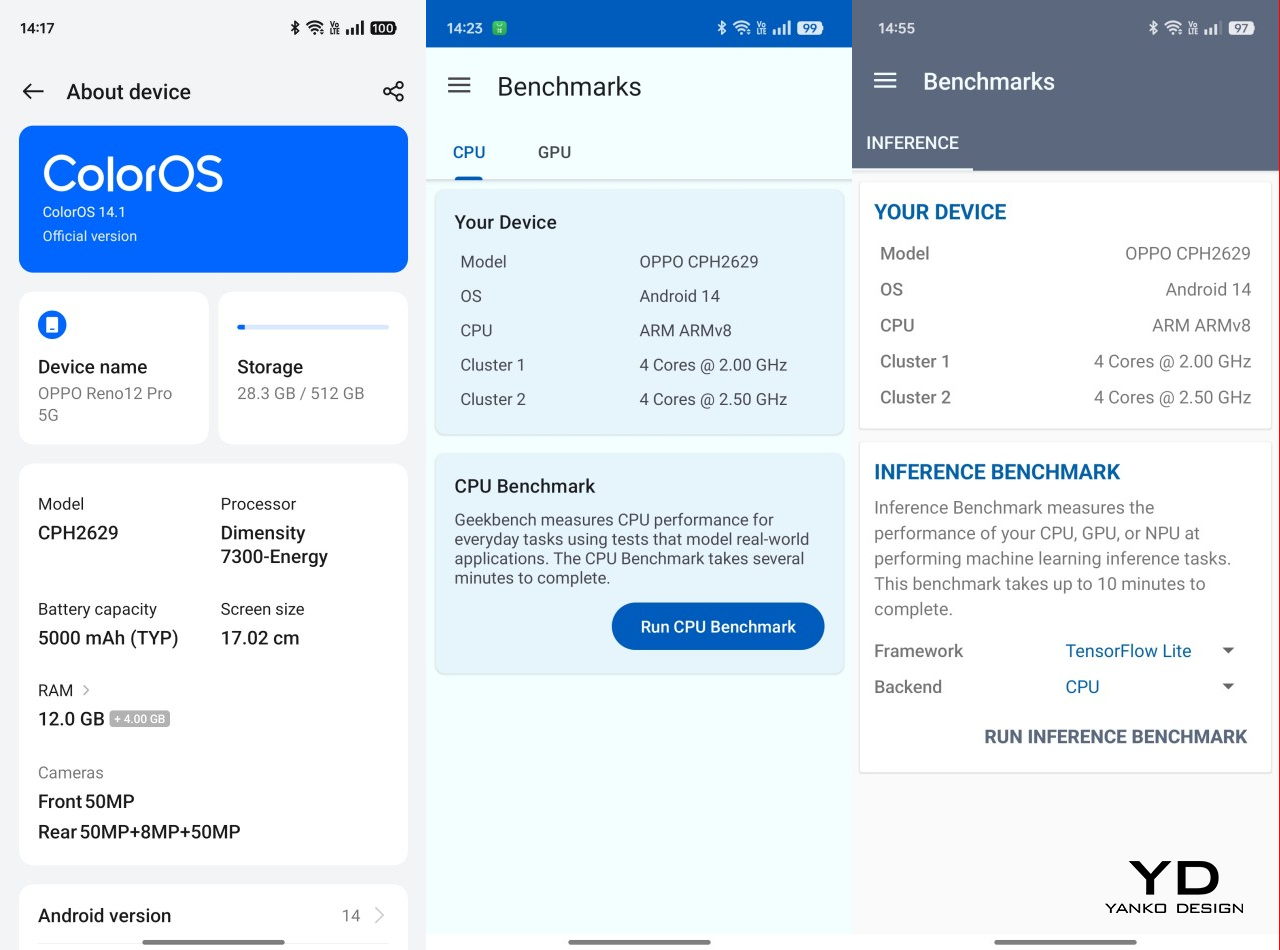
Like any other smartphone these days, OPPO takes great pride in the Reno 12 Pro’s imaging system, and for good reason. It boasts two 50MP sensors, one for the main wide shooter and another for telephoto. These high-performance cameras produce impressive images, even on overcast days, bringing rich detail and accurate colors to every shot. These two cameras also work together to deliver beautiful bokeh effects in portrait mode, creating an accurate separation of foreground and background and giving the latter a pleasant blur. Sadly, the 8MP ultra-wide camera barely holds a candle to these two, but it thankfully still gets the basics right. Even more impressive, however, is the 50MP front-facing camera that not only has autofocus but can even take videos in 4K UHD quality.


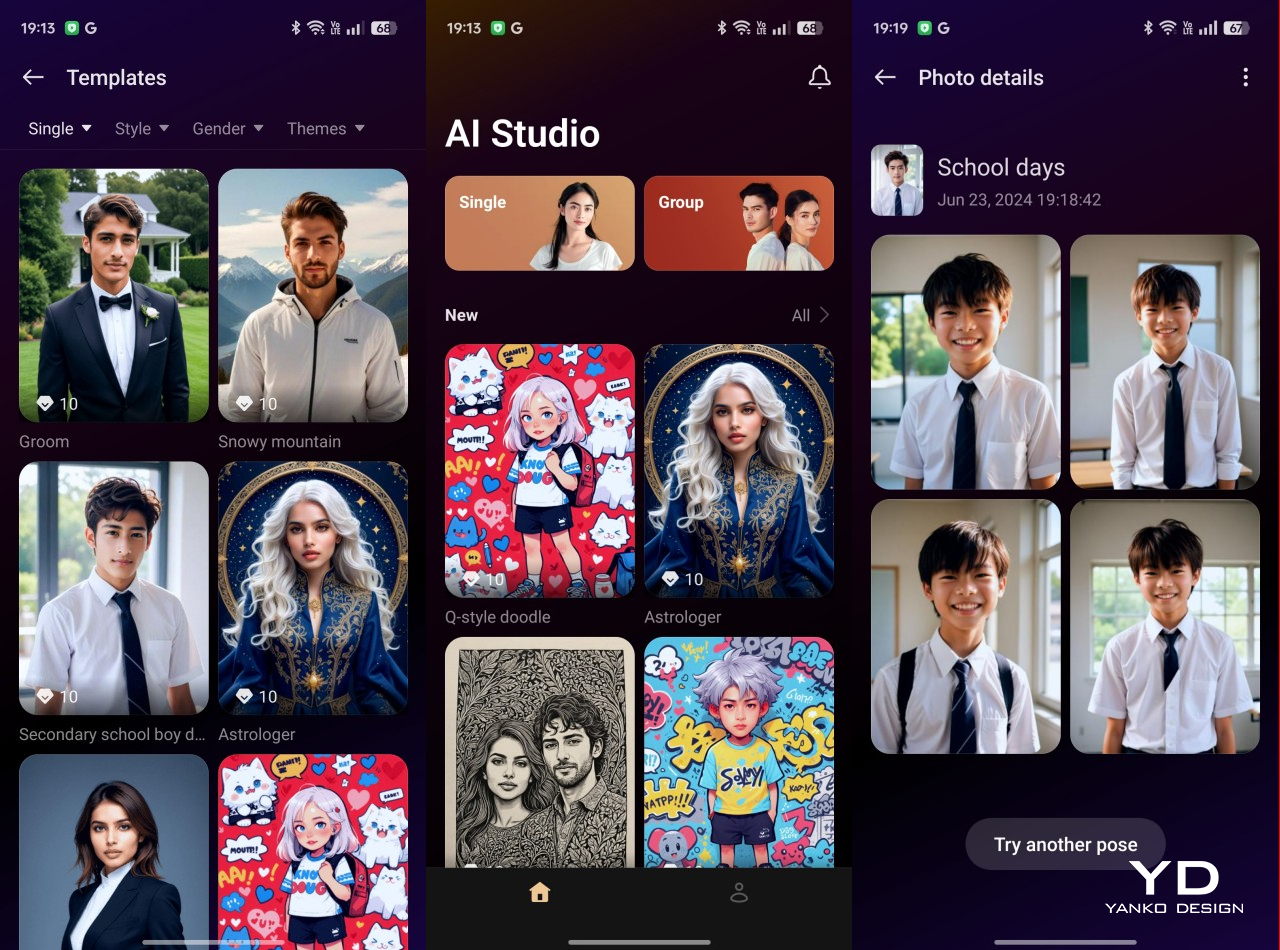
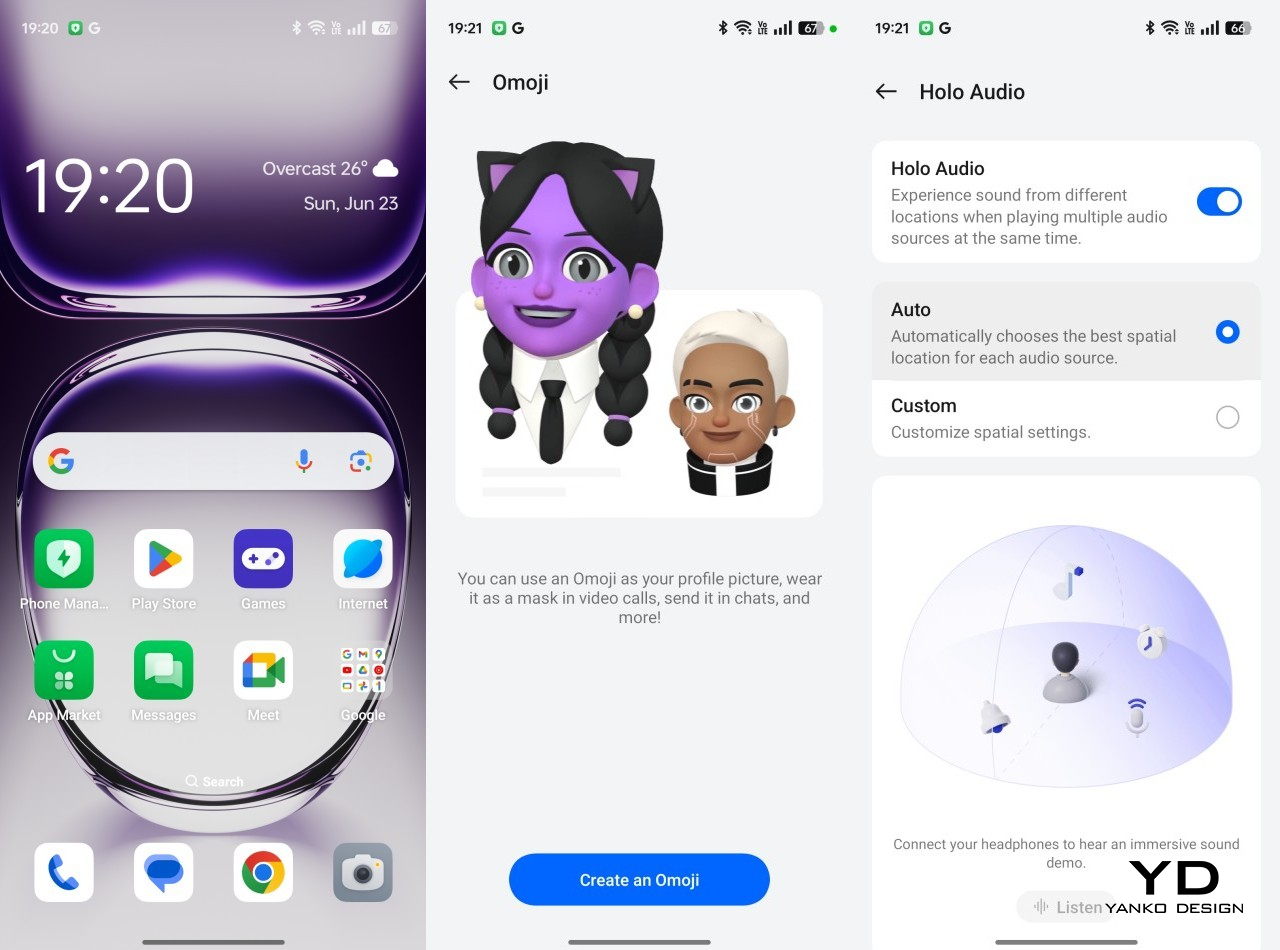
Given that the main selling point of this generation of the Reno family is AI, we definitely have to say a few words about it. At the time of this writing, the rollout of some of the features is still ongoing or scheduled, but the complete set is definitely something worth waiting for. You have a combination of generative AI features across the board, from intelligently handling the performance of the phone to tweaking your photos to match a certain appearance with the AI Studio. Leveraging the power of Google Gemini, The Reno 12 Pro features an AI sidebar that can analyze the content displayed on the screen and offer relevant tools for it. It can, for example, summarize a long article into a few bullet points, recommend a text to post on social media, or even speak out the contents of a website. This is just the tip of the iceberg for the AI features that OPPO is bringing to everyone who can afford it, and the Reno 12 Pro’s price point makes sure of that.
Sustainability

While OPPO has had strong advocacy for the use of sustainable processes and materials on its phones, it’s not easy to see that on the OPPO Reno 12 Pro, at least not directly. It doesn’t mention any use of recycled materials, for one, and its new alloy material is unsurprisingly a big secret. It wouldn’t be surprising, however, if it had a considerable amount of plastic in the mix, which would be on par with most mid-range phones.

Instead, the company focuses more on the durability and longevity of its design, ensuring that the phone won’t meet an untimely end that quickly. It uses the latest Corning Gorilla Glass Victus 2 protection for the screen and boasts an IP65 dust and water resistance rating. Curiously, OPPO also talks about a biomimetic cushion for internal parts inspired by the structure of a sponge, further protecting sensitive components from bumps and falls. That said, only a proper teardown will reveal the true nature of that new protective layer.

Value

The OPPO Reno 12 Pro is quite a looker and it boasts plenty of AI features you’d only hear about on premium flagships. At the same time, it delivers a decent performance, especially for one that has the marks of a mid-tier market smartphone. The question, however, is whether all of these are worth the price OPPO is asking for.
To be fair, it isn’t asking for much, depending on the market. The Pro model goes for 599 EUR, roughly $650, which is far below the latest high-end offerings. That said, it isn’t the only player in this particular field, and OPPO is even up against the venerable Google Pixel 8a. The question then becomes one of availability as well as preferences, especially when it comes to the custom OPPO ColorOS Android experience. At the moment, though, the Reno 12 Pro is one of the few mid-range phones to offer such a variety of AI-powered features, but that number will only grow in the months ahead, giving OPPO plenty of competition in this space.

Verdict

There’s no escaping AI, at least for now, and it isn’t just in powerful PCs or the Web. Smartphones are the next arena for AI, whether you like it or not, but only if it’s something that more people can obtain and, more importantly, enjoy. Phone and chip manufacturers are naturally more interested in flexing their muscles to showcase powerful hardware to support advanced AI processes, but these won’t land in most people’s hands that easily.

The OPPO Reno 12 Pro represents a new breed of smartphones that is making AI more accessible to the masses with more wallet-friendly options. But it isn’t just its AI prowess that sets this phone apart. Its striking design is definitely a head-turner, and its promise of durability increases trust not only in the phone but also in OPPO’s brand. It definitely has some tough competition ahead, but at least for now, it is leading the pack with its combination of power, gracefulness, and, more importantly, price.
The post OPPO Reno 12 Pro Review: Making AI Affordable in a Stylish Design first appeared on Yanko Design.

NeoRuler: The Ultimate Ruler for Professionals

NeoRuler is a cutting-edge digital ruler designed for professionals in architecture, engineering, and design. This innovative tool features an LCD display and offers unparalleled customization, including multiple units of measure, built-in formulas, and various scales. Its sleek, intuitive interface ensures precision and efficiency in any project. The NeoRuler supports different measurement modes such as length, angle, and area, making it versatile for various tasks. It also includes a rechargeable battery, ensuring long-term usability and convenience.

Key Features:

  • Infinite Customization: Choose from multiple units and scales tailored to your specific needs.
  • High Precision: Accurate measurements with a user-friendly LCD display.
  • Versatile Measurement Modes: Supports length, angle, area measurements, and more.
  • Built-In Formulas: Simplifies complex calculations directly on the device.
  • Rechargeable Battery: Ensures the device is always ready to use.
  • Durable Design: Built to withstand the rigors of professional use.

The NeoRuler stands out for its ability to switch seamlessly between different units of measure, including metric and imperial systems, making it adaptable to various regional standards. The built-in formulas and scales allow users to perform complex calculations and conversions directly on the device, reducing the need for additional tools or software.

Professionals can benefit from the NeoRuler’s high precision, which is crucial in fields where accuracy is paramount. The device’s ability to measure angles and areas adds to its versatility, making it suitable for a wide range of applications from simple tasks to complex projects.

The rechargeable battery ensures that the NeoRuler is always ready for use, eliminating the downtime associated with frequent battery changes. Its durable construction makes it a reliable tool for daily use in demanding environments.

The NeoRuler is available for purchase on Amazon for $199.

The post NeoRuler: The Ultimate Ruler for Professionals appeared first on OhGizmo!.