2024 Lamborghini Huracan Sterrato Review

PROS:


  • Stellar all-weather performance

  • Dramatic styling

  • Amazing sound

CONS:


  • Terrible rearward visibility

  • No more Corsa mode

  • The cost

RATINGS:

AESTHETICS
ERGONOMICS
PERFORMANCE
VALUE FOR MONEY

EDITOR'S QUOTE:

A beautiful all-weather supercar, a true joy in inclement conditions, and a hell of a lot of fun even when the roads are dry and smooth.

The Huracan is getting on a bit. Now entering its 10th year of production, it’s not quite as long in the tooth as the venerable Aventador became before it was finally replaced last year, but it’s getting there.

To keep things feeling fresh, the Huracan formula must keep tweaking and extending. Typically, Lamborghini does this by slapping letters like S, SV, and SVJ to its cars, dialing up the power and asking price all the while. The Sterrato, though, is something new, something different, and, as it turns out, something extraordinary.

The concept

The Huracan Sterrato is, quite simply, the ultimate off-road Lamborghini. Sure, the Urus has more ground clearance and would surely be better for climbing up a rocky trail, but the rest of the time it offers little in terms of Lamborghini feel and flare. There was also the LM002 SUV of the 1980s. That thing was a true off-road beast, but having piloted one around Northern Italy, I can tell you that when it comes to actual driving enjoyment, there’s not much to be had.

Meanwhile, the Sterrato looks and drives like a true Lamborghini, just one that’s had a few subtle additions and enhancements to ensure that the fun doesn’t stop when the asphalt does.

That starts with the suspension, which raises the car by 44 mm. Part of that lift is helped by the tread on a set of chunky Bridgestone Dueler AT002 tires mounted to 19-inch wheels. Five wheels, as it happens, with the car you see here outfitted with an optional spare mounted to the roof. That, though, is one option that I can’t recommend against strongly. The Sterrato, you see, doesn’t come with a jack, so even if you get a flat, you’ll have no way to change that wheel.

The engine, the Huracan’s brilliant 610-horsepower 5.2-liter V10, comes with top-mounted air intake, which not only looks fantastic but should help the engine suck in a little less grit on a dusty rally trail.

The rest of the changes are more on the lifestyle side, as ever, “style” being the most important part. The Sterrato comes with a pair of permanently affixed roof rails, to which you can mount crossbars and put whatever accessories you like. The car you see here came into my life with a top cargo basket of sorts, but given my wintery testing, a ski rack would have been more appropriate.

Chunky, bolted-on fender flares at every corner add stance and aggression, while some light underbody protection should keep gravel and the like from damaging that aluminum and composite chassis.

The overall shape and appearance of the Huracan isn’t much impacted. It looks essentially the same as it ever did, just slightly angrier and, most importantly, more ready for adventure.

Interior

On the inside, Sterrato-specific changes are few. Lamborghini offers a pair of all-weather, rubber floor mats that fit perfectly and extend up the sides of the Huracan’s microfiber-lined interior. They’re a must-have if you’ll be braving inclement conditions.

But otherwise, it’s much the same interior as we’ve seen elsewhere in the Huracan. Alcantara is the material of choice, feeling luxurious and looking great, especially with the contrasting yellow stitching and the lurid seatbelts to match. The attention to detail here is impressive, and while many will find the styling a bit excessive, it’s absolutely on-point for a Lamborghini.

The Huracan was recently updated with a new touchscreen interface that is simple but effective. Both Android Auto and Apple CarPlay are on offer, but only wired. There’s also Alexa in here if you have an active Amazon account.

More importantly are the various telemetry screens on offer, including a new one for the Sterrato that shows off-road angle information, plus GPS coordinates, just perfect for when you’re really going out there. I found the differential display far more interesting, showing in real-time where the Huracan is sending its power, front-to-rear and side-to-side. As much of my testing was done in low-grip situations, it was a never-ending source of entertainment to see the flow of torque.

While entertaining to watch, you won’t need to spend much time stabbing at that touchscreen. Most of the essential driving controls are right on the steering wheel. Your left thumb controls the turn signals plus flashing or toggling the high beams. On the right, you’ll find the windshield wiper button.

The mode toggle is on the bottom, customized for the Sterrato. Strada is the default mode on top, followed by the racier Sport, and then Rally, a new dedicated, low-grip, high-performance mode that is the hallmark of this car. The final controls within reach are the column-mounted shift paddles, made of metal and standing proud behind the wheel.

While most inputs are on the wheel, the Huracan still has plenty of physical controls elsewhere, including a row of plastic toggles that run above the touchscreen and that iconic, crimson ENGINE START/STOP button in the center console lurking under a plastic protector. Flip that up, stab the button, and everything changes.

Ignition

The Sterrato’s V10 is situated just about a foot behind the driver’s right ear, so when it spins into life, you absolutely know it.

However, to enjoy the engine’s sound, you need to toggle to Sport mode, which opens up the exhaust and adds a fair bit of bass to the experience.

In fact, you’re better off avoiding Strada mode almost entirely. The Sterrato’s default drive mode is extremely, oddly tame. It’s always trying to run you a gear or two higher in the seven-speed dual-clutch transmission than you might like and feels quite reluctant to downshift. It also enables the somewhat annoying engine start/stop feature (which you can quickly disable if you like). Finally, it’s all too eager to drop the V10 down to an inline five-cylinder whenever you’re light on the throttle.

Driven in this way, I managed 15.1 mpg during my testing, which is quite reasonable for a 600-plus hp car. Indeed, that’s precisely why that mode exists. But if you want an engaging drive, step on up to Sport.

In Sport, everything just feels better. The shifts are rougher than before, but they’re lightning-quick and exactly where you want them to be. The exhaust sounds better, the engine is more responsive, and the Sterrato just feels ready to play.

However, it’s in Rally mode when things get wild. This new mode was designed to provide a much more playful experience in low-grip situations, allowing the Sterrato to spin up its wheels with more aggression than would normally be beneficial for a high-grip situation like the Corsa mode was designed for, which is found on other Huracans.

In Rally, the Sterrato is happy to let you let loose, not cutting power for me even when all four wheels were spinning wildly on an icy surface. It did cut power when I made larger steering inputs, being somewhat selective in how much counter-steering was allowed before it decided I needed some help. But it certainly didn’t ruin the fun.

I do, though, lament the loss of the Corsa mode. While the Rally mode is a good trade, it’s a shame you can’t have both. After all, though its suspension is softer, with a proper set of tires the Sterrato would still be a wonderful track day toy.

Regarding the tires, the Sterrato’s Dueler AT002s are rated for mud and snow, but certainly seem better suited for the former. While I wasn’t able to test that condition, I did spend lots of time amid wintery stuff with the Sterrato you see here. The tires didn’t provide the confidence offered by a dedicated snow tire, especially in more icy conditions, but they delivered plenty of grip to have fun. Most importantly, when they gave up that grip, they did so in a clean, predictable manner.

Options and pricing

The Huracan Sterrato starts at $273,177, plus a $3,695 destination charge and a $2,100 gas guzzler tax. The car you see here had a suite of mostly cosmetic options, including $9,800 for the lovely Giallo Inti paint and $7,600 for the sports seats.

It doesn’t take long to add another six figures onto the price of your Sterrato, with this one costing $348,649 in total, but that’s the name of the game with a car like this.

The Sterrato’s performance, however, is anything but predictable. It’s a beautiful all-weather supercar, a true joy in inclement conditions, and a hell of a lot of fun even when the roads are dry and smooth. It’s even more comfortable to drive than a regular Huracan and much less likely to dig its nose into the slightest inclines, too.

It’s the complete package, and while you’ll certainly have to pay for it, it feels very much worth every penny.

The post 2024 Lamborghini Huracan Sterrato Review first appeared on Yanko Design.

This two-story pick-up rooftop tent gives you a vantage point to live and stargaze

The overlanding experience in your pick-up only gets better with an efficient and functional truck topper. And when that truck camper is a two-story complex with its own awning and touch of a button control; you can think, but won’t want to own anything else!

Inquisitive? Wild Land has come up with an interesting idea of Safari Camper, which is more than every day pick-up bed camper. After giving us the world’s first wireless remote-controlled rooftop tent, the Chinese overland product manufacturer has revealed the remote-controlled Safari Camper that rests on the truck bed and gives us a two-story tent to sleep and play on the press of an open button. Shutting it close is equally easy: Press close!

Designer: Wild Land

The Safari Camper is designed for the Chinese market and is already available there, state wise delivery is still in oblivion at the time of writing. That said, what intrigues an adventurer’s attention is the Safari Camper’s unique automatic lift system that opens from truck bed top to two stories to accommodate a few people easily. The lift is kicked into action from a keychain remote control – a little manual intervention is required to flip a few extensions – and you have a truck bed section and a high-perched rooftop tent above.

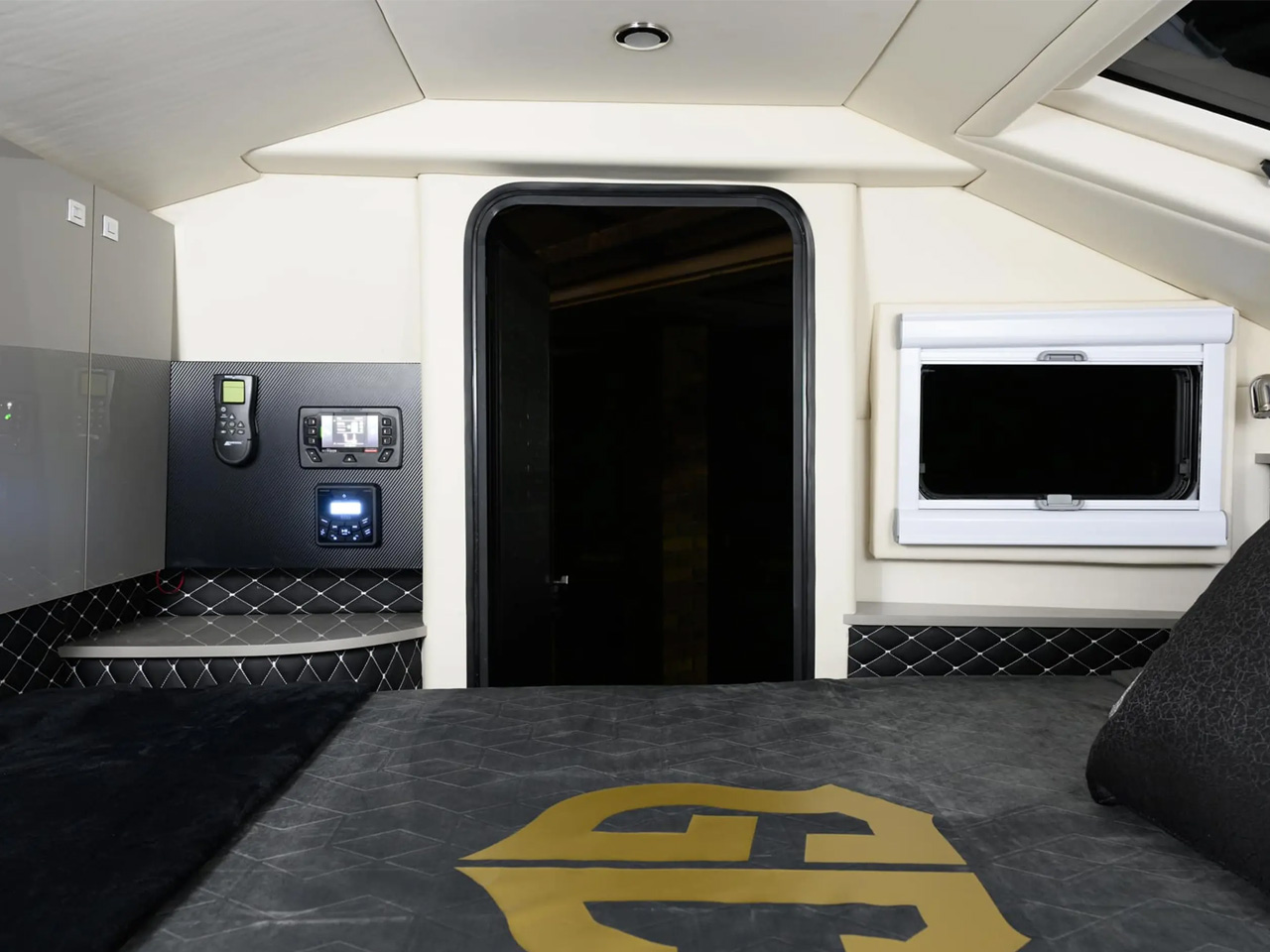
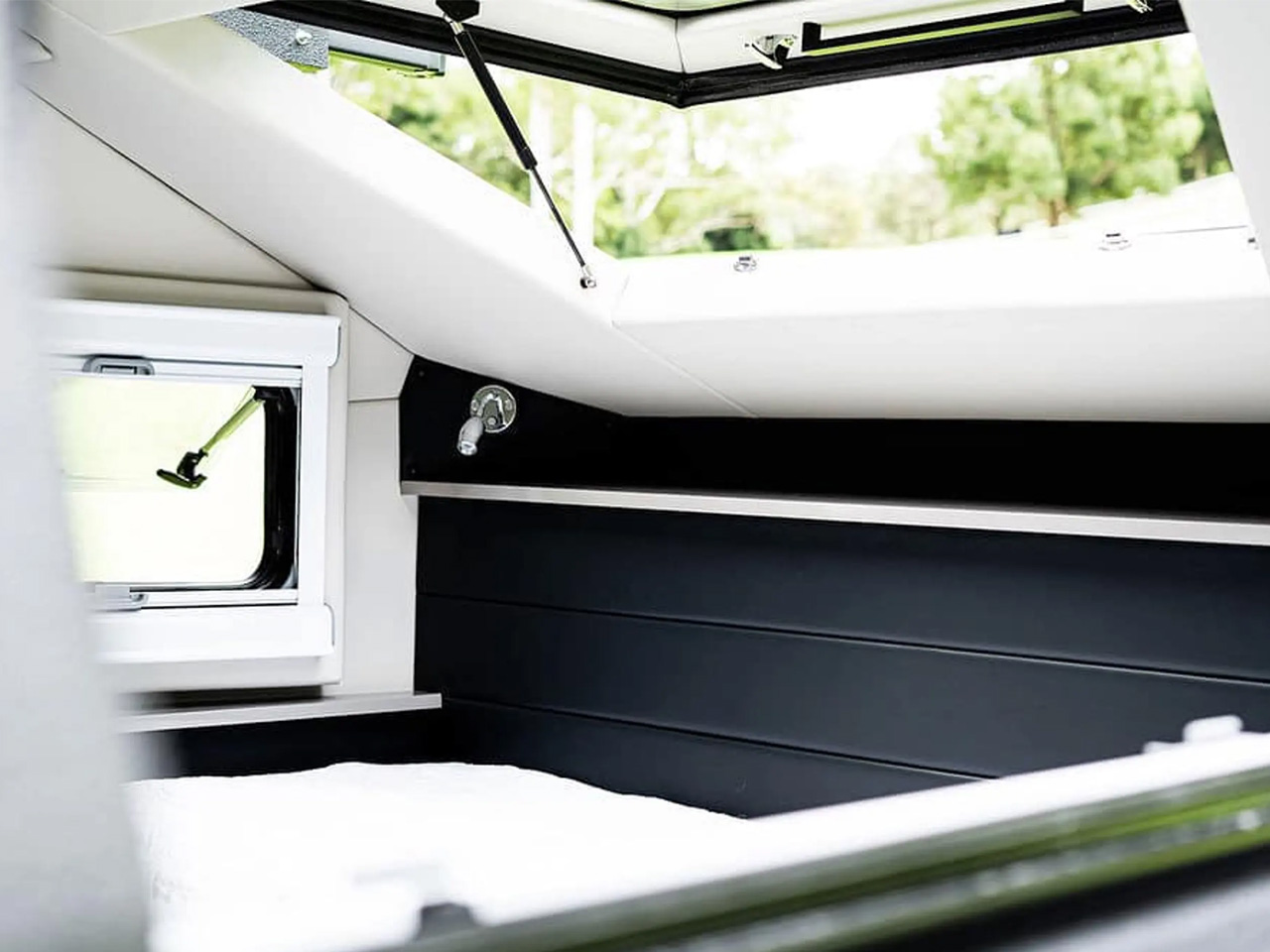
Of course, the kind of height the upper rooftop tent has, it is going to be somewhat vulnerable to the winds. But that little peril hasn’t stopped Wind Land from packing ample interior space here. The tent is accessed via a ladder from the pick-up bed and it has a 5.6-foot headroom extendable using the fold-out tent floor extensions on the front and back –pulled down manually – that increase sleeping space. The mesh windows in the tent offers 270-degree views, while the openable skylight lets you stargaze when the surroundings are engulfed in darkness.

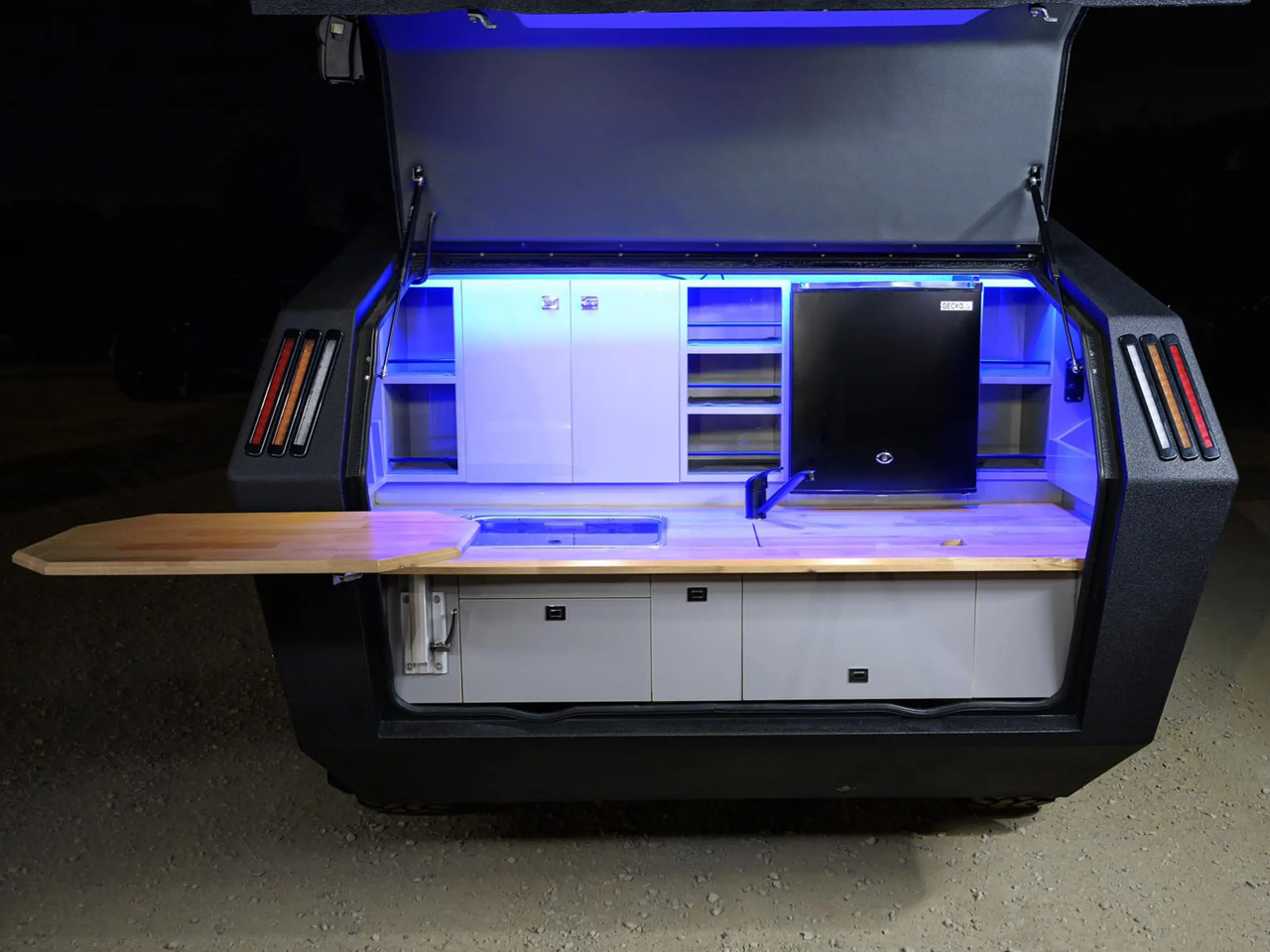
The Safari Cruiser weighs about 250 kg, and rests on the top of the truck’s bed rails. When it’s closed it rests comfortably on the pick-up’s shell and can carry about 30 kg load of your adventure gear. At camp when you open it, in addition to the top tent, you have a second low tent below which doesn’t have much headroom and can be used as a kid’s room or for dining and lounging.

Interestingly, the top rooftop tent is laid with a 30W solar panel to power the LED lighting and lift system battery. Attached to the lower section is a 360-degree awning that provides shade from the sun and gives additional living space just outside, which can be fun at the beach or when fishing in the lake.

The post This two-story pick-up rooftop tent gives you a vantage point to live and stargaze first appeared on Yanko Design.

LEGO McLaren MP4/4 with Ayrton Senna minifig arriving in March to grace F1 fans’ shelves

Ayrton Senna is the undisputed legend of motor racing and he could have achieved timeless greatness (not that he has already not achieved the feat) hadn’t it been for that fateful corner at the Imola Circuit in Italy during the 1994 San Marino Grand Prix. Hence, Ffor a Formula-1 fanatic, any memorabilia or piece of history that recalls the legend’s memories is a prized possession.

For such fans, LEGO Speed Champions and Technic lineup will add to the proud collection in the form of the McLaren F1 MP4 Ayrton Senna LEGO set. The set comprising of 693 pieces will go on sale from March 1, 2024 for a suggested price tag of $80. Highlight of this set is the Senna minifigure on a podium holding the winner’s trophy with a plate displaying the photo and quote,  alongside the McLaren in action mode.

Designer: LEGO Group

The main focus here is the successful F1 MP4/4 car powered by the Honda turbocharged engine that was used during the 1988 Formula 1 season. Ayrton alongside his teammate Alain Prost pushed this beast to its limits in a spectacle of racing craft dominating the competition winning 15 out of the 16 races during the season. Ayrton stole the limelight with eight wins for the team, securing his place as the world champion, while Alain just missed the bar winning seven races.

The MP4/4’s reliability and pure performance made it one of the most dominant cars in the history of F1 to date. Of course, one can attribute that feat to the skill of Ayrton who showed some of the most mind-blowing driving craft during the season. Coming back to this LEGO build, it looks like Shell is again on good terms with the LEGO Group after a lull of a decade. You can spot the Sheel and Honda logos while the controversial Marlboro branding has been given a pass.

The 1:8 LEGO model is 553 mm long, 257 mm wide, and 125mm high. It comes with functional suspensions, a steering wheel, a V6 engine, a turbo compressor (with intercooler radiators), snorkels and exhaust blowing under the rear diffuser. What more could you ask for?

The post LEGO McLaren MP4/4 with Ayrton Senna minifig arriving in March to grace F1 fans’ shelves first appeared on Yanko Design.

2024 Audi Q8 E-Tron Review

PROS:


  • Engaging handling

  • Comfort seating

  • Plenty of storage

CONS:


  • Range still a bit short

  • No hands-off tech

RATINGS:

AESTHETICS
ERGONOMICS
PERFORMANCE
VALUE FOR MONEY

EDITOR'S QUOTE:

A refresh that moves Audi's E-Tron forward in all the right directions.

As far as EVs go, the E-Tron has been around long enough to have seen a few things. Debuting back in 2018, Audi’s first battery-powered ride was a great car in many ways, but it also felt lacking in others. Most notably, its range was on the middling side and its handling made it a pleasant drive but far from a memorable one. Finally, there was the name: E-Tron. It just didn’t really fit in with anything Audi had done before or since.

For 2024, it’s back, and now it’s called the Q8 E-Tron. Despite the new name, now fitting squarely within Audi’s model taxonomy, this is actually a subtle refresh. It’s so subtle that you’d be forgiven for not being able to identify the new car from the old were they sitting side-by-side. But, after having driven both quite extensively, I’m happy to say it’s a refresh that moves the car forward in all the right directions — though perhaps not far enough in some.

By the numbers

The Q8 E-Tron is, like before, a five-passenger SUV that, to my eye, looks more like a tall station wagon. Its height of 64.3 inches splits the difference quite handily between the regular Q8 SUV and the A8 sedan, so it really is its own thing.

It’s available in three trims, with starting prices in the U.S. just under $75,000 on the low end and $85,000 on the high end. The car tested here is a Prestige trim with just a few options added.

It has a dual-motor all-wheel-drive system offering a total system output of 402 horsepower and 490 pound-feet of torque. The range from the new and larger 114-kilowatt-hour battery is 285 miles per the EPA, while the maximum charging rate is 170 kW. In my testing, I didn’t come anywhere near that EPA rating, averaging 2.3 miles per kilowatt hour at best, for an estimated 243 miles from the 106 usable kWh in that new battery.

But don’t hold that against it. I did all my testing in the winter months, and that result is actually quite good given the low temperatures. Even the best EVs hate the cold. In the summer, I have no doubt that drivers will meet or exceed that EPA figure.

More importantly, the Q8 E-Tron did an excellent job of providing accurate, reliable range estimates based on weather conditions and terrain, something that many other EV makes still struggle with.

Deja-Q

Squint, and you’ll hardly be able to tell the difference between the Q8 and the E-Tron that came before. Put on your glasses, and the differences are still easy to miss. The highlights are definitely in the front facia, which is sharper, cleaner, and fresher than before. Revised lighting, too, makes the Q8 E-Tron have a subtly greater presence than before.

New 20-inch wheels also provide more visual intrigue from the side without compromising ride quality too much, but the overall visual aesthetic of the Q8 is still very much an understated one. That’s doubly so, thanks to a decidedly muted selection of colors. The shade you see here, Plasma Blue, is the most dramatic of the bunch, and yet it easily blends into your average parking lot palette.

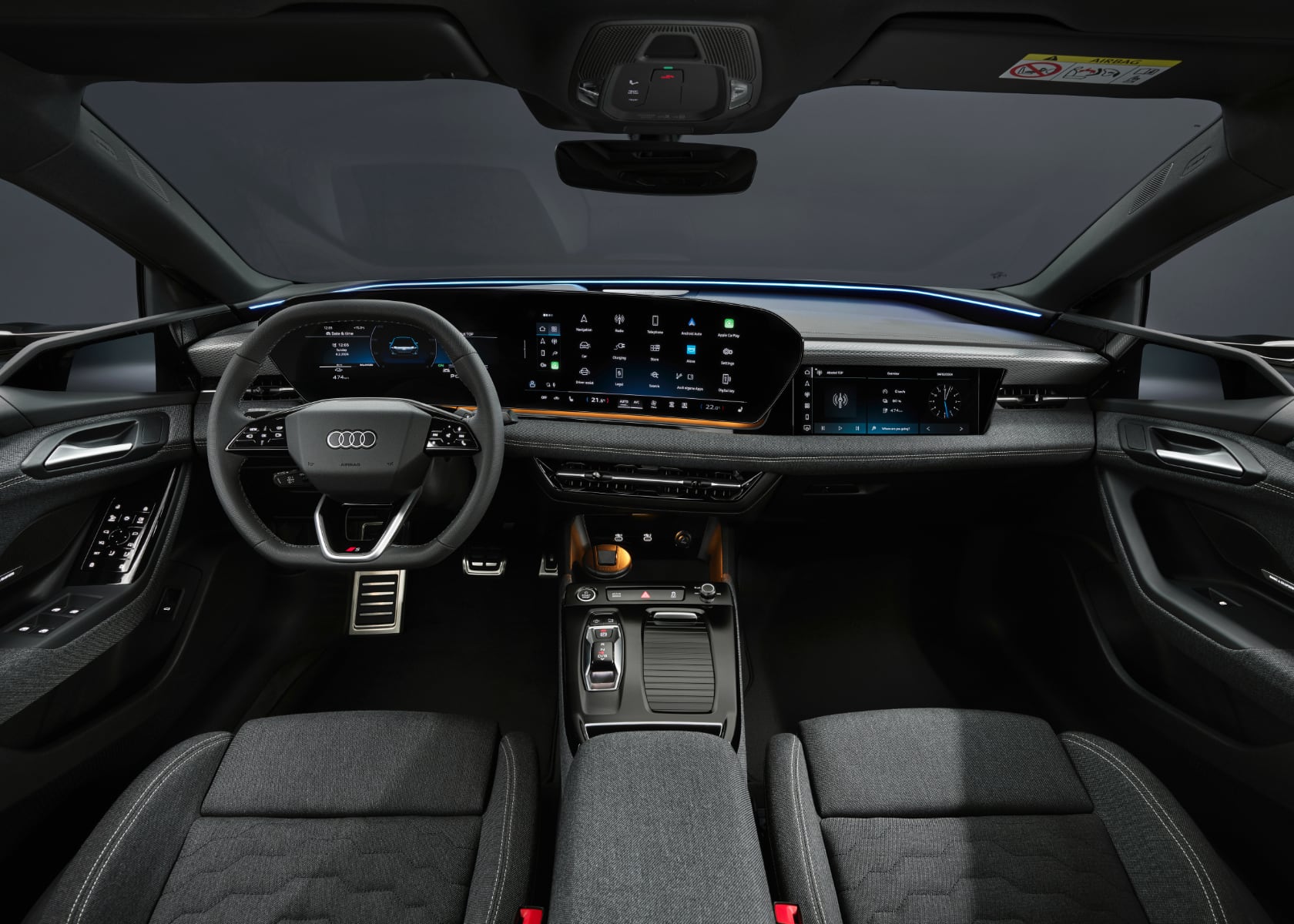
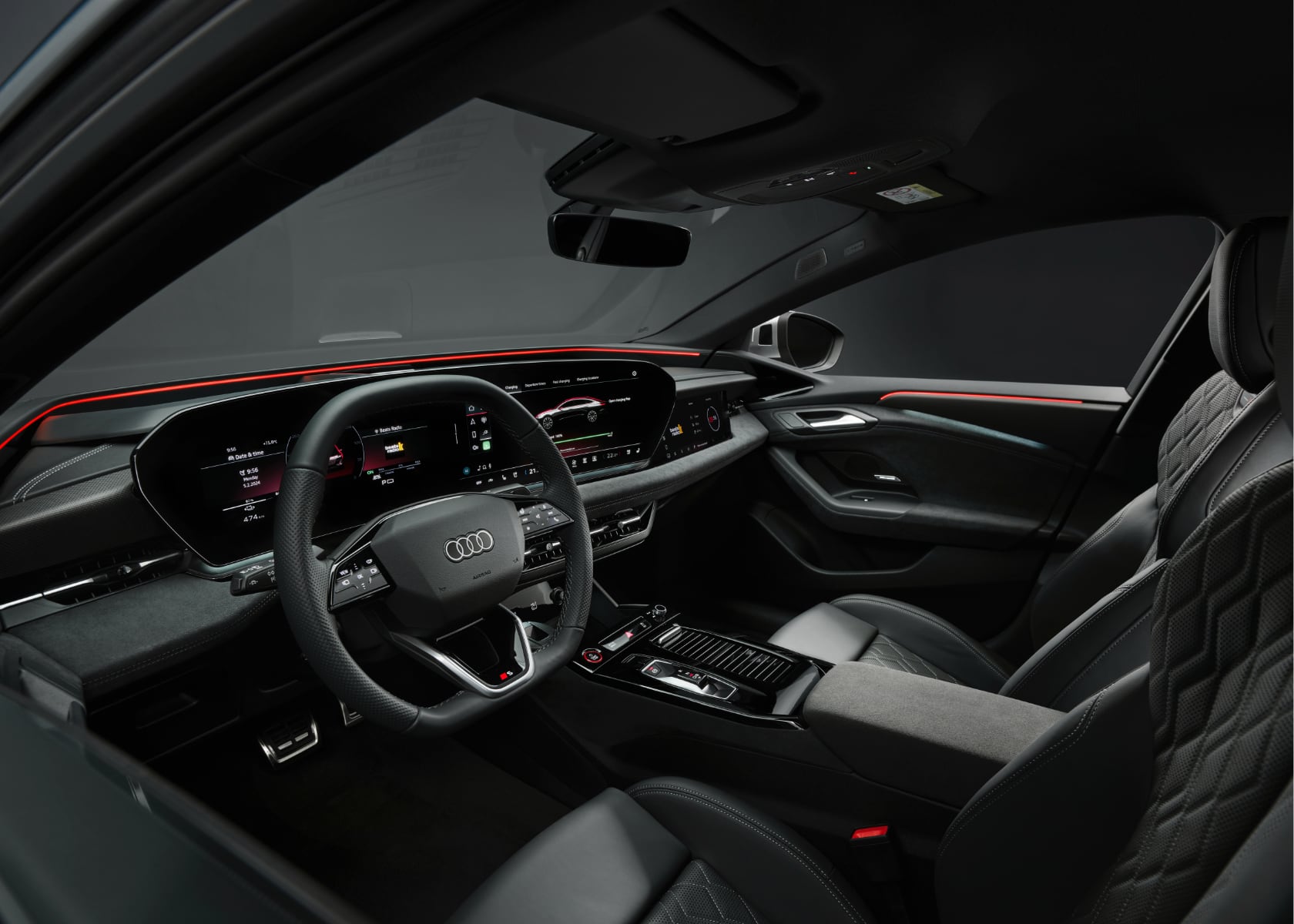
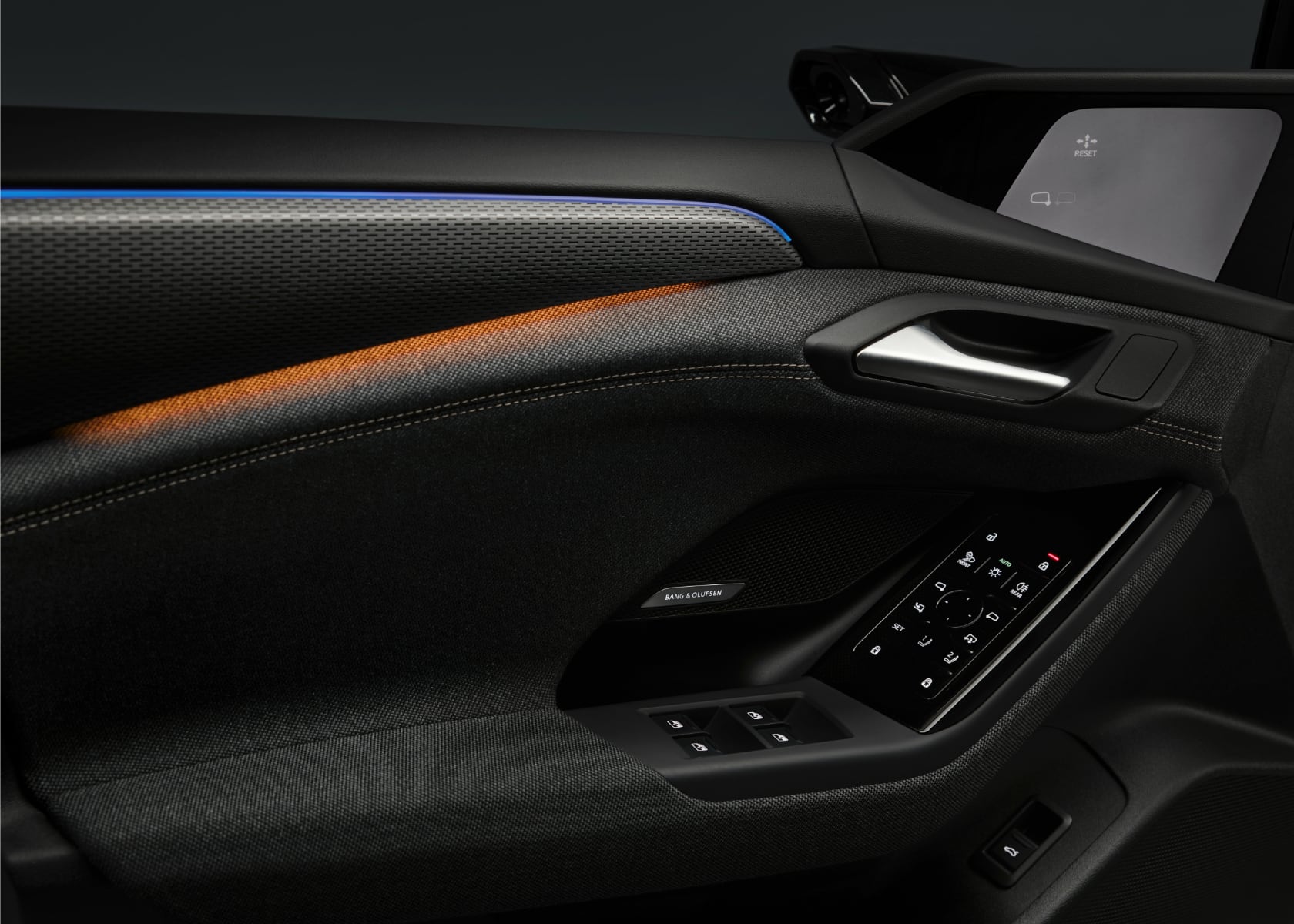
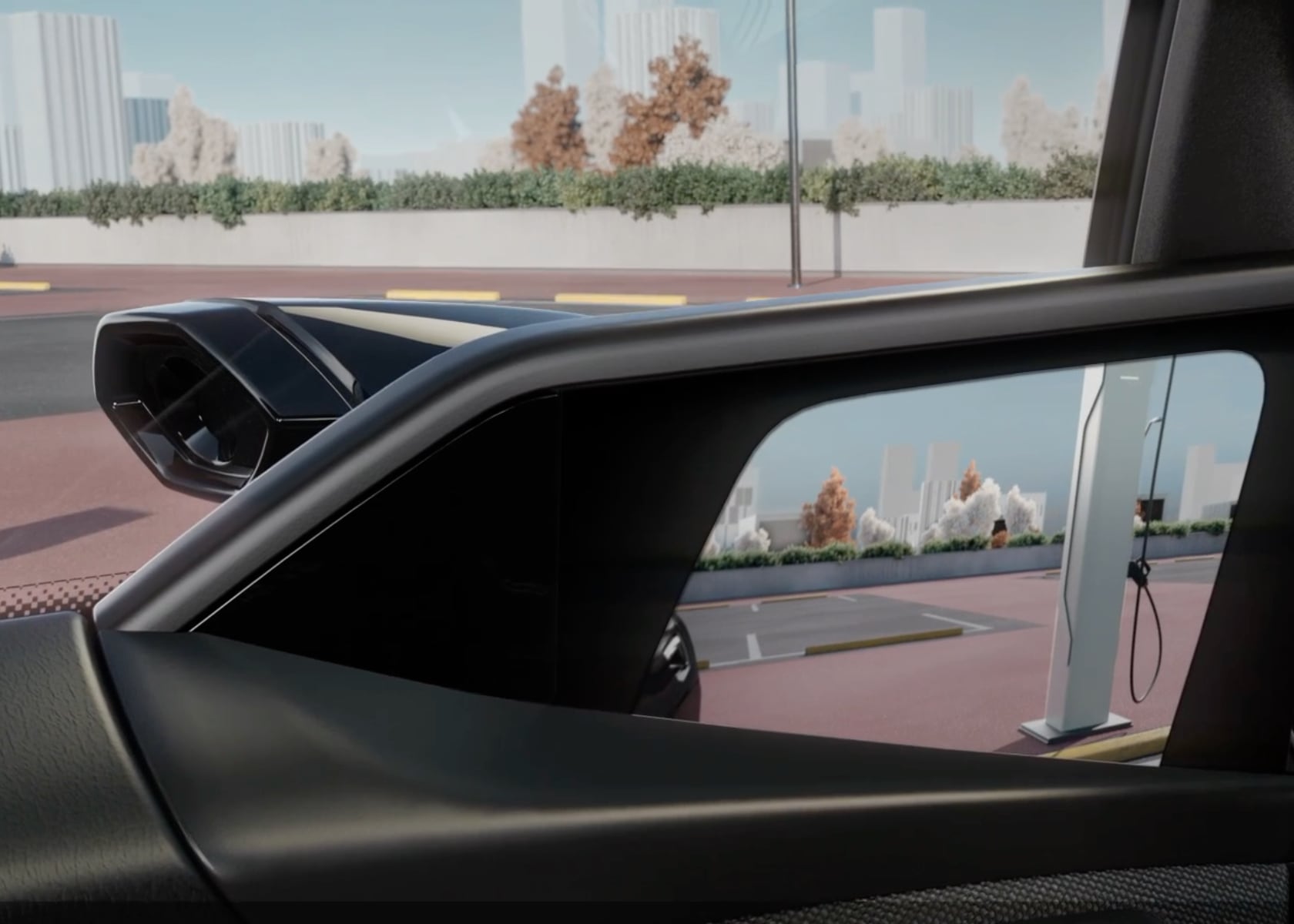
Even less has changed on the inside, and that doesn’t bother me so much. The original E-Tron’s interior was a standout, and while it’s perhaps a bit familiar now, it still delivers in all the right ways. It also still bears the indentations in the door cars where the digital side-view mirrors would live in the American version of the Q8 E-Tron, were they legal. Five years after the original E-Tron’s launch, they’re still not.

Though mostly dark and dominated by soft-touch rubbers and plenty of harder, harsher stuff, the look is clean, and everything feels durable. The slash of open-pore wood across the dash, though desaturated and still not providing much visual flare, does at least add some organic appeal to what would otherwise be too cold a space. (Brown leather is also on offer, as well as off-white.)

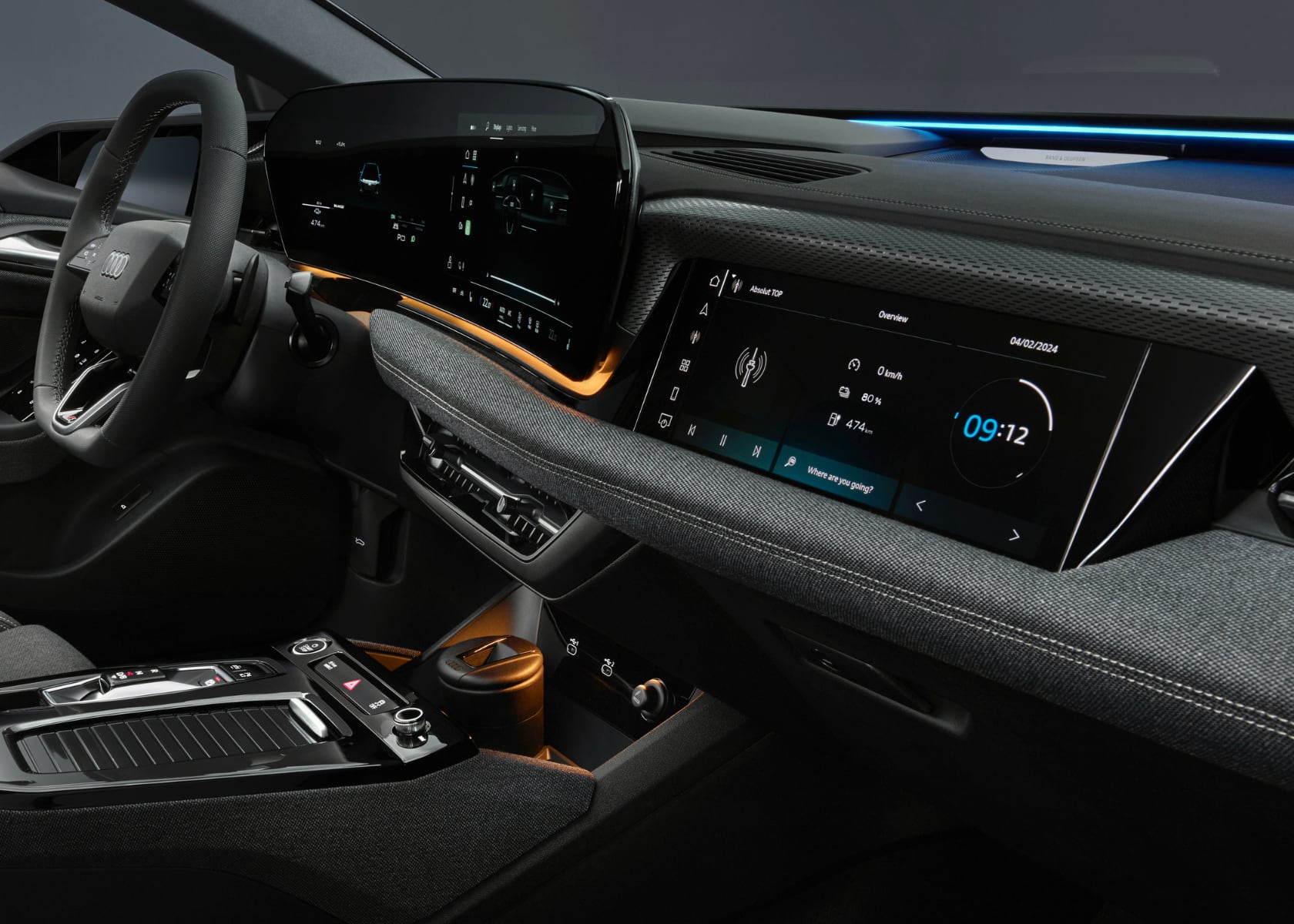
The primary interface is a pair of touchscreens stacked vertically. The lower is primarily dedicated to HVAC controls and other features like smart home integration, charging, and toggling hill descent control.

The touchscreen above is the more significant of the two, where the bulk of Audi’s MMI lives and where either Apple CarPlay or Android Auto will be wirelessly displayed should you choose to enable it. To the left, there’s Audi’s Virtual Cockpit Plus, augmented further by a heads-up display.

That’s plenty of displays for sure. Though this version of MMI feels more than a little dated at this point, its voice recognition in particular offering little assistance compared to the more recent offerings from BMW or Mercedes-Benz. That said, it’s quick and easy to use, and the haptic pulse received when selecting touch controls is still a pleasant thing.

Interior comfort

At 193.5 inches long, the Q8 E-Tron is a big car, and it makes use of that volume by offering comfortable seating in the front or the rear. Out back, there’s plenty of legroom and headroom, plus a pair of USB-C ports and dedicated controls for rear HVAC, plus heating the rear seats.

Front seats add ventilation, and while the cooling isn’t particularly effective, the heating is certainly the more important part of the equation, and there they do not disappoint. The heated steering wheel, however, could use a few more watts.

Front seats are power-adjustable, with two memory settings, and visibility from the driver’s seat is quite good. The shaping of the A-pillars keeps them from blocking too much of your perspective, while the panoramic sunroof above helps keep things looking lighter and brighter than the dark materials otherwise would.

In practical terms, 28.5 cubic feet of cargo space make for a very livable machine. Fold the split rear seats, which flop down at the pull of a lever at the back of the cargo compartment, and you’re greeted with an expansive 56.4 cubic feet of space. Plenty for the most indulgent of trips to the big-box shops.

The drive

The outgoing E-Tron was pleasant to drive, calm and relaxed, quite nicely composed on the sorts of roads that will try the best of suspension systems. The revised Q8 E-Tron, I’m pleased to say, has lost none of that valuable, though ultimately forgettable demeanor.

What’s added is a surprising amount of engagement. The Q8 E-Tron, when pushed hard and toggled over to Sport mode, is quite fun to drive. No, we’re not coming close to the levels offered even by any member of Audi’s RS family. Still, revised steering and some subtle suspension tweaks help make for a car that’s eager when the road turns away from you.

It’s also eager when that road is straight and narrow. The new Q8 E-Tron feels even quicker than its 402 hp. To get maximum power, you need to be in Sport mode, where the throttle is sharpest. The Q8 E-Tron is genuinely eager, so eager that you’ll only want to deploy that mode when you’re by yourself, lest you threaten the patience — or the stomachs — of anyone else in the car.

They won’t have to worry about getting car sick from excessive regenerative braking, though. Like the old E-Tron, the Q8 doesn’t have much to offer. Tap the left paddle a few times to enable maximum regen, but the maximum is barely any. Audi’s dogged dislike of one-pedal driving continues, which continues to be a shame for any buyer who prefers not to step on the brake pedal so often.

Regarding safety systems, the Q8 E-Tron has a comprehensive stack, including automatic emergency braking, blind-spot monitoring with rear cross-traffic alerts, and a lane departure warning system. It was enough to earn it an IIHS Top Safety Pick+ award.

However, where more and more competitors offer hands-off highway driving, this SUV is still very much in the hands-on mode. Its lane-keep system also got a little confused when approaching exit ramps where the right painted lines split off to make room for the exit, resulting in an occasional, uncomfortable lurch. But the adaptive cruise worked well, always identifying and reacting to traffic early and smoothly.

Options and pricing

The 2024 Audi Q8 E-Tron you see here had a starting MSRP of $74,400, while the Prestige package added a further $10,400. Compared to the base Q8 E-Tron, Premium Plus adds on the better Bang & Olufsen sound system, ventilated front seats, and the 360 camera. Prestige steps that up further with a basic massaging system on those seats, which are now wrapped in higher-spec leather, with upgraded matrix lighting up front.

This car also blacked out much of the chrome with the $2,000 Black Optic Package, $400 for additional rear side airbags, and $595 for that Plasma Blue paint. Add on the $1,195 destination charge, and you have a final sticker price of $88,990.

That’s a comprehensively equipped and properly luxurious machine for that money. Really, it’s only the range that’s still a bit light compared to the competition, on par with something like the Mercedes-Benz EQE SUV’s 279 miles, but short of BMW’s iX, which offers 311 miles for comparable money. But, most buyers will find the E-Tron’s 285 miles plenty enough, and they’ll also find the Q8 to be a comfortable, upscale, and now subtly engaging all-electric SUV.

The post 2024 Audi Q8 E-Tron Review first appeared on Yanko Design.

With single-piece fiberglass shell, Bean Stock 2.0 is most capable ultralightweight off-road teardrop trailer

Teardrop trailers have their own drive and dwelling convenience on the road. This is distinguishable from other forms of camping solutions for their size, weight, and price. There are a number of lightweight teardrop trailers adventurers have been using to their advantage but not many have the grit to go off the paved roads with equal expediency. Presenting a light and robust solution for the needs is the new Bean Stock 2.0.

Designed by Bean Trailers, founded in 2016 by Mark and Brian, who have been designing trailers with durability and minimalism in mind, the Bean Stock 2.0 is another rugged and lightweight teardrop trailer that can take the habitants to pretty much anywhere they desire.

Designer: Ben Trailers

I said there are three primary advantages that teardrop trailers carry over the other camping rigs, and the Bean Stock 2.0 fits the bill with its fiberglass body that renders the tiny trailer lightweight at 1,175 lbs. The construction ensures the trailer is fundamentally affordable in its stock variant yet its ruggedness makes it a capable off-roader. How is that possible is discussed further in the article.

The teardrop has a one-piece fiberglass shell with composite honeycomb side walls, while the former is not customary, the latter is a prerequisite in Bean Trailers’ models. Bean Stock 2.0 given the solid, lightweight design is built for the toughest and roughest trails. To that accord, the structure is slimmer and capable of being towed behind any small SUVs like the Subaru Forester, Ford Escape and similar.

The stock model of Bean Stock 2.0 is off-road ready with 2,000-pound HD suspension and 15-inch wheels. But it is the customizable option that allows    3,500-pound suspension and bigger tires with more ground clearance that add to the off-track capability. All the features are nothing without the interiors you want to be in after a long day’s drive. The Stock 2.0 is equally fashioned inside also, which absolutely revolves around the 60-inch x 80-inch queen-sized mattress facing a wide window filling the living space with natural light during the day, the warm-tone recessed lighting keeps the ambiance lifted after the sun goes down.

For all its wonderful features and interesting design, the Bean Stock 2.0 is available in a choice of 18 different colors. The entry-level variant of the rugged teardrop trailer starts at $15,999 and the customizable option with all add-ons onboard spikes the price to over the $20,000 mark.

The post With single-piece fiberglass shell, Bean Stock 2.0 is most capable ultralightweight off-road teardrop trailer first appeared on Yanko Design.

10 Best E-Bikes For Automotive Lovers Who Want A Dash Of Speed + Eco-Friendly Design

Electronic bikes have taken the automobile industry by storm! Living a more sustainable and conscious life has become imperative, with life on Earth getting more and more difficult. Curbing fuel consumption, and reducing automotive emissions has become critical, and e-bikes are an environment-friendly option, encouraging these practices. With the e-bike craze gaining momentum, designers have been coming up with innovative and super cool e-bike designs, and we’ve collected a few for you. Dive in!

1. Diode

Designed by Tien Hung, this e-bike concept is called the Diode, and it features a neo-minimalistic design that pays tribute to the future of the electric power train. The form of the bike is practically invisible, except for one singular horizontal pillar that smoothly runs from the dashboard to the taillight and a massive battery module that is nestled underneath it. It also features a powerful rear-wheel drivetrain and a comfy set.

2. MOQBA

Dubbed the MOQBA, this concept design is an e-scooter/bike that can climb stairs! It is designed to be a next-generation mobility ride for those who often face difficulty in mobility. It is not intended to be a two-wheel wonder, rather it rides on four independent legs with wheel extensions. It can be categorized as an innovative mini mecha for the future! Although at the moment, it does seem a bit far-fetched, it could have valuable utility in the future.

3. Mimic E-bike

The MIMIC e-bike is a powerful electric power that looks like a crouching jungle cat of a bike and was designed by Roman Dolzhenko. It is outfitted with a body that looks more like armor and comes with a rounded Tron Light Cycle-inspired form that is outfitted with rounded elements, and an overall absence of straight lines or sharp edges.

4. Pro.Zui

The Pro.Zui is something between a scooter, a moped, and an e-bike. Designed to be a daily commuter, it features a sleek design aesthetic amped up by cutting-edge technology, providing users with an incredible riding experience. It can cover a range of 120 kilometers on a single charge from an advanced electric battery. It utilizes state-of-the-art battery technology, supporting a reliable and long-lasting journey.

5. Porsche 619 Concept

Designed by Jackson Zhang, the Porsche 619 electric concept is an exciting response to Porsche’s plans to go electric by 2030. The 619 is the first proper electric motorcycle we’ve seen, and it features a unique design, putting Porsche’s automotive DNA in the backseat, while also creating something minimalist, geometry-driven, and iconic! It features a segmented LED matrix headlight like the one seen in the Taycan, while the seat features the word “Porsche” on the outer cover.

6. The Project M³ Concept Motorbike

Called the Project M³ concept motorbike, this automotive is designed by Richard Huang and features an ingrained biomimicry for motorheads. It has a head inspired by the dolphin, and the electric motor onboard is charged using a blowhole-like nose, imparting a lifelike presence to it. The dolphin is mirrored on the toothed wheel rims,  and the front headlights section too.

7. The Mantis

Named the Mantis, and called a MiniBike, this compact little two-wheeler is an urban commuting dream. It seats one person and lets the rider easily and swiftly cover distances. It features a unique, horizontal frame with a seat and handlebars at the same level, and it also features a detachable and replaceable battery that can be packed right underneath the seat.

8. BMW G7 Scrambler

Coined the BMW G7 Scrambler, this electric bike with a Z-shaped frame, a bottom-heavy design, a cantilever seat, and a stunning headlight, is truly the words “if looks could kill” come to life! It is a unique-looking concept that comes with a choice between a fuel-based and electric powertrain, although both variants look identical on the outside.

9. Colibri M22

Petre Georgescu designed an electric bike that can reach the farthest on a single charge! Called the Colibri M22, this foldable electric moped can get you as far as 200km without having to recharge. Once you’re done commuting, you can easily fold and store the e-bike somewhere, for example under stairways, or in a storage area as it features compact mechanisms that can be neatly folded away.

10. 2029 E-Bike

Inspired by the revolutionary design of the 1929 Majestic built by George Roy, this 2029 e-bike combines art-deco and automotive design to build an innovative design that features clean-cut geometric shapes that are created by sheet-metal fabrication, alongside bone-inspired generative-design details that have been 3D printed in metal.

The post 10 Best E-Bikes For Automotive Lovers Who Want A Dash Of Speed + Eco-Friendly Design first appeared on Yanko Design.
Olympian Motors’ electric SUV slated for Q2 2024 release, teases Cybertruck with AR windshield and a retro-futuristic design

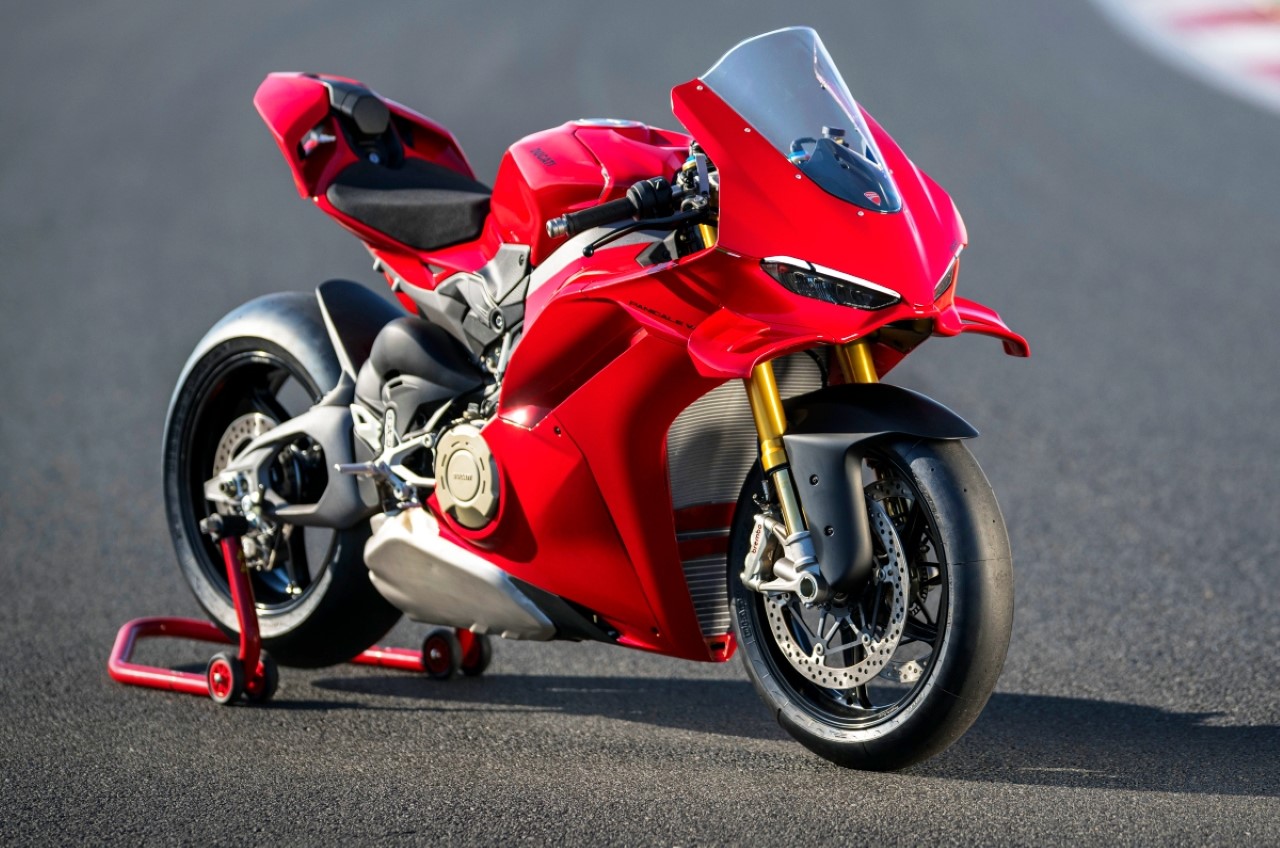
Fusing the past into the future sounds like the best prospect for an electric vehicle in a landscape filled with ultra-futuristic EVs is a refreshing change. Olympian Motors is set to achieve what most motorheads will appreciate down to the core. Their Model 84 electric vehicle is the first ever rear-wheel electric convertible in the United States with an augmented reality heads-up display.

While you won’t get that first impression of tech-infused features in this retro-futuristic vehicle, you’ll be proved wrong. The projector on the windshield gets rid of the contemporary 2D digital screen and replaces it with an advanced HUD interface. According to the New York-based company, they’ll start deliveries by Q2, 2024 and only 310 units of this four-seater roofless EV will be produced in the first phase.

Designer: Olympian Motors

The car targets a niche segment of users who want to go beyond the limits of owning a performance electric SUV. That I say because Cybertruck has been all over the internet these past few months (years I should say) revealing its unparalleled pros but also exposing what’s not that impressive. The Model 84 is boxy and a little less sharp in its aesthetics, evoking the inspirational design of the iconic Land Rover that has been the definition of safari vehicles for decades.

The body is made out of forged titanium and military-grade carbon fiber which both provide security assurance in case of an accident. The use of the former means the vehicle is lightweight enough to not stress the electric drivetrain which will need every possible battery-conserving feature it could benefit from. Another safety feature is the inclusion of nine airbags.

The SUV can go from 0-60 miles per hour in a mere 8.1 seconds courtesy of the 340 HP engine, meaning it has loads of torque for that initial kick. The top speed of the Model 84 can hit 160 miles per hour and a figure of 335 miles on a single charge is also achievable thanks to the 89 kWh motor.

While the convertible safari vehicle is best utilized for four travelers, the two back seats can be removed for carrying luggage. It also comes with a glass canopy and laminated windows keeping in mind the possibility of windows shattering in shards which could prove fatal. On the inside the boxy EV gets exotic woods, cashmere and silk materials instead of the usual cheap plastics and veneer made out of toxic chemicals.

Even though it uses luxurious materials and high-tech features, the Model 84 favors minimalism more than anything else. Remember that AR heads-up display, in a way gets rid of those chunky dashboard buttons and switches. The focus here is on hands-free operation via voice commands to control everything from HVAC, seats and doors to the lighting systems.

As per Olympian Motor, the EV will be initially only sold in the US without any confirmation of any plans to export or produce it elsewhere. An asking price tag of $70,000 is right there competing with the Cybertruck, so it’ll liven up the competition once we see it going toe-to-toe with the Tesla monster in real-world conditions. Will it be better at tackling the snowy roads, well only time will tell. Pardon me, for that pun, but I had to tease Tesla for all that’s worth it!

The post Olympian Motors’ electric SUV slated for Q2 2024 release, teases Cybertruck with AR windshield and a retro-futuristic design first appeared on Yanko Design.
Driving the Thrilling Evolution of BMW with the Electrifying i5 M60 xDrive

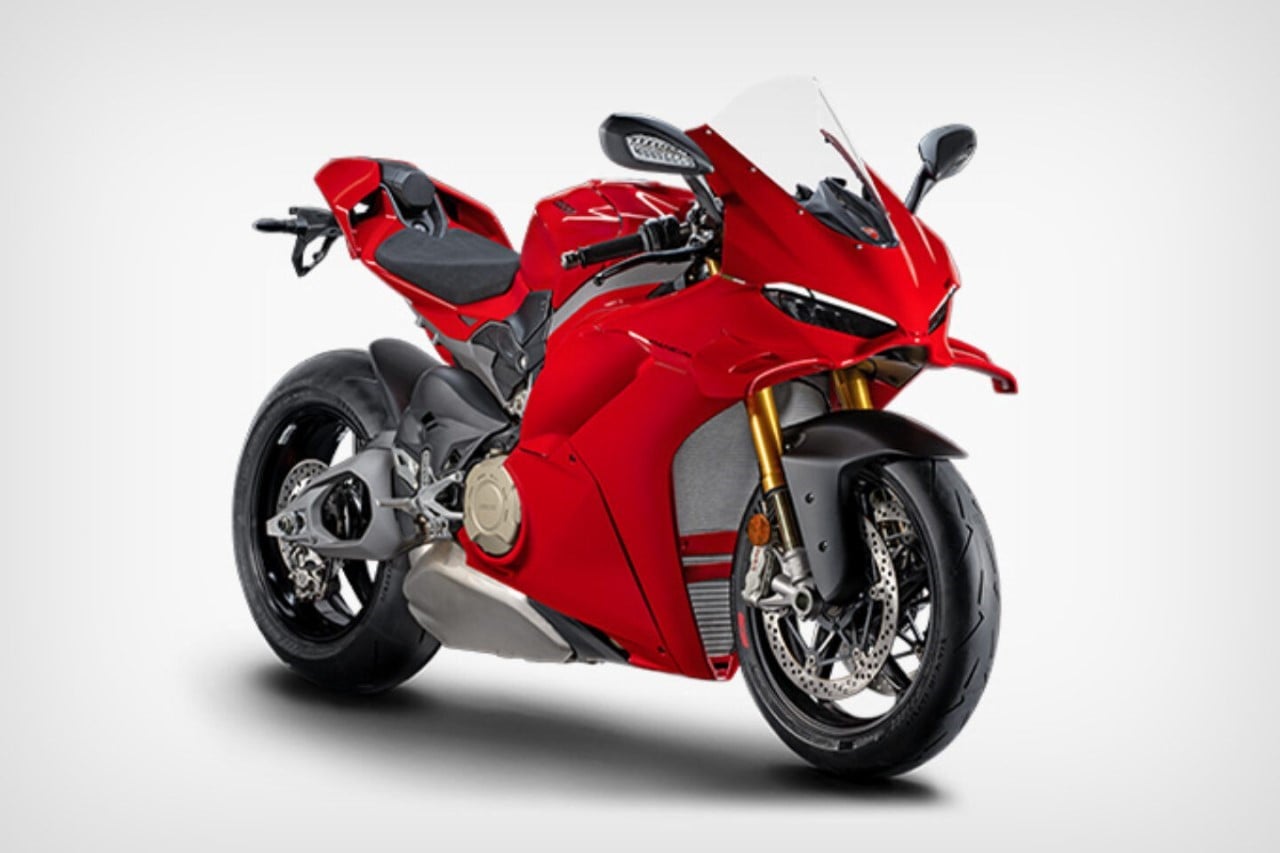
The all-new, all-electric BMW i5 represents a pivotal moment in the evolution of the BMW 5 Series, introducing two electrified variants that masterfully combine speed, cutting-edge technology, and comfort into a compelling package. For those contemplating the fully electric 5-series sedan, the choices include the i5 M60 xDrive and the i5 eDrive40, each offering a distinctive mix of enjoyment, comfort, and luxury within the electric driving realm. The optimal selection hinges on your speed requirements and budget considerations. I had the opportunity to experience both models at BMW’s 2023 TestFest, and here are my initial impressions.

Designer: Christopher Weil, Head of Exterior Design for BMW

As the Head of Exterior Design for BMW, Christopher Weil has played a pivotal role in shaping these two new additions to the 5-Series EV lineup, complementing BMW’s existing electric vehicle range, including the i4, i7, and the stylish iX SUV. After testing the i4, i7, and iX SUV, I found that the 5 series strikes the perfect balance in size, driving dynamics, comfort, and both interior and exterior design aesthetics.

The BMW i5 M60 xDrive stands out as the more potent variant, showcasing BMW’s commitment to powerful electric mobility. Boasting an impressive 593 hp and 549 lb-ft of torque, it accelerates 0-60 mph in just 3.7 seconds. The torque can be temporarily boosted to 605 lb-ft via the Boost paddle on the steering wheel’s left side. This model fuses M Performance DNA with electric efficiency, featuring an all-wheel-drive system with a second electric motor on the front axle for superior handling and grip, thus delivering an exhilarating drive on any terrain. However, its high performance slightly compromises its range, with an estimated 256 miles on a single charge.

On the other hand, the BMW i5 eDrive40 emphasizes efficiency and elegance in electric driving. It boasts 335 horsepower and 295 pound-feet of torque. However, a paddle on the left-hand side of the steering wheel can increase this to 317 ft-lb by activating the Sport Boost or Launch Control functions. BMW asserts that the i5 eDrive40 can accelerate from zero to 60 mph in 5.7 seconds and has an electronically capped top speed of 120mph. Its rear-wheel-drive layout stays true to the brand’s heritage, offering a balanced and engaging drive. The eDrive40 shines in its range efficiency, boasting an estimated 295 miles. It makes it the perfect everyday car for commuting or shuttling the kids between school activities and longer drives to the office.

The two models come equipped with the BMW Curved Display and the latest version of the BMW iDrive system, which enhances the digital experience of the car. BMW continues to lead the way in automotive innovation with the introduction of advanced technologies such as the Highway Assistant that allows for hands-free driving up to 85 mph, and the first-ever Active Lane Change with eye activation.

Both models maintain the sporty elegance of the 5 Series while showcasing unique features that underscore their electric character. The i5 M60 xDrive highlights its performance-driven nature with its specific design elements, like the black surfaces on the front apron and large air intakes. Conversely, the i5 eDrive40 emphasizes subtler elegance, prioritizing efficiency and grace.

The i5 is compatible with Level 2 and DC fast charging. BMW estimates that the battery can recharge from 10% to 80% in approximately 30 minutes due to a maximum charging rate of 205 kW. First-time BMW i5 owners are offered two years of free 30-minute charging sessions at Electrify America’s network of DC fast-charging stations.

Regarding pricing, the entry-level i5 eDrive40 begins at $66,800, providing an appealing entry point into luxury electric driving. With 21″ wheels, my test vehicle was priced at $77,645 due to a $650 paint job, a $3,000 M Sport Package, and a $2,850 Premium Package.

The i5 M60 xDrive starts at $84,100, appealing to those who desire high-end electric performance and the prestige of the BMW brand. However, the price can escalate quickly if you choose all the available features, reaching a maximum of $97,494. The priciest package is the Dynamic Handling, which costs $3,600. The Executive Package adds $3,350, and the Driving Assistance Pro package costs $2,000.

The BMW i5 M60 xDrive and the i5 eDrive40 represent a harmonious blend of BMW’s sporting heritage and forward-thinking approach to electric mobility. Whether it’s the exhilarating performance of the M60 or the balanced efficiency of the eDrive40, BMW offers a compelling electric option for a range of drivers in the luxury segment. With these additions, the BMW 5 Series continues to evolve, setting new benchmarks in premium electric sedans.

Regarding evolution, whether you choose an EV, a mild-hybrid internal combustion engine, or a plug-in hybrid, you’ll get the same sleek kidney grille, which looks good. It’s brilliant that BMW can manufacture all three variants on the same production line and adjust as necessary based on consumer demand. If you choose the Carbon exterior package, the i5 M60 exterior receives additional features. This package includes M High-gloss Shadowline, M Specific Diffuser, 19″ M Wheels, M Sport Exteriors, and M Side Mirrors.

The new 5 Series is more significant than its predecessor, being longer by 3.4 inches (199.2 inches total), wider by 1.3 inches (74.8 inches total), and taller by 1.4 inches (59.6 inches total). The wheelbase has also been extended by 0.8 inches, reaching 117.9 inches.

Its interior has been completely revamped, featuring a curved display screen with a 12.3-inch digital instrument panel behind the steering wheel and a 14.9-inch touchscreen above the center console. These displays utilize the new BMW Operating System 8.5, which enhances operational speed and graphics quality and introduces features like video streaming and gaming.

Additionally, the gaming platform app AirConsole enables you to use your smartphones as controllers and supports multiple players.

Electric Thrills: The i5 Drives Like a BMW

Without a doubt, both models provide a rapid response, thanks to the instant torque feature of electric vehicles. Everyday driving on surface streets and highways is stress-free and comfortable. The i5 felt stable and well-grounded during brief periods of acceleration.

The BMW i5 M60 xDrive offers more than just an additional motor for the front axle. The Adaptive M Suspension Professional package includes several features to improve the car’s performance and the driver’s experience. One feature is the electronically controlled dampers. These automatically adjust the car’s suspension to the road conditions, providing a smoother ride and better handling. In addition, the M60 has a ride height that is 0.3 inches lower than the eDrive40, giving it a lower center of gravity and thus improving stability.

The M60 xDrive also includes rear-axle steering. This feature enhances stability at high speeds by aligning the rear and front wheels. At lower speeds, the rear wheels turn opposite the front wheels, reducing the car’s turning radius. This makes the M60 more agile, improving maneuverability in tight spaces. As with other BMW models, rear-axle steering has proved to be a beneficial feature.

Another benefit of the M60 is the inclusion of M Sport brakes. These high-performance brakes provide excellent stopping power, ensuring the car can handle the power its motors offer. Additionally, BMW’s active roll stabilization system is included. This system reduces body roll during cornering, enhancing comfort and providing more precise handling.

Thanks to these advanced features, the M60’s steering excels on tight, twisty roads along the test route. BMW was able to provide an abundant amount of track time, allowing me to push the car to the best of my driving ability. I was impressed with how light and easy it was to control through tight turns, providing more than adequate feedback and road feel. This allowed me to sense the road through the steering wheel, enhancing the connection between the car and the road.

Yanko Design’s take on the electrified BMW i5 sedans

With their performance, comfort, and advanced features, BMW’s recently launched electric vehicles, such as the compact i4 sedan and midsize iX SUV, have made a significant impression. After spending some time with the all-new i5, it seems to meet, and perhaps even exceed, the high standards set by competing brands.

The i5, in line with our expectations of BMW’s renowned 5 Series, offers an unmatched combination of speed, comfort, and luxury. It seamlessly integrates these traits to deliver a driving experience that is both thrilling and comfortable. The car’s swift and responsive acceleration boosts the driver’s confidence on the road, while the plush interiors and cutting-edge features ensure a luxurious journey.

Adding to its impressive attributes, the i5 is quiet, creating a peaceful and serene driving environment. This quality is a defining trait of electric vehicles and is particularly prominent in the i5, setting it apart from its petrol-powered counterparts.

The post Driving the Thrilling Evolution of BMW with the Electrifying i5 M60 xDrive first appeared on Yanko Design.
This Concorde aircraft inspired shooting brake EV boasts aerodynamic design for performance and good looks

Concorde passenger airliner shook up the aviation world when it burst into the scene in 1976. Developed and manufactured in collaboration between the United Kingdom and France, the commercial aircraft was at a level of its own with speeds 2x sound speed. Unfortunately, due to high operating and maintenance costs, the aircraft was finally retired in 2003.

Because you could zip across the Atlantic Ocean, to go from New York to London and vice versa in just three and a half hours, the Concorde deserved more than it got. But that’s a part of history now, and Concorde isn’t returning for supersonic commercial aviation. The next best thing is to take inspiration and design a four-wheeled electric speed monster to commemorate the legacy of the airliner.

Designer: Christopher Giroux

Inspired by the aircraft this shooting break concept is exactly what the usual world of automotive concept designs needed. The 3-seater performance electric car dubbed Concorde 20+ Celebrates the legacy of the sound speed barrier-breaking aircraft commissioned for commercial purposes. There’s just one seat on the front for the pilot and two rear seats for the rich owners who enjoy the luxury of a spacious cabin all to themselves.

The active aero elements on the outside and the inside not only tweak the peak performance at high speeds but also bring a sense of fluid design to the vehicle. Just like the Concorde aircraft, the electric car is built for high-speed skirmishes on the freeway, letting the owners know it’s not meant to be driven in cruise mode.

That front pointy section with the futuristic LED panel headlights has a close resemblance to the aircraft honed by the windshield wrapped over the hood. As you can see from some of the side profile renders, the resemblance in shape flowing from the front to the back is so Concorde-like. The long shooting brake design not only maximizes interior space but also adapts the airliner’s overall aero aesthetics. Jump to the rear profile and, the futuristic element is ever so present there too.

The post This Concorde aircraft inspired shooting brake EV boasts aerodynamic design for performance and good looks first appeared on Yanko Design.
Ultra luxurious superyacht doubles as a submersible capable of 820 feet deep underwater exploration for four weeks

Discerning Billionaires who want to own the best super vessel to navigate the seas in style brace up for the Migaloo M5 superyacht. Labeled as the future of yachting, this $2 billion high-end vessel by the Austrian-based Migaloo is twice more expensive than the current costliest superyacht, the Lürssen Dilbar at $800 million.
The hyper-luxurious seacraft would still be out of the reach of many billionaires even and that’s what makes it special. Measuring 544 feet long and 75 feet wide, the M5 is a heaven on water for the 20 guests and 40 crew members. But that’s not where the surprises stop, it is also capable of diving to a depth of 820 feet and making an underwater stay for four weeks!
Designer: Migaloo

There’ll be more than anyone can bargain for to do on their extended holiday trips thanks to the two custom Midget submarines, two submersibles, a helicopter, jet skis, kite surfing and paddle boarding activities. This will be possible with the plethora of water toys that the superyacht will carry along including five Sea-Doo Jet-Skis, Seabobs, ROVs. UUVs, Zapata Racing flyboards, hoverboards, and everything else you need for paddleboarding, kitesurfing, and kayaking. Land expeditions when docked on shore are also not out of the question with the two expedition vehicles and pickup trucks.

According to Migaloo, they are ready to deliver the kind of amenities and interiors depending on the client’s requirements and personal taste. To scratch the surface these include a jaw-dropping dining room that can accommodate a party of 36 people, a tech-savvy cinema hall, swimming pools, a jacuzzi, a curated wine cellar, panoramic glass walls for stunning views en route the journey, and the most eye-popping expandable beach club you’ll ever see.

M5 fitted with a hybrid propulsion engine (diesel and AIP) will have a range exceeding 9,300 miles with a surface speed of 20 knots and 12 knots underwater exploration. According to Migaloo CEO Christian Gumpold, safety is their major concern after the Titan submersible’s unfortunate tragedy. To this end, finding prospective buyers was a challenge and they are looking for visionary billionaires who have “extraordinary demands for exclusivity, safety, adventure.”
The post Ultra luxurious superyacht doubles as a submersible capable of 820 feet deep underwater exploration for four weeks first appeared on Yanko Design.