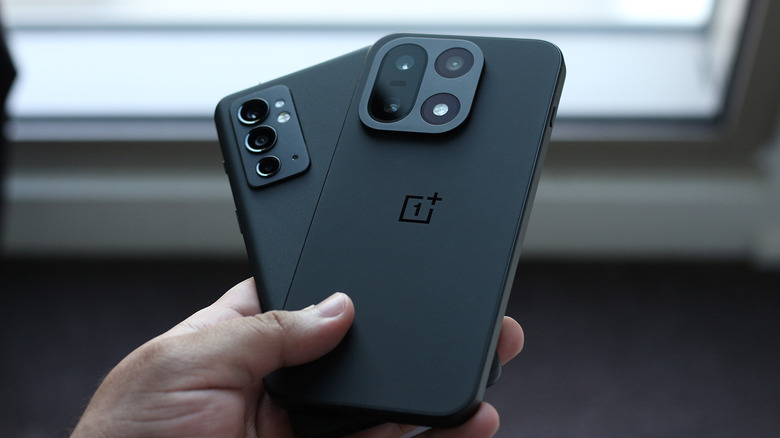
Is buying a OnePlus phone in 2026 still a good idea?
If you really want a OnePlus phone, you can still make it work.
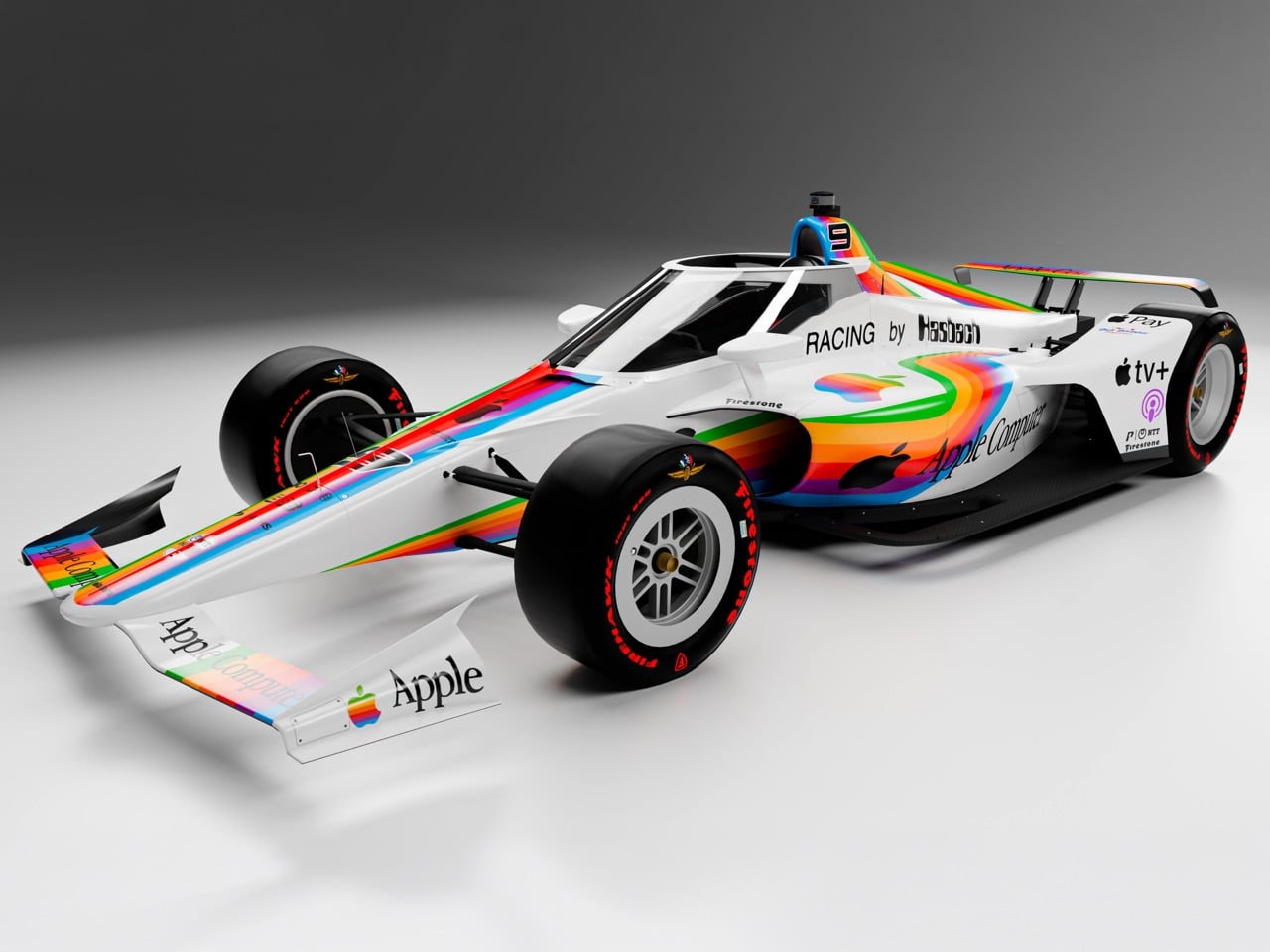
Apple loves racing. Apple TV just became the exclusive US home of Formula 1. Apple funded a movie about Formula 1 that made more money than most actual Formula 1 teams see in a season. Apple even talked Porsche into repainting two race cars in a 46-year-old rainbow scheme this year. What Apple has not done, despite all that motorsport enthusiasm, is show up to IndyCar, which remains a genuinely weird oversight for a company that loves a good only-in-America story.
Designer Daniel Rodriguez decided to render the version Apple apparently hasn’t gotten around to yet. His concept dresses a Dallara IR-18 in the full spectrum of Apple history, from the 1977 rainbow stripes and Motter Tektura lettering down to modern Apple Pay and Apple TV+ badges sitting right next to them. It is a mashup of eras that has no business looking this good, but somehow does.
Designer: Daniel Rodriguez
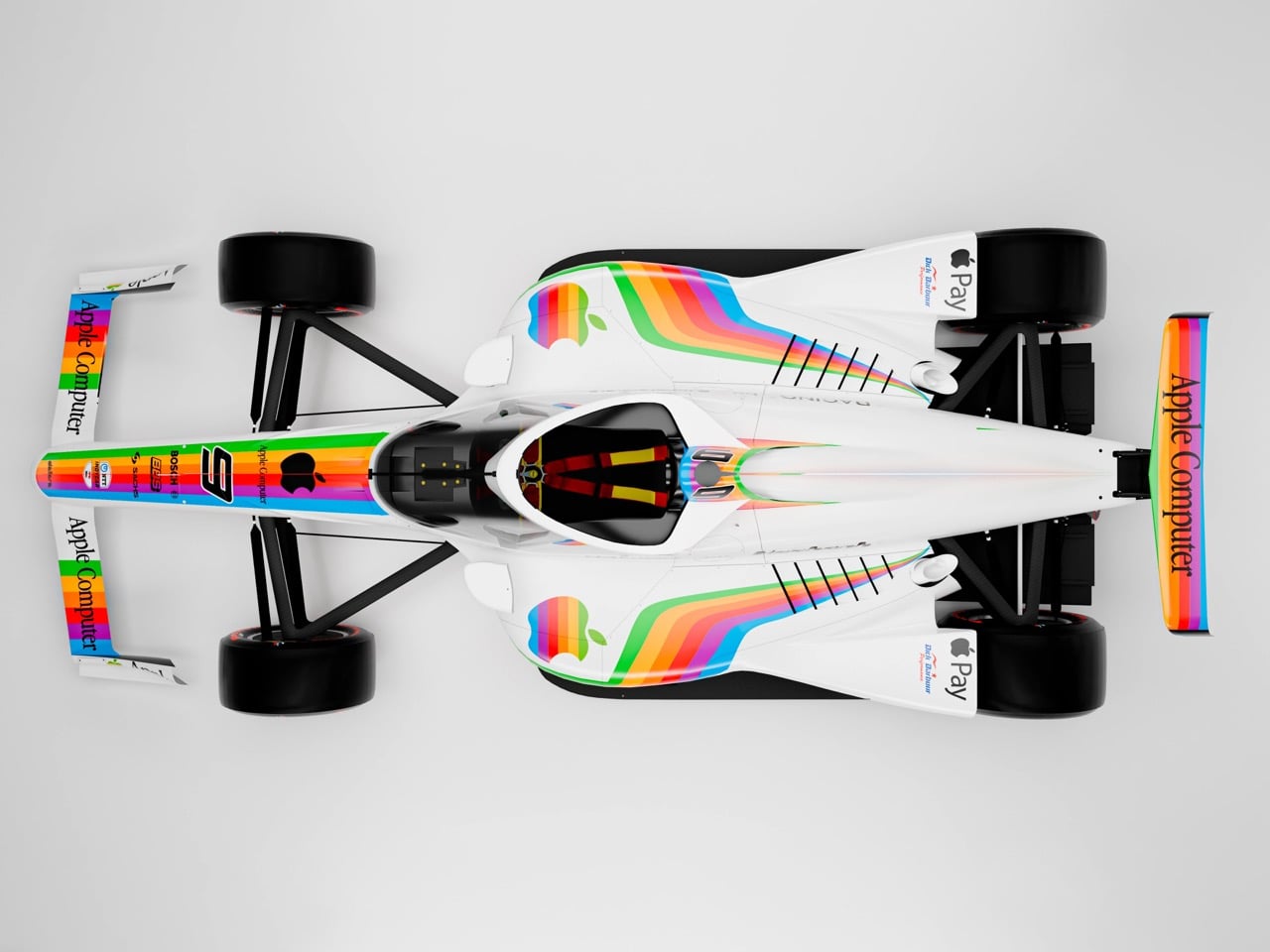
The stripes themselves do something clever depending on where you look. The nose, wing endplates, and mainplane get the flat, hard-edged six-color treatment straight out of 1977, while the sidepods and engine cover run a soft, airbrushed gradient that looks like it was pulled off a modern Apple wallpaper. Seen from above, the two halves mirror each other perfectly, with rainbow spears launching off the sidepod intakes and racing back over the engine cover in a symmetry that feels distinctly Cupertino rather than distinctly IndyCar.
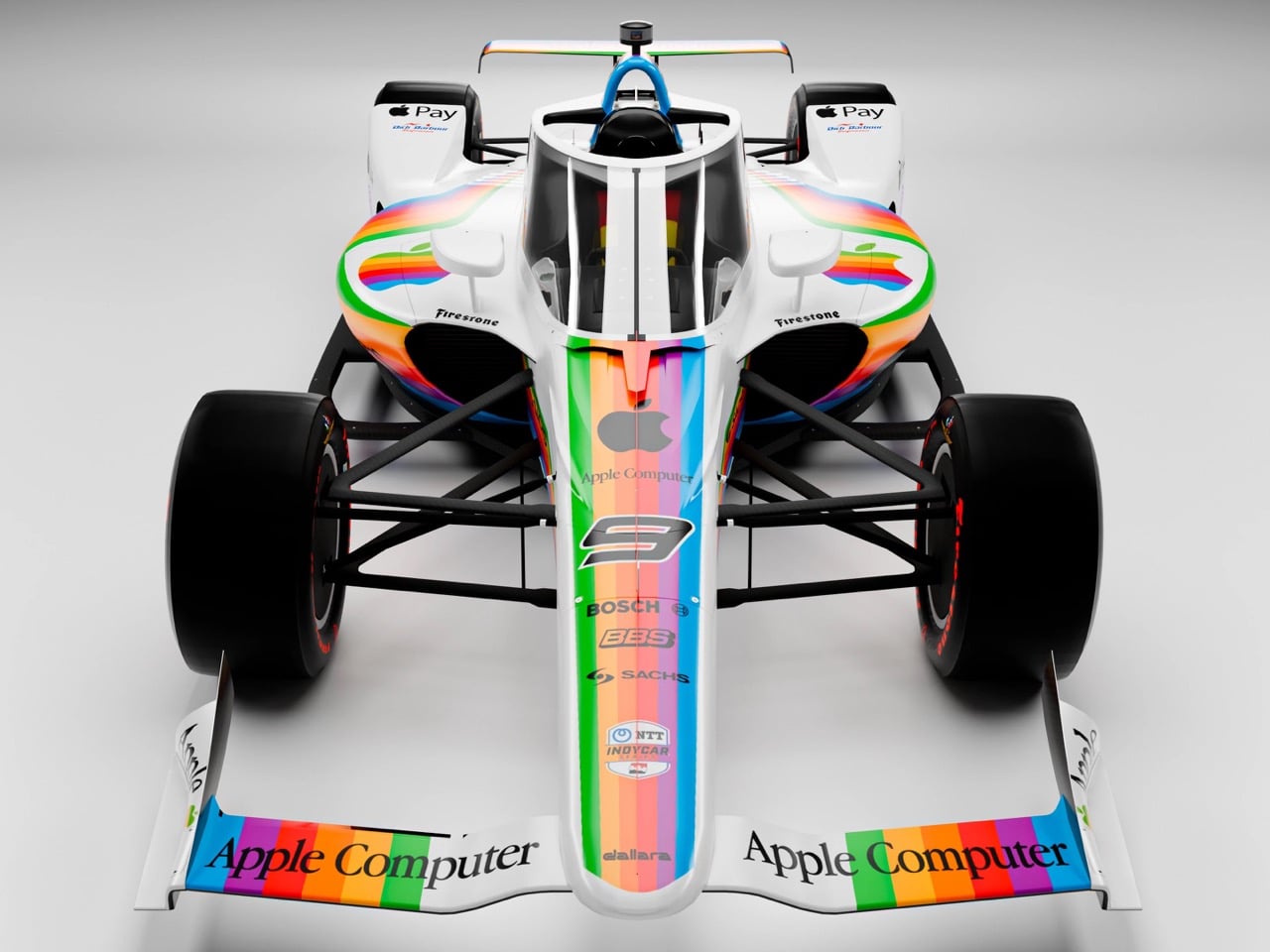
The words “Apple Computer” run down the nose in Motter Tektura, the quirky Austrian display face Rob Janoff picked in 1977 because its rounded letterforms echoed the curves of the apple mark itself. That typeface has been dormant on race cars for decades, and seeing it wrapped around a modern aeroscreen is a genuinely fun bit of type nerdery most viewers will feel before they can name it.
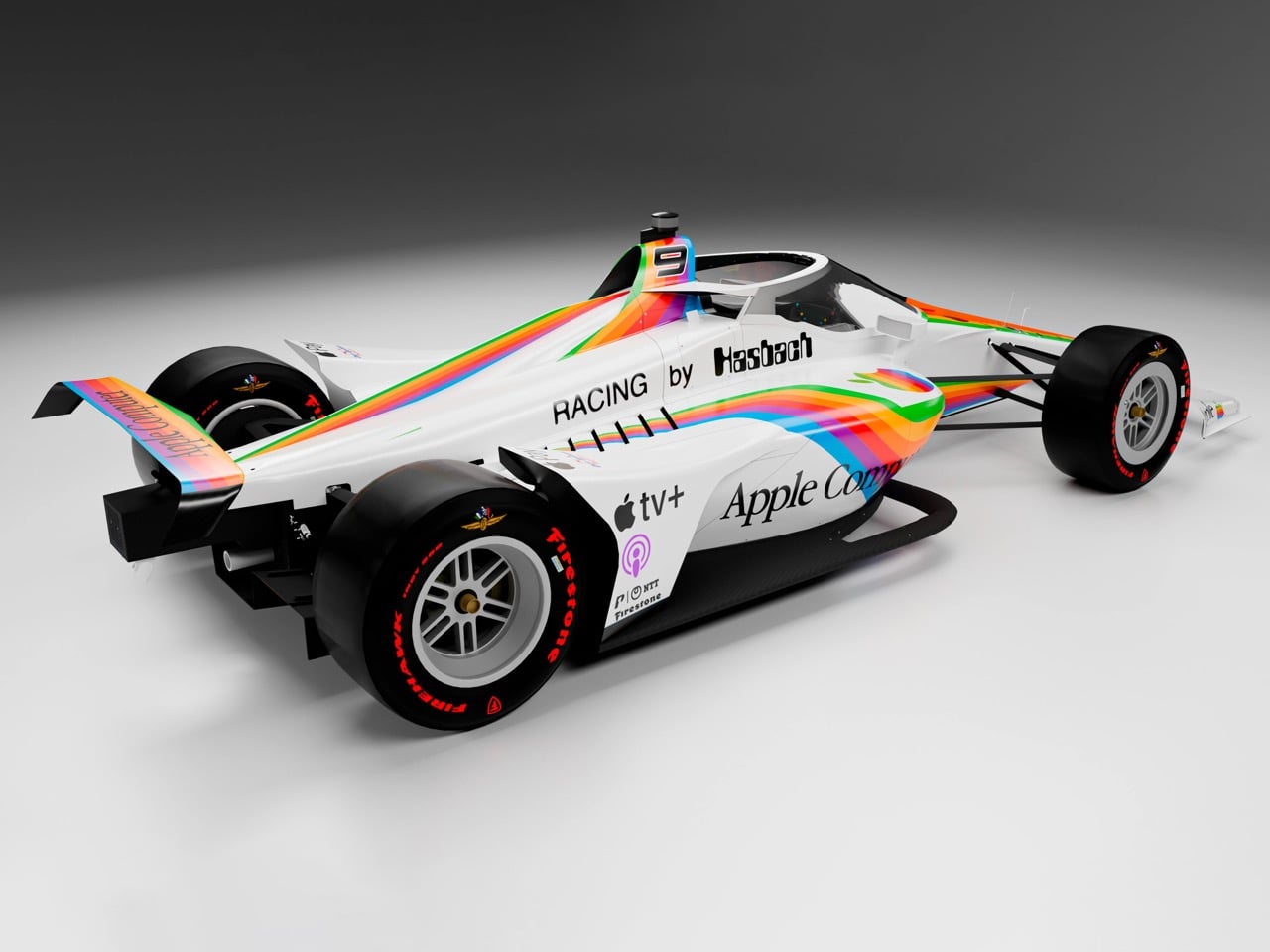
Rodriguez went really tongue-in-cheek with the sponsors. Apple Pay, Apple TV+, and Apple Podcasts logos sit shoulder to shoulder with the vintage six-color apple, like four different decades of the same company got dressed for the same race. Real IndyCar suppliers such as Bosch, BBS, Sachs, and Firestone fill out the rest of the livery, which keeps the whole thing grounded instead of drifting into pure fantasy render territory.
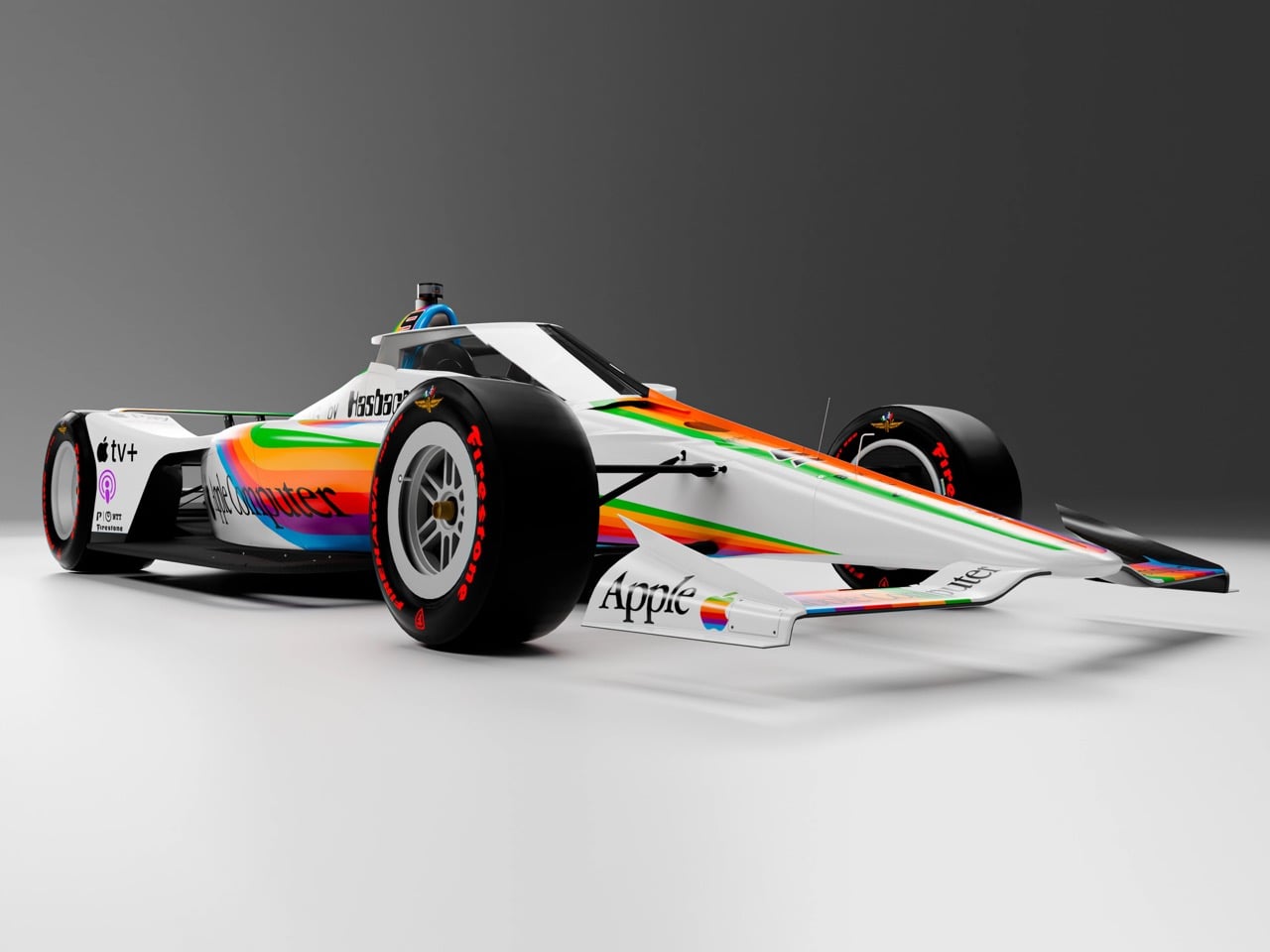
None of this happens in a vacuum, either. Apple actually had a rainbow racing moment already, back in 1980, when it sponsored a Porsche 935 K3 run by Dick Barbour Racing and driven by Bobby Rahal, Allan Moffat, and Bob Garretson. That car ran a short, unglamorous IMSA season, blew a piston at Le Mans, and wore a tail sticker that read “Don’t upset the Apple Car.” Porsche revived that exact livery this past May at Laguna Seca to mark 75 years of Porsche Motorsport and Apple’s 50th birthday, which is clearly the spark behind this whole concept.
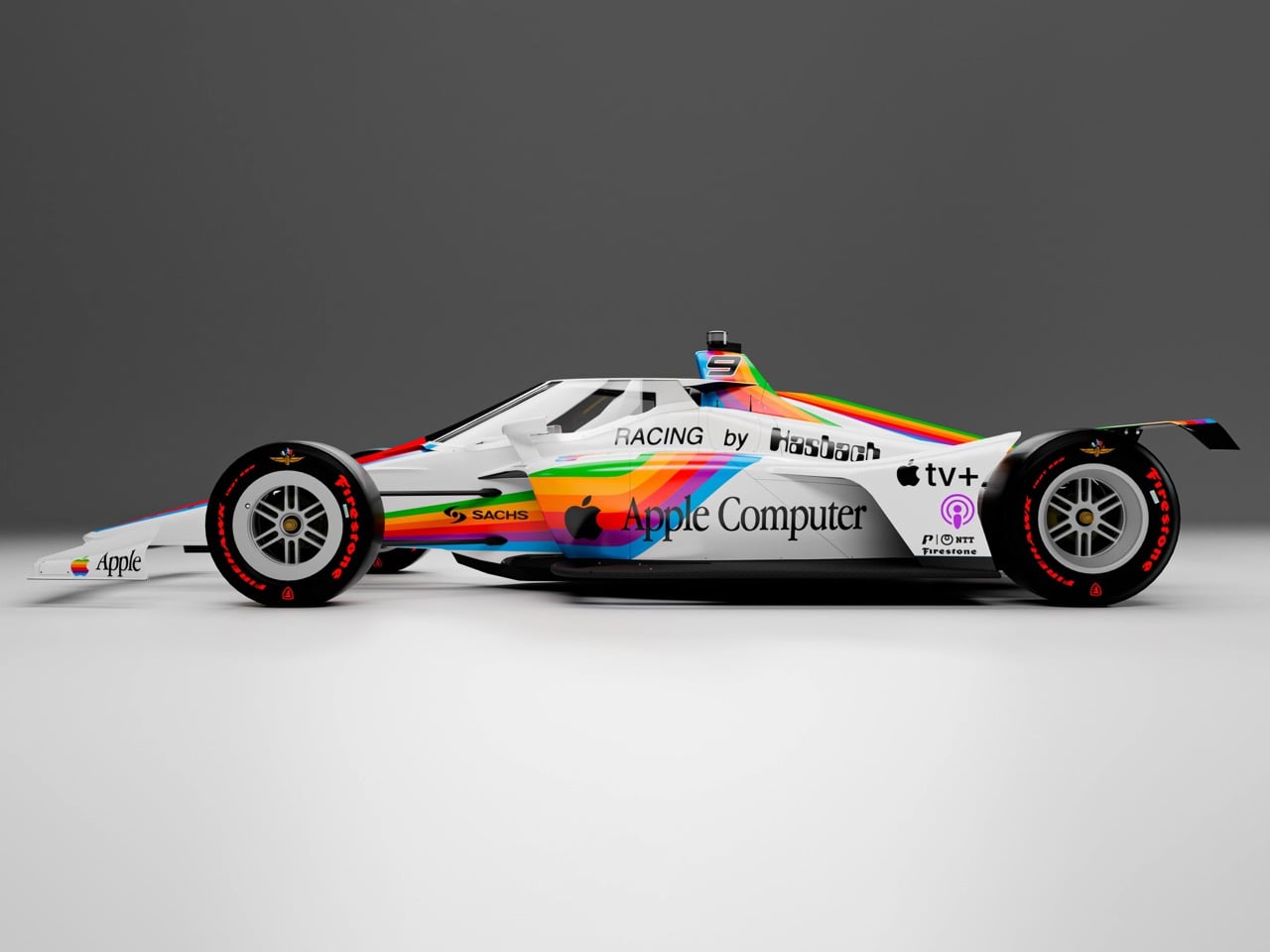
The bigger question the render quietly asks is why IndyCar is still waiting. Apple has spent nine figures on Formula 1 rights and greenlit a Porsche throwback livery for a sports car series most Americans do not watch on Sunday afternoons. IndyCar runs ovals, street courses, and an actual American underdog story every single season, and it is about to roll out a lighter, faster Dallara IR-28 in 2028. If Apple wants a paddock that already looks this good in rainbow stripes, the invitation is right here.
The post This Retro Apple IndyCar Livery Looks Like The Perfect Next Step After The Company’s F1 Partnership first appeared on Yanko Design.
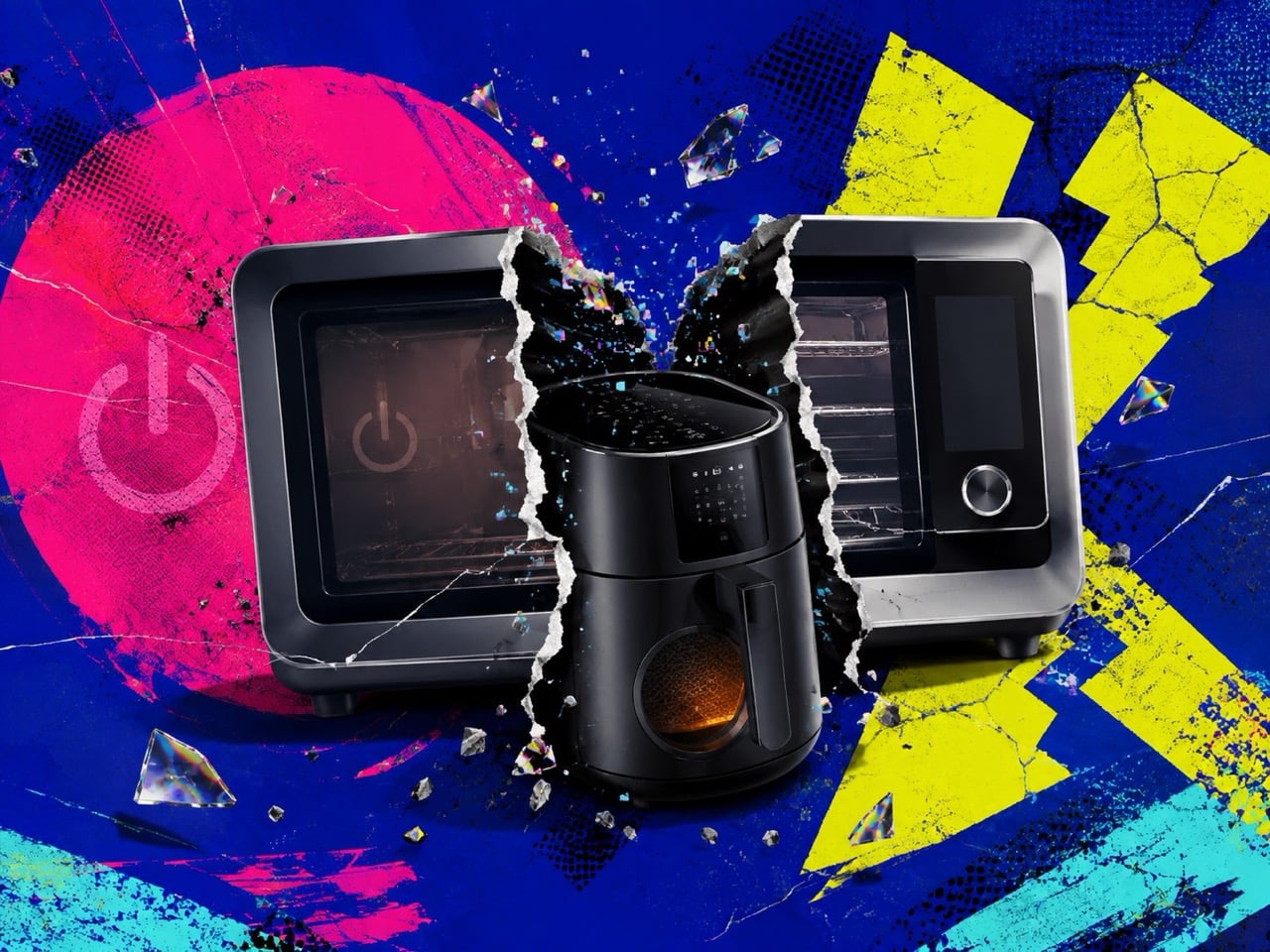
Somewhere in a warehouse in Illinois, someone at Weber is about to flip a switch that turns a $999 oven back into a very expensive toaster. On September 22, the June Oven loses its cloud, its app, and the camera trick that made it famous in the first place. You can still push the manual buttons. You just lose the part where the oven looks at your chicken thighs and quietly figures out what to do with them.
Here’s the kicker. That exact party trick, the camera that scans your food and picks a cook program for you, now lives inside air fryers that cost less than a nice dinner out. June invented food recognition cooking in 2015 for fifteen hundred bucks. A decade later you can buy the same basic idea for under a hundred dollars on Amazon. The technology didn’t get worse. It just stopped being special enough to protect.
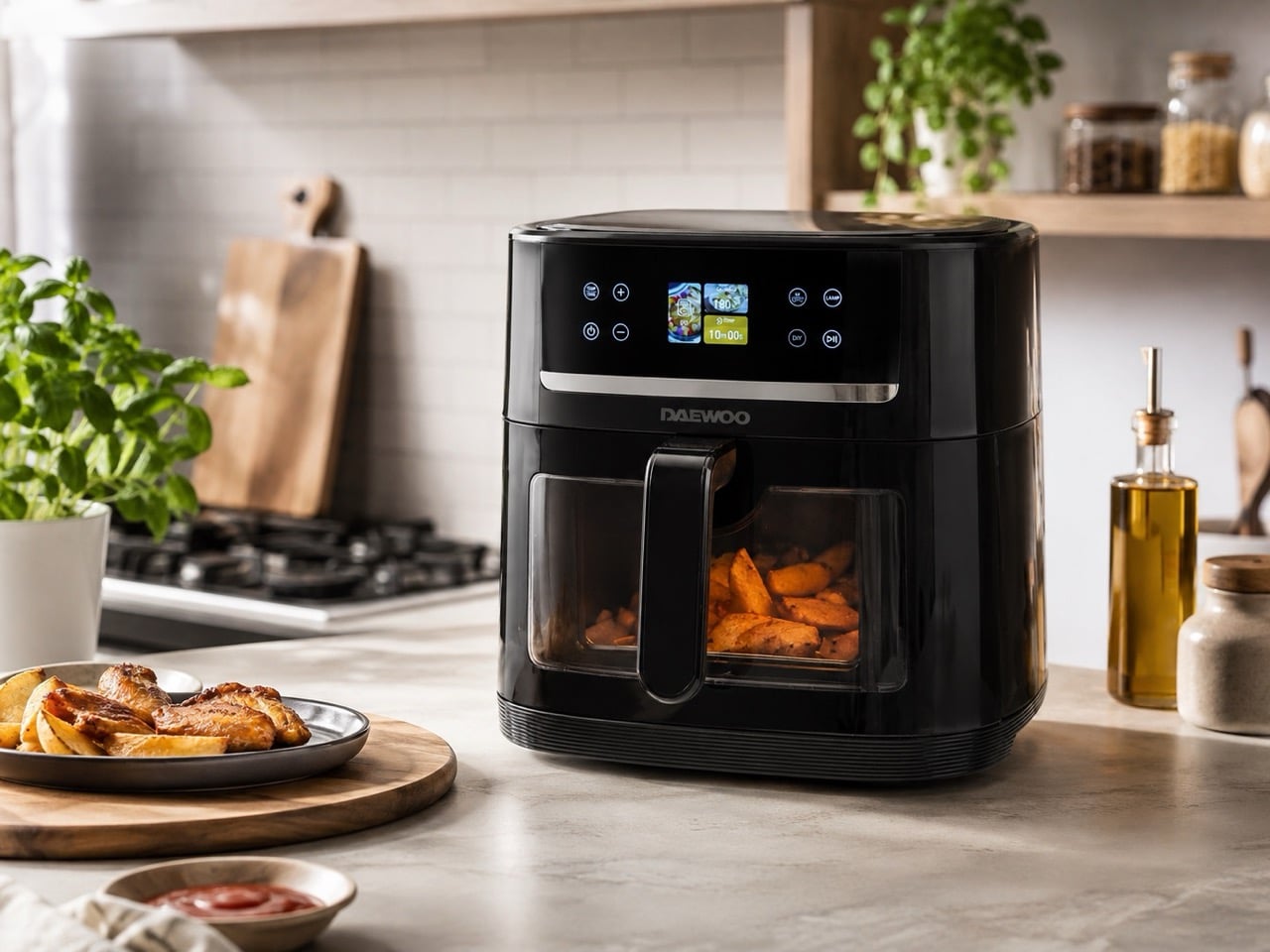
Daewoo Actuate
Weber hasn’t put out a press release about any of this, which tells you plenty on its own. Owners found out by email. Meanwhile the company has been actively expanding Weber Connect, the smart grilling platform June’s own engineers helped build, across its charcoal and gas lineup. So the message, whether Weber meant to send it or not, is that connected cooking tech is worth investing in when it’s attached to a grill, and worth quietly switching off when it’s attached to a toaster oven nobody’s manufacturing anymore.
Daewoo’s Actuate is the cheapest, dumbest version of June’s original idea, and I mean dumbest as a compliment. An internal camera peeks at whatever’s in the basket, matches it against twelve presets like chips, sausages, and chicken, and sets the time and temperature without asking you to tap through a menu. It runs about ninety to a hundred dollars depending on the retailer and the day. No app, no account, no subscription. It just watches your dinner and gets on with it.
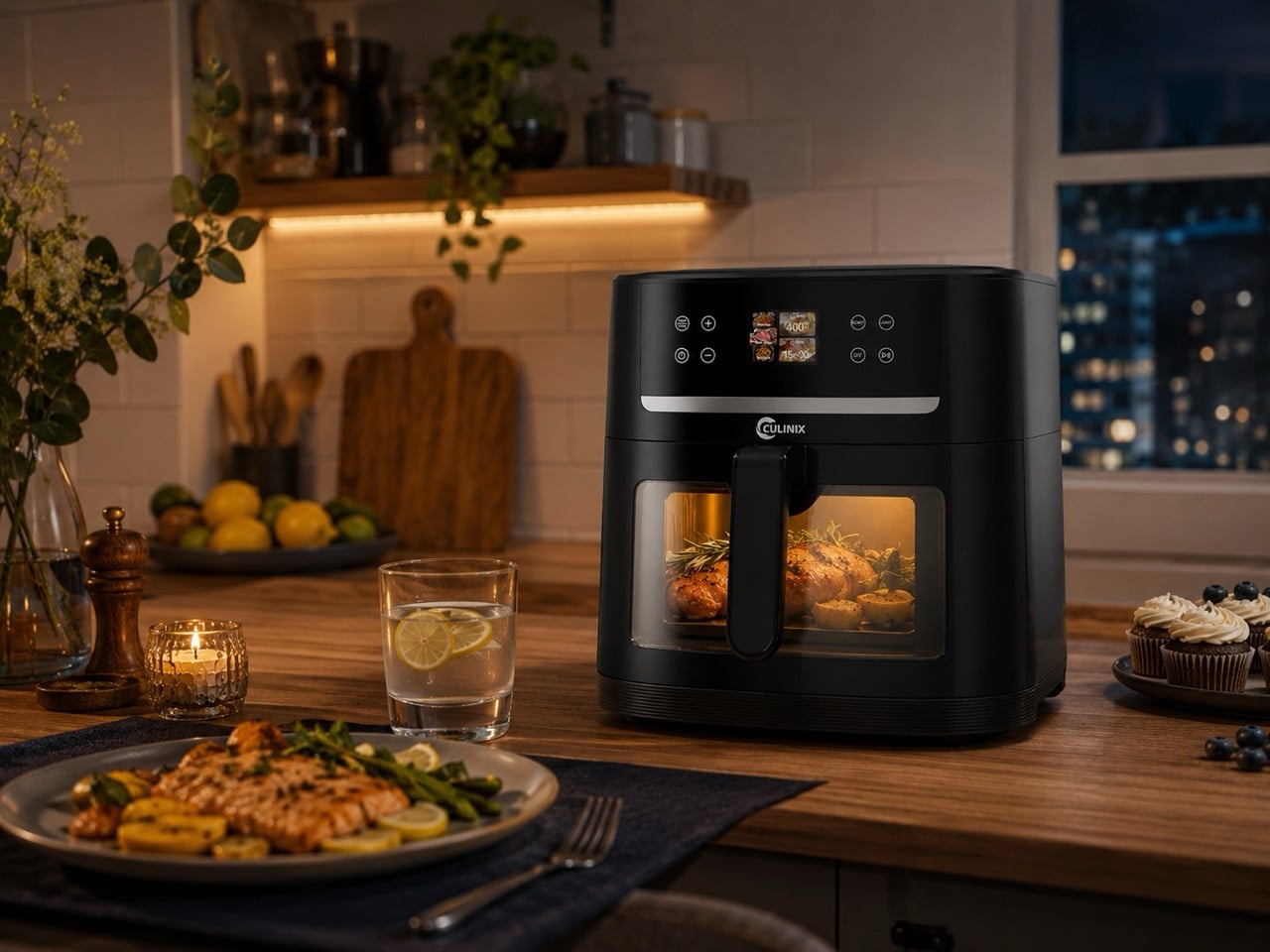
Culinix 8.5QT AI air fryer
Here’s where it gets fun. Culinix sells an 8.5 quart fryer in the US with an AI camera that recognizes twelve foods, and the list reads like it was lifted straight off Daewoo’s spec sheet. Chicken goujon. Fish finger. Beef joint. Chick pea. That is oddly specific British supermarket vocabulary to land on two unrelated product pages by coincidence. My guess is neither brand invented this camera module, they just bought the same one off a factory shelf and slapped their own logo on the box, the same way every USB charger secretly comes from three factories in Shenzhen.
Emerson skipped the camera entirely and gave its SmartVoice fryers ears instead. Say “cook pork chops” and it just does it, no app, no wifi, all the processing happening locally on the device. It’s not glamorous, but it solves a real problem for people who find touchscreens fiddly, whether that’s arthritis, low vision, or just being elbow deep in raw chicken and unable to tap anything. I’d argue this is the most quietly useful of the three schools, even though it’ll never trend on a gadget blog.
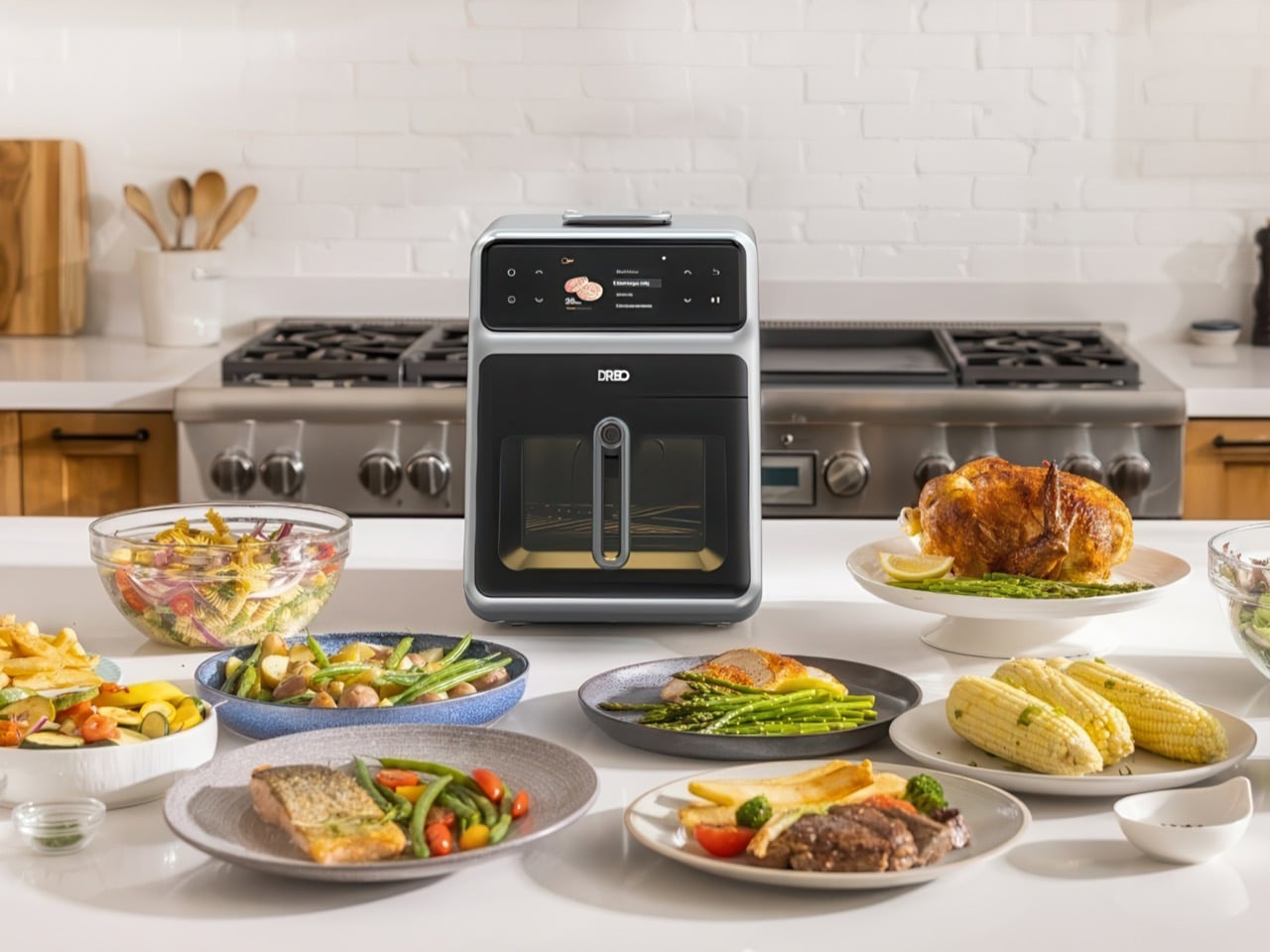
Dreo ChefMaker
Xiaomi and Dreo took the opposite bet and gave up on guessing entirely. Xiaomi’s Mijia Pro adds a water tank so it can steam and sous vide alongside the usual hot air, which actually changes the physics of what comes out the other end. Dreo’s ChefMaker goes further and sticks a probe straight into the meat, measuring real internal temperature instead of inferring anything from a camera. It’s the only method here that isn’t a guess.
Which brings us back to June. Anova’s newer oven has the same food recognition camera, except the feature only works if you’re actively paying a subscription. So the actual choice in 2026 isn’t camera versus voice versus probe. It’s whether you own the smarts in your kitchen outright, or you’re just renting them from a company that can turn them off the second it stops making sense on a spreadsheet.
The post Weber Is Shutting Off the June Oven’s AI Camera, and a $90 Air Fryer Already Does The Same Thing first appeared on Yanko Design.
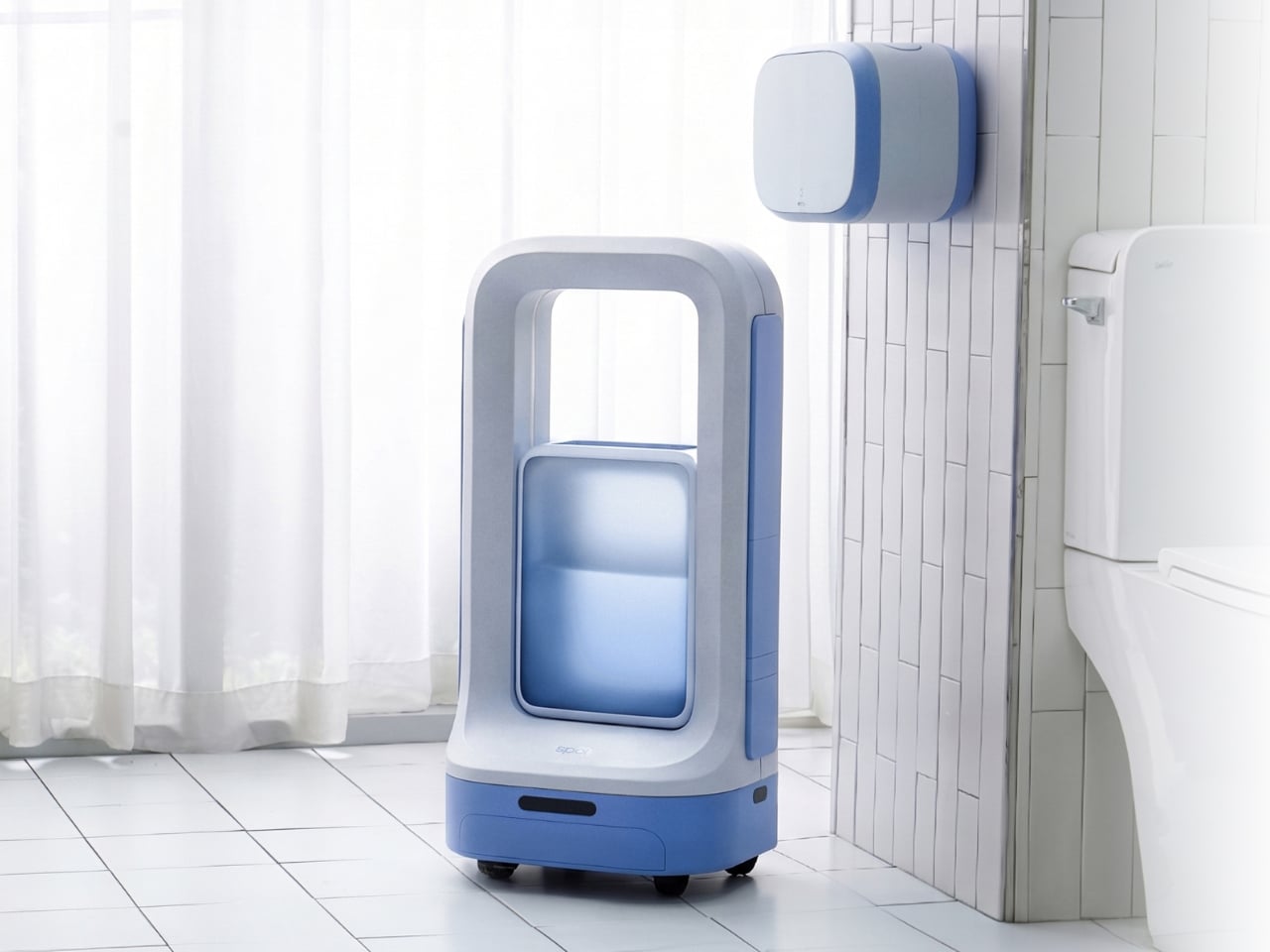
Public restrooms have, for the longest time, been a design afterthought. They get built, they get scheduled for cleaning twice a day, and everything that happens in between is considered someone else’s problem. Nobody glamorizes it. Nobody puts it on a mood board. And yet the state of public restrooms affects millions of people daily in ways that are deeply tied to comfort, dignity, and public health.
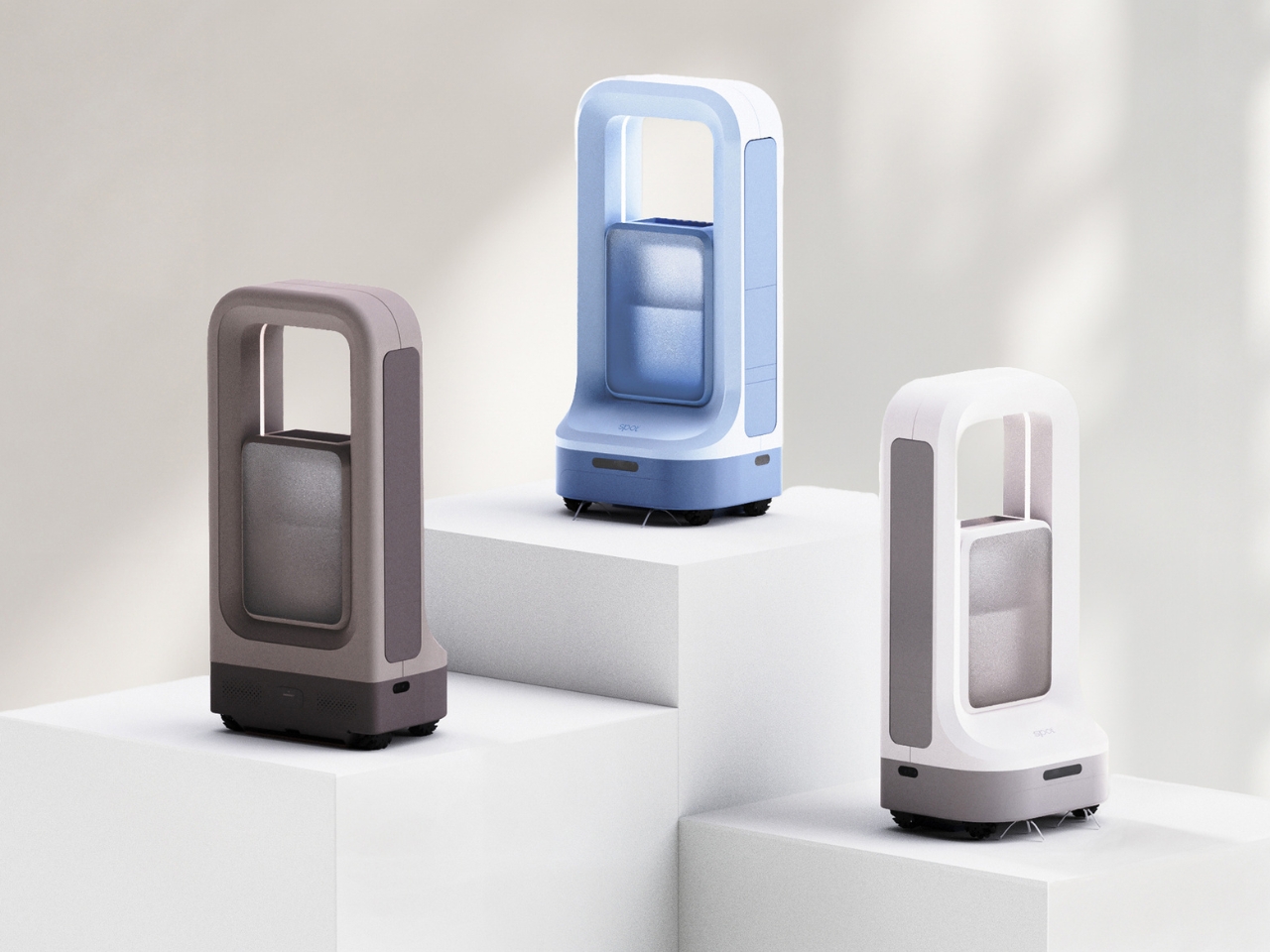
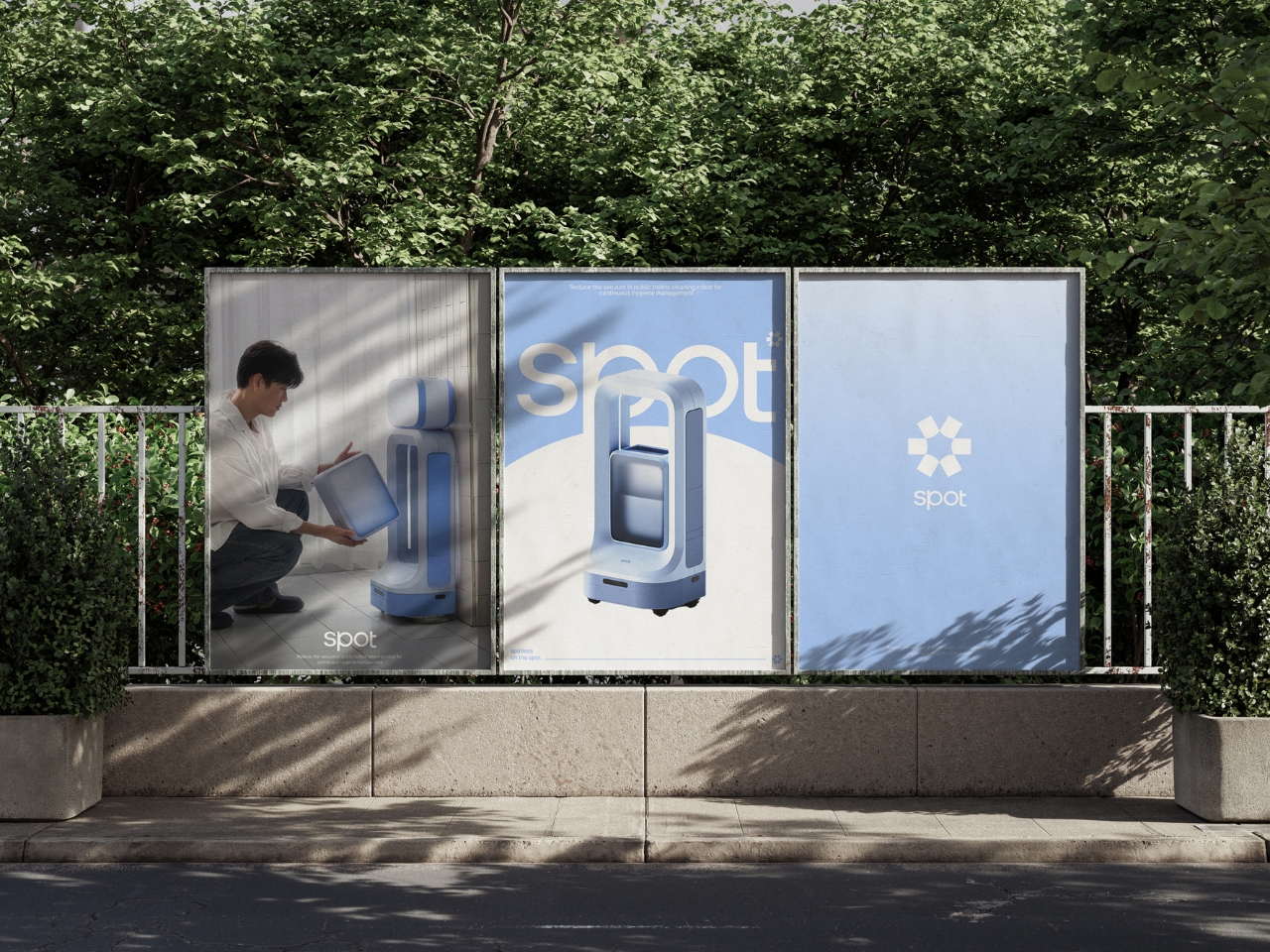
That’s exactly the gap that Yangwoo Choi and Ye Jin Lee, two designers from South Korea, decided to address with Spot, a concept for an autonomous cleaning robot built specifically for public restrooms. Published in June 2026, the project has been picking up attention in design communities, and I think it deserves more eyes than it’s gotten so far.
Designers: Yangwoo Choi, Ye Jin Lee
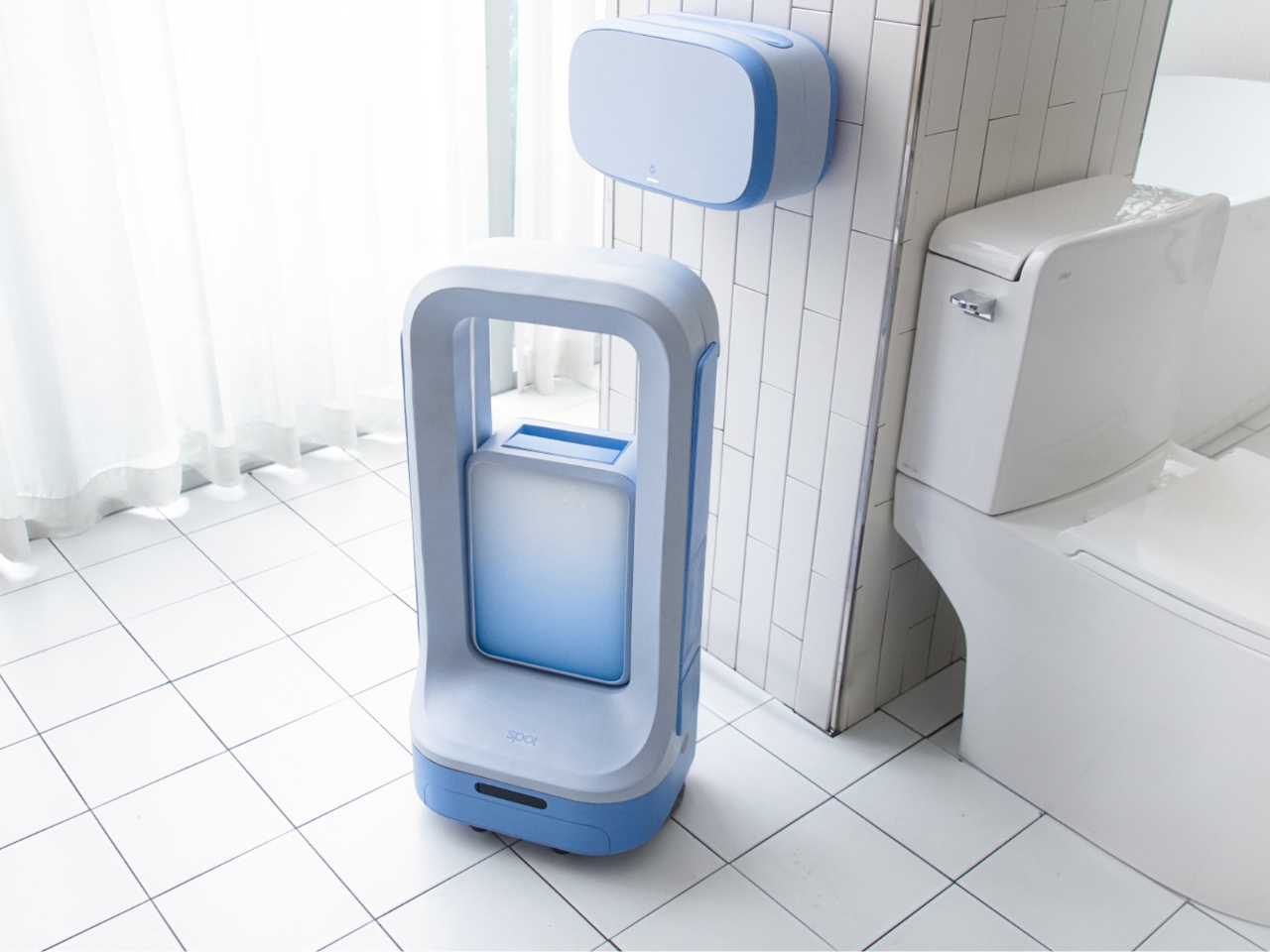
The premise is straightforward but smart: rather than waiting for the next scheduled cleaning, Spot detects contamination after a user exits and automatically cleans the affected area. It plugs directly into the most persistent failure of public restroom maintenance: the window between cleanings. That window is real, measurable, and for years it’s been treated as an acceptable cost of running a public facility. Facilities managers can only do so much with fixed schedules, and when traffic is high, things go wrong fast.
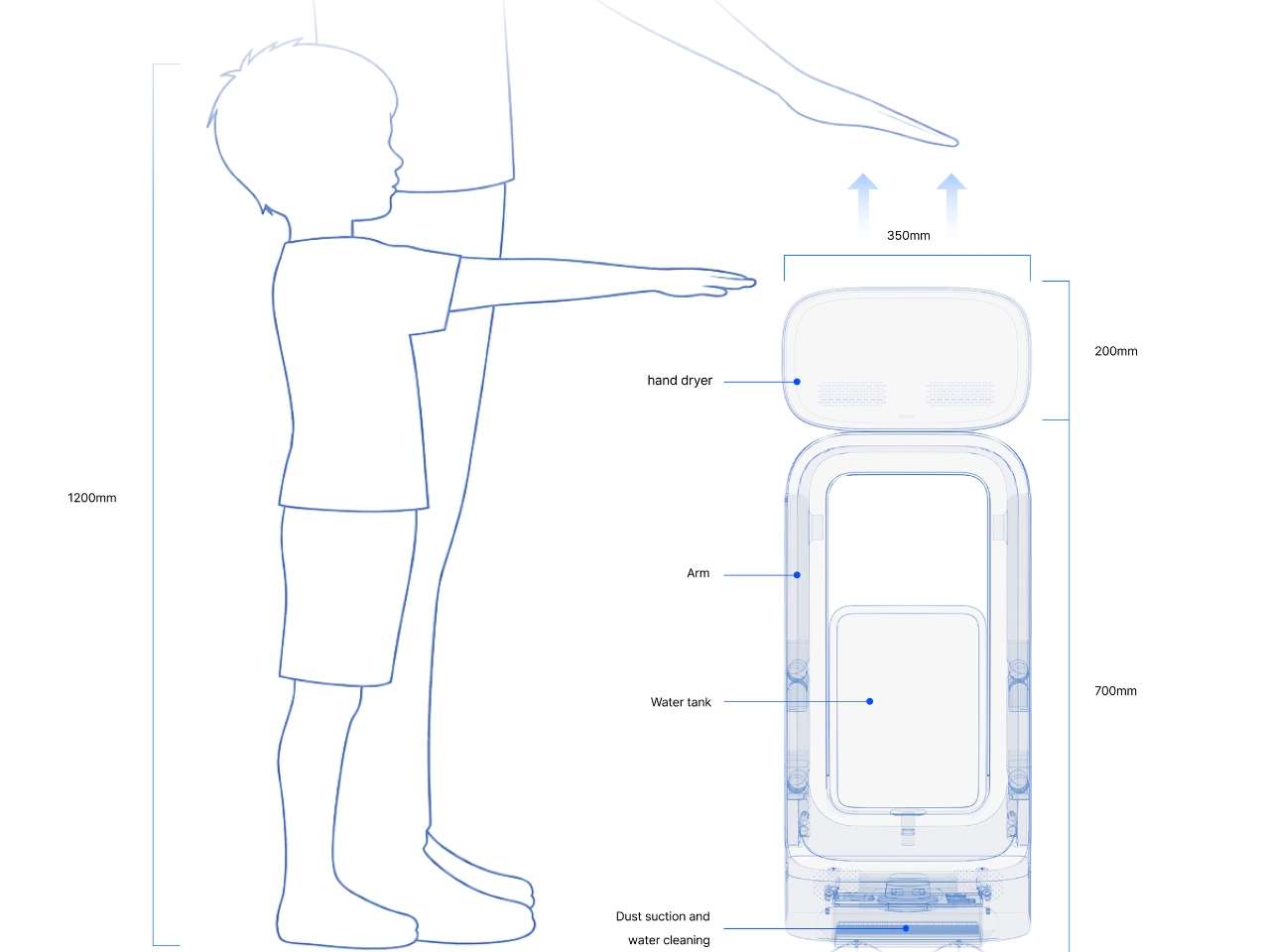
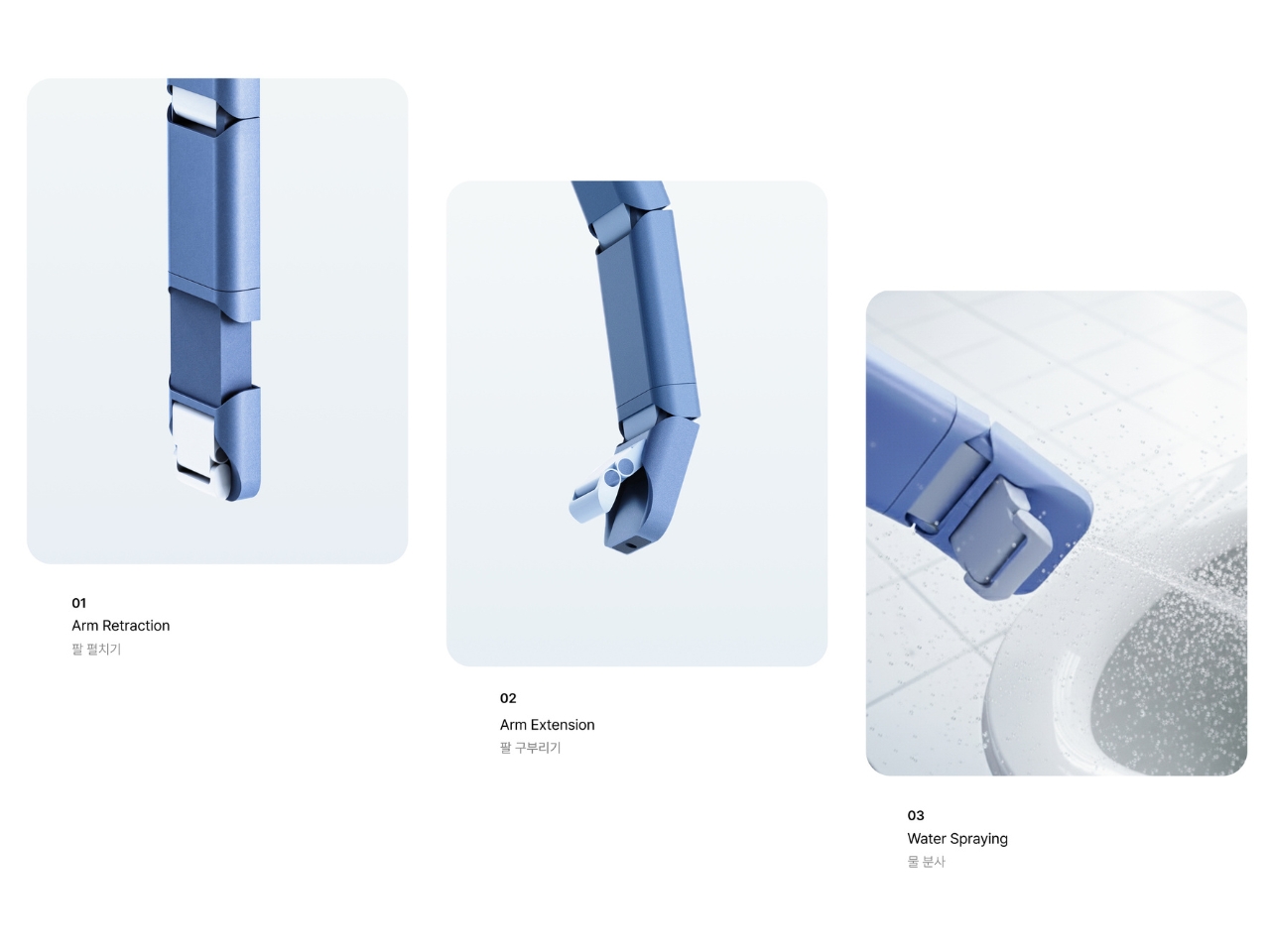
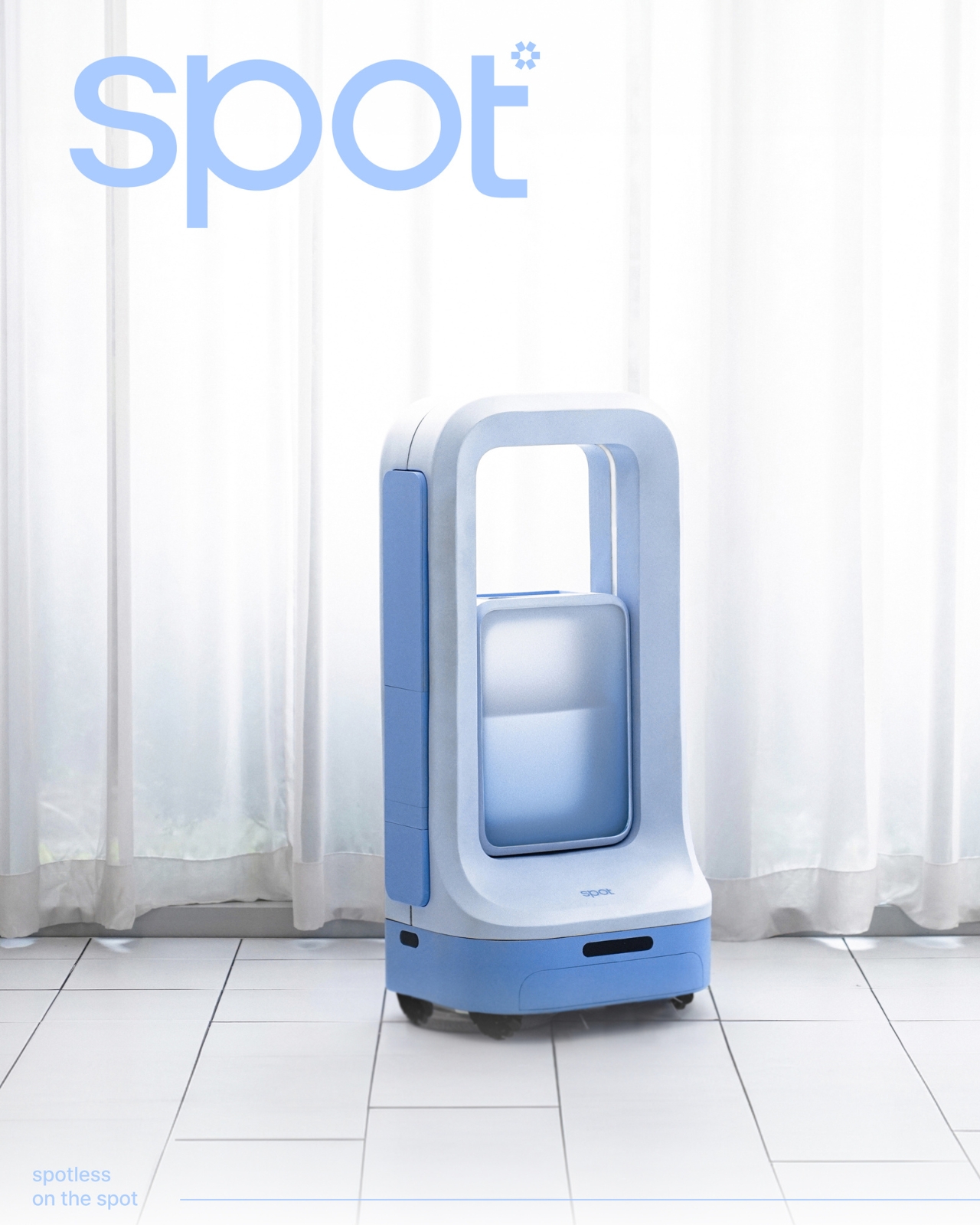
What the designers have created is not just a functional concept but a genuinely considered one. The robot’s form is compact and minimal, rendered in a calm blue that reads as clean, clinical, and intentional all at once. It doesn’t try to be cute or conspicuous. It belongs in the background, doing its job without demanding attention, which is exactly the right design language for something operating in a space that people want to move through quickly and without thinking too hard.
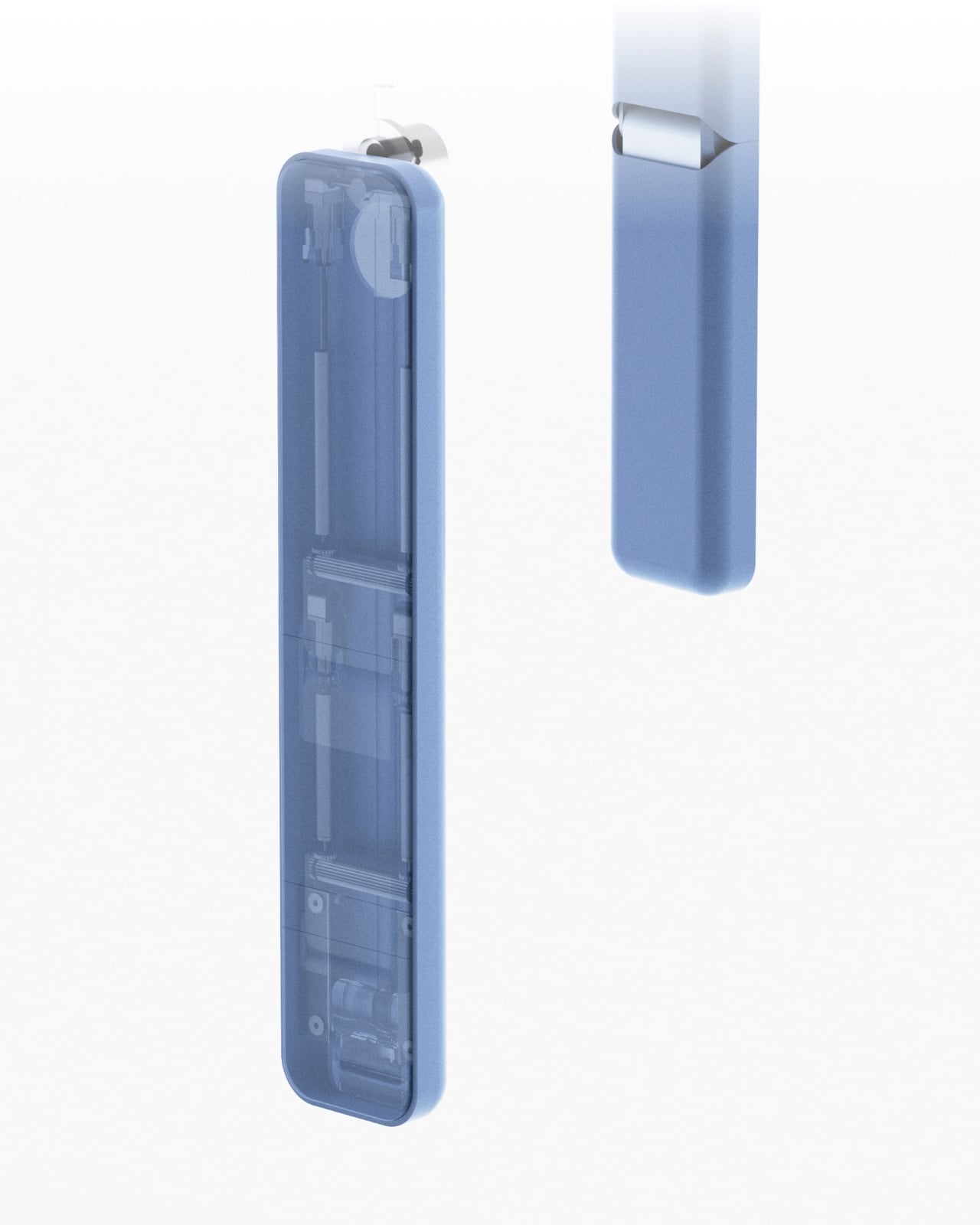
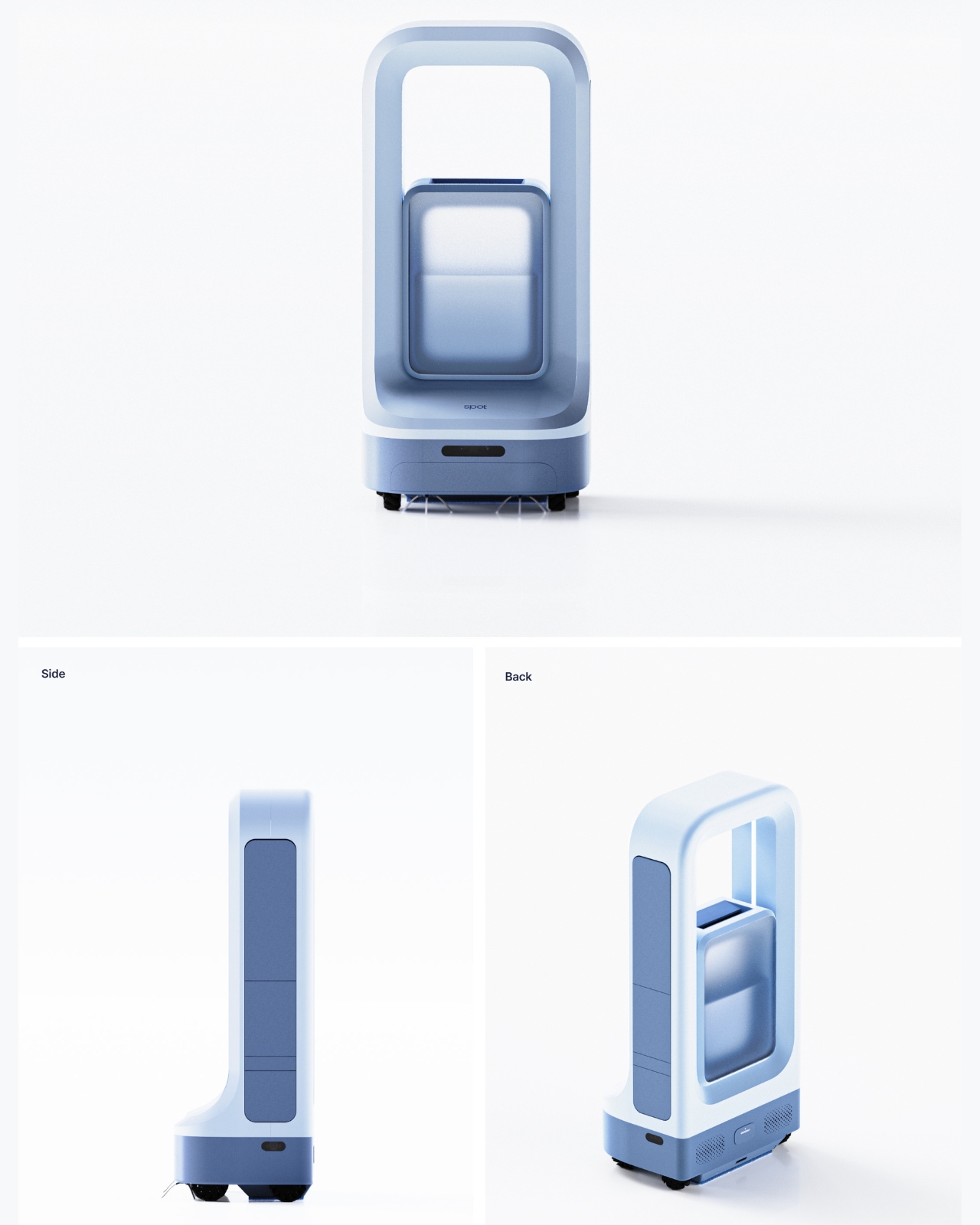
The contamination detection element is where the concept earns its credibility. Autonomous cleaning machines already exist, but most operate on timers or fixed routes with little real awareness of actual conditions. Building detection into the process means Spot responds to reality rather than routine, which is a fundamentally different way of thinking about maintenance. That shift matters more than it might seem at first glance.
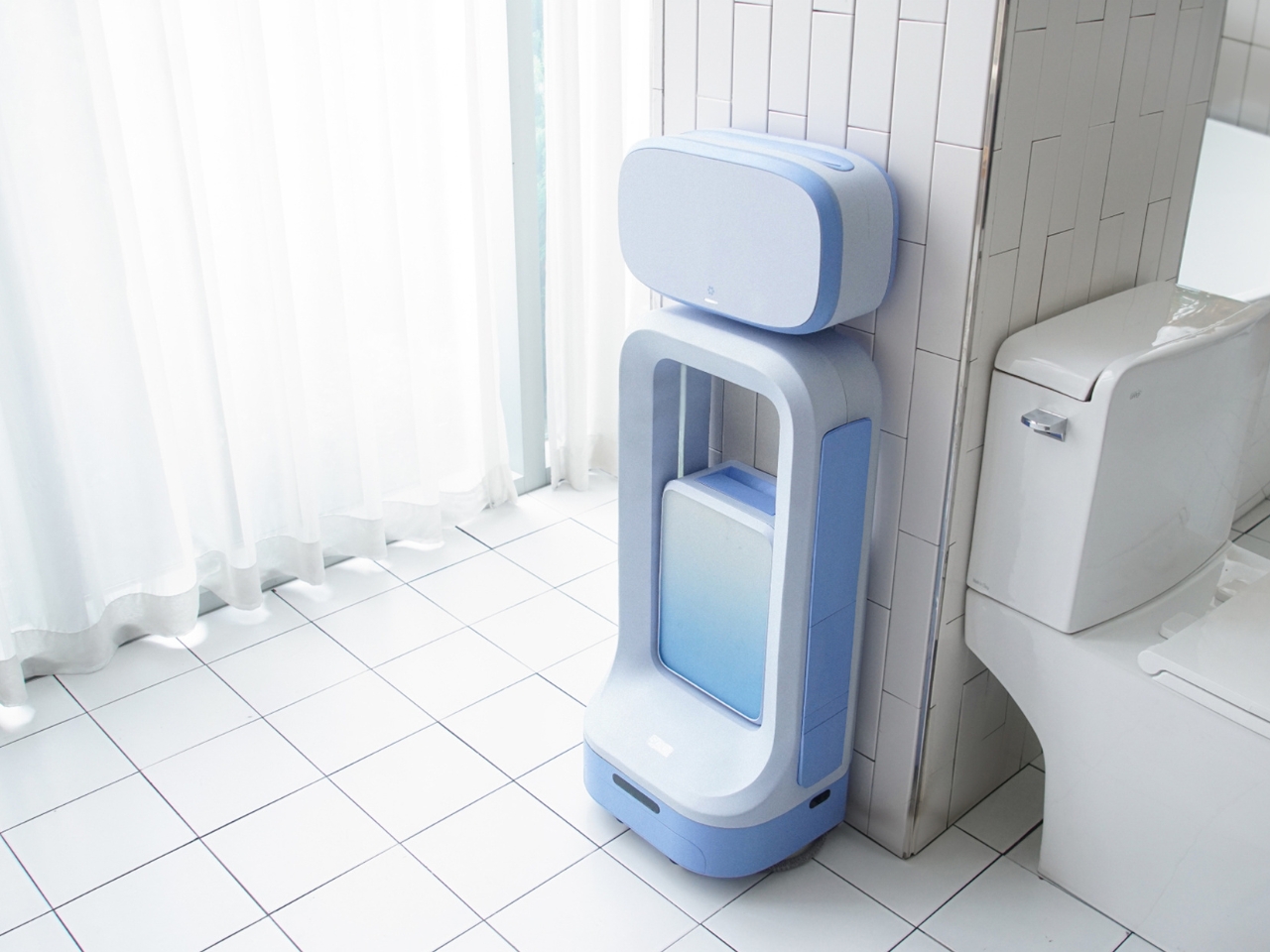
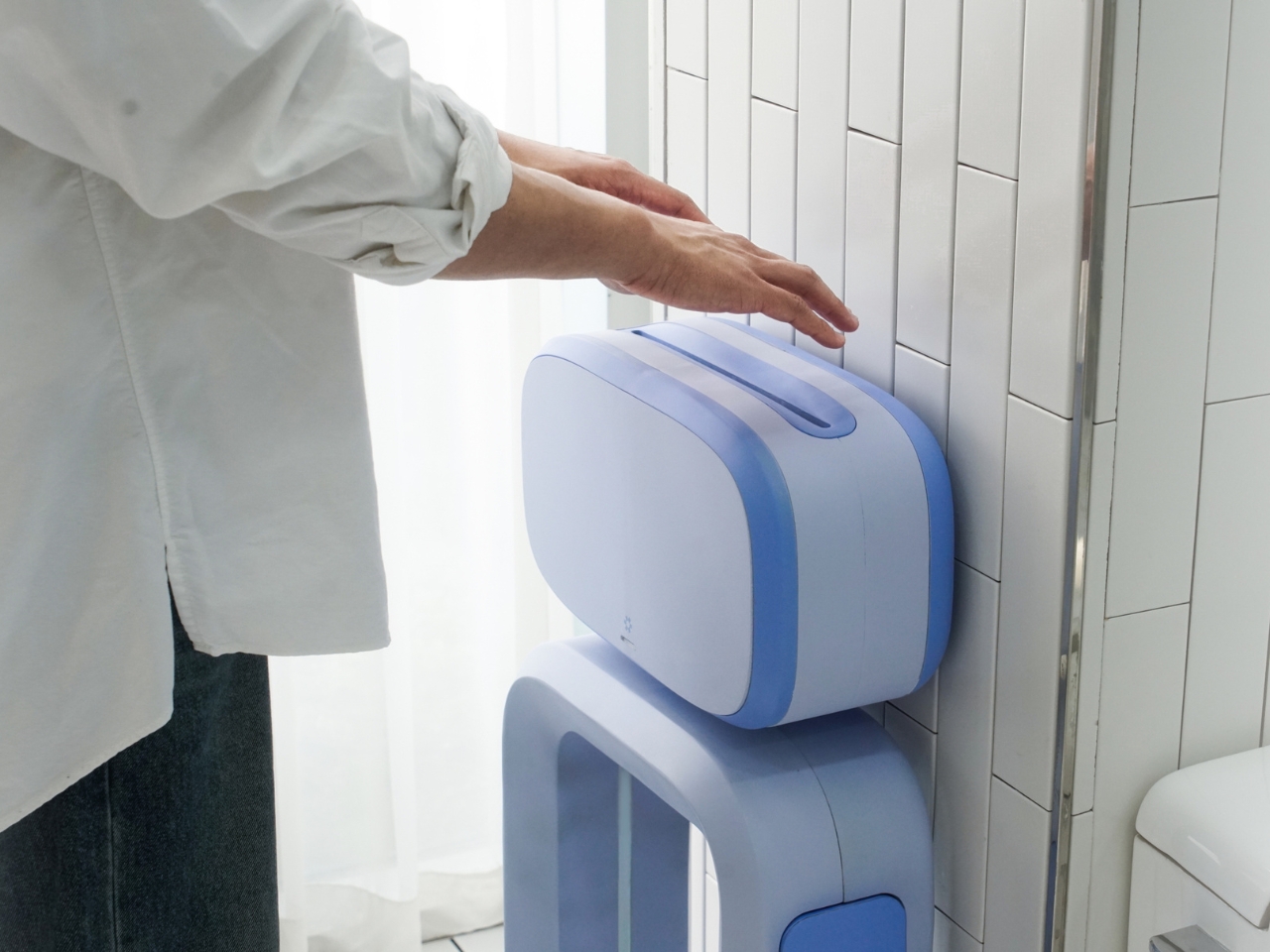
I think about the places where this would change things most: airports, train stations, shopping centers, schools. These are environments where restroom traffic is constant and unpredictable, where a single cleaning cycle scheduled at 10am has already become irrelevant by 10:45. The problem isn’t laziness or negligence. It’s a structural mismatch between human-managed schedules and the actual pace of use. A robot that responds to contamination as it happens, rather than as it’s predicted, addresses that mismatch directly.
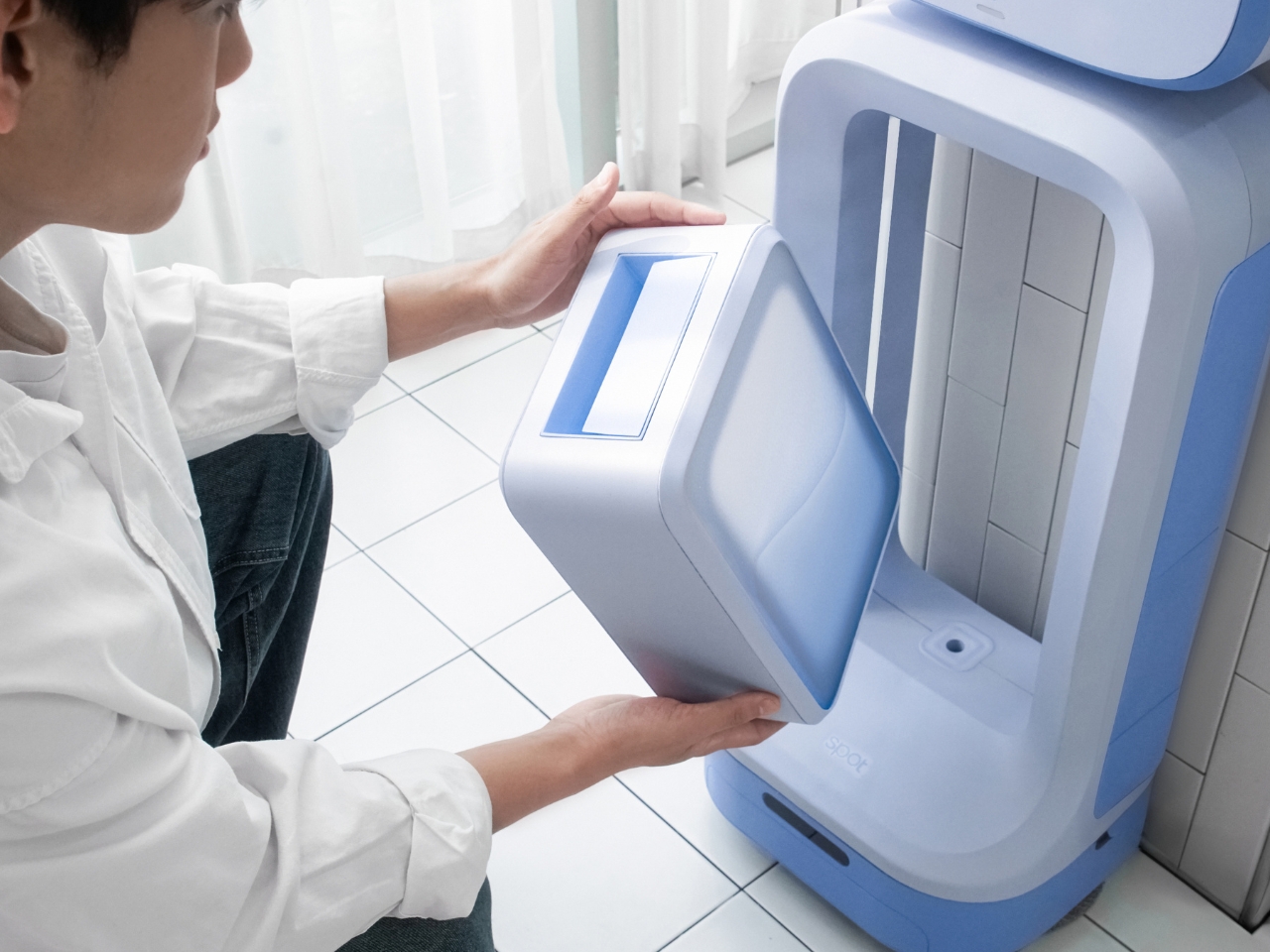
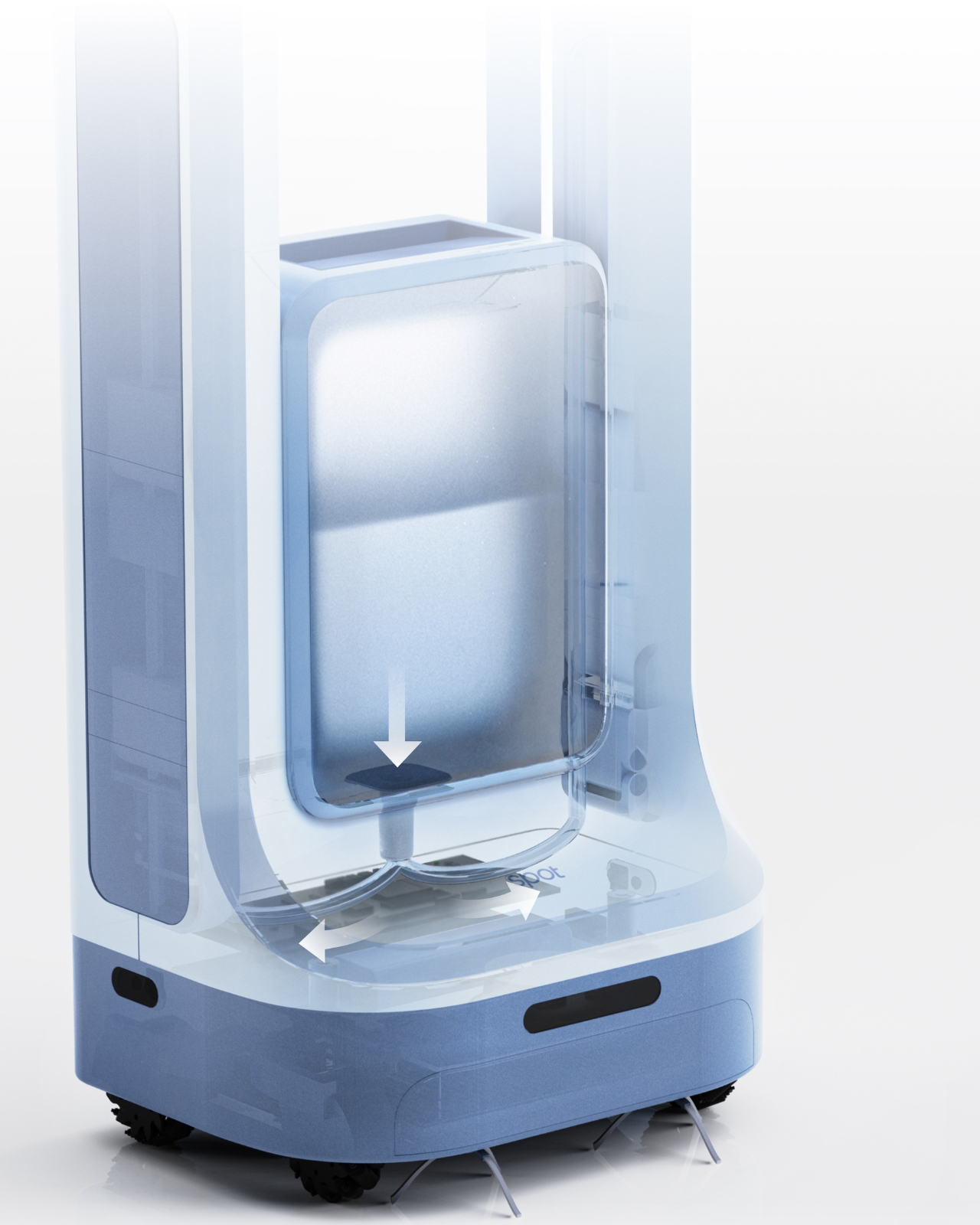
There’s also a human element worth naming. Cleaning restrooms is physically demanding, often invisible labor, and not a job that gets celebrated or compensated in proportion to how much it matters. A concept like Spot isn’t about replacing people outright; it’s about redirecting effort. If autonomous systems handle reactive cleaning between scheduled visits, human cleaners can focus on deeper maintenance, restocking, and the kind of attention that machines genuinely cannot replicate. That’s a more sensible division of labor.
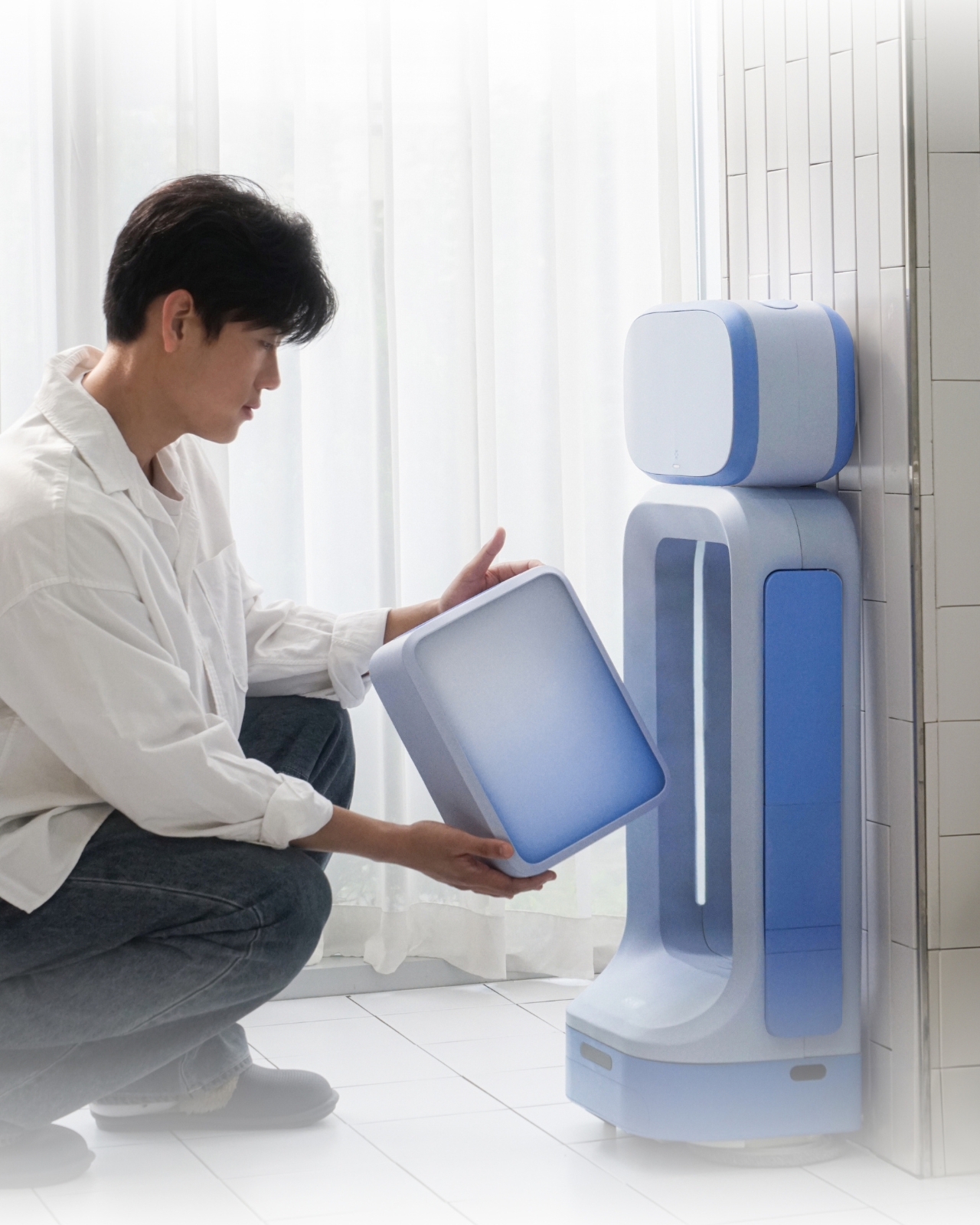
Whether Spot ever moves beyond concept stage is a separate question, and a legitimate one. Autonomous robots in public restrooms face real hurdles: sensor reliability, durability in wet environments, safety around users, cost of deployment at scale. None of these are trivial. But that’s not the conversation the project is asking us to have right now. What Choi and Lee are doing is pointing clearly at a problem and proposing a direction. The execution can evolve. The clarity of the problem statement is the part that sticks.
Good design doesn’t always originate in places we expect. Some of the most interesting work right now is coming out of South Korea, where designers seem particularly willing to take on overlooked, unglamorous problems with serious intention. Spot is that kind of project. It’s not trying to be beautiful for beauty’s sake. It’s trying to make a specific, difficult experience better. That’s the kind of design that actually changes things.
The post The Cleaning Robot That Knows When a Bathroom Needs It first appeared on Yanko Design.