How to cancel your PlayStation Plus subscription
If you're done giving Sony money every month, cancelling PlayStation Plus is easy.
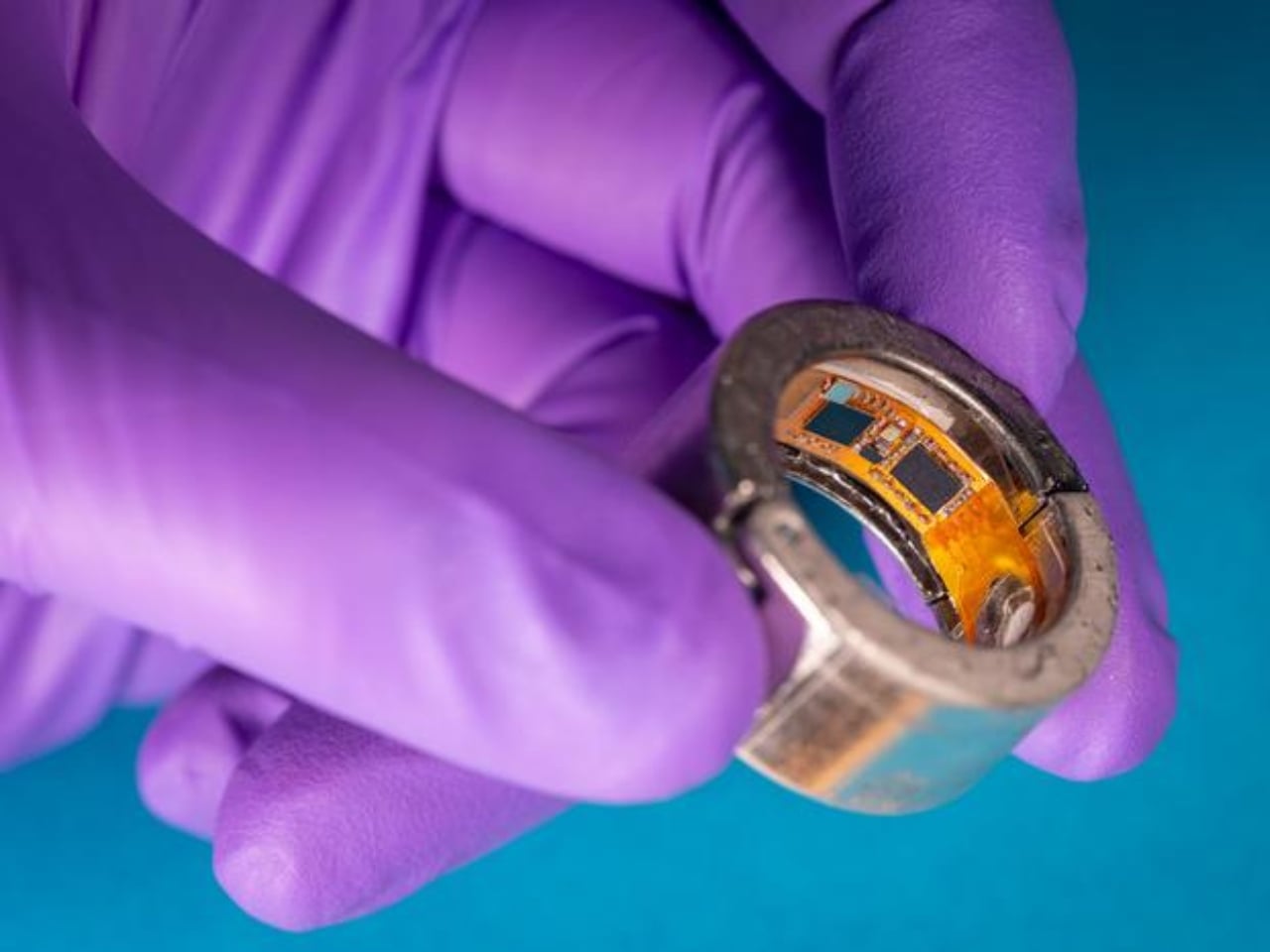
The smart ring market has had a good run on heart rate and sleep tracking. Oura, Samsung Galaxy Ring, and their growing circle of competitors have made it genuinely useful to wear a small device on your finger all day. But if you’ve been waiting for wearable health tech to go deeper than pulse and REM cycles, engineers at UC San Diego may have just drawn the roadmap.
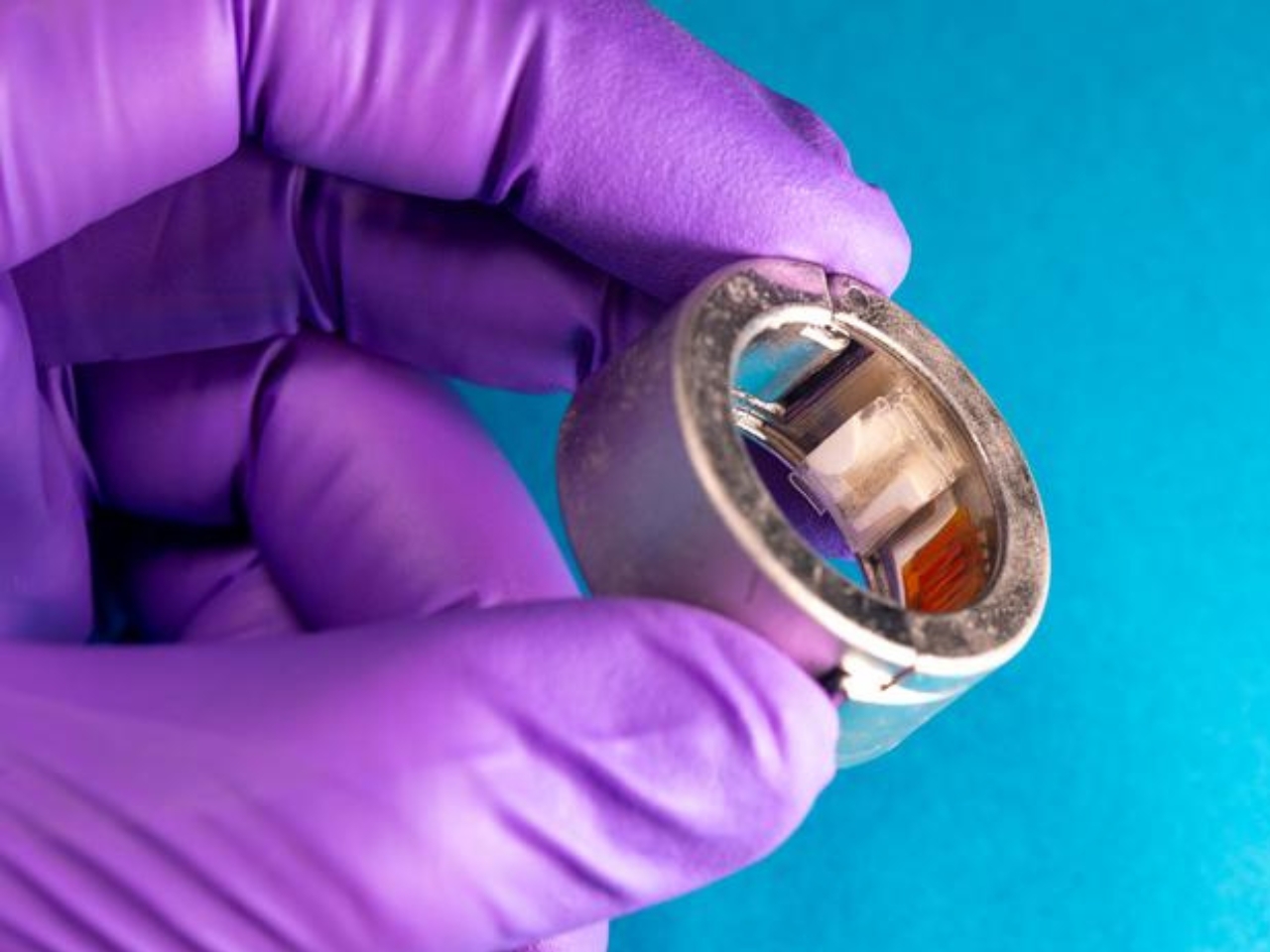
Their prototype, called CHARM (Continuous Health Analyzing Ring Module), doesn’t check your heart. It reads your sweat. Specifically, the microscopic amount of sweat that your fingers naturally produce throughout the day, no gym session required. Through a built-in osmotic hydrogel that draws moisture out passively, the ring collects and analyzes up to four chemical biomarkers at a time: glucose, ketones, vitamin C, uric acid, lactate, and alcohol. It then sends that data wirelessly to a smartphone.
Designer: UC San Diego engineers
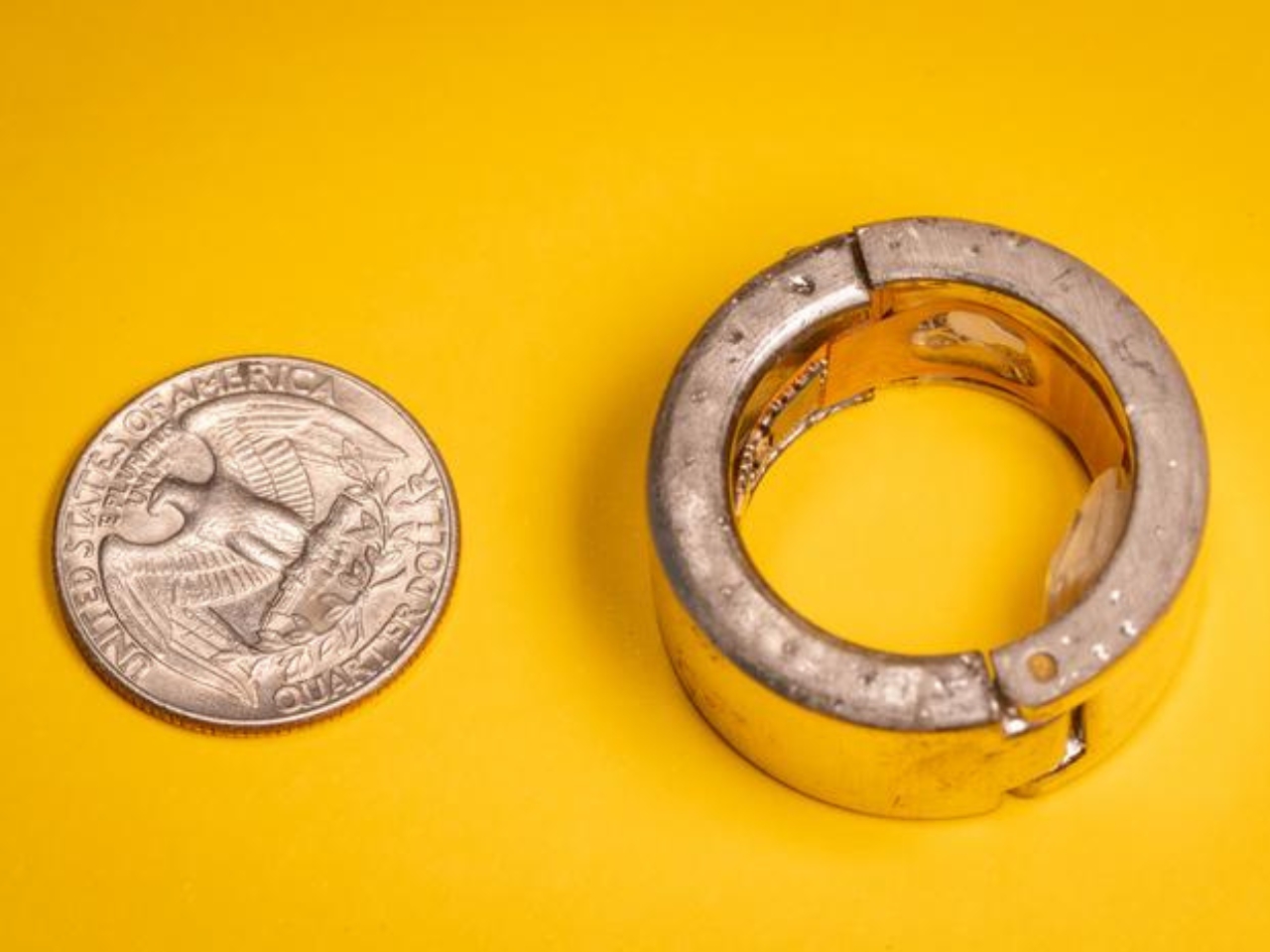
That list of biomarkers is worth sitting with for a moment. Glucose and ketones tell you about your metabolic state and how your body is processing energy. Lactate relates to physical exertion and muscle activity. Uric acid is linked to inflammation and conditions like gout. Vitamin C reflects dietary intake. Alcohol levels speak for themselves. Getting any one of these readings from a non-invasive wearable is already impressive. Getting all of them simultaneously, continuously, and without drawing a single drop of blood, is something else entirely.
The research, published in Nature Communications and led by postdoctoral researcher Tamoghna Saha in the lab of Joseph Wang at UC San Diego, has already passed some important early tests. In trials with participants both with and without Type 1 diabetes, CHARM’s sweat-based glucose readings closely matched results from a standard continuous glucose monitor. Its ketone data similarly aligned with readings from a traditional blood meter. For a prototype, that’s a meaningful validation and a strong signal that the underlying science holds up outside of a lab setting.
What makes this feel like a genuine step forward, rather than just another research headline, is how clearly it names the gap in current wearable technology. As Saha put it, commercial rings only provide biophysical information but lack the molecular data that offers deeper insights into an individual’s health. That is a polite way of saying that knowing your resting heart rate is useful, but it doesn’t tell you whether you’re running low on vitamin C or how your body actually responded to what you ate for lunch.
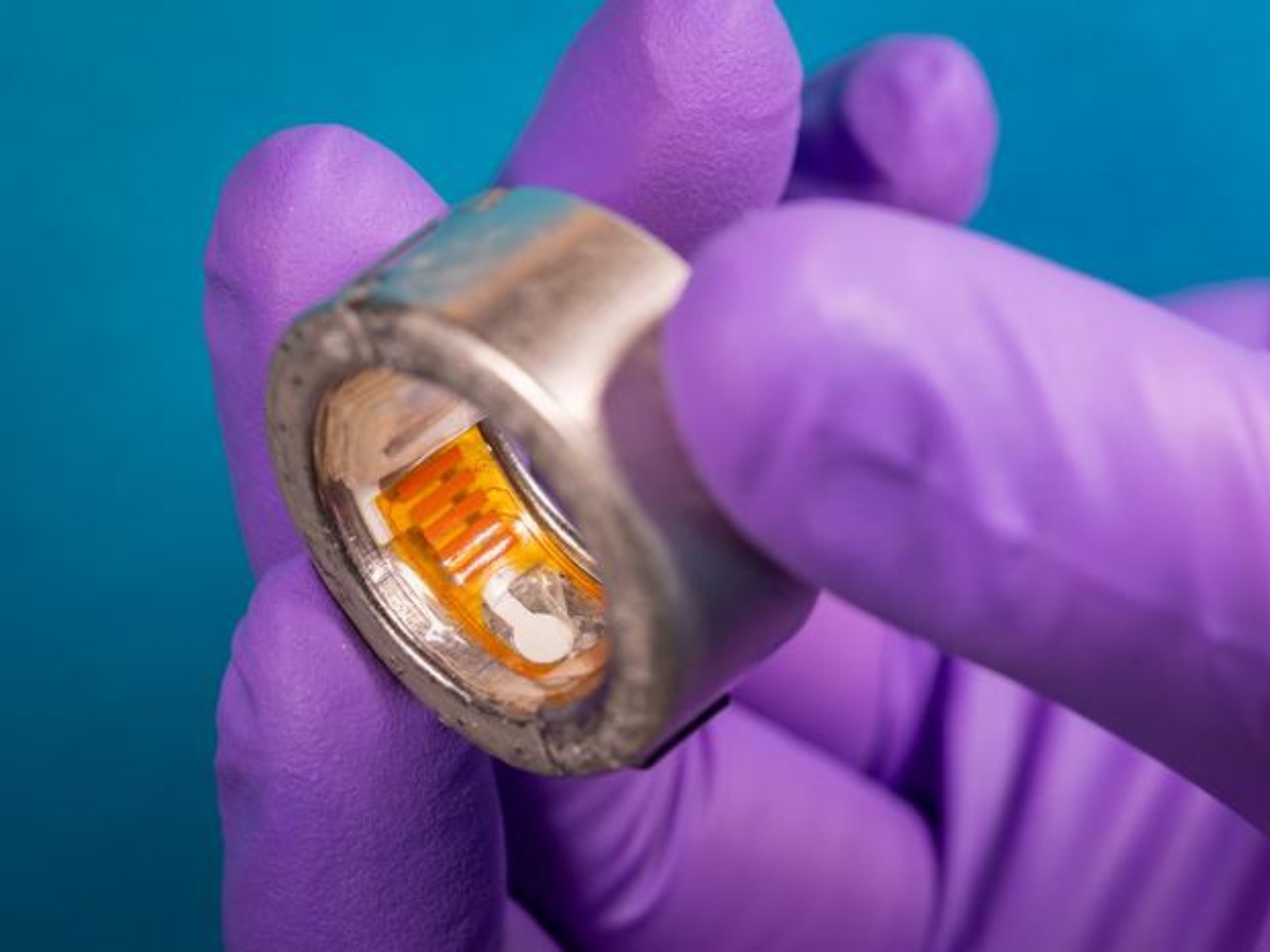
The design challenge here is real, and I think it deserves more credit than the flashier headline about sweat gets it. Cramming accurate chemical sensors, a hydrogel layer, data processing, and wireless connectivity into a ring-shaped form factor is not a small engineering problem. The current prototype, which clamps around a finger, is still a long way from the slim, polished bands we’ve grown used to slipping on without thinking. Getting it there, while keeping the sensor accuracy intact and the battery life practical, will be the hard part. But that is exactly the kind of design and miniaturization problem that tends to get solved once the underlying science is proven. The history of consumer health tech is basically a series of “we figured out the science, now let’s make it wearable” moments.
The smart ring category has felt a little flat lately, if I’m being direct. The differences between most devices come down to software features and companion app design, not any fundamental leap in what they can actually detect. CHARM points toward a version of the smart ring that is genuinely measuring your body’s chemistry in real time, the kind of data that has historically required a clinic visit or a prescription-grade device. Putting that on a finger, passively, all day, changes what personal health monitoring can realistically mean.
It’s still early. CHARM is a prototype, the paper is fresh, and a consumer version is nowhere near announced. But the direction is right, and the science backs it up. If biochemical monitoring eventually becomes a standard feature of smart rings rather than a research novelty, this prototype will be one of the moments worth pointing back to.
The post Smart Rings Finally Got a Reason to Exist Beyond Sleep Tracking first appeared on Yanko Design.

Chinese automotive and technology stalwarts are combining to give the off-road camping industry a new twist. It’s for the first time that a flagship SUV is gearing up to hit the Chinese market with a rooftop tent pre-installed. The tent would deploy into a fully-fledged habitat on top of the off-road vehicle at the push of a button from its cockpit.
So, when the Stelato G9, built in a joint effort by Huawei and Beijing Automotive Group (BAIC Group), goes on preorder starting August 5, according to Chinese sources, the luxury SUV will include an optional tent built into its roof and sunroof assembly. This would be completely different from aftermarket rooftop tents that have to be bolted on the roof of the vehicle.
Designer: HIMA

Rooftop tents are common in North America. So, they are in China as well. But this is the first time that a vehicle is entering the market pre-fitted with a rooftop tent from the factory. At the time of writing, not much is available in the public domain about the Stelato G9, except for the fact that it will come with the optional choice of a camping solution on its roof.

Other than that, from information collected through Chinese regulatory filings, we can confirm that the vehicle will be available in a fully electric option and an extended-range electric model comprising a gas engine to generate charge for the battery. The G9 measures 5.2 m (17 ft) long and has a wheelbase of 3.16 m (10.4 ft). Its interior will come in either a 5- or 6-seater layout and would be certified to tow 2,000 kg. For its off-road capability, the vehicle will offer a wading depth of 900 mm. It will feature a side-opening tailgate, an external storage box, roof rack, and tow hook.
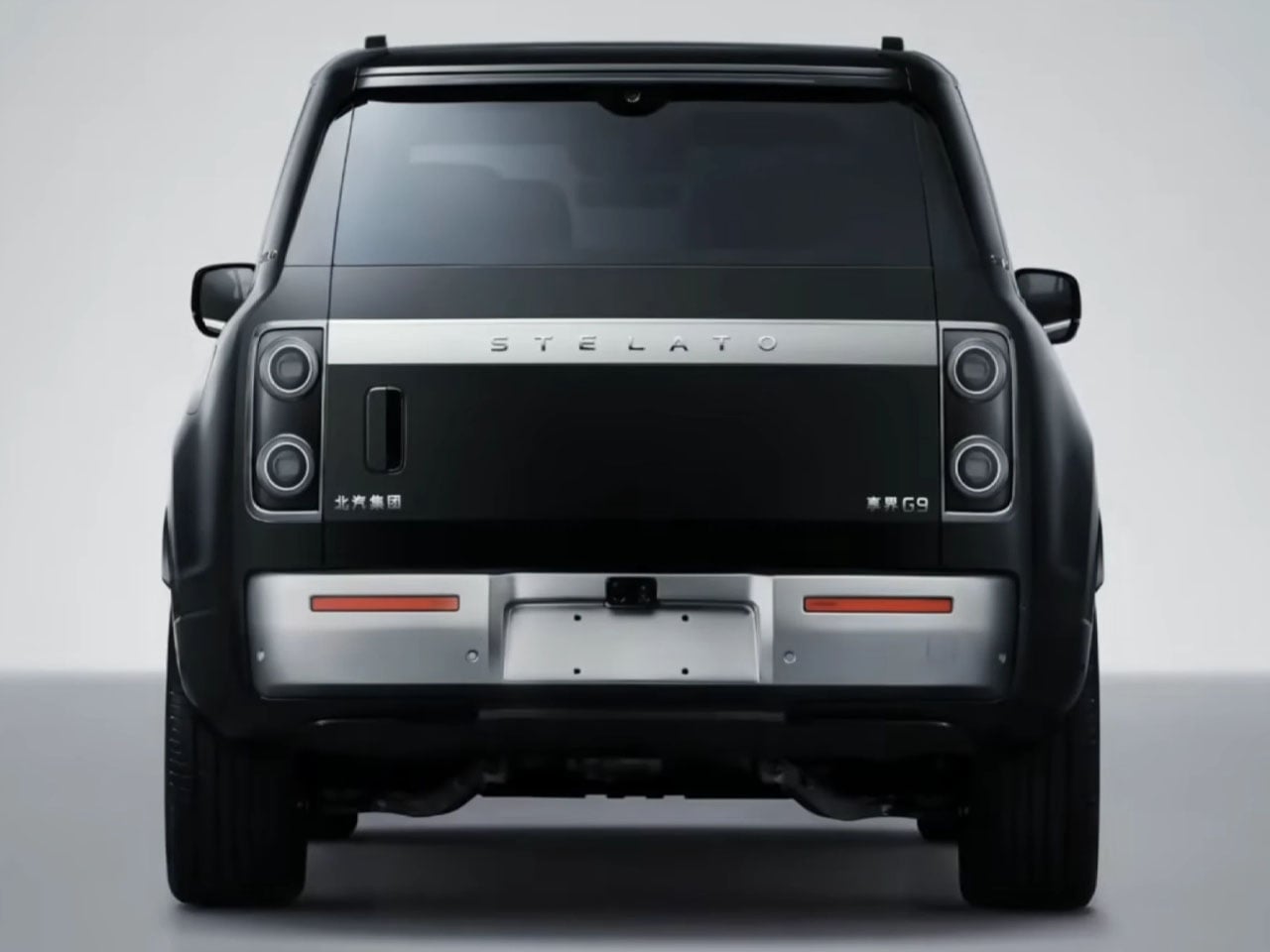
Stelato, according to the information shared on the Chinese microblogging site Weibo, will begin accepting preorders for the G9 starting at 2:30 pm Beijing Time on August 5. The SUV – with an optional rooftop camping tent – is expected to officially launch in the third quarter of 2026. Stelato G9, in addition to being the first with an integrated push-button rooftop tent, is also the brand’s first foray into the rugged off-road segment.

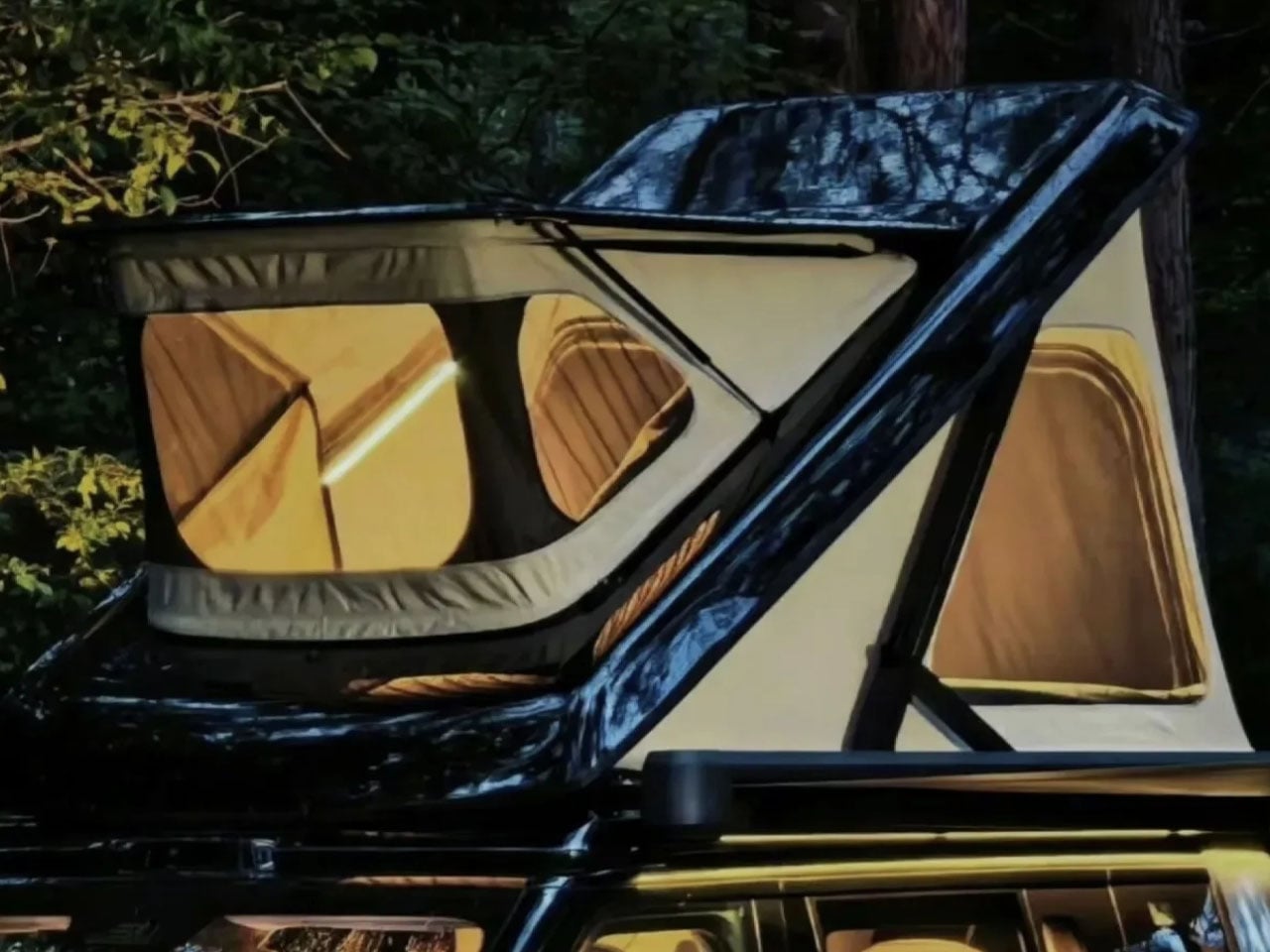
Stelato, an electric vehicle brand, operates under Harmony Intelligent Mobility Alliance (HIMA), a collaboration between BAIC and Huawei. The latter provides a HarmonyOS-assisted autonomous driving system and LiDAR tech to manage the technology within the vehicle. The tent, which is also activated through the Huawei system onboard, is part of the sunroof assembly. When it’s not in use, the tent appears sitting flush against the roofline of the G9.
When the tent is deployed, the roof lifts from one side and extends into a two-part tent. The main triangular portion has a low front and tall back. A built-in lighting pole separates it from the smaller auxiliary tent that extends from the other side of the main structure. Reportedly, the roof tent also unlocks a side awning. It is also deployed using the same single button press as the tent itself. We do not have the exact pricing details at the moment, but reports suggest the Stelato G9 could start somewhere around $74,000. It is currently planned for the Chinese market only.

The post First Chinese SUV with built-in rooftop tent is co-developed by Huawei and is all set for preorder first appeared on Yanko Design.

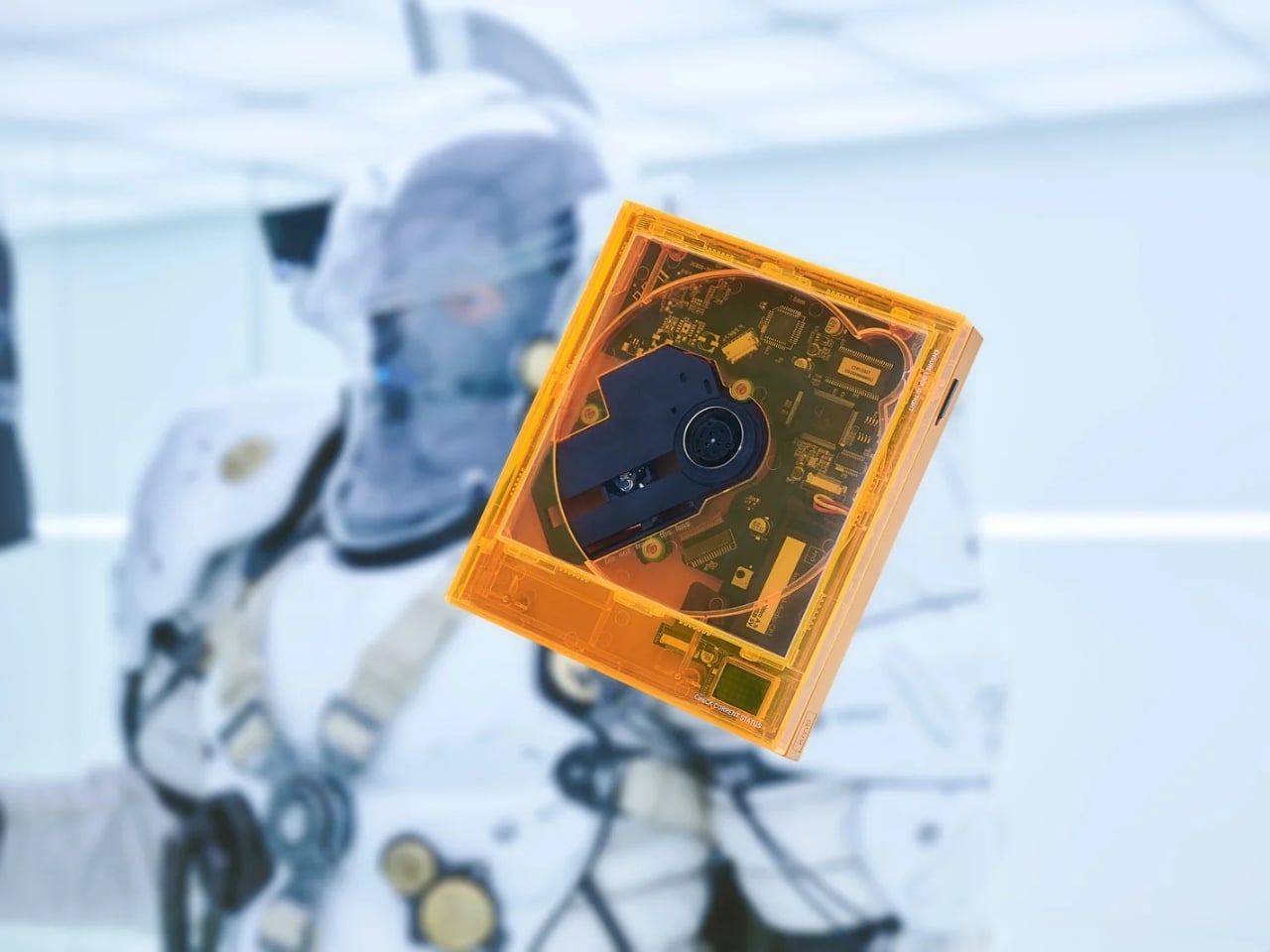
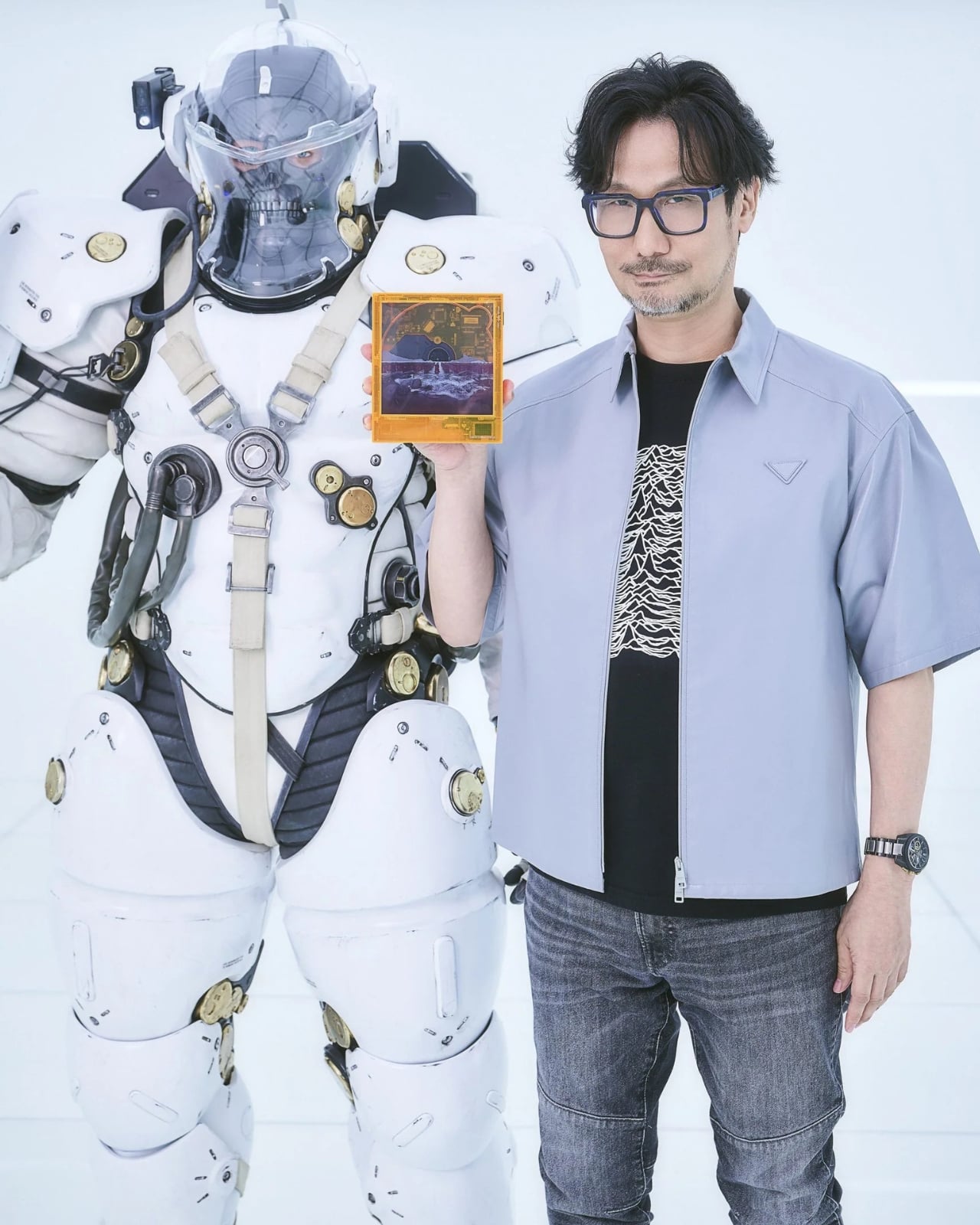
When Kojima Productions does something, it rarely feels like a simple product release. It feels like a statement. The new Instant Disc Audio Cp1 DEATH STRANDING 2 Model, a limited-edition wireless CD player made in official collaboration with Japanese audio brand km5, is proof of exactly that. It dropped on August 1, 2026, and it may be the most thoughtfully designed piece of gaming merchandise I’ve seen in years.
If you’ve played Death Stranding, you already know what a BB Pod is. If you haven’t, here’s the short version. BB stands for Bridge Baby, a term for an unborn infant kept alive inside a transparent life-support unit called a Pod, which serves as a supernatural navigation tool in the game’s hauntingly quiet, post-apocalyptic world. The Pod is one of Death Stranding’s most memorable visual symbols: eerie, delicate, and somehow deeply moving, a small glowing capsule that you cradle, protect, and come to care about over the course of the game. Turning that object into a CD player is either a stroke of genius or complete madness. I’m going with genius.
Designer: Kojima Productions x km5
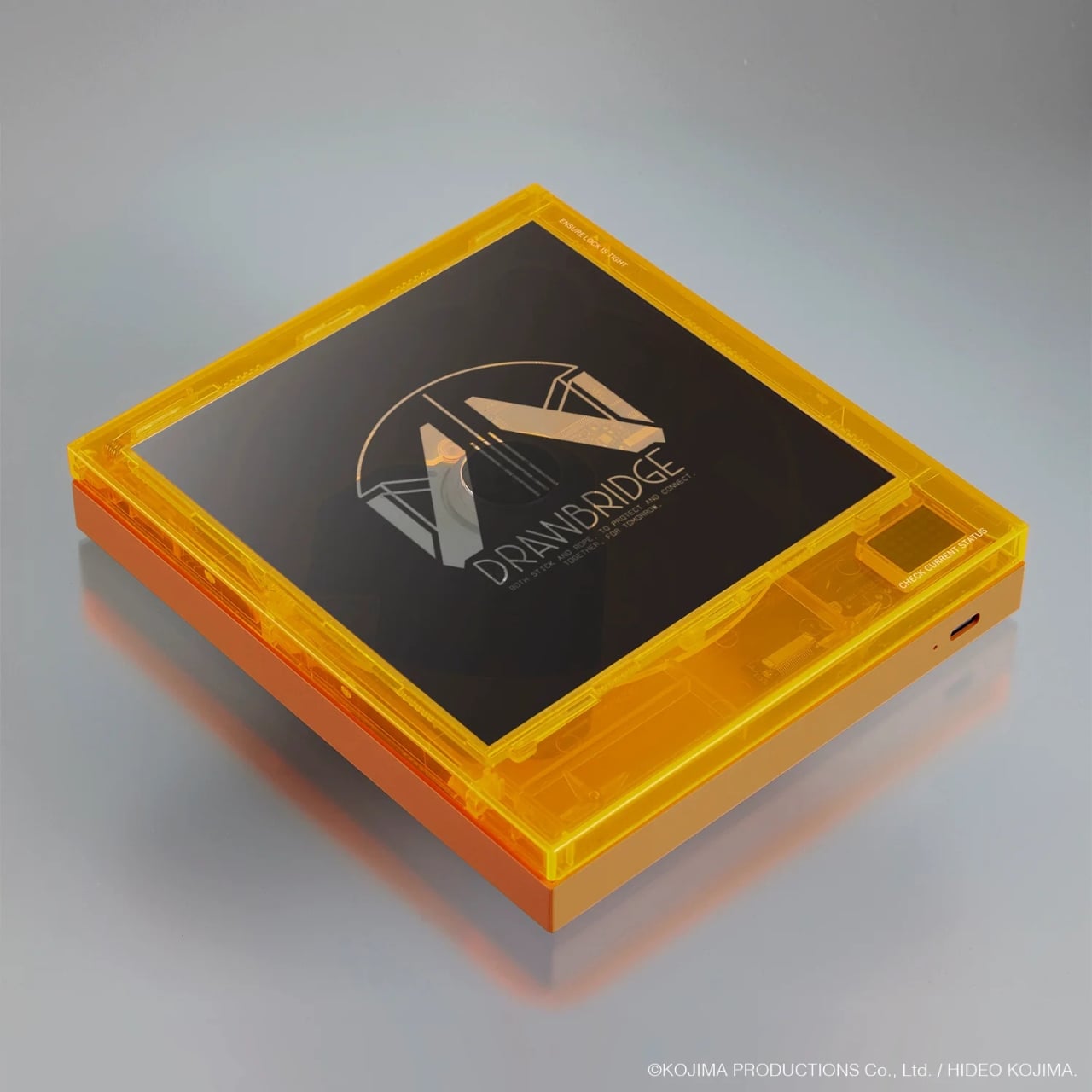
The design is where this whole thing earns its price tag. The Cp1 features a translucent orange shell, and that’s not just for aesthetics. It lets you actually watch the disc spin and the internal mechanics move in real time. As someone who grew up watching cassette tapes wind through their spools, that level of visible mechanical action hits a very specific nostalgic nerve. The translucency echoes the BB Pod’s gel-filled, see-through casing, and it works so well that it almost feels like the CD player was always meant to look this way. It didn’t need Death Stranding to be beautiful, but the collaboration gave it a context that makes it feel intentional rather than just decorative.
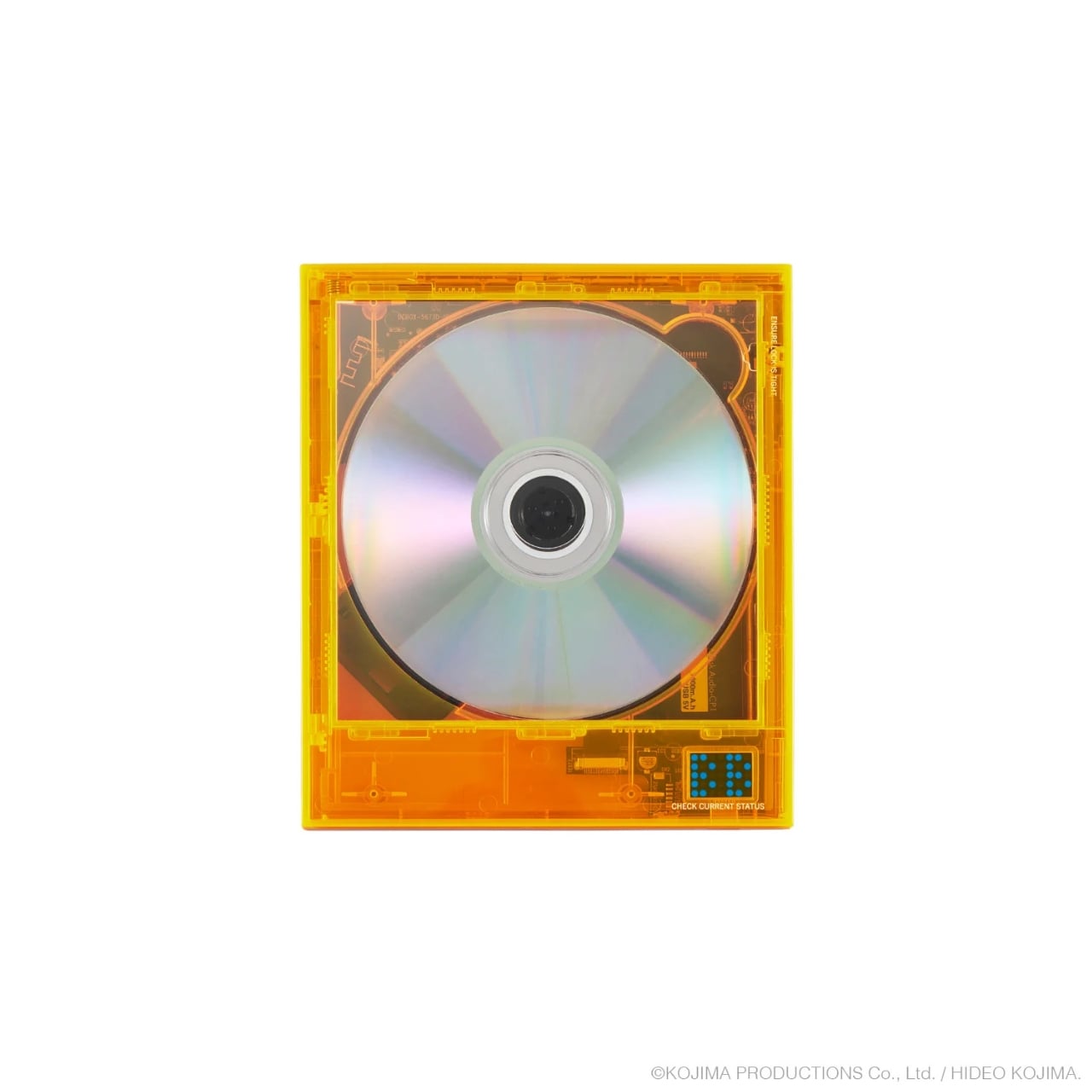
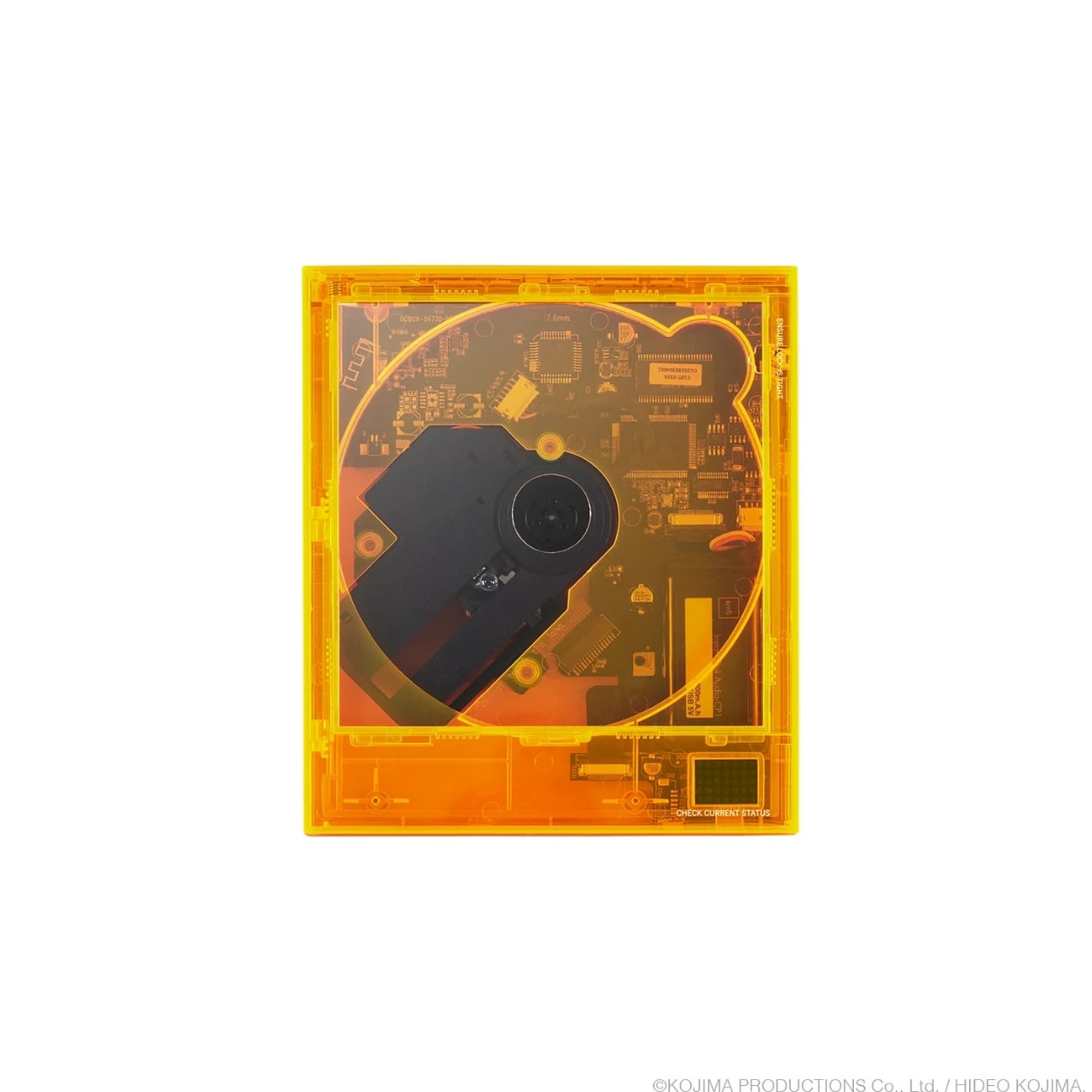
The base Cp1 by km5 isn’t a new product. It’s been around for a while as a compact, Bluetooth-enabled CD player with a Nixie tube-style LED display and a wall-mount option that honestly makes it look more like modern furniture than consumer electronics. The Death Stranding 2 model takes that foundation and pushes it into collector territory. Priced at 25,300 yen, around $160, it connects via Bluetooth 5.3, runs for approximately 7 to 8 hours on a single charge, and notably doesn’t come with a built-in speaker. You’re meant to pair it with your own headphones or external audio setup, which keeps the device compact, sculptural, and true to its aesthetic. It’s not trying to be a Bluetooth boombox. It’s something much quieter and more considered than that.
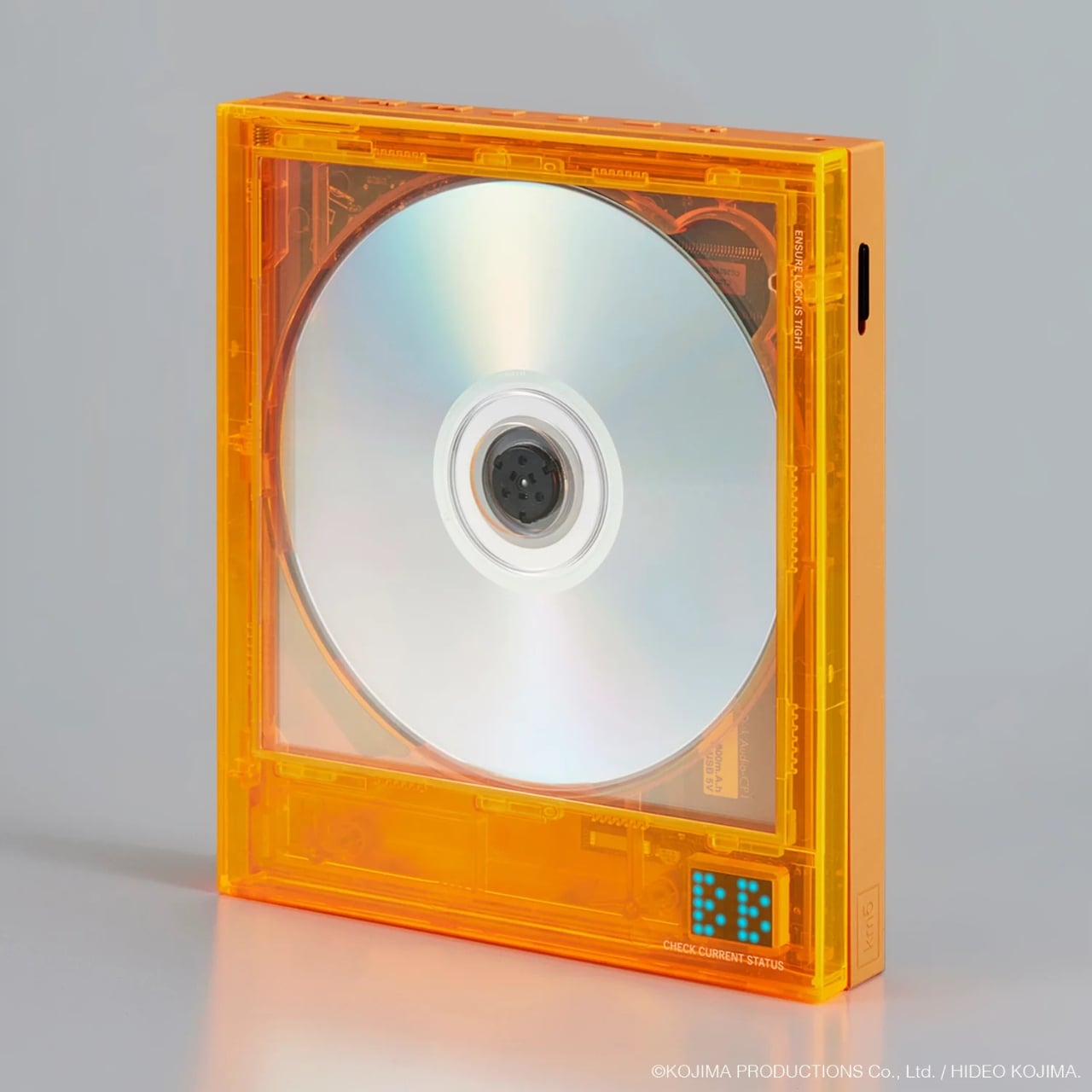
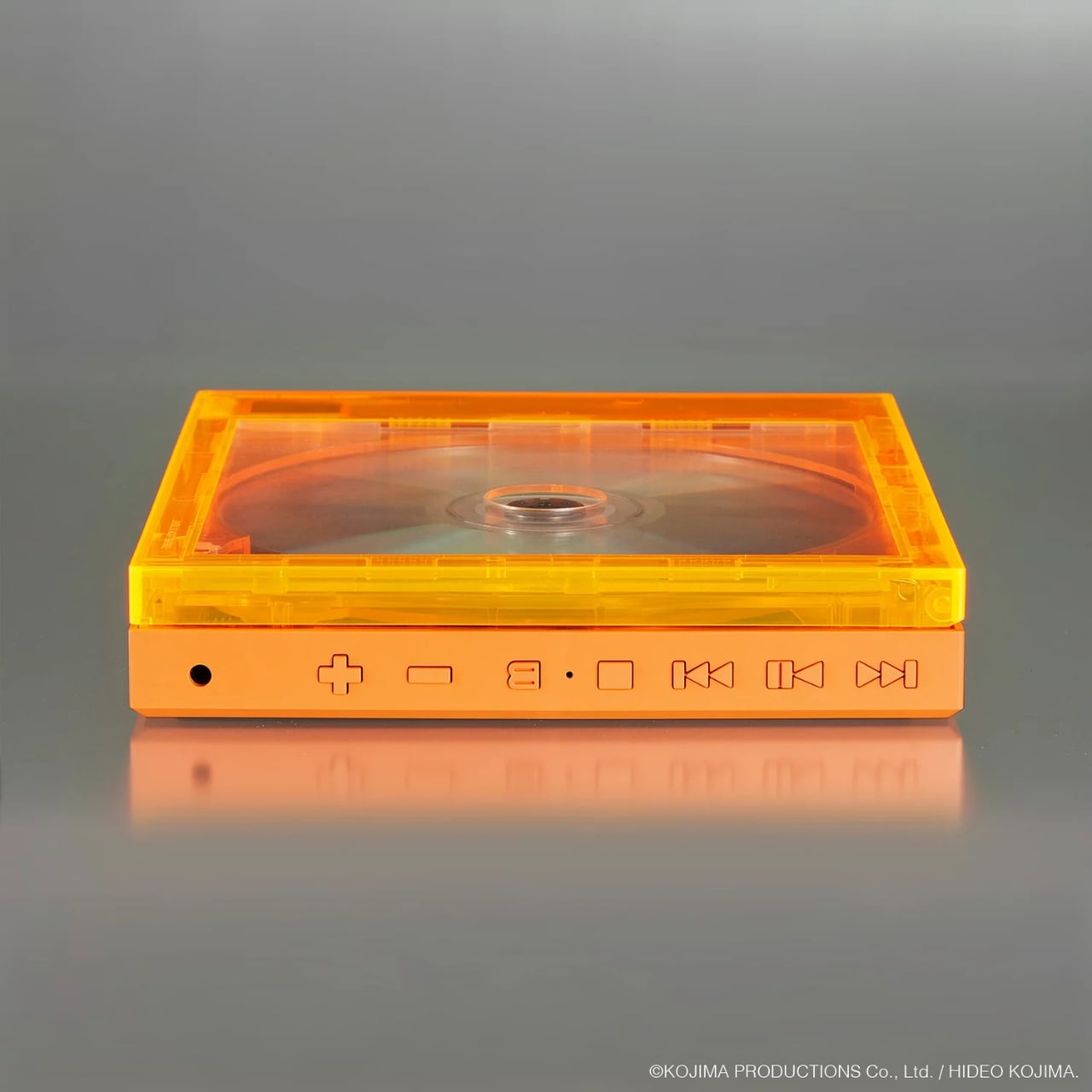
The fact that this exists at all says something interesting about where we are with physical media right now. CD sales have been quietly climbing again, especially among younger audiences who want a more intentional, tactile way to listen to music. Vinyl gets most of the headlines, but CDs are genuinely having their own moment, and a device like this taps right into that energy. It gives you a reason to care about the format all over again, not just as a nostalgia trip, but as an object worth owning and displaying on a shelf next to your records.
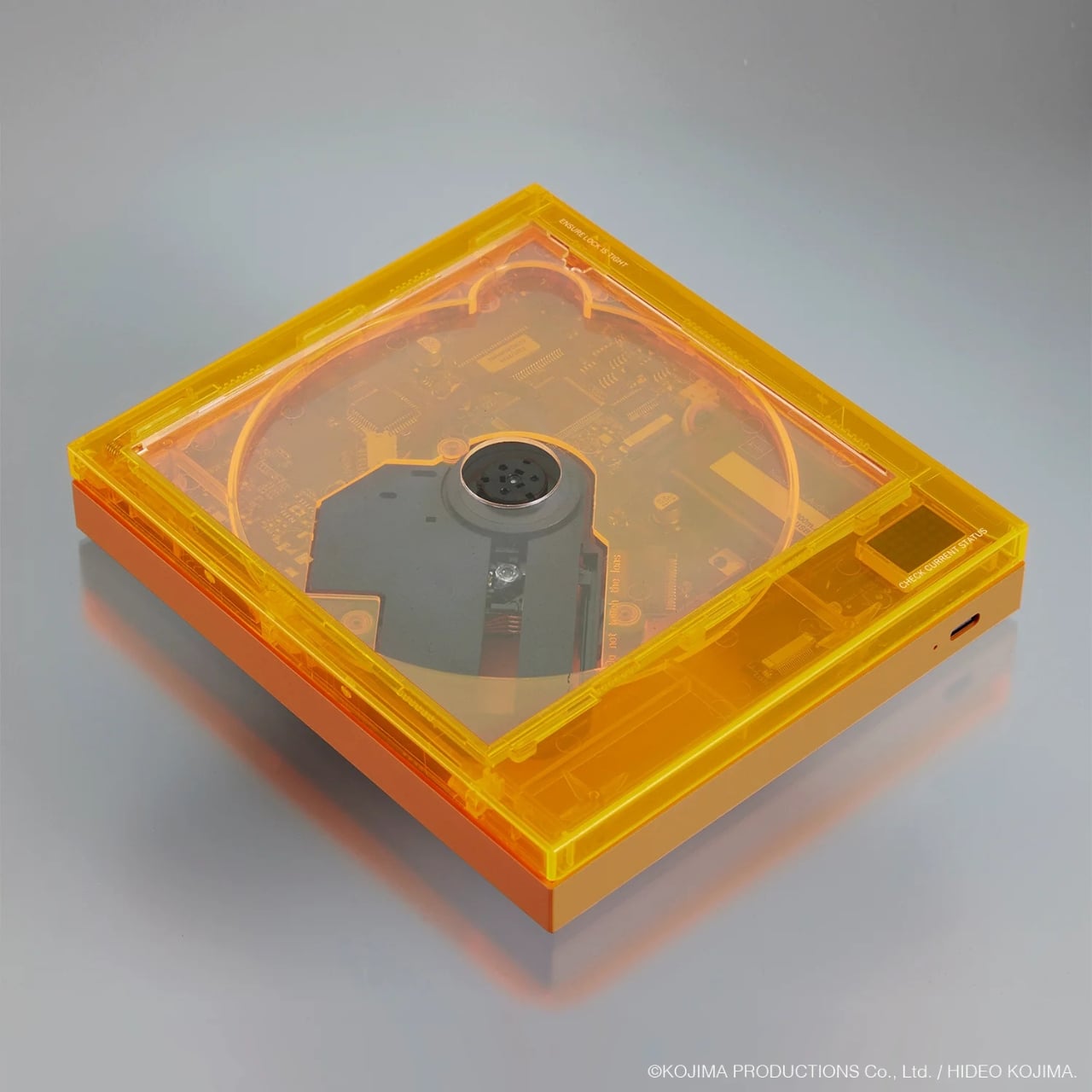
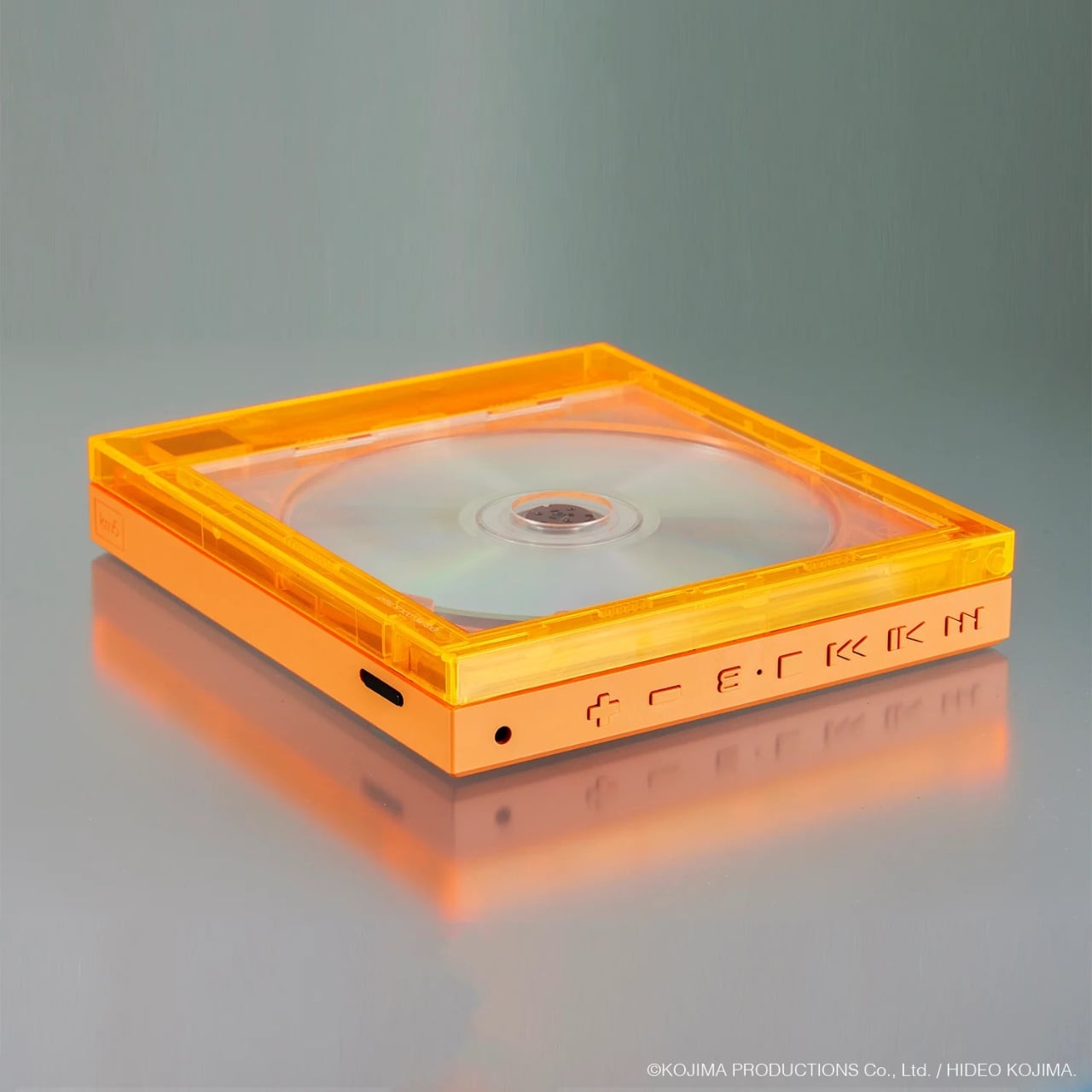
The timing works in its favor, too. Death Stranding 2: On the Beach launched earlier this year and carries forward everything the first game did best: gorgeous world-building, deeply strange storytelling, and a visual identity unlike anything else in gaming. Releasing this CD player alongside that cultural wave makes it feel like part of something larger, not a cash grab bolted onto a recognizable franchise. km5 and Kojima Productions clearly put thought into this, and the result reflects that. This isn’t just a piece of merch. It’s a collaboration that understood its source material well enough to let the design carry the story.

The Instant Disc Audio Cp1 DEATH STRANDING 2 Model is available directly through km5’s official website and at the KOJIMA PRODUCTIONS × PARCO GAMES STRAND STORE in Shibuya PARCO. Stock is limited, and if history tells us anything about Kojima collaborations, waiting around is usually the fastest way to miss out entirely.
The post A BB Pod-Shaped CD Player Straight Out of Death Stranding first appeared on Yanko Design.