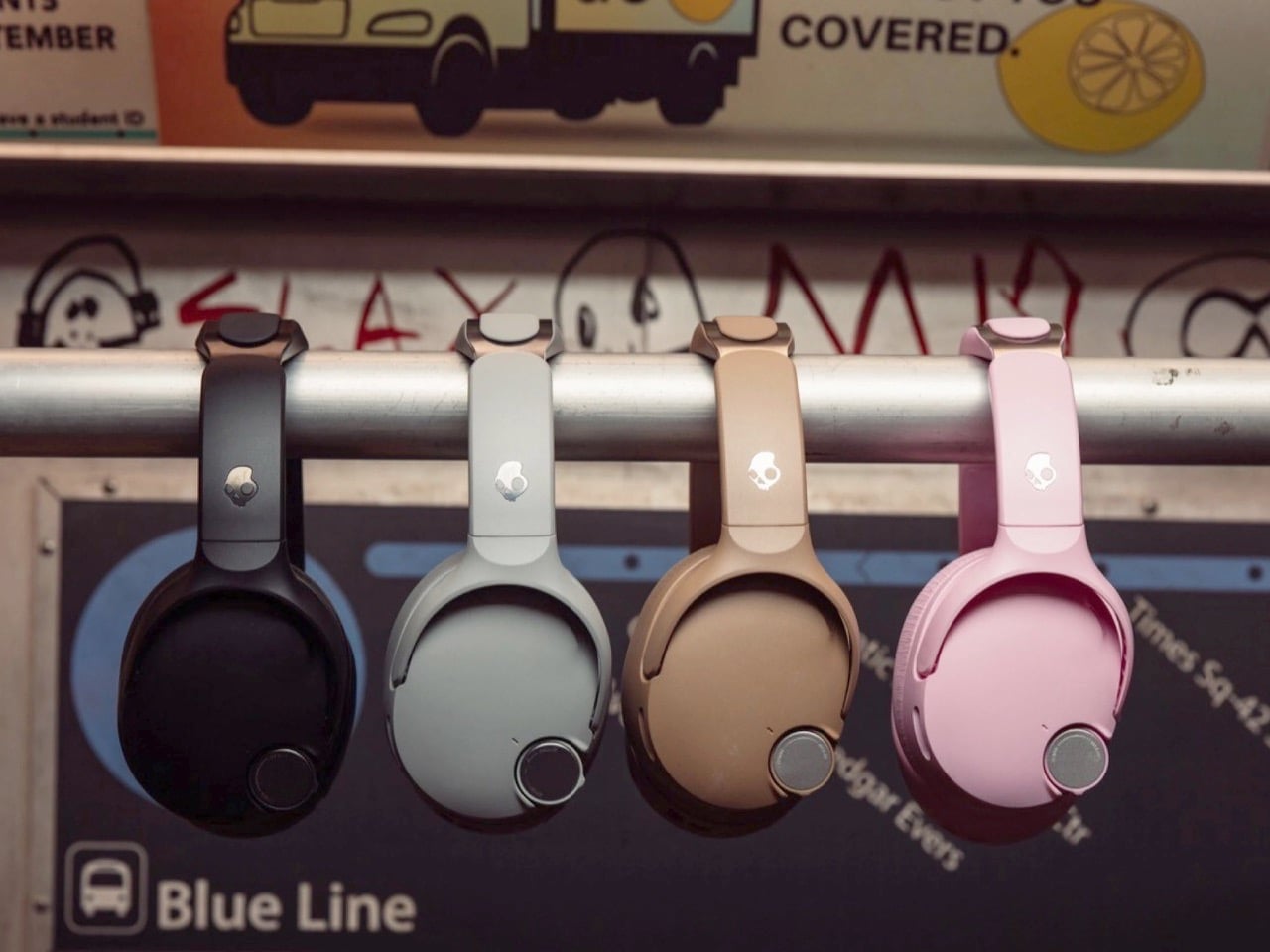
Skullcandy’s $280 Headphones Pack A Subwoofer For Your Skull, And A Knob To Control How Hard It Hits

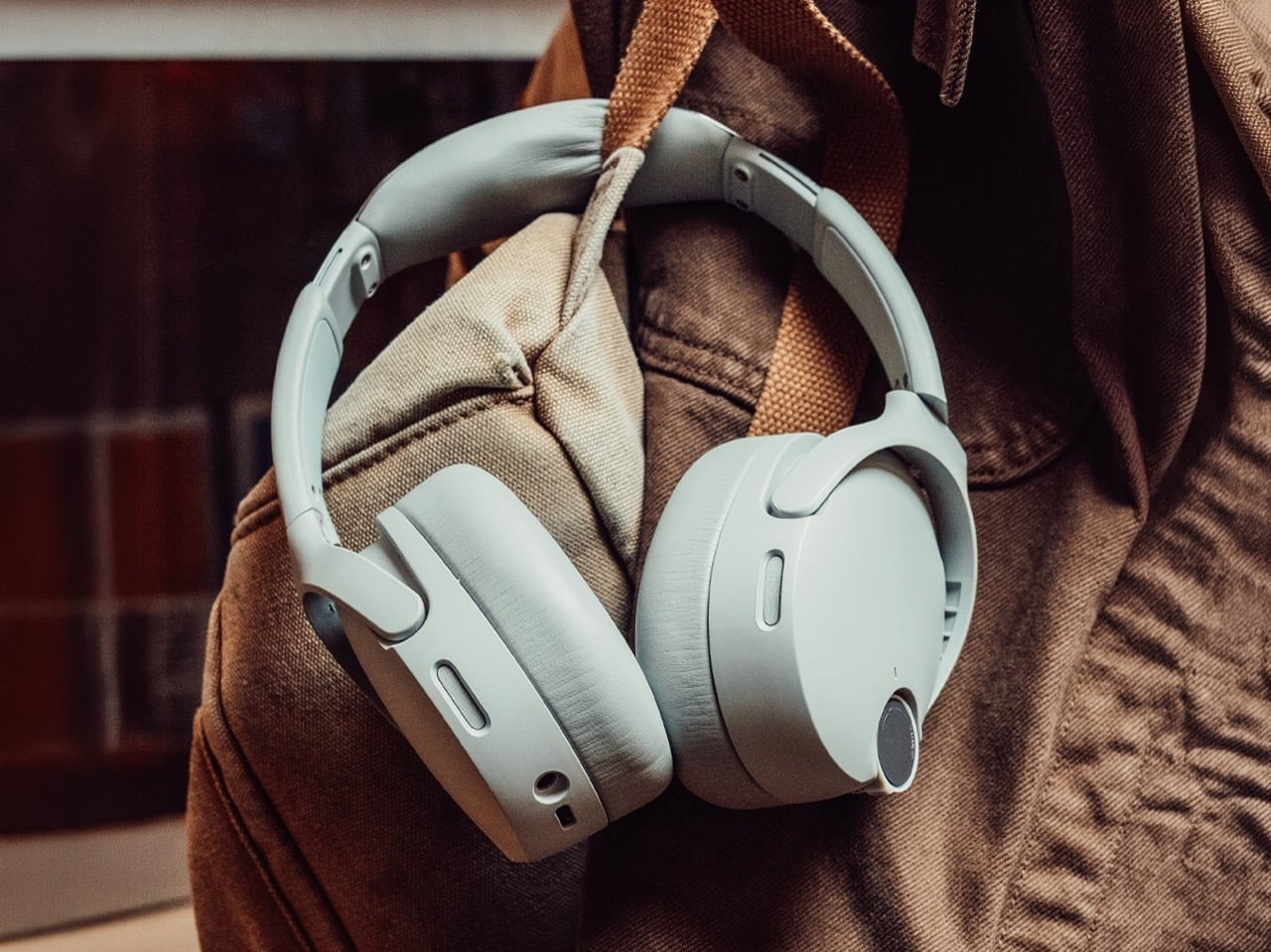
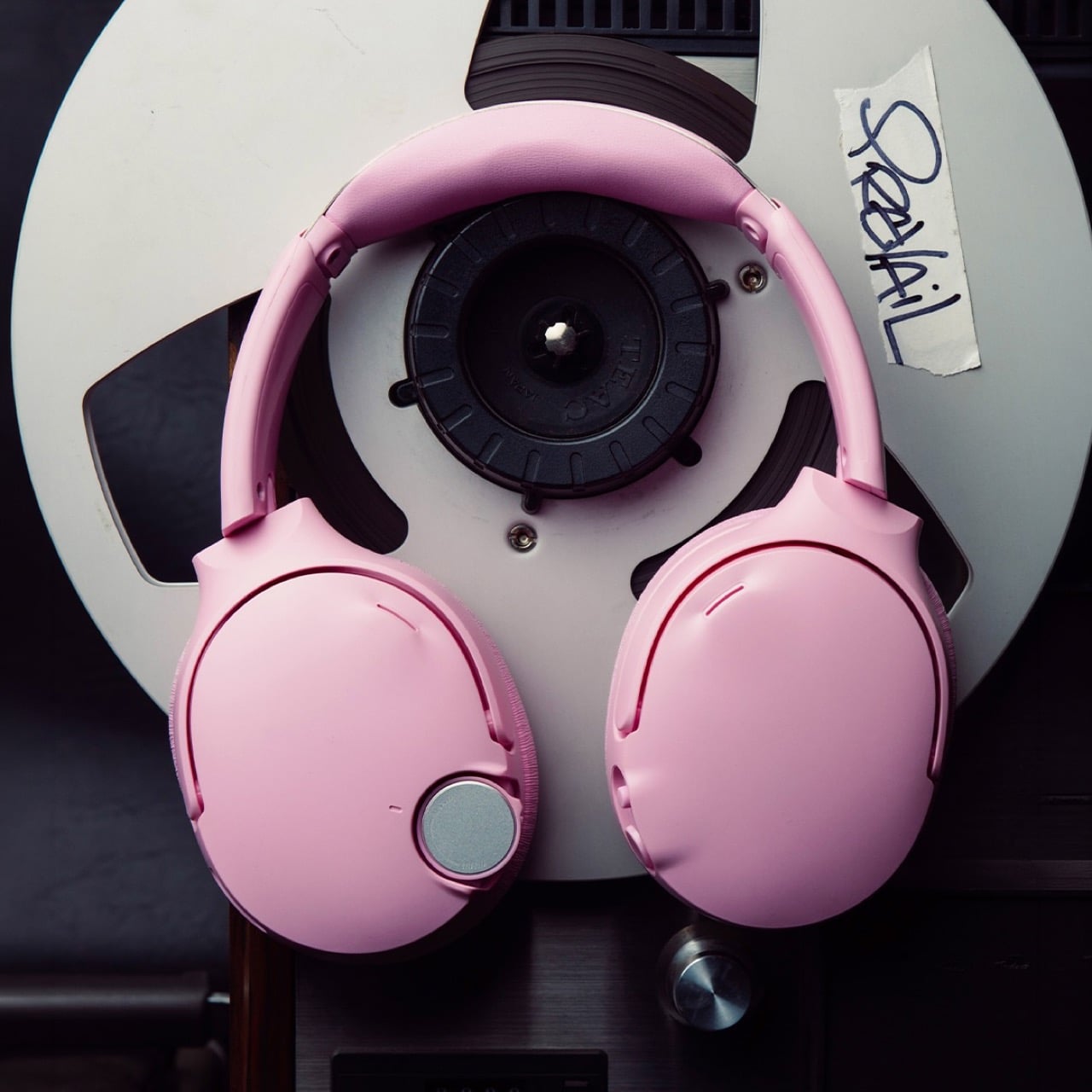
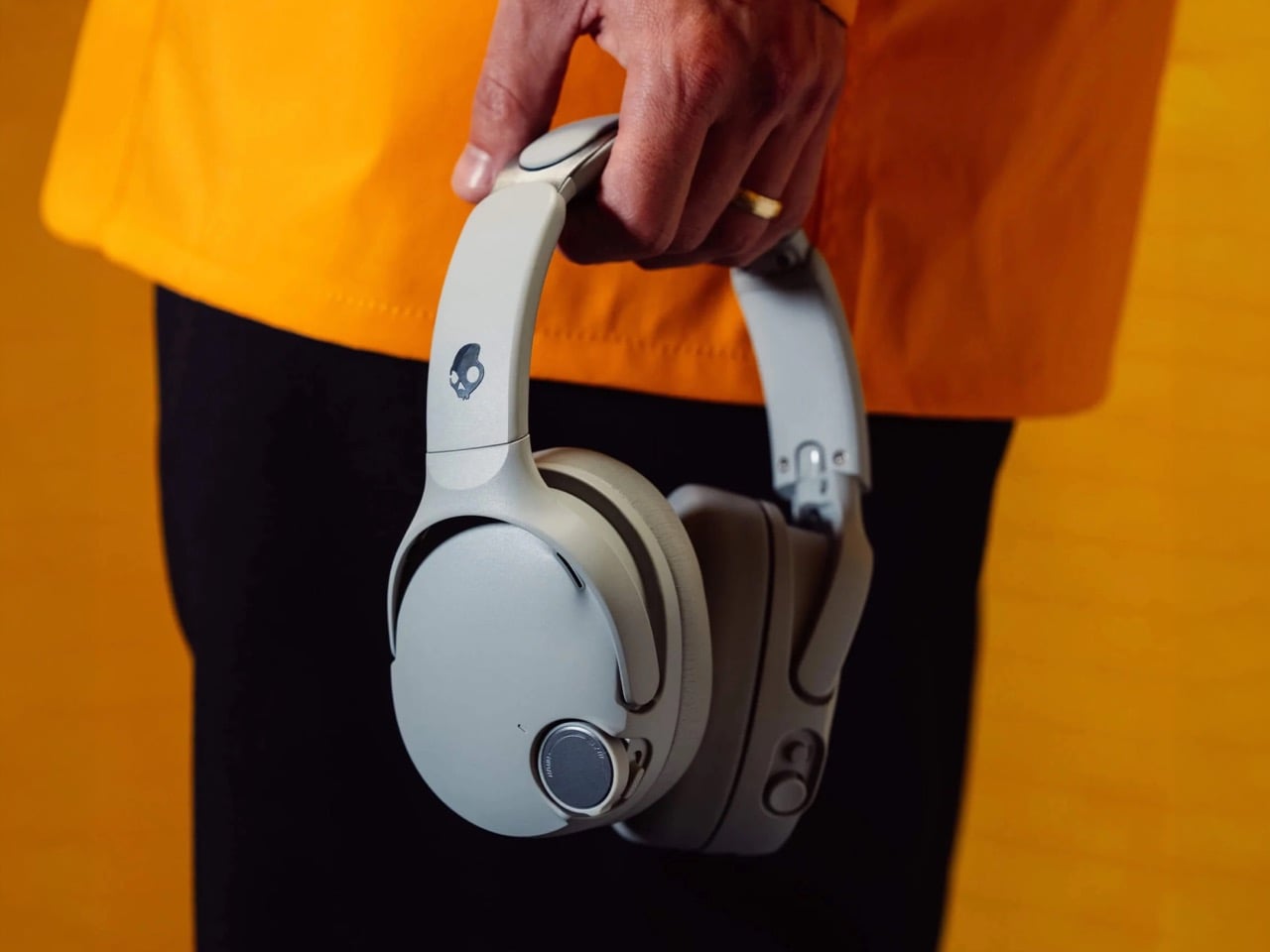
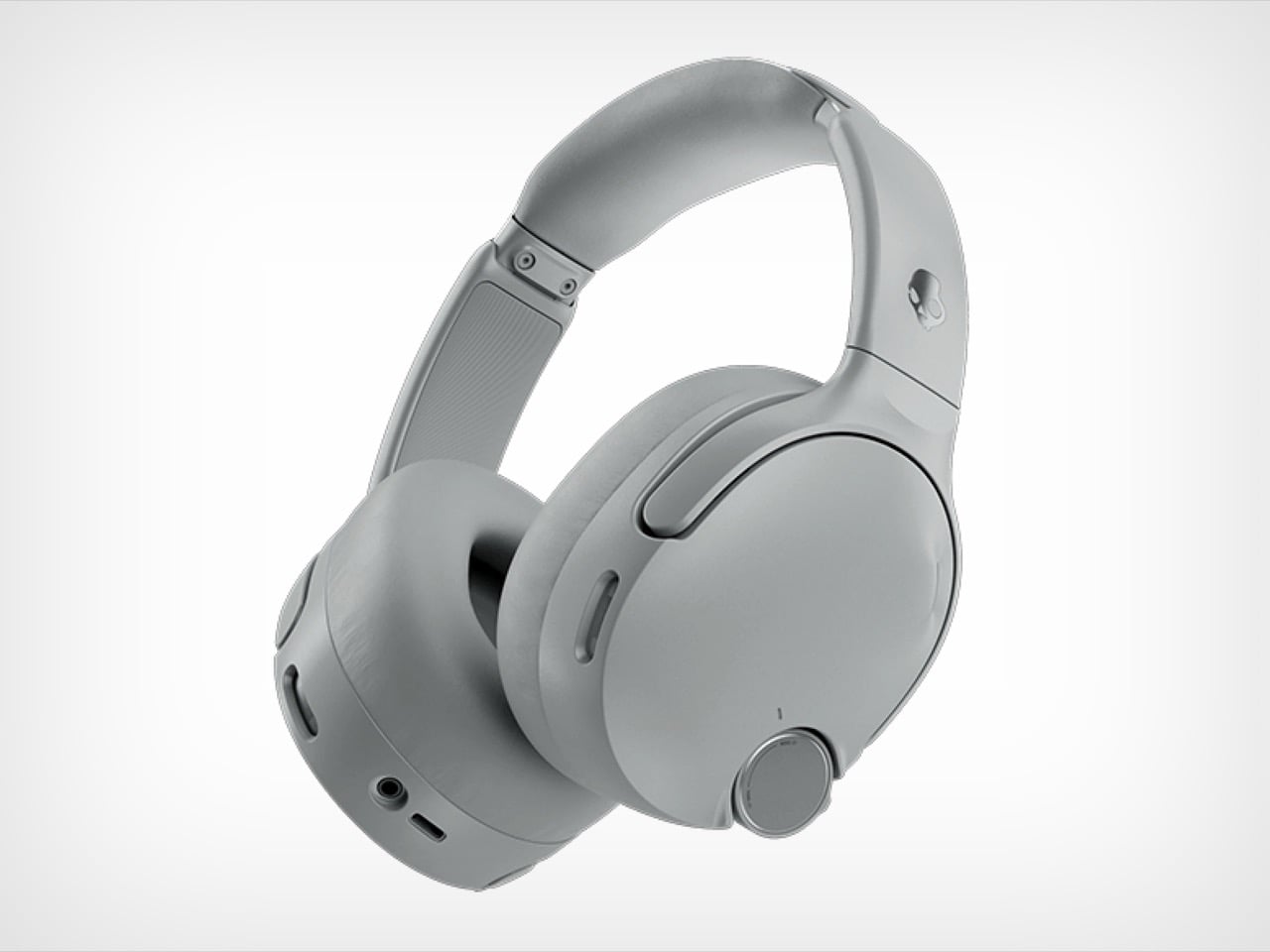
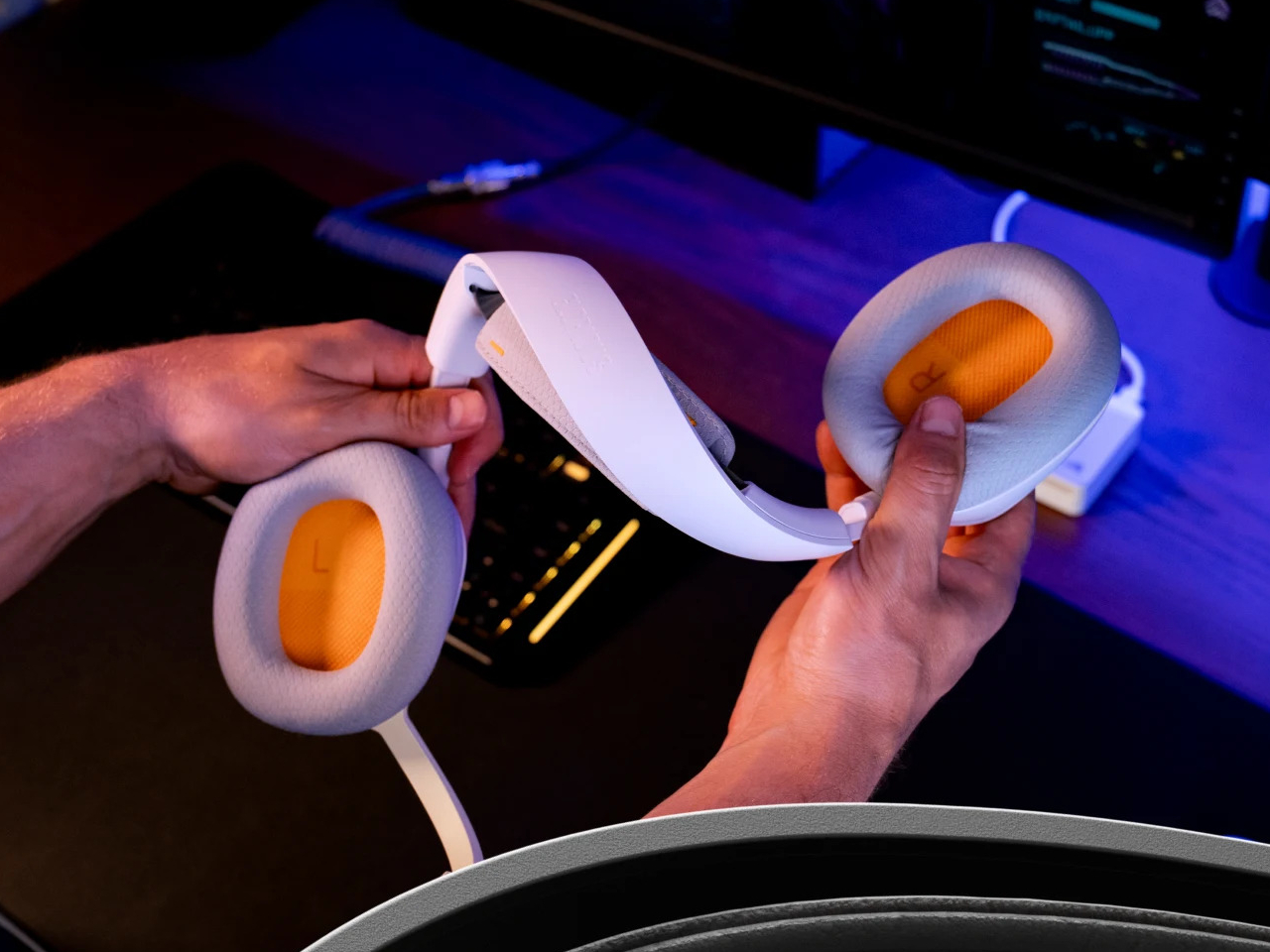
Everyone is obsessed with making gadgets sleeker, flatter, and more touch sensitive these days. So naturally, Skullcandy looked at that trend and said, nah, let us put a knob on it. The new Crusher 1080 ANC headphones (with sound by Bose) have an honest to goodness rotary dial sitting right on the ear cup, and it might be the single best design decision on the whole product.

Turning that dial controls the Crusher Bass feature, which is Skullcandy’s way of saying we built a subwoofer into your headphones. Twist it one way for a light rumble, twist it the other way and your skull becomes part of the sound system. It is a small, satisfying, slightly ridiculous piece of hardware, and after years of swiping at touch panels that never quite register your finger, it feels like coming up for air.

Designer: Skullcandy

Click Here to Buy Now

Bose headphones are great. They are also expensive enough to make you wince a little at checkout. So when Skullcandy rolled up with a pair of headphones that borrow actual Bose tech, including its noise canceling and audio engine, and slapped a $280 price on them, it got my attention fast. That is $170 cheaper than Bose’s own flagship, for tech with the Bose name stamped right on it. Whether the sound quality actually holds up against the real deal is a separate question, but on paper, this is a genuinely aggressive move.

Bose’s fingerprints have their way of showing up everywhere else as well. QuietControl active noise canceling uses six microphones to quiet the outside world, TrueSpatial creates a wider, more speaker like soundstage with head tracking, and the WaveForm audio engine keeps things clear even at high volume. There is also Personal Sound tech from Mimi, which builds a hearing profile tailored to you rather than relying on a generic preset. Toss in Bose-assisted call clarity and custom EQ modes, and Skullcandy is clearly betting that borrowed expertise beats going it alone.

The everyday stuff is handled well too. Automatic wear detection pauses your audio the second you take the headphones off, a low latency mode keeps games in sync, and the onboard buttons can be remapped to whatever functions you actually use. Battery life comes in at 60 hours with ANC off and 50 with it on, and a 10 minute charge buys you another 4 hours of playtime. The one number that raises an eyebrow is weight. At just over 13 ounces, these are noticeably heavier than rivals like the Sony XM6 or Bose’s own QuietComfort Ultra, the price you may pay for packing in all that bass hardware.

None of this guarantees the 1080 ANC will beat Bose or Sony at their own game, and we will not know for sure until these are actually strapped to some ears. But Skullcandy is not really trying to win a spec sheet fight here. It is selling a headphone with a genuine identity, one built around a feeling rather than a feature list, with a knob you can grab and twist like it is 1985. In a market full of interchangeable slabs of black plastic, that alone makes the Crusher 1080 ANC worth a second look.

Click Here to Buy Now

The post Skullcandy’s $280 Headphones Pack A Subwoofer For Your Skull, And A Knob To Control How Hard It Hits first appeared on Yanko Design.

At $230, This Gaming Headset Keeps Playing While You Swap Its Battery

Wireless gaming headsets have carried a quiet contradiction since they first appeared. Cutting the cable was supposed to mean more freedom, but the moment the battery dropped, you were plugging back in anyway, tethered to a wall or a charging dock and waiting. The industry’s answer has been to push battery life further with each generation, but even a 60- or 70-hour headset runs flat eventually, usually in the middle of something.

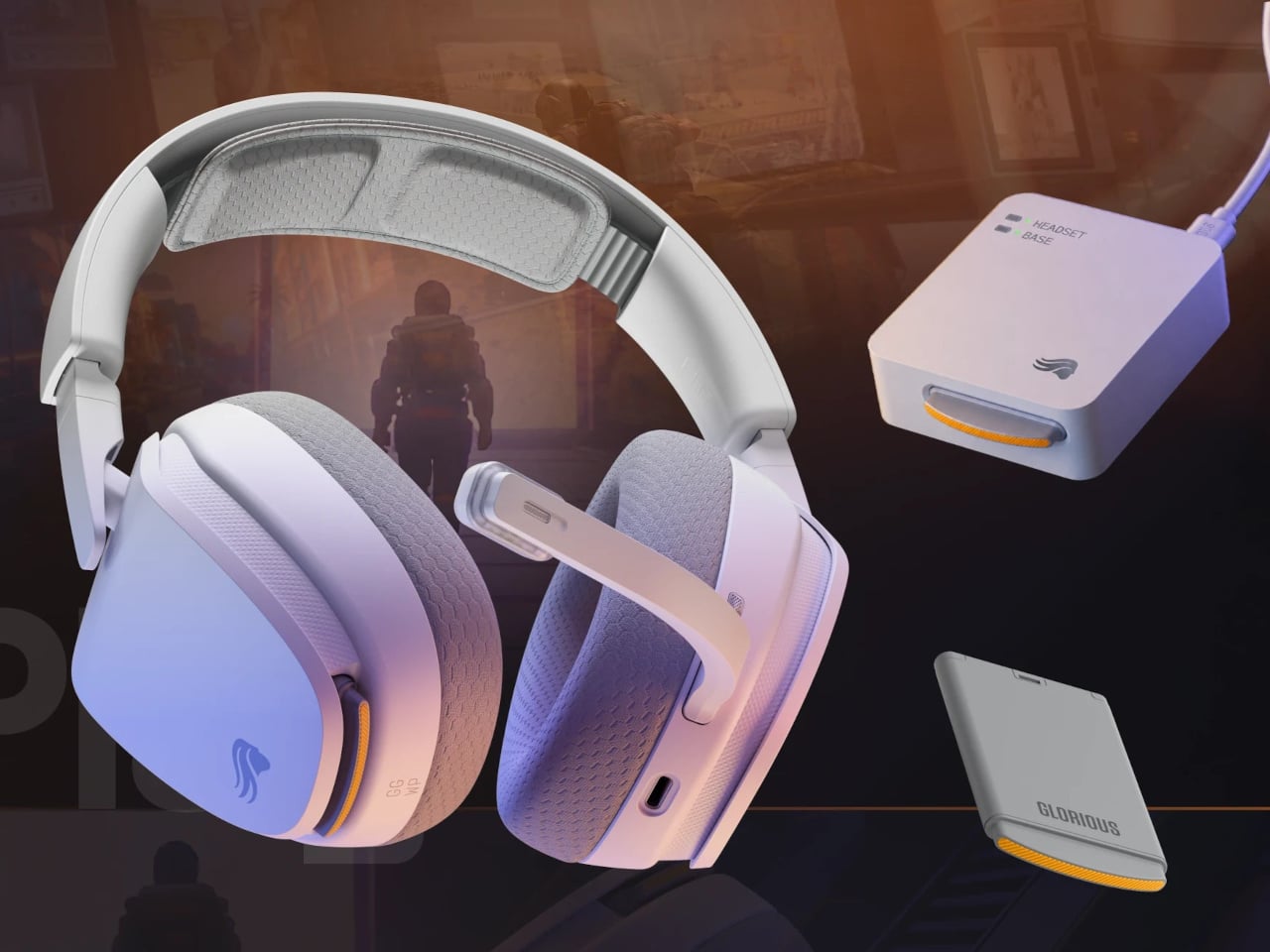
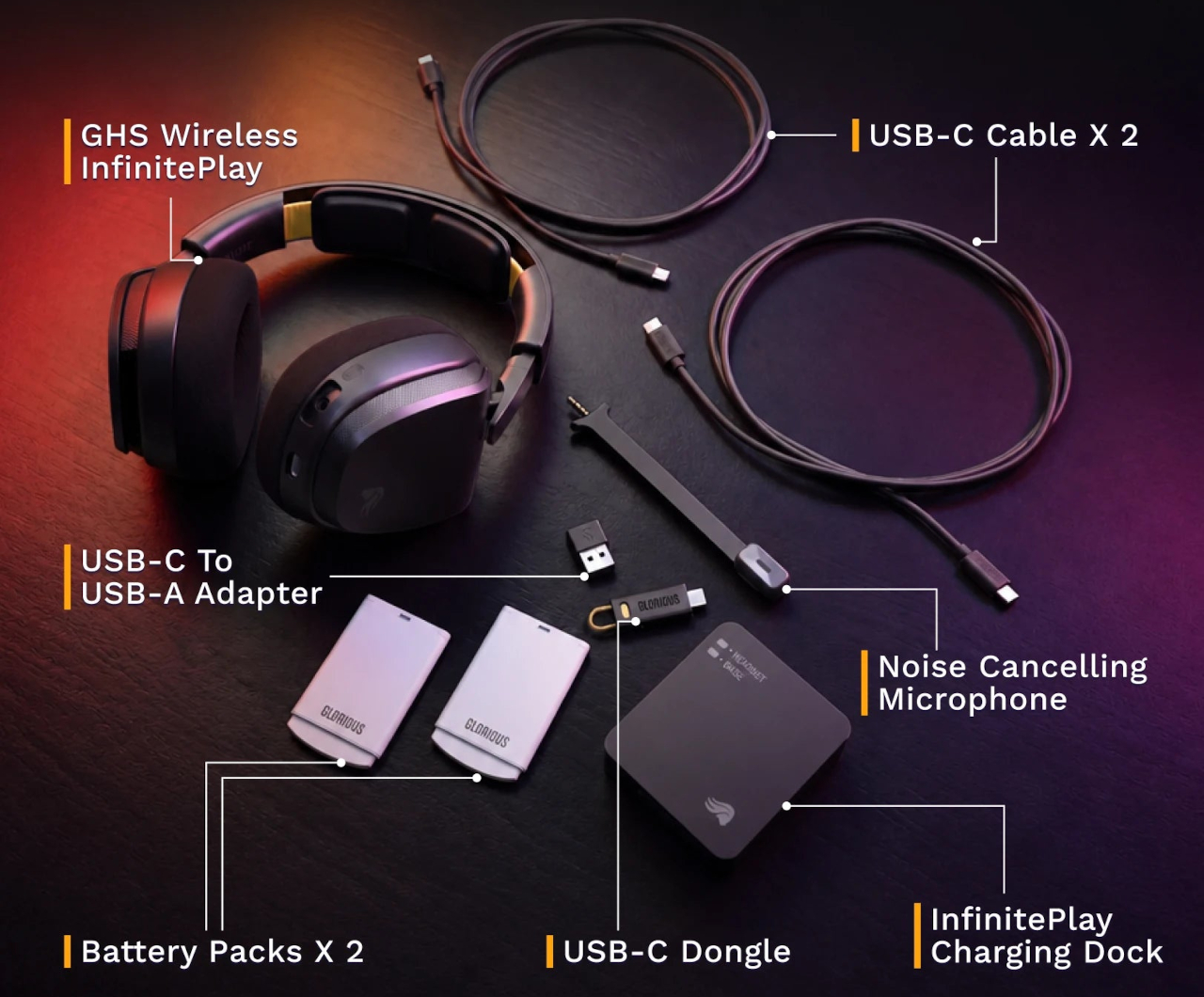
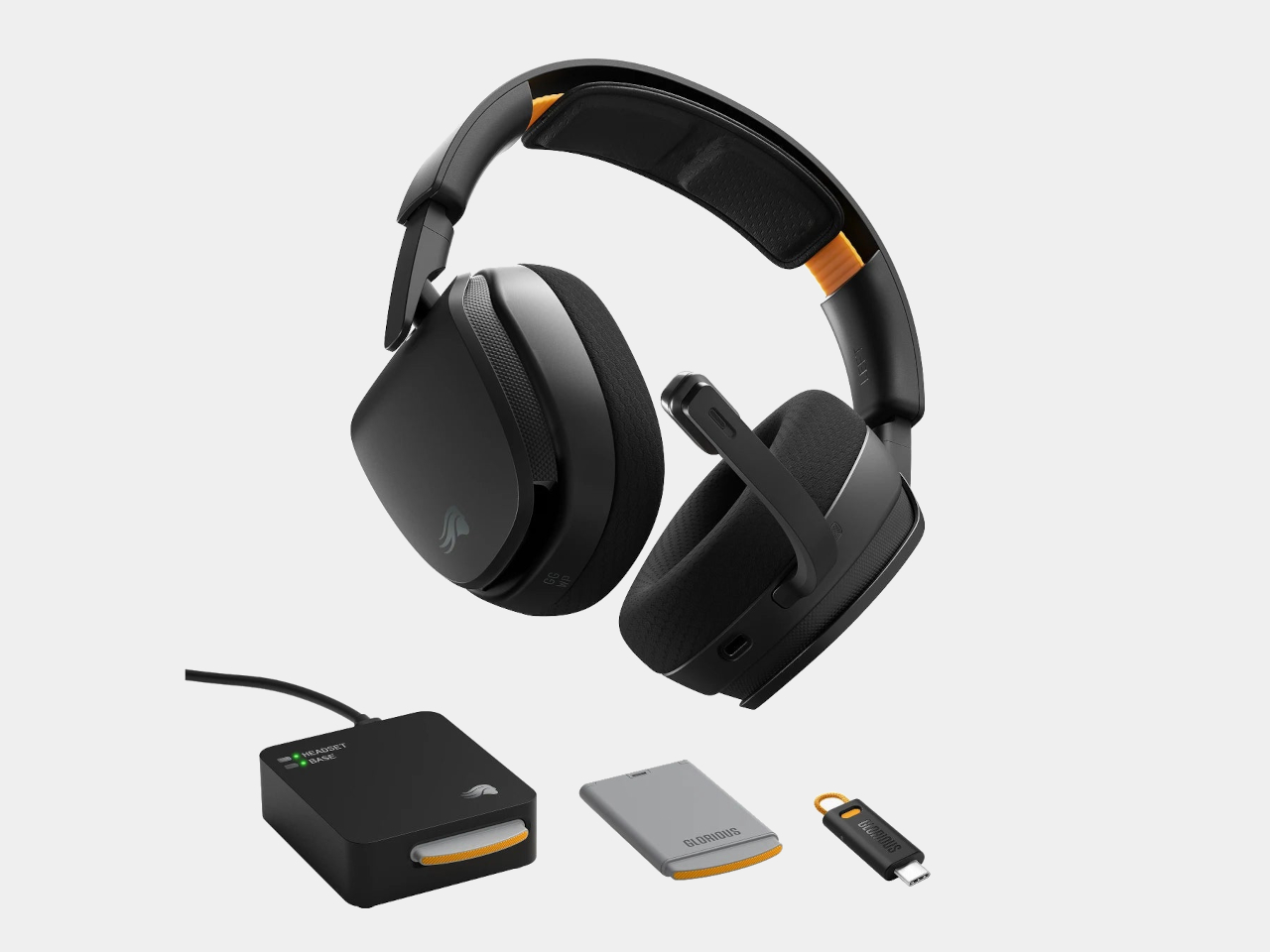
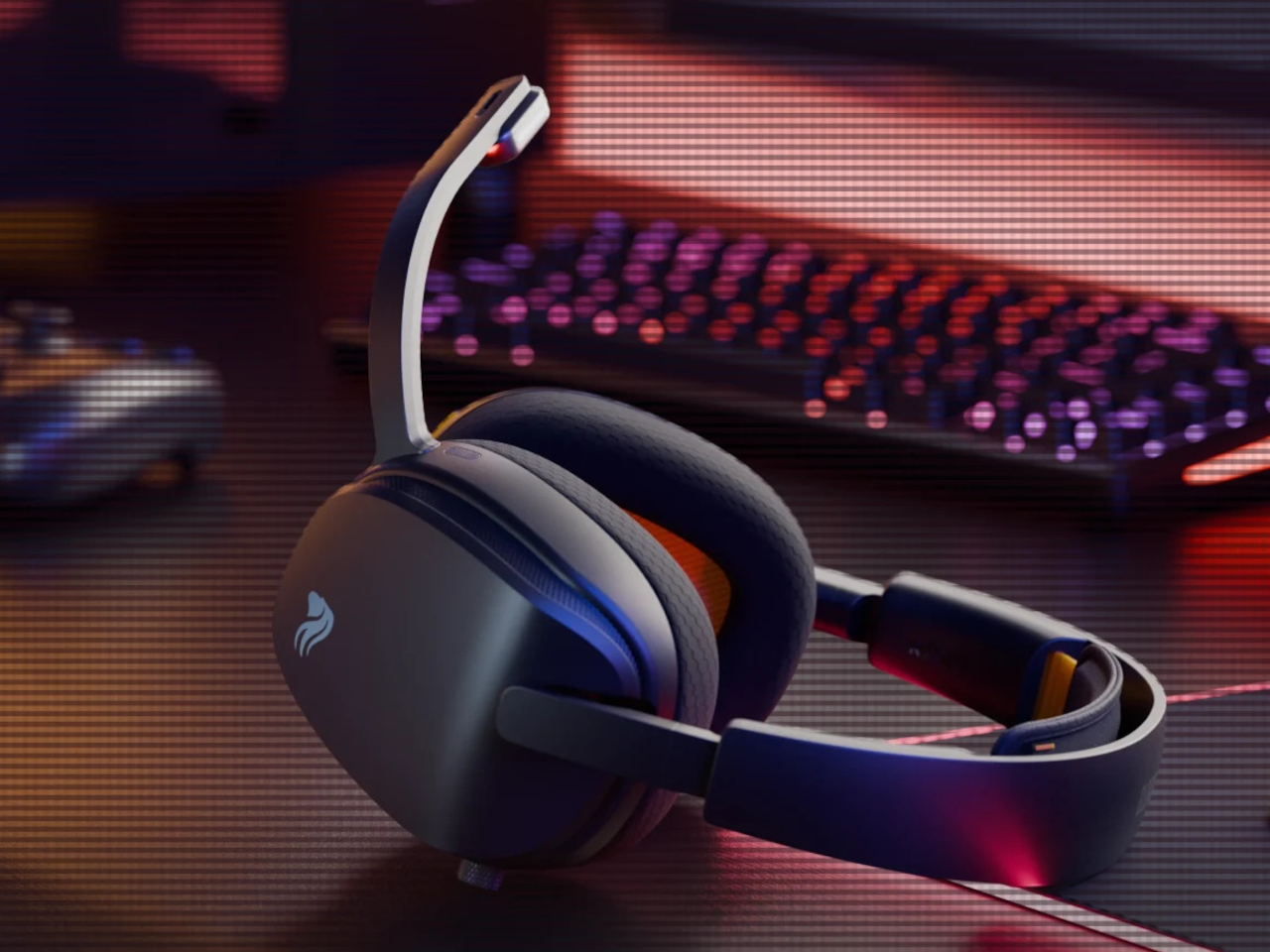
Glorious took a different angle with the GHS Wireless InfinitePlay. Rather than chasing a single larger battery, the headset ships with two hot-swappable 85-hour battery packs and an internal Guardian Battery reserve that bridges the gap during the moment of the swap. The result is a headset that, in practical terms, never actually stops playing, because by the time one pack drains, the other is already charged and ready.

Designer: Glorious

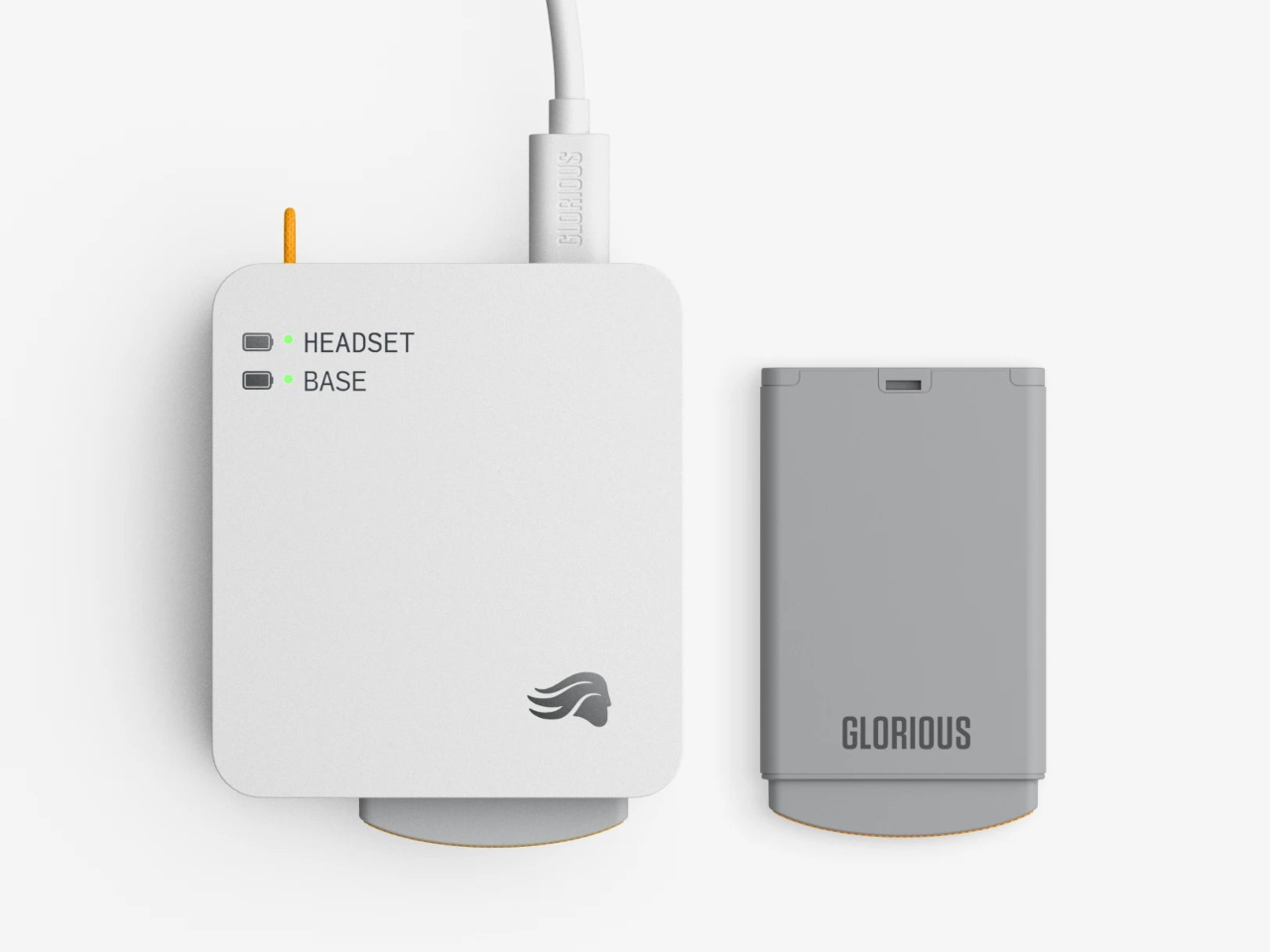
The system works through a dual-purpose charging base that also serves as the 2.4 GHz wireless dongle. One battery sits in the headset while the other charges on the base. When the depleted pack comes out and the charged one slots in, the Guardian Battery, which can run the headset independently for about 3 hours, has already kept audio uninterrupted through the swap. There’s no pause in sound and no drop in connection.

Combined, the two packs add up to more than 170 hours of capacity. For any kind of extended session, a long run at a tournament, a weekend of back-to-back play, or everyday use where charging gets forgotten, the swap-based approach removes the anxiety from the equation entirely. Swap the battery, put the depleted one on the dock, and carry on without another thought about it.

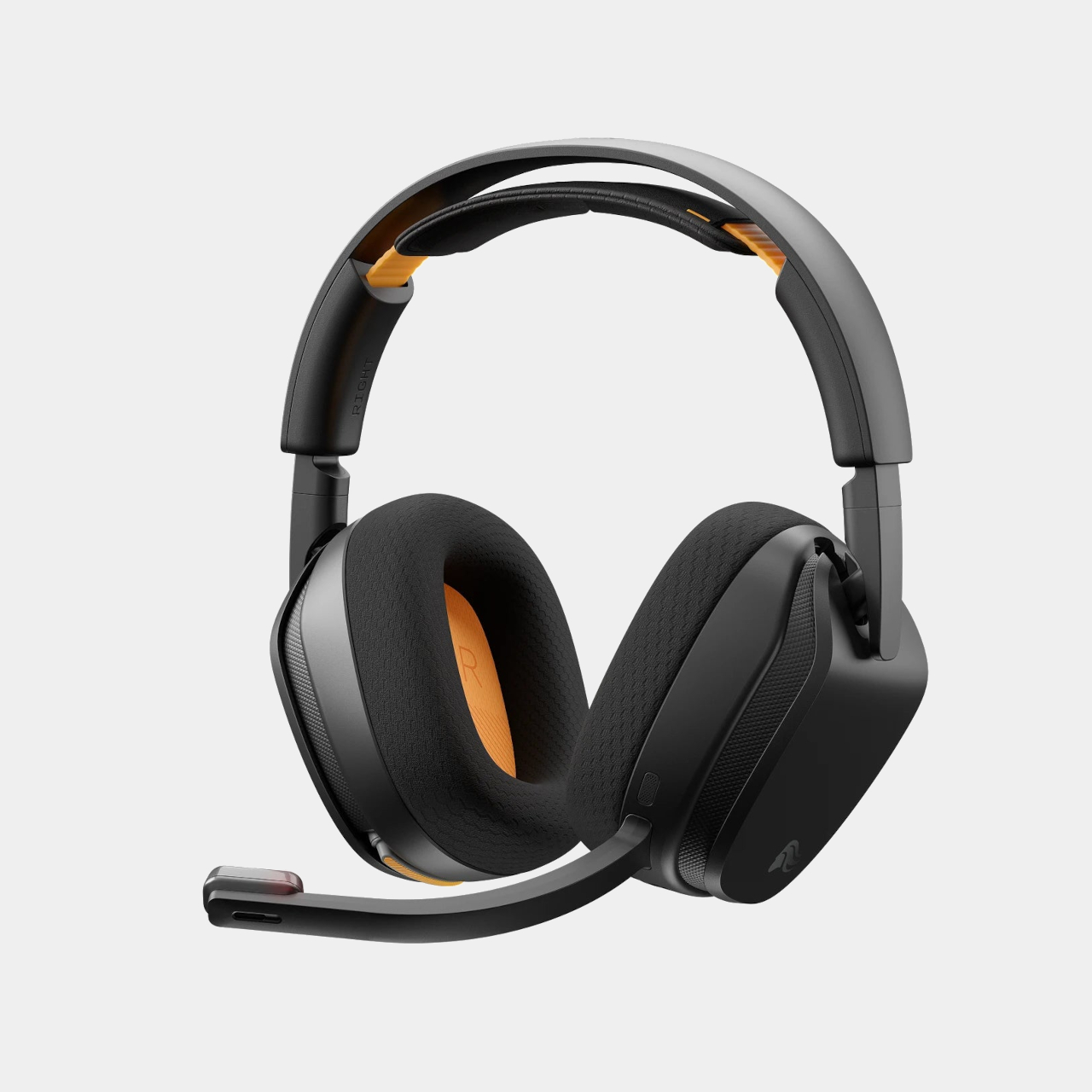
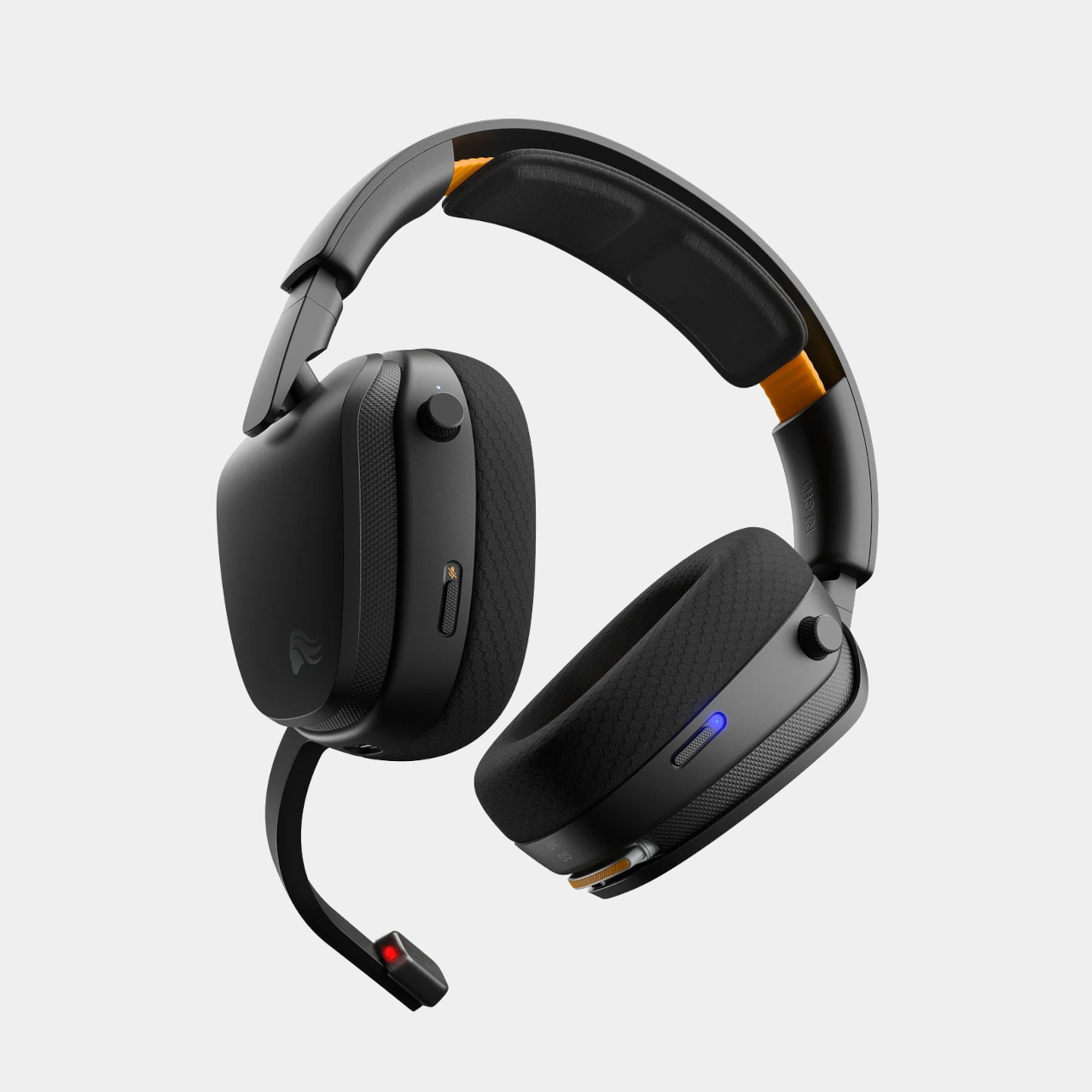
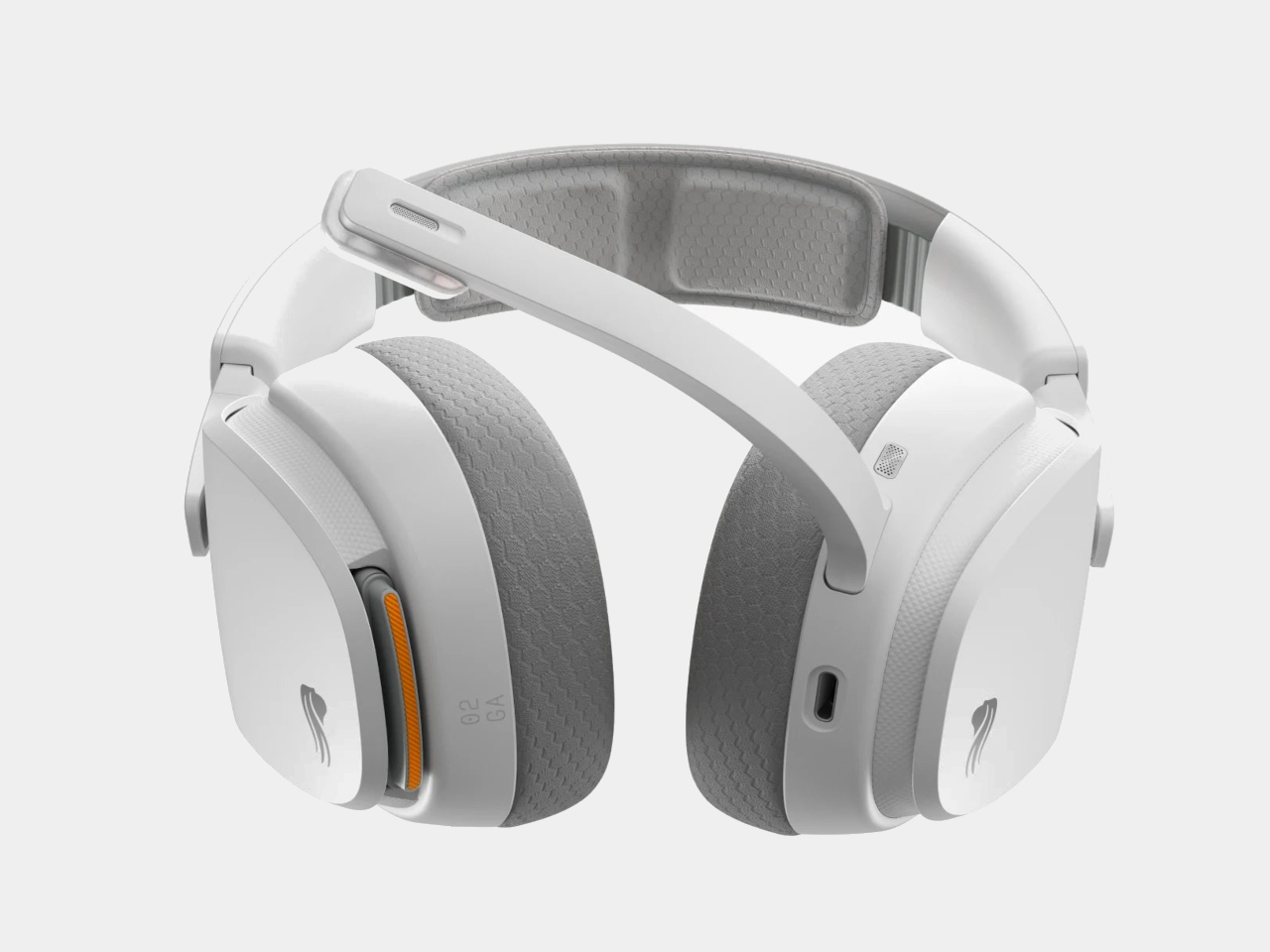
The headset is built around 40mm custom-tuned drivers angled to improve clarity and stereo imaging, covering a frequency response of 20Hz to 20kHz. The detachable boom microphone is noise-cancelling, and the ear cups use memory foam padding over a suspension headband that distributes the 360g weight across the top of the head. Connectivity covers both 2.4 GHz wireless for low-latency gaming and Bluetooth 5.4 for everything else, switchable with one button press.

That Bluetooth mode makes the headset practical outside the gaming setup too. Moving from a PC session to a phone call or a commute doesn’t require switching to a different pair of headphones. The same swap-and-go logic applies to any situation where the headset is living on your head for extended stretches, and the battery system works just as well whether you’re at a desk or out the door.

Most hot-swappable headsets at higher price points make the process awkward or require specific docking sequences. Glorious kept it simple enough to execute mid-session without missing a beat, which is ultimately the only version of this feature that actually matters. The GHS Wireless InfinitePlay is priced at $229.99 and comes in black and white. Both battery packs and the charging base are included in the box, so the whole swappable system is ready to go from day one, not sold separately as an add-on down the line.

The post At $230, This Gaming Headset Keeps Playing While You Swap Its Battery first appeared on Yanko Design.

These $69 ANC Headphones for kids are so good, I might use them myself: iClever Q950 Hands-on

Designing for children is a unique challenge. Kids are clumsy, impatient, and have a remarkable talent for forgetting to charge their devices. This reality often seems lost on product designers, who shrink adult technology and call it a day. The result is usually a frustrating experience for both parent and child, filled with confusing touch controls and the inevitable silence of a dead battery. It’s a cycle of minor tech annoyances that feels all too familiar in the modern family home.

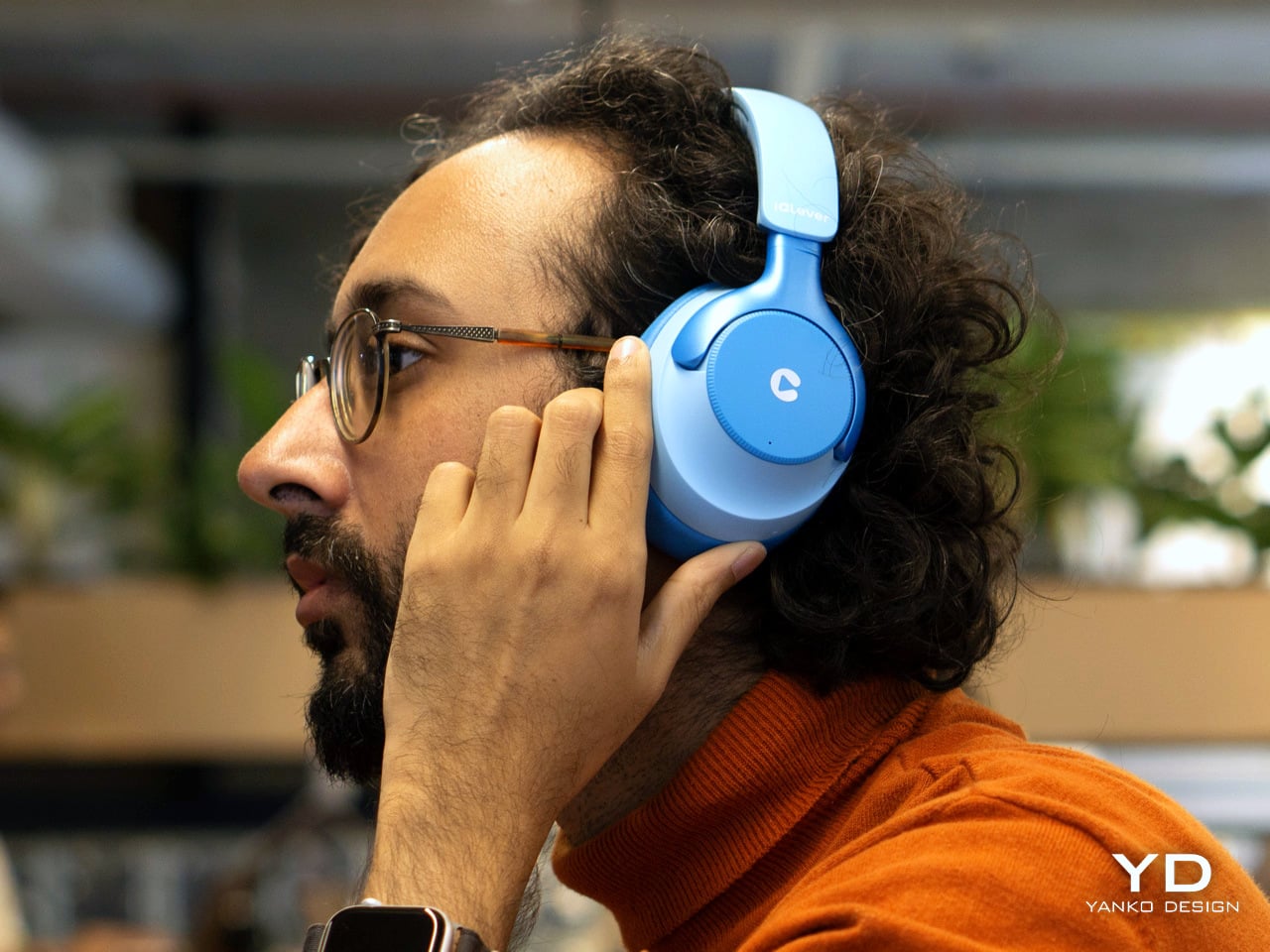
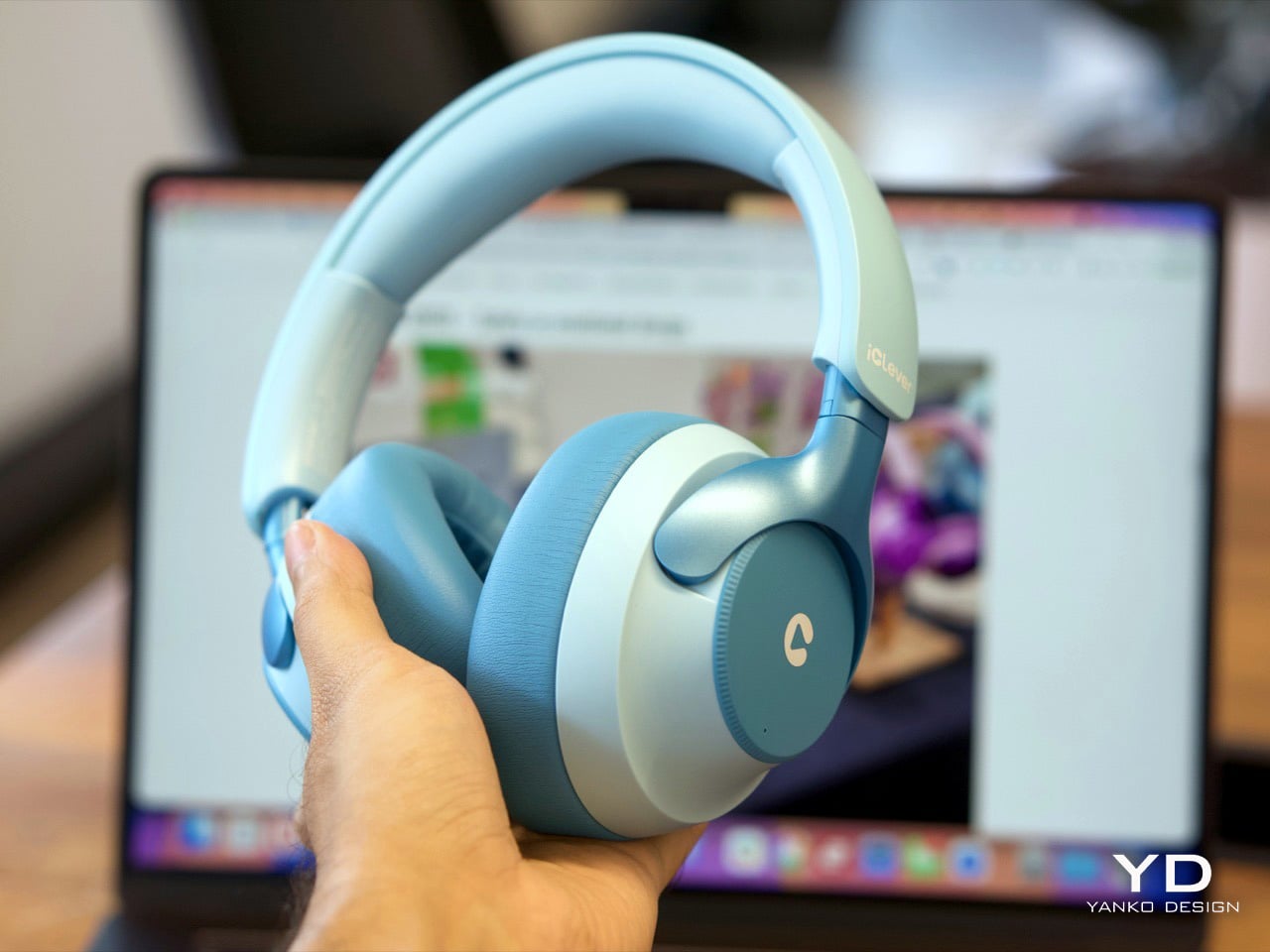
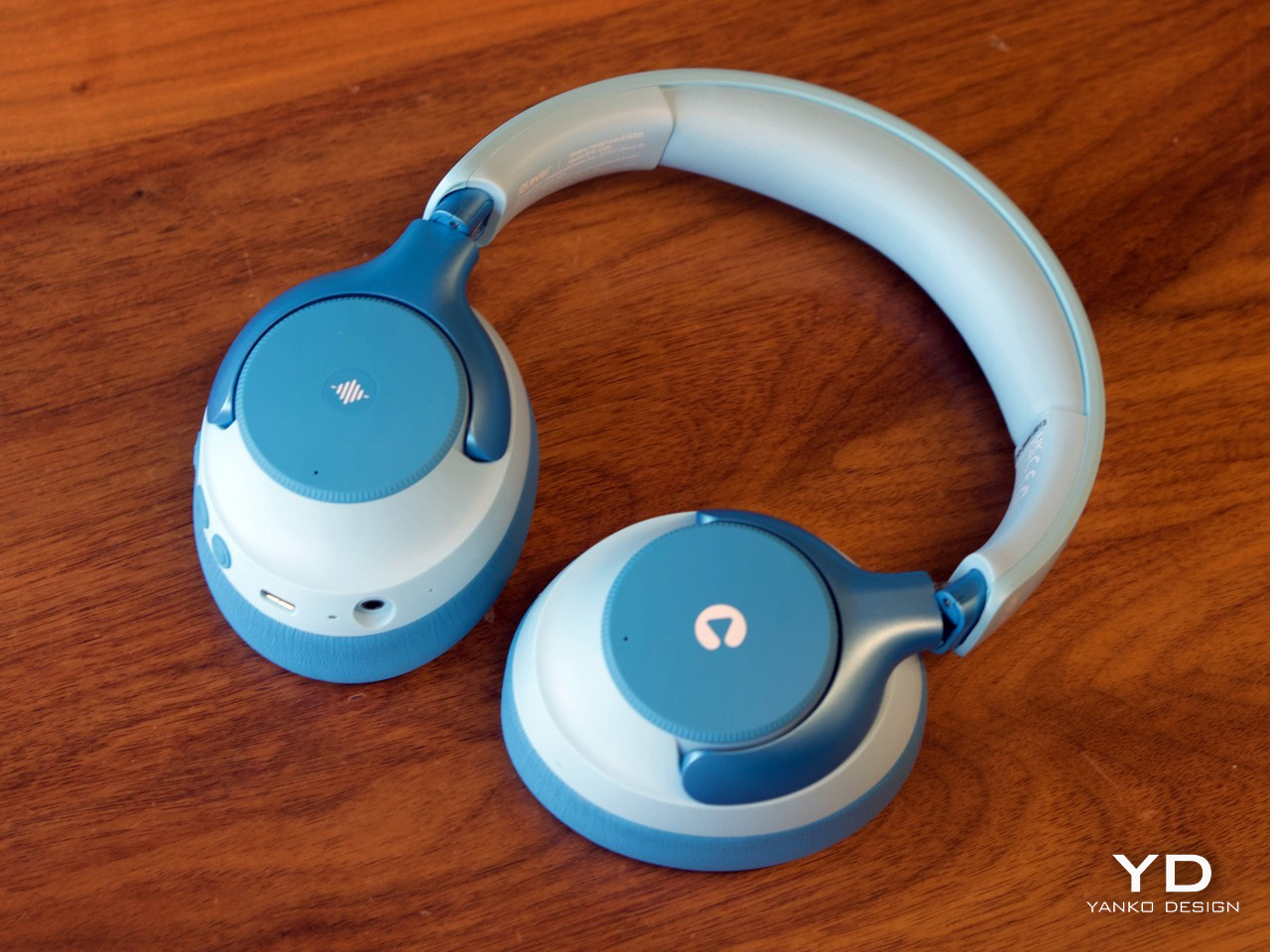
The iClever QuietShield Q950 feels like it was designed by someone who has actually spent time with kids. The controls are large, satisfying physical buttons, a smart choice for small hands that lack fine motor precision. Bluetooth pairing notifications are delivered in a friendly child’s voice, a small detail that makes the headphones feel truly personal. Best of all, the auxiliary input works even when the power is off, providing a practical backup for those very conceivable moments when charging is forgotten. These are the kinds of thoughtful, practical choices that make a product genuinely useful.

Designer: iClever

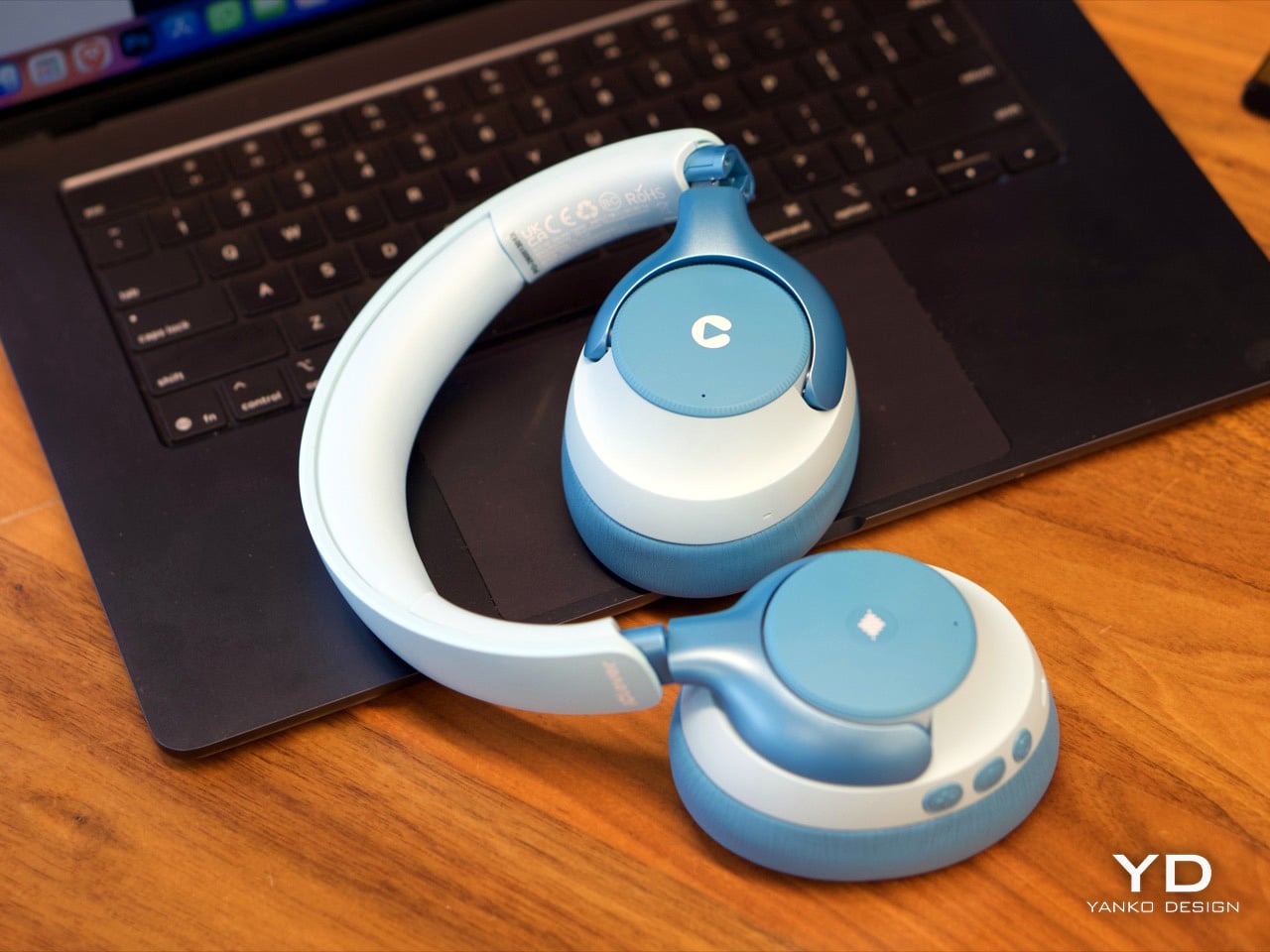
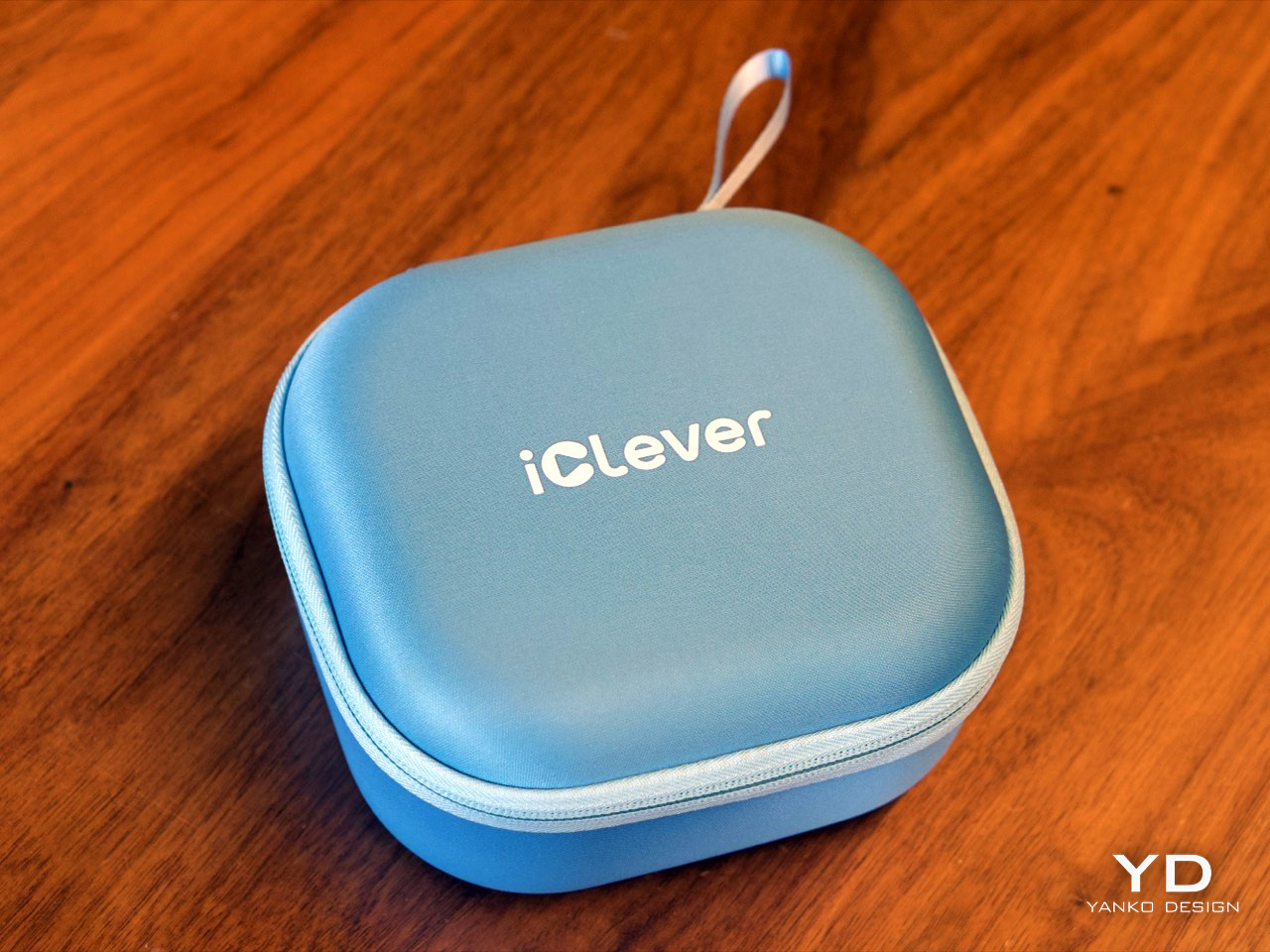
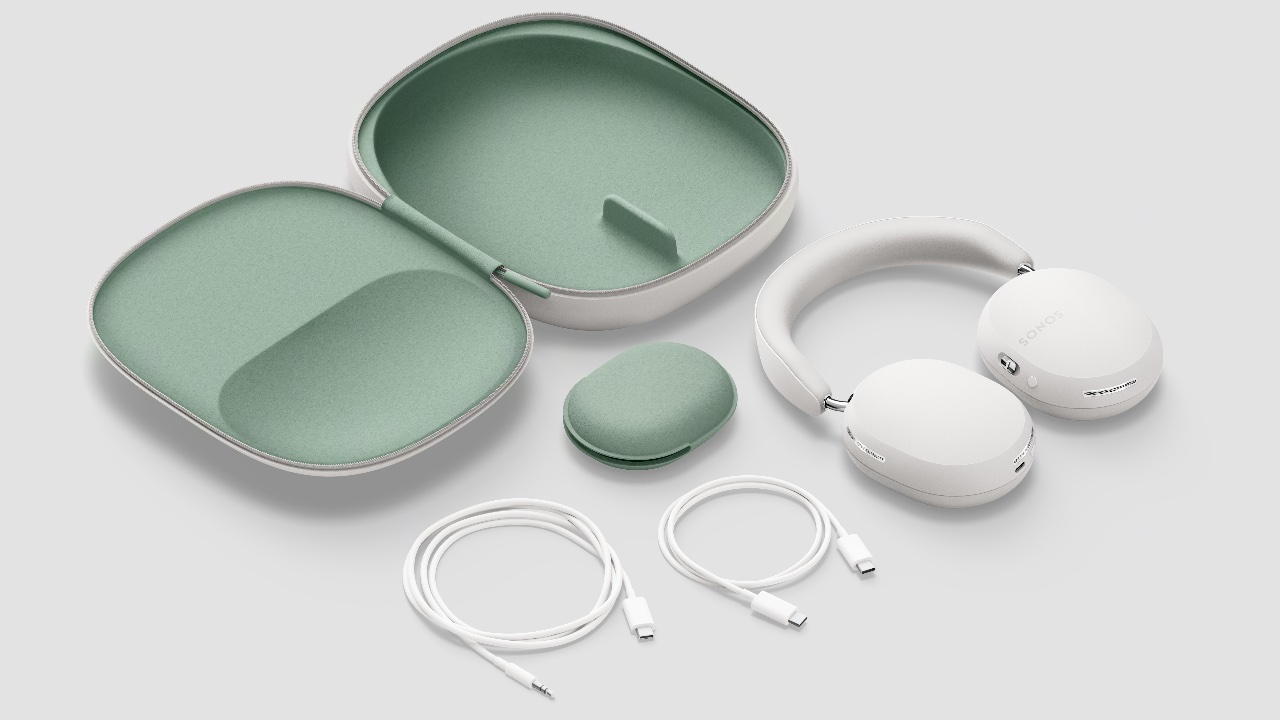
At $69.99, the Q950 makes a strong first impression. You get the headphones, a matching soft-shell carrying case, a USB-C charging cable, and an AUX cable, which already makes the package feel more complete than many headphones in this range. The case is especially nice, with a clean zippered form factor and enough room for the cables and paperwork in a mesh pocket. It is the sort of inclusion that makes the Q950 feel less like a basic kids’ accessory and more like a proper travel-friendly headphone package.

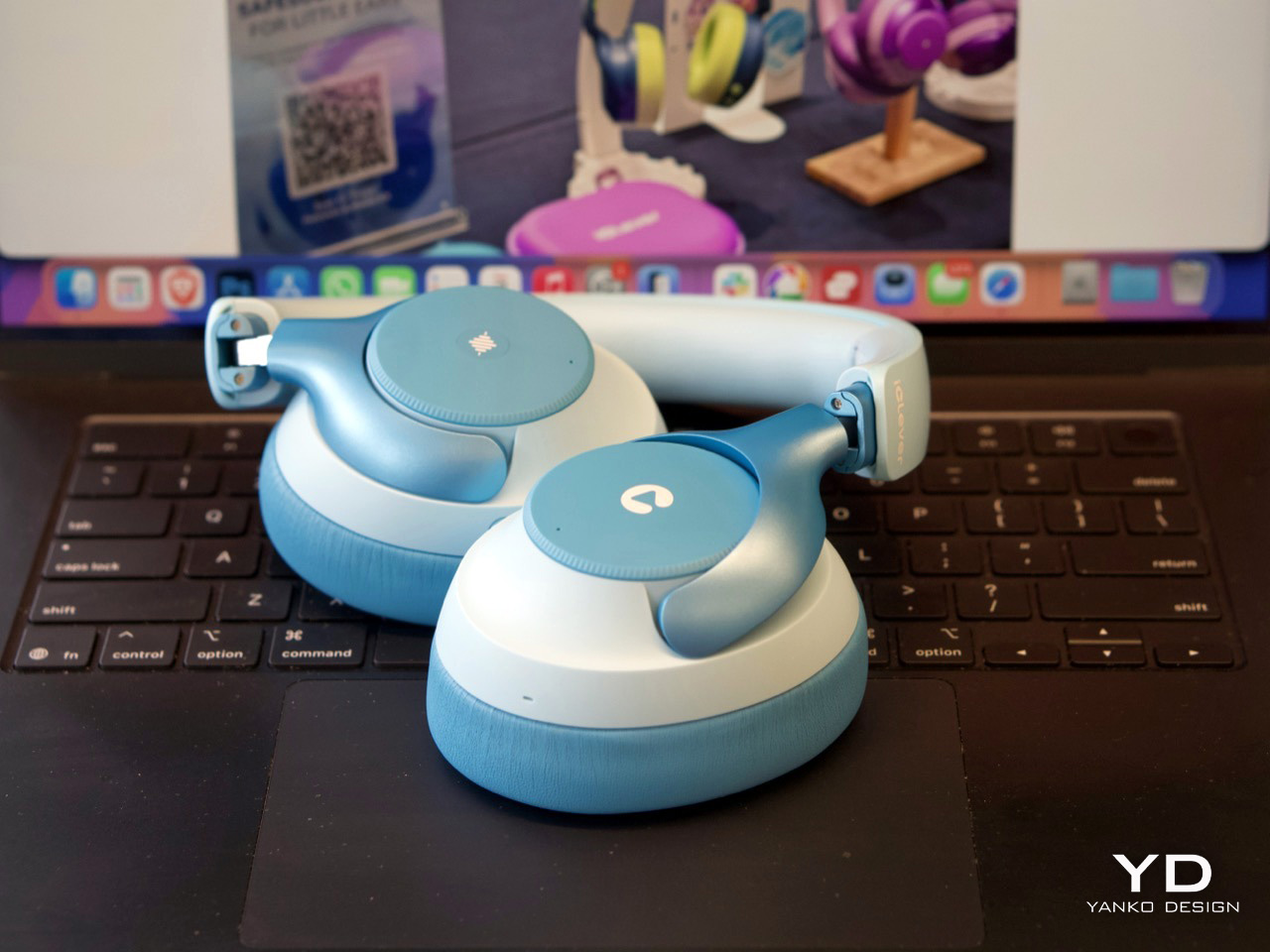
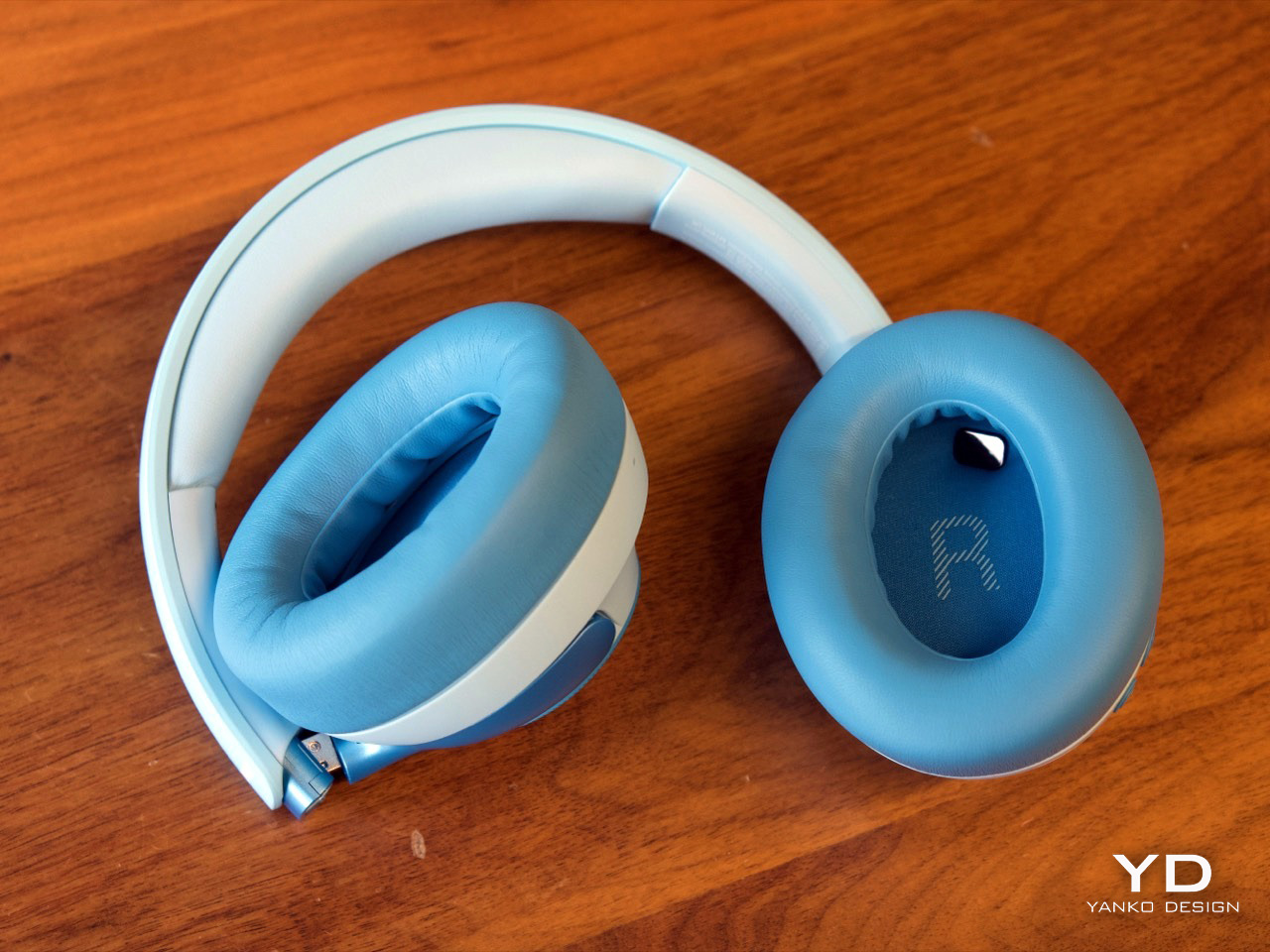
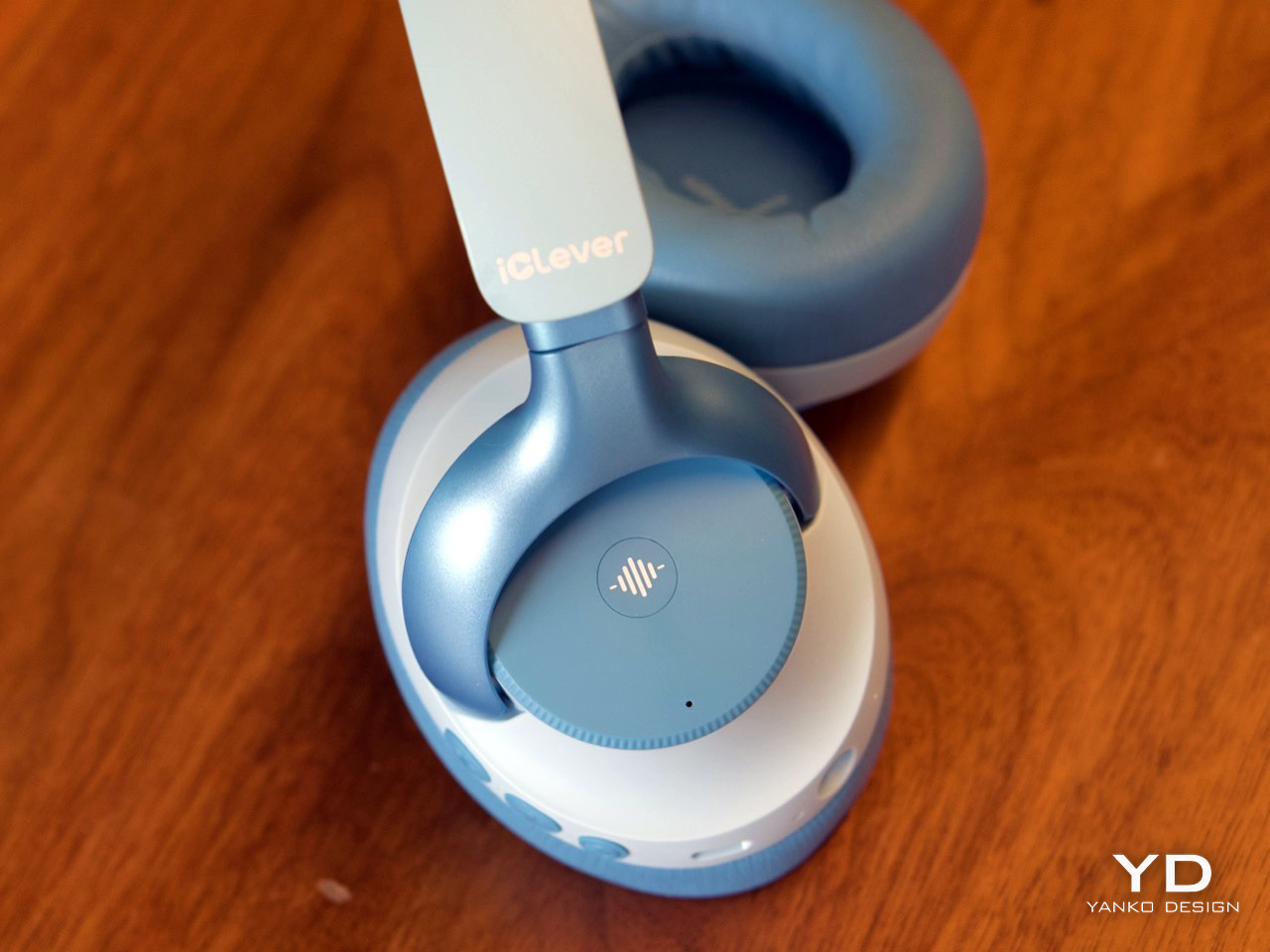
The design itself strikes a nice balance between playful and polished. In the blue finish, the two-tone color treatment gives the Q950 a softer, more approachable look, while the metallic-looking frame pieces that connect the earcups to the headband add a slightly more premium touch. Even though the construction is plastic, nothing about it feels cheap. The headband and earcups are cushioned well, the structure feels solid in hand, and nothing creaks or feels flimsy. I still hope replacement earcups are available, because that would make the product easier to recommend for long-term use, but the initial build quality is genuinely impressive.

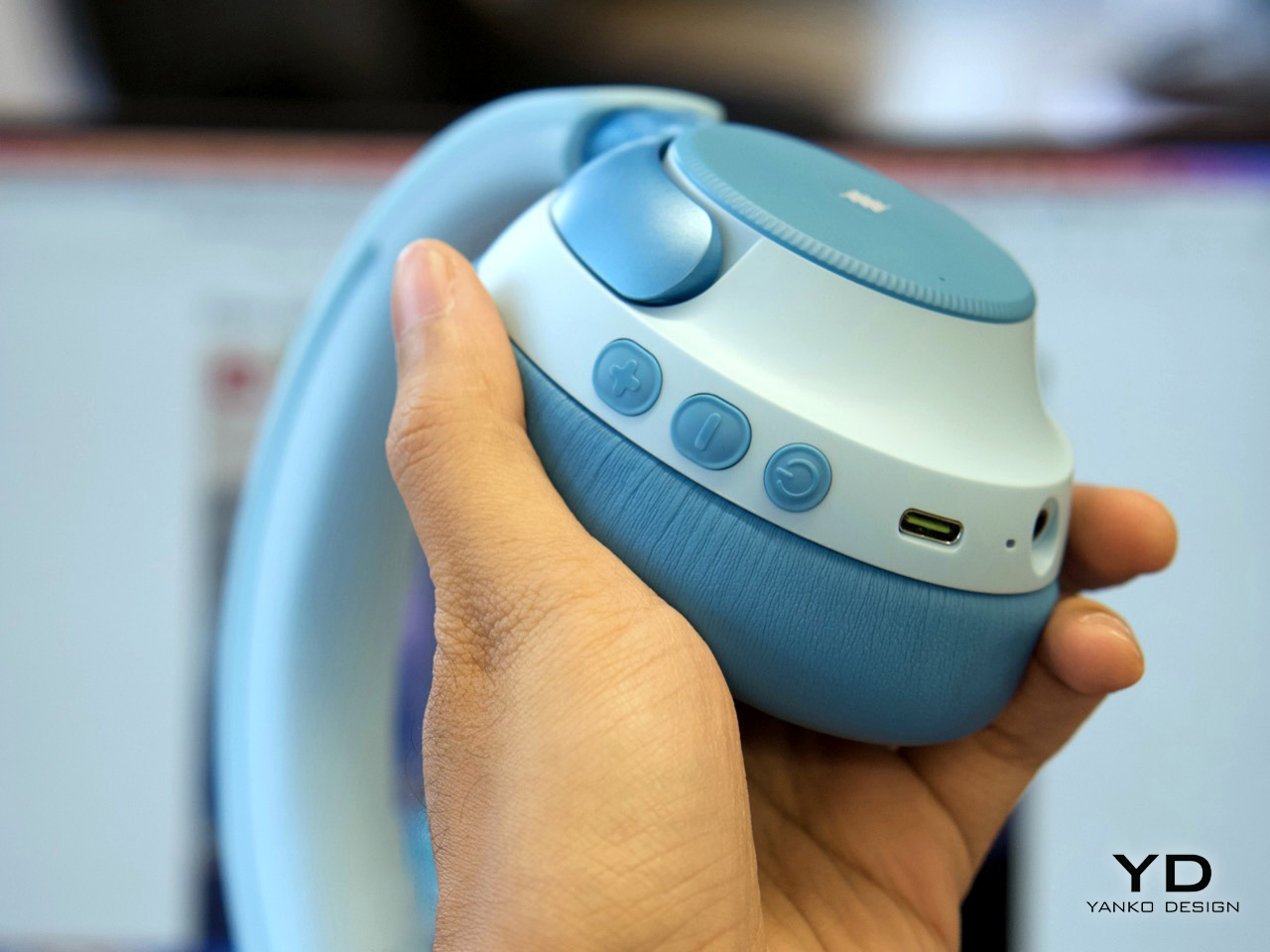
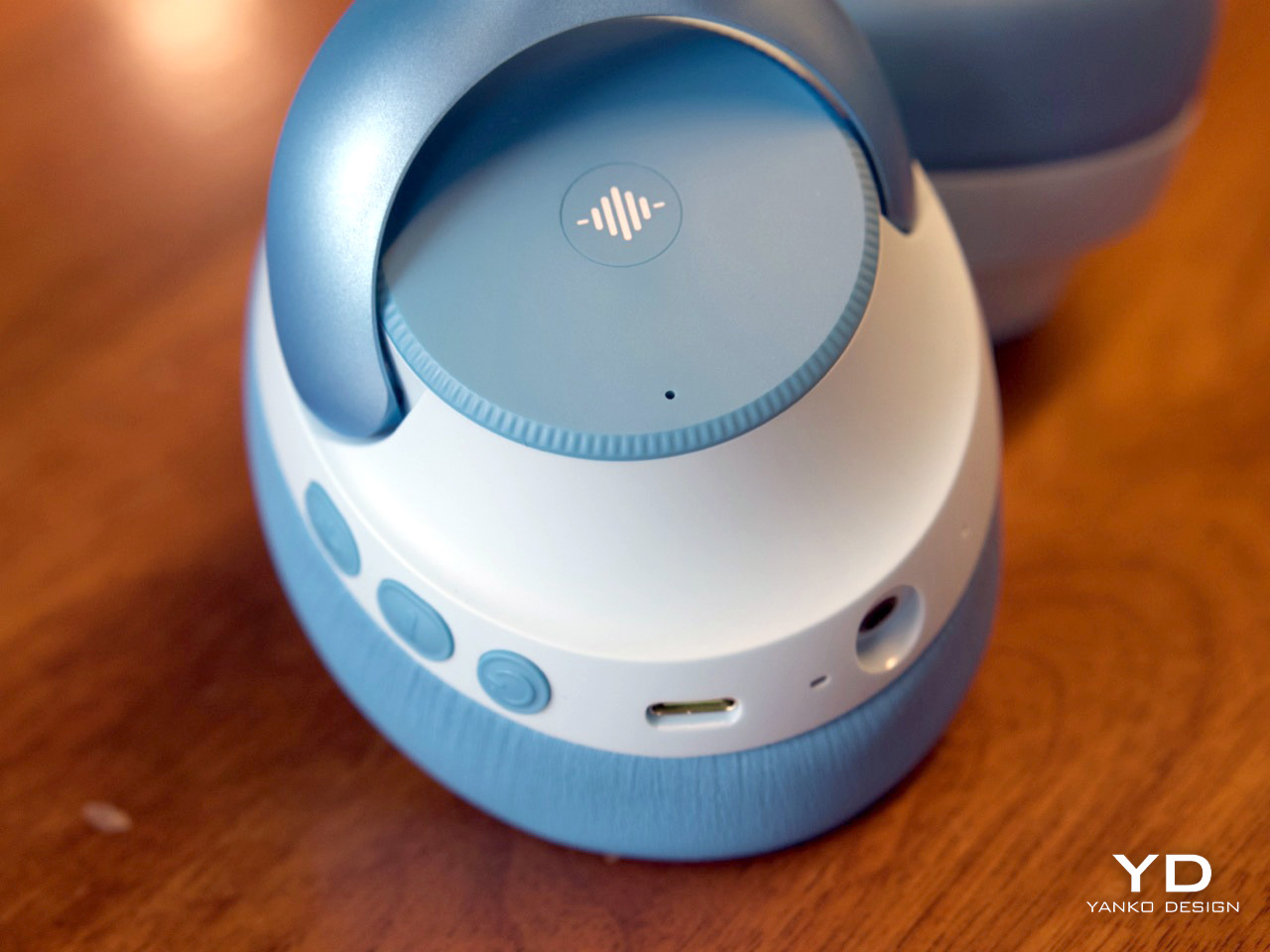
That premium feel carries over into the controls. iClever made the right call by skipping touch panels entirely and using dedicated buttons for power, volume, and listening modes. Touch controls can be annoying even on adult headphones, so physical buttons make far more sense for kids. They are easier to find by feel, harder to trigger accidentally, and generally more forgiving. Just as importantly, there is no smart assistant toggle here, no Hey Siri shortcut, and no dedicated button that could accidentally send a child wandering into a voice assistant rabbit hole. They also look cute in a way that suits the Q950’s overall design language.

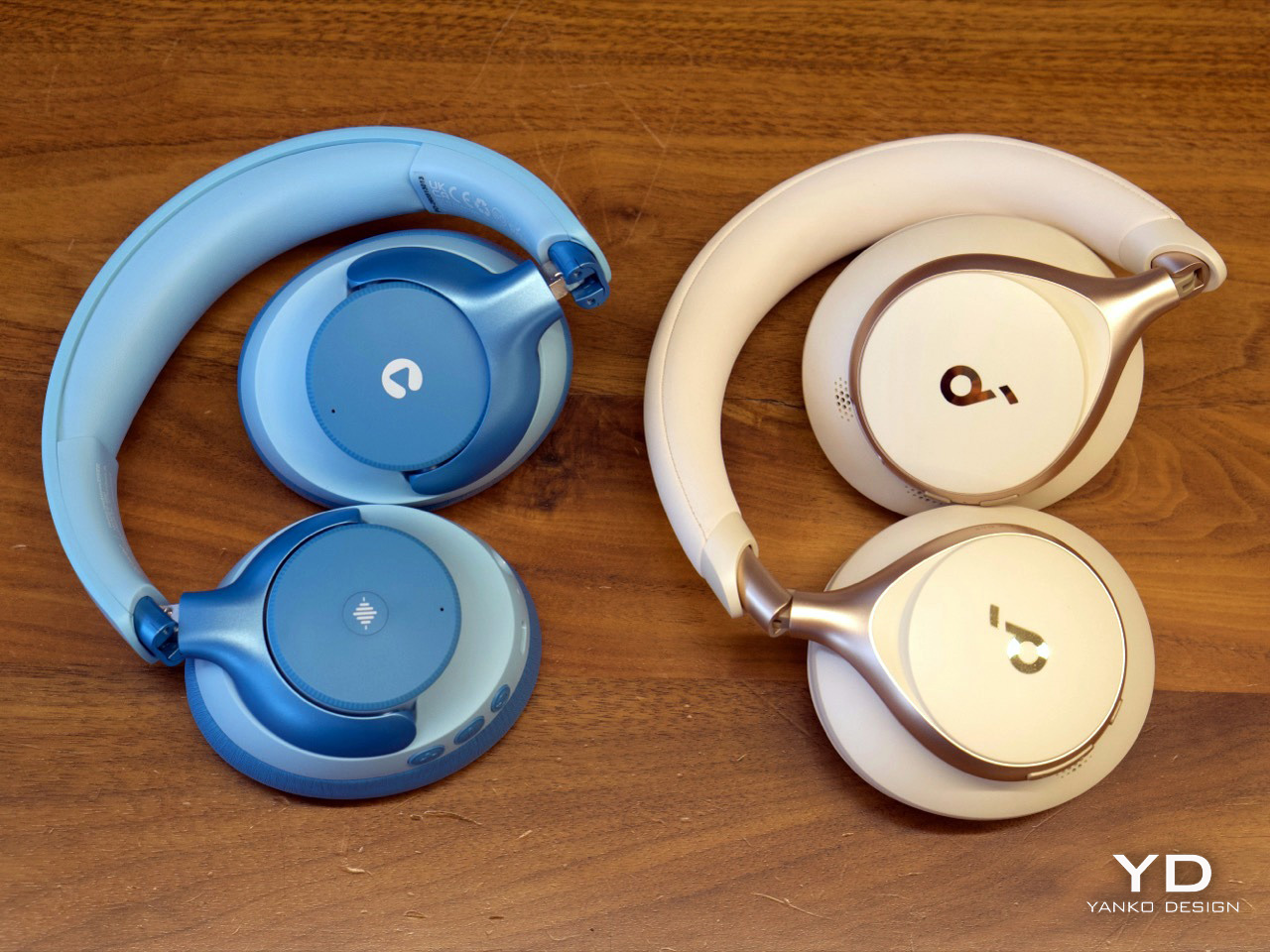
Bluetooth connectivity worked flawlessly in my time with the headphones. Pairing was quick, the connection stayed stable, and I did not run into any hiccups. Sound quality was also better than expected. To be honest, it held up surprisingly well against my Soundcore Space One in casual listening. I am not going to nitpick too much here because these are headphones for kids, not audiophiles, but there were no complaints on audio quality. They sounded clean, balanced, and perfectly good for movies, educational content, and everyday listening.

The volume does max out a little lower than the average pair of headphones, but that is clearly by design. iClever is positioning the Q950 around an 80dBA safe listening limit, and in practice that lower ceiling feels intentional rather than frustrating. The active noise cancellation helps here, because kids do not need to crank the volume as much in noisy environments just to hear what they are watching. That is the real advantage of pairing hearing protection with ANC instead of relying on a volume cap alone.

ANC is easy to access through the center button on the earcup, and transparency mode is available too, which is useful for keeping kids aware of their surroundings when needed. That setup feels much more practical than burying everything inside an app. The Q950 also supports wear detection, which worked well overall. There is one small quirk, though. If you place the headphones on a table with the earcups facing downward, the sensor can mistake the surface for your head and assume the headphones are still being worn. It is a minor issue and did not feel like a dealbreaker, but it is the kind of behavior you notice quickly in real use.

One of my favorite details is the AUX support. The headphones work passively over a wired connection even when they are powered off, which is genuinely useful if the battery dies because a kid forgot to charge them. That means the Q950 still works in a pinch instead of becoming dead weight during a flight or car ride. Of course, features like ANC and wear detection do not work when the headphones are off, because they still need power, but wired playback alone is a great fallback to have. If the headphones still have charge and are powered on, iClever says ANC can also work in wired mode.

The company claims up to 60 hours of playback with ANC off and 35 hours with ANC on, which is within the ballpark of what I got with my week’s worth of testing. The presence of AUX backup already removes a lot of battery anxiety.

For $70, the iClever QuietShield Q950 feels like a steal. You get a thoughtful set of features, reliable Bluetooth, effective ANC, a kid-safe volume cap, and a design that feels more premium than expected at this price. More importantly, it feels like a product built around how kids actually use headphones, and how parents actually worry about them.

The physical ANC button lets you toggle transparency

iClever delivers the Q950 in a gorgeous soft-shell case that kids can carry around with them.

The post These $69 ANC Headphones for kids are so good, I might use them myself: iClever Q950 Hands-on first appeared on Yanko Design.

This B&O Headphone Concept Fits Only You, Literally, and It’s the Best Idea Audio Has Had in Years

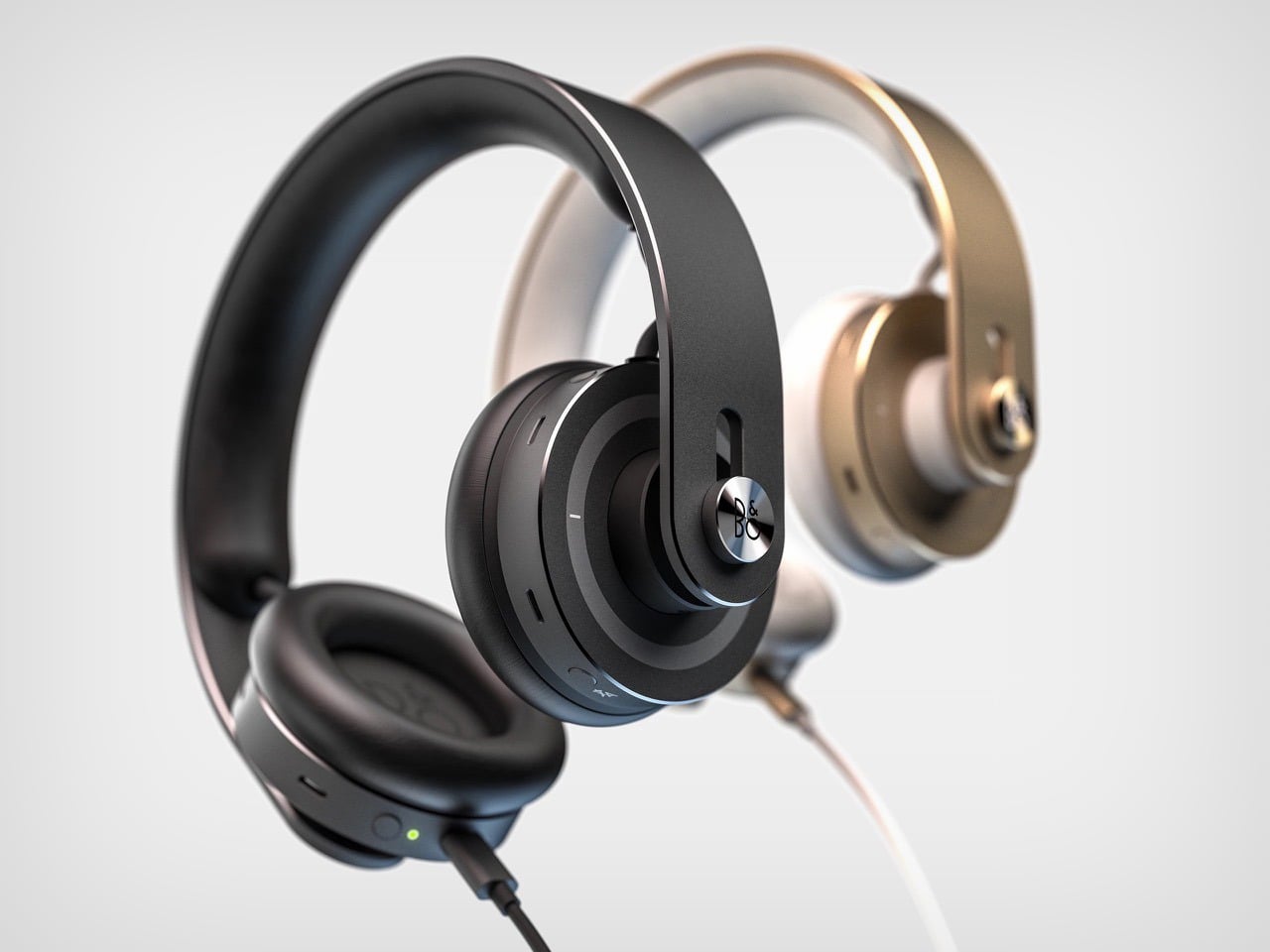
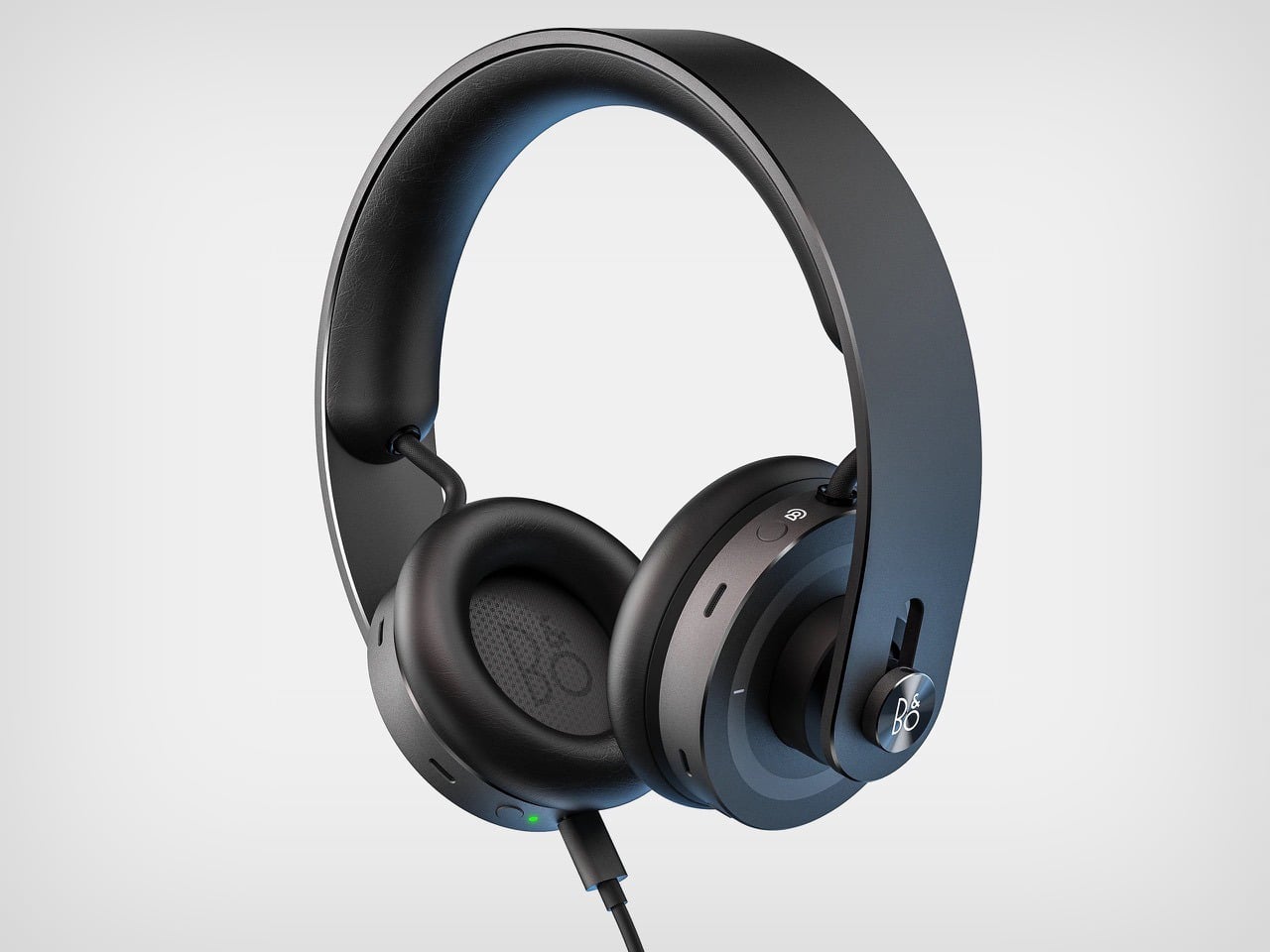
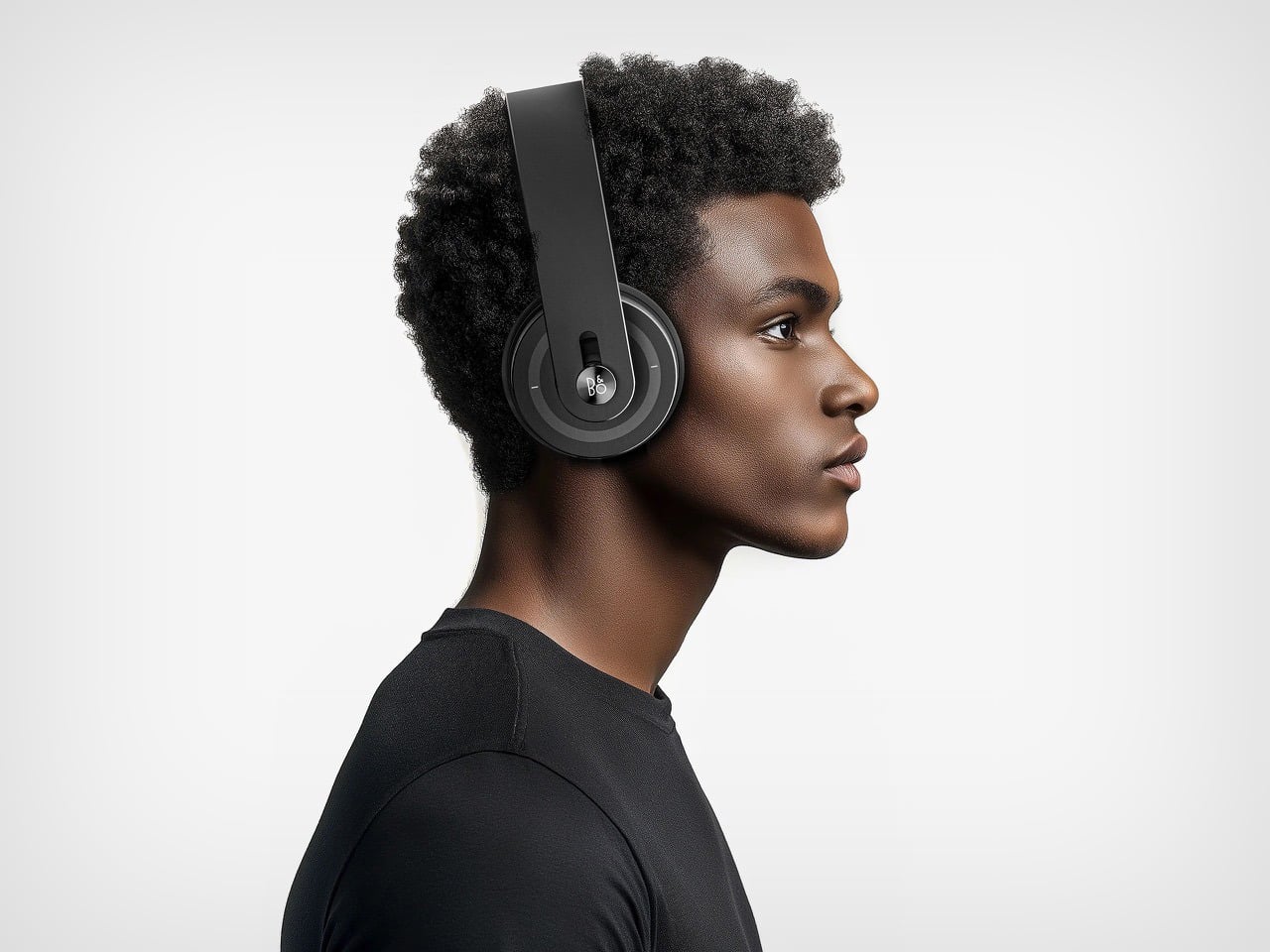
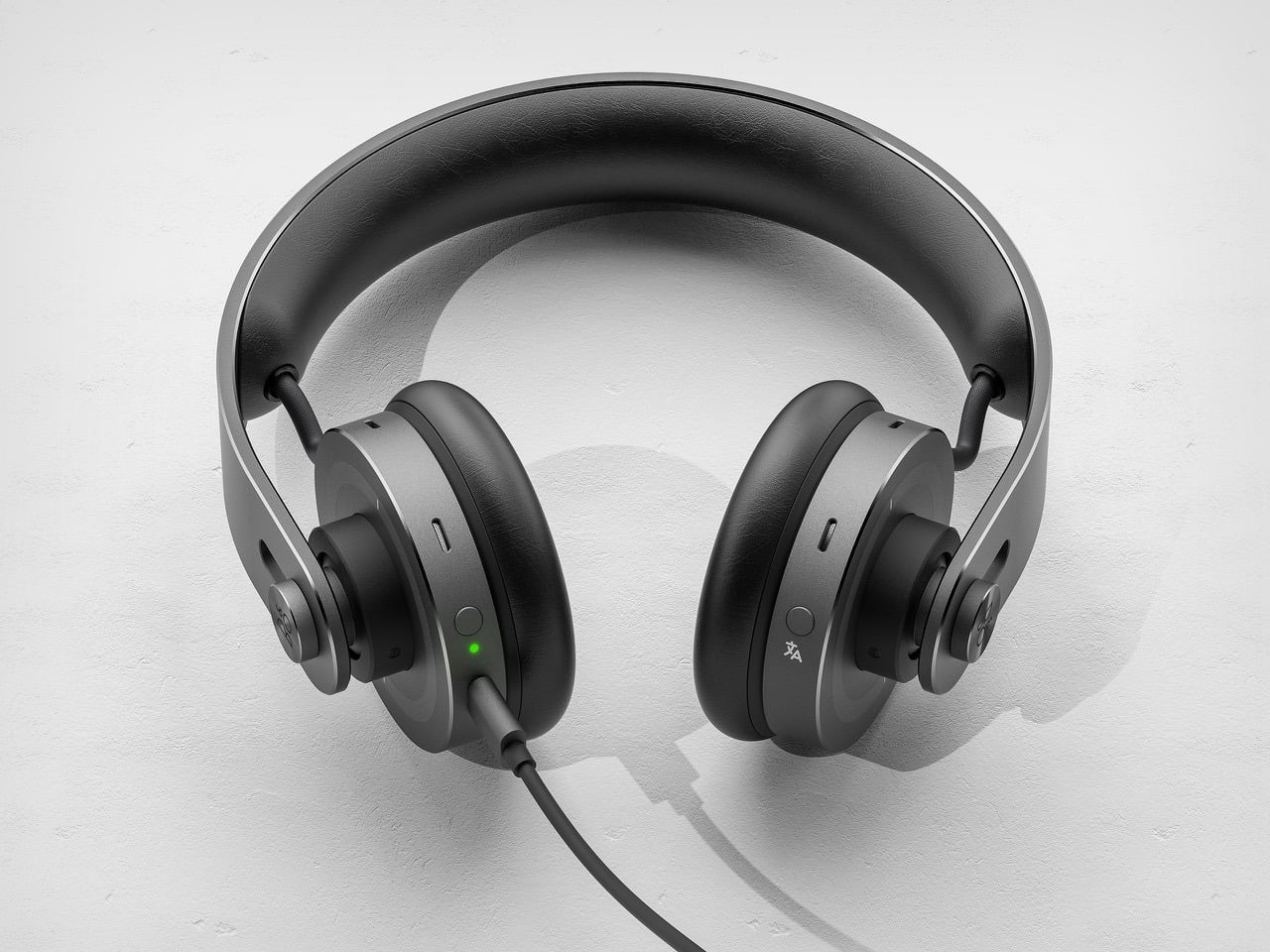
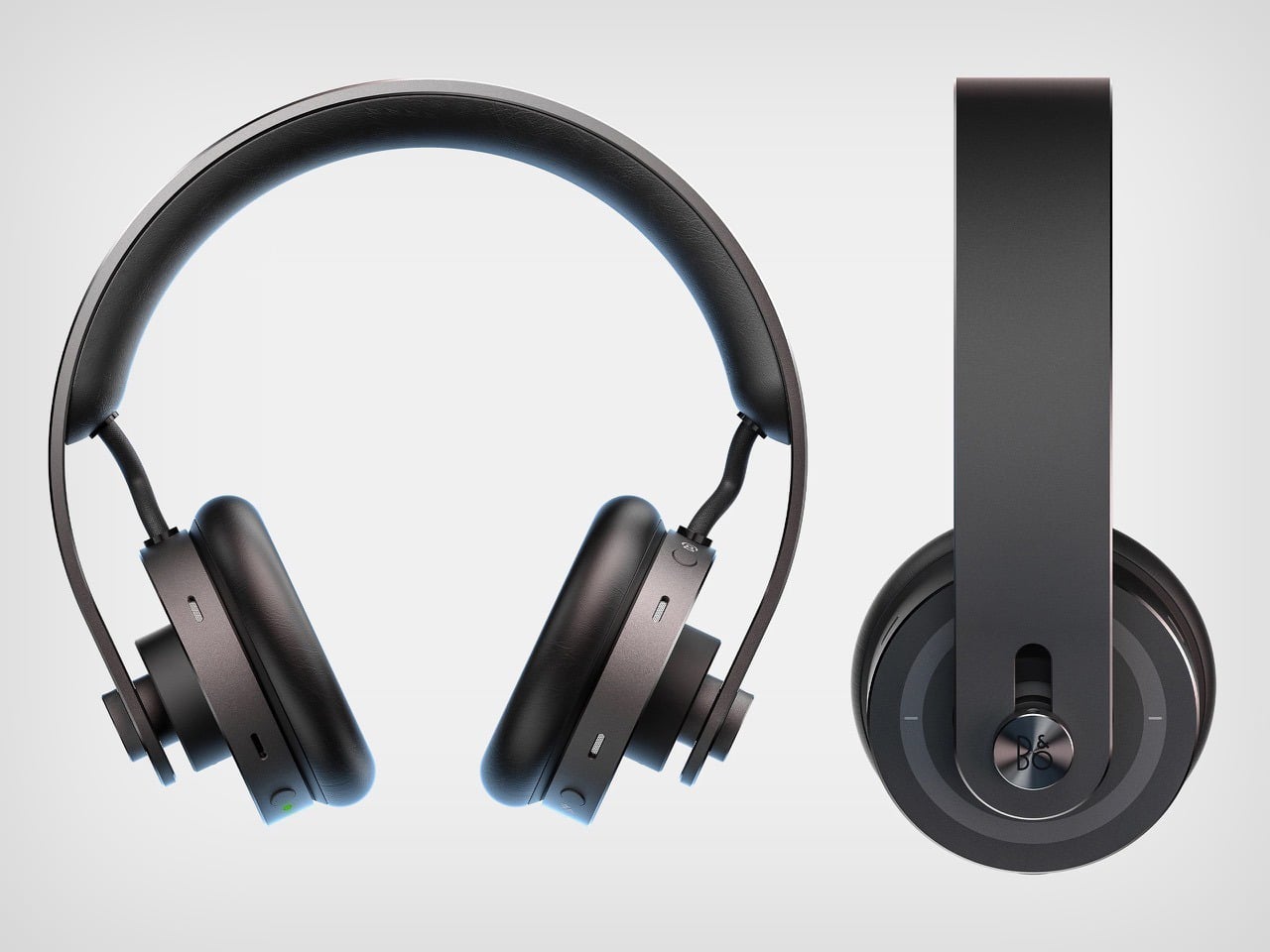
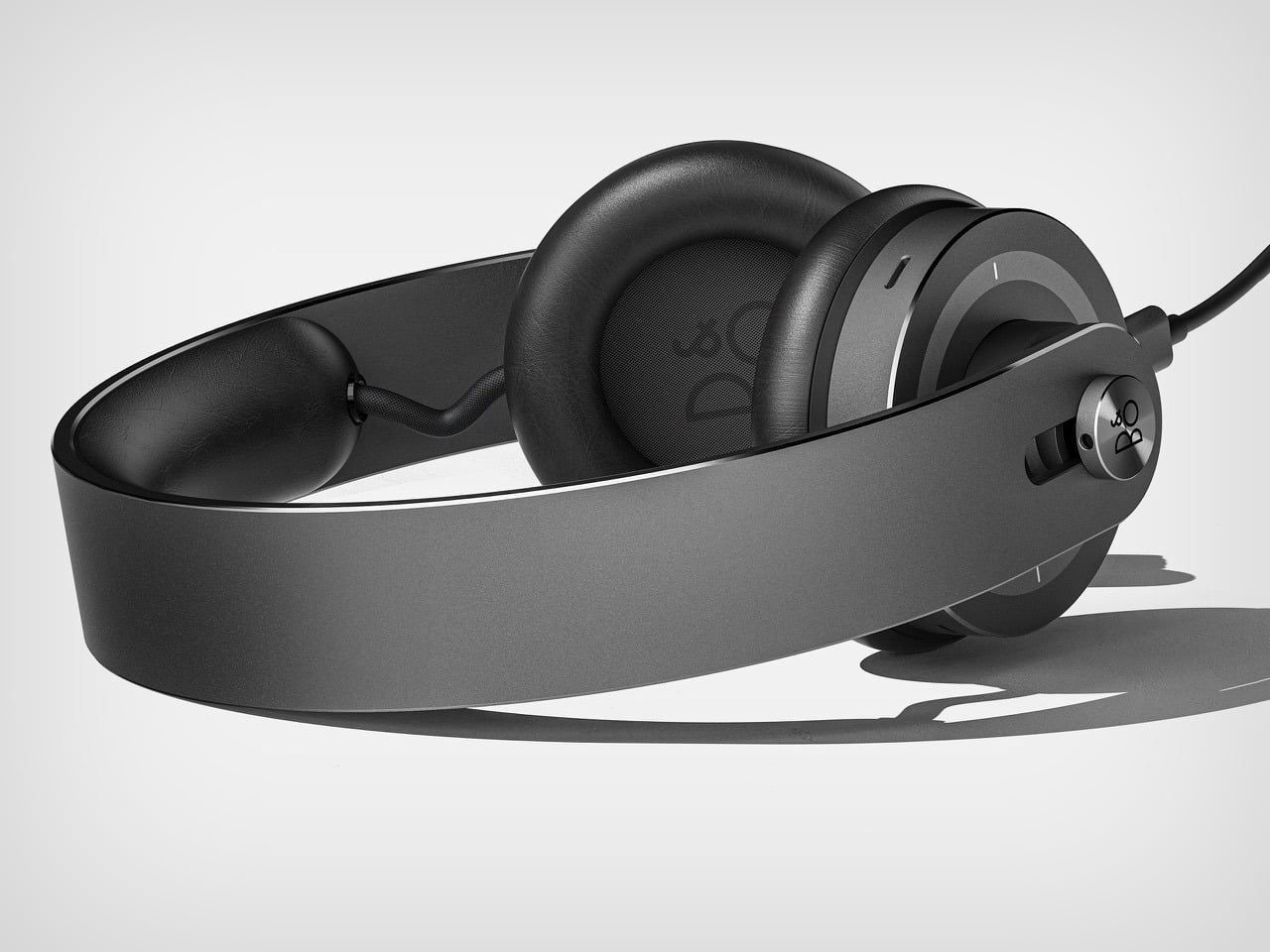
Bang & Olufsen built its reputation on the idea that audio equipment should be worthy of the spaces it inhabits. Bas Kamp’s ONCE concept takes that idea and sharpens it into something more intimate. A headphone fitted once, precisely, to a single person. A form that carries the geometry of classic over-ear design, two cylindrical drivers, a continuous band, an honest material palette, and updates it with one quietly radical proposition: permanence.

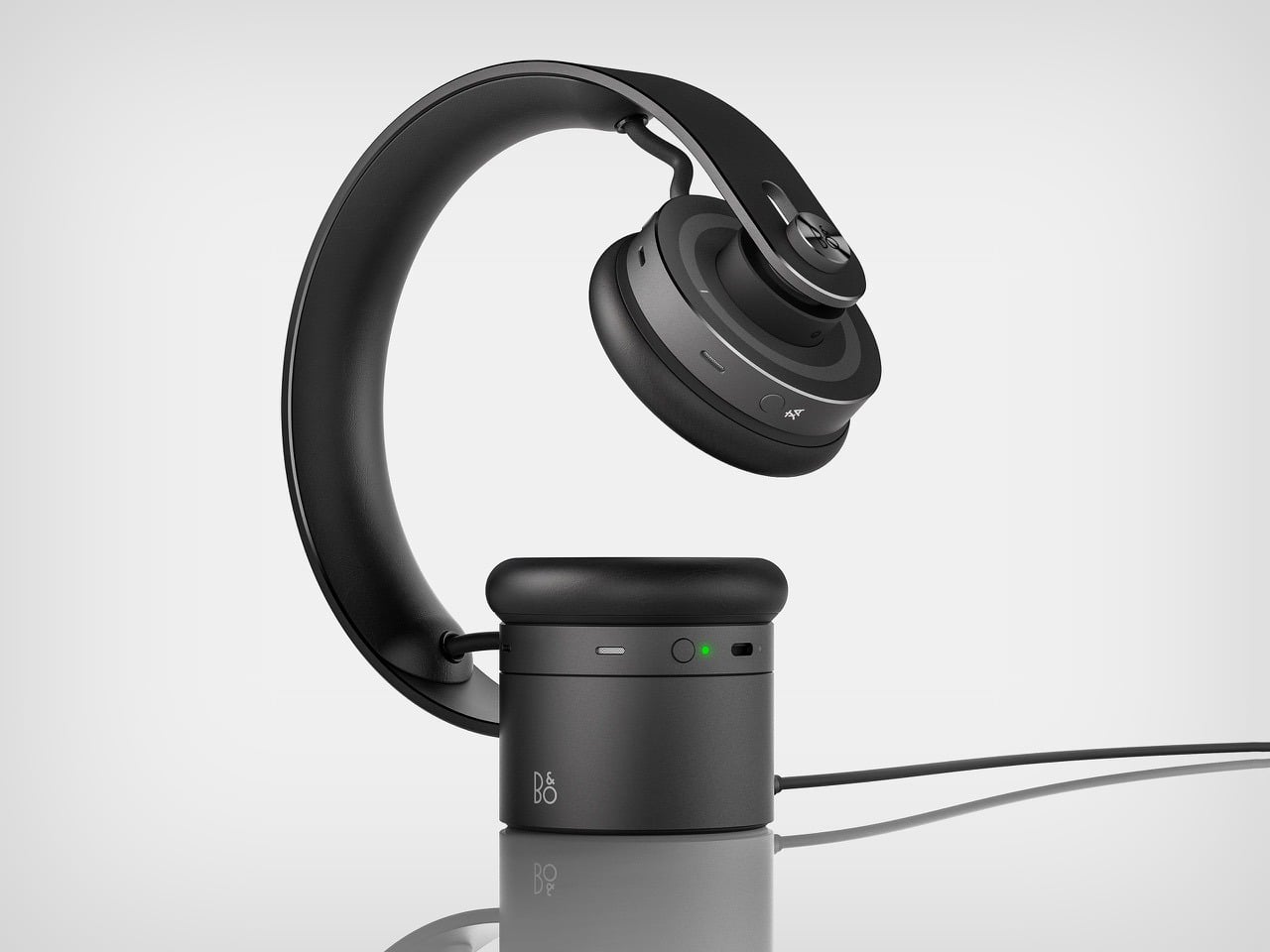
The charging base makes the argument visible. The headphone drapes over a cylindrical puck in a clean arc, sitting on any surface like a considered object rather than a piece of gear waiting to be packed away. Kamp’s concept suggests that the best version of a B&O headphone is one that earns a permanent place in your life, and looks the part doing it.

Designer: Bas Kamp

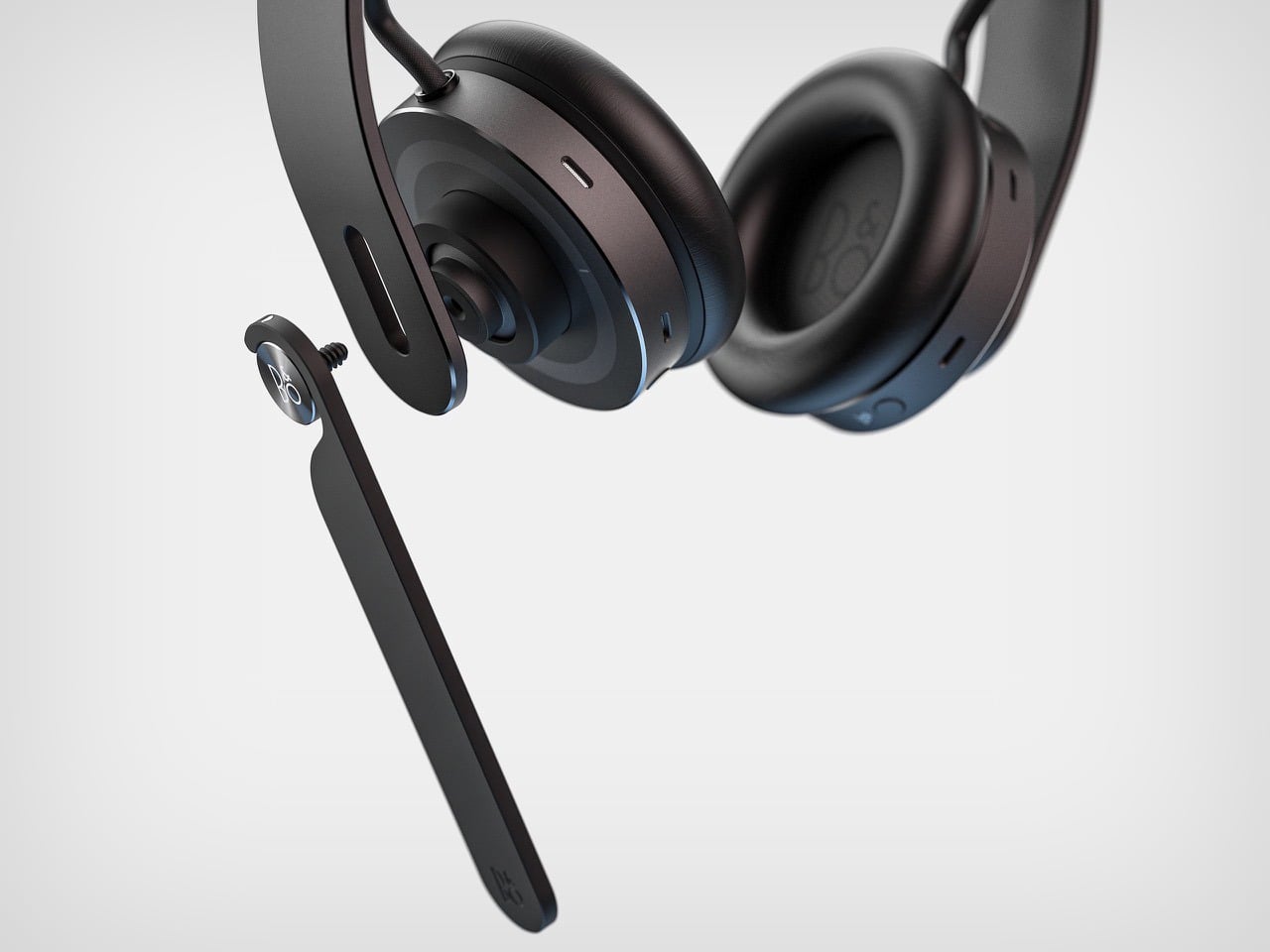
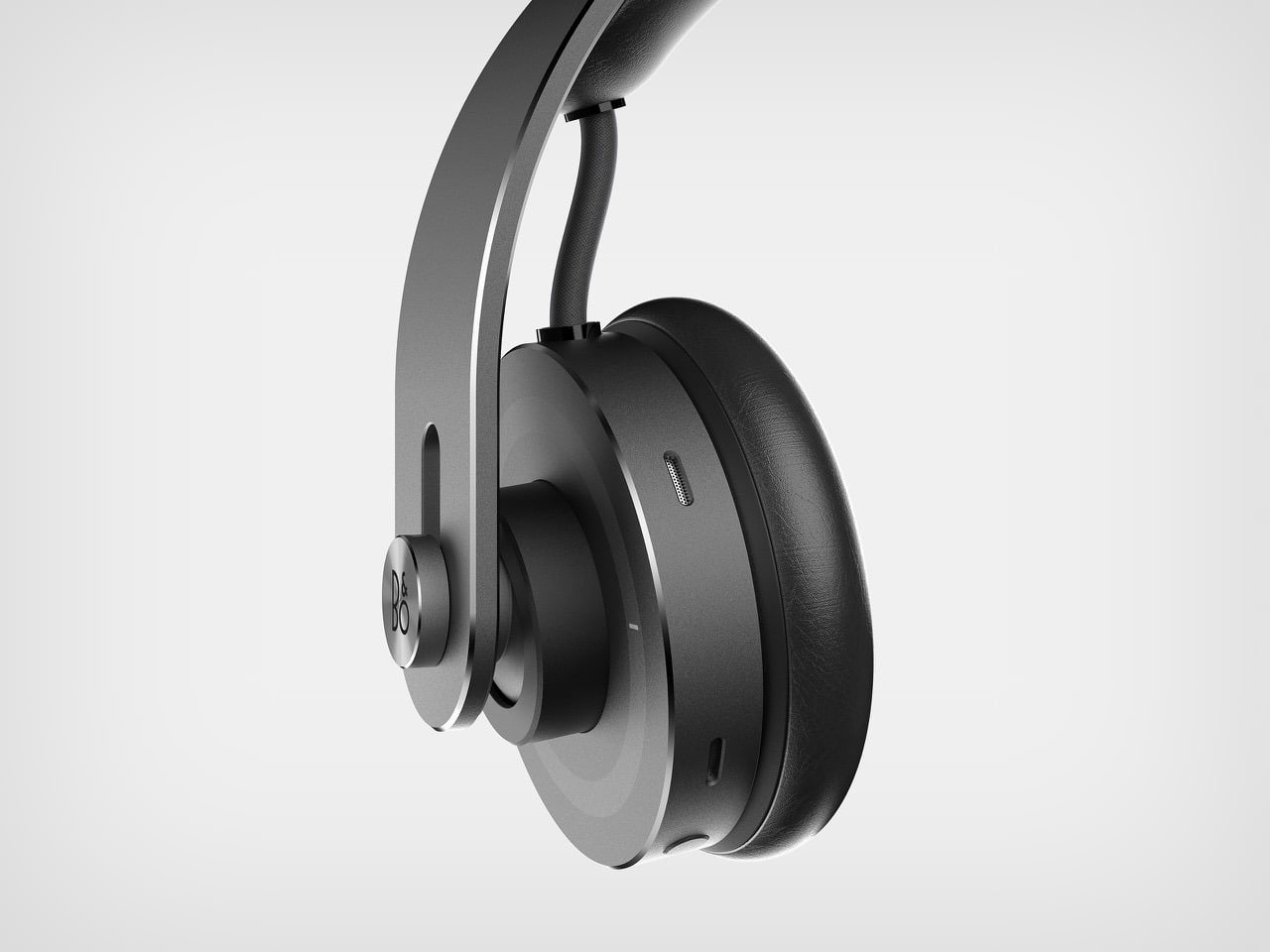
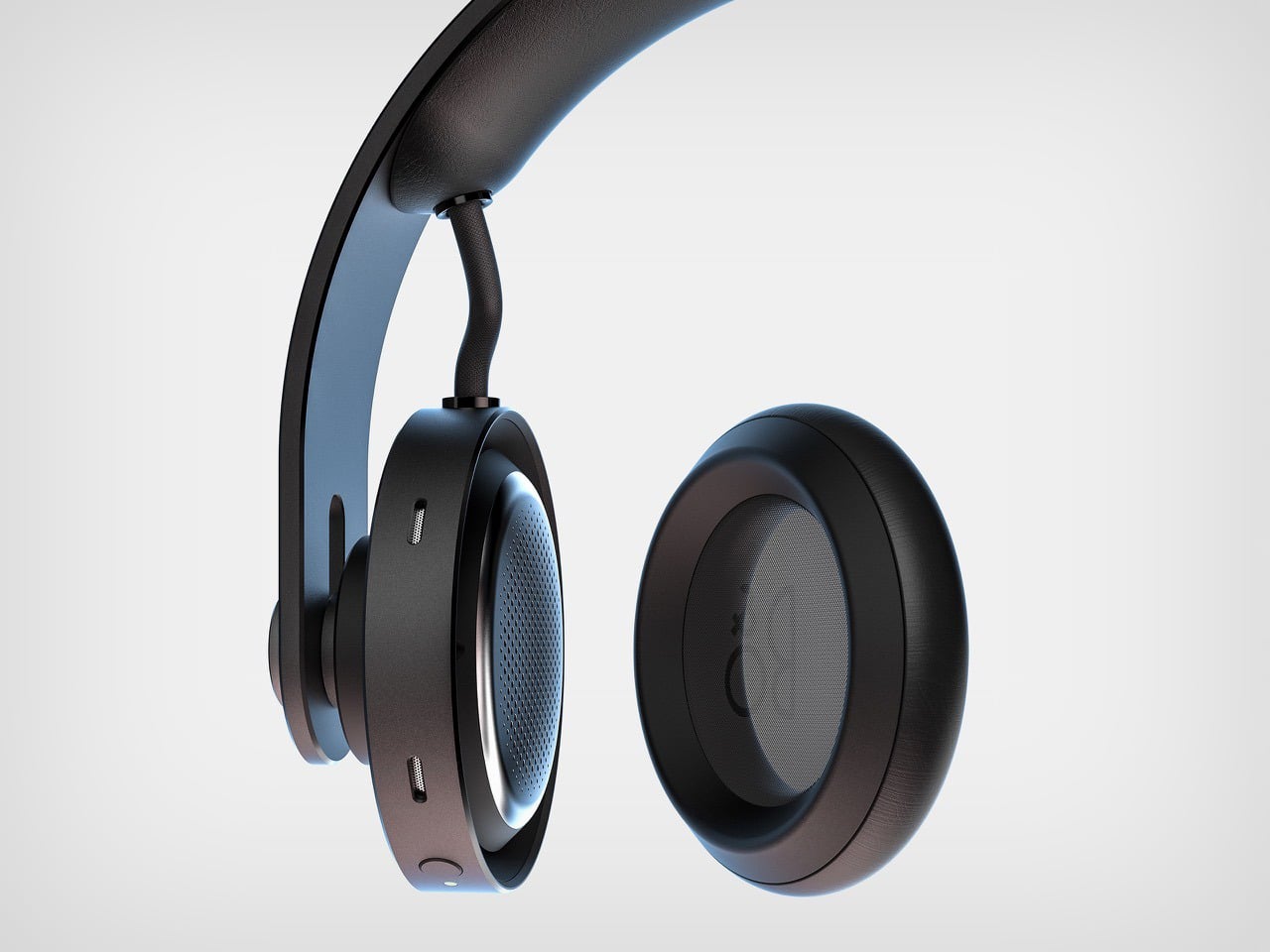
Most headphones are engineered to fit everyone, which in practice means they fit no one particularly well. Telescoping arms, spring-loaded sliders, and adjustable pivots are all workarounds for a problem the industry has accepted as permanent. Kamp rejects the premise entirely. The wide, uninterrupted band is machined as a single continuous form, and when you first receive the headphone, you set it once using the included precision tool, tightening the iconic B&O signature dot that connects band to aluminium cylinder through a refined screw thread. From that calibration forward, the fit is yours alone.

The visual language pulls directly from B&O’s deepest design DNA. The arc, the band, the cylinder, these are the honest architectural elements that defined the great headphones of the twentieth century, and Kamp makes no attempt to disguise or reinvent them. Two cylindrical drivers sit at either end of the continuous band, their outer faces rendered in concentric circles that give the ear cups an almost mechanical, watchlike presence. Where the headphone meets skin, genuine leather handles the contact, soft and warm against the geometry of the machined aluminium. The restraint is total and deliberate.

A cylindrical puck holds the headphone in a sculptural arc that reads, from certain angles, uncannily like a hunching table lamp, the band curving down toward the base with the ear cup hanging at the end of the arc. It is an accidental elegance that makes the resting state of the object as compelling as the wearing state, which is exactly the kind of considered design thinking B&O has always demanded of the objects bearing its name.

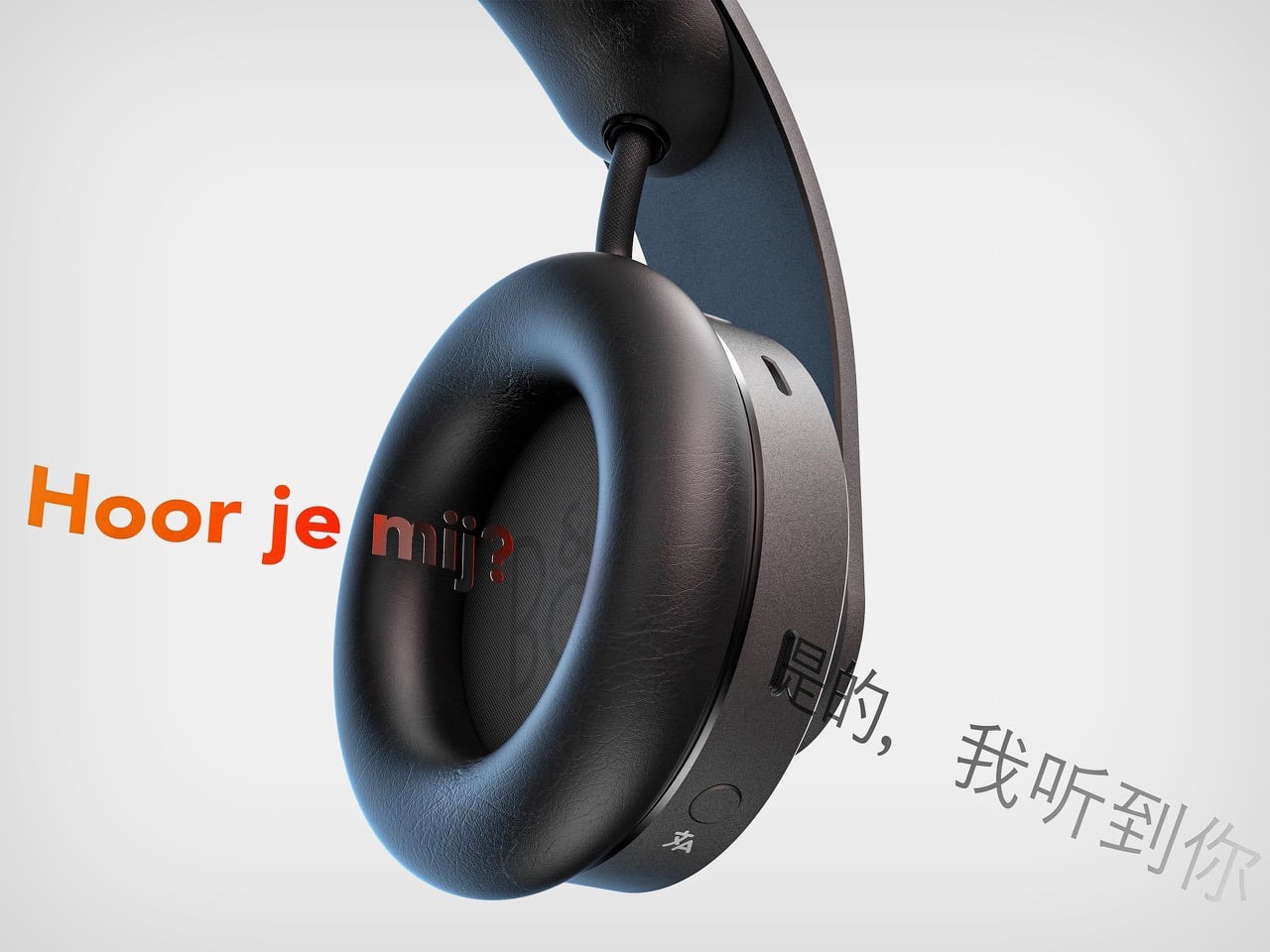
ONCE also integrates a real-time AI translation feature, activated by a single press of the dot, delivering conversational translation directly through the drivers. For a concept built around permanence and personal calibration, it is a quietly forward-looking addition, proof that Kamp’s vision for B&O reaches comfortably into the next decade of what a headphone can do.

The post This B&O Headphone Concept Fits Only You, Literally, and It’s the Best Idea Audio Has Had in Years first appeared on Yanko Design.

The Px8 S2 McLaren Edition: Papaya Orange, Carbon Cones, and Racing Pedigree

The Px8 S2 McLaren Edition wears its racing heritage proudly. That signature McLaren Papaya finish dominates the design, paired with Anthracite Grey accents that create instant visual impact. The McLaren Speedmark logo appears on both the headband and earcups, with diamond-cut bright edges on each elliptical plate that catch light like the carbon fiber details on a McLaren supercar.

Designer: Bowers & Wilkins + McLaren

Every material choice screams premium. The memory-foam cushions and headband come wrapped in soft Nappa leather, the same material you’ll find in McLaren’s Ultimate Series cars. The diecast aluminum arms provide structural integrity while keeping weight down to just 0.31 kg. This is what happens when automotive designers and audio engineers collaborate without compromise.

Carbon Cone Drivers: The Performance Story

Inside each earcup sits a custom 40mm Carbon Cone driver, completely redesigned from the previous Px8 generation. Bowers & Wilkins rebuilt everything: new chassis, upgraded voice coil, improved suspension, and a more powerful magnet system. The drivers sit angled within each earcup, ensuring consistent distance from every point on the driver surface to your ear. Translation: better imaging and a wider soundstage.

The result is audio that reviewers are calling deeper, tighter, and more holographic than the already-impressive original Px8. Bass hits harder without bleeding into the mids. Vocals sit precisely in the soundstage. Highs remain crystal clear without any harshness. This is 24-bit/96kHz high-resolution audio delivered wirelessly through Qualcomm’s aptX Adaptive and aptX Lossless technology, with Bowers & Wilkins’ DSP (Digital Signal Processing) fine-tuning everything in real-time.

The Smart Features

The Px8 S2 McLaren Edition connects to the Bowers & Wilkins Music app, giving you control over everything from noise cancellation to sound customization. A five-band EQ lets you dial in your preferred sound signature and save multiple presets. The transparency mode toggles between full isolation and ambient awareness. A physical Quick Action button puts your most-used functions one press away.

Eight microphones power the adaptive noise cancellation system while handling call quality duties. The ANC falls slightly short of what Bose and Apple achieve with their flagship models, but it preserves musicality in a way that overly aggressive noise canceling often destroys. The headphones prioritize sound quality first, noise cancellation second. For audiophiles, that’s the right priority order.

Battery life hits 30 hours on a single charge. A 15-minute quick charge delivers seven hours of playback. Connectivity options include aptX Lossless, aptX Adaptive, aptX HD, aptX Classic, AAC, and SBC codecs, plus USB-C wired listening when you want to bypass wireless entirely.

The Partnership Behind the Product

Bowers & Wilkins and McLaren have been developing audio systems together since 2015, starting with the McLaren 540C and continuing through to the recently unveiled McLaren W1 supercar. The audio system in the W1 features the same Continuum Cone technology found in Bowers & Wilkins’ flagship 800 Series Diamond loudspeakers. This partnership runs deeper than logos and color schemes.

The collaboration mirrors the precision demanded in Formula 1 racing with the acoustic perfection Bowers & Wilkins has pursued since founder John Bowers established the company in 1966. Both brands obsess over details. Both refuse to compromise on performance. The Px8 S2 McLaren Edition represents that shared philosophy translated into a wearable product.

Following the Pi8 McLaren Edition earbuds from earlier this year, these headphones give McLaren fans another way to connect with the team’s visual identity while getting genuinely excellent audio hardware. This isn’t a corporate partnership slapping logos on existing products. This is two performance-focused brands creating something together that neither could build alone.

The Details That Count

The Px8 S2 McLaren Edition launches November 19, 2025, priced at $899 (£729 UK, €829 EU). You can grab them directly from Bowers & Wilkins or through selected retailers. The price positions these firmly in premium territory, competing with the Mark Levinson 5909 ($999) and Focal Bathys ($799).

Early impressions highlight the improved comfort over previous generations, making these suitable for extended listening sessions and long flights. The slimmer profile and redesigned headband distribute weight more evenly. The Nappa leather cushions remain breathable even after hours of wear. For frequent travelers and music enthusiasts who value both design and performance, that comfort factor matters as much as sound quality.

The McLaren Edition offers music lovers, audiophiles, and Formula 1 fans a chance to own headphones that deliver on both aesthetic appeal and acoustic excellence. Sometimes partnerships create products that feel forced. This one feels natural, like both brands speaking the same performance-obsessed language.

The post The Px8 S2 McLaren Edition: Papaya Orange, Carbon Cones, and Racing Pedigree first appeared on Yanko Design.

Sonos Ace Headphones Review: Comfort, Sound Quality, and Sustainability

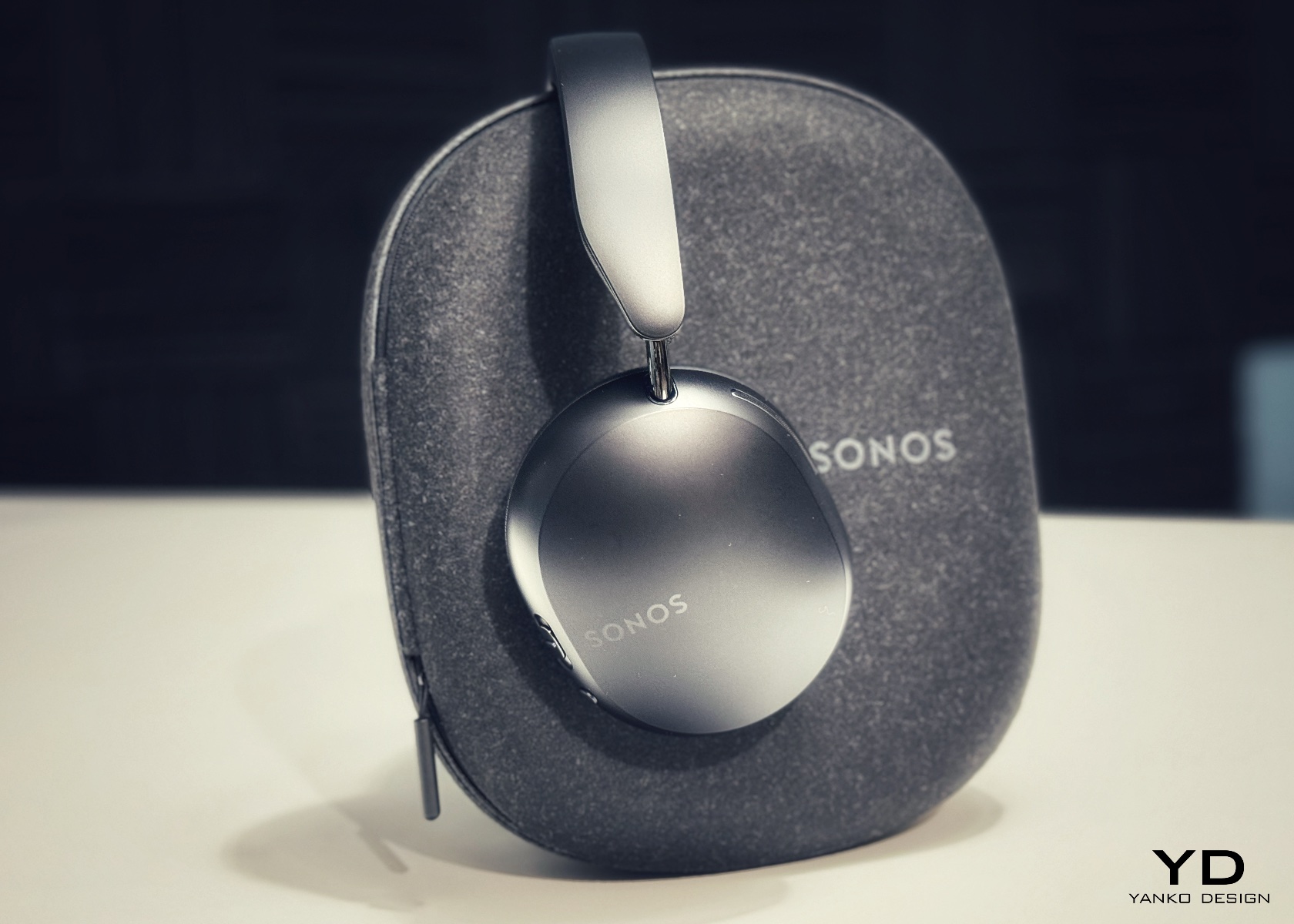
The Sonos Ace is an exceptional pair of over-ear headphones that seamlessly combines superior audio, sophisticated design, and comfort. Crafted with sustainable materials, the Sonos Ace embodies an environmentally friendly ethos without falling short on performance. Its soft memory foam ear cushions and lightweight design make it ideal for long-term use. The headphones offer a vibrant and immersive audio experience, with lossless audio via Bluetooth, top-notch noise cancellation, and a wide dynamic range. The user-friendly interface, characterized by a versatile button arrangement and smooth integration with the Sonos ecosystem, makes the Sonos Ace appealing to sound enthusiasts and everyday listeners.

Designer: Sonos

Aesthetics and Design

The Sonos Ace headphones are built with high-quality materials that balance durability and a premium feel. They use flexible plastics to keep them lightweight, while sturdy metals ensure they’re strong and long-lasting. The ear cushions and headband are covered in vegan leather, giving them a luxurious touch that’s also soft and eco-friendly.
Sonos Ace

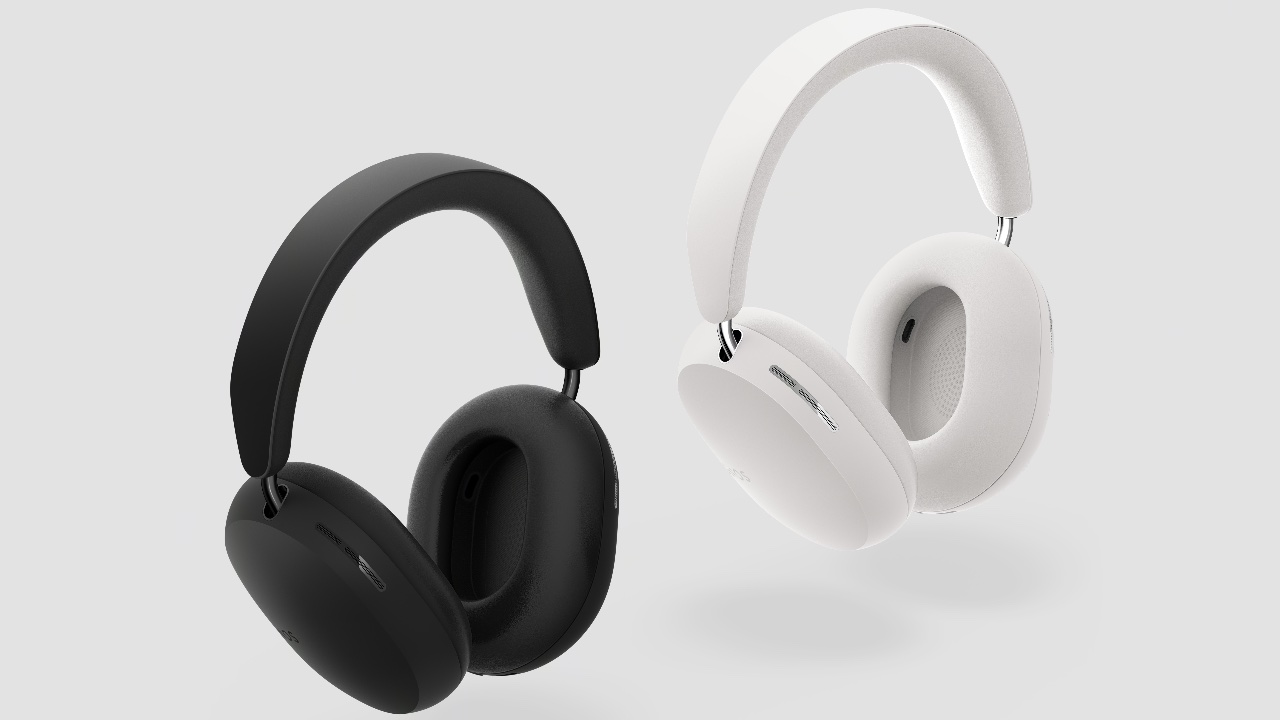
When it comes to looks, the Sonos Ace keeps it simple and stylish. They come in two colors, Sonos Black and Soft White, chosen to appeal to a wide range of tastes. The minimalist and sleek design makes these headphones look fabulous regardless of your style. The overall aesthetic is clean and modern, with smooth finishes and a seamless integration of materials. This attention to detail shows the care and thought that went into their design.
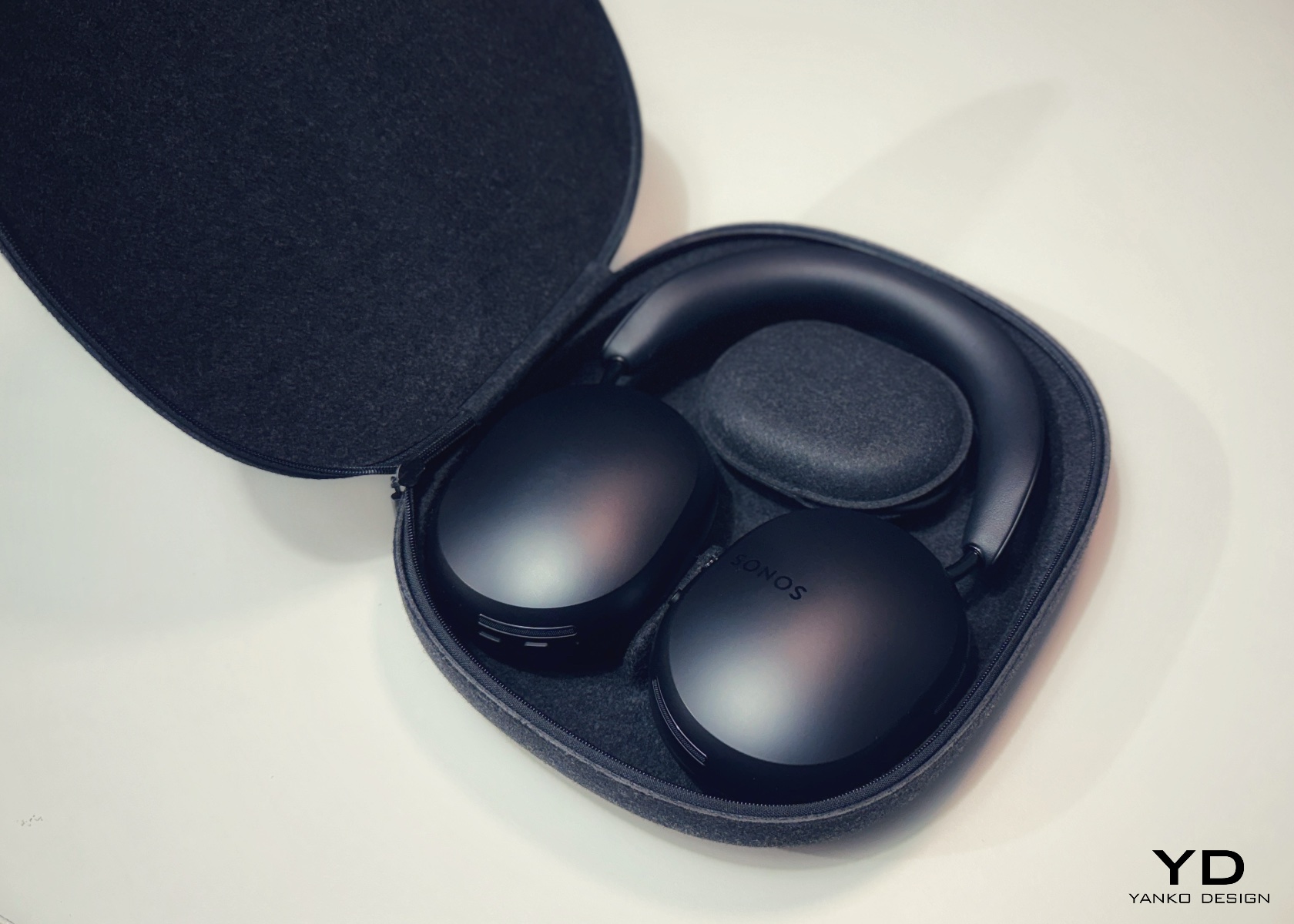
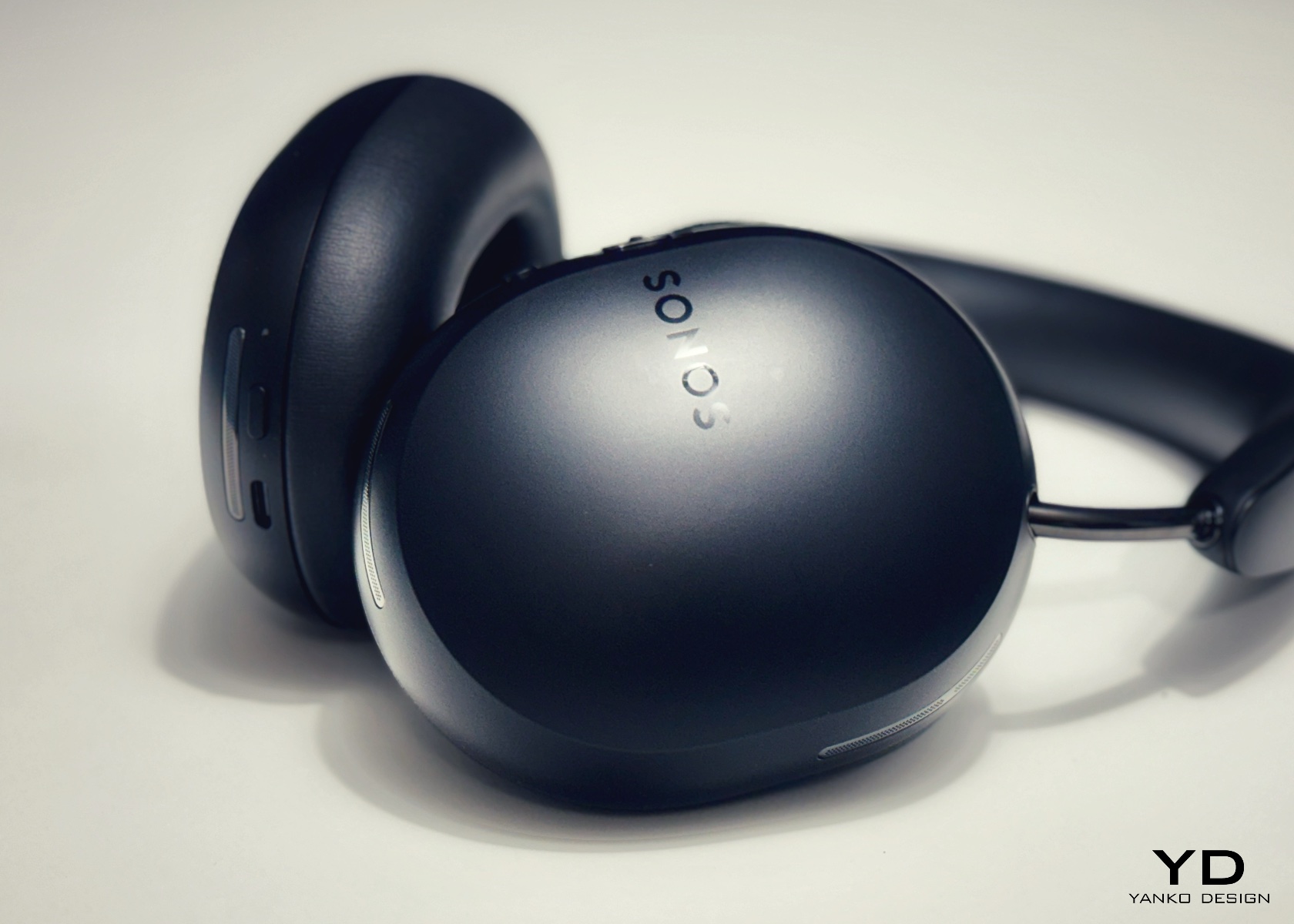
Despite their premium build, the Sonos Ace headphones are designed to be portable. They’re lightweight and easy to carry, making them perfect for home or on the go. The Sonos logo and color-coded ear cups enhance the design and contribute to the user-friendly aspect, making it easy to identify the correct way to wear the headphones.

Ergonomics and Comfort

The Sonos Ace prioritizes user comfort, making it ideal for extended listening sessions. Its ergonomic design includes pillowy, soft memory foam ear cushions and a lightweight build, ensuring that the headphones rest gently on your ears and head. This thoughtful construction prevents the development of pressure points, even during long periods of use.

One key feature contributing to the Ace’s comfort is the headband. It has been carefully designed with the right curvature and clamping force to provide a secure fit without being too tight. This ensures that the weight is evenly distributed, preventing any discomfort. The ear cups are also shaped to accommodate various ear sizes and shapes, which further enhances the fit and comfort.

I must confess that I’m usually an in-ear monitor or earbud person, so over-the-ear headphones never really appealed to me—until the Ace. One of the biggest issues I’ve had with other over-the-ear headphones is that they’re often big and bulky. Additionally, most of them have poorly designed ear cups that don’t stay in place, so I constantly have to adjust them as they slide up and down. The Ace fixed both of these issues for me. The overall design is low profile, and the flex is just right, while the ear cups lock in place all day long, no matter what I’m doing.

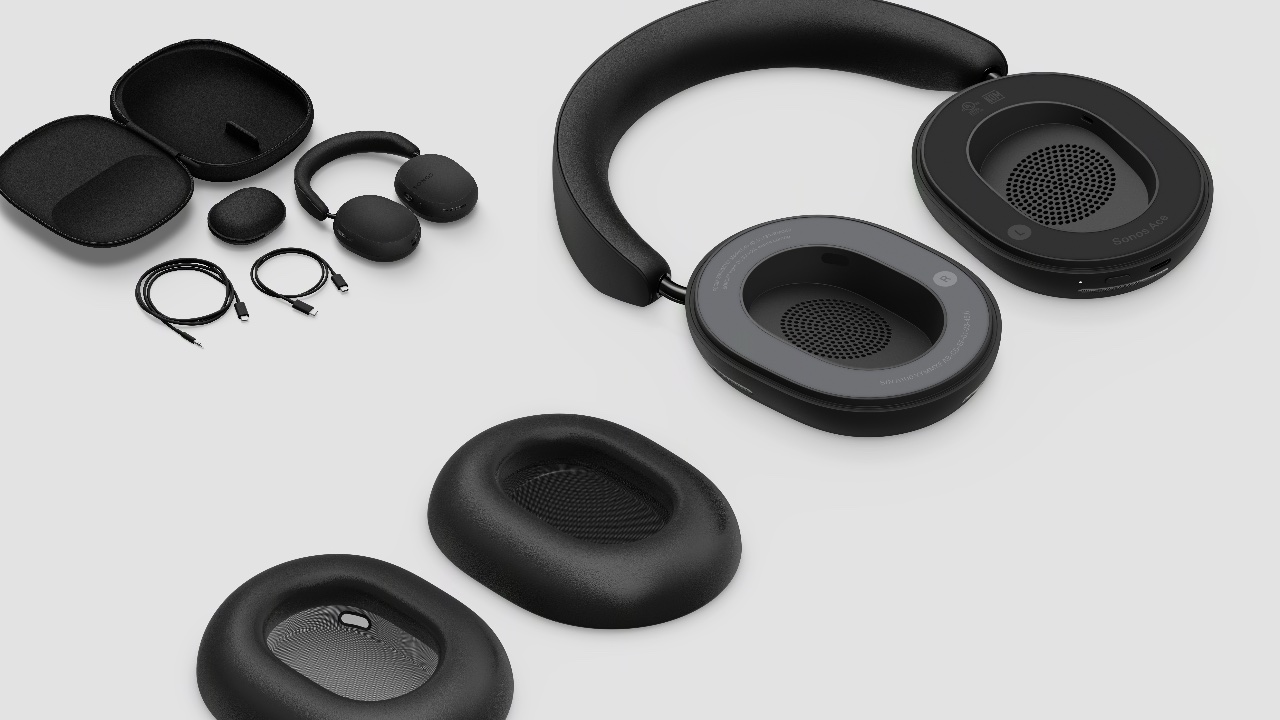
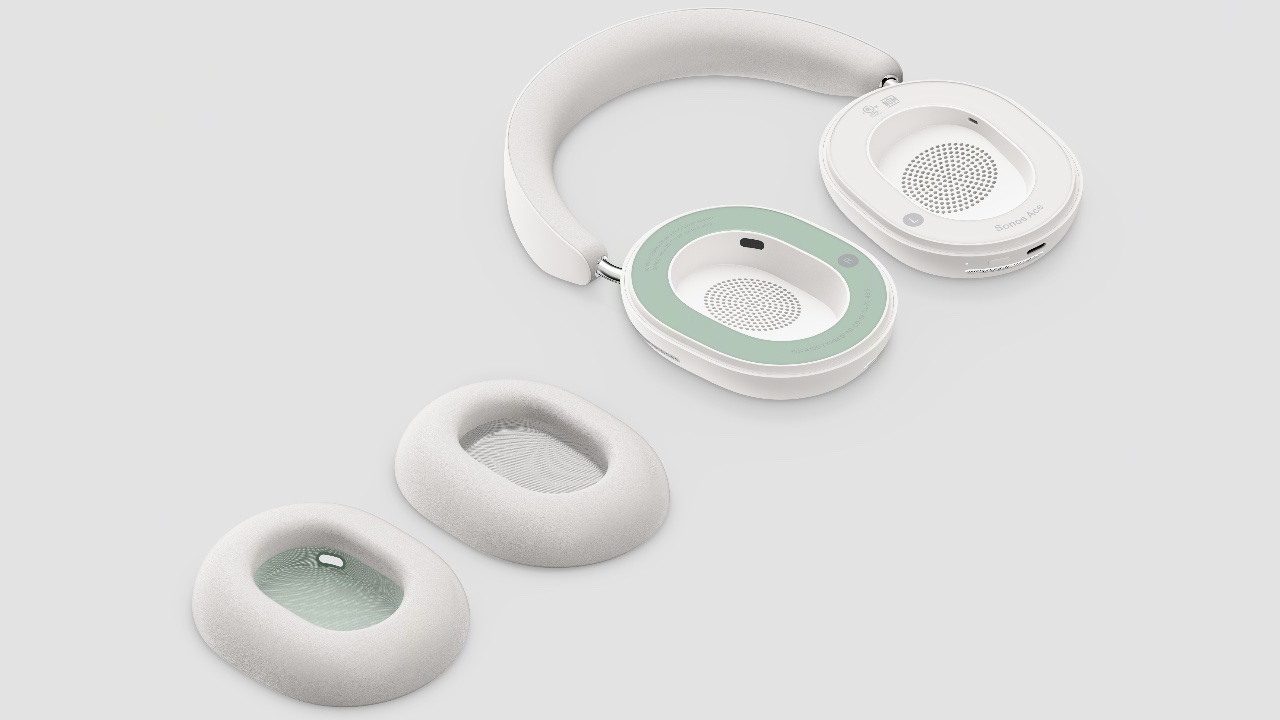
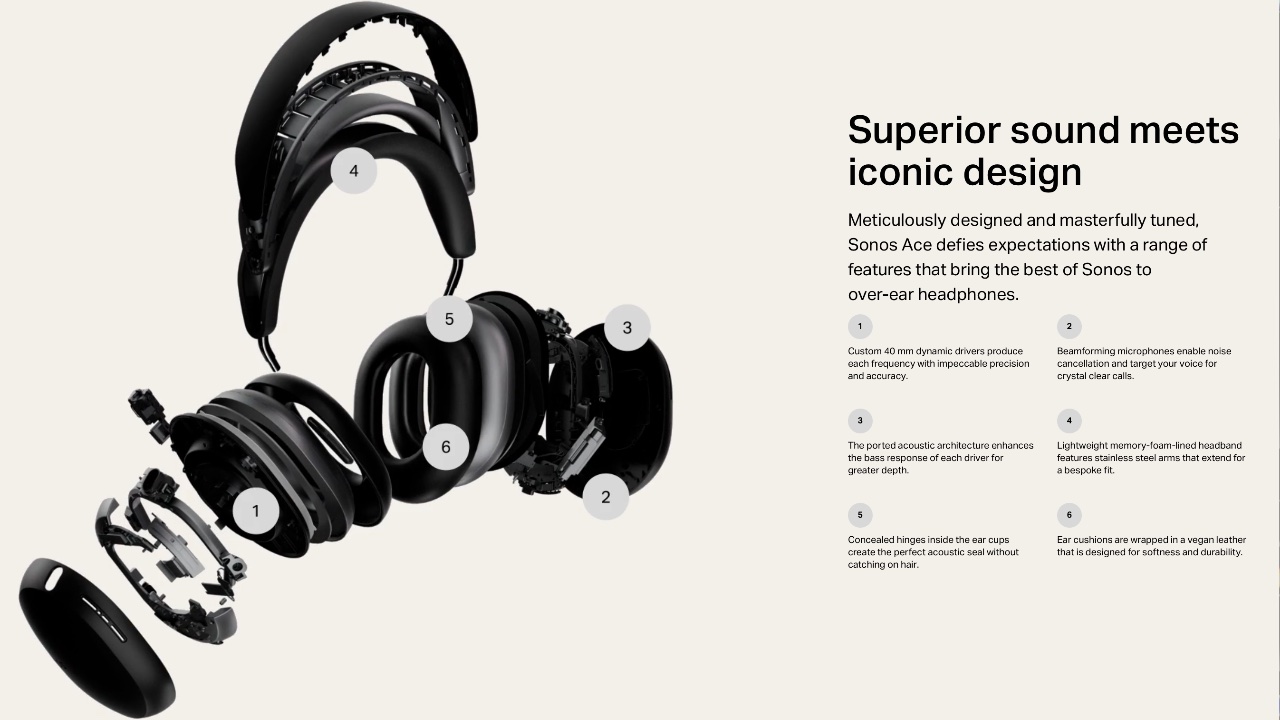
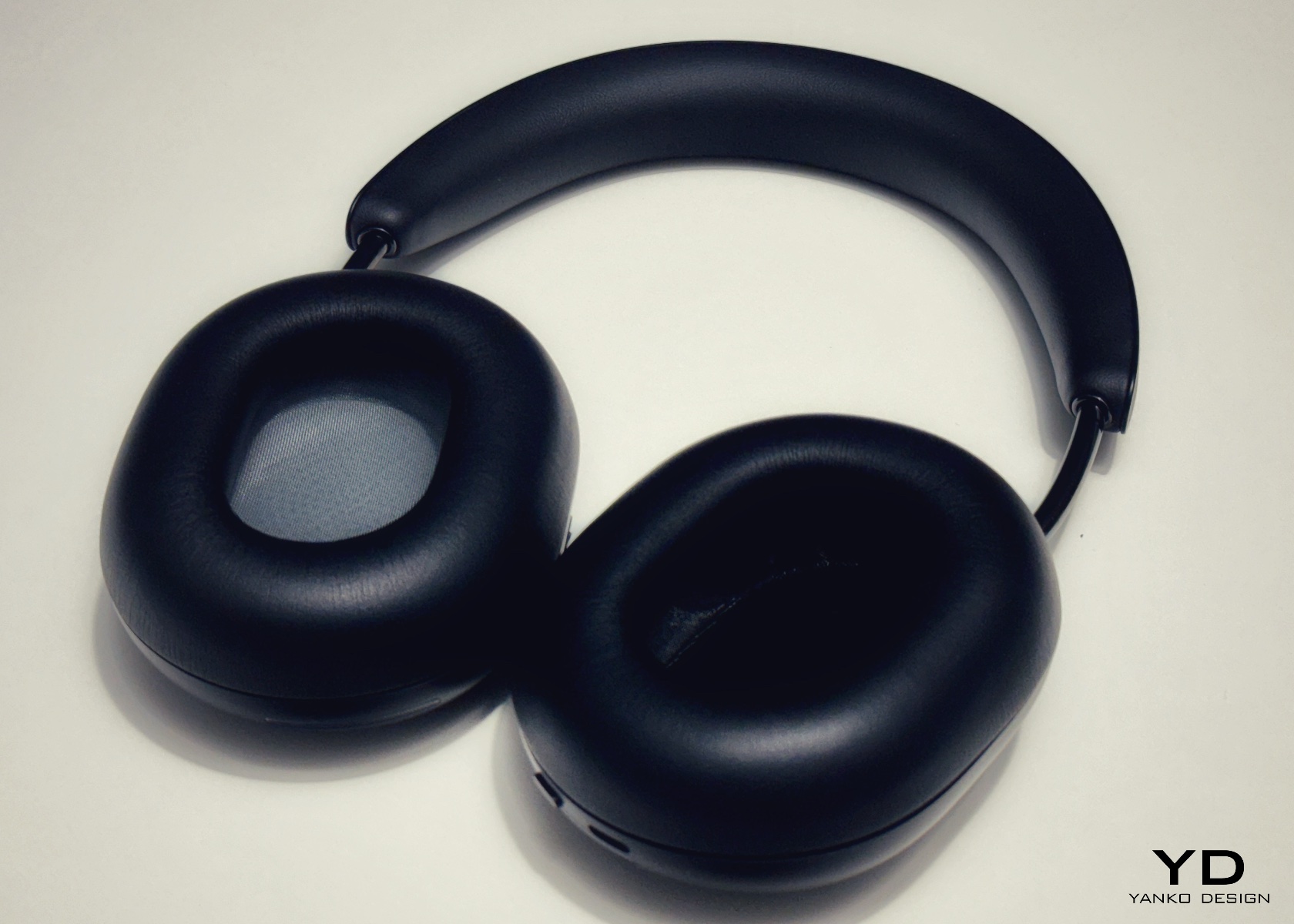
The replaceable ear cushions, wrapped in vegan leather, add another layer of convenience and sustainability. If the cushions wear out over time, they can be easily swapped out, extending the life of the headphones and maintaining comfort. The Sonos Ace’s ergonomic design makes it perfect for all-day wear, with features that cater to various head shapes and sizes, ensuring a secure and comfortable fit without exerting excessive pressure.

Button Layout and Features

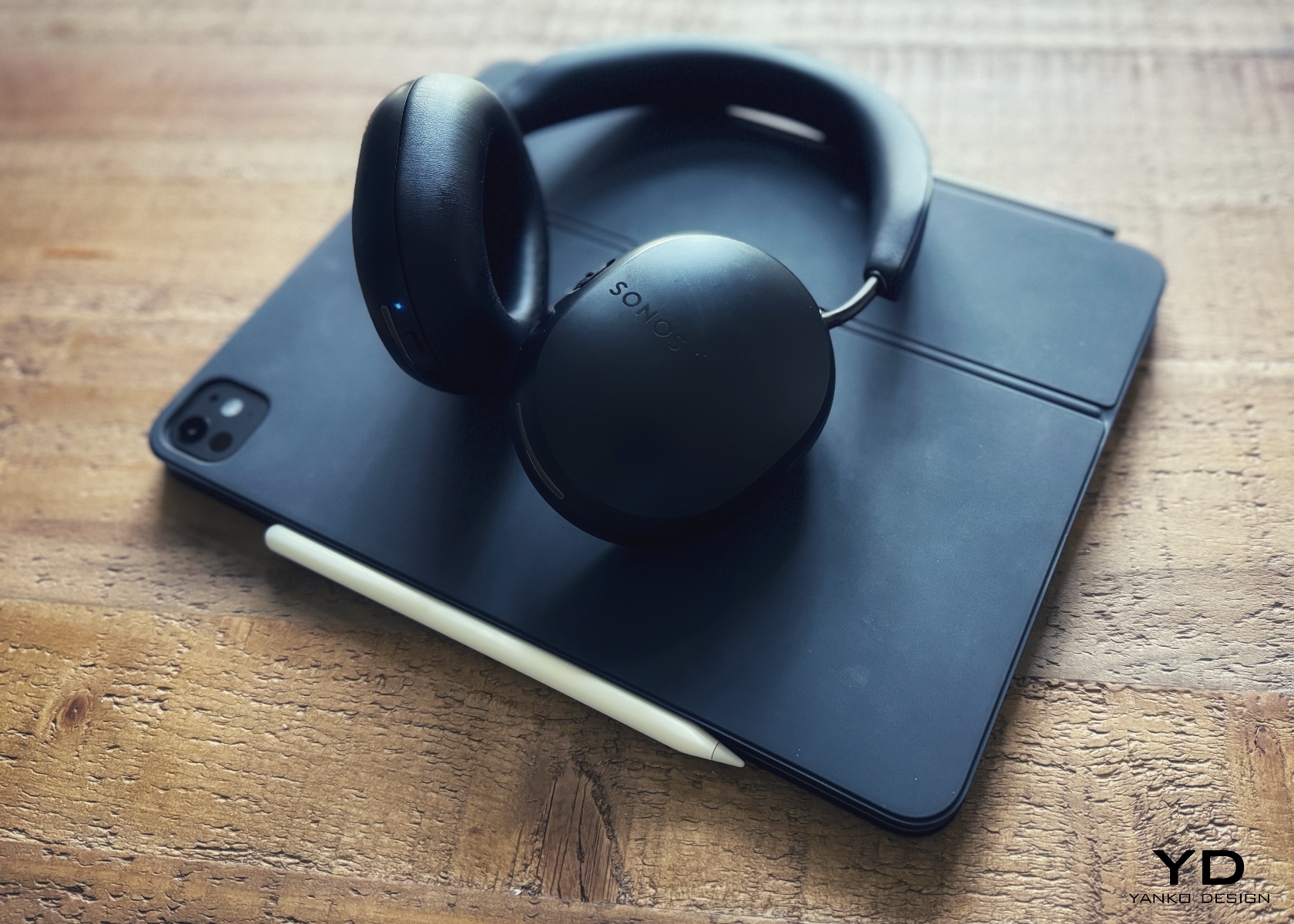
The Sonos Ace features a well-thought-out button layout that enhances user experience, making it easy to navigate various functions without needing to look at the controls. On the left ear cup, you’ll find the power button and the USB-C port for charging and connection. This positioning ensures that the essential functions are easily accessible. The headphones also support a 3.5mm headphone jack, providing versatility in connectivity options. The power button is easy to use, enabling quick power on and off as well as Bluetooth pairing initiation with a long press.
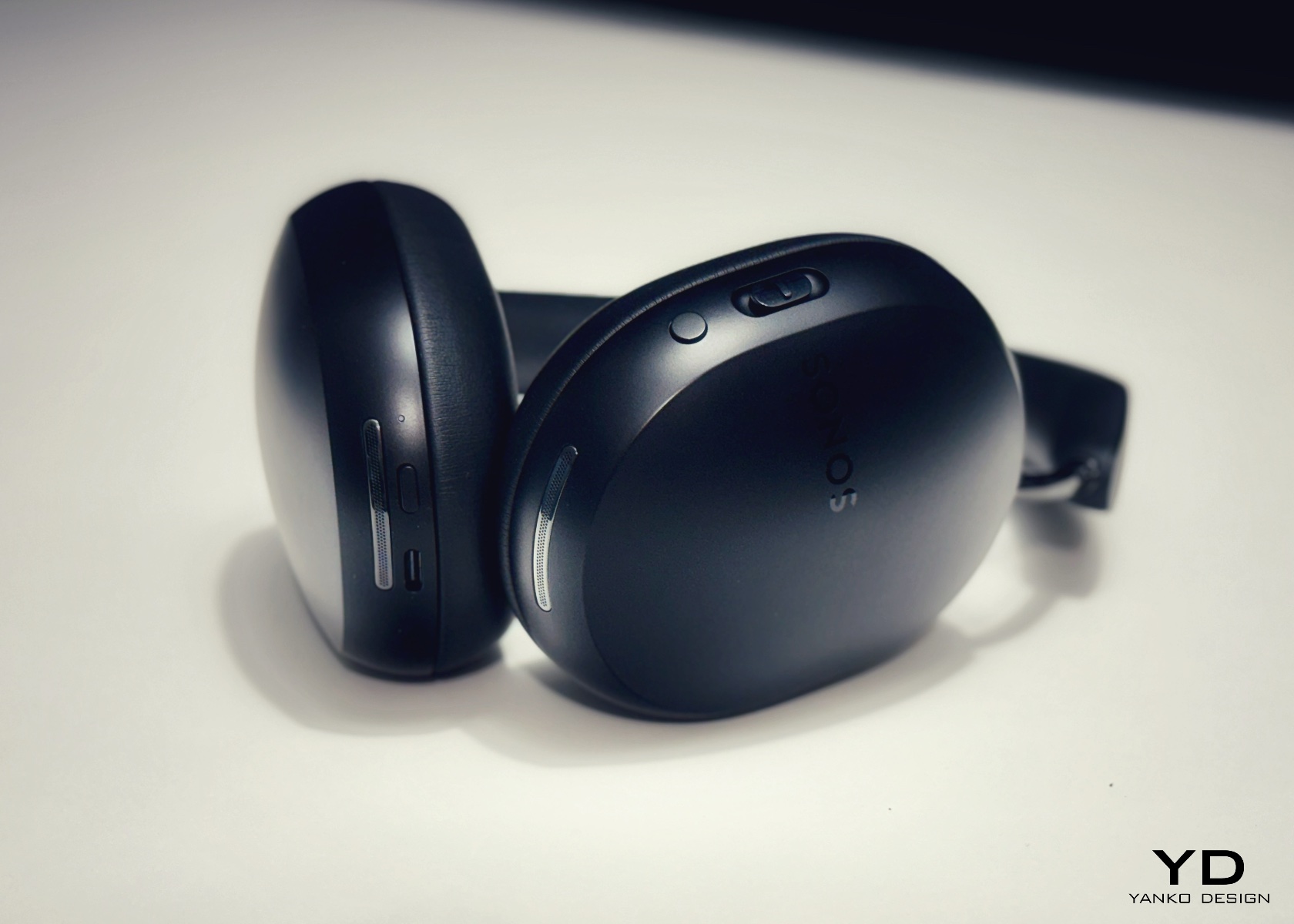
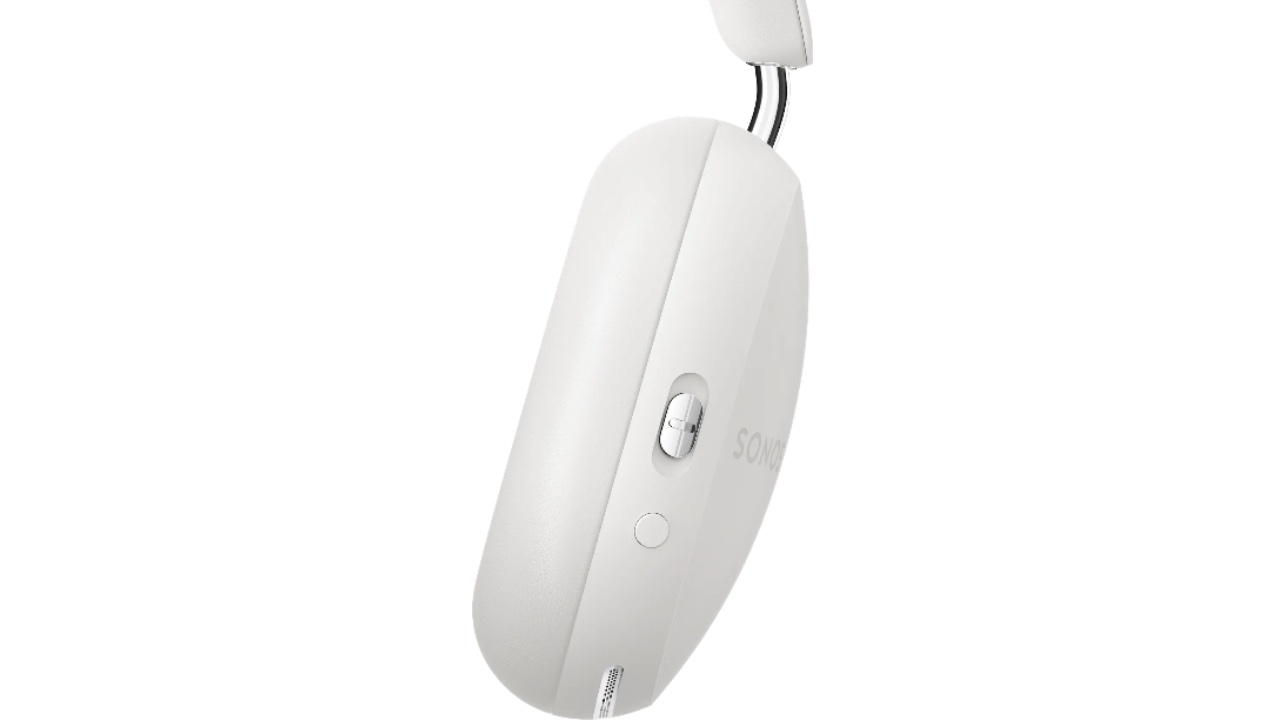
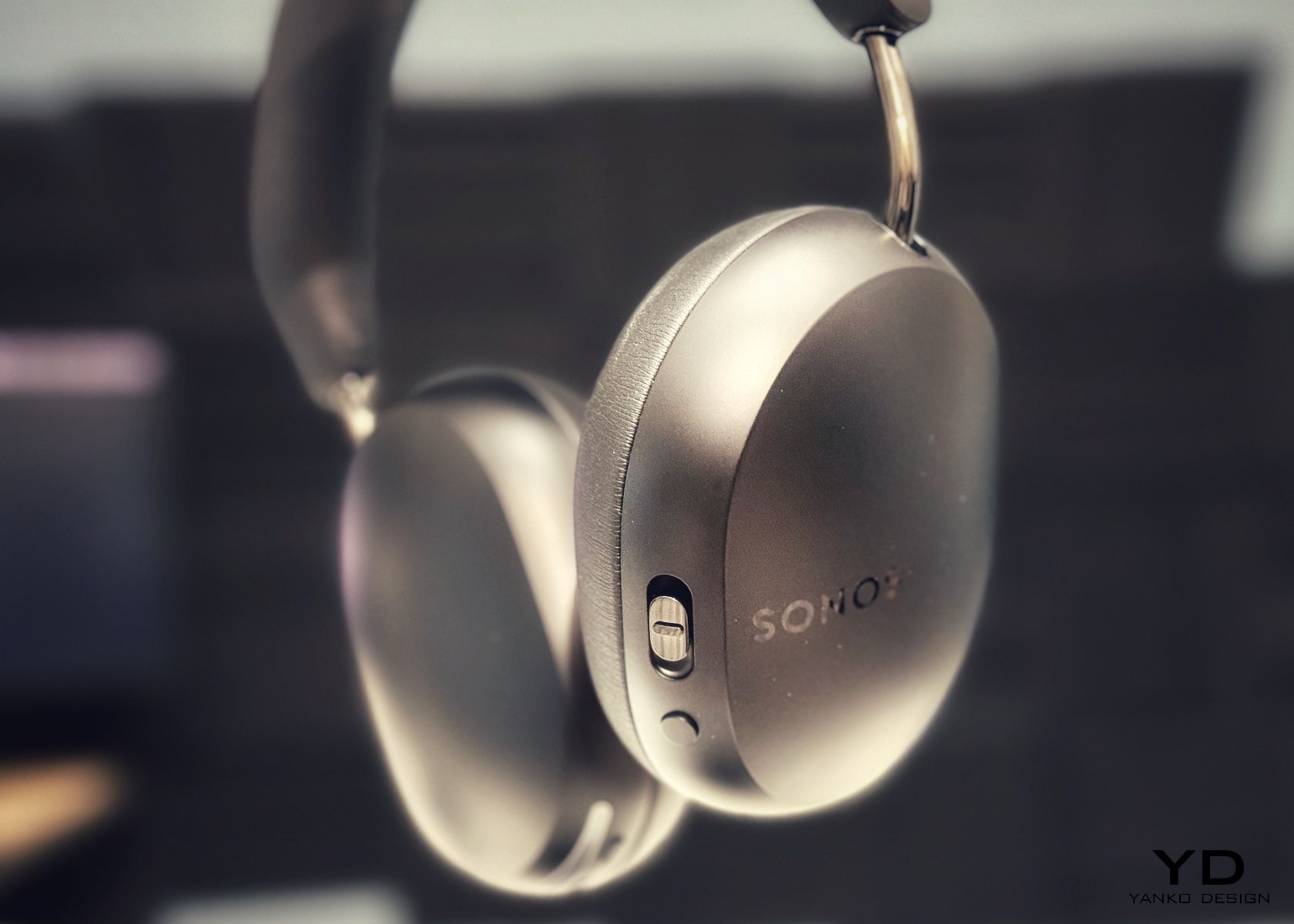
The right ear cup houses the primary controls, designed for ease of use. One of the key features is the Content Key, a mechanical slider. This tactile button allows you to adjust the volume by sliding it up or down, skip tracks by pressing the slider, and manage calls with a simple press. Holding the Content Key enables the seamless switch between the Sonos Ace and other Sonos devices, such as the Arc soundbar. Be sure to go through the setup using the Sonos app. This feature is handy for users who want to effortlessly switch from their headphones to their home sound system.
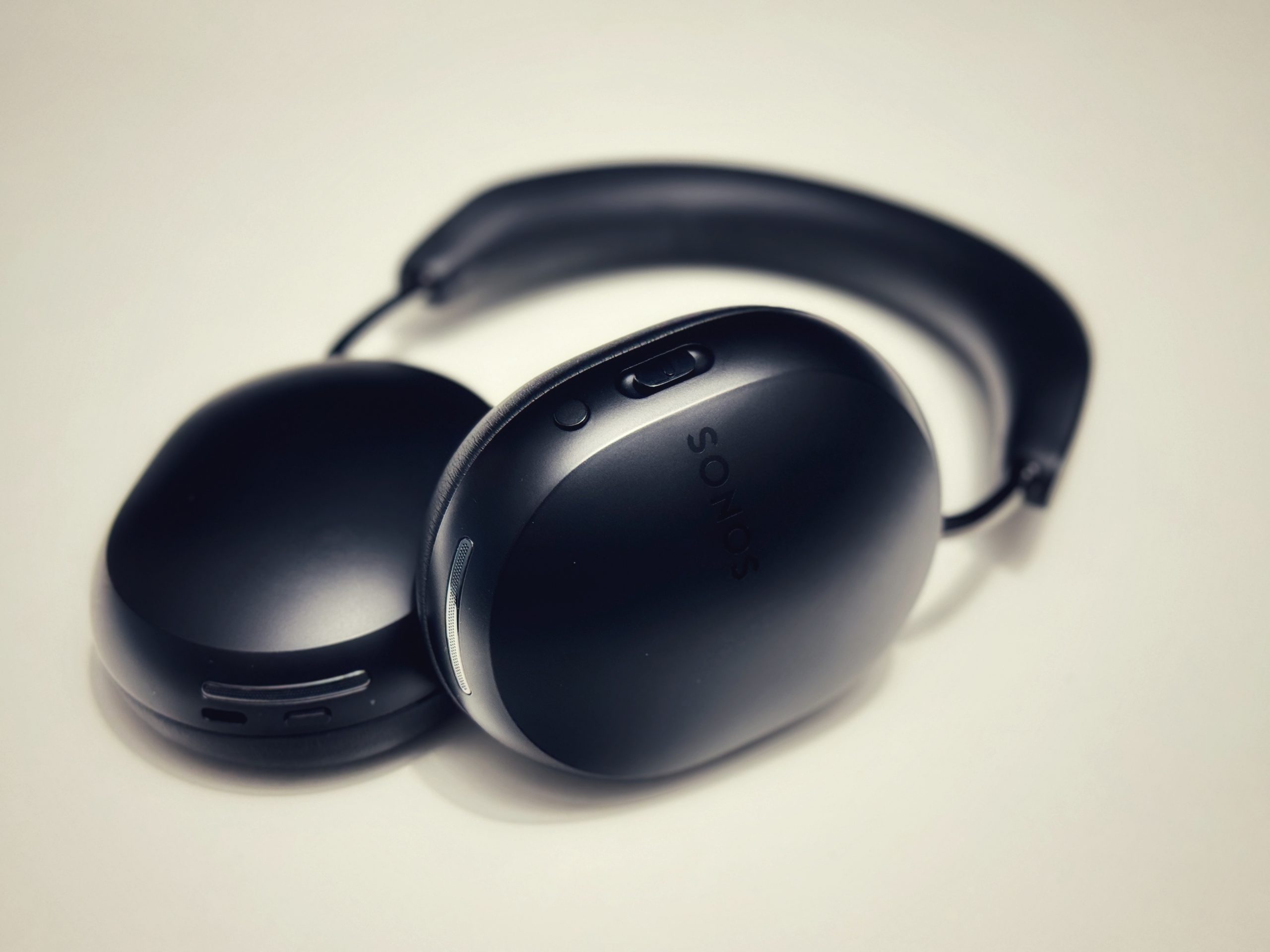
In addition to the Content Key, the right ear cup has buttons for changing noise cancellation modes. Users can switch between active noise cancellation (ANC) and Aware Mode or turn off noise cancellation entirely. This flexibility allows for a personalized listening experience, whether in a noisy or quiet environment.

The Sonos logo on the right ear cup serves a dual purpose. Firstly, it helps you quickly identify the right side of the headphones. Secondly, the logo’s tactile texture acts as a guide, making it easier for your fingers to locate and operate the buttons without needing to look at them. This thoughtful design detail enhances the overall user experience, especially on the go.
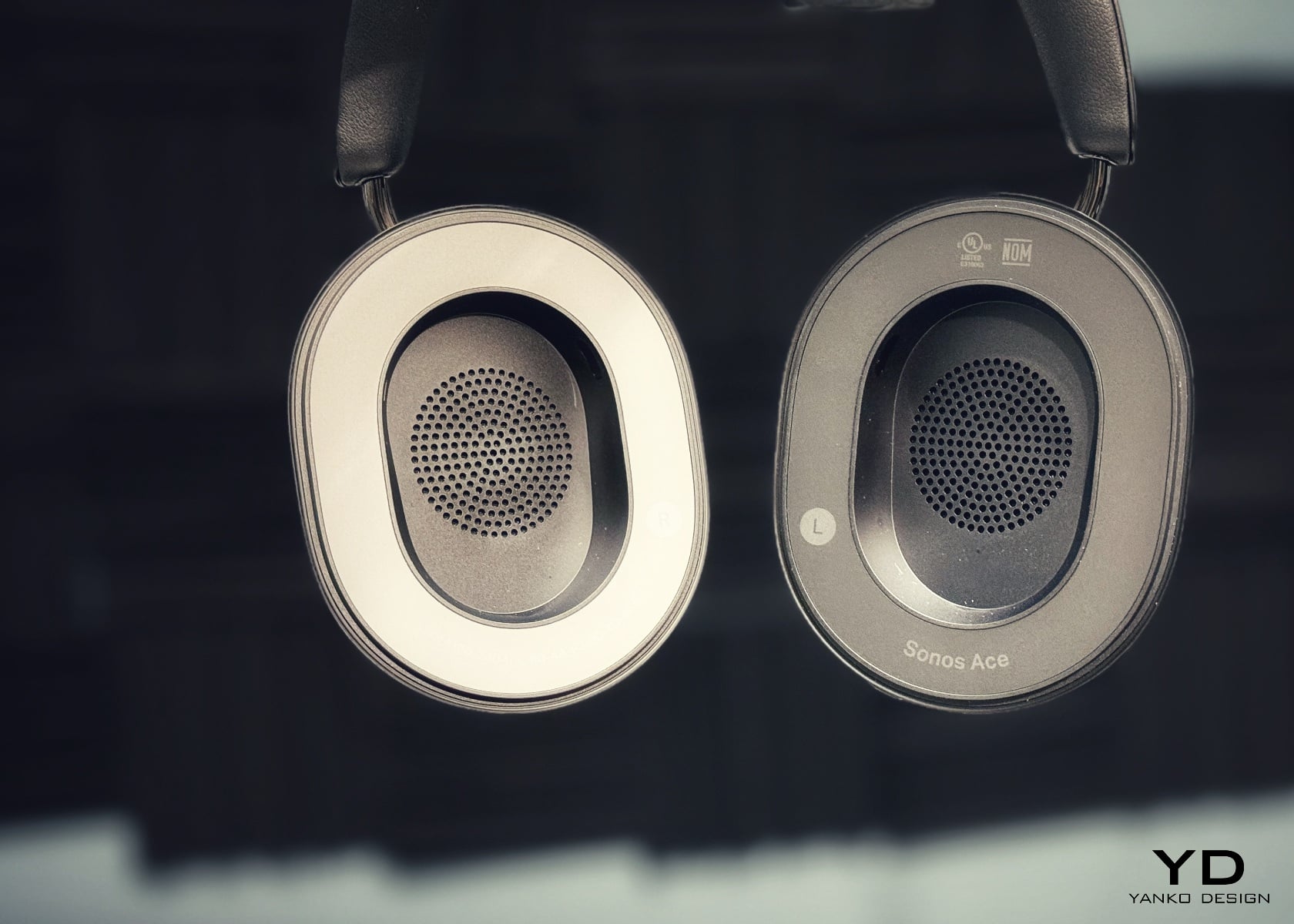
The Sonos Ace’s button layout blends intuitive design and practical functionality. The strategic placement of the power button and USB-C port on the left ear cup, combined with the comprehensive controls on the right ear cup, ensures that users can easily manage their listening experience. Using the Sonos logo as a tactile guide further enhances usability, making these headphones a joy to use. Whether you’re adjusting the volume, switching tracks, or changing noise cancellation modes, the Sonos Ace provides a seamless and intuitive user experience.
Performance of the Sonos Ace

Listening to music with the Sonos Ace headphones is an absolute pleasure. The intricate fingerpicking and solo guitar work in “Hotel California” by the Eagles (Live on MTV, 1994) capture amazing detail. Each pluck of the strings sounds crystal clear, and the natural resonance of the acoustic guitars makes it feel like you’re right there at the performance.

Don Henley’s vocals come through with warmth and precision, allowing you to appreciate the subtle nuances and emotional depth of his performance. Even in more intense moments, the headphones maintain a perfect balance, ensuring that every track element is heard clearly. True to Sonos’ heritage of premium products, every detail is expertly crafted, custom-designed, and tuned by the world’s leading sound experts to give you a listening experience unlike any other.

Clarity in the vocals and instrumental elements shines beautifully in “Billie Jean” by Michael Jackson. His voice comes through with sharpness and precision, bringing out every detail of his iconic performance. The hi-hat and snare hits are crisp and precise, keeping the groove tight and infectious.

Balanced frequency response is another area where these headphones excel. The intricate piano solo in the middle of “Take Five” by The Dave Brubeck Quartet delivers remarkable balance and detail. The saxophone lines are clear and accurate, highlighting the Ace’s ability to handle mid-range tones beautifully. The double bass provides a deep, resonant foundation, showing the Ace’s capability to deliver powerful and controlled bass.

Deep bass management stands out in “Royals” by Lorde. The bass is powerful yet never overwhelming, providing a solid foundation for the track without overshadowing the vocals. Lorde’s clear, upfront vocals come through with exceptional clarity, allowing every nuance of her performance to shine through.

The dynamic range is impressive, handling wide variations in volume and intensity. A perfect track to demonstrate this capability is “Bohemian Rhapsody” by Queen. The dramatic shifts in volume and intensity during the operatic middle section are managed seamlessly. The quiet moments, like the piano and vocal introduction, are equally impressive, reproducing subtle, delicate sections with clarity. The Ace handles dynamic shifts without losing detail, letting you fully experience the emotional highs and lows of the track.

The drum solo towards the end of “Take Five” further highlights the dynamic range. The headphones manage a wide range of volumes and intensities without losing any detail, allowing the listener to appreciate the full spectrum of the performance. The crescendos in the saxophone melody emphasize this capability as the Ace transitions from soft to loud passages smoothly, maintaining clarity and precision throughout.

Instrument separation is another area where the Ace excels. The dual guitar solos towards the end of “Hotel California” are distinct and well-separated. The Ace keeps each instrument clear and defined, letting you focus on individual elements of the performance. The precise reproduction of drum fills throughout the track ensures that the percussion stands out without overpowering the other components.

Exceptional instrument separation also shines in “Another Brick in the Wall, Part 1” by Pink Floyd. The expansive soundstage created by the headphones allows the atmospheric guitar echoes in the intro to come to life. The various synth effects are handled beautifully, providing a sense of space that enhances the immersive quality of the song. Sonos Ace’s ported acoustic architecture delivers exceptional depth and an ultra-wide soundstage, remaining incredibly clear.

These headphones deliver a wide and immersive soundstage, making you feel surrounded by the music. This is particularly evident in “Another Brick in the Wall, Part 1,” where the atmospheric guitar echoes and various synth effects create a sense of space that enhances the track’s immersive quality. The precise placement of instruments within the soundstage ensures that each element is heard in its intended location, adding to the realism of the listening experience.

In “Take Five,” the soundstage and imaging capabilities shine through. The saxophone, piano, and drums are all positioned clearly within the soundstage, allowing you to appreciate the spatial arrangement of the performance. This accurate imaging provides a more realistic and engaging listening experience, making it easy to visualize the musicians’ positions on stage.

The complex, multi-layered arrangement of “Bohemian Rhapsody” also benefits from the Ace’s excellent soundstage and imaging. Each vocal layer and instrumental part is clearly defined and positioned within the soundstage, making the operatic middle section sound grand and theatrical.

Bass response is another strong point for the Sonos Ace. The deep, driving bass line in “Billie Jean” is delivered with tight control and power, highlighting the Ace’s ability to handle low frequencies without distortion. The bass is punchy and rhythmic, providing a solid foundation for the track without overwhelming the other elements.

“Royals” demonstrates the Ace’s ability to manage deep bass with perfect control and depth. The bass is powerful yet never overwhelming, providing a solid foundation for the track without overshadowing the vocals. This balance ensures that every part of the track is heard as intended, with the bass providing a strong but controlled presence.

Handling strong, iconic bass lines, “Another Brick in the Wall, Part 2” emphasizes the Ace’s capability. The powerful bass line at the beginning of the track is delivered with precision and depth, showcasing the headphones’ ability to handle low frequencies with power and control. This strong bass response enhances the overall impact of the track, making it more engaging and immersive.

In addition to these classics, the Sonos Ace excels with modern tracks. “Shivers” by Ed Sheeran is a great example. You can immediately feel the bass from the synth and hear the wide strings panning left and right, leaving ample room for the lead vocal to shine through the center of the mix.

“What Was I Made For” by Billie Eilish highlights the Ace’s ability to reproduce the clarity of vocals. You can hear the sibilance and breathing in Billie’s performance, demonstrating how effectively just piano and vocals can create a personal, dynamic experience.

For podcasts, “The First Belle” from The Last City illustrates the Ace’s ability to deliver crisp dialogue. The headphones render mid-range frequencies with precision and clarity, ensuring the human voice sounds natural and intelligible.

The immersive experience of Dolby Atmos is evident in “Praise the Lord” by Breland. The distant and spacious guitar sounds and the distinct hand claps on opposite sides of the mix demonstrate Ace’s ability to separate and highlight individual instruments, creating an immersive and detailed listening experience.

Lossless Audio Over Bluetooth and Noise Cancellation

One key feature of the Sonos Ace is its support for lossless audio over Bluetooth, which will be available when the product launches to customers on June 5. This feature utilizes Qualcomm Snapdragon Sound AptX for Lossless, allowing high-fidelity audio streaming from compatible devices. Note that this functionality is unavailable for early reviews but will significantly enhance the listening experience upon release.

The Sonos Ace’s noise cancellation is amazing. The biggest test was doing yard work with a leaf blower blowing air at nearly 200 mph, and I could barely hear a sound. This impressive performance is thanks to the constant monitoring and use of all the mics, ensuring an almost silent experience in noisy environments.

Combining all these elements, the Sonos Ace is an exceptional pair of over-ear headphones. Whether it’s the intricate guitar work of “Hotel California,” the punchy bass of “Billie Jean,” or the dynamic complexity of “Bohemian Rhapsody,” the Ace delivers an extraordinary listening experience that sets it apart. Everyday listeners, audiophiles, and casual music fans alike will appreciate the thoughtful design, impressive sound quality, and overall performance of these headphones. The sophisticated design of Sonos Ace cradles you in comfort with its pillowy soft memory foam ear cushions and lightweight build, making it perfect for all-day wear.

Sustainability of the Sonos Ace

The Sonos Ace impresses with its sound, design, and commitment to being eco-friendly. From the start, these headphones are built with sustainability in mind.

One of the Ace’s notable features is its use of materials. Made with 70% recycled plastic, these headphones help reduce waste. The ear cushions and headband are wrapped in vegan leather, which is still comfy and better for the environment.
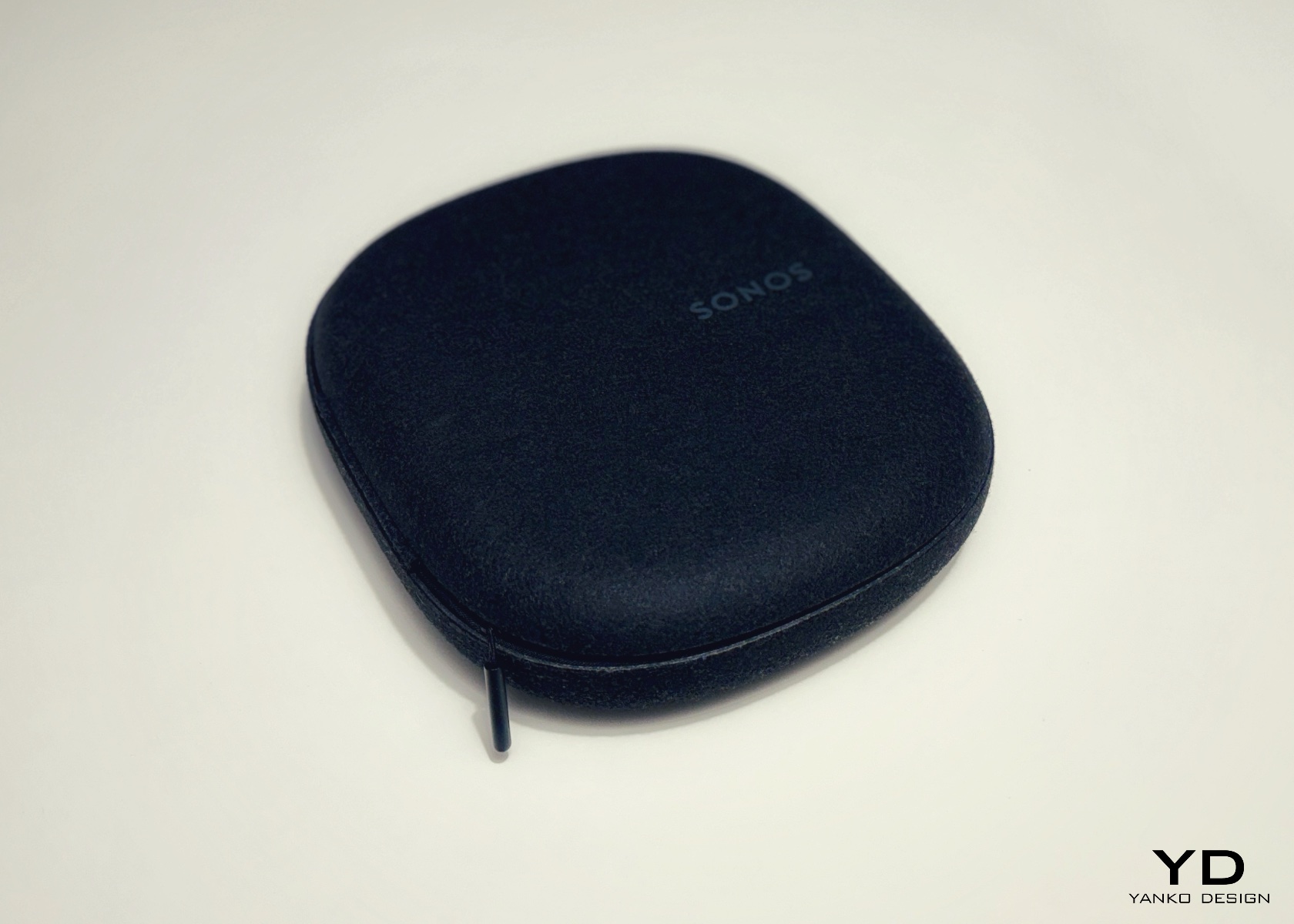
The carry case is another win for the environment. Made from 75% recycled polyester from old plastic bottles, it helps reduce the overall environmental impact.
The replaceable ear cushions are a great feature. If the headphones wear out over time, you don’t have to toss the whole thing. Just swap out the cushions, and you’re good to go. This extends the life of the headphones and reduces waste.

The Ace also has an auto-pause feature to conserve battery life. Sensors in each ear cup detect when the headphones are removed, pausing playback automatically. This reduces the frequency of recharging, extending the battery’s lifespan and cutting down on energy use.
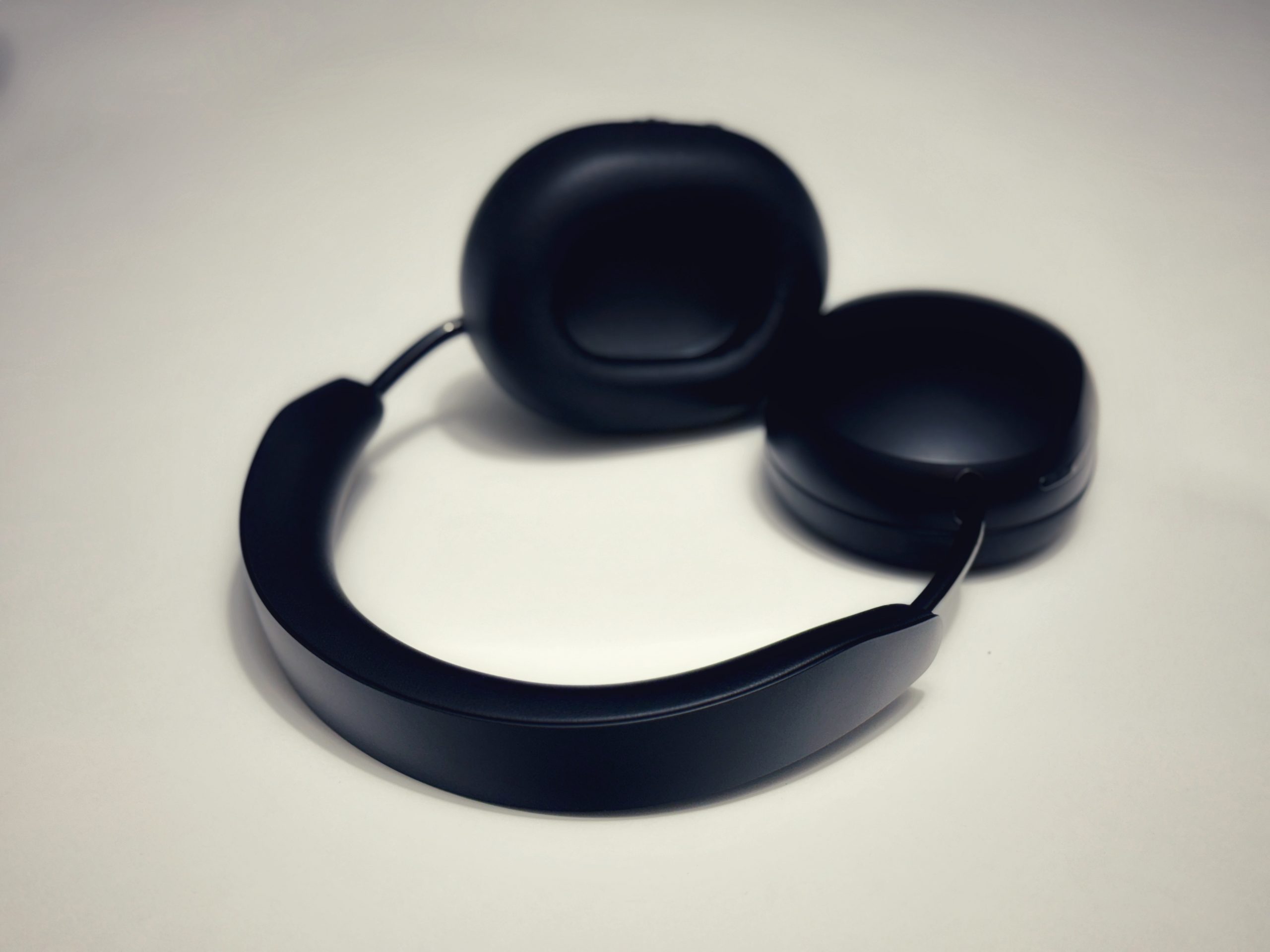

Sonos has created a product that balances high-quality audio, exceptional comfort, and eco-friendly design elements. It’s a solid choice for environmentally conscious consumers who don’t want to sacrifice performance for sustainability.

Value and Verdict

At $449, the Sonos Ace offers tremendous value for those seeking high-quality over-ear headphones. Its blend of superior sound quality, comfortable design, and advanced features makes it a strong contender in its price range. Unlike many bulky alternatives, the Ace delivers a low-profile design without compromising durability or performance. Replaceable vegan leather ear cushions and sustainable materials add to its long-term appeal.
From the seamless integration with the Sonos ecosystem to the impressive noise cancellation that makes even the loudest leaf blower almost silent, the Ace covers all bases. The intuitive button layout, particularly the Content Key, ensures easy operation whether you’re adjusting the volume, skipping tracks, or switching between devices. With 30 hours of battery life and a quick charge feature that provides three hours of playback with just a three-minute charge, the Ace is built for extended use. It’s perfect for everyday listeners who want both comfort and performance, making it a worthwhile investment for anyone in the market for top-notch headphones.

The post Sonos Ace Headphones Review: Comfort, Sound Quality, and Sustainability first appeared on Yanko Design.

Sonos Ace challenges Apple’s AirPods Max with superior headphones

Stepping into the highly competitive personal audio market, Sonos launches the Ace, their first over-ear headphones. In a landscape dominated by heavyweights like Apple’s AirPods Max, the Sonos Ace aims to be the brand’s ace in the hole, promising to deliver an unparalleled listening experience. Crafted with precision and care, these headphones are designed to combine high fidelity sound with exceptional comfort and a sleek, timeless design. The Ace better live up to its name, offering a compelling alternative in a market where excellence is the baseline expectation.
Sonos Ace in Black and Soft White

Designer: Sonos

Reflecting a meticulous design process that spans over three years, the Sonos Ace emerges as a product of intense collaboration across technical and creative disciplines. Aki Laine, director of industrial design at Sonos, described the Ace as a pair of headphones that feel as good as they look. Available in two sophisticated colors, Sonos Black and Soft White, these headphones were carefully selected to ensure inclusivity and appeal. The headphones use flexible plastics for a lightweight feel and sturdy metals for structural integrity. The ear cushions and headband are covered in vegan leather, providing a durable yet soft touch that supports extended wear.
Sonos Ace in Black

Sonos Ace Soft White

Sonos Ace Soft White

Aki Laine emphasized the importance of comfort in the Ace’s design, noting, “The lightweight memory foam and vegan leather ensure comfort for long-term use.” The headband and ear cushions are padded with memory foam, designed to conform to various head shapes and sizes. This attention to detail ensures a secure fit without exerting excessive pressure, even accommodating accessories like glasses and earrings. The design also incorporates visual and tactile cues, such as the textured logo and color-coded ear cups, to help users quickly orient and operate the headphones. Comfort is a key focus for the Sonos Ace, ensuring that users can wear the headphones for long periods without discomfort. Extensive testing was conducted to achieve the right clamping force and weight distribution, making sure the headphones are stable and provide a snug fit without causing hotspots. The ear cups are designed to accommodate various ear sizes and shapes, enhancing overall comfort.

Engineered to deliver a high-quality audio experience, the Sonos Ace excels in acoustic performance across different media types. Each ear cup houses custom-designed 40mm dynamic drivers, providing precise and accurate sound across all frequencies. With eight microphones, four on each side (three external and one internal), the Ace delivers advanced active noise cancellation. The external microphones detect ambient noise, while the internal microphones monitor and adjust the sound in real-time to optimize the listening experience. This setup ensures that whether you’re immersed in music, podcasts, or movies, the audio remains clear and immersive.

Controls on the right ear cup: Slide the Content Key up or down to adjust volume. Press it to pause or resume content and take calls. Another button lets you quickly switch between ANC and Aware mode.

Reverting to an analogue hardware user interface, the Sonos Ace enhances ease of use without relying on visual confirmation, and I’m so delighted that they did. The tactile, mechanical slider—dubbed the Content Key—allows users to adjust volume, skip tracks, and manage calls with ease. It provides a reliable and intuitive alternative to touch controls, which can be prone to errors. This thoughtful design extends to the headphones’ connectivity options. The Ace supports both wireless and wired connections, making it versatile for various use cases. Multipoint connectivity allows the headphones to connect to two devices simultaneously, enabling effortless switching. Additionally, a single button press lets the Ace connect with Sonos home theater systems, offering an immersive Dolby Atmos experience with dynamic head tracking.

Integrating several eco-friendly features into the Ace supports sustainability. The headphones incorporate 70% post-consumer recycled plastic in their construction. The carry case, made from 75% recycled polyester derived from plastic bottles, complements this commitment to sustainability. Additionally, the ear cushions are easily replaceable, extending the product’s lifespan and reducing waste. Aki Laine highlighted Sonos’s dedication to creating long-lasting products, saying, “At Sonos, we are committed to creating products that last. The Ace incorporates 70% recycled plastic and features replaceable ear cushions, aligning with our sustainability goals.”

Boasting impressive battery life and convenient charging options, users can enjoy up to 30 hours of listening with active noise cancellation enabled. A rapid charge feature provides three hours of playback with just a three-minute charge, ensuring you never miss a beat even when time is short. The smart power management includes auto-pause sensors that stop playback when the headphones are removed, conserving battery life.

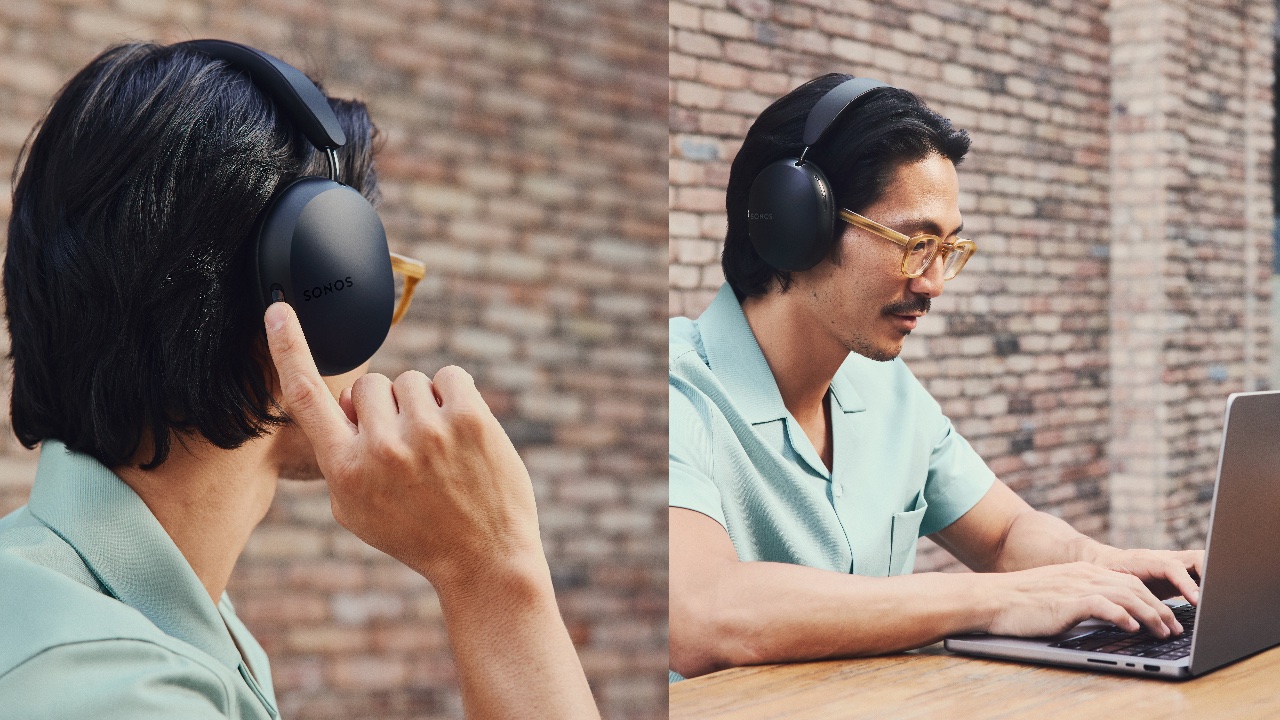
Sonos Ace is perfect for remote work

The post Sonos Ace challenges Apple’s AirPods Max with superior headphones first appeared on Yanko Design.