Stop Using Pie Charts in Excel & Switch to Clustered Bar Charts

Stop Using Pie Charts in Excel & Switch to Clustered Bar Charts Excel worksheet showing a copied range referenced for a chart that updates when the source table changes.

Pie charts are a common choice for visualizing data, but their limitations often make them less effective in professional or technical contexts. As explained by Leila Gharani, pie charts struggle to handle datasets with more than a few categories, leading to cluttered visuals and imprecise comparisons. For example, when attempting to display ten categories in […]

The post Stop Using Pie Charts in Excel & Switch to Clustered Bar Charts appeared first on Geeky Gadgets.

Posted in Uncategorized

First Samsung Galaxy S26 Ultra Hands-On Video Shows New Design.

First Samsung Galaxy S26 Ultra Hands-On Video Shows New Design. Samsung Galaxy S26 Ultra showcasing its innovative privacy display technology

The Samsung Galaxy S26 Ultra has emerged as one of the most anticipated flagship smartphones of 2026, with a leaked hands-on video offering a detailed look at its design and features. Building on the foundation of the Galaxy S25 Ultra, this latest iteration introduces a range of enhancements aimed at improving functionality, security, and user […]

The post First Samsung Galaxy S26 Ultra Hands-On Video Shows New Design. appeared first on Geeky Gadgets.

Posted in Uncategorized

Apple Notes Organization Tips: Folders, Tags, Smart Folders & More

Apple Notes Organization Tips: Folders, Tags, Smart Folders & More Apple Notes folder list with a few main categories, showing a simple structure that avoids overlapping topics.

Organizing Apple Notes can significantly improve how you manage and retrieve information, as outlined by MinorCo below. This guide explores strategies such as using folders, tags, and smart folders to create a streamlined and adaptable system. For instance, folders allow you to group related notes, while tags add flexibility by connecting notes across categories. Smart […]

The post Apple Notes Organization Tips: Folders, Tags, Smart Folders & More appeared first on Geeky Gadgets.

Posted in Uncategorized

Forget a Second Screen, This $799 Portable Monitor Adds Three 18.5-Inch Displays to Your Laptop

The average laptop screen sits somewhere between 13 and 15.6 inches, which sounds perfectly reasonable until you start juggling four browser tabs, a Figma file, a Slack thread, and a terminal window at the same time. At that point, a single screen stops feeling like a workspace and starts feeling like a peephole. The 13-inch MacBook is Apple’s most popular laptop, and on the Windows side, the 15.6-inch display dominates sales charts, meaning most of the world is trying to run increasingly complex workflows on a rectangle that was never designed to hold all of it. The obvious fix is a second monitor. That gets you to two screens and a semblance of breathing room, but it is still a compromise.

The MagHub Quad Max has a different idea entirely. Rather than giving your laptop one extra screen, it gives you three, each measuring 18.5 inches, unfolding from a single sleek unit to transform your laptop into a true multi-screen workstation anywhere you go. One cable connects the whole system. Four screens total, counting your laptop display. A setup that looks less like a productivity tool and more like mission control at a small space agency.

Designer: INVZI

Click Here to Buy Now: $799 $1199 ($400 off) Hurry! Only 5 of 255 left.

Most portable monitors top out at 14 to 15 inches because manufacturers are trading screen size for bag-friendliness. INVZI chose 18.5 inches per panel, putting 55.5 combined inches of display into a single foldable unit. Three full 1920×1080 FHD IPS panels means each screen holds a browser window, a terminal, or a dashboard at full reading size without zooming or stacking windows. The pixel density lands at around 119 PPI, solid office-monitor territory rather than Retina territory, but paired with 100% sRGB color gamut, 300 nits brightness, and Low Blue Light filtering, the panels are genuinely comfortable for extended sessions. For document work, code, or data feeds, screen area matters more than sheer pixel count.

At 8.8 lbs (4 kg), the Quad Max weighs quite a bit, but that’s sort of the price you pay for getting quadruple the screen estate. Your best bet is to pair this with a light laptop and not a bulky gaming laptop which can add another 2.5 kilos to the mix. INVZI includes a dedicated travel bag in the box, an implicit acknowledgment that “portable” here means moving between workspaces rather than walking to a coffee shop. Folded, the unit measures 17.7 x 10.7 x 1.7 inches and fits alongside your laptop in that bag. The buyer for this product is the person who already travels with dedicated gear and wants a real desk replacement on the road. For them, the 4kg is a mere footnote.

Three large 18.5-inch displays hanging off a single foldable unit create obvious structural engineering challenges, and the reinforced aluminum hinge system is where INVZI spent its design effort. Each panel holds its position without manual locking mechanisms, and the solid aluminum stand underneath keeps the whole structure stable during typing and interaction. The 360-degree rotation on the top screen lets you flip the upper display out to someone sitting ahead of you. The screen auto-orients when flipped, which means you can present to a client/superior with ease. Or if you’re in a multi-person meeting, fold the side displays over into a triangle for a unique triple-display presentation setup.

Developers get a dedicated code editor, terminal, documentation window, and live preview running simultaneously across three full-size panels, which is a different working experience from tab-switching on one screen. Traders and analysts can spread charts, order books, news feeds, and dashboards across all three displays in real time. Video editors get a proper timeline, preview window, and asset panel layout without compromise. The chassis fits laptops from 12 to 18 inches, with full support for Intel and Apple Silicon Macs plus Windows 10 and 11. The Mac Mini M4 also works with it, which opens up interesting configurations for people who want a powerful stationary setup without a traditional monitor.

Everything runs through a single USB-C cable at 10Gbps or higher, handling both video and power delivery simultaneously. Both USB-C ports on the unit are interchangeable, so there is no designated power port to figure out. Running all three external displays requires a 45W USB-C PD source, either a wall adapter or a compatible power bank, keeping it functional away from wall outlets. Windows handles driver installation automatically in most cases, while macOS needs a one-time manual install using a Racertech display driver from the included USB drive. After that first setup, both platforms run plug-and-play on every subsequent connection.

The MagHub Quad Max carries an MSRP of $1,199, with early pricing currently at $799. The box includes the display unit, a travel bag, a 45W PD power adapter, a 60cm USB-C to USB-C laptop cable, a 120cm USB-A to USB-C cable for older machines, a 120cm USB-C to USB-C power adapter cable, a USB-C/A driver stick, and a user manual. US orders ship from a domestic warehouse with no import fees, and EU and UK customers have VAT covered. At $799, there is no comparable triple-screen portable at this display size, which makes the price hard to benchmark and, frankly, hard to argue with…

Click Here to Buy Now: $799 $1199 ($400 off) Hurry! Only 5 of 255 left.

The post Forget a Second Screen, This $799 Portable Monitor Adds Three 18.5-Inch Displays to Your Laptop first appeared on Yanko Design.

Your Personal Free Netflix and other Top 5 Tech you Absolutely Need in 2026

Last year I put together a list of products everyone absolutely needed to own in 2025. It included basic stuff, AirTags, GaN chargers, and even some slightly complex gadgets like NAS devices to help you cut the cord on cloud storage subscriptions. This year’s list expands on the same philosophy from last year – make life easier, cheaper, and faster. Here are 5 pieces of tech you need to consider owning in 2026, they’re on the bleeding edge of tech now, but I assume will become mainstream in a decade. However, if you want to stay ahead of the curve, consider adopting them now!

The list is short but sweet – it includes AI recorders/notetakers, translator buds that do a way better job than the AirPods, personal AQI monitors, travel routers that make connecting to dubious airport and hotel WiFi networks much easier, and finally (my grand pick for 2026) a personal media server that helps you actually own movies instead of paying Netflix or Hulu or Paramount a monthly fee that they seem to increase every year without batting an eyelid.

1. AI Notetakers: Your Second Brain That Actually Shows Up

There is a very real advantage to having a dedicated AI notetaker that is not your phone. Phones are distraction machines; they are notifications, doomscrolling, unsolicited ads, and “sorry, I just need to reply to this Slack” all rolled into one. A device like Plaud Note, Comulytic, Mobvoi’s TicNote or a Notta‑powered recorder does one thing: it listens (and it remembers what it listens). You hit a physical button, drop it on the table, and forget about it. Later, the audio is cleaned up, transcribed, summarized, and tagged without you babysitting the process. That separation alone changes how you behave in meetings and interviews. You stop half‑typing notes while someone is talking and instead stay present, knowing you will get a clean transcript and a decent summary afterward.

The other big win is what happens after the recording. Tools like Plaud, Notta, and similar AI‑first platforms are not just dumping a raw audio file into your storage; they are turning it into something you can actually work with. Meetings become bullet‑point action lists, interviews turn into structured quotes you can drop into drafts, and keynotes morph into highlight reels and to‑do items. Compare that to your phone’s stock voice recorder, where everything is just “Recording 032.m4a” in a long, unlabeled list. No speaker separation, no smart search, no summaries, no automatic organization. Dedicated AI notetakers treat audio as input to a workflow, not a dead file. And once you have used one a few times for client calls or field interviews, going back to a generic phone app feels like going from a modern IDE back to Notepad.

2. Translator Earbuds: When You Actually Need To Talk To People

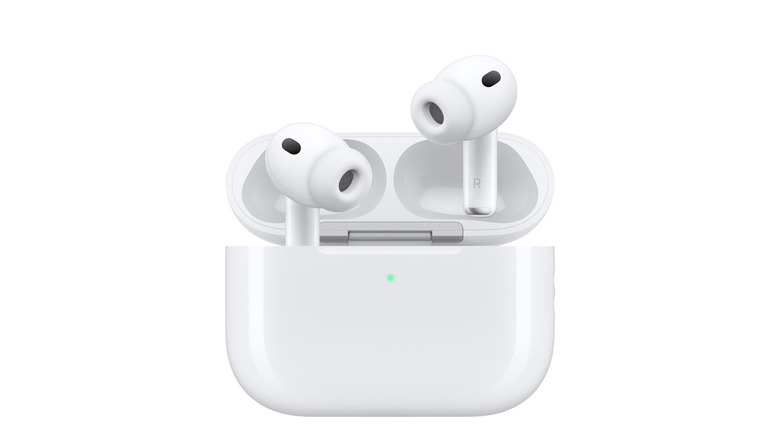
Apple adding Live Translation to AirPods is very on‑brand: take a niche idea, wrap it in a clean UI, and ship it as a feature most people will try once in a while. It is genuinely handy if you and the other person both live inside the Apple ecosystem, and you are somewhere with good connectivity. But at the end of the day, AirPods are music‑first earbuds that happen to do translation on the side. Brands like Vasco, Viaim, and Timekettle flips that completely. Timekettle products like the M3, WT2 Edge, and W4 are built as translation devices first, earbuds second. The hardware, the app, and the interaction modes are all tuned for one job: two‑way, face‑to‑face conversation that does not feel like you are dictating into Google Translate.

You see the difference the minute you try to use them in the real world. Timekettle lets both people wear an earbud and just talk, with the system handling two‑way interpretation in near real time. Even Vasco, which secured our award at CES 2025, offers incredible translation features with the added ability to clone your voice using AI. There are specific modes for sitting across a café table, walking side by side, or listening to an announcement, and you can preload offline language packs so you are not stranded the moment you lose data. That matters when you are in a noisy street market, on a factory floor, or in a client meeting where “sorry, can you repeat that for the app” gets old fast. AirPods’ live translation is clever, but it is still bolted onto a general‑purpose audio product, with limited languages and workflows that quietly assume ideal conditions. Dedicated translator earbuds are what you pack when you know you are going to be operating in another language for days at a stretch; AirPods translation is what you pull out when you are already there and hoping the feature is good enough.

3. Personal Air Monitors: The Little Box That Calls Out Bad Air

A personal air quality monitor is very different from the big purifier that sits in one corner of your living room. This is the pocketable version: a small, battery‑powered sensor that tracks things like CO₂, particulates, VOCs, temperature, and humidity, and comes with you everywhere. Think of the same mindset behind something like Goveelife or uHoo’s indoor monitors, but shrunk down into a device you can toss in a bag or park on your desk. The moment you start carrying one, patterns jump out. That “3 p.m. crash” in your home office often lines up perfectly with CO₂ quietly creeping past the point where your brain stops firing properly. The subway line that always gives you a headache is not just “crowded and stressful,” it is a mix of stale air and fine dust. Your favorite café might have great coffee and terrible ventilation, while the boring chain across the street quietly nails fresh air and lower CO₂.

Where this becomes essential is when you pair it with travel and health decisions. Instead of vaguely checking a city‑wide AQI number, you get hyper‑local readings: the actual air in your Airbnb bedroom, that underground bar, that coworking space with sealed windows. A personal monitor can be the thing that tells you “open a window now,” “today is an N95 day,” or “maybe do not work six hours straight in this meeting room.” It is not a glamorous gadget, but it quietly moves you from guessing to measuring. In a world of wildfire smoke, construction dust, packed trains, and increasingly sealed buildings, that shift feels very 2026: less “trust the vibes,” more “trust the numbers in your pocket.”

4. Travel Routers: Bring Your Own Internet, Not Just Your Own Laptop

TCL and Asus quietly made one of the most important travel gadgets last year: routers built to live in your bag instead of under your TV. On the surface they look like yet another little plastic box with antennas, but the use case is very different from the router you got from your ISP. These are “BYO infrastructure” for people who work, stream, and store their lives online. You plug them into sketchy hotel Ethernet or join them to the random café Wi‑Fi, and they spin up your own private, password‑protected network for your laptop, phone, handheld console, and whatever else you are carrying. Instead of each device logging into “Hotel_WiFi_3” separately and fighting through captive portals, everything just connects to your SSID, with your own password, your own settings, and your own rules.

The VPN side is where they really earn a place in a 2026 kit. A good travel router can automatically tunnel all your traffic through a VPN or back to your home network, so every device behind it inherits that protection without you installing clients and certificates on each one. That means you can sit on airport Wi‑Fi and still safely access your media server at home, your NAS, your work tools, or region‑locked services, all as if you were on your own couch. For digital nomads and frequent flyers, it also solves a bunch of annoying edge cases: game consoles and streaming sticks that hate captive portals, devices that do not support VPNs natively, hotel networks that limit the number of devices per room. The travel router becomes the one “client” the hotel sees, while you hang a whole personal LAN off the back of it. It is not a glamorous product, but once you have had a week where your entire setup rides on that one little box, it is hard to go back to trusting whatever router the hotel happened to bolt to the ceiling.

5. Personal Media Servers: Owning Your Movies In A World That Hates Ownership

The idea of “buying” a movie used to be straightforward. You paid for a DVD or Blu‑ray, you got a disc, and that disc was yours until it got scratched to death or you moved house and lost it. You could watch it a thousand times, lend it to a friend, rip it for convenience, whatever. The streaming era quietly rewrote that deal. You are not buying movies anymore, you are renting access. A title lives on Netflix or Max or whatever for a while, then licensing changes, mergers happen, some accountant decides to write it off, and suddenly your favorite film or show just does not exist in your catalog. You can chase it across services, stacking subscriptions like trading cards, but that gets expensive very fast, and you are still at the mercy of contracts you never see.

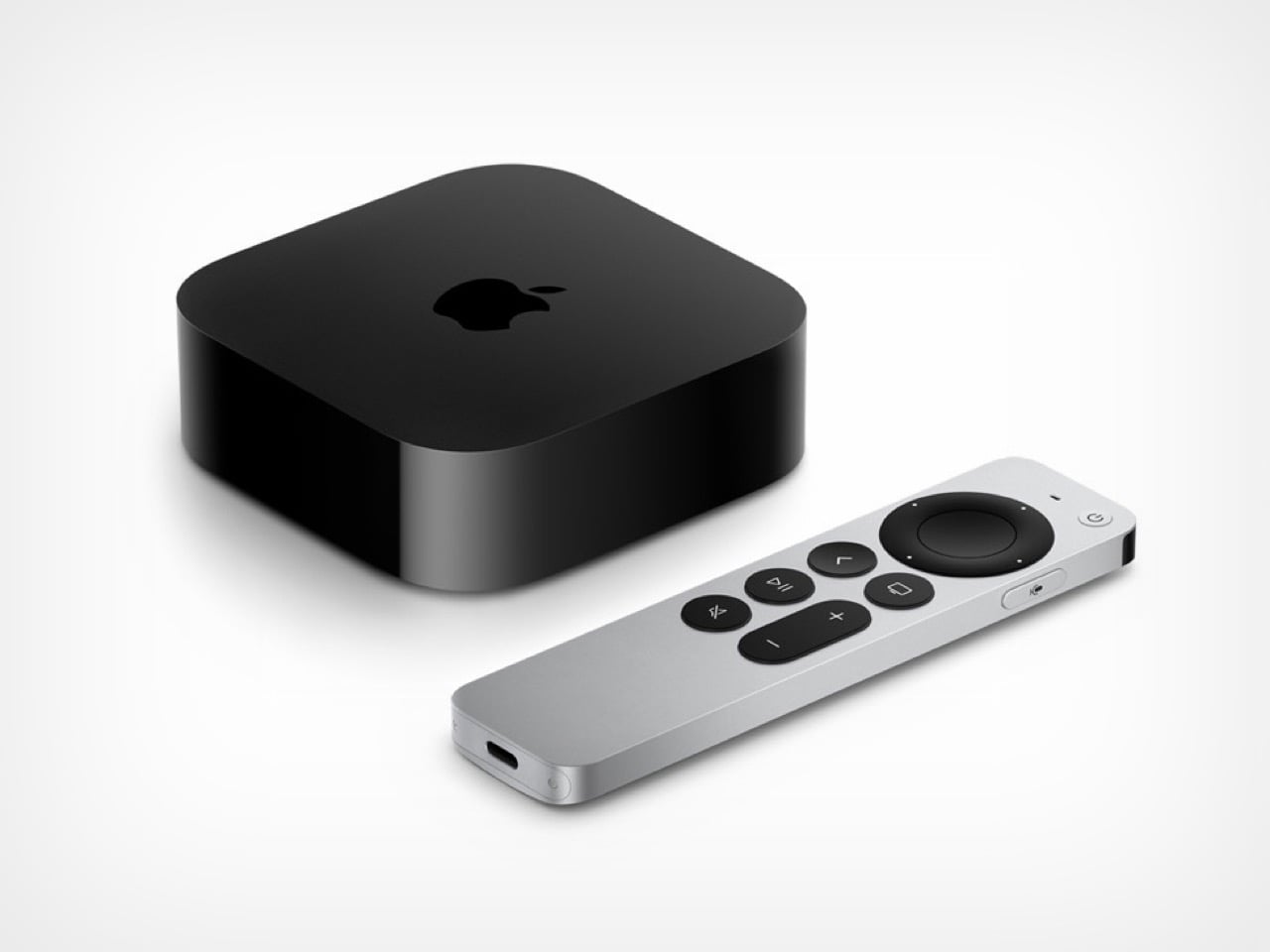
A personal media server is the underdog rebellion against that. If you already have a NAS, you are basically one weekend away from rolling your own “Netflix” with something like Plex, Jellyfin, or Emby sitting on top. The workflow is not rocket science: buy discs, rip them, store the files on your NAS, let the media server scrape metadata and artwork, and suddenly you have a slick, searchable library that shows up on your TV, laptop, phone, or tablet just like a streaming app. The difference is that nothing disappears because a studio changed its mind. You decide what lives there, how long it stays, what version you keep, and who gets access. You can share that library with parents or siblings across the country without running into “password sharing crackdown” nonsense, and you can watch your stuff in a cabin with terrible internet because it is all local. It is the same basic promise we had with physical media, just updated for a world where your screen is no longer tethered to a disc player.

Now, the awkward bit: yes, pirating content is illegal. That is the line, and it is worth stating clearly. At the same time, the industry has created a situation where it is technically legal to charge you repeatedly for non‑ownership, while making entire catalogs vanish, region‑locking films behind arbitrary borders, and punishing you for sharing an account with your own family. When a bidding war over something like Warner Bros Discovery means one or two mega‑streamers get even more control over what exists where and for how long, it is hard not to see why people fall back on “if buying is not owning, piracy is not stealing” as a coping mechanism. I am not here to tell you what to do with torrents, but I will say this: a personal media server built around content you actually own is one of the few sane, future‑proof ways to make sure the movies and shows you care about are still watchable ten years from now. In a landscape that keeps trending toward bigger monopolies and weaker ownership, that box in the corner of your house starts to look less like a nerd toy and more like self‑defense.

The post Your Personal Free Netflix and other Top 5 Tech you Absolutely Need in 2026 first appeared on Yanko Design.

Box Clever Just Designed the Air Purifier Offices Want on Desks

There’s a particular kind of object that design-minded people notice when they walk into a room. Not the artwork on the wall or the fancy ergonomic chair. It’s the small, considered thing sitting on a desk or a conference table that makes you stop and think, “wait, what is that?” The Delos WellCube is that kind of object.

Created by San Francisco-based studio Box Clever in collaboration with wellness technology company Delos, the WellCube represents a design challenge that most air purifier manufacturers have been getting wrong for years: how do you make something people actually want in their workspace instead of something they tolerate?

Designer: Box Clever

The brief was specific. Delos has spent more than a decade researching the relationship between indoor environments and human health, and they wanted to create the first connected platform of hyper-localized air purifiers designed specifically for the modern office. Eight built-in sensors. HEPA filtration. Real-time environmental monitoring. All the technical capabilities you’d expect from a serious wellness device.

But here’s where it gets interesting. Box Clever’s job wasn’t just to house all that technology in a box. It was to create something that employees, facilities managers, and companies would genuinely choose to place on desks and in shared spaces. Something that doesn’t broadcast “corporate compliance equipment” the second someone walks into a room. The result is a study in how thoughtful industrial design can completely reframe a product category.

The WellCube sits compact on a desk or table, roughly the size of a Bluetooth speaker. It delivers 99.97% filtration efficiency at 0.3 microns, covering up to 250 square feet while operating at a whisper-quiet 32 to 52 dBA. Those eight sensors track air quality, temperature, humidity, occupancy, lighting levels, and noise simultaneously, creating what Delos calls an insightful view of the invisible health of office spaces.

But what makes this design competition-worthy is how Box Clever handled the exterior. The outer layer is a soft, interchangeable fabric cover that completely transforms the visual language of what an air purifier can be. Instead of looking clinical or industrial, it reads as approachable and residential. The fabric isn’t just aesthetic either. It doubles as access to the replaceable filters inside, so maintenance stays simple and unobtrusive. Companies can customize the cover to match any environment’s color palette, which means the same device can feel at home on a personal desk, in a collaborative meeting space, or in an executive conference room.

The design development process tells the real story. Box Clever’s documentation shows walls covered in sketches, early foam models exploring different proportions, material samples testing various fabric weights and textures, and iteration after iteration before landing on dimensions that feel, as the team describes it, just right. It’s the kind of rigorous, unsexy work that separates objects that merely look designed from objects that are actually designed all the way through.

What elevates this project beyond a typical product redesign is how seriously both teams took the challenge of balancing technical performance with human-centered design. Office wellness technology typically falls into one of two traps: highly capable but clinical-looking, or beautiful but functionally superficial. The WellCube pushes back on that false choice entirely. The sensor data does more than just measure. It feeds real-time information that helps facilities managers and companies optimize spaces for healthier outcomes, room by room, desk by desk. Think of it as giving buildings the ability to communicate what they actually need. But that sophisticated backend never makes the device itself feel complicated or intimidating to the people using the space.

This is exactly the kind of design thinking that contests and showcases exist to highlight. It’s not just about making something look better. It’s about fundamentally rethinking what a product category can be when you start with human needs instead of engineering specifications. If the future of office wellness is going to look anything like this, it’s going to be a lot more inviting than the sterile solutions we’ve been stuck with. And a lot better looking on your desk.

The post Box Clever Just Designed the Air Purifier Offices Want on Desks first appeared on Yanko Design.

NASA’s crewed Artemis II launch gets pushed back again, this time due to a helium issue

It looks like a March launch is no longer in the cards for Artemis II, NASA's first crewed trip to the moon's vicinity since the final Apollo mission over 50 years ago. While preparations were underway at the Kennedy Space Center for a launch as soon as March 6, the space agency says it ran into an issue with the flow of helium to its SLS rocket's upper stage this weekend and it now has to roll the rocket from the launch pad back to the Vehicle Assembly Building (VAB) to figure out what's wrong and fix it. A media briefing is planned for sometime this week to discuss the problem and what's next. 

But in a post on X, NASA Administrator Jared Isaacman confirmed the rollback will "take the March launch window out of consideration." NASA noted on its blog that the current effort "potentially preserves the April launch window, pending the outcome of data findings, repair efforts, and how the schedule comes to fruition in the coming days and weeks." It's a four-mile trip back to the VAB that will take hours to carefully transport the massive rocket and the Orion spacecraft. NASA says it's eyeing February 24 for this trek.

The issue occurred overnight in the early hours of February 21, when NASA says it observed "interrupted flow of helium to the SLS (Space Launch System) rocket’s interim cryogenic propulsion stage." The space agency explained:

The upper stage uses helium to maintain the proper environmental conditions for the stage’s engine and to pressurize liquid hydrogen and liquid oxygen propellant tanks. The systems worked during NASA’s Artemis II wet dress rehearsals, but teams were not able to properly flow helium during normal operations and reconfigurations following the wet dress rehearsal that concluded Feb. 19. Operators are using a backup method to maintain the environmental conditions for the upper stage engines and the rocket, which remains in a safe configuration. 

The Artemis II crew — Commander Reid Wiseman, Pilot Victor Glover, Mission Specialist Christina Koch and Canadian Space Agency astronaut Jeremy Hansen, Mission Specialist — had just entered quarantine a day before the issue arose. NASA says the astronauts have since come out of quarantine.

At the start of this year, NASA announced an accelerated timeline for Artemis II, which was previously set for April 2026 after experiencing delays in 2024. For this 10-day mission, which will be the first crewed flight of the SLS rocket, the Artemis II astronauts will take a trip around the moon in the Orion spacecraft. While it initially targeted early February, the launch was pushed to March due to issues that popped up during the wet dress rehearsal. Now, we're back to the beginning with a possible April launch, but that’ll depend on the fix being a quick one.

This article originally appeared on Engadget at https://www.engadget.com/science/space/nasas-crewed-artemis-ii-launch-gets-pushed-back-again-this-time-due-to-a-helium-issue-231010042.html?src=rss

Formula 1 ‘Closed Cockpit’ Concept shows the future of the Halo as a Safer Enclosed Canopy

In the 2021 Italian GP, Lewis Hamilton nearly had his head crushed when Max Verstappen’s car literally climbed on top of his, with the car’s bottom grazing past his helmet and onto the protective Halo. Later on, Toto Wolff of the Mercedes team breathed a sigh of relief, also reflecting on how much he fought against the addition of the Halo to the F1 car design. This isn’t the first time a Halo has saved a life. Leclerc’s helmet showed the battle scars of Fernando Alonso’s tire from a similar incident in the Belgian GP in 2018.

The Halo has played a controversial but incredibly pivotal role in F1. Most teams hated it, but now thank its presence in the face of nearly fatal accidents. The FIA also dabbled with the idea of a closed cockpit for even safer driving, but the ideas were all shot down because a closed cockpit proved to be more harmful in the event of a bad crash. What if the driver couldn’t exit a blazing vehicle? Or get out swiftly in the middle of a race? Designer Olcay Tuncay Karabulut has a clever fix to these questions. Dubbed the ‘Canopy’, this design detail takes the Halo and gives it a set of upgrades… in a way that still makes it safe for drivers to exit vehicles.

Designer: Olcay Tuncay ‘Karabulut’

As much as the Halo obscures a driver’s vision, it’s also incredibly good at obscuring dangerous obstacles that could smack the driver at forces of nearly 10 Gs. There’s no way a helmet could protect against something that powerful. The advantage the Halo has had over most closed cockpits, is that the two sides make it easy for drivers to enter and exit vehicles. More components, more details, and more safety can often mean more time required to exit a car. The seatbelt, as safe as it’s claimed to be, has been responsible for multiple people being trapped in cars longer than they need to be. For the FIA (the regulating body for the Formula series), the closed cockpit has had the exact same set of problems.

Olcay’s ‘Canopy’ concept addresses this by borrowing from the closed cockpit designs of a jet. The canopy hinges at the front, opening and closing to allow the driver to enter and exit on demand. However, in the case of an emergency, multiple panels in the canopy can be pushed out to provide different points of egress. If the canopy ever breaks or fails, simply ditch any of the transparent panels on the top or the sides and the driver can easily make an exit, just the way they would through the Halo.

Olcay’s design relies on a robust canopy built using Carbon-Ti, a strong carbon-fiber, titanium, and aluminum alloy known for its ability to withstand pretty much any sort of abuse. Unlike the Halo which is Y-shaped, the Canopy is H-shaped, with panels on the front, top, and the sides. The front panel acts as a windshield, while the top and side panels can be ejected during an emergency exit.

Is the Canopy better than a Halo? Well, yes and no. Sure, a closed cockpit is way more secure than an open one. We all remember Felipe Massa getting struck by a loose spring in the 2009 Brazilian GP. A canopy would absorb that impact, shielding the driver from damage. However, that impact would also crack the glass, obscuring the driver’s vision and probably making them less safe. In the rain or in muddy conditions, drivers keep their vision clean by simply peeling away protective film from their helmet visors whenever it gets dirty. There’s really no way to peel mud or water away from a canopy, so this would be a nightmare in rainy races… provided the sheer force of wind pushes any dirt or debris away from the clear glass. We’re also completely sidestepping the potential worst-case scenario where the Canopy along with its ejectable panels fail to open, trapping the driver in a nightmare situation with really no exit until someone intervenes.

Olcay’s justification for designing the canopy is to protect the driver from any form of tiny debris that the Halo would miss. Sure, the Halo keeps the driver safe the way a car’s roll cage keeps drivers safe in regular vehicles. But the Halo would do nothing to stop shrapnel from the car in front of you flying towards your face or body. The enclosed design of the Canopy provides 360° cover, although yes, it needs to be sufficiently tested.

The Canopy tech was conceptualized for the year 2030, with 4 more years to test out the system. Current cars still use the Halo, and F1’s changes more or less revolve around the car’s power-train, moving from mainly fuel-based to an equal use of fuel and electric systems. Will we see something akin to this in future F1 cars? Well, Olcay’s work is entirely conceptual, but it bases itself in a stark reality that F1 still has ways to go when it comes to driver safety. After all, the Halo wouldn’t be able to stop what happened to Felipe Massa in 2009. Only a Canopy would.

The post Formula 1 ‘Closed Cockpit’ Concept shows the future of the Halo as a Safer Enclosed Canopy first appeared on Yanko Design.

Colorado is working on a bill that would make it illegal to 3D print firearms and gun parts

A collective of Colorado lawmakers wants to put an end to "ghost guns" and their rising popularity. Earlier this week, the state's House Judiciary Committee voted in a 7-4 majority to pass the bill, HB26-1144, along for a decision with the full House of Representatives. The proposed law would "prohibit the use of a three-dimensional printer, or similar technology, to make a firearm or a firearm component."

Ghost guns are typically made from 3D printers or similar machines without serial numbers, making them virtually impossible to trace and allowing users to skirt the federal requirements for purchasing a firearm. While the bill targets using a 3D printer to make guns, large-capacity magazines and other related components, it even bans possessing and distributing the instructions to manufacture guns in this way. However, these rules would be exempt for federally licensed firearm manufacturers.

"These ghost guns are increasingly found at crime scenes, making it harder for law enforcement to track down a suspect because the gun isn’t traceable," the bill's sponsor, Lindsay Gilchrist, said in a press release.

Prior to this proposal, Colorado passed a law in 2023 that banned owning ghost guns or making frames for them. While SB23-279 laid the groundwork, HB26-1144 can be seen as the next step since it's much more encompassing by targeting ghost guns even before they're made. According to the bill, first-time violations will be treated as a misdemeanor, while repeat offenses will be upgraded to a felony charge. Looking ahead, HB26-1144 still has to secure a vote from both the Colorado Senate and House of Representatives before being delivered to the governor to be signed into law.

This article originally appeared on Engadget at https://www.engadget.com/science/colorado-is-working-on-a-bill-that-would-make-it-illegal-to-3d-print-firearms-and-gun-parts-211508169.html?src=rss

Samsung is adding Perplexity to Galaxy AI for its upcoming S26 series

Samsung's next flagship devices will offer Perplexity as part of an expansion to support multiple AI agents in Galaxy AI. Perplexity's AI agent will work with apps including Samsung Notes, Clock, Gallery, Reminder and Calendar, according to the announcement. And, some third-party apps will support it, though Samsung hasn't yet said which. The news comes just a few days before Samsung's Galaxy Unpacked event, so we can expect to find out more about that integration and how it fits in with Samsung's revamped Bixby very soon. 

What we know so far is that the Perplexity agent will respond to the wake phrase, "Hey Plex" (not to be confused with the streaming service Plex). It can also be initiated by quick-access physical controls. In a statement, Samsung's Won-Joon Choi, President, COO and Head of the R&D Office for Samsung's Mobile eXperience Business, said the expansion of Galaxy AI is aimed at giving users more choice and flexibility in getting their tasks done. "Galaxy AI acts as an orchestrator, bringing together different forms of AI into a single, natural, cohesive experience,” Choi said.

Samsung previously announced a partnership with Perplexity last year to integrate the company's AI search engine into Samsung TVs.  Perplexity has been in hot water though over alleged content scraping and copyright infringement, and was even sued in September by Merriam-Webster — yes, the dictionary — and Encyclopedia Britannica. 

This article originally appeared on Engadget at https://www.engadget.com/ai/samsung-is-adding-perplexity-to-galaxy-ai-for-its-upcoming-s26-series-203729539.html?src=rss