Apple Just Dropped iOS 26.6 Beta 1: Here is What Changed

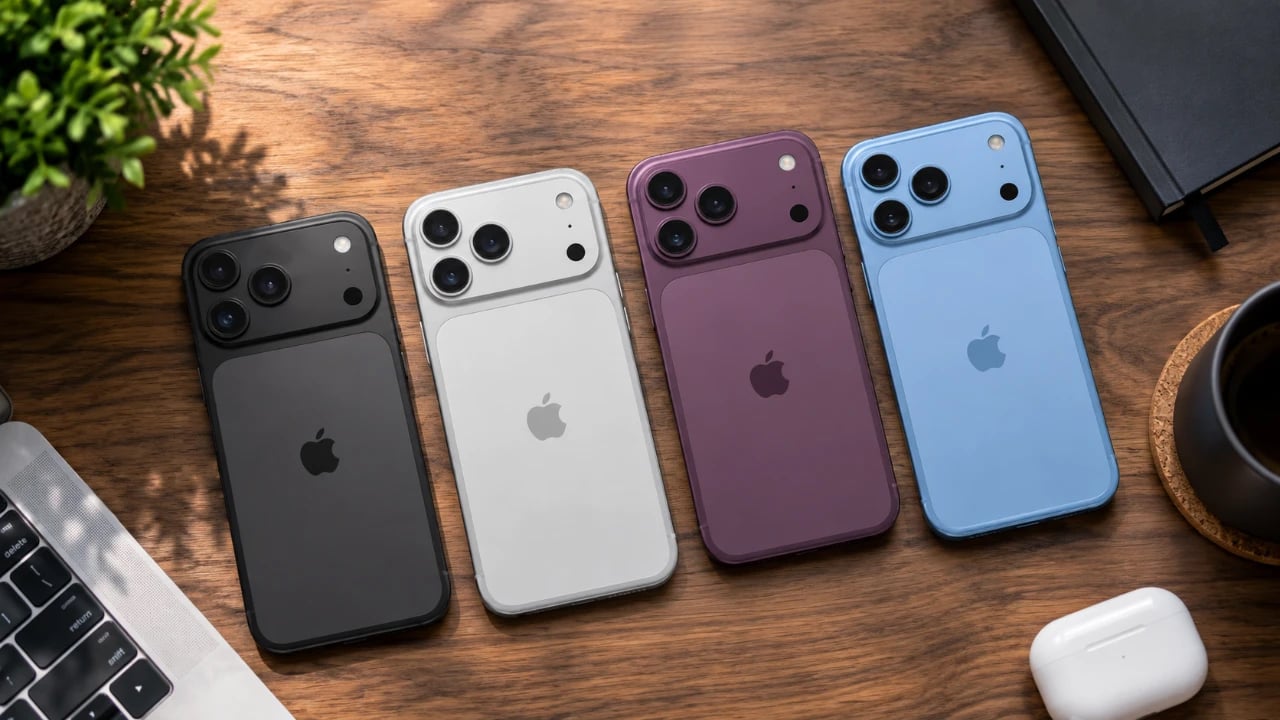
Apple Just Dropped iOS 26.6 Beta 1: Here is What Changed iPhone displaying the iOS 26.6 Beta 1 software update screen

Apple has officially rolled out iOS 26.6 Beta 1, continuing its commitment to refining the user experience through regular updates. While this release does not introduce new features, it focuses on enhancing performance, addressing bugs, and strengthening security. Below is an in-depth look at what this beta version offers and how it impacts your device […]

The post Apple Just Dropped iOS 26.6 Beta 1: Here is What Changed appeared first on Geeky Gadgets.

Posted in Uncategorized

Drop-proof, under 28 grams, and finally beautiful: Benks’ new Kevlar iPhone cases put aesthetics first

There is a reason Kevlar keeps showing up in premium phone accessories. The material brings a rare combination of low weight, tactile richness, and serious structural confidence, which makes it ideal for people who want their case to feel intentional rather than disposable. BENKS has been working that territory for a while, and the new BENKS ArmorEdge launch sharpens the formula with two color-forward editions, Savvy Red and Peri Purple, designed for the iPhone 17 Pro and Pro Max. Both treat the woven surface as a design element alongside its structural role. The result is a case lineup testing whether protection and personality can genuinely coexist at the same price point.

Both cases share the same core promise, slim everyday protection with MagSafe compatibility, 360-degree airbag corners, and DuPont Kevlar construction, but deliver it with very different moods. Savvy Red runs graphic and energetic while Peri Purple reads restrained and expressive, a contrast that registers as branding intentionality as much as a color choice. BENKS ArmorEdge Air Navigator then extends the family in a lighter direction, with an exposed 600D woven back, a 27g build, and a Magellan-engraved reverse that gives the case a narrative dimension uncommon in slim case design. The three together span bold color expression, understated sophistication, and material-first minimalism within a single product family. BENKS calls it confidence-forward protection, and the physical details mostly agree.

Designer: Benks

Click Here to Buy Now: Peri Purple | Savvy Red | ArmorEdge Air Navigator

Savvy Red is structured around a raised jacquard diamond weave that catches light at shifting angles, making the surface genuinely tactile rather than decorative. As a protective Kevlar case, it keeps the frame edge at a precise 1.8mm while backing that slim profile with a four-guard 360-degree airbag system built to handle the corner-first drops that standard cases consistently fail at. We covered the BENKS ArmorGrid ArmorAir last September as a Kevlar phone case for the iPhone 17 Pro that carried real bulletproof-vest-grade material confidence, and Savvy Red builds on that character while pushing further into expressive design territory. MagSafe compatibility centers on a graphic on the back, a colorway-specific detail that ties the functional ring to a distinct visual identity rather than defaulting to a generic shared element across the lineup. At $64.99, the raised diamond weave alone justifies the ask as a tactile story that polycarbonate simply cannot replicate.

BENKS ArmorEdge Peri Purple

Peri Purple carries the same engineering foundation as Savvy Red but in a softer, more regal tone that makes it a premium Kevlar case for users who want Kevlar craftsmanship without the assertive graphic energy. BENKS describes it as designed for subtle expression over loud attention, essentially a style-driven protective Kevlar case for those who prefer their personality understated rather than announced. The airbag corners and MagSafe compatibility carry through, with a different visual graphic on the backside. That decision, giving each finish its own visual badge rather than a shared hardware element, is a considered design move that ties visual identity all the way through to the functional center of the case. Each case even showcases a different delicate badge on the bottom, right above the charging port, setting them apart distinctly. Both Savvy Red and Peri Purple retail at $64.99, positioned as two parallel expressions of personality under a single engineering standard.

BENKS ArmorEdge Savvy Red

At 27g and 0.9mm at the frame edge, the BENKS ArmorEdge Air Navigator operates on a different set of priorities from its two siblings. It qualifies as a genuine BENKS ArmorEdge Kevlar case in the fullest material sense, with DuPont Kevlar fiber forming the structure, but TPU sits only at frame edges and structural stress points, leaving the entire 600D woven back exposed and fully in contact with the hand. That material-first decision makes the grip experience central to the case’s identity rather than something filtered through a polymer overlay. BENKS ties the Navigator edition to a travel and exploration theme through an anchor medallion on the front and an engraving of Magellan’s circumnavigation route on the back, paired with the Latin inscription “PRIMUS CIRCUMDEDISTI ME,” giving the MagSafe protective case a narrative depth that most slim builds forgo entirely. At $61.99, it reads as the most considered piece in the BENKS ArmorEdge family.

BENKS ArmorEdge Air Navigator

The full BENKS ArmorEdge lineup is available now at $64.99 for Savvy Red and Peri Purple and $61.99 for Air Navigator on the BENKS website.

Click Here to Buy Now: Peri Purple | Savvy Red | ArmorEdge Air Navigator

The post Drop-proof, under 28 grams, and finally beautiful: Benks’ new Kevlar iPhone cases put aesthetics first first appeared on Yanko Design.
McDonald’s-inspired Nike Book 2 bring Arizona Desert colors to your next everyday basketball sneaker

Signature sneakers rarely manage to feel personal anymore. Most arrive overloaded with athlete branding and colorways engineered more for resale culture than everyday wear. Devin Booker’s Nike Book 2 collaboration with McDonald’s takes a surprisingly different route. Instead of leaning into fries-and-burgers nostalgia, the sneaker pulls inspiration from one of Arizona’s oddest landmarks — the turquoise-arched McDonald’s in Sedona — and turns it into a basketball shoe that feels more rooted in place than corporate crossover hype.

At first glance, the Nike Book 2 “Sedona” barely resembles a McDonald’s collaboration at all. The sneaker trades loud fast-food colors for sandy beige uppers, dusty earth tones, and soft turquoise accents inspired by the famous Sedona McDonald’s location, which swapped its golden arches for turquoise ones to better blend with the city’s iconic red rock surroundings. It’s the kind of hyper-specific regional detail that could have easily become gimmicky, but Booker’s growing signature line has consistently worked best when it stays connected to Arizona culture rather than chasing trends.

Designer: Nike x McDonald’s

The design itself continues the Book series’ understated approach to basketball footwear. Where many modern performance sneakers rely on exaggerated shapes and futuristic layering, the Book 2 keeps things clean and wearable. The low-cut silhouette looks closer to a lifestyle sneaker than a traditional on-court model, borrowing cues from retro Nike runners and skate shoes while still packing modern basketball tech underneath. Nike equips the sneaker with a forefoot Air Zoom unit, Cushlon 3.0 cushioning, and a lightweight molded upper designed around Booker’s preference for responsive movement and minimal bulk.

That balance between performance and casual wearability is what gives the Book line its identity. Booker has never approached his signature shoes like loud statement pieces; they feel more like sneakers designed by someone who genuinely cares how they look off the court. The “Sedona” colorway pushes that idea even further. The cracked leather details, aged textures, and muted desert palette make the sneaker feel intentionally lived-in, almost like something discovered on a road trip through Arizona rather than a highly manufactured sports collaboration.

McDonald’s also seems aware that the appeal here extends beyond basketball fans. Instead of limiting the partnership to standard product placement, the company built a broader campaign around Booker’s connection to the Southwest. Promotional visuals lean heavily into desert imagery, road-trip aesthetics, and surreal humor, including a campaign video featuring Booker wandering through Sedona alongside a silent Ronald McDonald appearance that somehow feels strange and perfectly on-brand at the same time.

The collaboration also arrives with a Friends & Family sweepstakes through the McDonald’s app, giving select customers access to an exclusive variation of the sneaker with the purchase of specialty beverages. A dedicated pop-up event tied to the release is also expected ahead of launch, reinforcing how brands increasingly treat sneaker drops more like cultural events than product launches. The McDonald’s x Nike Book 2 “Sedona” sneaker is scheduled to release on June 2 through Nike SNKRS and select retailers for $155.

The post McDonald’s-inspired Nike Book 2 bring Arizona Desert colors to your next everyday basketball sneaker first appeared on Yanko Design.
McDonald’s-inspired Nike Book 2 bring Arizona Desert colors to your next everyday basketball sneaker

Signature sneakers rarely manage to feel personal anymore. Most arrive overloaded with athlete branding and colorways engineered more for resale culture than everyday wear. Devin Booker’s Nike Book 2 collaboration with McDonald’s takes a surprisingly different route. Instead of leaning into fries-and-burgers nostalgia, the sneaker pulls inspiration from one of Arizona’s oddest landmarks — the turquoise-arched McDonald’s in Sedona — and turns it into a basketball shoe that feels more rooted in place than corporate crossover hype.

At first glance, the Nike Book 2 “Sedona” barely resembles a McDonald’s collaboration at all. The sneaker trades loud fast-food colors for sandy beige uppers, dusty earth tones, and soft turquoise accents inspired by the famous Sedona McDonald’s location, which swapped its golden arches for turquoise ones to better blend with the city’s iconic red rock surroundings. It’s the kind of hyper-specific regional detail that could have easily become gimmicky, but Booker’s growing signature line has consistently worked best when it stays connected to Arizona culture rather than chasing trends.

Designer: Nike x McDonald’s

The design itself continues the Book series’ understated approach to basketball footwear. Where many modern performance sneakers rely on exaggerated shapes and futuristic layering, the Book 2 keeps things clean and wearable. The low-cut silhouette looks closer to a lifestyle sneaker than a traditional on-court model, borrowing cues from retro Nike runners and skate shoes while still packing modern basketball tech underneath. Nike equips the sneaker with a forefoot Air Zoom unit, Cushlon 3.0 cushioning, and a lightweight molded upper designed around Booker’s preference for responsive movement and minimal bulk.

That balance between performance and casual wearability is what gives the Book line its identity. Booker has never approached his signature shoes like loud statement pieces; they feel more like sneakers designed by someone who genuinely cares how they look off the court. The “Sedona” colorway pushes that idea even further. The cracked leather details, aged textures, and muted desert palette make the sneaker feel intentionally lived-in, almost like something discovered on a road trip through Arizona rather than a highly manufactured sports collaboration.

McDonald’s also seems aware that the appeal here extends beyond basketball fans. Instead of limiting the partnership to standard product placement, the company built a broader campaign around Booker’s connection to the Southwest. Promotional visuals lean heavily into desert imagery, road-trip aesthetics, and surreal humor, including a campaign video featuring Booker wandering through Sedona alongside a silent Ronald McDonald appearance that somehow feels strange and perfectly on-brand at the same time.

The collaboration also arrives with a Friends & Family sweepstakes through the McDonald’s app, giving select customers access to an exclusive variation of the sneaker with the purchase of specialty beverages. A dedicated pop-up event tied to the release is also expected ahead of launch, reinforcing how brands increasingly treat sneaker drops more like cultural events than product launches. The McDonald’s x Nike Book 2 “Sedona” sneaker is scheduled to release on June 2 through Nike SNKRS and select retailers for $155.

The post McDonald’s-inspired Nike Book 2 bring Arizona Desert colors to your next everyday basketball sneaker first appeared on Yanko Design.
The Koala Bear Is the Tiny Home Built for People Who’d Rather Move Than Settle

There’s a certain kind of freedom that only comes when you stop trying to fit your life into more square footage than you actually need. Rolling Bear Tiny Homes understood that when they built the Koala Bear, a compact, mobile dwelling designed specifically for solo adventurers and couples who’d rather wake up to a new view than a fixed address.

Rolling Bear Tiny Homes is a custom builder based in Richmond, British Columbia, operating under the umbrella of Rolling Bear Construction Inc. The brand has built a reputation across BC for crafting tiny homes that don’t compromise on quality, and the Koala Bear might be the clearest expression of that philosophy yet. At 26 by 8.5 feet, it packs up to 250 square feet of thoughtfully designed living space into a form that’s road-ready and genuinely livable.

Designer: Rolling Bear Tiny Homes

The interior doesn’t feel like a compromise. Custom joinery, premium finishes, and artisanal detailing run throughout, giving the Koala Bear an aesthetic that reads more like a well-edited apartment than a mobile shelter. The layout includes a comfortable bedroom, a fully equipped kitchenette, and a living area designed around how people actually move through a small space, not just how it photographs. Every inch is accounted for without ever feeling claustrophobic.

On the technical side, the Koala Bear is built to exceed both CAD Z240 RV and Canadian Building Code guidelines, and it’s constructed to meet NOAH certification standards. That matters more than most buyers initially realize. It’s the difference between a home that holds up through BC winters and one that doesn’t. A state-of-the-art HVAC system and a sustainable water-heating solution handle year-round climate control, while a full suite of energy-efficient appliances keeps utility costs low.

For solo travelers and couples, the appeal goes beyond the specs. The Koala Bear is built around the idea of flexibility, the ability to be parked along a coastline one season and nestled near a mountain trail the next. Rolling Bear offers delivery and setup services, which removes a significant logistical barrier for first-time tiny home buyers.

Priced at approximately at US$87,000 with financing available, the Koala Bear sits at an accessible entry point for the Rolling Bear lineup. For what it offers, craftsmanship, mobility, and a design sensibility that doesn’t ask you to sacrifice style for size, it makes a compelling case that the best homes aren’t always the biggest ones. Sometimes, they’re exactly the right size.

The post The Koala Bear Is the Tiny Home Built for People Who’d Rather Move Than Settle first appeared on Yanko Design.
The Koala Bear Is the Tiny Home Built for People Who’d Rather Move Than Settle

There’s a certain kind of freedom that only comes when you stop trying to fit your life into more square footage than you actually need. Rolling Bear Tiny Homes understood that when they built the Koala Bear, a compact, mobile dwelling designed specifically for solo adventurers and couples who’d rather wake up to a new view than a fixed address.

Rolling Bear Tiny Homes is a custom builder based in Richmond, British Columbia, operating under the umbrella of Rolling Bear Construction Inc. The brand has built a reputation across BC for crafting tiny homes that don’t compromise on quality, and the Koala Bear might be the clearest expression of that philosophy yet. At 26 by 8.5 feet, it packs up to 250 square feet of thoughtfully designed living space into a form that’s road-ready and genuinely livable.

Designer: Rolling Bear Tiny Homes

The interior doesn’t feel like a compromise. Custom joinery, premium finishes, and artisanal detailing run throughout, giving the Koala Bear an aesthetic that reads more like a well-edited apartment than a mobile shelter. The layout includes a comfortable bedroom, a fully equipped kitchenette, and a living area designed around how people actually move through a small space, not just how it photographs. Every inch is accounted for without ever feeling claustrophobic.

On the technical side, the Koala Bear is built to exceed both CAD Z240 RV and Canadian Building Code guidelines, and it’s constructed to meet NOAH certification standards. That matters more than most buyers initially realize. It’s the difference between a home that holds up through BC winters and one that doesn’t. A state-of-the-art HVAC system and a sustainable water-heating solution handle year-round climate control, while a full suite of energy-efficient appliances keeps utility costs low.

For solo travelers and couples, the appeal goes beyond the specs. The Koala Bear is built around the idea of flexibility, the ability to be parked along a coastline one season and nestled near a mountain trail the next. Rolling Bear offers delivery and setup services, which removes a significant logistical barrier for first-time tiny home buyers.

Priced at approximately at US$87,000 with financing available, the Koala Bear sits at an accessible entry point for the Rolling Bear lineup. For what it offers, craftsmanship, mobility, and a design sensibility that doesn’t ask you to sacrifice style for size, it makes a compelling case that the best homes aren’t always the biggest ones. Sometimes, they’re exactly the right size.

The post The Koala Bear Is the Tiny Home Built for People Who’d Rather Move Than Settle first appeared on Yanko Design.
Turkish Designer Cut 800-Year-Old Islamic Geometry Into a Stone Lamp That Casts Patterns on Your Wall

The history of decorative stone carving and the history of electric lighting have almost never intersected in any meaningful way at the shade level. The closest attempts have been thin marble slices backlit into warm translucency, or those Himalayan pink salt lamps that colonized every wellness-adjacent bedroom in the 2010s, both of which use the stone as a passive diffuser, a material you shine through rather than one you design with. The geometric traditions of Islamic architecture, meanwhile, have lived primarily in plaster, wood, and tile, materials that reward the kind of fine, repetitive cutting those patterns demand. Ibrahim Fatih Satilmis, founder of Istanbul’s Studio Soldout, spent the latter part of 2025 testing whether travertine could bridge those two histories, and Sukun is what came out of that research.

Six Islamic geometric motifs, each sourced from a specific landmark in Konya, Kayseri, Karaman, Cordoba, Valladolid, or Granada, are waterjet-cut and CNC-refined through the travertine disc that forms the lamp’s top. A concealed rechargeable battery powers an integrated LED at 2700K, with three-step phase dimming and six to eight hours of runtime per charge. When lit, the pattern projects outward in every direction, the ceiling, the wall behind, the table surface below, turning the geometry from object into environment. Sukun just picked up a win in the A’ Design Award’s Lighting Products and Fixtures category for the 2025-2026 cycle.

Designer: Ibrahim Fatih Satilmis

Travertine is defined by geological accident, by voids and veins left behind as calcium carbonate settled over millennia, and those natural pores sit millimeters away from the machined perforations without any visual conflict. If anything, the stone’s inherent texture makes the precision of the geometry feel more earned, the way a hand-laid mosaic reads differently than a printed reproduction of the same pattern. Satilmis worked through Eric Broug’s geometric reconstruction methodology to ensure each motif was mathematically faithful to its source site before committing it to stone, which matters because these patterns are systems, not ornaments, and a slightly wrong angle compounds across repetitions into something that reads as off without the viewer quite knowing why. The main machining challenge was cutting fine perforations through travertine without chipping, while keeping the disc thick enough to remain structurally stable, a balance that required significant prototyping before the geometry held cleanly at full depth.

A cylindrical travertine base houses the electronics and doubles as a downward light diffuser, washing the table surface in soft 2700K warmth, while the carved disc floats above on a simple shoulder, elevated just enough to let light escape sideways and upward through the pattern. At 250mm wide and 300mm tall, the proportions sit comfortably between a statement object and an everyday lamp, substantial enough to anchor a bedside table or a dining sideboard without demanding the room reorganize around it. The rechargeable system charges via USB-C and runs six to eight hours per charge, which means no cord breaking the silhouette, a non-negotiable for a lamp this considered about its own appearance. Three-step phase dimming lets you dial the output down for ambient use without the flicker that plagues cheaper dimming implementations.

Switched off, Sukun reads as a serious piece of stone craft, the kind of object that holds its own in a well-edited interior without requiring explanation. Switched on, the room changes, and because travertine’s natural texture catches light unevenly, the projected shadows carry a slight warmth and irregularity that a laser-cut metal shade could never replicate. The stone absorbs and diffuses before releasing, softening the LED’s output into something that feels genuinely warm rather than merely color-temperature warm. Six pattern variants are available as separate lamps, each tied to a different historical site, giving the collection a documentary dimension that most lighting ranges never attempt.

The post Turkish Designer Cut 800-Year-Old Islamic Geometry Into a Stone Lamp That Casts Patterns on Your Wall first appeared on Yanko Design.