600 LEGO Bricks, One Gorgeous Victorian Telescope, and Four Hidden Scenes Inside the Lens

Every great adventure story needs a telescope. Horatio Hornblower snapping his glass open on the quarterdeck. Long John Silver tracking the Hispaniola from a cliff. Jack Sparrow squinting at the horizon for a ship worth plundering. The handheld nautical telescope has been a shorthand for discovery, danger, and romance since the age of sail, and its grander cousin, the brass tripod-mounted observatory scope, carries the same energy at a considerably more impressive scale.

Bricked1980 has tapped directly into that feeling with a LEGO Ideas submission that looks like it belongs on the desk of a Victorian gentleman scientist. The Functional Vintage Telescope clocks in at around 600 pieces, stands 40 centimeters high, and stretches 53 centimeters in length, with a color palette of deep reddish-brown and pearl gold that makes it look genuinely antique from across the room.

Designer: Bricked1980

The build is modeled on a classic brass refractor telescope mounted on a fully articulated tripod, and the attention to period detail is remarkable. The barrel is rendered in warm dark brown with subtle surface texture suggesting wrapped leather or lacquered wood, banded at intervals with pearl gold rings that evoke the ferrules of a real antique instrument. The tripod legs splay convincingly outward in reddish-brown, connected at the apex by a cluster of black Technic hardware that doubles as the azimuth mount, letting the barrel rotate and pivot in all directions. A small gold chain hangs from the objective end, terminating in what appears to be a lens cap, and it is exactly the kind of fussy, historically accurate touch that elevates this from a cool-looking model to something that feels genuinely researched.

The eyepiece assembly is where the build gets interesting. Bricked1980 has positioned a secondary spotting scope above the main barrel, a common feature on serious Victorian-era refractors used for rough alignment before fine adjustment. My favorite detail, though, is the pair of adjustment wheels flanking the mount, their spoked design rendered using LEGO wheel elements that read convincingly as the kind of slow-motion tracking hardware you’d find on an equatorial mount. The overall silhouette is so convincing that you could photograph this against a dark background and genuinely fool someone.

Now, about that “functional” claim. The build includes four bespoke printed scene discs, a spaceship, a tropical island, a crescent moon and stars, and a tall-masted pirate ship, each of which clips behind the objective lens. A hidden light brick, activated by pressing a button on the barrel, illuminates the interior, and you peer through the eyepiece to see the scene glowing inside the tube. It is a charming, theatrical effect, the kind of thing that would delight anyone who picks it up, though don’t go expecting it to resolve Jupiter’s moons. Think of it as a Victorian magic lantern wearing a telescope’s coat, and it is all the more delightful for it. Sharp-eyed LEGO fans will notice that at least two of the scenes appear to contain nods to classic LEGO history, which is a wonderful layer of Easter egg for the community.

The Functional Vintage Telescope has already earned a LEGO Ideas Staff Pick, and currently sits at around 7,500 supporters with 511 days remaining on the clock. It needs 10,000 votes to be submitted for official LEGO review. Click here to cast your vote and help this gorgeous Victorian relic earn its place on a shelf near you.

The post 600 LEGO Bricks, One Gorgeous Victorian Telescope, and Four Hidden Scenes Inside the Lens first appeared on Yanko Design.
Chinese modder builds human-sized PC large enough for a person to sit inside and play games

Have you been criticized for your compulsive gaming? Has your mom lost her cool and said, “You play computer games all day, why don’t you just live in a computer?” If your answer is yes, then thanks to a new PC case mod made in China, the idea could literally be possible. At least if you’re modder Soda Baka. For everyone else, it’s a fish-tank PC case humans can live in like figurines in a regular PC.

From how it appears in the images, Chinese modder and creator Soda Baka has built what is literally a walk-in PC, where humans can live with computer innards. The video of the entire build has been shared by the modder on China’s premier video-sharing platform Bilibili. It is literally a PC case with enough room for a person to live in and play video games sitting inside.

Designer: Soda Baka

Easily the largest gaming PC case ever made, it is not only huge in its structure, built as a functional PC in human scale; in fact, the PC components including the fan, mainboard, RAM, and graphics, have also been scaled up to complement the size. The most interesting still is the air conditioning setup included to keep the system cool when the gaming gets hot.

From what we can fathom from the uploaded video, the mammoth system can actually be used as a gaming PC. The modder can be seen sitting inside the huge PC and playing games on it, with a small monitor, also placed inside the computer itself. The entire creation – which seems to be created only for the video, or an advertisement for the included Midea air conditioner (we have no real proof at the time of writing) – looks amazingly realistic with giant rotating fans and functional RGB LED lighting.

Video of Soda’s build of the massive PC starts out like a serious project, blending construction and modding. Many humongous replica components like the wall-sized fans, GPU, AiO CPU coolers, and RAM, etc., are built and installed along with RGB lighting to create something that you can enter, sit in, and play some games. In addition to liquid cooling and dummy fans, a 12kW Midea AC unit has been installed inside the PC to maintain temperatures from rising above 100 degrees Fahrenheit, or 38 degrees Celsius.

The massive computer case is definitely a treat to the eye, and a dream come true for anyone who’s ever been told to “live inside the computer,” but it does seem a gimmicky creation. Of course, its sheer size grabs attention instantly, but it also means that it is not something you and I can recreate at home. It’s a result of dedication and hard work and not a child’s play. Still, if you can manage to build one like this, you could certainly live inside and play games to your heart’s content.

The post Chinese modder builds human-sized PC large enough for a person to sit inside and play games first appeared on Yanko Design.
Everyone Said Hydrogen Was Dead. Then 2026 Happened.

Toyota Tacoma H2-Overlander

The hydrogen fuel cell vehicle has been declared dead so many times that the obituary writers have a template saved. Battery EVs won, the infrastructure never materialized, and Toyota’s Mirai became the punchline for a technology that arrived a decade too early and never quite recovered. That was the consensus heading into 2025. Then, in roughly a six-week window, Toyota rolled a hydrogen-electric Tacoma concept onto the SEMA floor, dropped a 2026 Mirai refresh, and unveiled a liquid-hydrogen Le Mans racer, and Hyundai answered with a redesigned NEXO and a striking FCEV concept that previewed an entirely new design language for the brand.

What makes this moment different from previous hydrogen revivals is the context it landed in. A world freshly reminded of oil’s political weight is a world considerably more receptive to the hydrogen pitch, and these announcements, made before any of that, now read as remarkably well-timed. Toyota and Hyundai weren’t reacting to geopolitics. They were already building. The current moment simply handed their work a much larger audience than it might otherwise have found, and the design language pouring out of Toyota City and Seoul tells a story the analyst reports keep missing: hydrogen’s most interesting chapter is being written right now, in metal and carbon fiber and recycled aero panels, on a SEMA show floor and a Le Mans pit lane.

Designer: Toyota

Toyota Tacoma H2-Overlander

The most conceptually ambitious piece in Toyota’s recent hydrogen push is the Tacoma H2-Overlander, built by TRD teams in California and North Carolina for the 2025 SEMA Show in November. Built on the proven TNGA-F truck platform, it replaces internal combustion with a second-generation Mirai fuel cell stack paired with three frame-integrated hydrogen tanks holding 6 kg of fuel. Two electric motors — 301 horsepower up front, 252 at the rear — deliver a combined 547 horsepower, which on paper makes it one of the most powerful Tacomas ever conceived. But horsepower is the least interesting thing about this truck. The fuel cell exhausts a single byproduct from the process it uses to produce electricity: water, and Toyota engineered a patent-pending water recovery system that captures and filters that H2O for camping and outdoor use. Distilled water from a tailpipe, in a truck that can simultaneously charge two EVs through dual NEMA 14-50 outlets via a 15-kW power takeoff. That is a design argument, not just a spec sheet.

Toyota Tacoma H2-Overlander

The argument Toyota is making with the H2-Overlander is the most important one hydrogen advocates have ever attempted: that the infrastructure problem, which has strangled FCEV adoption in urban markets for two decades, simply ceases to matter once you take the vehicle off the grid. A Tacoma disappearing into backcountry terrain where there are no hydrogen stations is not a problem for hydrogen. It is hydrogen’s strongest use case. The concept’s exterior features a custom overlanding camper built from recycled carbon-fiber aero panels, and the whole truck reads as a coherent design thesis rather than a show-floor stunt. Toyota Racing Development built this under an extremely compressed timeline, relying on advanced CAD modeling and multi-site collaboration to retrofit an entirely new powertrain into a platform never designed for it. The pressure showed in the ambition of the result, which is a phrase you rarely get to write about concept vehicles.

Toyota Gazoo Racing GR LH2 Racing Concept

Toyota did not stop at SEMA. At Le Mans in June 2025, Toyota unveiled the GR LH2 Racing Concept, an evolution of a static design study the marque had presented at the same event in 2023, now underpinned by the chassis from its FIA World Endurance Championship-contending GR010 Hypercars. The GR LH2 runs on liquid hydrogen rather than compressed gaseous hydrogen, which requires storing the fuel at approximately minus 253 degrees Celsius and introduces a completely different set of engineering and packaging challenges. Toyota describes it as a testbed for not just the propulsion system itself but also the infrastructure and refueling requirements it will demand, and team principal Kazuki Nakajima confirmed that a first public on-track test is approaching without committing to a specific date. The Le Mans organizers have tentatively committed to a hydrogen-powered class potentially as early as 2026. Toyota, which has been running hydrogen-combustion Corollas in Japan’s Super Taikyu series since 2021, is the obvious frontrunner for that grid. Motorsport as a hydrogen proving ground is a strategy Toyota has been executing quietly for years, and the GR LH2 is what that strategy looks like when it graduates to the main stage.

Toyota Gazoo Racing GR LH2 Racing Concept

Hyundai’s approach runs in parallel, and deliberately so. Where Toyota has been stress-testing hydrogen across use cases — luxury sedan, off-road truck, endurance racer — Hyundai has been doubling down on hydrogen as a premium SUV proposition with a design language confident enough to treat the powertrain as an asset. Introduced at the Seoul Mobility Show in April 2025, the all-new NEXO is based on the INITIUM concept unveiled in October 2024 and embodies Hyundai’s new “Art of Steel” design language, built around the inherent tension and formability of steel as a material statement rather than a neutral manufacturing choice. That design language will be applied exclusively to hydrogen-powered vehicles within Hyundai’s lineup, which is a meaningful brand decision. Hyundai is not just refreshing a car. It is building a visual identity for hydrogen as a category, separating FCEVs from BEVs at the design language level so that a buyer can read the powertrain from across a parking lot. The HTWO lamp signatures, derived from the molecular formula for hydrogen and Hyundai’s hydrogen brand name, appear front and rear as dedicated FCEV-specific design cues. That kind of systematic visual differentiation takes conviction, and conviction is something hydrogen advocacy has historically lacked.

Toyota Mirai 2026

The 2026 NEXO targets a driving range of up to 447 miles on a single fill, refuels in approximately five minutes, and becomes the first FCEV to offer towing capability in European markets, a specification that quietly dismantles one of the lingering criticisms of fuel cell vehicles as impractical luxury objects. A hydrogen SUV that can tow is no longer a commuter car wearing premium clothes. It is a direct competitor to diesel utility vehicles in markets where towing capacity is a purchase decision, not an afterthought. The interior has been reimagined as what Hyundai calls a “Furnished Space,” with Relaxation Seats, a Bang and Olufsen 14-speaker audio system, vehicle-to-load capability up to 3.6 kW, and a curved dual 12.3-inch display system. The cabin ambition is clear: Hyundai wants the NEXO to compete on interior quality with premium German SUVs, and it wants the hydrogen powertrain to feel like a selling point rather than a compromise the buyer tolerates.

Toyota Mirai 2026

BMW and Honda both have hydrogen programs running in parallel, and the commercial truck sector has been deploying hydrogen fuel cells at scale for longer than most passenger car advocates acknowledge. But Toyota and Hyundai are the two companies whose recent design output makes the strongest collective argument for hydrogen as a coherent, multi-use-case technology with real visual language and real engineering ambition behind it. The obituary writers got the timing wrong. Hydrogen in 2025 looks less like a technology in retreat and more like one that has been quietly doing its homework, waiting for the moment when the world would finally pay attention. That moment, for reasons nobody in Toyota City or Seoul planned for, appears to have arrived.

The post Everyone Said Hydrogen Was Dead. Then 2026 Happened. first appeared on Yanko Design.
5 Lamps That Adjust Like Sunlight That Fix Your Circadian Rhythm To Keep Your Energy Up

Hanging frosted-globe planter with trailing greenery shown in a split view: close-up glow on left and a woman watering it on the right.

Entering a space and feeling an instant sense of calm and energy shows the effect of biophilic design. In contemporary built environments, the lack of connection to natural elements can reduce comfort, focus, and overall well-being.

Light becomes the critical medium for restoring this connection. Biophilic lighting replicates the spectrum, dynamics, and intensity of daylight by integrating seamlessly into architectural spaces. It transforms sterile interiors into environments that nurture health, enhance productivity, and promote mental balance. More than a visual tool, let’s understand how it serves as a measurable, evidence-based strategy for embedding nature’s restorative qualities into design.

1. Mimics Natural Light

The human body runs on a 24-hour internal clock known as the circadian rhythm, which is shaped by the light entering the eyes. This cycle influences sleep quality, hormone release, and energy levels. Static artificial lighting disrupts the body’s rhythm, often causing poor sleep and daytime fatigue, a common effect of modern indoor living.

Dynamic lighting systems offer a restorative solution. By adjusting color temperature and intensity to reflect the sun’s natural path, they promote balance like bright cool light for morning alertness, gradually shifting to warm dim tones in the evening to prepare for rest.

Two-panel image: left shows hands watering a hanging plant with a spray bottle; right shows a woman on a stool watering a hanging plant in a pale green room.

Two glowing hanging planters with trailing greenery suspended from a gray ceiling.

Jungle is a hybrid creation, part planter and part light fixture, suspended from the ceiling by two long fabric straps. Since remote work became widespread, biophilic design has emerged as a way to bring the benefits of nature indoors. Indoor gardens are a common expression of this approach, blending greenery with architectural or interior elements. Jungle interprets this principle beautifully, combining a hanging planter with a semi-flush mount light fixture. Its bulbous, capsule-shaped centerpiece emits a warm, golden glow through an opaque body, softly illuminating the surrounding greenery while enhancing the sense of calm and connection to nature.

Man in black stands beside a blue wall, looking up at two modern frosted-glass pendant lights suspended from the ceiling.

The opaque lampshade diffuses light and provides a subtle backdrop for plants to drape naturally, creating a dynamic interplay of light and life. Watertight and minimal in design, Jungle integrates seamlessly into any living space. Its combination of greenery, soft illumination, and floating suspension exemplifies biophilic lighting, fostering well-being while serving as a striking decorative centerpiece.

2. Biophilic Light Strategies

Biophilic design focuses not only on the source of light but also on creating strong visual connections to nature. A room may be perfectly illuminated yet still feel incomplete without a view of the outdoors or natural materials. People instinctively feel calmer and more focused when they can rest their eyes on organic elements such as a tree line, greenery, or the texture of wood.

Biophilic lighting enhances these experiences by framing natural features. Subtle uplighting on wooden details or targeted light on plants draws attention to nature. Minimizing glare is equally essential, as harsh reflections undermine comfort and strain the eyes.

Red mosaic glass sphere lantern glowing in a dark room, with blurred silhouettes of people in the foreground.

Hanging orange mosaic lantern made of petal-shaped pieces, glowing in a dark room, suspended by a cord.

Circular infographic of the Apeel Material Life Cycle with stages: Bio-Compostable, Harvesting, Industrial Juice Processing, Waste, Apeel Process, and Products/Material.

Sustainable design often highlights recycled metals, plastics, wood, or rubber, yet many overlooked materials can also be repurposed, including food waste. While biodegradable, food scraps still contribute to landfill mass and water pollution. Orange peels, typically discarded, can be transformed into a leather-like material. Sewn together, these pieces form a sturdy, fabric-like surface that becomes part of innovative products, such as a spherical pendant lamp resembling a glowing orange. This design merges sustainability with biophilic lighting principles, bringing organic forms and textures into the interior while connecting occupants to nature.

Orange peel pieces and ground zest lined up on a white surface beside a round wooden citrus press/juicer on the right.

Abstract fiery orange texture with glowing stitched seams outlining irregular shapes.

Round orange mosaic pendant lamp hanging from a cord against a dark wall.

APeel transforms citrus peels into a lamp with unique visual and tactile qualities. Fully biodegradable, it can return to the soil as fertilizer for fruit trees, completing a circular, low-waste system. The warm, natural glow from the lamp enhances a biophilic interior, fostering calm, engagement, and a deeper connection to organic forms.

3. Light Color and Mood

The color temperature of light, measured in Kelvins (K), is a subtle yet powerful way to influence the mood of a space. Warm light under 3000K, much like candlelight or sunset, creates comfort, intimacy, and relaxation, making it perfect for bedrooms and living areas. On the other hand, cool light above 4000K, similar to midday sunlight, encourages focus, energy, and alertness, making it effective for kitchens, home offices, and task-driven spaces.

By selecting the right Kelvin rating for each area, designers can shape how a home feels and functions. Using one uniform light source throughout misses an opportunity. Instead, layering a spectrum of temperatures creates distinct zones that support daily activities and emotional well-being.

Dim dining room with three large circular woven wall lamps casting warm light over a table set with plates and napkins.

A modern dining area with a large woven circular wall light above a wooden table and chairs on a neutral wallative backdrop.

Decorative woven wall lamp with warm glow above a small round black table and a white vase in a minimalist bedroom corner.

Many contemporary designs draw inspiration from nature, which is the ultimate designer. Some replicate natural forms directly, while others reinterpret them in unexpected ways, creating objects that feel familiar and slightly alien. The Aureole wall lighting takes cues from the tiny disk florets at the center of a sunflower. Its swirling curves and raised structures hint at the flower’s intricate pattern without being literal. Crafted from quartz sand that is normally used for molds, these lamps push the boundaries of both material and 3D printing technology, resulting in a form that is mesmerizing even when unlit.

Decorative black woven bowl with a solid circular base resting on a light surface

Circular black-and-orange woven sculpture resting on light beach sand.

Circular pendant lamp with a honeycomb perforated shade emitting warm amber light.

When illuminated from beneath a central opaque disc, Aureole transforms entirely. The light interacts with the complex 3D structure to cast intricate shadows, creating an ethereal, almost hypnotic effect reminiscent of a solar corona. Its combination of organic inspiration, innovative material use, and dynamic light makes it an interesting example of biophilic design.

4. Layered Lighting with Natural Forms

Layered lighting, the combination of ambient, task, and accent light, is the foundation of effective design. In a biophilic context, it is elevated by incorporating nature-inspired elements. Instead of standard fixtures, designers can introduce lights that echo organic shapes, textures, or branching patterns found in trees, creating a more harmonious and engaging environment.
Examples include pendant lights that cast a soft, moonlike glow or lamp bases with subtle stone-like textures. Using natural materials such as woven rattan, recycled glass, or unpolished metals adds an extra layer of nature’s beauty, ensuring that the lighting feels integrated, warm, and connected to the natural world.

Pendant lamp made from curved yellow banana-shaped panels surrounding a light bulb against a dark background.

Yellow banana-shaped lamp sculpture formed by curved bananas, with a bulb and socket visible on a dark background.

Close-up of a hand turning a black valve on a yellow, petal-like inflatable object.

The Banana Lamp by Gazzaladra turns a simple fruit into a playful, nature-inspired piece of functional art, aligning perfectly with biophilic design principles. Crafted using precise 3D scans of real bananas, each lamp captures organic details such as peel ridges and natural curves, bringing the charm of the natural world indoors. Beyond illumination, it sparks conversation, adds visual delight, and connects occupants to a sense of whimsy and creativity found in nature, echoing the restorative qualities that biophilic lighting seeks to provide.

Banana-shaped lamp: a cluster of bright yellow bananas forming a lampshade on a dark background with a power cord visible at the base.

Orange spiral paper lamp lit from inside, glowing on a dark surface.

Yellow multi-petal 3D-printed vase being created by a Bambu Lab printer.

Available as a 3D model on thangs.com, the hollow design works best with LED bulbs and translucent filaments for a soft, glowing effect. Users can experiment with colors, textures, and printing techniques to enhance its natural appeal. With pendant and desk versions compatible with common socket kits, the Banana Lamp transforms everyday spaces into engaging, biophilic environments that fuse humor, aesthetics, and the organic beauty of natural forms.

5. Optimizing Sunlight Indoors

Maximizing daylight, or daylighting, is one of the most effective strategies in biophilic lighting. It uses architectural elements such as windows, skylights, and light shelves to bring natural sunlight deep into interior spaces. It helps in reducing the need for artificial lighting as daylight uniquely uplifts mood, boosts energy, and enhances overall well-being.

Simple design strategies can optimize existing windows, such as using sheer curtains instead of heavy drapes. These techniques extend daylight penetration, reduce harsh contrasts between bright and dark areas, and strengthen the occupant’s connection to the outdoors, creating visually balanced and restorative interiors.

Outdoor hanging light fixture with a warm amber glow, suspended in front of a wooden structure and green foliage at dusk/evening.

Person wearing peach clothing holds a smartphone with a pink gradient wallpaper and a white vertical oval shape on screen.
Sunlight streams over a white curved outdoor surface (likely sculpture or structure) with a bright flare against a clear blue sky and trees in the background, suggesting an outdoor installation or playground element.

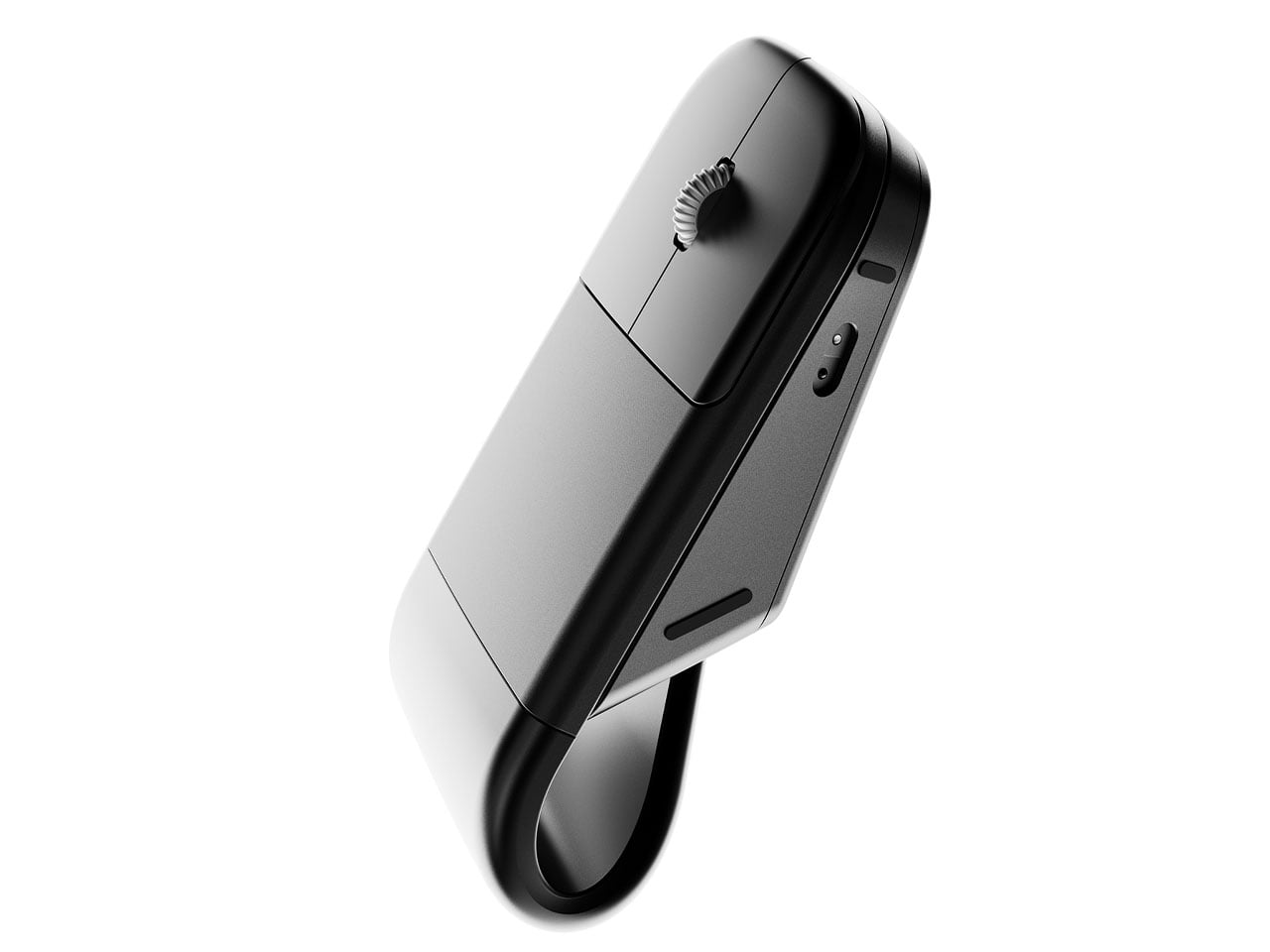
Dutch lighting brand Sunne partnered with designer Marjan van Aubel to create their first product, which is a self-powered solar lamp that harvests energy during the day to illuminate interiors at night. The Sunne Light mimics natural sunlight and is entirely powered by solar energy, bringing the restorative qualities of daylight indoors. By integrating biophilic principles, the lamp fosters a connection to nature, supporting human circadian rhythms and enhancing well-being. Its horizon-inspired design, with an 85-centimeter landscape-oriented panel suspended by two wires, reflects the organic forms and visual serenity found in natural landscapes.

Woman with an afro sits on a bed and unboxes a long white item from a cardboard box in a bright wooden room.

Woman outdoors lifting a blue panel of a playground structure above her head, wearing a white tank top and looking up thoughtfully.

Hanging oval LED light fixture with pink-to-purple gradient, suspended by two cables over a lakeside scene at dusk.

Equipped with photovoltaic cells and an integrated battery, the lamp stores energy collected from sunlight and operates without external power. A companion app offers three modes like Sunne Rise, Sunne Light, and Sunne Set, which replicate morning, midday, and evening light. Made-to-order with sustainable, detachable components, the Sunne Light combines functionality, longevity, and environmental consciousness while creating an innovative biophilic lighting experience.

Biophilic lighting is more than a trend and is essential for healthier homes. By mimicking natural light, enhancing outdoor views, and choosing supportive fixtures, interiors become calming and restorative. Thoughtful lighting helps regulate sleep, boost energy, and improve well-being.

The post 5 Lamps That Adjust Like Sunlight That Fix Your Circadian Rhythm To Keep Your Energy Up first appeared on Yanko Design.