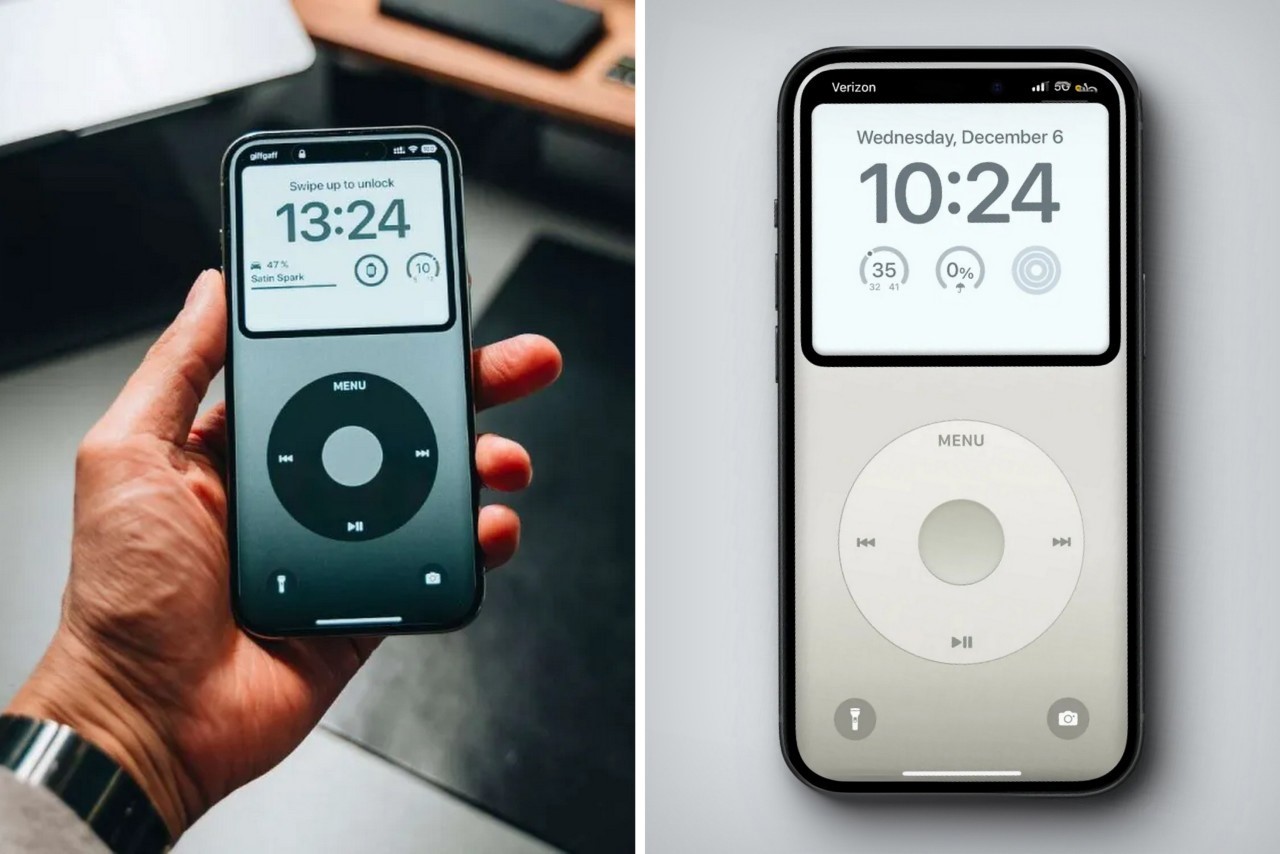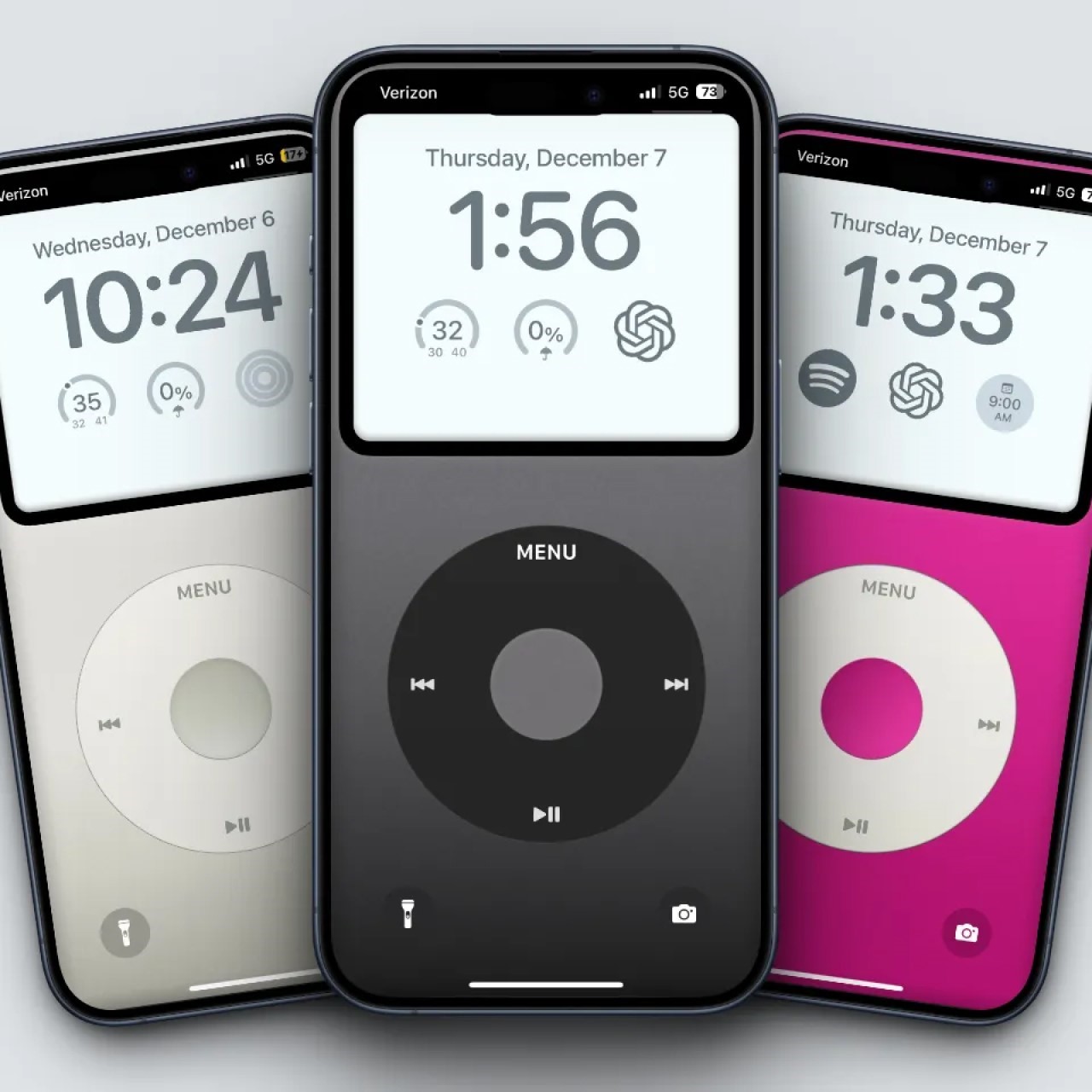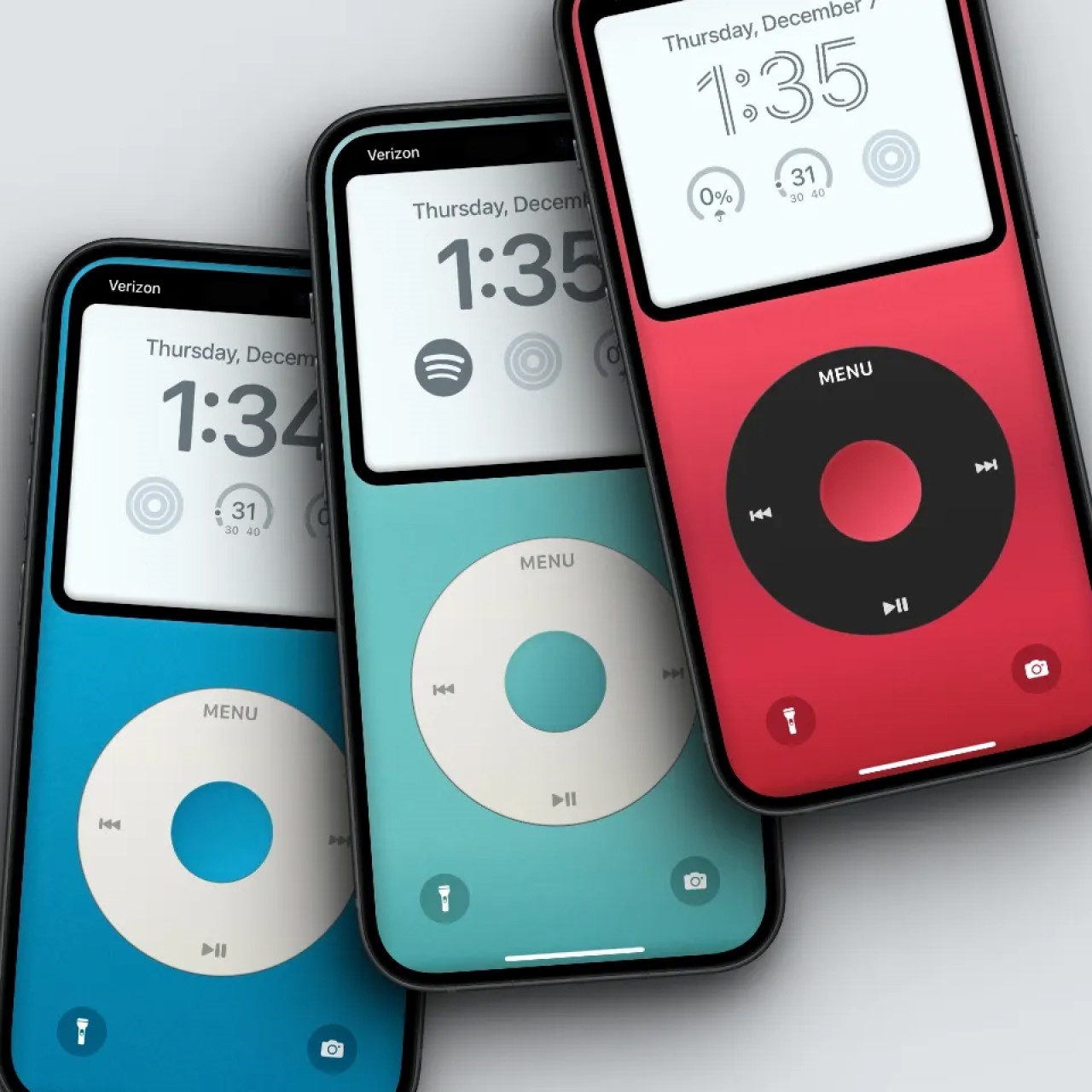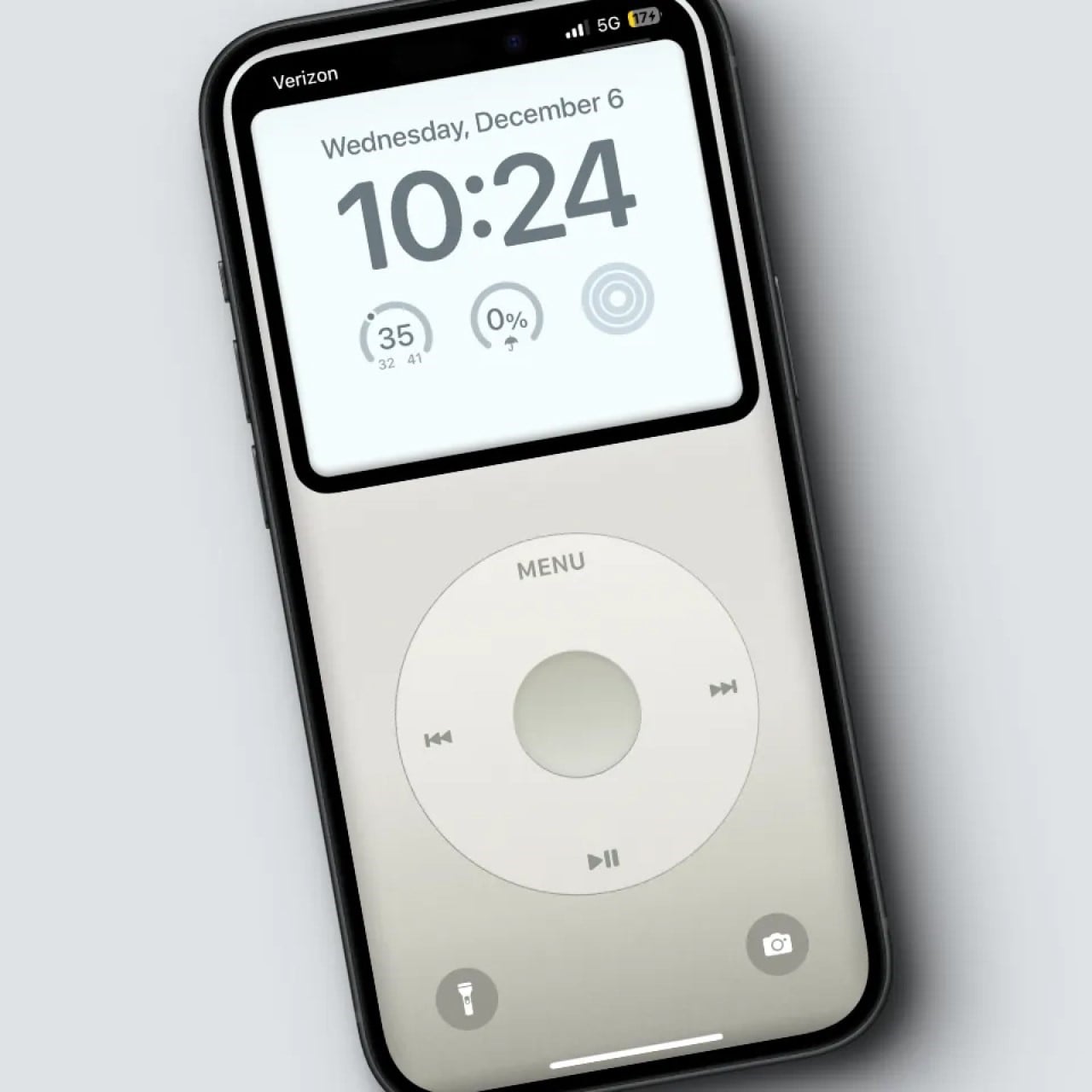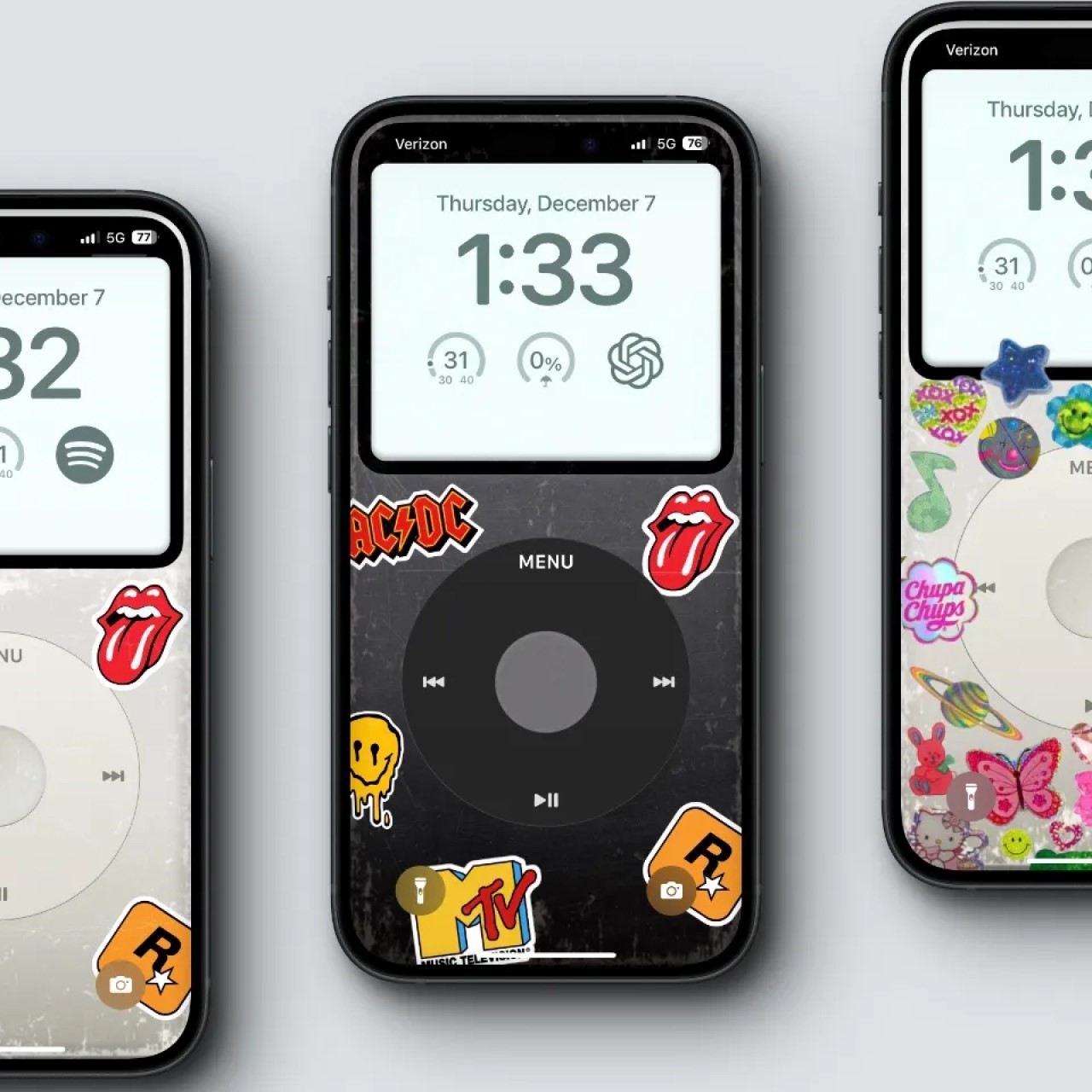
These iPod Wallpapers for your iPhone give it a wonderfully retro-style Lock Screen!

22 years ago, Steve Jobs held in his hand what would quite literally be the turning point of his company. The iPod made its first debut in October 2001, and it’s difficult to picture what Apple would look like without it. Such has its cultural effect been on society that if you’re a millennial with an iPhone, chances are you probably owned (or tried desperately to convince your parents for) an iPod. However, if you missed that boat (or even if you just miss having an iPod right now), Oliur and Shane Levine’s wallpapers have you absolutely sorted. The iPod Wallpapers Pack turns your iPhone lock screen into a makeshift iPod with the popular music player’s display conveniently showcasing the date and time as well as your iPhone lock screen widgets. No, it won’t control music playback. Yes, we wish it did!

Designers: Oliur & Shane Levine

Click Here to Buy Now: $14

Turn your iPhone lock screen into a 6th Gen iPod Classic!

The $14 wallpaper pack comes with 12 different iPod Classic variants to choose from, including color varieties as well as themed and grungy iPods that kids bedazzled with stickers and other paraphernalia. All the images are high-definition, which works exceptionally well on your iPhone’s AMOLED retina screens…

Click Here to Buy Now: $14

The post These iPod Wallpapers for your iPhone give it a wonderfully retro-style Lock Screen! first appeared on Yanko Design.

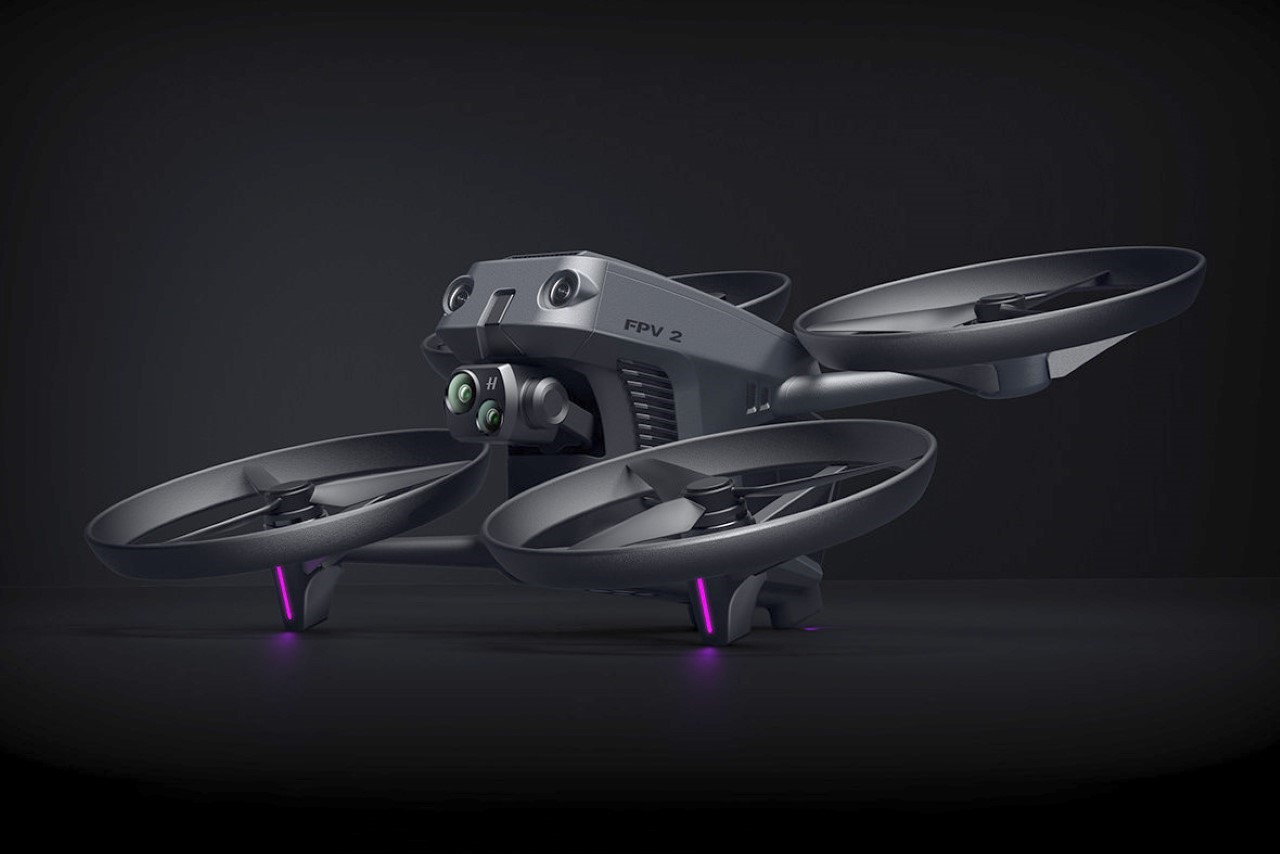
The DJI FPV2 ‘hybrid’ drone can race as well as take aerial photos with its Hasselblad camera system

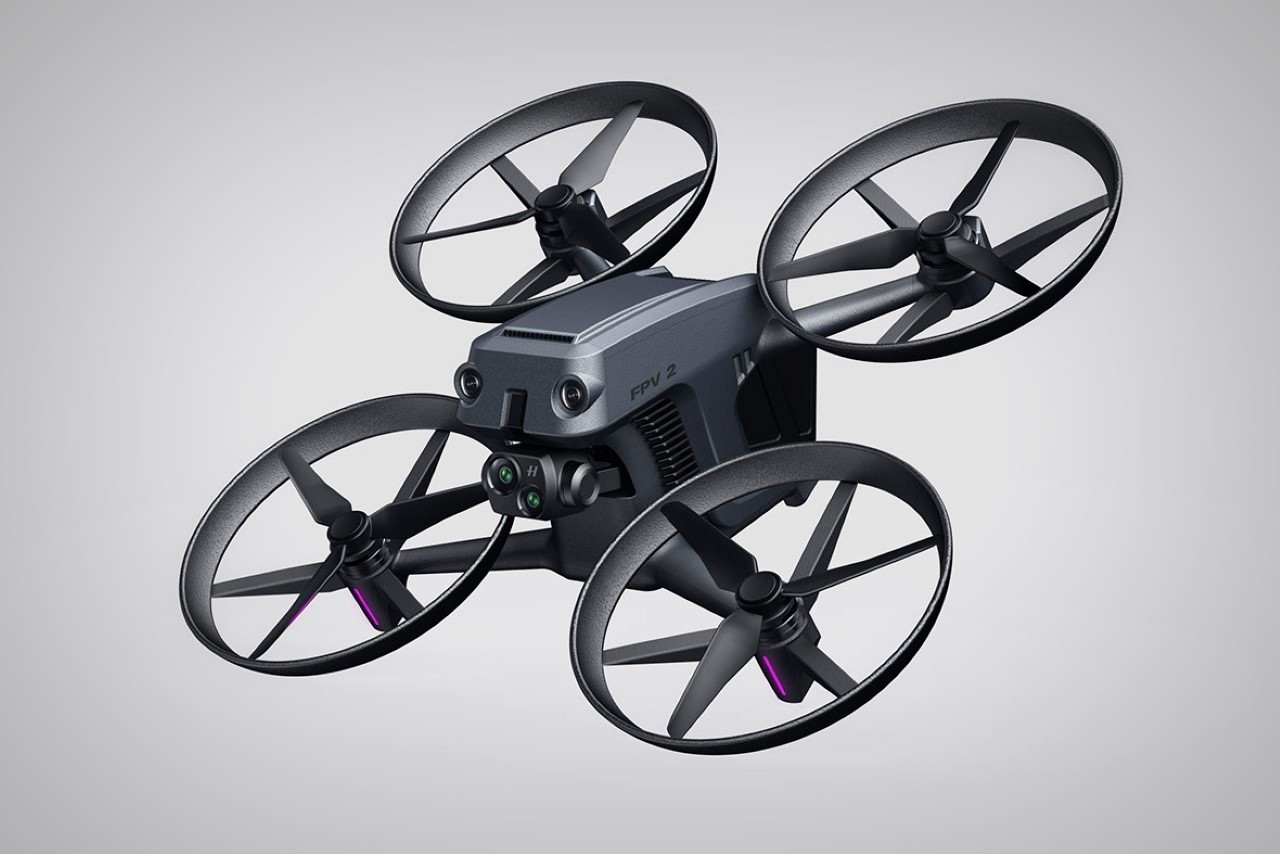
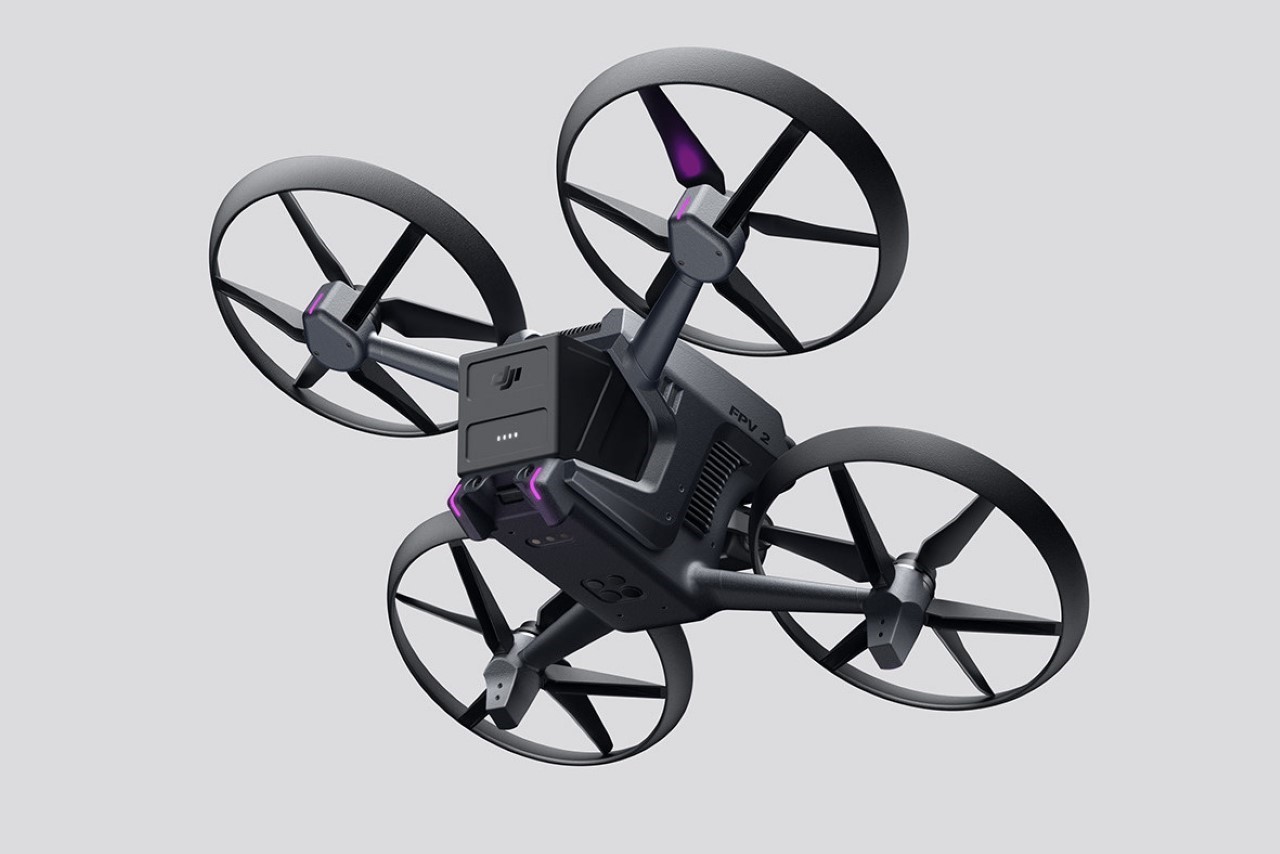
After years of developing some of the world’s leading aerial drones, DJI debuted the Avata last year, their first-ever ‘FPV’ racing drone… and that got designer Kim Seung-cheol asking – Why must there be separate drones for aerial photography and first-person racing? Why can’t one drone successfully do both? To that end, the DJI FPV2 does the unthinkable by being the world’s first ‘hybrid’ drone capable of FPV racing as well as stabilized aerial photo and videography, thanks to its clever design that borrows the best from both worlds.

Designer: Kim Seung-cheol

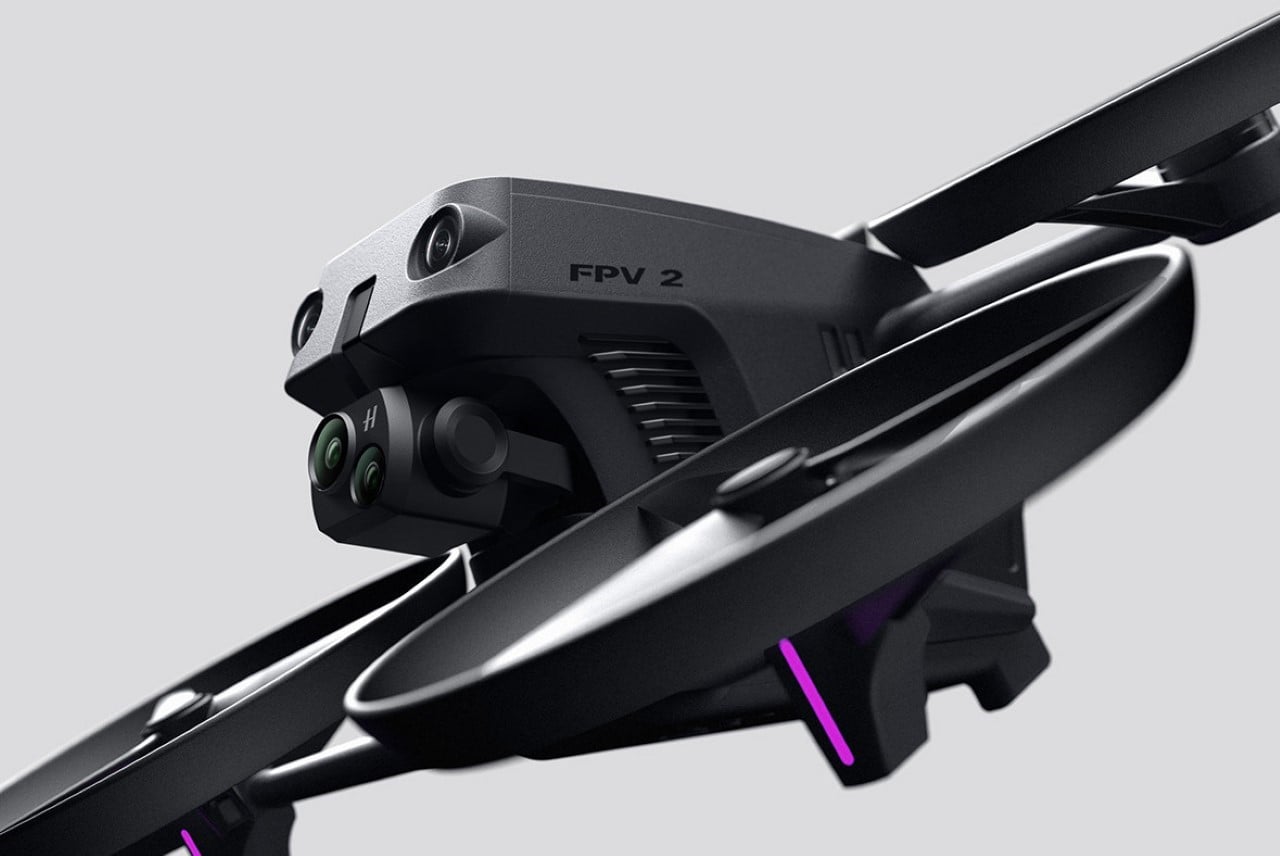
The FPV2 drone doesn’t have a radically different design, but rather relies on a few tweaks to its appearance and control system to give it the power of rapid directional flight as well as controlled hovering for stable videography. It relies on a leaning propeller format that’s ideal for FPV-style racing drones. The propellers are located at a slant and positioned diagonally, making the drone look like it’s bending forward. This is perfect for allowing the drone to lunge ahead as it takes off, giving it a significant advantage when racing with other drones or when trying to reach high speeds. However, for aerial photography and videography, the drone simply leans backwards, allowing the propellers to now be parallel to the ground. The gimbal-mounted camera makes up for this while in aerial photography mode.

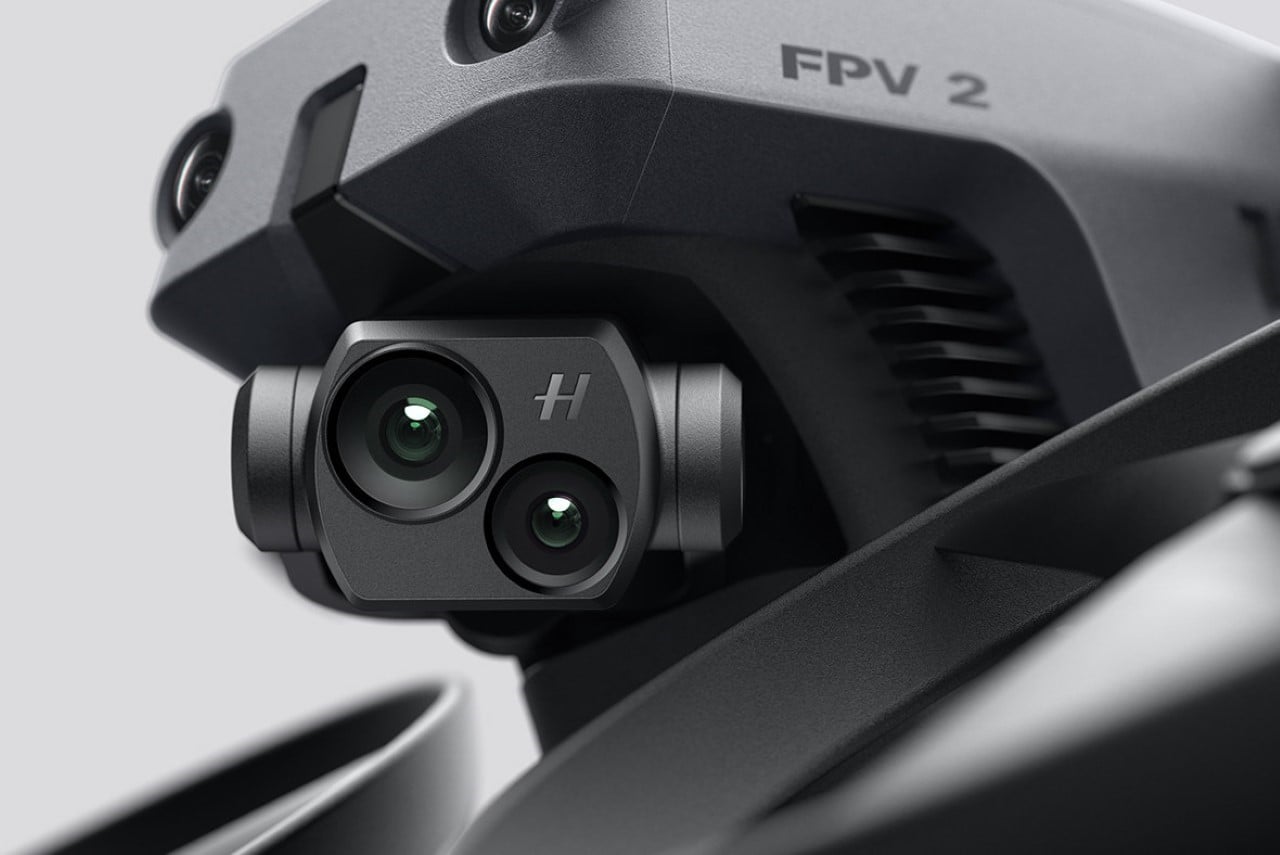
As an obvious upgrade to its Avata and Mini lines, the FPV2 has a new dual-lens camera system powered by Hasselblad (a partnership continuing from their collaboration on the Mavic 3). Quite similar to the Air 3 drone, the FPV2 has a dual-lens gimbal-mounted camera that can look in all directions for filming sceneries, focusing on subjects, and racing. This doesn’t include the multiple cameras located around its periphery for tracking its environment, avoiding objects, and navigating routes.

A large, easily replaceable battery powers the FPV2, allowing you to quickly hot-swap modules to keep your FPV2 running without downtime for charging. The battery’s mass and its rear location help it counterbalance the drone’s forward-leaning stance, or rather the inverse. The drone races forward with a raised back, preventing the battery pack from dragging it down or influencing its course.

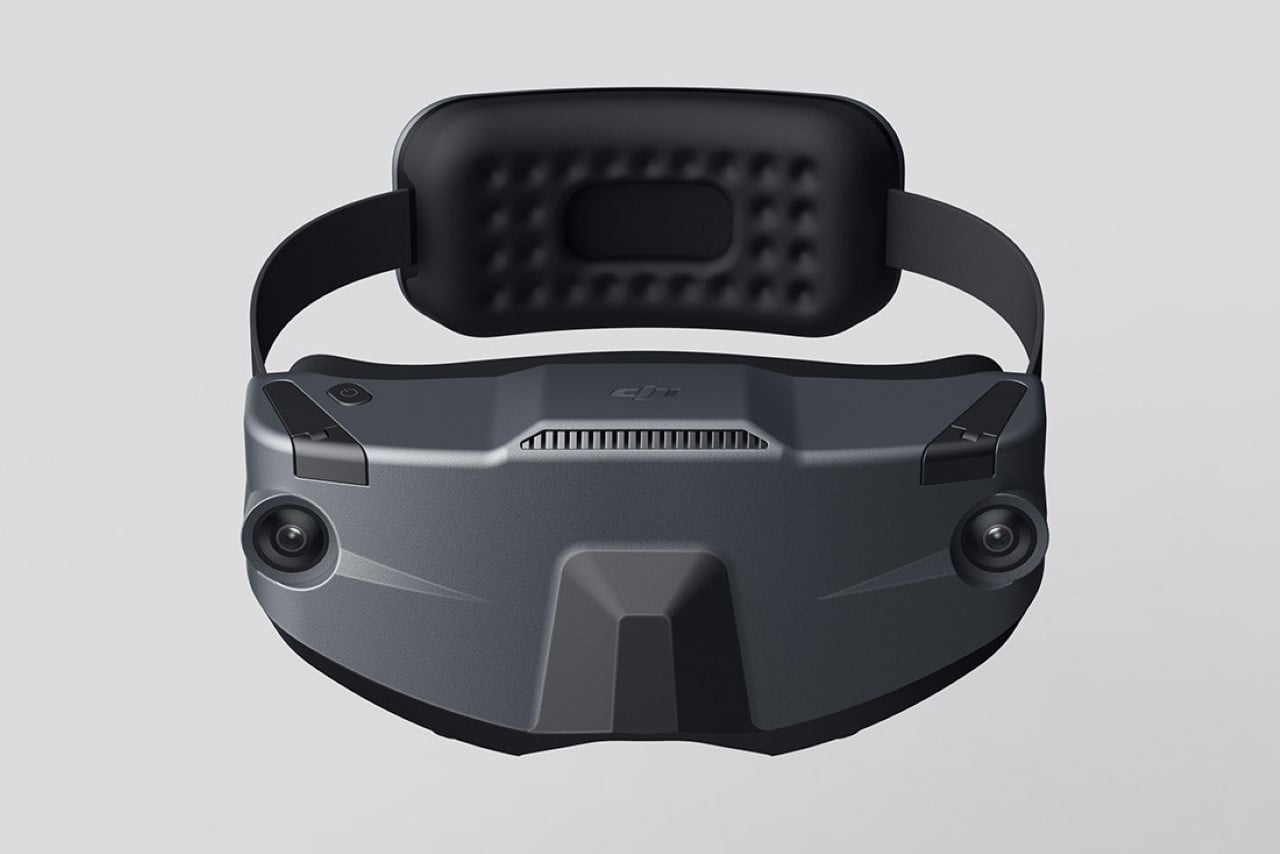
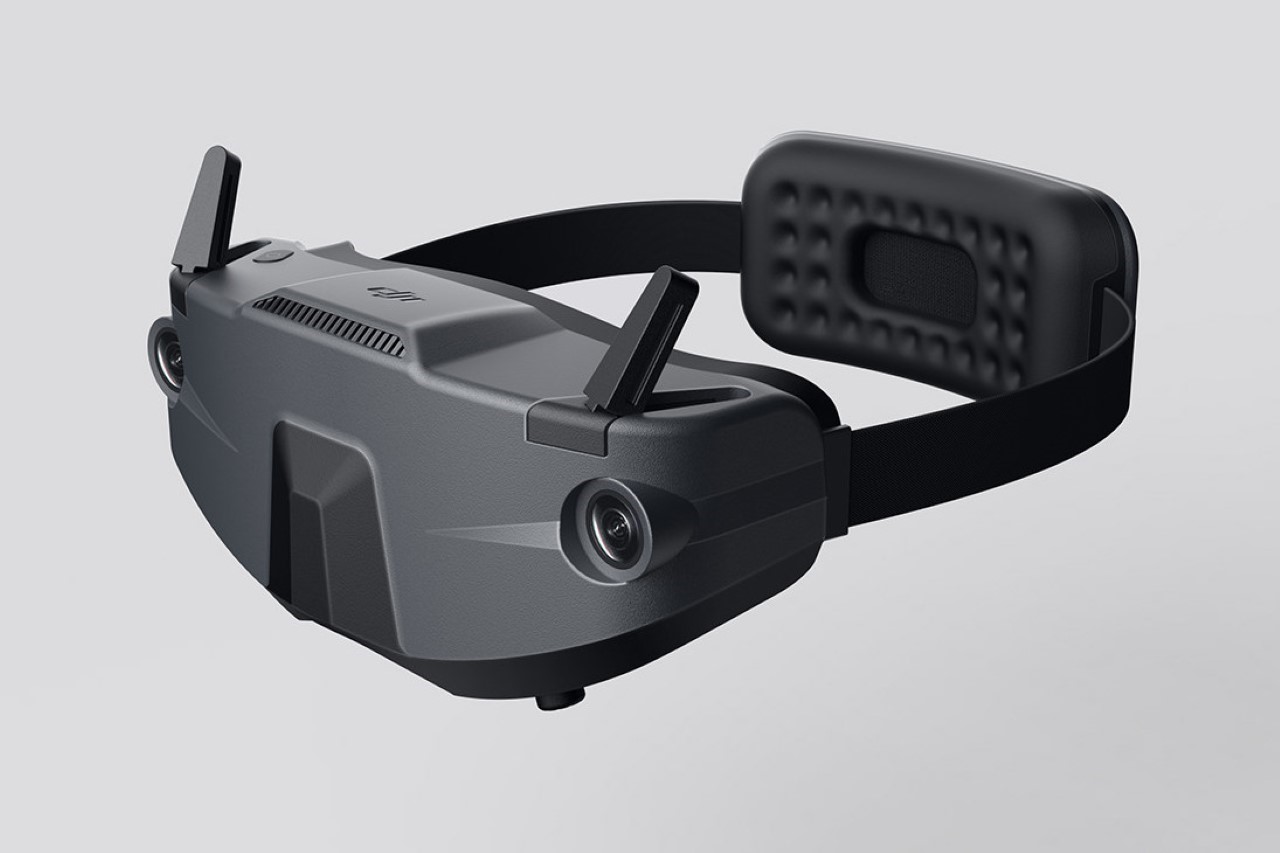
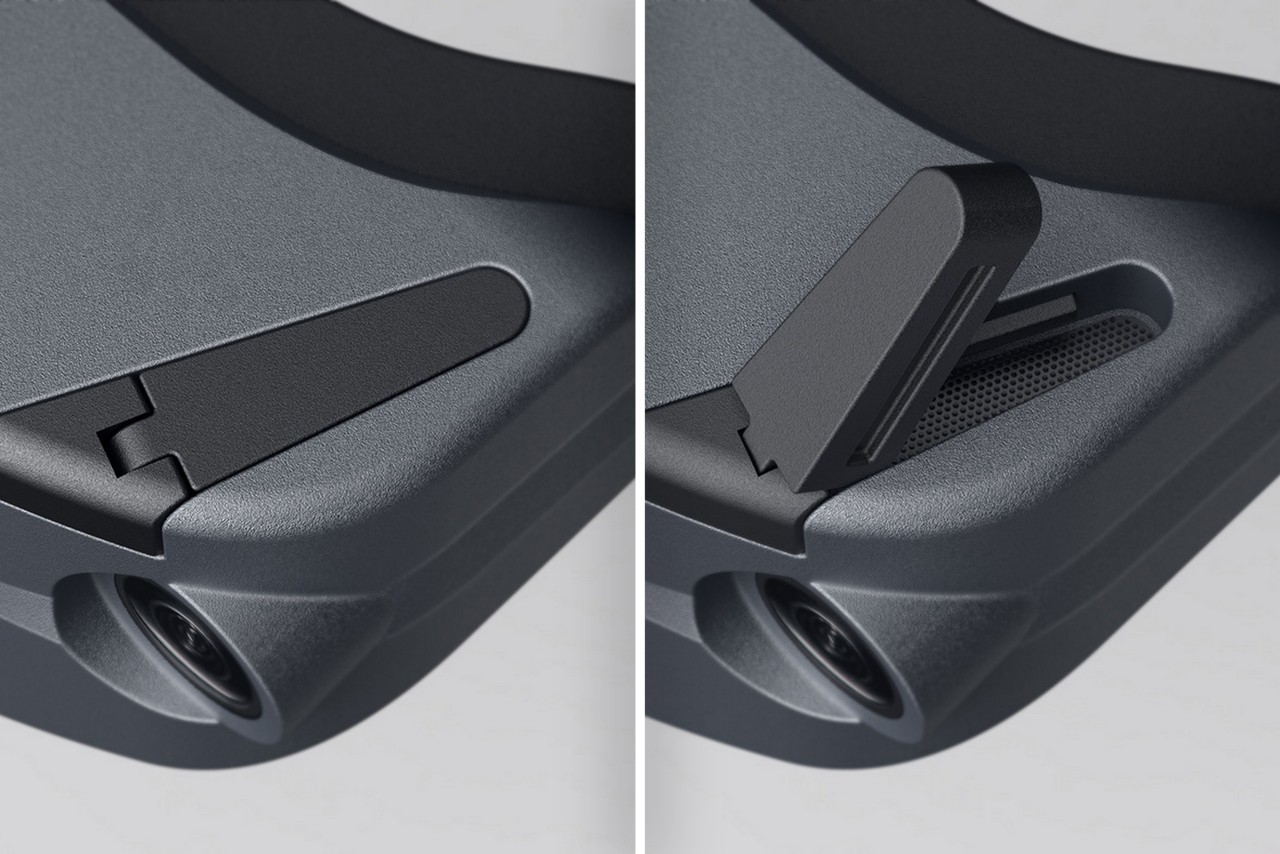
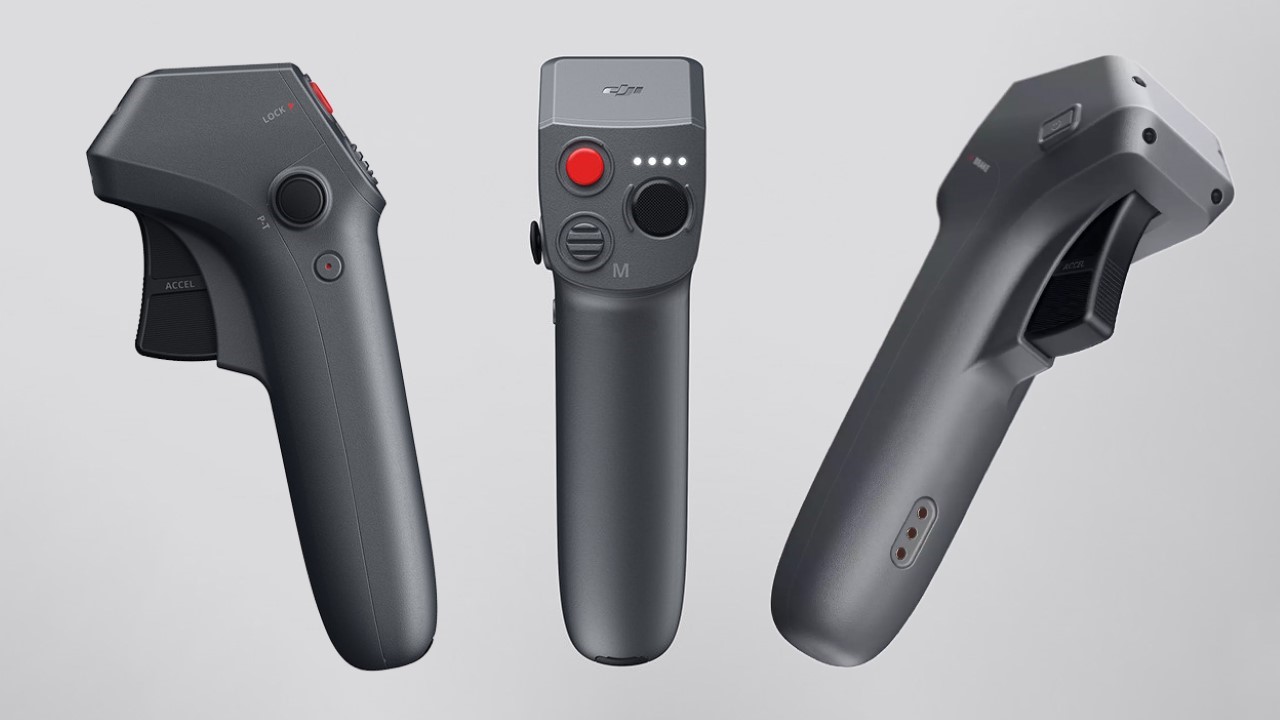
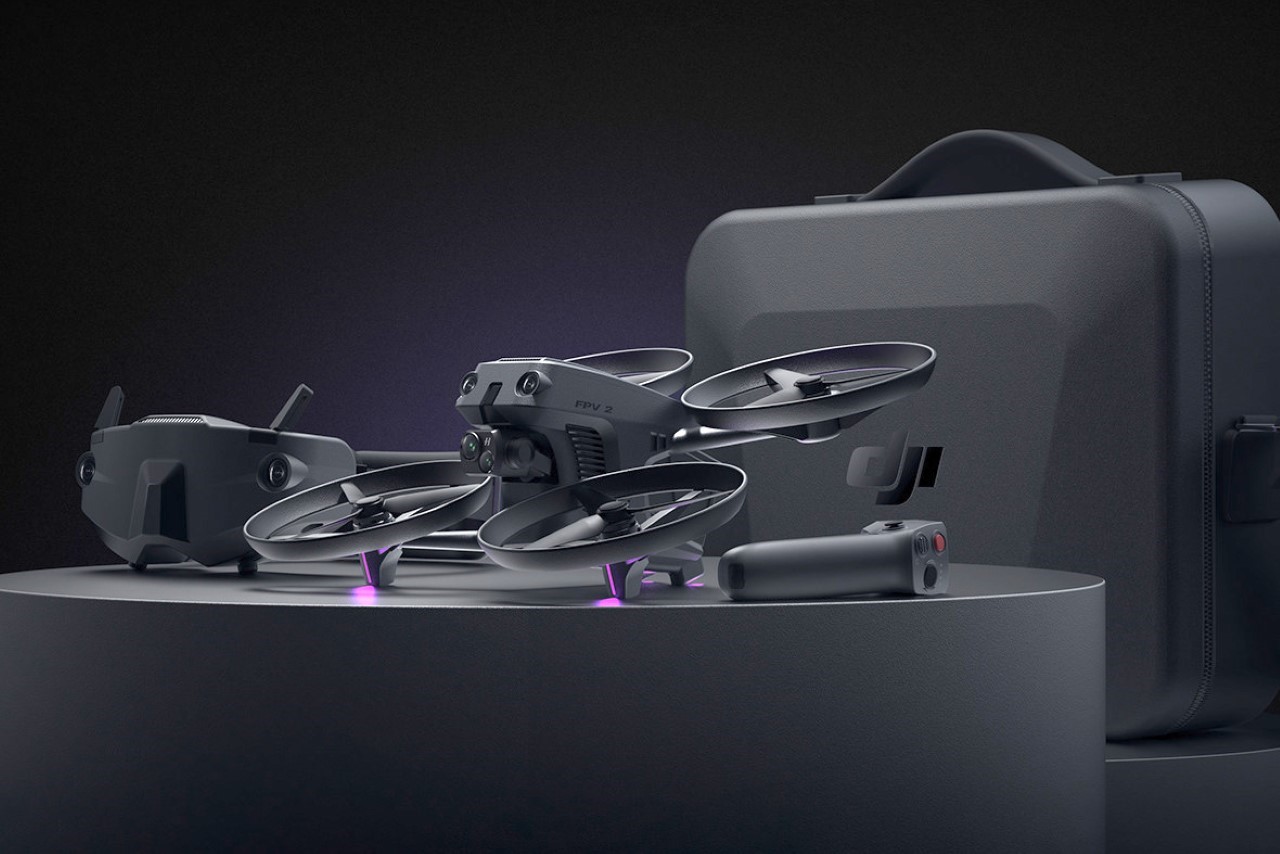
To accompany the drone, Kim Seung Cheol also designed a new set of MR goggles and a controller handle. The compact goggles come with their own pass-through cameras, and sport flip-out antennas for better signal during flight (especially FPV racing). A cushioned headrest with a built-in battery keeps the equilibrium of the headset while also ensuring you can wear it for longer hours without feeling any strain.

Given the immersive nature of the MR headset, the FPV2 also comes with its own RC Motion 2-inspired handheld control that you can intuitively use to maneuver your drone while in flight. The single handheld controller has a gyroscope that detects when it’s being tilted forward or backward, translating that into instructions for the drone to follow. A trigger lets you accelerate, while a joystick gives you more precise control. A large button on the front marked M lets you alternate between racing and aerial modes.

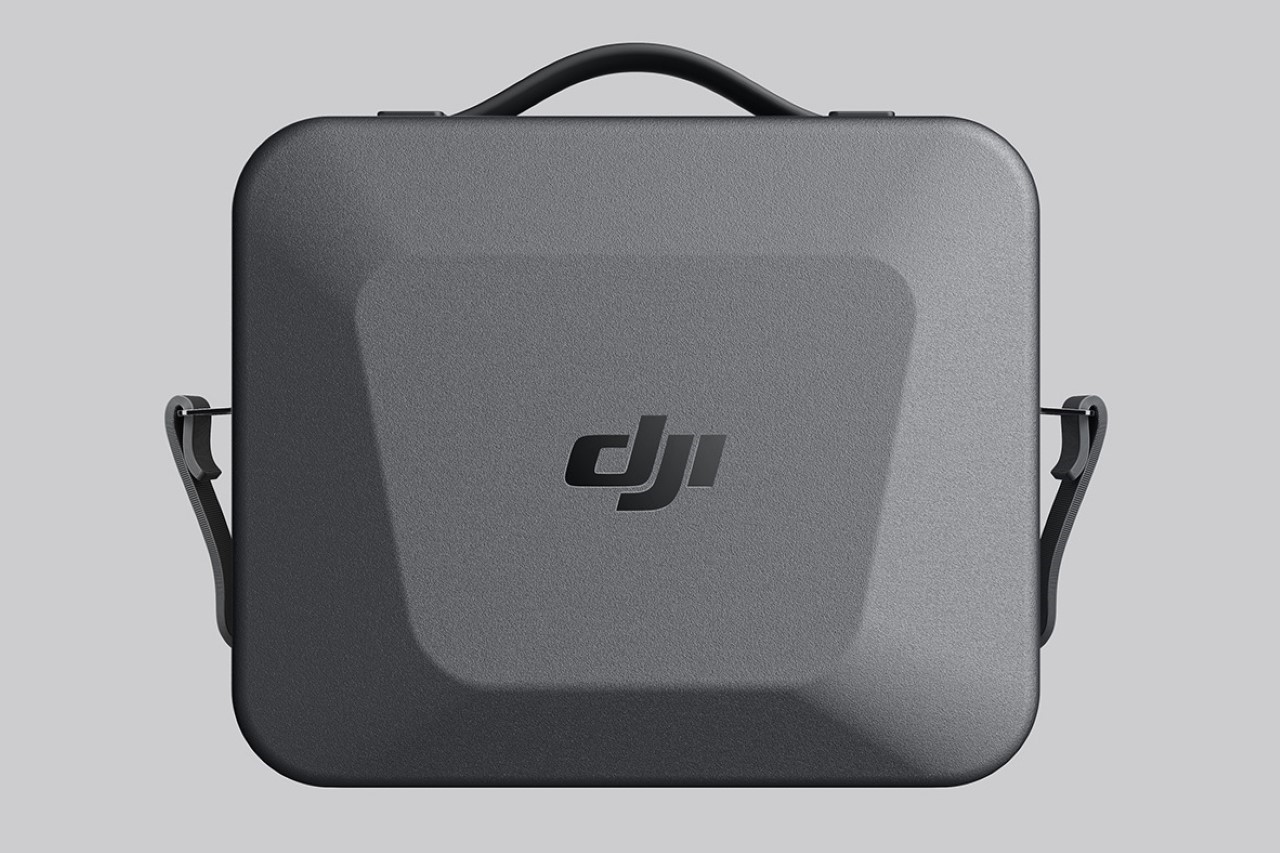
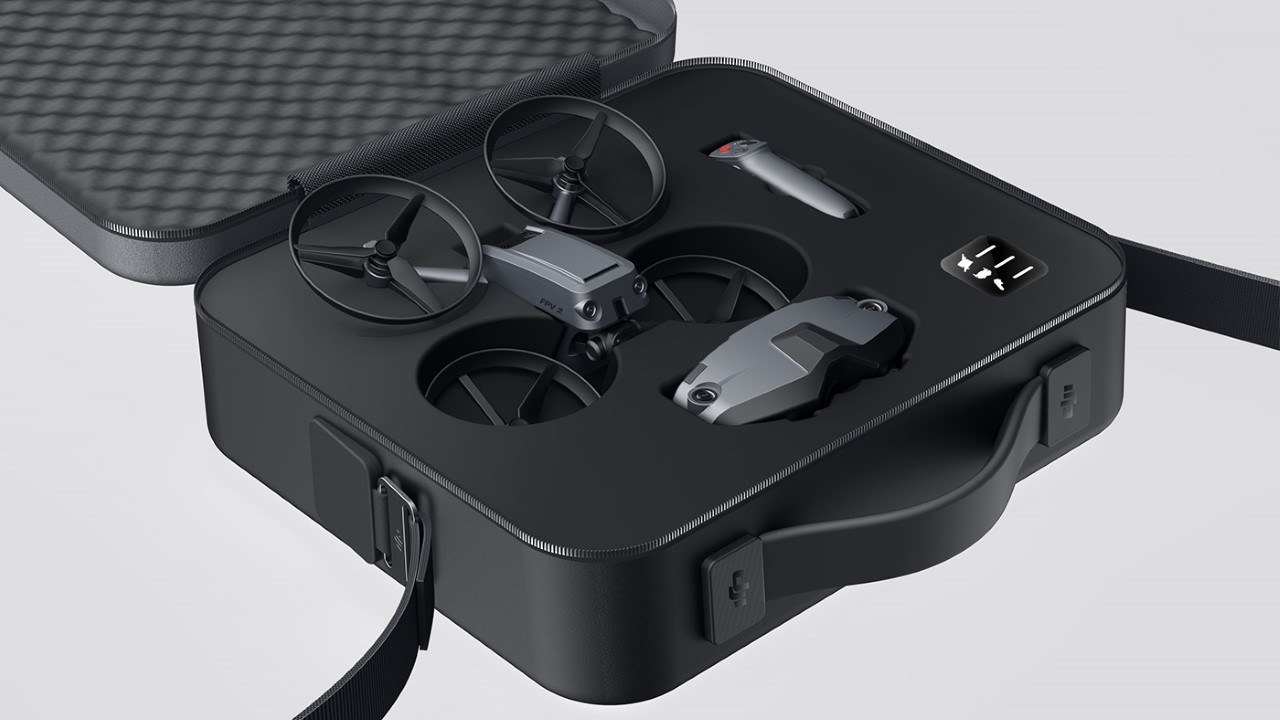
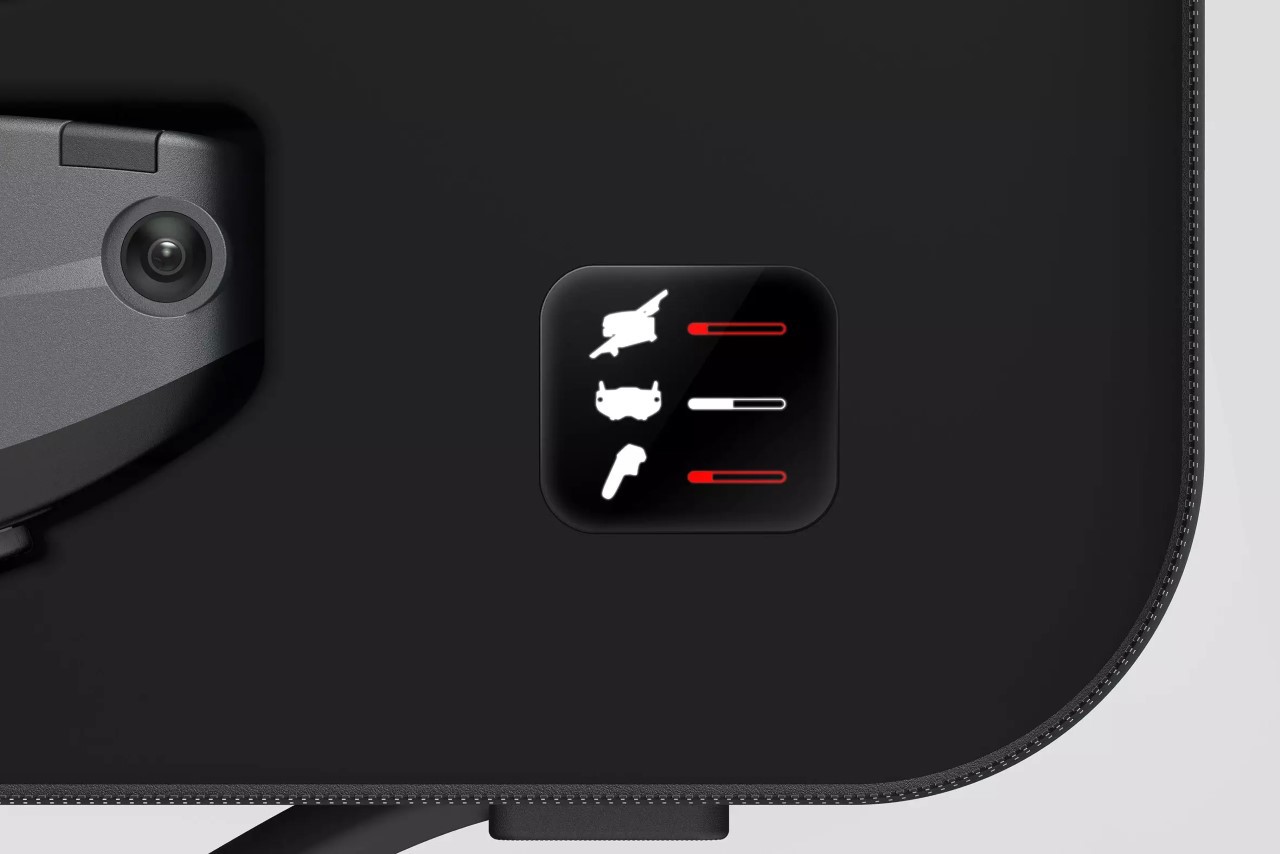
What really gives the FPV2 its edge is the case it comes in, which doubles as a massive battery pack for the drone, controller, and MR headset. Think TWS earbud charging case but bigger and better. Designed to hold your gear when not in use, the carrying case also juices your device batteries while giving you a battery status indicator in the bottom right corner, so you know which particular gizmo needs a recharge.

What the DJI FPV2 proposes isn’t too radical. Some drones are built for racing, others for stabilized content creation… so why not build a drone that can do both? It’s not like the hardware is massively different between the two drone types, and as far as the overall design goes, I’m sure both functions can be achieved within a specially tuned form factor. Maybe DJI is working on something like this, it’s difficult to tell. The company hasn’t debuted a Gen-2 of its Avata FPV drone, so we’re due for an updated racing drone from the consumer/professional-grade UAV manufacturer.

The post The DJI FPV2 ‘hybrid’ drone can race as well as take aerial photos with its Hasselblad camera system first appeared on Yanko Design.

This Travel-Friendly Coffee Grinder is compact enough to travel everywhere with you

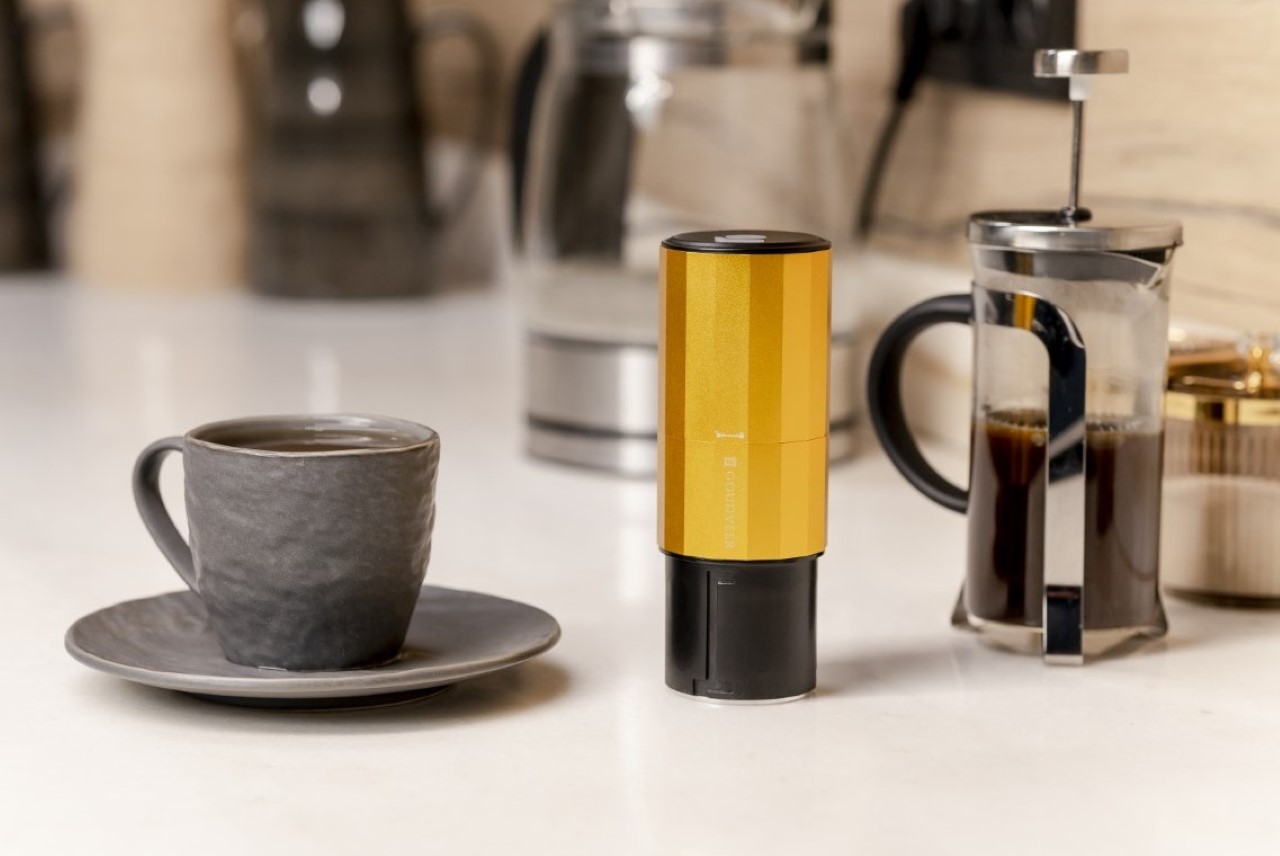
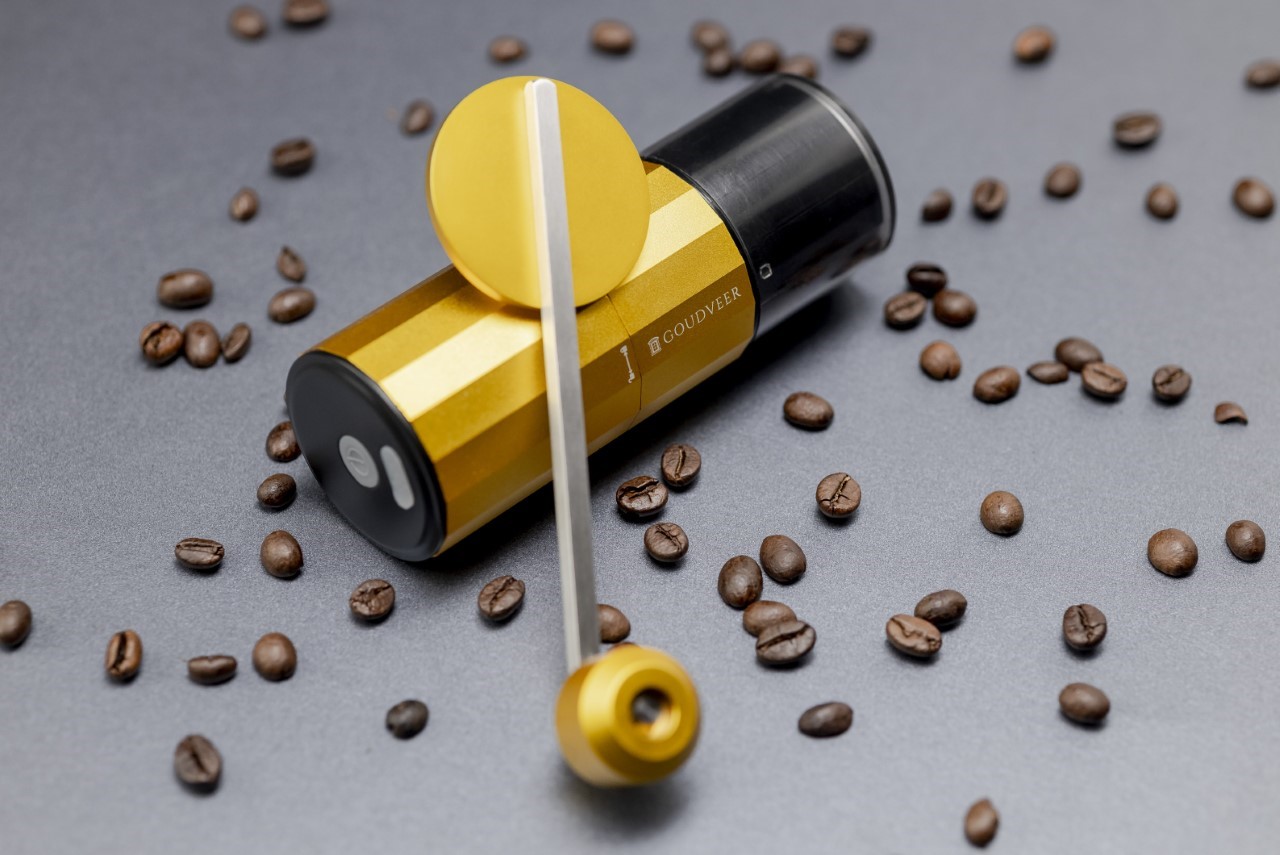
It’s a no-brainer that fresh ingredients lead to fresher-tasting food. Whether it’s a salad or a cup of coffee, the ingredients do play a role in overall flavor… but not everyone has access to fresh iceberg lettuce, and not everyone has the time/energy to freshly grind their coffee every morning. It’s common to err on the side of convenience and I’ll admit to drinking instant coffee when I’m in a rush, or when I’m traveling but the folks at Goudveer have a handy solution. The Goudveer F1 casually combines freshness and convenience together, ensuring that you don’t need to compromise on what might just be the first ritual of your day. The F1 is a portable, sleek, wireless coffee grinder that works both automatically as well as manually. With industrial-grade conical burrs and a motor that offers 100 grind settings, the Goudveer F1 gives you access to fresh coffee whether you’re at home, camping in the woods, or even at a minimally-stocked AirBnb in Osaka. The grinder comes with a built-in fold-out collection tray, and lets you hot-swap a motor for one-button electric grinding, or a hand-crank for a more ritualistic hands-on grinding experience. The best part? It’s practically the size of a small thermos, fitting into bags, backpacks, suitcases, or even your tiny apartment kitchen drawer.

Designer: Goudveer Baristaware

Click Here to Buy Now: $89 $179 (50% off). Hurry, only 2 left!

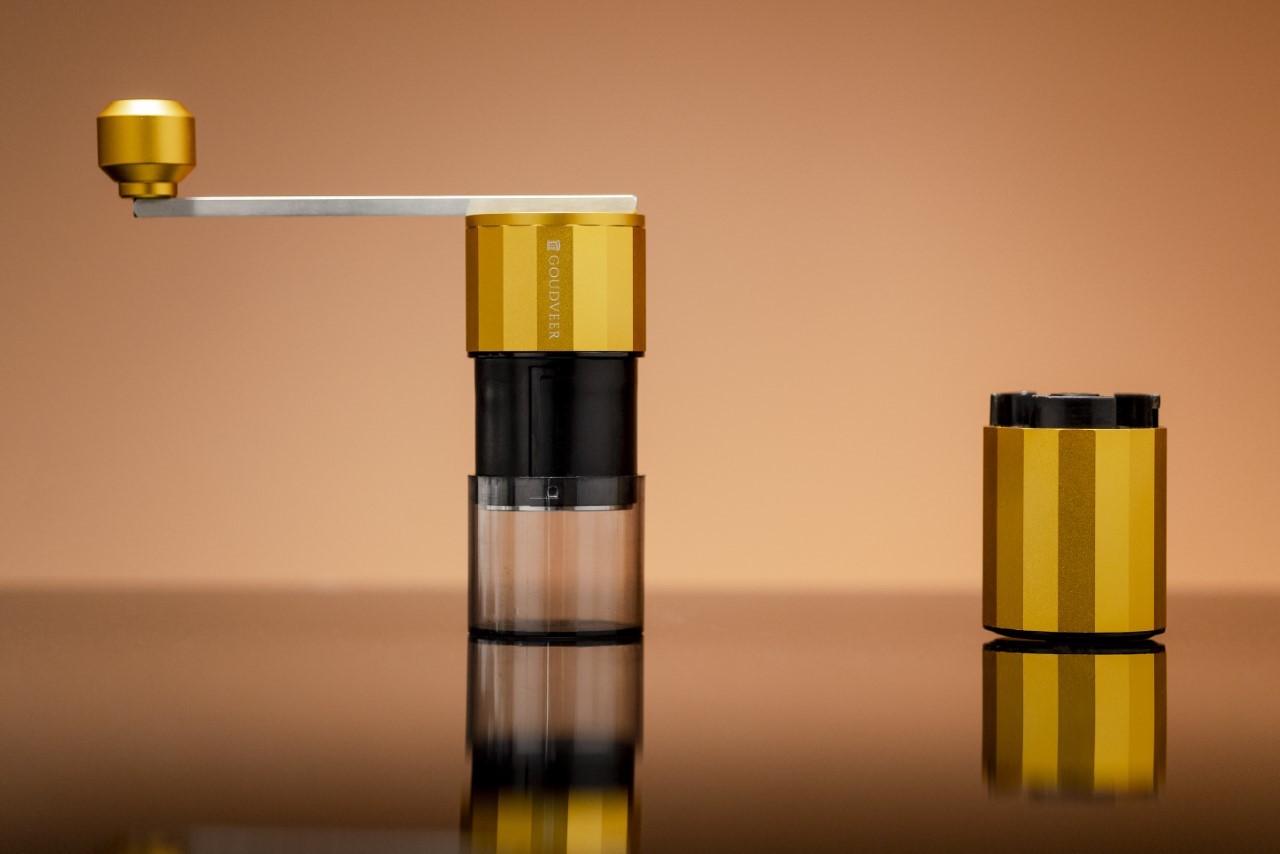
Designed in Norway, the Goudveer F1 has all the hallmarks of Scandinavian minimalism, with a simple-yet-sophisticated vertical cylindrical form factor. A faceted outer body with an anodized golden finish reflects light beautifully, while a fold-out clear container collects the coffee grinds, sort of like an inverted spice grinder. The vertical design ensures that all the coffee falls to the bottom, so you don’t need to smack the grinder around to get all the coffee out. Once done, the container slides telescopically back into the grinder, allowing it to have that tiny form factor that makes it such a travel-friendly pick.

The Goudveer F1 grinds at a speed of 1 gram per second, giving you enough for a double-shot of espresso in 15 seconds.

You can alternate between motorized or hand-cranked versions, letting you choose exactly how involved you want to be in the coffee-making process. Adding the motor gives the grinder more height, so we recommend keeping it when you want a quick, good coffee, or switching to the manual mode for travel. To keep things compact, the motor gets replaced with a simple hand-crank when used in manual mode. Rotate the handle and your coffee grinds through, effectively turning into a coarse or fine powder at the speed you like. Once you’re done, a quick rinse and dry should be fine, or if you want to place the F1 in your dishwasher, just remember to remove the motor before you do.

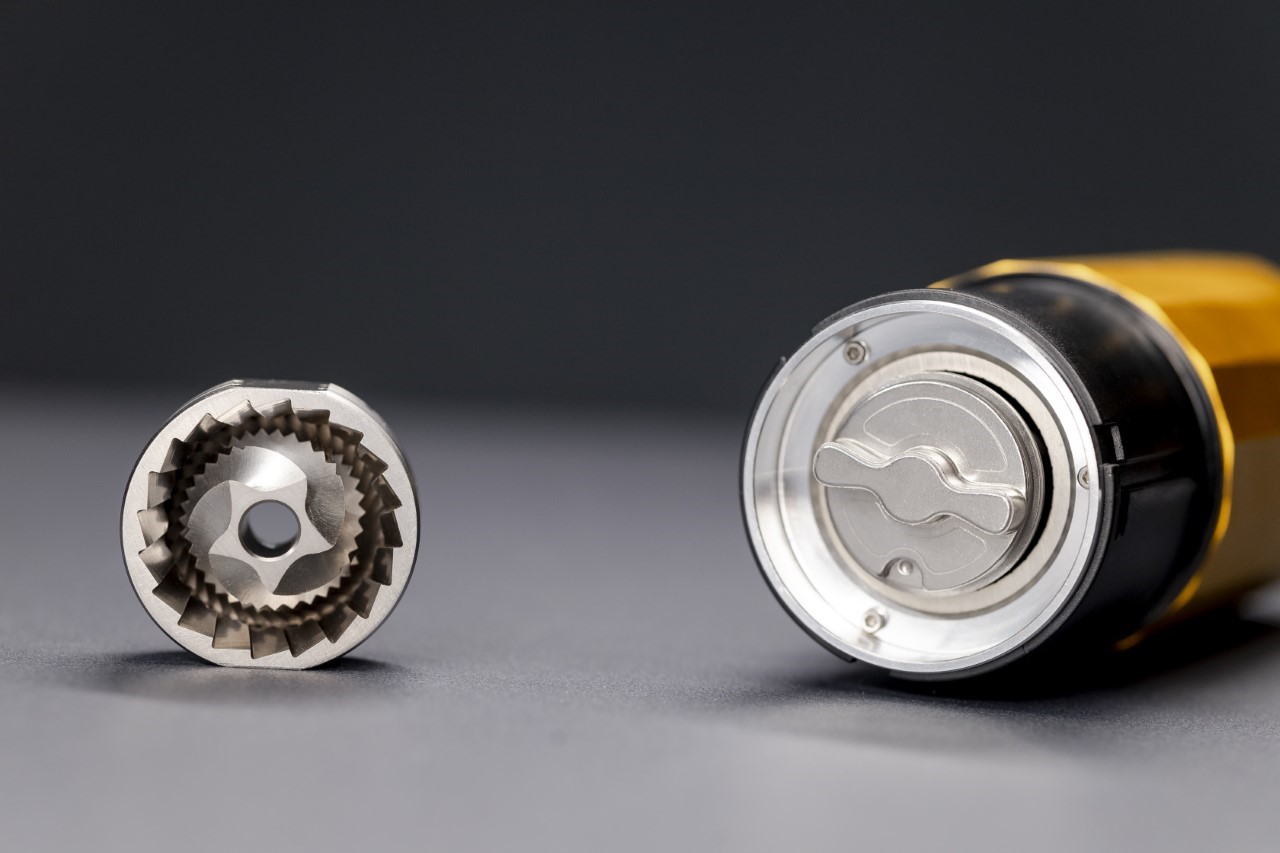
The patented motor and burr drive work efficiently at just 60 decibels

With 100 precise settings to choose from, the Goudveer F1 lets you fine-tune your grind, keeping it coarse for a French press or pour-over, or go superfine for an espresso machine or Turkish-style Cezve. 48mm five-star conical burrs made from high-quality stainless steel let you control your grind in increments of 0.018 mm or 18 microns (for reference, a human hair is 70 microns thick), giving you barista-level consistency. The 120W motor works with the tap of a single button, operating at a fairly quiet 60dB volume and grinding at speeds of 1 gram per second so you’ve got a 15-gram yield in just 15 seconds. The motor is powered by a battery that lasts for 35-50 grinds on a full charge, and charges via USB-C. An auto-stop feature kicks in if something (like a large coffee chunk or a loose staple pin) gets stuck in the burrs, preventing damage.

Charge it with a USB-C charger or even a power bank!

The Goudveer F1 ticks all the right boxes, from its compact size to its durable build, adaptable design, fast-yet-quiet motor, and ultimately its $89 price point which only includes the motorized variant. If you want both motorized and handheld options, a discounted $99 price tag fetches you an adaptable version of the world’s smallest pro-level electric coffee grinder.

Click Here to Buy Now: $89 $179 (50% off). Hurry, only 2 left!

The compact size makes it perfect for traveling

The post This Travel-Friendly Coffee Grinder is compact enough to travel everywhere with you first appeared on Yanko Design.

These 100% American-made sporty timepieces pay a grand tribute to racing legends like McQueen

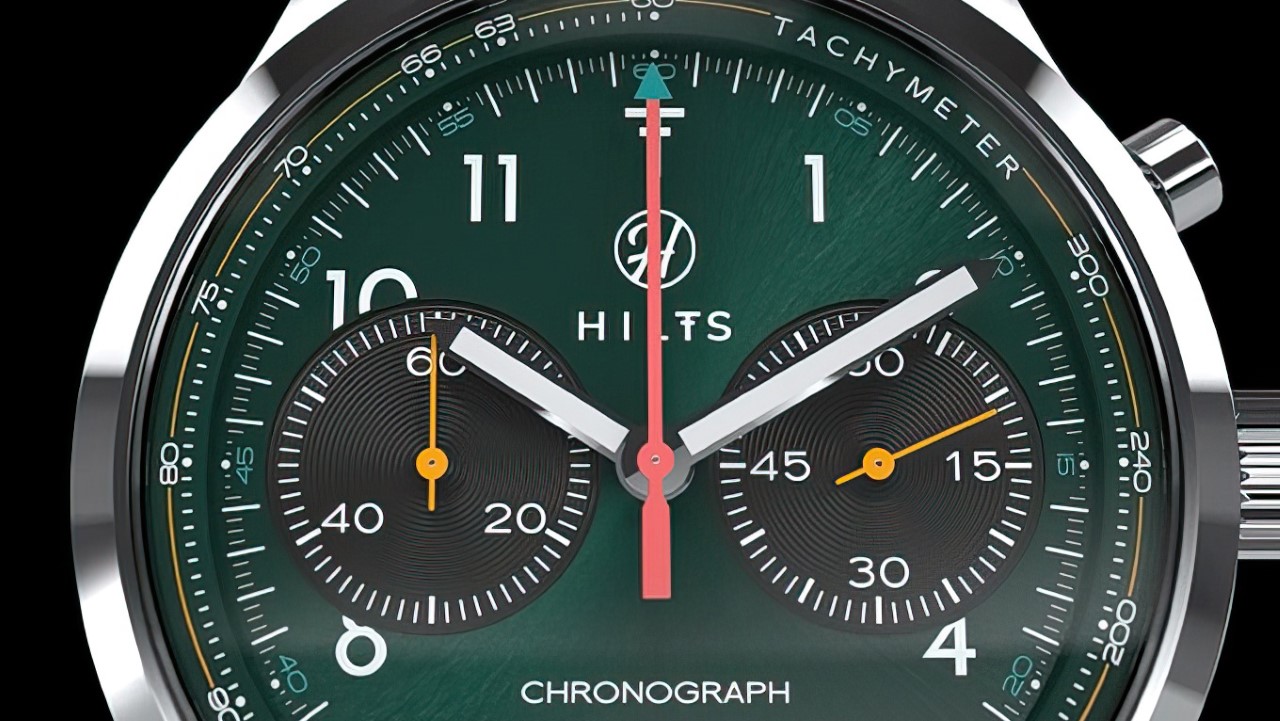
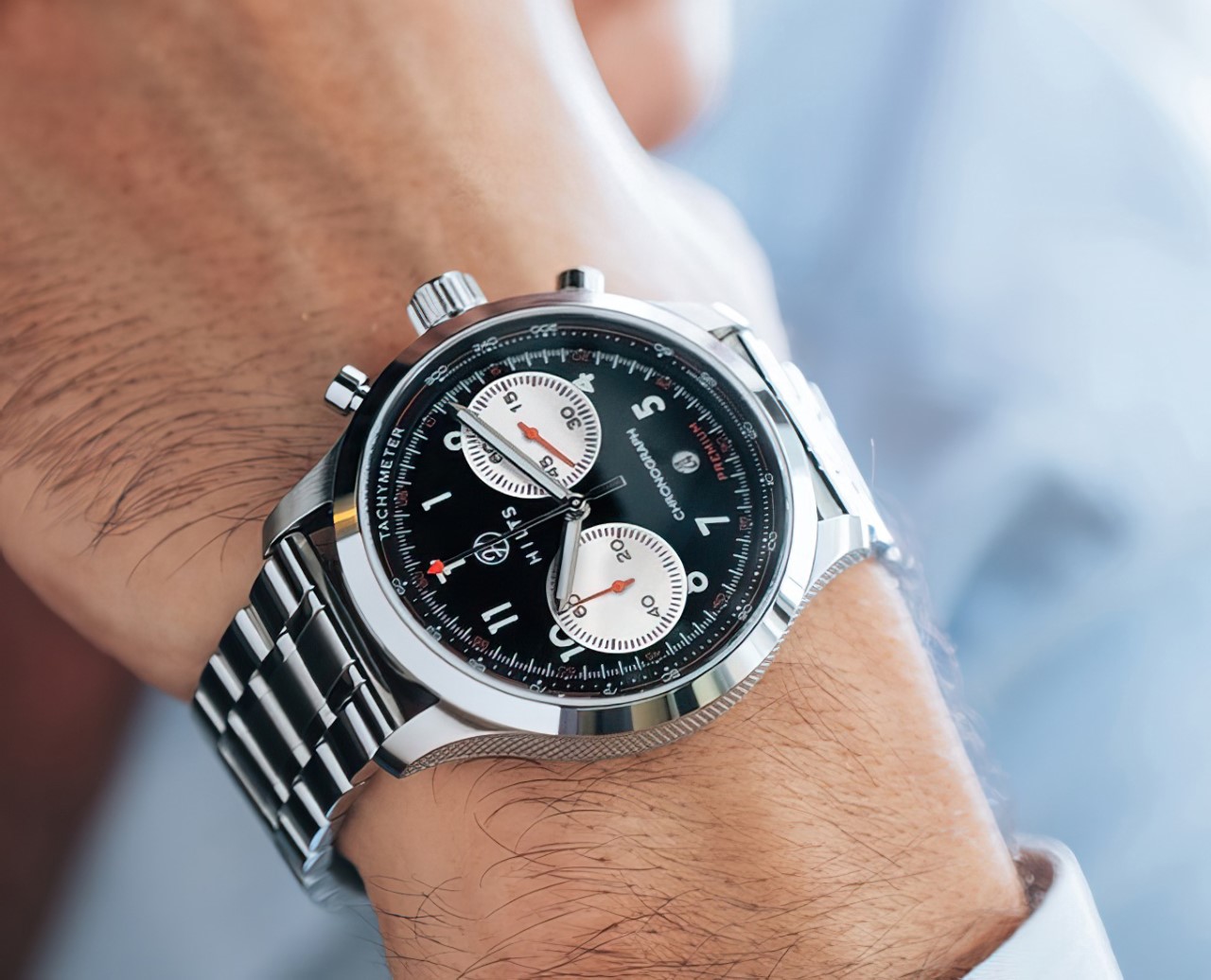
“In an era where conformity and generic designs dominate, something has been lost,” say the folks at Hilts Watches. “Charisma and sophistication have become rare, leaving a longing for those iconic styles of the past.” There’s definitely some truth to looking at the past through rose-tinted glasses, but then again, we’ll probably never get to relive an era with another Steve McQueen, another “Dickie” Atwood, or Dan Gurney. I remember reading about a 19-year-old who recently broke Arnold Schwarzenegger’s bodybuilding record and my instant gut reaction was to say, “There’s never going to be another Arnold”. Celebrating this glorious (some may say Golden) past, Hilts’ latest watches take inspiration from the modern-day kings who ruled our lives by ruling the tarmac and even the silver screen. With a gorgeously sporty design featuring two sub-dials and a retro aesthetic that stands out in today’s smartwatch-dominated world, Hilts’ chronographs are made in the good ol’ US of A using premium materials you’d find in haute Swiss timepieces.

Designer: Stephen Scott

Click Here to Buy Now: $599 $799 ($200 off) Hurry! Limited units for sale.

The Hilts Monaco ’29 Watch

The Hilts Atwood Watch

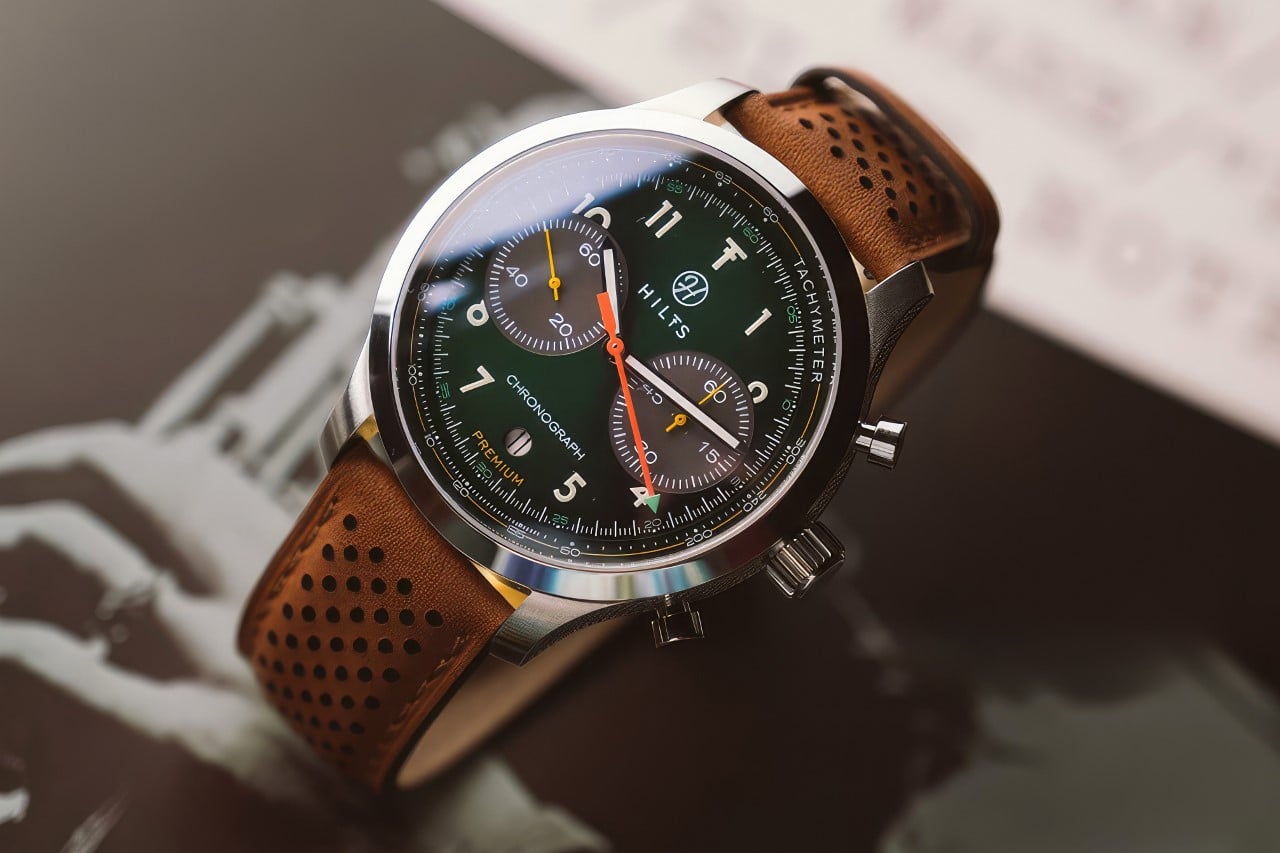
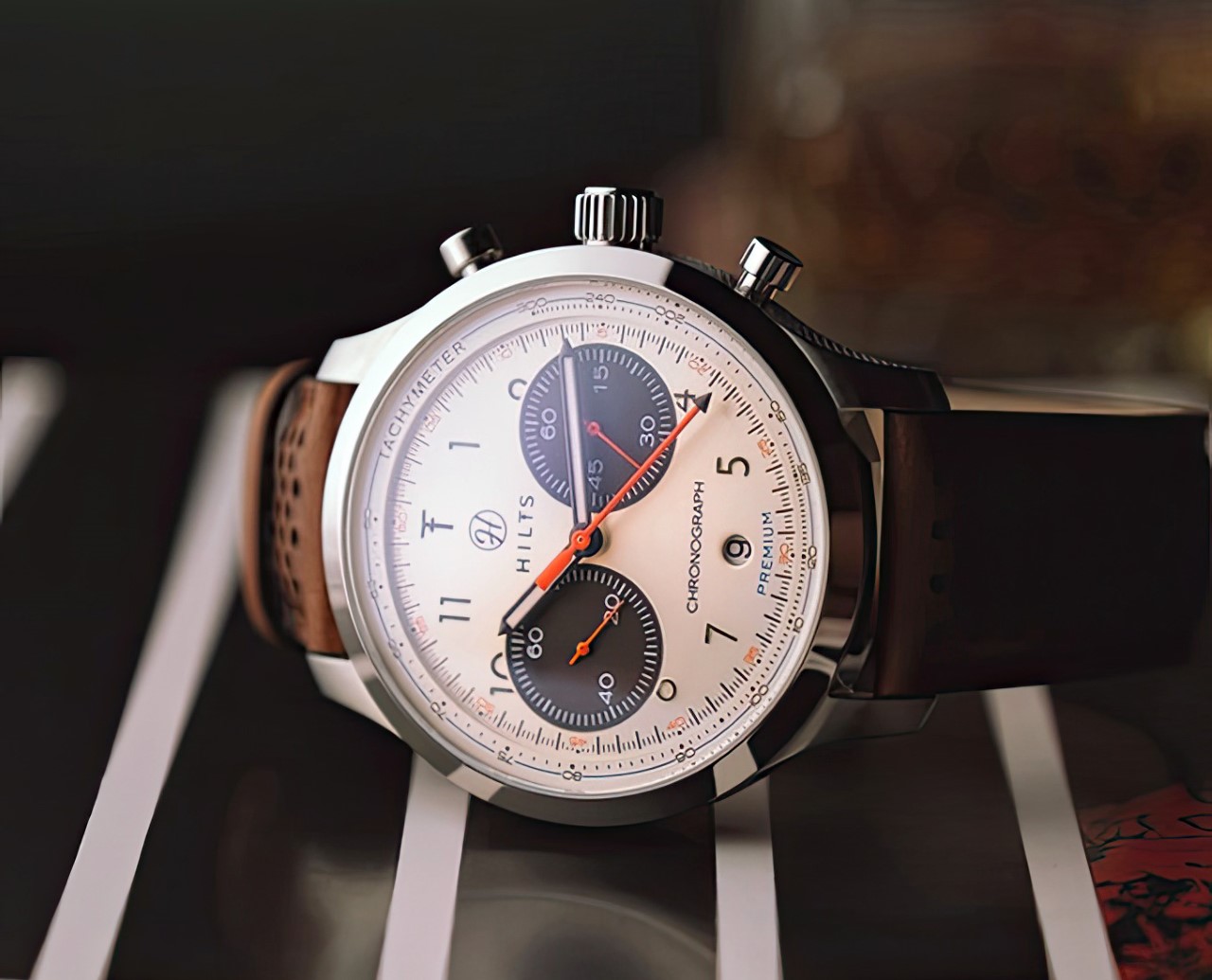
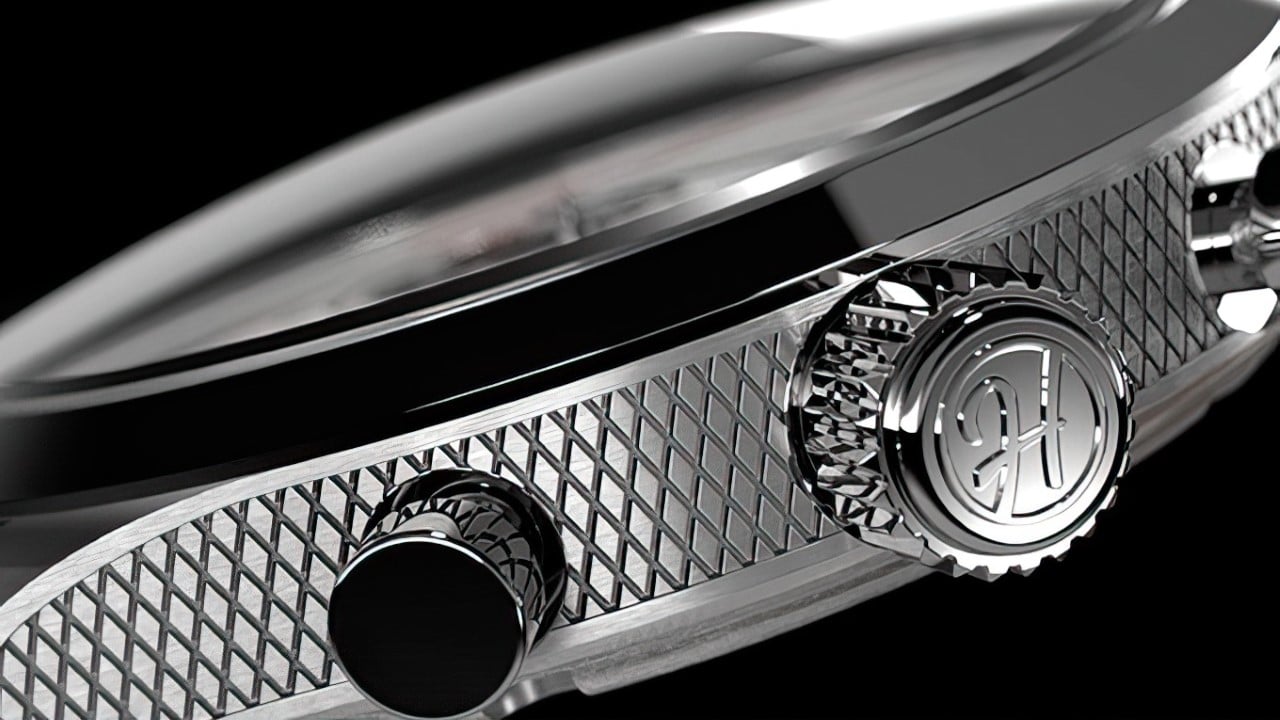
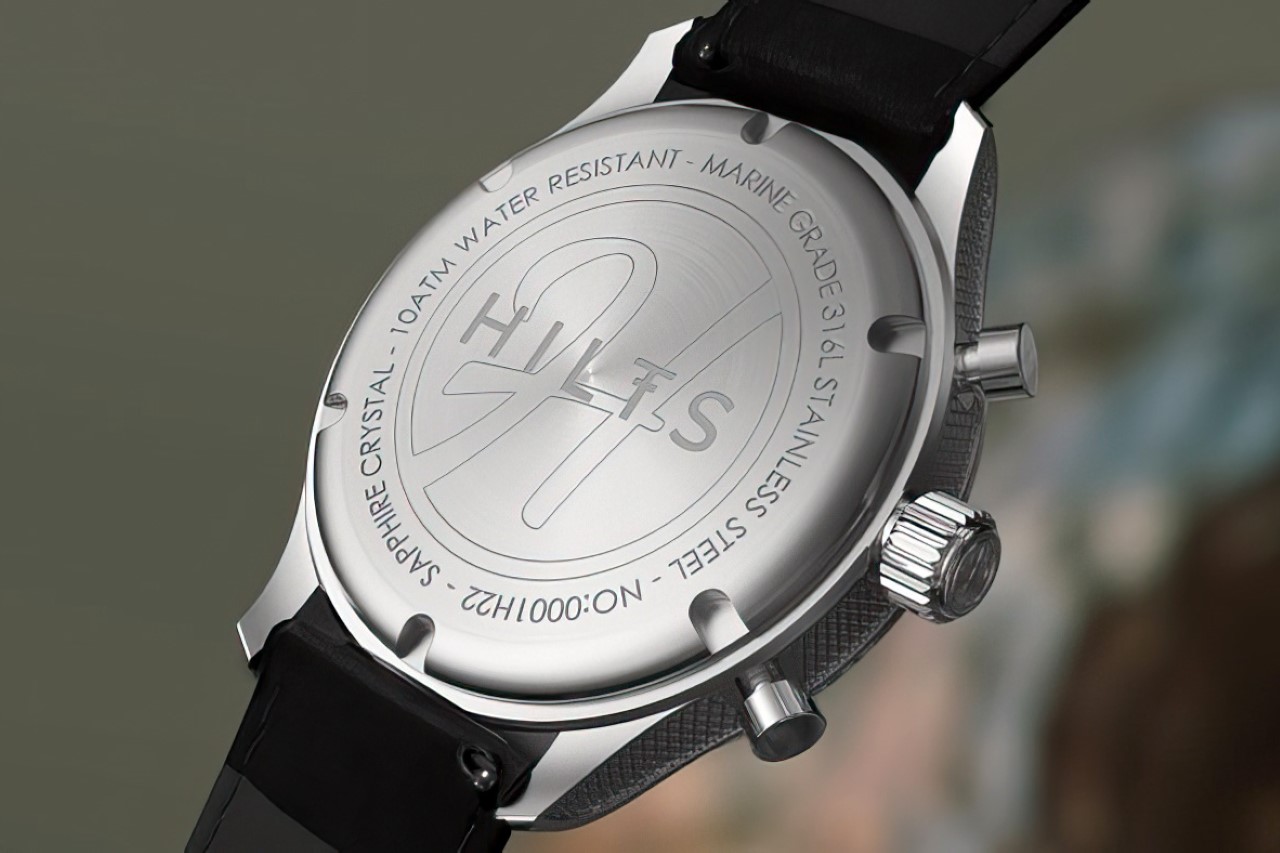
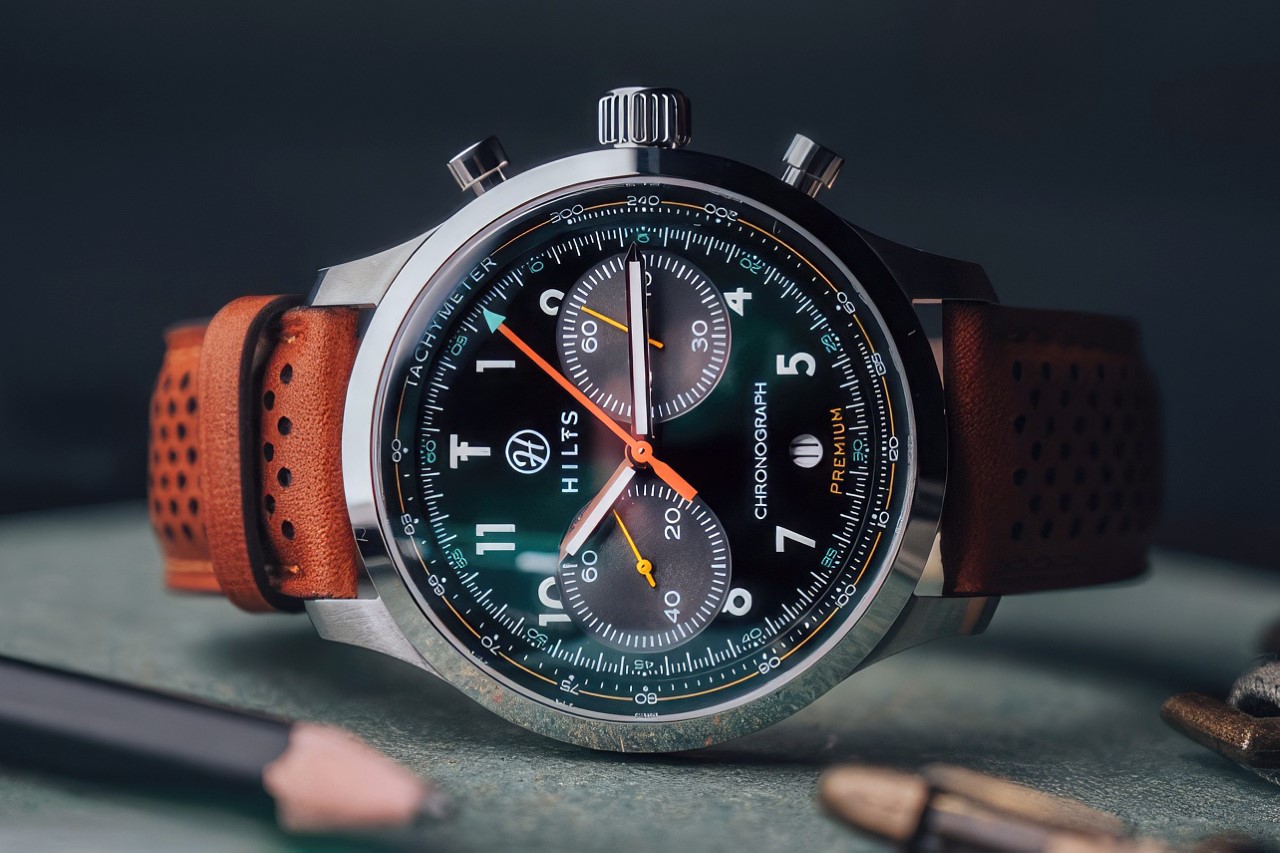
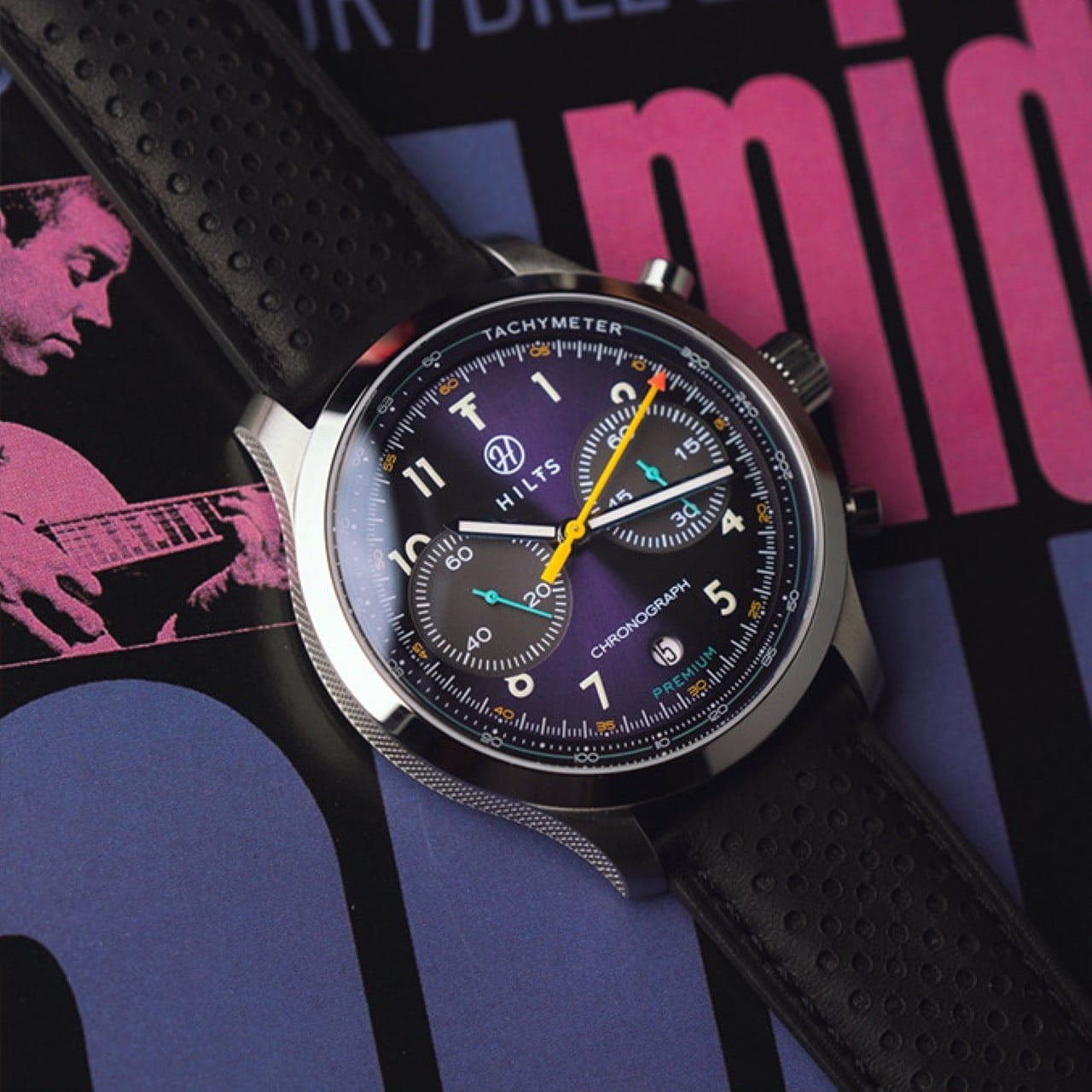
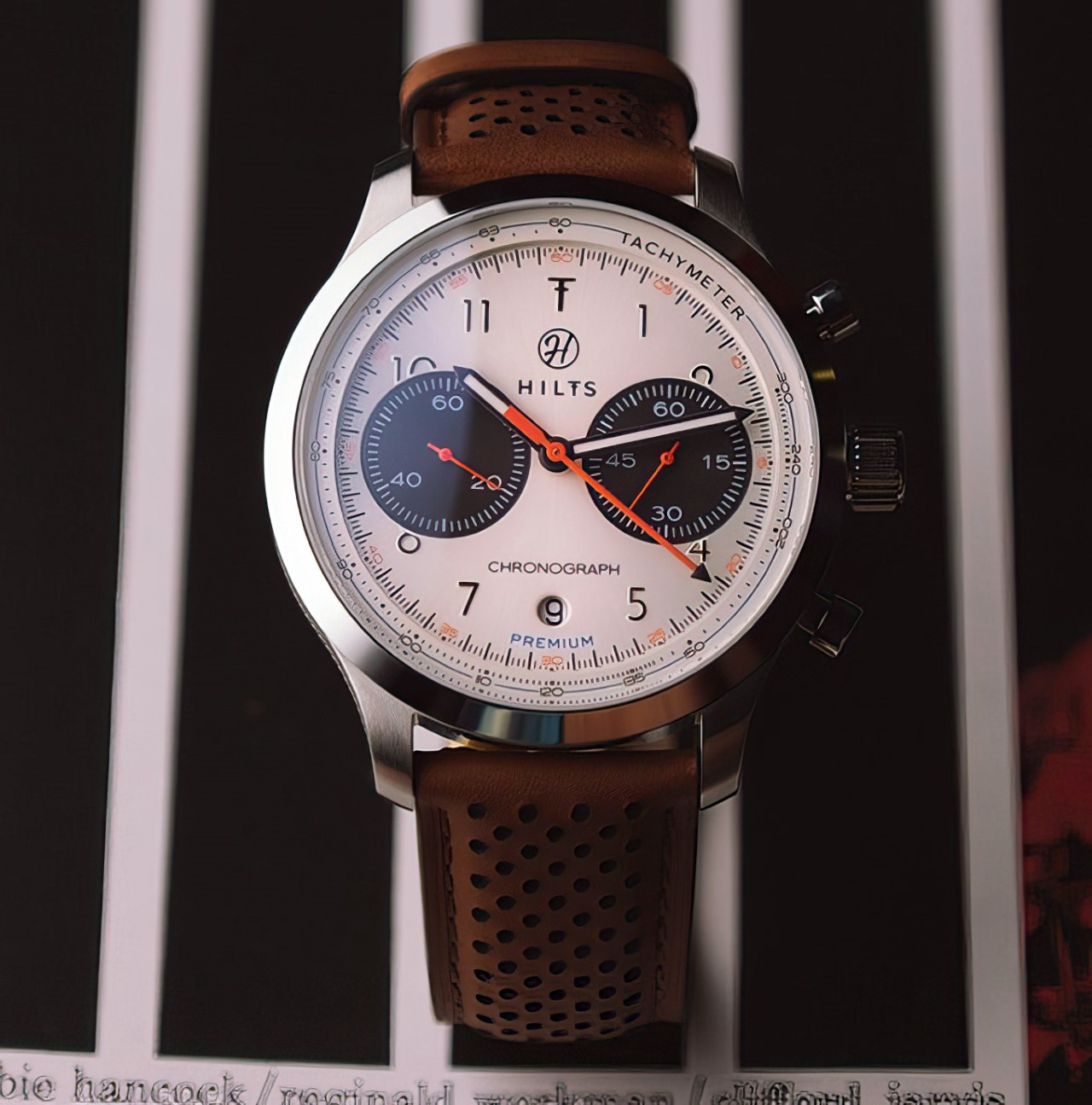
The Hilts Precision Chronograph has all the hallmarks of a good racing watch. With a speedometer-esque design featuring two sub-dials, a date-window, and even a tachymeter, the watch is an instant modern classic. The dial, complete with highly visible markings (coated in Swiss Superluminova no less) and a sporty arrow-shaped seconds hand, sits within a 316L stainless steel body, covered with scratch-resistant anti-reflective domed sapphire crystal. Two pushers sit on either side of the crown on the watch’s right side, while the left showcases a beautiful diamond engraving pattern. The inside features a Miyota Quartz movement encased within a screw-down case-back that gives the watch 100 meters (330 feet) of water resistance.

The diamond-textured side is accompanied by two pusher buttons and a Hilts logo-branded custom crown.

The watches come in four styles, named after iconic drivers and some of their most memorable races. The first watch, the Atwood, pays tribute to racer Richard Atwood who started out as an apprentice at Jaguar but carved his way into popular culture by winning the 1970 24-hour Le Mans and even acting in McQueen’s film by the same name. It sports a panda-themed colorway, with the judicious use of orange and blue, inspired by the the 917 seen in the Le Mans movie. The Speedway variant offers a reverse-panda aesthetic, named after, and inspired by the Indianapolis Motor Speedway, the former home of the USA Grand Prix and the current venue for the Indy 500.

The Gurney celebrates racing legend Dan Gurney, the first driver to win races in Sports Cars, Formula 1, NASCAR and IndyCar, with a rich midnight blue dial that borrows from his F1 Mk1 racecar’s paint-job. Fun fact, Gurney is credited with beginning the tradition of spraying champagne on the winner’s podium back in 1967, something that still happens to this day! The last Hilts variant takes us to Europe with the Monaco ’29 in British racing green. The racing green color dates back to the early 20th century when the speed limit was a staggering 12 mph! It traces its roots back to the Emerald Isle in Ireland, where the races were held by the Brits, and was first featured on the international stage at the Monaco GP of 1929.

The watches come with three strap options, ranging from a stainless steel bracelet to dotted bio-leather or even rubber (if you’re a sports and diving enthusiast). Limited to just 1000 pieces per model, each Hilts Precision Chronograph comes uniquely serial-marked, assembled in USA, and ships in a gorgeous hardwood box that gives it instant collector-status.

Click Here to Buy Now: $599 $799 ($200 off) Hurry! Limited units for sale.

The post These 100% American-made sporty timepieces pay a grand tribute to racing legends like McQueen first appeared on Yanko Design.

Bladeless wind turbines could be the future for wind-energy, bringing them to homes

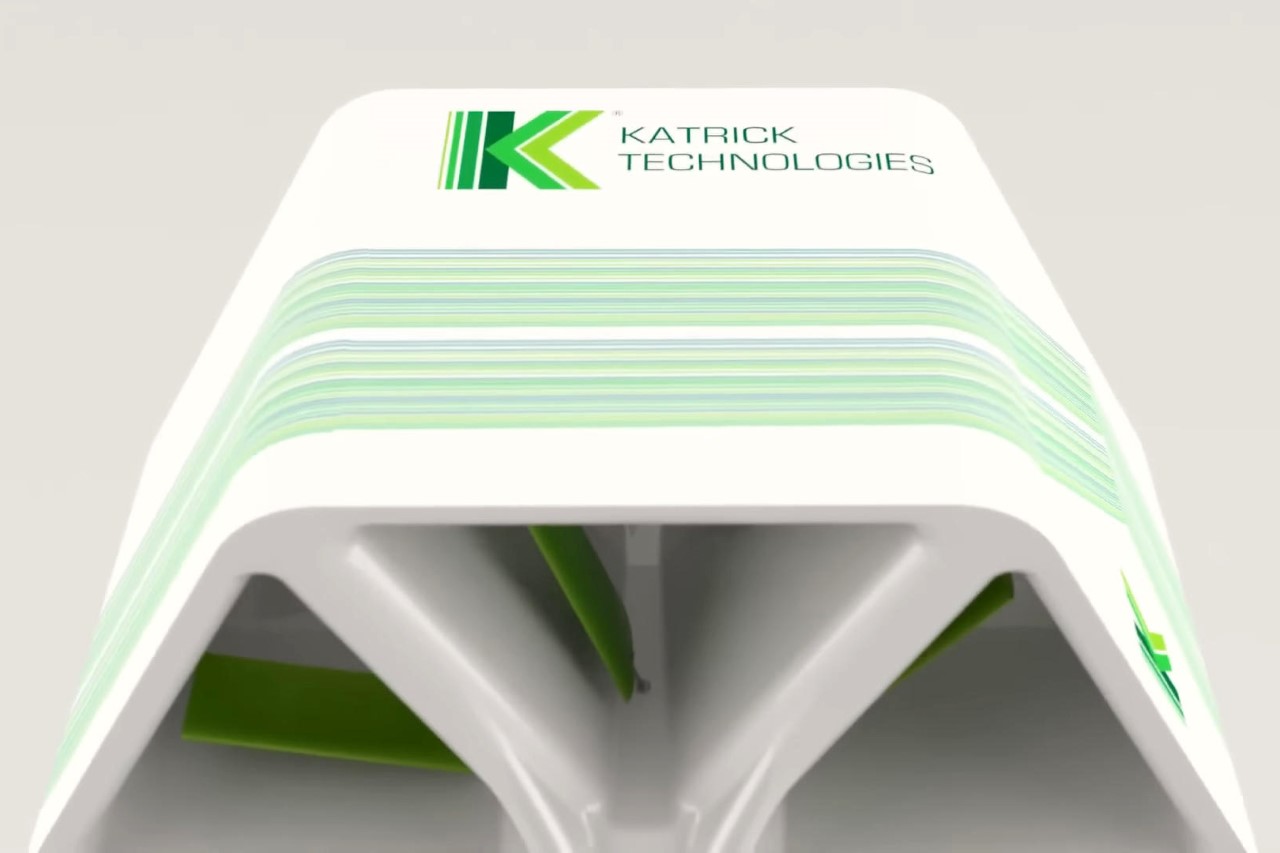
Imagine a wind turbine, but not as you know it. Instead of the familiar towering structures with rotating blades, picture a compact, hexagonal grid resembling a honeycomb, perched atop urban buildings or integrated into existing structures. This is the essence of Katrick’s design – a radical departure from traditional wind turbines, both in form and function. These turbines harness the power of wind through oscillating aerofoils, a far cry from the spinning blades we’re used to.

Designer: Katrick Technologies

As companies rush to figure out better and more effective solutions for harnessing sustainable energy (while the world grapples with the migration to these energies), the Glasgow-based startup, is making waves (or should I say, catching them?) with their innovative bladeless honeycomb wind turbines. Unlike the towering, rotary-blade turbines that dominate our landscapes, Katrick Technologies’ creation is a breath of fresh air in both design and functionality.

At the heart of this technology are the aerofoils, the unsung heroes of Katrick’s design. They work by capturing wind energy and converting it into mechanical oscillations. These oscillations are then transformed into electricity, providing a greener energy solution. This method not only captures lower levels of wind, making it more efficient in less windy conditions, but also makes the turbines more suited for urban environments, where space is at a premium and wind levels can be lower.

The design philosophy of Katrick Technologies is rooted in creating eco-friendly, innovative engineering solutions. While the firm is relatively new, it’s already carving a niche for itself in the renewable energy sector. Traditional wind turbines, with their considerable land and maintenance requirements, often pose logistical and financial challenges. In contrast, Katrick’s honeycomb turbines offer a more sustainable and cost-effective alternative, especially in urban landscapes where space is limited.

But it’s not all sunshine and breezes. Bladeless turbines, including Katrick’s design, have faced some skepticism. Critics, including those from the MIT Technology Review, have pointed out that despite their lower cost and environmental footprint, bladeless turbines might not be as efficient in energy generation as their traditional counterparts. However, Katrick’s innovative approach might just tip the scales. According to the company, just 1 kilometer of their roadside panels could charge a significant number of electric vehicles or power hundreds of homes annually.

Moreover, the design’s safety and environmental features can’t be overlooked. The slower-moving aerofoils in the honeycomb structure are likely less hazardous to birds than traditional turbines. Plus, their unobtrusive design, small footprint, and minimal environmental impact make them an attractive option for urban settings.

Katrick’s wind turbines being tested at Glasgow Airport.

The post Bladeless wind turbines could be the future for wind-energy, bringing them to homes first appeared on Yanko Design.

California Regulators approve ‘Turquoise Blue’ car lights to indicate ‘Self-driving modes’

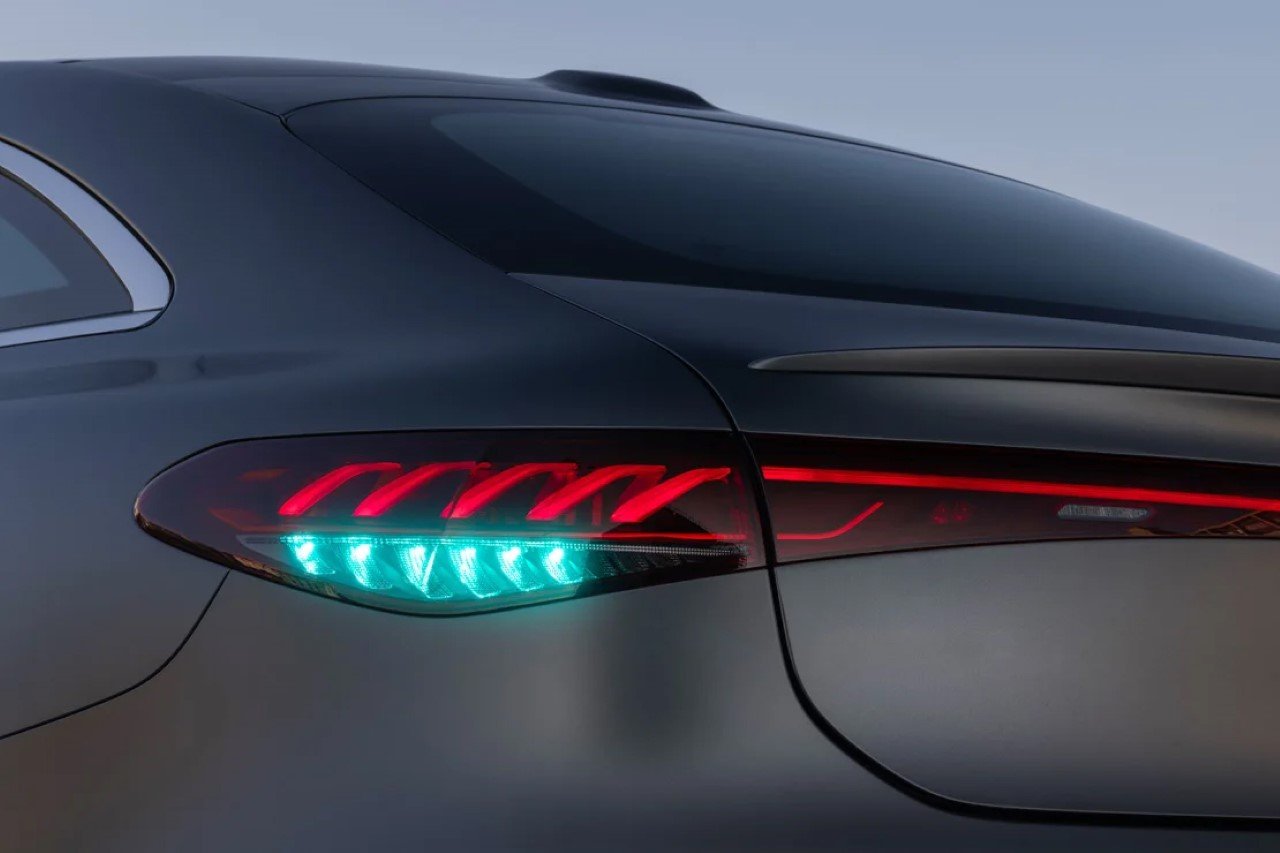
Even though it’s been nearly a decade since self-driving tech made it to our cultural forefront, we’re still in the process of figuring out how to make the technology safer, how to implement it in current urban setups, and more importantly, how to successfully legislate it. There’s always a moral conundrum with who is to blame if a self-driving car hits a pedestrian (the driver or the algorithm), but Mercedes-Benz approached this problem laterally by asking the question: How can pedestrians tell if a car is driven by a human or an algorithm? The answer comes in the form of a colored light. Regulators in California and Nevada have approved Mercedes’ use of a turquoise blue indicator (on the front, sides, and back) to help pedestrians and other cars know when the vehicle is being controlled autonomously.

Designer: Mercedes-Benz

Let’s paint the picture: currently, U.S. cars typically sport three light colors – white for headlights and reverse lights, red for brake and rear lights, and amber for turn signals. Enter Mercedes-Benz, breaking the mold with its turquoise blue lights, a feature that will activate when their cars are driving autonomously.

The lights are part of Mercedes’ “Drive Pilot” system, a conditionally autonomous technology. It’s legal only in California and Nevada for now, where it’s been tested. The system allows drivers to relax a bit more in traffic jams on certain highways, even letting them take their eyes off the road when the vehicle is moving at speeds below 65 km/h. This is a leap from other driver assistance systems, like Tesla’s Full Self Driving or GM’s Super Cruise, which require drivers to remain vigilant.

The choice of turquoise blue is no accident. It’s distinctive, ensuring no confusion with existing car light colors, and it’s different enough from the darker blue used by police and emergency vehicles. This selection is backed by the Society of Automotive Engineers, though Mercedes is the first to receive approval for its use. This innovative color will make its appearance around the taillights and headlights of the vehicles equipped with it.

But why go to all this trouble for a color? It’s all about clarity and safety. The turquoise blue lights serve as a clear signal to other road users and law enforcement that the vehicle is under full automated control. This is crucial in situations where the driver might not be looking at the road, ensuring that onlookers don’t mistakenly think something’s amiss. Starting early 2024, this system will be available in Mercedes S-Class and EQS models in Nevada and California, but not beyond these states just yet​.

The post California Regulators approve ‘Turquoise Blue’ car lights to indicate ‘Self-driving modes’ first appeared on Yanko Design.

This tiny Titanium EDC Tool performs 5 crucial tasks and fits on a keychain

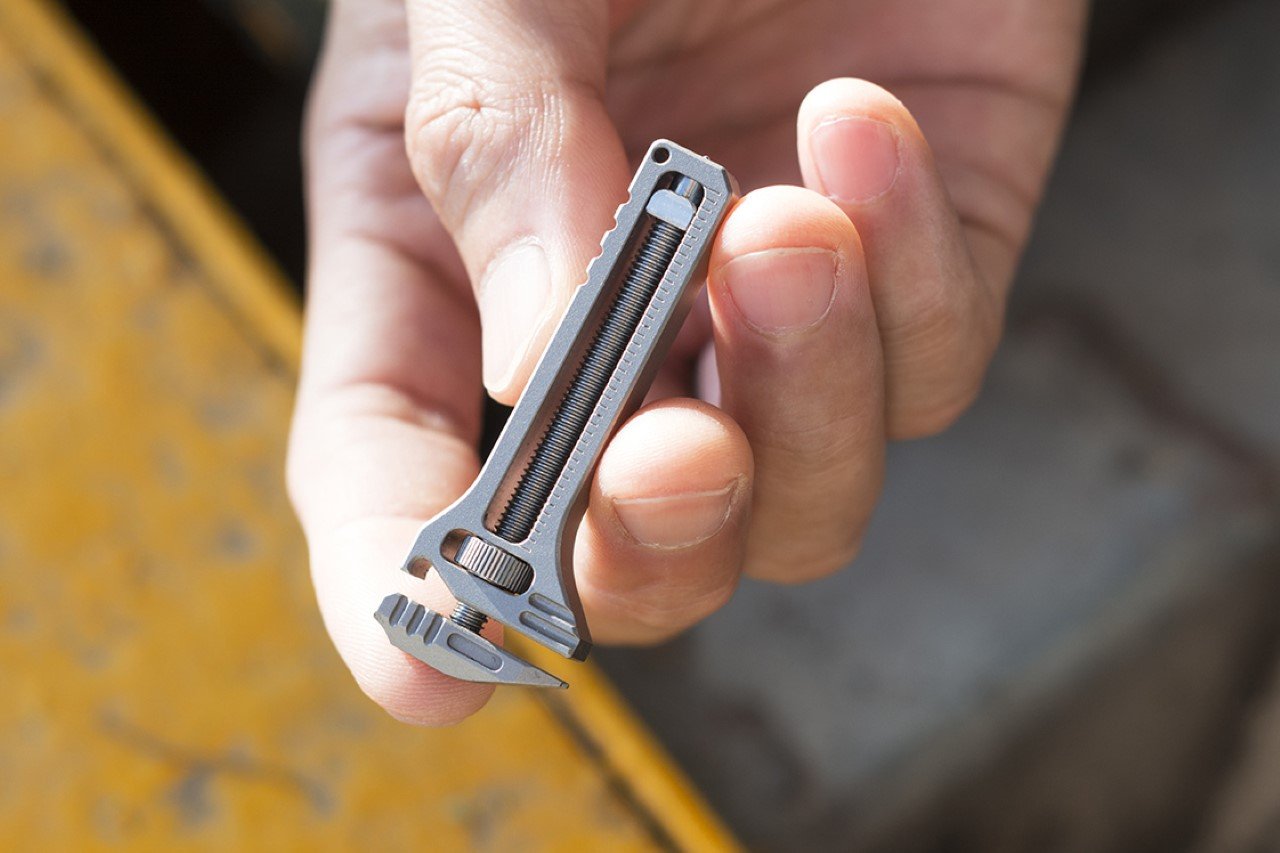
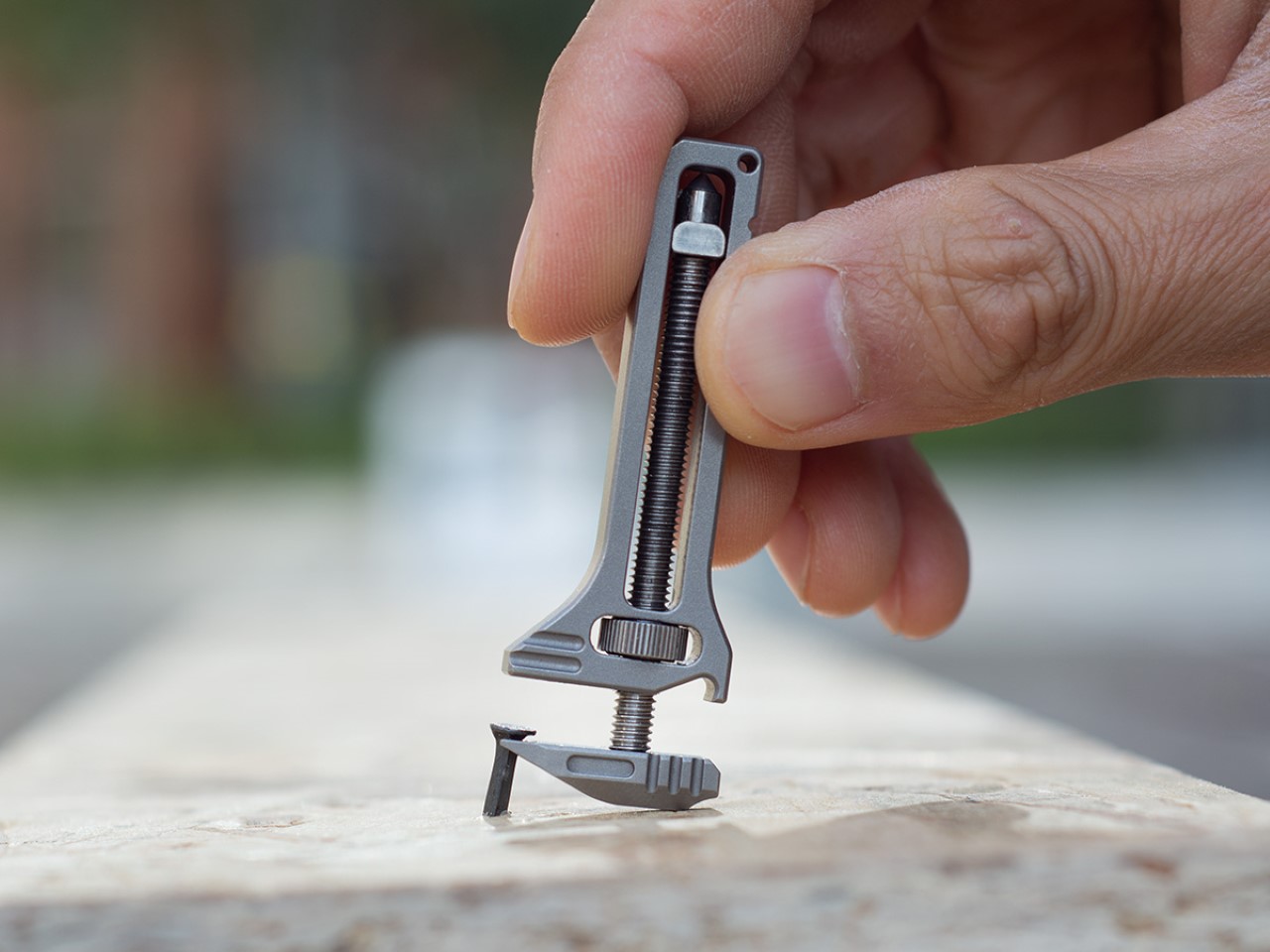
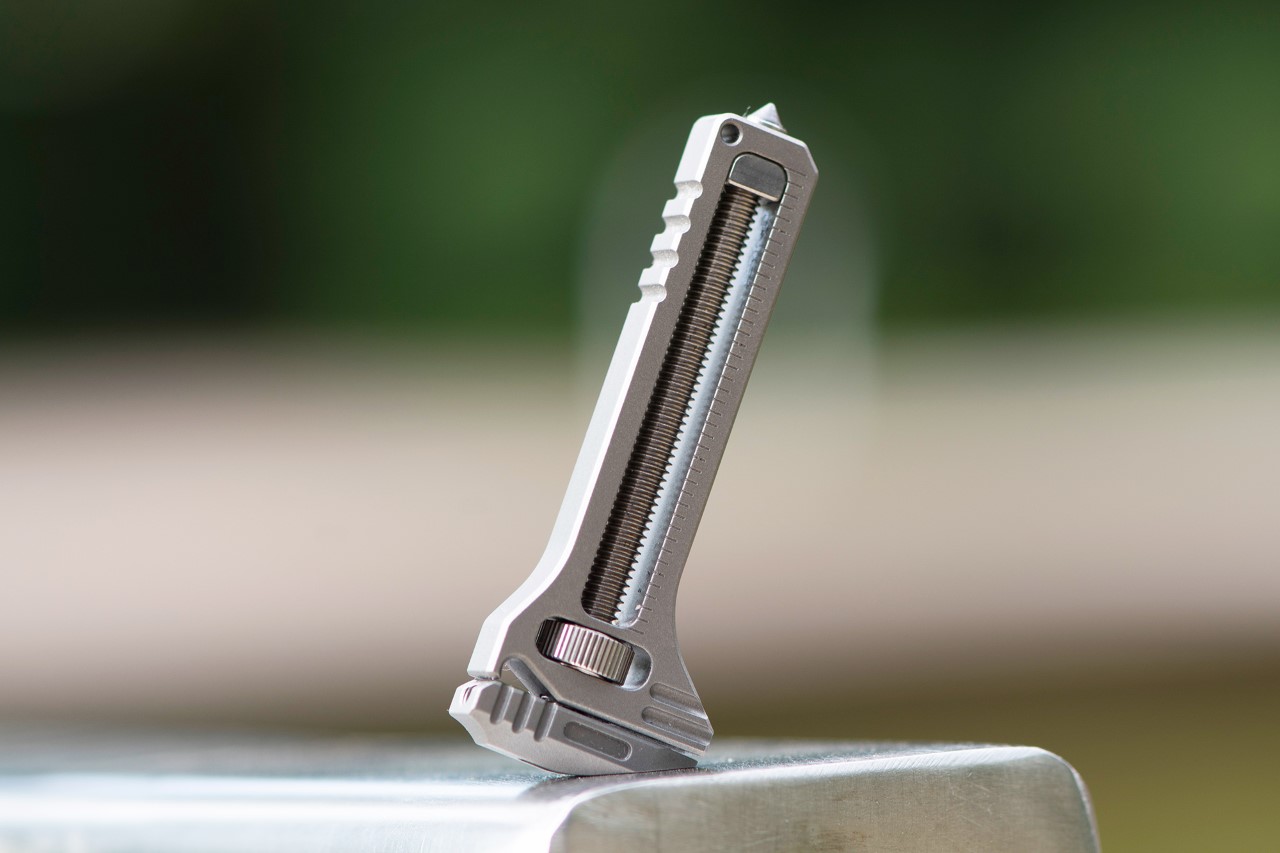
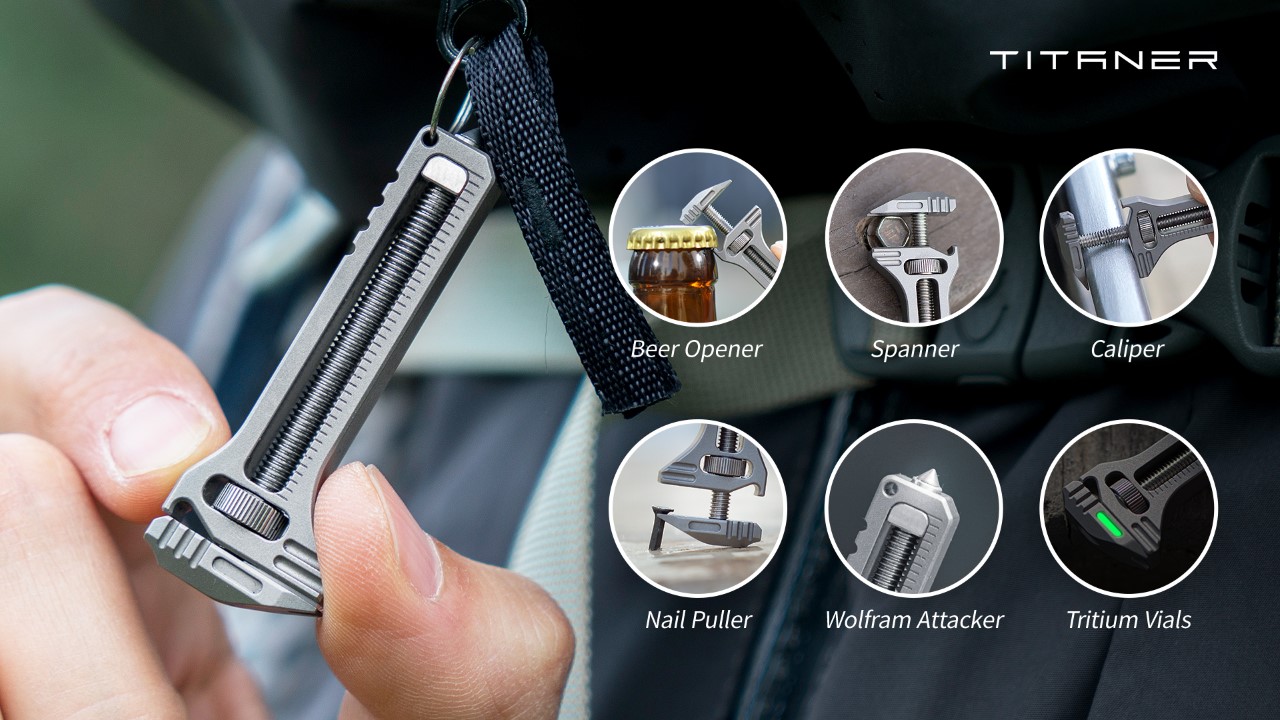
I’d like to think that we’re in a golden age for Titanium (I get the irony of using the term golden to describe it but let’s not focus on that)… whether it’s dominating the EDC world or even slowly carving its way into popular culture with the latest iPhone 15 Pro. Touted as the world’s strongest metal, titanium has some significant benefits that make it such a perfect pick for tools and other EDC. It’s medical-grade, corrosion-resistant, relatively non-reactive, fairly lightweight, and is nearly impossible to damage or even make a dent on. That makes it perfect for EDC, but it also means your EDC can be smaller but still have multiple functions and features, like the TiSpanner, a scaled-down version of your hefty toolkit spanner, but with a few extra tricks up its sleeve. Aside from being the size of a car key, the TiSpanner has a built-in spanner, caliper, bottle-opener, nail-pry, and tungsten-carbide glass-breaker for emergencies. It’s the perfect blend between size and functionality, and fits right on your keychain, allowing you to carry it wherever you go.

Designer: Sven Chan of Titaner

Click Here to Buy Now: $68 $126 (46% off) Hurry! 20 of 650 units left!

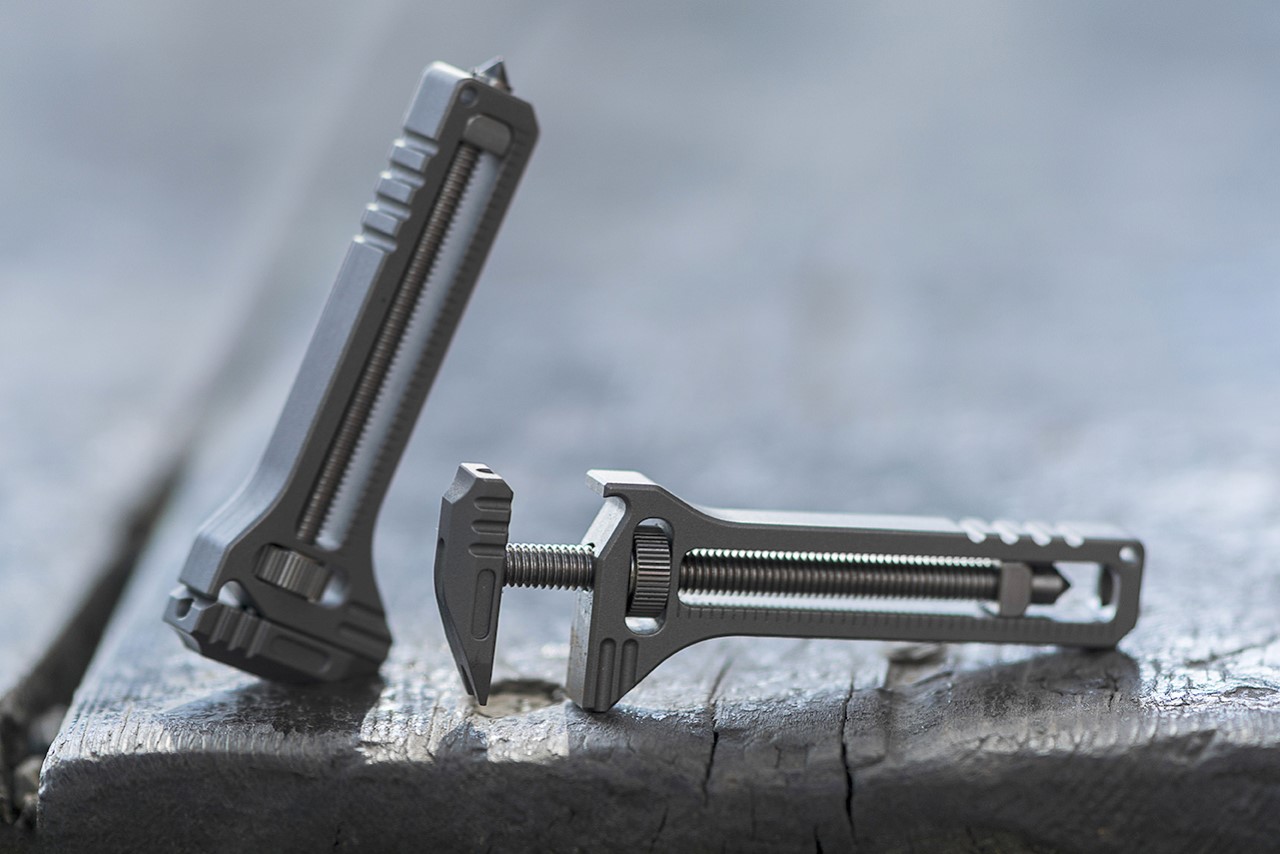
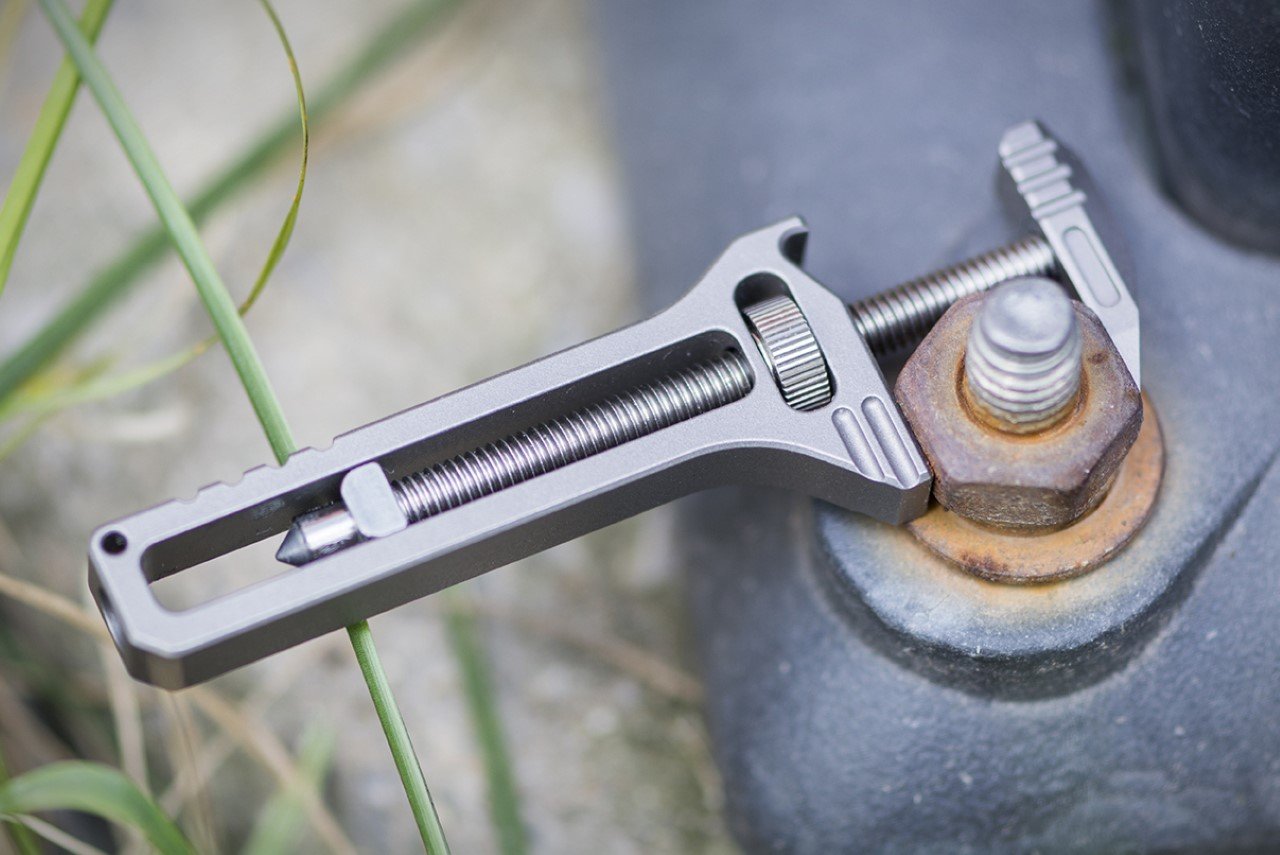
The TiSpanner is a uniquely versatile tool with a built-in precision spanner that can open/close nuts and bolts, while also functioning as a caliper tool for measuring. A rotating knob lets you make micro-adjustments to the TiSpanner’s jaws, while its meticulously machined threading ensures the kind of accuracy a pair of calipers would demand. Etched markings on the side of the TiSpanner let you calculate linear measurements, while the adjustable metal jaws themselves expand to fit hex nuts or bolts as large as M10 on the nominal scale.

Look around a bit further and you spot a few extra details that bring more value to the TiSpanner. For starters, a notch in its outer jaw, coupled with the TiSpanner’s general shape, makes it a perfect nail-pry, while a groove in the inner jaw allows the TiSpanner to function as a bottle opener. The linear design of the spanner lends itself well to both those uses, as it turns into a class 3 lever for opening bottles, and a class 2 lever for pulling/prying nails. Finally, the TiSpanner ends with quite a tactical flair, boasting a glass-breaker tip on its reverse end. Designed to be held in between your fingers with the glass-breaker pointing outwards, the TiSpanner can easily shatter even laminated panes of glass like the ones found in cars, allowing for a quick and effortless exit in an emergency.

Each TiSpanner comes meticulously machined from individual pieces of titanium, giving it incredible strength and a fairly long lifespan (I assume a couple of generations at the least). The spanner is small enough to be carried everywhere, measuring merely 2.2 inches when closed. Given its tiny size, it comes with a few slots to put in vials of tritium that help you spot your EDC in the dark, or better yet, just string your TiSpanner around a keychain and you’ll always have your multitool right at your fingertips! The TiSpanner starts at $68 USD and begins shipping in January 2024.

Click Here to Buy Now: $68 $126 (46% off) Hurry! 20 of 650 units left!

The post This tiny Titanium EDC Tool performs 5 crucial tasks and fits on a keychain first appeared on Yanko Design.

If MUJI met Teenage Engineering: This wall-mounted CD player is retrofuture minimalism at its best

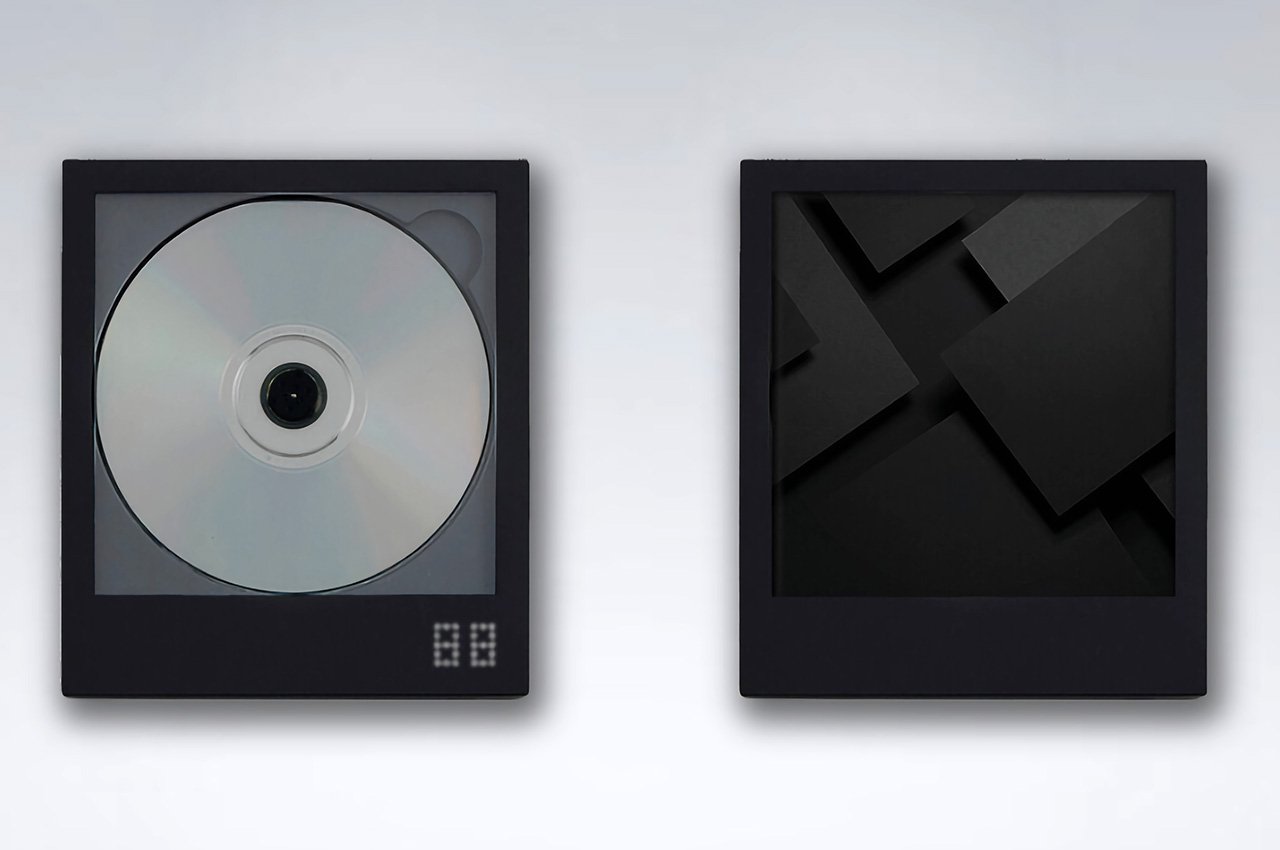
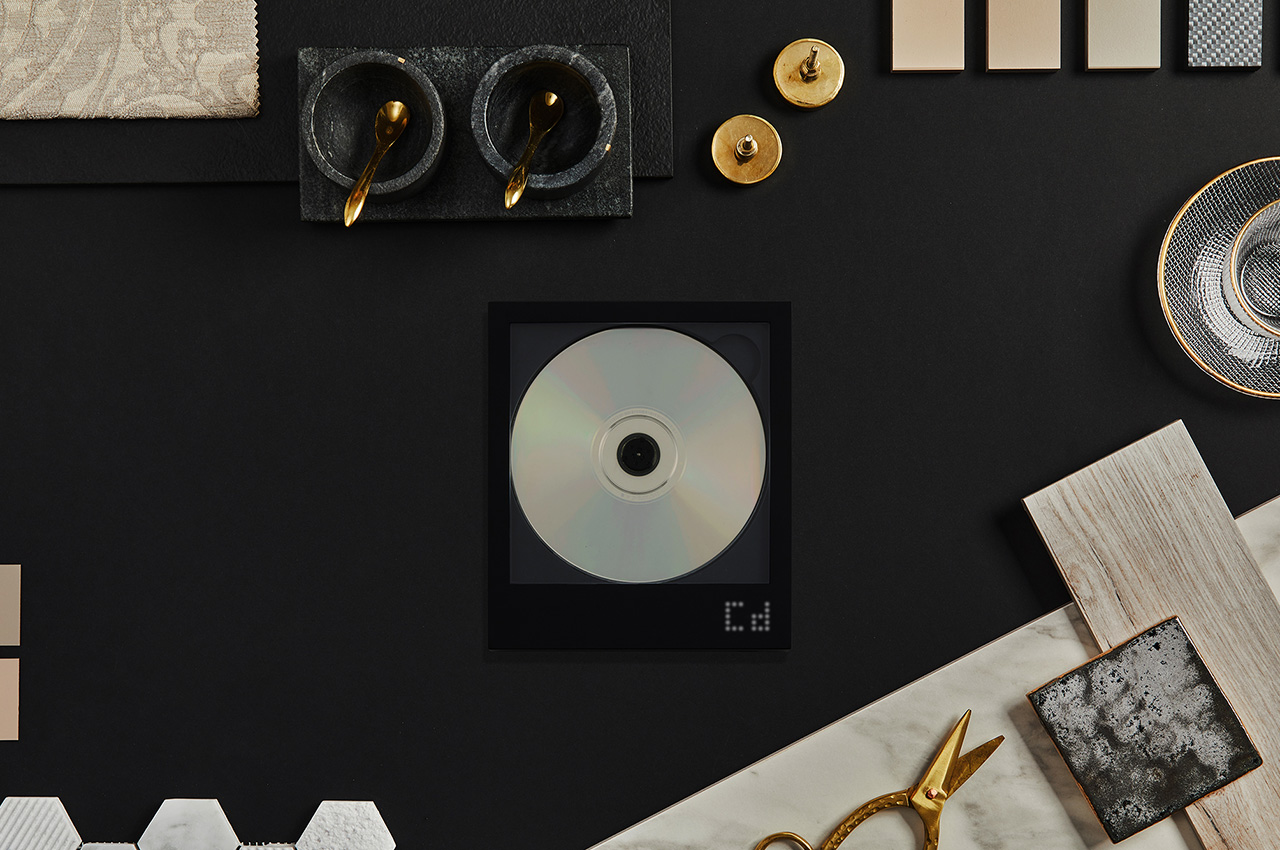
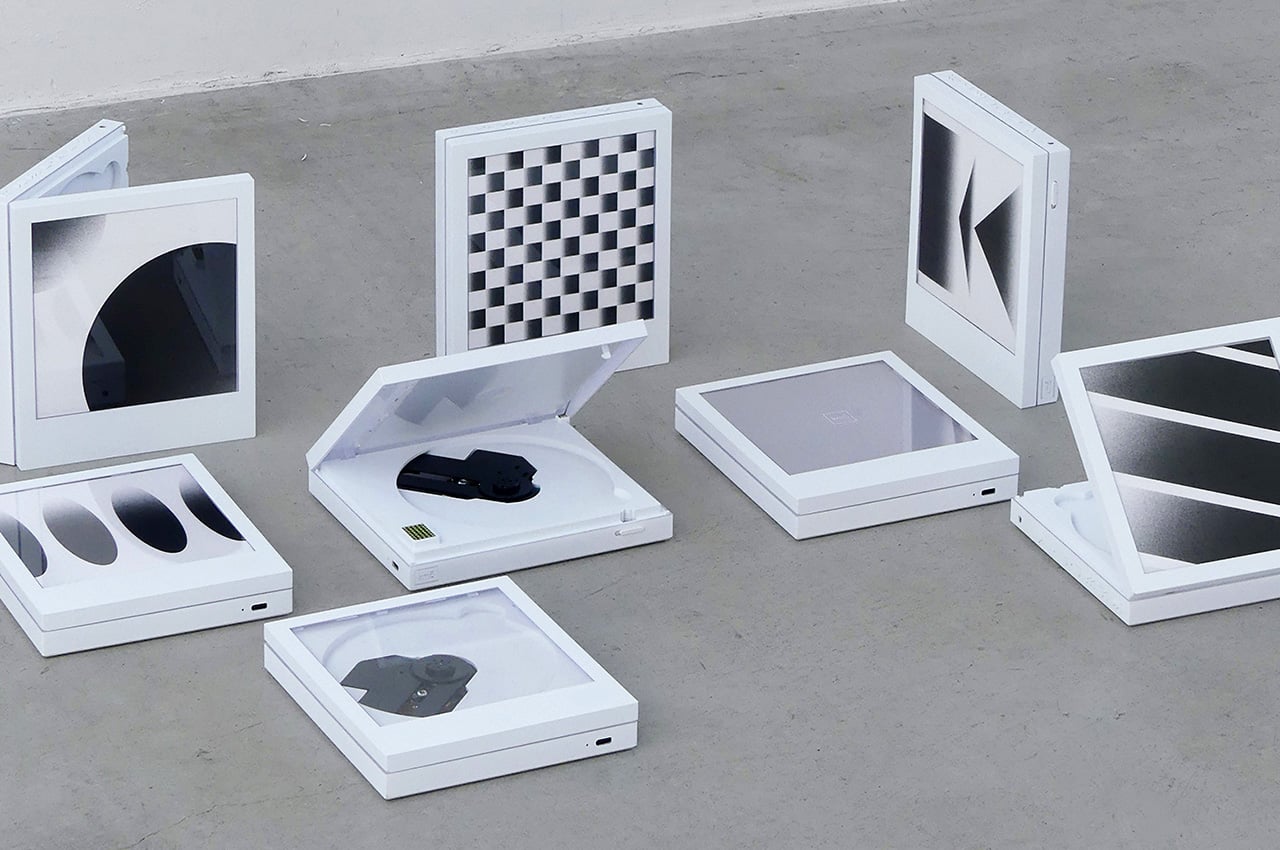
Believe you me, just the way vinyl made its glorious comeback, CDs too will see a resurrection in popularity… and when they do, the Cp1 CD Player will stand out as the most sophisticated-looking player of our time. Combining age-old technology with a clean, minimalist, design-driven aesthetic, the Cp1 is a wall-mounted compact disc player that doubles as wall art. Its all-white design with clear lines and subtle detailing makes it blend perfectly into modern Japandi-style homes. Dieter Rams and Naoto Fukasawa would be proud.

Designer: Tatsufumi Funayma

Click Here to Buy Now: $135 $159 (15% off). Hurry, only 67/100 left!

“Streaming may be all the rage, but it often eclipses the holistic experience of a full album,” says the Cp1’s designer Tatsufumi Funayma. “While artists pour their souls into their albums, streaming emphasizes single tracks. NEW Cp1 nudges you to revisit the magic of entire albums, offering a chance to truly understand an artist’s intent and narrative, all while enjoying the accompanying art.” A billion CDs are still produced annually, yet the only way to buy a CD player today is to search for one at a thrift shop, on eBay, or go garage-sale hunting to grab a second-hand one for dirt cheap. The Cp1 changes that by hat-tipping an existing technology that doesn’t get enough credit, and is heavily due for a nostalgic resurgence.

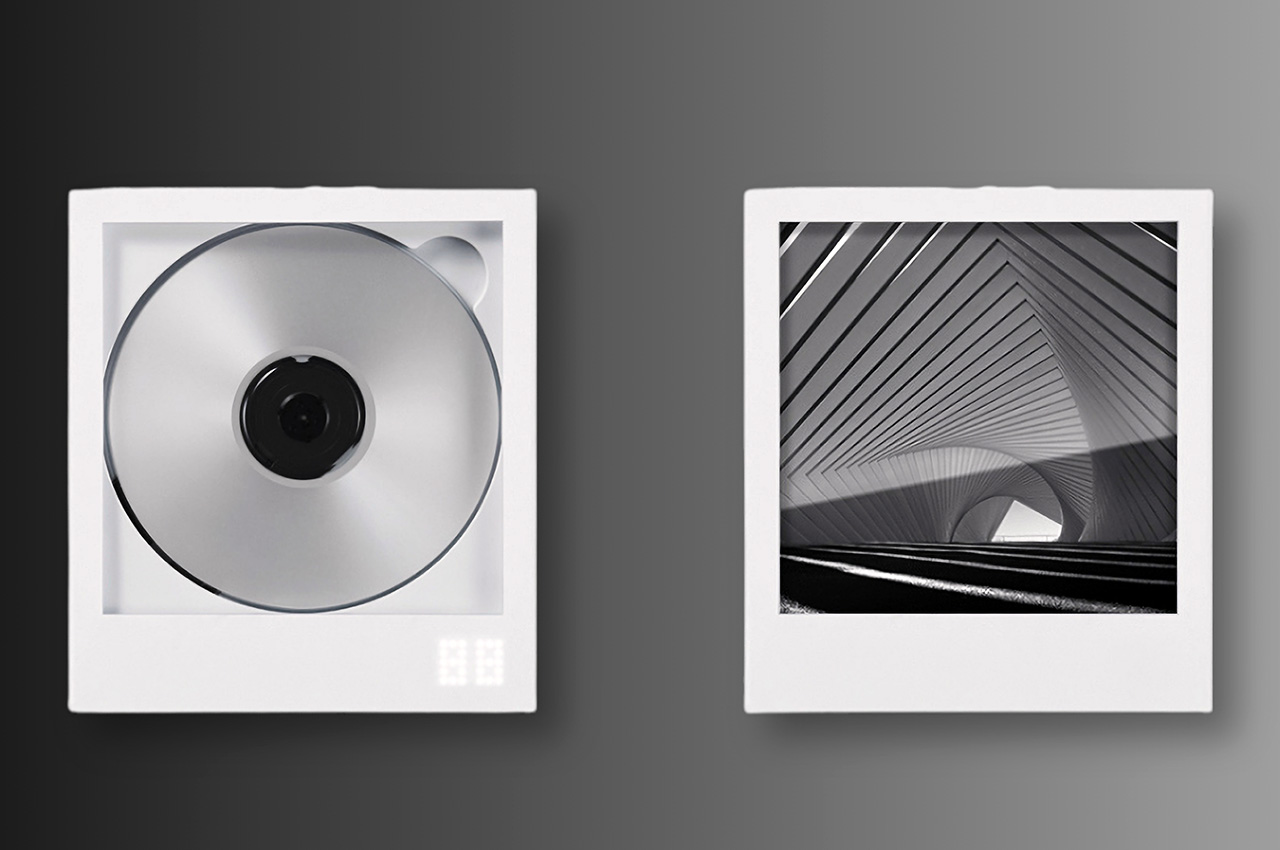
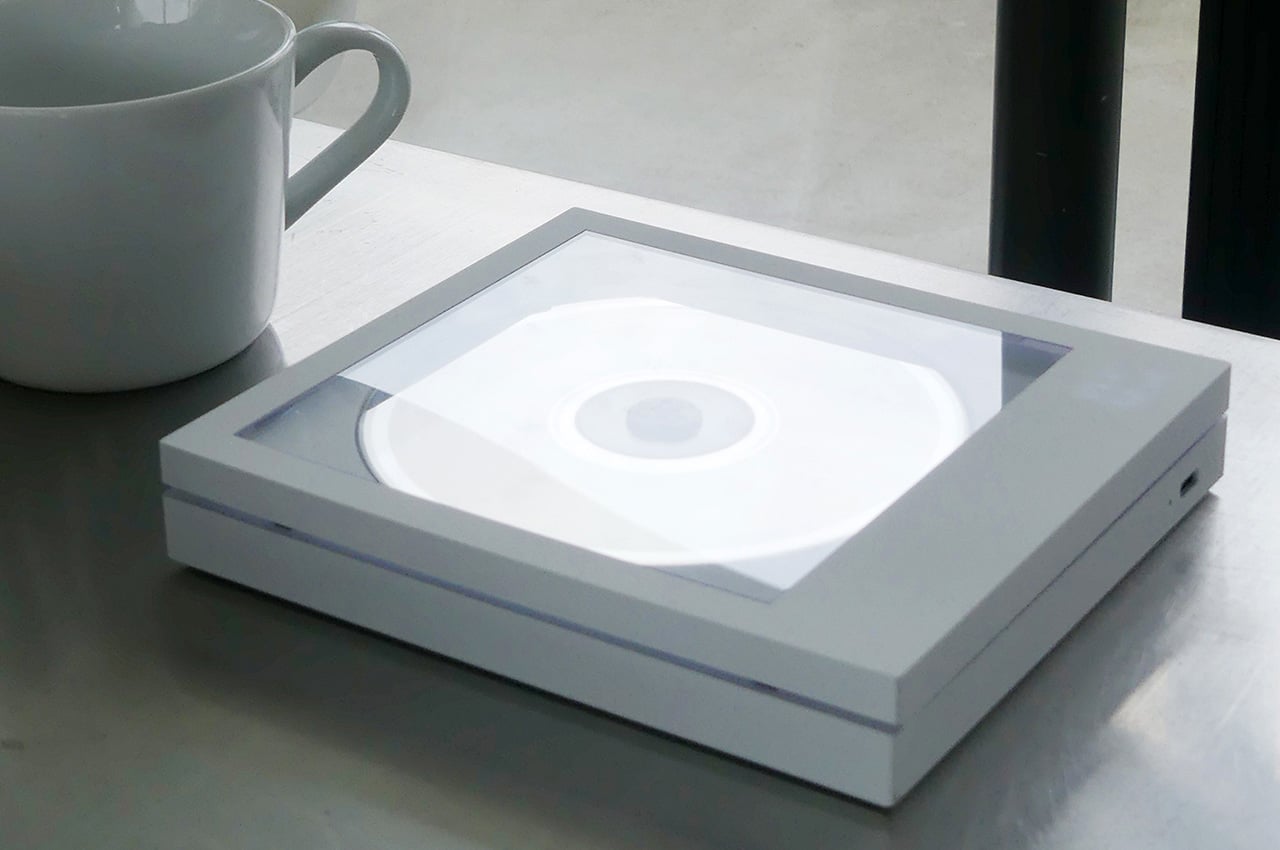
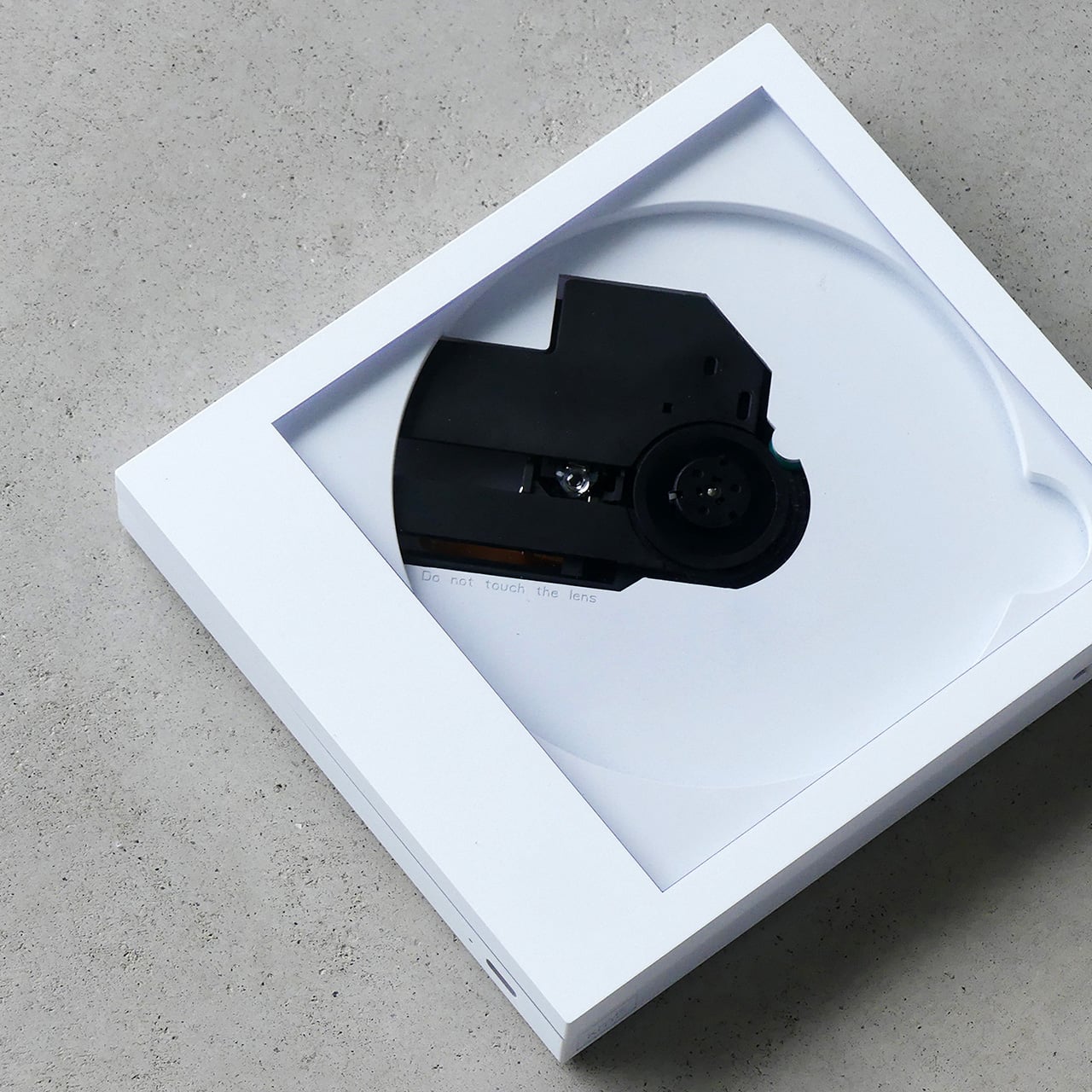
At first glance, the Cp1’s design is a striking balance of retro and modern aesthetics. Look at it and you’re instantly reminded of a Polaroid film with the way it’s designed. It has a border on all four sides, with a thicker one at the base, like an instant photo. The center is where the magic occurs, where you can either observe the CD playing through a clear window, or slide the CD cover’s artwork in, transforming the player into a large retro-style relic of your eclectic music collection. The minimalist front, dominated by the disc tray and tiny display for track-number, exudes a no-nonsense attitude towards music playback. Look on the top edge and you’ll see the Cp1’s controls – simple self-colored tactile buttons that are easy to understand with zero text or labeling, reinforcing the Cp1’s clean design.

Despite its retro functionality, it’s equipped with modern connectivity options like Bluetooth 5.1. This means it can easily integrate into a variety of audio setups, from traditional home stereo systems to more contemporary multi-room setups. A 3.5mm audio jack encourages you to use wired headsets or speakers (as any audiophile will rightfully suggest), a built-in li-ion battery gives the Cp1 portable playback, and a USB-C port on the base lets you charge your CD player (never thought I’d say those words in 2023!) If you DO choose to mount your Cp1 on a wall, each CD player ships with a wall-mount that lets you attach the device temporarily, removing it whenever you wish like you would a wall-hung photo frame.

The Cp1’s transparent window is suitable for displaying photos and pieces of art too. Whether it’s abstract art you’ve created, images off the web, your own photos, or NFTs you may have regrettably invested in. You can slide a print right into the player, allowing it to serve as a larger-than-life Polaroid that sits on your desk or your wall. The Cp1 comes in white and even black variants, although the former is clearly a personal favorite. Even with its built-in battery, it measures a mere 26mm (1 inch) in thickness, which means it won’t occupy much real estate on your wall. The 1800mAh battery offers 7-8 hours of playback on a full charge – that’s roughly 10 or more albums for you to listen to while you relish the music as well as the art on the front facade of your gorgeous CD player from a minimalist future!

Click Here to Buy Now: $135 $159 (15% off). Hurry, only 68/100 left!

The post If MUJI met Teenage Engineering: This wall-mounted CD player is retrofuture minimalism at its best first appeared on Yanko Design.

This Sleek MagSafe Tripod is as slim as a wallet and snaps onto the back of your iPhone

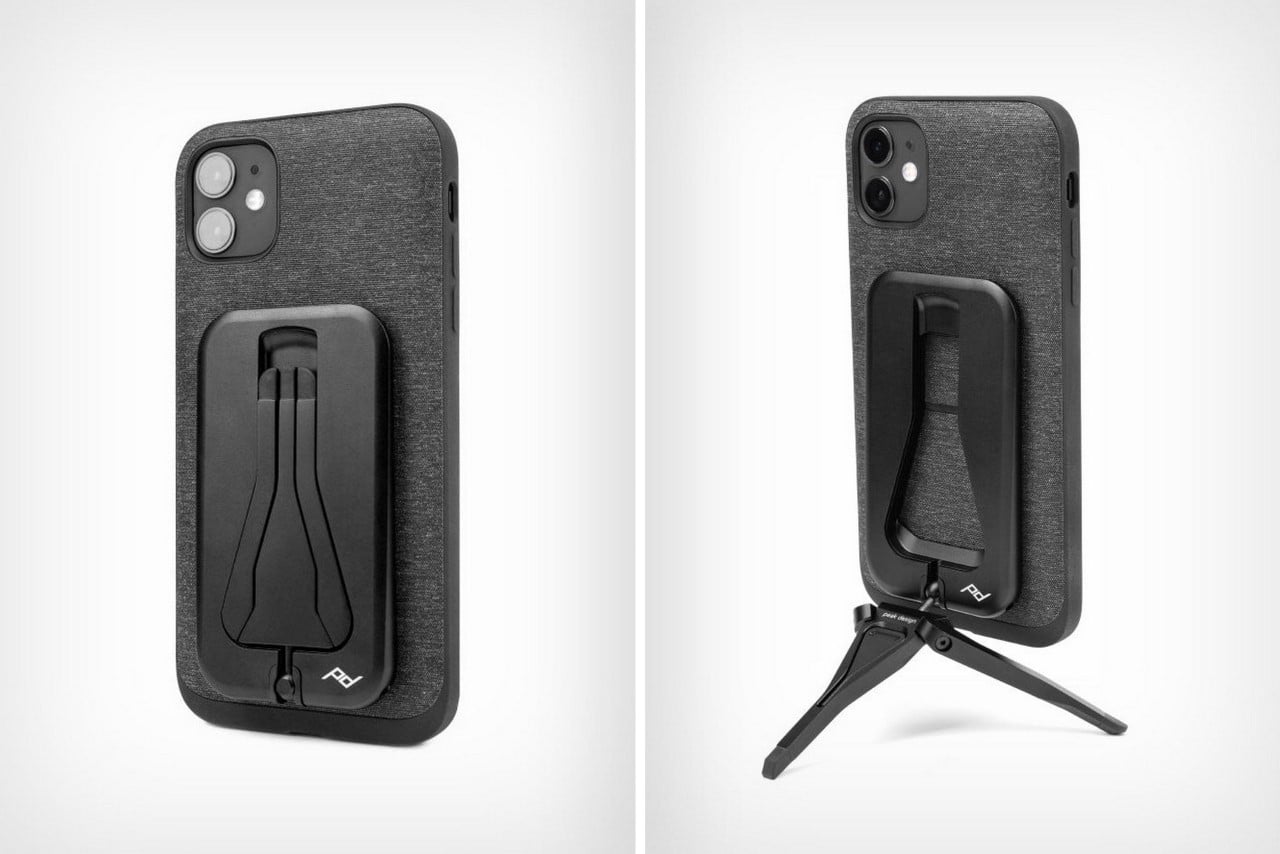
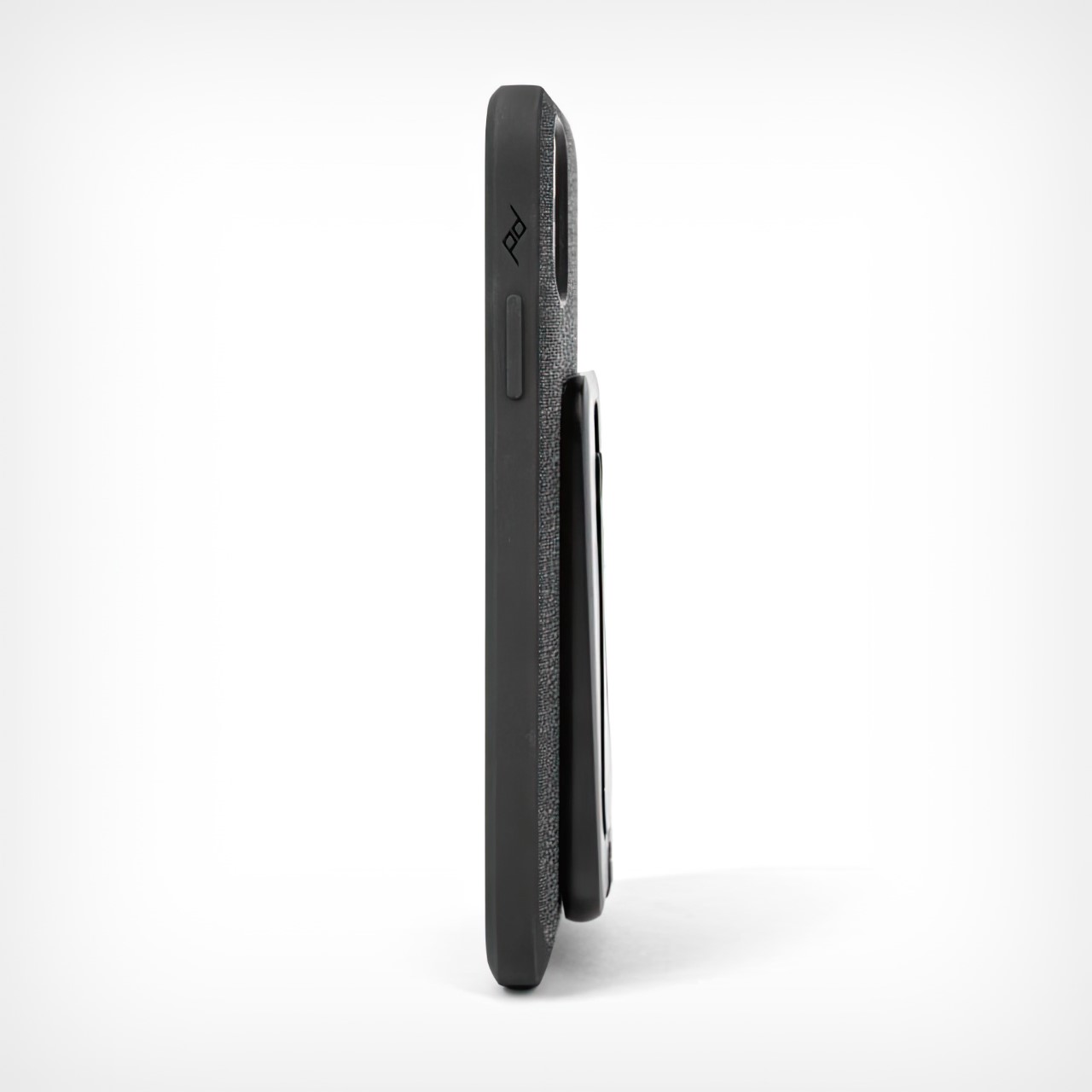
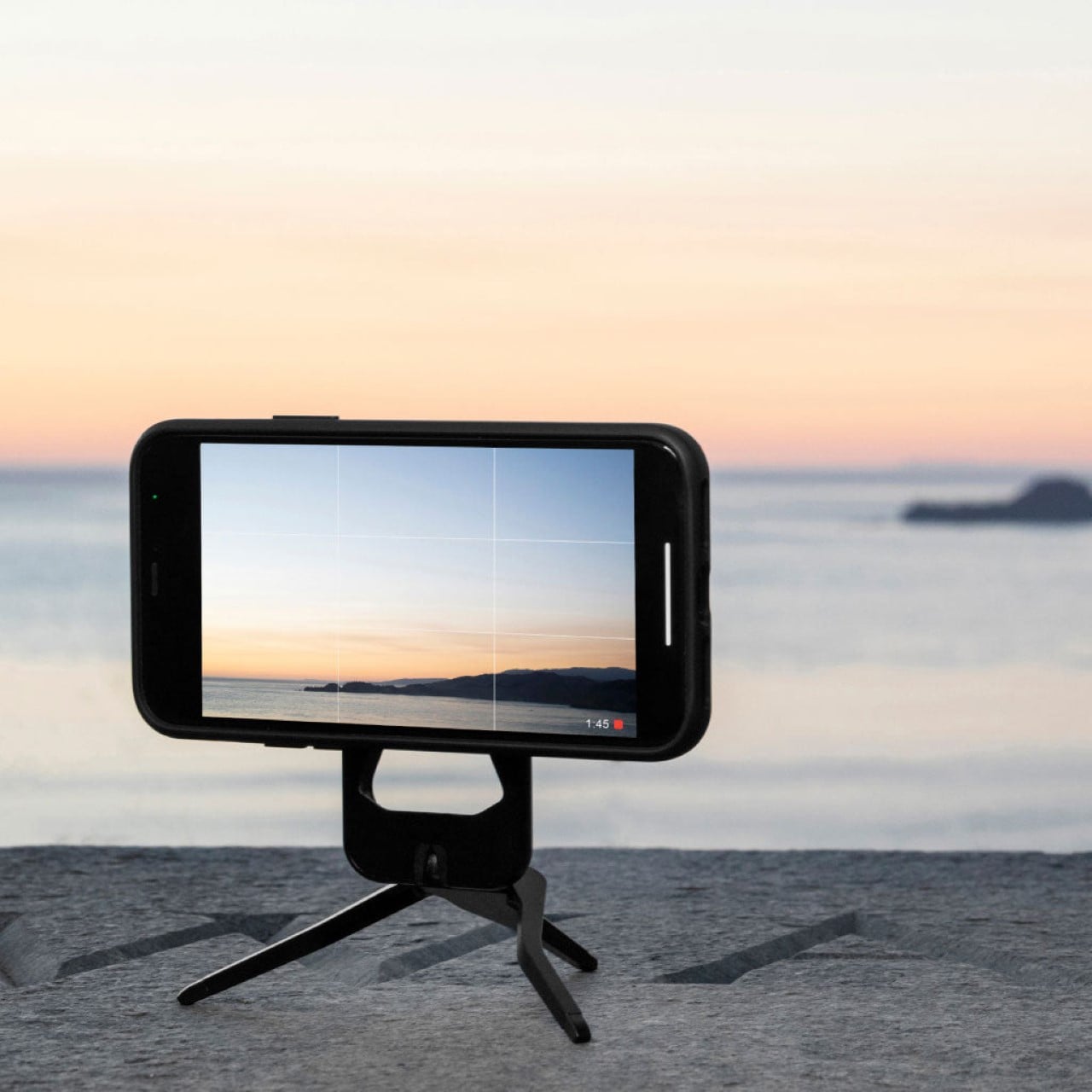
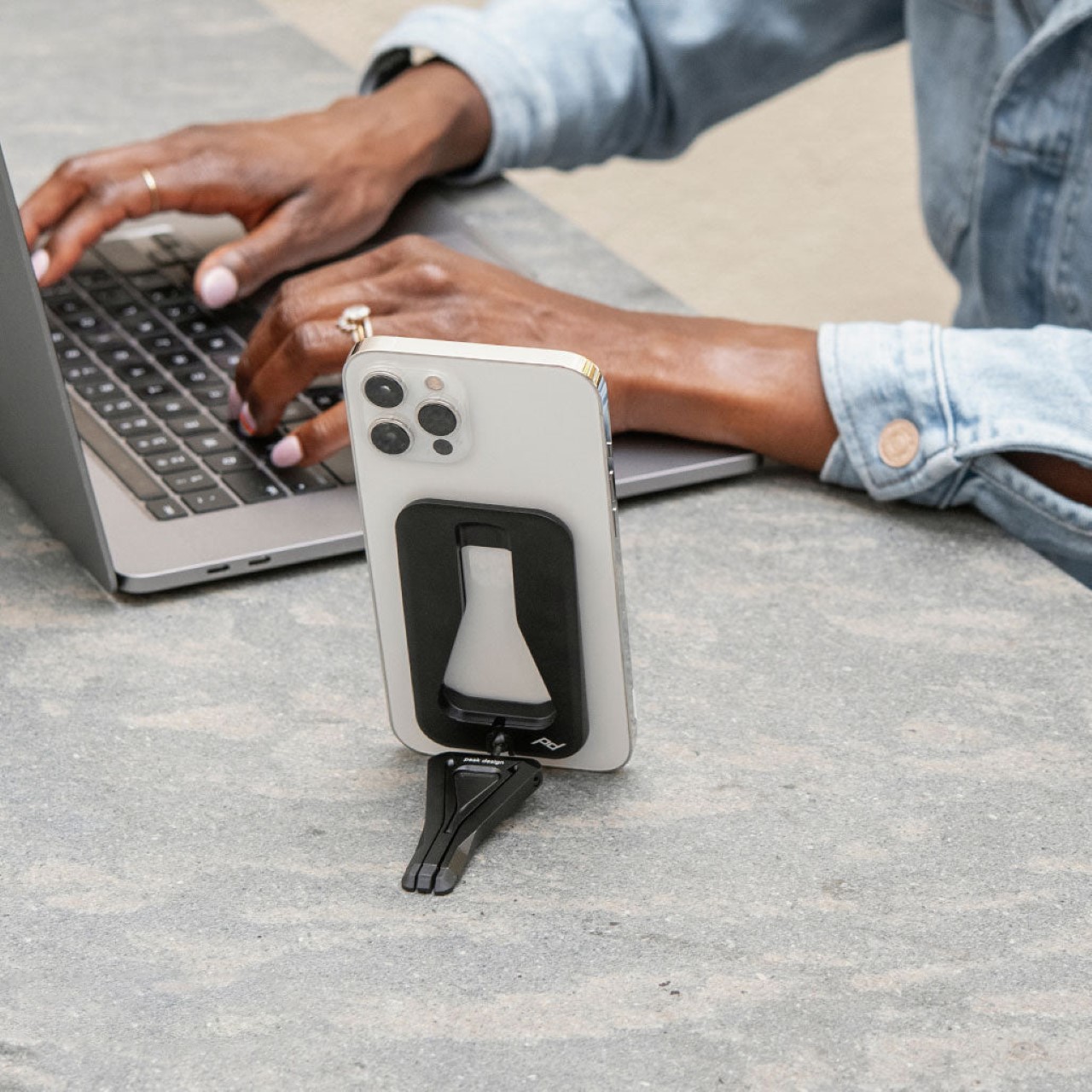
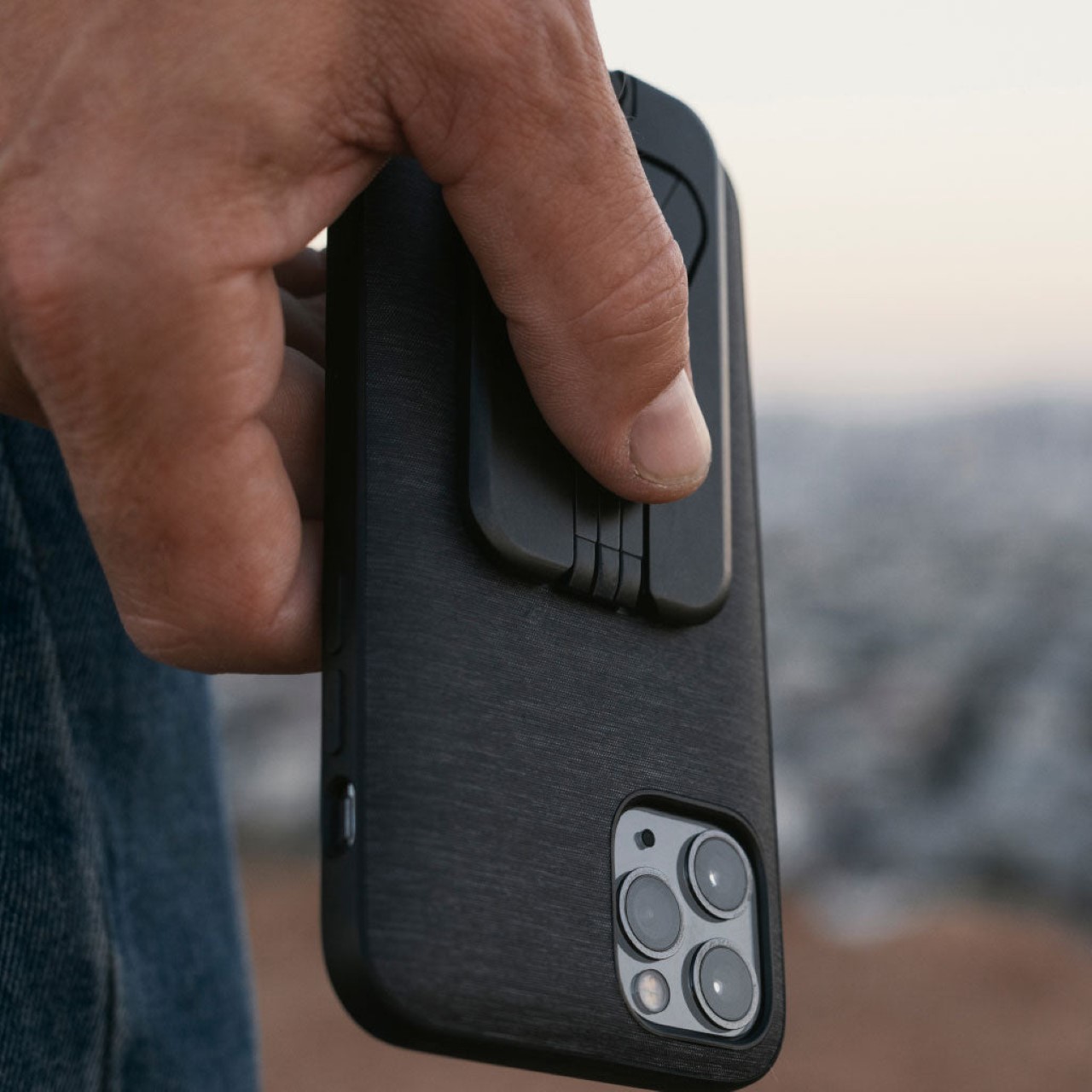
Peak Design’s new tripod for smartphones may be the slimmest one we’ve seen so far. Designed to snap onto the back of your MagSafe-enabled device, it works in both landscape and portrait, giving creators the one accessory they need to supplement their incredible smartphone camera. At its thickest point, it’s just 0.3 inches in thickness, while gradually transitioning down to 0.2 inches for a nice sleek wedge profile. It also weighs a paltry 2.6 ounces (78 grams), and is robust, thanks to its machined aluminum body. I think it’s time to say goodbye to selfie sticks and propping your phone against random objects to get the right shot.

Designer: Robb J of Peak Design

Click Here to Buy Now

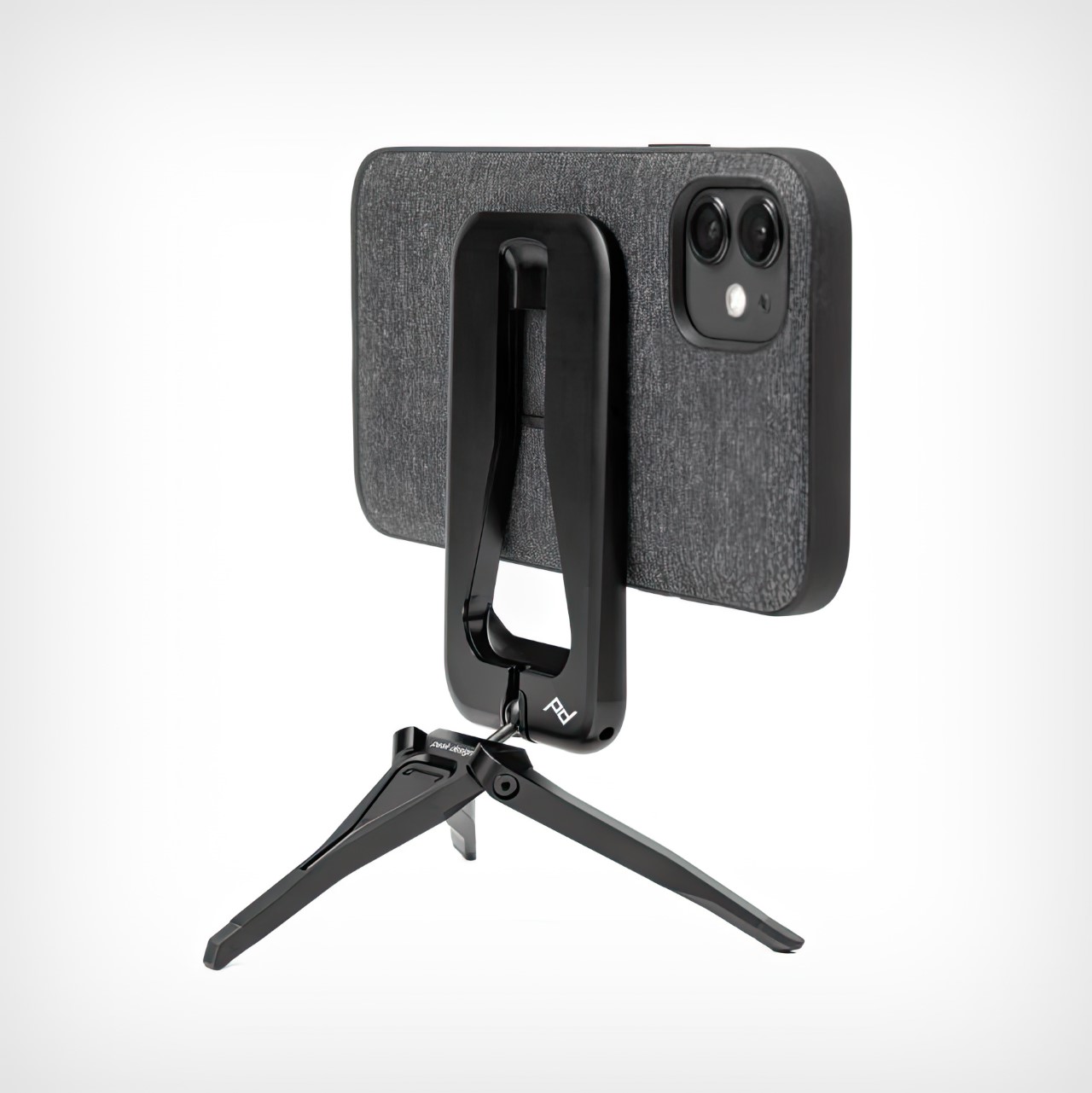
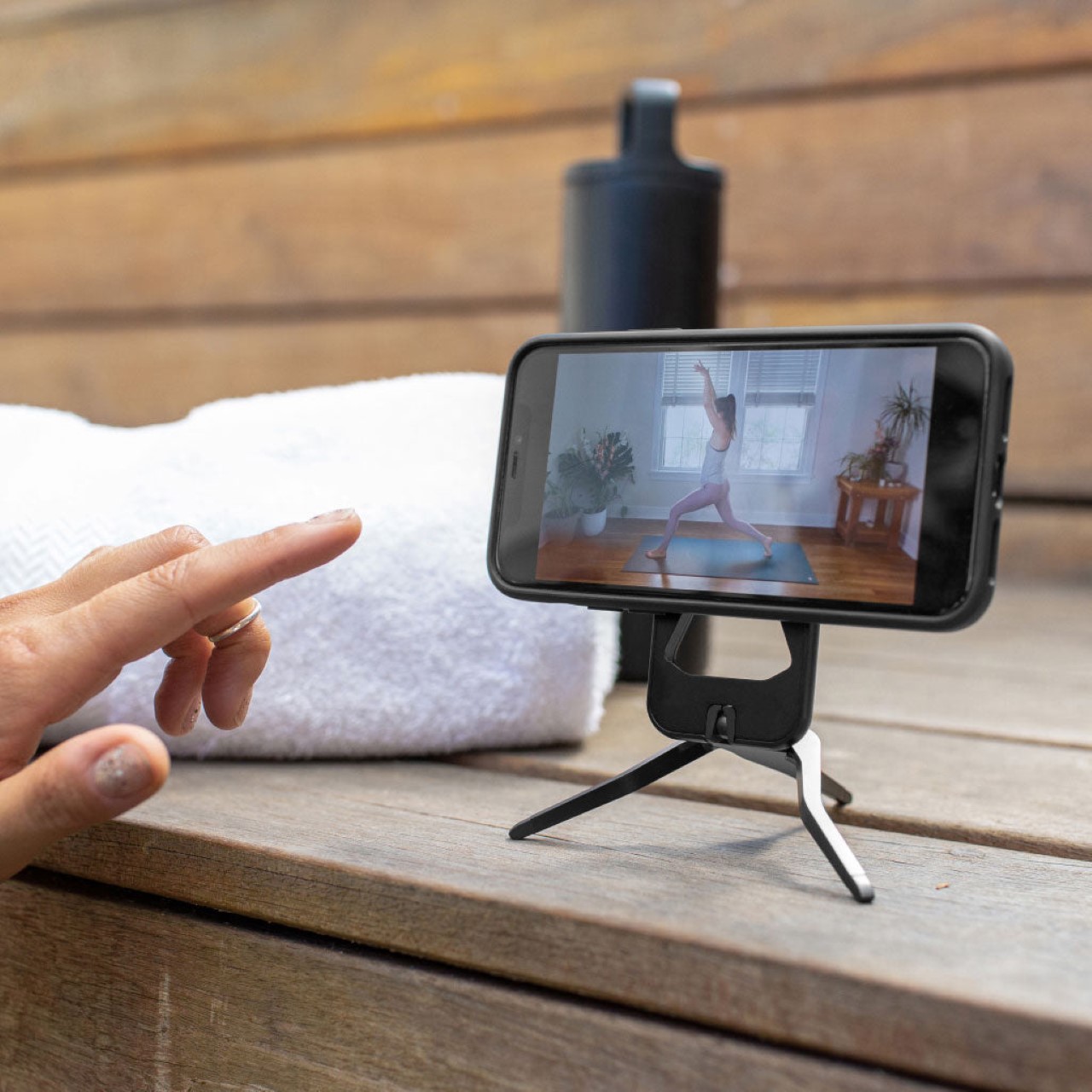
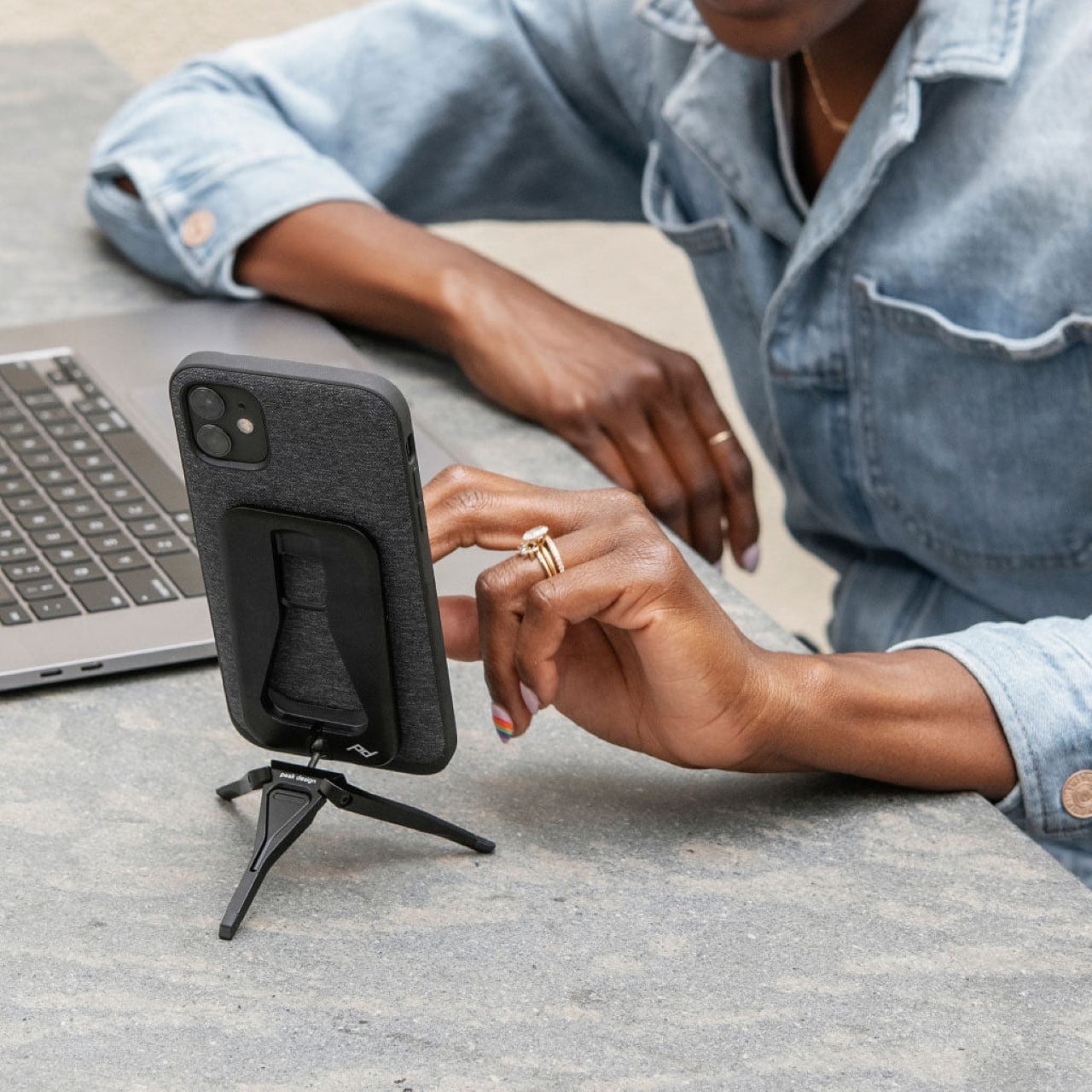
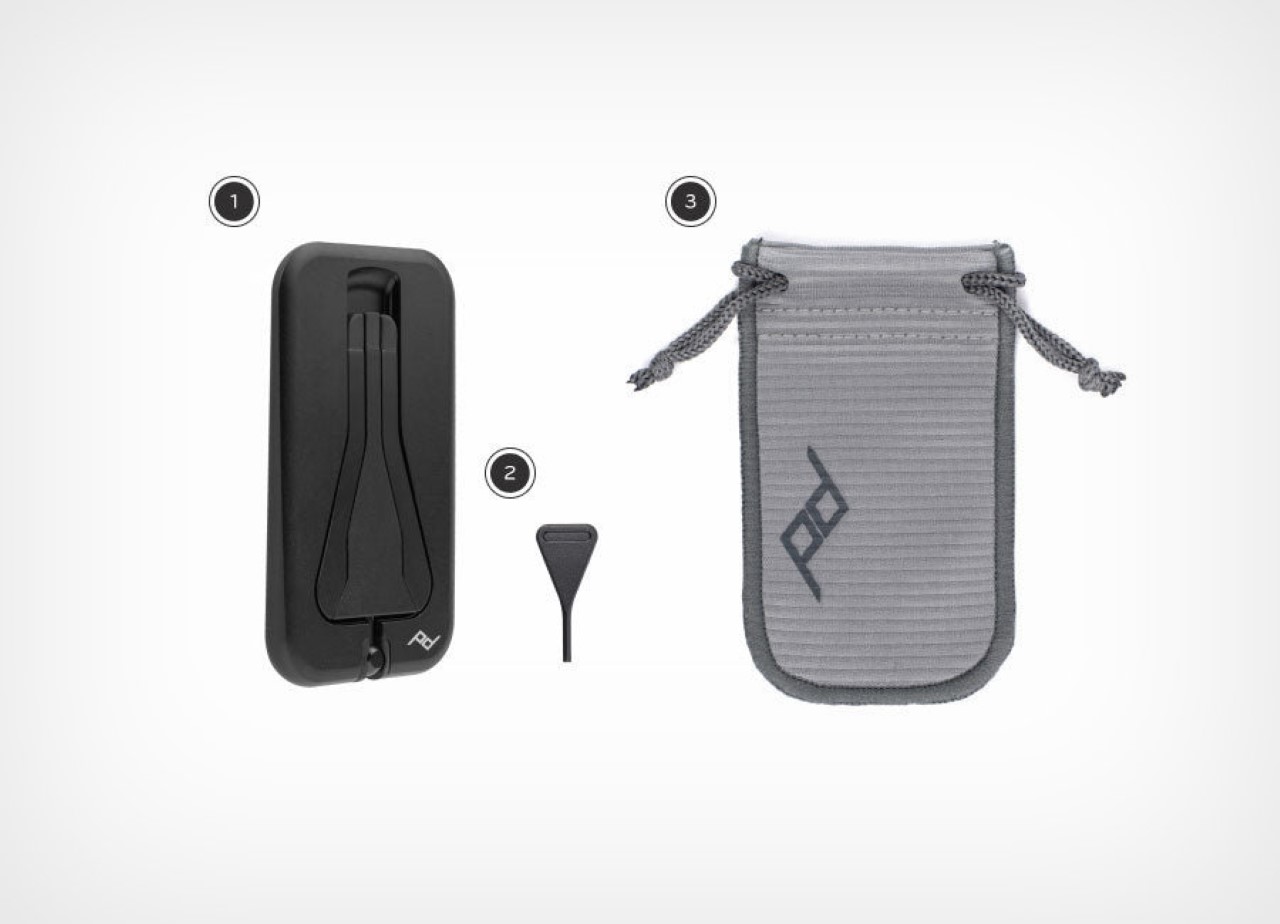
You may remember Peak Design for their incredibly durable carbon-fiber travel tripod from 2019, although the company isn’t limiting itself to larger DSLR-adjacent gear. The aptly named Mobile Tripod is roughly the size of a MagSafe wallet, sitting perpetually on the back of your smartphone. With three legs that pop out on command, the Mobile Tripod props you phone up at just the perfect angle, allowing you to instantly begin recording videos, reactions, dance tiktoks, and vlogs, whether you’re recording in landscape or portrait.

The Mobile Tripod snaps directly onto your iPhone (or any smartphone with the MagSafe sticker), using a series of powerful neodymium magnets to firmly attach in place. It works with smartphone cases too, although Peak Design recommends using their own case which relies on their SlimLink™ technology to attach in a more secure manner.

The slim tripod fits rather neatly onto the back of your phone, with a wedge-shaped side profile that lets you slide your phone in and out of your pocket without catching any fabric or slipping off. Three legs on the back can either be popped out independently to form a traditional tripod, or can be folded open together as a single, wide kickstand that you can angle-adjust.

The Mobile Tripod comes machined from solid anodized aluminum, which holds up much better than those flimsy plastic tripods you’d find elsewhere on the internet. A “buttery-smooth” micro ballhead allows for precise adjustments with a fair amount of friction that lets it hold any angle you adjust your phone at, and anti-slip TPU feet help the tripod hold its position without sliding around. All that sort of adds up to a $71 price-point, which certainly isn’t cheap, but it’s worth the money for a product that’s sure to come incredibly handy taking selfies, tiktoks, or even answering video-calls hands-free. Oh, and did I mention that it also comes with a lifetime guarantee, like all of Peak Design’s products?

Click Here to Buy Now

The post This Sleek MagSafe Tripod is as slim as a wallet and snaps onto the back of your iPhone first appeared on Yanko Design.

5 Crazy Nintendo Patents that were almost turned into real products

Did you know Nintendo *almost* made a smartphone case with a built-in Game Boy? Well, now you do…

Nintendo has always been a pioneer in the gaming world, known for its innovation and creativity. Starting out selling gaming cards, the company practically led the charge on gaming innovation, starting with their entertainment systems, to the birth of the world’s first handheld gaming console (Apple TV has an entire movie on how Tetris made its way to the first Game Boy). That was just a milestone for the company, which went on to revolutionize gaming with Super Mario, Pokemon, Legend of Zelda, and an entire host of other games that hold legend-status in the gaming world. The Game Boy then transformed into the Nintendo DS, which led to the Wii, and finally the wildly successful Switch. But did you know that not all of Nintendo’s ideas have seen the light of day? Or rather, some of their less-than-brilliant ideas that remain languishing in a patent office.

The folks at NeoMam Studios partnered with Guide Strats to bring some of these patents to life and let’s say, we would have loved to be a fly on the wall at the Nintendo office when these products were being pitched. From a Joy Con-enabled horse saddle to a smartphone case with a Game Boy built into it, these concepts are bizarre, to say the least…

Designers: NeoMam Studios for Guide Strats

Nintendo Inventions That Stayed On Paper

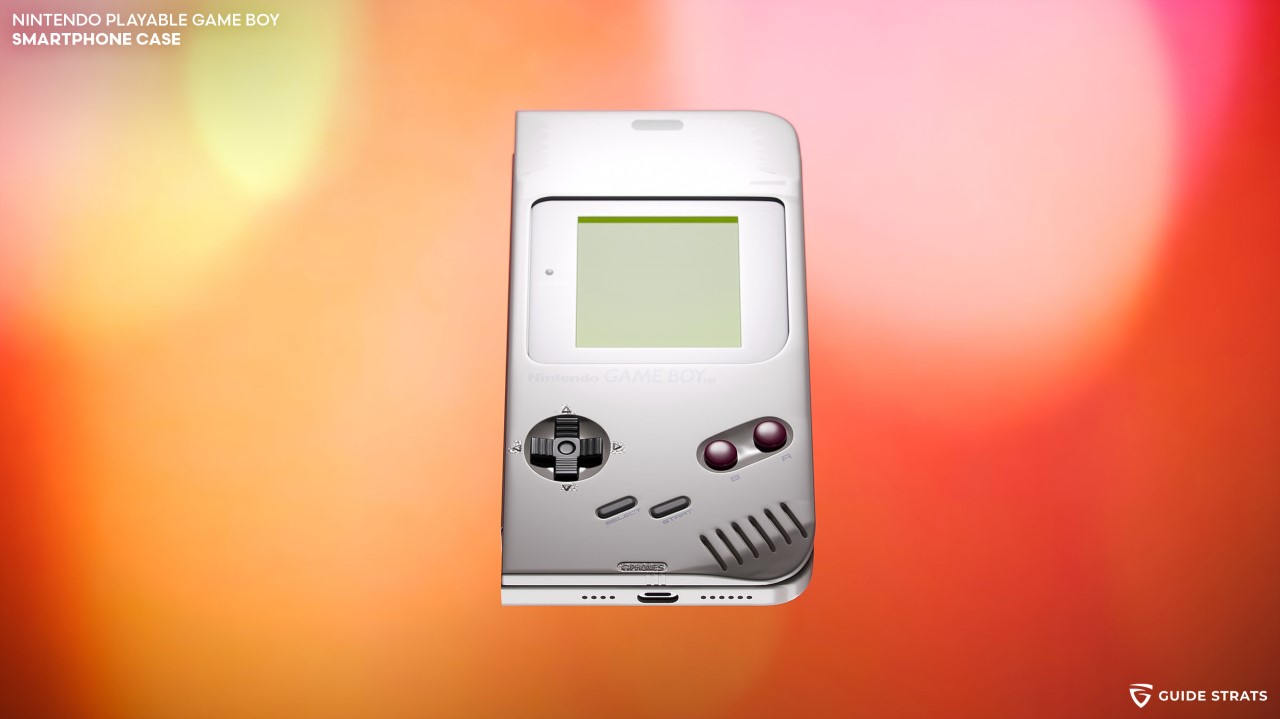
1. Nintendo Playable Game Boy Smartphone Case
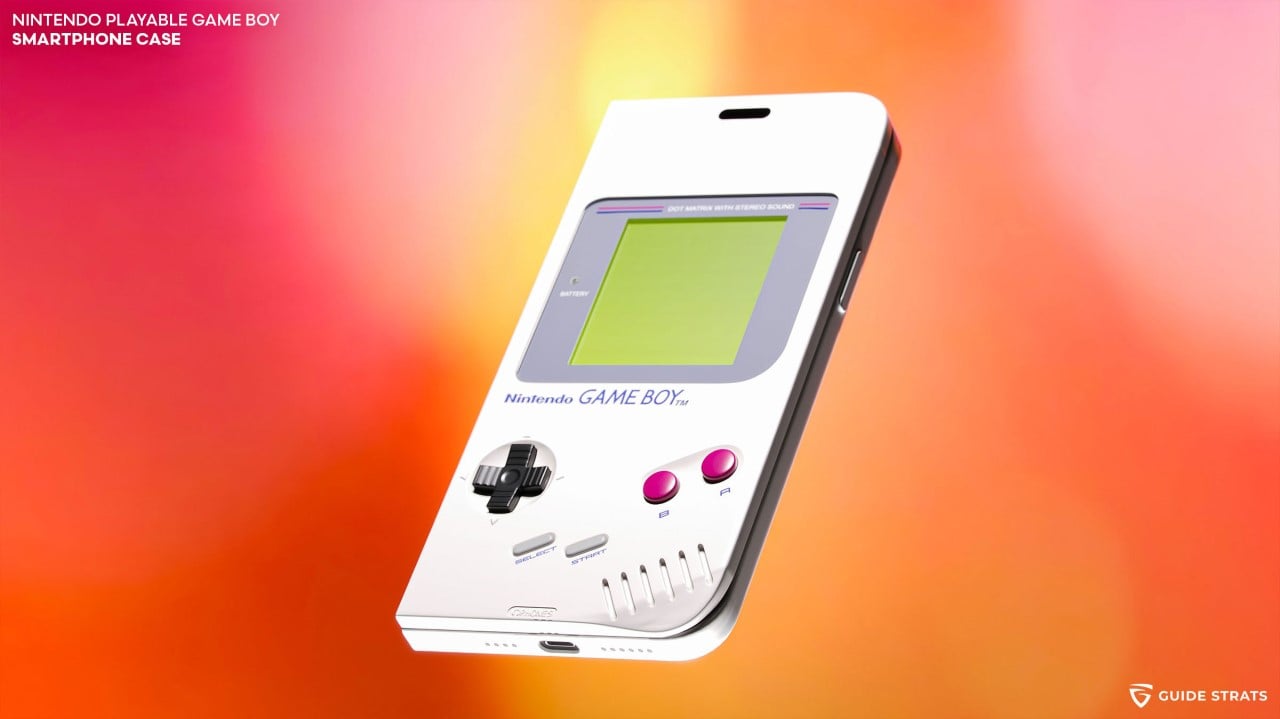
(Patent No: US20180275769A1)

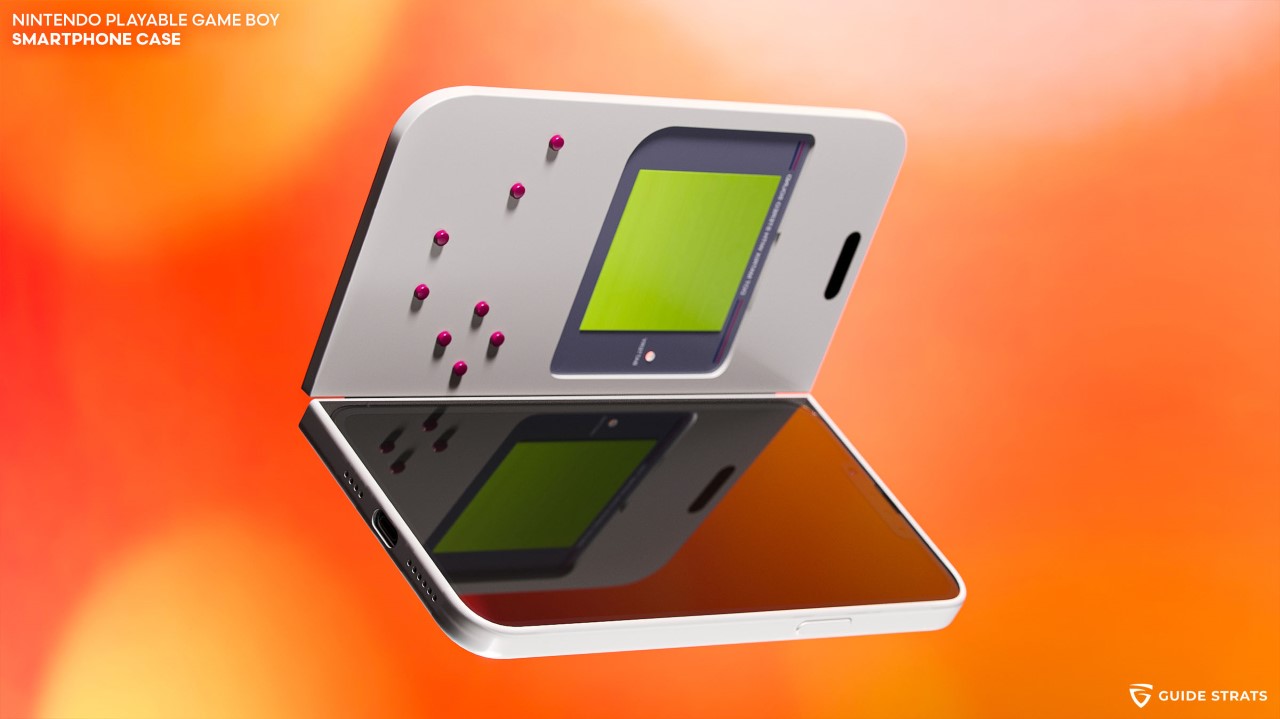
Somewhere down the road execs at Nintendo saw the rise of smartphones and thought – what if we turned the iPhone into a GameBoy?! This slap-on case for your smartphone basically acts as a physical emulator, blocking most of the screen to allow you to only see a small portion of it, where the game would be displayed. Buttons on the front tap the screen when pressed, allowing you to effectively get the Game Boy experience on a modern-day smartphone. The pros? Peak nostalgia and tactile buttons. The cons? Pretty much everything else, including the clunky GB cover that would practically consume your smartphone’s entire aesthetic.
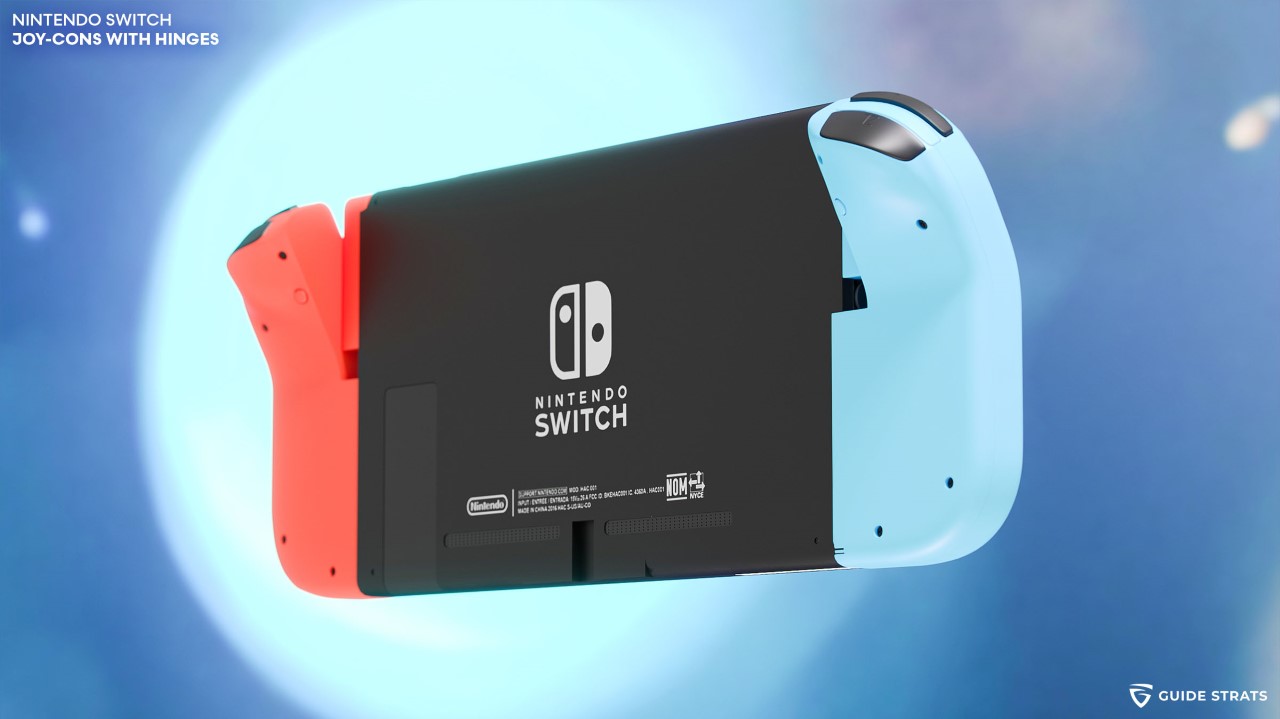
2. Nintendo Switch Joy-Cons with Hinges

(Patent No: JP2019146737A)

A little less weird conceptually, but equally absurd on a technical level, Nintendo patented ‘bendable’ Joy-Cons for their Switch device. The reason? Ergonomics in general, given that the Joy-Cons aren’t as ergonomically shaped as other controllers on the market like Sony’s DualSense controller or Microsoft’s Xbox Wireless Controller. These unique controllers, however, have hinges in them that allow them to bend away from you, enabling a natural gripping position while still having the screen facing you clearly. Given that ‘drifting’ is already a problem within the Joy-Cons, having more moving parts that could compromise accuracy seemed like a bad idea, which is why the patent was left as it was.

3. Nintendo Wii Football Controller

(Patent No: EP2090346B1)

Given how the Wii’s controllers made them perfectly suited for workouts and sports like boxing, skiing, and table tennis, the good folks at Nintendo thought it would make sense to have a football (or rugby ball) accessory for the Wii remote, allowing people to pass, throw, dodge, and run in the game. The solution was an incredibly odd-looking accessory that felt like shoving a remote control into an existing football. “The game-playing public generally expects a football video game to provide a reasonably accurate model of at least some aspects of the actual game of football,” argued Nintendo’s patent. What Nintendo didn’t realize at the time, was that it wasn’t realistic to expect people to play football indoors without breaking bones, furniture, and possibly even your Nintendo Wii. Luckily, sanity prevailed and the Nintendo Wii Football Controller was scrapped.


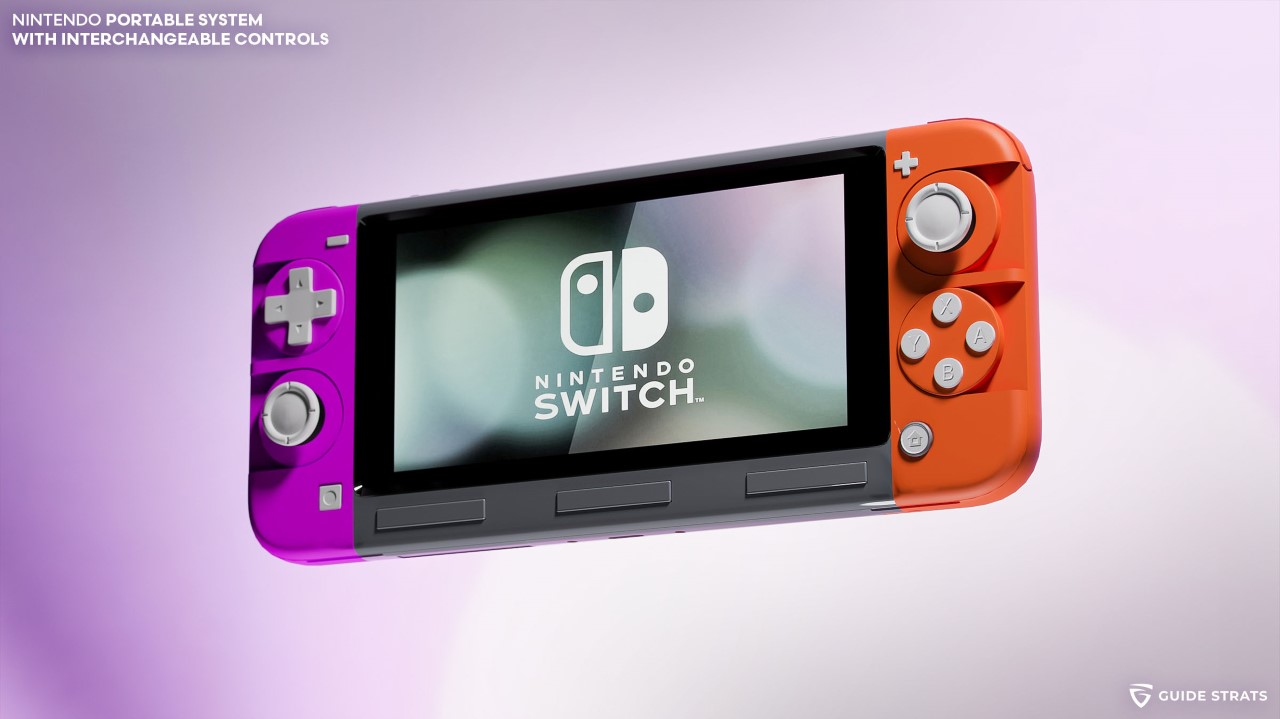
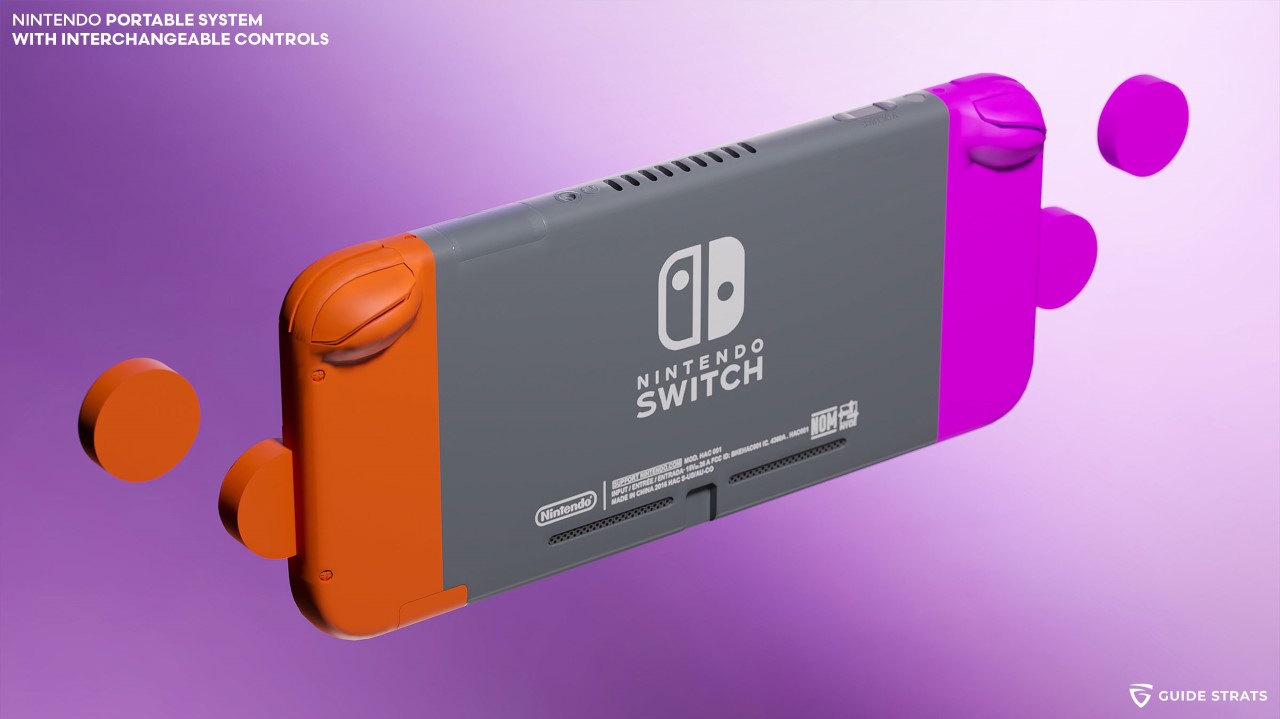
4. Nintendo Portable System with Interchangeable Controls
(Patent No: US20140121023A1)

This one might be the least absurd because you can really see Nintendo’s thinking at the time. The “Nintendo Portable System with Interchangeable Controls” was filed as a patent 10 years ago, long before the Switch was released. The idea – a Nintendo 3DS-style handheld console with interchangeable controls that could slide in and out, allowing you to swap between joysticks, action buttons, and a D-pad based on the game you wanted to play. Eventually, this concept evolved into the Switch as we know it today, and these tiny removable modules were effectively adapted into removable joy-cons, which many will argue was a much better idea in hindsight!

5. Nintendo Wii Inflatable Horseback Riding Peripheral
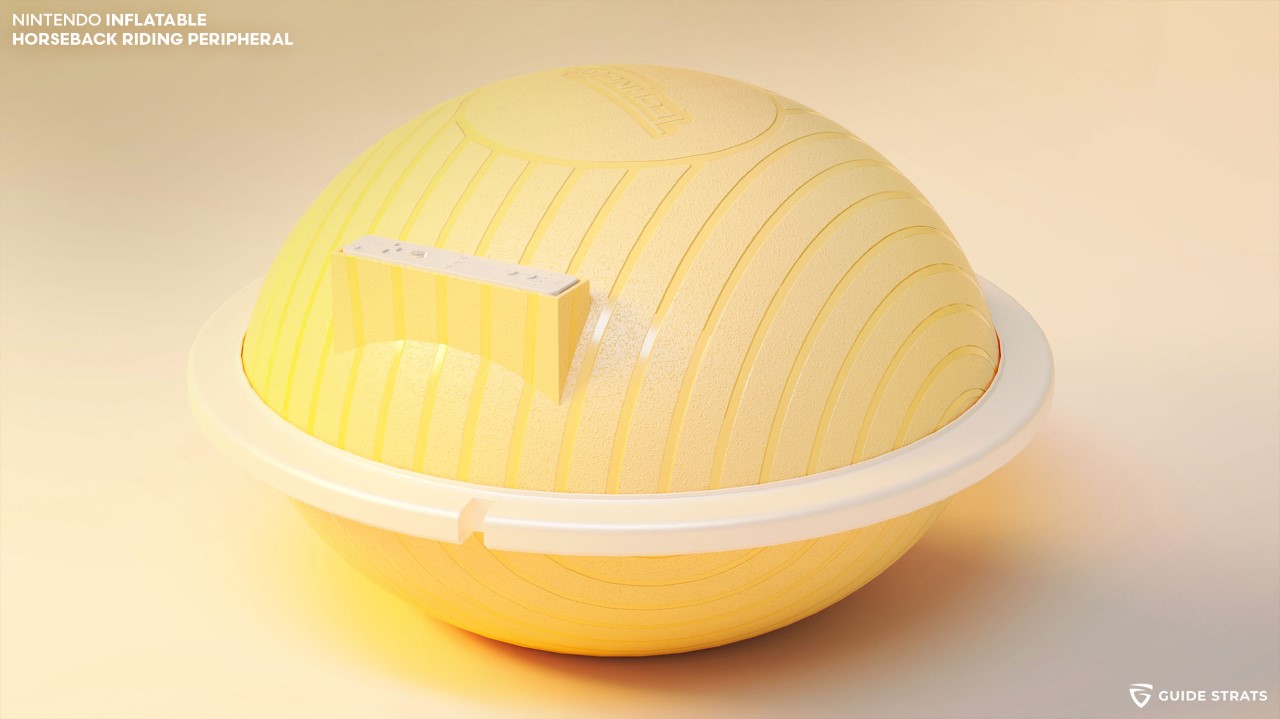
(Patent No: US8277327B2)

Let it be known that the Wii years should go down into the annals of history as some of Nintendo’s weirdest years. As the company saw success with its motion-sensing console/controller system, the company decided the best way to build out the Wii ecosystem would be to create accessories. If the football accessory wasn’t enough, the Nintendudes decided to patent this ridiculous exercise-ball-inspired “Inflatable Horseback Riding Peripheral”. The idea, you’d sit on it with the Wii remote docked between your legs, rocking back and forth to control the horse’s movements. Thankfully for Nintendo and all the gaming fans out there, a particular Jim and Dwight scene from The Office helped Nintendo understand exactly how ridiculous this would look…
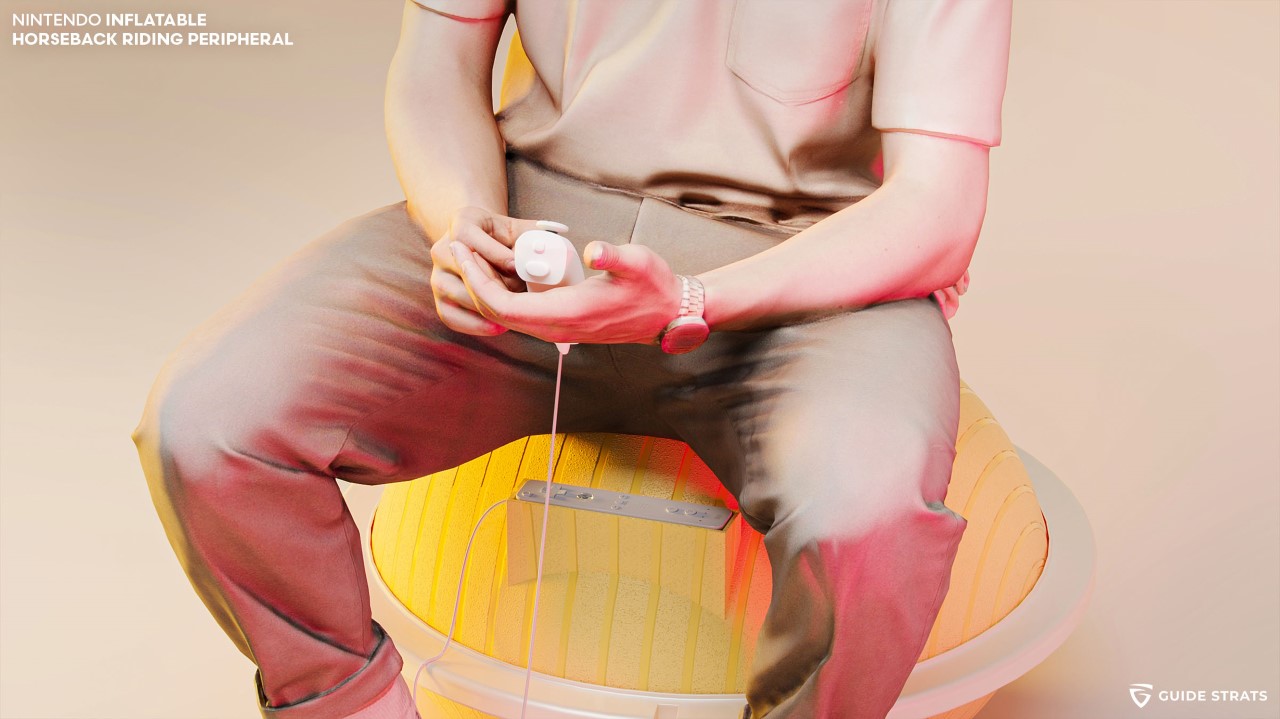
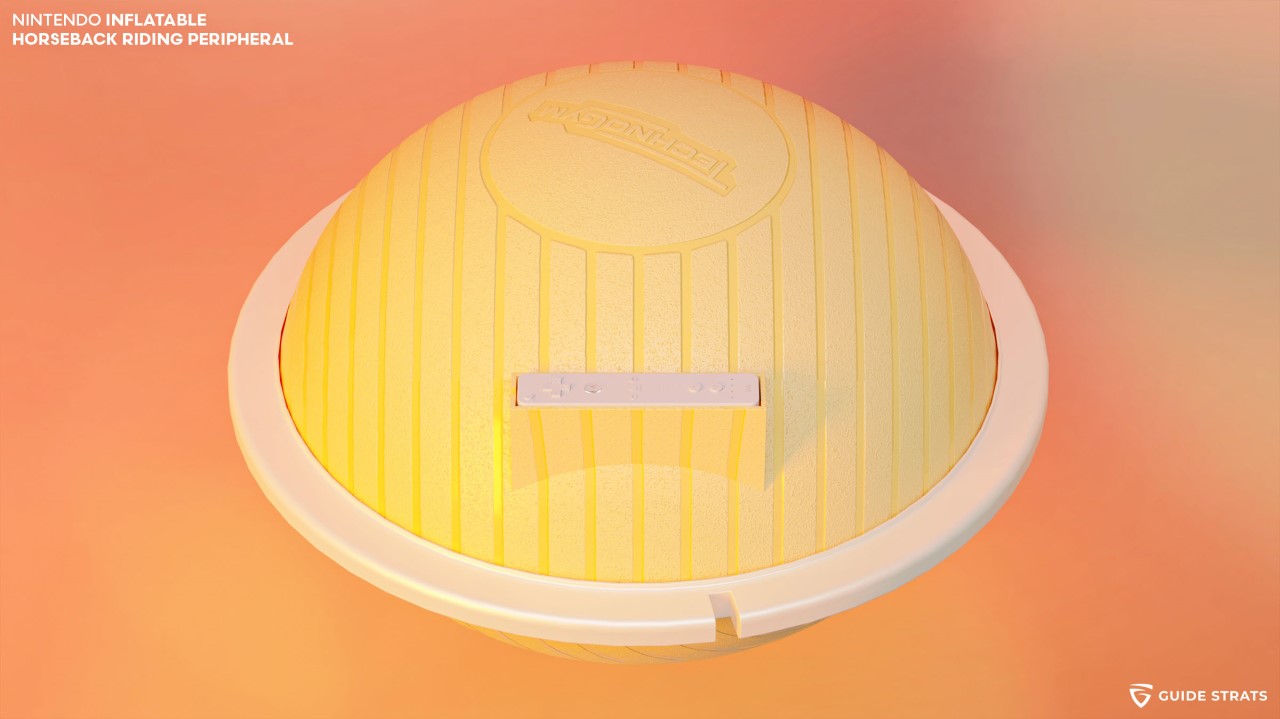
Image Credits: Guide Strats

The post 5 Crazy Nintendo Patents that were almost turned into real products first appeared on Yanko Design.