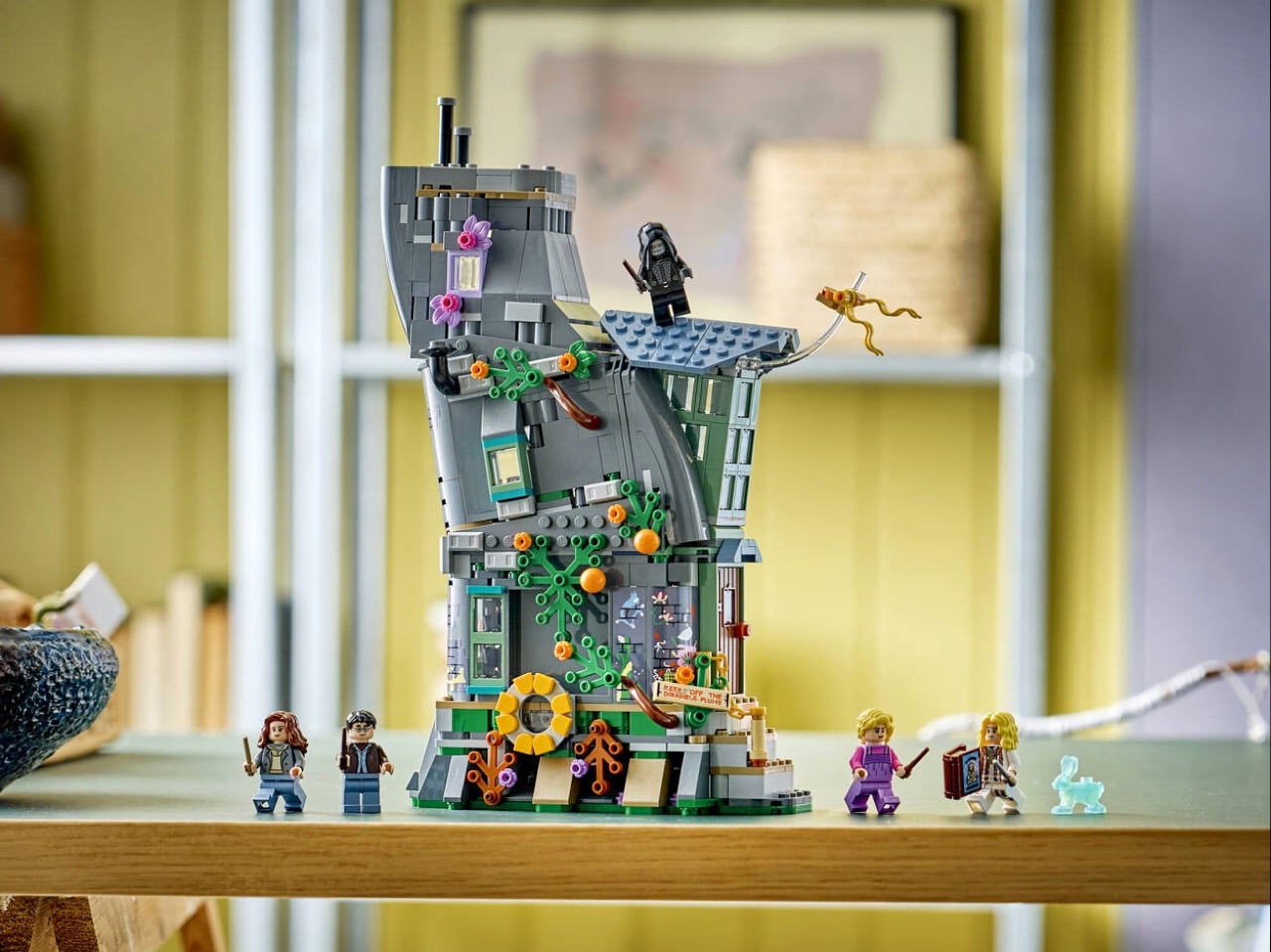
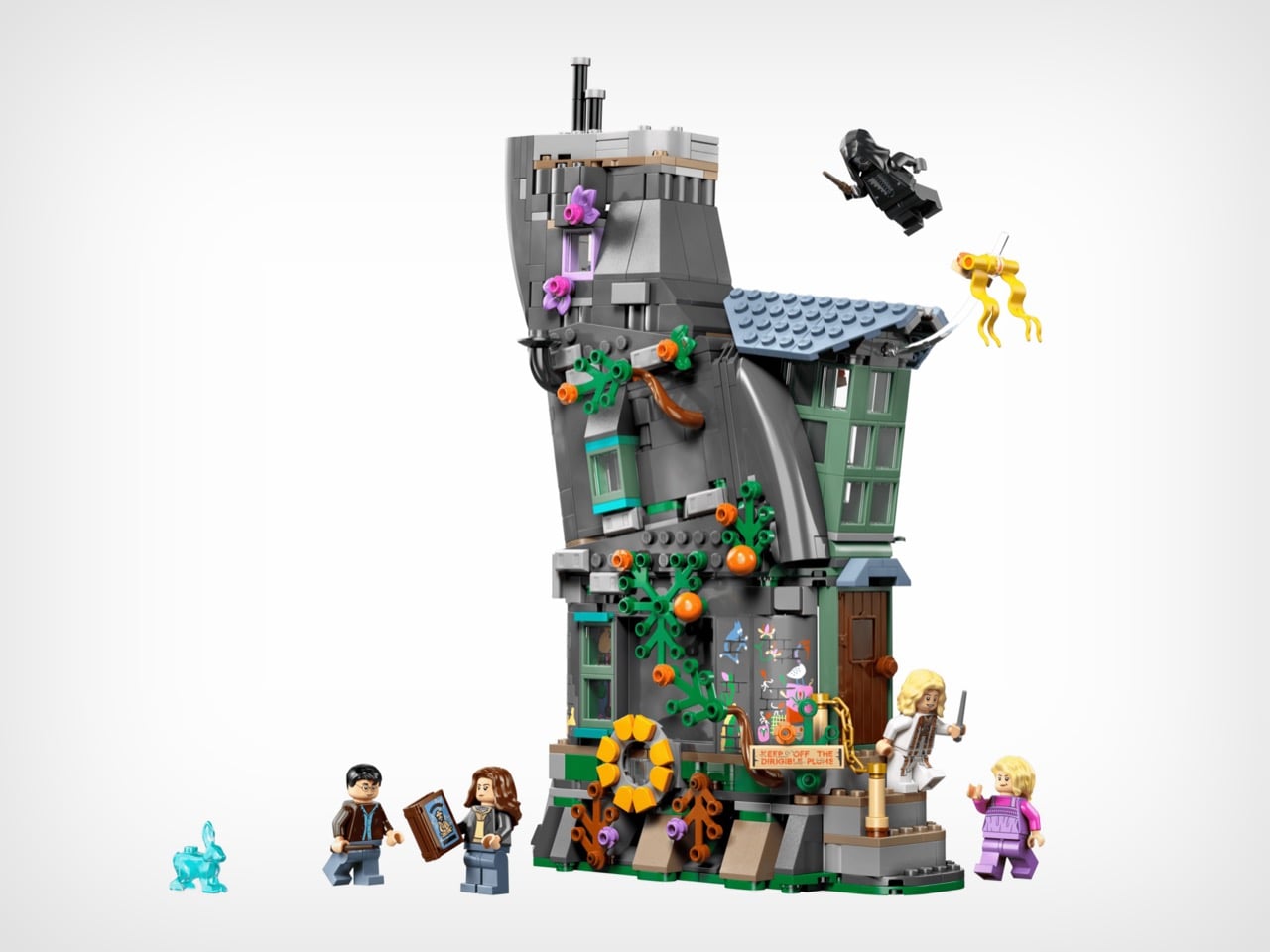
It’s hard not to smile when you think about E.T. the Extra-Terrestrial. Whether it’s the heartwarming friendship between Elliot and his otherworldly guest or the unforgettable image of them soaring across the moonlit sky, the movie’s magic feels timeless. That same magic now finds itself meticulously captured in KoalaBrick’s 2,204-piece LEGO set proposal—a tribute to the iconic “across the moon” scene, combined with a diorama-like display of key elements from the film.
This build is as much about artistry as it is about nostalgia. The silhouette of Elliot and E.T. against a crescent moon forms the centerpiece, with the lunar glow carefully contrasting the dense, detailed forest below. As your eyes wander through the scene, smaller touches, like the flower pot and the communication device, bring a delightful sense of recognition. Even E.T.’s spaceship makes an appearance, cleverly scaled to keep the diorama cohesive. You can almost hear John Williams’ sweeping score as you imagine putting the final pieces together.
Designer: KoalaBrick
What makes this design stand out isn’t just the clever use of LEGO elements; it’s how it balances playability with display-worthy craftsmanship. The forest, for instance, is layered with texture and depth, making it look lush without overwhelming the centerpiece. Peer into the forest and you notice minifigures of Elliot and E.T. standing around the comms device, along with a scaled-down model of the UFO and even the iconic flower pot that E.T. carries around. Yet, when you step back, the build feels more like a cinematic moment frozen in time—a LEGO version of the iconic frame pulled straight from Spielberg’s classic.
The moon backdrop isn’t merely a flat surface but a structure with depth and detail, thanks to the use of LEGO art bricks that help mimic the cratered surface of the moon. Not that a cratered moon is great for scientific authenticity, but rather this helps recreate the very textured detail seen on the poster. These design decisions ensure the set appeals to a wide range of LEGO enthusiasts, from casual fans who admire its display potential to skilled builders eager to create similar artpieces.
Few movies elicit the kind of universal fondness that E.T. does, making this set an instant crowd-pleaser. Whether you watched the film as a child, shared it with your kids, or simply appreciated its influence on pop culture, this build taps into those feelings effortlessly. It’s a love letter to a story that transcends generations. The film’s set around Halloween, but given that we’re a month late, I won’t judge you for re-watching it on Thanksgiving instead!
KoalaBrick’s creation is a heartfelt tribute that reimagines one of cinema’s most iconic scenes in brick form. Currently a submission on the LEGO Ideas website, KoalaBrick is accepting votes from the broader LEGO community to help turn this one-off artpiece into a retail box set that movie buffs and LEGO-nerds can buy and own. Vote for the E.T. – The Extra-Terrestrial set on the LEGO Ideas website here.
I’ll come out clean – I don’t own a TV. I live in a rented house, I have a beautiful bare wall that I don’t want to ruin with a TV mount drilled in (which I’ll have to cover in my security deposit once I leave), so instead of a TV, I bought a projector… and it was the best investment I made. My budget projector outputs 1080p, but the screen measures nearly a hundred inches, making it more than 5x larger than a television I would have bought with the same amount of money. The point is, don’t buy a TV this Black Friday. Buy a projector.
Projectors are compact, have the same smart features as smart TVs, and cast images multiple times larger and more immersive than your average 37″ or 42″ television. Plus, with the right deal, a projector can cost well within your TV budget, giving you a mini cinema experience at home. You don’t need to go searching on the internet for the ‘right deal’ though, because JMGO’s running a pretty sweet Black Friday sale on their two most popular projector lines. Whether you want a fancy 4K projector or something compact enough to carry in your laptop bag, these projectors fit well within every requirement and budget – thanks to discounts of up to 32%!
Designer: JMGO
JMGO N1S Ultimate 4K
The flagship in JMGO’s N1S series, this one made its debut at IFA 2024 in Berlin. Designed as a gimbal-mounted projector, the N1S Ultimate 4K can be positioned anywhere and it will automatically keystone and focus-adjust your image (even intelligently avoiding objects like shelves or wall-hangings), letting you watch movies on your wall or even your ceiling. The projector outputs 4K with a max size of 180-inches at a whopping 3500 ANSI Lumens, which means you can watch movies even in moderately lit rooms without always needing to switch the lights or draw the curtains.
The N1S Ultimate 4K’s stellar clarity comes thanks to JMGO’s MALC (Multi-Layer Adaptive Laser Control) 2.0 Triple Laser Optics – which helps it maintain clarity and sharpness even in high brightness (something traditional laser projectors fail at). It even packs a 20W subwoofer and 45Hz ultra-bass for booming audio. On the software front, Google TV gives you access to all your favorite streaming apps, along with Wi-fi 6 and Bluetooth 5.1 support, two HDMI 2.1 jacks for streaming sticks or game consoles, and two USB-A 2.0 jacks for connecting hard-disks or pen-drives.
Our Verdict
The MALC 2.0 Triple Laser Optics is the star of the show here. I previewed the projector during the day in a well-lit booth at IFA and the visuals were still surprisingly crisp and high-contrast. 4K output with intelligent auto-focus and keystone really makes using the projector a breeze. Imagine having a TV anywhere in your house – even the ceiling! Being JMGO’s flagship, this one has a $2799 price tag, but a 29% discount brings it down to just $1999.
Following the N1S gimbal-centric design, the N1S Ultra 4K is a step below its sibling the N1S Ultimate, but still has stunning specs that keep it at flagship standards. The projector outputs 4K with even support for BluRay 3D (you’ll JMGO’s active-shutter 3D glasses) but skips out on the MALC 2.0 Triple Laser Optics system that debuted in JMGO’s other N1S projectors. Still, you’ve got a VERY respectable 3000 ANSI Lumen output which means bright visuals no matter what time of the day.
The gimbal-mounted projector can be faced anywhere, with automatic focus, keystone correction, and intelligent object avoidance. I can’t stress enough how impressive this is. Face the projector anywhere and it turns practically any surface into a clear 4K television! The N1S Ultra 4K also comes with Google TV and all your favorite streaming apps, along with Wi-fi 6, Bluetooth 5.1, two HDMI 2.1 ports, and 2 USB-A 2.0 ports for max connectivity. There’s a 3.5mm port for external speakers too, although the N1S Ultra packs dual 20W speakers with Dolby Digital Plus for immersive sound.
Our Verdict
With a 32% discount that brings its $2499 price down to $1699, the N1S Ultra 4K might be the only 4K projector that packs 3D support at a sub-2000 price tag. The gimbal and auto-image-correction features are absolute *chef’s kiss*, which means you spend less time fiddling with a remote and more time watching your favorite movies – or even playing your favorite games, thanks to the HDMI port that lets you hook your PS5 or Nintendo Switch and play on a massive 100″ screen!
The N1S Pro 4K launched alongside the Ultimate this year, boasting the same MALC (Multi-Layer Adaptive Laser Control) 2.0 Triple Laser Optics that gives it stunning quality even at the highest brightness. The N1S Pro has the same gimbal-centric design as all its siblings in the series, which creates a sense of visual cohesion while looking gorgeously premium. At 2400 ANSI Lumens of brightness, the N1S Pro 4K is the perfect balance between great output and great cost.
The N1S Pro shares all the features with its higher-priced sibling, the Ultimate 4K. This includes 4K support, smart image correction (focus, keystone, etc.), the 20W dual speaker system with 45Hz bass, built-in Google TV with all your streaming apps, and all the connectivity features and ports from Wi-Fi 6 and Bluetooth 5.1 to the HDMI 2.1 ports and USB-A 2.0 ports.
Our Verdict
With a $1999 price tag brought down to $1299 ($700 discount), the N1S Pro 4K easily gets our editor’s pick for best output at best value. A gimbal-mounted 4K Smart Projector with dual speakers and smart features at an almost sub-1500 price tag is frankly a no-brainer. Instead of throwing money at 50-60″ QLED TVs that cost a lot and can’t be moved around, why not spend the same amount on a 4K projector that casts nearly a 100″ display on any surface – and can be carried around with you from room to room, or even a friend’s place?
The JMGO N1S is the most affordable in the series, with 1080p output, 900 ANSI Lumens of max brightness, and running a triple-laser optic setup that’s just a grade below the company’s cutting-edge MALC 2.0 system. For its affordable price tag, you get the same gimbal design, Google TV on the inside with support for over 10,000 streaming apps like Netflix, Hulu, YouTube, Disney+, and others, with a maximum projection size of 180 inches and the same automatic focus and keystone correction that happens without needing to lift a finger.
Like its other counterparts, the N1S has support for 3D playback when coupled with JMGO’s active-shutter glasses (available separately). The portable format, coupled with the gimbal, makes the N1S a perfect projector for someone who wants to dip their toe in this category without breaking the bank. 10W speakers for this price point are perfect too, and an abundance of connectivity options lets you explore multiple setups just like you would with a TV.
Our Verdict
At 1080p of output, you may miss 4K in theory, but you won’t miss it in practicality. I own a 1080p projector and with streaming, it’s near impossible to tell the difference between streaming 4K on the internet and streaming 1080p unless you know what you’re watching out for. The JMGO N1S is priced at $999, making it the most affordable in JMGO’s gimbal-style N1S series. That much for a 180-inch-wide projection that also supports 3D feels too good to be true!
Want to push your budget even lower, JMGO’s PicoFlix might be their most affordable projector on Black Friday discount. It isn’t a part of the N1S series, which means no gimbal – but the PicoFlix more than makes up for that by being a 1080p FHD projector that’s the size of a Pringles can. The PicoFlix has its own built-in battery, which means you can move from room to room with your ‘television’ or even slip it into a tote bag and carry it to a friend’s place.
The PicoFlix may not have a 2-axis gimbal like the N1S series, but it does have a 127° rotational axis that lets you face it either forwards, at an angle, or directly upwards for watching movies on the ceiling. You’ve got support for up to a 120″ projection at FHD, and even BluRay 3D, with intelligent image correction features via the JMGO app. However, the PicoFlix caps out at 450 ANSI Lumens, which means you’ll need to draw the curtains to watch a movie. A 10,000mAh battery gives you up to 4.5 hours of movie time when used in Eco Mode, and here’s the kicker – the tiny projector still packs 10W dual speakers with Dolby Audio.
Our Verdict
The PicoFlix’s 25% discount brings its $599 price down to $449, making it cheaper than even a mid-tier smartphone. For its specs, that’s a solid recommend, although the 450 ANSI Lumens may be on the lower end for some purists. At that price, 1080p and 3D BluRay support is pretty phenomenal too, and having a projector portable enough to carry around in your palm does feel like quite the flex if you like the idea of watching movies, shows, and sports on the large screen.
You’ve seen quadcopters, and you’ve seen drones used for crop dusting or aerial surveillance – the DJI Glide is a fusion of both those drones. Designed by Baptiste Grenon, the DJI Glide proposes a battery-efficient design courtesy the presence of wings that help the drone stay stable and achieve flight at high altitudes without being an energy-guzzler. The drone still has the familiar quadcopter format, but also includes wings, giving it a hybrid design that might just translate to a longer battery and better range.
Designer: Baptiste Grenon
The DJI Glide’s unique design includes two standard propellers, and two propellers built right into the drone’s wings, which double as propeller guards during flight. It doesn’t look like the wings themselves move, although Grenon has included what looks like rudders at the wing-tips for better maneuverability. The drone still has vertical take-off and landing, but the airfoil cross-section of the wings gives it much more aerodynamics while the drone hurtles forward at top speed.
The implication therefore is that the DJI Glide is more suited for FPV flying as opposed to cinematic flight. A gimbal-mounted Hasselblad camera on the front records your PoV, while cameras on the front, back, and bottom give the drone spatial awareness, allowing it to maneuver on its own without colliding into objects – perfect for having the drone return back to base after its battery runs out.
The battery sits on top, plugging right into the drone’s back to power it in flight. Given the conceptual nature of the drone, battery specs are purely conjecture, but I suppose having wings helps conserve the drone’s battery by giving the aerial vehicle the lift it needs while flying. The wings also present a trade-off in terms of maneuverability, hindering complex movements like moving in reverse or tight turns.
The propellers at the rear justifiably come without any bumper guards, given that they’re effectively shielded by the wings ahead of them. There is, however, a small technical challenge, and it has to do with the drone’s overall size. Having a drone with a wingspan means the DJI Glide isn’t a very compact little device. It therefore comes with detachable wings, which may prove to be a challenge during fast flight. Losing a wing to a loose clamp effectively cripples your drone, since it means losing a propeller too. Collisions may protect the propeller from damage, but the part where the wing and drone join together will take all the impact – something that highly affects your drone’s overall lifespan.
That said, the foldable format does make the DJI Glide fairly portable, allowing it to be flat-packed for shipping. The durability trade-off for efficient flight feels fairly valid – if the obstacle-avoidance algorithms are strong, there really shouldn’t be a problem. Plus, the drone doesn’t need a runway to take off or land, which definitely helps it in the long run for people flying recreationally.
As a plant-lover myself, this set gives me nothing but sheer joy. Botanical gardens had their moment in the 19th and 20th centuries, with their massive overarching cast iron structures, coupled with glass facades that made the building essentially look like a bubble-shaped oasis of nature in a concrete jungle. The art-deco stylings, the habitat-esque design, the chlorophyll, it all makes me truly happy, so seeing something as wonderful as that shrunken down to a tiny set big enough to keep on my bookshelf? It feels like a thing of true beauty!
Meet the Botanical Garden LEGO Ideas set. Envisioned by LEGO user Goannas89, this 3000-brick set is perhaps one of the most intricate I’ve ever seen, with an interior that’s even more detailed than the exterior. The set comes with a white outer structure, revealing the greenery peaking out from within. Pop the top open and you get to adore the Botanical Garden even more, with plants in every nook and corner, and minifigures enjoying them – just like I do when I visit the botanical garden in my own city!
Designer: Goannas89
Inspired by the grand cast-iron greenhouses of the 19th and early 20th centuries, the set brings a historical charm to its modern modular design. The neoclassical entrance is the first hint of the detail inside, its stately architecture standing as a gateway to a lush interior. Step through the doors, and you’re greeted by an open and accessible space filled with botanical delights. A banana tree and a palm anchor the central atrium, surrounded by exotic plants like Anthurium, Bamboo, and the whimsical Begonia Maculata. Each species is thoughtfully placed to create a layered effect of foliage, color, and texture.
Step inside the build, and the experience gets even better. The central atrium greets you with towering green life—a banana tree, a palm, and a Beaucarnea recurvata. Around them, succulents and exotic flowers like Anthurium and Strelitzia add bursts of color. The left and right apses house their own botanical surprises, while a spiral staircase leads to a balcony where you can get up close to the treetops. Every element feels purposeful, whether it’s the clever placement of windows to maximize light or the removable skylight roof for added playability.
With over 3,000 pieces, this build is as rewarding as it is detailed. The structure’s layout—spanning 32×48 studs—makes it versatile enough to integrate into a cityscape or stand alone as a park centerpiece. Measuring 11.3 inches tall, it commands attention without overshadowing nearby builds. The use of transparent elements for the greenhouse’s glazing adds a layer of realism, catching light and creating dynamic reflections that elevate the overall presentation.
What sets the Botanical Garden apart is its careful attention to detail. The plants aren’t just generic greenery; each one is meticulously crafted to reflect real-world species. The banana tree’s textured leaves, the palm’s graceful fronds, and the patterned foliage of the Caladium bicolor all showcase the thoughtful artistry that went into the set’s design. It’s a build that rewards careful observation, with little surprises like succulents tucked into corners and a balance of vibrant and earthy tones that mimic nature itself.
Beyond its visual charm, the set feels like a love letter to urban green spaces. It captures the magic of stepping into a real-life botanical garden—those rare places where city life slows down and nature takes center stage. Whether it’s a child marveling at the flowers or a LEGO botanist tending to rare plants, the set brings that same sense of wonder and tranquility to the world of bricks. It’s a reminder of the importance of such spaces in our lives, even if they’re scaled down to fit on a tabletop.
There’s something undeniably captivating about seeing a greenhouse—traditionally a place for nurturing growth—brought to life in LEGO form. It’s a set that not only celebrates the art of building but also the beauty of the natural world. Whether it’s the intricate spiral staircase, the removable balcony, or the interplay of light through the glazed panels, every piece works together to create a space that feels alive and inspiring.
Celebrate the holiday season with the ArtiSANTA Christmas Artisan Keycaps by Dwarf Factory, a festive collection designed to bring joy to your keyboard. These handcrafted keycaps transform everyday typing into a whimsical experience, featuring intricate designs inspired by the spirit of Christmas. From nostalgic characters to sugary houses, the collection captures the magic of the season while doubling as high-quality artisan pieces that fit seamlessly into most mechanical keyboards.
Each keycap in the collection—Gingy, Nutcracker, and Sweet House—is crafted with precision and attention to detail. Made with high-quality resin and glow-in-the-dark elements, they are not only visually stunning but also built to last. Designed in the SA R1 profile, these keycaps are compatible with Cherry MX switches, ensuring a snug fit for mechanical keyboard enthusiasts. Perfect for personalizing your workspace or as a holiday gift, they bring a touch of seasonal magic to every keystroke.
The Gingy keycap is a playful nod to the classic gingerbread man, with vibrant icing details that bring the cheerful character to life. Encased in a snowglobe-like resin dome, Gingy stands atop a snowy, decorated chimney base. The hand-painted details on the figure, combined with the intricate base, evoke a sense of holiday nostalgia. Glow-in-the-dark accents enhance the charm, adding a cozy glow that illuminates your keyboard in low-light settings.
Beyond its festive appearance, the Gingy keycap is designed for practicality. The SA R1 profile ensures it fits comfortably on Cherry MX switches and their compatible clones, making it a functional addition to any keyboard setup. Its durable resin construction guarantees long-lasting use, allowing Gingy to spread holiday cheer all season long.
Nutcracker Keycap
The Nutcracker keycap captures the regal elegance of this traditional Christmas figure, complete with a bold uniform and iconic hat. Encased within a crystal-clear resin dome, the Nutcracker stands proudly on a snowy chimney base adorned with holiday lights. Every detail is hand-painted with remarkable precision, from the polished buttons on his uniform to the expressive face that mirrors classic nutcracker designs. The glow-in-the-dark feature adds a magical touch, allowing the keycap to shine as bright as the season itself.
Functionality meets artistry with the Nutcracker keycap. Its SA R1 profile ensures a snug fit on Cherry MX switches, while the durable resin construction protects the intricate design. Whether used as a centerpiece for your holiday-themed keyboard or simply as a decorative addition, this keycap blends festive tradition with modern keyboard customization.
Sweet House Keycap
The Sweet House keycap is a delightful miniature gingerbread house, complete with colorful candy decorations and sugary icing. Nestled within a resin dome, the house sits atop a snow-covered chimney base that brings to mind cozy winter scenes. The attention to detail is extraordinary, with hand-painted candies, frosted rooftops, and even tiny windows that make the design feel like a festive storybook come to life. The glow-in-the-dark accents further enhance the magical aesthetic, casting a gentle glow that transforms your keyboard into a winter wonderland.
Designed for both beauty and durability, the Sweet House keycap is built with the same SA R1 profile and Cherry MX compatibility as the rest of the collection. Its whimsical charm pairs perfectly with the season, making it a great choice for anyone looking to infuse their workspace with holiday spirit. The Sweet House is more than an accessory—it’s a tiny piece of Christmas magic at your fingertips.
These artisan keycaps (which debuted last year) are available for purchase at $39 each, offering a unique way to personalize your keyboard with holiday spirit. Whether you’re a mechanical keyboard enthusiast or looking for a special gift, the ArtiSANTA 2023 collection brings a touch of festive magic to every keystroke.
A brick recreation (brickreation, if you will) of an iconic classic, the “Lunch Atop A Skyscraper” LEGO Ideas kit captures the essence of the American dream. The original photograph, shot in 1932, features eleven New York construction workers casually eating lunch on a steel beam, suspended 260 meters (853 feet) above the ground. Built by LEGO maker DallasBricks, this LEGO rendition pays tribute by turning the famous photo into a brick-based artpiece that can be hung on a wall or placed on a bookshelf.
Designer: DallasBricks
At its core, the set uses a flat design style, similar to LEGO’s art series, but it incorporates thoughtful 3D construction methods to create the illusion of a suspended steel beam. The minifigures are carefully posed to reflect the relaxed yet precarious nature of the workers in the photograph. Each figure contributes to the scene’s energy, making it feel dynamic and alive, as if frozen in a moment of real life.
Although DallasBricks doesn’t specifically mention how many pieces are used in this build, it’s safe to estimate there are quite a few, given the skyscraper details in the background. Look closer and you’ll notice the skyscrapers aren’t all buildings, they’re actually a mix of LEGO tech and hardware pieces like keyboards, phones, remote controls, and screens, along with a few building window pieces. This creative use of different flat bricks gives the skyline its uniqueness, allowing each building to have a different character instead of looking all the same.
The original photo wasn’t just a depiction of the American dream, it was that of celebrating all the people who got together to make this dream happen. The photo features builders of different races, enjoying a meal together while rather casually hanging off a steel girder. The LEGO MOC (My Own Creation) has 11 minifigures too, just like in the photo, all enjoying a meal together before they get back to work.
The LEGO Ideas Lunch Atop A Skyscraper kit is currently a fan-made submission on the LEGO Ideas website, an online forum where LEGO enthusiasts create their own builds and share them with the LEGO community. With 2,790 votes as of writing this article (and with 560 days of voting left), DallasBricks’ LEGO MOC is well on its way to gathering enough votes to reach the 10,000 vote mark, following with the design will get reviewed by LEGO’s internal team and hopefully turned into a retail kit!
The new logotype, which looks indistinguishable from the Motorola font, makes the Jaguar feel ‘toothless’.
I didn’t have a Jaguar rebrand in my 2024 bingo cards, but honestly, this year has been curveball after curveball, hasn’t it? The British luxury automobile brand just unveiled its rebranding, characterized by 4 new elements that make up Jaguar’s fresh look to usher in its EV-only push. The new branding orbits around four meticulously designed elements.
First is the “Device Mark,” a logo stripped of excess yet bold in its restraint. Its symmetry hints at balance—a nod, perhaps, to the duality of tradition and innovation Jaguar aims to master. Then there’s the “Strikethrough,” a graphic motif that almost slices through the air with modernity, destined to carve a permanent space in Jaguar’s visual lexicon. The “Exuberant Colors” go even further, injecting vibrancy and connecting the brand to the artistic world. Finally, the “Makers Marks”—a duo of the traditional leaper emblem and a sleek monogram—grounds the brand in its storied history while letting its typography flirt with the contemporary.
Jaguar’s Chief Creative Officer, Professor Gerry McGovern, frames this shift as a reclamation of identity. This is a reimagining that recaptures the essence of Jaguar, returning it to the values that once made it so loved, but making it relevant for a contemporary audience,” he says. The implication (given the assets shared by Jaguar) hints at the company viewing themselves as less of a car brand and more of a luxury brand. The exuberant colors of the campaign imagery look like something out of a fashion magazine, which fails to address the most important part of Jaguar’s brand – its automotive part. In fact, none of the images even have a car in them, or hint at anything car-related.
The new logotype opts for a curved, sans-serif font that ditches Jaguar’s original aesthetic entirely. It’s somewhat ironic that Jaguar brings up a quote by its founder, Sir William Lyons who said “A Jaguar should be a copy of nothing,” when the logo instantly appears generic or ‘seen before’. The Device Mark tries to create a difference by boldly eschewing the branding styles of automotive companies; but in doing so, falls into the trap of feeling familiar, and not the good kind. The font somewhat resembles the logotype of Motorola, with the Jaguar’s G looking vaguely like Google’s G.
Obviously, my opinions are broadly my own, but show the logotype to someone completely new to the automotive world and they’re least likely to guess it belongs to a company that made something as ferociously fast as the F-Type. The Strikethrough gets a subtle yet significant change, however, with the jaguar being flipped to face towards the right instead of the left. A little easier to grasp as an outsider, this change does two things – it differentiates Jaguar from Puma, which both had left-facing feline logos, and secondly, it makes the jungle cat look like it’s lunging forward instead of backward. The lines of the strikethrough don’t provide much of an explanation for their presence, although they could at least bend around the Jaguar to make it look like a wind tunnel test.
Overall, the branding feels drastic, confusing, and outright rejects everything the British marque built over the past 102 years. It isn’t like Audi’s rebrand from last week, which meaningfully announced a new collaborative EV line exclusive to its China marketplace while still retaining the four-logo identity for the global brand. This rebrand on Jaguar’s part doesn’t explain much, especially when there’s no actual context in the picture.
The car company hasn’t announced any new cars that go with the branding, making the logo and visual identity feel confusing. The Device Mark presents a strange mashup of Motorola and Google, the Strikethrough creates ‘grills’ that famously don’t feature on EVs, the Makers Mark looks appealing but lacks any context, and the Exuberant Colors (the posters shown below) have absolutely zero reference to cars at all.
Jaguar’s campaign imagery mentions nothing about automobiles. There isn’t a car to be seen in any of the posters.
I don’t want to discount Jaguar’s efforts with its rebrand – let’s just say they probably know something I don’t. My opinions aside (even though they’re rather strong), Jaguar’s new identity comes just days before the company unveils the Jaguar Design Vision Concept – a conceptual automobile that serves as a guiding point for the carmaker’s future endeavors. With a commitment to launch a completely new slew of all-electric vehicles by the end of the decade, Jaguar is hoping the rebrand performs a ‘complete reset’ according to Managing Director Rawdon Glover.
History, at least, is on Jaguar’s side. The brand has repeatedly proven its ability to adapt and evolve, from the sleek lines of the E-Type to the modern flair of the I-PACE. This latest transformation is timed perfectly, albeit with the stakes turned up to eleven. Yet, reinvention always comes with risks. Will this new identity alienate loyalists who cherish Jaguar’s old-world charm? Can the brand authentically straddle the line between exclusivity and accessibility, artistry and practicality? These are the big questions Jaguar faces, and they’ll only be answered as its plans unfold in the years to come.
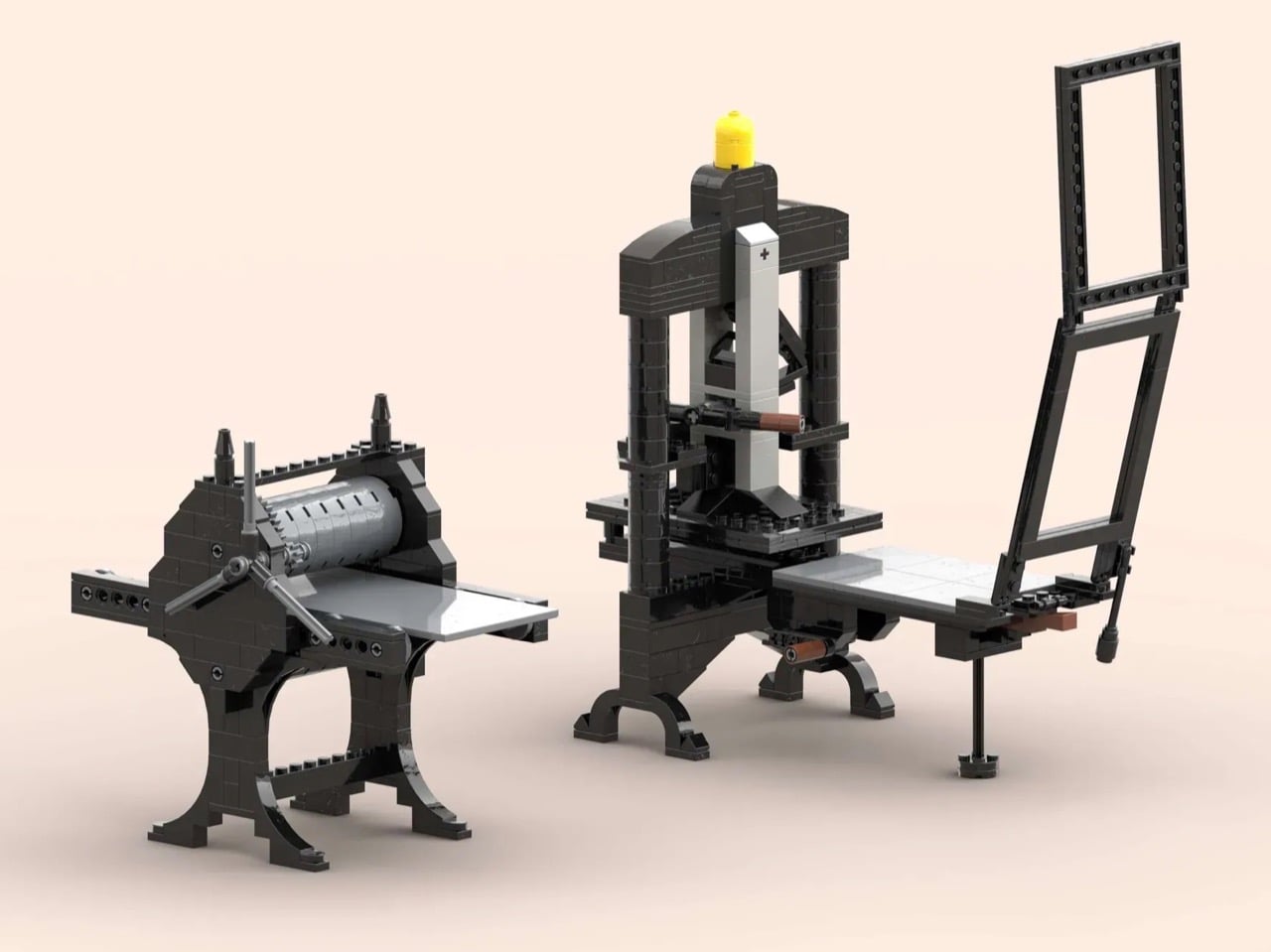
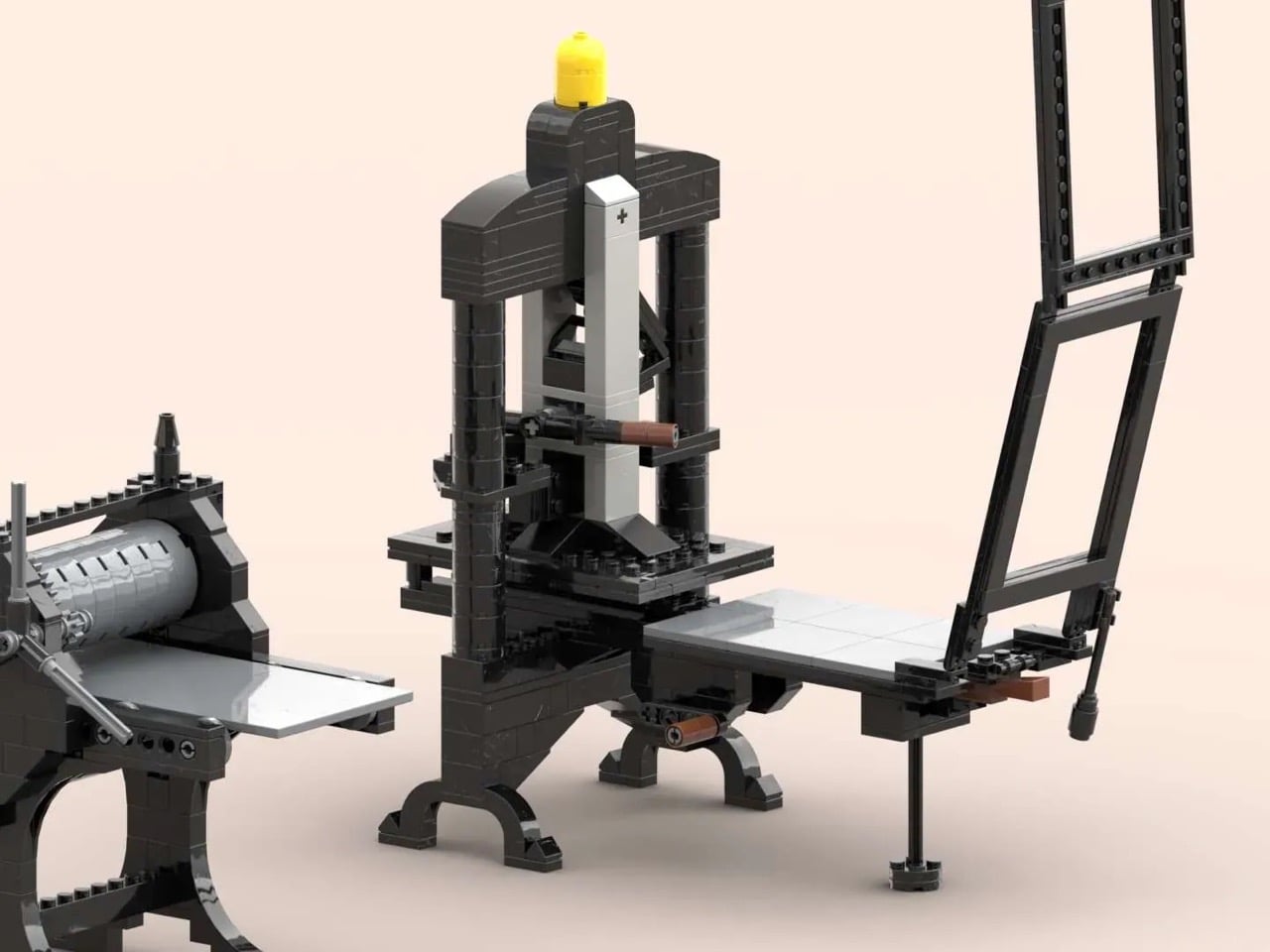
A glowing bunch of bananas might sound like a quirky Maurizio Cattelan artpiece that comments on society, but the Banana Lamp by Gazzaladra is a serious nod to creativity and clever design. Crafted using precise 3D scans of real bananas, this lamp leans into nature’s whimsy, turning an everyday fruit into an arresting piece of functional art. It’s not just about illumination—it’s about sparking conversations, turning heads, and challenging the mundane with a cheeky twist.

Each lamp in the collection captures the organic details of a banana bunch with startling authenticity. From the subtle ridges on the peel to the delicate curve of each fruit, it’s evident that this isn’t just a cartoonish attempt at mimicking nature. Gazzaladra’s design merges the accuracy of high-resolution 3D modeling with a sense of humor, resulting in a lamp that feels both oddly lifelike and undeniably modern. Whether perched on a desk or suspended from the ceiling, its playful design ensures it’s more than just a light source—it’s an experience.
Designer: Gazzaladra
The Banana Lamp’s charm lies in the marriage of form and function. It’s easy to dismiss a banana-shaped lamp as a novelty, but closer inspection reveals a thoughtful balance of aesthetics and utility. The design speaks to a broader audience—not just design enthusiasts but anyone with a sense of fun and a love for standout décor. The lamp doesn’t just sit quietly in the background; it demands to be noticed, celebrated, and even laughed about. It’s a rare example of how everyday objects, when reimagined creatively, can transcend their usual roles and become something extraordinary.
Available as a 3D model on the thangs.com 3D model marketplace, the Banana Lamp is designed to be tinkered with. The hollow bananas feature a 1.6mm wall thickness, making them ideal for translucent filaments that create a glowing effect. Want a more dramatic look? Play around with painting techniques to replicate anything from green, unripe bananas to the golden hue of perfectly ripened fruit. The lamp essentially invites you to collaborate with the design, making it a unique, hands-on experience for users.
Obviously it goes without saying, but the lamp’s designed only to be used with LED bulbs. Given that plastic (especially materials like PLA or ABS) melt fairly quickly under sustained heat, the Banana Lamp isn’t made for being used with incandescent bulbs. In fact, maker ‘gazzaladra’ even recommends trying out a bulb with a sample 3D print before installing one in your house. In fact, if your printer supports PET-G or Nylon filaments, opt for those over traditional PLA filaments that are very prone to warping or melting.
The Banana Lamp is available in four distinct versions, tailored to suit different needs and aesthetic preferences. Whether you’re looking for a pendant lamp to crown your kitchen or a desk version to brighten up your workspace, there’s a banana—or a bunch—for you. Each variant is compatible with common socket kits, such as the Ikea Strala, ensuring that even the technical side of this lamp remains approachable. A thoughtful design element allows for single or multicolor printing, so you can either keep it minimal or let your imagination run wild with custom-painted ripeness levels.
Gazzaladra’s Banana Lamp feels like an art exhibit brought into the home, a nod to the idea that even the most mundane objects can inspire joy. It’s a reminder to take design less seriously sometimes—to embrace the quirky and unexpected. Whether it’s lighting up a dinner party with its cheeky charm or simply sitting as a silent conversation starter in your living room, the Banana Lamp is an invitation to look at the world through a more playful lens.
Dueling monsters and legendary spells come to life on your keyboard with the Yu-Gi-Oh! Artisan Keycaps by Eminent Crafts and Dwarf Factory. Each keycap is meticulously handcrafted and hand-painted, capturing the essence of these legendary figures. rafted in the versatile SA R1 profile and compatible with Cherry MX switches, they’re perfect for mechanical keyboard enthusiasts who value both form and function. Each keycap is a visual masterpiece, created with exceptional attention to detail and finished with hand-painted artistry.
Encased in high-quality resin for durability and visual flair, these keycaps also allow for LED shine-through, enhancing their appeal in dynamic lighting setups. Whether you’re summoning nostalgic memories or personalizing your workspace, the collection—featuring the Dark Magician, Dark Magician Girl, and Blue Eyes White Dragon—adds a dash of personality to your keyboard. Priced at $64.99 each, these officially licensed keycaps are a treat for fans and collectors alike.
The Dark Magician keycap channels the essence of Yu-Gi-Oh!’s most iconic sorcerer into a stunning, meticulously crafted design. Encased in crystal-clear resin, the figure is brought to life with flowing purple robes and a glowing staff, embodying the magician’s arcane allure. Hand-painted with precision, every detail—down to the sharp lines of the lightning strikes emerging from his scepter and the magical swirls of his attire—evokes a sense of motion and mystique. The vibrant colors and lifelike textures make this keycap a centerpiece for any mechanical keyboard setup.
More than just an aesthetic masterpiece, the Dark Magician keycap is engineered with functionality in mind. Crafted in the SA R1 profile, it offers a comfortable typing experience while fitting seamlessly onto Cherry MX switches and their clones. The resin casing doesn’t just protect the intricate design; it also enhances it, allowing LED backlighting to shine through, creating an ethereal glow reminiscent of the character’s magical power. It’s a seamless fusion of artistry and usability, ideal for fans and keyboard enthusiasts alike.
The Dark Magician keycap is a refined addition for mechanical keyboard enthusiasts and collectors. Its high level of detail and compatibility make it an excellent choice for those who value both aesthetics and usability. By combining skilled craftsmanship with durable materials, it transforms any keyboard setup into a visually captivating workstation.
Dark Magician Girl Keycap
The Dark Magician Girl keycap radiates charm with its vibrant color palette and exquisite detail. Her signature pink-and-blue outfit is meticulously rendered, with every element—from her wide-brimmed hat to her magical staff—perfectly sculpted and hand-painted. Encased in transparent resin, the design is preserved against wear while allowing your keyboard’s lighting to bring her to life. This keycap effortlessly balances fun and nostalgia, making it a must-have for fans of this beloved character.
Like its counterparts, the Dark Magician Girl keycap is built for both beauty and functionality. Its SA R1 profile ensures compatibility with Cherry MX switches, while the durable resin makes it a lasting part of your keyboard collection. The keycap is ideal for those looking to add a playful yet iconic flair to their setup, bringing the magic of Yu-Gi-Oh! into everyday use.
Blue-Eyes White Dragon Keycap
The Blue Eyes White Dragon keycap is a showstopper, embodying the raw power and majesty of the franchise’s most iconic creature. The intricate sculpting captures every detail, from the beast’s sharp claws to its meticulously scaled body, while its piercing blue eyes dominate the design. Encased in clear resin, the keycap allows for LED shine-through, adding a dramatic lighting effect that mirrors the dragon’s legendary “White Lightning” attack.
Beyond its impressive aesthetics, this keycap is designed with functionality in mind. The SA R1 profile and Cherry MX compatibility make it suitable for a wide range of mechanical keyboards. Whether you’re a longtime fan of Kaiba’s favorite monster or simply appreciate intricate artisan craftsmanship, the Blue Eyes White Dragon keycap offers a striking blend of design and usability. It’s the ultimate statement piece for any keyboard setup, channeling the spirit of this legendary dueling monster.
The journey of creating a product doesn’t end at design—it’s where it begins. KeyShot, a trusted name in product visualization and rendering, is evolving that journey with its innovative Product Design-to-Market Suite. Imagine a world where designers, developers, and marketers don’t work in silos but move together in perfect sync. That’s the vision KeyShot is bringing to life, and it’s already shaking up workflows for companies big and small.
We sat down with Garin Gardiner, Product Director of KeyShot Hub, to uncover how this suite is solving challenges designers didn’t even know had solutions. From effortless collaboration to smarter asset management, KeyShot isn’t just keeping up with the demands of the design world—it’s rewriting the rules. Dive into this conversation to explore how KeyShot is empowering creators to dream big and deliver faster.
Yanko Design:What specific areas in the product design process does KeyShot’s new Product Design-to-Market Suite address? How does this optimize a business’ workflow in ways that older versions of KeyShot didn’t?
Garin Gardiner: Our flagship product, KeyShot Studio, is primarily geared towards the individual designer. It was the first scientifically accurate rendering engine, now used in over two-thirds of Fortune 500 companies, with thousands of customers around the world. We’ve always worked closely with our customers to keep Studio relevant to their needs, and over two decades of development, we learned about other significant needs related to the design process, team workflows and business logistics. We saw a huge opportunity to help – and to revolutionize the way products are brought to market.
We’re introducing a concept called Product Design-to-Market, which is a holistic strategy that connects the many departments involved in product creation and market delivery. You can think of it as bridging the product design and go-to-market processes. Instead of working in silos, we’re encouraging a smooth exchange of information and assets across design, development and marketing teams. The result is faster iteration, better alignment, and a seamless transition from first sketch to market delivery.
Of course, you need the right tools to make this vision a reality. Our Product Design-to-Market Suite, which includes KeyShot Studio, also provides comprehensive design team support in KeyShot Hub and connection to the management and distribution of marketing assets in KeyShot Dock.
Yanko Design:How have early adopters responded to KeyShot Hub’s collaboration capabilities, and can you share how it has improved their design process?
Garin Gardiner: It is amazing how nearly every customer we’ve talked to, when we ask them how they’re navigating team workflows, say they struggle managing a central repository for their team to find the core items they use frequently. When individuals can’t find what they’re looking for, they often create duplications, and there’s so much time wasted in that. Hub provides that central repository, so everyone has access to the current version of the file, meaning no duplications are necessary. Plus, changes to the file can automatically be tracked and you can easily revert back to a previous version.
Another favorite is the shared material library in Hub. Customers say being able to work from the same material library makes a huge difference. If a material gets modified, the entire team will automatically get the latest and greatest the next time they use a material. They are also able to tag it for easier searchability, so they aren’t creating duplicate materials, like they often do today.
Hub’s related assets feature is really resonating with customers. When you apply materials to a scene and save it to the Hub, you are able to see all those materials linked to the scene in the Hub for a quick CMF view of your scene.
Tagging is another feature customers appreciate. When saving a rendering to the Hub it will automatically attach tags – Model Sets, Camera, Studio, Environment, Image Style, Colorway, and Materials. These tags can then be used to search for renderings. Searches can be saved for later re-use by all members of the team. Our customers care a lot about their CMF – it’s a key aspect of what they do. They can also manually update tags if they prefer.
Customers are also loving the side-by-side comparison feature between versions. You can select two versions and real-time compare them using a dynamic slider; it’s really helpful to compare differences between versions, especially when the differences are in small details. Our customers create a lot of versions of the same rendering and being able to compare versions side-by-side is helpful.
These are all features that Hub users say address the team and workflow challenges they’re facing today. Ultimately, it’s all about saving time and enabling easy collaboration, so designers can focus on their craft rather than administrative tasks. And you can see how everything works in a full demo of Hub available on YouTube.
Yanko Design:What developments in other industries are providing inspiration for KeyShot as it paves the way forward with its new Product Design-to-Market Suite?
Garin Gardiner: There’s certainly movement toward breaking down silos and supporting cross-collaboration. We have seen how companies like Microsoft have enabled richer collaboration using the cloud through their Teams platform. We have also seen design tools like Fusion transform how their customers work with Fusion Team.
These developments were part of what inspired us to offer a purpose-built Product Design-to-Market Suite to better support our customers. Now KeyShot provides speedy and intuitive rendering, support for design team workflows, and support for marketing.
Yanko Design:We’re very excited about KeyShot Dock’s enhanced Digital Asset Management system! How do you envision it helping companies better organize and distribute their 3D assets across marketing and sales channels?
Garin Gardiner: Right now, marketing teams are typically responsible for generating their own images and animations, separate from product design. They budget for product visuals and often make them from scratch, spending time and money on photography and design work. But they could be saving time and money by repurposing the 3D renderings already produced by design teams, which make it easy to create an infinite amount of marketing-worthy product visuals. CAD models and KeyShot scenes can be stored in KeyShot Dock, providing a connection between marketing and product design and empowering marketing to use those assets across go-to-market channels.
Our customers tell us that 3D visuals are much more effective than 2D images or product photography; 3D visuals lead to higher conversions and lower return rates.
Customers can expect regular updates to Dock. Over time, we are looking to enable viewing 3D interactive files like GLBs and even the possibility of generating on-demand 3D viewables from CAD models like SolidWorks, STEP and more.
Yanko Design:How do you see technologies like AI and machine learning influencing the future of 3D rendering and Digital Asset Management, and will KeyShot incorporate these innovations?
Garin Gardiner: We’re considering how to incorporate AI into our tools in a way that adds value to users. While generative AI can provide impressive results in image generation, we still believe that accurate rendering – down to highly detailed materials and brand elements – will require physics-based rendering. However, we are analyzing how AI can help our customers achieve greater efficiency in their workflows or increase the speed and quality of rendering, through processes like sampling light rays used by rendering algorithms or denoising rendered images.
On the marketing side, AI has the potential to make it faster and easier for teams to generate 2D renderings as a replacement for physical photography. Imagine feeding AI with 100% accurate product data and using it to generate creative environments around accurate renderings.
These are all possibilities we’re looking at right now. AI has so much potential to provide creative and logistical support – it’s all about making the most of it.