8 Best Travel Gadgets & Tools Men Who Fly Constantly Refuse to Leave Without

Frequent flyers develop rituals. Not superstitions, but systems, small corrections built over dozens of boarding passes and red-eye recoveries that separate a tolerable trip from a miserable one. The gear that survives this process tends to be invisible in the best sense: compact enough to vanish into a carry-on, functional enough to earn its pocket space, and designed with the kind of restraint that does not scream “gadget” at TSA.

We have spent a good chunk of this year tracking products that solve the specific, unglamorous problems of constant air travel. Not the flashy stuff that lives in a CES sizzle reel, but the tools that answer real questions: how do I sleep upright, stay caffeinated in a hotel with terrible coffee, or keep my workout intact when the gym is a repurposed storage closet? These eight picks are the ones that survived the edit, each one earning its spot through a combination of smart engineering and a refusal to waste space.

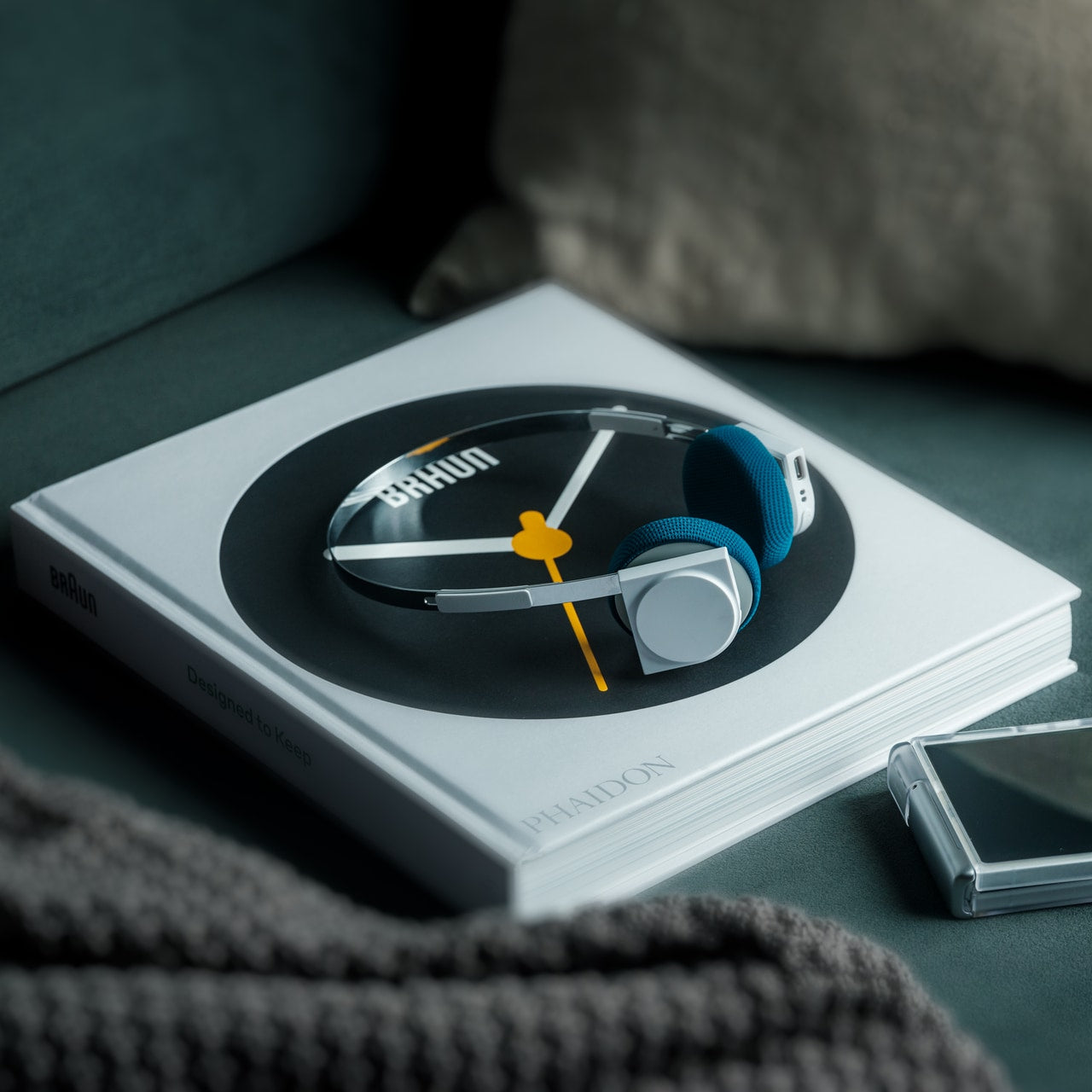
1. StillFrame Headphones – A slow, deliberate approach to travel audio.
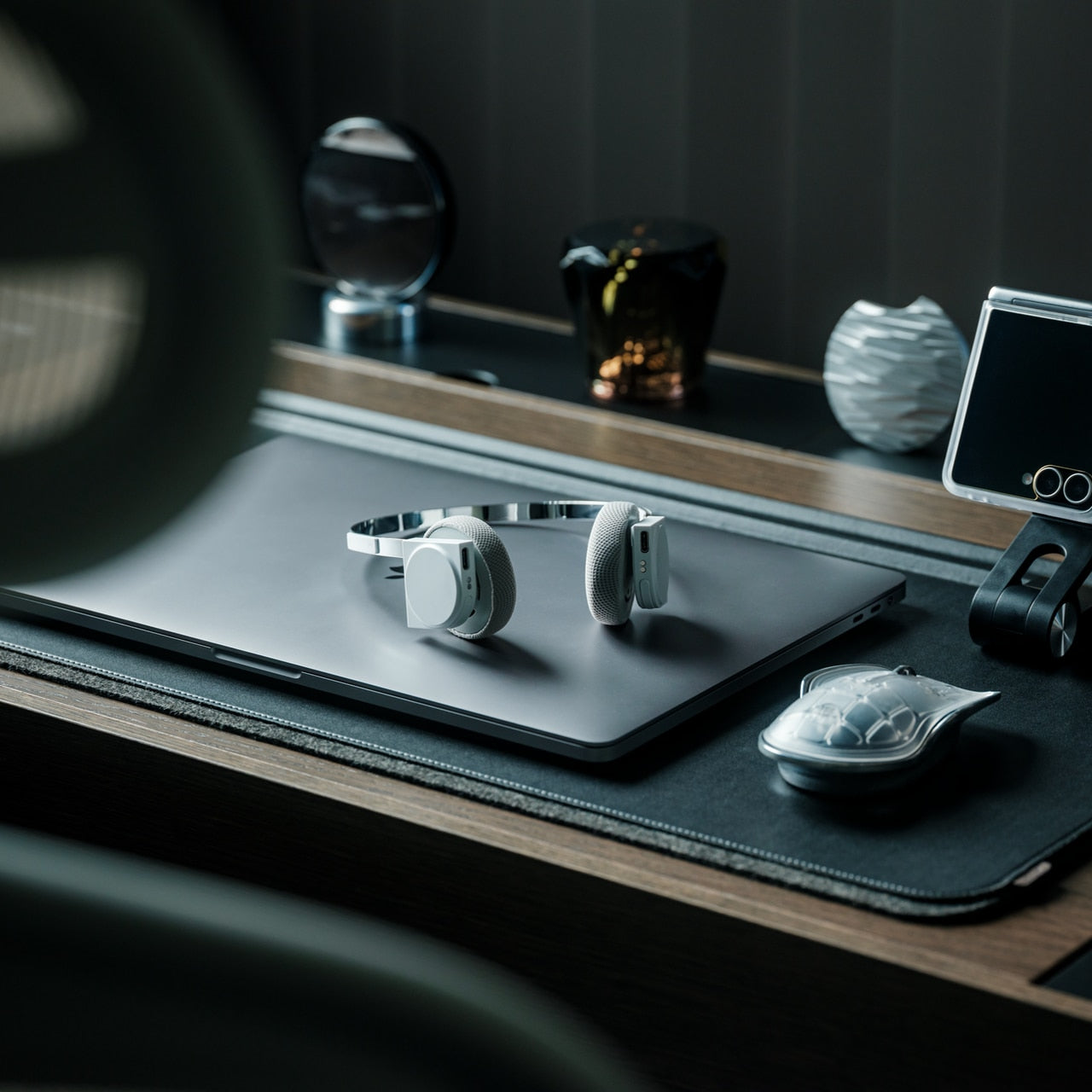
StillFrame wireless headphones took the predictable race toward bass-heavy, noise-blasting cans and went the opposite direction. The form echoes the quiet geometry of ’80s and ’90s CDs, a deliberate reference that signals intent before a single track plays. These headphones are built around the idea that listening on a plane doesn’t have to mean sealing yourself inside a foam-padded vault.

The 40mm drivers produce a wide, open soundstage that treats quiet tracks like small environments rather than compressed streams of data. Noise cancelling kicks in when isolation is needed, and transparency mode pulls the world back in with a tap. For men who fly weekly and spend hours with headphones on, the fit matters more than the spec sheet. StillFrame sits between the suffocation of over-ears and the intrusion of in-ears, offering something lighter and more sustainable for long-haul wear. That middle ground is where most travel headphones fall short, and where these headphones excel.

Click Here to Buy Now: $245.00

What we like

  • The open soundstage brings texture to quieter music that gets lost in most closed-back travel headphones.
  • Switching between noise-cancelling and transparency mode is seamless enough to use mid-conversation with the cabin crew.

What we dislike

  • The on-ear form factor will not block as much ambient noise as a full over-ear design, which limits effectiveness on louder aircraft.
  • Battery life details remain sparse, and wireless headphones live or die by how well they survive a transatlantic route.

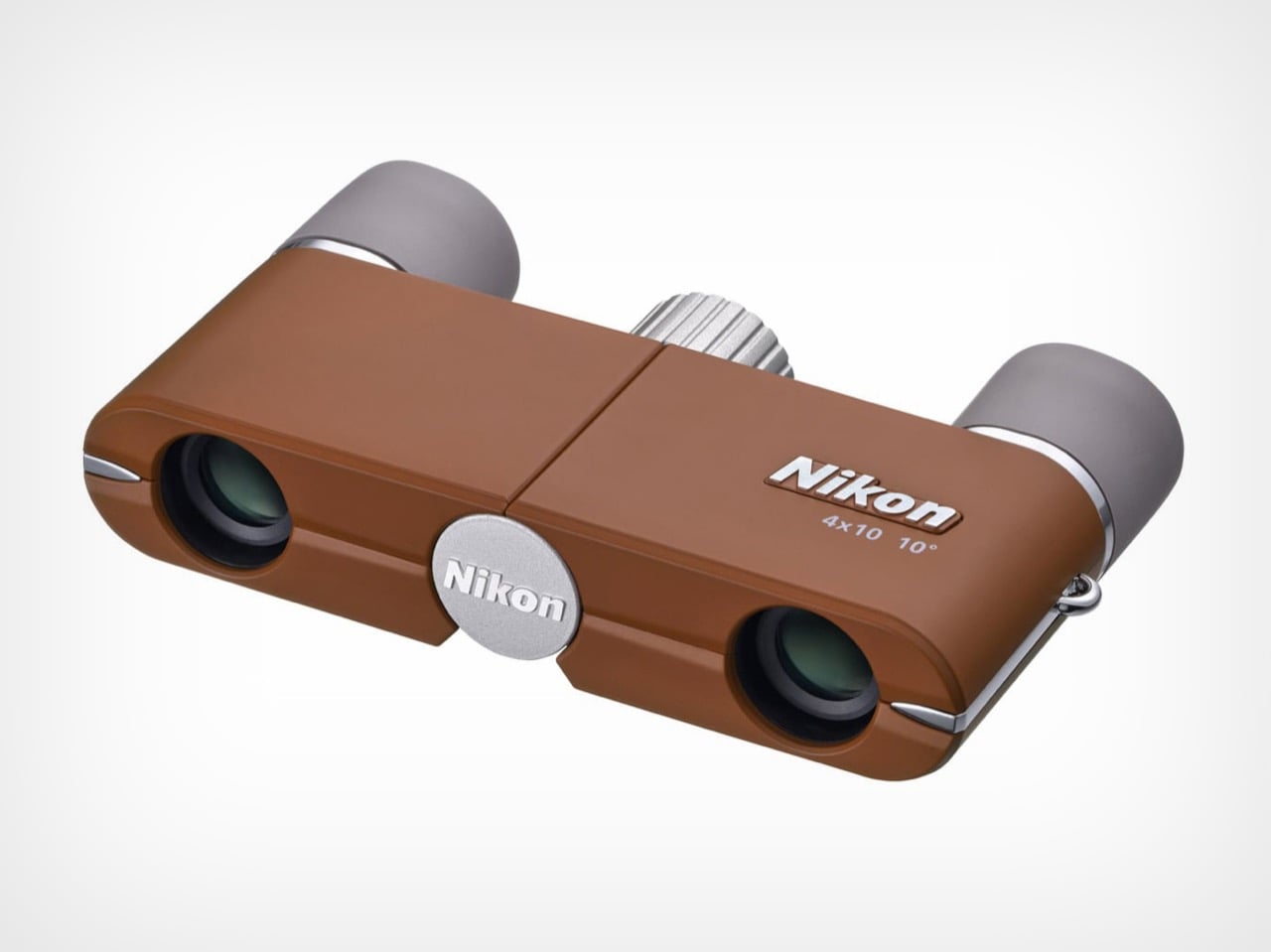
2. Nikon 4x10D CF Pocket Binoculars – Optical clarity that fits a jacket pocket.
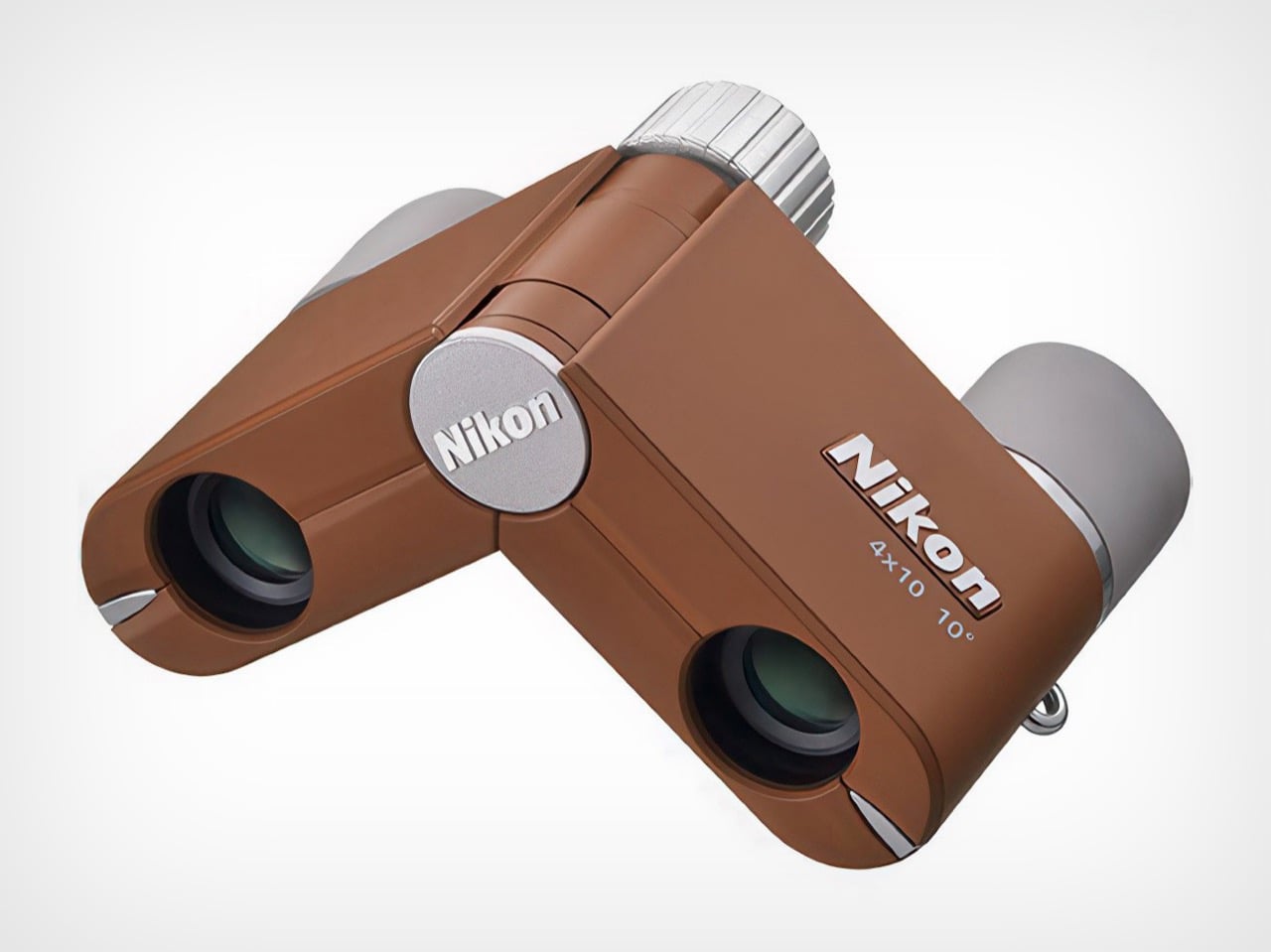
Binoculars feel like relics from a leather-cased era. Nikon’s 4x10D CF pocket binoculars challenge that perception by shrinking the form factor down to something that slips into a blazer without creating a bulge or demanding its own case. These are not competing with a smartphone’s digital zoom. They exist in a different category, prioritizing the experience of true optical viewing over pixel counts and algorithmic processing.

The design decision that makes these work for frequent flyers is the discretion. Traditional binoculars announce themselves. These almost disappear. The optical quality stays sharp for the size, delivering a viewing experience that feels immediate and free of the digital artifacts that plague phone-based zoom. Reading a departure board from across a terminal, catching architectural details in a layover city, or scanning a landscape from an airport lounge window: the use cases are oddly specific and consistently useful for anyone whose life involves constant movement through unfamiliar places.

What we like

  • The form factor is compact enough to carry daily without dedicating bag space or adding noticeable weight.
  • Optical viewing quality avoids the processing lag and color distortion of smartphone zoom.

What we dislike

  • 4x magnification is modest, which limits usefulness for anything beyond mid-range observation.
  • The compact size means a smaller objective lens, so performance drops in low-light conditions where larger binoculars thrive.

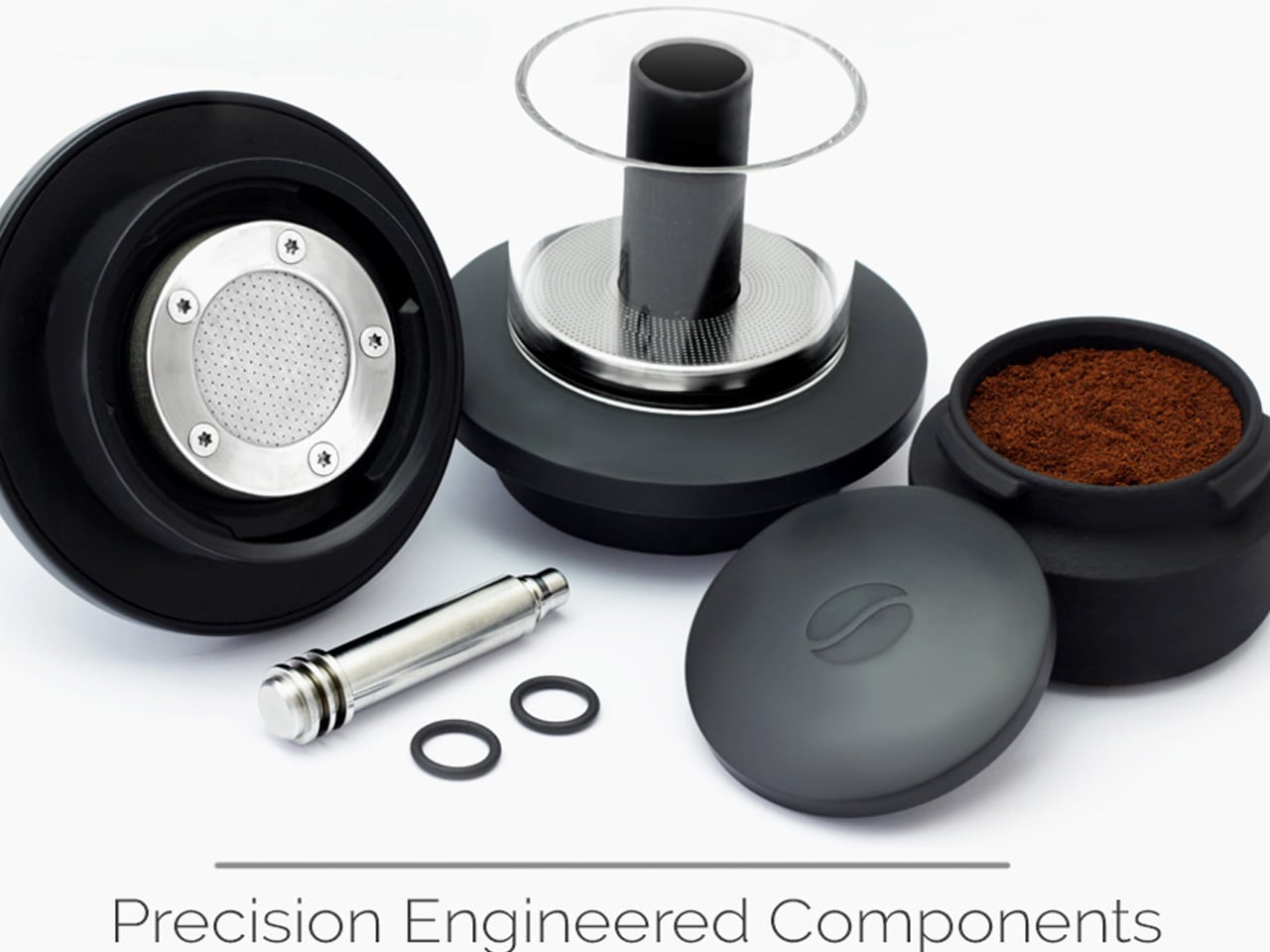
3. COFFEEJACK – Nine bars of pressure, zero dependence on hotel equipment.

Hotel coffee is a problem that frequent travelers have accepted for too long. COFFEEJACK, built by Hribarcain, was designed to make that acceptance unnecessary. This pocket-sized espresso maker generates 9 to 10 bars of pressure through a manual hydraulic pump, matching the extraction output of professional café equipment. The lower chamber holds ground coffee, a built-in tamper levels and packs the grounds automatically, and hot water goes into the upper chamber. Work the pump, and a crema-topped espresso appears in the field.

The engineering gap between this and other portable coffee options is worth understanding. A French press operates under 1 bar of pressure. An Aeropress or Moka pot peaks at roughly 3 to 4 bars. COFFEEJACK reaches 9 to 10 consistently, manually, without a power source. That difference is what separates hotel-lobby drip from the real thing. The entire device is made from 100% recycled plastic, making it a more considered alternative to the pod-based systems that generate single-use waste with every cup. For men who treat their morning coffee as non-negotiable (and after a 6 AM landing, it absolutely is), this earns permanent carry-on status.

What we like

  • 9 to 10 bars of manual pressure match professional espresso machines without electricity, pods, or proprietary cartridges.
  • The built-in tamper eliminates the need to carry a separate tool, keeping the kit self-contained.

What we dislike

  • Hot water is still a requirement, which means sourcing it from a kettle, hotel tap, or thermos before brewing.
  • The manual pump action requires a bit of effort and technique that takes a few attempts to master.

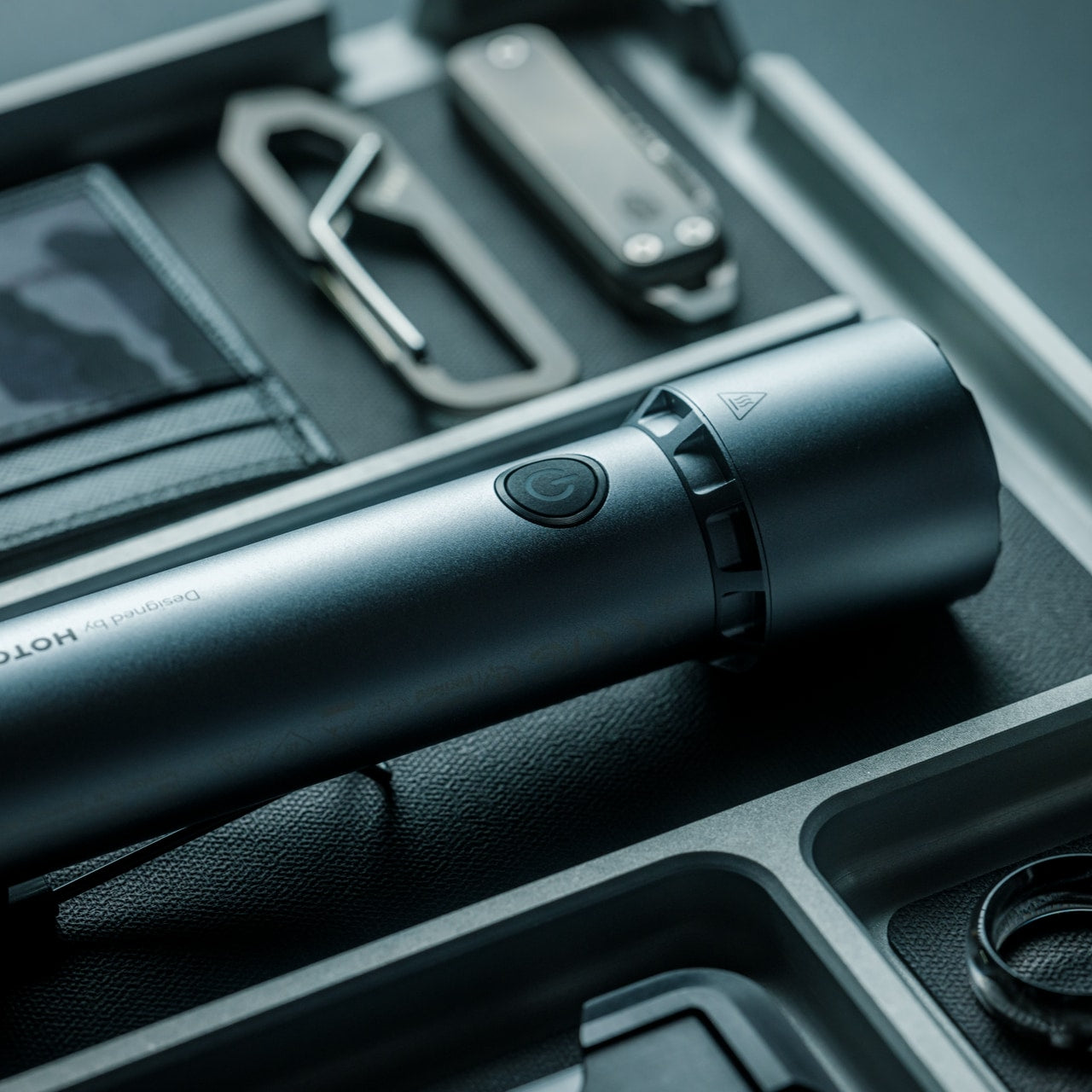
4. BlackoutBeam Tactical Flashlight – 2300 lumens in a body that fits a Dopp kit.
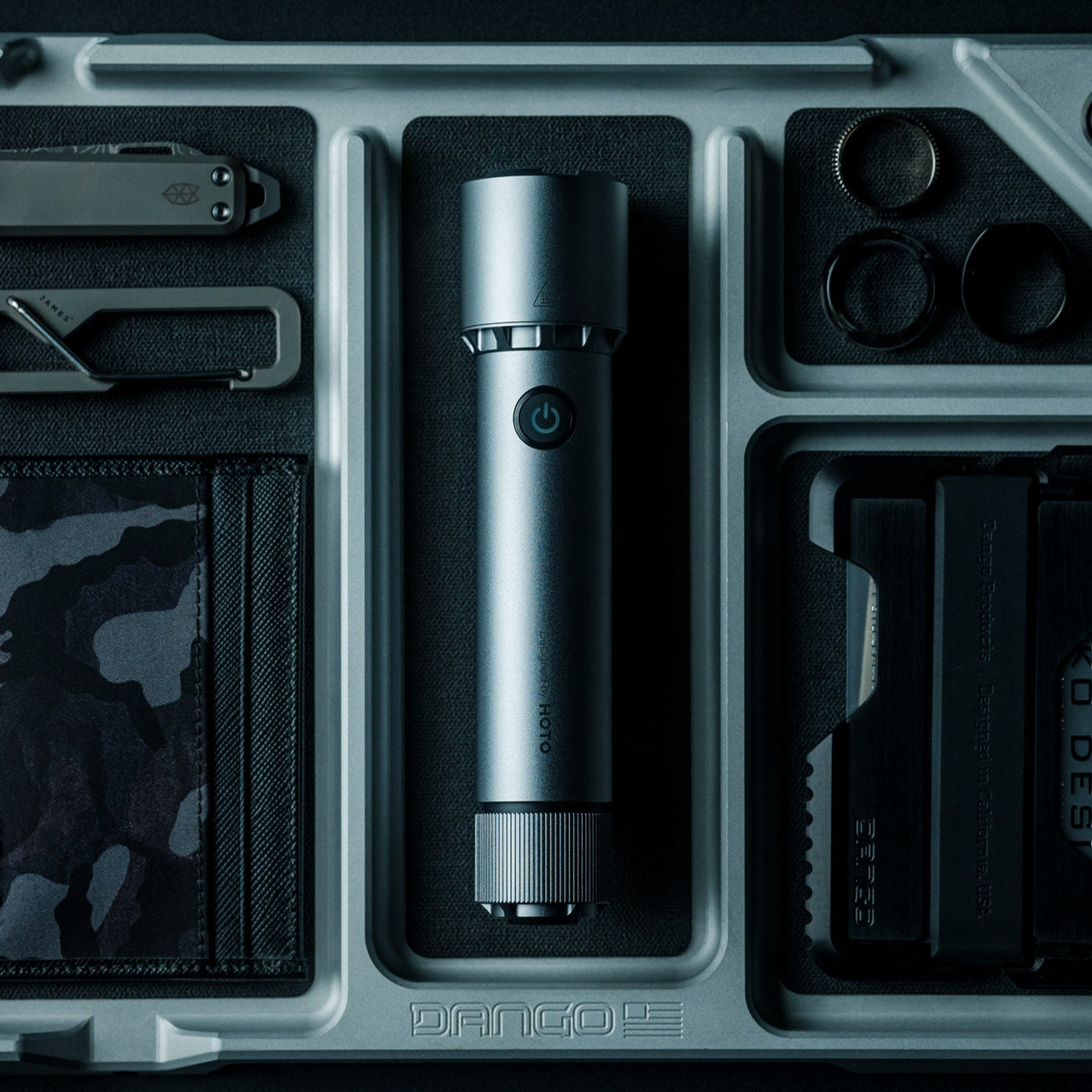
Most flashlights either look like they belong in a military surplus store or feel like cheap giveaways from a trade show. BlackoutBeam sits between those extremes with 2300 lumens of output, a 300-meter throw, and an industrial design that does not embarrass itself sitting next to a passport wallet. The 0.2-second response time means light arrives the moment the button is pressed, with no warm-up delay.

The travel case for a flashlight this capable is more practical than dramatic. Navigating poorly lit hotel parking garages, finding a rental car in an unlit airport lot, walking unfamiliar streets after dark. These are not survival scenarios; they are Tuesday nights on a business trip. The aluminum body carries an IP68 rating for water and dust resistance, so rain and rough handling are non-issues. What makes this particular light worth its bag space is the combination of output and size. At 2300 lumens with a 300-meter range, it outperforms most flashlights twice its size while slipping into a side pocket without protest.

Click Here to Buy Now: $89.00

What we like

  • 2300-lumen output with a 300-meter throw handles everything from close-range tasks to illuminating distant areas.
  • IP68-rated aluminum construction handles rain, drops, and the general abuse of constant travel without degradation.

What we dislike

  • A light this powerful will drain batteries faster than lower-output alternatives, meaning recharging becomes another travel task.
  • The tactical aesthetic, while restrained, could attract unwanted attention at security checkpoints in certain countries.

5. Comes AI travel companion – An AI assistant that sees what is around the corner.

Solo travel has a specific kind of friction that apps alone cannot solve. Comes is a small AI-powered companion device equipped with a high-performance camera that observes surroundings and offers assistance in real time. The design has a modular, detachable structure that adapts to different travel situations, functioning as a navigation aid, translator, and contextual guide depending on the moment.

The scenario it solves best is the one frequent travelers know well: arriving in a new city, stepping off a train or out of an airport, and facing that brief window of disorientation before the phone GPS loads and the bearings click into place. Comes fills that gap by walking through navigation in a way that feels supportive rather than screen-dependent. Voice interaction keeps hands free, and the camera-based awareness means it can interpret signs, menus, and spatial context without requiring manual input. For men who move through multiple cities in a single week, the device acts as a persistent local guide that does not need Wi-Fi to be useful in the moment it matters most.

What we like

  • The modular design adapts to different carry and mounting configurations depending on the travel context.
  • Camera-based awareness interprets real-world visual information without requiring the user to stop and type.

What we dislike

  • AI-powered devices in this category still depend heavily on software updates and server-side processing, which introduces latency in areas with weak connectivity.
  • Battery management across the camera, AI processing, and wireless communication will be a limiting factor on long travel days.

6. Pocket Monkii 2 – A full bodyweight training system that packs smaller than a book.
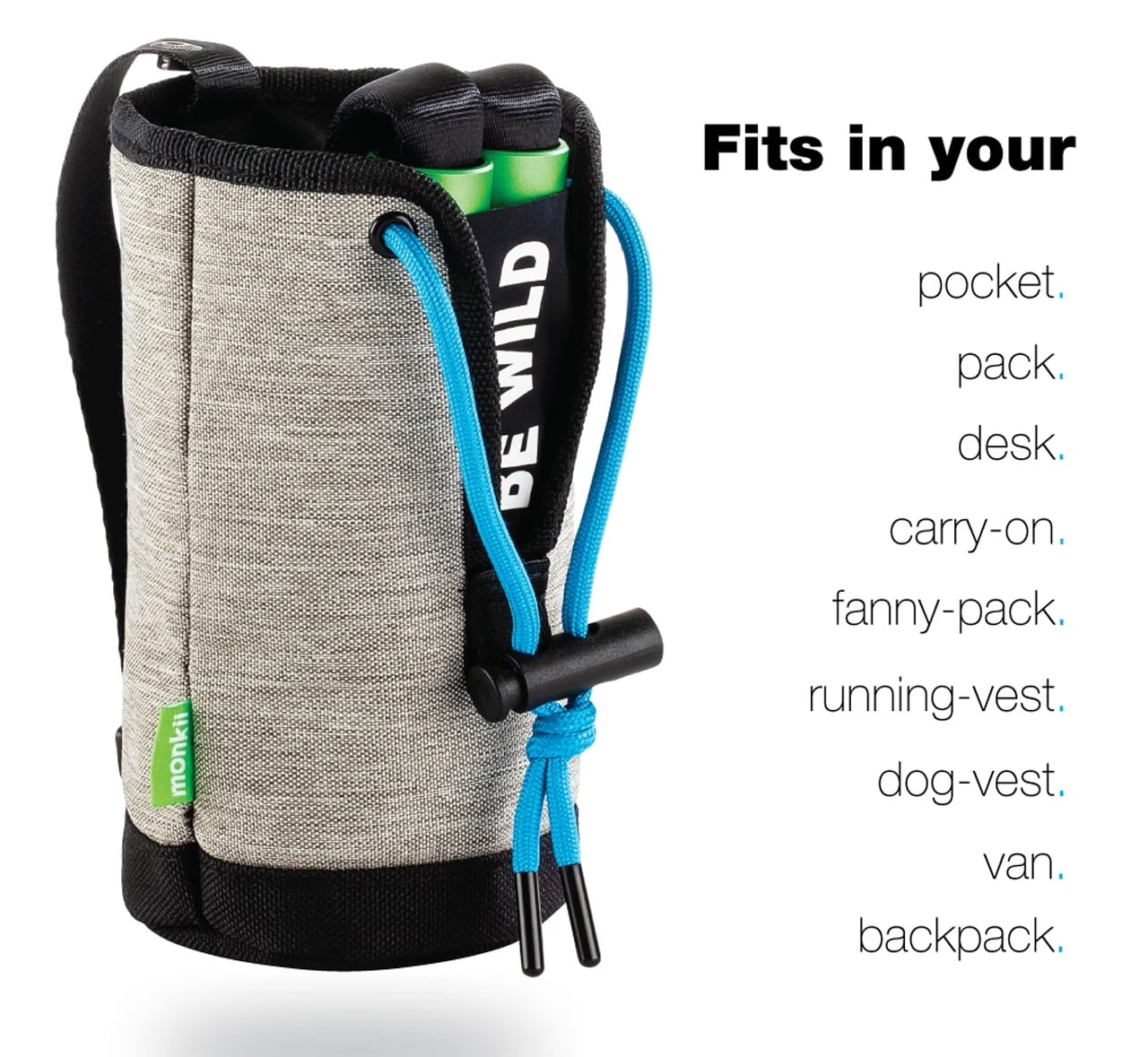
Gym access on the road is either a depressing hotel treadmill or a day pass at a facility that requires a 20-minute detour. Pocket Monkii 2 is a compact training system that packs cables, handles, a ladder, and an isometric tool into a kit small enough to throw into a carry-on without sacrificing space for anything else. The all-new package includes unlimited access to the Monkii app, which provides workout instructionals and progress tracking.

What makes this different from a resistance band tossed into a suitcase is the system design. The cables are built for durability across hundreds of sessions, and the combination of tools allows for a full bodyweight program rather than a handful of isolated exercises. The 21-Day Habit guide included with purchase pushes past the typical “use it twice and forget it” pattern that plagues most portable fitness equipment. For frequent flyers who refuse to lose their training momentum to a travel schedule, this is the closest thing to a portable gym that does not feel like a compromise or require anchoring to a hotel door frame that was never designed to hold body weight.

What we like

  • The compact kit fits inside a carry-on and provides enough variety for a complete bodyweight training session.
  • App integration with workout instructionals and progress tracking adds structure that standalone resistance bands lack.

What we dislike

  • Cable-based systems require an anchor point, and not every hotel room has a suitable door or fixture for secure attachment.
  • The learning curve for isometric and suspension-style exercises is steeper than traditional resistance training.

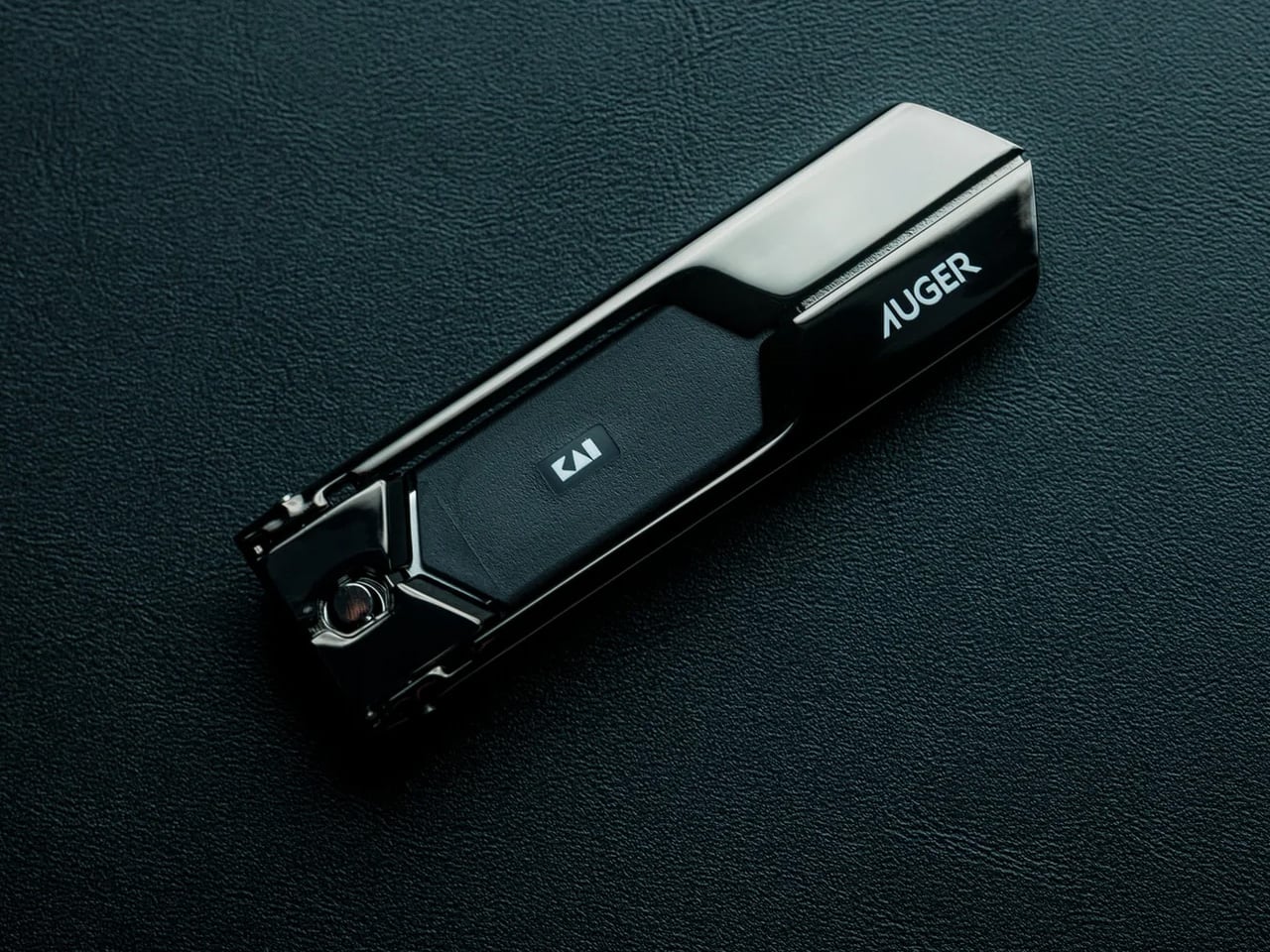
7. Auger PrecisionLever Nail Clipper – A century of Japanese blade-making in an 86mm package.
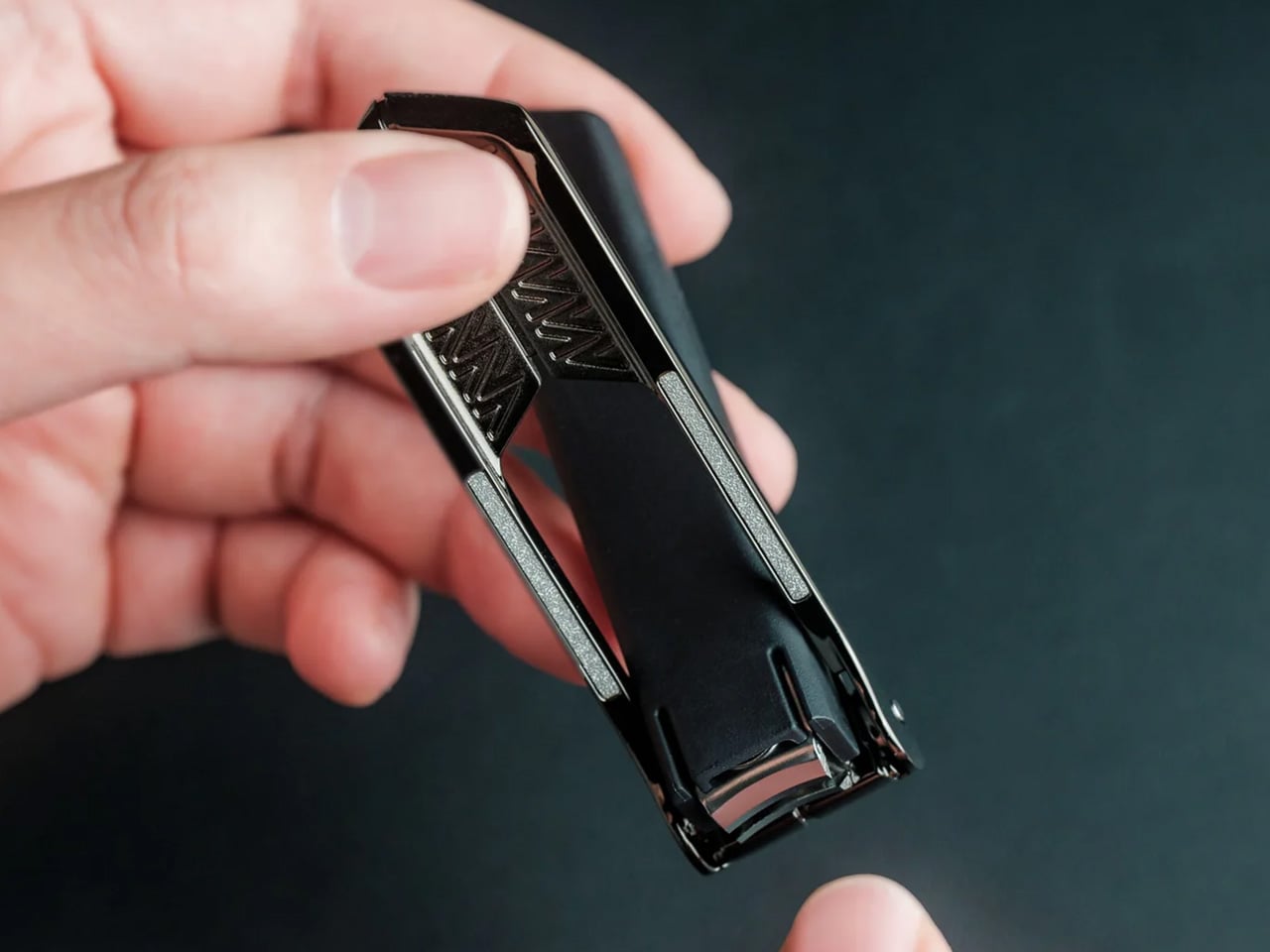
Grooming on the road tends to fall apart at the small details. Nail clippers are the item most likely to be forgotten, borrowed from a front desk, or purchased in desperation from an airport convenience store where the options are universally terrible. Kai Corporation, Japan’s blade authority since 1908, built the Auger PrecisionLever to make that entire cycle unnecessary.

The patented revolver-style lever shifts the pivot point closer to the blade, optimizing pressure with every press. That mechanical advantage means cleaner cuts on thicker nails with less effort and more control. The blades are crafted from stainless cutlery steel, cutting cleanly without tearing or splitting. At 67 grams with an 86mm footprint, the clipper has a weighted feel that is stable in hand while still slipping into a Dopp kit without claiming space. For a tool that gets used a few times a week and lives in the bottom of a toiletry bag, the difference between a precision instrument and a generic clipper is felt every single time. This one makes the case that even the smallest object in a travel kit deserves actual engineering.

Click Here to Buy Now: $49.00

What we like

  • The patented lever mechanism delivers more cutting force with less manual effort, especially on thicker nails.
  • Stainless cutlery steel blades cut cleanly without the tearing or crushing common in cheaper clippers.

What we dislike

  • Premium nail clippers occupy a price point that most people will not consider until they have suffered through enough bad ones.
  • The 67-gram weight, while satisfying in hand, adds up when every gram in a dopp kit is contested.

8. Loop – A neck pillow that abandoned the U-shape entirely.

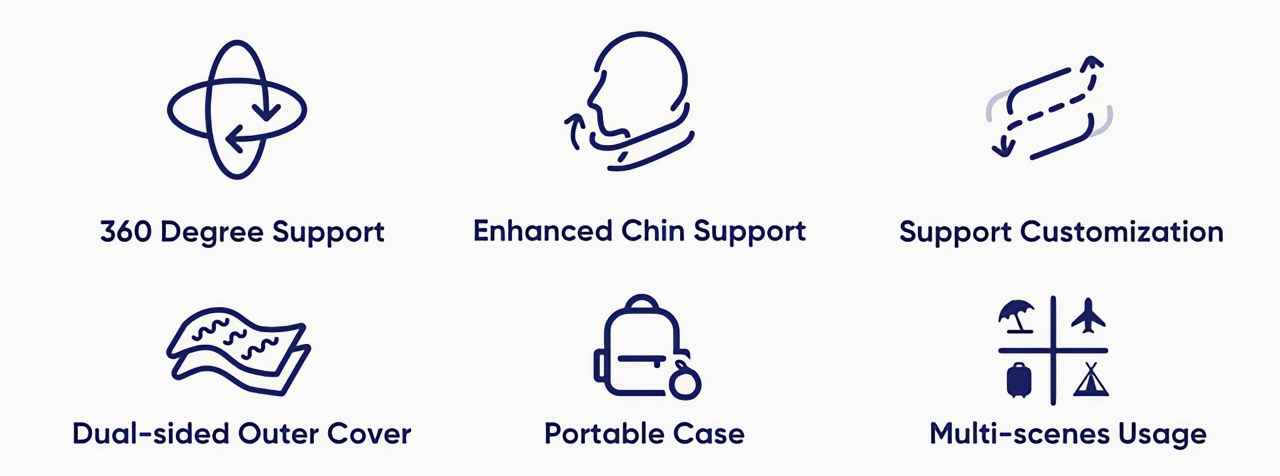
The U-shaped travel pillow has been the default for decades, and it has been mediocre for every single one of those decades. The Loop Pillow rejected the template. Its infinitely adjustable loop design wraps around the neck tightly or loosely, providing lift near the shoulder to support the head at whatever angle sleep actually arrives. If the U-shape is a one-size-fits-all solution, the Loop is a continuous adjustment that conforms to the person rather than the other way around.

The construction uses thermo-sensitive memory foam that molds to neck contours over time, paired with a moisture-wicking, breathable outer cover that keeps skin dry during sleep. Two cover colors correspond to a warm side and a cool side, allowing the sleeper to choose based on cabin temperature. The pillow works whether the head rests forward, to the side, or against the back of the seat, which alone puts it ahead of every rigid U-pillow on the market. For men who fly red-eyes regularly and have accepted that airplane sleep will always be imperfect, the Loop does not promise perfection. It promises adaptability, and on a cramped overnight flight, that distinction makes all the difference.

What we like

  • The infinitely adjustable loop design works with multiple sleeping positions instead of forcing a single neck angle.
  • Thermo-sensitive memory foam and a dual-temperature cover adapt to both the body and the cabin environment.

What we dislike

  • The loop form factor looks unconventional and takes a few uses to figure out the wrapping technique that works best.
  • Memory foam retains heat over long periods, and the breathable cover can only offset so much warmth during a 10-hour flight.

Where The Suitcase Closes

These eight products share a common thread. None of them demands attention, and none of them wastes space. They are corrections to the small, recurring failures of constant travel: bad coffee, bad sleep, bad lighting, lost training days, and the slow erosion of routine that comes with living out of a carry-on. The best travel gear is the kind that disappears into the rhythm of a trip rather than creating new problems to manage.

What ties this list together is not a category or a price point but a design philosophy. Each product earned its spot by answering a specific question that frequent flyers have asked, tested, and refined through repetition. The carry-on has limited real estate. These eight justify every square inch they claim.

The post 8 Best Travel Gadgets & Tools Men Who Fly Constantly Refuse to Leave Without first appeared on Yanko Design.


New 2 World Trade Center Will Rise 1,226 Feet Over Manhattan, Finally Completing the Post-9/11 Rebuild

It has been almost 25 years since the September 11 attacks forever changed the skyline of Lower Manhattan, and now the rebuilding of the World Trade Center campus is entering its final stretch. The last major commercial tower on the site, 2 World Trade Center, is expected to break ground in spring 2026 and wrap up construction by 2031. American Express has committed to making the building its new corporate headquarters.

Getting to this point hasn’t been simple. British firm Foster + Partners was originally hired to design the tower, only to be replaced by Bjarke Ingels Group, which put forward a striking terraced concept. That plan was eventually scrapped, and Foster + Partners was brought back to start fresh. The result, based on recently released renderings, is a broad rectangular tower sheathed in glass, with three open-air terraces and six landscaped corner gardens woven into the facade to bring some greenery to an otherwise sleek profile.

Designer: Foster + Partners

The tower will rise to 1,226 feet, comfortably placing it in the supertall category and making it roughly the 11th-tallest building in the United States. It won’t overtake its famous neighbor, though. One World Trade Center still holds the title of the country’s tallest at a symbolically chosen 1,776 feet. Inside, the building will offer close to two million square feet of usable space across 55 stories, with the bulk of that dedicated to offices. When fully occupied, it could house around 10,000 workers.

Specifics are still thin at this early stage, but American Express has said the tower will incorporate smart building technology and energy-efficient systems. The project is also targeting LEED certification, which has become something of a baseline expectation for major commercial developments in recent years.

Kevin O’Toole, Chairman of the Port Authority of New York and New Jersey, called the project a meaningful milestone, both for the campus and for the surrounding region. He pointed to the tower’s role in reinforcing the World Trade Center as one of the country’s most important centers of commerce and transportation, and acknowledged just how much sustained effort it takes to deliver projects on this scale.

Silverstein Properties, the development firm that has overseen much of the site’s post 9/11 transformation, is once again at the helm. When the building finally opens its doors in 2031, it will effectively close the book on one of the most ambitious and emotionally significant urban rebuilding efforts in modern history. More than anything, it will stand as a reminder of what New York City is capable of when it commits to moving forward.

The post New 2 World Trade Center Will Rise 1,226 Feet Over Manhattan, Finally Completing the Post-9/11 Rebuild first appeared on Yanko Design.
5 Best Foldable Phone Concepts We’re Still Waiting To See At MWC 2026

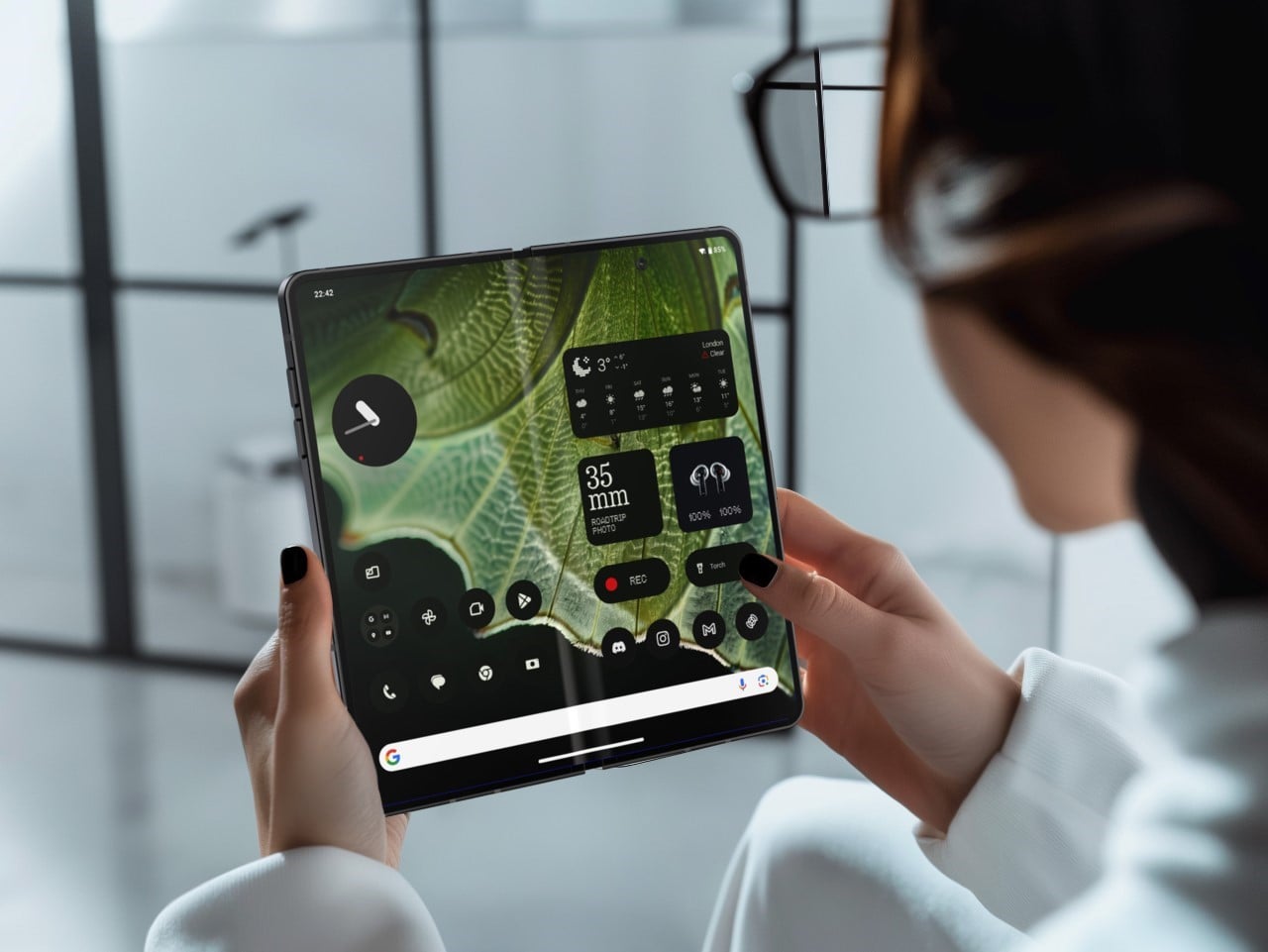
MWC 2026 is arriving in Barcelona next week under the theme “The IQ Era,” and the foldable conversation has never had more momentum behind it. The worldwide foldable smartphone market is forecast to grow 30% year-over-year in 2026, and with names like Samsung, Apple, and HONOR all moving pieces on the same board, the show floor feels electric. The race isn’t just about who ships first; it’s about who ships something worth keeping.

But the most interesting foldable ideas rarely make it to the keynote stage. Some live in patents. Some debut at design expos and disappear into concept archives. Others surface on design blogs and quietly accumulate a following of people who can’t stop thinking about them. These five concepts represent everything the foldable category could become if ambition and engineering ever fully agreed with each other. Barcelona feels like the right backdrop for that conversation.

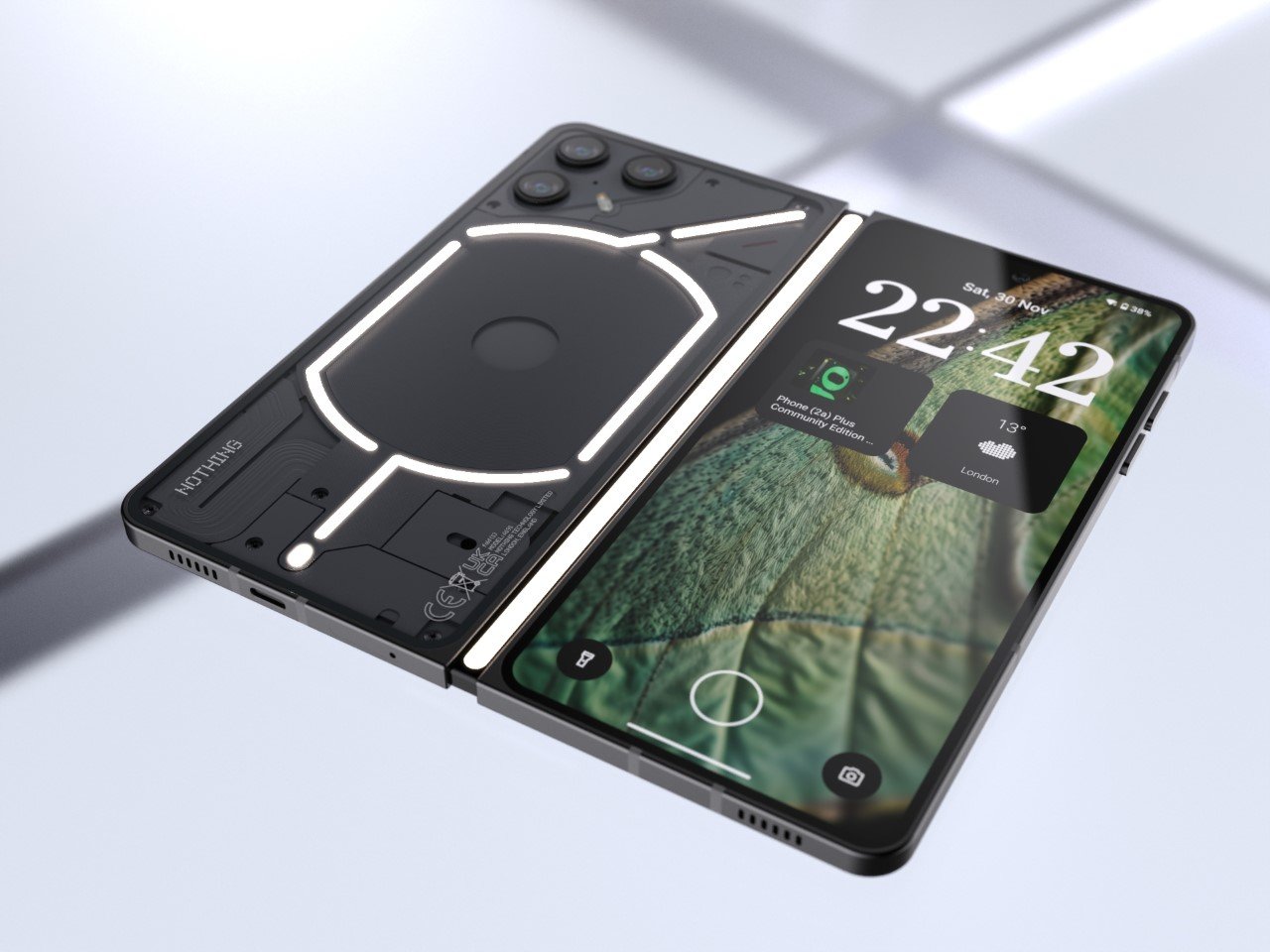
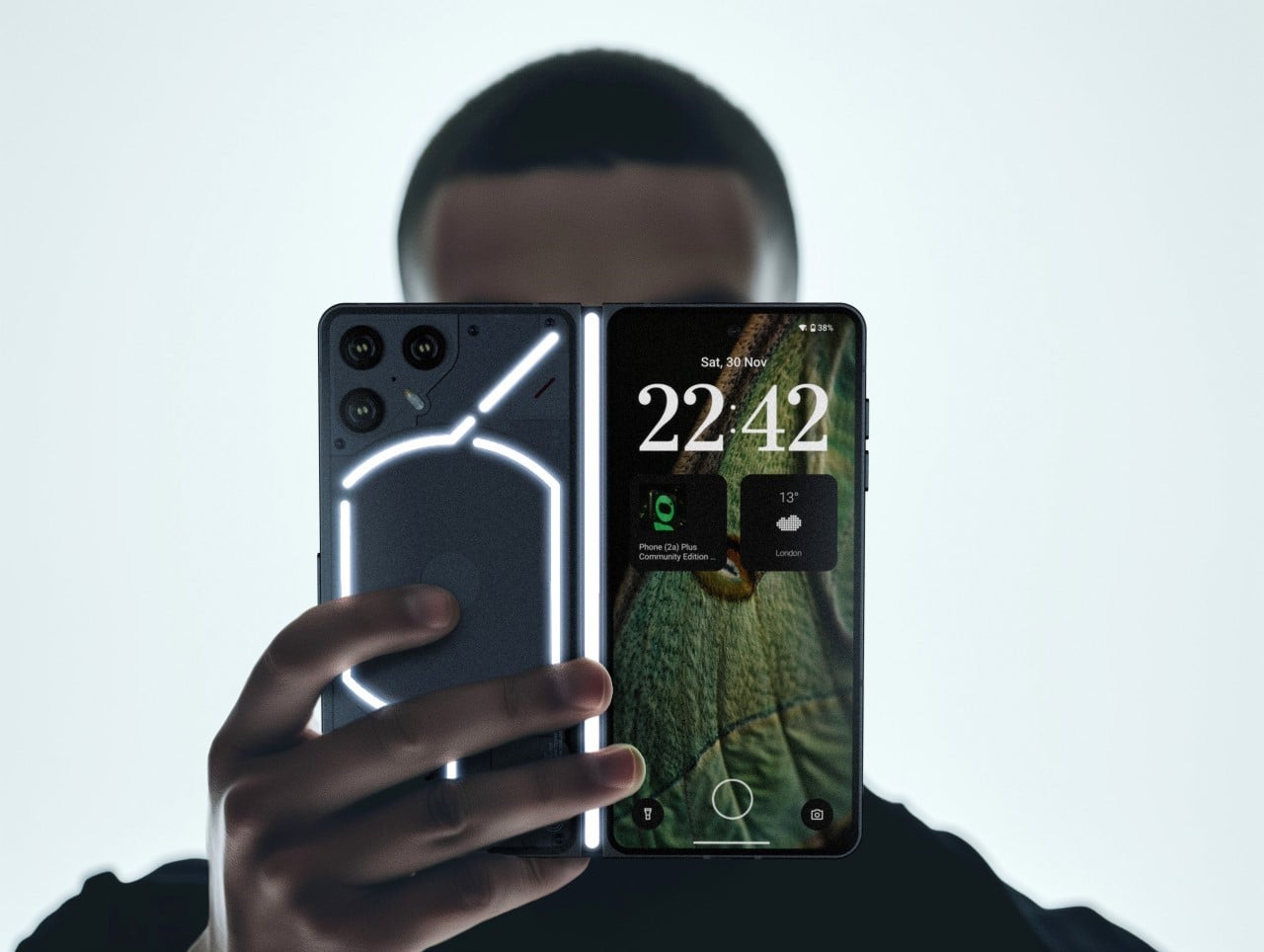
1. Nothing Fold (1) — The Foldable With a Spine That Speaks

Nothing has always understood that a phone is a surface before it is a device. The brand built its entire identity on making the invisible visible — circuit boards through glass, notification patterns through LEDs, and the Fold (1) concept carries that thinking directly into foldable territory. The Glyph Interface, Nothing’s signature grid of programmable lights, doesn’t just live on the back panel here. It wraps around the spine, and at boot, it traces the number “1” across the edge like a signature being written in real time.

Once the phone is running, the spine transforms into something genuinely new: a monochrome ticker-tape display that scrolls live notifications along the fold without requiring the user to open anything or wake a screen. Inside, an 8.37-inch display gives the Fold (1) the kind of canvas that makes a book-style foldable feel worth carrying. A MediaTek Dimensity 9400 chip handles the processing alongside a dedicated neural unit for on-device AI, while a 5,500mAh battery keeps the whole system running well past a single day. Five cameras — split across the rear, the spine-side flap, and dual hole-punches on both displays — mean no shooting scenario goes uncovered. This is a concept that treats the fold itself as a feature rather than a compromise.

What We Like

  • The spine-mounted ticker display turns passive notification delivery into an active design statement that no shipping foldable currently replicates.
  • Pairing a 5,500mAh battery with a power-efficient flagship chip gives this concept the endurance its ambitions genuinely require.

What We Dislike

  • Five cameras on a foldable form factor raise legitimate questions about thickness — the hardware demands and the slim silhouette are in direct tension.
  • Nothing OS remains a compelling but narrow platform, and its app ecosystem still asks more patience from users than mainstream Android does.

2. 0/1 Phone — The Foldable That Knows When to Go Quiet

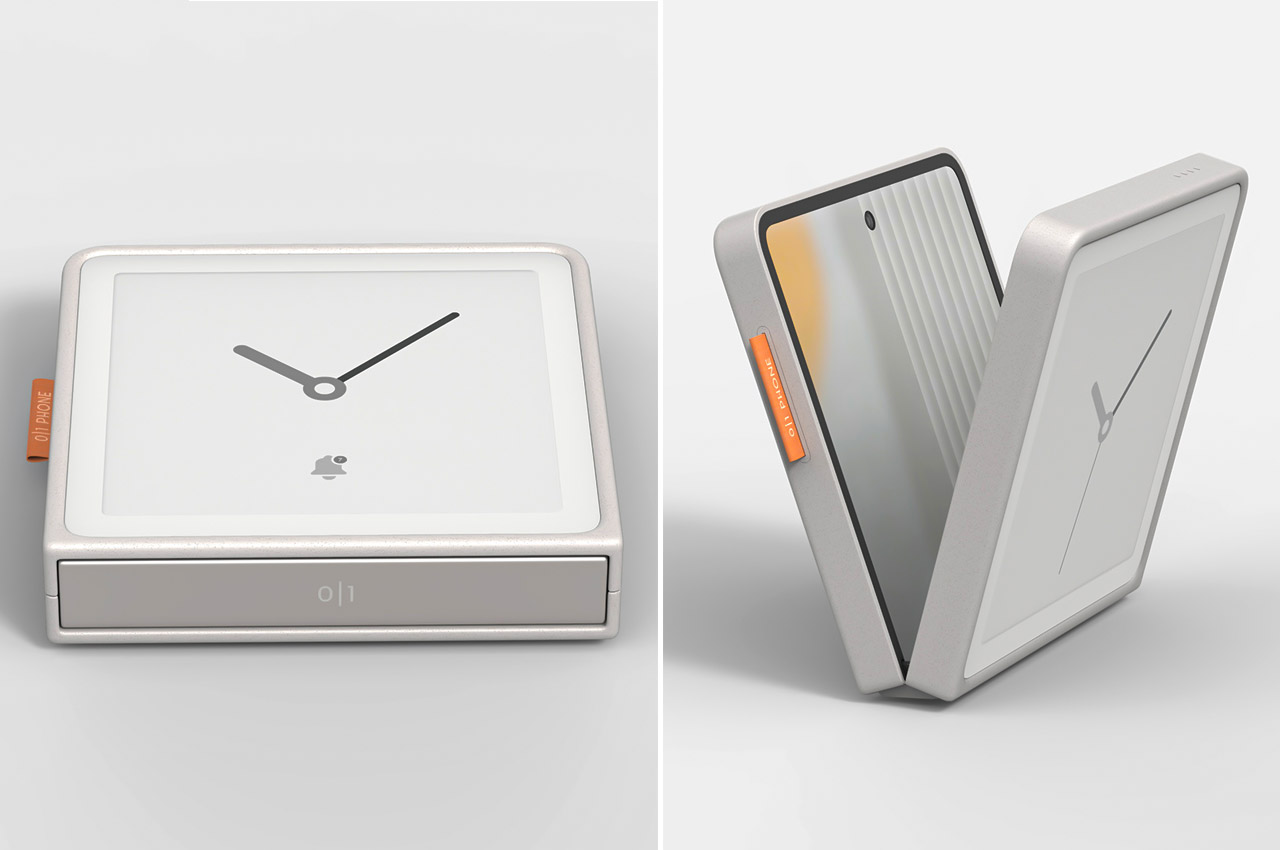
Most digital wellness tools are built on a contradiction. They ask sthe oftware to solve a problem that the software created. The 0/1 phone cuts through that logic by putting the solution in the hardware itself. Closed, the phone presents an e-ink display — customizable with analog clock faces, a calendar, a music player, or whatever belongs in a calmer version of a day. There are no feeds to scroll, no notifications engineered to demand attention, no app icons arranged to maximize tap frequency. Just the time, and whatever you decided mattered before distraction had a vote.

Open it, and the phone becomes something else entirely. A flexible display running at 1080×2640 resolution gives full access to every app, every platform, every habit the closed state was holding at arm’s length. The transition between modes isn’t managed by a screen time setting buried in a menu; it’s a physical gesture. Closing the phone is the act of choosing focus, and opening it is a deliberate decision rather than a reflexive one. That distinction sounds small until you’ve spent a week with a phone that makes you conscious of every time you reach for it. The 0/1 concept understands that people don’t want less technology. They want better control over when it starts.

What We Like

  • Mapping distraction-free mode to a physical action rather than a software toggle is a smarter and more honest approach to attention management.
  • Customizable e-ink clock faces give the closed state genuine personality, making minimalism feel like a choice rather than a penalty.

What We Dislike

  • E-ink displays still lag on refresh rate and struggle with colour depth, which could make the closed-state experience feel dated compared to what users are used to.
  • Building a dual-display device that stays genuinely slim is a serious engineering challenge, and added bulk would directly undermine the concept’s entire premise.

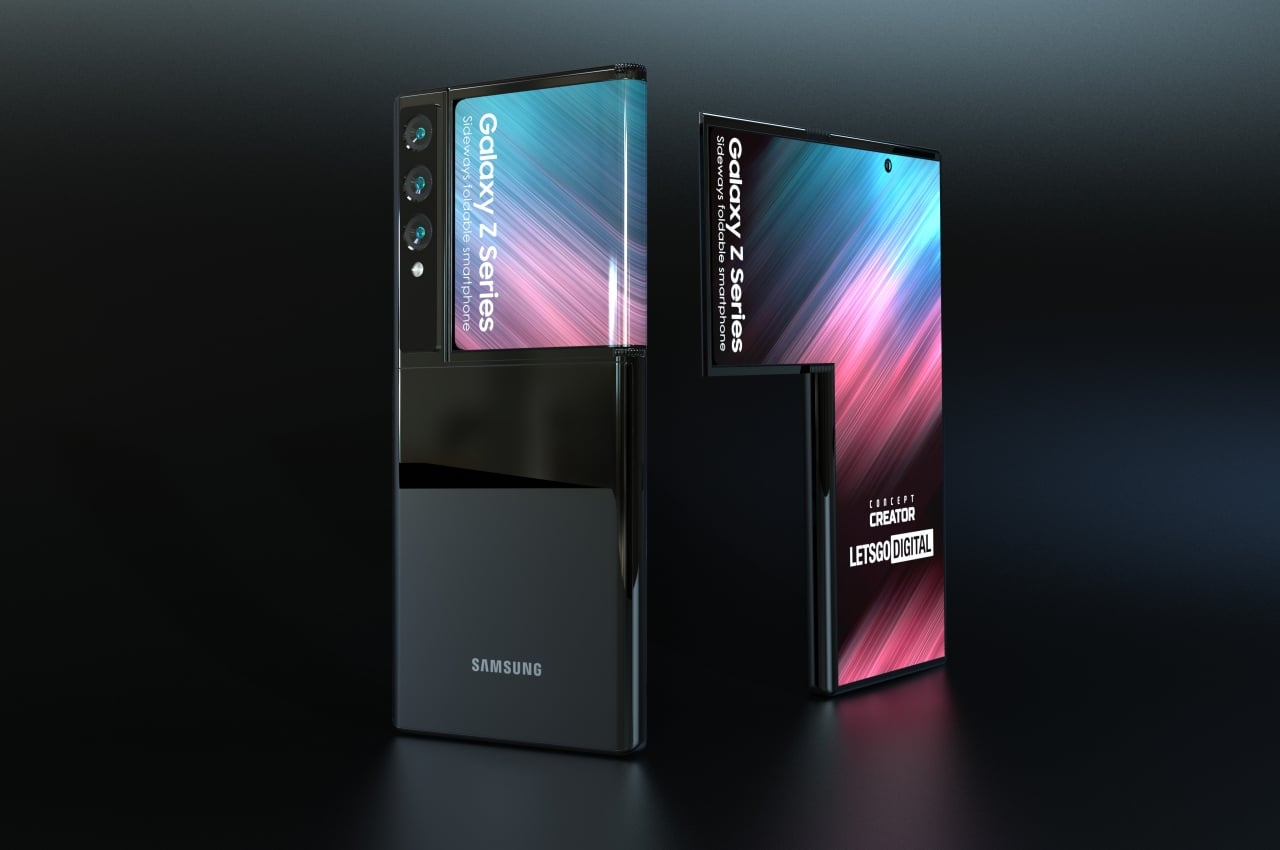
3. Samsung L-Fold Patent — The Tetris Block the Industry Wasn’t Ready For

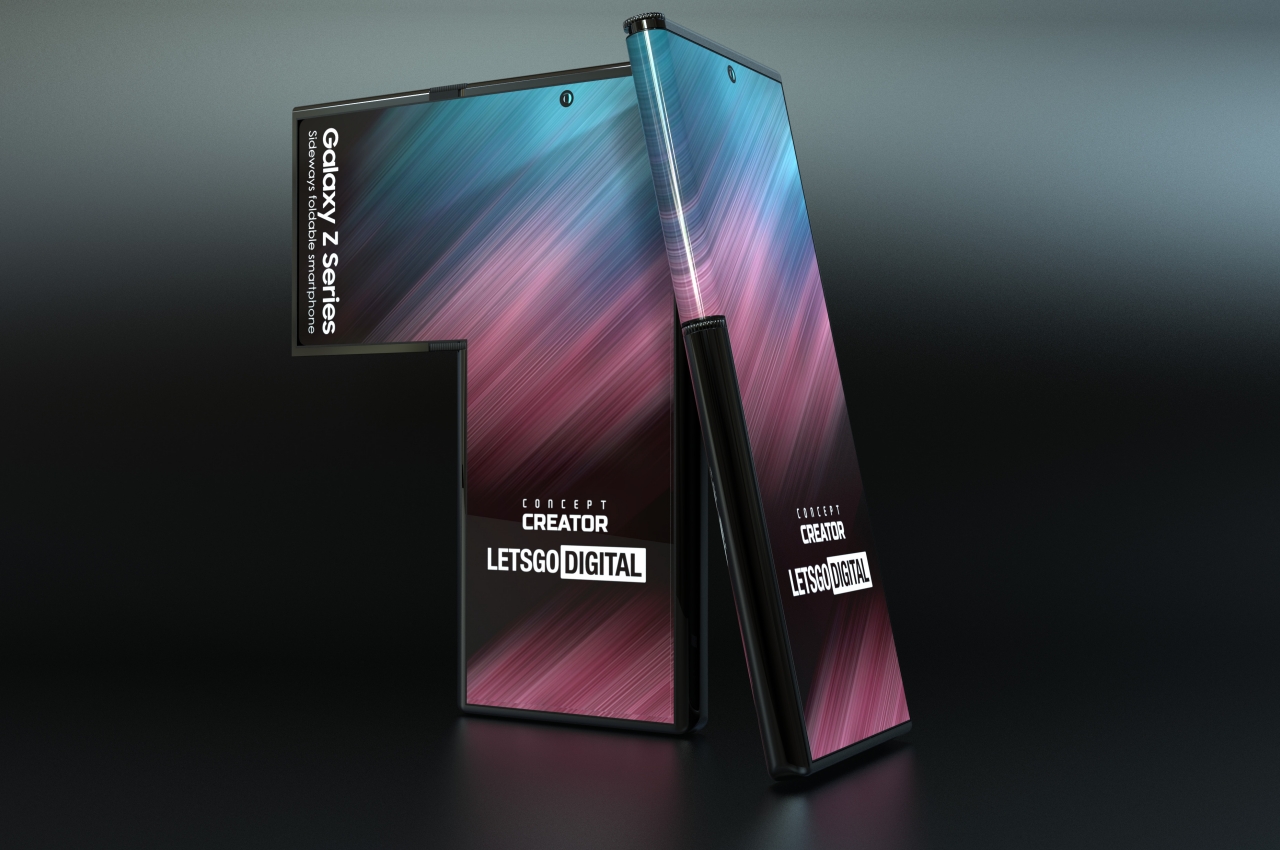
Samsung’s patent library is enormous, and most of what lives inside it will never become a product. But occasionally something surfaces that reframes what a foldable phone could look like at a structural level. The L-shaped concept — which, unfolded, mirrors the elongated corner-piece of a Tetris grid — is one of those designs. The top section of the display extends to one side and then folds back on itself like a flap, bringing the phone from an asymmetric L-shape into a more conventional rectangle. It’s a transformation that takes about a second to understand and considerably longer to stop thinking about.

What makes the concept genuinely interesting isn’t the shape — it’s what the folded flap can do once it’s in position. Facing outward alongside the main cameras, it becomes a live viewfinder, letting users frame selfies through the primary camera array rather than a secondary front-facing sensor that typically offers a fraction of the optical quality. The curved strip of display wrapping the spine edge serves as an ambient information surface — battery level, the time, notification tickers — visible without waking the main screen. It draws an obvious comparison to the LG Wing’s T-shaped swivel design, but the folding mechanism introduces a layer of versatility that the Wing could never access. The L-fold isn’t trying to be novel. It’s trying to be useful in ways the rectangle hasn’t figured out yet.

What We Like

  • A folded flap that doubles as a selfie viewfinder for the main cameras is one of the most practically useful ideas to emerge from any foldable concept in recent memory.
  • The spine-edge ambient display strips away the need to fully wake the phone for low-stakes information — a subtle but genuinely valuable interaction shift.

What We Dislike

  • Asymmetric form factors demand new muscle memory from users, and history suggests the mass market is slow to warm to anything that doesn’t fit an established shape.
  • Samsung patents ideas prolifically, and the distance between a filed concept and a retail device is wide enough that this design may never leave the archive.

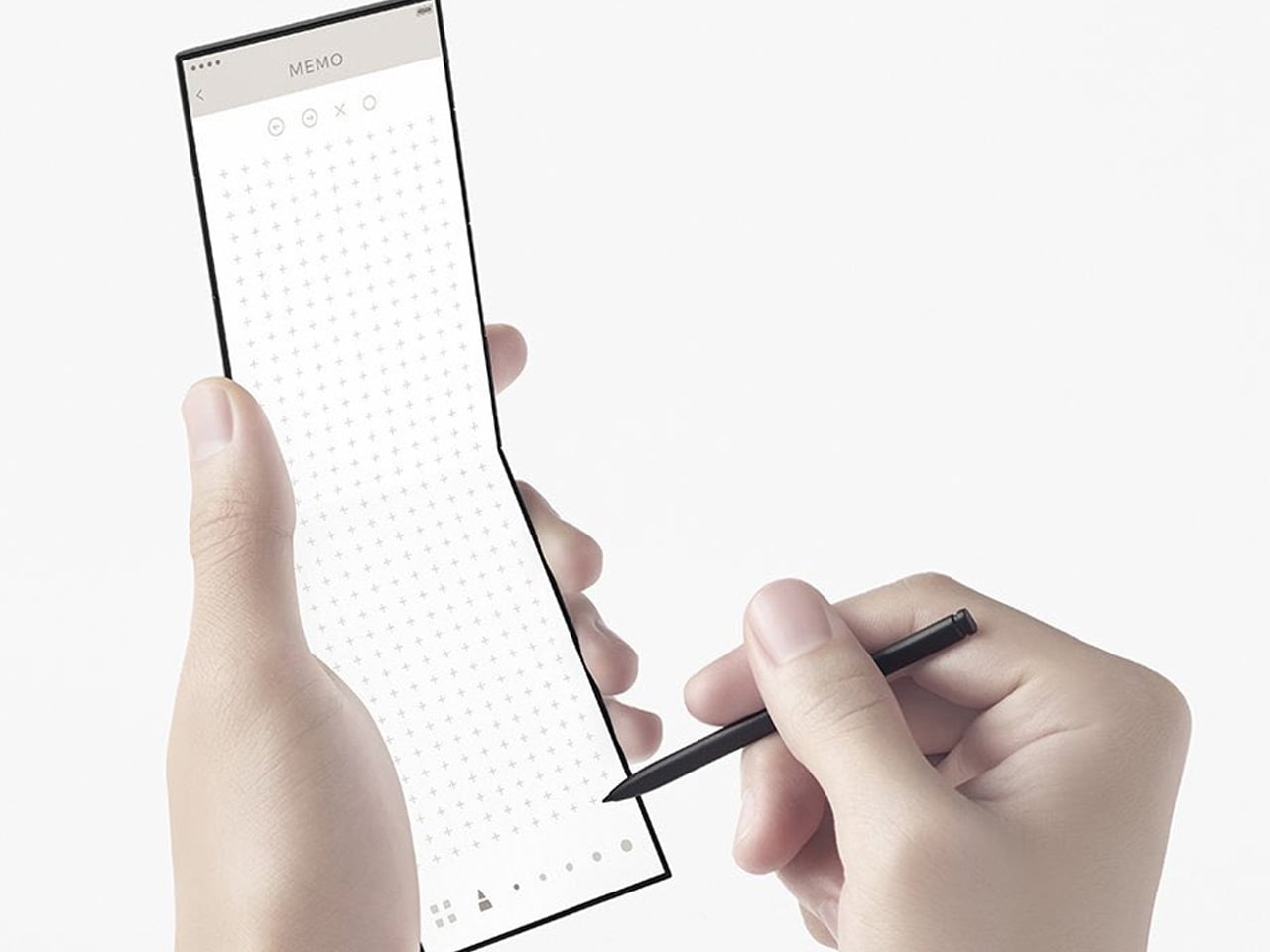
4. OPPO x nendo Slide-Phone — The Triple-Fold That Earns Every Stage

When OPPO partnered with Japanese design studio nendo for the slide-phone concept, the goal wasn’t to make a foldable that could compete on spec sheets. The goal was to design a phone that understood how humans actually move through a day — glancing, then engaging, then working — and matched each state with exactly the right amount of screen. The mechanism unfolds in three progressive steps, each one surfacing a different display area calibrated to a specific type of task. Nendo described the motion as caterpillar-like, and the metaphor holds. This phone doesn’t hinge open. It extends with intention.

The first stage reveals 1.5 inches of display, enough for a notification glance, music control, and an incoming call. The second opens to 3.15 inches, suited to photography, video calls, and light gaming. The third and final stage unlocks the full 7-inch widescreen panel, wide enough to run on-screen game controllers across both flanks simultaneously or to frame a proper panoramic shot. A stylus is included, pushing the concept firmly into professional productivity territory. What distinguishes this design from every other multi-fold proposal isn’t the screen count; it’s that each screen size exists for a reason. That level of purposefulness in a concept is rarer than it sounds, and it’s exactly the kind of thinking MWC 2026 needs more of.

What We Like

  • Three screen sizes, each assigned to a specific use context, is the most functionally coherent multi-fold proposal the category has produced.
  • The OPPO x nendo collaboration brings genuine design philosophy to a product type that has historically been defined by engineering decisions alone.

What We Dislike

  • Three-fold points mean three mechanical vulnerabilities, and the durability science around multi-fold hardware still hasn’t caught up to the ambition.
  • The credit card form factor, when fully closed, is irresistible in theory, but the real-world pocketability of a 7-inch unfolded device still requires a convincing answer.

5. TCL Fold ‘n’ Roll — The Concept That Refused to Choose a Size

Every other foldable phone on this list commits to a fixed set of screen configurations. The TCL Fold ‘n’ Roll doesn’t. Using a combination of the brand’s proprietary dragonhinge folding mechanism and a rollable panel that extends from the chassis, the device starts as a 6.87-inch smartphone, unfolds into an 8.85-inch phablet, and then rolls out fully to become a 10-inch tablet. Three screen sizes. One device. No trade-off required. As a concept, it reads less like a product proposal and more like a direct challenge issued to every manufacturer in the room.

TCL was candid about the technical specifications still being in development when the concept was first revealed — an admission that actually made the idea more credible, not less. It signalled a team working through real problems rather than rendering a fantasy. The rollable display space has since moved meaningfully closer to commercial viability, and with the broader foldable market accelerating sharply heading into 2026, the engineering distance between this concept and a shippable product is closing. The dragonhinge gives the Fold ‘n’ Roll a mechanical foundation most conceptual devices lack. What it still needs is a manufacturer willing to see the build all the way through, and a Barcelona stage to announce it from.

What We Like

  • Phone, phablet, and tablet in a single chassis is the most versatile screen configuration concept the foldable category has put forward to date.
  • The dragonhinge technology gives this proposal a legitimate engineering backbone, separating it from pure speculation.

What We Dislike

  • Combining folding and rolling mechanisms in one device layers mechanical complexity that no manufacturer has yet solved at the consumer scale.
  • TCL has introduced multiple foldable concepts across several years, and relatively few have made the jump from concept to shelf, which tempers excitement with reasonable caution.

The Floor Is Set — Now Someone Has to Build It.

MWC 2026’s “The IQ Era” framing is ultimately about intelligence meeting design, and these five concepts each demonstrate what that looks like when executed with real conviction. One bets on identity and spectacle. One bets on restraint. Another bets on geometric reinvention, one on human-centric layering, and the last on sheer configurability. The foldable market expanding 30% year-over-year isn’t a coincidence; it reflects a growing recognition that the rectangle-shaped smartphone has stopped being interesting.

Not all of these concepts will ship. Some may arrive in forms barely recognizable compared to the original vision. But the questions they ask…about how a phone should behave when closed, how many screens a device actually needs, whether a hinge can carry a brand identity, are already changing how the industry thinks.

The post 5 Best Foldable Phone Concepts We’re Still Waiting To See At MWC 2026 first appeared on Yanko Design.
5 Best Android Accessories For Samsung S26 Users That Are Actually Worth the Money

The Samsung S26 has arrived with cutting-edge features that demand equally impressive accessories. Your device deserves more than generic add-ons that clutter your space and drain your wallet. The right accessories transform how you create, work, and move through your day. They protect your investment while unlocking capabilities you didn’t know your phone possessed. Smart accessory choices mean the difference between a phone that survives and one that thrives.

Finding gear that actually earns its place in your everyday carry takes research, testing, and honest evaluation. The accessories market overflows with products that promise everything but deliver mediocrity. We’ve cut through the noise to identify Android accessories that justify their price tags through superior engineering, thoughtful design, and real-world performance. These picks will enhance your S26 experience without compromise, bringing professional-grade functionality to your fingertips wherever life takes you.

1. TORRAS Ostand Q3 Air – The Case That Redefines Protection and Creativity

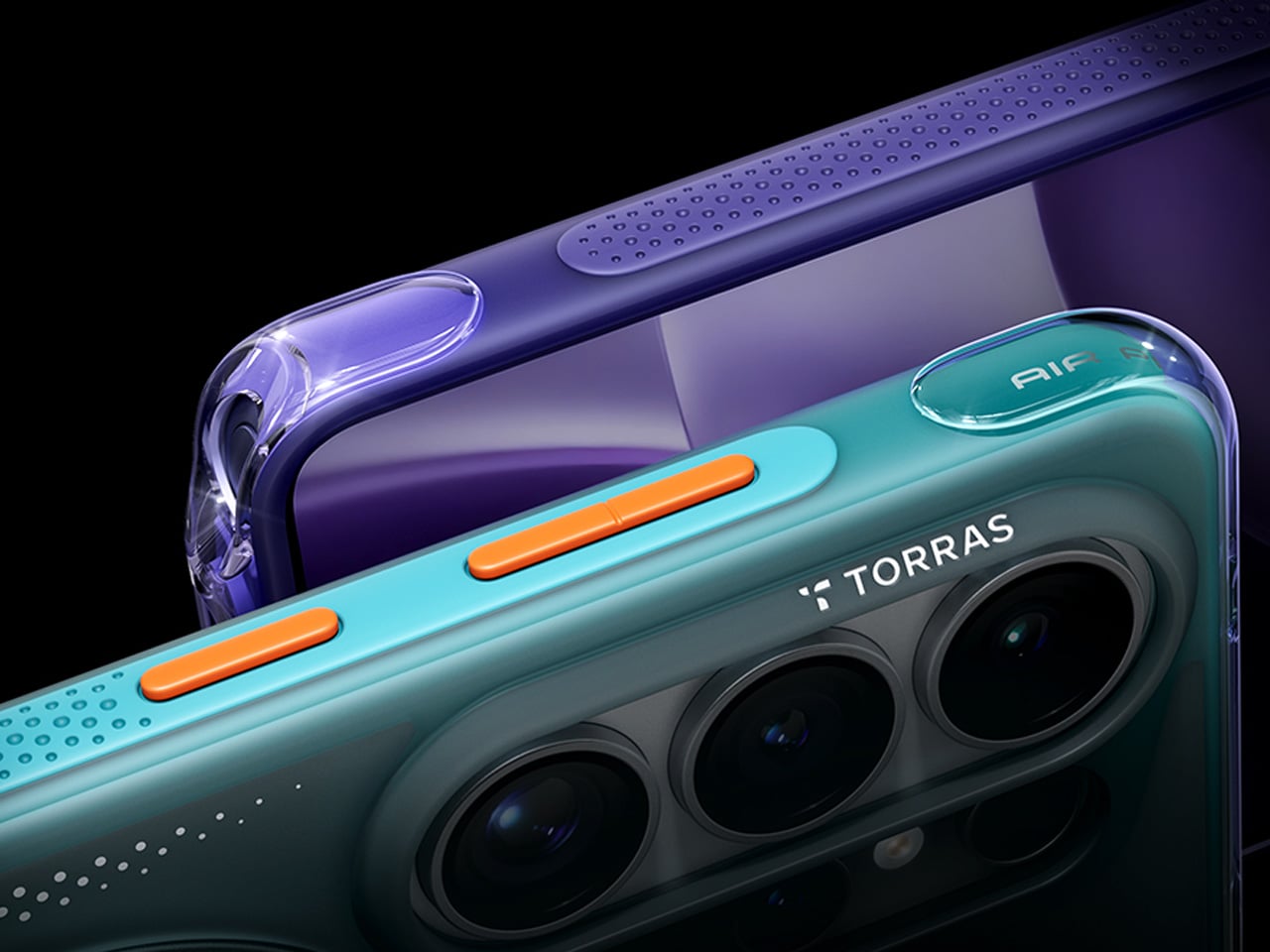
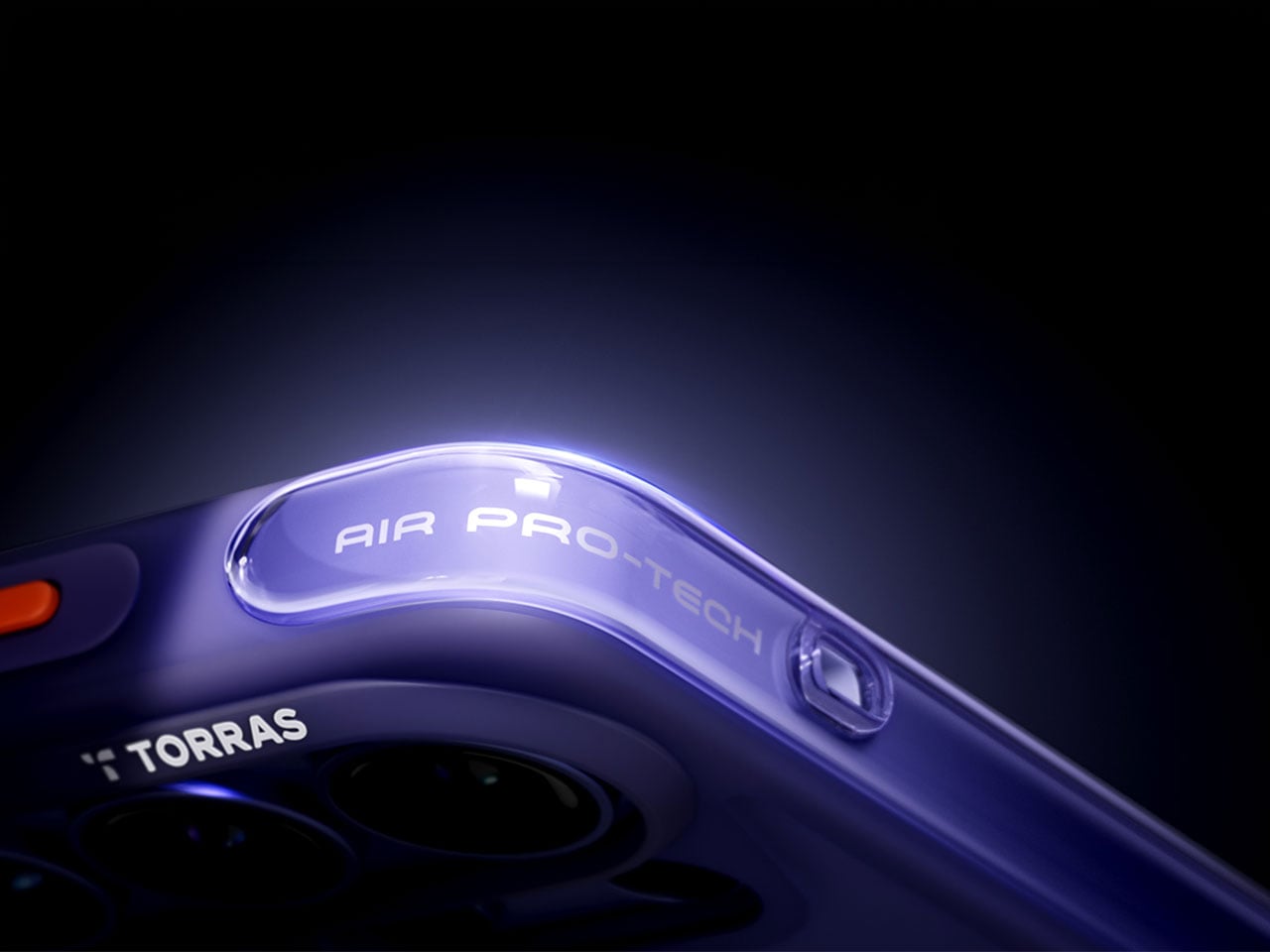
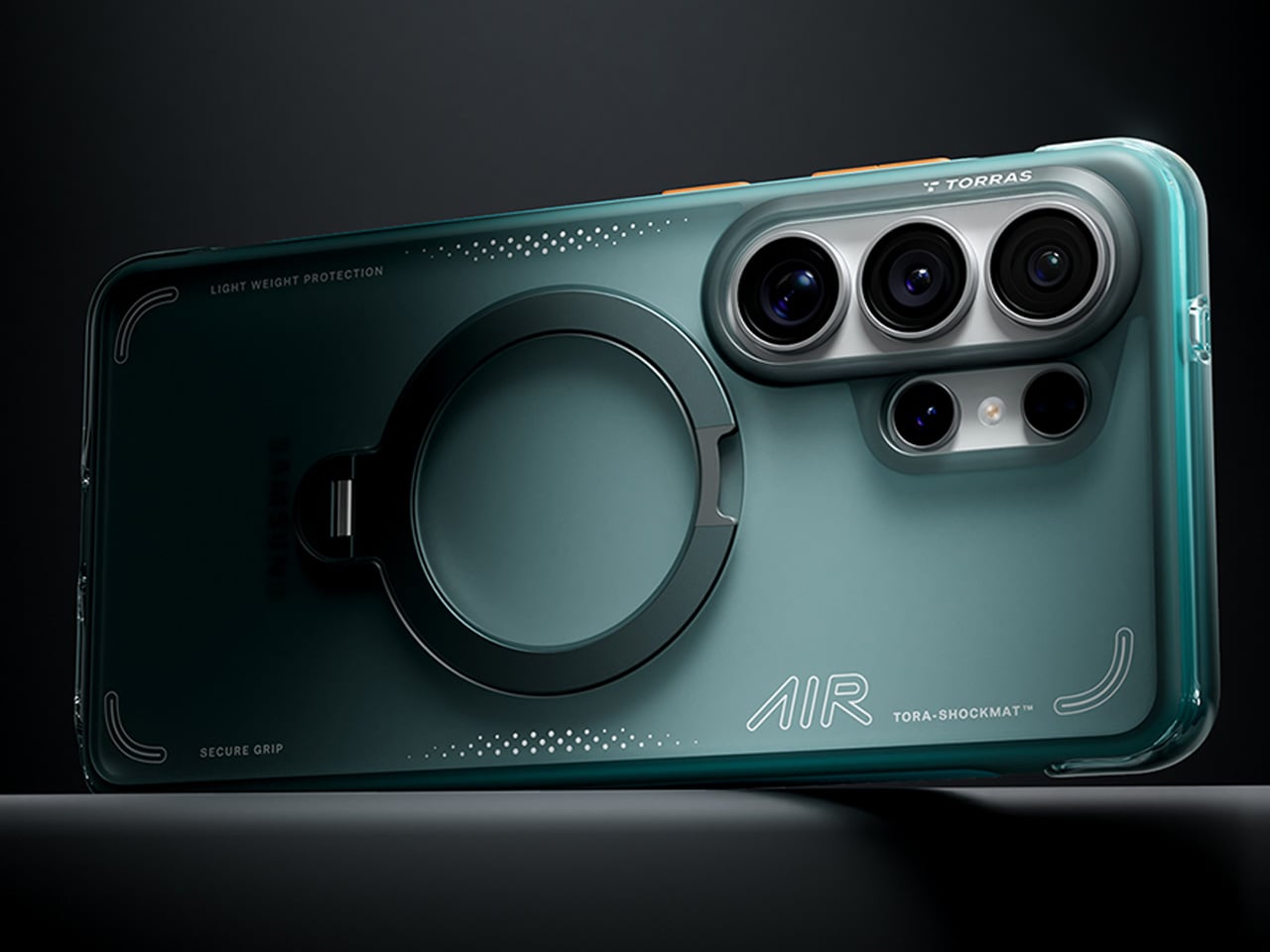
TORRAS, the world’s number one brand of magnetic stand cases, brings its exclusive AIR PRO-TECH™ to the S26 Ultra with design refinements specifically engineered for Samsung’s latest flagship. The Q3 Air wraps your device in precision-engineered air cushions that absorb up to 98% of impact energy with certified 12-foot drop protection. We love how TORRAS has achieved serious protection without adding bulk. The edge-to-edge airbag system cushions all four corners while keeping the profile slim enough for comfortable everyday carry.

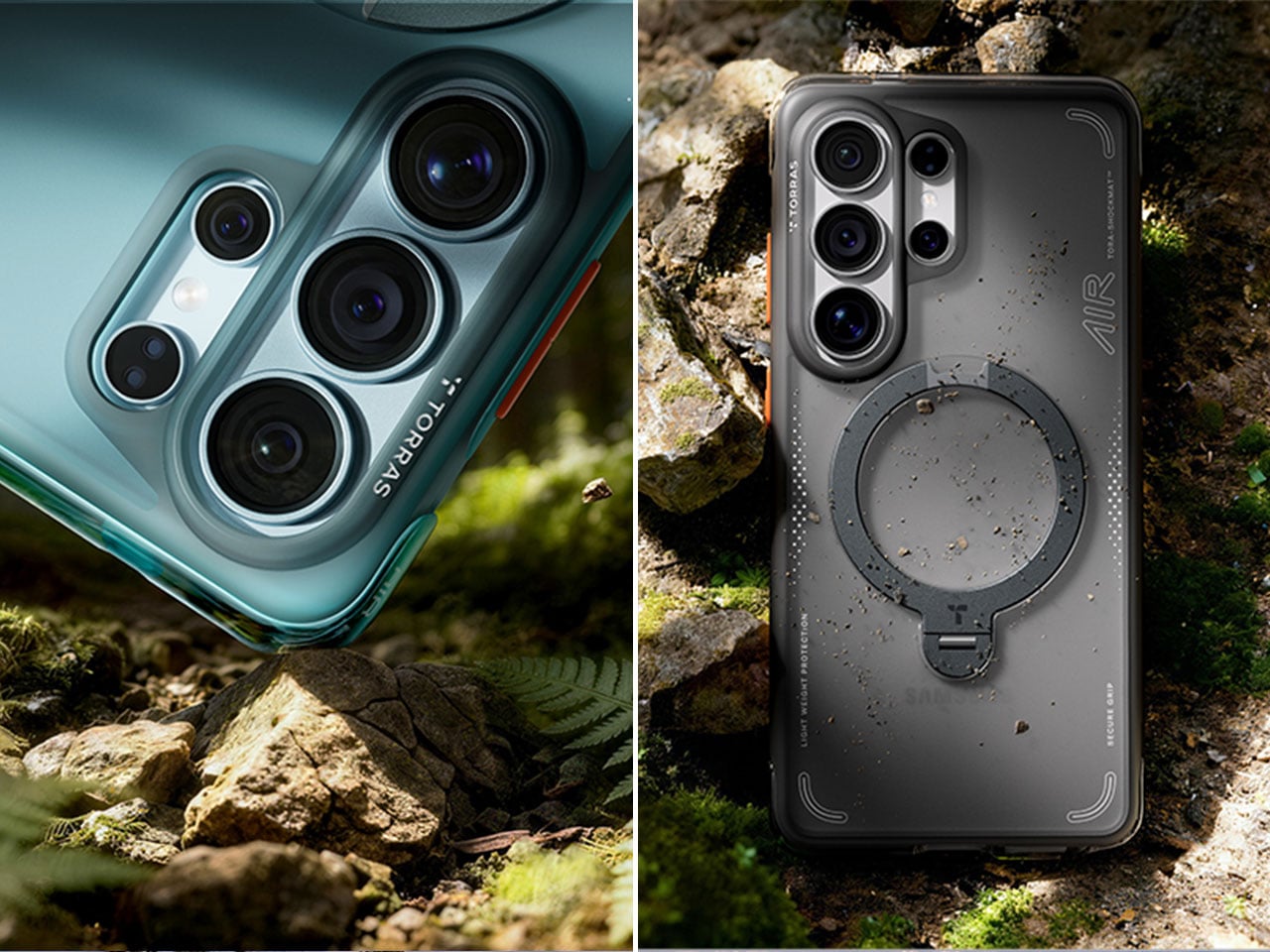
The 360° magnetic stand is where this case really shines. That ultra-slim 2.7mm kickstand integrates seamlessly into the backplate through eight layers of precision components that enable silent, buttery-smooth rotation. TORRAS’s Tora-Hold™ technology delivers a hidden hinge with damped suspension and aerospace-grade aluminum texture that feels genuinely luxurious. The stand locks at any angle you want, with four quick-stop positions at 90°, 180°, 270°, and 360° for instant setup. The brand-new Tora-Flip™ feature lets the ring flip straight to 180° in one motion for immediate shooting angles. No fumbling, no readjusting. One flip gets you ready to capture whatever’s happening right now.

The details separate this from every other case on the market. TORRAS designed the Q3 Air specifically for the S26’s unique camera layout, with a precision raised frame that protects your lenses while keeping flash, sensors, and cameras fully operational. The dot-matrix anti-slip side stripe provides serious grip with gradient patterns that look genuinely cool. The Tora-Smooth™ coating on the back panel feels silky and resists fingerprints like magic. Strong 16N magnets hold firm to car mounts and magnetic surfaces while supporting flawless wireless charging. Two sets of interchangeable buttons let you personalize your case to match your mood or style. Swap in the bold, energetic orange buttons when you want that sporty, adventurous vibe, or switch to sleek, premium metal buttons for a more refined, professional look. The ability to change button colors means your case adapts to different occasions without needing multiple cases cluttering your space. Available in Shadow Black, Violet Surge, and Glacier Sprint, each colorway brings its own personality. The hinge survived over 30,000 rotations in testing, built to last your phone’s entire lifecycle. At $65.99, the Q3 Air transforms your S26 into a content creation studio that survives whatever your adventures throw at it.

Click Here to Buy Now: $59.40 $65.99 (10% off, use coupon code “YANKO111”). Hurry, deal ends in 48-hours! Amazon Link Here.

Why Your Samsung S26 Needs This

The Q3 Air turns your S26 into a content creation powerhouse that moves at the speed of your ideas. That instant 180° flip means capturing the perfect angle before the moment vanishes, while airbag protection ensures your creative tool survives the adventures that inspire your best work. The magnetic stand transforms any surface into a stable shooting platform, ditching bulky tripods and awkward propping. For $65.99, you’re getting protection that actually protects and functionality that enhances rather than hinders, wrapped in a design that looks as good as it performs.

That full 360° flexibility while shooting videos means nailing low-angle shots, eye-level frames, or overhead perspectives without fighting the stand. The airbag protection eliminates that gut-dropping panic when someone casually grabs your phone like it didn’t cost a month’s rent. You get total peace of mind that your phone is well-protected and preserved as you create top-notch content.

Click Here to Buy Now: $59.40 $65.99 (10% off, use coupon code “YANKO111”). Hurry, deal ends in 48-hours! Amazon Link Here.

2. Peak Design Creator Kit – Professional Mounting Without the Professional Camera

Peak Design built its reputation solving real problems for working photographers and filmmakers. The Creator Kit brings that same no-nonsense engineering to your S26, transforming it into a tool that adapts to tripods, GoPro mounts, 1/4″-20 mounts, and the Peak Design Capture Camera Clip. The SlimLink magnetic and mechanical mounting system grabs and locks your phone so smoothly that the first attachment genuinely feels like magic. Mount in portrait or landscape, then pop it off instantly with a button press. The connection stays rigid and secure through any activity, from mountain biking POV footage to time-lapse sequences that demand rock-solid stability.

The system eliminates frustration when you’re racing against changing light or fleeting action. Pop your phone onto any GoPro-style mount for helmet or chest-mounted POV video that rivals dedicated action cameras. The Arca-type tripod compatibility means your S26 integrates seamlessly with professional tripod heads for time-lapses and long exposures that showcase your phone’s computational photography capabilities. The 1/4-20″ adapter opens up vlogging rigs and video setups that used to require dedicated cameras. The Creator Kit stays invisible until you need it, then performs flawlessly when opportunity knocks.

Why Your Samsung S26 Needs This

Your S26’s camera system will rival dedicated cameras costing thousands more, but only if you can stabilize it properly and mount it where creativity demands. The Creator Kit eliminates the gap between professional mounting systems and smartphone photography, giving you access to angles and stability that handheld shooting simply can’t achieve. Whether documenting outdoor adventures, creating content for social platforms, or exploring long-exposure photography, this system ensures your phone captures the vision in your head rather than a shaky approximation. The investment pays for itself the first time you nail a shot that would have been impossible otherwise.

3. Lexon City Energy Pro – Power and Sound Without the Cable Clutter

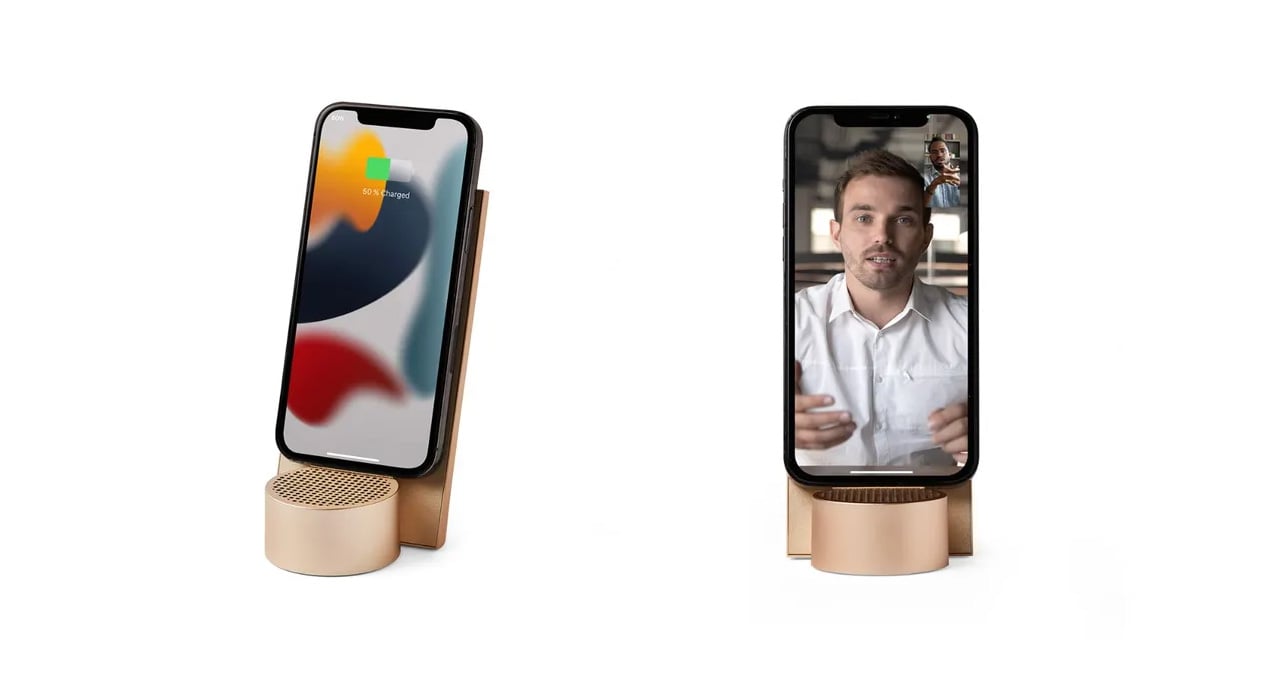
The Lexon City Energy Pro delivers 10W Qi wireless charging with Qi certification alongside a 3W Bluetooth speaker in a compact package that clears cable clutter from your desk or nightstand. Compatible with all Qi-enabled smartphones, the charging station eliminates the daily cable hunt while keeping your S26 powered and ready. The integrated Bluetooth 4.2 speaker with 10-meter range transforms the charging station into a communication hub for hands-free conference calls, supported by environment noise-cancelling microphones that ensure your voice cuts through background distractions. Wireless charging and Bluetooth LED lights provide clear status indicators you can read at a glance.

The design balances form and function through premium materials, including PU leather, ABS, and aluminum, in dimensions that make efficient use of surface space. At 303 grams and measuring 3.11 x 1.45 x 5.51 inches, the City Energy Pro occupies minimal real estate while delivering maximum utility. The USB Type-C connection simplifies setup (cable included), though Lexon recommends pairing with a Quick Charge 3.0 Power Adapter or DC 9V/2A power adapter for optimal performance. The system streamlines your charging routine while adding audio functionality that proves surprisingly useful for music playback, podcast listening, or taking calls without reaching for your phone.

Why Your Samsung S26 Needs This

The City Energy Pro solves the modern dilemma of devices that need constant power but deserve better than a tangle of cables competing for outlet space. Your S26 stays charged and accessible, ready to grab for notifications or unlocking without unplugging. The integrated speaker means your charging station becomes a communication hub that handles calls while your phone powers up, maximizing productivity without sacrificing desk aesthetics. The wireless charging simplicity combined with conference call capability creates a seamless workflow that keeps you connected and powered throughout your day, all from a single elegantly designed device.

4. INVZI MagHub Go – Secure Storage Meets Portable Power

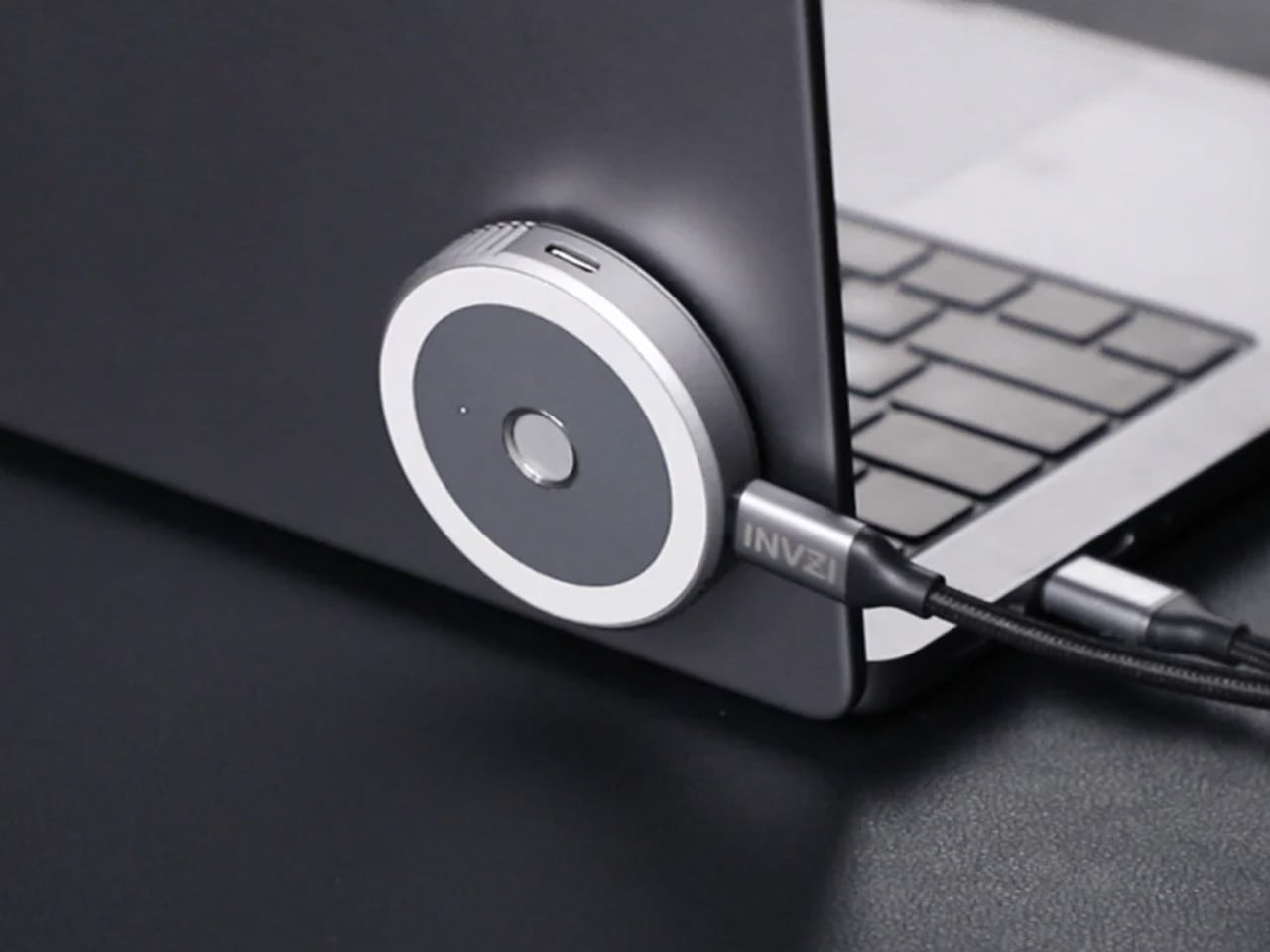
The INVZI MagHub Go represents a new class of everyday carry that starts with what matters most: security. The breakthrough fingerprint encryption system lets you instantly lock and unlock your storage with a single touch, protecting sensitive files, photos, and work documents from unauthorized access. This security foundation supports powerful performance through compatibility with M.2 NVMe SSD in 2230 size, transforming your SSD into a high-speed portable drive that works seamlessly across MacBook, iPhone (with MagSafe attach), iPad, Windows laptops, and Android devices, including your S26. USB-C 3.2 Gen 2 delivers 10Gbps transfer speeds while 100W PD fast charging keeps your connected devices powered.

The compact enclosure combines up to 4TB of ultra-fast NVMe storage, a versatile 10Gbps USB-C hub, and 100W of power delivery in one impossibly small device that fits in any pocket or bag. The fingerprint sensor eliminates password fatigue while providing security that feels effortless rather than obstructive. Your S26 connects directly for blazing-fast file transfers that move video projects, photo libraries, and large datasets in seconds rather than minutes. The hub functionality means adding peripherals without carrying separate adapters, while the power delivery ensures your phone charges while transferring data, maintaining productivity without compromise.

Why Your Samsung S26 Needs This

Content creators, photographers, and professionals who treat their S26 as a serious work tool need storage that matches their ambitions and security that protects their intellectual property. The MagHub Go delivers both through fingerprint encryption that secures your files without slowing your workflow and transfer speeds that move 4K video or RAW photo files faster than most cloud services can upload them. The portable form factor means your entire digital workspace travels with you, backed by security that ensures only your fingerprint unlocks your content. For professionals who create on the go, this combination of speed, capacity, and security becomes indispensable.

5. OSO AI-Enabled Earbuds – Your Meeting Intelligence Lives Here

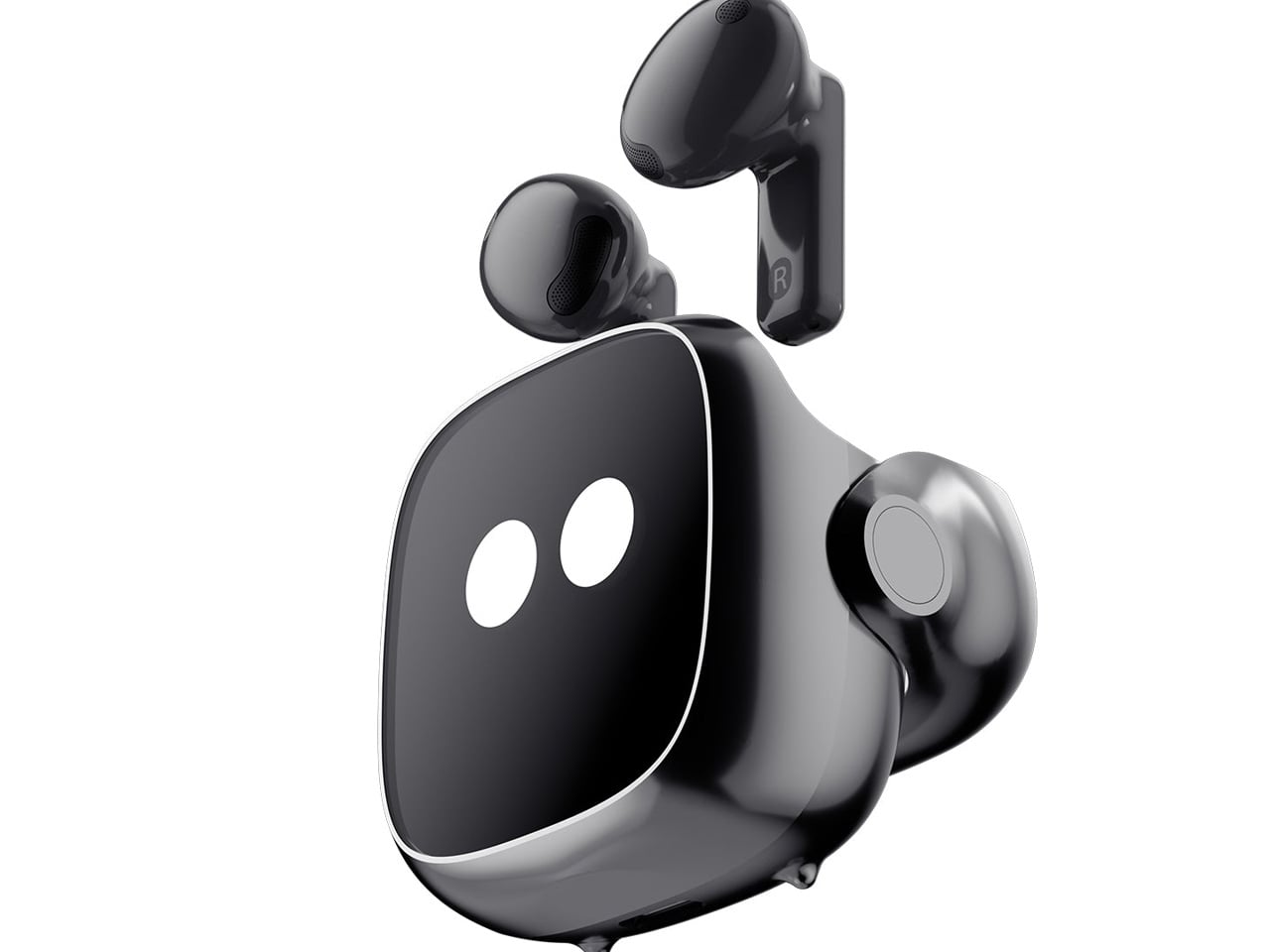
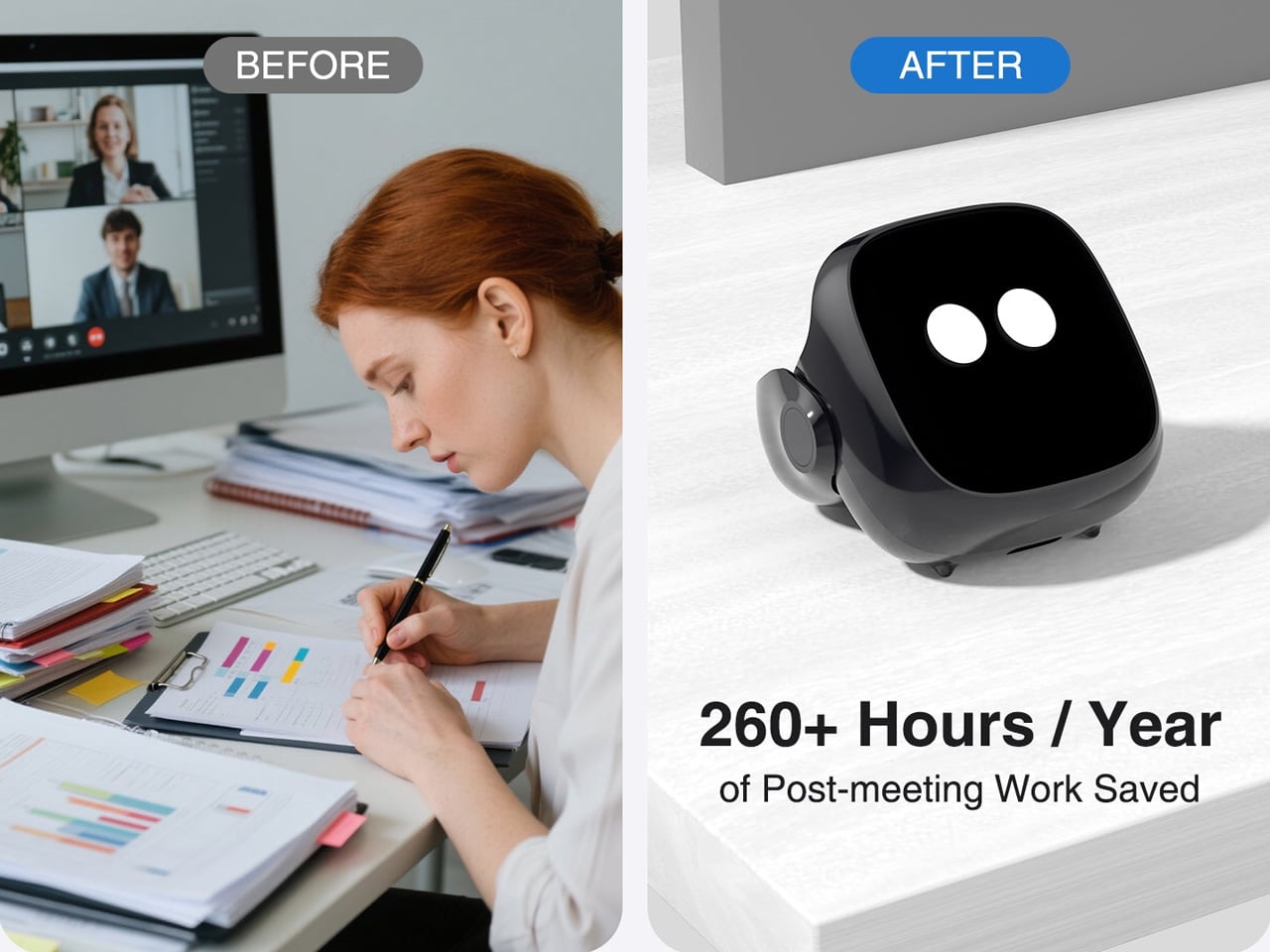
The OSO AI Earbuds represent the world’s first true AI meeting assistant that lives in your ear, transforming every conversation into a competitive advantage. These intelligent earbuds seamlessly record, transcribe, and analyze every meeting, call, and conversation in real-time across 40+ languages while delivering crystal-clear audio through 13mm dynamic drivers with boosted bass and smart noise cancellation. The dual beamforming microphone ensures your voice cuts through background noise with clarity. Long-press and say “Hey OSO!” to instantly access personalized AI insights powered by ChatGPT-5 and Anthropic that dive deep into your recorded conversations, turning hours of meetings into actionable summaries and strategic insights in seconds.

The practical specs back up the ambitious promises. Up to 21 hours of total battery life keeps you connected through marathon meeting days, with the smart charging pod featuring built-in screen controls for quick adjustments. Bluetooth 5.2 connectivity ensures stable pairing with your S26, while secure cloud storage protects your conversations and transcriptions. The earbuds deliver 16 hours of stereo music playback or up to 4 hours of continuous recording, with the case extending recording time to 13 hours maximum. USB Type-C charging gets you back to full power in just 1.5 hours. OSO doesn’t just help you hear better – it helps you think smarter, decide faster, and stay ahead of the competition.

Why Your Samsung S26 Needs This

The S26 will pack incredible processing power, but OSO adds the intelligence layer that turns conversations into competitive advantages. Recording and transcribing meetings across 40+ languages means never missing critical details or action items buried in hours of discussion. The AI analysis powered by ChatGPT-5 and Anthropic extracts insights you’d miss manually reviewing transcripts, identifying patterns and opportunities faster than humanly possible. For professionals who live in meetings, sales calls, or client conversations, OSO transforms passive listening into active intelligence gathering that drives better decisions and stronger outcomes.

Wrapping It Up

The right accessories elevate your Samsung S26 from impressive hardware to a complete system that adapts to your creative, professional, and personal needs. These five picks justify their price tags through superior engineering, thoughtful design, and performance that holds up under real-world demands. They protect your investment, expand your capabilities, and streamline your daily routines without the compromise that defines budget alternatives.

Quality accessories pay dividends through reliability when you need them most, whether that’s capturing a fleeting moment, taking an important call, securing sensitive files, or extracting intelligence from marathon meeting sessions. The TORRAS Ostand Q3 Air, Peak Design Creator Kit, Lexon City Energy Pro, INVZI MagHub Go, and OSO AI-Enabled Earbuds represent the best Android accessories for S26 users who understand that the right tools make everything easier, better, and more enjoyable. Your phone deserves accessories that match its sophistication.

The post 5 Best Android Accessories For Samsung S26 Users That Are Actually Worth the Money first appeared on Yanko Design.
This Iconic Australian Bush House Just Hit the Market for the First Time in Over 40 Years

For the first time since its completion in 1983, one of Australia’s most architecturally significant homes is available to buy. The Ball-Eastaway House, designed by Pritzker Prize-winning architect Glenn Murcutt, has been listed with Modern House at a guide price of AUD 2.4 to 2.6 million, an extraordinary opportunity to own a piece of living architectural history.

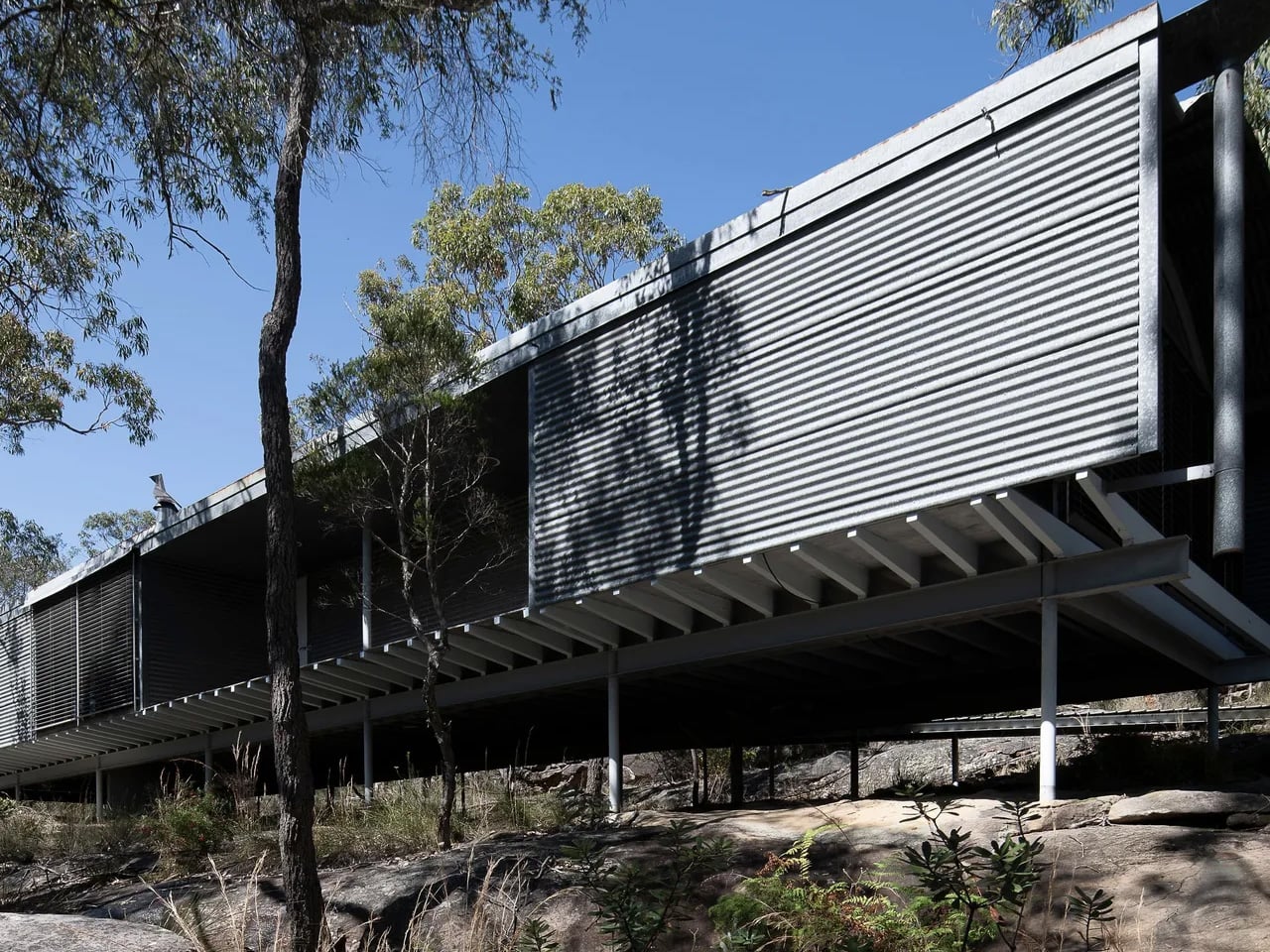
Set on 25 acres of dry sclerophyll forest in Glenorie, roughly an hour northwest of Sydney, the property feels worlds apart from the city it neighbours. The rugged site presented Murcutt with a natural rock ledge that became the building’s platform, and rather than taming the land, the architect worked with it. Not a single tree was removed during construction, a commitment that shaped every decision made from the ground up.

Designer: Glen Murcutt

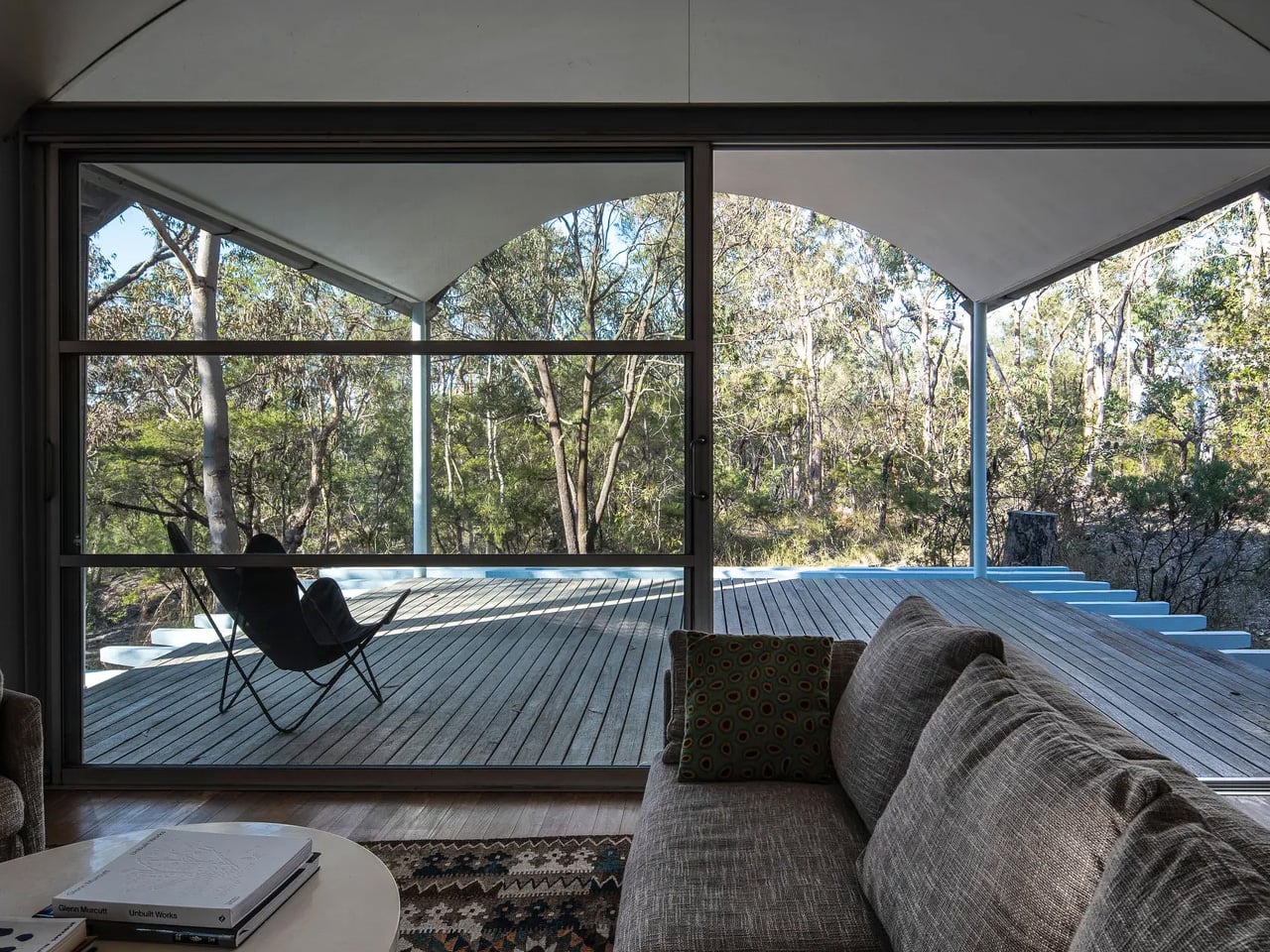
The house sits elevated on slender steel pipe columns, its long, low form skimming the earth without disturbing it. Murcutt has long described this approach as “touching the earth lightly,” placing humanity within nature rather than above it. The exterior is clad in corrugated iron, marking the first time Murcutt used the material on a residential project, and its gently curved roofline reads almost like a topographical feature rather than a built structure.

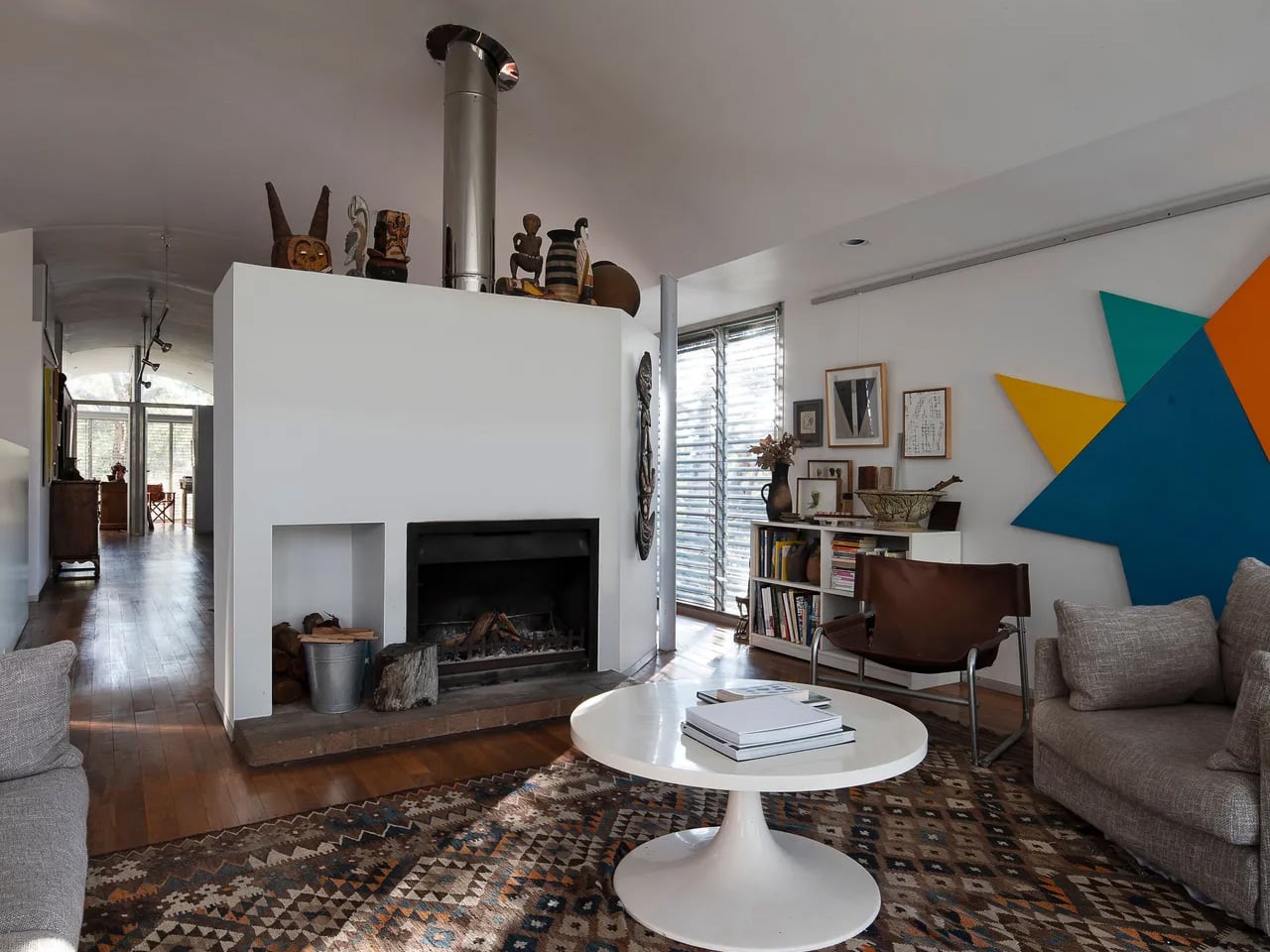
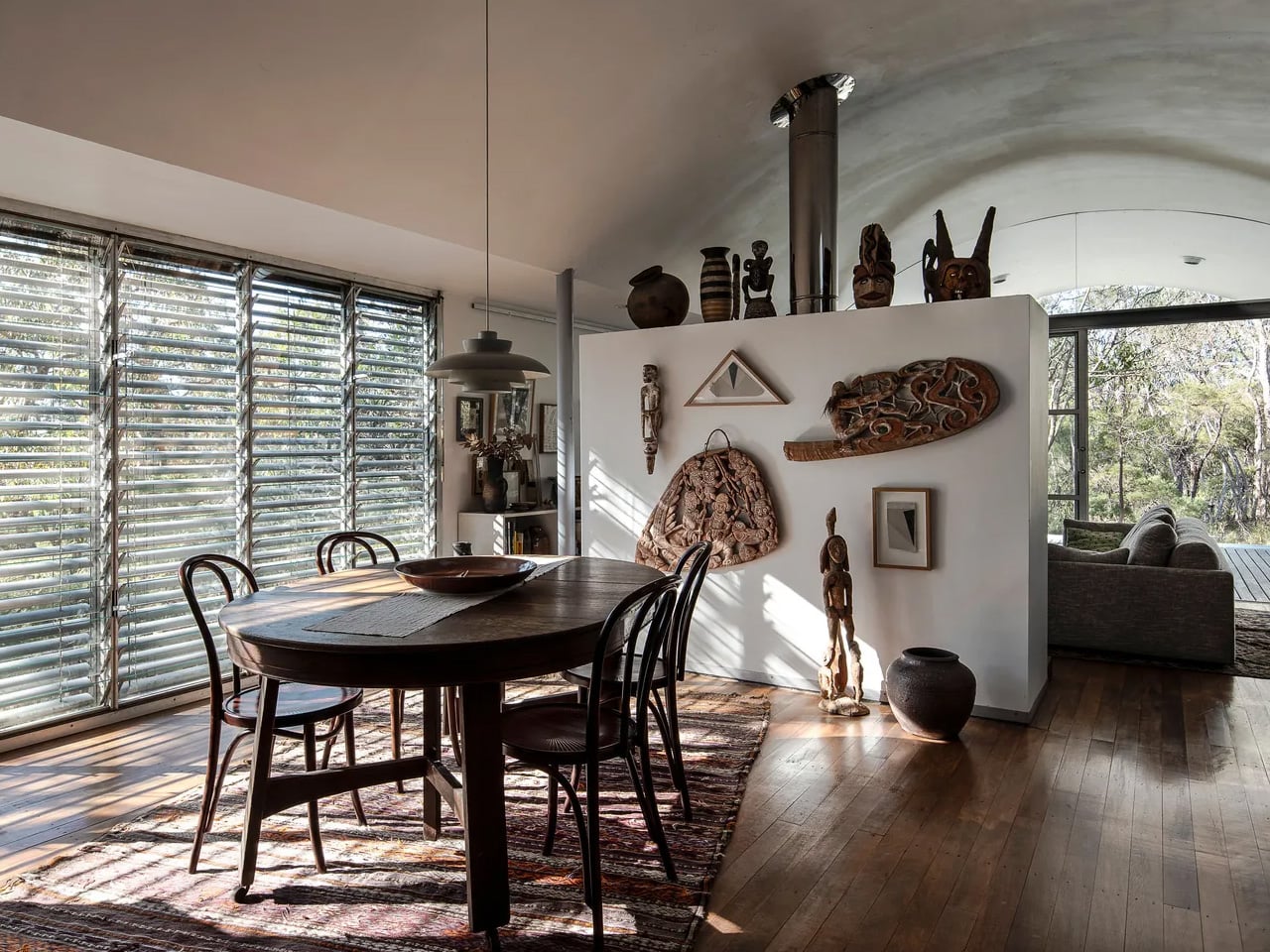
Inside, the design is as considered as the form suggests. Aluminium shading devices and timber-lined interiors regulate heat and light throughout the seasons, while expansive north-facing glazed walls and skylights draw in the kind of soft, sustained light that painters depend on. The home was built specifically for abstract artists Sydney Ball and Lynne Eastaway, and their creative lives are woven into the architecture itself. Ball’s large-scale paintings run the length of an internal wall that forms the spine of the entire plan.


Behind that wall lies a concealed northwest verandah, originally conceived as a meditation space, and two generous studios where many of both artists’ most significant works were made. During a jury visit for the 1984 Wilkinson Award, which the house went on to win, the jury chair called it the most serene space he had ever encountered.

That quality of stillness hasn’t faded. The environmental intelligence built into the structure, passive ventilation, solar orientation, and minimal site intervention, was pioneering in the early 1980s and reads today as a quiet blueprint for how buildings should relate to the landscapes they occupy. The entire ten-hectare site has since been heritage listed, ensuring whatever comes next for the Ball-Eastaway House, its integrity remains protected.

The post This Iconic Australian Bush House Just Hit the Market for the First Time in Over 40 Years first appeared on Yanko Design.
Top 5 Japanese Kitchen Knives Under $200 That Professional Chefs Use at Home – Not the Ones They Recommend for Commission

Most knife recommendations come with a quiet asterisk. A brand deal, a commission link, a product sent to a chef’s PO box before the review goes live. What gets left out of that conversation is what the same chef keeps in the drawer at home — the blade they reach for on a Sunday morning when nobody is filming. Japanese knives occupy a rare space where craft, material science, and design intersect, and choosing one well changes the way you cook in ways that are difficult to articulate until you’ve experienced it.

The five knives on this list were chosen for what they do rather than how loudly they market themselves. Some are visually striking in ways that stop you mid-prep, others are quietly exceptional tools that earn no attention but demand all the respect. All of them sit in a price range that rewards cooks who pay attention. Under $200, the Japanese knife category is genuinely competitive, and every pick below earns its place through steel quality, blade geometry, and the kind of design honesty that paid recommendations rarely manage.

1. Black Kitchen Knives

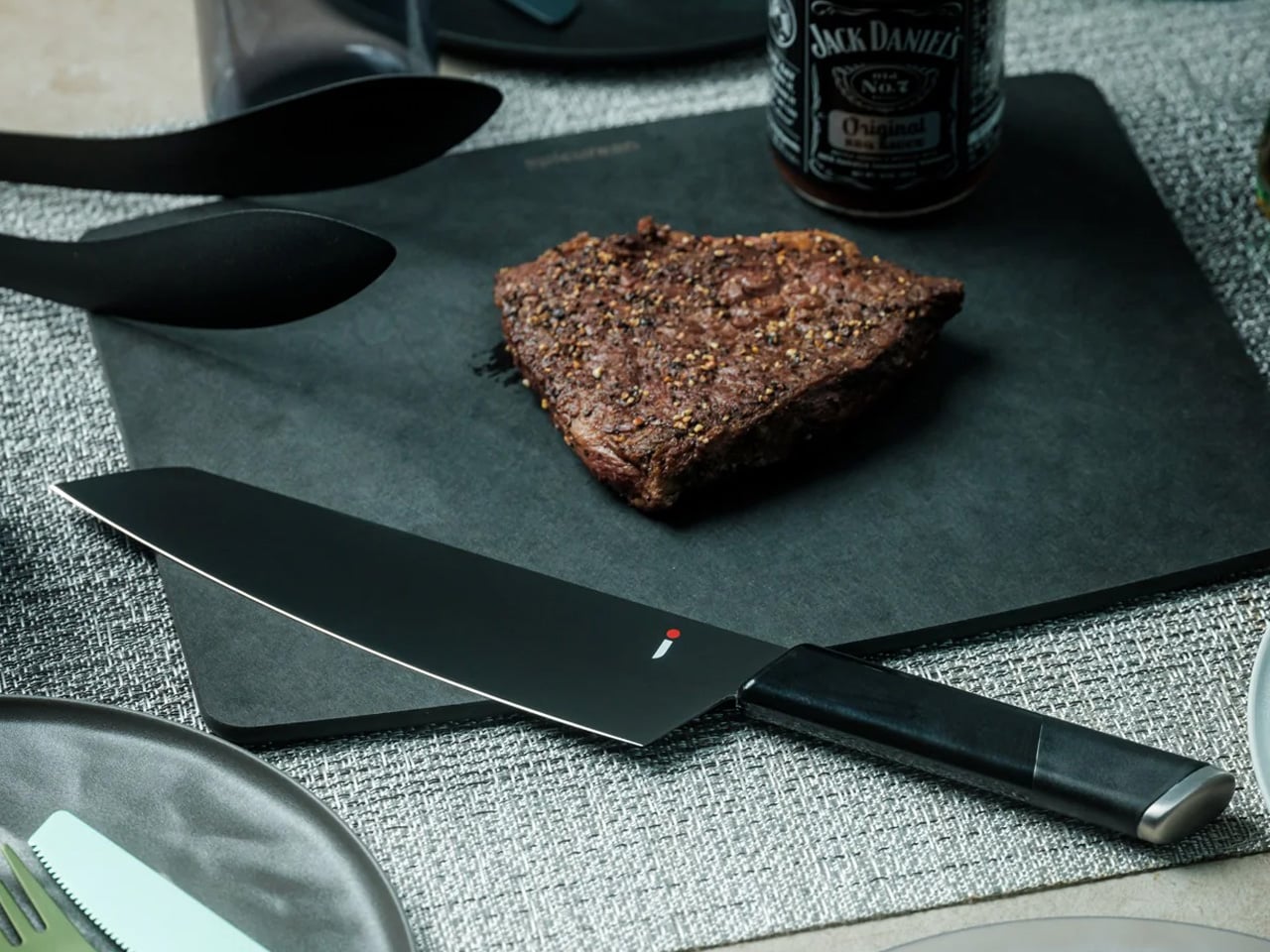
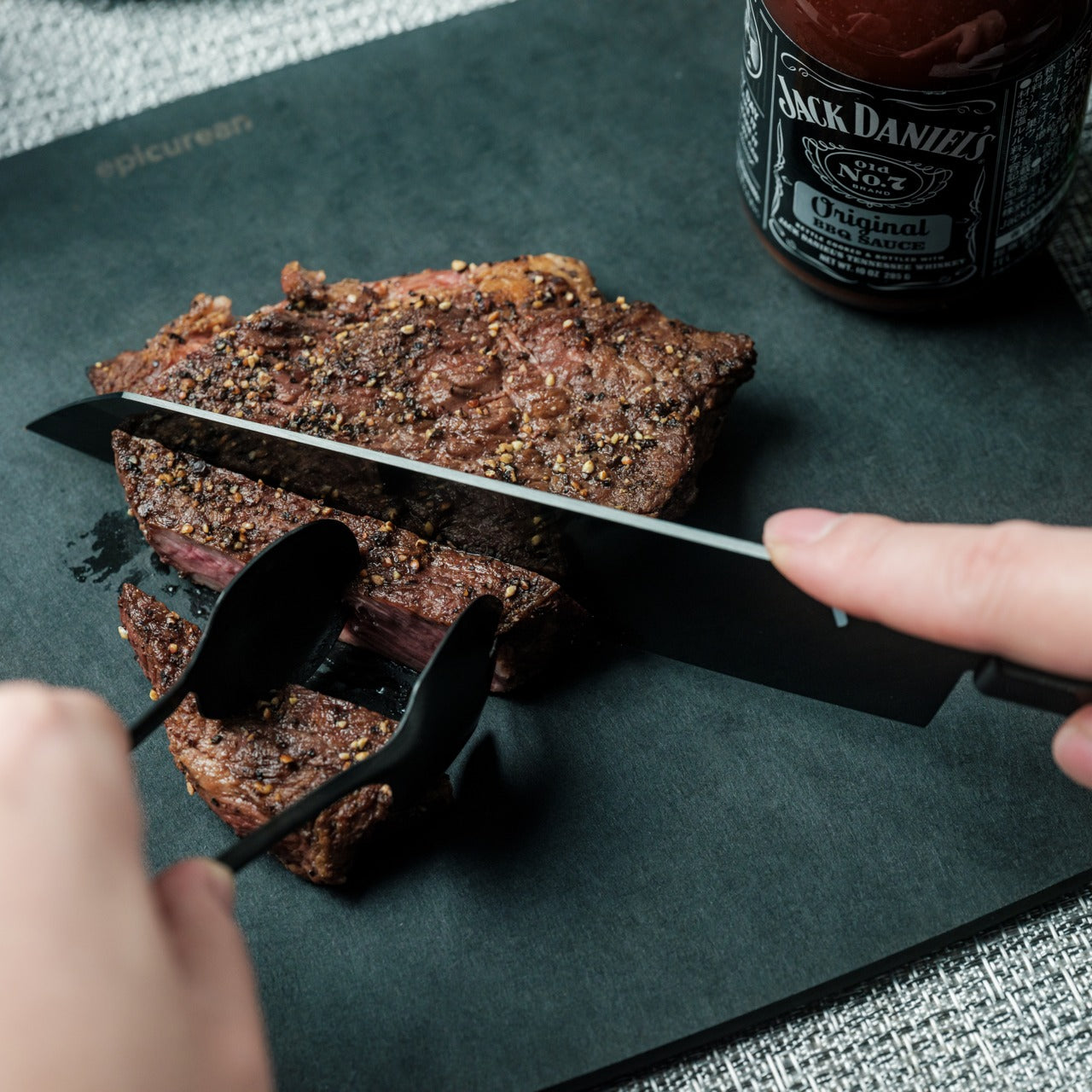
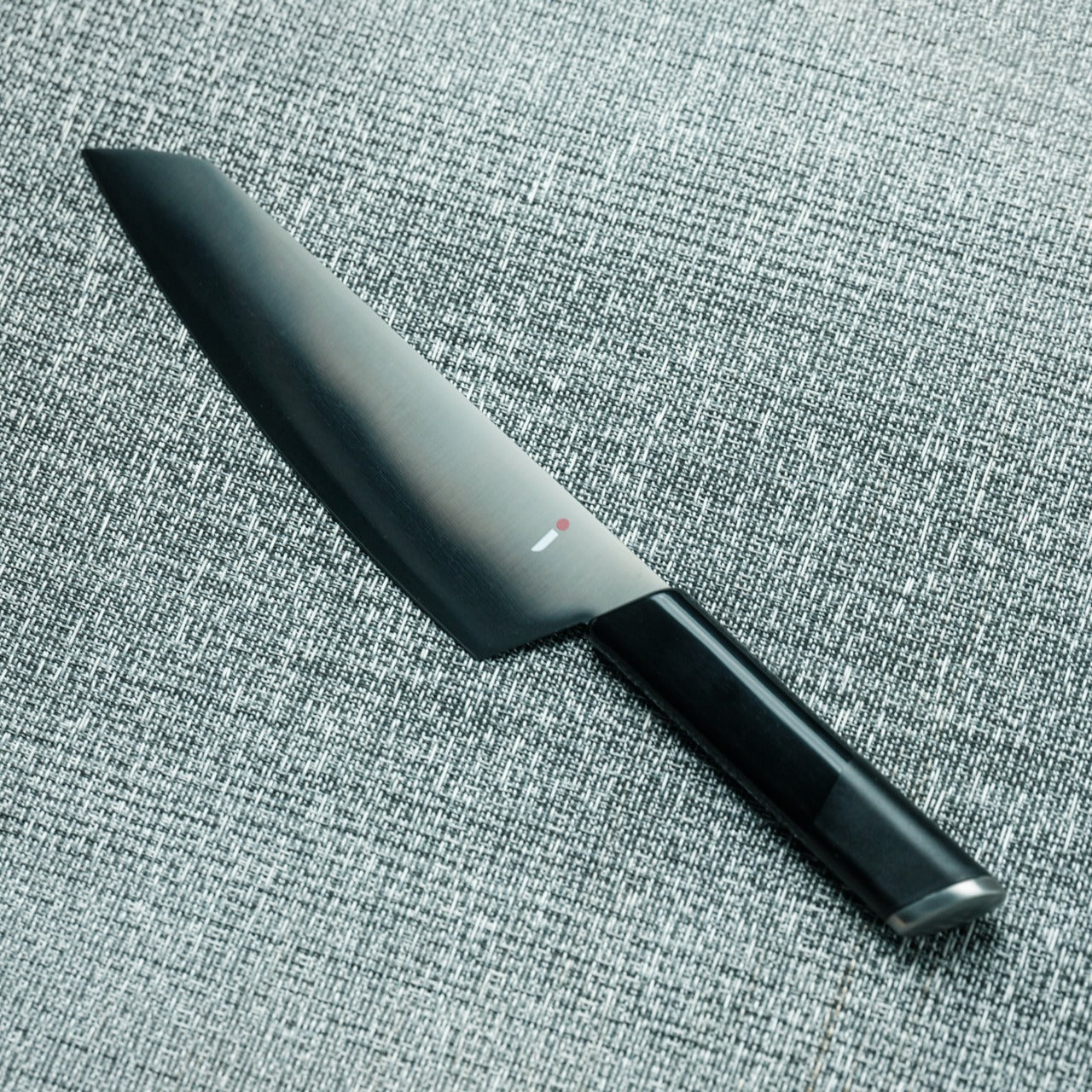
Seki, Japan, carries centuries of blade-making heritage that predates the modern kitchen entirely. The same region that once shaped swords for samurai now produces knives for home counters, and Yanko Design’s pitch-black series makes that lineage feel entirely current. Crafted from molybdenum vanadium steel with a titanium coating, each blade arrives in a matte black finish that is as functional as it is striking. The coating isn’t cosmetic theater — it contributes to durability and surface longevity while making the knife one of the most visually distinctive tools you can introduce to a kitchen without overhauling anything else.

Available in Santoku, Gyuto, and Petty styles, the series covers the full range of tasks that most home kitchens genuinely require. Each blade is crafted individually by a craftsman using a full-scale double-edged grind, which means the cutting geometry is precise rather than approximate. For anyone who has spent time thinking carefully about the objects they interact with daily and expecting those objects to have a point of view, these knives deliver it plainly. Food prep becomes something more considered when the tool in your hand looks like it was made with intention. That shift in feeling is not trivial.

Click Here to Buy Now: $99.00

What We Like

  • The titanium-coated black finish is striking and purposeful, contributing to durability rather than just aesthetics.
  • Each blade is handcrafted individually, giving it the qualities of a bespoke object rather than a factory product.
  • Three blade profiles available mean there is a version here suited to nearly every cutting preference.

What We Dislike

  • The dramatic visual identity demands deliberate care and proper storage to preserve the finish over the years of use.
  • Titanium-coated surfaces can show wear differently from bare steel if not cleaned and maintained with attention.

2. Sakai Takayuki KUROKAGE VG10 170mm

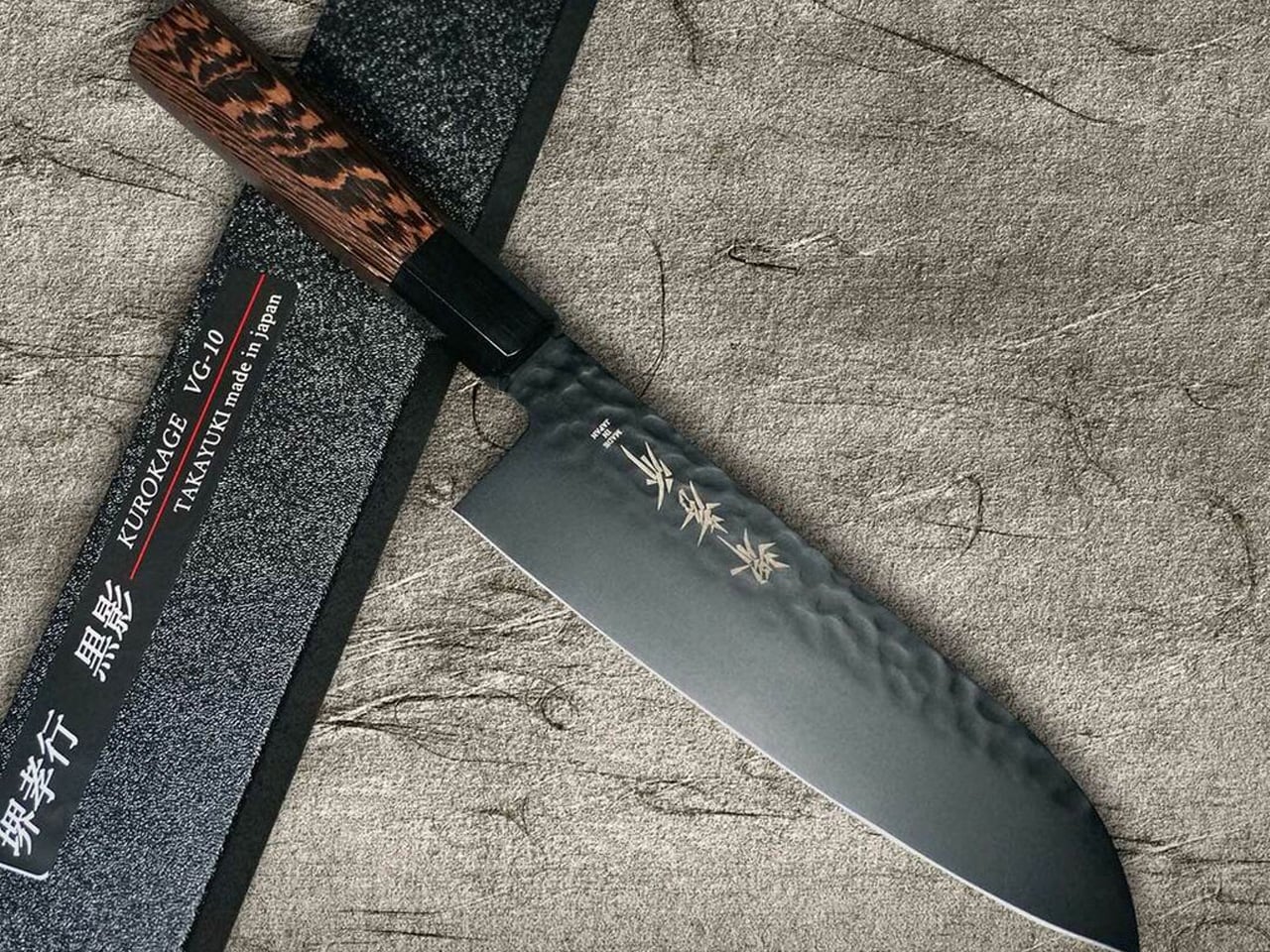
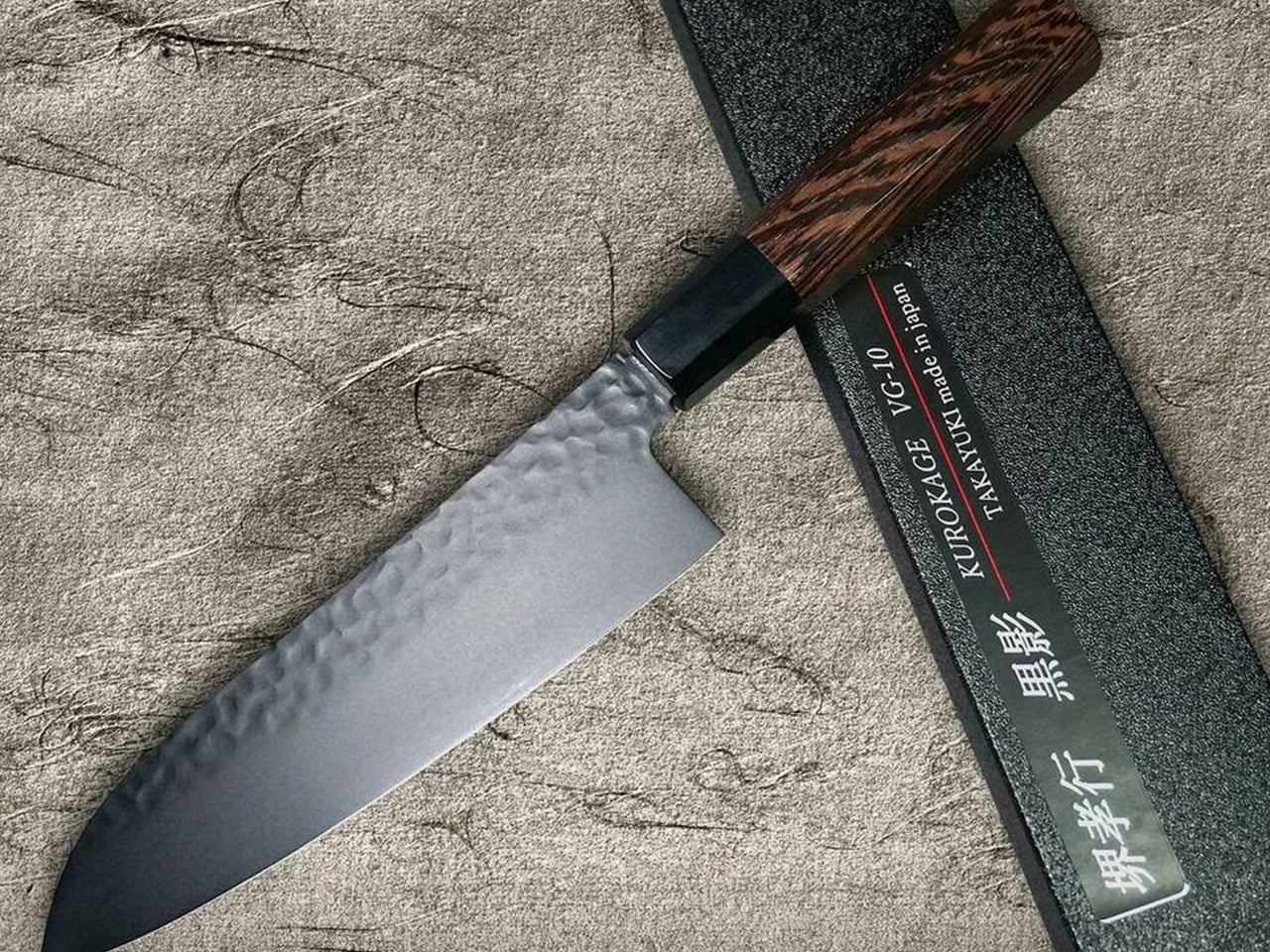
KUROKAGE translates to “dark shadow,” and the name earns its credibility from the first moment you pick the knife up. Sakai Takayuki’s fluorine resin coating on the VG-10 blade creates a surface that food simply refuses to cling to, and that quality changes the pace of prep work in surprisingly immediate ways. The hammered concavo-convex texture of the blade reinforces the non-stick effect physically, creating a topography of dimples that reduces contact between steel and ingredient. Pair that with a VG-10 core hardened to 60-61 HRC, and the edge retention consistently outperforms most knives at twice this price range.

Where the KUROKAGE separates itself further is in the details surrounding the blade. The half-rounded octagonal wenge wood handle with a buffalo horn ferrule signals genuine consideration for how a knife is held over time, not merely how it photographs. Each knife is hand-sharpened before leaving the factory, which means out-of-the-box performance is immediate. There is no break-in period, no first session on the whetstone to get it where it should have arrived. For cooks who want a knife that performs as though it were made with a specific user in mind, this is the closest that experience gets at this price.

What We Like

  • Fluorine resin coating paired with hammered dimples creates food release that genuinely speeds up the rhythm of prep.
  • VG-10 steel at 60-61 HRC delivers edge retention that outlasts chrome molybdenum alternatives, including the respected MAC non-stick line.
  • The wenge wood and buffalo horn handle is refined in a way that feels earned rather than decorative.

What We Dislike

  • The Teflon finish requires careful storage and non-abrasive cleaning to avoid surface damage over the years of heavy use.
  • The matte tones of both blade and handle show fingerprints more readily than polished steel finishes do.

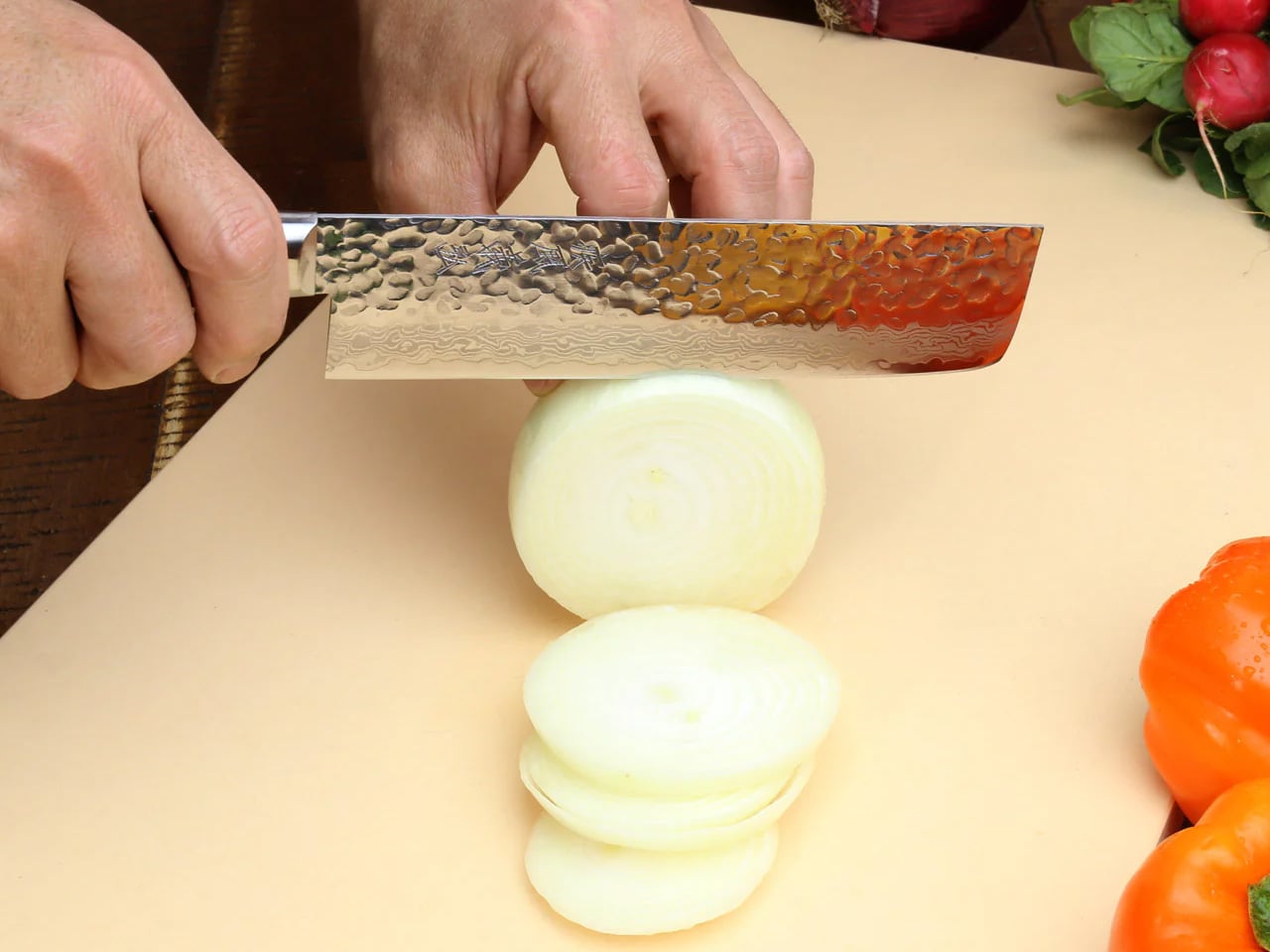
3. Yoshihiro VG-10 16-Layer Hammered Damascus Nakiri 165mm

Vegetable-forward cooking has a dedicated tool, and most people discover it far later than they should have. The Nakiri, with its flat rectangular edge and full blade contact along the cutting board, makes push cuts through anything from dense root vegetables to ripe summer tomatoes faster and more precisely than any standard chef’s knife allows. Yoshihiro’s 16-layer hammered Damascus version, built around a VG-10 core, adds a visual dimension to that functionality that turns the blade into something genuinely close to an object of craft. The hammered surface reduces friction during each cut, preventing food from sticking and maintaining a clean, fluid motion through the board.

The Western-style mahogany handle extends to the full tang, giving the knife a solidity that feels well-considered for sustained daily use. Certified for commercial kitchens and handcrafted by master artisans, each blade carries Damascus layering that produces a pattern unique to that specific knife. No two are exactly alike — a meaningful distinction in an era of mass production. Whether you’re moving through greens for a salad or working down a pile of root vegetables for a slow braise, the Yoshihiro Nakiri makes even the most routine prep feel like something worth approaching carefully and with the right tool.

What We Like

  • The 16-layer hammered Damascus pattern is genuinely beautiful, with layering unique to each blade.
  • The flat Nakiri edge creates more consistent and precise vegetable cuts than a standard chef’s knife profile allows.
  • Full tang mahogany handle delivers solid balance and structural durability across extended prep sessions.

What We Dislike

  • The Nakiri is a specialist vegetable blade and is not the right choice for someone seeking a single all-purpose knife.
  • Damascus finishes require mindful maintenance to preserve both the edge geometry and the layered surface over time.

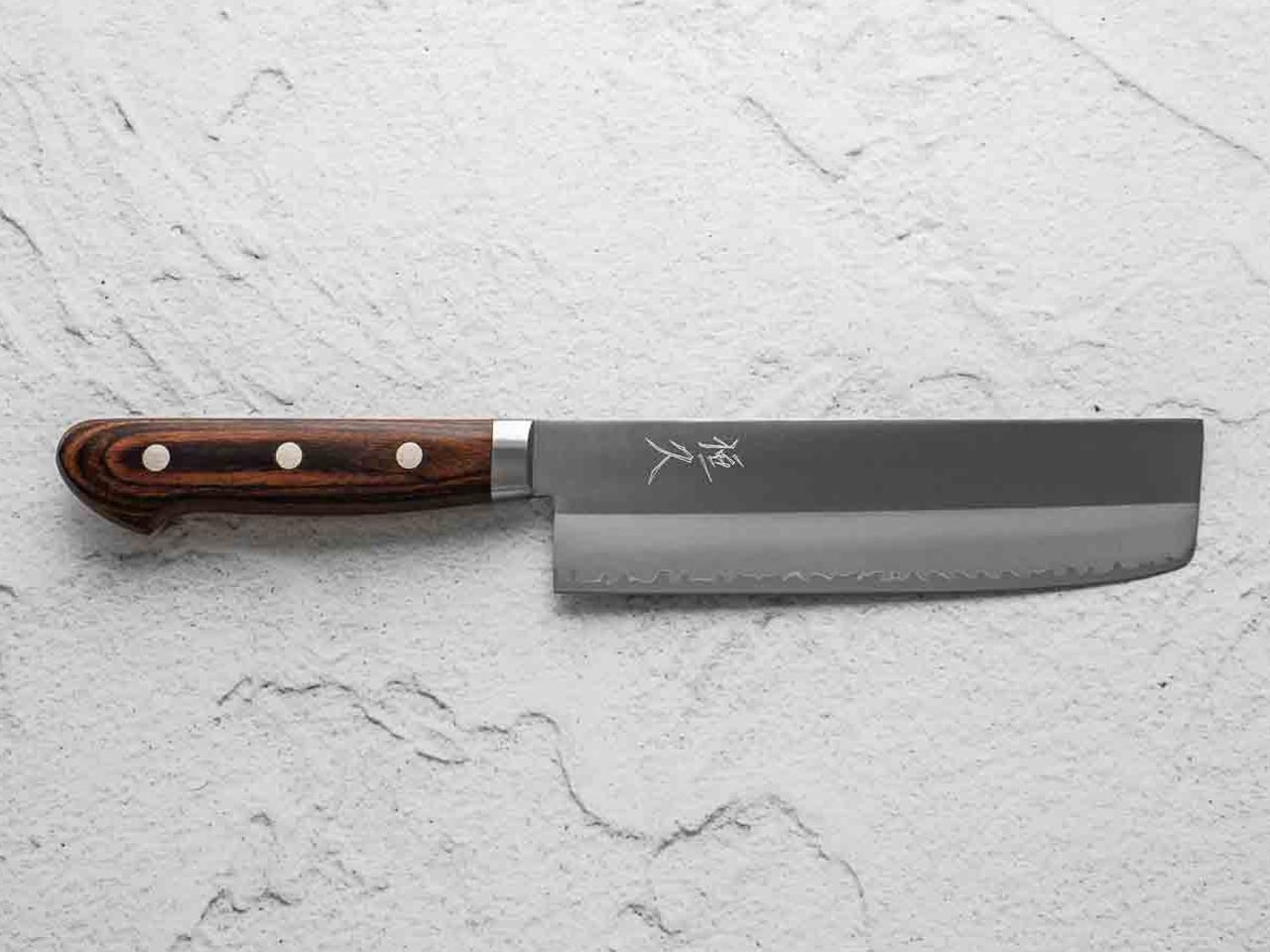
4. Tsunehisa VG1 Nakiri 165mm

Most knives in this price category top out at VG-10 as their steel of choice, and for good reason — VG-10 is excellent. The Tsunehisa VG1 Nakiri makes a more ambitious material decision. VG-1 steel, enriched with carbon, chromium, cobalt, molybdenum, and vanadium, offers a level of edge retention and sharpness that positions it as a meaningful step above the standard category offering. For a cook who sharpens their own knives and understands what they are working with, the reward is a blade that holds its edge through longer prep sessions before it asks to be returned to the stone.

The design of this knife is deliberate in its restraint, and that restraint is its strongest visual statement. There is no hammered finish, no Damascus drama, no surface treatment that distracts from the blade itself. What remains is the clean rectangular profile of the Nakiri geometry, engineered precisely for vegetable work, and a blade that carries the quiet confidence of a tool that knows exactly what it is. For kitchens that value precision over performance, and for cooks who find more satisfaction in a blade that earns attention through cutting rather than appearance, the Tsunehisa makes an entirely compelling case.

What We Like

  • VG-1 steel goes beyond what most competitors in this price range offer, making it a genuinely elevated material choice.
  • The clean, architectural aesthetic feels intentional and considered rather than understated by default.
  • Enrichment with cobalt, molybdenum, and vanadium produces exceptional hardness and long-term structural durability.

What We Dislike

  • The higher hardness of VG-1 steel can make the blade slightly more brittle than softer stainless alternatives if used carelessly on hard surfaces.
  • The restrained design will leave buyers expecting visual drama feeling underwhelmed by appearance alone.

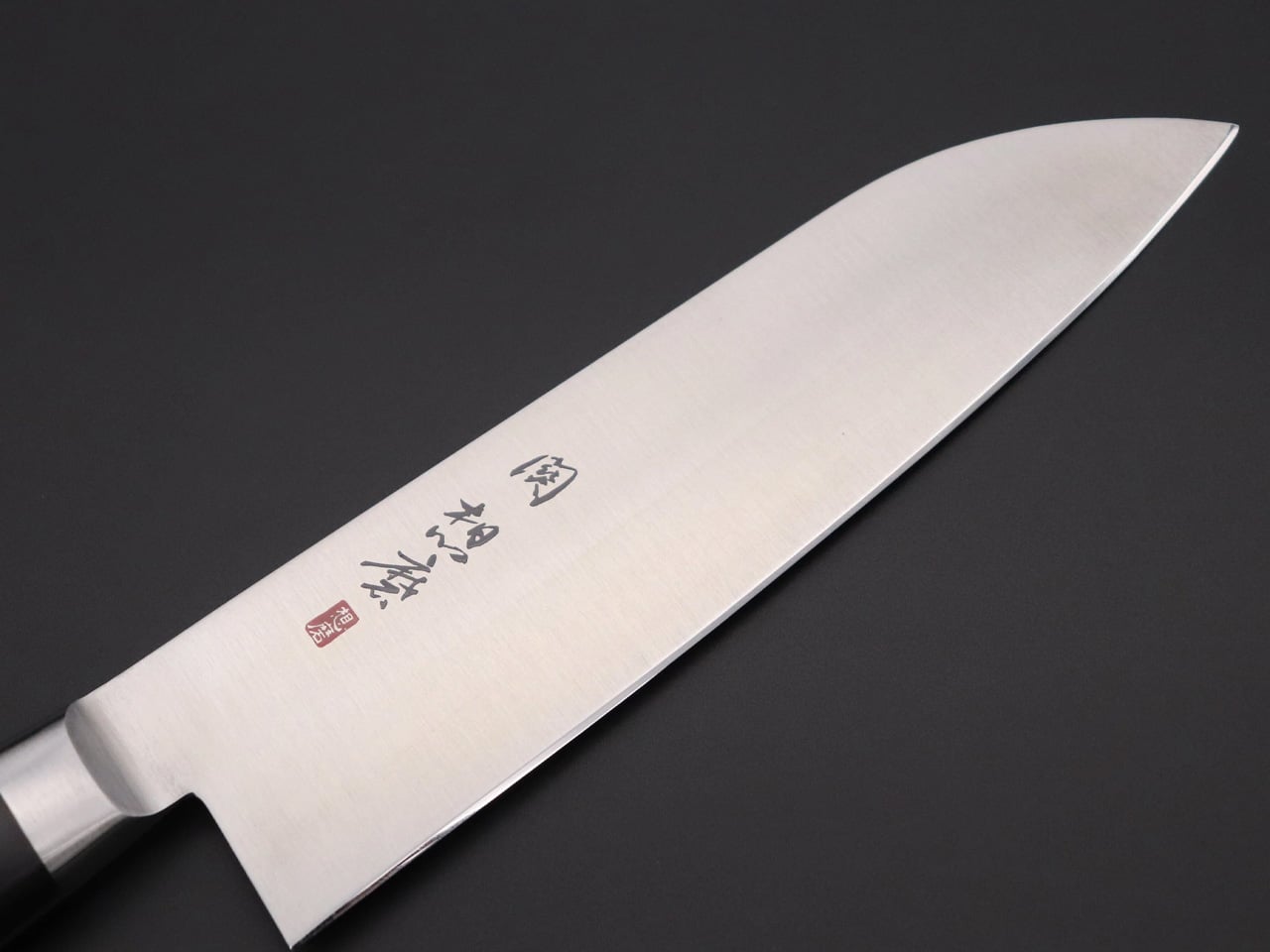
5. SOUMA (Fujiwara Kanefusa) FKM Santoku 180mm

Every list of knives needs one that a seasoned cook would recommend to someone they genuinely care about, rather than someone they want to impress. The SOUMA FKM Santoku, formerly known under the Fujiwara Kanefusa name and recently rebranded without changing what has always made it reliable, is that knife. Made from AUS-8 molybdenum vanadium stainless steel, it delivers cutting performance, rust resistance, and ease of re-sharpening in a combination that makes daily kitchen use genuinely uncomplicated. The Santoku profile, with its tall blade and rounded tip, moves through meat, fish, and vegetables with equal ease and no change in technique required between tasks.

The black pakkawood handle and stainless steel bolster keep the visual profile composed and professional, and the bolster is positioned to distribute weight exactly where the hand expects it during longer prep sessions. This is the knife that sits beside significantly more expensive blades in the same kitchen without apologizing for its price. For first-time buyers of Japanese knives who want something honest rather than showy, the SOUMA FKM is the answer that experienced cooks would give if they weren’t being paid to say something else. Reliable, well-built, and priced in a way that leaves room to build further as the relationship with good knives deepens.

What We Like

  • AUS-8 stainless steel is genuinely easy to sharpen and maintain, making it accessible without feeling like a compromise.
  • The tall Santoku blade handles meat, fish, and vegetables with equal competence and no adjustment in grip or technique.
  • Black pakkawood handle and stainless bolster give it a clean, professional appearance in any kitchen setting.

What We Dislike

  • AUS-8 steel won’t hold an edge as long as VG-1 or VG-10, so it requires slightly more frequent attention on the whetstone.
  • The intentionally understated design lacks the visual presence of the other knives on this list.

The Sharpest Decision You’ll Make in the Kitchen

Japanese kitchen knives are one of the few purchases where the return on investment is felt with every single meal. Each knife on this list was chosen because it earns its place through material quality, considered design, and a level of performance that changes the way you move through a recipe. Whether you gravitate toward the visual authority of the KUROKAGE, the Damascus craftsmanship of the Yoshihiro, or the pitch-black confidence of the Yanko Design series, the difference a well-chosen blade makes is immediate and lasting.

The specifics of which knife fits best depend entirely on how you cook. A Nakiri for kitchens that treat vegetables as the main event, a Santoku for cooks who need a single versatile blade that handles everything without fuss, and the Yanko Design series for those who believe that every object on the counter should carry as much intention as the food being prepared on it. The list starts here. Where you go next depends on what you find yourself reaching for first.

The post Top 5 Japanese Kitchen Knives Under $200 That Professional Chefs Use at Home – Not the Ones They Recommend for Commission first appeared on Yanko Design.
At Just 20 Feet Long, the Kinnakeet Tiny Home Has Everything, Including an Airbnb Income

Twenty feet doesn’t sound like much until you step inside the Kinnakeet. Built by Ohio-based custom tiny home builder Modern Tiny Living, this road-ready dwelling packs a surprising amount of life into a footprint most people would walk past without a second thought.

The Kinnakeet is rooted in one of Modern Tiny Living’s most celebrated designs: the Mohican model, which earned a spot on HGTV’s Journey to the Tiny House Jamboree. While it inherits the Mohican’s clever bones, the Kinnakeet carves out its own identity with a crisp white interior, broad green accents, and dark floors that ground the whole aesthetic. The exterior is wrapped in engineered wood and capped with a metal roof, making it understated, durable, and sharp.

Designer: Modern Tiny Living

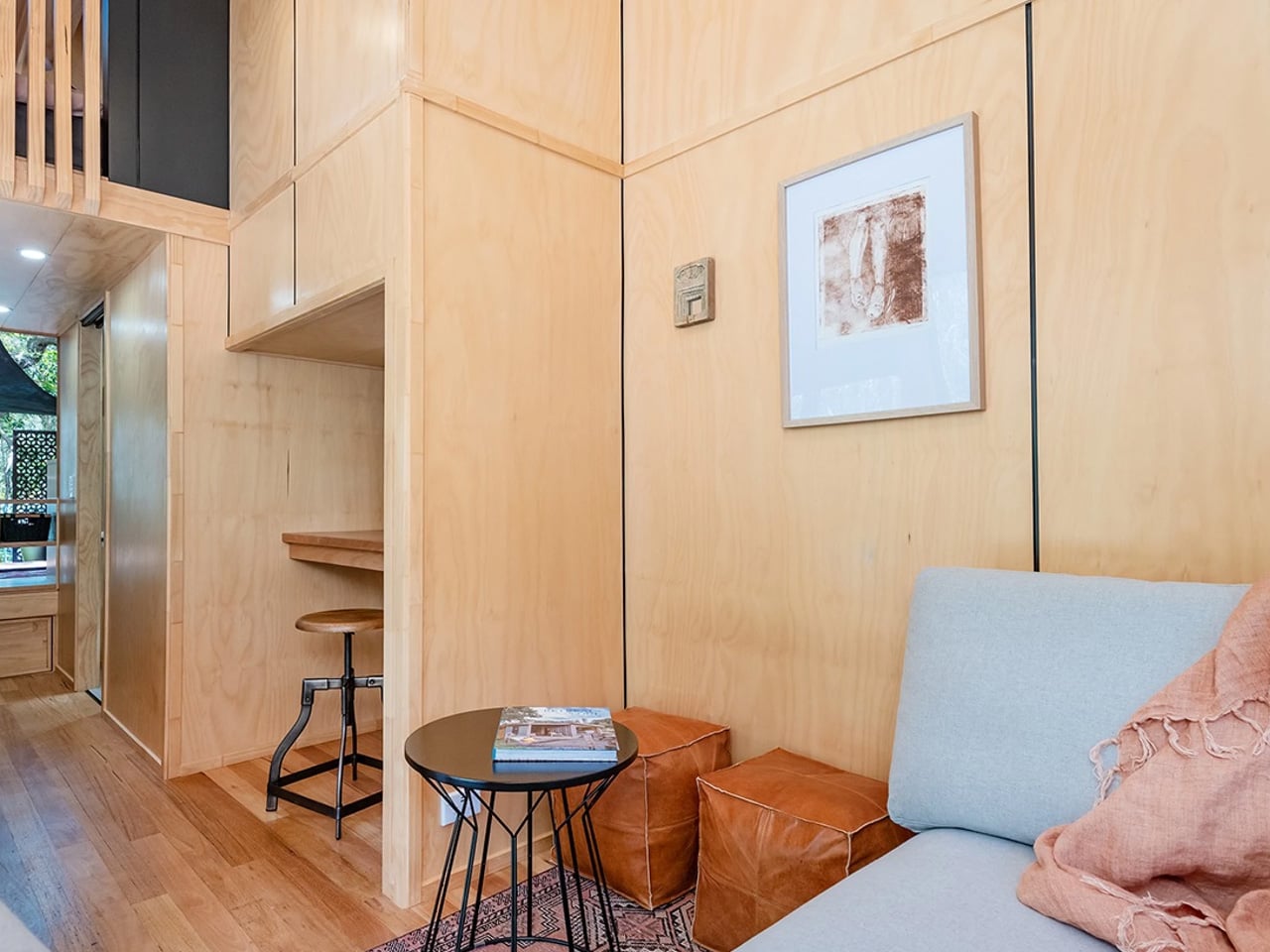
Step inside, and the first thing you notice is the light. The living area is anchored by two large windows that flood the space, paired with a sofa that doubles as a bed for two, with three storage drawers tucked underneath. A folding table doubles as a workspace or dining surface, and a large custom bookcase makes the room feel intentional rather than improvised. The staircase leading up to the loft doesn’t waste a single riser — each step hides a cubbyhole of varying sizes for shoes, books, or whatever you need within reach.

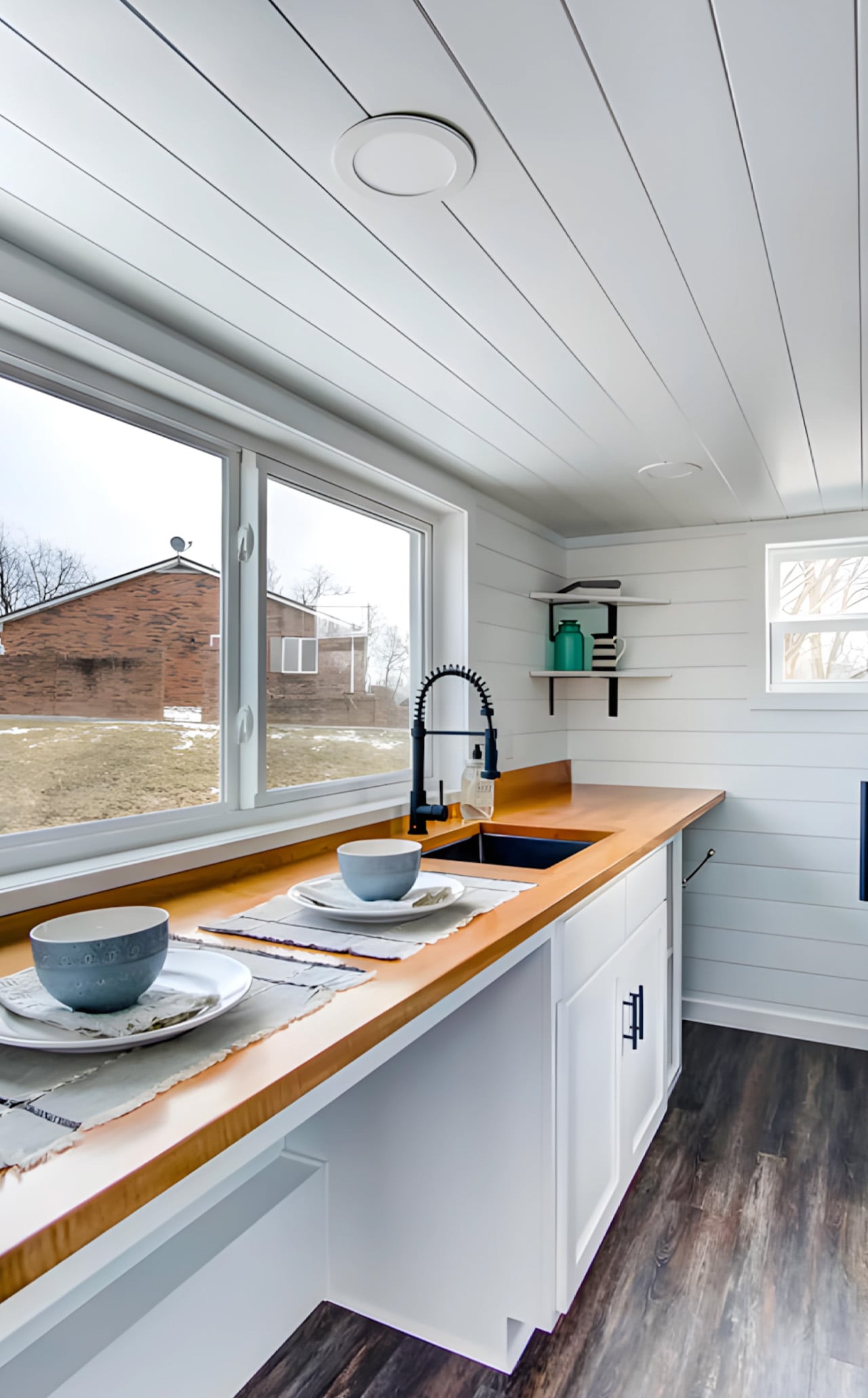
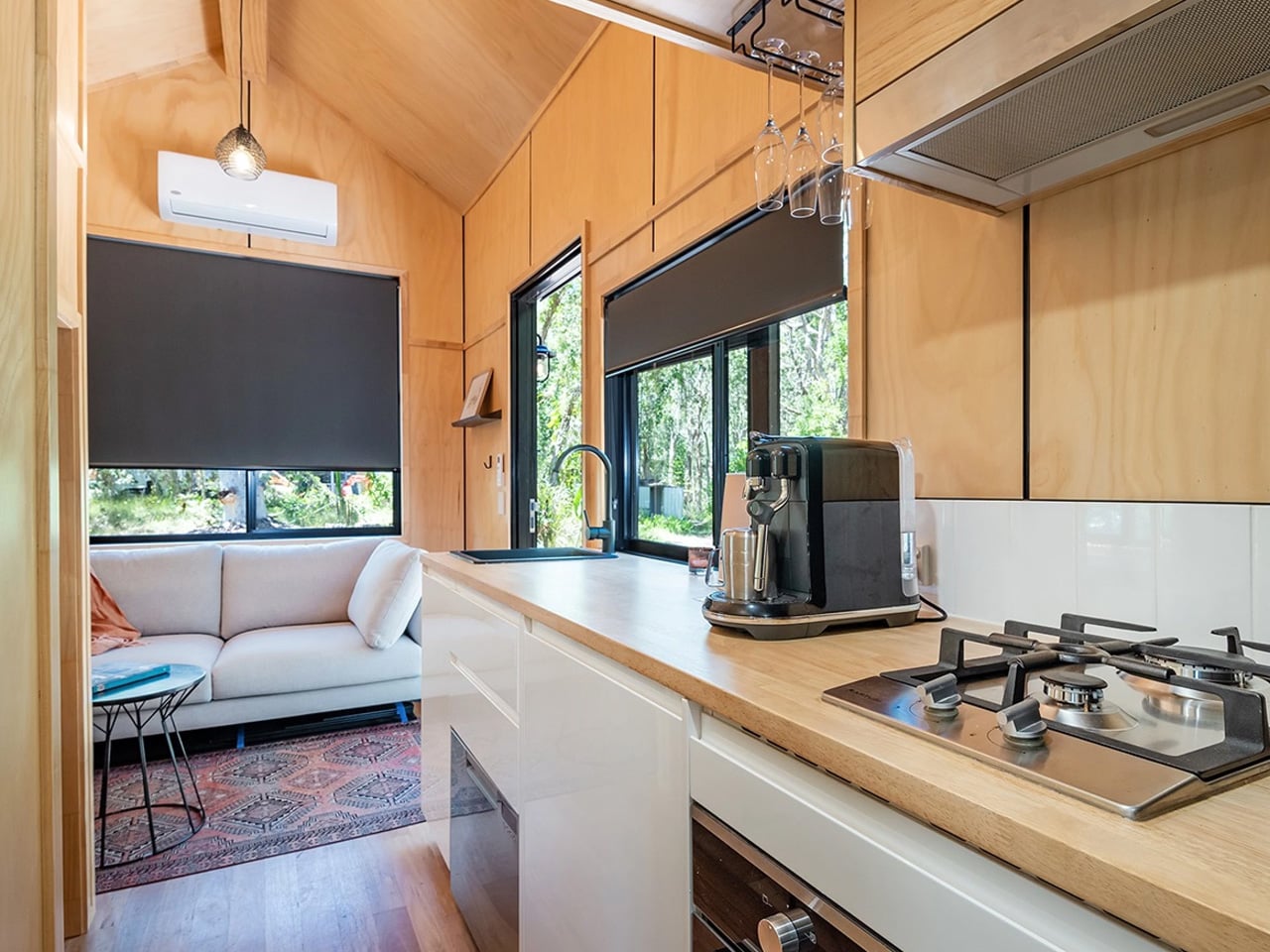
The kitchen is compact but thoughtful, featuring a sink, custom cabinetry, and open space that accommodates additional appliances depending on the owner’s needs. Since the Kinnakeet was originally designed for use as a vacation rental on Airbnb, it skips the full-size appliances found in Modern Tiny Living’s permanent residences — a deliberate choice that keeps the build flexible and the cost accessible.

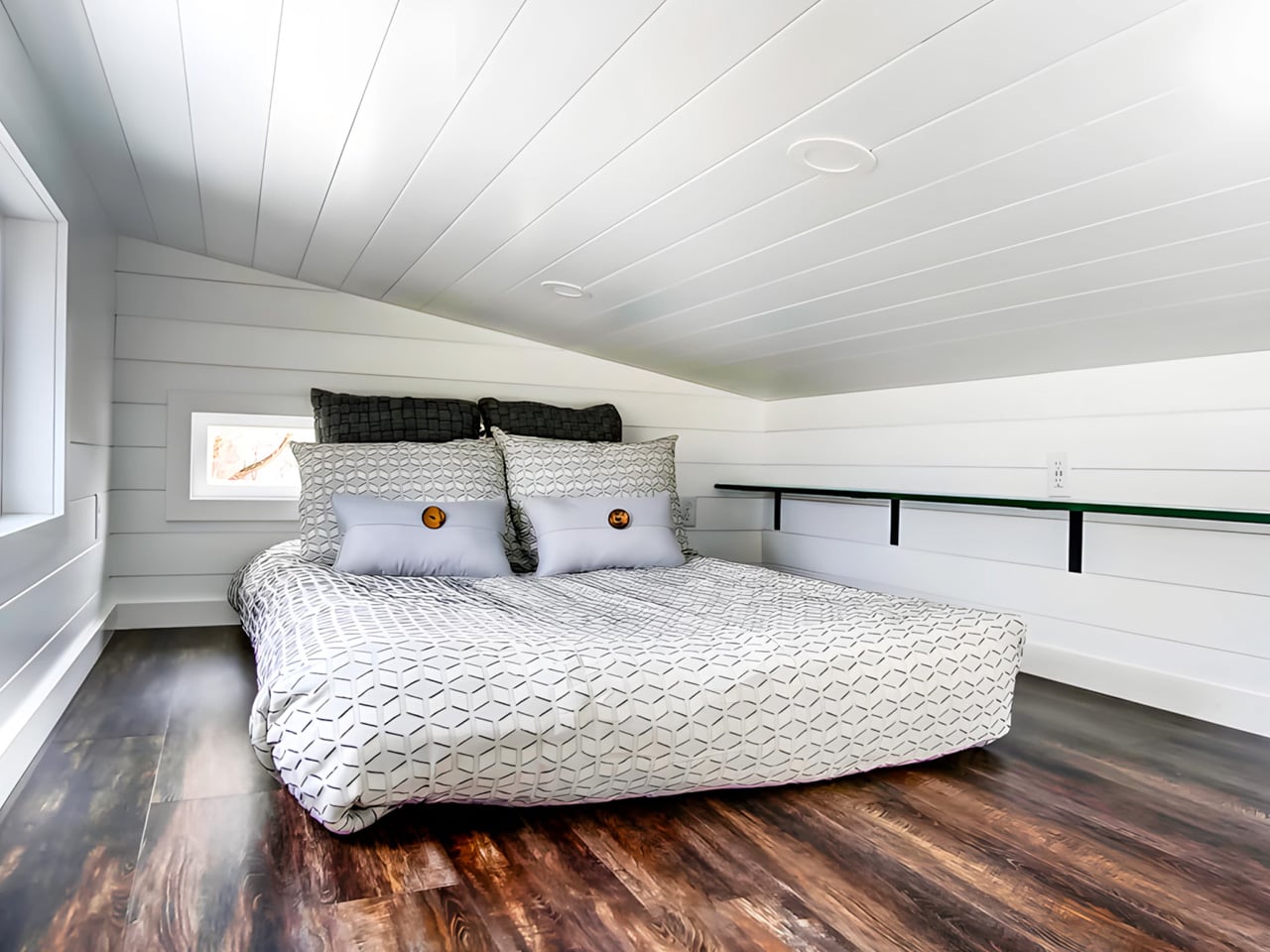
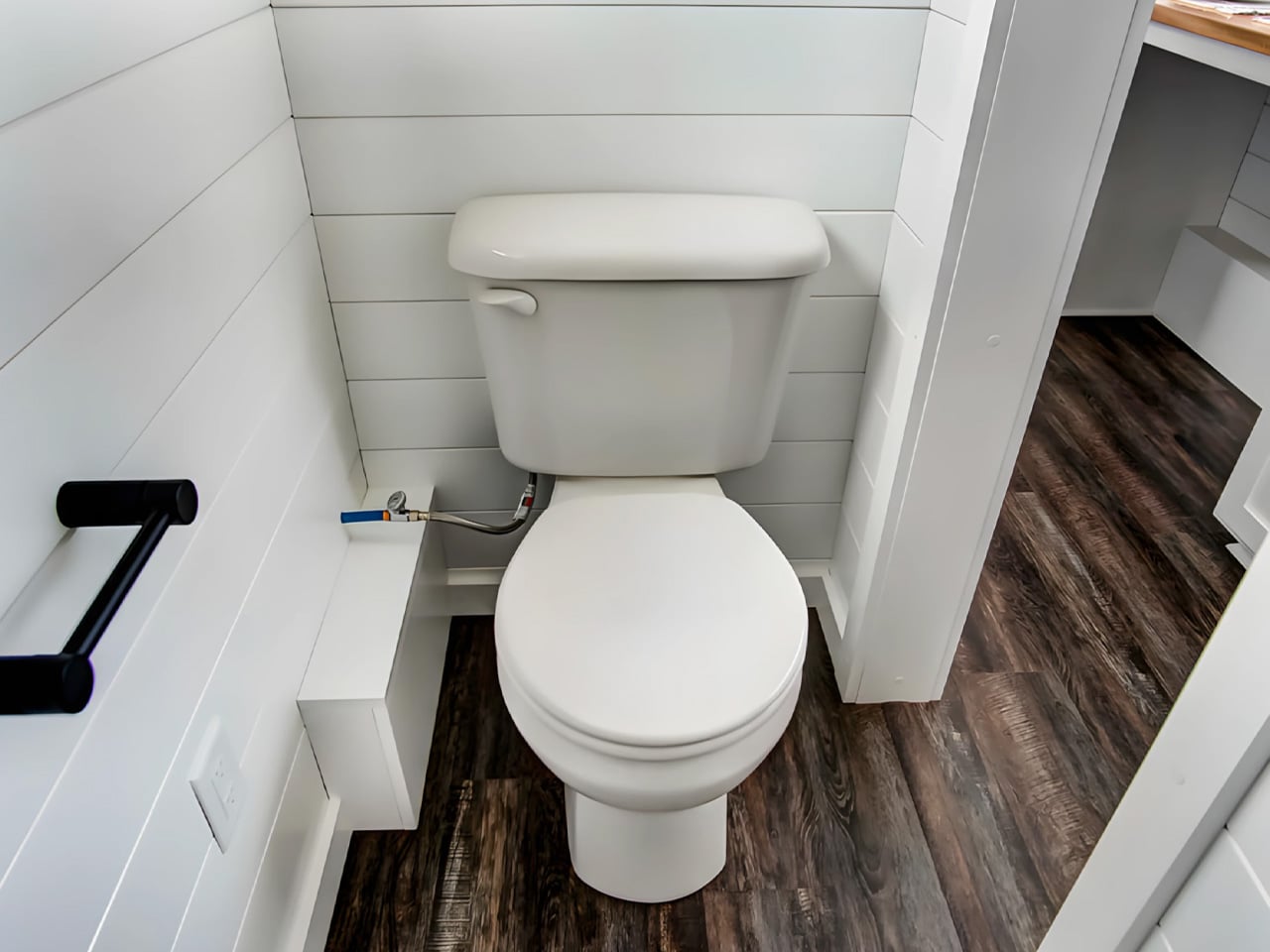
The bathroom is accessed through a sliding barn-style door off the kitchen and manages to fit in a walk-in shower and a flushing toilet without feeling squeezed. Up the storage staircase, the lofted bedroom fits a double bed with enough room to feel like a proper retreat, even if the ceiling keeps things cozy.

Priced at $79,000 as a starting point, the Kinnakeet is customizable, more or less depending on finishes, appliances, and personal priorities. Whether you’re looking for a full-time downsized lifestyle or a smart vacation rental investment, the Kinnakeet makes a compelling case that 20 feet is more than enough.

The post At Just 20 Feet Long, the Kinnakeet Tiny Home Has Everything, Including an Airbnb Income first appeared on Yanko Design.

5 Best Gadgets Gen Z Uses to Touch Grass Instead of Doom-Scrolling

There’s a version of your day that doesn’t start with your phone face inches from your eyes. Gen Z is slowly remembering it exists. Doom-scrolling sounds like a boss level you keep losing. The fix isn’t a screen time limit you’ll override in two days or a wellness app that wants your data. It’s gadgets that give your hands something real to do, something that clicks, twists, and responds without asking for your attention span.

These five picks are not nostalgia for nostalgia’s sake. They are considered objects built around single purposes, each doing exactly one thing well and nothing else. A camera that shoots. A phone that calls. A tablet that writes. A clock that tells time. A CD player that plays music. In a world designed to keep you hooked, choosing a device that doesn’t compete for your attention is its own kind of resistance.

1. Camera (1)

Photography moved inside phones and got buried under notifications. Camera (1) imagines what it looks like when shooting becomes a thing you do with your hands again. Camera (1) is a concept design with a compact, metal body sized to slip into a pocket but solid enough to fill the hand. All the main controls live on one edge: a shutter, a circular mode dial with a glyph display, and a D-pad your thumb can reach without shifting your grip or touching a screen. The design draws from Nothing’s hardware-forward language, with circuit-like relief on the front panel, small red accents, and a bead-blasted metal shell that feels considered across every surface.

A curved light strip around the lens pulses for a self-timer, confirms focus, or signals that video is rolling. The engraved lens ring invites you to twist rather than pinch. Taking this camera to a dinner or a show means twisting to frame, feeling the click of the shutter, and glancing at the glyph to confirm your mode. That is it. The rear display stays out of the way, and so does every instinct to start scrolling.

What We Like

  • Physical controls replace every touchscreen interaction, keeping your attention on the moment in front of you.
  • The glyph dial and LED strip communicate everything the camera needs to say without waking a rear display.

What We Dislike

  • Camera (1) is a student concept and not currently in production, with no confirmed release date.
  • No direct sharing path to your phone means adjusting to reviewing images later on a separate device.

2. Portable CD Cover Player

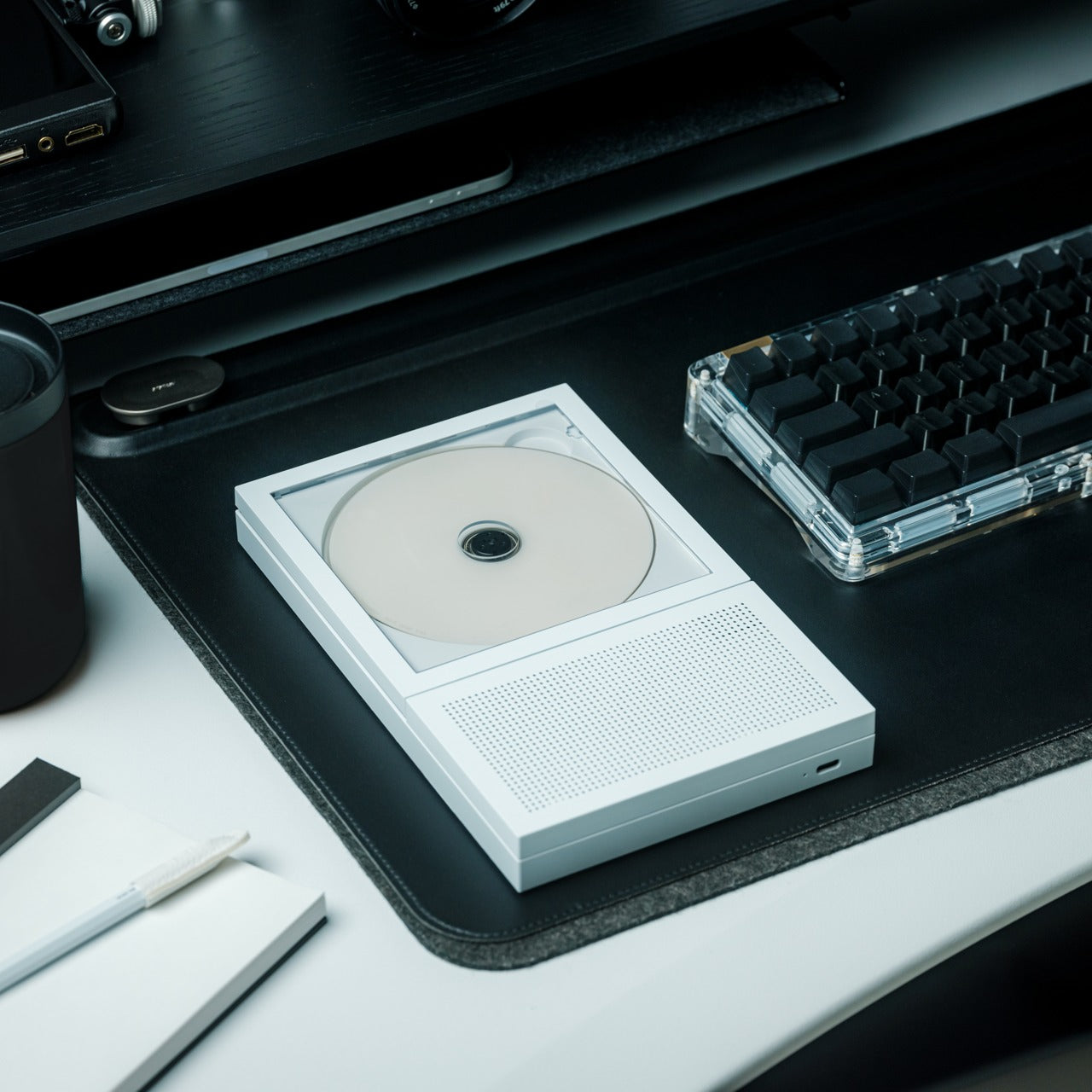
Most listening devices treat album art as a thumbnail. The Portable CD Cover Player treats it as the whole point of sitting down to listen. Slide a CD into the front pocket, and the jacket art faces outward while the music plays through the built-in speaker. A rechargeable battery means you can carry it from room to room or out the door, and a wall-mount bracket option lets it hang like a small piece of art between sessions. It is a device designed to involve your eyes as much as your ears, and that one decision changes how the experience of listening actually feels from the first time you press play.

Streaming made music invisible. Open an app, hit shuffle, and album art scrolls past as a thumbnail nobody really looks at. The CD Cover Player reverses that entirely. The physical disc becomes a reason to engage with the full artwork, the liner notes, and the sequence of tracks someone arranged with intention. That kind of listening has more in common with reading a book than with background audio. It makes music feel like something worth sitting with, not just filling silence while you check your phone.

Click Here to Buy Now: $199.00

What We Like

  • Displaying the CD jacket while music plays turns listening into a visual ritual rather than ambient noise.
  • Functions as a portable speaker, a shelf object, and a wall-mounted display all at once.

What We Dislike

  • Built-in speaker quality will not satisfy anyone used to a dedicated Hi-Fi setup or a good pair of headphones.
  • Building a physical CD collection takes time and shelf space if your library currently lives inside a streaming app.

3. reMarkable Paper Pro

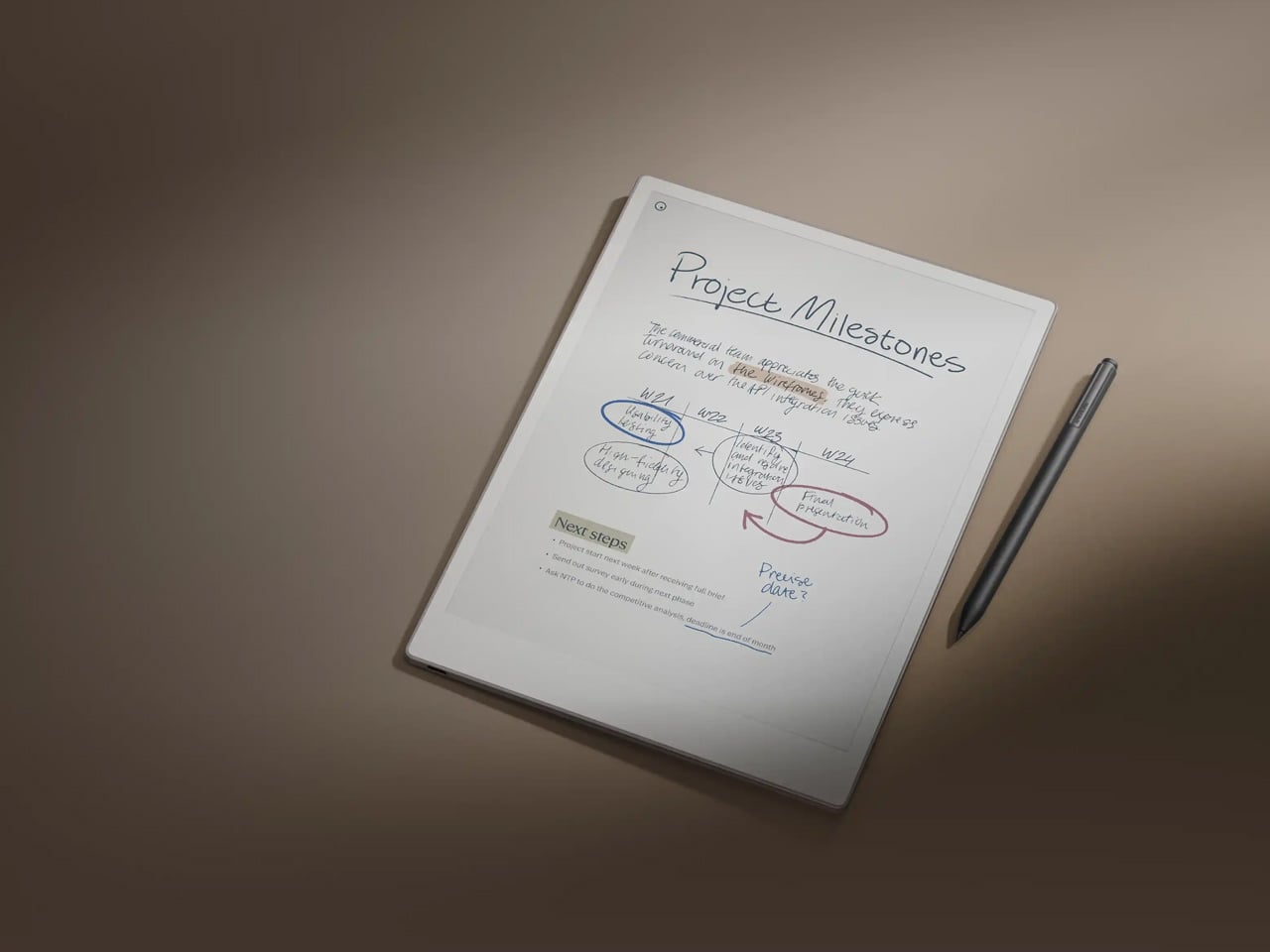
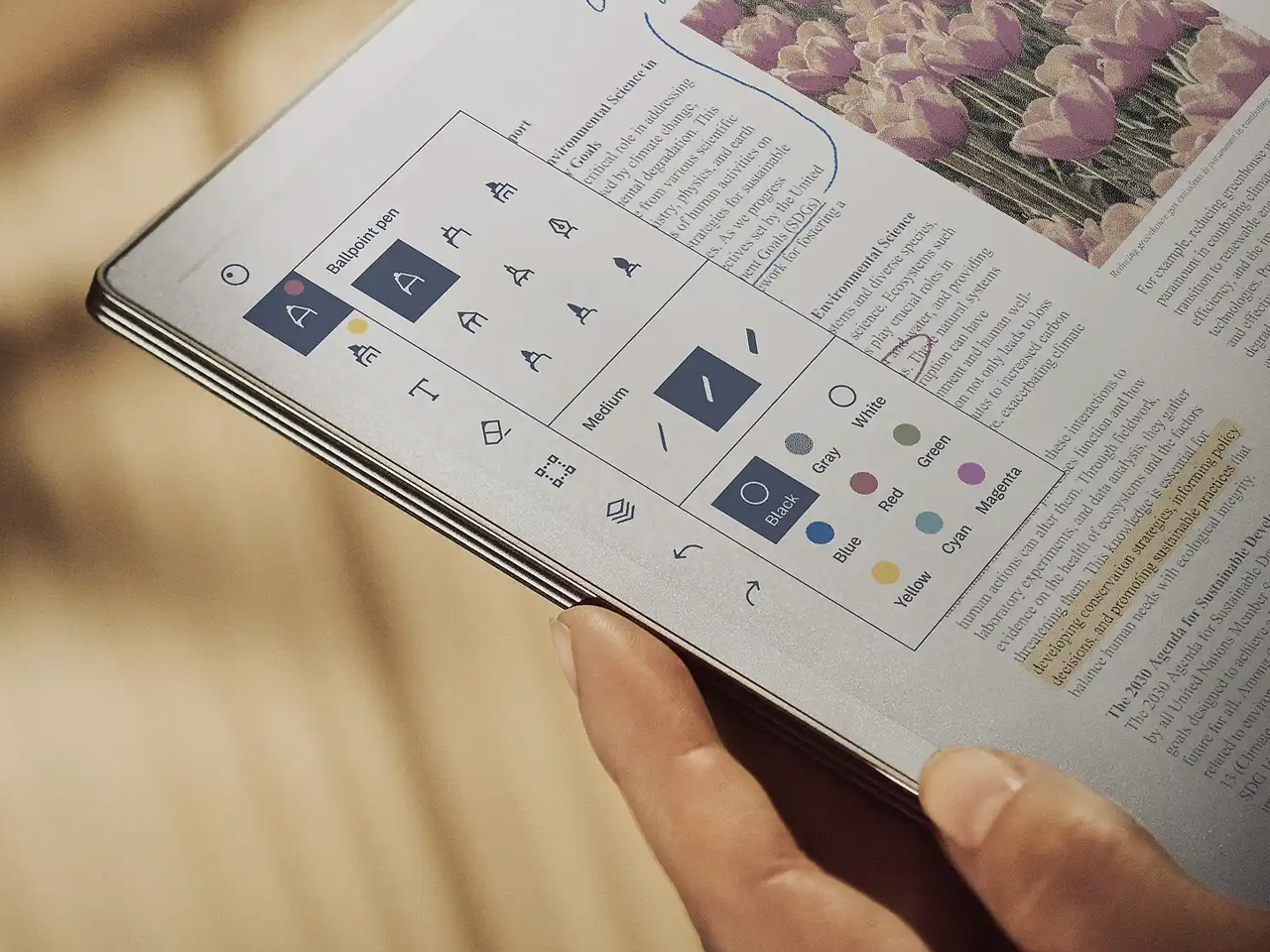
Writing moved onto phones and tablets and gradually stopped feeling like thinking. The reMarkable Paper Pro brings friction back to the process, and it turns out friction was doing most of the work all along. The reMarkable Paper Pro is an 11.8-inch writing tablet with a textured surface built to feel like paper under the pen. The Canvas Color display uses millions of color ink particles rather than a backlit panel, delivering depth and natural tones without glare or eye strain during long sessions. Responsiveness is near-instant, with a pen-to-ink distance of under one millimeter. An adjustable reading light means you can write comfortably in the dark without turning on a screen that floods the room with blue light at midnight.

Writing on the reMarkable Paper Pro does not feel like typing a text or filling in a form. The surface friction slows you down in a way that is genuinely worth something. Notes become more considered. Ideas take longer to arrive, which means they tend to stick around. Color adds another layer of possibility: use it to organize thoughts, mark priorities, or simply make a page feel like yours. Carrying it feels closer to carrying a notebook than carrying a device, and that distinction matters more than it sounds once you’ve spent a week with it.

What We Like

  • Canvas Color display delivers full color without a backlit panel, so long writing sessions never leave your eyes sore.
  • Paper-like surface friction makes every note feel deliberate, consistently producing better thinking than a keyboard does.

What We Dislike

  • Premium pricing is a real barrier to knowing whether a dedicated writing tablet fits your daily routine.
  • The 11.8-inch size does not slip into a jacket pocket, which changes when and where it realistically comes with you.

4. Light Phone 3

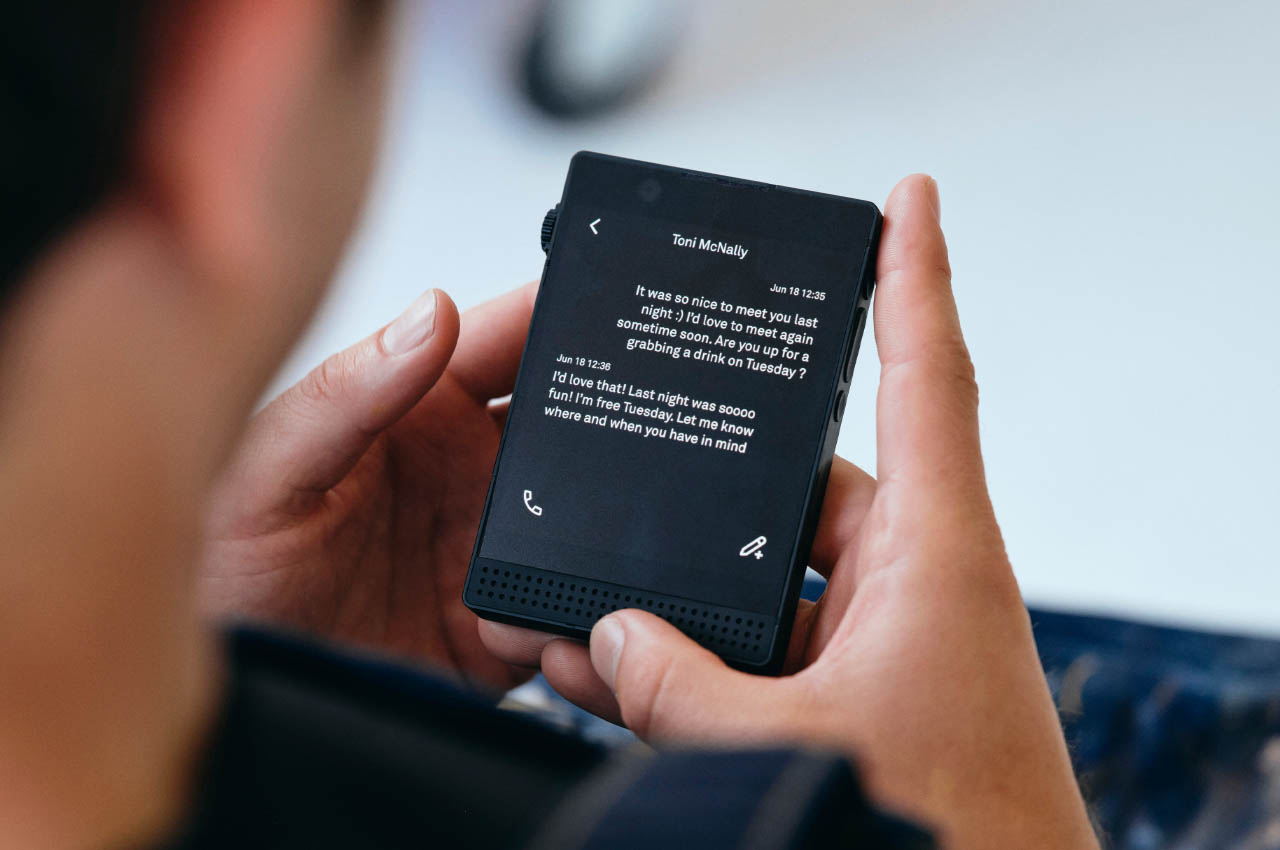
The Light Phone 3 is not a worse version of your phone. It is a different one, built around the idea that doing less on purpose is more valuable than doing everything by reflex. The Light Phone 3 is built by New York-based Light Phone and does far less than your current device on purpose. This third-generation minimalist phone restricts usage to calls and texts, with no access to social media, email, or internet browsing. The 3.92-inch OLED display runs in black and white, and a 50MP rear camera with a dedicated two-step hardware shutter button handles every moment worth capturing. A brightness scroll wheel on the right side replaces every on-screen slider you never actually enjoyed using.

Switching to a phone that cannot open Instagram does not mean going offline. It means being reachable for what matters and unreachable for everything else competing for your attention. The Light Phone 3 arrived five years after its predecessor, and that time shows in the hardware quality, the metal frame, and the more refined interface. Using it for a weekend resets something in how you relate to a screen. By Monday, returning to your smartphone feels like a choice rather than the only available setting.

What We Like

  • A 50MP camera with a dedicated two-step hardware shutter means you never lose moments worth keeping, even without social media to post them on.
  • Restricting the device to calls and texts removes ambient distraction without requiring willpower each time you pick it up.

What We Dislike

  • No maps, ride-share apps, or mobile browsers means planning in a way most people have quietly stopped doing.
  • The black-and-white display is intentional, but the adjustment period is real enough to factor in before committing.

5. Rolling World Clock

A clock that tells time by being rolled, with no screen, no charging port, and no app to pair it with, turns out to be one of the more quietly satisfying objects you can put on a desk in 2026. The Rolling World Clock is a 12-sided object that tells time by being rolled. Each face corresponds to a major timezone city: London, Paris, Cape Town, Moscow, Los Angeles, Karachi, Mexico City, New York, Shanghai, Tokyo, Sydney, and New Caledonia. Roll it to the city you need, and the single hand reads the correct local time. No charging, no syncing, no setup required. It handles one task and nothing else, and that simplicity is precisely the point of placing it on a desk at all.

Most people check the time on their phones and put the phone down thirty seconds later than they planned to. The Rolling World Clock short-circuits that loop completely. Available in black or white, it sits on a desk or shelf with the quiet presence of something that earns its place as both a functioning clock and a piece of considered design. The physical act of rolling it to a different city does something a world clock widget never could: it makes checking the time feel like a deliberate act rather than a gateway to something else.

Click Here to Buy Now: $49

What We Like

  • Twelve faces covering every major timezone make it genuinely useful for anyone with friends or collaborators spread across the world.
  • Works as well as a desk sculpture as it does as a functioning clock, earning its place in a room even when nobody is actively using it.

What We Dislike

  • The single hand and minimal face markings take a moment to read accurately if you’re used to relying on digital displays.
  • Twelve flat sides mean the clock can rock when bumped, so placement on a hard desk surface matters more than expected.

The Best Gadgets Don’t Ask Anything Back

None of these five objects needs you. They do not send notifications, hold streaks, refresh feeds, or run recommendation engines quietly in the background. That indifference is the point. Gadgets that do one thing well leave you with more room to decide what to do with the rest of your time, and that turns out to feel like a significant amount of room once you actually notice it.

Touching grass is not really about being outside. It is about choosing where your attention goes before something else makes that choice for you. A camera that makes you look up. A phone that stays quiet. A tablet that brings friction back to thinking. A clock you roll with your hands. A CD player that makes you sit with an album from beginning to end. All of it adds up to a different relationship with your own time, and that is worth more than any app that promises the same thing.

The post 5 Best Gadgets Gen Z Uses to Touch Grass Instead of Doom-Scrolling first appeared on Yanko Design.

This $98,900 Tiny House Is How Australians Are Ditching Rent and Finally Owning Something

The housing crisis is not a headline anymore; it is a lived reality. Soaring property prices, relentless rent increases, and the quiet exhaustion of never quite owning anything have pushed a whole generation to question what a home genuinely needs to be. The answer, for many, is less. Less debt, less space, less compromise on quality of life. The Artista by Australian tiny house builder Tiny Tect is exactly that kind of answer — compact in footprint, but completely uncompromising in how it lives.

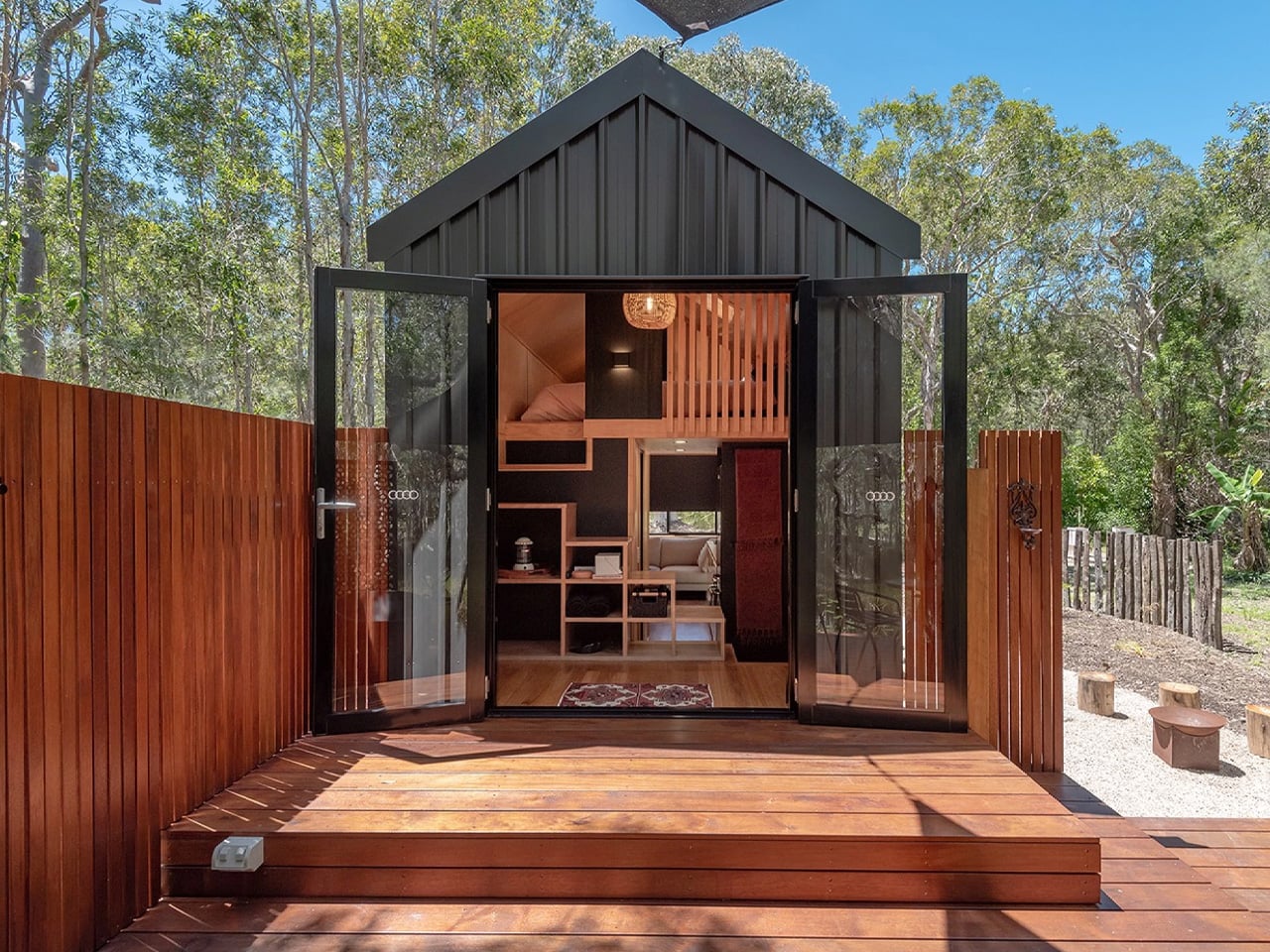
Sitting at 7 metres long, 2.4 metres wide, and 4.25 metres tall, the Artista is built on a certified triple-axle trailer with a 4.5-tonne weight capacity and full road registration capability. On paper, those numbers sound modest. In person, the experience is entirely different. The layout is deliberate from the moment you walk in; a storage-integrated staircase sits at the entrance, turning what is usually dead space into something useful before you have even settled in.

Designer: Tiny Tect Tiny Houses

The loft bedroom is where the Artista earns its name. Positioned centrally rather than pushed to one end, it opens up views from both sides of the home — a move that feels more architectural than practical, and intentionally so. The space fits a double bed and a walk-in wardrobe, and for those who need the ground floor to work harder, a flexible lower-level room can serve as a second sleeping area, a home office, or a guest space. For a home this size, sleeping up to four adults is not a workaround…it is part of the plan.

The kitchen does not shrink away from the challenge either. A four-burner cooktop, full oven, sink, and fridge-freezer sit together in a layout that functions like a proper kitchen should. Besides it, the living area holds a sofa and a compact work desk — a quiet acknowledgment that home now means office too, for a lot of people. The ensuite bathroom and a built-in planter box round out the interior with the kind of details that make a small space feel considered rather than crammed.

What the Artista ultimately solves is bigger than square footage. It hands people back financial breathing room. Starting from $98,900 and available from roughly $243 per week in repayments, it sits well below the cost of traditional homeownership in most Australian cities. Optional solar panels, battery storage, and water tanks take it further toward genuine off-grid independence — lowering ongoing costs and loosening the ties to utility bills and landlords alike. The Artista is not a consolation prize for people who cannot afford a real home. It is a deliberate choice for people who have decided that freedom, quality, and intention matter more than floor area. Small in size, yes, but not in any way that actually counts.

The post This $98,900 Tiny House Is How Australians Are Ditching Rent and Finally Owning Something first appeared on Yanko Design.
5 Best Electric Motorcycles of February 2026 That Finally Prove Electric Doesn’t Have to Play It Safe

The electric bike has never been more interesting than it is right now. Designers are throwing out the rulebook entirely, drawing inspiration from anime, music culture, and aerospace engineering to produce machines that feel less like transportation and more like strong, deliberate statements of intent. Each design on this list represents a strikingly different vision of what riding could — and should — feel like in 2026. These are the bikes defining the moment.

From a mobile DJ booth on two wheels to a hydrogen-powered, enclosed cockpit that blurs the line between motorcycle and sports car, the range of ambition represented here is staggering. What unites them is an unrelenting push to make electric mobility something worth getting genuinely excited about. These five machines are not just bikes. They are bold, considered answers to a world demanding something far more extraordinary than a quiet motor and a charge port.

1. Ayra

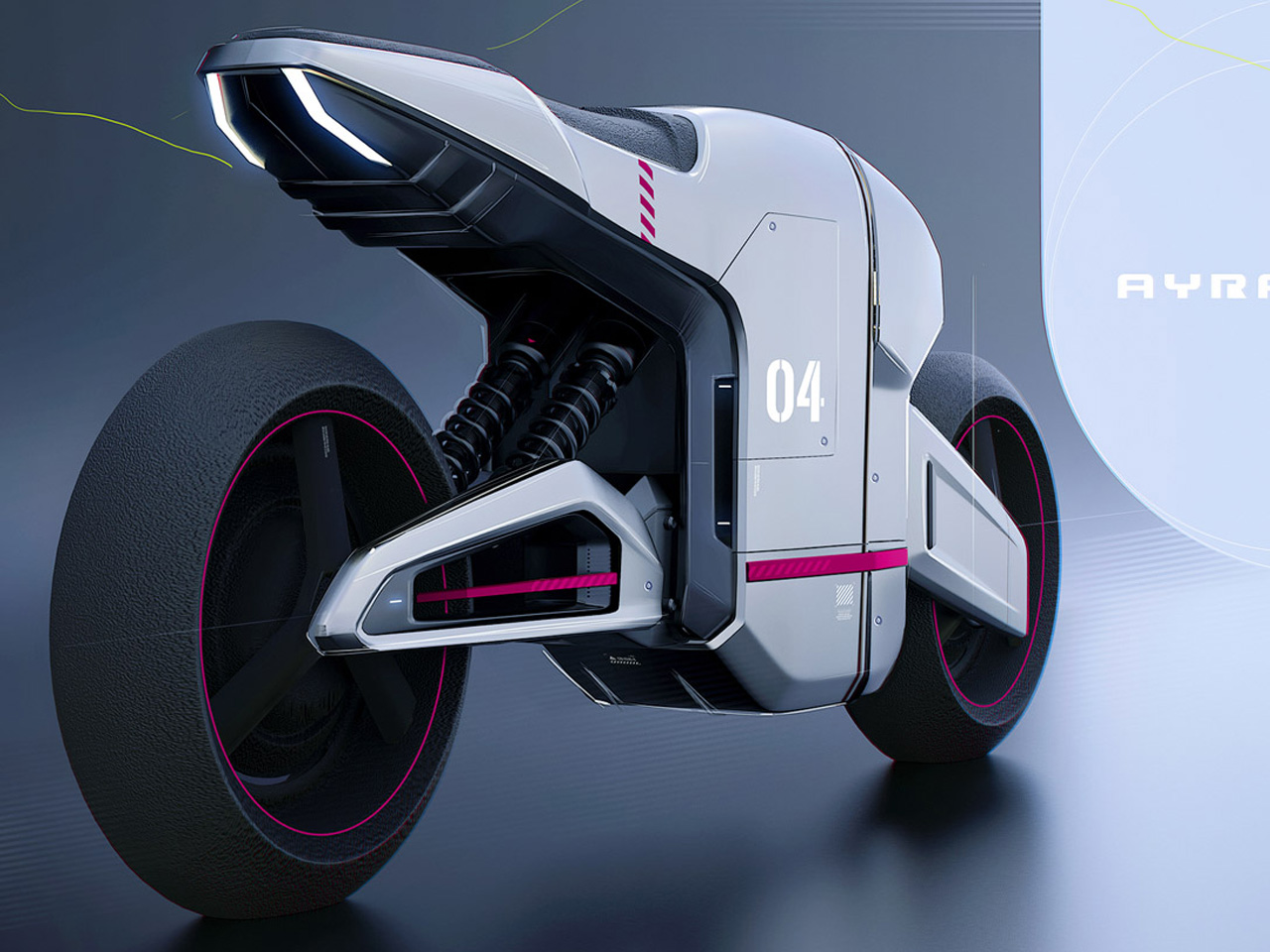
The Ayra does not whisper its intentions. Designed by Radka, it sits at the intersection of street racer and city machine, carrying both identities without apology, and the body language is pure confidence from every angle. Every surface has been shaped around the idea of cutting through air with as little resistance as possible, and the handlebars are pulled flush into the main body of the bike to eliminate the sideways drag that conventional handlebar setups typically introduce. It is the kind of detail that suggests the designer was thinking about airflow first and aesthetics second, with the two arriving at the same place anyway.

The engineering logic running through the Ayra is tight and purposeful. Front and rear monoshock swingarm setups preserve the frame’s structural integrity while pulling the ride height down into a more planted, confident stance. The wheelbase stretches wide enough to spread the machine’s mass evenly, giving the Ayra a naturally settled feel that most bikes of this silhouette have to work much harder to achieve. A compact electric motor sits at the core of the central unit, likely connected to a fast-charge system, though Radka has kept the powertrain details close to their chest for now.

What We Like

  • The handlebar integration into the main body is a sharp aerodynamic solution that also gives the bike one of the cleanest, most uninterrupted silhouettes in its class.
  • The wide wheelbase distributes weight with real engineering intelligence, delivering a composed, balanced ride without relying on complex or costly suspension architecture to get there.

What We Dislike

  • Radka has offered nothing on the powertrain specifics, which leaves a significant gap in the story for a machine whose entire identity is built around performance and speed.
  • The monoshock setup reads as elegant from the outside but offers little in the way of rider-adjustable tuning, which will frustrate anyone who wants to tailor the ride to their own preferences.

2. Ichiban Electric Motorcycle

No motorcycle has approached the drivetrain question quite the way the Ichiban does. Proposed as the world’s first electric bike to run a full-wheel drivetrain, this Japanese machine channels power through both wheels simultaneously, producing a performance envelope that single-motor setups cannot touch. A 45kW dual-motor system launches it from a standstill to 100 km/h in 3.5 seconds, which is a number that lands with full weight when you sit with it. That kind of instant, seamless acceleration is entirely native to electric, and the Ichiban leans into it without hesitation.

What separates this machine from its contemporaries is a firm, principled resistance to digital overload. The HUD elements lean analog wherever possible, removing the layer of screen management that has quietly crept into so many modern electric bikes. The design philosophy is rooted in the relationship between the rider and the road rather than the rider and a dashboard. The result is a machine that communicates through feel first and data second, which is a brave choice in a category that has increasingly defaulted to connectivity as a selling point. For motorheads, it is an immediate draw.

What We Like

  • The full-wheel drivetrain is a genuine industry first, delivering traction and acceleration performance across both wheels in a way that repositions what electric motorcycle engineering is capable of achieving.
  • The analog-leaning interface strips away the screen dependency that burdens so many contemporary electric machines, restoring a more direct, instinct-driven connection between rider and motorcycle.

What We Dislike

  • The full-wheel drivetrain remains at the concept stage, meaning real-world data on handling behavior, heat management, and long-term reliability is absent from the conversation.
  • Riders who have built their habits around connected dashboards and live ride data may find the deliberately minimal interface more limiting than liberating in daily use.

3. BMW DE-02 x Deus

The BMW DE-02 x Deus is arguably the most culturally self-aware electric motorcycle collaboration in recent memory. Co-developed with Deus Records and built on the foundation of the CE 02 eParkourer, the bike arrives as a full reinterpretation of what that platform can carry — literally and conceptually. Where the base model might accommodate utility-focused cargo, the DE-02 replaces it with four Marshall Middleton speakers and a centrally mounted turntable. The idea of mixing a track from a mountainside or a back alley, with no power source needed beyond the bike itself, is as absurd as it is completely compelling.
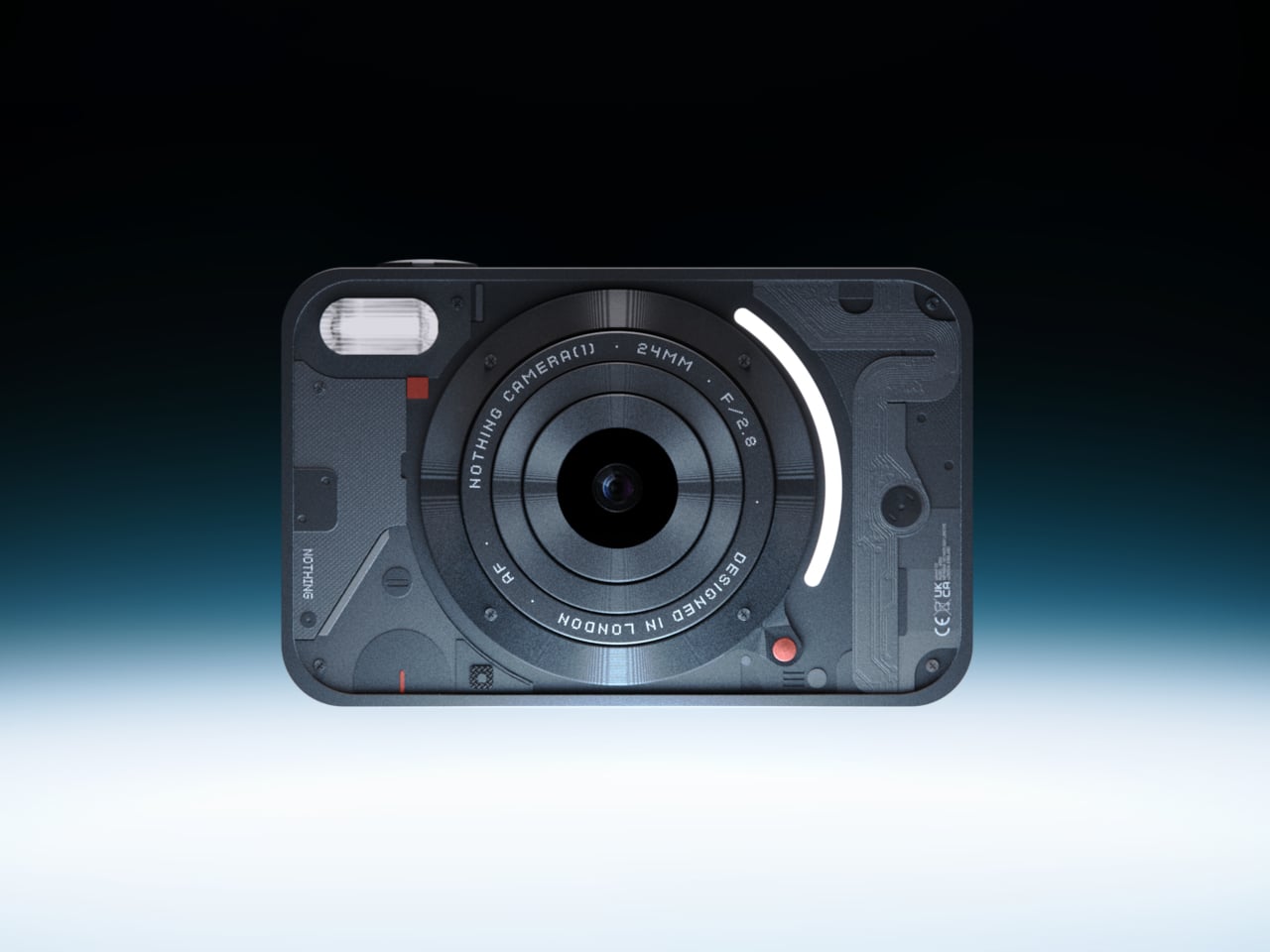
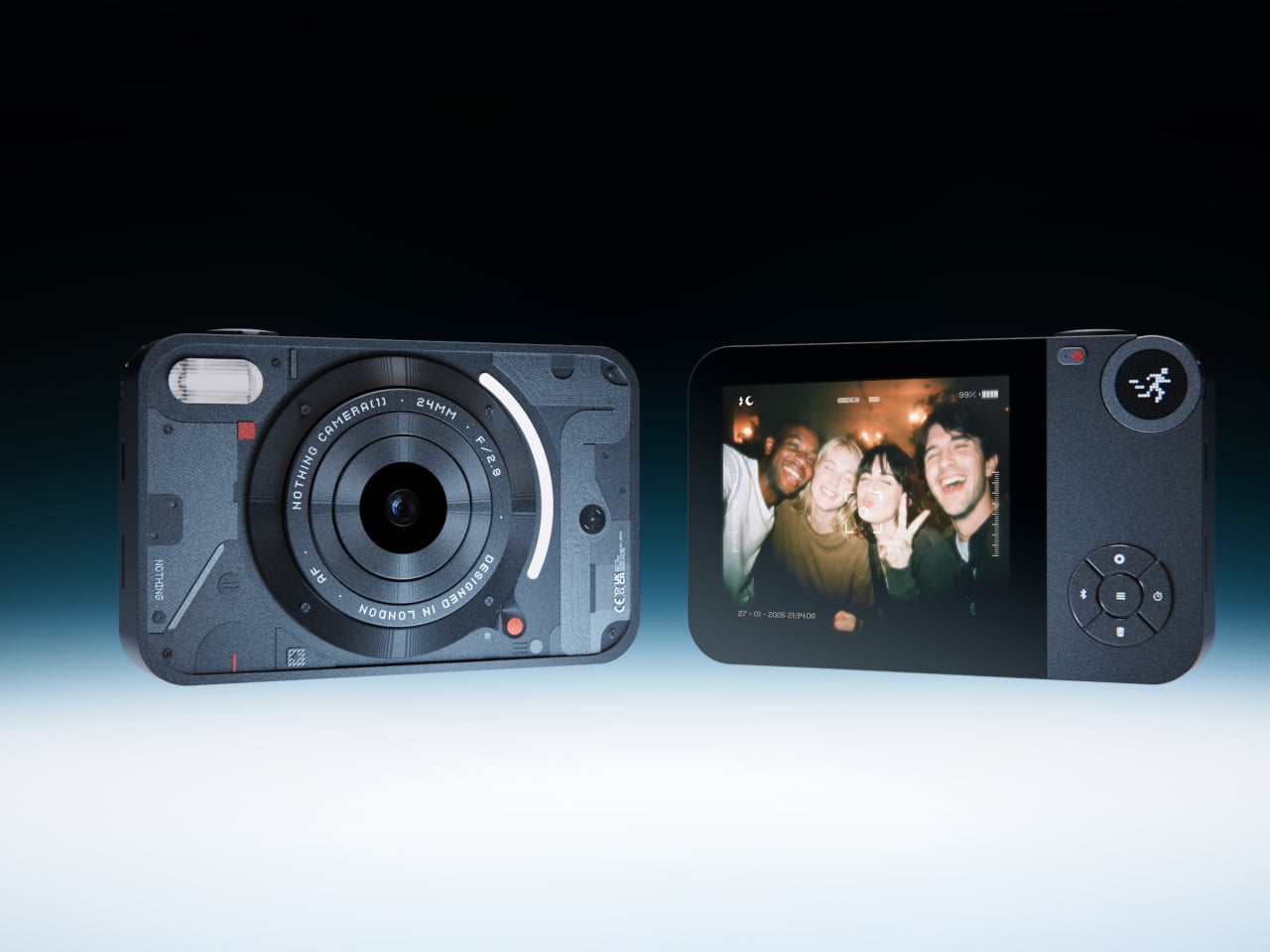
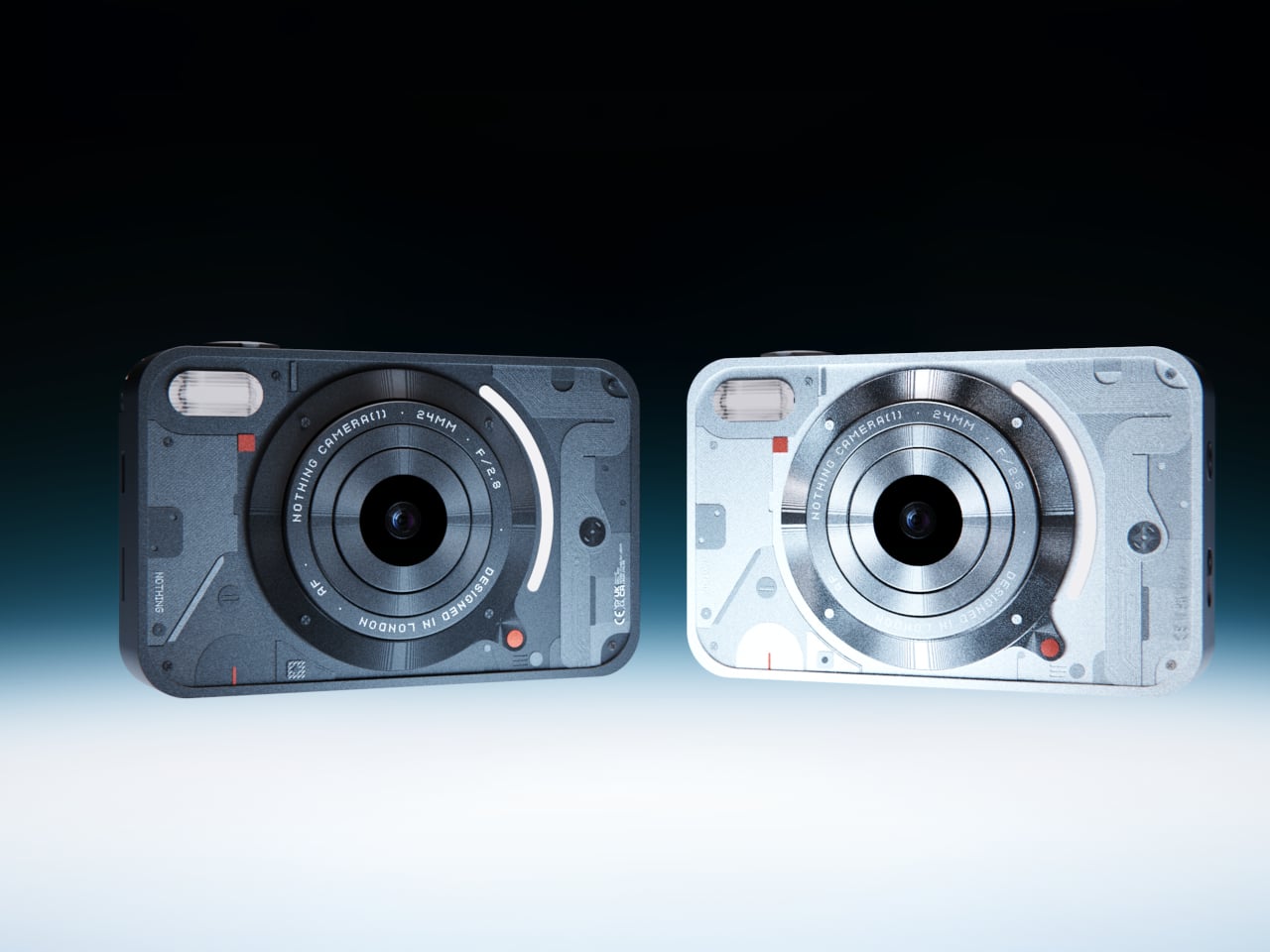
The craftsmanship holding the concept together is what keeps it from feeling like a novelty. The saddle is hand-stitched leather carrying the Deus Records logo in embroidery, seamlessly woven into the speaker housing and turntable assembly as though it was always meant to be there. BMW Motorrad has long been willing to push at the edges of motorcycle culture, but the DE-02 is perhaps the most fully committed lifestyle statement the brand has produced. It does not try to be everything. It picks a lane — music, movement, and genuine rider culture — and occupies it entirely.

What We Like

  • Four Marshall Middleton speakers and a built-in turntable transform this into a genuine mobile venue, making it one of the most conceptually ambitious and culturally resonant electric motorcycle designs in years.
  • The hand-stitched leather saddle and Deus Records embroidery bring real artisanal craft to the build, elevating the collaboration well beyond what most concept projects manage to deliver in terms of finish quality.

What We Dislike

  • The weight and bulk of the integrated sound system will inevitably affect the handling dynamics and off-road agility that the original CE 02 platform was designed and optimized to offer.
  • There is no confirmed production intent behind the DE-02, which means the vast majority of people will only ever encounter it through photographs rather than from the saddle.

4. J Balvin x DAB Motors Electric Bike

The backstory alone is remarkable. Designer Mattias Gollin and the Vita Veloce Team built this machine in three weeks flat, delivering it as an unannounced birthday surprise to J Balvin at a celebration in Tuscany. Conceived and constructed using AI-powered design tools and 3D printed bodywork, the prototype sits on DAB Motors’ proven 1α platform and arrives as something genuinely difficult to categorize — part rolling sculpture, part rideable anime, completely unlike anything else on the road. The VVT team later confirmed that Shotaro Kaneda’s iconic red motorcycle from the 1988 film Akira was a core reference point throughout the design process.

Gollin’s stated ambition was for the experience of riding this bike to feel like moving through a dream, and the details reflect that goal with real commitment. Sound-absorbing foam packed between the wheel rims and covers generates a low, hypnotic frequency hum as the bike cruises, while purplish-blue LED strips running through the wheels produce a visual sense of motion that reads almost like a trail of light. The frame carries a deep matte red finish that has been hand-patinated with deliberate scuffs and marks, giving the machine the remarkable quality of looking like it has already lived a complete and eventful life before a single rider ever climbed on.

What We Like

  • Compressing the entire design-to-prototype timeline into three weeks using AI tools and 3D printing is a significant statement about how rapidly extraordinary machines can now be brought to life outside of conventional development cycles.
  • The sound-absorbing foam integrated into the wheel covers to produce a low-frequency ride hum is a wholly original sensory design idea, one that no other electric motorcycle in recent memory has come close to exploring.

What We Dislike

  • Built as a one-off prototype, the bike’s exclusivity is essentially total, and any future limited production run would almost certainly carry a price that places it firmly out of reach for the overwhelming majority of riders.
  • The deliberately worn, hand-patinated finish is a strong and intentional creative choice, but riders who value a clean, unmarked surface will struggle to see the appeal of purposeful imperfection applied across an entire frame.

5. Karver Cycle Concept K1

Designed by Kip Kubisz, the Karver Cycle Concept K1 challenges what a motorcycle is fundamentally permitted to be. The silhouette reads as a compact sports car until you look more carefully and find a two-wheeler operating by entirely different rules. Four hubless wheels are arranged in close pairs at the front and rear, each running its own independent wishbone suspension system, delivering a stability and cornering confidence that conventional two-wheel geometry rarely achieves. It looks like a vehicle from a decade that has not arrived yet, which is exactly the point.

The enclosed cockpit defines the riding experience entirely. Panoramic glass wraps the rider in a 180-degree field of view, offering full visual immersion without the wind and weather exposure that traditional motorcycles accept as unavoidable. Inside, an ergonomically tuned bucket seat and a steering yoke replace conventional handlebars, and a clean dashboard displays speed, motor temperature, and core ride data without visual noise. The powertrain is a hybrid electric and hydrogen system tuned primarily for torque, and aerodynamic fins at the rear keep the K1 tracked and stable when speeds climb on open freeways and highways.

What We Like

  • The panoramic enclosed cockpit delivers genuine all-weather riding capability without surrendering the essential two-wheeled character of the machine, which is an exceptionally difficult engineering balance to achieve at the concept level.
  • The hybrid electric and hydrogen powertrain positions the K1 as a forward-thinking mobility platform, anticipating the kind of clean energy infrastructure that is only just beginning to take meaningful shape around the world.

What We Dislike

  • The enclosed cabin removes the open-air riding sensation that most dedicated motorcycle riders regard as the fundamental, non-negotiable quality of the entire experience, which will be a hard trade for many to accept.
  • The four-wheel hubless configuration raises unresolved questions around street legality, production engineering, and regulatory classification that the concept stage entirely sidesteps.

The Future of Two Wheels Is Already Here

These five designs do not simply point toward where electric motorcycles are heading. They make the destination feel immediate and urgent. From the Ayra’s aerodynamic precision to the Karver K1’s fully enclosed cockpit, each machine argues for a future that is more considered and more daring than anything the combustion era managed to produce. Electric is no longer a concession to practicality. It is where the sharpest creative thinking in motorcycle design now lives and operates.

What makes this particular moment so compelling is the sheer breadth of intent across the five. The Ichiban defends riding freedom from digital noise. The BMW DE-02 x Deus turns the road into a stage. The DAB Motors and J Balvin collaboration is art that moves under its own power. None of them chase the same idea, and that is precisely the point. When electric motorcycle design starts feeling like genuine self-expression rather than an engineering exercise, the whole conversation shifts somewhere worth paying attention to.

The post 5 Best Electric Motorcycles of February 2026 That Finally Prove Electric Doesn’t Have to Play It Safe first appeared on Yanko Design.