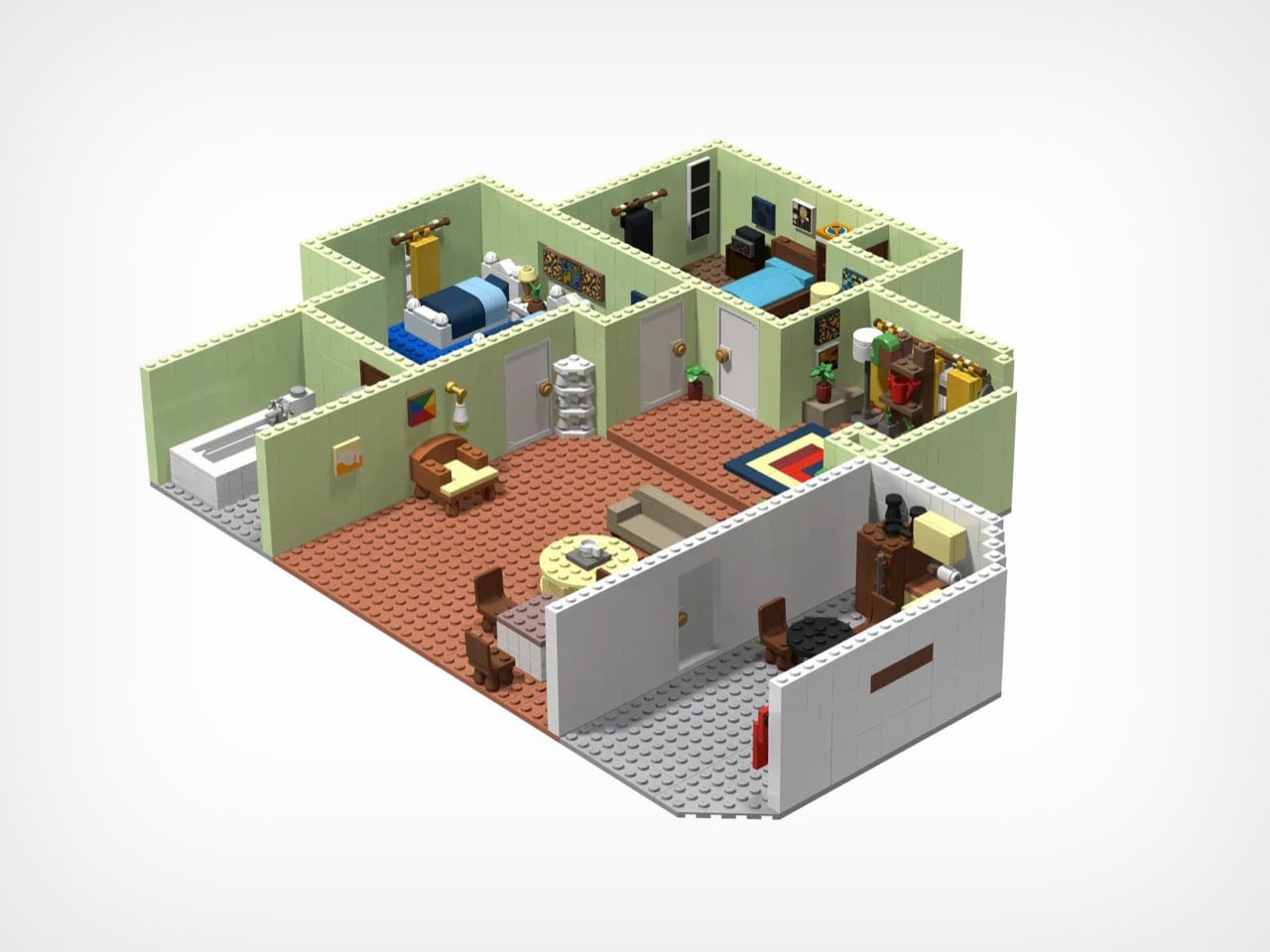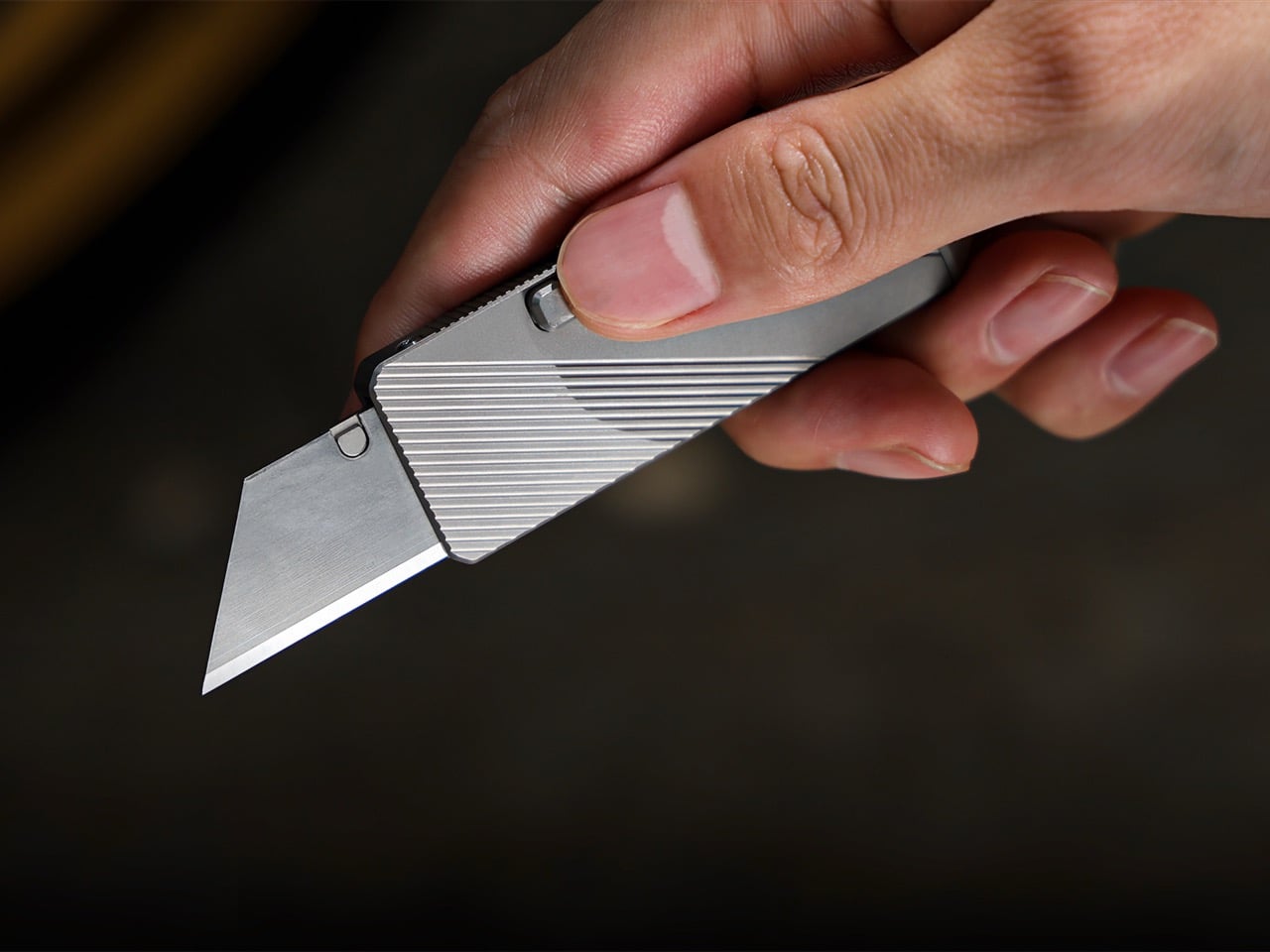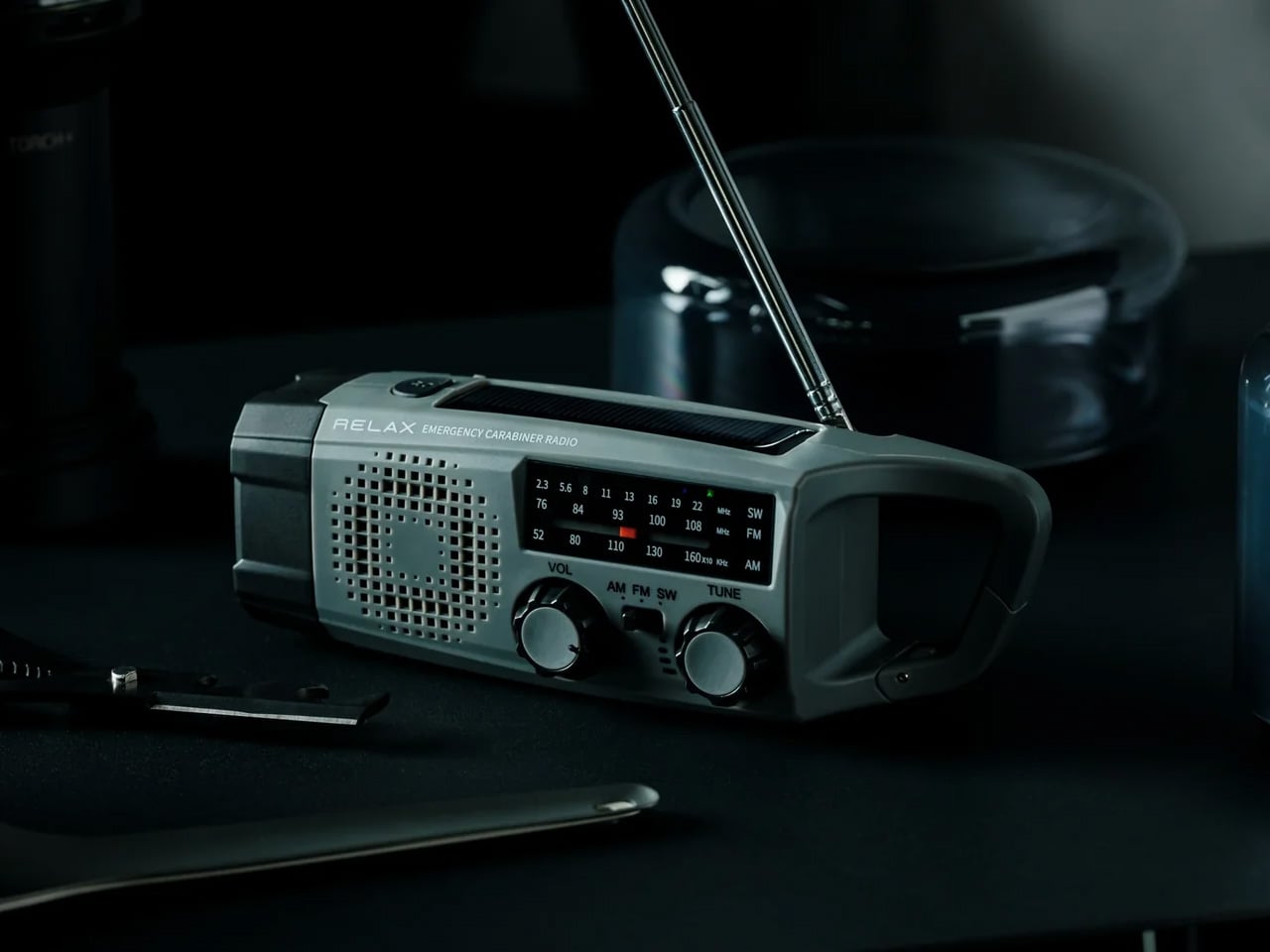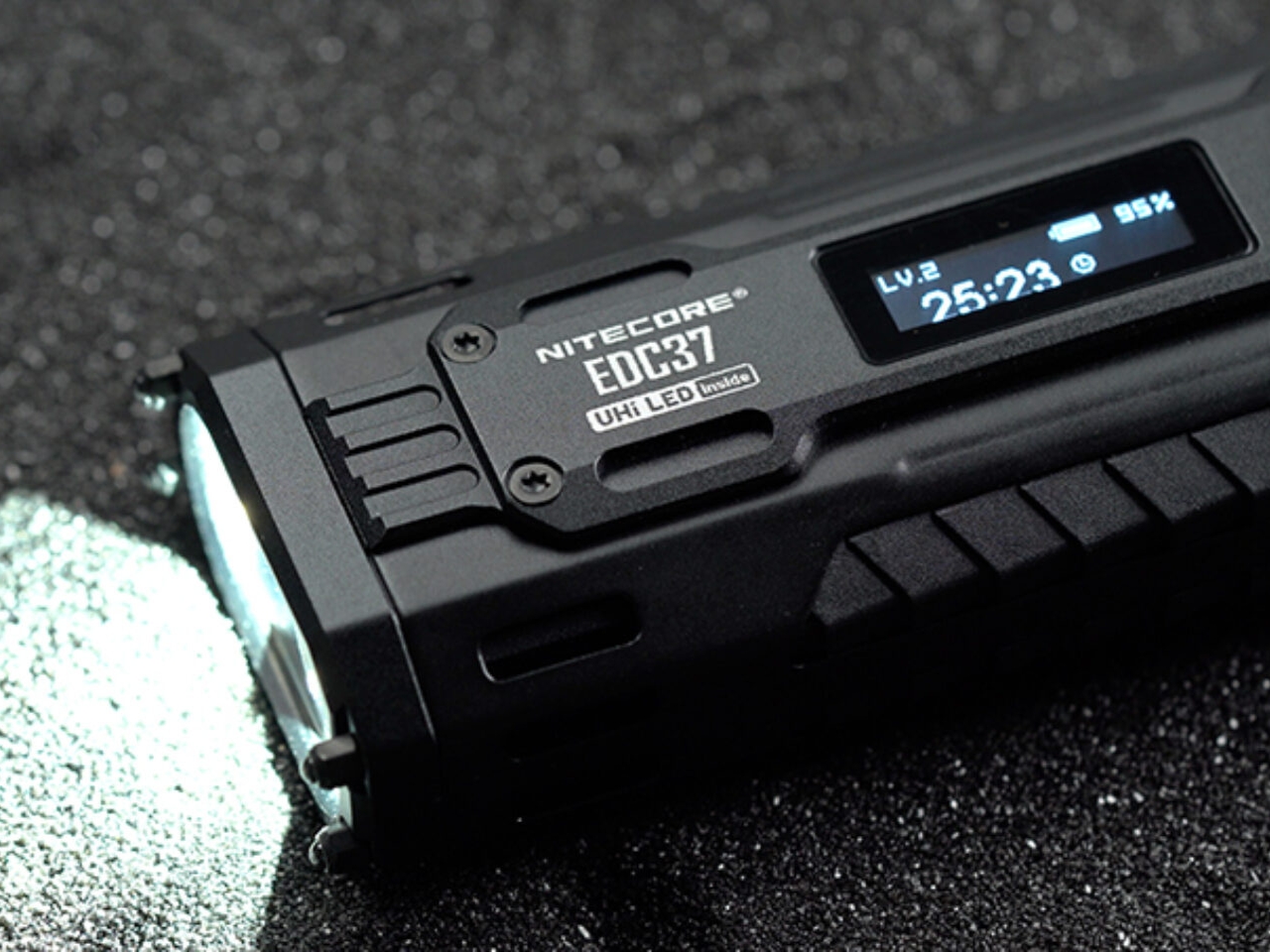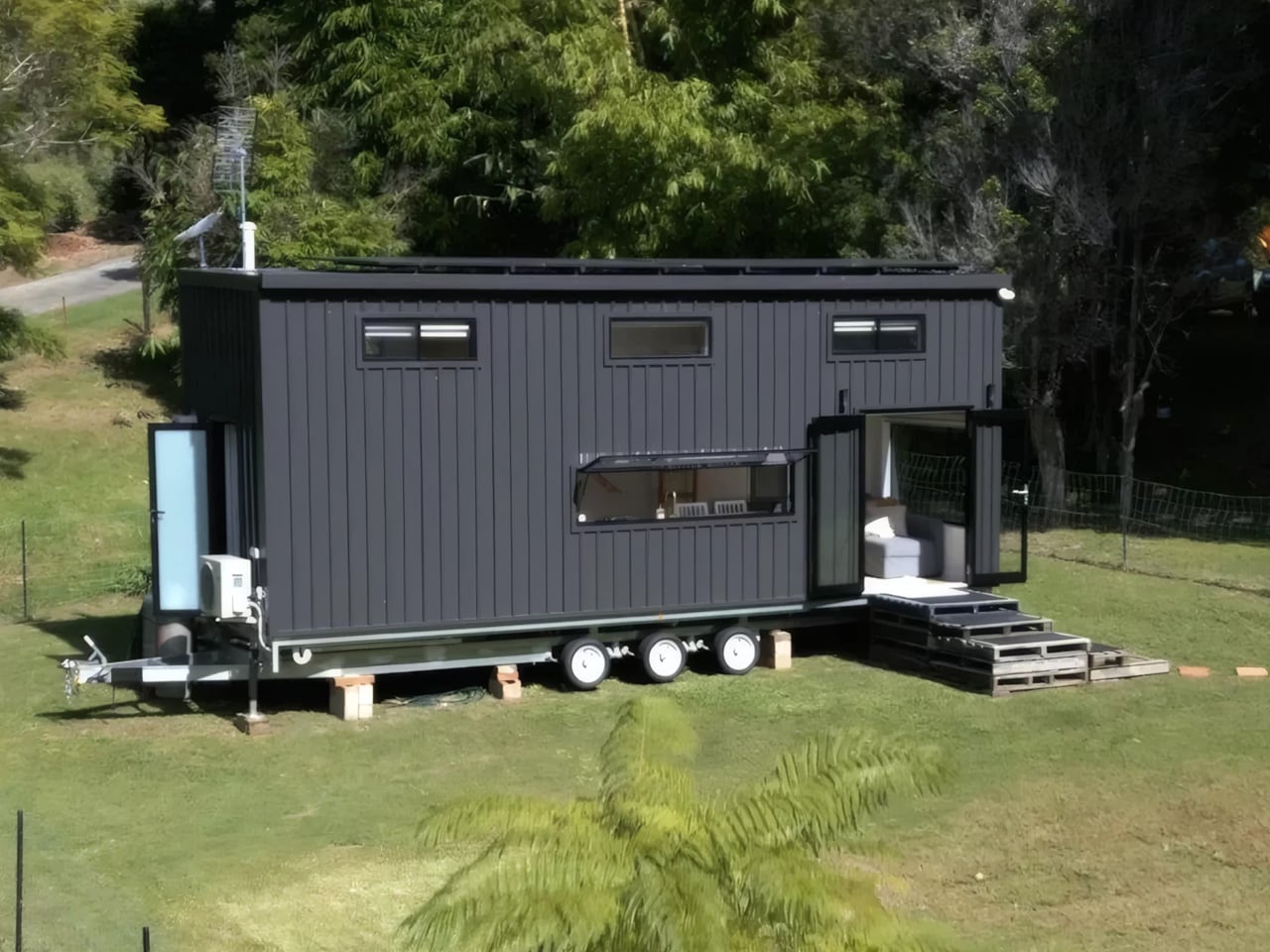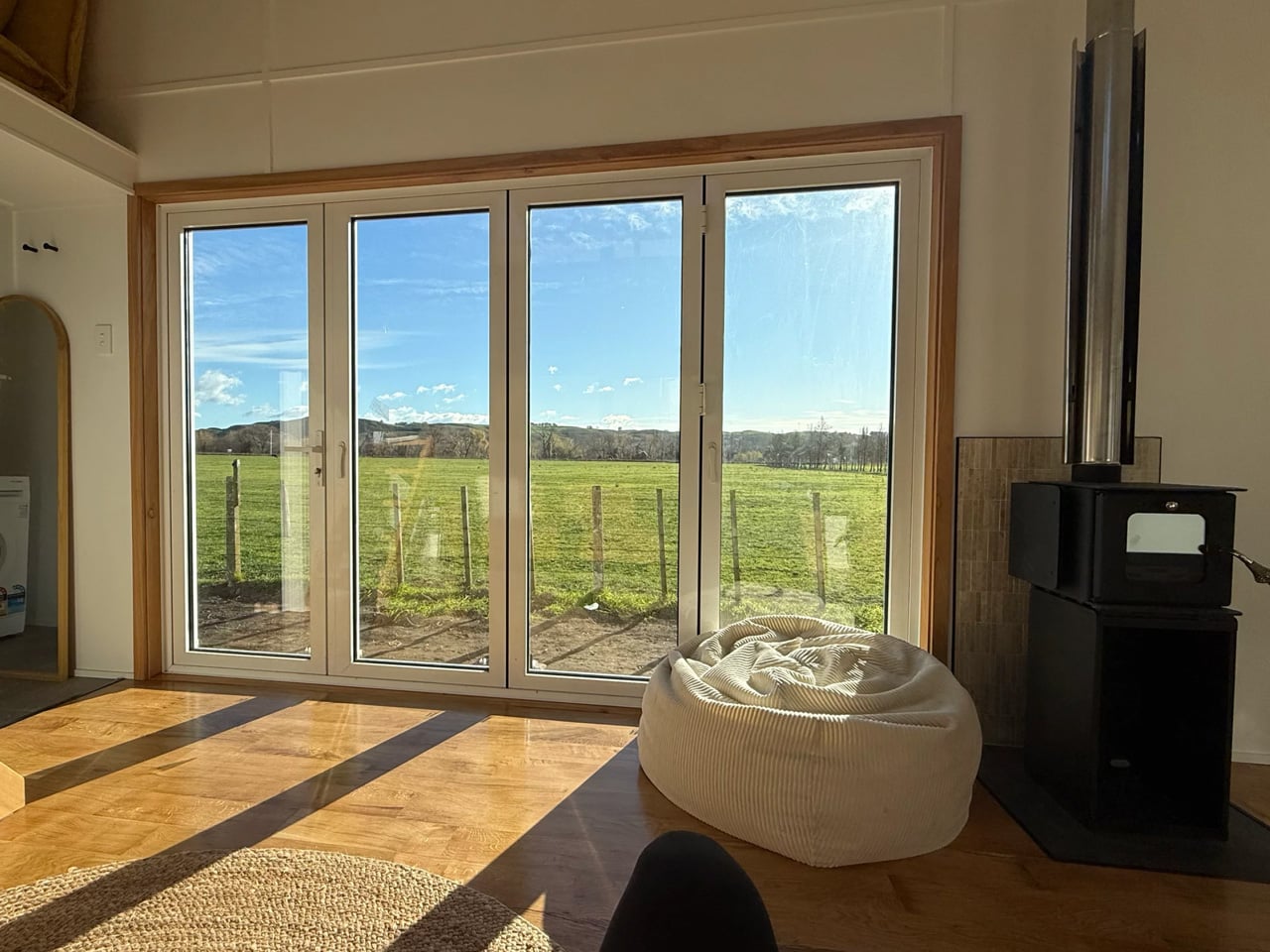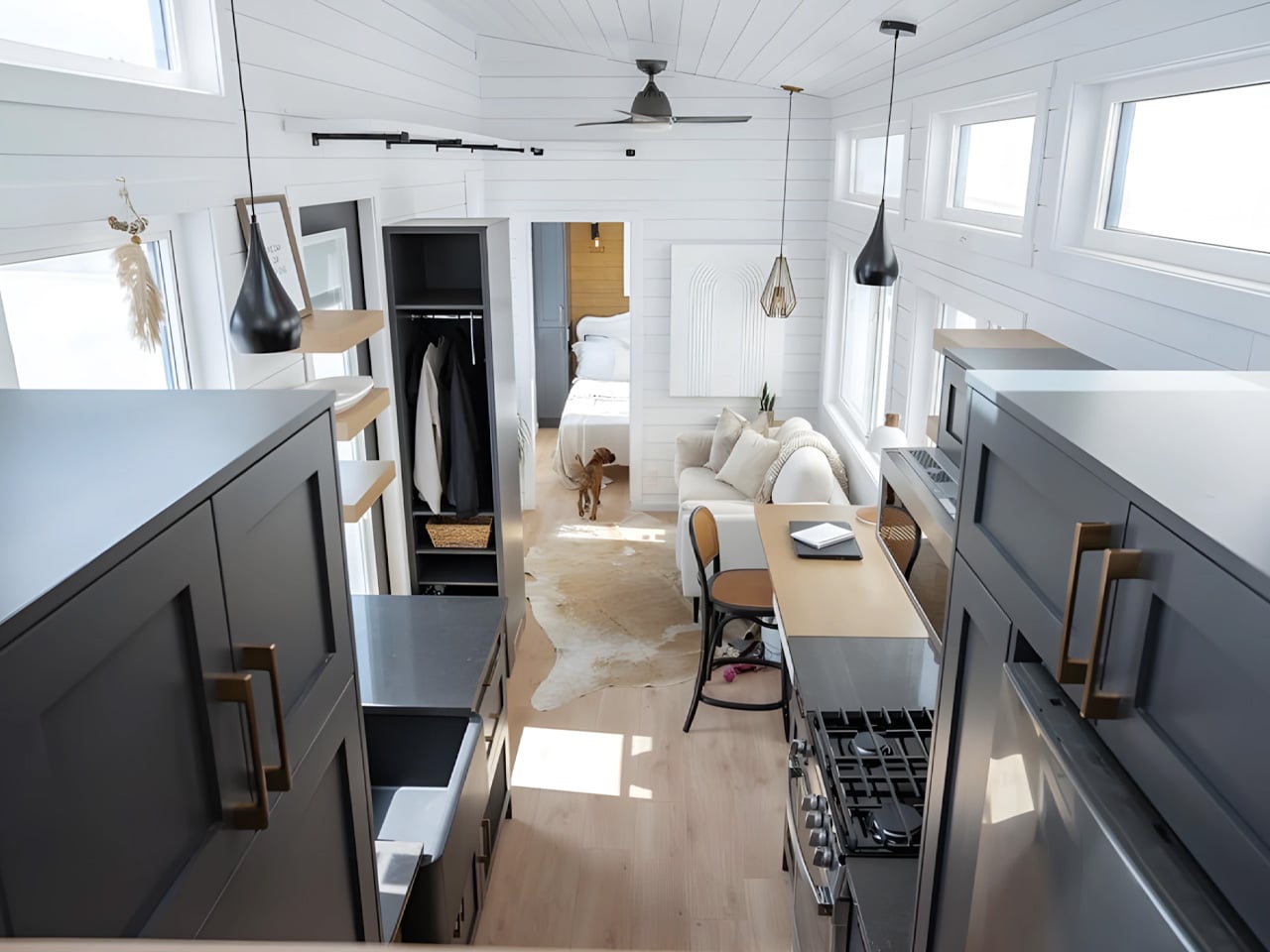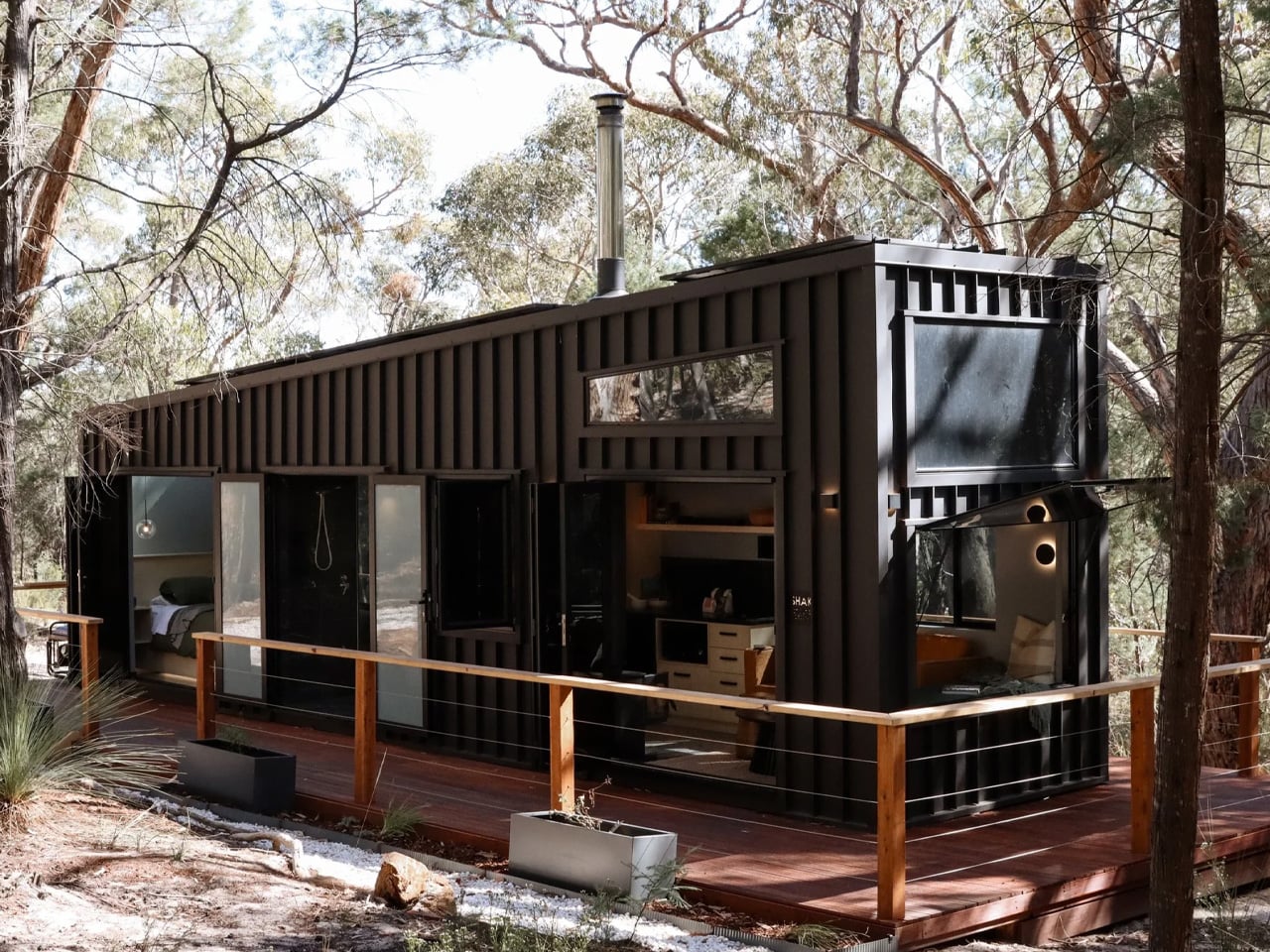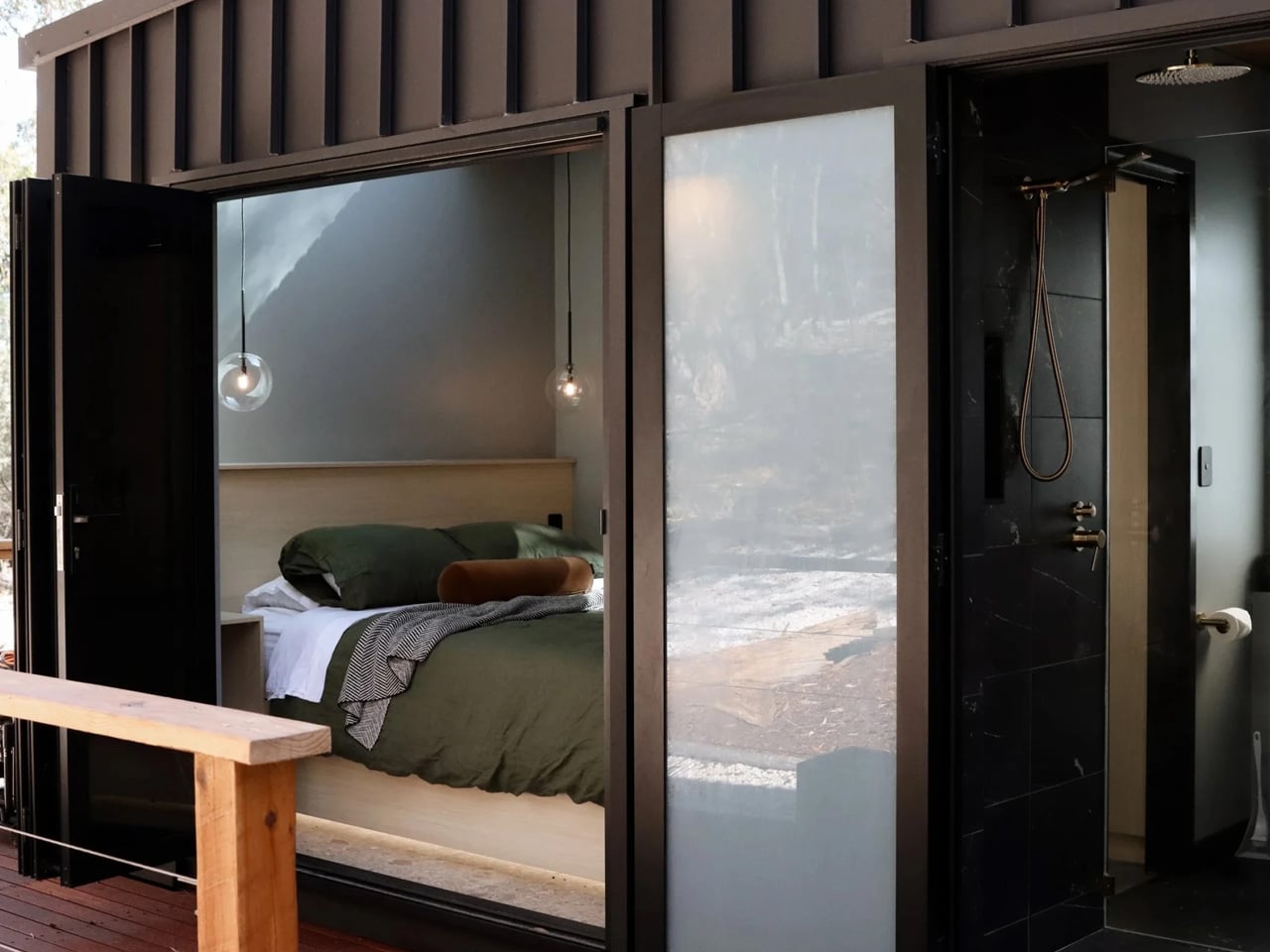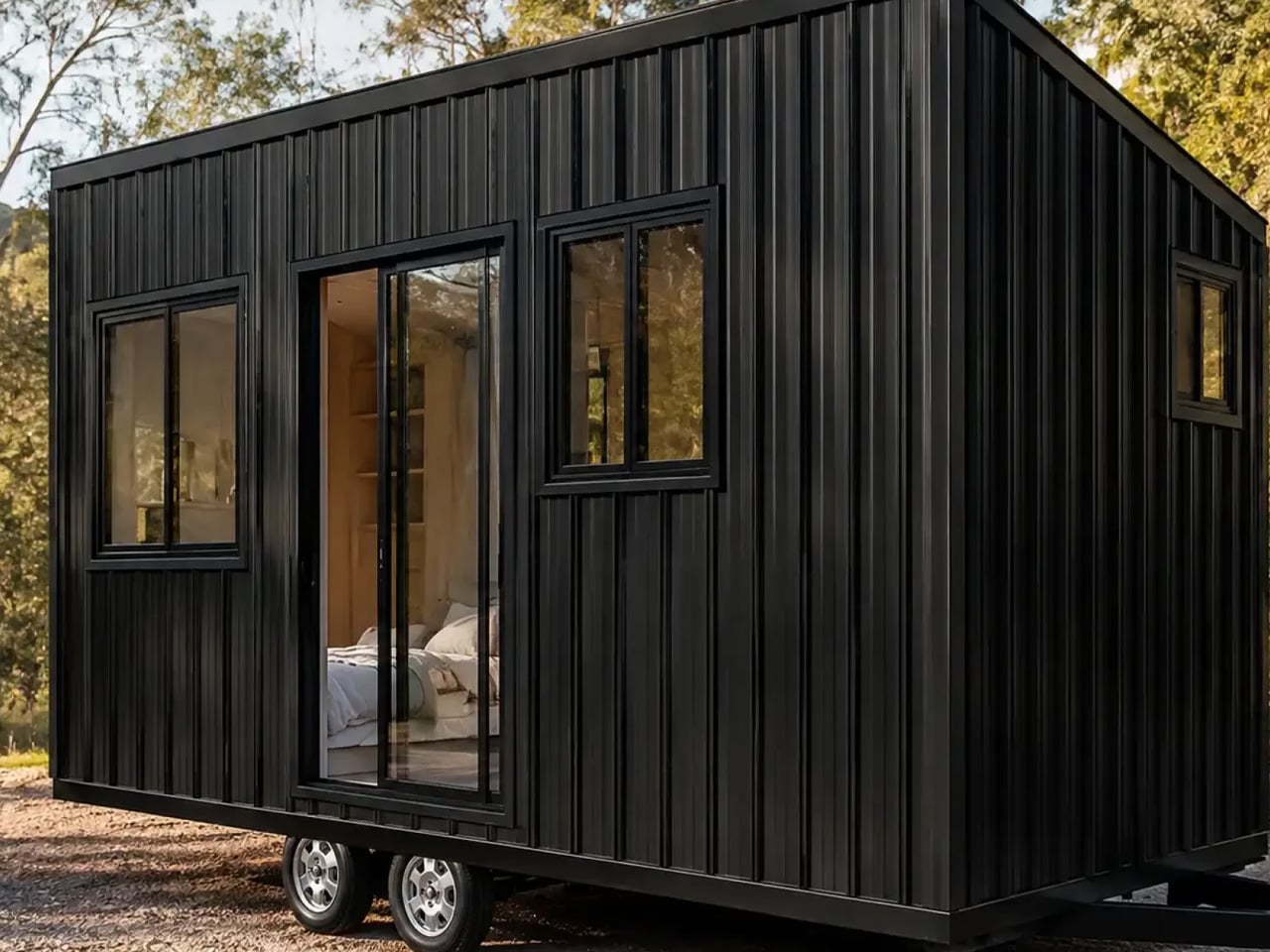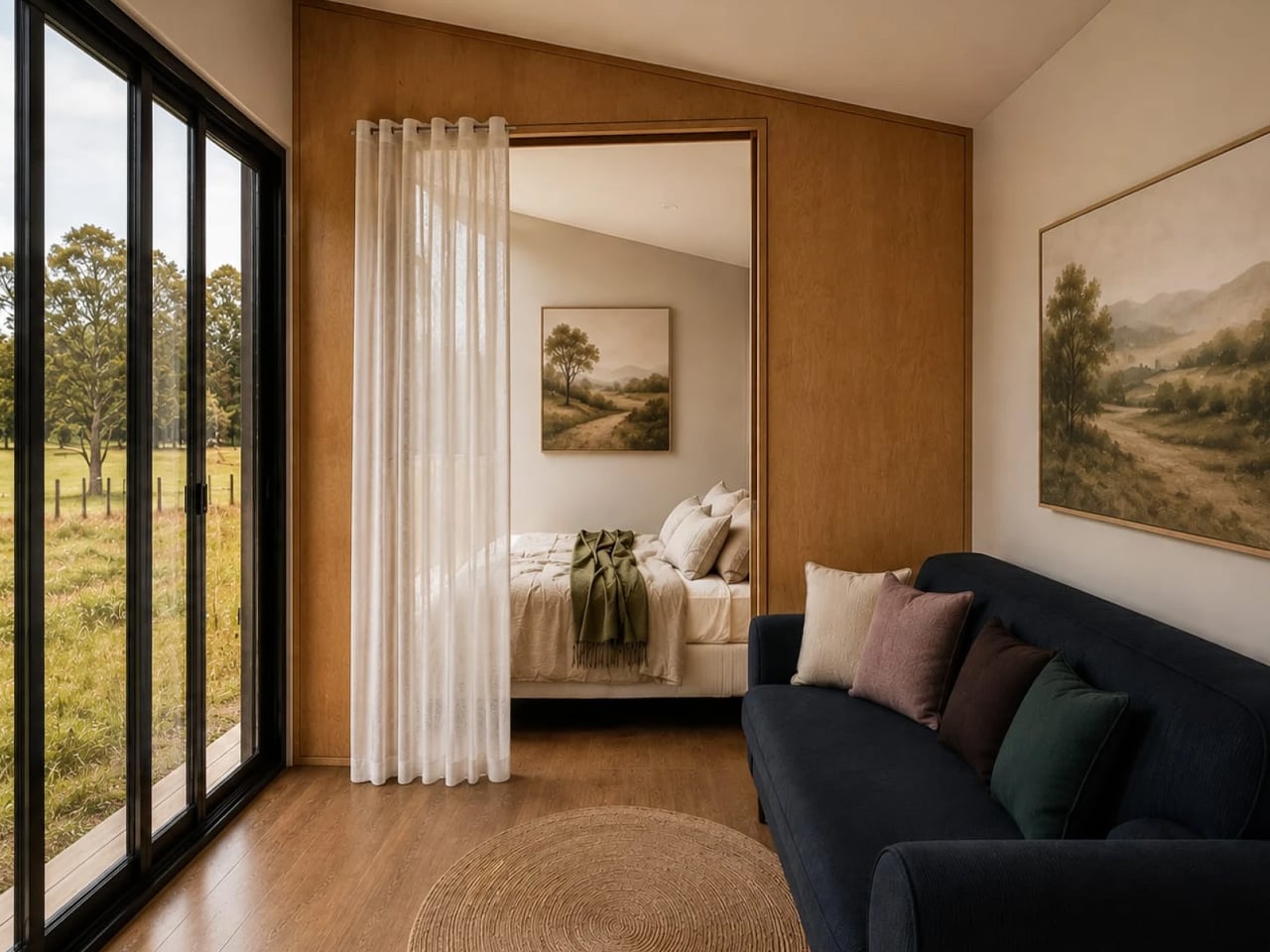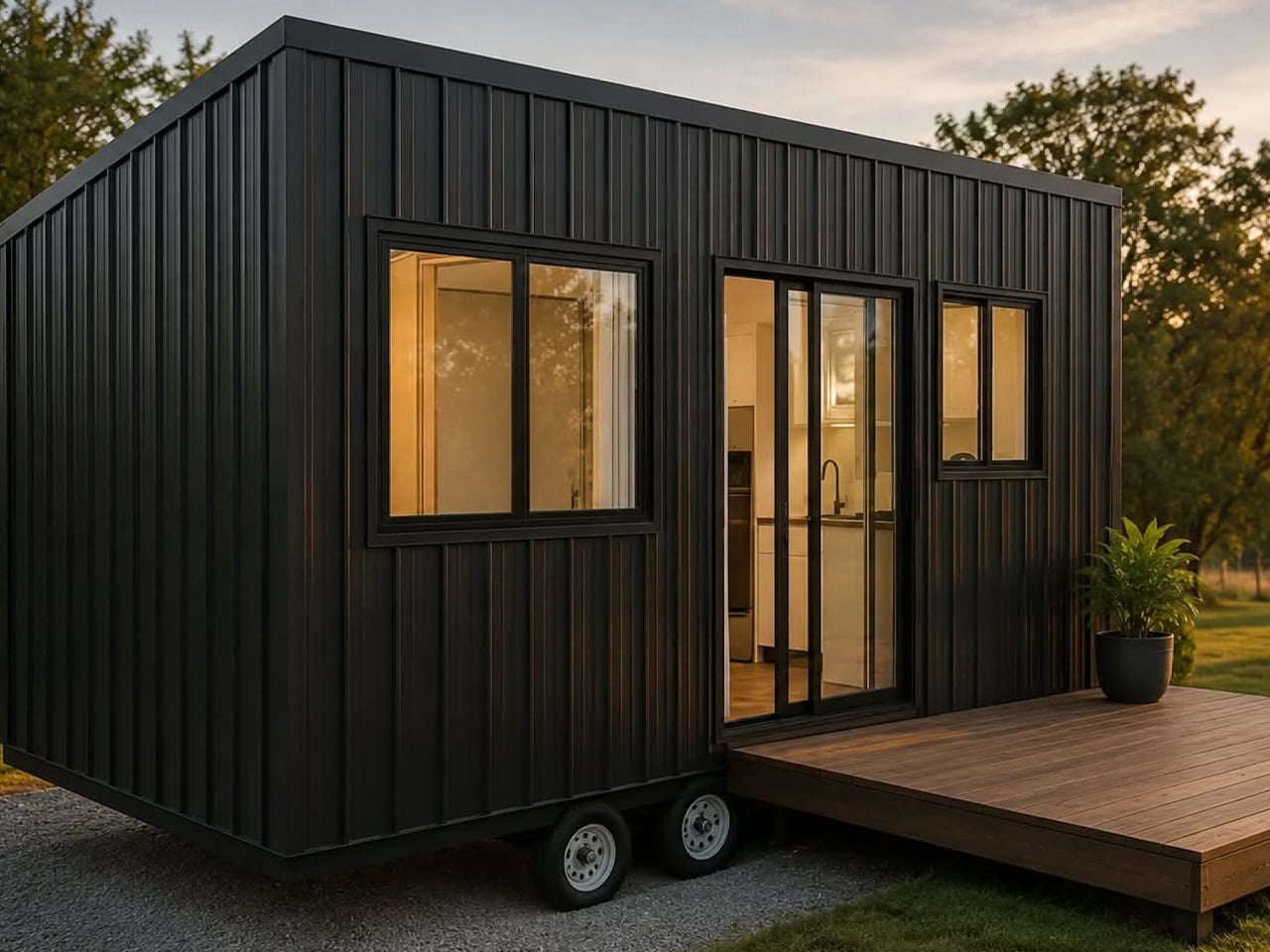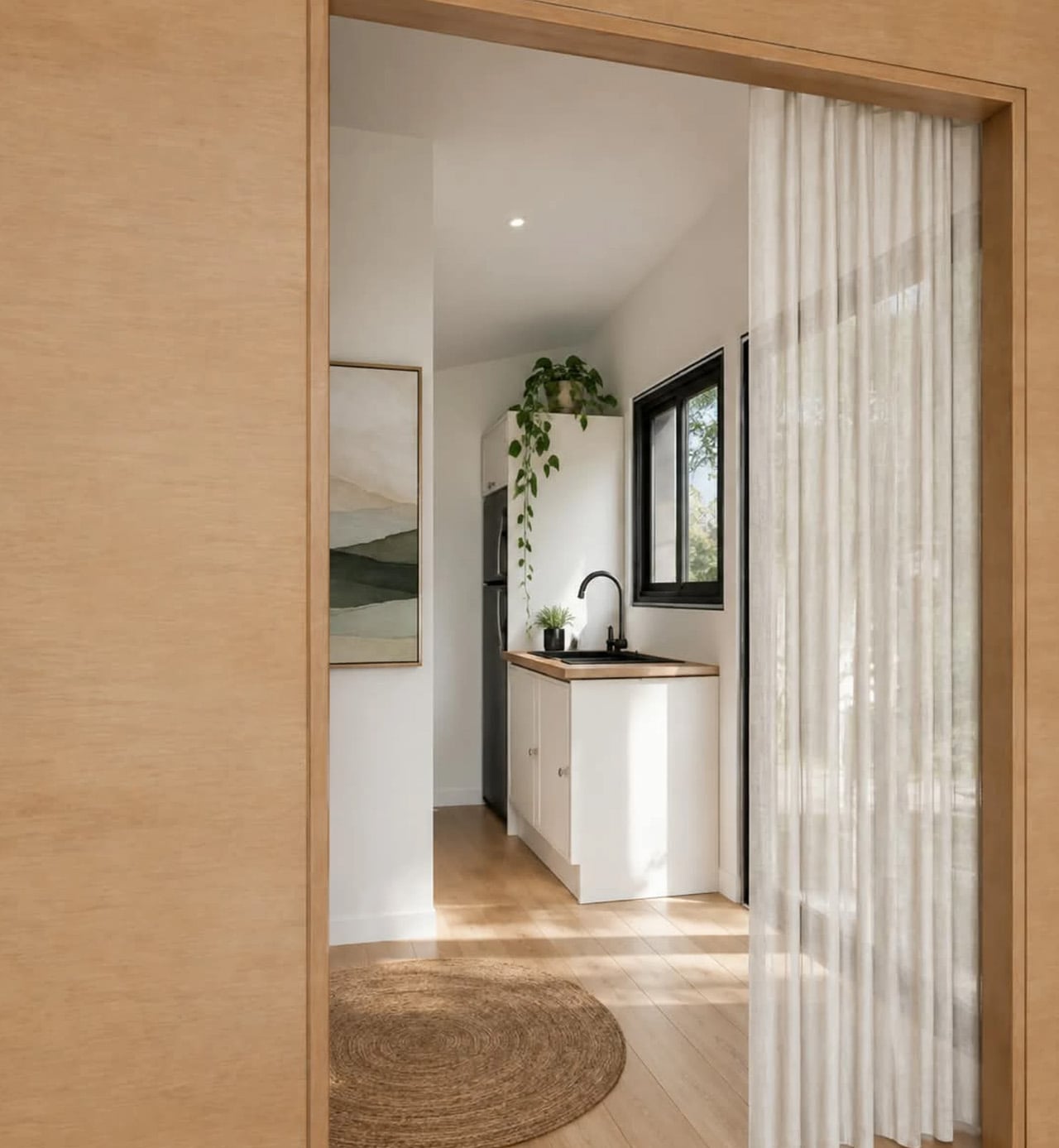
Dragon Tiny Homes has unveiled the Sora 20′, an expanded version of their popular compact dwelling that responds directly to customer feedback. This spacious tiny home marks a significant evolution from the original 16-foot Sora model, offering more room while maintaining the bright, practical design philosophy that made its predecessor a success. The Sora 20′ represents a thoughtful approach to full-time tiny living, balancing increased square footage with the efficiency that defines the tiny house movement.
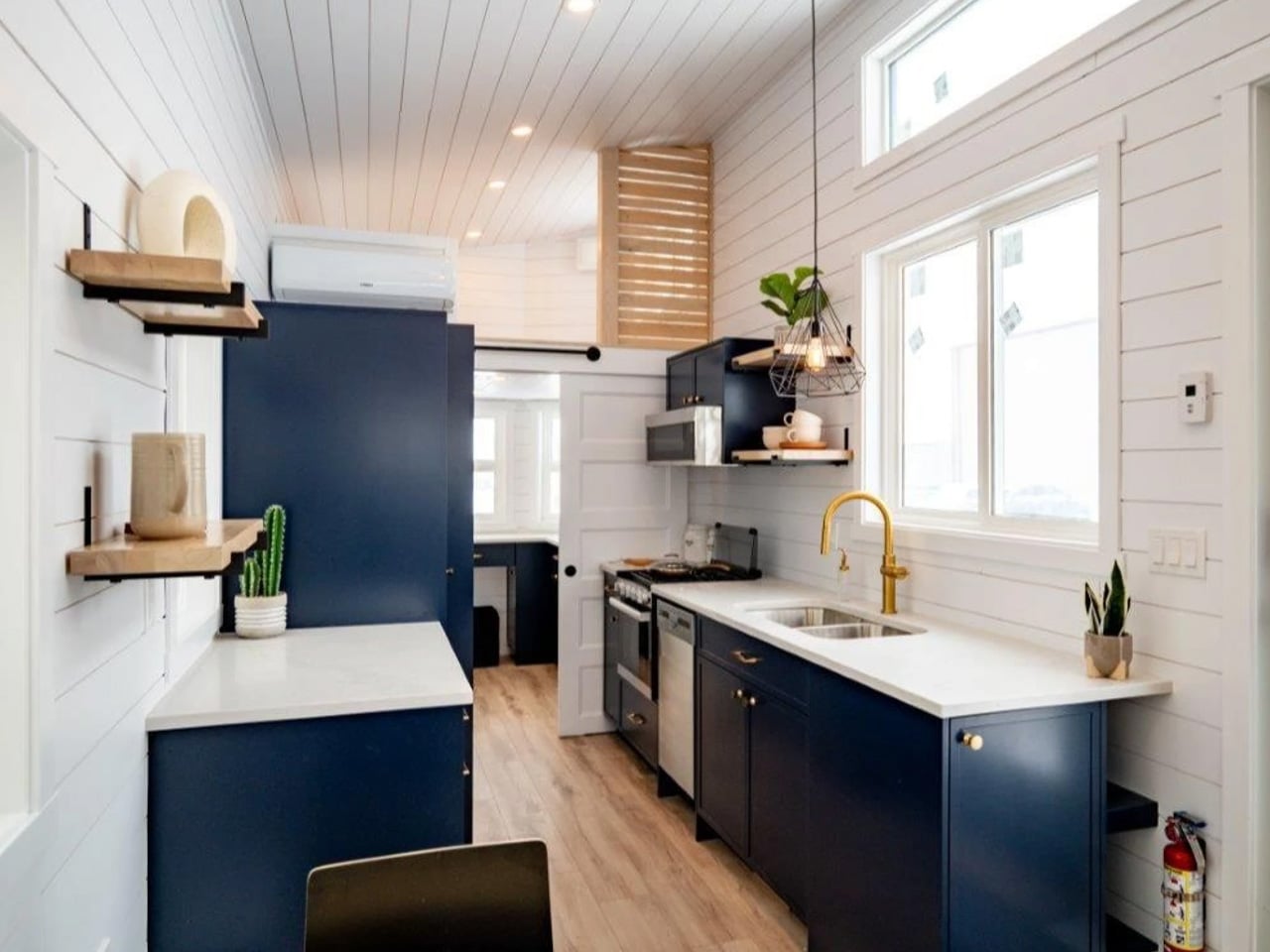
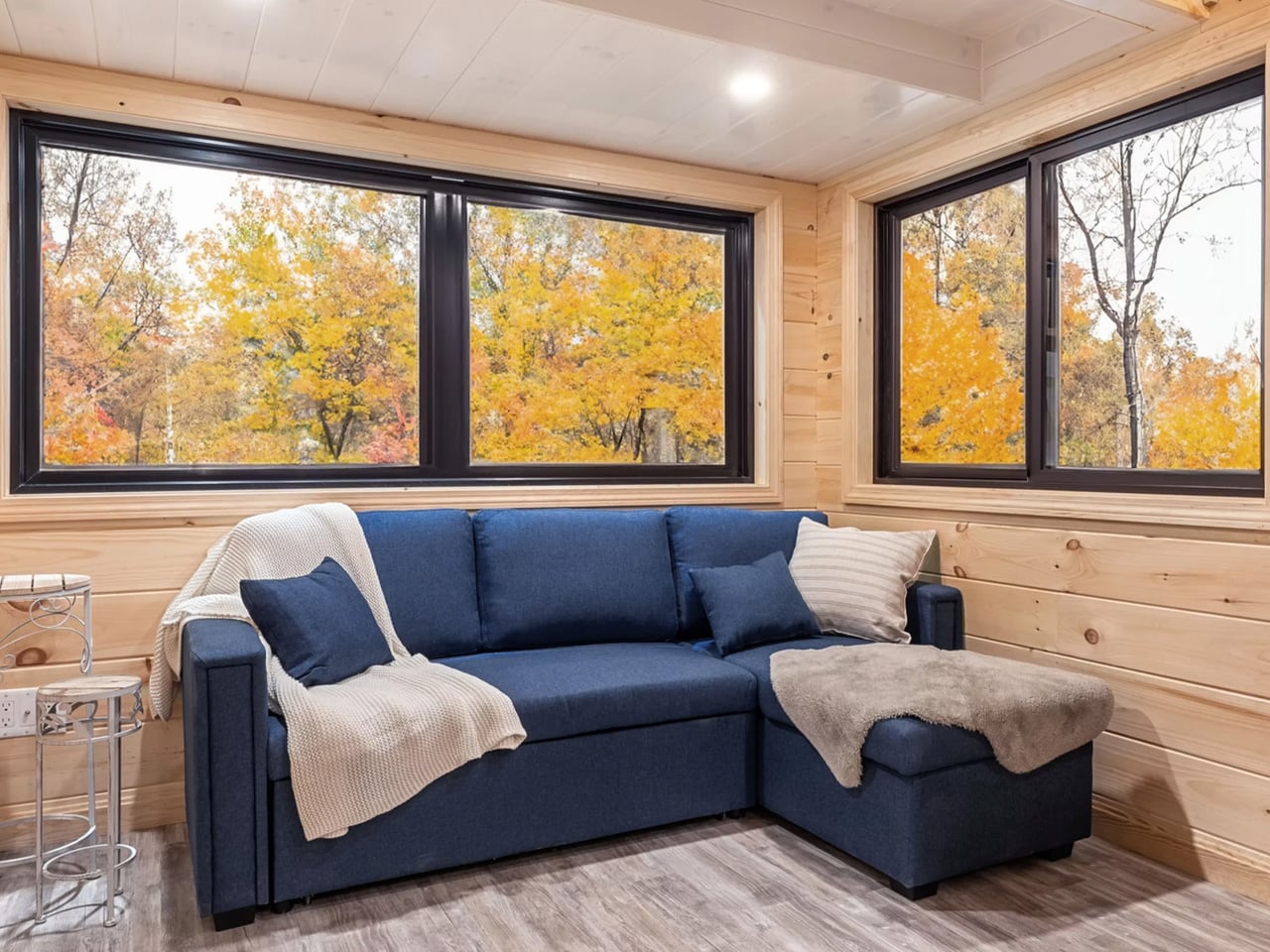
The design prioritizes natural light and openness, featuring large windows that flood the interior with brightness throughout the day. The layout flows seamlessly from one area to the next, creating a sense of spaciousness that belies the home’s compact footprint. Dragon Tiny Homes has crafted a well-balanced interior where every element serves a purpose, from the strategically placed windows to the carefully considered traffic patterns that make daily routines feel effortless and intuitive.
At 20 feet in length, the Sora 20′ offers significantly more living space than the original 16-foot model. This extra footage translates into practical improvements throughout the home, allowing for more comfortable accommodations without sacrificing the cozy feel that draws people to tiny living. The additional space has been thoughtfully distributed to enhance functionality in key areas, making the home suitable for extended stays or permanent residence rather than just weekend getaways.
The Sora 20′ includes purpose-built features that acknowledge modern living realities. A built-in floating desk provides a dedicated workspace for remote workers, reflecting the growing need for home offices in compact spaces. The design incorporates a sleeping loft that maximizes vertical space while keeping the main floor open for living and working. Each feature demonstrates a function-forward approach, where comfort meets practicality in ways that support contemporary lifestyles.
The base price for the Sora 20′ is typically set at $61,030, positioning it as an accessible entry point into quality tiny home living. Dragon Tiny Homes occasionally offers inventory homes at discounted rates, with some units available for $52,950, representing savings of $8,070. These move-in-ready options provide an opportunity for buyers to skip the wait time associated with custom builds and transition into tiny living more quickly.
The Sora 20′ suits solo dwellers seeking a minimalist lifestyle or couples ready to embrace downsizing without compromising on comfort. Its design accommodates full-time living with amenities that support daily routines, from cooking to working to relaxing. Dragon Tiny Homes has created a model that proves tiny living can be spacious, practical, and genuinely livable for the long term, making it a compelling option for anyone reconsidering traditional housing.
Every man has a mental wishlist of grooming tools he’s admired from afar but never pulled the trigger on. These aren’t flashy gadgets or unnecessary luxuries. They’re precision instruments that turn daily maintenance into moments of quiet confidence. The kind of gear that makes him feel more put together without saying a word. This Valentine’s Day, skip the predictable gifts and give him the grooming arsenal he’s been eyeing but convincing himself he doesn’t need.
Japanese craftsmanship meets masculine refinement in Kai Corporation’s Auger collection, where every tool is engineered with surgical precision and designed for men who appreciate the details. These aren’t replacements for drugstore basics. They’re upgrades that transform routine into ritual, offering control, sharpness, and durability that cheap alternatives can’t match. Whether he’s meticulous about his appearance or just starting to care about the finer points of grooming, these five essentials will earn their place in his daily rotation.
1. Auger PrecisionFlex Razor
Shaving should be a ritual, not a rush job. The Auger PrecisionFlex Razor transforms daily maintenance into an act of precision with industry-leading engineering that adapts to every angle and contour. The 5-blade system delivers an ultra-close shave that respects the skin while eliminating stubble, and the 3D pivoting head glides effortlessly from the jawline to the neckline. The world-first 30° adjustable head angle changes everything, allowing seamless transitions between shaving directions with a simple lever pull that maintains flow and eliminates awkward repositioning.
Kai Corporation built this razor for men who refuse to compromise on results or experience. The independent suspension mechanism offers the widest pivot range in the industry, ensuring consistent contact even in hard-to-reach areas where lesser razors lose effectiveness. Whether he’s going clean-shaven or sculpting defined beard lines, this razor delivers the control and confidence that comes from tools engineered without shortcuts. This Valentine’s Day, give him the razor that turns a daily obligation into a moment of masculine refinement he’ll actually look forward to.
The industry-leading 3D pivoting head with independent suspension provides unmatched contouring ability, ensuring consistent blade contact across every facial angle and curve.
The world-first 30° adjustable head angle revolutionizes versatility by enabling effortless transitions between shaving directions without breaking rhythm or repositioning.
The 5-blade system delivers an incredibly close shave while minimizing irritation, respecting skin integrity even with daily use.
Over 100 years of Japanese blade-making excellence ensure precision-ground edges that maintain sharpness through multiple shaves, delivering consistent performance that justifies the investment.
What We Dislike
The advanced engineering and premium materials result in a higher upfront cost compared to disposable razors or basic cartridge systems.
The replacement blade refills, while high-quality, represent an ongoing investment that may exceed budget razor alternatives.
2. Auger PrecisionLever Nail Clipper
Most men settle for flimsy clippers that bend under pressure and leave jagged edges. The Auger PrecisionLever Nail Clipper rewrites the standard with a patented rotating lever mechanism that shifts the pivot point closer to the blade. This engineering breakthrough means more cutting power with less effort, making thick nails feel like butter under precision steel. Every press delivers a clean, satisfying click that confirms what you already suspected: your old clippers were doing you dirty.
Kai Corporation didn’t just improve the nail clipper—they perfected it. With over a century of blade-making expertise behind every cut, this compact tool turns a mundane task into something almost meditative. The stainless steel cutlery blades slice through without tearing or splitting, leaving smooth edges that never snag. It’s the kind of tool that makes him wonder why he waited so long to upgrade, and the kind of Valentine’s gift that proves you notice the details that matter to him.
The patented rotating lever system maximizes cutting force while minimizing hand strain, making it effortless to tackle even the thickest nails in one clean motion.
Precision-ground stainless steel blades crafted by Japan’s premier blade manufacturer deliver cuts so clean they eliminate the need for filing.
The compact, ergonomic design fits comfortably in the hand and travels easily without the bulk of traditional clippers.
Every element reflects over 100 years of Japanese blade-making mastery, turning a basic grooming task into an experience of mechanical excellence.
What We Dislike
The premium engineering comes with a higher price point than standard drugstore clippers, which may give budget-conscious buyers pause.
The compact size, while travel-friendly, may feel slightly smaller than expected for those accustomed to bulkier traditional clippers.
3. Auger PrecisionEdge Nail File
Filing nails feels like an afterthought for most men, but skipping this step leaves rough edges that snag on fabric and undermine an otherwise polished appearance. The Auger PrecisionEdge Nail File turns finishing into a deliberate act of refinement with dual filing surfaces and an ergonomic 3D grip that puts complete control in his hands. The coarse side shapes with authority while the fine surface smooths to perfection, creating seamless transitions that feel as good as they look.
Kai Corporation engineered this file for men who understand that grooming doesn’t end at the cut. The precision-etched stainless steel surface glides without catching, and the sculpted handle makes maneuvering intuitive even for beginners. It’s not about vanity—it’s about presenting himself with the kind of attention to detail that separates deliberate from careless. This Valentine’s Day, give him the tool that completes what the clipper started, proving that the final touch is where real refinement lives.
Dual-surface design eliminates the need for multiple tools by offering both aggressive shaping and gentle smoothing in one streamlined instrument.
The three-dimensional handle structure provides exceptional grip and control, making precise filing effortless even for grooming novices.
Corrosion-resistant stainless steel construction with precision etching ensures consistent performance without the dulling or rusting common in cheaper files.
The compact form factor makes it ideal for both home grooming and on-the-go touch-ups without sacrificing functionality.
What We Dislike
The stainless steel construction may feel heavier than disposable files, requiring a brief adjustment period for those accustomed to lightweight alternatives.
The precision etching, while durable, may require periodic cleaning to maintain optimal performance with extended use.
4. Auger PrecisionCurve Scissors
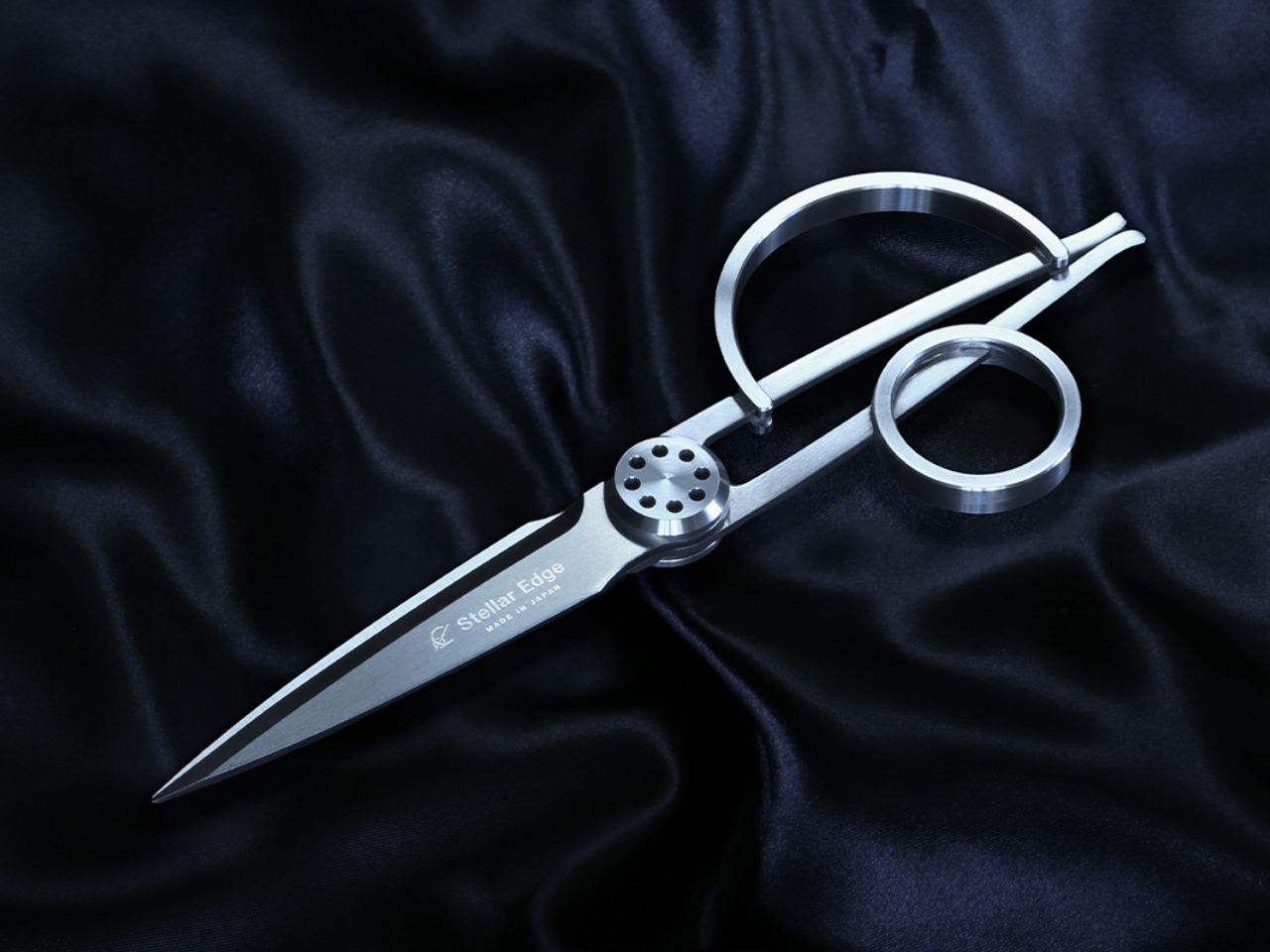
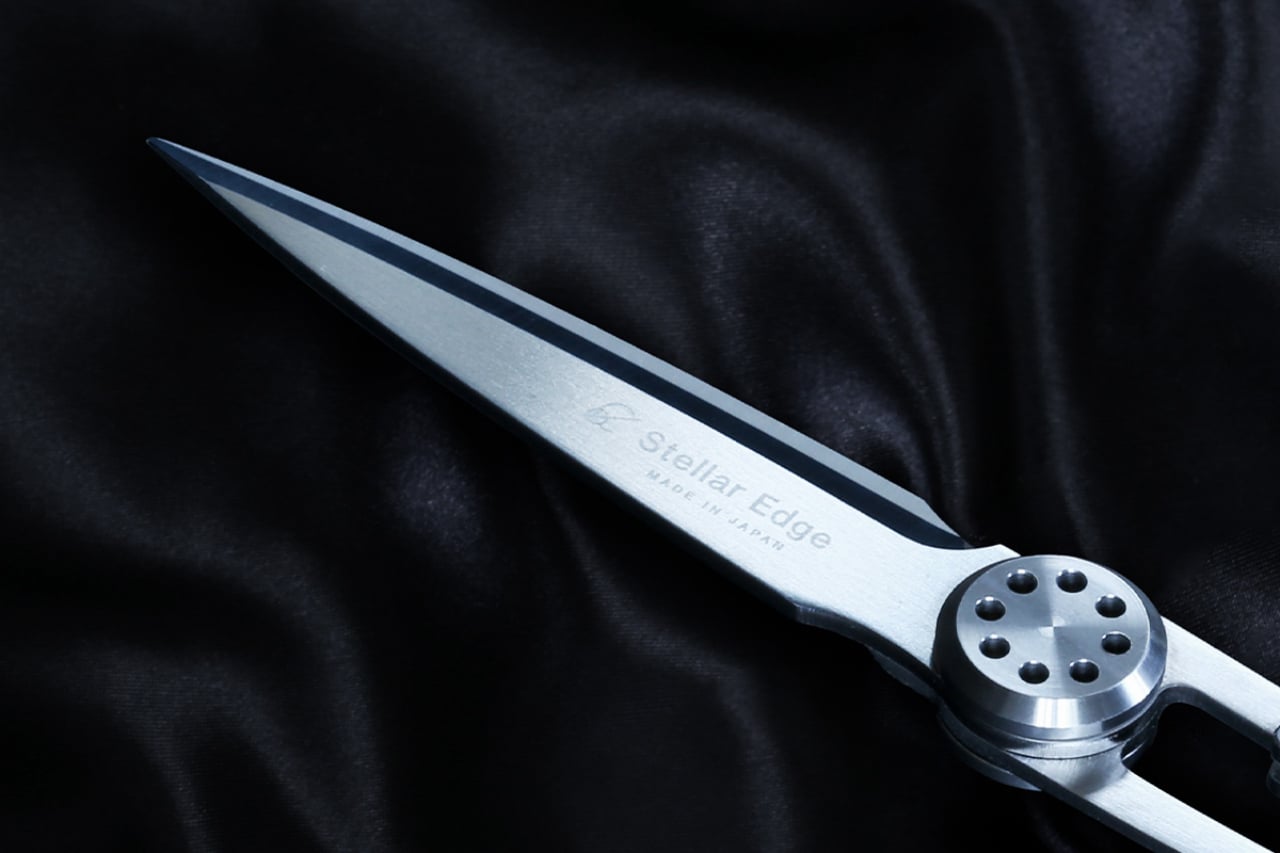
Trimming stray brow hairs or sculpting a crisp beard line demands accuracy that standard scissors can’t deliver. The Auger PrecisionCurve Scissors feature ultra-thin curved blades that follow facial contours with surgical precision, eliminating guesswork and second attempts. The curve isn’t just aesthetic—it’s a functional design that allows for controlled, targeted cuts right at the root without pulling or snagging. Every snip feels deliberate, turning detail work into an exercise in masculine mastery.
Kai Corporation designed these scissors for men who approach grooming with the same attention they apply to everything else worth doing right. The ultra-thin blade profile enables root-level trimming that thicker shears can’t achieve, while the ergonomic design makes extended sessions feel natural rather than forced. These aren’t the scissors he’ll use to open packages—they’re the precision instruments he’ll reach for when presentation matters. Give him the Valentine’s gift that proves sharp looks require sharp tools.
The precision-engineered curved blade design enables pinpoint accuracy for shaping brows, refining mustaches, and detailing beard lines with professional-grade control.
Ultra-thin blade construction allows for seamless cutting close to the root without the pulling or discomfort associated with standard scissors.
Ergonomic handle design reduces hand fatigue during extended grooming sessions, making detailed work feel effortless.
Over a century of Japanese blade-making expertise ensures long-lasting sharpness that maintains performance through countless trims.
What We Dislike
The specialized curved design may require a brief learning curve for those accustomed to straight-blade scissors.
The premium construction commands a higher price than generic grooming scissors, which may seem steep for a single-purpose tool.
5. Auger PrecisionGrip Tweezers
Nothing undermines a sharp appearance faster than stray hairs that standard tweezers can’t quite grip. The Auger PrecisionGrip Tweezers eliminate frustration with ultra-fine angled tips that grab even the finest hairs on the first attempt, delivering flawless removal without slipping or breaking. The patented stopper mechanism prevents the lateral misalignment that plagues cheap tweezers over time, ensuring consistent tension and unwavering stability through countless plucking sessions. This is surgical precision for everyday grooming, designed for men who know that perfection lives in the details.
Kai Corporation engineered these tweezers with the same exacting standards they apply to surgical instruments and professional blades. The ergonomic finger groove reduces hand fatigue and provides absolute steadiness during detailed work, whether shaping brows or eliminating rogue hairs that appear at the worst possible moments. These aren’t the tweezers that will bend or lose grip after a month—they’re lifetime tools built to maintain performance through years of use. Give him the Valentine’s gift that proves you see the effort he puts into looking sharp, even in the smallest details.
The ultra-fine angled tip design provides exceptional gripping power on even the finest hairs, eliminating the frustration of repeated attempts and broken strands.
The patented stopper mechanism represents genuine innovation by preventing the misalignment and tension loss that render ordinary tweezers useless over time.
Precision finger grooves create natural hand positioning that reduces fatigue and enhances control during extended grooming sessions.
Japanese engineering excellence ensures the tips remain perfectly aligned and maintain consistent tension through years of regular use, making this a true lifetime grooming tool.
What We Dislike
The premium construction and patented features command a significantly higher price than drugstore tweezers, which may seem excessive for a simple tool.
The precision-engineered tight grip, while effective, may feel initially unfamiliar to those accustomed to looser, more flexible tweezers.
The Grooming Gear He Deserves
Men rarely invest in themselves the way they should, convincing themselves that good enough is acceptable when it comes to grooming tools. The Auger collection proves that precision engineering isn’t indulgence—it’s the difference between maintenance and mastery. These five tools represent the upgrades he’s considered but postponed, the quality he recognizes but rationalizes away. Valentine’s Day offers the perfect moment to permit him to care about the details that shape how he presents himself to the world.
Japanese craftsmanship meets masculine practicality in every piece, turning routine tasks into rituals worth his time. These aren’t just grooming gadgets—they’re the physical manifestation of attention to detail, built to last and designed to deliver results that cheap alternatives never will. Give him the collection that proves you see the effort behind his appearance, and watch him discover that the right tools don’t just make grooming easier—they make it satisfying.
Going tiny doesn’t have to mean compromising on comfort, and the Natural Luxe by South Base Homes proves this philosophy beautifully. This single-story tiny house offers a remarkably open and spacious layout that defies its compact 48-square-meter footprint, creating a living experience that feels much larger than its dimensions suggest. Designed by New Zealand’s South Base Homes, the Natural Luxe is based on the company’s Abel model and serves as their brand new show home.
Measuring 516 square feet with a length of 12 meters and a width of 4 meters, this non-towable tiny house requires permanent installation but delivers an impressively generous living environment. The home’s exterior showcases a thoughtful combination of engineered wood and steel, complemented by a timber deck that extends the living space outdoors. This design choice creates seamless indoor-outdoor flow, enhanced by marble-look finishes that add a touch of sophistication to the compact dwelling.
Step inside, and the Natural Luxe reveals its true genius. The open-plan layout features a large kitchen area that feels remarkably spacious for a tiny house. Every inch has been thoughtfully designed, from inbuilt kitchen shelving with soft-touch close mechanisms to a discreet laundry setup that maximizes efficiency without cluttering the space. The living room is equally well-proportioned, accommodating a sofa and several chairs without feeling cramped.
Perhaps most impressive is the inclusion of a dedicated home office, a feature that addresses the growing need for work-from-home spaces without sacrificing comfort or functionality. This thoughtful addition sets the Natural Luxe apart from many tiny house designs, recognizing that modern living often requires a dedicated workspace that doesn’t compromise the overall flow and feel of the home.
Natural light plays a starring role throughout the Natural Luxe. Floor-to-ceiling architectural-grade windows flood the space with sunshine during the day, while recessed LED strip lighting and Bluetooth-operable downlights allow residents to tailor the ambiance to their mood at night. Full-height storage solutions ensure that belongings stay organized without encroaching on the living areas, maintaining the home’s open and airy atmosphere.
South Base Homes describes the Natural Luxe as “the perfect balance of sophisticated design and practical living within 48 square metres”. Built with pride in New Zealand and engineered to meet the country’s Building Code standards, the home features top-tier insulation and comes with a five-year warranty. The Abel model, on which the Natural Luxe is based, starts at approximately $137,000 USD, with the final price varying depending on selected options and customizations. This show home demonstrates how smart architectural choices and attention to detail can create a tiny house that requires fewer sacrifices than one might expect, offering a viable solution for those seeking to live big in a smaller footprint.
Japanese design has spent centuries perfecting the balance between restraint and richness. These seven gifts embody that philosophy, where every material choice and geometric decision carries intention. From transparent polycarbonate that frames music like sculpture to hand-planted bristles that honor century-old brush-making techniques, each piece reflects the considered craftsmanship that typically commands luxury prices. The precision is palpable, the materials exceptional, yet the cost remains accessible.
Valentine’s Day presents the perfect occasion to invest in objects that honor both form and function. These aren’t disposable gestures wrapped in red paper. They’re thoughtfully engineered pieces that reveal their quality through daily interaction. Whether it’s the satisfying weight of meteorite-tipped metal in hand or the quiet elegance of brass flames reflecting across polished surfaces, these gifts communicate value without shouting price tags. They look like they belong in design museum gift shops. They cost like they belong in your cart.
1. StillFrame Headphones
The StillFrame headphones reject the maximalist approach most audio brands take with aggressive curves and ostentatious branding. Instead, their geometry pulls directly from 1980s CD jewel cases, those square transparent housings that once protected physical music. The silhouette sits somewhere between over-ear bulk and in-ear invisibility, creating a deliberate middle ground that feels like a deliberate middle ground. At 103 grams, they register as barely there on your head, yet the 40mm drivers inside deliver the kind of spatial audio typically reserved for studio monitoring headphones that cost three times more.
The transparent aesthetic works because it’s structural, not decorative. You can see the internal architecture, the way components nest together with mechanical precision. Noise cancellation toggles to transparency mode depending on whether you need isolation or awareness, adapting to your environment without requiring menu diving. Twenty-four hours of battery life means you’re not tethered to charging rituals. The entire package feels like something designed by people who understand that luxury isn’t about excess. It’s about eliminating everything unnecessary until only the essential remains.
The 103-gram weight makes all-day wear genuinely comfortable without pressure points.
Transparent construction shows rather than hides the engineering quality.
Wide soundstage creates spatial separation that cheaper headphones collapse into mono mush.
Twenty-four-hour battery life eliminates the anxiety of mid-day charging.
What We Dislike
The minimalist aesthetic won’t satisfy people who want flashy brand recognition.
Lack of a carrying case means you’ll need to source your own protection for travel.
2. Levitating Pen 2.0: Cosmic Meteorite Edition
Levitation technology has existed for years in desk toys and Bluetooth speakers, but applying it to a functional writing instrument required actual engineering restraint. The Levitating Pen 2.0 suspends at a precise 23.5-degree angle, creating the illusion of defying physics while remaining stable enough to grab without knocking over. The real story lives in the tip: a genuine Muonionalusta meteorite, a material older than Earth by 20 million years. That’s not marketing poetry. That’s verifiable cosmic debris transformed into a functional writing point through precision machining.
The spacecraft-inspired silhouette nods to USS Enterprise proportions without crossing into kitsch territory. The pen writes like any quality ballpoint when lifted from its magnetic cradle, but returns to its floating position with satisfying precision. It functions as a functional fidget object, a conversation piece, and a legitimate writing tool simultaneously. The meteorite tip catches light differently than standard metal, creating subtle texture variations that reveal themselves over time. For anyone who appreciates objects that merge form and cosmic accident, this pen justifies its desk real estate.
A genuine meteorite tip provides a tangible connection to materials older than our planet.
Twenty-three point five degree levitation angle creates a stable suspension without wobbling.
Spacecraft silhouette balances retro-futurism without feeling costume-y.
A functional writing instrument that also serves as a kinetic desk sculpture.
What We Dislike
Magnetic base requires dedicated desk space that smaller workstations may not accommodate.
The meteorite tip, while stunning, doesn’t write differently from high-quality standard metal.
3. ClearFrame CD Player
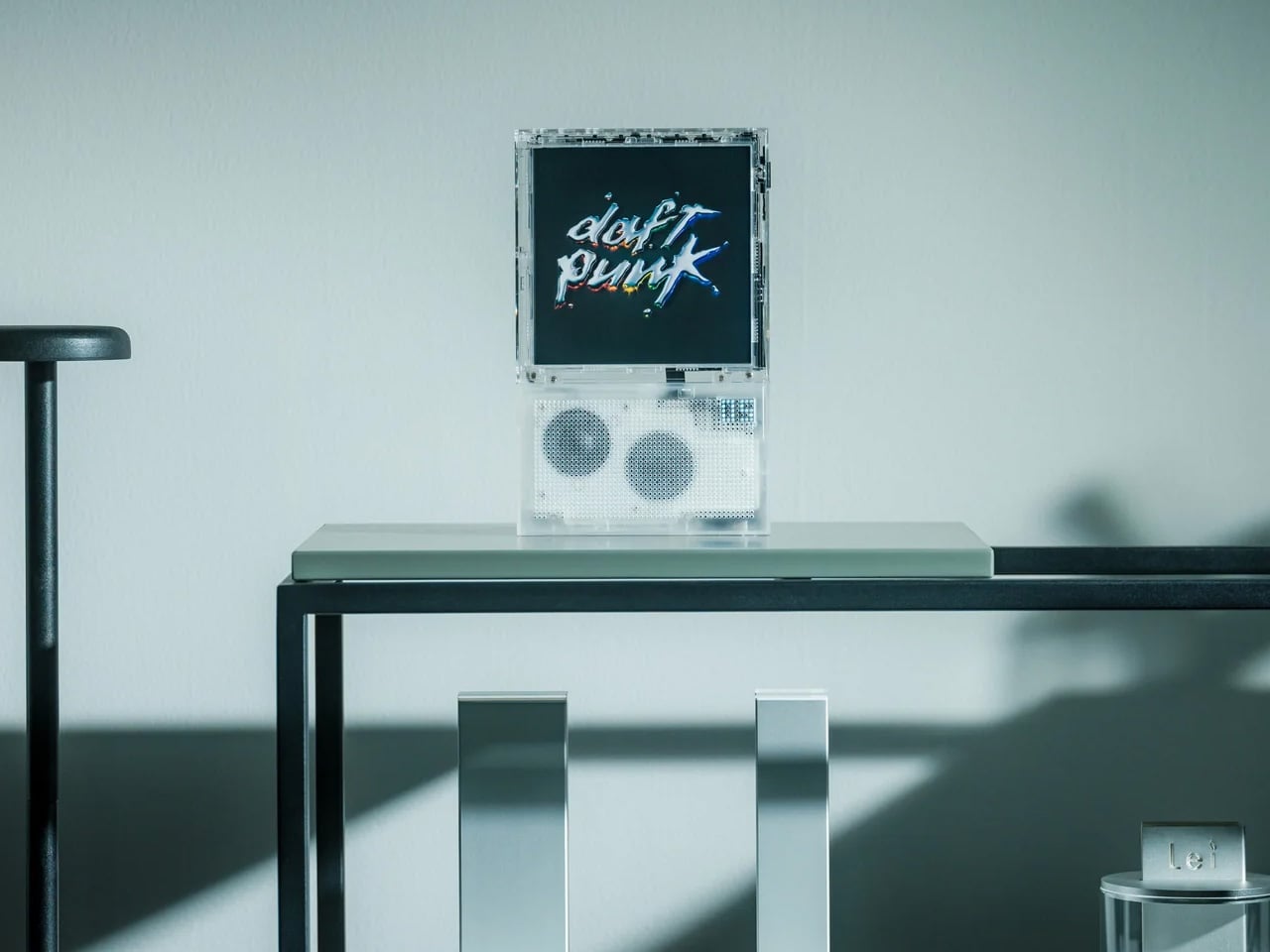
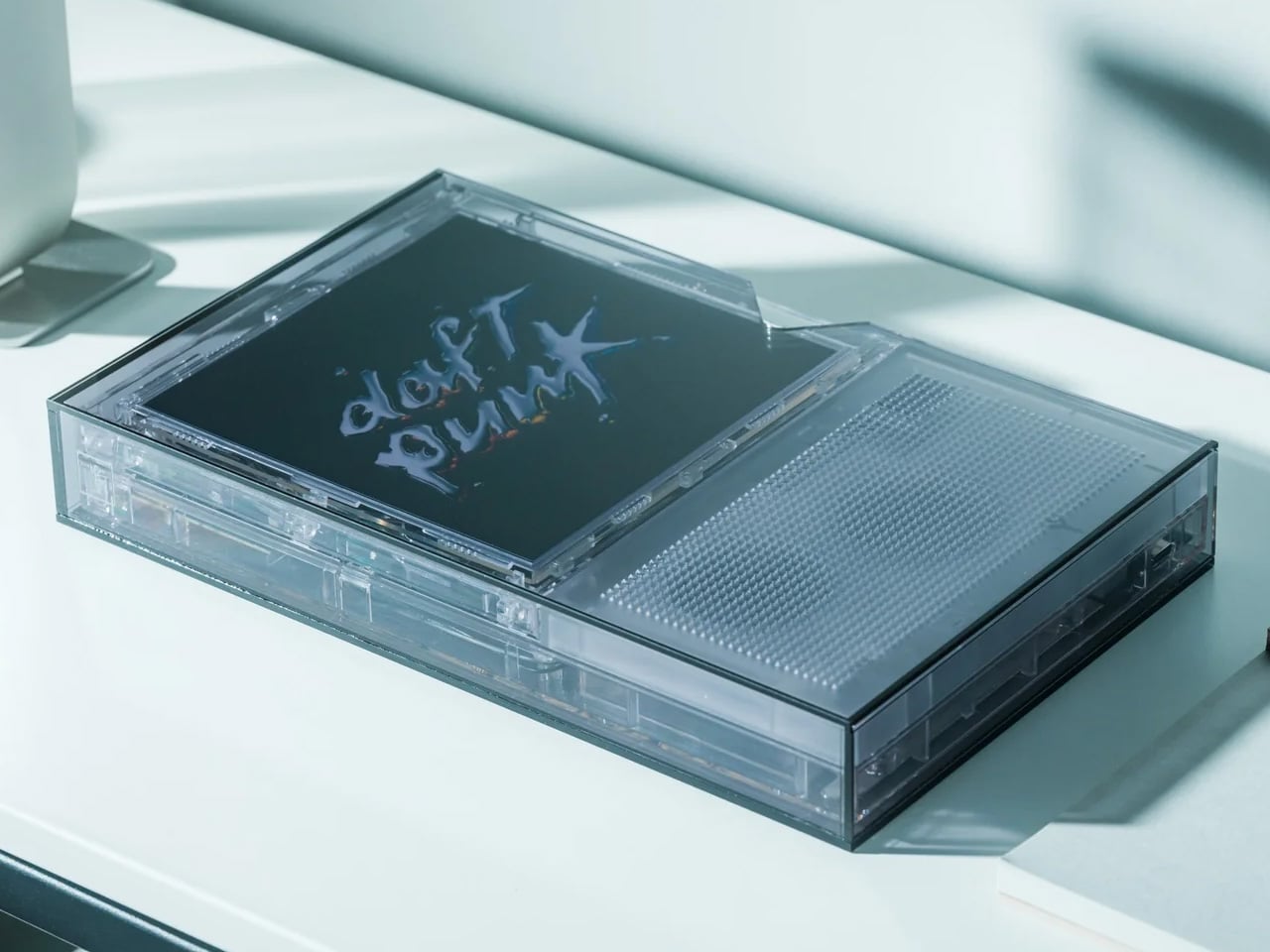
Physical media never truly disappeared. It just got shoved into closets and forgotten behind streaming convenience. The ClearFrame CD Player resurrects the ritual of album playback through transparent polycarbonate construction that frames both the disc and album artwork simultaneously. The exposed black circuit board isn’t hidden behind opaque plastic. It sits visible, turning electronic components into part of the aesthetic language. The square silhouette mimics CD jewel case proportions, creating visual continuity between the medium and the player.
Bluetooth 5.1 connectivity means you’re not locked into wired speaker limitations, while the seven-hour rechargeable battery enables portability that traditional CD players never offered. Wall-mounting capability transforms it into functional art that displays your current listening choice like a gallery piece. Multiple playback modes, including repeat, shuffle, and single-track loop, accommodate different listening intentions. The entire experience slows down music consumption in the best way, forcing deliberate album selection instead of algorithmic autopilot. It’s a rejection of playlist culture disguised as consumer electronics.
Transparent polycarbonate construction turns internal circuitry into a visible design element.
Wall-mounting capability transforms music playback into a spatial art display.
Seven-hour battery life provides true portability without cord tethering.
Square silhouette creates visual harmony with CD jewel case proportions.
What We Dislike
Limited to CD format means no vinyl, cassette, or other physical media playback.
Exposed circuitry, while beautiful, lacks the protective housing of traditional players.
4. AromaCraft Clothes Brush
The Miyakawa Hake Brush Workshop has spent over a century perfecting bristle placement using the traditional Tsubokiri method, where individual boar hairs get hand-planted into wooden handles with painstaking precision. This technique prevents shedding and extends brush lifespan far beyond mass-produced alternatives. The AromaCraft takes that heritage craftsmanship and adds aromatic paper inserts that hold essential oils, transforming garment maintenance into a sensory experience. Each brushstroke doesn’t just remove dust and pollen. It deposits a subtle fragrance that refreshes fabric without overwhelming.
White boar bristles provide the ideal firmness-to-flexibility ratio for lifting debris from fabric weave without damaging delicate fibers. The walnut wood handle receives a shea butter finish that develops patina over time, aging gracefully rather than deteriorating. The entire object feels substantial in hand, communicating quality through weight and balance. For anyone who appreciates Japanese devotion to perfecting everyday rituals, this brush represents garment care elevated to meditative practice. It’s the kind of object that gets better with use, developing character while maintaining function.
Hand-planted bristles using the century-old Tsubokiri technique prevent shedding and extend lifespan.
Aromatic paper insert system allows customizable scent profiles with essential oils.
White boar bristles provide optimal cleaning without fabric damage.
Walnut handle with shea butter finish develops beautiful patina over the years.
What We Dislike
Regular aromatic paper replacement adds ongoing cost beyond the initial purchase.
Requires manual brushing technique learning for optimal dust and pollen removal.
5. Harmony Flame Lamp
Real fire indoors typically requires complex ventilation, safety protocols, and permanent installation. The Harmony Flame Lamp bypasses all that friction by using bioethanol fuel that burns clean, odorless, and smokeless. The brass construction gets hand-crafted using the same metalworking techniques that musical instrument makers employ for tubas and French horns. That’s not arbitrary. Musical instrument brass requires precise acoustical properties and structural integrity that translate beautifully to flame containment. The polished surface catches and reflects firelight, creating dynamic shadows that shift with flame movement.
Bioethanol burns at lower temperatures than wood or propane, making it genuinely safe for tabletop use without requiring permanent fixtures. The brass box design contains flames while allowing full visibility of the fire’s movement and light play. No installation means you can move it from the dining table to the patio to the bedroom, depending on where you want ambient warmth and illumination. The entire experience feels ritualistic in the way lighting candles does, but with more substantial presence and longer burn time. For anyone seeking atmosphere without artificial LED fakery, this lamp delivers authentic fire with modern safety.
Bioethanol fuel requires ongoing purchase and isn’t as universally available as standard fuels.
Open flame, while safer than traditional fire, still requires basic fire safety awareness.
6. All-in-One Grill
Outdoor cooking usually means hauling multiple pieces of equipment for different cooking methods. The All-in-One Grill consolidates barbecuing, frying, grilling, steaming, smoking, and stewing into modular components that stack and separate based on what you’re cooking. Each module serves a specific function but shares a universal footprint that maintains stability when stacked. There’s even a dedicated bottle warmer module that holds containers upright, perfect for mulled wine or keeping sauces at serving temperature. The tabletop size means you’re not committed to permanent patio installation or dealing with full-sized grill storage.
The modular approach makes cleanup dramatically easier than traditional grills, where grease and debris accumulate in hard-to-reach crevices. Each component separates for individual washing, then reassembles without tools or complicated mechanisms. The compact footprint works on apartment balconies, small patios, or even indoor tables when using the non-flame cooking methods. For anyone who wants outdoor cooking flexibility without equipment sprawl, this grill delivers restaurant-range versatility in a package small enough to store in a closet. It’s the kind of design that makes you wonder why all grills aren’t built this way.
Modular components enable six different cooking methods from a single base system.
Compact tabletop size works on balconies and small outdoor spaces.
Individual modules are separate for easier cleaning than traditional grill designs.
Bottle warmer module keeps beverages and sauces at optimal serving temperature.
What We Dislike
Smaller cooking surface limits capacity for large group gatherings.
The modular system requires storage space for multiple components when not in use.
7. Invisible Shoehorn
Long shoehorns solve the ergonomic problem of putting on shoes without bending over, but they typically look medical or utilitarian. The Invisible Shoehorn uses transparent acrylic and polished stainless steel to create a tool that reads as a sculptural object when mounted on its stand. The long steel body provides the leverage and length needed to slip shoes on without back strain, while the mirror-polish finish prevents sock snags and stocking tears that cheaper shoehorns cause. When mounted vertically on its transparent stand, the entire assembly looks more like minimalist art than a functional footwear tool.
The transparent stand creates the illusion that the shoehorn floats, letting it disappear into backgrounds rather than announcing its presence. The stainless steel construction ensures it won’t bend or deform over time like plastic alternatives. For anyone with mobility limitations or those who simply value not destroying socks every morning, this shoehorn transforms a mundane necessity into an object worth displaying. It’s the rare household tool that improves both function and aesthetics, solving a real problem while looking like it belongs in a design catalog.
Transparent stand creates a floating illusion that minimizes visual footprint.
Long stainless steel body eliminates back strain during shoe wearing.
Mirror-polish finish prevents sock snags and stocking damage.
Sculptural aesthetic turns a functional tool into a displayable object.
What We Dislike
Requires dedicated floor space near the entryway that smaller homes may lack.
Stainless steel, while durable, shows fingerprints that require occasional wiping.
Smart Luxury for Valentine’s Day
These seven gifts prove that Japanese design philosophy—where restraint meets meticulous craftsmanship—creates objects that feel more expensive than their price tags suggest. Each piece demonstrates how material choice, manufacturing technique, and geometric consideration combine to communicate value. The bioethanol lamp uses brass. The clothes brush employs century-old bristle placement methods. The headphones weigh 103 grams because every unnecessary element was eliminated. This isn’t luxury through excess. It’s luxury through precision and intentionality that reveals itself slowly.
Choosing Valentine’s gifts based on design integrity rather than brand recognition shifts the conversation from spending to investing. These objects improve with use, develop patina, and maintain relevance beyond trend cycles. The CD player will still spin discs when streaming services change algorithms. The shoehorn will protect backs and socks for decades. The levitating pen combines cosmic debris with a practical function that doesn’t expire. When you gift something that honors both form and utility while respecting Japanese craft traditions, you’re not just presenting an object. You’re offering a daily ritual that compounds value through repeated interaction.
The stationery world has long looked to Japan for innovation, and planning enthusiasts know this better than anyone. Japanese design philosophy brings together minimalism, functionality, and thoughtful engineering to create tools that transform mundane tasks into moments of creative joy. These aren’t just accessories that sit pretty on your desk. They’re carefully crafted instruments that respect your workflow, elevate your planning rituals, and make every stroke of the pen feel intentional.
What separates Japanese stationery from the rest comes down to obsessive attention to detail and problem-solving that addresses friction you didn’t even know existed. The best pieces remove obstacles between your thoughts and the page, letting ideas flow without interruption. From clipboards that reinvent organization to pencils that never need sharpening, these ten items represent the pinnacle of accessible Japanese design. Each piece delivers exceptional value while staying comfortably under the $100 mark, proving that extraordinary craftsmanship doesn’t require a luxury price tag.
1. Inseparable Notebook Pen
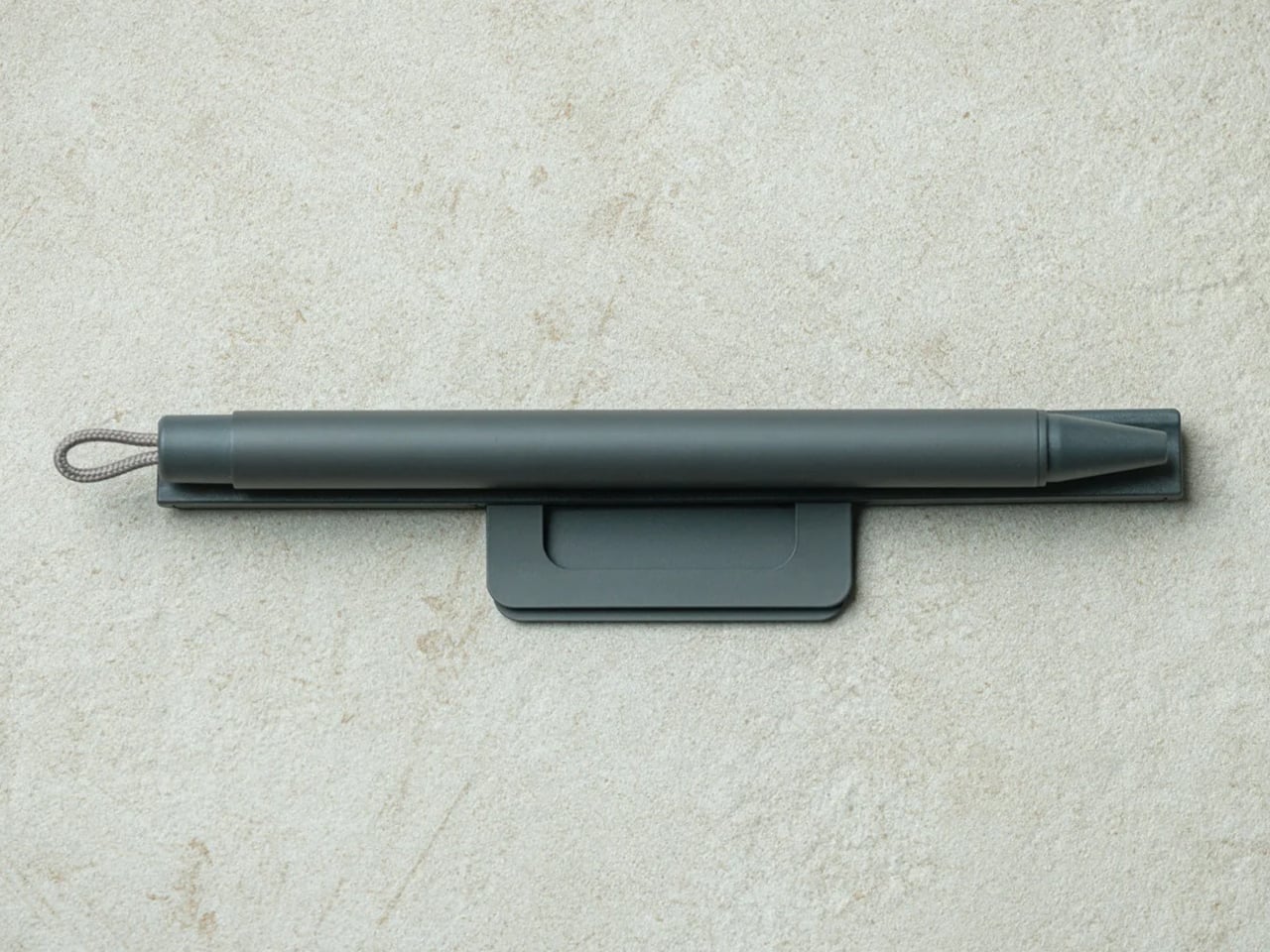
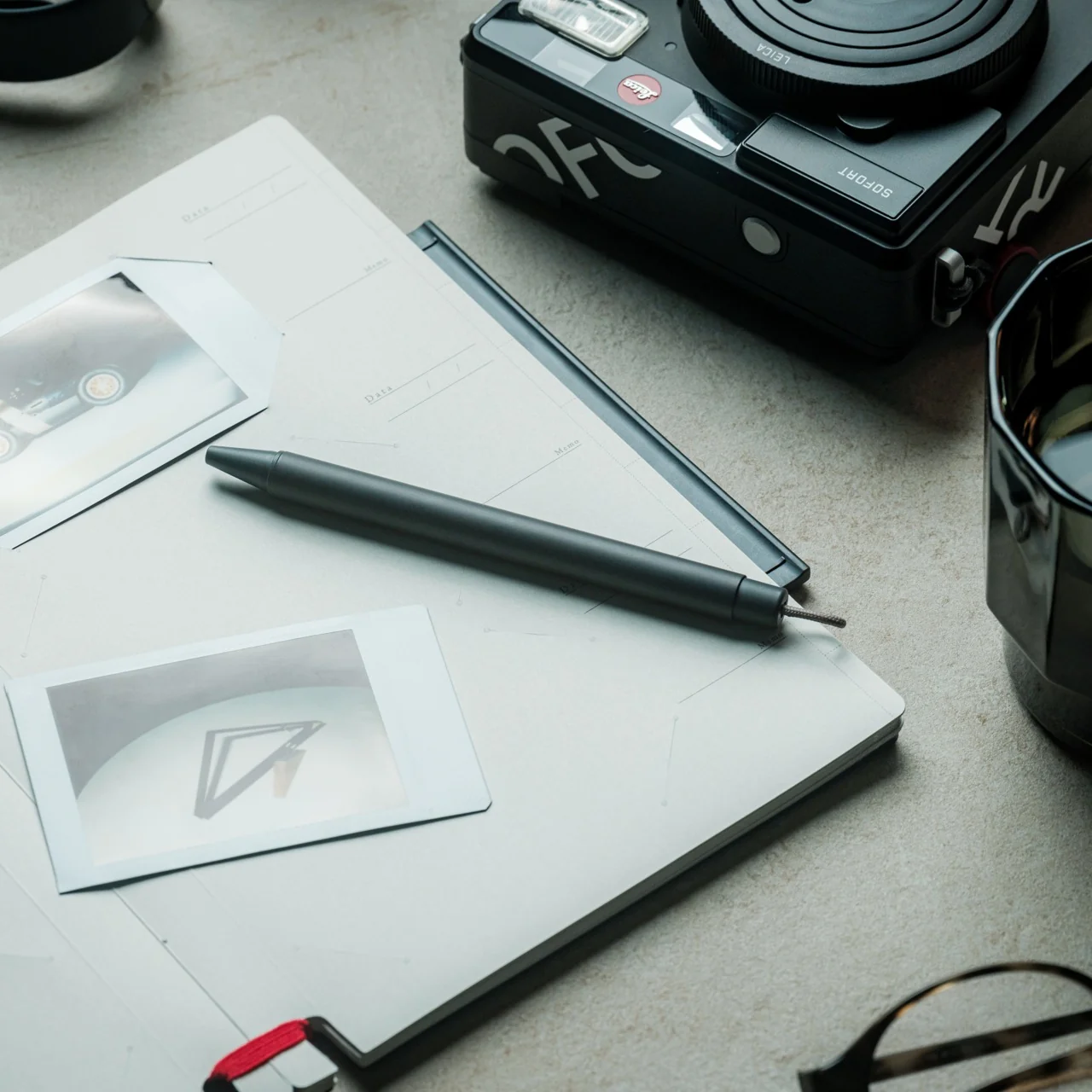
Pens have a frustrating tendency to disappear precisely when inspiration strikes. The Inseparable Notebook Pen addresses this through elegant magnetic integration, designed specifically to blend seamlessly with your planning system. The minimalist form feels natural in your hand, with comfortable grip proportions and smooth ink flow that removes any friction between thought and page. The magnetic clip securely attaches to your notebook cover, ensuring the pen travels with your planning system as a permanent extension rather than a separate item you might forget.
The built-in silencer demonstrates the obsessive attention to detail that defines Japanese design excellence. Instead of the harsh click or scrape of metal on metal, attaching and detaching the pen creates a quiet, satisfying sensation that respects your workspace and thinking process. The sleek aesthetic complements any notebook style without drawing attention to itself, allowing your planning system to maintain its visual coherence. For those who have developed specific pen preferences and rituals around their planning practice, this tool honors that relationship by creating reliable, constant access. The pen becomes as integral to your system as the notebook itself.
The magnetic clip system ensures the pen always stays with your notebook
The built-in silencer creates a refined, quiet attachment experience that respects workspace tranquility
Minimalist aesthetics blend seamlessly with any notebook style or planning system
The comfortable grip and smooth ink flow support extended writing sessions without hand fatigue
What We Dislike
The magnetic system requires your notebook to have a compatible cover material and thickness
The specialized design focuses on notebook integration rather than standalone versatility
2. Magboard Clipboard
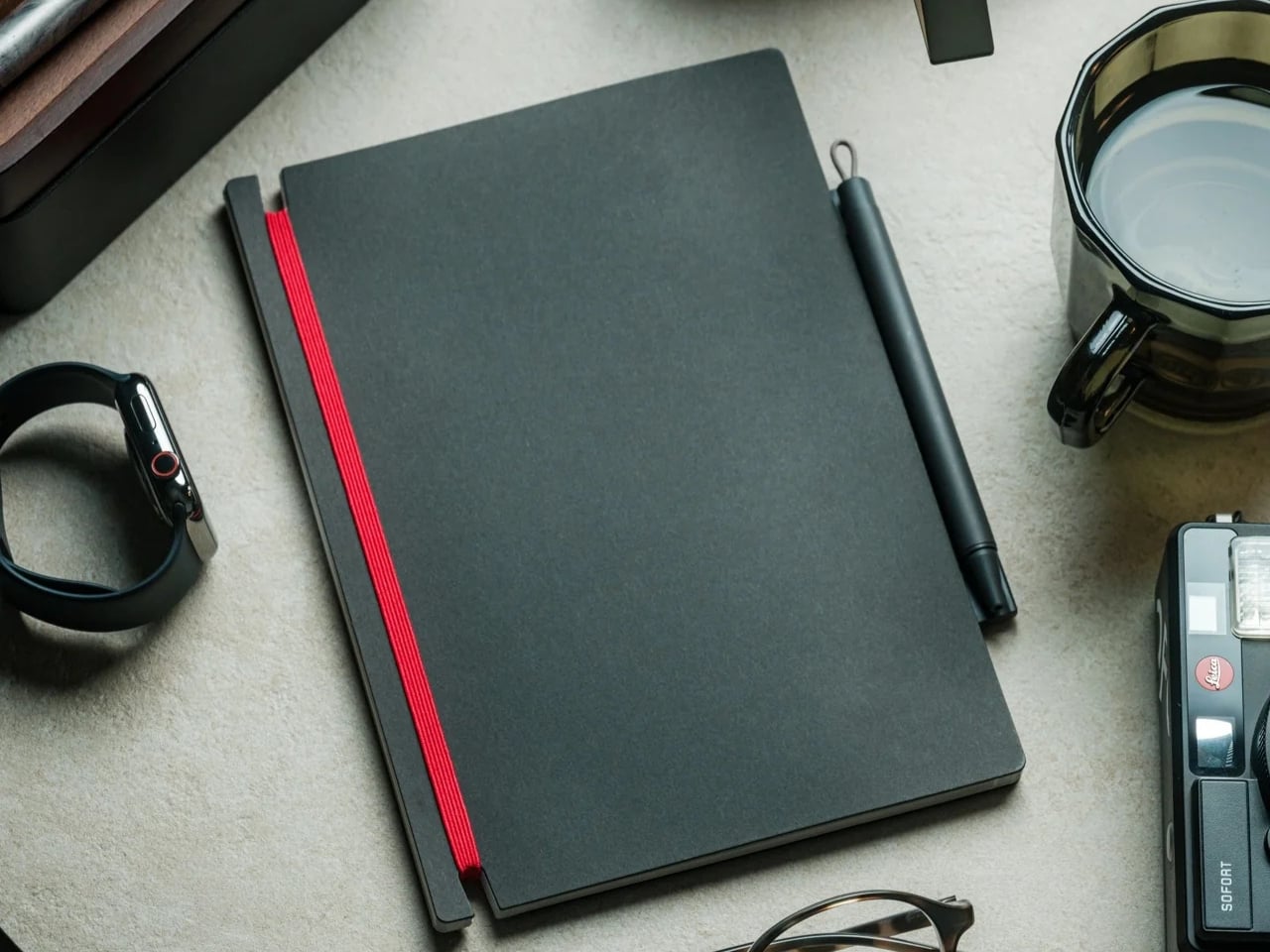
Planning systems thrive on flexibility, and the Magboard Clipboard understands this at a fundamental level. This minimalist marvel replaces traditional clipboard mechanisms with an elegant magnet and lever system that secures up to thirty sheets without punching holes or creating permanent bindings. The hardcover construction means you can capture thoughts while standing at a gallery opening, jotting notes during a walking meeting, or sketching layouts at a coffee shop. The freedom to rearrange pages instantly transforms how you organize information, letting you shuffle priorities and reorder thoughts as your projects evolve.
The water-resistant surface adds a practical dimension that traditional clipboards simply can’t match. Spilled coffee becomes a minor inconvenience rather than a catastrophe, and the easy-to-clean material means your workspace aesthetic stays pristine. Planning enthusiasts particularly love how this design eliminates the commitment anxiety that comes with bound notebooks. Pages can migrate between projects, early drafts can be removed without tearing, and your organizational system can adapt as fluidly as your thinking process. The Magboard turns note-taking into a dynamic, modular experience.
The magnetic binding system offers unprecedented flexibility for reorganizing content on the fly
The hardcover design enables comfortable writing while standing or moving
Water resistance protects your work from common desk disasters
The minimalist aesthetic complements any planning system or workspace style
What We Dislike
The thirty-sheet capacity might feel limiting for those working on extensive projects
The hardcover adds weight compared to traditional clipboards, which may matter during long periods of handheld use
3. Everlasting All-Metal Pencil
The ritual of sharpening pencils carries a certain nostalgic charm, but it also breaks concentration and creates friction between thinking and writing. The Everlasting All-Metal Pencil eliminates this with a special alloy core that writes like traditional graphite yet refuses to wear down at any noticeable rate. The aluminum body feels substantial in your hand, grounding you in the physical act of writing, while the metal tip glides across paper with familiar smoothness. For planners who sketch layouts, draft bullet journal spreads, or map out monthly calendars, this tool becomes an extension of thought itself.
What makes this pencil genuinely revolutionary is how it erases cleanly with standard erasers despite its metal composition. The marks blend beautifully with watercolor and water-based markers, making it perfect for planners who incorporate artistic elements into their organizational systems. The pocket-sized variant now available means you can carry this innovation everywhere, always prepared to capture ideas without worrying about broken mechanical pencil leads or dull points. The permanence of the pencil itself creates a different relationship with your tools, transforming a disposable item into a lasting companion.
The alloy core eliminates sharpening completely while maintaining authentic pencil-like writing
Standard erasers work perfectly, preserving the familiar correction process
The metal construction ensures the pencil will outlast countless traditional alternatives
Compatibility with watercolor techniques expands creative possibilities for artistic planners
What We Dislike
The unfamiliar feel of metal may require an adjustment period for those accustomed to wooden pencils
The fixed line weight offers less variation than traditional pencils that develop different points through sharpening
4. Heritage Craft Unboxing Knife
Opening packages becomes a small ceremony when you’re using a tool that looks like it belongs in a design museum. The Heritage Craft Unboxing Knife takes inspiration from Paleolithic hand axes, reimagining ancient stone tools through the lens of modern materials and precision machining. Carved from a single block of aluminum, the circular form fits naturally in your palm while the wave-like patterns created during manufacturing provide both visual interest and functional grip. This isn’t a utility blade you’ll hide in a drawer. The sculptural quality demands display, transforming a mundane task into an opportunity for tactile pleasure.
The tapered design adds practical benefits beyond aesthetics. The form naturally guides the blade through tape and packaging materials with minimal effort, while the substantial weight provides cutting control. Planning enthusiasts who regularly receive stationery hauls, subscription boxes, or online orders find genuine joy in the unboxing ritual this tool creates. The piece occupies that rare space where functional tool meets conversation starter, sitting proudly on your desk as both instrument and art object. The connection to human tool-making history adds a layer of meaning that elevates everyday tasks.
The ancient-tool-inspired design brings historical resonance to a modern implement
Wave-pattern machining marks create a natural, ergonomic grip texture
The sculptural form makes this a display-worthy desk object rather than a hidden utility
The substantial metal construction ensures durability and satisfying cutting control
What We Dislike
The circular form takes practice to master compared to conventional box cutter shapes
The artistic design comes at a higher price point than basic utility blades
5. Craftmaster EDC Utility Knife
Precision tools appeal to planning enthusiasts because they respect the importance of exact measurements and clean cuts. The Craftmaster EDC Utility Knife combines minimalist aesthetics with thoughtful functionality, packaging an OLFA blade system in a sleek metal body just 0.3 inches thick. The tactile rotating knob for blade deployment feels satisfying in a way that cheap sliding mechanisms never match, turning tool use into a deliberate, mindful action. What sets this apart is the magnetic companion piece: a metal ruler with both metric and imperial markings that docks directly to the knife’s back.
The ruler itself demonstrates exceptional design thinking. The raised edge makes it easy to lift from flat surfaces, solving that frustrating fumbling moment when thin rulers refuse to cooperate. The built-in blade breaker lets you snap off dulled OLFA segments safely, extending blade life and maintaining cutting precision. The 15-degree curved edge protects your fingers during use, while the 45-degree inclination angle makes opening boxes cleaner and safer. For planners who craft custom inserts, trim printed materials, or create collage elements, this tool brings professional-level precision to personal projects without requiring a dedicated crafting space.
The magnetic ruler system keeps measurement and cutting tools together in one compact package
The rotating deployment knob offers tactile satisfaction and precise blade control
The raised ruler edge and integrated blade breaker demonstrate thoughtful problem-solving
The slim 0.3-inch profile makes this genuinely pocketable despite its metal construction
What We Dislike
The OLFA blade system requires purchasing specific replacement blades rather than universal options
The premium materials and mechanisms place this at the higher end of utility knife pricing
6. Personal Whiteboard
Digital planning tools promise endless flexibility, but they can’t match the cognitive benefits of writing by hand. The Personal Whiteboard offers the best of both worlds: the tactile satisfaction of marker on surface combined with instant digital capture and infinite reusability. This single-page whiteboard notebook transforms brainstorming and quick planning into a frictionless process. Jot down your daily priorities, sketch out a weekly layout, or map connections between projects, then simply photograph your work to preserve it before wiping it clean. The multi-functional cover serves as an eraser, a built-in stand, and a storage pocket.
The innovative Mag Force system exemplifies Japanese attention to small details that create big impacts. This mechanism functions as both a cover handle for comfortable carrying and a secure pen holder, ensuring your marker never goes missing. Compatible with any standard whiteboard marker, this removes the frustration of proprietary refills or special equipment. Planning enthusiasts particularly love this for morning brain dumps, temporary schedules that change frequently, and collaborative planning sessions where ideas need to flow without commitment. The ephemeral nature paradoxically encourages bolder thinking since nothing feels permanent until you decide to save it.
The reusable surface eliminates paper waste while maintaining the benefits of handwriting
Quick photography lets you preserve and share work before erasing for the next session
The Mag Force system keeps the pen and whiteboard together as an integrated tool
Standard marker compatibility means no proprietary supplies or special purchases required
What We Dislike
The single-page format limits how much information you can view simultaneously
Whiteboard markers can dry out faster than traditional pen options, requiring more frequent replacement
7. Effortless Standing Letter Cutter
The daily mail ritual deserves better than raggedly torn envelopes or dangerous knife work. The Effortless Standing Letter Cutter transforms this mundane task into a moment of satisfying precision. This elegant bar of anodized aluminum sits upright on your desk, functioning as both sculpture and tool until correspondence arrives. Simply slide an envelope across the blade and watch it create a clean incision along one edge, opening the letter without generating paper scraps that need disposal. The standing design means the cutter occupies minimal space while remaining constantly accessible.
What planners appreciate most is how this tool respects the correspondence they receive. Important documents, special cards, and treasured letters all deserve careful opening, and this cutter delivers that reverence. The substantial weight allows it to double as a paperweight when needed, pinning down reference materials or holding open your planner to a specific spread. The replaceable blade extends the product’s lifetime indefinitely, embodying sustainable design principles that Japanese manufacturers champion. This piece represents the Japanese design philosophy of finding extraordinary solutions for overlooked everyday moments.
The standing design keeps the cutter accessible while maintaining an elegant desk presence
Clean side incisions eliminate paper scraps and disposal frustration
The anodized aluminum construction offers both beauty and functional weight as a paperweight
Replaceable blades ensure this tool lasts indefinitely with minimal maintenance
What We Dislike
The specialized function means this serves one specific task rather than offering versatility
Those who receive minimal physical mail may find limited opportunities to use this tool
8. Japanese Drawing Pad
Paper quality fundamentally affects the planning experience, yet most people accept whatever their notebooks provide. The Japanese Drawing Pad elevates this foundational element, offering sheets that honor the centuries-old Japanese papermaking tradition. Available in traditional white or striking black, these pads let you choose the backdrop that best suits your planning style and creative vision. The durable paper fibers resist damage from erasing, marker bleed-through, and frequent handling, maintaining their integrity through intensive use. Microperforations allow effortless tearing when you need to extract a page.
The recycled cardboard base adds environmental consciousness without compromising quality, staying rigid enough to support writing and drawing when you’re away from a desk. Planning enthusiasts who incorporate illustration, calligraphy, or watercolor elements into their systems find that this paper transforms their results. The fiber quality creates the right amount of tooth for pencil work while remaining smooth enough for fine-line pens. Available in A6, A5, and A4 sizes, you can match the pad to your specific planning needs, whether you’re working on pocket-sized daily cards or full-page monthly spreads. The paper itself becomes a creative partner.
Traditional Japanese paper quality elevates the writing and drawing experience noticeably
The choice between white and black paper enables different aesthetic approaches and creative styles
Microperforations allow clean page removal without damaging the sheet or pad
Multiple size options let you match the paper to your specific planning system
What We Dislike
The premium paper quality comes at a higher cost than standard drawing pads
The cardboard base, while sturdy, lacks the portability of hardcover-bound alternatives
9. Scissors with Base
Scissors live an undignified life, scattered in drawers or lost in desk clutter, despite being essential tools. The Scissors with Base restores proper respect to this fundamental implement, providing a magnetic aluminum base that keeps the scissors upright, visible, and exactly where you need them. The Japanese stainless steel construction with Teflon coating delivers confident, precise cuts through paper, tape, fabric, and packaging materials. The solid weight creates stability during cutting, preventing the lightweight flimsiness that makes cheap scissors frustrating to use.
The innovative dual-function design adds unexpected versatility. One finger ring incorporates a box cutter blade, giving you two essential tools in a single elegant form. Planning enthusiasts who craft custom layouts, work with washi tape, or assemble collage elements find that this combines accessibility with performance. The upright storage means the scissors become a desk sculpture rather than a hidden tool, and the visual presence actually proves functional since you’ll never waste time searching. The magnetic base attachment feels satisfying in a way that transforms the simple act of returning scissors to their home into a small moment of order restored.
The magnetic base keeps scissors upright, accessible, and prevents the common problem of misplacement
Japanese stainless steel with Teflon coating ensures smooth, precise cutting performance
The integrated box cutter in the finger ring adds practical versatility
Substantial weight provides cutting stability and confidence compared to lightweight alternatives
What We Dislike
The base requires desk space dedicated to scissors rather than allowing drawer storage
The premium materials and engineering place these at a higher price point than standard scissors
10. Serenity Pen Stand
Most pen stands compete for attention, using elaborate designs that overshadow the writing instruments they’re meant to showcase. The Serenity Pen Stand takes the opposite approach, reducing itself to the absolute minimum: a small cylinder with a cavity for your pen’s tip, tilted slightly for easy access. Made from aluminum and copper with a dual-tone finish, the diminutive stand places complete focus on your pen while adding a subtle accent of visual interest. The heavy copper bottom creates a low center of gravity that prevents tipping despite the stand’s minimal footprint.
This represents quintessential Japanese design philosophy, finding beauty in reduction and celebrating the tools we use daily by giving them proper presentation. Planning enthusiasts who invest in quality pens, like the Everlasting All-Metal Pencil, finally have a display option that honors their instruments without dominating the desk landscape. The stand occupies minimal space, making it perfect for carefully curated workspaces where every object needs to earn its place. When the pen is in use, the stand remains an elegant small sculpture. The copper’s natural patina development means the piece evolves, gaining character and becoming uniquely yours.
The minimalist design ensures the pen remains the visual focus rather than the stand
The copper bottom creates exceptional stability despite its incredibly small size
The dual-tone metal finish adds subtle visual interest without overwhelming aesthetics
Perfect proportions work especially well with metal pens like the Everlasting All-Metal Pencil
What We Dislike
The tilted angle might not suit all desk arrangements or personal preferences
The stand accommodates only one pen, requiring multiple units for those who rotate between writing instruments
Finding Your Perfect Planning Tools
These ten items share a common philosophy that resonates deeply with planning enthusiasts: the belief that everyday tools deserve extraordinary design. Japanese manufacturers understand that the objects we interact with daily shape our experience, our thinking, and our creative output. These aren’t luxury goods positioned beyond reach. They’re accessible innovations that demonstrate how thoughtful design improves life in measurable ways. Each piece removes a small friction point, adds a moment of satisfaction, or solves a problem you might not have consciously identified.
Building a planning practice means surrounding yourself with tools that support your process rather than fighting against it. The best stationery becomes invisible in use, removing barriers between your thoughts and their physical expression. These Japanese designs achieve that goal while also bringing beauty into your daily rituals. Whether you’re reorganizing pages on a Magboard, gliding an Everlasting Pencil across premium paper, or placing your favorite pen on its minimalist stand, these tools transform planning from a task into a practice worth savoring. Your planning system deserves instruments this considered.
Gaming hardware has reached an inflection point where pure performance no longer separates the exceptional from the ordinary. Today’s players demand experiences that merge technical capability with thoughtful design, creating tools that feel intuitive, personal, and genuinely innovative. The concepts emerging from design studios around the world reflect this shift, prioritizing clever form factors, sustainable interaction models, and aesthetics that challenge gaming’s aggressive visual language.
These five gaming concepts push beyond incremental improvements to reimagine how we hold, power, display, and interact with gaming hardware. From ultra-compact controllers that defy ergonomic conventions to coin-operated mechanics that transform strategy itself, each design addresses real friction points while offering fresh perspectives on what gaming equipment can become when liberated from market expectations.
1. ONO Compact Controller
The gaming controller has ballooned in size over successive console generations, growing ever more complex with paddle buttons, touchpads, and haptic motors layered beneath increasingly aggressive shell designs. Alban Contrepois challenges this evolution with the ONO, a capsule-shaped controller that condenses every essential input into a device barely larger than a smartphone. The design philosophy centers on radical simplification without functional sacrifice, proving that ergonomics need not require bulk when the fundamentals are properly considered.
What makes the ONO particularly compelling is its platform-agnostic approach to button labeling and connectivity. Rather than PlayStation symbols or Xbox letters, the action buttons feature abstract geometric shapes, allowing the controller to work seamlessly across mobile, console, and cloud gaming platforms without visual confusion. The rounded capsule form sits naturally in palms without requiring the exaggerated wing grips found on conventional controllers, while dual analog sticks and shoulder buttons maintain full modern functionality. Contrepois even offers the 3D files freely, inviting makers to fabricate their own working prototypes and experiment with personal modifications.
What We Like
Genuinely pocket-portable form factor solves real mobility challenges for travelers and commuters
Platform-neutral button design eliminates ecosystem lock-in and branding conflicts
Free 3D files democratize access and encourage community iteration
Minimalist aesthetic appeals to players seeking less visually aggressive hardware
What We Dislike
Compact size may create hand cramping during extended gaming sessions
Lack of haptic feedback or adaptive triggers limits next-generation console compatibility
2. Goo-Inspired Sony Controller Concept
Gaming peripherals have long treated controllers as utilitarian plastic shells, functional objects devoid of personality or emotional resonance. This translucent controller concept rejects that paradigm entirely, transforming the gaming peripheral into a living entity that breathes alongside your gameplay. The bulbous form draws inspiration from the Switch Pro controller’s compact proportions while introducing cloudy black plastic construction that appears deceptively ordinary in its dormant state. Power activation unlocks the controller’s true character as mesmerizing internal illumination floods through the translucent shell.
The controller’s arms pulse rhythmically like breathing lungs, creating an organic connection between player and hardware that traditional rumble motors can only hint at. This breathing illumination responds dynamically to gameplay, intensifying during combat sequences and softening during exploration moments. The translucent construction allows internal LED arrays to project mood-responsive visuals that serve as ambient feedback, communicating game states through color shifts and pulsation patterns. The design treats controllers as character-driven accessories rather than sterile tools, acknowledging that gaming hardware can enhance immersion through visual poetry as effectively as through haptic precision.
What We Like
Breathing illumination patterns create an organic emotional connection between the player and the hardware
Cloudy translucent construction offers visual intrigue without an aggressive gamer aesthetic
Mood-responsive lighting provides ambient gameplay feedback beyond traditional rumble
Compact bulbous ergonomics maintain comfort during marathon gaming sessions
What We Dislike
Continuous lighting effects may prove distracting during competitive gameplay, requiring total focus
Translucent materials reveal fingerprints, smudges, and internal dust accumulation over time
3. Braun-Inspired Minimalist Controller
Gaming controllers have descended into a visual arms race where aggressive angles, neon lighting, and textured grips compete for shelf presence in increasingly chaotic ways. Mark Moes’s Braun-inspired controller concept offers a deliberate counterpoint, channeling Dieter Rams’ “less but better” philosophy into a design that prioritizes calm functionality over visual stimulation. The result feels refreshingly restrained in a market drowning in aesthetic noise.
The controller’s soft rectangular form features gentle curves and a balanced symmetry that prioritizes long-session comfort without resorting to exaggerated ergonomic flourishes. A matte finish in off-white, gray, and black creates visual breathing room, while subtle orange accents on key buttons provide functional highlights without devolving into RGB chaos. The design strips away the threatening visual language that dominates contemporary gaming hardware, instead offering an aesthetic that could comfortably sit on a minimalist desk alongside Braun audio equipment or carefully chosen office accessories.
What We Like
Minimalist aesthetic creates a calming alternative to gaming’s visual aggression
Thoughtful color choices and material finishes demonstrate timeless design principles
Design proves gaming hardware can achieve sophistication without sacrificing functionality
Subtle orange accents provide necessary visual guidance without overwhelming the composition
What We Dislike
Understated design may lack shelf presence in retail environments dominated by flashy competitors
Premium materials and finishes could drive manufacturing costs beyond mass-market viability
4. X-Cube Gaming Mini PC
The gaming PC market has polarized into either massive RGB-laden towers or anonymous black boxes that hide their capabilities behind conservative shells. KiwiDesign’s X-Cube Gaming Mini PC embraces a third path with its cyberpunk-inspired aesthetic that treats internal components as design features rather than elements to conceal. Equipped with an Intel 14-core i9 processor and NVIDIA 4060 GPU, the X-Cube delivers flagship AAA gaming performance wrapped in a form factor that celebrates technical complexity rather than minimizing it.
The cubic design showcases internal components through transparent panels that transform technical infrastructure into a visual spectacle, creating an industrial aesthetic that aligns with cyberpunk’s machine-worship sensibility. A 4-inch front-mounted display provides real-time performance monitoring while offering customizable interface options for personalization. Multi-faceted air intake grilles ensure adequate thermal management during demanding gaming sessions while reinforcing the mechanical design language. The X-Cube targets enthusiasts who view their gaming hardware as centerpiece objects deserving architectural prominence rather than discrete appliances hidden beneath desks.
What We Like
Transparent design celebrates technical components as aesthetic features worth displaying
The integrated performance monitoring screen provides useful real-time system information
Compact mini PC form factor delivers flagship performance without requiring massive tower footprints
Cyberpunk aesthetic offers clear differentiation in a homogenized mini PC market
What We Dislike
Transparent components showcase dust accumulation and cable management challenges
Bold aesthetic may alienate players preferring understated hardware that blends into living spaces
5. CoinPlay Handheld Console
Retro gaming handhelds typically rely on nostalgia as their primary selling proposition, recreating classic form factors without reimagining the interaction model itself. The CoinPlay concept disrupts this pattern by incorporating coin-operated mechanics directly into gameplay, transforming limited-use power-ups into physical objects that demand strategic consideration. Rather than endless continues and infinite lives, CoinPlay restricts powerful abilities to physical coins that must be carefully deployed at crucial moments.
The handheld features a top-mounted coin slot that accepts special power-up tokens in different colors, each providing distinct in-game advantages. Blue coins might restore health or grant extra lives, while red tokens could unlock weapons or essential items. Orange coins might boost attack power or strengthen defenses. The physical limitation creates genuine strategic tension absent from conventional handheld gaming, forcing players to weigh when deploying their finite resources will provide maximum advantage. The design evokes Game Boy DMG proportions with standard D-pad, face buttons, and shoulder controls, ensuring compatibility with classic arcade-style titles where strategic power-up deployment feels most natural.
What We Like
Coin-operated mechanic creates genuine strategic depth through resource scarcity
Physical power-up tokens provide tactile interaction missing from digital-only interfaces
Design successfully modernizes arcade coin-op nostalgia without requiring actual payment
Limited resources encourage thoughtful gameplay rather than brute-force repetition
What We Dislike
Physical coin requirement creates potential loss and replacement headaches
The chunky form factor may prove uncomfortable during extended gaming sessions
Looking Forward
These five concepts share a common thread beyond their innovative approaches to gaming hardware. Each design challenges assumptions about what gaming equipment must look like, how it should function, and who it serves. The ONO proves that portability need not sacrifice functionality. The Nintendo Switcher demonstrates that gaming design language can transcend its category. Mark Moes’ minimalist controller shows restraint as a viable alternative to visual aggression. The X-Cube celebrates technical complexity as an aesthetic virtue. And CoinPlay reimagines digital scarcity through physical objects.
What makes these concepts particularly valuable is their willingness to question established patterns rather than simply iterating on existing templates. As gaming continues expanding beyond traditional demographics and use cases, hardware design must evolve to serve increasingly diverse needs and aesthetic preferences. These concepts point toward futures where gaming equipment embraces portability, sustainability, sophistication, transparency, and strategic physicality as core values worth pursuing.
Nestled within the lush landscape of Yunlu Wetland Park in China’s Pearl River Delta, Studio Link-Arc’s latest project redefines what it means to design for wildlife. The Shunde Yunlu Wetland Museum sits quietly behind a row of cedar trees, deliberately concealing itself from view. This isn’t a building seeking attention. It’s architecture that understands its place in an ecosystem where 25,000 egrets take center stage.
The design challenges conventional architectural thinking. Where most museums position themselves as cultural landmarks, this one retreats. The New York-based firm conceived the structure as four concrete tubes stacked vertically, each rotated to frame a different layer of the forest. The first floor gazes at tree roots. The second captures trunks. The third finds the crowns. The fourth reaches the treetops. Each level acts as a rotating lens, offering visitors perspectives that mirror the egrets’ own experience of their habitat.
This rotation creates something beyond visual interest. The cantilevered volumes give the building a sense of kinetic energy, as though the structure itself is adjusting to follow the birds’ movements across the water. The stepped form settles into the wetland’s natural density, absorbed by tall vegetation and reflective water surfaces that blur the boundary between built and natural environments. Each tube functions as a box structure, with sidewalls, roofs, and floors working together to support these dramatic projections.
Inside, a triangular atrium slices through all four floors, connecting the scattered perspectives into a single spatial experience. Sunlight filters through high skylights, softened by deep concrete beams before reaching the interior. Standing in this vertical space, visitors can simultaneously look through multiple tubes, each framing a different view of the wetland. The traditional hierarchy of architectural viewpoints dissolves into something more democratic, more aligned with the rhythms of the landscape itself.
The roof carries a lotus pond, adding another water layer to the composition. This gesture proves essential when viewing the building from paths and bridges throughout the park. The rooftop water merges visually with the wetland below, reducing the structure’s vertical impact and allowing it to read as part of the continuous water system rather than an interruption.
The project emerges from decades of conservation efforts. A local resident known as Uncle Bird spent years transforming this site into an urban sanctuary for egrets. The Shunde government later expanded the protected area thirteenfold, partnering with scientists and designers to restore water systems and bamboo forests. Studio Link-Arc’s museum completes this vision, offering a space where human visitors can observe and learn while remaining secondary to the site’s true inhabitants. The building asks a question rarely posed in contemporary architecture: What happens when we design for the birds first?
Counter real estate is precious territory in modern living spaces. Every inch counts when you’re balancing functional needs with aesthetic desires. Traditional table lamps with their bulky bases and tangled cords devour valuable surface area that could serve better purposes. The solution lies in rethinking how we light our spaces altogether. Minimalist lighting design offers an elegant answer to this spatial dilemma.
The best space-saving lights share certain qualities beyond mere compactness. They’re portable enough to move where needed, adaptable to different moods and settings, and beautiful enough to enhance rather than clutter a room. These five designs prove that reducing footprint doesn’t mean compromising on atmosphere or functionality. Each offers a distinct approach to illumination while respecting the reality of limited space and budget constraints under $200.
1. Anywhere Use Lamp – The Modular Minimalist
The Anywhere Use Lamp channels the quiet confidence of Scandinavian design philosophy. Its mushroom-inspired silhouette feels organic yet refined, with a cap-and-stem construction that breaks down into remarkably compact components. The base measures just a few inches across, meaning it occupies less counter space than your morning coffee mug. Six high color rendering LEDs cast a warm glow that transforms harsh corners into inviting nooks. The entire assembly runs on four AA batteries, eliminating the cord chaos that typically accompanies lighting solutions.
What makes this lamp genuinely space-conscious is its modular nature. When not in use, it disassembles completely and tucks into a bag or drawer. The Industrial edition adds textural depth through deliberately distressed metalwork that celebrates manufacturing marks rather than hiding them. Four brightness settings cycle through with a press anywhere along the cap’s edge, delivering satisfying tactile feedback that feels intentional rather than fumbling. This thoughtful interaction design means you’re never hunting for tiny switches in the dark.
The battery operation liberates you from outlet dependency and cord management
The disassembly feature turns a permanent fixture into a flexible tool
The touch-anywhere interface makes brightness adjustment effortless in low light
The warm LED quality creates a genuine ambiance rather than sterile illumination
What We Dislike
Battery replacement becomes an ongoing consideration for frequent users
The compact footprint means less light dispersion than larger fixtures
The minimalist aesthetic may read as too simple for traditional decor schemes
The cap requires careful handling during transport to avoid separation
2. Fire Capsule Oil Lamp – Analog Warmth
The Fire Capsule reimagines centuries-old oil lamp technology through a contemporary minimalist lens. Its cylindrical form factor takes up minimal counter space, while the flat top enables vertical stacking when you own multiples. The precision-engineered lid keeps the glass chimney dust-free between uses, maintaining optical clarity that cheaper oil lamps sacrifice. An 80ml fuel capacity delivers up to 16 hours of continuous burn time, outlasting most dinner parties and evening reading sessions without intervention.
Beyond basic illumination, this design incorporates an aroma plate that transforms the lamp into a scent diffuser. The flickering flame quality creates movement and depth that static LED solutions cannot replicate, adding living energy to spaces. The included drawstring pouch protects the glass during transport, making this viable for outdoor dining, camping, or emergency preparedness kits. When filled with paraffin oil containing insect-repelling compounds, it becomes functional outdoor lighting that actively improves the experience rather than just enabling it.
The stackable design maximizes vertical storage efficiency
Real flame createsan authentic ambiance that feels fundamentally different from electric alternatives
The aroma plate integration serves dual functions without additional equipment
The extended burn time eliminates constant monitoring and refilling
What We Dislike
Open flame requires more attention than switch-operated lights
Glass construction demands careful handling and storage considerations
Fuel purchases become an ongoing operational requirement
The flame produces minor heat output that may be unwelcome in small spaces
3. Lớp Lamp – Layered Optics
The Lớp lamp employs layered transparent acrylic panels to create an optical illusion where light appears suspended mid-air. This geometric approach to diffusion means the actual footprint remains surprisingly modest while the visual impact scales dramatically. Four size options accommodate different spatial contexts, from bedside surfaces to statement pieces on credenzas. Eight colorway options span from whisper-quiet neutrals to conversation-starting accent tones that anchor a room’s palette.
Standard LED bulbs keep replacement simple and heat generation minimal, meaning you can place them near books, fabrics, or other heat-sensitive materials without concern. The optical art reference feels intentional without derivative mimicry, nodding to Victor Vasarely’s kinetic square studies while establishing a distinct identity. Natural daylight shifts throughout the day interact with the layered panels differently, creating a dynamic character that evolves from morning through evening. The substantial construction feels grounded without becoming cumbersome, striking that difficult balance between presence and portability.
What We Like
The layered design creates visual complexity from simple geometric elements
Multiple size options allow matching the scale to specific spatial needs
Standard bulb compatibility avoids proprietary replacement hassles
The design actively responds to changing ambient light conditions
What We Dislike
The transparent panels require regular cleaning to maintain optical clarity
The geometric aesthetic may feel too contemporary for certain interiors
Larger sizes increase the footprint despite an efficient design
The visual effect depends heavily on proper bulb selection
4. TriBeam Camplight – Triple Function Compact
The TriBeam Camplight condenses three distinct lighting modes into a form factor smaller than a water bottle. At 12.8cm tall and just 135 grams, it essentially disappears in a backpack or jacket pocket yet delivers up to 180 lumens when needed. The three modes—camping, ambient, and flashlight—address genuinely different use cases rather than offering superficial variation. Camping mode provides broad area illumination for tents and outdoor dining. Ambient mode creates a soft background light for reading or relaxing. Flashlight mode focuses the beam for navigation and task work.
Brightness adjustment spans from five lumens for subtle night lighting up to that full 180-lumen output for serious illumination needs. Runtime extends to 50 hours on lower settings from a single charge, meaning weekend trips require no mid-adventure charging anxiety. The single-button interface cycles through modes intuitively without requiring instruction manual consultation in the field. The award-winning industrial design demonstrates that purpose-built gear can embrace aesthetic sophistication rather than defaulting to utilitarian blandness.
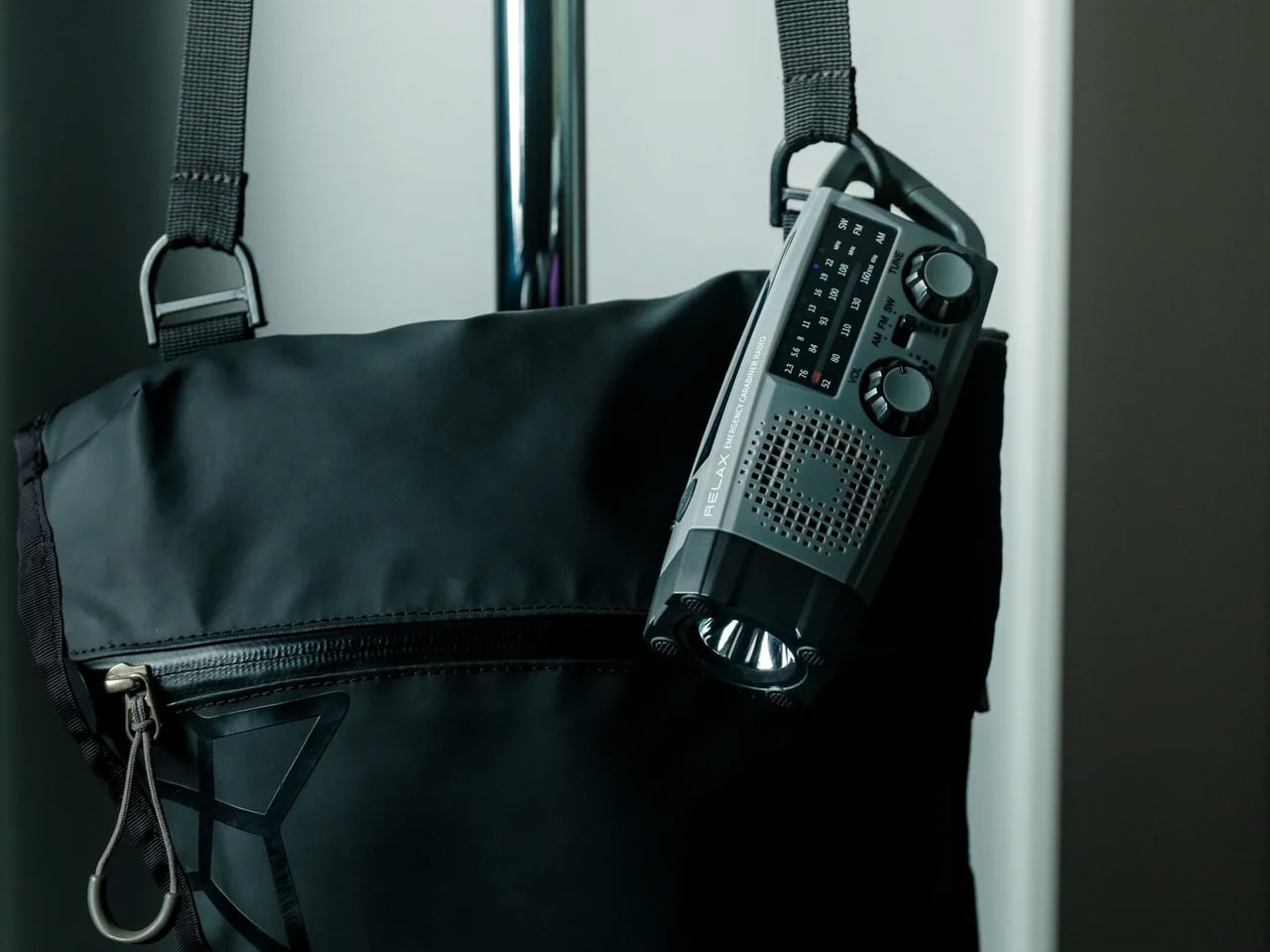
The Tomori Lantern takes minimalism to its logical extreme by existing as a flat kit until needed. Collapsed to A4 dimensions, it slips into emergency drawers, glove compartments, or bug-out bags where traditional lanterns cannot fit. The cardboard base construction sounds fragile, but it proves bend-resistant through clever engineering, working with any standard LED flashlight that fits the clamp system. This universal compatibility means you’re never dependent on proprietary bulbs or replacement part availability.
The polypropylene cover diffuses harsh flashlight beams into even ambient light, which makes spaces feel inhabited rather than interrogated. Setup requires no tools, cables, or technical knowledge—unfold, clamp the flashlight, and place the cover. This simplicity becomes critical during power outages or emergencies when complexity creates failure points. The included flashlight ensures the kit functions immediately rather than requiring you to source compatible components. When the situation resolves, the entire assembly collapses back to flat storage, ready for the next need.
No charging or fuel requirements mean indefinite shelf stability
The simple assembly works under stress when fine motor skills decline
What We Dislike
The cardboard construction has limited long-term durability with repeated use
Performance depends entirely on the flashlight quality and charge state
The utilitarian aesthetic prioritizes function over decorative appeal
The diffuser cover can separate from the base during transport
Making Light Work Harder
Space-saving lighting design represents more than dimensional reduction. These five solutions demonstrate how thoughtful engineering can deliver better functionality from smaller footprints. The key lies in questioning assumptions about what lighting must be—permanent, plugged-in, single-purpose. Modularity, portability, and multi-functionality transform lights from static fixtures into dynamic tools that adapt to changing needs and contexts throughout the day.
The under-$200 price point makes experimentation accessible rather than requiring major commitment to a single approach. You might discover that battery operation liberates furniture arrangement more than expected, or that collapsible emergency lighting serves daily uses you hadn’t anticipated. These designs prove that minimalism isn’t about deprivation but rather about intentional choices that enhance living spaces through subtraction rather than addition. Your counters will thank you for the breathing room.
The tiny house movement continues to evolve with innovative designs that maximize every inch of space, and the Tiny Rubik by Romania’s Eco Tiny House stands as a remarkable example of what’s possible within just 6 meters of length. This compact dwelling proves that downsizing doesn’t mean sacrificing comfort or style, offering an eco-friendly solution for those seeking simplicity and financial freedom.
Measuring just 20 feet long and built on a double-axle trailer, the Tiny Rubik provides 16 square meters of thoughtfully designed living space that can accommodate up to three people. The exterior features engineered wood siding paired with a metal roof, creating a modern aesthetic that’s both durable and environmentally conscious. What sets this tiny house apart is its ability to incorporate two separate sleeping areas despite its modest footprint, a feat that requires clever spatial planning and design ingenuity.
The interior layout revolves around a centrally positioned kitchen that serves as the home’s functional heart. This strategic placement maximizes efficiency while maintaining an open feel throughout the space. The kitchen comes fully equipped with an electric induction cooktop, a built-in sink, and both upper and lower cabinetry for storage. A built-in refrigerator ensures all essential appliances are included without cluttering the limited square footage.
One of the Tiny Rubik’s most impressive features is its dual sleeping arrangement. The main bedroom occupies the ground floor, offering easy accessibility and convenience for everyday living. A loft bedroom sits above, protected by wooden railings and accessible via a ladder. When not needed for sleeping, this upper level transforms into a versatile reading nook or additional storage space, demonstrating the multifunctional approach necessary in compact living.
Climate control hasn’t been overlooked either. The Tiny Rubik includes a Samsung air conditioning unit, ensuring year-round comfort regardless of the season. For those seeking complete independence from traditional utilities, off-grid capabilities are available through optional solar panels and off-grid systems. An innovative storage box integrated into the trailer tongue provides additional space for outdoor gear or seasonal items.
Since its founding in 2017, Eco Tiny House has built a reputation for delivering beautiful, comfortable, and sustainable tiny homes to clients across Europe. The company was established by tiny house owners and enthusiasts who understand the practical needs and desires of the tiny living community. The Tiny Rubik starts at approximately 43,378 euros, positioning it as an accessible entry point for those ready to embrace minimalist living. This meticulously crafted dwelling represents more than just a place to sleep. It’s a lifestyle choice for eco-conscious individuals, adventurers seeking mobility without sacrificing comfort, and anyone looking to reduce their environmental footprint while maintaining quality of life. The Tiny Rubik proves that thoughtful design can create a fully functional home in even the most compact dimensions.
Japanese kitchen design operates on a philosophy that transcends mere functionality. Each tool embodies centuries of refinement, where form and purpose merge into something approaching meditation. The best Japanese kitchen gadgets don’t just perform tasks—they transform cooking from a chore into a ritual, from a necessity into a practice. These tools invite slowness, demand presence, and reward attention with results that feel effortless yet profound.
Western kitchens often accumulate gadgets that promise convenience but deliver clutter. Japanese design takes the opposite approach: fewer tools, greater intention, deeper satisfaction. The implements featured here represent that minimalist mastery, where every curve, every material choice, every weight distribution serves both practical and experiential goals. They make cooking feel less like a production and more like a meaningful participation, something zen.
1. Precision Chef Kitchen Scissors
Most Western kitchens relegate scissors to the junk drawer, pulling them out occasionally for packaging or emergency herb trimming. The Precision Chef Kitchen Scissors rewrite that relationship entirely, becoming the primary tool you reach for before your knife even enters consideration. Specially engineered curved serrated blades slice through meat, vegetables, pizza, and herbs with startling ease, while the oxidation coloring creates a commanding black finish that resists deterioration. The ergonomic design includes a crucial detail: when laid flat, the blades hover above the surface, preserving both sharpness and sanitation between uses.
The genuine versatility transforms these scissors from a specialty item into a drawer consolidation. Butchering chicken becomes faster than knife work, requiring fewer cuts and less cleanup. Trimming fat, portioning pizza, opening stubborn packages, and detailed vegetable prep—the Precision Chef handles everything with authority. The curved serrated design grips slippery meats and fibrous vegetables that regular scissors struggle to control. The substantial build inspires confidence for heavy-duty tasks while maintaining precision for delicate work. For anyone seeking to simplify their kitchen, these scissors genuinely replace multiple knives, kitchen shears, herb scissors, and pizza cutters in one elegant package.
The curved serrated blades provide a superior grip on ingredients that slip away from standard scissors
The oxidation black finish resists fading and adds visual drama to your knife block
Blades that don’t touch surfaces when flat maintain sharpness longer and improve hygiene
The consolidation factor genuinely reduces drawer clutter without sacrificing capability
What We Dislike
The specialized blade design might require adjustment if you’re accustomed to traditional kitchen shears
The substantial build, while confidence-inspiring, adds weight that some users might find tiring during extended prep sessions
2. Smart Tea Pot
Tea preparation in Japanese culture approaches a ceremony, where temperature, timing, and intention determine whether you’re drinking hot leaf water or experiencing something transcendent. This revolutionary smart teapot brings that tea master precision into everyday practice through app-connected brewing technology. Six advanced sensors analyze your heart rate, finger temperature, and environmental conditions to tailor each brew to your current physical and emotional state. The comprehensive tea database stores optimal brewing conditions for everything from delicate white teas to robust pu-erh, ensuring authentic flavor and aroma without guesswork or timer-watching.
The personalized brewing system transforms tea from a beverage into a responsive ritual. Morning green tea brews differently from evening chamomile, not just in temperature and steeping time, but calibrated to your biometric data in that specific moment. The intuitive app interface removes the interruption of manual monitoring, letting you remain present rather than anxiously checking the clock. The technology doesn’t complicate the tea experience—it removes complications, creating space for the meditative aspects of tea preparation to emerge. This teapot understands that perfect tea isn’t about following rigid recipes but responding to the infinite variables of human experience and environmental context.
Biometric sensors create genuinely personalized tea experiences that respond to your current state
The comprehensive tea database eliminates guesswork for unfamiliar varieties
App connectivity provides consistency without requiring constant monitoring
The technology enhances rather than interrupts the meditative tea ritual
What We Dislike
The learning curve for app features might frustrate users seeking immediate simplicity
The reliance on technology introduces failure points that traditional teapots avoid entirely
3. Plate Grater
Wasabi, daikon, ginger—certain ingredients demand fresh preparation at the moment of serving, not hours before, when flavor and aroma peak. This round plate grater brings tableside garnish preparation from restaurant kitchens into home dining through elegant simplicity. The circular grating motion feels therapeutic rather than tedious, creating a mindful pause between cooking and eating. Crafted from durable stainless steel with an anti-slip silicone base that doubles as a protective cover, the thin and lightweight design stores easily without occupying precious drawer real estate.
The tableside preparation transforms garnishes from afterthought into engagement. Grating fresh wasabi for sashimi, daikon for tempura, and ginger for grilled fish—the circular motion becomes part of the dining ritual rather than prep work to rush through. The compact round design fits naturally at the table without commanding excessive space or attention. The anti-slip base provides stability during use and protection during storage. The therapeutic circular grating motion offers a moment of presence between cooking and consumption, a brief meditative pause that enhances appreciation for what follows. This grater makes fresh garnish preparation so effortless and pleasant that you’ll find reasons to grate things you previously bought pre-processed.
The circular grating motion creates a genuinely therapeutic preparation experience
The compact round design fits naturally at dining tables without crowding
The dual-purpose silicone base prevents slipping during use and protects during storage
Fresh garnish preparation becomes a ritual rather than a chore
What We Dislike
The round plate design limits the types of ingredients that can be effectively grated
The compact size, while space-efficient, means slower processing for larger quantities
4. Iron Frying Plate
Western dining creates an artificial separation between cooking vessel and serving dish, transferring food from pan to plate in a ritual that cools ingredients and adds cleanup steps. The JIU Iron Frying Plate eliminates that middleman—the frying pan is your plate, the plate is your frying pan, collapsing cooking and eating into a seamless experience. Crafted from rust-resistant mill scale steel with a detachable wooden handle, this cookware brings out superior flavors and textures while reducing the barriers between preparation and enjoyment. The uncoated surface comes ready to use immediately, requiring no seasoning or special preparation rituals.
The boundary-blurring design creates intimacy with your food that standard plating disrupts. Eggs sizzle on your breakfast table, fish arrives still crackling from the heat, and vegetables steam visibly as you lift fork to mouth. The immediacy preserves temperature, texture, and visual drama that dissipate during transfers. The detachable wooden handle attaches and releases with one hand, transforming cookware into serveware in seconds. The rust-resistant and stick-resistant mill scale steel develops natural non-stick properties through use without chemical coatings. The design invites slower, more attentive eating—you’re not rushing through a cooled plate but pacing yourself with a vessel that retains heat and presence throughout the meal.
The cook-and-serve design preserves temperature and texture better than transferred plating
The one-handed handle attachment provides seamless transitions from stove to table
The uncoated mill scale steel requires no seasoning and develops natural non-stick properties
The retained heat encourages a slower, more mindful eating pace
What We Dislike
The hot serving surface requires careful handling and might not suit households with young children
The iron construction adds weight compared to standard plates
5. Obsidian Black Mini Grip Tongs
Precision suffers when tools don’t match the task scale. Standard tongs designed for flipping steaks and tossing salads become clumsy instruments when arranging delicate appetizers or plating intricate dishes. These Obsidian Black Mini Grip Tongs at 4.9″ or 7″ provide the precise control that detailed food work demands. Crafted from SUS821L1 stainless steel, offering twice the strength of standard SUS304, the design achieves exceptional durability in lightweight form. The dark oxidized finish creates a striking visual presence whether working in the kitchen or serving at the table.
The compact dimensions transform tasks that feel awkward with full-sized tongs into natural, comfortable movements. Arranging bite-sized hors d’oeuvres, distributing breakfast sausages, flipping delicate shrimp, plating garnishes—the smaller scale provides distance for hygiene while maintaining the dexterity to handle fragile ingredients. The doubled steel strength allows thinner construction without sacrificing durability, reducing hand fatigue during extended prep sessions. The corrosion resistance ensures longevity despite frequent exposure to acidic ingredients and moisture. The dark finish adds sophistication that bridges kitchen and dining contexts, looking equally appropriate during cooking and tableside service. These tongs fill the precision gap that standard kitchen tools overlook.
The compact size provides precise control for delicate ingredients and detailed plating
The doubled steel strength enables a lightweight design without compromising durability
The corrosion-resistant material withstands acidic ingredients and frequent washing
The dark finish transitions elegantly from kitchen work to tableside service
What We Dislike
The smaller size limits utility for larger ingredients or high-volume cooking tasks
The specialized nature means they supplement rather than replace standard-sized tongs
6. Hinoki Essence Cutting Board
Cutting boards in Western kitchens lean toward two extremes: hard plastic that preserves knife edges but feels clinical, or soft wood that comforts hands but dulls blades. The Hinoki Essence Cutting Board achieves the balance that Japanese cypress is renowned for—medium hardness that offers resistance without damaging knives. The majestic hinoki wood naturally resists mold while the water-resistant silicone coating penetrates wood fibers to prevent damage. The gentle, rounded shapes and integrated handle provide both aesthetic grace and practical functionality for hanging and hygienic drying.
The cutting experience on hinoki transforms knife work from task into sensory practice. The wood provides satisfying feedback without the harsh impact of hard surfaces or the mushy give of soft materials. The natural aroma of cypress adds olfactory dimension to food preparation, creating an atmosphere that plastic and bamboo cannot replicate. The design revives traditional hinoki use in forms suited to modern lifestyles and aesthetic sensibilities. The integrated handle facilitates hanging storage that promotes air circulation and drying. The water-resistant treatment extends durability without coating the surface in synthetic films. The gentle curves blend naturally with contemporary kitchen interiors while honoring traditional Japanese woodworking aesthetics. This cutting board makes knife work feel intentional rather than mechanical.
The medium hardness protects knife edges while providing satisfying cutting feedback
The natural hinoki aroma adds sensory dimension to food preparation
The water-resistant silicone treatment penetrates fibers without a synthetic coating
The integrated handle enables hygienic hanging storage and natural drying
What We Dislike
The cypress wood requires more maintenance attention than plastic alternatives
The premium material commands a higher price compared to standard cutting boards
7. Precision Ceramic Sashimi Knife
Raw fish demands knife performance that metal blades, for all their centuries of refinement, struggle to deliver. The Precision Ceramic Sashimi Knife represents the convergence of Japanese craftsmanship and advanced material science, creating a blade twice as hard as stainless steel with sharpness lasting 200 times longer than conventional edges. The single-bevel design emulates the classic yanagiba with a concave back, reducing friction for effortless, drag-free cuts. The lightweight ceramic construction enables extended use without hand fatigue, while the advanced material requires minimal maintenance and virtually eliminates sharpening routines.
The cutting experience transforms sashimi preparation from a technical challenge into a flowing motion. The exceptional sharpness preserves delicate fish texture and cell structure that duller blades tear and compress. The friction-reducing concave back allows the blade to glide through ingredients with minimal resistance and maximum control. The lightweight design enables the precise, continuous strokes that proper sashimi cutting requires without the arm fatigue that metal blades produce. The ceramic material doesn’t impart metallic taste or oxidation to delicate seafood. The longevity of the edge means consistent performance over years rather than gradual degradation between sharpenings. This knife allows home cooks to achieve the finesse of expert sushi chefs, creating visually stunning and flavorful dishes that honor the ingredient.
The ceramic material maintains sharpness 200 times longer than conventional steel blades
The single-bevel design with concave back enables effortless, drag-free cuts
The lightweight construction reduces hand fatigue during extended preparation
The non-reactive material prevents metallic taste transfer to delicate seafood
What We Dislike
The ceramic blade, while exceptionally hard, is more brittle than steel and requires careful handling
The specialized design focuses on sashimi and delicate work rather than general-purpose cutting
8. Supreme Daikon Radish Grater
Grating might seem like straightforward physics—sharp protrusions shredding softer materials—but Japanese craftsmanship reveals the profound difference between merely reducing ingredients and properly transforming them. The Supreme Daikon Radish Grater features traditional Hon-Meguri diagonal sharp blades individually carved by skilled artisans using sharp chisels. The innovative Quattro blade pattern, arranged in four directions, reduces slipping and provides stable, stress-free grating. The thick stainless steel construction combines exceptional durability with ease of maintenance, while the finely honed blades grate without tearing fibers, producing a smooth and fluffy texture perfect for gourmet presentations.
The grating experience reveals why Japanese artisans dedicate careers to perfecting such seemingly simple tools. The Hon-Meguri technique creates exceptionally sharp and durable blades that outlast stamped alternatives by years. The Quattro blade arrangement provides consistent performance regardless of grating direction, eliminating the frustration of ingredients slipping across ineffective zones. The careful blade geometry shears cleanly through ingredient fibers rather than tearing them, preserving moisture and creating the light, fluffy texture that properly grated daikon demands. The thick stainless steel construction provides rigidity that cheaper graters lack, ensuring consistent blade exposure and pressure. This grater makes the difference between grated daikon that weeps liquid and turns mushy versus the cloud-like mounds that Japanese restaurants achieve.
The traditional Hon-Meguri technique creates exceptionally sharp and durable hand-carved blades
The Quattro blade pattern provides stable performance in all grating directions
The finely honed blades shear cleanly without tearing fibers for superior texture
The thick stainless steel construction ensures durability and rigidity
What We Dislike
The artisan craftsmanship commands premium pricing compared to stamped graters
The specialized design focuses on daikon and similar ingredients rather than general-purpose grating
Finding Zen Through Better Tools
Japanese kitchen tools don’t promise to save time or eliminate effort—they promise to make that time and effort worthwhile. Each implement featured here transforms mundane cooking tasks into opportunities for presence, precision, and satisfaction. The scissors that replace multiple tools, the teapot that responds to your biometric state, the cutting board that breathes cypress aroma into your prep work—these aren’t conveniences but invitations to slow down and pay attention.
The zen of cooking emerges not from rushing through tasks but from tools that reward attention with superior results. These Japanese gadgets and tools create that space, that possibility, that invitation. They ask you to notice the therapeutic circular motion of tableside grating, the satisfying feedback of knife meeting hinoki, the visual drama of food served directly from the cooking vessel. They transform kitchen work from something to finish quickly into something worth experiencing fully, where the cooking becomes as nourishing as the eating.