Tesla brings (scary) improvements to Gen 2 of Optimus humanoid robot

It’s frightening to think that it will not be a surprise to all of us if one of these days, we’ll wake up to the fact that our new robot overlords have taken over the planet. We’re seeing advances in robotics that will not make that an impossibility. We’re still far away from robots becoming sentient beings that will enslave us though so for now we can enjoy how these humanoid devices are still being created to help us rather than replace us.

Designer: Tesla
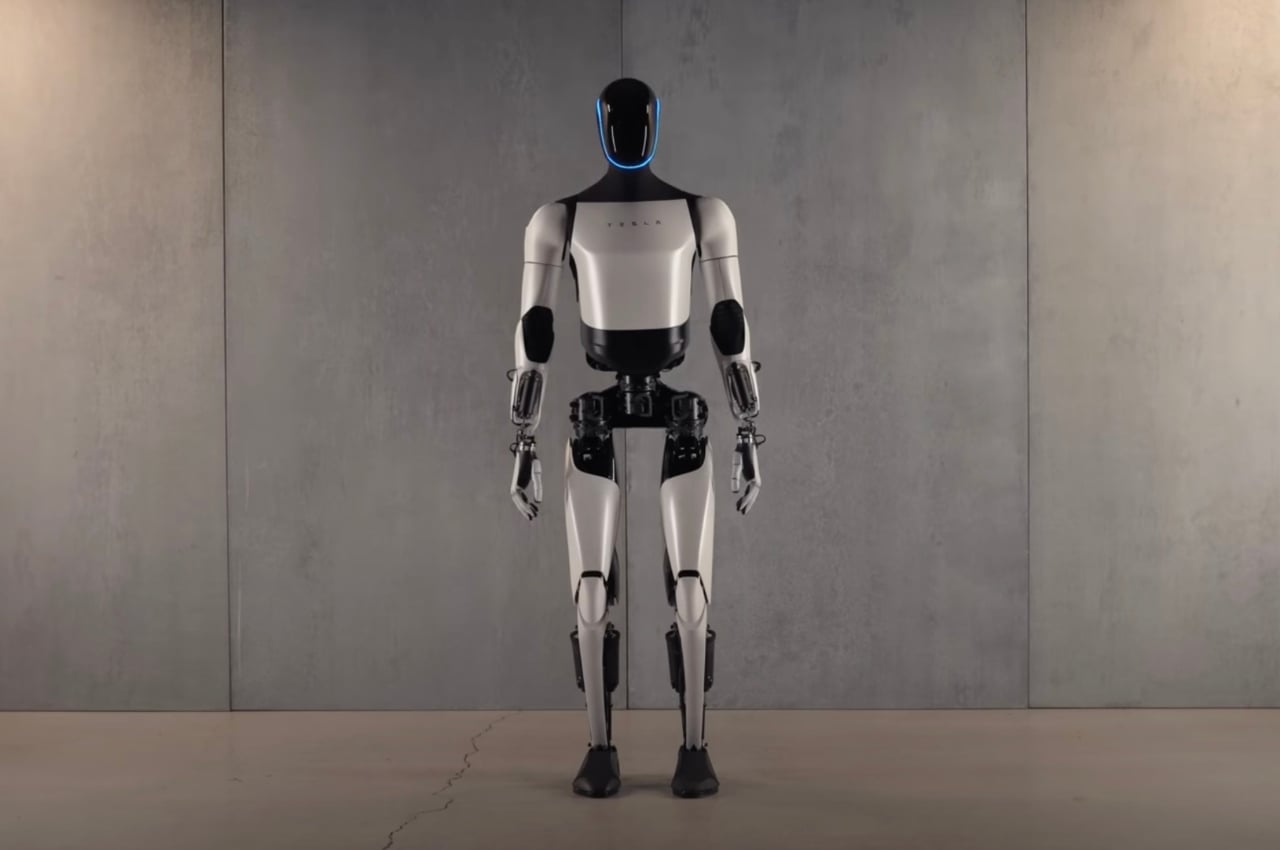
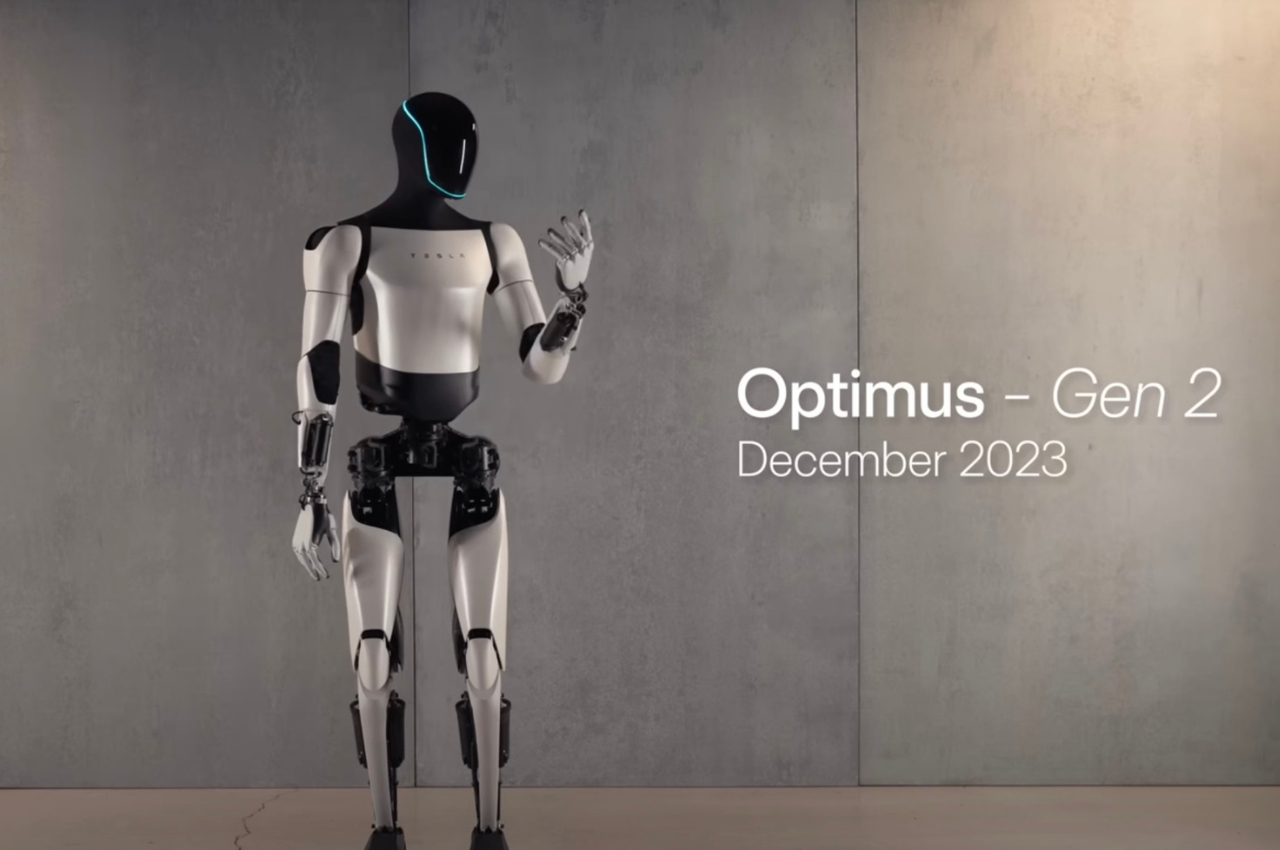
It’s also not a surprise that Elon Musk and Tesla are at the forefront of trying to make these robots better. The latest version of their humanoid robot, the Optimus Gen 2, brings many improvements from their first one, the Bumblebee back in 2022, and the Optimus Gen 1 from just earlier this year. It received a lot of hardware upgrades for this version, specifically the Tesla-designed actuators and sensors that are now more precise and accurate and now has integrated electronics into it. You get articulated toe sections based on human foot geometry so it can walk a bit more naturally.
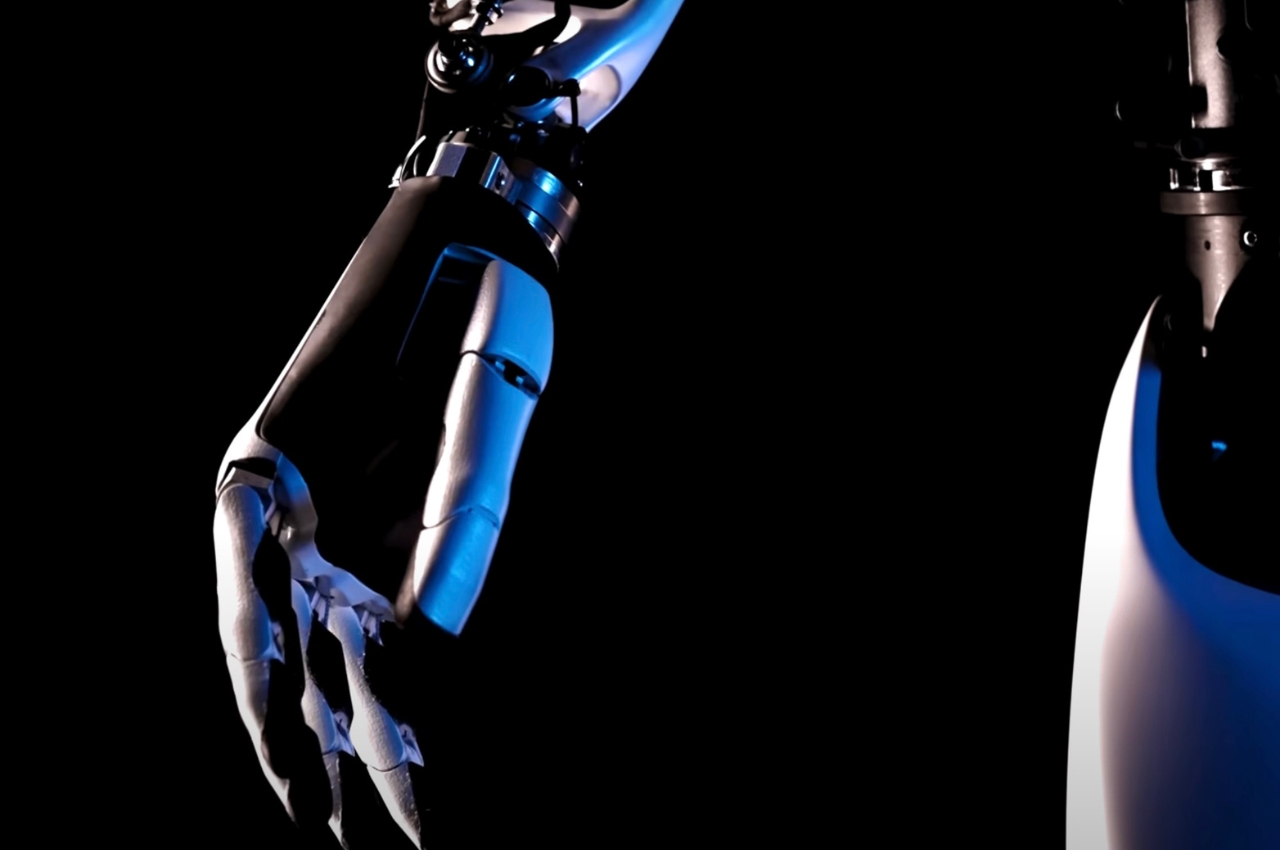
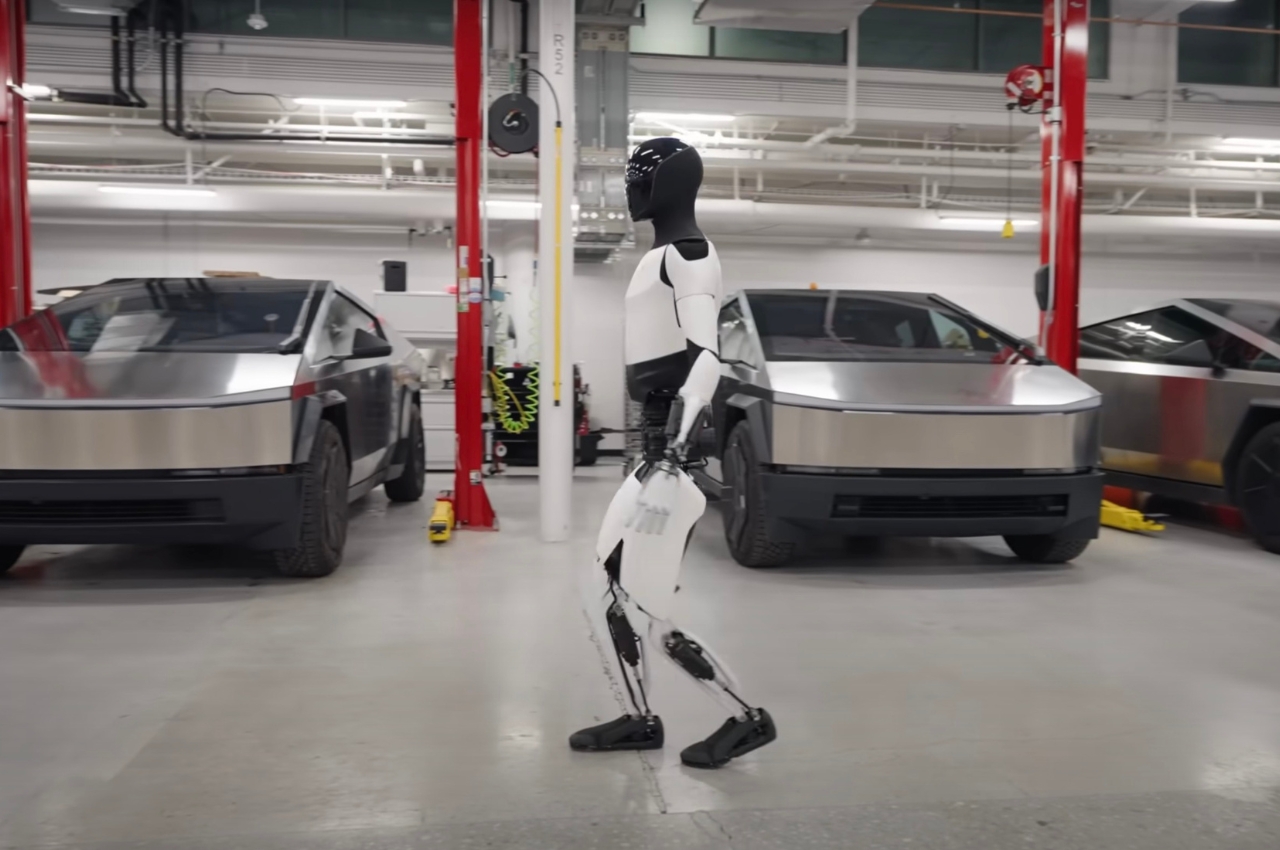
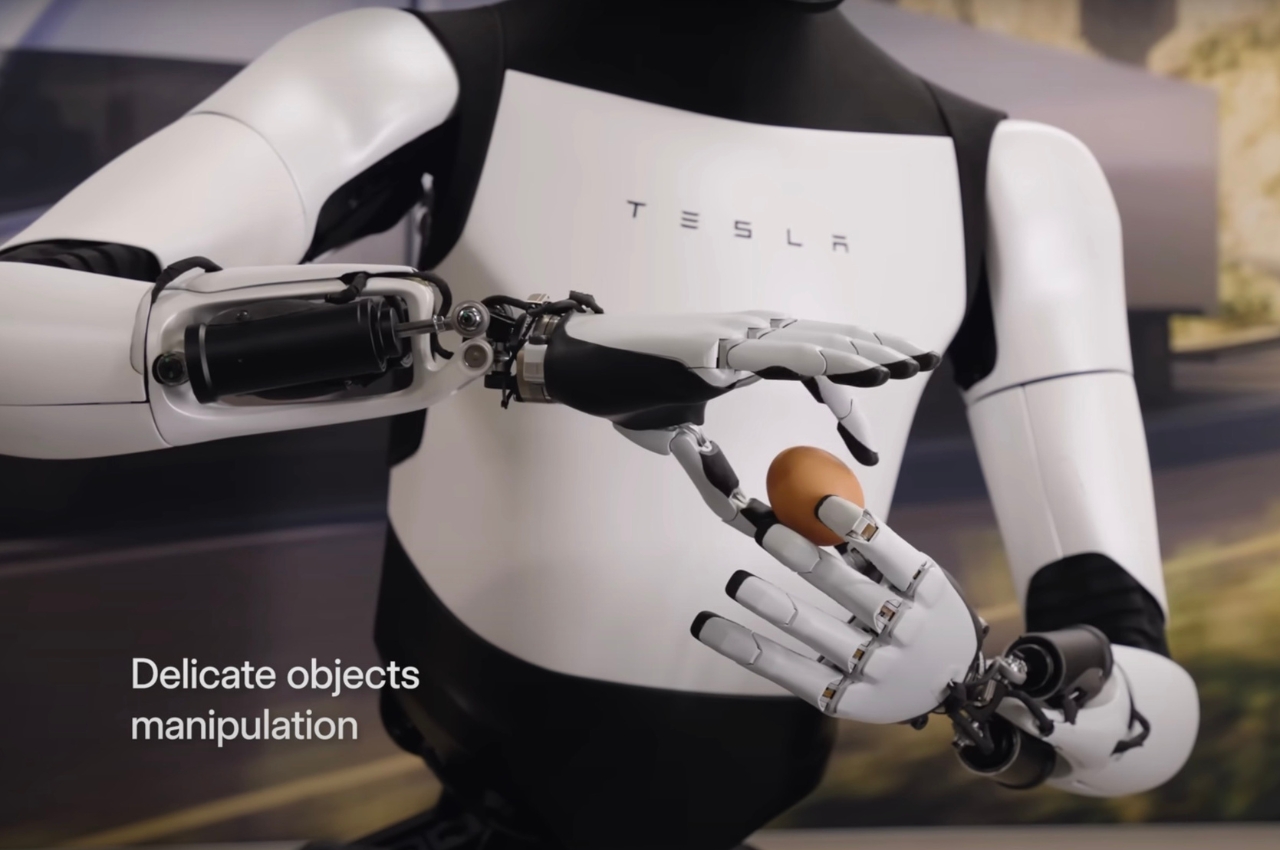
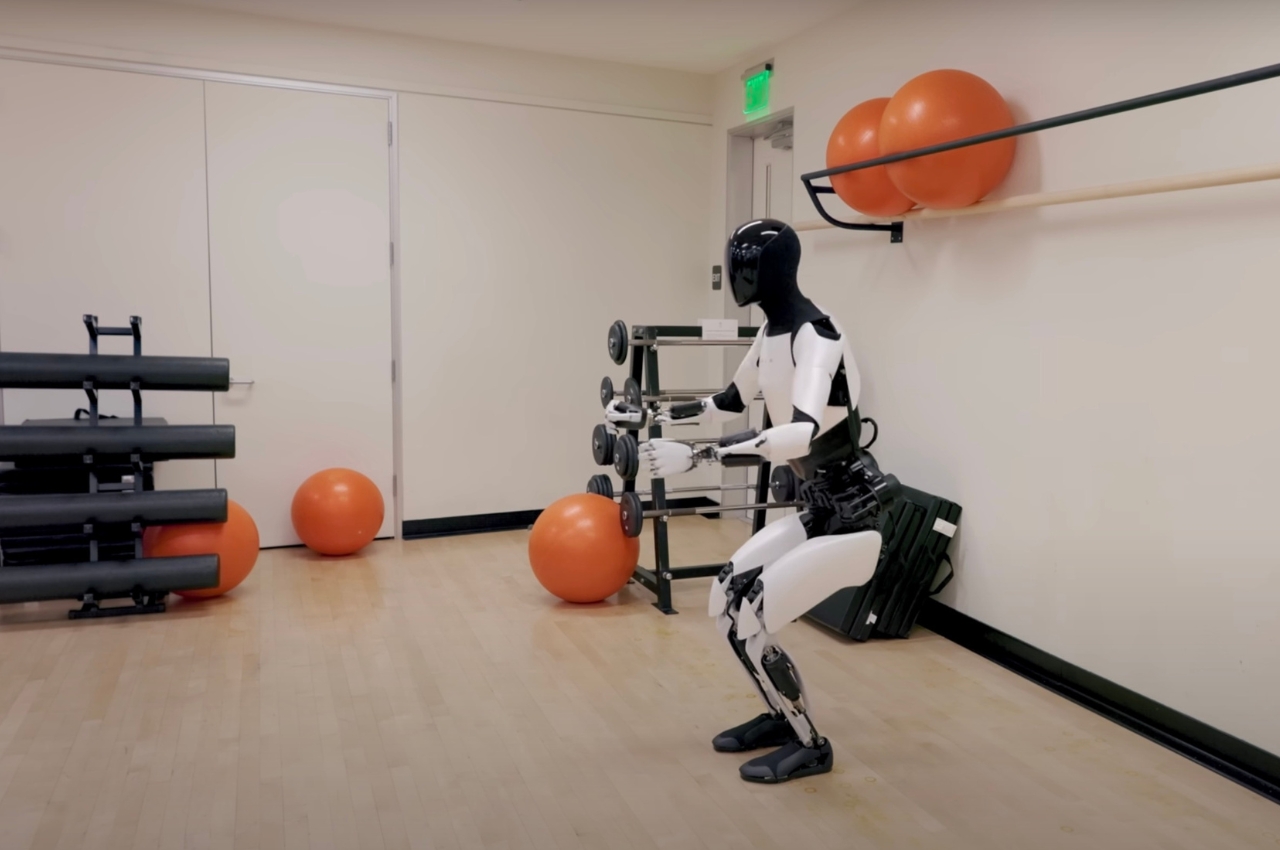
It now also has a 2-DoF actuated neck so it’s able to move its head in a more human way, which can be amazing or terrifying. Its hands now has 11-DoF and tactile sensing in all of its digits so it will be able to handle eggs and other delicate things without dropping them. It is also now lighter by 10kg and gets a 30% walk speed boost so it can easily move around better than its predecessors, although you can still outrun it if needed. Because of these improvements, it has improved balance and full body control that it can do things like squats.
The Optimus humanoid robot is envisioned to be a helper for humans, taking over some of the monotonous tasks that we would like to escape from. The Gen 2 is still in the prototype phase though and there is no news yet if they will eventually manufacture and sell it. It gives us time to think about whether we will risk an eventual robot uprising just to take away tedious tasks from our every day life.

The post Tesla brings (scary) improvements to Gen 2 of Optimus humanoid robot first appeared on Yanko Design.
Apple, Visa and Mastercard sued in proposed class action antitrust case over Apple Pay card fees

A proposed class action lawsuit has accused Apple of accepting a form of bribe from Visa and Mastercard to ensure their dominance over point-of-sale payment card services for Apple Pay transactions, according to Reuters. As a result, the lawsuit says merchants have been forced to pay higher fees.

The companies are being sued by beverage retailer Mirage Wine & Spirits in Illinois on behalf of “all merchants in the United States that accepted Apple Pay as a method of payment at the physical point-of-sale.” According to the complaint, Apple made an agreement with Visa and Mastercard that did away with any incentive for it to develop its own competing point-of-sale transaction payment network or allow other companies to make use of iPhone’s “tap to pay” NFC functionality with third-party wallet apps. On the iPhone, Apple’s own wallet app is the only option. All of this has led to inflated merchant fees, the suit argues.

“In exchange for agreeing not to compete with Visa and Mastercard in the Relevant Market, the two card networks offered Apple a very large and ongoing cash bribe,” the lawsuit states. This bribe came as a percentage of the two companies’ transaction fees for credit and debit card payments made with Apple Pay. “Even as Apple Pay was in its infancy, the Entrenched Networks and Apple understood that this bribe would amount to hundreds of millions of dollars per year.”

Apple has been accused of anti-competitive behavior with Apple Pay in the past for how it blocks third-party access to its contactless payment technology. But earlier this week, Reuters reported that Apple may open up NFC access in the EU to avoid a fine in a case that has been ongoing since 2020.

This article originally appeared on Engadget at https://www.engadget.com/apple-visa-and-mastercard-sued-in-proposed-class-action-antitrust-case-over-apple-pay-card-fees-203445696.html?src=rss

Upcycled skateboard factory rejects transform into warm wall lighting

Recycling is a great way to reduce the amount of waste that ends up in landfills, but the process itself can sometimes have some negative impact. There’s still a lot of energy and water involved in converting materials into something usable again, and there’s also some loss when the original design gets destroyed in the process. Upcycling is a more efficient and time-saving alternative, but not everything can be upcycled and not everything that can be upcycled can be used in newer and better ways. Sometimes, it takes a bit more creative thinking to transform one thing into a completely different thing, like how factory seconds from skateboard manufacturers are turned into these understated yet elegant wall lamps.

Designers: Michael and Mariel Upton

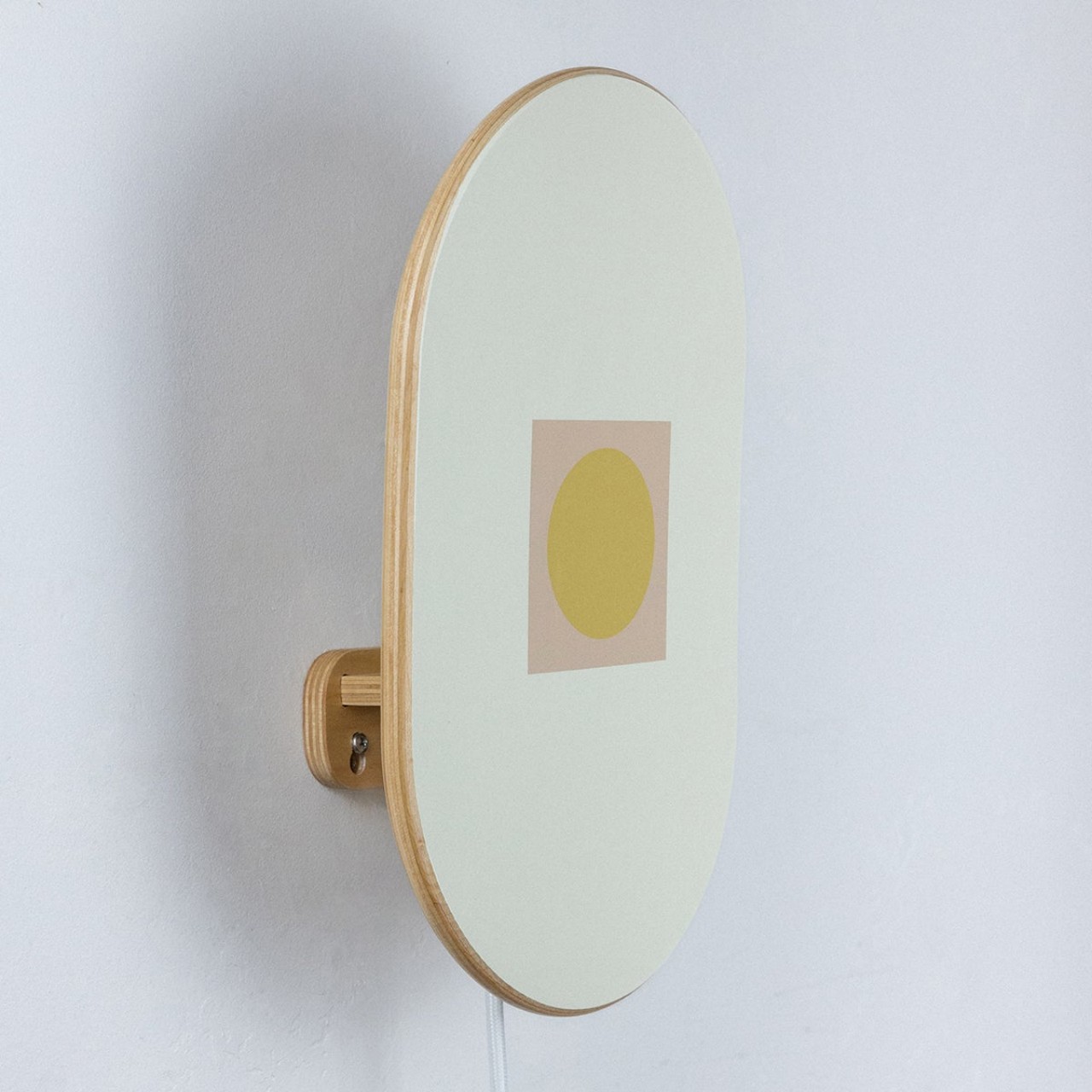
Skateboards are objects that bring up images of speed, tricks, and devilish stunts. They’re hardly associated with warmth, subtlety, or even light. Of course, these associations aren’t inherent in the shape of the skateboard’s wooden deck, which makes them open for reuse and reinterpretation, as the case of this trio of wall lamps demonstrates, providing stylish lighting that hardly gives a clue to their origins.

Considering the long oval shapes of skateboard decks, not to mention their upward curved ends, you definitely wouldn’t be able to guess that these wall lights are exactly made from those wooden parts. That’s because these pieces of 7-ply maple wood are taken from factory rejects, decks that obviously didn’t make the cut. Since the shapes of these boards are too specific for general use, they often end up simply being discarded. They’re thankfully made from wood, so they’re biodegradable and have fewer harmful effects on the environment, but they’re still waste and, more importantly, wasted opportunity.

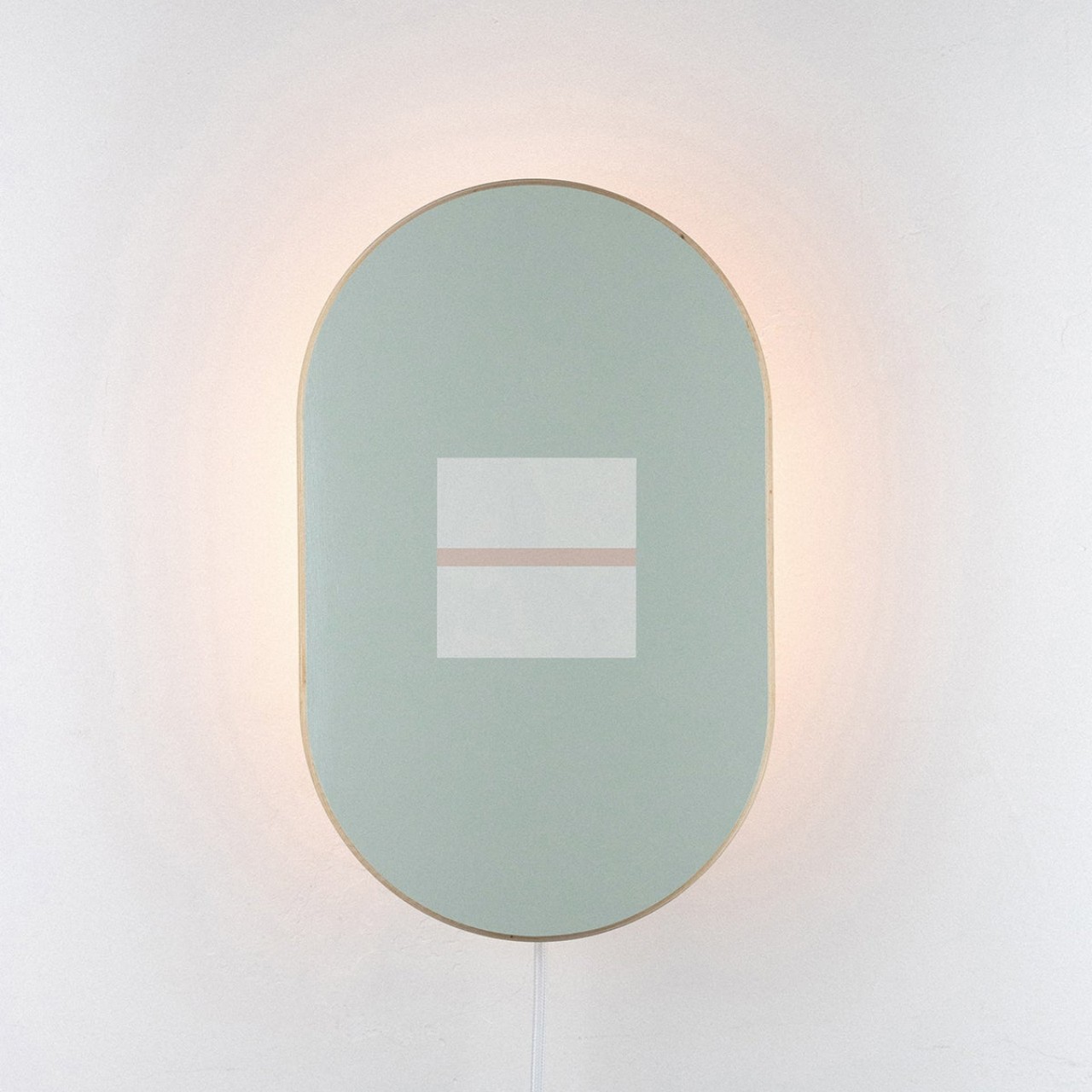
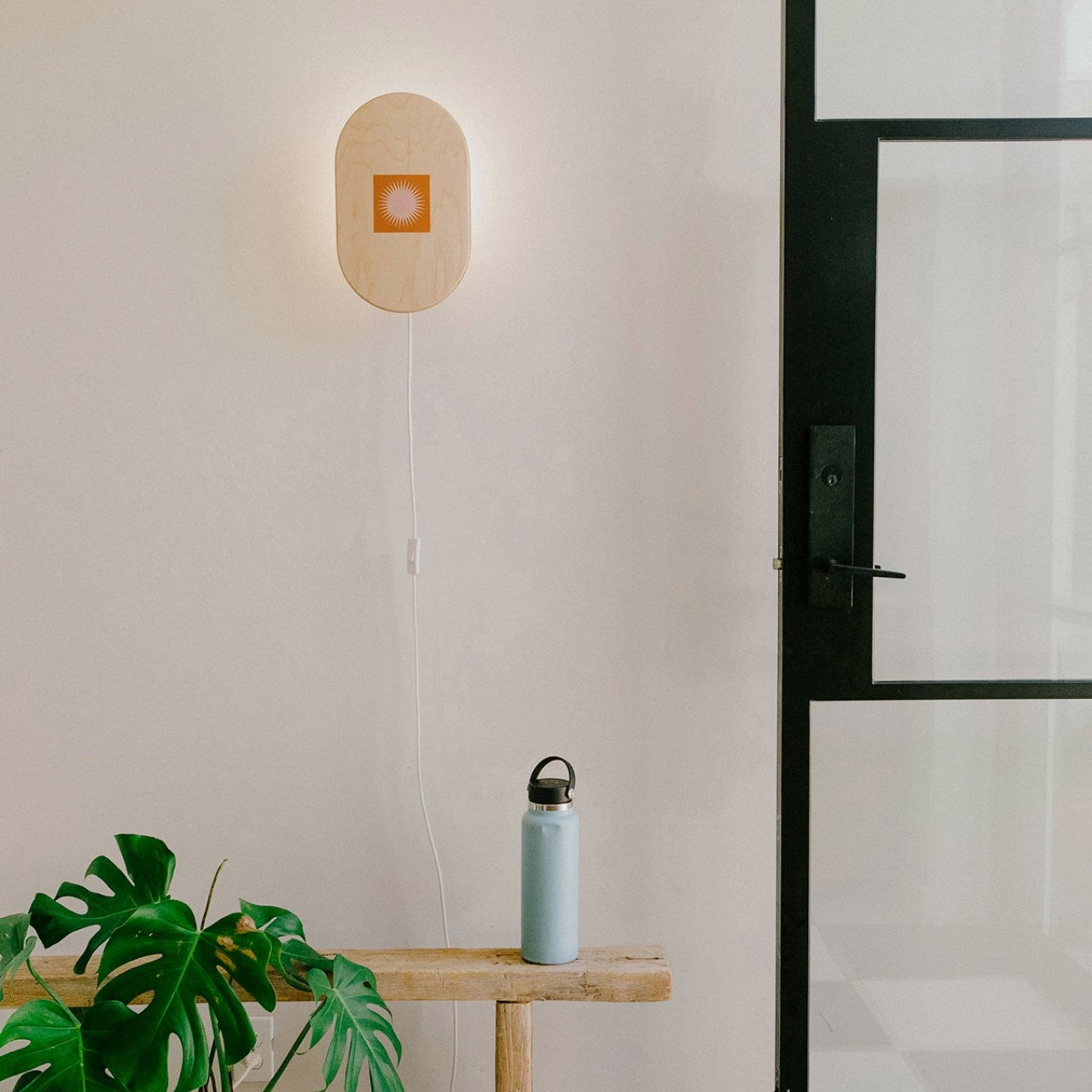
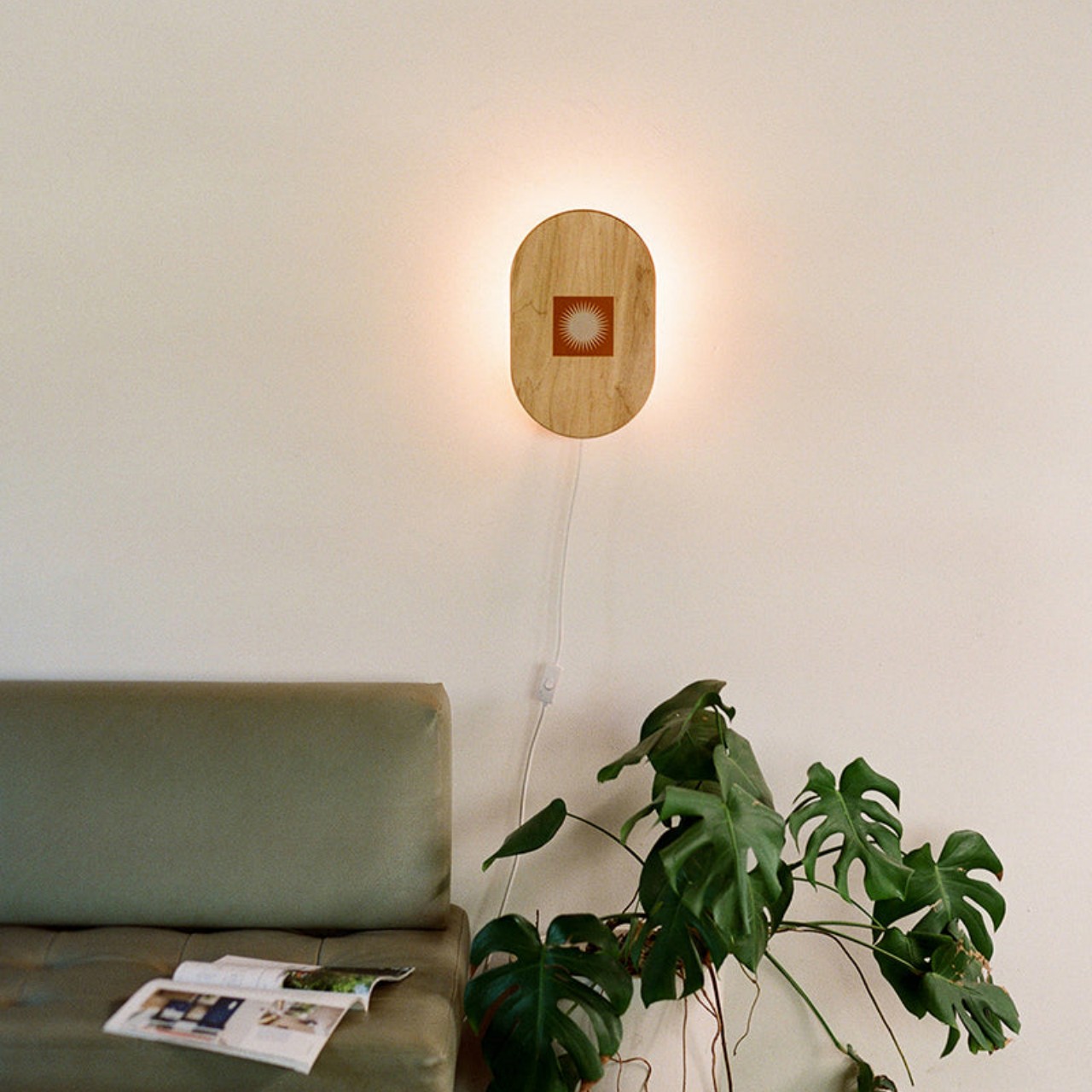
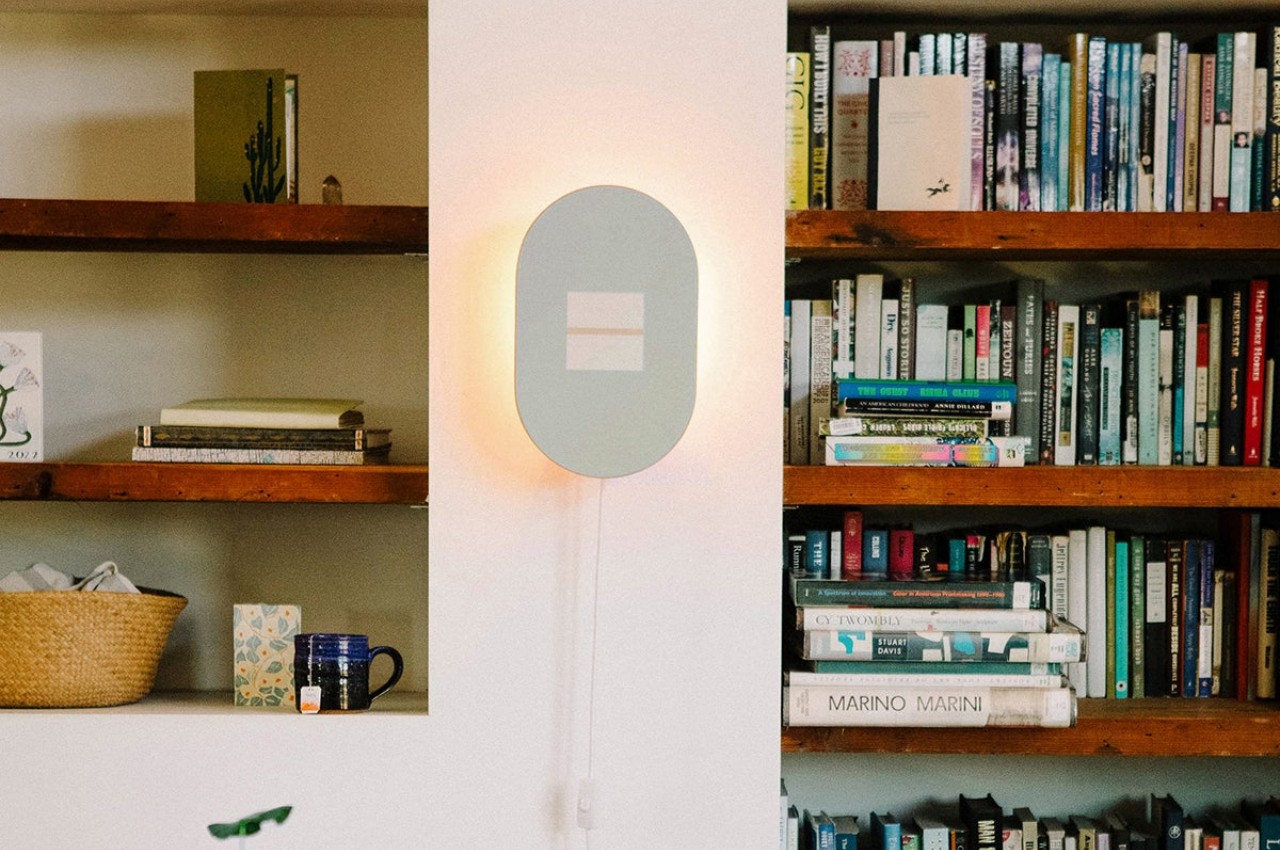
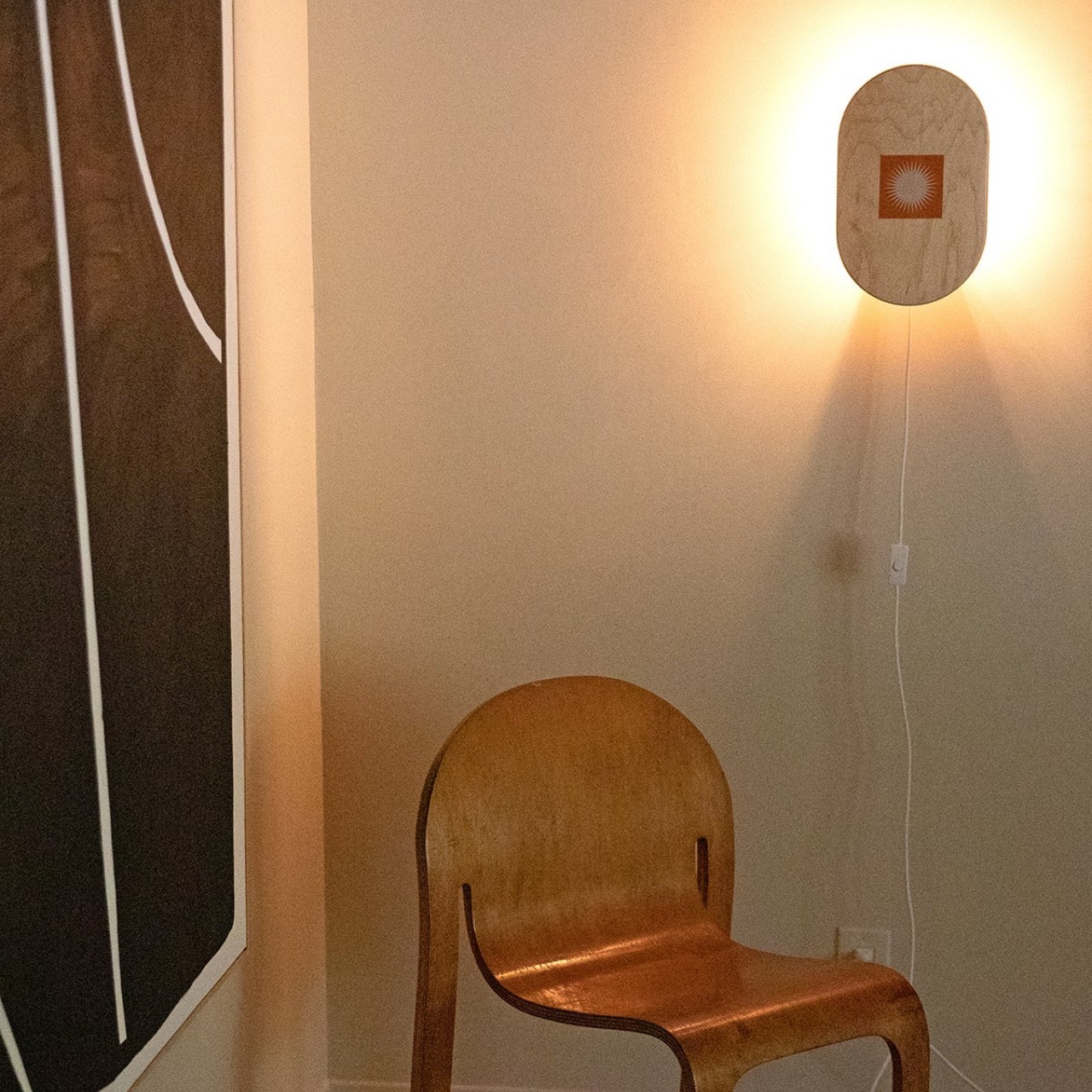
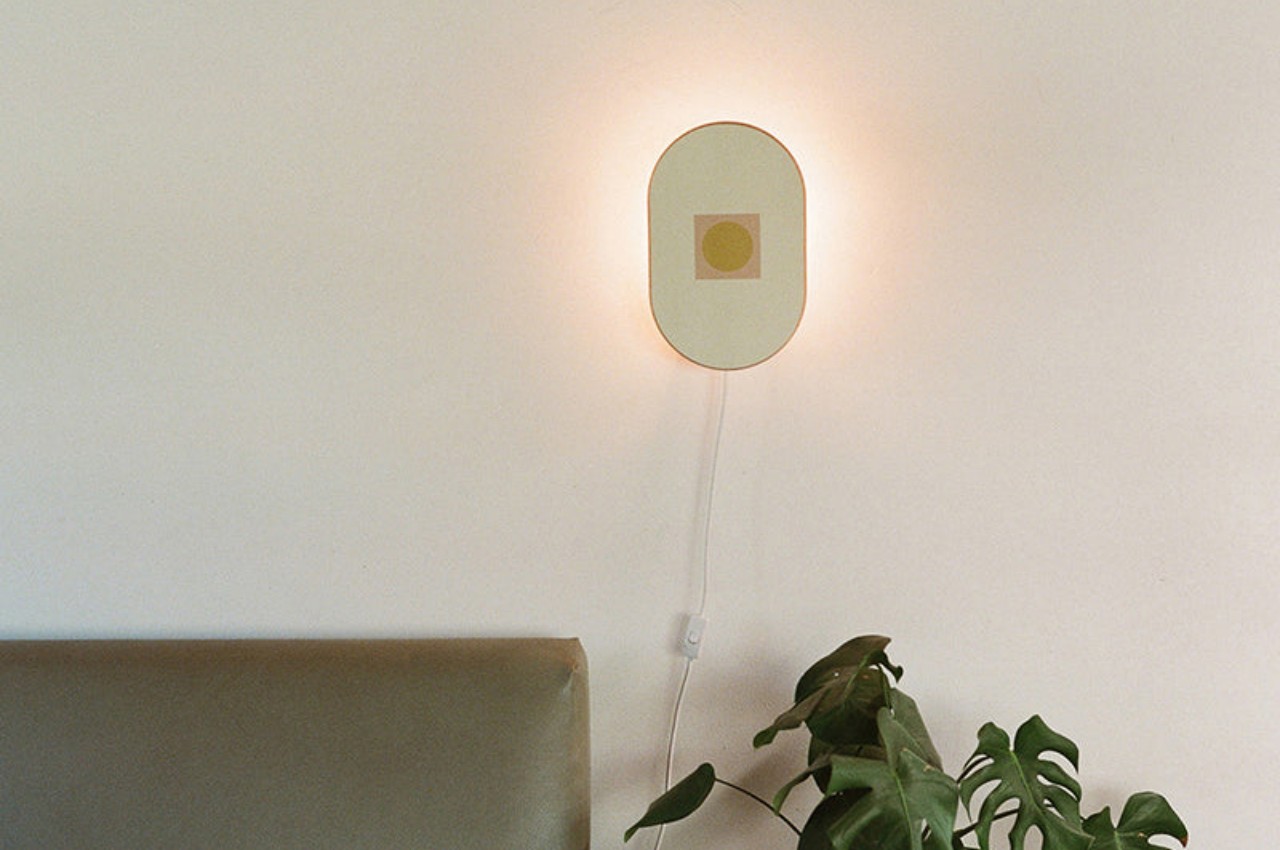
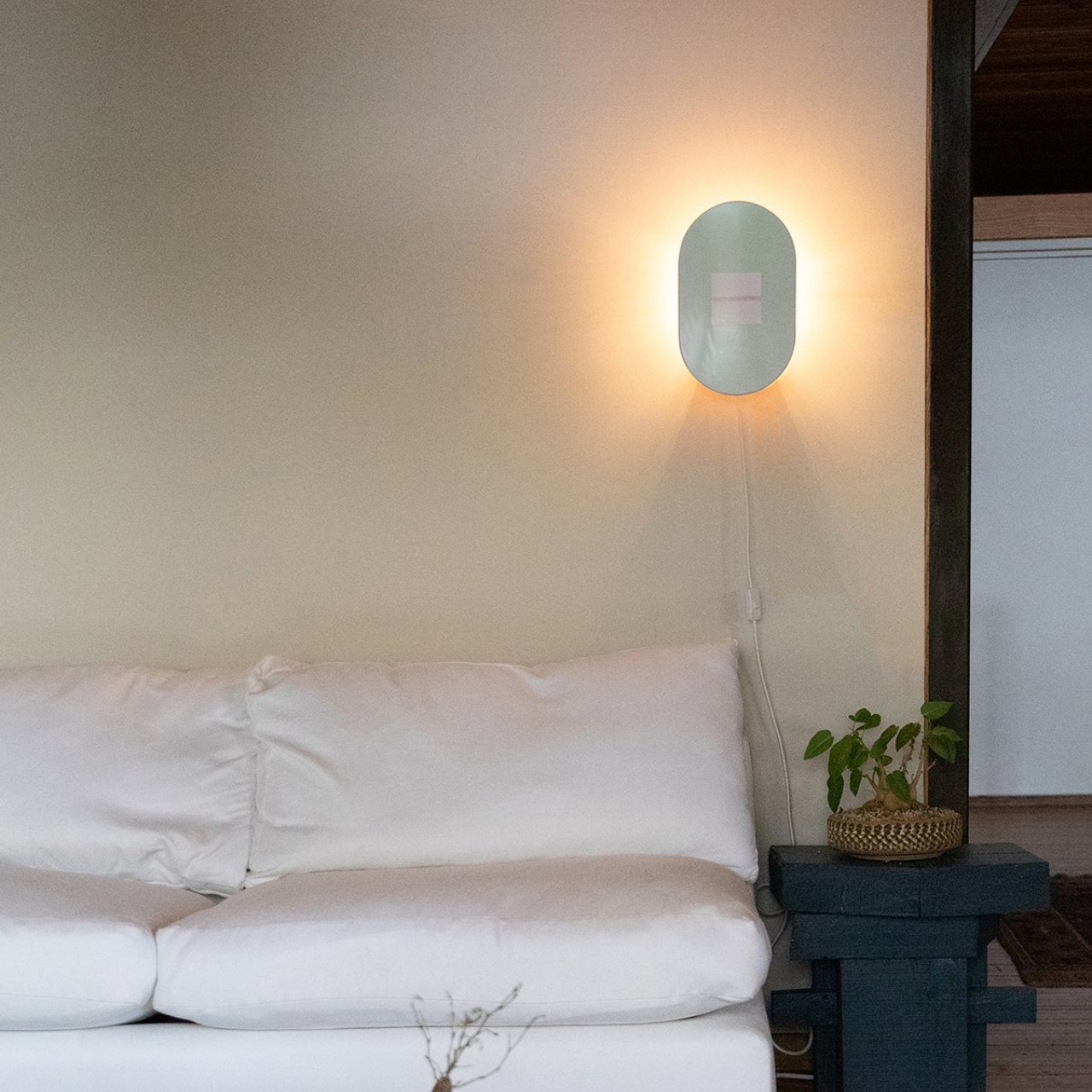
Upton thankfully has the wonderful idea of using those boards to provide ambient lighting as well as a piece of minimalist wall art. The discarded decks are cut to create a shorter and straighter oval shape and then paired with lighting hardware on the back. Each of the three variants, namely, Heru, Cuna, and Mara, get a square piece of original art that becomes the visual center of the entire fixture. With this, even if the light is off, the designs act as decorative pieces that enhance a room’s ambiance in a subtle way.

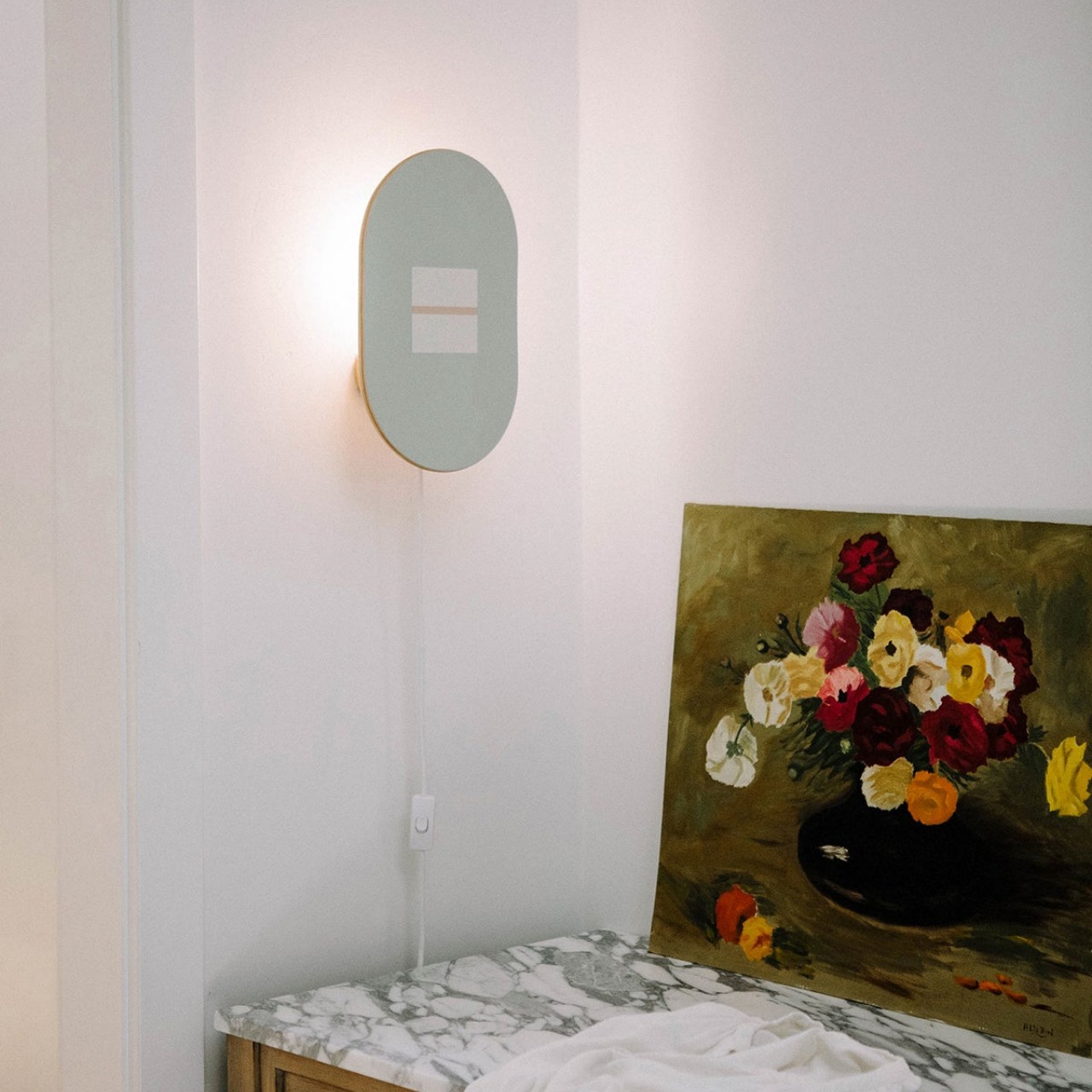
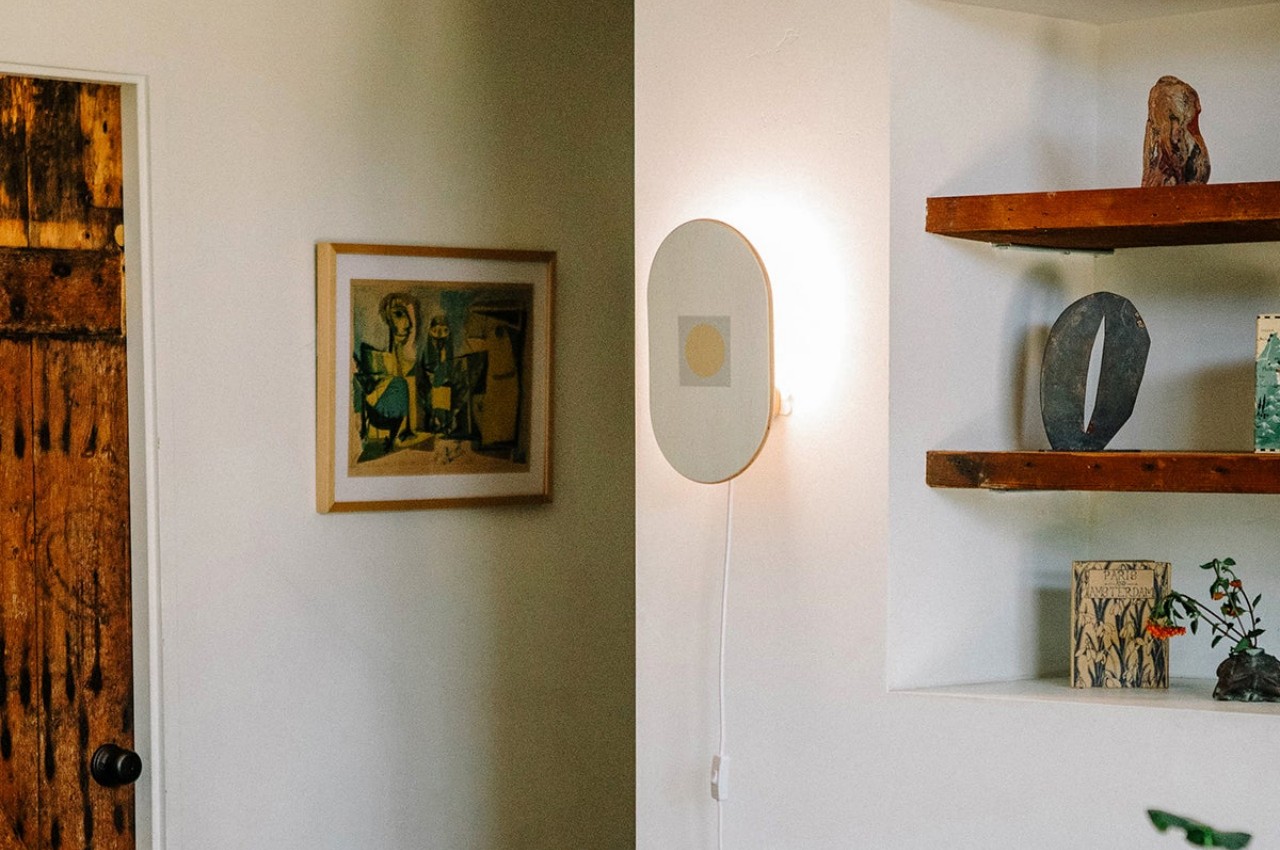
When the light is on, however, you get a warm ambient halo of light that sets a calming and relaxing mood in any space. The light is emitted from the back and is reflected on the mounting surface, making it look softer and avoiding painful glare when you look in its direction. The wall lamp projects a character of calm and warmth, definitely not something you’d expect from a speedster skateboard that it would have become in some other lifetime.

The post Upcycled skateboard factory rejects transform into warm wall lighting first appeared on Yanko Design.
These tomatoes were lost on the International Space Station for almost a year

In an interview this fall following his return to Earth from the International Space Station, NASA astronaut Frank Rubio shared a little mission anecdote that had us gripped: after he’d harvested one of the first tomatoes grown in space and bagged it up for a presentation, the bag and its contents went missing. With no trace of the fruit, the other astronauts jokingly accused Rubio of eating it. Then, eight months later at the beginning of December, the lost tomato reappeared. A photo shared by NASA now shows there were actually two tomatoes in the rogue sample — and, all things considered, they don’t look half bad.

While a tomato left to rot on Earth isn’t a pleasant thing to come across, Rubio’s tomatoes just look a bit dried out. “Other than some discoloration, it had no visible microbial or fungal growth,” NASA wrote in a blog post.

NASA has for years been experimenting with ways to grow food on the ISS and studying how the space environment affects plant growth. The red dwarf tomatoes were grown as part of a program called the eXposed Root On-Orbit Test System, or XROOTS, which uses a combination of hydroponic and aeroponic techniques instead of soil. Rubio, who was on the ISS for a record-breaking 371 days before his return in September 2023, harvested a batch of the tomatoes in March to be sent back to Earth and examined for the VEG-05 study.

As for the sample Rubio hung onto, which he intended to show to schoolkids in an event a crewmember had planned, the astronaut said the tomatoes simply disappeared. “I was pretty confident that I Velcroed it where I was supposed to Velcro it, and then I came back and it was gone,” he said. Rubio said he spent “eight to 20 hours” looking for it, to no avail. They were eventually found behind the Earth-facing hatch of the ISS's Harmony module, a NASA spokesperson told Engadget. 

Expedition 65 astronaut Megan McArthur inside the Harmony module on the ISS in 2021
NASA

The Harmony module, pictured above in 2021 with astronaut Megan McArthur inside, acts like a crossroads, port and “utility hub” on the orbiting station. Its hatch provides access to the pressurized mating adapter, where spacecraft carrying cargo or crews, like SpaceX's Dragon, dock to the ISS. The months-old tomatoes were discarded after being discovered. 

Update, December 20 2023, 11:28AM ET: This story has been updated to include new information from NASA on where the missing tomatoes were found. 

This article originally appeared on Engadget at https://www.engadget.com/these-tomatoes-were-lost-on-the-international-space-station-for-almost-a-year-182601610.html?src=rss

Triangle Side Table offers an interesting way to show off your books

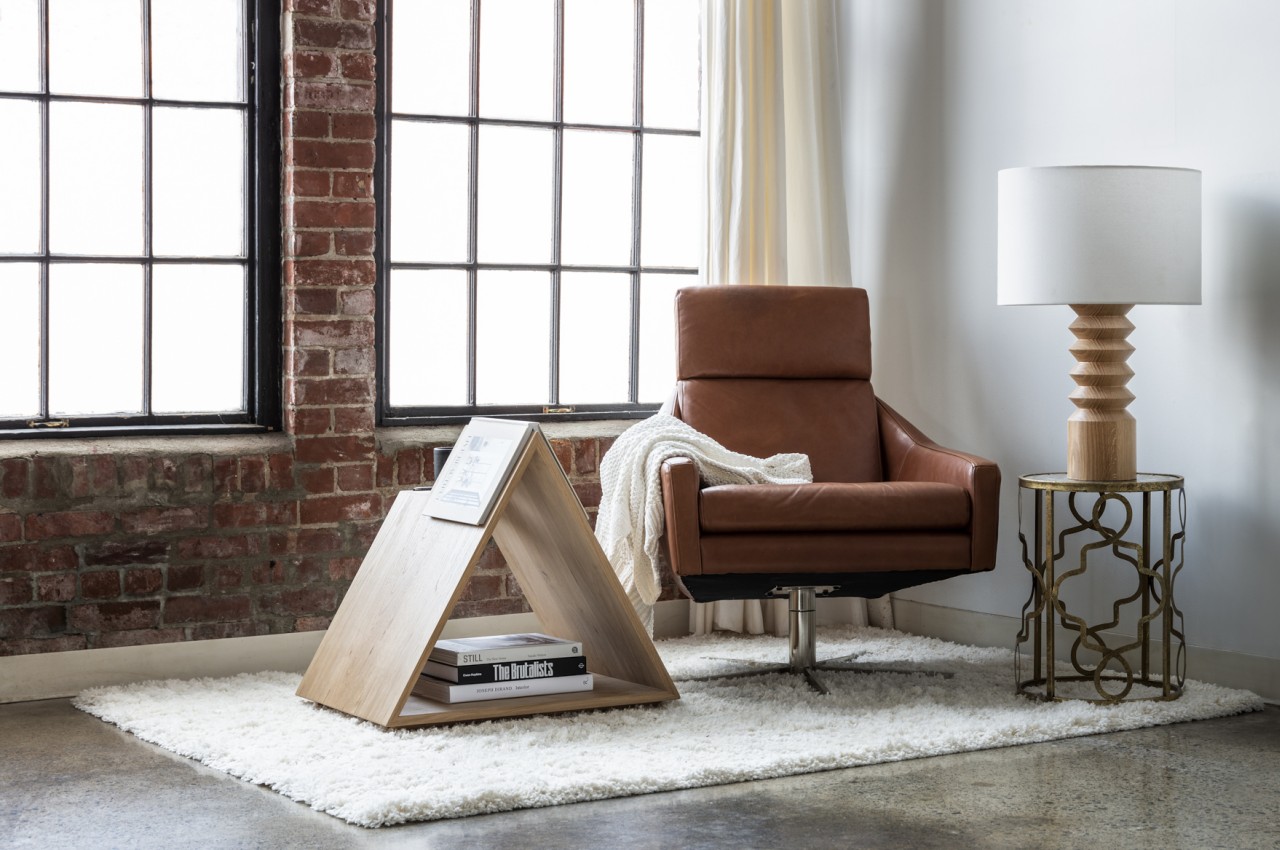
As the name suggests, a side table is a piece of furniture that’s often placed on the periphery, serving a secondary purpose to hold small objects temporarily. They’re a great location for placing drinks while you lounge on the couch and read a book, or for placing that same book when you need to put it down for a bit. Because of this function, it’s sometimes possible to let side tables take on less conventional forms, at least compared to common desks and tables. You might even be able to stretch the definition of a table to something that might not look like a table at all, like this hollow triangular prism that functions as a decorative piece and a resting place for your books.

Designer: Matthew Soule

The standard definition of a table is an elevated flat horizontal surface supported by vertical legs, but the exact interpretation of these elements is sometimes left to imagination and creativity. The only real requirement is that it should have a stable structure to hold items, though what objects it can hold is again open to interpretation. Side tables are often used to hold cups, mugs, pens, phones, notebooks, and books, and they sometimes have separate storage space for other, less-used objects.

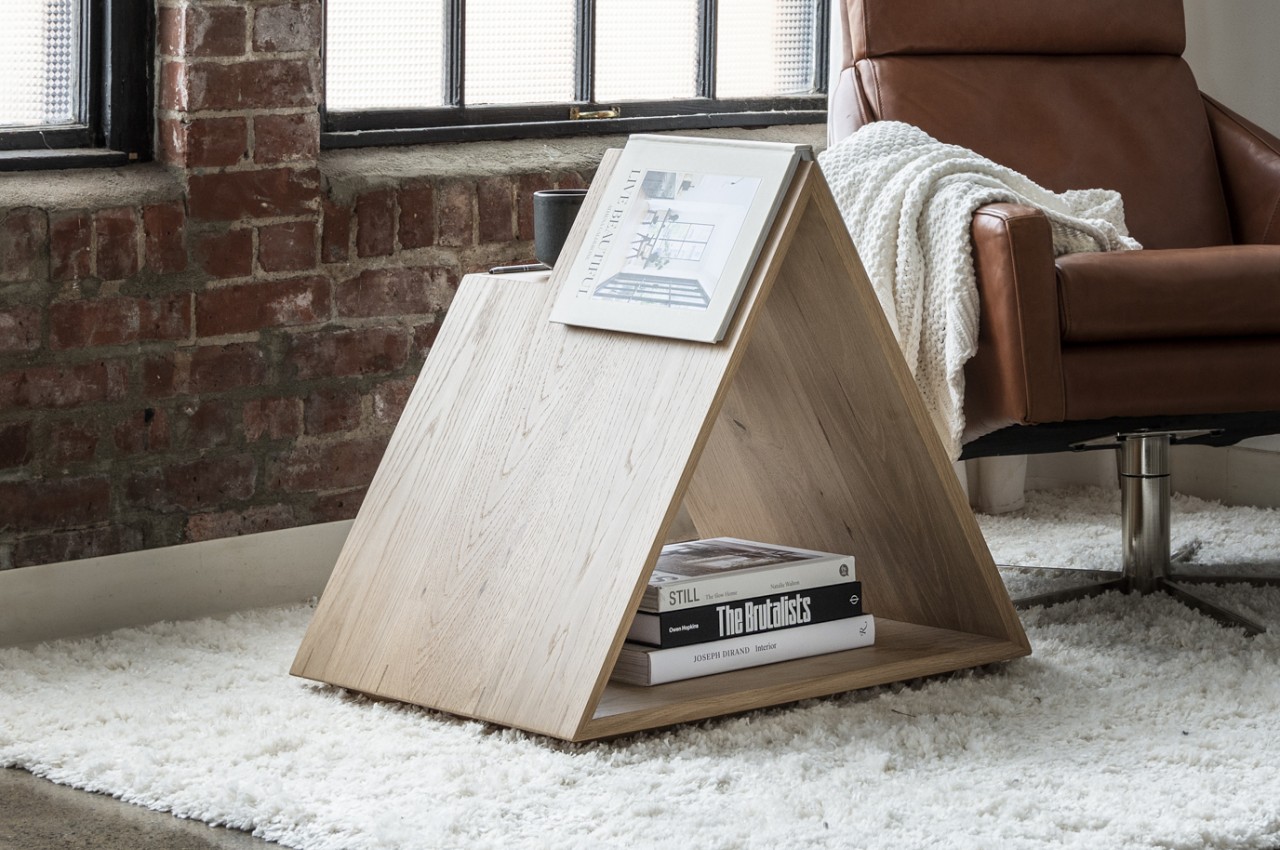
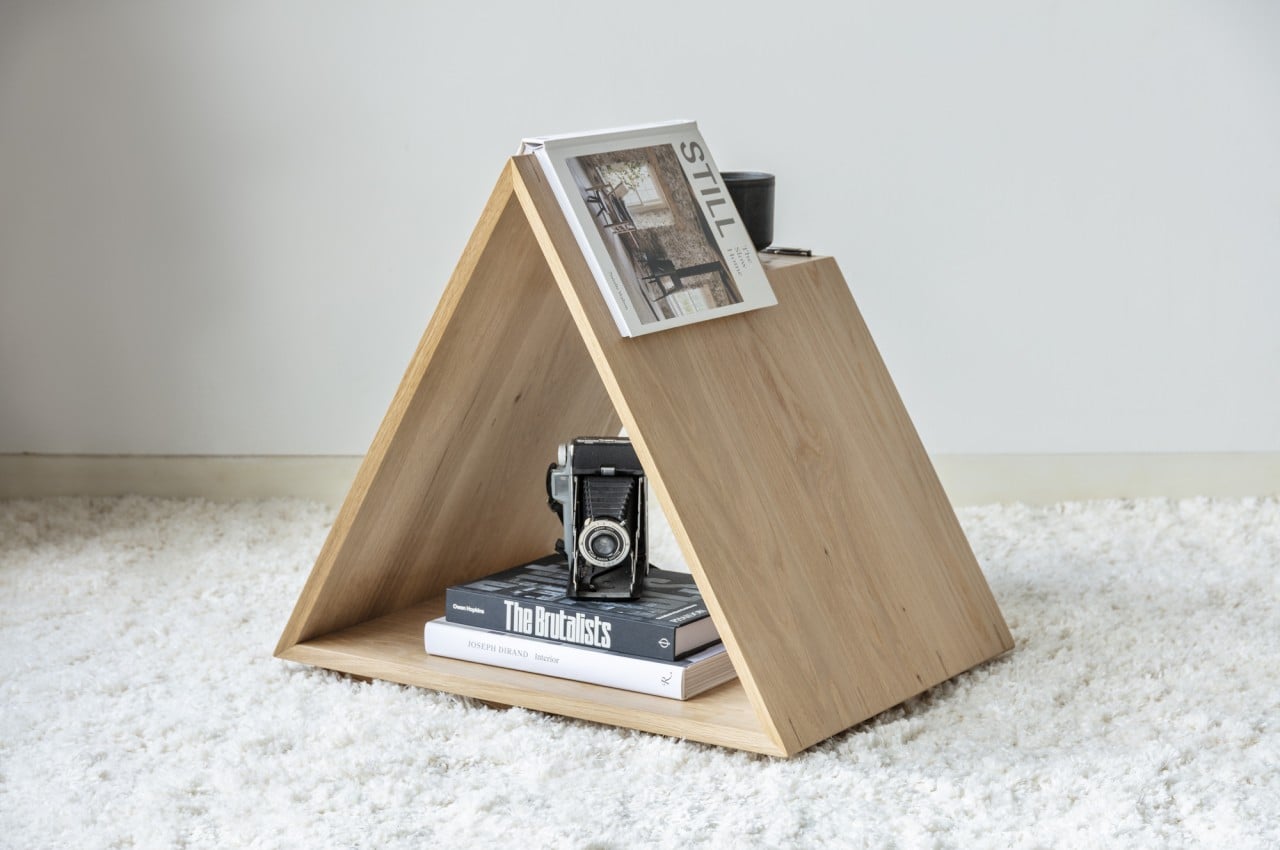
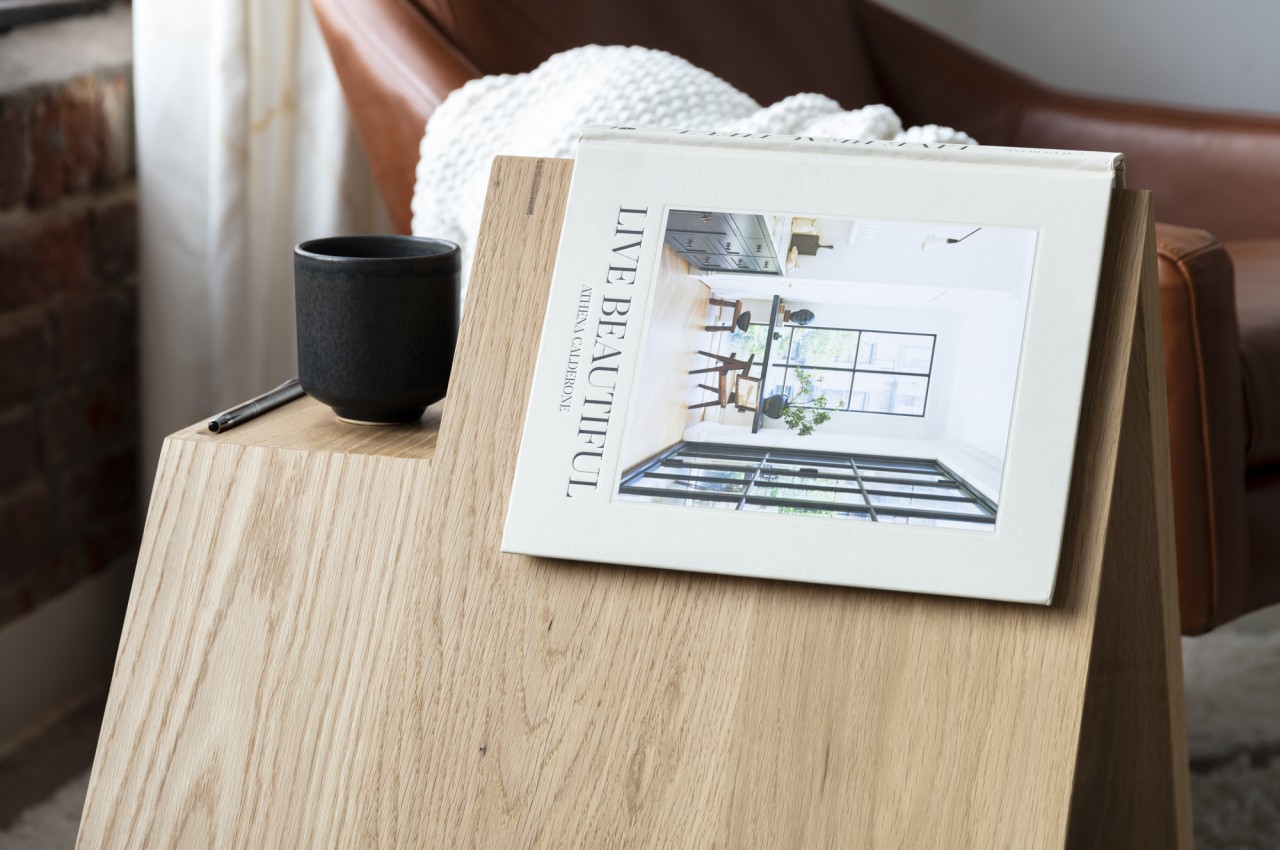
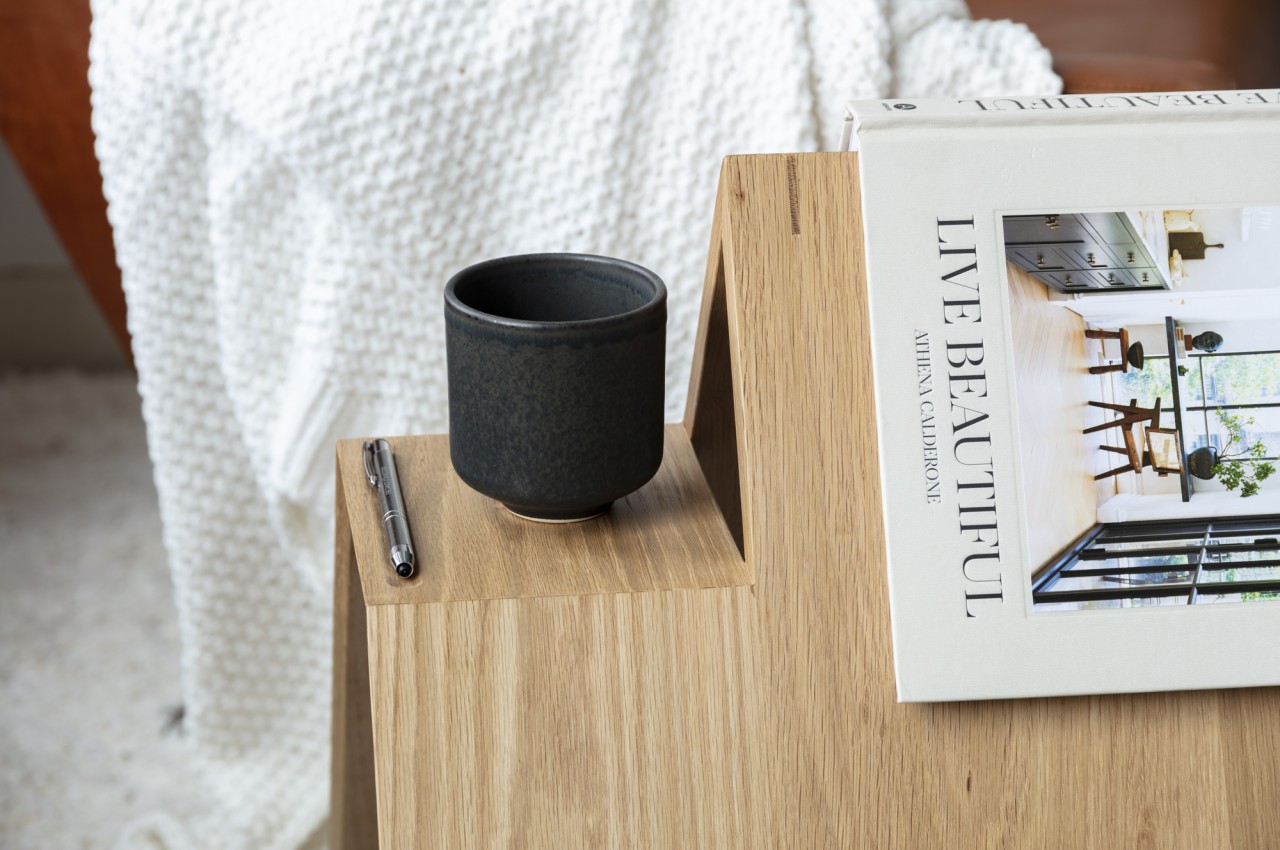
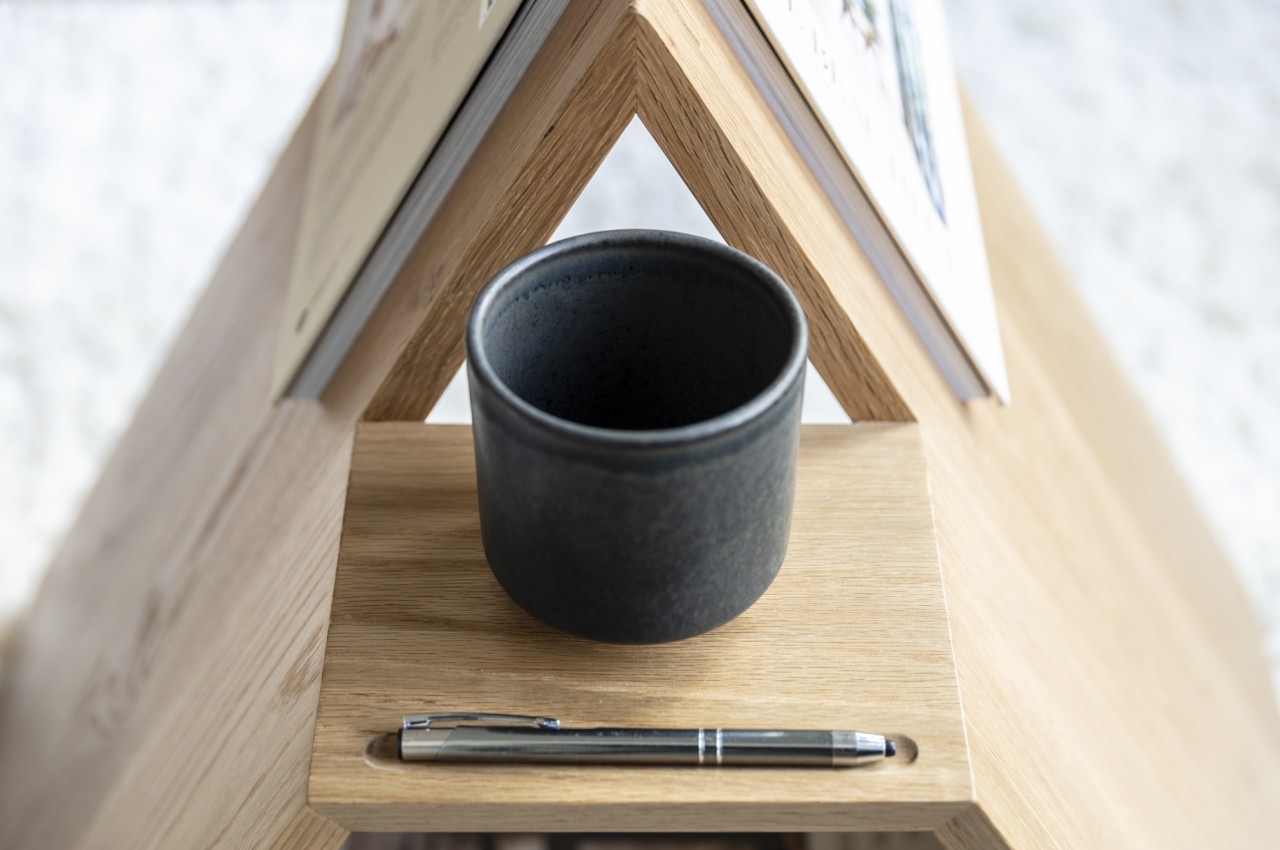
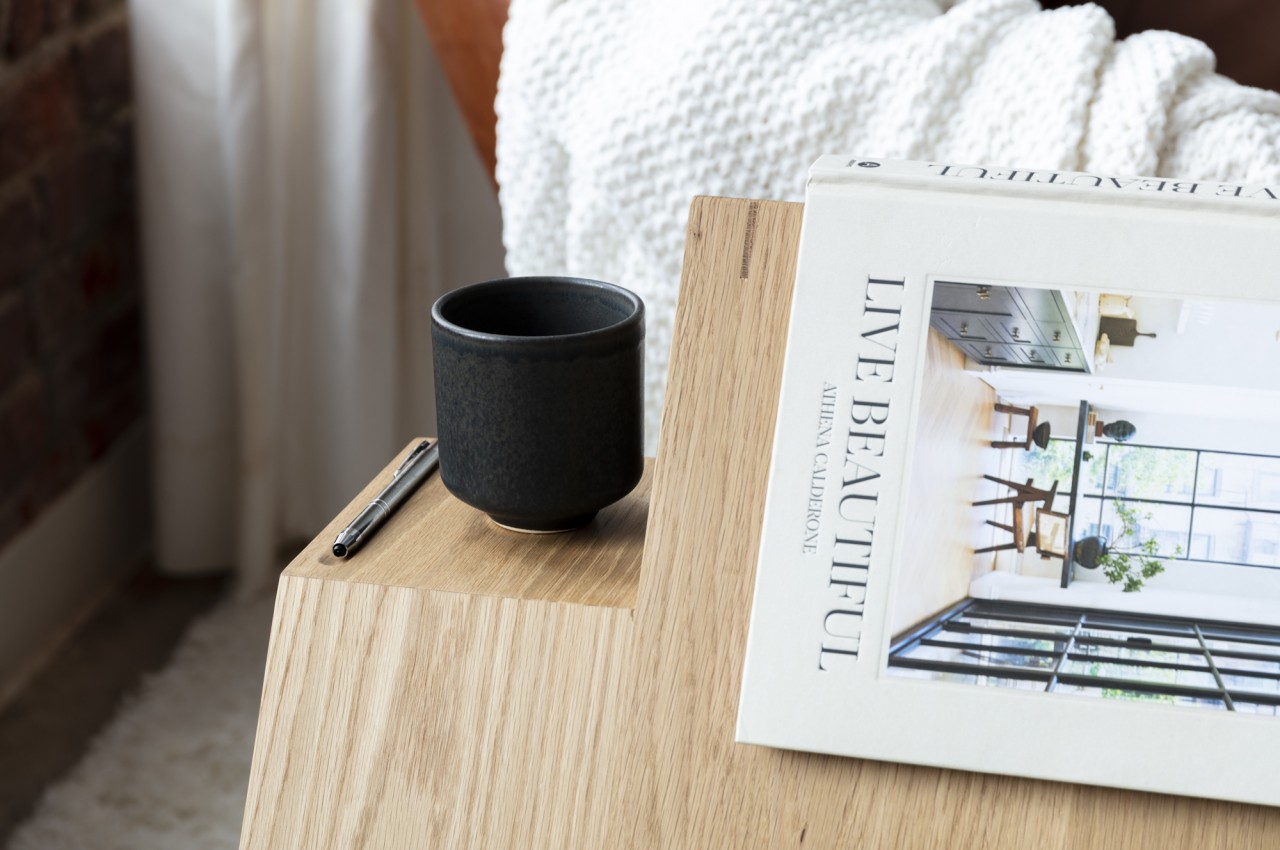
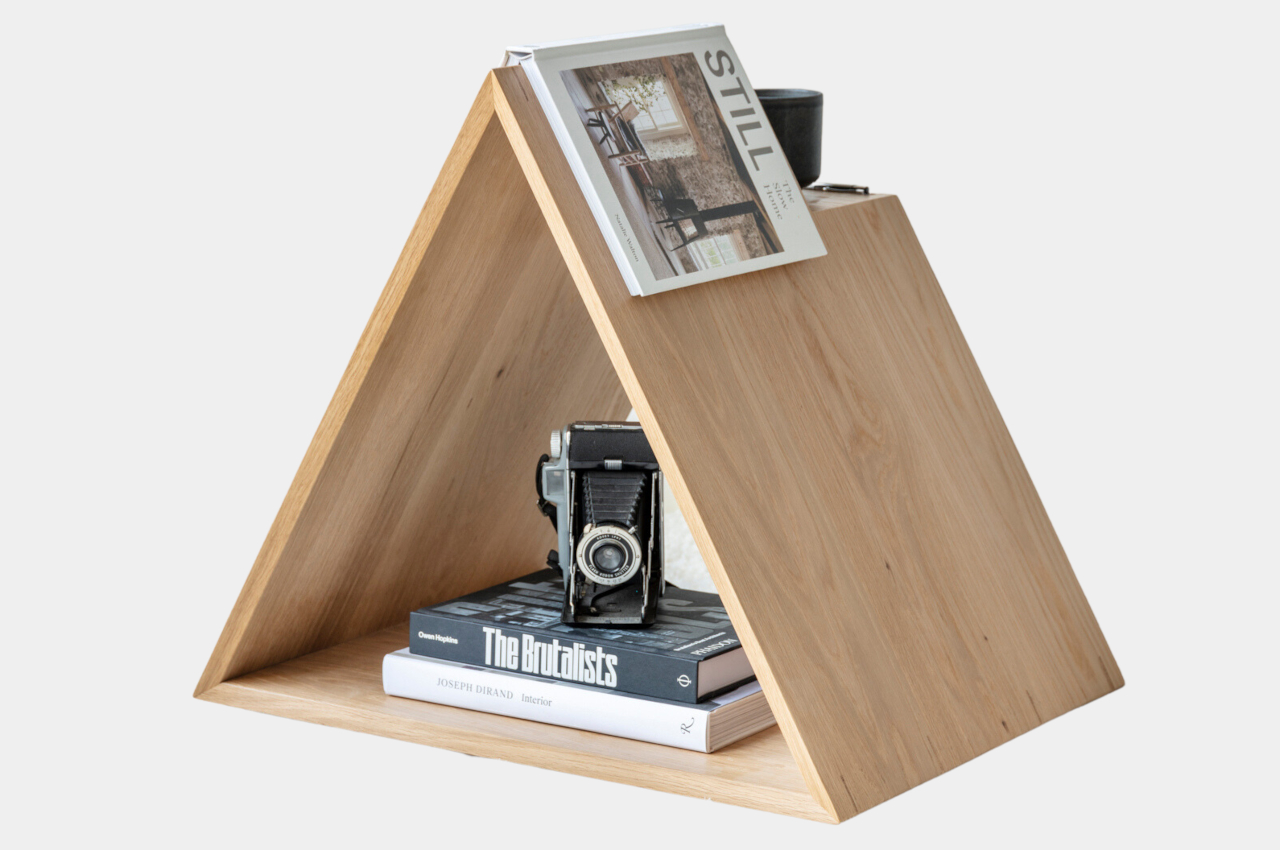
With that in mind, there are plenty of sources for design ideas, like this Triangle Side Table that was supposedly inspired by kids’ toy blocks. It definitely challenges the definition of a table having a flat horizontal surface, though there is definitely an area for that on the back of the apex, like a ledge for your things. That flat area, however, is barely enough to hold a mug, a small notebook, or a smartphone, but only one at a time. There’s also a groove for securing a writing instrument, but you’ll have to make it your favorite or most-used tool since there’s only room for one.

The main focus, instead, is to have a resting place for what you’re currently reading, be it a book or a magazine. You place the partially opened book on top of the triangle, using the tip as a bookmark. It’s a popular design in many minimalist products these days, though it’s uncertain whether it will harm the book’s binding in the long run.

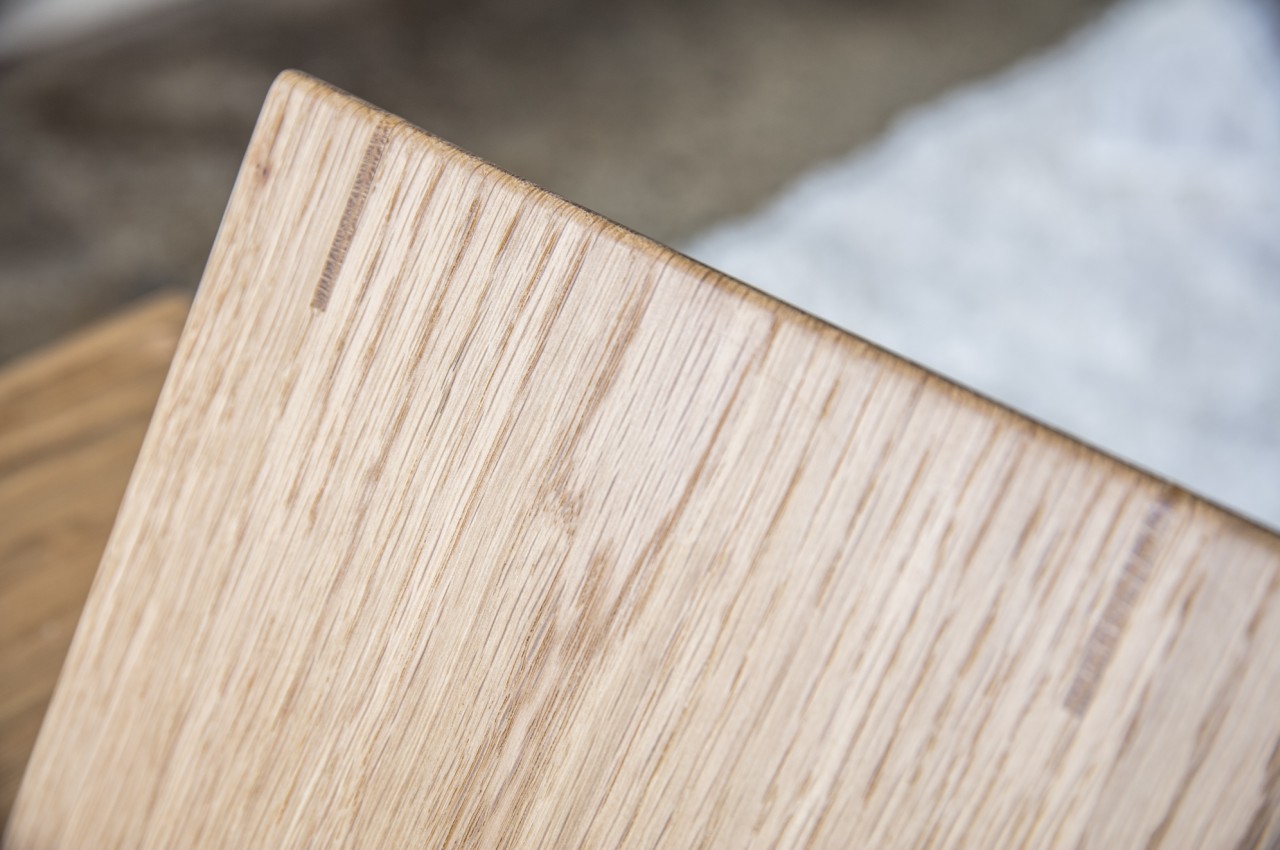
The open interior of the triangle is also another place to showcase reading materials, though it can also house a potted plant or even a pet mattress. The unique shape of the side table, its natural wood material, beveled edges, and the minimalist base that makes the table look like it’s magically floating all contribute to making the odd side table an attention-grabbing piece of furniture. Unfortunately, it’s also quite poor at actually functioning as a regular table, so you’ll definitely want to put it at the sides only.

The post Triangle Side Table offers an interesting way to show off your books first appeared on Yanko Design.
How to use Gemini AI API function calling and more

Gemini API AI function calling

The introduction of Google’s Gemini API marks a significant step forward for those who develop software and create digital content. The API allows you to harness the power of Google’s latest generative AI models, enabling the production of both text and image content that is not only dynamic but also highly interactive. As a result, […]

The post How to use Gemini AI API function calling and more appeared first on Geeky Gadgets.

Harnessing the Power of Google Bard for Startup Success

Google Bard Startup

This guide is designed to show you how companies and startups can use Google Bard. In the ever-evolving and fast-paced realm of startup businesses, where ingenuity and the efficient use of resources are critical to success, the advent of Google Bard marks a significant milestone. This state-of-the-art language model, meticulously trained on an extensive and […]

The post Harnessing the Power of Google Bard for Startup Success appeared first on Geeky Gadgets.

Posted in Uncategorized | Tagged

The Morning After: The sad end of E3

It's Saturday morning and I'm still thinking about the end of E3, once the biggest gaming show on earth, and the teenage dream destination for many Gen Z / Millennial gamers, by which I mean: me. Will there be a gaming (or tech) show in 2024 that will match my enthusiasm (in the past) for E3? Probably not.

Apple is also testing out improved anti-theft software for iPhone users — just don't get your phone stolen before the feature gets out of beta.

This week:

 🎮😵 E3 is officially dead

📲🥷 iOS 17.3’s Stolen Device Protection will make life harder for iPhone thieves

🥚🤖 Tesla's latest Optimus robot can handle an egg without breaking it

And read this:

Social media account takeovers continue to happen, and with many reliant on platforms like Facebook, Instagram and YouTube for their income, an attack can derail everything. High-level hackers still tend to seek entities with deep pockets, targeting them with highly complicated attacks. But much of the cyber criminality today is social engineering jobs, aimed at mid-level creators with less experience (and resources). Katie Malone reports on how some victims have lost much to social engineering hacks.

Like email more than video? Subscribe right here for daily reports, direct to your inbox.

This article originally appeared on Engadget at https://www.engadget.com/the-morning-after-the-sad-end-of-e3-140035020.html?src=rss

Mixtral 8X7B AI Agent incredible performance tested

Mixtral 8X7B AI model incredible performance tested

The Mixtral 8X7B AI Agent is making waves with its state-of-the-art technology, which is poised to enhance the way we interact with AI systems. This new AI model is not just another iteration in the field; it’s a sophisticated tool that promises to deliver high performance and efficiency, making it a noteworthy competitor to existing […]

The post Mixtral 8X7B AI Agent incredible performance tested appeared first on Geeky Gadgets.

McDonald’s uses iconic brown paper bag for order in campaign

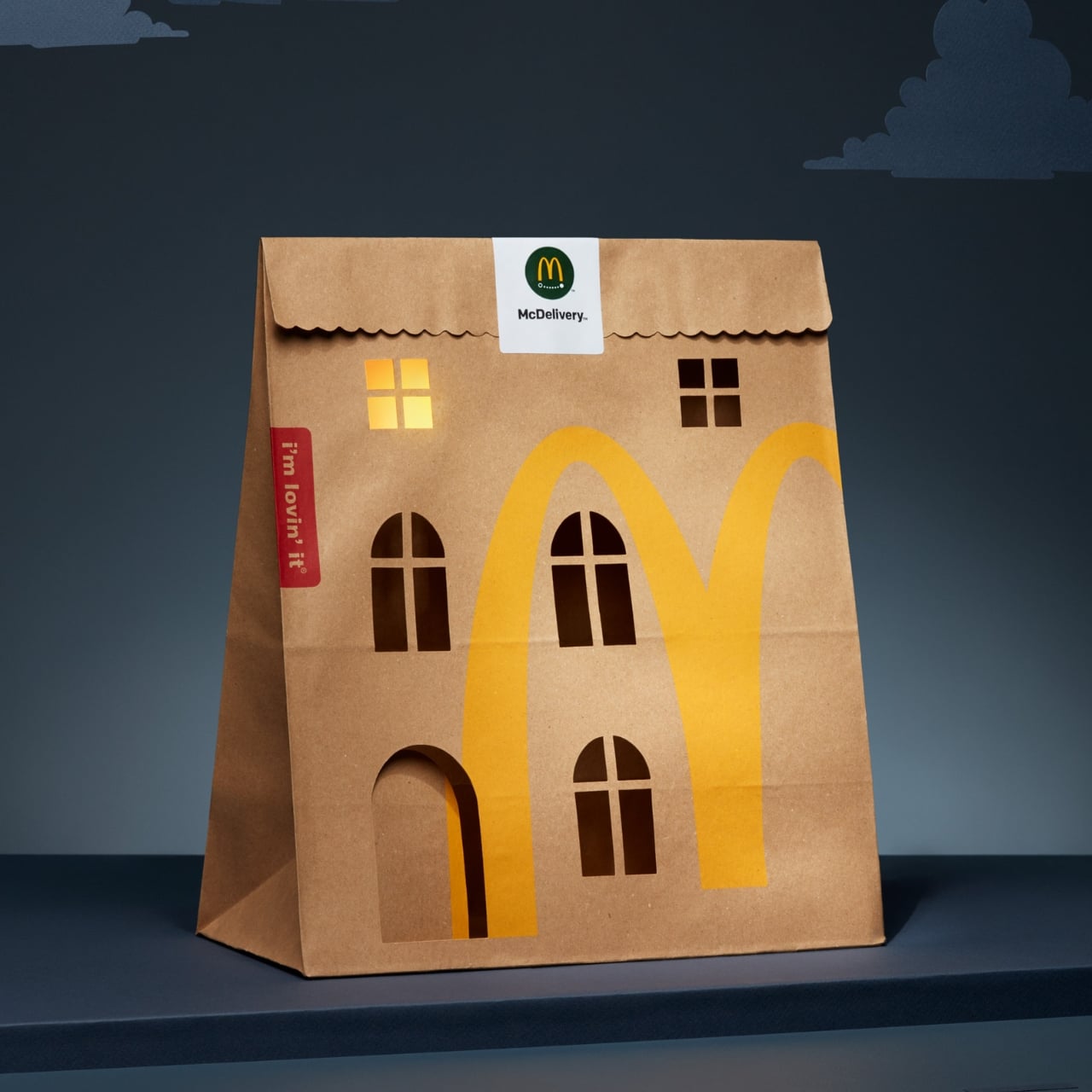
Most restaurants would probably have campaigns encouraging you to go and visit their establishment and have a meal inside. But probably for fast food places, they would not like people to linger at their store and take up space. In Norway, McDonald’s customers usually eat their meals at the store or in their cars. So the fast-food chain started a campaign to encourage people to eat their favorite McDonald’s meals in the comfort of their own homes.

Designer: Julie Wilkinson from Makerie Studio

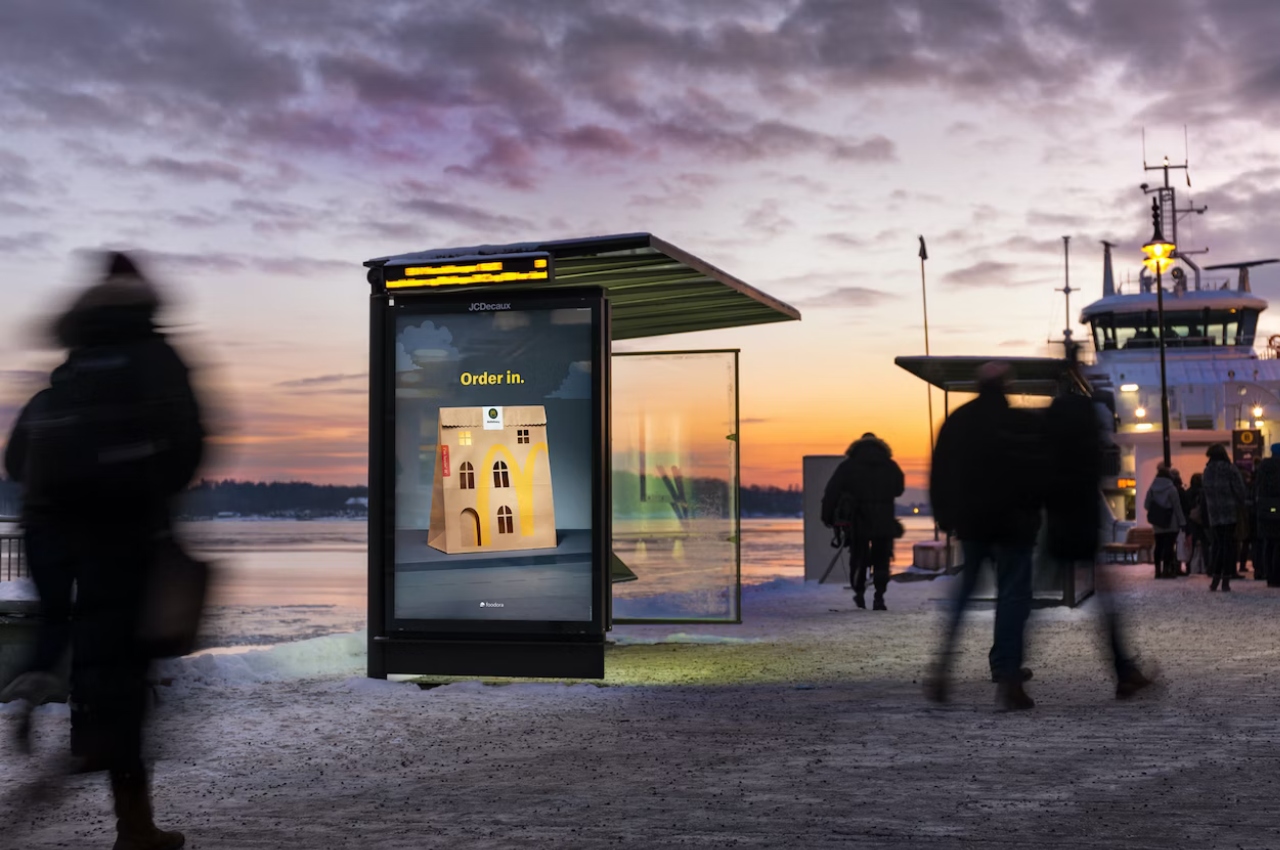
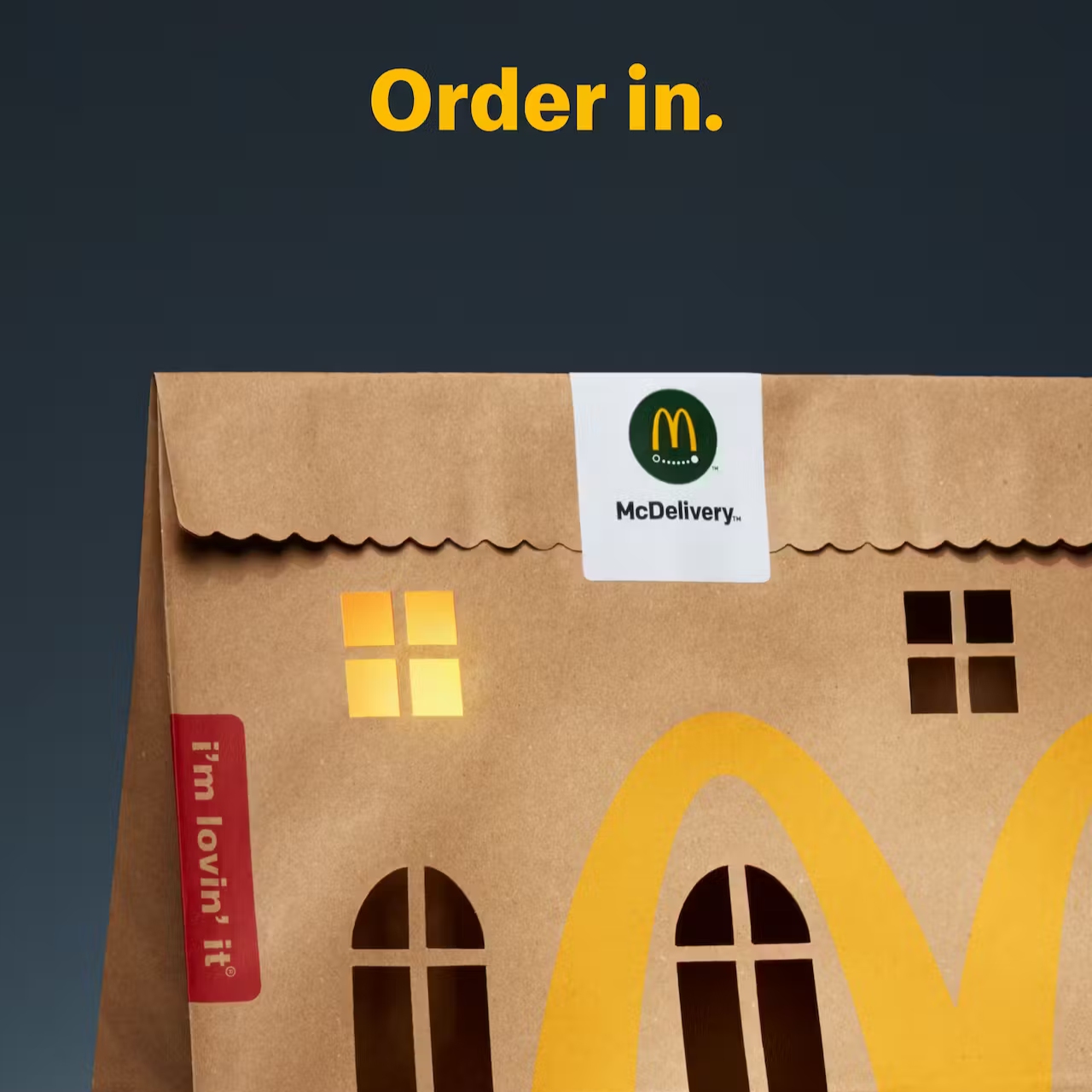
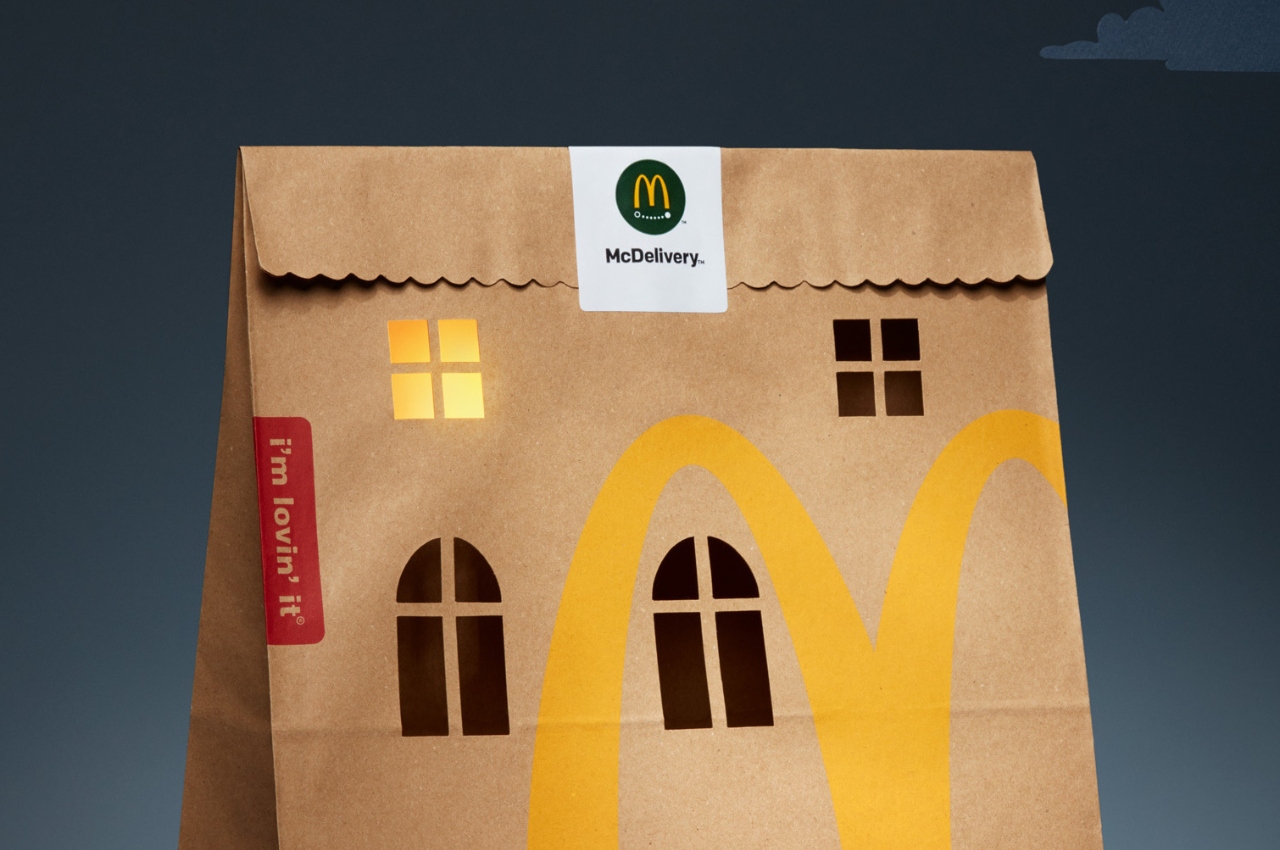
For this campaign that has a very simple tagline “Order in.”, they used something that’s very familiar to those who are ordering food to go: the takeout (or takeaway) bag. The outdoor camapaign features the omnipresent brown bag but hand-cut to show the traditional apartment buildings found in Norway with square and arched windows plus an arched doorway. They wanted to make sure that there was a balance between the iconic look of the bag and an instantly recognizable building.

The hand-cut image was then captured on camera by photographer Catharina Caprino for the campaign and there were no digital touch-ups for this. Everything was done in-camera, including the window light turned on in one of the windows. The minimalist design of the imagery that will be used for the campaign adds to the pretty simple message that they want to convey. The paper bag is already pretty simple so they just needed a couple of elements to complete it.

McDonald’s ad agency in Norway, Nord DDB Oslo, will be populating the country’s major cities with this imagery with the aforementioned tagline. They will be doing it in a pretty appropriate season which is winter. It will be too cold to go out or even eat in the car so they want customers to enjoy their ordered meals in the comfort of their heated homes.

The post McDonald’s uses iconic brown paper bag for order in campaign first appeared on Yanko Design.