BLUETTI’s wide catalog of Power Stations at CES 2024 make it an Absolute Must-Have for 2024

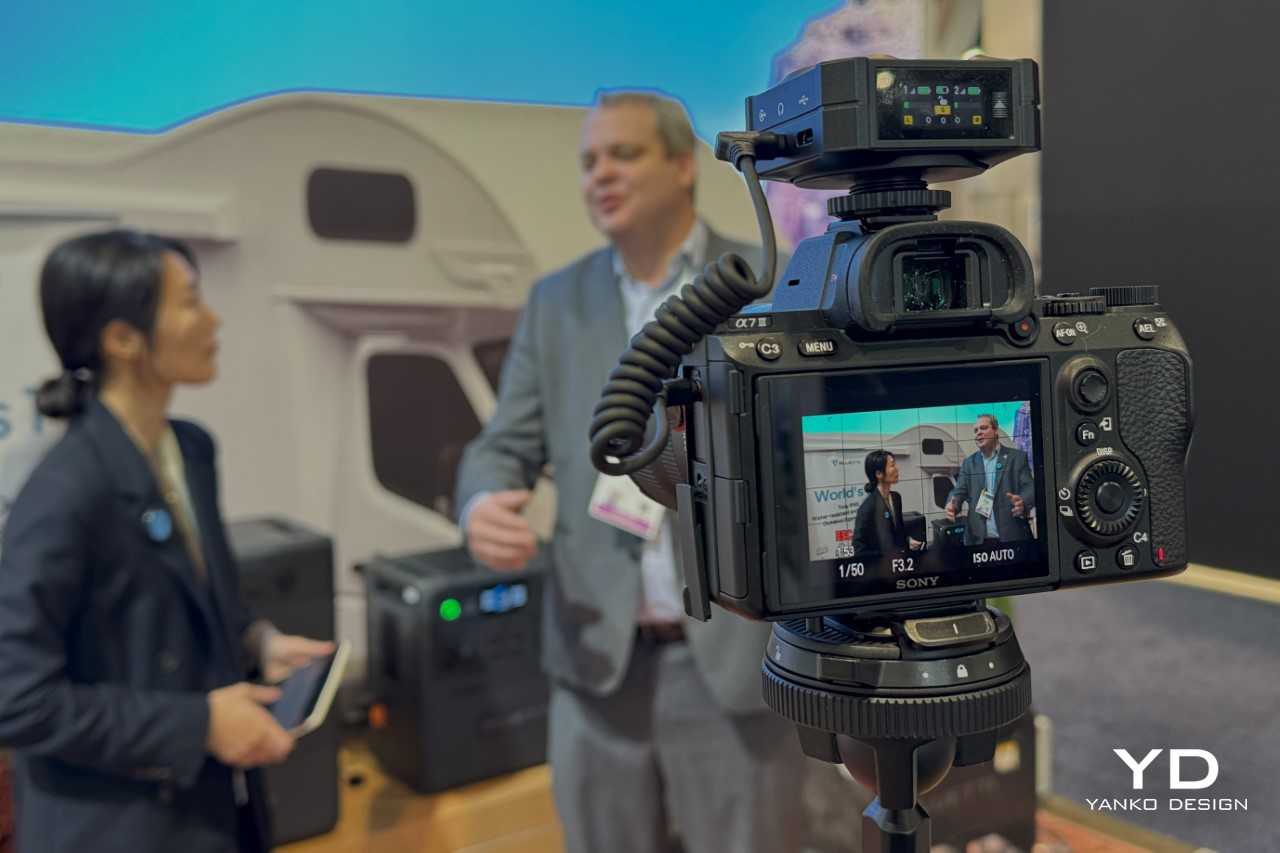
As the tech world descended upon Las Vegas for CES 2024, BLUETTI, a name synonymous with portable power solutions, has once again set the gold standard with its latest offerings designed for recreation, emergencies, work, and overall energy independence. From the versatile SwapSolar system to the rugged AC240 power station, BLUETTI’s lineup this year is nothing short of a power-packed promise for both adventurers and home users. We visited the BLUETTI booth to speak to their Director of Portable Power Systems, Phillip Fischer. Phillip explained to us what BLUETTI’s been achieving in the past year, what are the new exciting products they’re debuting at CES, and why portable power stations should be on everyone’s wishlist for 2024.

Designer: BLUETTI
If you’re still one of those power-station skeptics in the year 2024, Phillip has some rather sage advice to give you. Sure, the average power station user is the outdoorsy type, using it to provide energy to camping sites, RVs, and other outdoor excursions/activities… but what BLUETTI’s power stations also do is provide aid and assistance during emergency power cuts. Whether it’s one of their larger devices, or even the small portable ones, BLUETTI’s power stations can be potential life-savers when the power runs out. The same power station can play multiple roles, whether it’s necessity or leisure… with the added benefit of helping you do things like shift to a solar grid too to help reduce power bills.
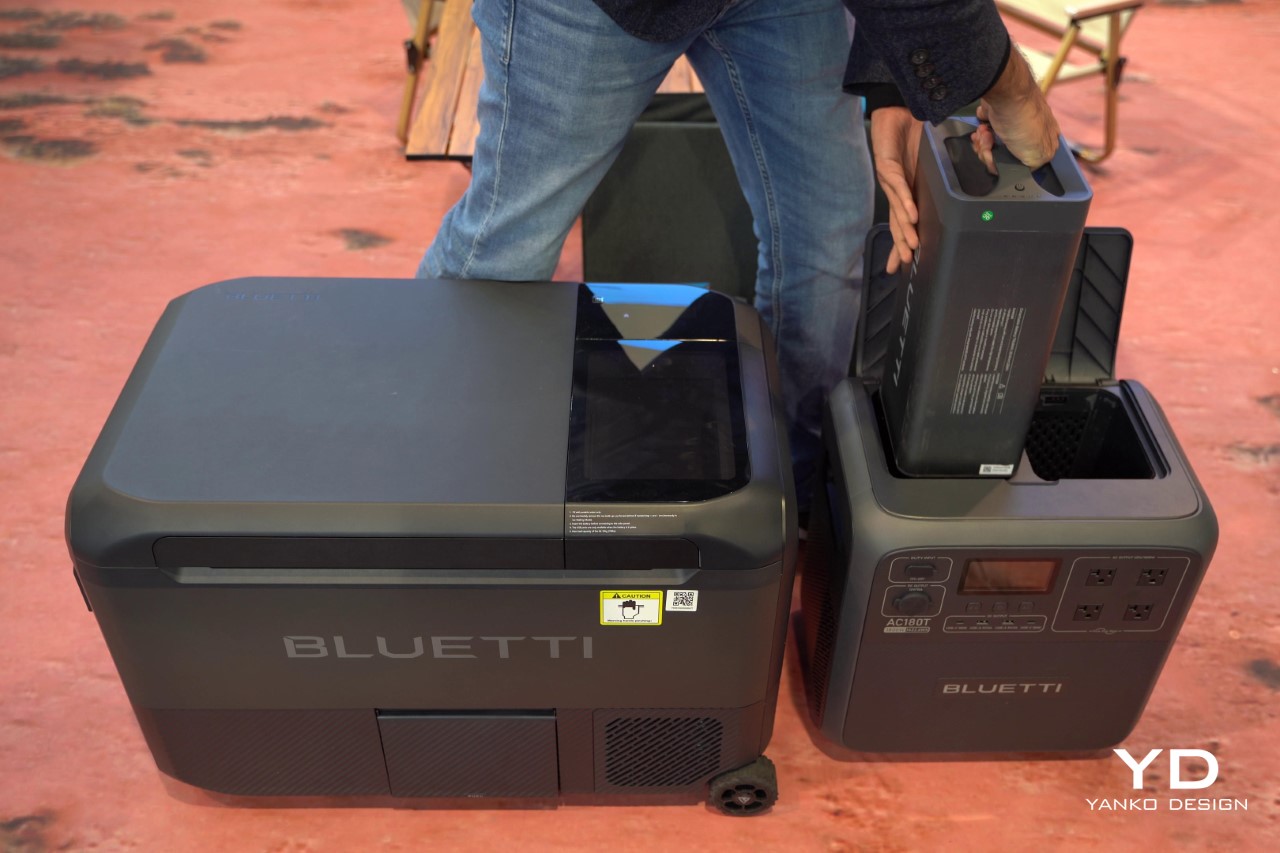
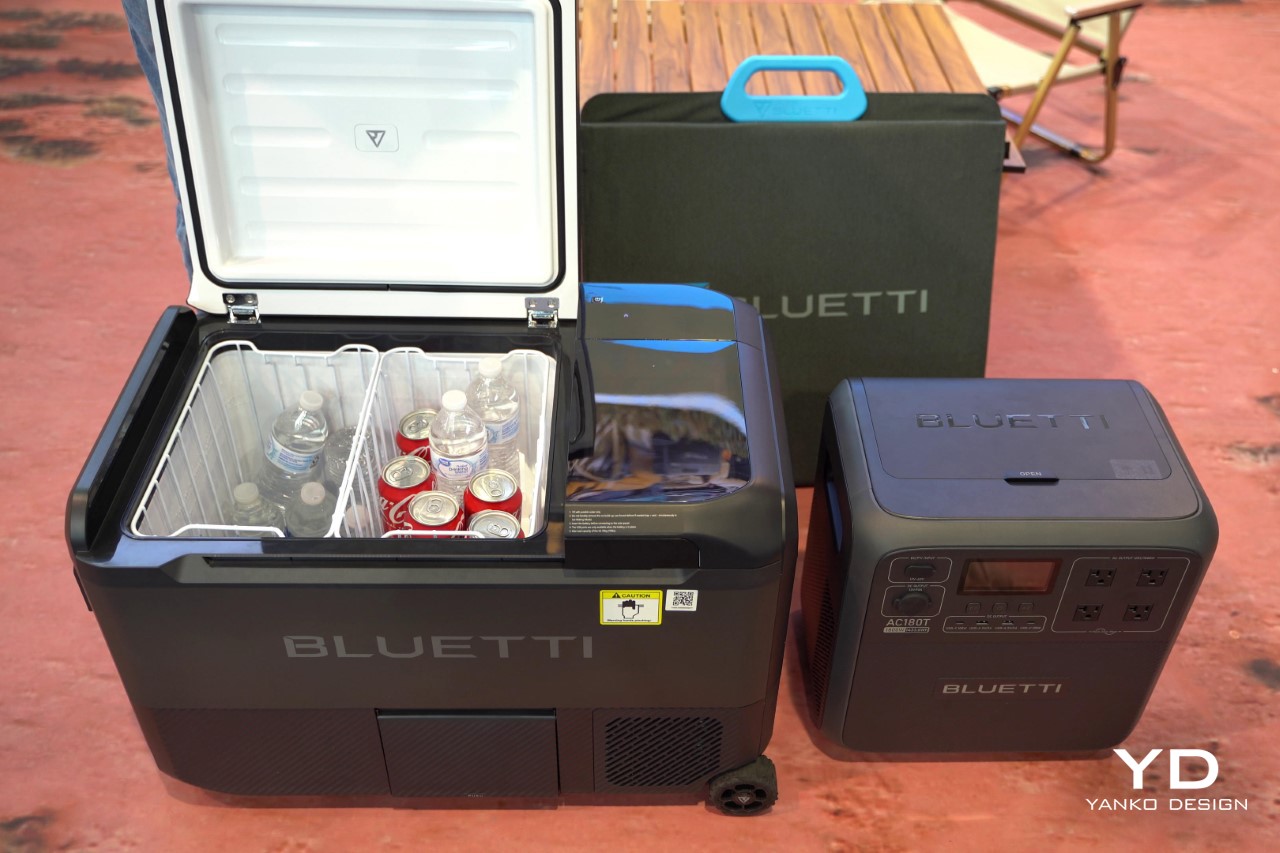
Leading the power-station charge at CES this year is the BLUETTI SwapSolar, a dynamic duo comprising the AC180T portable generator and the MultiCooler portable fridge. The AC180T can easily be confused for its sibling, the AC180 – but what really sets it apart is its game-changing hot-swappable battery system. With 1,433Wh capacity, 1,800W output, and 2,700W lifting power, the AC180T features two detachable batteries that can either be used simultaneously, or in a scenario where one battery is removed from the AC180T and placed in the MultiCooler portable fridge. Imagine never running out of power because you can instantly replace depleted batteries with charged ones.
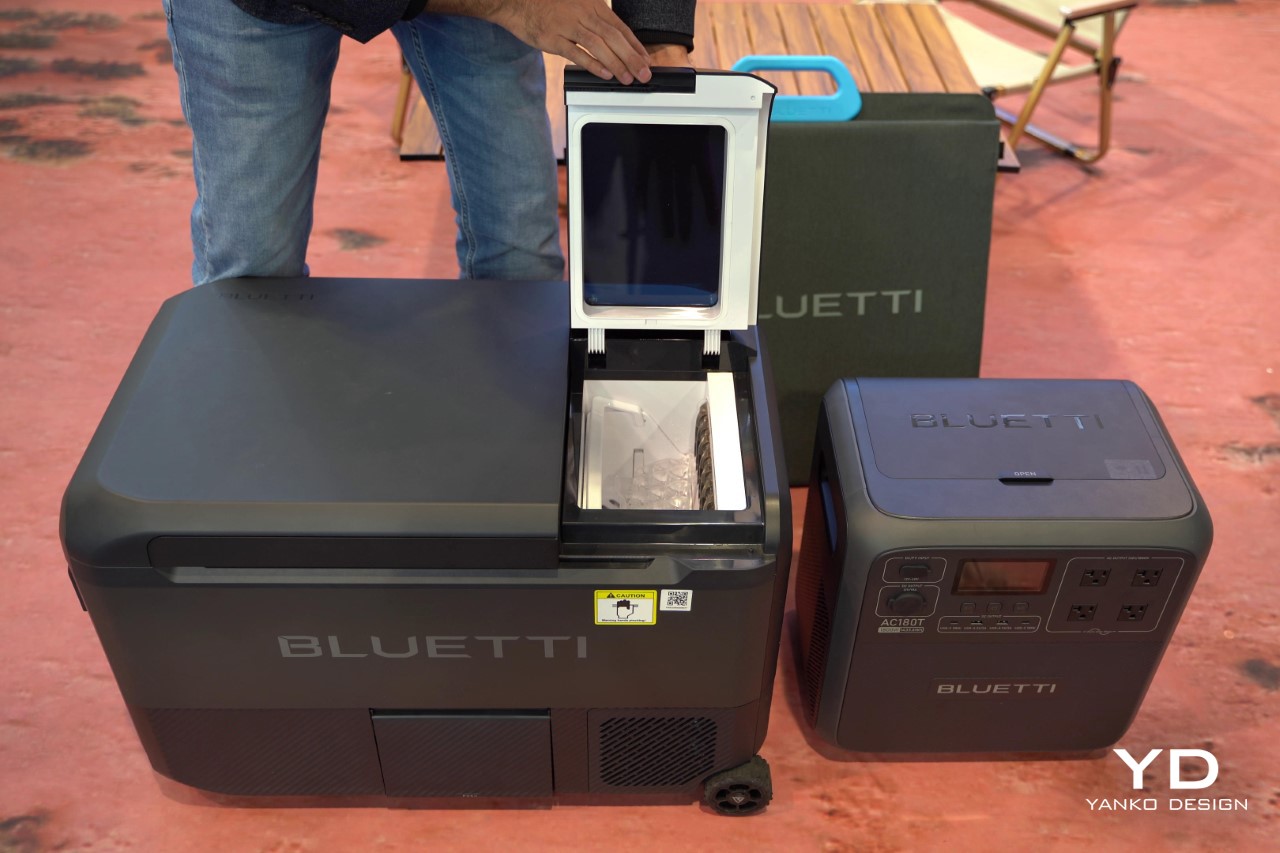
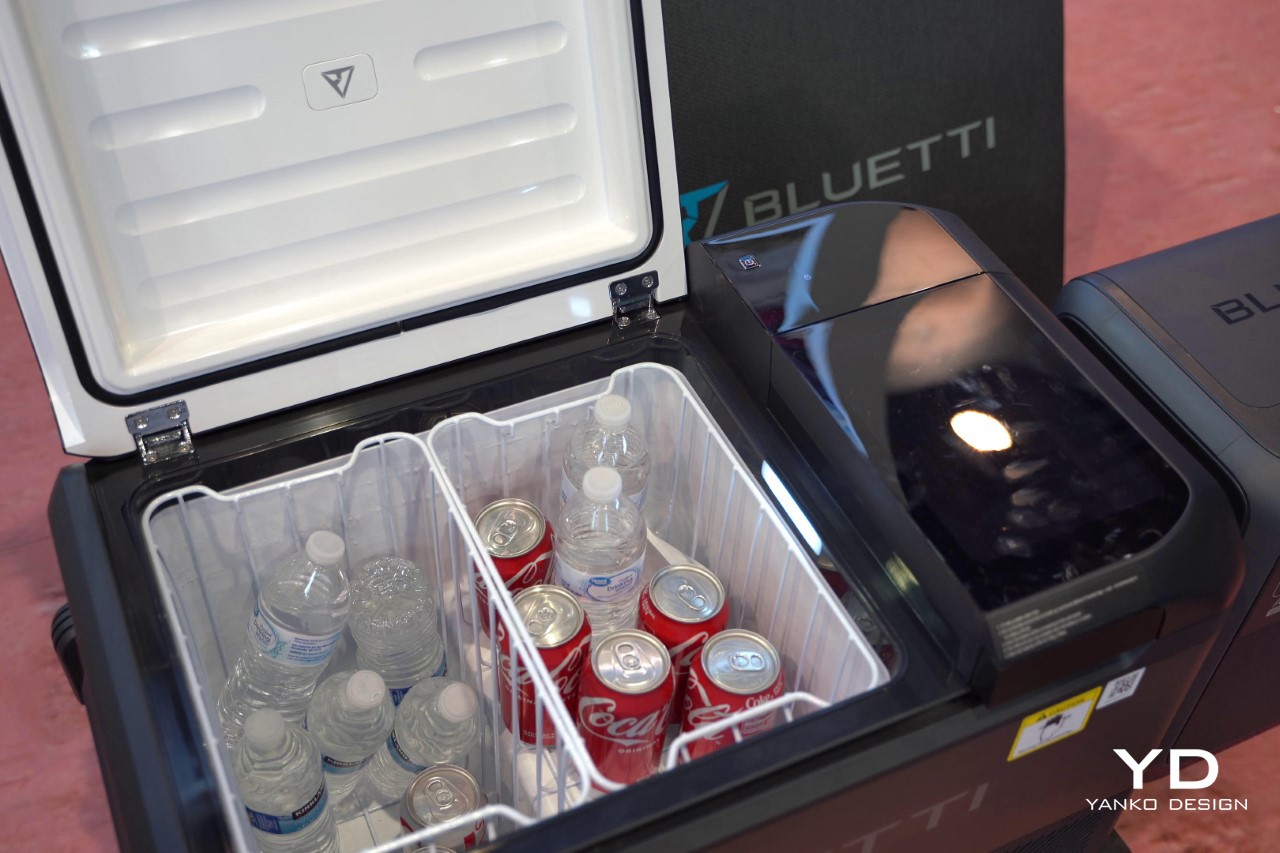
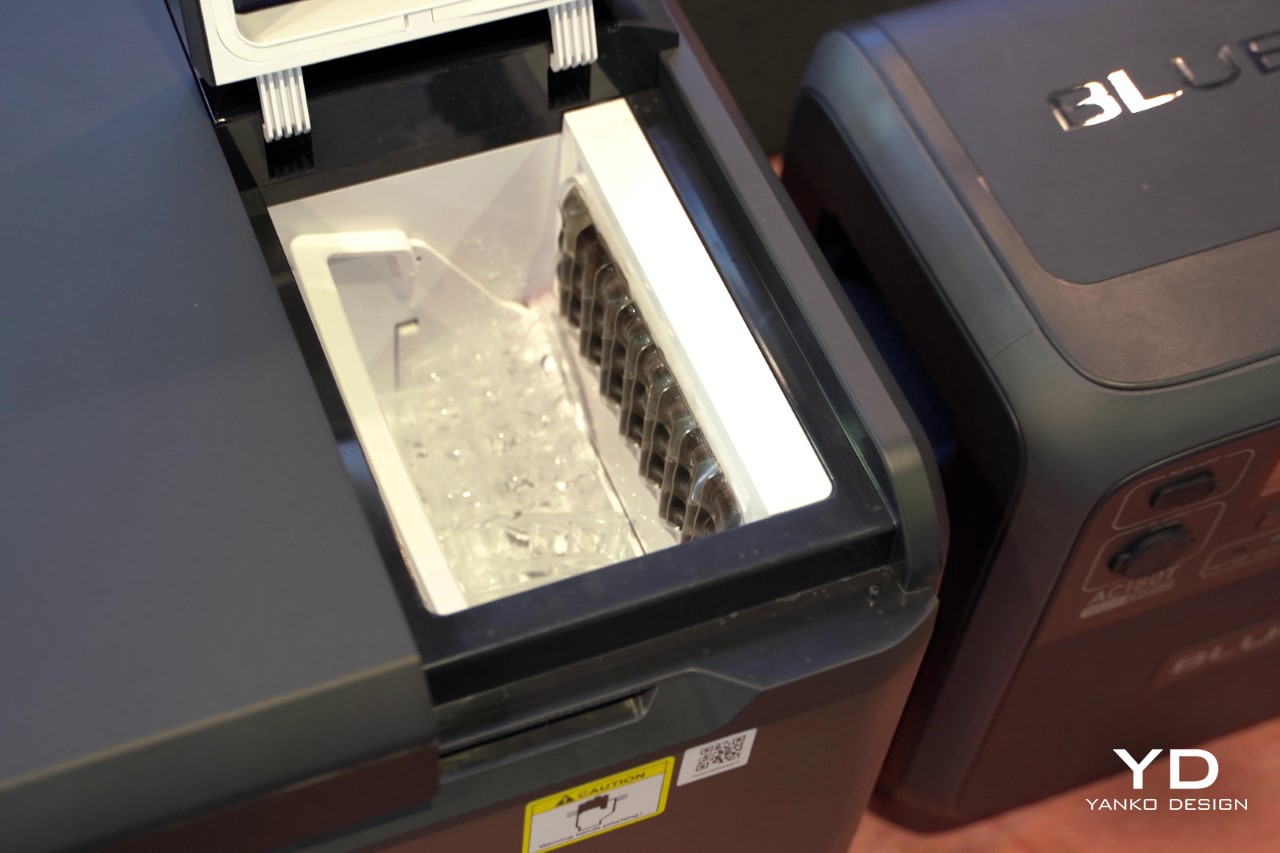
But that’s not all. The MultiCooler is the Swiss Army knife of portable fridges. Acting as a fridge, freezer, and, believe it or not, an ice maker, it redefines the concept of portable cooling. Featuring a 40-liter compartment with temperature control from -20°C to 20°C (-4°F to 68°F), the MultiCooler can chill a staggering 65 cans of soda (or any beverage of your choosing) or keep the sausages frozen for a picnic. It also boasts the ability to make ice from moving water, a feature that Phillip mentioned was “really cool” (pun intended!)
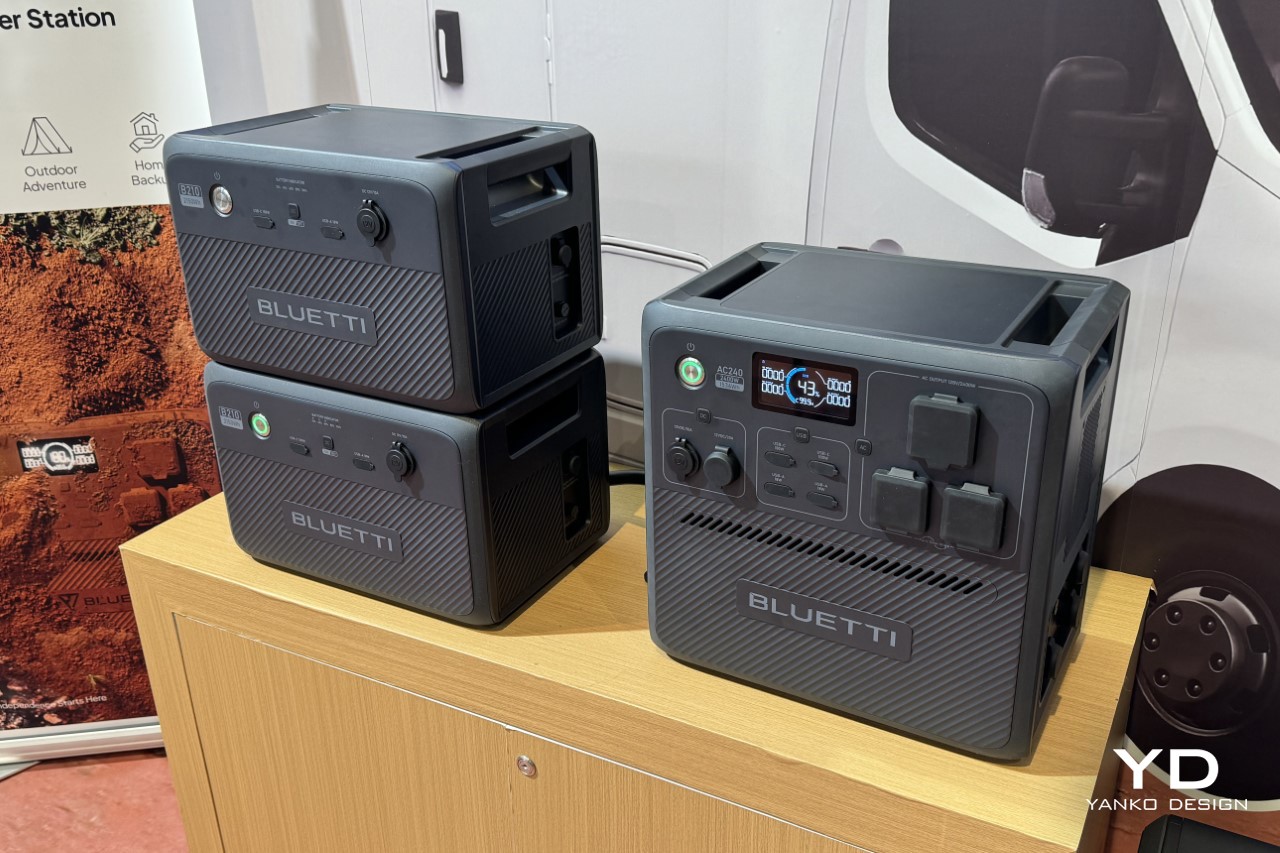
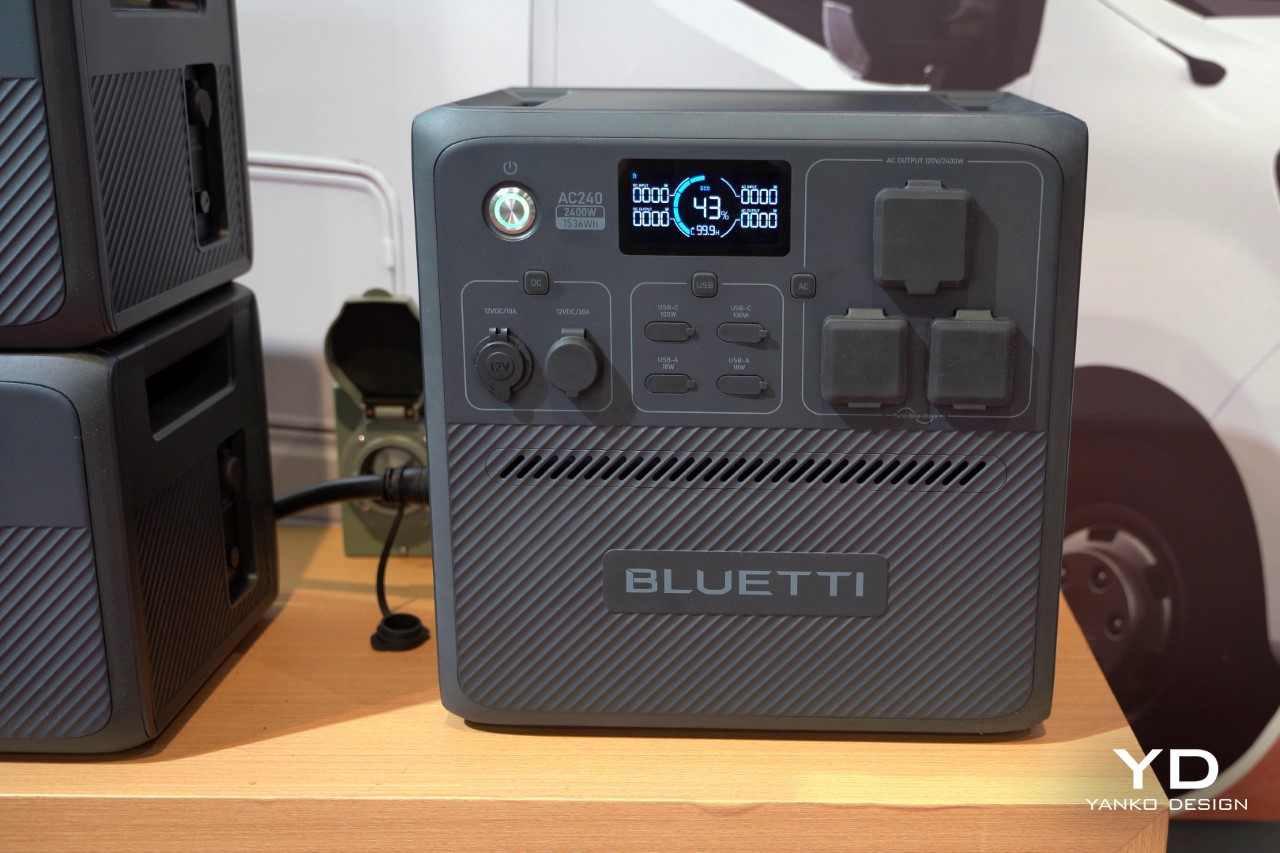
Next up, meet the AC240, BLUETTI’s rugged outdoor companion following the legacy of the AC60. Tailor-made for the wild, this power station is both water-resistant and dust-proof, boasting an impressive IP65 rating. Whether you’re facing a dust storm in the desert or a downpour in the mountains, the AC240 won’t let you down. With a robust 2400W of power output and a 1536Wh LFP battery, it’s built to last. And if you thought that was impressive, the AC240 can expand its capacity to a whopping 10kWh with four B210 expansion batteries. BLUETTI didn’t stop there. They also showcased their revamped portable generators and home storage products, including the AC60P, AC2P, and the modular AC500 and AC300 series.
In the midst of unveiling these technological marvels, BLUETTI also took a moment to highlight its Lighting an African Family (LAAF) program. This initiative underscores BLUETTI’s commitment to social responsibility, bringing sustainable solar energy to African families. With over 100,000 families already impacted, BLUETTI is powering more than devices; it’s powering dreams.
The post BLUETTI’s wide catalog of Power Stations at CES 2024 make it an Absolute Must-Have for 2024 first appeared on Yanko Design.
Tiny Forest In Seoul Is A Tiny Study/Relaxation Space Designed To Be A “Microcosm For Oneself”

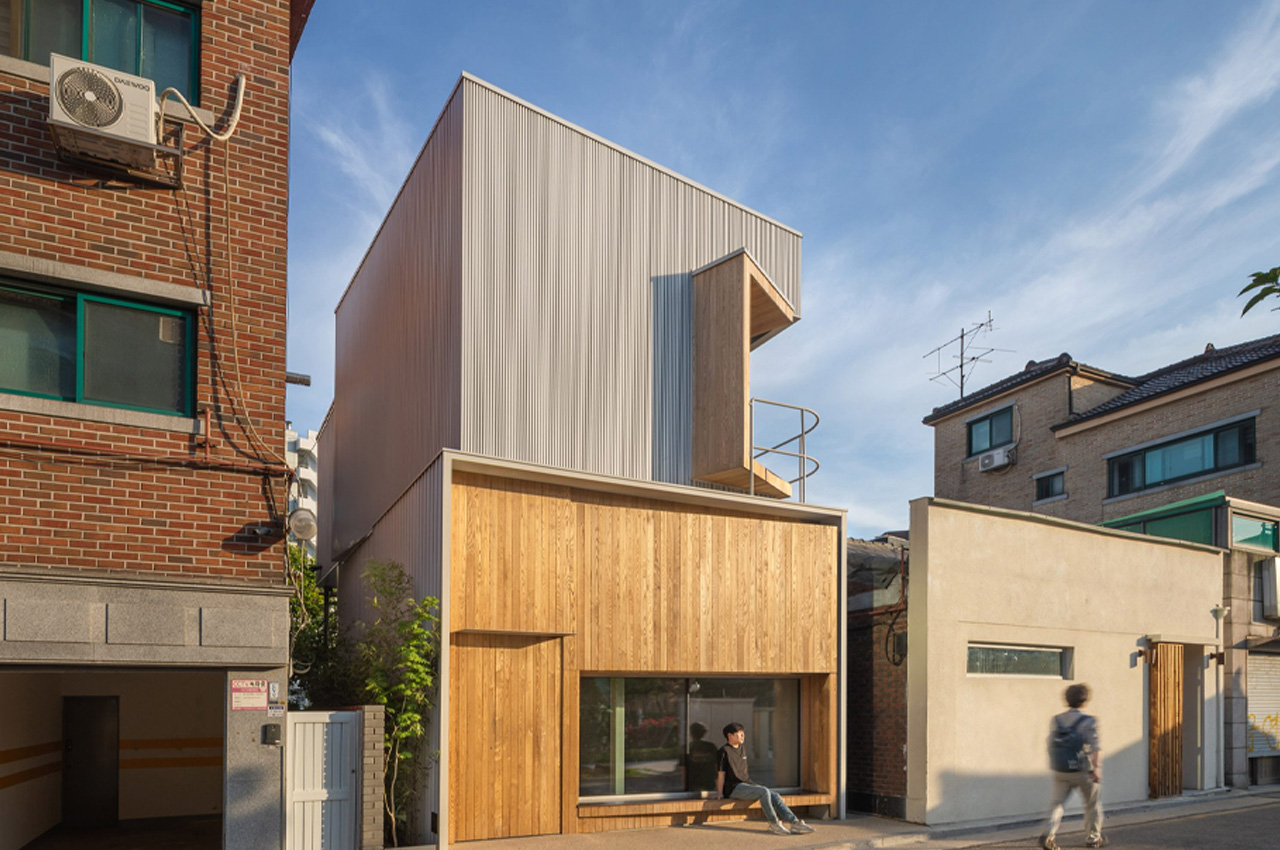
This flexible study space in Jongno-gu, Seoul is designed by YounghanChung Architects in an attempt to “eliminate unnecessary spaces as much as possible”. Dubbed Tiny Forest, the two-story building was built for a retired university lecturer, who wanted to have a separate space from her main home – a space that would function as a study, and as an intimate space to host and entertain guests. The space is inspired by a sarangbang which is found in traditional Korean homes, where usually the man of the house hosts guests or indulges in hobbies.

Designer: YounghanChung Architects

“Spaces as a hobby space or study have gradually loosened in the frame of housing, and lost the power of their original function,” said founder Younghan Chung. “However, the desire to escape from the house and experience a space like a microcosm for oneself is desperate for all of us living in modern times…[so] this building was intended to create a small private room,” he said.

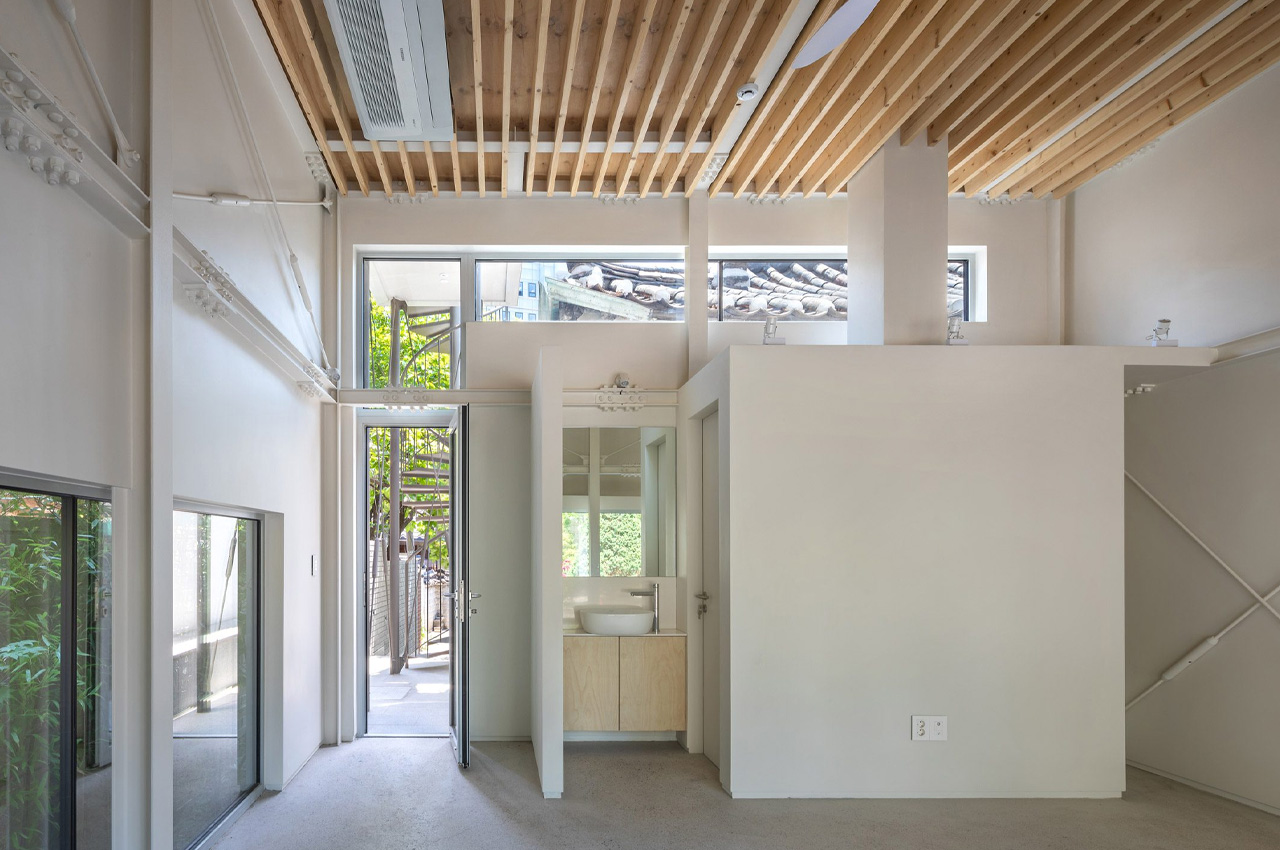
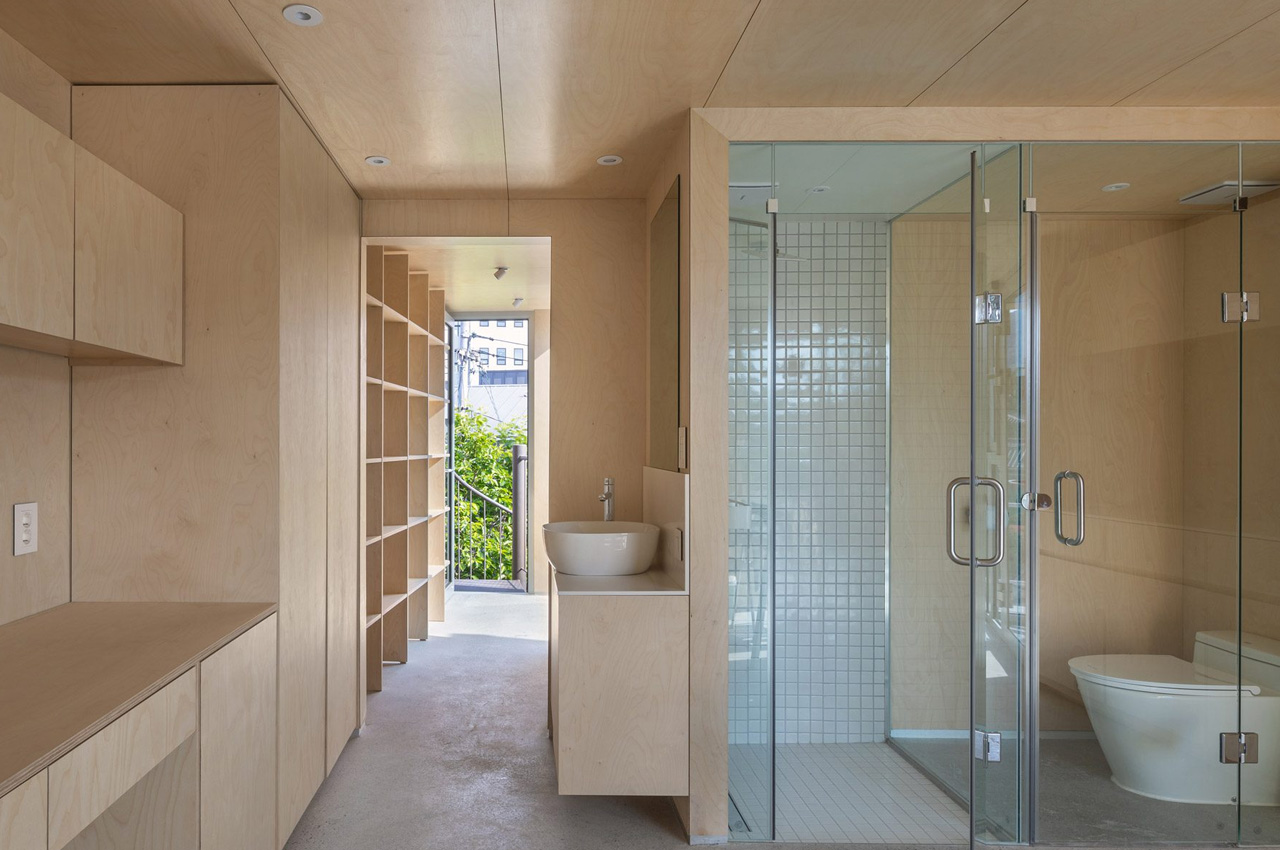
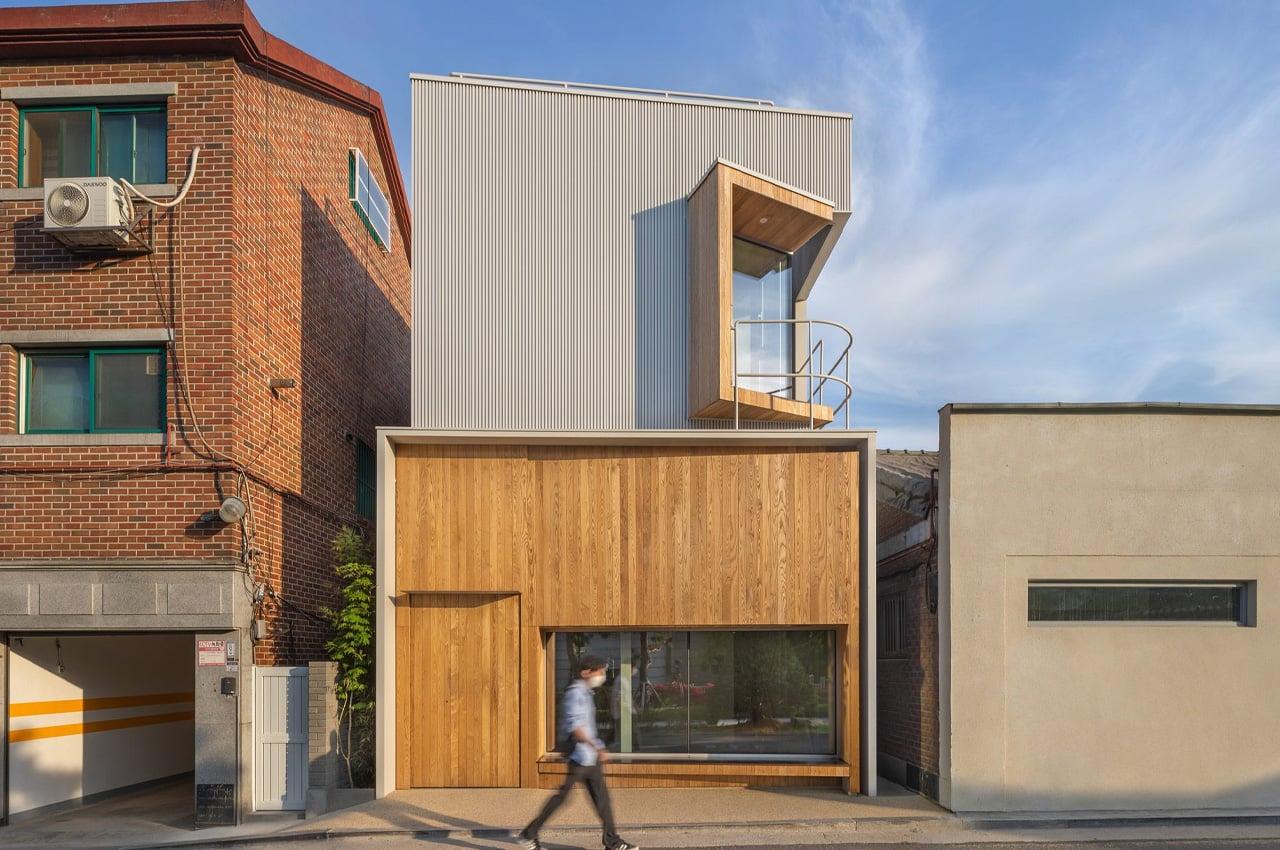
Tiny Forest was designed to be a dedicated study and relaxation space, a serene zone that is nestled away from the hustle and bustle of the main house. The building is made up of two stacked cubes, with the upper cube a little rotated, while both are supported by a steel frame, and clad in corrugated metal in the color white. The different floors of the space were designed as single and flexible spaces, each one amped with a bathroom and generous storage space. The spaces are defined by minimal fittings and fixings, creating a smooth and quaint area. “Conventional structural methods can trap the choreography of users with diverse ways of life within a strictly prescribed framework,” said Chung.

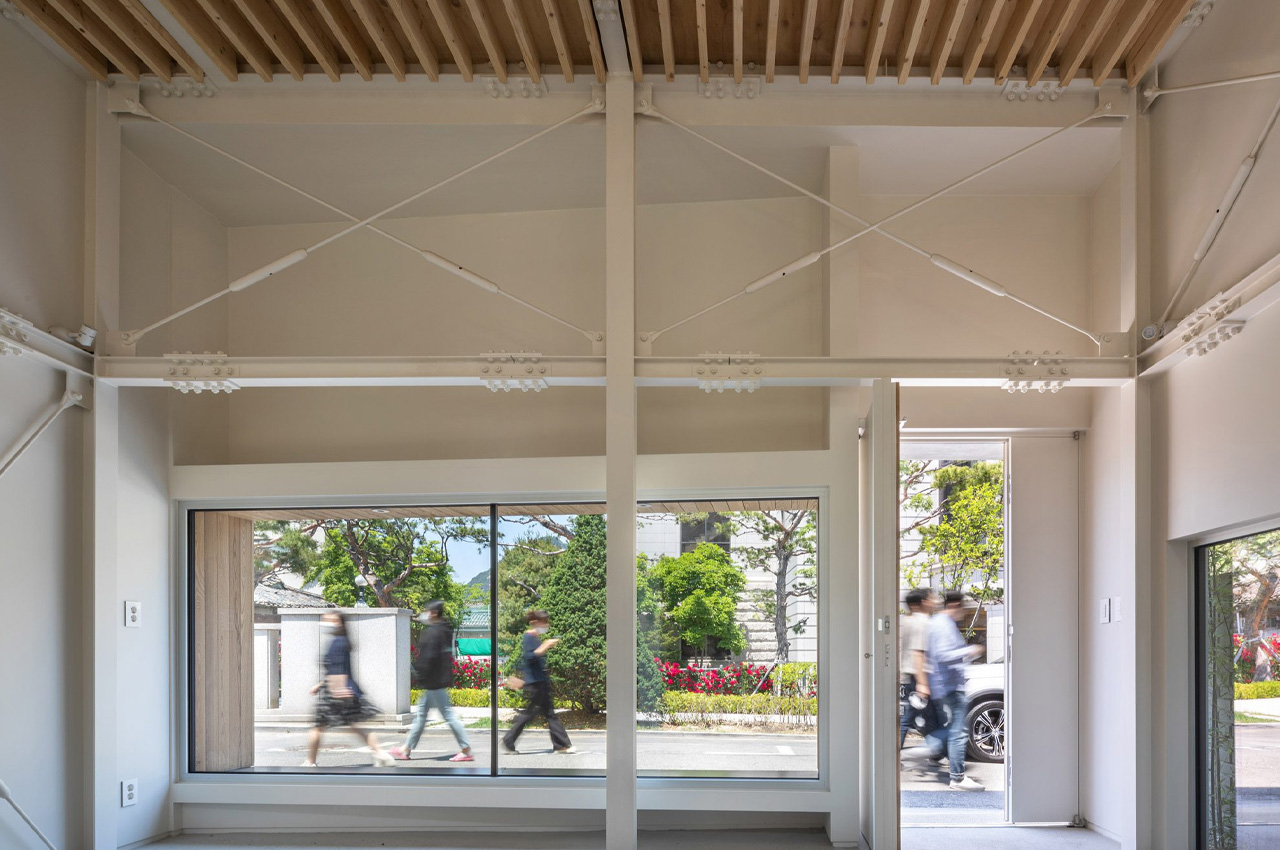
The ground floor features an exposed steel structure in the color white, as well as a massive shopfront-style window that provides views of the street, while also holding an external bench. The space above is wood-lined creating a warm and minimal ambiance, and is equipped with built-in desk space and bookshelves alongside one wall. An external spiral staircase connects both the two floors and is located at the rear of the building. While another staircase connects the western side of the upper level to a tranquil rooftop garden.

The post Tiny Forest In Seoul Is A Tiny Study/Relaxation Space Designed To Be A “Microcosm For Oneself” first appeared on Yanko Design.
FedEx is building its own all-in-one ecommerce platform

FedEx is planning to launch an ecommerce platform called “fdx” later this year. The shipping company announced the move on Sunday, describing fdx as an end-to-end online shopping hub that aims to provide sellers with solutions for everything from reaching potential customers to order fulfillment and returns. Sounds… familiar. FedEx says it’s targeting fall 2024 for the official launch.

The details are so far pretty scant, but fdx is being billed as a “data-driven” platform that will use FedEx’s insights to optimize basically every part of the buying and selling process. From the get-go, sellers on fdx will have access to the existing network of customers on the ecommerce site ShopRunner, which FedEx owns, and customers will be able to see delivery estimates on products as they browse and add things to their carts, even before checkout. Sellers will be provided carbon emissions reports relating to their supply chain decisions, optimal shipping routes and more.

FedEx is calling fdx a “first-of-its-kind” platform, which sure seems like a stretch, but we’ll find out soon enough if it really has something uniquely enticing to offer. It’ll need to if FedEx wants to woo people out of Amazon’s chokehold.

This article originally appeared on Engadget at https://www.engadget.com/fedex-is-building-its-own-all-in-one-ecommerce-platform-233624131.html?src=rss

FedEx is building its own all-in-one ecommerce platform

FedEx is planning to launch an ecommerce platform called “fdx” later this year. The shipping company announced the move on Sunday, describing fdx as an end-to-end online shopping hub that aims to provide sellers with solutions for everything from reaching potential customers to order fulfillment and returns. Sounds… familiar. FedEx says it’s targeting fall 2024 for the official launch.

The details are so far pretty scant, but fdx is being billed as a “data-driven” platform that will use FedEx’s insights to optimize basically every part of the buying and selling process. From the get-go, sellers on fdx will have access to the existing network of customers on the ecommerce site ShopRunner, which FedEx owns, and customers will be able to see delivery estimates on products as they browse and add things to their carts, even before checkout. Sellers will be provided carbon emissions reports relating to their supply chain decisions, optimal shipping routes and more.

FedEx is calling fdx a “first-of-its-kind” platform, which sure seems like a stretch, but we’ll find out soon enough if it really has something uniquely enticing to offer. It’ll need to if FedEx wants to woo people out of Amazon’s chokehold.

This article originally appeared on Engadget at https://www.engadget.com/fedex-is-building-its-own-all-in-one-ecommerce-platform-233624131.html?src=rss

Luxury incense holder concept puts a premium spin on a simple design

There’s a great deal of interest in essential oils and diffusers these days, but some people tend to prefer the distinct scent of incense. Incense sticks are simple and economical ways to enjoy such fragrances, but actually using and managing these very thin sticks can be a bit of a hassle, considering the different parts that could be involved. Some incense holders practice extreme minimalism to the point holding the burning stick is really all that they can do. These tend to try to match the incense’s aesthetic by utilizing wooden materials, but there is no hard rule that it is the only way to design incense holders, as this rather classy design concept tries to prove.

Designer: Nikhil Kapoor

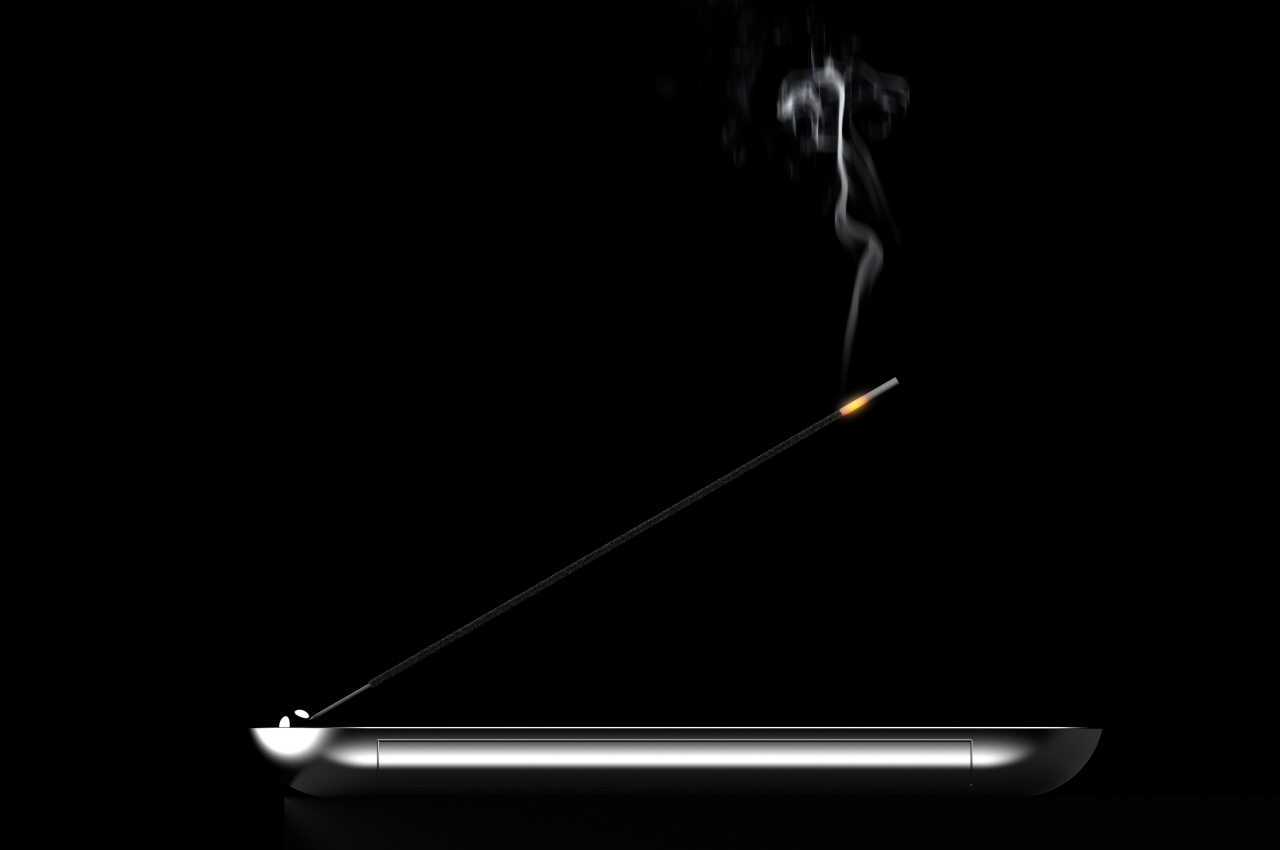
The most basic incense holder design is simply a strip of wood that can hold an incense stick at an angle so that its ashes fall in a single place only (presuming there’s no gust of wind). The shape is a bit concave to make sure that the ashes don’t simply roll or fall off. This simplistic design makes the incense holder itself extremely portable, but then you’d also have to carry around a container for unused sticks as well as a lighter or match for lighting the stick.

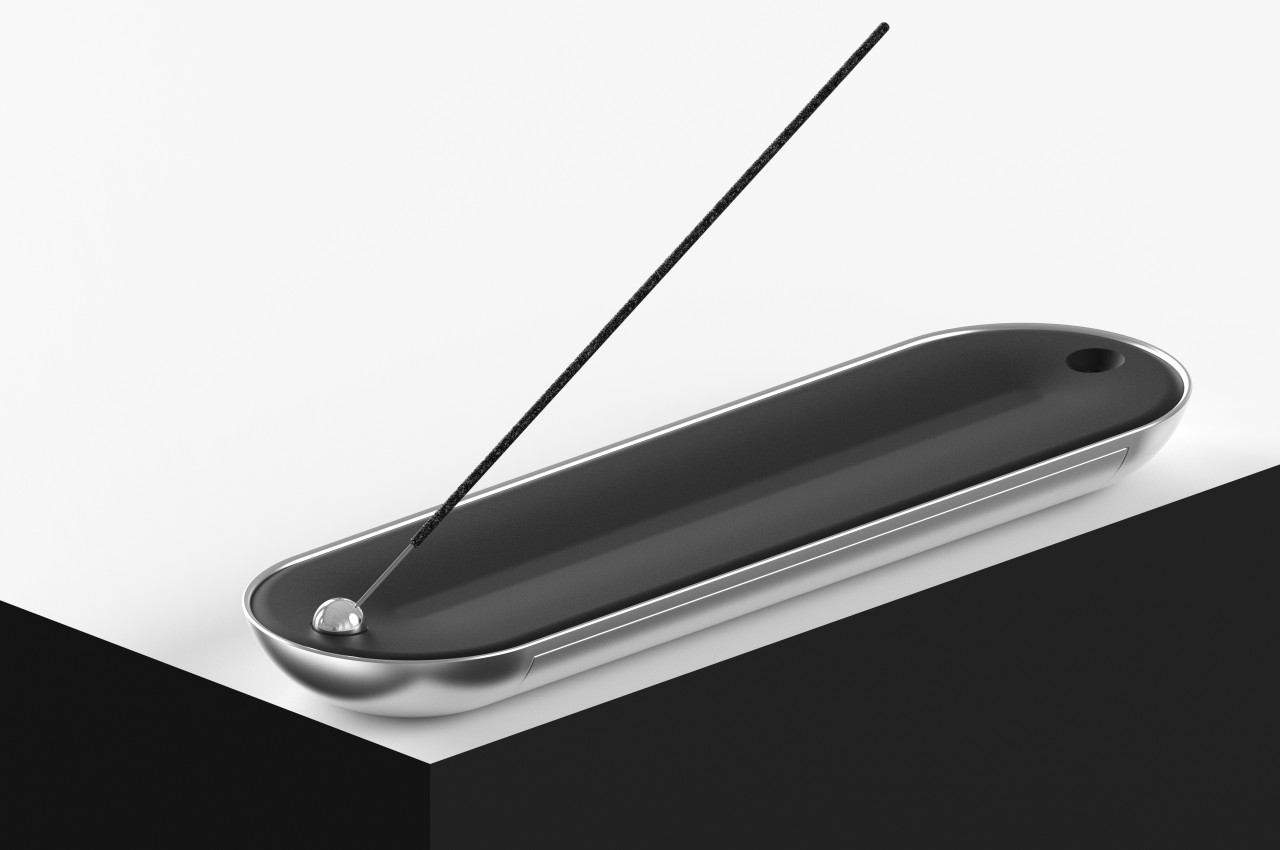
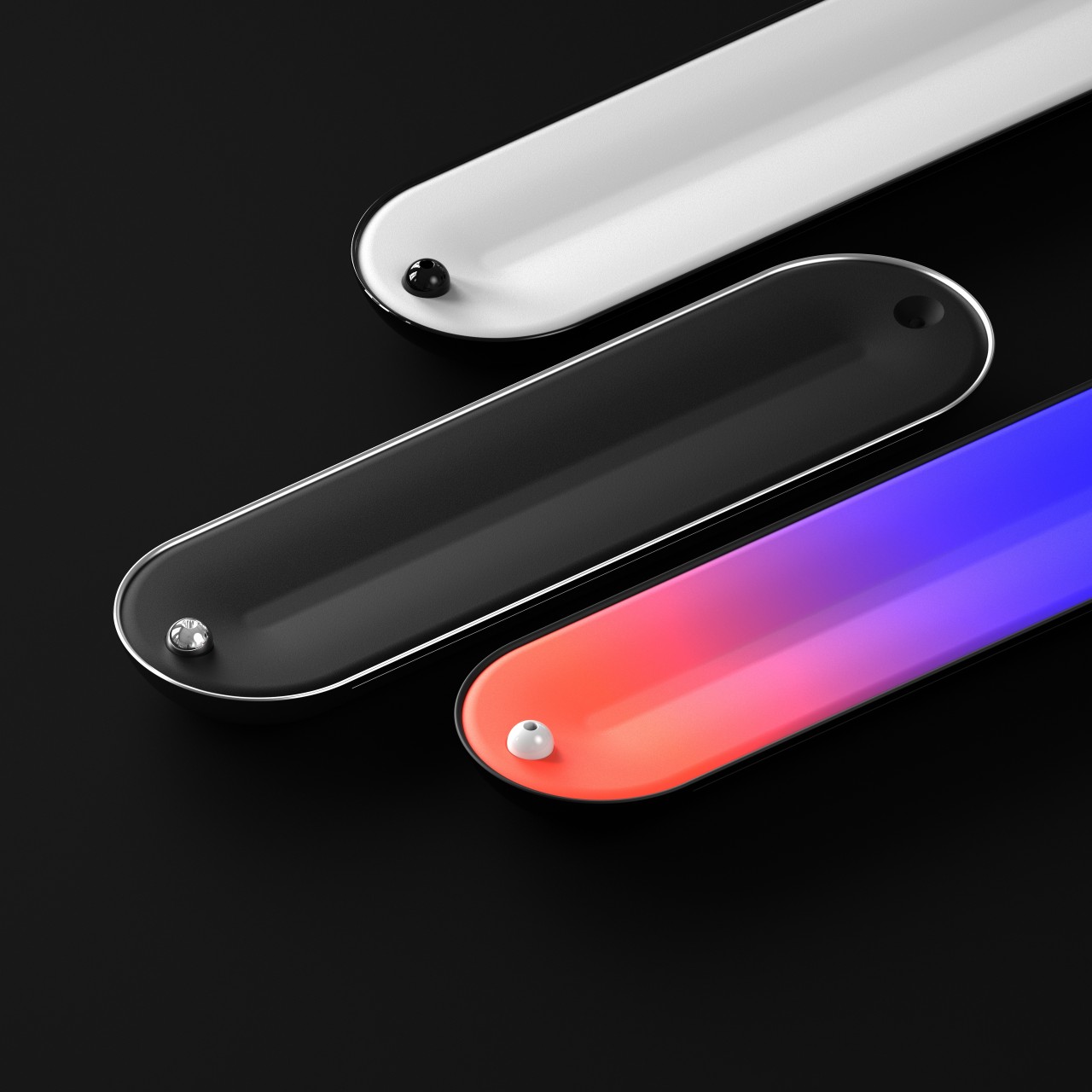
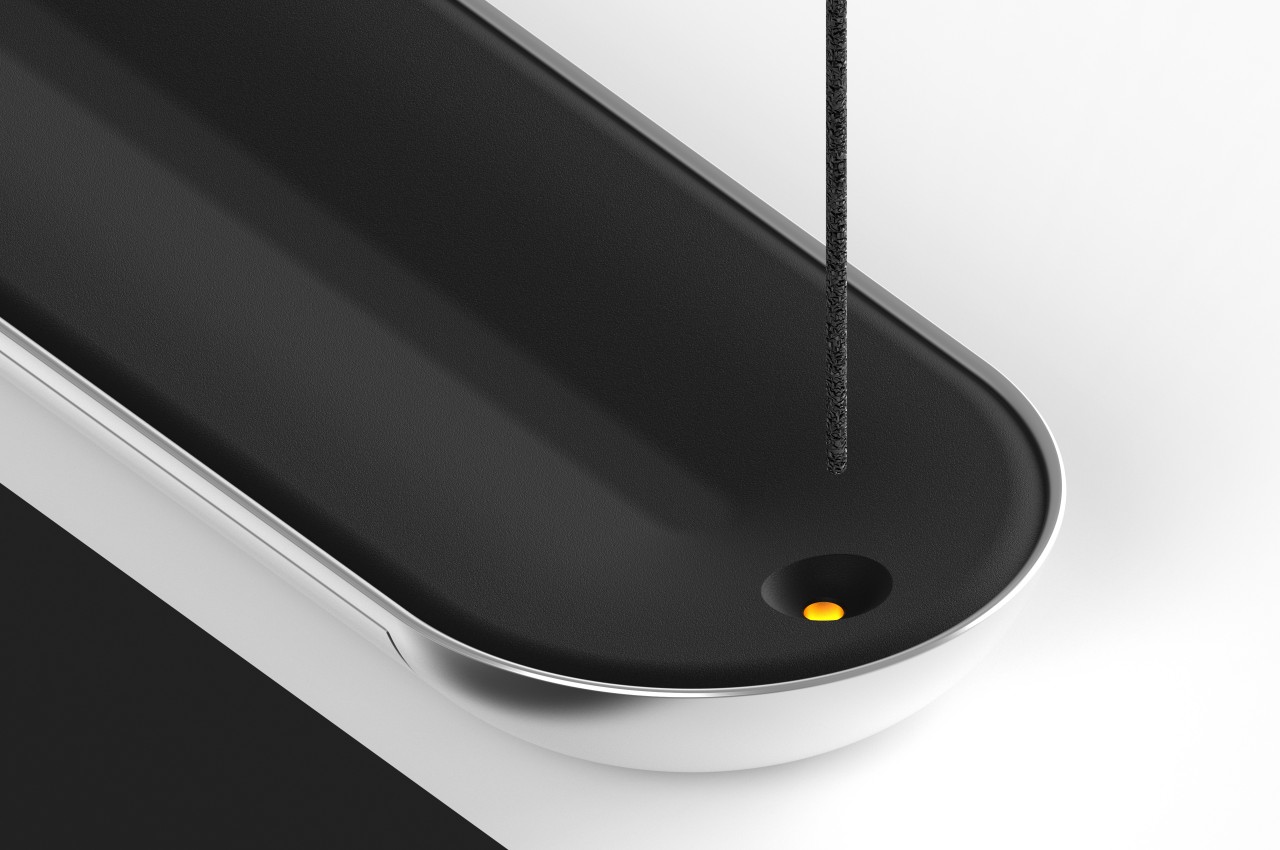
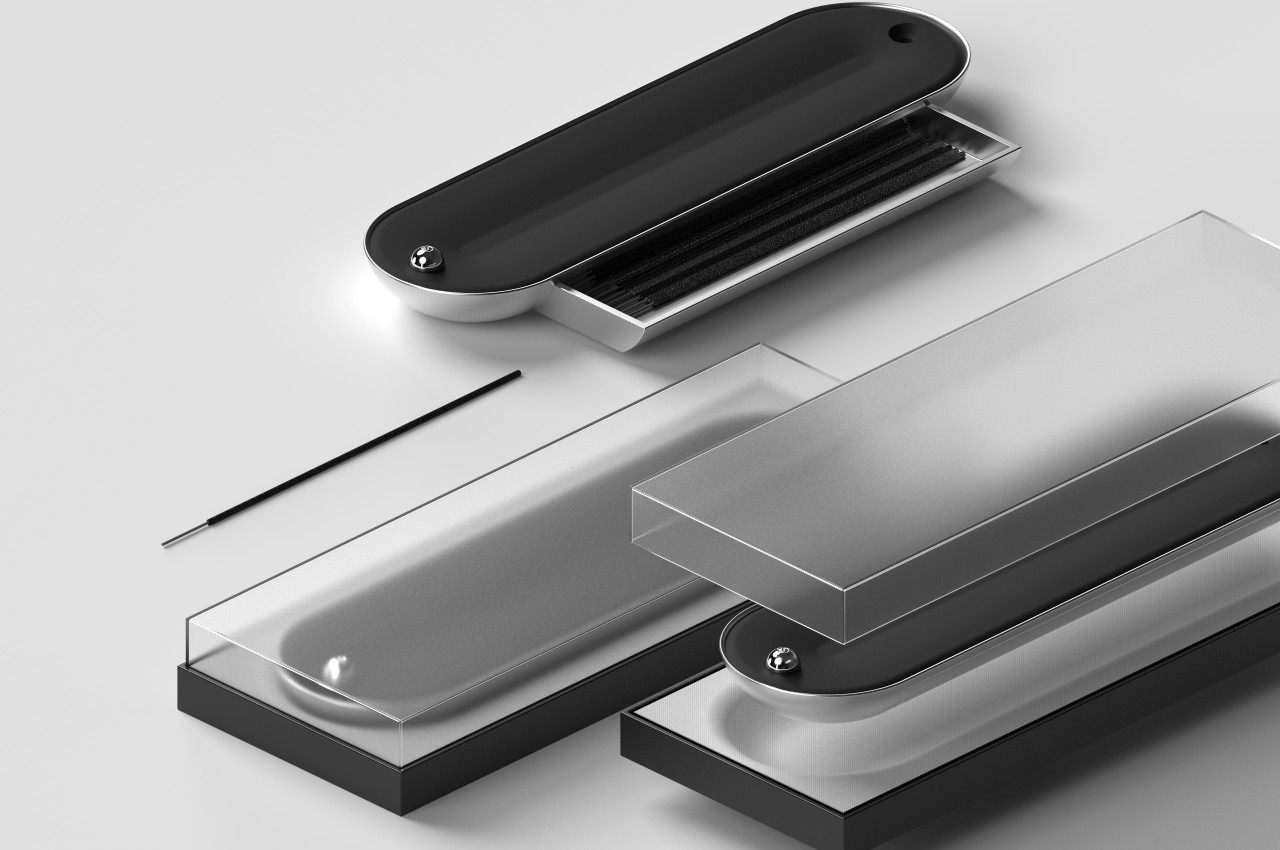
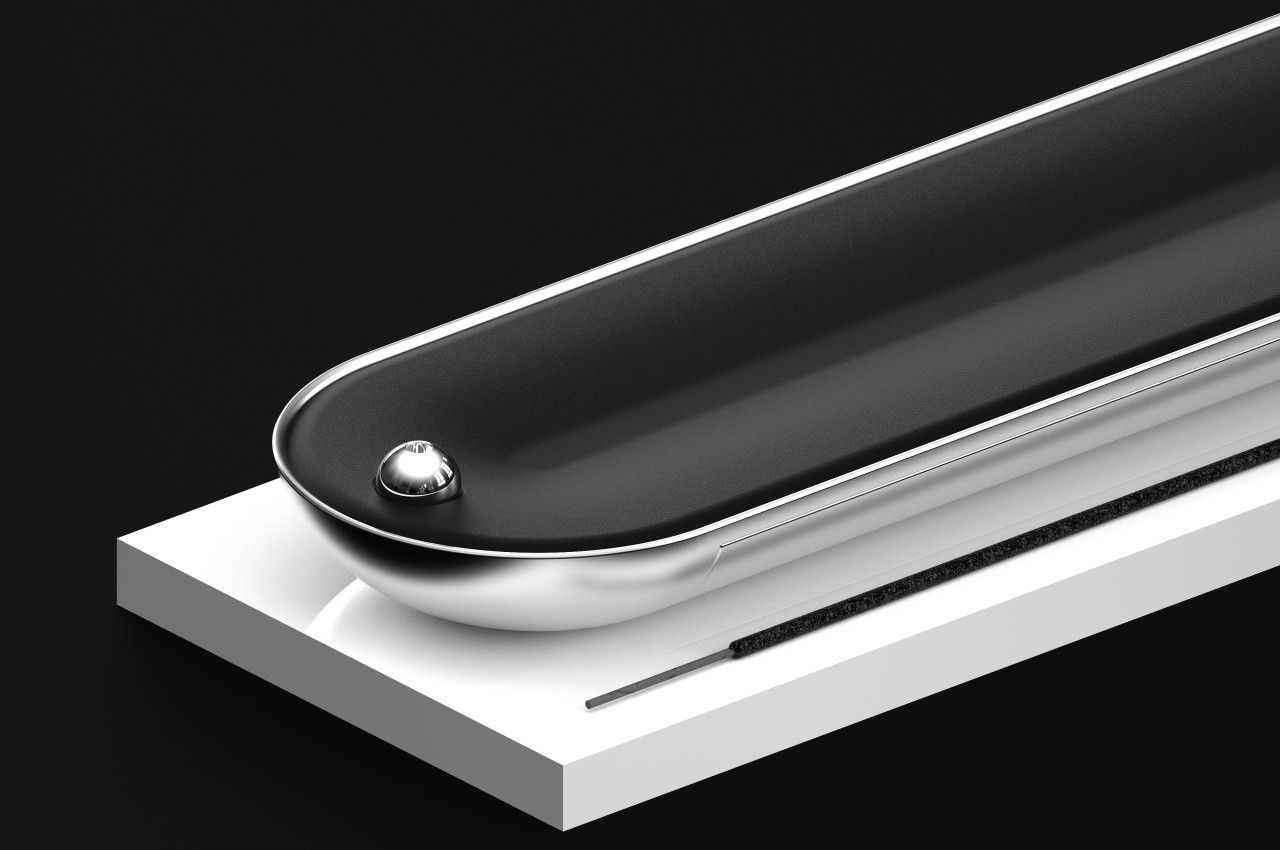
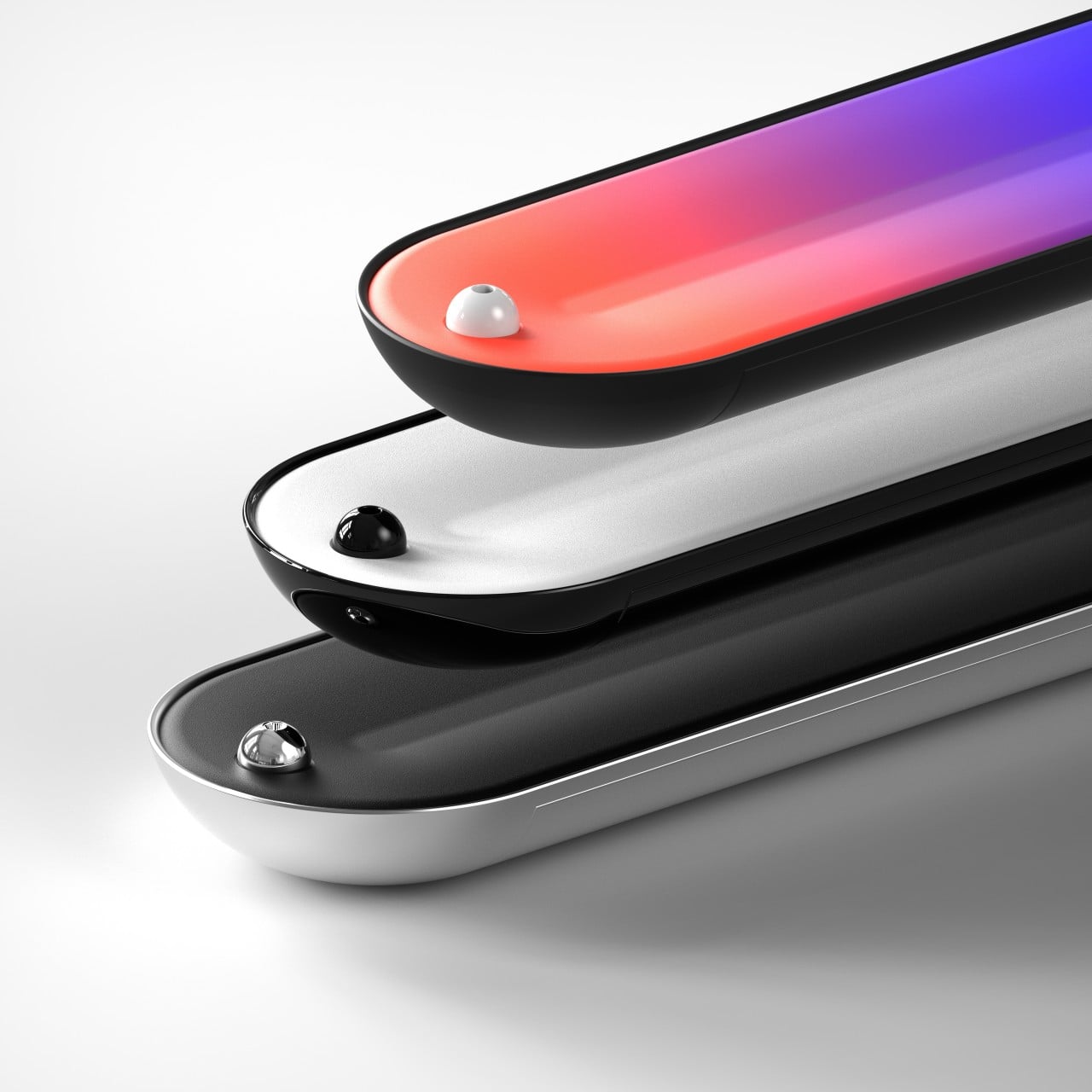
In contrast, this design concept incorporates all three elements into a single design that quickly sets itself apart not just in function but also in aesthetics. Instead of wood, the design uses metal, most likely polished aluminum, to give the incense holder a reflective and luxurious appearance. The black top surface is probably some heat-resistant material, but it doesn’t take away anything from the product’s elegant looks. The silver and black colors contrast and complement each other nicely, but there is also room for other color combinations as well.

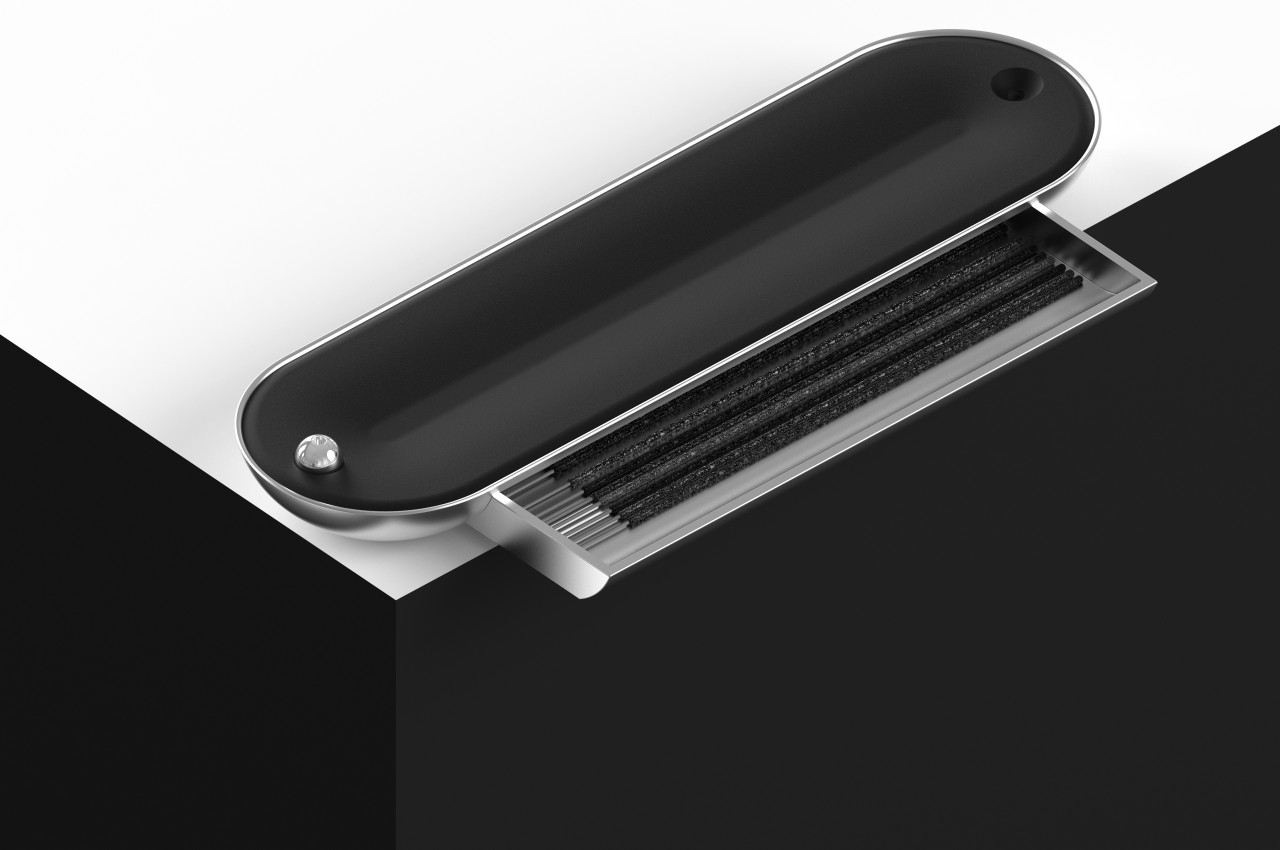
Just as interesting as its uncommon appearance is how a single product performs three functions. A hidden drawer at the bottom reveals space for holding reserve incense sticks, while a hole opposite the spherical stick holder is actually a lighter. This way, you need to bring one and only one thing with you so that you can enjoy your favorite incense scents anytime, anywhere. It would have been nice, however, if there was also a way to store the ashes temporarily so that you can keep your area clean until you’re ready to throw away those ashes in a proper bin.

The post Luxury incense holder concept puts a premium spin on a simple design first appeared on Yanko Design.
Hybrid yacht concept is a futuristic-looking water transport

One of my still unfulfilled dreams is to one day be able to view the seas from the deck of a luxurious yacht. I don’t have to actually own one but it would be nice to experience this if a rich friend or acquaintance would invite me to go on board and experience the “high seas”. It would also be a bonus if said yacht can actually let us sail at high speed if we want to. This concept for a hybrid yacht seems to be a good option for this dream.

Designer: Pierpaolo Lazzarini

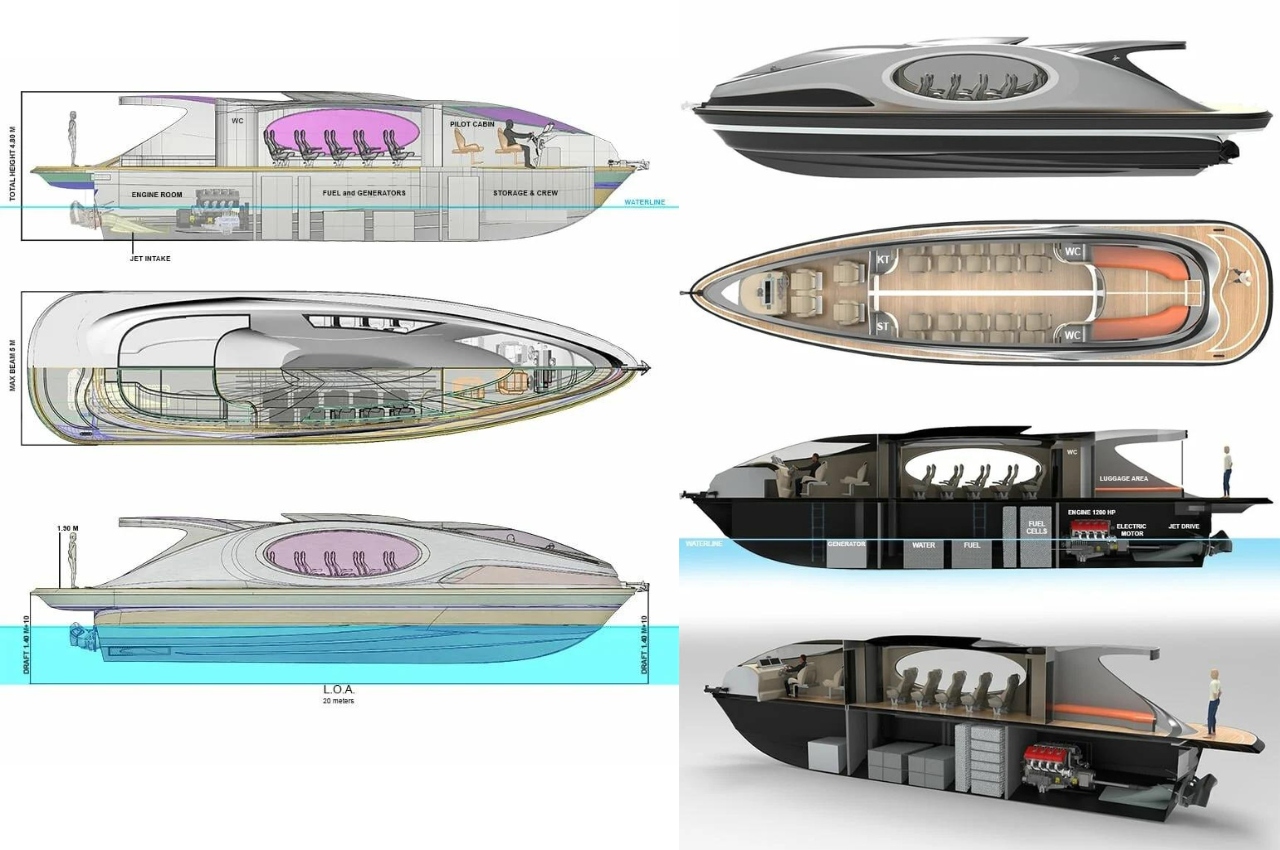
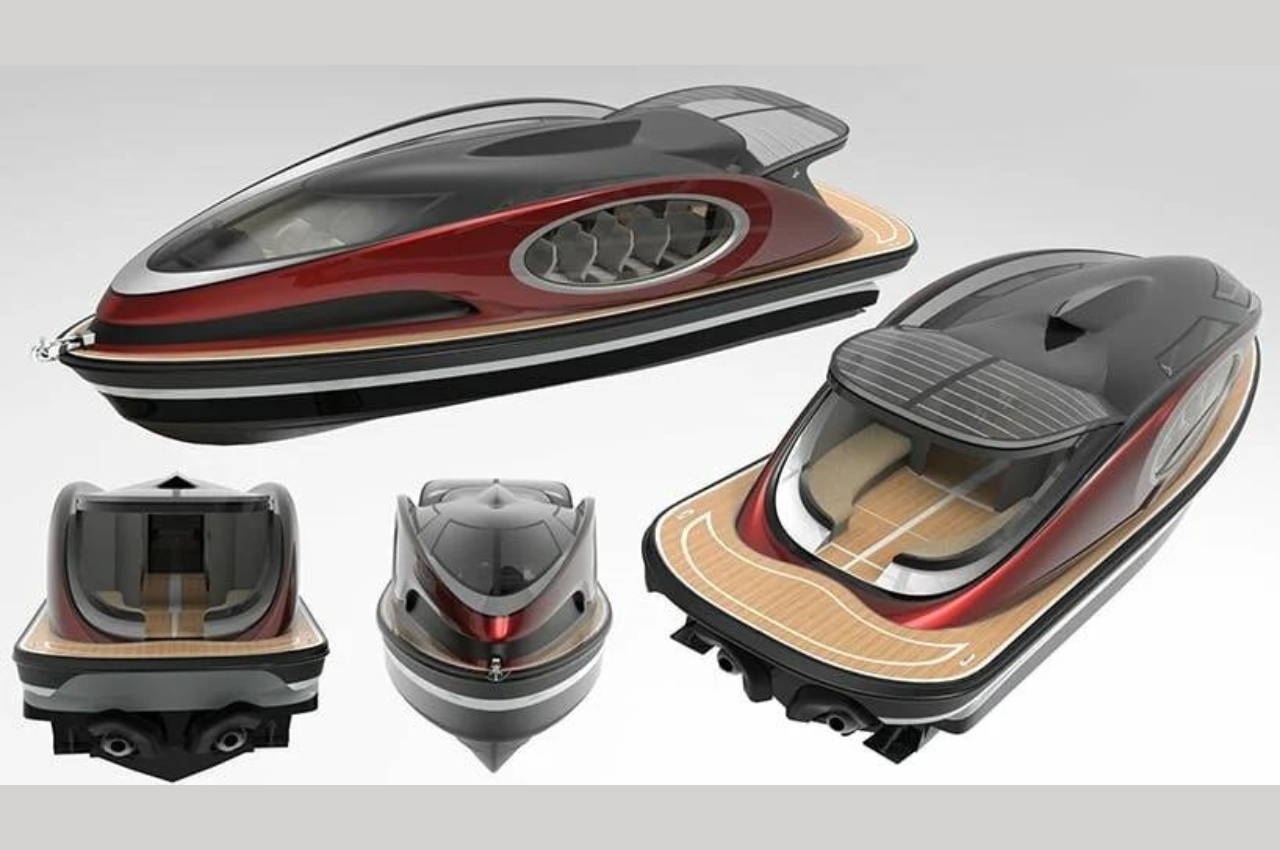
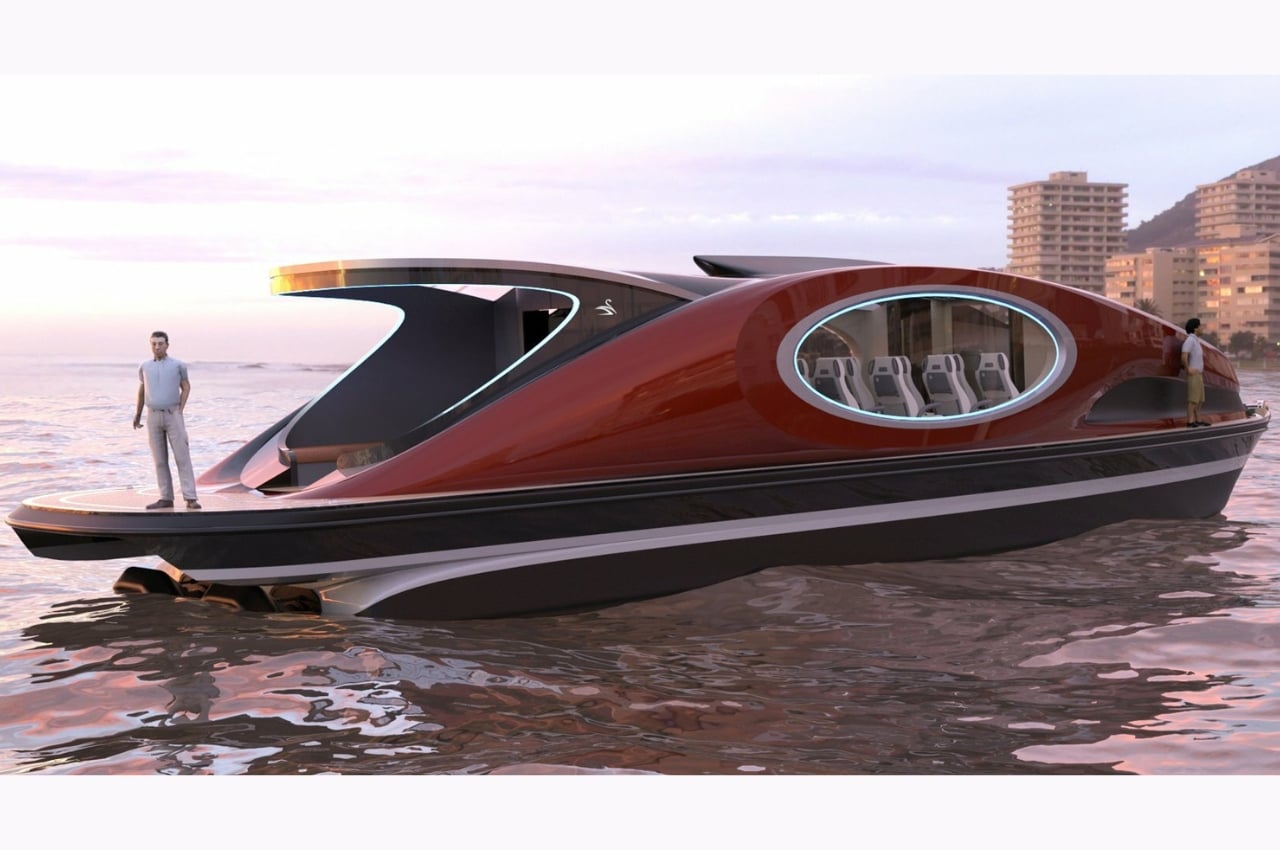
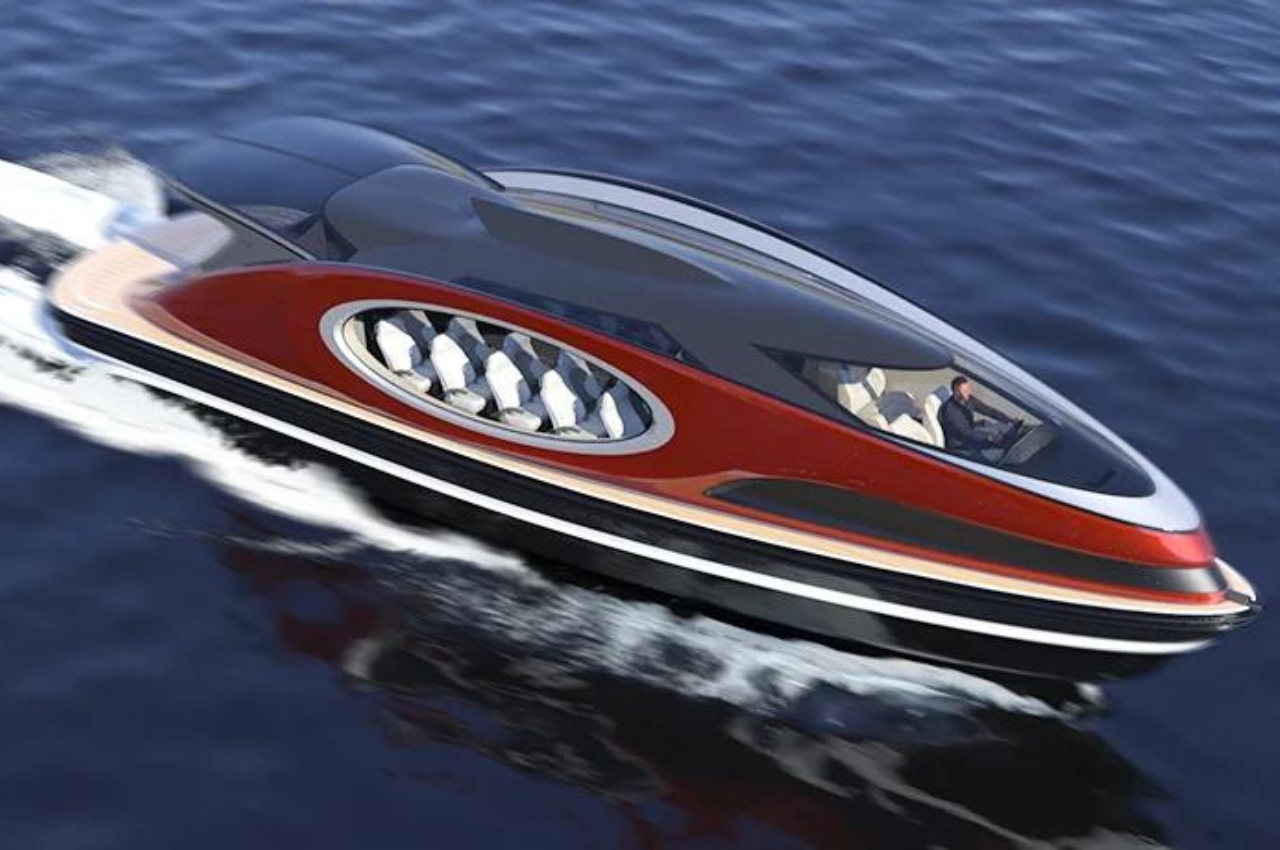
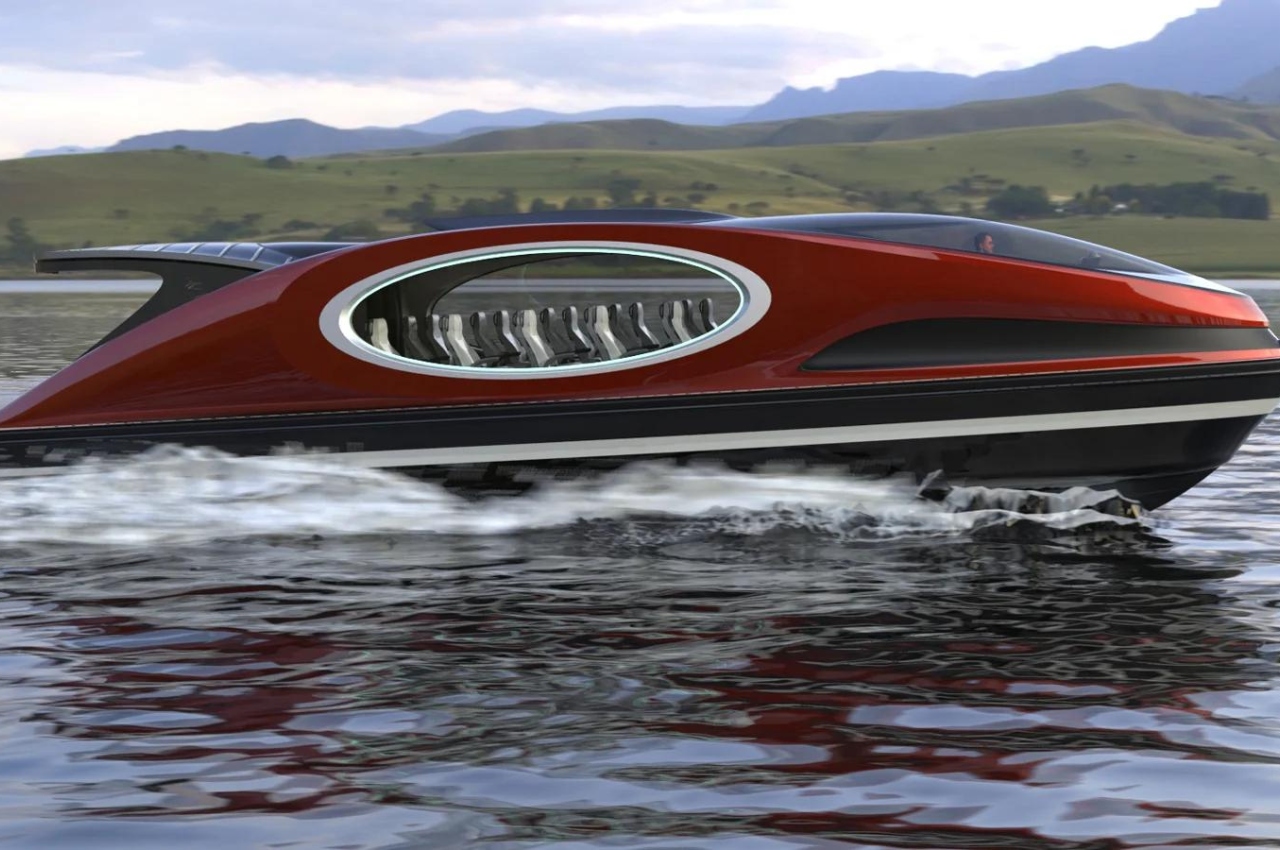
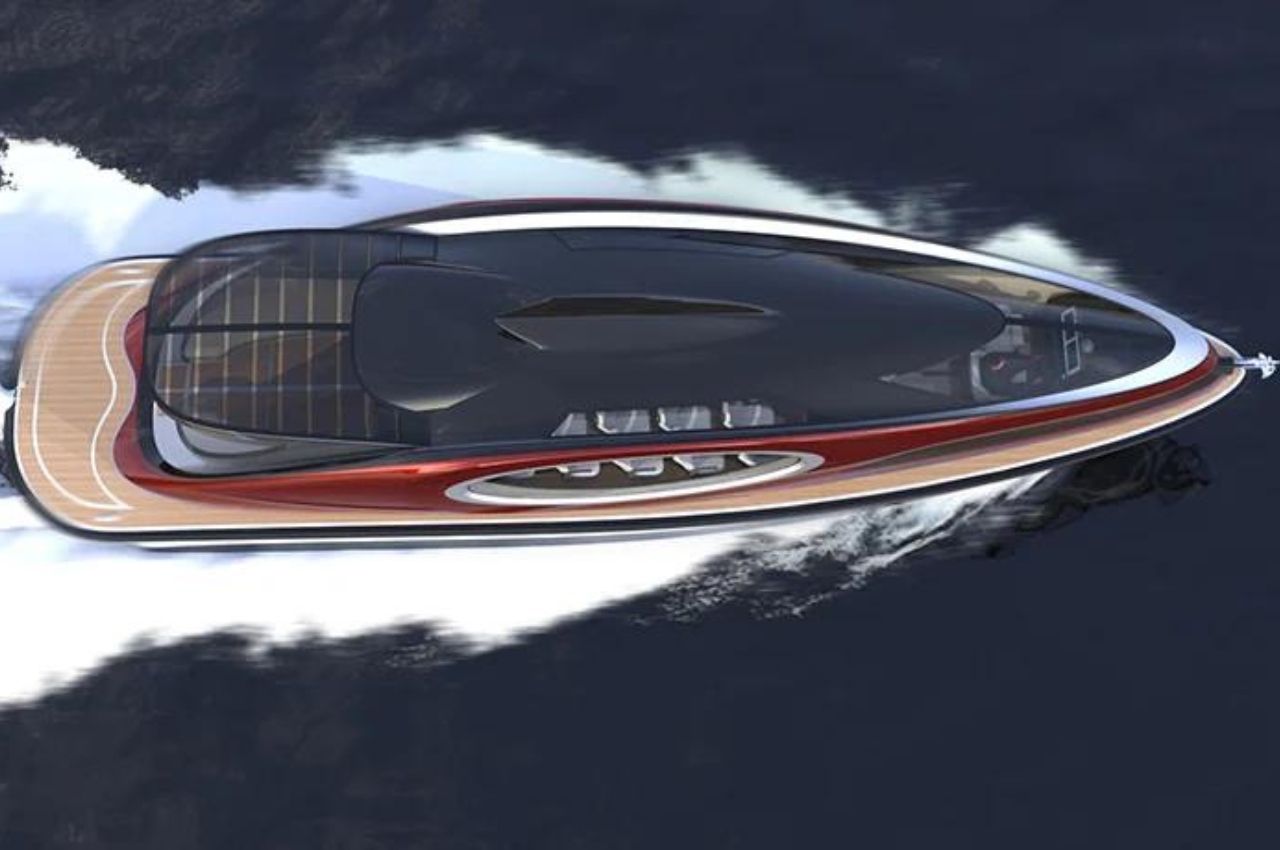
The Palladio is a concept for a hybrid yacht that is ultra-light and can speed up to 55 knots maximum. It also looks like something out of a sci-fi movie set in water as it uses a futuristic, mouth-shaped, avant-garde design that makes it look like a pod cruising through the waters. It is made from carbon fiber and is propelled by twin Castoldi jets and driven by two FTP engines.

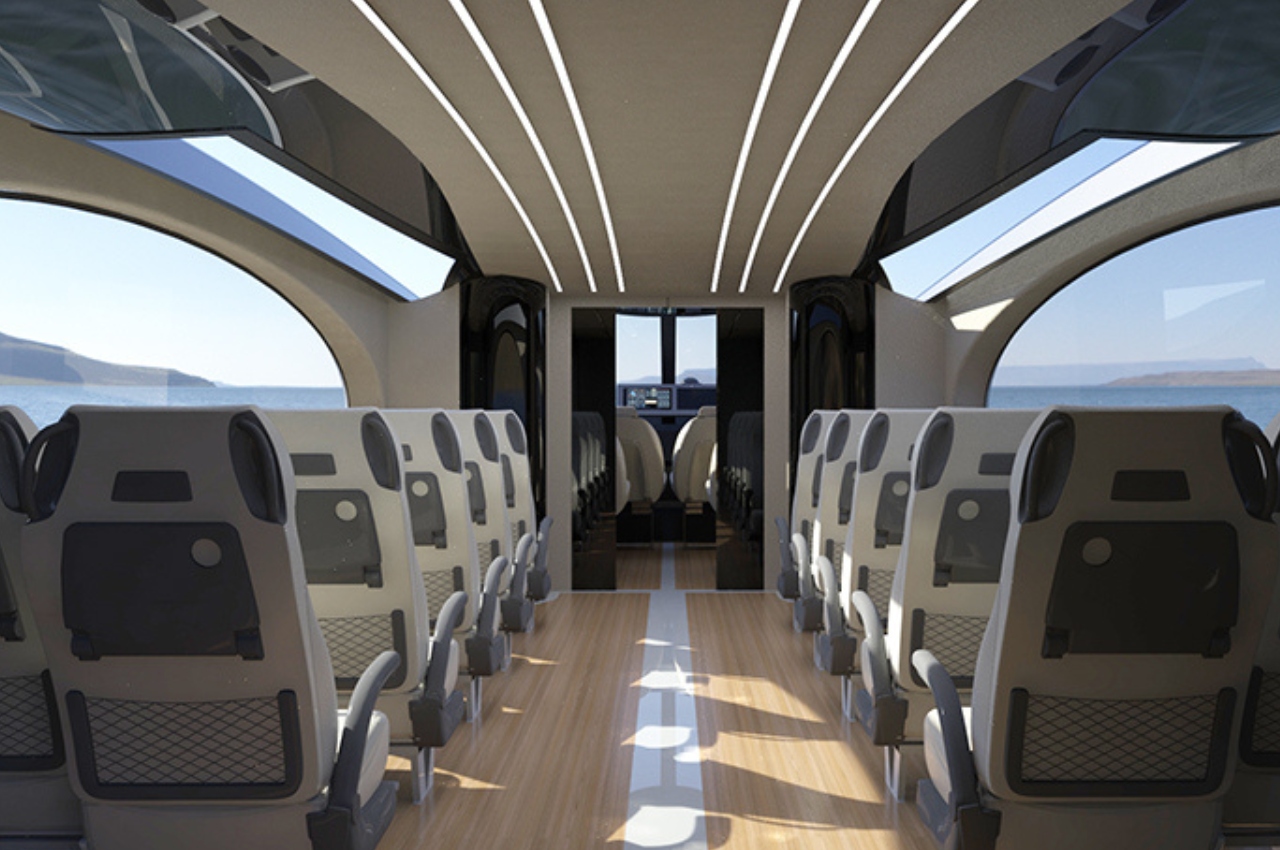
The 20-meter yacht is able to house 26 passengers, with 22 seated in the main cabin and four at the front section which includes the captain. The pod-looking vehicle can also have toilets or dinettes in the corners to make the passengers more comfortable. The back section can also accommodate some of the crew and also store the passengers’ luggage and belongings.

Even though the Palladio is mostly a closed vehicle, there are filtered air intakes on each side so that the passengers can still have a comfortable breathing space in this environment. I’ll definitely add this kind of hybrid yacht to my dream water transport, although this is still in the concept stage so we don’t know if it will eventually become a reality.

The post Hybrid yacht concept is a futuristic-looking water transport first appeared on Yanko Design.
3D Visualization Compares The Size, Speed, And Range Of Different Missiles

Animated by video studio RED SIDE, this is a 3D visualization comparing the size, speed, and range of various missiles used by multiple nations. Even the slowest missile is fast, but the quickest missile makes the slowest look like it’s standing still, and the slowest is traveling over 2,000MPH!

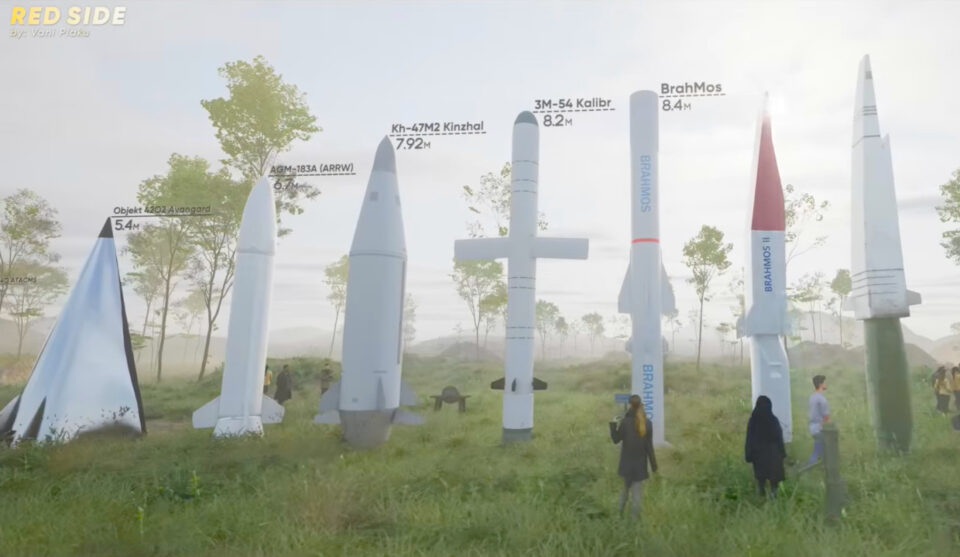
The video starts with a “drag race” comparing the missiles from slowest (the Mach 2.9 Novator Kalibr, ~2,225MPH) to fastest (the claimed Mach 27 of the Avangard, aka Objekt 4202, ~19,884MPH). It then provides an animation of how each missile is typically launched, its different stages, and what a flyby of the rocket at full speed looks like. The third part details each missile’s range; the last part is a size comparison, with all the rockets standing next to one another. I learned a lot by watching it. Mostly, I wouldn’t want to get hit with any of these, even without an explosive payload.

Which missile was your favorite? I found them all rather terrifying. Technologically impressive, sure, but scary to think about. And probably infinitely scarier to try to ride like a mechanical bull.

[via TheAwesomer]

Peregrine moon lander and its cargo will likely burn up in Earth’s atmosphere

It looks like the Peregrine lunar lander’s final resting place will be back at home where it started. The doomed spacecraft, which experienced an anomaly shortly after launch and has been leaking propellant ever since, is expected to burn up in Earth’s atmosphere, Astrobotic wrote in an update on X this weekend. The company plans to host a press conference with NASA on Thursday January 18 at 12PM ET to discuss the lander’s fate.

Peregrine has so far hung on much longer than anyone thought it would after the leak was first detected on January 8, and Astrobotic has been posting round-the-clock status updates. The company days ago ruled out a soft landing on the moon’s surface, but there’s been some uncertainty about where exactly it’ll end up. Peregrine did manage to make it to lunar distance — reaching 238,000 miles from Earth on Friday and then 242,000 as of Saturday — but because of where the moon currently is in its orbit, nothing was there to meet it.

If all had gone according to plan, Peregrine would have met up with the moon about 15 days after launch, at which point it could begin the transition from Earth orbit to lunar orbit. It’s only been six days, and Peregrine’s dwindling fuel supply isn’t likely to carry it for nine more. “Our analysis efforts have been challenging due to the propellant leak, which have been adding uncertainty to predictions of the vehicle’s trajectory,” Astrobotic wrote in its most recent update on Saturday. “Our latest assessment now shows the spacecraft is on a path towards Earth, where it will likely burn up in the Earth’s atmosphere.”

It was always a known risk that Peregrine Mission One might end this way; moon landings are notoriously hard. The commercial mission marked the first of those contracted under NASA’s Commercial Lunar Payload Services (CLPS) program, and in a briefing ahead of last week’s launch, NASA’s CLPS Program Manager Chris Culbert said, “We recognize that success cannot be ensured.” 

This article originally appeared on Engadget at https://www.engadget.com/peregrine-moon-lander-and-its-cargo-will-likely-burn-up-in-earths-atmosphere-204002942.html?src=rss

Peregrine moon lander and its cargo will likely burn up in Earth’s atmosphere

It looks like the Peregrine lunar lander’s final resting place will be back at home where it started. The doomed spacecraft, which experienced an anomaly shortly after launch and has been leaking propellant ever since, is expected to burn up in Earth’s atmosphere, Astrobotic wrote in an update on X this weekend. The company plans to host a press conference with NASA on Thursday January 18 at 12PM ET to discuss the lander’s fate.

Peregrine has so far hung on much longer than anyone thought it would after the leak was first detected on January 8, and Astrobotic has been posting round-the-clock status updates. The company days ago ruled out a soft landing on the moon’s surface, but there’s been some uncertainty about where exactly it’ll end up. Peregrine did manage to make it to lunar distance — reaching 238,000 miles from Earth on Friday and then 242,000 as of Saturday — but because of where the moon currently is in its orbit, nothing was there to meet it.

If all had gone according to plan, Peregrine would have met up with the moon about 15 days after launch, at which point it could begin the transition from Earth orbit to lunar orbit. It’s only been six days, and Peregrine’s dwindling fuel supply isn’t likely to carry it for nine more. “Our analysis efforts have been challenging due to the propellant leak, which have been adding uncertainty to predictions of the vehicle’s trajectory,” Astrobotic wrote in its most recent update on Saturday. “Our latest assessment now shows the spacecraft is on a path towards Earth, where it will likely burn up in the Earth’s atmosphere.”

It was always a known risk that Peregrine Mission One might end this way; moon landings are notoriously hard. The commercial mission marked the first of those contracted under NASA’s Commercial Lunar Payload Services (CLPS) program, and in a briefing ahead of last week’s launch, NASA’s CLPS Program Manager Chris Culbert said, “We recognize that success cannot be ensured.” 

This article originally appeared on Engadget at https://www.engadget.com/peregrine-moon-lander-and-its-cargo-will-likely-burn-up-in-earths-atmosphere-204002942.html?src=rss

If you want to demo the Vision Pro at an Apple Store, prepare to be there a while

We’re getting closer and closer to launch day for Apple’s Vision Pro headset, which means if you’re not yet sold on ordering one, you’ll soon be able to try it out in the store. But don’t expect the process to be quick and easy. In the Power On newsletter this week, Bloomberg’s Mark Gurman says customers hoping for a demo will each have to go through face scans and the subsequent assembly of a custom Vision Pro, a walkthrough of the interface and all the controls, and device calibration — all before a 25-minute demonstration of the Vision Pro experience.

The Vision Pro is meant to sit just right on its wearer’s face, with multiple sizing options for the light seal, foam cushion and band. And Apple isn’t planning on taking the risk of an attempted universal fit for in-store demos, according to Gurman. In addition to face scans, employees will have a device to scan customers’ glasses to determine the right prescription for Vision Pro lenses. Each store “will have hundreds of lenses on hand for demos,” Gurman says, and employees will tag-team the process, with one on the floor taking customers’ details and another in the back handling assembly.

Some stores will have at least a dozen Vision Pro headsets around for people to try. During the actual demo, according to Gurman, users will be shown a series of normal, panorama and “spatial” photos, spatial videos, immersive experiences including a “scene that makes users feel as if they’re on a tightrope,” and a glimpse at what it will be like using the Vision Pro as a computer. Signups will start at 8AM local time on February 2.

If you’re just walking in to buy a Vision Pro, the process should be much simpler. You’ll have to go through the face scans — as will anyone ordering one online — and then all the correct pieces will be boxed up for you right there, Gurman says. There will also be multiple display-only units in each store, if you just want to take a look.

This article originally appeared on Engadget at https://www.engadget.com/if-you-want-to-demo-the-vision-pro-at-an-apple-store-prepare-to-be-there-a-while-172207401.html?src=rss