SHARGE Icemag Hands-On at CES 2024: A Cool-looking MagSafe Power Bank that Cools your Phone

Touted as the world’s first power-bank with its own turbo-cooling feature, the Icemag power bank keeps itself (and your phone) breezy while charging. An ultra-silent fan moves at speeds of 8000 RPM, actively cooling the battery pack inside while the Icemag wirelessly charges your phone, preventing anything from heating up during the charging process.

Sharge has pretty much solidified its reputation for building some of the most incredible-looking charging equipment of our time. Whether it’s the transparent 170W power bank with its own LED display, or the tiny yet indomitable Flow Mini power bank that’s small enough to blend right into your phone’s design, becoming its dedicated second battery, Sharge’s built a rather wonderful ecosystem of charging gear that’s both powerful and unmistakably eye-catching. The Icemag joins that ecosystem as a first for both Sharge and the world – the 10,000mAh MagSafe battery pack comes with its own active cooling system that pushes hot air out from around the lithium-ion battery, increasing its life and overall efficiency as it charges your phone. It also comes as a rather opportune time, as Apple silently killed its own MagSafe power bank, leaving a void in the marketplace.

Designer: SHARGE
Click Here to Buy Now

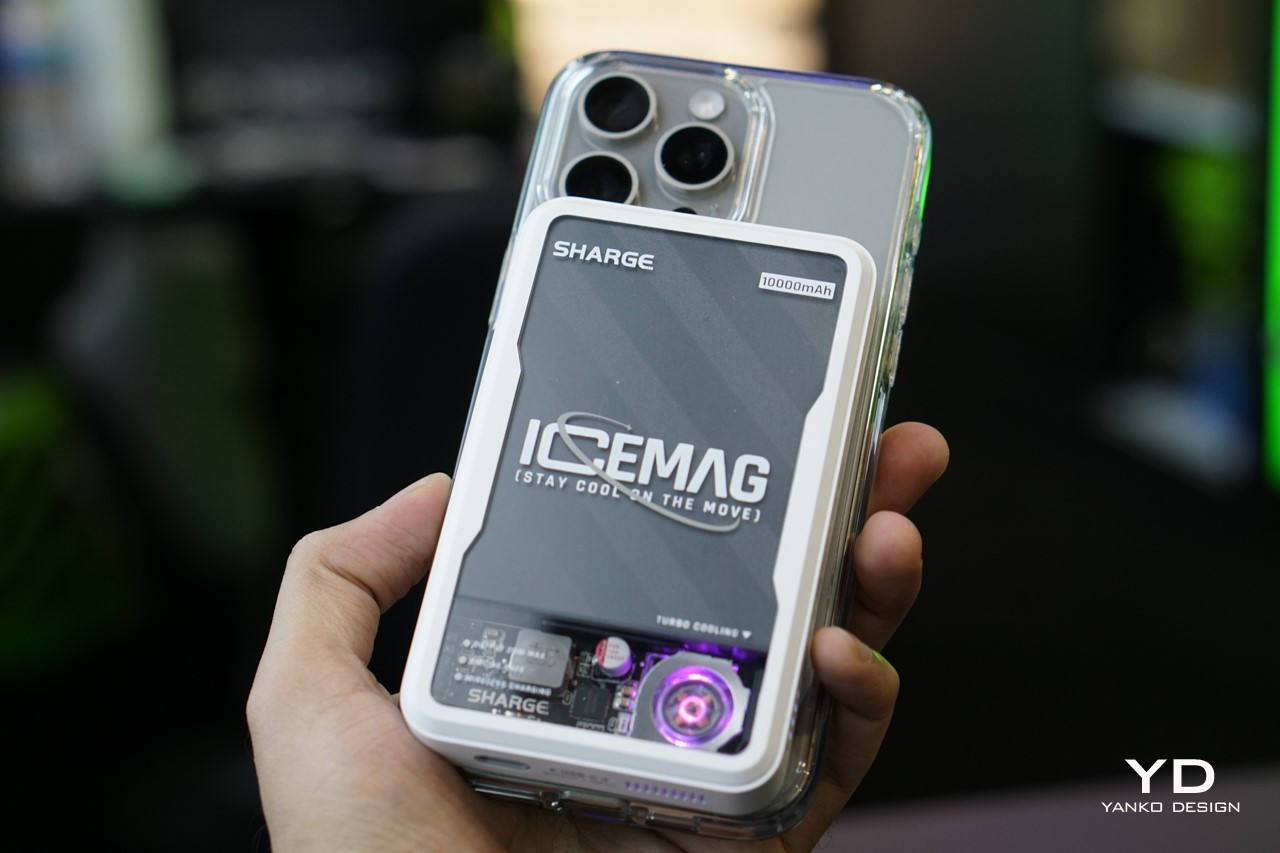
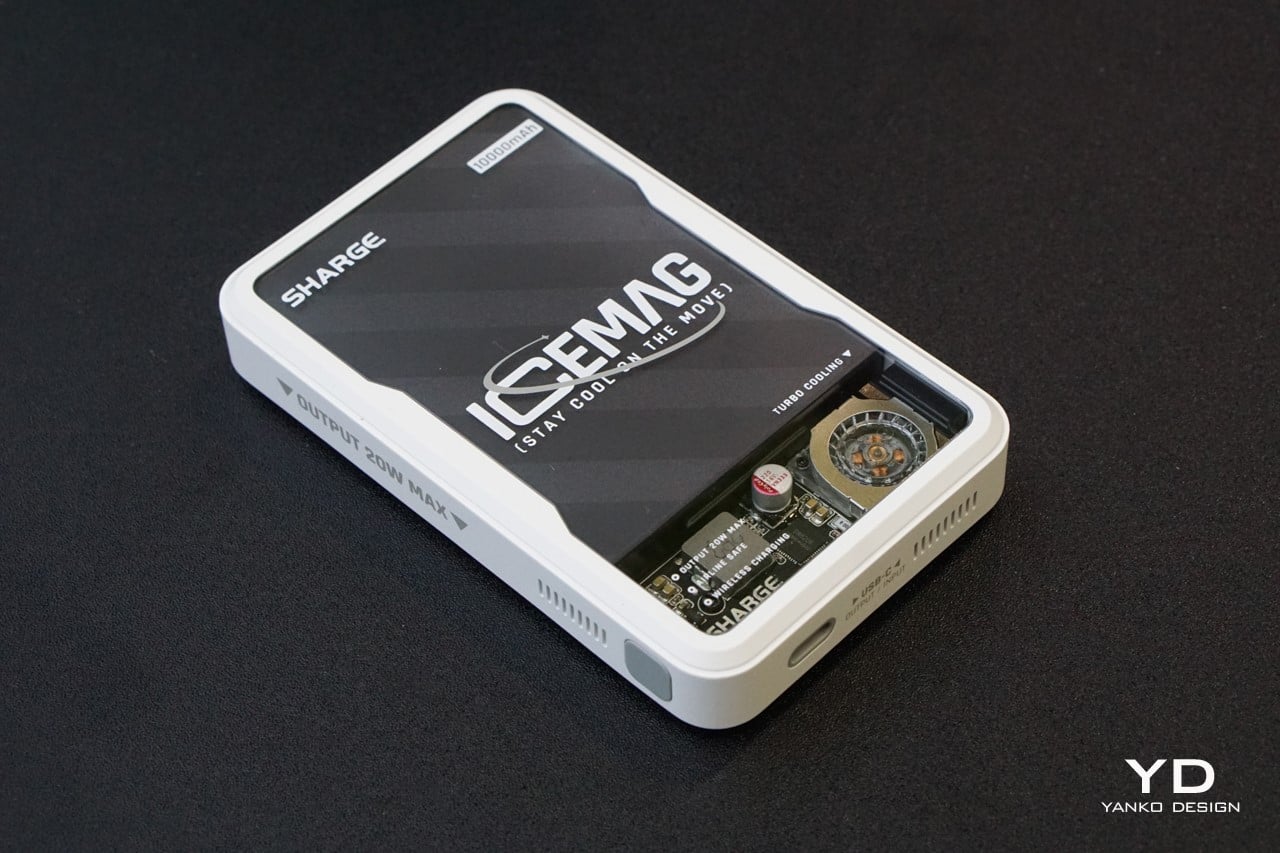
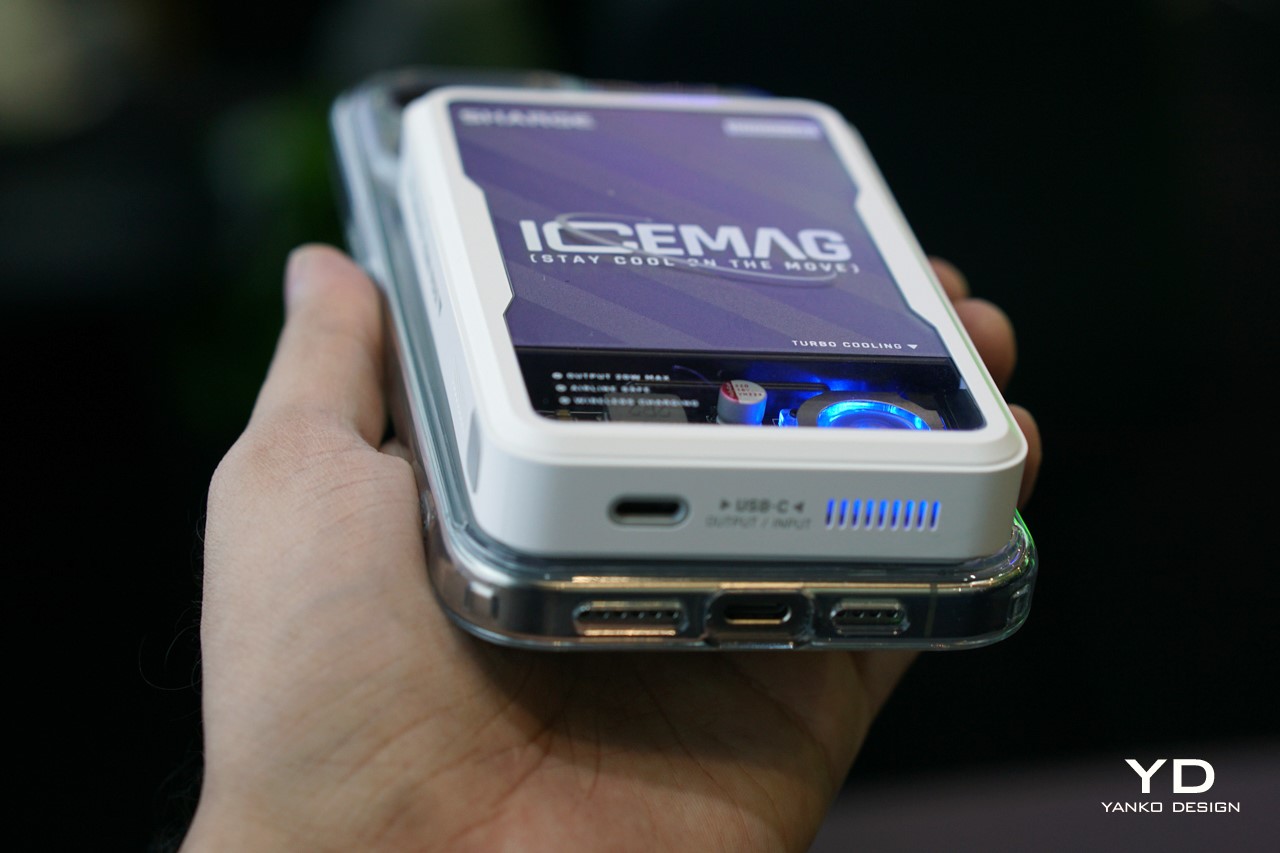
The Icemag has the same proportions as Apple’s MagSafe power bank, albeit with that aforementioned cooling system and a whopping 10,000mAh battery that charges your entire phone twice over with enough extra juice left to spare for a third charge. It sports Sharge’s unmistakable aesthetic, with a transparent panel on the front that lets you peer into the electronics inside – namely the lithium ion battery, the PCB, and that active cooling system.
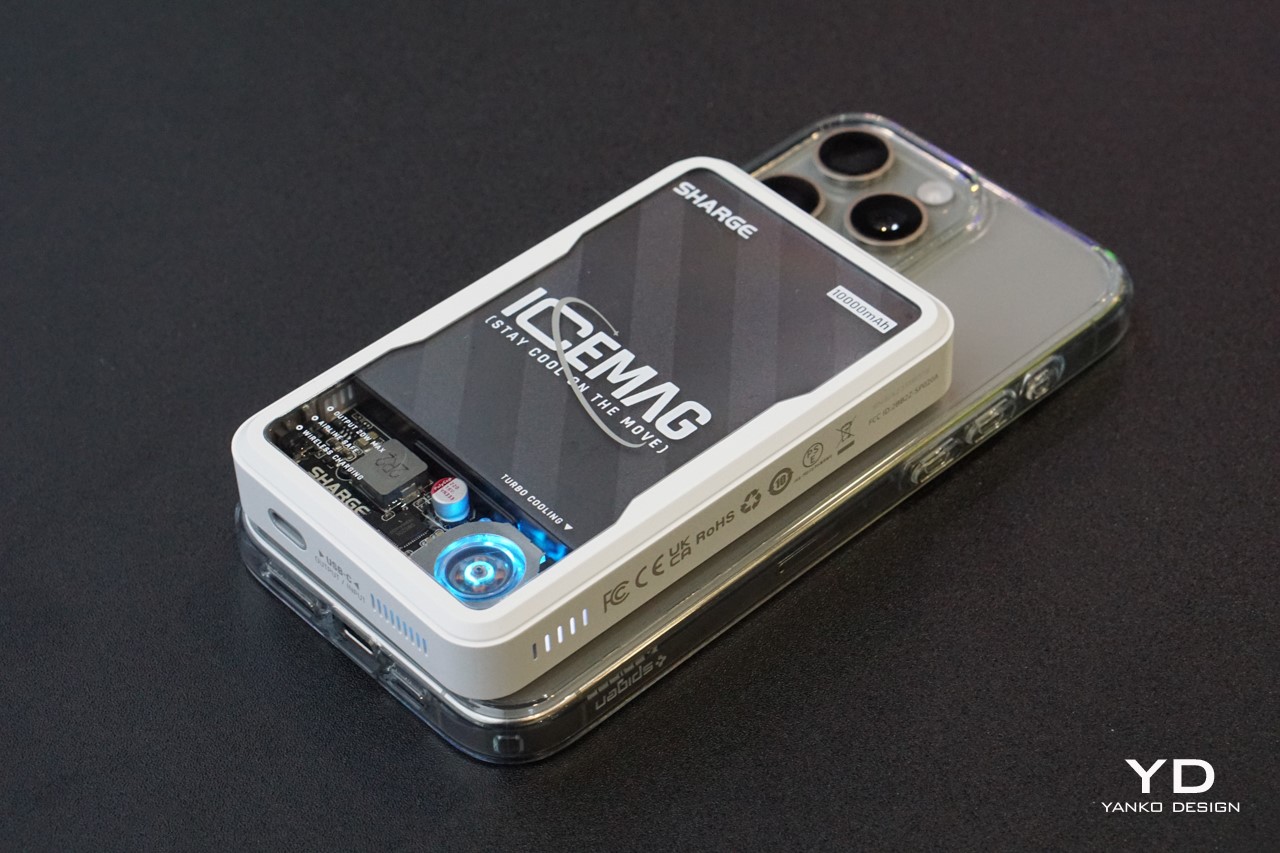
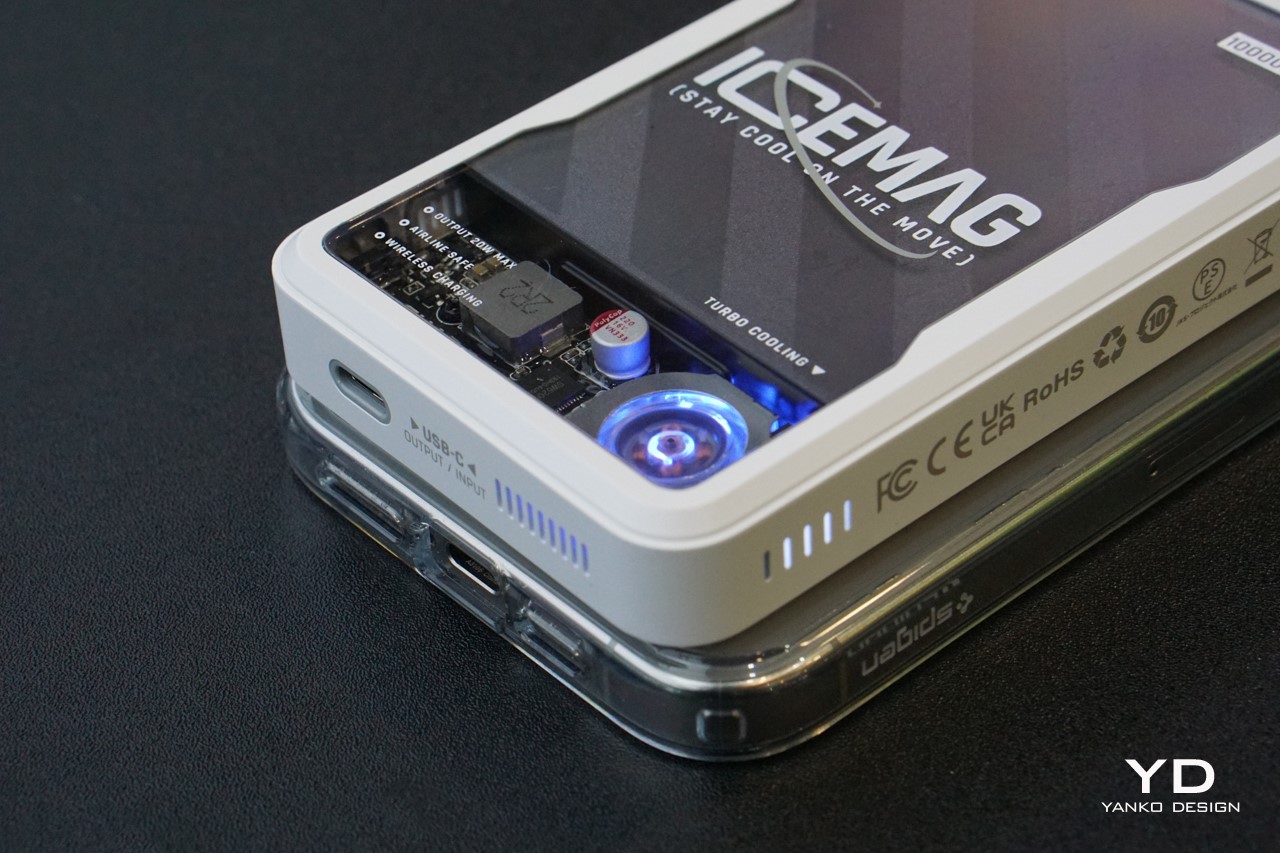
The active cooling system kicks in the second the Icemag is connected to a device (whether through MagSafe or via USB-C cable). The tiny fan outputs an impressive 8000 RPM, helping circulate air within the Icemag to keep the battery actively cooled (rather than relying on a metal heat-sink like other charging apparatus). The fan operates at a deadly silent <25dB, and it was practically inaudible in the buzz and chatter of the CES floor. What was noticeable, however, was the RGB lighting around the fan that changed colors as the Icemag juiced your device. It served as a nice visual indicator of the Icemag’s activity, especially given Sharge’s tech-geek and gamer-centric audience.
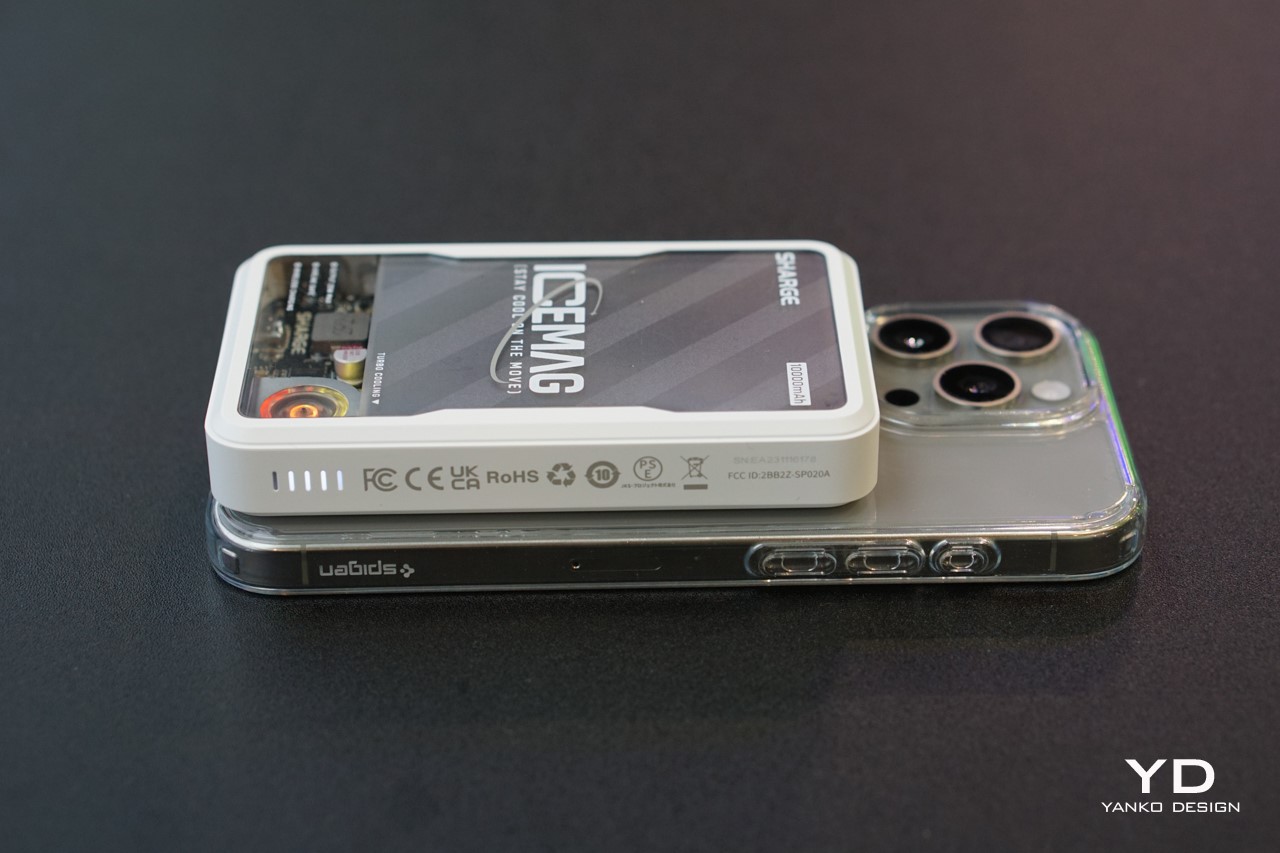
The compact power bank snaps satisfyingly onto the back of your MagSafe phone, beginning the charging process instantly. An indicator on the side shows exactly how much power the Icemag’s battery still has, while a USB-C port on the base supports both power in as well as out. This means the USB-C port can be used to charge the Icemag itself or can be used to connect the Icemag to another phone to charge it conventionally (without using the MagSafe wireless charging feature). The Icemag supports pass-through charging too, letting you charge it while it wirelessly juices your smartphone, and as far as charging speeds go, the Icemag’s wireless charging coil outputs a maximum 7.5W. If you want to tap into higher speeds, connecting your phone/device via USB-C gives you an output of 20W, charging your gadgets significantly faster for when you’re in a bind.
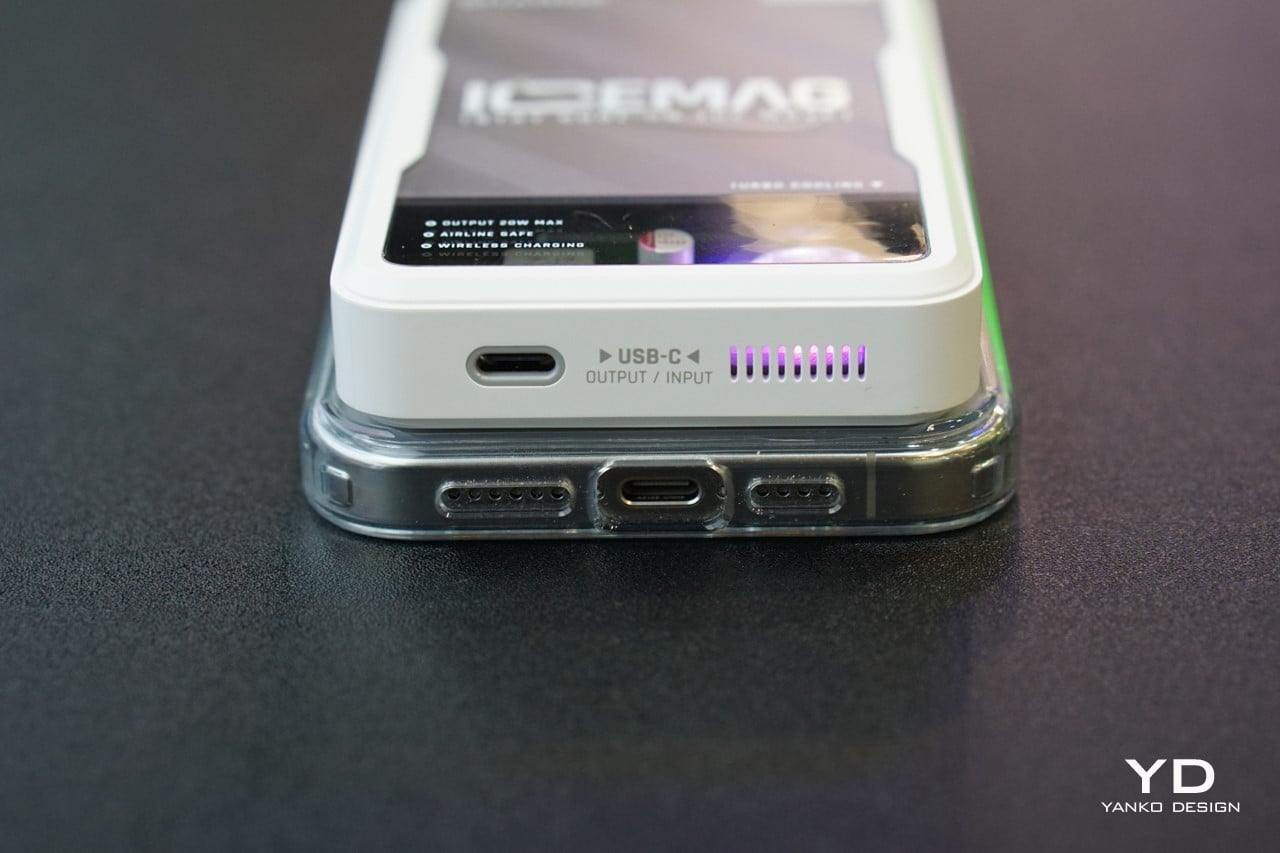
The Icemag balances its responsibilities of being handy, eye-catching, and functional rather well. It’s compact for its capacity and weighs just 223 grams (7.9 ounces), allowing it to securely attach to the back of your phone without any problems. The 10,000mAh battery is absolutely perfect for people who blow through their phones during the day, giving you an extra battery that can support your phone multiple times. The transparent aesthetic and active cooling system, however, steal the limelight for the gorgeous nerdy-cool aesthetic they give the Icemag. The term nerdy-cool probably gets used literally in this sense because of the Icemag’s ability to keep itself at manageable temperatures as it charges your phone. I dare you to find a MagSafe power bank that’s as gorgeously functional as this one…
Click Here to Buy Now

The post SHARGE Icemag Hands-On at CES 2024: A Cool-looking MagSafe Power Bank that Cools your Phone first appeared on Yanko Design.

Microsoft’s Copilot Pro is a $20 monthly subscription for advanced AI features

Almost a year since Microsoft launched its ChatGPT-powered Bing Chat — which is now just called Copilot — the company is announcing its next major AI moves. First, it's launching Copilot Pro, a $20 monthly subscription that gives power users access to the latest ChatGPT releases, as well as access to Copilot in Microsoft 365 apps and other new features. Additionally, the Copilot iOS and Android apps are now available to everyone, following a limited launch last month.

And that's not all! Microsoft also introduced Copilot GPT, a new feature that will let you tweak Copilot around specific topics like "fitness, travel, cooking and more," according to Microsoft EVP and Windows head Yusuf Mehdi. Copilot Pro users will also be able to create their own Copilot GPTs eventually. (And yes, the name is certainly confusing, but this appears to be Microsoft's version of OpenAI's standalone GPTs.)

Microsoft says that Copilot Pro users will have access to GPT-4 Turbo at peak times starting today, and eventually they'll be able toggle between different GPT models. The subscription also grants you better AI image creation, which will be faster and deliver higher image quality, with optional landscape formatting. It's also worth noting that Copilot Pro is $20 a month per user — plan to shell out more if multiple people in your household need access. 

While Copilot and Microsoft's onslaught of AI announcements throughout 2023 led to plenty of publicity — it actually made us care about poor old Bing again! — it remains to be seen if it actually ends up being useful to general users. That may explain the rush to monetize Copilot for power users so quickly. Copilot queries are expensive, both in terms of computation power and energy use, so Microsoft needs a way to actually recoup some of those costs from its most aggressive users. The company also needs to make good on its $13 billion investment in OpenAI, which gave it a 49 percent stake in the AI firm (and once again raised regulatory scrutiny).

Given how strongly linked they are, it's no wonder Microsoft CEO Satya Nadella was instrumental in getting OpenAI co-founder Sam Altman re-instated as CEO, following a dramatic battle with the company's board of directors.

Alongside Copilot Pro, Microsoft says that Copilot for Microsoft 365 is now widely available to small companies with its "Business Premium" and "Business Standard" subscriptions. The pricing hasn't changed from its earlier enterprise launch, though: It's still $30 a month per person (except now you can buy between 1 and 299 seats).

This article originally appeared on Engadget at https://www.engadget.com/microsoft-copilot-pro-is-a-20-monthly-subscription-for-advanced-ai-features-234847522.html?src=rss

Microsoft’s Copilot Pro is a $20 monthly subscription for advanced AI features

Almost a year since Microsoft launched its ChatGPT-powered Bing Chat — which is now just called Copilot — the company is announcing its next major AI moves. First, it's launching Copilot Pro, a $20 monthly subscription that gives power users access to the latest ChatGPT releases, as well as access to Copilot in Microsoft 365 apps and other new features. Additionally, the Copilot iOS and Android apps are now available to everyone, following a limited launch last month.

And that's not all! Microsoft also introduced Copilot GPT, a new feature that will let you tweak Copilot around specific topics like "fitness, travel, cooking and more," according to Microsoft EVP and Windows head Yusuf Mehdi. Copilot Pro users will also be able to create their own Copilot GPTs eventually. (And yes, the name is certainly confusing, but this appears to be Microsoft's version of OpenAI's standalone GPTs.)

Microsoft says that Copilot Pro users will have access to GPT-4 Turbo at peak times starting today, and eventually they'll be able toggle between different GPT models. The subscription also grants you better AI image creation, which will be faster and deliver higher image quality, with optional landscape formatting. It's also worth noting that Copilot Pro is $20 a month per user — plan to shell out more if multiple people in your household need access. 

While Copilot and Microsoft's onslaught of AI announcements throughout 2023 led to plenty of publicity — it actually made us care about poor old Bing again! — it remains to be seen if it actually ends up being useful to general users. That may explain the rush to monetize Copilot for power users so quickly. Copilot queries are expensive, both in terms of computation power and energy use, so Microsoft needs a way to actually recoup some of those costs from its most aggressive users. The company also needs to make good on its $13 billion investment in OpenAI, which gave it a 49 percent stake in the AI firm (and once again raised regulatory scrutiny).

Given how strongly linked they are, it's no wonder Microsoft CEO Satya Nadella was instrumental in getting OpenAI co-founder Sam Altman re-instated as CEO, following a dramatic battle with the company's board of directors.

Alongside Copilot Pro, Microsoft says that Copilot for Microsoft 365 is now widely available to small companies with its "Business Premium" and "Business Standard" subscriptions. The pricing hasn't changed from its earlier enterprise launch, though: It's still $30 a month per person (except now you can buy between 1 and 299 seats).

This article originally appeared on Engadget at https://www.engadget.com/microsoft-copilot-pro-is-a-20-monthly-subscription-for-advanced-ai-features-234847522.html?src=rss

Hands-on with the $5000 Wehead ChatGPT-powered AI Assistant: When Technology Disappoints

Too Little, Too Early… The Wehead has a long way to go before it can be taken seriously, on both hardware and software fronts.

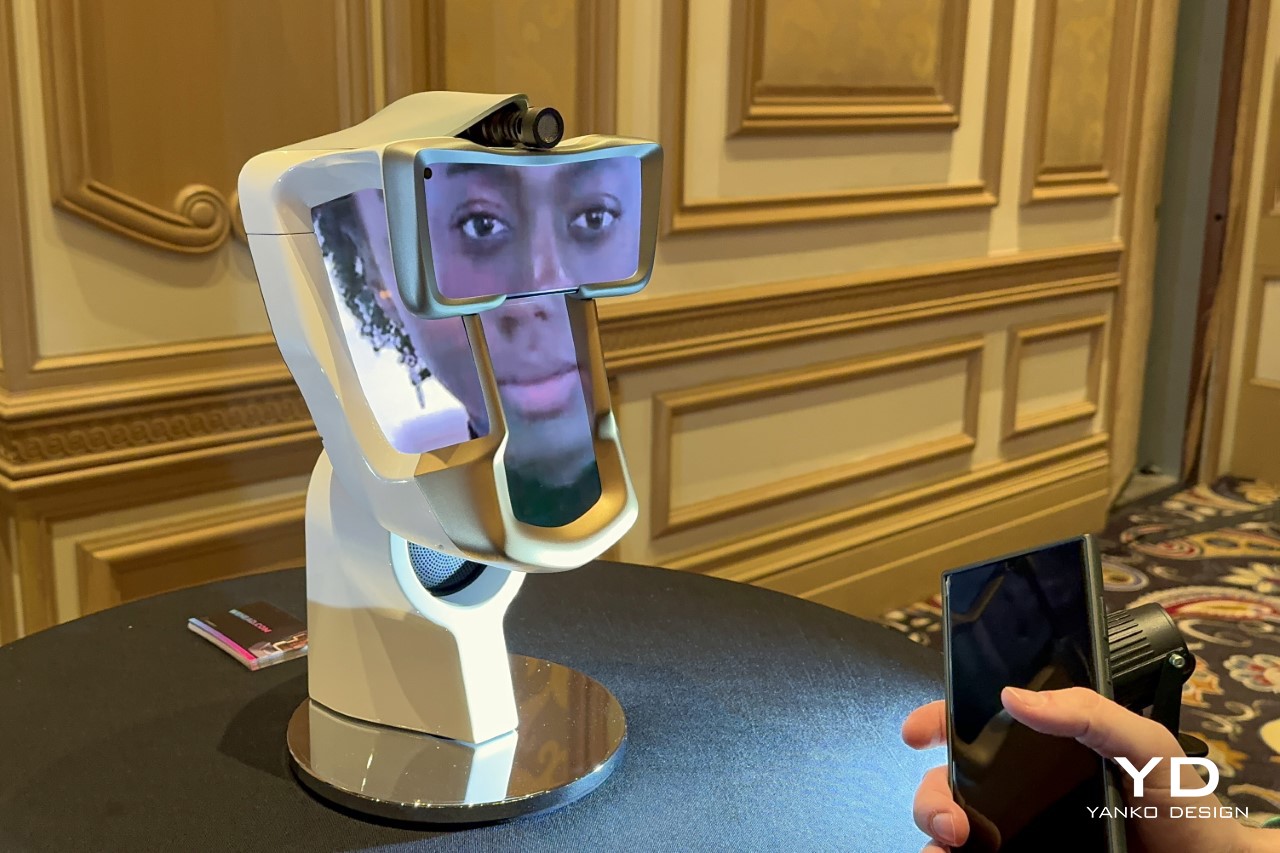
As we coursed the floors of the Showstoppers event at CES, my eyes landed on something familiar. I made eye contact (to the best of my ability to make eye contact with a set of virtual eyes) with the $5000 Wehead device, which I had just reported on just mere weeks ago. It sat on a lone table in the corner of the massive ballroom where the event was being held, with a few people basically gathering the courage to talk to it. Obviously, I wanted to really get a sense of what it was like to chat with an AI, but also to see whether this $5000 device was worth the hype. Long story short, the Wehead was a bit of a mess from top to bottom. The hardware lacked the kind of finesse you’d expect from a premium product, and the software failed miserably at processing requests amidst the buzz of all the people around it.

Designer: Wehead

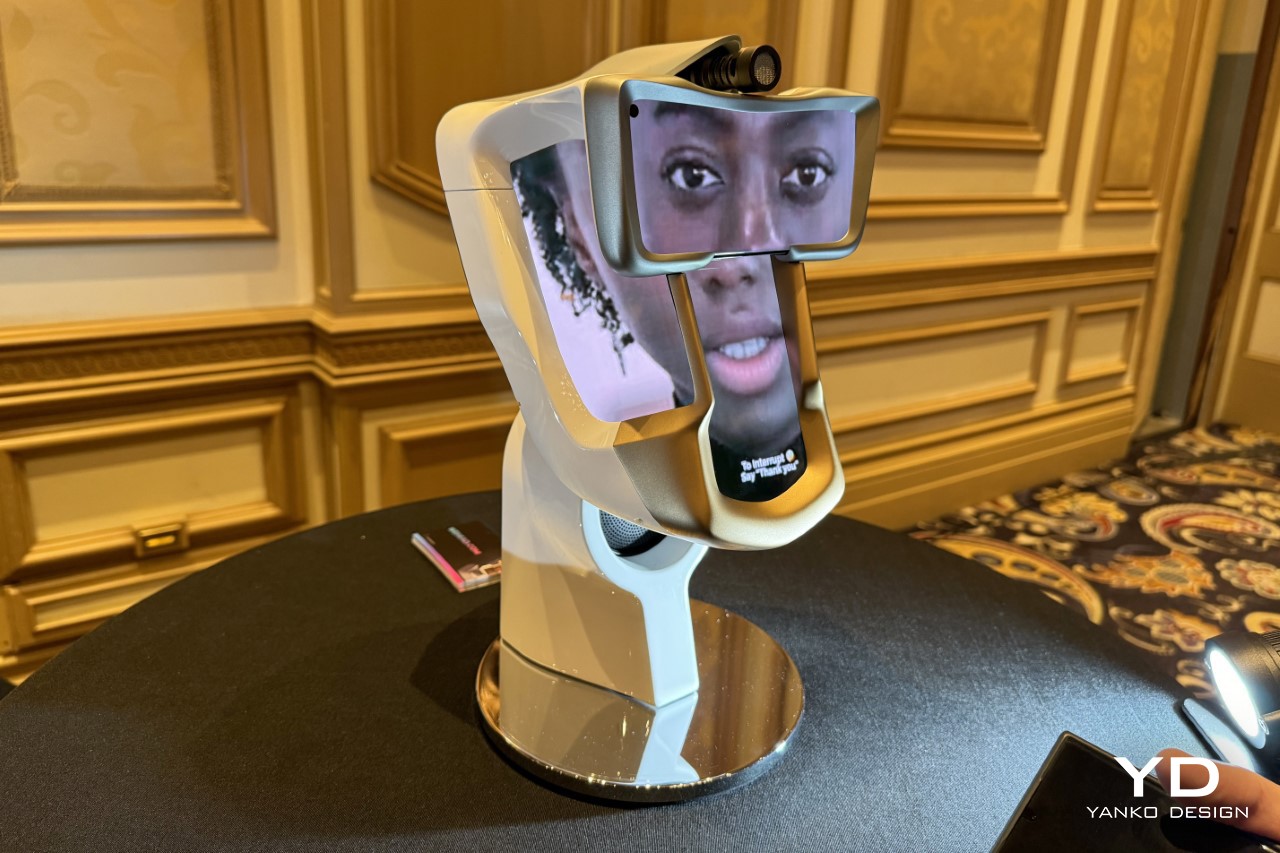
The Wehead was first envisioned as a one-of-a-kind teleconferencing device that could allow you to speak to people via video-chatting apps, but instead of staring at a screen, have you stare at a head that moved and responded to the actions of the person on the other end of the call. Somewhere down the line, the company made its transition to turning it into a ChatGPT-esque assistant that would use AI to answer queries and augment life. The difference between the Wehead and something like ChatGPT, Siri, or Google Assistant? The fact that Wehead actually had a face, which, at least in theory, would add a more immersive, believable aspect to the entire experience.

The problem, however, lay in two broad domains – firstly, the Wehead was a solution in search of a problem. The lack of a facial component to AI may be a problem, but it isn’t a problem that demands a $5000 multi-screen bionic robot. Secondly, even if that were true, the Wehead itself was a rather shoddily assembled device, using four mobile phones, a shotgun mic, and a speaker to give ChatGPT an anthropomorphized touch.

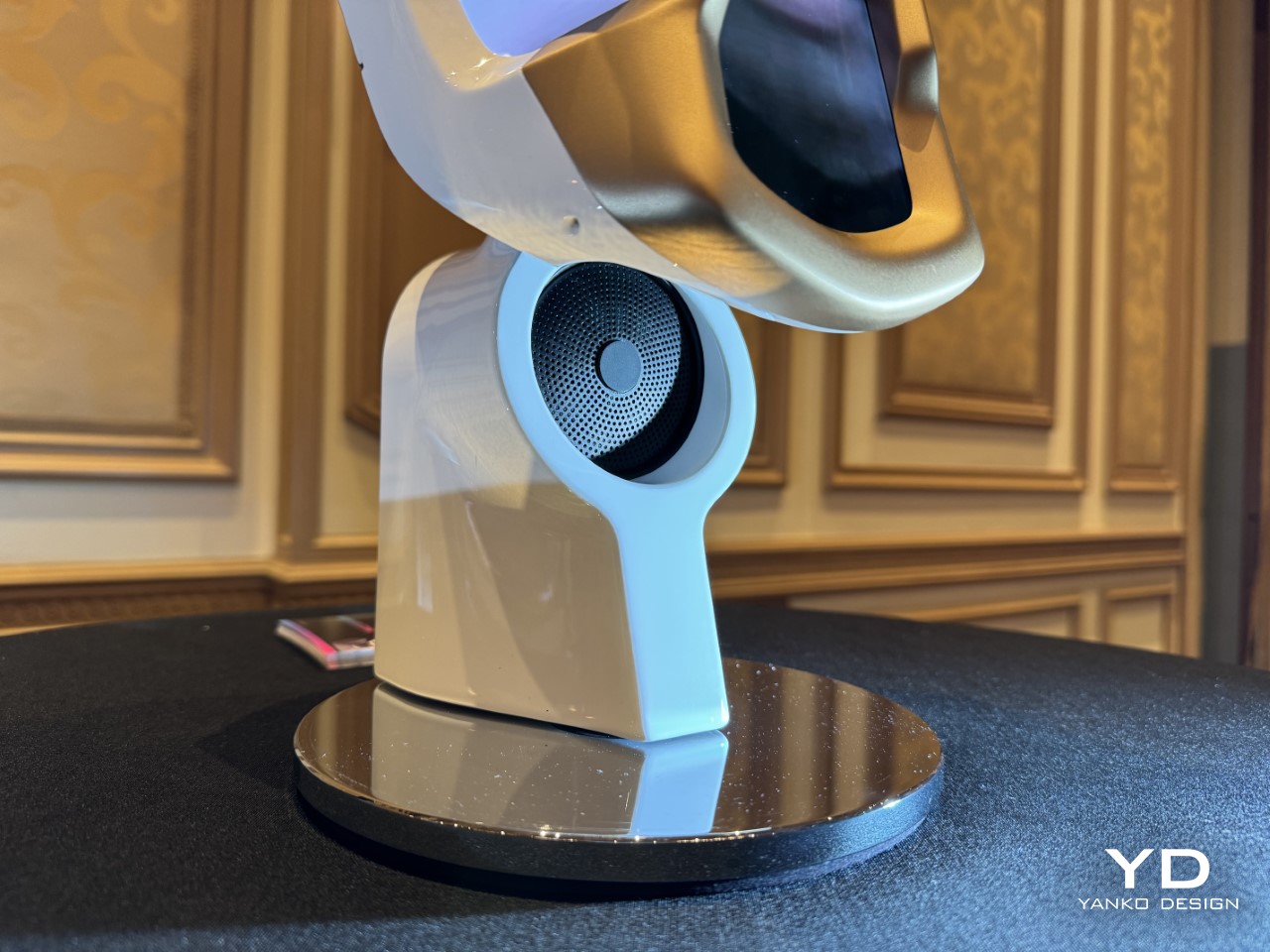
For starters, just a look at the Wehead revealed the fact that its four screens were actually smartphones assembled together into one large Macgyvered solution. The screen element with the Wehead’s eyes actually had a visible front-facing camera cutout. Above it sat an off-brand shotgun microphone that captured vocal input, and below, a small speaker where you’d expect the Wehead’s throat to be. The four screens displayed parts of the Wehead’s face, which emoted and responded to the Wehead talking, listening, and interacting.

However, even though the hardware seemed to be put together by a bunch of engineering students, the Wehead failed to deliver. Its face was perpetually pixelated, which impacted the Wehead’s already dwindling realism. There was a severe mismatch between the audio and the face’s movements, adding further problems to the mix… and finally, the Wehead just couldn’t seem to grasp anything anyone said. Sure, the event was crowded, resulting in a lot of background noise, but the Wehead still managed to fail at the basic questions it grasped. When Wehead got stuck in one of its “I’m sorry, I don’t understand” feedback loops, someone from the company came by to get it to stop responding, but it took them 3 tries to get Wehead to stop. A lot can be attributed to the general event’s background chatter, but that practically set the AI head up for failure, showing its clear lack of being able to isolate audio before processing it.

Here’s the thing though… I do think the Wehead holds great potential. It just needs a LOT of work before it can justify that price tag. For starters, maybe ditch the smartphone displays for something more unique like a curved OLED… and hide the microphone and speaker, so it isn’t that obvious that this was put together using hardware bought at Best Buy. A talking head running ChatGPT sounds impressive, but the illusion sure falls apart when it looks like a college project, and when the Wehead itself can barely pick up anything you say to it.

The post Hands-on with the $5000 Wehead ChatGPT-powered AI Assistant: When Technology Disappoints first appeared on Yanko Design.

NASA’s Innovative X-59: The Supersonic Jet Designed to Fly with a Whisper, Not a Boom

NASA has officially revealed the X-59, an experimental aircraft developed in partnership with Lockheed Martin, marking a significant milestone in aviation history. This plane has a unique stretched-out arrowhead shape and is painted in red, white, and blue to redefine supersonic flight. The X-59 has an ambitious yet profound mission: to break the sound barrier over land while minimizing the sonic boom to a level that won’t startle those on the ground.

Designer: Lockheed Martin Skunk Works x NASA

The X-59’s design is a marvel of aerospace engineering. Its most striking feature is its elongated nose, measuring 38 feet long, which is over one-third of its total length of 99 feet and 7 inches. This design is integral to the aircraft’s ability to reduce sonic boom intensity. Within this innovative structure, there’s a compartment for a single pilot. However, the X-59 breaks conventional norms by having a flush cockpit with the aircraft’s surface, eliminating the need for a forward windshield. Instead, pilots will rely on an advanced camera system and a screen inside the cockpit, providing them with a virtual view of their surroundings.

The two NASA test pilots operating the X-59 are equipped with a state-of-the-art 4K monitor, replacing the traditional glass windshield. Despite this unconventional setup, the aircraft does include traditional windows, although these do not offer a direct forward view. Instead, a glass canopy allows the pilot to look up or to the sides, enhancing spatial awareness. Interestingly, the aircraft also features two additional windows that offer limited forward visibility due to the placement of a wing assembly known as a canard. This innovative design prompted a humorous exchange, with lead test pilot David Nils Larson joking about a “Wonder Woman mod” for see-through metal canards.

The X-59 also boasts the eXternal Visibility System (XVS), a cutting-edge feature combining images from two cameras outside the aircraft with advanced terrain data. This system ensures pilots have comprehensive visual information, even without direct forward visibility. The aircraft is equipped with two distinct camera systems: a high-definition camera on the top and a retractable camera on the bottom. The latter is crucial for having a view of the runway and retracting during flight to maintain aerodynamic efficiency and reduce sonic boom impact.

NASA’s X-59 aircraft is specifically designed to reduce the effects of breaking the sound barrier. Typically, when an aircraft flies at speeds of approximately 925 miles per hour at an altitude of around 55,000 feet, it produces shockwaves that create a loud sonic boom. However, the X-59 aims to produce a milder “thump” sound instead. The aircraft’s careful design, including its long nose, plays a crucial role in achieving this. The long nose helps to space out the shockwaves created by the aircraft, preventing them from merging into a louder sonic boom.

While the X-59 is ready to roll out, its flight tests are scheduled for later this year. The pilots, having practiced in simulators, acknowledge that the X-59 may not be the easiest aircraft to handle, but its purpose transcends conventional flight performance. This aircraft is not just about breaking speed records; it’s about revolutionizing supersonic travel over land in a quiet and discreet manner.

In conclusion, the X-59 marks a pivotal moment in aviation history. It combines innovative design with cutting-edge technology and holds the potential for faster and quieter travel in the future. As this aircraft prepares to take to the skies, it carries with it the hopes and aspirations of the aviation industry, where the barriers of sound and efficiency are overcome with ingenuity and vision.

The post NASA’s Innovative X-59: The Supersonic Jet Designed to Fly with a Whisper, Not a Boom first appeared on Yanko Design.

Ubisoft+ now comes in two flavors and costs up to $18 per month

Ubisoft is revamping its games subscription service by offering a premium multi-platform plan and adding a less-expensive tier on PC. The company is merging Ubisoft+ Multi-Access and PC Access into Ubisoft+ Premium. The new PC tier is called Ubisoft+ Classics. Ubisoft says there will be no automatic changes for existing PC Access subscribers, whose plan will remain the same at current pricing.

Ubisoft+ Premium will run you $18 per month (that's $1 more per month than Game Pass Ultimate, fact fans). It includes access to the premium versions of Ubisoft games, all expansions and monthly rewards. Most importantly, you'll be able to play new Ubisoft games on the day they drop. Select games will be available in early access too. For instance, if you sign up now, you can immediately check out Prince of Persia: The Lost Crown, which Ubisoft won't officially release until January 18.

What's more, an Ubisoft+ Premium subscription works across Xbox, PC and Amazon Luna. So you might chip away at Avatar: Frontiers of Pandora on your PC during the work day (we won't tell your boss), continue where you left off on your Xbox after dinner and then wind down for the day by flying around on the back of an ikran on your phone when you're in bed.

Alongside the Ubisoft+ Premium shake up, the company has unveiled Ubisoft+ Classics on PC. This includes access to a collection of "popular back-catalog and live games" for $8 per month. Titles available include Far Cry 6, Rainbow Six Siege and Watch Dogs: Legion. It's worth noting that PlayStation Plus Extra and Premium subscribers have access to the Ubisoft+ Classics lineup at no extra cost.

Ubisoft's head of subscriptions, Philippe Tremblay, says that Ubisoft+ has outperformed the publisher's expectations in terms of membership numbers. "We've seen millions of players since launch, and they've enjoyed over 600 million hours of play," Tremblay told the Ubisoft blog. Tremblay added that the company decided to introduce Ubisoft+ Classics as "we think it's a strong offer at the price point, and the catalog will only grow as we keep adding games to it as time goes on, so players can discover even more of our worlds.”

While the pricing of the respective services may be off putting for some, it's worth bearing in mind that Microsoft sold the cloud gaming rights for Activision Blizzard games to Ubisoft in an attempt to appease regulators (it worked). Back in August, Ubisoft said the agreement meant that its subscribers will eventually be able to stream Activision Blizzard games. Ubisoft hasn't yet shared a timeline for adding those titles to its service. "We're working on the offering right now to make sure it's the best possible experience for our subscribers, and we'll have more to share later," Tremblay said.

This article originally appeared on Engadget at https://www.engadget.com/ubisoft-now-comes-in-two-flavors-and-costs-up-to-18-per-month-210443888.html?src=rss

Ubisoft+ now comes in two flavors and costs up to $18 per month

Ubisoft is revamping its games subscription service by offering a premium multi-platform plan and adding a less-expensive tier on PC. The company is merging Ubisoft+ Multi-Access and PC Access into Ubisoft+ Premium. The new PC tier is called Ubisoft+ Classics. Ubisoft says there will be no automatic changes for existing PC Access subscribers, whose plan will remain the same at current pricing.

Ubisoft+ Premium will run you $18 per month (that's $1 more per month than Game Pass Ultimate, fact fans). It includes access to the premium versions of Ubisoft games, all expansions and monthly rewards. Most importantly, you'll be able to play new Ubisoft games on the day they drop. Select games will be available in early access too. For instance, if you sign up now, you can immediately check out Prince of Persia: The Lost Crown, which Ubisoft won't officially release until January 18.

What's more, an Ubisoft+ Premium subscription works across Xbox, PC and Amazon Luna. So you might chip away at Avatar: Frontiers of Pandora on your PC during the work day (we won't tell your boss), continue where you left off on your Xbox after dinner and then wind down for the day by flying around on the back of an ikran on your phone when you're in bed.

Alongside the Ubisoft+ Premium shake up, the company has unveiled Ubisoft+ Classics on PC. This includes access to a collection of "popular back-catalog and live games" for $8 per month. Titles available include Far Cry 6, Rainbow Six Siege and Watch Dogs: Legion. It's worth noting that PlayStation Plus Extra and Premium subscribers have access to the Ubisoft+ Classics lineup at no extra cost.

Ubisoft's head of subscriptions, Philippe Tremblay, says that Ubisoft+ has outperformed the publisher's expectations in terms of membership numbers. "We've seen millions of players since launch, and they've enjoyed over 600 million hours of play," Tremblay told the Ubisoft blog. Tremblay added that the company decided to introduce Ubisoft+ Classics as "we think it's a strong offer at the price point, and the catalog will only grow as we keep adding games to it as time goes on, so players can discover even more of our worlds.”

While the pricing of the respective services may be off putting for some, it's worth bearing in mind that Microsoft sold the cloud gaming rights for Activision Blizzard games to Ubisoft in an attempt to appease regulators (it worked). Back in August, Ubisoft said the agreement meant that its subscribers will eventually be able to stream Activision Blizzard games. Ubisoft hasn't yet shared a timeline for adding those titles to its service. "We're working on the offering right now to make sure it's the best possible experience for our subscribers, and we'll have more to share later," Tremblay said.

This article originally appeared on Engadget at https://www.engadget.com/ubisoft-now-comes-in-two-flavors-and-costs-up-to-18-per-month-210443888.html?src=rss

Bio-Cement: A Potential Material That May Replace Regular Cement

Industrial designer Mary Lempres has unveiled a groundbreaking bio-cement structure named Reef Rocket, inspired by the intricate and resilient nature of oyster reefs. Designed to combat coastal flooding, filter seawater, and foster biodiversity, Reef Rocket utilizes biomimicry principles to mimic the functionalities of naturally occurring oyster reefs.

Designers: Mary LempresAhmed Miftah

The structure comprises two bio-cement modules with ridged surfaces that can be stacked to form a distinctive rocket-like shape when assembled underwater. Lempres collaborated with bio-geotechnical specialist Ahmed Miftah to develop a unique method for growing plant-derived cement, drawing parallels to the irrigation systems used for plant cultivation.

Biomimicry, the practice of seeking solutions to human design challenges in nature, guided Lempres in creating ridged modules that emulate coastal oyster reefs. These reefs naturally filter algae from seawater, attract aquatic organisms, dissipate wave energy, mitigate storm surges, and manage eroding coastlines.

The bio-cement modules are formed by pouring a non-toxic solution containing a crude extract from globally grown plants over crushed aggregate. The aggregate, sourced in New York City, consists of crushed glass and oyster shells recovered from local restaurants and New York Harbour.

Lempres explained that the substrate, saturated for three to nine days, becomes natural concrete as the extracted biocatalyst causes minerals to form “mineral bridges” between the glass and shell waste. The resulting product is water-resistant, durable, and comparable to standard concrete but with the added benefit of being environmentally friendly and sustainable.

What sets Reef Rocket apart is its ability to grow in any environment without the need for heat or burning fossil fuels. Lempres emphasized its affordability and scalability as a sustainable alternative to traditional cement. The bio-concrete shares chemical similarities with the material oysters use to grow their reefs, but the key difference lies in the speed of growth, with Reef Rocket taking only several days compared to millennia for natural oyster reefs.

Lempres and her team experimented with “hundreds” of prototypes before settling on prefabricated molds for the modules. These molds allow the bio-cement to be packed and set without the need for heat or chemicals, offering an accessible and efficient assembly process.

Reef Rocket’s deliberate design prioritizes small size, lightweight construction, and ease of assembly, aiming to make the innovative solution accessible to a broad audience. Lempres envisions a future where durable materials can be grown like crops, regenerating waste and mitigating environmental pollution. The project stands as a testament to the potential of biomimicry and sustainable design in addressing the challenges posed by climate change and coastal resilience. Reef Rocket represents a significant step towards harmonizing human infrastructure with the resilient and regenerative capacities of the natural world.

The post Bio-Cement: A Potential Material That May Replace Regular Cement first appeared on Yanko Design.

Apple will remove Blood Oxygen app from Watch Series 9 and Ultra 2 to evade US import ban

It seems that Apple will be able to bypass an import ban on Apple Watch Series 9 and Ultra 2 devices and once again sell those products in the US after dropping a key feature. According to a letter to an appeals court judge from Masimo, a company that's been involved in a patent dispute against Apple, the latter can skirt the ban by removing the Blood Oxygen app from Apple Watch units it sells in the US going forward.

Per the letter, US Customs and Border Protection (CBP) determined that "Apple’s redesign falls outside the scope" of the International Trade Commission's (ITC) import ban on the two devices. Apple told CBP that its "Redesigned Watch Products definitively do not contain pulse oximetry functionality.” Other details related to the CBP decision are confidential and, as things stand, "no public version of the decision exists," Masimo's letter states.

According to Reuters, however, the CBP decision may be upended if the ITC disagrees. Apple is said to already have shipped modified Watch Series 9 and Ultra 2 units to its US locations, but stores were reportedly told not to open or sell the new versions until getting the green light from higher ups.

The Apple Watch Series 9 on a person's wrist in front of some gym equipment, showing the Exercise page of the Move rings app.
Photo by Cherlynn Low / Engadget

In October, the ITC upheld a prior ruling that Apple violated Masimo patents concerning blood oxygen functions on the Apple Watch. The ruling led Apple to pause sales of the Watch Series 9 and Ultra 2 in the US through its own website and Apple Stores by Christmas Eve. An emergency interim stay of the ITC ruling in late December enabled Apple to start selling the wearables again in the US.

According to 9to5 Mac, Apple's concession won't affect those who already have an Apple Watch with pulse oximetry features. Apple has offered the Blood Oxygen app on its wearables since it released the Apple Watch Series 6 in 2020. It's possible that Apple will roll out a new version of the Blood Oxygen app to affected units once it resolves the patent problem.

Soon after Apple said it would stop selling the Watch Series 9 and Ultra 2 to adhere to the ITC's order, it was reported that the company's engineers were working feverishly on a software update. Those efforts were said to focus on changes to the Blood Oxygen app and its algorithms to ensure the devices violated Masimo's patents.

That said, according to Bloomberg, nixing the app altogether was seen as the quickest (and likely easiest) way to avoid having the ban reinstated, though removing what was once a highly touted feature of the Apple Watch is a significant concession. A federal appeals court could hear an Apple motion to extend the stay (which was granted pending an appeal) on the ban as early as this week.

In a statement, a Masimo spokesperson told Engadget that "Apple's claim that its redesigned watch does not contain pulse oximetry is a positive step toward accountability. It is especially important that one of the world's largest and most powerful companies respects the intellectual property rights of smaller companies and complies with ITC orders when it is caught infringing."

Masimo has claimed that Apple hired its former employees and used its pulse oximetry tech in Apple Watch devices. Apple countersued Masimo, arguing that the company's own smartwatch copies patented Apple Watch features.

Update, January 15, 5:10PM ET: This story was updated after publish to include a statement from Masimo.

This article originally appeared on Engadget at https://www.engadget.com/apple-will-remove-blood-oxygen-app-from-watch-series-9-and-ultra-2-to-evade-us-import-ban-194517839.html?src=rss

Apple will remove Blood Oxygen app from Watch Series 9 and Ultra 2 to evade US import ban

It seems that Apple will be able to bypass an import ban on Apple Watch Series 9 and Ultra 2 devices and once again sell those products in the US after dropping a key feature. According to a letter to an appeals court judge from Masimo, a company that's been involved in a patent dispute against Apple, the latter can skirt the ban by removing the Blood Oxygen app from Apple Watch units it sells in the US going forward.

Per the letter, US Customs and Border Protection (CBP) determined that "Apple’s redesign falls outside the scope" of the International Trade Commission's (ITC) import ban on the two devices. Apple told CBP that its "Redesigned Watch Products definitively do not contain pulse oximetry functionality.” Other details related to the CBP decision are confidential and, as things stand, "no public version of the decision exists," Masimo's letter states.

According to Reuters, however, the CBP decision may be upended if the ITC disagrees. Apple is said to already have shipped modified Watch Series 9 and Ultra 2 units to its US locations, but stores were reportedly told not to open or sell the new versions until getting the green light from higher ups.

The Apple Watch Series 9 on a person's wrist in front of some gym equipment, showing the Exercise page of the Move rings app.
Photo by Cherlynn Low / Engadget

In October, the ITC upheld a prior ruling that Apple violated Masimo patents concerning blood oxygen functions on the Apple Watch. The ruling led Apple to pause sales of the Watch Series 9 and Ultra 2 in the US through its own website and Apple Stores by Christmas Eve. An emergency interim stay of the ITC ruling in late December enabled Apple to start selling the wearables again in the US.

According to 9to5 Mac, Apple's concession won't affect those who already have an Apple Watch with pulse oximetry features. Apple has offered the Blood Oxygen app on its wearables since it released the Apple Watch Series 6 in 2020. It's possible that Apple will roll out a new version of the Blood Oxygen app to affected units once it resolves the patent problem.

Soon after Apple said it would stop selling the Watch Series 9 and Ultra 2 to adhere to the ITC's order, it was reported that the company's engineers were working feverishly on a software update. Those efforts were said to focus on changes to the Blood Oxygen app and its algorithms to ensure the devices violated Masimo's patents.

That said, according to Bloomberg, nixing the app altogether was seen as the quickest (and likely easiest) way to avoid having the ban reinstated, though removing what was once a highly touted feature of the Apple Watch is a significant concession. A federal appeals court could hear an Apple motion to extend the stay (which was granted pending an appeal) on the ban as early as this week.

In a statement, a Masimo spokesperson told Engadget that "Apple's claim that its redesigned watch does not contain pulse oximetry is a positive step toward accountability. It is especially important that one of the world's largest and most powerful companies respects the intellectual property rights of smaller companies and complies with ITC orders when it is caught infringing."

Masimo has claimed that Apple hired its former employees and used its pulse oximetry tech in Apple Watch devices. Apple countersued Masimo, arguing that the company's own smartwatch copies patented Apple Watch features.

Update, January 15, 5:10PM ET: This story was updated after publish to include a statement from Masimo.

This article originally appeared on Engadget at https://www.engadget.com/apple-will-remove-blood-oxygen-app-from-watch-series-9-and-ultra-2-to-evade-us-import-ban-194517839.html?src=rss