A number of pretty good titles are coming to Microsoft's Game Pass this month for Xbox consoles and Windows PCs, including Engadget staff favorites Neon White and Tchia. Neon White is a first-person shooter and puzzle platformer, wherein you play the part of an assassin taken from Hell to exterminate demons in Heaven in an annual competition. It was one of Engadget's best games for 2022, and we praised it for being smooth and fast-paced, having complex weapons and having almost 100 replayable levels to go through.
Meanwhile, Tchia is one of our top game picks for 2023. In the charming action-adventure game, you play the role of Tchia, a young girl who has to find and rescue her kidnapped father. Tchia uses her power of "soul jumping" to take control of animals and inanimate objects in order to solve puzzles, find items, fight enemies and travel to new areas. Both Neon White and Tchia will be available on Game Pass starting on July 11.
Before that, on July 3, Journey to the Savage Planet is returning to the Game Pass library. In the game, you play an explorer for a company called Kindred Aerospace, traveling across galaxies and planets and interacting with alien life forms. Meanwhile, a game called Flock published by Annapurna Interactive will be available on the service on July 16, the same day it's released. It's a multiplayer co-op game, where you play shepherd to a flock of flying creatures. But if you want to play something food-related, the cooking game Magical Delicacy will also arrive on the cloud gaming service on the same day.
This article originally appeared on Engadget at https://www.engadget.com/neon-white-tchia-and-a-bunch-of-other-titles-are-coming-to-game-pass-this-month-045548792.html?src=rss
Have you ever wished lawn care could be easy and almost effortless? TerraMow, the AI-powered robotic lawn mower, is about to change your life. Picture a world where your lawn is perfectly manicured without you lifting a finger. TerraMow is designed to take over the hard work of lawn maintenance, offering you more free time to enjoy your yard rather than laboring in it. Whether you have a sprawling garden with intricate landscaping or a simple, straightforward lawn, it handles it all with ease. Its advanced technology ensures every blade of grass is trimmed to perfection, navigating obstacles and tough terrain effortlessly. Forget about spending weekends pushing a noisy mower around. The intelligent system makes lawn care as simple as pressing a button.
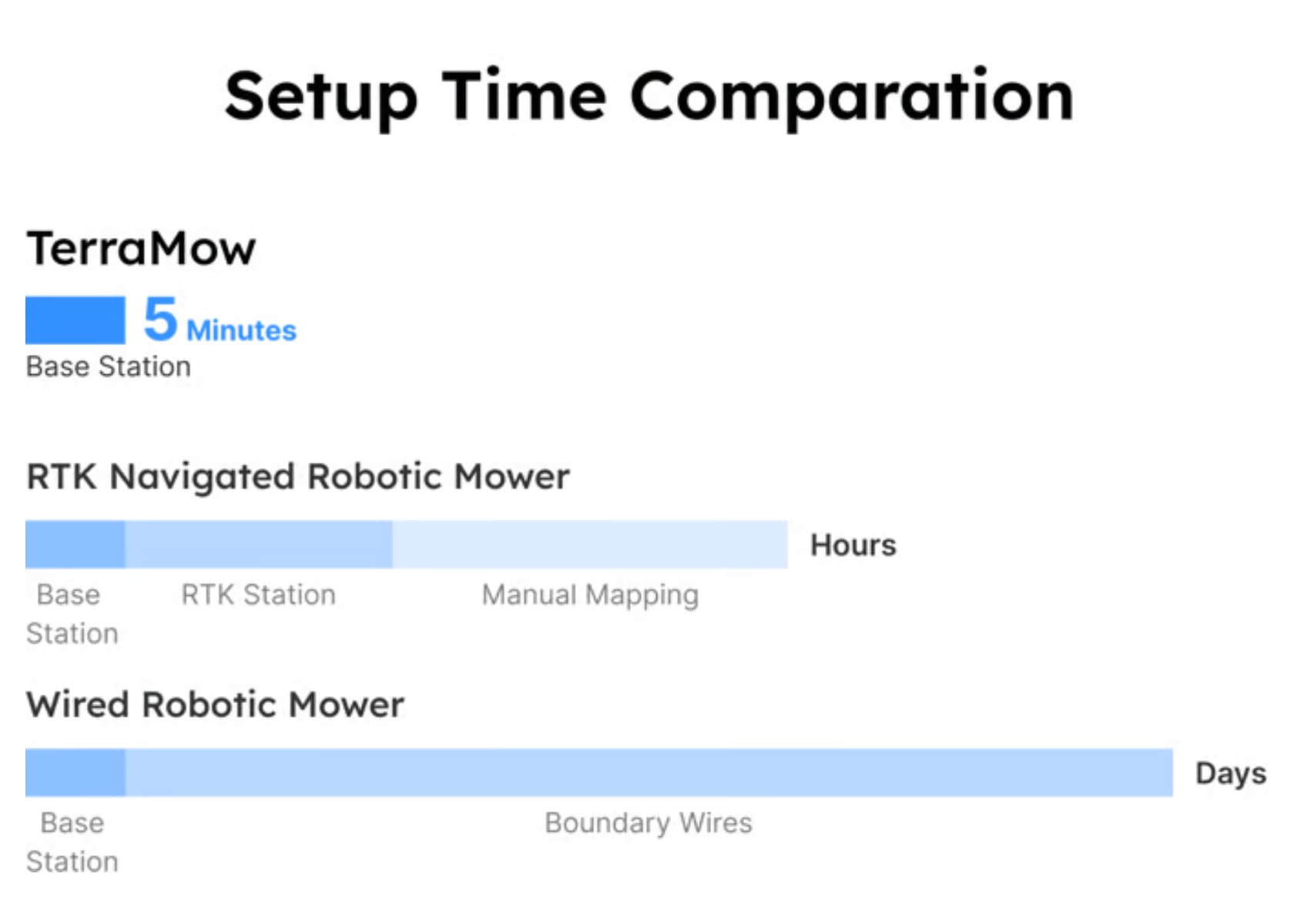
What sets TerraMow apart is its wire-free AI vision design. Say goodbye to those annoying perimeter wires and RTK stations. There’s no need for manual mapping or complicated installations. Its advanced AI vision system autonomously maps your lawn, navigates around obstacles, and even cuts right up to the edges. Whether you have a simple yard or a complex garden with flower beds, bushes, and trees, expect it to navigate your yard like a pro.
Setting it up is a breeze. Just place it on the base station, which takes about five minutes to configure, and you’re ready to go. No complicated installations. TerraMow does all the hard work for you right from the start.
At the heart of TerraMow is the TerraVision system. This innovative vision system uses three high-performance automotive-grade cameras combined with cutting-edge AI vision technologies. It allows TerraMow to see and understand its surroundings just as you would. It maps your lawn in incredible detail, senses 3D obstacles, and avoids them in real-time. No more worrying about your mower bumping into things or missing spots.
Utilizing three high-performance automotive cameras and cutting-edge AI vision technologies, TerraVision enables TerraMow to navigate and interact with your lawn in unprecedented ways.
One of the most impressive features of TerraMow is its customizable edge-cutting. Traditional mowers, especially those relying on RTK signals, often struggle with precise boundary identification and edge-cutting due to signal issues. TerraMow, however, uses its advanced AI vision system to ride the edge of your lawn, achieving zero-distance cutting from lawn boundaries whenever possible. This means TerraMow can cut right up to the edges of your lawn, ensuring no blade of grass is left untrimmed. It precisely identifies lawn boundaries and can be customized to cut at various distances along the edges, adapting perfectly to the unique contours of your yard. This ensures stable and optimized edge cutting, leaving your lawn looking immaculate and well-defined.
Customization is where TerraMow truly shines. You can set different mowing schedules for various parts of your lawn, adjust the cutting height from 25 mm to 75 mm (1 inch to 3 inches), and even mark no-go zones to protect your flowerbeds. All of this is done through a simple app on your phone. It’s that easy.
TerraMow’s sleek, modern design isn’t only aesthetically pleasing but also highly functional. The robust construction ensures durability, while the compact form allows it to navigate tight spaces with ease. Equipped with four key sensors—an obstacle detection sensor, a slope sensor, a rain sensor, and a tilt sensor—TerraMow is designed to handle all kinds of terrain and weather conditions. The obstacle detection sensor helps it avoid collisions with garden objects, the slope sensor ensures it can manage steep inclines, the rain sensor detects moisture and sends it back to the base station to avoid mowing in unsuitable conditions, and the tilt sensor halts the blades if the mower is lifted or tilted, ensuring safety.
Envision a mower that doesn’t just mow in random patterns but follows a precisely organized path. TerraMow’s visual positioning system, driven by visual SLAM technology, ensures it navigates under thick tree covers, roofs, or narrow pathways with ease. This guarantees precise real-time positioning and optimal lawn care even in the most challenging conditions.
Its ability to handle complex gardens is remarkable. Its precise visual system plans optimal paths, avoids obstacles in real-time, and delivers exceptional mowing results even in lawns filled with flower beds, unpaved borders, bushes, and trees. Its agility allows it to navigate through narrow passages as tight as 60 centimeters wide.
Not to mention, there’s also a feature that allows it to pause and resume tasks smartly. If it encounters unsuitable conditions like rain or low battery, it will pause its task and return to the base station. Once the conditions improve, it will resume right where it left off. This ensures that your lawn care is continuous and efficient, no matter the circumstances.
TerraMow automatically pauses tasks and returns to the base station when it detects unsuitable conditions, such as rain or low battery. Once conditions improve, it resumes the tasks right where it left off.
You can choose from different operation modes to fit your needs. The standard mode is perfect for mowing a single-zone lawn or segmented lawns connected by pathways. If you have dispersed and distant lawns, the multi-base mode will serve you well with one base station per lawn. For tiny dispersed lawns, the spot mode lets TerraMow handle the job instantly without needing a base station setup.
And for those who love having control at their fingertips, the dedicated app for TerraMow is a game-changer. You can customize mowing height, schedule tasks, monitor real-time status, use the remote control feature, and enjoy many other exciting options for a personalized lawn care experience.
TerraMow stands out in both connectivity and safety. Equipped with 4G cellular and Wi-Fi options, it allows for remote management and precise location tracking. Security is enhanced with integrated GPS and a 4G module, providing robust anti-theft measures. If someone attempts to steal TerraMow, its location can be tracked effortlessly. Prioritizing safety, it detects any lifting or tilting, automatically stopping the mowing blade to protect both the user and the equipment.
One of the coolest things about TerraMow is its ability to handle slopes up to 45% (or 24 degrees). Whether your lawn has hills or flat areas, TerraMow can mow it all efficiently. Plus, it’s built to be durable and waterproof with an IPX6 rating, so it can handle rain and humid conditions without any problems.
Ready to transform your lawn care routine? It’s time to let TerraMow take the wheel. Picture weekends free from the noise and effort of traditional mowing, replaced with the quiet efficiency of TerraMow gliding over your lawn, doing all the hard work for you. With its advanced technology and user-friendly features, TerraMow offers a seamless, stress-free solution to lawn maintenance. So sit back, relax, and watch TerraMow create the perfect lawn you’ve always dreamed of. Don’t wait—make the smart choice for your yard today. Simplify your life and delegate the mowing to TerraMow.
Google’s greenhouse gas emissions spiked by nearly 50 percent in the last five years thanks to energy-guzzling data centers required to power artificial intelligence, according to the company’s 2024 Environmental Report released on Tuesday. The report, which Google releases annually, shows the company’s progress towards meeting its self-proclaimed objective of becoming carbon neutral by 2030.
Google released 14.3 million metric tons of carbon dioxide in 2023, the report states, which was 48 percent higher than in 2019, and 13 percent higher than a year before. “This result is primarily due to increases in data center energy consumption and supply chain emissions,” said Google in the report. “As we further integrate AI into our products, reducing emissions may be challenging due to increasing energy demands associated with the expected increases in our technical infrastructure investment.”
Google’s report spotlights the environmental impact that the explosion of artificial intelligence has had on the planet. Google, Microsoft, Amazon, Meta, Apple and other tech companies plan to pour billions of dollars into AI, but training AI models requires enormous amounts of energy. Using AI features uses significant amounts of energy too. In 2023, researchers at AI startup Hugging Face and Carnegie Mellon University found that generating a single image using artificial intelligence can use as much energy as charging a smartphone. Analysts at Bernstein said that AI would “double the rate of US electricity demand growth and total consumption could outstrip current supply in the next two years,” the Financial Timesreported. Last month, Microsoft, which also pledged to go “carbon negative” by the end of this decade, reported that its greenhouse gas emissions had risen nearly 30 percent since 2020 due to the construction of data centers.
Google’s report said that the company’s data centers were using way more water than before to stay cool as a result of expanded AI workloads. Some of those workloads so far have involved Google Search suggesting that people eat rocks and put glue on their pizza to prevent the cheese from falling off, as well as Gemini, the company’s AI-powered chatbot, generating images of ethnically diverse Nazis.
In 2023, Google’s data centers consumed 17 percent more water than the year before. That’s 6.1 billion liters, enough to irrigate approximately 41 golf courses annually in the southwestern United States, according to the company’s strangely kooky measure.
“As our business and industry continue to evolve, we expect our total GHG (greenhouse gas) emissions to rise before dropping toward our absolute emissions reduction target,” Google’s report stated, without explaining what would precipitate the drop. “Predicting the future environmental impact of AI is complex and evolving, and our historical trends likely don’t fully capture AI’s future trajectory. As we deeply integrate AI across our product portfolio, the distinction between AI and other workloads will not be meaningful.”
This article originally appeared on Engadget at https://www.engadget.com/googles-greenhouse-gas-emissions-climbed-nearly-50-percent-in-five-years-due-to-ai-002646115.html?src=rss
Google’s greenhouse gas emissions spiked by nearly 50 percent in the last five years thanks to energy-guzzling data centers required to power artificial intelligence, according to the company’s 2024 Environmental Report released on Tuesday. The report, which Google releases annually, shows the company’s progress towards meeting its self-proclaimed objective of becoming carbon neutral by 2030.
Google released 14.3 million metric tons of carbon dioxide in 2023, the report states, which was 48 percent higher than in 2019, and 13 percent higher than a year before. “This result is primarily due to increases in data center energy consumption and supply chain emissions,” said Google in the report. “As we further integrate AI into our products, reducing emissions may be challenging due to increasing energy demands associated with the expected increases in our technical infrastructure investment.”
Google’s report spotlights the environmental impact that the explosion of artificial intelligence has had on the planet. Google, Microsoft, Amazon, Meta, Apple and other tech companies plan to pour billions of dollars into AI, but training AI models requires enormous amounts of energy. Using AI features uses significant amounts of energy too. In 2023, researchers at AI startup Hugging Face and Carnegie Mellon University found that generating a single image using artificial intelligence can use as much energy as charging a smartphone. Analysts at Bernstein said that AI would “double the rate of US electricity demand growth and total consumption could outstrip current supply in the next two years,” the Financial Timesreported. Last month, Microsoft, which also pledged to go “carbon negative” by the end of this decade, reported that its greenhouse gas emissions had risen nearly 30 percent since 2020 due to the construction of data centers.
Google’s report said that the company’s data centers were using way more water than before to stay cool as a result of expanded AI workloads. Some of those workloads so far have involved Google Search suggesting that people eat rocks and put glue on their pizza to prevent the cheese from falling off, as well as Gemini, the company’s AI-powered chatbot, generating images of ethnically diverse Nazis.
In 2023, Google’s data centers consumed 17 percent more water than the year before. That’s 6.1 billion liters, enough to irrigate approximately 41 golf courses annually in the southwestern United States, according to the company’s strangely kooky measure.
“As our business and industry continue to evolve, we expect our total GHG (greenhouse gas) emissions to rise before dropping toward our absolute emissions reduction target,” Google’s report stated, without explaining what would precipitate the drop. “Predicting the future environmental impact of AI is complex and evolving, and our historical trends likely don’t fully capture AI’s future trajectory. As we deeply integrate AI across our product portfolio, the distinction between AI and other workloads will not be meaningful.”
This article originally appeared on Engadget at https://www.engadget.com/googles-greenhouse-gas-emissions-climbed-nearly-50-percent-in-five-years-due-to-ai-002646115.html?src=rss
It’s been a hot minute since we’ve had a brand new Resident Evil game. Then again, it’s hard to blame Capcom for that — Resident Evil: Village created such a high bar for future sequels to limbo under or jump over, depending on which hypothetical bar-based sport you’re playing in your head.
Capcom has finally confirmed that Resident Evil 9 is on the way and they’ve tapped a veteran director to oversee the tenth zombie adventure shooter. IGN reported that Capcom confirmed the news of the sequel during its Next Summer 2024 stream.
Director Koshi Nakanishi will be in charge of the new Resident Evil game. Nakanishi has over a decade of experience directing Resident Evil games including The Mercenaries 3D for the Nintendo 3DS, Resident Evil Revelations and Resident Evil 7: Biohazard. "We're making a new Resident Evil," Nakanishi said. "It was really difficult to figure out what to do after 7, but I found it, and to be honest it feels substantial. I can't share any details just yet, but I hope you're excited for the day I can."
Capcom has unleashed a deluge of remasters of some of its biggest game classics. During the same stream, Capcom also announced a re-release of the first Dead Rising called Dead Rising Deluxe Remaster for the PlayStation 5 and Xbox Series X/S. The emaster of the mall zombie slayer will feature a new voiceover for the game’s journalist protagonist Frank West, updated HD graphics and fluffier poodles.
Capcom also announced a demo for the Japanese-inspired, strategy action game Kunitsu-Gami: Path of the Goddessand a re-release of Resident Evil: Biohazard for Apple mobile devices and Apple computers.
This article originally appeared on Engadget at https://www.engadget.com/a-new-resident-evil-game-is-in-the-works-from-the-director-of-resident-evil-7-235543024.html?src=rss
Texas will be the main battleground for a case about porn websites that is now headed to the Supreme Court. The Free Speech Coalition, a nonprofit group that represents the adult industry, petitioned the top court in April to review a state law that requires websites with explicit material to collect proof of users' ages. SCOTUS today agreed to take on the case challenging a previous ruling by the US Court of Appeals for the 5th Circuit as a part of its next term beginning in October.
Texas was one of many states over the last year to pass this type of age-verification legislation aimed at porn websites. While supporters of these bills have said they are intended to protect minors from seeing inappropriate content, their critics have called the laws an overreach that could create new privacy risks. In response to the laws, Pornhub ended its operation in those states, a move that attracted public attention to the situation.
"While purportedly seeking to limit minors' access to online sexual content, the Act imposes significant burdens on adults' access to constitutionally protected expression," the FSC petition says. "Of central relevance here, it requires every user, including adults, to submit personally identifying information to access sensitive, intimate content over a medium — the internet — that poses unique security and privacy concerns."
This article originally appeared on Engadget at https://www.engadget.com/texas-age-verification-law-for-pornography-websites-is-going-to-the-supreme-court-233511418.html?src=rss
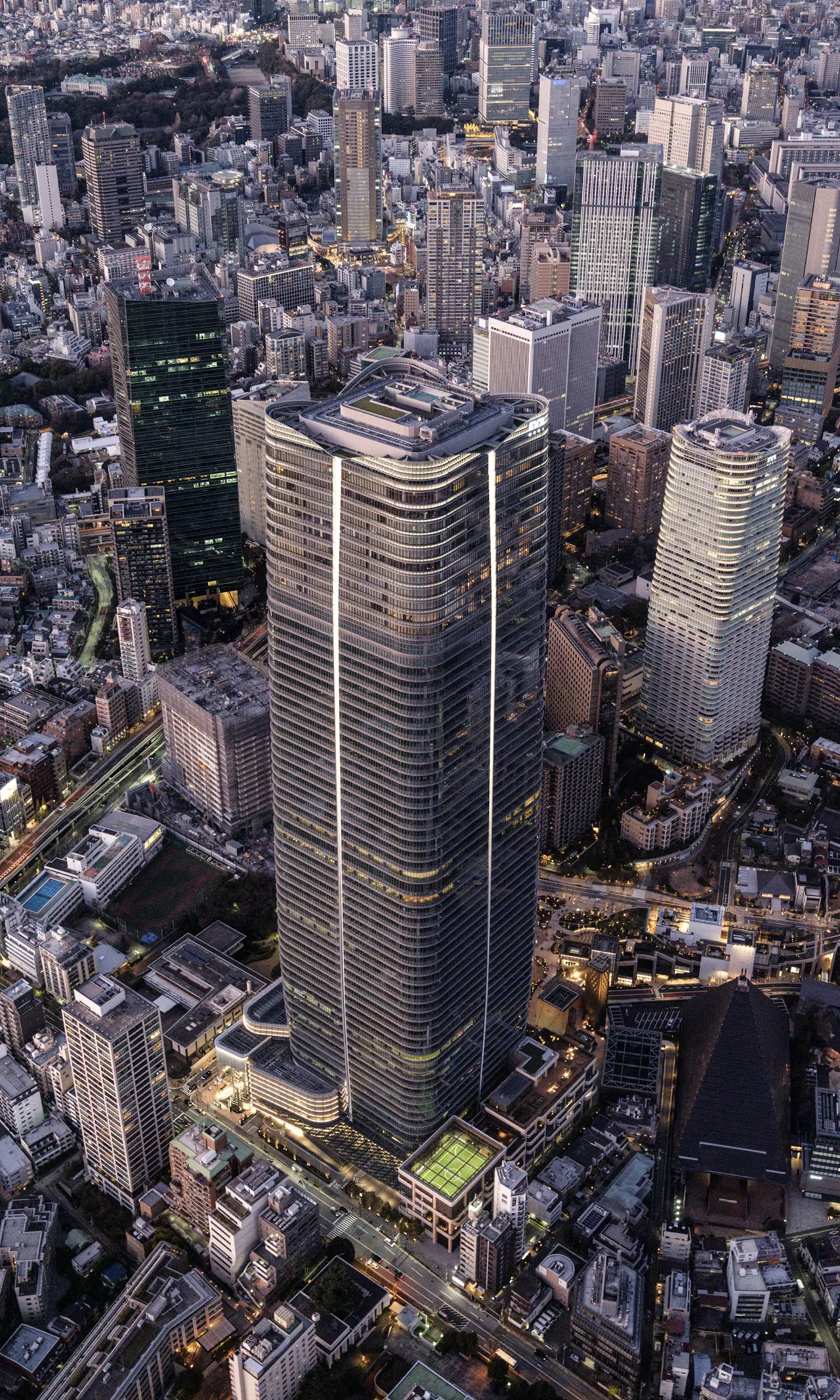
Designed by Pelli Clarke & Partners, the Mori JP Tower is Japan’s new tallest skyscraper! Featuring an astounding height of 1066 ft, and located in Tokyo, the skyscraper was created to reduce grid-based energy usage by incorporating it with sustainability features. The tower is also designed to be earthquake-resistant, offering sturdy support against the country’s seismicity. It is nestled in the Azabudai Hill development – a new district amped with plenty of green space and other high-rise buildings.
The impressive skyscraper is equipped with a glazed facade and a unique form that brings to mind the image of a lotus flower. It features a beautiful crown of four curved glass “petals”, which gives it a lotus-inspired shape and symmetry. The exterior is highlighted with bands of integrated lighting. The lighting is designed by US lighting design company L’Observatoire International, and they seem to gleam magically in the night. The interior of the building houses sixty-four floors and includes a combination of residential and office spaces. The hospitality company Aman will be taking over the top eleven floors, and they will be coined Aman Residences.
Although the Mori JP Tower is Japan’s tallest skyscraper, it is not the tallest ‘structure’. The tallest structure is the Tokyo Skyree which stands tall at 2080 ft, in fact, even the Tokyo Tower is taller than the Mori JP Tower, as it measures 1092 ft in height. However, since the two structures are essentially broadcasting and observation towers, they cannot be included in the Council on Tall Buildings and Urban Habitat’s height rankings. But despite this consideration, the Mori JP is a noteworthy construction, as it can function and stand tall in an earthquake as severe as the Great East Japan Earthquake, which had a magnitude of 9.0. This is truly a commendable feat, that will save lives, and reduce destruction. The structural steel tubes of the tower were packed with high-strength concrete, and the building was incorporated with multiple dampers to achieve this feat.
“High-strength steel and concrete components are deployed to balance the structures, and vibration-control devices are placed in core areas where vibration during earthquakes can be efficiently reduced, resulting in high resistance to shaking,” said Mori. “In addition, large-scale vibration-control devices known as “active mass dampers” will help reduce the swaying that occurs at the tops of buildings during strong winds.”
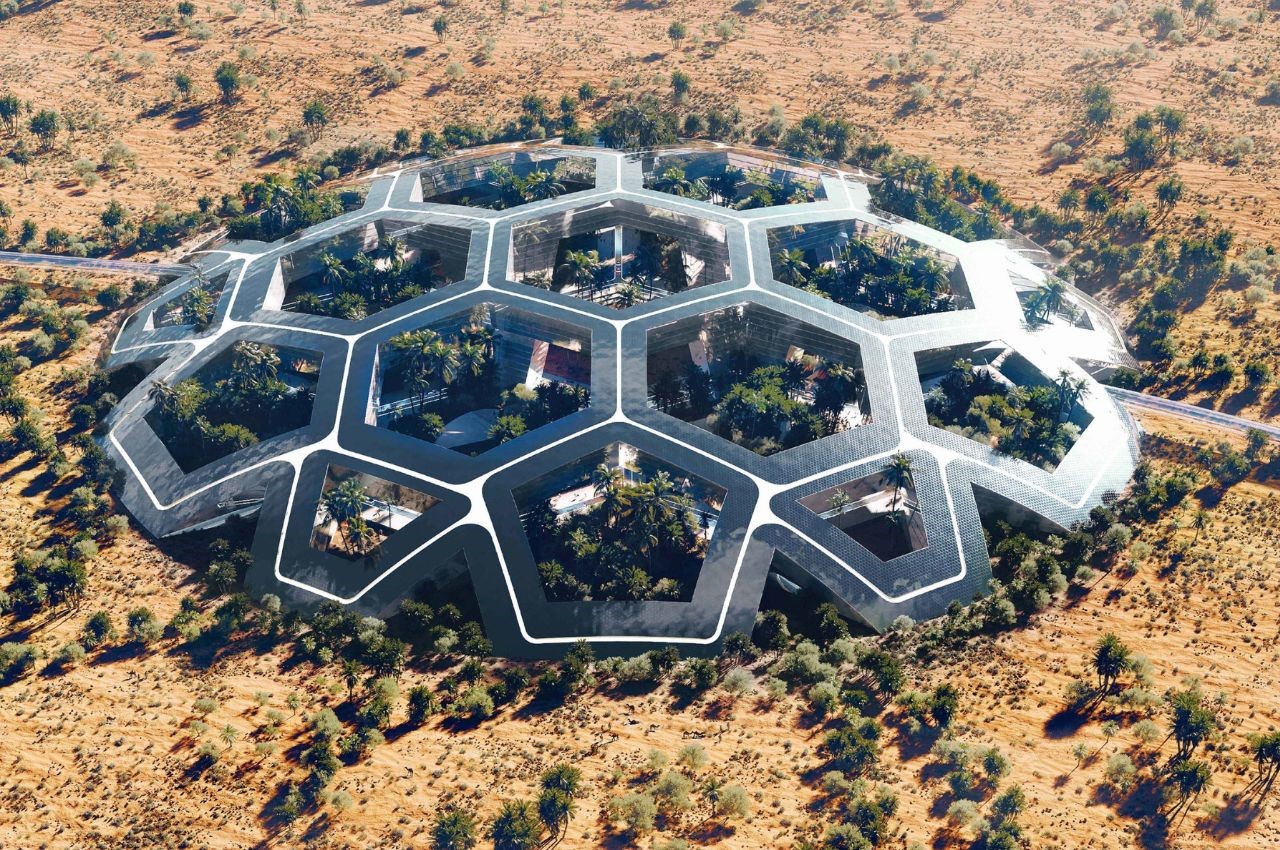
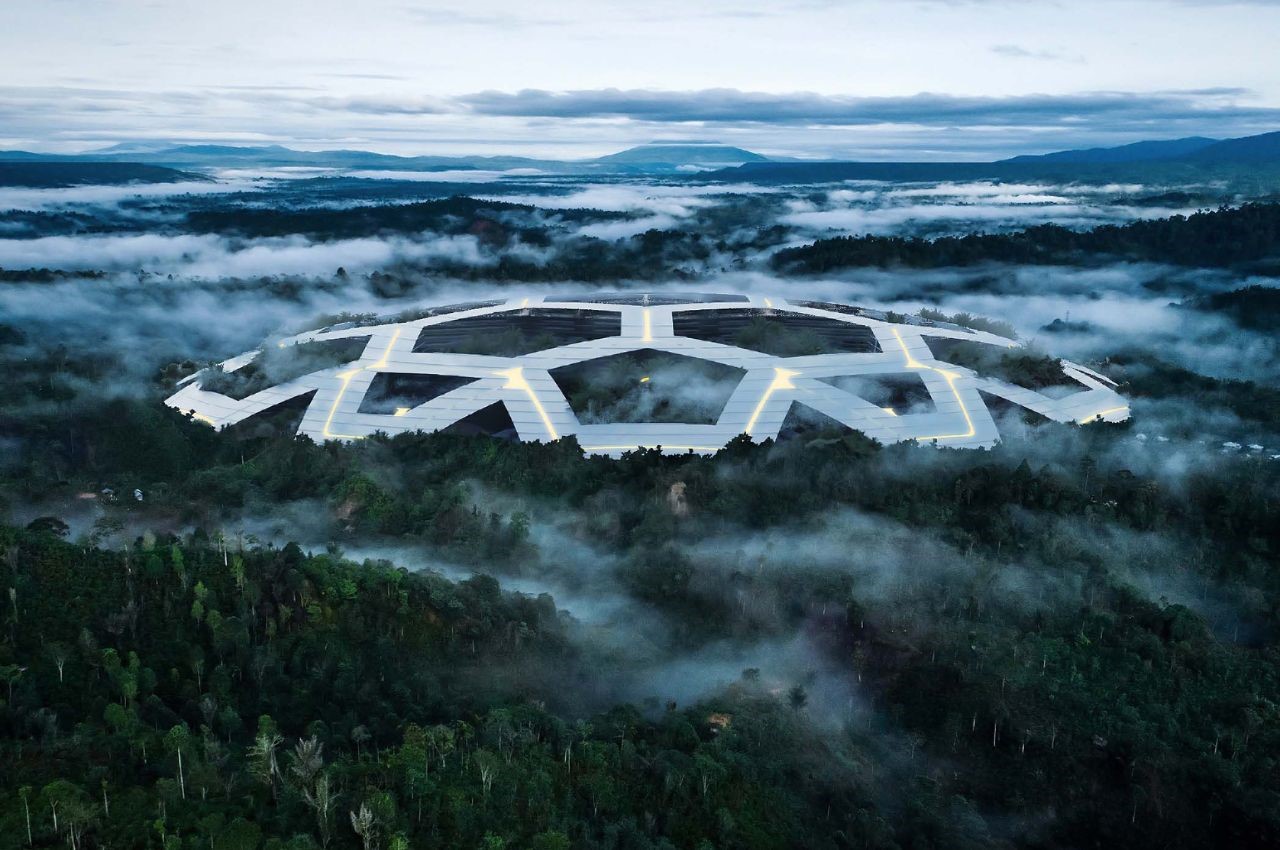
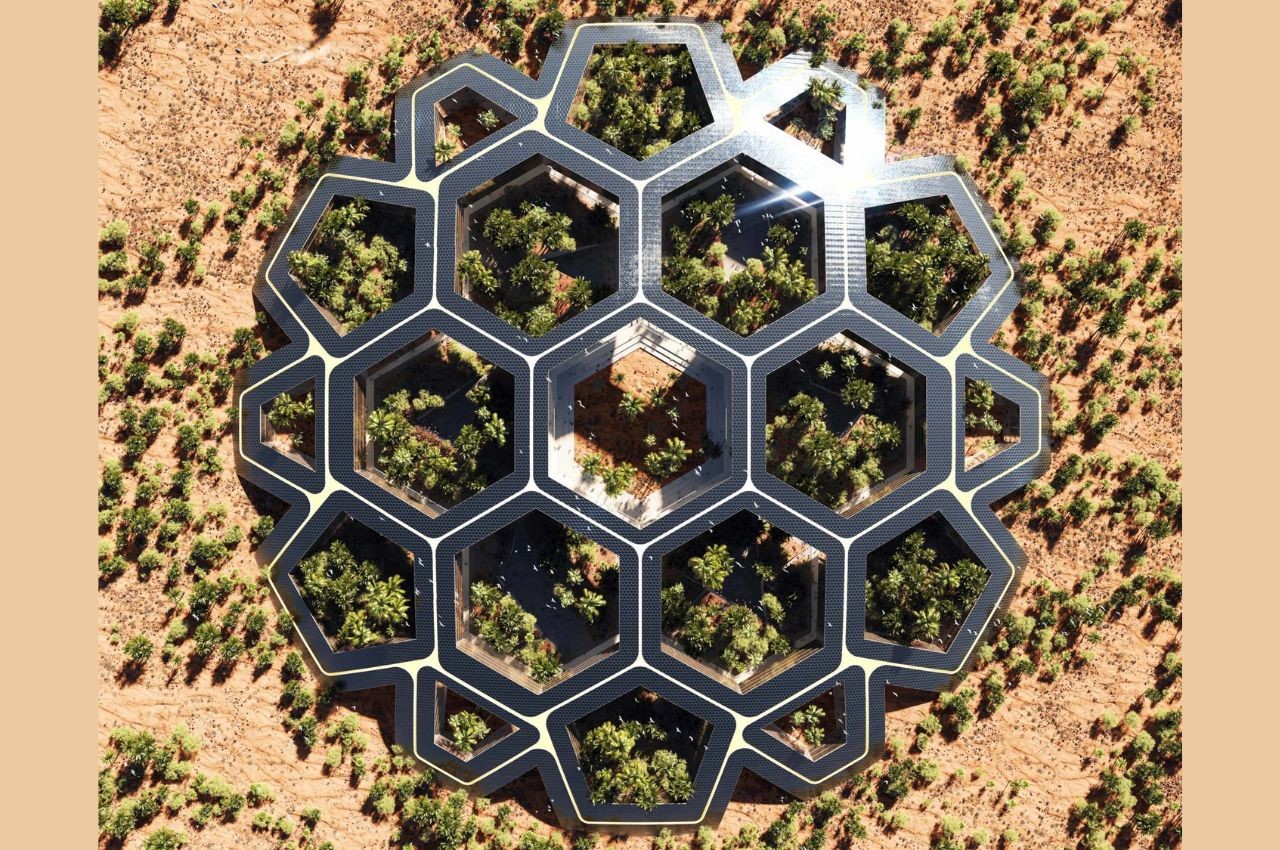
Biotech City is a groundbreaking concept in urban design that seeks to address today’s pressing environmental challenges through innovation and sustainability. This proposed domed city builds upon the legacy of bio-dome habitats, where systems are designed to be entirely self-sustaining. Biotech City offers an imaginative glimpse into the future of urban living, merging advanced technology with ecological harmony to create a resilient and green urban environment. This ambitious project represents more than just a city; it is a revolutionary plan for sustainable urban living in the 21st century.
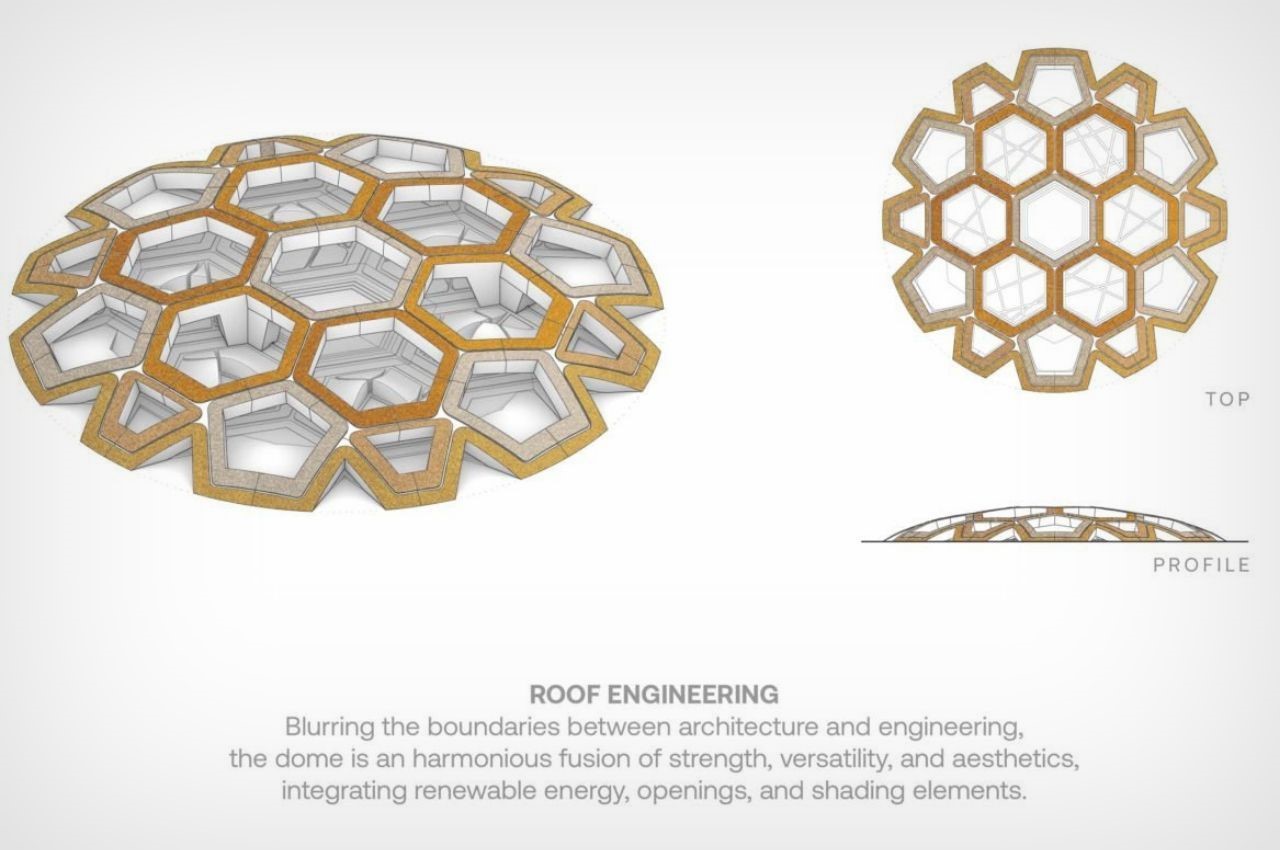
In contrast to traditional urban design, this city starts with a circular form, offering exceptional flexibility and freedom from conventional constraints. This unique approach allows the city to grow in multiple directions, creating a dynamic and adaptable urban landscape. The design evolution from a simple circle to a complex, protective dome reflects a careful and innovative planning process. The dome, inspired by nature’s protective forms, creates a unique atmosphere inside, blending architecture and engineering into a cohesive and functional whole.
The introduction of a hexagonal and pentagonal grid, based on Voronoi patterns, seamlessly connects infrastructure and green spaces. This design promotes a human-scale environment, enhancing the quality of life for residents. The dome’s structure goes beyond being a mere roof; it becomes a multifunctional building that blurs the lines between architecture and engineering, fostering a sustainable and harmonious urban ecosystem.
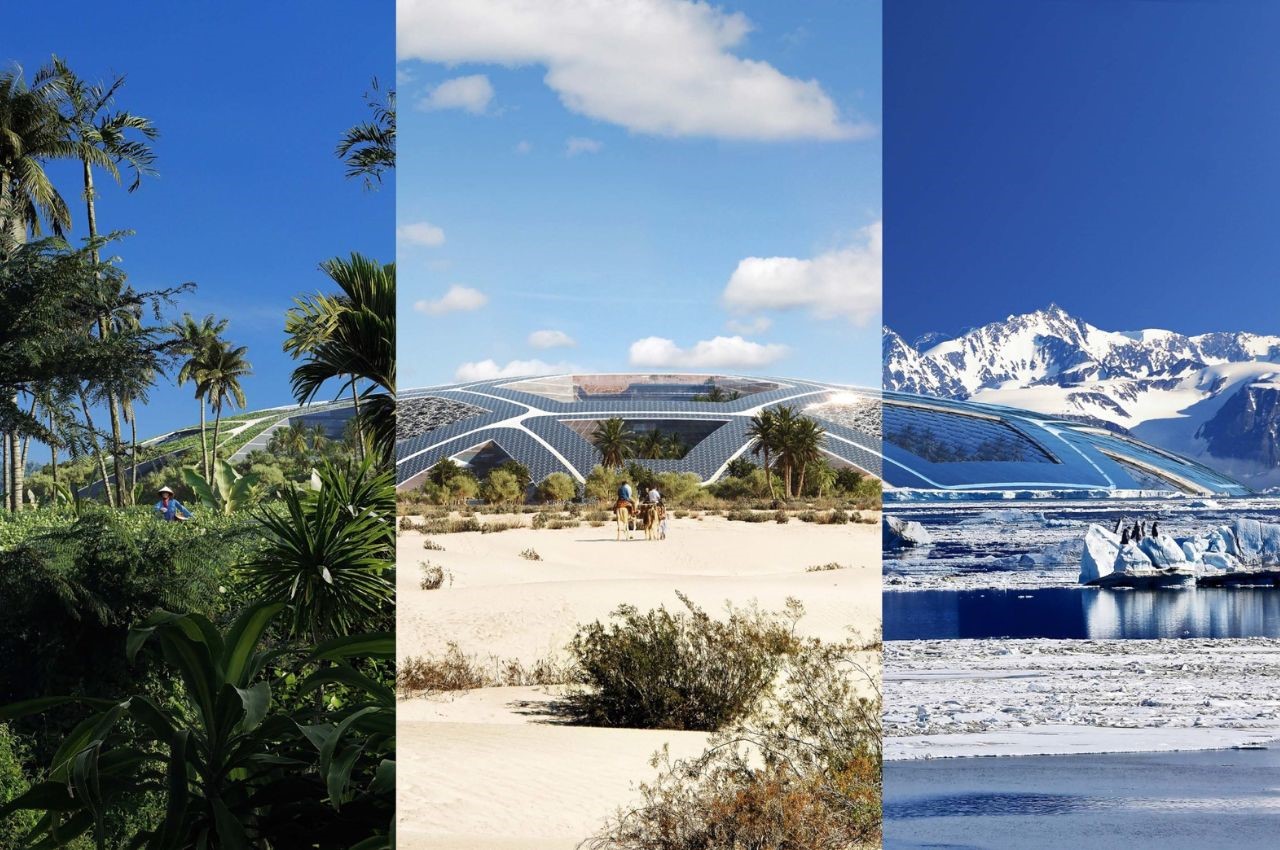
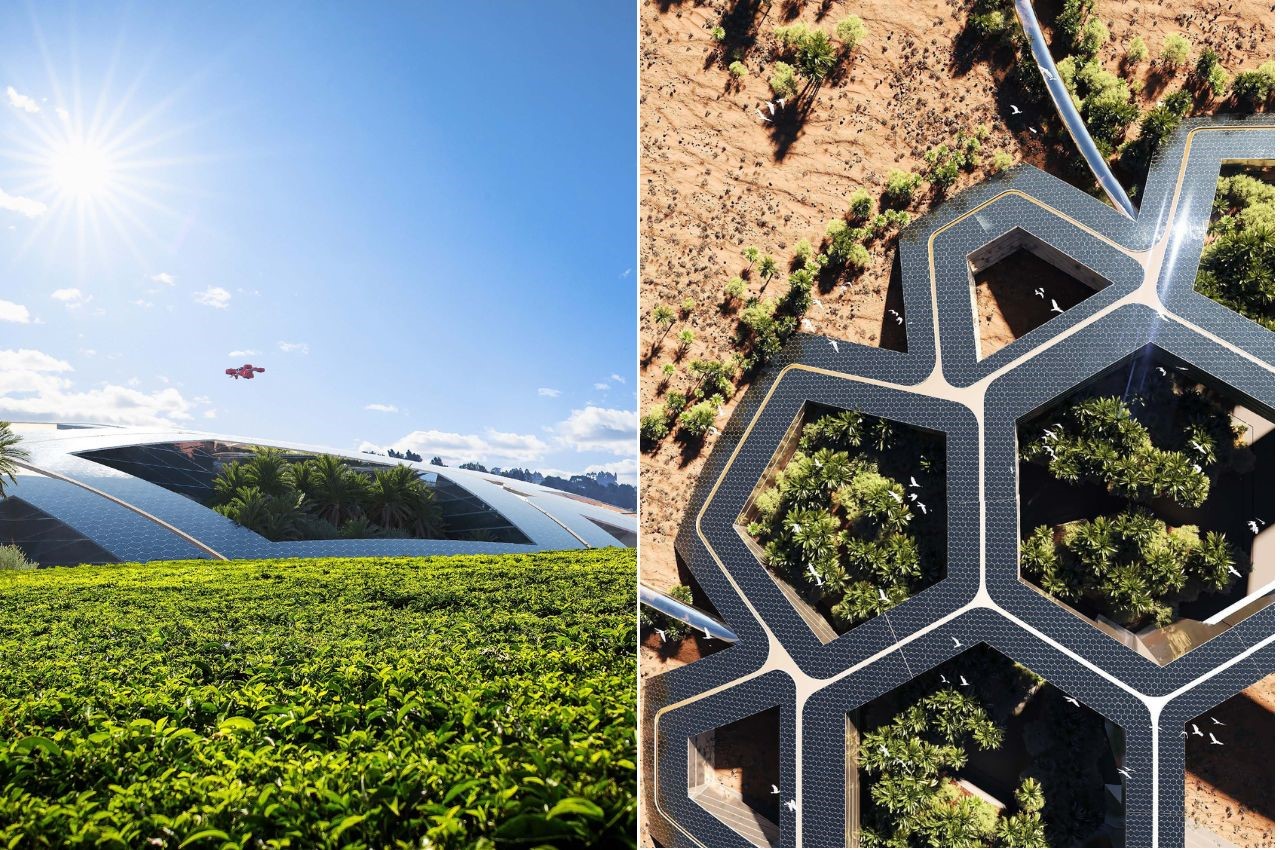
Biotech City is meticulously designed to adapt to extreme climates. Its form is tailored to the specific environmental data of each location, ensuring optimal resilience. In temperate zones, the city adopts open configurations to benefit from natural ventilation, while in arid regions, it uses opaque structures to shield against solar heat. This adaptability redefines urban resilience, demonstrating a perfect blend of sustainability and innovative design suitable for diverse environmental settings.
The self-sustaining dome design features hexagon-shaped roof panels that integrate solar technology, providing clean energy to the entire system. The dome at Biotech City rises majestically, merging architecture, engineering, and biotechnology into a single entity. This iconic structure is the heart of the city, symbolizing the successful collaboration between diverse disciplines.
The city seamlessly integrates nature with the urban environment. Lush vegetation, interactive landscapes, and living elements coexist in perfect symbiosis, creating an urban living experience that fosters a deep connection with the natural world. This innovative approach not only beautifies the city but also leverages biotechnology for a deeper coexistence with nature. Embedded biotechnology systems enhance air quality and overall well-being, creating an environment where residents thrive in harmony with their surroundings.
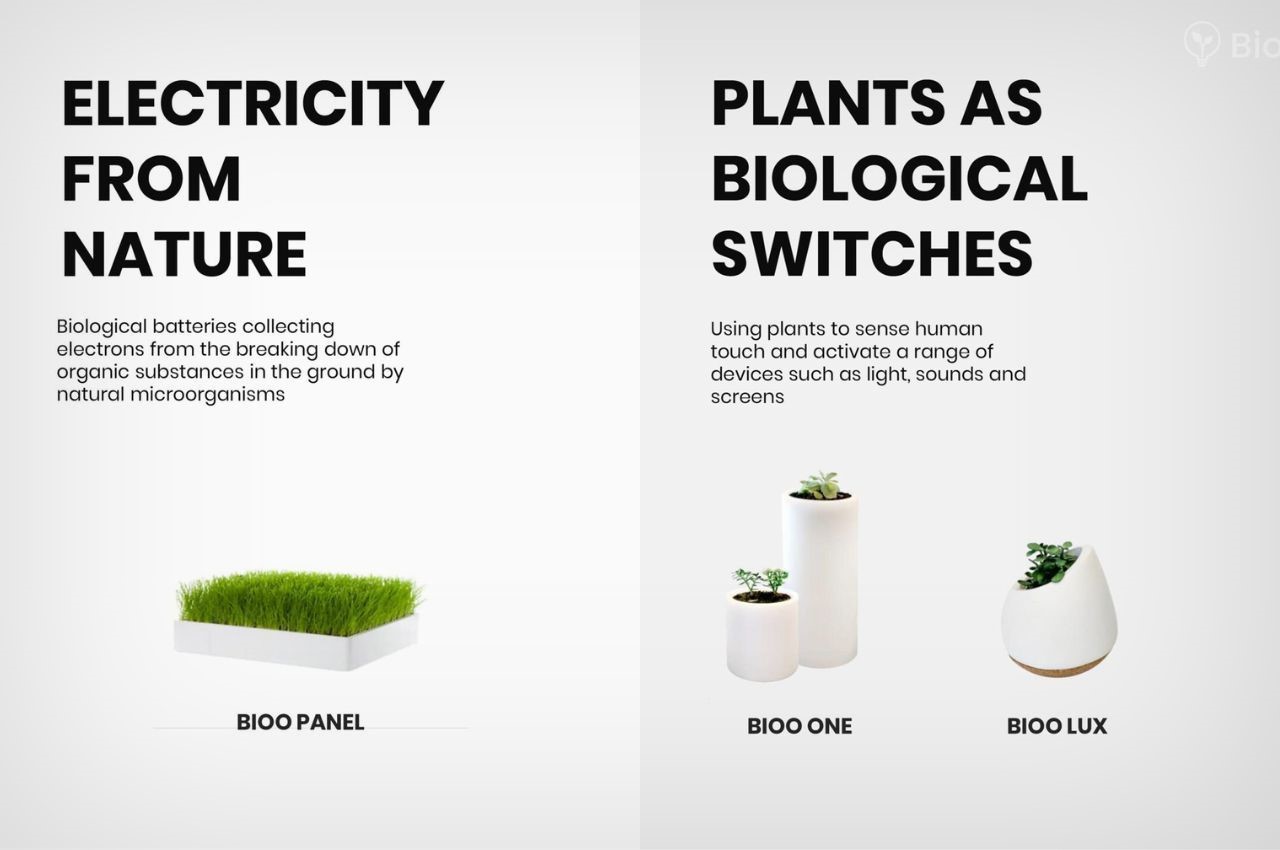
Biotech City’s ambitious vision for sustainability is made possible through collaboration with BIOO, a leading biotechnology company. Together, they redefine the boundaries of sustainability and energy efficiency in urban design. By harnessing plant photosynthesis and microbial fuel cells, it integrates with nature and generates energy sustainably. This partnership exemplifies a strong commitment to merging architecture and green technology to forge a brighter, greener future.
This city stands as a testament to human ingenuity and the potential for a sustainable future. This self-sufficient, climate-adaptable oasis harnesses the power of design, engineering, and biotechnology beneath its vast dome. As an inspirational model for urban living, Biotech City not only addresses current environmental challenges but also sets a new standard for urban development. Here, modern amenities and environmental stewardship go hand in hand, offering a visionary blueprint for how cities can thrive in the 21st century.
The latest title to join the Netflix Games roster is a very modern take on one of the icons of Windows computing. That's right, you can now play Minesweeper through Netflix's app. The classic PC puzzle game has been reimagined with an international setting, tasking the player with very literally looking for underwater mines by overlaying the usual interface of numbers and flags over vibrant pictures of waterways from around the world.
For those of us who grew up playing the original game, this take from Netflix is certainly a departure in appearance. Colorful aquatic backgrounds? A journey mode? Buh? However, the Netflix version does have one definite bonus that the trailer calls out at its close: "No in-game ads. No extra fees. No in-app purchases." Trying to find a modern-day Minesweeper game for mobile involves sifting through what feels like countless options that mimic the look of the original, but are either ad-supported or require purchase to go ad-free.
Minesweeper is also an interesting retro addition to what has become a wide-ranging collection of titles at Netflix. The company has its own takes on card games Hearts and Solitaire alongside indie darlings like Hades and international mega-hits from the Grand Theft Autoseries. Plus there are some games that tie into Netflix's own programming. The company has definitely cast a wide net with this endeavor.
This article originally appeared on Engadget at https://www.engadget.com/netflix-has-reimagined-minesweeper-and-its-out-now-220009017.html?src=rss
A three-mile stretch of Interstate 94 in Michigan will be converted into America’s first smart highway.
Axios reports that the Alphabet-backed startup Cavnue has started constructing the smart highway as part of a new pilot project that could spur other construction projects across the country. Another project, a "Smart Freight Corridor" on State Highway 130 by Austin, Texas, is also being developed.
The new smart road is big, long tracking system for Michigan’s Department of Transportation (MDOT) and for drivers on the highway. The smart highway is designed to inform both MDOT and drivers about potential issues ahead, such as obstacles in the road, accidents or traffic jams. It's hoped that the project will help relieve traffic congestion, prevent accidents and help authorities provide efficient responses to roadway emergencies.
The pilot program of the highway is located between Ann Arbor and Detroit, Michigan. There are future plans to extend the smart highway to 40 miles in six more phases that would connect to both cities once the pilot program is complete.
The smart highway works with a series of poles placed every 200 meters (about 655 feet) along the road that hold sensor pods, compute pods and communication equipment. There are also cameras along the highway that monitor every stretch of roadway and take images that are analyzed by AI and machine learning algorithms to identify hazardous driving conditions. Alerts are sent to MDOT and drivers connected to the roadway.
Cavnue says its technology can connect with "any vehicle that has connectivity features." A spokesperson said "Most modern cars with built-in navigation features fit into this category — a vintage old-timer would not."
America has some catching up to do when it comes to building and implementing smart highways. Great Britain, for instance, started working on its first internet-connected road in 2014.
Update, July 2, 7:20PM: This article was updated with additional information from a Cavnue spokesperson, and also to clarify that one additional project, rather than two, is currently under way in Texas.
This article originally appeared on Engadget at https://www.engadget.com/michigan-is-building-the-nations-first-smart-highway-213004576.html?src=rss