Zaha Hadid Architects’ Symphony Tower Weaves Emirati Tradition into Dubai’s Skyline

Zaha Hadid Architects has revealed designs for Symphony Tower, a 42-story residential skyscraper that brings traditional Emirati craftsmanship into conversation with contemporary architecture. Developed by Imtiaz Developments, the tower rises within Dubai’s emerging Horizon district, positioned between the Meydan Racecourse and the protected wetlands of Ras Al Khor at the historic Dubai Creek‎. The 38,000-square-meter development represents a significant addition to the city’s constantly evolving skyline, connecting modern design ambitions to the waterway on which Dubai was originally founded‎.

The building’s defining feature is an illuminated lattice exoskeleton inspired by the geometric patterns of traditional Emirati embroidery and weaving‎. This interlaced structural framework transforms age-old textile techniques into architectural form, creating a striking visual presence while serving practical functions. The woven exterior provides natural shading across the façade, reducing solar heat gain in Dubai’s intense climate‎. The design references the craftsmanship of traditional local artisanship, translating heritage techniques into a parametric, contemporary language that characterizes Zaha Hadid Architects’ distinctive approach‎.

Designer: Zaha Hadid Architects

The exoskeleton does more than shield the building from the sun. Its geometric pattern creates varied terraces and outdoor living spaces for each apartment, extending usable areas beyond the tower’s glass envelope‎. Integrated photovoltaics woven into the lattice structure illuminate the façade after sunset, casting a soft glow that makes the tower a luminous marker on the skyline‎. This inside-out approach places the structural system at the forefront of the design, making infrastructure into ornament and blurring the traditional distinction between decoration and engineering.

The project embraces modular construction techniques, a method that can accelerate building timelines while maintaining precision‎. This approach aligns with the tower’s sustainability ambitions, which include greywater recycling, low-flow fixtures, and drought-tolerant landscaping to minimize water consumption in the arid environment‎. The shading provided by the exoskeleton contributes to passive cooling strategies, reducing the energy demands of climate control systems. These environmental considerations demonstrate how the decorative lattice serves multiple performance objectives beyond its aesthetic impact.

Symphony Tower sits within a landscape of natural and cultural significance. The nearby Ras Al Khor Nature Reserve functions as a protected wildlife sanctuary, attracting migratory bird species, including the UAE’s native Rose Flamingo‎. The tower’s location at the uppermost reaches of Dubai Creek connects it to historical origins, creating a dialogue between contemporary development and the city’s founding narrative. This positioning gives the project particular resonance within Dubai’s broader urban story.

Unveiled in November 2025, the project has generated substantial attention across architectural media for its striking visual identity and cultural resonance‎. The tower continues Zaha Hadid Architects’ exploration of culturally rooted design within the Gulf region, creating a particularly legible connection between Emirati weaving heritage and architectural innovation‎. Though the completion date remains to be confirmed, Symphony Tower represents Imtiaz Developments’ ambitions for the Horizon district while promising to become a recognizable landmark, weaving traditional craftsmanship into the fabric of contemporary urban life‎.

The post Zaha Hadid Architects’ Symphony Tower Weaves Emirati Tradition into Dubai’s Skyline first appeared on Yanko Design.

OpenAI can’t use the term ‘Cameo’ in Sora following temporary injunction

Cameo, the app that allows people to buy short videos from celebrities, has won an important victory in its legal battle against OpenAI. On Monday, a federal judge granted the company a temporary restraining order against OpenAI, CNBC reports. Until December 22, the startup is not allowed to use the word “cameo” in relation to any features inside of Sora, its TikTok-like app for creating AI-generated videos. The order covers similar words like “Kameo” and “CameoVideo.”

“We are gratified by the court’s decision, which recognizes the need to protect consumers from the confusion that OpenAI has created by using the Cameo trademark,” Cameo CEO Steven Galanis told CNBC. “While the court’s order is temporary, we hope that OpenAI will agree to stop using our mark permanently to avoid any further harm to the public or Cameo.”

An OpenAI spokesperson told Engadget: “We disagree with the complaint’s assertion that anyone can claim exclusive ownership over the word ‘cameo’, and we look forward to continuing to make our case to the court.”

Cameo sued OpenAI in October, claiming the company’s use of the term was likely to confuse consumers and dilute its brand. Before filing the suit, Galanis said Cameo tried to resolve the dispute “amicably,” but claims OpenAI refused to stop using the name. Sora’s cameo feature allows users to upload their likeness to the app, which other people can then use in their own videos. US District Judge Eumi K. Lee, who granted Cameo the temporary junction, has scheduled a hearing for December 19 to determine if the order should be made permanent.

Update, November 24, 7:25PM ET: This article was updated after publish to include comment from an OpenAI spokesperson.

This article originally appeared on Engadget at https://www.engadget.com/ai/openai-cant-use-the-term-cameo-in-sora-following-temporary-injunction-213431626.html?src=rss

Shoei GT-Air 3 Smart helmet comes with integrated AR display for safer, smarter riding

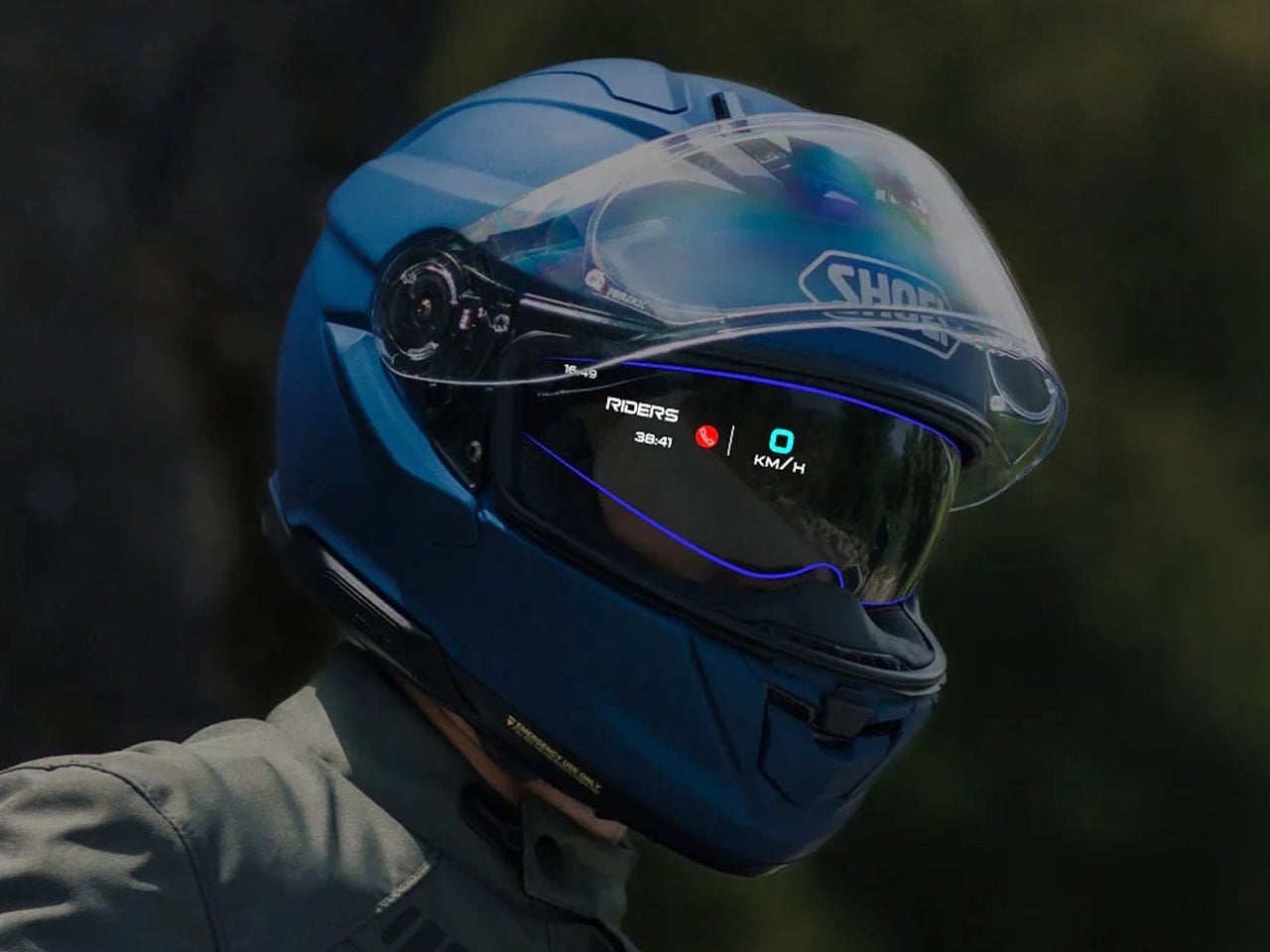
Shoei has long been known for blending craftsmanship with subtle yet meaningful innovation, often pushing helmet design forward without relying on gimmicks. That legacy has included advancements in aerodynamics, visor clarity, and long-distance comfort – traits that touring riders have come to trust. EyeLights, on the other hand, has built a reputation for compact augmented-reality systems designed to keep information within a rider’s natural field of view.

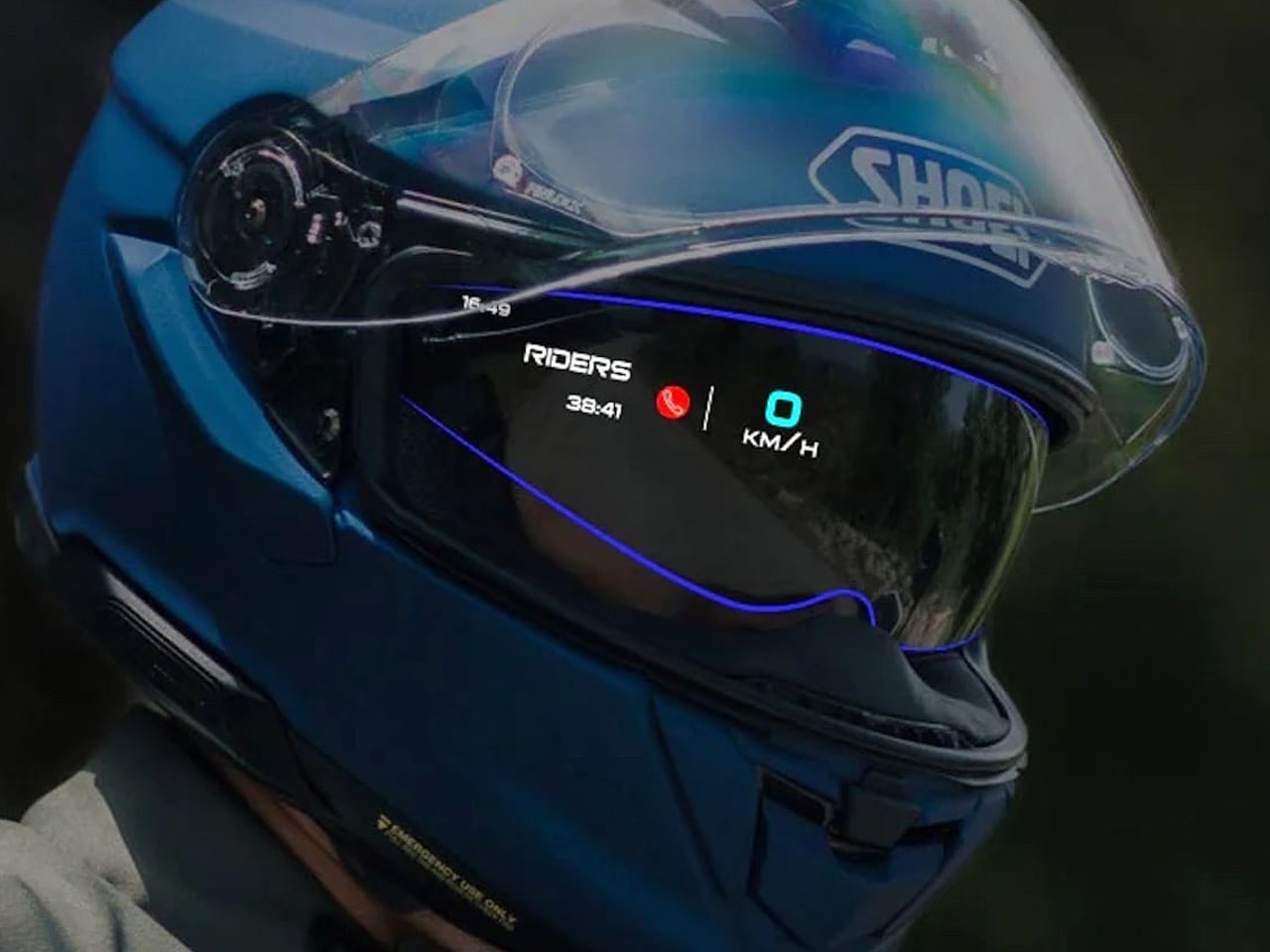
Their paths converging was almost inevitable, and the result is a smart accessory for riders that shifts helmet technology into an entirely new category. The Shoei GT-Air 3 Smart takes the familiar touring shell and transforms it into the first full-face helmet with a fully integrated AR heads-up display, created to deliver essential riding data without ever diverting attention from the road.

Designer: Shoei and EyeLights

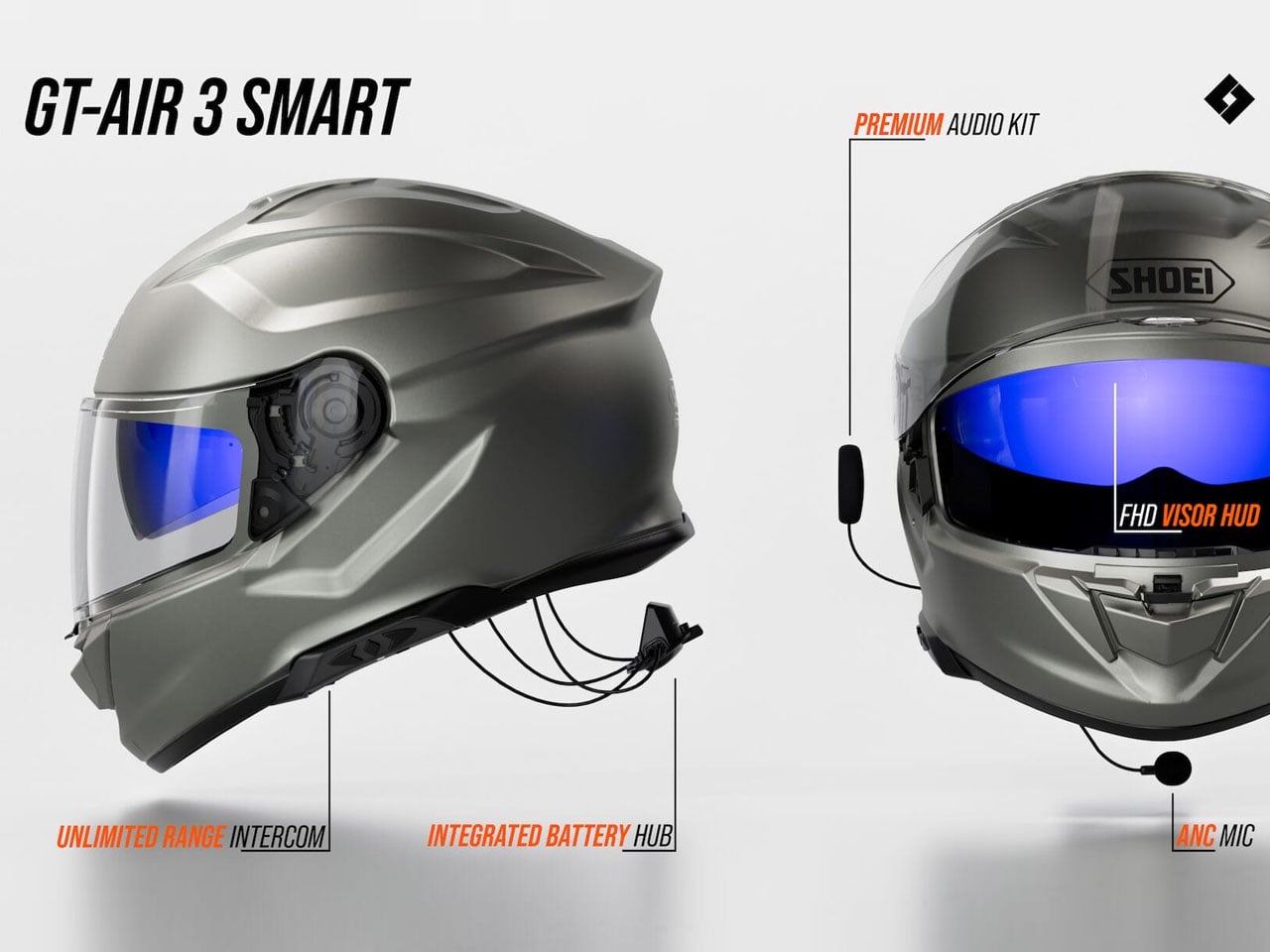
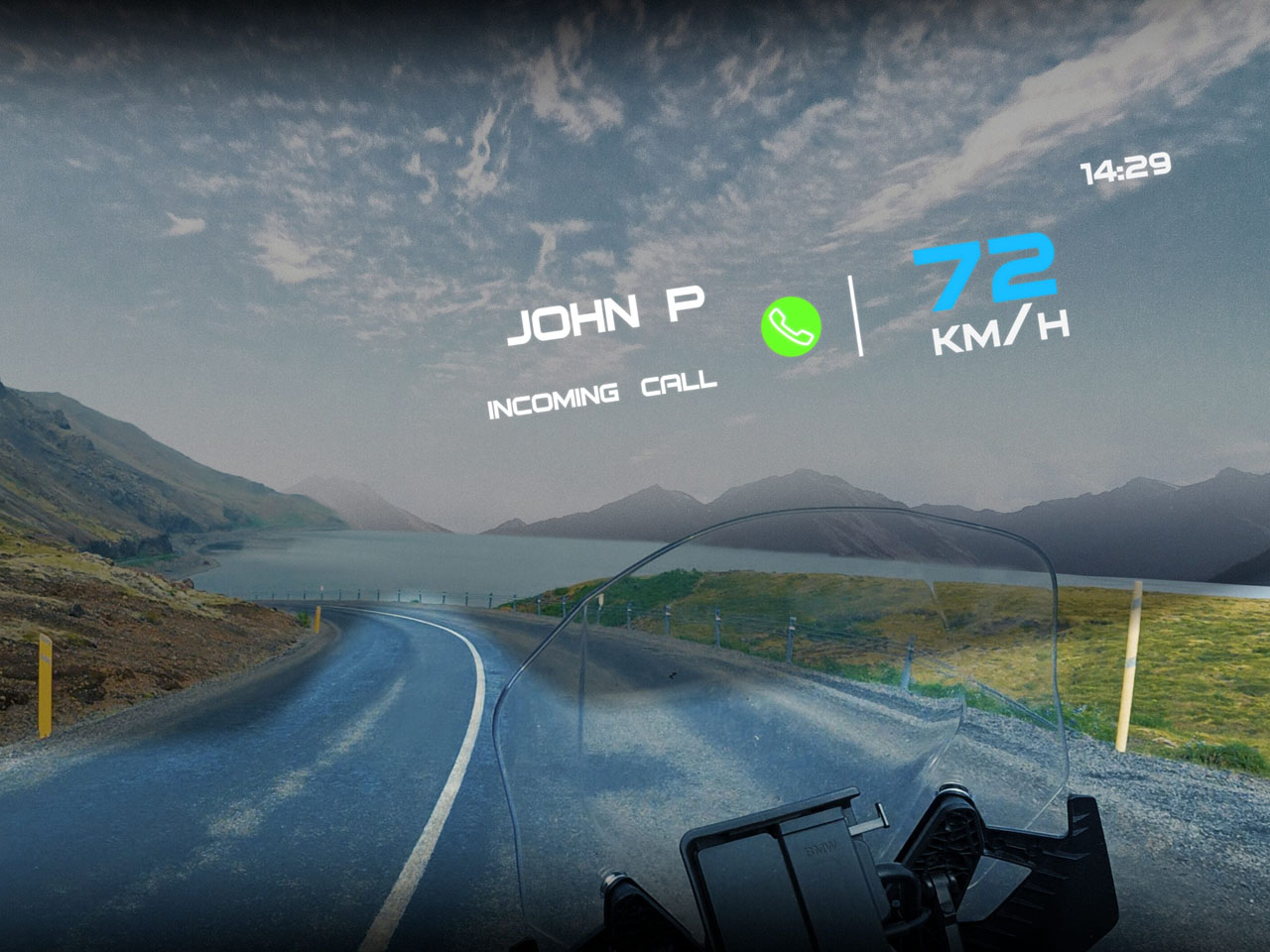
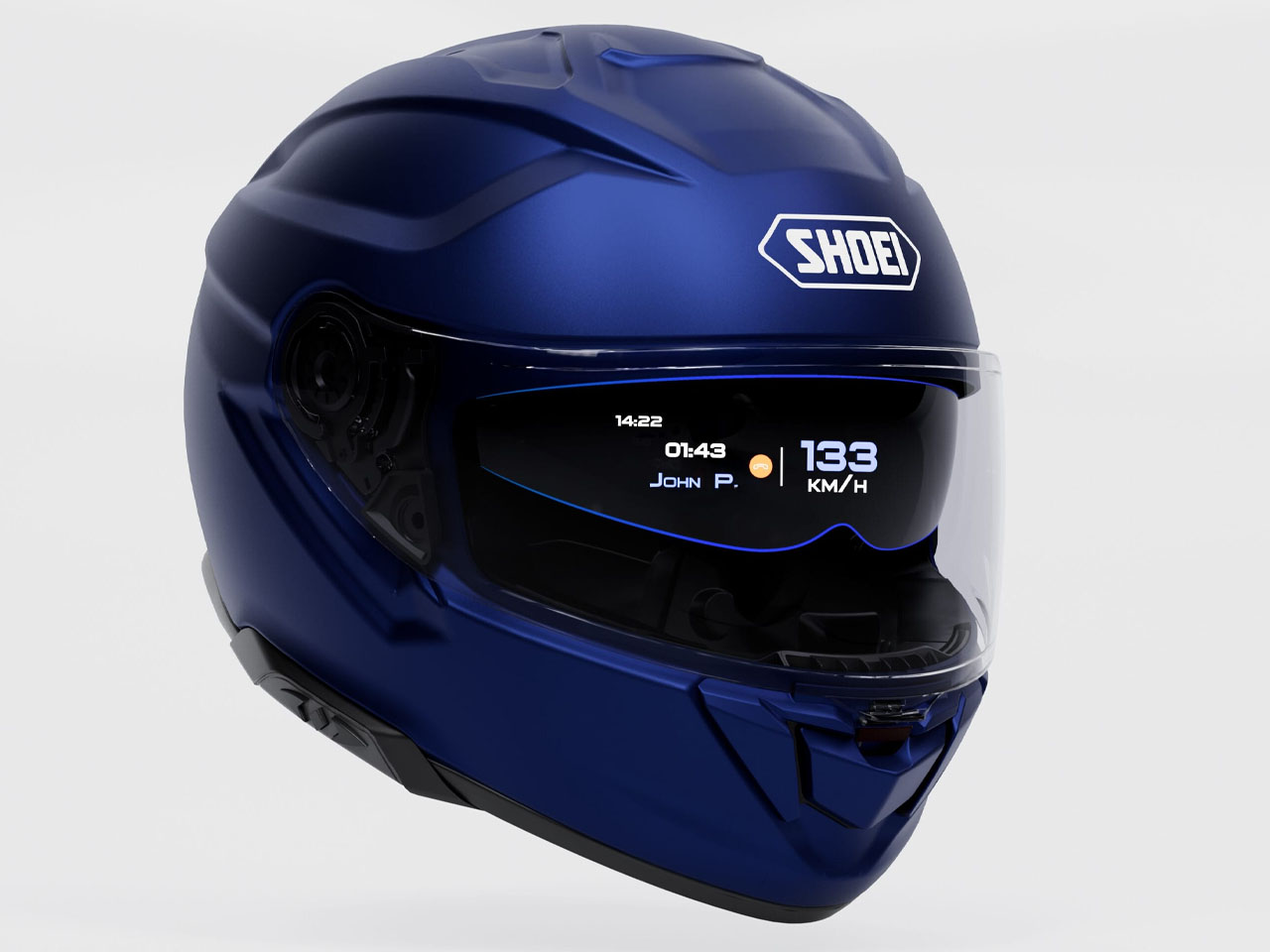
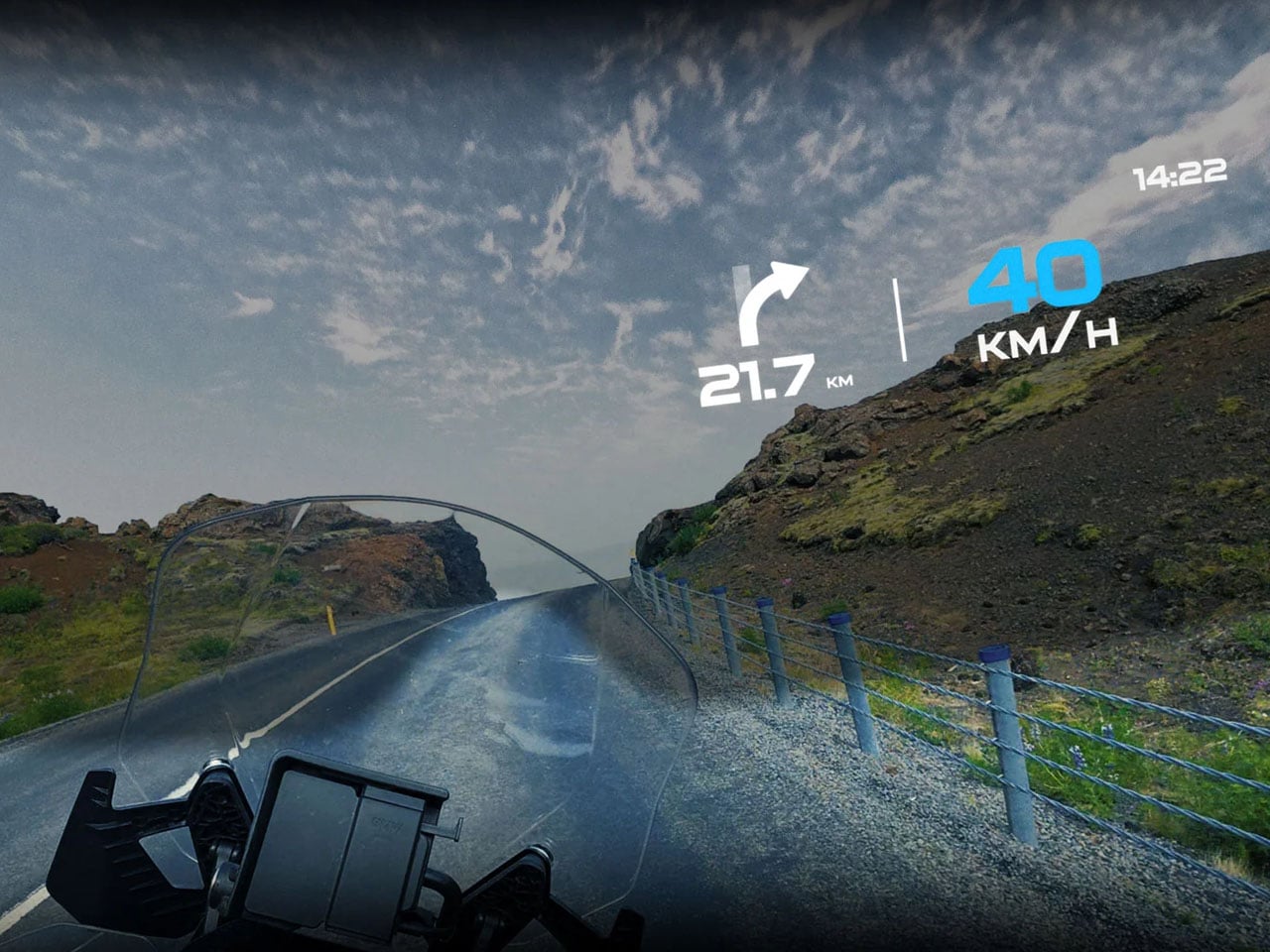
Developed jointly by Shoei and EyeLights, the GT-Air 3 Smart embeds a nano-OLED microdisplay directly into the visor structure. The projection appears about three meters ahead of the rider’s line of sight, presenting speed, navigation cues, call notifications, radar alerts, and even a compact map overlay. The Full HD display uses a 3,000-nit output so the information stays visible in strong daylight, and EyeLights claims the system can reduce reaction time by more than 32 percent compared to glancing down at external screens. Beneath the new visual technology, the helmet maintains Shoei’s established safety foundation. Its shell is constructed from the brand’s Advanced Integrated Matrix composite, which is an engineered blend of fiberglass and organic fibers used across the GT-Air 3 lineup. Apparently, it carries both DOT and ECE 22.06 certifications. Ventilation comes from a wide lower intake and upper intake with internal channels cut into the EPS liner, along with exhaust ports that release heat and moisture. A quick-release CNS-1C face shield with Pinlock support and an integrated QSV-2 sun visor maintains clarity across changing weather and lighting.

Communication features are built in through EyeLights’ Bluetooth system, supporting unlimited users and effectively unlimited range through cellular connectivity, with an offline mesh fallback when service drops. The audio kit includes speakers positioned within dedicated ear pockets and a microphone with active noise cancellation for clear conversations at speed. Voice control works with both Siri and Google Assistant to reduce rider input and keep focus ahead. The HUD, intercom, and audio system are powered by an internal battery designed to last more than ten hours under mixed use.

Charging is handled through a compact USB-C port positioned discreetly along the lower edge. The smart helmet retains the comfort and protection expected from the GT-Air line while introducing a fluid way to see essential data without shifting attention downward. For long-distance riders and daily commuters alike, the integration feels like a natural evolution rather than an add-on, offering a clearer, safer way to stay informed while riding. Shoei offers the helmet in White, Matte Black, Matte Metallic Blue, Matte Metallic Gray, and Realm TC10, with sizes ranging from S to XXL. Pricing starts at US$1,199, with a limited EICMA edition for those who like to ride differently.

The post Shoei GT-Air 3 Smart helmet comes with integrated AR display for safer, smarter riding first appeared on Yanko Design.

Alexa Home Theater surround sound for Echo speakers is rolling out now

One of the more intriguing prospects Amazon revealed at its devices and services event back in September was Alexa Home Theater, a surround sound mode for select Echo speakers. Amazon has now confirmed to Engadget that it's rolling out Alexa Home Theater "broadly" starting today.

This could make Echo speakers a more budget-friendly, entry-level alternative to a Sonos setup in some consumers' eyes — though a good soundbar may be actually a better bet for those just starting to put together a home theater system. You can connect up to five of the company's new Echo Studio or Echo Dot Max speakers plus a subwoofer to a Fire TV Stick 4K or 4K Max (the original Echo Studio isn't compatible).

Amazon said that, after you plug in several Echo devices in the same room as your TV and link them to the same Wi-Fi network, the Alexa app can walk you through the setup process. Alexa will automatically tune the speakers for your space.

As it happens, the latest Echo Studio and the Echo Dot Max are both on sale for Black Friday, along with other Amazon devices. The Echo Studio is $30 off at $190 and the Echo Dot Max has dropped by $10 to $90.

This article originally appeared on Engadget at https://www.engadget.com/audio/speakers/alexa-home-theater-surround-sound-for-echo-speakers-is-rolling-out-now-204557932.html?src=rss

Samsung’s ‘Advanced Hinge’ Patent Could Finally Make Smart Glasses Comfortable for All-Day Wear

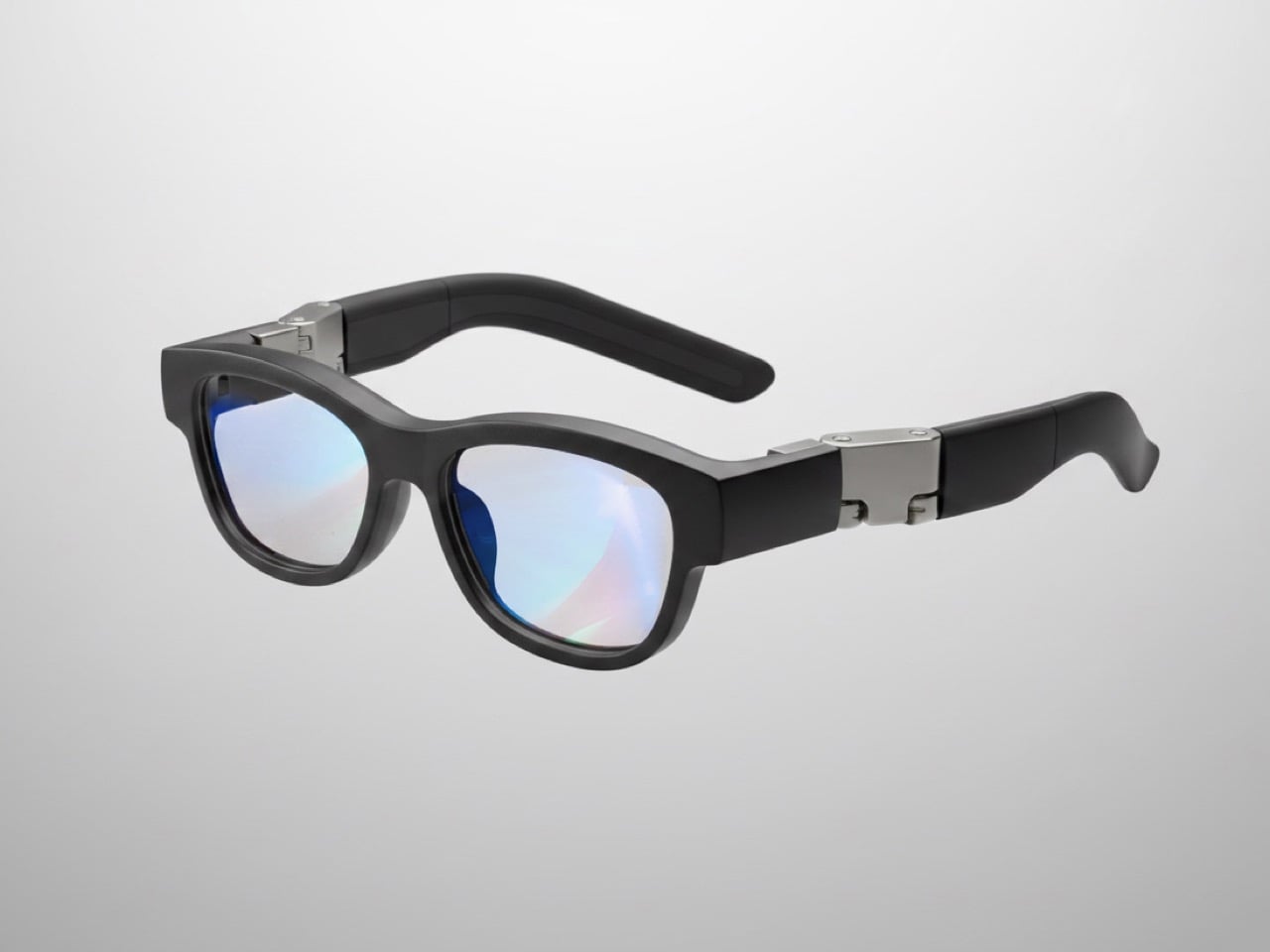
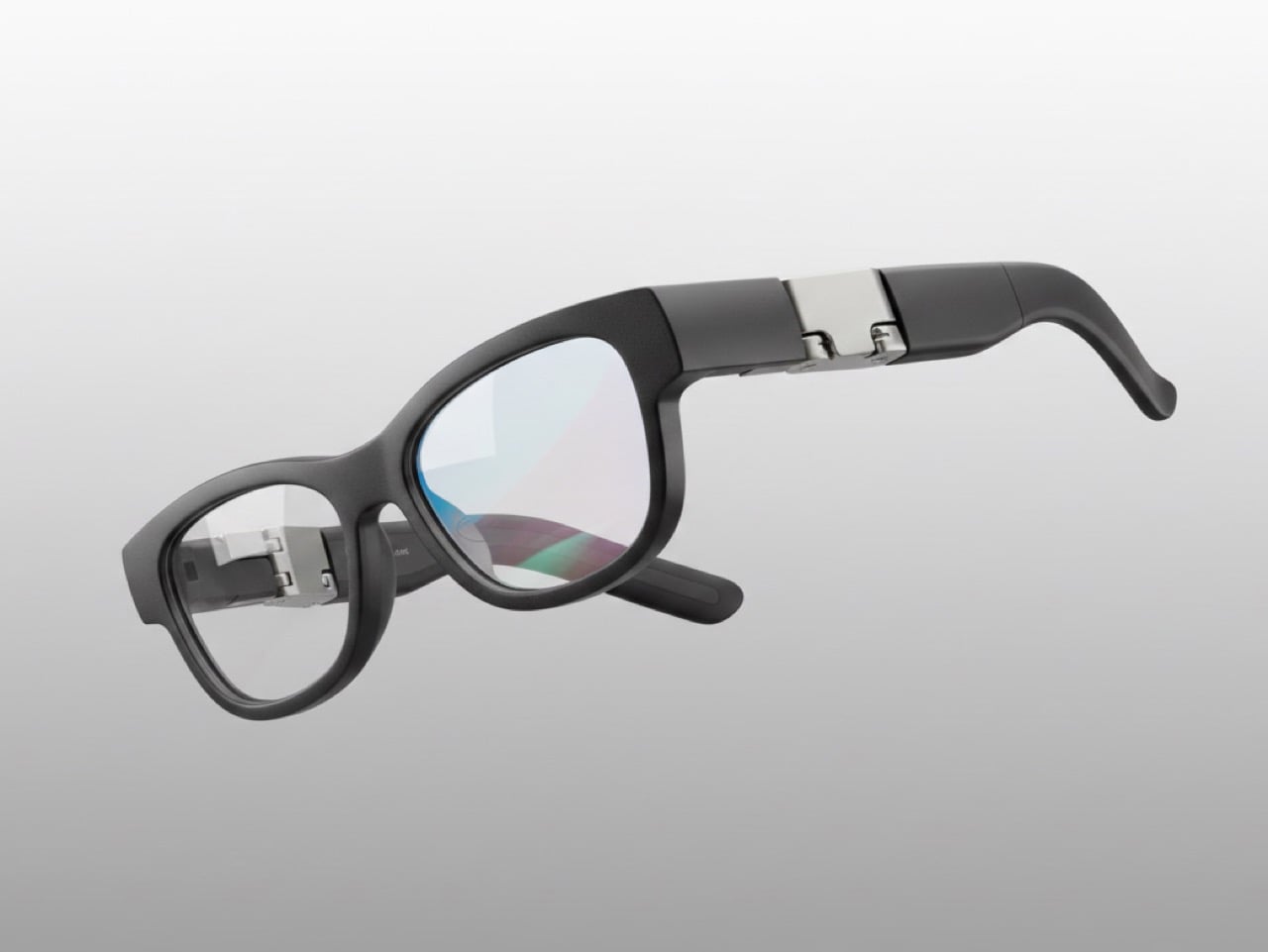
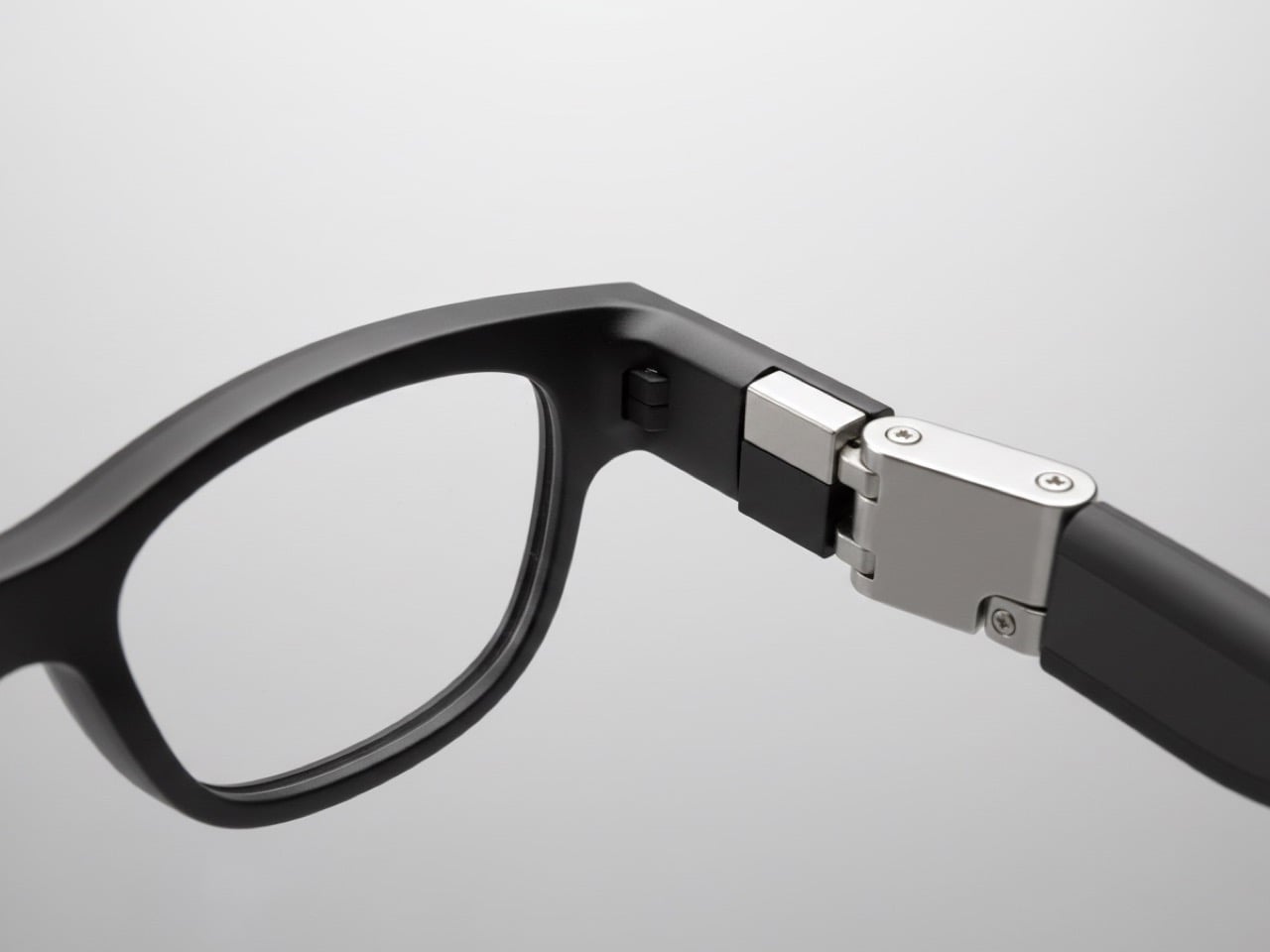
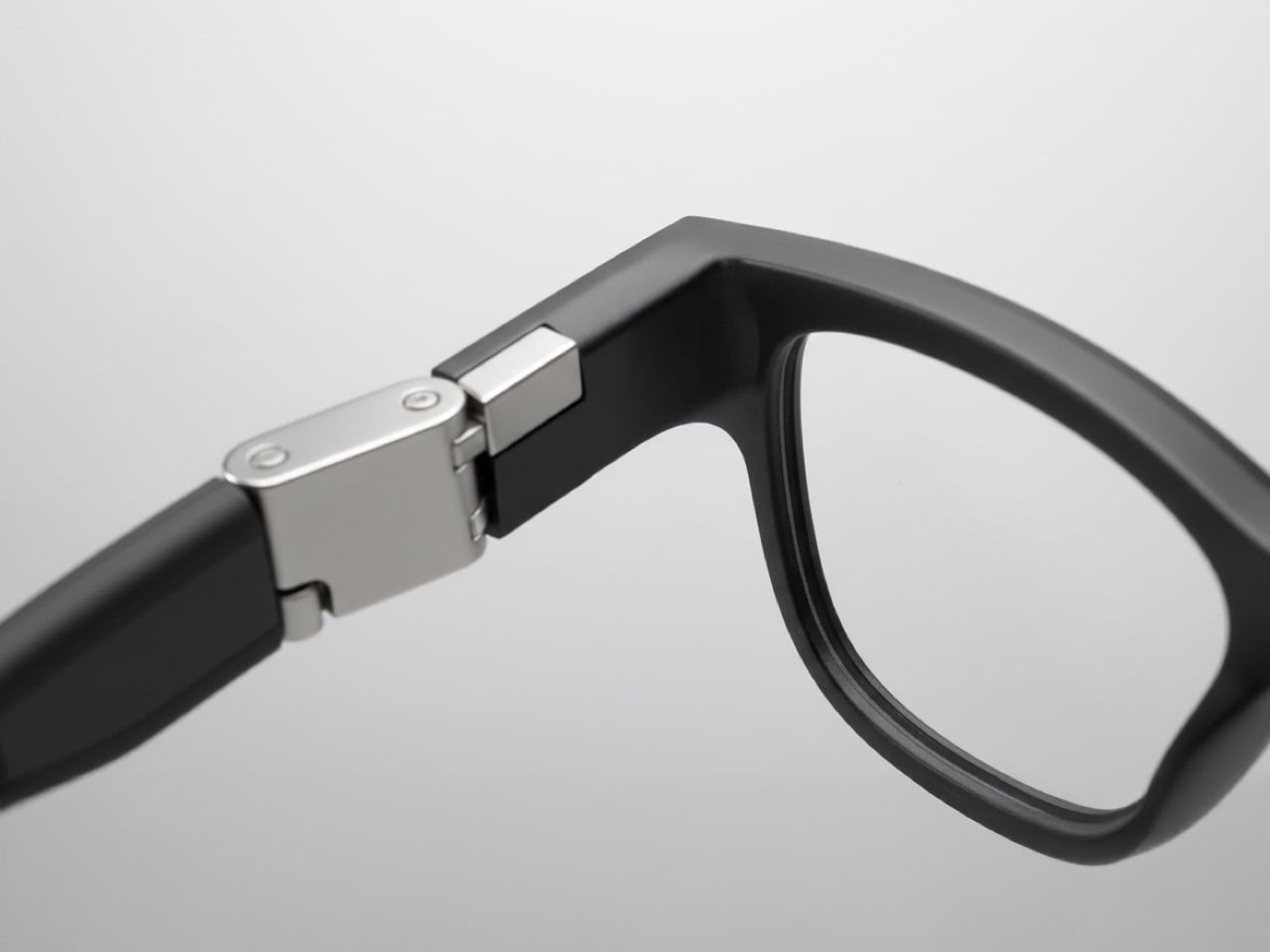
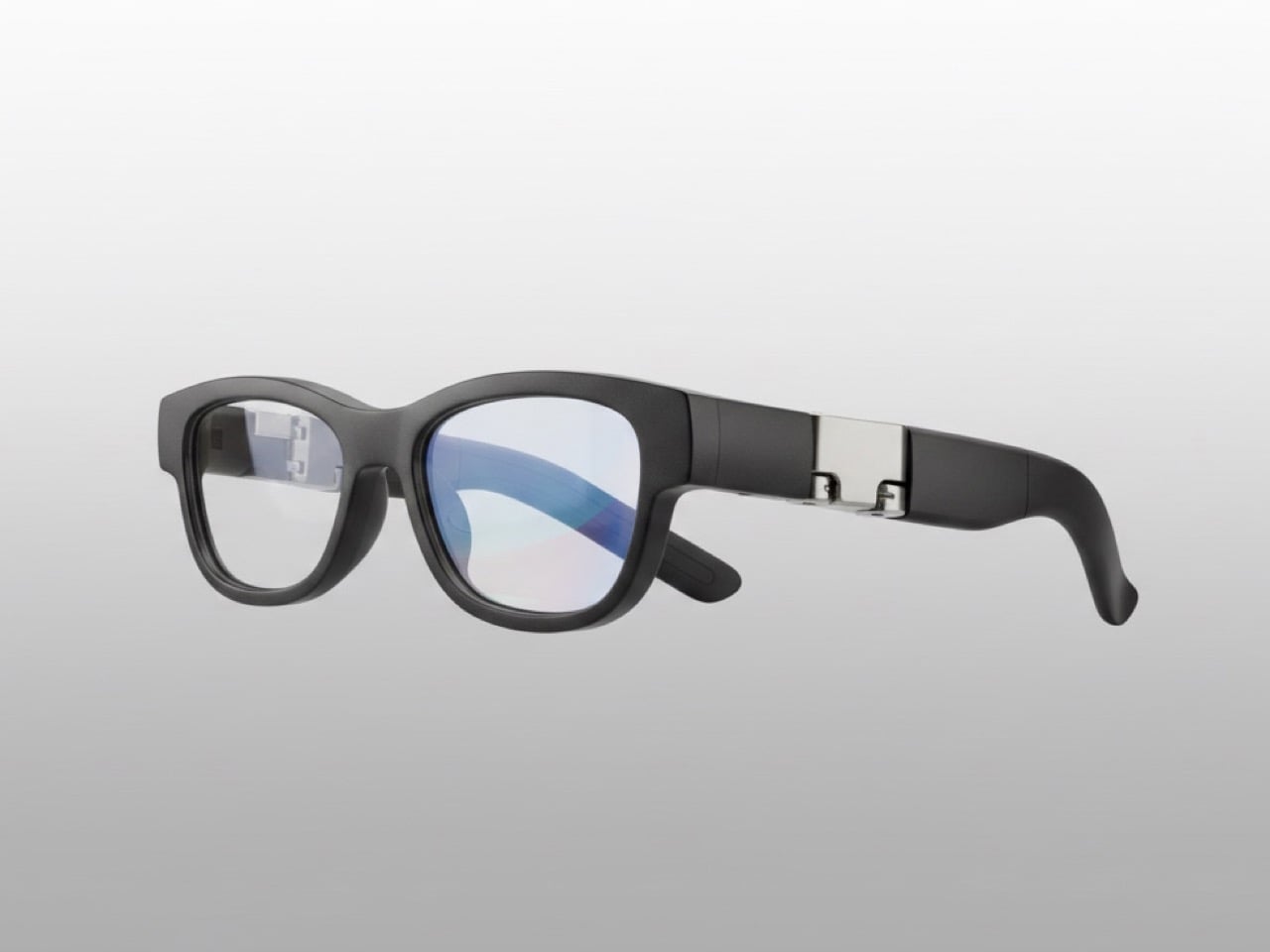
Samsung just published a patent for smart glasses with a pulley-and-cable hinge system, which sounds about as exciting as reading appliance manuals until you realize it’s solving the problem that kills most wearables: they don’t actually stay on your head comfortably. The mechanism synchronizes both temple arms so when one adjusts, the other follows automatically. This matters because smart glasses tend to slide around the moment you tilt your head or start moving, and no amount of fancy AR features can compensate for constantly pushing them back up your nose.

Here’s why this is so interesting. Meta’s Ray-Ban glasses have quietly sold over 2 million pairs, growing 60 percent year over year, which means there’s actually a market for this stuff when done right. Samsung’s apparently aiming for a 2026 launch at around $379 with a 50-gram frame, photochromic lenses, a 12MP camera, and Gemini AI handling translations and notifications. They’re partnering with Gentle Monster and Warby Parker, which suggests someone there finally understood that tech specs don’t matter if people feel ridiculous wearing them in public.

Designer: Samsung

The patent itself (image above) shows Samsung thinking through actual wearing scenarios rather than just cramming in features. The dual-axis hinge distributes pressure evenly and prevents the kind of hotspots that develop after an hour of wear. They’ve also filed separate patents for bone conduction audio, eye-tracking, and clip-on prescription lenses. Taken together, these aren’t random experiments but a systematic approach to the basic problems that have kept smart glasses niche.

This fits into Samsung’s broader XR strategy with Google and Qualcomm. They’ve already launched the $1,799 Project Moohan headset with 3,000 DPI micro-OLED displays, undercutting Apple’s Vision Pro while actually beating it on resolution density. The smart glasses represent the opposite end of that spectrum, trading immersion for something you might actually wear outside. Both products target a market expected to hit $1.7 trillion by 2032, up from $131 billion in 2024, which explains why everyone’s suddenly interested in getting the fundamentals right.

Samsung’s planning a screenless version first, then a display-equipped model in 2027. Starting without a screen is probably smart. Getting people comfortable with the form factor and basic features before adding display complexity gives them room to iterate on fit and battery life without dealing with every problem simultaneously. It’s less exciting than promising the future immediately, but it’s also how you avoid launching something that gets used twice and forgotten.

The hinge patent won’t make headlines, but it represents the unglamorous engineering that actually determines whether such products succeed (we covered another patent on Samsung’s audio tech advancements for smart glasses). Plenty of companies can build a prototype that impresses in a demo. Far fewer can make something comfortable enough that people choose to wear it every day for months. Samsung seems to be betting that solving fit and comfort first, then adding features, beats the alternative of spectacular demos followed by drawer-dwelling devices.

(Images visualized using AI)

The post Samsung’s ‘Advanced Hinge’ Patent Could Finally Make Smart Glasses Comfortable for All-Day Wear first appeared on Yanko Design.

The best pizza oven for 2025

In the last few years, pizza ovens have become as much of a backyard staple as a grill. There are many options for making restaurant-quality pies at home in a range of styles. What’s more, many models allow you to change up the fuel type, and some even allow you to do more than simply fire off pizzas. I’ve compiled a list of the best pizza ovens that you can buy right now, with selections for multi-fuel ovens, compact designs and indoor pizza parties. I’ve also included some buying advice on what to consider before you commit and how to get the most out of your at-home pizza making experience.

Let me preface this section by saying you probably already have an indoor option that you can use to make some great pizza. Whether that’s the main oven in your kitchen or a multi-function countertop unit, with some affordable accessories, you can easily up your game without spending $1,000 on a dedicated appliance. For example, my Breville Smart Oven Air Fryer has a convection pizza setting that automatically adjusts cook time based on the size, oven temperature and whether the pie is fresh or frozen. A key consideration here is size. These things are massive, about the size of a large microwave, so you likely won’t want to keep them out all the time unless you have a huge kitchen.

When shopping for a home oven or dedicated pizza oven, you’ll first want to consider what types of pies you plan to make. Most portable pizza ovens from the likes of Ooni, Solo Stove and others use wood burning fuel and are primarily designed for the high-heat cooking required for light and airy Neapolitan-style pizzas. We’re talking high temperatures up to 900 degrees Fahrenheit. These units can certainly cook different styles of pizza at cooler temperatures, but the learning curve is easiest when you’re running them wide open with a full load of wood.

You'll also want to consider alternate fuel types. If you purchase a propane or natural gas burner, you can adjust temperatures easily by turning a knob. For this reason, I recommend you spend the extra $100 or so on that accessory. This dual-fuel option makes your pizza oven a lot more versatile and gives you the option to still have a freshly fired pie when you don’t feel like messing with wood or charcoal. If you only want to cook with gas, there are models available that only use propane or natural gas.

The other key consideration for aspiring pizza makers is size. Most companies make ovens that fit 12-inch pizzas, a perfect size for a personal pan pizza. They’re also great for pizza parties, since people can customize their own without having to pick off toppings they don’t like. If you want to make larger pizzas or plan to use your oven for other things (pans, etc), consider a larger version that can accommodate more than just small pies. The interior dimensions – or at the very least the pizza stone size – will be listed on most product pages.

Making good pizza at home requires a considerable amount of counter or table space. You’ll need room to stretch and prep your pizza dough, lay out your mozzarella, other cheeses and toppings and load pies onto a peel. Of course, some folks will be comfortable working in the tight confines of a small kitchen, but I’ve found it much easier to use extra space to make sure I’m not constantly moving things around during the various steps in the process.

It’s also less hassle to set up your pizza-making station in close proximity to your oven. As a pizza-baking beginner, I did the running back and forth from the kitchen to the back porch. It’s far from ideal. It’s difficult to maintain your fire (if using wood or charcoal) when you’re unable to watch it closely. The good news is a patio table can be easily converted into a pizza station with a large cutting board. This also gets your oven off the ground so it’s easier to access.

Ooni sells tables for its ovens that also offer shelving and storage for peels and other accessories. Solo Stove has a rolling stand for its Pi oven too, with small side shelves and a spot for your propane tank underneath. Of course, you can find other tables and stands to suit your needs, just make sure they can withstand any heat that may radiate from the bottom of the oven while cooking. Most ovens are either well insulated or don’t project too much excess heat toward the table, but you can never be too careful. For that reason, a stainless steel or metal surface is a good choice to set up an outdoor model.

Most of these ovens heat up quickly and cook at high temperatures, especially if you’re making Neapolitan pizza. Having everything you need nearby so you can keep tabs on the oven and quickly make the next pie — especially the first pizza — will ease a lot of unnecessary headaches. When your cook time is two minutes or less, you don’t want to venture too far.

If you want to make a good pizza that rivals that of your favorite pizzeria (and without spending hundreds of dollars on a dedicated oven), you can definitely do it with the home oven you already have in your kitchen. With a few gadgets, you can improve your game without splurging on a Breville, Ooni or Solo Stove. First, I’d recommend a high quality baking steel or stone.

Baking stones are great for getting better browning on the bottom of your pies than a pizza or sheet pan. You can also use them for bread, cookies and other items. The stone absorbs heat to cook pizza quickly, and you’ll get that charred crust like a brick oven provides. They’re also more affordable compared to baking steels. Those metal slabs do have one key advantage: higher heat conductivity. This means a steel will cook your pizzas faster since it can absorb more heat from your oven. While baking steels can be used as griddles on your stovetop and for other types of baking, they’re not ideal for some leavened breads.

The second item you’ll want is a pizza peel. These come in all shapes and sizes, made out of a variety of materials. I typically use a bamboo or wooden peel when topping and launching my pizzas and then a metal one for retrieving them. I’ve found that dough doesn’t stick as easily to bamboo during prep and the metal resists the high heat of the oven when turning or retrieving a finished pizza (bamboo will burn). There are also perforated peels which allow both steam and excess flour to escape. A peel is a great tool for loading and turning pizzas, getting them in the back of the oven, and since you’ll typically be cooking them with your oven at 500 degrees or hotter, using something like parchment paper to move them around won’t work.

And if you’re going for a New York style pizza, just make sure your dough recipe and ingredients are geared toward that thinner, crispy crust — the right accessories alone won’t be enough.

This article originally appeared on Engadget at https://www.engadget.com/home/kitchen-tech/best-pizza-oven-141550352.html?src=rss

Skate Story grinds its way to PlayStation Plus on December 8

It's been a long road to get here, but the surreal skateboarding sim Skate Story will actually be available to play on December 8. The title will also be a day-one Game Catalog release for PlayStation Plus subscribers, which is a great perk for Sony fans. It'll be available on other platforms, like Steam and Nintendo Switch, but those versions cost $20. The PS5 version is free for PS Plus subscribers and it's not currently coming to Xbox.

For the uninitiated, Skate Story can only be described as a Lynchian take on skateboarding. Players control a glass avatar and they perform tricks to, well, swallow the moon and defeat the devil. It was announced all the way back in 2020. We got to play it last year and came away impressed. The game was made by Sam Eng, who was behind the indie shooter Zarvot.

It's also being published by Devolver Digital, a company that knows its way around unique gameplay concepts. It published the utterly sublime Cult of the Lamb and one of our recent favorites, Ball x Pit. The former lets you feed poop to cult followers, which makes performing kickflips as a glass-bodied demon seem downright normal.

Looking to see what all of the fuss is about? There's a demo right now on Steam. The game's also available for purchase on the PS5, for those who don't wanna pony up for a PS Plus subscription.

This article originally appeared on Engadget at https://www.engadget.com/gaming/playstation/skate-story-grinds-its-way-to-playstation-plus-on-december-8-193034939.html?src=rss

Anthropic’s Opus 4.5 model is here to conquer Microsoft Excel

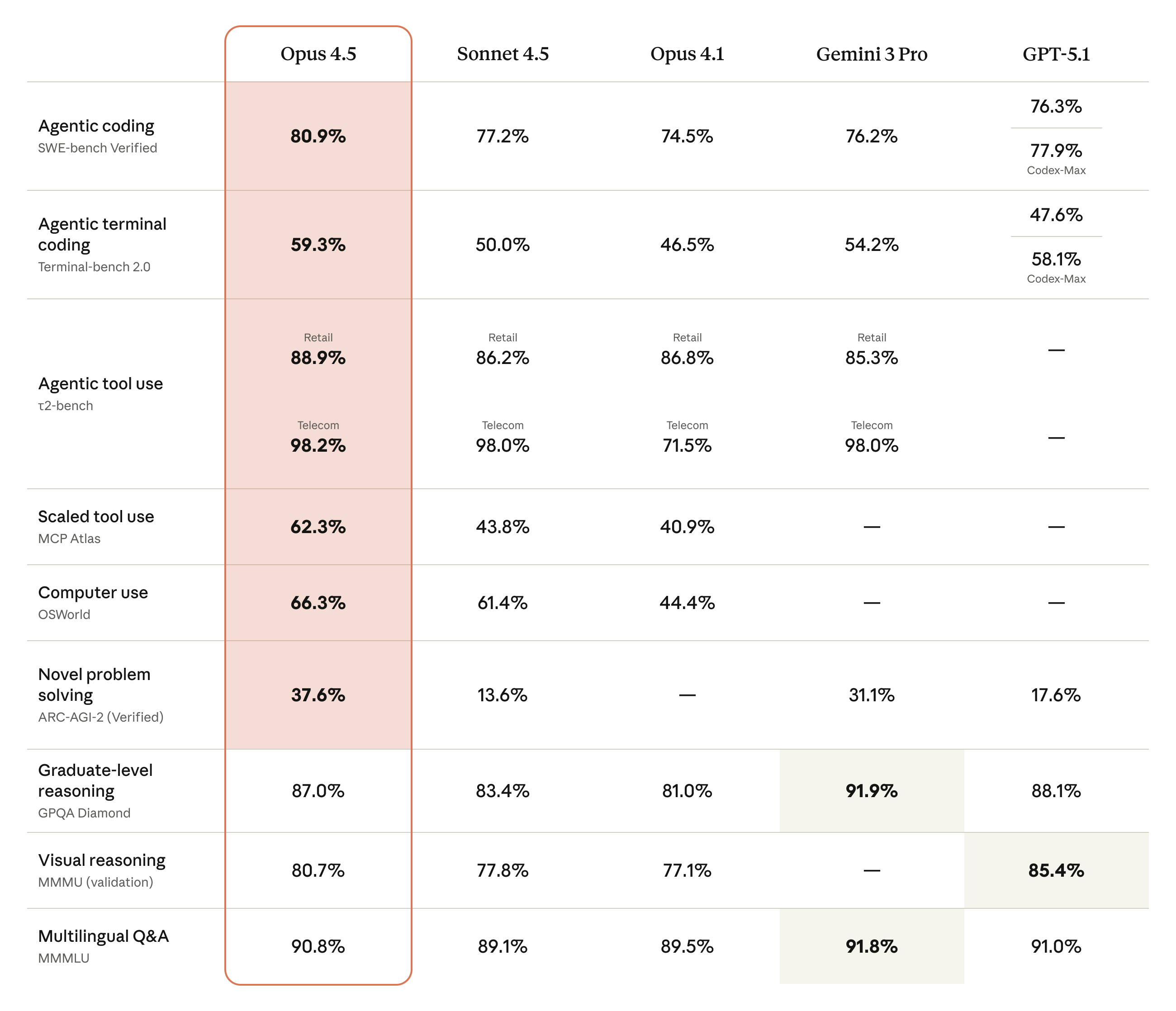
Hot on the heels of Google's Gemini 3 Pro release, Anthropic has announced an update for its flagship Opus model. Now at version 4.5, the new system offers state-of-the-art performance in coding, computer use and office tasks. No surprise there, those have been some of Claude's greatest strengths for a while. The good news is Anthropic is rolling out a handful of existing tools more broadly alongside Opus 4.5. It's also releasing one new feature.  

To start, the company's Chrome extension, Claude for Chrome, is now available to all Max users. Anthropic is also introducing a feature called infinite chat. Provided you pay to use Claude, the chatbot won't fall to context window errors, allowing it to maintain consistency across files and chats. According to Anthropic, infinite chat was one of the most requested features from its users. Then there's Claude for Excel, which brings the chatbot to a sidebar inside of Microsoft's app. The tool is now broadly available to all Max, Team and Enterprise users, with support for pivot tables, charts and file uploads built-in. 

A table comparing Opus 4.5's efforts in various benchmarks.
Anthropic

On the subject of Excel, Anthropic says early testers saw a 20 percent accuracy improvement on their internal evaluations and a 15 percent improvement in efficiency gains. As a complete Excel noob, I'm excited to for the company to trickle down that expertise to its more consumer-oriented models, Claude Sonnet and Haiku. 

Elsewhere, Opus 4.5 also delivers improvements in agentic workflows, with the new model excelling at refining its own processes. More importantly, Anthropic is calling Opus 4.5 its safest model yet. It’s better at rejecting prompt injection style attacks, outpacing even Gemini 3 Pro, according to Anthropic’s own evaluations.

If you want to try Opus 4.5 for yourself, it’s available today through all of Anthropic’s apps and the company’s API. For developers, pricing for the new model starts at $5 per million tokens.

This article originally appeared on Engadget at https://www.engadget.com/ai/anthropics-opus-45-model-is-here-to-conquer-microsoft-excel-190000905.html?src=rss

2025 Nissan Z NISMO Review: A Modern Icon That Earns Its Badge

PROS:


  • 420 hp twin-turbo V6 with immediate power

  • Track-ready NISMO suspension and limited-slip differential

  • Recaro seats with premium Alcantara interior

  • Raw, mechanical exhaust note

  • Surprisingly practical for daily driving

CONS:


  • No manual transmission option

  • Firm ride punishing on rough roads

  • $65,750 premium vs $52,970 Performance trim

  • Two seats only, no rear storage

RATINGS:

AESTHETICS
ERGONOMICS
PERFORMANCE
SUSTAINABILITY / REPAIRABILITY
VALUE FOR MONEY

EDITOR'S QUOTE:

The Z NISMO isn't just the best new Z. This is what enthusiasts have been begging Nissan to build for years.
award-icon

The moment I saw the 2025 Nissan Z NISMO in Solid Red with its Super Black roof, I knew this was something special. This isn’t just another performance variant with some badges and stiffer springs. This is the Z I’ve been waiting for since Nissan announced the reborn nameplate. After spending time behind the wheel, I can say with absolute certainty: the NISMO delivers everything a proper sports car should, and then some.

Designer: Nissan

At $65,750, the Z NISMO sits at the top of the Z lineup, commanding a significant premium over the $42,970 Sport and $52,970 Performance models. That price gap buys you 420 horsepower, NISMO-specific tuning throughout the chassis, exclusive Recaro seats, and a level of driving engagement that makes every other trim feel like a warmup act. This is the Z that Nissan should’ve led with.

Design and Ergonomics: Heritage Meets Aggression

Exterior: A Silhouette That Commands Attention

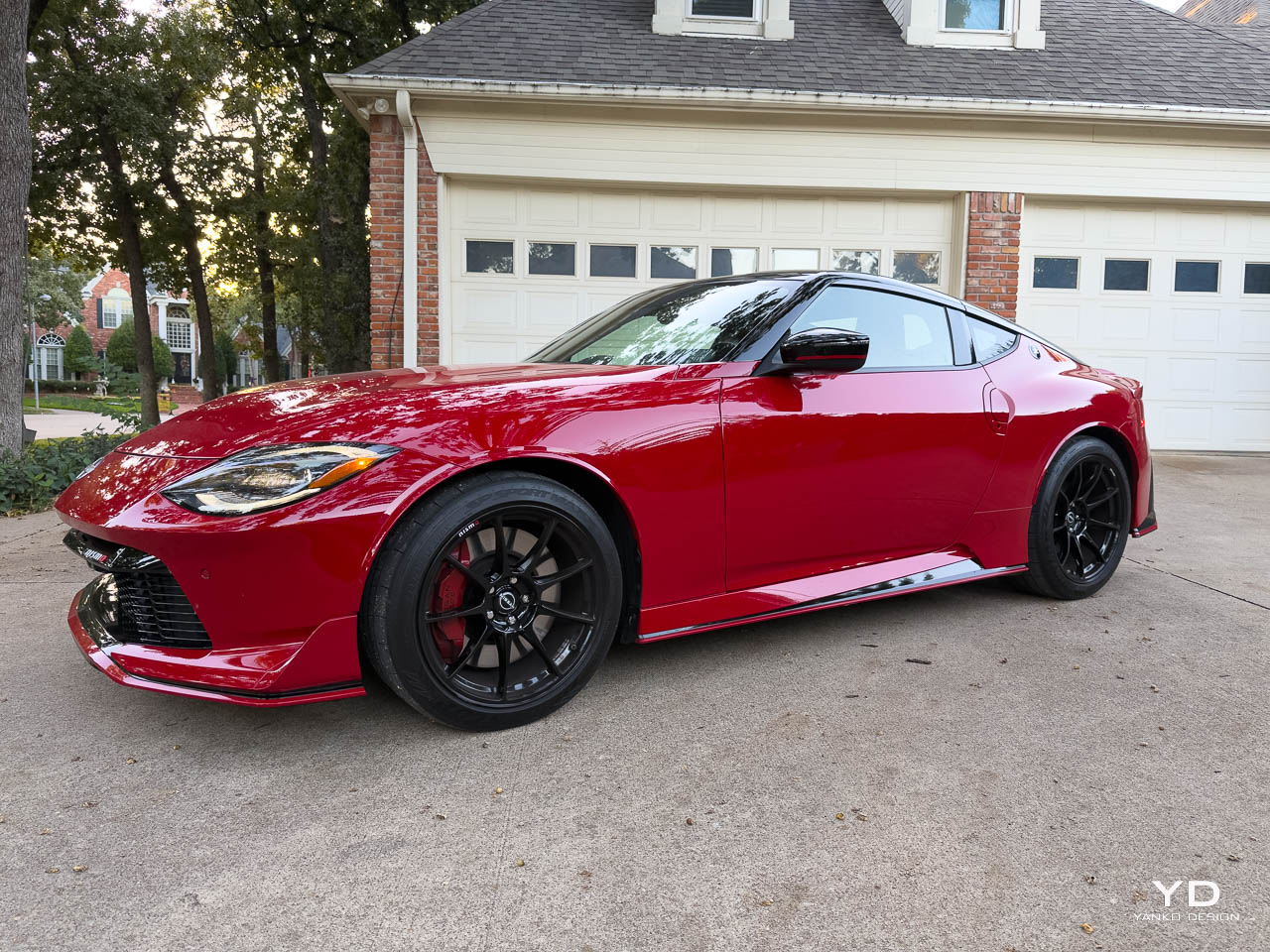
The Z NISMO’s design honors heritage while pushing forward with purpose. The long hood and squared-off rear are direct callbacks to the first-generation S30 Z, the car that put Japanese sports cars on the global stage. Nissan didn’t just slap on some retro styling cues and call it a day. They reimagined what made that original Z so compelling and translated it into modern proportions.
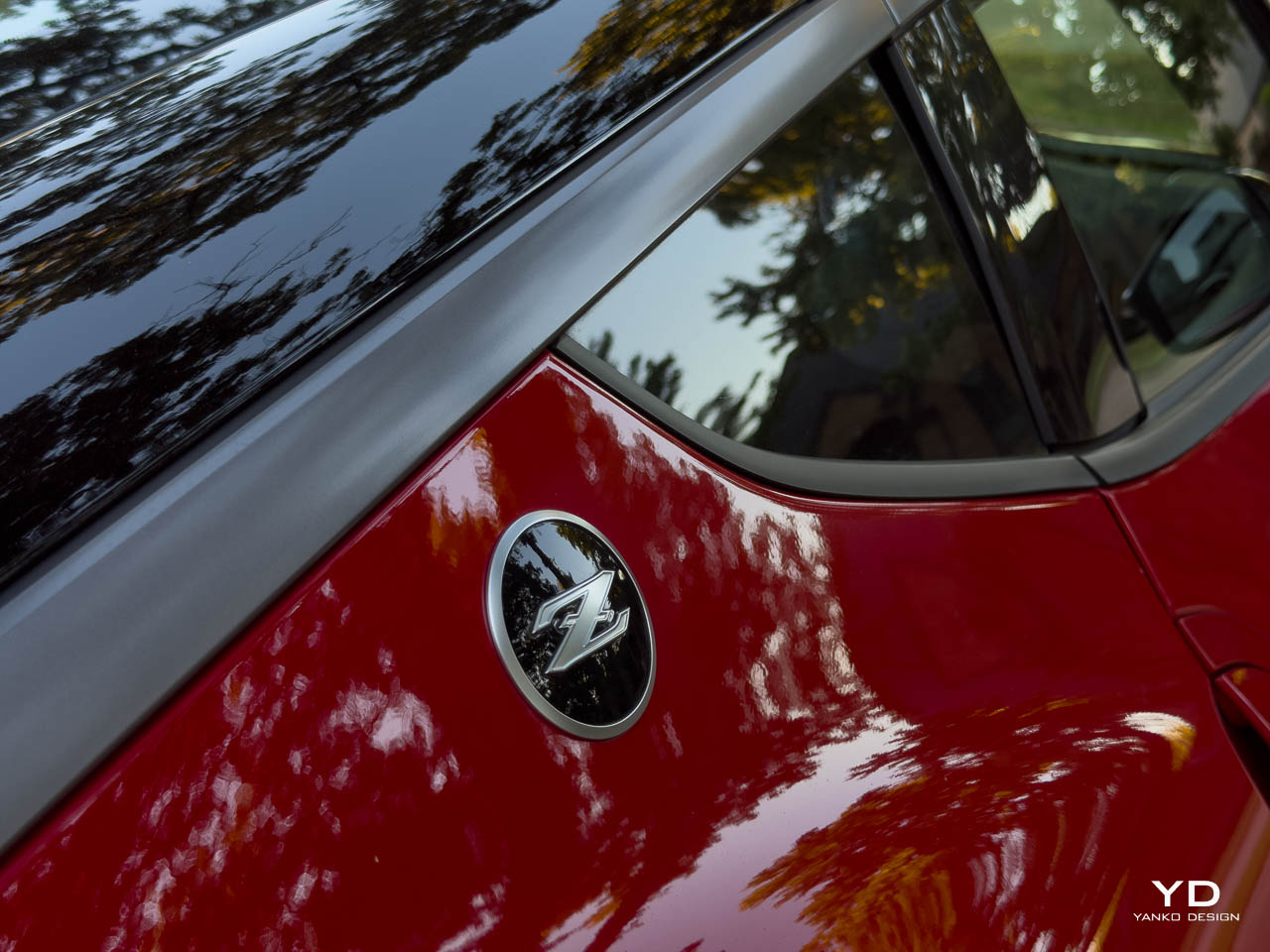
The katana blade roof accent running along the black roof edge is one of my favorite details. It’s subtle from most angles, but when the light hits it just right, you see the intentionality. This is design that rewards closer inspection. The Z Bulge hood and C-pillar emblem continue that nostalgic thread without feeling like pastiche.
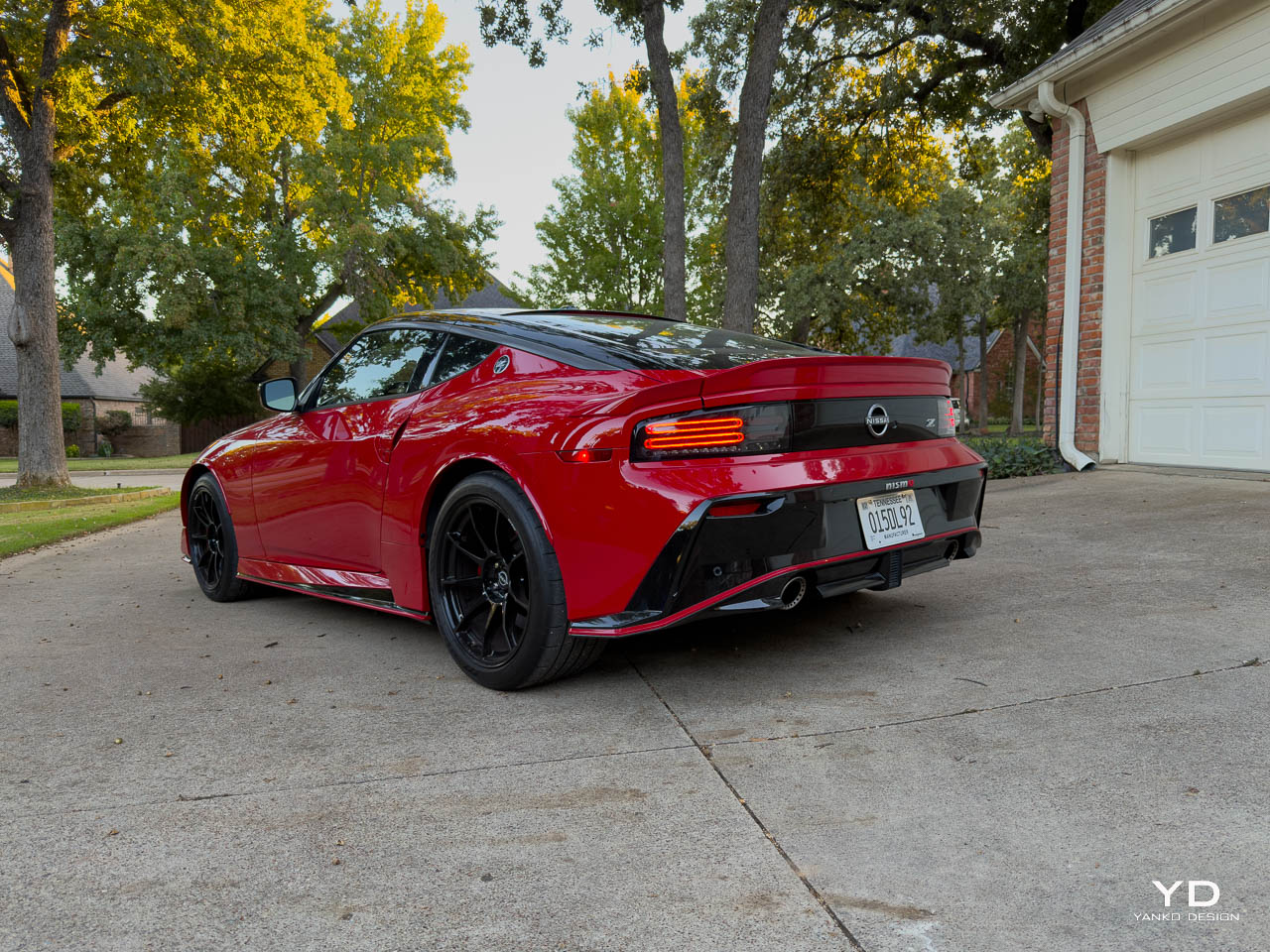
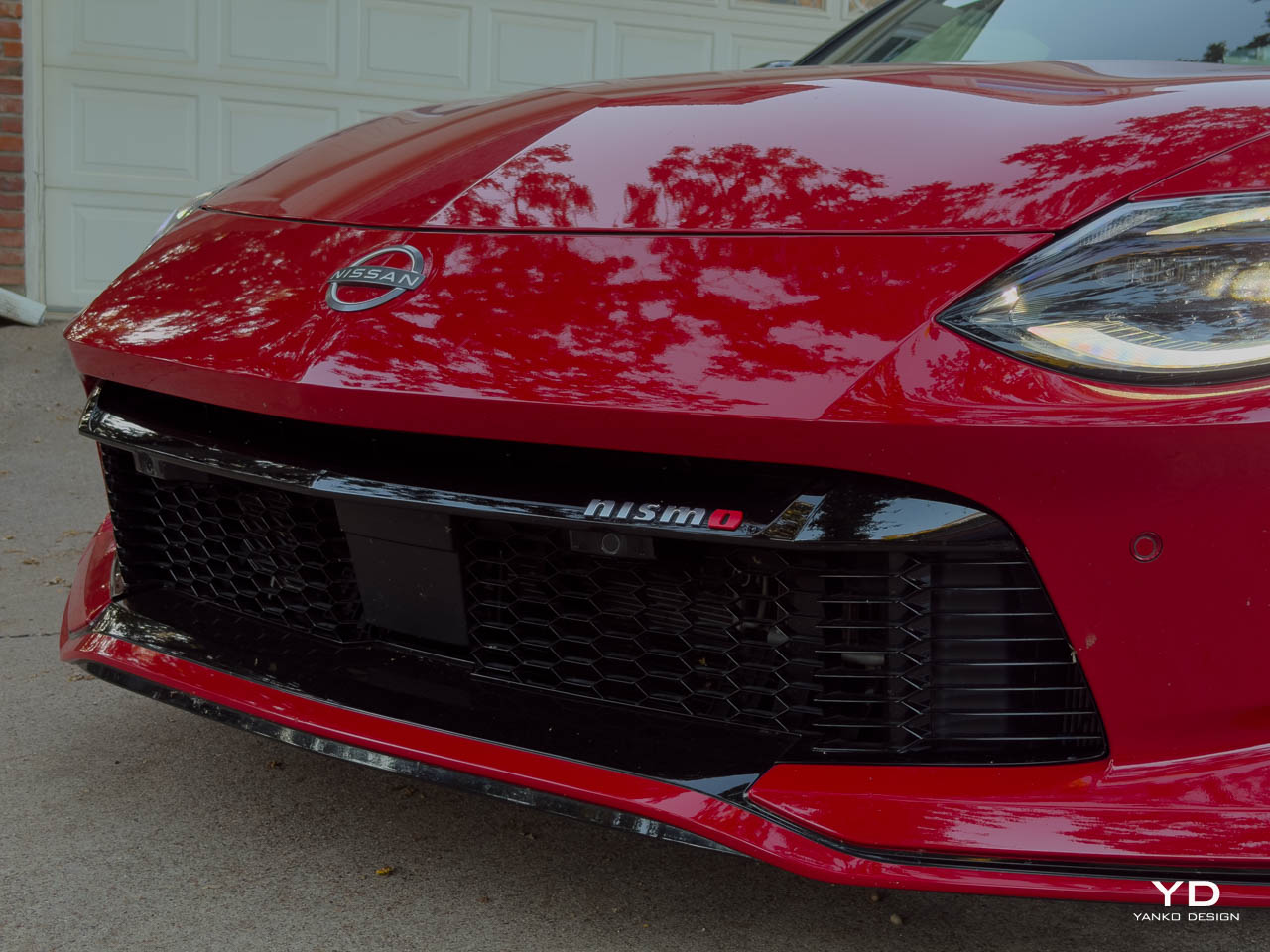
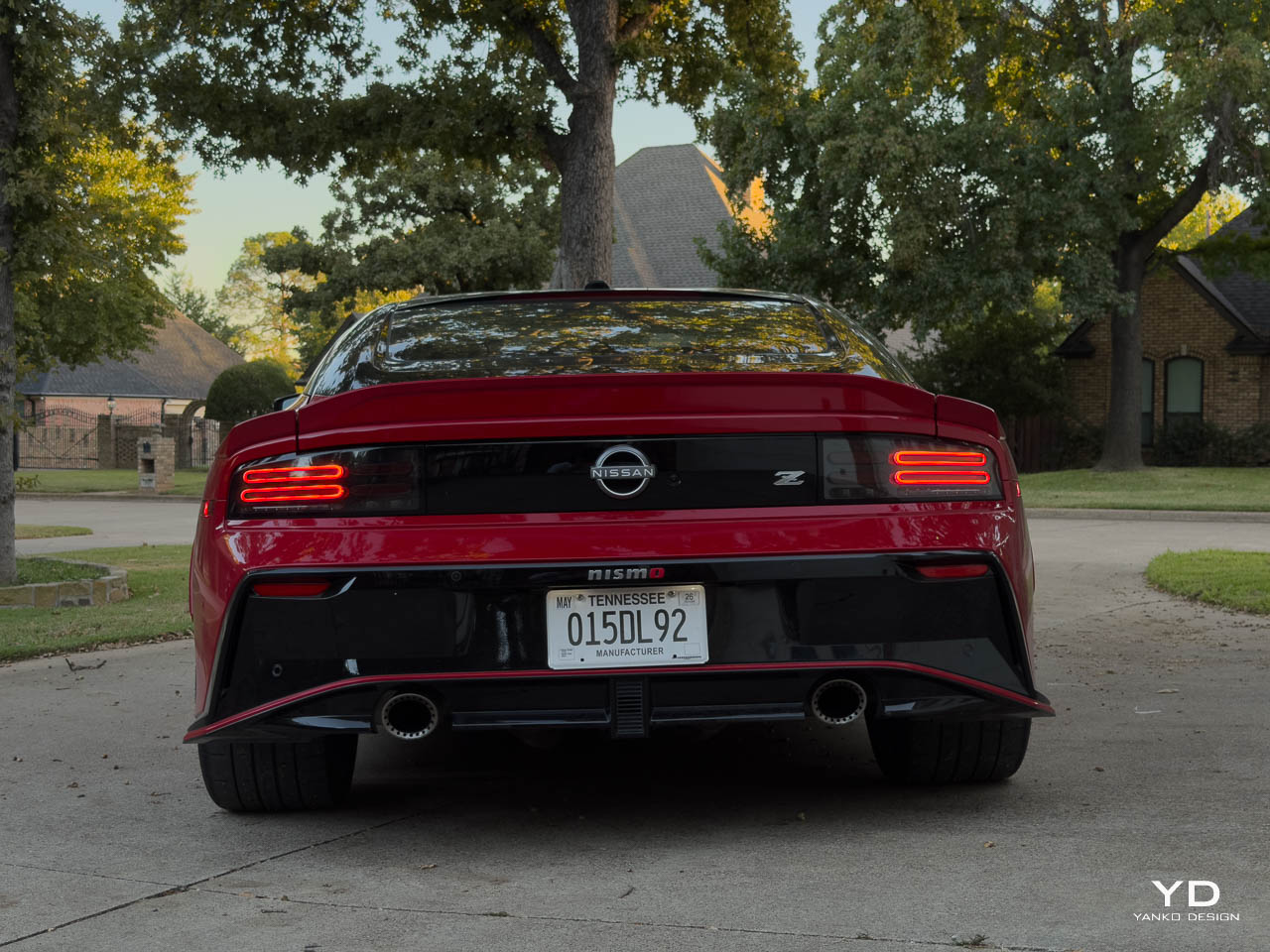
Where the NISMO truly separates itself is in the aggressive styling additions. The NISMO-exclusive front and rear fascias are more sculpted and purposeful than the standard Z. The three-piece rear spoiler isn’t just for show. At speed, you can feel it working. The side sills, black mirrors with red NISMO strips, and those gloss black RAYS forged wheels (19×10 front, 19×10.5 rear) give the car a planted, track-ready stance that the base Z lacks.
The Solid Red paint with Super Black roof creates a visual drama that photographs beautifully but looks even better in person. Under direct sunlight, the paint has depth and richness that make the car feel like it costs twice its MSRP. The LED taillights with their distinctive horizontal bar design are instantly recognizable from a block away.
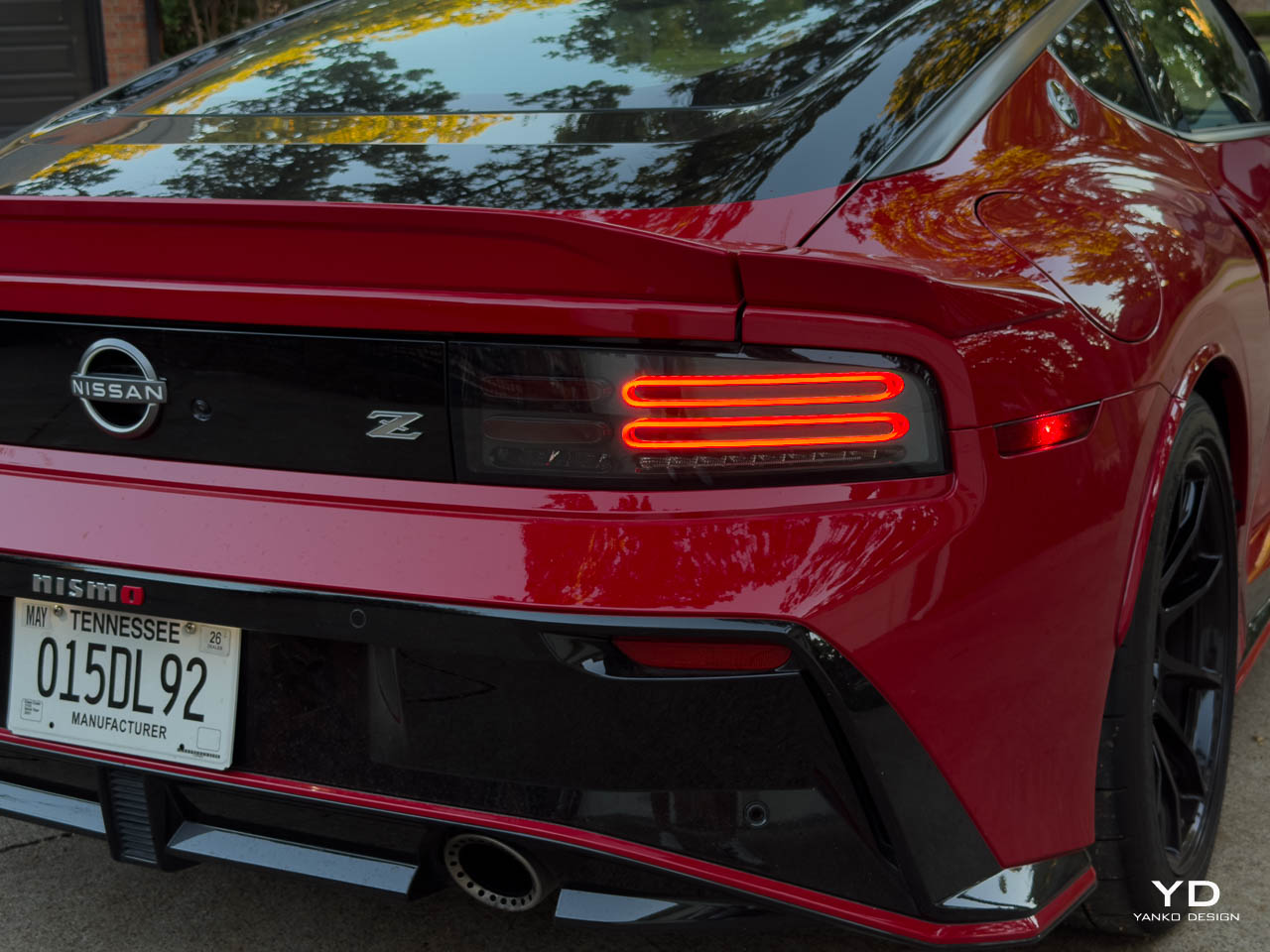
At 173.2 inches long and 73.6 inches wide, the Z NISMO has proper sports car proportions. It sits 51.8 inches tall with a 100.4-inch wheelbase and 4.9 inches of ground clearance. It’s low, wide, and purposeful without being cartoonish. This is a car you can actually drive daily if you’re willing to accept the trade-offs. 
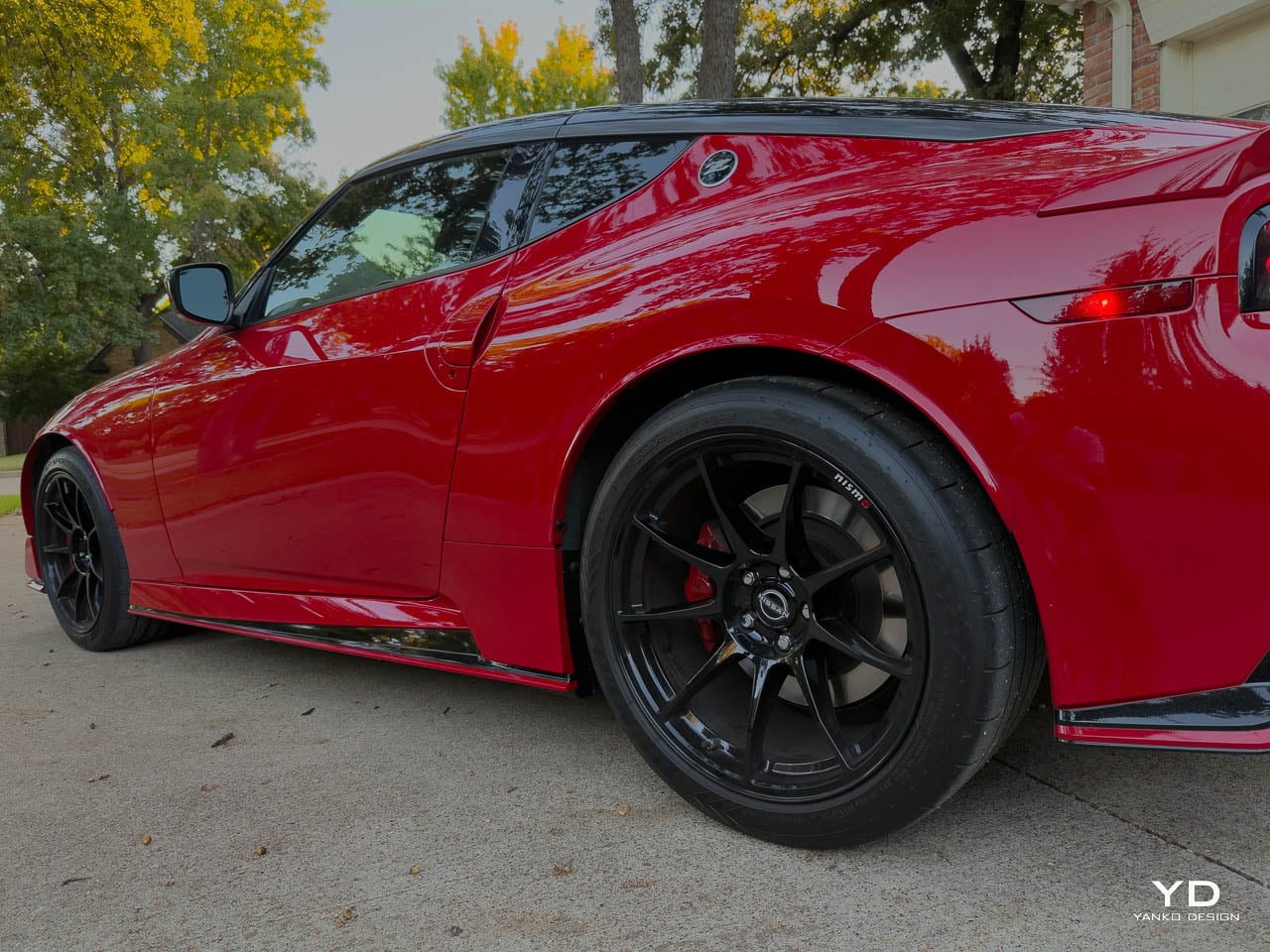
Interior: Driver-Centric and Unapologetically Focused

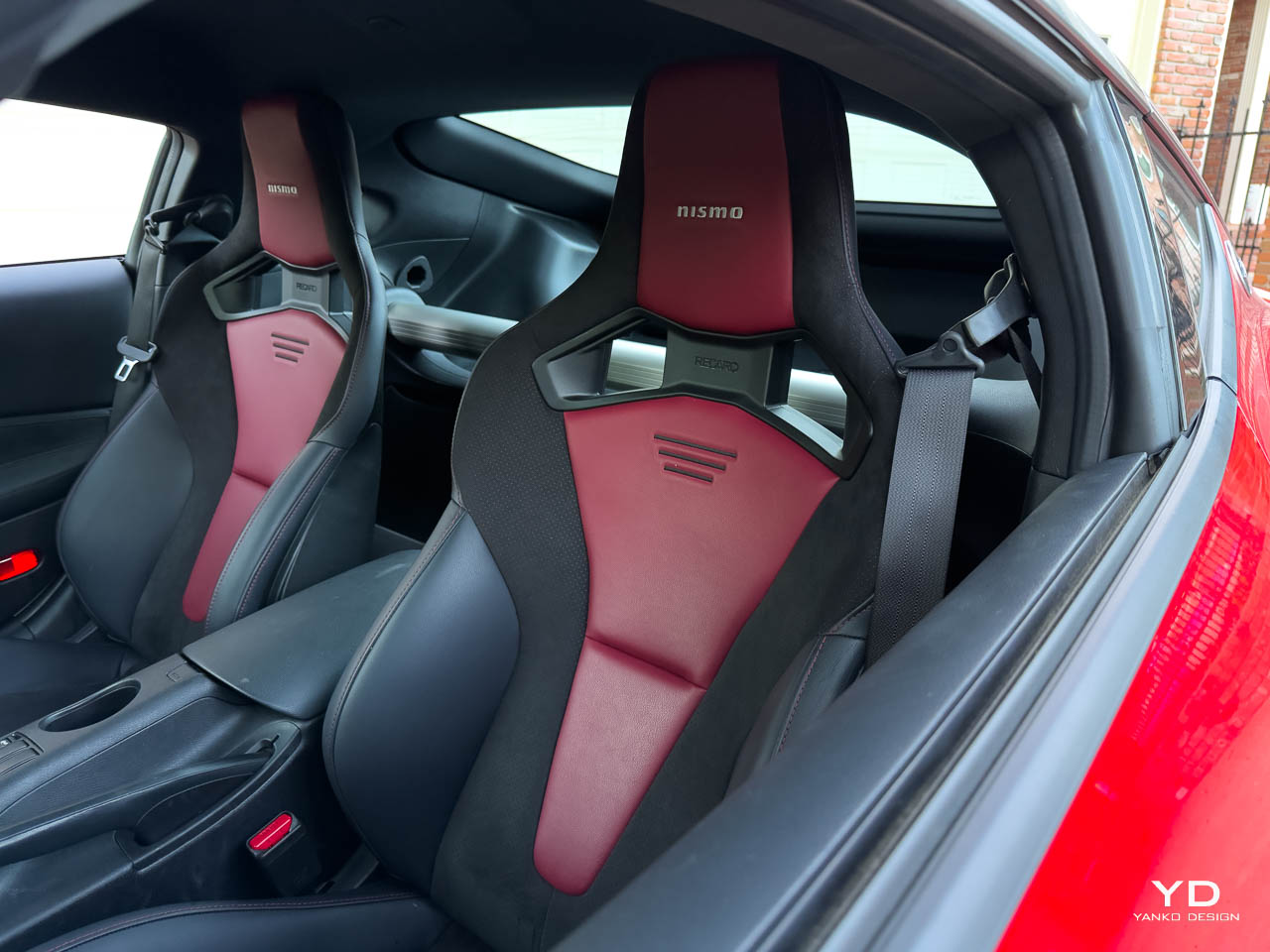
Step inside and you’re immediately reminded this is a NISMO product. The Recaro sport bucket seats are exclusive to this trim, and they’re worth the upgrade alone. The bolstering is aggressive but not punishing. On spirited drives, they hold you exactly where you need to be. The leather and Alcantara appointment feels premium and ages well. After several weeks of testing, there’s zero sign of wear on the high-contact areas.
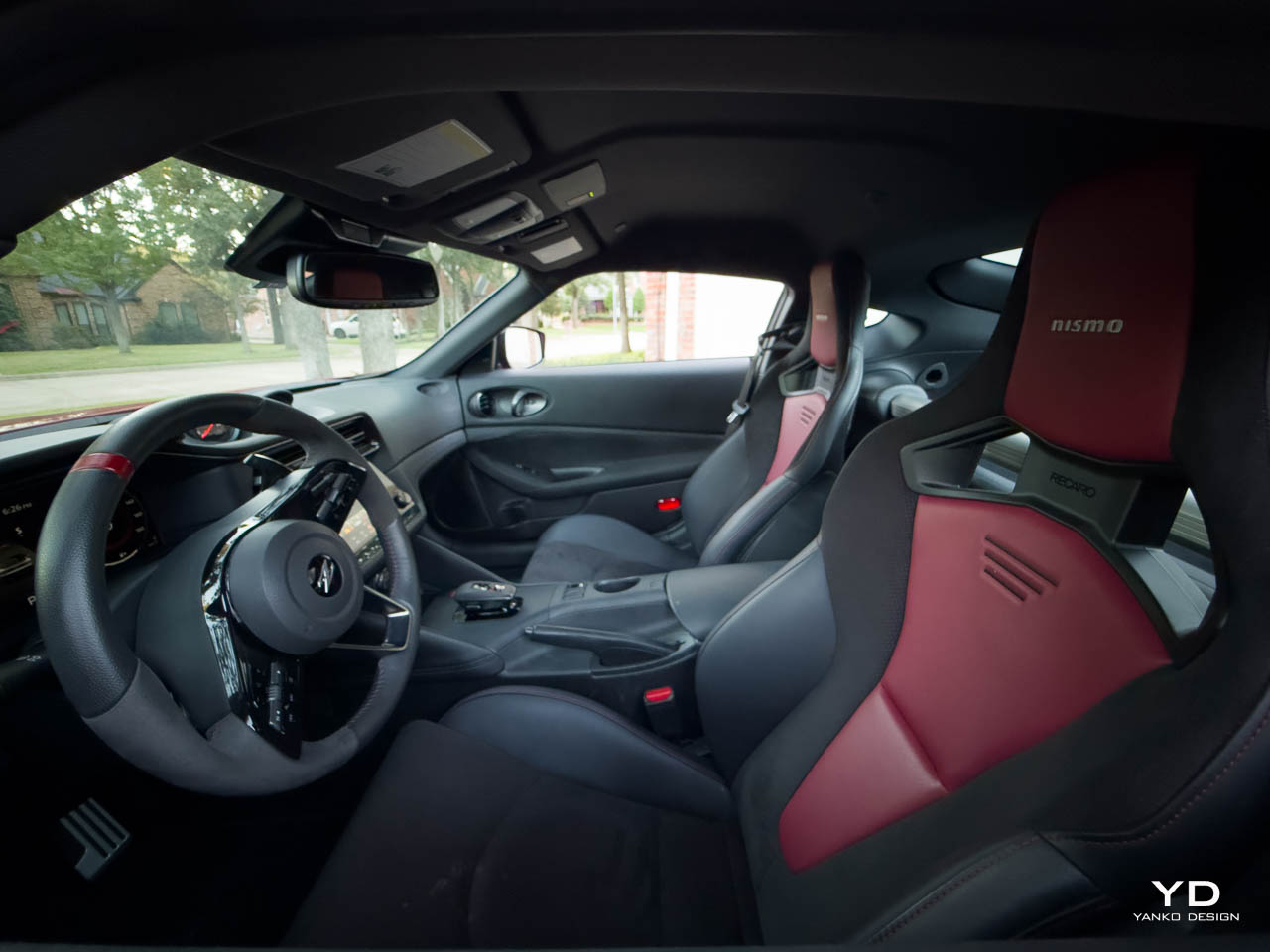
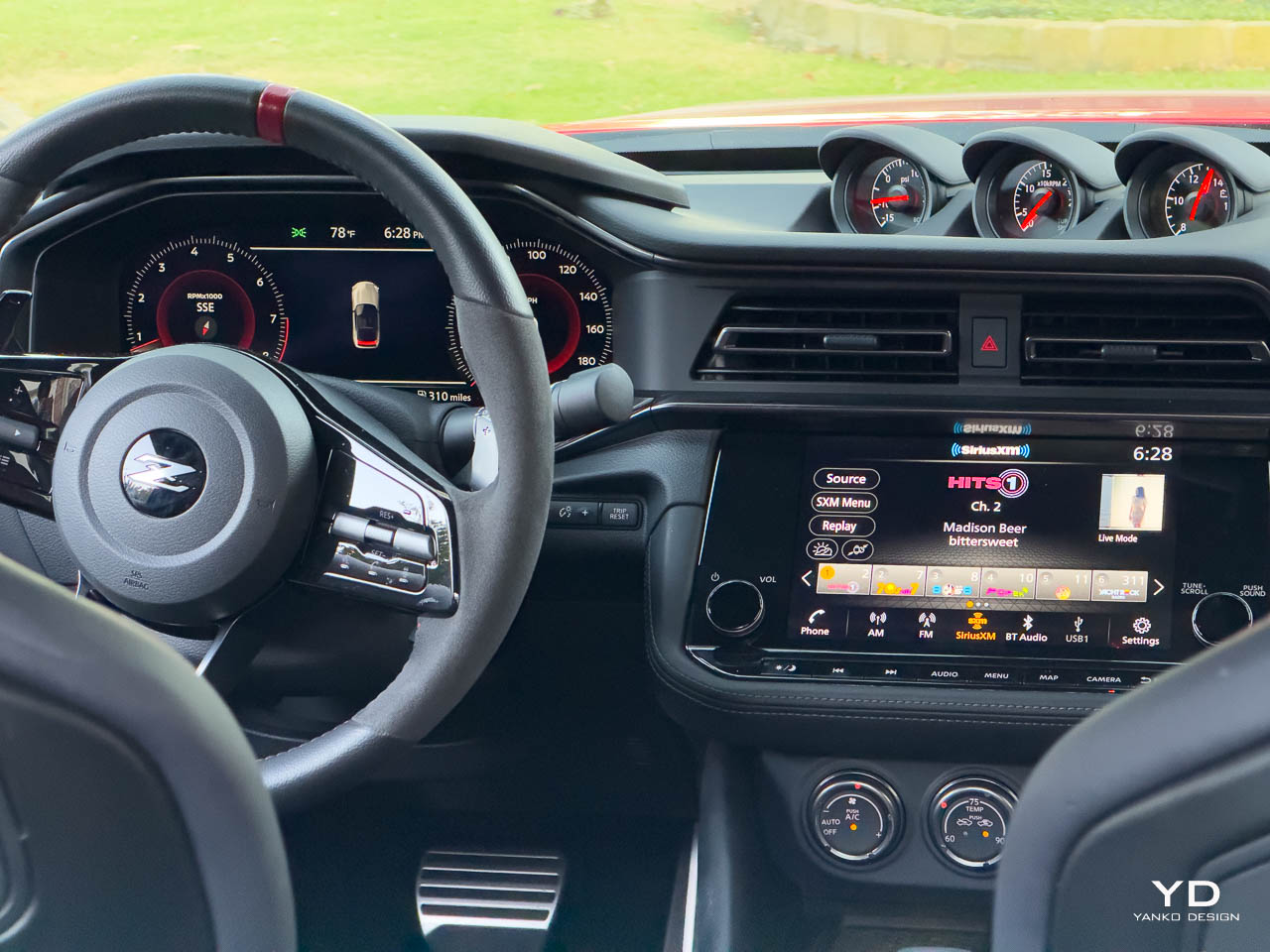
The NISMO steering wheel wrapped in leather and Alcantara is thick in your hands with a red marker at 12 o’clock. It’s clearly GT-R inspired, and that’s a very good thing. The aluminum pedals have the right amount of grip without feeling too aggressive for daily use. The suede door trim adds a tactile richness that elevates the cabin experience beyond what you expect at this price point.
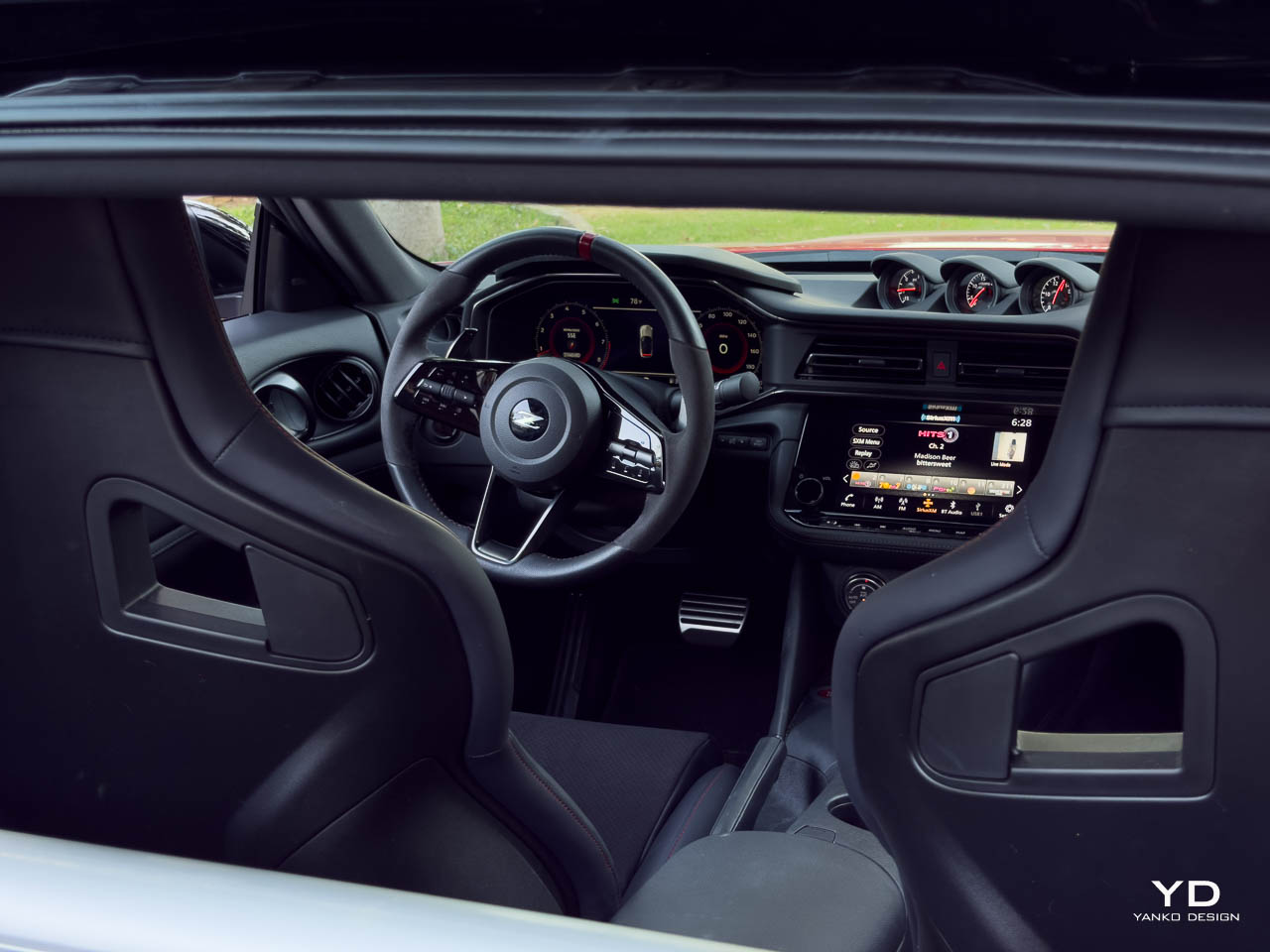
The three analog pod gauges mounted on top of the instrument panel (turbo boost, turbine speed, voltmeter) are pure theater, and I love them. Few cars blend old-school analog theater and digital immersion like this Z: those signature pod gauges evoke 1970s Japan, but the 12.3-inch cluster and infotainment are as modern as they come. The cluster has three display modes (Normal, Enhanced, Sport), and I found myself rotating between them depending on the drive. Sport mode gives you the full performance data layout with a centered tachometer and boost gauge prominence. It’s exactly what you want when you’re pushing the car.
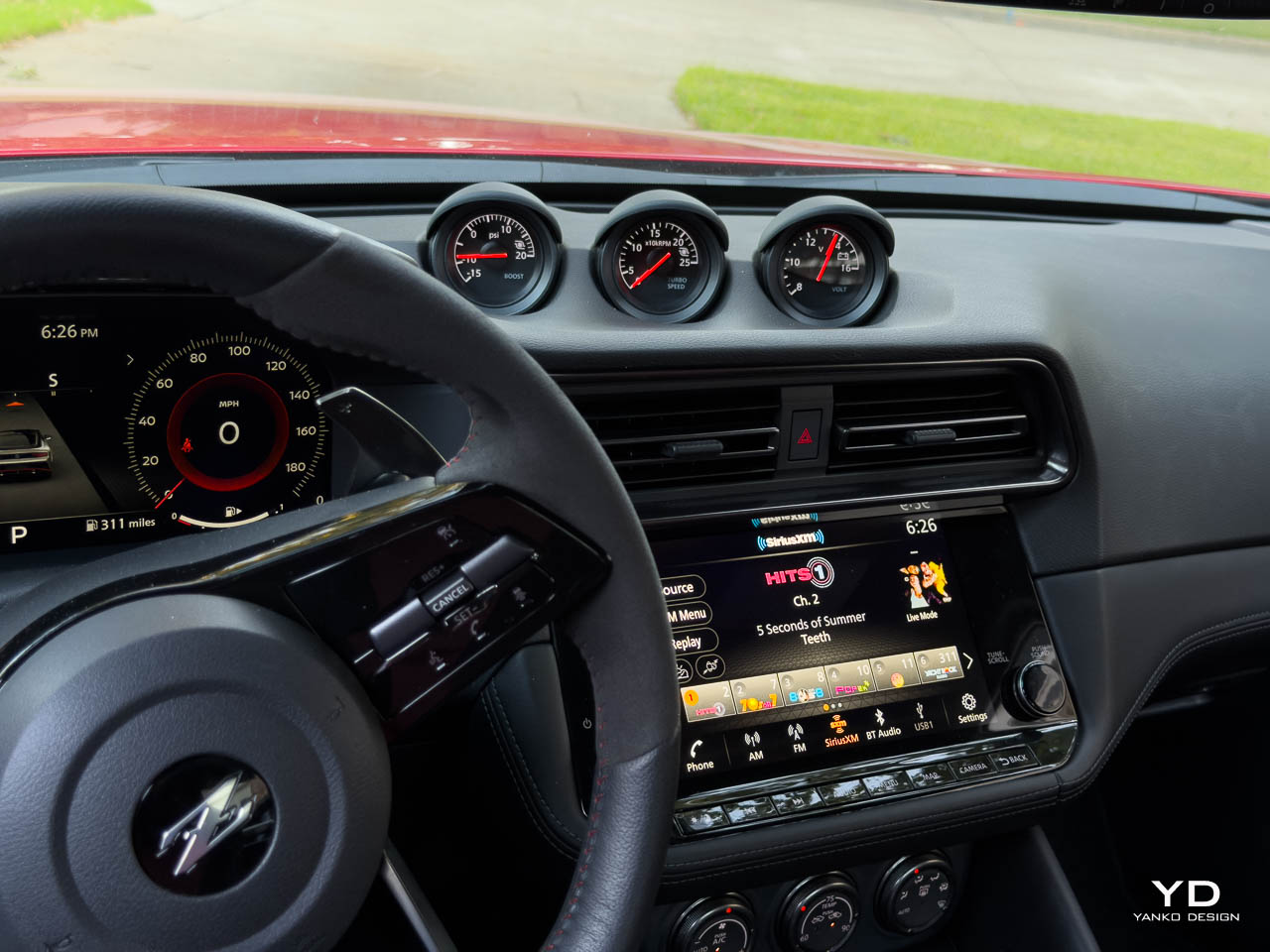
The 9-inch touchscreen sits perfectly in your sightline without dominating the dashboard. Wireless Apple CarPlay works flawlessly, and the Bose 8-speaker audio system with Active Noise Cancellation and Active Sound Enhancement delivers clean, punchy sound. The exhaust note is real and raw when you want it, and the cabin can be library-quiet when you don’t.
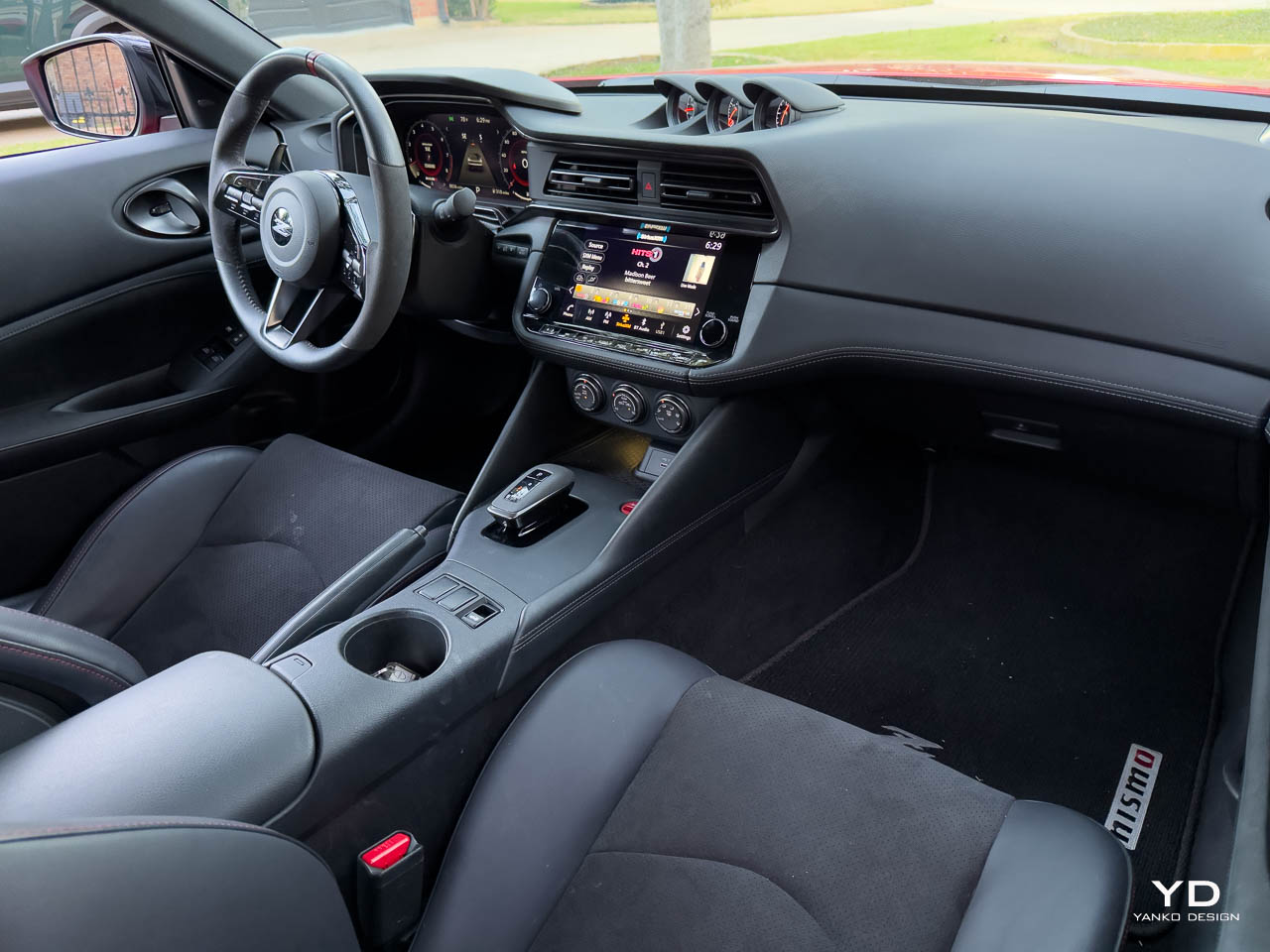
Ergonomically, everything falls to hand naturally. The NISMO-exclusive red anodized engine start button and Drive Mode selector are positioned exactly where your fingers expect them. The manual tilt and telescopic steering column gives you enough adjustment range to dial in your perfect driving position. In my testing at 6’1″, I never felt cramped during longer drives.
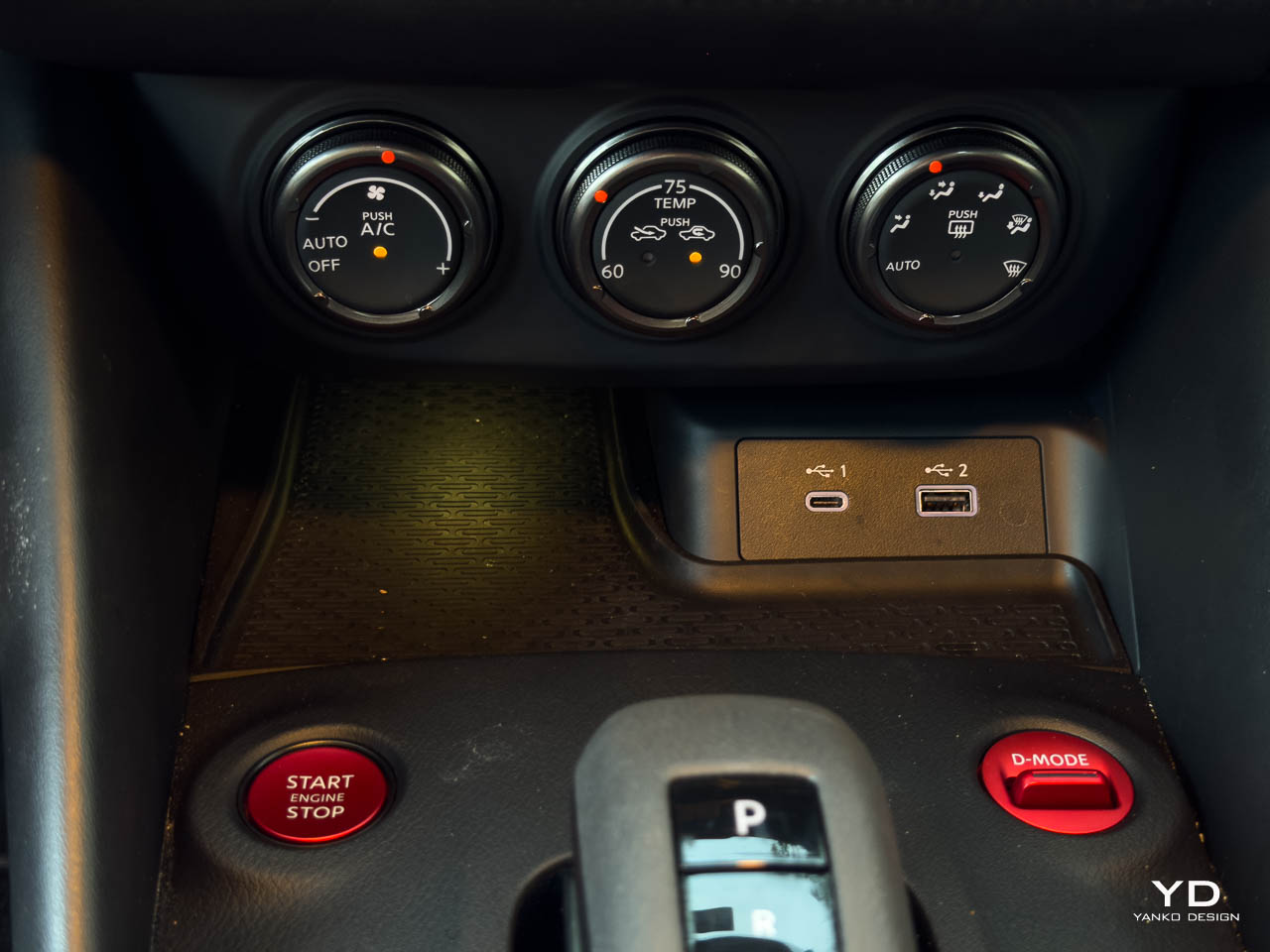
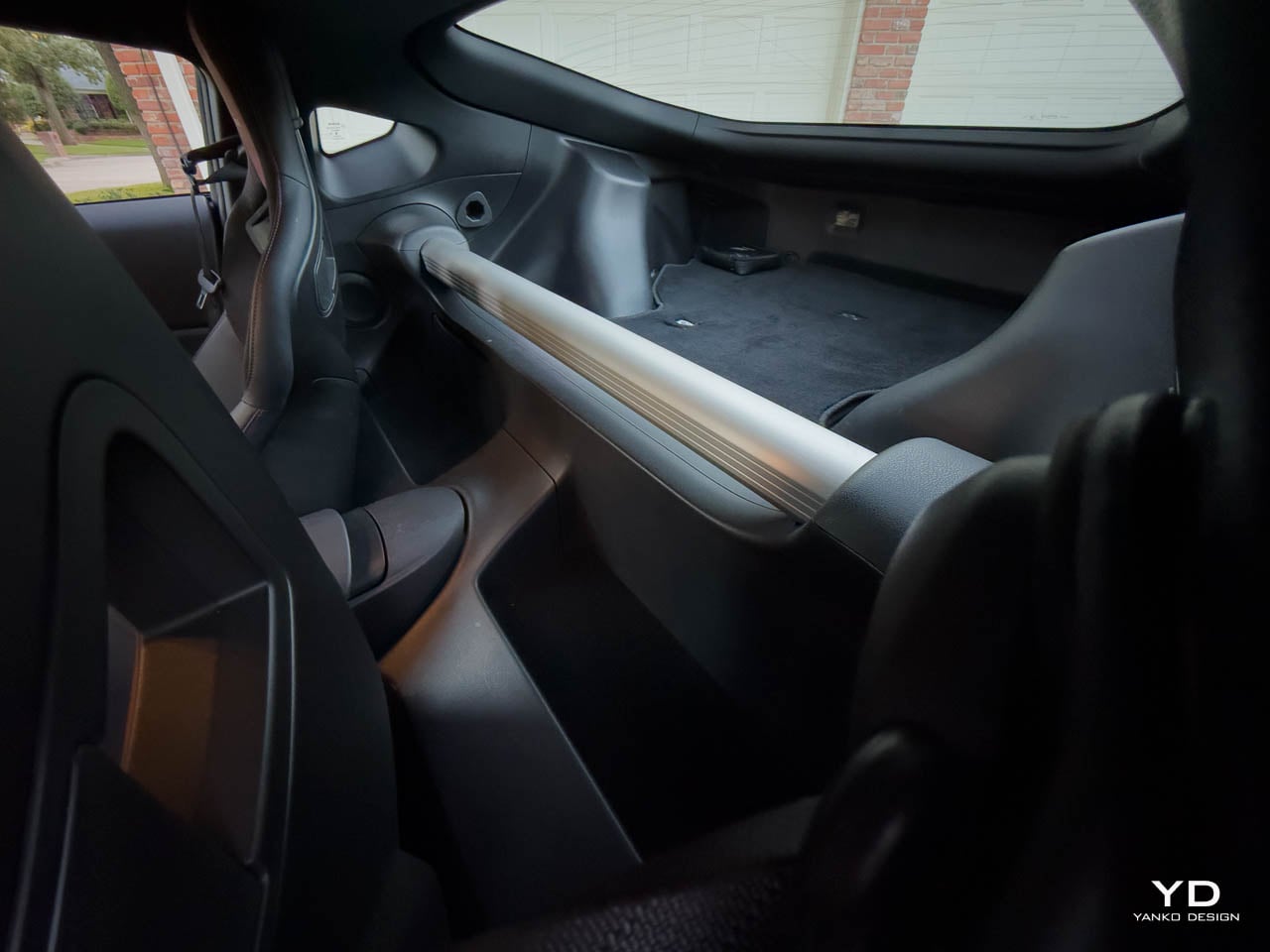
The two-passenger cabin means this isn’t a family car, but if you accept that, the Z NISMO rewards you with purpose-built focus. Compared to the Toyota GR Supra’s more confined cockpit or the Porsche 718 Cayman’s minimalist approach, the Z strikes a better balance between sport and usability. Cupholders, bottle holders, a center console with storage, and a locking glovebox provide enough practicality for weekend trips. The 2 USB ports (Type-A and Type-C) keep devices charged. This isn’t a minimalist track car or a luxury GT. It’s a perfectly balanced middle ground.

Performance: 420 Horsepower of Pure Engagement

Powertrain: Twin-Turbo V6 Perfection

The VR30DDTT 3.0L twin-turbo V6 is the heart of this machine, and in NISMO spec it produces 420 horsepower at 6,400 rpm and 384 lb-ft of torque from 2,000 to 5,200 rpm. That’s a 20 hp and 34 lb-ft bump over the standard Z, and you feel every additional pony. The NISMO-enhanced engine oil cooler keeps temperatures in check during aggressive driving, and the engine never feels like it’s struggling even when you’re wringing it out.

Power delivery is linear and immediate. There’s no turbo lag to speak of. Pin the throttle from a standstill and the Z NISMO launches with authority. Launch Control (standard with the 9-speed automatic) is brutal and effective, delivering repeatable 0-60 mph runs in approximately 4.2 seconds based on my testing. You get hard, consistent launches that pin you to the Recaro seats. The engine feels happiest between 3,000 and 6,400 rpm, where the turbos are fully spooled and power surges in a satisfying, unrelenting wave.
The exhaust note is one of the best aspects of this car. It isn’t digitally enhanced or piped in through the speakers. This is raw, mechanical sound. At idle, there’s a deep burble. Under acceleration, it transforms into a purposeful roar that builds to a crackling crescendo near redline. Lift off the throttle and you get satisfying pops and crackles on the overrun. It never sounds synthetic or manufactured. It sounds like a proper performance car should.
Fuel economy is rated at 17 city, 24 highway, and 19 combined mpg on premium unleaded. In real-world testing, I averaged around 20 mpg with a mix of spirited driving and highway cruising. On a long highway run, I saw 26 mpg, which is respectable for 420 hp.

Transmission: NISMO-Tuned 9-Speed Automatic

I need to address the elephant in the room: the NISMO is automatic only. There’s no manual transmission option, and purists will lament this decision. I get it. A manual would enhance the engagement factor. But after spending real time with the NISMO-tuned 9-speed automatic, I can say this: don’t write it off.

This isn’t the standard Z automatic. Nissan recalibrated it for quicker shifts, more aggressive downshifts, and tighter integration with the drive modes. The paddle shifters are responsive and feel mechanically connected. When you pull the left paddle for a downshift, the gearbox responds instantly with a perfectly rev-matched blip. Upshifts are crisp and quick. In Sport+ mode, the transmission holds gears longer and downshifts earlier under braking. It feels like it knows what you want before you ask.
Leave it in automatic mode for daily driving, and it fades into the background, smooth and refined. Flick it into manual mode and take control, and it becomes an extension of your inputs. This is one of the better automatics I’ve driven in a sports car. It isn’t a dual-clutch, but it doesn’t feel like a traditional torque converter either.

Would I still prefer a manual? In an ideal world, yes. But the automatic doesn’t ruin the experience. It enhances accessibility and makes the NISMO a car you can live with every day without sacrificing much of the engagement.

Chassis and Handling: Track-Ready Precision

The NISMO-tuned suspension is where this car truly separates itself from the standard Z. Nissan fitted unique stabilizer bars, stiffer springs, and larger retuned dampers that support the wider rear wheels and Dunlop SP SPORT MAXX GT600 tires (P255/40R19 front, P285/35R19 rear). The result is a chassis that feels taut, responsive, and utterly confidence-inspiring.

Turn-in is sharp and immediate. There’s minimal body roll, and the car pivots around its center with precision. The mechanical clutch-type limited-slip differential works magic at the rear, distributing power evenly and allowing you to carry more speed through corners. Understeer is virtually nonexistent. Push the car hard into a tight corner, and the front end bites with conviction.
The ride quality is firm. There’s no hiding that. I tested the Z NISMO on smooth highways, rough city streets in Dallas, and winding back roads. On smooth pavement and highways, it’s sublime. The car glides with poise and the suspension feels perfectly calibrated for speed. But hit city potholes or expansion joints, and you’ll be reminded instantly of that NISMO suspension tuning. Every crack and imperfection registers through the chassis with unfiltered honesty. This is a trade-off inherent to track-focused suspension tuning. If you want comfort, buy the Sport trim. The NISMO is tuned for aggression, not forgiveness.

In daily traffic, the car is surprisingly manageable. The automatic transmission smooths out stop-and-go frustrations, visibility is better than expected, and the clutch-free operation makes it far more livable than a manual sports car in urban gridlock.
Steering feedback is excellent. The electric power steering (with NISMO-specific tuning) delivers weight and communication that feels natural. You know exactly what the front tires are doing at all times. There’s no artificial heaviness or numbness. It’s direct, honest, and confidence-building.

The NISMO front and rear chassis bracing stiffens the entire structure, reducing flex and improving chassis rigidity. You feel this most during hard cornering and quick transitions. The car feels like a single, unified mass rather than a collection of parts. It’s the kind of structural integrity that separates good sports cars from great ones.

Braking: Stopping Power to Match the Speed

The Z NISMO features 15.0 x 1.3-inch vented disc rotors up front and 13.8 x 0.8-inch vented discs at the rear, clamped by floating 4-piston front and 2-piston rear aluminum calipers finished in red. Brake feel is firm and progressive with excellent pedal modulation. Initial bite is strong without being grabby. As speeds increase, confidence increases with it.
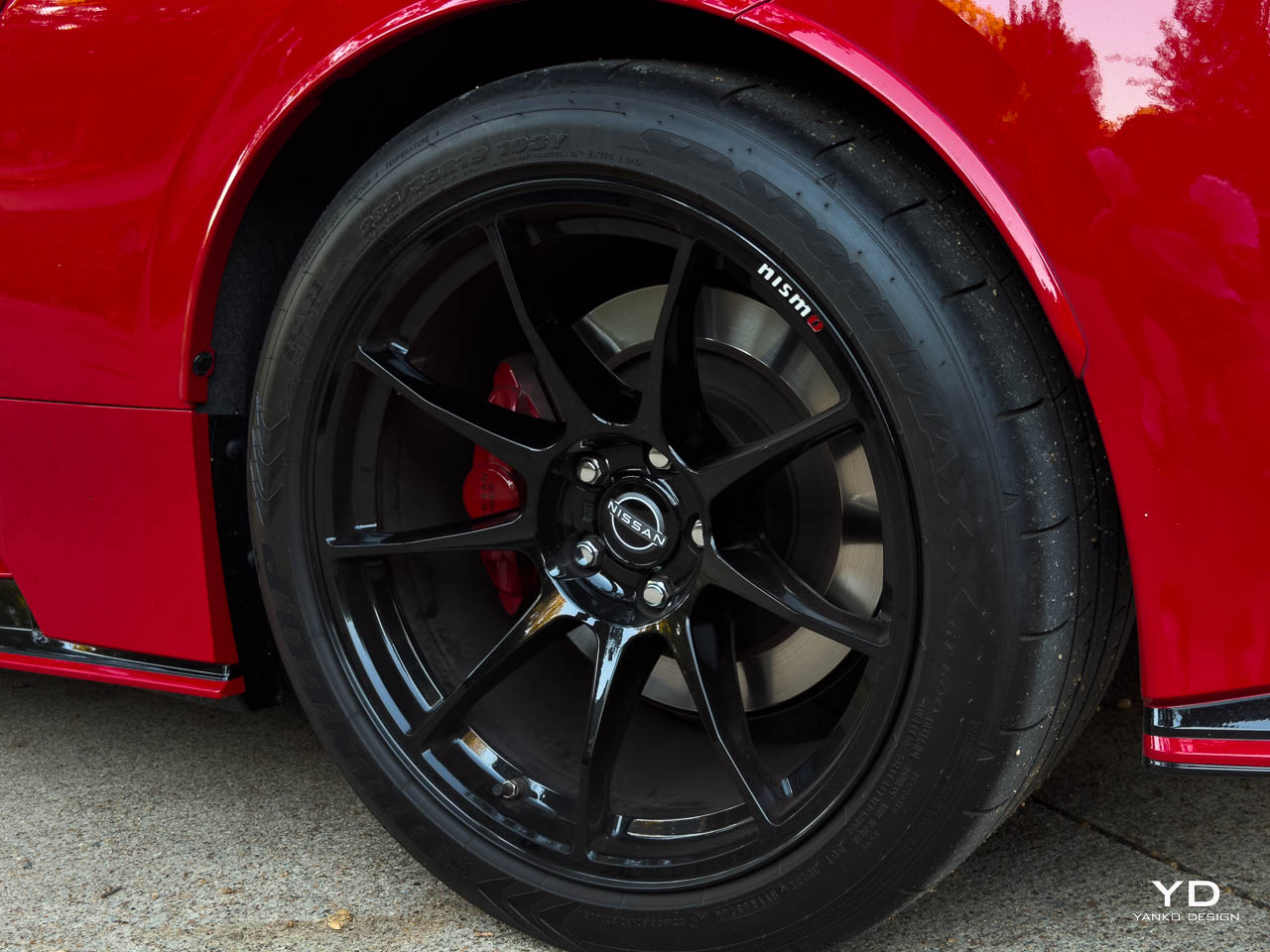
During repeated hard stops from high double-digit speeds, I experienced zero fade. The brakes stayed consistent and predictable. ABS intervention is well-calibrated and unobtrusive. The front and rear parking sensors give you confidence in tight spaces, and the RearView Monitor is crisp and clear.

Daily Usability: A Surprisingly Practical Companion

At 3,704 lbs, the Z NISMO isn’t a featherweight, but it never feels heavy or cumbersome. Visibility is better than expected for a low-slung sports coupe. The large side mirrors (with LED turn signals) give you a clear view of your surroundings. Blind spot warning and rear cross traffic alert provide an extra layer of safety when changing lanes or backing out of parking spaces.
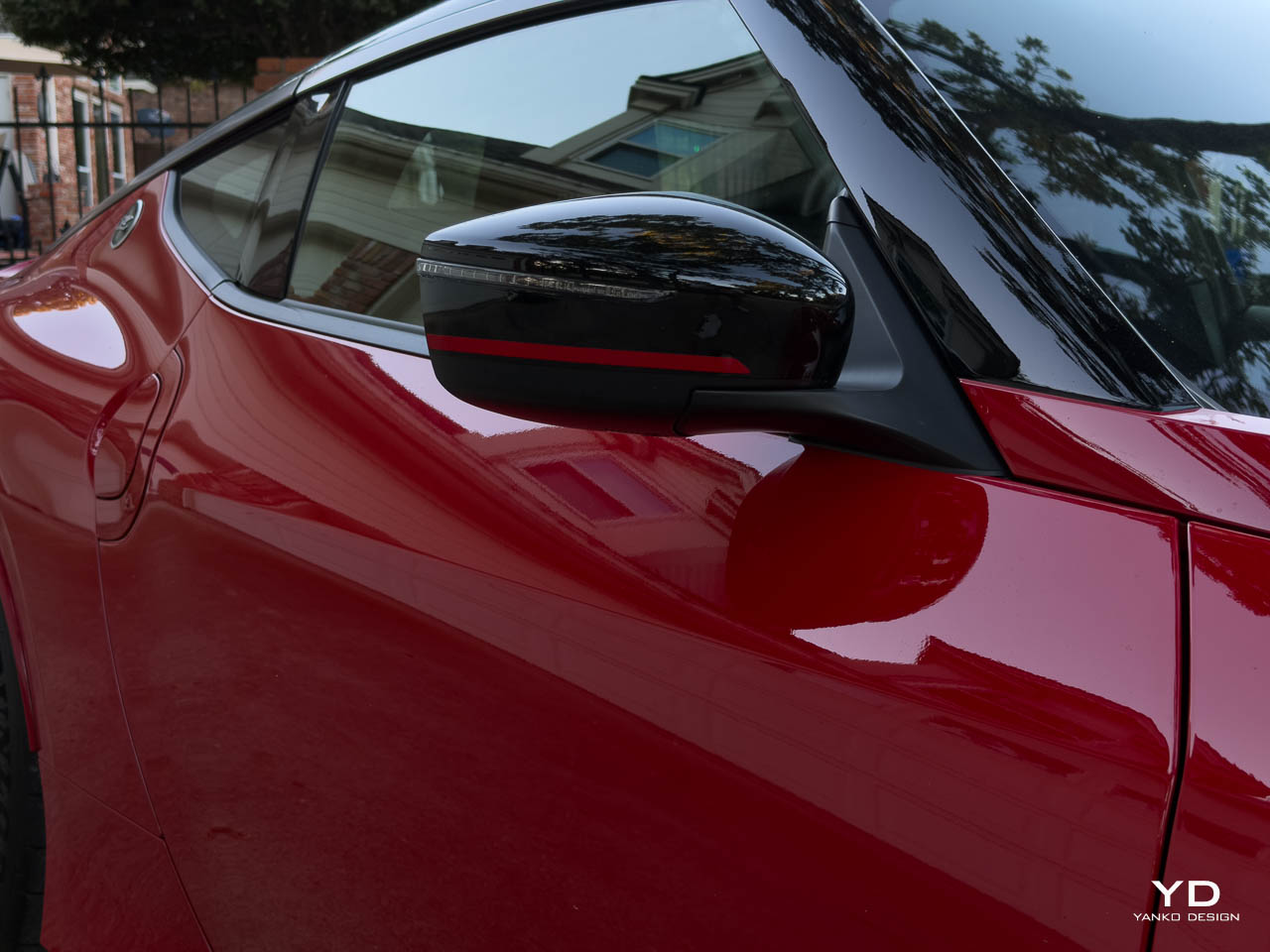
The Nissan Intelligent Key with push-button ignition works flawlessly. Power windows with one-touch up and down, power door locks with auto-locking, and an auto-dimming rearview mirror are all standard. The automatic temperature control keeps the cabin comfortable without fuss. HomeLink Universal Transceiver integrates with your garage door opener seamlessly.
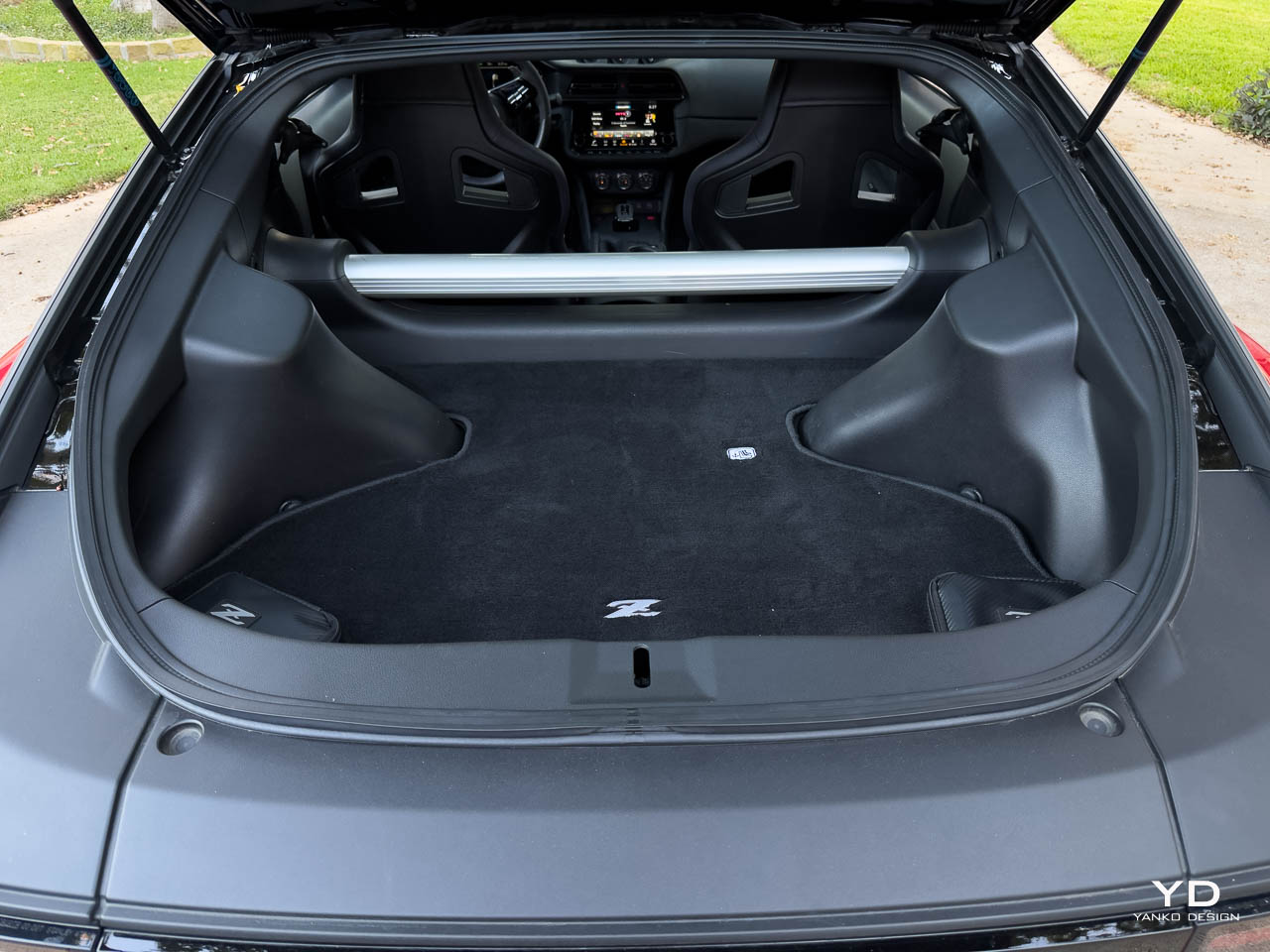
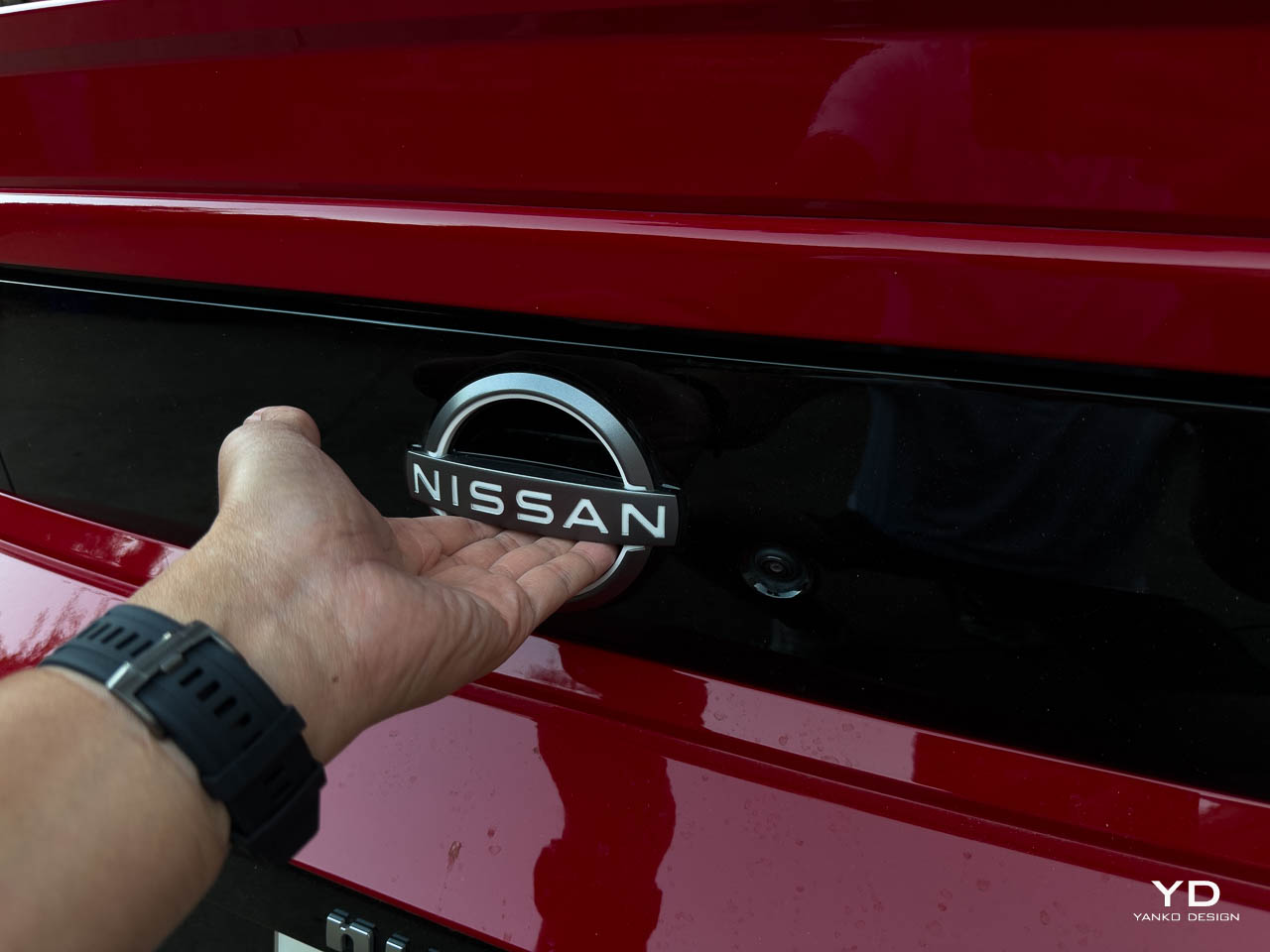
Cargo space is adequate for a sports car. You can fit a weekend bag and some groceries in the hatch. The rear seats don’t exist, so this is purely a two-seater. But if you go into ownership knowing that, the Z NISMO is surprisingly livable. I drove it for weeks as my only car, and it never felt like a burden.

The post 2025 Nissan Z NISMO Review: A Modern Icon That Earns Its Badge first appeared on Yanko Design.


ChatGPT now offers a dedicated shopping assistant

With Black Friday around the corner, OpenAI is upgrading ChatGPT's shopping capabilities just in time to make spending your money even easier. Starting today, the company has begun rolling out shopping research, a new feature inside of ChatGPT designed to simplify the process of comparing different products. 

The tool is available to all ChatGPT users, including those with free accounts, with the company offering nearly unlimited usage through the holidays. As long as you're logged into your OpenAI account, you can try out the new experience by selecting "Shopping research" from the + menu. ChatGPT will also automatically route prompts it determines would be best served by the new model OpenAI has trained to answer commerce-related questions. For instance, if you type, "find the quietest cordless stick vacuum for a small apartment," ChatGPT will know what to do. 

As it works to find products that fit your criteria, ChatGPT will ask clarifying questions.
OpenAI

In addition to comparative shopping, the new experience can help users track down deals, shop for gifts and even find lookalike products. For example, you can snap a photo of a dress and ask ChatGPT to find you something similar that costs less than $250. As you use the tool, ChatGPT will ask clarifying questions to help it narrow down its recommendations. For ChatGPT Pulse users, the tool will even be proactive, generating cards that offer personalized buying guides based on past conversations.  

The feature is powered by a variant of GPT-5 mini designed to excel specifically at shopping-related tasks. "We trained it to read trusted sites, cite reliable sources and synthesize information across many sources to produce high-quality product research," said OpenAI. In practice, the shopping assistant should be better at accurately citing product details relative to the company's other systems, including more powerful general-purpose models like GPT-5 Thinking. Still, OpenAI warns the tool isn't perfect. 

"Shopping research might make mistakes about product details like price and availability, and we encourage you to visit the merchant site for the most accurate details," the company said. Additionally, OpenAI notes the tool tends to do best in categories like electronics, beauty and home appliances where there are many details and specs the model can compare to generate comprehensive answers.  

It's no surprise to see OpenAI expand ChatGPT's shopping capabilities. The company already offers the option to buy items from Etsy from its chatbot, and competitors like Google have been aggressively adding AI shopping features in recent months.    

This article originally appeared on Engadget at https://www.engadget.com/ai/chatgpt-now-offers-a-dedicated-shopping-assistant-180000034.html?src=rss